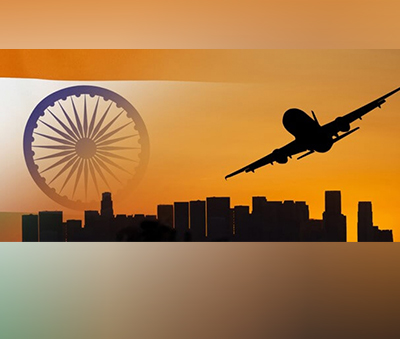
India plans Rs 29,000 crore relief for debt-laden Air India

In an attempt to reduce the annual interest burden of Air India, the government has decided to transfer Rs 29,000 crore of the Rs 55,000 crore owed by the national carrier to a special purpose vehicle (SPV), civil aviation secretary RN Choubey said on Thursday.

Air India Asset Holding Limited (AIAHL), as the SPV will be known, will either raise money to clear the debt directly or pay lenders monthly at different interest rates. To transfer the debt to the SPV, the government will need to secure permission from various creditors, which can be a lengthy process. To avoid that, the government is also weighing the option raising money and paying off the debt in one go.

“We are expected to take care of about Rs 29,000 crore of debt so that Air India doesn’t have to worry about the interest on the debt. …about Rs 26,000 crore of debt will still remain with the airline, which they will have to manage. The SPV can raise money on the government’s guarantee. Air India will have to take clearance from lenders,” Choubey said.

Once the debt is transferred to the SPV, Air India’s annual interest liability will be around Rs 1,700 crore per year, down from Rs 4,400 crore currently.

The National Democratic Alliance (NDA) government’s attempt to privatise Air India failed this year when it found no takers for the airline. Choubey said the reason no bidder came forward was that the macroeconomic conditions were not conducive. The government has already made it clear that Air India will have to cut costs and increase revenue in return for financial support from the government. Air India chairman and managing director Pradeep Singh Kharola made a presentation before a group of minister and listed around a dozen areas for potential cost-cutting and revenue enhancement that could yield the airline yearly benefits of Rs 2,000 crore.

On Tuesday, the government decided to sell off the national carrier’s ground handling arm Air India Air Transport Services Ltd (AIATSL).

“The government should have done these 2-3 years ago and it would have helped them in privatisation. Air India has immense value and government should take care of the national carrier,” said Mark Martin,founder and chief executive officer of Dubai-based Martin Consulting.

In a separate development on Thursday, the chiefs of SpiceJet and GoAir met Choubey, seeking lower airport charges and asking for aviation turbine fuel (ATF) to be brought under the goods and services tax (GST) regime, which may lower the fuel bill of airlines.

“We would like to help as much as we can but the issue is of ability to survive in a competitive environment. I have promised to look into the ATF part and we are hopeful that it will take into the next GST Council meeting,” Choubey said.

Bill to prevent NRI husbands from abandoning their wives

The government would bring a bill in the coming winter session of the Parliament as part of its efforts to check the menace of NRI husbands abandoning their wives, external affairs minister Sushma Swaraj said last week.
 
“We have already launched an institutional mechanism, where you must have seen that 25 passports of such NRI husbands have been revoked. We are also bringing a bill in this session where some more measures are being taken against those husbands,” she told reporters in Hyderabad.
Swaraj, who was in Hyderabad in connection with the Bharatiya Janata Party’s campaign for the December 7 Telangana assembly elections was replying to a query about Non-Resident Indian (NRI) husbands abandoning their wives.
On November 13, the Supreme Court has also sought response from the Centre on a plea seeking mandatory arrest of NRIs deserting their wives and harassing them for dowry.
A bench comprising Chief Justice Ranjan Gogoi and Justices S K Kaul and K M Joseph issued notices to the Centre on the plea seeking that the deserted women be accorded legal, financial help and their estranged NRI husbands be arrested after the filing of FIRs.
A group women, who have allegedly been deserted by their NRI husbands and subjected to dowry harassment, have moved the apex court seeking reliefs including mandatory arrest of their estranged spouses and consular help in fighting cases in foreign land.

Life expectancy in the US drops to 78 years

Americans can expect to live just over 78 years and six months on average – a 0.1 year drop from 2016, according to the report released on Thursday, November 29th.

“Tragically, this troubling trend is largely driven by deaths from drug overdose and suicide,” said The Centers for Disease Control (CDC)  director Robert Redfield in a statement.

“Life expectancy gives us a snapshot of the nation’s overall health and these sobering statistics are a wake-up call that we are losing too many Americans, too early and too often, to conditions that are preventable.”

The CDC found nearly 70,000 more Americans died in 2017 than 2016, with rising rates of death among 25- to 44-year-olds, media reports here say.

The reports revealed synthetic opioid-related overdose death rates rose by 45% on average, nationwide. The suicide rate is also the highest it has been in decades.

The top 10 leading causes of death – including heart disease, cancer, stroke, diabetes, and suicide – were the same as in 2016, accounting for the majority of deaths.

Only cancer death rates decreased by 2.1%, while the rates for most other causes increased.

US women continue to outlive men, and the death rate did decrease among 45- to 54-year-olds.

Between 2016 and 2017, mortality rates also decreased for black women, and there was no significant change in rates for black men and Hispanic Americans. Life expectancy in the US began dropping in 2015.

Monaco and Japan currently have the longest life expectancies in the world at 89 and 85 years. The UK’s life expectancy is around 80 years.

As the US grapples with an opioid crisis, overdoses claim more and more lives, the CDC report found. The age-adjusted death rate has gone up 16% per year since 2014.

Drug overdose deaths accounted for 70,237 deaths last year – nearly 10% higher than in 2016 – with a significantly higher rate of death among men, compared to women.  The death rate from overdoses caused by synthetic opioids like fentanyl increased by 45% in one year.

West Virginia saw the highest overdose death rate in 2017 at 58 per 100,000 people; Ohio, Pennsylvania and the US capital also topped the list.

The CDC found suicide became the second leading cause of death for 10- to 34-year-olds in 2016, with rates increasing 33% between 1999 and 2017, according to the report.

Urban-area suicide rates were 16% higher in 2017 than 1999, and rural-area suicides increased by 53% over the same time period.

Dr Jerry Reed of the National Action Alliance for Suicide Prevention told the BBC that suicide is not always just a mental health challenge.

“Economic conditions or livelihood opportunities in decline could lead people to positions where they’re at risk. We need to intervene in both mental and public health cases,” Dr Reed says.

From Canada or US: If you’re in an emergency, please call 911. You can contact the US National Suicide Prevention Lifeline on 1-800-273-8255 or the Crisis Test Line by texting HOME to 741741. Young people in need of help can call Kids Help Phone on 1-800-668-6868

NIAASC organizes 29th conference/anniversary on Long Island, NY

The National  Indo-American Association for Senior Citizens (NIAASC)  held its 29th  Conference  on Seniors and celebrated its 20th anniversary on  November 10, 2018 at the Indian American Kerala Center in Elmont in collaboration with India Association of Long Island (IALI), a 40 year old community based  association, and Shanti Niketan, the first   Housing Complex in Florida.  A little over fifty participants attended this interactive whole day conference focusing on two major subjects: SPECIAL NEEDS OF INDO-AMERICAN SENIORS and HEALTH CARE ADVANCES FOR SENIORS.

NIAASC organizes 29th conference/anniversary on Long Island, NYThe conference was opened by Dr. Thomas Abraham, Founder of GOPIO (Global Organization of People of Indian Origin). NIAASC was initiated by GOPIO in 1998. He traded the history of NIAASC as to how it sought the help of National Asian Pacific Center on Aging (NAPCA), based in  Seattle, WA. Thomas focused on as to how NAPCAS successful ten-year-old operation can be worked out for Indian seniors in the United States at an Indian community leaders in July 1998 which was attended by two dozen community leaders.  After 4-hour intensive deliberations the group unanimously asked Mr. Rajeshwar Prasad to arrange a conference to understand issues and aspirations of Indian seniors.  The conference was help in September 1998 where the NIAASC was created.  Its mission was limited to provide information, referral and advocacy services to help seniors on Indian origin.

Since 1998 NIAASC Has arranged 28 conferences on seniors in various places in USA and its 29th conference was held this month in New York. The major subjects discussed at the conference include:

Speakers at the conference were: Mr. Jorge Martinez, Deputy Commissioner Nassau County, NY; Caitlyn Murphy, from NY Contacts Department, and, Dr. Kul Anand, Geriatric Physician.

The conference was coordinated by Dr. Bhavani Srinivasan, NIAASC Vice President. Mr. Prasad elaborated that presentation by Nassau County Deputy Commissioner was very comprehensive on Nassau AAA (Area Agency on Aging).

NIAASC organizes 29th conference/anniversary on Long Island, NYPrasad further elaborated that NIAASC uses these AAAs as front line support for seniors. Any caller to NIAASC is referred to local AAA in the callers’ zip code.

IALI President Rastogi elaborated on activities by IALI for seniors and other people in Long Island.  Stephen, Founder of Kerala Center described also in details services rendered by the Center for seniors and their families.

The conferences ended with the NIAASC General Body meeting where the Nominating Committee member, Satpal Malhotra informed that Ms. Gunjan Rastogi is nominated to serve on the NIAASC Board of Directors, and she was eventually selected by the Board as Secretary of NAASC.

The Nominating Committee  member Malhotra  chaired  the organizational meeting  of the NIAASC Board and the following officers were elected for a term of two years:

NIAASC organizes 29th conference/anniversary on Long Island, NYRajeshwar Prasad as President, Dr. Bhavani Srinivasan s and Dr.  Ashok Sapre from California as Vice Presidents, Gunjan Rastogi as Secretary, and Satpal Malhotra as Treasurer. The event ended with celebration of Diwali where all participants were given a box of sweets, sponsored by Dr. Bhavani Srinivasan.

NRIs honor Veterans of Indian Origin

During the month of November Veterans Day is Celebrated all over the country, Thanking Veterans for serving our country and protecting our freedom. On Thursday November 15, 2018 Town of Oyster Bay Supervisor Joseph Saladino and the Indian American Forum and Indian American Bar Association and Indian American Community presented SALUTE TO VETERANS. A Veteran’s Day Celebration Honoring and Saluting Hometown Heroes., at Hicksville Community Center, Hicksville. Program started with Pledge of Allegiance and American National Anthem by Innesa Tymochko-Dekajlo . Innesa presented beautiful Violin performances. Mr Mohinder Singh Taneja welcomed the audience and stressed the importance of Celebrating and saluting our Veterans.

Indu Jaiswal Chairperson of Indian American Forum introduced Supervisor Saladino and thanked the town for helping and organizing this special program. Supervisor Saladino praised the efforts of Indian American Community in initiating such an important program recognizing our home town heroes.

Indu Jaiswal and Deborah Misir, President of Indian American Bar Association introduced the Honorees.

Leadership Award presented to Harry Ballan, Dean of and professor of Law of Touro College Jacob D Fuchsberg Law Center. He has served the veterans community for decades… He started a music therapy for veterans with PTSD and traumatic brain injury at the institute for Music and Neurological Function .He continues to help and support wounded veterans.

Distinguished Services Awards Presented to:  Col. Virendra Tavathia (Retd). An Aluminums of Prestigious Indian Military Academy Dehradun. He was commissioned in the famous second battalion Rajputana Rifles in 1977. During his career he held various instructional, command and staff appointments. In 2003 he joined the financial services industry and currently hold the position of Managing Director of Amogh Wealth Management. An ardent supporter of the soldiers and their families. He is passionate about helping the children of fallen soldiers and their families.

Slynthia Burges: US Army Sylinthia Burges is Nassau County County Veterans Service Agency for first woman Veteran’s Counselor. She works as homeless case manager specializing in the veteran homeless population in NYC.Presently Slynthia is the first Nassau County woman Veterans Counselor. The mission of Women in Military is to provide unique opportunities and resources required for women who are currently serving on active duty as veterans as they assimilate back into civilian life.

Niki L Prasad served in the United States Army, monitored and ordered artillery supplies. Reviewed and organized confidential documents. Served as battalion support staff for a multiple Launch Rocket Systems Field Artillery Unit. Also she has worked as Police Sargent in New York City police Department… Currently working as Legal intern in a Law Firm in East Setauket.

It was indeed a great evening of Celebration and Salutation presented in honor of our Veterans.

Donations of Woolen Socks, gloves and scarves were made to the Veteran Families in need.

Inessa enthralled the audience with her violin performances. Mr Mukesh Modi and Dr Urmilesh Arya praised the effort and achievements of all the Veterans.

New Report finds increase in hate crimes against Indian Americans

A new report on hate crime statistics released by the FBI Nov. 13 reveals a disturbing surge of hate crimes against the Indian American community, particularly Muslims and Sikhs.

The report compiled data from more than 16,149 participating law enforcement agencies across the country, who used the Uniform Crime Report, which – as of 2016 – includes data specifically about the number of hate crimes against Sikhs, Hindus, and Buddhists. Though the number of hate crime incidents increased in 2017, the number of reporting agencies also increased by more than 1,000, noted the FBI in the release of the report.

Participating law enforcement agencies reported 7,175 hate crimes to UCR in 2017, up from 6,121 in 2016, about a 17 percent increase. The largest number of incidents involved race, ancestry, and ethnicity, in which African Americans were overwhelmingly the victims, with 2,358 reported offenses and 2,458 victims. A total of 152 anti-Asian hate crimes were reported in this category.

Incidents related to religion constituted the second highest number of reported hate crimes, with 1564 incidents and 1,749 victims. Jewish people were overwhelmingly the targets; more than 1,000 Jews were victimized for their religious beliefs. Muslims were the second-largest number of victims: 325, from 273 incidents.

Also a total of 495 hate crimes were reported to the FBI in 2017, of those, 260 were linked to bias based on race or ethnicity and 180 involved people or locations targeted because of religion, the Record reports.

According to a South Asian Americans Leading Together (SAALT) press release, this is an alarming upward trend in hate crimes, especially against Indian Americans of Sikh origin and Arab Americans, and it has now consistently surpassed the spike immediately after the attacks of September 11, 2001.

On another note, the overall number of hate crimes targeting Muslim Americans has decreased by 11 percent however, the 2017 total of 273 anti-Muslim hate crimes continues to be a historically high number, the press release adds.

Since November 2016, SAALT’s data on incidents of hate violence aimed at South Asian, Muslim, Sikh, Hindu, Middle Eastern and Arab Americans show that more than 80 percent of the documented incidents are motivated by anti-Muslim sentiment, though the underreporting of hate crimes by local law enforcement agencies to the FBI remains to be a major problem, according to ProPublica’s “Documenting Hate” project.

Although, the FBI itself does not regularly submit the hate crimes it investigates to its own database, such as the failure to include Srinivas Kuchibhotla’s 2017 murder in Olathe, Kansas at the hands of a white supremacist by the name of Adam Purinton, who was convicted on a federal hate crimes charge earlier this year.

There is also a lack of political will on the part of the Department of Justice to collect this critical data combined with this administration’s flawed approach to understanding and addressing hate crimes makes us all less safe and places a burden of data collection on communities, the SAALT press release states.

In addition, the Trump administration’s continued refusal to acknowledge the growing problem of white supremacy ignores the primary motivation behind the violence targeting these communities as the 2017 FBI data shows that of the more than 6,000 hate crimes where the race of the offender was reported, more than 50 percent of the perpetrators were identified as white.

Yale Prof. Bhart-Anjan Bhullar wins 2018 Vizzies People’s Choice Award

Bhart-Anjan Bhullar, an Indian American professor at Yale University in New Haven, Connecticut, was one of the two individuals who was selected by the National Science Foundation for its 2018 Vizzies People’s Choice award for photography.

Along with Bhullar, graduate student Daniel Smith, an assistant professor and assistant curator in geology and geophysics, was also named among the recipients.

According to a university press release, both of their winning image show a Madagascar ground gecko embryo after 12 days of incubation in the egg, where areas in red (muscles) and grey (nerves), indicate how much development of these structures has taken place in such a short time. The image was taken by an LSM880 confocal microscope and is made up of 12,000 individual images.

The award comes with a cash prize of $500 and the winning image will be featured on both the NSF’s website and on PopSci.com, the press release adds.

According to his bio on the university’s website, at Yale, Bhullar’s group focuses on great transitions in the history of vertebrates both in the field and in the lab by using the geological record of life to guide questions about major transformations across vertebrata, especially at the origins of extant radiations such as birds, mammals, tetrapods and gnathostomes.

To address the nature and mechanism of pivotal events at crucial points in evolutionary history, Bhullar’s lab brings to bear a full range of modern biological and geological techniques, especially molecular developmental biology and functional biology, coupled with advanced three-dimensional imaging and geometric analysis, however, they maintain a surpassing commitment to the discovery of new fossils in the field, Bhullar mentions in his bio.

The Vizzies is sponsored by NSF and Popular Science magazine, and it honors scientific visualizations that help create a universal language enabling people around the world to better understand scientific ideas and phenomena, a press release said.

Indian American Budding Environmentalists win EPA’s PEYA Awards

Several young Indian Americans made it to the list of the President’s Environmental Youth Award, awarded by the U.S. Environmental Protection Agency. A total of 17 winning projects from 10 regions were announced, including at least six Indian American or South Asian Americans among the group.

In Region 2, Samuel, a second grader from New Jersey, is teaching his school and community about the importance of composting through his project, “Worm Tower, Earth Power.” Samuel created a composite or worm bin with the help of his second grade teacher and sponsor, as well as his parents.

He shared the information he learned throughout the community, with his fellow classmates, with other classes in the school, and with the Bergenfield Garden Club. He will continue this composting project and ultimately distribute all the worms used in his bin to the Garden Club so that these worms can continue to have a positive effect on the environment.

For his “Electronic Recycling Initiative,” Jay M., a senior from Indiana, was a winner in the EPA’s Region 5. Jay partnered with the e-recycling organization TechRecyclers to ensure responsible handling and data destruction of materials collected during multiple community electronics drives. He advertised through local news, online publications, social media, and flyers.

The electronic drives took place between 2015-2017 involving 15-to-20 volunteers per event and diverted over 30,000 pounds from landfills.

Because of his efforts electronics recycling drives are now conducted annually. In addition to the drives, he undertook an e-waste education initiative for third and fourth grade students. He noticed detrimental effects that heavy metals in broken electronics can have on both people and the environment.

Realizing the extent of these effects, he began a research project to test the protective effects of a green algae, Chlorella vulgaris, on zebrafish exposed to multiple concentrations of methylmercury (a poisonous form of mercury in electronics).

His research received an award at the Intel International Science and Engineering Fair. In addition, he has been a Distinguished Finalist for the Prudential Spirit of Community Awards, and has written lesson plans for Kids are Scientists Too, a non-profit organization, the EPA said.

Asvini T., with her “Save the Place Where We Are Living and Save the Planet” project, and Madhalasa I., with her “Saving the Hands that Feed Us” project, were named winners in the EPA Region 6.

As a grade schooler in Texas, Asvini implemented a city-wide battery recycling initiative diverting over 25,000 batteries (weighing more than a ton) away from landfills. Asvini did her research and conducted a series of presentations about the dangers of the chemicals found in batteries.

She made a clear connection between those dangers and associated human health risks, as well as damage done to the natural environment. Soon after, she had her school, the library, and city officials involved, placing battery collection bins in her school’s classrooms, in the local library, recreation centers, and elsewhere.

Sruthi Palaniappan elected as Student Body President at Harvard

Sruthi Palaniappan, 20, an Indian American student, has been elected as the president of the Harvard University Undergraduate Council. Her running mate Julia Huesa, 20, was elected as vice president, according to an announcement by the Undergraduate Council Election Commission, According to the Harvard Crimson.

Palaniappan and Huesa plan to work on improving the Council’s communication with the student body in their initial days in office.

“I think from the onset, better structuring the way we communicate with students is something that we need to already set the tone and plan for. I think we’re going to work on it before we even leave for break and just get off the ground running,” Palaniappan told Harvard Crimson.

Palaniappan was also the youngest delegate at the Democratic National Convention in Philadelphia in July 2016. Palaniappan is currently the council’s education committee chair and she will replace outgoing president Catherine L. Zhang.

2018 Asia 21 Young Leaders Summit Kicks Off in Manila

More than 90 extraordinary young men and women from across Asia gathered in Manila this week to kick off the 2018 Asia 21 Young Leaders Summit, Asia Society’s annual conference recognizing emerging talent in politics, business, journalism, and humanitarian work from Australia to Afghanistan and points in between.

Following an all-day team-building exercise in Intramuros, the historic heart of old Manila, on Tuesday, the class of 2018 and more than 60 alumni convened on Wednesday for wide-ranging discussions on the importance of leadership in shaping Asia’s future. The day concluded with dinner, drinks, live music, and conversation in Manila’s fashionable Bonifacio Global City.

On Thursday, Asia 21 young leaders convened for a series of talks and panel discussions centered around navigating key issues in our turbulent world. Philippines Senator Benigno “Bam” Aquino and Vice President Leni Robredo delivered talks on the challenges facing their country in the coming years, while Asia 21 members of the class of 2018 joined alumni for conversations about artificial intelligence, fake news, and combating violent extremism. The summit concluded on Friday with additional sessions and a chance for the young leaders to share what they had learned over the previous three days.

The 2018 Class Members of its Asia 21 Young Leaders Program, is described as an unparalleled network of accomplished young professionals from across the Asia Pacific region, representing the new generation of leaders in government, business, arts, media, and the nonprofit sector.

The new class adds to a dynamic pool of more than 900 influential professionals under the age of 40 (at the time of selection) from 40 nations who are engaged in thought leadership, dialogue, friendship, and meaningful collaborations for positive impact on both local and global levels.

Among the Leaders chosen are two from India: Roshan Paul, Co-Founder and CEO
Amani Institute, said, “Leadership is not the charismatic visionary leading the pack, but the guide who helps the stragglers keep up. In that sense, everyone can be a leader … stepping up, and showing up even when you don’t want to, is the key to leadership.”

Roshan Paul is co-founder and CEO of Amani Institute, a new model of higher education that helps people build impactful careers. In just five years, Amani has become a $1 million financially sustainable nonprofit with offices in Kenya, Brazil, and India. Prior to Amani, he worked with Ashoka for 10 years. He is a member of the World Economic Forum Global Future Council on Behavioral Science. He has lectured at over 40 universities globally, including Harvard, Georgetown, and Johns Hopkins. He gave the commencement speech at the University of San Diego in 2015 and a TEDx talk at TEDxAmsterdamEd and TEDx Bangalore Salon. His writing has been published in Forbes, Stanford Social Innovation Review, MIT’s innovations journal, and more. He has also written two books: Such a Lot of World, a novel, and Your Work Begins at No, a collection of essays on social impact education.

Paul holds a master’s in public policy from the Harvard Kennedy School, a bachelor’s from Davidson College, and a certificate in creative leadership as a founding participant of THNK: The Amsterdam School for Creative Leadership.

Roopam Sharma, FRSA, is a Research Scientist and Innovator at Eyeluminati, India. Roopam says, “Leadership to me is applying practical, innovative, and sustainable approaches to benefit society in general, with an emphasis on those who belong to the bottom billion of the socio-economic pyramid … and helping people live a better life.”

Roopam Sharma, FRSA is an Indian scientist and innovator, creating social impact through disruptive technological inventions to solve perennial problems. He is best known for his work on Manovue, the world’s first intelligent personal assistance system for the visually impaired. Manovue combines vision intelligence and the internet of things in the form of an inexpensive wearable device, delivering a technology that replaces Braille and empowering more than 94 percent of visually impaired people.

Sharma is the youngest person ever to be recognized as one of the top innovators under 35 by MIT Technology Review (2016) and was awarded the Gifted Citizen Prize in 2016, an international prize that honors the best social entrepreneur with an ability to benefit 10 million people over the next six years. He recently received the National Youth Award, the highest youth honor in the country given by the president of India for his contribution to the field of national development and social service through research and innovation. He earned a bachelor’s of technology in computer science and engineering at Manav Rachna University.

UN celebrates International Day for the Elimination of Violence against Women

On November 19, the UN marked the International Day for the Elimination of Violence against Women at the Trusteeship Council Chambers at the UN Headquarters. It also commemorates the UN Secretary-General’s UNiTE Campaign to End Violence against Women.

One of the unique features of the commemoration is the UN’s commitment to the role of law enforcement in ending violence against women and girls in private and public spaces. This local-to-global focus at the UN will bring critical perspectives from the UN, Member States, and including for the first time, a local law enforcement agency – the New York Police Department (NYPD).

The “violence against women” movement is perhaps the greatest success story of international mobilization. However over 35 percent of women across the world face violence during their life in what the World Health Organization (WHO) calls a “global health problem of epidemic proportions.”

Over one billion women experience gender – based violence in the world. Under Secretary General Mlambo-Ngcuka has pointed out that given the magnitude of this pandemic, if it was a disease, governments and scientists would be marshalling every resource to address it.

According to research led by a group of scholars at Stanford and Oxford universities, domestic violence costs 25 times more than conflict and violent extremism and exhausts 5.2 percent of global GDP.

Despite the stark and unyielding statistics, around the world, a new energy is bringing renewed commitments from heads of state and government leaders to address the different faces of violence against women.

Eighteen years ago, when I partnered with the Chinese Academy of Social Sciences on a study on domestic violence in the outskirts of Beijing, violence against women in the domestic sphere was recognized only in terms of loss of limb or eyesight.

The broadening categories of domestic violence including the recognition of economic abuse as a category of violence is part of a second generation of domestic violence laws and is in full compliance with international norms such as the Declaration on the Elimination of Violence against Women (DEVAW).

Earlier in the year, Theresa May wrote to the Guardian, “Not all abusive behavior is physical. Controlling, manipulative and verbally abusive behavior ruins lives and means thousands end up isolated, living in fear. So, for the first time, the bill will provide a statutory definition of domestic abuse that includes economic abuse, alongside other non-physical abuse.”

While older laws on gender -based violence focused on punishment, the new crop of laws focus broadly on punishment and prevention.

For example, the newly passed “anti-violence against women” law in Tunisia (2017) makes it easier to prosecute domestic abuse, and it imposes penalties for sexual harassment in public spaces. Most importantly it calls for children to be educated in schools about human rights.

Another phenomenon of this “second generation” of gender-based violence laws is a heightened recognition of a victim- centered approach and the costs of violence on the survivor, in terms of physical, economic, psychological, social and familial.

Earlier in the year, New Zealand passed legislation granting victims of domestic violence 10 days paid leave to allow them to leave their partners, find new homes and protect themselves and their children. Family violence in New Zealand is estimated to cost the country between NZ$4.1bn and $7bn a year.

One of the critical components of the UNiTe campaign is the recognition that violence against women does not take place in a vacuum. As Secretary General Antonio Gutteres has confirmed: “Violence against women is fundamentally about power. It will only end when gender equality and the full empowerment of women will be a reality.”

Mlambo- Ngcuka harnesses the full panoply of international commitments in their full majestic entirety, including the recognition that gender parity and women’s leadership is critical to UNiTe campaign to end violence against women.

In doing so she marshals international norms, from General Recommendation 12 and 19 of the Convention on the Elimination of Discrimination against Women (CEDAW), the DEVAW and the Security Council Resolution 1325 and its progeny as normative and constitutive in combating violence against women.

From the HeforShe movement, which calls for male leadership in advancing women’s equality, Mlambo-Ngcuka is putting in motion a broader bedrock of structures to combat violence against women in order to address the root causes of gender inequality.

On November 19, we come together at an extraordinary moment of unprecedented momentum built by the #MeToo movement towards empowering women and achieving gender equality across the board and across the globe.

As envisioned 70 years ago, the Universal Declaration of Human Rights (UDHR) recognized that “contempt for human rights have resulted in barbarous acts which have outraged the conscience of mankind…” More must be done to recognize that these barbarous acts take place not only battlefields, but within hallowed halls of power, in the classrooms, in workplaces, including the paddy fields, and in our homes.

As stated in the UDHR, the commitment to end violence against women is a common standard of achievement for all peoples and all nations. This common standard transcends culture, tradition, power or politics.

National Hindi Convention to be Held in Boston

Hindi Manch, a Boston-based non-profit organization with the mission of bringing together people who know Hindi or who want to know Hindi and propagate the language and culture in the future generations, announced that it will host a 3-day National Hindi Convention, or Rashtriya Mahotsav, in Boston this year on Nov. 30 – Dec. 2, 2018. The event also marks the organization’s 10th anniversary.

The 3-day national event will provide a variety of entertainment as well as plenty of opportunities to network, engage, and relish the language with other Hindi and Urdu language enthusiasts.

Preetesh Shrivastava, founder and president of Hindi Manch, said that the organization’s continued engagement and effort to leverage Hindi to connect people with Indian heritage and culture caught the attention of Consulate General of India in New York.

“We were encouraged to build a nationwide Hindi forum by the Consulate,” said Shrivastava, who has been nurturing and growing Hindi Manch for the last 10 years. “It is a proud moment for the Hindi Manch team to celebrate its 10th anniversary and mark it with a national event with guests from all over the US to bring synergies and celebrate our language, culture and heritage.”

Hindi Manch Rashtriya Mahotsav will see participation from other organizations across US with similar Hindi language initiatives. This national 3-day fun-filled fiesta is expected to attract over 1,000 families from all over the US. The program will feature Hindi Manch’s signature events that have been appreciated and well-attended in the past including Sa-Re-Ga-Ma-Pa, Sahitya Sammelan and Naatak with participants from all over the country. These features will be adjudged and graced by established celebrities in these areas.

The program will include such luminaries as actress Deepti Naval and playback singer Kavita Krishnamurthy. Naval, a renowned Bollywood actress who starred in Chashme Buddoor, Saath Saath, Kissi Se Na Kehna, Katha and Rang Birangi, among other hit films, will grace the poetry session where US-based poets in Hindi, Urdu and related dialects like Awadhi, Brijbhasha, Bhojpuri, Khadiboli and Bundelkhandi, among others, will recite their poems.

Krishnamurthy will serve as one of the judges for the final singing competition of Sa-Re-Ga-Ma-Pa at Hindi Manch National Convention dubbed as Hindi Manch Rashtriya Mahotsav, or HMRM. The Sangeet Vibhag of Hindi Manch manages this program.  Sa-Re-Ga-Pa-Pa features singers, as singles or duets, in various age groups.  The singers choose specific Karaoke tracks of Hindi movie songs, and are judged in qualification rounds and final by an independent panel.

The steering committee members for the event are Shrivastava, Ajay Jain, Anish Khanzode, Jharna Madan and Raksha Soni.

Hindi Manch is a Boston-based non-profit organization with the mission of bringing together people who know Hindi or who want to know Hindi and propagate the language and culture in the future generations. For more information and details, please visit www.hindimanch.org

ADF INDIA CELEBRATES 70TH ANNIVERSARY OF UNIVERSAL DECLARATION OF HUMAN RIGHTS

In the national capital of India, the 70th Anniversary of the Universal Declaration of Human Rights was celebrated by ADF India through a campaign I’m Human, Rights to commemorate the United Nations’ proclamation on 10th December, 1948 in Paris that ushered in a groundbreaking understanding of the universality of human rights.

The campaign that took place at the India International Centre Annex, New Delhi on Thursday, November 22, 2018, urged the governments both in center and states to uphold the right to life, to family and to religious freedom as was the original intent of the Universal Declaration. Please find the Geneva Statement at ImHumanRight.org.

The participants that included several legal luminaries, social activists and reputed members of civil society reminded the government of the day that as a signatory of the Universal Declaration and being the world’s largest democracy – India’s role in this campaign is vital and to reaffirm that human dignity is innate and that human rights cannot be given or taken away by the State or any other actor.

Rebecca M. John, Senior Advocate, speaking on human right violations in the Hashimpura massacre case said, “Make no mistake, by taking 31 years to punish the guilty, our justice system failed all of the victims, and each one of us.”

“I hope the “I’m Human, Right?” campaign will draw attention to the violations of basic fundamental freedom faced by religious minorities, especially Christians across the country. We encourage the fellow citizens to no longer be silent on these issues and ensure those who continue to violate fundamental human rights are held accountable,” said Tehmina Arora, Director, ADF India.

Garima Arora: Indian chef cooks her way to a Michelin star Chef

 Garima Arora has become the first Indian woman to win a Michelin star for her restaurant Gaa in Bangkok, Thailand. The BBC’s Nikita Mandhani spoke to her about the journey to get there.

“It’s still sinking in,” says Ms Arora, who only began cooking at the age of 21 when she decided to move to Paris from her hometown Mumbai, to study at the world-famous Cordon Bleu culinary school.

“It was nothing like I expected it to be. It was a lot of donkey-work,” Ms Arora, now 30, says. “But I just wanted to be there so much and I learnt to cope up and made my way through.”

Even though her journey as a chef officially started when she was 21 (she was working as a journalist before that), she says her Punjabi family and their insane love for food meant it was always on the cards.

Punjabi cuisine is among the most celebrated in India, and staples like butter chicken and parantha are popular in many other countries. Punjabi people themselves are known for their love of eating and their generosity with food.

She says it is this sentiment that also inspires her cooking.  “It’s like that feeling of eating at someone’s home. We’re trying to elevate that experience and make our guests happy.”

Garima says her father was one of her earliest cooking influencers. She grew up watching him cook a variety of cuisines in their home, which she says played a huge role in opening up her palate.

“He used to make risotto and hummus – imagine in the 90s in India when no one knew what these things were!”

Before opening Gaa in April 2017, she worked with several renowned chefs including Gordon Ramsay, René Redzepi and Gaggan Anand.

“I think cooking is creatively really satisfying,” she says. “Just that act of working with your hands is so calming.”

Today, Gaa offers a multitude of dishes inspired by her “Indian upbringing and international perspective”.

“I’m trying to combine the two to create something that’s subtle, beautiful and almost intellectual.”

Gaa offers different course meals for its guests using ingredients like unripe jackfruits, pumpkins, crayfish and guavas.

Michelin stars, bestowed on restaurants to signify their excellence, are probably the best known awards in the industry. Receiving a star isn’t only an accolade – it can also be a boost to the business.

Arora says she’s proud of her team and her restaurant and wants to continue to focus on Gaa and “keep doing what we’re doing”. As a chef, all she wants her customers to walk away with every day is that “feeling of never having eaten something like this before”.

Kilogram gets a new definition Scientists have changed the way the kilogram is defined

Last week, researchers meeting in Versailles voted to get rid of it in favour of defining a kilogram in terms of an electric current.  The decision was made at the General Conference on Weights and Measures.

But some scientists, such as Perdi Williams at the National Physical Laboratory in the UK, have expressed mixed feelings about the change. “I haven’t been on this project for too long but I feel a weird attachment to the kilogram,” she said.

“I think it is such an exciting thing and this is a really big moment. So I’m a little bit sad about [the change]. But it is an important step forward and so the new system is going to work a lot better. It is also a really exciting time, and I can’t wait for it to happen.”

Currently, it is defined by the weight of a platinum-based ingot called “Le Grand K” which is locked away in a safe in Paris.

Le Grand K has been at the forefront of the international system of measuring weights since 1889. Several close replicas were made and distributed around the globe.

But the master kilogram and its copies were seen to change – ever so slightly – as they deteriorated.

In a world where accurate measurement is now critical in many areas, such as in drug development, nanotechnology and precision engineering – those responsible for maintaining the international system had no option but to move beyond Le Grand K to a more robust definition.

How wrong is Le Grand K?

The fluctuation is about 50 parts in a billion, less than the weight of a single eyelash. But although it is tiny, the change can have important consequences. Coming in is an electrical measurement which Dr Stuart Davidson, head of mass metrology at NPL, says is more stable, more accurate and more egalitarian.

“We know from comparing the kilogram in Paris with all the copies of the kilogram that are all around the world that there are discrepancies between them and Le Grand K itself,” he said.

“This is not acceptable from a scientific point of view. So even though Le Grand K is fit for purpose at the moment, it won’t be in 100 years’ time.”

How does the new system work?

Electromagnets generate a force. Scrap-yards use them on cranes to lift and move large metal objects, such as old cars. The pull of the electromagnet, the force it exerts, is directly related to the amount of electrical current going through its coils. There is, therefore, a direct relationship between electricity and weight.

So, in principle, scientists can define a kilogram, or any other weight, in terms of the amount of electricity needed to counteract the weight (gravitational force acting on a mass).

There is a quantity that relates weight to electrical current, called Planck’s constant – named after the German physicist Max Planck and denoted by the symbol h.

But h is an incredibly small number and to measure it, the research scientist Dr Bryan Kibble built a super-accurate set of scales. The Kibble balance, as it has become known, has an electromagnet that pulls down on one side of the scales and a weight – say, a kilogram – on the other.

The electrical current going through the electromagnet is increased until the two sides are perfectly balanced.

By measuring the current running through the electromagnet to incredible precision, the researchers are able to calculate h to an accuracy of 0.000001%.

This breakthrough has paved the way for Le Grand K to be deposed by “die kleine h”.

What are the advantages of the new system?

Every few decades, all the replica kilograms in the world had to be checked against Le Grand K. The new system, now that it’s been adopted, will allow anyone with a Kibble balance to check their weights anytime and anywhere, according to NPL’s Dr Ian Robinson.

“It feels really good to be at this point. I feel it is the right decision. Once we’ve done this it will be stable for the foreseeable future,” he said.

Common Sense Media to Honor Khan Academy Founder Sal Khan at 2018 Awards Gala Common Sense Media announced it 2018 award recipients, including Indian American Sal Khan, who will be recognized at its 15th annual awards gala.

Khan, the founder of Khan Academy, will be recognized as the Educator of the Year. Other winners include “Black Panther” as the Great Family Media Award winner; March for Our Lives with the Advocacy Award; and Bill Price with the Common Sense Leadership Award.

Common Sense Media said the evening will honor the visionary media creators, educators and policymakers who are helping kids thrive in our rapidly changing digital world.

Roivant Sciences and iNtRON Bio Sign Licensing Deal for Novel Anti-Superbugs Biologic SAL200

Roivant plans to initiate Phase 2 clinical trial in 2019

Agreement includes option to in-license additional anti-Gr(+) programs

Roivant Sciences and iNtRON Biotechnology today announced that they have entered into a global licensing agreement for SAL200, a novel investigational biologic for the treatment of infectious diseases caused by antibiotic-resistant staphylococci. This licensing deal is worth a total of US$667.5M inclusive of milestone payments, with royalties on net sales in the low double digits.

Under the terms of the agreement, iNtRON Bio will receive an upfront payment upon execution of the agreement and subsequent milestone payments for development, regulatory, and sales-driven events. This agreement also provides Roivant with the option to license iNtRON Bio’s non-clinical stage, anti-Gram-positive endolysin programs—including anti-VRE and anti-TB biologics—for an additional consideration of up to US$45M each. Roivant also has the first right of offer for iNtRON Bio’s anti-Gram-negative platform.

Roivant has created a dedicated subsidiary to pursue the global development and commercialization of endolysin products from iNtRON Bio. Roivant plans to initiate a Phase 2 trial for SAL200 in 2019.

“This partnership with iNtRON represents our commitment at Roivant Pharma to deliver transformational therapeutics,” said Mayukh Sukhatme, M.D., President of Roivant Pharma. “The development of novel anti-infective therapies is one of the greatest needs of our time and we hope to maximize the impact of SAL200 on public health through innovative approaches to both development and commercialization.”

“This partnership between iNtRON Bio and Roivant combines our industry-leading endolysin platform with their track record of operational excellence,” said Kyung Won Yoon, CEO of iNtRON Bio. “Together we hope to ensure that physicians have better options in their armamentarium in preparation for the ‘post-antibiotic era’ on the horizon.”

iNtRON Bio is a biotechnology company in Korea focused on the development of bacteriophage/endolysin-based novel anti-bacterials for the treatment of serious and life-threatening infections caused by multidrug-resistant bacteria. For more information, please visit www.intron.co.kr.

Roivant aims to improve health by rapidly delivering innovative medicines and technologies to patients. We do this by building Vants – nimble, entrepreneurial biotech and healthcare technology companies with a unique approach to sourcing talent, aligning incentives, and deploying technology to drive greater efficiency in R&D and commercialization. For more information, please visit www.roivant.com.

SAL200, which contains bacteriophage-derived endolysin as its active pharmaceutical ingredient, may represent a potential breakthrough in addressing the problem of antibiotic-resistant bacterial infections due to its novel mode of action. In past pre-clinical studies, SAL200 showed bactericidal activity against the following pathogens: methicillin-resistant Staphylococcus aureus (MRSA), vancomycin-intermediate Staphylococcus aureus (VISA), vancomycin-resistant Staphylococcus aureus (VRSA), linezolid-resistant Staphylococcus aureus (LRSA), linezolid-resistant MRSA (LR-MRSA), multi-resistant MRSA (mrMRSA), and coagulase-negative Staphylococcus (CoNS). The initial targeted indication of SAL200 is blood stream infections (BSI; bacteremia) caused by Staphylococcus aureus.

S. aureus bloodstream infection is a serious and life-threatening infection that is associated with a high mortality rate and places substantial cost and resource burdens on healthcare systems. According to data from the CDC, S. aureus bloodstream infections occurring in both hospital and community settings cause an estimated 119,000 hospitalizations and 30,000 deaths each year in the U.S. alone.

BJP Beats Netflix And Amazon To Become The Top Advertiser On Indian Television: Report

The ruling Bharatiya Janata Party (BJP) is the top advertiser on Indian television, placing ahead of Netflix and Trivago, in the weeks and months leading up the crucial state polls and the 2019 general election.
Citing the latest data from the Broadcast Audience Research Council (BARC), The Economic Times reported today that BJP beat Vimal Pan Masala in the week ending 16 November, and is ahead of major companies like Amazon and Hindustan Lever.
BJP, which was in the second position in the preceding week, is now ranked number one across all channels, according to the report. The Congress Party does not feature among the top 10 advertisers.
While Chhattisgarh has already voted in November, Madhya Pradesh, Rajasthan, Telangana and Mizoram are heading to the polls.
The BJP’s ad aired on television 22,099 times from November 10-16 followed by Netflix, a distant second at 12,951 times, the report said.
The top ten advertisers, according to the report, are: BJP, Netflix, Trivago, Santoor Sandal, Dettol Liquid, Soap, Wipe, Colgate Dental Cream, Dettol Toilet Soaps, Amazon Prime Video and Roop Mantra Ayur Face Cream.

Natya Dance Theatre gets prestigious MacArthur grant

Natya Dance Theatre,  a  Chicago-based Indian-American performance art company, has been awarded the prestigious MacArthur Foundation Grant which encourages international collaboration.

Natya is among 10 Chicago arts and culture organizations selected by MacArthur Foundation for the International Connections Grant, meant “for diverse artistic exchanges,” the Foundation announced Nov. 15.

According to the MacArthur website, Natya will receive $50,000 for a collaboration with an Indian dance master on a new theatrical dance work combining classical and contemporary elements of Indian dance for performances in Chennai, India and Chicago.

Founded by Bharat Natyam dancer, teacher and choreographer, Hema Rajagopalan, who is also the artistic director, Natya Dance Theatre is a professional touring company and school that has specialized in Bharata Natyam for more than 35 years, according to its website.

Rajagopalan has received an Emmy Award for the PBS production of World Stage Chicago; seven National Endowment for the Arts Choreography Awards (the highest number ever received by any U.S. choreographer, according to her biography on the website); and, in India, the Vishwa Kala Bharati Award for artistic excellence.

In 2004, she received the Nritya Seva Mani (Devotee of Dance) Award from Bhairavi, a Cleveland, Ohio based organization. Also in 2004, she was the first choreographer working in an Indian tradition to be selected among leading Chicago choreographers by the Chicago Dancemakers Forum to create new work.

Her teaching accolades include the Master Teacher Award from the Asian American Heritage Council and the Master Teacher Award from the City of Chicago.

“Collaborating with international peers helps Chicago’s cultural organizations create new work that inspires, entertains, challenges, and transports audiences,” Chicago Commitment Director Tara Magner is quoted saying in a statement on the organization’s website. “These artistic partnerships foster learning and build meaningful engagement that unites communities, locally and internationally,” Magner says. This year’s projects cover a range of disciplines, including contemporary dance, film, puppetry, the visual arts, and more.

MacArthur gives out more than $9 million each year in support to more than 300 arts and culture groups in Chicago and the region. The Foundation’s International Connections Fund was initiated in 2008 to enable Chicago arts organizations to facilitate cultural exchanges with new partnerships and creative projects to benefit Chicago arts organizations, their international collaborators, and their audiences. International Connections grants are limited to Chicago-area nonprofit arts and culture organizations that are current grantees in the MacArthur arts and culture portfolio or through the MacArthur Funds established at the Richard H. Driehaus Foundation and the Prince Charitable Trusts.

The Foundation says it has been committed for 40 years, to Chicago, its people, and its diverse neighborhoods, investing $1.3 billion in over 1,500 organizations and individuals across the metropolitan region – more than in any other place around the world. MacArthur supports Chicago nonprofits, leaders, and communities by strengthening organizations, contributing to civic partnerships, investing in vital communities, advancing influential and diverse leaders, and cultivating creative expression and art.

Anushka unveils her interactive wax figure in Madame Tussauds!

Actress-producer Anushka Sharma has unveiled her interactive wax figure in Madame Tussauds here and says she is glad that her figurine is the first ever talking and interactive wax statue.
“I am glad that my wax figure is the first ever talking and interactive wax figure in Madame Tussauds Singapore. I had a special fan take over my Instagram page today to capture the Madame Tussauds experience and I am thankful for the love and support that they are constantly give me,” Anushka said in a statement. 
She added: “My fans who visit Madame Tussauds Singapore can engage with my interactive figure and also take a selfie.”
Her life-like figure holds a phone personally inviting visitors to photograph a selfie with her, which can be digitally shared with friends and family. 
“Anushka Sharma is a big star, and she is so nice to work with… Anushka’s new interactive figure will be a great addition for our visitors and we will continue to grow our attraction in 2019. With much more interactives and Indian film stars coming to Singapore,” said Alex Ward, General Manager, Madame Tussauds Singapore.
Anushka’s figure joins other Bollywood stars including Kajol, Shah Rukh Khan, Amitabh Bachchan, Aishwarya Rai, Madhuri Dixit, Kareena Kapoor Khan and Ranbir Kapoor in the IIFA Awards experience where you can re-live the glamour of the Bollywood awards ceremony

Netflix Announces Nine New Original Shows from India

Netflix continues to grow across the globe with its vast content and original films and series. Meanwhile, the streaming giant is progressing in India rapidly. With the success of Sacred Games, Netflix is aggressively targetting India for their new originals which will be produced by leading ladies of Bollywood- Anushka SharmaPriyanka ChopraMadhuri Dixit.
At the company’s “See What’s Next: Asia” event, its first-ever content showcase in the region, which concluded in Singapore on Friday, Netflix announced that it is coming with 9 Indian originals including eight films and one series.
Bulbul will be a period drama set in a vibrant atmosphere amidst age-old beliefs and superstitions. It will be produced by Anushka Sharma and Karnesh Sharma’s Clean Slate Films. It will tell the story of Satya and his brother’s child bride who gets separated after Satya is sent to school in England. After he returns, he finds out that Bulbul has been abandoned by his brother and has been serving the people of the village. Upon his return, he finds that Bulbul has been abandoned by his brother and is serving the people of the village.
Firebrand will be produced by Priyanka Chopra. Directed by Aruna Raje, the film stars Usha Jadhav, Girish Kulkarni, Madhav Patkar, Sachin Khedekar and Rajeshwari Sachdev.  The statement read, “Firebrand is a Marathi film that follows a successful lawyer, a sexual assault victim played by Usha Jadhav, as she tackles difficult family cases while also dealing with intimacy issues in her own marriage. Girish Kulkarni essays the role of her husband Madhav Patkar, an architect by profession. Sachin Khedekar and Rajeshwari Sachdev play a couple in the movie which is high on drama.”
15th August is the first production for Madhuri Dixit. The story is set in a Mumbai chawl and is about a cramped residential building for low-paid workers and follows the course of single day of the residents until Independence Day. The film will revolve around the struggles of middle-class people in India.
Hotel Mumbai is based on true story of November 26 terrorist attacks in Mumbai. The film will follow the story of the victims and survivors of the devastating terrorist attacks on Mumbai in 2008. Directed by Anthony Maras, the film stars Dev Patel, Armie Hammer, Nazanin Boniadi, Anupam Kher and Jason Isaacs.
Music Teacher will mark second Netflix original for Manav Kaul. The film will be directed by Sarthak Dasgupta and will tell the story about an emotionally troubled music teacher who finally comes to the terms with his bitterness with an estranged student who has become a renowned singer in Bollywood.
The film named Chopsticks will star Mithila Palkar, Abhay Deol and Vijay Raaz and will be helmed by Sachin Yardi. The film is produced by Ashvini Yardi of Vineyard Productions. “It’s about an under-confident but talented girl sidestepped at every stage of her life, who seeks out an enigmatic con to help recover her stolen car from a goat-loving, crazy Mumbai gangster. In the process, she finds her confidence and place in the sun,” read a statement.
Upstarts is produced by Raja Menon, Janani Ravichandran and Jawahar Sharma of Bandra West Productions.  Directed by Udai Singh Pawar, the film takes place in the thoroughly modern setting of India’s startup sector. The film focuses on the relationship between three college graduates who all hail from smaller towns, and how their friendship is tested by money and the chaotic nature of the startup economy.
Cobalt Blue will be written and directed by Sachin Kundalkar. The film is based on the best-selling novel of the same name. The story will revolve around a brother and sister who fall in love with the same man and the things take a drastic turn in a traditional Marathi family.
Series:
After Sacred Games, a supernatural drama Typewriter will be the next on Netflix India. The story will be about a haunted house and a haunted book and a group of young, wannabe ghost hunters and their dog who are determined to move on with new initiatives targeting the South Asian region.

Kevin Thomas elected to New York Senate

“I want to be a good role model to the emerging Indian-Americans who want to make a difference in their communities.”

Democrats dominated New York state Senate races last week, ending up winning as many as six of the chamber’s nine seats on Long Island while decimating the Republican’s historic control of the region – known as the “Long Island Nine.” One of the more unexpected results was attorney Kevin Thomas’ narrow victory over state Sen. Kemp Hannon.

Democrat Kevin Thomas has become the first Indian American to be elected to the New York Senate, from New York’s 6th district. Thomas is an attorney and an appointee of the U.S. Commission on Civil Rights to the New York State Advisory Committee.

“It’s a huge burden on my shoulders right now because since I’m the first,” the newly elected Indian American told the media. “I have to be a good role model to the younger generation that I’m hoping will come out and run for office from the community. Parents usually kind of push their kids into going into math, science and the legal profession. They don’t tell them go into a political career where I’m hoping with my election that’s going to change. I want to be a good role model to the emerging Indian-Americans who want to make a difference in their communities.”

Thomas’ top priorities, according to his campaign website, are education; women’s rights – as he supports the Reproductive Health Act and the Comprehensive Contraception Coverage Act, healthcare – in which he supports the Safe Staffing for Hospitals Act as well as the NY Health Act; fighting the opioid crisis; taxes; infrastructure; protecting the working class with the passing the Public Works Definition Act and Protecting the Prevailing Wage; gun control; immigration; protecting environment; civil rights and consumer protection.

On his campaign website, Thomas explains his reasoning and approach to solving issues as a Senator. Some of the issues he emphasizes on are ongoing while others have been brought up again and again through recent events such as immigration, gun control, the opioid epidemic and healthcare.

As to the reasons for his unexpected victory, he had this to say: “there were of course a number of reasons for it. One is the current political climate with Trump in office. And second, we as a state needed to be more progressive and I believe the voters in District 6 really believed that they needed change because my opponent never stepped foot in communities in the Democratic base, like in Hempstead and in Uniondale. He never touched foot there and they lost connection with him. And this is what happens when you’re comfortable being somewhere for 42 years, you forget who your constituents are.”

This is what he had to say about immigration: “As an Indian American who first emigrated to the United States as a 10-year-old, I believe every American immigrant should have the same opportunities I had. Under the current federal administration, it has never been more important to protect the rights of immigrants and ensure that all New Yorkers can pursue the promise of the American dream.”

He added: “For me, this is personal and as a State Senator, I will fight to pass the NY Liberty Act, which would protect our community from the repressive immigration enforcement and prevent cooperation between our state agencies and ICE, as well as pass the NY Dream Act, which would allow every New Yorker to get a quality college education, regardless of citizenship status.”

With the recent shootings that occurred in Pennsylvania and California, Thomas said that he is going to “support a bump-stock ban, which would prevent ordinary guns from being transformed into weapons capable of mass murder,” as well as the “passage of the Red Flag Law, which would allow police and family to petition state courts to remove firearms from persons who present a danger to others or themselves.”

He also plans to strengthen the SAFE Act, which is New York’s landmark gun control legislation that requires universal background checks, imposes tougher assault weapon bans and creates a statewide ammunitions registry. Thomas also mentions how he is concerned about the opioid epidemic in the country as “the number of opioid deaths in Long Island has skyrocketed.” He currently lives in Levittown with his wife, Rincy, who is a pharmacist, and their dog, Sirius.

Kerala Cultural and Civic Center honors five Indian American Malayalees at annual awards gala

By Dr. Thomas Abraham

The Indian American Kerala Cultural and Civic Center honored five Indian American Malayalees for their outstanding achievements in their field of specialization or for their service to the society at its 26thAnnual Awards Banquet held on November 3, at The Kerala Center Banquet Hall in Elmont, New York.

The chief guest at the Awards Banquet was India’s Deputy Consul General in New York Shatrugna Sinha, who attend the program with his family and was introduced by Kerala Center’s Board Chairman Dr. Madhu Bhaskaran.

“The Keralites though their hard work made substantial contribution to India in education, health care and in foreign remittances,” Deputy CG Sinha said.

Devadasan Nair, the Consul for Community Affairs at the Indian Consulate, was also an honored guest at the event and complimented the contribution of the Kerala Center to the Indian community and that he had been working with all community groups to welfare of the Indian community in the New York area.

Another honored guest, New York Assemblywoman Michaelle C. Solages, also complimented the Indian community for their service in the local community, especially in the Hempstead Town area.

Keynote speaker Dr. S.N. Sridhar, a Professor of Linguistics and India Studies, and the Director of the Center for India Studies at Stony Brook University, was introduced by Kerala Center Founding Grand Patron Sreedhar Menon who said that he had supported the Kerala Center all these years to provide a broader platform for the Kerala community.

In his keynote address, Prof. Sridhar noted the importance of language in communication to advance oneself in the American society especially when one is an immigrant with an accent.

Dignitaries and speakers at the 26th Kerala Center Awards Banquet, From l. to r.: Indian’s Deputy Consul General Shatrugna Sinha, Prof. S.N. Sridhar, Dr. Abraham George, Consul Devadasan Nair, Sreedhar Menon and New York State Assemblywoman Michaelle C. Solages.

Another speaker, Dr. Abraham Geroge, the Founder of Shanti Bhavan, a residential school for underprivileged children in Tamil Nadu, spoke about its success.

“The children from Shanti Bhavan have graduate in flying colors and become highly successful in their profession after graduating from colleges and work of well-known multinational companies,” he said, adding that it was only with the support of Sreedhar Menon and Kerala Center Awardee Bobby Abraham that he was able to put together a large endowment for Shanti Bhavan.

Awards were given to Bobby V. Abraham, the former Chairman of the BOD and the CEO of Paragon Trade Brands in Seattle, Washington; Jayasankar Nair, the former CEO and current Senior Advisor to Sabinsa Corporation in East Brunswick, New Jersey; Malini Nair, the Owner and Director of Sowparnika Dance Academy in New Jersey; writer Chacko M. Chacko and volunteer Joy Ittan.

“The Kerala Center had honored over 150 outstanding Keralites in the last 25 years who went on to become successful achievers and contributors to the society.”  “We continue to add more achievers in that list to so to make our community aware of their contribution,” Dr. Thomas Abraham, the Chairman of the Award Committee, said.

The program started with American and Indian national Anthems followed by an invocation dance by language class students of Kerala Center and a formal welcome by Kerala Center President Thambi Thalappillil.

Entertainment was provided by Kerala Center youth and Sowparnika Dance Academy in New Jersey. Daisy Stephen served as MC.

GOPIO International hosts 2nd Health Summit – a Resounding Success – “Health Experts Presentations relevant to the Indian Diaspora”

New York City, N.Y.  – November 8, 2018 – The Health Council of Global Organization of People of Indian Origin (GOPIO) International (www.gopio.net), in partnership with the New York Consulate General of India hosted a full house of attendees for “A Health Summit for the Indian Diaspora” on Saturday, October 27, 2018 from 10 a.m. to 6 p.m. at the Consulate General of India, 3 East 64thStreet, New York, NY. The Summit was inaugurated by New York Consul General of India Sandeep Chakravorty and Dr. Thomas Abraham, Chairman, GOPIO International. The event concluded with an award presentation to Mr. Ashook Ramsaran, former president of GOPIO for his service to GOPIO, followed by a Networking Reception.

GOPIO Chairman Dr. Thomas Abraham who closely worked with GOPIO Health Council team to put together the Health Summit said in his welcome address, “The goal of GOPIO Health Council is to improve the health of people of Indian origin by raising awareness of current and emerging health issues affecting them, and by promoting preventive practices and sharing information to better manage chronic diseases.” Well documented medical data suggests that people from the Indian subcontinent are at a higher risk to develop Diabetes and Heart Disease than the rest of the American population.  Hence the goal of this workshop was to educate the PIOs (People of Indian Origin) on their individual risk of developing Diabetes and Heart Disease, and more importantly, how to manage these risk factors to improve their overall health. “Towards that goal, we want to educate our community about treatment and prevention of diseases using modern medicine and alternative medicine, as well as to improve health and wellness by nutritious supplements, yoga and meditation,” Dr. Abraham added.

Ambassador Sandeep Chakrovorty set the stage for the Summit with his remarks, “There is so much confusion regarding health practices – what advice to take, what to do or avoid, what diet to adopt, or fitness to practice etc. with so much changing literature on health topics.”  His comments resonated with the audience, who shared this same dilemma. He hoped that “some of the confusion we face would be resolved through the summit’s panel discussions, and the day long proceedings would result in specific recommendations and clarity on health practices.”  He commended GOPIO’s initiative for the welfare of the Indian Diaspora and encouraged continuing discussions on such beneficial matters.

Moderated by GOPIO Health Council Chair Dr. Tushar Patel, the panel of health experts included key note speaker Rahul Shukla, President/CEO of S.S. Technologies and Shukla Medical; and guest speaker Hitesh Bhatt, Founder/CTO Bhatt Foundation and CCS Technology Solutions. Renowned speakers and specialists from the Tri State area shared their expertise and provided practical tips on managing one’s health and wellness, especially in the prevention of heart disease and diabetes.

The health and wellness panelists included Dr. Meena Murthy – Endocrinology, Diabetes and Metabolism Specialist; Dr. Shankar Iyer – Oral Health; Dr. Anurag Pande – VP Sabinsa Corp.; Dr. Ravindra Amin – Geriatric Psychiatrist; Varsha Singh – Nurse Practitioner; Binny Talati – Physical Therapist; Dr. Vasudev Makhija –  past President NJ Psychiatric Association; Dr. Ketan Vaidya – Internist; Uma Swaminathan – Healing with Herbs; Jaya Jaya Myra – Natural Lifestyle Expert; Dr. Bajrang Agarwal – Co-Founder, Dockedin Telehealth; and Ruchika Lal – NY Art of Living. Panels were moderated by GOPIO International officers, namely Dr. Asha Samant; Dr. Tushar Patel; Ram Gadhavi; and Dr. Rajeev Mehta.

In his remarks, Dr. Tushar Patel said, “It is important to get early screening and timely intervention for chronic diseases, so long term complications can be reduced and healthy lifestyles can be lived.”

Panelists Dr. Vasudev Makhija and Dr. Ravindra Amin, emphasized that getting timely help for mental health issues is very vital for successful outcome.  There is no physical health without mental health and the stigma about mental health need to be eliminated in Indian diaspora, so people can live a healthy physical and emotional life.

Dr. Shankar Iyer said, “Oral health is very important and all should get a routine dental checkups and preventive dental care since he overall, physical health is dependent on good oral hygiene and maintenance especially for people with chronic diseases such as diabetes and cardiovascular disorders.”

Dr. Meena Murthy said that self-management of diabetes is very important to live healthier life style. Regular exercise, diet and life style modifications and regular checkup of blood glucose and hemoglobin A1c are the key factors to live a productive life for people with diabetes.

Insightful health and wellness topics included diabetes, cardiovascular disorders, oral health, osteoporosis, emotional health, successful aging, life style modifications, joint disorders, medication management, alternative medicine, herbal remedies, access to care via tele-health, meditation, yoga breathing to reduce stress, and wisdom to handle mind and emotions. The audience was impressed by the quality of the presentations and engaged in the interactive sessions during lunch, coffee breaks and networking reception.

Grand sponsors for this summit were Sabinsa Corporation, Bhatt Foundation and S.S. White Technologies. Supporting organizations included JnJ Printing, Indian Health Camp of New Jersey and GOPIO Chapters of Central Jersey, Connecticut and New York.

The first such Health Summit was organized by GOPIO Health Council in 2010 in New York City. In response to the positive interactions and feedback GOPIO plans to organize similar seminars and workshops through its chapters all over the world.

GOPIO – Global Organization of People of Indian Origin is a non-partisan, not-for-profit, secular organization. GOPIO’s volunteers are committed to enhancing cooperation and communication between NRIs/PIOs, building bonds, friendships, alliances, and the camaraderie of citizens and colleagues alike.  GOPIO volunteers believe that when they help network the global Indian community, they facilitate making tomorrow a better world for the Indian Diaspora.

GOPIO publishes a very informative monthly newsletter. Interested persons can receive free of charge at www.gopio.net

The NFIA 2018 Convention goes to the Capital, Washington DC area

Delegates from different states of US to meet at the Hotel Sheraton Tysons, Virginia for a 3-day Convention.

The 20th convention of the National Federation of Indian American Associations (NFIA) will be held at Hotel Sheraton Tyson in Northern Virginia on November 16th and 17th. The Convention will start with a While House Briefing on Friday, Nov. 16th afternoon followed by followed by a reception at the Indian Embassy hosted by Indian Ambassador. The Convention theme is NFIA  & Indo – Americans, WE’RE GOING PLACES.

The convention will start with an Welcome Reception and Inaugural Dinner for the delegates and the VIP guests at the Sheraton Tyson. Conference sessions (see details below) will be held whole day on Nov. 17th. The convention will end with an Awards Banquet on November 17th evening where NFIA will honor nine Indian Americans for their outstanding contributions in their chosen field and for community service. NFIA General body meeting will be held on Nov. 18th where NFIA policies are adopted and new officers are elected.

Saturday 17th November 9:00 am – 5:00 pm will begin with the Panel of the Past Presidents of NFIA chaired by NFIA Founder President Dr. Thomas Abraham. The Panel will deliberate Mobilizing the Indian Community in the US, moderator of the Panel being the current NFIA president Mr. Sudip Gorakshakar. Several seminars sessions throughout the day will follow with topics on Health and Wellness, Trade and Commerce, on an NGO Snehalya, a Sitar Workshop, a Session on Art of Living, an Entrepreneurs Workshop. See more details below.

The seminars would culminate with a Technology 20/20 Summit. The evening with start with a Cocktail/Social hour and Grand Awards Dinner Banquet, NFIA National Awardees’ Felicitation, Cultural Program, Fashion Show and a Concert. NFIA General Body Meeting will be held on Sunday, Nov. 18thwhere after passage of President’s and Treasurer’s report, election will be held  which will be followed by the New NFIA Board Meeting. Lunch will follow. For registration, visit www.nfia.net.

IALI donates generously to The INN for Diwali Food Drive

The India Association of Long Island (IALI) has been partners with The Interfaith Nutrition Network (INN) in fighting hunger on Long Island for the past 23 years to help those in need across Long Island.

Peter Bheddah, started the Diwali Food Drive, all those years ago, and it quickly gained momentum. Mr. Dev Ratnam joined the INN Board, to continue the charitable work. IALI presidents over the years and their Executive committees and members all pitched in with donations of food, medications, clothes and of course money, to help those in need and want across Long Island. IALI has helped to bring food to 800,000 to hungry and homeless Long Islanders. IALI is close to reaching 1,000,000 meals very soon.

On Sunday, November 11, 2018, this year, for the Diwali food drive, IALI gave a very generous check of $17000/- to INN to continue this exemplary service. This amount was accumulated by donations by IALI members and Major sponsors  Mr. Peter Beddah, Dr. Kishore Kunchum, Mrs. Indu Chhabra and Friends and Mr. Raj & Jyoti Gandhi.

The Festive Diwali event took place at the Mary Brennan Inn, Hempstead. The program was admirably Emceed by Dr. Bhavani Srinivasan. A ceremonial lamp was lit by the dignitaries present, Mr. Tony Santino, former Supervisor Town of Hempstead, Councilwoman Dorothy Goosby, Mr and Mrs. Bheddah, Mrs. Indu Chhabra, Mr. Dev Ratnam, IALI President Gunjan Rastogi, IALI Officers and Executive Council members. Mrs. Aruna Saxena was honored for being the Chair of Diwali Food Drive for last six years.

 Young Tara Chaudhary gave a very lovely and lively dance recital and Mrs. Jyoti Gupta and Amita Karwal sang a beautiful song.

The IALI President, Mrs. Gunjan Rastogi, along with Past Presidents, Mr. Satpal Malhotra, Mrs. Indu Jaiswal, and Dr. Bhavani Srinivasan, members of the executive committee, Mr. Lalit Aery, Mr. Gobind Gupta, Mr. Vimal Goyal and the standing Chairs, Mrs. Amita Karwal, Mrs. Jyoti Gupta, Mr. Rajeev Chaudhary and Mrs. Saroj Aery and Mrs. Jaya Bahadkar were all present. A large number of IALI members were in attendance for the celebration including Mr. Ved Behl, Mr. & Mrs. Sood long time supporters of Diwali Food Drive.

Pope Francis Notes 100th Anniversary of World War I Armistice – Benedict XV Described as ‘Useless Slaughter’

Pope Francis on November 11, 2018, noted after praying the noonday Angelus with pilgrims in St. Peter’s Square, that it was the 100th anniversary of the end of World War 1.  Often called the “War to end all Wars,” Francis noted that Benedict XV described it as “useless slaughter’.

“Observed today is the centenary of the end of World War I, which my Predecessor Benedict XV described as useless slaughter.’ Therefore at 1:30 pm today Italian time, bells will ring throughout the world, including those of St. Peter’s Basilica,” Pope Francis said. “The historical page of the first world conflict is a severe warning to all to reject the culture of war and to seek every legitimate means to put an end of conflicts, which still bloody several areas of the world.

“It seems that we don’t learn. While we pray for the victims of that enormous tragedy, we say forcefully: let us invest in peace, not in war. And we take, as emblematic sign that of Saint Martin of Tours, whom we remember today: he cut his cloak in half to share it with a poor man. May this gesture of human solidarity point out to all the way to make peace.”

Preeta Bansal Named to Board of Nelnet

Preeta Bansal, a former official in the Obama administration, has been appointed to the Board of the Lincoln, Nebraska-based Nelnet on November 8th. Bansal, a Lincoln native, was general counsel and senior policy advisor for the White House Office of Budget and Management from 2009 through 2011. She previously served as Solicitor General of the State of New York.

“We are delighted to add Preeta Bansal and her expertise and insights to the Nelnet board,” executive chairman Mike Dunlap said in a news release. “Preeta is a distinguished global business leader and lawyer with tremendous experience in banking, financial services, government, regulation, public policy and academia. Her insights and leadership on a number of business, compliance, and policy issues will be an asset to Nelnet.”

Bansal is co-founder and president of Social Emergence Corporation, a not-for-profit, social-benefit organization focused on empowering human networks and community relationships at the base of global socio-economic pyramid.

Additionally, the Indian American lawyer is a lecturer at the MIT Media Lab and a senior adviser at MIT’s Laboratory for Social Machines, her LinkedIn profile said.

Previously, Bansal has served as a global general counsel for HSBC Holdings plc in London; partner and practice chair of leading international law firm Skadden, Arps, Slate, Meagher & Flom LLP in New York City; and chair of the U.S. Commission on International Religious Freedom, a federal government human rights commission focused on religious freedom and interfaith cooperation.

She is a graduate of Harvard Law School and Harvard-Radcliffe College and a former law clerk to U.S. Supreme Court Justice John Paul Stevens (1990-1991). Her present work relates to empowering communities and human networks through direct, self-regulating peer-to-peer and citizen-to-citizen engagement (facilitated by new technologies, emerging legal forms, and global ethical frameworks), her bio said.

The Billionaires of India – Mukesh Ambani Adds Another $9.3 Billion To Retain Top Spot

Anubhav Gupta, assistant director of the Asia Society Policy Institute, in his conversation with James Crabtree, author of The Billionaire Raj: A Journey Through India’s New Gilded Age, discussed India’s Billionaires in 2018. The conversation covered how India’s super-rich have grown in number over the past two decades, how they have altered their country’s perception in the eyes of the world, and the specter of corruption that looms over India’s economic future.

This story is part of Forbes’ coverage of India’s Richest 2018.  Vijay Shekhar Sharma, founder of mobile payments giant Paytm, seems unstoppable. In August, billionaire investor Warren Buffett’s Berkshire Hathaway invested $300 million in Sharma’s firm, joining a galaxy of marquee investors such as Alibaba and SoftBank. “It’s an endorsement of the India story. I feel more responsibility than ever before,” says Sharma of Buffett’s bet, which valued Paytm north of $10 billion and boosted the 40-year-old’s net worth.

A rout in the rupee–down 13% since we last measured fortunes a year ago–practically wiped out the Indian stock market’s 14% rise in the same period. Even so, 11 of the nation’s 100 richest saw their fortunes jump by $1 billion or more. Oil and gas tycoon Mukesh Ambani added $9.3 billion amid the continuing success of his Reliance Jio broadband telco service. He remains at No. 1 for the 11th year in a row.

The biggest gainer percentage wise is biotech queen Kiran Mazumdar-Shaw, one of only 4 women on the list, who saw her wealth soar by two thirds. Shares of her Biocon jumped when it received approval from the U.S. Food & Drug Administration last December for a cancer drug codeveloped with Mylan and have nearly doubled in the past 12 months.

Overall, the top 100 have eked out only a 2.7% gain in their combined wealth to $492 billion since our 2017 list. Close to half are poorer, six of them by $1 billion or more. Among them is Acharya Balkrishna, cofounder of herbal consumer goods maker Patanjali Ayurved, whose fortune fell by more than a fourth as sales slowed. Higher fuel prices took a toll on the wealth of Kapil & Rahul Bhatia, the father-son pair behind IndiGo, the country’s biggest airline, which at least gained market share as rivals reeled under financial woes.

Graphite India’s Krishna Kumar Bangur is number 91 on the list. Among the five new faces are Krishna Kumar Bangur, who controls Graphite India, which is benefiting from acute demand from the steel sector for its graphite electrodes; and south Indian infrastructure magnate P.P. Reddy of Megha Engineering & Infrastructure.

Eight dropped off the list, including Rana Kapoor, whose Yes Bank shares plunged after the Reserve Bank of India said he must step down as CEO in January. The regulator’s move was reportedly a response to inadequate disclosure of bad loans, which Yes Bank has denied. The fortune of paints tycoon Ashwin Choksi, who died in September, is now listed under his family.

This list was compiled using shareholding and financial information obtained from the families and individuals, stock exchanges, analysts and India’s regulatory agencies. The ranking lists family fortunes, including those shared among extended families such as the Godrej and Bajaj families. Public fortunes were calculated based on stock prices and exchange rates as of September 21. Private companies were valued based on similar companies that are publicly traded.

ASHISH CHOWDHARY TO LEAD APPLE’s INDIA OPERATIONS

In a fillip to Apple CEO Tim Cook’s big future plans for the Indian market, Apple has appointed Ashish Chowdhary, Chief Customer Operations Officer at Nokia Networks, as its India operation head, reliable industry sources told IANS on Tuesday.

Chowdhary will join as Apple India head from January next year, the sources confirmed.

The decision to hire Chowdhary is a testament to the fact that Apple is aiming for a really long-term growth in a price-sensitive market where Apple is an aspirational brand and usually bought by those who have high spending power or can go for older generation phones for affordability.

In line with the development, Nokia also announced on Tuesday changes in the composition of its group leadership team, declaring that Chowdhary will “leave Nokia at the end of 2018 after 15 successful years.”

“Chowdhary will continue to lead Customer Operations and remain a member of the Nokia Group Leadership Team until the end of 2018. He will then leave Nokia to take a leadership position in another company,” said Nokia.

According to industry sources, Apple has roped in Chowdhary — who has a sound global as well as local knowledge of the industry — to get a bigger slice of a market that has nearly 450 million users and is one of the fastest growing, after China and the US.

Apple India is currently under Michel Coulomb who took over from Sanjay Kaul in December last year. Chowdhary has 25 years of international experience in the enterprise and telecom sectors. As Chief Business Officer, he was responsible for Nokia Networks’ sales and operations globally.

He has held various leadership positions, including Head of Asia Middle East and Africa and prior to that, Head of Global Services Business Unit.

Both these units contributed nearly half of the company’s revenues and were key to the successful transformation of Nokia.

The appointment comes at a time when the iPhone maker is seeking tax relief and other incentives from the government to begin assembling more handsets in the country and its proposal to set up a manufacturing unit is also being evaluated.

Breaking his silence on Apple’s India presence, CEO Tim Cook admitted on November 1 that his business was flat in the country in the fourth quarter amid weak currency trends.

Cook, however, stressed he is still a big believer in the Indian middle class.  The Apple CEO also said that he has had really great productive discussions with the Indian government.

“We’ve had really great productive discussions with the Indian government, and I fully expect that at some point, they will agree to allow us to bring our stores into the country,” Cook responded to a question during the analysts’ call.

Apple is currently assembling iPhone 6S in India with its partner Wistron.  “I am a big believer in India. I am very bullish on the country and the people and our ability to do well there,” Cook said.

Cook is also aware of the tremendous growth opportunity in India. “There’s a huge number of people that will move into the middle class. The government has really focused on reform in a major way and made some very bold moves.  “I applaud them for doing that and I can’t wait for the future there,” Cook told the analysts over call.

Hate Crimes Increase for the Third Consecutive Year, F.B.I. Reports

Hate crime reports increased 17 percent last year from 2016, the F.B.I. said on Tuesday, rising for the third consecutive year as heated racial rhetoric and actions have come to dominate the news.

Of the more than 7,100 hate crimes reported last year, nearly three out of five were motivated by race and ethnicity, according to the annual report. Religion and sexual orientation were the other two primary motivators.

In addition to the tense political climate, the increase also points to a growing awareness among various law enforcement agencies of the importance of identifying and reporting hate crimes to the F.B.I.

Reporting hate crimes to the F.B.I. is currently voluntary. Last year, roughly a thousand more agencies submitted data than those that did the previous year.

Hate crimes remain vastly underreported. Only 12.6 percent of the agencies in the F.B.I. report indicated that hate crimes had occurred in their jurisdictions in 2017. Agencies as large as the Miami and Las Vegas Metropolitan Police Departments reported zero.

“I wouldn’t feel too confident in those numbers,” said Sim J. Singh, the senior advocacy manager for the Sikh Coalition, a civil rights organization. Data shows that hate crime victims often do not trust that reporting will help them.

There are agencies taking steps to enhance law enforcement reporting. Will Johnson, the chief of police in Arlington, Tex., and a vice president of the International Association of Chiefs of Police, said that some departments lack the proper training for identifying and reporting hate crimes. Last year, the chiefs’ association passed a resolution encouraging law enforcement agencies to collect, analyze and report on hate crimes.

“More importantly than anything else is the effective conversation and heightened awareness in communities that this is important and that government institutions are prepared to respond effectively to crimes that victimize broadly across our communities,” Chief Johnson said.

The F.B.I. said it planned to train law enforcement officers next year on how to do a better job of identifying and reporting bias-motivated incidents. The Justice Department has also launched a new website on hate crimes.

“This report is a call to action — and we will heed that call,” Matthew Whitaker, the acting attorney general, said in a statement. “The Department of Justice’s top priority is to reduce violent crime in America, and hate crimes are violent crimes. They are also despicable violations of our core values as Americans.”

Much of the country’s political discourse in recent years has been fueled by deep racial divisions. Controversies have ignited this week over a photo of high school students flashing what appears to be a Nazi salute, and a joke by Cindy Hyde-Smith, a white United States senator from Mississippi who ran against Mike Espy, who is black. Ms. Hyde-Smith said that she would attend a public hanging if a supporter asked her to.

The offenses in hate crimes vary in severity from murder to vandalism. A spate of seemingly racially motivated incidents grabbed headlines last year, including a white man’s fatal stabbing of two men who were protecting a woman wearing a hijab in Portland, Ore., and the killing of a white anti-racism protester in Charlottesville, Va., by a white supremacist who plowed into a crowd with a car.

Black people accounted for nearly half of hate crime victims last year, according to the F.B.I. report. Of those targeted based on religion, 58 percent were Jewish. Last month in Kentucky, a white man accused of fatally shooting two black people at a supermarket had tried to enter a predominantly black church before the killing; in Pittsburgh, a white man charged with killing 11 worshipers at a synagogue had taken to social media to accuse a Jewish organization that helps to resettle migrants of bringing “invaders” to “kill our people.”

“For the N.A.A.C.P., we began to see this during the presidential election in 2015,” said Derrick Johnson, the president of the organization. “The level of tribalism that was being fueled by presidential candidates, the acceptance of intolerance that has been condoned by President Trump and many others across the country has simply emboldened individuals to be more open and notorious with their racial hatred.”

2400 Indians lodged in US jails for illegally crossing border

As many as 2,400 Indians are languishing in various American jails for illegally crossing the US border to seek asylum in the country, according to the latest figures. These detainees, a significant number of whom are from Punjab, are seeking asylum, claiming that they “experienced violence or persecution” in India.

As many as 2,382 Indians are lodged in 86 jails in the US, according to the information obtained by North American Punjabi Association (NAPA) through Freedom of Information Act. According to figures as of October 10, a total of 377 Indian nationals are detained at California’s Adelanto Immigration and Customs Enforcement (ICE) Processing Center, 269 at Imperial Regional Adult Detention Facility, 245 at the Federal Correctional Institution Victorville, and 115 at Washington State’s Tacoma ICE Processing Center.

“Most of the detainees at the federal facilities are asking for asylum claiming that they ‘experienced violence or persecution’ in their home country,” NAPA president Satnam S Chahal told PTI.

“This is a matter of serious concern that thousands of Indians, with an overwhelming majority of them being from Punjab, are languishing in jails in the US,” he said.

Chahal who has been working in the field for past several years alleged that there is a nexus of human traffickers and officials in Punjab, who encourage a young Punjabis to leave their homes to illegally enter the US and charge Rs 35-50 lakhs from each individual.

Human trafficking is a criminal act which affects the global community and consequently Punjabis are too victims of this episode, he said.

“The Punjabi enthusiasm to migrate to affluent countries in search of greener pastures has given the traffickers to exploit them,” Chahal said.

“Failure to reach their promised destination leads to deportation, exploitation, indebtedness, imprisonment and even death,” he rued.

The NAPA urged the Punjab government to strictly enforce human trafficking laws that have been passed by the State Assembly in recent years.

The Trump administration has introduced a number controversial policies in line with its hardline stance on immigration.

Last week, the administration decided to restrict the entry of illegal migrants who cross the southern border with Mexico to seek asylum in the US.

Juju Productions Presents Desert Storm at BITS Pilani with Indian-American Singer Anuradha Palakurthi-Juju

BOSTON (Nov. 9, 2018)—Juju Productions, LLC, a Boston-based music and video production company, today announced that it will present Desert Storm, a musical program with Indian-American singer Anuradha Palakurthi-Juju at BITS Pilani on Nov. 16, 2018.

Anuradha will be accompanied by a 39-member Bollywood band, including members of the original R.D. Burman team. The program will be conducted by Kalmesh Bhadkamkar of Zee TV, with sound by Vijay Dayal of Yashraj Audio, and lights and camera by Yashraj Films.

The occasion marks the 40th anniversary of her husband Prashanth Palakurthi’s 1978 entry batch at BITS Pilani. Founded in 1964, BITS Pilani is one of India’s pre-eminent engineering institutions.

“I am looking forward to singing at BITS Pilani,” said Anuradha, a 1984 entry batch of BITS Pilani. “It is a particularly nostalgic moment for me to go back to the same auditorium where I spent countless hours, performing and practising instead of studying.”

Juju Productions CEO Manisha Jain said Anuradha is going to rock the Pilani concert.

“This kind of collaboration and innovation on a global level will facilitate the creation of timeless music, and foster opportunities for budding talent around the globe,” said Ms. Jain.

Anuradha has been recognized as the top-rated singer of Indian origin by industry legends. She has performed live with Bollywood singers like Kumar Sanu, Suresh Wadkar, Deepak Pandit and Bappi Lahiri across the United States. Anuradha has recorded a duet with Hariharan for Ekal Vidyalaya – composed by guitarist Prasanna with drummer Sivamani and a group of 14 multiple-Grammy winning musicians from across the globe. She sings in six Indian languages and has recorded playback for South Indian films.

Her production “Music Room” with Bappi & Bappa Lahiri will be broadcasted on Zee TV Americas in December 2018. Anuradha’s second production, composed by Ustad Nishat Khan, will be released by the end of 2018.

Anuradha is a student of Vidushi Arati Ankalikar-Tikekar, who remains her constant source of guidance and inspiration.

Mystic Mantra: A time to retreat – By Dominic Emmanuel SVD

People when they return after a good holiday often say, “I need another holiday to overcome the stress of this one”. Holidays and celebrations can sometimes be stressful, as some of us must be experiencing after this short Dusshera/Deepavali holiday season, complete with shopping and a bit of overeating. But it was a time to celebrate, so why not?

The Bible says, “To everything there is a season; a time for every purpose under heaven: A time to be born, and a time to die; a time to plant, and a time to pluck…; a time to weep, and a time to laugh; a time to mourn, and a time to dance…; a time to keep, and a time to throw away;… a time to keep silence, and a time to speak…

Drawing inspiration from the last verse as well as Jesus’ invitation to his disciples, “Come away by yourselves to a remote place and rest for a while”, gave birth to a strong tradition in Christianity of going on a “retreat”.

The term “retreat” is usually used in the context of war. The army either advances or retreats. Retreat in the spiritual realm, however, can only mean “advancing”. Retreat is actually a time to get away from our routine activities to spend time to know God more and to examine one’s priorities. It is a time to make and renew resolutions, reminding ourselves of the ones we made on New Year. It is a time to basically recharge our energies to rediscover the path that God wants us to tread on. When done properly with the help of a spiritual director, a retreat can be a sure and steady road toward personal conversion.

The Bible tells us that before Jesus launched on his mission of sharing the message of God’s love and liberation, he spent 40 days in the desert fasting and praying. The time was spent, to pack himself, as it were, with divine energies to withstand the challenges of his mission that lay ahead.

The first important requirement to make a fruitful retreat is to choose a quiet place away from family, friends and workplace. The second absolute necessary prerequisite that spiritual masters recommend is to observe strict silence, a silence, not only of the tongue/ear, but more importantly, of one’s thoughts. For it is only in and through silence can one begin to hear the divine whisper! Keeping silence is probably one of the greatest challenges of our modern times, as we are endlessly distracted with hundreds of things around us.

Anyone looking for a spiritual experience can begin with a short retreat of two-three days and having tasted its sweetness can gradually attempt longer ones. And one need not wait for end of holidays to begin a retreat.

Over a Dozen Indian Diplomats Collaborate With RSS’s International Wing

Diplomats in at least nine countries speak at Hindu paramilitary group’s events Following news that the Consul General of India’s Toronto consulate recently keynoted a Hindu nationalist event, evidence is emerging that over a dozen Indian diplomats in nine countries have participated in similar events over the past few years.

Consul General Dinesh Bhatia sparked outrage in some sections for sharing the stage with garlanded pictures of K.B. Hedgewar and M.S. Golwalkar, the first leaders of the Rashtriya Swayamsevak Sangh (RSS). Known as Sarsanghchalaks (Supreme Leaders), Hedgewar and Golwalkar wanted India to be a Hindu nation and formed the RSS into a paramilitary to propagate Hindu nationalism. However, an investigation by Organization for Minorities of India (OFMI) reveals that a number of other consular officials have also recently participated in their official capacity in similar Hindu nationalist events.

“From North America to Europe and Asia to South America, Indian ambassadors and consuls have appeared as honored guests, keynote speakers, and even co-hosts of events organized by the Hindu Swayamsevak Sangh — the international wing of the RSS — as well as events organized by the RSS’s religious wing, the Vishwa Hindu Parishad, and occasionally even by the international wing of the Bharatiya Janata Party,” reports OFMI spokesperson Arvin Valmuci. “We have compiled evidence that 15 Indian diplomats in nine countries have spoken at 24 different Sangh Parivar events since 2013, most in just the last two years. On at least two occasions, a diplomat joined a top RSS executive at an event — on another two occasions, a diplomat joined a top executive of the VHP. Our data is not comprehensive and we are certain that Indian diplomats are collaborating with the RSS on a far larger scale than even what we’ve uncovered so far.”

Most recently, on November 4, 2018, High Commissioner Venkatachalam Mahalingam of India’s Guyana commission spoke at an event organized by the HSS in Georgetown. He shared the stage with HSS Sanghchalak (President) Ravi Dev.

On October 27, 2018, Consul General Swati Kulkarni of India’s Atlanta consulate was the chief guest at an HSS-organized event commemorating Hedgewar’s founding of the RSS. She shared the stage with keynote speaker HSS International Coordinator Saumitra Gokhale. According to a biographical sketch of Gokhale, “He worked as a Pracharak (full-time worker) of RSS (Rashtriya Swayamsevak Sangh) for 4+ years in India. Since 1999 onwards, he has been working as a Pracharak of HSS (Hindu Swayamsevak Sangh) in Caribbean countries, Canada, and the United States of America. Based currently in the USA, he is the global coordinator for HSS activities.”

Undoing Nehru’s legacy by the BJP: Are we better off?

Ever since the ascendance of BJP to the pinnacle of power in India, a visible campaign against one of the most influential leaders India had ever seen – Jawaharlal Nehru – is underway. One may wonder about this vitriolic campaign waged against a man who has contributed so much to the development of a nation and may ask why now?

As Shashi Tharoor has pointed out in his biography of Nehru “Nehru’s legacy is ours, whether we agree with everything he stood for or not. What we are today, both for good or for ill, we owe in great measure to one man”. He was a true visionary who has not only built many of India’s venerable institutions but also laid the foundation for a pluralistic India. However, many in the opposition today are afraid that Prime Minister Modi’s plan may include dismantling the legacy of Nehru while appropriating the legacy of Sardar Vallabhai Patel, another great leader of the Congress Party.

As Indians, we do take pride in the age-old civilization and culture and its lasting imprint on our lives. However, when the nation gained its independence, India was an impoverished country with 80 percent of the people who could not afford two meals a day. The average life span of an Indian was 31 years with only 20% of people who could read or write.

From that Nehru built a country that is democratic and inclusive uplifting the masses that previously held no hopes of redemption from feudalism and Casteism that plagued the land. He was a great advocate for equity and justice in an unequal society used his superb influence to incorporate those protective provisions into the Constitution.

The constitution of India was amongst the largest in the world with 395 Articles and 9 Schedules. The preamble spells out the underlying philosophy and the solemn resolve of the people of India to secure justice, liberty, equality and fraternity for all its citizens. What Nehru has accomplished through this document with significant help and support from B.R. Ambedkar also is part of his vision to empower marginalized sections of the society.

Nehru was a strong proponent of self-reliance, apparently recognizing that underdevelopment was the result of a lack of technological progress. Consequently, a new Industrial policy was enacted to develop critical industries. While Independent India was in its infancy, he identified the production of power and steel for self-sufficiency and planning. In collaboration with other countries, India built steel plants in Rourkela (Orissa), Bhilai (M.P.) and Durgapur (W. Bengal). Dam projects were undertaken in various places to produce hydro-electric power, including the flagship Dam at Bhakra Nangal, Punjab. The first oil refinery was inaugurated in Noonmati, Assam in 1962 as another leap forward towards industrialization. Nehru called them ‘the temples of modern India’.

He built IITs, IIMs, and AIIMS for higher level education and thousands of Primary, Secondary and higher-secondary schools that have transformed the lives of millions of its citizens and many of those graduates from these prestigious institutions are heading multi-national corporations across the globe today  and it is a matter of great pride and joy to India.

Nehru belonged to the privileged class, and he could have carried on while protecting the status-quo, yet he did not. He was a true visionary who saw the dire need to change the direction of the country in order to have a real transformation in the social order. Seventy years later, many of his dreams have come to fruition and at the uppermost; thanks to his stewardship, India remains a vibrant democracy and a beacon to many nations particularly in the developing world.

However, BJP and the RSS are carrying on a campaign to place blame on Nehru and criticize him for his failure on the partition and the current stalemate in Kashmir. They have not forgiven him either for pursuing a policy of non-alignment globally or upholding the values of secularism at home. For the hardcore Sangh Parivar forces, Nehru has become anathema, a legacy that has to be erased.

Since 2014, the status of Nehru Memorial and library has been diminished, and an earnest effort is underway to change the character and focus of the Museum. The Culture Minister in the BJP government not only approves discussions and seminars opposing Nehruvian ideology within its four walls but openly boasts about the place that it is no longer confined to Nehru. To add insult to injury, Mr. Arnab Goswami, a strident critic of Nehru family, has been added as a member of the Board to oversee the museum. According to some sources, the long-term plan may include converting the Nehru Memorial library into a Museum that houses the memory of all Prime Ministers.

The right-wing bodies including Rashtriya Swayamsevak Samaj (RSS) have been on an overdrive to erase Nehru’s name from history books after the BJP government unveiled a new education policy in 2015. In Rajasthan, a BJP-ruled state, references to Nehru has been already removed from textbooks. Students of Class VIII will no longer learn that Jawaharlal Nehru was India’s first Prime Minister. Asked about this serious omission, Education Minister Vasudev Devnani said the following” it was the decision of an autonomous body and the government and I have nothing to do with it.”

Prime Minister Modi, in his first Independence Day address to the nation, although he invoked great leaders like Mahatma Gandhi, Sardar Patel, and Jayaprakash Narayan but omitted any reference to Nehru. He also used the occasion to sentence the planning commission as the relics of the past, the signature machinery, Nehru promoted for making five-year plans for the effective use of the resources for development. The new President of India, Ramnath Kovind did not mention Nehru’s name either in his maiden address to the nation.

Times have changed indeed, and some of the policies Nehru has pursued may have become irrelevant.  However, critics would be deluding themselves if they are to deny his extraordinary legacy and his outstanding contribution in building a modern India in a traditional society. Nehru’s wisdom was the wisdom of the time, and we may be able to draw many lessons from that today. Our lives are not merely self-made instead we stand on the shoulders of those who have preceded us. Jawaharlal Nehru may have made his share of mistakes as any other human being, and yet, if we are to deny his rightful place in history, we will be doing it at our peril!

(Writer is a former Chief Technology Officer of the United Nations and Vice-Chairman of the Indian Overseas Congress, USA)

Root for the women in blue! – 160 Days of Cricket Continue on Hotstar with ICC Women’s World T20

The best of cricket and Indian entertainment at $99.99 a year –

(November 7, 2018 – New York, NY) The 2018 International Cricket Council’s Women’s World T20 gets underway on November 9th on Hotstar. The sixth edition of the tournament (and the second hosted by the West Indies) will feature eight cricket rich nations divided into two groups. Group A consists of England, South Africa, Sri Lanka, the defending champion West Indies and Bangladesh, while Group B is home to India, Australia, New Zealand, Pakistan and Ireland.

On November 11th, India, led by captain Harmanpreet Kaur, will face rival Pakistan in one of the many exciting matches set for group play. The top two teams from each group will qualify in the semi-finals, and the tournament final will follow on November 24th at Sir Vivian Richards Stadium. Hotstar, the official digital streaming partner for ICC Women’s World T20, will live stream all the matches for the duration of the tournament.

Hotstar has already broadcasted the Unimoni Asia Cup and the Paytm India vs. West Indies Series as part of its 160 days of live cricket this year. Aside from the ICC Women’s World T20, tournaments to look forward to include the Paytm India vs. Australia Series in February 2019, the VIVO IPL in April 2019 and, finally, the ICC Cricket World Cup in May 2019.

“We are extremely proud to be the digital streaming partner of the ICC Women’s World T20 and to give our subscribers the opportunity to root for the women in blue,” said Ipsita Dasgupta, President of Hotstar International and Strategy at Star India. “Hotstar’s cricket calendar this year makes it the unquestioned, go-to streaming platform for cricket enthusiasts in North America.”
Hotstar has introduced an attractive, annual subscription for $99.99, which will give consumers complete access to the cricket calendar and entertainment library throughout the year. For monthly subscribers, a sports + entertainment pack is $19.99 a month.

About Hotstar:
India’s largest premium streaming platform for dramas, movies, and live sports, is now also available in the US, Canada and the UK. Hotstar, a subsidiary of Star India owned by 21st Century Fox, was launched in India in 2015 and became the fastest app to reach a million downloads. The platform offers a bouquet of rich and diverse content encompassing the latest movies, popular TV shows, documentaries, and live sports. By delivering premium, on-demand content across devices and in multiple languages, Hotstar ensures South Asians across the world are never too far from their favorite entertainment. The platform can be accessed through us.hotstar.comca.hotstar.comuk.hotstar.com or via iOS AppStore, Google Playstore, Roku, Chromecast, Amazon Fire Stick and Android TV.

How religious groups voted in the midterm elections

A preliminary analysis of the 2018 midterm elections finds considerable continuity in the voting patterns of several key religious groups. White evangelical or born-again Christians backed Republican candidates for the U.S. House of Representatives at about the same rate they did in 2014. Meanwhile, religiously unaffiliated voters (also known as religious “nones”) and Jewish voters once again backed Democratic candidates by large margins.

Three-quarters (75%) of white voters who describe themselves as evangelical or born-again Christians (a group that includes Protestants, Catholics and members of other faiths) voted for Republican House candidates in 2018, according to National Election Pool (NEP) exit poll data reported by NBC News. That is on par with the share who did so in midterm elections in 2014 (78%) and 2010 (77%).

At the other end of the spectrum, seven-in-ten religious “nones” voted for the Democratic candidate in their congressional district, which is virtually identical to the share of religious “nones” who voted for Democratic candidates in 2014 and 2010. Roughly eight-in-ten Jewish voters (79%) cast their ballots for the Democrats, higher than the share who did so in 2014, but somewhat shy of 2006 levels. (Data on Jewish voters were not available in 2010.)

The 2018 exit polls show a slight shift in Catholic voting patterns compared with recent midterm elections. This year, Catholic voters were evenly split between the parties: 50% favored the Democratic candidate for Congress in their district, while 49% favored the GOP’s nominee. In the past two midterm elections (2014 and 2010), Catholics leaned in favor of Republican candidates by margins of roughly 10 percentage points.

Among Protestants, 56% voted for Republican congressional candidates and 42% backed Democrats. Among those who identify with faiths other than Christianity and Judaism (including Muslims, Buddhists, Hindus and many others), 73% voted for Democratic congressional candidates while 25% supported Republicans.

Voters who say they attend religious services at least once a week backed Republican candidates over Democrats in their congressional districts by an 18-point margin. Those who attend services less often tilted in favor of the Democratic Party, including two-thirds (68%) of those who say they never attend worship services.

Analysis of the religious composition of the 2018 midterm electorate shows that 17% of voters were religiously unaffiliated, up from 12% in 2014 and 2010. Meanwhile, 47% of voters in 2018 were Protestants, down from 53% in 2014 and 55% in 2010. There was little change in the share of voters who identify as Catholic, Jewish or with other faiths. And the 26% of 2018 voters who were white and identify as born-again or evangelical Christians is similar to other recent midterm elections.

This preliminary analysis reflects data for 2018 as published by NBC News as of 11 a.m. on Nov. 7, 2018. If data are subsequently reweighted by the National Election Pool (NEP), the consortium of news organizations that conducts the exit polls, the numbers reported here may differ slightly from figures accessible through the websites of NEP member organizations.

‘Thugs of Hindostan’ Collects Rs. 52.25 Crore on First Day, Creates Seven Massive Records

Thugs of Hindostan” has created box office history on Day 1. The Aamir Khan and Amitabh Bachchan film shattered all previous opening- day box-office records in history of Bollywood as it becomes the first film ever to cross the 50 crore nett mark. With this humongous opening day collection of Rs. 50.75 (Hindi version) and Rs. 1.50 crore coming from Tamil and Telugu dubs, the film has created seven historic records. Incidentally, Aamir Khan has a Diwali release after 22 years – the last being “Raja Hindustani” that topped 1996.

Here are the records:

  1. The highest all-time opening collection
  2. The first film to cross 50 crore
  3. The biggest single-day collection ever
  4. The biggest Diwali opener of all time
  5. The biggest opening day figures for Aamir Khan, Amitabh Bachchan, and Katrina Kaif
  6. The biggest ever opening for a non-sequel
  7. It is also Yash Raj Films’ highest-ever opener

Director Vijay Krishna Acharya said, “We were lucky to get two of the biggest stars of our generation to come together for an out-and-out masala Diwali entertainer, and we are humbled and ecstatic that the film created box-office history on day one. We made ‘Thugs…’ with a vision to provide a pure festive entertainer for the entire family and this result is extremely gratifying for all of us at YRF.”

Pope Previews Second World Day of the Poor

“Next Sunday the Second World Day of the Poor will be celebrated with many initiatives of evangelization, of prayer and of sharing,” Pope Francis said November 11, 2018, after praying the noonday Angelus with a crowd of 20,000 in St. Peter’s Square. “Also here, in St. Peter’s Square, a health post has been set up, which will offer care for a week to all those who are in difficulty. I hope that this Day will foster increasing attention to the needs of the least, the marginalized and the hungry.”

MESSAGE OF HIS HOLINESS POPE FRANCIS

This poor man cried and the Lord heard him

  1. «This poor man cried, and the Lord heard him» (Ps 34:7). The words of the Psalmist become our own when we are called to meet the different conditions of suffering and marginalization lived out by very many of our brothers and sisters whom we are accustomed to label generically as “the poor”. The Psalmist is not extraneous to suffering; quite the contrary. He has direct experience of poverty and yet transforms it into a song of praise and thanksgiving to the Lord. This Psalm is an opportunity for us today, immersed as we are in the many different forms of poverty, to understand who are the true poor on whom we are called to look upon in order to hear their cry and recognise their needs.

We are told, first of all, that the Lord listens to the poor who cry to Him and is good to those who seek refuge in him, their hearts broken by sadness, loneliness and exclusion. The Lord listens to those who are downtrodden in their dignity and yet have the strength to look up in order to receive light and comfort. He listens to those who are persecuted in the name of a false justice, oppressed by policies unworthy of the name and intimidated by violence. And yet they know that they have their Saviour in God. What emerges from this prayer is above all the sense of abandonment to, and trust in, a Father who listens and is welcoming. It is on the same wavelength as these words that we can better understand what Jesus proclaimed with the beatitude «Blessed are the poor in spirit, for theirs is the kingdom of heaven” (Matthew 5:3).

Such is this unique experience, in many ways undeserved and impossible to express in full, that we nevertheless feel the desire to communicate it others, first of all to those who, like the Psalmist, are poor, rejected and marginalized. In fact, no-one can feel excluded from the Father’s love, especially in a world which often elevates riches as the primary objective and leads us to isolation.

  1. Psalm 34 uses three verbs to characterize the attitude of the poor man and his relationship with God. First of all, “to cry”. The condition of poverty cannot be expressed in a word, but becomes a cry which crosses the heavens and reaches God. What does the cry of the poor express if not their suffering and solitude, their delusion and hope? We can ask ourselves how it is that this cry, which rises to the presence of God, is unable to penetrate our ears and leaves us indifferent and impassive? On a day like the World Day of the Poor we are called to make a serious examination of conscience in order to understand if we are really capable of hearing them.

What we need in order to recognise their voice is silence in which to listen. If we speak too much ourselves, we will be unable to hear them. Often I am afraid that many initiatives, by themselves meritorious and necessary, are intended more to please those who undertake them than to really acknowledge the cry of the poor. If this is the case, when the cry of the poor rings out our reaction is incoherent and we are unable to empathize with their condition. We are so entrapped in a culture which obliges us to look in the mirror and to pamper ourselves that we believe that a gesture of altruism is sufficient without compromising ourselves directly.

  1. The second verb is “to answer”. The Lord, the Psalmist tells us, not only listens to the cry of the poor, but He answers it. His answer, as attested by the whole history of salvation, is an all-loving sharing in the condition of the poor. It was so when Abram expressed to God his desire for an offspring, notwithstanding that he and his wife Sarah were old in years and had no children (cfr. Genesis 15:1-6). It happened when Moses, through a bush which burned without being consumed, received the revelation of the divine name and the mission to free his people from Egypt (Exodus 3:1-15). And this answer is confirmed throughout the wandering of Israel in the desert, when it was bitten by hunger and thirst (cfr. Exodus 16:1-6; 17:1-7) and when it fell into wretchedness of the worst kind, that is, unfaithfulness to the covenant and idolatry (cfr. Exodus 32:1-14).

God’s answer to the poor is always an intervention of salvation in order to heal the wounds of body and soul, restore justice and assist in beginning anew to live life with dignity. God’s answer is also an appeal in order that those who believe in Him can do the same within the limitations of their human nature. The World Day of the Poor wishes to be a small answer which the whole Church, spread throughout the world, gives to the poor of every type and in every land lest they think that their cry has gone unheard. Probably, it is like a drop of water in the desert of poverty; and yet it can be a sign of sharing for those who are in need, that they might experience the active presence of a brother or a sister. It is not delegated power of which the poor have need, but the personal involvement of as many hear their cry. The concern of believers in their regards cannot be limited to a kind of assistance – as useful and as providential as this may be in the beginning – but requires a «loving attentiveness» (Apostolic Exhortation Evangelii gaudium, 199) which honours the person as such and seeks out his best interests.

  1. The third verb is “to free”. The poor of the Bible live with the certainty that God intervenes in their favour to restore their dignity. Poverty is not brought on by itself, but is caused by selfishness, pride, greed and injustice. These are evils as old as man himself, but also sins in which the innocents are caught up, leading to consequences on the social level which are dramatic. God’s liberating action is an act of salvation towards those who manifest their sadness and distress to Him. The prison of poverty is broken open by the power of God’s intervention. Many of the Psalms narrate and celebrate this history of salvation which is mirrored in the personal life of the poor: «For he has not despised or abhorred the affliction of the afflicted; and he has not hidden his face from him, but has heard, when he cried to him» ( Psalm 22:25). To be able to contemplate God’s countenance is a sign of His friendship, His proximity, and His salvation. «Thou hast seen my affliction, thou hast taken heed of my adversities … thou hast set my feet in a broad place» ( Psalm 31:8-9). To offer the poor a “broad space” is to liberate them from the “snare of the fowler” ( Psalm 91:3) and subtract them from the trap hidden on their path, in order that they might proceed expeditiously and look serenely upon life. God’s salvation takes the form of hand held out to the poor which is welcoming, offers protection and allows them to experience the friendship which they need. It is beginning with this concrete and tangible proximity that a genuine path of liberation emerges. «Each individual Christian and every community is called to be an instrument of God for the liberation and promotion of the poor, and for enabling them to be fully a part of society. This demands that we be docile and attentive to the cry of the poor and to come to their aid» ( Evangelii gaudium, 187).5. I find it moving to know that many of the poor have identified themselves with Bartimaeus from St. Mark’s Gospel. Bartimaeus, a blind man, «was sitting by the roadside to beg» (verse 46) and, having heard that Jesus was passing by, «began to cry out and say, “Jesus, Son of David, have mercy on me”» (verse 47). «Many rebuked him, telling him to be silent; but he cried out all the more» (verse 48). The Son of God heard his cry: «“What do you want me to do for you?” And the blind man said to him, “Master, let me receive my sight”» (verse 51). This Gospel narrative makes visible what in the Psalm is announced as a promise. Bartimaeus is a poor man who finds himself deprived of fundamental capacities like his sight and being able to work for his living. How many paths today also lead to forms of precariousness! The lack of basic means of subsistence, marginalization stemming from a reduced capacity to work owing to ill-heath, the various forms of social slavery, notwithstanding the progress made by humankind … How many poor people today are like Bartimaeus, sitting by the roadside and searching for the meaning of their existence! How many of them ask themselves why they have fallen so far and how they can escape! They are waiting from someone to come up and say: «Take heart; rise, he is calling you» (verse 49).

Unfortunately, often the opposite happens and the poor are reached by voices rebuking them and telling them to shut up and to put up. These voices are out of tune, often determined by a phobia of the poor, considered not only as destitute, but also as bearers of insecurity and instability, detached from the habits of daily life and, consequently, to be rejected and kept afar. The tendency is to create a distance between them and us, without realizing that by so doing we distance ourselves from the Lord Jesus who does not reject the poor, but calls them to Him and consoles them. The words of the Prophet concerning the style of life proper to believers is most apt in this case: «to loose the bonds of wickedness, to undo the thongs of the yoke, to let the oppressed go free and to break every yoke … to share bread with the hungry and bring the homeless and poor into the house … to cover the naked» (Isaiah 58:6-7). Deeds such as these allow sin to be forgiven (cfr. 1 Peter 4:8), justice to pursue its path and, when it is us to cry to the Lord, ensure that he will answer and say: here I am! (Isaiah 58:9).

  1. The poor are the first to whom it is given to recognise the presence of God and to testify to His proximity in their lives. God remains faithful to his promise, and even in the darkness of the night does not withhold the warmth of his love and consolation. However, in order to overcome the overwhelming condition of poverty, it is necessary that the poor perceive the presence of brothers and sisters who show concern for them and who, by opening the door of their hearts and lives, make them feel like friends and family. Only in this way can we discover «the saving power at work in their lives» and «put them at the centre of the Church’s pilgrim way» (Evangelii gaudium, 198).

On this World Day we are invited to give concreteness to the words of the Psalm: «The afflicted shall eat and be satisfied» (Psalm22:27). We know that in the Temple of Jerusalem, after the sacrificial rite, a banquet took place. It was this experience which enriched the first World Day of the Poor in many Dioceses last year. Many people found the warmth of a home, the joy of a celebration meal and the solidarity of those who wished to share the table in a simple and brotherly way. I would like that this year and in the future this World Day be celebrated in the spirit of joy for the rediscovery of our capacity for getting together. Praying together as a community and sharing a Sunday meal is an experience which takes us back to the earliest Christian community, described by St. Luke the Evangelist with all his originality and simplicity: «And they devoted themselves to the apostles’ teaching and fellowship, to the breaking of bread and the prayers. […] And all who believed were together and had all things in common; and they sold their possessions and goods and distributed them to all, as any had need» (Acts 2:42.44-45).

  1. Numerous initiatives are undertaken every day by the Christian community in order to give a sign of neighbourliness and relief in the face of the many forms of poverty which are before our eyes. Often it is the case that cooperation with other enterprises, moved not not by faith but by human solidarity, enable us to give assistance which by ourselves would have been impossible. Recognising that the in the immense world of poverty our capacity for action is limited, weak and insufficient leads us to reach out to others so that reciprocal cooperation can reach its objective in a more effective way. We are inspired by faith and by the imperative of charity, but we also know how to recognise other forms of assistance and solidarity which are characterized, in part, by our same objectives, albeit that we do not neglect our proper role which is to lead everyone to God and to holiness. Dialogue among the different forms of experience and humility in giving freely of our collaboration, without seeking the limelight, is an adequate and fully evangelical response which we can all give.

In the service of the poor, the last thing we need is a battle for first place. Instead we should recognise with humility that it is the Spirit which solicits from us actions which are a sign of God’s answer and proximity. When we find a way to draw near to the poor, we know that the first place belongs to Him who has opened our eyes and our heart to conversion. The poor have no need of protagonists, but of a love which knows how to hide and forget the good which it has done. The true protagonists are the Lord and the poor. He who desires to serve is an instrument in God’s hands in order to make manifest His presence and salvation. St. Paul recalls this when writing to the Christians of Corinth, who used to compete amongst themselves for charisms by seeking the most prestigious: «The eye cannot say to the hand, “I have no need of you,” nor again the head to the feet, “I have no need of you”» (1 Corinthians 12;21). The Apostle makes an important point when he observes that it is the parts of the body which appear to be weaker which are more necessary (cfr. verse 22); and those which «we think less honourable we invest with the greater honour, and our unpresentable parts are treated with greater modesty, which our more presentable parts do not require» (verses 23-24). Thus, while Paul imparts to the community a fundamental teaching on charisms, he also educates it concerning its attitude towards its weaker and more needy members in the light of the Gospel. Far from the disciples of Christ nourishing sentiments of contempt or pietism towards the poor, they are called to honour them, giving them precedence, out of the conviction that they are a real presence of Jesus in our midst. «As you did it to one of the least of these my brethren, you did it to me» (Matthew 25:40).

  1. Here we can see how distant our way of living is from that of the world which praises, follows and imitates those who have power and riches, while at the same time marginalizing the poor and considering them a waste and an object of shame. The words of the Apostle Paul are an invitation to give evangelical fullness to solidarity with the weaker and less gifted members of the body of Christ: «If one member suffers, all suffer together; if one member is honoured, all rejoice together» (1 Corinthians 12:26). Similarly, in the Letter to the Romans, he exhorts us: «Rejoice with those who rejoice, weep with those who weep. Live in harmony with one another; do not be haughty, but associate with the lowly» (12:15-16). This is the vocation of the disciple of Christ; the ideal for which we must constantly strive is the increasing assimilation in us of the «mind of Jesus Christ» (Philippians 2:5).
  2. A word of hope is the natural epilogue to which faith gives rise. Often it is the poor who undermine our indifference which is the daughter of a vision of life which is too imminent and bound up with the present. The cry of the poor is also a cry of hope which manifests the certainty of being liberated. This hope is founded upon the love of God who does not abandon those who trust in Him (cfr. Romans 8:31-39). As St. Teresa of Ávila writes in The Way of Perfection: «Poverty comprises many virtues. It is a vast domain. I affirm that whoever despises all earthly goods holds dominion over them» (2:5). It is in the measure in which we are able to discern authentic good that we become rich before God and wise in the face of ourselves and others. It is really so: in the measure in which we succeed in giving riches their right and true sense that we grow in humanity and become capable of sharing.
  3. I invite my brother bishops, priests and, in particular, deacons, on whom hands have been laid for the service of the poor (Acts 6:1-7), as well as religious and the lay faithful – men and women – who in parishes, associations and ecclesial movements make tangible the Church’s response to the cry of the poor, to live this World Day as a special moment of new evangelization. The poor evangelize us, helping us to discover every day the beauty of the Gospel. Let us not waste this opportunity for grace. Let all of us feel on this day that we are debtors towards the poor because, stretching out our hands reciprocally one to another, a salvific encounter be created which strengthens our faith, renders our charity active and enables our hope to continue secure on the journey towards the Lord who is returning.

Vatican’s Diwali message wants Hindu-Christian bond

People of both faiths can cultivate a culture of care and concern states Diwali message written to Hindus Christians and Hindus are bound by their belief in human dignity and share a responsibility to help those in need, said the secretary of the Pontifical Council for Interreligious Dialogue in Vatican’s Diwali message this year.

Members of both faiths have a “moral duty to care for the vulnerable,” which is rooted in the belief “that we are all God’s creatures and, as a result, brothers and sisters, equal in dignity, with responsibility for one another,” Bishop Miguel Ayuso Guixot, secretary of the council, said the message released Oct. 31 by the Vatican.

“A healthy awareness of our common human condition and our moral duty toward others inspires us to promote their cause by doing all that we can to alleviate their sufferings, defend their rights and restore their dignity,” he said.

Bishop Ayuso extended his best wishes to the world’s 1.1 billion Hindus for the feast of Diwali, a three-day religious festival, which begins Nov. 7 in most parts of the world. The festival focuses on the victory of truth over lies, light over darkness, life over death and good over evil.

Those who suffer due to poverty and violence, as well as those who are “socially, religious, culturally and linguistically marginalized and excluded” are often discarded and ignored “by a society increasingly indifferent and even callous in the face of human needs and sufferings,” Bishop Ayuso wrote.

Climate change: Oceans ‘soaking up more heat than estimated’

By Matt McGrath, Environment correspondent

The world has seriously underestimated the amount of heat soaked up by our oceans over the past 25 years, researchers say. Their study suggests that the seas have absorbed 60% more than previously thought.

They say it means the Earth is more sensitive to fossil fuel emissions than estimated.

This could make it much more difficult to keep global warming within safe levels this century.

According to the last major assessment by the Intergovernmental Panel on Climate Change (IPCC), the world’s oceans have taken up over 90% of the excess heat trapped by greenhouse gases.

But this new study says that every year, for the past 25 years, we have put about 150 times the amount of energy used to generate electricity globally into the seas – 60% more than previous estimates. That’s a big problem.

Scientists base their predictions about how much the Earth is warming by adding up all the excess heat that is produced by the known amount of greenhouse gases that have been emitted by human activities.

This new calculation shows that far more heat than we thought has been going into oceans. But it also means that far more he

The researchers involved in the study believe the new finding will make it much harder to keep within the temperature rise targets set by governments in the Paris agreement. Recently the IPCC spelled out clearly the benefits to the world of keeping below the lower goal of 1.5C relative to pre-industrial levels.

This new study says that will be very difficult indeed. “It is a big concern,” said lead author Dr Laure Resplandy from Princeton University in New Jersey.

“If you look at the IPCC 1.5C, there are big challenges ahead to keep those targets, and our study suggests it’s even harder because we close the window for those lower pathways.”

The report suggests that to prevent temperatures rising above 2C, carbon emissions from human activities must be reduced by 25% more than previously estimated.

What does it mean for the oceans? As well as potentially making it more difficult to keep warming below 1.5 or even 2C this century, all that extra heat going into the oceans will prompt some significant changes in the waters.

“A warmer ocean will hold less oxygen, and that has implications for marine ecosystems,” said Dr Resplandy. “There is also sea level, if you warm the ocean more you will have more thermal expansion and therefore more sea level rise.”

Since 2007, scientists have been able to rely on a system of almost 4,000 Argo floats that record temperature and salinity in the oceans around the world.

But prior to this, the methods used to measure the heat in the ocean had many flaws and uncertainties.

Now, researchers have developed what they say is a highly precise method of detecting the temperature of the ocean by measuring the amount of oxygen and carbon dioxide in the air. This allows them to accurately measure ocean temperatures globally, dating back to 1991, when accurate data from a global network of stations became available.

The key element is the fact that as waters get warmer they release more carbon dioxide and oxygen into the air.

“When the ocean warms, the amount of these gases that the ocean is able to hold goes down,” said Dr Resplandy.

“So what we measured was the amount lost by the oceans, and then we can calculate how much warming we need to explain that change in gases.”

Will the heat ever come back out?

Yes, say the authors, but over a very long time.

“The heat stored in the ocean will eventually come back out if we start cooling the atmosphere by reducing the greenhouse effect,” said Dr Resplandy.

“The fact that the ocean holds so much heat that can be transferred back to the atmosphere makes it harder for us to keep the Earth surface temperature below a certain target in the future.

How have other scientists responded to the findings?

With some concern.

“The authors have a very strong track record and very solid reputation… which lends the story credibility,” said Prof Sybren Drijfhout at the UK’s National Oceanography Centre in Southampton.

“The updated estimate is indeed worrying in terms of how likely it is that society can meet 1.5 and 2 degree targets as it shifts the lower bound of climate sensitivity upward.”

Others say that further work is required.

“The uncertainty in the ocean heat content change estimate is still large, even when using this new independent method, which also has uncertainties,” said Thomas Froelicher from the University of Bern, Switzerland.

“The conclusion about a potential higher climate sensitivity and potentially less allowable carbon emission to stay below 2C should stimulate further investigation.”

The study has been published in the journal Nature.

GOPIO International hosts 2nd Health Summit in New York

By  J. Nami Kaur

The Health Council of Global Organization of People of Indian Origin (GOPIO) International (www.gopio.net), in partnership with the New York Consulate General of India hosted a full house of attendees for “A Health Summit for the Indian Diaspora” on Saturday, October 27, 2018 from 10 a.m. to 6 p.m. at the Consulate General of India, 3 East 64th Street, New York, NY. The Summit was inaugurated by New York Consul General of India Sandeep Chakravorty and Dr. Thomas Abraham, Chairman, GOPIO International. The event concluded with an award presentation to Mr. Ashook Ramsaran, former president of GOPIO for his service to GOPIO, followed by a Networking Reception.

GOPIO Chairman Dr. Thomas Abraham who closely worked with GOPIO Health Council team to put together the Health Summit said in his welcome address, “The goal of GOPIO Health Council is to improve the health of people of Indian origin by raising awareness of current and emerging health issues affecting them, and by promoting preventive practices and sharing information to better manage chronic diseases.” Well documented medical data suggests that people from the Indian subcontinent are at a higher risk to develop Diabetes and Heart Disease than the rest of the American population.  Hence the goal of this workshop was to educate the PIOs (People of Indian Origin) on their individual risk of developing Diabetes and Heart Disease, and more importantly, how to manage these risk factors to improve their overall health. “Towards that goal, we want to educate our community about treatment and prevention of diseases using modern medicine and alternative medicine, as well as to improve health and wellness by nutritious supplements, yoga and meditation,” Dr. Abraham added.

Ambassador Sandeep Chakrovorty set the stage for the Summit with his remarks, “There is so much confusion regarding health practices – what advice to take, what to do or avoid, what diet to adopt, or fitness to practice etc. with so much changing literature on health topics.”  His comments resonated with the audience, who shared this same dilemma. He hoped that “some of the confusion we face would be resolved through the summit’s panel discussions, and the day long proceedings would result in specific recommendations and clarity on health practices.”  He commended GOPIO’s initiative for the welfare of the Indian Diaspora and encouraged continuing discussions on such beneficial matters.

Moderated by GOPIO Health Council Chair Dr. Tushar Patel, the panel of health experts included key note speaker Rahul Shukla, President/CEO of S.S. Technologies and Shukla Medical; and guest speaker Hitesh Bhatt, Founder/CTO Bhatt Foundation and CCS Technology Solutions. Renowned speakers and specialists from the Tri State area shared their expertise and provided practical tips on managing one’s health and wellness, especially in the prevention of heart disease and diabetes.

The health and wellness panelists included Dr. Meena Murthy – Endocrinology, Diabetes and Metabolism Specialist; Dr. Shankar Iyer – Oral Health; Dr. Anurag Pande – VP Sabinsa Corp.; Dr. Ravindra Amin – Geriatric Psychiatrist; Varsha Singh – Nurse Practitioner; Binny Talati – Physical Therapist; Dr. Vasudev Makhija –  past President NJ Psychiatric Association; Dr. Ketan Vaidya – Internist; Uma Swaminathan – Healing with Herbs; Jaya Jaya Myra – Natural Lifestyle Expert; Dr. Bajrang Agarwal – Co-Founder, Dockedin Telehealth; and Ruchika Lal – NY Art of Living. Panels were moderated by GOPIO International officers, namely Dr. Asha Samant; Dr. Tushar Patel; Ram Gadhavi; and Dr. Rajeev Mehta.

In his remarks, Dr. Tushar Patel said, “It is important to get early screening and timely intervention for chronic diseases, so long term complications can be reduced and healthy lifestyles can be lived.”

Panelists Dr. Vasudev Makhija and Dr. Ravindra Amin, emphasized that getting timely help for mental health issues is very vital for successful outcome.  There is no physical health without mental health and the stigma about mental health need to be eliminated in Indian diaspora, so people can live a healthy physical and emotional life.

Dr. Shankar Iyer said, “Oral health is very important and all should get a routine dental checkups and preventive dental care since he overall, physical health is dependent on good oral hygiene and maintenance especially for people with chronic diseases such as diabetes and cardiovascular disorders.”

Dr. Meena Murthy said that self-management of diabetes is very important to live healthier life style. Regular exercise, diet and life style modifications and regular checkup of blood glucose and hemoglobin A1c are the key factors to live a productive life for people with diabetes.

Insightful health and wellness topics included diabetes, cardiovascular disorders, oral health, osteoporosis, emotional health, successful aging, life style modifications, joint disorders, medication management, alternative medicine, herbal remedies, access to care via tele-health, meditation, yoga breathing to reduce stress, and wisdom to handle mind and emotions. The audience was impressed by the quality of the presentations and engaged in the interactive sessions during lunch, coffee breaks and networking reception.

Grand sponsors for this summit were Sabinsa Corporation, Bhatt Foundation and S.S. White Technologies. Supporting organizations included JnJ Printing, Indian Health Camp of New Jersey and GOPIO Chapters of Central Jersey, Connecticut and New York.

The first such Health Summit was organized by GOPIO Health Council in 2010 in New York City. In response to the positive interactions and feedback GOPIO plans to organize similar seminars and workshops through its chapters all over the world.

GOPIO is a non-partisan, not-for-profit, secular organization. GOPIO’s volunteers are committed to enhancing cooperation and communication between NRIs/PIOs, building bonds, friendships, alliances, and the camaraderie of citizens and colleagues alike.  GOPIO volunteers believe that when they help network the global Indian community, they facilitate making tomorrow a better world for the Indian Diaspora.

GOPIO publishes a very informative monthly newsletter. Interested persons can receive free of charge at www.gopio.net

Air India launches nonstop flight between New York and Mumbai

Air India announced that it will introduce three-times-a-week nonstop service between New York’s JFK International Airport and Mumbai, effective December 7, 2018.

The flights will depart at 11:05 am from JFK on Wednesday, Friday and Sunday on 777-300ER planes. They will arrive in Mumbai at 12:10 pm the following day.

With the current JFK – Delhi daily service, the new flights bring nonstop JFK – India service to 10 flights a week, while increasing total nonstop service from the U.S. to India to 36 nationwide.

These include daily nonstop service from Newark (EWR) to Mumbai and Chicago (ORD) to Delhi, 3x weekly Washington (IAD) to Delhi, and 9x weekly San Francisco (SFO) to Delhi.

All flights offer convenient connections from the U.S. to major cities across India, including Bangalore, Amritsar, Hyderabad, Chennai, Pune and more.

To celebrate the launch of the only nonstop flight between JFK and Mumbai, Air India is offering special fares on the new route, good for travel from December 9, 2018 through May 11, 2019. This offer is available for a limited time.  All Air India’s nonstop flights from the U.S.A. feature First, Business, and Economy Class and a choice of Continental or Indian cuisine served in a style that is distinctly Indian.

“The additional New York to Mumbai nonstop service reflects the growing popularity of India as a business and leisure destination” said Bhuvana Rao, Air India’s Regional Head in the Americas, in a statement. “And for the thriving Indo -American community, the nonstop service and seamless connections to major cities across India provide an important and convenient way to remain connected to families and friends.”

Air India, India’s national airline, has been in operation since 1932. Today, the airline serves 35 international destinations on four continents, and 66 cities across India. The airline’s fleet of 125 aircraft, including B787 Dreamliners and B777LR’s and ER’s, is one of the world’s youngest.

For more information, visit www.airindia.in

India’s Statue of Unity signifies ‘Lohpati’ Sardar Patel’s herculean effort to build a democratic nation from disparate principalities

The unveiling of the Statue of Unity, representing one of India’s most revered leaders, Sardar Vallabhbhai Patel, in Kevadia, Gujarat, Oct. 31, has drawn worldwide attention to Prime Minister Narendra Modi’s quintessential mix of national pride and grassroots politics, including from Indian-Americans. Nevertheless, as expected or even predictable in a democracy, it has become subject to acrimonious party politics inside a country looking to hold general elections in mid-2019,

The unveiling of the 182 meter statue on Sadhu Bet Island in the Narmada river, nearly double the size of the Statue of Liberty (93 meters), and for now considered the highest such monument in the world, surpassing China’s Spring Temple Buddha (153 meters), is not only a fete of engineering but also one that the government of India expects will enhance the tourism potential of the country.

More than 70,000 tons of cement, 18,500 tons of reinforced steel, 6,000 tons of structural steel and 1,700 tons of bronze, were used to build the structure, according to the Indian government.

The video of the impressive yet solemn and simple inauguration ceremony circulating on the Web, shows Modi alighting to the first level (where Sardar Patel’s feet rest) via an impressive escalator, in the middle of a vast open landscape, and conducting a Hindu prayer ceremony, casting flowers in all directions. Helicopters flew over the statue showering petals like confetti from the sky.

The statue is reached by a 17-km-long Valley of Flowers, and also includes a Tent City for tourists, and a museum recounting Sardar Patel’s life and contributions. A viewing gallery at 153 meters allows a panoramic view of the surrounding area including the Sardar Sarovar Dam, and the Satpura and Vindhya mountain ranges.

Dedicating the Statue of Unity to the nation, Modi called on citizens to remain united despite forces of disunity, and hit out at the politicization of a leader who was instrumental in bringing hundreds of princely states together to make the new India a reality back in 1948 as the former Deputy Prime Minister and Union Home Minister.

“Statue of Unity is to remind all those who question India’s existence and its integrity. This country was, is and will always be eternal,” Modi said in Hindi (as translated by Indo Asian News Service), contending that the enormous height of the statue was a reminder to youth of how high their aspirations could go.

“The only mantra to fulfill these aspirations are ‘Ek Bharat-Shresth Bharat’ (One India, Best India). Statue of Unity is also symbolic of our engineering and technological affordability,” Modi said.

Keeping the nation’s unity, diversity and sovereignty intact is one such responsibility which Patel has given to the countrymen, Modi said. “It’s our responsibility to give reply to every effort of dividing the country. We will have to remain vigilant and united as a society,” he said.

“They considered our diversity our biggest weakness but Sardar Patel converted this into our biggest strength. India is moving ahead on the path shown by him,” Modi is quoted saying said.

“If today we are connected from Rajasthan’s Kutch to Nagaland’s Kohima and Jammu and Kashmir’s Kargil to Tamil Nadu’s Kanyakumari, it is because of Patel’s strong resolve and determination. “Had Sardar Patel not done it, the country would have needed visas for offering prayers at Somnath and visiting Charminar in Hyderabad,” Modi said referencing the late Indian leader’s work in bringing some 550 princely states into the Indian Union after the Partition of 1947.

Neomi Rao interviewed by Trump to replace Kavanaugh in D.C. Appeals Court

President Donald Trump has interviewed Neomi Rao, administrator of the Office of Information and Regulatory Affairs, as a potential candidate to replace Supreme Court Justice Brett Kavanaugh on the federal appeals court bench in Washington, D.C., according to a media report.

Rao, 44, currently heads up the Office of Information and Regulatory Affairs within the Office of Management and Budget at the White House. She was confirmed to OIRA by the Senate on July 10, 2017. The New York Times reported that OIRA – a somewhat obscure agency created by former President Jimmy Carter’s administration to approve government data collections and determine whether agencies have sufficiently addressed problems during rule-making – is at the heart of Trump’s politically-charged agenda to overhaul government regulations.

If Rao, who had once clerked for Supreme Court Justice Clarence Thomas, is nominated to the D. C. Appeals court and confirmed by the Senate, she would join another Indian-American judge, Srikanth Srinivasan, in the same court.

Srinivasan, an appointee of President Barack Obama, was confirmed by the Senate in a 97-0 vote in 2013 and was widely reported to be a leading candidate for the Supreme Court if Hillary Clinton had won the presidency and a vacancy had occurred.

Rao’s current job also required Senate confirmation and she was confirmed by a vote of 54-41 in July 2017, with opposition coming from the Democrats. They had warned that Rao was being appointed to carry out Trump’s plans to eliminate more than 75 percent of the regulations instituted during the Obama administration under the guise of spurring economic growth.

Trump’s meeting with Rao was first reported by the online news site Axios. The DC Circuit Court is often referred to as the most powerful court in the nation, second only to the U.S. Supreme Court, because of its proximity to federal agencies.

Axios reported that – post interview – sources briefed on the meeting said Trump was not impressed by Rao. However, she may still be appointed to the court, as Trump has stated his intent to nominate a minority woman to fill the role, and a potential “feeder” to the Supreme Court. A source told Axios that Trump is reconsidering his initial impression of Rao.

“Rao’s advantages: She’s well respected at the OMB, knows regulatory law back to front, has the advantage of already being Senate-confirmed and is well-liked by several key Democratic senators,” opined the publication.

The Washington Times reported that former White House counsel Don McGahn recommended Rao to Trump for the open DC circuit court seat. The White House has declined to comment on the report, but an official told India Abroad “it is only to be expected that the president will be speaking to qualified people to fill this position now that there’s a vacancy on the D.C. court bench after the Senate confirmation of Judge Kavanaugh — now Supreme Court Justice Kavanaugh.” The official had no further comment when asked specifically if Rao had been among potential candidates.

Axios, quoting unnamed sources, reported that Trump was interested in Rao so he could appoint a minority woman to Kavanaugh’s old job. But it added that while once source said Rao did not leave Trump with a good first impression, another said the president had not ruled her out.

Much of the reviews of the executive branch regulations, including that of the OIRA, is also a task the D.C. Circuit often addresses. As a nominee, Rao could expect some questioning by Democrats in the Senate Judiciary Committee. But if the Republicans hold the Senate in the mid-terms, her confirmation — like that of any other nominee — would be a formality.

As OIRA administrator, Rao is based in the White House. The agency is a statutory part of the Office of Management and Budget, which falls within the executive office of the president. Its mandate includes reviewing regulations from federal agencies and has the authority to reject rules that do not fall in line with the president’s goals as well as doing away with regulations already in place.

At George Mason University in Fairfax, Virginia, Rao founded and directed the Center for the Study of the Administrative State, created with pursuing the critical study of the constitutional and legal foundations of the administrative state. She was also a professor at the Antonin Scalia Law School and focused her research and teaching on constitutional and administrative law.

Rao has served in all three branches of the government. During the Bush administration, she was associate counsel to the president and then worked as counsel for nominations and constitutional law to Senate Judiciary Committee, followed by a clerkship with Thomas and Judge J. Harvie Wilkinson of the U.S. Court of Appeals for the 4th Circuit.

Rao is the founding director of the Center for the Study of the Administrative State at George Mason University’s Antonin Scalia Law School. In an op-ed for The Washington Post last year, as the Senate was considering Rao’s confirmation to OIRA, GMU law professor Jonathan Adler termed Rao “a well-respected administrative law expert” who was a “superlative pick” for the post.

Adler noted that Rao has clerked for Supreme Court Justice Clarence Thomas, has served in the Bush administration, and as a staffer on the Senate Judiciary Committee, effectively serving in all three branches of the federal government.

Rao is the daughter of Zerin Rao and Jehangir Narioshang Rao, both Parsi physicians from India; she was raised in Bloomfield Hills, Michigan, and graduated from Yale. Rao then attended the University of Chicago Law School. She is married to attorney Alan Lefkowitz and has two children.

India expresses concerns over politicization of human rights as foreign policy tool

The United Nations Member States advised caution against the “politicization” of human rights issues today in the Third Committee (Social, Humanitarian and Cultural), even as some delegates found themselves embroiled in a political discussion on the human rights situations in particular countries — in some cases, calling for an end to juvenile executions, and in other cases urging greater freedom of expression and religious belief.

As part of the general discussion on the promotion of human rights, the representative of New Zealand urged those few countries that continued to execute juvenile offenders to take steps to prohibit that practice.  She also addressed the human rights situation in the Democratic People’s Republic of Korea, where extrajudicial executions and torture were reported to be widespread.  That country was believed to have imposed severe restrictions on the fundamental freedoms of belief, expression, peaceful assembly, association and religion.

India’s Deputy Permanent Representative to the UN said the work of the Human Rights Council is getting more contentious. The representative of France, speaking on behalf of the European Union, remarked that human rights in the Sudan continued to be flouted, leading him to urge the Government to implement the decisions made by the judges of the International Criminal Court with immediate effect.  He also said that it should step up deployment of the African Union-United Nations Hybrid Operation in Darfur.  In Belarus, he noted that the legislative elections in September 2008 had not met the democratic standards of the Organization for Security and Cooperation in Europe (OSCE), leading him to call on national authorities to address those shortcomings.

The representative of India, expressing a view that was echoed by several other speakers, noted that there had been regular attempts to subject individual countries to intrusive monitoring, so as to point out the failure of the State mechanisms to promote and protect human rights.  The international community needed to reflect on whether such action had genuinely improved the human rights situation, she said, adding that instances of gross and systematic violations of human rights anywhere must be addressed collectively by the international community, based on dialogue.

India’s Deputy Permanent Representative to the United Nations, Ambassador Tanmaya Lal, said that even as the Human Rights Council continues to expand with a growing number of resolutions, frequent meetings and special sessions, the effectiveness of its work is not always clear. He was speaking at the UN General Assembly session on the Report of the Human Rights Council on Friday. “While a very comprehensive normative framework of human rights treaties and covenants has evolved, the work of the Human Rights Council and its associated procedures and mandates is, regrettably, getting more contentious and difficult,” Lal said.

Lal said the ineffectiveness of the global governance mechanisms to find commonly acceptable solutions has posed challenges to the “spirit of multilateralism”. “The reasons for many of the difficulties surrounding the discussions on the human rights agenda are not hard to find​​,” Lal said. “They flow from the often very divergent priorities and concerns of member states in terms of their levels of development, social and cultural contexts and governance systems.​”

He said country-specific procedures have largely been counter-productive. “Instances of such mechanisms and offices operating on their own without any mandate and producing clearly biased documents only further harm the credibility of United Nations,” Lal said.

He also raised concerns regarding the human rights situation in Sri Lanka, which he described as having “deteriorated”.  All concerned parties should be held responsible for taking concrete measures to guarantee the safety and freedom of movement of civilians and to enable humanitarian organizations to safely carry out their work.  Turning to the situation in Zimbabwe, which he said had worsened since the first round of presidential elections, he called on national authorities to re-establish the rule of law.  Noting that humanitarian aid to that country had been suspended at around that time, and as the European Union was the largest donor to Zimbabwe, he stressed the importance of maintaining unrestricted humanitarian access.

Ngonlardje Mbaidjol, Director of the New York Office of the High Commissioner for Human Rights, who introduced several reports of the Secretary-General on the promotion and protection of human rights earlier in the day, was prompted by a few delegates to defend the accuracy of figures used in some reports, which had come from non-governmental sources.  As pointed out by the representative of the Sudan, the Secretary-General’s mandate required him to submit a report based on information provided by Member States and, if information was meant to come from other sources, the mandate would have explicitly asked for “other stakeholders” to be included.  Even if other sources were going to be included, it would be necessary to have standard criteria under which the authenticity and credibility of the information would be checked.

Throughout the discussion, delegates from all parts of the world called for better dialogue between States, as well as between States and United Nations human rights procedures mandate holders.  The representative of Pakistan, for example, remarked that the Committee had listened to different Special Rapporteurs, but noted that many reports had been presented in a selective manner.  There had also been a failure to discuss the criteria on which countries were selected for visits, with the Special Rapporteurs often only selecting invitations to developing countries.

Religion-based hate crimes challenge Modi government

New figures show number of hate crimes are soaring since Narendra Modi became Prime Minister in 2014 plunging the country into crisis.

Hate crimes based on religion have increased since Prime Minister Narendra Modi came to power four years ago and it could be major challenge for his party in the general elections due next year., according to IndiaSpend.

The study – which looked at religious hate crime cases reported in the media between January 2009 and October 2018 – revealed that 90 percent of the 254 incidents took place after Mr Modi’s Bharatiya Janata Party was elected.

But because many religious hate crimes are not reported, the true number of incidents is thought to be much higher. The research found the majority of the victims were Muslims, while most of the perpetrators were Hindus, it said.

The most common reason for religious hate crimes was cow protection, as the animals are seen as sacred by Hindus who make up about 80 percent of India’s population compared to Muslims at 13 percent and Christians at 2 percent.

And the slaughtering of cows is banned in many states with groups of vigilantes operating across the country targeting people suspected of smuggling beef. Interfaith relationships and alleged religious conversions were other motivations for religious hate crimes.

India does not record religious hate crime as a separate offence but government data for communal violence shows a 28 percent increase in the number of incidents between 2014 and 2017.

India’s Prime Minister has said that state governments should punish vigilantes but critics have accused his government of boosting extremists and supporting violence against Muslims.

BJP spokesman Sudhanshu Trivedi said to the Washington Post that the government takes action if there are clashes between groups. He said that India has only seen “minor incidents” in the last four years, with no major religious riots. Trivedi said: “Our objection is that the political class and a certain section of media want to highlight the [religious] angle in order to malign the image of government. This is not happening for the first time. It has been happening for years.”

Dr. Matthew Rees of anti-persecution charity Open Doors warned the situation in India has “worsened dramatically. According to our research, last year 23,793 Christians in India were physically or mentally abused – more than the numbers abused in all the other countries of our Open Doors World watch list put together. Some 635 Indian Christians were detained without trial for faith related reasons. The situation for minorities in India has worsened dramatically due to the rise of Hindu extremism in India.”

Source: Sunday Express

India to have 1 Billion Debit Card Holders

The number of debit cards in India has increased to 1 billion from 84 million a decade ago, Times of India has reported. The number of debit cards as well as the value of transactions have more than doubled in the last five years.

Last August, debit cards were used for 1.16 billion transactions worth Rs 3.24 trillion as compared to 579 million transactions worth Rs 1.6 billion in August of 2013.

These findings mark a great success for Indian government’s ‘Digital India’ mission as well as push to cashless transactions. The government has launched several initiatives like Jan Dhan Yojana, Direct Benefit Transfer (DBT), MDR waiver, BHIM Application etc for its laudable goal of financial inclusion.

Government’s push to RuPay cards which come with all Jan Dhan accounts have played a significant role in the increase. The number of RuPay cards have doubled in the last two years, currently numbering 560 million.

Debit Cards are also increasingly being used, not just for cash withdrawal from ATMs, but also for merchant transactions. Five years ago, ATM transactions constituted 90% of the total number and 95% of the total value. Currently, PoS transactions have expanded to cover 30% of the total number and 10% of the total value of debit card transactions.

While urban customers value convenience as well as various advantages like cashbacks, discounts and special offers on digital payments, rural consumers are not far behind.

“We’ve seen our rural customers do e-commerce transactions to take advantage of festival offers on Amazon or Flipkart,” says RA Sankara Narayanan, MD, Vijaya Bank, as quoted by TOI.

The rural consumers are also increasingly becoming tech savvy, demanding information on benefits of various government schemes, said AK Sahu, GM-debit cards, Canara Bank.

The online consumption patterns are also changing with customers carrying out big ticket purchases. “The consumption story in the country has been aided by the fact that today customers are also able to make big ticket item purchases through offers even on debit cards. Availability of finance for say, durable purchase through EMI on debit cards is a big driver,” says Parag Rao, country head- card and merchant acquiring business, HDFC Bank.

AIA to celebrate its Golden Jubilee on December 1st

The Association of Indians in America (AIA) has planned to celebrate its 50th anniversary of its birth in a grand manner the Garden City Hotel in Garden City, Long Island on Saturday, December 1. “The Association of Indians in America is the oldest grass root Indian Organization in United States of America, which was established in 1967 to help the newly arrived Indian immigrants assimilate and settle in their new adopted homeland,” Banquet Chairman Ravishankar Bhooplapur and Chair of Media Smiti Khanna, are quoted saying in a press release.

The Association of Indians in America is the oldest national association of Asian Indians in America. It was founded on August 20, 1967 after the United States Congress passed the 1965-66 Immigration Act, repealing the Asian Exclusion Act of 1917. The Constitution of the AIA was adopted in 1970 and was incorporated in 1971. AIA obtained the IRS exempt status in 1973.

AIA is the grass-root national organization of Asian Immigrants in the United States, fostered on the democratic principles of “one member one vote”, with chapters and membership spread across the United States of America. AIA represents the hopes and aspirations of those immigrants who are united by their common bond of Indian Heritage and American Commitment.

According to a press release, the AIA was instrumental in the resettlement of Indians who were fleeing from Uganda to escape the tyranny of Idi Amin. Since then, AIA has been a pioneer in serving the causes of the Indians in America addressing issues related to professional licensing, immigration, racial and professional discrimination, civil rights, the glass ceiling and many more.

In the past 50 years, many people of prominence have had the opportunity to be honored by the organization and speak at their annual events. These include nobel laureates such as S. Chandrasekhar in 1973, Norman E. Borlaug in 1976, Lawrence R. Klein in 1981, Peace Corps of America in 1991 and Amartya Sen in 1994;  leading artists Ravi Shankar, Ustad Zakir Hussain, Amjad Ali Khan, Zubin Mehta, Ali Akbar Khan and Yehudi Menuhin; and globally acclaimed academicians Professor Jagdish Bhagwati, Margaret Meade, Professor T. N. Srinivasan, Professor Robert A. F. Thurman, just to name a few.

The most popular event that is held by AIA and was started in 1987 is their annual Diwali Celebration at South Street Seaport in New York City.

India among nations with worst record of punishing journalists’ killers

India remains among a handful of countries on an annual index of places with the worst records of punishing those behind the murders of journalists. The “impunity index”, prepared by the Committee to Protect Journalists, has 14 countries this year. India is one of seven countries that have been on the list every year since it was first released in 2008. Somalia, Iraq, the Philippines, Mexico, Pakistan and Russia are the others.

The organization releases the list to mark the International Day to End Impunity for Crimes against Journalists, which falls on November 2. Countries are ranked on the basis of the number of unsolved murders of journalists over a decade as a percentage of their population. Those with five or more such cases make it to the index.

The 2018 list analyzed murders of journalists between September 1, 2008 and August 31, 2018. India had 18 unsolved cases in the period. Somalia, Syria and Iraq – countries ridden with conflict during the period – lead the list. South Sudan, Afghanistan, Colombia, Brazil, Bangladesh and Nigeria also figure on the index.

The Committee to Protect Journalists also measured “political will to address impunity”, based on whether governments had participated in the United Nations Educational, Scientific and Cultural Organization’s impunity accountability mechanism, which seeks information on the status of investigations into journalists’ murders. Five of the 14 countries on the index, including India, did not respond to that request, the report said.

The index counts deliberate murders of journalists for their work, and not those killed in combat or while on dangerous assignments. Cases where no one has been convicted were treated as “unsolved”. The index in 2017 had 12 countries.

India makes a big leap in ‘Ease of doing Business’ index, ranks 77

The country recorded a rise of 30 places in the rankings last year, clinching the 100th spot.

India jumped to the 77th spot in the ranking of countries by ‘ease of doing business’ on Wednesday, improving by 23 places over its 2017 standing on the back of reforms that made it easier to get construction permits, pay taxes and access electricity, according to the World Bank. The World Bank Group’s Doing Business 2019 report said India carried out six business reforms during the past year that earned it the credential of being a top global improver for the second year in a row. The country recorded a rise of 30 places in the rankings last year, clinching the 100th spot.

“The target of 50 is no longer out of reach… Ultimately, the ease of doing business is maximising the governance with minimal government personnel and procedures so that the environment itself is eased,” finance minister Arun Jaitley said at a news conference after the report was released, referring to the target set by Prime Minister Narendra Modi after he came to power in 2014. Jaitley added that India moved from the 142nd place in the index to the 77th spot in the Modi regime.

The Prime Minister said his government was committed to economic reforms to ensure an environment that fosters investments. “Delighted at yet another rise in India’s ‘Ease of Doing Business’ rank. We are unwavering in our commitment towards economic reforms, which will ensure an environment that fosters industry, investment and opportunities,” Modi tweeted.

The country improved on six of the 10 metrics tracked by the World Bank, including ‘obtaining credit’ and ‘construction permits’. India and neighbouring China are among the top 10 improvers this year. China has moved up from its previous rank of 78 to 46th place. Pakistan is ranked 136 in the index that surveys 190 countries. On the measure of absolute progress towards best practice, India improved its doing business score to 67.23, from last year’s 60.76.

Commerce and industry minister Suresh Prabhu said the rise was because of a combination of factors.

“[It is because of] administrative changes, legislative reforms and particularly what our finance minister did – very path-breaking reforms, whether it is insolvency code, whether it is GST and many others, as well as technological changes,” he said.

The report said that during the past year, India made starting a business easier by fully integrating multiple application forms into a general incorporation form.

The country also launched the Goods and Services Tax (GST), a reform that replaced more than a dozen levies by the Centre and states. “India made paying taxes easier by merging diverse sales taxes into a single GST. This is another area in which reforms have been carried out for a third consecutive year,” the World Bank said. Jaitley, however, said the full impact of GST was not seen in the latest report.

“The contribution of GST was not entirely felt this year. They have taken the months up to December 31 into account. We had some teething trouble [in the early days of GST]. Next year, it is likely to improve,” the finance minister said. He said the online process of filing returns for direct and indirect taxes, improved payment procedures and the reduction of number of interfaces resulted in the improvement of India’s rank from 156 to 121 on the ‘paying taxes’ indicator since 2014. This year, India performed well in the area of ‘getting credit’. The report said the country strengthened access to credit by amending its insolvency law to give secured creditors priority over other claims in insolvency proceedings.

India’s global rank in ‘getting credit’ has improved to 22 this year. India also performed well in the area of ‘protecting minority investors’, with a global rank of 7, and scoring a perfect 10 in the index measuring shareholders’ rights and role in major corporate decisions. The average import into the country spent less than 100 hours being checked for compliance at the border, the World Bank said, down from more than 250 hours a year previously. “India’s strong reform agenda to improve the business climate for small and medium enterprises is bearing fruit. It is also reflected in the government’s strong commitment to broaden the business reforms agenda at the state and now even at the district level,” said Junaid Ahmad, World Bank Country Director in India. Department of Industrial Policy and Promotion secretary Ramesh Abhishek said the government was incentivising those who were doing honest business. “The 53 rank [jump] in two years is the highest jump by any country in the last seven years,” said the DIPP secretary.

“In 2014, we were sixth out of the south Asian countries, today we are first,” he added. With streamlining of processes, the country has made it faster and less expensive to obtain a construction permit. “India’s continued effort to make Dealing with Construction Permits easier has this year catapulted the country to a global rank of 52, from 181 last year,” according to the World Bank.

The country, however, continues to lag in areas such as ‘enforcing contracts’ (rank 163) and ‘registering property’ (rank 166). Jaitley said ‘registering property’, which was in a “very bad state”, was an area of the states and needed a uniform pattern to be followed.

“Our targets of improvement are ‘registering property’, ‘starting a business’, ‘insolvency and taxation’ and ‘enforcement of contracts’. There are already legislative systems for insolvency, taxation and enforcement of contracts. Now those will get implemented and they [World Bank] will determine them for the index,” the finance minister.

Getting electricity was made cheaper and faster in Delhi with the cost for low voltage connections reduced by more than 30% of the income per capita, while the time needed was reduced to 31 days, from 39 days. In this category, India jumped from the 137th spot in 2014 to 24 in 2018. Industry bodies and experts said India’s jump in the rankings was an outcome of reforms.

“The revised position will greatly add to the investment attractiveness and competitiveness of the Indian economy,” CII president Rakesh Bharti Mittal told PTI. Former economic affairs secretary Shaktikanta Das said: “This will enhance competitiveness of Indian economy and generate higher investments, domestic and foreign.”

Congress spokesperson Jaiveer Shergill said: “Mr Jaitley cannot hide reality by misleading the nation. The truth is only “Ease of looting India” has increased under the BJP rule.”

Sundar Pichai’s mea culpa over Google’s #MeToo moment

Google’s chief executive, Sundar Pichai, issued a mea culpa of sorts as its employees around the world held walkouts to protest how the company had handled sexual harassment.

Google CEO’s mea culpa: Tech company boss admits ‘we clearly didn’t live up to our expectations’ after thousands of his employees walked out across the world over sexual harassment. Google workers around the globe walked out in mass protest against the protection of Andy Rubin last week.

Android’s mobile software creator was reportedly given a $90million exit package despite facing misconduct allegations that were reported to the company before her resigned and deemed credible

Google CEO, Sundar Pichai, admits ‘we didn’t always do it right’ but says ‘we are definitely doing our best’

Rubin is accused of coercing a woman into performing oral sex on him while in a hotel room in 2013

Google has fired 48 people over sexual harassment claims in the last two years, including 13 senior people

Thousands walked out of offices in cities across North America and Europe, and some even resigned

Pichai said that sexual harassment was ‘a societal problem and Google is a large comapany’

Google’s CEO has admitted ‘we didn’t always do it right’, but insists sexual harassment is a societal problem after the tech giant paid out $90m to a sex-pest executive.

Thousands of employees took part in a mass walkout, dubbed the ‘Walkout For Real Change,’ one week after Android software creator Andy Rubin was accused of coercing a woman into performing oral sex on him in a hotel in 2013, reported by the New York Times.

Google CEO Sundar Pichai took to the stage yesterday, ‘It’s been a difficult time here,’ he told the New York Times DealBook conference. ‘There’s been anger and frustration within the company. We all feel it. I feel it too. At Google, we set a very high bar, and we clearly didn’t live up to our expectations.’

Rubin denied the allegations in a tweet, saying the article contained ‘numerous inaccuracies’ and ‘wild exaggerations’.

But Rubin is believed to have received a considerable exit package in 2014, valued at approximately $90 million, and was also loaned $14 million in 2012 to buy a seaside villa in Japan at one per cent interest.

Pichai refused to confirm there was a toxic culture and said, ‘Moments like this show that we didn’t always get it right, and so we are committed to doing better.’

Google has fired 48 people over sexual harassment in the last two years, 13 of them senior, according to the Times.

Google X director Richard DeVaul and former senior vice president Amit Singhal were also named in the Times report, as alleged perpetrators of sexual misconduct.

Pichai told the audience at the Times conference, ‘Sexual harassment is a societal problem and Google is a large company,’ and added, ‘We are definitely doing our best.’

The demonstration was the latest expression of a year-long backlash which has rocked Pichai’s tenure after he became CEO in 2015.

Last year he was the subject of intense scrutiny after he fired a software engineer who had deigned to question Google’s diversity and gender equality strategy in an internal memo.

James Damore sued the tech company in January, while Pichai said: ‘Within the company we allow for a lot of people to speak up, but we have a code of conduct.’

The demonstration helped scupper Google’s Maven project to help the U.S. military scan battlefields using drones and artificial intelligence.

Workers have also protested Google’s plans to launch a censored search engine in China, and work by Amazon and Microsoft to assist police agencies and federal immigration agents with facial recognition and other tools.

‘These people are not easily replaceable and as a result they have a significant amount of power,’ said Kade Crockford, who tracks how new technology affects civil rights for the ACLU of Massachusetts.

As the mass protest moved to the west coast, Google employees gathered in the San Francisco Bay area where the main headquarters is located in Mountain View, and Los Angeles to protest the company culture.

India sends U.S. its 2nd largest number of foreign students

Despite restrictions on visitors to the US by the Trump administration, foreign students seeking higher education continue to rise. India is the second largest source country of foreign students in the United States after China, according to a new official report.

The biannual report on international student trends, released Oct. 28 by the Student and Exchange Visitor Information System (SEVIS) of the U.S. Immigration and Customs Enforcement, said that India was the second largest source country of foreign students in 2017, with 249,763 students from the country studying in American universities. China sent 481,106 students.

The total number of students from India and China studying in the U.S. was out of a total of over 1.5 million international students studying in various educational institutions in the U.S. in 2017.

“Forty-nine percent of the F and M student population in the United States hailed from either China (377,070 students) or India (211,703 students), and interest continues to grow,” the report said.

“Over the reporting period, both China and India saw proportional growth between 1 and 2 percent, with China sending 6,305 more students and India sending 2,356 more students. It is this level of participation from China and India that makes Asia far and away the most popular continent of origin. In fact, 77 percent of all international students in the United States call Asia home,” the report noted.

China and India together accounted for nearly half of the foreign students in America, followed by three other Asian countries — South Korea (95,701), Saudi Arabia (72,358) and Japan (41,862) — in the top five. Other countries in the top 10 are Canada, Vietnam, Brazil, Taiwan and Mexico.

Despite being second in the overall standing, India topped the list of students with STEM OPT authorization.

While India topped the list of STEM OPT authorization with 50,507 students, China came in second with 21,705 students. They were followed by South Korea (1,670), Taiwan (1,360), and Iran (1,161).

Science, Technology, Engineering and Mathematics (STEM) Optional Practical Training (OPT) program is a 24-month extension of OPT for qualifying students with STEM degrees.

The biannual report, however, said the total number of SEVIS records for active F and M students decreased by 0.5 percent, from 1,208,039 in March 2017 to 1,201,829 in March 2018. The J-1 exchange visitor population increased by 4 percent from 201,408 exchange visitors in March 2017 to 209,568 visitors in March 2018.

Of the four major regions within the continental United States, the Northeast and South hosted the largest number of F and M students and were the only two regions to experience growth over the reporting year. The Northeast welcomed 2 percent more F and M students, while the international student population in the South grew by less than a percentage point.

USCIS for New Policies Adversely Affecting International Students

Four U.S. colleges have filed a lawsuit against U.S. Citizenship and Immigration Services, stating that a new policy which was implemented Aug. 9 adversely impacts international students.

Indians constitute the second-largest population of international students, behind China. About 190,000 students from India are currently studying in the U.S. or completing their Optional Practical Training.

Formerly, students who stayed on after their course of study was completed only began to accrue “unlawful presence” after the Department of Homeland Security issued a formal finding of a status violation, or the day after an immigration judge issued an order of deportation.

But under the new policy, students begin accruing unlawful presence if they stay on even one day post-graduation. Accruing unlawful presence for more than 180 days could bar them from returning to the U.S. for a period of three to 10 years. (See earlier story.) The new policy also expressly prohibits international students from working: even informal jobs such as babysitting are considered to be in violation of the new policy.

The colleges that have filed suit include Haverford in Pennsylvania, the New School in New York, Guilford College in North Carolina, and Foothill-De Anza College in Cupertino, Calif. The lawsuit was filed in district court in North Carolina.

USCIS has said that the new policy is needed to reduce visa overstays. USCIS Director Lee Francis Cissna has previously stated: “F, J, and M nonimmigrants are admitted to the United States for a specific purpose, and when that purpose has ended, we expect them to depart, or to obtain another, lawful immigration status.”

“The message is clear: these nonimmigrants cannot overstay their periods of admission or violate the terms of admission and stay illegally in the U.S. anymore.”

But critics state the new policy is unduly harsh on international students, and imposes new burdens on an already-overburdened immigration system.

“Now, when a government official or immigration judge determines that an F, J, or M visa holder is out-of-status, the unlawful-presence clock will be backdated to the day on which defendants conclude that the visa holder first fell out-of-status,” the lawsuit filed against U.S. Citizenship and Immigration Services in the U.S. District Court for the Middle District of North Carolina states.

“The immigration system is beset with processing delays, and many of these status determinations are made when an individual is applying for new immigration benefits. Thus, the new policy’s use of a backdated unlawful-presence clock will render tens of thousands of F, J, and M visa holders subject to three- and ten-year reentry bars without any opportunity to cure,” stated the lawsuit.

The lawsuit filed this week lists “a multitude of ways in which a well-intentioned individual on an F, J, or M visa can be adjudicated out-of-status,” including by failing to alert his or her institution of a change of information, such as a change in address; failing to obtain approval for dropping below a minimum course load; or working without authorization or in excess of the allowable 20 hours on campus per week, reported the Web site Inside Higher Ed.

In addition to errors on the student’s part, the suit says that a student could be wrongly reported out of status because of errors made by a college official in updating the SEVIS database. Another scenario could be that USCIS retroactively determines a student fell out of status on a given date if it found that the student’s work placement through the optional practical training or curricular practical training programs did not meet the letter of the regulations.

The lawsuit states that immigration court backlogs could mean a lot more students accruing unlawful presence as they wait for their cases to be adjudicated.

“We think this is going to snare thousands upon thousands of well-intentioned students who are trying to comply, but mistakes happen or they just can’t predict what USCIS might determine down the road,” Paul Hughes, a partner at the law firm Mayer Brown and the lead lawyer for the four colleges that have sued to challenge the new unlawful-presence policy, told Inside Higher Ed.

Sai Nikhil Reddy Mettupally creates space-detecting algorithm to tackle parking problem

An Indian student in the US, Sai Nikhil Reddy Mettupally, who is studying at The University of Alabama in Huntsville (UAH), has created a space-detecting algorithm that can help tackle the problem of finding a parking spot by using big data analytics and save a person’s time and money.

Sai Nikhil Reddy Mettupally, who is studying at the University of Alabama in Huntsville (UAH), has also won second prize at the 2018 Science and Technology Open House competition for his creation.

According to a university press release, Sai’s creation relies on big data analytics and deep-learning techniques to lead drivers directly to an empty parking spot.

Big data analytics is a complex process of examining large and varied data sets to uncover information including hidden patterns, unknown correlations, market trends and customer preferences.

Sai conceived the idea shortly after the university transitioned to zone parking last fall.

“The data show that, on a typical day, there is a high chance that students or faculty members will have difficulty getting a parking spot between 11 am and 1 pm, leading to the wastage of time and fuel, and adding to the pollution” He says.

“Hence, finding a parking spot as soon as a person enters the parking lot is essential.” What he needed was to find a way to identify empty spaces and then direct the driver to the location. But unlike other parking apps in the market, he wanted to develop one that didn’t rely on the purchase, installation, and maintenance of expensive in-ground sensors.

To help put his plan in action, Sai turned to Vineetha Menon, an assistant professor of Computer Science. As the director of UAH’s Big Data Analytics Lab, Menon also had access to the high-performance computing power that Sai needed to create and train his machine-learning model, which relies on a robust parking-lot data set provided by the Federal University of Parana in Brazil.

“The goal of the Big Data Analytics Lab is to establish Big Data Analytics and Data Science as mainstream research areas of the university, so it can accommodate the high computational and memory demands of Big Data generation and processing,” Menon says.

Sai, who graduated in electronics and communications engineering from the Birla Institute of Technology and Science in Pilani, hopes to develop a parking-support mobile app dubbed InstaParkthat can display the real-time grid layout of empty and occupied parking spots using the phone’s GPS.

Bharat Vatwani wins prestigious Magsaysay Award – Dr. Vatwani Aims to Erase Stigma of Mental Illness

Psychiatrist Bharat Vatwani, one of this year’s winners of the prestigious Magsaysay Award — also known as Asia’s Nobel Prize — hopes to erase the stigma associated with mental illness in India.

“Mental illness is a biochemical response, just like any other illness. Mentally ill people have a right to treatment and should be seen in the same way we see all others,” Vatwani told India-West here Oct. 20 afternoon on the sidelines of the Indians for Collective Action’s Golden Jubilee celebrations (see India-West story here). Vatwani was a keynote speaker at the conference and received an award from ICA that evening at a gala marking the 50th birth anniversary of the organization.

In 1988, Vatwani and his wife Smitha, who is also a psychiatrist, launched the Shraddha Rehabilitation Foundation in Mumbai with the aim of helping mentally ill homeless people to be reunited with their families. Since its inception 30 years ago, Shraddha has reunited 7,000 mentally ill street people with their families after providing rehabilitation and support.

Shraddha’s army of volunteers find wandering mentally ill people on the streets and bring them in for the first line of rehabilitation, attending to their physical needs. Many are emaciated, suffering from other illnesses, and in need of hygiene care.

“We then slowly add in psychiatric evaluations and begin a course of medication,” Vatwani told India-West. He noted that many people who are found without the ability to speak slowly start talking after a few days of treatment and start to remember bits of their lives. Often, patients can remember mobile phone numbers after some treatment, which eases the search for family members.

Technology has helped immensely, said Vatwani, noting that Aadhar cards and biometrics can more readily identify a mentally ill homeless person. Police helping the organization use the WhatsApp mobile phone app to connect to police stations across the nation to convey information about persons found.

Shraddha has a 95 percent success rate of reunification with families. Those who are not reunited are given over to an NGO which will provide support and rehabilitation to the person throughout his lifetime.

The wandering mentally ill tend to primarily be men, said Vatwani, noting they are often migrant laborers who have left their villages and come to cities in search of work. Women are housed in their communities, often without getting help and treatment for their mental illness.

There is a marked lack of psychiatrists in India, Smitha Vatwani told India-West, noting there were fewer than three per 100,000 people. Speaking at the 22nd convocation of the National Institute of Mental Health and Neurosciences last December, Indian President Ram Nath Kovind noted there were only 5,000 psychiatrists and 2,000 psychologists for a country with a population of 1.3 billion.

“India does not simply have a mental health challenge: it is facing a possible mental health epidemic,” he said.

Shraddha was launched after Vatwani met an unkempt young man on the streets of Mumbai who was drinking polluted water from a roadside gutter and eating garbage thrown on the street. The psychiatrist took him to his clinic and started to treat him.

After a few months, the young man — Vijayam — began to remember bits of his former life before the streets: he had graduated from college with a degree in medical laboratory technology and his father was a zilla parishad superintendent in Andhra Pradesh. “It was like a dream when I received a telegram from a faraway unknown place that my son was alive and well,” Vijayam’s father told The Times of India in 1990.

“The wandering mentally ill deserve attention. They have feelings and emotions,” said Vatwani in a keynote address at the ICA jubilee celebrations. He spoke about a boy found by Shraddha social workers. Through the process of rehabilitation, the organization was able to reunite the young man with his family in time to light the funeral pyre for his mother “so that her soul could go to heaven,” he said.

About 180 million people in India suffer from some form of mental illness, said Vatwani in his keynote, adding that overall, 20 percent of India’s population has some form of disability. “I stand before you as a representative of 250 million people who are under-represented.”

“Compassion is like a river, widening and widening until it reaches the sea,” he said.

Madhuri Dixit on Mission to Take Dance to Everyone

Bollywood actress Madhuri Dixit Nene says she wants to take the expression and passion of dance to everyone. The actress is doing it with her online dance platform – Dance With Madhuri (DWM). She has partnered with telecom major Bharti Airtel to launch dance channel – “Let’s Dance” on Airtel Digital TV.

“Our vision for Dance with Madhuri is to take the expression and passion of dance to everyone,” Madhuri Dixit said in a statement. “With Airtel Digital TV’s reach, we do believe that millions of people can now learn how to dance right in their living rooms. So excited to launch this service,” she added.

The channel has a large bouquet of over ad-free content of over 150 hours with over 2200 lessons taught over 170 plus classes. The channel will also bring together several choreographers along with Dixit.

Richa Kalra of Bharti Airtel’s DTH said: “As a customer-obsessed brand, we are constantly innovating for newer ideas to enrich their lives. Launch of Let’s Dance in partnership with Madhuri is one such innovation which is aimed at enabling to learn dancing from the best of dancers and choreographers in the country.”

Dev Patel to Make Directorial Debut with Revenge Thriller ‘Monkey Man’

“Slumdog Millionaire” actor Dev Patel is set to make his directorial debut with revenge thriller titled “Monkey Man.” Patel will also act in the movie, which is being presented to buyers at this year’s American Film Market (AFM), reports variety.com.

“Monkey Man” centers on a boy (Patel), who emerges from prison to grapple with a world marred by, in the words of the logline, “corporate greed and eroding spiritual values.”

The release announcing the project was slim on plot details beyond saying that the film is set in modern-day India, but also deals with mythology. Patel, an Oscar nominee for “Lion,” co-wrote the script with Paul Angunawela and John Collee. The production set to start in spring 2019 in Mumbai. Patel’s upcoming films include “The Personal History of David Copperfield” and “Hotel Mumbai.”

Why we American immigrants should vote – By Dr. Mathew Joys and Anil Augustine

It’s so relieving that in the US there are only two political parties with real federal representation, although independent candidacy is a sure possibility in the North American electoral system. Not that we are ignoring the existence of other political thought streams; however they all are limited to State representations as of now.
The limited choice of electoral selection ideology has its merits and demerits.
When compared to the election process back home in India where there are so many national/federal political parties, comparatively the American election process is very simple. At large these days it is a process of choosing between the lesser evil, it appears!
It’s well said that in the US presidential election, the Ohio or the Florida states gets the final say, courtesy to the interesting “electoral college” voting system of The USA.   Although the 2018 ongoing election is a midterm election, it is of considerable impact. The results of this year’s elections will be enormously important – not just in shaping the future of Donald Trump’s presidency, but in shaping the American political landscape for a great many years to come. There is so much at stake for both the political isles.
Our diaspora is infamously considered to be of less representation and participation in the domestic political process. However there certainly is hope as we are seeing people of Indian origin as candidates being blessed with increased success recently. Republican Governors Nikki Nimrata Haley and Bobby Piyush Jindal as well Democrats Pramila Jaypal and Raja Krishnamurthy Members of the U.S House of Representatives are among the prominent representatives of Indian origin, who successfully achieved political offices in The USA.
With the otherwise default insecurities of an immigrant social mindset, our diaspora generally but unfortunately ignores our voting power. We ignorantly assume that “It doesn’t count for us who ever happens to be in political office” as we are busy and focused earning for our daily bread and footing the bills. In fact, only when in need of a political connection/representation do we realize the precious value of participation in the domestic voting process.
As America has a very well documented electoral process, it is very easy for any politicians to find out our voting history. They may not be able to find whom we have voted directly, but certainly can make out whether you/me have voted in the past.
Our friend. K. P. George, who has been on the county School board and is currently contesting for the position of County Judge in Fort Bend, Houston, TX passionately shared his experience and reason to stand for the public office.
KPG said, as a businessman he was very much involved in society; however, there were times he experienced that he was not treated fairly. He could find out the reason that US politicians are of the knowledge/assumption that we Indians do not go and vote, then what is the point of helping us at the peril of incurring the displeasure of participating folks/herd.  Unless we as a community exercise our vote it is impossible to quantify the political impact and value of our community. He says it doesn’t matter whom you are voting for, but what matters and will make an impact is the registration of your vote. When we happen to go to a Senator’s or Councilman’s office after speaking with you they will ask for a day’s time to respond to our need, the one thing their office certainly look into is into your voting history, for sure.
On a personal note, our 2nd generation children might feel that they are American enough in the inside comforts of their respective homes, however the reality is such that we are neither white enough before the Caucasians nor black enough for the African Americans and not wheatish enough for Latinos either. Hence unless we and our children get out and vote, our community will not be counted in the political system either! It is estimated that there are about 3 million Indians in US, and many have US citizenship. But how many really intend to vote nor interested in the national politics remain a vague situation.
On a large picture, at a time when federal programs such as Social Security that will impact Health programs such as Medicaid, Medicare and the other retirement financial benefits and its uncertainties of future funding, as well issues such as immigration, National debt or Federal deficit is at its alarming status, not participating in the election process is the worst injustice one can injure oneself with as a citizen of this nation.
Especially when 35 out of the 100 in the Federal Senate seats, all 435 of the House of Representatives and 36 out of 50 State governors’ seats are out for grabs, the 2018 midterms is of very much importance!
Further selection of 71 Supreme Court Justices, 6070 State legislature seats, Mayors of about 25 major cities such as Phoenix, AZ, San Francisco, CA and Austin, TX too are facing elections this current midterm elections denotes the importance of this peculiar voting occasion.
Health insurance certainly is one of the major issues bothering Americans. The unsuccessful attempt by the 2017 senate to repeal The Affordable care act (better known as Obama Care) is a burning issue for the current administration. It is essential to prevent the denial of healthcare for senior citizens reasoning the excuse of preexisting condition.
With respect to Social security, reports are alarmingly disclosing that by 2034 the reserves are going to be exhausted and thereby benefits are to be reduced by 20%. It’s hopefully assumed that provided republicans are successful to attain majority in the Senate, the Social Security program benefits that is directly influenced by the Cost of living index shall be improved upon.
As well it is essential that the medicine formulation prices are alarmingly increasing than the inflation rate in the country and is to be kept in check. The announcements of President Trump promising to deploy price cuts through the Medicare is enabling a bit ease is a hopeful perspective.
It’s essential that more measures are to be ensured towards Cyber security. Concerns are more to the volatility of exploiting the Senior citizens in these regards. The need of having more effective programs nationally favoring the aged is a real alarming concern of the times. The ideas of Medicare vouchers and Medicaid block grants are blamed to be of helping the big healthcare Corporates to benefit.
Increased allegations of inequality and racial discrimination are the visible signs of the times. Problems of opium drugs and marijuana abuse is on the increase. The slow but steady increase in utility prices of Gas and Electricity too are not good signs of a promising economy for sure.
We hope the newly elected representatives from the November 2018 elections will responsibly act upon these very worries of our people. Hence voicing our concern through responsible representation of our causes through voting is the correct thing to do.
(Dr. Mathew Joys and Anil Augustine are US based journalists.)

Mikhail Gorbachev warns of a new Nuclear Arms Race – President Trump says he plans to withdraw from a nonproliferation treaty that I signed with Ronald Reagan. It’s just the latest victim in the militarization of world affairs.

By Mikhail Gorbachev, former president of the Soviet Union

Over 30 years ago, President Ronald Reagan and I signed in Washington the United States-Soviet Treaty on the elimination of intermediate- and shorter-range missiles. For the first time in history, two classes of nuclear weapons were to be eliminated and destroyed.

This was a first step. It was followed in 1991 by the Strategic Arms Reduction Treaty, which the Soviet Union signed with President George H.W. Bush, our agreement on radical cuts in tactical nuclear arms, and the New Start Treaty, signed by the presidents of Russia and the United States in 2010.

There are still too many nuclear weapons in the world, but the American and Russian arsenals are now a fraction of what they were during the Cold War. At the Nuclear Nonproliferation Review Conference in 2015, Russia and the United States reported to the international community that 85 percent of those arsenals had been decommissioned and, for the most part, destroyed.

Today, this tremendous accomplishment, of which our two nations can be rightfully proud, is in jeopardy. President Trump announced last week the United States’ plan to withdraw from the Intermediate-range Nuclear Forces Treaty and his country’s intention to build up nuclear arms.

ADVERTISEMENT

I am being asked whether I feel bitter watching the demise of what I worked so hard to achieve. But this is not a personal matter. Much more is at stake.

A new arms race has been announced. The I.N.F. Treaty is not the first victim of the militarization of world affairs. In 2002, the United States withdrew from the Antiballistic Missile Treaty; this year, from the Iran nuclear deal. Military expenditures have soared to astronomical levels and keep rising.

As a pretext for the withdrawal from the I.N.F. Treaty, the United States invoked Russia’s alleged violations of some of the treaty’s provisions. Russia has raised similar concerns regarding American compliance, at the same time proposing to discuss the issues at the negotiating table to find a mutually acceptable solution. But over the past few years, the United States has been avoiding such discussion. I think it is now clear why.

With enough political will, any problems of compliance with the existing treaties could be resolved. But as we have seen during the past two years, the president of the United States has a very different purpose in mind. It is to release the United States from any obligations, any constraints, and not just regarding nuclear missiles.

The United States has in effect taken the initiative in destroying the entire system of international treaties and accords that served as the underlying foundation for peace and security following World War II.

Yet I am convinced that those who hope to benefit from a global free-for-all are deeply mistaken. There will be no winner in a “war of all against all” — particularly if it ends in a nuclear war. And that is a possibility that cannot be ruled out. An unrelenting arms race, international tensions, hostility and universal mistrust will only increase the risk.

Is it too late to return to dialogue and negotiations? I don’t want to lose hope. I hope that Russia will take a firm but balanced stand. I hope that America’s allies will, upon sober reflection, refuse to be launchpads for new American missiles. I hope the United Nations, and particularly members of its Security Council, vested by the United Nations Charter with primary responsibility for maintaining international peace and security, will take responsible action. Faced with this dire threat to peace, we are not helpless. We must not resign, we must not surrender.

(Mikhail Gorbachev is the former president of the Soviet Union. This article was translated by Pavel Palazhchenko from the Russian.)

‘The very idea of India is under attack’ – Sam Pitroda

“The Modi government’s actions are constantly undermining democratic institutions, and the very idea of India is under attack,” said Dr. Sam Pitroda, the Chairman of the Overseas Congress Department of AICC. He was addressing a leadership conference of Overseas Congress leaders held in New Hyde Park, New York. “Congress party always stood for inclusiveness, and bottom-up development and people of India aspire for a country they could live in peace and harmony” Mr. Pitroda added.
 
He told the gathering that the NRIs have always played a significant role not only in liberating the country from the colonialists but also contributing to its development by bringing together every segment of the society. He also cautioned that this is not the time to relax and a critical election is only a few months away. He urged everyone to help develop IOC as a powerful voice representing the NRIs in defense of freedom, democracy, and equal justice. He challenged the gathering to reach out to the community and bring them in as members to strengthen the organization by enrolling new members.
 
Dr. Sam Pitroda thanked everyone and was impressed by how much they were au courant with the political situation in India. Delegate after delegate recounted to him a litany of failures and disappointments of the present government and narrated how badly the people were affected by the Modi policies and practices. In many instances, they said, the administration was falling apart, and the prevalence of joblessness and lack of proper healthcare or educational support was seriously affecting the people.  Several shared what efforts they had themselves embarked upon to boost voter growth
 
Dr. Pitroda assured that Shri Rahul Ji was making strong and astounding progress in reaching out and establishing a dialogue with the disgruntled people and advised them to translate these sentiments into vote strength and bring about the change that the people desperately are demanding.
 
In opening remarks,  Mr. Harbachan Singh Secretary-General of the Organization praised the great interest that the delegates had generated and urged that this interest be turned into action items immediately.  He added that the Congress wave was powerful in India and was gaining a stunning momentum progressively.
 
Mohinder Singh Gilzian, President of Indian Overseas Congress, USA was instrumental in organizing the event. He requested everyone who has gathered to follow the advice from Mr. Pitroda and join this endeavor in creating an active IOC in the future.
 
Ravi Chopra hosted the get-together at his residence and in his capacity as the Chairman of the Finance Committee urged the gathering to be generous in their giving to strengthen the organization as it requires resources to meet the ongoing demand.
 
Vice Chairman of the Indian Overseas Congress Mr. George Abraham thanked the delegates for their continuing efforts. 
 
Phuman Singh & Tejinder Singh Gill, Senior Vice-Presidents, Gurmit Singh Mulapur, Chairman, Campaign Committee and President of Punjab Chapter, Charan Singh, President, Haryana Chapter, Dr. Dayan Naik, President, Karnataka Chapter, Shalu Chopra, Chairperson, Women’s Forum, Rajinder Dichpally, General Secretary, Sawaran Singh, former President of Haryana Chapter, Chandu Patel, Ram Gadula, Leela Maret, Jayesh Patel, Harkesh Thakur, Sonia Sodhi, R. Jayachandran and many others participated in the deliberations.

Suspicious package sent to Sen. Kamala Harris discovered

A suspicious package addressed to California Senator Kamala Harris was intercepted Friday morning in Sacramento, Senator Harris’s office confirmed to CBS13. The package is similar to 13 others addressed to other elected officials and political figures this week.

Sen. Kamala Harris’ office said Oct. 26 that authorities in Sacramento, California, are investigating a suspicious package mailed to her.  The office of the Indian American U.S. senator says the package was similar to those that have been sent to other prominent Democrats.

The senator’s office says it was informed that the package was identified at a Sacramento mail facility. The FBI responded to the facility in a South Sacramento neighborhood that’s been blocked off by caution tape.

News of the package comes as authorities arrested a Florida man suspected of sending more than 10 mail bombs in recent days. Harris is a Democrat serving her first term in the U.S. Senate.

“Our understanding is a trained postal employee identified the package at a Sacramento mail facility and reported it to the authorities,” a statement from Sen. Harris’ office read. A heavy law enforcement presence, including FBI, US Postal Inspector, postal police, and the sheriff’s department personnel was visible at the facility throughout the morning. Firefighters from Sacramento Metro Fire Department also responded to the report. CNN first reported the incident.

FBI special agents have arrested Cesar Altieri Sayoc, 56, in connection with the packages. Federal officials say these were “improvised explosive devices” made with PVC pipe, clocks, batteries, wiring, and explosive material. None of the bombs detonated.

The Sacramento Sheriff’s office says the package addressed to Harris resembled the other suspicious packages sent this week. A postal employee at a Sacramento mail facility identified the package and reported it to authorities. No one was injured.

Justice Department officials revealed that a latent fingerprint found on one package helped them identify their suspect as Sayoc, 56, of Aventura, Florida. The criminal complaint charges Sayoc with illegally mailing explosives, illegally transporting explosives across state lines, making threats against former presidents, assaulting federal officers and threatening interstate commerce.

Court records show Sayoc, an amateur body builder with social media accounts that denigrate Democrats and praise Trump, has a history of arrests for theft, illegal steroids possession and a 2002 charge of making a bomb threat.

The development came amid a nationwide manhunt for the person responsible for at least 13 explosive devices addressed to prominent Democrats including former President Barack Obama, former Vice President Joe Biden and Hillary Clinton. The case continued widening Oct. 26 even as Sayoc was detained.

In Washington, Attorney General Jeff Sessions cautioned that Sayoc had only been charged, not convicted. But he said, “Let this be a lesson to anyone regardless of their political beliefs that we will bring the full force of law against anyone who attempts to use threats, intimidation and outright violence to further an agenda. We will find you, we will prosecute you to the fullest extent of the law.”

In Florida, law enforcement officers were seen on television examining a white van, its windows covered with an assortment of stickers, outside the Plantation auto parts store. Authorities covered the vehicle with a blue tarp and took it away on the back of a flatbed truck.

The stickers included images of Trump, American flags and what appeared to be logos of the Republican National Committee and CNN, though the writing surrounding those images was unclear.

Trump, while calling to take strict actions against political violence, complained that “this ‘bomb’ stuff” was taking attention away from the upcoming election and said critics were wrongly blaming him and his heated rhetoric.

Law enforcement officials said they had intercepted a dozen packages in states across the country. None had exploded, and it wasn’t immediately clear if they were intended to cause physical harm or simply sow fear and anxiety.

Earlier in the day, authorities said suspicious packages addressed to New Jersey Sen. Cory Booker and former National Intelligence Director James Clapper — both similar to those containing pipe bombs sent to other prominent critics of Trump— had been intercepted.

Investigators believe the mailings were staggered. The U.S. Postal Service searched their facilities 48 hours ago and the most recent packages didn’t turn up. Officials don’t think they were sitting in the system without being spotted. They were working to determine for sure. The officials spoke to The Associated Press on condition of anonymity to discuss an ongoing investigation.

Online court records show that Sayoc in 2002 was arrested and served a year of probation for a felony charge of threatening to throw or place a bomb. No further details were available about the case.

Most of those targeted were past or present U.S. officials, but one was sent to actor Robert De Niro and billionaire George Soros. The bombs have been sent across the country – from New York, Delaware and Washington, D.C., to Florida and California, where Rep. Maxine Waters was targeted. They bore the return address of Florida Rep. Debbie Wasserman Schultz, the former chairwoman of the Democratic National Committee.

The common thread among the bomb targets was obvious: their critical words for Trump and his frequent, harsher criticism in return.

US IT organization sues USCIS for violating H-1B visa policies

ITServe Alliance, a non-profit trade association of over a thousand companies in the IT service sector has sued the United States Citizenship and Immigration services (USCIS) for granting H-1B applicants with visas valid for less than three years.

The lawsuit petition filed by ITServe Alliance claims that there were cases in which the USCIS issued H-1B visas valid for periods shorter than three years. According to the US immigration policies, H-1B visas are granted to applicants for 3-year periods, unless required less by the sponsoring employer.

ITServe Alliance points out in its indictment that USCIS does not hold the authority to act against the US laws by shortening the duration of visas issued.

The Dallas, Texas-based ITServe Alliance, comprised primarily of Indian Americans, noted in its lawsuit that prior to the advent of the Trump administration, USCIS could process H-1B applications – selected via a lottery each year and capped at 85,000 – within six to eight months.

However, the organization stated that in the last 18 months, USCIS is taking eight months or longer, with a greatly-increased number of Requests For Evidence which lengthen the already-lengthy process. “The processing was so slow that many employees lost the work authorization status and had to stop working,” noted ITServe Alliance.

In the case of H-1B extensions, USCIS approved some for very short periods – as low as one day – so that employers had to reapply and file new fees of several thousand dollars, claimed ITServe Alliance. Extensions previously were standardly approved for up to three years.

In many cases, approval notices have been sent after the H-1B work permit has expired and the worker has returned back to the home country, claimed the plaintiffs.

“Like every employer in the IT industry, ITServe members have difficulty hiring enough U.S. workers to meet the demand. Our members seek H-1B visas to fill the gap between the supply and demand for IT professionals in these specialized fields,” ITServe Alliance president Gopi Kandukuri said in a court filing.

These changes seem vindictive to ITServe members who have hired H-1B visa-holders, he said. The cumbersome process has made employers less willing to hire H-1B workers since it is unclear when they can begin work and how long their extension will last.

“Much of our workforce is constantly under a pending request for (an) extension and could at any moment be forced to leave this country after performing the same job for years,” said Kandukuri.

“The delays, and expenses created by Defendant’s policies are compounded by the fact that it has recently changed how it adjudicates and determines what is a ‘specialty occupation’,” stated ITServe Alliance. The Trump administration last year knocked out several types of work in its list of specialty occupations.

In July, ITServe had filed another lawsuit against USCIS against the Trump administration’s decision to restrict foreign workers to operate only from their employer’s premises and not on third-party sites.

Neil Chatterjee to Chair Federal Energy Regulatory Commission

The Federal Energy Regulatory Commission, which oversees the country’s power grid and other energy issues from natural gas to oil drilling, has a new chairman: Neil Chatterjee, 40, who was nominated last year to the board of FERC by President Donald Trump. Chatterjee is to replace Kevin McIntyre who resigned citing health reasons.

A former aide to Senate Majority Leader Mitch McConnell, Neil Chatterjee, led FERC for four months last year before McIntyre became chairman in December. He is the second Indian American to be tapped by Trump for a major regulatory position with a controversial mission.

The other is Ajit Pai, current chairman of the Federal Communications Commission, who spearheaded the administration’s drive to end net neutrality, a policy that prevents internet service providers from giving special treatment to preferred web companies.

Two Republicans and two Democrats serve on the commission and its chairman is always from the party that holds the White House. Chatterjee’s new role puts him in the driver’s seat in deciding multi-billiondollar energy projects, which will still require approval by the Senate Energy Committee, chaired by Sen. Lisa Murkowski (R-Alaska).

FERC is also responsible for overseeing electricity markets and ensuring just and reasonable rates, approving applications for infrastructure projects, and playing a role in cyber security and the defenses of the country’s energy facilities.

Among the issues he will likely deal with are Trump’s plans to allow the construction of the Keystone pipeline to carry crude oil from Canada to Texas, which was stopped by former President Barack Obama, and several gas pipeline projects.

As energy policy advisor to McConnell, Chatterjee serves as his liaison to the Senate Committee on Energy and Natural Resources, the Committee on Environment and Public Works and the Committee on Agriculture, Forestry and Nutrition. Over the years, according to his bio, he has played an integral role in the passage of major highway and farm policy and he has been a leader in the energy policy space shepherding efforts to combat cumbersome regulation and most recently working to lift the decades old ban on U.S. crude oil exports.

Prior to serving with McConnell, Chatterjee worked as a Principal in Government Relations for the National Rural Electric Cooperative Association and as an aide to House Republican Conference chairwoman Deborah Pryce of Ohio. He began his career in Washington with the House Committee on Ways and Means.

Chatterjee was recently named one of the 25 Most Influential People on Capitol Hill by Congressional Quarterly and has also been named a top energy staffer to watch by National Journal and Energy and Environment Daily. He is a graduate of St. Lawrence University and the University of Cincinnati College of Law.

Chatterjee holds the influential position of energy policy advisor to Senate Majority Leader Mitch McConnell and helped shape energy legislation.  His work backed the senator’s campaign against regulations to restrict use of coal for electricity generation. A lawyer by training, Chatterjee started as an intern with the House Works and Means Committee. Between his stints on Congressional staff, he has been a lobbyist for the National Rural Electric Cooperative Association.

Chatterjee, 40, grew up in Lexington, Kentucky, where his parents worked in cancer research. He is married with two sons and a daughter.

International Leaders Summit (ILS) Joined by Virginia’s Elected Official Express Sorrow Over Attack on Tree of Life Synagogue in Pittsburgh

The International Leaders Summit and the Commonwealth of Virginia ’s elected official Honorable David A. LaRock, express its sorrow over the attack on the Tree of Life Synagogue, Pittsburgh, Pennsylvania, where eleven worshippers were killed. The International Leaders Summit and the partners of its initiative The Jerusalem Leaders Summit, issued the following statement:

We convey our deepest condolences to the grieving families who lost loved ones in the tragic attack at The Tree of Life Synagogue in Pittsburgh. Our thoughts and prayers are with the Jewish community across our nation and around the world. We stand with the Jewish community and affirm our shared values and principles.

The attacker’s murderous rampage shouting “all Jews must die” ought to be a wake-up call for America’s engaged stakeholders and leadership. In our free society, established under the rule of law, the evils of anti-Semitism and hatred towards any religious and ethnic groups must be addressed through robust measures. Individuals and groups fueling hate-filled rhetoric ought to be held to account.

We urge our elected leaders and our civil society to remain vigilant and to continue to strengthen the rule of law and advance our shared values and principles which protect life,  liberty and private property.

Co-signers of the statement:

Honorable David A. LaRock, Member, House of Delegates, Commonwealth of Virginia

Natasha Srdoc, Co-Founder, International Leaders Summit and Jerusalem Leaders Summit

Joel Anand Samy, Co-Founder, International Leaders Summit and Jerusalem Leaders Summit

Dr. Sampat Shivangi, Executive Advisory Board Member, International Leaders Summit, President and CEO, US Info Systems of Mississippi LLC and Chairman, Mississippi State Department of Mental Health

Chris Edmonds, Executive Advisory Board Member, International Leaders Summit; Represents his heroic father, the late Master Sergeant Roddie Edmonds, recognized by Yad Vashem as Righteous Among the Nations, Israel’s highest honor for non-Jews who risked their lives to save Jews during the holocaust.

Air pollution killed highest number of under-5 children in India in 2016: WHO report

At least 100,000 children below five years died in 2016 due to health complications associated with high outdoor and indoor air pollution, according to the report titled ‘Air Pollution and Child Health’.

India recorded the highest number of air pollution-induced deaths of children below five years in 2016, according to a World Health Organization (WHO) report that analysed the impact of toxic air on the health of children in 194 countries.

At least 100,000 children below five years died that year in the country due to health complications associated with high outdoor and indoor air pollution, according to the report titled ‘Air Pollution and Child Health’ released in Geneva on Monday.

Nigeria (98,001), Pakistan (38,252), Democratic Republic of Congo (32,647) and Ethiopia (20,330) followed India, completing the list of the worst five countries in child mortality in the study.

Death rates, or the ratio of deaths to population during a particular period, were higher in these four countries than that of India.

Of the countries surveyed, India recorded the highest premature deaths among children under five years due to outdoor air pollution in 2016 and the second highest number of deaths due to exposure from indoor air pollution — only after Nigeria.

About 98% of the children in that age group in India are exposed to PM2.5 levels that exceed WHO’s annual standard of 25 micrograms per cubic metres. PM2.5 pollutants are particulate matters that have a diameter of less than 2.5 micrometers.

These tiny particles are so fine that they can enter the bloodstream and lodge deep into the lungs.

Half of all deaths due to acute lower respiratory infections, which include pneumonia and influenza, in children below five years is caused by exposure to high air pollution levels in low- and middle-income countries, estimates WHO.

Across the world, at least 600,000 children died from acute lower respiratory infections caused by air pollution in 2016.

India also has one of the highest morbidity and mortality rates: at least 50 deaths for every 100,000 children due to such infections.

Globally, premature birth is the only other factor that kills more children below five years than acute respiratory infections. In the African region, however, acute respiratory infections are the leading cause of death of children in that age group.

When asked about the details of the methodology for the country-wise mortality figures, WHO said the sources to assess PM2.5 exposure was scientific modelling, ground measurements (provided by the likes of the Central Pollution Control Board in India) and satellite data. The methodology to assess risks associated with PM2.5 exposure is the one used in the Global Burden of Disease, a study on health impacts from various sources.

WHO has also put together a list of health effects that children may be facing from air pollution, taking into account significant research studies published in the past 10 years and inputs from experts around the world.

Poor birth outcomes like low birth weight and a rise in pre-term births and stillbirths due to the mother’s exposure to high air pollution levels have been mentioned in past research.

WHO’s review has established that air pollution can also lead to behavioural disorders such as autism spectrum disorders and attention deficit hyperactivity disorder; adverse metabolic outcomes such as obesity and insulin resistance; occurrence of otitis media (an inflammatory disease of the middle ear); and higher risk of retinoblastoma (cancer of retina) and leukaemia (blood cancer) in children.

The report says that there is substantial evidence that exposure to road traffic-related air pollution or diesel exhaust is associated with childhood leukaemia.

Authors of the study have listed why children are the most vulnerable to air pollution exposure and the various pathways through which air pollution affects their health — which include inhalation and ingestion of pollution particles.

As children breathe at twice the rate that adults do, they inhale larger amounts of air pollutants. Pollution particles are also moved through the respiratory system faster, allowing them to reach the lungs, the alveoli and the bloodstream more rapidly, according to the study.

Children are also more physically active than adults; so their ventilation is even greater. They are closer to the ground, where pollution concentrations are higher. Certain pollutants (small enough to penetrate the alveolar wall) inhaled by a pregnant mother can enter her bloodstream and then cross the placental barrier and reach the foetus, and, in turn, affect the baby’s growth and development.

Children are also exposed to pollutants through mother’s milk. Pollutants from industrial sources, such as pesticides, fossil fuels, chemical by-products, flame retardants, heavy metals and volatile organic compounds, can enter the mother’s circulation by inhalation or, more commonly, ingestion before being passed into breast milk, the report says. For example, polycyclic aromatic hydrocarbons (PAHs), a toxic and carcinogenic compound, have been reported at high levels in breast milk samples in the Mediterranean.

WHO finds a strong correlation between poverty and exposure to air pollution. Children in low-income communities suffer disproportionately higher effects of air pollution. “Poverty causes people to rely on polluting energy sources for their basic needs, and poverty compounds the health risks associated with their use. Poverty also limits people’s capacity to improve the environment in which they raise their children,” the report says. Female children are worst affected, and more girls than boys die premature due to air pollution in India, says WHO data.

Dr SK Chhabra, head of department (pulmonary, sleep and critical care medicine) at Primus Super Speciality Hospital, is not surprised with the WHO findings. He led a study last year at the Vallabhbhai Patel Chest Institute, which found that children in Delhi have a far lower lung capacity and lung growth rate compared to children of the same age in the United States.

“We have already reported that lung growth rate among Indian children is retarded. Nutritional deficiencies, protein and vitamin D deficiencies only compound the problem. Our experience shows that children under five are more impacted by indoor air pollution because of biomass burning within the house.”

Dr Rahul Nagpal, paediatric consultant with Fortis hospital, said: “The first impact of air pollution is seen on the respiratory system. We see a lot of allergies, infections and prolonged cough and slow response to conventional medication. Otitis media is linked to respiratory disease. The nose and ear are both affected by pollution. The infections significantly go up during this season. Till now about 50% of the hospitalisation cases till now were dengue related now almost all are linked to respiratory infections.”

Indian American Political Candidates Raise $26M Ahead of November Midterm Elections

Federal Election Commission figures show that a dozen Indian American political candidates running for Congress in the midterm election next month have raised more than $26 million for their respective campaigns.

Six of those candidates have outraised their opponents, according to the FEC filings. Incumbent U.S. Reps. Raja Krishnamoorthi, Ro Khanna, Pramila Jayapal and Ami Bera have all outraised their opponents, while challengers Hiral Tipirneni and Aftab Pureval have outraised the incumbents in Arizona’s 8th Congressional District and Ohio’s 1st Congressional District, respectively.

If those who outraised win, the number of Indian Americans in the House would jump from the current four to six.  Krishnamoorthi, D-Ill., has raised more than $5 million, topping the list, according to the FEC. His opponent, Jitender Diganvker, also an Indian American, has raised $35,817, which is the lowest fund-raising figure among the dozen Indian Americans in the race for the Congress this time.

Shiva Ayyadurai, who is running for a Senate seat in Massachusetts against veteran incumbent Democratic Sen. Elizabeth Warren, has raised $5 million. But political pundits give him very little chance against Warren, who has raised $20 million so far, the Press Trust of India reported.

Indian American physician Tipirneni has raised over $3.76 million. Tipirneni lost to incumbent Republican incumbent Rep. Debbie Lesko ($1.8 million raised) during the special elections early this year.

Pureval is seeking to enter the U.S. House of Representatives from the first Congressional District of Ohio. The only Indian American to be endorsed by former U.S. President Barack Obama, Pureval has raised $3.1 million, as against his Republican opponent and incumbent Steve Chabot of about $1 million. Chabot’s latest figures with FEC are only till June 30, the PTI report noted.

Three-time Congressman from California’s 7th Congressional District Bera has raised $2.69 million compared to the $373,000 by his Republican opponent Andrew Grant.  Representing Silicon Valley, Khanna from the 17th Congressional District of California is pretty close with $2.62 million. He virtually has no contest at all, PTI said.

Jayapal, the first Indian American woman to be elected to the House, has raised $1.66 million, according to the FEC figures till July 18. Her opponent Craig Keller has raised about $3,000 till the same period.

Former diplomat Sri Preston Kulkarni is running a spirited campaign against Republican incumbent Peter H Olson, who has raised $1.38 million, the report said. Kulkarni, who is running from the 22nd Congressional District of Texas, has raised $1.02 million so far as per the latest FEC figures.

Anita Malik is the third Indian American woman in the race to the Congress this mid-term. She has raised $128,826 in the race for the 6th Congressional District of Arizona. Incumbent David Schweikert has raised $1.4 million.

Democratic Sanjay Patel, who is seeking a seat in Florida’s 8th Congressional District, has raised $231,381 while his Republican opponent Bill Posey has raised $782,469. Patel’s fund-raising figures are only till Aug. 8, according to the FEC, the PTI report said.

Also running for seats are Jitender Diganvker and Harry Arora. Contesting from the 4th Congressional District, Arora has raised $729,405 compared to Democrat Jim Himes’ $1.57 million, the report said.

Bob Menendez names several Indian Americans to NJ Leadership Council

U.S. Senator Bob Menendez and the Menendez for Senate Campaign in New Jersey have named several Indian Americans to the NJ Leadership Council.

According to a press release, the Indian Americans were assigned to different councils including a Muslim council, a Progressive council and a Veterans council.

These include:

Senator Vin Gopal of the 11thLegislative District

Burlington County Freeholder Balvir Singh

Hoboken Mayor Ravi Bhalla

Passaic County Freeholder Assad Akhter

East Orange Mayor Ted Green

Teaneck Mayor Mohammed Hameeduddin

Prospect Park Mayor Mohamed T. Khairullah

Paterson Councilman Al Abdelaziz

Edison Democrat Shariq Ahmed

Edison Democrat Nadia Kahf

Analia Mejia of Working Families

33th Legislative District Assemblyman Raj Mukherji

It is their job to ensure that the senator is re-elected on November 6.

Why a Leading AI Expert Is So Optimistic About Humanity’s Future

By Matt Schiavenza

Who’s afraid of artificial intelligence? A lot of people, it turns out. The late Stephen Hawking predicted in 2015 that man-made machines would, within a century, become more capable than people, making one wonder whether they’ll tolerate our presence on earth. Silicon Valley entrepreneur Elon Musk — not one normally given to technological doom and gloom — is only slightly less pessimistic when he claims that AI poses a greater threat to humanity than North Korea’s nuclear weapons.

Even those who don’t believe machines pose an existential crisis for humanity agree that AI represents a hugely disruptive force for the global economy. Autonomous vehicles are likely to render professions like long-haul truck driving and taxi driving obsolete. Robots could replace humans who clean homes and wash dishes for a living. High schoolers from the mid-21st century may receive extra help from machine-based, not human, tutors.

These changes will present governments around the world with an acute problem: what to do about the millions of people whose jobs will disappear and never come back. According to Kai-Fu Lee, a longtime expert on AI, job-displacing artificial intelligence will force people to look beyond work in order to define who they are.

“We were all brainwashed by the Industrial Revolution-era value that our work equals the meaning of our life,” he said in a recent talk at Asia Society in New York. “Perhaps AI is a wakeup call, for us to realize that there’s something else. That there’s love, compassion, empathy, and human-to-human relations.”

That Lee himself is saying this is something of a surprise. The Taiwan-born venture capitalist and entrepreneur is known for his Herculean work ethic: When he served as president of Google China, Lee would wake up at 2 a.m. and again at 5 in order to check and send emails. “I did that so my American colleagues knew I was responsive,” he said. “And to set an example for my Chinese employees.” And in 1991, while his wife was in labor with their first child, Lee made plans to leave her bedside in order to finish work on a presentation — only to be spared this decision when his daughter arrived earlier than expected.

Lee’s perspective changed in 2013 when he was diagnosed with lymphoma, which has since gone in remission. “I realized my priorities were upside down,” he said. “Whatever remaining days I had, continuing to work was no longer something I wanted to do. Much more important was loving the people I wanted to love, and giving back to the people who loved me. [I wanted to pursue] things I was passionate about.”

One of these subjects is artificial intelligence — a field that Lee has studied since his graduate school days at Carnegie Mellon University in the 1980s. In his new book AI Superpowers, he sketches a vision of the near future in which artificial intelligence transforms key economic sectors like transportation, health care, and personal finance. The typical office worker of 2040 — or perhaps even sooner — will travel to work via a public, self-autonomous vehicle that will not get stuck in traffic, cause accidents, or need to park anywhere. A patient displaying troubling symptoms will receive an accurate, instant diagnosis from a machine more knowledgeable than any human doctor. And a bank officer reviewing a loan application will consider more than just an applicant’s income and credit score: variables like one’s propensity to let a cell phone battery die, for instance, will matter, too.

In his talk at Asia Society, Lee said that the rise of machines in the workforce will allow humans to devote themselves to professions which depend on innate human characteristics like compassion and empathy. Far fewer people in the middle of this century will be employed as factory workers, for instance — but more will be needed in elderly care, a job that Lee believes cannot be performed by robots. “Elderly people don’t want a robot,” he said. “They want other people.” And while doctors will no longer dispense diagnoses, they’ll be repurposed as workers whose interpersonal skills matter more than medical knowledge — a medical therapist, if you will.

Managing this transition will require government intervention on a scale that is difficult to fathom. Policymakers in places like Finland have experimented with universal basic income (UBI), a program that provides no-strings-attached payments to everyone, regardless of their employment situation. Lee is skeptical that such an approach will be suitable everywhere and instead prefers government subsidies for modestly-compensated professions, like teaching, that will need to attract more workers. Either solution will require political cooperation that does not seem feasible in today’s hyperpolarized climate. But Lee is adamant that for all its potential for trouble, artificial intelligence will allow humans to transcend our current paradigm that one’s work is one’s life.

“I can imagine our maker is very frustrated with us,” he said. “After thousands of years of evolution, we’re stuck here, like rats on a wheel, doing the same routine jobs every day, and not spending time on what we’re passionate about and with people we love. …  Maybe our maker is so frustrated that he threw AI at us to take away all of the routine jobs, so we have time to think, and to love.”

Dalai Lama meets youth leaders of conflict-affected countries in Dharamshala

For the third year in a row the United States Institute of Peace (USIP) has brought a group of youth leaders from conflict zones to meet His Holiness the Dalai Lama. USIP is a nonpartisan and independent institution tasked with promoting national security and global stability by reducing violent conflicts abroad.

Led by USIP President Nancy Lindborg, the 27 youth leaders, and three who came last year but who are now assisting as trainers, came from 12 different countries: Afghanistan, Burma, the Central African Republic, Colombia, Iraq, Libya, Nigeria, Somalia, South Sudan, Syria, Tunisia and Venezuela.

When His Holiness entered the room today he bid them all, “Good morning,” and shook hands with members of the morning’s first panel.

“I really enjoy this kind of meeting,” he told them. “My main practice is to dedicate my body, speech and mind to the benefit of others. I can’t help any of you by cleaning your houses, but at least I can smile. Usually one smile invokes another. It’s quite rare for a smile to be met with a frown. And just as I dedicate my physical actions to the benefit of others, so do I direct my speech, but the main thing is that I dedicate my mind to fulfilling others’ well-being—not just today, but for as long as space remains. However, when I sit in meditation I’m by myself, but when I’m with people like you I can smile and use my voice too. Thank you for giving me this opportunity.”

Nancy Lindborg guided the conversation by calling on youth leaders to introduce themselves and put their questions to His Holiness. The first, posed by a delegate from Venezuela, was about whether it is possible to achieve peace when you have no freedom.

“There are different levels of peace,” His Holiness told her, describing his own experience of life in a conflict zone. “When Chinese Communists first invaded Tibet their control of the country was not so tight. In 1954 I went to Beijing to attend the People’s Congress. I met Chairman Mao several times. He didn’t conduct himself like a political leader. He behaved like an old farmer who’d become a revolutionary. I developed some respect for him and the other party leaders I met. We discussed the history of the revolution and Marx’s ideas. I was attracted then as now to his socio-economic theories, especially the notion of equal distribution.

“However, during the Bolshevik Revolution, Lenin spoiled things with his war-time mentality and the perpetuation of secrecy, suspicion and suppression. These attitudes led directly to totalitarianism. Eventually Stalin made things worse. Nevertheless, I found that in the early years, Chinese revolutionary leaders were really dedicated, but once they tasted power it seems exercising it became more important than ideology. This is what produced the Cultural Revolution. Good, straightforward, honest people were dismissed, while cunning individuals like Zhou Enlai survived.

“As I returned home in 1955 I met General Zhang Guohua on the way and told him that when I set out the previous year I had been apprehensive, but I was returning full of confidence. Yet from 1956 onwards it seems the Chinese officials grew more suspicious of me. At the same time, reform was ruthlessly imposed, starting in Eastern Tibet, which caused the people to revolt. However, the former servants of Tibetan feudal landlords showed them kindness by letting them know when they were about to be subjected to class-struggle sessions enabling some of them to escape to India.

“Many people fled Eastern Tibet and congregated in Lhasa. In 1959, when the Chinese invited me to attend some dance performance, the public were very suspicious and surrounded the Norbulingka Palace to protect me. I tried to reassure them and wrote letters to the Chinese to no avail. I received a message from a former high Tibetan official asking me to identify where I was staying in the Norbulingka, but it wasn’t clear whether the purpose was to protect or target me. On 17th March we decided to leave. On 20th March Chinese forces bombarded Lhasa and incidentally shelled my residence at Norbulingka. It seems the decision to escape was correct and here in India I’ve been able to contribute to a greater sense of peace of mind.”

His Holiness went on to explain how in exile the focus had been on preserving Tibetan culture and identity by educating Tibetan children. He called this a realistic approach mentioning that resorting to anger and violence is self-destructive and leads to harsher suppression. He stressed that violence is the wrong method to bring about change. Nancy Lindborg added that USIP has evidence to that non-violence is consistently more effective in the long run.

His Holiness noted that there are now estimated to be 400 million Buddhists in China, many of whom appreciate the value of Tibetan Buddhism. He remarked that while the Chinese could bring material development and physical comfort to Tibet, Tibetans can offer China spiritual development and peace of mind. The key, he said, is to remain determined, to be realistic and to take action.

“We have recorded ancient Indian knowledge of the workings of the mind and emotions in the books we translated from Sanskrit. We address problems by tackling the mind and emotions and building inner strength. After 70 years, employing all kinds of methods, the Chinese have failed to dent the Tibetan spirit.”

Responding to a question about the role of women, His Holiness observed that women have been shown to be more sensitive to others’ suffering. Conversely, heroes celebrated for killing their opponents are almost always men. In a Buddhist context, he said, we refer to other beings as ‘all mother sentient beings’ in acknowledgment of their kindness. He reiterated advice he often gives about the need to see more women in leadership roles and more closely involved in education about compassion. He quoted former President of Ireland and human rights campaigner, Mary Robinson, as referring to him as a ‘feminist Dalai Lama’.

His Holiness confirmed the importance of using technology wherever possible to overcome a lack of knowledge. He recalled that in Tibet the primary source of news from the outside world was the Muslim traders who travelled to and from India. He observed that people in more isolated countries are more likely to think in terms of one truth, one religion. This approach is fine on a personal level, he said, but the reality of the world we live in is that there are several major religions and truth can have many aspects.

Noting that many problems we face arise from a basic lack of moral principles, His Holiness recommended training the mind, cultivating a deeper concern for the well-being of others. Such concern arises naturally when we regard other people as brothers and sisters.

“We have to remember that each and every one of us is a part of humanity. We need to be determined to achieve positive change, but also need to be able to take a long view of what needs to be done. What is important is not to become demoralized. Optimism leads to success; pessimism leads to defeat. One person can be the source of inspiration for many others. Those of us who practise Buddhism aim to achieve Buddhahood, which is almost impossible for most of us, but the very aspiration gives us inner strength.

“This kind of meeting gives me confidence that we are waking up. We can achieve change in the world. We can cause the seeds of good to grow. We need to be firm in our aims and tackle them together. Some years ago, a meeting of Nobel Peace Laureates agreed on the urgent need to eliminate nuclear weapons, but if such a goal is to be achieved we need set a timetable and stick to it, attracting others to the cause.”

“I was here last year and I’m so happy to have been able to come back again. I feel you live by what you say. You are a world leader we can relate to. Your peace of mind is an inspiration. I see all of us going back like Dalai Lamas to bring peace to our own places. I’m happy to know that you are a feminist Dalai Lama. Thank you for sparing some of your time for us here.”

Answering a final question about peace-building His Holiness declared,

“Ideas may travel from the top down, but the movements that will put them into effect have to work from the bottom up. I am very encouraged to see how young people like you are trying to bring about positive change. We have good grounds to be confident because our efforts are based on truth and reason—therefore we will succeed.

“We are working for the good of humanity. I don’t think of myself just as a Tibetan or a Buddhist, but as a human being. We have to think of the whole of humanity. Being human is the common ground in our efforts to create a better world. Remember, we all survive in dependence on others.”

Nancy Lindborg expressed thanks to everyone who had contributed to making the meetings fruitful including the staff of His Holiness’s Office, of USIP and Radio Free Asia. She offered His Holiness a USIP peace cap, which he put on with a smile. His parting advice was that this kind of meeting comes about as a result of the co-operation of individuals. “Everyone wants to live a happy life, but many don’t know how it’s to be done. In time, and with effort, we can change that.”

Amnesty International’s Bengaluru offices raided by Enforcement Directorate

The Enforcement Directorate conducted searches at the Bengaluru office of human rights body Amnesty International India on Thursday in connection with alleged violation of the Foreign Contribution (Regulation) Act, 2010.

According to the economic intelligence agency, Amnesty was denied permission under the FCRA but decided to circumvent this by routing money through another organisation.

“After Amnesty international India Foundation Trust was denied the permission/registration under FCRA, 2010 by [Ministry of Home Affairs], they resorted to bypass the FCRA Act by floating commercial entity in the name of Amnesty International India Pvt Ltd,” the ED said in its statement. Amnesty officials said they did not want to comment on the matter yet as the raid was still underway.

Modi a paradoxical Prime Minister who failed electorate: Manmohan Singh

Narendra Modi is a “paradoxical Prime Minister” who has failed the electorate and eroded the voters’ faith in his promises over four and a half years, former Prime Minister Manmohan Singh said on Friday.

Speaking after releasing Lok Sabha MP Shashi Tharoor’s book on PM Modi, Singh said that the Modi government has remained silent in the face of widespread communal violence, mob lynching and cow vigilantism despite promising to be Prime Minister for all of India. The government, he said, has sought to curb academic freedom and the “environment in our universities and national institutions like the CBI is being vitiated and dissent stifled”.

“A fearful population, an economy that has been set back by foolhardy initiatives, a painful lack of jobs, growing distrust among India’s farming communities, a devastating number of farmer suicides, insecure borders, instability in Kashmir and the palpable failure in implementation of even laudable initiatives like Swachh Bharat, skill development, Make in India and Beti Bachao Beti Padhao… this is (what) the Indian Prime Minister Narendra Modi presides over, not secular, plural, free and equal society that our founding fathers had envisaged and envisioned and was built in its first six and a half decades as a free nation,” Singh said.

He said Modi had come to power on the back of many “lofty promises”, but “failed the electorate and eroded the voters’ faith in his words and promises”. Referring to Tharoor’s book The Paradoxical Prime Minister, Singh said, “Modi is a paradoxical Prime Minister.” On the economic front, he said that nothing concrete was done to bring back black money allegedly stashed abroad. While a hastily implemented demonetisation and GST proved to be disastrous, petrol and diesel prices are at a historic high, he said.

“Modi’s rule has not been good for India… Much of what the Modi government is all about has turned out to be a little more than a series of empty gestures and marketing gimmick with very little of substance having been achieved on the ground,” he said, adding that Tharoor’s book is a reminder that the idea of India is under threat today from those who seek to change India’s very heart and soul.

Participating in a panel discussion later, former Union minister P Chidambaram said that Modi is the “embodiment of an illiberal democracy”. Former Union minister Arun Shourie said that Modi’s bad days have begun. “People have begun to understand… I believe he (Modi) has completely lost control over even the administration… what you are seeing in the CBI today… there is an absolute civil war…”

JD(U) leader Pavan Varma said the opposition despite all its criticism could not project an alternative and produce a leader who can be a challenge to Modi. “Why is the opposition in so much disarray?” he said.

Varma said the JD(U), a BJP ally, has no hesitation criticising the BJP government for things it does not approve of. He said that if Modi is an obstacle to the “idea of a composite, plural, united India”, the JD(U) will fight him.

A FAKE NEWS DATABASE – By CRISTIANO LIMA and ANDREW BRIZ

The “fake news” phenomenon has gone global, but the full extent of its reach remains largely a mystery. To shed light on the spread of disinformation in U.S. politics, we’re fielding, collecting and verifying instances of “fake news.” Use this database to check whether items you’ve read online are real or to get a sense of the breadth of political disinformation out there.

What is “fake news,” really?

Popularized by President Donald Trump, the term “fake news” has become ubiquitous in political discourse as an insult or to dismiss certain information. POLITICO, however, is focused on intentional disinformation – false political content created explicitly to deceive or misinform.

Collect, debunk and chronicle: By both crowd-sourcing information and scouring the internet ourselves, POLITICO will identify potential pieces of disinformation, which will be vetted by our staff. If the items fit our parameters for fakes, we will report on our findings.

How you can help: Send us any reports, websites or social media posts that you suspect may be disseminating disinformation. These reports flagged by users, along with those identified by POLITICO staffers, will be vetted and, if deemed appropriate, added and categorized into our public database of disinformation. https://www.politico.com/interactives/2018/is-this-true/about/

Justice Brett Kavanaugh and Supreme Court of India Sabarimala rulings

At the outset, one may wonder what Brett Kavanaugh appointment to the U.S. Supreme Court has anything to do with the recent rulings by India’s Supreme Court allowing women between ages of 10 and 50 entries into the Sabarimala temple. It may not have a direct linkage concerning geography or jurisprudence. However, it speaks volume on how the underlying principles involved in these dramas could evoke these spectacles of emotions of raw anger in countries that are separated by Oceans.

As we all have learned throughout the history, elections have its consequences, and President Trump has indeed followed through his pledge of appointing judges to the courts that he termed as ‘strict constructionists.’ The judicial philosophy of the conservatives in this country is that courts should not make laws but to uphold the constitution and laws of the land and interpret them. On the contrary, liberals and progressives love an activist court that creates laws especially in the social arena that may have a transformational impact on the society.

Mark Levin, a conservative author makes a good case for a strict constructionist in his book titled “Liberty and Tyranny’. He has defended the importance of original intent when interpreting or adjudicating the constitution. Levin appeared to have made a genuine effort in illustrating the fine points in the ongoing debate between the strict constructionists and those who want the Constitution to be a “living, breathing evolving” document.

Alexander Hamilton, in Federalist 78, stated that judges have a duty to “guard the Constitution and rights of individuals,” and above all, to be impartial. He was known to have argued that in cases where laws and statutes clash with the Constitution, it is the constitution that must prevail and the Supreme Court has to side with the Constitution.

Liberals and many moderates sincerely believe that the Court’s swing to the right might jeopardize decades of landmark gains on issues from abortion to affirmative action and same-sex marriage. To some legal experts, the addition of Justice Kavanaugh to the Supreme Court could have profound consequences on issues ranging from Women’s reproductive health to LGBT rights.

In today’s high-octane environment, it has become increasingly difficult to reconcile these differing points of view. However, to an independent observer, the Supreme Court relies greatly on precedent that is a principle or rule established in a previous legal case that becomes a basis or reasons for future decisions. Therefore, the Court may yet find it difficult in overturning many of those landmark decisions that have long become the laws of the land.

While the Kavanaugh Saga was unfolding in Washington, the Supreme Court of India has made some historical rulings that may have upended some traditional beliefs and customs. According to a new ruling led by the Chief Justice Dipak Misra, women of all ages will be allowed to enter India’s Sabarimala Temple, one of Hinduism’s holiest sites, overturning a centuries-old ban.

The five-member constitutional bench struck down the religious ban on women aged 10 to 50 from entering the temple, ruling it to be discriminatory and arguing that women should be able to pray at the place of their choice. “It is the constitutional morality that is supreme. Prohibition can’t be regarded as an essential component of religion” said the Judge’s ruling. Sabarimala temple is thought to be 800 years old and is considered spiritual home of Lord Ayyappa.

This issue is very complex and multi-layered, however, touches the very core of faith and tradition. That is the reason why this verdict has invoked so much anger and resentment pitting one community against another often inflaming the communal passion waiting to be exploited by the political parties and their narrow interests. For a democratic country that has Secularism written on its preamble of the constitution, India should accord autonomy to religious orders and religious groupings and prevent state interference. It is a matter of pure faith, and the State has a responsibility to stay neutral unless it violates the fundamental rights or causes injury to its citizenry.

If we carefully examine, a severe crisis was created when the Supreme Court took up this issue, and its subsequent ruling has indeed challenged an age-old tradition. Although it is embarrassing to argue about the merit of this tradition in these modern days, the purity of women in their menstrual years, it was a dormant issue for so long that people paid only scant attention. The question then is should the court give rulings on issues that have profound social implications as well as a transformational impact on society?

In a democratic process, it is the people through their representatives in the Legislature who make laws mostly reflecting the will of the majority. That is often done with debating the merit of the legislation with utmost scrutiny from all opposing sides. If the country has followed such a course, we could have avoided this tragic turn of events unfolding before our eyes today.  As much as we value the Supreme Court as a vanguard to protect our rights, it would have been prudent to leave these sensitive issues of faith and tradition to the legislatures rather than to the judiciary.

Many Indian Americans, who abhor several of the progressive decisions of India’s Supreme Court in the last few weeks often overturning their beloved traditions, beliefs, and customs, may need to reconsider their stand on an activist court. They generally cheer on legislating from the bench in the U.S. by activist judges and have long enjoyed common ground with progressive forces opposing the appointment of Judges whose philosophy of judicial restraint that is similar to that of Justice Kavanaugh.

As the adage goes, ‘we cannot have the cake and eat it too’! It is time to take a consistent stand in opposing legislating from the bench that often fails to take into account the sentiment of the local people whose tradition, faith and religious practices they hold dear to their heart and supporting the strict constructionist view of the constitution and laws of the land. We have long learned from history that it is judicious to have limited interventions in these matters by the courts given the inexorable relationship in India between religion and public life.

(Writer is a former Chief Technology Officer of the United Nations)

Telugu is fastest growing language in U.S.

Telugu is the fastest growing language in the U.S., says a study by an American think tank. The south Indian language, Telugu, the fourth most spoken language in India, is still outside the top 20 of the most widely-spoken languages other than English in the U.S., reports the BBC.

Between 2010 and 2017, the number of native Telugu speakers in the US surged 86%—the largest uptick in a foreign language-speaking group—the results of a September 2018 study by Center for Immigration Studies (CIS) show. This was the highest jump among the most widely spoken foreign languages in the country, among those that had over 400,000 people speaking it.

Speakers of other popular Indian languages like Hindi and Gujarati also clocked high growth rates.

The study on languages spoken in the U.S. used data from the American Community Survey and compared the number of people who said they spoke a language other than English at home in 2010 and 2017, the BBC said.

Back in 2000, the US was home to just 87,543 Telugu speakers—the language is native to the southern Indian states of Andhra Pradesh and Telangana, which were a single entity until 2014. By 2010, there were 222,977. According to the latest figures, there are 415,414 of them, CIS found when looking at Census Bureau population data as of July 01, 2017.

Out of the top 10 fastest-growing languages in America, seven are from South Asia. The rise of Telugu was connected to the links forged between Hyderabad and the U.S. engineering and technology industries, Prasad Kunisetty, founder of the Telugu People Foundation, a non-profit organization in the U.S., was quoted as saying.

The rapid growth of IT in the mid-1990s led to a huge demand for software engineers, he said. Many were recruited from Hyderabad, which sends students to the U.S. in large numbers. Down the years, Telugu-speaking Americans have continued to hire software engineers from Andhra Pradesh and Telangana, the BBC said. Notable U.S.-based Telugu speakers include the first Indian American Miss America Nina Davuluri and the current Microsoft CEO Satya Nadella.

Of the more than 60 million people who speak a language other than English out of the total population of about 320 million, the vast majority speak Spanish. Out of the most commonly spoken South Asian languages, Hindi is first, followed by Urdu, Gujarati and then Telugu.

KERALA CENTER TO HONOR FIVE INDIAN AMERICAN KERALITES AT ITS ANNUAL AWARDS BANQUET

The Indian American Kerala Cultural and Civic Center (http://keralacenterny.com) will honor five Indian American Malayalees for their outstanding achievements in their field of specialization or for their service to the society at its 26th Annual Awards Banquet to be held on November 3rd.

“Kerala Center has been honoring outstanding achievers since 1991 and every year we invite nominations and the committee has to make a unanimous choice for a candidate in a category to receive the award and this year is no different from previous years in terms of their achievements,” said Dr. Thomas Abraham, Chairman of the 26th Kerala Center Awards Committee.

“In 27 years, Kerala Center has become a secular civic institution providing services to the Indian American community and we are recognizing those who are achievers and contributors to society,” said Kerala Center President Thambi Thalappillil.

This year’s honorees include two achievers in corporate leadership; Bobby V. Abraham, former Chairman of the BOD and CEO of Paragon Trade Brands (Seattle, WA) and Jayasankar Nair, former CEO and currently Senior Advisor to Sabinsa Corporation (East Brunswick, NJ). Other recipients are: Malini Nair is the Owner and Director of Sowparnika Dance Academy in New Jersey for performing Arts; writer Chacko M. Chacko for Literature and Community volunteer Joy Ittan for Community Service.

KERALA CENTER TO HONOR FIVE INDIAN AMERICAN KERALITES AT ITS ANNUAL AWARDS BANQUETThe chief guest Devadasan Nair, Consul for Community Service at the Indian Consulate in New York. Keynote speaker is Dr. S.N. Sridhar, Professor of Linguistics and India Studies, and Director of the Center for India Studies at Stony Brook University. Shanti Bhavan Founder Dr. Abraham George will also address the evening. This year’s Gust/Hosts are Philanthropist Sreedhar Menon; Columbia University Professor P. Somasundaran and Entrepreneur and Businessman Dilip Varghese.

The awardees will be honored at the Kerala Center’s 25th Annual Awards Banquet on Saturday, November 3rdstarting at 6.30 p.m. at The Kerala Center, 1824 Fairfax St., Elmont, New York. World’s Fair Marina in Flushing (Queens, New York City, address: 1 World’s Fair Marina,

Kerala Center Founder and Executive Director E.M. Stephen said that the Center had recognized 145 achievers in the last 26 years who have continued to become bigger achievers and contributors to the society.

Bobby V. Abraham, Recognition for Achievement in Corporate Leadership – Bobby V. Abraham, was Chairman of the BOD and CEO of Paragon Trade Brands from 1992 to 2000 – an NYSE listed Company that he took Public while running it previously as a division of Weyerhaeuser Co. He has also served as a Member of the BOD and lead Director for several other US and International Co’s in the last 20+ years. In addition, he has been actively involved as an investor and mentor to start-ups & non-profits. Currently he lives in Seattle, WA

Recognition for Achievement in Corporate Leadership – Jayasankar Nair

Jayasankar Nair, hailing from Trivandrum in Kerala, had his education in Ranchi and Kerala. Joined State Bank of India as Probationary Officer, held very senior management positions with that premier Bank, then had important assignments with Centurion and IndusInd Banks. He held positions with Sabinsa Corporation of Chief Financial Officer for 9 years and Chief Executive Officer for 5 years and is currently helping the Sabinsa Group as Senior Advisor. He has had tremendous success in all his assignments and has been a sought-after speaker on Management, Marketing and Behavioral Science with the Rotary Organization and various Banks in USA and India. He also contributed to social causes through Rotary, State Bank of India and own efforts.

 Recognition for Achievement and Contributions in Performing Arts – Malini Nair

 Malini Nair is the Owner and Director of Sowparnika Dance Academy, an unique and premier Indian Dance Institution in NJ. A native of Trivandrum,Malini Nair completed her b-tech in Civil engineering from College of Engineering Trivandrum. After working in the IT sector for 10 years, Malini Nair chose her passion as a profession and established the dance academy. Currently she trains more than 150 students in different Indian forms like Bharathanatyam, Mohiniyattom, Fusion and Folk dances. Malini Nair is also an active community leader who is a part of many major Indian Associations in the NY-NJ Area. Malini Nair is married to Jay Maniyil and the couple has teenage twin boys Arjun and Ajay.

Recognition for Outstanding Contribution as a Writer – Chacko M. Chaco

Chacko M. Chacko, a retired furniture businessman also known as CMC, is a short story writer. His stories were regularly published in Malyalam Pathram with the writer name as CMC. Although, studied only up to 10th standard in Kerala, he got encouraged to write short stories after attending FOKANA Convention in 1992. Altogether CMC has published six books. Among them, one is a drama titled Kakkathi Pravachanam. Two books are translation from Jiddish writer Shalom Aleichem. Three other books include short stories and one is titled CMC stories. CMC is also a silent helper of the poor and needy. CMC lives with his wife in New Rochelle and blessed with three children and three grandchildren.

Recognition in Community Service – Joy Ittan

Joy Ittan has been involved in various kinds of political, social and cultural activities since his school days.  He has been active in organizing various labor unions in Kerala, involved in human rights movements for uplifting the underprivileged and besides contributing charity projects. Even after moving to the US, he continued his services for the betterment of the unfortunates in Kerala while serving the immigrant Keralite communities in local and national level at various capacities.  He served the Westchester Malayalee Association in various positions including as its President, Vice President of FOKANA and Chairman of its Charity Committee as well as Convener and Coordinator of FOKANA Conventions. Joy had contributed for building six houses for the poor, provided scholarship to underprivileged students and paid full wedding expense for four girls in Kerala. A recipient of India Press Club’s 2017 Best Social Worker Award, Joy live with his wife Jesy and children in Valhalla, New York

Anger Is a Wasted Emotion – David French, a senior writer for National Review

Civility is a style of argument that implicitly welcomes response. It’s not often that an obituary goes viral, but this October a family chose to expose its immense pain for all the world to see, and the story of that pain rocketed around the Internet.

Madelyn Linsenmeir was 30 when she died from her addiction. She first tried OxyContin as a teenager, a moment that “began a relationship with opiates that would dominate the rest of her life.” Reading on, you find that she had a son. And when she became a mom, she tried “harder and more relentlessly to stay sober than we have ever seen anyone try at anything.” But, her family wrote, “she relapsed and ultimately lost custody of her son.” That loss was “unbearable,” and her addiction took her to places of “incredible darkness”–a reality that friends and families of addicts know all too well.

Madelyn was one life among the hundreds of thousands (72,000 in 2017 alone) lost to drugs. Along with suicide and alcohol-related deaths, overdoses are fueling a stunning three-year decline in life expectancy in the U.S. These deaths of despair are happening in a time of robust economic growth in arguably the most prosperous and powerful nation in the history of the world, and the decline began even as more Americans had access to health insurance than ever before.

When historians review this period, they’ll see two seemingly disconnected cultural realities, existing side by side. Yes, they’ll see the astounding death rates and the terrible spread of self-harm. They’ll also see something else–a nation divided by fear and anger. America has become a nation that mourns and a nation that hates, and the two are more related than they may appear.

Negative partisanship has infected nearly every corner of political life. By 2017, 81% of Republicans and Democrats viewed the opposing party unfavorably, with the percentage viewing their opponents “very” unfavorably nearly tripling since 1994.

This fall, a group called More in Common released a comprehensive survey of America’s “hidden tribes,” seeking to understand the sources of American polarization. It concluded that much of America’s political anger was driven by what it called “the wings,” which are flanked by the 8% of Americans who are “progressive activists” and the 6% who are “devoted conservatives.”

The members of the tribes on each end of the spectrum share some common characteristics. They’re disproportionately white, they’re well off, and they’re intensely engaged in politics–roughly twice as likely to list politics as a “hobby” than the average American. They’re motivated. They have means. And they focus many of those resources and much of that energy opposing a political enemy they view as truly dangerous.

Now let’s contrast the polarizing wings with the suffering segments of society. The overdose crisis is harming every social class, but it’s hitting the least educated the hardest. And it affects single men and women disproportionately, with overdose rates skyrocketing for single men without a college degree.

To be clear, I’m not arguing that poor Americans are killing themselves with drugs because of politics. Nor am I arguing that political fights among the relatively affluent are contributing to the crisis. No, the question I raise is this: When their fellow citizens are suffering on such a terrible scale, what are the most engaged, most resourced Americans doing with their lives?

Unless you’re among the tiny group of people who exercise actual, substantial political authority, each of us can only have a large influence on a small number of people and a small influence on a large number of people. In other words, we have the potential to transform a life. We have minimal capacity to individually change American politics.

So after we take care of ourselves and our families, where do we expend our excess emotional and financial energy? Is it on the community that we can immediately and consequentially reach? Or is it on a national polity that seems immune to our rage? While some members of our most partisan class do engage in their communities, for millions of Americans, the answer is clear. Politics is the true faith, and political argument is the work that replaces our religious salvation.

Solving our most pressing problems is a titanic undertaking, and they won’t be fixed simply by putting a stop to political squabbling. Indeed, the scale of our challenges contributes to a sense of futility. Americans die by the tens of thousands, and each life is hard to save. This can lead us to throw up our hands and focus on the shouting that seems more manageable. Thus too many talented and passionate citizens spend too much energy where they can have the least impact. The nation that hates thus too often ignores the nation that mourns.

Too many of our citizens spend too much of their energy where they can have the least impact

The solution isn’t to disengage. “Can’t we all just get along” is a naive call in a nation so profoundly divided by consequential questions. Those for and against access to abortion, for example, should engage each other in the marketplace of ideas, even when doing so can be emotionally fraught. We should debate the Saudi alliance, the Mueller probe and tax rates. There is, however, a matter of priority and proportion that often gets lost, and that can and should demand a sustained policy response to our national malaise. But there’s a problem. The opioid crisis is so deep-seated and complex that it doesn’t fit neatly in the partisan box. Is there any way through that doesn’t require cooperating with the people we’ve grown to hate?

Not long ago I was deeply convicted by an off-hand comment at my church. A woman lamented that she was “too busy for her community.” She was too busy for the people she could influence most. That’s me, I thought. That is my most fundamental flaw. I don’t know my neighbors well, but you can be sure that I know when someone is wrong online. I sometimes struggle to provide even my own friends who’ve battled addiction and alcoholism with sufficient support. Life gets busy, after all, and there are always libs to own. This is the inversion of our priorities from the neighbor whose life I can help change to the nation I can’t save.

This is a moment of profound historic importance. For the blessed, privileged class of Americans, the challenge is clear. A mass cultural crisis demands a mass cultural response. And if loathing for the distant partisan motivates us more than love for the close neighbor, I’d argue that we’re failing that test. That is the hate that will ultimately shame us all.

(This appears in the November 05, 2018 issue of TIME.)

Kanak Jha wins Bronze Medal in Table Tennis at Youth Olympics

The 2018 Youth Olympic Games draw to a close for US athletes Kanak Jha and Amy Wang. Both players have cherished this once-in-a-lifetime opportunity to compete in this unique event, both having done their country proud and having recorded the best US result ever.

Indian American Kanak Jha, the first U.S. table tennis player born in the 2000s and the youngest athlete for the country at the 2016 Olympic Games, won a bronze at the 2018 Summer Youth Olympic Games in Buenos Aires, Argentina.

Jha won the medal Oct. 10, becoming the first American man in history to win a table tennis medal at either an Olympic or Youth Olympic Games, according to a TeamUSA.org report.

The three-time back-to-back US National Champion took to the group stages and instantly landed a win, with a 4-0 result over Poland’s Maciej Kolodziejczyk. He continued to defeat Nicolas Burgos of Chile, 4-2 and finally Jann Nayre of the Philippines, 4-0. Along with Amy Wang (who won 2 of her matches and lost the third 4-3), he advanced into the last 16 players in the event. The campaign for both players was off to a good start, but Jha had his reservations.

“That’s unbelievable,” Jha, now 18, said of his feat, in the report. “The U.S. has never been very strong in table tennis, so for me to win a medal for the U.S. is amazing.”

He has now competed at all three multi-sport Games – Pan American in 2015, Olympic in 2016 and Youth Olympic in 2018 – and knows the experiences will help him continue to grow throughout his career, it said.

The two finished in the last 16 of the mixed international team event, losing 2-1 to Azerbaijan, while Amy Wang competed with excellence to reach the quarterfinal in the women’s singles, beating a handful of incredibly tough opponents, the likes of South Korea, Serbia and Singapore.

Kanak Jha was the man to leap on opportunity, entering the contest as the 4th seeded player in the Men’s Singles event. The draw was stacked with incredibly tough opponents, the likes of Japanese wonderkid Tomokazu Harimoto, China’s Wang Chuqin, European Youth Champion Ioannis Sgouroupolos, Swedish Star Truls Moregardh, Romania’s upcoming talent Cristian Pletea and of course Chinese Taipei’s Lin Yun-Ju. There were plenty of other big names in the mix too, not only on the Men’s side, but also the Women’s.

“I hadn’t played a tournament for a very long time before this, I think the last one was the Pan American Junior Champs, so I was feeling a little unsure of my form and if I was mentally ready to play such an important tournament. I definitely wasn’t one of the favorites going in, so I knew I would have to play my absolute best game to have a chance to get far, which also caused little pressure for me,” reflects Jha upon his thoughts before the big event.

“Of course knowing that you can only play this tournament once in your life makes me value how important the tournament is and it did change my mindset a lot compared to how it normally is. Feeling not only more pressure, but also more motivation. I think I am lucky to have played important matches before so I had more experience of how to deal with the added nerves. In particular I think Rio Olympics in 2016 helped a lot with this tournament. I already knew what to expect in terms of playing in a big atmosphere, staying in the athlete village etc. So I was not surprised or distracted by the other stuff that comes with playing in Olympics such as media and other factors like when I was in Rio.”

“I was actually feeling a little worried after the group stage. I didn’t feel so good in the matches and just didn’t have a flow or rhythm. I was very fortunate I think to have a good draw in the main draw, and I think I started to get more and more comfortable and more relaxed after each match. By the last day I was feeling very ready mentally and physically.”

Kohli becomes the fastest to score 10,000 ODI runs

Virat Kohli has broken the world record of the fastest 10,000 one-day international runs, needing only 205 innings to get to the mark. He surpassed the record held by Sachin Tendulkar, who achieved the feat in 259 innings.

Kohli reached the milestone while batting on 81 during the second ODI against West Indies in Visakhapatnam. He took a single to long-on off the bowling of off-spinner Ashley Nurse.

Tendulkar, who was the first in history to breach the 10,000 mark in ODIs, got there in 2001 against Australia in Indore.

Twelve other batsmen have scored over 10,000 runs in the format. Tendulkar leads the list with 18,426 runs while Kumar Sangakkara is second with 14,234 runs. The only other active player on the list is MS Dhoni, who passed the milestone against England at Lord’s earlier this year.

Fastest to 10,000 runs in One-Day Internationals

INNINGS PLAYER TEAM REACHED ON AGE DAYS TAKEN
205 Virat Kohli India October 24, 2018 29 years, 353 days 3,719
259 Sachin Tendulkar India March 31, 2001 27 years, 341 days 4,121
263 Sourav Ganguly India August 3, 2005 33 years 26 days 4,953
266 Ricky Ponting Australia March 24, 2007 32 years, 95 days 4,420
272 Jacques Kallis South Africa January 23, 2009 33 years 99 days 4,763
273 M S Dhoni India July 14, 2018 37 years, 7 days 4,951
278 Brian Lara West Indies December 16, 2006 37 years 228 days 5,881
287 Rahul Dravid India February 14, 2007 34 years 34 days 3,969
293 Tillakaratne Dilshan Sri Lanka July 26, 2015 38 years, 285 days 5,706
296 Kumar Sangakkara Sri Lanka February 17, 2012 34 years 113 days 4,244
299 Inzamam-ul Haq Pakistan September 19, 2004 34 years 200 days 4,685
328 Sanath Jayasuriya Sri Lanka August 9, 2005 36 years, 40 days 5,705
333 Mahela Jayawardena Sri Lanka November 18, 2011 34 years 175 days 5046

This is how Virat reached every progressive milestone of 1,000 runs:

MILESTONE INNINGS REMARKS
1,000 24 Quickest for India
2,000 53 4th Quickest for India
3,000 75 2nd Quickest for India after Shikhar Dhawan
4,000 93 4th Quickest in the world
5,000 114 Joint Second Quickest in the world after Hashim Amla with Viv Richards
6,000 136 Second Quickest in the world after Hashim Amla
7,000 161 Second Quickest in the world after Hashim Amla
8,000 175 Quickest in the world
9,000 194 Quickest in the world
10,000 205 Quickest in the world

Two halves of Virat’s ODI career:

INNINGS AVERAGE 100S 50S
First 5,000 runs 114 52.63 17 27
Next 5,000 runs 91 68.52 20 21

AGP World presents Devdas – a spectacular & breath-taking theatrical experience ~ The Classic a 100-year-old story, in all its Glory! ~

Devdas, a novella by Sarat Chandra Chattopadhyay, is probably one of the most famous love sagas in Indian Literature. Translated into almost every major language, this novella has seen its glory in Indian Cinema. This time AGP World brings the Classic On Stage with all its grandeur!

AGP World’s theatrical rendition has a universal appeal and is narrated by Chandramukhi, a glamorous courtesan and principle character in the play, an opportunity to delight hearts with eternal music and dance to continue the rich legacy. Directed by Saif Hyder Hasan starring renowned actors such as Gaurav Chopra, Manjari Fadnis, Sunil Palwal, Sukhada Khandkekar, Bhavna Pani, Smita Jayakar to name a few. This 150-minute multi-starrer is a saga of love in its purest form where AGP endeavours to solve the mysteries of what happens to Chandramukhi & Paro after Devdas.

Set in Calcutta in the 1900s, this visual and musical extravaganza, recreates the period in all its grandeur; the time in history of opulent Haveli’s in India and gas-lit busy streets of Calcutta. A triumph in overall design – come experience the stunning artistry, evocative lighting, detailed costumes, unforgettable music and the exhilarating choreography of this play – the most gorgeous, gasp-inducing production ever brought to life on stage in India.

Adapted & directed for stage by Saif Hyder Hasan, whose craft of developing original content that connects with the audience through music, dialogue, dance & theatrics woven with seamless production values is revered in Indian Theatre.

Sets designed by the National Award-winning art and cinematic director Omung Kumar of Mary Kom, Bhoomi, Sarbjith and Saawariya.

The highlight of this production are the classic and contemporary fusion dance performances choreographed by Shampa Gopikrishna (daughter of acclaimed Kathak maestro Padmashri Gopi Krishna) and Bertwin Ravi Dsouza which give life to the musical score of Devdas. Devdas is enriched by original melodies expressing undying, unrequited love sung by some of the most prominent singers like Shail Hada, Bhoomi Trivedi, Shaan, Alka Yagnik, Suresh Wadkar and Antara Mitra.

Bringing this spectacular musical extravaganza to life is Ashvin Gidwani & AGP World India’s leading theatre Production House. Speaking about the play, Ashvin Gidwani, Producer & MD, AGP World expresses, “I am thoroughly excited to bring this classic on stage. Devdas has witnessed several adaptations in the Indian cinema, yet there is something about the epic that connects with the audience. A saga of love presented by multiple onstage and offstage talents, Devdas promises to be a production never seen before on Indian Stage.

Talking about the adaption, Saif Hyder Hasan, Director says, “Devdas is the mother of all love stories. It is the apex of unfulfilled yet eternal love. The story has sustained itself for over 100 years and been adapted for cinema across languages for the sheer poetry and drama inherent in the story. Now on stage for the first time in all its splendour it will move the audience by its spectacle and creativity.”

~Come be a part of this immersive exuberant spectacle from 16th Nov – 25th Nov at Jamshed Baba Theatre, NCPA~

Sonu Nigam’s ‘Hall of Fame’ Is His Best English Single

Singer Sonu Nigam says “Hall of fame” is his best single in English. The Indian singer joined hands with Grammy award winning producer-engineer Jason Goldstein for the song, which also features American rapper MC Yogi.”Hall of fame” has been penned by Jim Beanz and 6th Sense has scored the music creating a track that has a modern dance vibe catering to the global audience.

“I am really excited to be a part of ‘Billboard Presents Electric Asia’ album. As a musician, I feel blessed to get such creative work regularly and this track, ‘Hall of fame’ is my best single in English. Life is still opening new doors. I feel blessed to get the love that I have received globally for this single,” Sonu said in a statement.

The single released on October 20.Among various collaborations, Sonu had also teamed up with Indo-American DJ-record producer KSHMR for a song called “Underwater” The single released on Oct. 20.

Sonu Nigam is an Indian Playback singer, live performer, host and actor. He sings predominantly in Hindi and Kannada language films. He has also sung in English, Bengali, Manipuri, Gujarati, Tamil, Telugu, Marathi, Tulu, Assamese, Odia, Nepali, Maithili and various Indian languages.

8 facts about Americans and Facebook

BY JOHN GRAMLICH

Facebook is one of the most popular social media platforms among adults in the United States. At the same time, it has attracted scrutiny in recent years because of concerns over its ability to keep users’ personal information private and its role in the 2016 presidential election. Here are eight facts about Americans and Facebook, based on Pew Research Center surveys conducted in 2018:

1Around two-thirds (68%) of U.S. adults use Facebook, according to a survey conducted in January. That’s unchanged from April 2016, the last time the Center asked this question, but up from 54% of adults in August 2012.

With the exception of YouTube – the video-sharing platform used by 73% of adults – no other major social media platform comes close to Facebook in terms of usage. Around a third of U.S. adults (35%) say they use Instagram, while smaller shares say they use Pinterest, Snapchat, LinkedIn, Twitter and WhatsApp.

2Among U.S. adults who use Facebook, around three-quarters (74%) visit the site at least once a day, according to the January survey. The share of adult users who visit Facebook at least once a day is higher than the shares who visit Snapchat (63%) and Instagram (60%) at least once a day. However, similar shares of Facebook and Snapchat users say they visit each site several times a day (51% and 49%, respectively).

3Facebook is popular among all demographic groups, though some adults are more likely to use it than others. Nearly three-quarters of women in the U.S. (74%) use the platform, compared with 62% of men. There are differences by community type and education level, too: Adults in urban areas are more likely to use it than those in suburban or rural areas, as are those with a college degree when compared with people who have lower levels of education.

Around eight-in-ten (81%) of those ages 18 to 29 use Facebook – about twice the share among those 65 and older (41%). However, the share of older Americans who use the platform has doubled since August 2012, when just 20% of those 65 and older said they used it.

4Facebook is used by around half of America’s teens, but it no longer dominates the teen social media landscape as it once did, according to a survey of U.S. teensconducted in March and April. Today, 51% of those ages 13 to 17 say they use the platform, down from 71% in a 2014-2015 survey.

The top sites among today’s teens include YouTube (85%), Instagram (72%) and Snapchat (69%). In the 2014-2015 survey, Facebook was the only platform used by a clear majority of teens.

5Lower-income teens are more likely than higher-income teens to use Facebook. U.S. teens generally use similar social media platforms regardless of their demographic characteristics. When it comes to Facebook, however, seven-in-ten teens living in households earning less than $30,000 a year say they use the platform, compared with 36% of those whose annual family income is $75,000 or more.

6Around four-in-ten U.S. adults (43%) get news from Facebook, according to a survey conducted in July and August. The share of U.S. adults who get news through Facebook is much higher than the shares who get news through YouTube (21%), Twitter (12%), Instagram (8%), LinkedIn (6%) and other platforms. Among U.S. adults who get news from Facebook, women are more likely than men to do this (61% vs. 39%), as are whites when compared with nonwhites (62% vs. 37%).

7Many adult Facebook users have a complex relationship with the platform. A little over half of adult Facebook users in the U.S. (54%) have adjusted their privacy settings in the past 12 months, according to a separate Center survey conducted in May and June. The survey followed revelations that former consulting firm Cambridge Analytica had collected data on tens of millions of Facebook users without their knowledge or permission.

About four-in-ten adult Facebook users (42%) have taken a break from checking the platform for several weeks or more, and about a quarter (26%) have deleted the app from their phone at some point in the past year. Combined, 74% of adult Facebook users say they have taken at least one of these three actions.

8Many adult Facebook users in the U.S. lack a clear understanding of how the platform’s news feed works, according to the May and June survey. Around half of these users (53%) say they do not understand why certain posts are included in their news feed and others are not, including 20% who say they do not understand this at all.

Just 14% of Facebook users believe ordinary users have a lot of control over the content that appears in their news feed, while twice as many (28%) say users have no control. (A 57% majority of Facebook users say they have a little control over what appears in their news feed.) Around six-in-ten Facebook users (63%) say they have not intentionally tried to influence or change the content that appears on their news feed.

“Ekal Vidyalaya” Galas raise Millions benefitting children’s education in India

By  Prakash Waghmare

The week of October 6 -13, 2018, has a special significance in the 30-year history of “Ekal Vidyalaya Foundation (EVF)”. In this week, ‘Ekal’ (as it is popularly known), hosted three fund-raising glittering Galas at three strategic places in USA and raised record $5.5 Million in pledges.
This was in addition to $7.5 Million it had already realized through its annual 50+ fund-raising concerts across USA. On Oct. 6 Ekal-Houston, TX hosted a Gala where generous donors collectively gave $1.5 Million. In similar fashion, on Oct.12, Ekal-Washington hosted a Gala in Bethesda, MD and raised $1.1 Million.
A year earlier (2017) New York (NY) region had successfully initiated Gala for high net-worth philanthropic donors, and so all eyes were on magnificent ‘Cipriani-Wall Street’ banquet Hall in NY as the grand finale of this gala-phase and NY did not disappoint anyone. It raised $3 Million. This crowning achievement pushed Ekal’s donation total for Yr 2018, way beyond $10 Million it had initially hoped for. In addition, what was remarkable was all three Galas were completely sold-out affairs.  
At the NYC Ekal-GALA, the presence of John Sculley, former CEO of ‘Apple & Pepsi’ and veteran film actor Anupam Kher as two key-note speakers was the highlight of the evening. These two Iconic personalities, not only freely mingled with the crowd during initial social hour but also patiently took time to interact with their fans. Sandeep Chakravorty, Consul General of India was the Chief Guest of this event. Mohan Wanchoo’s opening remarks, after national anthems of USA & India, set the tone for the evening. As the Chairman of the GALA, he touched on aspirations of village folks and what could be done to bring them into the mainstream. Chirag Patel, as the co-chair of the event emphasized urgency to transform villages so that India could tackle challenges of the future.
Ranjani Saigal’s presentation of ‘EKAL’ (with montage of slides, pictures in the background) was a defining moment. She gave several real-life examples of ecliptic rise of some of the Ekal alumnus in 10-12 minutes. This made the first-timers to Ekal, including ‘Key-note speakers’, fairly knowledgeable about crucial aspects of Ekal movement. John Sculley and Anupam Kher were simply amazing as keynote speakers.
John Sculley commended innovativeness of Indians and lauded Ekal’s dedication to bring changes in rural life by empowering women and boasting self-esteem of rural folks, in general. Anupam Kher drew parallels between his life and the life of poor village-folks and elaborated on how he overcame obstacles in his own life by believing in himself. Laminated letters of Ekal-school children at each placement on every guest tables were quite soul-touching. This immediately connected the attendees with the village-based children in India. On this occasion, Ekal India Team – Bajarang Bagra and Naresh Jain – was also felicitated. Honoring them, Mohan Wanchoo said,” we in USA only raise funds for rural folks but the real hard work is done by ‘Ekal-India’.
The pledging process was focused on supporting a variety of projects in the field of education, health and skill development. Inspired by a matching donation from ‘Sarva Mangal Family Trust’ to bring ‘tablets’ to Ekal schools, $150,000 was raised, instantaneously so that it could turn into $300,000 and equip 600 schools for hand-held ‘Tablets’.
Chintu Patel, Co-Founder and CEO of Amneal Pharmaceuticals gave a passionate speech on the importance of supporting the eye initiative of Ekal which he personally promised to support in partnership with ‘Irada’, a foundation started by his family. As of this moment Ekal has 77,000 Ekal-schools across India grooming 2 Million Children – more than half of them girls. PM Modi has given Ekal a goal to establish 100,000 schools by YR 2022 (75th Anniversary of India’s Independence).
The highest bid – $500,000 – came from an anonymous donor who wanted to support the expansion of the schools specifically to reach this target. The overwhelming support that Ekal witnessed in ‘Galas’, it is very likely that Ekal will reach PM Modi’s target 100,000 schools by Yr. 2020 (way ahead of time). 
This unprecedented support from patrons has also given confidence to Ekal to revise and aggressively pursue its developmental agenda. Yr 2018 saw the highest ever growth in Ekal’s 30-year history. New schools were opened in 18,000 villages. E-Shiksha – tutoring by ‘Tablets’ – was initiated in 180 schools, as a pilot project. For digital literacy, 10 ‘Ekal-on-wheels’ mobile digital labs have been added.
Each van can educate 5,000 youths, each year, in basic computer skills. Four ‘Gramotthan Ctrs’ that directly benefit 400,000 farmers (indirectly up to 4 Million) have been planned along with ‘Satellite Skill Ctrs’. First ‘Tele-Medicine’ project, with support from ‘John Hopkins Univ’ was undertaken in Odisha to bring expert Medical advice to the doorsteps of remote Villagers. As Bajrang Bagra, CEO of Ekal-India said, “the primary objective of this all-round integrated development is to give dignity and self-esteem to rural-tribal folks of India. For the first time, Ekal went ‘live’ on Facebook and Twitter for this event. This memorable evening concluded with concert by ‘Sa Re Ga Ma Pa’ contest singing superstars, ‘Bishakh Jyoti & Suchetana Sinha’.

PRATHAM LOS ANGELES GALA SHINES A SPOTLIGHT ON EDUCATION

Keynote speaker Senator Cory Booker emphasizes the importance of giving back at annual fundraiser
 
LOS ANGELES, CA, October 22, 2018 – On September 29, 2018, more than 250 corporate and civic leaders attended the Los Angeles gala of Pratham, one of India’s largest and most successful education NGOs. Held at the scenic Waterfront Beach Resort in Huntington Beach, with its captivating ocean view, the event brought together local supporters to celebrate the achievements made possible through their generosity and generated $2.5 million in commitments for Pratham programs.
 
In his keynote speech, Senator Cory Booker, a longtime friend of Pratham, engaged the crowd with inspiring words about the importance of education and giving back. “We cannot ever forget that the best way to ensure a great future for humanity is to invest in the education of children,” Booker explained, adding, “Never forget that you owe a debt to others that came before you. You owe a debt that you can’t pay back but you’ve got to pay forward.”
 
Booker’s comments are exemplified by several longstanding LA-based supporters: the Sudesh and Chitra Arora Family Foundation and the Mody family have been instrumental in empowering indigent youth through their ongoing support of Pratham’s vocational training programs, while the Sarva Mangal Family Trust provided the seed capital to launch Pratham’s digital initiatives. The effectiveness of both programs were on display during the evening. First, in a series of live feeds conducted by Dr. Madhav Chavan, co-founder and president of Pratham, children delighted the room with demonstrations of their tablets from halfway around the world, and participants in vocational training centers across India thanked the chapter for its life-changing support.
 
Then, in person, Pratham graduate Pranali Kaurati, who has overcome great adversity in her young life and is now thriving as a result of Pratham, shared her experience of the bedside assistance training program. “My dream is to help people who can’t help themselves. I was one of them a few years ago, and now thanks to Pratham and my job, I get to look after patients and assist them with their needs, and this provides me with an incredible amount of satisfaction and happiness.”
 
Earlier in the evening, guests were treated to a mesmerizing mind reading performance by mentalist Oz Pearlman and enjoyed traditional Indian cuisine provided by Manohar Delhi Palace.
 
“Tonight is a testament to what we can accomplish when we come together to provide opportunities for young people,” said Pratham LA President Raj Dhami. Thrilled with the chapter’s momentum, he added, “This is our city’s 15th annual gala and another record-breaking year of impact for Pratham. The funds raised will give us the ability to make an even bigger impact on the lives of India’s children.”

Diwali celebrated on South Street Seaport in New York

The Association of Indians in America (AIA-NY) hosted, what is considered the oldest and most renowned Deepavali celebrations at South Street Seaport on October 7th. In its 31st year year, the oldest Diwali  mela attracted over 100,000 people from across the region.
Seaport, where the entire waterfront transforms into one gigantic mela with street foods, dancers and a huge fireworks display.  This year thousands thronged onto the waterfront, tasting the Indian treats offered by vendors and getting their Diwali fireworks so far from home. There were special celebrity guests to keep them dancing including the British Indian pop star Jaz Dhami and playback singer Shilpa Paul.
“We invite all local communities to become a part of this mega festival,” said Gobind Munjal, president of AIA. “ Deepavali has become an important part of American life committing to AIA’s role in the community.” An important goal, he noted, is to engage the next generation so that the continuation of the organization is assured and several activities were introduced to keep them involved. AIA’s vibrant cultural committee headed by Divya Shah and Asmita Bhatia bring vibrant dance and music to the celebration – and draw in the crowds.
While the Deepavali Mela is one of the largest, there are several other celebrations across the tri- state area, including Diwali Melas, Durga pujas and Navratri garba and ras parties. Indian immigrants seem to have decided that if they had to leave India, they would carry India with them – raas, garba and dhols included! This is what being Indian-American is all about – preserving and celebrating their festivals and making them a part of the mainstream.

Students with advanced degrees from US varsities to get more H-1B visas

The US government has reportedly proposed massive changes to the H-1B visa system, in 2019. A key highlight of these likely changes – which is bound to see a drastic reduction of skilled workers coming in directly from overseas to take up jobs in the US – will benefit greatly foreign students who are either enrolled or have an advanced degree from accredited US educational institutions, especially in the STEM fields of study.
The changes to the H-1B visa system are listed in the Unified Fall Agenda by the Department of Homeland Security (DHS), released on October 17, 2018. The Agenda is published twice a year by the US government, and lists all the short-term regulatory changes they are likely to put into effect. The changes do not require the approval of Congress.
On September 11, the United States Citizenship and Immigration Services (USCIS) suspended premium processing for H-1B visas until February 19, 2019. H-1B visas are granted to highly skilled foreign workers and–more often than not–requested by Silicon Valley tech companies. Formerly, premium processing allowed companies to pay an additional fee to expedite their H-1B visa requests and receive a resolution within two weeks. While processing times vary between facilities, now you can expect to wait anywhere from three to nearly eight months to hear back about a case, according to USCIS
“People have already been waiting close to six months and now it looks like the wait will have to be much longer than that,” says Jennifer Y. Lee, an immigration lawyer based in the Bay Area. “Some of these cases could continue until early next year,” she warns.
The DHS states: “Consistent with the Buy American and Hire American, EO 13788’s direction to suggest reforms to help ensure that H-1B visas are awarded to the most-skilled or highest-paid petition beneficiaries, this regulation would help to streamline the process for administering the H-1B cap and increase the probability of the total number of petitions selected under the cap filed for H-1B beneficiaries who possess a master’s or higher degree from a U.S. institution of higher education each fiscal year.”
Every year, a total of 85,000 H-1B visas are allocated to foreign workers, of which 20,000 are guaranteed for those who have a post graduate degree from the US, with the other 65,000 going to workers who come directly from overseas. Last year, skilled workers from India got 70% of those 65,000 visas. If applications for the master’s cap exceed the 20,000 quota, then they are pooled with other lottery applicants, in the general category.
According to a Politico report, quoting an unidentified DHS official, the United States Customs and Immigrations Services (USCIS) would in the next lottery put all the master’s cap applicants in the general 65,000-visa pool. If that cap were reached, any additional advanced degree holders would be redirected to the 20,000-visa pool. The administration expects the change could lead to a 15 percent increase in H-1B visa holders with US advanced degrees, said the Politico report.

Indian Govt. considers OCI Card for foreign nationals married to Indians

Foreign-origin spouse of any Indian national or an Overseas Citizen of India (OCI) cardholder will now be eligible for obtaining the privileged OCI card which grants multiple entry, multi-purpose, lifelong visa for visiting the country, the home ministry said Tuesday.
The home ministry has also simplified the process of renunciation of Indian citizenship, providing relief to Indians who have applied for foreign passports.
In a notification, the ministry said a person, who is a foreign-origin spouse of a citizen of India or of an OCI cardholder, and who fulfil the laid down conditions shall be eligible to apply for registration as OCI cardholder. So far, they were not allowed to apply for this facility.
A registered OCI is granted multiple entry, multi-purpose, lifelong visa for visiting India. He or she is exempted from registration with foreign regional registration officer or foreign registration officer for any length of stay in India, an official said.
The person is entitled to general parity with Non-Resident Indians in respect of all facilities available to them in economic, financial and educational fields except in matters relating to the acquisition of agricultural or plantation properties.
The OCI card scheme was launched during the Pravasi Bharatiya Divas convention 2006 in Hyderabad. The scheme provides for registration as Overseas Citizen of India of all Persons of Indian Origin (PIOs) who were citizens of India on January 26, 1950 or there after or were eligible to become citizens of India on January 26, 1950 except who is or had been a citizen of Pakistan and Bangladesh.
The home ministry has also amended the Citizenship Rules, 2009, related to the declaration of renunciation of citizenship.
A declaration of renunciation of citizenship of India shall be made by a citizen of India in the prescribed form and on receipt of the declaration of renunciation of citizenship of India, the authority concerned will process it, the notification said.
On being satisfied about the correctness of the particulars of the declaration made under the relevant rule, the declaration will be registered by the authority concerned and a certificate of renunciation of Indian citizenship will be issued to the declarant, it said.

Research grant on India inaugurated at University of Pennsylvania

University of Pennsylvania Provost Wendell Pritchett and Vice Provost for Global Initiatives Ezekiel Emanuel today announced the first recipients of the Penn India Research and Engagement Fund (Penn IREF) awards.
Launched in October 2017, the Penn IREF awards represent another milestone in Penn’s engagement in India. During the next two years Penn IREF will award as much as $2 million in matching research grants to Penn faculty to stimulate and support research activity in India. 
The inaugural Penn IREF grants, totaling $800,000 in matching funds from the Provost’s Office, support 15 projects involving researchers across eight of Penn’s 12 schools and six centers and institutes which are collaborating with nearly 50 Indian institutional partners, as well as more than 10 international universities and other partner organizations worldwide. 
“The first tranche of Penn IREF awards represents Penn’s commitment to the integration of knowledge across disciplines,” said Pritchett. “These cross-disciplinary, highly collaborative projects highlight the breadth of expertise across Penn’s Schools and Centers, and support partnerships with over 40 Indian institutions, universities and organizations, while building on relationships and collaborations with nearly a dozen U.S. and international partners.”
IREF represents a major step for the University’s engagement with India. In addition to the School of Arts and Sciences’ South Asia Studies program and the South Asia Center—both of which entail major India-centric programming—Penn also oversees the Center for the Advanced Study of India (CASI) and its Delhi-based complement, the University of Pennsylvania Institute for the Advanced Study of India (UPIASI)
Emanuel expressed optimism about the potential for the IREF awards to bring Penn’s India initiatives to new heights, saying, “As a global University, Penn is intentional about bringing the world to Penn and Penn to the world. Deepening Penn’s engagement in India and expanding partnerships with Indian institutions aids Penn in seeking real-world solutions to some of society’s most challenging issues.” He added that “the Penn IREF awards will spur innovative inquiry, catalyze transformative ideas, and stimulate academic exploration between Penn’s scholars and researchers and our peers in India.”
From “Applying behavioral economics insights to achieve reductions in household air pollution in India” to “Reversing the Digital Divide: Digital Banking in Rural India,” the IREF sponsored projects cover a broad array of issues. They include dairy and water buffalo production and economic development; urbanization; rising sea levels and the future of coastal cities; connections between health, social, behavioral change,  and the environment; and improving treatment for disease. 
Anuradha Mathur, professor of landscape architecture in Penn’s School of Design, said the IREF awards will bring her work to another level. Mathur’s project, “Reclaiming India’s Nalas,” reimagines the hydraulic infrastructure of Indian cities, and she said that the funds will “facilitate the participation of leading biotic engineers in the U.S. and India on a project in Patna that has implications for other places in India and how we think about design and infrastructure in a monsoon landscape.”
Penn’s connections in India include nearly 2,000 Penn alumni who live in India. Indian students make up a large percentage of Penn’s international undergraduate and graduate student population on campus, and annually, Penn sends many students to India for study abroad programs and internship exchanges. At present, 147 Penn faculty members report activity on more than 230 projects in or relating to India, though the actual figures are certainly higher than this.
A number of the inaugural Penn IREF projects will be featured as part of a research “blitz” at the second annual Penn India Research Symposium Friday, Nov. 2. The symposium from 2 to 6 p.m. at Perry World House is free and open to the public. 
A full list of the inaugural Penn IREF awards is at:  https://global.upenn.edu/global-initiatives/india-research-and-engagement-fund-recipients.   

Rishab Jain Named ‘America’s Top Young Scientist’ at 2018 Young Scientist Challenge

Indian American whiz kid Rishab Jain was named the overall winner of the 2018 Discovery Education and 3M annual Young Scientist Challenge, held Oct. 17 at the 3M Innovation Center in St. Paul, Minn.
Eighth-grader Rishab Jain recently won the Grand Prize of the Discovery Education 3M Young Scientist Challenge after creating “a method that uses artificial intelligence to help accurately locate the pancreas during MRI radiotherapy and make cancer treatment more effective.” As the winner, Jain received $25,000 and the title of “America’s Top Young Scientist.”
An algorithm he created uses machine learning to help doctors zero in on the pancreas during cancer treatment. Doing so can be difficult, since the pancreas is often obscured by other organs, and since breathing and other bodily processes can cause it to move around the abdominal area. As a result, doctors sometimes need to deploy radiation treatment with an “error circle” that ensures they’ll hit the pancreas, but that may kill some healthy cells as collateral damage.
Pancreatic cancer is the third-leading cause of cancer-related deaths in the United States, according to pancreatic.org. An inherent challenge of radiation treatment for pancreatic cancer resides in targeting the pancreas itself, the release said.
“It all started in the summer of 2017,” the 13-year-old Portland middle schooler. “I learned about some surprising statistics, such as the low survival rate, and that really inspired me to try to find a way to work on this problem. I’m also into programming. … So I wondered if I could apply some of the knowledge I had in artificial intelligence to this real-world problem of pancreatic cancer,” young Jain said.
Firstly, it is often obscured by the stomach or other nearby organs, making the pancreas difficult to locate, and second, breathing and other anatomical changes may cause the pancreas to move around in the abdominal area. As a result, radiotherapy treatment can inadvertently target and impact healthy cells, it noted.
Jain developed and tested his algorithm using images of the human digestive system, and found it could correctly detect the pancreas with a 98.9 percent success rate. The innovation aims to improve accuracy, reduce invasiveness and increase efficiency during treatment, resulting in better quality of life and chance for survival among patients, according to the companies.
The finalists presented their inventions to an esteemed panel of scientists and leaders from both Discovery Education and 3M. In addition, they competed in two other challenges that combined multiple 3M technologies to solve a real-world problem.
“All of the finalists for America’s Top Young Scientist embody the same curiosity, creativity, and passion that 3M uses when we apply science to life,” said Paul Keel, senior vice president of business development and marketing-sales at 3M. “These talented young men and women are just beginning their lives as scientists. I am excited by the endless possibilities that await each of them. We wish them all the joy and success that comes from a lifelong journey of exploration.”
The nine finalists received $1,000 and a variety of prizes from Discovery Education and 3M. The second, third and fourth runners-up also received a trip to a taping of a show on Discovery’s family of networks, the release said.
Indian American Mehaa Amirthalingam, an eighth grader at Sartaria Middle School from Sugar Land, Texas, was the runner-up. She developed a toilet flushing system that uses both fresh and recycled water to reduce water consumption in the home.
Sriram Bhimaraju, a sixth-grader at Harker Middle School in Cupertino, Calif., took fourth place in the competition. He developed an Archery Assistant app that improves an archer’s accuracy by correcting form in real-time using a Bluetooth sensor.
These finalists, in no particular order, included Cameron Sharma, an eighth-grader at George H Moody Middle School in Glen Allen, Va., who created uFlu, an algorithm that uses artificial intelligence and machine learning to identify personalized flu vaccines; and Krish Wadhwani, an eighth grader at DeSana Middle School in Alpharetta, Ga., who developed a medication that could
potentially cure Huntington’s Disease, a degenerative condition in the brain that currently has no known cure.
Since its inception, the Discovery Education 3M Young Scientist Challenge has awarded hundreds of thousands of dollars in student prizes, paired students with world-renowned scientists to give them real-world insights and delivered much-needed science resources to millions of students, teachers and families across the country.
It targets students in the years when research indicates their interest in science begins to wane and encourages them to explore scientific concepts and creatively communicate their findings.
The annual premier competition recognizes scientific thinking and imagination in students grades 5-8 who dream up a solution to an everyday problem that ultimately could reshape and improve the way we live our lives.

Prof. Abhay Ashtekar to receive Prestigious Einstein Prize

Over four decades after he began his scientific engagement with gravitational science, Professor Abhay Ashtekar, professor of physics, Evan Pugh Professor, Holder, Eberly Chair, and director of the Institute for Gravitation and the Cosmos at the Pennsylvania State University, has been chosen to receive the prestigious Einstein Prize conferred by the American Physical Society (APS).
The prize for 2018, which carries an award of $10,000, is scheduled to be announced on October 23. Its citation reads: “For numerous and seminal contributions to general relativity, including the theory of black holes, canonical quantum gravity, and quantum cosmology.”
“The prize is special because is it the highest honor bestowed by APS in the broad area of gravitational science,” Ashtekar told IANS in an email interview. Ashtekar’s passion for the physical sciences started while he was in high school in India.
“At first, I knew only Marathi literature. That is my mother tongue, and was the medium of instruction until I was 11. Then I was exposed Hindi and English literature and realized how deeply literature is tied to specific cultures. What is considered great in one language or context could well be mediocre in another. At the same time, I learned Newton’s laws and universality of gravity — what makes the apple fall on earth also makes the planets go around the sun. This was stunning by itself,” he said.
What he found most remarkable was that, unlike art and literature, which are “so tied to human conditions,” Newton’s laws transcend both. “It was striking to me that the same Newton’s laws are taught and admired in India as in China, Japan and the West,” he said.
“Later, in college, fundamental physics seemed to me to be the deepest and purest way to pursue understanding of Nature (the external world). In graduate school, I chose to work in general relativity, cosmology and quantum physics because that is where the most fundamental questions about space, time and the nature of the physical universe are discussed,” he said
Somewhere along the line, he also recognized that although one of the main four forces of nature, gravity is the weakest, yet it is so crucial to the way the universe formed and exists.
After receiving his Ph.D. in 1974 from the University of Chicago, Ashtekar went on to hold influential positions in France, Canada and India. His biography on the National Academy of Sciences, to which he was elected a member in 2016, describes him as someone “best known for initiating the Loop Quantum Gravity program by introducing new variables to simplify Einstein’s equations, for analyzing the very early universe using Loop Quantum Cosmology, and for his contributions to the study of the asymptotic structure of space-time and gravitational waves in full non-linear general relativity.”
After such a long career in a diversity of physics disciplines, he said science is currently in the “truly golden age for gravity.”
“Until about the mid-1960s, general relativity had remained isolated from mainstream science — a pristine and beautiful theory, to be admired from a distance.
“The paradigm has shifted completely and relativistic gravity has moved to center stage of physics and astronomy. Through the big bang, black holes and gravitational waves, we realized that the universe is not a calm, peaceful place that the astronomers believed it to be in much of the 20th century,” he pointed out.
“There are highly energetic explosions sourced by strong gravity that have shaped the history of our universe. Thus, relativistic gravity has completely overhauled our understanding of the cosmos,” he said.
Asked whether physicists in India are producing world-class research, Ashtekar said: “There are extremely talented physicists in India who are making first-rate contributions to pure physics in areas I have first-hand acquaintance with. I am particularly pleased by the ‘LIGO-India’ project that is now placing India firmly in the front ranks of international efforts. The Inter University Center for Astronomy and Astrophysics in Pune, in particular, will play an important role in the major discoveries that will be made with the international network of gravitational  wave observatories between five and ten years from now. In this area India is ahead of China, for example.
“My colleagues in other areas of physics, on the other hand, tell me that this is not the case in their field; that there is a lot of good research but not enough ‘great’ research that gets published in the most visible journals,” he said.

Manisha Jain appointed CEO of Juju Productions

By Emma Griffith

Juju Productions LLC, a Boston-based music and video production company, today announced the appointment of Manisha Jain as its Chief Executive Officer. “I am delighted to welcome Manisha Jain as the CEO of Juju Productions,” said Anuradha Palakurthi-Juju, founder of Juju Productions. “Manisha has directed my engagements over the last decade. Her passion for good music, intense attention to detail and ability to deal with a million matters at once is unparalleled.”

Jain has been a leader in the education sector in the Boston area for the past 25 years. Passionate about intellectual as well as creative pursuits, she likes undertaking new challenges that transform visions into reality by efficient execution.

A collaborator and a team player, Ms. Jain has been actively involved in the community as a volunteer for several organizations such as Saheli, Triveni School of Dance and Palakurthi Foundation, among others. She has been the project manager for all the Palakurthi Foundation events and is now looking forward to taking Juju Productions to new heights.

“I am very excited by the opportunities Juju Productions offers to burgeoning Indian American talent. I look forward to working with Anuradha to further her company’s mission,” Ms. Jain said.
A resident of Dover, MA, Ms. Jain is a world traveler, and an avid chess and sudoku player. Before joining Juju Productions, she worked at The Sage School, an independent school in Foxborough, MA as a senior faculty member and Director of Student Programs.

Anuradha has been recognized as the top-rated singer of Indian origin by industry legends. She has performed live with Bollywood singers like Kumar Sanu, Suresh Wadkar, Deepak Pandit and Bappi Lahiri across the United States. Anuradha has recorded a duet with Hariharan for Ekal Vidyalaya – composed by guitarist Prasanna with drummer Sivamani and a group of 14 multiple-Grammy winning musicians from across the globe. She sings in six Indian languages and has recorded playback for South Indian films.

Her production “Music Room” with Bappi & Bappa Lahiri will be broadcasted on Zee TV Americas in December 2018. Anuradha’s second production, composed by Ustad Nishat Khan, will be released by the end of 2018. As the CEO of Juju Production, Ms. Jain will head various endeavors of Juju productions and shows of Anuradha.

JuJu Productions is a Boston-based music and video production company. It creates music that attracts global audiences, transcends national and cultural boundaries while rooted in evolving Indian traditions. For more information, visit: www.jujugaana.com

Hasan Minhaj featured in TIME among Next Generation Leaders

Indian American Hasan Minhaj has been featured by Time Magazine as a Next Generation Leader in is October 11th edition. The former “Daily Show” correspondent Minhaj is now hosting his own show, “The Patriot Act with Hasan Minhaj,” a political satire show that airs on Netflix, premiering Oct. 28.
“Minhaj has grand ambitions,” Time wrote in its profile of the comic, speaking of his new show. He hopes to tackle large social issues like immigration around the world, the rise of conservatism in different countries, sports as a vehicle for political debate and climate change,” it said.
The magazine named 25 leaders from across the globe, among them entertainers, athletes and other public figures of color. The magazine named 25 leaders from across the globe, among them entertainers, athletes and other public figures of color.

“There haven’t been many Indian-American comedians to reach Minhaj’s level of fame —and even fewer who openly talk about issues like Islamophobia in their work,” Time wrote. On his new Netflix show, the former “The Daily Show” correspondent “hopes to tackle large social issues like immigration around the world, the rise of conservatism in different countries, sports as a vehicle for political debate and climate change,” Time says.

But Minhaj’s interests are also more wide-ranging than most American comics. His hour-long comedy special “Homecoming King,” which debuted on Netflix in May 2017, won him a Peabody Award.

Minhaj has a particular talent for vacillating between the comic and the serious, a method he employed at the 2017 White House Correspondents’ Dinner. Minhaj became aware of his natural talent for comedy while competing in speech and debate at his California high school: “If I could make the judges laugh, I would automatically get 10 to 15 points higher on my score card,” he told Time.

Later, as a political science major in college, he realized that standup was basically speech and debate with jokes. He began sneaking out of his parents’ house at night in order to perform sets in San Francisco. Minhaj eventually caught the attention of “The Daily Show.” And the rest as they say is history.

Minhaj plans to bring the narrative style of “Homecoming King” to “Patriot Act,” the report said. “I made it very clear that I don’t want to be sitting behind a desk in front of a city skyline,” he told the publication. “The moment people turned on their screens, they’d be like, ‘Oh, that’s Indian John Oliver.’”

Time notes that, historically, audiences have turned to Netflix for bingeing, not appointment viewing. So instead of tackling weekly headlines, Minhaj will investigate evergreen political topics, like affirmative action.

Rather than focusing on the headline-making lawsuit that alleged Harvard University discriminates against Asian students, Minhaj and his co-writers plan to analyze meritocracy more broadly: who gets what and why, the report said.

“I’m an insider and an outsider at the same time,” he says. “There hasn’t been a show like this because there haven’t been people who look like me in this space.”

Singer Nagavalli to release new album ‘Immersion’

Austin-based world music songstress Nagavalli is thrilled to announce her new album “Immersion” set to be released on Jan. 15, 2019 with a Sunday, Jan. 20 performance at the One World Theatre located at 7701 Bee Cave Road, Austin TX 78746.
Doors open at 4 p.m.with the show beginning at 4:30 p.m. Opening acts are to be announced. Tickets for the show range from $35 to $55 and the show is open to all ages. To purchase tickets, please gohere. For information about the artist, please see www.nagavalli.com.
Nagavalli’s music, described as “Eastern soul with delicate touches of pop, rock, trance and pure Eastern tradition,” blends Western melodies and instruments with traditional Eastern overtones, vocals, sitar and percussion.
“Immersion” is a back-to-roots journey for Nagavalli, channeling the spiritual and devotional quality of traditional Indian music, said a press release. As the title of the record suggests, it is meant to have an immersive, meditative quality that is only enhanced by a continuous format, as each song seamlessly transition together.
Nagavalli’s music, described as “Eastern soul with delicate touches of pop, rock, trance and pure Eastern tradition,” blends Western melodies and instruments with traditional Eastern overtones, vocals, sitar and percussion. The result is executed with such power and emotion that Valli’s music is unique, yet familiar and it often results in the listener achieving a state of meditative tranquility.
“Immersion” is a back-to-roots journey for Nagavalli, channeling the spiritual and devotional quality of traditional Indian music. As the title of the record suggests, it is meant to have an immersive, meditative quality that is only enhanced by a continuous format, as each song seamlessly transition together. However, listeners will still have the ability to skip between tracks.
“I composed the melodies on the album,” said Nagavalli. “The album was recorded as one continuous piece of music, even as it strings several different Shlokas/Sanskrit chants and Bhajans (devotional songs) together using, primarily, instrumental interludes. The album also brings together western instruments such as keys, synth and pedal steel with traditional Indian vocals, sitar and percussion instruments.”
The new album presents music from the rich spiritual and devotional music tradition of India. Songs on the record feature lyrics from ancient Sanskrit chants and writings by ancient saints such as Sant Kabir (1440-1518: Kabir was an Indian mystic poet and saint whose writings influenced Hinduism’s Bhakti movement and his verses are found in Sikhism’s scripture Guru Granth Sahib) and Meera Bai (1498 – 1546: Meera Bai was a Hindu mystic poet of the Bhakti movement, born into a Rajput royal family in India; legends about Meera mention her fearless disregard for social and family conventions, her devotion to Lord Krishna, her treating Krishna as her husband and her persecution by her in-laws for her religious devotion).

Santhigram opens new Ayurveda center in New York City

Santhigram Wellness’s premier center in New York City was formally opened on October 4, 2018, by K. Devadasan Nair, Consul, Community Affairs, Consulate General of India in New York, in the presence of invited guests, including George Abraham, former Chief Technology Officer at the United Nations.
The New York Center, located at 30 East 40th Street, Suite 607, is an authentic Kerala Ayurvedic and Panchakarma Therapy Center for providing Ayurvedic consultation and holistic treatments for alleviating various chronic ailments, and life style consultation and preventive and rejuvenation therapies.
The Center has Consultation Room, separate treatment Rooms for both male and female clients equipped with Ayurveda equipment and fixtures imported from Kerala, India to ensure genuine Kerala Ayurveda therapy is imparted as per the ancient treatise of Kerala Ayurveda.
The Center is staffed with qualified and experienced Ayurveda doctors and Panchakarma Technicians and specialist Consultation with our Chief Holistic Consultant Dr.Ambika Nair is also available at this location with prior appointment.
With the on boarding of the Manhattan Center in a prime location just one block from the famous Grand Central Station on the Park Avenue, Santhigram has fulfilled the long standing demand of many of our clients in Manhattan translating into more convenient access from the five boroughs of New York City, Long Island, Upstate New York, Connecticut and Jersey City.
The Chief Guest Mr. K. Devadasan Nair expressed the view during his inaugural speech that the unique services brought by Santhigram to Manhattan will definitely help many people who are looking for holistic remedies for treating their various chronic health issues. Mr. George Abraham and other dignitaries who spoke on the occasion applauded the Ayurvedic services being provided by Santhigram which had already been benefiting hundreds of people in East Coast and Midwest where Santhigram is operating nearly a dozen Centers for the last more than 10 years.
Dr. Gopinathan Nair, Founder and Chairman of Santhigram Ayurveda Group, has taken the opportunity to once again thank our Patrons for the support extended to Santhigram over the years and expressed confidence to serve the US populace with renewed dedication in the days ahead.

World’s longest sea crossing: Hong Kong-Zhuhai bridge opens

Chinese President Xi Jinping has officially opened the world’s longest sea crossing bridge, nine years after construction first began on October 21, 2018. Including its access roads, the bridge spans 55km (34 miles) and connects Hong Kong to Macau and the mainland Chinese city of Zhuhai.
The bridge cost about $20bn and should have opened in 2016. Construction has been dogged by safety issues – at least 18 workers have died on the project, officials say. Xi attended the opening ceremony of the bridge, which took place in Zhuhai, along with the leaders of Hong Kong and Macau. Limited bus services begin on Wednesday.
What’s so special about this bridge?
Designed to withstand earthquakes and typhoons, it was built using 400,000 tonnes of steel, enough to build 60 Eiffel Towers. About 30km of its total length crosses the sea of the Pearl River delta. To allow ships through, a 6.7km section in the middle dips into an undersea tunnel that runs between two artificial islands. that have been built as part of the multi-billion-dollar project. The remaining sections are link roads, viaducts and land tunnels connecting Zhuhai and Hong Kong to the main bridge.
It is part of China’s plan to create a Greater Bay Area, including Hong Kong, Macau and nine other cities in southern China.  In the past, travelling between Zhuhai and Hong Kong would take up to four hours – the new bridge cuts this down to 30 minutes.
Those who want to cross the bridge must obtain special permits, allocated by a quota system. And all vehicles will pay a toll. The bridge is not served by public transport, so private shuttle buses will ply the route. There is no rail link.
Authorities initially estimated that 9,200 vehicles would cross the bridge every day. They later lowered their estimations after new transport networks were built in the region.
It has been dubbed the “bridge of death” by some local media. At least nine workers on the Hong Kong side have died and officials told BBC News Chinese that nine had died on the mainland side, too. Hundreds of workers have also been injured during the construction.
Special cameras will be on the look-out for drivers on the bridge who show signs of getting sleepy, among other checks – yawn three times and the authorities will be alerted, local media report.
To help counter potential terror attacks, there will also be “48 high-definition surveillance cameras”mounted at intervals along the bridge as well as anti-terror police patrols, the South China Morning Post reports.
And drivers will have to change which side of the road they are on at the crossing. People drive on the left in Hong Kong and Macau but the bridge is Chinese territory and special merger channels have been built to cope with this.

‘A nuclear war would be a catastrophe of unimaginable proportions’

With Trump administration trying to pull out of the Nuclear Treaty it signed with Russia decades ago, Archbishop Bernardito Auza, Apostolic Nuncio, Permanent Observer of the Holy See to the United Nations, on October 22, 2018, has warned of the “catastrophe of unimaginable proportions” that would be produced by nuclear war, even on a limited scale. His remarks came during the Seventy-third Session of the United Nations General Assembly First Committee Thematic discussions: Nuclear disarmament, in New York.
The Archbishop’s Full Statement is given below:
Mr. Chair,
A nuclear war would be a catastrophe of unimaginable proportions. Even a limited nuclear weapons use would kill untold numbers of people, cause tremendous environmental damage and famine. The Secretary-General of the United Nations recently warned: “We are one mechanical, electronic or human error away from a catastrophe that could eradicate entire cities from the map.”[1] My Delegation thus believes that the continued existence of over 14,000 nuclear weapons held by a handful of countries is one of the greatest moral challenges of our time.
The Catholic Church’s opposition to nuclear weapons has a long history. In 1943, two and a half years prior to the Trinity test in 1945, Pope Pius XII (1939-1958), alerted to the discovery of nuclear fission, voiced deep concern regarding the violent use of nuclear energy. Since then, the Holy See has been warning of the increasing dangers to humanity posed by nuclear weapons. In his 1963 Encyclical Letter Peace on Earth, a few months after the October Crisis of 1962, Pope St. John XXIII called for the banning of nuclear weapons. Subsequent Popes have consistently called for the abolition of these evil instruments of warfare that create both a false sense of security and foster distrust and disharmony.
In a landmark document in 1965, the Catholic Church declared: “The [nuclear] arms race is an utterly treacherous trap for humanity and one that injures the poor to an intolerable degree.”[2] Today, the maintenance of nuclear weapons continues to siphon off immense resources that could be devoted, inter alia, to the implementation and achievement of the Sustainable Development Goals, especially the eradication of extreme poverty and hunger.
During the Cold War, the Holy See gave limited acquiescence to the military strategy of nuclear deterrence on the strict condition that it would lead to disarmament measures. In recent years and especially in our days, however, the major powers have instead persisted in their reliance on nuclear deterrence and begun the modernization of their nuclear arsenals.
Pope Francis has made clear that this nuclear escalation is morally unacceptable: “Nuclear deterrence and the threat of mutually assured destruction cannot be the basis for an ethics of fraternity and peaceful coexistence.”[3] Speaking at an international symposium in 2017, the Pope voiced grave concern over the catastrophic humanitarian and environmental effects of nuclear weapons use and noted the risk of an accidental detonation as a result of error of any kind, and said, “the threat of their use, as well as their very possession, is to be firmly condemned.”[4]
Unfortunately, the Nuclear-Weapon States have not fully respected their legal obligation, under the Non-Proliferation Treaty (NPT), to pursue in good faith negotiations towards the elimination of nuclear weapons. More than two decades ago, the International Court of Justice unanimously ruled that negotiations for nuclear disarmament must not only be pursued but concluded. The NPT will soon be fifty years old, and no comprehensive negotiations for nuclear disarmament have ever taken place. The reductions in numbers from Cold War highs are important steps in the direction of the complete elimination of nuclear weapons, but they should not be cited to mask the modernization of nuclear weapons that some Nuclear-Weapons States are undertaking.
Expressing great concern at the catastrophic humanitarian and environmental consequences of nuclear weapon use, a significant number of non-nuclear States and civil society groups joined efforts, under the auspices of the United Nations, to produce the Treaty on the Prohibition of Nuclear Weapons, adopted at the UN Headquarters on 7 July 2017. The Treaty prohibits the use, threat of use, development, testing, production, manufacturing, and possession of nuclear weapons. Though some States have argued that it is a distraction from the NPT, this historic Treaty could be, on the contrary, a major step towards the elimination of all nuclear weapons.
The Holy See was one of the first States to sign and ratify the Treaty. It will enter into force when ratified by fifty States. My Delegation strongly encourages all Governments of States who adopted the Treaty to sign and ratify it.
Today, with so many informed analysts warning against the extreme dangers posed to the world by the moves away from further progress in nuclear disarmament, and the vigorous condemnation of their possession by Pope Francis, the time for action is not only ripe but pressing. We need a worldwide dialogue, including both the nuclear and non-nuclear States and the burgeoning organizations that make up the civil society, “to ensure that nuclear weapons are banned once and for all to the benefit of our common home.”[5]
Thank you, Mr. Chair.

Study Indicates That Fathers Who Exercise Before Conception Produce Children Who Are Healthier Throughout Their Lives

Newswise — Recent studies have linked development of type 2 diabetes and impaired metabolic health individuals to their parents’ poor diet, and there is increasing evidence that fathers play an important role in obesity and metabolic programming of their offspring.
In a new study published today in the journal Diabetes, researchers at Joslin Diabetes Center have shown that paternal exercise has a significant impact on the metabolic health of their offspring well into adulthood.
The study was led by Laurie Goodyear, PhD, senior investigator and head of the Section on Integrative Physiology and Metabolism at Joslin and professor of medicine at Harvard Medical School. The study was co-led by Kristin Stanford, PhD, a physiology and cell biology researcher who is now with The Ohio State University College of Medicine at the Wexner Medical Center.
Goodyear and Stanford investigated how a father’s exercise regimen would affect his offspring’s metabolic health. Using a mouse model, they fed male mice either a normal diet or a high-fat diet for three weeks. Some mice from each diet group were sedentary and some exercised freely. After three weeks, the mice bred and their offspring ate a normal diet under sedentary conditions for a year.
The researchers report that adult offspring from sires who exercised had improved glucose metabolism, decreased body weight and a decreased fat mass.
“It really shows how important it is for men to exercise prior to conceiving because it will have lifelong effects on the health of their offspring. When we put the males on a high-fat diet, it had a terrible effect on the offspring; but what was surprising was that situation was completely reversed when the male added in exercise. So translated to humans, even if dad isn’t eating really well, he can still affect his offspring positively by exercising,” said  Goodyear. “This also will dramatically decrease the risk of developing type 2 diabetes for the offspring,” added Goodyear.
The team also found that exercise caused changes in the genetic expression of the father’s sperm that suppress poor dietary effects and transfer to the offspring.
“We saw a strong change in their small-RNA profile. Now we want to see exactly which small-RNAs are responsible for these metabolic improvements, where it’s happening in the offspring and why,” Stanford said.
The researchers believe the results support the hypothesis that small RNAs in sperm could help transmit paternal environmental information to the next generation. This research was support by funding from the National Institutes of Health.
Joslin Diabetes Center is world-renowned for its deep expertise in diabetes treatment and research. Joslin is dedicated to finding a cure for diabetes and ensuring that people with diabetes live long, healthy lives.  We develop and disseminate innovative patient therapies and scientific discoveries throughout the world. Joslin is an independent, non-profit institution affiliated with Harvard Medical School, and one of only 11 NIH-designated Diabetes Research Centers in the U.S.
For more information, visit www.joslin.org or follow @joslindiabetes  |  One Joslin Place, Boston, MA 617-309-2400

India lost $80 billion from natural disasters in 20 years, ranks 4th in the world for economic losses: UN report

Climate change is putting people in harm’s way. A report titled ‘Economic Losses, Poverty and Disasters 1998-2017’ compiled by the UN Office for Disaster Risk Reduction (UNISDR) says,  climate change is costing low income countries greater burden of disasters than developed nations. India is one of them which suffered a loss of USD 79.5 billion in last 20 years.

Among the top 10 countries that reported economic losses due to disasters, India ranks fourth. The US recorded biggest losses, USD 945 billion. China, by comparison, suffered a significantly higher number of disasters than the US (577 against 482), but lower total losses (USD 492 billion).

In 1998-2017, disaster-hit countries experienced direct economic losses valued at USD 2,908 billion. Of which climate-related disasters caused USD 2,245 billion or 77% of the total.

This is up from 68% (USD 895 billion) of losses (USD 1,313 billion) reported between 1978 and 1997. Overall, reported losses from extreme weather events rose by 151% between these two 20-year periods, the report said.

The report titled ‘Economic Losses, Poverty and Disasters has evaluated total disaster-related economic losses and fatalities between 1998 and 2017. According to this report, between 1998 and 2017 climate-related and geophysical disasters killed 1.3 million people and left a further 4.4 billion injured, homeless, displaced or in need of emergency assistance.

While the majority of fatalities were due to geophysical events, mostly earthquakes and tsunamis, 91% of all disasters were caused by floods, storms, droughts, heatwaves and other extreme weather events.

In terms of economic losses, it is the low-income countries that are paying a heavy price. Low income countries suffered a loss of USD 21 billion due to climate-related disasters. This amounted to an average of 1.8% of the GDP. This is also above the International Monetary Fund’s (IMF) threshold for a major economic disaster of 0.5%.

On the other hand, high income countries reported USD 1,432 billion in climate-related disaster losses, or 65% of the global total. However, this represents only 0.41% of their GDP.

Low and lower-middle income countries also carried a disproportionate burden in terms of disaster deaths. They experienced 43% of all major recorded disasters in the past 20 years but the greatest proportion (68%) of fatalities.

Historically, the large, populous continent of Asia has borne the brunt of global disasters of all types; this remained true in the past 20 years. For geophysical disasters, Asia accounts for the majority of all recorded impacts. This includes an extraordinary 85% of all affected people, and 78% of reported economic damage, as well as 62% of all occurrences and 69% of deaths. For climate-related disasters, affected populations once again overwhelmingly lived in flood- and storm-prone Asia (86%).

Integrating disaster risk reduction into investment decisions is the most cost-effective way to reduce these risks; investing in disaster risk reduction is therefore a precondition for developing sustainably in a changing climate, the report suggested.

Kurinji Blooms in Kerala after 12 years

Set to paint the hills and valleys of Munnar a stunning purple-blue, the Neelakurinji, the flower that blankets the hills once in 12 years, has started to bloom over the pristine hills of Rajamala, and the hills and valleys across the Eravikulam National Park. In a way, the rare flowering marks the blooming of hope for the tourism industry which is the doldrums, following the floods.

Munnar, the spectacular hill station in God’s Own Country, Kerala is all geared up to embrace travellers. Getting back on her feet after the flood, Munnar is now ready to receive tourists from across the world for the incredible Neelakurinji experience.

The hills of Munnar have started to adorn hues of romantic blue as Neelakurinji (Strobilanthes kunthianus), the once in a 12-year wonder, has begun its blooming.

Though the heavy Monsoons, delayed the flowering season, the meandering valleys and mist clad hills of Munnar have started to amaze one and all with its stunning purple.

The last time Neelakurinji adorned these hills was in the year 2006. This year the blooming has started from the first week of September and is expected to extend for a few months.

Besides this serene sea of blue, this dream destination invites you with several exciting and exclusive experiences of nature such as the Eravikulam National Park, Thekkady, Devikulam, Vattavada and a lot more.

According to R Lakshmi, wildlife warden, Eravikulam National Park, the damage from the floods is minimal and neelakurinji have started to bloom in several areas.

“Now in many parts of Kannan Devan hills, Neelakurinji plants have started to bloom after the rain has abated and the sun has come out. If the favourable weather continues, the valley will be in full bloom within ten days. The plants have started blooming in many parts of Rajamalai, Kanthalloor and Eravikulam national parks,” Lakshmi

Kim Kumari crowned Miss India New Jersey 2018

Kim Kumari was crowned as Miss India New Jersey 2018, while Esha Kode was crowned as Miss Teen India New Jersey 2018 and Ruchita Modi Shah was crowned as Mrs. India New Jersey 2018, at the 2018 Miss India New Jersey beauty pageant held on Sunday, September 30 at Royal Albert’s Palace, in Fords, NJ.

The 37th Miss India NJ 2018 was officially powered by Albert Jasani from Royal Albert Palace, with State Director Shobhana Patel. Janki Shah was crowned as the runner-up for Miss India New Jersey 2018 while Aashna Gheewala came in as the second runner-up.

Aarohi Unadkat was crowned as the runner-up for Miss Teen India New Jersey 2018 while Jhanvi Patel came in as the second runner-up. Rohi Singh was crowned as the runner up for Mrs. India New Jersey 2018 while Priyanka Shinde came in as the second runner-up.

The evening consisted of 45 contestants with 12 in the Miss Category, 11 in the Miss Teen Category and 22 in the Mrs. Category, all of whom dazzled in their ethnic wear in the first round and kept it simple yet elegant in their evening gowns in the following round.

The third round featured the talent of the top seven contestants in the Miss & Miss Teen category, and top five contestants in the Mrs. Category. The contestants then went on to Question-Answer round, where each was given a different kind of question to answer.

Along with pageant organizers Albert Jasani and Shobhana Patel, those who spoke were Padma Shri Dr. Sudhir Parikh, founder and chairman of Parikh Worldwide Media and Woodbridge Mayor John McCormac.

The celebrated beauty pageant is the premier platform to promote women empowerment and Indian culture, in New Jersey. Showcasing compassion and connection, the event celebrated Indian American women and their identity through talent rounds, ramp walks, question/answer segments, and more.

Kumari is a trained Bhangra dancer who has had the opportunity to dance with Bollywood choreographer Saroj Khan. She is the co-president of the International Human Rights Club at JFK Memorial High School, where she is a senior and actively works to serve the local community.

Kode loves be onstage and has been trained in classical as well as Bollywood dancing. She has also performed at various Bollywood events and desires to pursue a career in the medical field.

Shah is an IT Professional who is currently working for the New York State Department. She is trained in Indian Classical music and loves cooking, Do-It-Yourself crafting, photography, digital arts and travelling.

Talking about the essence of the pageant, Shobhana Patel stated that, “Miss India NJ provides a place to these young girls and women in which they can truly empower each other and see beyond beauty.”

Community pioneer Albert Jasani has supported this event whole heartedly every year saying that, “We want to bring more women to the forefront and have them succeed in whichever manner they look at success.”

The judges’ panel consisted of entrepreneur and State Director of Miss India Connecticut Sumathi Narayanan, physician & cosmetologist and wellness advisor Kavita Payyar, founder of the South Asian Spelling Bee and CEO of Touchdown Media Rahul Walia, actor Javed Pathan, Bollywood fashion designer Deepali Shah, entrepreneur and Mrs. India Worldwide 2017 Sarita Patnaik, classical dancer Bina Menon and promoter of Bollywood shows in the U.S. Kanu Chauhan.

At the beginning of the third round Bollywood star Dia Mirza walked the Miss India New Jersey ramp for the first time, to join the judges for the remainder of the show. Mirza also crowned the winners of the Miss India New Jersey 2018 pageant

-+=