Syed Rizvi’s ‘instant ice cream’ gains patent

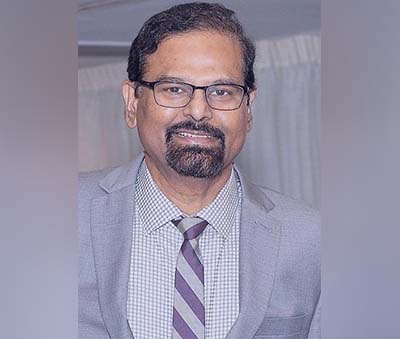
After a five-year application process, the U.S. Patent and Trademark Office awarded a patent to Syed Rizvi, professor of food science engineering, at Cornell University, and colleague Michael E. Wagner.

In Rizvi’s laboratory, a prototype machine – featuring a newly patented process – uses supercritical carbon dioxide to dish out instant vanilla ice cream, according to Cornell report.

With Rizvi and Wagner’s newly patented process – where pressurized carbon dioxide does all the work – anyone can make any ice cream at any time.

“Of course, you’ll need the liquid ice cream mix,” Rizvi said, in the report. “The mix can be made commercially, locally or you can make it at home. It’s very simple, and this machine converts the mix into a scoop of ice cream in about three seconds.”

In the traditional method of making ice cream, the dairy-based mix flows through a heat-exchanging barrel, where ice crystals form and get scraped by blades.

With this new method, highly pressurized carbon dioxide passes over a nozzle that, in turn, creates a vacuum to draw in the liquid ice cream. When carbon dioxide goes from a high pressure to a lower pressure, it cools the mixture to about minus 70 degrees C – freezing the mixture into ice cream, which jets out of another nozzle into a bowl, ready to eat.

A newly patented process using pressurized carbon dioxide can create instant ice cream.

Instant ice cream can be served right on the spot, all without the challenges of commercial transportation “cold chains,” in which the product must be frozen and maintained at minus 20 degrees Celsius. To guard against failing spots in the cold-temperature transportation chain, commercial ice cream makers add stabilizers and emulsifiers, the report said.

“Consumers today want a clean product,” Rizvi said. “They don’t want undesirable ingredients thrown into it.”

What’s more, Rizvi said, the cold chain requires a lot of energy. But if you could make ice cream without stabilization ingredients, commercial entities could avoid the cold chain altogether.

The device can take any liquid and give it frozen features. “You can make a slushy out of soft drinks,” he said, while noting that the new process is suited for on-demand and point-of-use applications like vending machines, parlors and home use. “You can convert water into carbonated ice instantly, too. Any liquid drink that can be partially frozen can be used.”

Cornell’s Center for Technology Licensing is currently exploring licensing opportunities.

Rizvi, a graduate of Panjab University, is professor of food process engineering in the Department of Food Science and also holds the title of International Professor at Cornell.

He is interested in engineering and processing aspects of food science and value addition for global markets. He has published over 170 technical papers, co-authored/edited six books and holds six patents. He is also associated with the Department of State advising the Bureau of Economics, Energy and Agricultural Affairs on use of science in diplomacy.

He had won many awards, including Distinguished Professor (2017) Chinese Academy of Agricultural Science; Excellence in Teaching Award (2014) Food Science Advisory Council; and Stanley Watson Award (2012) American Association of Cereal Chemists International.

Rizvi did his Meng from University of Toronto, in 1988; and his doctorate from the Ohio State University, in 1976.

Study says, Young women more affected by alcohol use than men

Female college students are more likely to depend on alcohol to improve mental well-being, say researchers, adding that the young women appear to be more affected by high alcohol use than men, which may lead to less interest in academics.

“Cognitive aptitudes of young women appear to be more affected than for men with high alcohol use,” said study lead author Lina Begdache, Assistant Professor at Binghamton University in the US.

“These behaviours are regulated by the limbic system of the brain. However, the cognitive functions for high alcohol use among the young men and women were different,” Begdache added.

For the findings, published in the journal Trends in Neuroscience and Education, researchers sought to compare neurobehaviours and academic effort among college students with low alcohol use with those of high alcohol consumption and build conceptual models that represent the integration of the different variables.

They sent an anonymous survey to assess college students’ alcohol use and frequency along with questions on sleep, academic performance and attitude toward learning. They compared gender responses and found that both young men and women exhibit common behavioural responses to high alcohol use such as abuse of other substances and risk-taking.

The findings showed that young women reported generally less interest in the academic work and performance than young men. The latter reported more risky behaviours, such as being arrested, from excessive drinking.

The study also found that young women are more likely to depend on alcohol to improve mental well-being, which is also concerning, as they may self-medicate through drinking. In both genders, the researchers reported an increase in impulsive behaviours, which are under the control of the limbic system (the oldest part of the brain, evolutionary speaking).

Another reason for the difference seen is the differential metabolism of alcohol. Women metabolise alcohol at a slower rate, therefore, they are more likely to feel the effect of alcohol. Consequently, their brain is more likely to accumulate a toxic metabolite, acetaldehyde, which may be altering brain chemistry further to add to the differential behaviours identified in this study.

“Academic performance and risky behaviours among college students may be linked to their drinking habits, so more education and awareness should be shared with college students,” said Begdache.

“These findings are also explained by the fact that women tend to have higher connectivity between cortices, while men have a large cortical volume in the areas on the limbic system that support impulsivity,” Begdache added. (IANS)

CBS News’ Weijia Jiang on Newsroom Diversity, COVID-19 Racism, and Covering President Trump

(Courtesy: The Asia Society)

On May 11, during a press conference at the White House Rose Garden, CBS News White House Correspondent Weijia Jiang asked President Donald Trump why he was boasting that the United States was testing more people for coronavirus than any other country.

“Why does that matter?” she asked. “Why is this a global competition to you if every day Americans are still losing their lives and we are still seeing more cases every day?”

“Maybe that’s a question you should ask China,” Trump responded. “Don’t ask me. Ask China that question, OK?”

When Jiang, who is Chinese American, asked the president why he was directing this question to her, Trump denied singling her out. He then chided her for asking a “nasty” question before storming out of the news conference.

Trump’s churlish reaction to a question from a White House correspondent — particularly a woman of color — was hardly new. But Trump’s invocation of Jiang’s ethnicity occurred in a particularly fraught moment for Asian Americans, who have been subject to a surge of racist attacks in the months since the coronavirus spread from China to the rest of the world. The exchange with Trump also wasn’t the first time Jiang has encountered racist sentiment at work. In March, she tweeted that a White House official referred to COVID-19 as the “kung flu virus” in her presence. “Makes me wonder what they’re calling it behind my back,” she said.

Born in Xiamen, China, Jiang grew up in a small city in West Virginia. A graduate of Syracuse University, she has worked for CBS News since 2015 and became White House correspondent in July 2018. In this conversation with Asia Blog, Jiang recounted her upbringing, reflected on the importance of newsroom diversity, and explained why she thinks that news organizations have never been more vital.

What was your upbringing like? What was the adjustment like for your parents? Were there any other Chinese families in your hometown?

I can’t imagine what the adjustment was like for my parents settling down in a completely foreign land without an Asian community to offer support. They are braver than I could ever be. We had a small Chinese restaurant — one of two in the town. So there was one other Chinese American family, but they didn’t have kids my age. I was the only Chinese American student in my school system. I definitely had to deal with challenges and racism throughout my upbringing, but I wouldn’t change anything because those experiences shaped who I am today. There was also a lot of kindness in our little town. I spent lots of time with my friends and their welcoming families.

How did you decide to become a journalist — what about the profession called to you? 

I remember watching my dad watch hours of news as a child, which probably led to me taking a TV news class in middle school. I was also on the newspaper staff, and I loved everything about reporting. My teacher convinced me to apply for “Student Produced Week” at ChannelOne News — a news program for middle and high school students across the country. (It has since closed operations, but offered a start for many journalists including Anderson Cooper and Lisa Ling.) Every year the company selected a group of students and paid for a two-week trip to Los Angeles to learn about journalism. I won, and my life changed forever. I loved the idea that talking to people and telling their stories could be a career. I also loved asking questions and sharing the answers with people who needed them. That hasn’t changed.

Newsrooms, like professions across the country, have struggled to match the diversity of the communities and stories they cover. Do you feel news organizations have improved in fostering a diverse environment over the years? 

I can’t speak to newsrooms nationwide, but the ones I have worked in have all made strides in adding diversity. But in my opinion, it is not diversity on its face that matters. The perspective that comes with being a minority is essential in reporting and telling stories in an authentic way. We all have to make an effort to acknowledge and embrace those varying points of view to make the most of our resources. That requires a never-ending, always-evolving conversation about diversity and why it matters. I think we can all do more to nurture that dialogue and create a space where people feel comfortable sharing. I also think diversity at the top makes a huge difference because people in those positions are leading that effort and making important decisions.

Earlier this year, you tweeted about a racist remark (“kung flu virus”) said in your presence at the White House — and you wondered what was said when you were not around. Have you been subject to any other anti-Asian racism while at work or otherwise since COVID-19 spread to the U.S.? What more needs to be done to halt this trend?

I have not experienced another incident in person, but I get messages on social media every day that include racist language. I think the best thing we can do is provide facts. The fact is the virus does not discriminate against any group of people, and Asian Americans are not more likely to spread it. It’s also important to report on hate crimes and attacks against members of the APA community so they are not normalized.

But the tension between the press and the president is nothing new. President Trump expresses it more frequently and more … colorfully than others.

News organizations have recently debated whether broadcasting President Trump’s press conferences serve the public interest. What are your thoughts about this? Should news organizations refrain from broadcasting these live?

I absolutely think it is important for Americans to hear from the president of the United States during a time of crisis. People want to know what the government is doing to contain the spread, help patients recover, and get people back on their feet again when it comes to the economy. However, the conversation during the briefings has sometimes veered toward other topics than the pandemic and its impact. In those instances, airing the briefings in their entirety can be unproductive. I think that’s why viewership for evening news broadcasts like the CBS Evening News and public affairs shows like Face the Nation continue to increase. It is the job of news organizations to cut through all the noise and distractions to provide the latest information.

If nothing else, White House press conferences have changed significantly during the Trump years. Do you anticipate that things will revert to the way they were in a post-Trump era? Or do you feel that Trump has, for better or worse, revolutionized the way an American president deals with the press? Has his antagonistic relationship with the press damaged journalism? Or is this concern overblown?

I have only ever covered the Trump administration in this capacity, so I don’t have a frame of reference for what is “normal.” This is normal to me.

Of course, I recognize the president’s unique relationship with the press and how it compares with past presidents. I am curious myself how it will impact the future, if at all. But the tension between the press and the president is nothing new. President Trump expresses it more frequently and more … colorfully than others.

Q&A With David BarunKumar Thomas: Helping Indian Women During COVID-19

Since 2005, India Nirman Sangh has worked toward women’s development in the villages and hills in and around the Kodaikanal and Palani towns of Tamil Nadu. India Nirman Sangh has distributed basic grocery packs to 2000 women and their families while running a tailoring centre producing free masks. INS is also providing basic income support to those in utmost need. The organization is led by David BarunKumar Thomas, who serves the non-profit as a volunteer.


Answers have been edited for length and clarity.


Q: How did you get into this line of work?

Thomas: I was working for IBM. When I was 45, I decided to leave that job and go back to a place close to where I was born and do something that I found more interesting, which was working with people. In 2004 I started an organization that worked among the poor, particularly women, and helped them organize into groups to start small businesses, send children to school, and improve their standards of living. Part of our strategy includes distributing microloans, but we also go beyond that with organizing and education.We now have 4,000 women who are a part of the group, and the members of the organization work among them. For the last two years we have also started to work among farmers. Farming in the area is becoming unprofitable, so we are working to bring new technology and methods to improve farming’s profitability, all while remaining organic and environmentally sustainable.

Q: How has your organization assisted with the COVID response effort?

Thomas: We have distributed groceries to more than 2000 poor women in the Kodaikanal and Palani Blocks of Dindigul District in Tamil Nadu. In addition, we have given monetary assistance to 42 of the poorest families in this area. We have also produced more than 2000 reusable masks at our tailoring centre in Kodaikanal and distributed them free to the poor.

We have located poor migrants from Nepal in Kodaikanal and have given them food, groceries and monetary assistance. We have also helped a group of 15 LGBT community members with groceries in Palani.

Q:  How does diversity of faith and caste impact your organization’s work?

Thomas: The organization is secular, but about 80 percent of the women we work with are Hindus, 10 percent are Muslims, and 10 percent are Christians. We respect the beliefs of all with whom we work.  The people in this area belong to a variety of castes, mainly the lower castes, so roughly about 40 percent of the people we work with belong to the most depressed castes. We make it a point not to bring caste into the equation. Society is still divided along caste lines, but we make everybody sit together, eat together, and keep telling them in various ways that caste should not be important.

Q: Is there also government relief aid, and is it reaching the neediest?

Thomas: The government here is giving free rations to people, and that covers roughly about 95 percent of the people in this area. They get rice, lentils, and sugar. It’s not really enough for a family to live on, but it does prevent complete starvation. In the North it’s not as good, but here they are giving rations to almost everybody. As a supplement, our group has distributed lentils, sugar, tea, and rice to 2,000 people, and this week we are in the process of distributing wheat flour and a form of pasta and spices. For that, we have used all the funds that we had … which came from those regularly supporting our organization. We like to concentrate on the 2,000 who are very, very poor and who have no family members earning income. We would also like to expand to help others who are not quite so badly off, but who are still very poor. We could very much use additional funding.

Q:  What gives you hope?

Thomas: How much poor people help each other. They share a lot more than people who are [financially] better off. They have a very informed support system among the very poor. They share the little they have. You see this happening all the time. That’s what really keeps people from starvation; the poor helping the poor. That is something Gandhi used to admire a lot and which we see at times like this.

Oats N’ Raisins Coconut Cookies

No one stops with just one cookie ..So whenever you decide to bake some cookies all by yourself at home you’re ending up indulging in your guilty pleasures of munching on some extra empty calories . But what if you are making some yummy healthy cookies this time? These oats & raisins coconut cookies are not as junky as your usual store bought cookies and are nutritious to a great extent whether it’s for breakfast or for snacking.
How I developed this recipe-
Oats N’ Raisins Coconut CookiesEveryone chooses to buy oats & raisins cookies from the stores thinking it’s much healthier than chocolate chip cookies, snickerdoodles, double chocolates cookies, Oreos, shortbread .etc. Next time you do that, never forget to refer to the percentage of oats content , hydrogenated fats , sugar and additives in your store bought cookies. I’m sure you’ll be shocked how little the percentage of oats is in those cookies and also how much junk you are feeding yourself thinking it’s all healthy stuff. These store bought cookies do stay edible longer than homemade ones, but if you’re all set to eat healthy why not try some better homemade version of your favourite oats cookies?
That’s what I did when I went through the above research and tried out my favourite recipes of oats cookies all over the Internet, cookbook collections and ended up incorporating coconut and Californian raisins to it as it could make my cookies healthier and better than any store bought cookies .
What’s special about this recipe-
Oats- This amazing source of complex carbohydrates is full of good fibres, protein and many micronutrients aiding in digestion and weight loss.
Californian raisins & brown sugar- These are the only 2 ingredients in this recipe which adds good enough sweetness to the cookies. Both these are natural sources of iron and also brown sugar is a great alternative to refined white sugar.
Coconut- Its a good source of fibres and Medium Chain Fatty acids (MCT oil) thats known to help in overall weight loss. Apart from that, coconut is also known to have antibacterial and detoxifying properties known to promote gut health and proper organ functioning.
What you’ll need-(for 16 cookies)-
Oats N’ Raisins Coconut Cookies1 cup white oats
Half cup desiccated coconut
Half cup raisins
Two by third cup light brown sugar
1 cup flour
1 teaspoon baking soda
Half cup butter
1 egg
Half teaspoon salt
1 teaspoon vanilla extract
How to make-
. Preheat oven to 350 F. Prepare a cookie sheet or baking sheet lined with parchment paper.
. In a bowl, cream together butter & brown sugar until fluffy.
. Add the vanilla, egg and beat well.
. In a seperate bowl, mix the oats, flour , baking soda, salt , coconut and raisins.
. Fold in the wet mix into the dry mix.
Oats N’ Raisins Coconut Cookies. Scoop out the mix onto the prepared baking tray using a tablespoon, rounding and pressing the equal portions of dough to flatten slightly.
. Bake in batches of 1 or 2 for around 8-12 minutes, to yield 16 healthy yummy cookies.
. Let it cool for a few minutes on the tray, then cool it completely on a wire rack & enjoy!
Notes, tips & suggestions-
. Never try transferring hot cookies which comes straight out of the oven as those are too soft and delicate to crumble/break. Be patient as your cookies will harden up only on cooling.
. You can add a few tablespoons of your favourite nuts chopped, to make your cookies nutty or even omit the raisins if you are not a fan of raisins in your cookie.
. These cookies are perfect for a healthy yummy breakfast to dip & dunk into your glass of milk/coffee and indulge guilt-free.

IIT Alumnus Dipanjan Pan’s Rapid Naked Eye Test Uses Innovative Nanoparticle Technique To Detect Coronovirus In 10 Minutes

A team of US scientists led by an Indian American researcher has developed an experimental diagnostic test for covid-19 that can visually detect the presence of the virus in 10 minutes.

The test developed by scientists from the University of Maryland School of Medicine (UMSOM) does not require the use of any advanced laboratory techniques, such as those commonly used to amplify DNA, for analysis.

It uses a simple assay containing plasmonic gold nanoparticles to detect a color change when the virus is present, according to an UMSOM release.

“Based on our preliminary results, we believe this promising new test may detect RNA material from the virus as early as the first day of infection,” said study leader Dipanjan Pan, PhD, Professor of Diagnostic Radiology and Nuclear Medicine and Pediatrics at the UMSOM.

“Additional studies are needed, however, to confirm whether this is indeed the case,” added Dr. Pan who has a doctorate in chemistry from the Indian Institute of Technology (IIT).

Once a nasal swab or saliva sample is obtained from a patient, the RNA is extracted from the sample via a simple process that takes about 10 minutes.

The test uses a highly specific molecule attached to the gold nanoparticles to detect a particular protein.

his protein is part of the genetic sequence that is unique to the novel coronavirus.

When the biosensor binds to the virus’s gene sequence, the gold nanoparticles respond by turning the liquid reagent from purple to blue.

“The accuracy of any COVID-19 test is based on being able to reliably detect any virus. This means it does not give a false negative result if the virus actually is present, nor a false positive result if the virus is not present,” informed Dr Pan.

Many of the diagnostic tests currently on the market cannot detect the virus until several days after infection. For this reason, they have a significant rate of false negative results.

Dr Pan now plans to have a pre-submission meeting with the US Food and Drug Administration (FDA) within the next month to discuss requirements for getting an emergency use authorisation for the test.

“This RNA-based test appears to be very promising in terms of detecting the virus,” said study co-author Matthew Frieman.

Others in Dr. Pan’s team were research scientist Parikshit Moitra, research fellow Maha Alafeef, along with research fellow Ketan Dighe from the University of Maryland, Baltimore County.

The authors published their work in the American Chemical Society’s nanotechnology journal ACS Nano.

Prof. Dipanjan Pan, MS, PhD, is an expert in nanomedicine, molecular imaging and drug delivery.  He is presently a tenured Associate Professor in Bioengineering and Materials Science and Engineering and Institute of Sustainability in Energy and Environment in University of Illinois, Urbana-Champaign. He also holds a full faculty position with Beckman Institute for Advanced Science and Technology, University of Illinois Cancer Center and recently joined newly started Carle-Illinois College of Medicine.

He Administratively directs the Professional Masters in Engineering Program in Bioengineering within the College of Engineering. He is also an Associate course director for the newly founded engineering inspired Carle-Illinois school of medicine. Prior to coming to Illinois, he was a faculty in Washington University School of Medicine, St Louis. Prof Pan’s lab uniquely merges fundamental chemistry, biology and engineering to bring solution to today’s healthcare problems.

His research is highly collaborative and interdisciplinary centering on the development of novel materials for biomedical applications, immune-nanomedicine and targeted therapies for stem-like cancer cell with phenotypically screened nanomedicine platforms.

Over the years, this research has resulted in more than 100 high impact peer reviewed publications in scientific journals, numerous conference abstracts and has been supported by external funding from NIH, NSF, DoD, American Heart Association and other private/foundational funding sources.

Prof. Pan edited and co-written two books published from Taylor and Francois (Nanomedicine: A Soft Matter Perspective, ISBN-13: 978-1466572829) and Springer (Personalized Medicine with a Nanochemistry Twist: Nanomedicine (Topics in Medicinal Chemistry, ISBN-13: 978-3319335445). He holds multiple patents (8 granted US patents), several ongoing clinical trials and is the founder of three University based early start-ups. He is the CEO/President for a biotechnology start-up Vitruvian Biotech dedicated to develop novel image guided therapies.

He also co-founded InnSight Technologies dedicated to nanotechnology based application for ocular diseases. His other company Kalocyte, which he cofounded with his clinical collaborators, develops artificial oxygen career. His technology has been licensed for commercial development multiple times. He serves as study section review board member for NIH, CDMRP (DoD), NSF and multiple review committee member for American Heart Association.

In 2016 he received Nanomaterials Letter (NML) Researcher award, in 2017 an Young Innovator Award from Biomedical Engineering Society (BMES) and most recently Dean’s Award for Research Excellence in 2018. He is an elected fellow of Royal Society of Chemistry, a Fellow of American Heart Association and an elected fellow of American College of Cardiology.

India Opens Up Even As Coronavirus Case Spreads

Nearly two months after the unplanned and abrupt lockdown of the country by Modi government, putting millions of immigrant workers and the poor stranded on the streets without food and shelter, India is cautiously opening up its economy and the lifting the lockdown in phases.

More states opened up and crowds of commuters trickled onto the roads in many of India’s cities on Monday as a three-phase plan to lift the nationwide coronavirus lockdown began despite an upward trend in new infections.

Businesses and shops reopened in many states and the railways announced 200 more special passenger trains. Some states also opened their borders, allowing vehicular traffic.

India reported more than 8,000 new cases of the coronavirus in a single day, another record high that topped the deadliest week in the country.

Confirmed infections have risen to 182,143, with 5,164 fatalities, including 193 in the last 24 hours, the Health Ministry said Sunday.

Overall, more than 60% of the virus fatalities have been reported from only two states — Maharashtra, the financial hub, and Gujarat, the home state of Prime Minister Narendra Modi. The new cases are largely concentrated in six Indian states, including the capital New Delhi.

India implemented the lockdown — one of the world’s strictest — on March 25, ordering everyone to stay inside, except for emergencies and essential services, leading to a sudden halt to the economy. The lockdown was brutally devastating for daily laborers and migrant workers, who fled cities on foot for their family homes in the countryside. The country’s unemployment rate rose to 23.48% in May, according to official data released this week.

Public health experts have criticized the Modi government’s handling of the outbreak. A joint statement by the Indian Public Health Association, Indian Association of Preventive and Social Medicine and Indian Association of Epidemiologists, which was sent to Modi’s office on May 25, said it was “unrealistic” to eliminate the virus at a time when “community transmission is already well-established.”

The coastal state of Maharashtra, home to the financial hub of Mumbai and Bollywood, allowed the resumption of film production with some restrictions in place. In New Delhi, the capital, authorities announced the reopening of all industries and salons, while keeping the borders sealed until June 8 to try to prevent a spike in new virus cases.

Although social distancing and the wearing of masks in public are still mandatory across India, some people were seen forgoing both in many places. Others violated lockdown rules. In Prayagraj, a city in northern India’s Uttar Pradesh state, hundreds of Hindu devotees took a dip in the sacred Ganges river even though congregations at religious venues remain barred.

But as India eases more restrictions, it continues to report a rise in infections. India on Monday climbed to the seventh spot in countries worst hit by the virus, passing Germany and France, as its confirmed cases rose to more than 190,000, including over 5,400 deaths.

The first phase of the easing of the lockdown, called Unlock 1, will restrict curbs to containment zones — areas that have been isolated due to coronavirus outbreaks. It gives states more power to decide and strategize lockdown implementations locally.

More than 60% of the country’s virus fatalities have been reported in only two states — Maharashtra and neighboring Gujarat. The new cases are largely concentrated in six states, including New Delhi.

Critics fear that the lockdown, which started over two months ago, is being eased too soon. There are concerns that the virus may be spreading through India’s villages as millions of jobless migrant workers return home from big cities.

The real number of coronavirus patients in the country is likely much higher than the official numbers show, as India is among the countries testing the lowest proportion of its population: With just over 1.1 million tests conducted in a country of 1.3 billion, that’s only about 800 tests per million inhabitants, according to data website worldmeters.info.

The U.S., by comparison, has tested about 21,000 per million residents, and America is nowhere near the leader in that regard.Experts warn that the pandemic has yet to peak in India, and many states have begun to identify more high-risk zones where coronavirus lockdowns will continue until June 30. But restaurants, malls and religious venues are permitted to reopen elsewhere on June 8.

In a radio address to the nation on Sunday, Prime Minister Narendra Modi cautioned citizens and asked them to remain vigilant.

“Becoming careless or lackadaisical cannot be an option,” he said. Modi’s government has stressed that restrictions are being eased to focus on promoting economic activity, which has been severely hit by the lockdown.

Biden Is Best Placed For Any Challenger Since Scientific Polling Began

Former vice president Joe Biden has gained a clear national lead against president Donald Trump in the latest Washington Post/ABC poll ahead of the 2020 election.

In the poll of registered voters conducted between 25-28 May, 53 per cent of respondents said that they would vote for Mr Biden over 43 percent who favoured Mr Trump were the election held on the day they were questioned. Just two months ago the same poll had the two candidates virtually tied at 49 per cent to 47 per cent.

But it’s important to put individual polls into context, and that context continues to show Biden’s in one of the best positions for any challenger since scientific polling began in the 1930s.

There were more than 40 national public polls taken at least partially in the month of May that asked about the Biden-Trump matchup. Biden led in every single one of them. He’s the first challenger to be ahead of the incumbent in every May poll since Jimmy Carter did so in 1976. Carter, of course, won the 1976 election. Biden’s the only challenger to have the advantage in every May poll over an elected incumbent in the polling era.

Biden remains the lone challenger to be up in the average of polls in every single month of the election year. His average lead in a monthly average of polls has never dipped below 4 points and has usually been above it.

Biden hasn’t trailed Trump this entire year in a single telephone poll in which at least some voters were reached via their cell phones — historically the most accurate. The ABC News/Washington Post poll is the latest example of these polls. In fact, Biden’s never been behind in any of these polls since at least January 2019. No other challenger has come close to that mark.

Indeed, the stability of Biden’s edge has been what is most impressive. The May polls had Biden up by 6 points on average. That is right where the average of polls taken since the beginning of this year has been. It’s where the average of polls conducted since the beginning of 2019 has been as well.

If we limit ourselves to just the telephone polls that call cell phones, Biden’s edge might even be slightly larger. This month those polls have Biden up 7 points on average. Estimating Biden’s advantage from state polls of this type shows a similar lead for Biden.

A look at the fundamentals shows why Trump continues to trail. Simply put, he remains unpopular.

His net approval rating (approval – disapproval) in the ABC News/Washington Post poll was -8 points. That’s very close to the average of polls, which has it at about -10 points. At no point during the past three years has Trump ever had a positive net approval rating.

The only other two presidents to have a net approval rating this low at this point in the campaign were Carter in 1980 and George H.W. Bush in 1992. Both of them lost reelection.

But I’m not predicting anything here. Between the coronavirus pandemic and now the protests and riots taking place nationwide, we’re obviously in a volatile news environment.

Still, no other campaign involving an incumbent president has moved as little as this one has. That’s after nearly three months of the coronavirus dominating the news cycle. That’s after many anti-Biden ads have been aired.

It’s at least possible that nothing will move the electorate substantially in Trump’s direction.

Will There Be A Second Round Of Stimulus Check In June?

Congress could decide on a second wave of stimulus checks this month. If it passes, the package could be the last relief check coming to Americans as a result of the coronavirus pandemic. Here’s the update today and what could happen next.

Congress seems to be moving closer to a decision on a second round of economic stimulus payments for individuals and families, but details haven’t yet taken shape The US House of Representatives passed a fourth stimulus relief package last week by 208 votes to 199. The $3 trillion Heroes Act includes a second round of $1,200 stimulus checks, another $200 billion in hazard pay for essential workers, and six further months of COVID-19 unemployment along with other help for state and local assistance.

The HEROES (Health and Economic Recovery Omnibus Emergency Solutions) Act will still face significant opposition from the Republican-controlled Senate and the White House but if the bill fails to pass into law after debate on the floor of the upper house, a consensus compromise is still expected to be reached between Democrats and Republicans to provide hard-hit Americans with a second round of financial support sometime during May or possibly June at this rate.

Senate Majority Leader Mitch McConnell said last Friday that if Congress does take up another round of stimulus payments, it will be the “final” one, CNBC reported. McConnell also said that senators could decide in “about a month” whether to move ahead with a second relief check, according to CNBC.

The first stimulus checks for up to $1,200 apiece were initially intended as a one-time payment to help the people and businesses affected by the coronavirus outbreak. That includes people who couldn’t work because they got sick, received limited work hours or lost their jobs when businesses closed as a measure to slow the spread of COVID-19.

Now, with surging unemployment and a potential global recession ahead, some wonder if the first check did enough for individuals, families, businesses and those who are out of work and are looking at how best to distribute additional aid.

The US Bureau of Labor Statistics reported in its monthly assessment that 38.6 million Americans sought unemployment benefits (PDF) in the past 10 weeks. That number has reached 42 million people, CBS News reported last week.

Earlier this month, White House economic adviser Kevin Hassett projected that unemployment could reach 20% “by June.”

That appears to be the case already for Nevada, Hawaii and Michigan. During a recent Senate hearing, the Chair of the Federal Reserve Jerome Powell called for additional economic relief. And earlier this month, the International Monetary Fund forecast a deep global recession that could become the worst since the Great Depression.

Some Members of Congress even sent a letter to the Treasury recommending high-tech options such as blockchain to help speed up delivery and offer transparency of the payments. However, the only technological move from Secretary Mnuchin appears to be allowing debit cards for now.

On the other hand, not only have Republican senators lined up to oppose the plan, Senate Democrats say they are concerned about what they see as a massive untargeted expense, The Hill reported.

“I’d like to take a look at all that aid we provided and get good economic information on the value for that, from the point of view of our economy but more importantly on fairness to people who are really hurt,” Sen. Ben Cardin (D-Maryland), a member of the Senate Finance Committee, told The Hill.

Cardin said rather than issue a second set of checks to all taxpayers, the government should focus on the households that have been hardest hit by COVID-19’s economic impact. As the Senate determines what the next bailout bill should look like, lawmakers in both parties are ranking their priorities. Sen. Debbie Stabenow (D-Michigan) of the Finance Committee said she was not a fan of the checks.

“One-time payments are not what people need, she told The Hill. “What people need is a paycheck. They need ongoing income until this is done. That’s what they need.”

A Border Clash Between The World’s Biggest Nations. What Could Go Wrong?

By Adam Taylor (Courtesy The Washington Post)

China’s ongoing border clash with India may seem remote, but it has global impact. Reports say thousands of troops moved into the disputed area 14,000 feet up in the Himalayas after skirmishes broke out on May 5 near Pangong Lake in Ladakh and then on May 9 in North Sikkim, leaving more than 100 soldiers injured.

Amid the global coronavirus pandemic, assessing exactly what is happening in this dispute between the two most populated countries on Earth is difficult. Much of the border region is closed to the press, so reporters have to rely on statements and leaks.

Many accounts suggest that aggressive Chinese patrols in the area known as the Line of Actual Control (LAC) were to blame – or, in what may not necessarily be a contradiction, that Indian construction in the region had been interpreted as an aggressive challenge to Beijing’s Belt and Road infrastructure project.

Ultimately, India and China’s border problems are not new – it’s the circumstances surrounding them that have changed. Both Beijing and Delhi are led by governments in the thrall of nationalistic ambition. The pandemic has further pushed many nations into pro- or anti-China positions, camps that were already forming amid a global trade war that has lasted years.

The United States, locked in its own squabble with China, has voiced terse support for India’s position and offered to mediate. Hu Xijin, the outspoken editor of China’s party paper the Global Times, seized on the conflicting messages, mocking President Trump and arguing that the United States “seems to be the beneficiary of China-India border tension.”

India and China’s relationship is based on their status as two giant, wary neighbors. They share a 2,167-mile-long border. Together, their populations are around 2.7 billion, more than a third of the world. Both have achieved rapid economic development in recent decades and increased their territorial ambitions. Both have nuclear weapons.

India was among the first democracies to recognize the People’s Republic of China in 1950, but border disputes between the two increased as Beijing took control of Tibet. In 1962, they fought a month-long war on the Himalayan border, with China inflicting serious casualties on India before withdrawing to the LAC.

There were skirmishes over the border for years. In 1988, after one incident in the Sumdorong Chu Valley in Arunachal Pradesh, Indian Prime Minister Rajiv Gandhi traveled to Beijing to meet his counterpart Deng Xiaoping. The two nations, both undergoing a wave of economic development just as the Soviet Union began to collapse, put aside their differences out of pragmatism.

Now, that pragmatism is being tested. China, whose economic development has dwarfed India’s, has a gross domestic product of roughly $14 trillion, compared to India’s less than $2.7 trillion. “While India has risen as an economy and a global power in the past three decades, its relative strength to China has in fact greatly declined,” Sumit Ganguly and Manjeet S. Pardesi wrote in Foreign Policy.

China’s close relationship with Pakistan, an unequal partner in the Belt and Road project, and lingering disagreement over Tibet have soured relations with India further. The tension between the two nations spilled over in 2017 in the Doklam area of the Himalayas after Indian troops moved in to prevent the Chinese military from building a road into territory claimed by Bhutan, an ally of India.

Over two months, the two powers flooded the area with military personnel. The threats, especially those from China, were apoplectic. “India will suffer worse losses than 1962 if it incites border clash,” the Global Times wrote.

The Doklam dispute ultimately fizzled out. Both sides withdrew troops in late August of that year and issued vague remarks about a resolution. Exactly what was decided behind the scenes was unclear, though reports that China had halted construction of the motorway suggested that Beijing had backed down.

Some Indian analysts have suggested that the current situation will end similarly, pointing to a number of conciliatory messages from Chinese officials. “We should never let differences overshadow our relations. We should resolve differences through communication,” China’s ambassador to India, Sun Weidong, said Wednesday.

But another inconclusive end to a standoff will fail to address the root of the problem. The Indian government has claimed that the Chinese military crossed into Indian territory 1,025 times between 2016 and 2018 (the Chinese government has not released comparable figures).

India and China are both in the throes of aggressive nationalist movements, each displaying their own brand of “wolf warrior” foreign policy. Under President Xi Jinping, China has moved from subtle pushes to strong shoves to bring the city of Hong Kong under Beijing’s sovereignty, while also applying pressure in the South China Sea and against Taiwan.

Indian Prime Minister Narendra Modi entered his second term in power bent on changing many norms of Indian policy. The long-disputed territory of Kashmir has been under lockdown for months, while last year India and Pakistan were drawn into their most serious military escalation in decades. Reuters reported this week that Modi’s plans to build 66 key roads by the Chinese border, including one to a new air base, had probably drawn Beijing’s anger.

In the past, this might have remained a bilateral dispute. But now, anything that involves China seems to involve the United States too. The Hindustan Times reported Wednesday that Trump’s offer to mediate was “part of [a] growing anti-China juggernaut.” Under such a juggernaut, ambiguity may not exist.

Young People are Key to a Nicotine-free Future: Five Steps to Stop them Smoking

By Sam Filby – IPS
Tobacco use kills more than 8 million people each year. Most adult smokers start smoking before the age of 20. This implies that if one can get through adolescence without smoking, the likelihood of being a smoker in adulthood is greatly reduced.
Preventing young people from becoming addicted to tobacco and related products is therefore key to a smoke-free future.
With the advent of novel tobacco products and the tobacco industry falsely marketing them as less harmful than their combustible counterparts, the adage “prevention is better than cure” has never been more important for governments to heed if we are to achieve a smoke-free future.
Here are five things that governments need to do to ensure that a smoke-free future is realised.
1. Raise taxes on tobacco products
Tobacco taxation is one of the most effective population-based strategies for decreasing tobacco consumption. On average, a 10% increase in the price of cigarettes reduces demand for cigarettes by between 4% and 6% for the general adult population.
Because they lack disposable income and have a limited smoking history, young people are more responsive to price increases than their adult counterparts. Young people’s price responsiveness is also explained by the fact that they are also more likely to smoke if their peers smoke. This suggests that an increase in tobacco taxes also indirectly reduces youth smoking by decreasing smoking among their peers.
2. Introduce 100% smoke-free environments
Smoke-free policies reduce opportunities to smoke and erode societal acceptance of smoking. Most countries have some form of smoke-free policy in place. But there are still many public spaces where smoking happens. Many of these places are frequented by young people – or example, smoking sections in nightclubs and bars – contributing to the idea that smoking is acceptable and “normal”.
Research from the United States shows that creating smoke-free spaces reduces youth smoking uptake and the likelihood of youth progressing from experimental to established smokers. In the United Kingdom, smoke-free places have been linked to a reduction in regular smoking among teenagers, and research from Australia finds that smoke-free policies were directly related to a drop in youth smoking prevalence between 1990 and 2015. By adopting 100% smoke-free policies governments can denormalise smoking and turn youth away from tobacco and related products.
3. Adopt plain packaging and graphic health warnings
The tobacco industry uses sleek and attractive designs to market its dangerous products to young people. All tobacco products should therefore be subject to plain packaging and graphic health warnings so that their attractive packaging designs do not lead youth to underestimate the harm of using these products. Currently 125 countries require graphic images on the packaging of tobacco products. Countries like South Africa that rely on a text warning message are far behind the curve. Plain packaging on tobacco products has been adopted in 13 countries to date and, in January 2020, Israel became the first country to apply plain packaging to e-cigarettes.
4. Outlaw tobacco advertising, promotion and sponsorship
Traditional advertising and promotion of tobacco products has been banned in most parts of the world. But the tobacco industry has developed novel ways of keeping its products in the public eye.
Some common strategies used by the industry to target youth include hiring “influencers” to promote tobacco and nicotine products on social media, sponsoring events, and launching new flavours that are appealing to youth, such as bubble gum and cotton candy, which encourages young people to underestimate the potential harm of using them. Evidence also shows how the tobacco industry uses point-of-sale marketing to target children by encouraging vendors to position tobacco and related products near sweets, snacks and cooldrinks, especially in outlets close to schools.
Governments need to outlaw these tactics and impose hefty fines on tobacco companies that make any attempt to circumvent the law.
5. Educate young people
Given that tobacco kills half of its long-term users, the tobacco industry needs to get young people addicted to its products to ensure its survival. Young people need to be made aware of this. Governments should launch counter-advertising campaigns that educate young people on the tactics employed by the industry to target them so that they do not fall prey to them.The Conversation
Sam Filby, Research Officer, Research on the Economics of Excisable Products,, University of Cape Town and Corné van Walbeek, Professor at the School of Economics and Principal Investigator of the Economics of Tobacco Control Project, University of Cape Town
This article is republished from The Conversation under a Creative Commons license. Read the original article.

Authentic Mutter Paneer Recipe

This is a North Indian all-time-favourite curry recipe using paneer (Indian cottage cheese) and mutter (green peas) in a spiced tangy tomato gravy. Unlike many North Indian recipes of paneer, like paneer makhani (butter masala), shahi paneer,.etc., this recipe is lighter without the addition of milk or cream. It’s a must try recipe that’s quick and easy.
How I developed this recipe-
Authentic Mutter Paneer RecipePaneer is my sister’s favourite and whenever I ask her what she would like me to cook for her on Fridays(when my whole family eats only vegetarian food), she prefers mostly either paneer or mushrooms. As butter paneer is a famous dish in India and because my family is not a big fan of its creamy rich and sweet gravy, one day, I tried this modified recipe of mutter paneer with basic indian pantry ingredients and it became a great hit in my family.
What’s special about this recipe-
Authentic Mutter Paneer Recipe. Protein rich- Even though this is not a non-vegetarian dish, the combination of both paneer & green peas in this recipe adds the goodness of protein ,calcium , folate and many vitamins.
. Mildly spiced- Unlike many Indian curry dishes, this curry isn’t overly spiced or hot, but flavourful and tangy with a punch of cumin ,tangy tomatoes and fresh coriander.
What you’ll need-
. 250 g Paneer- cut into cubes
. Half cup green peas
. Vegetable oil- 2 tablespoon
. Ghee- 1 tablespoon
. 3 Red medium tomatoes ,chopped
. 1 Big red onion ,finely chopped
. 2 tablespoons chopped coriander
. Half teaspoon cumin seeds
. Half teaspoon coriander seeds (lightly crushed)
. 1 Inch grated ginger
. 4 Garlic cloves
. 2 green chillies, chopped
. Half teaspoon red chilli powder
. Half teaspoon turmeric powder
. Half teaspoon garam masala
. A pinch of sugar
. Salt to taste
How to make-
. Heat 1 tablespoon oil in a pan and sauté garlic, green chillies ,half of the onion and tomatoes with few pinches of salt to taste.
. Cool it and blend into a fine purée.
. Heat ghee and shallow fry all sides of paneer cubes- carefully without breaking -until golden brown and charred a bit. Transfer to a dish.
. In the same pan heat rest of the oil and splutter cumin seeds. To this, add coriander seeds, rest of the chopped onion ,ginger and sauté well adding a pinch of salt.
. Now add the spice powder and sauté until the raw spell is gone.
. Stir in the puréed mix and cover and cook for 2 min.
. Stir in a pinch of sugar and half cup of water, when the curry starts boiling, adjust salt to taste and add paneer ,peas and sprinkle half of coriander. Cover and cook for 1 minute.
. Transfer into a bowl and sprinkle with rest of the chopped coriander. Serve hot.
Notes, tips & suggestions-
  • Do not over stir your curry after adding paneer, as you don’t want your paneer cubes to break and look like a mess.
  • Paneer cooks quite fast and so be careful to keep the flame from low-medium while browning the paneer cubes.
  • This is a humble curry that goes well with parathas ,phulkas and even a warm bowl of basmati rice.
  • If you want your curry to look more appetising and fancy, your could top it with a swirl of a tablespoon of fresh cream and a dollop of butter.

India Center Foundation’s Covid-related South Asian Arts Resiliency Fund Announces First Round of Grantees

(New York, NY – May 13, 2020) Twelve artists from multiple disciplines, ethnic backgrounds and geographic diversity will receive the first round of the The South Asian Arts Resiliency Fund (SAARF), a grant program created by the India Center Foundation (ICF) for South Asian-American artists and arts workers who have been impacted by the economic fallout of COVID-19. From filmmakers to performance and visual artists to writers and musicians, the grantees trace their roots to South Asia (Pakistan, Bangladesh, Nepal, Afghanistan and India) and represent its culture through their art in the U.S.

Grantees are as diverse as the applicants and are chosen on the strengths of their contributions. One such grantee is LA-based MC Seti X (aka Mandeep Sethi), whose politically charged verses have had GQ Magazine call him “India’s booming hip hop scene’s new voice.” Other grantees include curator, painter, educator and advocate Sadaf Padder, who is serving her community of Brooklyn as an Artists-in-Masks Resident with COPE NYC by designing PPE for essential workers along with NYC youth. Included also are tabla player Rajesh Bhanderi, whose 20-year career has seen him perform with the likes of Ustad Zakir Hussain, Falu Shah and Shakira and, finally, cartoonist Soumya Dhulekar, whose cartoons with themes of grief, memory and coming-of-age have been printed in various anthologies and included in national exhibitions. More information can be found on the ICF website, TheIndiaCenter.us.

“We’ve had 120 applicants from 19 states so far for round one, and though their contributions to culture and society are invaluable, their reported income loss from this pandemic, collectively, hovers around $1.5 million,” says Raoul Bhavnani, one of ICF’s Co-Founders. “Our goal is to provide $500,000 in grants to South Asian-American artists and arts workers of all disciplines, in order to help them continue creating work that embodies South Asian culture, while also supporting their livelihoods.”

The deadline for Round Two of the grant is May 15, with winners being announced May 25th. Although the Fund has reached $30,000 towards its $500,000 goal, with ICF providing the initial seed money, “We have a long way to go,” adds Bhavnani. “This is very much a grassroots campaign, and although we are gaining momentum, we appreciate all donations no matter how big or small they are.”

WHAT THE FUND WILL SUPPORT:

The development, creation and presentation of work requires the time and expertise of a multitude of people, not just the artist. As such, the fund will provide support for artists and arts personnel in the U.S. through project grants on a rolling basis for the development of work, particularly during the ongoing pandemic.

Examples of Projects:

  • Creation of music, dance, theater, film, visual arts or literature projects (ongoing or new)
  • Research for development of music, dance, theater, film or visual arts projects (ongoing or new)
  • Strategic planning by a manager or agent for an artist
  • Content creation for project deployment
  • Creation of resources for artists to support careers in the arts

WHO IS ELIGIBLE:

Eligible applicants are United States-based, South Asian arts workers in the performing arts, film, visual arts or literature who can demonstrate loss of income because of canceled or postponed engagements due to COVID-19.

Arts Workers are defined as:

  • Artists such as: dancers, choreographers, musicians, poets, actors, comedians, playwrights, directors, filmmakers, writers, composers, visual artists, etc.
  • Arts personnel such as: technicians (lighting, sound, costume, stage management, production, editor), independent curators / presenters, producers, agents, managers, etc.

The India Center Foundation is a New York City-based, non-profit organization dedicated to the study and celebration of Indian Art & Culture, as well as the exploration of India’s place in the world and relationship with The United States. Primarily through collaborations with preeminent cultural and public affairs organizations, The India Center Foundation aims to be the American home for dialogue, debate and education about the subcontinent and its Diaspora. For more information, please visit www.theindiacenter.us.

Free Ration App Helps Needy Families Get Food During Lockdown

When Hyderabad-based businessman Azam Khan and IT specialist Khaled Sifullah realized how the novel coronavirus pandemic (COVID-19) was going to affect India’s needy, they quickly sprung into action. Sifullah developed the software for an app called Free Ration, and Khan and Sifullah are using the app to help Indians across the country access food, a critical need as millions of daily-wage workers are kept from earning a living during a countrywide shutdown.

            “If we were going to help someone, we knew we would have to do it from a distance,” Khan said. “People would need food, but we could not go door to door to help them.”

            Free Ration was born. Through a smartphone app, people in need of food can fill out an application to get 600 rupees of food supplies. Those without a smartphone can call a toll-free number to give their information to staff at Free Ration’s call center. Free Ration partners with small local grocers to help beneficiaries get the food they need while also supporting local businesses.

As the coronavirus rages on, experts warn that a side effect of the virus could result in unprecedented levels of hunger and poverty. While 135 million people around the world already face food shortages, the World Food Program (WPF) estimates that 265 million people could face acute hunger by the end of 2020.

            In India, the problem is particularly severe. 80 percent of India’s workforce is in the informal sector, leaving these workers in a particularly vulnerable position. Many of these laborers have little to no savings and are forced to stand in line for limited government rations.

            To apply for Free Ration, a beneficiary can fill out an application through the Smartphone App or call the toll-free number. After the customer gives information about the size of her family, occupation, and medical needs, Free Ration locates a nearby store to supply the family with the requested rations. The local shopkeeper receives a message to create a ration pack for the beneficiary, who can pick up the pack or have it delivered.

To apply for Free Ration, a beneficiary can fill out an application through the smartphone app or call call the toll-free number.

 Families with 4-5 members receive 600 rupees worth of food, and families with more than 5 members receive 1200 rupees. 600 rupees (approximately 8 dollars) provides a family of four 3 meals a day for between 7-10 days.

Free Ration allows families to select whatever items they need from the store. Packs may include sanitary pads, over-the-counter medicine, water, milk, slippers, and other necessities in addition to food. Food can also be tailored to the palette of the family.

            “In South India they might prefer rice, somewhere else they might prefer jowar atta (sorghum flour),” Khan said. “One place they could be favoring onions and another place they would be having more chiles and spices. You take whatever suits you better, whatever will keep your family satisfied for the next 10-15 days.”

            Free Ration has helped around 2,000 families get rations, and the organization is continuing to develop the capacity to do more. Still, the organization is in need of more funds.

            “Donations are an acute need,” Khan said. “We are looking at 150,000 families in and around Hyderabad who will need to be supported for at least a couple of months.”

            If you would like to contribute to Free Ration’s efforts but live outside of India, you can visit the Singh Foundation website and click on the first button, “Donate to COVID-19 Relief Work in India,” which will ensure that the donation is directed toward Free Ration. Singh Foundation is a 501(c)(3) nonprofit organization and US donations are tax exempt.

Technological Solutions That Help with Common Sleeping Disorders

For most adults, getting seven to nine hours of sleep is enough to wake up rested and keep us functioning throughout the day. Granted, some people can manage to sleep a lot less, while others don’t want to leave the warmth of their bed. However, the problem occurs when we want to sleep only to find ourselves being restless in bed or continuously waking up unable to get a good night’s sleep.

However, there’s no reason to worry. We’ve comprised a list of the <a href=”https://dealsoncannabis.net/blog/sleep-deprivation-statistics/“>most common sleeping disorders</a> and technological solutions for them, which you can make use of and get some shuteye.

Insomnia

According to stats, 30% of the grown-up Americans experience insomnia. It causes people to have difficulty falling asleep or staying awake, which can then result in daytime sleepiness, depressed mood, irritability, and low energy.

Insomnia may occur either independently or as a result of another problem, such as chronic pain, heart failure, restless leg syndrome, and stress. The first steps in treating insomnia are lifestyle changes and better sleep hygiene.

When it comes to technological solutions, you can use bulbs that stop the blue light, such as the Good Night Biological LED Bulb. Also, you can try blackout shades or devices like Ebb Insomnia Therapy.

Sleep Apnea

Sleep apnea is a sleeping disorder that affects up to 20% of the world’s population, and it causes a person’s breathing to be interrupted during sleep. There are two main types of sleep apnea—obstructive sleep apnea (OSA) and central sleep apnea (CSA). Common reasons that cause sleep apnea are enlarged tonsils or adenoids, smoking, frequent alcohol use, and weight.

Between the two, OSA is the more common one, and it occurs when the soft tissue in our throat collapses while we’re asleep. Its symptoms are daytime sleepiness, restlessness, gasping for air while sleeping, snoring, and fatigue.

When it comes to CSA, the issue starts in our central nervous system. Our breathing isn’t interrupted, but our brain fails to relay the information to our body to breathe.

Many inventions can help with sleep apnea, such as slumberBUMP that nudges you into sleeping on your side. As a result, it prevents the blocking of your airways. Another solution is EPAP by Theravent that regulates your airflow and creates a gentle pressure in your airway, keeping it open and reducing vibration.

Snoring

If you snore, you’re not alone. Approximately 40% of men and 20% of women snore, which is more than two billion people. It may be caused by sleep deprivation, sleep position, nasal problems, alcohol consumption, or simply due to our mouth’s anatomy.

For example, when muscles surrounding our throat relax during sleep, they cause the airway to get narrower, which then causes the tissue in our throat to vibrate as air passes through.

Luckily, since it’s one of the most common sleeping disorders around the globe, there are many technological solutions that can help with snoring, such as Hupnos’ Snoring MaskURGONight EEG Headband, as well as many different sleeping solutions by Philips.

Author’s Bio

Maja Talevska is a content curator and contributor for several different publications, including DealsOnCannabis.  As one of her biggest passions, writing is more than just a profession, which is why she always delivers top-notch content. When she is not immersed in her work, she spends her time planning her next destination or walking her adorable dog Leo.

IAPC ANNOUNCES NEW NATIONAL EXECUTIVE COMMITTEE

President : Dr.S.S.Lal, Exec.Vice President: Annie J Koshy, General Secretary: Biju Chacko

INDO AMERICAN PRESS CLUB, Inc. (IAPC) has announced the National Executive Committee 2020. IAPC, the largest ethnic Indian American media forum, formed in 2013 to provide a common platform and to be the voice for media personnel of Indian origin, and to help shape the world to be world that is fair, just and equitable for the all today and future generations.

Dr. S.S.Lal, a world renowned Health Expert, Columnist and Guest Speaker on various Visual Media, has been selected to be the President of the National Executive Committee of Indo-American Press Club (IAPC), the largest ethnic Indian American media forum, formed to provide a common platform and to be the voice for media personnel of Indian origin, and to help shape the world that is fair, just and equitable for the all today and future generations.

Dr.Lal was a member of the Board of the Directors of IAPC during 2014- 2016. He is now the Director at the World Health Organization (WHO), in charge of the Department of Controlling contagious diseases (TB), with head quarters in Washington DC. Dr. Lal has been working for WHO in various countries,and has been instrumental in the setting up and management of its Global Fund at Geneva. He is a key member in various Advisory Councils of the WHO and often appears on TV sharing valuable thoughts on public health. Many of his scientific articles and findings have been published in various international journals. He is also a frequent columnist in various accredited Online and Print media.

Since 1993, for the first time in India  Dr.Lal initiated the broadcasting of Health Shows (Pulse, Asianet) and he was the Anchor for more than 500 biweekly episodes, until the end of 2003.  He has published so many Short Stories and Novels, and “Tittoni” a collection of his short stories was published by D.C.Books.

With his passion, dedication and academic achievements such as MBBS, MPH, MBA and Ph D, Dr. Lal makes his commitment towards betterment of health conditions all over the world with his responsible assignments at World Health Organization. Dr. Lal originally hails from Trivandrum, Kerala, and is an extensive traveler all over the world now lives at Vienna, Virginia along with his wife Dr. Sandhya and two sons.

Dr. Lal  will serve as the President of IPAC leading the organization to newer heights.

ANNIE J KOSHY elected as the Executive Vice President  joins the leadership team with her motto “Giving voice to the voiceless through thought leadership, photography, media and the arts.”

Award-winning media professional, Annie Koshy, is a recognized multi-talented media and events personality, trained elite speaker and emcee. Her work is highly applauded, as she has made a lasting impression within the arts, media, and events arena. Annie has gained a reputation for bridging opportunities for those in a variety of industries. Through her disciplined work ethic in multiple streams, aptitude for branding and skill in business networking, Annie is a role model to many within the community. As a fine example of a multi-disciplinary woman leader in the community, Annie’s story is inspirational and unique to young entrepreneurs and women. Her kernels of truth and words of wisdom are steeped in experience and cultural diversity.

The newly appointed Vice Presidents are C.G. Daniel, James Kureekattil, Prakash Joseph and Sunil Manjanikkara. C.G. Daniel is a well known writer and an amateur photographer with a large following especially on social media.  He is an environmentalist and his photos are published in the local newspapers. He is the President and CEO of the Deepalaya Foundation Inc. He is focusing to transform the lives of hundreds of thousands of children  living in low-income communities in Delhi and nearby states of North India by providing literacy and equality of education though Deepalaya Delhi. Before immigrating to the U.S., he was a successful entrepreneur in Delhi for many years. He has traveled several countries related to his business activities. Even while holding a full time job at Houston airport, he has been playing a major role in social and cultural activities in Houston. Daniel was the former president of the IAPC Houston chapter and the editorial Chairman of the International Media Conference 2019 Souvenir.

James Kureekkattil is a renowned Indo American free thinker, writer and columnist. He is also a reporter to Global Reporter TV channel. He has produced many news reports and features for the Reporter TV channel. His short stories, poems and articles has been published in several publications. His book “Malluklabbile Sadaachaaratharkkangal (Moral Argument of Mallu Club)” which was published last year is one of the widely discussed books among the Malayalee communities in the U.S. He was the Editor if Dhwani magazine published from Detroit. He is also actively involved in the writers forum, LANA.

Prakash Joseph was the Advisory board member of the IAPC Atlanta chapter. He is also a member of the Greater Atlanta Malayalee Association (GAMA). In 2016 he was elected as GAMA President and since 2017 he is serving as the member of the Board of Trustee. Recently he was elected as the Atlanta region president of World Malayalee Council.

Sunil Manjanikkara is working as a Program-in-Chief with the Global Reporter channel. He was the Program Director for JaiHind TV USA. He is a professional in photography and videography and exhibited his expertise through several TV programms.. He was the Public Relations Officer for the American Malankara Diocese and he played a major role to establish the diocese’s audio video media department. He was instrumental in the historic leap of telecasting of 250 episodes of a Realty Show organized by JaiHind TV, where participants from all American states could present their versatile talents for the first time. For Malankara TV, Sunil reported the Induction and Coronation events of H.H.Ignatius Aprem II, Patriarch of Global Syrian Orthodox Churches from Syria.

The elected General Secretary, Biju Chacko is a well known media person of North America. He is the member of the Director Board of Jai Hind News which is publishing from U.S. and Canada. He is actively involved with many organisations including NORKA. He was the front runner of New York State Senator Kevin Thomas’s election campaign and now actively involved in the community services of Sen. Kevin Thomas.

The elected Secretaries are Andrews Jacob, Raj Dhingra, Annie Anuvelil and Dr. Neethu Thomas.

Andrew Jacob is the reporter of Global Reporter channel. He was the former secretary of IAPC Houston chapter. He is a good singer in Malayalam and Hindi especially ghazal songs. He is the Treasurer of Malayalee Association of Houston, President of Houston Kottayam Press Club, Cultural Forumn Chairman of World Malayalee Association of American region. He is involved in the charity organization like Ragam Arts, Prathibha Arts etc.

Raj Dhingra is the publisher of New York based Indian Republic News paper. He is also members of several Indo-American community organizations.

Annie Anuvelil is a freelance journalist based at Atlanta. She has a post graduate diploma from Manorama School of Communication (MASCO). Before immigrating to the U.S. she worked with the New Indian Express and R R Donelly publishing department. She played a major role to start the monthly news bulletin, “Nattu Vishesham”, publishing by the Atlanta Metro Malayalee Association (AMMA). Currently she is the news editor of this monthly magazine. She is also actively involved in the community activities.

Dr. Neethu Thomas is working as Senior Reporter at Global Reporter TV. Many of her daily reports to Global TV Channel under ‘Global News Hour’ have claimed popular attention. She is also working as Surgical Tech in Broadlawns Hospital Des Moines ,Iowa.

The newly electedTreasurer Reji Philip is the reporter of Global Reporter channel and a popular media professional also. He has a Post Graduate degree in journalism. He is engaged in several visual online media and an expert in creative digital department .He is based at Philadelphia.

.

Advocate Innocent Ulahannan is elected as the Jt.Treasurer. He is the Vice president (operations) of Asian Era Magazine. He has 25 years of experiance as a Revenue Manager in New York. He was the former president of Hudson Valley Malayalee Association and Chairman of the Board of Trustee. He served as American Political Action Council President and Secretary of FOKANA, New York region. He was the Treasurer of the Indian American Lawyers Forum. As a certified Notary, he has been active in the community engaging in tax affairs for the last 22 years. He has decorated many official positions in various organizations and a recipient of various awards to his honor.

.

Baiju Pakalomattom and Rupsi Narula were elected as National Co ordinators. Baiju Pakalomattom was the former IAPC Secretary. He is the regional director and columnist of JaiHind News, Niagara region. His several articles have been published in many of the publications. He was one of the founder members of the Niagara Malayalee Samajam and now serving as the president. During 2007 he joined Knight of Columbus, the global Catholic organization and elevated to fourth degree as Sir Knight for his dedications. In 2016 he was elected as the regional Vice President of FOKANA Canada region.

Roopsi Narula has been  prominent  with her presence in the digital marketing sector. Roopsi who has attained MBA from USA, is also holding Masters in Sociology.  She has been active for the last ten years with her print and  digital chain of telecasting in the ZeeTV Americas, TV Asia, Oxford University Press, and The South Asian Times.

The new elected Public Relations Officers (PRO) are O.K. Thyagarajan, Teresa Tom and Shibi Roy. Originally from Kannur, O.K. Thyagarajan is based at Vancouver, Canada. He is the editorial board member of Jai Hind News. He studied law and journalism and worked with the Kairali TV channel also. He has published a collection of short stories.

Shiby Roy is theOwner/CEO and Lead RJ of Mallu CafeMalayalam Radio U.S.A available @99.5 FM. Her radio station is based at Houston but streaming is available through out the world. She is also a director board member of the Greater Houston malayalee Association. This year she was elected as the womens representative of the Malayalee Association.

Teresa Tom is a well known as a Writer and Columnist, publishing many poems and articles in Newspapers, magazines. She has published two collections of her poetries and two collections of her essays of social importance and women empowerment. She was the Chairperson of the Literary Seminar held by the WMC. Teresa is an active member holding different positions of IAPC since its inception.

IAPC was formed with the lofty goal of realizing a long-felt need to bring together the media groups and the Indian American media persons across the North American continent  under one umbrella to work together and support one another, and thus giving them a powerful voice in the media world and the larger society. IAPC members are dedicated to fulfill the vision of enhancing their own journalistic skills while striving to help fellow journalists and future generations to work towards the common cause of enhancing the well being and efficiency of all peoples of the world. For more information, please visit: https://indoamericanpressclub.com

Report Dr. Mathew Joys, Las Vegas

MY Thoughts On US Leaving World Health Organization

1. It will have adverse effects in the World post Trump sanctions against WHO, specially to third world countries. Of course President Trump has promised that the amount US was donating to WHO in the amount of $450 million dollars, would be distributed as per the will of the Trump administration. I am sure some of the countries that are under US sanctions will have diverse effects specially countries like Iran,Venezuela etc.
We all feel, it is absolute loss to humanitarian work in health care across the world.

The problem is WHO failed in their duties to protect the world on Corona, because of Chinese dominance in WHO, even though it was contributing just over $ 45 million or so. I am glad that India has been given the prestigious position as chair of WHO, that may change the world out look of WHO. Will have to wait and see.

I think it is a huge rebuff to China by the USA and it is almost open war with deteriorating relationships between US and China. President Trump did not hesitate to condemn China in his White House press conference this week.

2. US President is absolutely justified in criticizing the misuse of WHO funds in favor of China during Covid Pandemic and its inability to forewarn the world of insufficient and unequivocal measures taken by WHO on behest of China are unpardonable.

3. Yes absolutely China is being looked down in US and there is demand to boycott Chinese imports and put limitations on Commerce, and cultural relations between the two nations. There is a strong move in US congress to de list Chinese companies in New York stock exchanges that will be a big blow to Chinese industries.

President Trump has gained enormous sympathy in his fight against China and WHO. This will greatly help in his re election campaign come November 2020.

Dr. Sampat Shivangi (drssshivangi@aol.com) is the National President of Indian American Forum for Political Edu

Harvard professor says this odd activity is a game changer for dealing with stress

Right now is stressful. We’re trying to stay healthy, reevaluating values and questioning what we’ll define as normal going forward. We all need breaks to heal our minds and bodies from time-to-time and to renew motivation. But sometimes our house or streets are too full of distractions to help. Although needed, many of us can’t take the time or money out for therapy.

Try forest therapy, meditative practice of walking through the woods using all your senses.

“Unlike a hike or guided nature walk aimed at identifying trees or birds, forest therapy relies on trained guides, who set a deliberately slow pace and invite people to experience the pleasures of nature through all of their senses. It encourages people to be present in the body, enjoying the sensation of being alive and deriving profound benefits from the relationship between ourselves and the rest of the natural world,” said Dr. Susan Abookire MPH, an assistant professor at Harvard Medical School.

The practice of forest therapy is shockingly healthy for your body. Sounds silly? It was touted in Japan in the 1980s to help people relax from a culture of stress and overwork. It might help you. There are many benefits to getting into some greenery.

Getting in nature relieves stress. One of the first effects is that forest bathing or forest therapy relieves cortisol, a stress hormone. A research review showed, “In all but two included studies, cortisol levels were significantly lower after intervention in forest groups if compared with control/comparison groups.”

Forest bathing may also boost immunity. The essential oils trees put off, called phytoncides,  have antimicrobial properties. Dr. Abookire said, “One Japanese study showed a rise in number and activity of immune cells called natural killer cells, which fight viruses and cancer, among people who spent three days and two nights in a forest versus people who took an urban trip. This benefit lasted for more than a month after the forest trip!”

 Just a short trek in the woods can boost health. Studies suggest spending just about two hours can help people report better health. Another study shows that depression, anxiety and high blood pressure can all be relieved by forest therapy. By walking in the woods, taking in the wind rustling the leaves, we absorb many of the helpful effects tree oils produce. It can also make you feel and look less inflamed. So getting outdoors makes you look and feel better.

Looking at nature shortens the time it takes to heal. Looking out a window can boost healing. In one study from decades ago, patients that had a window to look out of, and patients with gallbladder surgery left the hospital quicker.

Green spaces or even pictures help focus. If you’re stuck inside, just looking at photographs of nature or touching tree bark can get you back in tune with senses. And doing so improves focus.

How to recreate it in your situation

Sitting: Get into the greenest space you can, take a deep breath supporting the spine and close your eyes. Take in the sounds. If you’re stuck in a city, put up posters of natures and put on earbuds. Bilateral sound, in both ears, helps you feel and connect sound to your mind.

Walking: Go very slow for ten minutes or so, touching, feeling and seeing all you can. “Be present in nature, and discover what nature has to present you,” said Jane Burress, a forest therapy guide.

If you do live near nature, check out the Association of Nature and Forest Therapy to find a guide to walk you through the practice. Take some time to breathe this week, and notice the green leaves of the trees, even the stray weed or two. You’ll feel chiller for it.

Ram Shriram, Chandrika Tandon Named Ellis Island Medal Recipients

Two Indian Americans, Chandrika Tandon and Ram Shriram are among the 93 honorees to be honored at the 35th annual group of 2020 Ellis Island Medals of Honor recipients

According to the NECO website, “the Ellis Island Medals of Honor embody the spirit of America in their celebration of patriotism, tolerance, brotherhood and diversity. They recognize individuals who have made it their mission to share with those less fortunate their wealth of knowledge, indomitable courage, boundless compassion, unique talents and selfless generosity; all while maintaining the traditions of their ethnic heritage as they uphold the ideals and spirit of America. As always, NECO remains dedicated to the maintenance and restoration of America’s greatest symbol of its immigrant history, Ellis Island.”

“The Ellis Island Medals of Honor embody the spirit of America in their salute to tolerance, brotherhood, diversity and patriotism,” said the organization in a press statement. “Honorees may be native-born or naturalized, but most importantly, they are individuals who have made it their mission to share their wealth of knowledge, indomitable courage, boundless compassion, unique talents and selfless generosity with those less fortunate.”

Ram Shriram, Chandrika Tandon Named Ellis Island Medal RecipientsChandrika Tandon is a business leader, Grammy-nominated artist and humanitarian. Composer and vocalist, CHANDRIKA, has been trained by masters in Hindustani, Carnatic, and Western Traditions. Her album – Soul Call – topped world music charts, garnering great acclaim, and earning a Grammy nomination. All four of her albums were released under her not-for-profit label, Soul Chants Music.

A graduate of the Madras Christian College and the Indian Institute of Management, Tandon is chairperson of Tandon Capital Associates and a member of the board of directors at the Lincoln Center for the Performing Arts and the Berklee Presidential Advisory Council of the Berklee College of Music, according to her bio.

Tandon is also the vice-chairman of the board of trustees at New York University, chair of the President’s Global Council, and chair of the board of the Tandon School of Engineering, which she brought the naming rights to in 2014 for $100 Million. She also serves on the boards of the NYU Stern School of Business and the NYU Langone Health System.

Chandrika is a recognized leader in the worlds of business, education, and the arts, dedicated to public service. In addition to being founder and head of her financial advisory firm, she is a member of the Board of Lincoln Center for the Performing Arts, and the Berklee School of Music’s President’s Council. Additionally, the Berklee Tandon Global Clinics connect world-class music faculty from the US to other countries. At New York University, she is Vice-Chairman of the Board of Trustees, Chair of the President’s Global Council, Chair of the Board of the NYU Tandon School of Engineering, and she serves on the Boards of the NYU Stern School of Business and the NYU Langone Health System.

Chandrika has received several awards for integrity and leadership – the Gallatin Medal, New York University’s highest honor for outstanding contributions to society; the Walter Nichols Medal for leadership and integrity; and the Polytechnic Medal, recognizing her involvement in science and engineering. In recognition of her efforts on behalf of higher education, she was inducted as a Sterling Fellow at Yale and into the Harold Acton Society of New York University. She was named an Inaugural Distinguished Alumnus of both the Indian Institute of Management Ahmedabad and Madras Christian College – her two alma maters. Chandrika is Chair of the Krishnamurthy Tandon Foundation.

Ram Shriram, Chandrika Tandon Named Ellis Island Medal RecipientsShriram is a billionaire businessman. He is a founding board member and one of the first investors in Google, his bio notes. He earlier served as an officer of Amazon.com working for Jeff Bezos. Shriram came to Amazon in August 1998 when Amazon acquired Junglee, an online comparison-shopping firm of which Shriram was president.

Before Junglee and Amazon, Shriram was a member of the Netscape executive team, joining them in 1994, before they shipped products or posted revenue, the bio said. Shriram earned a degree at Loyola College Chennai and the University of Madras.

Shriram was born in the port city of Chennai, which is located on the Bay of Bengal on the southeast coast of India. The city, once known as Madras, was renamed after India won its independence from Britain in 1947.

He earned a bachelor’s degree in commerce from the University of Madras in 1977.

After graduating, Shriram moved to Ann Arbor, Michigan, where he worked for Bell-Northern Research and its sister company Nortel Networks Corp. In 1983, the job brought him to Silicon Valley.

Shriram became a vice president of Netscape Communications Corp. in 1994, the year the web browser company was founded. (It was acquired by America Online – AOL – in 1998 and later disbanded.)

In 1998, Shriram became president and chief operating officer of Junglee Corp., a Sunnyvale startup whose search engine – developed by former Stanford computer scientists – allowed online comparison shopping.

Later that same year, online retailing giant Amazon bought Junglee. Shriram became vice president of business development at Amazon, working for company founder, Jeff Bezos. Shriram left Amazon in January 2000 to start Sherpalo.

Shriram is a founding board member of Google Inc., which two former Stanford students – Larry Page and Sergey Brin – started in 1998, and 24/7customer.com, which provides business process outsourcing from Asian call centers.

He is married to Vidjealatchoumy “Vijay” Shriram, and the couple has two daughters, both of whom are students at Stanford.

The couple has served on Stanford’s Parents Advisory Board since 2006. In addition to various philanthropic programs in India, they have endowed the Shriram Family Professorship in Science Education in Stanford’s School of Education.

 “Our recipients are the leaders taking our nation powerfully into the 21st century. They are the innovators and visionaries who are defining their generation and shaping our future. They also respect the value of their ethnic heritage and appreciate the importance of America’s immigrant history,” it says on the website, www.eihonors.org.

The Ellis Island Honor Society chair Nasser J. Kazeminy said in a statement that the honorees will be recognized at a formal gala, though it has been indefinitely postponed due to the COVID-19 pandemic.

Indian Americans on Joe Biden’s Unity Taskforces

Several Indian Americans are part of the Unity Task Force announced by presumptive Democratic presidential nominee Joe Biden and Sen. Bernie Sanders with the purpose of use to promoting Democratic party unity by hammering out consensus on top policy issues, additional members have been announced.

Two Indian Americans had already been named as co-chairs of the Health panel: former Surgeon General Vivek Murthy and U.S. Representative Pramila Jayapal of Washington.

Presumptive Democratic presidential nominee Joe Biden and his chief primary rival Sen. Bernie Sanders, I-Vt., announced on Wednesday the members of a joint task force meant to unify the party ahead of November’s general election, bringing together figures from different wings of the party, ranging from New York Rep. Alexandria Ocasio-Cortez to former Secretary of State John Kerry.

Indian Americans on Joe Biden’s Unity TaskforcesThe news comes a month after Sanders joined Biden via video stream to endorse him. The pair pledged to create these task forces to focus on shared policy concerns. “Now, it’s no great secret out there, Joe, that you and I have our differences, and we’re not going to paper them over; that’s real,” Sanders said at the time. “But I hope that these task forces will come together utilizing the best minds and people in your campaign and in my campaign to work out real solutions to these very, very important problems.”

Biden and Sanders put together six of the “unity task forces” to handle policy in these areas: the economy, education, immigration, health care, climate change, and criminal justice reform.

South Asians for Biden said May 21 that these additional Indian Americans have also been named members of the Unity Taskforce:

  • Chiraag Bains, director of Legal Strategies for the think tank Demos, will serve as the co-chair of the Criminal Justice Reform group;
  • Former Acting Assistant Attorney General Vanita Gupta, now president and CEO of the Leadership Conference on Civil and Human Rights, will also serve on the Criminal Justice Reform group;
  • Varshini Prakash, executive director of the Sunrise Movement, a leading organization focused on climate change among young people, will serve on the Climate Change group; and
  • Sonal Shah, policy director for Pete Buttigieg’s 2020 presidential campaign, will serve on the Economy group.

Indian Americans on Joe Biden’s Unity TaskforcesThe taskforce brings together a number of prominent Democrats with subject matter expertise to guide the Democratic Party heading into the November general election on critical issues.

“We are thrilled to see that a number of South Asian leaders have been selected to serve on the Unity Taskforce, which will have an impact on the Democratic Party platform for years to come,” said Neha Dewan, National Director of South Asians for Biden. “South Asians represent the second-most rapidly growing demographic group in America. In this critical election year, the South Asian community has a stake in key policy questions that affect our communities, and are deeply impacted by issues spanning immigration, civil rights, and healthcare. Such a robust representation of South Asians on the Unity Taskforce reflects the growing voting strength of the community,” said Ritu Pancholy, a member of the communications team for South Asians for Biden.

South Asians for Biden is a national, grassroots organization that is dedicated to engaging, educating, and mobilizing the South Asian community to help to elect Joe Biden as the next president of the United States.

First Human Trial Of Possible COVID-19 Vaccine Triggers Rapid Immune Response, Few Side-Effects

As the worldwide number of COVID-19 cases reaches five million, the search for a vaccine has taken an important step forward. Researchers say the first human trial of a possible vaccine has been found to be safe and may effectively fight the virus.

Scientists in China say 108 healthy adults were given a dose of adenovirus type 5 vectored COVID-19 (Ad5-nCoV) during the trial. The drug uses a weakened strain of the common cold (adenovirus) to deliver genetic material which codes itself to find the protein in SARS-CoV-2 — the virus that causes COVID-19. These coded cells then head to the lymph nodes where the immune system creates antibodies that can recognize the virus and attack it.

“These results represent an important milestone. The trial demonstrates that a single dose of the new adenovirus type 5 vectored COVID-19 (Ad5-nCoV) vaccine produces virus-specific antibodies and T cells in 14 days,” Professor Wei Chen of the Beijing Institute of Biotechnology said in a statement.

Although Ad5 was found to create a rapid immune response in the body, scientists warn there’s no guarantee the drug will effectively fight the coronavirus.

“These results should be interpreted cautiously… The ability to trigger these immune responses does not necessarily indicate that the vaccine will protect humans from COVID-19. This result shows a promising vision for the development of COVID-19 vaccines, but we are still a long way from this vaccine being available to all,” Chen explained.

The test group of 18-60 year-olds was split into three groups of 36 and given either a small, medium, or large dose of Ad5. Researchers found that none of the patients suffered from serious reactions to the vaccine after four weeks. The most common side-effects included mild pain in the injection area, fever, and fatigue. The symptoms typically lasted for less than two days.

Rapid Response

The study, published in The Lancet, found that nearly every patient had more binding antibodies after 28 days. The antibodies, which learned to attach to the coronavirus, had increased by four times in 97 percent of the test group. Among the patients given the large dose of Ad5, 75 percent were found to have antibodies that can neutralize SARS-CoV-2 in their systems.

Patients also saw their T cell response increase rapidly, with nearly 93 percent seeing a rise in the body’s ability to fight off infections.

Vaccine Roadblocks

Researchers cautioned that Ad5 still has some issues. The biggest problem is that humans could be immune to adenovirus type 5. About half of the trial patients were found to have a pre-existing immunity to the cold virus which may have slowed the progress of the vaccine.

“Our study found that pre-existing Ad5 immunity could slow down the rapid immune responses to SARS-CoV-2 and also lower the peaking level of the responses,” said Professor Feng-Cai Zhu from Jiangsu Provincial Center for Disease Control and Prevention.

The final results of the Ad5 injections will be evaluated after six months. Researchers are hoping the patients will show a continued resistance to the coronavirus.

A second trial involving 500 healthy adults is already underway in Wuhan, the alleged starting point of the worldwide pandemic. This trial will also see how the drug affects patients over the age of 60.

An experimental vaccine against the coronavirus showed encouraging results in very early testing, triggering hoped-for immune responses in eight healthy, middle-aged volunteers, its maker announced May 18.

Study volunteers given either a low or medium dose of the vaccine by Cambridge, Massachusetts-based Moderna Inc. had antibodies similar to those seen in people who have recovered from COVID-19.

In the next phase of the study, led by the U.S. National Institutes of Health, researchers will try to determine which dose is best for a definitive experiment that they aim to start in July.

In all, 45 people have received one or two shots of the vaccine, which was being tested at three different doses. The kind of detailed antibody results needed to assess responses are only available on eight volunteers so far.

The vaccine seems safe, the company said, but much more extensive testing is needed to see if it remains so. A high dose version is being dropped after spurring some short-term side effects.

The results have not been published and are only from the first of three stages of testing that vaccines and drugs normally undergo. U.S. government officials have launched a project called “Operation Warp Speed” to develop a vaccine and hopefully have 300 million doses by January.

Worldwide, about a dozen vaccine candidates are in the first stages of testing or nearing it. Health officials have said that if all goes well, studies of a potential vaccine might wrap up by very late this year or early next year.

More than 4.7 million infections and 315,000 deaths from the coronavirus have been confirmed worldwide since it emerged in China late last year. There are no specific approved treatments, although several are being used on an emergency basis after showing some promise in preliminary testing.

Sen. Kamala Harris Introduces Bill to Provide Monthly $2,000 Payments During COVID-19 Crisis

U.S. Senator Kamala D. Harris (D-CA), Bernie Sanders (I-VT), and Ed Markey (D-MA) May 8 had introduced the Monthly Economic Crisis Support Act, legislation that provides a monthly $2,000 check to those struggling to make ends meet during the COVID-19 pandemic. As rent comes due and bills continue to pile up, Americans desperately need assistance to financially survive this crisis, said a press release.

“The coronavirus pandemic has caused millions to struggle to pay the bills or feed their families,” said Harris. “The CARES Act gave Americans an important one-time payment, but it’s clear that wasn’t nearly enough to meet the needs of this historic crisis. Bills will continue to come in every single month during the pandemic and so should help from government. The Monthly Economic Crisis Support Act will ensure families have the resources they need to make ends meet. I am eager to continue working with Senators Sanders and Markey as we push to pass this bill immediately,” the Indian American senator said in the release.

“As a result of this horrific pandemic, tens of millions of Americans are living in economic desperation not knowing where their next meal or paycheck will come from,” said Sanders. “The one-time $1,200 check that many Americans recently received is not nearly enough to pay the rent, put food on the table and make ends meet. During this unprecedented crisis, Congress has a responsibility to make sure that every working-class household in America receives a $2,000 emergency payment a month for each family member. I am proud to be introducing legislation with Senators Harris and Markey to do exactly that. If we can bail out large corporations, we can make sure that everyone in this country has enough income to pay for the basic necessities of life.”

The Monthly Economic Crisis Support Act is endorsed by Economic Security Project Action, Humanity Forward, Community Change Action, High Ground Institute, LatinxVoice, Shriver Center on Poverty Law, Income Movement, People’s Action, NETWORK Lobby for Catholic Social Justice, Golden State Opportunity, MyPath, National Domestic Workers Alliance, Heartland Alliance, One Fair Wage, Caring Across Generations, End Child Poverty CA/The GRACE Institute, Coalition on Human Needs, Black to the Future Action Fund, ParentsTogether Action, RESULTS, and Forum for Youth Investment.

The Monthly Economic Crisis Support Act:

  • Provides up to $2,000 a month to every individual with an income below $120,000 throughout and for three months following the coronavirus pandemic.
    • Married couples who file jointly would receive $4,000.
    • $2,000 per child up to three children
    • Retroactive to March
    • Begins to phase out after $100,000
  • Ensures that every U.S. resident receives a payment, regardless of whether or not they have filed a recent tax return or have a social security number.
    • Uses the data from the Supplemental Nutrition Assistance Program (SNAP), Supplemental Security Income, (SSI), Medicare and housing assistance programs
  • Forbids debt collectors from seizing the rebate payments.
  • Ensures the homeless and foster youth receive payments.

Hot & Crispy Caramelised Onion & Beef Samosas

It’s  monsoon in India and the thought of hot crispy samosa in rainy weather is very tempting and appetising. The samosa recipe that I’m sharing with you today is a tasty snack and appetiser!
How I developed this recipe-
Hot & Crispy Caramelised Onion & Beef SamosasIn my childhood, I have travelled twice through train to cities in neighbouring states of Kerala. As a kid, one of the most exciting part on my journey on rails were of small crispy onion samosas sold by street vendors through the train windows during when the train pauses during the trip at each stop at every station it passes. The taste of those bite sized crispy samosas filled with mildly spiced caramelised onions are still in my best memories. This inspired me to make a similar samosa, still a much refined recipe with the addition of beautifully spiced beef meat and perfectly caramelised onions in a homemade make-ahead samosa wrapper.
What makes this recipe special?
Caramelised onions-This is the most special addition to your basic meat samosa recipe that adds a ton of flavour and subtly sweet goodness to it.
Herbs & spices– I’ve used coriander and mint leaves as fresh herbs and spices including coriander-turmeric-garam masala powders to make this dish extra flavourful packed up with health benefits that helps in better metabolism.
Make ahead recipe– You can make the wrappers and filling separately,  fill and deep freeze the samosas for about a month or more. You just have to thaw and fry it whenever you need them as a quick snack.
Bonus samosa wrapper recipe– The samosa wrapper for which a recipe I’ve given below is a keeper for it can be used as a spring roll wrapper as well!
Hot & Crispy Caramelised Onion & Beef SamosasBaked version– For people worried about all the oil that’d go in to your body on deep frying your samosas- You could brush your thawed samosas with a little oil on all sides and bake at 200 degree Celsius for 8-12 mins-flipping for equal browning.
What you’ll need-
For filling-
  • 3 big red onions
  • 2 long green chillies, chopped
  • 1.5 cup beef meat, cut into small cubes
  • 1 tablespoon lemon juice
  • 1 teaspoon red chilli powder
  • 1 teaspoon coriander powder
  • 1 teaspoon garam masala
  • Half teaspoon turmeric
  • Half teaspoon black pepper powder
  • One by fourth teaspoon cumin powder
  • Half teaspoon ginger paste
  • 1 teaspoon garlic paste
  • Salt
  • 1 tablespoon oil
  • 2 tablespoons of chopped coriander leaves
  • Hot & Crispy Caramelised Onion & Beef Samosas1 tablespoon of finely shopped mint leaves
For wrapper-
  • 1 cup All-purpose flour
  • 1/2 teaspoon salt
  • 1 tablespoon oil
  • Water to knead
  • Flour for dusting
How to make-
For filling-
Hot & Crispy Caramelised Onion & Beef Samosas. Marinate cut beef with all the spices ,salt to taste and ginger-garlic pastes.
. Cook it in 2 teaspoons of oil for a few minutes in a non-stick pan until the beef is well-cooked and dry.
. In another pan, caramelise the onions, heating 1 tablespoon oil.
. Shred the cooked beef into minces pulsing for 5 seconds in a small mixer jar and stir into the caramelised onions.
. Add the green chillies into the above mix and sauté well.
. Keep aside to cool.
For the wrapper-
. Mix the dry ingredients and knead into a soft dough adding oil and enough water —until non-sticky.
. Form small lime sized balls and roll into small tortilla- like round flatbreads using a rolling pin, dusting generously with flour- preventing each of it from sticking onto the other.
. Stack it up with flour inbetween each.
. Make stacks of 4-5 each and roll out each stack to make thinnest possible sheets without sticking to each other.
. Heat a tawa (flat wide open non-stick crepe pan)and heat both sides of each stack without drying it out-untill it starts to slightly puff.
. Remove from pan and seperate each layer carefully ,without tearing,after cooling a bit .
Hot & Crispy Caramelised Onion & Beef Samosas. Cut each round sheet into semicircles.
Folding the samosa-
. Make a paste with 1 tablespoon flour and 1 tablespoon water -to use as gum to stick your wrapper sheets after stuffing it.
. I have attached an image from google with stepwise demonstration on how to wrap your samosa.
. Freeze your samosa in an airtight container/ziplock bag and fry them in hot oil (neutral oil, eg. canola/sunflower) and drain on kitchen towel before serving with you favourite dips.
Notes, tips & suggestions-
.Hot & Crispy Caramelised Onion & Beef Samosas You can use tamarind chutney, chilli tomato chutney, coriander-pudina chutney, pickles or even ketchup as dips for your hot samosas.
. Thawing your samosa before frying is important as if fried frozen, there are chances that your samosa will stay cold in the centre part of the filling even when the outer part is brown enough.
. If you are planning to use the wrappers for making spring rolls, keep it round – skip cutting into semi-circles.

Research Shows Electroceutical Fabric Eradicates Coronavirus Infectivity On Contact

By Allison Gasparini (Courtesy: FORBES)

In the fight against Covid-19, protective personal equipment has played a central and critical role for the safety of healthcare workers. However, the virus can attach to the surface of PPE where it may continue to be infectious for an extended period of time. There’s a risk that a person removing their face mask could touch viral particles latched onto the outside and further spread the virus.
A preprint paper published recently by scientists from Indiana University suggests a fabric which eradicates the infectivity of coronaviruses on contact by generating an electric field could be the answer to the problem.
Last month, a team of researchers determined a hybrid combination of one layer of cotton and two layers of chiffon is the most effective fabric for a face mask. They noted the high-efficiency of the combination is likely due to the combined effect of mechanical and electrostatic filtration of infective particles.
The new study from IU further explores the potential of electrostatic forces to act against Covid-19.
The research is a part of a still-growing field of medical devices known as “electroceuticals” — a fusion of the words “electrostatic” and “pharmaceuticals.” Electroceuticals use weak electric fields not harmful to humans to treat a variety of conditions. Pacemakers, which are used to treat arrhythmias, are one common example.
Chandan Sen, the paper’s lead author and director of the Indiana Center for Regenerative Medicine and Engineering, previously worked on developing the current-generating fabric for antimicrobial applications. Bioelectric technology company Vomaris Inc currently commercializes the electroceutical fabric for use as a pathogen-killing wound dressing.
The fabric is polyester printed with little metal dots made of zinc and silver. The geometric, alternating pattern of zinc and silver make microcell batteries which generate an electric field upon exposure to moisture. When used in wound care, the electric field prevents biofilms from forming and reduces the risk of bacterial infection during the healing process.
Knowing viruses rely on electrostatic forces to assemble and attach to cells, the researchers suspected the electroceutical fabric could be used to destabilize the coronavirus as well.
As a control for their test, the team used a polyester fabric without the microcell batteries on the surface. They then exposed both fabrics to an aqueous solution containing cells with a respiratory coronavirus at room temperature and allowed it to absorb.
Their subsequent analysis revealed that just one minute of contact to the electroceutical fabric led to significant reduction in the electrokinetic property of the viral particles. Additionally, researchers monitored the infected cells recovered from the electroceutical fabrics and noticed an absence of the cytopathic effects expected in the presence of viral invasions.
The team reported the cells from the electroceutical fabric were as healthy as non-infected cells, indicating the virus had lost its infectivity, while cells from the control fabric didn’t receive the same protection.
Though further studies are needed to characterize the structural change of coronaviruses in exposure to electroceutical fabric, the researchers hope their findings are the first step toward receiving FDA Emergency Use Authorization which will allow the technology to be distributed widely for use as face masks.

Indian American students connect patients with the medicines they need

Aarogya, a social-enterprise nonprofit created by three President’s Engagement Prize winners and graduating seniors, will bring affordable medicines to low-income people living in India.

Each year, 500 million patients in India living with chronic conditions like diabetes—to name just one—go without medicines they need because they can’t afford them. After witnessing this first-hand as a volunteer two years ago in a private charitable hospital in Bangalore, observing a child with chronic juvenile diabetes walk away without medication, Shivansh Inamdar also saw an opportunity to make an impact.
The idea: leverage pharmacies’ unsold medicines—ones that have not yet reached expiry but have passed their sell-by date—and get them, free of charge, in the hands of people who need them with the help of secure and transparent technology.
Proposing the mission first to Aditya Siroya, a senior in the Wharton School, and later Artemis Panagopoulou, a senior in the School of Engineering and Applied Science and the College of Arts and Sciences, they combined skills and perspectives to tackle the problem in the best way they could, and submitted an application for the President’s Engagement Prize.
Founded by Penn President Amy Gutmann in 2015, the 2020 President’s Engagement Prize is intended to empower students to design and undertake post-graduation projects that make a positive, lasting difference in the world. Each prize-winning project receives $100,000, as well as a $50,000 per-student living stipend.
“This seems like such a natural solution to this problem,” muses Inamdar, a senior in the School of Engineering and Applied Science, discussing their winning project. “But the status quo has really not allowed the pharmaceutical companies to be looking for a second distribution channel for these medicines.”
Three to five percent of medicines are returned to pharmaceutical companies’ warehouses each year in India and later incinerated upon their expiry, all at a cost of millions of dollars to store and eventually destroy. Which, too, comes at a global price of 1.5-2.6 tons of carbon dioxide emissions per year.
Aarogya, which is interpreted to mean “freedom from disease” in Sanskrit, will solve the problem of medicine wastage by using a tailor-made digital redistribution platform, with a decentralized blockchain system set up for traceability, to bridge the divide between pharmaceutical companies and charitable hospitals.
“Of course, this is an inefficiency in a sense that you have these unused medicines lying idle when they should be used for what they were made for, which is to treat people,” Inamdar says. “We thought this was a relatively easy inefficiency for us to come in and solve. Which, on an individual company level, is quite small, but across the [Indian] health care system is quite significant.”
Siroya adds that it’s a financial problem that seems minor across each company, but adds up to a much larger problem when considered together—with no one able to individually “devote bandwidth to the problem,” he says.
Through a four-month pilot in a small village in Karnataka, they’ve already gotten $6,300 worth of medicines to 900 low-income people and proven Aarogya’s concept. They also established partnerships, toured warehouses, and spoke with doctors, administrators, and, really, anyone who would allow them to learn more about the problem. They will now take what they’ve learned from the pilot and flesh out their platform—which, they emphasize, is more timely than ever in the COVID-19 pandemic, and can be completed without interpersonal interactions.
The platform itself, they further explain, is designed to accommodate systems already in place in the health care system to ensure there are no added barriers or burdens for hospital administrators, doctors, or pharmaceutical companies. Hospitals list medicines they need, the pharmaceutical companies list information about what medications they have, and an algorithm built into the platform matches the two. A strip with a QR code is used to track the shipments at checkpoints and notify involved parties.
“What we’re asking them to do is just have a small additional step of entering their stock in our platform,” says Panagopoulou. “And then at the same time, on the other side, the charitable hospitals can again list what they need, and then we can use some optimization algorithms given some aspects like distance, quantity, and other [variables] that are a typical supply chain optimization problem, to deliver the medicines through the best possible way and get it where it’s needed most.
“It’s essentially matching supply and demand.”
Mark Pauly, the Bendheim Professor of Health Care Management and Business Economics and Public Policy at the Wharton School, has been advising the team on their project, pointing out potential concerns from pharmaceutical companies as they’ve continued negotiations, and has largely been delighted by their enthusiasm and research.
“Their knowledge on the ground is of great value, and they came back [from their pilot] even more thoughtful,” says Pauly. “And I like that this team is multinational as well as multi-school. The University’s idea of making [ideas] actually happen in a real-world setting is on display here and I’m excited about it.”
Aarogya will partner with pharmaceutical companies, a charitable institution, and a charitable hospital to provide access to $1.19 million worth of unused medicines and approximately 12,500 low-income patients per day.
“Now more than ever, it is imperative that we find new ways to get life-sustaining and life-saving medicines into the hands of those who need them most,” says Gutmann. “Aditya, Artemis, and Shivansh are harnessing the power of purpose-driven technology to efficiently and ethically ensure that the right medicines reach the right hands in the right place and at the right time.”

Indian government allows OCI cardholders to travel back to India

Giving a major relief to the Overseas Citizen of India (OCI) cardholders stranded abroad, the Ministry of Home affairs on Friday relaxed the visa and travel restrictions imposed during the COVID-19 lockdown for certain categories.

The MHA Spokesperson in a tweet said, “Relaxing visa and travel restrictions imposed in wake of COVID-19, certain categories of OCI cardholders stranded abroad have been permitted to come to India.”

The MHA in a detailed notification said that the categories now eligible to return to India for minor children born to Indian nationals abroad and holding OCI cards, OCI cardholders who wish to come to India on account of family emergencies, such as a death in the family, couples where one spouse is an OCI cardholder and the other is an Indian national, and they have a permanent residence in India and University students who are OCI cardholders (but are not minors) and whose parents are Indian citizens living in India.

The MHA also said that travel restrictions imposed on May 7 would not apply to any aircraft, ship, train or any other vehicle deployed for bringing back the above-mentioned categories of OCI cardholders who are stranded abroad.

The decision comes in the wake of several complaints raised by the Indians stranded abroad. The OCI card is issued to people of Indian origin, allowing them visa-free travel in most cases.

Over 23,000 Indians, who had been stranded abroad after the lockdown was imposed in March, have been repatriated from dozens of countries under the government’s “Vande Bharat Mission”.

The government has deployed Air India passenger jets and Indian Navy warships to the United States, Europe, the Gulf region, Australia and several countries in Southeast Asia, as well as neighbouring nations like Nepal and Bangladesh, to bring back Indian citizens.

On Thursday the government said the “Vande Bharat Mission”, whose second phase was to end today, had been extended to June 13, with nearly 50 countries being covered. (IANS)

‘Human development on course to decline after 30 yrs’

Global human development, which can be measured as a combination of the world’s education, health and living standards, could decline this year for the first time since the concept was introduced in 1990, the UN Development Programme (UNDP) warned.

“The world has seen many crises over the past 30 years, including the Global Financial Crisis of 2007-09. Each has hit human development hard but, overall, development gains accrued globally year-on-year,” UNDP Administrator Achim Steiner was quoted as saying by Xinhua news agency on Wednesday.

“COVID-19, with its triple hit to health, education, and income, may change this trend.”

Declines in fundamental areas of human development are being felt across most countries, rich and poor, in every region, according to a UNDP statement.

The worldwide COVID-19 death toll has increased to 328,095, while the global per capita income this year is expected to fall by 4 per cent, it said.

With school closures, UNDP estimates of the “effective out-of-school rate”, the percentage of primary school-age children, adjusted to reflect those without internet access, indicate that 60 per cent of children are not getting an education, leading to global levels not seen since the 1980s.

The combined impact of these shocks could signify the largest reversal in human development on record, the statement said.

The negative impacts on women and girls span economic — earning and saving less and greater job insecurity — reproductive health, unpaid care work and gender-based violence.

The drop in human development is expected to be much higher in developing countries that are less able to cope with the pandemic’s social and economic fallout than richer nations.

“This crisis shows that if we fail to bring equity into the policy toolkit, many will fall further behind. This is particularly important for the ‘new necessities’ of the 21st century, such as access to the internet, which is helping us to benefit from tele-education, tele-medicine, and to work from home,” said Pedro Conceicao, director of the Human Development Report Office at the UNDP.

The UNDP is the leading UN organization fighting to end the injustice of poverty, inequality, and climate change.

Working with its broad network of experts and partners in 170 countries, the UNDP helps nations to build integrated, lasting solutions for people and planet. (IANS)

Himesh Reshammiya, Udit Narayan and Javed Ali to Present Anthem Saluting Covid Heroes at ‘Sa Re Ga Ma Pa’s ‘Ek Desh Ek Raag’

As India’s longest-running non-fiction franchise, “Sa Re Ga Ma Pa” completes 25 years, Zee TV celebrates the power of music in uplifting everyone from the gloom of this pandemic through an industry-first initiative—“Ek Desh Ek Raag.”

It will start May 23 with a 25-hour Music Marathon across the Facebook pages of 11 ZEE channels. The 25-year milestone will then culminate in a grand concert on May 24 in 10 national languages across 19 ZEE channels with artistes singing from the confines of their homes.

But that’s not all. A special anthem saluting the relentless and unflinching spirit of the frontline workers is also being created as a special act that will be performed at the initiative. The evocative song will be sung by Himesh Reshammiya, Udit Narayan and Javed Ali alongside other prominent artistes who have been the faces of “Sa Re Ga Ma Pa” across Zee Network channels including Hindi, Bangla, Tamil and other regional clusters.

Playback singers including Swetha Mohan and Mithun Jayaraj from Zee Malayalam, Hema Chandra from Zee Telugu, Srinivas from Zee Tamil and artistes like Rajesh Krishnan from Zee Kannada, Juilee Joglekar and Rohit Raut from Zee Marathi, Manmath Mishra from Zee Sarthak and Tripti Shakya and Rajesh Pandey from Big Ganga will also be an integral part of the specially curated, inspirational anthem titled “Hum Honge Kamiyaab.”  Through the song, the artistes will not only pay a tribute to the COVID warriors, but also try and uplift the mood of the audience and motivate them to stay strong in this fight against the pandemic.

Talking about the track, Reshammiya mentioned, ““Sa Re Ga Ma Pa” has been the most definitive singing reality franchise in India and I am honored to be performing during the concert to mark 25 years of this much revered platform. I can’t wait to perform for all the music lovers across India and cheer them up during these testing times. To be able to lend my voice to such a soul-stirring track is really a huge privilege for me and I am sure it will go on to touch many hearts. I will be singing with Javed Ali and Udit-ji and I can’t wait to see the audience’s reaction towards the song.”

Ali added, “At a time when the world is grappling with a seeming insurmountable challenge, I am proud to partner with industry stalwarts like Himesh Reshammiya and Udit-ji to present an anthem that acknowledges the efforts of those who have put their lives at risk to beat the pandemic. I am sure the whole country will sing along and salute the heroes through this emotional and inspirational track.”

The price of good health is eternal vigilance

By Michael Sainsbury (Courtesy: UCANews)

Second waves of the Covid-19 pandemic are beginning to emerge across the Asia-Pacific region, even though other nations have barely felt (at least officially) the impact of the disease’s first surge.

With predictions of a vaccine not being available until 2021 at the earliest, these new surges will not be the last.

A corollary of this is that the disease, like all viruses, is also random in the way that it spreads, but contagion is usually denser in urban areas where close human contact is nearly unavoidable.

This means that outbreaks have been patchy. In India, for instance, Mumbai is in all sorts of trouble while Kerala seems largely safe, at least for now.

Similarly, in Indonesia, Jakarta is the epicenter of the virus but far-flung islands like Flores and Bali have been relatively unscathed so far.

Of course, a lack of testing accounts for some of this, but not all. Yet it is a major mistake to think that any particular town, city or region will escape the coronavirus. Its contagion is such that one infected person can infect many.

In Singapore, authorities were forced to ramp up lockdowns after infections surged in the dormitories of migrant workers, the city’s largely “out of sight, out of mind” underclass.

In South Korea, bars and nightclubs were shuttered almost as quickly as they were reopened — a matter of days — when nightspots turned out to be the center of fresh clusters on infections.

And let’s not forget China where a growing number of towns and cities are being locked down as infections spike, especially in the northeast near Russia and North Korea. Chinese experts have openly spoken about future waves of the coronavirus.

“The majority of Chinese at the moment are still susceptible to Covid-19 infection because of a lack of immunity,” Dr. Zhong Nanshan, a senior medic involved in China’s top-level response, was reported as saying. “We are facing a big challenge; it’s not better than other countries, I think, at the moment.”

He also tacitly admitted that China’s infection numbers may be under-reported, a widespread problem in the region according to experts.

The message from these countries, all of whom have been held up as having responded best to the virus in terms of containment, is that this disease requires constant vigilance in the absence of any vaccine or cure.

Second waves of outbreaks are also emphasizing the discrimination through Covid-19 shaming that has emerged during the still-early stages of this pandemic and which is fast become a toxic byproduct of the virus.

In Singapore, foreign workers are being blamed for spreading the virus — a reaction that is unfortunately commonplace in the region.

In Malaysia, migrant workers from Indonesia and Myanmar have been blamed for carrying and spreading it when in fact the first recorded hotspot was at a middle-class Muslim summit.

In South Korea, many LGBTQ people are in hiding because a gay nightclub was named as a recent hotspot.

Chinese people were racially targeted initially in the region and around the globe. Then in Asia, it was the turn of Europeans who were accused of bringing the disease back to Asia after outbreaks in southern Europe.

Over time, there will be second, third and fourth waves of the virus simply because this slippery disease is so highly contagious. It is therefore imperative that we find sustainable new ways to interact, to work, to socialize and to worship.

As we do this, we must keep in mind that this disease knows no borders and does not respect race, class or ideology. Fighting and protecting ourselves against this virus should be something that brings us together, not something which tears us further apart.

Understanding the electoral college in US Presidential Election

When Americans head to the polls to vote in this November’s general election, they won’t actually be voting for the President of the United States directly, but rather they’ll be telling their electors which candidate they want as president. The electors then have their own election in which they select the new president and vice president.

If that sounds needlessly complicated and somewhat undemocratic, that’s because it is.

Electors – of which there are 538 – are supposed to be representatives of the electorate who meet on a state-by-state level and select which presidential and vice presidential candidates will earn that state’s votes. This group of electors and their assemblage is what is known as the “electoral college.” When a presidential candidate receives support from a majority of the the electors – 270 votes – they win the presidency.

s he will not stand as third-party candidate

The number of electors is based on the number of members in the US Congress. A state is allocated one elector for every member of the House of Representatives (which has 435 seats in all) and every member of the Senate (which has 100) representing that state. That number can only change when a new legislator is added to the Congress, which means changes to the electoral college only happen once every 10 years, and even then only if the Census reports a significant state population shift.

States with small populations – like Alaska, Delaware, Vermont, Wyoming, North Dakota and Montana – have fewer Congressional representatives and thus fewer electors. Each of those states have three electors, and thus three electoral votes. Likewise, the District of Columbia, which has no Congressional representation, also has three electors.

On the flip side, states with huge populations – like California and Texas – have dozens of Congressional representatives and thus dozens of electoral votes. California has 55 electoral votes and Texas has 38.

The electoral college was implemented by the Constitutional framers for a number of reasons, some good, some not-so-good.

The Good
The framers wanted to prevent elections from becoming provincial competitions, pitting states against each other to see which would rule the government. Instead, by divorcing the vote from simple one person, one vote rule, the framers hoped to avoid factional coalition building that could cause fractures in the country.

They also wanted to ensure that the country wasn’t simply going to be representative of the will of the most populous states.

The Not-So-Good
It was established as a compromise between framers who believed the people should choose the president, and those who worried that allowing for a direct one person, one vote rule would make the American South a permanent minority. To help ensure the South wasn’t dominated by the more populous North, the 3/5s Compromise was enacted, in which every 3 slaves out of 5 would count as a “person” for legislative and taxation purposes. As a result, human beings who weren’t even allowed to vote were used as a means of giving more political power to their captors.

In trying to protect states with smaller populations from having their electoral desires crushed by states with larger populations, the electoral college has actually undermined the voting power of people who live in denser urban areas, resulting in five elections where the president of the United States actually lost the popular vote but still won the election.

Both President George W Bush and President Donald Trump won the US presidential elections despite losing the popular vote.

In the 2000 election, Mr Bush defeated Democrat Al Gore despite Mr Gore having more than 500,000 more votes. In 2016, the gulf between the electoral college and the popular vote was substantially wider; Mr Trump lost the popular vote by nearly 3 million votes.

Prior to 2000, the last time a president lost the popular vote but won the election was when President Benjamin Harrison won against Grover Cleveland in 1888. Whether Mr Trump’s and Mr Bush’s victories are flukes or indicative of inherent flaws in the system hasn’t changed its popularity among voters.

According to Gallup, a majority of American poll respondents have favoured a Constitutional amendment to adopt a nationwide popular vote – thus eliminating the electoral college – since 1944. The only exception to that was a poll taken in late November 2016, just after Mr Trump’s victory, during which Americans were evenly split on the topic.

Since World War II, the electoral college has almost always been opposed by the majority of the American people.

Why does the US keep the system?
First and foremost, because smaller states that have inflated voting power granted by the system vote to ensure they don’t lose that power. Even without smaller states working against the changes, abolishing the electoral college would still require an amendment to the US Constitution, which is an enormous obstacle in and of itself. While it would be difficult, it wouldn’t be impossible – the electoral college has been changed three times in the past via Constitutional amendment – but it would require broad majorities in Congress.

Biden Leads Nationally and in Crucial Swing States

Joe Biden, the presumptive Democratic nominee for president, leads President Trump in most national polls, and surveys conducted even this far out have tended to roughly resemble the eventual general election results, as FiveThirtyEight’s Geoffrey Skelley explained in an article this week. Of course, national polls measure the national popular vote, which is really only indirectly related to who will win the White House — Democrats have won the popular vote but lost the Electoral College in two of the last seven elections and could do so again in 2020. U.S. presidential elections are really a contest of states.

Several polling firms released surveys of Florida, Michigan, Pennsylvania and Wisconsin in April. Former President Barack Obama carried all four states in 2012. Trump flipped all four in 2016 (as well as Ohio and Iowa, neither of which has much recent polling.) And Biden appears to lead in all four now. (North Carolina, which has gone Republican in both of the last two cycles, was also polled pretty often in April, with Trump and Biden looking basically tied there.)

A new Marquette Law School poll finds former Vice President Joe Biden with a 46% to 43% lead over President Donald Trump in Wisconsin, reports CNN.  The poll matches the last poll from Marquette, which also had Biden up by 3 points in Wisconsin.

One of the big questions when we look at national polls is whether or not they’re an accurate representation of what is going on at the state level. One of the easiest ways to check is to compare state poll results to the past presidential vote in a given state. I did so for all telephone polls that called cell phones since the beginning of April.  When we average out these state polls, they suggest that Biden’s running about 6 points ahead of Hillary Clinton’s final margin.


“In other words, the state level polls suggest that Biden has a national lead of around 8 points.

That’s actually a little greater than the 6.6 points Biden has in the high quality national polling average taken during the same period,” wrote Harry Enten, CNN. “I should note that if we weight the average of state polls to each state’s population, we get a margin just north of that 6.6 point mark. (Weighting by population leaves us somewhat more susceptible to outlier polls, as we have fewer polls from the most populated states.)  Either way, all methods agree that Biden has a fairly sizable national advantage.”

Examining the state polls has the advantage of having a lot more data points to play with, so I feel fairly secure that they’re giving us a decent snapshot. We’re looking at more than 20 polls and more than 15,000 interviews. The aggregate margin of error is small.

The presidential race in key states according to early polls

Average margin in states where at least 3 polls were conducted in April

State Number of polls Biden Trump Average Margin
North Carolina 5 47% 46% D+1.0
Wisconsin 4 48 44 D+3.3
Florida 4 47 43 D+3.5
Pennsylvania 5 48 43 D+5.4
Michigan 8 49 43 D+6.1
U.S. 50 48 42 D+6.4

Includes polls conducted partly in March 2020 but finished in April. Polls that released results among multiple populations were included only once, counting the narrowest sample — registered voters over adults, and likely voters over registered voters.

Source: Polls

Additionally, we can look at states we expect to be at least somewhat competitive (i.e. those where the margin was within 10 points last time) and those that we don’t think will be close in 2020.

In the competitive states (where most of the state polling has been conducted), there has been an average swing of 6 points toward Biden compared to Clinton’s 2016 result. The same is true in the non-competitive states.

At least from this state level data, it does not seem that either candidate is running up the score disproportionately in areas that were already friendly to him.

Biden has posted leads of greater than 5 points in places like Michigan and Pennsylvania. He is ahead in more than enough states to capture 270 electoral votes, if the election were held today.

We can test our data, too, to see what would happen if the polls are underestimating Trump like they did in 2016.

Biden would still be ahead, even with a 2016 sized mishap. The polls underestimated Trump by 1 point (RealClearPolitics) or 2 points (FiveThirtyEight) in the aggregate of the states we currently have polling from. Applying that 2016 bias to our current data, Biden would have a 6- to 7-point lead nationally.

Biden’s margins in these states are slightly smaller than his advantage in national polls. It’s worth thinking about the race at the state level in these relative terms because there’s still so much time for things to shift. If Biden’s lead nationally narrowed to 2 to 3 percentage points, these states would likely be much closer, if not lean toward Trump. Also, as The New York Times’ Nate Cohn wrote recently, Trump is likely to look stronger when pollsters start limiting their results to “likely voters.” Most of the April surveys in these four states were conducted among registered voters or all adults, two groups that include some people who may not vote in November.4

In other words, this data suggests Trump may have an Electoral College advantage again — he could lose the popular vote and win the election. Of course, this data also suggests that if Biden is winning overall by a margin similar to his advantage now, Trump’s potential Electoral College edge really won’t matter.

Concentrating on just the competitive states, the polls undersold Trump by 2 points (RealClearPolitics) or 3 points (FiveThirtyEight). If the polls in the competitive states were off by as much as they were at the end in 2016, Biden would still be ahead in states like Florida, Michigan and Pennsylvania.

Of course, it may not be wise to expect a 2016-sized polling era in 2020. The polls in these states that had major statewide contests in 2018 were pretty much unbiased. No matter what set of states (all or just competitive) and which aggregate, the polls were not more favorable to Republicans than the final result.

In a state like Wisconsin, the final 2018 Marquette poll nailed the final Senate margin and underestimated the Democratic candidate for governor’s margin by 1 point.

The bottom line is Biden’s ahead right now nationally and in the competitive states. The good news for Trump is he has about six months to change the course of the campaign, which is more than enough time to do so.

Coronavirus: Trump’s ‘inconsistent and incoherent’ response’ slammed by The Lancet

Editorial calls for the president to be voted out
(Courtesy: The Independent)

One of the world’s oldest and best-known medical journals slammed Donald Trump’s “inconsistent and incoherent national response” to the novel coronavirus pandemic and accused the administration of relegating the Centers for Disease Control and Prevention (CDC) to a “nominal” role.

The unsigned editorial from The Lancet concluded that Mr Trump should be replaced. “Americans must put a president in the White House come January, 2021, who will understand that public health should not be guided by partisan politics,” said the journal, which was founded in Britain in 1823.

The strongly worded critique highlights mounting frustration with the administration’s response among some of the world’s top medical researchers. Medical journals sometimes run signed editorials that take political stances, but rarely do publications with The Lancet’s influence use the full weight of their editorial boards to call for a president to be voted out of office.

“It’s not common for a journal to do that – but the scientific community is getting increasingly concerned with the dangerous politicization of science during this pandemic crisis,” said Benjamin Corb, public affairs director for the nonprofit American Society for Biochemistry and Molecular Biology. “We watch as political leaders tout unproven medics advice, and public health and science experts are vilified as partisans – all while people continue to get sick and die.”

The Lancet published the editorial as the death toll in the United States surpassed 85,000 and many states moved to reopen businesses and ease coronavirus restrictions that experts say are necessary to contain the virus.

The journal said that while infection and death rates have declined in hard-hit states such as New York and New Jersey after two months of virus restrictions, new outbreaks in Minnesota and Iowa have raised questions about the efficacy of the Trump administration’s response.

The authors accused the administration of undermining some of the CDC’s top officials, saying the agency “has seen its role minimized and become an ineffective and nominal adviser”. They said the agency, which is supposed to be the primary contact for health authorities during crises, had been hamstrung by years of budget cuts that have made it harder to combat infectious diseases. The editorial also alleged the administration left an “intelligence vacuum” in China when it pulled the last CDC officer from the country in July.

The Lancet took the CDC to task too, criticizing its botched rollout of diagnostic testing in the critical early weeks when the virus began to spread in the United States. The country remains ill-equipped to provide basic surveillance or laboratory testing to combat the disease, the journal said.

“There is no doubt that the CDC has made mistakes, especially on testing in the early stages of the pandemic,” the editorial said. “But punishing the agency by marginalizing and hobbling it is not the solution.”

“The Administration is obsessed with magic bullets – vaccines, new medicines, or a hope that the virus will simply disappear,” it continued. “But only a steadfast reliance on basic public health principles, like test, trace, and isolate, will see the emergency brought to an end, and this requires an effective national public health agency.” A White House spokesperson did not immediately respond to a request for comment on Friday morning.

The Lancet editorial board has criticized the actions of government officials before, although rarely, if ever, has it waded into electoral politics. During the Obama administration, a 2015 editorial from the publication demanded an independent investigation into a US military airstrike on a Doctors Without Borders hospital in northern Afghanistan that killed 42 people. The Lancet called the attack a violation of the Geneva Conventions and dismissed then-president Barack Obama’s apology for the bombing.

Editor of The Lancet Richard Horton has decried the British government’s response to the pandemic in editorials and public statements published under his name. In a tweet earlier this week, he said Boris Johnson had “dropped the ball” in containing the virus.

100 Ways Pope Saint John Paul II Changed the World

Book by Patrick Novecosky Who Knew Polish Saint Makes You Know Him Better Too

How can one possibly try to wrap their mind around, somewhat rapidly, the countless ways a beloved pontiff, genius, and now saint, changed the world during his 26-year pontificate that drew with a close on April 2, 2005, on Divine Mercy Sunday?
A new work by Patrick Novecosky, titled ‘100 Ways John Paul II Changed the World,’ and published by Our Sunday Visitor, seeks to do just that, and does so as today, Monday, May 18, marks the 100 year anniversary of the Polish Pontiff’s birth.
The American Catholic communicator who has traveled to 26 countries, met Pope St. John Paul II five times, often in private venues in Rome, and is a husband and father of five. The award-winning journalist has edited and written for some of America’s top Catholic publications and has been published in five languages. Patrick is Managing Partner at NovaMedia a public relations firm specializing in the Catholic space.

Shattering the Mold

In his book, he examines in one or two pages per chapter, the mystical beloved Pope’s remarkable and difficult upbringing. Remembering his friendships, and unforgettable, as well as less known, moments, it also examines his impact on the world, including being an incredibly important force in the eventual collapse of Communism in Poland and Eastern Europe.
The Pontiff who made 104 trips, and traveled enough that he, in his 775,000 miles, could have circled the planet ‘30 times’ covered two thirds of the world’s countries, and was arguably “most seen person in history.” As the author recalls, Pope Paul VI was the first pope to “break the mold” with his international travels, but John Paul II “shattered it.” The Pontiff visited almost all of Africa, during the course of 14 trips, and in addition to making important church appointments, he canonized various African saints.
He also spoke about the Pope’s affinity for the US, where he made five official visits, with stops even in Alaska. He expressed his appreciation for the ‘warm hospitality’ of the American people.
The author gives a tender look at the Pope’s friendships, including with Mother Teresa of Calcutta, US President Ronald Reagan, Padre Pio, Cardinal Stefan Wyszyński (his superior, the Primate of the Poland, when the Cardinal Wojtyla was Archbishop of Krakow), Sister Faustina Kowalska, and Archbishop Fulton Sheen.
In 1984, the Polish Pope and President Reagan had established full diplomatic relations between the United States and the Holy See.

My Best Friend…

In 1989, ex-President Ronald Reagan, the book notes, received two Polish Americans and Solidarność [Solidarity] labor union representatives, whose movement, supported by John Paul II and the former US President, constituted the first independent labor union in the Soviet bloc and contributed “the first crack in the Iron Curtain, and it sent shock waves through the entire Soviet Union” beginning from the Polish Pope’s 1979 visit to his native country.
When they asked Reagan for words of political wisdom for the Solidarność members, he told them to listen to their conscience as that is where the Holy Spirit talks to you.
“Reagan then pointed to a picture of John Paul: ‘He is my best friend. Yes, you know I’m Protestant, but he’s still my best friend,’” he said.

Miraculous Cure…

Padre Pio also had a dear friendship with John Paul II, confiding in Wojtyla details he never told others.
“During a visit to Rome in 1962,” the book also recounts, “’Archbishop Wojtyła learned that one of his Polish friends was dying. He wrote to Padre Pio, asking his intercession. The letter was hand-delivered to the friar, who reportedly replied: “I cannot say no to this request.’”
“’Eleven days later, Wojtyła sent Pio a second letter thanking him for his intercession: ‘The lady who was ill with cancer was suddenly healed before entering the operating room.’”

Statues in Poland to Commemorate

The first time Wyszyński and John Paul II met after his election as Successor of Peter– Novecosky also remembers– became “one of the most touching moments” of his pontificate.
“The Polish cardinal approached the new pope to kiss his ring in Saint Peter’s Square on the day of his inauguration, but John Paul quickly rose, embraced his mentor, and kissed his cheek,” he said, observing that now hundreds of statues across Poland commemorate the moment.
The book also reflects upon the special bond and friendship he had with Joseph Ratzinger that began in 1978 during the conclave where John Paul I (Albino Luciani), would be elected, and that would lead to Wojtyla eventually making Ratzinger his closest confident, and staying, even when he would have liked to go home to his native Bavaria.  The author recounts how the two used to meet every Friday night at 6 o’clock when Ratzinger was Prefect of the Congregation for the Doctrine of the Faith, not only as collaborators but as dear friends.

Saint Factory, or Recognizing Holiness

The book recalls that some accused the Vatican under this Pope of being a ‘saint factory.’
“Over the course of his papacy, John Paul canonized 482 saints— more than all popes of the previous 500 years combined — and beatified 1,341 men and women,” the author explains. Some of those saints included, Padre Pio, Maximilian Kolbe, Edith Stein, Faustina Kowalska, and Katherine Drexel.
He recalls that the Pope whose legacy would be impossible to give justice, lost his mother at age nine, from kidney disease and congestive failure, and his father by 21, and his brother as well. Being effectively ‘orphaned’ while still in university, he turned to Mary, and developed a filial relationship with Our Lady of Czestochowa.

Bringing God to Where He Was Denied

He also sheds light on how Wojtyla was an actor, wrote poetry and five plays, and, having discovered his vocation, worked during the day in a stone quarry, while having to study meanwhile for the priesthood in secret. Wojtyla kept his eyes on Christ, during his personal heartbreak, and during Nazi Occupation of Poland and subsequent Communism.
He practiced what he would later preach, when he would tell young people: ‘Do not be afraid.’
Early in his ecclesial career in Poland, when they created at Nowa Huta, outside Krakow, as a ‘Worker’s Paradise’ and forbid that a church be built, Wojtyla as a young bishop, and for 20 years, used to celebrate an open-air Mass there every Christmas, until eventually a church could be built. He did not hesitate to challenge authorities when one was being deprived of Christ.

No Compromising the Faith

While advancing ecumenical and interreligious dialogue, and attention to the environment, poor, China and the persecuted, the Polish Pontiff voiced a conservative, uncompromising faith, even to those who disagreed with him. He used to confront politicians whose policies did not protect life without reservations.
Pope John Paul II marked the first world leader to visit largely-Roman Catholic East Timor, ever since Indonesia invaded and annexed it in 1976. When the Polish Pope was in East Timor, and called on Indonesia to respect human rights, his fearless affirmations resulted in various newborns—the author remembers—being named John Paul in the Asian island nation.
In working toward dialogue, John Paul II became the first Pope to enter a mosque during his trip to Syria in 2001.
John Paul II, the book reminds, told the United Nations in 1995 that it must “safeguard the fundamental right to freedom of religion and freedom of conscience, as the cornerstones of the structure of human rights and the foundation of every truly free society.”
“No one,” he said, “is permitted to suppress those rights by using coercive power to impose an answer to the mystery of man.”

Mary’s Hand Guided the Bullet

Looking again at the pontificate itself, the author also recalls the assassination attempt on May 13, 1981, and how John Paul II, met, without handcuffs and televised, his aggressor, and forgave him. Moreover, he stresses how the Polish Pope would credit Our Lady of Fatima with saving his life, saying “one hand pulled the trigger, and another guided the bullet.”
Later the bullet that lodged closest to John Paul II’s heart was removed and welded into the crown of Mary’s statue in Fatima.
The book dives into Wojtyla’s efforts to protect religious freedom, promote a ‘culture of life,’ and combat against a ‘culture of the death.’ Reflecting on the ‘Pope of the Rosary,’ Novecosky remembers details about the Pope’s own personal prayer life, and his encouragement for families to pray the rosary together, essentially suggesting that a family that prays together, stays together.
Always sensitive to the terror attacks against the Twin Towers and Pentagon on 9/11, the Polish Pontiff also said to pray the rosary to combat against ‘terrorism.’
Looking at who he said could be considered the ‘most productive’ pontificate in history, the author looks at how under his watch, the Code of Canon Law was effectively revised in less than 11 months, as well as the Catechism of the Catholic Church in 1992, and various other texts.
Examining the impact of the World Youth Days, and the spiritual fruits they have given youth worldwide, Novecosky remembers how the news led the world to believe the Denver WYD in 1993 would be ‘a bust,’ when rather there was incredible attendance for the 73-year-old Polish Pontiff, and how subsequently numerous apostolates were born in Denver.

Led the Way for Francis in Havana

There are also reflections on the Pope’s disappointment that he never was able to go to Russia, nor meet the Patriarch of the Russian Orthodox Church, as hoped, in 1997, to sign a joint declaration with Patriarch Alexy II of Moscow, an act that Pope Francis would be able to achieve for him, in 2016, when meeting Alexey’s successor, Patriarch Kirill, in Cuba, on his way to Mexico.
The Pope also made great strides diplomatically, including establishing diplomatic relations with Israel and Palestinian Authority, urging an end to Catholic-Protestant violence during his 1979 trip to Ireland, and speaking out against conflict, such as violence provoked by apartheid in South Africa, the conflict in Bosnia, and against the First Gulf War, and 2003 United States-driven Iraq War, as he encouraged those involved to not be afraid “to take a chance on peace.”
He combatted against abuses of Liberation Theology, confusion promoted by some orders in the Church, and against child abuse, even if this continues to be the weak spot of his legacy, given that many argue more should have been done.
The Pope’s personal secretary, Cardinal Stanislaw Dziwisz—the author recalls in the book—has reflected that with time, the Church learned much more about what was actually happening and its gravity.

Couldn’t Say No

The author expresses that beyond his own research and personal experiences, he spoke to and drew inspiration from other experts on the Pope, including papal biographer George Weigel.
The author also shares about his moments with the Pope, including the following anecdote recalling how Wojtyła began writing poetry as a university student in 1939, often using pseudonyms, and how he continued writing poems well into his papacy.
“Among this author’s most treasured possessions,” Patrick Novecosky shares, “is a copy of The Place Within: The Poetry of Pope John Paul II, signed by John Paul on July 31, 1998,” noting: “I used to own a signed deluxe edition with a slipcover, a gift from a friend with connections to the papal household.”
“But then came a call from the Vatican in 1999: the pope did not have a deluxe version in his private library and was requesting my copy. I couldn’t say no. In return, they sent me a “lowly” hardcover version — along with the knowledge that my deluxe edition made it into John Paul’s personal library.”
This and many more anecdotes are waiting in this work for future readers….

People should expect unexpected from me: Madhuri Dixit

Madhuri Dixit Nene says she does not believe in adhering to ageist stereotypes and will choose roles which give her the opportunity to do the “unexpected”.

The veteran star, who established herself as a versatile performer with movies like Ram LakhanTezaabDilHum Aapke Hain Koun…!MrityudandPukarDevdas.

In 2007, she returned with Aaja Nachle and then again took a break only to return to the silver screen in 2014 with powerful roles in Dedh Ishqiya and Gulaab Gang.

“I have never adhered to… like now that I am a wife or mother of two kids so I have to play only those kind of roles. Just because I am a wife and a mother so I should do only those kind of roles. I don’t believe in that.

“I believe in doing something different, something that breaks the stereotype. So I did Dedh IshqiyaGulab GangBucket List and Total Dhamaal. These films put me in a different light. People should expect that I will do something unexpected on screen,” Madhuri told PTI in an interview.

She dominated the ’90s as a Bollywood leading lady and after shifting her base back to Mumbai from Denver, US, she is here to stay.

She’s been a superstar, a dance diva, the leading heroine in Bollywood and she’s also the coolest mom in B-town.  “Khiladi 786” director Ashish R. Mohan feels that actress Madhuri Dixit has redefined the term ‘heroine’. Mohan feels Madhuri is yet to deliver her best, and when it happens he hopes to direct the project.

“Madhuri Dixit has pushed the envelope and redefined the term ‘heroine’,” said Ashish.

“Madhuri shines to differ because of her spell-bounding grace spread across her beauty, acting and dancing. You cannot blink an eye when she is on the screen. I’ve grown up watching her. The man I see in the mirror has changed drastically but she still remains as pious and beautiful as she was back then,” he added.

Highlighting some of the best characters of Madhuri, he shared: “Pooja from ‘Dil To Pagal Hai’ is often considered as one of her best performances. No doubt! But I feel best is yet to come and I hope I get to direct it.”

Meanwhile, Ashish is making best use of his quarantine time by watching movies on television.

“I am an avid cinema lover. Back in the nineties, we had those small TV sets, and watching a movie in a theatre was a luxury. I am used to watching movies on Sony MAX with my entire family,” he said.

However, he feels that the easy access of streaming sites is a boon considering the present scenario where one can revisit these films anytime.

On the work front, Ashish is working on a family-based web show set in Shimla, Himachal Pradesh which is also his birth place.

One word that can easily define Madhuri Dixit Nene’s style is ‘timeless’. Any Bollywood enthusiast will tell you that the actor’s roster of saris, worn for casual and festive occasions, is both classic and versatile. Her discerning eye for the staple sees her pulling off timeless weaves just as easily as fuss-free floral options.

Madhuri Dixit got married to Dr. Shriram Nene in 1999 in a traditional ceremony at her brother’s residence in South California. She had her first son, Arin in 2003 and second son, Ryan in 2005. She moved back from Colorado to Mumbai in 2011 and has been here ever since.

The actress, though constantly working on reality TV shows and shooting for films, has maintained the perfect balance in her personal and professional space. Whenever she’s not working, she’s either spending quality time with her children, practising kathak with her elder son or simply taking vacations with the family.

Bollywood could not get enough of Madhuri Dixit in the 1990s and early 2000s. Now, one look at her Instagram can tell us exactly why. In lockdown, Madhuri doesn’t seem to be at a loss for ways to spend her time. Name it, and she’s doing it—cooking, reading, dancing, spending time with family, working out. But best of all, she’s brushing up on her Kathak skills plus sharing beautiful #throwback posts for her fans. An inspiration for all of us.

As the actress turns 53, and continues to look as graceful as ever, we explore her personal realm. Scroll through for some lovely family pictures of the diva with her husband and sons over the years.

Beyond Trump — US, UN & Global Health Governance

Lawrence Surendra, an environmental economist, is former staff member of UN-ESCAP and has worked with UNU and UNESCO. He advises on the UN SDGs and currently a Council Member of TSP Asia (www.tspasia.org) and lives in South India.

(IPS) – US President Donald Trump’s battle with the World Health Organization (WHO) hides two important issues. One, the long running love-hate relationship between the US and the UN, and two, a better understanding of how global public health is governed and in the overall context of global governance.

We must first recognize, that notwithstanding Trump’s disdain for multilateralism and international institutions especially the UN, his behavior is basically consistent with history of the US threatening UN institutions periodically by withholding financial contributions.

One should not therefore let the impression gain, especially among younger generations not familiar with global and international politics, that the US as a power is innocent and Trump is but a bull in the China shop of international governance and global public policy.

As for the love-hate relationship of the US with the UN, just rewind back to the days of President Reagan in the 1980s and which saw the peak of such hostility to the UN. Advised by the conservative Heritage Foundation, the US pulled out of the UN Educational, Scientific and Cultural Organization (UNESCO).

The latter decision though, was only a shadow play; behind the scenes the US severely undermined the work of important UN agencies like the International Labour Organization (ILO) and the UN Conference on Trade and Development (UNCTAD). The UN Centre on Transnational Corporations (UNCTC) seen as opposed to US multinationals was dismantled. The resignation letter of Peter Hansen, the Danish Director of UNCTC then made him a cause celebre.

UN agencies such as UNCTC, working on a Code of Conduct for TNCs and WHO with its Drugs for All policy were viewed with suspicion by US corporate interests especially US pharmaceutical and agribusiness companies. The Food and Agriculture Organization (FAO) was not spared either.

The US made sure that the FAO was under the influence of US multinational companies especially US agribusiness and in critical areas such as the International Board for Plant Genetic Resources of the FAO and in the Codex Alimentarius to weaken and undermine regulation of US TNCs.

One cannot forget, the ignominious manner in which Dr. Gamani Corea the eminent Sri Lankan economist was asked to quit as Secretary General of UNCTAD by the US. Countries like India were singled out and the role they played at the UN monitored.

India’s independent international public policy then while seen as valuable for the international community was viewed as a threat to US domination of international institutions and attacked. India’s role at the UN was relevant to not only India’s national interests and the developing world but also to Europe and Scandinavian Countries.

India made significant contributions, for example, in the creation of the South Centre, an institution, that was relevant in contributing to the international public policy of developing countries; its relevance continues even more so in the context of issues such as global taxation regimes and how India, as well as developing countries are being deprived of taxes from TNCs.

The Reagan and Thatcher domination of the international arena in the 1980s saw the North-South dialogue being scuttled. Mrs. Gandhi, a trusted leader of developing countries and the global South, played a major role on their behalf, in trying to bring the North-South Dialogue back on track. She did this, even while India was facing the brunt of US pressure including in strategic and national security terms.

A meeting of world leaders in Cancun, Mexico, in 1981, was possibly the last of the North-South Dialogue meeting, where Mrs Gandhi met with Reagan to work out a compromise. However, what resulted was the South being thrust with the Uruguay Round of GATT negotiations instead of the North-South Dialogue.

The Uruguay Round, after a decade or more of tortuous negotiations led by the US, and for US dominance in world trade though projected as promoting free trade, produced an elephant in the form of the WTO. The latter seems to have now metamorphosed to a mouse.

As for Trump and WHO, let us not make the mistake that withdrawal of US funding means any less influence of the US or its corporate interests in the WHO. More so in influencing global public health policies.

A must read and very relevant in this regard is the book by Chelsea Clinton (yes President Clinton’s only daughter) and Devi Sridhar, Professor at the University of Edinburgh’s Medical School, who holds the Chair in Global Public Health.

The book was published in 2017, as if anticipating the unique global public health crisis of today. Appropriately titled, ‘Governing Global Health’ with an even more piercing sub title, “Who Runs the World and Why?’, the book tells us as a lot about what is happening regarding how Public Health is governed globally.

In the Preface, they present a clear case as to why such a book now, and point out, that we live in the best of times as well as the worst of times and give reasons for saying so. The book deserves an in-depth review, but for now in the present conjecture of COVID 19 it is important to first bring the book to public notice.

The Covid Pandemic, has also kept social media abuzz with conspiracy theories especially around Bill Gates his Foundation and the profits to be made in the vaccines to be developed. This given the Gates Foundation’s large financial contributions to the GAVI (Global Alliance for Vaccines and Immunization) and the Global Fund.

While there may be grains of truth as in all conspiracy theories, unfortunately their wild allegations also damage serious important initiatives such as the UN SDGs (especially SDG 3) and the 2030 Road Map by making them part of these conspiracies.

Another reason to read this book, and be informed not only who the actors in global public health governance are, but more importantly how global public health governance has shifted from UN institutions governed by Member States to Global Public Health International NGOs and private companies.

This is especially so with the rise of this nebulous and ubiquitous practice (recognised by the authors) of Public Private Partnerships (PPP) and its increasing dominance in international cooperation and governance including ironically the UN.

It might be nice to repeat the oft repeated statements of present and past UN bureaucrats about UN institutions being governed by Member States but they all miss a major reality of today’s world. A reality succinctly captured by Kofi Annan in 1999 and quoted in the book.

He has noted that, “our post War institutions were built for an international world, but we now live in a global world”. Negotiating this “global world” is not easy for nation states and more so for international and UN institutions. In this world crisis we need the UN more than ever before.

At this moment of deep crisis for global public health and global governance, we are fortunate that like the late Kofi Annan and Ban Ki-Moon of the past, we now have a Secretary General, in the person of Antonio Guterres who commands both respect and legitimacy. Even before the pandemic, he was faced with the unenviable task of steering the UN through massive financial constraints that it was already in”

The challenge for the UN and its agencies including the WHO is far greater now including establishing their legitimacy. The implementation of the UN Sustainable Development Goals which is in its fifth year of its launch will be seriously affected.

The role of the UN as a global public goods organization can be reclaimed by using the SDGs and thus also gain greater legitimacy for the work of the UN. This is the route to be taken for the UN’s own survival, not the narrow public-private partnerships that excludes wider partnership with other actors and will make a big difference.

UN staff, in an age of ‘ultra-nationalism’ should keeping with their allegiance to the UN and its Charter, vaccinate themselves from such toxic nationalism, and remind themselves that they are International Civil Servants serving the needs of global public goods.

They should reassure themselves that the shrinking budget of the UN for a global institution needed in a crisis, is no more than that of a small European City Municipality and the budget of the WHO is perhaps as much as a medium sized New York hospital and rededicate themselves with a new sense of ethics and purpose and work on synergy, coherence and partnership as the core thrust of their work.

Psychiatrists fear increase in mental illness after lockdown

During the lockdown, the question on everyone’s mind is what will happen next? When will the world  open up again? There are debates about the economic cost of keeping a country of 1.2 billion locked down. But what about the mental cost?
Psychiatrists are warning of a “tsunami” of mental illness from problems stored up during lockdown.
They are particularly concerned that children and older adults are not getting the support they need because of school closures, self-isolation and fear of hospitals.
From the toll that the lockdown has taken on people suffering from alcohol addiction and severe mental illness like schizophrenia to the problems being faced by the elderly and the stigma associated with the disease.
In a survey, psychiatrists reported rises in emergency cases and a drop in routine appointments.
They emphasized that mental-health services were still open for business.

‘Patients have evaporated’

“We are already seeing the devastating impact of Covid-19 on mental health, with more people in crisis,” said Prof Wendy Burn, president of the Royal College of Psychiatrists.
“But we are just as worried about the people who need help now but aren’t getting it. Our fear is that the lockdown is storing up problems which could then lead to a tsunami of referrals.”
A survey of 1,300 mental-health doctors from across the UK found that 43% had seen a rise in urgent cases while 45% reported a reduction in routine appointments.
One psychiatrist said: “In old-age psychiatry our patients appear to have evaporated, I think people are too fearful to seek help.”
Another wrote: “Many of our patients have developed mental disorders as a direct result of the coronavirus disruption – eg social isolation, increased stress, running out of meds.”
Dr Bernadka Dubicka, who chairs the faculty of child and adolescent psychiatry at the RCP, said: “We are worried that children and young people with mental illness who may be struggling are not getting the support that they need.
“We need to get the message out that services are still open for business.”
Dr Amanda Thompsell, an expert in old-age psychiatry, said using technology to call a doctor during lockdown was difficult for some older people.
They were often “reluctant” to seek help, and their need for mental-health support was likely to be greater than ever, she added.

‘Clear priority’

Mental-health charity Rethink Mental Illness said the concerns raised were supported by evidence from people living with mental illness.
In a survey of 1,000 people, many said their mental health had got worse since the pandemic had started, due to the disruption to routines that keep them safe and well.
“The NHS is doing an incredible job in the most difficult of circumstances, but mental health must be a clear priority, with investment to ensure services can cope with this anticipated surge in demand,” said the charity’s Danielle Hamm.
She said it could take years for some people to recover from the setbacks.

Emirates Will Resume Flights to the U.S. This Month

Though most of us don’t know when we’ll travel again, Emirates is ready to put its planes back in the air. Today, the Dubai-based airline announced that it will resume passenger flights to nine destinations this month, including one city in the U.S.
As of May 21, Emirates flights will operate from Dubai to Chicago, London, Paris, Milan, Madrid, Toronto, Sydney, Frankfurt, and Melbourne, making it among the first airlines to resume long-haul services to the U.S. “We are pleased to resume scheduled passenger services to these destinations, providing more options for customers to travel from the UAE to these cities,” Adel Al Redha, Emirates’ chief operating officer said in a statement. As several of the destinations currently have travel bans and other entry restrictions in place, the airlines says it will only accept passengers who meet the criteria for entering their destination country.
For those concerned about safety on planes during the ongoing pandemic, the airline says they’ve made the necessary accommodations. “We have implemented additional measures at the airport in coordination with the relevant authorities in respect to social distancing and sanitization,” Al Redha said in the statement. “The safety and well-being of our employees, customers and communities, remain our top priority.”
Last month, the airline became the first in the world to begin using blood tests to screen passengers before they board Emirates flights; they have also announced that Emirates’ cabin crews, boarding agents, and ground staff who interact with travelers will be wearing personal protective equipment, including safety visors and disposable gowns. In-flight service has been modified to minimize contact, printed reading materials removed, and all cabin baggage must be checked. Planes are also being disinfected between every flight.
Since April, Emirates has primarily been operating repatriation flights for United Arab Emirates’ residents, after a two-week suspension of operations in late March per UAE government orders. In addition to the just announced passenger flights, Emirates will continue to fly repatriation routes prior to May 21, including those from Dubai to Tokyo Narita; Dubai to Conakry, Guinea; and Dubai to Dakar, Senegal.
Earlier this month, Qatar Airways announced that it was beginning to gradually resume service as well, and is planning to fly to 52 destinations by the end of this month. This includes two U.S. cities, Dallas and Chicago, according to a press representative for the airline. Turkish Airlines—which had stopped all international flights—is also increasing flight service gradually, Reuters reports. They plan to fly to 19 countries this month, and work up to 99 in September.
Though most of us don’t know when we’ll travel again, Emirates is ready to put its planes back in the air. Today, the Dubai-based airline announced that it will resume passenger flights to nine destinations this month, including one city in the U.S.
As of May 21, Emirates flights will operate from Dubai to Chicago, London, Paris, Milan, Madrid, Toronto, Sydney, Frankfurt, and Melbourne, making it among the first airlines to resume long-haul services to the U.S. “We are pleased to resume scheduled passenger services to these destinations, providing more options for customers to travel from the UAE to these cities,” Adel Al Redha, Emirates’ chief operating officer said in a statement. As several of the destinations currently have travel bans and other entry restrictions in place, the airlines says it will only accept passengers who meet the criteria for entering their destination country.
For those concerned about safety on planes during the ongoing pandemic, the airline says they’ve made the necessary accommodations. “We have implemented additional measures at the airport in coordination with the relevant authorities in respect to social distancing and sanitization,” Al Redha said in the statement. “The safety and well-being of our employees, customers and communities, remain our top priority.”
Last month, the airline became the first in the world to begin using blood tests to screen passengers before they board Emirates flights; they have also announced that Emirates’ cabin crews, boarding agents, and ground staff who interact with travelers will be wearing personal protective equipment, including safety visors and disposable gowns. In-flight service has been modified to minimize contact, printed reading materials removed, and all cabin baggage must be checked. Planes are also being disinfected between every flight.
Since April, Emirates has primarily been operating repatriation flights for United Arab Emirates’ residents, after a two-week suspension of operations in late March per UAE government orders. In addition to the just announced passenger flights, Emirates will continue to fly repatriation routes prior to May 21, including those from Dubai to Tokyo Narita; Dubai to Conakry, Guinea; and Dubai to Dakar, Senegal.
Earlier this month, Qatar Airways announced that it was beginning to gradually resume service as well, and is planning to fly to 52 destinations by the end of this month. This includes two U.S. cities, Dallas and Chicago, according to a press representative for the airline. Turkish Airlines—which had stopped all international flights—is also increasing flight service gradually, Reuters reports. They plan to fly to 19 countries this month, and work up to 99 in September.

Citrusy Orange Soaked Cake

Amidst this horrible pandemic during which more and more people are falling prey to Covid- 19 day-by-day, it’s widely advised to increase your vitamin-C intake to boost your immunity as one of the only best reliable ways to fight this crisis as long as a vaccine or cure is found. Wondering why I’m saying this?
Oranges are a great source of natural Vitamin-C. However the thought of having these lovely citrus fruits can become boring when the only way you try increasing your daily vitamin-C intake is by drinking several glasses of orange juice & not many kids prefer this nowadays..Try baking a cake that has all the goodness and flavour of oranges! Your family will love it!
How I developed this recipe?
I had been following ‘Josephine’s recipes’ – which is a wonderful YouTube channel for amazon spongy delicate bakes and I’m a big fan of ‘ Basic butter sponge cake’ from it, which had become my go-to never-fail sponge cake recipe for the past 3 years.
I have also tried many Greek-style soaked orange pound cake recipes. But each time I tried one of those, the cakes where quite dense not to my liking even though the flavours were great.
This amazing recipe was born as a result of my humble effort to blend in flavours of my Greek-style orange pound cake trials with the texture of my to-go sponge cake.
What make this recipe special?
. Oranges- Apart from being a great available natural source of vitamin-C that helps in boosting immunity & renewal of cells for healthy skin, oranges have anti-inflammatory & even anti-cancerous properties.
. Less Fat & more protein recipe- Unlike many other orange cake recipes, most of which are rich butter pound cakes with lesser number of eggs and more amount of butter, this sponge cake is lite & fluffy on its own due to beautiful ways of gentle and careful incorporation of ingredients listed below -using very little butter & more number of eggs.
. Easy-to-follow recipe- I have listed and denoted the ingredients in a systematic stepwise manner to help you to easily follow this recipe without creating any confusion or mess in the kitchen making life easier!
What you’ll need– (with stepwise instructions)
A.Beat together-

1. 4 Egg whites

2. Half teaspoon cream of tartar powder
3. 7 tablespoons sugar
B.Boil-
4. 5 tablespoons butter
5. 3 tablespoons sugar
6. 8 tablespoons milk
C.Sieve together-
7.  Half teaspoon Baking powder
8. 11 tablespoons All-purpose flour
9.  1 tablespoon cornflour
D.Mix together –
10. Zest of 2 oranges
11. 4 Egg yolks
12. 1 pinch of salt
13. Half teaspoon Vanilla extract
How to prepare-
Citrusy Orange Soaked CakeBeat together B+C+D (add the flour mixture to the yolk mixture little by little.
Whisk up the egg white mix till stiff and add the above prepared yellow mix to egg white mix little by little to gently fold in & incorporate.
Pour into a (preferably ~ 7/8 inches round) well greased baking tin & Bake in a pre-heated oven at 180 degree Celsius for 30-40 mins- until a toothpick inserted to its centre comes out clean.
For syrup-boil:
1. Juice of 4 oranges
2. 3-4 tablespoons sugar
3. 1 inch cinnamon stick (patta)
Boil all the 3 ingredients above in a sauce pan for 7-8 minutes and pour over the cake. Rest it for a few minutes for the cake to soak up this syrup.
Refrigerate the cake and serve chilled.
Notes, tips & suggestions-
. I used Valencia oranges for this recipe are they are not only firm & thus easy to squeeze up for juicing, but also are very bright orange in colour thus adding a beautiful hue to the cake from the zest, without the need of adding any artificial orange color.
. You don’t have to go rush to your grocery store during this corona time in search of cream of tartar as it’s usually a bakers ingredients and not many households would have it with them. You could just substitute it with equal amounts of white vinegar or lemon juice as it could work almost equally well.
. You can garnish this cake with crush caramel praline or crystallised caramel disks/swirls along with fresh thinly sliced orange or curly orange peels.

Is sugar really bad for you?

People who eat more sweets are at higher risk of type 2 diabetes, heart disease and cancer… but that may not actually be sugar’s fault. BBC Future investigates the latest findings.

Given the current situation, many of us are more interested than ever in how food can (and can’t) support our health. To help you sort out fact from fiction, BBC Future is bringing back some of our most popular nutrition stories.

Our colleagues at BBC Good Food are also focusing on practical solutions for ingredient swaps, nutritious storecupboard recipes and all aspects of cooking and eating during lockdown.

It’s hard to imagine now, but there was a time when humans only had access to sugar for a few months a year when fruit was in season. Some 80,000 years ago, hunter-gatherers ate fruit sporadically and infrequently, since they were competing with birds.

Now, our sugar hits come all year round, often with less nutritional value and far more easily – by simply opening a soft drink or cereal box. It doesn’t take an expert to see that our modern sugar intake is less healthy than it was in our foraging days. Today, sugar has become public health enemy number one: governments are taxing it, schools and hospitals are removing it from vending machines and experts are advising that we remove it completely from our diets. It has even been blamed for possibly increasing the risk of contracting infections because it allegedly suppresses the immune system, although in reality the impact it has on our ability to fight off diseases is a great deal more complicated than that.

And so far, scientists have had a difficult time proving how it affects our health, independent of a diet too high in calories. A review of research conducted over the last five years summarised that a diet of more than 150g of fructose per day reduces insulin sensitivity – and therefore increases the risk of developing health problems like high blood pressure and cholesterol levels. But the researchers also concluded that this occurs most often when high sugar intake is combined with excess calories, and that the effects on health are “more likely” due to sugar intake increasing the chance of excess calories, not the impact of sugar alone.

Meanwhile, there is also a growing argument that demonising a single food is dangerous – and causes confusion that risks us cutting out vital foods.

Sugar, otherwise known as “added sugar”, includes table sugar, sweeteners, honey and fruit juices, and is extracted, refined and added to food and drink to improve taste.

But both complex and simple carbohydrates are made up of sugar molecules, which are broken down by digestion into glucose and used by every cell in the body to generate energy and fuel the brain. Complex carbohydrates include wholegrains and vegetables. Simple carbohydrates are more easily digested and quickly release sugar into the bloodstream. They include sugars found naturally in the foods we eat, such as fructose, lactose, sucrose and glucose and others, like high fructose corn syrup, which are manmade.

You might also like:
• Are artificial sweeteners really bad for us?
• We don’t need nearly as much protein as we consume
• The world’s most nutritious foods

Before the 16th Century only the rich could afford sugar. But it became more available with colonial trade.

Then, in the 1960s, the development of large-scale conversion of glucose into fructose led to the creation of high fructose corn syrup, a concentrate of glucose and fructose.

This potent combination, above any other single type of sugar, is the one many public health advocates consider the most lethal – and it is the one that many people think of when they think of “sugar”.

Sugar rush

Consumption of high fructose corn syrup in the US increased tenfold between 1970 and 1990, more than any other food group. Researchers have pointed out that this mirrors the increase in obesity across the country.

Meanwhile, sugary drinks, which usually use high fructose corn syrup, have been central to research examining the effects of sugar on our health. One meta-analysis of 88 studies found a link between sugary drinks consumption and body weight. In other words, people don’t fully compensate for getting energy from soft drinks by consuming less of other foods – possibly because these drinks increase hunger or decrease satiety.

But the researchers concluded that while the intake of soft drinks and added sugars has increased alongside obesity in the US, the data only represents broad correlations.

And not everyone agrees that high fructose corn syrup is the driving factor in the obesity crisis. Some experts point out that consumption of the sugar has been declining for the past 10 years in countries including the US, even while obesity levels have been rising. There also are epidemics of obesity and diabetes in areas where there is little or no high fructose corn syrup available, such as Australia and Europe.

High fructose corn syrup isn’t the only kind of sugar seen as problematic. Added sugar, particularly fructose, is blamed for a variety of problems.

For one, it’s said to cause heart disease. When liver cells break down fructose, one of the end products is triglyceride – a form of fat – which can build up in liver cells over time. When it is released into the bloodstream, it can contribute to the growth of fat-filled plaque inside artery walls.

One 15-year study seemed to back this up: it found that people who consumed 25% or more of their daily calories as added sugar were more than twice as likely to die from heart disease than those who consumed less than 10%. Type 2 diabetes also is attributed to added sugar intake. Two large studies in the 1990s found that women who consumed more than one soft drink or fruit juice per day were twice as likely to develop diabetes as those who rarely did so.

Sweet nothings?

But again, it’s unclear if that means sugar actually causes heart disease or diabetes. Luc Tappy, professor of physiology at the University of Lausanne, is one of many scientists who argue that the main cause of diabetes, obesity and high blood pressure is excess calorie intake, and that sugar is simply one component of this.

“More energy intake than energy expenditure will, in the long term, lead to fat deposition, insulin resistance and a fatty liver, whatever the diet composition,” he says. “In people with a high energy output and a matched energy intake, even a high fructose/sugar diet will be well tolerated.”

Overall, evidence that added sugar directly causes type 2 diabetes, heart disease, obesity or cancer is thin

Tappy points out that athletes, for example, often have higher sugar consumption but lower rates of cardiovascular disease: high fructose intake can be metabolised during exercise to increase performance.

Overall, evidence that added sugar directly causes type 2 diabetes, heart disease, obesity or cancer is thin. Yes, higher intakes are associated with these conditions. But clinical trials have yet to establish that it causes them.

Sugar also has been associated with addiction… but this finding, too, may not be what it seems. A review published in the British Journal of Sports Medicine in 2017 cited findings that mice can experience sugar withdrawal and argued that sugar produces similar effects to cocaine, such as craving. But the paper was widely accused of misinterpreting the evidence. One key criticism was that the animals were restricted to having sugar for two hours a day: if you allow them to have it whenever they want it, which reflects how we consume it, they don’t show addiction-like behaviours.

Still, studies have demonstrated other ways in which sugar affects our brains. Matthew Pase, research fellow at Swinburne’s Centre for Human Psychopharmacology in Australia, examined the association between self-reported sugary beverage consumption and markers of brain health determined by MRI scans. Those who drank soft drinks and fruit juices more frequently displayed smaller average brain volumes and poorer memory function. Consuming two sugary drinks per day aged the brain two years compared to those who didn’t drink any at all. But Pase explains that since he only measured fruit juice intake, he can’t be sure that sugar alone is what affects brain health.

“People who drink more fruit juice or soft drinks may share other dietary or lifestyle habits that relate to brain health. For example, they may also exercise less,” Pase says.

One recent study found that consuming sugar can make older people more motivated to perform difficult tasks

One recent study found that sugar may even help improve memory and performance in older adults. Researchers gave participants a drink containing a small amount of glucose and asked them to perform various memory tasks. Other participants were given a drink containing artificial sweetener as a control. They measured the participants’ levels of engagement, their memory score, and their own perception of how much effort they’d applied.

The results suggested that consuming sugar can make older people more motivated to perform difficult tasks at full capacity – without them feeling as if they tried harder. Increased blood sugar levels also made them feel happier during the task.

Younger adults showed increased energy after consuming the glucose drink, but it didn’t affect their mood or memory.

Teaspoon of sugar

While current guidelines advise that added sugars shouldn’t make up more than 5% of our daily calorie intake, dietitian Renee McGregor says it’s important to understand that a healthy, balanced diet is different for everyone.

“I work with athletes who need to take on more sugar when doing a hard session because it’s easily digestible. But they worry they’re going over the guidelines,” she says.

For most of us non-athletes, it’s true that added sugar isn’t crucial for a healthy diet. But some experts warn we shouldn’t single it out as toxic.

McGregor, whose clients include those with orthorexia, a fixation with eating healthily, says that it isn’t healthy to label foods as “good” or “bad”. And turning sugar into a taboo may only make it more tempting. “As soon as you say you can’t have something, you want it,” she says. “That’s why I never say anything is off-limits. I’ll say a food has no nutritional value. But sometimes foods have other values.”

Associate professor at James Madison University Alan Levinovitz studies the relationship between religion and science. He says there’s a simple reason we look at sugar as evil: throughout history, we’ve demonised the things we find hardest to resist (think of sexual pleasure in the Victorian times).

Today, we do this with sugar to gain control over cravings.

Sugar is intensely pleasurable, so we have to see it as a cardinal sin – Alan Levinovitz

“Sugar is intensely pleasurable, so we have to see it as a cardinal sin. When we see things in simple good and evil binaries, it becomes unthinkable that this evil thing can exist in moderation. This is happening with sugar,” he says.

He argues that that seeing food in such extremes can make us anxious about what we’re eating – and add a moral judgment onto something as necessary, and as everyday, as deciding what to eat.

Taking sugar out of our diets can even be counterproductive: it can mean replacing it with something potentially more calorific, such as if you substitute a fat for a sugar in a recipe.

And amid the rising debate around sugar, we risk confusing those foods and drinks with added sugar that lack other essential nutrients, like soft drinks, with healthy foods that have sugars, like fruit.

One person who struggled with this distinction is 28-year-old Tina Grundin of Sweden, who says she used to think all sugars were unhealthy. She pursued a high-protein, high-fat vegan diet, which she says led to an undiagnosed eating disorder.

“When I started throwing up after eating, I knew I couldn’t go on much longer. I’d grown up fearing sugar in all forms,” she says. “Then I realised there was a difference between added sugar and sugar as a carbohydrate and I adopted a high-fructose, high-starch diet with natural sugars found in fruit, vegetables, starches and legumes.

“From the first day, it was like the fog lifted and I could see clearly. I finally gave my cells fuel, found in glucose, from carbohydrates, from sugars.”

While there’s disagreement around how different types of sugars affect our health, the irony is we might be better off thinking about it less.

“We’ve really overcomplicated nutrition because, fundamentally, what everyone is searching for is a need to feel complete, to feel perfect and successful,” says McGregor. “But that doesn’t exist.”

The pandemic and our ecological sins – Nature’s return to Venice and Cox’s Bazar is a reminder that we must change

(By Rock Ronald Rozario, Dhaka (Courtesy, THE UCANews)

In mid-April, a biologist filmed a heartwarming video of a jellyfish gliding through clean waterways with reflections of the grand places of Venice, the Italian city that used to be one of the most popular tourist destinations in the world before the Covid-19 pandemic struck.

Venice has been deserted since pandemic-stricken Italy went into lockdown on March 9. The jellyfish video went viral on social media and some were elated that nature was taking back the city.

Venice, a world heritage site, is fondly called one of the most romantic cities in Europe thanks to its environmental, architectural and cultural attractions. Its heritage has also become a burden given that an estimated 30 million tourists visit every year.

Venice gasped as the water in its canals became turbid through the endless movement of speeding boats and cruise ships. In addition to pollution by tourism, petrochemical discharges from nearby Porto Marghera industrial zone were also blamed for damaging its ecology.
Thousands of miles away, Bangladesh’s beach city of Cox’s Bazar has also experienced a natural revival since the country went into a nationwide Covid-19 shutdown on March 26.

After many years, dolphins were spotted playing in the Bay of Bengal near empty beaches in April. Sagorlota (beach morning glory), a key component of beach ecology, returned and flourished. The herb, also known as railroad vine, was thought to be have become extinct in Cox’s Bazar due to unrestrained movement of tourists, pollution and the construction of buildings along the beaches.

While Cox’s Bazar does not attract many foreign tourists, it is the most popular destination for Bangladeshi tourists, who care too little for the world’s longest unbroken stretch of sandy beaches and leave them covered in litter.

The natural reset in Venice, Cox’s Bazar and other parts of the world might be one of the few positive aspects in this time of great difficulties for the world.

Coronavirus and environmental degradation

Who do we blame for a crisis that we had not even seen in our worst nightmares?

Fingers have been pointed at China because the virus is believed to have originated from a wet market in Wuhan city of Hubei province.
Maybe one day we will come to know what really caused this international disaster, or it may remain unresolved like the mystery of the Bermuda Triangle.

Even if the Wuhan wet market is to blame, the world cannot deny its role in failing to stop the widespread killing of wild animals and birds for food and medicine for years in China and elsewhere in the world.

For too many years, mankind’s assault has not only been limited to wildlife but has targeted almost every aspect of nature. We continue to pay the price. Extensive pollution of air, land and water is blamed for nine million deaths each year, about 16 percent of total deaths.
But we have not changed and continue to cling to our obsession with a consumerist culture and ruthless economic development at the expense of ecology.

It is hard to disagree with those experts who suggest there might be a direct link between pandemics such as Covid-19 and environmental degradation. For decades, we have destroyed forests and engaged in illegal wildlife trade that brought humans in close contact with wild animals and slowly created conditions for a massive disaster.

In many third world countries like Bangladesh, only a handful of people believe development and natural conservation can go hand in hand. Thus, deforestation, encroachment of rivers and plundering of wildlife are very common.

Brushing aside protests at home and abroad, Bangladesh has moved ahead with two coal-fired plants near the famous Sundarbans mangrove forest, a move that poses enormous threats to the environment and wildlife.

The ghosts of our ecological misdeeds have come back to haunt us. The World Health Organization recently warned that the novel coronavirus may not disappear fully from the world, which means we are not likely to be pardoned for our sins against nature anytime soon.
To be or not to be

In 2015, Pope Francis’ groundbreaking environmental encyclical Laudato si’ called pollution “a sin” and hit out at “irresponsible developments” that cause irreparable damage to the environment.

The pope also reminded us of what we often forget: “When we speak of the environment, what we really mean is a relationship existing between nature and the society which lives in it. Nature cannot be regarded as something separate from ourselves or as a mere setting in which we live” (Chapter 4, Integral Ecology).

Too often we don’t realize we are also part of nature and harming nature means we are destroying ourselves and our relationship with nature.

Even before Covid-19 reared its ugly head, Pope Francis discussed “ecological sins” during the Synod of Bishops for the Amazon last October. He even hinted at updating the catechism of the Catholic Church to include a definition of “ecological sin.”

His strong and passionate calls for an end to the throwaway culture and love for nature have resonated around the world, but a question remains about how much the world has paid heed or changed.

For years, the United Nations has failed to do enough to save our planet from pollution and degradation despite a series of climate change conferences, and it was unable to get on board the two biggest polluters, the United States and China.

Former US vice president Al Gore’s pioneering work on climate change has been appreciated globally. The international community has not adequately addressed the increasing “planetary emergency” he warned about.

Swedish environmental activist Greta Thunberg’s appeal inspired millions around the world to stand up for climate justice, but it remains to be seen how much impact her efforts can yield.

Nothing — no great book, documentary, speech or conference — can suffice to save the environment unless we change our hearts and view ourselves as parts of nature.

One day the coronavirus pandemic will be over. The question is whether we will get back to normal life as changed human beings with love for nature and wildlife. If not, the jellyfish of Venice will die away and the beach morning glory of Cox’s Bazar will disappear again.

History and future generations will not forgive us for leaving behind a worse planet plagued by pandemics and climate change.

As 2020 unfolds, we are asking readers like you to help us keep Union of Catholic Asian News (UCA News) free so it can be accessed from anywhere in the world at no cost.

That has been our policy for years and was made possible by donations from European Catholic funding agencies. However, like the Church in Europe, these agencies are in decline and the immediate and urgent claims on their funds for humanitarian emergencies in Africa and parts of Asia mean there is much less to distribute than there was even a decade ago.

Forty years ago, when UCA News was founded, Asia was a very different place – many poor and underdeveloped countries with large populations to feed, political instability and economies too often poised on the edge of collapse. Today, Asia is the economic engine room of the world and funding agencies quite rightly look to UCA News to do more to fund itself.

UCA News has a unique product developed from a view of the world and the Church through informed Catholic eyes. Our journalistic standards are as high as any in the quality press; our focus is particularly on a fast-growing part of the world – Asia – where, in some countries the Church is growing faster than pastoral resources can respond to – South Korea, Vietnam and India to name just three.
And UCA News has the advantage of having in its ranks local reporters that cover 22 countries and experienced native English-speaking editors to render stories that are informative, informed and perceptive.

We report from the ground where other news services simply can’t or won’t go. We report the stories of local people and their experiences in a way that Western news outlets simply don’t have the resources to reach. And we report on the emerging life of new Churches in old lands where being a Catholic can at times be very dangerous.

With dwindling support from funding partners in Europe and the USA, we need to call on the support of those who benefit from our work.

U.S., Canada churches cautiously reopen for Mass

(Source: CNS)
Catholic dioceses around the United States and Canada are issuing guidelines and other protocols or otherwise planning for the gradual reopening of churches as various governments allow more movement by public by revising stay-at-home orders first issued when the coronavirus was declared a pandemic.
These diocesan directives follow local governments’ rules for social distancing, small-number limits on gatherings, requirements for face coverings, hand-sanitizing procedures, and best practices for disinfecting pews and other areas of churches.
Across the board these church protocols have many other commonalities, including no holy water in fonts, a prohibition on physical contact during the Our Father or the sign of peace, no presentation of the gifts, reception of Communion in the hand and for the time being the Precious Blood will not be offered at holy Communion.
As churches cautiously reopen, with the safety of congregants, priests, deacons and other parish staff foremost in the minds of Catholic officials, it will be the first time in about two months or more that most Catholics in the U.S., Canada and rest of the world have been allowed to attend the public celebration of the Mass. The continued livestreaming of Masses in most dioceses is being highly encouraged.
In the Archdiocese of Detroit, public Masses will resume for all parishes May 29, but individual pastors could, at their discretion, begin celebrating Mass publicly as early as May 19.
However, despite the reopening, “the Mass you may attend in the weeks ahead will look and feel quite different from the Mass you remember from two months ago” due to the need to continue practicing social distancing and rigorous sanitation, said Detroit Archbishop Allen H. Vigneron in his new directives, issued May 12. In addition, among other rules, the capacity inside churches may not exceed 25%.
Importantly, the archbishop noted that the Sunday obligation — the moral and canonical precept that requires weekly Mass attendance — would continue to be suspended for all of the faithful until at least, Sept. 6.
Across the state in southwest Michigan, Bishop Paul J. Bradley of Kalamazoo said public Masses can resume May 27 in anticipation of regular Sunday liturgy for the feast of Pentecost May 30.
The diocesan plan calls for each parish to establish what he called a “parish preparation team,” which would determine the proper number of people who can attend any one Mass, not to exceed 25% of church capacity.
“We plan to do everything we can to ensure the safety of God’s people and thorough preparedness is necessary,” Bishop Bradley said in a statement from the diocese. “We look forward to celebrating Pentecost with a renewed joy and hope for the future even though the number of people able to participate during our Level 1 return will be reduced due to our adherence to social-distancing guidelines.”
In the Archdiocese of St. Paul and Minneapolis, parishes were allowed to resume public Masses May 18, but — for the time being — must limit attendance to 10 people, Archbishop Bernard A. Hebda said.
Minnesota’s Catholic bishops are working to determine when larger Masses may resume in light of Gov. Tim Walz’s most recent plan for the state’s response to the COVID-19 pandemic, he said in a May 15 letter.
On May 13, Walz announced that his stay-at-home order would expire as planned May 18, but that the next phase of the state’s pandemic response, Stay Safe Minnesota, would continue to restrict religious gatherings to 10 participants.
That’s far fewer than hoped by the state’s bishops, who in early May encouraged parishes to begin preparing to resume public Masses.
Under Archbishop Hebda’s three-phase plan for the Archdiocese of St. Paul and Minneapolis — announced May 1 and released in full May 9 — parishes could enter “Phase 2” and begin offering Masses May 18 if they followed social-distancing guidelines and limited Mass attendance to one-third church capacity.
Parishes also were expected to sanitize churches before and after each Mass, suspend the sign of peace, and offer Communion to communicants following the Masses with groups larger than 10.
Pastors of the 58 churches in the Diocese of Nashville, Tennessee, and their staffs have been busy planning to resume the public celebration of Masses. But that start could come on different days and in different ways, depending on the parish.
Bishop J. Mark Spalding announced May 7 that the public celebration of Masses could resume May 18. At the same time, he said, “Some pastors may prudently decide to wait a few more weeks. … We especially do not want to put anyone at undue risk from a hasty or ill-prepared reopening.”
The bishop’s dispensation from the obligation to attend Mass on Sundays and holy days will remain in effect through June 30, and he encouraged people who are not feeling well, are in vulnerable groups, or are concerned about joining public gatherings to stay home. Parishes also will continue to livestream their Masses for people to watch at home.
One parish pastor, Father Dexter Brewer of Christ the King Church in Nashville, said he has some concern about moving too fast to bring people together and the potential of putting their health at risk.
“As the doctors say, first do no harm,” he said, adding that his idea “is to have Mass outdoors.” Father Brewer, who is a vicar general of the diocese added: “That makes me feel better.”
Atlanta Archbishop Gregory J. Hartmayer May 18 issued a schedule and conditions for the resumption of in-parish worship and access to church buildings in the archdiocese. The advisory is a combination of requirements, suggestions and best practices that will be evaluated and amended as needed.
While the dispensation from the obligation to attend Sunday Mass remains in effect through Sunday, June 28, attendance at daily Mass may begin Monday, May 25 on announced schedules. Churches may also be open for prayer and adoration on an announced schedule. Weekend Masses will begin on Saturday, May 30 and Sunday, May 31–Pentecost.
In an accompanying video, Archbishop Hartmayer calls the guidelines a “measured, careful approach.”
“We decided to begin our process on Pentecost — the birthday of the church,” he said. “As a theme for this reopening we pray, come Holy Spirit, fill and renew us.”
Not all dioceses are preparing for public Masses yet, however.
In Quebec, Canada, many scenarios are on the table, including outdoor Masses, liturgies of the Word, funerals presided by laypeople.
“We have an open dialogue with the government,” confirmed Msgr. Pierre Murray, general secretary of the Quebec assembly of Catholic bishops.
The Quebec Catholic Church intends to be largely inspired by the protocol reached between the Italian Episcopal Conference and the Italian government on the gradual resumption of liturgical celebrations.
Post-pandemic protocols “will have an impact on the life of parishes. The hygiene measures are likely to be permanent. On a pastoral level, the effects will be felt in the long term,” said Msgr. Murray.
Auxiliary Bishop Marc Pelchat of Quebec said the idea of changing the whole church over the last two months is illusory, but the situation offers an opportunity for reflection, he said. “A profound change takes decades,” he said. It’s been a time to stop and think about what we are doing. And to get us to do things differently.”
As many have been discussing, distribution of Communion poses a health challenge. In this regard, should we expect to one day see Communion wafers wrapped in small individual packets and distributed with tweezers?
“I hope not!” said Bishop Pelchat. “That would make them akin to an object of consumption. If health regulations prevent Communion for a certain period of time, we’ll refrain from Communion, that’s all.”
Though some parts of the Diocese of Arlington, Virginia, were allowed to celebrate public Masses again under government protocols starting May 15 — with 50% of the building capacity filled — Bishop Michael F. Burbidge said that until further notice, all the faithful are still dispensed from the obligation to attend Mass.
Those who are vulnerable or feel ill in any way were encouraged to avoid gatherings such as Mass. Many parishes will continue to livestream Mass.
In the Archdiocese of Newark, New Jersey, Cardinal Joseph W. Tobin, has settled on a phased reopening of churches. In the first phase, churches opened May 17 for private prayer. The sacrament of reconciliation can be celebrated if social distancing can be maintained and masks are worn, a statement from the diocese said.
An archdiocesan task force continues to monitor public health guidance and the recommendations of the federal and state officials, who have cautioned against a rush in reopen churches until manageable safety protocols can be put in place.
Beginning May 22, in the Diocese of Saskatoon, Saskatchewan, churches will be permitted to celebrate public Sunday and weekday Masses and to resume baptisms — all with very specific restrictions including limits on the number of people in attendance strict disinfecting protocols. This is the first phase of reopening, with more steps to be determined. A general dispensation from the Sunday obligation will remain in place
“We know the desire to return to your parishes, participate in the liturgy, and receive the Eucharist is incredibly strong,” a diocesan statement said, “but we ask that everyone approach this reopening with a patient, loving and charitable mindset.”

The Restricting World boundaries and the Indian Diaspora

(By Ambassador Anil Trigunayat, former Indian Ambassador to Jordan, Libya and Malta)

Covid 19 virus has brought the world to a stand still and overly defensive mode. Countries are cut off with one another with increasing restrictions on movement. Only stranded citizens or some special categories have been allowed to be repatriated or evacuated from abroad. Borders are sealed within countries and with the outside world. Economies are in recession, industry in shut down and the countries in lock down. Travel and Tourism have become things of the past at least in the short term. Airlines and other logistics are looking for lifelines and financial bail outs to stay afloat. Health care of citizens and handholding of the industry and economy are the primary concerns of the world leaders.

In this dire situation of isolation and social distancing some restrictive measures have been taken that might impact on the free movement of people to other countries for travel, tourism, or immigration. It might take much longer for the world to become a normal place.

On April 22, President Trump has signed an executive order “Proclamation Suspending Entry of Immigrants Who Present Risk to the U.S. Labor Market During the Economic Recovery Following the COVID-19 Outbreak” declaring that “In the administration of our Nation’s immigration system, we must be mindful of the impact of foreign workers on the United States labor market, particularly in an environment of high domestic unemployment and depressed demand for labor…..Furthermore, lawful permanent residents, once admitted, are granted “open-market” employment authorization documents, allowing them immediate eligibility to compete for almost any job, in any sector of the economy. There is no way to protect already disadvantaged and unemployed Americans from the threat of competition for scarce jobs from new lawful permanent residents by directing those new residents to particular economic sectors with a demonstrated need not met by the existing labor supply. Existing immigrant visa processing protections are inadequate for recovery from the COVID-19 outbreak. The vast majority of immigrant visa categories do not require employers to account for displacement of United States workers. While some employment-based visas contain a labor certification requirement, because visa issuance happens substantially after the certification is completed, the labor certification process cannot adequately capture the status of the labor market today. Moreover, introducing additional permanent residents when our healthcare resources are limited puts strain on the finite limits of our healthcare system at a time when we need to prioritize Americans and the existing immigrant population. In light of the above, I have determined that the entry, during the next 60 days, of certain aliens as immigrants would be detrimental to the interests of the United States.” It does exclude the spouses of US citizens, Doctors and Nurses and Health care professionals in the context of Covid 19 and those Immigrant Investor E-5 visa programme. ALL US visas have already been temporarily suspended and may take much longer to be revived. Green Card applications have been put on hold. It may sound innocuous. But it is in keeping with President Trump’s election speeches during 2015-16 and his subsequent emphasis on “American first“ and even most recently announced special financial assistance to the US industries which will shift back their businesses to the country. It also tends to set an example that for all the US problems the immigrant work force is responsible forgetting in the process that USA is a nation of immigrants and whose contributions have been critical to it becoming a hyper power and the biggest economy in the world. Similar anti-immigrant rhetoric has become a common place of political parlance. in European countries where extreme political right wingers are gaining substantial mileage, it is a dangerous trend even if politically expedient in the short term.

India has a highly successful diaspora of over 30 million comprising Non Resident Indians (NRIs) and Persons of Indian Origin (PIOs) who have acquitted themselves creditably in their host countries and the country of origin. Several have reached the pinnacles of success and are heading the biggest Multi-National Corporations in the West. They have done well in science, medicine, industry, agriculture and enterprise. In the Silicon Valley the Indian software professionals and companies have become a gold standard and contributed to US becoming the most advanced knowledge economy. They are the largest claimants of the H1B professional visas even though it has been a point of discussion between the Indian and US authorities time and again. Many have become successful politicians and Governors and, in some countries, even the Prime Ministers and Heads of State. It is a matter of pride that in the UK the Finance and Interior Ministers belong to this category. In the top ten industrialists in the UK there are several early Entrepreneurs of Indian Origin (EIO). In the Canadian Cabinet of PM Trudeau several accomplished Indians from the sub-continent have made a mark. Indian origin people in the US account for nearly 4 million about whom President Trump spoke glowingly during his February visit to India let alone the famous “Howdy Modi “ event in Houston Texas where he walked around the stadium with PM Modi for the cheering huge Indian crowds. NRIs and PIOs have become the hall mark of excellence and a reliable bridge between their adopted countries and India. The Brain drain of yore has converted into the “Brain trust” of modern times.

Likewise, in the West Asian region over nine million Indians have become the integral part of the exceptional development and progress especially of the oil rich gulf economies. They comprise of high-quality professionals, bankers, entrepreneurs, medical professionals including nurses and para medic staff and blue-collar workers.Their enterprise, loyalty and discipline are admired and respected by their local hosts. They have helped the Indian economy through foreign exchange remittances and most of it stays back in the country unlike from some other regions which are market driven deposits. They have been remitting over US $ 40-50 bn annually from the gulf region and India gets the highest remittances world wide. However, the general down turn in the gulf economies and low crude oil prices have had an impact on employment and remittances in recent years . With the Covid 19 pandemic combined with lower crude prices the economies are expected to contact by 25-30% and major projects might be deferred or a complete restructuring of their economic model might ensue in a changed global order. This obviously will have an adverse effect on the employability of expatriate work force in these countries. World Bank estimated that in view of deadly corona virus pandemic remittances to India are likely to drop by 23 percent from US$ 83 bn ( 2019) to US$ 64 bn this year. It will be largely due to fall in the wages of migrant workers. Retrenchments and repatriation in large number may follow which will have its socio-economic consequences on several sending states. In addition those industrialists and entrepreneurs who set up shops abroad might find it difficult to salvage their balance sheets without huge injection of capital and state support. This vicious cycle will have its own dynamic that is difficult to exactly define and predict at this stage.

Indian government has been the first responder to evacuate thousands of her citizens as well as from many other countries from the conflict and Covid zones. In the wake of Covid 19 and to express solidarity with the world, Prime Minister Modi initiated the digital diplomacy and video conferencing with our neighbours and many world leaders including G20 to galvanize global concert and effort. To ensure the welfare of Indian citizens he spoke to the Heads of State and Governments of the countries where larger numbers of the Indian diaspora are located and sincere assurances have been received from their leadership at the highest level. Embassies have been charged to extend all assistance to the community in distress.

By the end of Covid 19 Government interventions and role will be enhanced to mitigate, control the spread of virus and ensure healthy recovery of the maximum people and to salvage the economy. But this will also likely lead to greater restrictions on the border management and immigration controls will be severe especially in the developed world which has as such failed the high standards the rest of the world held them in this fight against the pandemic. Restrictions on movement will be unfortunate and must be dispensed with even by those who feel the rising unemployment in their countries has increased due to migrant workforce and not due to wrong policy choices and lack of factual determination on the part of political and industrial leadership. Unfortunately, UN and other international bodies have also disappointed in recent times. Recourse, therefore, lies in continued bilateral and multilateral engagement.

Akshaya Patra Foundation USA Hosts First Virtual Gala and Raises $1 Million to Provide COVID-19 Relief to Migrant Workers and Children in India

The Akshaya Patra Foundation held its Boston Virtual Gala   on Sunday, May 3, to raise funds for feeding migrant families in India. The organization has served 40 million meals to migrant workers since India’s lockdown began and feeds 1.8 million Indian children every day during the school year. Over 1,000 businesses, non-profits, government officials, and philanthropic leaders from around the world attended and supported the organization’s dual mission of addressing childhood hunger and promoting education for underserved children in India.
The gala keynote speaker Prof. Ashish Jha from the Harvard Chan School of Public Health, a much sought-after global expert on COVID-19, spoke about the short- and long-term implications of COVID-19 and how the world can mitigate some of those devastating effects. Prof. Jha pointed to the underestimation of people infected and deaths globally, noting that the pandemic will continue until the world has a vaccine, estimated to be in about 12-18 months, or develops herd immunity. Prof. Jha spoke eloquently about the power everyone has in creating a future that will help children and families in India and urged attendees to support Akshaya Patra as it continues to meet two essential needs for children: food and education.
Prof. Kash Rangan, who teaches social enterprise and business at Harvard Business School and is a long-time supporter of Akshaya Patra, shared his views on the current COVID-19 pandemic as well as the invisible pandemics that afflict humans globally. These pandemics have a ripple effect and cause devastation to basic needs. Organizations like Akshaya Patra are working hard to meet those basic needs, particularly food needs. Prof. Rangan stressed the necessity for humanity to collaborate in uncertain times and empower Akshaya Patra to scale up to serving five million meals every day.
The gala also showcased Paresh Rawal, a celebrated Indian actor who is a proud supporter of Akshaya Patra, with a surprise visit from his wife Swaroop Sampat. Rawal presented a beautiful poem by prominent Indian Hindi and Urdu poet Nida Fazli that portrayed the simple joys of a child going to school each morning.
The Bollywood-themed evening celebrated the beneficiaries, chapter teams, and volunteers who continue to work to alleviate classroom hunger. The evening was made possible by sponsors and supporters who donated their time and funds to help the cause and can be found  online. Additionally, donors are graciously matching donations up to $150,000 for COVID-19 relief and alleviating classroom hunger. Further information can be found on the  website.
Established in 2000, Akshaya Patra is the largest NGO-run school meal program in the world, according to Time Magazine, and serves 1.8 million children daily in over 19,257 schools through 55 kitchens in 12 states and two Union Territories in India. It costs only $20 to feed a child for an entire school year.
Contact: Ankita Narula, ankita@apusa.org
Press Release Service by Newswire.com

Hotelier Ashok Kumar tracks Lord Ram’s exile itinerary on the atlas

An 83-year-old hotelier, Ashok Kumar, running a prominent hotel chain in Rajasthan and many educational institutes in Haryana, UP and Punjab, has used the lean period of lockdown to find out the itinerary of Lord Ram during his exile period in the atlas of present times.

Speaking to IANS, he said, “We have found 195 places which still have the memorials connected to the events narrated in the Ramayana which directly relate to the life of Ram and Sita. These include Tamsa Tal (Mandah in UP), Shringverpur (Singraur in UP), Bhardwaj Ashram (located near Allahabad), Atri Ashram, Markandaya Ashram (Markundi in UP), Chitrakoot, Pamakuti (on banks of the Godavari), Panchvati, Sita Sarovar, Ram Kund in Triambakeshwar near Nasik, Shabari Ashram, Kishkindha (village Annagorai in Karnataka), Dhanushkoti and Rameshwar temple (in Tamil Nadu) and many others.
“Today, when people watch the Ramayana serial which is smashing many TRP records, they often ask if it is a myth or a reality that Ram went for Vanvaas for 14 years”, says Kumar.
“His travel itinerary is clearly seen on today”s atlas. Lord Ram started from Ayodhya (still exists) to Janakpur (Nepal), returned through Bihar to go south via Chhattisgarh (Bastar region), Andhra Pradesh, Karnataka and finally through Tamil Nadu, reached a non-descript place where he established a Shiva-lingam which was finally called as Rameshwaram. Nearby was the stone-bridge he created to walk up to Jaffna region in today”s Sri Lanka,” says Kumar.
In Ramayan, it is mentioned that Ram”s army constructed a bridge over the sea between Rameshwaram and Lanka. After crossing this bridge, Ram”s army defeated the demon king Ravana.
Recently, NASA had put out pictures on the Internet of a bridge, the ruins of which are lying submerged in Palk Strait between Rameshwaram and Sri Lanka, he says.
“The Ashok Vatika or Sita Vatika exists in Sri Lanka even today and has been maintained as a popular tourist destination. It is over the highest hills in south of that country. They call it Sita Eliya. One has to first go to Lanka”s hill station named as Nuwara Eliya. From there, people drive further up and reach Sita Eliya,” says Kumar.
So Sri Lanka has maintained Sita”s place “even 7,078 years after a historical incident” when Ram had to fight against Ravana to bring back his wife, Sita who was abducted by Ravana, Kumar says, adding that he followed Tulsidas Ramayan to track his itinerary.
He says the geography has naturally undergone a change over so many centuries. So to revive the same grandeur may be out of question. “But something may always be better than nothing”, he says.
Running many prominent educational institutions in Uttar Pradesh, Haryana and Punjab, he has also asked a few professors to conduct a research on Ramayana, Mahabharat and Chanakya period to evaluate what kind of world existed in those years and how those times were different from today”s.
“We are trying to bring out four maps of the four different periods to know how the world has changed,” he says.
“I am also conducting a research on the period somewhere around 1200 years ago before the Mughal invasion of India”, he says.
Ashok Kumar is the chairman of Seth Mukund Lal Memorial Institutions which have some 23,000 students. With around Rs 85-crore turnover, he runs his hotel chains — Mansingh Hotels in Rajasthan.

Documentary on Asian Americans Shines a Spotlight on an Undercovered History

Asian Americans are the fastest-growing ethnic group in the United States today. And yet, more than a century and a half after the first immigrants from across the Pacific arrived on American soil, understanding of the Asian American experience remains, at best, incomplete.

Asian Americans, a new five-hour documentary broadcast by PBS and WETA debuting this week, aims to tell this story. Asia Society Executive Vice President Tom Nagorski caught up with two of the film’s producer/directors, Grace Lee and Geeta Gandbhir, last week to discuss why the documentary is so necessary.

“There’s a constant struggle with Asian Americans — we go through these traumatic events and try to process them [at the same time],” said Lee. “Storytellers, historians, and people like us making this documentary get to have another chance to understand what this all means.”

The outbreak of the coronavirus has led to a surge in racist attacks against people of Asian descent, and deteriorating relations between China and the United States has sparked fear that anti-Asian bigotry will grow worse. But Lee expressed some reasons for optimism.

“I grew up in the Midwest in the 1980s,” she said. “No one knew what Korea or kimchi was. And now there’s K-pop, Parasite, and Korean baseball.”

Telework may save U.S. jobs in COVID-19 downturn, especially among college graduates

By Rakesh Kochhar and Jeffrey S. Passel

The option to perform a job remotely – to telework – may prove to be a financial lifeline for many workers during the COVID-19 downturn, which has shut down large segments of the U.S. economy and caused about 30 million American workers to file unemployment insurance claims since the middle of March 2020.

During the early stages of the outbreak’s economic fallout, 90% of the decrease in employment – or 2.6 million of the total loss of 2.9 million between February and March – arose from positions that could not be teleworked, according to a new Pew Research Center analysis of federal government data.

While many workers could no longer wait tables or give haircuts, others – especially those with college degrees – could go online and continue to teach, deliver sermons or trade stocks.

This pattern in jobs lost may change as the economic crisis deepens and spreads across broader swaths of the economy. The Congressional Budget Office projects that the number of employed workers will decrease by nearly 27 million in the coming months, nine times the loss from February to March. Also, signs have emerged that the jobs of many white-collar workers are increasingly at risk. It is possible that being able to work remotely will offer less protection as the COVID-19 downturn nears its trough.

In February, before the economic impact of the coronavirus outbreak truly took hold, 40% of American workers, or 63 million, were employed in occupations that potentially could be performed remotely, such as computer programmers, economists and human resource managers. Jobs that could not be performed remotely accounted for 60% of U.S. employment, or 95 million workers. These include jobs such as dentists, carpenters, machinists and other occupations that typically involve interactions with people, working outdoors or handling machinery or equipment, according to a classification system recently developed by researchers at the University of Chicago and adapted for this analysis by Pew Research Center.

Workers’ education level is a key determinant of whether they hold jobs that may be teleworked. In February, 62% of workers with a bachelor’s degree or more education had jobs that could be performed remotely. That is nearly double the share among workers who had completed some college education (33%), including an associate degree, and almost triple the share among high school graduates who did not go to college (22%). Few workers who did not graduate from high school (9%) had the option to telework.

Women were notably more likely than men to have the opportunity to telework, 46% vs. 35%. In part, this is because employed women have higher levels of education – 42% had at least a bachelor’s degree in February, compared with 37% of employed men. But it is also because women were more concentrated in occupations that could be done remotely. For instance, 23% of employed women held jobs in education and administrative support, compared with only 7% of employed men.

Among racial and ethnic groups, 48% of Asian workers and 44% of white workers could potentially telework, compared with 34% of black workers and 26% of Hispanic workers. Differences in education levels are again a factor. In February, about two-thirds (66%) of Asian workers had a bachelor’s degree or higher, compared with 44% of white, 33% of black and 21% of Hispanic workers.

Even so, Hispanic workers across all education levels have somewhat less of an opportunity than U.S. workers overall. In February, 55% of Hispanic workers with a college degree could telework, compared with 62% of all college graduate workers. Differences in occupations also contribute to the telework gap. In February, 18% of Hispanic workers were in either construction or production jobs, compared with 10% of workers overall. Conversely, only 24% of Hispanic workers held management, professional and related jobs, compared with 42% of U.S. workers overall.

Among all the nation’s workers, immigrants lag the U.S. born in the potential to telework. While 31% of foreign-born workers could do their jobs remotely in February, 42% of U.S.-born workers could do the same. This gap is largely driven by the large number of Hispanic immigrant workers, who make up 46% of all foreign-born workers. Of 12.2 million Hispanic immigrant workers in February, only 18% held jobs in which teleworking was feasible, compared with 31% of all immigrant workers. In a coronavirus-driven economic climate, education plays a key role in the endangered job prospects of Hispanic immigrants. Only 18% of Hispanic immigrant workers had a bachelor’s degree or more.

While the ability to work remotely is no guarantee of continued employment, it has become a realistic option for many workers in the internet age. Some 73% of American adults reported having broadband access at home in 2019, and 25% of workers did work at home at least occasionally in 2017-18. The share who work from home may increase for good as workplaces adapt to the post-COVID-19 environment.

There is evidence that teleworking is currently more prevalent than before the COVID-19 outbreak. In a Pew Research Center survey conducted in late March 2020, 40% of adults ages 18 to 64 reported they had worked from home as a result of the coronavirus outbreak. This is the same as the share of American workers who, in this analysis, are estimated to hold jobs that could be teleworked. The potential for the labor market to dampen job losses by turning to telework may already be stretched to capacity. And for some – especially black, Hispanic and lower-income workers – the ability to telework may be affected by access to broadband at home.

Workers who could telework were generally less likely to lose their jobs

As noted, job losses in the early stages of the COVID-19 outbreak have been concentrated among workers unable to telework. From February to March, U.S. employment decreased by 2.9 million, a loss of 1.8%. This was driven almost entirely by employment falling by 2.6 million (‑2.7%) in jobs that could not be teleworked. Employment in occupations that could be teleworked was essentially unchanged, edging down by 300,000 (‑0.5%).

The safety net offered by jobs that could be teleworked held for most groups of workers. Among women, for example, employment decreased by 3.6% in occupations that could not be teleworked, compared with a decrease of 0.4% in occupations that could be teleworked. Men had a similar experience, except that their losses in jobs that could not be teleworked (‑2.0%) were less than for women.

But employment outcomes varied notably by race and ethnicity. Black workers who could telework saw their employment decrease more sharply (‑4.3%) than black workers who could not telework (‑1.4%). The reasons for this are not clear. One contributing factor may be that the sizable losses for black workers in sales and related occupations, health care and technical jobs were partially offset by gains in architecture and engineering, as well as construction and extraction.

Hispanic workers without the possibility of teleworking saw some of the sharpest decreases in employment (‑5.0%) from February to March. This is traceable to the outcomes for foreign-born Hispanic workers, whose employment fell by 7.5% in these occupations, compared with a loss of 2.4% among U.S.-born Hispanic workers. Meanwhile, the overall employment of Hispanic workers in jobs that could be teleworked increased 3.7%. This reflects the experience of U.S.-born Hispanic workers, whose employment rose by 5.3% in jobs amenable to teleworking.

The favorable outcomes for U.S.-born Hispanic workers relative to foreign-born Hispanic workers and other groups largely reflects a demographic reality. Recent growth in the U.S. working-age population is almost entirely due to growth in the U.S.-born Hispanic working-age population. From March 2019 to March 2020, the U.S. working-age population increased by 1.2 million. Over this period, the growth in the U.S.-born Hispanic working-age population was 1.5 million. As a result, U.S.-born Hispanic workers also accounted for much of the employment growth in the U.S.

Like most other groups, workers at all levels of education appear to have experienced greater losses in employment if they could not telework. But the differences are not always statistically significant. The employment of workers with a college degree was essentially unchanged whether they could work remotely or not. Workers with a high school diploma experienced sizable losses in employment, whether they could telework or not. Foreign-born workers – with Hispanic workers alone accounting for 46% of the immigrant workforce – saw sharper losses than U.S.-born workers, especially in jobs that could not be teleworked.

India bars travel by Overseas Citizens of India (OCI) card holders

India has kept in abeyance multiple-entry, life-long visas given to Overseas Citizens of India (OCI) card holders till international travel remains suspended, the Ministry of Home Affairs said on Tuesday.

The order, however, said that card holders who are already in India can stay in the country for any length of time.

The ministry said that it has issued an order “specifying that the right of multiple entry life-long visa facility for visiting India for any purpose granted to persons registered as OCI cardholders would continue to be kept in abeyance till the prohibition on international air travel of passengers from/to India is lifted by the Government of India”.

“Any foreign national holding an OCI card who intends to travel to India for compelling reasons during this period would have to contact the nearest Indian Mission,” it said.

Further, in case of persons holding OCI card who are already in India, the OCI card shall remain valid for their stay in India for any length of time.

All existing visas granted to foreigners — except those belonging to diplomatic, official, UN international organisations, employment and project categories — shall remain suspended till prohibition on international air travel of passengers from and to India is lifted by the government, the order said. (IANS)

The Finance Ministry on Friday announced relief to those who have been facing difficulty with the status of their residency in India under the provisions of the Income Tax Act, due to lockdown and suspension of international flights.

Owing to outbreak of coronavirus (Covid-19), several NRIs and foreign visitors have been forced to prolong their stay in India. This has changed the status of their residency having implications on their taxability in India.

The Finance Ministry has now decided not to include extended stay of foreign visitors and NRIs in India due to lockdown in determining their residential status.

Considering various representations received from people who had to prolong their stay in India due to lockdown and suspension of international flights, expressing concerns that they will be required to file tax returns as Indian residents, Finance Minister Nirmala Sitharaman on Friday allowed discounting of prolonged stay period in India for the purpose of determining residency status, a government statement said.

The Finance Ministry further stated that as the lockdown continues during the financial year 2020-21 and it is not yet clear as to when international flight operations would resume, a circular excluding the period of stay of these individuals up to the date of normalisation of international flight operations, for determination of the residential status for the financial year 2020-21 shall be issued after the flights are resumed.

The Central Board of Direct Taxes (CBDT) issued a necessary circular to this effect. The circular makes it clear that any period of stay in India post March 22 to March 31 will not be included for calculation of number of days required to determine residency status for tax purpose. Also, visitors who had to be quarantined for a period even before March 22 will also get relief.

Even if an individual has departed on an evacuation flight on or before March 31, 2020, his period of stay in India from March 22 to his date of departure shall not be taken into account.

It may be noted that there are number of individuals who had come on a visit to India during the previous year 2019-20 for a particular duration and intended to leave India before the end of the previous financial year for maintaining their status as non-resident or not ordinary resident in India.

The status of an individual whether he is resident in India or a non-resident or not ordinarily resident, is dependent, inter-alia, on the period for which the person is in India during a year. (IANS)

Escapist Cinema of South Asia: Global Online Film Series in May & June

Sister South Asian Film Festivals DFW SAFF and NYC SAFF are about to embark on a new DIGITAL chapter of their six-year combined journey. They proudly co-present ECSA, Escapist Cinema of South Asia, a seven-week, online series (May 16th to June 27th) that will live stream a new film(s) every Saturday night (7 to 10 p.m. CDT) to entertain, engage and educate cinephiles who are observing shelter-in-place anywhere in the U.S. during the pandemic.

ECSA will showcase premieres of shorts, documentaries and feature films curated around a specific theme over the seven-week period. Each live stream will be followed by a Zoom post-screening Q&A with actors and directors; audience members can engage by asking questions through live chat. Screenings will cost the general public $6 per block of programming (to commemorate six years of festival production). Audience members can log in to www.onlinefest.us from anywhere in the country (or the world for certain screenings), create an account, pay for their screenings in advance and receive reminders leading up the live event(s).

Escapist Cinema of South Asia: Global Online Film Series in May & JuneWATCH A FILM, SAVE A LIFE: For every person who registers, the festival will donate a microfiber face mask to Texas and NYC hospitals in need. The goal is to collect 25,000 masks over the seven weeks and help keep our medical workers safe on the front lines. The more people who watch, the more people we will be able to protect, so please HELP US spread the word far & wide to your friends and family members!

The series will kick off on Saturday, May 16th at 7 p.m. CDT with our song and dance programming, including the short dance film TINA followed by the Gujarati film HELLARO (watch trailer HERE), which won TWO National Awards in 2019 for Best Feature & Best Ensemble Cast. The rest of the programming for May is available HERE.

MAY HIGHLIGHTS INCLUDE:

*May 16th – Grammy-nominated singer/songwriter Falu Shah performs a Gujarati song, after the screening of National Award-winning film HELLARO

*May 23rd – First South African film in SAFF festival history (part of Diaspora Programming), featuring veteran Indian actor Lillete Dubey

*May 30th – Priya Arora, editor of The New York Times & host of Queering Desi podcast, moderates post-screening Q&A for our LGBTQIA+ programming

*Programming for June is still in the works and will be announced shortly at www.onlinefest.us, as well as on the festivals’ websites and social media.

Middle Age May Be Much More Stressful Now Than in the ’90s

Newswise — UNIVERSITY PARK, Pa. — If life feels more stressful now than it did a few decades ago, you’re not alone. Even before the novel coronavirus started sweeping the globe, a new study found that life may be more stressful now than it was in the 1990s.

A team of researchers led by Penn State found that across all ages, there was a slight increase in daily stress in the 2010s compared to the 1990s. But when researchers restricted the sample to people between the ages of 45 and 64, there was a sharp increase in daily stress.

“On average, people reported about 2 percent more stressors in the 2010s compared to people in the past,” said David M. Almeida, professor of human development and family studies at Penn State. “That’s around an additional week of stress a year. But what really surprised us is that people at mid-life reported a lot more stressors, about 19 percent more stress in 2010 than in 1990. And that translates to 64 more days of stress a year.”

Almeida said the findings were part of a larger project aiming to discover whether health during the middle of Americans’ lives has been changing over time.

“Certainly, when you talk to people, they seem to think that daily life is more hectic and less certain these days,” Almeida said. “And so we wanted to actually collect that data and run the analyses to test some of those ideas.”

For the study, the researchers used data collected from 1,499 adults in 1995 and 782 different adults in 2012. Almeida said the goal was to study two cohorts of people who were the same age at the time the data was collected but born in different decades. All study participants were interviewed daily for eight consecutive days.

During each daily interview, the researchers asked the participants about their stressful experiences throughout the previous 24 hours. For example, arguments with family or friends or feeling overwhelmed at home or work. The participants were also asked how severe their stress was and whether those stressors were likely to impact other areas of their lives.

“We were able to estimate not only how frequently people experienced stress, but also what those stressors mean to them,” Almeida said. “For example, did this stress affect their finances or their plans for the future. And by having these two cohorts of people, we were able to compare daily stress processes in 1990 with daily stress processes in 2010.”

After analyzing the data, the researchers found that participants reported significantly more daily stress and lower well-being in the 2010s compared to the 1990s. Additionally, participants reported a 27 percent increase in the belief that stress would affect their finances and a 17 percent increase in the belief that stress would affect their future plans.

Almeida said he was surprised not that people were more stressed now than in the 90s, but at the age group that was mainly affected.

“We thought that with the economic uncertainty, life might be more stressful for younger adults,” Almeida said. “But we didn’t see that. We saw more stress for people at mid-life. And maybe that’s because they have children who are facing an uncertain job market while also responsible for their own parents. So it’s this generational squeeze that’s making stress more prevalent for people at mid-life.”

Almeida said that while there used to be a stereotype about people experiencing a midlife crisis because of a fear of death and getting older, he suspects the study findings — recently published in the journal American Psychologist — suggest midlife distress may be due to different reasons.

“It may have to do with people at mid-life being responsible for a lot of people,” Almeida said. “They’re responsible for their children, oftentimes they’re responsible for their parents, and they may also be responsible for employees at work. And with that responsibility comes more daily stress, and maybe that’s happening more so now than in the past.”

Additionally, Almeida said the added stress could partially be due to life “speeding up” due to technological advances. This could be particularly true during stressful times like the coronavirus pandemic, when tuning out the news can seem impossible.

“With people always on their smartphones, they have access to constant news and information that could be overwhelming,” Almeida said.

###

Susan T. Charles, University of California, Irvine; Jacqueline Mogle, Penn State; Johanna Drewelies, Humboldt University Berlin; Carolyn M. Aldwin, Oregon State University; Avron Spiro III, Boston University Schools of Public Health and Medicine and Department of Veteran’s Affairs; and Denis Gerstorf, Humboldt University Berlin and Penn State, also participated in this work.

This research is part of the Midlife in the United State Study and supported by the National Institute on Aging and the John D. and Catherine T. MacArthur Foundation.

Technological Solutions That Help with Common Sleeping Disorders

For most adults, getting seven to nine hours of sleep is enough to wake up rested and keep us functioning throughout the day. Granted, some people can manage to sleep a lot less, while others don’t want to leave the warmth of their bed. However, the problem occurs when we want to sleep only to find ourselves being restless in bed or continuously waking up unable to get a good night’s sleep.

However, there’s no reason to worry. We’ve comprised a list of the most common sleeping disorders and technological solutions for them, which you can make use of and get some shuteye.

Insomnia

According to stats, 30% of the grown-up Americans experience insomnia. It causes people to have difficulty falling asleep or staying awake, which can then result in daytime sleepiness, depressed mood, irritability, and low energy.

Insomnia may occur either independently or as a result of another problem, such as chronic pain, heart failure, restless leg syndrome, and stress. The first steps in treating insomnia are lifestyle changes and better sleep hygiene.

When it comes to technological solutions, you can use bulbs that stop the blue light, such as the Good Night Biological LED Bulb. Also, you can try blackout shades or devices like Ebb Insomnia Therapy.

Sleep Apnea

Sleep apnea is a sleeping disorder that affects up to 20% of the world’s population, and it causes a person’s breathing to be interrupted during sleep. There are two main types of sleep apnea—obstructive sleep apnea (OSA) and central sleep apnea (CSA). Common reasons that
cause sleep apnea are enlarged tonsils or adenoids, smoking, frequent alcohol use, and weight.

Between the two, OSA is the more common one, and it occurs when the soft tissue in our throat collapses while we’re asleep. Its symptoms are daytime sleepiness, restlessness, gasping for air while sleeping, snoring, and fatigue.

When it comes to CSA, the issue starts in our central nervous system. Our breathing isn’t interrupted, but our brain fails to relay the information to our body to breathe.

Many inventions can help with sleep apnea, such as slumberBUMP that nudges you into sleeping on your side. As a result, it prevents the blocking of your airways. Another solution is EPAP by Theravent that regulates your airflow and creates a gentle pressure in your airway,
keeping it open and reducing vibration.

Snoring

If you snore, you’re not alone. Approximately 40% of men and 20% of women snore, which is more than two billion people. It may be caused by sleep deprivation, sleep position, nasal problems, alcohol consumption, or simply due to our mouth’s anatomy.

For example, when muscles surrounding our throat relax during sleep, they cause the airway to get narrower, which then causes the tissue in our throat to vibrate as air passes through.

Luckily, since it’s one of the most common sleeping disorders around the globe, there are many technological solutions that can help with snoring, such as Hupnos’ Snoring Mask, as well as many sleeping solutions, by Phillips.

(Maja Talevska is a content curator and contributor for several different publications, including DealsOnCannabis. As one of her biggest passions, writing is more than just a profession, which is why she always delivers top-notch content.)

More Berries, Apples and Tea May Have Protective Benefits Against Alzheimer’s

Study shows low intake of flavonoid-rich foods linked with higher Alzheimer’s risk over 20 years
Older adults who consumed small amounts of flavonoid-rich foods, such as berries, apples and tea, were two to four times more likely to develop Alzheimer’s disease and related dementias over 20 years compared with people whose intake was higher, according to a new study led by scientists at the Jean Mayer USDA Human Nutrition Research Center on Aging (USDA HNRCA) at Tufts University.

The epidemiological study of 2,800 people aged 50 and older examined the long-term relationship between eating foods containing flavonoids and risk of Alzheimer’s disease (AD) and Alzheimer’s disease and related dementias (ADRD). While many studies have looked at associations between nutrition and dementias over short periods of time, the study published today in the American Journal of Clinical Nutrition looked at exposure over 20 years.

Flavonoids are natural substances found in plants, including fruits and vegetables such as pears, apples, berries, onions, and plant-based beverages like tea and wine. Flavonoids are associated with various health benefits, including reduced inflammation. Dark chocolate is another source of flavonoids.

The research team determined that low intake of three flavonoid types was linked to higher risk of dementia when compared to the highest intake. Specifically:

Low intake of flavonols (apples, pears and tea) was associated with twice the risk of developing ADRD.
Low intake of anthocyanins (blueberries, strawberries, and red wine) was associated with a four-fold risk of developing ADRD.
Low intake of flavonoid polymers (apples, pears, and tea) was associated with twice the risk of developing ADRD.
The results were similar for AD.

“Our study gives us a picture of how diet over time might be related to a person’s cognitive decline, as we were able to look at flavonoid intake over many years prior to participants’ dementia diagnoses,” said Paul Jacques, senior author and nutritional epidemiologist at the USDA HNRCA. “With no effective drugs currently available for the treatment of Alzheimer’s disease, preventing disease through a healthy diet is an important consideration.”

The researchers analyzed six types of flavonoids and compared long-term intake levels with the number of AD and ADRD diagnoses later in life. They found that low intake (15th percentile or lower) of three flavonoid types was linked to higher risk of dementia when compared to the highest intake (greater than 60th percentile). Examples of the levels studied included:
Low intake (15th percentile or lower) was equal to no berries (anthocyanins) per month, roughly one-and-a-half apples per month (flavonols), and no tea (flavonoid polymers).

High intake (60th percentile or higher) was equal to roughly 7.5 cups of blueberries or strawberries (anthocyanins) per month, 8 apples and pears per month (flavonols), and 19 cups of tea per month (flavonoid polymers).

“Tea, specifically green tea, and berries are good sources of flavonoids,” said first author Esra Shishtar, who at the time of the study was a doctoral student at the Gerald J. and Dorothy R. Friedman School of Nutrition Science and Policy at Tufts University in the Nutritional Epidemiology Program at the USDA HNRCA. “When we look at the study results, we see that the people who may benefit the most from consuming more flavonoids are people at the lowest levels of intake, and it doesn’t take much to improve levels. A cup of tea a day or some berries two or three times a week would be adequate,” she said.

Jacques also said 50, the approximate age at which data was first analyzed for participants, is not too late to make positive dietary changes. “The risk of dementia really starts to increase over age 70, and the take home message is, when you are approaching 50 or just beyond, you should start thinking about a healthier diet if you haven’t already,” he said.

Methodology

To measure long-term flavonoid intake, the research team used dietary questionnaires, filled out at medical exams approximately every four years by participants in the Framingham Heart Study, a largely Caucasian group of people who have been studied over several generations for risk factors of heart disease.

To increase the likelihood that dietary information was accurate, the researchers excluded questionnaires from the years leading up to the dementia diagnosis, based on the assumption that, as cognitive status declined, dietary behavior may have changed, and food questionnaires were more likely to be inaccurate.

The participants were from the Offspring Cohort (children of the original participants), and the data came from exams 5 through 9. At the start of the study, the participants were free of AD and ADRD, with a valid food frequency questionnaire at baseline. Flavonoid intakes were updated at each exam to represent cumulative average intake across the five exam cycles. Researchers categorized flavonoids into six types and created four intake levels based on percentiles: less than or equal to the 15th percentile, 15th-30th percentile, 30th-60th percentile, and greater than 60th percentile. They then compared flavonoid intake types and levels with new diagnoses of AD and ADRD.

There are some limitations to the study, including the use of self-reported food data from food frequency questionnaires, which are subject to errors in recall. The findings are generalizable to middle-aged or older adults of European descent. Factors such as education level, smoking status, physical activity, body mass index and overall quality of the participants’ diets may have influenced the results, but researchers accounted for those factors in the statistical analysis. Due to its observational design, the study does not reflect a causal relationship between flavonoid intake and the development of AD and ADRD.

Authors and funding

Additional authors on the study are Gail T. Rogers at the USDA HNRCA, Jeffrey B. Blumberg at the Friedman School at Tufts, and Rhoda Au at The Framingham Heart Study, Boston University School of Medicine and Boston University School of Public Health.
This work was supported by the U.S. Department of Agriculture’s Agricultural Research Service, awards from National Institutes of Health’s National Institute on Aging (R01AG008122, R56AG062109, R01AG016495), National Institute of Neurological Disorders and Stroke (R01NS017940), and National Heart, Lung and Blood Institute (Framingham Heart Study) as well as the Embassy of the State of Kuwait.

Citation

Shishtar, E., Rogers, G.T., Blumberg, J.B., Au R., and Jacques, P.F. (2020). Long-term dietary flavonoid intake and risk of Alzheimer’s disease and related dementias in the Framingham Offspring Cohort. American Journal of Clinical Nutrition. https://doi.org/10.1093/ajcn/nqaa079
###

About the Jean Mayer USDA Human Nutrition Research Center on Aging at Tufts University

For four decades, the Jean Mayer USDA Human Nutrition Research Center on Aging at Tufts University has studied the relationship between good nutrition and good health in aging populations. Tufts research scientists work with federal agencies to establish the Dietary Guidelines, the Dietary Reference Intakes, and other significant public policies.

Mediterranean Couscous with Tomatoey Meatballs in Sautéed Bell peppers (Dairy-free)

This vibrant dish is a super delicious and healthy meal on its own. It’s packed with proteins & vitamins.
 Not only that, it’s full of flavours too- tangy tomatoes, zesty lime & garlic, umami from meat, sour kick from olives, freshness of mint & other herbs…
How I developed this recipe
This vibrant dish is a super delicious and healthy meal on its own. It’s packed with proteins & vitamins.  Not only that, it’s full of flavours too- tangy tomatoes, zesty lime & garlic, umami from meat, sour kick from olives, freshness of mint & other herbs...  How I developed this recipe-  I have had Mediterranean couscous salads from authentic restaurants around here in the Middle East, and honestly, all of it tasted different and unique. So I wanted to make my own version of this healthy dish and thought about adding my favourite meatballs cooked in the Mediterranean style as well, for which I tried many referrals to end up with this beautifully seasoned meatball recipe.  What’s special about this recipe?  . Bell pepper trio- These are high in Vitamin A & C, low in calories. And are even proven to reduce cholesterol!  . Nut free , dry fruit free & dairy free- Unlike  many Mediterranean/middle eastern meat-rice recipes, this dish does not contain any nuts or dry fruits - therefore suitable for people with nut allergies and for people like me who do not prefer raisins in their pulao.  . Quick & nutritious couscous- It’s cholesterol free, sugar free, low in sodium, fat free and cooks in a tiffy!  . Olives, olive oil & herbs- Olives are known for its antioxidant & anti-inflammatory properties. Olive oil is high in good fats and is cholesterol free .Apart from this, olive oil and fresh herbs aids your overall metabolism and adds much flavour to this dish !  What you’ll need-   For Mediterranean couscous-  . 1 cup Fine/medium couscous  . 1 cup finely sliced red onions/shallots   . 1 tablespoon minced garlic   . 2 teaspoons finely chopped green chillies   . Half cup each of chopped red and yellow bell peppers   . One by 3rd cup of finely chopped (in rounds & then into quarts) carrots . 1 teaspoon dried mint . One by 3rd cup chopped small salad cucumbers . One by 3rd cups chopped white onions  . 1 tablespoon chopped parsley . 1 tablespoon chopped coriander  . 3 tablespoons chopped pitted kalamata olives . Few tablespoons of olive oil . Juice of half a lemon . 1 teaspoon coriander powder . Half teaspoon cumin powder . One by 4th teaspoon all-spice powder . Salt to taste   For Tomatoey meatballs in sautéed bell peppers-  . 1 cup ground lamb . 1 cup ground beef . 1 and a half tablespoon sundried tomato paste . One and a half cups of chopped red tomatoes. .  One by 3rd cup of green, yellow and red bell peppers each . Half cup chopped white onions. . One tablespoon chopped fresh parsley . 3 tablespoons minced garlic . Half teaspoon ginger paste . 2 tablespoons finely chopped red onions  . 1 tablespoon chopped fresh basil leaves . 2 tablespoons finely chopped fresh coriander stems . 2 tablespoons crushed dry red chillies . 1 tablespoon lemon juice . 1 teaspoon crushed coriander seeds . 1 by 3rd cup bread crumbs . One egg yolk  . 1 cup beef stock . Half teaspoon cumin powder  . 2 teaspoons paprika  . Few tablespoons of Olive oil . Salt to taste   How to make-  For Mediterranean couscous- Boil 1.5 cups of water with few pinches of salt. Pour the couscous into it, cover & let it rest for 5 to 10 minutes. When the granules have absorbed the water completely, fluff it up with a fork. Saute red onions, green chillies, garlic, carrot, dried mint & coriander with few pinches of salt in olive oil. Then add the spice powders and stir again till the raw smell goes away. Add the cooked couscous & stir again. In a bowl, mix the cucumbers, olives, parsley, a tablespoon of olive oil, lemon juice and salt to taste. Stir in the above to the couscous right before serving.   For tomatoey meatballs with sautéed bell peppers- Combine ground meat with egg yolk, 1 tablespoon olive oil, chopped coriander  stems, finely chopped red onions, half teaspoon sundried tomato paste, cumin powder, ginger paste, crushed dried red chillies, 1 tablespoon minced garlic and salt to taste. Form lemon sized meatballs out of this mixture. Heat 2 tablespoons olive oil in a pan and shallow fry the meatballs. Transfer it to another bowl when browned on all sides. Add 1-2 tablespoon more olive oil to the same pan and sauté the onions, garlic, bell peppers. Add paprika and sauté again now add rest of sundried tomato paste and stir in chopped fresh red tomatoes and simmer.  Add the beef stock and salt to it .  When it’s simmering, drop in the meatballs carefully, sprinkle with basil leaves, cover and cook till the meatballs are cooked through. Stir adding lemon juice. Check for salt and add if needed. Sprinkle with chopped parsley.   Serve hot on a bed of fluffy couscous, sprinkle  some fresh parsley leaves and drizzle a little olive oil.   Notes, Tips & Suggestions- . You could make the meatball mixture, form meatballs and freeze it for a week for a quick preparation whenever needed. . You could also cook the couscous a day ahead and refrigerate so that you just have to heat & toss it in with sautéed veggies and salad veggies into it the next day. . Vegetarians/vegans can add cooked chickpeas/garbanzo beans to this nutritious couscous which makes it a one pot meal on the itself that’s both healthy and tasty.I have had Mediterranean couscous salads from authentic restaurants around here in the Middle East, and honestly, all of it tasted different and unique. So I wanted to make my own version of this healthy dish and thought about adding my favourite meatballs cooked in the Mediterranean style as well, for which I tried many referrals to end up with this beautifully seasoned meatball recipe.
What’s special about this recipe?
. Bell pepper trio- These are high in Vitamin A & C, low in calories. And are even proven to reduce cholesterol!
. Nut free , dry fruit free & dairy free- Unlike  many Mediterranean/middle eastern meat-rice recipes, this dish does not contain any nuts or dry fruits – therefore suitable for people with nut allergies and for people like me who do not prefer raisins in their pulao.
. Quick & nutritious couscous- It’s cholesterol free, sugar free, low in sodium, fat free and cooks in a tiffy!
This vibrant dish is a super delicious and healthy meal on its own. It’s packed with proteins & vitamins.  Not only that, it’s full of flavours too- tangy tomatoes, zesty lime & garlic, umami from meat, sour kick from olives, freshness of mint & other herbs...  How I developed this recipe-  I have had Mediterranean couscous salads from authentic restaurants around here in the Middle East, and honestly, all of it tasted different and unique. So I wanted to make my own version of this healthy dish and thought about adding my favourite meatballs cooked in the Mediterranean style as well, for which I tried many referrals to end up with this beautifully seasoned meatball recipe.  What’s special about this recipe?  . Bell pepper trio- These are high in Vitamin A & C, low in calories. And are even proven to reduce cholesterol!  . Nut free , dry fruit free & dairy free- Unlike  many Mediterranean/middle eastern meat-rice recipes, this dish does not contain any nuts or dry fruits - therefore suitable for people with nut allergies and for people like me who do not prefer raisins in their pulao.  . Quick & nutritious couscous- It’s cholesterol free, sugar free, low in sodium, fat free and cooks in a tiffy!  . Olives, olive oil & herbs- Olives are known for its antioxidant & anti-inflammatory properties. Olive oil is high in good fats and is cholesterol free .Apart from this, olive oil and fresh herbs aids your overall metabolism and adds much flavour to this dish !  What you’ll need-   For Mediterranean couscous-  . 1 cup Fine/medium couscous  . 1 cup finely sliced red onions/shallots   . 1 tablespoon minced garlic   . 2 teaspoons finely chopped green chillies   . Half cup each of chopped red and yellow bell peppers   . One by 3rd cup of finely chopped (in rounds & then into quarts) carrots . 1 teaspoon dried mint . One by 3rd cup chopped small salad cucumbers . One by 3rd cups chopped white onions  . 1 tablespoon chopped parsley . 1 tablespoon chopped coriander  . 3 tablespoons chopped pitted kalamata olives . Few tablespoons of olive oil . Juice of half a lemon . 1 teaspoon coriander powder . Half teaspoon cumin powder . One by 4th teaspoon all-spice powder . Salt to taste   For Tomatoey meatballs in sautéed bell peppers-  . 1 cup ground lamb . 1 cup ground beef . 1 and a half tablespoon sundried tomato paste . One and a half cups of chopped red tomatoes. .  One by 3rd cup of green, yellow and red bell peppers each . Half cup chopped white onions. . One tablespoon chopped fresh parsley . 3 tablespoons minced garlic . Half teaspoon ginger paste . 2 tablespoons finely chopped red onions  . 1 tablespoon chopped fresh basil leaves . 2 tablespoons finely chopped fresh coriander stems . 2 tablespoons crushed dry red chillies . 1 tablespoon lemon juice . 1 teaspoon crushed coriander seeds . 1 by 3rd cup bread crumbs . One egg yolk  . 1 cup beef stock . Half teaspoon cumin powder  . 2 teaspoons paprika  . Few tablespoons of Olive oil . Salt to taste   How to make-  For Mediterranean couscous- Boil 1.5 cups of water with few pinches of salt. Pour the couscous into it, cover & let it rest for 5 to 10 minutes. When the granules have absorbed the water completely, fluff it up with a fork. Saute red onions, green chillies, garlic, carrot, dried mint & coriander with few pinches of salt in olive oil. Then add the spice powders and stir again till the raw smell goes away. Add the cooked couscous & stir again. In a bowl, mix the cucumbers, olives, parsley, a tablespoon of olive oil, lemon juice and salt to taste. Stir in the above to the couscous right before serving.   For tomatoey meatballs with sautéed bell peppers- Combine ground meat with egg yolk, 1 tablespoon olive oil, chopped coriander  stems, finely chopped red onions, half teaspoon sundried tomato paste, cumin powder, ginger paste, crushed dried red chillies, 1 tablespoon minced garlic and salt to taste. Form lemon sized meatballs out of this mixture. Heat 2 tablespoons olive oil in a pan and shallow fry the meatballs. Transfer it to another bowl when browned on all sides. Add 1-2 tablespoon more olive oil to the same pan and sauté the onions, garlic, bell peppers. Add paprika and sauté again now add rest of sundried tomato paste and stir in chopped fresh red tomatoes and simmer.  Add the beef stock and salt to it .  When it’s simmering, drop in the meatballs carefully, sprinkle with basil leaves, cover and cook till the meatballs are cooked through. Stir adding lemon juice. Check for salt and add if needed. Sprinkle with chopped parsley.   Serve hot on a bed of fluffy couscous, sprinkle  some fresh parsley leaves and drizzle a little olive oil.   Notes, Tips & Suggestions- . You could make the meatball mixture, form meatballs and freeze it for a week for a quick preparation whenever needed. . You could also cook the couscous a day ahead and refrigerate so that you just have to heat & toss it in with sautéed veggies and salad veggies into it the next day. . Vegetarians/vegans can add cooked chickpeas/garbanzo beans to this nutritious couscous which makes it a one pot meal on the itself that’s both healthy and tasty.. Olives, olive oil & herbs- Olives are known for its antioxidant & anti-inflammatory properties. Olive oil is high in good fats and is cholesterol free .Apart from this, olive oil and fresh herbs aids your overall metabolism and adds much flavour to this dish !
What you’ll need-
For Mediterranean couscous-
 . 1 cup Fine/medium couscous
 . 1 cup finely sliced red onions/shallots
 . 1 tablespoon minced garlic
 . 2 teaspoons finely chopped green chillies
 . Half cup each of chopped red and yellow bell peppers
 . One by 3rd cup of finely chopped (in rounds & then into quarts) carrots
. 1 teaspoon dried mint
. One by 3rd cup chopped small salad cucumbers
This vibrant dish is a super delicious and healthy meal on its own. It’s packed with proteins & vitamins.  Not only that, it’s full of flavours too- tangy tomatoes, zesty lime & garlic, umami from meat, sour kick from olives, freshness of mint & other herbs...  How I developed this recipe-  I have had Mediterranean couscous salads from authentic restaurants around here in the Middle East, and honestly, all of it tasted different and unique. So I wanted to make my own version of this healthy dish and thought about adding my favourite meatballs cooked in the Mediterranean style as well, for which I tried many referrals to end up with this beautifully seasoned meatball recipe.  What’s special about this recipe?  . Bell pepper trio- These are high in Vitamin A & C, low in calories. And are even proven to reduce cholesterol!  . Nut free , dry fruit free & dairy free- Unlike  many Mediterranean/middle eastern meat-rice recipes, this dish does not contain any nuts or dry fruits - therefore suitable for people with nut allergies and for people like me who do not prefer raisins in their pulao.  . Quick & nutritious couscous- It’s cholesterol free, sugar free, low in sodium, fat free and cooks in a tiffy!  . Olives, olive oil & herbs- Olives are known for its antioxidant & anti-inflammatory properties. Olive oil is high in good fats and is cholesterol free .Apart from this, olive oil and fresh herbs aids your overall metabolism and adds much flavour to this dish !  What you’ll need-   For Mediterranean couscous-  . 1 cup Fine/medium couscous  . 1 cup finely sliced red onions/shallots   . 1 tablespoon minced garlic   . 2 teaspoons finely chopped green chillies   . Half cup each of chopped red and yellow bell peppers   . One by 3rd cup of finely chopped (in rounds & then into quarts) carrots . 1 teaspoon dried mint . One by 3rd cup chopped small salad cucumbers . One by 3rd cups chopped white onions  . 1 tablespoon chopped parsley . 1 tablespoon chopped coriander  . 3 tablespoons chopped pitted kalamata olives . Few tablespoons of olive oil . Juice of half a lemon . 1 teaspoon coriander powder . Half teaspoon cumin powder . One by 4th teaspoon all-spice powder . Salt to taste   For Tomatoey meatballs in sautéed bell peppers-  . 1 cup ground lamb . 1 cup ground beef . 1 and a half tablespoon sundried tomato paste . One and a half cups of chopped red tomatoes. .  One by 3rd cup of green, yellow and red bell peppers each . Half cup chopped white onions. . One tablespoon chopped fresh parsley . 3 tablespoons minced garlic . Half teaspoon ginger paste . 2 tablespoons finely chopped red onions  . 1 tablespoon chopped fresh basil leaves . 2 tablespoons finely chopped fresh coriander stems . 2 tablespoons crushed dry red chillies . 1 tablespoon lemon juice . 1 teaspoon crushed coriander seeds . 1 by 3rd cup bread crumbs . One egg yolk  . 1 cup beef stock . Half teaspoon cumin powder  . 2 teaspoons paprika  . Few tablespoons of Olive oil . Salt to taste   How to make-  For Mediterranean couscous- Boil 1.5 cups of water with few pinches of salt. Pour the couscous into it, cover & let it rest for 5 to 10 minutes. When the granules have absorbed the water completely, fluff it up with a fork. Saute red onions, green chillies, garlic, carrot, dried mint & coriander with few pinches of salt in olive oil. Then add the spice powders and stir again till the raw smell goes away. Add the cooked couscous & stir again. In a bowl, mix the cucumbers, olives, parsley, a tablespoon of olive oil, lemon juice and salt to taste. Stir in the above to the couscous right before serving.   For tomatoey meatballs with sautéed bell peppers- Combine ground meat with egg yolk, 1 tablespoon olive oil, chopped coriander  stems, finely chopped red onions, half teaspoon sundried tomato paste, cumin powder, ginger paste, crushed dried red chillies, 1 tablespoon minced garlic and salt to taste. Form lemon sized meatballs out of this mixture. Heat 2 tablespoons olive oil in a pan and shallow fry the meatballs. Transfer it to another bowl when browned on all sides. Add 1-2 tablespoon more olive oil to the same pan and sauté the onions, garlic, bell peppers. Add paprika and sauté again now add rest of sundried tomato paste and stir in chopped fresh red tomatoes and simmer.  Add the beef stock and salt to it .  When it’s simmering, drop in the meatballs carefully, sprinkle with basil leaves, cover and cook till the meatballs are cooked through. Stir adding lemon juice. Check for salt and add if needed. Sprinkle with chopped parsley.   Serve hot on a bed of fluffy couscous, sprinkle  some fresh parsley leaves and drizzle a little olive oil.   Notes, Tips & Suggestions- . You could make the meatball mixture, form meatballs and freeze it for a week for a quick preparation whenever needed. . You could also cook the couscous a day ahead and refrigerate so that you just have to heat & toss it in with sautéed veggies and salad veggies into it the next day. . Vegetarians/vegans can add cooked chickpeas/garbanzo beans to this nutritious couscous which makes it a one pot meal on the itself that’s both healthy and tasty.. One by 3rd cups chopped white onions
. 1 tablespoon chopped parsley
. 1 tablespoon chopped coriander
. 3 tablespoons chopped pitted kalamata olives
. Few tablespoons of olive oil
. Juice of half a lemon
. 1 teaspoon coriander powder
. Half teaspoon cumin powder
. One by 4th teaspoon all-spice powder
. Salt to taste
For Tomatoey meatballs in sautéed bell peppers-
. 1 cup ground lamb
. 1 cup ground beef
. 1 and a half tablespoon sundried tomato paste
. One and a half cups of chopped red tomatoes.
.  One by 3rd cup of green, yellow and red bell peppers each
. Half cup chopped white onions.
This vibrant dish is a super delicious and healthy meal on its own. It’s packed with proteins & vitamins.  Not only that, it’s full of flavours too- tangy tomatoes, zesty lime & garlic, umami from meat, sour kick from olives, freshness of mint & other herbs...  How I developed this recipe-  I have had Mediterranean couscous salads from authentic restaurants around here in the Middle East, and honestly, all of it tasted different and unique. So I wanted to make my own version of this healthy dish and thought about adding my favourite meatballs cooked in the Mediterranean style as well, for which I tried many referrals to end up with this beautifully seasoned meatball recipe.  What’s special about this recipe?  . Bell pepper trio- These are high in Vitamin A & C, low in calories. And are even proven to reduce cholesterol!  . Nut free , dry fruit free & dairy free- Unlike  many Mediterranean/middle eastern meat-rice recipes, this dish does not contain any nuts or dry fruits - therefore suitable for people with nut allergies and for people like me who do not prefer raisins in their pulao.  . Quick & nutritious couscous- It’s cholesterol free, sugar free, low in sodium, fat free and cooks in a tiffy!  . Olives, olive oil & herbs- Olives are known for its antioxidant & anti-inflammatory properties. Olive oil is high in good fats and is cholesterol free .Apart from this, olive oil and fresh herbs aids your overall metabolism and adds much flavour to this dish !  What you’ll need-   For Mediterranean couscous-  . 1 cup Fine/medium couscous  . 1 cup finely sliced red onions/shallots   . 1 tablespoon minced garlic   . 2 teaspoons finely chopped green chillies   . Half cup each of chopped red and yellow bell peppers   . One by 3rd cup of finely chopped (in rounds & then into quarts) carrots . 1 teaspoon dried mint . One by 3rd cup chopped small salad cucumbers . One by 3rd cups chopped white onions  . 1 tablespoon chopped parsley . 1 tablespoon chopped coriander  . 3 tablespoons chopped pitted kalamata olives . Few tablespoons of olive oil . Juice of half a lemon . 1 teaspoon coriander powder . Half teaspoon cumin powder . One by 4th teaspoon all-spice powder . Salt to taste   For Tomatoey meatballs in sautéed bell peppers-  . 1 cup ground lamb . 1 cup ground beef . 1 and a half tablespoon sundried tomato paste . One and a half cups of chopped red tomatoes. .  One by 3rd cup of green, yellow and red bell peppers each . Half cup chopped white onions. . One tablespoon chopped fresh parsley . 3 tablespoons minced garlic . Half teaspoon ginger paste . 2 tablespoons finely chopped red onions  . 1 tablespoon chopped fresh basil leaves . 2 tablespoons finely chopped fresh coriander stems . 2 tablespoons crushed dry red chillies . 1 tablespoon lemon juice . 1 teaspoon crushed coriander seeds . 1 by 3rd cup bread crumbs . One egg yolk  . 1 cup beef stock . Half teaspoon cumin powder  . 2 teaspoons paprika  . Few tablespoons of Olive oil . Salt to taste   How to make-  For Mediterranean couscous- Boil 1.5 cups of water with few pinches of salt. Pour the couscous into it, cover & let it rest for 5 to 10 minutes. When the granules have absorbed the water completely, fluff it up with a fork. Saute red onions, green chillies, garlic, carrot, dried mint & coriander with few pinches of salt in olive oil. Then add the spice powders and stir again till the raw smell goes away. Add the cooked couscous & stir again. In a bowl, mix the cucumbers, olives, parsley, a tablespoon of olive oil, lemon juice and salt to taste. Stir in the above to the couscous right before serving.   For tomatoey meatballs with sautéed bell peppers- Combine ground meat with egg yolk, 1 tablespoon olive oil, chopped coriander  stems, finely chopped red onions, half teaspoon sundried tomato paste, cumin powder, ginger paste, crushed dried red chillies, 1 tablespoon minced garlic and salt to taste. Form lemon sized meatballs out of this mixture. Heat 2 tablespoons olive oil in a pan and shallow fry the meatballs. Transfer it to another bowl when browned on all sides. Add 1-2 tablespoon more olive oil to the same pan and sauté the onions, garlic, bell peppers. Add paprika and sauté again now add rest of sundried tomato paste and stir in chopped fresh red tomatoes and simmer.  Add the beef stock and salt to it .  When it’s simmering, drop in the meatballs carefully, sprinkle with basil leaves, cover and cook till the meatballs are cooked through. Stir adding lemon juice. Check for salt and add if needed. Sprinkle with chopped parsley.   Serve hot on a bed of fluffy couscous, sprinkle  some fresh parsley leaves and drizzle a little olive oil.   Notes, Tips & Suggestions- . You could make the meatball mixture, form meatballs and freeze it for a week for a quick preparation whenever needed. . You could also cook the couscous a day ahead and refrigerate so that you just have to heat & toss it in with sautéed veggies and salad veggies into it the next day. . Vegetarians/vegans can add cooked chickpeas/garbanzo beans to this nutritious couscous which makes it a one pot meal on the itself that’s both healthy and tasty.. One tablespoon chopped fresh parsley
. 3 tablespoons minced garlic
. Half teaspoon ginger paste
. 2 tablespoons finely chopped red onions
. 1 tablespoon chopped fresh basil leaves
. 2 tablespoons finely chopped fresh coriander stems
. 2 tablespoons crushed dry red chillies
. 1 tablespoon lemon juice
. 1 teaspoon crushed coriander seeds
. 1 by 3rd cup bread crumbs
. One egg yolk
. 1 cup beef stock
. Half teaspoon cumin powder
. 2 teaspoons paprika
. Few tablespoons of Olive oil
. Salt to taste
How to make-
This vibrant dish is a super delicious and healthy meal on its own. It’s packed with proteins & vitamins.  Not only that, it’s full of flavours too- tangy tomatoes, zesty lime & garlic, umami from meat, sour kick from olives, freshness of mint & other herbs...  How I developed this recipe-  I have had Mediterranean couscous salads from authentic restaurants around here in the Middle East, and honestly, all of it tasted different and unique. So I wanted to make my own version of this healthy dish and thought about adding my favourite meatballs cooked in the Mediterranean style as well, for which I tried many referrals to end up with this beautifully seasoned meatball recipe.  What’s special about this recipe?  . Bell pepper trio- These are high in Vitamin A & C, low in calories. And are even proven to reduce cholesterol!  . Nut free , dry fruit free & dairy free- Unlike  many Mediterranean/middle eastern meat-rice recipes, this dish does not contain any nuts or dry fruits - therefore suitable for people with nut allergies and for people like me who do not prefer raisins in their pulao.  . Quick & nutritious couscous- It’s cholesterol free, sugar free, low in sodium, fat free and cooks in a tiffy!  . Olives, olive oil & herbs- Olives are known for its antioxidant & anti-inflammatory properties. Olive oil is high in good fats and is cholesterol free .Apart from this, olive oil and fresh herbs aids your overall metabolism and adds much flavour to this dish !  What you’ll need-   For Mediterranean couscous-  . 1 cup Fine/medium couscous  . 1 cup finely sliced red onions/shallots   . 1 tablespoon minced garlic   . 2 teaspoons finely chopped green chillies   . Half cup each of chopped red and yellow bell peppers   . One by 3rd cup of finely chopped (in rounds & then into quarts) carrots . 1 teaspoon dried mint . One by 3rd cup chopped small salad cucumbers . One by 3rd cups chopped white onions  . 1 tablespoon chopped parsley . 1 tablespoon chopped coriander  . 3 tablespoons chopped pitted kalamata olives . Few tablespoons of olive oil . Juice of half a lemon . 1 teaspoon coriander powder . Half teaspoon cumin powder . One by 4th teaspoon all-spice powder . Salt to taste   For Tomatoey meatballs in sautéed bell peppers-  . 1 cup ground lamb . 1 cup ground beef . 1 and a half tablespoon sundried tomato paste . One and a half cups of chopped red tomatoes. .  One by 3rd cup of green, yellow and red bell peppers each . Half cup chopped white onions. . One tablespoon chopped fresh parsley . 3 tablespoons minced garlic . Half teaspoon ginger paste . 2 tablespoons finely chopped red onions  . 1 tablespoon chopped fresh basil leaves . 2 tablespoons finely chopped fresh coriander stems . 2 tablespoons crushed dry red chillies . 1 tablespoon lemon juice . 1 teaspoon crushed coriander seeds . 1 by 3rd cup bread crumbs . One egg yolk  . 1 cup beef stock . Half teaspoon cumin powder  . 2 teaspoons paprika  . Few tablespoons of Olive oil . Salt to taste   How to make-  For Mediterranean couscous- Boil 1.5 cups of water with few pinches of salt. Pour the couscous into it, cover & let it rest for 5 to 10 minutes. When the granules have absorbed the water completely, fluff it up with a fork. Saute red onions, green chillies, garlic, carrot, dried mint & coriander with few pinches of salt in olive oil. Then add the spice powders and stir again till the raw smell goes away. Add the cooked couscous & stir again. In a bowl, mix the cucumbers, olives, parsley, a tablespoon of olive oil, lemon juice and salt to taste. Stir in the above to the couscous right before serving.   For tomatoey meatballs with sautéed bell peppers- Combine ground meat with egg yolk, 1 tablespoon olive oil, chopped coriander  stems, finely chopped red onions, half teaspoon sundried tomato paste, cumin powder, ginger paste, crushed dried red chillies, 1 tablespoon minced garlic and salt to taste. Form lemon sized meatballs out of this mixture. Heat 2 tablespoons olive oil in a pan and shallow fry the meatballs. Transfer it to another bowl when browned on all sides. Add 1-2 tablespoon more olive oil to the same pan and sauté the onions, garlic, bell peppers. Add paprika and sauté again now add rest of sundried tomato paste and stir in chopped fresh red tomatoes and simmer.  Add the beef stock and salt to it .  When it’s simmering, drop in the meatballs carefully, sprinkle with basil leaves, cover and cook till the meatballs are cooked through. Stir adding lemon juice. Check for salt and add if needed. Sprinkle with chopped parsley.   Serve hot on a bed of fluffy couscous, sprinkle  some fresh parsley leaves and drizzle a little olive oil.   Notes, Tips & Suggestions- . You could make the meatball mixture, form meatballs and freeze it for a week for a quick preparation whenever needed. . You could also cook the couscous a day ahead and refrigerate so that you just have to heat & toss it in with sautéed veggies and salad veggies into it the next day. . Vegetarians/vegans can add cooked chickpeas/garbanzo beans to this nutritious couscous which makes it a one pot meal on the itself that’s both healthy and tasty.For Mediterranean couscous-
  • Boil 1.5 cups of water with few pinches of salt. Pour the couscous into it, cover & let it rest for 5 to 10 minutes. When the granules have absorbed the water completely, fluff it up with a fork.
  • Saute red onions, green chillies, garlic, carrot, dried mint & coriander with few pinches of salt in olive oil. Then add the spice powders and stir again till the raw smell goes away.
  • Add the cooked couscous & stir again.
  • In a bowl, mix the cucumbers, olives, parsley, a tablespoon of olive oil, lemon juice and salt to taste.
  • Stir in the above to the couscous right before serving.
For tomatoey meatballs with sautéed bell peppers-
  • This vibrant dish is a super delicious and healthy meal on its own. It’s packed with proteins & vitamins.  Not only that, it’s full of flavours too- tangy tomatoes, zesty lime & garlic, umami from meat, sour kick from olives, freshness of mint & other herbs...  How I developed this recipe-  I have had Mediterranean couscous salads from authentic restaurants around here in the Middle East, and honestly, all of it tasted different and unique. So I wanted to make my own version of this healthy dish and thought about adding my favourite meatballs cooked in the Mediterranean style as well, for which I tried many referrals to end up with this beautifully seasoned meatball recipe.  What’s special about this recipe?  . Bell pepper trio- These are high in Vitamin A & C, low in calories. And are even proven to reduce cholesterol!  . Nut free , dry fruit free & dairy free- Unlike  many Mediterranean/middle eastern meat-rice recipes, this dish does not contain any nuts or dry fruits - therefore suitable for people with nut allergies and for people like me who do not prefer raisins in their pulao.  . Quick & nutritious couscous- It’s cholesterol free, sugar free, low in sodium, fat free and cooks in a tiffy!  . Olives, olive oil & herbs- Olives are known for its antioxidant & anti-inflammatory properties. Olive oil is high in good fats and is cholesterol free .Apart from this, olive oil and fresh herbs aids your overall metabolism and adds much flavour to this dish !  What you’ll need-   For Mediterranean couscous-  . 1 cup Fine/medium couscous  . 1 cup finely sliced red onions/shallots   . 1 tablespoon minced garlic   . 2 teaspoons finely chopped green chillies   . Half cup each of chopped red and yellow bell peppers   . One by 3rd cup of finely chopped (in rounds & then into quarts) carrots . 1 teaspoon dried mint . One by 3rd cup chopped small salad cucumbers . One by 3rd cups chopped white onions  . 1 tablespoon chopped parsley . 1 tablespoon chopped coriander  . 3 tablespoons chopped pitted kalamata olives . Few tablespoons of olive oil . Juice of half a lemon . 1 teaspoon coriander powder . Half teaspoon cumin powder . One by 4th teaspoon all-spice powder . Salt to taste   For Tomatoey meatballs in sautéed bell peppers-  . 1 cup ground lamb . 1 cup ground beef . 1 and a half tablespoon sundried tomato paste . One and a half cups of chopped red tomatoes. .  One by 3rd cup of green, yellow and red bell peppers each . Half cup chopped white onions. . One tablespoon chopped fresh parsley . 3 tablespoons minced garlic . Half teaspoon ginger paste . 2 tablespoons finely chopped red onions  . 1 tablespoon chopped fresh basil leaves . 2 tablespoons finely chopped fresh coriander stems . 2 tablespoons crushed dry red chillies . 1 tablespoon lemon juice . 1 teaspoon crushed coriander seeds . 1 by 3rd cup bread crumbs . One egg yolk  . 1 cup beef stock . Half teaspoon cumin powder  . 2 teaspoons paprika  . Few tablespoons of Olive oil . Salt to taste   How to make-  For Mediterranean couscous- Boil 1.5 cups of water with few pinches of salt. Pour the couscous into it, cover & let it rest for 5 to 10 minutes. When the granules have absorbed the water completely, fluff it up with a fork. Saute red onions, green chillies, garlic, carrot, dried mint & coriander with few pinches of salt in olive oil. Then add the spice powders and stir again till the raw smell goes away. Add the cooked couscous & stir again. In a bowl, mix the cucumbers, olives, parsley, a tablespoon of olive oil, lemon juice and salt to taste. Stir in the above to the couscous right before serving.   For tomatoey meatballs with sautéed bell peppers- Combine ground meat with egg yolk, 1 tablespoon olive oil, chopped coriander  stems, finely chopped red onions, half teaspoon sundried tomato paste, cumin powder, ginger paste, crushed dried red chillies, 1 tablespoon minced garlic and salt to taste. Form lemon sized meatballs out of this mixture. Heat 2 tablespoons olive oil in a pan and shallow fry the meatballs. Transfer it to another bowl when browned on all sides. Add 1-2 tablespoon more olive oil to the same pan and sauté the onions, garlic, bell peppers. Add paprika and sauté again now add rest of sundried tomato paste and stir in chopped fresh red tomatoes and simmer.  Add the beef stock and salt to it .  When it’s simmering, drop in the meatballs carefully, sprinkle with basil leaves, cover and cook till the meatballs are cooked through. Stir adding lemon juice. Check for salt and add if needed. Sprinkle with chopped parsley.   Serve hot on a bed of fluffy couscous, sprinkle  some fresh parsley leaves and drizzle a little olive oil.   Notes, Tips & Suggestions- . You could make the meatball mixture, form meatballs and freeze it for a week for a quick preparation whenever needed. . You could also cook the couscous a day ahead and refrigerate so that you just have to heat & toss it in with sautéed veggies and salad veggies into it the next day. . Vegetarians/vegans can add cooked chickpeas/garbanzo beans to this nutritious couscous which makes it a one pot meal on the itself that’s both healthy and tasty.Combine ground meat with egg yolk, 1 tablespoon olive oil, chopped coriander stems, finely chopped red onions, half teaspoon sundried tomato paste, cumin powder, ginger paste, crushed dried red chillies, 1 tablespoon minced garlic and salt to taste. Form lemon sized meatballs out of this mixture.
  • Heat 2 tablespoons olive oil in a pan and shallow fry the meatballs. Transfer it to another bowl when browned on all sides. Add 1-2 tablespoon more olive oil to the same pan and sauté the onions, garlic, bell peppers. Add paprika and sauté again now add rest of sundried tomato paste and stir in chopped fresh red tomatoes and simmer.
  • Add the beef stock and salt to it .
  • When it’s simmering, drop in the meatballs carefully, sprinkle with basil leaves, cover and cook till the meatballs are cooked through. Stir adding lemon juice. Check for salt and add if needed. Sprinkle with chopped parsley.
Serve hot on a bed of fluffy couscous, sprinkle some fresh parsley leaves and drizzle a little olive oil.
Notes, Tips & Suggestions-
This vibrant dish is a super delicious and healthy meal on its own. It’s packed with proteins & vitamins.  Not only that, it’s full of flavours too- tangy tomatoes, zesty lime & garlic, umami from meat, sour kick from olives, freshness of mint & other herbs...  How I developed this recipe-  I have had Mediterranean couscous salads from authentic restaurants around here in the Middle East, and honestly, all of it tasted different and unique. So I wanted to make my own version of this healthy dish and thought about adding my favourite meatballs cooked in the Mediterranean style as well, for which I tried many referrals to end up with this beautifully seasoned meatball recipe.  What’s special about this recipe?  . Bell pepper trio- These are high in Vitamin A & C, low in calories. And are even proven to reduce cholesterol!  . Nut free , dry fruit free & dairy free- Unlike  many Mediterranean/middle eastern meat-rice recipes, this dish does not contain any nuts or dry fruits - therefore suitable for people with nut allergies and for people like me who do not prefer raisins in their pulao.  . Quick & nutritious couscous- It’s cholesterol free, sugar free, low in sodium, fat free and cooks in a tiffy!  . Olives, olive oil & herbs- Olives are known for its antioxidant & anti-inflammatory properties. Olive oil is high in good fats and is cholesterol free .Apart from this, olive oil and fresh herbs aids your overall metabolism and adds much flavour to this dish !  What you’ll need-   For Mediterranean couscous-  . 1 cup Fine/medium couscous  . 1 cup finely sliced red onions/shallots   . 1 tablespoon minced garlic   . 2 teaspoons finely chopped green chillies   . Half cup each of chopped red and yellow bell peppers   . One by 3rd cup of finely chopped (in rounds & then into quarts) carrots . 1 teaspoon dried mint . One by 3rd cup chopped small salad cucumbers . One by 3rd cups chopped white onions  . 1 tablespoon chopped parsley . 1 tablespoon chopped coriander  . 3 tablespoons chopped pitted kalamata olives . Few tablespoons of olive oil . Juice of half a lemon . 1 teaspoon coriander powder . Half teaspoon cumin powder . One by 4th teaspoon all-spice powder . Salt to taste   For Tomatoey meatballs in sautéed bell peppers-  . 1 cup ground lamb . 1 cup ground beef . 1 and a half tablespoon sundried tomato paste . One and a half cups of chopped red tomatoes. .  One by 3rd cup of green, yellow and red bell peppers each . Half cup chopped white onions. . One tablespoon chopped fresh parsley . 3 tablespoons minced garlic . Half teaspoon ginger paste . 2 tablespoons finely chopped red onions  . 1 tablespoon chopped fresh basil leaves . 2 tablespoons finely chopped fresh coriander stems . 2 tablespoons crushed dry red chillies . 1 tablespoon lemon juice . 1 teaspoon crushed coriander seeds . 1 by 3rd cup bread crumbs . One egg yolk  . 1 cup beef stock . Half teaspoon cumin powder  . 2 teaspoons paprika  . Few tablespoons of Olive oil . Salt to taste   How to make-  For Mediterranean couscous- Boil 1.5 cups of water with few pinches of salt. Pour the couscous into it, cover & let it rest for 5 to 10 minutes. When the granules have absorbed the water completely, fluff it up with a fork. Saute red onions, green chillies, garlic, carrot, dried mint & coriander with few pinches of salt in olive oil. Then add the spice powders and stir again till the raw smell goes away. Add the cooked couscous & stir again. In a bowl, mix the cucumbers, olives, parsley, a tablespoon of olive oil, lemon juice and salt to taste. Stir in the above to the couscous right before serving.   For tomatoey meatballs with sautéed bell peppers- Combine ground meat with egg yolk, 1 tablespoon olive oil, chopped coriander  stems, finely chopped red onions, half teaspoon sundried tomato paste, cumin powder, ginger paste, crushed dried red chillies, 1 tablespoon minced garlic and salt to taste. Form lemon sized meatballs out of this mixture. Heat 2 tablespoons olive oil in a pan and shallow fry the meatballs. Transfer it to another bowl when browned on all sides. Add 1-2 tablespoon more olive oil to the same pan and sauté the onions, garlic, bell peppers. Add paprika and sauté again now add rest of sundried tomato paste and stir in chopped fresh red tomatoes and simmer.  Add the beef stock and salt to it .  When it’s simmering, drop in the meatballs carefully, sprinkle with basil leaves, cover and cook till the meatballs are cooked through. Stir adding lemon juice. Check for salt and add if needed. Sprinkle with chopped parsley.   Serve hot on a bed of fluffy couscous, sprinkle  some fresh parsley leaves and drizzle a little olive oil.   Notes, Tips & Suggestions- . You could make the meatball mixture, form meatballs and freeze it for a week for a quick preparation whenever needed. . You could also cook the couscous a day ahead and refrigerate so that you just have to heat & toss it in with sautéed veggies and salad veggies into it the next day. . Vegetarians/vegans can add cooked chickpeas/garbanzo beans to this nutritious couscous which makes it a one pot meal on the itself that’s both healthy and tasty.. You could make the meatball mixture, form meatballs and freeze it for a week for a quick preparation whenever needed.
. You could also cook the couscous a day ahead and refrigerate so that you just have to heat & toss it in with sautéed veggies and salad veggies into it the next day.
. Vegetarians/vegans can add cooked chickpeas/garbanzo beans to this nutritious couscous which makes it a one pot meal on the itself that’s both healthy and tasty.

AAPI Supports Bipartisan Legislation, Healthcare Workforce Resilience Act

“AAPI supports the Bill, Healthcare Workforce Resilience Act, announced by Senators Durbin, Perdue, Young, Coons To Introduce Bipartisan Bill Addressing Shortage Of Doctors, Nurses, and urges the Congress to approve the Bill and allow the thousands of Indian American Docors on the backlog list for Green Card List to be abel to serve their patients whole-heartedly without disruption,” said Dr. Sure Reddy, President of AAPI.

Dr. Reddy was responding to a Bill announced by U.S. Senate Democratic Whip Dick Durbin (D-IL), Ranking Member of the Senate Judiciary Immigration Subcommittee, along with Senators David Perdue (R-GA), Todd Young (R-IN), and Chris Coons (D-DE) stating that they will introduce bipartisan legislation, the Healthcare Workforce Resilience Act, to provide a temporary stopgap to quickly address our nation’s shortage of doctors and nurses, which poses a significant risk to our ability to effectively respond to the COVID-19 crisis.

Healthcare continues to be at the center of the national debate, especially in the context of the global Corona Virus pandemic affecting millions of people in the United States and having taken the lives of several healthcare professionals who have been the forefront caring for the hundreds of thousands of patients diagnosed with the deadly virus.

An estimated 800,000 immigrants who are working legally in the United States are waiting for a green card, an unprecedented backlog in employment-based immigration that has fueled a bitter policy debate but has been largely ignored by the Congress. Most of those waiting for employment-based green cards that would allow them to stay in the United States permanently are Indian nationals. And the backlog among this group is so acute that an Indian national who applies for a green card now can expect to wait up to 50 years to get one. The wait is largely the result of an annual quota unchanged since 1990, and per-country limits enacted decades before the tech boom made India the top source of employment-based green card-seekers.

According to AAPI, there is an ongoing physician shortage, which affects the quality of care provided to American patients. There are patients who face lengthy delays in various specialties, a situation which will worsen over time.

In a detailed Report on Green Card delays affecting Indian American physicians, the Green Card Backlog Task Force by AAPI had pointed out that there are over 10,000 Physicians waiting for Green Card for decades. AAPI members would like to see the Green Card backlog addressed, which it says has adversely impacted the Indian American community. During their annual Legislative Day on Capitol Hill, they have stressed the need for bipartisan efforts that will provide Green Cards to those serving in America’s under-served and rural communities.

Thousands of Indian-American Physicians have been affected by the backlog for Green Card, impacting their ability to work and provided the much needed services for the people affected by the pandemic across the nation. They constitute less than one percent of the country’s population, but account for nine percent of the American physicians. One out of every seven doctors serving in the US is of Indian heritage, providing medical care to over 40 million of US population.

The Senators’ proposal, to be introduced when the Senate reconvenes, would recapture 25,000 unused immigrant visas for nurses and 15,000 unused immigrant visas for doctors that Congress has previously authorized and allocate those visas to doctors and nurses who can help in the fight against COVID-19.

“Consider this: one-sixth of our health care workforce is foreign-born. Immigrant nurses and doctors play a vital role in our health care system, and their contributions are now more crucial than ever. Where would we be in this pandemic without them? It is unacceptable that thousands of doctors currently working in the U.S. on temporary visas are stuck in the green card backlog, putting their futures in jeopardy and limiting their ability to contribute to the fight against COVID-19,” said Durbin.

“This bipartisan, targeted, and timely legislation will strengthen our health care workforce and improve health care access for Americans in the midst of the COVID-19 pandemic. I encourage my colleagues on both sides of the aisle to support these vital health care workers.”

“The growing shortage of doctors and nurses over the past decade has been exacerbated by the COVID-19 crisis,” said Sen. Perdue. “Fortunately, there are thousands of trained health professionals who want to practice in the United States. This proposal would simply reallocate a limited number of unused visas from prior years for doctors and nurses who are qualified to help in our fight against COVID-19. This shortage is critical and needs immediate attention so that our healthcare facilities are not overwhelmed in this crisis.”
Specifically, the Senators’ proposal:
Recaptures unused visas from previous fiscal years for doctors, nurses, and their families
Exempts these visas from country caps
Requires employers to attest that immigrants from overseas who receive these visas will not displace an American worker
Requires the Department of Homeland Security and State Department to expedite the processing of recaptured visas
Limits the filing period for recaptured visas to 90 days following the termination of the President’s COVID-19 emergency declaration
“AAPI joins other similar organizations including Illinois Health and Hospital Association, American Hospital Association, American Organization for Nursing Leadership, Physicians for American Healthcare Access, American Immigration Lawyers Association, FWD.us, and National Immigration Forum, that have come in support of The Healthcare Workforce Resilience Act,” said Dr. Sampat Shivangi, Chair of AAPI’s Legislative Committee. .

Dr. Seema Arora, Chair of the Board of Trustees of AAPI, urged the members of Congress to include physicians graduating from U.S. residency programs for Green Cards in the comprehensive immigration reform bill. “Physicians graduating from accredited U.S. residency programs should also receive similar treatment. Such a proposal would enable more physicians to be eligible for Green Cards and address the ongoing physician shortage,” she said.

Dr. Sudhakar Jonnalgadda, President-elect of AAPI, said, “AAPI has once again succeeded in bringing to the forefront the many important health care issues facing the physician community and raising our voice unitedly before the US Congress members.”

“AAPI welcomes this bipartisan legislation introduced by Senators Perdue, Durbin, Young and Coons; the bill would help address the critical healthcare shortage in the United States, a weakness that has been evident during the COVID-19 national emergency,” said Dr. Anupama Gotimukula, Vice President of AAPI.

“The Healthcare Workforce Resilience Act recognizes the importance and the need of immigrant doctors and nurses and their families. At this critical time, addressing shortages in the health care workforce is imperative. By ensuring unused visas do not go to waste, the bill will help doctors and nurses and their families, who have been waiting in line, immigrate sooner,” said Dr. Ravi Kolli, Secretary of AAPI.

Dr. Suresh Reddy, President of AAPI, said, “AAPI has been consistent in bringing to the forefront the many important health care issues facing the physician community and raising our voice unitedly before the US Congress members. And we have been able to discover our own potential to be a player in shaping the health of each patient with a focus on health maintenance than disease intervention and to be a player in crafting the delivery of health care in the most efficient manner as well as to strive for equality in health globally.”

Full text of the bill is available here. A summary of the legislation is available here. A section-by-section of the legislation is available here. For more details on AAPI and its legislative agenda, please visit: www.aapiusa.org

Privacy Policy For The Universal News Network

The user agrees that by entering this website either directly or from any third party website, the user shall be automatically be governed by this privacy policy of THE UNIVERSAL NEWS NETWORK (THEUNN.COM) and its parent company, The Universal Mirror, LLC.

This privacy policy is applicable to all of our current and future “Online Publications”.

User agrees that usage/browsing of the “Online Publications” may lead to the user’s device information, visits to and use of this website/apps, available accounts on the device (including [IP address, geographical location, browser type and version, operating system, referral source, length of visit, page views, website navigation, pixel tag, etc [hereinafter to be referred to as “information“] being accessible to THG PPL and/or third party. These information shall be used by THEUNN.COM and its parent company, The Universal Mirror, LLC for such other activities of The Universal Mirror, LLC like Remarketing, Acquisition, Emergency and other appropriate usages, if any.

A cookie is a small file which asks permission to be placed on the user’s computer’s hard drive. Users are advised that if they wish to deny the use and saving cookies from the “Online Publications” on the user’s computer’s hard drive the user should take necessary steps within the user’s web browsers security settings to block all cookies from the “Online Publications”.

Traffic log cookies may be used to identify which pages are being seen/ used to analyzes data about web page traffic. The Universal Mirror, LLC uses this information for statistical analysis purposes.

Overall, cookies are made to provide the user with a better website, by enabling The Universal Mirror, LLC to monitor which pages the user finds useful and which the user does not.

The Universal Mirror, LLC website may contain links to enable the user to visit other websites of interest like the social plug-ins [viz. Facebook, Google Plus, Pinterest etc]. However, once the user shares/ uses these links The Universal Mirror, LLC does not have any control over other websites. Therefore The Universal Mirror, LLC shall not be liable and/or responsible for the protection and privacy of any information which the user provides whilst visiting such sites. Such sites are not governed by this privacy policy. The user should exercise caution and look at the privacy policy applicable to the website in question.

The Universal Mirror, LLC may use social sharing buttons which help share web content directly from web pages to the platform in question. User is advised before using such social sharing buttons that user does so at user’s own discretion. Social media and other platforms may track and save user’s request to share a web page respectively through user’s social media platform and other accounts.

User is invited to submit user comments, questions, ideas, reviews or any other information concerning The Universal Mirror, LLC and the website’s contents, provided user understands that such comments will be subject to moderation. The Universal Mirror, LLC reserves the right to reject, remove or edit such content. All such submissions should not be illegal, obscene, threatening, defamatory or infringing on privacy or on intellectual property rights of others or against public policy.

User might be required to submit contact information like name, email address, mobile number, etc., which might be used by The Universal Mirror, LLC to send out promotional materials, offers and other information to the user which The Universal Mirror, LLC deems as necessary and beneficial to the user. The Universal Mirror, LLC might promote third party information including products and services of such third party which The Universal Mirror, LLC deems as beneficial to users but, in no circumstance, shall the user’s information be available to such third parties. Users revealing personal information on such third party websites is not under our direct control and hence The Universal Mirror, LLC shall not be liable for any loss of privacy resulting from revealing personal information in such websites. The Universal Mirror, LLC shall not be liable to the type of information thus being broadcasted to the user from the third party.

The Universal Mirror, LLC may change the above mentioned contact information without prior notice to any user (subscribed/unsubscribed/browsing/trial).

The Universal Mirror, LLC may change this policy from time to time by updating this page without intimation and shall be applicable to you. User should check this page from time to time to ensure that you are aware of the applicable privacy policy

In the event of any grievances user can contact: editor@theunn.com

Biden Leads Trump in Latest Poll By 9 Points

In the first national survey asking voters about the allegations, Joe Biden widened his lead over President Trump in a head-to-head matchup that has continued to grow in the last couple of months.

Joseph R. Biden Jr.’s lead over President Trump is growing nationwide even though most voters are aware of a sexual assault allegation against him, according to a Monmouth University poll released Wednesday. It is the first major national survey to ask voters about the allegation by a former Senate aide against the former vice president.

All told, 50 percent of voters said they would vote for Mr. Biden in a head-to-head matchup, and 41 percent said they would vote for Mr. Trump. In an Monmouth poll in April, Mr. Biden led the president by just four percentage points; in March, he led by three. The margin of error in the new poll was plus or minus 3.6 percentage points.A large majority of voters — 86 percent — were aware of the allegation that Mr. Biden sexually assaulted a Senate aide, Tara Reade, in 1993. Ms. Reade says he pinned her to a wall, reached under her clothing and penetrated her with his fingers.After Mr. Biden publicly denied Ms. Reade’s accusation on Friday, Monmouth added a question to the poll already in progress, asking whether voters had heard about the allegation and whether they thought it was true.Of course, national polls measure the national popular vote, which is really only indirectly related to who will win the White House — Democrats have won the popular vote but lost the Electoral College in two of the last seven elections and could do so again in 2020. U.S. presidential elections are really a contest of states.

Several polling firms released surveys of Florida, Michigan, Pennsylvania and Wisconsin in April. Former President Barack Obama carried all four states in 2012. Trump flipped all four in 2016 (as well as Ohio and Iowa, neither of which has much recent polling.) And Biden appears to lead in all four now. (North Carolina, which has gone Republican in both of the last two cycles, was also polled pretty often in April, with Trump and Biden looking basically tied there.)

The presidential race in key states according to early polls

Average margin in states where at least 3 polls were conducted in April

State Number of polls Biden Trump Average Margin
North Carolina 5 47% 46% D+1.0
Wisconsin 4 48 44 D+3.3
Florida 4 47 43 D+3.5
Pennsylvania 5 48 43 D+5.4
Michigan 8 49 43 D+6.1
U.S. 50 48 42 D+6.4

Includes polls conducted partly in March 2020 but finished in April. Polls that released results among multiple populations were included only once, counting the narrowest sample — registered voters over adults, and likely voters over registered voters.

This data highlights a few things. First, at least at the moment, Florida, Michigan, Pennsylvania and Wisconsin are very close to the national tipping point — so they’re likely to be among the more determinative states this November. Second, the former vice president’s lead nationally is big enough to carry these states. This is important — if Biden wins all of the states Hillary Clinton won in 2016 plus any combination of three of these four, he would be elected president.

But crucially, Biden’s margins in these states are slightly smaller than his advantage in national polls. It’s worth thinking about the race at the state level in these relative terms because there’s still so much time for things to shift. If Biden’s lead nationally narrowed to 2 to 3 percentage points, these states would likely be much closer, if not lean toward Trump. Also, as The New York Times’ Nate Cohn wrote recently, Trump is likely to look stronger when pollsters start limiting their results to “likely voters.” Most of the April surveys in these four states were conducted among registered voters or all adults, two groups that include some people who may not vote in November.

200,000 Indians register to be repatriated from UAE

Indian Embassy in US calls for registration of Indian Citizens to be transported back to India

Almost 200,000 Indians have registered with the country’s missions in the United Arab Emirates (UAE) for repatriation flights that will begin operating from May 7, with officials saying priority would be given to workers who have lost jobs and people with medical emergencies.

The Indian government had on Monday announced it would begin repatriating Indians stranded around the world because of the Covid-19 crisis from May 7 and authorities said naval ships and chartered flights would bring back hundreds of thousands of people in phases.

“Given that the Embassy/Consulate have received almost 200,000 registrations for travelling back, it will take time for all people to be accommodated on these flights,” said a statement issued by the Indian consulate in Dubai late on Monday.

The first two special flights from the UAE to India will operate from Abu Dhabi to Kochi and from Dubai to Kozhikode on Thursday, the statement said. “The passenger lists for both these flights will be finalised by the Embassy of India, Abu Dhabi, and the Consulate General of India, Dubai, on the basis of registrations in the…database for this purpose launched a few days back,” it added.

The statement said priority would be given to “workers in distress, elderly people, urgent medical cases, pregnant women as well as to other people who are stranded in difficult situations”.

The cost of tickets and other facilities, such as quarantine after reaching India, would be “conveyed in due course and will have to be accepted by each passenger”, the statement said.

However, experts from the UAE’s aviation and travel industries indicated to Gulf News that the cost of a ticket on the special flights would be almost double the price of a normal ticket for this time of the year.

 “A one-way repatriation ticket to Delhi will cost approximately Dh 1,400-Dh 1,650 – this would earlier have cost between Dh 600-Dh 700 [during these months],” said Jamal Abdulnazar, CEO of Cozmo Travel.

“A one-way repatriation flight ticket to Kerala would cost approximately Dh 1,900-Dh 2,300,” he said.

Gulf News reported that price could be a burden for a majority of people taking these flights because they had “either lost their jobs or are sending back their families because of uncertainty on the work front”. The aviation and travel industry experts said the higher rates couldn’t be avoided because social distancing norms would limit the number of passengers on each flight.

Indian ambassador Pavan Kapoor told the daily that the missions in the UAE had “prioritised the list of passengers and given it to Air India”. He added, “We would call and email each passenger to contact Air India to get their tickets issued. The first two flights on Thursday would be to Kerala, considering the high number of applicants from the state.”

One of the three Indian Navy ships that set off on Monday night to evacuate stranded Indians – INS Shardul – will go to Dubai to bring back expatriates, the defence ministry said. The other two warships – INS Jalashwa and INS Magar – were sent to the Maldives. All three warships will return to Kochi.

Kapoor also said there would be flights almost on a daily basis to various destinations in India. Other officials said Indians stranded in the UAE with visit and tourist visas and those with cancelled visas would also be given preference for returning home.

The Indian missions in the UAE will convey details of further flights to different destinations in India in the coming days. “We seek patience and cooperation from everyone as the Government of India undertakes this massive task of repatriation of Indian nationals,” the statement said.

The UAE is home to more than two million Indian expatriates. Their welfare figured in a telephone conversation between Prime Minister Narendra Modi and Abu Dhabi’s Crown Prince Sheikh Mohammed Bin Zayed on March 26.

Transport from USA

As per the press release issued by Ministry of Home Affairs on 4 May 2020, Government of India will be facilitating the return of Indian nationals stranded abroad on compelling grounds in phased a manner. Details may be seen at Click Here

The purpose of this form is only to collect relevant information for planning purposes by the Government of India. The Embassy/Consulate will inform you about the commencement of flights from US to India. Incomplete forms will not be considered.

In case of any flights arranged from the U.S. to India, one must agree to:

  • Undergo a 14-day mandatory quarantine, either in a hospital or in an institutional quarantine on payment-basis, on my arrival in India as per the protocols framed by the Government of India;
  • Bear the expenditure of travel and mandatory quarantine for self and family members;
  • Abide by the instructions and requirements as detailed by the crew of the flight/Embassy or Consulate/Government of India/ medical personnel before, during and after boarding of the flight, and also after disembarkation at the designated airport in India; and
  • Submit the undertaking as provided at (Download Undertaking Form), to authorized Embassy/ Consulate staff before boarding the flight.
  • Register on the Aarogya Setu App on reaching destination

In order to register online, please apply online at: https://indianembassyusa.gov.in/reg_indian_nationals

Manisha Singh sworn in as New Assistant Secretary in Trump Administration

US President Donald Trump has nominated senior Indian-American diplomat Manisha Singh as his envoy to the Organization for Economic Cooperation and Development (OECD).

Currently Assistant Secretary of State for Economic and Business Affairs at the State Department, Singh will be the US representative to OECD with the rank of an Ambassador, according to the nomination sent to the Senate by the White House.

Paris-based OECD is an intergovernmental economic organisation with 36 member countries to stimulate economic progress and world trade.

On April 27, Trump had announced his intent to nominate Singh for this position.

Singh, who is in her late 40s, previously served as the acting under secretary of Economic Growth, Energy, and the Environment and as a deputy assistant secretary in the Bureau of Economic, Energy and Business Affairs at the State Department.

She also previously served as the deputy chief counsel to the United States Senate Foreign Relations Committee.

Singh, who is in her late 40s, previously served as the acting under secretary of Economic Growth, Energy, and the Environment and as a deputy assistant secretary in the Bureau of Economic, Energy and Business Affairs at the State Department.

She also previously served as the deputy chief counsel to the United States Senate Foreign Relations Committee.

Singh was the Senior Fellow for International Economic Affairs at the American Foreign Policy Council and was a term member of the Council on Foreign Relations.

According to the White House, her private sector experience includes practicing law at multinational law firms and working in-house at an investment bank.

She earned an LL.M. in International Legal Studies from the American University Washington College of Law, a J.D. (Juris Doctor) from the University of Florida College of Law, and a B.A. from the University of Miami. In addition, she studied at the University of Leiden Law School in the Netherlands.

CHINA’S HIDDEN AGENDA: WINNING OPPORTUNITY FOR INDIA

Globally, we are running the risk of an unprecedented humanitarian crisis, uncontrolled.

President Trump during a recent coronavirus task force briefing said, “If it was a mistake, a mistake is a mistake. But if they were knowingly responsible, yeah, I mean, then sure there should be consequences.” This strong and vehement announcement is viewed by the international defense experts as “the threat by the US President against China is not just an emotional expression, repercussions may follow.”

Meanwhile Karma News web channel has warned in detail that the world is going to turn topsy-turvy due to the once-in-a-century Covid-19 pandemic which has engulfed the whole human race. As per their narrative in the social media, the US and Allies may wage a shadow  economic war against China.

According to Fox News, China lied from the very beginning of this virus, covering up the origins and severity. They manipulated the WHO to spread misinformation about the human-to-human transmissions. Hence Rep. Andy Barr of Kentucky is proceeding to pass a resolution to establish a  bipartisan select committee to probe China’s conduct and hold it accountable.

Once the Coronavirus is contained, China can expect the reward for their malicious acts if proven. Experts from world over validate this warning. European countries are also questioning China for a clear-cut answer on how the virus started spreading from Wuhan. Australia is also demanding an answer blaming China for the deaths in their country due to COVID-19. Only Russia is keeping quiet.

It seems, if needed, superpowers will dare to stand shoulder to shoulder with an unprecedented level of cooperation to teach a lesson to China, their common enemy for erasing so many human lives from the earth already. Meanwhile, many nations angrily rejected China’s preliminary explanation that the coronavirus might have originated and spread through bats. US had its initial investigations exposing the fact that there are no such varieties of bats in or around Wuhan province. Recently, a report from China confirmed that a lady working in Wuhan Institute of Virology got infected and then infected her boyfriend. So the strong suspicion is that the world is dealing with a man-made virus. If true that this evil virus escaped from their lab, China has created a monster which may bite back, leading to the fall of the Great Wall!

Nobel Prize winner Japan’s professor of physiology Dr. Tasuku Honjo created a sensation when he claimed that coronavirus is not natural. Only an artificial virus can spread to different countries with cold or hot climate simultaneously.

Even if not true that the virus escaped from their lab, China won’t be spared, as they failed to disclose the attack of a deadly virus early enough, or not alarming the world about its dangerous transmissibility. Instead, their evil minds seem to have conspired to export it worldwide through infected patients. Hence, it appears intentional and China may face heavy bouts and punches, as tweeted by the US President; while the global death toll has crossed 240,000.

European countries like U.K., Germany, France, Italy and Spain are sharpening their arsenals. US has umpteen reasons to declare an open war with China. Australia wants China to answer for each Covid fatality in their country. They affirm that the anti-democratic policies of the Iron Curtain Communist dictatorship caused this havoc, which would not have originated from a socialist democratic system.

China still says they are in the investigating process, and the world is keenly awaiting their report. America, on the other hand, is expediting the investigation, and the report will instigate a drastic action against China.

The war if initiated against China will of a different kind never seen before, and act quicker than the epidemic itself. China will be opposed by all affected nations rallying behind the super powers. China will then be unable to export even a single pin or paper clip to any foreign country, clipping China’s wings as a superpower.

Gulf countries may stop exporting crude oil and gas to China. Chinese people will then find life horrible due to oil scarcity. Its almost 80% of economy will collapse. Chinese passport holders will be shunned everywhere.

The biological war that China seems to have waged will be retaliated by the world in the form of economic warfare. Maybe the recent exports of gloves and masks from China will be their last piece of international trade.  The imposed restrictions and prohibitions the world over may shrink China to a mere skeleton of its present self. That is what the world wishes to see in the post-Corona war. We may see a new world without China. But for now this is only a projection.

Now let us look at what the changed world means for India. The immediate impact will be noticed in attempts by companies of relocating most of their manufacturing units from China to India, where the labor cost is also cheap. Countries and corporates will turn to Indian sources and resources to produce all things as per their requirements, for which they will push enough economic assistance to India with immediate effect. Yes, this is where India has the golden opportunity to emerge as the new superforce.

Only Pakistan and China will be jealous of the fast growth of Indian economy in the near future  while the rest of the world entrusts their utmost faith in India. Ours is a clean history of never inducing any war against any country, nor will we cheat anyone for selfish reasons.

Will India rise to the occasion in a new world without China? For that to happen it has to demonstrate high quality fidelity in their contracts and delivering better products than China did so far? The Indian government and industrial houses need to better focus their resources to take the challenge – that is an imperative necessity to make India export oriented.

Though we have cheap labor, high intelligence and infrastructure, we have fallen short in exports in many instances. Indian exports of agricultural products like black pepper, cardamom and other spices have gone down due to adulterated supplies. Even in USA, we have heard instances poor quality garments and damaged zippers on signature products, and rusty containers imported from India.

Indian government has earlier launched the very ambitious scheme of Special Economic Zones (SEZs) and ministries concerned have to initiate speedy steps to reduce bureaucratic hurdles and red-tape delays for which the country has been notorious but on the amend. Now that India is going to be the center of attraction, and if we need to emerge as the most favored nation in the world, we need to be  trustworthy and high quality-conscious in every aspect of the international trade orders we are likely to get soon from many big economies.

Once exports are boosted, India’s domestic economic downturn will be mitigated instantly. The federal government and its departments concerned should gear up to motivate organizations to produce high quality products to export and earn precious foreign exchange. We need to modify the framework of export incentives in the form of duty exemptions and remission schemes to serve the interests of exporters as well as the commitments India is going to undertake. Time is coming close to see the world filled with ‘guaranteed Made in India products’.

We may need lot of imports too. The Duty Exemption Scheme helps exporters import duty-free inputs required for manufacturing export products.

Of late media is abuzz with the encouraging news that many leading mobile phone manufacturers and automobile companies have already commenced discussions with Indian officials.

The Indian government should get ready to reap the fruits of the opportunity knocking at our door that unexpectedly the world may entrust in us on the other side of the Covid pandemic. We can ‘Make India Great’ – Welcome to incredible India!

Dr Mathew Joys is Las Vegas based Kerala origin Journalist and Columnist in various media and a published author. He is currently Executive Editor of Jaihind Vartha, Associate Editor of Expressherald and MalayaliFM and Vice Chairman of Indo American Press Club

Saritha Komatireddy Nominated As Federal Court Judge

US President Donald Trump has nominated an Indian-American attorney to a federal court in New York. Nominated as the judge of the US District Court for the Eastern District of New York, Saritha Komatireddy, is a prosecutor and teaches law at the Columbia Law School.

Currently, Komatireddy is a prosecutor and teaches law at the Columbia Law School. From June 2018 to January 2019, Komatireddy was acting deputy chief, International Narcotics and Money Laundering. From 2016 to 2019, she held the position of computer hacking and intellectual property coordinator.

She is the deputy chief of general crimes in the United States Attorney’s Office for the Eastern District of New York. Upon graduating from the prestigious Harvard Law School, Komatireddy served as a law clerk to then-judge Brett Kavanaugh of the United States Court of Appeals for the District of Columbia Circuit. Earlier, she has clerked under the former judge of the same district, Brett Kavanaugh.

Komatireddy is currently Deputy Chief of General Crimes in the United States Attorney’s Office for the Eastern District of New York. Previously she was Acting Deputy Chief, International Narcotics and Money Laundering (June, 2018 – January, 2019) and Computer Hacking and Intellectual Property Coordinator (2016-2019).

Upon graduating from the prestigious Harvard Law School, Ms Komatireddy served as a law clerk to then-Judge Brett Kavanaugh of the United States Court of Appeals for the District of Columbia Circuit.

She also served as counsel to the National Commission on the BP Deepwater Horizon Oil Spill and Offshore Drilling.

On February 12 this year, Trump had announced his intent to nominate Komatireddy to serve as a United States District Judge for the United States District Court for the Eastern District of New York.

Trump first announced his intent to nominate Komatireddy to serve as a United States district judge for the United States District Court for the Eastern District of New York. Trump has submitted Komatireddy’s nomination to the Senate. She is touted to fill the seat left vacant by Judge Joseph F. Bianco. Bianco was elevated to the US Court of Appeals for the Second Circuit on May 17, 2019.

When Brett Kavanaugh was nominated by Trump to the position of Associate Justice of the Supreme Court of the US, Komatireddy made her support towards Kavanaugh vocal. She had said, “I considered it a special privilege to train under a man who had such fundamental respect for the law and a complete commitment to getting it right.”

The statement was made a couple of months before Kavanaugh was accused of sexual misconduct as a teen.

Green card bill would bring more foreign doctors, nurses to US

Sens. Durbin, Perdue teamed up on the bill to bring relief to US health care professionals

A bipartisan group of senators introduced new legislation Thursday to grant 40,000 unused green card slots to foreign health care workers needed to help U.S. medical professionals fight the coronavirus pandemic.

Sen. Richard J. Durbin, D-Ill., a longtime stalwart of immigration-related legislation, unveiled the bill with his colleagues, Sens. David Perdue, R-Ga., Todd Young, R-Ind., and Chris Coons, D-Del.

The bill would authorize up to 25,000 immigrant visas to go to foreign nurses and up to 15,000 for doctors who are eligible to come to the United States or who are already here on temporary work visas. These immigrant visas would lead to employment-based green cards. The legislation would also allow U.S. Citizenship and Immigration Services to give out slots from a pool of previously unclaimed green cards for the families of these medical workers.

“Consider this: One-sixth of our health care workforce is foreign-born. Immigrant nurses and doctors play a vital role in our healthcare system, and their contributions are now more crucial than ever. Where would we be in this pandemic without them?” said Durbin, the Democratic whip, in a statement. “This bipartisan, targeted, and timely legislation will strengthen our health care workforce and improve health care access for Americans in the midst of the COVID-19 pandemic.”

Perdue noted that a growing shortage of doctors and nurses in the United States over the past decade has been exacerbated by the COVID-19 crisis.

“Fortunately, there are thousands of trained health professionals who want to practice in the United States,” he said. “This proposal would simply reallocate a limited number of unused visas from prior years for doctors and nurses who are qualified to help in our fight against COVID-19.”

Every year, 160,000 employment-based green cards are slated to be given out, but not all of the slots get filled. The ones that don’t get used get taken off the table for that year.

That has let to an accumulation of about 200,000 such unused green cards over the last three decades. Under the legislation introduced Thursday, the government would be allowed to “recapture” around 40,000 of those visas.

“I think this is a really surgical intervention, to use a relevant term,” said Bruce Morrison, a former congressman who lobbies for the American Hospital Association.

“At a time when the problem  we have on the front lines of our response to the pandemic is that there aren’t enough resources, doctors and nurses,” he said. “This is a tailored and targeted response to precisely that problem.”

Currently, there are more than 10,000 medical residents already in the country on nonimmigrant J-1 visas and H-1B visas, according to the Association of American Medical Colleges.

Those residents are American-trained health care workers, but their strict visa requirements often do not afford them the flexibility to serve changing needs amid the coronavirus crisis. For example, they are not allowed to take on telehealth appointments or take shifts at hospitals other than the ones that have specifically sponsored their visas.

Foreign nurses, on the other hand, often are approved to come to America on employment-based green cards. But even after their applications are approved, many get stuck in their home countries due to U.S. processing delays and backlogs.

The new Senate bill would circumvent the politics that typically bog down immigration-related legislation in Congress, Morrison said.

“It is very easy to keep something from happening in Washington — it’s the skill that is very prevalent,” he said. “This is not a change that the so-called restrictionists may be concerned about.”

Effortless Fig & Honey Ice cream (Eggless)

Creamy rich homemade ice cream …sounds yummy, right? I’m sharing an eggless recipe for this milky goodness that saves your cooking time without compromising on the creamy side. It’s as good and even better than your store bought ones made in all time favourite classic flavour – fig N’ honey!!
How I developed this recipe-
Effortless Fig & Honey Ice cream (Eggless)I won’t brag that all the credit for the texture of my homemade ice creams is  to myself! Because I’ve been using my ice cream machine for hands-free churning cum chilling for proper aeration of my ice cream mixtures. BUT, in the following recipe, I’ve noted an alternative stepwise method for making your ice creams the right way without the use of an ice cream maker, as I know that good ice cream maker machines are not so cheap or common in every household.
Trust me! The alternative method is self-researched, tried, tested and most importantly it has been successful in yielding same results as the machine churned ice creams, if followed exactly as below.
Although there are many flavours of ice creams that are quite IN nowadays like the peanut butter banana, choco coconut ..and even unicorn, I chose to go with fig and honey as it’s an all time favourite classic recipe also considering the healthy benefits of these 2 ingredients!
What’s special about this recipe?
 
Effortless Fig & Honey Ice cream (Eggless). FIGS- High in fiber (helps in digestion), low in calories, high source of minerals- like calcium (strengthens bones), potassium (lowers blood pressure),  iron (fights anemia) & vitamins A, C, K and B complex vitamins. Considering all these nutritional benefits of fig and also how yummy this addition is, you can’t say no to this ice cream, ever!
. Honey- Even though it’s added in small amounts in this ice cream, let’s note it’s vast health benefits. Honey is anti-inflammatory, rich in micronutrients and antioxidants- this good for fighting of diseases, for better metabolism, for beauty & overall health.
. Vanilla- Its antioxidant rich, anti- inflammatory, depression killer and good for digestion too.
. Milk- This ice cream recipe contains just natural dairy & dairy products, and thus no additives like emulsifiers, preservatives, added starch/frozen dessert,.etc. are added.
Milk on its own is a whole food and helps to boost your calcium, protein & vitamin intakes. So, next time your kid refuses to drink his/her daily glass of milk/ energy drink, you can just serve them one or 2 scoops of yummy fig & honey ice cream. Just sit back and see them licking the bowl, loving dairy!
 
What you’ll need-
Effortless Fig & Honey Ice cream (Eggless)300 mL Milk
300 mL Whipping cream (chilled)
200g (~half tin) Condensed milk
2 Tablespoons cornflour
1 Teaspoon vanilla extract
100g Dried figs (chopped chunky)
100 mL Water
2 Tablespoons honey
How to prepare-
  • Mix 200 mL milk with the condensed milk stirring to incorporate well.
  • Mix 100 mL milk with cornflour until it’s fully dissolved without lumps and stir it into the above milk mixture.
  • Double boil the above mixture on a water bath (keeping a smaller bowl/sauce pan with the mixture on top of boiling water in another bigger saucepan kept on flame), until thickened. This takes approximately 5-6 minutes. Keep it aside to cool.
  • Cook the dried figs in water until water is evaporated. Roughly mash the figs with a fork and cool it -preferably in a refrigerator.
In ice cream machine—
  • Combine the milk mixture and vanilla. To this, add the cream, honey & figs.
  • Transfer the above into a pre-cooled (-30 degree Celsius) ice cream churning tub with the blade attached.
  • Churn it in the highest (harder) setting of your ice cream machine till done.
  • Transfer the churned contents to a deep and long freezer tub container and freeze for around 1-2 hours till just hard enough to scoop it into balls.
Effortless Fig & Honey Ice cream (Eggless)Without ice cream machine—
  • Stir in vanilla into the milk mixture & refrigerate with clinwrapped.
  • Whip up the heavy whipping cream into peaks and gently fold in the chilled milk mixture into it until well incorporated.
  • Freeze the above in your ice cream tub for 30 minutes and gently fold in the fig and honey.
  • Freeze it again for 1 hour and stir again to aerate. Repeat this for 2 times.
  • Your ice cream will be ready in continuous 2 hours in the freezer after the last manual churn.
  • Scoop it out and enjoy!
Notes, Tips & Suggestion-
. You can incorporate rum soaked raisins into the prepared mixture before churning to create a unique flavour with a bonus booze..
. Sprinkle toasted almond flakes or crushed cashew praline on top of your ice cream for an extra crunch if you prefer- Me and my family prefer it without toppings as the figs by itself tastes heavenly!
. If you don’t have an ice cream maker machine at home you could follow the given alternative method- but don’t forget to aerate it often as that’s what aerated and improves the texture of your ice cream.

Prof. Shobhana Narasimhan from JNU elected an International Honorary Member to the American Academy of Arts and Sciences

Indian professor Shobhana Narasimhan from JNU has been elected as an International Honorary Member to the American Academy of Arts and Sciences. Charles Darwin, Albert Einstein and Nelson Mandela have been a part of this list.

Professor Shobhana Narasimhan from the Theoretical Sciences Unit (TSU) at the Jawaharlal Nehru Centre for Advanced Scientific Research (JNCASR), an autonomous institute under the Department of Science & Technology, has been elected as an International Honorary Member to the American Academy of Arts and Sciences.

The American Academy of Arts and Sciences honours scholars and leaders who have distinguished themselves in the sciences, arts, humanities and public life. The list of previous International Honorary Members includes Charles Darwin, Albert Einstein and Nelson Mandela.
Prof Narasimhan heads the Computational Nanoscience group at JNCASR. She has done significant work on the rational design of nanomaterials, examining how the lowering of dimensionality and reduction of size affect material properties.

Her work is relevant for a number of different applications, such as nanocatalysts for clean energy applications, and magnetic materials for memory storage.

Her group predicted that the morphology and reactivity of gold nanoparticles deposited on oxide substrates can be tuned by doping the support with electron donors or acceptors.

Prof. Narasimhan has also been very active in the promotion of women in STEM in India and abroad. She was a member of the Working Group for Women in Physics of IUPAP.

Since 2013, she has been co-organizing Career Development Workshops for Women in Physics at the Abdus Salam International Centre for Theoretical Physics (ICTP) in Trieste, Italy, and the ICTP-EAIFR in Kigali, Rwanda.

She became a Fellow of the National Academy of Sciences, India in 2011 and also received the Stree Shakti Samman Science Award in 2010 and the Kalpana Chawla Woman Scientist Award of the Government of Karnataka in 2010.

Prof. Narasimhan was a member of two committees set up by Govt. of India – the National Task Force on Women in Science, and the Standing Committee on Women in Science, to advise the government on how it can promote the cause of women scientists.

She has been involved with the Quantum ESPRESSO group as well as ASESMA (the African School for Electronic Structure Methods and Applications) in teaching solid-state physics and Density Functional Theory in workshops in Asia and Africa. She is a member of the Executive Committee of ASESMA, and also a member of the Scientific Council of the ICTP-EAIFR (East African Institute of Fundamental Research) in Kigali, Rwanda.

Before joining JNCASR in 1996, Prof. Narasimhan completed her Master’s at the Indian Institute of Technology (IIT) Bombay, in physics, and a PhD in physics at Harvard University under the supervision of Prof. David Vanderbilt. She worked as a postdoc at Brookhaven National Lab in New York, USA and then at the Fritz Haber Institute of the Max Planck Society in Berlin, Germany. She was also formerly the chair of the Theoretical Sciences Unit, as well as the Dean of Academic Affairs at JNCASR.

Goan adapted tender cooked prawns in creamy coconut-tomato gravy

Everyone in my family are seafood lovers. This prawns recipe is a a family favourite. It’s a mildly spiced prawns curry thats both tangy and creamy. I guarantee that you’ll fall in love with this delicacy if you too love seafood.
How I developed this recipe-
Goa is a tiny coastline country in India. Authentic tropical Goan prawns curry is delicious, but its little complicated because of its spice mix. As for me, prawns being a tender protein, that many spices doesn’t pay much justice to its flavour. So I simplified the traditional ‘Goan prawns ambotik’ to a more tangier, perfectly spiced and lightly creamy version. It’s an absolutely healthy humble curry using simple ingredients.
What’s special about this recipe-
 
Goan adapted tender cooked prawns in creamy coconut-tomato gravy. Right choice of spices- Cumin powder, turmeric powder, Kashmiri red chilli powder and  coriander powder are used in little quantities to enhance this flavour-rich dish, aiding digestion without troubling your gut.
*I used Kashmiri red chilli powder instead of  usual red chilli powder because, Kashmiri red chilli powder is more red in color but less hotter compare to normal red chilli powder.
. Tangy- *Seafood always tastes it’s best if prepared with sour additions.
Red tomato is a key ingredient in this dish which gives this dish a subtle sweetness alone with tanginess. The later taste is furthermore enhanced with an addition of tamarind pulp and a little squeeze of lemon. Mouthwatering..isn’t it?
. Coconut- Three forms of coconut-ground/milk/oil-are used in this recipe, which makes this curry healthy and creamy with good fats (MCT- Medium Chain Fatty acids that are known to boost metabolism) and subtly nutty flavour from the coconut.
What you’ll need-
Goan adapted tender cooked prawns in creamy coconut-tomato gravy. 10 to 12 small-med prawns (I used 2 inches long)
. 4 shallots-roughly chopped
. 1 red onion-roughly chopped
. 1 teaspoon garlic paste
. Half inch piece of ginger-finely julienned/minced
. Half teaspoon mustard seeds
. 4 tablespoons Coriander leaves(with stems)-finely chopped
. Half teaspoon turmeric powder
. 1 teaspoon coriander powder
. 1 cup full fat thick coconut milk
. 1 tablespoon tamarind pulp (seedless tamarind paste)
. One by fourth cup water
. 1 tomato-ground/puréed
. Coconut oil-as required (refer method)
. Salt- as required
For marinating prawns-
. 1 teaspoon Kashmiri red chilli powder
. Half teaspoon turmeric powder
. One by fourth teaspoon cumin powder
. Half teaspoon salt
. 2 teaspoons lemon juice
To grind-
Goan adapted tender cooked prawns in creamy coconut-tomato gravy. 2 tablespoons of fresh grated coconut
. 1/2 teaspoon cumin powder
. 1 or 2 red/green chillies
. Half teaspoon Kashmiri red chilli powder
. Half of a small red/white onion
. 1 or 2 tablespoons of water
How to prepare-
  • Marinate the prawns for 10-15 minutes.
  • Heat oil in a wide open non-stick pan and shallow fry the prawns (for maximum 2 minutes) to seal the spices. Transfer to a bowl and keep aside.
  • In the same pan, heat about 2 tablespoons of oil and splutter mustard seeds. Sauté half of chopped coriander , ginger, garlic, shallots and onion till onions are translucent. Now add turmeric and coriander powder along with salt and sauté till the powders are well roasted and the raw smell is gone.
  • Stir in the ground spicy coconut mix and sauté for 5 minutes (it should turn dry and oil should start to separate).
  • Add the tomato puree and sauté again for another 5 minutes (till oil separates).
  • Now add the tamarind pulp and stir to incorporate.
  • Pour in the coconut milk and stir well to incorporate. Stir in prawns, add water and cook for 4-5 minutes.
  • Turn off the flame & transfer to a serving bowl.
  • Sprinkle rest of the chopped coriander on top and serve hot with a warm bowl of white rice or flatbreads.
Goan adapted tender cooked prawns in creamy coconut-tomato gravyNotes, Tips & Suggestions-
. Do not overcook your prawns. Prawns and squids cooks faster than other seafood or meat and thus it could turn rubbery hard if cooked for longer durations than mentioned.
. You can make you curry more hot by adding an additional teaspoon of red chilli powder while sautéing turmeric and coriander powders.
Sentences marked with ‘*’ in the initial paragraphs of the recipe are 2 significant tips.

Religious Freedom In India Takes ‘Drastic Turn Downward,’ U.S. Commission Says

Religious freedom in India under the Hindu nationalist government of Prime Minister Narendra Modi has taken “a drastic turn downward,” according to the U.S. government commission that monitors conditions around the world.

In its annual report, the congressionally mandated U.S. Commission on International Religious Freedom (USCIRF) says the Indian government’s enactment last year of the Citizenship Amendment Act discriminated against Muslim migrants from Afghanistan, Bangladesh and Pakistan.

Commission vice chairperson Nadine Maenza, appointed by President Trump, said in a press conference that the deterioration of religious freedom in India was “perhaps the steepest and most alarming” of all the negative developments identified around the world. The commission accused the ruling Bharatiya Janata Party (BJP) of having “allowed violence against minorities and their houses of worship to continue with impunity and also engaged in and tolerated hate speech and incitement to violence.”

The commission, for the first time since 2004, recommended that the State Department designate India as a “country of particular concern,” a status it says is reserved for “the worst of the worst.” Thirteen other countries have that status, including Iran, North Korea, Myanmar, Pakistan and Saudi Arabia. The commission called on the Trump administration to impose sanctions on “Indian government agencies and officials responsible for severe violations of religious freedom,” given its treatment of religious minorities, including Christians as well as Muslims.
In a “Howdy Modi” event in Houston last fall, President Trump called Modi “one of America’s greatest, most devoted, and most loyal friends” and said he was doing “a truly exceptional job for India and all the Indian people.”

At that event, Trump said the U.S. and Indian militaries work together to oppose “radical Islamic terrorism.” During a trip to India in February, Trump said he had asked Modi about his commitment to religious freedom but declined to elaborate on the conversation, saying he wanted to “leave that to India.” Trump insisted that Modi “wants people to have religious freedom and very strongly.” During the Trump visit, mobs attacked Muslim neighborhoods in New Delhi, with police reportedly standing by or even directly participating in the violence, a development highlighted in the USCIRF report.

Commission member Gary Bauer, a Trump appointee, dissented from the USCIRF conclusion on India, saying it placed the country “in a gallery of rogue nations in which it does not belong” and cited the country’s status as “our ally.” Another member, Tenzin Dorjee, appointed to the commission by House Speaker Nancy Pelosi, also dissented, saying that as a Tibetan refugee who lived in India for years, he and his fellow Buddhists “enjoyed complete religious freedom.”

The Indian government, which has long had an acrimonious relationship with the USCIRF, angrily rejected the commission’s conclusions. A Foreign Ministry spokesperson said, “[The commission’s] biased and tendentious comments against India are not new. But on this occasion its misrepresentation has reached new levels.” In a retort to the commission’s recommendation that India be designated a “country of particular concern,” the spokesperson said the Indian government would now regard the commission as “an organization of particular concern and will treat it accordingly.”

The USCIRF report also highlighted China’s detention of 1.8 million Uighur Muslims, the plight of nearly a million Rohingya Muslim refugees in Bangladesh, North Korea’s reported imprisonment of about 50,000 Christians and the rise of anti-Semitism in Europe, among other instances of religious freedom violations. Two countries, Sudan and Uzbekistan, were said to have made “important progress” on religious freedom issues.

The USCIRF was established under the terms of the 1998 International Religious Freedom Act as an independent, bipartisan federal government commission.

Rishi Kapoor, Bollywood’s ‘forever youthful’ heartthrob Dies at 67

Rishi Kapoor, who has died of cancer aged 67, was one of Bollywood’s most popular romantic heroes.

He came from an illustrious family of four generations of stars who were “born to act”, according to a biographer of the family.

The Kapoor family hailed from Peshawar in modern-day Pakistan, and migrated to India after Partition in 1947.

Rishi Kapoor’s grandfather ran a prominent theatre company. His father Raj Kapoor was regarded as one of the greatest actors and directors in Bollywood. He was also called the “showman of Indian cinema”.

Rishi Kapoor – or Chintu (“sweet one”) as his family called him – was “forever youthful”.

He played a child sleeping on a cot in one of his grandfather’s plays. As a four-year-old, he appeared briefly in a romantic rain-drenched song sequence in his father’s film Shree 420.

Rishi Kapoor debuted as a child actor in 1970 in Mera Naam Joker, a film about the life of a clown and his romances.

The film, directed by his father and produced by the family’s studio in Bombay (now Mumbai), flopped at the box office, but over time became one of the most-watched Indian films.

“When the film was being cast, I was in school. My father asked my mother if I was available to play the role. When I heard this I was so thrilled I ran into my room and started practising my autograph,” he told an interviewer later.

In 1973, the then 20-year-old actor was drafted as the main lead in Bobby, a film made by his father.

The musical love story of two city-bred teenagers changed Kapoor’s life.

Bobby was a sensational hit. At a time when Indian heroes were playing angry young men or tragic heroes, Kapoor’s youthful vivacity and his on-screen chemistry with the debutant heroine, Dimple Kapadia, enthralled the audience.

Bobby was one of the most commercially successful films of the 1970s and was extremely popular in the erstwhile Soviet Union. Girls wrote letters in blood to Kapoor; mobbed him and sported Bobby T-shirts.

The New York Times explained why the film was a success: “Two new stars, musical numbers when the story lags, a touch of socialism, an obvious appeal to younger audiences, some sexy scenes, violence and three hours of extravagant escapism.

“The accent on youth is relatively new to Indian movies, whose performers are often older than the characters they portray,” the newspaper’s critic added.

Others agreed.

“Before Bobby, Indian cinema was about men and women, but after Bobby, it became about boys and girls,” Bollywood superstar Shah Rukh Khan said in an interview

Working in more than 100 films, Rishi Kapoor had the longest run in Bollywood as a romantic lead from the 1970s to the late 1990s. Film journalist Dinesh Raheja found him a “male kitsch fashion plate of the 70s”.

“There is an image of me from the 1970s or 80s as a romantic star, a jersey-clad, tune-humming, cocky Casanova, with a guitar in one hand and a girl in another,” Kapoor wrote in his biography.

He later said life changed for him after Bobby. “I became a huge star and my attitude transformed into one of brash arrogance.”

Kapoor was also part of Bollywood’s milestone films like Kabhi Kabhi, Amar, Akbar, Antony, Naseeb, Coolie and Ajooba.

He married actress Neetu Singh with whom he acted in a bunch of breezy romances. Their son Ranbir Kapoor is now one of Bollywood’s top reigning stars.

In his middle age, Kapoor reinvented himself, playing the roles of avuncular and quirky patriarchs, gangsters and cameos in slapstick comedies.

“I am having more fun now than in the first 25 years of my career. I used to be the leading man, singing songs and wooing leading ladies, dancing and running around trees,” Kapoor told an interviewer in 2012.

“Now I am enjoying myself. I am experimenting with roles and discovering the actor within me.”

A fan of Dustin Hoffman, he once bought a ticket and booked a Rolls Royce to go and watch the Hollywood actor playing Shylock in The Merchant of Venice at London’s West End.

He met Hoffman backstage after the play. And then something happened which embarrassed him.

“When Hoffman was leaving, I saw him call for his Ford Escort. I was so embarrassed, I thought to myself, he is Dustin Hoffman and he is travelling in a Ford Escort. And I am an upstart with not half as many achievements to my name and I arrived in a Rolls Royce. Believe me, I was ashamed of my vanity that night,” Kapoor said.

Details of his larger-than-life personality off-screen appeared regularly in the tabloids and social media. He had his famous “Kapoor family” weakness for fine whisky and good food.

With 3.5 million followers, Kapoor was prolific on Twitter, often making controversial remarks and sparring with trolls. There were protests when he criticised the Gandhi family – who lead the Congress party, now India’s main opposition – decrying their “dynastic politics”.

Kapoor was known for his candour.

“I am still a student of cinema,” he once said. “I am not qualified to do anything else. I am not a well-educated man. I barely got out of school. So its really luck that has carried me this far.

“I want to be remembered as an actor who did his job with utmost sincerity.”

Icon of Indian Cinema, Irrfan Khan Dies

Irfan Khan, an icon of Indian cinema who had a string of Anglo-American successes under his belt, including Slumdog Millionaire, Life of Pi and Jurassic World, has died in Mumbai
Irrfan Khan, one of Bollywood’s most beloved stars who had achieved considerable success in the west, has died aged 53.

He had been admitted to the intensive care unit of Mumbai’s Kokilaben hospital on Tuesday with a colon infection and on Wednesday morning a statement was released confirming his death.
“It’s saddening that this day, we have to bring forward the news of him passing away,” read the statement. “Irrfan was a strong soul, someone who fought till the very end and always inspired everyone who came close to him.”

Despite his status as one of Bollywood’s most celebrated actors, Khan had a reputation for modesty and integrity and news of his death sent India into mourning, prompting actors, fans and politicians from across the world to express their sadness at his death.

Indian prime minister Narendra Modi said that Khan’s demise was “a loss to the world of cinema and theatre. He will be remembered for his versatile performances across different mediums. My thoughts are with his family, friends and admirers. May his soul rest in peace.”

Fellow Bollywood actor Amitabh Bachchan said Khan’s death left a “huge vacuum”. “An incredible talent, a gracious colleague, a prolific contributor to the world of cinema … left us too soon,” tweeted Bachchan.

“The charisma you brought to everything you did was pure magic,” tweeted Priyanka Chopra. “Your talent forged the way for so many in so many avenues. You inspired so many of us. Irrfan Khan you will truly be missed. Condolences to the family.”

https://youtu.be/x8GPnm73CEw

Indian politician Rahul Gandhi described Khan as a “versatile and talented actor” who would be “greatly missed” while Delhi Chief Minister Arvind Kejriwal said India had lost “one of the most exceptional actors of our time.”

In March 2018, Khan revealed he had been diagnosed with a neuroendocrine tumour, but after extensive treatment he recovered well enough to shoot Angrezi Medium, the film that would turn out to be his last, and whose release this March was cut short because of the coronavirus pandemic.

Best known to English-speaking audiences as the police inspector in Slumdog Millionaire and for his roles in Jurassic World and Life of Pi, Khan was a Bollywood mainstay, acting in hits such as Haider, Piku and Hindi Medium.

“I always object to the word Bollywood,” he told the Guardian in 2013. “I don’t think it’s fair to have that name. Because that industry has its own technique, its own way of making films that has nothing to do with aping Hollywood. It originates in Parsi theatre.”

Khan was born Saahabzaade Irfan Ali Khan in Jaipur in 1966, the son of a tyre seller, and went to drama school after failing as a cricketer. He struggled to make headway in the film industry, despite being cast in a small role as a letter writer in Mira Nair’s 1988 Salaam Bombay! – to his frustration he only managed to find regular work in low-grade TV soap operas.
“I came into this industry to tell stories and do cinema and I was stuck in television,” he told the Guardian.

Khan’s breakthrough role came from an unlikely source: the feature debut of then-unknown British director Asif Kapadia, whose low budget samurai-esque tale, The Warrior, was shot in India. Released in 2002, The Warrior was selected for the prestigious San Sebastián film festival and won the Bafta award for best British film. Khan subsequently broke into mainstream Indian films, often playing cops or villains – including the title role of Maqbool, an adaptation of Shakespeare’s Macbeth set in the Mumbai underworld. More orthodox Bollywood productions followed, such as Rog and the slice-of-life musical Life in a … Metro.

Khan also maintained a parallel career in British-American cinema: he played the chief of police in Michael Winterbottom’s A Mighty Heart, and another police officer in Slumdog Millionaire, which won eight Oscars. In later roles, he became a reliable standby character actor in big-budget Hollywood films, playing a doctor in The Amazing Spider-Man in 2012 and businessmen in Jurassic World (2015) and Inferno (2016). In 2012, he also played the adult version of the lead character in another Oscar-winner: Life of Pi, directed by Ang Lee. Director Wes Anderson said he specifically wrote a small role for Khan in his film The Darjeeling Limited just so they could work together.

Meanwhile, Khan found box-office success with the Indian-produced art film The Lunchbox, in which he played an accountant who strikes up a letter-writing romance with unhappy housewife Nimrat Kaur. Khan also continued his high Bollywood profile with significant roles in the Amitabh Bachchan comedy Piku and Hindi Medium, as a rich businessman trying to get his daughter into a good school.

Khan is survived by his wife, Sutapa Sikdar, and sons Babil and Ayan.

US GDP slumped 4.8% in the first quarter, ending the longest economic expansion on record

The longest US economic expansion is officially over.

US gross domestic product fell at a 4.8% annualized rate in the first quarter, according to Commerce Department figures released Wednesday. Economists had expected a 3.8% drop, according to Bloomberg data.

The slump from January through March reflects the sharp economic impact of countrywide shutdowns meant to curb the spread of COVID-19. In March, most of the US went into lockdown mode — states ordered businesses deemed nonessential to close, sent workers home, and told residents to avoid even small gatherings.

“Today’s first quarter numbers are just the deeply unappetizing appetizer,” wrote Ian Shepherdson, the chief economist of Pantheon Macroeconomics, in a Wednesday note.

Before the contraction, US GDP had grown nearly unimpeded since the Great Recession of 2007-2009. During the record expansion, the unemployment rate fell to a 50-year low of 3.5%, and the US economy added jobs for 113 months in a row.

In just five weeks, more than 26 million Americans filed for unemployment claims, effectively erasing more than a decade of job creation. In addition, industrial production has fallen, retail sales have declined at a record pace, and housing sales have slumped.

While some economists mark the beginning of a recession as two consecutive quarters of GDP contraction, official arbiters have a more comprehensive approach. The National Bureau of Economic Research says a recession is “a significant decline in economic activity spread across the economy, lasting more than a few months, normally visible in real GDP, real income, employment, industrial production, and wholesale-retail sales.”

Any official call will take some time, as the bureau’s Business Cycle Dating Committee will weigh whether a recession began in March, when much of the US was shut down amid the coronavirus pandemic, or whether the economy started trailing off at the end of February.

Going forward, economists will be watching to see how bad the situation becomes and what shape a recovery might take. The worst may be yet to come — the first-quarter GDP figure could be revised even lower as more data is collected.

In addition, GDP is expected to fall at an even sharper annualized rate in the second quarter. Economists expect double-digit slumps, including Bank of America’s 30% estimate and JPMorgan’s 40% forecast.

Study finds Gilead drug remdesivir works against coronavirus

For the first time, a major study suggests that an experimental drug works against the new coronavirus, and U.S. government officials said Wednesday that they would work to make it available to appropriate patients as quickly as possible.

In a study of 1,063 patients sick enough to be hospitalized, Gilead Sciences’s remdesivir shortened the time to recovery by 31% – 11 days on average versus 15 days for those just given usual care, officials said. The drug also might be reducing deaths, although that’s not certain from the partial results revealed so far.

“What it has proven is that a drug can block this virus,” the National Institutes of Health’s Dr. Anthony Fauci said.

“This will be the standard of care,” and any other potential treatments will now have to be tested against or in combination with remdesivir, he said.

A possible treatment for the coronavirus that set off a rally on Wall Street powerful enough to override data showing the U.S. economy had logged its worst quarterly performance since 2009.

No drugs are approved now for treating the coronavirus, which has killed about 226,000 people worldwide since it emerged late last year in China. An effective treatment for COVID-19 could have a profound effect on the pandemic’s impact, especially because a vaccine is likely to be a year or more away.

Fauci revealed the results while speaking from the White House. Remdesivir was being evaluated in at least seven major studies, but this one, led by the NIH, was the strictest test. Independent monitors notified study leaders just days ago that the drug was working, so it was no longer ethical to continue with a placebo group.

Dr. Elizabeth Hohmann, who enrolled 49 patients in the experiment at Massachusetts General Hospital, said study leaders were told Tuesday night that the results are based on “the first cut of 460 patients.”

“There’s over 1,000 in the study so there’s a lot more information to come” and full results need to be seen, she said. “I’m cautiously optimistic.”

Dr. Babafemi Taiwo, chief of infectious diseases at Northwestern Medicine, which also participated in the study, called the results “really exciting.”

“For the first time we have a large, well-conducted trial” showing a treatment helps, he said. “This is not a miracle drug … but it’s definitely better than anything we have.”

AAPI-QLI Joins Community Groups to Deliver 5,000 Lunches tor Healthcare Workers across New York State Hospitals, Nursing Homes

Health workers are being celebrated all over the world for fighting on the frontline of the battle against coronavirus. Throughout the global crisis, health workers have been bearing the brunt of the effort to save the lives of victims, often at great personal risk of catching the virus themselves.

Health workers are being celebrated all over the world for fighting on the frontline of the battle against coronavirus. Throughout the global crisis, health workers have been bearing the brunt of the effort to save the lives of victims, often at great personal risk of catching the virus themselves. In order to express their appreciation and gratitude of good will towards the thousands of healthcare workers in the state of New York, in a “Leap of Faith and Goodwill of Heart, One Good Team launched a Massive Operation” on April 27th delivering 5,000 lunches to 15 hospitals and 6 Nursing Homes across the state, said Dr. Raj Bhayani, President of AAPI-QLI. AAPIQLI was joined by BAPS, World Sikh council, Rajbhog Sweets, local Restaurants, Caterers and dozens of Volunteers, in their efforts to deliver food to healthcare workers to Interfaith hospital, Brookdale Hospital, Kingsbrook Hospital, Flushing Hospital, Woodhall Hospital, Nassau University Hospital, North shore LIJ Hospital, North Shore Forest Hill Hospital, St Francis Hospital, Franklin Hospital Flushing Hospital, Beth Israel Medical Center, Maimonides Hospital, WYCKOFF Hospital, Hopkins Nursing Home, Dry Harbor Nursing Home, Hillside Manor Nursing Home, Windsor Park Nursing Home, Rego Park Nursing Home, and, Hollis Park Nursing Home.  “Let us all help whatever way we can and appreciate frontline workers,” said Anu Jain, who was part of the group organized and delivered the food. “Thank you to the efforts of our president AAPIQLI Raj Bhayani. Outstanding coordination by the entire machinery you have created. I was there to gladly receive for St. Francis Emergency Room staff,” said a member of the medical staff at the hospital. AAPIQLI represents more than 2,000 Physicians residing in Queens, Nassau and Suffolk serving the community of New York and its Counties. These practicing physicians are dedicated to provide highest quality of care to their patients and are also serving in most prominent positons at their medical institutions, including Administrative, Program Directors, Heads of Department, and Teaching. These leaders are making decisions about medical and Pharmaceutical Products, devices and equipment and practice related services at multiple levels in hospitals, medical school, outpatient centers, and health care facilities. For information, please visit: http://aapiqli.org/about-aapiqli/In order to express their appreciation and gratitude of good will towards the thousands of healthcare workers in the state of New York, in a “Leap of Faith and Goodwill of Heart, One Good Team launched a Massive Operation” on April 27th delivering 5,000 lunches to 15 hospitals and 6 Nursing Homes across the state, said Dr. Raj Bhayani, President of AAPI-QLI.

AAPIQLI was joined by BAPS, World Sikh council, Rajbhog Sweets, local Restaurants, Caterers and dozens of Volunteers, in their efforts to deliver food to healthcare workers to Interfaith hospital, Brookdale Hospital, Kingsbrook Hospital, Flushing Hospital, Woodhall Hospital, Nassau University Hospital, North shore LIJ Hospital, North Shore Forest Hill Hospital, St Francis Hospital, Franklin Hospital
Health workers are being celebrated all over the world for fighting on the frontline of the battle against coronavirus. Throughout the global crisis, health workers have been bearing the brunt of the effort to save the lives of victims, often at great personal risk of catching the virus themselves. In order to express their appreciation and gratitude of good will towards the thousands of healthcare workers in the state of New York, in a “Leap of Faith and Goodwill of Heart, One Good Team launched a Massive Operation” on April 27th delivering 5,000 lunches to 15 hospitals and 6 Nursing Homes across the state, said Dr. Raj Bhayani, President of AAPI-QLI. AAPIQLI was joined by BAPS, World Sikh council, Rajbhog Sweets, local Restaurants, Caterers and dozens of Volunteers, in their efforts to deliver food to healthcare workers to Interfaith hospital, Brookdale Hospital, Kingsbrook Hospital, Flushing Hospital, Woodhall Hospital, Nassau University Hospital, North shore LIJ Hospital, North Shore Forest Hill Hospital, St Francis Hospital, Franklin Hospital Flushing Hospital, Beth Israel Medical Center, Maimonides Hospital, WYCKOFF Hospital, Hopkins Nursing Home, Dry Harbor Nursing Home, Hillside Manor Nursing Home, Windsor Park Nursing Home, Rego Park Nursing Home, and, Hollis Park Nursing Home.  “Let us all help whatever way we can and appreciate frontline workers,” said Anu Jain, who was part of the group organized and delivered the food. “Thank you to the efforts of our president AAPIQLI Raj Bhayani. Outstanding coordination by the entire machinery you have created. I was there to gladly receive for St. Francis Emergency Room staff,” said a member of the medical staff at the hospital. AAPIQLI represents more than 2,000 Physicians residing in Queens, Nassau and Suffolk serving the community of New York and its Counties. These practicing physicians are dedicated to provide highest quality of care to their patients and are also serving in most prominent positons at their medical institutions, including Administrative, Program Directors, Heads of Department, and Teaching. These leaders are making decisions about medical and Pharmaceutical Products, devices and equipment and practice related services at multiple levels in hospitals, medical school, outpatient centers, and health care facilities. For information, please visit: http://aapiqli.org/about-aapiqli/Flushing Hospital, Beth Israel Medical Center, Maimonides Hospital, WYCKOFF Hospital, Hopkins Nursing Home, Dry Harbor Nursing Home, Hillside Manor Nursing Home, Windsor Park Nursing Home, Rego Park Nursing Home, and, Hollis Park Nursing Home.

Health workers are being celebrated all over the world for fighting on the frontline of the battle against coronavirus. Throughout the global crisis, health workers have been bearing the brunt of the effort to save the lives of victims, often at great personal risk of catching the virus themselves. In order to express their appreciation and gratitude of good will towards the thousands of healthcare workers in the state of New York, in a “Leap of Faith and Goodwill of Heart, One Good Team launched a Massive Operation” on April 27th delivering 5,000 lunches to 15 hospitals and 6 Nursing Homes across the state, said Dr. Raj Bhayani, President of AAPI-QLI. AAPIQLI was joined by BAPS, World Sikh council, Rajbhog Sweets, local Restaurants, Caterers and dozens of Volunteers, in their efforts to deliver food to healthcare workers to Interfaith hospital, Brookdale Hospital, Kingsbrook Hospital, Flushing Hospital, Woodhall Hospital, Nassau University Hospital, North shore LIJ Hospital, North Shore Forest Hill Hospital, St Francis Hospital, Franklin Hospital Flushing Hospital, Beth Israel Medical Center, Maimonides Hospital, WYCKOFF Hospital, Hopkins Nursing Home, Dry Harbor Nursing Home, Hillside Manor Nursing Home, Windsor Park Nursing Home, Rego Park Nursing Home, and, Hollis Park Nursing Home.  “Let us all help whatever way we can and appreciate frontline workers,” said Anu Jain, who was part of the group organized and delivered the food. “Thank you to the efforts of our president AAPIQLI Raj Bhayani. Outstanding coordination by the entire machinery you have created. I was there to gladly receive for St. Francis Emergency Room staff,” said a member of the medical staff at the hospital. AAPIQLI represents more than 2,000 Physicians residing in Queens, Nassau and Suffolk serving the community of New York and its Counties. These practicing physicians are dedicated to provide highest quality of care to their patients and are also serving in most prominent positons at their medical institutions, including Administrative, Program Directors, Heads of Department, and Teaching. These leaders are making decisions about medical and Pharmaceutical Products, devices and equipment and practice related services at multiple levels in hospitals, medical school, outpatient centers, and health care facilities. For information, please visit: http://aapiqli.org/about-aapiqli/“Let us all help whatever way we can and appreciate frontline workers,” said Anu Jain, who was part of the group organized and delivered the food. “Thank you to the efforts of our president AAPIQLI Raj Bhayani. Outstanding coordination by the entire machinery you have created. I was there to gladly receive for St. Francis Emergency Room staff,” said a member of the medical staff at the hospital.

AAPIQLI represents more than 2,000 Physicians residing in Queens, Nassau and Suffolk serving the community of New York and its Counties. These practicing physicians are dedicated to provide highest quality of care to their patients and are also serving in most prominent positons at their medical institutions, including Administrative, Program Directors, Heads of Department, and Teaching. These leaders are making decisions about medical and Pharmaceutical Products, devices and equipment and practice related services at multiple levels in hospitals, medical school, outpatient centers, and health care facilities. For information, please visit: http://aapiqli.org/about-aapiqli/

FAVORITE AIRPORT OUTFITS TO INSPIRE YOUR TRAVEL

Well who doesn’t like travelling and exploring new, beautiful places? And if you are a travel enthusiast as well as someone who travels a lot, you know the struggle of deciding what clothes to pack to take along with you. However, let’s not forget how important it is to take out the time to decide an airport outfit. Well, you can now search for your favorite travel outfit with the help of an image search tool. Using an image finder tool is now so helpful for the young travelers to keep their outfit up to date. By performing reverse image search of fashion image or photo, they can easily find out the exact features of their favorite travelling outfit.

The era of wearing really fancy and heavy clothes to the airport has long been bid farewell to. People now do consider what they should wear while travelling which will keep the in the trend game while making comfort as a top priority.  The right clothing can have a very positive influence on you overall. The confidence that is felt in a cool outfit is beyond the imagination. Obviously, when you are travelling, you have to make sure that you reach your destination with a clear mind and your clothing can really have an influence on your thinking pattern.

So it is essential that you take out the time to decide an airport outfit that will inspire your 2020 travel and we have surely come up with some of the best and the most trending ideas of the year, for you.

Lili Reinhart look absolutely gorgeous and all ready to travel

No better way to make these super versatile jeans pop up other than by pairing them up this super cool black shirt because you can never go wrong with black and as everyone says, ‘’when you feel confused, wear black.’’
But these aren’t the only things making Lili look spot on. The real show stopper is the tweed coat which adds up all the spice to this really simple outfit. And well, mules were definitely the best option to go with because not only would they provide you with comfort while you travel, but they also add that classiness to your look.

So, wouldn’t it have been unfair if Lili’s this look wasn’t on top of the list? Well, exactly. This is the perfect go-to look which doesn’t make her look to plain and at the same time not too off the board.

Isn’t this the boss-girl kind of look to fly to your destination?

Well, if you want to get that ‘’model-off-duty’’ kind of appearence, then be sure to pair a high-rise trousers with a tucked in shirt. And to make one look more composed and if you are someone who thinks long coats are just a little too much or uncomfortable and want a replacement, then you should definitely go with the cropped jacket because let’s just admit it, this does look graceful from every aspect.
This is the most put together look for 2020 which is ideeal to be classified as one of the favorite airport outfits of the year.

Gigi’s travel outfit

And guess who it is? The queen herself. This was Gigi’s travel outfit to Milan for the year 2020. As we all know that this year is all about oversized clothing and big capacious bags, it is appropriate to say that this year screams the ‘’go big or go home’’ motto. And Gigi’s look really goes hand in hand with the trend.
The olive green oversized coat is everything you need to make your outfit look chic. Not to forget the beige tote in her hand which looks a perfect fit with the overall look. She paired these up with monochrome trainers and them amazing shades.

GigiWe ain’t calling Gigi a queen without any reasons. She is a real show stopper. And just like the look she did to the airport for Milan, Gigi made sure that she didn’t violate the fashion trends of 2020 while being at Tokyo’s airport as well.
Again, an oversized blazer but this time, she went for a black T-shirt and obviously, you can not get the right look without the right sunglasses and so Gigi went with the micro sunglasses for the look making sure, that her look would make the heads turn and stay in the best airport lookbook of the year.

Victoria Beckham with the oversized bottoms

Victoria Beckham with the oversized bottoms look absolutely iconic at the airport. Although she wore this look for 2017, but we think that the oversized bottoms and the top that she’s wearing, wouldn’t limit the appreciation to a specific year only.
Sometimes, you just have to go with a very easy look but you have to make sure that you stay classy, and this is surely what Victoria did. Her ‘’Fashion stole my smile’’ shirt was the perfect top-off to the look and made everyone go crazy for it.


Rihanna adds style to whatever she does

Well Rihanna for sure knows how to do it. Starting off with how gorgeous her fluffy coat looks, let’s just appreciate and agree on the fact that Rihanna adds style to whatever she does.
Rihanna’s JFK look at the airport holding not one but TWO bags makes everybody’s jaws drops because she has proved it that the amount of bags do not matter until or unless you carry yourself with all the grace and class. And she, for sure is doing so.

India’s global stature has gone up; Modi has shown the world in successfully fighting coronavirus

Thanks to the legendary administrative acumen of Prime Minister Narendra Modi and his visionary leadership, at their best display during the current coronavirus pandemic crisis, India’s global stature has gone up.

The deadly coronavirus pandemic, which was first spotted in Wuhan city of China in November, has so far killed more than 183,000 people globally and infected another 2.6 million, has emerged as the deadliest public health challenge in more than a century.

In the past few months, economies of countries, which have the world’s best health care facilities, have per capita income much more than India are falling apart like a pack of cards. The number of people to have died due to coronavirus in these countries is shocking, to say the least, and not been seen since the Spanish flu of 1918-1920.

The United States which is the global leader in health care facilities, medical research and availability of resources, has emerged as the global hotspot of COVID-19. The number of Americans to have died because of coronavirus is fast approaching 50,000; an unbelievable figure for us till a few months ago. More than 8.5 lakh people have been tested positive with coronavirus.

 And notably, New York, which is global financial capital and is the best in America’s health care facilities is its epicenter. More than 17,000 people have lost their lives and 2.5 lakhs have been tested positive. Let’s look at numbers of some of the other top five countries hit by coronavirus.

In Italy, more than 25,000 people have died and 187,000 infected; in Spain over 21,000 have died and more than two lakhs infected; and France over 21,000 have died and 119,000 have been infected. In United Kingdom, where its Prime Minister Borris Johnson had to be taken to ICU, more than 18,000 have died and 1.3 lakhs have been infected.

Well, it’s for these countries to ponder upon their fight against coronavirus, and review post-COVID 19 as to what went wrong and how this shocking loss of lives could have been prevented.

No doubt, we are in the middle of this pandemic and we still have a long way to go, before this could be brought under control, India by any standard, so far, has performed much better than others. A country of 130 billion people living in one of the highest densely populated areas of the world, with a poor basic health care infrastructure and facilities including a low number of per capita availability of beds and doctors, the thus far low infection rate (a little over 20,000 by April 23) and 652 deaths, is nothing but remarkable.

Sitting thousands of miles away in New York, under stay-at-home order for the past several weeks, I feel proud of my country and the leadership that Prime Minister Narendra Modi and his “Team India” has shown in this fight against invisible coronavirus. One of the key reasons for this, I believe is that Prime Minister Narendra Modi and his team acted early and decisively.

Team India, under Prime Minister Modi has been acting at a lightning speed. It was on January 7 that China identified coronavirus as the causative agent. A day later on January 8, the Union Ministry of Health held its first joint monitoring mission meeting and within 10 days on January 17, India started screening of all passengers coming from China.

By the end of the month, the government had identified and activated to test for coronavirus and established quarantine centers. Remember, at this point the rest of the world was very unfamiliar with the dangers that COVID 19 poses to humanity. In the first week of February, India started evacuation of its citizens from other countries and on February 3, Prime Minister constituted and chaired a meeting of empowered group of Ministers on COVID-19, which issued the travel advisory against China. States were taken into confidence and a strong monitoring mechanism was established. The list goes on.

India’s relatively low figure is basically attributable to the very basic principle that the Prime Minister acted on: prevention is better than cure. Being part of New York, where I have been witness to deaths of more than 17,000 people, I wish the authorities here would have thought on those lines. I wish, both the State Government and the City Mayor would have enforced a strong locked-down, as India has enforced nationwide. If India a country of 130 million people can do it, why cannot New York. The difference here is leadership and preventive action.

In the crucial first few weeks in New York, the leaders here were busy in war of words because of their political differences.

In India, Prime Minister Modi brought the entire country together. For the first time probably in decades, or seen normally under war like situations, Chief Ministers from opposition parties joined his call of action. He successfully formed “Team India.” As the first phase of three-week nationwide lockdown was about to end, it was the opposition ruled State Government which started talking about its extension.

And at the regional and global level too, Prime Minister Modi took the initiative and leadership role in this fight against humanity. He convened a video conference of SAARC leaders and took the initiative of setting op a regional fund with an initial contribution of USD 10 million to help South Asian countries. He encouraged the same within the G-20 group. Soon Saudi Arabia, which holds the current presidency of the group, organized the video conferencing.

And as word spread that hydroxychloroquine is effective in treatment in early COVID-19 patients, India under Modi started flying plane loads of this malaria drug to countries across the world. So far more than 80 countries, including the United States have received this key India made drug. India is in the forefront of this wart against humanity.

Today, India is seen as a country, which not only takes cares of its citizens, its neighbors but also the rest of the humanity to the best of its ability. This is what “Vasudhaiva Kutumbkam” is all about, which is the guiding philosophy for Prime Minister’s foreign policy.

(Jagdish Sewhani is President of The American India Public Affairs Committee. He is a resident of New York for past several decades)

In the frontline against an invisible enemy

The sizeable Malayalee healthcare community is visible in all healthcare facilities in the New York metro area as professional or ancillary staff. Here is an insider’s account of how they have contributed valiantly in the war against the deadly coronavirus.

As a Registered Nurse, Johnson went to bed last Saturday with mixed feelings of fear, anxiety and uncertainty. He was aware that returning from work the previous evening, after seeing the sights in the hospital, was traumatic for him. Johnson (name changed to protect identity) does not work with the critically ill patients in the ICU or patients arriving in the Emergency Room. But he did witness his colleagues desperately trying to help men and women of all ages to breathe or to get some oxygen in their body system as the highly contagious coronavirus invades and disables the lungs. Some patients were conscious, some unconscious and some in conscious sedation. Their lives were in the hands of doctors and nurses, who, however, know they are not tooled or equipped to contain the killer virus. Johnson saw his colleagues helplessly calling the doctors to see if they could still instill some beats in the patients’ still hearts. As many body bags were moved to the refrigerated trucks, the healthcare workers had no time for a sigh of grief, frustration, or sadness as more and more critically ill patients were being wheeled in.
Working with moderately or severely ill COVID-19 patients, Johnson feared that he might have contracted the virus himself despite using personal protective equipment (PPE). So, returning from work, he went directly to the basement, put all clothes in the washer and took a shower. He still maintained a physical distance from his wife and children and used the basement as his bedroom. He lay tossing and turning for several hours in bed, thinking about his colleagues, the patients and their families.

As he woke up from a brief nightmarish sleep, Johnson opened his social media pages on his mobile and learnt that four people he personally knew from the Malayalee community had died from the complications of COVID. They died in the hospital after being put on ventilators; none of their loved ones was with them in their last moments.

Next morning, Johnson was back to work on a 24-bed medical floor with three other RNs. Their nurse manager told him that the situation in the hospital had changed rapidly. Due to the influx of patients, additional hospital beds were laid out in the parking lot and even in the cafeteria. The same team will have to tend to the added capacity also. Johnson told the nurse manager, “I understand. It is that time. We are made for this. We will do it to the best of our ability. We will comfort our patients as best as we can”. The nurse manager nodded with a painful smile.
Most of the patients on the unit were receiving oxygen treatment, I V antibiotics and some were on medications under study to test their efficacy. Most of the patients were elderly and needed assistance in getting out of their beds and to use bathrooms. Call bells sounded constantly. In some rooms IV fluid or IV medication ran out. The three nurses moved from room to room, to electronic medical records to electronic medication bins or to the utility rooms or attending phone calls. They prioritized the severity of the needs and met critical needs while being vigilant of every patient and their medical conditions. The patient care associate relentlessly moved around, assisted patients, took vital signs, communicated with the nurse manager and Johnson. The unit clerk was on the phone dealing with anxious and desperate families, being careful not to violate privacy laws and transferring the lines to the RN or the MD for further assistance.

Johnson later learned that the surge of COVID patients at his hospital was three times its capacity. (The condition in other hospitals was no different.) Even while emergently augmenting its resources including ventilators and PPE, his hospital was doing everything possible to save the lives of patients brought in. During the day, doctors, nurses, patient care associates, respiratory therapists, unit clerk, and housekeepers lived amid pain and despair, grief and death, comfort and pleasant discharge.

Johnson is one of the hundreds of Kerala origin Registered Nurses in New York who have been proudly, painstakingly, and resiliently providing professional nursing care to thousands and thousands of COVID-19 patients. Queens, the hardest hit epicenter in New York City, which in turn is the epicenter of COVID spread in the world, is also home to a large Indian community, a major group of which is Malayalees with a considerable number being healthcare professionals. Thanks to the cultural, social and religious activities and initiatives, most of them share extensive social relationships among the community.

Sadly,Within a period of two weeks, the Malayalee community has lost 17 people to the complications of COVID-19. They included an RN who was working in a city hospital.
Anni John, an ICU RN from Queens General Hospital, shared her experience: “It is still a challenge providing support to save lives while protecting myself from getting infected and from transmitting the virus to my family.” She insisted that all healthcare professionals do everything humanly possible to save people’s lives. But, Anni sighed, “With COVID we do not know what would work to help patients suffering from its complications”.

CP, a physician working in ER was leading the team to intubate a patient at a time when the coronavirus was not yet a pandemic. When she learned later that the patient had COVID, “I immediately went in quarantine”. On getting fever and flu symptoms, she asked for a test, but was told that she did not meet the criteria. She was relieved that her symptoms were not serious, so she is back in the Emergency Room doing her job.

Nisha John, another ICU RN from Lenox Hill Hospital, was also emphatic on her mission as a nurse. She has been self-quarantining and even after testing negative for the deadly virus, she avoids close contact with her children. Annie George, a nurse educator and administrator at HHC, was appreciative and impressed as to how quickly our strong healthcare system mobilized the resources to fight the invisible enemy. She was proud to praise “the attributes of readiness and determination of the doctors, nurses, respiratory therapists, and the dietitians that came from the army reserve were like the frontline forces in a real war!”

Among those the community lost was the 21-year-old son of a community leader. The saddest part is families’ inability to cope with the shock and grief caused by the unanticipated, lonely death of a loved one. The families found it difficult to even get the bodies released to funeral homes, which were stretched beyond their capacity just like the hospitals.
“We can’t point fingers or find fault with what has been happening,” says Tara Shajan, a nurse administrator and President of Indian Nurses Association of New York. She is appreciative of how New York has managed the attack of the virus that came like wildfire. “We lost a lot of precious lives but considering the number of COVID positive cases, the death rate has been low. Most of the people who lost their life had had serious comorbidities. Our doctors, nurses and other healthcare workers have been helping to save thousands of precious lives”.
Gisha Jose, a nurse manager who recovered from COVID, recalls that she was having the symptoms of seasonal allergy that she gets at this time of the year. “But when I lost my sense of smell, I decided to get tested. The result was positive, and it caused lot of anxiety. Having to quarantine myself away from my loved ones only made that worse. I had to remind myself that it was the best thing to do for everyone”.

The sizeable Malayalee healthcare community is visible in all healthcare facilities as professional or ancillary staff throughout the New York metro area. As reports emerged of the COVID outbreak, no one imagined that it would hit as rapidly as this crisis and overwhelm the emergency and critical resources including protective equipment, causing panic. While a majority of the COVID positive individuals remained home with symptoms that were not life threatening, cases that came to hospital emergency rooms were critical. Nervousness, anxiety and fear initially overwhelmed those who were called upon to respond to those fighting for life. As they provided care and comfort, many of them themselves became ill and recovered. They became more resilient, proud and altruistic.

India Center Foundation’s Arts Resiliency Fund Gains National Grassroots Momentum

(New York, NY – April 23, 2020) As the coronavirus pandemic continues to take its toll on the livelihood of artists and arts organizations across every major discipline, grassroots communities are uniting to show their support for The South Asian Arts Resiliency Fund (SAARF), a grant program created by the India Center Foundation for South Asian artists and arts workers in the U.S. who have been impacted by the economic fallout of COVID-19 because of postponed or canceled performances, events or exhibitions.

Supported by ICF seed money, a crowdfunding campaign and multiple live streaming experiences, the Fund has already raised more than $25,000, with a targeted goal of $500,000, which the organization hopes to raise over time from generous support by arts patrons and philanthropic communities. In fact, multiple solo artists and groups, like Third Eye Collective, Non Resident and Kathak Meetup NYC, have already hosted online performances and live stream festivals to benefit the Fund, while other arts/community organizations are sharing information about the program with its patrons.

 India Center Foundation's Arts Resiliency Fund Gains National Grassroots Momentum

To date, more than 80 artists and arts workers have applied for a grant through SAARF; their ancestral origins range from across South Asia, including Pakistan, Nepal, Sri Lanka, Bangladesh, Afghanistan and India. Sixty percent of these applicants say they have lost more than 80% of their income due to COVID-19. Applications have also originated from 10 of the 50 states in the

United States, primarily from the ‘performing arts’ field, and within that, predominantly ‘dance.’

“We are humbled by the response SAARF has been getting over the past two weeks, especially from artists, patrons and community groups” said Raoul Bhavnani, one of ICF’s Co-Founders. “But we have a long way to go to even make a DENT in repairing some of the havoc this pandemic has wrecked on the lives of the South Asian artist community. We are surviving our respective lockdowns, in part, because of the art we are consuming on a daily basis, whether it be a film or television series, a virtual museum tour or an online live music concert. Our artists’ livelihoods have been paused, and they have very few places to turn. We need everyone to pitch in to make this initiative the success it has the potential of becoming for the South Asian arts community.”

WHAT THE FUND WILL SUPPORT:

The development, creation and presentation of work requires the time and expertise of a multitude of people, not just the artist. As such, the fund will provide support for artists and arts personnel in the U.S. through project grants on a rolling basis for the development of work, particularly during the ongoing pandemic.

Examples of Projects:
Creation of music, dance, theater, film, visual arts or literature projects (ongoing or new)
Research for development of music, dance, theater, film or visual arts projects (ongoing or new)
Strategic planning by a manager or agent for an artist
Content creation for project deployment
Creation of resources for artists to support careers in the arts

WHO IS ELIGIBLE:

Eligible applicants are United States-based, South Asian arts workers in the performing arts, film, visual arts or literature who can demonstrate loss of income because of canceled or postponed engagements due to COVID-19.

Arts Workers are defined as:
Artists such as: dancers, choreographers, musicians, poets, actors, comedians, playwrights, directors, filmmakers, writers, composers, visual artists, etc.
Arts personnel such as: technicians (lighting, sound, costume, stage management, production, editor), independent curators / presenters, producers, agents, managers, etc.

*Grants will be targeted to at least $1,000, depending on eligibility and financial need. Online applications have been available since April 13th at the organization’s website, www.theindiacenter.us.
About Us: The India Center Foundation is a New York City-based, non-profit organization dedicated to the study and celebration of Indian Art & Culture, as well as the exploration of India’s place in the world and relationship with The United States. Primarily through collaborations with preeminent cultural and public affairs organizations, The India Center Foundation aims to be the American home for dialogue, debate and education about the subcontinent and its Diaspora. For more information, please visit www.theindiacenter.us.

Children Ages 5 to 18 Create Hundreds of 3D Printed PPE and Donate Them to Local Hospitals

Newswise — Florida Atlantic University’s Cane Institute for Advanced Technologies at A.D. Henderson University School (ADHUS) and FAU High School is doing its part to help stop the spread of coronavirus (COVID-19) by creating 3D printed personal protective equipment (PPE).

Over the last month, students ranging from ages 5 to 18, along with two faculty members, have worked tirelessly to create 3D printed face shields, intubation chambers and ear savers for several local hospitals in Palm Beach County. So far, they have produced more than 650 face shields, more than 500 ear savers and 36 intubation chambers and expect to collect another 350 face shields by the end of the week.

The intubation chambers are a unique form of PPE for hospitals. They provide an extra layer of protection for doctors and nurses when they are intubating patients who need to be put on respirators.

Allan Phipps, district science coordinator at ADHUS and FAU High School, was contacted by Giovana Jaen, a former FAU High student/current third year FAU Schmidt College of Medicine student, about doing this for a local hospital and he agreed without hesitation. He relocated the school’s 3D printing equipment to his personal garage and has been coordinating the Institute’s efforts, as well as manufacturing face shields and intubation chambers with his own children who attend ADHUS.

Phipps along with James Nance, middle school science teacher at ADHUS, host social distancing drive-throughs in front of the school where students can drop off 3D printed face shields and ear savers they created at home. Students are also able to check out 3D printers from the school and get their own personal 3D printers serviced. Local hospital representatives are able to pick up the PPE and ear savers at this location.

“I am so proud of our students for helping our community during this global pandemic,” said Phipps. “This has been a team effort from the start, and we are doing everything we can to support the medical professionals and our local hospitals during this crisis.”

The Cane Institute for Advanced Technologies serves as the school’s epicenter for research, education and technology transfer. It was established in 2018 after a $1 million gift from Daniel and Debra Cane. The Institute’s integrated approach allows students and faculty at all grade levels to explore today’s most complex challenges in areas such as cybersecurity, autonomous vehicles, robotics, virtual reality, augmented reality, automation and artificial intelligence.

FAU has been able to donate this lifesaving PPE as a result of public, private and industry support. For more information or to make a contribution, contact Mickey Zitzmann at mzitzmann@fau.edu.

B-Roll and photos link: http://pubweb.fau.edu/media/CaneInstitute3DPrintedPPE/

Mount Sinai Researchers Collaborate with GenScript to Develop a COVID-19 Antibody to Treat Sick Patients

Newswise — (New York, NY – April 23, 2020) – A team of researchers at the Icahn School of Medicine at Mount Sinai, in collaboration with GenScript, is developing a synthetic antibody to SARS-CoV-2, the virus that causes coronavirus disease (COVID-19). This antibody is intended to block the virus from entering human lung cells, and would be another potential treatment option for COVID-19.

The efforts are being led by Mone Zaidi, MD, PhD, MACP, Director of the Mount Sinai Bone Program and Professor of Medicine (Endocrinology, Diabetes and Bone Disease) at the Icahn School of Medicine at Mount Sinai, and Tony Yuen, PhD, Associate Director for Research for the Mount Sinai Bone Program and Assistant Professor of Medicine at the Icahn School of Medicine at Mount Sinai.

Coronaviruses, including SARS-CoV-2, have many protein “spikes” protruding from their outer surface. A specific region of the “spike” called the S1 protein binds to a molecule called angiotensin-converting enzyme 2 or ACE2, which is found on the surface of many human cells, including those in the lungs. This is the entry point by which the virus infects a person.

In hopes of developing a treatment that could block the viral entry into cells, Dr. Zaidi and his team, including Sakshi Gera, PhD, a postdoctoral fellow at the Icahn School of Medicine at Mount Sinai, are creating an antibody targeted to a peptide sequence of the S1 spike protein that should interfere with, and thereby block, the virus and prevent its initial attachment and entry into human cells.

The artificial blocking antibody then could be given to people with COVID-19 to stop the virus from infecting additional cells, much as doctors are already doing with natural antibodies harvested from people who have survived COVID-19, in what is known as convalescent plasma therapy.

“Given that convalescent plasma is showing promise and potential in treating this novel virus, the same strategy should be adopted for treatment in sick patients by creating a targeted antibody, which we hope will have the ability to disengage and block COVID-19 from entering our cells. Having experience with antibody development, my lab has embarked on this task together with the generous support of GenScript,” said Dr. Zaidi.

The first step, now underway, is to create a custom version of the S1 spike’s peptide sequence, which will be used to generate the antibody. Once the peptide sequence is available, Dr. Zaidi’s team will collaborate with GenScript to generate a human antibody which will be tested for efficacy in human cells in culture and animal models. Dr. Zaidi and his team hope to then collaborate with Mount Sinai’s Department of Microbiology for further antibody testing. “It’s hard to project how long it will take to have something we can test in patients, but my aim is to have a targeted antibody for first human trials within the next 12 months if all goes as planned, but it could be earlier,” said Dr. Zaidi.

“GenScript’s collaboration with Dr. Zaidi’s lab to co-develop a COVID-19 antibody program signifies GenScript’s ongoing commitment to work with scientific communities to annihilate and prevent COVID-19 beyond its business model. We expect that GenScript’s antibody discovery and development expertise, especially in the field of COVID-19, will fuel Mount Sinai’s first-rate research and development capabilities to bring this important medication to patients,” said Kenneth Lee, Head of US Commercial Division at GenScript ProBio.

For more information about Mount Sinai’s COVID-19 research and response effort, visit https://www.mountsinai.org/covid19.

About GenScript

GenScript is the world leader in biotechnology reagent services and biologics. Established in 2002 in New Jersey, United States, the company was the first to commercialize gene synthesis and successfully establish fully integrated capabilities for custom peptide synthesis, protein expression and engineering, custom antibody development and engineering, in vitro/in vivo pharmacology as well as a variety of catalogue products. GenScript has now expanded its business into immunotherapy, CDMO, laboratory equipment, and microbial industry to further fulfill its mission in making people and nature healthier through biotechnology. GenScript has also established open and innovative technology-driven platforms and GMP facilities for pre-clinical drug discovery and pharmaceutical products development.

About the Mount Sinai Health System

The Mount Sinai Health System is New York City’s largest academic medical system, encompassing eight hospitals, a leading medical school, and a vast network of ambulatory practices throughout the greater New York region. Mount Sinai is a national and international source of unrivaled education, translational research and discovery, and collaborative clinical leadership ensuring that we deliver the highest quality care—from prevention to treatment of the most serious and complex human diseases. The Health System includes more than 7,200 physicians and features a robust and continually expanding network of multispecialty services, including more than 400 ambulatory practice locations throughout the five boroughs of New York City, Westchester, and Long Island. The Mount Sinai Hospital is ranked No. 14 on U.S. News & World Report‘s “Honor Roll” of the Top 20 Best Hospitals in the country and the Icahn School of Medicine as one of the Top 20 Best Medical Schools in the country. Mount Sinai Health System hospitals are consistently ranked regionally by specialty by U.S. News & World Report.

Ultimate Peanut butter Granola (Vegan)

Be it for breakfast, midnight munching or as your quarantine binge..a homemade granola is to the rescue! This granola recipe I’m sharing with you is the healthiest version of a granola you could ever think of. And the best part is that it tastes awesome too!
Why is this recipe special ?
 
Ultimate Peanut butter Granola (Vegan). 3 super seeds- I incorporated chia seeds, flaxseeds & pumpkin seeds in this granola for an added crunch along with a nutritious punch. Both chia seeds and flax seeds are good sources of fibre, healthy fats & proteins. Whereas pumpkin seeds provide micronutrients like magnesium and zinc along with healthy fats.
. Cinnamon & Vanilla- Both are antioxidants and have anti-inflammatory properties. Cinnamon is known to help keep blood sugar levels under control too.
. Protein & Fibre loaded- Peanuts, coconut , oats & super seeds. These are the easiest ingredients to be found in any vegans pantry who fuels up his body the right way.
. Easy to prepare- Anyone can make this. There’s no excuse to not try this recipe guys! Get your clumsy kids to throw all the ingredients into a bowl & mix it up. Because that’s literally how easy it is to make. Rest all you need to do is place it in the oven , wait and crumble up when cooled. Oops.. I spilled my recipe method before getting into the ingredients list!
How did I develope this recipe?
Ultimate Peanut butter Granola (Vegan)Being a granola lover, I used to buy granola from the grocery stores thinking that it’s all super healthy. I know you might be thinking what’s soo unhealthy about store-bought granola. I would ask you to check the ingredients list & nutritional facts column of your granola packet to throw light to the ugly truth. Yes guys, it’s full of sugars- in the form of corn syrup, maltodextrin, tapioca starch… and what not.
Now that I know what goes into the so -called healthy granola, I started making my own versions- chocolate pecan /honey almond/ banana bread are few of such flavours.
Me being a peanut butter lover too I thought of incorporating 2 of my favourite ideas- peanut butter into basic granola recipe along with my favourite seeds too. That was how this granola was first made.
What you’ll need-
Ultimate Peanut butter Granola (Vegan). 2.5 cups rolled oats
. Half cup peanuts
. 2 tablespoons pumpkin seeds
. 1 tablespoon chia seeds
. 1 tablespoon flax seeds
. 2 tablespoons black raisins
. 1 teaspoon cinnamon powder
. One by fourth cup coconut oil
. One by fourth cup grated coconut
. One by fourth cup coconut sugar
. One by fourth cup peanut butter
. One by fourth cup pure maple syrup
. Half teaspoon vanilla extract
Ultimate Peanut butter Granola (Vegan)How to make-
  • Preheat oven to 150 degree Celsius .
  • In a large mixing bowl , combine oats, peanuts, raisins, 3 seeds, grated coconut, cinnamon & coconut sugar.
  • In a small sauce pan, stir in coconut oil & peanut butter. Heat till melted & well combined.
  • To this mix in the maple syrup & vanilla to combine.
  • Pour this mixture over the oats mix and stir well to combine.
  • Lay it over a baking tray lined with baking sheet/parchment paper & bake for 25-30 mins.
  • Take it out and let it cool.
  • Break it into crumbly bits and store in an airtight container .
Notes, tips & suggestions-
Ultimate Peanut butter Granola (Vegan). Never try to break up hot granola right after taking it out from the oven.
. You can add your favourite dry fruits following the same ratios given in the above recipe, for example ,you can substitute raisins with dry black currants/cranberries.
. Maple syrup can be substituted by honey, if you are a non-vegan.
. Apart from having granola for breakfast with your favourite milk, you could try it as toppings for ice creams & plain porridge.

Alia Bhatt pens poem to celebrate Earth Day

First Sara Alia Khan, and now Alia Bhatt. It seems like Earth Day has brought alive the inner poets in our actresses!

To mark Earth Day on Wednesday, Alia took to social media and posted a poem titled “Today And Everyday”, expressing gratitude to Mother Nature, as well as the corona warriors. She also pledges to perform her duty towards the planet in her verse.
Alia Bhatt pens poem to celebrate Earth DayThe actress took to Instagram to recite her poem that goes: “Today and everyday I am grateful to the sunrise and the sunset, for the forest full of trees, the animals and birds, rivers, lakes and seas; I’m grateful for all we have built, our bridges and our streets, I am grateful for the love that binds us and the wind that sometimes knocks us off our feet; in these uncertain times I feel grateful for those who put themselves in danger for us, our saviours, the world’s warriors; today and everyday I promise to care for our planet and all it has to offer, I promise to value our home by doing a little better; I choose to celebrate earth day today and every single day.”
“Today and Everyday. My attempt at writing a little something to celebrate earth day. #Earthdayeveryday,” captioned the actress.
Earlier, Sare Ali Khan posted beautiful pictures of holiday spots she has been to the world over, with a short self-composed poem as a tribute to Earth Day. Incidentally, Sara posted her poem and pictures on Monday — a day before Earth Day — and actor Ishaan Khatter wittily resorted to some poetry of his own to point out the mistake. (IANS)

5th Annual IMFF Goes Virtual

Indie Meme’s 5th Annual Film Festival will go virtual in May. The decision was unanimously taken by the Board to showcase the best of South Asian cinema online over two weekends, May 1-3 & May 8-10, 2020. The aim is to provide the Indie Meme community the opportunity to see many of the films painstakingly curated for IMFF2020 in a safe way.

The Virtual Indie Meme Festival 2020 will present all films on a digital platform for registered members, followed by discussions with filmmakers and, or the cast and crew. The festival welcomes international filmmakers including Prakash Saini, Priya Krishnaswamy, Prateek Vats, Tanuja Chandra and Bhaskar Hazarika, amongst others for an online post screening interaction with the audience.

Over 10 fiction and documentary films along with short films will be included in the virtual festival of which many have won multiple international nominations and awards. The Tale of Rising Rani won Best Indie Feature at the Oniros Film Award (Family/Children Film), The Orphanage, bagged Best Film at the Reykjavik International Film Festival, Aamis was nominated for the Best International Narrative Feature- Tribeca and Eeb Allay Ooo was awarded the Golden Gateway award for Best Film at the Mumbai Film Festival. For complete official selection & more information about each film visit: https://www.indiememe.org/imff2020-films

Virtual IMFF is free for all Indie Meme members. Registration is required for members to receive details on how to attend the virtual festival: https://www.eventbrite.com/e/virtual-imff-2020-tickets-102926706550
Schedule updates will be posted on: https://www.facebook.com/indiememefilmfestival/

To experience the diverse flavors of South Asian cinema become a member here: http:// https://www.indiememe.org/membership. Separate badges or tickets will not be sold for this event.

PRESS INTERVIEWS with filmmakers are available by phone and IP including Zoom, FaceTime, WhatsApp, and Google Hangouts – the next best thing to meeting in person.

At Indie Meme, the community comes first. Your virtual experience will be similar to a real Indie Meme screening from the comfort of your own home. The team at Virtual Indie Meme look forward to sharing this unique experience together. Get your popcorn, sit back and enjoy Virtual IMFF 2020.

For the latest developments, visit the official site (IMFF2020) of the Indie Meme Film Festival http://indiememe.org.

Indie Meme Social Media:
Facebook: facebook.com/indiememe
Instagram: instagram.com/indiememe
Twitter: twitter.com/indiememe

IMFF 2020 is supported in part by the Cultural Arts Division of the City of Austin, Economic Development Department.

The Dalai Lama on Why We Need to Fight Coronavirus With Compassion

Revered by the Tibetans as a ‘living god’ and idolised in the Orient and the West, the Dalai Lama said prayer is not enough to fight coronavirus. Also it is high time to extend a helping hand to those who have been affected.

“This pandemic serves as a warning that only by coming together with a coordinated, global response will we meet the unprecedented magnitude of the challenges we face,” the Nobel Peace Prize winner said in a post on his official website on Wednesday.

“Sometimes friends ask me to help with some problem in the world, using some ‘magical powers’. I always tell them that the Dalai Lama has no magical powers. If I did, I would not feel pain in my legs or a sore throat. We are all the same as human beings, and we experience the same fears, the same hopes, the same uncertainties,” said the elderly monk known for wearing his trademark maroon robes.

“From the Buddhist perspective, every sentient being is acquainted with suffering and the truths of sickness, old age and death. But as human beings, we have the capacity to use our minds to conquer anger and panic and greed.

“In recent years I have been stressing ’emotional disarmament’: to try to see things realistically and clearly, without the confusion of fear or rage. If a problem has a solution, we must work to find it; if it does not, we need not waste time thinking about it,” the Dalai Lama wrote in an article published in Time Magazine on Tuesday.

“We Buddhists believe that the entire world is interdependent. That is why I often speak about universal responsibility. The outbreak of this terrible coronavirus has shown that what happens to one person can soon affect every other being. But it also reminds us that a compassionate or constructive act — whether working in hospitals or just observing social distancing — has the potential to help many.

“Ever since news emerged about the coronavirus in Wuhan, I have been praying for my brothers and sisters in China and everywhere else. Now we can see that nobody is immune to this virus. We are all worried about loved ones and the future, of both the global economy and our own individual homes. But prayer is not enough,” the Dalai Lama said.

“This crisis shows that we must all take responsibility where we can. We must combine the courage doctors and nurses are showing with empirical science to begin to turn this situation around and protect our future from more such threats.

“In this time of great fear, it is important that we think of the long-term challenges — and possibilities — of the entire globe. Photographs of our world from space clearly show that there are no real boundaries on our blue planet.

“Therefore, all of us must take care of it and work to prevent climate change and other destructive forces. This pandemic serves as a warning that only by coming together with a coordinated, global response will we meet the unprecedented magnitude of the challenges we face.

“We must also remember that nobody is free of suffering, and extend our hands to others who lack homes, resources or family to protect them. This crisis shows us that we are not separate from one another — even when we are living apart. Therefore, we all have a responsibility to exercise compassion and help.

“As a Buddhist, I believe in the principle of impermanence. Eventually, this virus will pass, as I have seen wars and other terrible threats pass in my lifetime, and we will have the opportunity to rebuild our global community as we have done many times before.

“I sincerely hope that everyone can stay safe and stay calm. At this time of uncertainty, it is important that we do not lose hope and confidence in the constructive efforts so many are making,” an optimistic Dalai Lama added. (IANS)

More than 70 vaccines are being developed globally for Covid-19 – Oxford University to begin human trials of Covid-19 vaccine next week

There are now more than 70 vaccines currently being developed globally, including here in North America, as research teams race to find a successful vaccine against the novel coronavirus and help countries escape lockdowns.

The World Health Organization (WHO) has reported that more than 70 vaccines are being developed globally for Covid-19, which has infected more than two million people and killed 128,886 across the world.

However, experts say there is still a long road ahead to find out if they work. Timelines for when a vaccine becomes widely available remain at 12 to 18 months.

Meanwhile, Oxford University scientists are to begin human trials of a potential coronavirus vaccine next week. Researchers said the jab could be ready to be rolled out for emergency use by the autumn following significant progress in the early stages of development.

The Oxford team has tested the vaccine successfully on several animal species.

Researchers at the University of Oxford are aiming to get efficacy results of a clinical trial and be able to produce a million doses by September. The researchers have recruited 500 volunteers from the age group of 18 to 55 for early and mid-stage randomised controlled trials, reports Bloomberg. It will then be extended to older adults and to a final stage trial of 5,000 people, Sarah Gilbert, the lead researcher developing the vaccine, said.

The team at the University of Oxford had been preparing for an event like the Covid-19 pandemic before the current global outbreak, reports BBC. They had already created a genetically engineered chimpanzee virus that would form the basis for the new vaccine. They then combined it with parts of the new coronavirus, it reports.

The Oxford team join three other groups of researchers – two in the United States and one in China – in beginning trials on humans.

At the University of Western Ontario, Chil-Yong Kang, a professor of virology, and his team have been working 12 hours a day, seven days a week to find a vaccine for SARS-CoV-2, the virus that causes COVID-19.

Their work is being built on research done for a vaccine candidate Kang previously produced for Middle East respiratory syndrome (MERS), caused by a coronavirus similar to the one that causes COVID-19.

Coronaviruses invade human cells through so-called “spike proteins” — the crowns or corona on the virus — which bind to cell receptors and then begin infection. “If you make an antibody against that spike protein, it will cover up the spike and it will not be able to attach to the cell,” Kang said. “There you have a prevention of infection.”

Kang said his team is working to make six different versions of the vaccine candidate and hopes to have human trials underway by July or August. “We come in every day, and lab workers are here sometimes 12 or 13 hours a day,” he said. “We have both a responsibility and a deep sense of duty to end this COVID-19 pandemic.”

The Oxford University project has recruited 510 people, ranging from 18 to 55 years old, to take part in the trials, said lead researcher Professor Adrian Hill.

“We are going into human trials next week. We have tested the vaccine in several different animal species,” he added. “We have taken a fairly cautious approach, but a rapid one to assess the vaccine that we are developing.”

Professor Sarah Gilbert, a vaccinologist at Oxford, has said she is “80 per cent” confident it will be a success. There is now hope that the jab, developed by the clinical teams at the Jenner Institute and Oxford Vaccine Group, could be ready from as early as September.

“We’re a university, we have a very small in house manufacturing facility that can do dozens of doses. That’s not good enough to supply the world, obviously,” he told the BBC World Service.

“We are working with manufacturing organizations and paying them to start the process now.

 “So by the time July, August, September comes – whenever this is looking good – we should have the vaccine to start deploying under emergency use recommendations.

“That’s a different approval process to commercial supply, which often takes many more years.

“There is no point in making a vaccine that you can’t scale up and may only get 100,000 doses for after a huge amount of investment. “You need a technology that allows you to make not millions but ideally billions of doses over a year.”

The UK’s chief scientific adviser Sir Patrick Vallance has said it would be “very lucky” if a coronavirus vaccine was widely available within a year. Sir Patrick told ITV: ”A vaccine that can be used generally – we’d be very lucky to get one within a year.”

Coronavirus: Could Donald Trump delay the presidential election?

As the coronavirus pandemic grinds much of the US economy to a halt, it is also playing havoc with the American democratic process during a national election year.

Primary contests have been delayed or disrupted, with in-person polling places closed and absentee balloting processes thrown into doubt. Politicians have engaged in contentious fights over the electoral process in legislatures and the courts.

In November voters are scheduled to head to the polls to select the next president, much of Congress and thousands of state-government candidates. But what could Election Day look like – or if it will even be held on schedule – is very much the subject of debate.

Here are answers to some key questions.

Could President Trump postpone the election?

A total of 15 states have delayed their presidential primaries at this point, with most pushing them back until at least June. That presents the pressing question of whether the presidential election in November itself could be delayed.

Under a law dating back to 1845, the US presidential election is slated for the Tuesday after the first Monday of November every four years – 3 November in 2020. It would take an act of Congress – approved by majorities in the Democratic-controlled House of Representatives and the Republican-controlled Senate – to change that.

The prospect of a bipartisan legislative consensus signing off on any delay is unlikely in the extreme.

Image copyright Getty Images Image caption The pandemic did not stop South Korea holding parliamentary elections

What’s more, even if the voting day were changed, the US Constitution mandates that a presidential administration only last four years. In other words, Donald Trump’s first term will expire at noon on 20 January, 2021, one way or another.

He might get another four years if he’s re-elected. He could be replaced by Democrat Joe Biden if he’s defeated. But the clock is ticking down, and a postponed vote won’t stop it.

South Koreans vote in masks and at virus clinics

What happens if the election is delayed?

If there hasn’t been an election before the scheduled inauguration day, the presidential line of succession kicks in. Second up is Vice-President Mike Pence, and given that his term in office also ends on that day, he’s in the same boat as the president.

Next in line is the Speaker of the House – currently Democrat Nancy Pelosi – but her two-year term is up at the end of December. The senior-most official eligible for the presidency in such a doomsday scenario would be 86-year-old Republican Chuck Grassley of Iowa, the president pro tem of the Senate. That’s assuming Republicans still control the Senate after a third of its 100 seats are vacated because of their own term expirations.

All in all, this is much more in the realm of political suspense novels than political reality.

But could the virus disrupt the election?

While an outright change of the presidential election date is unlikely, that doesn’t mean the process isn’t at risk of significant disruption.

According to University of California Irvine Professor Richard L Hasen, an election-law expert, Trump or state governments could use their emergency powers to drastically curtail in-person voting locations.

In the recently concluded Wisconsin primary, for instance, concerns about exposure to the virus, along with a shortage of volunteer poll-workers and election supplies, led to the closure of 175 of the 180 polling places in Milwaukee, the state’s largest city.

If such a move were done with political interests in mind – perhaps by targeting an opponent’s electoral strongholds – it could have an impact on the results of an election.

All you need to know about US election

Could states contest the results?

Hasen also suggests another more extraordinary, albeit unlikely, scenario. Legislatures, citing concerns about the virus, could take back the power to determine which candidate wins their state in the general election. There is no constitutional obligation that a state support the presidential candidate who wins a plurality of its vote – or that the state hold a vote for president at all.

It’s all about the Electoral College, that archaic US institution in which each state has “electors” who cast their ballots for president. In normal times, those electors (almost always) support whoever wins the popular vote in their respective states.

It doesn’t necessarily have to work that way, however. In the 1800 election, for example, several state legislatures told their electors how to vote, popular will be damned.

If a state made such a “hardball” move today, Hasen admits, it would probably lead to mass demonstrations in the streets. That is, if mass demonstrations are permitted given quarantines and social-distancing edicts.

Will there be legal challenges?

The recent experience in the Wisconsin primary could serve as an ominous warning for electoral disruption to come – and not just because of the long lines for in-person voting at limited polling places, staffed by volunteers and national guard soldiers in protective clothing.

Prior to primary day, Democratic governor Tony Evers and Republicans who control the state legislature engaged in high-stakes legal battles, one of which was ultimately decided by the US Supreme Court, over whether the governor had the legal power to postpone the vote until June or extend the absentee balloting deadline.

Image copyright Getty Images Image caption Hand sanitiser before voting in Wisconsin

In March Republican Ohio Governor Mike DeWine had a similar court battle before his successful move to delay his state’s primary.

A federal judge in Texas on Wednesday issued an order that made fear of contracting the coronavirus a valid reason to request an absentee ballot in November. The state’s requirements for mail-in voting had been some of the most stringent in the nation.

What changes could reduce the risk?

In a recent opinion survey conducted by the Pew Research Center, 66% of Americans said they wouldn’t be comfortable going to a polling place to cast their ballot during the current public-health crisis.

Such concerns have increased pressure on states to expand the availability of mail-in ballots for all voters in order to minimise the risk of viral exposure from in-person voting.

While every state provides for some form of remote voting, the requirements to qualify vary greatly.

“We have a very decentralised system,” Hasen says. “The states have a lot of leeway in terms of how they do these things.”

Five states in the western US, including Washington, Oregon and Colorado, conduct their elections entirely via mail-in ballot. Others, like California, provide a postal ballot to anyone who requests it.

Why don’t some states like postal-voting?

On the other end of the spectrum, 17 states require voters to provide a valid reason why they are unable to vote in-person in order to qualify for an absentee ballot. These states have faced calls to relax their requirements to make absentee ballots easier to obtain – although some leaders are resisting.

Mike Parson, the Republican governor of Missouri, said on Tuesday that expanding absentee ballot access was a “political issue” and suggested that fear of contracting the virus is not, by itself, a reason to qualify for an absentee ballot.

Why are US election campaigns never-ending? Republicans in other states, including North Carolina and Georgia, have expressed similar sentiments.

Congress could step in and mandate that states provide some minimum level of absentee balloting or mail-voting system in national elections, but given the existing partisan gridlock at the US Capitol, chances of that are slim.

Do the parties agree on how to protect the election?

No. Given the intense polarisation of modern politics, it shouldn’t be surprising that whether – and how – to alter the way elections are conducted during a pandemic have become an increasingly contentious debate.

Donald Trump himself has weighed in against expanded mail-in voting, saying that it is more susceptible to fraud. He also has suggested that increased turnout from easing balloting restrictions could harm Republican candidates,

“They had levels of voting, that if you ever agreed to it, you’d never have a Republican elected in this country again,” he said in a recent Fox News interview.

But the evidence that conservatives are hurt more by mail-in voting is mixed, as Republicans frequently cast absentee ballots in greater numbers than Democrats.

Is US democracy at risk?

The coronavirus outbreak is affecting every aspect of American life. While Trump and other politicians are pushing for life to return to some semblance of normalcy, there’s no guarantee all will be well by June, when many states have rescheduled their primary votes, the August party conventions, the October scheduled presidential debates or even November’s election day.

In normal times, the months ahead would mark a drumbeat of national political interest and activity that grows to an election day crescendo. At this point, everything is in doubt – including, for some, the foundations of American democracy itself.

“Even before the virus hit, I was quite worried about people accepting the results of the 2020 election because we are very hyperpolarized and clogged with disinformation,” says Hasen, who wrote a recent book titled Election Meltdown: Dirty Tricks, Distrust, and the Threat to American Democracy.  “The virus adds much more to this concern.”

Anuradha Palakurthi Dedicates a Song for Doctors Combating Coronavirus

Indian American Singer Anuradha Palakurthi released a video song to pay tribute to doctors who are combating Coronavirus and putting their lives on the line to save lives of people during the Covid-19 pandemic.

Titled “Rukta Hi Naheen Tu Kahin Haar Ke”, the song was produced by Boston-based Juju Productions within a week—from idea to its final release. Sung by Ms. Palakurthi, the lyric was composed by Boston poet and script writer Sunayana Kachroo.  Music was composed by Kamlesh Bhadkamkar, Mixed and Mastered by Vijay Dayal in Mumbai. Nikhil Joshi made the Video.

“I don’t think they have worked so fast on any project so far. The urgency and gravity was significant enough for the entire team,” Ms. Palakurthi told INDIA New England News.

Given the urgency of the Covid-19 pandemic and so many doctors of Indian-origin on the frontline, Palakurthi got inspired by their dedication and service.

 “So many Indian families in United states have at least one doctor in them. I had to bring their contribution to the forefront in USA. They are the ones who are in close quarters with real danger. They are the first responders who are putting their lives on the line to save lives,” said Ms. Palakurthi.  “Some have sadly lost their lives too in this battle. Only true heroes in war do that.  Coming from a gold star family, I feel strongly about soldiers and their sacrifices.”

As of April 9, more than 200 doctors and nurses have died battling Coronavirus worldwide, according to news reports.

Ms. Palakurthi said that the idea about the music video formed in her head on April 3rd.

“I contacted Sunayana to brainstorm a bit about lyrics etc. We wanted to write and make something new, but I decided to pick an existing song and change the lyrics,” said Ms. Palakurthi. “Sunayana did an exceptional job. Next step was to contact my trusted musicians Kamlesh Bhadkamkar and Vijay Dayal in Mumbai and we were good to go from then on.”

Ms. Palakurthi said that Nikhil Joshi in Mumbai compiled all the photos that were sent him from Boston and worked non-stop 12 straight hours on it.

“It was quite a task to explain my vision to him in 36 hours. But the real help came from some friends who are doctors.  They did their best under the circumstances. I wish I had more faces, but I guess asking them to send photos of themselves in these pressing times was a bit much,” said Ms. Palakurthi.

Ms. Palakurthi said that she is very humbled to dedicate this song to doctors, nurses and healthcare workers in the United States and around the world.

“I think it’s a humble tribute compared to what they are doing every day. There should have been at least a hundred more faces in the music video. We personally know 100 such families and could not get their pictures.”

Ms. Kachroo said that Ms. Palakurthi had given her a brief on the purpose of the song and the reference song as well.

“While the purpose of the original song is to inspire people to reach to a goal,” Ms. Kachroo said. “This song is to honor the resilience and the unwavering commitment of the medics and researchers to go beyond their job profiles and stand-up to this disease with their relentless service.”

Earlier this year, Ms.  Palakurthi’s “Jaan Meri” song from her Jaan Meri album won the prestigious Independent Music Category’s best Song of the Year Award at the Radio Mirchi Music Awards, the Indian equivalent of the Grammys. Two of the top five nominees for the best song of the year for the Radio Mirchi Music Awards in the Non-Film/ Independent category were from Jaan Meri Album.

Ms. Palakurthi has been recognized as the top-rated singer of Indian origin by industry legends. She has performed live with Bollywood singers like Kumar Sanu, Suresh Wadkar, Deepak Pandit and Bappi Lahiri across the United States. Anuradha has recorded a duet with Hariharan for Ekal Vidyalaya – composed by guitarist Prasanna with drummer Sivamani and a group of 14 multiple-Grammy winning musicians from across the globe. She sings in six Indian languages and has recorded playback for South Indian films.

The US economy has erased nearly all the job gains since the Great Recession

  • The Labor Department reported that the number of Americans applying for state unemployment benefits totaled 5.245 million last week.
  • Combined with the prior three jobless claims reports, the number of Americans who’ve filed for unemployment over the last four weeks is 22.025 million.
  • That number is just below the 22.442 million jobs added to payrolls since November 2009, when the U.S. economy began to add jobs back after the recession.

It took only four weeks for the U.S. economy to wipe out nearly all the job gains in the last 11 years. The coronavirus and the forced closure of business throughout the country again fueled the number of Americans applying for state unemployment benefits, which last week totaled 5.245 million, the Labor Department reported.

Combined with the three prior jobless claims reports, the number of Americans who have filed for unemployment over the previous four weeks is 22.025 million. That number is just below the 22.442 million jobs added to nonfarm payrolls since November 2009, when the U.S. economy began to add jobs back to the economy after the Great Recession. Only 417,000 more U.S. workers need to file for unemployment benefits to erase all nonfarm gains since 2009, a figure likely to be easily surpassed this week.

The rapid nature of the job losses will be unprecedented, wiping out more than a decade’s worth of job gains in five weeks. We’ll find out for sure next Thursday when the national claims for this week are reported.

“While today’s jobless numbers are down on last week, they still mean that all the job gains since the financial crisis have been erased,” wrote Seema Shah, chief strategist at Principal Global Investors. “What’s more, with many workers, including those in the gig economy, not included in these numbers, labor market pains may be even worse than these numbers suggest.”

“Concerns for the second half of the year may be underestimated,” she added. “Although governments are looking to lift lockdowns, the re-opening of economies will be only gradual, compounding financial strains for businesses and households, suppressing demand and suggesting a slower economic recovery.”

The latest nonfarm report showed payrolls plunged by 701,000 in March, marking the first decline since 2010 and the worst fall since March 2009. The unemployment rate jumped nearly a full percentage point to 4.4% from 3.5%.

Trump’s approval ticks downward as economic worry mounts

A new CNN Poll of Polls finds President Donald Trump’s approval rating continuing to trend downward after he reached positive territory last month.

In the new average, 45% approve of the way Trump is handling his job nationwide and 51% disapprove.

The poll of polls includes the five most recent national telephone polls measuring the views of adults or registered voters. His downturn comes with political turmoil over the state of the economy, according to new polling.

Last week, 46% approved of how Trump was handling his job and 49% disapproved, ticking down from late March when he held at 47% approval.

Trump — whose approval rating has been relatively steady throughout his presidency — has seen higher-than-average ratings as the coronavirus pandemic swept through the US.

However, after a month of stay-at-home orders and an economic crash, Trump’s approval rating has gone from almost net even (-1 in late March), to leaning net negative (-3 last week), and down further in mid-April (-6 now).

A new Gallup poll out on Friday found a record drop in confidence on economic conditions, down from 54% who described the country’s economic conditions as being excellent or good in March to 27% in April. Gallup reported this is the largest drop in economic confidence dating back to 1992.

The percentage who call the economy “poor” has more than tripled, rising from 11% to 39%.

About three-quarters (74%) say they think the economy is getting worse right now, up from 47% who felt that way in March and just 33% in February. Only 22% say the economy is getting better right now, and the gap between those who think things are improving vs. those who say it is worsening is the largest it has been since the Great Recession.

And there’s been a massive decline in the percentage who say now is a good time to find a quality job. While 68% in January said it was a good time to find a quality job, just 22% feel that way now, the worst read since 2013.

The CNN Poll of Polls is an average of the five most recent non-partisan, live operator, national telephone surveys on Trump’s approval rating. All polls were conducted among either adults or registered voters. The Poll of Polls includes: The Gallup poll conducted April 1-14; the Fox News poll conducted April 4-7; the Quinnipiac University poll conducted April 2-6; the CNN poll conducted by SSRS April 3-6; and the Monmouth University poll conducted April 3-7. The poll of polls does not have a margin of sampling error.

The Gallup poll was conducted April 1-14 by telephone among a random sample of 1,017 adults. For results based on the total sample of national adults, the margin of sampling error is 4 percentage points.

Roivant Doses First Patient in Pivotal BREATHE Clinical Trial

Evaluating Gimsilumab in COVID-19 Patients for the Prevention and Treatment of Acute Respiratory Distress Syndrome

  • BREATHE is an adaptive, randomized, double-blind, placebo-controlled trial expected to enroll up to 270 patients, with a planned interim analysis
  • FDA has agreed that this study could support registration if successful
  • This is the first pivotal study for an anti-GM-CSF therapy known to initiate dosing in COVID-19 patients
  • GM-CSF is a pro-inflammatory cytokine up-regulated in COVID-19 patients at risk of developing Acute Respiratory Distress Syndrome (ARDS)

NEW YORK and BASEL, Switzerland, April 15, 2020 /PRNewswire/ — Roivant Sciences announced today that the first patient was dosed at Temple University Hospital in Philadelphia in an adaptive, randomized, double-blind, placebo-controlled, multi-center pivotal trial evaluating the impact of intravenous (IV) treatment with gimsilumab on mortality in COVID-19 patients with lung injury or ARDS. Dosing will commence at Mount Sinai Hospital in New York City and other trial sites imminently.

COVID-19 is caused by severe acute respiratory syndrome coronavirus 2 (SARS-CoV-2). Many hospitalized COVID-19 patients experience an overactive immune response consisting of cytokine dysregulation and increased inflammatory myeloid cells that infiltrate the lung, leading to lung injury, ARDS, and ultimately death.1 Granulocyte macrophage-colony stimulating factor (GM-CSF), a myelopoietic growth factor and pro-inflammatory cytokine, is believed to be a key driver of lung hyper-inflammation and to operate upstream of other pro-inflammatory cytokines and chemokines. Previous evidence from SARS-CoV-1 animal models and emerging data from COVID-19 patients suggest that GM-CSF contributes to the immunopathology caused by SARS-CoV-2 infection in patients with or at risk of developing ARDS.2-5

Gimsilumab is a fully human monoclonal antibody targeting GM-CSF. Gimsilumab has been tested in numerous non-clinical studies and two prior clinical studies, including a 4-week Phase 1 study in healthy volunteers conducted by Roivant which completed dosing in February. Gimsilumab has demonstrated a favorable safety and tolerability profile based on data collected to date.

“GM-CSF-targeted immunomodulation to address the aberrant host immune response in COVID-19 appears promising for reducing lung injury and death in this aggressive illness,” said Dr. Mandeep Mehra, Professor of Medicine at Harvard Medical School and William Harvey Distinguished Chair in Advanced Cardiovascular Medicine at Brigham and Women’s Hospital. “The rapid initiation of this pivotal trial with gimsilumab is impressive given the pressing need for effective therapies that reduce the morbidity encountered with COVID-19.”

“Emerging evidence suggests that GM-CSF may contribute to clinical worsening in COVID-19,” said Dr. Gerard Criner, Professor and Chair of the Department of Thoracic Medicine and Surgery at the Lewis Katz School of Medicine at Temple University and Principal Investigator for the BREATHE Study at Temple University Hospital. “We are proud to participate in this clinical trial testing gimsilumab in this vulnerable patient population.”

About the BREATHE Study
Roivant’s clinical trial is expected to enroll up to 270 patients with a confirmed diagnosis of COVID-19 and clinical evidence of acute lung injury or ARDS. Subjects will be randomized 1:1 to receive either gimsilumab or placebo. The primary endpoint of the study is incidence of mortality by Day 43. Key secondary endpoints include the incidence and duration of mechanical ventilation use during the study, number of days in the ICU, and number of days of inpatient hospitalization. The study is being conducted with an adaptive design and includes a planned interim analysis.

About GM-CSF and COVID-19
COVID-19 is an infectious disease caused by SARS-CoV-2. COVID-19 has become a global pandemic, with over 2 million confirmed cases and over 125,000 deaths reported to date. Patients with severe cases of COVID-19 experience severe viral pneumonia that often persists despite a decrease in viral load and can progress to lung injury, ARDS, and death.

GM-CSF is a cytokine implicated in many autoimmune disorders that acts as a pro-inflammatory signal, prompting macrophages to launch an immune cascade that ultimately results in tissue damage. GM-CSF has been found to be up-regulated in the serum of COVID-19 patients according to recent data from patients in China.2 The percentages of GM-CSF-expressing CD4+ T cells (Th1), CD8+ T cells, NK cells, and B cells have been observed to be significantly higher in the blood of ICU-admitted COVID-19 patients when compared with healthy controls.3 These reported immunological changes also appear to be more pronounced in ICU-admitted COVID-19 patients versus non-ICU patients.3

GM-CSF boosts the expression of pro-inflammatory cytokines such as TNF, IL-6, and IL-23 in addition to promoting the differentiation of Th1/17 cells and the polarization of macrophages to a M1-like phenotype.4 Increased levels of GM-CSF result in positive feedback which further elevates these inflammatory mediators. In severe COVID-19 patients, it has been suggested that GM-CSF could be the key link between the ‘pulmonary syndrome-initiating capacity’ of pathogenic Th1 cells and the feedback loop of inflammatory monocytes – which in turn secrete additional GM-CSF and IL-6.3 Taken together with the differentially elevated levels of GM-CSF observed in seriously ill COVID-19 patients, GM-CSF’s breadth of activity and its potential role as a central driver of pathology make it a promising target for clinical research.

About ARDS
ARDS is an acute, life-threatening inflammatory lung injury characterized by hypoxia – a lack of oxygen to the tissue – and stiff lungs due to increased pulmonary vascular permeability. ARDS necessitates hospitalization and mechanical ventilation. A rapid increase in patients with ARDS presents a major challenge for the global public health system given limited hospital beds and ventilators. When implementing standard of care, including mechanical ventilation, ARDS has an overall mortality rate of 41%.6

About Roivant Sciences
Roivant Sciences aims to improve health by rapidly delivering innovative medicines and technologies to patients. Roivant does this by building Vants – nimble, entrepreneurial biotech and healthcare technology companies with a unique approach to sourcing talent, aligning incentives, and deploying technology to drive greater efficiency in R&D and commercialization. For more information, please visit www.roivant.com.

Estimating COVID-19 Prevalence in Symptomatic Americans

Efforts to accurately track the outbreak of COVID-19 in the U.S. have been hampered by a lack of access to testing. While the number of tests performed in the U.S. has scaled up rapidly in the past two weeks, so has the underlying number of infected individuals in need of testing. New data from Gallup suggest that the number of confirmed COVID-19 cases measured March 31 would more than double (or more precisely increase by a factor of 2.5) if people who requested a test, were symptomatic, and visited with a healthcare provider were actually tested.

As of the three-day polling period ending March 31, I estimate that at least 266,000 Americans would test positive for COVID-19 if all symptomatic people who wanted a test got one. That compares to an estimated 106,000 Americans who have tested positive, according to survey data from the Gallup Panel, and 165,000 reported cases through March 31, according to data published from official sources.

Estimated Disease Prevalence of COVID-19 for Symptomatic Cases If Everyone Who Requested a Test Through a Health Provider Received One

Share of U.S. population Estimate for U.S.
% #
Has had fever in past 30 days 6.40 20,532,662
Has had fever in past 30 days, saw health professional 2.23 7,166,809
Has had fever in past 30 days, saw health professional, received COVID test 0.11 344,053
Has had fever in past 30 days, saw health professional, received COVID test, tested positive 0.03 106,092
Has had fever in past 30 days, saw health professional, denied COVID test 0.28 886,903
Has had fever in past 30 days, saw health professional, denied COVID test, likely positive 0.05 159,643
Estimated symptomatic COVID-19 cases 0.08 265,735
Ratio of estimated COVID-19 symptomatic cases to confirmed cases 2.50 2.50
Sample size equals 3,234 U.S. adults. The population estimates above assume that symptomatic cases are just as likely in children. Assumes that 18% of people who request a test will test positive, which is the current positive test rate reported from cumulative data tracked on The COVID Tracking Project, https://covidtracking.com, and is very close to the positive testing rate (17%) in the Gallup Panel. Standard error for positive COVID test results is 0.06%. Standard error for share denied COVID test is 0.09%.

The implication of this research is that the number of cases reported at any given time (239,279, as of April 3) should be multiplied by 2.5 to account for lack of access to testing for symptomatic people who seek treatment. That suggests a current caseload of roughly 600,000 through April 3. This is a conservative estimate for several reasons. First, it ignores nonresponse error, which may be an issue for people too sick to respond to the survey or already hospitalized. In fact, we estimate that an additional 198,000 confirmed COVID-19 cases could be present within the households of surveyed respondents. Second, this analysis assumes that only people who are symptomatic and seek treatment are COVID-19 positive, which we know is not the case. One recent study found that 18% of people with COVID-19 are asymptomatic, which, if applied to the most recent estimate, would bring the April 3 case total estimate to 730,000 Americans with COVID-19. We cannot know with current information how many people with symptoms who do not seek treatment are COVID-19 positive, but that is another reason to believe these are conservative estimates.

The 2.5 factor is likely to respond to the rate of testing. As testing capacity expands, it will likely fall. Our data show the ratio would have been 13.7 for the three-day period ending on March 23. Gallup will monitor dynamics in this rate.

The survey includes two screening questions before people are asked if they have been tested for COVID-19. First, people are asked whether they have been ill with a fever within the past 30 days. If they answer yes, which 6.4% of people did, they are then asked whether they saw a health professional for the illness, which applies to 2.2%. Among those who said they have had a fever in the past 30 days, two-thirds (65%) said they did not seek treatment.

Those who report having had a fever and visiting a health professional are then asked whether they received a novel coronavirus (COVID-19) test: 95% did not receive one. Among those who did not receive a COVID-19 test, a test was requested in 13% of cases — either by the individual or their attending healthcare professional.

The COVID Tracking Project, which collects data from state health departments, shows that 18% of all U.S. tests for COVID-19 are positive, which nearly matches the rate found in Gallup survey data over most of March (17%, from March 13 to March 31). Applying the 18% positive testing rate number to the symptomatic population who sought treatment but were denied a test upon request suggests that 0.05% of the U.S. population would test positive if given full access. That compares to 0.03% of Americans who have been tested. This translates into an additional 159,643 cases that are currently going undetected despite the patient seeking treatment and having symptoms.

These results are sensitive to the dates used in the analysis, but recent dates consistently show that the number of undetected symptomatic cases is at least equal to the detected symptomatic cases. The figure above plots the results for both of these estimates and the total number of cases by day using a three-day moving average to smooth out daily variation. This longer analysis was conducted from a representative survey of 22,709 U.S. adults conducted by Gallup March 13-March 31 through the Gallup Panel, a group of people who were previously randomly selected for Gallup surveys and agreed to be recontacted.

These results shed light on one aspect of this pandemic that has been difficult to measure, as testing access remains a problem. When asked if they were confident they could get a coronavirus test if they thought they had the disease, 27% of the population said no. Data on the percentage of tests yielding positive results has been increasing, according to data from state sources compiled by The COVID Tracking Project. This suggests that testing capacity may be under strain as the disease spreads.

Beyond obtaining more accurate estimates for symptomatic cases, expanded testing capacity would also shed light on the large number of people thought to be asymptomatic carriers and potential transmitters of the disease. In a recent interview, Dr. Robert Redfield, director of the Centers for Disease Control and Prevention, stated that “a significant number of individuals that are infected actually remain asymptomatic.” Whether asymptomatic or not, failing to identify people with the disease will make quarantine and suppression much more difficult.

Most Americans Say Trump Was Too Slow in Initial Response to Coronavirus Threat – Wide concern that states will lift COVID-19 restrictions too quickly

As the death toll from the novel coronavirus pandemic continues to spiral, most Americans do not foresee a quick end to the crisis. In fact, 73% of U.S. adults say that in thinking about the problems the country is facing from the coronavirus outbreak, the worst is still to come.

With the Trump administration and many state governors actively considering ways to revive the stalled U.S. economy, the public strikes a decidedly cautious note on easing strict limits on public activity. About twice as many Americans say their greater concern is that state governments will lift restrictions on public activity too quickly (66%) as say it will not happen quickly enough (32%).

President Donald Trump’s handling of the coronavirus outbreak – especially his response to initial reports of coronavirus cases overseas – is widely criticized. Nearly two-thirds of Americans (65%) say Trump was too slow to take major steps to address the threat to the United States when cases of the disease were first reported in other countries.

Opinions about Trump’s initial response to the coronavirus – as well as concerns about whether state governments will act too quickly or slowly in easing restrictions – are deeply divided along partisan lines. These attitudes stand in stark contrast to the assessments of how officials at the Centers for Disease Control and Prevention and at the state and local level are addressing the outbreak, which are largely positive among members of both parties.

Democrats are largely united in their concerns over state governments easing bans on public activity; 81% of Democrats and Democratic-leaning independents say their greater concern is that governments will lift these restrictions too quickly. Yet Republicans and Republican leaners are evenly divided. About half (51%) say their bigger concern is that state governments will act too quickly while slightly fewer (46%) worry more that restrictions on public movement will not be lifted quickly enough.

The new national survey by Pew Research Center, conducted April 7 to 12 among 4,917 U.S. adults on the American Trends Panel, finds that Republicans also are divided in opinions about whether it is acceptable for elected officials to criticize the Trump administration’s response to the coronavirus outbreak.

Nearly half of Republicans (47%) say it is acceptable for officials to fault the administration’s response, while slightly more (52%) find this unacceptable. Democrats overwhelmingly think it is acceptable for elected officials to criticize how the administration has addressed the outbreak (85% say this).

The survey finds that while Trump is widely viewed as having acted too slowly in the initial phase of the crisis, Americans have more positive views of how he is currently handling some aspects of the coronavirus outbreak. About half (51%) say he is doing an excellent or good job in addressing the economic needs of businesses facing financial difficulties.

However, fewer Americans say Trump has done well in addressing the financial needs of ordinary people who have lost jobs or income (46%), working with governors and meeting the needs of hospitals, doctors and nurses (45%). And 42% say Trump has done well providing the public with accurate information about the coronavirus. Public opinion about the coronavirus outbreak can be explored further by using the Election News Pathways data tool.

Trump’s overall job rating has changed little since late March (March 19-24); it remains among the highest ratings of his presidency. Currently, 44% approve of the way Trump is handling his job as president, while 53% disapprove.

The survey – most of which took place after Bernie Sanders announced April 8 that he was suspending his presidential campaign, but before he endorsed Biden on April 13 – finds that early preferences for the general election are closely divided: 47% of registered voters say if the presidential election were held today, they would vote for Biden or lean toward supporting Biden, while 45% support or lean toward Trump; 8% favor neither Biden nor Trump or prefer another candidate.

With Biden now the party’s presumptive nominee, Democrats generally think that the party will unite around the former vice president. About six-in-ten Democratic and Democratic-leaning registered voters (63%) say the party will unite around Biden as the nominee, while 36% say differences and disagreements will keep many Democrats from supporting Biden.

Notably, Democrats who supported Sanders for the party’s nomination in January are the most skeptical that the party will unite around Biden. Nearly half of Democratic voters who supported Sanders for the nomination (47%) say that differences will keep many in the party from backing Biden.

Here are the other major findings from the new survey:

Fewer than half of Americans say Trump portrays coronavirus situation “about as it really is.” Just 39% say in his public comments on the coronavirus outbreak, Trump is presenting the situation about as it really is. About half (52%) say he is making the situation seem better than it really is, while 8% say he is making things seem worse than they really are.

Negative job ratings for Pelosi and McConnell. Just 36% of Americans approve of the way Nancy Pelosi is handling her job as speaker of the House, while an identical percentage approves of Mitch McConnell’s performance as Senate majority leader. Majorities disapprove of the job performance of Pelosi (61%) and McConnell (59%). Job ratings for both congressional leaders are deeply partisan.

Majority sees increased partisan divisions, but fewer do so than last fall. The public has long believed that the nation’s partisan divisions have widened. But the share saying divisions between Republicans and Democrats, while large, has declined since last September. Currently, 65% say divisions between Republicans and Democrats in the U.S. are growing, compared with 78% who said this last fall.

World Hindu Council of America’s initiative: Food for the Front liners

Volunteers from Vishwa Hindu Parishad (World Hindu Council) of America contributed to the fight against the Corona virus in their own way – by feeding the Fighters on the frontlines of the fight. Called “Food for the Front Liners”, this effort is raising funds to buy food and deliver to the doctors and nurses who are directly treating the Covid-19 patients in Emergency rooms and tents outside the hospitals across Massachusetts.

The idea came from one of the volunteers talking casually with one of her friends, who was a doctor who was directly involved. She said she got so hungry during the day, because the line of patients needing attention was so long, there was not even time during the day to stop to get food. It was not only her, all the people in these “Covid Tents” as they are called, do not have time to stop for anything. As a result, they keep working, sometimes late into the afternoon, until someone stops and buys food for them.

From this casual conversation was born this idea of buying food for these brave doctors and nurses and delivering it to them. A flyer was created and circulated amongst the community. Various restaurants and sandwich shops were approached, and sandwiches, chips were bought and delivered to area hospitals, starting with UMass Memorial Hospital in Worcester. Apeksha Tripathi M.D, from UMass Worcester says, “I was touched by their humility and by the efforts they took to express their gratitude and support for Health care workers.”

Three days after this was started, we are already starting to see the results of this initiative. Food has been delivered by dedicated volunteers to UMass Memorial Hospital in Worcester, and Lowell General Hospital. Anit Gupta, one of the first volunteers to deliver the food, said, “it was a very satisfying feeling to think that I could do something for our doctors and nurses, who are putting their lives at risk for us during this Covid-19 pandemic.”

Katherine Fredette, R.N from UMass Hospital Emergency room, expressed her appreciation to the volunteers. She said, “We can’t express enough gratitude to the organization and its members.”

Abhishek Singh, volunteer, thought it was “very rewarding to be able to help someone who was helping so many people stay healthy during these tough times.”

Food delivered to Lowell General Hospital

Sangeeta Singh also echoed other volunteers. She said, “It was a great feeling knowing that I could help someone who is doing so much for the community.”

This is an ongoing effort to provide much-needed nourishment to the weary healthcare workers who are risking their own safety and health to keep the public safe. Please donate generously to this initiative, so that the work can continue as long as it is needed. This is also an opportunity to do your part by volunteering to deliver the food to the various area hospitals.  To Donate please visit: https://www.vhp-america.org/donation/

India Center Foundation Launches Arts Resiliency Fund for South Asian Artists Affected by COVID-19

The non-profit arts organization India Center Foundation (ICF), in partnership with MELA Arts Connect (MAC), has announced the formation of The South Asian Arts Resiliency Fund, a grant program for South Asian artists and arts workers in the U.S. in the fields of performing arts, film, visual arts or literature who have been impacted by the economic fallout of COVID-19 due to postponed or canceled performances, events or exhibitions.

ICF will provide launch funding of $20,000 towards this important initiative. The fund will be co-managed by MAC and supported by a crowdfunding campaign and multiple live streaming experiences and more. With the community’s support to reach the targeted goal of $500,000, the fund will be able to provide grants to hundreds of arts workers around the country. The expectation is that this milestone will be outmatched because of generous support from arts patrons and philanthropic communities, who can donate funds through this Go Fund Me Page.

In an ongoing survey about the economic impact of the coronavirus on the arts sector, Americans for the Arts has captured a crippling loss of more than $114 million as of April 4, 2020. “And the situation is only going to get worse, before it gets better,” said Raoul Bhavnani, ICF Co-Founder. “Communities count on the arts to rally around, to gather and to find connection, especially in times of crisis, and the South Asian community is no different. With necessary physical distancing in place for the foreseeable future, the arts community — artists, producers, agents, managers, administrators, technicians — are unable to perform or produce their work for audiences and are losing their livelihoods.  Losses will only continue to mount unless we choose to support artists NOW, and we hope individuals, corporations and other arts organizations will join us in this critical endeavor.”

“We want to encourage South Asian voices in the arts at all levels and make sure that our growing representation in all sectors of creative fields does not diminish because of this pandemic,” said ICF Co-Founder Priya Giri Desai. “The Resiliency Fund can ensure that our South Asian voices continue to be heard and that South Asian artists can feel secure in their choice to pursue a life in the arts.”

WHAT THE FUND WILL SUPPORT:

The development, creation and presentation of work requires the time and expertise of a multitude of people, not just the artist. As such, the fund will provide support for artists and arts personnel in the U.S. through project grants on a rolling basis for the development of work, particularly during the ongoing pandemic.
Examples of Projects:

Creation of music, dance, theater, film, visual arts or literature projects (ongoing or new)

Research for development of music, dance, theater, film or visual arts projects (ongoing or new)

Strategic planning by a manager or agent for an artist

Content creation for project deployment

Creation of resources for artists to support careers in the arts

WHO IS ELIGIBLE:

Eligible applicants are United States-based, South Asian arts workers in the performing arts, film, visual arts or literature who can demonstrate loss of income because of canceled or postponed engagements due to COVID-19.
Arts Workers are defined as:

Artists such as: dancers, choreographers, musicians, poets, actors, comedians, playwrights, directors, filmmakers, writers, composers, visual artists, etc.

Arts personnel such as: technicians (lighting, sound, costume, stage management, production, editor), independent curators / presenters, producers, agents, managers, etc.

*Grants will be targeted to at least $1,000, depending on eligibility and financial need. The arts community can apply starting April 13th at the organization’s website, www.theindiacenter.us

Classic Egg Benedict & Egg Florentine

I know that at least some of you are missing their favourite breakfast dishes from cafes around you. So until the quarantine is over and the world recovers from the corona crisis, wouldn’t it be nice if you are able to master the two most famous and very nutritious breakfast dishes?
Guys, these 2 recipes are from my ICCA (my culinary school) diary and if i managed to perfect it during my initial classes, I guarantee you that by the time this home quarantine is over, you’ll never want to go to restaurants to pay for these dishes.
I’m talking about world famous- EGG BENEDICT & EGG FLORENTINE!
Yes guys, as you would be thinking, the key to these recipes are perfectly poached eggs. But don’t worry, I’ve got a crucial chef’s tip to help you with this!
Why is this recipe special?
Classic Egg Benedict & Egg Florentine I know I don’t have to tell you why this recipe is special, but yeah let’s think about it again- it’s fancy, it’s nutritious, it’s yummy… after all it tops a egg lover’s dream breakfast list!
. Protein- eggs, dairy & spinach/ bacon are all rich in choline, albumin,..& a good lot of vitamins…
. Poaching- I must say, even if you people screw up with the gourmet sauce recipes to complete these 2 dishes, you’ll still be able to get perfectly poach eggs for breakfast.
History of Egg Benedict & Egg Florentine
Its said that Egg Benedict was named after Lemuel Benedict, a diner who happened to order a toast, poached eggs , bacon and hollandaise sauce , all separately, purely out of coincidence -which made Chef Charles Ranhofer thinking about how great this combination could work !
And naming of Egg Florentine was nothing of a story. It’s associated with a French phrase ‘A La Florentine’, associating spinach with Florence.
What you’ll need-
 
Classic Egg Benedict & Egg FlorentineFor poached eggs-
. 2 good quality eggs
. 2 teaspoons vinegar
. 1 teaspoon salt
. 1 litre water
For toast-
. 4 teaspoons butter
. 2 square slices of your favourite bread or English bread muffins, as you prefer.
. Salt & pepper (optional)
. 2 strips of bacon
. 30g of spinach
For Bechamel sauce
. 10g flour
. 10g butter
. 200 ml milk
. 1 piece (~30g) small onion
. 3 cloves
. 1 Bay leaf
. Salt & white pepper- As required
For Hollandaise sauce
Classic Egg Benedict & Egg Florentine. 1 fresh egg yolk (15g)
. 125 ml butter
. 15 ml water
. A pinch of Cayenne pepper powder
. Salt – as required
. Lemon juice- if required
. 15 ml Vinegar
. 1 or 2 pinches of crushed peppercorns
How to prepare-
 Blanched spinach- Put washed spinach in boiling  water and remove onto an ice bath when wilted. Drain well.
Fry the bacon strips.
For toasts- Spread butter on the slices of your favourite bread and toast it till browned according to your preference .
Top each slices of bread with spinach and bacon respectively.
For Bechamel sauce
Classic Egg Benedict & Egg Florentine-Heat the milk along with the clove studded onion and bay leaf – to infuse the flavours. But do not allow to boil. Set aside.
-Make a white roux buy melting the butter and the flour stirring constantly to avoid lumps (under a very low heat ). Be careful so that the roux does not start changing colour. Cool it slightly after cooking it for 3-4 minutes.
-Whisking continuously, add the milk into the roux under a very low heat , avoiding lumps. Continue this till it reaches a boil.
-Simmer this mixture for 10 minutes, stirring/whisking- until raw taste is gone.
-Pass this through a chino sieve (rechecking to avoid tiny lumps) and season with salt & white pepper.
For Hollandaise sauce
-Clarifying the butter- Heat butter under a low flame and remove the white milk solids that settle on its top , once the melted butter is cooled .
-In a small sauce pan heat vinegar with the peppercorns and reduce to 1/3rd. Strain it into a clean bowl.
-Add a fresh egg yolk into this and whisk until the reduced vinegar and egg yolk has turned into a nice pale yellow mixture that has doubled in volume.
-Add the clarified butter little at a time to this mixture, continuing to whisk (to avoid curdling) to emulsify.
-Finish with lemon juice, pepper & salt to taste.
For poached eggs-
Classic Egg Benedict & Egg Florentine-Break open the eggs one at a time & drop it carefully into 2 small seperate bowls.
-In a deep thick bottomed pan , heat water adding vinegar and salt, till it reaches reaches boiling point -100 degree Celsius (starts boiling- be patient) and then simmer to a simmer a bit suddenly, so that the temperature is maintained slightly below boiling point – 95 to 98 degree Celsius.
-Now gently drop one egg slowly into the centre of the pan with water and cook for ~ 2 minutes (it’s perfectly when u can see the whites formed together into a good enough ball structure).
-At this point you should carefully gather it with a big (blunt) spoon and place onto the prepared toast.
-Do the same with the second egg.
Pour a laddle each of Hollandaise sauce and Bechamel sauce on the bacon- egg stacked toast and the spinach- egg stacked toast respectively (just enough to cover and coat the poached eggs)
Sprinkle with cayenne and black pepper powders respectively.
Notes, tips & suggestions-
. The way of controlling water temperature by first boiling it and then lowering the flame (from 100 to 95/98) is a chef tip that’s the only tip you’ll ever need to cook the perfectly poached eggs by never struggling for the right temperature.
. Blanching of spinach avoids overcooking your greens without loosing its bright colour and nutritional content along with it.
. Never over cook your eggs. A runny yolk covered in supple white is what is expected from a poached egg.
. I use cayenne pepper, black pepper & micro greens to garnish these dishes so as to make it look fancier.

Joe Biden Is presumptive Democratic Party Nominee – Releases plans to expand Medicare, forgive student debt

With Sen. Bernie Sanders’ decision to drop out of the race, Joe Biden has become the presumptive nominee to lead the Democratic Party into the November Elections in the US. By adding some of the policies advocated by Sanders, the former Vice President Biden  is seeking to win over his rival’s loyal band of progressive supporters, many of whom lack enthusiasm for the former vice president and his establishment brand of politics.

Joe Biden, faced with the daunting task of uniting and energizing a party that has been through a long, divisive primary, and is now distracted by the fears and daily challenges of a global pandemic and world economic collapse, said, .“It’s time to come together and unite around our presumptive nominee,” Democratic Party Chairman Tom Perez said Wednesday.

Biden issued a statement last week that praised the Vermont senator’s leadership and welcomed his followers to his camp, and invoked Sanders’ campaign slogan. “I’ll be reaching out to you. You will be heard by me. As you say: Not me. Us,” Biden said.

In his efforts to win over the supporters of Sanders, Former Vice President Joe Biden released plans to expand Medicare eligibility and forgive some student debt as he works to unite a fractured Democratic base behind his presumptive 2020 presidential nomination.

Progressives say Biden will have to do far more — by way of policy, personnel and choice of vice president — to broaden his support on the left, especially among young people.

“They are looking for something more than just, ‘We have to stop Trump,’” said Ben Wessel, executive director of NextGen America, a progressive super PAC that is on track to register 300,000 young voters in 11 battleground states this election cycle. “He has to recognize the new reality we are in right now, especially with coronavirus. We have a bunch of young people feeling like their economic future is completely screwed.”

Sanders’ exit now allows Biden to work with the Democratic National Committee to raise money. They have plans to launch a joint fundraising committee that can solicit checks from donors in the tens of thousands of dollars. Contributions to the campaign itself have a $2,800 federal limit.

One avenue for Biden to energize and unify the party could be his choice of a running mate. He’s committed to picking a woman, and his campaign is expected to set up an operation for vetting candidates as soon as next week.

If Biden chooses a progressive like Sen. Elizabeth Warren of Massachusetts, a former rival, it could help fire up the left and young people. He is also under pressure from some quarters to pick a woman of color. Other Democrats believe a strong progressive on the ticket could be a liability in a general election and would favor a more centrist woman like Michigan Gov. Gretchen Whitmer or another former rival, Minnesota Sen. Amy Klobuchar.

A recent Washington Post/ABC News poll illustrated the political risk to Biden if he does not bring Sanders supporters into the fold between now and election day. The poll found that if Biden were the Democratic nominee, 80% of Sanders supporters would vote for Biden, and 15% would go to Trump. That would be a slightly higher rate of defection than in 2016, when post-election analysis found that 12% of those who voted for Sanders over Hillary Clinton in the primary went with Trump in the general election.

Biden, however, is drawing support from the anti-Trump wing of the GOP: The Lincoln Project, an organization of disaffected Republicans, endorsed Biden. At a virtual fundraiser, Biden invited former GOP Sen. Chuck Hagel to headline the event with him. That won’t go over well with some progressives and young people who think his call for bipartisanship is naive.

Senior Biden aides have been opening lines of communication with progressive groups, including old-line organizations such as Planned Parenthood and activist start-ups like Indivisible.

But many other Sanders supporters are more wary. A letter to Biden from several large progressive advocacy groups including NextGen, Justice Democrats and the Sunrise Movement urged Biden to quickly pivot off a “return to normalcy” campaign theme. “For so many young people, going back to the way things were ‘before Trump’ isn’t a motivating enough reason to cast a ballot in November,” the letter said.

Biden announced last week that he would lower the Medicare eligibility age to 60 and forgive federal student debt for low-income and middle-class people who attended public colleges and universities, historically black colleges and universities (HBCU), and underfunded minority-serving institution (MSI).

The proposals mark an initial olive branch to supporters of Sen. Bernie Sanders (I-Vt.), some of whom have expressed skepticism at Biden’s centrist brand of politics and were dismayed when the Vermont progressive withdrew from the race Wednesday. Biden specifically referenced Sanders’s advocacy for the two issues in a Medium post announcing his plans.

“I believe that as we are being plunged into what is likely to be one of the most volatile and difficult economic times in this country’s recent history, we can take these critical steps to help make it easier for working people to make ends meet,” Biden wrote. “Senator Sanders and his supporters can take pride in their work in laying the groundwork for these ideas, and I’m proud to adopt them as part of my campaign at this critical moment in responding to the coronavirus crisis.”

Under Biden’s plan, Americans would have the option of opting into Medicare when they are 60 or stick with the plans provided by their employers. The proposal is intended to complement Biden’s overall health care plan to provide a public option to any American who wants it while expanding the Affordable Care Act.

Biden’s student debt plan calls for forgiving all federal undergraduate student loans from two- and four-year public colleges and universities and any private HBCUs or MSIs for debt-holders earning up to $125,000. The plan builds on Biden’s existing student loan plan to cancel $10,000 of student debt per person, forgive federal student loans after 20 years and more.

A Biden administration would pay for the student debt plan by repealing the “excess business losses” tax cut in the recently passed $2.2 trillion coronavirus relief package. The former vice president said in a statement he will be releasing further details for his proposals “in the future.”

Time to encourage people to wear face masks as a precaution, say experts

Despite limited evidence, they could have a substantial impact on transmission with a relatively small impact on social and economic life

Newswise — It’s time to encourage people to wear face masks as a precautionary measure on the grounds that we have little to lose and potentially something to gain, say experts in The BMJ today.

Professor Trisha Greenhalgh at the University of Oxford and colleagues say despite limited evidence, masks “could have a substantial impact on transmission with a relatively small impact on social and economic life.”

The question of whether masks will reduce transmission of covid-19 in the general public is contested.

Although clinical trial evidence on the widespread use of facemasks as a protective measure against covid-19 is lacking, at the time of writing increasing numbers of agencies and governments, including the US Centers for Diseases Control and Prevention, are now advocating that the general population wears masks, but others, such as the World Health Organization and Public Health England are not.

Some researchers argue that people are unlikely to wear masks properly or consistently, and may ignore wider infection control measures like handwashing. Others say the public should not wear them since healthcare workers need them more.

But Greenhalgh and colleagues challenge these arguments and suggest that in the context of covid-19, many people could be taught to use masks properly and may well do this consistently without abandoning other important anti-contagion measures.

What’s more, they say if political will is there, mask shortages can be quickly overcome by repurposing manufacturing capacity – something that is already happening informally.

They conclude that it is time to act without waiting for randomised controlled trial evidence.

“Masks are simple, cheap, and potentially effective,” they write. “We believe that, worn both in the home (particularly by the person showing symptoms) and also outside the home in situations where meeting others is likely (for example, shopping, public transport), they could have a substantial impact on transmission with a relatively small impact on social and economic life.”

In a linked editorial, Babak Javid at Tsinghua University in Beijing and colleagues agree that the public should wear face masks because the benefits are plausible and harms unlikely. And they say cloth masks are likely to be better than wearing no mask at all.

As we prepare to enter a “new normal,” wearing a mask in public may become the face of our unified action in the fight against this common threat and reinforce the importance of social distancing measures, they conclude.

In an opinion piece, researchers recommend that health care workers should not be caring for covid-19 patients without proper respiratory protection, and that cloth masks are not a suitable alternative for health care workers.

18 musical icons unite for virtual concerts

Musical icons including Asha Bhosle, SP Balasubramaniam, Udit Narayan, Pankaj Udhas, Talat Aziz, Alka Yagnik, Sonu Nigam, Shaan and Kailash Kher, will get together for virtual concerts to show solidarity to the people who are at the frontline in the battle against COVID 19.

A series of virtual concerts “Sangeet Setu” have been announced by the Indian Singers Rights Association (ISRA). The concerts will be held between 8pm and 9pm on April 10, 11 and 12.

The concerts, which will also be attended by Lata Mangeshkar, will also include performances by KJ Yesudas, Anoop Jalota, Kavita Krishnamurthy, Sudesh Bhosale, Suresh Wadkar, Kumar Shanu, Hariharan, Shankar Mahadevan, and Salim Merchant.

Talking about the initiative, Manish Baradia, Creative Director of Moving Pixels Company, said: “This is not just a concert series, it’s a national movement. We want to take this concert to 1 billion screens.”

Sonu Nigam said: “Every Indian be it an official, a health worker, an essential services provider or citizen at home – is contributing in this battle. Especially mothers, home makers and sisters at home who are bearing the burden. As artists salute you through our music.”

To this, Kher added: “From the birth to the infinity, from the darkness to the light, music fills all emptiness of life. Medication is limited to heal the body but music heals the soul. On behalf of ISRA, we come together as a family to sing for you all to spread positivity amongst all of us in this dark phase bringing entertainment for enlightenment and cheer.”

Shaan urged “everyone to stay at home”.

“With this initiative, we will be able to come to your homes and sing for the country. I urge everyone to donate generously to the PM Cares fund, as every single rupee counts,” Shaan said

On behalf of ISRA, Sanjay Tandon, CEO, said: “ISRA decided that leading singers of the country will entertain the masses and try to lighten their stress, strain and depression in these tough times. I thank all the artists who have made themselves available for this national service.”

The concert will be available on MX Player, Hotstar, Vodafone Play, Flipkart, Jio Tv and Sony Liv. (IANS)

Record 16.8 Million People Have Sought U.S. Jobless Aid Since Coronavirus Outbreak Began

With a startling 6.6 million people seeking unemployment benefits last week, the United States has reached a grim landmark: More than one in 10 workers have lost their jobs in just the past three weeks to the coronavirus outbreak.

The figures collectively constitute the largest and fastest string of job losses in records dating to 1948. By contrast, during the Great Recession it took 44 weeks — roughly 10 months — for unemployment claims to go as high as they now have in less than a month.

The damage to job markets is extending across the world. The equivalent of 195 million full-time jobs could be lost in the second quarter to business shutdowns caused by the viral outbreak, according to the United Nations’ labor organization. It estimates that global unemployment will rise by 25 million this year. And that doesn’t even count workers on reduced hours and pay. Lockdown measures are affecting nearly 2.7 billion workers — about 81 percent of the global workforce — the agency said.

Around half a billion people could sink into poverty as a result of the economic fallout from the coronavirus unless richer countries act to help developing nations, Oxfam, a leading aid organization, warned Thursday.

In the United States, the job market is quickly unraveling as businesses have shut down across the country. All told, in the past three weeks, 16.8 million Americans have filed for unemployment aid. The surge of jobless claims has overwhelmed state unemployment offices around the country. And still more job cuts are expected.

More than 20 million people may lose jobs this month. The unemployment rate could hit 15% when the April employment report is released in early May.

 “The carnage in the American labor market continued unabated,” said Joseph Brusuelas, chief economist for RSM, a tax advisory firm.

The viral outbreak is believed to have erased nearly one-third of the U.S. economy’s output in the current quarter. Forty-eight states have closed non-essential businesses.

A nation of normally free-spending shoppers and travelers is mainly hunkered down at home, bringing entire gears of the economy to a near-halt. Non-grocery retail business plunged 97% in the last week of March compared with a year earlier, according to Morgan Stanley. The number of airline passengers screened by the Transportation Security Administration has plunged 95% from a year ago. U.S. hotel revenue has tumbled 80%.

Applications for unemployment benefits are a rough proxy for layoffs because only people who have lost a job through no fault of their own are eligible.

The wave of layoffs may be cresting in some states even while still surging in others. Last week, applications for jobless aid declined in 19 states. In California, they dropped nearly 13% to 925,000 — still a shockingly high figure. In Pennsylvania, they dropped by nearly one-third to 284,000. That’s still more than the entire nation experienced just four weeks ago.

By contrast, in Georgia, which issued shutdown orders later than most other states, filings for unemployment claims nearly tripled last week to 388,000. In Arkansas, they more than doubled. In Arizona, they jumped by nearly 50%.

On Thursday, the Federal Reserve intensified its efforts to bolster the economy with a series of lending programs that could inject up to $2.3 trillion into the economy. Chairman Jerome Powell said that the economy’s strength before the viral outbreak means it could rebound quickly in the second half of the year.

“There is every reason to believe that the economic rebound, when it comes, will be robust,” Powell said.

In many European countries, government programs are keeping people on payrolls, though typically with fewer hours and lower pay. In France, 5.8 million people — about a quarter of the private sector workforce — are now on a “partial unemployment” plan: With government help, they receive part of their wages while temporarily laid off or while working shorter hours.

AAPI Urges President Trump to enhance the existing national registry of COVID-19 recovered patients to collect their convalescent plasma

In its efforts to help patients and medical professionals across the nation to receive the required support, training and supplies to protect and heal those infected with the deadly COVID-19 virus that continues to impact the entire nation, American Association of Physicians of Indian Origin (AAPI), the largest ethnic medical organization in the United States, is urging President Donald Trump and his Administration “to enhance the existing national registry of COVID-19 recovered patients to collect their convalescent plasma, support the creation of supply chain and implementation process in the EARLY treatment of patients infected with Coronavirus disease 2019 (COVID-19) presenting with hypoxia.”

The U.S. has become the epicenter of the COVID-19 pandemic after reported cases surpassed those officially reported by China. Since the novel coronavirus called SARSCoV-2 was first detected in the U.S. on Jan. 20, it has spread to at least half a million people in the U.S., across all 50 states, and taking the lives of over 16,000 people.

In a letter dated April 9th and signed by Dr. Suresh Reddy, President of AAPI and Dr. Lokesh Edara, Chairman on AAPI’s Adhoc Committee, representing the nearly 100,000 Physicians of Indian Origin in the United States. AAPI leaders while thanking President Trump “for guiding the FDA in launching a national effort to bring blood-related therapies for COVID-19 patients in the most expedited manner,” they reiterated the studies done on COVID-19 cases that have shown benefits of using convalescent plasma from recovered patients in combating viral infections.

In addition to the entire AAPI Executive  Team, others who are signatory to the Letter included, Dr. Anith Guduri, Sub Editor; Dr. Madhavi Gorusu, Chair on AAPI Covid Plasma Donation Task Force; Dr. Rupak Parikh, CO-Chair of AAPI Covid Plasma Drive; Dr. Purvi Parikh, CO-Chair of AAPI Covid Plasma Drive; Dr. Amit Charkrabarty, CO-Chair of AAPI Covid Plasma Drive; and,  Dr. Deeptha Nedunchezian, Chair, AAPI’s Education Committee.

“While COVID-19 continues to disrupt life around the globe, AAPI is committed to helping its tens of thousands of members across the US and others across the globe, as concerned physicians witnessing the growing COVID-19 pandemic and its effect on our society, healthcare system and economy, AAPI has launched the Plasma Drive from patients who have been cured of COVID-19 and are now with no Corona-virus related symptoms for at least the past two weeks,” Dr. Suresh Reddy, President of AAPI, announced here.

“AAPI, would like to join your efforts in helping patients recover from this deadly illness. We would like to emphasize the benefit of giving convalescent plasma to COVID-19 patients at an EARLY stage before the onset of hypoxia and potentially before intubation at the approval of doctor and the patient being treated,” Dr. Reddy said.

“This could be a lifesaving measure as well as prevent many patients in going to need ventilator support. In Ohio on April 8, 2020 we have to take permission of the Governor to get Convalescent plasma therapy for a physician suffering from COVID -19,” Dr. Edara pointed added.

Currently in USA Comprehensive Care Partnership (CCP) requires an FDA approved Investigational New Drug Application (IND) for administration to a patient but does not require an IND for collection, manufacturing and distribution of plasma as per FDA’s April 3rd press release.

However, obtaining approval takes time and time is of essence here for saving lives in this national emergency. Blood donation centers across the U.S. are ramping up efforts to collect plasma from people who have recovered from COVID-19 in the hope it could be used to save the lives of others infected with the pandemic disease.

Some of the other effective initiatives by AAPI that include: Offering regular tele-conference calls which have been attended by over 4,000 physicians from across the United States. AAPI has also collaborated with other national international and government organizations such as, Sri Sri Ravi Shankar, Indian Embassy in Washington, DC, National Council of Asian Indian Americans (NCAIA), GAPIO, BAPIO and Australian Indian Medical Graduates Association, in its efforts to educate and inform physicians and the public about the virus, to prevent and treat people with the affected by corona virus.

Another major initiative of AAPI has been the “Donate a Mask” program, under the leadership of Dr. Sudhakar Jonnalagadda, President-Elect of AAPI, Dr. Sajani Shah, Chairwoman-Elect of AAPI’s BOD, and Dr. Ami Baxi. AAPI is planning a Virtual Candle Vigil on April 12th honoring  all the Physicians and others who have lost their lives to the deadly virus.

“We would like to request you to endorse the wide implementation of plasma donation from recovering patients, enhance support to the Blood donation centers and facilitate the shortening of the time required for patient to receive the required supportive treatment,” AAPI wrote in the Letter to President Trump.

AAPI expressed confidence that the Administration will take required steps to facilitate this therapy to be widely available as a viable option in saving American lives. “Under your leadership, we can all fight this invisible enemy, COVID-19, and beat this pandemic. Thank you for your continued leadership and service to the United States of America,” Dr. Reddy said.

For more information on AAPI and its several initiatives to combat Corona Virus and help Fellow Physicians and the larger community, please visit: www.aapiusa.org,  or email to: aapicovidplasmadonor@gmail.com

Coronavirus: ‘Deadly resurgence’ if curbs lifted too early, WHO warns

Dr. Tedros Adhanom Ghebreyesus said countries should be cautious about easing restrictions, even as some struggle with the economic impact. Europe’s worst hit countries, Spain and Italy, are both relaxing some measures, while their lockdowns continue.

Globally there are 1.6 million cases of coronavirus and 101,000 deaths. Speaking at a virtual news conference in Geneva, Dr Tedros said there had been a “welcome slowing” of the epidemics in some European countries.

He said the WHO was working with governments to form strategies for easing restrictions, but that this should not be done too soon.

“Lifting restrictions too quickly could lead to a deadly resurgence,” he said.

“The way down can be as dangerous as the way up if not managed properly.”

How are Spain and Italy easing curbs?

The government in Spain is preparing to allow some non-essential workers in sectors including construction and factory production to return to their jobs on Monday.

Spain recorded its lowest daily death toll in 17 days on Friday, with 605 people dying. According to the latest figures, Spain has now registered 15,843 deaths related to the virus.

However, the government has urged people to continue to uphold social distancing rules over the Easter long weekend.

In Italy, Prime Minister Giuseppe Conte extended the national lockdown until 3 May, warning that the gains made so far should not be lost. However, a small proportion of businesses that have been shut since 12 March will be permitted to reopen on Tuesday.

Conte specifically mentioned bookshops and children’s clothing shops, but media reports suggest laundrettes and other services may also be included

Only grocery stores and pharmacies have been allowed to operate since the lockdown started.

The number of deaths in Italy rose by 570 on Friday, down from a daily figure of 610 the day before, and the number of new cases also slowed slightly to 3,951 from 4,204.

Elsewhere:

Irish Prime Minister Leo Varadkar has announced his country’s lockdown measures will be extended until 5 May

Turkey has ordered a 48-hour curfew in 31 cities – including Istanbul and Ankara – to start at midnight. The announcement, made just two hours before the curfew was due to start, sparked panic buying and crowds of shoppers

Portugal’s state of emergency is set to stay in place until 1 May, according to President Marcelo Rebelo de Sousa

The UK government is under pressure to explain how curbs could eventually be lifted but says lockdown restrictions will remain until evidence shows the peak has passed

South Africa’s President Cyril Ramaphosa said late on Thursday that the country’s 21-day lockdown would be extended for a further 2 weeks – a move the main opposition party said would cause economic disaster

The number of people who have died with Covid-19 in France went up by nearly 1,000 to 13,197 on Friday. However, the number of people in intensive care units fell slightly for the second day in a row.  “We seem to be reaching a plateau, albeit a high level,” Director of Health Jérôme Salomon said.

Is the spread of the virus slowing?

WHO head Dr Tedros welcomed the apparent slowdown in infections in some European countries on Friday.  US officials also say the coronavirus outbreak may be starting to level off there. Deborah Birx, the coordinator of the White House coronavirus task force, said on Friday that while there were encouraging signs, the epidemic had not yet reached its peak.

Media captionThe Surgeon General showed his inhaler while discussing the impact of coronavirus on people of colour

Meanwhile, Dr Tedros has warned that the virus is now spreading rapidly in other countries. He highlighted Africa, where he said the virus had reached rural areas.

“We are now seeing clusters of cases and community spread in more than 16 countries” on the continent, he said.

“We anticipate severe hardship for already overstretched health systems, particularly in rural areas, which normally lack the resources of those in cities.”

Speaking on Wednesday, Director-General Tedros Adhanom Ghebreyesus defended the WHO’s work and called for an end to the politicisation of Covid-19.

The Ethiopian also said that he had received deaths threats and has been subjected to racist abuse.

Trump said he would consider ending US funding for the UN agency. He accused the WHO of being “very China-centric” and said they “really blew” their pandemic response.

Dr Tedros has now dismissed the comments, insisting: “We are close to every nation, we are colour-blind.”

After first attacking the WHO the previous day, President Trump renewed his criticism at his news briefing on Wednesday, saying the organisation must “get its priorities right”. He said the US would conduct a study to decide whether it would continue paying contributions,

Also answering questions at the briefing on Wednesday, US Secretary of State Mike Pompeo said the administration was “re-evaluating our funding” of the WHO, adding; “Organisations have to work. They have to deliver the outcomes for which they were intended”.

Covid-19 first emerged last December in the Chinese city of Wuhan, which has just ended an 11-week lockdown. An advisor to the WHO chief earlier said their close work with China had been “absolutely essential” in understanding the disease in its early stages.

Trump’s attacks on the WHO come in the context of criticism of his own administration’s handling of the pandemic, especially early problems with testing.

The WHO approved a coronavirus test in January – but the US decided against using it, developing its own test instead. However, in February, when the testing kits were despatched, some of them didn’t work properly and led to inconclusive results.  Public health experts say the delay enabled the virus to spread further within the US.

The Future of India-U.S. Relations: Trump Versus Biden

As the coronavirus pandemic dominates global news in the United States, progress toward the next presidential election scheduled to be held on Nov. 3 moves slowly forward. President Donald Trump had no real opposition in the Republican party and is running for re-election. And it has now become apparent that former Vice President Joe Biden will be his opponent as the Democratic candidate for president.

What would a Trump victory bode for the future of U.S.-India relations? What would a Biden victory bode? Let me answer each of those questions in turn.

Given the love fests of Prime Minister Narendra Modi’s ‘Howdy Modi’ event in Houston, Texas, in which Trump participated in September of 2019, and Trump’s ‘Namaste Trump’ event hosted by Modi in India in February of this year, it might be assumed that the future for U.S.-India relations is a splendid one. This would be an incorrect assumption.

Both of these events were more symbolic than substantive. Trump’s participation in them undoubtedly helped to persuade some – perhaps many – Indian American Modi supporters who voted for Hillary Clinton in 2016 to cast their ballots for Trump in 2020. Trump’s campaign team took steps to ensure this by holding an event at his Mar-a-Lago resort in which a group of prominent Indian Americans announced their plans to work for his re-election and to mobilize Indian Americans on his behalf.

To understand the future potential of India’s relations with the U.S. with Trump as president, however, it is necessary to look beyond these political moves and to examine the present state of those relations and Trump’s personal style.

In a word, the best way to characterize the current relations between the U.S. and India is “functional.” The relationship was relatively good for the first two years of Trump’s presidency. In fact, near the end of 2018, Alice Wells, the Acting Assistant Secretary of State for South and Central Asia, was quoted in the media as saying: “This has been a landmark year for U.S.-India ties as we build out stronger relationships across the board.”

Then, in 2019, the relations went off the track in the first half of the year after the U.S. and India got into a tit-for-tat tariff war after the U.S. terminated India’s Generalized System of Preferences which allowed India to send certain goods to the U.S. duty-free. There have been continuing efforts to structure a “modest” trade deal since then. It was thought there might be some type of deal done in September of 2019 while Modi was in the U.S. by year’s end, and then during Trump’s India visit. But, as of today, there is still no deal.

This inability to get any meaningful trade agreement in place speaks volumes about India’s potential future relations with India with Trump as president. So, too does Trump’s style.

Trump’s campaign slogans this time around are “Keep America Great” and “Promises Made, Promises Kept.” Trump is not a policy wonk and most of his effort will go toward “America First.” This involves making the U.S. more isolated by withdrawing from international agreements, restructuring trade agreements, emphasizing building walls to stop immigrants at the border, using tariffs to block trade with countries who are taking away American jobs, and confronting businesses who are allegedly stealing American trade secrets.

This perspective suggests what India can expect for its relations with the U.S. if it has to deal with Trump for a second term as president. The relations will stay functional at best. As I have said before, that’s because the words partnership, cooperation and collaboration are not in Trump’s vocabulary. Nationalism, isolationism and protectionism are.

Joe Biden stands in stark contrast to President Trump both professionally and personally. Biden is a strategic thinker and doer with a solid eight-year track record of leadership experience as vice-president in forging alliances that have made a difference around the world and he has also been a long-standing friend of India.

He was chairman of the Senate Foreign Relations Committee and a leading advocate for the Congressional passage of the Indo-US civic nuclear deal in 2005.

At a dinner convened 10 years later in 2015 by the Confederation of Indian Industry and the Carnegie Endowment for International Peace, Vice President Biden discussed the tremendous joint progress that had been made by the two countries in the past and declared, “We are on the cusp of a sea change decade.”

Early in his campaign for the Democratic nomination for president in July of 2019, in laying out his foreign policy vision, Biden stated that the U.S. had to reach out to India and other Asian partners to strengthen ties with them. The items on Biden’s foreign policy agenda for strengthening which are of importance for India include climate change, nuclear proliferation and cyberwarfare.

During his vice presidency, Biden worked side by side with President Barack Obama to do things that would contribute to achieving Obama’s vision stated in 2010 of India and America being “indispensable partners in meeting the challenges of our time.” In 2020, those challenges are even greater than they were a decade ago.

That is why it is so essential that India and the U.S. develop a strategic relationship that enables them to become those indispensable partners. That can happen if Biden assumes the presidency on January 20, 2021. It cannot happen if Donald Trump remains as president for a second term.

The results of this upcoming election in the U.S. matter greatly for the future of the United States. They matter greatly for the future of India-U.S. relations as well. Time and the American electorate will tell what that future will be.

(Frank F. Islam is an Indian American entrepreneur, civic and thought leader based in Washington, DC. The views expressed here are personal.)

32 Million Livelihoods at Risk, Indian Economy Will Shrink 20 Percent if Lockdown Continues to Mid-May

If the India lockdown continues till mid-May along with moderate relaxation after the end of 21-day lockdown on April 14, it could put 32 million livelihoods at risk and swell non-performing loans by seven percentage points, resulting in the economy contracting sharply by around 20 per cent in the first quarter of fiscal year 2021, with –2 to –3 percent growth for fiscal year 2021, a new report warned April 10.

According to the report by leading management consulting firm McKinsey and Company, the cost of stabilizing and protecting households, companies and lenders could exceed Rs 10 lakh crore, or more than 5 per cent of GDP in such a scenario.

The report, titled ‘Getting ahead of coronavirus: Saving lives and livelihoods in India,’ said that restarting supply chains and normalizing production and consumption can take three–four months if the lockdown goes till mid-May as the virus lingers on.

If the lockdown continues for additional two–three weeks in Q2 and Q4 FY 2021 because of virus resurgence, it could mean an even deeper economic contraction of around 8 to 10 per cent for fiscal year 2021.

“This could occur if the virus flares up a few times over the rest of the year, necessitating more lock-downs, causing even greater reluctance among migrants to resume work, and ensuring a much slower rate of recovery,” the report suggested.

To understand probable economic outcomes and possible interventions related to COVID-19, McKinsey spoke with some 600 business leaders, economists, financial-market analysts and policy makers.

According to the findings, in case the lockdown period is extended till mid-May, the potential economic loss in India would vary by sector, with current-quarter output drops that are large in sectors such as aviation and lower in sectors such as IT-enabled services and pharmaceuticals.

“Current-quarter consumption could drop by more than 30 percent in discretionary categories, such as clothing and furnishings, and by up to 10 per cent in areas such as food and utilities,” said the report.

Strained debt- service-coverage ratios would be anticipated in the travel, transport, and logistics, textiles, power and hotel and entertainment sectors.

There could be solvency risk within the Indian financial system, as almost 25 percent of MSME and small- and medium-size-enterprise loans could slip into default, compared with 6 percent in the corporate sector (although the rate could be much higher in aviation, textiles, power and construction) and 3 percent in the retail segment (mainly in personal loans for self-employed workers and small businesses).

“Liquidity risk would also need urgent attention as payments begin freezing in the corporate and SME supply chains. Attention will need to be given to the liquidity needs of banks and non-banks with stretched liquidity-coverage ratios to ensure depositor confidence,’ the report mentioned.

Given the magnitude of potential unemployment, business failure and financial-system risk, a comprehensive package of fiscal and monetary interventions may need to be planned.

“Consideration could be given to an income-support program in which the government both pays for a share of the payroll for the 60 million informal contractual and permanent workers linked to companies and provides direct income support for the 135 million informal workers who are not on any form of company payroll,’ the report further suggested.

Since last week, the Health Ministry has observed a staggering rise daily in the number of confirmed coronavirus cases across the country — nearly 500-plus cases daily with a few exceptions where the number has gone below 400 cases — a pattern which indicates a worrying trend after solid implementation of the nationwide lockdown and sealing of hotspots.

On April 10, the number of confirmed cases has risen to 6,412, an addition of 669 cases in a day.

Punjab and Odisha have already extended lockdown till May 1 and April 30, respectively.

According to the report, countries that are experiencing COVID-19 have adopted different approaches to slow the spread of the virus.

Some have tested extensively, carried out contact tracing, limited travel and large gatherings, encouraged physical distancing, and quarantined citizens.

Others have implemented full lock-downs in cities with high infection rates and partial lock-downs in other regions, with strict protocols in place to prevent infections.

“The pace and scale of opening up from lockdown for India may depend on the availability of the crucial testing capabilities that will be required to get a better handle on the spread of the virus, granular data and technology to track and trace infections, and the build-up of health care facilities to treat patients (such as hospital beds by district),” said the report.

Since there is a very real possibility of the virus lingering on through the year, a micro-targeting approach could help decelerate its spread while keeping livelihoods going.

“It is imperative that society preserve both lives and livelihoods. To do so, India can consider a concerted set of fiscal, monetary, and structural measures and explore ways to return from the lockdown that reflect its situation and respect that most important of tenets: the sanctity of human life,” the report noted.

-+=