Toward the end of our conversation, Bill Gates shares new figures regarding his charitable giving, revealing just how much the Gates Foundation has spent on combating preventable diseases and alleviating poverty.
“I’ve given over 100 billion,” he states. “But I still have more to give.”
To clarify, that’s in dollars, which amounts to roughly £80 billion. This sum is comparable to the entire economy of Bulgaria or the cost of constructing the HS2 rail line. However, to put it into perspective, it is also approximately equivalent to just a single year of Tesla’s sales. Tesla’s owner, Elon Musk, is currently the wealthiest person on Earth, a title Gates himself held for many years.
As a co-founder of Microsoft, Gates has joined forces with fellow billionaire Warren Buffett to direct their wealth through the Gates Foundation, originally established with his now ex-wife, Melinda. He attributes his dedication to philanthropy to his upbringing, noting that his mother consistently reminded him that “with wealth came the responsibility to give it away.”
The Foundation is approaching its 25th anniversary in May, and Gates exclusively discloses to the BBC that his contributions have reached the $100 billion milestone. He explains that he genuinely enjoys giving away his fortune, with approximately $60 billion of it already allocated to the Foundation.
Despite this immense generosity, he acknowledges that his lifestyle remains unchanged. “I made no personal sacrifice. I didn’t order less hamburgers or less movies,” he remarks. Of course, he can still afford luxuries such as a private jet and multiple grand estates.
He reiterates his commitment to donating “the vast majority” of his wealth but acknowledges extensive discussions with his three children regarding the appropriate amount to leave them.
When asked whether his children will struggle financially after his passing, he responds with a smile, “They will not.” He elaborates, “In absolute, they’ll do well, in percentage terms it’s not a gigantic number.”
Gates’ mathematical acumen is evident throughout our conversation. As a student at Seattle’s Lakeside School, he excelled in mathematics, ranking among the top high school competitors in a four-state regional exam by the age of 13. Mathematical terminology is second nature to him. But to put his wealth into context, if he is indeed worth $160 billion, as Bloomberg’s Billionaires Index suggests, even a small fraction of that inheritance would still leave his children extremely wealthy.
Currently, Gates is one of just 15 individuals globally classified as centibillionaires—those whose net worth exceeds $100 billion—according to Bloomberg. Our interview takes place in his childhood home in Seattle, a mid-century modern four-bedroom house nestled into a hill. We are meeting to discuss his memoir, Source Code: My Beginnings, which delves into his formative years.
I am eager to explore what transformed an unconventional, obsessive child into a technological trailblazer. Accompanied by his sisters, Kristi and Libby, Gates excitedly tours the home where they spent their youth. They have not visited in years, and though the current owners have renovated it, the Gates siblings seem to approve of the changes.
As they enter the kitchen, childhood memories resurface—particularly of their late mother, who used the now-removed intercom system to sing to them in the mornings to summon them to breakfast.
Mary Gates also had an unusual habit of setting all the household clocks and watches eight minutes fast to ensure the family operated on her schedule. Though Gates often resisted his mother’s efforts to refine him, he now acknowledges, “The crucible of my ambition was warmed through that relationship.”
He attributes his competitive nature to his grandmother, “Gami,” who frequently stayed with them in this house and taught him to outwit opponents through card games.
Descending the wooden stairs, Gates locates his childhood bedroom in the basement. The space has since been converted into a guest room, but as a child, he spent countless hours there, often lost in thought.
His sisters recall how their mother, frustrated by his untidiness, once confiscated every piece of clothing left on the floor and charged him 25 cents per item to retrieve them. Gates, true to his pragmatic nature, adapted quickly: “I started wearing fewer clothes,” he says.
By then, he was already obsessed with coding. Along with a few tech-savvy school friends, he gained access to a local firm’s lone computer in exchange for reporting system issues. In the early days of the tech revolution, he was so engrossed in programming that he would sneak out at night through his bedroom window for extra computer time—without his parents’ knowledge.
Curious, I ask whether he could still do it today. He promptly unlocks the latch and opens the window. “It’s not that hard,” he grins, climbing up and out. “It’s not hard at all.”
Gates has long been known for his physical agility. In a famous early TV appearance, a presenter once asked if he could jump over a chair from a standing position—he did so effortlessly in the studio. Now, nearly 70 years old, standing in his childhood bedroom, he still appears eager to prove himself.
Beyond revisiting his youth, Gates makes a striking revelation in his memoir: he believes that if he were growing up today, he would likely be diagnosed as being on the autism spectrum.
The only other time I met him was in 2012, during a brief interview about his initiative to protect children from deadly diseases. At the time, he barely made eye contact and offered no small talk, leaving me wondering whether he might be on the spectrum.
His book confirms these suspicions. He describes his intense ability to hyperfocus on subjects, his obsessive tendencies, and his lack of social awareness.
As an elementary school student, he compiled a 177-page report on Delaware, requesting brochures from the state and even sending self-addressed stamped envelopes to businesses for annual reports. He was just 11 years old.
His sisters always knew he was different. Kristi, the eldest, recalls feeling protective of him. “He was not a normal kid… he would sit in his room and chew pencils down to the lead,” she recalls.
Libby, now a therapist, was unsurprised by his self-assessment. “The surprise was more his willingness to say ‘this might be the case’,” she notes.
Although Gates has never pursued a formal diagnosis and has no plans to, he acknowledges that his neurodivergence has been more of an asset than a hindrance. “The positive characteristics for my career have been more beneficial than the deficits have been a problem for me,” he states.
He also observes that neurodiversity is “certainly” overrepresented in Silicon Valley. “Learning something in great depth at a young age—that helps you in certain complex subjects.”
Elon Musk has similarly disclosed that he is on the autism spectrum, referencing Asperger’s syndrome. Unlike Musk and other Silicon Valley figures like Mark Zuckerberg and Jeff Bezos, Gates has not been closely associated with Donald Trump. However, he acknowledges having met with the former president for a three-hour dinner in December to discuss global health and poverty alleviation.
Regarding Zuckerberg’s decision to eliminate fact-checking on his platforms after Trump’s election, Gates remains unimpressed. “I don’t personally know how you draw that line, but I’m worried that we’re not handling that as well as we should,” he admits.
He is also deeply concerned about social media’s impact on children. He supports Australia’s proposed ban on social media for users under 16, stating, “There’s a good chance that’s a smart thing.”
Gates argues that social networking, even more than video games, “can absorb your time and make you worry about other people approving you,” stressing the need for careful regulation.
Reflecting on his journey, he acknowledges that his success was not a rags-to-riches story. His father was a lawyer, and while their financial situation was comfortable, paying for his private schooling was “a stretch, even on my father’s salary.”
Attending Lakeside School was pivotal. It was there that Gates first gained access to an early mainframe computer, thanks to a fundraising effort led by the school’s mothers. He and three friends spent every available moment on it, immersing themselves in programming when hardly anyone else had the opportunity.
Had it not been for that stroke of luck, the world might never have heard of Bill Gates.



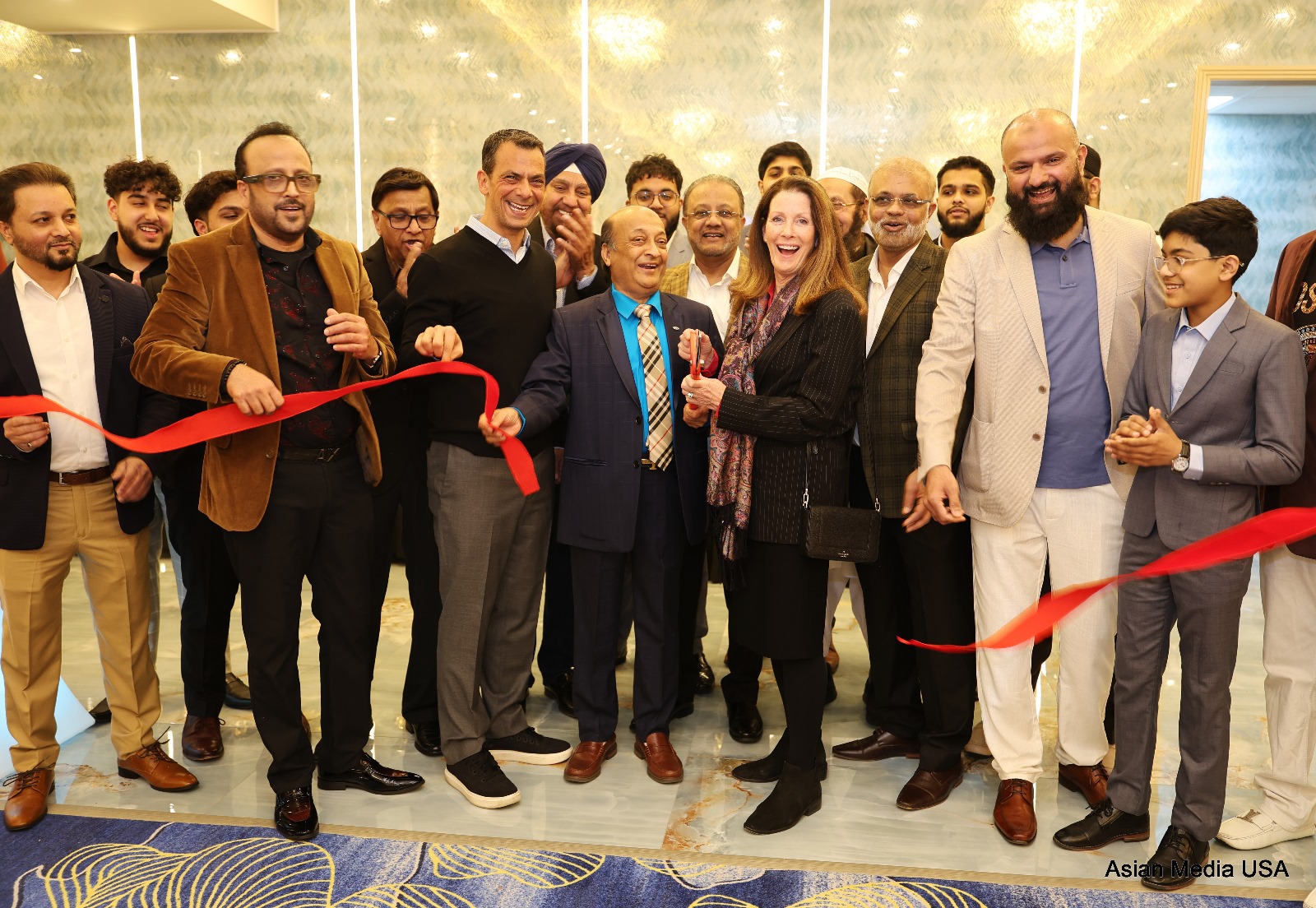 The event was expertly hosted by Ashfaq Sharief, who warmly welcomed attendees and shared the journey behind Kohinoor Banquets. He recounted how Abdul Aziz’s vision transformed the second floor of a former corporate office into an elegant, modern space. Shoib Aftab is a General contractor of Kohinoor Banquets. “It was a long journey,” Sharief noted, acknowledging the challenges of navigating Skokie’s regulations and the team’s dedication to creating a venue that could serve Skokie, Lincolnwood, Morton Grove, Niles, and North Chicago. He emphasized the hall’s capacity to host up to 275 guests, making it ideal for intimate weddings, birthdays, anniversaries, and graduations, all within a welcoming and sophisticated atmosphere.
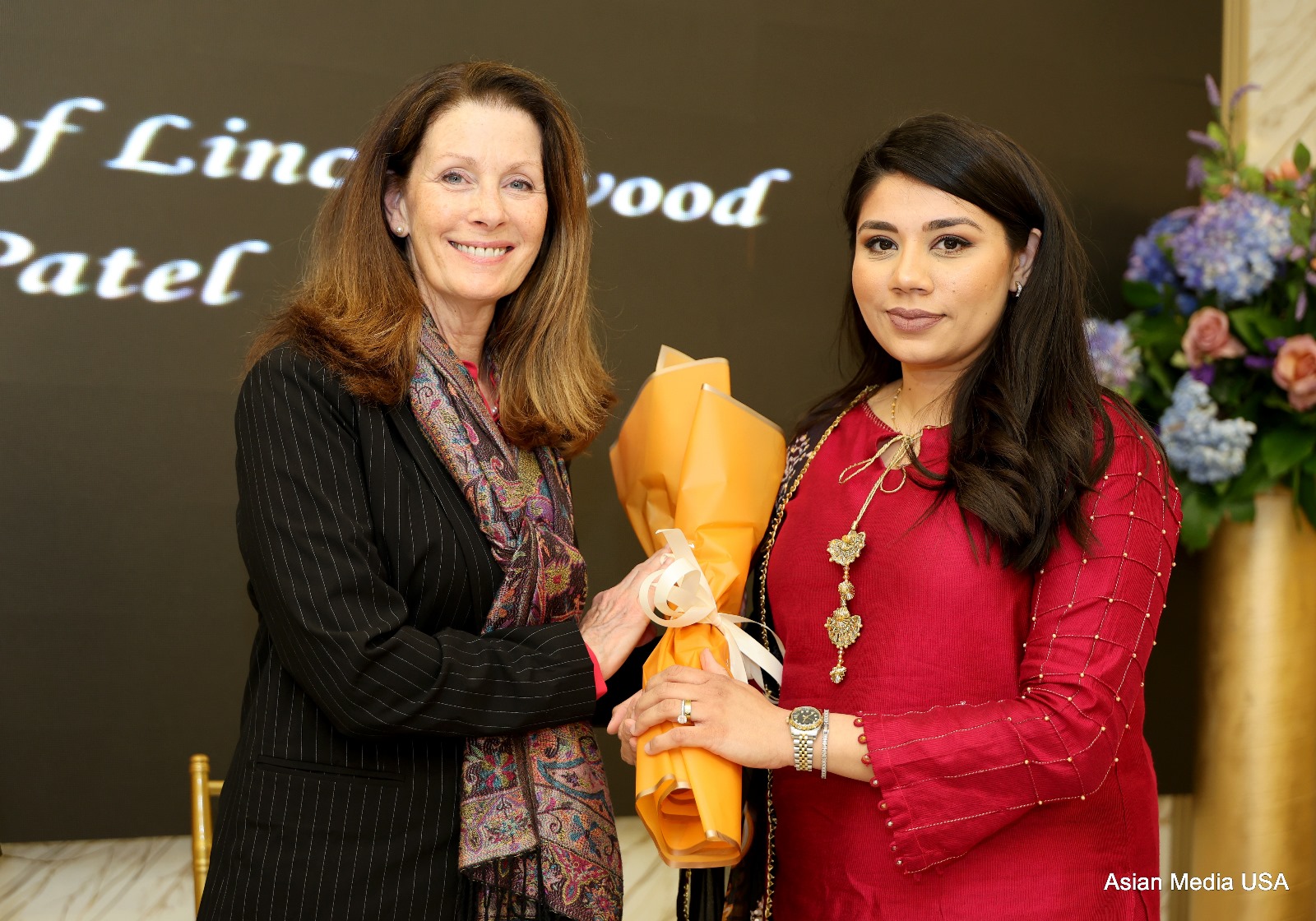 overseeing every detail to ensure the venue’s excellence. Shareif praised Aziz’s commitment, stating, “He was involved in every small thing, making sure we give the best of the best, even though it’s a small place.” The audience applauded Aziz’s determination to fill a gap in the local market, where options like the aging Holiday Inn banquet hall had left room for innovation.
 Qari Abdul Mannan, another prominent guest, brought a spiritual perspective, calling the opening “a blessing from Allah.” He described Kohinoor Banquets as not only beautiful but also a contributor to Skokie’s vibrancy. “This hall makes Skokie beautiful too,” Mannan said, extending a warm welcome to Mayor Tennes and pledging community support. He lauded Aziz as a “great man” and a helpful figure in society, predicting the venue’s success with divine blessings for Aziz’s family and the hall’s future.
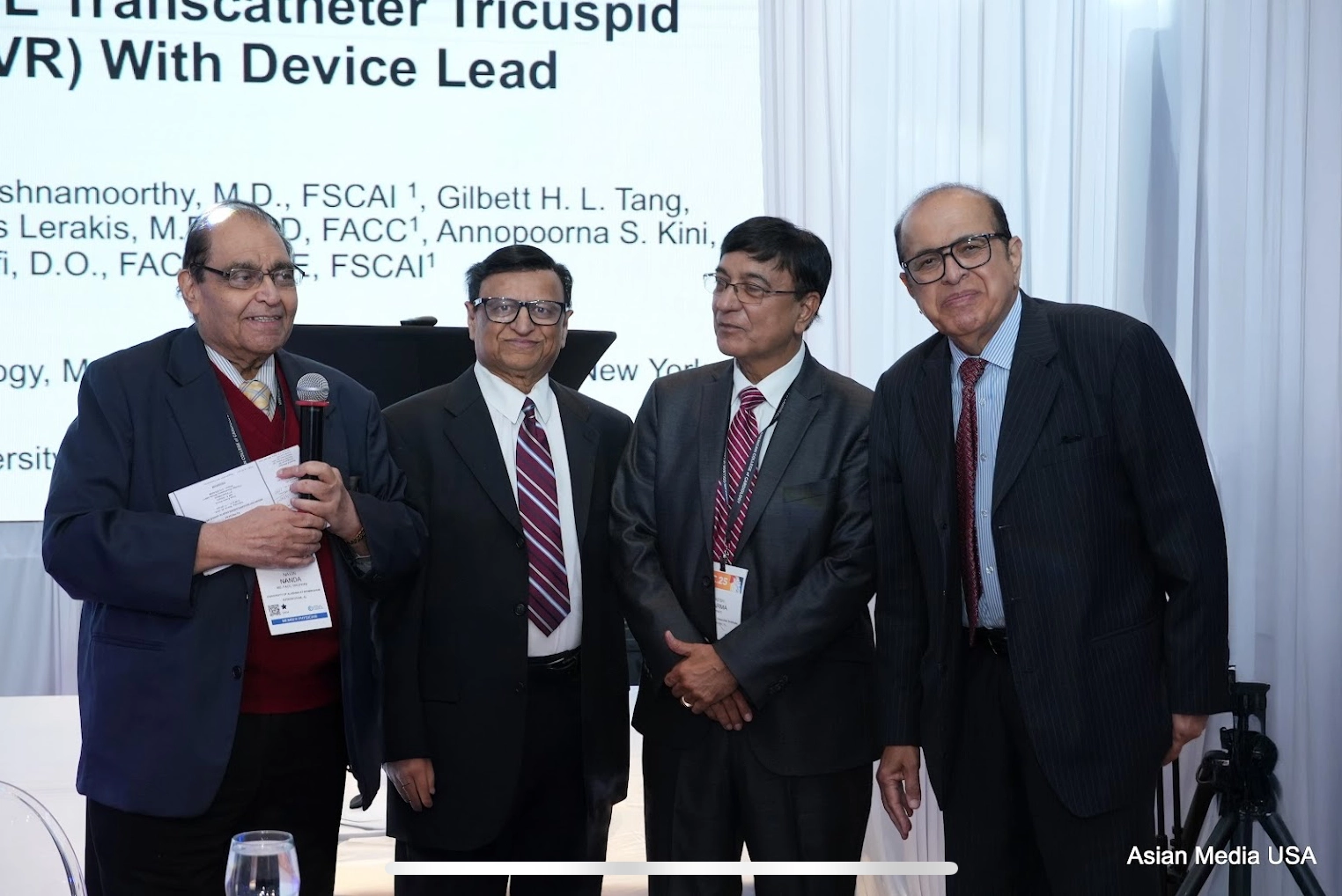 communities, including Muslims, Hindus, Sikhs, and others. Mannan’s mention of his Sufa Masjid and school underscored the area’s cultural momentum, while Shareef’s call for minority representation in local governance struck a chord, reflecting Kohinoor’s role as a unifying space.
 With active participation, collaboration, and coordination by community and business leaders from across the 5 continents, the Global Malayalee Festival is shaping up to be an exciting celebration of the culture, traditions, and accomplishments of the Global Malayalee community at the heart of Kerala.
 contribute to a brighter, more sustainable future for humanity.


