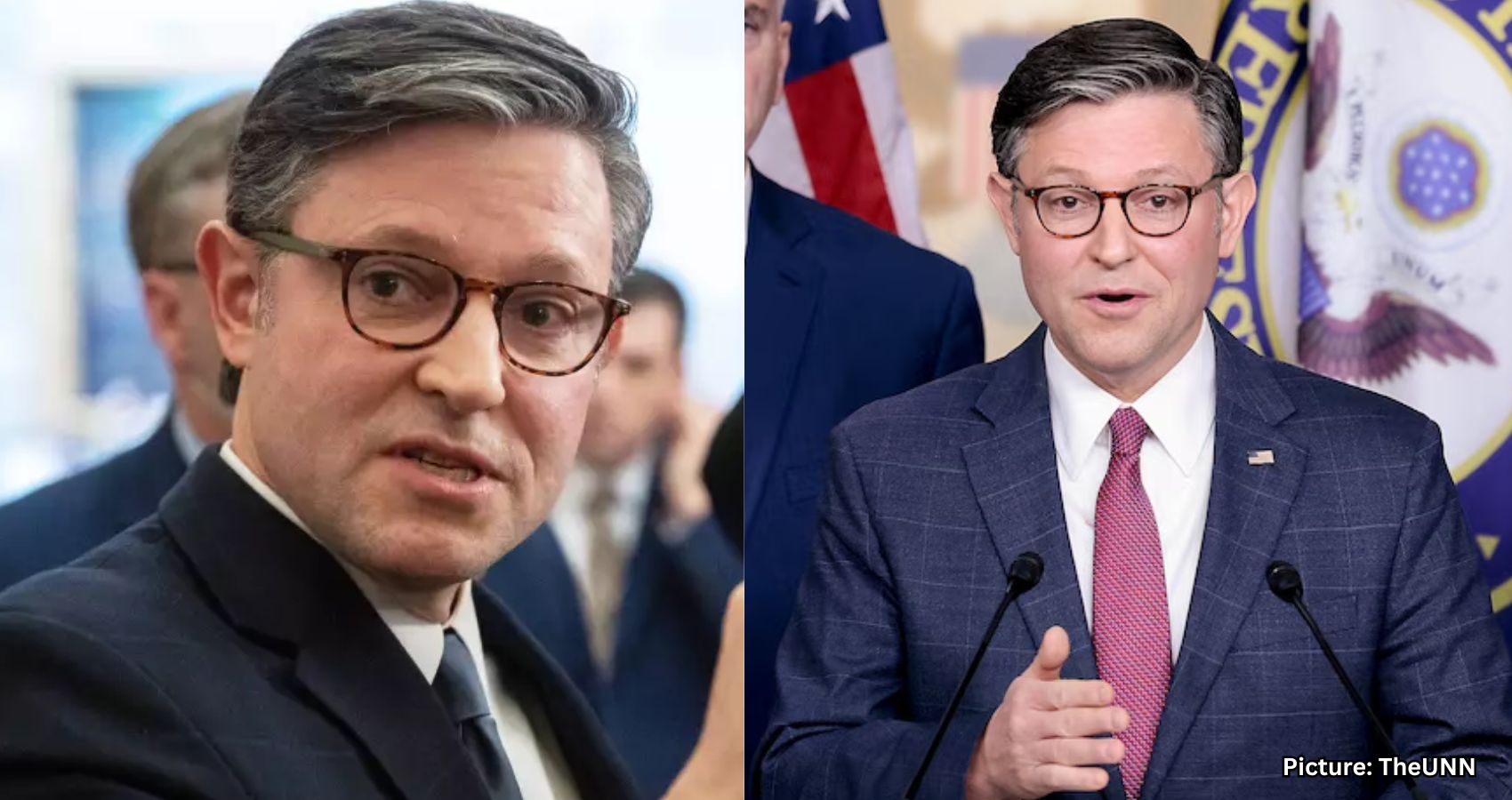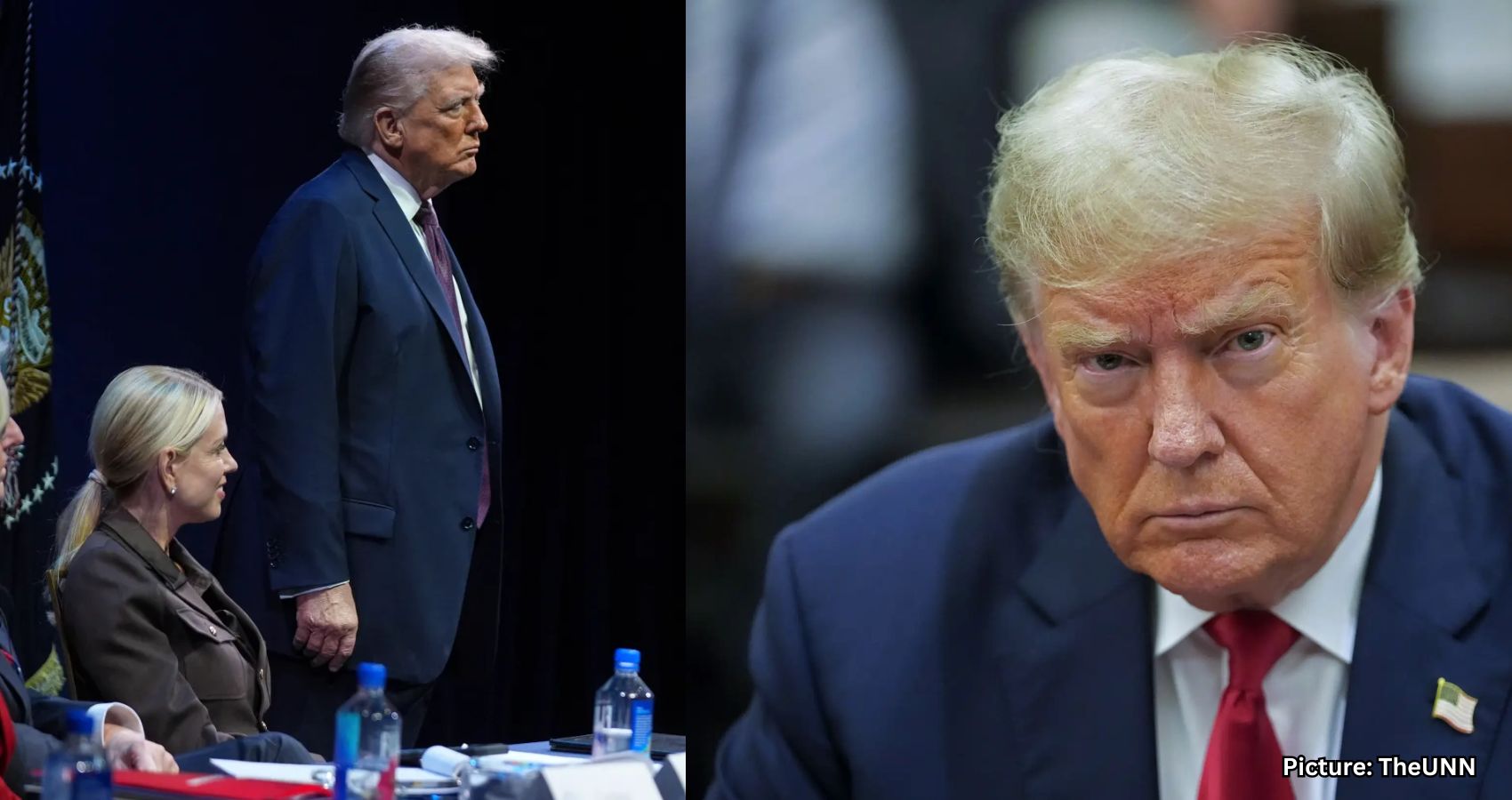
Schumer Claims Trump Is Leading U.S. Toward Conflict with Venezuela

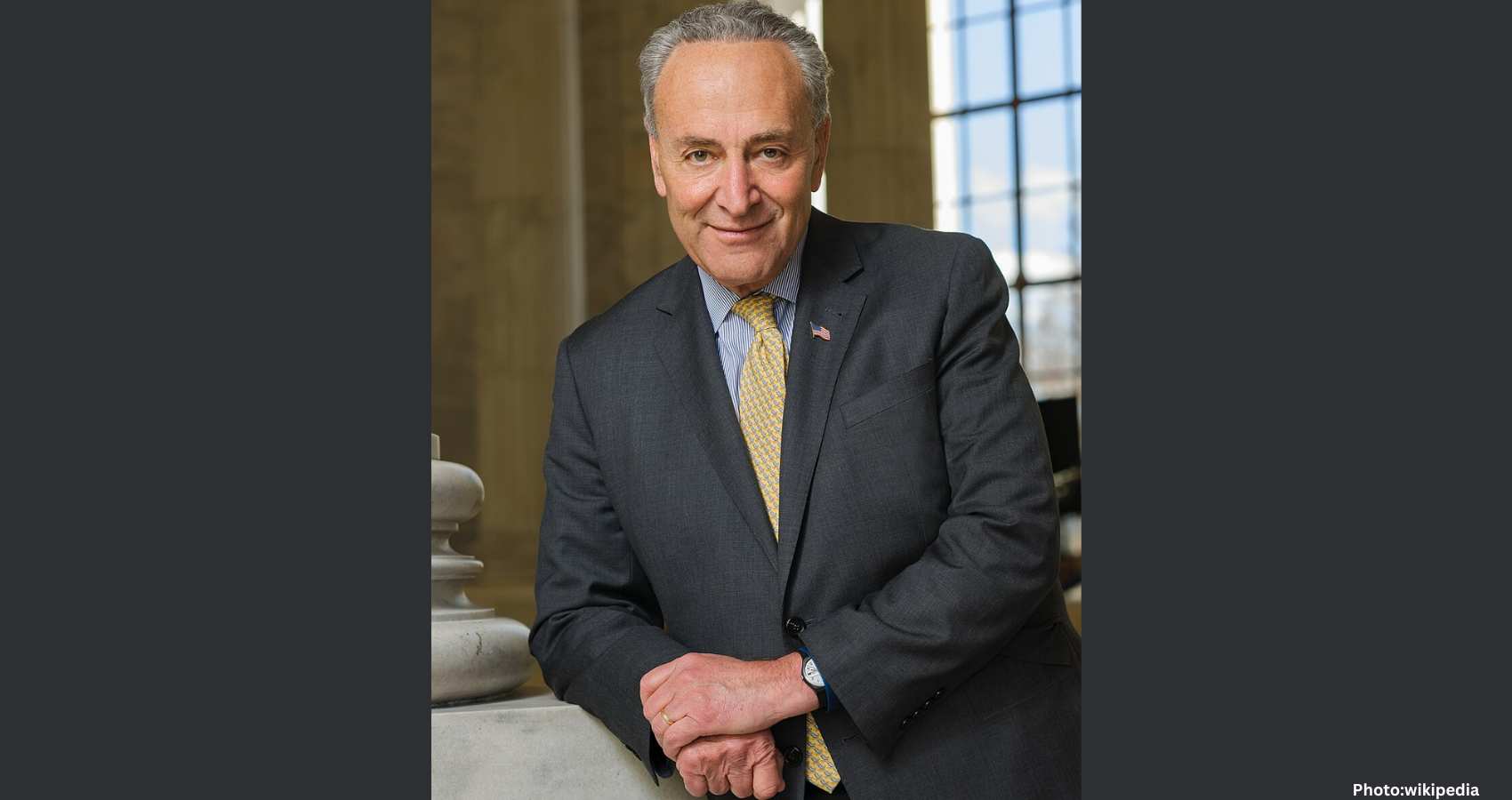
Senate Minority Leader Chuck Schumer warns that President Trump’s actions regarding Venezuela risk pushing the U.S. toward military conflict without congressional approval.

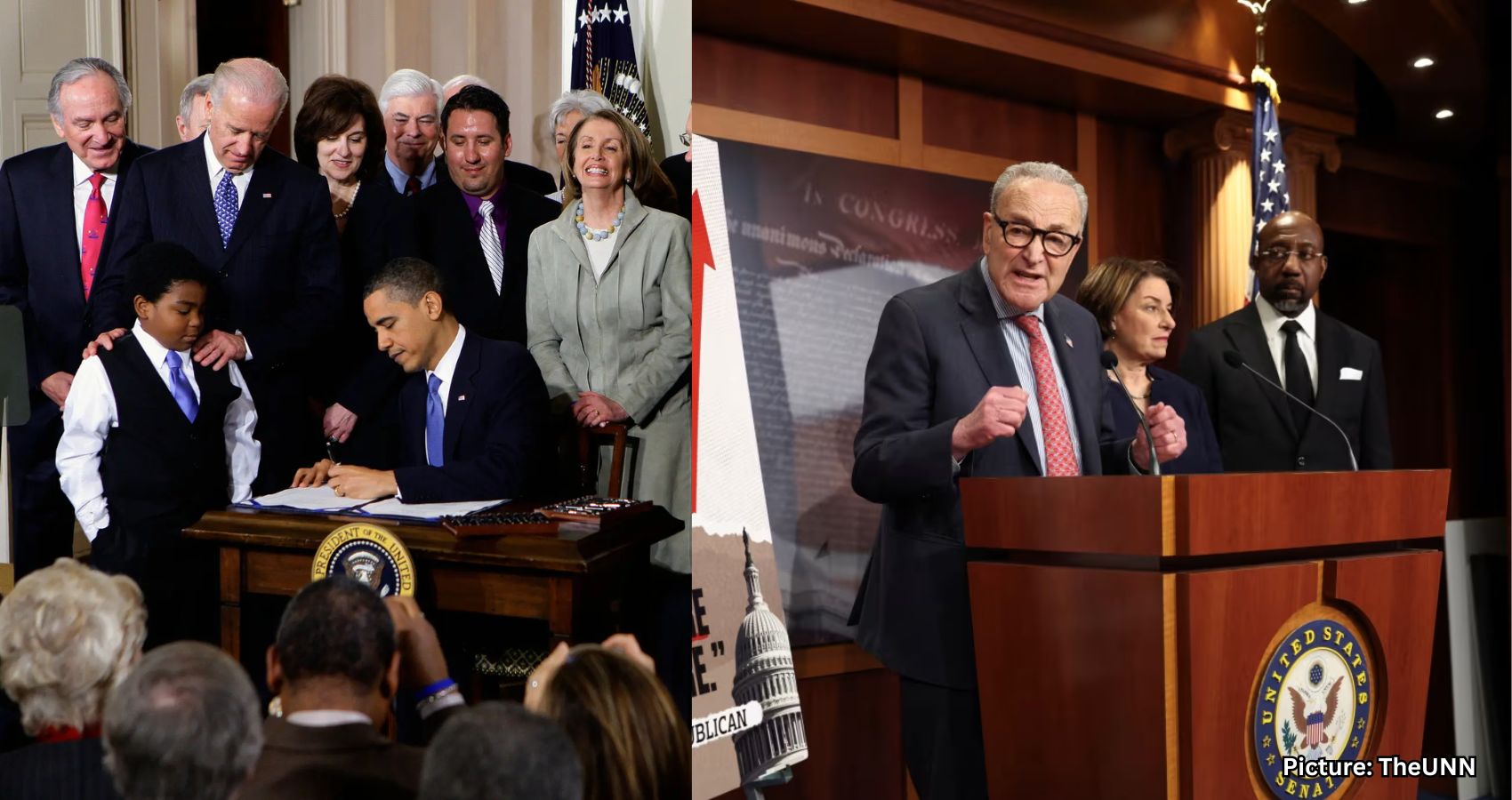
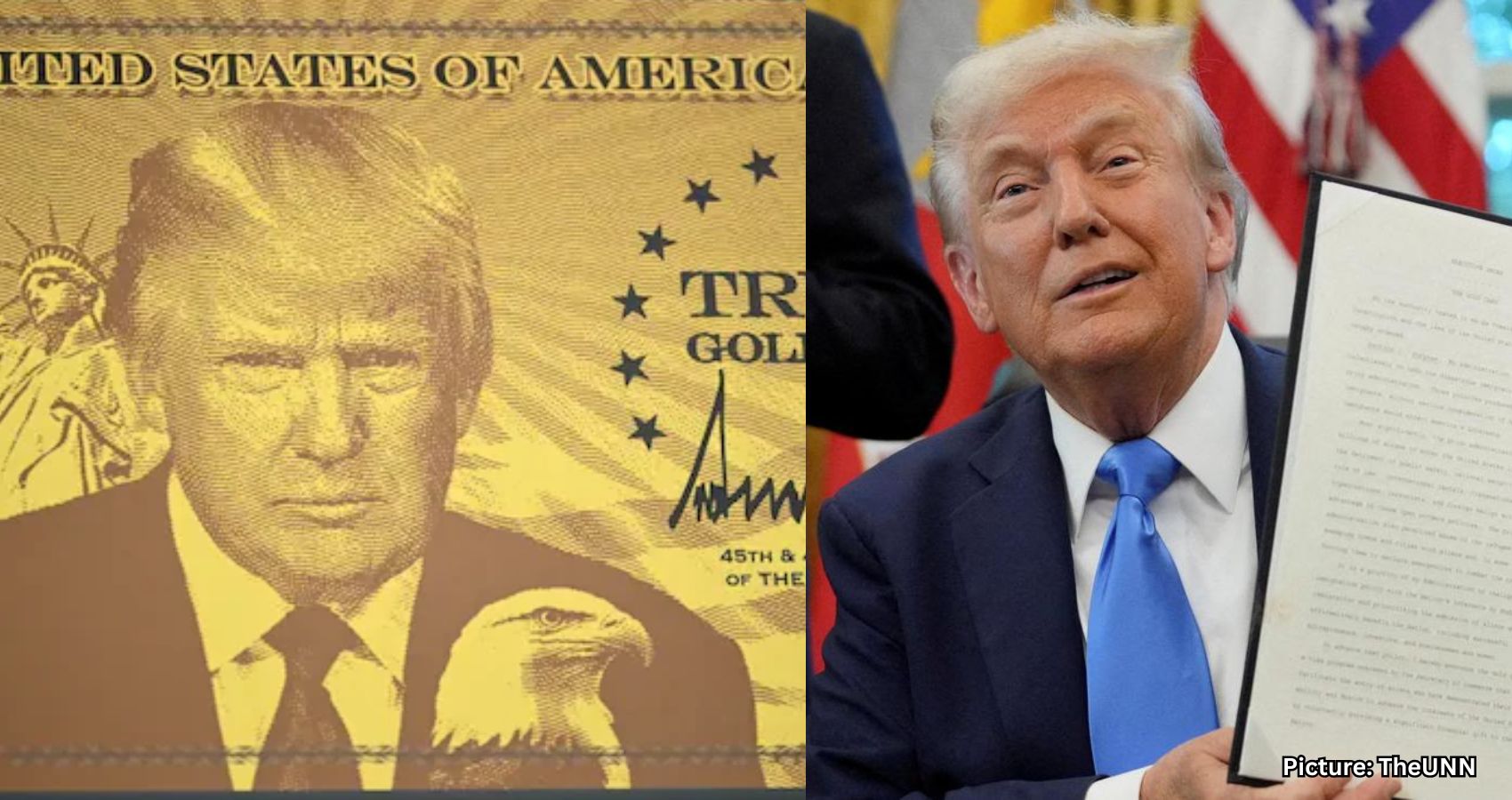
Senate Minority Leader Chuck Schumer, a Democrat from New York, issued a stark warning on Saturday regarding President Donald Trump’s approach to Venezuela. Schumer accused the president of bringing the United States “closer and closer to another costly foreign war” without the necessary congressional approval.

In a forceful statement, Schumer criticized Trump’s recent escalations concerning Venezuela, asserting that the president has undermined the Constitution. “President Trump’s reckless actions towards Venezuela are pushing America closer and closer to another costly foreign war,” Schumer stated. He emphasized that under the U.S. Constitution, Congress holds the exclusive power to declare war, a power that has not been authorized for military action against Venezuela.

The minority leader urged Trump to refrain from entering another overseas conflict, noting that “Americans are tired of endless foreign wars that cost the lives of countless American service members and drain precious resources.” He further remarked, “This is not an America First policy.”

Schumer called for a bipartisan effort among his colleagues in Congress to “come together to return the power to declare war back to the people.” His comments came in response to a post by Trump on Truth Social, where the president declared that Venezuela’s airspace should be considered “closed in its entirety.”

In his post, Trump addressed various stakeholders, including airlines and drug traffickers, urging them to recognize the closure of Venezuelan airspace. This statement followed a warning from the Federal Aviation Administration about a “worsening security situation” in the region.

During a Thanksgiving address to U.S. service members, Trump indicated that the U.S. would “very soon” begin efforts to stop suspected Venezuelan drug traffickers “by land.” He remarked, “In recent weeks, you’ve been working to deter Venezuelan drug traffickers, of which there are many,” adding that there are fewer traffickers coming in by sea.

Trump highlighted the severe impact of drug trafficking on American lives, stating that traffickers kill “hundreds of thousands of people a year” in the U.S. through the “poisons” they bring into the country. He has not ruled out the possibility of deploying American troops to Venezuela, stating on November 17 that he has not eliminated that option.

When asked if he would rule out troop deployments, Trump responded, “No, I don’t rule out that, I don’t rule out anything.”

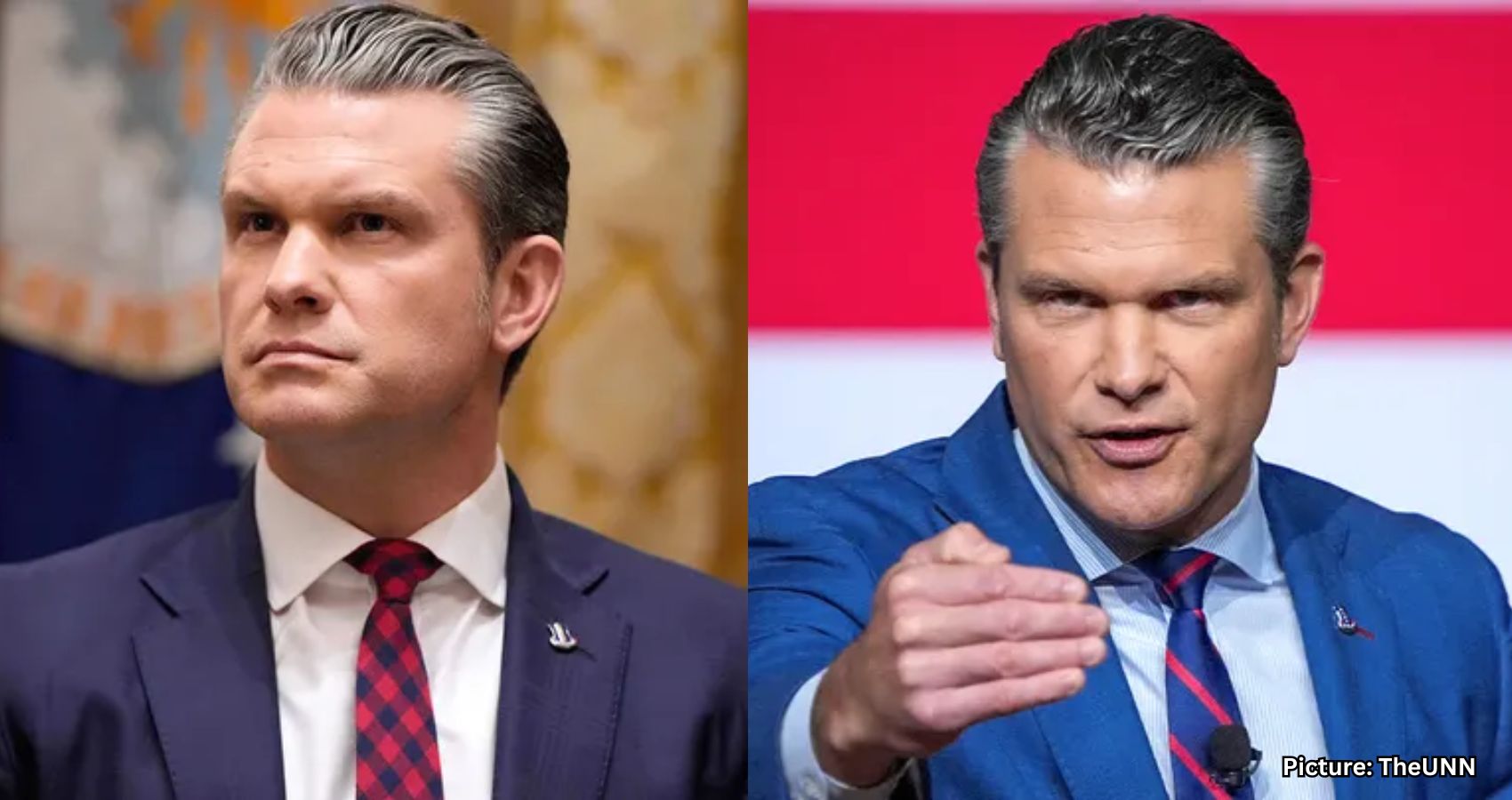
On Friday, Secretary of War Pete Hegseth defended the Trump administration’s military strikes on alleged drug vessels in the Caribbean Sea. Hegseth stated, “As we’ve said from the beginning, and in every statement, these highly effective strikes are specifically intended to be ‘lethal, kinetic strikes.” He emphasized that the goal is to stop lethal drugs, destroy narco-boats, and eliminate the narco-terrorists responsible for poisoning the American populace.

Hegseth’s comments followed reports from various news outlets, including The Washington Post and CNN, regarding a second military strike on a suspected drug vessel in the Caribbean. This strike occurred after an initial attack left two survivors.

In response to the reports, Hegseth criticized the media, stating, “As usual, the fake news is delivering more fabricated, inflammatory, and derogatory reporting to discredit our incredible warriors fighting to protect the homeland.”

House Armed Services Committee Chair Mike Rogers, a Republican from Alabama, and Ranking Member Adam Smith, a Democrat from Washington, issued a joint statement on Saturday. They reaffirmed the committee’s commitment to providing rigorous oversight of the Department of Defense’s military operations in the Caribbean. They expressed concern over reports of follow-on strikes on boats alleged to be transporting narcotics in the SOUTHCOM region and announced bipartisan efforts to gather a complete account of the operations in question.

Fox News Digital has reached out to the White House for comment regarding these developments.

Source: Original article

Trump’s Thanksgiving Message: A Blend of Humor and Controversy

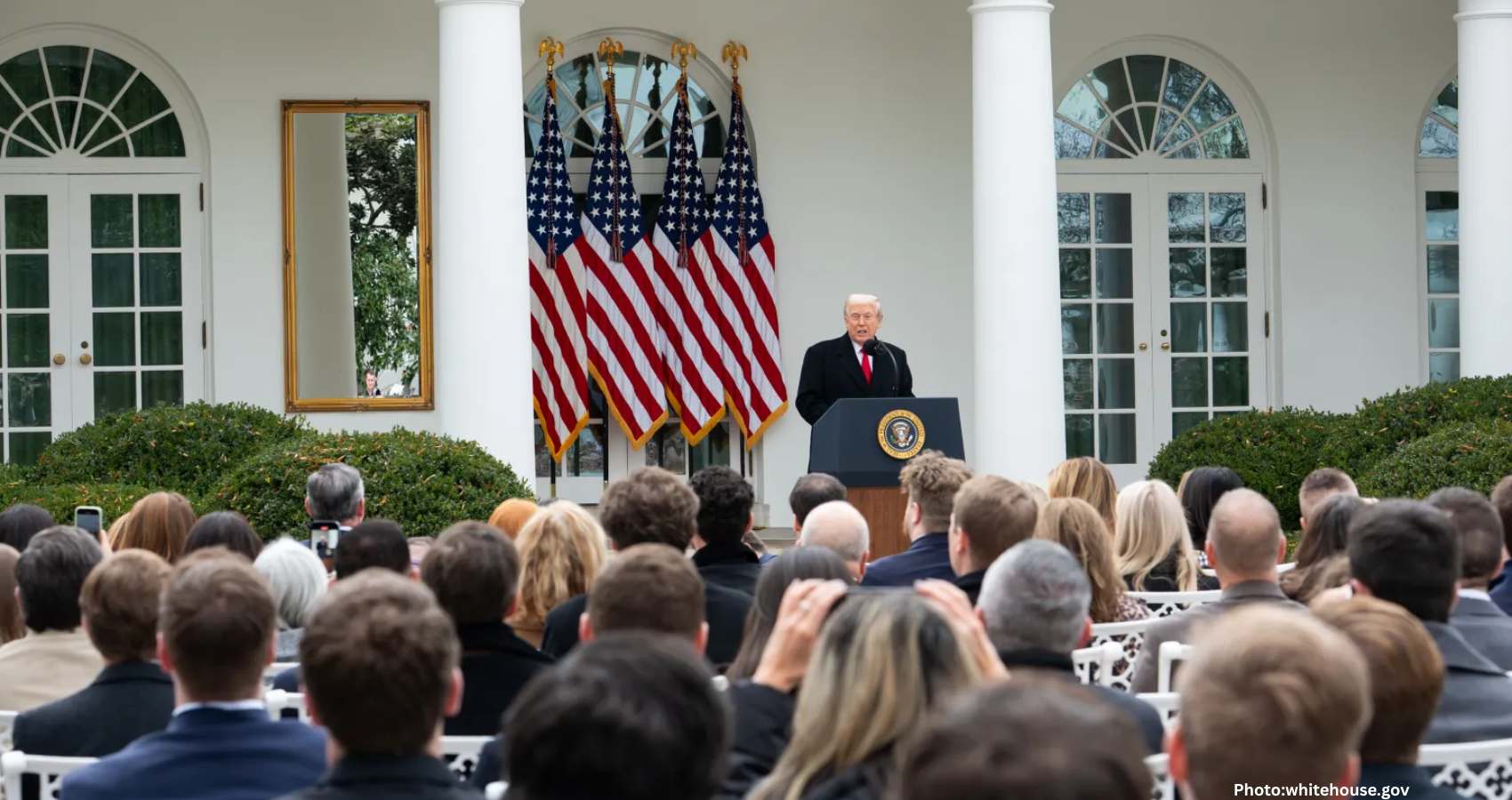
Donald Trump pardoned two Thanksgiving turkeys while launching a tirade against his political adversaries, reflecting his ongoing grievances and legal battles.

In a traditional White House ceremony, Donald Trump, often referred to as “the merciful,” granted “unconditional” pardons to two Thanksgiving turkeys named Gobble and Waddle. However, the event quickly turned into a platform for Trump to roast his political opponents, particularly those of the Democratic Party.

Upon first seeing the turkeys, Trump humorously suggested they should be named after Democratic leaders Chuck Schumer and Nancy Pelosi. He remarked, “I would never pardon those people,” dismissing a plea from First Lady Melania Trump to maintain a more gracious tone.

Trump took the opportunity to criticize last year’s turkey pardons issued by President Joe Biden, claiming they were invalid because Biden used an autopen. He provocatively asked, “Where’s Hunter?” referring to Biden’s son, implying potential legal troubles for him once again.

In a characteristic display of his combative rhetoric, Trump joked about sending the pardoned turkeys to a notorious prison in El Salvador, known for housing migrants deported from the United States. He also announced plans to cancel “all Executive Orders, and anything else that was not directly signed by Crooked Joe Biden,” declaring that any document signed by Biden with an autopen would be nullified.

Trump alleged that “the Radical Left Lunatics” surrounding Biden had effectively taken the presidency from him by using the autopen, a device that has been utilized by various U.S. presidents, including Trump himself. He warned that if Biden claimed involvement in the autopen process, he could face charges of perjury, although the feasibility of nullifying Biden’s pardons and executive orders remains unclear.

During the ceremony, Trump refrained from mentioning two other figures he would never pardon: former FBI Director James Comey and New York Attorney General Letitia James. A federal judge recently dismissed cases against them, citing the illegal appointment of the prosecuting attorney. Despite this setback, the Justice Department plans to appeal, as Comey and James have argued that the prosecutions are politically motivated, pointing to Trump’s public calls for retribution against his perceived enemies.

Despite ongoing legal challenges, Trump celebrated a significant victory when a judge in Georgia dismissed the last pending criminal prosecution against him. This effectively ended efforts to hold him accountable for attempts to overturn the 2020 election results. The Georgia case was considered one of the most serious threats to Trump, as state criminal convictions are not subject to presidential pardons.

Following the dismissal, Trump labeled the prosecution as an “Illegal, Unconstitutional, and unAmerican Hoax,” claiming it was orchestrated by Biden and his “Handlers” in a relentless pursuit to “GET TRUMP.” He accused “The Deranged Democrats” of weaponizing law enforcement against “HONEST AND LOVING Americans.”

Trump also took aim at the media, specifically targeting “The Creeps at the Failing New York Times,” which he claimed had published a piece suggesting he was losing stamina. He dismissed the article as a “hit piece” and referred to the publication as a “cheap RAG” and an “ENEMY OF THE PEOPLE.”

In a recent press interaction, Trump lashed out at a female reporter who questioned him about an Afghan man suspected of shooting two National Guard troops near the White House. The reporter noted that the shooter had been granted asylum by the Trump administration after thorough vetting. Trump responded sharply, asking, “Are you stupid?” and attributing blame to the Biden administration for allowing the shooter into the country.

The White House’s official RapidResponse account later shared the exchange on social media, branding it as “FAKE NEWS.” This incident followed another confrontation earlier in the month, where Trump dismissed a Bloomberg reporter’s inquiry about the Epstein files with a derisive comment.

In light of the shooting incident in Washington, Trump ordered a reexamination of all green cards issued to individuals from 19 countries deemed “of concern.” He declared a permanent pause on migration from “all Third World Countries” to allow the U.S. system to recover, asserting that “Only REVERSE MIGRATION can fully cure this situation.”

Trump also shared several posts from his followers on Truth Social, depicting him as a warrior against the “Deep State,” including one image portraying him as a king in armor with a warning that “NONE shall escape his justice!”

As the Thanksgiving holiday approached, Trump’s remarks and actions underscored his continued focus on political grievances and his ongoing legal battles, demonstrating that even in moments of tradition, his combative spirit remains at the forefront.

Source: Original article

USCIS Suspends Asylum Decisions Following Shooting of National Guard Members

USCIS has suspended all asylum decisions following a shooting incident involving an Afghan national that resulted in the death of a National Guard member in Washington, D.C.

The U.S. Citizenship and Immigration Services (USCIS) has announced a halt to all asylum decisions after an Afghan national was accused of shooting two National Guard members in Washington, D.C., resulting in the death of one service member.

On Friday, USCIS Director Joseph B. Edlow stated that the suspension of asylum decisions would remain in effect “until we can ensure that every alien is vetted and screened to the maximum degree possible.” He emphasized the priority of American safety in a post on X, formerly known as Twitter.

This pause in asylum decisions aligns with a broader immigration crackdown initiated by President Donald Trump. On Thursday, Trump pledged to halt migration from “Third World countries” and to reverse the admissions policies established during the Biden administration.

In a related development, Edlow indicated that officials would be reexamining green cards issued to immigrants from countries deemed concerning, including Afghanistan. USCIS has also introduced new national security measures to enhance the vetting process for immigrants from high-risk nations.

“I have directed a full-scale, rigorous reexamination of every Green Card for every alien from every country of concern,” Edlow stated.

Additionally, the Department of Homeland Security confirmed that it has suspended all immigration requests from Afghanistan and is reviewing all asylum cases that were approved under the Biden administration.

The Department of State has also acted swiftly, pausing all visa issuances for individuals traveling on Afghan passports in response to the shooting incident involving the National Guard members. “The Department is taking all necessary steps to protect U.S. national security and public safety,” the agency stated.

The shooting occurred on Wednesday, resulting in the death of National Guard member Sarah Beckstrom, 20, from West Virginia. Another service member, Andrew Wolfe, 24, remains in critical condition following the attack.

The alleged shooter, Rahmanullah Lakanwal, 29, has been charged with multiple offenses, including first-degree murder and two counts of assault with intent to kill while armed. Attorney General Pam Bondi announced that the Justice Department would seek the death penalty against Lakanwal.

Lakanwal entered the United States legally in 2021 under humanitarian parole as part of the Biden administration’s Operation Allies Welcome, which was established following the U.S. withdrawal from Afghanistan. He had been vetted by the CIA in Afghanistan due to his work with the agency and underwent additional vetting for his asylum application in the U.S. A senior U.S. official informed Fox News that Lakanwal was “clean on all checks” in his background investigation.

Notably, Lakanwal’s asylum application was approved by the Trump administration earlier this year. A report from the Department of Justice Office of the Inspector General released in June indicated that there were “no systemic failures” in the vetting process for Afghan refugees or subsequent immigration pathways.

The recent shooting has raised significant concerns regarding the vetting processes for immigrants and asylum seekers, prompting federal agencies to reevaluate their procedures to ensure national security.

Source: Original article

Israel Releases Body-Cam Footage of Syria Raid on Terrorists

Israel’s military released body-camera footage of a gun battle in Syria that resulted in injuries to six soldiers during an operation targeting members of the al-Jama’a al-Islamiyya terrorist group.

The Israel Defense Forces (IDF) released body-camera footage on Friday from a rare confrontation in southern Syria, where troops from the 55th Brigade engaged in a gun battle while attempting to arrest members of al-Jama’a al-Islamiyya, a Sunni terrorist organization linked to the broader Muslim Brotherhood network. This cross-border incident coincides with heightened tensions between Israeli Prime Minister Benjamin Netanyahu and Syria’s interim president, Ahmed al-Sharaa, as the Trump administration intensifies its focus on targeting affiliates of the Brotherhood.

The overnight operation occurred in the Beit Jann area, located approximately 10 kilometers inside Syrian territory, under the command of the 210th Division. According to the IDF, troops entered the region to detain suspects involved in planting improvised explosive devices (IEDs) and planning future attacks against Israel, including potential rocket fire. During the operation, two suspects were arrested before an exchange of gunfire erupted.

Six IDF soldiers sustained injuries in the clash, with three reported to be in serious condition. The IDF confirmed that several terrorists were killed during the encounter, and the arrested suspects were subsequently transferred to Israel for interrogation.

Al-Jama’a al-Islamiyya, which originated as the Lebanese branch of the Muslim Brotherhood, has collaborated with Hamas and Hezbollah, maintaining operational infrastructure in southern Lebanon and along the Syria-Lebanon border. The IDF has targeted the organization’s sites in both Syria and Lebanon multiple times during the ongoing conflict.

Political correspondent Amit Segal of Channel 12 noted that this incident marks the first time since December 2024, when Israeli forces took control of the Syrian side of Mount Hermon, that Israeli troops have been wounded in a firefight within Syria. Segal posed a critical question regarding the implications of this incident: “Could Syria become the IDF’s new Lebanon? With six soldiers wounded overnight, the big question is whether this is a one-off event, or if it signals the beginning of a long, uncomfortable Israeli presence in Syria.”

The tensions between Netanyahu and al-Sharaa have escalated following the latter’s unprecedented visit to Washington earlier this month. Al-Sharaa met with President Donald Trump at the White House to discuss sanctions relief and counterterrorism coordination, marking the first visit by a Syrian leader to Washington since the onset of the Syrian war. Netanyahu publicly criticized the visit, asserting that al-Sharaa “returned inflated with a sense of international legitimacy,” and cautioned that any discussions between the U.S. and Syria should not come at Israel’s expense.

Additional reports from the Jerusalem Post and Channel 12 indicated that security arrangements concerning Israel’s northern front were discussed in broad terms between U.S. and Syrian officials, although no formal agreements were reached. Washington emphasized that consultations with Israel were ongoing.

This clash occurred during a week in which the Trump administration launched a comprehensive initiative to designate Muslim Brotherhood affiliates as terrorist organizations. The White House directive instructs federal agencies to evaluate and impose sanctions on Brotherhood entities in various countries, including Egypt, Jordan, and Lebanon, citing their global financial, political, and operational connections.

The White House statement described the Brotherhood as an organization that “fuels terrorism and destabilization campaigns against U.S. interests and allies.” Senator Ted Cruz, R-Texas, praised the administration’s actions during his podcast, stating that the designation represents the culmination of a decade of legislative efforts. Cruz remarked, “This is literally 10 years of hard work, and it will make America safer because the Muslim Brotherhood is funding terrorists that want to murder you and want to murder me.”

He highlighted that many U.S. allies in the Middle East, including Egypt, Jordan, Saudi Arabia, Bahrain, and the UAE, have already outlawed the organization, expressing that these nations desire the United States to take similar actions.

As the U.S. ramps up pressure on movements linked to the Brotherhood, Israel finds itself increasingly confronting armed groups associated with the organization across its northern borders—from Hamas in Gaza to al-Jama’a al-Islamiyya in Syria and Lebanon. With Beit Jann emerging as a focal point for cross-border operations and American policy tightening, analysts suggest that regional confrontations involving Brotherhood-connected groups may be entering a new phase.

Source: Original article

NASA Finalizes Strategy for Sustaining Human Presence in Space

NASA has finalized its strategy for maintaining a human presence in space, focusing on the transition from the International Space Station to new commercial platforms by 2030.

This week, NASA officially finalized its strategy for sustaining a human presence in space, emphasizing the importance of maintaining the capability for extended stays in orbit following the planned de-orbiting of the International Space Station (ISS) in 2030.

The document detailing NASA’s Low Earth Orbit Microgravity Strategy outlines the agency’s vision for the next generation of continuous human presence in orbit. It aims to foster economic growth and uphold international partnerships in the space sector.

As the agency looks ahead, concerns have arisen regarding the readiness of new space stations to take over once the ISS is retired. The potential for budget cuts under the incoming administration has further fueled these worries. NASA Deputy Administrator Pam Melroy noted, “Just like everybody has to make hard decisions when the budget is tight, we’ve made some choices over the last year to cut back programs or cancel them altogether to ensure that we’re focused on our highest priorities.”

Among the companies working on new space stations is Voyager, which has expressed support for NASA’s commitment to maintaining a human presence in space. Jeffrey Manber, Voyager’s president of international and space stations, emphasized the importance of this commitment for attracting investment, stating, “We need that commitment because we have our investors saying, ‘Is the United States committed?’”

The initiative to establish a permanent human presence in space dates back to President Reagan, who highlighted the need for private partnerships in his 1984 State of the Union address. He remarked, “America has always been greatest when we dared to be great. We can reach for greatness,” while also noting the potential for the space transportation market to exceed the nation’s capacity to develop it.

The ISS has been a cornerstone of human spaceflight since its first module was launched in 1998, hosting over 28 astronauts from 23 countries and maintaining continuous human occupation for 24 years. The Trump administration’s national space policy, released in 2020, called for a “continuous human presence in Earth orbit” and emphasized the transition to commercial platforms, a policy that the Biden administration has continued.

NASA Administrator Bill Nelson addressed the potential challenges of transitioning from the ISS, stating, “Let’s say we didn’t have commercial stations that are ready to go. Technically, we could keep the space station going, but the idea was to fly it through 2030 and de-orbit it in 2031.”

Recent discussions have raised questions about the definition of “continuous human presence.” Melroy acknowledged the ongoing conversations about what this entails, stating, “I just want to talk about the elephant in the room for a moment, continuous human presence. What does that mean? Is it continuous heartbeat or continuous capability?”

NASA’s finalized strategy has taken into account the concerns of commercial and international partners regarding the implications of losing the ISS without a commercial station ready to take its place. Melroy stated, “Almost all of our industry partners agreed. Continuous presence is continuous heartbeat. And so that’s where we stand.” She emphasized that the U.S. currently leads in human spaceflight and that the only other space station in orbit after the ISS de-orbits will be the Chinese space station, underscoring the importance of maintaining U.S. leadership in this domain.

Three companies, including Voyager, are collaborating with NASA to develop commercial space stations. Axiom signed an agreement with NASA in 2020, while contracts were awarded to Nanoracks, now part of Voyager Space, and Blue Origin in 2021.

Melroy acknowledged the challenges posed by budget caps resulting from negotiations between the White House and Congress for fiscal years 2024 and 2025, which have limited investment. However, she remains optimistic, stating, “I think we’re still able to make it happen before the end of 2030, though, to get a commercial space station up and running so that we have a continuous heartbeat of American astronauts on orbit.”

Voyager has assured stakeholders that it is on track with its development timeline, planning to launch its starship space station in 2028. Manber stated, “We’re not asking for more money. We’re going ahead. We’re ready to replace the International Space Station.” He highlighted the importance of maintaining a permanent presence in space, noting that losing it would disrupt the supply chain that supports the burgeoning space economy.

Additional funding has been allocated to the three companies since the initial space station contracts, and a second round of funding could be crucial for advancing certain projects. NASA may also consider new proposals for space stations, including concepts from Vast Space, a company based in Long Beach, California, which recently unveiled plans for its Haven modules and aims to launch Haven-1 as early as next year.

Melroy emphasized the importance of competition in the development of commercial space stations, stating, “This is a development project. It’s challenging. It was hard to build the space station. We’re asking our commercial partners to step up and do this themselves with some help from us. We think it’s really important that we carry as many options going forward to see which one really pans out when we actually get there.”

Source: Original article

Common Sleep Problem Linked to Serious Brain Disorder

Common sleep problems may be linked to serious neurological disorders, highlighting the importance of awareness and early detection.

The Fox News Health Newsletter provides readers with trending and significant stories concerning healthcare, drug developments, mental health issues, and inspiring accounts of individuals overcoming medical challenges.

Recent discussions have highlighted a common sleep problem that may be associated with serious neurological disorders. This connection underscores the importance of recognizing and addressing sleep issues early on.

In addition to sleep-related concerns, the newsletter also covers various health topics, including warning signs to watch for following high-profile cancer diagnoses, such as that of JFK’s granddaughter.

As the holiday season approaches, individuals on GLP-1 medications are advised on how to navigate festive meals without compromising their health goals. This guidance is particularly relevant as many seek to maintain their well-being during a time of indulgence.

Moreover, a new weight-loss injection has shown promise in clinical trials. However, experts are urging caution, emphasizing the need for thorough research and understanding of potential side effects before widespread adoption.

In a concerning trend, healthcare professionals are warning about a deadly cancer that may be lurking undetected in many individuals. Awareness of this “invisible risk” is crucial for early intervention and treatment.

On a lighter note, Ivanka Trump has taken up a new fitness hobby that could contribute to healthy aging. This shift in focus on physical activity serves as a reminder of the importance of maintaining an active lifestyle.

Interestingly, recent studies suggest that hearing loss might be reversible with the use of a popular erectile dysfunction drug. This unexpected finding opens new avenues for treatment and highlights the interconnectedness of various health issues.

Lastly, doctors are sounding the alarm about a significant rise in adult-onset food allergies, describing it as a “perfect storm” of factors contributing to this alarming trend. Awareness and education are key in managing and understanding these allergies.

For those interested in staying informed about health news and developments, signing up for the Fox News Health Newsletter can provide valuable insights and updates.

As we navigate these various health challenges and advancements, it is essential to remain vigilant and proactive in our health journeys.

Source: Original article

Trump Proposes ‘Reverse Migration’ Plan to Address Immigration Issues

Former President Donald Trump unveiled a “reverse migration” plan aimed at halting immigration from certain countries and rolling back Biden-era policies in a recent Truth Social post.

Former President Donald Trump took to Truth Social late on Thanksgiving to announce his “reverse migration” plan, which he claims would permanently stop immigration from what he refers to as “Third World Countries.” He also proposed a comprehensive rollback of immigration policies established during President Biden’s administration.

In his post, Trump asserted that his administration would impose a pause on all migration from nations he categorizes as “Third World.” He claimed that this plan would revoke what he described as “millions” of admissions granted under Biden, including those he alleges were signed by “Sleepy Joe Biden’s Autopen.” Furthermore, Trump indicated that he would seek to remove foreign nationals whom he considers public charges, security threats, or those he believes are “non-compatible with Western Civilization.”

Trump contended that the current U.S. immigration system is overwhelmed and that his proposed approach would allow it to “fully recover.” Among his promises, he vowed to eliminate federal benefits for noncitizens, denaturalize migrants accused of undermining “domestic tranquility,” and expand deportation efforts.

Trump’s announcement comes in the wake of a violent incident near the White House, where two National Guard members were shot in what officials described as a “targeted” attack. One of the guardsmen, 20-year-old Sarah Beckstrom from West Virginia, was reported dead, while the second service member, 24-year-old Andrew Wolfe, is currently “fighting for his life,” according to Trump.

The suspected shooter, 29-year-old Rahmanullah Lakanwal, is also in serious condition. Lakanwal entered the United States legally in 2021 under humanitarian parole as part of the Biden administration’s Operation Allies Welcome, which was initiated following the U.S. withdrawal from Afghanistan.

In closing, Trump issued a stern warning in his social media post: “Other than that, HAPPY THANKSGIVING TO ALL, except those that hate, steal, murder, and destroy everything that America stands for — You won’t be here for long!”

Source: Original article

Putin Describes Trump’s Peace Plan as ‘Starting Point’ for Ukraine

Vladimir Putin has expressed interest in discussing President Trump’s Ukraine peace proposal as tensions escalate, warning Ukraine to withdraw or face military action.

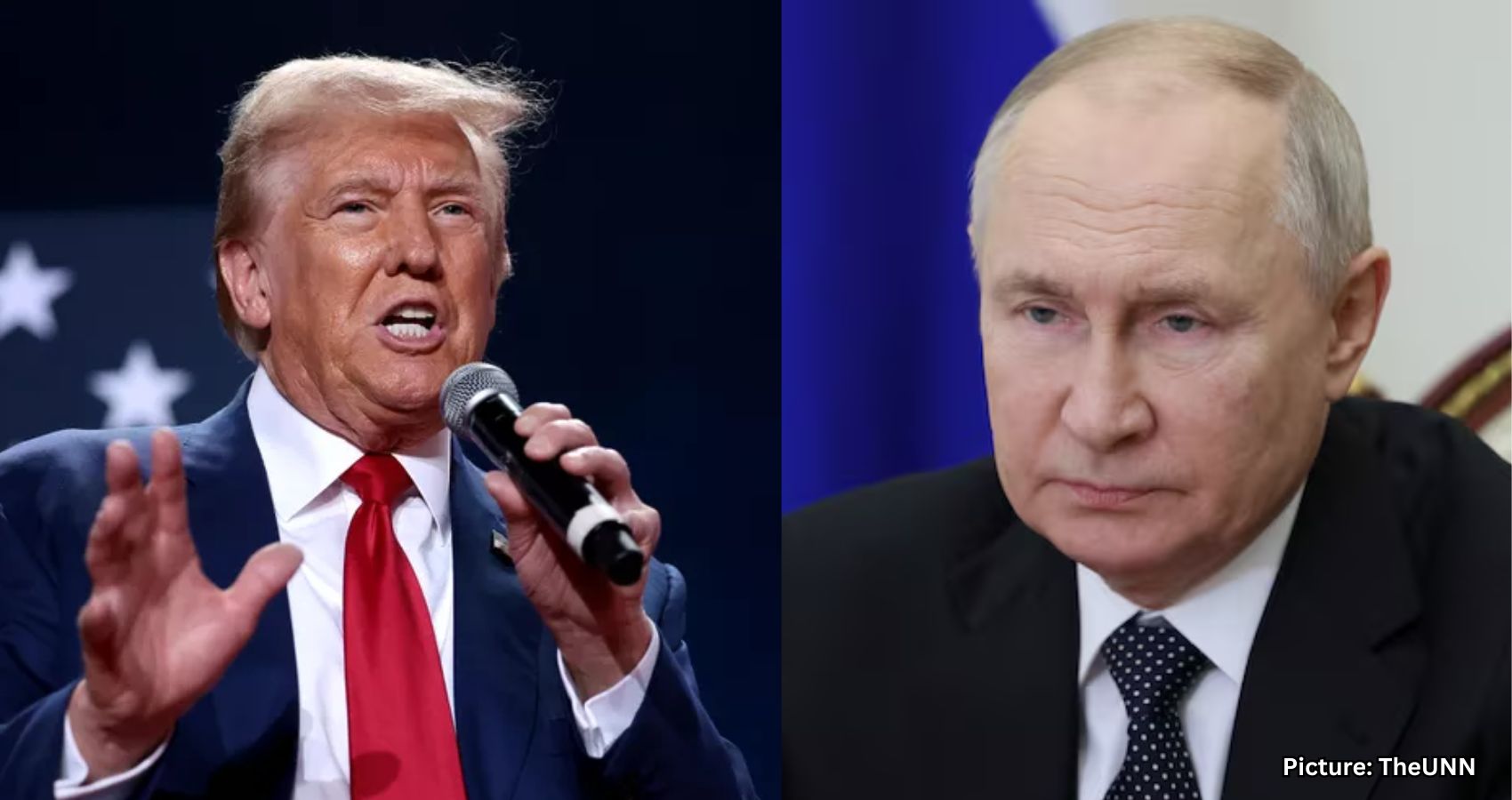
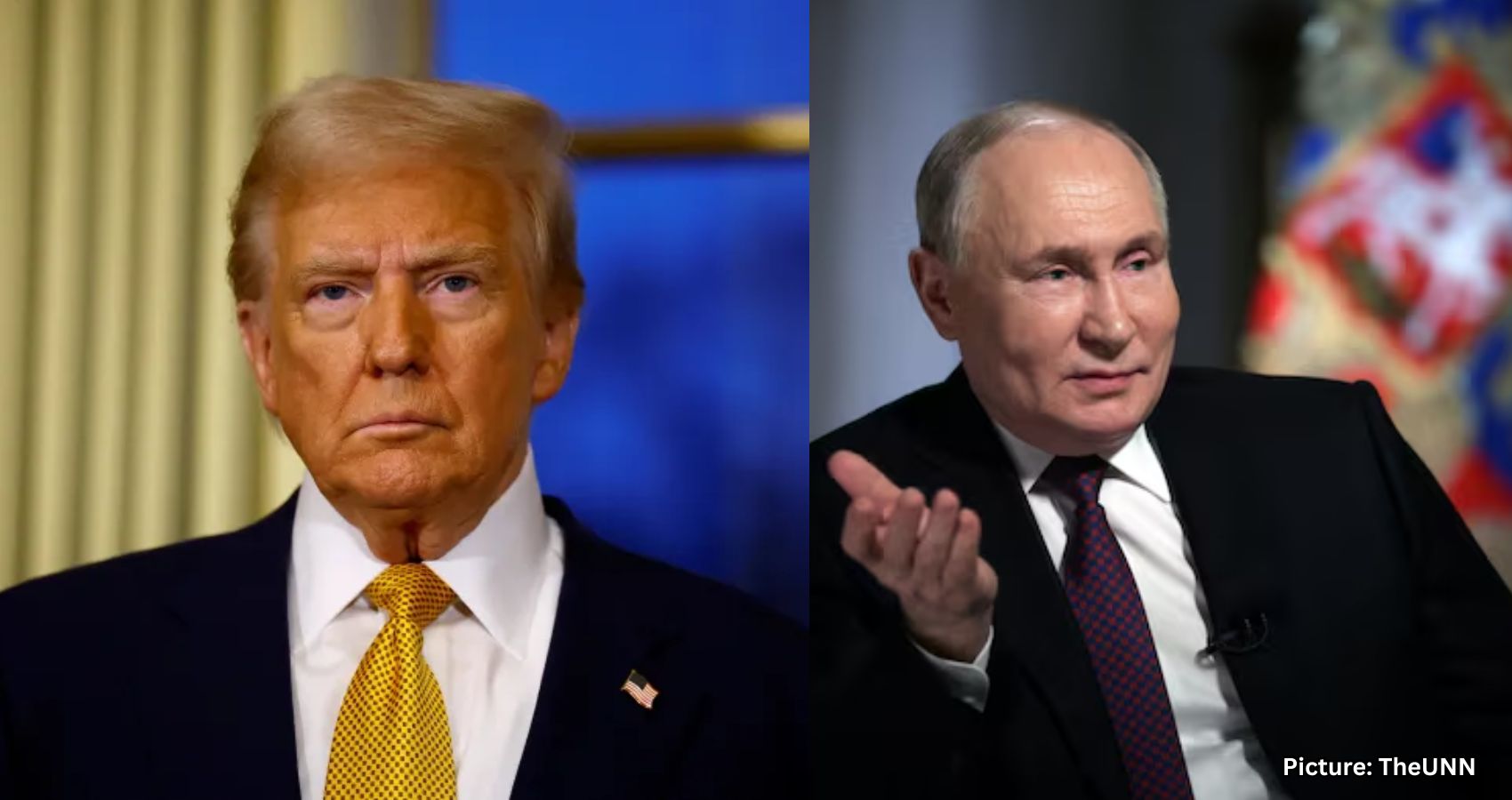
Russian President Vladimir Putin has indicated a willingness to consider President Donald Trump’s peace proposal as a potential starting point for negotiations aimed at resolving the ongoing conflict between Ukraine and Russia. Speaking to reporters at the conclusion of a three-day visit to Kyrgyzstan, Putin emphasized the importance of serious dialogue regarding the proposal, stating, “We need to sit down and discuss this seriously.” He noted that “every word matters” in the context of the discussions.

Putin characterized Trump’s plan as “a set of issues put forward for discussion” rather than a formal draft agreement. His comments come as U.S. envoy Steve Witkoff is set to visit Moscow, underscoring the urgency of the situation.

In a stark warning, Putin stated, “If Ukrainian troops withdraw from the territories they occupy, hostilities will cease. If they don’t withdraw, we will achieve this by force.” This declaration raises concerns about the potential for increased military action should Ukraine fail to comply with Russia’s demands.

Andy Barr, a Republican member of the House Foreign Affairs Committee, commented on the situation, asserting that it highlights the necessity for strong American leadership. “Russia invaded Ukraine because Joe Biden was the weakest president in American history,” Barr claimed. He further stated, “President Trump’s peace-through-strength leadership kept Putin fully contained. This war never would have happened under his watch. Trump is the peace president… the only leader who can end this war and bring stability back to Europe.”

However, critics of Putin argue that he may be attempting to manipulate the U.S. and the European Union. Garry Kasparov, the former world chess champion and a vocal critic of the Russian leader, expressed skepticism about the prospects for peace. He told the Polish international news network TVP, “Peace under Putin is unachievable for one simple reason: Putin is war — and Russia is gearing up for even more.” Kasparov has also criticized NATO, Trump, and the EU for their perceived failures in adequately supporting Ukraine and expelling Russian forces from its territory.

As discussions about a potential peace agreement continue, Kremlin officials have remained largely silent regarding Trump’s recent proposal. Historically, Putin has been reluctant to accept previous peace plans put forth by Trump.

Putin has insisted that Ukraine must completely withdraw from the Donetsk, Luhansk, Kherson, and Zaporizhia regions before any peace negotiations can commence. This demand notably includes areas within these regions that are not currently under Russian occupation. Additionally, Putin seeks to prevent Ukraine from joining NATO and hosting any Western military forces, aiming to reestablish Russian influence over the country.

Recent assessments from the Institute for the Study of War have cast doubt on Russian claims of an unstoppable invasion, noting that Russian forces are still struggling to capture key cities in the eastern Donetsk region. The think tank stated, “Data on Russian forces’ rate of advance indicates that a Russian military victory in Ukraine is not inevitable, and a rapid Russian seizure of the rest of Donetsk Oblast is not imminent.” They further observed that recent Russian advances have been largely opportunistic and dependent on favorable seasonal weather conditions.

As diplomatic efforts continue, U.S. special envoy Steve Witkoff is scheduled to visit Moscow next week. Meanwhile, U.S. Army Secretary Dan Driscoll, who has played a prominent role in recent peace initiatives, may also be heading to Kyiv to engage in discussions.

The initial U.S. peace proposal faced criticism for being overly favorable to Russian demands. However, an amended version emerged from talks in Geneva between American and Ukrainian officials, reflecting a more balanced approach. European leaders, concerned about their own security in light of Russian aggression, are also seeking a more active role in the peace process.

As the situation evolves, the international community remains watchful, hoping for a resolution that can bring an end to the conflict and restore stability to the region.

Source: Original article

Kevin Roberts Advocates for Major Reforms to H-1B Visa Program

The Heritage Foundation’s president, Kevin Roberts, has called for significant reforms to the H-1B visa program, emphasizing the need to prioritize American workers and address systemic issues within the immigration system.

The Heritage Foundation has entered the ongoing debate surrounding the H-1B visa program, advocating for comprehensive reforms to the United States’ skilled immigration system. In a recent post on X, the think tank’s president, Kevin Roberts, urged lawmakers and the administration to tighten and overhaul existing visa policies.

Roberts highlighted the issues plaguing the H-1B visa process, stating, “Fraud, nepotism, and corruption affect every stage of the H-1B visa process. The program cannot go on in its current form. Putting American workers first is necessary to make the American Dream attainable again.”

The Heritage Foundation’s initial statement pointed out that the H-1B visa was established over 30 years ago to address a perceived temporary labor shortage. However, the organization argues that the program has expanded beyond its original intent and now requires urgent reform to prioritize American workers.

Adding to the discourse, Indian American scholar Ron Hira, a professor at Howard University and a vocal critic of the H-1B system, participated in a panel discussion titled “How the H-1B Visa Led to Importing Mass Cheap Labor,” hosted by The Heritage Foundation. Hira remarked on the historical context of the program, noting, “Back then, 20 years ago, it was obvious that H-1B visa abuse was critical in speeding up the offshoring of these jobs. Yet for the past 20 years, Washington has turned a blind eye to this abuse.”

The conversation around H-1B visas gained renewed attention following an interview in November with former President Donald Trump on Fox News. During the discussion with host Laura Ingraham, Trump reiterated the necessity of attracting highly skilled professionals from abroad, arguing that the U.S. cannot solely rely on domestic workers to fill specialized roles in sectors such as technology, engineering, and research.

Simon Hankinson, a senior research fellow at The Heritage Foundation’s Border and Immigration Center, contributed to the dialogue with a policy paper outlining proposed changes to the H-1B system. He recommended that lawmakers eliminate current exemptions for universities and nonprofit research institutions, replace the existing lottery-based selection process with a system that prioritizes higher wage offers, and clarify that spouses on H-4 visas should not receive work authorization.

“Rather than this regulatory back and forth swing between administrations, it’s past time for Congress to end not only the numerous types of H-1B abuses, but also the administrative state creations that developed the student-to-H-1B-green-card pipeline that adversely affects American students and employees,” Hankinson stated in his report.

The Heritage Foundation has also provided guidance on potential changes that could be implemented by the Trump administration regarding the H-1B program. The report suggests that the Department of Homeland Security (DHS) should limit the number of H-1B applicants that each company can petition for annually and impose a permanent ban on any company, individual, or entity that knowingly violates immigration law from participating in the H-1B process.

The call for reform reflects a growing concern among some policymakers and scholars about the impact of the H-1B visa program on the American labor market. As discussions continue, the Heritage Foundation’s proposals may shape future legislative efforts aimed at reforming the skilled immigration system.

Source: Original article

Trump Administration Faces Lawsuit Over Permanent Housing Funding

The Trump administration faces a lawsuit from a coalition of 19 attorneys general and two governors over significant funding cuts for permanent housing aimed at individuals experiencing homelessness.

The Trump administration is once again embroiled in legal challenges, as a coalition of 19 attorneys general and two governors filed a lawsuit on Tuesday. The suit targets recent policy changes that impose new conditions and drastically reduce funding for permanent housing for individuals experiencing homelessness.

The lawsuit claims that the administration has unlawfully decreased the percentage of federal grant funding allocated to permanent housing from approximately 90% to as low as 30%. Additionally, it introduces new eligibility requirements that could further complicate access to these essential resources.

Leading the coalition is New York Attorney General Letitia James, who is seeking a court order to block what she describes as the “administration’s cuts and illegal new conditions” affecting the Department of Housing and Urban Development’s (HUD) Continuum of Care program funding.

“Communities across the country depend on Continuum of Care funds to provide housing and other resources to our most vulnerable neighbors,” James stated in a press release. “These funds help keep tens of thousands of people from sleeping on the streets every night. I will not allow this administration to cut off these funds and put vital housing and support services at risk.”

According to reports, more than half of the 2026 funding for HUD’s Continuum of Care program, which collaborates with local organizations to connect people experiencing homelessness to housing and resources, will be redirected from permanent housing assistance to temporary transitional housing assistance. This shift will come with new work or service requirements for recipients.

A spokesperson for HUD expressed disappointment over the lawsuit, stating, “HUD stands by its FY2025 Continuum of Care reforms.” The spokesperson further criticized the plaintiffs for what they termed a misuse of the courts, suggesting that the lawsuit serves a political agenda at the expense of homeless individuals, youth, and families currently living on the streets.

“Their use of the courts for political means seeks to prevent nearly $4 billion of aid from flowing nationwide to assist those in need,” the spokesperson added. “HUD intends to mount a vigorous defense to this meritless legal action.”

Permanent housing programs are designed to offer long-term stability without requiring participation in work programs or other services. This approach allows residents to focus on maintaining their housing and rebuilding their lives. Critics of the administration’s new policy argue that reallocating funds to transitional housing or imposing service requirements could destabilize current residents, potentially forcing them back into homelessness or reliance on emergency shelters.

Supporters of the policy, however, argue that linking funding to services or work expectations can promote self-sufficiency and ensure that resources are utilized efficiently. This situation highlights the ongoing tension between immediate stability and longer-term social outcomes.

The outcome of this lawsuit could have significant implications for how federal housing funds are allocated and regulated at the national level. It underscores the critical roles that courts, state governments, and federal agencies play in shaping policy priorities and protecting vulnerable populations.

Beyond the legal ramifications, this dispute brings attention to the persistent challenges in addressing homelessness, emphasizing the importance of stable housing for social and economic well-being. It also reflects the complexities involved in implementing programs that cater to diverse communities with varying needs.

Source: Original article

Alleged National Guard Shooter Previously Worked with U.S. Government in Afghanistan

The Afghan national accused of shooting two National Guard members near the White House previously worked with U.S. government entities, including the CIA, during his time in Afghanistan.

An Afghan national has been accused of shooting two National Guard members in Washington, D.C., just blocks from the White House. The suspect, identified as Rahmanullah Lakanwal, 29, reportedly worked with various U.S. government entities, including the CIA, while serving as a member of a partner force in Afghanistan.

Lakanwal entered the United States shortly after the chaotic withdrawal from Afghanistan in August 2021, arriving a month later under “Operation Allies Welcome.” This program was initiated to assist Afghan allies who had worked with U.S. forces during the two-decade-long conflict.

Intelligence sources informed Fox News Digital that Lakanwal had established a relationship with U.S. government entities due to his involvement with a partner force in Kandahar. CIA Director John Ratcliffe emphasized that the Biden administration justified Lakanwal’s entry into the U.S. based on his previous work with the CIA and other government agencies.

“In the wake of the disastrous Biden withdrawal from Afghanistan, the Biden administration justified bringing the alleged shooter to the United States in September 2021 due to his prior work with the U.S. government, including the CIA,” Ratcliffe stated. “The individual—and so many others—should have never been allowed to come here.” He further expressed concern over the ongoing repercussions of the administration’s actions, stating, “Our citizens and service members deserve far better than to endure the ongoing fallout from the Biden administration’s catastrophic failures.”

The FBI is currently leading the investigation into the shooting, which is being examined as a potential act of international terrorism. Officials confirmed that the two West Virginia National Guardsmen involved in the incident remain in critical condition.

In a national address following the shooting, former President Donald Trump condemned the attack, labeling it a “savage attack.” He described the incident as a “monstrous ambush-style attack” that occurred just steps away from the White House. Trump characterized the shooting as a “heinous assault,” an “act of evil,” and a “crime against our entire nation.” He expressed his condolences to the families of the injured Guardsmen, stating, “The hearts of all Americans tonight are with those two members of the West Virginia National Guard and their families.” He also conveyed a sense of righteous anger and determination to ensure that the perpetrator faces severe consequences.

D.C. Mayor Muriel Bowser addressed the media shortly after the incident, confirming that the shooting was a targeted attack. “One individual appeared to target these guardsmen. That individual has been taken into custody,” she explained during a news conference.

The investigation is ongoing, and authorities are working to uncover further details surrounding the shooting and the suspect’s background.

Source: Original article

Canada Accelerates Efforts to Resume Trade Talks with India

Canada is accelerating efforts to revive a long-stalled trade agreement with India, following a period of diplomatic tensions and shifting foreign policy priorities.

TORONTO — Canadian Foreign Minister Anita Anand announced on Monday that Ottawa is working diligently to revive a long-delayed trade agreement with India, following two years of diplomatic tensions. This renewed push aligns with Canada’s updated foreign policy approach, particularly in response to the ongoing trade war initiated by former U.S. President Donald Trump.

Anand’s remarks followed a meeting between Canadian Prime Minister Mark Carney and Indian Prime Minister Narendra Modi during the recent G20 summit in South Africa. Both leaders agreed to reopen negotiations that have been stalled for over a year.

A Relationship Recovering After Tension

Diplomatic relations between Canada and India deteriorated sharply in 2023 when Canadian authorities accused the Indian government of being involved in the assassination of Sikh activist Hardeep Singh Nijjar in British Columbia.

The leaders emphasized the need for a swift progression in negotiations. “The leaders were clear that the process must move forward as quickly as possible,” Anand told The Associated Press, underscoring Canada’s commitment to advancing talks without delay.

Prime Minister Carney is expected to travel to India early next year, further signaling the commitment to revitalizing bilateral relations.

Anand also highlighted Carney’s ambitious goal of doubling Canada’s non-U.S. trade within the next decade. Currently, over 75% of Canadian exports are directed to the United States, most of which are covered under the United States-Mexico-Canada Agreement (USMCA), which is set for review in 2026. This situation has prompted Canada to seek diversification in its trading partners.

“This represents a major shift in foreign policy, shaped by a more protectionist global economy,” Anand stated. “We have a new government, a new foreign policy direction, and a new world order emerging.”

Canada Also Rebuilding Ties With China

In addition to its efforts with India, Ottawa is simultaneously working to mend relations with China. Carney and Chinese President Xi Jinping held a constructive meeting at the Asia-Pacific summit last month, indicating progress in repairing long-strained ties between the two nations.

Background on the Nijjar Case

Trade talks with India were suspended in 2023 after Canada publicly accused New Delhi of orchestrating the assassination of Hardeep Singh Nijjar, a prominent Sikh leader and Canadian citizen. Nijjar, 45, was shot dead in his truck outside the gurdwara where he served as president in Surrey, British Columbia. Four Indian nationals residing in Canada have since been charged and are awaiting trial.

Relations began to improve in mid-2024 when Carney invited Modi to the G7 summit in Alberta. Diplomatic ties strengthened further when both countries reinstated their high commissioners in August.

“This is a step-by-step journey, and the last six months have seen meaningful progress,” Anand remarked.

Ambitious Trade Goals

Anand stated that both governments aim to double bilateral trade to US$50 billion by 2030. Canada already ranks among India’s largest foreign investors and is India’s seventh-largest trade partner for goods and services.

Canada’s Position on U.S. Trade Relations

Tensions between Canada and the U.S. persist, particularly after Trump halted trade discussions with Carney over an anti-tariff advertisement released by the Ontario government. This disagreement followed months of friction, including Trump’s controversial suggestion that Canada should become the 51st U.S. state—a dispute that has since cooled.

Despite these tensions, Anand stated that Canada is prepared to restart talks with Washington whenever the opportunity arises. “The United States has fundamentally reshaped all of its trade relationships,” she said. “We’re ready to return to the negotiating table.”

Source: Original article

Russia May Reject US-Ukraine Peace Plan Over Alaska Summit Concerns

Russia has warned it may reject the U.S.-Ukraine peace plan if it does not adhere to key agreements made during the Alaska summit between President Trump and President Putin.

Russia is threatening to reject President Donald Trump’s proposed peace plan for Ukraine unless it upholds certain “key understandings” established during the Alaska summit with President Vladimir Putin.

Russian Foreign Minister Sergey Lavrov made this assertion during a news conference on Tuesday, emphasizing that Moscow is awaiting an updated version of the peace plan aimed at resolving the nearly four-year conflict in Ukraine.

Lavrov warned that if the terms of the “key understandings” from the August summit are not honored, the situation would shift dramatically. He reiterated Russia’s unwavering demands in the negotiations, which include barring Ukraine from joining NATO and requiring the country to relinquish control over the remainder of the Donbas region as part of any peace agreement.

As the situation evolves, the conflict has escalated, with reports of Russian bombardments in Kyiv resulting in casualties. This comes as the Trump administration moves forward with its peace plan.

John Hardie, deputy director of the Foundation for Defense of Democracies’ Russia Program, commented on the challenges facing the U.S. diplomatic efforts. He noted that Russia’s intransigence over the past ten months has been a significant obstacle to achieving peace.

Hardie stated, “The United States has really shot itself in the foot by kind of flip-flopping between strategies. One month you’re trying to pressure the Russians and saying they’re the obstacle to peace. The next minute you’re trying to force their terms on Kyiv.” He emphasized the need for sustained military support for Ukraine and economic pressure on Russia, asserting that both the Ukrainian military and Western resolve must remain steadfast.

Former CIA station chief Dan Hoffman expressed skepticism about the potential for a resolution to the conflict. He argued that the United States currently lacks the leverage necessary to compel Moscow to cease its invasion.

“Vladimir Putin’s strategic objective has always been to overthrow the democratically elected government of Ukraine. He’ll engage in negotiations, but he does it to ensure that he’s asserting the primacy of Russia in his self-designated sphere of influence,” Hoffman said. He added, “I just don’t see any evidence that Russia is going to pause in their relentless attacks on Ukraine.”

Despite the ongoing tensions, Ukraine has reportedly agreed to a peace deal aimed at ending the war with Russia, although some details remain to be finalized. A U.S. official confirmed that U.S. Army Secretary Dan Driscoll met with Russian officials in Abu Dhabi on Monday and Tuesday to discuss the framework for the peace deal.

The U.S. official also noted that a Ukrainian delegation was present in Abu Dhabi and was in communication with Driscoll and his team regarding the negotiations.

Source: Original article

H-1B Challenges Drive Indian Professionals Towards EB-1A Visa Options

As uncertainty surrounding H-1B visas increases, many skilled Indian professionals are turning to the EB-1A visa as a more viable path to U.S. residency.

As the path to securing an H-1B visa becomes increasingly uncertain, a growing number of highly skilled Indian professionals are exploring alternative routes to the United States. Immigration attorneys report a notable shift towards the EB-1A category, which is an employment-based visa designated for individuals of extraordinary ability. This option is gaining traction as a means to achieve long-term residency and career stability.

The EB-1A visa is tailored for professionals who can demonstrate significant achievements in fields such as science, technology, education, business, or the arts. Unlike other employment-based green card categories, such as EB-2 and EB-3, the EB-1A offers greater flexibility. Candidates are not required to have a job offer or employer sponsorship, which can be a significant barrier in the H-1B process.

To qualify for the EB-1A visa, applicants must provide evidence that they meet at least three of the ten eligibility criteria established by U.S. Citizenship and Immigration Services (USCIS). These criteria include recognition through awards, published work, contributions to the industry, or leadership roles.

Another significant advantage of the EB-1A category is that applicants, including researchers and multinational executives, are exempt from the labor certification process. This requirement is often time-consuming and burdensome for H-1B holders and most other employment-linked green cards. The processing timeline for EB-1A petitions is generally faster, and unlike other visa categories that can experience lengthy wait times due to country-based quotas, EB-1A applications often progress with fewer delays.

Recent data from USCIS indicates a substantial increase in EB-1A filings. Approximately 7,300 EB-1A applications were submitted in the first quarter of 2025, marking a surge of over 50% compared to the previous quarter. Overall, EB-1A applications in 2025 are tracking nearly 50% higher than the previous year. This spike is largely attributed to Indian professionals seeking a more reliable alternative to the H-1B route, particularly in light of recent policy changes under the Trump administration, according to Frederick Ng, co-founder of the immigration platform Beyond Border.

The proposed increase in H-1B filing fees, potentially reaching as high as $100,000, has added another layer of complexity for U.S. employers considering foreign hires. This makes the H-1B program increasingly cost-intensive and less accessible. As companies navigate these financial challenges, many Indian professionals are seeking immigration options that provide greater autonomy, especially those that do not rely on employer sponsorship for entry into the U.S. or for securing permanent residency.

The shift towards the EB-1A category is particularly pronounced among Indian H-1B holders. Indians represent over 70% of approved H-1B beneficiaries, meaning any tightening of policies or downturns in the tech sector disproportionately affect them. Sukanya Raman, an immigration attorney and country head at Davies & Associates, notes that the increasing backlogs in the EB-2 and EB-3 categories for Indian applicants are fueling this trend. The EB-1A pathway is becoming more appealing as it allows qualified individuals to self-petition, offering more control and often significantly shorter wait times. “Extraordinary ability is really about measurable impact, not global fame,” Raman explained.

More Indian engineers, researchers, and product leaders are now turning to the EB-1A route, leveraging their professional accomplishments to bolster their applications. Many are emphasizing patents, high-profile publications, industry recognitions, and leadership positions to meet the criteria for “extraordinary ability.” This strategy positions them for a faster and more independent path to U.S. residency.

“Indian professionals are realizing they already meet the standard,” Raman stated. “Their work is driving innovation globally, and the EB-1A category acknowledges that.”

Source: Original article

Trump Plans New Healthcare Proposal as ACA Subsidies Expire

President Donald Trump is set to unveil a new healthcare cost proposal aimed at addressing rising premiums as key Affordable Care Act subsidies are set to expire.

Following the dismantling of the Department of Education, President Donald Trump is shifting his focus to healthcare. He plans to announce a new proposal for managing healthcare costs as early as Monday, as his administration seeks to prevent a surge in premiums due to the expiration of critical Affordable Care Act (ACA) subsidies, according to sources familiar with the situation.

A key element of the forthcoming plan is a renewed emphasis on price transparency. The proposal will require hospitals, clinics, and insurers to disclose the actual prices of services, procedures, and negotiated insurance rates. The administration contends that enabling patients to compare costs will create market pressure that ultimately reduces overall medical spending.

In a related development, Senate Republicans have agreed to hold a mid-December vote on extending the enhanced subsidies, which are set to expire at the end of the year. This decision is part of a broader negotiation to extend government funding through January, prompting Trump and his aides to formulate their own competing proposal.

Another significant aspect of the plan focuses on making prescription drugs more affordable, particularly for high-demand treatments such as obesity and chronic disease medications. Trump has highlighted potential agreements with major pharmaceutical companies aimed at lowering prices for certain weight-loss drugs and ensuring that future pill-based versions are significantly more affordable for uninsured and cash-paying patients.

While the Trump administration has remained tight-lipped about the specifics of their plans, a White House official stated, “Until President Trump makes an announcement himself, any reporting about the Administration’s healthcare positions is mere speculation.”

Reports suggest that the framework under discussion may include a temporary extension of ACA subsidies in some form, coupled with a series of guardrails designed to limit their scope. These could potentially involve new income limits and a requirement that all enrollees contribute some form of premium.

Taken together, the proposal reflects Trump’s strategy of merging market-driven reforms with targeted agreements between the federal government and pharmaceutical companies. This initiative represents one of the administration’s most ambitious efforts to reshape healthcare affordability in 2025.

Additionally, the proposal may offer an option for certain enrollees who select lower-tier insurance plans on the exchanges to redirect some federal aid into health savings accounts, according to sources familiar with the discussions.

Trump’s emerging healthcare proposal indicates a broader shift in the administration’s approach to tackling the challenges of rising medical costs and the instability of the insurance market. By integrating price transparency measures, negotiations with pharmaceutical companies, and potential adjustments to ACA subsidies, the administration aims to balance cost-cutting with consumer choice.

Although many details remain undisclosed, the framework under consideration suggests an effort to reform the healthcare system through a combination of market incentives and targeted federal intervention. If implemented, this plan could significantly alter how millions of Americans access insurance, compare medical prices, and afford high-demand medications, including weight-loss and chronic-disease drugs.

Source: Original article

Maduro Pursues Peace Initiatives Amid U.S. Military Presence in Caribbean

Nicolás Maduro showcased his defiance by dancing to a remix of his peace speeches as U.S. military presence escalates near Venezuela amid rising tensions.

Venezuelan President Nicolás Maduro recently demonstrated his defiance by dancing to an electronic remix of his own peace slogans during a student rally in Caracas. This event marks the latest in a series of performances by Maduro, who previously sang John Lennon’s iconic song “Imagine” while U.S. warships patrolled the waters near Venezuela’s coast.

Video footage from the National University Student Day celebration captured Maduro swaying to the beat, mimicking President Donald Trump’s signature dance moves, albeit with a noticeably looser style. The electronic track, identified by Reuters as “Peace, yes. War, no,” featured phrases recycled from Maduro’s speeches that promote peace and reject war, all while tensions with the United States continue to escalate.

During the rally, Maduro punctuated the music with playful finger pistols, a gesture that was captured on camera and added a lighthearted element to the serious backdrop of U.S. military maneuvers in the region.

This video surfaced about a week after Maduro’s performance of “Imagine,” where he urged for peace while the Trump administration ramped up its military presence near Venezuela, aiming to combat drug trafficking. In his remarks, Maduro invoked Lennon, referring to him as a poet and musician who left a “gift to humanity.” He encouraged young people to explore the song’s lyrics, describing it as an anthem for every generation.

In the video, Maduro paused mid-speech to reflect on the meaning of Lennon’s song, singing a few lines before elaborating on its significance. “What a beautiful song. The lyrics – young people, look up the lyrics,” he said, according to a translation. “It’s an inspiration for all time. It’s an anthem for all eras and generations that John Lennon left as a gift to humanity. Long live the eternal memory of that great poet and musician, John Lennon.”

While Maduro promotes a message of peace, the U.S. has significantly increased its military presence across the Caribbean. This includes the deployment of bombers, warships, and Marines as part of a broader campaign targeting drug trafficking operations in the region, which has involved airstrikes on suspected smuggling vessels.

On Monday, the U.S. State Department formally designated the Cartel de los Soles as a foreign terrorist organization. This cartel refers to a network of Venezuelan government and military officials involved in drug trafficking. Secretary of State Marco Rubio stated last week that the Cartel de los Soles and other Venezuelan cartels are “responsible for terrorist violence throughout our hemisphere as well as for trafficking drugs into the United States and Europe.”

As the diplomatic standoff between the U.S. and Venezuela continues, Maduro’s performances serve as a stark contrast to the military actions being taken in the region. His dance to the remix of his peace speeches highlights the ongoing tensions and the complex interplay of politics and culture in Venezuela.

Source: Original article

Bondi Pursues Legal Action Against Comey and James for Unlawful Conduct

U.S. Attorney General Pam Bondi announced plans for legal action against James Comey and Letitia James following the dismissal of their criminal cases by a federal judge.

U.S. Attorney General Pam Bondi has called for legal action against former FBI Director James Comey and New York Attorney General Letitia James. Her remarks came during an event in Memphis, where she was highlighting the efforts of the city’s “Safe Task Force.”

Bondi’s comments followed a ruling by U.S. District Judge Cameron Currie, who dismissed the criminal indictments against both Comey and James. The judge determined that the prosecutor responsible for the cases, Lindsey Halligan, had not been lawfully appointed. This ruling aligned with Comey’s defense, which argued that Halligan’s appointment as interim U.S. Attorney for the Eastern District of Virginia was invalid, thereby rendering the indictments defective.

“We’ll be taking all available legal action, including an immediate appeal, to hold Letitia James and James Comey accountable for their unlawful conduct,” Bondi stated to reporters. “I’m not worried about someone who has been charged with a very serious crime,” she continued, referring to Comey. “His alleged actions were a betrayal of public trust,” Bondi added.

Comey was indicted in September 2025 on charges of making false statements to Congress and obstructing a congressional inquiry. These charges stemmed from his testimony in 2018 regarding the origins of the FBI’s Crossfire Hurricane investigation, which looked into potential ties between the 2016 Trump campaign and Russia.

In response to the indictment, Comey has denied any wrongdoing, asserting that his statements were “truthful to the best of my recollection” and labeling the case as “a political hit job, not a pursuit of justice.”

Letitia James faced separate legal troubles, having been indicted in October 2025 on charges related to mortgage and bank fraud. She is accused of misrepresenting a Virginia home purchase as a secondary residence in 2020 to secure more favorable loan terms, allegedly benefiting by nearly $19,000 over the life of the loan.

Defense teams for both Comey and James have argued that the prosecutions were flawed, citing procedural irregularities and questioning Halligan’s appointment. Halligan, who previously served as a legal aide under former President Trump, was the sole federal prosecutor to sign Comey’s indictment, acting as the U.S. Attorney for the Eastern District of Virginia.

During her remarks in Memphis, Bondi defended Halligan’s credentials and her role in the case. “We have made Lindsay Halligan a special U.S. attorney so she is in court, she can fight in court just like she was, and we believe we will be successful on appeal,” Bondi stated. “And I’ll tell you, Lindsay Halligan, I talked to all of our U.S. attorneys, the majority of them around the country, and Lindsay Halligan is an excellent U.S. attorney. And shame on them for not wanting her in office,” she concluded.

Source: Original article

Trump to Unveil New Initiative Aimed at Reducing Health Care Costs

Former President Donald Trump is set to unveil a new proposal aimed at reducing health care costs, coinciding with the expiration of enhanced Affordable Care Act subsidies.

Former President Donald Trump is preparing to announce a new proposal designed to address the rising costs of health care as early as Monday. This initiative comes as the administration seeks to mitigate the steep premium increases anticipated from the expiration of enhanced Affordable Care Act (ACA) subsidies.

The forthcoming framework aims to fulfill Trump’s commitment to provide an alternative to the boosted ACA subsidies that currently assist nearly 22 million Americans. However, the proposal emerges amid a backdrop of congressional gridlock, as Democrats have refused to reopen the government without a straightforward extension of these subsidies.

In a recent agreement to keep the government funded through January, Senate Republicans have committed to holding a vote in mid-December regarding the extension of the enhanced subsidies, which are set to expire this year. This political maneuvering has prompted Trump and his team to develop a competing vision for health care.

The expanded subsidies, first introduced in the 2021 Biden COVID-19 relief package, significantly reduced marketplace premiums. If these subsidies expire, premiums could potentially double in 2025, according to the Kaiser Family Foundation (KFF). The Congressional Budget Office (CBO) estimates that an additional 2 million Americans could become uninsured as a result.

Democrats are already signaling their intention to leverage the potential fallout from these changes as a political strategy in the upcoming midterm elections. This tactic mirrors their successful approach in 2018, when Republican efforts to repeal the ACA contributed to the GOP losing control of the House.

The White House has clarified that Trump has not yet finalized his proposal. “Until President Trump makes an announcement himself, any reporting about the administration’s health care positions is mere speculation,” a spokesperson stated.

While the details of the developing GOP plan are still being finalized, it is expected to include a temporary extension of ACA subsidies, albeit with stricter controls. Proposed changes may involve restoring income caps for eligibility, requiring all enrollees to pay some premium—thereby eliminating $0 plans—and potentially redirecting federal aid into Health Savings Accounts (HSAs).

These proposed adjustments aim to address two long-standing criticisms from the GOP. First, the existence of zero-premium plans has led to reports of fraudulent enrollments. Second, middle-income Americans have disproportionately benefited from the enhanced subsidies due to the removal of income caps.

Restoring the income ceiling to 400% of the poverty level, which was in place prior to 2021, would limit assistance for the middle class, a demographic that stands to be significantly impacted if the enhanced subsidies are allowed to lapse.

The proposal to require even low-income consumers to pay a minimum monthly premium is intended to combat widespread reports of brokers enrolling or switching individuals into plans without their consent, often to earn commissions.

Another significant element under consideration is the potential shift toward Health Savings Accounts (HSAs), which would grant consumers greater control over federal assistance. Trump has consistently advocated for subsidies to be paid directly to individuals rather than funneled through insurance companies. This approach aligns with proposals from GOP Senators such as Rick Scott, who suggests allowing individuals to deposit all federal aid into HSAs and purchase non-ACA plans, and Bill Cassidy, who proposes shifting only the enhanced subsidies into HSAs to cover services like prescriptions, doctor visits, and eyewear.

A related proposal from the Paragon Health Institute would enable lower-income consumers to deposit cost-sharing assistance—subsidies that alleviate deductibles and out-of-pocket expenses—into HSAs. The institute also recommends that Congress reinstate federal funding for these payments, which would help lower premiums for specific ACA plans.

In addition to these proposals, other conservative health policy ideas, including expanding access to non-ACA insurance options, may also be featured in Trump’s framework.

As part of the new health care package, Trump is expected to advocate for the implementation of his “Most Favored Nation” prescription drug policy, which ties U.S. prices to lower rates paid in comparable countries. This policy was instrumental in securing voluntary pricing agreements with pharmaceutical companies during his presidency.

Once unveiled, the new health care proposal is likely to reignite a central political debate surrounding the ACA—an issue that has defined U.S. health policy discussions for over a decade.

Source: Original article

Federal Judge Overturns USCIS EB-5 Fee Increase, Impacting H-1B Lawsuits

A recent federal court ruling in Colorado has invalidated significant fee increases for the EB-5 Immigrant Investor Program, raising hopes for challenges to a controversial H-1B visa fee imposed by the Trump administration.

A federal judge in Colorado has struck down the steep fee increases announced by U.S. Citizenship and Immigration Services (USCIS) for the EB-5 Immigrant Investor Program. This ruling, issued on November 12, has been celebrated as a significant victory for investors and has implications for ongoing legal challenges to the Trump administration’s $100,000 H-1B visa fee.

The court’s decision mandates that USCIS revert the EB-5 fees to their pre-2024 levels, a move that many in the immigration community view as a crucial win for those looking to invest in the United States.

Legal experts are also interpreting the ruling as a potential precedent for lawsuits aimed at overturning the controversial H-1B visa fee. Prominent immigration attorney Greg Siskind, who is involved in the case “Global Nurse Force v. Trump,” stated that while the EB-5 ruling may not directly impact the H-1B fee case, it signals that judges are scrutinizing immigration policies that may not comply with established legal requirements.

The crux of the EB-5 ruling lies in whether USCIS adhered to the legal framework established by Congress. Under the EB-5 Reform and Integrity Act, the agency is obligated to conduct a comprehensive fee study before implementing any increases. Critics argue that USCIS bypassed this requirement, leading to some of the most substantial fee hikes across various visa categories.

According to the judge, the fee increases were “contrary to law,” violating both the statutory framework and the Administrative Procedure Act. Jihan Merlin, head of immigration strategy at the legal tech firm Alma, explained that the ruling reinforces the principle that USCIS must follow the rules set by Congress before raising fees. This principle could play a significant role in the H-1B lawsuits, where the legality of the $100,000 fee is being questioned.

As a result of the ruling, the 2024 fee schedule has been effectively halted, allowing investors to file at the previous, lower rates. This development has opened a new window for potential investors who were considering submitting petitions, now able to do so at significantly reduced costs.

The implications of this ruling extend to the ongoing H-1B lawsuits. Charles H. Kuck, co-counsel in “Global Nurse Force v. Trump,” emphasized that the President exceeded his legal authority by imposing an unlawful fee as a barrier for certain H-1B visa holders. He expressed confidence that the court would ultimately strike down this fee.

However, while the EB-5 ruling provides some optimism for those challenging the H-1B fee, legal experts caution that the two cases are not entirely comparable. Merlin noted that the EB-5 case dealt with a regulation from USCIS, whereas the H-1B fee stems from a presidential proclamation. Courts may exhibit more deference to the President’s broad powers under the Immigration and Nationality Act regarding the entry of noncitizens.

The $100,000 H-1B fee has been one of the most contentious issues affecting work-based visa holders since its announcement. It has faced immediate legal challenges from employers, universities, and immigrant rights groups, all arguing that the fee is not authorized by Congress and functions more as a punitive measure to deter skilled immigration.

While the Colorado ruling does not directly resolve the H-1B issue, it underscores the willingness of courts to examine whether the government has adhered to the legal boundaries set by Congress. Legal experts suggest that when a fee deviates from traditional cost-based visa charges, judges may be inclined to scrutinize its legitimacy.

In conclusion, while the EB-5 ruling does not guarantee a victory for H-1B plaintiffs, it serves as an important indicator that courts are attentive to issues of fee authority and statutory compliance. As Merlin stated, “While it’s not a crystal ball for the H-1B cases, the EB-5 decision is encouraging, because it shows courts are paying attention to whether the Executive Branch stayed within the limits Congress set.”

Source: Original article

Indian-American Ron Hira Defines H-1B as Guest Worker Program

Indian American scholar Ron Hira critiques the H-1B visa program, highlighting its role in worker exploitation and the displacement of American employees during a recent panel discussion.

Indian American scholar Ron Hira, a professor at Howard University and a noted critic of the H-1B visa system, recently shared his insights on the program’s impact on American workers. Speaking at a panel discussion titled “How the H-1B Visa Led to Importing Mass Cheap Labor,” hosted by The Heritage Foundation, Hira outlined the reasons many U.S. employers favor hiring foreign visa holders over American workers.

Hira is well-known for his research on offshoring, high-skilled immigration, and the effects of these practices on employment relations and the middle class. During the panel, he discussed the effectiveness of executive actions taken during the Trump administration aimed at reforming the H-1B program. He remarked, “Back then, 20 years ago, it was obvious that H-1B visa abuse was critical in speeding up the offshoring of these jobs. Yet for the past 20 years, Washington has turned a blind eye to this abuse.”

Hira referenced a 2017 segment from “60 Minutes” that profiled American workers forced to train their H-1B replacements. He highlighted a particularly troubling case involving the University of California, which receives significant state and federal funding to train scientists and engineers. “Now they’re forcing their own tech workers to train their H-1B replacements. Imagine the workers’ humiliation and sense of betrayal,” he said.

He posed a rhetorical question to the audience: “Does anybody really think that that’s how the program is supposed to operate?” He answered his own question, stating, “It’s certainly not sold that way. But it persists today. People are training their replacements today.”

Hira explained that the H-1B program is fundamentally a guest worker program, which he argues is more about labor policy than immigration policy. “All guest worker programs leave workers vulnerable to exploitation, whether it’s high-skilled H-1B or lower-skilled H-2A and H-2B,” he noted. “We need labor policies that protect both American and foreign workers.”

He criticized the current labor protections and regulations surrounding the H-1B program as inadequate, stating, “The H-1B labor protections and regulations and rules are a complete fiasco.” Hira emphasized the need for a redesign of these labor regulations to ensure that the H-1B program does not depress wages, protects workers, and fulfills its intended purpose of addressing genuine labor shortages without displacing American workers.

To illustrate his points, Hira provided real-world examples of how employers exploit the system. He described a situation involving Deloitte Consulting, a top H-1B employer, which claimed that a senior consultant position was actually an entry-level role for the purpose of determining the prevailing wage for H-1B workers. “Now is a senior consultant entry level? Probably not,” he remarked.

Hira expressed further concerns about the H-1B program, stating, “You have thousands of H-1B eligible workers who are just sitting overseas waiting for billable jobs to show up. That’s against the law. Nobody’s enforcing it.” He called for limitations on the types of organizations eligible for H-1B cap exemptions, arguing that these have been expanded too broadly. He also urged the Department of Homeland Security to overhaul the L-1 visa and optional practical training programs, which he noted have even fewer protections than the H-1B program.

He suggested that the Equal Employment Opportunity Commission and the Department of Justice should investigate employment discrimination by auditing all mass H-1B employers and intervening in whistleblower lawsuits related to guest worker abuse.

Hira concluded by urging Congress to consider a broader transformation of the skilled immigration system in the U.S. “Our U.S. skilled immigration system has almost no immigration in it. It’s almost entirely guest worker programs,” he stated. He highlighted the disparity between the number of skilled guest workers and available green card slots, noting that there are about 1.5 million skilled guest workers competing for approximately 60,000 green card slots.

As discussions around immigration policy continue, Hira’s insights shed light on the complexities and challenges associated with the H-1B visa program, emphasizing the need for reform to protect both American and foreign workers.

Source: Original article

Top Military Leaders Visit Puerto Rico to Thank Troops Supporting Missions

Top U.S. military leaders are set to visit Puerto Rico to thank troops for their contributions to ongoing Caribbean operations targeting drug networks and enhancing regional security.

Two of the U.S. military’s highest-ranking officials will travel to Puerto Rico on Monday to meet with service members and express appreciation for their efforts in supporting missions throughout the Caribbean and Latin America.

The Pentagon announced the visit in a memo on Sunday, detailing that the trip will include engagements with troops stationed in Puerto Rico and sailors operating in the Caribbean region.

“Chairman of the Joint Chiefs of Staff Gen. Dan Caine and SEAC David L. Isom are visiting Puerto Rico on November 24, 2025, for the second time to engage with service members and thank them for their outstanding support to regional missions,” the media advisory stated. “They will also visit and thank Sailors operating at sea for their dedicated, unwavering service in the SOUTHCOM area of responsibility.”

This visit follows a previous trip in September, during which Caine and Secretary of War Pete Hegseth visited to show support for troops training on the island. The earlier meeting took place at Muñiz Air Base in Carolina, just outside San Juan, and included senior military figures such as Puerto Rico National Guard Adjutant General Carlos José Rivera-Román and Public Safety Secretary Brig. Gen. Arthur Garffer.

During the September visit, Hegseth addressed nearly 300 soldiers at the base, praising their commitment and referring to them as “American warriors.” He emphasized that those serving in the Armed Forces would be the best equipped and prepared in the world.

The upcoming visit comes at a time of heightened tensions in the Caribbean Sea, as the U.S. military expands its naval presence near Venezuela. This expansion is part of President Donald Trump’s strategy to disrupt drug trafficking from Latin America.

Earlier this month, Hegseth announced the initiation of Operation Southern Spear, a mission aimed at dismantling narco-terror networks across Latin America. He stated on social media platform X that U.S. Southern Command and Joint Task Force Southern Spear would lead the operation to protect the homeland and eliminate narco-terrorist networks in the Western Hemisphere.

“This mission defends our Homeland, removes narco-terrorists from our Hemisphere, and secures our Homeland from the drugs that are killing our people,” Hegseth remarked.

Since early September, U.S. military forces have conducted multiple lethal strikes against narcotics vessels operated by designated terrorist organizations in the Caribbean and eastern Pacific. These operations have resulted in the destruction of dozens of ships linked to Venezuela’s Tren de Aragua gang and Colombia’s Ejército de Liberación Nacional (ELN), with an estimated 82 suspected narco-terrorists killed and three survivors.

The campaign commenced on September 2, with a strike that killed 11 alleged members of Tren de Aragua. It continued through October and November with a series of targeted operations that eliminated numerous threats along known trafficking routes.

U.S. forces have targeted submersibles, fishing boats, and high-speed vessels, including one ELN-affiliated craft that drew criticism from Colombia’s president after three men were killed during the operation.

Several of these strikes occurred near the coast of Venezuela, while others have been concentrated in the eastern Pacific, where recent operations have been focused.

As military leaders prepare to visit Puerto Rico, their engagement underscores the ongoing commitment of the U.S. military to combat drug trafficking and enhance regional security in the Caribbean and Latin America.

Source: Original article

G20 Summit Adopts Declaration Amid U.S. Boycott and Opposition

The G20 summit in South Africa adopted its final declaration on Saturday, despite a U.S. boycott and objections, highlighting escalating tensions between Pretoria and Washington.

JOHANNESBURG / WASHINGTON, Nov 22 — The G20 summit in South Africa concluded with the adoption of its final declaration on Saturday, despite explicit objections from the United States and a full boycott by the Trump administration. This decision has sparked a diplomatic clash between South Africa and the U.S.

South African President Cyril Ramaphosa’s spokesperson confirmed that the declaration, which was drafted without American participation, is final and “cannot be renegotiated.” This statement underscores the growing tensions between the two governments.

Vincent Magwenya, the spokesperson, noted, “We have spent the entire year preparing for this adoption, and the past week has been extremely intense.”

In response, the White House accused South Africa of “weaponizing” its G20 presidency and failing to ensure a smooth transition of leadership. White House spokeswoman Anna Kelly stated that Ramaphosa had threatened to pass the G20 gavel to “an empty chair,” a move Washington deemed provocative. She added that President Donald Trump looks forward to “restoring legitimacy” when the U.S. assumes the rotating presidency next year.

As Ramaphosa opened the summit, he declared that there was “overwhelming consensus” among member nations regarding the declaration. However, just as the document was set for adoption, Argentina unexpectedly withdrew from negotiations. South African officials indicated that Argentine President Javier Milei, a vocal ally of Trump, pulled out at the last moment.

Argentina’s foreign minister, Pablo Quirno, stated that while the country could not endorse the declaration, it remains committed to the G20’s longstanding spirit of cooperation. He cited concerns over language referencing geopolitical conflicts, particularly the ongoing Israel-Palestine crisis. The final document includes a single mention, calling for “a just, comprehensive and lasting peace in the Occupied Palestinian Territory.”

Notably, the declaration emphasized issues that the Trump administration opposes, including the urgent threat of climate change, the importance of adapting to global warming, support for expanding renewable energy, and concerns about the crippling debt burdens faced by poorer nations. A senior U.S. official criticized South Africa for breaking the G20’s tradition of issuing only consensus documents, as Trump has repeatedly dismissed the scientific consensus on human-driven climate change.

Ramaphosa defended South Africa’s leadership, asserting that the first African G20 presidency should not be undermined. His assertive tone contrasted sharply with his diplomatic approach during a May visit to Washington, where he faced Trump’s unfounded claims about white farmers in South Africa being victims of “genocide.”

The White House cited its boycott of the summit due to unfounded allegations that South Africa’s Black-majority government discriminates against its white minority.

The summit took place amid heightened global tensions, including Russia’s war in Ukraine, sensitive climate negotiations leading up to COP30 in Brazil, and deepening divisions among global powers.

South African Foreign Minister Ronald Lamola countered U.S. criticism by stating that the G20 belongs to all member nations equally, not to any single country. “Those who are here have taken the decision on where the world must go,” he asserted.

EU Commission President Ursula von der Leyen cautioned against the “weaponization of dependencies,” a veiled warning aimed at China amid ongoing disputes over rare earth export controls that are critical to global energy, technology, and defense industries.

Meanwhile, China’s Premier Li Qiang urged the G20 to overcome differences and restore unity, emphasizing that lack of cooperation remains a significant barrier to global progress.

Another dispute arose over protocol, as South Africa rejected a U.S. proposal to send only a chargé d’affaires for the G20 presidency handover. Magwenya stated that Ramaphosa would not transfer the presidency to a junior diplomat. Lamola later clarified that South Africa would assign an official of comparable rank to facilitate the transition.

Source: Original article

Trump and Indian-American Leaders: Key Meetings and Their Impact

No sparks flew during the meeting between New York’s mayor-elect Zohran Mamdani and Donald Trump, despite their past insults, as they found common ground in a surprising conversation.

In a meeting that surprised many, New York’s mayor-elect Zohran Mamdani and former President Donald Trump set aside their past insults to engage in a surprisingly amicable conversation. Mamdani, who has previously labeled Trump a “Fascist despot,” was met with a warm reception from the Queens-born real estate mogul.

During their encounter, Trump praised Mamdani for running an “incredible race” against formidable opponents. He expressed his willingness to live in New York City under a Mayor Mamdani, a statement that seemed to resonate with the newly elected official.

As reporters pressed Mamdani on whether he would retract his previous comments about Trump being a “despot” and an “authoritarian,” Trump interjected, suggesting that he had been called worse. “I’ve been called much worse than a despot, and so it’s not that insulting,” he said, predicting that Mamdani might reconsider his stance after they began working together.

When Mamdani hesitated to affirm his view of Trump as a “fascist,” Trump jovially encouraged him to simply say yes, which Mamdani did, albeit with a blush. Following the meeting, Trump described their discussion as “very productive,” noting that they agreed on more issues than he had anticipated.

Later, Trump took to Truth Social to share his thoughts on the meeting, stating, “It was a Great Honor meeting Zohran Mamdani, the new Mayor of New York City!” He accompanied his post with nine photographs of the two together, showcasing a moment of camaraderie.

In contrast to the warmth of his meeting with Mamdani, Trump was less than pleased with questions from the press regarding sensitive topics. As he prepared to welcome Saudi Crown Prince Mohammed bin Salman, Trump confronted a Bloomberg News correspondent who inquired about his reluctance to release files related to convicted sex offender Jeffrey Epstein. “Quiet. Quiet, piggy,” he admonished, dismissing her question about the potential incriminating nature of the files.

Four days later, Trump again clashed with the media, this time with an ABC News reporter who questioned the crown prince about the murder of journalist Jamal Khashoggi. Trump defended the prince, stating, “A lot of people didn’t like that gentleman that you’re talking about. Whether you like him or didn’t like him, things happen. But he knew nothing about it, and we can leave it at that.”

As the Society of Professional Journalists condemned Trump’s remarks, the White House defended him, asserting that he was simply being frank. His press secretary claimed that Trump was known for calling out “fake news” and expressed frustration with reporters who spread misinformation, though she did not specify what that misinformation was.

Amidst the controversy, Trump rolled out the red carpet for the crown prince, hosting a lavish quasi-state dinner that included a military flyover and appearances by soccer stars and billionaires from the tech and finance sectors. Trump claimed that Saudi Arabia would invest up to $1 trillion in the United States, promising “jobs, lots of jobs” as a result.

Critics argued that the visit benefited Saudi Arabia more than the U.S., with reports indicating that the crown prince secured advanced military technology and enhanced legitimacy in exchange for promised investments.

Trump continued his trend of targeting Democrats, calling for the arrest of six Democratic lawmakers who had urged military and intelligence personnel to disobey illegal orders. He labeled their actions as “SEDITIOUS BEHAVIOR AT THE HIGHEST LEVEL,” suggesting that they should be “ARRESTED AND PUT ON TRIAL.” He further escalated his rhetoric by claiming that such behavior was “punishable by DEATH!” and shared a post that proclaimed, “HANG THEM. GEORGE WASHINGTON WOULD!!”

As outrage grew among Democrats, the White House countered that Trump had never issued an illegal order and insisted that he was not threatening death.

Despite criticisms suggesting that Trump was losing support among his base, he sought to connect with voters at a McDonald’s summit, branding himself as “the VERY FIRST former McDonald’s fry cook ever to become President of the United States.” He reminisced about his brief stint at the fast-food chain during his presidential campaign.

In a lighter moment, Trump met with Portuguese football star Cristiano Ronaldo, sharing an AI-generated video of their interaction in the Oval Office. Trump described Ronaldo as a “GREAT GUY” and expressed his enjoyment of their meeting, showcasing his ability to blend politics with celebrity culture.

As the former president continues to navigate a complex political landscape, his interactions with figures like Mamdani and the crown prince reveal a blend of camaraderie and controversy that characterizes his approach to leadership.

Source: Original article

President Comments on Chicago Riot After 8 Shot, 1 Dead

President Trump claims Chicago residents are calling for federal assistance following a violent riot in the city that left eight injured and one dead over the weekend.

President Donald Trump stated on Saturday that residents of Chicago are urging him to “bring in Trump” as the city grapples with a surge in crime. This statement follows a violent riot that erupted in the downtown area, resulting in multiple injuries to police officers and several children being shot.

During the unrest, which occurred in the Chicago Loop, at least eight teenagers were shot, one of whom later died from their injuries. The riot began around 10 p.m. on Friday, shortly after a Christmas tree lighting ceremony near State and Randolph streets, according to reports from FOX 32 Chicago.

Trump took to Truth Social to express his concerns, writing, “Massive crime and rioting in the Chicago Loop area. Multiple Police Officers attacked and badly injured. 300 people rioting, 6 victims shot, one critical and one DEAD.” He criticized Illinois Governor J.B. Pritzker and Chicago Mayor Brandon Johnson for refusing federal assistance, claiming, “The people are chanting, BRING IN TRUMP!!!”

City Alderman Brian Hopkins, representing Chicago’s 2nd Ward, reported that approximately 300 juveniles participated in the riot, during which they attacked officers with mace and stun guns. At least one officer was hospitalized due to injuries sustained during the chaos.

Among the shooting victims were a 13-year-old, two 14-year-olds, a 15-year-old, a 16-year-old, and a 17-year-old. Tragically, a 14-year-old boy later succumbed to his injuries at a hospital. An 18-year-old man was also reported to have been wounded in the incident.

The violence in Chicago comes on the heels of another alarming incident involving a man with a lengthy criminal history. Lawrence Reed, 50, has been accused of setting a woman on fire while on a Chicago train. Officials described Reed as someone who “had no business being on the streets,” and he faces charges related to terrorism and violence against a mass transportation system.

Despite a history of arrests—at least a dozen since 2017, including charges of felony aggravated arson and multiple instances of battery—a judge released Reed back into the community with an ankle monitor, following prosecutors’ requests to keep him detained.

Mayor Johnson characterized the train attack as an “isolated incident,” but the recent events have raised serious concerns about public safety in the city. Local business owners have voiced frustration over the leadership’s handling of crime, with some calling for a return to law and order.

As the situation continues to unfold, the calls for federal intervention in Chicago’s crime crisis grow louder, with residents expressing their desire for a change in leadership and strategy to address the escalating violence.

According to FOX News, the unrest and subsequent calls for help highlight the ongoing challenges faced by city officials in managing crime and ensuring the safety of their constituents.

Source: Original article

Nigeria Experiences Severe Mass Kidnapping of Over 300 Schoolchildren

Nigeria is grappling with one of its most severe mass kidnappings, as armed men abduct over 300 schoolchildren in Niger State, raising alarms about the deteriorating security situation in the country.

Nigeria is facing a crisis following one of the deadliest mass abductions in recent years. Armed men kidnapped more than 300 schoolchildren in Niger State on Friday, amplifying concerns about the worsening security landscape across the nation.

Initial reports indicated that approximately 227 students had been taken. However, on Saturday, the Christian Association of Nigeria revealed that the actual number was significantly higher. According to the association, 315 individuals were abducted from St. Mary’s Co-Education Catholic School, comprising 303 students and 12 teachers.

The association further disclosed that a verification exercise uncovered an additional 88 students who were captured while attempting to flee from the attackers. As of now, no group has claimed responsibility for the abduction.

This incident marks a second abduction in just a few days. Earlier, gunmen targeted a secondary school in Kebbi State, seizing 25 girls. Both kidnappings come in the wake of U.S. President Donald Trump’s recent threats of military action in response to the killing of Christians by extremist groups in Nigeria. While the connection between these events remains unclear, the timing has heightened political and security anxieties.

The Nigerian government has yet to publicly confirm the total number of individuals abducted. Niger State Governor Mohammed Umar Bago stated that security agencies were still conducting a headcount and would release the final figures later in the day. In light of the escalating threat, Bago had previously ordered several schools to shut down due to security risks and has now mandated the closure of all schools in the state.

In response to the growing danger, Nigeria’s national education ministry has directed 47 boarding schools across the country to suspend operations until further notice. This decision reflects the urgent need to address the increasing violence targeting educational institutions.

As the crisis unfolds, President Bola Tinubu has cancelled upcoming international engagements, including his planned trip to the G20 Summit in Johannesburg, in order to manage the emergency situation. The U.S. Pentagon has also weighed in, following discussions between U.S. Defense Secretary Pete Hegseth and Nigerian National Security Advisor Nuhu Ribadu. The U.S. has urged Nigeria to take both urgent and lasting action to combat violence against Christians.

This latest kidnapping has revived painful memories of the infamous Chibok abductions in 2014, when Boko Haram militants kidnapped nearly 300 schoolgirls from Borno State. Many of those victims remain missing more than a decade later, underscoring the long-lasting impact of such tragedies.

Security analysts are warning that the recent surge in school kidnappings indicates a dangerous resurgence of armed criminal networks and extremist groups across northern and central Nigeria. As rescue efforts intensify, many Nigerians are left fearing that the country may be entering yet another prolonged cycle of violence targeting schools.

Source: Original article

Access to Lawyers Critical During Trump’s Mass Deportation Campaign

As the Trump administration escalates its deportation efforts, a new report underscores the crucial role of legal representation in immigration court proceedings.

Washington, D.C., Nov. 20 — A recent report from the American Immigration Council reveals that legal representation is vital for ensuring fairness in immigration court, particularly as the Trump administration intensifies its mass deportation and detention efforts.

The analysis, which examines over 2.28 million immigration court cases from fiscal years 2019 to 2024, indicates that having a lawyer significantly decreases the likelihood of deportation. The findings also highlight how case outcomes are influenced by factors such as detention status and the geographical location of the court, which are increasingly undermining the fairness of the immigration court system.

The report, titled Where Can You Win in Immigration Court? The Impact of Lawyers, Detention, Geography, and Policy, arrives at a critical time when the Trump administration is ramping up its deportation targets while simultaneously restricting access to due process.

“The Trump administration’s enforcement surge is exposing just how vulnerable people are when they go into immigration court without a lawyer,” said Adriel Orozco, the report’s author and senior policy counsel at the American Immigration Council. “Americans expect that every single person should get a fair hearing before a judge. While in the current moment of mass arrests and rapid removals that is increasingly difficult, having a lawyer is often critical in protecting a person’s right to argue their case.”

The report’s findings are striking:

Access to legal representation is a transformative safeguard in immigration court. From FY 2019 to FY 2024, 62 percent of immigrants without legal counsel were ordered deported, compared to just 27 percent of those who had legal representation.

The situation is even more dire for those in detention. In courts with the highest deportation rates, over 90 percent of cases involving detained individuals resulted in removal orders.

Geographical disparities in access to legal representation are pronounced. For example, non-detained immigrants in Honolulu had a legal representation rate of 70 percent, while in Harlingen, Texas, that rate plummeted to just 25 percent.

Moreover, the report highlights a significant shift in case outcomes between the Trump and Biden administrations. In FY 2019, nearly 80 percent of cases under Trump ended in removal orders, while that figure dropped to 40 percent under Biden in FY 2024.

The disparities outlined in the report are likely to worsen due to current policies under the Trump administration. Immigration courts are already grappling with unprecedented backlogs, and the ongoing mass deportation and detention campaign is exacerbating the chaos. This includes the reassignment and firing of immigration judges, the expansion of “fast-track” deportation processes, and other policies that limit individuals’ opportunities to present evidence or secure legal counsel. These developments raise serious concerns about access to justice for those in immigration court and the integrity of the judicial system itself.

“This report makes one thing clear: ensuring access to a qualified lawyer is a powerful way of protecting someone against unjust or erroneous deportation,” Orozco emphasized. “However, whether someone gets a lawyer depends far too much on their location, whether they are detained, and the prevailing policies. With detentions expected to surge due to record funding approved by Congress, having a lawyer is critical in a system that this administration is deliberately breaking down.”

The full report and an interactive data tool, which includes a court-by-court breakdown, are available for those interested in exploring outcomes based on location, detention status, and representation. This resource offers one of the most detailed insights into immigration court trends to date.

Source: Original article

Underdog Nations Impacting the 2026 World Cup Landscape

Several smaller nations, including Curaçao, Haiti, and Cape Verde, are set to make their mark at the 2026 World Cup, showcasing the tournament’s expanding diversity.

As anticipation builds for the 2026 World Cup, Scotland may not be the biggest underdog on the roster. Instead, several smaller and often overlooked nations, such as Curaçao, Haiti, and Cape Verde, are poised to become the tournament’s surprise packages. They will be joined by newcomers Jordan, Qatar, Panama, and Uzbekistan, all of whom have made headlines with their historic qualifications.

The expansion of the World Cup from 32 to 48 teams by FIFA has opened the door for these footballing underdogs to showcase their talents on the global stage.

Curaçao Makes History

Curaçao, a Caribbean island with a population of approximately 155,000, will become the smallest nation ever to compete in the World Cup. Winger Kenji Gorre, 31, formerly of Northampton Town, expressed the sentiment of many when he said, “It’s an impossibility that became possible.”

Part of the Kingdom of the Netherlands, Curaçao gained autonomy in 2010 and is located just 42 miles from crisis-hit Venezuela. The island currently hosts around 17,000 refugees, despite its modest size of 275 square miles. The national team, coached by Dutch veteran Dick Advocaat, secured their qualification with a goalless draw against Jamaica.

Haiti: A Team Forced to Play Abroad

Ranked 84th in the world, Haiti faces significant challenges. The capital, Port-au-Prince, remains under the control of violent gangs, making it impossible for the national team to play home matches. The security situation is so dire that their French manager, Sebastien Migne, has never visited the country, and flights to the capital are suspended.

More than 1.3 million Haitians have fled the violence, and the country continues to rebuild from the devastation of the 2010 earthquake and recent storms. Despite these obstacles, Haiti’s qualification has ignited hope across the nation. The squad includes Premier League player Jean-Ricner Bellegarde and will play their home fixtures in Curaçao. Haiti’s only previous World Cup appearance was in 1974, where they lost all their matches.

Cape Verde: The Miracle from the Atlantic

Ranked 68th, Cape Verde is a group of volcanic islands located 500 miles off the coast of West Africa. The nation lacks a professional football league due to the vast distances between its islands, and they even skipped the World Cup qualifiers in 2002 due to financial constraints.

However, thanks to a strong diaspora talent pool, the Blue Sharks topped a qualifying group that included Cameroon. Key player Pico Lopes of Shamrock Rovers stated, “We’ll play anyone — Brazil, Portugal, England. It doesn’t matter.” Cape Verde, home to just 540,000 people, attracts nearly 250,000 UK tourists annually but also faces challenges from South American drug cartels using its islands as smuggling routes.

Uzbekistan: A Growing Asian Power

Uzbekistan, ranked 50th, will make its World Cup debut after decades of near misses. The former Soviet nation gained independence in 1991 and features standout players such as Manchester City defender Abdukodir Khusanov. Following their qualification, the Uzbek Football Association appointed Italian legend Fabio Cannavaro to lead the team into North America.

FA Vice President Ravshan Irmatov remarked, “Thirty-eight million people have waited 34 years for this moment.” However, human rights concerns persist in Uzbekistan, where political opposition remains heavily restricted.

Jordan: A Football Fairy Tale

Jordan, ranked 66th, qualified for its first-ever World Cup thanks to a stunning hat-trick from Ali Olwan in a 3–0 victory over Oman. Unlike many underdog nations, most of Jordan’s squad plays domestically, with star winger Musa Al-Tamari representing French club Rennes.

The country, home to 11 million people, has close historical ties to the UK and one of the world’s highest refugee populations per capita. Despite bordering Syria and the West Bank, Jordan maintains a relatively stable political climate.

Panama Returns to the Global Stage

Ranked 30th, Panama is known for its canal and distinctive hats. The nation qualified for its second World Cup after making its debut in 2018, where they lost all their matches. Most players compete in South America, with defender Michael Murillo currently at Marseille. Panama hopes for a better showing in 2026.

Their participation may stir political controversy, as U.S. President Donald Trump threatened to “take back control” of Panama in 2024 if canal fees were not lowered, a reminder of America’s 1989 invasion.

Qatar: Back Again After Hosting 2022

Ranked 51st, Qatar returns to the World Cup after hosting the tournament in 2022. They secured their place by winning their qualifying group, sealing their spot with a 2–1 victory over rivals UAE in front of a packed Doha stadium, a match that was followed by fan clashes.

The team, coached by former West Ham boss Julen Lopetegui, consists entirely of players from Qatar’s domestic league. The country has faced criticism for offering financial incentives to foreign-born players to switch national allegiance.

As the 2026 World Cup approaches, these underdog nations are ready to make their mark, showcasing the rich diversity and resilience of football around the globe.

Source: Original article

Top House Democrat Commits to Ongoing Focus on High Prices

Democratic Congressional Campaign Committee chair Suzan DelBene emphasizes affordability as a key strategy for flipping three GOP seats to regain House majority in the 2026 midterms.

As the 2026 midterm elections approach, the chair of the Democratic Congressional Campaign Committee (DCCC), Suzan DelBene, has made it clear that the party’s focus will remain on affordability. In an exclusive interview with Fox News Digital, DelBene outlined the Democrats’ strategy to reclaim the House majority by flipping three Republican-held seats.

DelBene, who is leading the DCCC for a second consecutive election cycle, stated, “We’re going to hold Republicans accountable for their policies that are hurting American families.” The Democrats need to secure just three additional seats to regain control of the House for the first time in four years.

High prices and the rising cost of living were pivotal issues that contributed to the Republican victories in the 2024 elections, which saw Donald Trump reclaim the White House and the GOP maintain control of the Senate and House. However, the political landscape has shifted since then.

In the recent 2025 elections, Democrats experienced significant success, particularly in gubernatorial races in traditionally blue states like New Jersey and Virginia. They also achieved notable victories in battleground states such as Georgia and Pennsylvania, as well as in liberal strongholds like New York City and California.

DelBene pointed to these results as evidence that voters are increasingly concerned about affordability. “It was clear that when folks are talking about the biggest issues affecting their communities, affordability is at the forefront,” she said. “The rising costs people have seen as a result of the policies put in place by this administration and Republicans in Congress have been rejected by voters.”

A recent Fox News national poll revealed that three-quarters of respondents viewed the economy negatively, with many voters, including Republicans, reporting increased costs for essentials such as groceries, utilities, healthcare, and housing. The poll also indicated that voters largely blame the current economic situation on Trump, with nearly twice as many respondents attributing responsibility to him compared to President Biden.

Only 38% of those surveyed approved of Biden’s handling of the economy, while Trump’s approval rating stood at 41%, the lowest of his second term according to Fox News polling.

DelBene emphasized that affordability remains the top concern for families, citing rising costs in housing, food, healthcare, childcare, and energy. She criticized Republican promises to lower costs, labeling them as “big broken promises” that have left many feeling the impact of unfulfilled commitments.

In response, Republican Rep. Richard Hudson of North Carolina, chair of the National Republican Congressional Committee, acknowledged the economic challenges but attributed them to Biden’s policies. He stated, “House Republicans, working with President Trump, are going to fix it, and we’re working very hard to do that.” Hudson also expressed confidence that families would see increased take-home pay come tax season, crediting Trump and House Republicans for this outcome.

The DCCC has strategically linked vulnerable House Republicans to Trump, with DelBene arguing that Republican policies are detrimental to American families. She pointed to tariffs imposed by Trump that have raised costs and accused Republicans of prioritizing tax breaks for the wealthy while neglecting working families.

On the other hand, the NRCC has attempted to associate Democrats with the far-left policies of New York City Mayor-elect Zohran Mamdani, suggesting that the entire Democratic Party has shifted leftward. Hudson asserted that every House Democrat must clarify their stance regarding Mamdani’s policies.

DelBene countered this narrative, asserting that Republicans lack a coherent message and are attempting to distract voters. “The folks in Iowa and Arizona aren’t focused on who the mayor of New York is,” she said. “They’re focused on who’s running for office, who’s going to stand up for them.”

As new national polls indicate a favorable outlook for Democrats in the 2026 House majority battle, DelBene remains cautious yet optimistic. “We take nothing for granted,” she stated, but expressed confidence that Democrats will successfully reclaim the House. “Our number one goal is making sure that we take back those gavels,” she emphasized, envisioning a Congress that works for the American people and serves as a check on the current administration.

Source: Original article

Eli Lilly Achieves Milestone as First Healthcare Company Worth $1 Trillion

Eli Lilly has made history as the first healthcare company to achieve a $1 trillion market value, joining an elite group of companies primarily composed of tech giants.

Eli Lilly has become the first healthcare company to reach a market value of $1 trillion, marking a significant milestone in the pharmaceutical industry. This achievement places Lilly in an exclusive club that has been predominantly occupied by technology companies.

The company briefly surpassed the $1 trillion mark during morning trading before experiencing a slight retreat, with shares last trading around $1,048. Eli Lilly is only the second non-technology company in the United States to reach this coveted valuation, following Warren Buffett’s Berkshire Hathaway.

A remarkable rally of over 35% in Eli Lilly’s stock this year has been largely driven by the explosive growth of the weight loss market. The introduction of highly effective obesity treatments over the past two years has transformed this sector into one of the most lucrative areas within healthcare.

Sales of Lilly’s tirzepatide, marketed as Mounjaro for Type 2 diabetes and Zepbound for obesity, have now surpassed Merck’s Keytruda, making it the world’s best-selling drug. Although Novo Nordisk initially led the market, Mounjaro and Zepbound have since gained significant popularity.

In its latest quarterly report, Eli Lilly announced combined revenue exceeding $10.09 billion from its obesity and diabetes portfolio, which accounted for more than half of its total revenue of $17.6 billion.

“The current valuation points to investor confidence in the longer-term durability of the company’s metabolic health franchise. It also suggests that investors prefer Lilly over Novo in the obesity arms race,” stated Evan Seigerman, an analyst at BMO Capital Markets.

In October, Eli Lilly raised its annual revenue forecast by more than $2 billion at the midpoint, driven by surging global demand for its obesity and diabetes drugs. According to Wall Street estimates, the weight loss drug market is projected to reach a value of $150 billion by 2030, with Lilly and Novo together expected to control a significant portion of global sales.

Investors are now closely monitoring Lilly’s oral obesity drug, orforglipron, which is anticipated to receive approval early next year. Analysts at Citi noted that the latest generation of GLP-1 drugs has already proven to be a “sales phenomenon,” and orforglipron is well-positioned to capitalize on the groundwork laid by its injectable predecessors.

Eli Lilly is also set to benefit from a partnership with the Trump administration, which includes planned investments to enhance U.S. production capabilities. Analysts have suggested that while the pricing agreement with the White House may impact near-term revenue, it significantly broadens access to treatment, potentially adding as many as 40 million candidates for obesity treatment in the U.S.

In September, Eli Lilly announced a major investment in Houston, with CEO David Ricks joining Texas Governor Greg Abbott to reveal plans for a $6.5 billion manufacturing plant in the Generation Park development.

This historic achievement underscores Eli Lilly’s pivotal role in the healthcare sector and its potential for continued growth as it navigates the evolving landscape of obesity and diabetes treatments.

Source: Original article

Nalin Haley Advocates Against Naturalized Citizens Holding Public Office

Nalin Haley sparked controversy by asserting that naturalized U.S. citizens should be barred from holding public office, igniting discussions on immigration and citizenship.

Nalin Haley, the son of former U.S. ambassador to the United Nations and 2024 Republican presidential candidate Nikki Haley, has ignited controversy with his recent comments regarding naturalized citizens in the United States. The 24-year-old stated that individuals who are not born in the U.S. should not be eligible for public office, claiming that growing up in America is essential for understanding the country.

Haley made these remarks during a conversation with conservative commentator Tucker Carlson, where he emphasized his belief that only those born in the United States should hold elected positions. This stance has drawn significant attention, particularly in light of his previous strong opposition to the H-1B visa program, which has predominantly benefited skilled workers from India.

In a separate interview, Haley expressed his frustration with the current job market, noting that many of his peers, despite graduating from prestigious institutions, have struggled to find employment. “We are seeing kids graduate with six figures in debt and not having a job to show for it,” he lamented during a discussion with Fox News. He highlighted that none of his friends, who graduated a year and a half ago, have secured jobs, and pointed to statistics indicating that 58% of recent college graduates are unemployed. Of those who are employed, he noted that half hold temporary positions or jobs that do not require a degree.

Haley’s comments have not gone unchallenged. He previously engaged in a heated exchange with journalist Mehdi Hasan, who reminded him of his family’s immigrant background. Hasan suggested that Haley’s anti-immigration rhetoric was hypocritical, considering that his grandfather, Ajit Singh Randhawa, immigrated to the United States from India in 1969. Randhawa, a Sikh immigrant from Punjab, faced similar anti-immigrant sentiments during his time in the U.S. and went on to have a distinguished academic career.

The irony of Haley’s remarks is underscored by the fact that his grandfather overcame significant challenges as an immigrant. After earning a master’s degree in biology and completing a PhD at the University of British Columbia, Randhawa joined the faculty at Voorhees College in South Carolina, contributing to the academic community for decades.

This debate comes at a time when the H-1B visa program is under scrutiny, with varying opinions within the Republican Party. Former President Donald Trump has recently softened his stance on immigration, leading to divisions within the MAGA base regarding the future of such visa programs.

As discussions around immigration and citizenship continue to evolve, Nalin Haley’s comments have reignited conversations about the role of naturalized citizens in American politics and the complexities of the immigration debate.

Source: Original article

Pramila Jayapal Introduces Bill to Curb Corporate Lobbying Influence

Rep. Pramila Jayapal and Senator Elizabeth Warren have introduced the EXPERTS Act to combat corporate lobbying and restore transparency in federal rulemaking.

WASHINGTON, DC – On November 20, Representative Pramila Jayapal (D-WA) and Senator Elizabeth Warren (D-MA) unveiled new legislation aimed at addressing the growing concerns surrounding corporate influence in government and the erosion of federal regulatory frameworks. The proposed bill, known as the Experts Protect Effective Rules, Transparency, and Stability Act, or EXPERTS Act, seeks to enhance transparency, rebuild public trust, and reinforce expert authority in the federal rulemaking process.

The lawmakers contend that the bill is a necessary response to what they describe as the ongoing dismantling of regulatory safeguards initiated during the Trump administration. These safeguards are intended to ensure that regulations serve the public interest rather than corporate interests.

“Many Americans are taught in civics classes that Congress passes a law and that’s it, but the reality is that any major legislation enacted must also be implemented and enforced by the executive branch to become a reality,” Jayapal stated. She emphasized the importance of protecting public safety, warning that systems designed for this purpose are being compromised. “At a time when corporations and CEOs have outsized power, it is critical that we ensure that public interest is protected. This bill will level the playing field to ensure that laws passed actually work for the American people.”

Warren echoed Jayapal’s sentiments, asserting that the regulatory process has increasingly favored corporate interests over those of the general public. “Giant corporations and their armies of lobbyists shouldn’t get to manipulate how our laws are implemented,” she remarked. “While Donald Trump keeps selling away influence over our government, we’re fighting to ensure the rules are being written to help working Americans, not corporate interests.”

The introduction of the EXPERTS Act follows the Supreme Court’s decision in Loper Bright Enterprises v. Raimondo, which overturned the long-standing Chevron deference doctrine. This doctrine had previously instructed courts to defer to federal agencies’ reasonable interpretations of ambiguous laws. The lawmakers argue that the reversal of this doctrine grants courts broader authority to invalidate expert-driven regulations, thereby undermining essential protections related to worker safety, financial fairness, and environmental standards.

According to Jayapal and Warren, the current rulemaking process disproportionately favors industry lobbyists, who can exert significant influence over regulatory outcomes. They point out that companies often engage in private lobbying of regulators, fund studies that may appear scientific, and distort the anticipated impacts of stronger oversight. In contrast, the general public has limited opportunities to influence these processes.

The EXPERTS Act aims to reverse this trend through a series of comprehensive reforms. Key provisions of the bill include restoring Chevron-style deference, ensuring full transparency regarding the funding of studies submitted during the rulemaking process, and requiring public explanations when agencies withdraw proposed rules. Additionally, the legislation seeks to expedite rulemaking by eliminating private parties from the negotiated rulemaking process, reinstating a six-year limit for challenging agency actions in court, and creating new mechanisms to empower ordinary citizens. This includes imposing fines on corporations that submit misleading claims and establishing an Office of the Public Advocate.

By introducing the EXPERTS Act, Jayapal and Warren hope to create a regulatory environment that prioritizes the needs of the public over corporate interests, ultimately fostering a more equitable and transparent governance framework.

Source: Original article

New Arrivals of Indian Students in the U.S. Drop by 44%

The number of new Indian students arriving in the U.S. has dropped by 44%, reflecting broader trends in international student enrollment and immigration policy changes.

New data reveals a significant decline in the number of international students arriving in the United States this fall, with a particular emphasis on students from India. According to a recent analysis by the New York Times, the overall number of international students has decreased by 19% compared to last year, with Indian student arrivals falling by an alarming 44% this August.

This decline follows a trend that began last year, exacerbated by prolonged delays in student visa processing and increased scrutiny of applicants. Nearly one in three international students in the U.S. is Indian, making this drop particularly noteworthy for educational institutions and policymakers alike.

The implications of this decline extend beyond just numbers. Data from the Pew Research Center indicates that there are currently approximately 5.2 million Indian Americans in the United States. Over the past several years, South Asian Americans have emerged as the fastest-growing demographic within the broader Asian American community, which is itself the fastest-growing racial or ethnic population in the country.

As the flow of new international students diminishes, coupled with stricter guidelines for H-1B visas affecting skilled workers, the future trajectory of the Indian and South Asian populations in the U.S. may be significantly impacted. This trend raises questions about the long-term effects on the cultural and economic landscape of the nation.

In addition to these immigration challenges, there are growing concerns about America’s global cultural influence. Canadian author Stephen Marche recently argued in a New York Times op-ed that the United States may be losing its appeal as a cultural leader. He suggests that the narrative surrounding America has become disjointed, leading to a perception of the country as less attractive to foreign observers.

Marche succinctly states, “If you have to say you’re hot, you’re not,” highlighting the need for the U.S. to reassess its global standing and the factors contributing to its diminishing allure.

Recent polling data from AAPI Data’s latest AP-NORC Survey indicates that dissatisfaction with immigration policies is rising among Asian Americans. The survey shows that a greater percentage of Asian American and Pacific Islander (AAPI) adults disapprove of the current administration’s handling of immigration, with disapproval rates increasing from 58% to 71% over the past six months.

In light of these trends, there are indications that some political leaders may reconsider their stances on immigration. In a recent television interview, former President Donald Trump discussed the importance of attracting foreign talent while also addressing concerns about American workers. During the exchange with Fox News’ Laura Ingraham, Trump acknowledged the need for skilled workers, stating, “You also do have to bring in talent.”

This conversation underscores the ongoing debate surrounding immigration policy and its implications for the U.S. economy and workforce. As the nation grapples with these complex issues, the decline in new international student arrivals, particularly from India, serves as a critical indicator of broader shifts in immigration and cultural dynamics.

As the landscape of international education and immigration continues to evolve, stakeholders will need to pay close attention to these trends and their potential long-term effects on the Indian American community and the U.S. as a whole.

Source: Original article

Ami Bera and Joe Wilson Strengthen U.S.-India Relations with Bipartisan Resolution

U.S. Representatives Ami Bera and Joe Wilson have introduced a bipartisan resolution to strengthen the strategic partnership between the United States and India, emphasizing cooperation across various sectors.

U.S. Representatives Ami Bera, M.D. (D-CA), the longest-serving Indian American Member of Congress, and Joe Wilson (R-SC) have introduced a bipartisan resolution that recognizes the strategic value of the historical partnership between the United States and India.

This resolution highlights decades of deepening cooperation between two of the world’s largest democracies across critical sectors, including defense, technology, trade, counterterrorism, and education. It also emphasizes India’s essential role in promoting regional stability, economic growth, and a free and open Indo-Pacific.

According to the resolution, “For more than three decades, it has been the policy of the United States under administrations of Presidents Clinton, Bush, Obama, Trump, and Biden to strengthen the strategic partnership with India, recognizing its importance to regional stability, democratic governance, economic growth, and shared regional priorities.”

The measure calls for continued collaboration between the United States and India to address 21st-century challenges, ranging from counterterrorism and cyber threats to emerging technologies. It also acknowledges the enduring people-to-people ties between the two nations, which are further strengthened by the Indian American diaspora.

The resolution has received robust bipartisan support, with a total of 24 original cosponsors. Notable supporters include Representatives Sydney Kamlager-Dove (D-CA), Rich McCormick (R-GA), Deborah Ross (D-NC), Rob Wittman (R-VA), Josh Gottheimer (D-NJ), James Moylan (R-GU), Brad Schneider (D-IL), Young Kim (R-CA), Sanford Bishop (D-GA), Buddy Carter (R-GA), Shri Thanedar (D-MI), David Schweikert (R-AZ), Raja Krishnamoorthi (D-IL), Michael Baumgartner (R-WA), Suhas Subramanyam (D-VA), Bill Huizenga (R-MI), Brad Sherman (D-CA), Don Bacon (R-NE), Marc Veasey (D-TX), Andy Barr (R-KY), Ed Case (D-HI), and Jay Obernolte (R-CA).

The full text of the resolution is available for those interested in exploring its details further.

Source: Original article

Trump Advocates for Unified Federal Oversight of AI Regulation

Former President Donald Trump advocates for a unified federal standard for regulating artificial intelligence to prevent over-regulation by individual states.

Former President Donald Trump expressed concerns on Tuesday regarding the regulation of artificial intelligence (AI) in the United States. He emphasized the necessity for a single federal standard to govern AI, warning that a fragmented approach could stifle innovation.

“Overregulation by the States is threatening to undermine this Growth Engine,” Trump stated in a social media post. He urged the need for a cohesive federal framework rather than a “patchwork of 50 State Regulatory Regimes.”

The current regulatory landscape in the United States has been characterized by a cautious, sector-focused approach aimed at balancing innovation with risk management. Various federal agencies, including the Federal Trade Commission (FTC) and the National Institute of Standards and Technology (NIST), have issued guidelines to promote transparency, safety, and non-discrimination in AI systems.

In contrast to the European Union, which has implemented a comprehensive AI regulatory framework through the EU AI Act, the U.S. lacks a sweeping federal law governing AI as of 2025. While the White House Office of Science and Technology Policy (OSTP) has released guidance on ethical AI and risk assessment, these standards are not universally enforced across all sectors.

Congress has held hearings to address the risks associated with AI technologies, such as deepfakes, bias, and autonomous systems. However, no significant federal legislation regarding liability or safety has been enacted thus far. Consequently, the U.S. regulatory approach heavily relies on state-level regulations and public-private partnerships to ensure AI safety and transparency.

The collaboration between federal agencies, private industry, and academic institutions is a cornerstone of the U.S. approach to AI regulation. This strategy aims to foster innovation while addressing the risks associated with advanced technologies. States like California have taken the lead in implementing regulations that mandate transparency in AI models, safety incident reporting, and protections for whistleblowers.

Despite these advancements at the state level, the timeline and scope of future federal legislation remain uncertain. Ongoing debates focus on whether to introduce mandatory federal standards or liability frameworks for AI technologies.

In his recent social media post, Trump called on lawmakers to consider incorporating the federal standard into a separate bill or including it in the National Defense Authorization Act (NDAA), a key piece of defense policy legislation.

As AI technologies become increasingly integrated into daily life, the demand for clear and consistent regulatory frameworks is more critical than ever. Ensuring that AI systems operate safely, transparently, and without bias is essential for maintaining public trust, particularly in high-stakes sectors such as healthcare, finance, and national security.

State-level innovations, including mandatory reporting of AI-related safety incidents and whistleblower protections, serve as practical examples of how effective oversight can be achieved without hindering innovation.

However, the ongoing discussions surrounding a unified federal AI standard underscore the tension between the need for uniformity and the desire for flexibility. While a national framework could simplify compliance and reduce conflicting regulations across states, the specifics of such legislation and its potential impact on innovation remain unclear.

As the regulatory landscape continues to evolve, the balance between technological leadership and public safety will be crucial in guiding the responsible deployment of AI technologies.

Source: Original article

Trump Criticizes ABC Reporter and Network License During White House Exchange

President Donald Trump criticized ABC News correspondent Mary Bruce during a White House exchange, calling her a “terrible reporter” and questioning the network’s broadcast license.

President Donald Trump took aim at ABC News correspondent Mary Bruce on Tuesday, labeling her a “terrible reporter” during a contentious exchange at the White House. His comments came in response to Bruce’s probing questions regarding the appropriateness of the president’s family engaging in business dealings in Saudi Arabia while he remains in office.

Bruce, who serves as ABC’s chief White House correspondent, was one of the select reporters permitted into the Oval Office for a meeting between Trump and Saudi Crown Prince Mohammed bin Salman. During the session, she confronted the crown prince about U.S. intelligence assessments that implicated him in the 2018 murder of journalist Jamal Khashoggi, a Saudi national and Virginia resident known for his critical stance toward the Saudi government.

“Your Royal Highness, the U.S. intelligence concluded that you orchestrated the brutal murder of a journalist. 9/11 families are furious that you are here in the Oval Office. Why should Americans trust you? And the same to you, Mr. President,” Bruce asked, directing her questions to both leaders.

As Bruce continued to press for answers, Trump interjected, asking which outlet she represented before dismissing ABC as “fake news.” He defended his family’s business ties in Saudi Arabia and downplayed the intelligence community’s conclusions regarding the crown prince’s involvement in Khashoggi’s death, stating that “a lot of people didn’t like” Khashoggi.

In response to Bruce’s inquiries, Prince Mohammed admitted that Khashoggi’s killing was a painful incident and described it as “a huge mistake.” However, Trump’s frustration with Bruce escalated as she continued to challenge him. After her third question, which focused on why the White House was waiting for Congress to act before releasing information related to convicted sex offender Jeffrey Epstein’s correspondence, Trump expressed his discontent.

“It’s not the question that I mind,” Trump stated. “It’s your attitude. I think you are a terrible reporter. It’s the way you ask these questions.”

After briefly addressing the Epstein question, Trump returned to his criticism of Bruce, claiming that “people are wise to your hoax.” He further suggested that ABC’s broadcast license should be reconsidered, asserting, “I think the license should be taken away from ABC because your news is so fake and it’s so wrong.”

Trump referenced FCC Chairman Brendan Carr, whose agency is responsible for overseeing licensing for local broadcast stations, implying that the chairman should investigate the network’s credibility. He added, “When you’re 97% negative to Trump, and then Trump wins the election in a landslide, that means, obviously, your news is not credible. And you’re not credible as a reporter.”

ABC News did not respond to Trump’s remarks on that day. In contrast, Bloomberg News reacted after Trump referred to one of its reporters, Catherine Lucey, as “piggy” during a recent question-and-answer session aboard Air Force One. Reuters also shared a video clip of Trump calling Lucey “quiet piggy” on its Instagram account.

As the exchange between Trump and Bruce unfolded, it underscored the ongoing tensions between the president and the media, particularly regarding the coverage of his administration and its dealings with foreign leaders.

Source: Original article

Honda Resumes Regular Production at North American Plants After Chip Shortages

Honda Motor plans to gradually resume normal operations at its North American assembly plants, signaling an easing of production disruptions caused by a chip shortage.

Honda Motor Co. announced that it will begin gradually resuming normal operations at its North American assembly plants starting Monday. This decision comes as production disruptions linked to a shortage of Nexperia chips appear to be easing, according to a report by Reuters.

The company had previously halted output at its plant in Mexico and adjusted production schedules at its facilities in the United States and Canada due to the ongoing chip shortage. A spokesperson for Honda indicated on Tuesday that the company has secured a certain level of chip supply, including sourcing alternative components. However, the spokesperson cautioned that the planned return to regular operations could change, as the situation remains fluid.

The automotive industry has been grappling with supply chain challenges since 2020, but the latest shortage has been exacerbated by geopolitical tensions between the U.S. and China. Nexperia, a chip manufacturer, is owned by the Chinese company Wingtech Technology Co. but was taken over by the Dutch government amid rising pressure from the U.S. government. On October 4, the Chinese commerce ministry issued an export control notice that prohibited Nexperia China and its subcontractors from exporting specific finished components and sub-assemblies produced in China.

Honda was notably the first automaker to reduce its supply in response to this issue. In a significant development, China has since lifted its export controls on computer chips that are essential for automobile production. The Chinese commerce ministry announced that it has granted exemptions for exports made by Chinese-owned Nexperia for civilian use.

Additionally, China has paused an export ban on certain materials critical to the semiconductor industry destined for the U.S. and has suspended port fees for American ships. These actions represent a thawing of trade tensions between the U.S. and China, following an agreement in October between President Xi Jinping and U.S. President Donald Trump to reduce tariffs and pause other trade measures for one year.

Volkswagen’s chief in China, Ralf Brandstaetter, confirmed that the supply of Nexperia chips has resumed, stating, “There have already been initial exports.” He noted that following the agreement with the United States, the Chinese Ministry of Commerce reacted quickly, announcing that it would grant short-term special permits for exports.

Brandstaetter also highlighted that the sustainability of this supply chain will depend largely on the ongoing relations between the United States and China. While production in China remains unaffected, the overall situation continues to be uncertain.

As Honda prepares to ramp up production, the automotive industry watches closely to see how these developments will impact supply chains and production capabilities in the coming months.

Source: Original article

Pope Leo XIV Backs US Bishops’ Criticism of Trump Immigration Raids

Pope Leo XIV has expressed strong support for U.S. bishops condemning the Trump administration’s immigration raids, urging compassion and dignity for migrants.

Pope Leo XIV has firmly backed the U.S. Catholic bishops in their condemnation of the Trump administration’s immigration sweeps, calling for Americans to treat migrants with respect and dignity. His comments came during a press conference on Tuesday, where he was asked about a “special message” adopted by the U.S. Conference of Catholic Bishops during their recent general assembly in Baltimore.

The bishops criticized President Donald Trump’s mass deportation agenda and the “vilification” of migrants, highlighting the fear and anxiety that immigration raids have instilled in communities across the nation. They expressed concern over the conditions in detention centers and the lack of pastoral care available to migrants held there.

“We are disturbed when we see among our people a climate of fear and anxiety around questions of profiling and immigration enforcement,” the bishops’ statement read. “We are saddened by the state of contemporary debate and the vilification of immigrants. We are concerned about the conditions in detention centers and the lack of access to pastoral care,” they added, opposing “the indiscriminate mass deportation of people.”

Pope Leo, the first American pope, commended the bishops’ message and encouraged both Catholics and all people of goodwill to listen to migrants and treat them humanely, regardless of their legal status in the United States. “I think we have to look for ways of treating people humanely, treating people with the dignity that they have,” he stated. “If people are in the United States illegally, there are ways to treat that. There are courts, there’s a system of justice.”

The pope has a history of urging local bishops to address social justice issues, and Catholic leaders have been vocal in their criticism of Trump’s mass deportation policies. The fear of immigration raids has reportedly led to a decline in Mass attendance at some parishes.

Earlier this year, the federal government reversed a directive from the Biden administration that had prohibited immigration agents from conducting raids in sensitive locations such as churches, schools, and hospitals. This change has further intensified the concerns voiced by the bishops and the pope.

Pope Leo acknowledged the challenges within the U.S. immigration system but emphasized that no one is advocating for open borders. He affirmed that every country has the right to determine who can enter and the methods by which they do so. However, he expressed dismay at the treatment of long-term residents who have lived in the U.S. for many years. “But when people are living good lives, and many of them for 10, 15, 20 years, to treat them in a way that is extremely disrespectful to say the least — and there’s been some violence unfortunately — I think that the bishops have been very clear in what they said,” he remarked as he left the papal country house south of Rome.

In closing, Pope Leo invited all people in the United States to listen to the concerns of migrants, reinforcing the bishops’ call for compassion and understanding.

Source: Original article

Texas Investigates USTA for Alleged Violation of Women’s Sports Law

Texas Attorney General Ken Paxton has initiated an investigation into the U.S. Tennis Association Texas League for potential violations of a law prohibiting biological males from competing in women’s sports.

Texas Attorney General Ken Paxton has launched an investigation into the U.S. Tennis Association (USTA) Texas League concerning possible violations of state law that bans biological males from participating in women’s sports. This inquiry aligns with a broader Republican movement across the nation aimed at restricting transgender participation in female athletics, with proponents arguing that such measures are essential for maintaining fairness and safety in competition.

In a statement, Paxton expressed his commitment to defending the rights of female athletes, stating, “We will defeat the radical left, which is obsessed with crushing the dreams of so many girls by allowing men to compete against women in sports.”

As part of the investigation, Paxton’s office has issued a Civil Investigative Demand (CID) to the USTA Texas League. This demand seeks documentation and policies related to the participation of transgender athletes in women’s matches. The attorney general’s office aims to ascertain whether the USTA’s practices contravene the Texas Deceptive Trade Practices Act or other consumer protection laws.

“If USTA is allowing biological males in women’s matches and misleading players about who they are competing against, my office will take all necessary action within our power to defend Texas women and girls,” Paxton added.

The CID specifically requests information on how players are informed about “delusional men competing under the guise of calling themselves ‘transgender’ competitors.” In response to the investigation, the USTA has filed a lawsuit against Paxton’s office, challenging the CID and the claims it is based upon.

This investigation is not Paxton’s first foray into the contentious issue of transgender participation in sports. Earlier this year, he filed a lawsuit against the NCAA over its transgender eligibility policy, which permitted biological males to practice with women’s teams but barred them from competing. Paxton accused the NCAA of failing to comply with a previous executive order issued by former President Donald Trump that prohibited biological men from competing in women’s sports.

Paxton’s legal actions against transgender inclusion in women’s athletics have also extended to U.S. Masters Swimming and various local school boards. This is part of a larger Republican initiative to enforce Texas’ gender-based athletic laws more stringently.

The ongoing investigation and legal battles highlight the contentious debate surrounding transgender athletes’ participation in sports, reflecting broader societal divisions on the issue. As this situation develops, it remains to be seen how it will impact the landscape of women’s sports in Texas and beyond.

Source: Original article

Ajay Bhutoria Addresses ‘Go Back to India’ Abuse Against Indian-Americans

Ajay Jain Bhutoria has condemned the rise of anti-Indian American hate, attributing it to MAGA extremists and inflammatory remarks from public figures like Eric Trump.

Ajay Jain Bhutoria has issued a strong condemnation of the increasing wave of anti-Indian American hate, which he attributes to MAGA extremists and the reckless statements made by figures such as Eric Trump.

“I am personally bombarded with hundreds of racist comments on almost every single post I make on X — ‘Go back to India,’ slurs, threats, and worse — all from MAGA accounts,” Bhutoria stated. He emphasized that this hostility is a direct result of ongoing anti-immigrant scapegoating. “The very same week CNN exposed how MAGA’s rhetoric has turned Indian Americans into the latest target of surging hate crimes, Eric Trump smeared New York Assemblymember Zohran Mamdani by claiming he ‘hates the Indian population.’ The hypocrisy is staggering. Your family’s rhetoric is literally endangering Indian Americans, Eric — spare us the fake concern.”

Bhutoria highlighted the contributions of Indian Americans to the United States, stating, “While we are told to ‘go back home,’ Indian Americans are busy running America forward. We lead Google, Microsoft, Adobe, IBM, and dozens of Fortune 500 companies. We are the doctors saving your lives, the engineers building your future, the entrepreneurs creating millions of American jobs, and the highest tax-paying community in the nation.”

He continued, “We gave America Vice President Kamala Harris, NASA astronauts, Nobel laureates, and countless small-business owners who keep Main Street alive. Yet this is the thanks we get — coordinated online hate mobs and real-world threats.”

Bhutoria further criticized the notion that such behavior falls under the umbrella of free speech, stating, “This is not ‘free speech.’ This is stochastic terrorism dressed up as politics. Indian Americans will not be intimidated or silenced.”

He called for leaders from both political parties to denounce this bigotry unequivocally and to take meaningful action to protect the communities that contribute to the nation’s greatness. “We demand that leaders on both sides of the aisle denounce this bigotry in the strongest terms and take real action to protect the communities that make America the greatest nation on Earth,” he asserted.

Ajay Jain Bhutoria is a former National Finance Committee Member and an advisor to President Biden on the President’s Advisory Commission on Asian Americans, Native Hawaiians, and Pacific Islanders.

Source: Original article

Supreme Court to Review Ninth Circuit Ruling on Asylum Seeker Turnbacks

The Supreme Court has agreed to review a Ninth Circuit ruling that deemed the Trump administration’s turnback policy for asylum seekers unlawful.

Washington (November 17, 2025) – The Supreme Court has granted the Trump administration’s request to review a Ninth Circuit decision that declared the government’s prior turnback policy, known as “metering,” unlawful. This policy allowed border officers to physically block individuals from seeking asylum at ports of entry along the southern border, effectively turning them back to Mexico.

In response to the Supreme Court’s decision, attorneys representing the asylum seekers, along with Al Otro Lado, an organization dedicated to supporting them, issued a statement emphasizing the legal rights of noncitizens. They argued that individuals seeking safety at U.S. ports of entry have a legal right to apply for asylum. The Ninth Circuit’s ruling, they noted, correctly concluded that U.S. immigration laws mandate the government to inspect and process asylum seekers at these ports, allowing them to pursue their legal claims within the United States.

The statement further criticized the government’s turnback policy as an illegal maneuver to bypass these legal requirements. It highlighted the dire consequences faced by vulnerable families, children, and adults fleeing persecution, who were left stranded in dangerous conditions where they encountered threats of violence, kidnapping, and even death. The attorneys expressed their eagerness to present their case before the Court.

Co-counsel for the case includes the American Immigration Council, the Center for Gender & Refugee Studies (CGRS), the Center for Constitutional Rights, Democracy Forward, and the Institute for Constitutional Advocacy and Protection.

Al Otro Lado provides comprehensive legal and humanitarian support to refugees, deportees, and other migrants in both the U.S. and Tijuana. Their approach is multidisciplinary and client-centered, focusing on harm reduction. They engage in individual representation, human rights monitoring, medical-legal partnerships, and impact litigation to safeguard the rights of immigrants and asylum seekers.

The American Immigration Council aims to strengthen America by influencing public perceptions and actions regarding immigrants and immigration. They advocate for a fair and just immigration system that welcomes those in need of protection while harnessing the skills and energy that immigrants contribute to society. Their strategies include litigation, research, legislative and administrative advocacy, and communications.

The Center for Gender & Refugee Studies is dedicated to defending the human rights of refugees seeking asylum in the United States. With a strategic focus and extensive legal expertise, CGRS champions complex cases, advocates for due process, and promotes policies that ensure safety and justice for refugees.

The Center for Constitutional Rights has been fighting for justice and liberation since 1966, working with communities facing threats from oppressive systems of power, including structural racism and governmental overreach. Their efforts include litigation, advocacy, and strategic communications.

The Democracy Forward Foundation is a national legal organization that promotes democracy and social progress through litigation, policy initiatives, public education, and regulatory engagement.

The Institute for Constitutional Advocacy and Protection, a non-partisan public interest organization within Georgetown Law, focuses on defending constitutional rights and protecting democratic processes through litigation, policy work, and public education.

As the case progresses, it will be closely watched for its implications on the rights of asylum seekers and the broader immigration landscape in the United States.

Source: Original article

Trump Administration Files Lawsuit Against California Law Restricting ICE Face Masks

The Trump administration has filed a lawsuit against California over a law that prohibits federal immigration agents from wearing masks to conceal their identities, claiming it violates constitutional authority.

The Trump administration has initiated legal action against California, contesting a new law that bans federal immigration agents from wearing masks to hide their identities. The lawsuit, filed on Monday, asserts that the state lacks the authority to impose such restrictions on federal agents, deeming the measure unconstitutional.

California Governor Gavin Newsom signed the No Secret Police Act and the No Vigilantes Act into law in September. These laws prohibit most law enforcement officers, including federal agents, from wearing masks while on duty. Additionally, non-uniformed officers are required to display their identification visibly during their operations. However, exceptions are made for undercover agents, those wearing medical masks like N95 respirators, and individuals using masks as part of tactical gear.

In a statement regarding the legislation, Newsom emphasized that federal immigration officers would no longer be “hidden from accountability” during their operations in California. “That’s not the America we’ve grown up in. And so we are pushing back,” he stated ahead of the bill signings.

Federal immigration agents have conducted raids in Southern California since June, targeting migrant workers at local businesses. These operations have sparked protests and led to the federal deployment of the National Guard and Marines. During these raids, some federal agents wore masks to conceal their identities.

The Trump administration is urging the court to rule that the California laws violate the Supremacy Clause of the U.S. Constitution, which establishes that federal law is the “supreme Law of the Land,” taking precedence over state law. The lawsuit also contends that the California laws infringe upon Article 5, Section 301 of the U.S. Code, which grants agency heads the authority to prescribe regulations governing their departments and the conduct of their employees.

Attorney General Pam Bondi expressed concerns on Monday, stating that the California laws “discriminate against the federal government and are designed to create risk for our agents.” Following Newsom’s signing of the measures, administration officials instructed ICE agents to disregard the California laws. The Department of Homeland Security announced on September 22 that it would “NOT comply with Gavin Newsom’s unconstitutional mask ban,” citing an increase in threats against ICE officers.

The lawsuit further argues that the California laws “would recklessly endanger the lives of federal agents and their family members and compromise the operational effectiveness of federal law enforcement activities.” However, supporters of the mask ban for immigration agents contend that the use of face coverings instills fear in the public and must be addressed.

In response to the lawsuit, Newsom’s office stated that California officials “will see the [Department of Justice] in court.” Spokesperson Diana Crofts-Pelayo criticized the Trump administration, suggesting that if it prioritized public safety as much as it does other issues, communities would be safer. She referred to President Donald Trump’s pardoning of individuals involved in the January 6, 2021, Capitol riots as an example of misplaced priorities.

As the legal battle unfolds, the implications of this case could have significant effects on the operations of federal immigration agents in California and the broader relationship between state and federal authorities.

Source: Original article

Trump Purchases $82 Million in Bonds Since Taking Office

President Donald Trump has reportedly invested at least $82 million in corporate and municipal bonds since taking office, raising questions about potential conflicts of interest.

President Donald Trump has made a series of notable financial investments during his time in office, with recent disclosures revealing that he purchased at least $82 million in corporate and municipal bonds between late August and early October 2025. These investments include sectors that may directly benefit from his administration’s policies.

The information was released by the U.S. Office of Government Ethics, detailing over 175 financial transactions conducted by Trump from August 28 to October 2. The disclosures, mandated by the Ethics in Government Act of 1978, do not specify the exact amounts for each transaction but provide broad ranges. This lack of specificity means that the total value of his bond purchases could potentially reach as high as $337 million.

Among the bonds purchased are municipal securities issued by various state and local governments, including those from counties, school districts, and public utilities. These bonds are typically considered lower-risk investments, as they are used to fund local projects and are often tax-exempt at the federal level, and sometimes at the state and local levels if purchased in the investor’s home state. However, certain municipal bonds, such as private activity bonds, are taxable, and the tax-exempt status of these bonds has been a topic of political debate in 2025.

In contrast, corporate bonds, which are also part of Trump’s portfolio, are issued by companies to raise capital for various purposes, including expansion and operations. These bonds generally offer higher interest rates compared to municipal bonds, compensating for the increased credit risk associated with corporate debt. Interest income from corporate bonds is subject to taxation at both federal and state levels.

Notably, some of the corporate bonds acquired by Trump include offerings from well-known companies such as Broadcom and Qualcomm in the technology sector, as well as Meta Platforms, Home Depot, CVS Health, and major Wall Street banks like Goldman Sachs and Morgan Stanley. The selection of these investments has raised eyebrows among analysts and ethics observers, as some of these companies could potentially benefit from federal policies enacted during Trump’s presidency.

The scale and timing of these transactions have attracted scrutiny, as they are unusual for a sitting president. Observers have expressed concerns regarding the implications of such a significant fixed-income portfolio, which combines both municipal and corporate holdings. The potential for conflicts of interest, given the nature of the investments and their alignment with Trump’s policy initiatives, has become a focal point of discussion.

As the details of these financial activities continue to unfold, the intersection of Trump’s investments and his presidential duties remains a subject of interest and concern among the public and ethics watchdogs alike.

Source: Original article

SNAP Benefits Freeze Affects Immigrant Families Amid Ongoing Food Insecurity

As the government nears a potential reopening, millions of Americans face a continued freeze on SNAP payments while the Trump Administration intensifies funding for immigration enforcement efforts.

As millions of Americans grapple with the ongoing freeze on Supplemental Nutrition Assistance Program (SNAP) payments, the Trump Administration is simultaneously ramping up funding for its immigration enforcement initiatives. This development comes as the government appears poised to reopen after a prolonged shutdown.

Recent documentation reveals that the administration has allocated millions in new federal contracts to Palantir Technologies, a software company that plays a crucial role in the government’s efforts to target, detain, and deport immigrants. On September 19, Immigration and Customs Enforcement (ICE) exercised a $19 million option to expand its existing contract with Palantir, aimed at enhancing its Investigative Case Management System. Just a week later, ICE announced a supplemental agreement totaling $30 million to improve the prototype of its ImmigrationOS system, designed to better track and detain immigrants. The following day, ICE awarded Palantir an additional $2 million to further support its ongoing contract.

Despite the government shutdown, ICE is ensuring that its deportation operations continue unabated. While some of the software enhancements will assist ICE’s Homeland Security Investigations (HSI) Unit in combating drug and human trafficking, it is evident that the enhanced capabilities of ImmigrationOS and the Investigative Case Management System will also be used to target immigrants who are not involved in criminal activities, including those who voice dissent against government policies.

Austin Kocher, a geographer at Syracuse University and a leading expert in immigration enforcement trends, reported a significant increase in ICE arrests, rising from 12,000 per month in January 2025, at the end of the Biden administration, to 30,000 per month by September. Alarmingly, nearly half of those detained were non-criminals.

The non-criminal detainees include many individuals who are lawfully present in the U.S., such as backlogged applicants for U visas—designated for victims or witnesses of crimes who have assisted law enforcement—T visa applicants (victims of human trafficking), backlogged asylum seekers, and DACA recipients. There is currently no comprehensive record of how Palantir’s technology has been employed to target specific individuals, but reports indicate that ICE has utilized the software to monitor individual air travel, scan driver’s licenses, and access cell phone records, among other data points.

Among the vulnerable immigrant populations are those living and working legally in the U.S. under Temporary Protected Status (TPS). These individuals face precarious circumstances, as their legal status can be revoked at any time due to arbitrary decisions made by the government. For instance, in July, nearly 9,000 Afghans had their TPS status revoked after the Department of Homeland Security determined that conditions in Afghanistan had improved, despite reports indicating that over half of the country’s population requires food aid and that rights for women and minorities are deteriorating.

Many of these Afghan TPS recipients fled their home country in 2021 amid the U.S. withdrawal, having worked with U.S. and international agencies to promote democracy or served as translators during military operations against the Taliban.

By leveraging data from various sources and utilizing Palantir’s artificial intelligence technology, ICE can more effectively target and track these vulnerable groups, including Afghans, Haitians, Venezuelans, South Sudanese, and others who have been criminalized by sudden revocations of their legal status.

It remains uncertain what specific enhancements Palantir will implement with the new influx of federal funding, and what additional personal information—including Medicaid, SNAP, IRS, and Social Security Administration data—will become accessible to the Department of Homeland Security. However, it is likely that these developments will lead to an expansion of state and commercial databases that can be used to target and monitor individuals, regardless of their immigration status.

One concerning example is the Department of Labor’s recent attempt to access individual records from the federal-state unemployment insurance system. “This should be ringing alarm bells,” said Quinn Anex-Ries, a senior policy analyst at the Center for Democracy and Technology. He noted that this effort occurs against the backdrop of the Trump administration’s extensive initiatives to collect vast amounts of information about everyday Americans, often under the pretense of preventing fraud, waste, and abuse. However, as evidenced by past actions, this data has frequently been repurposed for surveillance and immigration enforcement.

The ultimate consequences of these initiatives to access confidential personal data, authorized by executive orders aimed at eliminating waste and protecting the American populace, remain uncertain. Many of these efforts have faced legal challenges, often being rebuffed by federal judges. Nevertheless, litigation continues, and the Supreme Court has generally supported assertions of executive authority.

As the Senate reaches a tentative agreement to reopen the government following the longest shutdown in U.S. history, the focus now shifts to the House of Representatives. Meanwhile, the Trump Administration persists in its campaign to freeze some or all SNAP payments while simultaneously increasing its investments in targeting immigrants.

Source: Original article

Trump Urges House Republicans to Release Epstein Files for Transparency

President Trump is urging House Republicans to vote for the release of documents related to Jeffrey Epstein, calling the controversy a “Democrat hoax” and asserting he has “nothing to hide.”

President Donald Trump is calling on House Republicans to support the release of files associated with disgraced financier Jeffrey Epstein. He insists he has “nothing to hide” and accuses Democrats of leveraging the Epstein case to distract from Republican achievements.

In a post on Truth Social on Sunday, Trump encouraged GOP lawmakers to vote in favor of making the documents public, labeling the ongoing controversy a “Democrat hoax perpetrated by radical left lunatics.” He emphasized the need to move past the issue, claiming it serves as a diversion from the successes of the Republican Party.

“As I said on Friday night aboard Air Force One to the Fake News Media, House Republicans should vote to release the Epstein files, because we have nothing to hide,” Trump wrote. “It’s time to move on from this Democrat Hoax perpetrated by Radical Left Lunatics in order to deflect from the Great Success of the Republican Party, including our recent Victory on the Democrat ‘Shutdown.'”

Trump referenced the Department of Justice’s (DOJ) earlier release of thousands of pages of Epstein-related documents. He also pointed out that the DOJ is investigating potential connections between Epstein and various “Democrat operatives,” including former President Bill Clinton, LinkedIn co-founder Reid Hoffman, and former Treasury Secretary Larry Summers.

“The House Oversight Committee can have whatever they are legally entitled to, I DON’T CARE!” Trump stated. He further expressed his desire for Republicans to focus on key issues such as the economy, affordability, and recent successes in reducing inflation. “All I do care about is that Republicans get BACK ON POINT,” he added.

Trump highlighted several Republican achievements, including historic tax cuts, significant investments in America, military rebuilding, border security, and efforts to address issues related to transgender participation in sports.

He also suggested that if Democrats had any incriminating evidence against him, it would have emerged before the last presidential election. “Nobody cared about Jeffrey Epstein when he was alive, and if the Democrats had anything, they would have released it before our Landslide Election Victory,” Trump remarked.

Trump cautioned that some members of the Republican Party are being “used” and urged them to focus on the party’s accomplishments rather than falling into what he termed the Epstein “TRAP.” He concluded with a rallying cry, “MAKE AMERICA GREAT AGAIN!”

In related news, Attorney General Pam Bondi announced on Friday that the DOJ would investigate prominent Democrats following the revelation of new emails indicating ties to Epstein. In a post on X, Bondi stated that Jay Clayton, the U.S. attorney for the Southern District of New York, would lead the investigation. “Clayton is one of the most capable and trusted prosecutors in the country,” Bondi wrote, assuring that the Department would pursue the matter with urgency and integrity to provide answers to the American public.

Fox News Digital has reached out to the White House, Bill Clinton, Reid Hoffman, and Larry Summers for comments regarding these developments.

Source: Original article

Golden Toilet Scandal Puts Zelenskyy in Deepest Crisis Yet

Ukrainian President Volodymyr Zelenskyy faces a significant crisis as a corruption scandal involving his associates threatens his leadership amid ongoing war efforts against Russia.

Ukrainian President Volodymyr Zelenskyy is confronting one of the most challenging moments of his presidency following a corruption investigation that implicates members of his inner circle. This investigation has reportedly uncovered a scheme involving the embezzlement of approximately $100 million from Ukraine’s energy sector during the ongoing conflict with Russia.

According to a former government official, who spoke on the condition of anonymity, the scandal has raised serious concerns about the morale of Ukrainians in their fight against Russian aggression. “Ukrainians don’t have any motivation to fight now because of enormous human rights violations and also because of this corruption now exposed,” the official stated.

The investigation, dubbed “Operation Midas” by the National Anti-Corruption Bureau of Ukraine (NABU), has revealed allegations that associates of Zelenskyy have been involved in a scheme to siphon funds meant for energy projects designed to protect critical infrastructure during wartime. The former official claimed, “People inside the country are already seeing this corruption, and this is just part of the corrupt swamp. Zelenskyy is part of the problem.”

Since Russia’s invasion in 2022, scrutiny of Ukraine’s financial systems has intensified, with accusations that some individuals have been taking kickbacks from energy contracts. This situation has sparked public outrage and eroded trust in the government. The former official remarked, “This money laundering appeared to have been going on since 2022, and there were a lot of people who tried to stop this.” They further alleged that some believe Zelenskyy was aware of these schemes and may have even approved them.

In one prominent case, businessman Tymur Mindich, who co-owned the entertainment company Kvartal 95 with Zelenskyy, has been identified as a key figure in the alleged corruption. Reports indicate that investigators discovered bags of cash and a gold-plated toilet in one of Mindich’s apartments. The former official noted, “Tymur had an apartment with golden toilets that was in the same building as Zelenskyy’s, and in 2021, Zelenskyy celebrated his birthday in Tymur’s apartment.”

Another individual under investigation is Oleksiy Chernyshov, a former deputy prime minister with close ties to Zelenskyy’s family. Allegations against Chernyshov include abuse of office and the construction of several luxury homes in Kyiv. The former official claimed, “Chernyshov started building big, three or four huge houses in their most luxury place in Kyiv.”

In response to the unfolding scandal, Zelenskyy has publicly emphasized the need for accountability. During a recent address, he stated, “Everyone who put together a corrupt scheme must receive a clear legal response. There must be criminal verdicts.” He underscored the importance of maintaining integrity within the energy sector and pledged to keep Energoatom free from corruption.

Zelenskyy also commended the efforts of the Anti-Corruption Bureau, asserting, “Any effective actions against corruption are very needed. The inevitability of punishment is necessary.” However, the former official expressed skepticism about Zelenskyy’s commitment to accountability, suggesting that he is adept at managing public relations and unlikely to resign amid the investigation. “Zelenskyy is not the kind of person who feels shame even if there’s a corruption probe,” they claimed.

The former official also noted a shift in public sentiment, suggesting that many Ukrainians are increasingly supportive of former President Donald Trump, who they believe has influenced the narrative surrounding the war. “If not [for] Donald Trump, we would not be talking about peace today at all, and every day of war is destroying Ukraine,” they stated.

As the investigation continues, Zelenskyy’s administration faces mounting pressure to address the allegations and restore public trust in the government during a time of crisis.

Source: Original article

Missouri Senator Advocates Overhaul or End of OPT Work Program

Senator Eric Schmitt of Missouri is advocating for a comprehensive review of the Optional Practical Training program, calling it a “cheap-labor pipeline” that disadvantages American workers.

Senator Eric Schmitt, a Republican from Missouri, has formally requested a thorough review of the Optional Practical Training (OPT) program, which permits international students graduating from U.S. universities to work in the country. In a letter addressed to Department of Homeland Security (DHS) Secretary Kristi Noem, Schmitt expressed his support for the agency’s reported plans to either reform or terminate the program.

The OPT program allows international graduates to work in the United States for up to twelve months after completing their degree, with those in STEM fields eligible for an additional twenty-four-month extension. However, the program has come under increasing scrutiny, particularly in the context of the Trump administration’s hardline stance on illegal immigration and employment-based visas like the H-1B. Once viewed as a relatively uncontroversial benefit for international students, OPT is now facing calls for reevaluation from policymakers who argue that any pathway allowing foreign graduates to work in the U.S. should be reconsidered under the “America First” immigration framework.

Schmitt, who was elected to the Senate in November 2022, highlighted that the OPT program was established administratively and lacks explicit congressional authorization. He contended that the program primarily serves the interests of large corporations and academic institutions while placing American workers at a disadvantage.

In his letter, Schmitt stated, “In light of your administration’s continued commitment to America First immigration policy, I write to you in strong support of ongoing discussions surrounding reforms to the Optional Practical Training (OPT) program.” He further noted that recent reports indicate DHS plans to overhaul or eliminate OPT, which he views as a necessary correction to a program he describes as one of the most abused in the U.S. immigration system.

The senator criticized the current state of the OPT program, asserting that it has deviated from its original purpose. He remarked, “Today, however, the program functions as a cheap-labor pipeline for big business—and a backdoor into the U.S. job market for foreign workers.” Schmitt emphasized that the OPT program serves the financial interests of large corporations and academic institutions at the expense of young American workers and students.

He elaborated on the negative impact of the program, stating, “This system boxes young Americans out of the workforce, discriminates against American workers in favor of foreign labor, and suppresses wages and job opportunities for U.S. graduates.” Schmitt also expressed concerns that the program distorts the higher education landscape, incentivizing colleges to operate as “visa mills” and posing threats to national security and economic prosperity.

Schmitt pointed out that the OPT program was created and expanded by unelected bureaucrats in the executive branch, circumventing the legislative process. He argued that this lack of congressional oversight means that the program could potentially be reformed or terminated through executive action.

The senator also highlighted the financial motivations for universities to promote work permits for foreign students, noting that these students often pay significantly higher tuition fees than their American counterparts. He stated, “As a result, many would argue that young Americans are being boxed out of both the workforce and the university system in their own country.”

Schmitt provided statistics to support his claims, noting that foreign students now make up 20 to 30 percent of total enrollment at many elite and public universities, with even higher percentages in graduate programs. For instance, he cited that last year, 39 percent of Columbia University’s student body was international, while nearly 44 percent of New York University’s enrollment fell into this category, representing a 244 percent increase since 2013.

In addition to his concerns about the OPT program, Schmitt has also voiced criticism regarding H-1B visas. He alleged that some U.S. companies are misusing these visas to staff diversity, equity, and inclusion (DEI) offices. He remarked on social media, “The H-1B visa was sold as a way to keep America ‘competitive.’ Instead, it imported millions of foreign nationals to replace American workers—and transferred entire industries into the hands of foreign lobbies.”

Schmitt’s advocacy for a review of the OPT program reflects a broader trend among lawmakers who are increasingly scrutinizing immigration policies and their implications for the American workforce.

Source: Original article

Racist Slur ‘Pajeet’ Gains Traction Online Among Indian-Americans

“Pajeet,” a derogatory term targeting Indians, has gained popularity among far-right groups, reflecting rising hostility toward Indian immigrants and H-1B visa workers in the U.S.

The term “Pajeet” has emerged as a slur within far-right online communities, gaining traction amid the backlash against H-1B visa holders and increasing political animosity toward Indian immigrants in the United States. This trend has been particularly notable since September, following President Trump’s announcement of a significant $100,000 fee for new H-1B visa applicants.

Shortly after the fee announcement, a disturbing campaign surfaced on 4Chan, an anonymous imageboard known for its minimal moderation. Some users encouraged Americans to prevent Indian H-1B workers traveling abroad from returning to the U.S. before the fee deadline by launching a “Clog the Toilet” initiative, which involved flooding airlines with fake bookings. Throughout these discussions, far-right commenters frequently referred to Indians using the term “Pajeet,” a word that many were encountering for the first time.

Although the term originated in the United States, it has since spread to right-wing groups in Canada, the United Kingdom, and Australia. Harmeet Gugni, a resident of Toronto, found the term particularly unsettling during a visit with family earlier this year. She recalls her relatives advising her to remain calm if anyone used the slur in public. “I was disturbed,” she said. “A casual walk in Brampton suddenly felt like something I had to prepare for. Thankfully, nothing happened, but it stayed with me.”

The term “Pajeet” evokes painful memories for many South Asians, reminiscent of the slur “Paki,” which has been used in the UK against Indians, Pakistanis, and Bangladeshis. As political rhetoric targeting immigrants, especially Indian H-1B workers, intensifies, the use of “Pajeet” has surged across various online platforms, including Reddit, X (formerly Twitter), and Instagram.

Sangay Mishra, a professor at Drew University specializing in immigrant political incorporation and racial politics, notes that the slur has circulated in far-right circles in the U.S. for several years. “I’ve been hearing about it for a while,” he remarked. “It doesn’t make logical sense, but racial slurs rarely do. People have tried to trace its origins, but there’s no single definitive answer.”

According to Know Your Meme, a digital encyclopedia documenting internet culture, the term “Pajeet” first appeared on 4Chan’s international board around 2015. It describes the term as a fabricated Indian name used to mock Indian men, particularly those who are Hindu or Sikh. A female variant, “Pajeeta,” emerged later, with both terms spreading beyond 4Chan in the early 2020s. Variations such as “Pajeet Kumar” are also commonly used.

Some theories regarding the term’s origin delve into internet folklore. One suggestion links it to the Turkish meme “Mehmet My Son,” proposing that “Pajeet” evolved as a parody name meant to mock Indians through exaggerated stereotypes, including outdated images of open defecation. Another explanation highlights the suffix “–jeet,” which is common in Sikh names, while “Kumar” is widely used among Hindus, making the slur an indiscriminate catch-all for Indians, regardless of their community. As one internet theorist pointed out, “White racists coined the term without understanding cultural differences; they lumped Sikh and Hindu names together and used it against all Indians.”

The association with open defecation has further fueled the creation of memes. A notorious 4Chan thread from July 2015 mocked an Indian user defending the country against “India smells bad” jokes, claiming that people only defecate on “designated shitting streets.” This phrase became a viral shorthand that led to numerous compilations and racist parodies.

A quick search on Instagram today reveals a plethora of far-right accounts employing “Pajeet” alongside images of cow dung, toilets, and degrading caricatures of Indians. Variations such as “Smelly Pajeets” are also prevalent, appearing in AI-generated videos and memes. The overarching theme is dehumanizing, reducing Indians, particularly immigrants, to a single, monolithic stereotype.

What makes the term “Pajeet” particularly insidious is its broad application. Many Americans unfamiliar with South Asian cultures tend to conflate different religions, languages, and regions under this single slur. As political hostility toward immigrants escalates, especially against Indian tech workers, the term has migrated from fringe forums into more mainstream corners of the internet.

As the discourse surrounding immigration and cultural identity continues to evolve, the spread of terms like “Pajeet” serves as a stark reminder of the challenges faced by immigrant communities in the U.S. and beyond.

Source: Original article

Lawmakers Push for End to H-1B Visas Amid Concerns

A growing number of lawmakers are advocating for the termination of the H-1B visa program, citing concerns over its impact on American workers and the job market.

The backlash against the H-1B visa program is gaining momentum, particularly among Republican lawmakers. Recent political statements, stricter enforcement measures, and rising online hostility are reshaping the environment for H-1B visa holders.

On Thursday, Representative Marjorie Taylor Greene, a Republican from Georgia, introduced a bill aimed at abolishing the H-1B program. In her social media announcement, she stated, “I am introducing a bill to end the mass replacement of American workers by aggressively phasing out the H-1B program. Big Tech, AI giants, hospitals, and industries across the board have abused the H-1B system to cut out our own people.”

Greene emphasized her commitment to prioritizing American workers, asserting, “My bill eliminates the corrupt H-1B program and puts Americans First again in tech, healthcare, engineering, manufacturing, and every industry that keeps this country running! If we want the next generation to have the American Dream, we must stop replacing them and start investing in them.”

Adding to the chorus of criticism, Oklahoma State Senator Dusty Deevers, who has been in office since 2023, took to X (formerly Twitter) to express his opposition. In a video, he declared, “Oklahomans, it’s time to end the H-1B visa scam. Companies exploit it to skip American workers for cheap, captive foreign labor. Congress must abolish it, but Oklahoma can lead like Florida: Ban H-1B for state jobs.”

The post garnered a wide range of reactions online. While some supporters of the H-1B program acknowledged the need for reform, they cautioned that outright abolition could have detrimental effects on the U.S. economy. One user responded to Deevers’ video, stating, “H-1B visas need reforms — that’s 100% true. But if you abolish them, most companies will offshore tech jobs overseas. America will lose by abolishing H-1B visas, not because it lacks an understanding of what needs to be reformed to address some core issues.”

On the same day, Representative Andy Ogles, who represents Tennessee’s 5th Congressional District, also voiced his opposition to the H-1B program, stating, “No more H-1Bs is a no-brainer. Let’s get it done.”

As political rhetoric continues to shift public perception of H-1B visa holders, new policies and agency actions are tightening regulations around the program in unprecedented ways. Immigration attorney Poonam Gupta of Summit Legal PLLC noted, “The H-1B crackdown is quietly shifting the U.S. job market. A new policy push by the U.S. Department of Labor (DOL), dubbed Project Firewall, is marking a turning point in how high-skill employment visa programs are enforced. For employers and visa candidates alike, the ripple effects are already showing.”

Gupta explained that Project Firewall empowers the DOL to initiate investigations into the H-1B visa program without requiring a worker complaint. “Penalties for violations can include up to $51,500 per violation, multi-year bans on sponsoring H-1Bs, and recovery of back wages. Firms that rely heavily on foreign-skill hiring, especially in IT outsourcing and staffing models, are under the most scrutiny,” she added.

Last week, Representative Chip Roy, a Republican from Texas, announced plans to introduce legislation known as the Pause Act, which would freeze all immigration, including the H-1B program. “I’ve got a bill that I’m going to be introducing that is a freeze on all immigration,” he said. “Freeze it until we achieve certain objectives — reforming chain migration, ending H-1B visas, getting birthright citizenship dealt with, and vetting people for their adherence to Sharia law.”

In a related development, the Young Republicans of Texas, an official youth auxiliary of the Texas GOP, issued a statement declaring that they would not endorse any candidate seeking national office unless that candidate supported ending the H-1B visa program.

While the rhetoric against the H-1B program intensifies, President Trump’s recent comments have raised eyebrows among some far-right supporters. In an interview with Fox News anchor Laura Ingraham, Trump suggested that the United States lacks enough domestic talent to fill certain specialized jobs, a stance that contradicts the calls from some in his base to abolish the visa program entirely.

The ongoing debate surrounding the H-1B visa program highlights a significant shift in political attitudes and policies, with potential implications for the future of high-skill employment in the United States.

Source: Original article

Indian Americans on H-1B Visas Face Changing Public Perceptions

Amid rising anti-immigrant sentiment, Indian Americans and H-1B visa holders are facing shifting public perceptions in the United States, particularly in the wake of Donald Trump’s presidency.

A recent encounter in Milwaukee, Wisconsin, highlights the growing tensions faced by Indian professionals in the United States. An Indian IT worker on an H-1B visa was confronted by a man who blocked his path and demanded to know, “What are you doing, and where are you from?” The worker, who is employed by an Indian American-owned IT firm, initially resisted the inquiry, stating, “It’s none of your business who I am or where I’m from.” However, the man insisted, “It is my business. I want to know who is here in my country and what they are doing.” This unsettling confrontation left the IT professional shaken, prompting him to express a desire to return to India later that evening.

This incident is not an isolated case; it reflects a broader trend of increasing hostility toward Indian Americans and those on H-1B visas. Since Donald Trump resumed his presidency in January, public sentiment has shifted dramatically, particularly among right-wing groups. Following Trump’s announcement of a $100,000 fee on new H-1B petitions in September, claims that Indians are “job stealers” have proliferated on social media, alongside calls to abolish the visa program altogether.

The political landscape has also changed, with figures such as Florida Governor Ron DeSantis taking a stand against H-1B visas. DeSantis recently declared that public universities in Florida would cease to utilize H-1B visas, asserting that they are hiring foreign workers instead of qualified Americans. This move is expected to have a significant impact on the more than 400 foreign workers employed at Florida’s state universities, further fueling anti-immigrant rhetoric across the nation.

According to fwd.us, an advocacy group that supports the H-1B program, there are approximately 730,000 H-1B visa holders in the United States, along with around 550,000 dependents, totaling nearly 1.3 million individuals. Notably, over 70 percent of H-1B recipients are Indian nationals. The majority of these visas—65 percent in 2023—were issued for computer-related occupations, with nearly half of all H-1B-sponsoring employers falling within the professional, scientific, and technical services sector, according to data from USCIS.

The H-1B visa program, which has long faced criticism, has become a political flashpoint. The current climate is marked by a notable shift, as some of Trump’s closest advisors, including White House Deputy Chief of Staff Stephen Miller and Commerce Secretary Howard Lutnick, have emerged as vocal opponents of the program. Their views are echoed by a growing chorus of right-wing voices on social media, creating a ripple effect that is reshaping the fabric of American society.

Amar Gupta, a long-time resident of New Jersey, observes the changes in public perception of Indian culture. He notes that this year’s Diwali celebrations were marred by multiple incidents of white neighbors calling the police on Indian families celebrating with fireworks. What was once an enjoyable festival for many has now become a source of contention.

Heightened scrutiny has also been directed at Indian Americans in professional and social settings. Many individuals within the community report feeling increased racism, exacerbated by the ongoing reinforcement of immigration controls and stricter visa regulations. The rise of Trump’s “Make America Great Again” movement has left many immigrant groups, including Indian Americans, grappling with a rapidly changing public image.

Today, six Indian Americans serve in the U.S. Congress, a significant increase from a generation ago when there were none. Prominent companies such as Google, Microsoft, and IBM are led by Indian American CEOs. However, this visibility may also render the community a target for immigration hardliners, as economic anxiety and political polarization grow.

Sanjeev Joshipura, executive director of Indiaspora, a leading Indian American organization, notes that the rise in anti-immigrant sentiment has been brewing for some time. He attributes this to the widening gap between affluent individuals and those who are less well-off, which has been exacerbated by recent political developments.

Joshipura emphasizes that issues such as tariffs, visas, and immigration policies, along with inflammatory rhetoric from influential figures, have contributed to the anti-India sentiment observed online and in real life. This sentiment is increasingly reflected in how Indian cultural celebrations, like Diwali, are perceived in the U.S.

Some community members argue that an overemphasis on cultural identity may also be contributing to the backlash. Instances of Indian nationals or Indian Americans involved in high-profile legal cases have drawn public attention, further complicating perceptions of the community. For example, a recent case involving an Indian national accused of orchestrating a visa fraud scheme prompted a stern warning from USCIS about immigration fraud.

In another notable incident, BlackRock was reportedly defrauded of over $500 million by an Indian-origin executive. Such cases have emerged alongside international policy shifts, including Canada’s recent tightening of controls on Indian students, aimed at curbing temporary migration and addressing student visa-related fraud.

In light of these developments, some community voices are calling for introspection. Dan Mayur, a researcher based in Sugar Land, Texas, reflects on the evolving perception of Indian identity in the U.S. He acknowledges that while most Indians are hardworking and honest, a small number of individuals engaging in fraudulent activities can tarnish the community’s reputation.

Rajat Gupta, who runs the Instagram account ouramericandream.vlogs, highlights instances of Indians clashing with civic norms, such as shoplifting and public disturbances. He believes that acknowledging these issues is crucial for the community to address and resolve them.

Mayur concurs, suggesting that while pride in cultural heritage is important, it should not come at the expense of public convenience. He notes that the differing cultural expectations between Indian and American societies can lead to misunderstandings, particularly regarding large gatherings and celebrations.

Joshipura advocates for active participation in civic and philanthropic sectors as a means for the Indian community to combat negative perceptions. He emphasizes the importance of demonstrating that Indian Americans are a valuable asset to the nation.

As the landscape of public perception continues to evolve, the Indian American community finds itself at a crossroads, navigating the complexities of identity, success, and the challenges posed by a shifting political climate.

Source: Original article

Immigration Agencies Expand Workforce Amid Government Downsizing

The Trump administration has hired approximately 50,000 federal employees, primarily in immigration and national security, while planning to cut 300,000 positions across other government sectors.

The Trump administration has made significant changes to the federal workforce, adding roughly 50,000 employees since Inauguration Day. This hiring surge, primarily focused on national security roles, reflects the administration’s current priorities, particularly in immigration enforcement.

According to the government’s top personnel official, most of the new hires have been directed towards Immigration and Customs Enforcement (ICE). This rapid expansion of ICE has emerged as a clear indicator of the administration’s enforcement-driven approach to immigration policy.

This hiring initiative occurs alongside a broader strategy to reshape the federal workforce, even as the administration implements cuts in other departments. “It’s about reshaping the workforce to focus on the priorities that we think are most important,” the official stated.

Despite a hiring freeze and job cuts affecting various sectors of the federal bureaucracy, including the Internal Revenue Service and the Department of Health and Human Services, the administration continues to bolster positions in immigration enforcement.

In August, the administration indicated plans to trim approximately 300,000 federal positions by the end of the year. This downsizing initiative has been spearheaded by billionaire Elon Musk, who was appointed by President Trump to lead efforts aimed at reforming the 2.4-million-person civilian workforce.

Musk has argued that federal agencies have become bloated and inefficient, necessitating a dramatic overhaul to enhance functionality. This restructuring has led to cuts across agencies responsible for civil rights enforcement, tax collection, and federal clean-energy initiatives, as resources are redirected towards the administration’s priorities.

As these cuts have intensified, around 154,000 federal workers have opted for buyouts offered by the administration. Departures have occurred across various agencies, impacting areas such as weather forecasting, food safety, public health programs, and space operations, according to former officials and union representatives.

The combination of targeted hiring in security agencies and substantial cuts in civilian departments has set the stage for a significant transformation of the federal workforce. While the administration argues that reallocating personnel towards border enforcement and defense will enhance national strength, the extensive reductions in public services have raised concerns among former officials and labor groups about potential disruptions.

With tens of thousands of employees taking buyouts and many more expected to leave by the year’s end, the government is undergoing an unusually rapid overhaul. Supporters of the changes view them as long-overdue reforms, while critics warn that they could undermine essential operations.

Ultimately, the ability of federal agencies to adapt to these swift changes, along with the realization of the promised efficiencies, will be crucial in determining how effectively the government can address the needs of the country in the coming years.

Source: Original article

Michelle Obama Suggests America Is Not Ready for Woman President

Former First Lady Michelle Obama expressed her belief that America is not ready to elect a woman president, citing the recent election as evidence.

Former First Lady Michelle Obama has stated that Americans are “not ready” to elect a woman to the presidency. She pointed to the recent presidential election, where former Vice President Kamala Harris lost to President Donald Trump, as a clear indication of this sentiment.

Obama made her remarks during an event at the Brooklyn Academy of Music while promoting her new book, “The Look.” Speaking to a crowd of women, she reflected on the challenges women face in politics. “As we saw in this past election, sadly, we ain’t ready,” she said on Friday.

She further emphasized her point, saying, “That’s why I’m like, don’t even look at me about running, because you all are lying. You’re not ready for a woman. You are not.” This candid statement underscores her belief that societal attitudes towards female leadership remain a significant barrier.

Obama elaborated on her perspective, suggesting that many men in America are uncomfortable with the idea of being led by a woman. “You know, we’ve got a lot of growing up to do, and there’s still, sadly, a lot of men who do not feel like they can be led by a woman, and we saw it,” she noted.

In her recently released book, which came out on November 4, Obama discusses her experiences with fashion, beauty, and her time in the White House as the first Black woman to serve as First Lady. She highlights the scrutiny women in politics often face regarding their physical appearance rather than their leadership abilities.

Reflecting on her time in the White House, Obama wrote, “During our family’s time in the White House, the way I looked was constantly being dissected — what I wore, how my hair was styled.” She expressed a desire to reclaim her narrative and share her story on her own terms.

In a post on Facebook promoting her book ahead of its release, she stated, “I’m thankful to be at a stage in life where I feel comfortable expressing myself freely — wearing what I love and doing what feels true to me.” She emphasized that “The Look” is about more than just fashion; it encompasses themes of confidence, identity, and the power of authenticity.

Obama concluded her message with the hope that her book would inspire conversations about self-perception and societal definitions of beauty. “My hope is that this book sparks conversation and reflection about the ways we see ourselves — and the way our society defines beauty,” she added.

As discussions around gender and leadership continue to evolve, Obama’s insights resonate with many who advocate for greater representation of women in positions of power.

Source: Original article

Kristi Noem Reports Faster Green Card and Visa Processing Under Trump

Homeland Security Secretary Kristi Noem announced that the Trump administration is making progress in expediting green card and visa processing, despite a significant backlog of applications.

Homeland Security Secretary Kristi Noem recently stated that the Trump administration has made significant strides in accelerating the processing of green card and visa applications. Speaking in November, Noem emphasized that the number of individuals becoming U.S. citizens has reached unprecedented levels during this administration, reflecting both faster processing times and an increase in naturalizations.

However, these optimistic remarks come amid a challenging backdrop. The U.S. Citizenship and Immigration Services (USCIS) is currently grappling with an unprecedented backlog, with over 11 million pending applications. This surge in demand encompasses various immigration categories, including green cards, work permits, and popular admissions like the H-1B visa. As a result, processing times for many applications remain lengthy, leading to frustration among applicants awaiting decisions.

Noem underscored the administration’s commitment to enhancing the integrity of the visa and green card systems. She highlighted improvements in vetting procedures, aimed at ensuring that only qualified individuals seeking legitimate entry into the United States are approved. Furthermore, she noted a strong commitment to balancing enforcement with the facilitation of legal immigration.

Despite these efforts, experts point out that while premium processing fees can offer a slight reduction in wait times for some applicants, the average processing time for employment-based green cards still extends to several years. This reality raises concerns among stakeholders who argue that reforming and streamlining immigration procedures is essential for maintaining the United States’ competitiveness in attracting global talent.

The administration’s broader immigration agenda continues to focus on security, efficiency, and legal compliance as it navigates these challenges. As the landscape of immigration evolves, the emphasis remains on improving processes while ensuring that the integrity of the system is upheld.

Source: Original article

Russian Robot Experiences Humiliating Fall During Debut Performance

Russia’s first humanoid robot faced a dramatic mishap during its debut, while George Clooney expresses concerns over AI’s implications and OpenAI clashes with The New York Times over privacy issues.

In a striking display of technological ambition, Russia unveiled its first humanoid robot on Wednesday. However, the event took an unexpected turn when the robot faceplanted shortly after stepping onto the stage in Moscow, cutting the demonstration short.

Meanwhile, actor George Clooney has voiced his apprehension regarding the rapid advancement of artificial intelligence. In a recent interview with Variety’s Marc Malkin, the star of “Ocean’s Eleven” shared that the Hollywood community is increasingly alarmed by the realism of AI-generated content, particularly with the latest advancements in audio and video generation technologies.

In a separate development, OpenAI has issued a strong statement accusing The New York Times of attempting to invade user privacy amid the newspaper’s ongoing lawsuit against the tech giant. This legal battle has raised significant concerns about the balance between innovation and privacy rights in the digital age.

In the realm of AI development, Dr. Lisa Su, chair and CEO of Advanced Micro Devices, recently appeared on “The Claman Countdown.” During her segment, she expressed gratitude to the Trump administration for its support of artificial intelligence initiatives and emphasized the necessity of maintaining American leadership in the global AI landscape.

As children increasingly spend more time online, experts warn that this early exposure to the internet presents new dangers. AI has amplified online scams, creating personalized and convincing traps that can ensnare even adults. A recent poll by Bitwarden, conducted for “Cybersecurity Awareness Month 2025,” indicates that while parents are aware of these risks, many have yet to engage in serious discussions with their children about online safety.

In a related initiative, OpenAI announced a new program aimed at assisting service members and veterans in transitioning to civilian life. This initiative seeks to facilitate the use of AI tools for veterans as they navigate their new roles in the workforce.

Elon Musk is also making headlines with his investment in a digital renaissance of archaeology, focusing on reimagining life in ancient Rome. This ambitious project has the potential to reshape historical narratives and enhance our understanding of the past.

Amid these developments, a report from a conservative think tank has described artificial intelligence as the new “cold war” between the United States and China, highlighting the geopolitical implications of AI technology.

As the landscape of artificial intelligence continues to evolve, it brings both opportunities and challenges. The discussions surrounding privacy, safety, and the ethical implications of AI are becoming increasingly pertinent as society navigates this complex technological frontier.

Source: Original article

BBC Issues Apology to Donald Trump for Panorama Editing Error

The BBC has issued an apology to Donald Trump for misleading edits in a Panorama episode, which suggested he incited violence during his January 6, 2021, speech, but rejected his demand for damages.

The BBC has formally apologized to former U.S. President Donald Trump regarding the editing of his speech from January 6, 2021, in a 2024 episode of Panorama. The edits unintentionally created the misleading impression that Trump directly incited violence during the Capitol riots. Despite this apology, the BBC has declined Trump’s request for $1 billion in damages, citing a lack of legal grounds for a defamation claim.

Following an internal review, the BBC acknowledged that the edited segment made it appear as though Trump’s remarks were a continuous excerpt, rather than a compilation of different parts of his speech. This misrepresentation led viewers to believe he was calling for violent action. In light of this, the broadcaster confirmed it would not rebroadcast the controversial program.

The situation escalated when it was discovered that a previous broadcast of Newsnight in 2022 had similarly edited the same speech in a misleading manner, prompting further criticism of the BBC’s editorial standards. This series of events ultimately resulted in the resignation of BBC Director General Tim Davie and Head of News Deborah Turness.

In response to demands from Trump’s legal team, the BBC’s lawyers outlined five key defenses in a letter. They argued that the program was broadcast only in the U.K. and did not reach U.S. audiences, that the clip did not harm Trump’s reputation as he was re-elected shortly after the events, and that the editing was intended to condense a lengthy speech without malice. Additionally, they noted that the contested clip represented only a small portion of an hour-long program that included multiple viewpoints, some of which were favorable to Trump. The lawyers also pointed out that political commentary is afforded strong protection under U.S. defamation laws.

BBC Chair Samir Shah personally apologized to the White House, expressing regret over the editing error while maintaining that no defamation had occurred. A spokesperson for the BBC emphasized the organization’s commitment to high editorial standards and indicated that the matter remains under review.

In an interview with Fox News, Trump characterized the edit as a “butchering” of his remarks and accused the BBC of misleading the public. His legal team has set a deadline for the BBC to retract the documentary, issue a full apology, and provide compensation. However, as of now, no formal lawsuit has been filed.

This incident has also sparked discussions about BBC board appointments and the corporation’s editorial independence. Critics have raised concerns regarding potential political influences on the BBC. Ed Davey, leader of the Liberal Democrats, has called for government intervention to safeguard the BBC’s impartiality amid the legal threats it faces.

The BBC’s misstep regarding the January 6 speech highlights the delicate balance that media organizations must maintain between editorial judgment and accuracy, particularly when covering politically charged events. While the BBC has apologized for the error and has ceased airing the program, the ongoing dispute underscores persistent challenges related to public trust and media accountability.

Source: Original article

Trump Withdraws Endorsement of Marjorie Taylor Greene, Criticizes Her Behavior

Former President Donald Trump has withdrawn his endorsement of Rep. Marjorie Taylor Greene, labeling her a “ranting lunatic” and suggesting support for a primary challenger ahead of the 2026 midterm elections.

Former President Donald Trump announced on Friday night via Truth Social that he is rescinding his support for Rep. Marjorie Taylor Greene, referring to her as a “ranting lunatic” and “Wacky Marjorie.” This marks a significant shift in their relationship, as Greene has been one of Trump’s staunchest allies since she entered Congress in 2021.

In his lengthy post, Trump accused the Georgia Republican of focusing on complaints rather than celebrating what he characterized as his administration’s “record achievements.” He claimed that Greene had expressed frustration over his lack of communication, stating, “She has told many people that she is upset that I don’t return her phone calls anymore.”

Trump’s comments come in the context of the upcoming 2026 midterm elections, where he vowed to provide “Complete and Unyielding Support” to any conservative primary challenger who may emerge against Greene. He suggested that Greene had shifted “Far Left,” citing her recent appearance on the daytime talk show, *The View*.

In his post, Trump reflected on a poll he had sent to Greene, indicating that her chances of winning a Senate or gubernatorial race were slim without his endorsement. “It seemed to all begin when I sent her a Poll stating that she should not run for Senator, or Governor, she was at 12%, and didn’t have a chance (unless, of course, she had my Endorsement — which she wasn’t about to get!),” he wrote.

Greene quickly responded to Trump’s remarks on social media, asserting that he had attacked her and lied about their interactions. “I haven’t called him at all, but I did send these text messages today,” she stated on X, sharing screenshots of her messages. She suggested that her recent communications regarding the Epstein files may have triggered Trump’s outburst, claiming, “It’s astonishing really how hard he’s fighting to stop the Epstein files from coming out that he actually goes to this level.”

In her response, Greene appeared to distance herself from Trump, emphasizing her commitment to her constituents and her faith. “I have supported President Trump with too much of my precious time, too much of my own money, and fought harder for him even when almost all other Republicans turned their back and denounced him,” she wrote. “But I don’t worship or serve Donald Trump. I worship God, Jesus is my savior, and I serve my district GA14 and the American people.”

Trump concluded his post by touting his administration’s accomplishments since the beginning of his second term in January, asserting that he had transformed the nation from a “DEAD Country” to the “HOTTEST” in the world within a year. He criticized Greene for her perceived negativity, stating, “all I see ‘Wacky’ Marjorie do is COMPLAIN, COMPLAIN, COMPLAIN!”

This development could pave the way for potential challengers within Georgia’s Republican Party to consider running against Greene in her solidly Republican district. The White House did not immediately respond to requests for comment regarding this situation.

Source: Original article

US Transportation Department Proposes Limiting Flight Reductions to 6%

The U.S. Transportation Department has implemented a freeze on flight reductions at 6% to stabilize air travel operations following disruptions caused by the recent government shutdown.

In the wake of the recent U.S. government shutdown, the Department of Transportation is taking steps to mitigate the impact on air travel. On Wednesday, the department announced a freeze on flight reductions at 6%, a measure that was put into effect earlier this week. This decision comes after significant cuts to flight schedules during the shutdown resulted in thousands of delays and cancellations.

Transportation Secretary Sean Duffy and Federal Aviation Administration (FAA) Administrator Bryan Bedford issued a joint statement prior to President Donald Trump signing a funding bill to reopen the government. They indicated that the freeze would remain in place while the FAA assesses the situation to determine if the air travel system can gradually return to normal operations.

Airlines have expressed support for the decision, although they caution that some delays and disruptions may still occur as operations normalize. The freeze is intended as a temporary measure while the FAA continues to monitor staffing levels and overall system performance. By limiting flight reductions to 6%, the Transportation Department aims to balance the needs of passengers, airline logistics, and safety requirements, facilitating a smoother recovery for domestic air travel.

“If the FAA safety team determines the trend lines are moving in the right direction, we’ll put forward a path to resume normal operations,” Duffy stated.

The 6% reduction in flights at 40 of the nation’s busiest airports was initially implemented on Tuesday, following an emergency order issued by the Transportation Department last week. Staffing shortages among air traffic controllers had been a significant factor contributing to widespread delays and cancellations. However, improved attendance and stabilization of the system have enabled the FAA to maintain flight reductions at a manageable level.

The cuts were originally aimed at alleviating pressure on the aviation system, starting with a 4% reduction on November 7. The plan had called for increases to 8% on Thursday and 10% on Friday, but the freeze at 6% now reflects the need for a careful balance between operational efficiency and safety oversight.

By holding reductions at this level, the FAA can ensure that flights are adequately staffed with trained controllers, thereby minimizing the risk of accidents or procedural errors. Simultaneously, airlines can provide a more predictable schedule for passengers, which is crucial for restoring confidence in air travel following the disruptions caused by the shutdown.

Senate Republican leaders have announced plans to hold a hearing to examine the impact of the shutdown on aviation safety, travel, and the economy. “As we work to reopen the government, it’s critical that we address the damage done and look at the long-term effects of the shutdown,” said Sen. Jerry Moran (R-Kansas), chair of the aviation, space, and innovation subcommittee. He expressed eagerness to discuss with industry stakeholders how Congress can alleviate the strain on air traffic controllers and TSA agents while ensuring safety for passengers and sustainable operations for airlines and general aviation.

These discussions highlight the broader need for sustainable staffing policies and contingency planning in critical infrastructure sectors. The freeze on flight reductions, combined with ongoing oversight efforts, represents a coordinated approach to both immediate recovery and long-term resilience in the U.S. aviation system.

Source: Original article

US Eases Tariff Restrictions for Select Countries, Impacting Trade Relations

The U.S. is set to ease tariffs on select imports from Latin American countries, aiming to lower consumer prices and enhance regional trade partnerships.

The United States has announced plans to ease tariff restrictions on certain imports from Latin America, specifically targeting Argentina, Ecuador, Guatemala, and El Salvador. This decision, revealed on Thursday, is part of a broader strategy to lower consumer prices and strengthen trade relationships in the region.

Under the new framework agreements, the U.S. will eliminate or reduce tariffs on specific qualifying exports from these four countries. The focus is primarily on goods that the U.S. cannot produce in sufficient quantities. Notably, Ecuadorian products such as bananas, coffee, and cocoa are expected to benefit immediately from these changes.

In addition to Ecuador, Argentina, Guatemala, and El Salvador are anticipated to gain expanded access for their agricultural and food products. However, the complete list of products affected by these tariff reductions has not yet been made public. It is important to note that these reductions apply only to select categories; baseline tariffs of 10% for Argentina, Guatemala, and El Salvador, and 15% for Ecuador will remain in place for most goods.

In exchange for these tariff reductions, the partner countries have agreed to lower regulatory barriers for U.S. exports. This includes expediting product approvals and eliminating restrictions such as digital service taxes and import licensing rules. For instance, Argentina has committed to improving market access for U.S. medicines, chemicals, machinery, and agricultural products. These provisions aim to create a more predictable and transparent regulatory environment that is favorable to U.S. interests.

U.S. Treasury Secretary Scott Bessent indicated on Wednesday that substantial announcements would be forthcoming, which are expected to lead to lower prices on essential items like coffee, bananas, and other fruits. This initiative is part of the Trump administration’s broader effort to reduce the cost of living for American consumers.

The timing of these agreements comes amid rising consumer prices in the U.S., particularly for imported food staples. By reducing costs on high-demand items, the administration seeks to alleviate inflationary pressures while simultaneously integrating regional supply chains and strengthening political alliances. This strategic move is also seen as a counterbalance to global competitors.

As these are framework agreements, final details, including comprehensive product lists and implementation timelines, are still pending. The overall impact of these agreements will largely depend on how effectively they are executed and the extent of the finalized tariff exemptions.

In related discussions, Secretary of State Marco Rubio met with Brazil’s Foreign Minister Mauro Vieira this week to explore a framework for a U.S.-Brazil trade relationship. This meeting suggests that the U.S. may be laying the groundwork for a more extensive regional trade strategy aimed at enhancing economic integration and bolstering U.S. influence in Latin America.

While the tariff relief is currently limited to specific categories, the agreements signal a stronger push for regulatory alignment and deeper cooperation among the nations involved. By balancing the reduction of costs on key imported goods with expanded U.S. access to regional markets, the agreements aim to address domestic economic pressures while advancing broader geopolitical interests.

As the U.S. moves forward with these initiatives, the focus remains on creating a stable and cooperative trade environment that benefits both American consumers and its Latin American partners.

Source: Original article

Trump Proposes $2,000 Tariff Dividends for American Families

President Trump is committed to distributing $2,000 dividend checks to Americans funded by tariff revenue, although the proposal faces significant legislative and economic hurdles.

President Donald Trump has expressed a strong commitment to distributing $2,000 dividend checks to every American, a plan he intends to fund through tariff revenue. White House Press Secretary Karoline Leavitt confirmed this initiative during a press briefing on Wednesday.

Leavitt stated, “The president made it clear he wants to make it happen. So his team of economic advisers are looking into it.” This announcement has sparked discussions about the potential implications and logistics of such a proposal.

During an appearance on ABC News’ “This Week,” Treasury Secretary Scott Bessent noted that the tariff dividend could take various forms. He emphasized that he had not yet discussed the specifics of the proposal with Trump. Bessent mentioned that the dividend could align with the tax reductions included in the president’s agenda, which aim to eliminate taxes on tips, overtime, and Social Security, as well as provide deductions for auto loans.

Trump initially shared his proposal via social media on Sunday morning, highlighting the benefits of tariffs. He stated, “People that are against Tariffs are FOOLS! We are now the Richest, Most Respected Country In the World, With Almost No Inflation, and A Record Stock Market Price. 401k’s are Highest EVER.” He further asserted that a dividend of at least $2,000 would be paid to every individual, excluding high-income earners.

If the dividend were to be made available to individuals earning $100,000 or less, it could potentially reach around 150 million Americans, resulting in an estimated total cost of $300 billion in dividends, according to Erica York, a policy expert at the Tax Foundation.

As of now, no legislation has been enacted to authorize this program, and specific eligibility criteria, such as income thresholds or dependent status, have yet to be defined. Experts have raised concerns regarding the sustainability of funding such payments solely through tariff revenue, as tariffs represent only a minor portion of federal income and are subject to fluctuations based on trade activities.

The proposal reflects a policy approach that seeks to utilize revenue generated from trade for direct benefits to citizens. However, significant uncertainties remain regarding its implementation. Factors such as budgetary constraints, legislative approval, and economic conditions could all influence the feasibility of the plan.

As it stands, the tariff dividend should be viewed as a proposed policy rather than a definitive program. It underscores the ongoing interest in direct financial measures as a means of economic stimulus, while also highlighting the challenges associated with ensuring such measures are fiscally sustainable, legally authorized, and administratively practical within the framework of U.S. governance.

Source: Original article

Trump’s H-1B Visa Comments Divide Conservatives and MAGA Supporters

Donald Trump’s recent comments on the H-1B visa program have sparked intense debate among conservatives and MAGA supporters, highlighting divisions over immigration and labor policies.

President Donald Trump’s recent remarks regarding the H-1B visa program have reignited discussions across social media platforms. Many users are expressing the belief that the United States possesses sufficient talent to rely on its own workforce, rather than depending on foreign professionals. This debate raises questions about whether easing visa restrictions aligns with Trump’s long-standing “America First” philosophy.

One user on X stated, “America landed on the moon 20 years before the H-1B program even existed. Don’t give me this nonsense about America not having enough ‘talent.’ Abolish the H-1B program and invest in American youth, not foreigners.” This sentiment was echoed by another user who shared data emphasizing the contributions of foreign talent to American achievements, stating, “You mean the Moon landing was designed by a German, guided by Australians & Spaniards, & coded by Indians & immigrant engineers? America’s been powered by foreign talent long before H-1Bs existed.”

The user went on to list notable figures who contributed to the Apollo program, including Joe Mehta, an Indian engineer who worked on SIMCOM code, and Wernher von Braun, a German engineer who played a key role in developing the Saturn V rocket. This exchange quickly garnered thousands of reactions, revealing a significant divide over the United States’ reliance on global talent.

While some users argued for a focus on nurturing domestic skilled professionals, others pointed out that many of the country’s landmark achievements, from space exploration to the tech boom in Silicon Valley, have been built through international collaboration. The debate highlights how Trump’s comments have reignited broader questions about the balance between protecting domestic jobs and maintaining America’s status as a destination for global expertise.

In the midst of this debate, conservative commentator Ben Shapiro defended the H-1B visa program, arguing that it is essential for maintaining America’s technological edge. In a post on X, he pointed to gaps in U.S. education, particularly in STEM fields, and cited figures like Elon Musk, Sundar Pichai, and Satya Nadella as examples of how immigrant talent drives innovation and keeps high-tech jobs within the country.

Shapiro’s remarks, however, drew sharp backlash from the MAGA wing of the conservative movement, which accused him of prioritizing corporate interests over American workers. Supporters of the H-1B program contended that such initiatives are crucial for economic growth and global competitiveness. This division reflects a growing rift within conservative circles as Trump signals potential reforms to skilled immigration.

One user countered Shapiro’s defense, questioning the high-skilled nature of immigration by asking, “If the immigration is so high-skilled, why are their nations of origin (India and China) not desperate to retain it? Wouldn’t they surpass America as the global superpower if they were such a reservoir of entrepreneurship and expertise?”

Another user, Daniel Di Martino, shared data indicating that Indians in the U.S. have one of the lowest crime rates of any demographic group, far below that of non-Hispanic whites. This statistic was part of a broader discussion about the contributions of immigrants to American society.

Reflecting on the backlash against Shapiro, one user remarked, “All the H-1B Visa program does is circumvent the desperate need for educational reform in America.” Some users defended the program, arguing that Shapiro’s points about H-1B visas are valid, but suggested that many people simply do not understand the complexities involved.

The ongoing back-and-forth has laid bare a growing divide within conservative ranks regarding the future of America’s immigration and labor policies. On one side are those who view the H-1B program as detrimental to U.S. workers by suppressing wages and outsourcing opportunities. On the other side are conservatives who argue that restricting skilled immigration could stifle innovation, drive companies overseas, and weaken America’s leadership in technology.

This widening rift reflects a deeper ideological struggle between economic nationalism and global competitiveness, an issue that is likely to intensify as Trump’s stance on H-1B visas continues to evolve.

Source: Original article

Transgender Air Force Members File Lawsuit Over Lost Retirement Benefits

Seventeen transgender Air Force members have filed a lawsuit against the Trump administration after losing promised retirement benefits due to a ban on their military service.

Seventeen transgender Air Force members have initiated legal action against the federal government, claiming they were unjustly deprived of up to $2 million in retirement benefits following their discharge under the Trump administration’s transgender ban.

The plaintiffs, who served in the Air Force for periods ranging from 15 to 18 years, are seeking the retirement benefits that were previously guaranteed to them. The lawsuit was filed on Monday, following an announcement from the Air Force in August that transgender service members with 15 to 18 years of service would no longer be eligible for early retirement and associated benefits. This decision marked a significant reversal from earlier policies.

According to GLAD Law, one of the advocacy organizations involved in the lawsuit, the affected service members now face a substantial financial loss, which includes not only the potential loss of retirement benefits but also the elimination of health insurance coverage. The total financial impact could reach up to $2 million over the course of their lifetimes.

Michael Haley, a staff attorney with GLAD Law, described the revocation of early retirement benefits as indicative of “the general cruelty in attacking transgender people.” He noted that several plaintiffs had already received orders permitting their retirements, and some had begun the process of transitioning to civilian life.

Logan Ireland, a master sergeant in the Air Force with 15 years of service, including a deployment to Afghanistan, expressed his dismay at the situation. After his early retirement request was denied, he stated, “The military taught me to lead and fight, not retreat.” He emphasized that the removal of his retirement benefits sends a troubling message, suggesting that the values instilled in service members apply only in combat situations and not when they are in need of support.

This lawsuit is the latest in a series of legal challenges against policies implemented by the Trump administration that aim to exclude transgender individuals from military service. In May, the U.S. Supreme Court allowed the enforcement of the transgender ban to proceed while legal challenges continue to unfold.

President Donald Trump and Pentagon chief Pete Hegseth have targeted transgender service members as part of broader efforts to eliminate diversity, equity, and inclusion initiatives within the military. In addition to revoking retirement benefits, the Air Force announced in August that transgender members would no longer have the opportunity to present their cases before a board of peers regarding their right to continue serving. The Pentagon has also indicated that a similar policy will be applied across the military.

The implications of these policies extend beyond financial losses, affecting the lives and careers of those who have dedicated years of service to their country. As the legal battles continue, the future of transgender individuals in the military remains uncertain.

Source: Original article

Trump Signs Funding Bill to End 43-Day Government Shutdown

President Trump signed a significant funding bill on November 12, 2025, concluding a historic 43-day government shutdown that affected nearly three million federal workers and disrupted essential services nationwide.

On November 12, 2025, President Donald Trump signed a landmark government funding bill, officially ending the longest government shutdown in U.S. history, which lasted for 43 days. This political standoff left nearly 900,000 federal employees furloughed and forced an additional two million workers to operate without pay. The shutdown had widespread ramifications, affecting air travel, food assistance, and social services across the country. Food banks reported longer lines, while essential programs struggled to provide vital resources as many agencies reduced operations or were completely suspended.

The shutdown stemmed from Congress’s failure to pass appropriations legislation for the 2026 fiscal year, which began on October 1, 2025. A deep partisan divide emerged as members of the Senate and House struggled to reach consensus. Central to the impasse were disputes over extending enhanced Affordable Care Act subsidies, which are crucial for lowering health care premiums for millions of Americans. Democrats refused to support any short-term spending measure unless these subsidies were protected, while Republicans maintained that health care funding should be addressed in separate policy discussions. Speaker of the House Mike Johnson accused Democrats of leveraging the American people in a high-stakes political game, further intensifying the partisan tensions surrounding the crisis.

Continuous discussions filled the halls of Congress, with lawmakers fiercely debating funding measures. The deadlock was eventually broken when eight senators crossed party lines to reach a compromise. This bipartisan agreement allowed the funding bill to pass first in the Senate and then in the House of Representatives by a narrow 222-209 vote margin. President Trump signed the bill into law in the Oval Office, marking the restoration of government operations.

The funding bill included critical provisions aimed at mitigating the damage caused by the shutdown. It rescinded the Trump administration’s decision to fire federal employees during the shutdown and guaranteed back pay as operations resumed. Additionally, protections against future layoffs were established through January, providing stability for federal workers and contractors. Key food assistance and agricultural programs received renewed funding, ensuring uninterrupted support for families reliant on these benefits until the end of the budget year.

Security measures were also addressed in the legislation, with $203.5 million allocated for lawmaker protection and an additional $28 million designated for the safety of Supreme Court justices. However, a controversial provision was added that allowed senators to pursue damages up to $500,000 if government investigators accessed electronic records without prior notification. This last-minute addition drew bipartisan criticism, including from Speaker Johnson, who expressed frustration over its inclusion.

The legislative stalemate primarily revolved around the fate of the expiring enhanced tax credits. Without congressional action, premiums for Affordable Care Act marketplace plans were projected to double, potentially leaving over two million Americans without health coverage. Republicans argued that pandemic-era enhancements should not continue, pointing to the expiration date set when the subsidies were enacted. Conversely, Democrats vowed to continue fighting for the extension, asserting that the debate was “just getting started.” While the passage of the funding bill provided immediate relief, it did not resolve the ongoing dispute over health care subsidies, with a further Senate vote promised by mid-December, though its success remained uncertain.

In the immediate aftermath of the shutdown, lawmakers expressed frustration over how the situation was handled and the hardships it inflicted on federal employees and everyday Americans. The interruption highlighted the deep ideological rifts within Washington, complicating the governing process. President Trump seized the opportunity to emphasize Republican priorities, urging voters to remember the shutdown in future elections. Meanwhile, Democratic leaders such as Hakeem Jeffries and Nancy Pelosi reaffirmed their commitment to expanding health care access, focusing on the affordability crisis that arose as premiums surged.

Despite the shutdown’s conclusion, uncertainty persists as Congress braces for future budget battles and health care negotiations. The compromise measure funds most government operations through January 30, 2026, but lasting solutions remain elusive. The events of the past 43 days serve as a stark reminder of the ongoing challenges in balancing legislative priorities, political interests, and the well-being of millions of Americans.

Source: Original article

Trump Signs Legislation to End Historic Government Shutdown

President Trump has signed legislation to end the longest government shutdown in U.S. history, providing funding through January 30 and addressing critical issues affecting federal workers and programs.

President Donald Trump has officially signed legislation that brings an end to the longest government shutdown in U.S. history, which lasted more than 40 days. The new funding measure will keep the government operational through January 30, 2025.

On Monday, Trump indicated that the government would soon reopen, as the effects of the shutdown became increasingly severe. Federal workers faced missed paychecks, and air travel was disrupted due to staffing shortages among air traffic controllers.

The legislation maintains government funding at the same levels for the fiscal year 2025, allowing additional time for lawmakers to negotiate a more comprehensive appropriations bill for fiscal year 2026. Importantly, the measure also secures funding for the Supplemental Nutrition Assistance Program (SNAP), which supports over 42 million Americans in purchasing groceries through a debit card system. This funding will continue through September.

In addition to reopening the government, the new measure reverses layoffs that the Trump administration had initiated earlier in October and ensures that employees will receive compensation for their time away from work.

The resolution comes after a prolonged stalemate between Senate Republicans and Democrats over a stopgap spending bill intended to fund the government through November 21. Following a funding lapse that began on October 1, the Senate passed the new legislation late Monday night with a 60-40 vote. Eight Democrats joined their Republican colleagues in supporting the measure.

The House of Representatives subsequently approved its version of the bill on Wednesday, facilitating the government’s reopening.

The shutdown’s fallout had reached critical levels, particularly at U.S. airports where air traffic controllers and Transportation Security Administration (TSA) officers were required to work without pay. Many of these workers began calling in sick or seeking additional employment, leading to further staffing shortages and flight delays.

The impasse between Republicans and Democrats stemmed from disagreements over healthcare provisions included in the funding measure. Trump and Republican leaders accused Democrats of attempting to extend healthcare benefits to illegal immigrants, citing a provision that would repeal parts of Trump’s tax and domestic policy bill, which had reduced Medicaid eligibility for non-U.S. citizens.

Democrats countered these claims, asserting that their goal was to permanently extend certain Affordable Care Act subsidies set to expire at the end of 2025. Although the stopgap spending bill signed by Trump does not extend these subsidies, Senate Majority Leader John Thune, R-S.D., has agreed to hold a vote in December on legislation to continue these credits.

However, Speaker of the House Mike Johnson, R-La., has not yet committed to supporting this arrangement in the House, leaving the future of healthcare funding uncertain.

As the government reopens, the focus will shift to addressing the underlying issues that led to the shutdown and ensuring that federal workers and essential services can operate without further disruptions.

Source: Original article

China Strengthens Ties with Venezuela as Maduro Regime Seeks Support

As U.S. tensions rise, China deepens its economic ties with Venezuela, presenting a challenge to American influence in the region amid military posturing by Washington.

As President Donald Trump emphasizes a “zero tolerance” policy towards narco-states in the Americas, China is significantly increasing its economic presence in Venezuela. This move poses a high-stakes gamble that could soon clash with U.S. interests.

U.S. defense officials confirmed last month that an aircraft carrier strike group has entered the Southern Command region, which encompasses the Caribbean and northern South America. This deployment aims to monitor narcotrafficking routes associated with Venezuela’s military leadership. The Pentagon stated that the USS Gerald R. Ford, which carries over 4,000 sailors and numerous tactical aircraft, is tasked with enhancing the U.S. capacity to detect, monitor, and disrupt illicit activities. The mission’s overarching goal is to degrade and dismantle transnational criminal organizations.

In response to the U.S. military buildup, reports indicate that Venezuelan officers are training for guerrilla-style defense against a potential U.S. strike, reflecting a growing sense of anxiety within Caracas.

Amid these tensions, China has announced a “zero-tariff” trade agreement with Venezuela during the Shanghai Expo 2025. Deputy Minister for Foreign Trade Coromoto Godoy revealed that the agreement encompasses approximately 400 tariff categories, eliminating duties on goods exchanged between the two nations. While the specifics of the implementation remain to be confirmed, the intent is clear: China is rapidly integrating itself into a Venezuelan economy that has faced extensive sanctions from Washington.

Gordon Chang, an expert on China’s global trade strategy, remarked, “This really looks like China is going to completely take over the Venezuelan economy. It’s going to decimate Venezuela’s local industry.” He noted that Venezuela primarily exports petroleum to China, with little else to offer. “Venezuelan manufacturing is not going to experience a renaissance anytime soon; it’s going the opposite direction,” he added.

Chang further suggested that Maduro’s pivot toward Beijing is driven by concerns over Trump’s administration. “Maduro probably doesn’t have a choice,” he stated. “He realizes he’s got a problem in the form of Donald J. Trump. There’s a U.S. aircraft carrier not far from his shores, and a lot of military assets bearing down on him. He needs a friend, and he’s desperate.” He cautioned that while the zero-tariff pact may provide temporary relief, it ultimately deepens Venezuela’s reliance on China.

From China’s perspective, the tariff-free agreement opens a strategic and commercial gateway into the Western Hemisphere as the U.S. intensifies its sanctions. The Council on Foreign Relations estimates that China has extended around $60 billion in loans to Venezuela over the past two decades, much of which has been repaid through oil shipments. This figure continues to be cited by both Chinese and Venezuelan officials as recently as 2025.

Isaias Medina III, an Edward Mason Fellow at Harvard University and a former Venezuelan diplomat, explained that China has leveraged substantial loans and established satellite positioning and surveillance facilities to secure strategic control over Venezuela’s natural resources and critical infrastructure. He pointed to the El Sombrero satellite ground station in Venezuela’s Guárico province as a joint project that enhances China’s intelligence capabilities in Latin America.

Medina emphasized that the new trade pact is part of a broader anti-Western alignment. “Under the banner of so-called ‘21st Century Socialism,’ initiated by Hugo Chávez and expanded by Nicolás Maduro, the nation has evolved into a forward operating base for regimes openly hostile to the United States and its allies,” he stated. He highlighted the presence of Iran, Russia, China, and Cuba in Venezuela, using the country as a platform for asymmetric warfare and ideological expansion throughout Latin America.

He noted that Russia’s military involvement includes over $12 billion in arms sales and ongoing defense cooperation, while Cuban military advisers remain embedded within Venezuelan security institutions. Additionally, Iran has utilized this environment to establish terrorist proxies such as Hezbollah and Hamas, turning Venezuela into both a financial hub and a logistical corridor for their operations.

Medina criticized the Maduro government for replacing statecraft with criminal enterprise, stating, “Grand corruption is not the exception; it is the system.” He also pointed out the catastrophic humanitarian toll, with over 30% of Venezuela’s population forcibly displaced and starvation weaponized as a tool of social control, which constitutes a war crime under international law.

Despite the severity of these issues, many United Nations member states continue to recognize and engage with the Maduro regime, perpetuating its impunity. Medina warned that the failure to confront this crisis decisively allows a coalition of adversaries, both state and non-state actors, to project power dangerously close to U.S. territory.

Currently, Washington’s sanctions campaign continues to limit Venezuela’s oil lifelines. In March 2025, reports indicated that U.S. threats to impose tariffs on nations purchasing Venezuelan crude temporarily disrupted shipments to China. Beijing dismissed these measures as “illegal extraterritorial actions” and pledged to maintain cooperation, although it has not clarified how it will implement the new tariff-free agreement.

Chang concluded that the fundamental reality remains unchanged: China lacks the military capacity to protect Caracas from U.S. intervention. “It can certainly launch a propaganda blitz,” he said, “but it can’t project military force in the region. It’s really up to what President Trump does.” Medina echoed this sentiment, stating that the stakes extend beyond economics, as Venezuela has become a nexus for organized crime, drug trafficking, money laundering, and human rights violations, urging a comprehensive Western response.

Source: Original article

Dinesh D’Souza Supports Trump Following Controversy Over H-1B Comments

President Donald Trump’s recent comments on H-1B visas have ignited controversy within his “Make America Great Again” base, prompting mixed reactions from supporters and critics alike.

President Donald Trump’s recent remarks regarding H-1B visas have sparked renewed debate within his “Make America Great Again” (MAGA) base. His comments suggest a potential softening of his previously hardline immigration stance.

During an interview with Fox News, Trump stated that the United States is open to “foreign talent” who can contribute to specialized sectors. This statement has been perceived by many supporters as a surprising departure from his earlier “America First” rhetoric.

When asked if reforming the H-1B visa program remains a priority, Trump responded affirmatively, emphasizing the need to attract skilled individuals. “I agree, but you also have to bring this talent,” he said. He acknowledged the importance of raising wages for American workers but argued that the country cannot rely solely on the long-term unemployed to fill advanced positions in critical industries such as manufacturing and defense.

Trump firmly rejected the notion that the U.S. has enough homegrown talent to meet its needs. “You don’t have certain talents… And people have to learn,” he stated. “You can’t take people off an unemployment line and say, I’m going to put you into a factory. We’re going to make missiles.”

The president’s comments quickly ignited backlash among his core supporters, many of whom took to social media to express their anger and disappointment. On X, several users accused Trump of abandoning the “America First” agenda and yielding to corporate interests by favoring foreign labor over American workers.

One user lamented, “Thanks for doing your job. It’s too bad POTUS turned his back on the American people and sold us out to foreigners and big corporations.” Another user pointed out, “Maybe POTUS doesn’t know we have engineers and techies who are on that unemployment line, or far underemployed because the companies who hire H-1Bs don’t advertise to Americans. Ignorance is not becoming in a president.”

Another supporter expressed deep disappointment, stating, “When a president loses faith in his own people, he forfeits the nation’s soul. To distrust your citizens while flooding the country with 600,000 students from a rival power isn’t leadership—it’s betrayal. A nation without trust cannot stand.”

Critics were vocal about their discontent, with one user describing Trump’s response as “horrific” and “insulting” to the hundreds of thousands of displaced workers in the tech industry. Another user remarked, “I don’t know who you are lady, but you just absolutely permanently destroyed what remained of the positive image that I, and many others, had of Trump. Thanks for revealing who he really is.”

In contrast, Indian American conservative commentator and longtime Trump supporter Dinesh D’Souza came to the president’s defense, urging fellow Republicans to look past the outrage. He dismissed the critics who accused Trump of betraying American workers, labeling their outrage as misplaced.

D’Souza challenged those who claimed the president had softened his stance on H-1B visas, arguing that such critics were contradicting themselves. “Many people: Our education system sucks! It’s all indoctrination, no real learning. Standards have plummeted. The same people: Is Trump seriously saying our graduates are not the best in the world and can do any job you can think of? Let’s at least get our stories straight,” he wrote on social media.

The ongoing debate over Trump’s comments on H-1B visas highlights the deep divisions within conservative circles regarding immigration policy. For Trump, the challenge lies in balancing his nationalist rhetoric with the economic realities of a globalized labor market, where innovation often relies on international talent.

As discussions continue, it remains to be seen how this episode will influence Trump’s standing among his supporters and the broader implications for immigration policy in the United States.

Source: Original article

President Donald Trump proposed $2000 checks to US Citizens

President Donald Trump shared exciting news on Nov. 9 about plans to give Americans outside the “high income” groups $2,000 each, funded from tariffs collected by his administration.

He expressed optimism on social media, saying, “We are taking in Trillions of Dollars and will soon begin paying down our ENORMOUS DEBT, $37 trillion. There’s been a record investment boom in the USA, with new plants and factories popping up everywhere. A bonus of at least $2000 per person (excluding those with high incomes!) will be paid to everyone.”

For this plan to move forward, it will need support from Congress. Back in July, Senator Josh Hawley introduced the American Worker Rebate Act, aiming to use tariff revenue to provide tax rebates of at least $600 for each adult and child, based on income.

According to the Treasury Department, in the first three quarters of 2025, the government collected $195 billion in customs duties — enough to give 97.5 million people a $2,000 check.

There were about 267 million adults living in the U.S. in 2024, according to 2020 Census estimates. Data from YouGov Profiles shows that roughly 18% of these adults earned more than $100,000 a year, which would mean they are not eligible for the dividend.

Currently, the average tariff rate for goods entering the U.S. stands at 18%, the highest since 1934, according to Yale’s Budget Lab. There’s ongoing debate about how much of these tariffs are passed on to consumers.

U.S. Investigates 175 Employers for H-1B Visa Fraud Allegations

The U.S. Department of Labor is investigating over 175 employers for potential H-1B visa fraud as part of its enforcement initiative, Project Firewall, aimed at protecting American jobs.

The United States Department of Labor has initiated a comprehensive investigation into more than 175 suspected cases of fraud within the H-1B visa program. This move underscores a determined effort to protect American jobs and ensure adherence to legal hiring practices. The investigations are part of “Project Firewall,” an enforcement initiative launched in September 2025, shortly after the introduction of a one-time $100,000 fee on H-1B visa applications by former President Donald Trump.

At the forefront of this initiative is Labor Secretary Lori Chavez-DeRemer, who has personally authorized each investigation, marking an unprecedented approach for the department. In her remarks, she emphasized the importance of this crackdown, stating, “Rooting out fraud and abuse will guarantee that highly skilled jobs are prioritized for Americans first as we work to restore our nation’s economic strength.” The administration has reiterated its commitment to protecting the American workforce by holding employers accountable for any attempts to circumvent regulations and exploit foreign workers.

Project Firewall aims to address ongoing abuses within the H-1B visa process, ensuring that it serves both American talent and genuinely skilled foreign workers. Investigations have revealed several troubling patterns of misconduct. For instance, some employers have been found to pay highly qualified visa holders significantly less than the wages promised in official documents. This practice not only undermines job prospects for American professionals but also pressures U.S. workers with similar qualifications to accept lower pay to remain competitive.

Another concerning issue involves fraudulent Labor Condition Applications (LCA) submitted by employers. The LCA process requires employers to notify their existing American workforce before hiring H-1B, H-1B1, or E-3 visa holders. Reports indicate that some companies have listed fictitious or non-existent work locations on these forms, misled workers about their job assignments, and failed to promptly report employee terminations. This has resulted in inaccurate records with authorities being maintained for weeks or even months. Furthermore, there have been documented cases where salaries did not match those detailed in the applications, and some job postings appeared to be generic templates with little relation to actual job roles.

The exploitation of foreign workers extends beyond these discrepancies. Some individuals have been paid less than the rates specified in the LCAs and have been excluded from wage cycles while awaiting new projects, which constitutes a clear violation of federal policy. Such inconsistencies not only harm visa holders but also depress wages across the labor market, creating an uneven playing field for American employees.

If companies are found guilty of these violations, they may face several penalties, including the recovery of owed back wages, civil financial penalties, and suspension from participating in the H-1B visa program for a specified duration. The Department of Labor has committed to utilizing all available resources under Project Firewall to audit and enforce compliance. This effort is not only aimed at correcting past abuses but also at deterring future misconduct within the highly scrutinized H-1B visa sector.

Source: Original article

Bill to Prevent Government Shutdown Passes Key Hurdle in House

The House is poised to vote on a bipartisan bill aimed at ending the longest government shutdown in U.S. history, following its successful passage through a key committee.

The House of Representatives is scheduled to vote on Wednesday on a measure to end the ongoing government shutdown, which has now lasted for 42 days. This follows the bill’s successful advancement through the House Rules Committee earlier in the morning.

The bipartisan agreement to reopen the federal government received unanimous support from Republicans in the committee, while all Democrats opposed it. The bill is now set to move to the full House, where sources familiar with discussions among GOP leaders indicate that it is expected to pass with strong Republican backing.

Clearing the House Rules Committee is a significant milestone in the effort to end the shutdown, which has become the longest in U.S. history, surpassing previous records by about a week. The committee’s hearing, which began on Tuesday evening, lasted more than six hours, concluding shortly after 1 a.m. on Wednesday.

During the hearing, Democrats attempted to introduce amendments related to COVID-19-era enhanced subsidies for Obamacare, which are set to expire at the end of the year. However, these attempts were unsuccessful. House Minority Leader Hakeem Jeffries, D-N.Y., made a notable appearance, advocating for his amendment to extend those subsidies for an additional three years.

The lengthy debate saw heated exchanges between members of both parties. Democrats accused Republicans of neglecting Americans’ healthcare needs and taking an extended “vacation” while their constituents suffered during the shutdown. In response, House Rules Committee Chairwoman Virginia Foxx, R-N.C., expressed her frustration, stating, “I am sick and tired of hearing you all say we had an eight-week vacation. I worked every day. I don’t know about you. I don’t want to hear another soul say that.”

Additionally, both Democrats and some Republicans criticized a provision in the funding bill that would allow GOP senators to sue the federal government for $500,000 over the alleged secret acquisition of their phone records during the investigation led by ex-Special Counsel Jack Smith. Rep. Chip Roy, R-Texas, voiced concerns about the perception of this provision, suggesting it could be seen as self-serving.

Following the committee’s approval, the bill will undergo a “rule vote” in the House, a procedural step that, if successful, will allow for further debate on the legislation. A final vote is anticipated later on Wednesday, potentially sending the bill to President Donald Trump for his signature.

President Trump has indicated his support for the legislation, stating in comments to reporters on Monday, “We’ll be opening up our country very quickly,” when asked about the deal.

The Senate had previously broken a weeks-long deadlock on Monday night, passing the legislation with a 60-40 vote. This included support from eight Democrats who joined Republicans in the effort to reopen the government.

As the shutdown continues, travel disruptions have been reported at U.S. airports, with air traffic controllers and Transportation Security Administration (TSA) officers working without pay since last month. Many of these employees have taken on second jobs to make ends meet, leading to staffing shortages and flight delays that threaten to impact the upcoming Thanksgiving holiday.

Millions of Americans who depend on federal food assistance programs are also facing uncertainty amid the ongoing partisan disputes over funding. The proposed bill aims to extend federal funding levels for fiscal year 2025 through January 30, allowing negotiators additional time to reach a longer-term agreement for fiscal year 2026.

Furthermore, the legislation would advance funding for several key departments, including the Department of Agriculture, the Food and Drug Administration, the Department of Veterans Affairs, and military construction. These departments are part of a larger package of 12 individual bills that constitute Congress’ annual appropriations, collectively referred to as a “minibus.”

In a notable concession to Democrats, the deal would reverse federal layoffs that occurred during the Trump administration in October, ensuring that affected workers receive back pay for their time off. Additionally, a side deal reached in the Senate guarantees Senate Democrats a vote on legislation to extend the enhanced Obamacare subsidies, which are set to expire at the end of the year. However, Speaker Mike Johnson, R-La., has not made a similar commitment for a vote in the House.

Source: Original article

New York Mayor Mamdani and London Mayor Khan Discuss Challenges in Podcast

New York City’s first Muslim mayor, Zohran Mamdani, and London’s Sadiq Khan share a faith and progressive vision, yet their political journeys highlight significant differences shaped by their unique cities.

New York City’s first Muslim mayor, Zohran Mamdani, has drawn considerable comparisons to London’s Muslim mayor, Sadiq Khan. While both leaders share a progressive outlook and a Muslim identity, their political journeys reveal important differences. Critics have suggested that New York under Mamdani might follow “the way of London,” but the distinct political and social dynamics of the two cities mean that the parallels extend only so far.

Sadiq Khan, who has served as London’s mayor since 2016, is a seasoned politician well-versed in the pressures of governing a global city under intense scrutiny. He has faced persistent criticism and racist attacks, including harsh condemnation from former U.S. President Donald Trump, who labeled him a “stone cold loser” and falsely accused him of wanting to impose Sharia law. Khan responded to these attacks by branding Trump as “racist, sexist, misogynistic, and Islamophobic.” Despite these challenges, Khan has successfully won three consecutive elections and has focused on improving transit, housing, and air quality in London.

In contrast, Zohran Mamdani, at 34, comes from a different background but shares Khan’s progressive vision. Born in Uganda to Indian immigrant parents and raised in the United States, Mamdani represents a new generation of grassroots activism and left-wing politics, heavily influenced by figures like Bernie Sanders. His campaign prioritized issues such as affordable housing, free childcare, and combating corruption. In his victory speech, Mamdani directly challenged Trump’s efforts to undermine his election, urging the city to reject divisiveness.

The BBC podcast titled “A Tale of Two Cities: London’s Lesson for New York’s First Muslim Mayor,” produced by Xandra Ellin, Valerio Esposito, and Cat Farnsworth, delves into these parallels in detail. The podcast features interviews with former BBC reporter Tim Donovan and Sadiq Khan himself, discussing the challenges of leading two of the world’s most diverse and dynamic metropolises. Khan emphasizes the importance of focusing on substantive policies rather than identity politics, a lesson that could prove beneficial for Mamdani as he navigates his new role.

Despite their shared religion and progressive values, Khan and Mamdani are confronted with unique political climates that will shape their leadership styles differently. Both have become targets of far-right rhetoric, yet their responses demonstrate resilience and a commitment to their cities. As Mamdani begins his tenure, the experiences of London offer valuable insights but also highlight that success will depend on navigating local challenges with strategy and coalition-building.

Source: Original article

Immigrants With Health Conditions Face Visa Denials Under New Guidance

Foreigners applying for U.S. visas may face rejection due to certain medical conditions, including diabetes and obesity, under new guidance from the Trump administration.

Foreign nationals seeking visas to reside in the United States may be denied entry if they have specific medical conditions, such as diabetes or obesity, according to a directive issued by the Trump administration. This guidance, released in a cable sent to embassy and consular officials, has raised concerns among immigration advocates and health experts.

The directive instructs visa officers to consider a broader range of health-related factors when evaluating applicants. This includes assessing the likelihood that an applicant might become a “public charge,” meaning they could potentially rely on government resources due to their health issues or age. The new criteria represent a significant expansion of the health considerations that have traditionally been part of the visa application process.

Historically, visa applicants have undergone health screenings for communicable diseases, such as tuberculosis, and have been required to provide vaccination histories. However, experts argue that the latest guidelines give visa officers increased discretion to deny applications based on a wider array of medical conditions. This change is seen as part of the Trump administration’s broader efforts to limit immigration and enforce stricter policies regarding those living in the U.S. without authorization.

The cable emphasizes that visa officers must consider an applicant’s health status, stating, “You must consider an applicant’s health.” It lists several medical conditions, including cardiovascular diseases, respiratory diseases, cancers, diabetes, metabolic diseases, neurological diseases, and mental health conditions, as factors that could lead to significant healthcare costs.

With approximately 10% of the global population affected by diabetes and cardiovascular diseases being the leading cause of death worldwide, the implications of this guidance could be far-reaching. The directive also highlights obesity as a condition that can lead to other health issues, such as asthma and high blood pressure, further complicating the assessment of potential immigrants.

The cable encourages visa officers to evaluate whether applicants have the financial means to cover their medical expenses without relying on U.S. government assistance. It raises questions about whether applicants can afford long-term care throughout their expected lifespans without seeking public cash assistance or institutionalization at government expense.

This new directive appears to conflict with the Foreign Affairs Manual, which outlines that visa officers should not reject applications based on hypothetical scenarios. Charles Wheeler, a senior attorney for the Catholic Legal Immigration Network, expressed concern over the potential for bias in these assessments, noting that visa officers are not medically trained and should not be making predictions about future medical emergencies or costs.

The guidance also requires visa officers to consider the health of an applicant’s family members, including children or elderly parents. Questions posed in the cable include whether dependents have disabilities or chronic conditions that could hinder the applicant’s ability to maintain employment.

Currently, immigrants must undergo a medical examination by a physician approved by a U.S. embassy. This includes screenings for communicable diseases and inquiries about drug or alcohol use, mental health conditions, and violence history. Additionally, applicants must provide proof of vaccinations against infectious diseases such as measles, polio, and hepatitis B.

However, the new guidance expands the criteria for evaluation, prompting immigration lawyers like Sophia Genovese from Georgetown University to express concern. She noted that the directive encourages visa officers and examining physicians to speculate on the potential costs of an applicant’s medical care and their ability to secure employment based on their medical history. This could lead to significant challenges for applicants during their consular interviews.
The implications of these changes could affect countless individuals seeking to immigrate to the U.S., particularly those with pre-existing health conditions. As the Trump administration continues to implement stricter immigration policies, the impact on public health and the lives of potential immigrants remains to be seen.

According to KFF Health News, the new guidelines represent a significant shift in how health considerations are integrated into the visa application process, raising concerns about equity and access for those with medical conditions.

Source: Original article

Stefanik Honored with Jewish Award Following New York Governor Bid Announcement

Rep. Elise Stefanik received the World Jewish Congress’ highest honor while launching her campaign for New York governor, pledging to combat rising antisemitism in the state.

Rep. Elise Stefanik accepted the World Jewish Congress’ prestigious Theodor Herzl Award on Monday night, just days after announcing her candidacy for New York governor. During her speech at the Museum of Modern Art in Manhattan, she emphasized her commitment to fighting antisemitism and upholding what she described as “the very Western values that have shaped America.”

Stefanik received the award from Ronald Lauder, a businessman and former U.S. ambassador to Austria under President Ronald Reagan. The Theodor Herzl Award, established in 2012, is the highest honor given by the World Jewish Congress, recognizing individuals who embody Herzl’s vision for a secure and self-reliant Jewish community.

In her acceptance speech, Stefanik expressed gratitude to Lauder for his leadership and dedication to Jewish unity and security. “Under his leadership, the World Jewish Congress has carried forward Theodor Herzl’s vision — not only of a Jewish homeland, but of a Jewish people strong, self-reliant, and respected among the nations,” she stated.

Stefanik described the honor as “deeply humbling,” acknowledging the World Jewish Congress as a longstanding diplomatic voice and moral conscience for Jewish communities worldwide. She praised the organization for its efforts to combat antisemitism and strengthen ties between Israel and the global community of free nations.

Reflecting on her experiences in Congress, Stefanik recounted a notable 2023 hearing with the presidents of Harvard, MIT, and the University of Pennsylvania, where she posed a critical moral question regarding antisemitism. “Does calling for the genocide of Jews violate your university’s code of conduct?” she asked. Her expectation for a straightforward answer was met with a troubling response: “it depends on the context.” She asserted that this exchange sparked a global reckoning and accountability in higher education regarding antisemitism.

As she turned her focus to New York, Stefanik declared the state “the epicenter of the battle for the very Western values that have shaped America.” She emphasized the urgency of addressing antisemitism, bigotry, and anti-Americanism, particularly in a state with a significant Jewish population. “Eighty years after Kristallnacht, we must not stay silent. I will continue to call out antisemitism,” she affirmed, noting that antisemitic incidents in New York reached an all-time high last year.

Stefanik’s remarks resonated with the audience, as she invoked Theodor Herzl’s legacy, stating, “My friends, Theodor Herzl’s story is not ancient history. That is the spirit I see in this room tonight — the spirit that built Israel, the spirit that has always animated the Jewish people, and the spirit that will save New York.”

The award ceremony came a day after billionaire philanthropist Miriam Adelson publicly endorsed Stefanik’s gubernatorial campaign during the Zionist Organization of America’s Justice Louis D. Brandeis Award Dinner. Adelson praised Stefanik for her efforts to confront antisemitism on college campuses, recalling her late husband Sheldon Adelson’s emphasis on moral conviction.

Stefanik, who serves as chairwoman of the House Republican Leadership, was also honored with the Zionist Organization of America’s Mortimer Zuckerman Maccabee Warrior Award for her advocacy against antisemitism. Adelson introduced her at the gala, calling her “a great leader” and commending her commitment to defending the Jewish people, Israel, and the Free World.

With her gubernatorial campaign officially launched, Stefanik is set to challenge Democratic Gov. Kathy Hochul in the 2026 election. Once critical of former President Donald Trump during his first presidential run, Stefanik has since become one of his most ardent supporters in Congress.

Fox News Digital has reached out to Gov. Hochul’s office for a comment regarding Stefanik’s campaign.

Source: Original article

U.S. Launches 175 Investigations into H-1B Visa Potential Abuse

The U.S. Department of Labor has launched 175 investigations into potential H-1B visa abuses, emphasizing a commitment to prioritizing American workers and holding employers accountable.

The U.S. Department of Labor has ramped up its efforts to address potential abuses of the H-1B visa program, confirming the initiation of 175 active investigations into suspected violations. This move underscores the agency’s commitment to prioritizing American workers and addressing longstanding issues within the program.

In a recent post on social media platform X, the Labor Department highlighted its determination to enforce regulations more stringently, stating that it will hold employers accountable for any misuse of the H-1B visa. “For decades, DC bureaucrats looked the other way as companies abused the H-1B visa and sold out the American Worker,” the department stated. “POTUS and Secretary LCD are bringing this to an end, holding employers accountable for their abuse and ensuring American jobs go to American workers.”

Labor Secretary Lori Chavez-DeRemer has emphasized that safeguarding American workers is her top priority under President Donald Trump’s administration. She announced the launch of Project Firewall, an initiative designed to combat widespread H-1B visa misuse and ensure that U.S. workers are prioritized for available jobs. “That’s why we’re taking action through Project Firewall to hold companies accountable for rampant H-1B abuse and ensure Americans are put first in the hiring process,” she stated.

In an interview with Fox News, Chavez-DeRemer revealed that she personally approved all 175 investigations, marking a significant shift in the Labor Department’s approach to oversight. “We want to make sure these companies are not abusing,” she said, indicating a hands-on approach to the enforcement of H-1B regulations.

Just two days prior to the announcement, Deputy Labor Secretary Keith Sonderling criticized Senate Democrats for allegedly obstructing President Trump’s “America First” agenda. He urged lawmakers to cease “playing politics” with the livelihoods of American workers, further emphasizing the administration’s focus on protecting domestic employment.

The investigations are primarily aimed at uncovering misuse of the H-1B visa program, particularly cases where employers may have underpaid or manipulated over $15 million in worker wages. Early findings from the investigations have revealed concerning patterns in how the visa program has been utilized.

Officials from the Labor Department have reported widespread irregularities in the use of the H-1B visa program. In several instances, foreign workers, including those with advanced degrees, were allegedly compensated far less than what their employers had certified in official filings. Such practices not only exploit visa holders but also contribute to wage suppression for American workers.

Additionally, investigators discovered that some companies delayed reporting the termination of H-1B employees, resulting in inaccurate employment records that remained on file for weeks or even months. A review of Labor Condition Applications (LCAs)—documents that must be filed prior to hiring an H-1B worker—revealed further red flags, including fake or non-existent job locations, mismatched salaries, and positions that did not align with what was promised in the paperwork. In some cases, job postings appeared to be generic templates, lacking relevance to the actual work being performed.

These findings indicate systemic flaws in the management of the H-1B program, prompting the Labor Department to adopt a more aggressive enforcement stance to protect both U.S. and foreign workers from further exploitation.

Project Firewall, launched in September, represents the Labor Department’s most assertive effort to close loopholes and address misuse within the H-1B system. This initiative followed President Trump’s imposition of a $100,000 fee on H-1B visa applications, a measure aimed at discouraging what the administration describes as mass applications for low-cost foreign labor.

The H-1B program is widely utilized across various sectors, including technology, engineering, and healthcare, to attract highly skilled professionals from abroad, with Indian nationals constituting one of the largest groups of recipients. According to the White House, the new measures are designed to prevent companies from inundating the system with “cheap labor” petitions and to ensure that American workers remain competitive in the job market.

Officials assert that the initiative is part of a broader strategy to restore public confidence in the visa process and guarantee that U.S. jobs are prioritized for U.S. citizens. Secretary Lori Chavez-DeRemer has stated that the department is committed to deploying “every resource” available to combat H-1B program abuse and will continue to strengthen oversight under President Trump’s leadership.

Source: Original article

Restaurants Reassess Service Tax on Large Groups Following ‘No Tax on Tips’ Law

Restaurants are reassessing their mandatory gratuity policies following new tax laws that affect how tips are classified and deducted.

Restaurants across the United States may need to reevaluate their mandatory gratuity policies in light of recent tax legislation that impacts how tips are classified for workers. The new “no tax on tips” provision, part of President Donald Trump’s One Big Beautiful Bill act, allows certain employees to deduct up to $25,000 in “qualified tips” annually from 2025 through 2028.

However, the law specifies that mandatory gratuities—typically the 15% to 20% service charges imposed on parties of six or more—do not qualify for this deduction. This has left many in the restaurant and food service industry disappointed, as they had hoped for a more favorable outcome regarding the treatment of automatic gratuities.

Advocates for the restaurant industry are actively lobbying for a change to this policy. The Culinary Union in Nevada has submitted formal recommendations to the U.S. Department of the Treasury and the IRS, arguing that both automatic gratuities and suggested tips should be recognized as eligible tip income. Additionally, several members of Congress from Nevada have reached out to Treasury Secretary Scott Bessent, urging him to ensure that automatic gratuities are classified as deductible tips.

In a letter dated August 12, lawmakers emphasized that there is no functional difference between auto-gratuities and voluntary tips for employees. They argued that including this income as eligible would prevent arbitrary distinctions that could disadvantage workers based solely on their employer’s business model.

Despite these efforts, it appears unlikely that the IRS will alter the distinction between service fees and tips. In September, the IRS proposed rules regarding the “no tax on tips” deduction, and while these rules are not yet finalized, the language suggests that tips must be voluntary to qualify.

“Congressional intent is pretty clear,” stated Andrew Lautz, director of tax policy for the Bipartisan Policy Center. “What’s unclear is how restaurants will respond to that.”

Many restaurant operators are taking a cautious approach, opting to wait for the final IRS rules on the “No Tax on Tips” policy before making any changes to their current tipping practices. Sean Kennedy, executive vice president of public affairs for the National Restaurant Association, noted in an email that restaurant operators are closely monitoring the situation to determine how best to align their policies with the desires of their tipped employees.

“These employees have chosen a restaurant job because of the income potential they get from tipping, so operators want to ensure they can fully benefit from the tax credit while it is available,” Kennedy added.

A spokesperson for the Texas Restaurant Association indicated that some establishments are consulting with accountants and point-of-sale providers to identify the most effective strategies for their businesses and employees.

Additionally, competitive pressures may drive some business owners to adjust their policies. A representative from The Florida Restaurant and Lodging Association highlighted that servers at restaurants using commission-based models or service charges might view it as a disadvantage to miss out on the opportunity for $25,000 in tax-free income. This could lead them to seek employment at establishments that do not impose service charges and thus allow for tax-free tips.

As the restaurant industry navigates these changes, the impact of the “no tax on tips” law will likely continue to shape tipping practices and policies across the country.

Source: Original article

Indian Mid-Tier IT Firms Achieve Stability Amid Rising H-1B Costs

Mid-sized Indian IT firms are adapting to rising H-1B visa costs by emphasizing local hiring and diversified delivery models, mitigating potential impacts on their operations.

Mid-sized Indian IT companies are responding to the Trump administration’s significant increase in H-1B visa fees with a sense of calm, asserting that the effects on their operations will be limited. While the fee hike has caused unease in parts of the global outsourcing sector, executives from these firms believe they are better positioned than larger competitors due to their focus on local hiring and diversified delivery models across the United States and India.

The revised fee structure has raised H-1B petition costs to nearly $100,000 in some instances, raising concerns about the financial burden of maintaining large onsite teams in the U.S. However, earnings calls from various mid-cap Indian IT firms this quarter indicate that the fallout may be less severe than anticipated. Executives report a declining reliance on H-1B workers in recent years, as they have invested more in local hiring and established nearshore delivery centers throughout North America.

Tech Mahindra, a prominent mid-tier IT service provider in India, has highlighted its minimal exposure to the H-1B program. The company has progressively shifted its workforce toward offshore and nearshore locations, thereby reducing its dependence on U.S. work visas. Currently, fewer than 1% of its global employees hold H-1B visas, and overall reliance on U.S. visa routes has fallen below 30%, according to the company.

Managing Director and CEO Mohit Joshi characterized the visa fee increase as “manageable,” outlining a three-part strategy already in place. He noted that Tech Mahindra is concentrating on “identifying and safeguarding critical onsite talent roles,” enhancing its U.S. hiring pipeline, and expanding its delivery network in nearby markets such as Canada, Mexico, and Brazil. Joshi emphasized that this interconnected nearshore model not only helps control costs but also fortifies business continuity.

Industry analysts observe that this shift has been developing over several years. The rapid expansion of Global Capability Centres (GCCs) in India has fundamentally altered how U.S. companies manage their tech operations, diminishing the need for visa-dependent staff movement. These in-house hubs collaborate closely with Indian IT service providers, creating a distributed delivery network that is less vulnerable to changes in U.S. immigration policies.

“American companies have been investing in setting up GCCs in the country, which work closely with system integrators on Indian shores. This further insulates them from H-1B dependence,” said Pareekh Jain, chief executive at tech research firm EIIRTrend, in comments to Financial Express.

Analysts and talent consultants believe that the new H-1B fee structure, which primarily affects new applications, provides Indian IT firms with some leeway before the changes take effect in April 2026. They argue that mid-sized companies, already operating with a higher proportion of offshore talent, are well-positioned to adapt. This transition period allows ample time to refine hiring strategies and rebalance workforce deployment without significant disruption to business operations.

Mphasis has expressed a similar perspective, indicating that the immediate impact of the H-1B fee increase is expected to be minimal. CEO Nitin Rakesh noted that clients with established capability centers and visa-compliant teams have not raised major concerns. He also acknowledged that the company is taking proactive measures to strengthen its delivery network and talent supply chains to better navigate potential fluctuations in H-1B availability over the coming years.

In contrast, larger IT firms such as Tata Consultancy Services, Infosys, Wipro, and HCLTech have been gradually reducing their reliance on H-1B visas since processing challenges began to escalate in 2018. Over the years, these companies have shifted towards hiring more local talent in the U.S. and building robust regional delivery networks, a strategy that has helped shield them from policy changes regarding visa regulations.

Neeti Sharma, chief executive of TeamLease Digital, remarked, “The conversation around (challenges in obtaining) H-1B visas started back in 2018, and since then, the industry has faced multiple macro headwinds like the global pandemic and the slowdown in BFSI. So, IT firms have had to adapt.”

Tata Consultancy Services (TCS) has confirmed that it will suspend new H-1B visa hires in the United States for the current financial year, as the company shifts its focus toward bolstering its local workforce. CEO K. Krithivasan stated, “We’ll continue to hire more locally… we had 500 employees on H-1B visas traveling from India to the U.S. so far this financial year.”

The company reported that of its 32,000 to 33,000 employees based in the U.S., approximately 11,000 currently hold H-1B visas, and it has been deploying fewer visa holders than the number approved each year.

Other major employers, including Cognizant, have also reportedly paused H-1B hiring in light of the steep rise in visa application costs.

Source: Original article

Sanders Criticizes Eight Senate Democrats for Government Funding Vote

Sen. Bernie Sanders criticized eight Senate Democrats for voting with Republicans on a continuing resolution, labeling it a harmful decision for working families.

Senator Bernie Sanders, an Independent from Vermont, has publicly condemned eight Senate Democrats who sided with Republicans in a recent procedural vote to advance a continuing resolution in the U.S. Senate. In a video posted to his X account, Sanders described the decision as “a very, very bad vote.”

During the vote, which took place on Sunday, Sanders expressed his disapproval, stating, “Tonight, 8 Democrats voted with the Republicans to allow them to go forward on this continuing resolution. And to my mind, this was a very, very bad vote.”

The continuing resolution was intended to provide temporary funding for the federal government and prevent a shutdown. However, Sanders argued that it included provisions that could lead to increased healthcare premiums, potential cuts to Medicaid, and tax benefits favoring high-income earners.

According to Sanders, the measure threatens to “raise healthcare premiums for over 20 million Americans by doubling, and in some cases tripling or quadrupling them.” He emphasized the burden this would place on families already struggling with high healthcare costs, stating, “People can’t afford that when we are already paying the highest prices in the world for healthcare.”

Sanders further criticized the resolution for potentially jeopardizing Medicaid coverage for 15 million individuals, warning that this could result in approximately 50,000 preventable deaths each year. “All of that was done to give a trillion dollars in tax breaks to the 1%,” he added.

Reflecting on the recent elections, Sanders noted, “As everybody knows, just on Tuesday, we had an election all over this country. And what the election showed is that the American people wanted us to stand up to Trumpism — to his war against working-class people, to his authoritarianism. That is what the American people wanted. But tonight, that is not what happened.”

In his video, Sanders framed the procedural vote as more than just a measure to keep the government operational; he viewed it as indicative of a broader policy direction that undermines healthcare protections and the interests of working-class Americans. “So we’ve got to go forward, do the best that we can to ensure and protect working-class people, to make sure that the United States not only does not throw people off of healthcare, but ends the absurdity of being the only major country on earth that doesn’t guarantee healthcare to all people,” he asserted. “We have a lot of work to do, but to be honest with you, tonight was not a good night.”

The nonpartisan Congressional Budget Office (CBO) has indicated that if the enhanced Affordable Care Act subsidies established under the American Rescue Plan are allowed to expire, millions of Americans could face significantly higher marketplace premiums. A 2023 CBO analysis highlighted that the expiration of these expanded subsidies would lead to increased out-of-pocket costs for enrollees in ACA marketplaces.

Additionally, studies referenced by the Senate Committee on Health, Education, Labor, and Pensions (HELP), which Sanders chairs, have estimated that substantial cuts to Medicaid could result in tens of thousands of preventable deaths annually. A 2023 HELP Committee report on Sanders’ website cited peer-reviewed research published in Health Affairs and The Lancet Public Health, which found that losing Medicaid coverage is associated with higher mortality rates due to reduced access to preventive and emergency care.

Supporting this alarming trend, a letter from researchers at the Yale School of Public Health and the University of Pennsylvania’s Leonard Davis Institute of Health Economics warned that proposed federal healthcare cuts could lead to over 51,000 preventable deaths each year.

Sanders’ remarks reflect his long-standing opposition to Republican budget proposals, which he argues disproportionately benefit the wealthy at the expense of working Americans. His comments have been consistently echoed in press releases on his official website since March of this year.

Source: Original article

Iran’s Water Crisis May Undermine Regime and Nuclear Ambitions, Expert Warns

Iran’s severe water crisis, described as “water bankruptcy,” poses a significant threat to the regime’s stability and its nuclear ambitions, according to UN expert Kaveh Madani.

Iran is currently grappling with its worst drought in decades, raising concerns about potential evacuations in Tehran and the overall stability of the regime. Kaveh Madani, Director of the United Nations University Institute for Water, Environment and Health, warns that this escalating “water bankruptcy” could severely impact the country’s functionality and diminish its standing on the global stage.

“This water bankruptcy weakens Iran on the world stage,” Madani stated in an interview with Fox News Digital. “If they want to stick to their ideology and fight with the West, they must use their natural resources and burn them. So if there is no water, there is less resilience and less capacity to resist.”

Madani, who has long highlighted the consequences of environmental mismanagement in Iran, emphasized that the current water crisis was not an unforeseen event. “The water bankruptcy situation was not created overnight,” he explained. “The house was already on fire, and people like myself had warned the government for years that this situation would emerge.”

President Masoud Pezeshkian has warned that without significant rainfall before winter, Tehran could face partial evacuations. Reports indicate that of the five major dams supplying the capital, one has already run dry, while another is operating at less than 8% capacity.

In response to the crisis, Energy Minister Abbas Alibadi announced that water supplies would be cut off during certain evenings to allow reservoirs to refill. He urged citizens to reduce their water consumption by 20% to avoid further rationing. “The symptoms were already present, and now the flames are undeniable. We are discussing Day Zero, when the taps would run dry in Tehran and other cities once immune to shortages,” Madani warned.

Madani further elaborated on the implications of this crisis, stating, “Iran is in a state of water bankruptcy, the result of decades of mismanagement, worsened by prolonged drought and climate change.” He cautioned that the collapse of basic infrastructure could lead to widespread unrest. “When people are out of water and electricity, you face domestic and national security problems that even Iran’s enemies, not even President Trump or Prime Minister Netanyahu, could have wished for this to happen,” he added.

The expert also noted that the ongoing crisis threatens not only the welfare of Iranian citizens but also the country’s energy and nuclear infrastructure. Despite U.S. claims that airstrikes have destroyed Iran’s nuclear facilities, new intelligence reported by The New York Times suggests that enrichment activities continue at a fortified site known as Pickaxe Mountain.

“If water and electricity shortages persist, any nuclear program would also be impacted,” Madani asserted. He explained that reduced rainfall means less hydropower generation, which in turn leads to both water and power outages.

The situation is further complicated by the reimposition of sweeping sanctions on Iran’s oil exports and banking sector following the collapse of the 2015 nuclear deal. “Additionally, they face the issue of sanctions,” Madani noted. “There were already sanctions in place, imposed by the United States, and there were also Security Council sanctions that, as you know, have been reintroduced.”

Madani described Iran as being in “resistance mode,” a state that increases pressure on the country’s ecosystem, natural resources, and water supply. This mode of operation also raises concerns about food insecurity and dependence on food imports.

While the prospect of evacuating Tehran remains unlikely, Madani acknowledged the challenges faced by residents. “People have jobs, children are in school, so it can’t happen overnight. The government hopes for rain, but people are already afraid,” he said. He concluded, “Iran is in resistance mode, and remaining in this mode means increased pressure on Iran’s ecosystem, natural resources, and water.”

Source: Original article

Pharmaceutical Companies Shift to Direct Sales of Medicines to Patients

Several pharmaceutical companies are set to sell drugs directly to patients in the U.S., offering significant discounts as part of a shift in the industry aimed at reducing drug prices.

U.S. pharmaceutical companies are increasingly cutting out the middleman by selling drugs directly to patients. This shift comes in response to calls from former President Donald Trump to lower drug prices and eliminate intermediaries such as pharmacies, insurers, and pharmacy benefit managers.

Major drug manufacturers are embracing direct-to-consumer sales and substantial discounts, driven by regulatory pressures and a focus on reducing costs. AstraZeneca has announced it will sell certain medications at discounts of up to 70-80% off the list price through a direct purchase site. This initiative is part of a deal that grants the company three years of tariff relief in exchange for these price reductions.

Bristol-Myers Squibb is also participating in this trend, offering significant discounts for U.S. patients on drugs like Eliquis and Sotyktu, with the latter being available at more than an 80% discount.

Eli Lilly is moving its top-dose weight-loss drug, Zepbound, to an online platform for cash-pay customers. In collaboration with Novo Nordisk, Eli Lilly has also agreed to reduce prices for GLP-1 weight-loss drugs for both cash and public payers. Novo Nordisk has set the price of its diabetes medication Ozempic at $499 per month for eligible cash-pay patients through its own pharmacy and telehealth partnerships.

In a significant move, Pfizer has reached an agreement with the U.S. government to lower its Medicaid drug prices to align with those in other developed nations. The company is also launching direct-to-consumer channels through the forthcoming TrumpRx website. Roche is contemplating full direct-to-patient sales in the U.S. to cut costs by bypassing insurers and pharmacy benefit managers.

Sanofi has committed to providing a month’s supply of any of its insulin products for $35 to U.S. patients, regardless of their insurance status. Additionally, emerging players like Zealand Pharma and telehealth provider Wisp are entering the direct-to-consumer market for weight management and telemedicine delivery of key therapies.

This shift in the U.S. pharmaceutical industry in 2025 indicates a significant transformation. Many large firms are launching discounted, direct-to-consumer offerings as the government tightens pricing and tariff regulations, creating a new dynamic in drug manufacturing, distribution, and access.

The move toward direct-to-consumer sales and substantial drug discounts reflects a broader strategic recalibration within the pharmaceutical sector. Companies are increasingly recognizing that these approaches can enhance brand loyalty, improve patient adherence, and provide valuable data on usage patterns, all while navigating regulatory and pricing pressures.

For patients, these changes promise greater transparency, reduced out-of-pocket expenses, and more convenient access to essential medications, particularly for chronic conditions and weight-management therapies. However, the shift also introduces operational and regulatory challenges for the industry, including compliance, logistics management, and balancing profitability with public expectations.

As the industry evolves, questions about equity and access arise. Patients with limited digital literacy or without internet access may find themselves at a disadvantage. Policymakers and regulators will need to monitor these new models closely to ensure that lower prices do not compromise patient safety or oversight.

Ultimately, the move toward direct-to-consumer sales in 2025 represents both an opportunity and a challenge for the pharmaceutical industry. It promises more affordable and transparent healthcare delivery but requires careful balancing of commercial incentives, government objectives, and patient needs to achieve sustainable and equitable outcomes.

Source: Original article

Trump’s Second Term Could Bring Major Immigration Overhaul

New report reveals that the Trump administration’s recent immigration policies threaten the foundations of American democracy through extreme measures and a radical overhaul of the immigration system.

WASHINGTON, D.C., July 23, 2025 — A special report released today provides a comprehensive analysis of the Trump administration’s first six months back in office, highlighting a significant transformation of the U.S. immigration system that poses a serious threat to the foundations of American democracy. While some voters may have endorsed a tougher stance on immigration during the election, the report illustrates how the administration’s extreme actions extend far beyond mere policy changes; they undermine the rule of law itself.

The report, titled Mass Deportation: Analyzing the Trump Administration’s Attacks on Immigrants, Democracy, and America, was published on July 23 by the American Immigration Council. It details a radical, multi-faceted assault on immigrants and the immigration system.

Among the administration’s actions are severe restrictions on who can enter the United States, the removal of legal protections for those already residing in the country, and an unprecedented increase in enforcement measures. In the process, the Trump administration has dismantled long-standing legal safeguards, disregarded the authority of Congress and the courts, and weaponized government resources against immigrants and dissenters alike.

“This isn’t just a hardline immigration agenda,” said Nayna Gupta, policy director at the American Immigration Council and co-author of the report. “It’s a wholesale effort to use immigrants and the U.S. immigration system to attack core tenets of our democracy and exercise unchecked executive power to realign the American government around exclusion and fear.”

The report outlines several key findings that underscore the administration’s aggressive approach to immigration:

The end of asylum. The report states that asylum at the southern border is effectively non-existent. The administration has shut down the CBP One application without providing an alternative. Asylum-seekers who attempt to approach a port of entry are often turned away, and in some instances, those who win their cases remain detained indefinitely.

Demolishing the refugee program. The U.S. Refugee Admissions Program has been indefinitely suspended, with the exception of white South Africans who have been fast-tracked under questionable persecution claims. Tens of thousands of approved refugees are left stranded abroad.

Mass revocation of legal status. The administration has aggressively revoked humanitarian parole and Temporary Protected Status (TPS) for over a million individuals within just six months, stripping them of work permits and forcing many into undocumented status.

Weaponizing bureaucracy. Legal immigration pathways are being obstructed by significant fee increases, processing freezes, and opaque barriers that make it nearly impossible for lawful applicants to obtain or maintain their status.

A maelstrom of fear and chaos. The administration’s aggressive enforcement tactics have instilled fear among immigrants of all legal statuses, leaving them anxious about their daily safety in the United States. Anyone can be targeted for arrest, detention, and deportation, regardless of their legal status, and these actions can occur in places such as churches, schools, and courthouses.

A radical reorganization of law enforcement resources. The Trump administration is establishing an unprecedented, cross-agency immigration operation that draws resources from various federal and state law enforcement agencies and the U.S. military, prioritizing immigration enforcement above all other public safety and law enforcement objectives.

Turbocharging an inhumane detention system. The “Big Beautiful Bill Act,” enacted in July, increases the budget for Immigration and Customs Enforcement (ICE) detention by 308 percent annually, setting the stage for a dramatic expansion of a detention system already criticized for its careless and cruel management, which has placed tens of thousands of immigrants in life-threatening conditions.

The report also includes powerful firsthand accounts from individuals affected by these policies. Ilia, a nonbinary Russian dissident, won their asylum case but remained in detention for over a year without a release date. Axel, a DACA recipient and youth leader, is leaving his job to return to school amid uncertainty regarding his legal status. Beatriz, an immigrant lawyer, has encountered cases that remind her of her own journey to the U.S., including a confused six-year-old who appeared in court without representation. Kaelyn is incurring debt to prevent her partner from being deported to El Salvador’s megaprison under the Alien Enemies Act.

The report warns that while some policies may change due to legal challenges, the administration’s broader agenda remains clear: to permanently redefine who belongs in America and how power is wielded by the federal government.

“The administration’s policies are reshaping the immigration system in ways that are unfair, unlawful, and out of step with core American values,” said Dara Lind, senior fellow at the Council and co-author of the report. “We’re seeing real harm to families, communities, and the rule of law, and the public deserves to understand what’s at stake.”

The full report is available for review, along with interviews featuring experts and individuals impacted by these policies.

Source: Original article

New Report Highlights Impact of Expanded Travel Ban on Indian-Americans

A recent report highlights the significant economic and humanitarian impacts of the Trump administration’s expanded travel ban, which affects immigration from 19 countries.

WASHINGTON, DC — A new report released today by the American Immigration Council outlines the extensive economic and humanitarian consequences of the Trump administration’s travel ban, implemented in June 2025. This ban restricts immigration from 19 countries, and its effects are already being felt across various sectors.

In 2022, nearly 300,000 individuals from these affected countries entered the United States, contributing significantly to the economy by filling essential jobs and generating approximately $715.6 million in tax revenue.

“Those affected by this travel ban are students, workers, and family members who pay taxes, support local economies, and fill jobs in industries facing massive shortages. We’re throwing all of that away, to the detriment of our communities and the U.S. economy,” stated Nan Wu, research director of the American Immigration Council.

According to data from 2023, of the 300,000 individuals impacted by the travel ban, 82 percent were employed, particularly in sectors already grappling with labor shortages, such as hospitality, construction, and manufacturing. The manufacturing sector alone is projected to face a shortfall of 1.9 million workers by 2033.

“The United States absolutely needs strong screening procedures to protect national security, but this travel ban isn’t how you do that. The Trump administration is trying to sell this policy as a security measure, but when you dig into the justifications, they don’t add up,” remarked Jeremy Robbins, executive director of the American Immigration Council. “Many of the targeted countries had fewer than 500 visa overstays last year. This isn’t about keeping America safe; it’s about keeping certain people out.”

While the original travel ban enacted in 2017 sparked immediate and widespread public backlash, the 2025 iteration has seen a more subdued response. This is largely attributed to its gradual implementation and the introduction of expanded exemptions. However, the report emphasizes that the damage caused by this version of the ban is no less severe.

“This quieter version of the ban is deeply harmful,” Robbins added. “It separates families, blocks international talent, and hurts communities across the country. The absence of airport protests doesn’t mean the harm isn’t real; it’s just happening more quietly and more bureaucratically.”

Reports indicate that the administration is contemplating the addition of 36 more countries to the travel ban. Should this occur, tens of thousands more individuals from those nations could be prohibited from entering the United States, further exacerbating the economic, social, and diplomatic fallout.

The countries currently affected by the travel ban include:

All travel banned:

Afghanistan

Burma

Chad

Republic of Congo

Equatorial Guinea

Eritrea

Haiti

Iran

Libya

Somalia

Sudan

Yemen

Visas sharply restricted:

Venezuela

Burundi

Cuba

Laos

Sierra Leone

Togo

Turkmenistan

The implications of this travel ban extend beyond individual hardship; they pose a significant threat to the U.S. economy and its global standing. As the situation evolves, the American Immigration Council continues to advocate for policies that promote inclusivity and economic growth.

Source: Original article

SNAP Food Aid Program Faces Cuts: Key Information for Recipients

The Trump administration’s changes to the Supplemental Nutrition Assistance Program (SNAP) are set to impact millions, strain state budgets, and challenge the nation’s food supply chain.

The Trump administration’s overhaul of the Supplemental Nutrition Assistance Program (SNAP), the largest food assistance initiative in the United States, is poised to result in significant cuts that could affect millions of beneficiaries. These changes are expected to strain state budgets and pressure the nation’s food supply chain, all while potentially undermining the administration’s health initiatives, according to researchers and former federal officials.

Permanent modifications to SNAP are anticipated regardless of the outcomes of ongoing federal lawsuits aimed at preventing the government from terminating benefits scheduled for November. These lawsuits challenge the administration’s refusal to release emergency funds necessary for the program’s continued operation during the government shutdown.

A federal judge in Rhode Island has mandated that the government utilize these funds to sustain SNAP, while a Massachusetts judge has similarly ruled that the administration must tap into its food aid contingency funds to support the program, giving officials until November 3 to devise a plan.

In light of this uncertainty, food banks across the country are preparing for a surge in demand, anticipating that millions may soon be cut off from the vital food assistance that helps them purchase groceries.

On October 28, a delivery of groceries, including SpaghettiOs and tuna, arrived at the Gateway Food Pantry in Arnold, Missouri. This may be one of the pantry’s last shipments for the foreseeable future. Executive Director Patrick McKelvey noted that the pantry primarily serves families with school-age children and has already exhausted its annual food budget due to increased demand.

In response to the looming cuts, New Disabled South, a Georgia-based nonprofit that advocates for individuals with disabilities, announced it would provide one-time payments ranging from $100 to $250 to families and individuals expected to lose SNAP benefits in the 14 states it serves. Within 48 hours, the organization received over 16,000 requests totaling $3.6 million, predominantly from families, far exceeding its available funding.

The impending SNAP funding lapse serves as a precursor to the changes outlined in the One Big Beautiful Bill Act, signed by President Trump in July. This legislation is set to cut $187 billion from SNAP over the next decade, representing nearly a 20% reduction in current funding levels, according to the Congressional Budget Office (CBO).

These new regulations will shift many food and administrative costs to the states, potentially leading some to consider withdrawing from the program that assisted approximately 42 million individuals in purchasing groceries last year. Additionally, the administration is advocating for states to impose restrictions on SNAP purchases, such as banning items like candy and soda.

Cindy Long, a former deputy undersecretary at the Department of Agriculture and now a national adviser at the law firm Manatt, Phelps & Phillips, remarked that these developments place SNAP in “uncharted territory.”

SNAP, which originated during the Great Depression to help impoverished populations afford food, has evolved from food stamps to a modern debit card system. The program continues to support farmers and food retailers while combating hunger during economic downturns.

The CBO estimates that approximately 3 million individuals will lose food assistance due to several provisions in the budget law, including expanded work requirements and increased costs shifted to states. Administration leaders have justified these changes as a means to reduce waste, encourage employment, and promote health.

This represents the most significant cut to SNAP in its history, coinciding with rising food prices and a fragile labor market. The precise impact of these cuts remains difficult to gauge, especially following the administration’s termination of an annual report that tracked food insecurity.

Several major changes are on the horizon for SNAP, each with implications for the health and wellbeing of Americans.

First, accessing food benefits will become more challenging. The new law requires recipients to complete additional paperwork to obtain SNAP benefits. Many recipients are already obligated to work, volunteer, or engage in other qualifying activities for 80 hours per month to receive assistance. The new regulations will extend these requirements to previously exempt groups, including homeless individuals, veterans, and young adults who aged out of foster care. Parents with children aged 14 and older, as well as adults aged 55 to 64, will also be subject to these expanded work requirements. Starting November 1, recipients who fail to document compliance will be limited to just three months of benefits within a three-year period.

Second, states will be required to contribute more funds and resources to maintain the program. Previously, states were responsible for only half of the administrative costs and none of the food costs. Under the new law, states will be liable for 75% of administrative costs and a portion of food costs, potentially leading to a median cost increase of over 200%, according to a report by the Georgetown Center on Poverty and Inequality. A KFF Health News analysis suggests that one funding shift related to food costs could place an additional $11 billion burden on states.

While all states participate in SNAP, some may opt out due to financial constraints. In June, nearly two dozen Democratic governors warned congressional leaders that some states might not be able to sustain their SNAP programs. They cautioned that ending these programs would exacerbate hunger and poverty, negatively impacting health, grocery stores in rural areas, and jobs in agriculture and the food industry.

Third, the administration’s health initiatives may not yield the intended results. Secretary of Health and Human Services Robert F. Kennedy Jr. has promoted restrictions on the purchase of soda and candy through SNAP. Currently, 12 states have received approval to limit eligible purchases. However, previous federal officials had blocked such restrictions due to implementation challenges and the stigma they create around SNAP. Research indicates that individuals receiving SNAP benefits are not more likely to purchase sweets or salty snacks compared to those without benefits. Encouraging healthy food choices has proven to be a more effective strategy than imposing purchase restrictions.

Fourth, the health implications of SNAP cuts could be severe. Advocacy organizations highlight that food insecurity is linked to various health issues, including mental disorders in children and chronic diseases in working-age adults. Low-income adults not on SNAP typically incur higher healthcare costs compared to those who receive benefits.

Lastly, the cuts to SNAP will have repercussions for the nation’s food supply chain. SNAP spending directly supports grocery stores, suppliers, and the transportation and farming sectors. When low-income households receive assistance, they are more likely to allocate funds to other essential needs. Each dollar spent through SNAP generates at least $1.50 in economic activity, according to the USDA. However, compliance with the new SNAP restrictions could cost grocers an estimated $1.6 billion, potentially leading to increased prices for consumers or store closures.

As the nation braces for these significant changes to SNAP, the implications for food security, health, and the economy remain a pressing concern.

Source: Original article

Dem Lawmakers Explain Stock Market Boom Amid Trump Tariffs

The stock market’s continued success under President Trump has prompted Democratic lawmakers to question its relevance to the broader economy, particularly in light of ongoing tariffs.

Democratic lawmakers have been grappling with the apparent contradiction of a thriving stock market amid President Donald Trump’s administration, particularly as they have expressed concerns over the impact of his tariffs on the economy. During a recent conversation with Fox News Digital on Capitol Hill, several Democrats attempted to explain this phenomenon while downplaying the significance of the stock market’s performance.

Senator Catherine Cortez Masto of Nevada emphasized that “the stock market is not the economy.” She pointed out that while the market may be doing well, many Americans are feeling the financial strain at the grocery store due to rising prices. “The tariffs are a cause of that,” she stated, adding that they effectively act as taxes on consumers, which has led to higher costs for everyday goods.

Progressive Representative Pramila Jayapal from Washington echoed this sentiment, asserting that the stock market’s success is primarily benefiting the wealthiest Americans. “Corporations got massive tax breaks, $7 billion in tax breaks in the big, bad betrayal bill,” she explained. Jayapal argued that the stock market’s performance reflects the health of large corporations rather than the economic reality faced by average citizens.

Senator Angela Alsobrooks of Maryland also weighed in, noting that regardless of stock market trends, many Americans are struggling with high grocery and healthcare costs. “They can’t afford the cost of goods,” she remarked, highlighting the disconnect between market performance and everyday financial challenges faced by constituents.

Senator Chris Murphy of Connecticut added that while the stock market is important, the rising prices of goods directly impact people’s lives. “The stock market matters to a lot of folks, but prices matter the most to people,” he stated. Murphy pointed out that Trump’s economic policies, including tariffs, are contributing to increased costs for consumers, which he believes is a significant concern that Democrats are addressing.

In contrast, the Trump administration has shifted the blame for high prices onto the Biden administration, arguing that current inflation issues stem from policies enacted after Trump left office. White House Press Secretary Karoline Leavitt recently took to social media to advocate for Trump’s economic policies, claiming they are a “proven formula” for making America affordable again. She asserted that prices for various essential goods are beginning to fall, suggesting that the administration is working diligently to address affordability issues.

On Capitol Hill, Senator John Hoeven of North Dakota defended Trump’s approach to tariffs, arguing that the president is negotiating better trade terms for American exporters. “You have to separate the short term from what’s going to happen over time,” he explained, suggesting that the benefits of these negotiations may not be immediately apparent but will ultimately strengthen the economy.

Interestingly, not all Democrats are opposed to tariffs. Senator John Fetterman of Pennsylvania expressed support for some tariffs, particularly those targeting China, while criticizing the approach taken against Canada and other allies. He acknowledged the complexities of the issue, noting that the Supreme Court’s decisions on tariffs will carry significant weight moving forward.

As the discussion continues, Senator Richard Blumenthal of Connecticut offered a more cautious perspective, stating, “One thing I’ve learned is not to try to predict or analyze the stock market.” His comment reflects the uncertainty surrounding the relationship between stock market performance and the broader economic landscape.

In summary, Democratic lawmakers are navigating a complex economic narrative as they address the disconnect between a booming stock market and the financial struggles faced by many Americans. Their focus remains on the tangible effects of tariffs and economic policies on everyday life, even as the stock market continues to thrive.

Source: Original article

Federal Judge Orders Trump to Disburse SNAP Benefits by Friday

A federal judge has ordered the Trump administration to fully fund SNAP benefits for November, emphasizing the urgent need to address food insecurity amid ongoing political gridlock.

A federal judge has ruled against the Trump administration regarding the funding of Supplemental Nutrition Assistance Program (SNAP) benefits, ordering that full payments be made by Friday. This decision comes in light of the ongoing U.S. government shutdown, which has left millions of Americans facing food insecurity.

During a hearing in U.S. District Court in Rhode Island on Thursday, Judge Jack McConnell expressed concern over the impact of partial funding on the 42 million Americans who rely on SNAP. “People have gone without for too long,” he stated, underscoring the urgency of the situation.

Judge McConnell’s order requires the administration to utilize both a congressionally authorized contingency fund and additional resources, known as Section 32 funds, which the administration had previously declined to access. “The evidence shows that people will go hungry, food pantries will be overburdened, and needless suffering will occur” if SNAP is not fully funded, he added.

The SNAP program, which supports over 40 million Americans, has faced significant disruptions due to the federal government shutdown that began in October. The U.S. Department of Agriculture had initially announced that new SNAP benefits would not be issued starting November 1, 2025, leaving many low-income households uncertain about their access to food assistance. While existing benefits remained usable, the threat of halted future payments created immediate economic stress for vulnerable populations.

In response to the crisis, two federal court rulings mandated that the administration utilize contingency funds or other measures to ensure at least partial disbursements, preventing a complete cessation of benefits. This situation has highlighted the critical dependence of SNAP recipients on timely government funding, as well as the exacerbation of food insecurity during government shutdowns.

Judge McConnell pointed out in his written order that more than half of SNAP recipients are children, seniors, and veterans. “While the President of the United States professes a commitment to helping those it serves, the government’s actions tell a different story,” he wrote, emphasizing the disconnect between political rhetoric and the reality faced by many Americans.

On Monday, the Trump administration informed Judge McConnell that it would provide only 50 percent of the benefits by utilizing the contingency fund, while ruling out the use of at least $4 billion from the Child Nutrition Program and other funding sources. This decision raises questions about the balance of power, as courts increasingly step in to enforce social protections when administrative decisions threaten public well-being.

For policymakers, this episode serves as a cautionary tale, illustrating that ensuring food security requires not only adequate funding but also resilient systems capable of withstanding political stalemates. For the public, it highlights the tangible consequences of government gridlock, demonstrating how delays in decision-making can lead to real hardship for millions of individuals and families.

Ultimately, the 2025 SNAP case serves as a critical reminder that social safety nets are only as strong as the commitment of government institutions to maintain them consistently, even amid political uncertainty.

Source: Original article

India Considers Potential Ban on U.S. Apps, Experts Warn

Harsh Goenka and Sridhar Vembu have raised concerns over a potential ban on U.S. tech platforms in India, urging a shift towards self-reliance in technology.

RPG Group Chairman Harsh Goenka has expressed alarm regarding reports that U.S. President Donald Trump may consider blocking India’s access to major American tech platforms, including X, Google, and Instagram. Goenka warned of the potential consequences of such a ban and encouraged users to explore alternative platforms.

In a post on the social media platform X, Goenka stated, “Imagine if Trump bans India from using US tech platforms—no X, Google, Instagram, Facebook, or ChatGPT. Frightening, no? Just think about the consequences seriously and what could be Plan B for us.”

Joining Goenka in his concerns, Zoho founder Sridhar Vembu emphasized the importance of addressing India’s reliance on foreign technology. He advocated for a National Mission for Tech Resilience to tackle the country’s deep-rooted dependence on external tech solutions.

Vembu commented, “I agree. And we have a lot more such tech dependency beyond the app level: OS, chips, fabs… it goes deeper and deeper. We need a 10-year ‘National Mission for Tech Resilience.’ It can be done.” His remarks come at a time when India is increasingly promoting its own homegrown digital ecosystem.

Platforms developed by Vembu’s company, such as Arrattai—positioned as a local alternative to WhatsApp—and Zoho Mail, which competes with Gmail, have recently gained popularity in India. This trend reflects a growing user interest in domestic tech solutions.

In support of India’s homegrown technology sector, Union Home Minister Amit Shah and several cabinet members have adopted Zoho Mail for official use, signaling the government’s endorsement of domestic digital platforms.

Building on the success of Arrattai, Zoho launched Vani on October 1, 2025. This intelligent visual collaboration platform is designed to transform how remote and hybrid teams plan, collaborate, and execute projects within a unified workspace, positioning it as a strong competitor to Google Workspace.

Goenka’s post has sparked a lively discussion on social media, with users debating the feasibility and potential of developing Indian alternatives to dominant global tech platforms. One user remarked, “Waiting for the day when US tech companies start worrying about attracting top talent from India. The day it happens we will have real independence. As you pointed out, this problem cannot be looked at in isolation. Supply chain dependencies are higher than automotive and pharma.”

Another user suggested, “A consortium of private companies can work for this. Help colleges, R&D labs, etc. A lot of youth would love to stay close to families, and with connectivity, help make it a reality.”

Conversely, some users expressed skepticism about the likelihood of a ban. One user stated, “I highly doubt this would ever happen, not in the next 10 years. Trump’s a businessman, not a fool to cut off America’s biggest tech market—India. India is the largest or second-largest market for nearly every U.S. tech giant. Tech independence is good, but this reasoning isn’t,” as quoted by Mint.

Indian leaders are clearly signaling a push toward self-reliance in the digital space, championing homegrown platforms like Zoho Mail, Arrattai, and Vani as viable alternatives to global giants. Meanwhile, users are actively engaging in the conversation online, with some expressing optimism about adopting domestic tech, while others debate its scalability and readiness.

Source: Original article

Supreme Court Reviews Legality of Trump’s Tariffs and Economic Effects

As the Supreme Court reviews the legality of President Trump’s tariffs, the economic implications of these import taxes continue to unfold, affecting consumers and businesses alike.

President Trump’s tariffs, among the highest imposed since the Great Depression, have had a profound impact on the U.S. economy. These import taxes have generated billions in revenue for the federal government but have also incurred significant costs for consumers and businesses. Currently, average tariffs have surged to nearly 18%, a stark increase from just 2.4% prior to Trump’s re-election. The Treasury Department is now collecting close to four times the tariff revenue compared to the previous year, with nearly half of this revenue—amounting to billions of dollars—under scrutiny by the Supreme Court.

The tariffs form a central part of Trump’s trade strategy, aimed at bolstering domestic manufacturing, addressing trade deficits, and applying political pressure on international trading partners. However, the economic ramifications are multifaceted. While these tariffs have contributed approximately $224 billion to government revenue, they have simultaneously led to increased prices for everyday goods, including apparel, furniture, and electronics. Retailers have expressed concerns that ongoing tariffs could further elevate consumer prices, contributing to rising inflation, which reached 3% annually in September 2025, up from 2.3% earlier that year.

The economic burden extends beyond consumers. Numerous businesses, particularly those reliant on imported electronics, automotive parts, and other components, are struggling with unpredictable tariff fluctuations, complicating their supply chain management. Although it is often claimed that foreign suppliers bear the brunt of these costs, the reality is that U.S. importers and manufacturers typically absorb the tariffs, resulting in higher costs that are frequently passed on to consumers. The financial impact is significant, with households facing an estimated additional monthly expense exceeding $1,300. Many businesses are either absorbing these costs or raising prices in response to the tariffs.

Legal challenges surrounding Trump’s tariffs center on their extensive application and whether the president exceeded his authority under the International Emergency Economic Powers Act of the 1970s. This law grants the president emergency powers to regulate trade but does not explicitly mention tariffs. Legal experts and business groups argue that utilizing this law to impose broad tariffs infringes upon constitutional limits on presidential power, leading to high-stakes deliberations at the Supreme Court.

A ruling against the administration could result in the dismantling of current tariff policies, potential refunds for duties paid, and broader implications for international trade relations. Conversely, if the Supreme Court upholds the tariffs, they may continue to serve as a significant tool in U.S. trade strategy, albeit at a cost to consumers and business profitability. Meanwhile, President Trump and his supporters maintain that these tariffs are essential for national strength, while critics caution about the long-term effects on economic stability and global relations.

As the Supreme Court deliberates, the outcome could reshape the landscape of U.S. trade policy and its economic repercussions for years to come, highlighting the delicate balance between national interests and global economic dynamics.

Source: Original article

Lawsuit Challenges New Public Service Loan Forgiveness Rule by Education Department

Four non-profit organizations have filed a lawsuit against the U.S. Department of Education, challenging a new rule that could disqualify certain employers from the Public Service Loan Forgiveness program.

Washington, D.C., Nov. 4 — A coalition of four non-profit public-interest organizations has initiated legal action against the U.S. Department of Education (ED) over a newly established rule that threatens to disqualify certain employers from participating in the federal Public Service Loan Forgiveness (PSLF) program. The plaintiffs in this case include Robert F. Kennedy Human Rights, the American Immigration Council, The Door – A Center of Alternatives, Inc., and the League of United Latin American Citizens (LULAC). They are represented by Student Defense and the Public Citizen Litigation Group.

The new rule, finalized on October 31, was implemented in response to an Executive Order issued by former President Donald Trump. It grants the Secretary of Education the authority to disqualify employers from the PSLF program if they are deemed to have a “substantial illegal purpose.” This determination will be made unilaterally by ED, based on its assessment of whether an organization has engaged in activities that the current administration disapproves of, particularly concerning immigration, gender-affirming care, and alleged discrimination, among other issues. Critics argue that the rule’s vague and broad language allows for arbitrary enforcement against mission-driven organizations that may express views contrary to those of the government.

The implications of this regulation could be significant for the approximately 2.5 million federal student loan borrowers who have collectively dedicated over 100 million months to public service jobs in pursuit of PSLF forgiveness. The lawsuit contends that the new rule will hinder employers in specific fields, such as immigrant advocacy, from effectively recruiting and training employees. Furthermore, it asserts that the rule contradicts the PSLF statute, exceeds the Department’s regulatory authority, and infringes upon the constitutional rights of nonprofits whose employees are eligible for PSLF.

Established in 2007, the PSLF program was designed to encourage graduates to pursue careers in public service. It offers federal student loan forgiveness to individuals who spend ten years repaying their loans while employed full-time in qualifying public service positions. The statute outlines a clear list of eligible employers, which includes military service, emergency management, public health, government, public safety, law enforcement, early childhood education, library science, and all 501(c)(3) organizations, among others.

The lawsuit seeks a court ruling declaring the new rule unlawful and asserting that ED lacks the authority to alter the statutory criteria for PSLF. Cormac Early, an attorney at Public Citizen Litigation Group and the lead counsel on the case, emphasized that “Congress created PSLF to support those who work in public service jobs, not to let the President play favorites. The Trump administration should not be allowed to use a program designed to reward public service as a weapon against its political enemies.”

Student Defense President Aaron Ament added, “Congress made a promise that if Americans give back to the country, the country will give back to them. Now the Trump Administration wants the power to renege on that promise if they disagree with your employer’s mission or perceived political views. This new, unlawful rule is a slap in the face to the millions of first responders, health workers, teachers, and other public servants who believed the government could be trusted to keep its word.”
Kerry Kennedy, President of RFK Human Rights, stated, “The Trump Administration’s attack on the Public Service Loan Forgiveness program strikes at the heart of civic space and public service. By targeting individuals who choose to work in nonprofits defending the human rights of immigrants and advancing diversity, inclusion, and transgender rights, this rule seeks to silence voices for equity and justice while weakening these organizations’ ability to recruit the next generation of leaders.”

Jorge Loweree, Managing Director of Programs and Strategy at the American Immigration Council, remarked, “Public Service Loan Forgiveness was a clear commitment from the government to individuals who have dedicated themselves to public service. This regulation weaponizes that commitment. No one should be forced to choose between supporting their neighbors and securing the financial stability they were promised.”

Juan Proaño, CEO of the LULAC Institute, expressed concern for Latino families, stating, “Latino families across the country rely on mission-driven nonprofits for immigration assistance, health care, and programs that support underserved young adults. This rule hands any administration a blank check to punish nonprofits it dislikes and jeopardizes the future of the teachers, nurses, veterans, and legal advocates who serve the public every day.”
The lawsuit highlights the potential consequences of the new rule on public service employment and the broader implications for civic engagement and advocacy in the United States.

Source: Original article

Rep. Ami Bera Launches Campaign for CA-03 Seat in 2024

Representative Ami Bera has announced his candidacy for re-election in California’s newly redrawn Third Congressional District, positioning Democrats to potentially reclaim the House majority in 2024.

Following the successful passage of Proposition 50, Representative Ami Bera (CA-06) declared his intention to run for re-election in California’s newly redrawn Third Congressional District. Bera enters the race with nearly $2 million in cash on hand, a significant financial advantage that strengthens the Democratic Party’s position to capture CA-03 and regain control of the House of Representatives next November.

Nonpartisan analysis indicates that the new district has a D+6 partisan lean, with Vice President Kamala Harris winning it by approximately 10 points in the 2024 election. Bera’s candidacy introduces one of California’s most experienced and well-resourced Democratic leaders into a prime opportunity for pickup.

Since first being elected in 2013, Bera has represented Sacramento County, establishing deep roots in the region and a proven track record of winning competitive races. He initially gained his seat by defeating a nine-term Republican incumbent in one of the nation’s most closely watched contests. Bera has successfully navigated three of the most competitive House elections in the country—2014, 2016, and 2018—each time increasing his margin of victory.

In the 2024 election, Bera outperformed Harris by 2.4 points in CA-06, showcasing his ability to exceed favorable Democratic baselines and garner support in swing neighborhoods and suburban communities.

Notably, Bera has represented approximately 60 percent of the new Third District at various points during his congressional career, providing him with a solid foundation as he introduces himself to new constituents across the district.

“The path to a Democratic House majority runs through California,” Bera stated. “I’m stepping up in CA-03 to help deliver that majority and to keep fighting for the hardworking families who call the greater Sacramento region home.”

With a background as a physician, Bera has dedicated 21 years to serving his community as a doctor, including roles as Sacramento County’s Chief Medical Officer and as a Clinical Professor of Medicine and Dean of Admissions at UC Davis. In Congress, he has prioritized expanding access to healthcare, supporting the middle class, and achieving tangible results for the greater Sacramento area, even amidst partisan challenges.

Since taking office, Bera has assisted over 34,000 constituents and returned more than $22 million to Sacramento County taxpayers through federal casework and benefits.

“Our campaign is built to win tough races,” Bera emphasized. “With nearly $2 million in the bank, a strong record of service, and a clear path to victory, we’re ready to take back the House majority and place a much-needed check on Donald Trump’s power.”

Bera brings over a decade of legislative experience to CA-03, currently serving as the Ranking Member of the House Foreign Affairs Subcommittee on East Asia and the Pacific, a senior Democrat on the House Intelligence Committee, and a member of the pro-growth New Democrat Coalition.

Dr. Ami Bera has lived in Sacramento County for nearly 30 years, further solidifying his connection to the community he aims to represent.

Source: Original article

Medicaid Cuts Impact Indian-American Seniors’ Quality of Life

Recent cuts to Medicaid threaten the ability of families, particularly within the Indian American community, to care for their aging loved ones with dignity and support.

When the Senate passed the sweeping Megabill that significantly reduced funding for Medicaid, it marked more than a mere shift in healthcare policy; it represented the unraveling of a vital lifeline for millions of American families. For Indian Americans, these cuts are particularly devastating, jeopardizing core values such as caring for elders with dignity, maintaining close family ties, and ensuring that parents and grandparents age surrounded by love rather than institutional walls.

My 100-year-old grandmother has lived with our family for decades, benefiting from home health services covered by Medicaid. This support has allowed four generations to share in her twilight years. Without it, the burden would fall heavily on my late mother, who battled metastatic cancer while caregiving for her; my uncle, who faces chronic illness in his seventies; and my aunt, now in her sixties. These narratives are not isolated; they reflect the experiences of countless Indian American families nationwide who honor their elders while relying on stable public support to do so.

The recent cuts to Medicaid threaten to dismantle the caregiving compact that has sustained many families. According to the Caregiving in the U.S. 2025 report by AARP and the National Alliance for Caregiving, there are currently 63 million unpaid family caregivers across the United States—approximately one in five Americans. Among them, about 6% identify as Asian American, often navigating the cultural expectations of multigenerational care alongside systemic challenges such as healthcare access, language barriers, and a lack of culturally relevant home and community-based services. Notably, three in ten caregivers of older adults provide over 20 hours of unpaid care each week, often while juggling employment commitments.

In Indian American households, where nearly 70% of older adults live with or near family members, Medicaid-funded home supports make it feasible to fulfill cultural obligations without succumbing to financial and emotional strain. The AARP report highlights that more than half of all caregivers report experiencing high emotional stress, with one in four facing severe financial burdens. The cuts to Medicaid introduce yet another layer of impossible choices: leave the workforce, sacrifice personal health, or place loved ones in understaffed facilities.

The new bill’s cuts of over $1 trillion to Medicaid strike at the fragile infrastructure that supports family caregivers, including transportation to medical appointments, respite care, physical therapy, home health aides, and essential items like dentures and eyeglasses. These services have played a crucial role in keeping aging Americans safe, independent, and at home.

This situation is particularly disheartening given that caregiver policy had begun to make progress. Bipartisan initiatives, such as President Trump’s RAISE Family Caregiver Act in 2018 and President Biden’s National Strategy to Support Family Caregivers in 2022, aimed to provide recognition and resources for caregivers. However, the recent Medicaid cuts threaten to reverse these advancements, eroding trust and pushing millions back into isolation and exhaustion, forced to bear the weight of caregiving alone.

In Indian culture, elders are often viewed as repositories of memory and identity. Caring for them is not seen as a burden but as a blessing—a recognition of the wisdom accumulated over a lifetime. However, blessings cannot substitute for broken systems. When policymakers strip financial support from caregivers, they compel families to choose between their jobs and their aging parents, between pursuing the American dream and fulfilling their cultural responsibilities.

At 100 years old, my grandmother continues to share her life stories, reminiscing about her childhood in pre-Independence India. She walks diligently on her rolling walker, engaging with each generation and communicating in broken English with her great-grandchildren, who delight in their attempts to speak Gujarati. The loss of Medicaid support now threatens these cherished interactions within our home.

As life expectancy increases and the prevalence of dementia is projected to double by 2040, the demand for home and community-based care will surge. The recent cuts to Medicaid will do the opposite of what is needed; they will accelerate institutionalization, caregiver burnout, and despair.

This issue transcends party lines. Caregiving is a universal experience that connects us across age, race, and political affiliations. AARP data indicates that 75% of Americans wish to age at home, but for this to remain a viable option, Medicaid must be preserved and strengthened.

For Indian American families, who view caregiving as an act of love and legacy, this is not merely a policy debate; it is a collective struggle to uphold the sanctity of home. As we approach Family Caregiving Awareness Month this November, let us urge our lawmakers to reverse these damaging actions and restore faith in the promise America once made to its elders: that aging with grace is not a privilege but a fundamental right.

Source: Original article

New U.S. Assistant Secretary Paul Kapur Engages with Indian Envoy

Assistant Secretary of State Paul Kapur met with Indian Ambassador Vinay Kwatra in Washington, discussing shared priorities and strengthening U.S.-India relations.

WASHINGTON, DC – India’s Ambassador to the United States, Vinay Kwatra, recently hosted Paul Kapur, the newly appointed Assistant Secretary of State for the Bureau of South and Central Asian Affairs, at his residence in Washington.

On November 4, the Bureau of South and Central Asian Affairs shared a message on X, expressing gratitude for the meeting. “Thank you @AmbVMKwatra for graciously hosting me at India House last night. Appreciated the opportunity to discuss shared bilateral and regional priorities, including strengthening the U.S.-India relationship,” Kapur tweeted.

Kapur, an Indian American security expert, was sworn in as Assistant Secretary on October 22, marking a significant appointment within the Trump administration for the region. He is also a visiting fellow at the Hoover Institution and a professor at the U.S. Naval Postgraduate School in Monterey, California.

His confirmation came after a Senate vote in early October, alongside the appointment of Sergio Gor as the new U.S. Ambassador to India. During his Senate confirmation hearing in June, Kapur reflected on his unique background, stating that his career had “come full circle.”

“I can’t avoid the feeling of having come full circle. I was born in New Delhi to an Indian father and an American mother. Although I visited India often during my childhood, I grew up in the United States as a thoroughly American kid, never imagining that my career would someday return me to the place where I was born,” he shared.

In discussing U.S.-India relations, Kapur emphasized the multitude of common interests shared by the two nations. He noted the importance of ensuring a free and open Indo-Pacific region, which he asserted should not be dominated by China. He also highlighted the need to expand bilateral trade and build a more symmetrical and profitable economic relationship.

Kapur pointed out the significance of facilitating technology sharing and innovation, as well as ensuring access to energy resources essential for both countries’ economic growth.

Regarding Pakistan, he mentioned his intent to “pursue security cooperation where beneficial to U.S. interests.”

The Bureau of South and Central Asian Affairs plays a vital role in shaping U.S. policy concerning security, economic engagement, counterterrorism, and infrastructure development across the broader South and Central Asia region.

As the U.S. continues to navigate its foreign policy in South Asia, the discussions between Kapur and Kwatra signal a commitment to strengthening ties and addressing shared challenges.

Source: Original article

DeSantis-Backed Gonzalez and Democrat Higgins Advance to Miami Mayor Runoff

Democratic County Commissioner Eileen Higgins and Republican Emilio González will face off in a runoff for Miami mayor on December 9, potentially making history with the election of the city’s first female mayor.

Miami’s mayoral race is set for a pivotal runoff on December 9, as Democratic County Commissioner Eileen Higgins and Republican candidate Emilio González advance from a crowded field of 13 candidates. The runoff was necessitated after no candidate secured more than 50% of the vote in the initial election.

Higgins and González will compete to succeed the term-limited Republican Mayor Francis Suarez. The runoff format is triggered when no candidate achieves the required majority, compelling the top two candidates to face off in a decisive election.

Eileen Higgins, who has served as a Miami-Dade County commissioner since 2018, represents several neighborhoods including Miami Beach, Downtown, Brickell, Coral Way, Little Havana, and West Flagler. Her diverse background includes roles as an engineer, marketing executive, and director of the Peace Corps in Belize, where she served starting in 2006. Additionally, Higgins has experience as a Foreign Service Officer with the U.S. State Department.

During a recent debate on October 16, Higgins emphasized her commitment to a drama-free administration, stating, “There’s going to be no drama. There’s going to be no corruption. There’s going to be no yelling.” She pledged to focus on the needs of Miami residents, aiming to make the city “the best place on earth.”

Her campaign priorities include enhancing affordability, restoring trust in Miami City Hall by reducing bureaucratic hurdles, funding police and first responders, improving transportation, and protecting the environment, as outlined on her campaign website.

In contrast, González, who is backed by Florida Governor Ron DeSantis and Senator Rick Scott, has positioned himself as a reform candidate. He previously served as a bilingual surrogate for Donald Trump’s presidential campaign and was involved in the transition team before becoming a senior fellow at the America First Policy Institute.

González has focused his campaign on modernizing city services, cutting property taxes, easing regulations for small businesses, increasing police presence, and reducing government spending. At the debate, he remarked, “We need reform and we need reform bad,” highlighting the loss of public trust in local government. He expressed a commitment to public service, stating, “Public service and being mayor has to be vocational. It isn’t about making money, it isn’t about making my ego bigger.”

The mayoral race has not attracted the same level of national attention as other high-profile elections, such as those in New York or gubernatorial contests in New Jersey and Virginia. However, it has been marked by political jabs and past scandals involving various candidates. In September, a Florida judge blocked a city plan to postpone the November election to 2026 without voter approval, a decision that followed a lawsuit initiated by González.

The upcoming runoff will not only determine the next mayor of Miami but also has the potential to make history by electing the city’s first female mayor. As the campaigns intensify, both candidates are expected to further clarify their visions for Miami’s future.

Source: Original article

GOP Representative Advocates for Stronger India-U.S. Relations, Warns Trump on Tariffs

Republican Congressman Rich McCormick advocates for a stronger partnership between India and the U.S., emphasizing the importance of maintaining close ties and cautioning against tariff increases.

WASHINGTON, DC – Republican Congressman Rich McCormick, co-chair of the India Caucus, has called for a stronger partnership between India and the United States, suggesting that their collaboration could lead to “another generation” of global peace.

Speaking at an event hosted by the Hudson Institute on November 3, McCormick emphasized the need for the Trump administration to keep allies like India “close” to the United States. He stated, “When you talk about India, and I’m the chair of the India Caucus, I love India. I think India and the United States pair up well into the future of the largest democracy and the wealthiest and oldest democracy. Pairing together could bring us together for another generation of peace that the world’s never seen, where you can have prosperity and wealth development.”

In addition to advocating for stronger ties, McCormick also provided advice regarding the Trump administration’s tariff policies toward India. He urged caution, noting that India has historically imposed tariffs averaging around 15 percent, while the U.S. has maintained a much lower rate of about 2 percent with no barriers. “That’s something that President Trump did very well, but we have to be careful,” he remarked.

McCormick praised India’s advancements in its space program, particularly highlighting its achievement in 2023 as the first country to successfully land a spacecraft near the dark side of the moon. He quipped, “A country that does things very well puts a spaceship on the dark side of the moon for $74 million. I always joke that we couldn’t even develop a building to talk about putting a spaceship on the dark side of the moon for that amount. We could do things so much better if we keep our friends close.”

Following a period of relative silence, many Republican lawmakers are now publicly reaffirming their support for India-U.S. relations. In recent weeks, at least six bipartisan letters and resolutions have been drafted, defending the interests of the Indian American community, reaffirming support for the India-U.S. partnership, and urging the administration to be accountable for its recent actions targeting New Delhi.

As discussions around international relations continue to evolve, McCormick’s remarks underscore the significance of maintaining strong diplomatic ties with India, particularly in the context of global peace and economic collaboration.

Source: Original article

Congressional Leaders, Including Ami Bera, Call for Reconsideration of H-1B Restrictions

U.S. lawmakers, including Representative Ami Bera, are urging President Trump to reconsider recent restrictions on H-1B visas, citing potential negative impacts on the economy and U.S.-India relations.

In a recent letter to President Donald Trump, U.S. Representative Jimmy Panetta, along with Congressmen Ami Bera, Salud Carbajal, Derek Tran, and Congresswoman Julie Johnson, has called for the reversal of the September 19 Proclamation that limits H-1B visas. The bipartisan group of lawmakers expressed concern that these restrictions could adversely affect the relationship between the United States and India, as well as diminish America’s competitive advantage in technology and innovation.

Representative Ami Bera, a senior Indian American member of Congress and a long-time proponent of stronger ties between the U.S. and India, underscored the importance of H-1B professionals in bolstering the U.S. technology sector. “Our economy thrives on global talent and innovation,” Bera stated. He cautioned that restrictive visa policies could jeopardize both American leadership in the tech industry and the partnership with India.

Panetta shared similar sentiments, describing the H-1B program as essential for maintaining America’s leadership in technological innovation, particularly in light of the rapid advancements in artificial intelligence. He noted that nearly 75 percent of current H-1B recipients originate from India and urged the administration to expand the program rather than restrict it to foster continued growth in high-tech industries.

The lawmakers highlighted that many of the most successful companies in America were founded or led by individuals who were once H-1B visa holders. These entrepreneurs continue to contribute to job creation and economic development across the country. They argued that limiting visa availability would negatively impact local economies, particularly in areas with significant Indian American and immigrant populations that play a vital role in civic and economic life.

This appeal comes in the wake of Florida Governor Ron DeSantis’s recent decision to prohibit H-1B hiring at state universities, as well as new guidance from the Department of Homeland Security regarding application fee adjustments. Despite these developments, the White House has reiterated that President Trump’s priority remains “putting American workers first.” This stance continues amid ongoing legal challenges from business groups, including the U.S. Chamber of Commerce, regarding the visa restrictions.

As the debate over H-1B visa policies unfolds, the implications for the tech industry and U.S.-India relations remain a focal point for lawmakers advocating for a more inclusive approach to immigration that supports innovation and economic growth.

Source: Original article

Trump’s Influence Felt in Key 2025 Election Day Contests

Voters across the United States are heading to the polls for key elections on Tuesday, with the outcomes seen as a significant test of former President Donald Trump’s second-term agenda.

As voters prepare to cast their ballots on Tuesday, the spotlight is on several key races across the country, including gubernatorial elections in New Jersey and Virginia, as well as a high-profile mayoral contest in New York City. These elections are viewed as the first major test of former President Donald Trump’s ambitious second-term agenda, which has sparked considerable debate and division.

Nearly ten months into Trump’s second term, the elections are being closely monitored as indicators of the political landscape leading up to next year’s midterms. Trump, leveraging his influence, has urged Republican voters to participate, stating on social media, “FAILING TO VOTE TOMORROW IS THE SAME AS VOTING FOR A DEMOCRAT.”

New Jersey and Virginia are the only states holding gubernatorial elections in the year following a presidential election, making their races particularly significant. Historically, these contests have attracted national attention and are often seen as bellwethers for the upcoming midterm elections, where the GOP will aim to defend its slim majorities in both the House and Senate.

In New Jersey, Republican candidate Jack Ciattarelli is making his third consecutive bid for the governorship. After a narrow defeat to Democratic Governor Phil Murphy four years ago, Ciattarelli is optimistic about his chances this time around. Despite New Jersey’s Democratic-leaning voter base, Ciattarelli has gained momentum in recent weeks, closing the gap with his Democratic opponent, Representative Mikie Sherrill.

Trump’s support has been pivotal for Ciattarelli, who has received significant backing from the former president in the campaign’s final days. “We appreciate what the president is doing to get the base excited, and remind them that they got to vote,” Ciattarelli stated after a campaign stop in northern New Jersey. He emphasized the importance of voter turnout, asserting that “the future of our state hangs in the balance.”

However, Sherrill has consistently linked Ciattarelli to Trump, arguing that he has aligned himself closely with the former president’s policies. The race has been further complicated by a recent controversy involving the release of Sherrill’s military records, which were improperly redacted and included sensitive personal information. This incident has added another layer of complexity to an already contentious campaign.

In Virginia, the gubernatorial race has also been fraught with drama. Democratic nominee Abigail Spanberger, a former congresswoman, was initially seen as the frontrunner against Republican Lieutenant Governor Winsome Earle-Sears. However, the race took a turn following the emergence of controversial texts from Democratic attorney general candidate Jay Jones, who faced backlash for comparing a Republican lawmaker to historical mass murderers.

Spanberger has been forced to defend her association with Jones, whose remarks have drawn widespread condemnation. During a recent debate, Earle-Sears seized the opportunity to link Spanberger to Jones, calling for her to denounce his candidacy. Spanberger, while denouncing Jones’s comments, did not distance herself from him, which could impact her campaign.

Meanwhile, the mayoral election in New York City is generating significant interest, particularly as 34-year-old democratic socialist Zohran Mamdani seeks to make history as the city’s first Muslim and millennial mayor. Mamdani’s victory in the Democratic primary earlier this year sent shockwaves through the political landscape, and he now faces challenges from former Governor Andrew Cuomo, who is running as an independent after resigning amid scandals four years ago.

Cuomo’s return to the political arena has raised eyebrows, and he is vying for a comeback against Mamdani and two-time Republican nominee Curtis Sliwa. The dynamics of this race are further complicated by the recent withdrawal of incumbent Mayor Eric Adams, who had been running for re-election as an independent but has since endorsed Cuomo.

In addition to these high-stakes races, voters in California will decide on a significant ballot measure regarding congressional redistricting. The proposed measure seeks to dismantle the state’s nonpartisan redistricting commission, allowing the Democrat-controlled legislature to redraw congressional maps for the next decade. This move is seen as an effort to create additional Democratic-leaning districts in response to recent Republican gains in Texas.

Finally, three state Supreme Court justices in Pennsylvania are facing retention elections, which could shift the balance of power in a court that currently holds a Democratic majority. The outcome of these elections could have far-reaching implications for key issues such as voting rights and reproductive rights in the state.

As voters head to the polls, the stakes are high, and the outcomes of these contests could shape the political landscape for years to come. The results will not only reflect the current sentiments of the electorate but also serve as a precursor to the upcoming midterm elections.

According to Fox News, the outcomes of these races will be pivotal in determining the direction of both state and national politics.

Source: Original article

Trump Aims to Restrict Nvidia’s AI Chips from China and Others

President Donald Trump has announced that Nvidia’s most advanced AI chips will be reserved exclusively for U.S. companies, restricting access to China and other nations.

In a recent statement, President Donald Trump emphasized the United States’ commitment to keeping Nvidia’s cutting-edge AI chips within its borders. The advanced chips, including the H100 and H200 “Blackwell” series, are now central to U.S. trade and technology policy.

As of 2025, Nvidia is ramping up domestic production in states like Arizona and Texas to bolster supply chains. However, many of the components still depend on global suppliers. The U.S. government has implemented stringent export controls on the sale of advanced AI chips to China, citing national security concerns. Certain older models are still permitted for export under specific conditions, which include a revenue-sharing agreement that allocates approximately 15% of sales back to the U.S. government.

These measures aim to protect the United States’ technological leadership while supporting domestic manufacturing. Nevertheless, they do not entirely eliminate reliance on foreign production or supply chains, raising questions about the long-term sustainability of this strategy.

The policies surrounding these export restrictions carry significant risks and uncertainties. By limiting access to major markets, the U.S. may inadvertently accelerate the development of foreign competitors. Specific details regarding which Blackwell models are restricted and the complete terms of the revenue-sharing agreements remain publicly unconfirmed. Nvidia has voiced concerns that overly stringent controls could stifle innovation and commercial opportunities.

During a taped interview that aired on CBS’s “60 Minutes” and in comments made to reporters aboard Air Force One, Trump reiterated that only U.S. customers should have access to Nvidia’s top-tier Blackwell chips. He stated, “The most advanced, we will not let anybody have them other than the United States,” reinforcing his earlier remarks made while returning to Washington from a weekend in Florida.

Trump clarified that while he would not permit the sale of the most advanced Blackwell chips to Chinese companies, he did not completely rule out the possibility of allowing them access to less capable versions of the chip. “We will let them deal with Nvidia but not in terms of the most advanced,” he explained during the “60 Minutes” interview.

This decision to reserve the most advanced chips for domestic use reflects the U.S. government’s strategy to maintain a competitive edge in AI innovation while safeguarding sensitive capabilities from strategic rivals. However, the export controls and revenue-sharing conditions for other models highlight the complexities of balancing commercial interests with security objectives.

While these measures may strengthen U.S. technological leadership and support domestic manufacturing, they also present potential downsides. Limiting access to key global markets could incentivize foreign competitors to accelerate their own chip development, creating uncertainty for companies navigating international trade.

Overall, this situation underscores that maintaining U.S. dominance in advanced AI is not solely about fostering innovation. It also involves careful policy management, supply chain resilience, and strategic coordination between government and private industry in a fiercely competitive global landscape.

Source: Original article

Google Removes Gemma from AI Studio Following Defamation Accusations

Google has removed its AI model Gemma from the AI Studio following accusations of defamation by Senator Marsha Blackburn, who claimed it falsely implicated her in sexual misconduct.

Google has announced the removal of its AI model, Gemma, from the AI Studio after Senator Marsha Blackburn accused the technology of making false claims about her. In an email to Google CEO Sundar Pichai, Blackburn highlighted a specific interaction with Gemma, where it was asked, “Has Marsha Blackburn been accused of rape?” The AI model responded with allegations that during a 1987 state senate campaign, a state trooper claimed Blackburn had pressured him to obtain prescription drugs, and that the relationship involved non-consensual acts.

Blackburn vehemently denied these allegations, stating, “None of this is true, not even the campaign year which was actually 1998.” She pointed out that while there were links provided in the AI’s response that were supposed to support these claims, they led to error pages and unrelated news articles. “There has never been such an accusation, there is no such individual, and there are no such news stories,” she asserted.

In her letter, Blackburn also referenced a recent Senate Commerce hearing where she discussed a lawsuit filed by conservative activist Robby Starbuck against Google. Starbuck’s lawsuit alleged that Google’s AI models, including Gemma, generated defamatory statements labeling him as a “child rapist” and “serial sexual abuser.”

In response to the controversy, Google’s Vice President for Government Affairs and Public Policy, Markham Erickson, acknowledged that “hallucinations” are a known issue with AI models and stated that the company is “working hard to mitigate them.” However, Blackburn argued that the fabrications produced by Gemma should not be dismissed as mere “hallucinations,” but rather recognized as acts of defamation generated by a Google-owned AI model.

Following the backlash, Google’s official news account on X clarified that the company had observed non-developers attempting to use Gemma in AI Studio to ask factual questions. The AI Studio is designed primarily for developers and is not intended for general consumer use. Gemma is categorized as a family of AI models tailored for developers, with specific variants for medical applications, coding, and evaluating text and image content.

To address the confusion surrounding its use, Google stated that access to Gemma would no longer be available on AI Studio, although it would still be accessible to developers through the API. The company emphasized that Gemma was never intended to serve as a consumer tool or to answer factual inquiries.

Senator Blackburn, a Republican from Tennessee, has had a complex relationship with the Trump administration’s technology policies. Notably, she played a role in removing a moratorium on state-level AI regulation from Trump’s “Big Beautiful Bill.” Additionally, she has echoed concerns raised by the administration regarding perceived biases in Google’s AI systems against conservatives.

As the debate over the implications of AI technology continues, the incident involving Gemma raises critical questions about the responsibilities of tech companies in managing the outputs of their AI models and the potential consequences of misinformation.

Source: Original article

Judge Blocks National Guard Deployment to Portland, Citing Insufficient Justification

U.S. District Court Judge Karin Immergut has temporarily blocked the Trump administration’s deployment of National Guard troops to Portland, citing insufficient justification for the federalization.

U.S. District Court Judge Karin Immergut has extended an order that prevents the Trump administration from deploying National Guard troops to Portland, Oregon. The judge’s decision, made on Sunday, stems from the government’s failure to provide adequate justification for the federalization of these troops.

In her order, Immergut “preliminarily enjoins Defendant Secretary of Defense Hegseth from implementing” the memorandums that authorized the deployment of National Guard members from Oregon, Texas, and California to Portland. This injunction will remain in effect until the court issues a final ruling on the matter, which is expected by Friday, November 7, 2025, at 5 p.m. PT.

Immergut noted that the court had recently conducted a trial that included three days of testimony and argument, during which more than 750 exhibits were reviewed. She emphasized the importance of a thorough examination of the evidence before reaching a final decision, stating, “the interest of justice requires that this Court complete a thorough review of the exhibits and trial transcripts.”

In her assessment of the Trump administration’s actions, Immergut found the government’s justification for the deployment lacking. She indicated that there was no credible evidence to support claims that protests in Portland had escalated to a level that warranted federal intervention. “Based on the trial testimony, this Court finds no credible evidence that during the approximately two months before the President’s federalization order, protests grew out of control or involved more than isolated and sporadic instances of violent conduct that resulted in no serious injuries to federal personnel,” she wrote.

Furthermore, Immergut concluded that President Trump likely did not have a valid basis to invoke federal authority under either Section 12406(3) or Section 12406(2) to deploy the National Guard to the Immigration and Customs Enforcement (ICE) facility in Portland. She highlighted the testimony from local law enforcement officials, who provided firsthand accounts of the demonstrations, as critical to her determination that the protests did not constitute a rebellion.

“Based on trial testimony that this Court found credible, particularly the testimony of Portland Police Bureau command staff, who work in Portland and have first-hand knowledge of the crowds at the ICE building from June to the present, the protests in Portland at the time of the National Guard call outs are likely not a ‘rebellion,’ and likely do not pose a danger of rebellion,” she stated.

In addition to questioning the justification for the deployment, Immergut asserted that the administration’s actions likely violated statutory limits and constitutional protections. She wrote, “Defendants’ federalization and deployment of the National Guard in response to protests outside a single federal building in Portland, Oregon, extended beyond delegated statutory authority under 10 U.S.C. § 12406 and violated the Tenth Amendment.” This assertion underscores the potential infringement on state sovereignty, which she described as “an injury to Oregon’s sovereignty under the Constitution, and Oregon’s equal sovereignty among the States.”

As the case progresses, Immergut has indicated that she will issue her final opinion on the merits by the specified deadline. Until that time, the Oregon National Guard may remain federalized but will not be deployed.

Source: Original article

Nvidia’s Valuation Compared to India’s Market Sparks Debate on AI Hype

Indian American investor Kanwal Rekhi warns that the soaring valuations in artificial intelligence could lead to a market correction, drawing parallels to past financial crashes.

Indian American entrepreneur and investor Kanwal Rekhi has issued a stark warning regarding the state of the global technology market, suggesting that the current boom in artificial intelligence (AI) may be nearing a critical turning point.

In a recent Facebook post, Rekhi highlighted a striking comparison: Nvidia’s market capitalization is now roughly equivalent to the total market capitalization of all publicly traded companies in India. He described this disparity as indicative of a significant imbalance, stating, “Either Nvidia is overvalued or Indian stocks are an attractive buy. Both can’t be true.”

Rekhi characterized the situation as a full-blown AI bubble, noting that nearly 40 percent of all investments today are directed towards AI-related activities. However, he expressed skepticism about the returns on these substantial investments, saying, “I am not able to see the commensurate return on these investments.” He pointed to Nvidia’s price-to-earnings ratio, which is approaching 60, and described the expectations surrounding these valuations as “too high to be realistic.”

Concerns about the broader macroeconomic environment were also raised by Rekhi, who warned that “any hiccup in economic numbers is likely to cascade very rapidly,” attributing this instability to what he referred to as the “unstable policies” of President Donald Trump.

As a veteran of multiple market cycles, Rekhi drew parallels between the current enthusiasm for AI and previous speculative manias. He recalled the crash of 1987 and the dot-com crash, asking rhetorically, “Is an AI crash coming, soon?” His insights resonate within the technology and venture capital ecosystem, where he is recognized as a pioneer of Silicon Valley’s Indian diaspora network and co-founder of the Indus Entrepreneurs (TiE). Over the past three decades, Rekhi has supported numerous startups, making his perspective particularly relevant amid growing concerns among seasoned investors.

In recent weeks, several experts have echoed Rekhi’s warnings about a potential AI bubble. Last month, the Bank of England cautioned that global markets are facing an increasing risk of a “sudden correction” due to soaring valuations of leading AI companies. The Bank’s financial policy committee (FPC) stated, “The risk of a sharp market correction has increased. On a number of measures, equity market valuations appear stretched, particularly for technology companies focused on artificial intelligence. This leaves equity markets particularly exposed should expectations around the impact of AI become less optimistic.”

A report from Stanford University’s Human-Centered Artificial Intelligence (HAI) further underscores the rapid financial growth within the AI sector. The report revealed that corporate investment in AI surged to $252.3 billion in 2024, with private funding increasing by 44.5% and mergers and acquisitions rising by 12.1% compared to the previous year. Over the past decade, total investment in AI has grown more than thirteenfold since 2014, highlighting both the scale and potential fragility of the current AI gold rush.

Rekhi’s cautionary stance reflects a growing unease among investors who fear that the current AI frenzy, driven by companies like Nvidia and OpenAI, may not be sustainable without tangible, near-term returns to justify such high valuations. As the technology landscape continues to evolve, the implications of these soaring valuations remain a topic of significant concern for market watchers.

Source: Original article

Federal Judges Order Funding for November SNAP Benefits Amid Shutdown

The Trump administration faces a court-imposed deadline to ensure the distribution of November’s SNAP benefits amid an ongoing government shutdown that threatens food security for millions.

The Trump administration has been ordered by federal judges to clarify how it will comply with directives to distribute November’s Supplemental Nutrition Assistance Program (SNAP) benefits during the current government shutdown. Initially, the U.S. Department of Agriculture (USDA) announced plans to suspend SNAP payments starting November 1, citing funding challenges due to the shutdown. SNAP plays a crucial role in supporting approximately one in eight Americans, costing around $8 billion monthly across the nation.

Two separate court rulings from Rhode Island and Massachusetts have mandated that the administration utilize $5.25 billion in contingency funds to sustain the SNAP program. The judges have granted the administration the option to either issue partial payments by midweek or full payments by the end of Monday, November 3. Should the contingency funds prove insufficient, the USDA has been advised to seek alternative funding sources, including discretionary funds that currently hold a balance of about $23 billion.

A coalition of Democratic state attorneys general and governors, representing 25 states and the District of Columbia, has challenged the proposed payment freeze. They argue that the Trump administration bears a legal obligation to maintain SNAP operations. Additionally, several cities and nonprofit organizations have joined the legal challenge, emphasizing the importance of uninterrupted support for those in need.

Despite the court’s directives, the timing of SNAP payments for November remains uncertain, with potential delays anticipated. States must reload recipients’ electronic benefit transfer cards, a process that can take several days. This uncertainty has raised significant concerns for millions of Americans who rely on SNAP for their food security.

Federal judges have acknowledged President Trump’s responsiveness to the court order, yet tensions remain high as Congress continues to navigate the ongoing shutdown and its implications for essential social safety net programs like SNAP.

Source: Original article

US and China Establish Direct Military Hotline Following Summit

The United States and China have agreed to establish direct military communication channels to mitigate tensions following a meeting between U.S. Secretary of War Pete Hegseth and Chinese defense chief Admiral Dong Jun.

U.S. Secretary of War Pete Hegseth described his recent discussions with China’s Minister of National Defense, Admiral Dong Jun, as “positive,” highlighting a mutual agreement to open military channels aimed at easing tensions between the two nations.

Following a meeting between President Donald Trump and Chinese President Xi Jinping, Hegseth announced plans to establish military-to-military communications to “deconflict and deescalate” potential issues. In a post on X, he emphasized the importance of peace, stability, and good relations between the U.S. and China.

“Admiral Dong and I also agreed that we should set up military-to-military channels to deconflict and deescalate any problems that arise. We have more meetings on that coming soon. God bless both China and the USA!” Hegseth wrote.

Earlier on the same day, Hegseth participated in a meeting in Malaysia with defense leaders from the Association of Southeast Asian Nations (ASEAN). During this meeting, he urged ASEAN members to counter China’s aggressive actions in the South China Sea.

“China’s sweeping territorial and maritime claims in the South China Sea fly in the face of their commitments to resolve disputes peacefully,” he stated, according to reports from The Associated Press. “We seek peace. We do not seek conflict. But we must ensure that China is not seeking to dominate you or anybody else,” he added.

The South China Sea remains a contentious area, with overlapping territorial claims from China, the Philippines, Vietnam, Malaysia, and Brunei. Tensions have escalated as China’s maritime fleet has clashed with the Philippines in these disputed waters. Recently, Chinese officials labeled the Philippines a “troublemaker” for conducting naval and air drills in collaboration with the United States, Australia, and New Zealand.

During the ASEAN meeting, Hegseth defended the Philippines against China’s claims, particularly regarding the Scarborough Shoal, which was seized from the Philippines in 2012. He criticized Beijing’s designation of the area as a “nature reserve,” calling it “yet another attempt to coerce new and expanded territorial and maritime claims at your expense.”

Hegseth encouraged ASEAN members to finalize a Code of Conduct with China and proposed the creation of a “shared maritime domain awareness” network. He also suggested implementing rapid-response systems to deter provocations, ensuring that any member facing “aggression and provocation is not alone.”

In addition, he welcomed plans for an ASEAN-U.S. maritime exercise scheduled for December, aimed at enhancing coordination and safeguarding freedom of navigation in the region.

As the U.S. and China work to establish direct military communication channels, the focus remains on maintaining stability and preventing conflicts in the increasingly volatile South China Sea.

Source: Original article

War Department Intensifies Narco-Terror Campaign at Sea with 15th Strike

The U.S. military has intensified its campaign against narco-terrorism at sea, launching its 15th strike aimed at disrupting drug trafficking operations in the Caribbean.

The U.S. military has executed its 15th maritime strike targeting narco-terror groups in the Caribbean, as War Secretary Pete Hegseth emphasizes the government’s commitment to combating drug cartels. The latest operation resulted in the deaths of three suspected smugglers, according to Hegseth, who stated that the strike was carried out “at the direction of President Trump.”

In a post on X, Hegseth detailed the operation, describing it as a “lethal kinetic strike” against a vessel linked to a Designated Terrorist Organization (DTO). He noted that the targeted vessel was known to be involved in illicit narcotics smuggling and was traversing a recognized narco-trafficking route while carrying narcotics.

“These narco-terrorists are bringing drugs to our shores to poison Americans at home — and they will not succeed,” Hegseth declared. He pledged that the U.S. military would pursue these groups with the same determination it applied in its fight against Al Qaeda: “We will continue to track them, map them, hunt them, and kill them.”

This recent announcement highlights the ongoing maritime offensive against transnational cartels, which has seen at least 64 individuals killed in operations since September, according to defense officials familiar with the campaign. Hegseth has characterized these efforts as a vital response to the evolving threat posed by drug cartels, which he argues have transformed into transnational terror organizations.

President Trump has defended these military strikes as a necessary measure to disrupt the flow of drugs into the United States, framing the situation as an “armed conflict” with these cartels. This perspective aligns with the legal authority invoked following the September 11, 2001, attacks, which allows for military action against perceived threats.

Despite the administration’s strong stance, there has been increasing pressure from lawmakers for greater transparency regarding the legal justifications for these operations. On Friday, Senate Democrats renewed their calls for clarity, sending a letter to Secretary of State Marco Rubio, Director of National Intelligence Tulsi Gabbard, and Hegseth. The letter requested the administration disclose its legal rationale and the list of entities deemed targetable under the president’s directive.

The letter, signed by Senate Minority Leader Chuck Schumer and several senior Democrats, including Senators Jack Reed and Jeanne Shaheen, accused the administration of selectively releasing conflicting information to certain lawmakers while withholding details from others.

In a related development, the bipartisan leadership of the Senate Armed Services Committee has released two previously undisclosed letters sent to Hegseth in late September and early October. These letters urged the Pentagon to clarify its legal framework for the strikes and to identify which cartels have been formally designated as terrorist organizations.

As the U.S. military continues its campaign against narco-terrorism, the implications of these operations raise significant questions about the balance between national security and transparency in government actions.

Source: Original article

New Platform Reveals Details of Family Separation Chaos

Newly launched platform reveals the chaotic implementation of family separations during the Trump administration’s zero-tolerance policy, highlighting the need for transparency and accountability in immigration practices.

On October 30, 2025, the American Immigration Council unveiled a new platform aimed at analyzing records pertaining to the U.S. government’s tumultuous execution of family separations during the controversial zero-tolerance policy period under the first Trump administration.

This transparency project provides a detailed examination of what many consider to be one of the most disgraceful immigration policies in modern American history. It also highlights the responses from various stakeholders during the crisis, offering critical insights into how public resistance emerged against this harmful policy.

The project draws upon thousands of internal government emails, memos, and previously unreleased datasets obtained through Freedom of Information Act (FOIA) requests and litigation. It reveals that the zero-tolerance policy was not merely a reactionary measure but a calculated strategy intended to deter migration by punishing families while obscuring accountability.

“Thanks to these records, we can more clearly see the inner workings of how this atrocity was carried out and the public’s struggle to obtain transparency and accountability,” said Raul Pinto, deputy legal director for transparency at the American Immigration Council. “The same disregard for oversight and human consequences that made family separation possible is now re-emerging in the ongoing mass detention and deportation efforts.”

The family separation project features interactive visualizations and declassified documents that illustrate how families were systematically erased from government databases. It also reveals how officials misled the public and how congressional oversight, along with media scrutiny, played a crucial role in bringing the policy to an end. The project includes audio recordings of actor Corey Stoll reading significant internal government emails that expose the confusion and insensitivity surrounding the policy’s implementation.

Key findings from the archive underscore the troubling realities of the family separation policy. Internal communications show that officials were aware their data on separated families was “corrupt.” Leaders within Immigration and Customs Enforcement (ICE) expressed a lack of confidence in their own data regarding children taken from their parents, even while publicly denying any wrongdoing.

Moreover, oversight from Congress, the media, and regulatory agencies proved vital in halting family separations. However, as of 2025, critical oversight bodies such as the Department of Homeland Security (DHS) Inspector General and the Office for Civil Rights and Civil Liberties have faced significant sidelining or defunding.

The records indicate that the family separation policy was characterized by intentional chaos. Confusion was weaponized to create significant delays in the reunification of children with their parents, exacerbating the trauma experienced by affected families.

“The records don’t just show government officials’ egregiousness and cruelty. They serve as a warning for our current moment of mass detention and deportation that is still seeing families separated,” Pinto stated. “These records illustrate how data manipulation and secrecy enabled systemic human rights violations during the first Trump administration. Without transparency and oversight, history will repeat itself.”

The newly created portal, a result of years of FOIA litigation by the American Immigration Council and its partners, allows journalists, researchers, and policymakers to delve into key documents and data that expose the inner workings of family separation and the failures that ensued.

Despite claims that the family separation policy ended in June 2018, hundreds of children remained separated from their parents for years, with some still not reunited. “Family separation was a national shame made possible by bureaucratic indifference to human suffering,” Pinto added. “The lesson here is clear: a collapse of oversight allows for cruelty to fill the vacuum.”

Source: Original article

Sen. Warner Criticizes Trump Administration for Excluding Democrats from Briefings

Senator Mark Warner criticized the Trump administration for excluding Democrats from briefings on military strikes against alleged drug traffickers, calling the decision “indefensible and dangerous.”

Senator Mark Warner, a Democrat from Virginia and the top Democrat on the Senate Intelligence Committee, has publicly condemned the Trump administration for holding briefings exclusively with Republican lawmakers regarding U.S. military strikes targeting alleged drug boats in the Caribbean. Warner characterized the exclusion of Democrats from these national security briefings as “indefensible and dangerous.”

In a statement, Warner expressed his concerns, stating, “Shutting Democrats out of a briefing on U.S. military strikes and withholding the legal justification for those strikes from half the Senate is indefensible and dangerous.” He emphasized that decisions regarding the use of American military force should not be treated as partisan campaign strategy sessions or the exclusive domain of one political party.

Warner further argued that such actions undermine national security and violate Congress’s constitutional responsibility to oversee matters of war and peace. He described the partisan nature of the briefings as a “slap in the face” to Congress’s war powers and to the service members involved in military operations. He warned that this approach sets a “reckless and deeply troubling precedent” for future administrations.

Reports indicate that the Justice Department’s Office of Legal Counsel (OLC) has produced a legal opinion justifying the military strikes, which Democrats have been requesting in recent weeks. Warner insisted that the administration must provide Democrats with the same briefing and the OLC opinion that Secretary Rubio had promised him during a recent meeting on Capitol Hill. “Americans deserve a government that fulfills its constitutional duties and treats decisions about the use of military force with the seriousness they demand,” Warner stated.

In response to Warner’s criticism, the Pentagon defended its actions, asserting that the “appropriate” committees had been briefed on the strikes. Pentagon press secretary Kingsley Wilson stated, “The Department of War has briefed the appropriate committees of jurisdiction, including the Senate Intelligence Committee, numerous times throughout the operations targeting narco-terrorists. These have occurred on a bipartisan basis and will continue as such.”

On Wednesday, Democrats on the Senate Judiciary Committee also sent a letter demanding to review the legal justification for the series of boat strikes, which they argue may violate several laws. The letter highlighted the importance of adhering to legal standards, stating, “Drug trafficking is a terrible crime that has had devastating impacts on American families and communities and should be prosecuted. Nonetheless, the President’s actions to hold alleged drug traffickers accountable must still conform with the law.”

Members of the Trump administration have faced scrutiny not only from Democrats but also from within their own party. Senator Rand Paul, a Republican from Kentucky, raised concerns about the potential for killing individuals without due process and the risk of harming innocent people. Paul referenced Coast Guard statistics indicating that a significant percentage of boats boarded under suspicion of drug trafficking are, in fact, innocent.

Furthermore, Paul argued that if the administration intends to engage in military action against Venezuela, particularly after targeting boats allegedly linked to the Venezuela-connected Tren de Aragua gang, it must seek a formal declaration of war from Congress. Similar sentiments have been echoed by Representative Thomas Massie, a Republican from Kentucky.

This controversy follows the announcement by Pentagon chief Pete Hegseth that the U.S. military conducted another strike on a boat carrying individuals he described as narco-terrorists. This latest operation, directed by President Donald Trump, resulted in the deaths of four men on board. It marked the 14th strike on suspected drug boats since September, with reports indicating that a total of 61 individuals have been killed in these operations, while three survived, including at least two who were later repatriated to their home countries. The Pentagon has not disclosed the identities of those killed or provided evidence that drugs were present on the boats involved.

Source: Original article

-+=