New York Workplace Discrimination Law Better Protects Sikhs

The New York State Senate unanimously voted to pass Senate Bill 4037, which prohibits New York employers from discriminating against employees due to their religious attire, including grooming observations, last week.

Senate Bill 4037 makes it very clear that employers have an obligation to provide reasonable accommodations for religious attire and grooming practices, such as the Sikh turban and unshorn hair. This critical piece of legislation was inspired by the Sikh Coalition’s advocacy efforts in 2011 and successful multi-year settlement against the New York City Metro Transit Authority (MTA) for discriminating against Sikh employees who were previously denied the right to wear religious head coverings in full public view.

“New York has sent a clear message to their employers that respecting and protecting our religious rights in the workplace matters,” said Sikh Coalition Policy and Advocacy Manager, Nikki Singh. “We thank New York legislators for working with organizations like the Sikh Coalition to make sure this new law passed.”

In early April, the Sikh Coalition launched an online petition campaignacross New York to mobilize Sikh community members to write their elected officials in support of the bill. On April 8th, the Sikh Coalition also mobilized 14 New York gurdwaras (Sikh houses of worship) and 22 civil rights organizations to sign onto letters supporting the legislation. On April 9th, the Sikh Coalition joined a rally in Albany, New York in support of the legislation.

“No Sikh should ever have to make the unthinkable choice between their faith and career,” said Ms. Singh. “This legislation will have an immediate impact for Sikhs who have been turned away from employment in New York, and it further paves the way for every Sikh across the state to know that their faith should never impede the career they want to pursue.”

For over 17 years, the Sikh Coalition has been fighting to end employment discrimination in the United States. This work has included successfully litigating high-impact employment discrimination cases against local and federal government agencies, major Sikh-populated industries, Fortune 500 companies and the U.S. Army. If you or someone you know has experienced discrimination in the workplace, please contact the Sikh Coalition’s legal team for a free and confidential consultation. The Sikh Coalition continues to handle an average of over 200 free legal aid cases per year, including many employment discrimination cases.

Additionally, the Sikh Coalition has led grassroots efforts to pass landmark employment discrimination laws in California in 2012. In 2011, the Sikh Coalition also initiated and secured the passage of New York City’s “Workplace Religious Freedom Act,” which significantly enhanced religion-based protections for employees working in New York City.

“We thank every New York Sikh community member that has taken action in support of this legislation, including 14 New York gurdwaras,” said Ms. Singh. “When we mobilize, the Sikh voice has the power to create change that positively impacts the lives of millions.”

The Sikh Coalition also thanks New York State Senator John Liu (D-11th District), the eleven co-sponsors of Senate Bill 4037, along with the tireless efforts of New York State Representative, David Weprin (D-24th District) for bringing this legislation to fruition.

Journalists, diplomats visit Pakistani madrasa that India claims was hit by its air strike

On Wednesday, April 10, a group of journalists from foreign news organizations and foreign diplomats was permitted access to a madrasa in Pakistan that was the alleged target of air strike by the Indian military, Reuters reported. The Indian government had claimed that it killed several hundred “terrorists,” Reuters noted. The madrasa is on a hilltop in the Jaba village area, near Balakot. Reuters explained that some visitors expected to clarify several details, especially regarding India’s claim that the air strike was a success and hit a major terror training camp, or if they missed the madrasa and instead landed in the hills, as Pakistan has said. Another aspect was if the madrasa “was a cover” for Jaish-e-Mohammed (JeM). The organisation claimed responsibility for the February 14 suicide bombing that claimed the lives of 40 CRPF personnel, after which India mounted the air strike.

However, the diplomats and reporters did not have sufficient time to address these queries. They were only permitted into the madrasa’s main building, and “were hurried away by the army, which organised the trip, after less than half an hour. Those arriving by vehicle had even less time,” Reuters stated, adding that they were also only permitted a limited interaction with the madrasa’s teachers and students, which ranged from young to older teenagers. When questioned about this, army spokesperson Major General Asif Ghafoor said that Pakistan did not have anything to hide, and that reporters could come to stay for a night or even a month in the future. He denied that JeM had recently used the madrasa, and indicated that “If there was a relationship it was a long time ago,” Reuters stated.

At least three diplomats told Reuters that “it was very difficult to draw any firm conclusions because of the six-week delay in gaining access and the restricted time allowed to look around.” One Western diplomat said, “I don’t think the site was hit but I still can’t be 100 percent after today,” adding, “As to whether JeM were here – they may have been but I can’t determine that from this either.” The group was “shown craters that the allegedly wayward missiles had created on the surrounding hillsides” on its way up to the madrasa compound, Reuters reported.

The group of diplomats and journalists did not see any indication that there had been construction work to remove structures, or build new ones, Reuters noted, adding that vegetation also did not seem display any signs of being hit by a missile attack. Satellite images have suggested that the primary buildings on the hill seemed to be in the same condition as they were prior to the air strike.  For the complete Reuters piece, go here.


4th Annual Indie Meme Film Festival Reveals Complete Line Up

The Indie Meme Film Festival (IMFF) joins the Austin community for the fourth year in a row. Over a period of four days, the festival will showcase carefully  curated, critically acclaimed, socially relevant bold & inspiring features, documentaries, and shorts from South Asia.

The event will include youth films and have  local, international, and US based filmmakers   in attendance. Complete with  red carpet, opening & closing night galas, audience discussions and networking events , the 4th Indie Meme Film Festival promises to be a spectacular community event.

IMFF kicks off Sunday, April 14, and continues April 26-28. The opening night includes  The Last Color, a directorial debut by Michelin star chef, renowned restaurateur, celebrity TV host & author Chef Vikas Khanna .  The film, featuring Neena Gupta and set in Banaras, India is on restoring the life of dignity for widows expected to be forgotten in a colorless existence. Vikas Khanna will be in attendance at the screening.

“With  25  films over 4 days, including 11 features, 9 shorts, and 5 youth films spanning across 7 countries in 9 languages with over 6 filmmakers in attendance, IMFF will be an exceptional world cinema event to resonate with global audiences ,” shared Tripti Bhatnagar, Co-Founder, Indie Meme Org & IMFF Austin. “We will have amongst us a Celebrity Chef who is a first time filmmaker.”  she continued, “Everyone, including the children will have something new to experience at the Indie Meme festival. We urge you to gather your community to celebrate the South Asian culture through films with us.”

The  kickoff event on  April 14th  includes the family film  Chuskit  which is the story of a feisty paraplegic girl who locks horns with her tra­dition-bound grandfather – to chase her dream of going to school!

The Centerpiece,  Her. Him. The Other  (Sri Lanka/Fiction/Drama/1hr56min/Sinhala & Tamil) is from Three Sri Lankan filmmakers renowned for their  internationally acclaimed films  based on the Sri Lankan civil war, join in to make one film to express their views on post-war reality.

The Closing night film is,  Kaamyaab  (India/Fiction/Comedy-Drama/1hr 53min/Hindi). On being made to go through his own IMDB page, Sudheer, a washed up side actor from the heydays of  Bollywood , realizes that he ‘retired’ on the verge of a rare milestone – he had featured in 499 Hindi films! Now at 63, against the wishes of his daughter, he decides to come out of retirement to complete the round figure of 500 and get that one substantial role for which he will be remembered forever.

Half Widow  (India/ Fiction/Drama/ 1hr 31 min/ Kashmiri & Urdu) is a featured film. Amid the backdrop of the Kashmiri conflict, a young woman must come to grips with the disappearance of her doting husband and embark on  harrowing journey of self-discovery.

Mangesh Desai,  The Sound Man,  (India/Documentary/1hr53min/Hindi) is featured amongst  top 10 sound mixing engineers of the world  by New York Times, Mangesh Desai was a genius and regarded so by the Indian film community. With unparalleled understanding of the craft & technique of sound, Desai’s dynamic range of work goes from the artistic extremes of Satyajit Ray and Shyam Benegal’s art films to the blockbusters by the likes of Manmohan Desai, Vidhu Vinod Chopra, Gulshan Rai, Yash Chopra with films including Deewar, Kabhi Kabhi, Sholay – the list goes on! A true tribute to a true hero.

Badges, bands, and individual tickets are available now and can be found along with the full line-up and schedule of films at  https://www.indiememe.org/imff-2019

2019 New York Indian Film Festival announces Opening Night, Centerpiece, and Closing Night Films

The annual New York Indian Film Festival (NYIFF) is excited to announce its showcase films for Opening Night, Centerpiece, and Closing Night. NYIFF, North America’s longest-running, and most prestigious Indian Film Festival will be held on May 7th – 12that the Village East Cinemas in the Lower East Side of Manhattan (181-189 2nd Avenue, New York, NY 10003).

 Festival Director Aseem Chhabra stated, ‘We are proud to share a wonderful collection of new films from India. This selection of exceptional titles showcases the beauty, power and glory of film story telling at its best. Our audience will be excited by the protagonists and fall in love with their journeys.’

Chairman Dr. Nirmal Mattoo said, ‘The 2019 NYIFF selection is the culmination of a global search process by our festival director and curators. We will present award winning releases.  We will showcase for the first time, regional movies which present the depth and breadth of India. Original, fresh, transformative dramas will give the audience the deep immersive experiences that they seek. The audience will join us in giving critical acclaim and recognition to the artists who give us so much.’

Opening Night Film: SIR

KALANK

Global Release Date: Wednesday, April 17

Director: Abhishek Varman

Cast: Varun Dhawan, Alia Bhatt, Madhuri Dixit, Sanjay Dutt, Sonakshi Sinha, and Aditya Roy Kapur

Official Site: https://www.facebook.com/foxstarhindi/

Subtitled Trailer: https://www.youtube.com/watch?v=p4Z_ueeT_XQ

 SYNOPSIS:

‘Kalank’ is an epic romantic drama of six enigmatic, esoteric and wistful characters entangled in search of love but separated by the dichotomy between the two worlds of Husnabad, a town in North India. The elite, opulent and solemn world of the Chaudhry family, and the wild, mysterious and musical underbelly of the town, Hira Mandi, clash when Roop Chaudhry encounters Zafar, a daredevil from Hira Mandi, unleashing deep-buried truths, secrets of betrayal and affairs that threaten to bring the both worlds crashing down. Set in 1945, in Pre-Independent India, ‘Kalank’ is the story of a vivid and ethereal world, lost when the fire of Partition engulfs the city and the country. It’s the story of the shades of Reds in their lives as they yearn for hues of love while Husnabad gets soaked in the reds of violence and revenge.

Date: Tuesday, May 7th

Director: Rohena Gera

Cast: Tillotama Shome, Vivek Gomber, Geetanjali Kulkarni, Rahul Vohar, Ahmareen Anjum

Post Screening Q&A with Rohena Gera

Synopsis:  A prosperous young Indian man falls in love with his servant, a widow with the dream of becoming a tailor. “Sir” is an award-winning film that premiered at the Cannes Film Festival (Critics’ Week).

Centerpiece: PHOTOGRAP

Date: Friday, May 10th
Director: Ritesh Batra
Cast: Nawazuddin Siddiqui, Sanya Malhotra

Post Screening Q&A with Ritesh Batra

Synopsis: A struggling Mumbai street photographer pressured to marry by his grandmother convinces a shy stranger to pose as his fiancĂ©e during a family visit. Despite vast cultural differences, the pair develops a surprising connection that challenges their worldviews in a wistful and funny romance from Ritesh Batra (“The Lunchbox”). “Photograph” premiered at the Sundance Film Festival and was shown at the Berlinale as a Special Gala presentation.

Photos and press materials can be downloaded here:

https://www.dropbox.com/sh/op5taqpdtz1jwbu/AACjCl7KceIUdauoefTHeT2ca?dl=0

Closing Night Film: The LAST COLOR

DATE: Sunday, May 12th

Director:  Vikas Khanna

Cast: Neena Gupta, Aqsa Siddiqui, Princy Sudhakaran, Rudrani Chettri, Aslam Sheikh

Post Screening Q&A with Vikas Khanna

Synopsis: Nine-year-old fearless tightrope walker and flower seller, Chhoti, savors her dream to save Rs. 300 ($ 4), so she can attend school. “The Last Color” traces Chhoti and her best friend Chintu’s daily struggles for survival on the streets of the ancient city of Banaras, India.  Chhoti befriends Noor, a white-clad widow who suffers a life of total abstinence and is disallowed from taking part in any festivities, especially Holi, the Indian festival of colors. Over time, Chhoti and Noor’s friendship and uplifting spiritual bond breaks through the barriers of the social system. “The Last Color” is a story of promises kept and promises broken, a friendship that knows no bounds, and the freedom and victory of the human spirit.

Photos and press materials for Last Color can be downloaded here:

https://drive.google.com/drive/folders/1kU35ZIknOmGvFucCVKl5EYTaHDhpL0FB

The festival’s complete lineup will be revealed soon!

Tickets are available online and can be purchased on: https://www.iaac.us/nyiff2019/index.htm

The New York Indian Film Festival (NYIFF) is the oldest, most prestigious film festival screening premieres of feature, documentary and short films made from, of, and about the Indian subcontinent in the Independent, arthouse, alternate and diaspora genres. Seven days of screenings, post-screening discussions, industry panels, award ceremony, special events, nightly networking parties, red carpet galas, media attention and packed audiences build an awareness of Indian cinema, entertain & educate North Americans about the real India, and add to the amazing cultural diversity of New York City. For more information, please visit the website HERE.

The IAAC supports all the artistic disciplines in classical, fusion, folk and innovative forms influenced by the arts of India. We work cooperatively with colleagues around the United States to broaden our collective audiences and to create a network for shared information, resources and funding. Our focus is to help artists and art organizations in North America as well as to facilitate artists from India to exhibit, perform and produce their work here. The IAAC is a 501(c)(3) tax-exempt organization. All donations are tax-deductible to the fullest extent allowable by law.

For further information, visit  www.iaac.us

GRAPHIC INDIA AND ARKA MEDIAWORKS LAUNCH SEASON 4 OF “BAAHUBALI: THE LOST LEGENDS” ~ The Epic New Season of the Animated Hit Series Now Available ~

Mumbai, April 12, 2019 – Graphic India, one of India’s leading character entertainment companies, announced today that the hit animated series, Baahubali: The Lost Legends has released the epic 4thseason with an additional new 16 episodes available starting today on Amazon Prime Video.

Produced by Graphic India and Arka Mediaworks, Baahubali: The Lost Legends initially launched in 2017 and created by S.S Rajamouli and Sharad Devarajan, is based on the blockbuster film franchise, beloved by millions of fans across the world. Season 4, brings the series to a total of 55 action-packed episodes for the country’s millions of Baahubali fans.

Baahubali: The Lost Legends is set before the Kalakeya invasion depicted in the first movie, when Baahubali and Bhallaladeva are still both young princes of Mahishmati.  Two brothers competing to rule the greatest kingdom of its age and the epic adventures they must endure to prove they are worthy to one day wear the crown. Under the watchful eye of Sivagami, and the warrior, Katappa, one shall rise to be King of the throne, while the other shall become King of the people.

“When we look at Baahubali and Bhallaladeva, the warring brothers, what we see in the film is just a minor part of their lives. In the ‘Baahubali Universe,’ there is so much more worth knowing about them. The same applies to other characters too,” said Baahubali creator and filmmaker, S. S. Rajamouli. “

“Season 4 is filled with political intrigue, betrayal, war, action, adventure and even more twists and turns as we take fans deeper than ever into the events that shaped Baahubali from a young prince into a legendary hero,” added Graphic India Co-Founder, Sharad Devarajan.

In the new season, Mahishmati and its protectors face their greatest challenge yet and find themselves the targets of a mysterious new force seeking revenge on the legendary kingdom. The season features new, never before revealed stories about the characters from the film including Prince Baahubali, Bhallaladeva, Kattapa and Sivagami as well as all new characters that expand the world of Baahubali.

  1. S. Rajamouli, Shobu Yarlagadda, Prasad Devineni and Sharad Devarajan are Executive Producers on the series along with Jeevan J. Kang, Graphic’s EVP Creative and the lead character designer, and Ashwin Pande, Graphic’s lead writer.

Experience the untold stories of India’s greatest cinematic hero. The legend of Baahubali continues!

Men sometimes act less interested in sex — in order to get it

Men tend to act less interested, while women tend to act a little more interested in sex Norwegian University of Science and Technology (NTNU)

Newswise — When heterosexuals have casual sex, previous research indicates it is typically the woman who sets the boundaries. If she’s not interested, usually nothing will happen.

“When men and women in the study met, about half of the men said they were interested in having sex with the woman, whereas most women were uninterested initially,” says Associate Professor Mons Bendixen at the Norwegian University of Science and Technology’s (NTNU) Department of Psychology.

So the women in the study basically have little interest in having casual sex at first – unless they find the man really attractive.

But a man who gives the impression of wanting to have sex with anyone, anytime, is definitely not what most women are looking for. That could be why men acted way less interested in sex than they really were.

“Men who are overly eager do not come across as attractive,” says Professor Leif Edward Ottesen Kennair in the same department.

The whole thing is a tactical game, say the researchers, and the new NTNU research suggests that men and women’s real intentions may be different from the signals they send each other.

Bendixen is the first author of a recent study dealing with the sexual signals that men and women send to each other.

Do women really want to have sex?

Men who report being the most interested in having sex reduce their signals of interest more.

Evidence from the study suggested that women, on the other hand, might pretend to be a little more interested than they actually are.

“We think this may be to keep the man’s attention a little longer,” says Kennair, but this study does not speak to that directly.

Or perhaps the strategy gives her more opportunity to assess the quality of the guy. And as long as the woman does not seem to be excluding the possibility of sex, men across the board are willing to spend more time with her – and enabling her to check out whether he’s a good choice.

And, if a man is of high quality, that could actually shift the woman’s interest, so that an initially uninterested woman becomes truly interested in the man.

“The exception to this general sex difference is when the woman is as interested as the man. In this case, women also pretend to show less interest.”

“Both men and women who are truly interested in a partner might be trying to ‘play it cool.’ In economic terms, it’s about supply and demand. The most in-demand people are not the most available – they are a rare commodity in the mating game,” says Professor Martie Haselton of UCLA.

“By playing it cool, women and men can also avoid some of the sting of rejection if their partner is not actually interested in them,” says Haselton.

The researchers collected two rounds of data from students at NTNU. The survey included questions such as when they last met with a potential sexual partner, and whether they eventually ended up having sex.

The first round of data collection took place in the spring, when most students are busy studying. The second round was in the autumn, right after the start of the semester and the introduction week activities.

The researchers found a significant difference between the two rounds. Sexual relationships were far more common during the autumn introduction week.

Women choose the most attractive guys

“Among singles, we found differences between men and women when it came to who ended up having sex,” says Bendixen.

Women were much more likely to have sex if they thought the potential partner was attractive. This was consistent with previous findings.

They were also far more likely to have sex if they were new students. Female students who had been at university for a while were much more selective.

“More than half of the new female students who had met an attractive partner the last time they were at a pub or at a party ended up having sex with him,” says Bendixen.

“This behaviour is probably related to two factors: one is the absence of ‘daughter-guarding’ or ‘sister-guarding'” once students arrive at university,” says Kennair.

Fathers – and siblings – might keep a watchful eye on young women’s sexual behaviour and dissuade them from having casual sex. This can be explained by evolutionary biology. But new students in a new city no longer have those same obstacles hindering their free sexual expression.

“The second factor has to do with the perception of increased competition for the men,” Bendixen says.

Female students outnumber male students. So in a lot of groups it can seem like there’s some competition for the men.

In this kind of a situation, women are more willing to have sex. The few guys that are available are simply perceived as more attractive.

Some get a lot – a lot get none

The most important factor in whether men had sex was how many sexual partners they have had previously. This could contribute to their being perceived as sexually attractive and available.

“It’s really the same reason for both men and women – the man’s sex appeal – that decides whether they end up having sex,” says Kennair.

So there’s a lot for some, and much less for the rest. Once a woman decides to have casual sex, she usually chooses the man she finds most sexually attractive.

Other studies show that long-term relationships function slightly differently. In this case women may have to lower their expectations a bit, because the most attractive men are often already taken or because they are able to pursue short-term relationships instead of long-term ones.

“A lot of women have had sex with more attractive partners than the men they end up with in long-term relationships,” says Kennair.

“In our research, women did not appear to act coy in general; rather both sexes downplay their signals if they are very interested. These are novel findings,” Bendixen notes. “Further, men do not pursue women that send signals of low interest.”

###

Reference: APA PsycNET: Adjusting signals of sexual interest in the most recent naturally occurring opposite-sex encounter in two different contexts. Bendixen, Mons Kennair, Leif Edward Ottesen Biegler, Robert Haselton, Martie G.

Will democracy survive after the elections in India?

For many people in India, democracy means a majoritarian rule. Once a party or a coalition is elected, it acts as if it has the moral and legal right to do what it pleases! That is the crossroad where India is today with Narendra Modi in power disregarding the aspirations of the minorities and diminishing the power structures that provided political and social equilibrium in the last 7 decades or more.

India has not only survived through the growing pains of a democratic experiment but prospered as a nation under a Nehruvian vision and the constitutional umbrella engineered by the great B.R. Ambedkar. Together, they have built Institutions that guaranteed life and property of every Citizen regardless of their background or circumstances and provided an opportunity to climb up the ladder of success and economic prosperity. What we should have witnessed is a continuum of those policies and practices resulting in more openness and tolerance, and yet the opposite seems to have taken place.

Many liberal critics of the Modi regime sincerely believe that his administration is run by a political dogma inspired by the RSS ideology. His long association with that organization and penchant for appointing many of the chief ministerial candidates from that feared cadre may have given such an impression to the public. It is suspected that many of his illiberal policies and reluctance to err on the side of liberty and justice may be the direct result of his commitment to that ideology.

That ideology is based on a common thread promoted by the Sangh Parivar organizations and is called the ‘Hindu Nationalist agenda of BJP.’ The ultimate goal of the agenda is to transform the pluralistic and democratic India to a Hindu nation where the majority religion will have the pre-eminence and minorities relegated to subservient role probably being denied equal protection or opportunities, that too, to a substantial segment of the population.

What is happening to the soul of Indian democracy? After five years of BJP rule, lynching has become the national pastime, and the mobocracy rules the day. Attacks on innocent civilians continued even after India’s Supreme Court requested the government to enact new legislation to end an increase in mob violence and lynching that have reportedly killed over a hundred people accused of cattle theft or other bigoted reasoning.

For astute political observers, these are not isolated incidents, but rather a direct result of evolving national policies that have provided cover and credence to vicious gangs and thugs who are engaged in this type of violence in the name of religion. The mob is appeared to be succeeding every day in tearing up the secular fabric of a nation while the Government’s own actions tend to weaken the Institutions of democracy at every juncture.

Let us take a look at some of these developments in the last five years under the Modi administration that is having a transformational impact on the society and accomplishing their stated goals:

The weakening of Institutions:

  1. Disrespecting Parliamentary Democracy:

The constitution framers created a democratic system wherein the legislature would make laws, the executive would implement laws and be accountable to parliament, and an independent judiciary would enforce and interpret the laws. They also put in systems of checks and balances among these three organs of the state. However, over the years, these three organs of the country have pushed the boundaries of their relationship with one another.

NDA has the majority in the Lok Sabha where they pass ordinary bills and then pass it on to Rajya Sabha as Money bills to circumvent their numerical impairment in that body. They also have shown utter disregard to deliberate on essential bills bypassing various parliamentary committees. It should also be noted that Lok Sabha passed the Finance bill of 2018 without even debate against the objections by the opposition.

2)    Running interference with Law Enforcement

             Agencies such as India’s Central Bureau of Investigation (CBI), the Enforcement Directorate of the Finance Ministry, the Income Tax authorities and even local police forces are often accused of doing Government’s bidding. The opposition has charged that their leaders have been frequently targeted for harassment which they consider as a political vendetta for expressing their opinions critical of the government.

3)    Assaulting on the Independence of Judiciary

India has witnessed an extraordinary news conference by four members of the Collegium revealing the skew in the allocation of work and lack of transparency by Dipak Misra, a former Chief Justice of India. According to the retired Justice Jasti Chelameswar, the second senior most judge at the time, “we tried to persuade the CJI to take steps but failed. Unless the Institution of Supreme Court is preserved, democracy won’t survive in the country”. There is indeed a cloud still casting a pall over the recent verdicts on Loya and Mecca Masjid cases.

4)    Weakening of RTI

Since the Narendra Modi government came to power, access to information through the Right to Information (RTI) Act has diminished greatly, according to the annual report of the Central Information Commission (CIC) for 2014-15. “Every Indian deserves to know the truth, and the BJP wants to hide the truth. The BJP believes the truth must be hidden from the people and they must not question people in power. The changes proposed to the RTI will make it a useless Act,” Rahul Gandhi said that on Twitter.

5)    Influencing the Election Commission

Shiv Sena, a member of the NDA coalition, has dubbed the election commission as a ‘Tawaif’ (Mistress) of a political party. Coming from an ally, it only amplifies the long-held suspicion by many that election commission has become a tool increasingly in the hands of the BJP government. “People are losing faith in the voting system,” Shiv Sena spokesperson Sanjay Raut told ANI.

  1. Muzzling of Freedom

     Freedom of Conscience is fundamental to all other liberties. It is innate and God-given. It is guaranteed under the Indian Constitution. However, it is open season on those who freely exercise it. President Ronald Reagan once spoke eloquently on the importance of maintaining the freedom we all cherish. He said “Freedom is never more than one generation away from extinction. We didn’t pass it to our children in the bloodstream. It must be fought for, protected, and handed on for them to do the same”.

  1. a)    Stifling of Individual thought and expression

Professor M.M Kalburgi and Govind Pansare were active in combating the organized mysticism and cultures of gullibility widespread at the “popular” level. Their professed independence and determined efforts to alert the common man from the hideous agenda of the so-called religious godmen cost their lives.

  1. b)    Harassing of the Media

Media is dubbed as the fourth estate and has a vital role to play in a vibrant democracy. However, they are increasingly fearful of their existence if they do not toe the line of the Government. Many of these media outlets are bought out by the crony capitalists and have become the cheerleaders of the BJP agenda.

  1. c)    Curbing dissent in Academia

Academia has become another favorite target of the Modi Government. BJP and its ilk have always hated Institutions like JNU where the free flow of ideas flourished, and lively debates on the pros and cons of contemporary issues were the order of the day. Today, the students and faculty in these revered institutions are intimidated, harassed and called anti-national for failing to toe their Hindutva agenda line and often charged with sedition.

  1. d)    Diminishing Civil Society

Modi Government has been openly hostile to civil society groups. It repeatedly denounces human rights and environmental activism as “anti-national” – a phrase that carries connotations of treason. Their role is critical in a society especially because of the lack of ethics and morality of the current regime that is supremely indifferent to the plight of hundreds of millions of its citizens.

  1. e)    Violating of the Religious Freedom

Religious freedom in India continued on a downward trend in 2017, said the United States Commission on International religious freedom’s annual report released recently. It said that although government statistics have indicated that communal violence has increased over the past two years, during the year, Hindu-nationalists groups sought to “saffronize” India through violence, intimidation, and harassment against non-Hindus and Hindu Dalits” although Indian Constitution guarantees freedom of religion through article 25 and 26. India is home to roughly 172 Million Muslims- the third largest Muslim population in the world. Since the ascendance of Modi as the Prime Minister, tensions between Muslims and Hindus have increased in many parts of the country. Modi’s rise has further pushed Muslims towards marginalization.

Christians, who constitute around 2% of the population, are also under severe stress with many of their places of worship under attack, with increased re-conversion efforts by Hindu fundamentalist organizations, removal of Christmas Day and Easter Day from the National Calendar and by the cancellation of FCRA of thousands of Christian charities effectively putting them out of business, the Saffron brigade is questioning the very Indian ness of every Christian in India.

  1. f)    Policing Morality

A group of youths, mainly reportedly affiliated to Bajrang Dal allegedly stripped and attacked a Muslim youth in public in Mangalore for the simple reason that he was found to be with a Hindu girl. The man identified as Shakir claimed he was merely giving the girl a ride in his car on her request when he was attacked.

  1. g)    Imposing Dietary restrictions

Since Mr. Modi rose to power, emboldened hard-line Hindu activists have assaulted cow traders and people suspected of eating beef, claiming to defend Hindu beliefs. Mohammed Aklaq of New Delhi was dragged down from his home and lynched to death for the suspicion that he had possessed beef in his refrigerator.

  1. i)    Stifling Artistic expression

“Democracy is under threat in India with “artists, writers and rationalists” being attacked in some form or other, says acclaimed actress and filmmaker Nandita Das who feels conservatives and right-wing groups are increasingly becoming country’s moral police. Be it the debate around growing intolerance in India or the agitation around the release of Sanjay Leela Bhansali’s film “Padmavati” or the issue around “S Durga” or occasional calls to put a temporary ban on Pakistani talent  from working in the Hindi film industry – the conversation around the extent of creative freedom in India keeps coming back. Moreover, Nandita Das feels that there has been an attempt to silence creative voices.

Yogi Adityanath, the saffron-robed new chief minister of India’s most populous state, Uttar Pradesh said some time ago that its most famous monument, Taj Mahal, does not represent  “authentic Indian Culture” – presumably because the 17th-century tomb was built by a Muslim King for his Muslim wife. Minority groups, as well as secular-minded Hindus, are increasingly fearful that the country’s diversity is under threat. “We are turning into Pakistan,” said a society hostess in Delhi.

7)    Practicing Anti-Dalit policies

Since the ascension of BJP to power, there is one in a series of incidents that has revealed the mindset of a party, on the one hand, urging Dalits to unite under the flag of Hindutva but on the other, setting up a delimiter to what extent they can be included. First, the ban on the Ambedkar-Periyar Study circle of IIT Madras, then the burning alive of Dalit children in Haryana and finally General VK Singh allegedly referring to them as animals. The suicide note of Rohit Vemulla, a Dalit scholar, may have summed the heart-breaking sentiment felt across their community. “My birth is my fatal accident. I can never recover from my childhood loneliness -the unappreciated child from my past”.

8)   Implementing Zero tolerance in Kashmir

According to the Prem Shankar Jha “let us look at where Modi has taken India in the past five years. In Kashmir, he has let loose a regime of absolute terror based on the idea of zero tolerance for political dissent. Today there are no militants in Kashmir, only terrorists who are being hunted down and killed without even being given a chance to surrender. Modi says the Kashmiris are itching to be freed from them”.

The United Nations also have chimed in: “There is an urgent need to address past and ongoing human rights violations and abuses and deliver justice for all people in Kashmir, who for seven decades have suffered a conflict that has claimed or ruined numerous lives,” a report by the UN Human Rights Office published on Thursday says.

  1. Treating Mythology as Science

Human Resource Administration is busy at work changing curriculum and rewriting history to fit the Sangh Parivar narrative. RSS, the radical organization that is behind this administration, has determined to create a theocratic state and the HRM is more than willing to affect those changes. Jawaharlal Nehru, the architect of modern India, is being made to disappear as well as an iconic figure in Indian history.

Conclusion: Democracy and Secularism in India under serious assault.

The Bharatiya Janata Party’s victory in the Lok Sabha elections of 2014 has ushered in an unprecedented attack on India’s democracy and injected new elements of intolerance and authoritarianism into the lives of people living in the country. As per Jairus Banaji in an article in the Wire that very eloquently put it “behind the mask of a developmental regime promising rapid industrial expansion and millions of jobs for the mass of unemployed youth, we have seen instead a hideous explosion of the cultural politics of the extreme right, overt acclamations of a Hindu Rashtra, a wide-ranging takeover of educational and cultural institutions by the Rashtriya Swayamsevak Sangh, a rampant culture of violence targeting freedom of expression, freedom of religion, intellectual freedoms, and even the freedom of the young to love, a calculated drive to communalize voters in North India with hate campaigns that have led to the horrid lynching at Dadri and Udhampur, a shocking subversion of the judicial system through a concerted drive to secure the release of elements indicted on fake encounter and terrorism charges, fabrication of evidence to crush a handful of individuals who have campaigned for justice for the victims of the Gujarat violence, and of course the brazen murder of anti-superstition crusaders. The fabric of India’s democracy is today being torn to shreds. This is the first government in independent India where the RSS is overtly in command. We are further away from both Jawaharlal Nehru and BR Ambedkar than ever before: from Nehru’s contempt for the RSS as a harbinger of fascism to Ambedkar’s vision of a casteless India”.

A constitution exists to create a framework for the government to function and the constitution of India tries to keep the government inside that framework. That is what Nehru and Ambedkar intended as its authors. It is obvious to any independent observer that the current Modi regime has shown very little respect for that sacred document. Now it is time for the voters to decide whether they want to protect the Constitution that protects them! Martin Luther King once Jr. Said: Our lives begin to end the day we become silent about things that matter”. Let voters decide!

(Writer is the Vice-Chairman of the Indian Overseas Congress, USA)

Share of U.S. adults using social media, including Facebook, is mostly unchanged since 2018

The share of U.S. adults who say they use certain online platforms or apps is statistically unchanged from where it stood in early 2018 despite a long stretch of controversies over privacy, fake news and censorship on social media, according to a new Pew Research Center survey conducted Jan. 8 to Feb. 7, 2019.

More broadly, the steady growth in adoption that social platforms have experienced in the United States over the past decade also appears to be slowing. The shares of adults who say they use Facebook, Pinterest, LinkedIn and Twitter are each largely the same as in 2016, with only Instagram showing an uptick in use during this time period. (There are no comparable 2016 phone survey data for YouTube, Snapchat, WhatsApp or Reddit.)

Facebook – which recently celebrated its 15th anniversary – remains one of the most widely used social media sites among adults in the U.S. Roughly seven-in-ten adults (69%) say they ever use the platform. (A separate 2018 Center survey showed Facebook use among U.S. teens had dropped in recent years.) YouTube is the only other online platform measured that matches Facebook’s reach: 73% of adults report using the video sharing site. But certain online platforms, most notably Instagram and Snapchat, have an especially strong following among young adults.

Instagram, Snapchat remain especially popular among those ages 18 to 24

As was true in previous surveys of social media use by the Center, there are substantial age-related differences in platform use. This is especially true of Instagram and Snapchat, which are used by 67% and 62% of 18- to 29-year-olds, respectively.

Particularly for these two platforms, there are also pronounced differences in use within the young adult population. Those ages 18 to 24 are substantially more likely than those ages 25 to 29 to say they use Snapchat (73% vs. 47%) and Instagram (75% vs. 57%).

By comparison, age differences are less pronounced for Facebook. Facebook use is relatively common across a range of age groups, with 68% of those ages 50 to 64 and nearly half of those 65 and older saying they use the site.

Other demographic patterns related to social media and messaging app use are relatively unchanged from last year. Women are nearly three times as likely as men to use Pinterest (42% vs. 15%). Around half of college graduates and those who live in high-income households use LinkedIn, compared with 10% or fewer of those who have not attended at least some college or those in lower-income households. And WhatsApp continues to be popular among Hispanics: 42% use the messaging app, compared with 24% of blacks and 13% of whites. (For more details on social media and messaging app use by different demographic groups, see the bottom of the post.)

Neeta Bhushan Rids Indian Consulate of Corruption

CHICAGO – A high profile Indian Foreign Service Officer, Neeta Bhushan is a woman of steel. Currently she is the Consul General of India at Chicago. Her legacy as CG will be that corruption shall not revisit Chicago’s Indian Consulate, and it shall forever remain a “guardian” to the NRIs.

“Consulate is your guardian,” she had announced to the community the very 1st day on her arrival to this Chicago posting. Now 3-years later, one sees a transformed Consulate. Its doors stay open to public. From all over, the NRIs look up to it for support, guidance and advice. Organizations seek “legitimacy.” Destitute women seek solace. This unique achievement is truly a feather in her cap; it’s something that her predecessor miserably failed at.

A great organizer, she put into effect numerous great initiatives all through. Many of these shall go into annals of history for having far reaching positive consequences for India. Transfer of ?600 crore worth of the state-of-the-art ‘Seed Development Technology’ to India’s Andhra Pradesh is one such example. The research facility is coming come up at Kulnoor. Neeta Bhushan was singularly instrumental in getting this high profile pact through. Not only it included the transfer of seed genetics, but the techniques at ‘genetic modification’ as well. India, now a seed-importer, will soon be exporting seeds world over, including to US, over and above its national seed demands.

NB is her initialism. NB means Neeta Bhushan. It also means ‘Neat Business.’ As if the Pied Piper of Hamlin, the economist in Neeta Bhushan drove entire Midwest commerce India-wards. The trade from the 9 US states that she commands shot up to 7036 Million US Dollars. It increases as we read. Illinois alone, where she is headquartered, contributes $2482 Million to this. Her neighbor at Chicago, the Boeing, is supplying 205 aircraft to SpiceJet in India; and another 75 to Jet Airways. Neeta Bhushan’s domain, Midwest, is America’s hub of Meat and Food Industry. It be emphatically mentioned that 53,445.78 Kilos of poultry meat and 21627 units of live poultry have been exported to India. These figures form a roaring introduction to Neeta Bhushan’s endeavors that have resulted in reduction of the trade deficit between US and India.

From the very onset, Neeta Bhushan started with a bang! Yoga Day was her very first signature event that startled the community. Organized in a huge arena, the day-long celebrations were attended by who’s-who of the Midwestern United States. These included several Congressmen, Senators, Corporate Magnets, and Religious leaders. On her behest, a Local Chicago leader reinforced the Yoga Day with a 15-minute long live interview on significant National Public Radio.

In the history of Indian Embassy, Neeta Bhushan has the singular honor of hosting the Presidential visit to Chicago. She hosted the sitting Vice President of India while ensuring full-fledged protocol and impregnable security bubbles. The arrangements involved a series of impossibles that don’t event meet an ordinary eye. It needs an emphatic mention that Neeta Bhushan’s behind-the-scene set-ups contributed big time towards the flawless conduct of the first ever World Hindu Congress that was held in Chicago. Delegations from over 18 countries had sent participated that included a dozen of International leaders; one a ‘Head of a State.’

On Commerce front, the India Business Conference that Neeta Bhushan organized has been a trendsetter for the local leadership-aspirants. Its roaring success with over 450 businessmen in attendance was a road-map for reluctant business organizations to do things the right-way. In a span of few hours, Consul General Neeta Bhushan delivered an introduction to almost all Indian states and their industries, and also have American corporate houses participate in Panel Discussion to seek their way of doing business with India.

Much to the awe of many, Neeta Bhushan has been omnipresent. That way she has been a community person. There has been no organization, whose event Neeta Bhushan has not attended. Such has been her zeal, as I would find her presiding-over over three functions a day, after attending the full day of her office. More so, none has ever been denied her audience. A regular visitor to the Universities and Academic Institutions, Neeta Bhushan has handled the academia with a astute diplomatic skills.

Neeta Bhushan is an eagle-eyed officer. She knows the community threadbare. She wont delegate the accountability to the experience-lacking untrustworthy. But same time she wont annoy them. She knows how to message whose ego, and when. She could maintain a delicate balance amongst the perpetually warring factions of the community. Her this officer-attribute has resulted in Neeta Bhushan being center of attraction all over the Midwest. She has been the favorite of the elderly and the students alike.

Memory be the measure, Neeta Bhushan has been the most photographed amongst the Consul Generals. Her friendly persona has helped her make deep inroads into region’s Politco-Bureaucratic circles. No wonder she could set a new trend by hosting India’s national functions at Chicago’s venues be it Millennium Park or Harris Theatre pro bono.

But her affable persona shrouds an iron-lady. Neeta Bhushan carries an iron hand with a velvet glove on it. Rather than looking the other side, she would catch the bull by the horns and pin it down. One can define her as a “No Non-sense Officer.” And rightly so! After all she hails from a family of legendary bureaucrats. That way she inherited Administration skills as a ‘Sense of Fact’ from her IAS father. When the need arose, she put these to use as her second nature. Neeta Bhushan was quick to catch the chronic corrupt practices from within the Consulate, pinpoint the responsibility, and execute remedial measures. Such was the wrath of her actions, that the offenders tended to take refuge in the lap to local disparaging rowdies. The Result: Consulate rid of malpractices; and Neeta Bhushan victorious in her stance.

With over 25 years experience in her haversack, Neeta Bhushan is a diplometese personified. Pauses and silences are part of her vocabulary. She masters non-answers, and answers alike. She wont answer when its not needed to. But when she does, her responses are extensive, elaborate and accurate.

She is a prolific speaker. In her speeches she supports her arguments with extensive statistics and data. Neeta Bhushan has been the most sought after in the region as a Key Note Speaker. Recently, she was the keynote speaker at the prestigious Allen Lerner Lecture Series at the University of Illinois, Chicago. Besides, she has also addressed Booth School of Business at University of Chicago; University of South Dakota; and the Purdue University. Alongside US Senator Dick Durbin, US Senator Tammy Duckworth, Illinois Governor JB Pritzker and several Congressmen, Neeta Bhushan had the honor of breaking ground for Chicago-located Fermi Lab’s new accelerator project (See the top banner photo). This PIP-II Particle Accelerator project comprises construction of a 4-story Deep Underground Neutrino Experiment a mile below the earth’s surface with significant components manufactured and contributed by India. This tech know-how will assist India in its domestic accelerator program especially Indian Spallation Neutron Source Initiative.

All said and done: ‘Sagacious’ is her one word definition. Sagacious she is, didactic not. What could be a her teaching, I pondered! ‘Carry the ordinary along, but don’t settle for the ordinary,’ I deduced.

Pope Francis blames Europe, US weapons for children killed in wars

Pope Francis blamed Europe and the United States for the deaths of children in Syria, Yemen and Afghanistan, saying Saturday that wealthy Western countries fuel conflicts by selling weapons in war zones.

Speaking to students and teachers of Milan’s San Carlo Institute, Francis said the reason there are so many wars around the world is “the rich Europe and America sell weapons … used to kill children and kill people.”

Without such firepower, the pope added, there wouldn’t have been war in countries such as Afghanistan, Yemen and Syria. .

“A country that produces and sells weapons has on its conscience the death of every child and the destruction of each family,” Francis said.

Talking about the need for countries to welcome and integrate migrants, the pope refuted the crime concerns governments cite to keep out asylum-seekers.

Foreigners aren’t the source of most crime in Italy because “we also have lots of them,” Francis said.

“The Mafia has not been invented by Nigerians. Mafia is ours,” he said. “All of us have the possibility of being criminal. Migrants bring us wealth because Europe has been made by migrants.”

Pope Francis arrives in the Paul VI hall at the Vatican for a audience with students and teachers of the San Carlo Institute of Milan, Saturday, April 6, 2019.

IAPC Confers Life Time Achievement Award on Kanchana Poola IAPC receives full-throated support of Indian community at Induction Ceremony

Kanchana Poola, a community leader and philanthropist, best described as the unassuming power-house of the Indian community, was awarded with the Lifetime Achievement Award at the Induction Ceremony of the Indo-American Press Club (IAPC) on March 31st here on Long Island at the at the popular Antun’s by Minar in Hicksville, NY.

During the solemn ceremony attended by community leaders, diplomats, political leaders and hundreds of community members, a new Team led by Sunil J. Koozhampala as the President of IAPC assumed charge for the coming year.

Sunil J. Koozhampala took the oath of office as IAPC President along with his Executive Committee for 2019. New Board members were also inducted and executive committees for New York Chapter & Philadelphia Chapter installed. Sunil is the publisher and MD of Rashtra Deepika Ltd and Deepika, a reputed Malayalam newspaper from Kerala. He also has hospitality interests in the US and Costa Rica. He called IAPC founder chairman Ginsmon Zacharia a visionary leader.

In its mission to offer a common platform for media professionals of Indian origin and improve their working conditions, Indo-American Press Club received encouragement from over 250 community leaders and dignitaries as it celebrated 6 years of growth & expansion and held a induction ceremony for its 2019 team.

Kanchana Poola served as the President of New York Tamil Sangam (NYTS) for several years and currently serves as an advisor of the decades old Sangam. She is a Life member of FeTNA and has been associated with American Tamil Entrepreneurs Association. Kanchana and Jagadeesan Poola have contributed to the Harvard Tamil Chair Fund.  They are Co-Chairs of The Asian Era and Aksharam magazines. In her acceptance speech, Kanchana Poola said her father instilled in her the value of giving —  for education, for the poor and the needy. The Poola couple were also honored by the NYTS.

Others who were honored at the colorful ceremony included:

* Dr. Neeta Jain, Democratic Party and Civic Community leader

* Mr. Devadasan Nair, Consul Community Affairs, Indian Consulate, New York

* Mr. Ashok Vyas, Program Director of ITV Gold

* Mr. Ven Parameswaran, Senior Columnist, Writer & Critic

* Mr. Varkey Abraham, Business Entrepreneur

* Guruji Dr. Dileepkumar Thankappan, Renowned Yogacharya

* BCB Bank – Manager Roopam Maini

* Mr. Mohan Nannapaneni, Co-Founder of non-profit organization TEAM Aid.

* Sujeet Rajan, Executive Editor, Desi Talk  and News India Times


IAPC, which was founded by a group of Kerala origin group of media persons, felt overwhelmed by the presence of crùme de la creme from other communities as well–Tamil, Gujarati, Rajasthani, Telugu, Punjabi
. you name it.  The official business of induction ceremonies was interspersed with presenting plaques to the evening’s honorees, speeches by the Guests of Honor and entertainment.

 “The ceremony was a sure sign of the strong support from the Indian community,” said Ginsmon Zachariah, Founder Chairman of IAPC. “The presence of IAPC leaders, past and present, leaders of various community organizations as well as many accomplished people in their fields, not to speak of the media professionals, were in attendance, was indeed encouraging for the member sof IAPC to move forward with courage and pride.”

Indeed, IAPC already has 12 chapters and has become the fast growing syndicate of print and electronic media professionals of Indian origin working in USA, Canada and Europe. It is committed to enhance the working conditions of journalists, offering educational and training opportunities to its members.  It has hosted 5 International Media Conferences in USA, with topnotch media professionals coming from as far as India and Australia.

The incoming General Secretary Mathewkutty Easow in his welcome speech said:  “Like any other successful organization, IAPC is forging ahead with 7 “P’s” – Purpose, Pathway, Passion, Perseverance, Positivity, Patience and Principles to become a source of pride to its members and envy to other organizations.”

Kamlesh Mehta, IAPC Board Member and Publisher of The South Asian Times, called IAPC a strong platform for Indian ethnic journalists who are not well paid and do not enjoy benefits like a pension plan. He asserted that IAPC is working toward providing some security to them with support from the community.

Neeta Jain, Democratic District Leader of NY’s 25th assembly district (Part B) and Civic Community Leader, in her acceptance speech said that the media’s role is important because “your pen and words can make a big change in the world.”

Devadasan Nair, Consul – Community Affairs with the Indian Consulate in New York gave this advice to IAPC in his speech: “Media shall always bring the truthful and right news to the public. IAPC should attract and include media persons hailing from all regions of India and it shall grow to be an internationally renowned organization.”

From the Guests of honor, Dr. Toshiya Hoshino, Japan’s Deputy Permanent Representative to the UN, in his address highlighted the strong ties between Japan and the US and Japan being a partner country of India. Deepak Misra, Minister, Permanent Mission of India to the UN, graciously attended the entire proceeding of the evening.

Congressman Tom Suozzi and Town of Oyster Bay Supervisor Joseph Saladino sent messages of good wishes to IAPC. Kevin Thomas, New York State Senator, was held up with the state budget work.

As for the prominent attendees, here are just a few names: Bobby Kumar, Bhuvana Rao, Dr. Raj Bhayani, Jagdish Sewhani, Nagendra Gupta, Shaker Nelanuthala, Sunil Hali, Sharanjit Singh, Dr Raj Uppal, Lalit Aery, Arvind Vora, Rajesh Shah, Sunil Modi, Rizwan Qureshi, Dr. Thomas Mathew, Thomas Koovalloor, Sibi David, Gunjan Rastogi, Beena Kothari, Bina Sabapathi, Nilima Madan, Pinki Jaggi, Dilip Chauhan, Ravi Bhooplapur, Andy Bhatia, Shiv Dass, Arjen Bathija, Dave Sharma, Indu Gajwani, Rashmi Sinha,  Roopam Maini, Davendra Vora, Anand Ahuja, Dr M.N. Krishnan & Sashikala, Dr Bala Swaminathan, Dr & Mrs Kasinathan, Gobind Munjal, and Dr Syed Yousuf.

Dr. Parikh complimented IAPC for its six-year journey during which it has moved “from strength to strength,” and thanked the organization for honoring two people from his organization. He complimented IAPC for going from strength to strength over 6 years.

Air India’s Regional Manager – Americas Bhuvana Rao told ITV Gold in an interview at the event  that the Indian media plays a constructive role as it contributes to bringing the Indian community together as well as India and US closer as partners.

A coffee table book titled ‘Global Religions’ compiling seven issues of the interfaith journal, One World Under God, was released at the event. It is published by Global Interfaith Foundation, which was started last year by Darshan Singh Bagga, a real estate developer, and is edited by Parveen Chopra, the Managing Editor of  The South Asian times.

Scintillating  entertainment was  provided by a group displaying Chenda Melam drum art of Kerala, and  Soormay bhangra group.  Dance performance was given by Sowparnika Dance Academy headed by Ms. Malini Nair.

Vineetha Nair, Director IAPC Board, kicked off the meeting and handed the mike to young emcees Jinu Ann Mathew and Andrew G Zacharia. The vote of thanks was given by Biju Chacko, National Secretary. IAPC Chairman Babu Stephen Could not attend because of family emergency.

Trump Retreats on Health Care After McConnell Warns It Won’t Happen

President Trump backed off plans to introduce a Republican replacement for the Affordable Care Act after Senator Mitch McConnell privately warned him that the Senate would not revisit health care in a comprehensive way before the November 2020 elections.

Reversing himself in the face of Republican consternation, Mr. Trump said his party would not produce a health care plan of its own, as he had promised, until after the elections, meaning he will only try to fulfill his first-term promise to repeal and replace his predecessor’s signature program if he wins a second term.

The president’s abrupt about-face, announced on Twitter on Monday night after talking with Mr. McConnell, all but ensured that health care will take a central place in next year’s campaign, elevating an issue Democrats consider one of their strengths. But it may take the legislative heat off Republicans exasperated by Mr. Trump’s unexpected push to devise a wholesale replacement for President Barack Obama’s health law in the coming months.

“I made it clear to him that we were not going to be doing that in the Senate,” Mr. McConnell, the majority leader from Kentucky, said on Tuesday. “He did say, as he later tweeted, that he accepted that and that he would be developing a plan that he would take to the American people during the 2020 campaign.”

The latest scuffle over health care shows a sea change in the Republican stance heading into 2020.

The president’s last attempt to replace Mr. Obama’s health care program blew up in 2017 when his party controlled both houses of Congress. Democrats seized the House in last year’s midterm elections in part on a promise to defend the most popular parts of the Affordable Care Act, so when Mr. Trump revived the issue last week, it distressed Republicans who consider it a political liability.

Mr. Trump had surprised allies by ordering his administration to ask a federal court to invalidate the entire Affordable Care Act and then promised a Republican replacement. Democrats, consumer groups, doctors, hospitals and insurance companies have said that 20 million people could lose health coverage if courts accept the administration’s argument.

Mr. McConnell said he spoke with Mr. Trump on Monday afternoon to explain that the Senate would not return to the issue in a broad way before the next election. “I pointed out to him the Senate Republicans’ view on dealing with comprehensive health care reform with a Democratic House of Representatives,” Mr. McConnell said.

But if that warning was meant to quiet the president, it did not work. Hours later, Mr. Trump wrote on Twitter, “The Republicans are developing a really great HealthCare Plan with far lower premiums (cost) & deductibles than Obama Care.”

Elections in India crucial for safeguarding India’s Democracy& pluralism

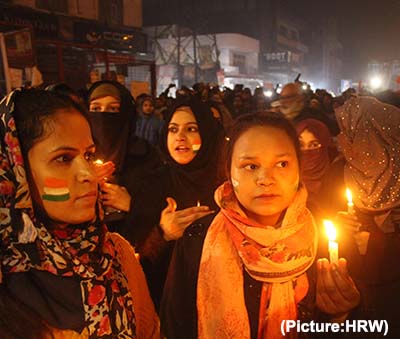
As India heads to the polls in April/May 2019 a wide cross-section of Indians gathered on Saturday, April 6, 2019 at the Indian Consulate in New York City (NYC) to stand in solidarity with people fighting to defend the Constitution, democracy and human rights in India. The NYC “Defense of Democracy” rally brings together the rich diversity of the Indian diaspora in the United States – scientists and engineers, service workers and computer professionals, artists and doctors, Hindus, Sikhs, Dalits and Muslims, policymakers, activist, left and liberal intellectuals and community leaders.

Some 900 million people can cast their ballot is, predictably, a source of anxiety and excitement on all sides of the political spectrum, and on this side of the globe. Traveling in a car en route to his next meeting with voters in India, Sam Pitroda, Chicago-based telecommunications entrepreneur and former advisor to India’s Prime Minister, shares his concerns about the heated election environment. Chicago based telecommunications entrepreneur and former cabinet minister and advisor to Indian Prime Ministers, was at an event celebrating the 150th anniversary of Mahatma Gandhi.

Those belonging to the ruling Bharatiya Janata Party and their supporters in the U.S., are enamored of Prime Minister Modi. Those in other parties, including the largest, Congress Party, complain of the loss of secular values and rise of Hindu chauvinism. Others are sprinkled in between, joining either side or exercising their independence.

Hundreds of Indian residents in the U.S., and a sizable number of Indian Americans have left or are planning to leave in the next few days and weeks, to participate in campaigns of parties they support, and even vote if eligible.

From the Overseas Friends of BJP to the Indian Overseas Congress and regional parties with U.S. chapters, like Telangana Rashtriya Samithi, or the Samajwadi Party of Uttar Pradesh, or former U.P. Chief Minister Mayawati’s Bahujan Samaj Party, and Shiromani Akali Dal, Telugu Desam, members and supporters living abroad, are engaging the Indian electorate, whether by participating in phone banks from New Jersey to California, or by being physically present in India.

“In the last three days alone we have been holding more than 16 ‘Chai Pe Charchas’ and ‘Chowkidar’ marches around the United States,” Krishna Reddy Anugula, president of the Overseas Friends of BJP, told the media. He also pointed to the organization Sikhs of America, which held a car rally in support of Modi in Maryland on March 31. Members of Sikhs of America had not returned calls by press time.

Commenting on the lynchings and targeted attacks on Muslims and Dalits that have increased exponentially since the coming to power of Narendra Modi in 2014, Sarah Anderson-Rajarigam of Dalit Solidarity Forum, one of the co-sponsors of the rally said, “Dalit Solidarity Forum deplores the heavy targeting of Dalits and other marginalized communities. We unite our voices with Dalits and other minorities in their fight for freedom and support them in their efforts to uphold the constitution.” 97% of all the lynching incidents since 2010 by so-called ‘cow-protection’ mobs have taken place between 2014 and 2018 since the BJP came to power.

The organizers of the rally said, the BJP government has also been responsible for systematic erosion and weakening of democratic values and institutions. It has been attacking and weakening constitutional bodies such as the Election Commission, Supreme Court, Central Bureau of Investigation (CBI) and Reserve Bank of India (RBI). BJP ministers as well as the Rashtriya Swayamsewak Sangh (RSS) chief have given statements indicating that they would like to change the constitution to implement their fundamentalist agenda. The CBI and Income Tax department have also been used to intimidate media organizations critical of the BJP government.

Sunita Viswanath of Sadhana: Coalition of Progressive Hindus, said, “We are Americans of Hindu faith, many of us Indian, who stand opposed to the ideology of Hindutva and the atrocities against minorities and dissenters being committed in the name of Hinduism. We stand with all the people of India who are calling for an end to this regime that threatens democracy, disregards the dignity and safety of minorities, and has declared war on the poor.”

The BJP has significantly increased corruption and corporate plunder. To distract people from its record of failed governance, the BJP has increased war mongering and is busy dividing the people along communal lines. When Muslims, Dalits, and the Left have resisted or spoken up against the injustice, they have either been imprisoned using draconian laws such as Unlawful Activities (Prevention) Act. Adivasi (indigenous) people and landless laborers, who have been fighting for land and forest rights, have been arrested and harassed. Workers, who have been struggling against the government’s increased privatization and casualization of work, have been fired or put in prison. With the emboldening of patriarchal forces, in many instances, the attacks on women’s rights and safety have been led by BJP ministers and leaders.

Mohammad Jawad, National General Secretary of Indian American Muslim Council (IAMC), speaking on why IAMC has joined the rally said, “The people of India will eventually recognize the divisiveness and hate the current BJP/RSS government is spreading and will unite to preserve our constitution and defeat this government.”

The Defense of Democracy rally called for:

  • Ensure Free and Fair Elections! Election Commission must guarantee election freeof violence, intimidation, and rigging
  • Stop the witch-hunt! Release all UAPA arrestees and drop allcharges
  • Stop the lynching of Dalits and Muslims! Arrest and Prosecute theperpetrators
  • Stop culture of fear! End the attacks and intimidation of activists, artists,workers, women

Consulate in New York on Voting Rights For NRIs

According to the Election Commission of India, voting stretches from April 11 to May 19, during which close to 900 million eligible voters can go to the polls. Results will be announced May 23.

Consulate General of India in New York said that some misleading information is being spread in some sections of the media, especially social media about the online voting/voting in the Consulate or through proxy/mail by Overseas (NRI) Indian Voters in the forthcoming general election in India.

The Consulate General said in a statement that the position has been clarified by Election Commission of India spokesperson saying that no such facility has been extended to NRIs.

“The Election Commission of India (ECI) has also filed a complaint with the Delhi Police, asking it to track down those spreading “fake news” that NRIs (Non-Resident Indians) can cast their vote online in the coming Lok Sabha elections,” the statement said.

The current position with regard to voting by NRI voters in the general election in India is reiterated as follows:

Under Section 20A of the Representation of People Act, 1950 and rules made there under every citizen of India:

(a) whose name is not included in the electoral roll;

(b) who has not acquired the citizenship of any other country; and

(c) who is absenting from his place of ordinary residence in India owing to his employment, education or otherwise outside India, is entitled to have his/her name registered in the electoral roll as “Overseas electors” in the constituency in one’s place of residence in India as mentioned in one’s passport is located.

The statement said that the application for this purpose can be filed in the prescribed form in person before the concerned Electoral Registration Officer or sent by post or can be filed online on the website of Chief Electoral Officer of the concerned state or website of Election Commission of India (www.eci.gov.in).

After getting enrolled in the electoral roll, such person though will not be issued Elector Photo Identity Card but can cast one’s vote in India during Assembly or

Parliamentary election at the respective polling station after showing his/her valid original Indian passport. However, provision for alternative options for voting for overseas Indian elections is under consideration.

The Consulate General of India in New York requests all the NRIs in the consular jurisdiction of CGI, New York to get their names registered on the electoral rolls as NRI voters to enable them to become the part of the election process.

For further information regarding overseas electors, please refer to website of Election Commission of India http://ecisveep.nic.in/voters/overseas-voters/ or www.nvsp.in

A Guide on How Do I vote, prepared by Election Commission of India for Electoral Voters and Service Voters can be seen at the following websites:

https://mea.gov.in/Images/pdf/nri-brochure-english-at-18012019.pdf and

https://mea.gov.in/Images/pdf/service-voter-brochure.pdf

India’s secular nature ‘will die forever’ if BJP wins poll

Religious tolerance may be washed away by a tidal wave of hate if Modi’s party cements grip on power in April election. Fears of India evolving into a Hindu theocratic nation loom large as the pro-Hindu Bharatiya Janata Party (BJP) seeks a second term by placating Hindu sentiment ahead of the April-May parliamentary election.

Secular and liberal political groups say the poll will be be crucial in forging the future identity of the country, which defined itself as a secular-democratic nation after British rule ended in 1947.

“Hindu pride is the platform on which voters are being courted, which is a big concern,” said Alok Verma, a rights activist in the northern state of Jammu and Kashmir.

The April 11 to May 19 elections will see 900 million eligible voters select 543 parliamentarians. The party with the most seats will govern the country for the next five years.

The BJP, in office since 2014, again finds itself pitted against the Congress party, its nemesis. But critics like Verma worry it is stoking religious intolerance and hate as a ploy to win over more Hindus.

They say the party’s track record suggests it has underperformed, but few people are discussing how unemployment has spiraled under its watch, or how the agrarian crisis continues to worsen, with debt-ridden farmers reportedly committing suicide at a rate of one every three hours on average.

“Unfortunately, such issues are not being [widely] discussed,” Verma said.

The BJP came to power promising more jobs and increased development for impoverished Indians with the slogan “Good days are ahead.”

“But five years down the line, anyone who questions the BJP’s failed promises is labeled ‘anti-national’ and ‘pro-Muslim’. This is disgraceful,” said Sheetal Nanda, a women’s rights activist in New Delhi.

Never before has the call from political parties to make India a Hindu nation been so strong, she said.

“If the BJP wins again, it will pursue a mandate to amend the constitution, make non-Hindus second-class citizens, and declare the country a Hindu heartland,” Nanda said.

New Delhi-based journalist and author Ashutosh Gupta said the BJP not only wants to change the charter and laws, but transform an entire civilization by establishing an upper-caste Hindu hegemony.

The party argues that, “Hindus were subjugated by Muslims and Christians for 1,200 years because Hindus were at that time non-violent and compassionate,” Ashutosh said.

“They have pitched for the adoption of violent methods to make the dream of a Hindu heartland a reality,” he added.

Hindu-centric ideology

Critics say the violence meted out against Christians and Muslims over the past five years proves that Hindu groups have been laying the tracks to make India subordinate to a Hindu-centric ideology.

Government data shows communal violence jumped 28 percent between 2014 and 2017 with around 3,000 incidents recorded during that period, claiming almost 400 lives and injuring 9,000 people.

Moreover, 90 percent of the religious hate crimes recorded over the last decade occurred since current Prime Minister Narendra Modi led the BJP to power, according to the data assembled by Hate Crime Watch.

Hate crimes against minority groups are also believed to be rising as the election draws near.
Saheem Mir, an author and activist in Uttar Pradesh, cited the case of a Muslim father and son who were stopped on a road and attacked in this northern state on March 17.

“They were asked to chant slogans hailing Hindu gods and were forced to verbally abuse [Muslim-majority] Pakistan,” he said. “These elements are taking such extreme measures because they know no one is going to act against them.”

Hindu activists project Indian Muslims as supporters of Pakistan, India’s nuclear-armed neighbor and arch rival.

Others say that anyone who calls for enhanced dialogue to end India’s outstanding disputes with Pakistan is branded a traitor. Even cheering for Pakistan during a cricket match or expressing admiration for a Pakistani singer in a Bollywood movie puts people at risk of being tarred with a similar brush and denounced as “anti-national,” rights activists say.

In fact, India’s secular character will be permanently laid to rest if the BJP retains its grip on power, according to a recent paper by two research scholars who specialize in political science at the University of Kashmir.

“With the BJP government at the center, the secular tradition of India is under immense threat. If the threat isn’t quelled at various levels, the idea of unity in diversity — one that the nation has always prided itself on — will soon be in tatters,” according to the co-authors of the paper, Anayat Ul Lah Mugloo and Manzoor Ahmad Padder.

“If communal forces are not halted, India — regarded as the largest democracy in the world — will fall prey to what Joseph Schumpeter called ‘creative destruction’, which roughly entails the dismantling of age-old traditions by new ideologies — except that there would be nothing creative in the destruction of the inclusive idea of India.”

Bishop Theodore Mascarenhas, secretary-general of the Catholic Bishops Conference in India (CBCI), told ucanews.com that people should vote for candidates and parties who respect the constitution, treat all citizens as equals, and protect minorities.

“Communities cannot live in hatred of one another. The danger of sowing hatred is that once it’s sown, it gets out of control and nobody can tame it,” he said.

“That’s why it’s so important the people who govern us shouldn’t stay quiet when they witness such acts,” he added.

According to the 2011 census, 80 percent or 960 million of India’s 1.2 billion people are Hindus. Muslims make up 14.2 percent of the population (170 million) followed by Christians with 2.3 percent (28 million).

Indian Overseas Congress, USA membership registration drive in full swing

At a hurriedly scheduled meeting at the residence of Mr and Mrs. Ravi Chopra and Mrs. Shalu Chopra in New York on Sunday March 31, 2019, a large number of NRIs registered their strong support behind Rahul Gandhi and registered to become members of the Indian Congress Party, USA.  Particularly noteworthy was the largest number of the women who were present and who were inspired by the entry into politics of Shmt. Priyanka Gandhi ji.  They loudly hailed chants and slogans of Victory to Rahul Gandhi, Victory of the people of India and Victory to their motherland.

Mr. Mohinder Singh Gilzian, President, Mr. Harbachan Singh Secretary General, Mr. Ravi Chopra Chairman Finance Committee and Mrs. Shalu Chopra Chairperson of the Women’s Committee of the Indian Overseas Congress USA praised the enthusiasm and determination of the people to bring down the Modi Government through the democratic electoral process and place Rahul Gandhi to lead the Government in the upcoming elections.  Each woman leader was introduced and honored with their respective new appointments by Ms. Shalu Chopra and who vouched to jointly work hard under the Women’s Committee Chair.

Speaker after speaker recounted the failings of the Modi government in their administration and promises.  They vehemently declared their total opposition to Modi government governing any further.  Many speakers highlighted the outstanding achievements of the Congress Party that brought honor and pride to India amongst the comity of nations and expressed their absolute confidence in the Victory of Rahul Gandhi in the forthcoming Lok Sabha elections.

“Instead of answering to the broken promises made by them to the voters, the Modi government chose to make unfounded and false accusations on Congress party leaders by, for example, misinterpreting their statements out of context and trying to create a sense of unpatriotic behavior on their part”, said Harbachan Singh.  However, the people did not buy the insinuations ascribed to the Congress Party leaders.  The attempts failed miserably to constrain and contain the rapidly growing robust strength of party supporters and followers.

Mr. Mohinder Sing Gilzian, Mr. Ravi Chopra and other senior leaders voiced strong confidence in Dr. Sam Pitroda, Mr. Himanshu Vyas, Mr. Madhu Yashki and above all on Mr. Rahul Gandhi in their great leadership role that each one of them were playing and expressed utmost confidence that Rahul Gandhi will be the new Prime Minister of India.

The event was covered by the media and the Executive Board Members, Chapter heads and senior officials of IOC, USA gave press comments au milieu the upbeat utterances of the supporters urging total backing of the  Rahul Gandhi’s candidacy.

Interfaith Brunch hosted by Hindu community held in New Jersey

“Living the Change” was the theme of the 32nd annual Interfaith Brunch on February 18, 2019 at the elegant Seasons banquet hall in Township of Washington, Bergen County, New Jersey. It was attended by over 260 participants and elected officials from Bergen County and the State of New Jersey.

Sponsored by Interfaith Brotherhood/Sisterhood Committee of Bergen County, a coalition of nine faith traditions, and hosted this year by the Hindu community, this year’s event focused on interfaith initiatives for climate action and environmental sustainability, according to a press release.

Each of the 9 participating faith communities, Baha’i, Hindu, Jain, Jewish, Muslim, Protestant, Roman Catholic, Sikh and Unitarian Universalist, set up tables with displays from their religious teachings on respecting and protecting the environment.

Gopal Patel, director of Bhumi Project at Oxford Center for Hindu Studies and Greenfaith, in his keynote speech emphasized the dire consequences of climate change and the need to restore balance and harmony between earth and nature.

He mentioned the two questions asked by the Hindu seeker, which are “Who am I?” and “What is the purpose of human life?” Rooted in his Vedic spiritual teachings, he translated the mantra from Rigveda explaining that God is all pervading and humans should be reverent, grateful and compassionate towards earth by living a life of spiritual purity and awareness.

A leading figure in international faith based environmental movement, Patel offered practical solutions to reduce carbon footprint by making climate friendly lifestyle changes and urged the participants to reduce meat and dairy consumption and eat a healthy plant-based diet. He encouraged travelling by mass transit and reducing air travel. He also encouraged the installation of solar panels to lower the energy consumption.

‘One of the questions he asked was, what contributes most to the climate change? a) The food we eat b) The way we travel c) The energy we use. How does it impact our lives? Where and how can we make a difference? It is our moral responsibility to reconnect with earth. Be in Harmony and in balance with Mother Earth,’ the press release said.

The program included round table discussions on climate change during the lavish and delicious vegetarian brunch. The summary of these discussions was presented as the memorandum on climate action by the Interfaith Committee.

Also included in the program were unity prayers on the environment by representatives of the nine faith communities, the enthralling Hindu prayer dance and joyful music by the interfaith youth choir.

H-1B pays for US College scholarships & trainings, says new study

The US grants 65,000 cap-subjected H-1B work visas to foreign workers hired abroad every year and 20,000 to foreigners in US institutions of higher education.

The H-1B visa program for high-skilled foreigners, which has been subjected to prohibitive scrutiny by the Trump administration, has earned the US $4.9 billion in employer-paid fees since 1999, which paid for more than 90,000 college scholarships and training, according to a new study.

These collections are from the $1,500 processing fee that the government charges employers for every new H-1B or a renewal, the National Foundation for American Policy, a non-partisan think tank, says in the report, and adds that the total rises to $7 billion, by adding $500 in anti-fraud fees.

The US grants 65,000 cap-subjected H-1B work visas to foreign workers hired abroad every year and 20,000 to foreigners in US institutions of higher education. More than 70% of these visas have gone to Indians, hired by US companies such as Google and Facebook, and Indian firms such as TCS and Infosys.

The application process for 2020, which comes with changes, started on Monday and will typically end in a few days given the demand. More than 190,000 applications were received by the US Citizenship and Immigration Services, the agency that runs the programme, in 2018 (for 2019), and 199,000 in 2017.

“Few people realize that fees for each new H-1B visa holder fund scholarships and job training for Americans,” said Stuart Anderson, a former immigration services official and executive director of the think tank that released its report on Monday.

The report argued that the role of employer-paid H-1B fees has received scant or no attention in the policy debate around immigration so far. “People on all sides of the immigration debate agree that it is beneficial to train and educate more Americans in STEM fields, yet policymakers rarely note that every company-sponsored H-1B petition provides money for training and STEM education,” it said.

This side of the H-1B visas has indeed received no attention. The focus has been on American workers displaced by outsourcing. And the Trump administration has initiated a series of measures to check abuse and fraud of the programme in line with its “Buy American, Hire American” policies.

Since 1999, H-1B fees paid by employers have been used to educate and train Americans in technology-related fields. And based on data obtained from the National Science Foundation, the US department of labour and the USCIS, the report said approximately 87,890 college students enrolled in mathematics, engineering and computer science courses were granted scholarships ranging from one to four years and of up $10,000 a year.

Money from the collections also funded training of more than 1.5 million school students and teachers in STEM-related fields, and an estimated $2.5 billion of the total collections was used by the department of labor to train US workers.

“The H-1B fees have benefited American students and encouraged through teaching and financial support many individuals to enter science and engineering fields,” said the report.

NASA selects Indian-American-led Yale team to build miniature satellite for space launches

An undergraduate team of scientists in Yale led by an Indian-American, is designing a miniature satellite which has been chosen by NASA for launch on space missions in the coming years.

The Yale Undergraduate Aerospace Association (YUAA), which is currently led by Keshav Raghavan, is currently working at the Wright Lab to build a CubeSat research satellite to detect cosmic rays. It is among  16 teams undergraduate teams across the country whose CubeSats will be flown into space as auxiliary payloads on space missions planned to launch in 2020, 2021 and 2022.

“It will be the first ever Yale undergraduate endeavor to launch a spacecraft, forging the path for even more ambitious space-based projects by Yale undergraduates in the future,” the University announced in a March 22, press release.

According to a March 14 announcement from NASA, the YUAA project, called Bouchet Low-Earth Alpha/Beta Space Telescope (BLAST), “is a scientific investigation mission to map the distribution of galactic cosmic radiation across the night sky. The satellite will identify and count alpha particles and beta particles in the rays, and measure the radiation energy around Earth. BLAST will contribute to the ongoing search for the origins and nature of these rays, which will provide insight into the origins of the universe.”

To date, the CubeSat Launch Initiative has selected 176 CubeSat missions from 39 states and launched 85 CubeSat missions as part of the Educational Launch of Nanosatellites (ELaNa) through NASA’s Launch Services Program, NASA said in its press release.

Raghavan and his team mates have already done the research and development work on the miniature satellite, and this summer, they begin on prototyping and final construction work on the satellite. In January 2019, the team began using one of Wright Lab’s clean rooms to conduct tests on launch-ready components, such as the altitude control systems, Yale said in its press release.  Wright Lab will be the team’s site for final assembly of the satellite.

According to the YUAA website, these miniature satellites were first developed by the California Polytechnic State University and Stanford University in 1999.

“Intended as a standard, inexpensive design that can easily fit alongside larger satellites aboard launch vehicles, the CubeSat model has given student groups, hobbyist organizations, and research teams operating with limited funding or experience unprecedented access to space,” the YUAA site says.

These miniature satellites are built from commercially available materials and have a modular structure of 10x10x10cm cubes (hence the name). Hundreds of universities, companies and research teams have designed and launched their own CubeSats over the years. The Yale CubeSat project is an undergraduate-run project, currently in its 4th year.

Rajat Gupta keen to reform US criminal justice system

Former head of McKinsey & Company Rajat Gupta, who spent 19 month in a US jail on charges of insider trading, on Wednesday said he would like to work for the reforms in the US criminal justice and prison system.

The management guru said through his experience, he saw the underbelly of US justice system and feels that much needs to be reformed in it.

“There is lot of suffering, lot of unnecessary waste of human capital. There is lot of cruelty and lot of families are destroyed,” said Gupta speaking at the launch of his book “Mind without Fear” at the Indian School of Business (ISB) here.

Gupta, who started many initiatives in education and health, said he had now started thinking about reforms in the criminal justice system as it had a staggering impact.

He said US had the largest number of incarcerated people in the world.

“There are somewhere around 3 million people. If you count them and those who go through the incarceration system again and again and think about their families, it is more than 100 million people impacted by the criminal justice system.

“While I never thought about it before I went through it myself, I have become committed to make a difference in whatever I way I can to reforms in US justice and US prison system,” he said.

Gupta, the driving force behind the ISB, shared his thoughts, his experiences and spoke about his mistakes during a conversation with Founding Dean of ISB, Pramath Raj Sinha and while answering questions from students.

He said he was sent in solitary confinement for no reason. He said people in charge of the prison had unchecked power and they make sure that they kill the spirit of the inmates.

He said he had to spend seven weeks in solitary confinement and it was harsh. According to UN Convention, solitary confinement of than two weeks is a big torture.

Gupta admits that his biggest mistake was to be too busy with too many initiatives. “Although in every situation I was involved in, I could make a positive difference but at the end, it added up to the hell of a lot which means I did not pay attention to many details that I should have and steered clear of something I should have steered clear of,” he said.

Gupta, who rose from being an orphan to an international icon, said he could see many transitions in his career as he never lived in comfort zone. “If you are too much in comfort zone, change it dramatically, get out of the comfort zone. If you get too much into a comfort zone, you get into a rut and you will not be creative and innovative anymore,” he told the students.

About the book title, Gupta said that a mind without fear was an aspiration. “In many instances I took risk without being afraid. Sometimes it failed me as well,” he added.

Rep. Pramila Jayapal gives tearful speech about non-binary loved one

At an Equality Act hearing in the House Judiciary Committee, Rep. Pramila Jayapal made the deeply personal revelation. Three hours into Tuesday’s House Judiciary Committee hearing about the Equality Act, a bill that would add LGBTQ people to federal nondiscrimination laws, Rep. Pramila Jayapal, D-Wash., shared a tearful story about her child coming out of the closet.

“My beautiful, now 22-year-old child told me last year that they were gender nonconforming,” she said. “The only thought I wake up with every day is: My child is free. My child is free to be who they are, and in that freedom comes a responsibility for us as legislators to protect that freedom.”

Before Jayapal’s heartfelt comments, several GOP lawmakers and Republican-invited witnesses shared concerns about the Equality Act. One witness, Julia Beck, a self-described radical feminist and vocal opponent of transgender rights, testified that women’s sports could be irrevocably changed by the bill because men might pretend to be transgender women in order to win competitions.

Rep. Matt Gaetz, R-Fla., even posed an outlandish hypothetical, asking what would happen if President Donald Trump were to declare himself “the first female president.” He then asked, “Who would celebrate that?”

 “As I listened to some of you today, I was struck by this push to presume that these provisions would somehow be manipulated or used by people in ways that would hurt existing sex protections,” Jayapal said at the beginning of her almost four-minute speech. “It occurred to me that we are talking about fear versus love; we are talking about fear versus freedom.”

She then continued to discuss the “heavy burden of conflict” her child had carried before coming out as nonbinary and how, by bracing their gender identity, has allowed them to flourish.

“My child is finally free to be who they are,” Jayapal tweeted after the hearing. “With that freedom comes a responsibility, for us as legislators, to legislate with love and not fear.” Vedant Patel, a spokesperson for Jayapal, confirmed that Tuesday’s hearing was the first time the lawmaker shared this personal family story.

Kamala Harris’ campaign raises $12m for 2020 bid

US Democratic presidential candidate Senator Kamala Harris, who is of Indian and Jamaican descent, has announced that her campaign raised $12 million in the first quarter of 2019 from more than 218,000 individual contributions.

Harris, who is seeking the Democratic presidential nomination, became the second major candidate to announce her first-quarter fundraising total after South Bend, Indiana, Mayor Pete Buttigieg said he raised over $7 million in the first quarter, according to CNN.

“A nationwide network of hundreds of thousands of grassroots supporters has stepped up to lay the foundation for a winning campaign,” Harris’ campaign manager Juan Rodriguez said in a statement on Monday cited by the Hill magazine.

“This is a campaign powered by the people, focused on making healthcare a right, putting $500 a month in the pockets of working Americans, and giving every public school teacher in America a raise. We’re excited by the support we’re already seeing.”

The campaign’s announcement came after Sunday’s Federal Election Commission quarterly fundraising deadline.

In a news release, Harris said she had received 218,000 individual contributions during the first quarter and 98 per cent of those contributions came in amounts smaller than $100.

Harris’ aides said that more than 99 per cent of her current donors can contribute again without hitting the limit.

Harris did not disclose how much she has spent during the first three months of the year, nor how much cash she has remaining in the bank for the long primary fight. (IANS)

Americans Borrowed $88 Billion to Pay for Health Care Last Year, Survey Finds

Americans borrowed an estimated $88 billion over the last year to pay for health care, according to a survey released last week by Gallup and the nonprofit West Health. The survey also found that one in four Americans have skipped treatment because of the cost, and that nearly half fear bankruptcy in the event of a health emergency.

There was a partisan divide when respondents were asked whether they believed that the American health care system is among the best in the world: Among Republicans, 67 percent of respondents said they believed so; that number was 38 percent among Democrats.

But Democrats and Republicans had similar responses about putting off medical treatment. Asked if they had deferred treatment because of the cost, 27 percent of Democrats said they had, compared with 21 percent of Republicans and 30 percent of independents.

Respondents from across the political spectrum also reported pessimism about their leaders’ abilities to reduce health care costs. About 70 percent of respondents said they had no confidence in their elected officials to bring prices down. And 77 percent said they were concerned that rising health care costs would damage the American economy.

“Our data shows an American public that’s beaten down from this really serious issue,” said Dan Witters, a senior researcher at Gallup.

At the same time, 64 percent of respondents said they were mostly satisfied with their experiences in the health care system. When asked if they were satisfied with how well the system was serving Americans generally, only 39 percent said they were.

The survey’s authors noted that Americans’ feelings were complicated and at times conflicted. But one thing was clear: High health care costs had created significant anxiety.

Even among households earning $180,000 or more a year, a third of respondents said they were concerned about the specter of personal bankruptcy because of a health crisis. (There has been fierce debate among researchers about the extent to which health care costs can be blamed for bankruptcies.)

Many American families earning less than that, of course, feel the effects of high health care costs acutely. They are forced to cut back on other expenses to pay for health care, or skip appointments and prescription refills, creating health risks down the road.

Twelve percent of respondents said they had borrowed money for care, including 11 percent of those with health insurance, who may still face high deductibles and other out-of-pocket expenses.

Most survey respondents said they believed that Americans were paying too much for health care relative to what they receive. Asked to choose between a hypothetical freeze in their health care costs or a 10 percent increase in household income, 61 percent of respondents chose the freeze. Those in low-income households were most likely to choose that option.

“When we’re talking about health care and the debate right now, it usually bifurcates between the financial impact of health care or the health outcomes themselves,” said Tim Lash, chief strategy officer for West Health, a nonpartisan nonprofit that aims to lower health care prices.

“But those two things intersect at access,” which can have dire health consequences, he said.

The organization believes that Congress should allow Medicare to negotiate directly with drug companies; that there should be more transparency about the prices of medicines and procedures; and that the health care industry should shift toward “value-based care” — in which doctors are paid based on patient outcomes — rather than the current “fee-for-service” model.

House committee passes bill to upgrade 401(k) plans amid ‘retirement income crisis’

The most comprehensive changes to private retirement plans in more than a decade are gaining momentum in Congress. A key House committee on Tuesday unanimously passed a bill intended to increase the flexibility of 401(k) plans and improve access to the accounts, particularly for small businesses and their employees.

The proposal, known as the Secure Act, was backed by the top Democrat and Republican on the tax-writing Ways and Means committee.

The bill includes:

A host of provisions aimed at encouraging small businesses to provide private retirement benefits to their workers.

It allows them to band together to offer 401(k)s and creates a new tax credit of up to $500 for companies that set up plans with automatic enrollment.

Businesses with long-term, part-time workers must also allow them to become eligible for retirement benefits.

Several measures that would affect other types of savings are included in the bill.

It repeals the maximum age for IRA contributions and raises the age for required mandatory distributions from 70œ to 72.

It also expands the use of 529 plans, from only college-related expenses to include home schools and student loans. “Americans currently face a retirement income crisis, with too many people in danger of not having enough in retirement to maintain their standard of living and avoid sliding into poverty,” committee Chairman Richard Neal, D-Mass., said Tuesday.

The bill is one of the few proposals with a significant chance of becoming law amid a bitterly divided Congress. Elements of the bill have been debated among members for years and enjoy wide support among both industry groups and advocacy organizations. On Tuesday, Neal called the legislation “a major bipartisan accomplishment.”

“The Ways and Means committee is where we find solutions and get things done for the American people,” he said.

The last time Congress passed major retirement legislation was in 2006. The Pension Protection Act focused on underfunded accounts and reforms to that system. Since then, lawmakers have debated proposals to address the popularity of 401(k)s and individual savings accounts.

But those efforts have stalled on their own, said Paul Richman, chief government officer at the Insured Retirement Institute, a trade group. He said the Secure Act aims to “modernize” the system.

“It’s packaging them all into a comprehensive piece of legislation that would address many of these little issues that have cropped up over the years,” he said. “We think that it’s a good chance for Congress to take some positive, bipartisan action and advance this bill.”

The Senate Finance committee introduced a companion bill late Monday. It is expected to pass with backing from both sides of the aisle.

“There’s a lot of pent-up momentum for this, and that’s why it’s so bipartisan in nature,” said Shai Akabas, director of economic policy at the Bipartisan Policy Center, a think tank. “They’re now getting to the point where there’s momentum to get it across the finish line in both the House and the Senate.”

In the House, Neal said he is also working on a second retirement bill with ranking Republican Rep. Kevin Brady of Texas. He said he hopes the committee will consider that legislation before Congress goes on recess in August.

India’s Cloud market to hit $7 billion by 2022: Nasscom

With increased adoption of futuristic technologies such as Artificial Intelligence (AI) and Machine Learning (ML), the Cloud market in India is poised to grow three-fold to $7.1 billion by 2022, according to a Nasscom report on Tuesday.

In 2018, Cloud spending stood at approximately 6 per cent of the total IT spending, according to the report prepared in collaboration with Google Cloud and Deloitte Touche Tohmatsu India LLP.

“India’s Cloud computing market is poised for growth and the technology is increasingly being embraced across businesses as well as consumers,” Debjani Ghosh, President, Nasscom, said in a statement.

Globally, the Cloud spending on IT is growing at 16.5 per cent and is expected to touch $345 billion by 2022, said the report titled “Cloud — Next Wave of Growth in India”.

The report highlights that Cloud spending is propelled by factors such as increased awareness of Cloud, consumerisation of IT, proliferation of start-up ecosystem, diverse landscape of supplier ecosystem, rising investments in infrastructure, talent, strategic partnerships and the impetus from key digital-led government programmes.

Futuristic technologies such as AI and ML are aiding in the seamless adoption of software as a service (SaaS), infrastructure as a service (IaaS) and platform as a service (PaaS) offerings, giving a boost to the Cloud market.

The report also draws attention to a few challenges to the growth of Cloud market in India such as data security and lack of Internet infrastructure specially in tier-2 and rural markets of the country. (IANS)

Goodbye, special treatment to the rich

The Wyden plan “would transform how the U.S. taxes the wealthiest people,” The Wall Street Journal’s Gabriel Rubin and Richard Rubin writes.
Under current law, investors pay taxes on the increased value of the stocks and bonds they own — known as capital gains — only when they sell them. They also pay a lower tax rate than that on most forms of income. Wyden’s plan would remove both of those advantages.
Investors would have to pay the ordinary income-tax rate on their capital gains. And they would have to do so each year, based on the assets’ value at the time. In accounting terms, this practice of updating the value of an asset is known as “mark to market.”
The “mark-to-market” idea is similar in principle to the reassessment of home values for property-tax calculations. As I’ve noted before, the property tax is an annual tax on the largest asset for most middle-class families. But the very rich don’t face an annual tax on their largest holdings.
Their largest holdings often include stocks. Which means that the lower tax rate on capital gains, combined with the deferral of taxing them, has enormous financial consequences, as Steve Wamhoff, of the Institute on Taxation and Economic Policy, explains on JustTaxes.org. “Wealthy households, who already own the most in assets, can defer paying tax and grow their wealth much more rapidly, while income most of us earn from work is taxed annually,” Wamhoff writes. “This is a massive tax break for the wealthy, and mark-to-market taxation would bring it to an end.”
Lily Batchelder and David Kamin, both N.Y.U. professors and former Obama administration officials, noted that the Wyden plan would also raise significant amounts of revenue for the federal government. That money could be used to reduce the deficit or pay for programs such as preschool or middle-class tax cuts.
Critics of the Wyden idea (as you can see here) claim that revaluing assets each year is too complicated to be feasible and that the plan will harm economic growth. I don’t buy either claim.
On the economic effects: It’s not as if the American economy has been performing well in recent years. As wealth inequality has risen, economic growth has repeatedly missed forecasters’ expectations.
On the complexity: All taxes have some complexity. But it’s certainly feasible for the government to become more aggressive about taxing top incomes and wealth.
I don’t know whether the Wyden plan will ultimately make more sense than Warren’s more sweeping proposal to tax large fortunes each year or the proposals from Harris and Sanders to increase the inheritance tax. But this is the right time for the debate.
The next time the country has a president who’s worried about inequality and middle-class living standards, it will be time to increase taxes on extreme wealth.
The average wealth of the poorer half of American households has dropped below zero in the years since the financial crisis, according to the World Inequality Database. What does that mean? It means that fully half of Americans hold more combined debt than assets.
The average wealth of the richest 1 percent of households, meanwhile, has more than recovered its losses from the crisis. They’re now richer than ever.
This situation isn’t healthy. And the most obvious solution is to change the tax code — specifically, to increase taxes on wealth to undo some of the radical increases in inequality over the last few decades.
Fortunately, some policymakers are starting to come forward with proposals to address the wealth imbalance. The latest is Ron Wyden, the Democratic senator from Oregon. He joins a few presidential candidates — Kamala Harris, Bernie Sanders and Elizabeth Warren — who have also proposed higher taxes on wealth.

Majority Indians Afraid of Posting Political Views Online

The political atmosphere in India has remained edgy in the last few years. Numerous people have been arrested in the past for posting comments critical of the ruling government. News reports of arrests for insulting Prime Minister Narendra Modi have popped up with an alarming regularity.

The arrests include students, teachers, businessmen, auto-rickshaw drivers, activists and members of police and paramilitary forces. Living in such environment has made many livid, outraging over lack of freedom of expression, especially in terms of political views.

As many as 55 per cent of surveyed English internet users stated that they are scared of expressing political opinions online, according to a survey by Reuters released Monday. They said that they are concerned that open political expression on social media could land them into trouble with the authorities.

Out of English-speakers in India, 41 per cent respondents who claimed to support the BJP said that they trust “most news most of the time”. Thirty-six per cent of UPA supporters (including former UPA) and 26 per cent of non-partisans trust news most of the time, according to India Digital News Report, published by Reuters Institute for the Study of Journalism.

The report is “based on data from a survey of English-speaking, online news users in India”.

The issues of fake news, misinformation and online political manipulation are of grave concern in both India and the US, Americans and English-speaking Indians vastly differ on who should be held responsible.

Roughly 57 per cent of English-speaking Indians are concerned with deciphering what is real and what is fake on the internet. Additionally, 64 per cent Indians believed that the government should solve the misinformation problem. Approximately, 70 per cent Indians placed the onus on publishers and platforms.

Close to 45 per cent of respondents said they are concerned, “when facts are spun or twisted to push a particular agenda,” and with “poor journalism.”

A report in Indian Express stated that at least seven state government school teachers have been suspended by the Uttar Pradesh government for questioning Pulwama terror attack to praising Pakistan prime minister Imran Khan and criticising the effectiveness of Balakot airstrike by India. Lately, India is increasingly jailing its young citizens for posting content online that “offends” politicians.

In 2017 and 2018, at least 50 people were arrested across India for social media posts, according to a report by Mint.

INA-NY CALLS FOR ESSAY SUBMISSIONS FROM INDIAN NURSES

Indian Nurses Association of New York (INA-NY) which represents and serves as a professional body of nurses and nursing students of Indian origin and heritage in New York state, calls upon all nurses of Indian origin to submit essays for its annual essay contest on the theme, “Nurses:  A Voice to Lead – Health for All”.

            Essay must be limited to two pages, typed in double space using font size 12 and must not contain any personal identifiers.  The contestant must attach a cover page with full name, credentials, address, phone number and email address.  The essay with the cover page is to be emailed  to Dr. Solymole Kuruvilla, chair of the awards and scholarships committee at kuruvil3@aol.com by May 12, 2019. The first and second prize winners will be awarded at the INA-NY Nurses’ Day celebrations at the Cotillion Restaurant in Jericho, NY on May 18, 2019.

Paul D Panakal

7831 266 Street

Floral Park, NY 11004

347 330 0783

516 732 2520

INA-NY CALLS FOR ESSAY SUBMISSIONS FROM INDIAN NURSES

Indian Nurses Association of New York (INA-NY) which represents and serves as a professional body of nurses and nursing students of Indian origin and heritage in New York state, calls upon all nurses of Indian origin to submit essays for its annual essay contest on the theme, “Nurses:  A Voice to Lead – Health for All”.

            Essay must be limited to two pages, typed in double space using font size 12 and must not contain any personal identifiers.  The contestant must attach a cover page with full name, credentials, address, phone number and email address.  The essay with the cover page is to be emailed  to Dr. Solymole Kuruvilla, chair of the awards and scholarships committee at kuruvil3@aol.com by May 12, 2019. The first and second prize winners will be awarded at the INA-NY Nurses’ Day celebrations at the Cotillion Restaurant in Jericho, NY on May 18, 2019.

Paul D Panakal

7831 266 Street

Floral Park, NY 11004

347 330 0783

516 732 2520

Congress is political future of India: Shatrughan Sinha

Mumbai– Bollywood actor-turned-politician Shatrughan Sinha, who has finally quit the BJP, feels that the Congress is the political future of India.

Q: So you have finally done what we knew for some time?

A: (laughs heartily) Raaz ki baat jo sab jaante the. Open Secret. Yes, I have joined hands with Soniaji, Rahul and Priyanka. I am now a part of the Congress.

Q: Why?

A: Why? Why did I choose to join Congress? It was a decision taken after much deliberation and thought. And why not? The Congress is the party that brought us kicking and dragging into free India. It gave us national legends like Sardar Vallabhai Patel, Pandit Jawaharlal Nehru 


Q: That was in the past. Where are the leaders of that stature in the Congress now?

A: Well, we could give the same argument for the BJP. I joined hands with them (BJP) because of the great leaders like L.K. Advaniji and Atal Bihariji. Leadership has to change. Today the Congress is in the hands of Rahul Gandhi.

Q: He was trolled mercilessly until very recently?

A: But Rahul has evolved in the past year or so. He is no longer ridiculed. Besides his sister Priyanka has also joined hands with Rahul. We have to give him a chance. I was happy when he spoke to me and said he is very happy to welcome me to the party.

Q: Yes, you and Urmila Matondkar?

A: The more the merrier. I think the Congress is the political future of India. It saw India through its toughest times. It’s time to give them another chance.

Q: So what prompted you to make the move from BJP to Congress?

A: Many factors. I was not being treated properly by the BJP. When they announced Ravi Shankar Prasadji as their candidate from my seat in Patna, something gave way inside me. I ceased being a loyal soldier of the BJP. Not that I intend to badmouth anyone from the BJP. I respect the senior leaders. They are my colleagues and friends and I am not into the politics of mudslinging. I hope they feel the same.

Q: Your daughter Sonakshi feels you should have left the BJP long ago?

A: (laughs) Achcha. When did she say that? How sweet of her! I am in Muscat where they’re honouring me as a cinematic legend. My family has been advising me to do the right thing in my political career. And not just they. My dear family friend Lalu Yadavji also wanted me to join hands with the Congress.

Q: Do you think the Congress will accord you the respect you deserve?

A: I feel welcomed here. As you know, I was unhappy with my position in the BJP for a long time. The party leadership knew I was unhappy. No one came forward to speak to me. There was no dialogue at all. It was as if they had shut me out. I didn’t have to suffer this humiliation. But I stayed on out of loyalty. But now I feel it’s time to move on.

Q: What are you plans as a Congress member?

A: To serve the country and to end the culture of intolerance that has taken over the nation. If you criticize a government policy, you are not anti-India. If you say Kashmir is burning, you are not pro-Pakistan. (IANS)

Sikh Coalition’s Complaint Leads To Further Action Against ICE

This week, the Sikh Coalition filed a complaint with the U.S. Department of Homeland Security (DHS) Office of Inspector General and U.S. Immigration and Customs Enforcement (ICE) in response to ongoing concerns regarding violations of civil rights for Sikhs at ICE detention facilities across the United States.

The complaint demands included increased Punjabi language access for Sikh detainees in compliance with ICE’s own Language Access Plan, an investigation into systematic policies of prolonged detention, better access to critical medical care, and full and consistent religious accommodations for Sikhs at detention facilities under federal law.

“Access to due process, religious accommodations, medical care, and language assistance is not an immigration issue; it’s a basic human rights issue,” said Sikh Coalition Senior Staff Attorney Cindy Nesbit. “Our government has a responsibility to make sure that every person being detained is treated fairly under the law, and we have an organizational responsibility to hold our government accountable.”

The Sikh Coalition also joined South Asian Americans Leading Together (SAALT), several other civil rights organizations and members of Congress to brief legislators about these concerns while demanding further transparency and oversight into the treatment of Sikh detainees. Click here to watch the April 2nd briefing.

Since January 2019, when news broke that several Sikh detainees were on hunger strike protesting their detention, the Sikh Coalition has been engaged in advocacy to raise concerns about the safety, civil rights and religious rights of Sikh detainees. On February 12th, the Sikh Coalition sent a demand letter to the DHS, U.S. Department of Justice (DOJ) and key congressional and senate offices insisting on further investigation and oversight.

On February 15th, the Sikh Coalition joined other civil rights organizations, immigration attorneys and activists for a day of action in El Paso, Texas. This involved Sikh Coalition Legal Director Amrith Kaur and Community Development Manager Inderpreet Kaur meeting with 42 Sikh detainees – including those who had been force-fed after hunger striking in protest of these violations – inside the El Paso and Otero detention facilities. To read more about our organizational response to the Sikh hunger strike, click here.

The Sikh Coalition has previously provided support to detainees whose civil rights are being violated because they are not permitted to freely practice their religious beliefs while detained. Last year, this support included providing background expertise on Sikh religious observance as part of a court filing for the Oregon Federal Defender’s Office, which represented a number of Sikh detainees at the Sheridan Detention Center. This court filing, in part, led to the detention facility changing their policy and allowing Sikhs to maintain their dastaars.

Additionally, the Sikh Coalition continues working with organizations and sangats to gather actionable data on Sikhs who are detained so that we can better identify needs and resources. This support includes providing dastaars, gutkas, parsad and a clean prayer space at detention facilities, and also connecting detainees to Punjabi translators and lawyers while providing oversight on humanitarian conditions within the detention facilities.

The Sikh Coalition recognizes that immigration is a long-standing and complex issue. Even though we do not provide direct legal services on asylum or immigration cases and it has not been a primary focus area, we are here to make sure impacted community members’ civil rights are protected.

Sikhs around the world aim to plant million trees as ‘gift to planet’

Sikhs around the world are taking part in a scheme to plant a million new trees as a “gift to the entire planet” as part of celebrations to mark the 550th birth anniversary of Sikhism founder Guru Nanak, the media reported on Friday.

According to the Guardian, the project aims to reverse environmental decline and help people reconnect with nature.

Rajwant Singh, the President of the Washington DC-based environmental organisation EcoSikh, which is coordinating the Million Tree Project, said he wanted to mark the anniversary in a significant way.

EcoSikh collaborates with thousands of Sikh Gurdwaras and institutions all over India, Malaysia, Pakistan, the US, UK, Australia, France, Hong Kong, Norway and many other countries.

The Sikh diaspora has taken on the challenge and tens of thousands of trees have already been planted, the report said, adding that most of the trees were planted in India and also in the UK, US, Australia and Kenya.

“Guru Nanak was a nature lover. (He) had talked about nature as a manifestation of God and many of his writings talk about how we need to learn lessons of life from nature,” said Singh.

He said he hoped the project would motivate Sikhs – especially the young – to improve their relationship with nature and would be seen more broadly as “a gift to the entire planet”.

Sikh Union Coventry, an environmental organization based in Washington, said it plans to plant 550 trees in the Coventry area and has already started planting native trees, shrubs and flowers such as hazel and hawthorn at various sites.

Sikh Union Coventry chair Palvinder Singh Chana said: “As Sikhs, our connection to the environment is an integral part of our faith and identity. Future generations will benefit from the fruits of our labour, symbolising peace, friendships and continuity for generations to come.”

People involved in the drive said that the million tree target would be achieved by the time of Guru Nanak’s birthday in November. (IANS)

South Asian Bar Association of Greater Boston Celebrates its 15th Anniversary

The South Asian Bar Association of Greater Boston, known as SABA GB, celebrated its 15th Anniversary earlier this month.  The event was sponsored and held at Sullivan & Worcester, LLP’s Boston office. The evening featured a keynote address from Justice Sabita Singh, an Associate Justice of the Massachusetts Appeals Court.

Justice Singh is a founding member and the first President of SABA GB. Justice Singh also served as the third president of the South Asian Bar Association of North America.

In her address, Justice Singh reminisced about the early days of the organization when the founding members identified South Asian attorneys through the Massachusetts Lawyers Diary and Manual (i.e. a directory for the approximately 40,000 attorneys in the Commonwealth).

Today, SABA GB has over one hundred active members and supports the development of hundreds of law students and attorneys.  Justice Singh remarked on her immense sense of pride in the organization’s growth and the accomplishments of its members since the organization’s humble beginnings.

In addition to Justice Singh’s address, the 2019 SABA GB President Keerthi Sugumaran spoke about her hopes for the organization’s continued growth. She highlighted the success of SABA GB’s mentorship program for South Asian law students and the award-winning Know Your Right’s program for the South Asian community.  In addition, she announced new initiatives to support and advance the career development of mid-level attorneys and South Asian women attorneys.

As part of the celebration, SABA GB recognized the contributions of the Advisory Board Members and Former Presidents.

The Advisory Board includes Navjeet Bal, Rachna Balakrishna, Rajeev Balakrishna, Manisha Bhatt, Councilor Mehreen Butt, Aloke Chakravarty, Mark Flemming, Chairwoman Sunila Thomas George, Samia Kirmani, the Honorable Maynard Kirpalani, Ameek Ponda, Annapoorni Sankaran, the Honorable Sabita Singh, and the Honorable Neil K. Sheering.

The Former Presidents include Justice Singh, Annapoorni Sankaran, Samia Kirmani, Natasha Varyani, Sa’adiyah Masoud, Manisha Bhatt, Gauri Punjabi, Hinna Upal, Saraa Basaria and Rashima Shukla.  SABA GB sincerely appreciates the tireless efforts of these individuals to grow the organization and to advance the interests of South Asian attorneys and the South Asian community as a whole.

Lawyer who spat at Air India flight attendant during racist tirade is jailed

Simone Burns gets six-month sentence for ‘insulting and upsetting act’ during Air India flight

 Simone Burns, 50, outside Isleworth crown court in London ahead of her sentencing on Thursday, last week. A lawyer who spat at a flight attendant during a racist foul-mouthed tirade after she was refused alcohol on a nine-hour business class flight has been jailed for six months.

Judge Nicholas Wood, sentencing at Isleworth crown court, told Simone Burns: “The experience of a drunk and irrational person in the confines of an aircraft is frightening, not least on a long-haul flight and poses a potential risk to safety.”

The judge noted that “such offences are often committed by people of impeccable character”.

Although the aircraft was not at risk by Burns’s behaviour, the judge said “for the luckless and unfortunate passengers and crew there is no escape at 30,000ft”.

He added that “spitting straight into a crew member’s face at close range is a particularly insulting and upsetting act”.

Burns, of Hove, sat quietly in the dock as she was sentenced to six months for being drunk on an aircraft and two months for assault.

The sentences are to be served concurrently after she previously pleaded guilty to the charges.

Burns, 50, who is known as Simone O’Broin, was initially served three bottles of red wine but declared “I’m a fucking international lawyer” when she was denied more on an Air India flight from Mumbai to London on 11 November 2018.

She also called staff “Indian money-grabbing cunts” and smoked a cigarette in the toilets during the tirade, which was condemned by a member of the cabin staff as unlike anything he had seen during his 30-year aviation career.

The lawyer, who is Irish and has worked with refugees around the world, unleashed a barrage of abuse in a prolonged rant which also saw her spit and grab the arm of the steward, the court heard.

Burns was also ordered to pay ÂŁ300 compensation to the crew member who was assaulted.

The nine-hour flight took off at 4.10am as Burns sat in business class with 17 other passengers. After breakfast was served Burns was asking for alcohol and being “very obnoxious”, the court heard.

She was served with three 25cl bottles of red wine an hour into the flight. She had also complained that her TV was not positioned correctly. She had gone to the galley and demanded drinks when she stood back and spat into the crew member’s face.

Burns also grabbed the report the crew member was writing and continued with her abusive behaviour, the court heard.

The court was told that this crew member later said: “In the 34 years I have worked for Air India this is the first time I have been treated like this by a woman. I felt abused.”

The judge said he was satisfied the offence was racially aggravated and that the Air India passengers must have been “extremely upset” by Burns’s behaviour and the language she used.

The judge told Burns: “The fact remains that you were drunk and obnoxious almost from the beginning to the end. You were abusive, contemptuous and confrontational and used appalling language.”

He added: “You are a woman, not just of good character but a positive and impeccable character – a righter of wrongs. What this has done, thanks to social media, [has meant] you have had death threats and been a hermit in your home. “You are a person who has done good work throughout your life.”

The prosecutor, Caroline Paul, told the court that one of the crew members who dealt with Burns later described her as being “continually abusive in the nine-hour flight and in his 30 years as a flight purser he had never witnessed such behavior”.

Burns was given a verbal warning and was then arrested after the flight touched down.

G. Nagesh Rao Receives ‘Gears Of Government’ Awards From White House

The White House Office of Management and Budget and General Services Administration announced that G. Nagesh Rao was named a recipient of the Gears of Government Awards.

Rao, the director of Business Technology Solutions at the U.S. Small Business Administration and a 2016 USA Eisenhower Fellow, received the award for his work and accomplishments at the SBA.

The Indian American technologist received the award in two categories, including the Council Award for SBA’s IT Modernization Efforts; and the Agency Award for his prior leadership and work on the Growth Accelerator Fund Competition and SBIR/STTR Programs, in particular around the SBIR.gov digital platform, according to a news release.

The Gears of Government Awards mission is to recognize individuals and teams across the federal workforce whose dedication supports exceptional delivery of key outcomes for the American people, specifically around mission results, customer service, and accountable stewardship.

Nagesh was featured in a story by the White House as part of their announcement of the winners on Feb. 26. According to the announcement, Rao uses advancements in science, technology, innovation and economic empowerment to help businesses work better, faster and cheaper.

It said he “revolutionized the SBA’s approach to supporting entrepreneurs in innovation, startup and technology fields.”

The “proud geek” and his cutting-edge approaches have helped small businesses more easily access $2.5 billion each year in research and development funding, it said. Facebook, WhatsApp become fake news factories in India

Facebook first came under the scanner of policymakers around the world after allegations of Russian interference in the 2016 US presidential elections surfaced.

Barely a week away from when the world’s largest democracy goes to polls, the fake news factories on Facebook and its owned WhatsApp have become active like never before as the social media giant scramble for solutions which are few and far between.

The game on Facebook is different from other social media platforms as Pages, Groups and accounts have been renamed to push the election agenda as per the demand coming from the political quarters.

According to social media experts, renaming the Facebook Pages or Groups to promote political campaigns and influence voters have become common and the Artificial Intelligence (AI)-driven algorithms are not sufficient to handle such a huge volume in a country where Facebook has over 30 crore users and WhatsApp another 30 crore monthly.

“There are over 200 Facebook Groups and Pages with more than one lakh followers which are currently influencing the group members and followers with biased political content,” leading social media expert Anoop Mishra told IANS.

There are fake profile Pages created by fans of journalists like Ravish Kumar (“I Support Ravish Kumar” with over 18 lakh followers) and Punya Prasun Bajpai (“Prasoon Vajpaaye Fans” with over 10 lakh followers) being used to push a political agenda.

There are several such examples where people who joined Facebook renamed their Pages, Groups and accounts later, only to use it for spreading their political agenda.

Despite Facebook’s efforts, such misinformation is thriving and is only going to reach mammoth levels as the first phase of voting begins from April 11.

“For the social media players, India is a huge market and they want to grow… On the other hand, they have consistently failed to stop the spread of fake news and propaganda on their platforms,” Pavan Duggal, the nation’s leading cyber law expert, told IANS.

The pressure on social media platforms is enormous with the Indian government now formulating new IT guidelines where they have to remove within 24 hours any unlawful content that can affect the “sovereignty and integrity of India”.

Facebook-owned WhatsApp is another fake news factory where more than 87,000 groups are targeting millions with political messaging.

“From fake statistics related to various government policies to news promoting regional violence, manipulated political news, government scams, historical myths, propaganda to patriotism and Hindu nationalism — WhatsApp has it all in the election season,” Mishra had said earlier.

The failure to stem fake news is evident from the recent statements from CEO mark Zuckerberg. In an interview with RTE News on Tuesday, he said Facebook cannot yet guarantee that it can stop foreign actors that are trying to interfere in the upcoming European Parliament elections in May.

Facebook first came under the scanner of policymakers around the world after allegations of Russian interference in the 2016 US presidential elections surfaced.

In India, Facebook has hit on several fake Pages and accounts linked to Congress as well as the BJP but the task at hand is humongous.

On the social media platform, “some of the Pages and Groups with massive followings are directly in touch with the IT cells of the political parties”, claimed Mishra. The purpose, he added, is to connect and influence the voters with their half-baked and misleading content.

–          IANS

2 Feature Films, 2 Short Films from India to be Screened at Boston International Film Festival

Two unique Indian feature films and two short films will be shown at the 17thAnnual Boston International Film Festival that will showcase a total of 106 films from 36 countries during April 11-16, said Patrick Jerome, president of Boston-based Broadway Pictures Entertainment and Executive Director of Boston International Film Festival.

In an exclusive video interview with INDIA New England News, Mr. Jerome also discussed his own journey in film making and how he started the film festival.

He said the two Indian feature films that will be shown are: Jhalki and Nawal the Jewel. In addition, two short films have been selected.

The Boston International Film Festival will run from April 11 through April 16 at Kendall Square Cinema, Cambridge College and Bunker Hill Community College.

Opening night screening and gala fee is $45 and closing night screening and gala fee is $145. Individual sessions are $12 and all screening passes at $75. For more information, visit: www.BIFilmFestival.com.

Here are the details on two Indian feature films:

Jhalki: Tale of a Tireless Sparrow

Director:Brahmanand S Siingh

Writer:Tanvi Jain, Prakash, Brahmanand S. Singh and Kamlesh Kunti Singh

Stars:Tannishtha Chatterjee, Boman Irani, Divya Dutta, Sanjay Suri, Govind Namdeo, Yatin Karekar, Akhilendra Mishra and Joy Sengupta

Country:INDIA (108 MIN)

Session 29 Saturday April 13

Kendall Square Cinema 355 Binney St. Cambridge, MA 02139

Graham Staines’ life story very relevant: Director Daniel says he started working on the film in 2007 when his team got approval from Gladys

“The Least of These: The Graham Staines Story” director Aneesh Daniel says the movie, which documents the tragic death of an Australian Christian missionary Graham Staines and his sons in Odisha, is very relevant in the current socio-political situation in the country.

The film is based on Staines, who worked among the underprivileged and leprosy victims in Odisha. In 1999, he was burnt to death along with his two sons allegedly by members of a hardline Hindu organisation inside his station wagon in Manoharpur village in Kendujhar district of the state.

“The story holds relevance even today and we should not forget the history. In fact, at the time of the general election, it holds most relevance,” Daniel told IANS when asked why he decided to make a movie on the incident that took place years ago, and release it before the general election this year.

“Because at this moment, people are throwing mud at each other…People to people friendship is getting hampered because of their different political views. I believe this is the time we should talk about forgiveness,” he added.

In 2003, Bajrang Dal activist Dara Singh was convicted of the murders and sentenced to lifetime imprisonment.

However, Staines’ widow Gladys forgave him, and continued to live in India and served leprosy patients till 2004.

Daniel said: “People should forgive each other like how Gladys forgave the killers 20 years back.”

The English language film, starring Sharman Joshi, Stephen Baldwin, Shari Rigby, Manoj Mishra, Prakash Belawad, released on Friday.

Daniel says he started working on the film in 2007 when his team got approval from Gladys.

“It is just that it’s divine timing. Andrew (Matthews) our scriptwriter came to India twice to research and we also spoke to a number of people who (then) witnessed the incident. We tried to find the right cast for the film, so that the film looks authentic. In fact, the driver who acted as Staines’ driver (in the film) is the real person who used to drive Staines and his kids around for a number of years,” the director said.

The film was shot in Araku Valley, a city in Andhra Pradesh.

“We shot in Araku Valley because I wanted to give the same feeling of the beauty of Manoharpur. The leprosy home we used is the real leprosy home where Staines served for many years.”

The countries with the 10 largest Christian populations and the 10 largest Muslim populations

“Top 10” lists can often be helpful in displaying and illuminating data. For example, the two tables of countries with the largest Christian and Muslim populations featured here reveal differences in the concentration, diversity and projected changes in the world’s two largest religions.

The two lists show that the global Muslim population is more heavily concentrated in Islam’s main population centers than the global Christian population is for Christianity, which is more widely dispersed around the world. Indeed, about two-thirds (65%) of the world’s Muslims live in the countries with the 10 largest Muslim populations, while only 48% of the world’s Christians live in the countries with the 10 largest Christian populations.

To put it another way, more than half (52%) of the world’s Christians live in countries other than those with the 10 largest Christian populations, while this is true for just over a third (35%) of the world’s Muslims. In absolute terms, there are twice as many Christians (1.2 billion) as there are Muslims (609 million) living in countries that are not on their religion’s top 10 list.

A number of the countries with the world’s 10 largest Muslim or Christian populations also have large (and in some cases, larger) populations of other faith groups. In India, which has the second-largest Muslim population, Islam is a minority religion (making up 15% of the country’s population) and Hinduism is the majority faith. Nigeria, which has the sixth-largest Christian population in the world (87 million), also has the world’s fifth-largest Muslim population (90 million).

In addition, the lists illustrate the extent to which the population centers for these religions have moved away from their historical and traditional hubs. The countries with the five highest Muslim populations are all in South and Southeast Asia or in sub-Saharan Africa, rather than the Middle East; and the countries with the three highest Christian populations are in the Americas rather than in the Middle East or Europe.

Overall, there are about 2.3 billion Christians in the world and 1.8 billion Muslims. That gap is expected to narrow by 2060, when Pew Research Center projects there will be 3 billion Christians and nearly 3 billion Muslims. That’s because Muslims, on average, are younger and have more children than do Christians.

In 2060, the share of the world’s Muslims living in the countries with the 10 largest Muslim populations is expected to be slightly lower than it is today (60% vs. 65%). Meanwhile, the share of Christians living in the 10 countries with the highest Christian populations is expected to remain the same (48%).

The 2060 lists for Muslims and Christians are also expected to change in other ways. By 2060, India is expected to supplant Indonesia as the country with the largest Muslim population. Still, India’s Muslim population will remain a minority religious group (19%) in the Hindu-majority country.

The country with the highest Christian population, the United States, is expected to remain in that position in 2060. Lower down on the list, Tanzania, Uganda and Kenya are expected to be added, while Russia, Germany and China will fall out of the top 10.

Correction: This post has been updated to reflect that the United States is expected to remain the country with the highest Christian population in 2060.

5 facts about Buddhists around the world

Buddhists across Asia are preparing to celebrate the birthday of Prince Siddhartha Gautama, who later became known as Gautama Buddha and was the founder of Buddhism.  The Buddha is believed to have been born roughly 2,500 years ago in what is today Nepal. In Asia, where most Buddhists live, different countries celebrate the occasion on different days, including April 8 in Japan, May 12 in South Korea and May 18 in India and Nepal. The holiday goes by several names, including Buddha Purnima, Vesak, Buddha Jayanti and Ikh Duichen, and is often marked by national holidays, festivals and events at Buddhist temples.

Here are five facts about Buddhists:

1Buddhists made up roughly 7% of the world’s population in 2015, but they are expected to decrease to roughly 5% by 2060. This is because Buddhists have relatively low fertility rates compared with other religious groups, and they are not expected to grow significantly due to conversions or religious switching.

2Half the world’s Buddhists live in China, according to 2010 Pew Research Center estimates. Still, they make up only 18% of the country’s population. Most of the rest of the world’s Buddhists live in East and South Asia, including 13% in Thailand (where 93% of the population is Buddhist) and 9% in Japan (35% Buddhist). Only about 1.4% of the world’s Buddhists live in countries outside of Asia.

Buddhism in Asia is a matter of both identity and practice. Scholars and journalists have documented that many people in Asian countries may engage in Buddhist (and other religious) practices without considering themselves part of any organized religion.

3Scholars generally agree that Siddhartha Gautama was born in what would today be Nepal and taught in what would today be India, but Buddhism is a minority faith in both countries. Only 1% of Indians and 10% of Nepalese identify as Buddhist; in both countries, the vast majority of people identify as Hindu. Indeed, since Siddhartha was born into a Hindu family, Buddhism is considered to have originated in part from the Hindu religious tradition and some Hindus revere Buddha as an incarnation of a Hindu deity.

4Buddhists make up roughly 1% of the adult population in the United States, and about two-thirds of U.S. Buddhists are Asian Americans, according to Pew Research Center estimates. Among Asian Americans, 43% of Vietnamese Americans and a quarter of Japanese Americans identify as Buddhist, with most of the rest identifying as either Christian or religiously unaffiliated.

  1. With a median age of 36, Buddhists are older than the world’s overall population, which has a median age of 30, according to estimates as of 2015. They also are older than people in other major religious groups, such as Muslims (median of 24), Hindus (median of 27) and Christians (median of 30). Religiously unaffiliated adults have the same median age as Buddhists (36).

Growing Partisan Divide Over Fairness of the Nation’s Tax System Only about a third of Americans approve of 2017 tax law

As the April 15 tax deadline approaches, overall public views of the fairness of the nation’s tax system have changed only modestly since 2017, before passage of major tax legislation. However, partisan differences on tax fairness have increased considerably since then, and now are wider than at any point in at least two decades.

Two years ago, Republicans and Democrats had similar views of the fairness of the tax system. Today, 64% of Republicans and Republican-leaning independents say the present tax system is very or moderately fair; just half as many Democrats and Democratic leaners (32%) view the tax system as fair. The share of Republicans who say the tax system is fair has increased 21 percentage points since 2017. Over this period, the share of Democrats viewing the tax system as fair has declined nine points.

The survey by Pew Research Center, conducted March 20-25 among 1,503 adults, finds that more than a year after the new tax law was enacted, public approval remains relatively unchanged (36% approve of the tax law, while 49% disapprove). However, fewer Republicans strongly approve of the law than did so in January 2018.

About seven-in-ten Republicans (71%) approve of the tax law, including 43% who strongly approve. Early last year, about the same share of Republicans approved of the tax law (75%), but a majority (57%) strongly approved.

Most Democrats continue to express negative views of the tax law. Today, 79% of Democrats disapprove, including 59% who strongly disapprove.

Americans are about as likely to say they understand how the tax law affects them as was the case in January 2018. A majority of Americans say they understand how the tax law has affected them and their family “very well” (26%) or “somewhat well” (37%). However, a third say they understand the law’s impact not too well or not at all well.

The public’s overall frustrations with the federal tax system have changed little since April 2017, the survey finds.

Overall, about six-in-ten Americans say they are bothered “a lot” by the feeling that some corporations (62%) and wealthy people (60%) do not pay their fair share in taxes.

Fewer American express strong concerns about the complexity of the tax system (39% say they are bothered a lot by this), the amount they pay in taxes (27%) and whether poor people pay their fair share in taxes (16%).

The public’s views of the fairness of the U.S. economic system have changed little in recent years – and remain deeply divided along partisan lines. Currently, 63% of Americans say the “economic system unfairly favors powerful interests,” while just 34% say it is “generally fair to most Americans.” About twice as many Democrats (81%) as Republicans (40%) say the country’s economic system is unfair.

Similarly, opinions on whether corporate profits are excessive have been stable. A 56% majority says business corporations make too much profit, compared with 39% who say their profits are “fair and reasonable.” While 72% of Democrats say corporations make too much profit, only 38% of Republicans say the same.

Partisans close divisions on some concerns over the tax system as other divisions widen

While increasing shares of Democrats say they are bothered “a lot” by the feeling that some corporations and wealthy people do not pay their fair share in taxes (79% of Democrats say this about each), Republicans’ concerns over these issues have lessened.

Today, 42% of Republicans say they are bothered a lot by the feeling that some corporations do not pay their fair share of taxes (down from 55% in 2015). And just 37% of Republicans are bothered a great deal by the feeling that some wealthy people do not pay their fair share (49% said this in 2015).

Republicans’ concerns over the complexity of the tax system and how much they pay in taxes also have declined. About four-in-ten Republicans (39%) say they are bothered a lot by the complexity of the tax system, down 15 percentage points since 2015 and 10 points since 2017. Democrats’ views have changed little since 2015; today, 40% say they are bothered a lot by the complexity of the tax system.

There has been a modest decrease in the share of Republicans who say they are bothered a lot by the amount they pay in taxes (27% now, 35% two years ago). Over the past two years, there has been a comparable rise in the share of Democrats saying they are bothered a lot by how much they pay in taxes (28% now, 21% in 2017).

Stark differences in views of tax fairness between higher-income Republicans and Democrats

Today, about two-thirds of Republicans and Republican leaners (64%) say the present federal tax system is very or moderately fair; only about a third of Democrats and Democratic leaners (32%) say the same. In October 2017, there was not a significant gap in Republicans’ and Democrats’ views of the fairness of the tax system.

While Republicans and Democrats across income categories differ in their views of tax fairness, the gaps are widest – and the shift most pronounced – among those with family incomes of $75,000 or more. Currently, 68% of Republicans with incomes of at least $75,000 say the tax system is very or moderately fair, up from just 37% in 2017. By contrast, the share of Democrats who view the tax system as fair has declined 19 percentage points since then (from 40% to 21%).

Assessments of 2017 tax law more negative than positive in many demographic groups

Across many demographic groups, assessments of the 2017 tax law are more negative than positive overall. And partisan differences in the law, which were evident in January 2018 shortly after it was enacted, are about as wide today as they were then.

Democrats, regardless of ideology, overwhelmingly disapprove of the tax law, while there are wider ideological differences among Republicans.

Overall, 71% of Republicans and Republican leaners approve of the law. Conservative Republicans are more likely than moderate and liberal Republicans to approve of the tax law (80%, compared with 55%).

By contrast, sizable majorities of both liberal (80%) and conservative and moderate (77%) Democrats and Democratic leaners say they disapprove of the law.

Adults 65 and older are divided in their views of the tax law: 43% approve, while 41% disapprove. Among younger age cohorts, more disapprove than approve of the law.

While views of the tax law are more negative than positive across all educational groups, those with postgraduate degrees are more likely than others to say they disapprove of the law (60% say this, compared to 48% of those with less education).

Among whites, views of the tax law are significantly different between those with and without a college degree. About half of whites with a college degree or more (51%) disapprove of the law, while 37% approve. Among whites without a college degree, the balance of opinion is roughly the reverse: 47% approve; 32% disapprove.

Views of economic fairness

Most Americans (63%) say the economic system in the United States unfairly favors powerful interests; only about a third (34%) say it is generally fair to most Americans. The share saying the economic system is unfair has remained largely stable since 2014.

Republicans’ and Democrats’ attitudes about the fairness of the economic system have been moving in opposite directions over the past few years. In 2014, there was a 20 percentage-point gap between the shares of Republicans (51%) and Democrats (71%) who said the economy unfairly favors powerful interests; that gap is now 41 points (40% of Republicans vs. 81% of Democrats). While about eight-in-ten Democrats and Democratic leaners say the economic system is unfair, a majority of Republicans and Republican leaners (56%) now say the economic system is generally fair to most Americans.

The public continues to say that “business corporations make too much profit.” Today, 56% of the public says corporations make too much profit; 39% say “most corporation make a fair and reasonable amount of profit.” These views have held largely steady since 1994.

Nearly three-quarters of Democrats and Democratic leaners (72%) say corporations make too much profit, while about a quarter (24%) say corporate profits are reasonable. Conversely, 56% of Republicans and Republican leaners say most businesses’ profits are fair and reasonable, while 38% say businesses are profiting too much.

The 10 Happiest Countries in the World

Happiness, unlike cost of living or exchange rates, is a difficult thing to measure, but one initiative at the United Nations thinks it can get close to figuring it out. In honor of the International Day of Happiness on March 20, the U.N. Sustainable Development Solutions Network has published the 2019 World Happiness Report—an annual study that examines the connections between happiness and development (while encouraging policymakers to place more of an emphasis on happiness, rather than the more easily quantifiable measures of development). Around 1,000 people in every U.N. member state rate their quality of life on a scale from 0 to 10, while researchers cull data from six areas—GDP per capita, life expectancy, social support, trust and corruption, perceived freedom to make life decisions, and generosity. While you may not be lucky enough to find yourself in one of these blisstopias today, we still recommend slapping a smile on your face and paying it forward.

  1. Finland

For the second year in a row, Finland is number one when it comes to happiness. The country consistently ranks among the top education systems in the world, occasionally only beaten out by South Korea, Japan, and Singapore. Much of that educational success comes from a widespread reverence for teachers, who are required to have a master’s degree (state-funded), and a pedagogical system that focuses less on quantitative testing and more on experiential learning and equal opportunity. To celebrate their ranking, the country’s tourism board is launching a contest where the eight winners get a free summer trip to experience that happiness for themselves and explore the Finnish landscape, alongside a local host. The “Rent a Finn” contest runs through April 4, 2019.

  1. Denmark

Denmark moved up a spot this year, from third on the list to number two. The country rates near the top in all the metrics the data geeks at the U.N. pored over for the report—life expectancy, social support, and generosity among them—but it is also a country hugely committed to renewable energy production (39.1 percent of its energy was wind-generated in 2014). Home to the world’s most bike-friendly city and a coastline that you could spend a lifetime exploring, the country’s happiness certainly comes in part from a respect for the planet it’s built on. But a recent study from the Copenhagen-based Happiness Research Institute (whose existence is probably reason enough for a top spot) narrows down Denmark’s happiness to a number of different categories, including trust in the government, economic security, freedom, civil participation, and work-life balance. Our main takeaway from the institute’s continuing research is that if you want to be happy, the first step is to stop stressing about how happy you are…and go for a bike ride.

  1. Norway

Norway has been dropping in the ranks since 2017—when it held the top spot—and this year it comes in as the third-happiest country in the world. But, there’s not too much to complain about. Like the U.N. shows, year after year, in its Human Development Report, where Norway has taken the top spot for 13 years in a row, there is more to the country that makes it so livable—and its people so happy. The mix of a well-integrated government welfare system and a thriving economy built on responsible management of its natural resources (good riddance, fossil fuel-powered cars), means that very few are left behind, and the feelings of social support, trust in government, and economic well-being that come from that all contribute to overall happiness.

  1. Iceland

Iceland ranks high in terms of the proportion of respondents who said they felt like they had a fellow citizen to count on when the going gets rough. This perhaps became most obvious in the wake of the country’s post-2007 financial collapse and subsequent revitalization. You’d think that the perpetual flood of American tourists arriving into Reykjavik might have dealt a blow to the residents’ happiness—it’s got to be a little harder to get that dinner reservation than it used to be, after all—but when it comes to well-being, the Icelanders are unfazed. Perhaps it has something to do with the fact that they can always escape the city to a countryside that looks like another planet.

  1. Netherlands

The biggest stat from the Netherlands this year? That its happiness levels have barely changed (we’re talking less than 0.03 percent) between 2005 and 2018. And in the Netherlands, it turns out, happiness starts young. A 2013 Unicef report rated Dutch children the happiest in the world, based on a number of metrics related to educational well-being, safety, and health. Vincent van Gogh was the exception, not the rule.

  1. Switzerland

From how many vacation days workers should have to how many immigrants should be allowed into the country, Switzerland is a country where everything is voted on, and referendums down to the local level happen many times a year. This system of direct democracy means that Swiss citizens feel an unparalleled sense of participation in their country’s evolution, from landmark decisions on human rights to whether a new traffic light should be installed in their neighborhood. The Swiss are known to be insular, and it can be off-putting to first time visitors, but there is a strong social fabric held together by a belief that every voice matters, which can go a long way toward feeling content. This political outlook also may help explain why three of its cities—Basel, Geneva, and Zurich—made the top 10 rankings of the best cities for expats.

  1. Sweden

This year, Sweden continued to jump up in the rankings, from the ninth spot last year to the seventh. A high GDP per capita, which it shares with many of its Nordic neighbors, is not the sole reason, either: An emphasis on social equality that is built into the education system starting in kindergarten, 16 months of paid family leave that can be split between a couple after a new child is welcomed into a family, and free day care also make Sweden the best country for women, according to a separate study. Basically, an emphasis on work-life balance leads to a happier populace. Turns out feeling productive and rested leads to major smiles. Are you listening, New York City?

  1. New Zealand

Sure to fuel an already burning rivalry, New Zealand beat its neighbor Australia, who didn’t even make the top 10, this year. CondĂ© Nast Traveler readers say, year after year, that Kiwis are a warm, welcoming bunch, but according to the U.N.’s research, a lot of that comes from satisfaction not only when they’re out and about, but also in the workplace. We would guess the country’s vast natural wealth—its beaches, vineyards, and mountains—plays a role, too.

  1. Canada

Here’s yet another reason for all those Americans to grab their best hiking boots and head north. The only country from the Americas to have made it into the top 10, Canada’s number nine placement is proof that money isn’t everything, as it beats out its neighbor (the U.S. came at number 19, down from 18 last year). Canada’s best ranking? In its citizens sense of freedom to make their own life choices.

  1. Austria

Knocking out Australia from the top 10, Austria made the cut with high scores in life expectancy and GDP per capita. Remember when we mentioned that taking a bike ride might help with happiness rankings? Well consider this: biking is one of our favorite ways to get around Austria (well, at least its wine country).

After Barr Letter, Overwhelming Majority Wants Full Mueller Report Released

Days after US Attorney General William Barr released his four-page summary of special counsel Robert Mueller’s Russia investigation report, overwhelming majorities of Americans want the full report made public and believe Barr and Mueller should testify before Congress, according to a new NPR/PBS NewsHour/Marist poll.

Only about a third of Americans believe, from what they’ve seen or heard about the Mueller investigation so far, that President Trump is clear of any wrongdoing. But they are split on how far Democrats should go in investigating him going forward.

“People clearly want to see more about the report,” said Lee Miringoff, director of the Marist Institute for Public Opinion, which conducted the poll. “They want it released publicly, are eager to see the principals — Mueller and Barr — testify, because they want to see how the sausage was made. They want to see how we got to this point.”

At the same time, 56 percent said Mueller conducted a fair investigation, and 51 percent said they were satisfied with it. That included 52 percent of independents who said they were satisfied with the investigation. It’s one of the rare questions in the first two years of the Trump presidency in which a majority of independents sided with Republicans instead of Democrats on a subject.

The other prominent area where independents have sided with Republicans is on impeachment. An NPR/PBS NewsHour/Marist poll last year found that pushing impeachment would not be a winning issue for Democrats.

The summary “could be somewhat of a blessing in disguise for Democrats,” Miringoff said, “because there’s no massive pressure saying, ‘Look at this report, look at this summary — we have to move forward with impeachment.’ “

 Overall, three-quarters said the full Mueller report should be made public. That included a majority of Republicans (54 percent). Just 18 percent overall said Barr’s summary is enough. Two-thirds (66 percent) also said they want Mueller to testify before Congress, and 64 percent said the same for Barr.

Almost six in 10 (56 percent) said that questions still exist, with just 36 percent saying Trump is clear of any wrongdoing. That latter figure is close to where Trump’s approval rating has been throughout his presidency.

In this poll, Trump’s approval rating is 42 percent. That’s up slightly (but within the margin of error) from January, when it was 39 percent and unchanged from December.

But that doesn’t mean the public wants Democrats to go far down the collusion or obstruction-of-justice rabbit hole of investigations.

On the issue of obstruction, the Mueller report, as summarized by the Barr letter, noted that Mueller did not come to a conclusion on whether charges should be brought against the president. But Mueller said his report did not “exonerate” the president either. Barr and Deputy Attorney General Rod Rosenstein decided against charging the president.

The country was split 48 to 46 percent on whether Barr’s decision not to charge the president should stand or if Congress should continue to investigate obstruction of justice by the president.

What’s more, the country was similarly split, 48 to 45 percent, on whether Democrats should hold hearings to further investigate the Mueller report or end their investigations.

“I think they’re on safe footing to want the full report released” and to bring in Barr and Mueller, Miringoff said, adding, “But don’t start saying there’s still collusion, don’t go for obstruction of justice, because then they’re barking up the wrong tree.”

Mueller enjoys an overall positive rating among Americans, with 38 percent favorable, 25 percent unfavorable and roughly a third (37 percent) unsure or never heard of him. That’s a big change from December, when Mueller was viewed more negatively (33 percent) than positively (29 percent).

Overall, views of Trump are generally where they have been. In addition to the consistency of his approval rating, about the same percentage of people compared to last July think he did something either illegal or unethical in his dealings with Russian President Vladimir Putin — 57 percent now compared to 53 percent then.

What’s more, 54 percent of registered voters said they are definitely voting against him in 2020. That is about where it was in January, when 57 percent of registered said so. And, remember, in the 2016 election, 54 percent of people voted for someone other than Trump.

Of Trump’s standing and the political climate, Miringoff put it this way: “Despite the two years of attention, focused on Russia and the convictions and all that, it pretty much is exactly where it was.”

(Courtesy: NPR)

U.K. Rejects Brexit Deal for 3rd Time, Leaving the Plan for Exiting the E.U. in Tatters

U.K. lawmakers on Friday rejected the government’s divorce agreement with the European Union for a third time, leaving Britain just two weeks to decide between a long delay to Brexit and an abrupt no-deal departure from the bloc.

The House of Commons voted 286-344 against the withdrawal agreement struck between Prime Minister Theresa May and the EU, rebuffing her plea to “put aside self and party” and “accept the responsibility given to us by the British people” to deliver Brexit.

Amid business warnings that a no-deal Brexit could mean crippling tariffs, border gridlock and shortages of goods, a visibly frustrated May said the vote had “grave” implications. “The legal default now is that the United Kingdom is due to leave the European Union on 12 April — in just 14 days’ time,” she said. “This is not enough time to agree, legislate for and ratify a deal, and yet the House has been clear it will not permit leaving without a deal. And so we will have to agree an alternative way forward.”

Had the deal been passed, Britain would have left the EU on May 22. The EU said the rejection of the divorce terms made a no-deal Brexit “a likely scenario” and called an emergency summit for April 10 to decide what to do next.

An EU Commission official said the 27 remaining EU nations were “fully prepared for a no-deal scenario at midnight 12th of April” — Britain’s deadline to chart a new course. Almost three years after Britain voted in June 2016 to leave the EU, and two years after it set its departure date for March 29, 2019, British politicians remain deadlocked over Brexit. Like the country as a whole, they are split between those who want a clean break, those who want to retain close ties with the bloc, and those who want to overturn the decision to leave.

Last week, to prevent Britain from crashing out, granted an extension to May 22 had the divorce deal been approved by Friday — or to April 12 if rejected.

The 58-vote margin of defeat for the deal Friday was narrower than in previous votes in January and March, but it still leaves the government’s blueprint for exiting the bloc in tatters.

May’s deal was voted down even after the prime minister sacrificed her job in exchange for Brexit, promising to quit if lawmakers approved the agreement and let Britain leave the EU on schedule. With the deal’s rejection, she will face pressure to step aside and let a new Conservative leader take over negotiations with the EU.

The government had also warned pro-Brexit politicians that rejecting May’s deal could see Brexit delayed indefinitely.

May’s arguments moved some previously resistant Brexit-backers to support the deal. Former Foreign Secretary Boris Johnson — a likely contender to replace May as Conservative Party leader — tweeted that rejecting it risked “being forced to accept an even worse version of Brexit or losing Brexit altogether.”

But the Democratic Unionist Party in Northern Ireland, with 10 seats in the House of Commons, refused to back the agreement because it treats Northern Ireland differently from the rest of the U.K.

Parliament voted on the legally binding, 585-page withdrawal agreement that May struck with the EU late last year, setting out the terms of Britain’s departure — but not on a shorter declaration on future ties that was also part of the accord between the two sides.

Congress Party in India Pledges Income for 50 Million Families

India’s Opposition Leader Rahul Gandhi has pledged to create “the world’s largest minimum income scheme” if his party wins election. The aspiring Prime Ministerial candidate from the “First Family” of India, that ruled nearly 50 years of India’s 72 years long Independence history since 1977, Rahul Gandhi said, the Congress Party would guarantee an income for 50 million of India’s poorest families.

Describing it as a “fiscally prudent” scheme that would “eliminate poverty”, Rahul Gandhi said, that the poorest 20% of Indian households would receive 72,000 rupees ($1050) yearly as part of the scheme, which is called Nyay (Justice).

But the governing BJP said India’s poor was receiving more support under existing schemes. “If you are sure about your defeat, you can promise [the] moon,” party general secretary Ram Madhav tweeted.

Congress had revealed a minimum income policy would be part of its election manifesto in January, but had not released details until last week. Gandhi said, 50 million families – or 250 million people – would directly benefit. “The final assault on poverty has begun. We will wipe out poverty from the country,” he said, adding that Congress had been advised by “many economists”. The scheme could cost up to $52bn.

French economist Thomas Piketty, noted for his work on income inequality, had been rumored to be advising Congress on the scheme. But he told the BBC he had “not been directly involved in the design of this proposal”.

“But I certainly support all efforts to reduce income inequality in India, and especially to move away the political debate from caste-based political to class-based redistribution of income and wealth.”

There has been much discussion in recent years over whether India can introduce a Universal Basic Income (UBI) – a regular cash payment from the state for all or most citizens without any conditions.

In 2017, the Indian government’s economic survey suggested that a scheme benefitting 75% of the population could significantly reduce poverty. Such schemes have been trialed at small-scale all over the world, including in Finland, Kenya and the Netherlands.

The Congress policy, while not a UBI, is seen as a limited version of such a scheme.

The announcement is seen as a bid to fire up voters who will head to the polls in April and May, but economists have warned the policy will be hard to implement in a country as vast as India.

It remains unclear what data would be used to determine eligibility for the Nyay scheme. There have been various estimates on the exact number of poor in India, and the counts have been mired in controversy.

Gandhi did not specify how the scheme would be funded.

Finding the money to support tens of millions of families would require scrapping existing government subsidies on food and fertilisers, and removing certain tax incentives, economic commentator Vivek Kaul told the BBC.

However such measures would be unpopular with wide swathes of the population.

It has been estimated that a true UBI could cost India some 5% of its yearly gross domestic product. “This is a watered-down version and it’s good that it’s a watered-down version,” Mr Kaul said. “At some level, you need to start small and see how you are going to finance it, and then see if you want to grow a little bigger.”

Some economists have voiced criticism of basic income schemes, saying they reduce the incentive to work.

India already has more than 900 federally-funded welfare schemes, including cheap food, fertiliser subsidies, a rural jobs guarantee and student scholarships.

But Congress has insisted its plan is workable. “A lot of thinking and working has gone into the income scheme,” Praveen Chakravarty, head of the data analytics department of the Congress party, told the BBC in January. “It is fiscally doable without drastic reduction of existing welfare schemes.”

Church in India Appeals to People to Reject Terror of Pseudo-nationalism

Ahead of the general elections in India in April, Church officials have issued pastoral guidelines asking Catholics to reject candidates who espouse certain ideologies and vote for guardians of secularism and democracy. Cardinal Oswald Gracias, president of the Catholic Bishops’ Conference of India, joined other regional bishops in issuing a set of guidelines.

The latest comes from the Kerala Catholic Bishops’ Council, a regional forum of bishops in southern India, favoring candidates who respect the country’s secular constitution and related institutions. It was read out in all Catholic parishes in Kerala on March 31. While it offers guidance and advice, it also stresses that the Church does not favor any specific political party or ideology.

The circular, printed in the local Malayalam language, entreats parishioners to support candidates who are committed “to the values of secularism and democracy” and who will work for the “integral development and unity of the nation.”

The message comes as Prime Minister Narendra Modi’s pro-Hindu Bharatiya Janata Party (BJP), is seeking a second term by placating Hindu voters and sensibilities. Critics say the BJP leaders plan to amend India’s secular constitution to align it with Hindu nationalism and create a Hindu nation if voted into power, even though the party fielded two former Christian pastors for the state elections in November.

However, the Kerala bishops are promoting the view that India should be governed by leaders who will protect its rich heritage of religious and cultural diversity. They oppose all forms of religious fanaticism. Cardinal Gracias in his pastoral letter asked Catholics across the country to “pray and to discern in prayer what is best for our country. We have to vote judiciously.”

The Church hopes the six-week election that starts on April 11 “will give us leaders who listen to the people, understand our anxieties and their needs, and respond positively,” the cardinal wrote in the letter dated March 14.

He urged voters to elect leaders who “understand authority is service,” and who would work for the benefit of the economically poor, socially oppressed Dalit and tribal people while also focusing on communal harmony, national integration, and environmental conservation.

In the Christian stronghold of Goa, a former Portuguese colony north of Kerala, the Church’s’ Council for Social Justice and Peace issued a statement on March 26 imploring voters to reject the “terror of pseudo-nationalism.”

Political and rights activists have been complaining about a growing atmosphere of intolerance after the BJP rose to power in 2014. They claim any individual or institution that fails to conform to the BJP’s ideology is branded unpatriotic.

The statement from the council’s executive secretary, Father Savio Fernandes, also warned voters to avoid siding with “corrupt defectors” who move from party to party, their only concern being the pursuit of victory and power.

“These people are actually cheating the voters,” Father Fernandes told ucanews.om. “People vote for them based on a party and its ideology 
 but they easily change their views without any consideration for voters.”

His small state on India’s western coast can elect two members of the 543-seat parliament. However, it must also fill three state legislative seats after two Congress party legislators quit and joined the BJP last year. Roughly a quarter of the state’s 1.4 million people are Christians, mostly Catholics.

“Another evil is the blatant engineering of defections in violation of the people’s mandate. Moreover, persons who deceive and betray people’s trust should have no (place) in a democracy,” the statement said. The BJP has been criticized for poaching rivals and dabbling in horse-trading to unseat Congress governments, particularly in Goa and several predominantly Christian northeastern states.

Father Fernandes said the guidelines were not devised to shape people’s thinking but are meant to help Catholics make a wiser and more well informed choice when they cast their ballots. “It’s part of Church’s social responsibility” to issue such pastoral letters, the priest said.

Catholics account for nearly 26 per cent of the state’s population.

Urging the electorate to reject the “terror of pseudo-nationalism”, the Council for Social Justice and Peace, the social wing of the influential Goa Church, urged voters on Tuesday to take on “corrupt defectors” and political opportunists.

The statement by Fr. Savio Fernandes, Executive Secretary of the Council, which functions as a Church-backed NGO, comes at a time when the state gears up Lok Sabha elections. “Let us also give corrupt defectors and opportunists the due electoral response. Let us not be carried away by petty and trivial issues but think of the overall interest of the nation and of our state,” Fernandes said in a statement issued here.

The statement, which severely critiques the BJP-led coalition governments both in Goa as well as at the Centre, without naming them, comes a few days after Archbishop Filipe Neri Ferrao in a condolence message following the death of Chief Minister Manohar Parrikar paid glowing tributes to governments-led by the BJP leader while also praising his spirit of secularism.

The All India Catholic Union, India’s oldest laity organization, has expressed concern at the communal polarization that is peaking on the eve of the general elections in the country. Many communities including Muslims and Dalits are victims of targeted violence, said a statement issued at the end of the working committee meeting of the union.

Of particular concern is the sudden and sustained violence against the Christian community in the Jaunpur district of Uttar Pradesh, ruled by the Bharatiya Janata Party strongman, chief minister Yogi Adityanath, said the statement from AICU president Lancy D’Cunha and spokesperson John Dayal. It was issued after group’s meeting in Varanasi on March 24.

Christian leaders from Jaunpur gave a graphic account of the situation when they addressed the Working committee of the AICU at Navsadhana, the noted Catholic mass media centre in Varanasi. Uttar Pradesh had, in the brief period between September and December 2018, seen as many as 109 cases of violence against Christian pastors, small house churches, and women and men faithful at worship in small towns and villages.

This was the highest in the country. More than 40 cases had taken place in Jaunpur alone. In the first months of 2019, the region recorded 15 more cases. The AICU noted a Catholic petty farmer and labor in Jharkhand was among those killed by cow-protector lynch mobs.

The AICU endorsed the Catholic Bishops’ pastoral letter on the general elections. The AICU also, just as the bishops, made no preference for any party but left it to the conscience and good sense of the electorate.

However, it wanted the electors to choose political leaders who respect India’s cultural plurality who commit themselves to the service of the poor, to communal harmony and to development.

AIF Raises Over $1 Million at Boston Gala for its Flagship MANSI Initiative in India

The New England chapter of the American India Foundation on Saturday raised a whopping $1.03 million for its flagship Maternal and Newborn Survival Initiative, a public-private partnership known as MANSI that reduces maternal and child mortality predominantly in remote rural and tribal areas of India.

AIF’s 13th Annual Bow Ties & Bangles New England Gala was held on Saturday, March 23, at Renaissance Boston Waterfront Hotel in Boston’s Seaport district. The event was attended by 443 people and more than a third of the supporters were non-Indian.

“The most important gauge of whether the event went well in our opinion is whether it raised the targeted funds for MANSI. It does seem like we did and that makes us proud to have been a small part of it,” Gala Co-Chairs Preetha and Mammen Chally told INDIA New England News. “The second gauge of success is whether we sufficiently inspired the guests to come again next year and support AIF so we can make this sustainable far into the future.”

Challys said that real answer will be known next year but it does seem like the immediate feedback organizers have received suggests the outlook is very encouraging. “We thank all the volunteers, guests, donors and a number of folks who could not make it but were generous nonetheless for their kindness and more importantly for spreading the word,” Challys said.

Challys got involved with AIF a few years ago when they we were introduced to the non-profit organization by Dr. Sunita Pereira and her husband Brian Pereira, who was year’s honoree at the gala. AIF Gala Co-Chairs Raj and Nalini Sharma said they were gratified to see the tremendous outpouring of support for AIF and its multi- pronged mission of development in India.

“Our flagship program MANSI has demonstrated great success in reducing maternal and infant mortality in some of most marginalized areas of India. Over the next five years, we plan to scale MANSI five-fold so we can impact a population of 10 million people,” Sharma’s said. “Despite our ambitions, AIF alone cannot solve this urgent need. Our goal is to create a collective movement in partnership with the government, international aid agencies, corporations, other NGO’s and philanthropists.” Sharma’s said that gala audience was the most diverse of any of AIF galas.

“More than a third of the supporters were non-Indian and we also attracted several rising professionals and young people who were first time attendees at the gala,” Sharmas said. “We would love to engage them in our events through out the year in the New England area.

Venkat Srinivasan, Vice Chair of AIF, said it is gratifying to see the AIF spirit diffuse into the broader New England community. “MANSI is an exemplary example of the power of public private partnerships done right,” said Mr. Srinivasan, who thanked the gala attendees, sponsors and volunteers. “Beyond that, it is also gratifying to see the AIF spirit diffuse into the broader New England community.”

Savitri Devi, a resident of the village Chamrota in Uttarakhand provice of India, spoke about her experience and how AIF helped her and her village. Emmy award winning television news reporter and anchor Sorboni Banerjee served as emcee. The gala featured a magnificent line up of entertainment, including the musical group Natraj and the Berklee Indian Ensemble, the dance ensemble Shahi Taj Bhangra and DJ Neel. Food was provided by Needham, MA-based Masala Art.

The American India Foundation is committed to catalyzing social and economic change in India, and building a lasting bridge between the United States and India through high-impact interventions in education, livelihoods, public health, and leadership development. Working closely with local communities, AIF partners with NGOs to develop and test innovative solutions and with governments to create and scale sustainable impact. AIF’s programming seeks to achieve gender equity through developing inclusive models that focus on and empower girls and women. Founded in 2001 at the initiative of President Bill Clinton following a suggestion from Indian Prime Minister Vajpayee, AIF has impacted the lives of 4.6 million of India’s poor. AIF is transforming lives across 24 states of India while addressing these issues on a regional, country, and international scale. Learn more at www.AIF.org

Pranav Gill-Led Herb Chambers BMW of Sudbury Named 2019 Center of Excellence Award Winner

A third time in a row since 2016, the BMW of Sudbury under the leadership of Pranav Gill has been named a Center of Excellence award winner. In 2017, Mr. Gill was named one of Automotive News’ 40 Under 40.  This annual program honors 40 high achievers at new-car dealerships who are under 40 years old.

“We couldn’t be more proud of our Herb Chambers BMW of Sudbury team for earning the 2019 Center of Excellence award from BMW of North America,” said Herb Chambers, President of the Herb Chambers Companies. “To be included in this elite group within the top 10% of BMW dealerships in North America further emphasizes the incredible customer experience provided by our BMW of Sudbury staff.”

The Herb Chambers Companies announced that its Herb Chambers BMW of Sudbury location, which is led by General Manager Pranav Gill, has been named a Center of Excellence award winner for 2019. This elite honor is presented annually by BMW of North America. The award recognizes top performing BMW dealerships for their superior performance in various areas of business including: sales, service, parts, operations and customer experience.

“Our Center of Excellence dealers are more than just ultimate performers,” said Bernhard Kuhnt, President and CEO, BMW of North America.  “They represent the backbone of our business, and their dedication to our brand and to our customers makes them an integral part of our team.  All of us at BMW are proud to have such great dealers representing our brand.  We thank them for their leadership and look forward to their continued success.” Herb Chambers BMW of Sudbury is located at 128 Boston Post Road, Route 20, in Sudbury, MA.

Rep. Tulsi Gabbard Meets with Members of ISKCON Boston

Congresswoman, the first ever Hindu elected to US Congress, and Democratic Presidential Candidate, Tulsi Gabbard, met with members of the  International Society for Krishna Consciousness (ISKCON), Boston temple on Sunday March 24, 2019 amid hundreds of devotees and Sunday school children.

According to reports here, the events at the ISKCON temple started with a lecture on the significance of birth of Chaitanya Prabhuji and Sankirtan movement. This was followed by Arati and singing Sankirtan by Radha Mataji. Sunday school children presented a cultural program on the birth and childhood pastime activities of Chaitanya Prabhuji very elegantly and excellently, which was enjoyed very much by all the devotees. Radha Mataji, the Master of Ceremony thanked all the children and the teachers namely Krishna Mataji, Neema Mataji, and Democracy Mataji for their time and dedication in putting this play together and presenting it very nicely in front of the devotees.

Tulsi Gabbard came in with Vrindavan Bellord (sister), Abraham Williams (husband), AJ White (camera assistant), and Shri Sunil Khemaney who made her visit to the temple possible. Vanamali Prabhuji, the president, PyariMohan Prabhuji, the secretary of the temple, and his wife Jeevan Mataji welcomed them warmly by offering them the fresh flower garlands and chanting of Shree Krishna slogans.

Radha Mataji in her introductory note said that Smt. Tulsi Gabbard is an American politician serving as the U.S. Representative for Hawaii’s 2nd congressional district since 2013. Following her election in 2012, she became the first Samoan American and the first Hindu member of the United States Congress and the member of Democratic Party. She further stated that Smt. Tulsi Gabbard describes herself as a “Vaishnava Hindu” and a true devotee of Lord Krishna.

In 2013, she was the first Congresswoman to swear in using the Bhagavad-Gita. Tulsi in her brief addressing note said that the teachings of Bhagavad-Gita have inspired her to strive to be a servant-leader, dedicating her life in the service of others and to the country. For her, Gita has been a tremendous source of inner peace and strength through many tough challenges in her life, including being in the midst of death and turmoil while serving the country in the Middle East. She also enjoys sending out her annual Janmashtami and Diwali greetings to every Hindu with a note about the importance of spiritual values in our lives.

Tulsi not only actively participated in the singing program but also, she sang several Krishna Bhajans with all the devotes with utmost devotion and religious fervor. Radha Mataji thanked Smt. Tulsi and her team for visiting to the historic place-ISKCON Boston and Vanamali Prabhuji presented the picture of Lord Krishna and Radha Ma with the temple team made sweet boxes as a token of appreciation. Temple served very delicious Prasadam to all the devotees with great love and friendliness. Dedicated volunteers placed tables and helped the elderly and children with Prasadam plates.

Infosys arm to buy 75% stake in Dutch bank subsidiary

Global software major Infosys on Thursday said its consulting arm would buy 75 per cent equity stake in Starter N.V., a subsidiary of the Dutch-based ABN AMRO Bank for Rs 999 crore ($144 million) in cash for strategic partnership in The Netherlands.

“Our subsidiary Infosys Consulting Pte Ltd will acquire 75 per cent of the shareholding in Stater N.V., a subsidiary of ABN AMRO Bank N.V., for Euro 127.5 million (Rs 999 crore or $144 million),” said the city-based IT firm in a statement here.

The Amsterdam headquartered third largest Dutch bank ABN will hold the remaining 25 per cent of the shareholding in Stater. As a market leader in the Benelux region, Stater operates in the mortgage and consumer value chain with capabilities in digital origination, servicing and collection.

“Infosys will drive Stater’s digital transformation roadmap with accelerators such as dynamic workflow, Application Programming Interface (API) layers, Robotics Process Automation (RPI) and analytics under its management team,” said the outsourcing firm in the statement.

The partnership also strengthens Infosys’ position as a leading technology and business process management provider in the mortgage services value chain, improves experience and operational efficiencies and enhances its strategy to help clients navigate their digital transformation journeys.

Stater is a market leader in the Benelux region, operating across the mortgage and consumer lending value chain with deep capabilities in digital origination, servicing and collection. It also has European mortgage expertise and a robust digital platform to drive superior customer experience.

Mortgage services is a focus area for large corporations in the financial sector, given the importance of the asset on a bank’s balance sheet. “The transaction helps our approach to offer clients digital platforms and industry focused solutions. It also brings our capabilities to enhance the value we offer to our financial services clients,” said Infosys President Mohali Joshi on the occasion.

The 22-year-old Stater’s knowledge and experience in the mortgage services market, combined with global reach, AI, digital transformation and automation capabilities of Infosys, can create differentiated solutions for the market.

“While mortgages are a key product for us, providing administrative mortgage services is not a core activity for us,” said ABN executive board member Christian Bornfeld in the joint statement.

As the Benulux (Belgium, Netherlands and Luxumbourgh) largest mortgage service provider, Stater services a whopping 17 lakh mortgage and insurance loans for 50 clients in the Netherlands and Belgium. (IANS)

India slips on happiness scale: To impact LS polls

The report, which is in its seventh edition, ranks 156 countries by how happy their citizens perceive themselves to be, according to their evaluations of their own lives. Maintaining a downward trend, India slipped to the 140th position, seven spots down from last year, in a happiness ranking of 156 countries this year, according to a new report which is unlikely to cheer up the ruling coalition in the run-up to the general elections.

World happiness has fallen in recent years, driven by the sustained downward trend in India, said the World Happiness Report, released on Wednesday in conjunction with the United Nations’ International Day of Happiness.

As for emotions, there has been a widespread upward trend recently in negative effect, comprising worry, sadness and anger, especially marked in Asia and Africa, it added.

Does happiness affect voting behaviour? A special chapter in the World Happiness Report 2019, produced by the Sustainable Development Solutions Network, a UN initiative, explored the relation between the two.

The research showed national average life satisfaction is significantly related to the vote share subsequently received by parties that go into the election as part of the governing coalition.

“There is a clear and significant positive relationship between national life satisfaction in the run-up to general elections and the subsequent electoral success of governing parties,” the report said.

A one standard deviation increase in national life satisfaction is associated with nearly an eight percentage-point increase in vote share, the findings showed.

This year’s happiness report focuses on happiness and the community — how happiness has evolved over the past dozen years — with focus on the technologies, social norms, conflicts and government policies that have driven those changes.

Special chapters focus on generosity and pro-social behaviour, the effects of happiness on voting behaviour, big data, and the happiness effects of Internet use and addictions.

As in 2018, Finland took the top spot as the happiest country in the world, according to three years of surveys taken by Gallup from 2016-2018.

Rounding out the rest of the top 10 are countries that have consistently ranked among the happiest. They are in that order — Denmark, Norway, Iceland, the Netherlands, Switzerland, Sweden, New Zealand, Canada and Austria.

The US ranked 19th, dropping one spot from last year. The report, which is in its seventh edition, ranks 156 countries by how happy their citizens perceive themselves to be, according to their evaluations of their own lives.

Working too many hours a week is basically pointless

Working this many hours a week is basically pointless. Here’s how to get more done—by doing less

When it comes to your workday, less is more…but that can be a challenge for many. It’s easy to feel bombarded as you begin your day with incoming emails, meeting notifications and Slack messages that demand your attention.

The constant chase can make even the most seasoned executives feel overwhelmed. In fact, the problem with today’s work culture is that many people believe they need to work longer hours in order to get more done and succeed.

One study from Stanford University, however, debunks that belief. In his research, economics professor John Pencavel found that productivity per hour decline sharply when a person works more than 50 hours a week. After 55 hours, productivity drops so much that putting in any more hours would be pointless. And, those who work up to 70 hours a week are only getting the same amount of work done as those who put in the 55 hours.

“Busyness is not a means to accomplishment, but an obstacle to it,” writes Alex Soojung-Kim Pang, a Stanford scholar and author of “Rest: Why You Get More Done When You Work Less.”

He argues in his book that when we define ourselves by our “work, dedication, effectiveness and willingness to go the extra mile,” it’s easy to think that doing less and creating more peace in our minds are barriers to success.

There are a handful of ways you can get more done by doing less, but it starts with where you decide to focus your mental energy. The goal is to stay present and detach yourself from the insignificant tasks and issues at hand.

One effective way to do this is to adopt a spiritual law of success called the Law of Least Effort. This law is based on the idea that nature’s intelligence functions with effortless ease of action and without resistance.

Here’s how to incorporate the Law of Least Effort into your life:

  1. Accept your current situation

Think about your current circumstances and tell yourself, “I understand and accept how things are. This moment is exactly how the universe is right now.” These words stop you from reacting to the events around you and instead encourages you to simply acknowledge they them.

You might even say, “I accept my situation, not as I want it to be.” You’ll go from thinking about all the things that aren’t going your way to focusing on all the positive possibilities of the present moment.

  1. Take accountability for your current situation

There’s no need to fight and push against the little things. Practicing the art of surrendering yourself has many benefits. If you’re late to a meeting or your manager is taking out his bad day on your, don’t point your finger at other people. Say to yourself, “I am accountable for what happens in my life.” Then, move on.

When you shift the attention back to yourself, you’ll realize that only you can control your mood, disposition and destiny. Don’t let someone else’s bad day ruin your day, too. When you see yourself as the change agent, problems will start to feel like opportunities. And as you encounter difficult situations, ask yourself “What can I do to fix it?”

  1. Detach yourself from ‘who gets the credit’

Most office jobs involve a degree of politics, but it’s important to focus on the message, not the messenger. Try not to get too caught up in ego-driven conversations or competing for who gets the most praise. When an idea comes up, focus on the quality of that idea, instead of who proposed it. And when you suggest an idea, don’t worry if it doesn’t get adopted. Take a breath and try to detach yourself from the results.

You don’t have to chase every little thing that appears in front of you, but you can focus on the items that truly matter and give meaning. What’s more, your actions will speak volumes, and you may earn the reputation of being selfless, which will enhance your standing among your peers.

To further master the Law of Least Least Effort, listen to our new album “Musical Meditations on the Seven Spiritual Laws of Success, ” in which Deepak guides you through how to reframe your mind in accordance with this law. You’ll quickly understand the three-part method of acceptance, accountability and detachment.

Deepak Chopra is the co-author of  “The Healing Self, ” founder of The Chopra Foundation and co-founder of Jiyo and The Chopra Center for Wellbeing.

Kabir Sehgal is a New York Times best-selling author. He is a former vice president at JPMorgan Chase, multi-Grammy Award winner and U.S. Navy veteran. Chopra and Sehgal are the co-creators of Home: Where Everyone Is Welcome, inspired by American immigrants.

Why You Don’t Always Need to Adjust to a New Time Zone

Settling into a new time zone is no joke. The faster you sync your body with a local sunrise, the sooner you’ll be able to sidestep jet lag and fully enjoy your trip (without feeling like you need a coffee close to bedtime or lunch when it’s time for breakfast). But W. Christopher Winter, M.D., president of Charlottesville Neurology and Sleep Medicine and author of The Sleep Solution, tells CondĂ© Nast Traveler that in certain circumstances, actively trying to not adjust to a destination’s local time can work in your favor.

Bear with us. Living in your home time zone during a trip often makes sense if you’re flying far away for, say, a short business trip. Of course, you have to consider the purpose of your travels, too. “I think it’s probably less of a threshold of how many days you’re going to be away and more about what your objective is,” says Winter. If you’re in Paris for a conference for 24 hours and you’re speaking at said conference, you likely have to be on, and would benefit from adjusting. But if you’re simply required to attend and face a full week of work when you return home, resisting the urge to adjust to a new time zone could work in your favor. “If you work hard to adjust and then come back, you’ve got to readjust and the first few days you’re back, you’re going to feel kind of rough,” says Winter.

So for quick trips that don’t require you to live like the locals, consider these techniques for staying on your home clock.

Eat meals at the wrong times.

Research finds that when and what you eat can affect your internal biological clock. “No one is going to wake up at 3 a.m. and have breakfast,” admits Winter. But having an earlier breakfast if you travel West or a later one if you’re headed East can help keep things regular. Keep your iPhone on the time at home and try your best to eat breakfast, lunch, and dinner close to when you’d be dining at home.

Shy away from sunlight.

If you’re a New Yorker in Europe, commit to room service in a hotel room with the shades drawn. Waiting to see the sun for the first time can trick your body into thinking the sun isn’t rising until later in the day. Dark sunglasses can come in handy, too, says Winter. You might wear them throughout the day, taking them off in the late afternoon when the sun would be rising at home.

Plan around 4 p.m. your time.

Most of us athletically and cognitively peak around 4 p.m. in the time zone our body thinks we’re in, says Winter. “The chemicals that make us feel sleepy have not accumulated enough to make us sleep, so it’s a sweet spot of sorts right in that middle point.”

The longer you stay in a place, the more you’ll adjust to local time, but when you first arrive, “your brain doesn’t know you’ve traveled for some time,” he says. That means if you’re in London for 24 hours traveling from the East coast, a late client dinner could work in your favor (you’ll likely feel your best around 9 p.m). If you’re in Honolulu coming from the East coast, think about breakfast (alertness will likely peak around 10 a.m.).

If you’re a sleep-on-the-plane kind of person, an overnight return flight delivers you directly to your destination where you’ll wake up to natural sunlight and a full day ahead. “I find this helps people fall asleep quickly when they go to bed that night,” says Winter.

Cities around the world turn off lights to mark Earth Hour

Cities around the world are marking Earth Hour by turning off the lights in a call for global action on climate change. Lights at India Gate in New Delhi were also turned off to observe Earth Hour.
In Hong Kong, major buildings along Victoria Harbour turned off their non-essential lights at 8:30 pm Saturday, and the city’s popular tourist attraction known as the Symphony of Lights was cancelled.
Over 3,000 corporations in Hong Kong signed up for Earth Hour 2019, according to the WWF Hong Kong website. Iconic skyscrapers including the Bank of China Tower and the HSBC Building in Central, the city’s major business district, switched off their lights in response to the global movement.
Beginning in Sydney in 2007, Earth Hour has spread to more than 180 countries, with tens of millions of people joining in.

Neha Upadhyaya selected for 2019 ‘World Fellows’ by Yale University

A social entrepreneur from India, Neha Upadhyaya, has been selected by Yale University as one of their 2019 ‘World Fellows.’ The Maurice R. Greenberg World Fellows Program enables extraordinary individuals, from across the globe and from diverse disciplines, to increase their capacity to make the world a better place. Each year, the Program selects 16 World Fellows to spend four months together in residence at Yale University to grow intellectually, share knowledge, strengthen skills and expand networks.
“World Fellows are people of character, integrity, energy and talent. They are dynamic, creative, disruptive and innovative. They are selfless leaders who serve, inspire and motivate others. They have demonstrated impact, they are on the rise in their careers, and they are ambitious to grow to their full potential,” say a statement by Yale University.
Established in 2002, the Program now has a network of over 300 World Fellows contributing to their communities in 90 countries, connected to each other and to Yale.
Upadhyaya is a social entrepreneur based in New Delhi. In 2014, she founded GUNA Organics, which provides ethically-sourced organic food products grown by rural female Indian farmers.
GUNA’s vision is to empower these farmers through vertical integration of organic farming and solar technology. Previously her focus was working with children suffering from various health issues including diabetes, autism, and ADHD.
Curious about alternatives to western medicine, she trained at Daylesford Organic School, Wholefood Harmony, and Navdanya Bina Vidyapeeth.
She was the recipient of Future Leaders Connect (2018) and Social Impact India (2017) awarded by the British Council. She has won several prototype grants and awards, including Entrepreneur Excellence award by I.I.T. Delhi (2017), and was awarded a full scholarship to study sustainability and responsible leadership from the Government of Sweden in 2017. With a strong commitment to environmental sustainability, she envisions an inclusive, equitable, and healthy society where men and women support each other in every aspect of life and enjoy their right to realize their full potential.
This year marks the 18th cohort of World Fellows. Apart from Upadhyaya, a total of 21 Indians, including actress Nandita Das and economist and activist Chetna Sinha have been selected as Yale World Fellows since the program started in 2002, according to PTI.
Emma Sky, director of the Maurice R Greenberg World Fellows Program, said the courage, ingenuity and passion of the World Fellows will be an inspiration to all at Yale.

Mohinder Singh Gilzian takes charge as new President of IOC USA

Mohinder Singh Gilzian took charge as the new President of Indian Overseas Congress, USA (IOC), in a function held on March 17, 2019, at Jericho Palace in Long Island, NY. In a colorful ceremony attended by IOC officials and Congress loyalists from the Tristate area, the gavel was handed over from the outgoing President Shudh Prakash Singh, according to a press release.

About 200 people gathered together and felicitated Mohinder Singh Gilzian on his assumption of duties as the President. Dr. Surinder Malhotra, the first President of INOC, lauded the appointment of Gilzian and urged for unity in moving forward while focusing on its mission. He stressed the importance of promoting the strategic partnership between India and the U.S.

George Abraham, the vice-chairman, described Gilzian as a dedicated Congressman who earned the right to be president through hard work and sheer determination.

“He is as genuine a human being you may encounter anywhere,” said Abraham while throwing his support fully behind the newly appointed President.

Harbachan Singh, the Secretary-General toasted Gilzian’s appointment by Sam Pitroda, Chairman of the Overseas Congress department and offered gratitude and good wishes to Shudh Prakash Singh who is leaving the post.

Gilzian in his address expressed his sincere gratitude and appreciation to Rahul Gandhi, President of AICC, Sam Pitroda, Global Chairman of the Indian Overseas Congress and Himanshu Vyas, Secretary, AICC in charge of the Overseas Congress department. He also paid tribute to past presidents Dr. Surinder Malhotra, George Abraham and Shudh Prakash Singh for their dedication and service to the organization.

Gilzian went on to explain his vision for the organization and said “Now that the responsibility has been passed on to me, I will continue our focus in strengthening the organization.”

“As President, I will listen and ensure transparency where your views will be respected. We will be enrolling new members especially those with leadership quality to strengthen and expand our reach to the Diaspora. One of our missions is to promote a strong bilateral relationship between the US and India and we will do our utmost in that regard,” he said.

“The upcoming elections in India are very critical, and we are planning to send teams of volunteers so that we can make a difference. We will also strive to create a strong social media presence to challenge the misinformation campaign that is waged by the opposition. John F. Kennedy in his inaugural speech said the following: ask not what your country can do for you but ask what you can do for your country,” he said.

“At this critical time let us also ask what we can do for the Congress Party to save democracy in India. It appears that the Modi government has neither respect for the Constitution nor do they honor the independence of its institutions that served the Indian democracy well over the last 70 years,” he said.

“In 2018, four Supreme Court judges held a press conference to air their concern that democracy is in danger. Top officers of CBI or other enforcement agencies are sent on leave if they are to raise any allegation of corruption on the part of this government. India is no longer considered in the top 10 destinations for foreign direct investment,” he said.

“The unemployment in the country is at a 45 year high at 7.4% in December 2018. The youth in the country between the ages of 15 and 29 are facing a very tough time finding jobs. Congress party stood for every section of the society and stressed on bottom-up development. Our country is indeed in a crisis, and as NRIs, we need to step up, be united and defeat this regime in this upcoming election. It is essential that as NRIs who are living in every part of the world, we fight all forms of bigotry and hatred and bring the country back where the government can focus on development and prosperity for all its citizens,” he said.

Felicitation ceremonies began with the presentation of flowers by Lona Abraham followed by various chapter heads and Committees’ Chairs and other supporters who took turns to congratulate Mohinder Singh and honored him with shawls and flowers.  Everyone gathered pledged their full support and vowed to work in unity and harmony going forward to help the Congress Party.

Prominent leaders who spoke from the rostrum included Dr. Dayan Naik, Chandu Patel, Dr. Jayesh Patel, Tejinder Gill, Sher Madra, Leela Maret, Phuman Singh, Charan Singh,  Ramesh Chandra, Kulbir Singh, Devendra Vora, Kalathil Varghese, Ravi Chopra, Shalu Chopra, Malini Shah, Rajeswara Reddy, Zinda Singh, John Joseph, Koshy Oommen, Satish Sharma, Harry Singh, Sravanth Poreddy, Lalit Malhotra, Rajesh Alahdad, Druva Chowddhary, Pradeep Samala, Sukhjender Singh Pappy Badesha, Amar Singh Gulshan, Mohammed Jameel, Butter and Gurbinder Talwandi. In closing, Rajender Dichpally, General Secretary, expressed the vote of thanks.

Let’s Go Places! Toyota Motor North America Drives the 5th Annual South Asian Film Festival Forward as Title Sponsor: ‘DFW SAFF, Presented by Toyota’

The 5th Annual ‘DFW SAFF, Presented by Toyota,’ will take place from May 16th to 19th at various locations, ranging from Victory Park to Addison to the Design District in Dallas, Texas.

The opening night film will premiere at the Hoglund Foundation Theater inside the Perot Museum of Nature and Science on Thursday, May 16th, followed by a red carpet and VIP reception at the T. Boone Pickens Life Then and Now Hall (4th floor of the Perot Museum). Friday, Saturday and Sunday’s curated line-up will be showcased at the AMC Village on the Parkway 9 in Addison. The weekend will include panel discussions with attending filmmakers from all over South Asia and nightly networking parties. The grand finale (closing night party) will be held at the Design District’s newest event space, Center Stage.

In its 5th year, ‘DFW SAFF, Presented by Toyota,’ will begin awarding noteworthy films at the festival through votes by an esteemed jury and the general public. The theme of this year’s festival is FIVE YEARS, FIVE AWARDS, and the categories will include: Best Picture, Best Director, Best Actor, Best Actress and Best Short/Documentary. Awards will be presented by Toyota during the closing night party on Sunday, May 19th.

“Toyota has long believed in storytelling that celebrates cultural diversity,” said Vinay Shahani, Vice President, Integrated Marketing Operations, Toyota Motor North America. “It’s an exciting time for the South Asian community in the Greater Dallas Metroplex, so to be able to support the 5th annual SAFF is a great honor. We look forward to an inspiring and educational festival and to the continued growth of the community at large.”

JINGO Media, a Dallas and NYC-based public relations and events management boutique firm, produces the annual festival of South Asian independent cinema in North Texas. The fifth iteration of the festival boasts two dozen curated shorts, documentaries and feature films that focus on issues affecting the South Asian (India, Pakistan, Nepal, Bangladesh, Sri Lanka, Bhutan, Afghanistan, the Maldives) sub-continent, as well as explore the lives and stories of the South Asian Diaspora living outside their homelands all over the world.

“Our fifth year is going be bigger and better than ever” said JINGO Media Principal/CEO & Founder/Festival Director of DFW SAFF Jitin Hingorani. “We are thrilled that Toyota is joining the SAFF family this year! Their vision is to be the most successful and respected car company in America; we have the same goals for our film festival.”

The entire SAFF lineup will be revealed in mid-April, a month before the festival begins. For film synopses, trailers and festival passes, please visit www.dfwsaff.com.

Prof. S.P. Kothari chief economist and director of the Division of Economic and Risk Analysis at SEC

The MIT Sloan School of Management recently announced that S.P. Kothari, the Gordon Y. Billard Professor of Management and former deputy dean, was appointed chief economist and director of the Division of Economic and Risk Analysis (DERA) at the U.S. Securities and Exchange Commission.

“S.P.’s contributions to our community are too numerous to count. I am grateful for his partnership during his tenure as deputy dean and as a leader amongst our faculty. We will miss him during his leave of absence, but we congratulate him and wish him well on this new endeavor,” says MIT Sloan Dean David Schmittlein.

SEC Chairman Jay Clayton notes, “S.P. brings with him wide-reaching insight from his decades spent as a leader in applying sophisticated research to the operation of our financial markets, including first-hand experience from his time in the private sector. His leadership will guide DERA well in the research and analysis it provides in support of the Commission’s work on behalf of Main Street investors.”

Kothari says, “I am honored to join the SEC’s team of dedicated economists, whose work is well-known and respected throughout the discipline. I look forward to working with the staff and the Commission to explore the important economic issues affecting investors and our markets.”

Related article:

On Chai With Manju, World Hindu Congress Chair and MIT Professor S.P. Kothari Talks


During his two decades at MIT Sloan, Kothari has been both a professor and administrator. Most recently, he served for six years as deputy dean. Previously, he was head of the Department of Economics, Finance, and Accounting.

He also has been co-chair of the Board of Governors of Asia School of Business, Kuala Lumpur, faculty director of the MIT-India Program, and editor of the academic publication Journal of Accounting & Economics.

From 2008-2009, Kothari served as global head of equity research for Barclays Global Investors, where he was responsible for research supporting the firm’s active equity strategies. In addition, he managed a team of approximately 50 PhDs based around the world.

Kothari earned his B.S in Engineering from the Birla Institute of Technology and Science and his MBA from the India Institute of Management. He completed his PhD from the University of Iowa.

More Than 600 Watch Live Release of “Jaan Meri” Music Video Album by Indian-American Singer Anuradha Palakurthi-Juju

Over 600 people packed MIT’s Kresge Auditorium on Saturday to watch the live release of “Jaan Meri” music video album by Indian-American singer Anuradha Palakurthi-juju who was accompanied by Ustad Nishat Khan, one of India’s finest musicians and a virtuoso sitar player, who composed music for the “Jaan Meri” album.

The six-song album features the talents of 70 musicians and over 450 people involved in the production of the videos that were filmed across the globe from Hollywood to Bollywood to Baku in the Central Asian nation of Azerbaijan. The album cover was designed and produced by Bappa Lahiri and his team in Mumbai. Lyrics were penned by Mehboob Kotwal, Manoj Yadav, Bullesha and Boston’s evocative poetess, Sunayana Kachroo.

“The title song ‘Jaan Meri” took my breath away,” said Anuradha. “Unlike most songs these days that have programmed music that is played in a loop, Jaan Meri has a huge string section. The Mumbai orchestra is playing in it. It has fantastic violins and the arrangement is quite grand. I feel it is operatic.”

Anuradha said that Ustad Nishat Khan first had to create the melody for the Jaan Meri song, then she had to fit the lyrics in the right meter into that melody.

“The location for the title song is also quite grand: an opera house in Baku Azerbaijan,” said Anuradha. “Photographer Sanjay Gupta treated it very grandly with some grand photography and angles and I love the passion dancer Ankita Maity brings to the video.”

Other songs of the music video are:

Kabhi Humne Sarko Jhukaliya Kabhi Humne khud ko Manaliye, Shikvey kiye kabhi chup rahe Yun mohabbat ko Nibhaliya.

Taang Mahi di Jaliyaan Kaag udaanwan Khaliyaan.

Ishq ne kaha Mujhe..Tu mera Ishq hai Pooch le khuda se tere Dil ke tu kareeb hai.

Tatoo.

Dhool hatakar dekha to.

Jaan Meri.

During the release ceremony, Ustad Nishat Khan formally introduced Anuradha to the audience as one of the greatest singers and told the audience: “You truly have an international artist in Boston.” Anuradha thanked her crew, audience and her husband, Prashanth Palakurthi, a Boston entrepreneur and philanthropist who has been one of her biggest fans and supporters.

Among the audience were some of the crew members, Bappa Lahiri, cinematographer Yash Bhatt and poetess Ms. Kachroo, who wrote lyrics of two songs in the album. “I have collaborated with Anuradha on three songs before Jaan Meri. In this album, we collaborated on two songs: Tattoo and Dhool hatakar dekha to”.

“Tattoo” is a fun dance number, more of a banter between two lovers. “This was a little bit of a challenge for me because Ustad Nishat Khan saab had already composed the tune for this piece. I had to write on the tune, create a narrative from words that match the flavor of the tune as well as use phrases that are relevant in current times,” said Ms. Kachroo. “This is how Tattoo came about. Anuradha has sung it very differently, this is where her versatility comes into the play. The age of the characters on the video and the tonality of her voice are absolutely aligned. Lagta hai unki hee awaz hai.” Kachroo, who also is a filmmaker, said “Dhool hatakar dekha to” is actually a poem.

“While we were discussing various ideas about the kind of content that we should create. Prashanth wanted to create something that reflects Anuradha’s Journey as an artist, the demands on her time as a caregiver and a nurturer, yet keeping her dream alive,” said Ms. Kachroo. “Sometimes it is not about the lack of support or the wrong choices but it is about ‘Timing’ and the struggle to keep your dream alive..pulsating ..until Sahi waqt aata hai  . This song is very heavy on imagery ..Zevar ke dabbe mein tevar, Hausle kee do boondein, Khwaab dupehri nachata raha.. leading upto Meri parvazon ki zidd pe asmaan ne bahein kholi….”

Rajiv Gangurde, a Boston singer, said that describing her own musical journey through poignant imagery, the highlight of the album, ‘Dhool hatakar’ won audiences over for the sheer magic of Anuradha’s voice and the elegant tapestry of words woven together by Boston’s very own lyricist, Ms. Kachroo.

“Besides the rediscovering of one’s own dreams captured so eloquently by Sunayana and expressed remarkably by Anuradha, the album features five other songs, each with its own unique flavor,” Mr. Gangurde said.

Ketki Tanna, who attended the release of Jaan Meri release, was touched by the Palakurthis.

“I also had tears in my eyes when Anuradha emotionally acknowledged Prashanth. I told the people I was with that it is heartwarming to see a husband appreciate and understand all his wife’s sacrifices while he was building his business to now dedicate his time and energy to her passion,” said Ketki Tanna, who attended the show. “It’s her time to shine now and he is doing everything he can to make that happen. That’s true love.”

Another couple Bipin and Meera Parekh who attended the video music release said that Palakurthis have created a unique musical video and produced a never before seen video album.

“The two-part program featured Ustad Nishat Khan sitar concert followed by Anuradha Palakurthi and Nishat Khan taking us through the making of the video and gave us a glimpse of the enormous amount of creative work that culminated in the production of an amazing video of mellifluous renditions by Anuradha, superb composition by Nishat Khan, tuneful musical arrangement, nice lyrics, pleasant dance choreography and performances by talented artists, masterfully sound mixing to produce a never before seen video album,” said Parekhs.

During the program, both Anuradha and Ustad Nishat Khan fielded questions from the audience about various aspects of the videos’ production.  “I personally liked the discussion of incorporating classical raagas in contemporary and upbeat sounding tunes,” said Mr. Parekh. “The Jaan Meri team deserves our appreciation and compliments as they spent a great deal of creative energy scoping out the selection of locations, art design and direction, coordinating and bringing out the best aptitude from over 500 individuals.  We are fortunate to have witnessed such an iconic program.”

The music video album Jaan Meri was produced by Juju Productions, LLC, a Boston-based music and video production company. Manisha Jain, CEO of Juju Productions, which earlier this year also launched “Music Room” with veteran Bollywood singer and composer Bappi Lahiri and his son Bappa Lahiri on Zee TV Americas, served as emcee of program.

Anuradha has performed many live music concerts with Bollywood singers across the United States and has been recognized as the top-rated singer of Indian origin by industry legends. She has performed live with Bollywood singers like Kumar Sanu, Suresh Wadkar, Deepak Pandit and Bappi Lahiri across the United States. Anuradha has recorded a duet with Hariharan for Ekal Vidyalaya – composed by guitarist Prasanna with drummer Sivamani and a group of 14 multiple-Grammy winning musicians from across the globe. She sings in six Indian languages and has recorded playback for South Indian films.

About Juju Productions

Juju Productions is a Boston-based music and video production company, where artists and singers work with Anuradha Palakurthi-Juju work to produce creative, innovative musical endeavours. It creates music that attracts global audiences, transcends national and cultural boundaries while rooted in evolving Indian traditions

HT India’s Most Stylish 2019 Awards Held

Bollywood stars such as Shah Rukh Khan, Ayushmann Khurrana, Kareena Kapoor Khan, Katrina Kaif, Anushka Sharma, Akshay Kumar and Ranveer Singh won big at the Hindustan Times India’s Most Stylish Awards 2019 held at the St Regis in Mumbai on Friday, March 28th.

Attended by Bollywood stars such as Shah Rukh Khan, Anil Kapoor, Akshay Kumar, Ranveer Singh, Shahid Kapoor, Kareena Kapoor, Anushka Sharma, Katrina Kaif, Ayushmann Khurrana, Diljit Dosanjh, Sonakshi Sinha, Vicky Kaushal and Kartik Aaryan, the second edition of the India’s Most Stylish awards, which saw Shah Rukh Khan, Kartik Aaryan and Vicky Kaushal pick up major wins.

Vicky and Radhika Apte, who were a part of the ensemble cast of the anthology film Lust Stories – although in different segments – were among the first to arrive on the ‘black carpet’. They hosted the event.

India’s most stylish (male) reader’s choice award goes to Ranveer Singh, who mimes Kapil Dev’s bowling action on stage. Ranveer will play the former India cricket captain in an upcoming film. “Abhi to party shuru hui hai, Mic mere haath mei aaya hai. I feel amazing accepting award from the legend, Kapil Dev. How am I going to look this handsome, he is the next character I am playing. I am hoping to make him proud,” Ranveer said.

India’s Most Stylish Reader’s choice award (female) goes to Anushka Sharma. She said, “style is a personal and subjective thing and this award is very gratifying.” HT Hottest Trendsetter (male) goes to Akshay Kumar

Sunny Leone and Dimple Kapadia give away the award for HT Hottest Trendsetter (male) to Akshay Kumar. Akshay then took part in a rapid fire round. Here are some of his answers. The film he doesn’t want his kids to watch: Garam Masala.

India’s most stylish (female) jury’s choice is Kareena Kapoor. “Who better than Manish to give me the stylish award,” Kareena said. “I am accepting this award on my son Taimur’s behalf, the most stylish man alive. And he is definitely more stylish than you Ranveer.” Kareena Kapoor is the showstopper at Manish Malhotra’s show

Designer Manish Malhotra showcased his work in a stunning fashion show.

Kartik Aaryan wins the HT Most Stylish Youth Icon, his parents accepted the award on his behalf. Waheeda Rahman wins the HT Style Hall of Fame award, gets a standing ovation. “I knew the parents of a jury member before he was born, Karan Johar. Thank you Karan, thank you jury,” she said.

Twinkle Khanna won the HT Most Stylish author award. She said, “Steve jobs wore black turtleneck everyday of his life and he was a genius, Karan has never repeated the same dress so I don’t know what it says about him.” Twinkle dubbed Karan and herself Tweedledum and Tweedledee.

Jeep Badge of Honour goes to Vicky Kaushal, HT Most Stylish director (male) is Rohit Shetty. Rohit said, “Last year I gave the biggest hit, this is my first award.” HT Style Game changer award goes to Sonakshi Sinha, who says, “My game has had to be changed very drastically, and trust me it takes an army of people. I have inherited some of that shotgun swag and I carry it well.”

Ekta Kapoor wins the HT Most Stylish Filmmaker award, while the HT Most Stylish Music Star award goes to Tanishk Bagchi. “I don’t think I have ever got a style award, I have featured so many times on worst dressed lists due to bloopers,” said Ekta.

Actor Ranveer Singh made a splashy entrance at the HT India’s Most Stylish awards. Wearing a neon suit and a new moustache, the Gully Boy actor was in his element. Telugu actor Vijay Deverakonda wins. He says in his acceptance speech, “Mumbai if you are wondering who the f**k this is, I am a Telugu actor.”

HT India’s Most Stylish 2019 Awards HeldShah Rukh Khan and his wife Gauri have won the HT Most Stylish Couple award. “Everything I know about style is actually Gauri,” Shah Rukh said. Gauri added, “Every time we are stepping out, I am ready in 20 minutes but he takes 2-3 hours. Tonight I put in a lot of effort and took three hours and he took six.”

Shah Rukh continued, “I am basic and boring and she brings in the beauty.” Reacting to the couple’s old photos, Shah Rukh said, “I was very poor and Gauri was middle class when we shot this picture. I had promised to take her to Paris but I took her to Darjeeling and thought she will take it as Paris. This is our honeymoon in Darjeeling.” Shah Rukh Khan arrived at the event with wife Gauri Khan. He also danced with host Radhika Apte on stage.

HT Most Stylish Sports Personality award goes to Heena Sidhu. The award was presented by Aparshakti Khurana. Meanwhile, Taapsee Pannu was presented with the HT Style Trailblazer award by Chunky Pandey and Renu Tandon. “At least some award show has considered me worthy,” said Taapsee in her acceptance speech.

Journalist Shireen Bhan wins the second award of the evening. She said in her acceptance speech that style for her is having a point of view and having courage to express that point of view. The HT Most Stylish Artist award goes to Mithu Sen. The award was presented by Amyra Dastur. The HT Most Stylish Business Personality goes to Natasha Poonawala.

The first award of the evening goes to Anamika Khanna. She said the award “empowers me to take more steps that are just mine.” The award was presented by Sheetal Mafatlal and Gauahar Khan. “This is our first time as hosts, and we’re really looking forward to it, so, yeah, fingers crossed,” Vicky said at the event.

Kapil Sharma is in the house!

Election 2019: A report card on the Modi Administration’s performance

India is indeed facing a critical election in the coming weeks and the question on everyone’s mind is whether this will be a referendum on Modi’s accomplishments in the last five years of his governance! If it is one, he apparently has not only failed to deliver his campaign promises on the economic front but also damaged the institutions he has sworn in to protect and preserve.

Corruption:

One of the biggest accusations against UPA government by BJP was that it was immersed in corruption. Although coalition politics was partly to blame for that fiasco, Manmohan Singh, the former Prime Minister was beyond reproach in this regard, and he has led a nation with integrity and honor. Although the opposition and the media were quite harsh in their judgment of his tenure,  the history will be much kinder to him.

However, the Rafale deal looks like the mother of all scams. As reports indicate, “the scam caused a slew of collateral damages: heavy loss to the exchequer, undermining of a national institution like Hindustan Aeronautical Limited, compromise on national security, and unfair favoritism to Anil Ambani enabling him to make undue profits.”  How Anil Ambani who has failed with Reliance Communications was chosen to build an advanced jet aircraft bypassing an established Institution like HAL is beyond anybody’s comprehension!

The Modi Government has also dropped key conditions for anti-corruption penalties and an escrow account for payments days before the Rafale deal was signed. The PMO’s office appeared to have overruled strong objections by the Defence Ministry during the negotiations casting serious doubts on the integrity of this deal between India and France. The Government not only failed to make full disclosure on the details of the negotiations but also actively misled the Supreme Court. It is to be noted that though BJP came to power on the anti-corruption plank their failure to appoint a Lokpal is another glaring omission that should not go unnoticed.

Demonetization:

On November 8, 2016, Modi Government unleashed the most reckless demonetization policy upon the nation. The devastating effect of this policy reverberated throughout the land costing 140 of its citizens their dear lives and plunging the GDP from 8.01% to 6.5%. According to CMIE’s surveys, 3.5 million jobs were lost during the final quarter of 2016-17. Small business took the brunt of the hit and business was down by as much as 50% for small traders.

The farmers, especially small and marginal who largely depended on cash to buy seeds, fertilizers and to pay for sowing, borrowing water for irrigation remained worst affected and could not complete the crop-related activities. Many people in the lower rungs of the socio-economic ladder lost their life savings and the poor traders went without business and so their families without essential food items. However, the rich and the privileged faced no problems and were given a gift-wrapped opportunity to convert all their black money into white money.

Jobs:

When Modi was running for election in 2014, he promised 2 crore jobs every year. What is the situation today? In 2017-18, the country’s unemployment situation worsened as the rate stood at 6.1 %, a 45-year high.  Joblessness was recorded at 7.8% in urban areas and 5.3% in rural areas. The Center for Monitoring Indian Economy says that 11 million jobs were also lost in the 2017-18 period. According to the NSSO, the joblessness among youth was at a higher level compared to the previous years and much higher compared to that in the overall population.

The youth of the country feel betrayed, and their hopes dashed as the Modi government appeared to have no road map for job creation. Half of India’s working-age population, for the first time, is not contributing to any economic activity according to the National Sample Survey office’s latest job-survey. “In a country of over 1.2 billion people, India is creating about 450 jobs per 24 hours while China is creating 50,000 jobs in the same 24 hours. Our Prime Minister doesn’t think this is a problem, “said Rahul Gandhi, Congress President addressing a rally.

Farmer’s Plight:

The Indian farmer appeared to have suffered the most under Modi administration as this important sector took the brunt of the effect of the brutal demonetization policy as the agricultural growth was sluggish at 1.9 % which is half of what was during the previous UPA government. Farmer’s suicide went up so much during Modi rule, the government stopped printing the suicide figures from February 2017. The BJP reneged on implementing its promise in the manifesto for 2014 elections that it would evolve the National Agricultural Market to give farmers the best price, cost + 50%, for their products.

The Modi Government has also earned the dubious distinction of being the first government ever to tax agriculture. Modi Government has imposed 5% GST on fertilizers, 12% GST on tractor/agriculture implements, 18% GST on pesticide, 18% GST on tire, tube, transmission parts and 18% on cold storage equipment. While the Government has written off Rs. 2.4 lakh crore bad loans for crony capitalists, it is not generous with small and marginal farmers to get rid of their debts.

GST:

“It is Gujarat Sabotage Tax,” Modi said of the GST in 2011 when the UPA government introduced it in the Parliament. However, it became an ideal tax scheme only when he became the Prime Minister. Although it was a much-needed reform the messy implementation and clumsy rollout sent panic waves among the business class that was not ready for the change in taxation. One year after GST rollout, small business was reporting drop in sales and struggling with the high cost of compliance.

Filing returns became a huge headache for small businesses as they have to rely on professionals, and that  became an additional financial burden for them. Compliance process was further slowed down as the Information technology took a long time to resolve cumbersome registration and audit processes. In addition, GST moved the power center so much away from the States as it started impacting the relationship in a Federal power-sharing structure.

National Security:

Mr. Modi’s stint as Prime Minister will be also be known for weaker national security, a rise in militant attacks and higher tolls in the army and civilian deaths. The dastardly Pulwama attack by the militants resulted in the death of 44 Security personnel.  Under Modi’s watch, 498 soldiers and 278 civilians were killed as we saw an uptick in terrorist activities in Kashmir and across the LOC. In the case of Pulwama, how did a suicide bomber acquire 300Kgs of RDX and permitted to enter the most secure Jammu-Srinagar National highway despite the ‘standard operating procedure’ for sanitizing the convoy stretch? Undoubtedly, it is a massive intelligence failure that needs to be further looked into.

And also it is shameful in a manner in which the BJP and Narendra Modi government tried to gain political capital over the Pulwama tragedy accusing those expressing skepticism of the outcome of the surgical strikes as anti-nationalists. It is their leader Yeddyurappa who made the statement that this counterattack will fetch BJP 22 seats in Karnataka.  While taking the patriot cover behind the army, the government’s allocation in the 2018-19 Budget was just 1.58 percent of the GDP, lowest since 1962. A parliamentary standing committee under Major General B C Khanduri exposed the neglect of the armed forces saying 68% of the equipment was vintage and there was no money for the purchase of emergency weapons.

Intolerance and Communal frenzy:

Communal differences and religious intolerance reached a new height during the regime of Narendra Modi with Hindu nationalists are having a free run in killing, assaulting and intimidating people of other faiths. Modi never uttered a word decrying the dangerous breed of cow vigilantes who have killed at least 118 Muslims and Dalits during his governance. The Modi regime, on assuming power, made cow an instrument of political warfare and men from the fringes sprang up from all over.  Lynching became a national pastime as there were instances were BJP leaders were openly garlanding the lynchers.

India witnessed an alarming rise in violence against Dalits after Narendra Modi took over. The national Crime record Bureau registered a six to eight times upsurge in the rate of crimes committed against Dalits in the last five years. Dalits who supported BJP in the last election felt let down by the Modi regime as the policies were blatantly against them. Several decisions and utterances of the government especially the way UGC changed the formula for calculating reserved posts reinforced the lack of trust among Dalits. The suicide of research scholar Rohit Vemula was a final stroke that led to a widespread feeling of alienation among Dalits, and students in particular.

Institutions:

India’s democracy survived and thrived because of the resilience of its venerable Institutions. However, Narendra Modi was quite successful in demolishing these entities that formed the pillars of democracy. Today, we see these Institutions like Judiciary, Parliament, Cabinet, Planning Commission, Reserve Bank, Election Commission and Law Enforcement System being undermined. The world had witnessed a rare event when four Supreme Court judges held a press conference to warn against undermining judiciary while stating that the very system of democracy itself could be in danger.

It is alleged by the opposition that CBI is being misused by Modi to intimidate political opponents in the same way in which the Gestapo was used by the Nazi regime of Adolf Hitler. Narendra Modi was singularly responsible for the shameful drama that unfolded at various venues under the title ‘CBI vs CBI’,  pitting the two top officials against each other. CBI’s credibility has touched an all-time low under Modi government and increasingly being perceived as a political arm of the ruling party.

Saffron Splurge:

While skimping on funds to aid the flood victims in Kerala, Modi lives a larger than life story traveling the world over spending a whopping 2000 crores of Rupees. With the 2989 crores spent on building a Sardar Patel Statue, India could have built two IIT campuses or launched 6 Mars missions. The project shows the vanity of the office as these funds could have been put into much better use in areas where funds are desperately needed.  On the other side of the spectrum, many of the flagship projects envisaged by the Modi government, purportedly to help the poor flopped due to lack understanding of the people’s needs or not appropriating sufficient funds.

The Big Bank Loot:

While many of the proposed government schemes were lacking in funds, the Modi regime closed their eyes on the bank looting scam by the crony capitalists who defrauded the PNBs and some even fled the country. The scam involves 19000 bank fraud cases involving 90000 crores of Rupees of its funds. Going by the records, it is clear that NPA (Bad debt) of nationalized banks went up from 2.83 lakh crore from May 2014 to 12 Lakh crore in March 2018. What has been swallowed by sharks like Vijay Mallya, Nirav Modi, Mehul Choksi, Vikram Kothari and many others is actually people’s money.

It is essential for every voter in India to take a good look at the Modi’s record as the Chowkidar of the nation and vote their conscience. If this record meets their standard of achievement, India’s future may be bleak, and the wellbeing of its democracy may even be in danger! However, the coming election is also an opportunity to turn the tables on those who not only broke their promises but also unsettled the nation with so much deception and misgovernance.

(Compiled by George Abraham, Vice-Chairman of the Indian Overseas Congress, USA)

Around the World, More Say Immigrants Are a Strength Than a Burden

Majorities of publics in top migrant destination countries say immigrants strengthen their countries, according to a 2018 Pew Research Center survey of 18 countries that host half of the world’s migrants.

In 10 of the countries surveyed, majorities view immigrants as a strength rather than a burden. Among them are some of the largest migrant receiving countries in the world: the United States, Germany, the United Kingdom, France, Canada and Australia (each hosting more than 7 million immigrants in 2017).

By contrast, majorities in five countries surveyed – Hungary, Greece, South Africa, Russia and Israel – see immigrants as a burden to their countries. With the exception of Russia, these countries each have fewer than 5 million immigrants.

Meanwhile, public opinion on the impact of immigrants is divided in the Netherlands. In Italy and Poland, more say immigrants are a burden, while substantial shares in these countries do not lean one way or the other (31% and 20% respectively).

Countries surveyed hold half of the world’s migrants

The 18 nations surveyed contain more than half (51%) of the world’s migrant population, or some 127 million people, according to United Nations and U.S. Census Bureau estimates.

Countries with some of the world’s largest immigrant populations were surveyed, including more traditional destinations like the United States, Canada and Australia that have seen waves of immigrants arrive since at least the 19th century. Also surveyed were more recent destination countries in the European Union such as Germany, the United Kingdom, France, Spain, Italy, the Netherlands, Sweden and Greece, all of which experienced immigration waves after World War II.

Japan and Israel were also surveyed. Japan is making efforts to attract more migrants due to its aging population. Israel has been a destination for immigrants since it enacted its 1950 Law of Return for Jewish people worldwide. Russia was surveyed since it has one of the world’s largest foreign-born populations. At the same time, South Africa continues to be a top destination country for many Africans.

Also included in the survey were some newer destinations. Mexico, for example, has become an increasingly important destination and transit country for migrants fleeing violence from El Salvador, Guatemala and Honduras. Similarly, Hungary became an important transit country for migrants entering Europe during the refugee surgethat peaked in 2015. And although Poland for many years was a country of emigration, it has seen a recent wave of immigrants from Eastern Europe.

Saudi Arabia and the United Arab Emirates are top immigrant destinations that were not surveyed. Pew Research Center does not have a history of conducting surveys in these countries.

In the U.S., the nation with the world’s largest number of immigrants, six-in-ten adults (59%) say immigrants make the country stronger because of their work and talents, while one-third (34%) say immigrants are a burden because they take jobs and social benefits. Views about immigrants have shifted in the U.S. since the 1990s, when most Americans said immigrants were a burden to the country.

Meanwhile, in six European Union countries surveyed, public opinion about the impact of immigrants has changed since 2014. That was the last time the Center asked European publics this question. It was also before hundreds of thousands of asylum seekers arrived on Europe’s shores in 2015. In Greece, Germany and Italy, three countries that experienced high volumes of arrivals, the share of adults saying immigrants make their countries stronger dropped significantly.

By contrast, public opinion shifted in the opposite direction in France, the UK and Spain, countries surveyed that received fewer asylum seekers in 2015. In all three countries in 2018, majorities said immigrants made their countries stronger, up from about half who said the same in 2014.1

While majorities in many of the 18 countries surveyed see immigrants as a strength, this opinion is not equally shared across all groups within countries. In most countries surveyed, those on the left of the ideological spectrum are more positive about immigration’s impact on their country than those on the right. Similarly, in many countries surveyed, those with higher levels of education, younger adults, and those with higher incomes are more likely to say immigrants make their countries stronger because of their work and talents..)

Also, in all countries surveyed, those saying they want fewer immigrants arriving in their countries are less likely to view immigrants as making their countries stronger.

Publics split on immigrants’ willingness to adopt their societies’ customs and way of life

Attitudes are mixed on immigrants’ willingness to adopt the destination country’s customs or wanting to be distinct from its society. A median of 49% among countries surveyed say immigrants want to be distinct from the host country’s society, while a median of 45% say immigrants want to adopt the host country’s customs and way of life.

In six destination countries – Japan, Mexico, South Africa, the U.S., France and Sweden – publics are more likely to say immigrants want to adopt the host country’s customs and way of life than say immigrants want to be distinct.

Japan is an outlier: A large majority of the public (75%) says immigrants want to adopt the country’s customs and way of life. This country, whose aging population and low birth rate make immigration relevant for its population growth, has recently changed its policies to attract more foreigners. Views about immigrant integration in Japan could be linked to the low number of immigrantsthe country hosts and that many immigrants in Japan are ethnically Japanese.

By contrast, in eight destination countries – Hungary, Russia, Greece, Italy, Germany, Poland, Israel and Australia – more people say immigrants want to be distinct than say they are willing to adopt the host country’s customs. Majorities hold this view in Hungary, Russia, Greece, Italy and Germany. In addition, sizable shares of people in most of these countries refused to choose one option or the other when asked this question.

In many countries surveyed, younger adults, those with higher levels of education and those on the left of the political spectrum are generally more likely to say immigrants are adopting the country’s customs and way of life.

Publics are less concerned about immigrant crime than the risk they pose for terrorism

In recent years, security concerns about immigration have become part of the public debate in many countries. Some of these concerns are about crime and immigration, while others are about terrorism and immigration.

Immigrants and crime

In several immigrant destination countries, large majorities say immigrants are notmore to blame for crime than other groups. This is the case in Canada, the U.S., France and the UK. Among other countries surveyed, only in South Africa, Sweden and Greece do majorities believe that immigrants are more to blame for crime than other groups.

In the Netherlands, Japan, Israel and Germany, opinions are split on the impact of immigrants on crime. In four other countries where views were mixed, substantial shares refused to choose either of the two statements offered – Italy (26%), Hungary (17%), Poland (15%) and Russia (14%).

In countries where majorities see immigrants as a strength, majorities also tend to say immigrants are not more to blame for crime. Notable exceptions are Germany and Sweden, where majorities say that immigrants strengthen their countries, but pluralities of adults say that immigrants carry more responsibility for crime.

Immigrants and terrorism

Publics across top migrant destination countries are split on whether or not immigrants increase the risk of terrorism in their countries.

In seven countries, majorities believe immigrants do not increase the risk of terrorism in the host country. These include all surveyed countries in North America (Mexico, Canada and the U.S.), as well as South Africa and Japan. Publics in France and Spain, two European countries that were not at the center of the 2015 refugee crisis, also hold this view.

By contrast, majorities in seven European nations – Hungary, Greece, Italy, Sweden, Russia, Germany and the Netherlands – believe immigrants increase the risk of terrorism in their countries.

Views on the topic are divided in the UK, Australia and Israel. In Poland, half (52%) of the public says immigrants increase the risk of terrorism, while 28% say they do notincrease the risk of terrorism. But a substantial share in Poland (19%) also refused to respond one way or the other.

Majorities in many countries think immigrants in the country illegally should be deported

Majorities in most immigrant destination countries surveyed support the deportation of people who are in their countries illegally.

In seven of the 10 EU countries surveyed, majorities support the deportation of immigrants living in their country illegally. In 2007, between 1.7 million and 3.2 million unauthorized, or irregular, migrants were estimated to be living in the 10 EU countries surveyed. The number of asylum seeker applications has increased following the 2015 refugee surge. Since then, the number of rejected asylum applications has increased substantially. Many of these rejected asylum seekers may continue to reside illegally in Europe.

Similarly, majorities in Russia, South Africa, Australia and Japan also support deporting immigrants living in those countries illegally.

In the U.S., public opinion is divided on the issue. About half (46%) of the public supports deporting immigrants residing there illegally, while the other half (47%) opposes their deportation.2 The Center estimates 10.7 million unauthorized immigrants lived in the U.S. in 2016, which represented less than a quarter (23.7%) of the U.S. immigrant population. The number of unauthorized immigrants in the U.S. has been falling since 2007 and is now at levels last seen in 2004.

In Mexico, fewer than half (43%) say they support the deportation of immigrants living there illegally. In recent years, Mexico has experienced an increasing number of migrants entering the country without authorization from Guatemala, Honduras and El Salvador. Mexico has historically been a migrant-sending country: About 12 million people born in Mexico live outside the country, nearly all in the U.S. Among those in the U.S., nearly half are unauthorized immigrants.

Preet Bharara’s “Doing Justice” Released

By the one-time federal prosecutor for the Southern District of New York, an important overview of the way our justice system works, and why the rule of law is essential to our society. Using case histories, personal experiences and his own inviting writing and teaching style, Preet Bharara in his new book, “Doing Justice” shows the thought process we need to best achieve truth and justice in our daily lives and within our society.

Preet Bharara has spent much of his life examining our legal system, pushing to make it better, and prosecuting those looking to subvert it. Bharara believes in our system and knows it must be protected, but to do so, we must also acknowledge and allow for flaws in the system and in human nature.

The book is divided into four sections: Inquiry, Accusation, Judgment and Punishment. He shows why each step of this process is crucial to the legal system, but he also shows how we all need to think about each stage of the process to achieve truth and justice in our daily lives.

Bharara uses anecdotes and case histories from his legal career–the successes as well as the failures–to illustrate the realities of the legal system, and the consequences of taking action (and in some cases, not taking action, which can be just as essential when trying to achieve a just result).

Much of what Bharara discusses is inspiring–it gives us hope that rational and objective fact-based thinking, combined with compassion, can truly lead us on a path toward truth and justice. Some of what he writes about will be controversial and cause much discussion. Ultimately, it is a thought-provoking, entertaining book about the need to find the humanity in our legal system–and in our society.

Preet Bharara first became well-known for his efforts to curb Wall Street corruption as U.S. attorney for the Southern District of New York. But it was only after he forced President Trump to fire him that he became a rock star. He was dismissed in March 2017 when he refused to provide his resignation, following an about-face by a new Trump administration that had previously asked him to stay on as U.S. attorney.

In his new book, “Doing Justice,” Bharara does not write explicitly about his conversations with Trump. But the president’s shadow hangs over the book, even when Bharara declines to use his name. “It was all a giant, gold-plated charade,” Bharara writes of one fraud defendant – a sentence that can’t help but conjure up visions of Trump Tower.

Bharara positions “Doing Justice” as a treatise on “the rule of law and faith in the rule of law” at a time when both are under threat. The contrast with Trump, and his contempt for the rule of law, is inevitable. Beyond simply rebutting the president, though, Bharara seeks to present the justice system Trump disdains as a source of inspiration for a healthier politics. His reflection on the role of the justice system in America is an effort both to make the inner workings of that system accessible to people unfamiliar with what criminal justice looks like from the perspective of law enforcement, and to suggest how people might apply ideals and habits honed in the courtroom to the patterns of everyday life.

The Southern District of New York has a reputation for thinking highly of itself, which Bharara cheerfully acknowledges and does nothing to dispel. The justice system, as he describes it, rests on discretion, but the nature of the world is such that some discretion will be abused, and even good-faith attempts to do the right thing will sometimes end poorly. “Every element of the law is dependent on the fateful choices of unpredictable and imperfect human beings,” he writes, “from the cops to the lawyers to the judges to the cooperators. It is the human factor that makes the attempt to deliver justice uncertain.”

Bharara wrote “Doing Justice” in part to “help people make sense of what has been happening in America,” he writes in the preface. Nowhere is this clearer than in his description of the criminal trial as a counterintuitive model for how to “search for truth and justice in our society as well”: Trials, he argues, “are object lessons in persuasion, truth, and even civility.”

“Doing Justice” does its best to communicate what Bharara sees as the fundamental good faith of many law enforcement officials. The real interest and innovation of the book, though, is in Bharara’s effort to offer that model of engagement with the world as a political theory for his fellow citizens.

Celebrating Ambassadors of Change for Children’s Rights

CRY, Child Rights & You America [CRY America], a 501c3 non-profit that works towards ensuring underprivileged children their basic rights, hosted their Annual Gala Dinners across Houston, Long Island & New Jersey in March 2019 to bring people together for the cause of children’s rights.

The CRY Gala Dinners were organized in Houston on March 3 at the Marriott Town Square, on March 7 at the Hilton Melville, Long Island and on March 8 at the Crystal Plaza in Livingston, NJ. Speakers included New Jersey Attorney General Gurbir Grewal, Houston Consul General Anupam Ray & Special Guest Tanishaa Mukerji who joined Shefali Sunderlal, President of CRY America, to amplify the voices of underprivileged children.

The 3 Gala’s were attended by 800 guests and raised over $260,000 which will be directed towards grass roots Projects working on critical children’s issues. Apart from raising awareness for the cause, guests enjoyed the evening with dinner, cocktails, auctions, bollywood entertainment, music and dancing. Performances by Rhythm India in Houston, Kanushree Jain in Long Island and the Satrangi School of Dance in New Jersey added spark & were much appreciated by all the guests.

Auction items donated by famous Indian artists included beautiful paintings by Late Badri Narayan, Solanki, Prakash Deshmukh, Datta Thombare, Suresh Gulage, Sachin Sangare, Dinkar Jadhav, Anuradha Thakur; fashion ensembles donated by Abu Jani Sandeep Khosla, Anita Dongre; evening clutch bags donated by Sabyasachi; Jewelry donated by Sia Art Jewellery, Shillpa Purii; Cricket bats signed by Saurav Ganguly & Sehwag were popular and sold out quickly. Our Dinner Committees in each city played a key role in enabling sold out & successful events! We thank our event sponsors, donors & volunteers for their generous contributions.

Event sponsors included BCB Indus American Bank, Navika Capital, Software People Inc, Moghul Caterers, Farmers Insurance, Enigma Salon, Mint, AMRINJ, KW NJ Metro Group, Objectwin, Vantive Inc, Wisemen, Wells Fargo, Shipcom, Ailings, A&B Systems & KW Points North. A special shout out to the media for your ongoing support – TV Asia, Star TV, Hum Hindustani, Voice of Asia, Meena Dutt Radio, Indian Panorama, South Asian Times, South Asian Insider.

Millions of children are denied their rights on a daily basis. CRY America works with grass-root Projects, communities and local government bodies to ensure children have quality education, healthcare, and protection from child labor, child marriage and issues which hinder their development.

Shefali Sunderlal says, “CRY America believes that “YOU” can empower children’s dreams and be ambassadors of change for children’s rights. Your support allows us to ensure that thousands of children are able to go to sleep educated, healthy and protected. With the support from over 25,000 donors & 2,000 volunteers, CRY America has transformed the lives of over 716,386 children across 3,755 villages and slums.”

She appealed for people to join CRY America as donors, volunteers and supporters and visit http://www.america.cry.org for more information. For more information on the CRY Gala Dinners in Houston, Long Island & New Jersey contact: support@cryamerica.org or call us on 617-959-1273 or visit america.cry.org

About CRY America: CRY – Child Rights and You America Inc. (CRY America) is a 501c3 registered non-profit that is driven by its vision of a just world in which all children have equal opportunities to develop to their full potential and realize their dreams. With the support of over 25,000 donors and 2,000 volunteers, CRY America has impacted the lives of 716,386 children living across 3,755 villages and slums through support to 73 Projects in India and USA. All donations to CRY America are tax deductible.

India’s rupee just went from Asia’s worst to best currency

The turnaround has been fuelled by the improved chances of Prime Minister Narendra Modi winning a second term amid recent tensions between India and Pakistan. Asia’s worst-performing currency took five weeks to become its best.

The turnaround has been fueled by the improved chances of Prime Minister Narendra Modi winning a second term amid recent tensions between India and Pakistan. The optimism has led to local shares and debt luring robust flows, which have turned the carry-trade returns on the rupee to the highest in the world in the past month.

“The high-yielding rupee will likely advance further if Modi wins a second term,” said Gao Qi, a currency strategist at Scotiabank in Singapore, who expects the currency to rally to 67 per dollar by June-end. A dovish tilt by major central banks in the face of a faltering global expansion could also prompt foreigners to chase higher yields in emerging Asia, he said.

Here’s a graphical look at the state of play in India’s currency market:Foreigners bought a net $3.3 billion of shares through March 18, accounting for more than half the $5.6 billion of inflows year-to-date, and raised holdings of bonds by $1.4 billion this month. The gush of dollars sent the rupee to its highest level since August, prompting profit-booking that saw the currency posting its first drop in seven sessions on Tuesday.

Borrowing in dollars to purchase rupee assets has earned 3.8 percent over the past one month, the best carry-trade return in the world, data compiled by Bloomberg show. Two opinion polls showed Modi’s ruling coalition may get close to the 272 seats needed for majority in elections that begin on April 11. Results are due on May 23.

“The market is pricing in a Modi victory as there are no other factors that explain the sudden change of mood,” said Anindya Banerjee, an analyst at Kotak Securities Ltd. in Mumbai. “On top of that, carry traders are eager to be long rupee and short other low-yielding currencies, including the dollar. It is a get-set-go for the rupee.”

The rupee optimism is also reflected in the derivatives market, where one-month options conferring the right to sell the rupee now cost 19 basis points more than those to buy. That’s down from 148 on Sept. 5, which was the highest since November 2016.

“Global conditions — dovish Fed and ECB — have turned more supportive and domestically, increased confidence in the BJP’s prospects and a recovery in portfolio flows have been the key driver” for the rupee, said Dushyant Padmanabhan, a currency strategist at Nomura Holdings Inc. in Singapore.

The rupee’s three-month implied volatility, a gauge of expected swings used to price options, fell to 5.87 percent on Friday, the lowest reading since August.

“We expect the rupee to remain resilient in the near term, as bunched up foreign inflows limit any pressure from weakening EMFX sentiment,” Barclays Plc strategist Ashish Agrawal, wrote in a note. “A potential BJP-led coalition victory would bode well for the INR for the rest of this year.”

9 of the 10 Worst Global Risks are Linked to Water

By Jens BerggrenReprint, Spokesperson & Advisor at the Stockholm International Water Institute (SIWI)

STOCKHOLM, Sweden, Mar 21 2019 (IPS) – Every year, the World Economic Forum asks some 1,000 decision-makers from the public sector, business, academia and civil society across the globe to assess the risks facing the world over the decade to come.

Since 2012, water crisis has consistently been ranked as one of the threats with the highest potential impact as well as likelihood.

This year “water crisis” is named as the risk with the fourth biggest impact. When asked how likely the risks are to occur, “water crisis” is placed as number nine.

The top scores on both impact and likelihood are perceived to be: extreme weather events; failure of climate change mitigation nd adaptation; and natural disasters.

But wait a minute – what are extreme weather events, poorly managed climate change and natural disasters? Almost always the answer is water.

Of the 1,000 most severe disasters that have occurred since 1990, water-related disasters accounted for 90 per cent. With extreme water and weather events increasing in both frequency and severity in the wake of climate change, floods and droughts are set to strike harder and more often in the years to come.

Annual flood losses in Europe are expected to increase fivefold to 2050 and up to 17-fold by 2080.

Water doesn’t have to create a disaster to be a problem.

The sheer uncertainty around the future water availability is causing planning problems for cities, businesses and households. Shall we invest in expanding our water supplies or our stormwater drains or both? Should farmers invest in draining or irrigation? Does your home insurance cover both wild fires and mud slides?

During last summer’s heat wave in Sweden, fans were out of stock almost everywhere, reportedly creating a second-hand market where 50 SEK fans sold for 1,500 SEK. Will fans be the hot item in 2019 as well or will rainwear be the coolest thing around?

On closer inspection, 9 of the 10 risks with above average impact and likelihood have clear linkages to water.

Apart from the already mentioned, poor water governance too often plays a part in “man-made natural disasters”, “large-scale involuntary migration”, “interstate conflict” and “failure of regional or global governance”, as well as “bio-diversity loss and ecosystem collapse” where populations of freshwater species have declined by an average of 83 per cent over the last fifty years, far more than species on land or in the sea.

No one interested in managing risks can afford to ignore the role of water management.

So, what can be done?

Firstly, we need to understand that water risks are much more than its absence. Water is used by everyone, everywhere for almost everything.

Changes in its availability will have huge impacts on how we live and make a living. Ignoring the increasing water variability is a sure way, both figuratively and literally, to so called “stranded assets” – investments that become obsolete due to events rather than age.

We all need to apply the understanding of the role that water plays in our societies to policies and incentives in and by almost every sector and actor.

The big question we need to ask is: are our governance structures suited to the current and future realities of water? Are we being guided to use the water that we sustainably can borrow from nature as effectively as we can?

And are we sufficiently supported in our efforts to protect our loved ones, our lives and our livelihoods from the less benevolent aspects of water?

If not, now is the time to start discussing this with our peers and our leaders.

Despite the challenges I am optimistic. Yes, adapting our societies to new water regimes are daunting tasks. But we have three great things working in our favor.

The first is, somewhat paradoxically, that the world has neglected water challenges for so long. This means that there is still a lot of low-hanging fruits, good innovative solutions and plenty of unused tools in our tool boxes.

The second is that water tends to foster collaboration as we are often simply sit in the same boat.

The third is that water underpins progress and development in so many other sectors and vice versa. By acting to improve how we use, manage and protect ourselves from water, there is likely to be gains of different kinds also with regards to poverty reduction, nutrition, health, manufacturing industries, our seas, energy sector, conflict prevention etc.

It will not always be easy, but I am sure that together we can find tools for all the different water situations so that water will continue to be a source of life, peace and prosperity.

 Water doesn’t have to create a disaster to be a problem.

The sheer uncertainty around the future water availability is causing planning problems for cities, businesses and households. Shall we invest in expanding our water supplies or our stormwater drains or both? Should farmers invest in draining or irrigation? Does your home insurance cover both wild fires and mud slides?

FY 2020 H-1B Filing Season Starts With Changes

U.S. Citizenship and Immigration Services (USCIS) has announced the start of the fiscal year (FY) 2020 H-1B cap season, start dates for premium processing of cap-subject H-1B petitions, and the launch of its new H-1B data hub, while reminding petitioners of its new H-1B cap selection process.

These new efforts underscore the agency’s commitment to supporting President Trump’s Buy American and Hire American executive order designed to protect U.S. workers.

“USCIS continually strives to improve the administration of the H-1B program and make it work better for employers, our agency, and U.S. workers,” said USCIS Director L. Francis Cissna. “We are also committed to fulfilling the president’s Buy American and Hire American executive order, one of the principal goals of which is to protect the interests of U.S. workers in the administration of our immigration system, in part by promoting the proper functioning of the H-1B visa program. Our new H-1B data hub will make information more accessible to the public, and the new selection process will help make the system more meritorious and better protect the wages of U.S. workers. Additionally, our two-phased approach to premium processing will make the process more effective and efficient for employers and USCIS.”

Start of FY 2020 Cap Season

USCIS will begin accepting H-1B petitions subject to the FY 2020 cap on April 1, 2019, and will reject any FY 2020 cap-subject H‑1B petitions filed before April 1. H-1B petitioners must follow all statutory and regulatory requirements as they prepare petitions to avoid delays in processing and possible requests for evidence. Form M-735, Optional Checklist for Form I-129 H-1B Filings, provides detailed information on how to complete and submit an FY 2020 H-1B petition.

Premium Processing for FY 2020 Cap-Subject Petitions

Premium processing will be offered in a two-phased approach during the FY 2020 cap season so USCIS can best manage the premium processing requests without fully suspending it as in previous years. The first phase will include FY 2020 cap-subject H-1B petitions requesting a change of status and the second phase will include all other FY 2020 cap-subject petitions.

Starting April 1, FY 2020 cap-subject H-1B petitioners requesting a change of status on their Form I-129, Petition for a Nonimmigrant Worker, may request premium processing by concurrently filing Form I-907, Request for Premium Processing Service. However, to prioritize data entry for cap-subject H-1B petitions, USCIS will not begin premium processing for these petitions immediately. USCIS will begin premium processing for these petitions no later than May 20, 2019, and will notify the public before premium processing begins for these petitions.

If a petitioner does not file Form I-907 concurrently with an FY 2020 H-1B cap-subject petition requesting a change of status, the petitioner must wait until premium processing begins to submit Form I-907. Until premium processing begins for these petitions, USCIS will reject any Form I-907 that is not filed concurrently with a cap-subject Form I-129. Petitioners must appropriately select response “b” for Item 4 in Part 2 of Form I-129 to be eligible to concurrently file Form I-907.

Premium processing for all other FY 2020 cap-subject H-1B petitions will not begin until at least June 2019. Cap-subject petitioners not requesting a change of status may not submit their premium processing request concurrently with their H-1B petition. These petitioners will be eligible to upgrade to premium processing by filing Form I-907 once premium processing begins for this group. USCIS will notify the public with a confirmed date for premium processing for cap-subject petitioners not requesting a change of status.

At this time, premium processing for H-1B petitions that are exempt from the cap, such as extension of stay requests, remains available.

New H-1B Data Hub

USCIS is also announcing the new H-1B Employer Data Hub that will be available on uscis.gov on April 1. The data hub is part of USCIS’ continued effort to increase the transparency of the H-1B program by allowing the public to search for H-1B petitioners by fiscal year, NAICS industry code, company name, city, state, or zip code. This will give the public the ability to calculate approval and denial rates and to review which employers are using the H-1B program.

New H-1B Cap Selection Process

In January, the Department of Homeland Security announced a final rule amending regulations governing cap-subject H-1B petitions, including those that may be eligible for the advanced degree exemption. The final rule reverses the order by which USCIS selects H-1B petitions under the H-1B regular cap and the advanced degree exemption, which will be in effect for the FY 2020 cap season. This simple change increases the chances that more of these visas will be granted to those with an advanced degree from a U.S. institution of higher education.

The H-1B program allows companies in the United States to temporarily employ foreign workers in occupations that require the application of a body of highly specialized knowledge and a bachelor’s degree or higher in the specific specialty, or its equivalent. Congress has set a cap of 65,000 H-1B visas per fiscal year. An advanced degree exemption from the H-1B cap is available for 20,000 beneficiaries who have earned a U.S. master’s degree or higher from a U.S. institution of higher education. The agency will monitor the number of petitions received and notify the public when the H-1B numerical allocations have been met.

For more information on the H-1B cap, and to subscribe to H-1B cap season email updates, visit the H-1B FY 2020 Cap Season page. For current Form I-129 processing times, visit the Check Case Processing Times page.

Canada Opens Borders Welcoming Biggest Influx of Immigrants

Canada just recorded its biggest influx of immigrants in more than a century. The country added 71,131 immigrants in the final three months of 2018, for a full year increase of 321,065, according to the latest estimates released Thursday by Statistics Canada in Ottawa. The annual increase is the largest since 1913 — when 401,000 immigrants flocked to the country — and the fourth largest in historical data going back to 1852.

The inflows helped the nation’s population growth top half a million people for the first time since the late 1950s, the statistics agency said, and are part of a boom in international migration that includes a surge in non-permanent residents like foreign students. It’s been a welcome tailwind for an economy coping with aging demographics and other drags like record household debt.

The increase in international migration, for example, has helped fuel a surge in employment — even amid sluggish indicators in other parts of the economy — since immigrants tend to be of working age. Including other forms of migration such as non-permanent residents, the country recorded a 425,245 increase in international migration last year — the largest in data going back to 1972.

The immigration numbers include regular refugee inflows, but not those crossing the border illegally. Those are counted as non-permanent residents. The Statistics Canada data don’t provide a breakdown of refugee numbers.

The influx helped Canada’s population grow by 528,421 last year, which is the biggest increase since the late 1950s, Statistics Canada said. In percentage terms, Canada’s population increased 1.4 percent last year, the fastest since 1990 and the strongest among Group of Seven countries.

The strong immigration numbers also make up for slower natural population growth. Canada’s natural population increase, or the number of births less deaths, fell to 103,176 in 2018, the lowest level since at least the late 1940s.

Dalai Lama says, his successor could be found in India

The Dalai Lama, the spiritual leader of Tibetan Buddhism, has said it was possible that once he dies his incarnation could be found in India, where he has lived in exile for 60 years, and warned that any other successor named by China would not be respected.

Sat in an office next to a temple ringed by green hills and snow-capped mountains, the 14th Dalai Lama spoke to Reuters a day after Tibetans in the town of Dharamshala marked the anniversary of his escape from the Tibetan capital, Lhasa, disguised as a soldier.

He fled to India in early 1959 after a failed uprising against Chinese rule, and has since worked to draw global support for linguistic and cultural autonomy in his remote and mountainous homeland.

China, which took control of Tibet in 1950, brands the 83-year-old Nobel peace laureate a dangerous separatist. Pondering what might happen after his death, the Dalai Lama anticipated some attempt by Beijing to foist a successor on Tibetan Buddhists.

“China considers Dalai Lama’s reincarnation as something very important. They have more concern about the next Dalai Lama than me,” said the Dalai Lama, swathed in his traditional red robes and yellow scarf.

“In future, in case you see two Dalai Lamas come, one from here, in free country, one chosen by Chinese, then nobody will trust, nobody will respect (the one chosen by China). So that’s an additional problem for the Chinese! It’s possible, it can happen,” he added, laughing.

China has said its leaders have the right to approve the Dalai Lama’s successor, as a legacy inherited from China’s emperors. But many Tibetans – whose tradition holds that the soul of a senior Buddhist monk is reincarnated in the body of a child on his death – suspect any Chinese role as a ploy to exert influence on the community.

Born in 1935, the current Dalai Lama was identified as the reincarnation of his predecessor when he was two years old.Many of China’s more than 6 million Tibetans still venerate the Dalai Lama despite government prohibitions on displays of his picture or any public display of devotion.

He said the role of the Dalai Lama after his death, including whether to keep it, could be discussed during a meeting of Tibetan Buddhists in India later this year. He, however, added that though there was no reincarnation of Buddha, his teachings have remained. “If the majority of (Tibetan people) really want to keep this institution, then this institution will remain,” he said. “Then comes the question of the reincarnation of the 15th Dalai Lama.”

“China – great nation, ancient nation – but its political system is totalitarian system, no freedom. So therefore I prefer to remain here, in this country.”

The Dalai Lama was born to a family of farmers in Taktser, a village on the northeastern edge of the Tibetan plateau, in China’s Qinghai province.

China on Tuesday rejected the assertion by the Dalai Lama that his successor could be found in India — a move that could undermine the legitimacy of the next in line chosen by Beijing. In its response, the Chinese foreign ministry was unequivocal in rejecting the Dalai Lama’s assertion. Reacting to the interview, the Chinese Foreign Ministry said the reincarnation of Dalai Lama should pursue Chinese laws, regulations as well as established religious principles.

“I knew you were going to ask this question. Well, here is the answer: Reincarnation is the unique way of Tibetan Buddhism. It has fixed rituals and systems. The Chinese government has a policy of freedom of religious beliefs. We have the regulation of religious affairs and regulations on the reincarnation of Tibetan Buddhism. We respect and protect such ways of Tibetan Buddhism,” Chinese Foreign Ministry spokesperson Geng Shuang said.

He added: “The reincarnation system has been there for hundreds of years. The 14th Dalai also was recognized in the religious rituals and was approved by the Central government. So the reincarnation of Dalai Lama should be following the national laws and regulations and the religious rituals.”

China has insisted that it reserved the right to appoint the Dalai Lama’s successor, pursuing the long established tradition set by Chinese emperors. Tibetans hold the belief that the soul of the Dalai Lama will reincarnate in the body of a child after his death, who has then to be identified as his successor following a set of rituals.

The Church and the Scandals

“Scandals do not hurt until the scandals do not hurt 
” This is what Pope Francis says, the priests and the most committed laymen comment on it, the press expands it as irrigation, not infrequently very yellow and indolent:  sexual scandals hit the Church. You have to accept it and face it. Justice must be done. Certainly. But which? In what way? If the pain only leads to revenge, revenge and the search for mere compensation of money and the classic: “to rot in jail.” We have not advanced much in humanity, little we learn from our wounds. True pain seeks to open the way to healing, to compassion, both for the victim and for the victimizer, with all the differences of the case, but not without those differences differentiating the way of doing justice.

One thing is certain, these events call us to live with greater transparency, to finally say goodbye to all kinds of concealment, but that does not mean losing respect for people, for those who are wrong and for the victims of such misunderstandings. In addition, every situation needs your discernment, analyze the causes, personal and structural, and therefore clarify the responsibilities in each of those dimensions.

By omission or by the commission the Church, in its persons and structures, has to assume the various responsibilities. Personal responsibilities are easier to identify and confront. There remains the challenge of undertaking profound structural reforms in the Church, both in formation for ordained ministry and in the very form that this ministry should have in the light of the gospel and the signs of the times. If the Church, which considers itself pro-follower of the life and praxis of Jesus Christ, is not a school of freedom and transparency, of authenticity and of personal and structural truth, if she as an institution, in all its institutions, does not kneel looking for forgiveness and is placed on the path of reconciliation and liberating transformation, how can you ask others to do so? And for this reason, letters, homilies or declarations are not enough, we must move on to actions that are coherent with this spirit.

The scandal is not blushing and saying how this could happen to “us”, but rather to grieve because “this” has happened to us, and “this” we cannot let it be only past but it must be learning from the present and impulse of integral changes to the future.  It is not a matter of just bleaching out and being condemned people and, worst of all, abandoning them to the court of the times that often reeks of revenge and opportunism.

In the expectation apparently of some official document on the part of the Pope, on the care or protection of minors, we predict not only a preventive and/or punitive prescription on these “cases”, but we also hope with critical and sapiential lucidity to be able to find lines that point to a comprehensive reform of assuming in the Church sexuality, human maturity and the path of configuration and ministerial formation.

Asia Society Museum in New York presents ‘M.F. Husain: Art and the Nation’

Asia Society Museum presented Lightning, a mural-sized painting by M.F. Husain, a founding member of the Bombay Progressive Artists Group. Created during a tumultuous period of India’s history, this rarely-seen work was made on the occasion of Indian Prime Minister Indira Gandhi’s 1975 Congress Party rally in Bombay (Mumbai). That same year, Prime Minister Gandhi imposed a State of Emergency across India in response to what she perceived as a state of dangerous instability in the country.

The bold, graphic style of the work suggests that Husain drew upon his experience as a former professional movie billboard painter to create Lightning’s twelve massive panels. These panels, which are each ten feet high and five feet wide, feature much of the visual iconography that defined Husain’s attempts to depict the complexity and richness of a new India.

The painting, ‘Lightning’ – a humungous mural-sized oil on canvas comprising of 12 panels, with each panel having a height of 10 feet, and five feet in width – is also the largest ever work Husain did in his lifetime. ‘Lightning’ is being exhibited in the exhibition, entitled, ‘M.F. Husain: Art and the Nation’, at the Asia Society, in New York, through August 4, 2019.

‘Lightning’ was bought by Indian American entrepreneur and top art collector Kent Charugundla and his wife Marguerite Charugundla in December, 2002, at $400,000. It created a new world record then for a contemporary Indian work, beating the price paid for Tyeb Mehta’s triptych ‘Celebration’, which had gone under the hammer at a Christie’s auction for $317,000, bought by a Chinese-owned art institution.

Lightning is filled with visual references to India in the 1970s and allusions to Indira Gandhi, though she is absent visually. Against a background of green, red, blue, and purple, white horses outlined in black charge in an energetic and frenetic line toward the left, as if indicating the unstoppable progress of the new nation.

A grain stalk references India’s Green Revolution from 1967 to 1978 that was initiated by the Prime Minister in an attempt to make the nation self-sufficient in grain production. A depiction of a mother with her two young children marked with a red triangle denotes India’s family planning policies, which included mass, forced sterilization under the State of Emergency. Other visual references in Lightning evoke the country’s industrial and military ambitions.

Juxtaposed with the painting’s contemporary references are images of horses that Husain modeled after historical prototypes: the horse from Tang Dynasty tomb pottery and the ink paintings of twentieth-century Chinese master Xu Beihong.

Lightning is part of a series of paintings about Indira Gandhi, which Husain continued even after her assassination in 1984. Ironically, by the 1970s, Husain’s depiction of the political leader as the embodiment of Mother India resulted in the loss of support of some members of the intelligentsia and artistic community critical of Gandhi’s leadership. In the following decades, the rise of the Hindu right ultimately resulted in Husain’s exile from India, the land of his birth.

M.F. Husain: Art and the Nation is on view at Asia Society Museum in New York from March 20 through August 4, 2019. It follows Asia Society Museum’s recent exhibition The Progressive Revolution: Modern Art for a New India, which focused on the 1930s–1960s and included early work by the artist. The current exhibition showcases the development of Husain’s post-1960s work and provides the opportunity to see an artwork that is profoundly defined by its historical context. The work is a reminder of the complex and sometimes difficult position that can confront an artist who adopts a specific political stance in the face of historical change.

Maqbool Fida Husain was born in 1915 in Pandharpur, Maharashtra, India. He was a founding member of the Progressive Artists’ Group and an internationally-recognized artist at the center of Indian modernism. He was awarded the Padma Bhushan in 1973 and the Padma Vibhushan in 1991, two of the highest civilian honors, by the government of India. Beginning in January 2006, Husain entered self-imposed exile. He was forced out of India by threats from Hindu Right extremists enraged by his paintings of nude Hindu goddesses. He accepted Qatar’s offer of citizenship in 2010 and died in exile in London in 2011.

‘Lightning’ is also part of a series of paintings about Indira Gandhi, which Husain continued even after her assassination in 1984. Ironically, by the 1970s, Husain’s depiction of the political leader as the embodiment of Mother India resulted in the loss of support of some members of the intelligentsia and artistic community critical of Gandhi’s leadership. ‘Lightning’ is also emblematic of Husain’s rebellious nature, which made him an icon in the art world.

“Jaan Meri” New Music Video Album Released Globally

Juju Productions, LLC, a Boston-based music and video production company, has released its “Jaan Meri” new music video album globally on Saturday, March 23, 2019. The album features the talents of 70 musicians and over 450 people in the production of the music videos filmed across the globe from Hollywood to Bollywood.

“Jaan Meri” album is released at the Massachusetts Institute of Technology’s Kresge Auditorium in Cambridge, MA, in front of a packed audience and music lovers, and will feature Indian-American singer and producer Anuradha Palakurthi-Juju.

Ustad Nishat Khan, one of India’s finest musicians and a virtuoso sitar player who composed the “Jaan Meri” album, will also give a live performance at the event. “I am doubly delighted to release my six compositions in “Jaan Meri,” a Music Video Album at the event with the singer and producer Anuradha Palakurthi,” said Ustad Khan. “Her unmatched versatility found a great home for the range of styles in these compositions. Over 70 musicians were involved in recording the songs – and almost 450 people were involved in making the videos – making the album one of the most spectacular ever.”

The video album consists of 6 songs, directed and filmed in locations spanning the globe, from Hollywood in Los Angeles to Mumbai, India to Baku in Azerbaijan. “It will be a spectacular visual and musical experience with live music,” said Manisha Jain, CEO of Juju Productions, which earlier this year also launched “Music Room” with veteran Bollywood singer and composer Bappi Lahiri and his son Bappa Lahiri on Zee TV Americas.

Anuradha, who has performed many live music concerts with Bollywood singers across the United States, said she is looking forward to the release of her video album “Jaan Meri.”

“On March 23, audiences can watch song-films made by great directors and teams in Mumbai, Hollywood and Baku, Azerbaijan,” said Anuradha. “Be prepared to be surprised at some faces in the videos. Lyrics were penned by Mehboob Kotwal, Manoj Yadav, Bullesha and Boston’s own evocative poetess, Sunayana Kachroo.”

The March 23 also kicked off MIT Heritage of the Arts of South Asia (MITHAS)’s first concert of the 2019 spring season. Anuradha has been recognized as the top-rated singer of Indian origin by industry legends. She has performed live with Bollywood singers like Kumar Sanu, Suresh Wadkar, Deepak Pandit and Bappi Lahiri across the United States. Anuradha has recorded a duet with Hariharan for Ekal Vidyalaya – composed by guitarist Prasanna with drummer Sivamani and a group of 14 multiple-Grammy winning musicians from across the globe. She sings in six Indian languages and has recorded playback for South Indian films.

For more information on the album or this event, please contact Upendra Mishra at mishra@mishragroup.com or Manisha Jain at manisha@jujuproductionsllc.com

Hong Kong to build $79 billion artificial island

The artificial island — the city’s most expensive infrastructure project to date — would be four times the cost of building Hong Kong International Airport, which opened on Lantau in 1998, and far outstrip Dubai’s famous palm-tree shaped Palm Jumeirah, which reportedly cost $12 billion to build.

Hong Kong plans to build one of the world’s largest artificial islands with an eye-watering $79 billion price tag, city officials announced Tuesday.

The government’s HK$624 billion proposal to reclaim 1,000 hectares (2,471 acres) of land around the territory’s largest island, Lantau, has been touted as a solution to the pressing housing shortage in the city, which is notorious as one of the least affordable markets on the planet.

Authorities said they hope to start work on reclaiming land in 2025, with an eye on allowing residents to move to the island in 2032.

The artificial island — the city’s most expensive infrastructure project to date — would be four times the cost of building Hong Kong International Airport, which opened on Lantau in 1998, and far outstrip Dubai’s famous palm-tree shaped Palm Jumeirah, which reportedly cost $12 billion to build.

The man-made island would be nearly three times the size of New York’s Central Park and provide up to 260,000 flats, more than 70 percent of which would be used for public housing, the government has said.

But critics say the vast reclamation project is too costly and could damage the environment, especially marine life, with many also expressing frustration over the lack of a public say in the plans.

“When all aspects of Hong Kong’s public services and facilities are on the brink of collapse, will the (Lantau project) — as the government’s panacea — solve problems or create a bigger crisis?” pro-democracy lawmaker Eddie Chu said on his Facebook page.

He estimated the cost of the project could balloon to more than $112 billion by 2025, when reclamation work is expected to start.

Authorities are also planning to build another 700-hectare artificial island around Lantau, but have not released any further details about that project or its cost.

Lantau island is also home to a new mega bridge launched last year — billed as the world’s longest sea bridge — connecting Hong Kong to neighbouring Macau and mainland China at a time when Beijing is seeking to tighten its grip on its semi-autonomous territories.

Thousands of people have taken to the streets to protest the plans for the artificial island. Campaigners have also warned that the dwindling number of much-loved pink dolphins in waters surrounding Lantau may disappear altogether due to large-scale infrastructure projects.

Looking to the Future, Public Sees an America in Decline on Many Fronts

Majorities predict a weaker economy, a growing income divide, a degraded environment and a broken political system

BY KIM PARKER, RICH MORIN AND JULIANA MENASCE HOROWITZ

When Americans peer 30 years into the future, they see a country in decline economically, politically and on the world stage. While a narrow majority of the public (56%) say they are at least somewhat optimistic about America’s future, hope gives way to doubt when the focus turns to specific issues.

A new Pew Research Center survey focused on what Americans think the United States will be like in 2050 finds that majorities of Americans foresee a country with a burgeoning national debt, a wider gap between the rich and the poor and a workforce threatened by automation.

Majorities predict that the economy will be weaker, health care will be less affordable, the condition of the environment will be worse and older Americans will have a harder time making ends meet than they do now. Also predicted: a terrorist attack as bad as or worse than 9/11 sometime over the next 30 years.

These grim predictions mirror, in part, the public’s sour mood about the current stateof the country. The share of Americans who are dissatisfied with the way things are going in the country – seven-in-ten in January of 2019 – is higher now than at any time in the past year.

The view of the U.S. in 2050 that the public sees in its crystal ball includes major changes in the country’s political leadership. Nearly nine-in-ten predict that a woman will be elected president, and roughly two-thirds (65%) say the same about a Hispanic person. And, on a decidedly optimistic note, more than half expect a cure for Alzheimer’s disease by 2050.

The public also has a somewhat more positive view – or at least a more benign one – of some current demographic trends that will shape the country’s future. The U.S. Census Bureau predicts that, by 2050, blacks, Hispanics, Asians and other minorities will constitute a majority of the population. About four-in-ten Americans (42%) say this shift will be neither good nor bad for the country while 35% believe a majority-minority population will be a good thing, and 23% say it will be bad.

These views differ significantly by race and ethnicity. Whites are about twice as likely as blacks or Hispanics to view this change negatively (28% of whites vs. 13% of blacks and 12% of Hispanics). And, when asked about the consequences of an increasingly diverse America, nearly half of whites (46%) but only a quarter of Hispanics and 18% of blacks say a majority-minority country would weaken American customs and values.

The public views another projected change in the demographic contours of America more ominously. By 2050, people ages 65 and older are predicted to outnumber those younger than 18, a change that a 56% majority of all adults say will be bad for the country.

In the face of these problems and threats, the majority of Americans have little confidence that the federal government and their elected officials are up to meeting the major challenges that lie ahead. More than eight-in-ten say they are worried about the way the government in Washington works, including 49% who are very worried. A similar share worries about the ability of political leaders to solve the nation’s biggest problems, with 48% saying they are very worried about this. And, when asked what impact the federal government will have on finding solutions to the country’s future problems, more say Washington will have a negative impact than a positive one (55% vs. 44%).

Instead, large majorities of Americans look to science and technology as well as to the education system to solve future problems: 87% say science and technology will have a very or somewhat positive impact in solving the nation’s problems, and roughly three-quarters say the same about public K-12 schools (77%) and colleges and universities (74%). Even so, roughly three-quarters (77%) worry about the ability of public schools to provide a quality education to tomorrow’s students, and more expect the quality of these schools to get worse, not better, by 2050. And only about a third (34%) of the country rates increased spending on scientific research as a top policy priority.

Underlying many of these and other findings are deep divisions along the traditional fault lines of American life, including race, age and education. However, among the more striking differences found in this survey are those between Republicans and Democrats. Taken together, the size and frequency of these differences underscore the extent to which partisan polarization underpins not just the current political climate but views of the future as well.

Across a range of issues, the difference between partisans is not merely apparent, but conspicuously large. Despite shared concern about the future quality of the nation’s public schools, about two-thirds of Democrats and those who lean Democratic (66%), but only 36% of Republicans and Republican leaners, rate increased spending on education as a top federal government priority. About six-in-ten Democrats (58%) but only 19% of Republicans say the news media will have a positive impact on solving the country’s future problems. About four-in-ten Democrats (42%) say a majority-nonwhite population will strengthen American customs and values, a view expressed by only 13% of Republicans. Similarly, about six-in-ten Democrats (61%) but just a third of Republicans consider the growth of interracial marriage to be a good thing for society. Partisan gaps on future priorities reflect similar gaps in current policy priorities. Recent research has shown that Republicans and Democrats have moved farther apart in recent decades in their views on what the top priorities for Congress and the president should be.

Partisan differences are particularly large on issues related to the environment. About six-in-ten Democrats (61%) but only 15% of Republicans say they are very worried about climate change. An even larger share of Democrats (70%) predict the condition of the environment will get worse in the next 30 years, while 43% of Republicans agree.

Even their top priorities for the future are, in many instances, strikingly different. Among all adults, health care and increased spending on education topped the list of policies that the public believes the federal government should enact to improve the quality of life for future generations. Yet the top-three Republican priorities – reducing the number of undocumented immigrants, cutting the national debt and avoiding tax increases – don’t even appear among the Democrats’ highest five priorities.

Conversely, three of the five Democratic priorities – dealing with climate change, reducing the gap between rich and poor, and increasing spending on Social Security, Medicare and Medicaid – are absent from the GOP’s top-five list. Providing high-quality health care and increasing spending on education are top priorities for each party, though larger shares of Democrats than Republicans rank these issues as top priorities.

It is perhaps fitting that, while the two parties hold similar views on a number of issues, one area of agreement stands out: Majorities of both parties agree that the country will be more politically divided in 2050 than it is today.

The nationally representative survey of 2,524 adults was conducted online Dec. 11-23, 2018, using Pew Research Center’s American Trends Panel.1 Among the other key findings:

Majorities of Americans predict a tougher time financially for older adults in 2050

About seven-in-ten Americans (72%) expect older adults will be less prepared financially for retirement in 2050 than they are today. An even larger share (83%) predict that most people will have to work into their 70s in order to afford to retire. And the public’s forecast for the future of the Social Security system is decidedly grim.

mong those who are not yet retired, 42% expect to receive no Social Security benefits when they leave the workforce, and another 42% anticipate that benefits will be reduced from what they are today.

Adults younger than 50 are particularly doubtful that Social Security will be there when they leave the workforce: 48% expect to receive no Social Security benefits when they retire. By contrast, 28% of those who are 50 or older are similarly pessimistic. But even among this older group, only about a quarter (23%) expect to receive Social Security benefits at current levels. These findings reflect a long-standing skepticism – particularly among young adults – about the long-term solvency of the Social Security system.

Even as they doubt the long-term financial viability of the Social Security system, most Americans reject reducing benefits. Only a quarter believe that some reductions in benefits for future retirees will need to be made to shore up the system’s finances, while about three times as many say benefits should not be reduced in any way.

Few Americans predict a better standard of living for families in 2050

More than four-in-ten Americans (44%) predict that the average family’s standard of living will get worse rather than better over the next 30 years. That’s roughly double the share (20%) who expect families to fare better financially in the future than they do today; 35% predict no real change.

When it comes to prospects for children, half of the public says children will have a worse standard of living in 30 years than they do today, while 42% predict that they will be better off. Men are more likely than women to say children’s standard of living will be higher in 30 years than it is today (47% vs. 36%), while those who do not have children in the home are somewhat more pessimistic about this than those who do (52% vs. 44% say children will have a worse standard of living).

Large majority says health care for all would benefit future generations

When asked what the federal government should do to improve the quality of life for future generations, providing high-quality, affordable health care to all Americans stands out as the most popular policy prescription. Roughly two-thirds (68%) say this should be a top priority for government in the future.

Increased spending on education is somewhat less popular; 54% say more money for schools should be a top federal government priority in order to improve life for future generations. Slightly fewer say the same about reducing the national debt or dealing with climate change (49% and 48%, respectively, say each should be a top priority). A larger share of Republicans than Democrats prioritize cutting the debt, while just the opposite is true for climate change.

Increasing spending on Social Security, Medicare and Medicaid is viewed as a top priority by 47% of adults, and reducing the gap between rich and poor is seen as such by 44%. Falling further down the list are avoiding tax increases, reducing the number of undocumented immigrants coming into the U.S., increasing spending on infrastructure and more money for scientific research.

Minorities are more optimistic than whites about the country’s future

Overall, 56% of all adults say they are either very optimistic (12%) or somewhat optimistic (44%) about the U.S. in 2050. But more than four-in-ten (44%) see the country’s future more darkly, including 13% who say they are very pessimistic and 31% who are somewhat pessimistic about America in 30 years.

Black and Hispanic adults are among the most optimistic about the country’s future. Seven-in-ten blacks and two-thirds of Hispanics feel hopeful about America’s future. In contrast, about half of all whites (51%) are as confident. High school graduates and those with less education also are somewhat more positive about the country’s prospects than are college graduates (60% vs. 53%).

Unlike the wide partisan differences seen elsewhere in this survey, Democrats and Republicans are about equally optimistic when it comes to these broad predictions about America’s future.

The racial pattern switches when Americans are asked about the future of race relations over the next 30 years. Slightly more than half of all whites (54%) but 43% of blacks and 45% of Hispanics say relations will get better. Overall, the country is divided on the future of race relations: About half (51%) say they will improve, while 40% predict they will get worse.

Most Americans worry about the country’s moral values; half say religion will become less important

Roughly four-in-ten Americans (43%) say they are very worried about the nation’s morals, while another 34% are fairly worried. For Republicans, the country’s moral health is a major concern: Roughly half (49%) say, when they think about the country’s future, they are very worried about the moral values of Americans. Only about a third of Democrats (36%) are equally worried. Women are more concerned about the country’s morals than men (46% vs. 38%), while older Americans are more worried than those younger than 50 (49% vs. 37%).

The public is divided over whether religion will become less important over the next 30 years than it is now. Half say religion will lose importance, while 42% say it will remain unchanged (respondents were not given the option of saying religion will be more important).

A majority of whites (56%) but only a third of blacks and four-in-ten Hispanics say the importance of religion will decline over the next 30 years. Adults with more formal education are more likely to see religion in eclipse than those with less: 54% of all college graduates but 43% of those with a high school degree or less education predict the declining importance of religion.

Among religious groups, roughly equal shares of white evangelicals (52%), white mainline Protestants (51%) and white Catholics (54%) say religion will be less important in the future – a view held by a similar share (59%) of those who are atheist, agnostic or nothing in particular.

Older adults, those with less education more negative about the impact of automationWhile only 37% of all currently employed Americans personally see automation as a direct threat to their current occupation, less well-educated workers are likelier than those with more formal schooling to say the type of work they do will be done by robots or computers in the future. About half (47%) of those with a high school diploma or less education say this change will occur compared with 38% of those with some college experience and 27% of those with a bachelor’s or advanced degree.

Most Americans agree that the workplaces of the future will be heavily automated. About eight-in-ten (82%) predict that robots and computers will do much of the work currently done by humans – a possibility that many adults with less education view with suspicion, if not outright dread. Among those who say robots and computers will do much of the work currently done by humans, about eight-in-ten of those with a high school diploma or less education say this would be a bad thing for the country (39% say it would be very bad; 39% say it would be somewhat bad). Those with a bachelor’s degree or more education are less fearful: Roughly six-in-ten say an automated workplace would be very (13%) or somewhat bad (45%).

Regardless of educational background, most Americans predict that automation in the workplace will increase inequality between the rich and the poor and will not result in new, better-paying jobs.

Who will pay – and who should pay – for long-term eldercare in the future?

A slim majority of Americans (55%) say that government should be mostly responsible for paying for long-term care for older adults who need assistance in the future. But when asked who will be responsible for paying for this care in the future, only about half that share (28%) say the financial burden will fall on the government. Instead, about seven-in-ten predict that family members (35%) or older adults themselves (36%) will bear these costs.

Similar shares of most key demographic groups agree about who will pay the bills for long-term care in the future. But these groups often differ about who should be primarily responsible for the costs of this care. Two-thirds of blacks and Hispanics (67%) say government should be mostly responsible for paying for long-term care for older adults, while about half of whites (51%) agree. Similarly, two-thirds of adults ages 50 to 64 say government should be mostly responsible for this care compared with about half of all other age groups, including those 65 and older. In addition, two-thirds of Americans with family incomes under $30,000 look to government to cover the cost, compared with about half of those with higher incomes.

Democrats see a bigger role than Republicans for the government in paying for long-term elder care (66% vs. 40%). On the other hand, Republicans are about twice as likely as Democrats to believe older adults themselves should be primarily responsible for paying for their care (40% vs. 21%). Relatively few Democrats (11%) or Republicans (18%) say the responsibility should fall mainly to family members.

Predictions about the future of marriage, divorce and childbearing differ by race

Overall, about half of adults (53%) say that, by 2050, people will be less likely to get married than they are today. Very few (7%) predict that people will be more likely to marry in the future, and 39% say things will stay about the same. Whites and Hispanics are much more likely than blacks to predict lower marriage rates in the future – 56% of whites and 53% of Hispanics say people will be less likely to marry compared with 34% of blacks. Blacks are the only group in which a majority say marriage rates will stay the same or increase. According to the U.S. Census Bureau, blacks are significantly less likely than whites or Hispanics to be married. Among those ages 18 and older, 31% of blacks were married in 2017 compared with 46% of Hispanics and 54% of whites.2

Predictions about the future of divorce reveal a somewhat different pattern. More than six-in-ten whites (64%) but half of blacks and 42% of Hispanics expect people will be about as likely to get divorced in 2050 as they are today. In this regard, Hispanics are more pessimistic than whites about the future state of marriage: 37% predict that people will be more likely to divorce in the future, compared with 27% of whites and 30% of blacks.

More than four-in-ten Americans (46%) expect that, by 2050, people will be less likely to have children than they are now. A similar share (43%) think people will be about as likely to have children, while just one-in-ten expect people to be more likely to have children in the future. Young adults are more likely than older Americans to say this is the case. Even so, only 18% of those ages 18 to 29 say they expect that people in 2050 will be more likely to have children, compared with 9% of adults 30 to 49 and 7% of those ages 50 and older.

Pope Francis Affirms Importance of Meeting Sustainable Development Goals

International Conference ‘Religions and the Sustainable Development Goals (SDGs): Listening to the cry of the earth and of the poor’

Courtesy: Zenit News Service

Pope Francis on March 8, 2019, affirmed the importance of meeting the Sustainable Development Goals (SDGs) approved by more than 190 nations in 2015. His remarks came in the Clementine Hall of the Vatican Apostolic Palace, where he received in audience the participants in the International Conference “Religions and the Sustainable Development Goals (SDGs): Listening to the cry of the earth and of the poor”, organized by the Dicastery for Promoting Integral Human Development and by the Pontifical Council for Interreligious Dialogue, taking place in the Vatican’s New Synod Hall from March 7-9.

“Solutions are what I hope will emerge from this Conference: concrete responses to the cry of the earth and the cry of the poor,” the Holy Father said. “Concrete commitments to promoting real development in a sustainable way through processes open to people’s participation.  Concrete proposals to facilitate the development of those in need, making use of what Pope Benedict XVI recognized as ‘the unprecedented possibility of large-scale redistribution of wealth on a world-wide scale’.  Concrete economic policies that are focused on the person and that can promote a more humane market and society. Concrete economic measures that seriously take into consideration our common home.  Concrete ethical, civil and political commitments that develop alongside our sister earth, and never against her.”

In particular, the Pope stressed the need to involve all people in the creation and implement of the goals. He especially stressed the important contribution to be made by indigenous people.

The following is the Pope’s address to those present:

Address of the Holy Father:

Your Eminences, Your Excellencies,

Dear Leaders of world religious traditions,

Representatives of International Organizations,

Distinguished Ladies and Gentlemen,

I greet all of you gathered for this International Conference on Religions and the Sustainable Development Goals.

Sustainability and Inclusion

When we speak of sustainability, we cannot overlook how important it is to include and to listen to all voices, especially those usually excluded from this type of discussion, such as the voices of the poor, migrants, indigenous people. the young. I am pleased to see a variety of participants at this conference bringing a wide range of voices, of opinions and proposals, which can contribute to new paths of constructive development. It is important that the implementation of the sustainable development goals truly respect their original nature, which is inclusive and participatory.

The 2030 Agenda and the Sustainable Development Goals, approved by more than 190 nations in September 2015, were a great step forward for global dialogue, marking a vitally “new and universal solidarity” (Laudato Si’, 14). Different religious traditions, including the Catholic tradition, have embraced the objectives of sustainable development because they are the result of global participatory processes that, on the one hand, reflect the values of people and, on the other, are sustained by an integral vision of development.

 Integral Development

Nevertheless, proposing a dialogue on inclusive and sustainable development also requires acknowledging that “development” is a complex concept, which is often manipulated.  When we speak of development we must always ask: Development of what?  Development for whom?  For too long the conventional idea of development has been almost entirely limited to economic growth.  Indicators of national development have been based on Gross Domestic Product (GDP) indices.  This has led the modern economic system down a dangerous path where progress is assessed only in terms of material growth, on account of which we are almost obliged to irrationally exploit the environment and our fellow human beings.

As my predecessor Saint Paul VI rightly highlighted, to speak about human development means referring to all people – not just a few – and to the whole person – not just the material dimension (cf. Populorum Progressio, 14).  Any fruitful discussion of development, therefore, should offer viable models of social integration and ecological conversion, because we cannot develop ourselves as human beings by fomenting increased inequality and degradation of the environment.[1]

Rejecting negative models, and proposing alternative ways forward, applies not only to others but also to us.  We should all commit ourselves to promoting and implementing the development goals that are supported by our deepest religious and ethical values. Human development is not only an economic issue or one that concerns experts alone; it is ultimately a vocation, a call that requires a free and responsible answer (cf. Benedict XVI, Caritas in Veritate, 16-17).

Goals (Dialogue and Commitments)

Solutions are what I hope will emerge from this Conference: concrete responses to the cry of the earth and the cry of the poor.  Concrete commitments to promoting real development in a sustainable way through processes open to people’s participation.  Concrete proposals to facilitate the development of those in need, making use of what Pope Benedict XVI recognized as “the unprecedented possibility of large-scale redistribution of wealth on a world-wide scale” (ibid. 42).  Concrete economic policies that are focused on the person and that can promote a more humane market and society (cf. ibid. 45, 47). Concrete economic measures that seriously take into consideration our common home.  Concrete ethical, civil and political commitments that develop alongside our sister earth, and never against her.

Everything is Connected

I am also pleased to know that the participants in this conference are willing to listen to religious voices when they discuss the implementation of the sustainable development goals.  All those involved in dialogue on this complex issue are invited in some way to go beyond their areas of specialization to find a shared response to the cry of the earth and of the poor.  Those of us who are religious need to open up the treasures of our best traditions in order to engage in a true and respectful dialogue on how to build the future of our planet.  Religious narratives, though ancient, are usually full of symbolism and contain “a conviction which we today share, that everything is interconnected, and that genuine care for our own lives and our relationships with nature is inseparable from fraternity, justice, and faithfulness to others” (Laudato Si’, 70).

In this respect, the United Nations 2030 Agenda proposes integrating all the goals through the ‘five Ps’: people, planet, prosperity, peace, and partnership.[2]  I know that this conference is also focusing on these ‘five Ps’.

I welcome this unified approach to these goals, which can also help to save us from an understanding of prosperity that is based on the myth of unlimited growth and consumption (cf. Laudato Si’, 106), where we depend only on technological progress for sustainability.  There are still people who stubbornly uphold this myth, and who tell us that social and ecological problems will solve themselves simply by the application of new technologies, without any need for ethical considerations or profound change (cf. ibid. 60).

An integral approach teaches us that this is not true.  While it is certainly necessary to aim for a set of development goals, this is not sufficient for a fair and sustainable world order.  Economic and political objectives must be sustained by ethical objectives, which presuppose a change of attitude: what the Bible would call a change of heart.  Already Saint John Paul II spoke about the need to “encourage and support the ‘ecological conversion’” (Catechesis, January 17, 2001).  This word is powerful: ecological conversion. Religions have a key role to play in this.  For a correct shift towards a sustainable future, we must recognize “our errors, sins, faults and failures” which leads to a “heartfelt repentance and desire to change”; in this way, we will be reconciled with others, with creation and with the Creator (cf. Laudato Si’, 218).

If we want to provide a solid foundation for the work of the 2030 Agenda, we must reject the temptation to look for a merely technocratic response to the challenges – this is not good – and be prepared to address the root causes and the long-term consequences.

Indigenous Peoples

The key principle of all religions is the love of neighbor and the care of creation.  I wish to draw attention to a special group of religious persons, namely indigenous peoples.  Although they represent only five percent of the world’s population, they look after about twenty-two percent of the earth’s landmass.  Living in areas such as the Amazon and the Arctic, they help protect approximately eighty percent of the planet’s biodiversity.  According to UNESCO, “Indigenous peoples are custodians and practitioners of unique cultures and relationships with the natural environment.  They embody a wide range of linguistic and cultural diversity at the heart of our shared humanity”.[3]  I would also add that, in a strongly secularized world, such peoples remind us all of the sacredness of our earth.  This means that their voice and their concerns should be at the center of the implementation of the 2030 Agenda and at the heart of the search for new paths for a sustainable future.  I will also be discussing this with my brother bishops at the Synod for the Pan-Amazon Region, at the end of October this year.

Conclusions

Dear brothers and sisters, today, after three and a half years since the adoption of the sustainable development goals, we must be even more acutely aware of the importance of accelerating and adapting our actions in responding adequately to both the cry of the earth and the cry of the poor (cf. Laudato Si’, 49) – they are connected.

The challenges are complex and have multiple causes; the response, therefore, must necessarily be complex and well-structured, respectful of the diverse cultural riches of peoples.  If we are truly concerned about developing an ecology capable of repairing the damage we have done, no branch of science or form of wisdom should be overlooked, and this includes religions and the languages particular to them (cf. ibid. 63).  Religions can help us along the path of authentic integral development, which is the new name of peace (cf. Paul VI, Populorum Progressio, 26 March 1967, 76-77).

I express my heartfelt appreciation for your efforts in caring for our common home at the service of promoting an inclusive sustainable future.  I know that, at times, it can seem far too difficult a task.  And yet, “Human beings, while capable of the worst, are also capable of rising above themselves, choosing again what is good, and making a new start” (Laudato Si’, 205). This is the change which present circumstances demand because the injustice that brings tears to our world and to its poor is not invincible. Thank you.

[1] When, for example, due to inequalities in the distribution of power, the burden of immense debt is placed on the shoulders of the poor and poor countries, when unemployment is widespread despite the expansion of trade or when people are simply treated as a means for the growth of others, we need to question fully our key development model.  In the same way, when in the name of progress we destroy the source of development – our common home – then the dominant model must be called into question.  By questioning this model and re-examining the world economy, participants in the dialogue on development will be able to find an alternative global economic and political system.  However, in order for this to happen, we must address the causes of the distortion of development, which is what in recent Catholic social teaching goes by the name of “structural sins”.  Denouncing such sins is already a good contribution that religions make to the discussion on the world’s development.  Nonetheless, alongside this denunciation, we must also put forward feasible ways of conversion to people and communities.

[2] Cf. United Nations, Transforming our world: the 2030 Agenda for Sustainable Development, 2015.

[3] UNESCO, Message from Ms. Irina Bokova, Director-General of UNESCO on the occasion of the International Day of the World’s Indigenous Peoples, 9 August 2017.

© Libreria Editrice Vatican

Bollyball Diplomacy: Dilip Chauhan introduces Indian Heritage at US basketball game

Community leaders and Indian Dy CG attend Nassau Veterans Coliseum game as Indian groups perform before the game – Prime Time and at half-time, it’s such a great occasion for Indian Community to be a part of major basketball game at Nassau Coliseum

In a unique display of “Bollyball diplomacy”, Dilip Chauhan, the former Deputy Comptroller of Nassau County,and Co-Chair Raj Shah created history recently by organizing an event where India’s cultural prowess, especially the Indian cultural performances was on full display and the Indian community showed their commitment to a mainstream game. The event, Indian Heritage Night, was held on Wednesday, February 27, at NYCB LIVE’s Nassau Veterans Memorial Coliseum on Long Island, where — for the first time — Indian community was invited to jointly participate at a major basketball game between two big teams — Long Island Nets and Delaware Blue Coats.

It was the first time in the history of basketball in Nassau Coliseum that Indian groups performed at the Prime Time as well as during the half-time as Nassau Veterans Coliseum gave a special permission to the media to cover the Indian segments of the event.

Indians are rare as an audience at the Coliseum. But on this daya large number of community members people turned out to watch the game and celebrate Indian culture as colorful clothes made the young children look like cultural ambassadors of India while a massive audience applauded their performance at the arena.

The evening began with an announcement by the Emcee. “Today’s memorable event is a brainchild of Dilip Chauhan, the President of New York South Asian Chamber of Commerce. He has in a very unique and sophisticated way weaved this program to a grand success,” he said, inviting Dilip Chauhan, along with Raj Shah, Indian Deputy CG Shatrughna Sinha, Ruchika Chauhan, Roopa Sridhar and Anil Shah to lit the traditional lamp.

After the Indian diplomat was joined by the prominent Indians in the lighting of lamp amid chanting of mantra, the Emcee called on the audience to observe 30-seconds silence in the memory of the martyrs of the recent terror attack atPulwama in Jammu & Kashmir.

Then Dilip Chauhan was invited by the officials to address the august gathering in the arena. “It is an honor and privilege to welcome and greet you at the First Indian Heritage Night in Nassau County.  India’s culture is rich, colorful and vibrant. We are delighted this evening to offer a taste of our heritage, our dance, costumes, traditions, purely to share with you and enjoy. It is my privilege to introduce you to the Organizer of Indian Heritage Night. Please welcome my co-chair Raj Shah and the Indian American Advisory Committee for putting this event together. Thanks to more than 20 Indian American Organizations for your support, honored guests and media,” Dilip Chauhan said in his opening remarks.

“Today is indeed a very special and inspiring day for Indians in Long Island as we are celebrating the India Heritage Night at the Prestigious Nassau Coliseum,” he added.

Dilip Chauhan also used his speech as an opportunity to make an important appeal as he asked people to register themselves to vote. “I also wish to appeal to each of you. This is something very personal to my heart. Each and everyone, if you are not registered to vote, please register to Vote.And if you are already registered, please make sure you cast your vote.  Please remember ‘If you don’t vote you lose a right to complain’,” he said. “God bless America and India.”

In his address to the gathering, the Deputy Consul General of India said that it was a great venue to showcase rich heritage ofIndia. “This kind of activities makes our relationship stronger. “The beauty of this event is such a large number of children and youth participation said Shatrughna Sinha.

During the Prime Time, regional folk dances of India and Bollywood by young children as well as women groups were performed. The first performance was done by Arya Dance Academy. It was followed by a performance by theNartan Rang Dance Academy.

 The game ball deliver ceremony was performed by the Winner of 2018 Miss Teen Bharat New York, Kahini Chauhan.

At the half-time, there was a 6-minute performance by the Navatman Indian Art Institute. “Let us applaud Nartan Rang Dance Academy, Arya Dance Academy and Navatman Art Institute for their immense support in making this event possible,” said Dilip Chauhan in his address.

“It is central to our core value system as the Long Island Nets to be ‘More Than A Game,’ and to provide a platform of diversity and inclusion for our community,” said Alton Byrd, VP of Business Operations, Long Island Nets. “We are pleased at the success of our first collaborative effort to bring Indian Heritage Night to life at a Long Island Nets game for the first time ever.”

It was an historic event for the Indian community which has grown manifold in Nassau County in the past few years. Dilip Chauhan has been instrumental in injecting community professionals in the local administration. Also, working with community, Dilip Chauhan has been championing the cause of “Be counted” with register and vote because as the community gets empowered.

In a show of the community’s growing footprint in the social sector, Sudhir Vaishnavi was honored for his contribution to the community in last three decades who has served many leading NGOs promoting India. Co- Chair Raj Shah applauded community participation to make this event grand success grand success.

The event was hosted by Indian American Advisory Committee of NYCB LIVE’s Nassau  Veterans Memorial Coliseumand members names are – Raj Shah, Hiren Chauhan, Sreedhar Shanmugam, Hitesh Patel, Amita Karwal, Dr. Sheetal Desai, Bina Kothari, Roopam Maini, Ragini Srivastava, Dr. Himanshu Pandya, Farah Vaswani, Jay Shah, Mahavir Chavda, Neil Trivedi, Rajeev Chaudhary, Raksha Parekh, Sanjay Sura, Sudhir Vaishnav, Roopa Sridhar, Rajeev Modi, Rizwan Querishi, Rajiv Mody, Harry Malhotra, Swati Vaishnav.

8th Annual Women’s Achievement Awards Held on Long Island, NY

As Town of Hempstead Supervisor Laura Gillen, Town of North Hempstead Supervisor Judi Bosworth ,Nassau County Legislator Rose Walker, New York State Assembly woman Judy Griffin l  (Among many other VIP’s) walked into Akbar’s Ballroom in Garden City, on Friday March 1,2019,, they all very well felt the pride and achievement in the air. The Grand ball room was full of so many accomplished and elite, who’s who of the society gathered for one singular purpose, to be the part of and to celebrate 8th Outstanding Women’s Achievements Gala, part of Women’s History Month and International Women’s Day Celebrations

IAF (Indian American Forum) led by Indu Jaiswal, known for her strong commitment and dedication to the community cause was the organizing force behind the gala.  This year well known Community Leader Shammi Singh was the Chairperson of the Gala. And of course the hall was beautifully decorated with spring flowers theme courtesy Sunita Sadhnani of Glamorous Event Planners.  Evening started with lighting of the lamp. Shammi Singh Chairperson, of Gala in her remarks welcomed all the guests congratulated all the honorees and praised their efforts in achieving such success.

American National Anthem sung by Gurbani Kaur Sethi and Indian National Anthem sung by Roopam Maini. Master of Ceremonies Mr Anuj Rihal and Chanbir Kaur Sethi made the evening enjoyable. Chanbir Kaur, Roopam Maini , Rohini Singh, Isha Rihal and Inesha Singh coordinated a brief Q&A session with the honorees discussing and emphasizing their accomplishments

Mr Sant Singh and Mrs. Daman Chatwal congratulated all honorees and acknowledged the efforts of IAF Team. Five distinguished women who had excelled in their profession and community services were presented with Outstanding Women’s achievements Awards

Sonia k Bain a transactional commercial real estate lawyer who represents developers, retail companies, hotel groups and several other types of real deal estate properties in New York City. , Sonia Bain is named to 2019 Notable woman in Law by Crain’s New York Business and several other professional achievements

Sylinthia Burges Is Nassau County Veterans Service Agency, First woman Veteran Counselor. Ms. Burges served in the active duty in Army in Lebanon war, at Camp Casey, in Korea, at present she is working with Veterans and several agencies to assist veterans and clients. She is named to The New York State Veterans hall of Fame by Senator Kemp Hanon.

Judge of New York State Supreme Court Justice Ushir Pandit-Durant was elected to New York State Supreme Court, becoming the first woman of Indian decent in New York State to become the Supreme Court judge. She now presides over criminal; cases in Queens County.

Dr Subhadra Nori is currently the regional Director for the combined departments of Rehabilitation medicine at Elmhurst and Queens Hospital Centers. She is an Associate professor at the Icahn School of medicine, Mount Sinai New York. She has held leadership positions at several National Societies in her specialty Along with her Husband Dr Nori, she helped to establish two Shirdi Sai temples centers one in New York Baldwin and one in Iselin New Jersey. Dr Nori is considered by her peers as an outstanding physician, excellent educator and researcher and a superb administrator.

Manu Saluja a well-known Artist and painter in New York and has a Master’s degree in painting from The New York Academy of Art. Her work includes stunning historical portraits as well as recent paintings inspired by her life as a New Yorker. She has been commissioned Portrait.  Manu is on the faculty of both New York University Academy of art in Tribeca and the Long Island Academy of Fine Art.

Stephanie Benedictus Young Achiever is currently a senior at Syosset High School. She has been a part of YICG since childhood and attended Vedic, Shloka and Bollywood dance classes Stephanie values the YICG message and and has become a co teacher of Bollywood Dance. She has a deep appreciation for her culture and works very hard to instill this appreciation. Stephanie wants to be a Physician and wants to continue to help the community.

Town of North Hempstead Supervisor Judi Bosworth, was all in praises for the efforts of Indian American Forum and Indian American Community. She congratulated all honorees and stressed the importance of role women are playing in this world. And presented them with citations.   Citations of behalf of Nassau County Executive Laura Curran the town of Hempstead Supervisor Laura Gillen, Town of Oyster Bay Supervisor Joseph Saladin, Congressional recognition from Congress man Thomas Suozzi, and From Nassau County Legislature Rosemarie Walker. Were presented to all Honorees

Among those present during the event were Bobby Kalotee Founder of IAF, Nassau County Human right Commissioner Sharanjit Singh Thind, Zahid Syed, Mr and Mrs. Sant Chatwal, Dr Rajinder Uppal, President of International Punjabi Society, Shashi Malik, Vice President of  India Association of  Long Island, Sher Madra ,  Peter Bheddah, Board of Directors of Nargis Dutt Foundation,  , Haseena Mooppan Domestic Harmony Foundation, Dr Anila Midha, President of SAWA, Rizwan Qureshi from HAB Bank, Roopam Maini from Indus American Bank, Jasbir Jay Singh, President IPD USA, Kamal Dandona,  Smiti Khanna , Dr Urvashi and Anoop Kapoor, Sudhir and Swati Vaishnav   and several other dignitaries were present

Dance performances presented by students of well-known Choreographers Swati Vaishnav and From New York Kathak Festival and Stephanie Benedictus. Mr Mohinder Taneja gave special thanks for all of our sponsors and media partners. Well known Artist Sabina Himani donated painting Child Bride and Manu Saluja Donated Maharaja Ranjit Singh Painting for Silent Auction.

Board of Trustees Dr Azad Anand, Surinder Rametra, Dr Ved Kawatra, Animesh Goenka, Dr Urmilesh Arya, Dr Bhupendra Patel, Bobby Kalotee, Board members Beena Kothari, Bina Sabapathy, Nirmala Rametra, Anu Gulati, Dr Meena Jaiswal, Vijay Goswamy, Tejal Kamath, Rohini Singh, Anuj Rihal, Inesha Singh, Gala Chairperson Shammi Singh and Many others helped in making the event a grand success. It was indeed a very successful evening, showcasing and honoring outstanding women achievers, who are successful in business, cultural, professional, education, and medical. Community and social services.

American Telugu Association celebrates Women’s Day

American Telugu Association, ATA, a 28 year old Telugu organization serving the interests of Telugu people across North America celebrated Women’s day weekend with much fervor & gusto. International Women’s Day Celebrations were held on a grandeur scale with events across Washington DC, New Jersey, Delaware, Detroit, Nashville, Austin, Dallas and Raleigh areas.

Women’s day theme concept of #BetterforBalance focused primarily on addressing the immediate needs and challenges of modern day Indian women and how to strike a balance between eastern and western cultures. Scores of saree clad Indian women enjoyed the festivities across various cities. Fashion shows and thought provoking discussions enthralled the audiences. Sumptuous lunch with various delicacies from both the Telugu states was served.

International Women’s day event in Washington DC included Panel discussions with elite panelists from legal, medical, social, civic engagement and business areas to ignite a sense of awareness amongst women regarding Work-Life Balance, legal rights, financial knowledge, Health & Family. ASHA for Women organization explained how women going through domestic violence can get help.

Congresswoman Jennifer Wexton was the chief guest of the Event.  Cultural Programs were the highlight of the evening and enthralled the audiences. ATA President elect Bhuvanesh Boojala & Team spearheaded the event in DC Metro.  New Jersey Women’s day event included seminars on homeopathy, yoga & business entrepreneurship. Immigration Attorney Prashanti reddy was felicitated for her contribution to the Indian community especially in matters related to the immigration issues. In Dallas International women’s day event offered prayers to the fallen and wounded Indian soldiers of Pulwama attack. Panel discussions were held on the causes of depression, addiction in kids and precautionary measures to be taken to avoid such situations.

Awareness sessions on financial planning was conducted.  Raleigh doctors educated women about breast cancer menace along with statistics and mammograms,. Organizers dedicated time to honor pioneering women and to discuss several serious issues women face on a daily basis. Prominent Teachers of regional Indian languages were felicitated in Greater Nashville area. Free for Life’ international organization shared details about worldwide Human Trafficking and funds were raised via silent auction for helping Women victims.

ATA President Parmesh Bheemreddy  garu along with Lt.Governor of Delaware Bethany Hall Long inaugurated the event by lighting the lamp in Delaware. ATA President congratulated women for their outstanding contributions to the society and quoted that ATA has always been a front runner in protecting women’s rights and believes in Women Empowerment.

Bheemreddy was proud to announce that current team has 25 positions held by women in various capacities and some of the past presidents were Women as well. ATA President encouraged & welcomed more participation of women in community related activities. Past President Karunakar Asireddy Reddy garu announced that ATA is raising funds for a Girl empowerment projects in India.  ATA executive team recognized the sponsors, appreciated the local organizations & volunteers for their continuous support.

Indian Consulate, FIA Celebrate Women’s Day

International Women’s Day was celebrated at The Consulate General of India, New York on 8th March 2019, which was organized by Federation of Indian Association along with the Consulate General of India, New York.

The event was graced by the presence of distinguished celebrity guests  – National Award winning Bollywood actress Ms. Neetu Chandra, popular TV host and of Emmy award-winning show Equitrekking – Ms. Darley Newman, Mrs. Taruna Chakarborty, distinguished community member as well as more than 150 members from across the tri-state area majority of them women.

The event marked the annual International women day by honoring women and their resilience and perseverance.  Distinguished women addressed the gathering and shared their experiences and struggles and what distinguished them and made them leaders.   Consulate General of India, New York, Mr. Sandeep Chakravorty also graced the occasion and spoke about leadership in women and the need of equal rights.

Mrs. Sukhminder Kaur, Mrs. Sheetal Trivedi, Mrs. Arun Anand, and Mrs. Rina Shah were honored by the consulate general and FIA  committee for their distinguished achievements and contributions to the society.

FIA president Mr. Alok Kumar along with the FIA executive committee members, Chairman Ramesh Patel joined the felicitation of all celebrities, annual honorees including the all-women crew of Air India, along with Mrs. Bhouvna Rao, RM Americans for Air India.

The Roar of a Woman’s Silence

By Miss Anushree Bernard, Program Coordinator of Vanishing Girls Campaign of ADF India

The United Nations declared the 8th of March in 1975 as the International Women’s Day to celebrate the social, cultural, political and economic achievements of women across the world. This day gained prominence over the years and it grew from strength to strength as it gave a spectacle to all nations of the world about the rights and equality of women.

However, as we celebrate the International Women’s Day 2019, some very fundamental questions cross my mind primarily being that have we been able to achieve equality for women especially in India after all these years or are we echoing a utopian idea of equality for all women without acknowledging the ground realities that are being faced by thousands of them even today. Equality beings at birth, yet as a country we rank with one of the worst sex ratios at birth in the world. Millions of girls are aborted in the womb as their birth is not welcomed in most Indian families resulting in the loss of 12 million girls in the last three decades in India. The practise of sex selective abortions carries on rampantly in various parts of the country with an average of 7000 girls getting aborted every day that continues to remain unnoticed despite being prohibited by the law. This practise has serious implications which will eventually lead to the extermination of the female gender in the longer run, as we have already lost 63 million women in the last one decade due to several factors such as inadequate nutrition, neglect, poor healthcare and sex selective abortions. However, this discrimination is does not end inside the womb, but also after the girl is born.

In a recent incident that I witnessed in Rajasthan, a one-day old baby girl was abandoned and left to die near a garbage dump on a cold winter night around 25 kilometres away from Jhunjhunu, later rescued and taken immediately to the government hospital for immediate medical attention. While speaking to the staff at the government hospital, they informed us that out of the 12 new born children that they have received in the past few months, 11 out of them were all girls, which shows the daughter aversion that the people of the district carry. Today, there are 21 million unwanted girls in the country who struggle to seek acceptance and love from their families.

Dowry during marriage is seen to be one of the most compelling factors which has resulted in such hatred towards girls. The burden of the parents to pay a huge amount of dowry in the form of cash or gifts creates immense pressure on many Indian families to abort the girl child before itself. However, even after getting married, many women are subjected to gross violence and torture in their marital homes for bringing inadequate or no dowry at all during the wedding. This torture has resulted in 21

dowry deaths every day in India and according to the National Crime Records Bureau, as many as 7,635 women died in the year 2015 due to dowry harassment.

The violence against women has been shrouded in silence until 2018 which created a revolution of sorts with the rise of the ME TOO movement as it gave a voice to thousands of women to speak out about sexual harassment that they faced within their workplace and otherwise as well. Women emerged stronger than before for one pivotal reason that they were being heard.

Today as we celebrate the International Women’s day, we must begin from the first step towards bringing equality for all women which is by hearing their voices out. We must ask ourselves some coherent questions such as do we see and treat women and girls as equal not only within our homes but also at workplaces and in the society. Or do we blindly celebrate this day without understanding the basic essence of gender equality. Nelson Mandela said that “Freedom cannot be achieved unless the women have been emancipated from all forms of oppression”. Giving equality to the female gender, begins from giving them their right to be born, as all parents must make their daughters so capable that they wouldn’t have to worry about her marriage. Instead of saving money for her wedding day, spend it well on her education and most importantly instead of preparing her for her marriage right from her childhood, prepare her for being herself unapologetically so that she may grow up to be a strong independent courageous woman with wings that will give her the freedom to pursue her dreams.

International Women’s Day: Strong Religious Women: Heroines and ‘Heart’ of Church

‘What would the church and society be without religious sisters?’

Courtesy: Zenit News Service

International Women’s Day on March 8, 2019, honors the indispensable efforts of women and campaigns for their rights. The focus of this day is less on the about 660,000 women worldwide who have dedicated their entire lives to serving their fellow humans: religious sisters.

During the Lenten and Easter season, the pontifical foundation Aid to the Church in Need (ACN) directs the attention of the public to these extraordinary women and calls for support.

“What would the church and society be without religious sisters?” the Executive President of ACN, Dr. Thomas Heine-Geldern, commented. “This is true in many countries: when the government breaks down and all organizations leave because of the tense security situation – the religious sisters are the ones who stay.”

Kindergartens, orphanages, schools, medical facilities, and parishes would be unthinkable without them. Not to mention their prayers for the concerns of the world: Pope Francis has called the religious sisters the “praying heart” of the church. “Anyone who has put their faith in the prayers of the religious sisters in a time of personal need knows how uplifting it is to be spiritually sustained and supported,” Heine-Geldern said.

Aid for 11,000 religious sisters in 85 countries

ACN supports about 11,000 religious sisters in 85 countries around the world. “Besides funding charitable activities, this includes granting subsistence aid – for example in eastern Europe, where the sisters have no source of income at all,” explained ACN Project Director Regina Lynch.

Other main areas of support are the formation of young religious sisters, rebuilding projects in countries in which convents have been destroyed through war or natural disasters and aid for transportation projects.

“As every employee of ACN who visits one of our project countries can confirm: without religious sisters, it would be impossible to carry out the work of the church under the most difficult circumstances. They are heroines – who do not shy away from either persecution or death,” Lynch said. Each year, the aid organisation receives tragic reports of religious sisters who have been killed in service.

The motto of ACN’s Lenten and Easter campaign is: “Extraordinary women. Thanks to God. Thanks to you.” The campaign gives religious sisters from all over the world the opportunity to talk about their vocations and their lives in prayer and community as well as their work for those most in need.

“The religious sisters are heroines of faith and charity,” explained ACN President Heine-Geldern. “They bear witness of the vitality and strength that comes from a life serving God and those around us. ACN is proud to be able to support these outstanding women.”

AAPI-New Jersey Chapter Raises $50,000 for Families of Martyrs Killed in Pulwama Terrorist Attack

(Roselle Park, NJ: March 8th, 2019) During a fun raising event organized by the American Association of Physicians of Indian Origin New Jersey Chapter (AAPI-NJ) on Sunday, March 3rd at the Castle in Roselle Park, NJ, over $50,000 was raised for the families of the martyrs killed in Pulwama Terrorist Attack last month.

Attended by the members, families and supporters of AAPI, the event was organized in collaboration with the India World Foundation, World NRI Associaiotn, Federation of India Associations, and BAJANA.

A Jaish-e-Mohammed terrorist rammed an explosive-laden vehicle into the bus they were travelling in. Over 40 Central Reserve Police Force (CRPF) Jawans were killed and dozens of others injured in a blast in Jammu and Kashmir on Thursday, February 14th. The blast was triggered by militants to target two vehicles carrying the CRPF jawans.

Ambassador Sandeep Chakravorty, a member of the Indian Foreign Service (IFS) since 1996, currently serving as the Consul General of India, in his keynote address, while praising the Indian Army Men and Women who risk their lives for protecting the nation from enemies, lauded the Government of India’s bold and calculated response to the Pulwama Terrorist Attack. The Consul General lauded the fundraising effort, and said it showed “amazing support for India, amazing support for our soldiers. Amazing support for the government.” He added that “the message that is going out from here is that India has changed forever; will not take attacks against our sovereignty.” He urged the international media to be more understanding and objective while reporting terrorism and its impact especially in the South Asian region, and the fitting response by the Government of India.

Dr. Binod K. Sinha, President, New Jersey Chapter of AAPI, said, “The attack brought about huge anguish all across the world. It is good to see all of you gathered here. We received donations of more than $50,000 in spite of a bad snow storm. I want to assure that the money raised will be directly transferred directly to the families of the victims through Bharat Ke Veer App by Bollywood star Akshay Kumar.”

Dr. Pradip Shah, Secretary, AAPI NJ chapter, said that the organization was “proud to do this program.” He added, “We are here for community, and the nation. No amount is too small (to donate). Our goal is to help the community, and our nation. We will continue to do this.”

 Dr. Hemant Patel, Chair of Board of Trustees, AAPI-NJ Chapter, in his address, thanked the NRIs for rising to the occasion and supporting noble causes such as this. “We always raise to the occasion and give our best to our motherland India,” Dr. Patel said. He pointed to many noble causes AAPI has initiated with local Chapters from across the United States, showing our ongoing support and commitment to India.

In his welcome address, Dr. Raj Bhayani, Convenor of the event, said, “It’s with great humility, I welcome you all as we have come together to honor our Jawans, who have laid down their lives in protecting our motherland, India. We are grateful to God that such brave men ever lived. They have sacrificed their lives for a greater cause, protecting our freedom. India’s army men sacrifice their lives in order that India will continue to stay free. We salute them.”

Dr. Naresh Parikh, President of AAPI, in a message, thanked AAPI-NJ Chapter And its members for initiating the noble cause on behalf of national AAPI and expressing our solidarity and support for the martyrs of the terror attack and the families of those who sacrificed their lives in protecting our motherland India. American Association of Physicians of Indian origin (AAPI), wants to express our sincere appreciation and gratitude to the United States Administration, the Lawmakers and the public, who have overwhelmingly expressed their deep concerns of the ongoing terrorist activities, particularly the most recent heinous terrorist attack on CRPF personnel in Kashmir last month,” said Dr. Naresh Parikh, President of AAPI in a statement here.

Dr. Suresh Reddy, President-Elect of AAPI, said, in a statement, “Attack on the CRPF personnel in Kashmir is despicable. We at AAPI strongly condemn this dastardly attack. Sacrifices of our brave security personnel shall not go in vain. We strongly urge all members of the international community to support India’s efforts to root out terrorism.”

One in seven patient encounters in the United States is with a physician of Indian origin. The American Association of Physicians of Indian Origin (AAPI) is the largest ethnic medical organization in the United States, representing over 100,000 physicians of Indian origin in the United States. For more details, please visit: www.aapiusa.org

“Ekal Foundation” Honored With Iconic ‘Gandhi Peace Prize’

“Ekal Vidyalaya Foundation (EVF)”, the largest global organization dedicated to integrated village development in rural India was recently honored with the most prestigious National Award in India for social work. On February 26, “Ekal Abhiyan Trust” (Ekal’s umbrella Orgz) was bestowed with ‘Mahatma Gandhi Peace Prize’ for Yr. 2017 for its contributions in providing Education to rural & tribal children and for providing Empowerment with gender social equality in remote parts of India. This prize is conferred by the Government of India under the Chairmanship of Hon. Prime Minister, Chief Justice, leader of the largest opposition party and many others.

"Gandhi Peace Prize" - L-R .. M L Jain (Senior Trustee of 'Ekal Abhiyan'), PM N Modi, President Ram Govind on Feb. 26
“Gandhi Peace Prize” – L-R .. M L Jain (Senior Trustee of ‘Ekal Abhiyan’), PM N Modi, President Ram Govind on Feb. 26

The ceremony took place at the ‘Rashtrapati Bhavan’ in New Delhi and was grace by the Hon. President of India, Ram Nath Kovind as well as Hon Prime Minister N. Modi. On behalf of ‘Ekal’ the award from the Hon. President was received by M.L. Jain, a senior trustee of ‘Ekal Abhiyan’. This unique Honor carries a grant of Rs 1 Crore, a Citation and a Plaque to commemorate the distinction. This prize was instituted in 1995 on 125th birth anniversary of Mahatma Gandhi to highlight his concept of ‘Gram Swaraj Model’. In his laudatory message to “Ekal”, PM Modi commended its efforts to give educational opportunity to children in tribal areas and empowering rural women-folks.

Currently, “EVF” has been supporting 82,000 Ekal-schools across Rural-tribal pockets of India and grooming almost 2.2 Million Children – more than half of which are girls. “Ekal” is empowering village folks, not only through adult education classes related to healthcare and environmental-issues, but also, by preparing them for cottage-industries with skill-development training. At this year’s “Pravasi Bharatiya Divas” in Varanasi (India), Ekal Founder in Australia – Nihal Singh Agar – was honored with ‘Pravasi Bharatiya Sanman’ Award by Hon President Ram Nath Kovind. Nihal Singh-ji has also been a recipient of prestigious “Order of Australia Award” in 2015.

During ‘Pravasi Bharatiya Divas’, Ekal’s Renu Gupta, who had been a Board Member & Chairperson of “Ekal-USA” and Dr Sudha Parikh, who had been ardent supporter of “Ekal Foundation” received ‘She The Change – Nari Udyami Award’ for their exemplary service to the community. The honor was given by ‘Beti Shiksha Foundation’ at an event presided over by the Governor of Uttarakhand. On March 1, EVF ‘Founding Member’, Ma. Shaymji Gupta was felicitated by “Kurukshetra University” with ‘Goyal Peace Prize’ for spreading education in remote areas (of India). It must also be noted that Ekal serves people without any credence to caste, creed, religion and regions and has presence even in conflict-ridden patches.

“Ekal Foundation” Honored With Iconic ‘Gandhi Peace Prize’
Shyamji Gupta (“Ekal” Founder) being felicitated with ‘Goyal Peace Prize’ at ‘ Kurukshetra University’ on March 1

In the past, Ekal had been recipient of several distinguished awards for its transparency of administration and innovativeness in its operation. One outstanding among them is the ‘Hewlett Packard & India Today’ “Trailblazer Award” for its digital initiative for the villages. Ekal’s progress and its innovative ‘model’ have astonished not only the communities and Donors alike, but also, the entrepreneurs and social power-that-be. Last year, Hon PM N. Modi gave a goal to “Ekal Vidyalaya Foundation” to establish 100,000 schools by year 2022 – the 75th Year Celebration of India’s Independence. The way Ekal is rapidly marching, it is likely to reach that target way ahead of time in Yr.2020. For more information and to support EVF, please reach out to <www.ekal.org>

India, US seek ‘irreversible, credible’ actions from Pakistan on Terror

The United States and India have separately called upon Pakistan to ensure its post-Pulwama crackdown on terrorists was “sustained, irreversible” and not “cosmetic” as in the past.

The United States and India have separately called upon Pakistan to ensure its post-Pulwama crackdown on terrorists was “sustained, irreversible” and not “cosmetic” as in the past when apprehended individuals and shut down facilities returned to normal when the glare of global scrutiny shifted away.

“The United States notes these steps,” said Robert Palladino, the US state department spokesperson Thursday, about the ongoing crackdown in Pakistan, “and we continue to urge Pakistan to take sustained, irreversible action against terrorist groups that will prevent future attacks and that will promote regional stability.”

He added: “And we reiterate our call for Pakistan to abide by its United Nations Security Council obligations to deny terrorists safe haven and block their entry to funds”

Separately, an Indian official told reporters at a background briefing Pakistan has staged such crackdowns — “professed actions” — before. Referring to Pakistan’s actions after the Mumbai 2008 attack, the official said most of the apprehensions either took place only on “paper” or those taken into custody were kept at “VIP guesthouses” and in “luxurious accommodations”. It was as if, the government was telling them “you are our people, but you need to lie low for the time being”.

“Whether thee actions are cosmetic or credible is yet to be seen,” the official said of the current actions, adding that India would be looking for “credible and verifiable actions”.

Hafiz Saeed, the founder and leader of Lashkar-e-Toiba (LeY) and the mastermind of the Mumbai attacks that claimed 166 lives, for instance, who was arrested and released in 2017, had been kept under “house arrest”. at home.

Pakistan has said it has arrested 121 individuals — not calling them terrorists — and seized control of over 400 facilities and assets owned or run by proscribed organizations, including Jaish-e-Mohammad (JeM), which claimed responsibility for the Pulwama attack, LeT and their fronts.

Those arrested so far include JeM head Masood Azhar’s brother Abdul Rauf Asghar and son Hammad Azhar.  But not Azhar himself, who the Pakistani government has claimed is ailing, “so much so he cannot leave his house”.

A move is afoot at the UN Security Council to designate him a terrorist, which Pakistan has resisted for years, with China, its “all-weather friend”, blocking three previous attempts. A decision is likely on March 13 to a proposal moved jointly by France, the United States and the United Kingdom.

As India seeks to mount pressure on Pakistan to give up the use of terrorism as an instrument of state policy, it is also “moving towards” urging the world community to consider declaring Pakistan a state-sponsor of terrorism, the Indian official said. The United States, for instance, has Iran, North Korea, Syria and Sudan on its list of countries it has designated as state-sponsors of terrorism.

It nearly added Pakistan to that list in the 1990s. It has also been a recurring demand of many American lawmakers, from both parties, who have been frustrated by the “duplicity” demonstrated by a one-time ally in its actions to combat terrorism.

But India has itself hesitated to brand Pakistan as one arguing such a designation will come in the way of normalization of ties. It would be forced to break ties with Pakistan, which would “become an enemy state”.

Rep. Ami Bera Warns Pak of Facing Isolation if it doesn’t rein in terror groups

Congressman Ami Bera, the Chairman of the House Foreign Affairs Subcommittee on Oversight and Investigations, also urged China to play a constructive role by lifting its veto over UN Security Council resolution to designate Pakistan-based Jaish-e-Mohammed (JeM) chief Masood Azhar as a global terrorist.

The Indian-American Congressman has warned that Pakistan will continue to slide into international isolation if it does not take actions against terrorist groups operating from its soil.

Ami Bera, the Chairman of the House Foreign Affairs Subcommittee on Oversight and Investigations, also urged China to play a constructive role by lifting its veto over UN Security Council resolution to designate Pakistan-based Jaish-e-Mohammed (JeM) chief Masood Azhar as a global terrorist.

“The United States’ Congress stands ready to support Pakistan should Prime Minister (Imran) Khan begin cracking down on terrorist groups in earnest. This will only help improve his nation’s economy,” Bera wrote in an op-ed published in News India Times on Friday In his op-ed titled ‘Time For Pakistan to Chart a New Course’, the four-time Indian-American Congressman from California said that Pakistan did the right thing by releasing Indian Air Force pilot Abhinandan Varthaman.

“This de-escalated a dangerous situation but more has to be done. Prime Minister Imran Khan should use this opportunity to reset his country’s relationship with the world and chart a new course for Pakistan,” he said.

This starts with cracking down on the JeM and other terrorist groups such as Lashkar-e-Taiba which was responsible for the 2008 Mumbai attack, Bera said, adding that unfortunately, Pakistan’s behaviour towards these terrorist groups have been contradictory and self-defeating.

“Pakistan has banned many of these terrorist groups, including adding two more groups on March 5, but at the same time tolerates them operating within its own borders. This has caused the international community to isolate Pakistan,” Bera said.

Pakistan has taken some initial steps, like detaining 44 suspected militants, including the brother of JeM’s leader Masood Azhar. It is, however, unclear whether this “preventative detention”, as Pakistan described it, will lead to criminal prosecutions and justice being served, he said.

“Prime Minister Khan can help Pakistan earn enormous goodwill by tracking down and bringing to justice Azhar, whom the Pakistani Foreign Minister indicated was alive, with his whereabouts known. They can further that goodwill by dismantling the terrorist networks that operate within Pakistan.

“These actions are in accordance with UN Security Council Resolution 1267. If Khan does not take these steps, I’m afraid Pakistan will continue to slide into international isolation, which will only serve to increase economic hardship on the Pakistani people,” the Indian-American Congressman said.

“I also call on China to play a constructive role in India and Pakistan relations. A good first step would be for China to cease blocking a UN Security Council resolution designating Masood Azhar a global terrorist,” Bera said.

His article came days after Pakistan, under global pressure after the Pulwama terror attack and India’s air strikes against JeM terrorist camp in Balakot in Khyber Pakhtunkhwa province on February 26, started taking actions against some of the terrorist outfits and their leaders over the past few days.

In Islamabad, the Interior Ministry on Thursday announced that a total of 121 members of the proscribed groups have so far been taken into “preventive detention” across Pakistan.

Tensions between India and Pakistan escalated after a suicide bomber of Pakistan-based terror group JeM killed 40 CRPF personnel in Jammu and Kashmir’s Pulwama district in February 14.

India launched a counter-terror operation in Balakot. The next day, Pakistan Air Force retaliated and downed a MiG-21 in an aerial combat and captured its pilot, who was handed over to India on March 1.

Visa Denials by USA Increased in 2018

The new policies and procedures by Trump administration has led to denials of Visa to the United States in the past year. A new analysis by a policy research group that scrupulously tracks immigration related issues and trade has said that there has been a large increase in the visa refusals by the U.S. State Department in fiscal year 2018, thanks to the “extreme vetting” and “public charge” changes imposed by the Trump administration, having a major impact.

The National Foundation for American Policy (NFAP), based in Arlington, Va., using new data released by the State Department, said that it found “implementing ‘extreme vetting’ for visas and new ‘public charge’ eligibility requirements is increasing the number of immigrants and applicants for temporary visas denied entry to the United States.”

The NFAP noted that between FY 2016 and FY 2018 the number of temporary visas issued declined 1,353,465 or 13 percent. NFAP pointed out that the number of immigrants issued visas declined from 559,536 in FY 2017 to 533,557 in FY 2018, a decline of 5 percent, and between FY 2016 and FY 2018 the number immigrants issued visas declined 14 percent.

In comparing data for Fiscal Year 2017 to Fiscal Year 2018, the NFAP found ineligibility findings used by the State Department to refuse visa applicants increased 39 percent for immigrants and 5 percent for nonimmigrants–individuals seeking temporary visas– between FY 2017 and FY 2018.

“The trend continued in FY 2018, with F visas for Indians declining 4 percent or 2,058 visas, from FY 2017 to FY 2018,” it said. The approval rate of H-1B visas has dropped from 96 percent in 2015 to 85 percent in 2018 in new data released by U.S. Citizenship and Immigration Services, and now there’s now a clearer picture as to why.

It said the number of temporary visas issued declined 7 percent from FY 2017 to FY 2018, while the number of immigrant (permanent resident) visas issued declined 5 percent, and predicted that “immigrant and temporary visas could continue to decline in FY 2019 and FY 2020 due to restrictive policies from the Trump administration.”

“The State Department data show a similar trend for immigrants seeking permanent residence, primarily family-based immigrants, since employment-based immigrants typically gain permanent residence (a green card) while adjusting from a temporary status (such as H-1B) inside the United States,” the policy group said.

That presidential memorandum stated, “I direct the Secretary of State, the Attorney General, the Secretary of Homeland Security . . . to rigorously enforce all existing grounds of inadmissibility and to ensure subsequent compliance with related laws after admission.”

The NFAP report also said that “the decline in international students from India has been significant,” pointing out that “the number of F student visas issued to India fell by 20,013 or 31 percent between FY 2016 and FY 2018.”

Immigrants with specialized skills say they are being denied visas or encountering lengthy delays because the U.S. government is increasingly asking for evidence that the job they’re seeking is visa-worthy, according to an Associated Press report on the data. The Trump administration has said it wants to crack down on work visas issued under the controversial program.

Government requests for evidence, which delay the visa process, have increased overall to 60 percent since 2015. Just three years ago, they were at 35 percent — a number considered high at the time.

Sarah Pierce, a policy analyst for Washington, D.C.-based Migration Policy Institute, said the data shows how effective the Trump administration’s efforts are in limiting applications from foreign consulting companies. Her institute supports immigration programs.

Approved petitions of H-1B visas for foreign consulting companies saw a “pretty significant” decrease between 2017 and 2018, according to Pierce. “It does look like the administration is hitting them, and that is their intention,” she said.

Kerala Tourism on a New Campaign – Human by Nature

Kerala Tourism has come up with a new slogan ‘Human by Nature’ to gain global attention. The campaign was launched on February 18 by Mr Kadakampally Surendran, Minister for Tourism, in the presence of Ms Rani George, Secretary, Kerala Tourism, and Mr P.Bala Kiran, Director, Kerala Tourism, at a function at Lalit hotel. The screening of a 3-minute short film developed as part of the campaign was inaugurated by the celebrated classical dancer and actor Ms Shobana.

The minister said that the campaign will put Kerala Tourism on a higher pedestal in the competitive global marketplace.

Ms Rani George said that the film was both classy and touching. It showed Kerala in a wider spectrum as vibrant and welcoming, underlined by a powerful human touch. According to the director, it was a visual depiction of life in Kerala. The campaign will be conducted in Kerala Tourism’s key markets, such as the USA, the UK, the Gulf countries, Germany, France, Spain, the Netherlands, Switzerland, and Belgium.

Kerala – One among the CNN Travel’s Top 19 Destinations

Kerala is the one and only destination in South Asia to find a place in CNN Travel’s top 19 destinations.  The destinations are part of the US-based channel’s list of places that have bounced back to normalcy after devastating natural disasters.

The other destinations include Fukuoka in Japan, Hebrides in Holland, Lima in Peru, and Oaxaca in Mexico.  The destinations in Kerala that got special mention include Kochi, Kovalam, Varkala, the Alappuzha backwaters, the Vembanad Lake, the Periyar Tiger Reserve and Munnar.

SASA 2019 Conference Honors NRIs

The South Asian Studies Association (SASA), the 13-year old alliance of scholars, as well as leaders of academia, business, NGOs, and philanthropy, devoted its annual weekend conference to shine a spotlight on South Asia’s diverse peoples, cultures, histories, challenges, and opportunities.

Close to 100 attendees gathered for SASA 2019 – Taking South Asia to the World, at Claremont McKenna College, in Claremont, California, March 1-3. Attendees came from around the United States and other parts of the world, to listen to 65 scholarly presentations within 16 panel sessions, as well as three major SASA Plenary Sessions.

Additionally, presentation of SASA’s prestigious annual Exemplar Awards were made to three individuals representing Academic Achievement, Business Leadership, and Community Service.

The 2019 Exemplar Award for Community Service was presented to Dr. Sudhir Parikh, noted physician, publisher, philanthropist, business and civic leader, who has previously received India’s Padma Shri and Pravasi Bharatiya awards, as well as the Ellis Island Medal of Honor. Dr. Parikh is CEO of Parikh Worldwide Media and ITV Gold, as well as CEO of Centers for Allergy and Asthma.

In his speech read out at the conference, Dr. Parikh urged all those present to take up community service as an ambition they would pursue just as they are ambitious about other goals, noting, “The beauty of Community Service is that it can be pursued at any time in one’s life 
. identify your interest – an area that you feel passionately about – children, women, men, economic development, religion, health, job creation, skills training — I am only naming a few of the many, many areas where you could direct your community service activities.”

“I hope that all of you present here have ambitions for doing Community Service?” Parikh’s speech which was read out at the event, went on to ask, adding, “Because ambition is a tool for change. It is a good quality to have ambition even in the field of service. Look around you in your neighborhood, in your town, city, state and national level, as well as the international level. Opportunities are waiting for you to take on.”

The 2019 Exemplar Award for Academic Achievement was presented to scholar Sudha Pai, Ph.D., president of India’s Policy Research and Management Network, who also delivered the SASA 2019 Academic Keynote Address.

The 2109 Exemplar Award for Business Leadership went to Andy Kaplan, longtime President of Sony Pictures Television Networks, credited with building Sony’s networks in India into marketplace leadership, and taking Sony’s India networks across South Asia and worldwide, the press release said.

“SASA 2019 included the most diverse array of academic papers and presenters in our history. From ancient and contemporary geopolitics, to religions and meditation, to economics and the environment, there were indeed topics of great scholarship, interest and value for all attendees, SASA Chairman and CEO Ken Silverman is quoted saying in a press release.

The three plenary sessions were the highlight of the conference. They looked at the application of artificial intelligence in addressing research in higher education, especially across South Asia, led by Claremont McKenna President Hiram Chodosh; insightful looks at both personal and planetary wellness, jointly led by Dr. Christopher Chapple of Loyola Marymount University and Rafiq Dossani, Ph.D., of the RAND Corporation’s Center for Asia Pacific Policy; and an assessment of the streaming media revolution across South Asia, led by US-India media attorney, Arnold Peter, and featuring media experts from the two countries.

In addition, the SASA Conference’s Arts Festival featured visual and performing arts from India, Pakistan, Sri Lanka and Nepal.

Jay Chaudhry joins world’s richest club

Jay Chaudhry, the founder of Zscaler Inc. is now part of a growing wave of billionaires who have built cybersecurity businesses. Chaudhry, 60, and his family benefit from stakes in the San Jose-based firm worth almost $3 billion. He along with six other cybersecurity software tycoons to emerge with 10-figure fortunes in the past year are worth about $9.5 billion combined, according to the Bloomberg Billionaires Index, and together represent the latest wealth surge among the founders of internet-focused firms.

“I do look sometimes back and say, ‘Whoa,’” Chaudhry said in a telephone interview last month. “My success so far has mainly been because I have very little attachment for money. My obsession is really to make sure that the internet and cloud are a safe place for everyone to do business.”

Decades before he joined the ranks of Silicon Valley’s super rich, Jay Chaudhry lived with his parents in a Himalayan village without running water.

Fueled by the rapid rise of cloud-based computing, companies are increasingly tethering more and more of their business to online networks. While this allows them to gather unprecedented levels of operational information, it also exposes their firms to more cyber threats.

Data protection laws and high-profile cyberattacks — such as the world’s biggest airline data hack last year — are equally forcing companies to reconsider their internet defenses. At the same time, Western governments have expressed concern that China’s intelligence services are snooping on foreign citizens through products sold by telecom giant Huawei Technologies Co.

“The world runs on large-scale networks and data systems that are inherently complex and highly connected,” said Awais Rashid, professor of cybersecurity at the University of Bristol in England. “If we can’t protect them or be confident in their integrity, it leads to serious problems for society at large.”

The growth of cloud-focused cyber firms including Zscaler, Fortinet and Palo Alto Networks poses a threat to the market share of more established network software providers such as Cisco Systems and Juniper Networks. Fortinet’s two main individual shareholders — China-born brothers Ken and Michael Xie — have emerged as billionaires this year in the wake of the Silicon Valley firm’s shares surging more than 20 percent since January.

Yet even with this increased competition, some of the oldest cybersecurity firms have kept growing. Closely held ESET counts three billionaires — Miroslav Trnka, Peter Pasko and Rudolf Hruby — among the six co-founders that own all of the 27-year-old, Slovakia-based company. ESET has seen about 20 percent a year growth in revenue since 2014, according to data compiled by Bloomberg, and has become one of central Europe’s fastest-growing tech firms.

Trnka, 57, and Pasko, 63, started programming during the Cold War and helped resolve one of the world’s first computer viruses, which affected a Slovak nuclear power plant, according to a case study from Vienna University of Economics and Business. Hruby, 64, Chairman Pasko and former Chief Executive Officer Trnka each own about 22 percent of ESET, according to Orbis, a database of company data published by Bureau van Dijk. Their stakes are worth about $1 billion each, according to the Bloomberg index, putting ESET’s wealth creation in a similar league to U.S. tech titans Facebook Inc. and Twitter Inc.

“We’ve traveled quite a road from then until now,” Trnka said in a emailed statement, referring to his early days in the cybersecurity business. “I definitely do not feel like a billionaire.”

Pasko said he agreed with Trnka’s statement, but declined further comment. Hruby declined to comment. While ESET has extolled the benefits of remaining a closely held company, Chaudhry’s Zscaler made a splash on New York’s Nasdaq exchange in March when its shares popped 106 percent on the first day of trading. The stock has since climbed more than 50 percent, putting its market value at about $6 billion — more than Bloomberg’s calculated enterprise value for ESET.

Zscaler shares climbed 18 percent to $58.60 at 10:01 a.m. in New York after the firm reported second-quarter revenue of $74.3 million. That was a 65 percent increase from a year earlier and beat analysts’ estimates.

Chaudhry, who has masters degrees in business administration, industrial engineering and computer science from the University of Cincinnati and also studied at Harvard Business School, founded Zscaler more than a decade ago after setting up and selling four other cyber start ups.

Even with a billion-dollar fortune, Chaudhry says his life hasn’t changed significantly. He still visits the Himalayan village where he grew up every few years, and said rather than passing on wealth, his priority is to pass along the work ethic his farming parents instilled in him. “For me, happiness is a state of mind,” he said. “And money has very little do with it.”

PRAMIT – Pravasi Mitra (Helpline) Launched by Indian Consulate in New York

For the Community and Diaspora to reach out to the Consulate with their queries related to consular as well as all other matters, the Consulate General of India, New York has introduced on it’s website’s dashboard (https://www.indiainnewyork.gov.in/Pramit), “PRAMIT – Pravasi Mitra (Helpline)”. It does not require calling, messaging or emailing, just “PRAMIT” us for quick and assured response.

Please find an attachment to be circulated among the community and encourage all community members to use the same.

Regards,

Community Affairs Team
Consulate General of India, New York

3 East, 64th St, New York, NY 10065
Direct : 212-774-0633/0612
Email: madad.newyork@mea.gov.in
Face book- India-in-New York (Consulate-General-of-India-New-York)
Twitter- IndiainNewYork

Trump set to become $100 billion man as US trade gap surges

If the trends of the past year and economists’ expectations hold true, trade data to be released Wednesday will show the US’s deficit in goods and services with the world topped $600 billion in 2018. That means Trump’s presidency will have seen the US trade shortfall — the main metric by which his judges countries to be winning or losing — grow by more than $100 billion.

Put another way, by Trump’s own benchmark the US is 20 percent worse off than it was at the end of 2016, just before he took office. Economists don’t like to dwell too much on the US trade balance. It is, by and large, an accounting measure that often moves in directions inverse to the health of the economy.

The US trade deficit’s biggest contraction on record came in 2009 when it shrank by more than $300 billion in a single year as a result of the recession then under way — and the resulting collapse in US demand for imported goods. (As a result largely of that slump the US’s goods and services deficit with the world contracted by more than $200 billion over President Barack Obama’s eight years in office.)

“This is a major reason why economists say, ‘You really don’t want this as your scorecard,’’’ said Phil Levy, a former senior economist for trade with President George W. Bush’s Council of Economic Advisers. “It’s not an accident. When things are booming we consume more imports.’’

Despite the name, trade deficits tend to have less to do with trade policy than broader macroeconomic policy. The main long-term driver of persistent trade deficits since 1975 has been the gap between the US’s low savings rate and its attractiveness as an investment destination, fueled partly by the dollar’s role as the world’s reserve currency. That in turn leads to a stronger dollar, which in itself helps increase the trade deficit by lowering the real cost of imports and increasing the local-currency cost of American goods in overseas markets.

In the first 11 months of 2018 the US deficit in goods and services with the world increased $52 billion, or about 10 percent, from the same period in 2017. If that pattern holds in the December data released Wednesday — and economists surveyed by Bloomberg predict it will — the deficit will have widened to about $610 billion in 2018. In 2016 it was $502 billion.

The immediate drivers of the surge in the trade deficit under Trump have been the fiscal expansion resulting from the tax cuts he pushed through Congress and the stronger dollar that resulted, partly from the juiced economy that expansion helped create.

Asia leads the world when it comes to minting billionaires

The number of Asian billionaires will rise by 27 percent to 1,003 between 2018 and 2023, making up more than a third of the world’s total billionaire population of 2,696, according to a report released Wednesday by Knight Frank LLP.

Asia will see the fastest billionaire population growth in the world over the next four years, despite economic uncertainties in the region triggered by the China-US trade war.

The number of Asian billionaires will rise by 27 percent to 1,003 between 2018 and 2023, making up more than a third of the world’s total billionaire population of 2,696, according to a report released Wednesday by Knight Frank LLP. The billionaire population growth rates for North America and Europe are 17 percent and 18 percent respectively.

Asia will also see the biggest increase in ultra-high net worth individuals (people with net assets of $30 million or more). India leads the world with an expected 39 percent surge, followed by the Philippines and China.

But while the rich may be getting richer, they’re also becoming more cautious. An increasing number of individuals in Asia plan to keep more of their wealth in cash and less in assets exposed to market cycles such as gold or bonds. Property remains a mainstay of their portfolios, the Knight Frank report found: real estate comprises around 23 percent, slightly higher than the global average. “We are seeing a re-balancing of portfolios away from equities toward more defensive asset classes,” said Nicholas Holt, Knight Frank Asia Pacific’s head of research. “While cash, gold and private equity are likely to be increasingly targeted, investment-grade property with strong tenant covenants will also see significant interest over the next 12 months.”

Investors in the Philippines were most likely to put more money into real estate, the survey found, while 40 percent of respondents in Australia, in the midst of a property-market downturn, expected allocations to real estate to decrease over the coming 12 months.

10 Years of the Bull Market Run

The financial system had nearly collapsed. The deepest recession in decades was devouring over 700,000 jobs a month. Roughly $13 trillion in stock market wealth, slowly rebuilt since the dot-com bust, had again been incinerated.  It was March 2009. And it was one of the best times in a generation to buy stocks.

On March 9, 2009, the day the bull market was born, the stock market, like the economy, was in deep, seemingly existential distress. The S&P 500 was down 57 percent from its 2007 peak.  Compounding the pain was the nationwide collapse in home prices, which landed a direct hit on most households’ greatest source of wealth.

The one-two punch destroyed the finances of millions of families. Between 2007 and 2010, the median wealth of a household in the United States dropped 44 percent, knocked below 1969 levels.

Every crash has a bottom, though, and in March 2009, the Federal Reserve announced that it would spend $1 trillion in newly created dollars on government and mortgage bonds to push interest rates lower. It was the dawn of “quantitative easing” — and, it would turn out, a new bull market. The S&P 500 rose 8.5 percent that month, its best monthly performance in more than six years.

A decade later, the bull market that began back then ranks among the great rallies in stock-market history. The 305 percent surge in the S&P 500 is the index’s second-best run ever.

According to The New York Times, the rise has generated more than $30 trillion in wealth. Adjusted for inflation, that is the most created during any bull run on record, edging out the $25 trillion in gains during the epic streak from December 1987 to March 2000, which ended with the bursting of the dot-com bubble, according to Federal Reserve data.

But compared with Americans’ attitudes during that earlier climb, reactions to the latest rally are downright subdued. There has been no frenzy for stock trading. Nobody is quitting an accounting, advertising, or waitressing job to concentrate on day trading.

The psychological and financial damage inflicted by the 2008 financial crisis and the ensuing Great Recession continue to weigh heavily. Fewer people are invested in stocks than before that meltdown, and many of them are wary of taking their gains for granted. That caution could last for decades.

“This was probably the most disliked or most suspected rally that we’ve ever had in the stock market,” said Charles Geisst, a professor at Manhattan College who has studied the history of financial markets.

In 2007, the wealthiest 10 percent of American families owned 81 percent of the nation’s household stock market wealth, according Ed Wolff, a professor of economics at New York University who studies the distribution of wealth in the United States. By 2016, they owned 84 percent, he said.

The recovery in the stock market made those families even richer, increasing their net worth by double-digit percentages. Median American family wealth, meanwhile, dropped 34 percent.

In the past, such episodes of wealth destruction cast long shadows. For much of the 20th century, the financial habits of the American public were heavily influenced by memories of the Great Depression.

Gallup survey data shows that in the last decade, an average of 38 percent of Americans under the age of 35 have money invested in the stock market. That compares with 52 percent before the crisis.

In 2017, 43 percent of all the money in American stock market funds was in index funds. Back in 2007, only 19 percent of stock market assets were in these passive strategies, a style of investing that acknowledges that, for most people, trying to beat the market through savvy trading is a mug’s game.

Americans also appear to be less willing than in previous booms to let the rise in stock market wealth on paper lead to a surge in spending. Family savings rates have stayed stubbornly high by historical standards.

Americans’ drinking habits vary by faith

In the United States and many other countries, religiously active people are less likely to drink alcohol than those who are not as religious. That may not be a surprise: Holy texts from the Christian New Testament to the Quran and the Hindu Dharmashastras warn against the dangers of excessive drinking and other potentially harmful “vices.” Many religious leaders, including the late Rev. Billy Graham, have urged followers to abstain from alcohol.

Despite these teachings, the relationship between religion and alcohol consumption remains a nuanced one, and not all U.S. religious groups eschew alcohol to the same degree, according to a Pew Research Center survey conducted in 2015.

Half of U.S. adults (51%) who say they attend religious services at least once a month report drinking alcohol in the past 30 days, according to the survey. That compares with roughly six-in-ten (62%) among people who attend worship services less often or not at all. Similarly, only 13% of monthly attenders engaged in recent binge drinking – defined as four or more drinks on a single occasion for women and five or more for men – compared with 21% of less frequent attenders.

Christianity played a large role in the U.S. temperance movement. Yet alcohol remains a prominent part of the Christian religion, from the Gospel account of Jesus turning water into wine, to present-day European monks who support themselves by brewing beer, to the use of wine in some contemporary communion services.

Perhaps reflecting this nuanced connection between religion and alcohol, different religious groups in the U.S. report different drinking habits. Religiously affiliated Americans also differ from adults who say they don’t have a religion, a category that includes agnostics, atheists and those who describe their religion as “nothing in particular.”

Among U.S. Christians, for example, Catholics are more likely than Protestants to say they’ve consumed alcohol in the past 30 days (60% vs. 51%). Adults who don’t belong to any religion, meanwhile, are more likely (24%) than both Catholics (17%) and Protestants (15%) to have engaged in binge drinking in the past month. (The survey did not include enough Mormon or Muslim respondents to analyze separately, but both of these religious groups teach their followers to abstain from alcohol.)

Rates of drinking also vary by Protestant subgroup. For instance, two-thirds of white mainline Protestants (66%) say they’ve had alcohol in the past month, compared with roughly half of black Protestants (48%) and white evangelical Protestants (45%). White mainline Protestants (21%) also are more likely than these two latter groups to binge drink (12% for each).

Among Americans without a religious affiliation, self-described agnostics are more likely than those who describe their religion as “nothing in particular” to say they consumed alcohol in the past 30 days (76% vs. 61%). A third of agnostics fall into the binge-drinking category, making them more likely to consume alcohol at that level than Catholics and all major Protestant groups, as well as those who are “nothing in particular.”

These patterns may be explained by the diversity of views that people from different religious traditions hold about the morality of alcohol.

Catholics (15%) and Protestants (16%) are about twice as likely as religiously unaffiliated Americans (7%) to say drinking is morally wrong, according to a separate survey conducted by the Center in 2017.

There are differences in these views within different religious traditions, too. Among Protestants, white evangelicals are roughly three times as likely as white mainline Protestants to say that drinking alcohol is morally wrong (23% vs. 7%). Like white mainline Protestants, few white Catholics (5%) view drinking alcohol as morally wrong. However, the higher rate among Catholics overall who say alcohol is morally wrong may be due to the large number of Latinos in the U.S. Catholic Church, and the opposition to alcohol in many Central and South American cultures.

There are even differences among those without a religious affiliation: Roughly one-in-ten adults who describe their religion as “nothing in particular” say that drinking alcohol is morally wrong (9%), bigger than the shares of agnostics (5%) and atheists (<1%) who voice this opinion.

Of course, religious participation and affiliation aren’t the only factors that affect these views and behaviors. Demographics also make a big difference. For instance, college-educated Americans are more likely than those without a college degree to say they had a drink in the past month (69% vs. 51%), but they are no more likely to binge drink (17% for both groups). Men are more likely than women to say they had an alcoholic beverage in the past 30 days (60% vs. 52%), while people ages 65 and older almost never binge drink (4%).

In line with previous research, the youngest adults are the most likely to binge drink, with about three-in-ten respondents ages 18 to 29 (28%) saying they’ve consumed alcohol in that quantity in the past 30 days. (Younger adults are also more likely to identify as not having a religion – which may help explain the higher likelihood of drinking among the religiously unaffiliated.)

Mobile Connectivity in Emerging Economies

Publics see mobile phones and social media bringing certain benefits to them and their societies. But these views are paired with widespread concerns about their impact on children

By Laura Silver, Aaron Smith, Courtney Johnson, Kyle Taylor, Jingjing Jiang, Monica Anderson and Lee Rainie

After more than a decade of studying the spread and impact of digital life in the United States, Pew Research Center has intensified its exploration of the impact of online connectivity among populations in emerging economies – where the prospect of swift and encompassing cultural change propelled by digital devices might be even more dramatic than the effects felt in developed societies.

Surveys conducted in 11 emerging and developing countries across four global regions find that the vast majority of adults in these countries own – or have access to – a mobile phone of some kind.1 And these mobile phones are not simply basic devices with little more than voice and texting capacity: A median of 53% across these nations now have access to a smartphone capable of accessing the internet and running apps.

In concert with this development, social media platforms and messaging apps – most notably, Facebook and WhatsApp – are widely used. Across the surveyed countries, a median of 64% use at least one of seven different social media sites or messaging apps.2 Indeed, smartphones and social media have melded so thoroughly that for many they go hand-in-hand. A median of 91% of smartphone users in these countries also use social media, while a median of 81% of social media users say they own or share a smartphone.

What is a median?

People in these nations say mobile phones have helped them personally in various ways. Among mobile phone users, an 11-country median of 93% say these devices have helped them stay in touch with people who live far away, and a somewhat smaller share (a median of 79%) say they have helped them obtain news and information about important issues. More broadly, majorities of adults in all 11 countries say the internet has had a good impact on education – and majorities in 10 of 11 countries say the same of mobile phones.

Facebook has brought a lot of advantages for our society. However, it has also affected society in a negative way. Just like anything which can be used for both good and bad, social media have brought negatives and positives for people.MAN, 22, PHILIPPINES

At the same time, smaller shares of adults in these nations say mobile phones and social media have been good for society than say these technologies have been good for them personally. And the challenges that digital life can pose for children are a particularly notable source of concern. Some 79% of adults in these countries say people should be very concerned about children being exposed to harmful or immoral content when using mobile phones, and a median of 63% say mobile phones have had a bad influence on children in their country. They also express mixed opinions about the impact of increased connectivity on physical health and morality.

Some of these tensions between the upsides and downsides of digital life span all 11 countries surveyed. At other times, there are nation-specific elements to people’s views about what these technologies have brought to their lives. For instance, more than half of mobile phone users in five of these countries describe their phone as something they couldn’t live without – but users in six countries are more likely to describe it as something they don’t always need.

These are among the major findings from a new Pew Research Center survey conducted among 28,122 adults in 11 countries from Sept. 7 to Dec. 7, 2018. In addition to the survey, the Center conducted focus groups with diverse groups of participants in Kenya, Mexico, the Philippines and Tunisia in March 2018, and their comments are included throughout the report.

How the focus groups were conducted

Majorities say mobile phones and social media have mostly been good for them personally, somewhat less so for society

Asked for their overall assessment of the impact of mobile devices and social media platforms on society and their own lives, people in these nations generally are more affirming than not. But within this broadly positive consensus, there are important nuances.

First, at both a personal and societal level publics are generally more likely to say mobile phones have had a mostly good impact than to say the same of social media. A median of 70% of adults across these 11 countries say mobile phones have been a mostly good thing for society, but that share falls to 57% on the question of the impact of social media. Indeed, a median of 27% think social media have been a mostly bad thing for society.

Second, these publics are more likely to say that both mobile phones and social media have been mostly good for them personally than they are to say they have been mostly good for society. As noted above, an 11-country median of 70% say that mobile phones have been mostly good for society. But an even larger share of 82% say mobile phones have been mostly good for them personally. When it comes to social media, users of these sites are generally more likely to proclaim their benefits than non-users. Even among users, people’s views of their personal impact tend to be more positive than their views of their societal impact.

These broad themes tend to occur across the full scope of the countries surveyed. But Kenyans and Vietnamese stand out somewhat for their more positive views of the societal impact of both mobile phones and social media. Conversely, relatively large shares of Venezuelans view the societal impact of these technologies as a negative one.

Many worry that mobile phones are a problem for children; it is common for parents to attempt to curtail and surveil their child’s screen time

While on balance people in these nations express largely positive judgments about the personal and societal impact of technologies, they also express significant concerns over the effects mobile phones and online connectivity might have on young people. Worries that mobile phones might expose children to immoral or harmful content are a key flashpoint in these fears. A median of 79% of adults in these 11 countries – and majorities in all countries surveyed – say people should be very concerned about this. More broadly, a median of 54% say the increasing use of the internet has had a bad influence on children in their country, and a median of 63% say the same about mobile phones.

Coupled with these concerns, many parents say they try to be vigilant about what their children are doing and seeing on their phones.3 Among parents whose children have mobile phones, a median of 50% say they monitor what their children do on their mobile devices. Parents who are themselves smartphone or social media users are more likely than non-users to monitor their child’s phone in this way. Along with monitoring their children’s activities on their mobile devices, a median of 52% of parents whose children have mobile phones have tried to limit the time their children spend with their phones.

Beyond these concerns about the influence of connectivity on children, people’s views of the broader impact of digital technologies on family life are more positive. For instance, the vast majority of mobile phone users (a median of 93% across the 11 countries) say their phone has helped them stay in touch with people who live far away. And although majorities of Lebanese (70%) and Jordanians (62%) feel that mobile phones have had a bad influence on family cohesion, in most other countries surveyed, more say mobile phones have had a good influence in this regard than a bad one.

Publics are divided over the role mobile phones play in their lives

Overall, mobile phone users tend to associate their mobile phones with feelings of freedom. In every country surveyed, a larger share of mobile phone users describe their phone as something that frees them as opposed to something that ties them down.

When it comes to whether their phones help them save time or make them waste time, the largest share of mobile phone users in seven countries describe their phone as something that helps them save time. Still, larger shares of Jordanians and Filipinos describe their phone as something that makes them waste time. And in Lebanon and Mexico, roughly equal shares see their phone as a time saver and time waster.

Across the 11 countries surveyed, mobile phone users fall into two camps about whether their phone is something they don’t always need or something they couldn’t live without. Kenyans, South Africans, Jordanians, Tunisians and Lebanese who use a mobile phone are more likely to say their phone is something they couldn’t live without. But in the six other countries, larger shares say they don’t always need their phone.

Both phone type and demographic differences are at the core of these assessments about the value of mobile phones in users’ lives. For instance, adults ages 50 and older are more likely than those under 30 to view their phone as a time saver, while younger adults are more likely to view it as a time waster – a relationship that persists in most countries even when accounting for age-related differences in smartphone use. And although mobile phone users tend to see their phone as something that frees them, the prevalence of these attitudes varies by device type. For instance, in most countries, smartphone users are more likely than basic or feature phone users to say their phone is something that ties them down rather than something that frees them.

Have you ever gone one day without a phone? You feel like you’re not in this world. MAN, 32, KENYA

Publics in these countries say mobile phones have a beneficial impact on certain aspects of society, but a more negative influence on others

People’s assessments of the specific societal impacts of mobile phones vary depending on the aspect of society in question. Broadly, people in most countries think mobile phones and the internet have had similar impacts on society – possibly because for many their online access comes through a mobile phone.

In most countries, education stands out as the issue where the largest share of adults say the increasing use of the internet and mobile phones has had a good impact. A median of 67% say this about the impact of mobile phones, and a median of 71% about the internet. Public attitudes regarding the influence of the internet on education have grown more positive since 2014 in six of the countries studied here (Jordan, South Africa, Kenya, Vietnam, Lebanon and Mexico), while falling in Tunisia.

Adults in the 11 nations surveyed also view these technologies as having a largely good influence on the economy: A median of 58% say this of mobile phones and 56% say same about the internet. And in seven of the 10 countries for which trends are available, more people today say the increasing use of the internet has had a good influence on their country’s economy than said the same in 2014.4

But digital connectivity is seen in a less positive light when it comes to other issues. In addition to their widespread worries about the impact on children, publics in these countries also express mixed views about increased connectivity’s impact on health. An 11-country median of 40% say mobile phones have had a bad influence on physical health, and 37% say the same of the internet. Majorities of the public in Jordan, Lebanon and Tunisia view these technologies as having a negative influence on health.

Children usually play with gadgets the most and are exposed to radiation and experiencing seizures – that’s what I heard.MAN, 43, PHILIPPINES
Also, instead of playing outside, they are busy with gadgets. [
] They are no longer able to socialize with other kids.WOMAN, 21, PHILIPPINES

In addition, a median of 35% say that both mobile phones and the internet have had a bad influence on morality. In four countries for which trend data are available (Kenya, Venezuela, Mexico and Colombia), larger shares of the public say the internet has had a good influence on morality than was true four years ago. But in Jordan and Lebanon, the shares saying this have declined since 2014.

When people consider issues such as the impact of digital tools on local culture, civility, family cohesion and politics, the overall balance of public sentiment leans positive. But notable minorities – ranging from a median of 20% in the case of family cohesion to a median of 29% in the case of politics – say mobile phones have had a negative impact on these facets of society.

Moreover, public opinion across these 11 countries has diverged in recent years when it comes to the internet’s impact on politics. Compared with surveys conducted in 2014, larger shares of Mexicans, South Africans, Venezuelans, Kenyans and Colombians now say increasing use of the internet has had a positive impact on politics. But Tunisians, Lebanese and Jordanians are now less likely to say this compared with 2014.

Despite wide-ranging worries about the problems mobile phones invite, personal benefits are still widely recognized

In addition to their concerns about the impact of mobile phones on children, majorities across the 11 countries surveyed also say people should also be very worried about issues such as identity theft (an 11-country median of 66% say people should be very concerned about this), exposure to false information (64%), mobile phone addiction (62%) and harassment or bullying (59%) when using their mobile phones. Fewer are very concerned about the risk that people might lose the ability to communicate face-to-face due to mobile phone use (48%).

Yet these broader concerns often coexist with perceived benefits to users. For instance, despite widespread concerns that mobile phones might expose people to false or inaccurate information, a sizable majority of mobile phone users (79%) say their own phone has helped their ability to get news and information about important issues. Similarly, a median of 58% of mobile phone users say their devices have helped their ability to communicate face-to-face – even as a median of 48% of adults in these countries say people should be very worried about mobile phones’ effects on face-to-face communication.

Pulwama attack: Politicizing a conflict for electoral gains:

Ever since the attack in Pulwama by a suicide bomber killing 42 of India’s security personnel, the country has been on the edge fearing an all-out war with Pakistan.  Any civilized person could see the barbarity of this dastardly terrorist act only with disgust and rage. However, a confrontation between these two nuclear powers is neither in the interest of these two nations nor does it bode well for the future of this turbulent region. Pakistan has been waging a proxy war with India over the Kashmir issue from the time of Independence, and a final solution to this crisis is not within sight.

Some would argue that this is the time of war and everyone should keep their apprehensions about its conduct or any other questions they may have close to their chest.  However, a massive intelligence failure of this magnitude over the Pulwama tragedy should not be missed. How did a young man in his twenties, who was already on the radar of the Security personnel, come to possess, pack & conceal, and then drive 300KG worth of explosives towards a military convoy undetected? Reports from the region suggest that a police advisory was already in effect a week before this, stating that the Central Reserve Police Force deployment would be targeted. Where is the accountability on these massive security lapses?

A recent New York Times report paints a scathing image of India’s vintage military equipment and its impact on military readiness. “India’s armed forces are in alarming shape. If intense warfare broke out tomorrow, India could supply its troops with only 10 days of ammunition according to government estimates. And 68 percent of the army’s equipment is so old. It is officially considered ‘vintage’”.  A swollen bureaucracy together with lack of funding obviously rendered these procurement and training processes anything but cumbersome.

Nevertheless, India was left with no choice but to retaliate. Pakistan has been aiding and abetting Jaesh-e-Mohammed and its leader Masood Azhar despite the pressure from the U.N. and other international bodies. The Air Force was tasked to strike these terror targets in Balakot region: an order that was carried out despite bad weather conditions. The Indian Military has been known for its professionalism and respect for civilian leadership in a democratic setup. Air Chief Marshal B.S. Dhanoa refused to give a casualty count saying “”IAF doesn’t count the number of dead” and the “casualty figure in an air strike on Balakot camp will be given by the government,” referring to the air strike it had carried out on February 26, 2019.

However, what we have witnessed following the strike from the Government and the BJP leaders would not only sully the image of India but also the nation’s credibility through overt politicization of this conflict, as the country is preparing itself for a critical election. First, the leaked information from sources to the media put the casualty count at 300 to 350. Western intelligence sources and the International press immediately cast severe doubt on these numbers, and some reports directly from the ground characterized the damages as minimal.

However, in public speeches, Amit Shah, the President of the ruling party BJP, talked about 250 terrorists being wiped out. Other BJP leaders like BS Yeddyurappa said that his party would win 22 seats in Karnataka after the strike. It is as if BJP leaders are relishing these moments of war and salivating about the prospects of riding to victory in the fog of a protracted fight between these nations. It boggles one’s mind to believe that after the Pulwama attack, the terrorists associated with Jaesh-e-Mohammed just gathered together to sleep in one place, making an easy target of themselves for the IAF!

Anyone who questioned the veracity of these BJP leaders’ claims is called an anti-nationalist and accused of doing Pakistan’s bidding. “At a time when our army is engaged in crushing terrorism, inside the country and outside, some people within the country are trying to break their morale, which is cheering our enemy,” Modi said at an election rally. “I want to know from Congress and its partners why they are making statements that are benefiting the enemies”, he added. Modi is apparently absent from the capital in managing the conflict. Instead, he is entirely taking advantage of the ongoing battle on his campaign trail, vilifying the opposition and questioning their patriotism for political advantage.

Another shameful spectacle that is unfolding in India today is the blatant display of jingoism by the media and their networks to propel a wider war.  Instead of bringing together the nation at a time of crisis, some of these news channels are creating divisions, promoting hate and sowing discord. They broadcast manufactured news; shamelessly appropriate nationalism; and designate a segment as enemy allies. Many of them have become vassals of special interests mostly controlled by crony capitalists aligned with the ruling party.

It is also sad to hear that there is an atmosphere of fear and intimidation created for Kashmiri students across the country, as Sangh Parivar forces target them for revenge attacks. “It is no secret that the Bajrang Dal and the student wing of the Sangh were foremost in fomenting trouble against Kashmiri students in various parts of India. This was done keeping in mind the upcoming general election”, Omar Abdulla, former Chief Minister of Kashmir said. “It is obvious that BJP sees an advantage in these types of environments. It helps them paper over Modi’s mistakes like demonetization, joblessness, India’s poor economic growth and the distress faced by the country’s agricultural sector” he added.

We collectively admire the bravery and sacrifice of our armed forces. They are fighting to keep all Indians safe and protect the sovereignty of the nation from terrorists and a country that provides haven to them. Moreover, they are fighting to safeguard our democratic traditions and way of life. As Sashi Kumar, a commentator eloquently put it recently, “they are not fighting for this or that political party; they are not fighting for the electoral gains of the ruling party or of the opposition. However, they are if anything fighting the religious fundamentalism of one kind but not to replace it with the rampant religious fundamentalism of another kind, even of the majoritarian variety”.

The BJP’s strategy appears to be clear and straightforward: playing up Hindu nationalism; linking Kashmiri youth and Jihadi terrorists supported by an enemy, Pakistan; and providing ‘red meat’ to a large segment of the voting public, who are so disappointed with Modi’s failure to deliver his campaign promises. However, this is all at the risk of endangering India’s democratic and pluralistic values, and accelerating animosity between two armed nuclear neighbors, which may even put them on a path to potential disaster!

(The writer is a former Chief Technology Officer of the United Nations and current Vice-Chairman of the Indian Overseas Congress, USA)

Women’s Feature Service: Mapping the Struggles of Feminism in India

Pamela Phillipose was editor of the Women’s Feature Service, the only syndicated news service in India with a gender perspective, for nearly six years, until she stepped down this year as editor in chief and director. She wore other hats for the publication as well, writing and photographing.

The service began operating in India when Anita Anand, the manager, moved its headquarters to New Delhi in 1991 to ensure that its focus stay on the developing world and that it become autonomous.

The service had gotten its start in 1978 as a UNESCO initiative in reporting on development issues and written by women journalists, based with the Inter Press Service (IPS) global news agency in Rome. www.ipsnews.net

Once it moved to India, it opened several bureaus around the world, publishing articles by Indian journalists and others for syndication about women’s issues on social, economic, political and health developments, but the bureaus eventually shut down because they could not raise enough money to keep going.

The service (www.wfsnews.org) now syndicates 250 to 300 articles a year and offers programs like international conferences on women-related topics to be self-sustaining. (Anand left in 2000.)

Phillipose started her journalism career in Bombay (now Mumbai) with The Times of India in the 1970s and later was associate editor for The Indian Express. She was awarded the Chameli Devi Jain prize for outstanding woman journalist in 1999 and the Zee-Astitva Award for Constructive Journalism in 2007.

She was an editor of a book, “Across the Crossfire: Women and Conflict in India” and has contributed to various anthologies, including “Memoirs From the Women’s Movement in India: Making a Difference.”

This interview, which touches on Phillipose’s career as a journalist and advocate as well as the increasingly precarious state of many women in India, was held last year by email and by Skype from New York to Phillipose in Delhi.

  1. Why did you leave mainstream media to join the Women’s Feature Service in 2008?
  2. The Indian media had increasingly moved away from issues concerning a large section of population, which did not have a presence in the market, after the country began to liberalize its economy — a process that began in the mid-1980s but which peaked in the early ’90s. Dictated by the market, and the advertising sector in particular, the mainstream media began to shift their focus to consumers during the liberalization years.

This meant that many important tropes fell off the media map, including that of gender. This was one of the major reasons for me to consider making the move from The Indian Express, where I was in charge of the editorial pages, to the Women’s Feature Service, a features agency mandated to highlight gender concerns.

  1. You moved from The Times of India to The Indian Express and then to Women’s Feature Service, or WFS. How has the life of Indian women changed during your career?
  2. I began my career in the mid-1970s with The Times of India in Bombay. In those days, newspapers were driven largely by politics. TheMathura rape caseof the late 1970s and the mobilizations around it helped to make visible the larger theme of violence against women.

This, in turn, impacted positively on media coverage of women’s concerns, and the trend continued into the 1980s, which saw many legislative changes taking place.

After the economic restructuring of the 1990s, there was an unprecedented burgeoning of media presence and institutions — first within the print, then within television and over the last decade or so within the ICT [information and communications technology] and social media space.

All of this has impacted both the representation of women in the media and their presence within the media. In the 1990s, for instance, because women were the prime audiences for television, television serials attempted to consciously link women with the models of hyperconsumption and a neo-conservatism being promoted on television.

However, through it all, larger issues like societal biases — reflected in skewed sex ratios — and sexual violence, remained deeply entrenched within society.

The extent to which such violence, for instance, existed at the subterranean level was evident in the regular recurrence of violence, as evidenced in the murder and rape of Thangjam Manorama in Manipur [2004] or in the Delhi gang rape [2012].

So, while many positive changes, vis-Ă -vis women, did take place, including universal primary education, rising legal literacy and reservations for women at the level of local government, women in India continue to face serious challenges, including those determined by their caste and religious backgrounds.

  1. India has received a lot of news coverage in at least the last year for the occurrence of multiple gang rapes in the country. This has led to multifaceted conversations worldwide about the state of women in India. Have these conversations helped shed light on women’s rights and concerns, a mission of the Women’s Feature Service, or have the rapes complicated the situation for women further?
  2. These are complex issues that require comprehensive answers. Quickly, though, I would like to point out that theJustice Verma Committee Reportwas a positive outcome of the mobilizations around the Delhi gang rape of December 2012 because it put on the table many issues like marital rape and assaults on women in conflict situations.

Those mobilizations also saw the enactment of the Criminal Law (Amendment) Act 2013, which mandated the compulsory filing of First Information Reports in police stations, something that was neglected earlier, and the criminalization of various kinds of attacks on women, including stalking, acid attacks and stripping.

  1. How do you balance your advocacy work on women’s rights in India with journalism?
  2. I believe an important part of journalism is advocacy. In a country like India, where the well-being of an increasing number of people is being threatened, directly and indirectly, by reversals of all kinds, ranging from the food and environmental crises to global recessions, there is space for a more people-centric definition of journalism.

We need more than ever media practitioners who travel beyond the confines of privileged enclaves, leaving behind the “big spenders” of metropolitan India, to tell their stories. We need media practitioners who have the knowledge, capacity and technological ability to communicate on the real issues of our times and speak truth to power in compelling ways.

It is important for journalists to use their abilities of description, their sense of empathy, their access to information and their understanding of the power of words, to tell their stories.

  1. What advice would you give to the prime minister of India, Narendra Modi, about effective legislation to protect women’s rights? Do you think, for example, that a separate coach for women in a train is necessary?
  2. It is imperative that the Modi government ensures that the rising tide of intolerance and communalism in the country is addressed urgently. Communalism and communal violence adversely affects women disproportionately, as we saw in theGujarat riots of 2002.

One piece of legislation — the Women’s Reservation Bill, providing for a 33 percent quota for women in Parliament and the state legislatures — has been pending since 1996 because of opposition from male Parliamentarians.

The Modi government would do well to pass that law urgently. We also need other laws presently considered too radical for Indian society — like a matrimonial law and a law to outlaw marital rape.

  1. The Women’s Feature Service has reported on women in conflict zones. You also co-edited a book reporting on conflict, titled “Across the Crossfire: Women and Conflict in India.” What is it about women in conflict zones interests you? Why is it important to focus on women in these circumstances?
  2. Women and children, as we know, are the worst affected when conflict-driven violence breaks out, since the responsibility of keeping families going falls on them. However, they hardly matter in peace negotiations and their concerns are not adequately reflected in the drawing up of the architecture of the post-conflict scenario.

Another major concern is that they are extremely vulnerable to sexual attack and assault in times of conflict. This is why I would also advocate the striking down of a repressive law like the Armed Forces Special Powers Act, presently in the statute books, which gives the military sweeping powers to treat citizens in disturbed areas with complete impunity.

* Founded in 2011, PassBlue is a project of the New School’s Graduate Program in International Affairs in New York and not tied financially or otherwise to the UN. PassBlue is a member of the Institute for Nonprofit News.

How to Find the Perfect Neighborhood

Location, location, location. Half of buying a home is finding where you want to live. You may have found your dream house, but it might not be in your dream location.

Here’s how you can find the perfect neighborhood:

Check It Out Online
Look up what people are saying about the neighborhood you’re interested in. Do people actually enjoy living there? What do they like and dislike about it?

Google the crime statistics for the area; safety should be top of mind. If you have kids, look up schools in the area. How are they rated? Social media platforms like Facebook and Nextdoor also offer a great window into the ins and outs of your potential neighborhood.

Scout It Out
Literally. Do drive-bys, and do them at different times of the day to get a feel for the neighborhood. Is there a soccer field or baseball diamond close by? You’ll want to know before it’s too late whether cars will be lined up on your street every weekend. What’s that nearby intersection like during rush hour? Is there a grocery store close by? The more questions you can answer before moving in, the more confident you’ll feel when it’s time to put down an offer.

How Far Is Your Potential Home From Your Job?
A long commute has the potential to become an everyday stressor. If you take the bus, look up the route and times. If you drive, check out the route during your normal commute times on Google Maps.

Do Your Research on Property Taxes
Property taxes greatly differ from one region to the next and could majorly impact your cost of living. Do your due diligence and make sure you can afford the area you want to live in. Check out other costs of living while your at it—think utilities and food prices.

CBS Documentary Features Sikh Youth This Month!

The Sikh Coalition is excited to announce that CBS’s Religion & Culture documentary series will feature the Sikh community and examine religious-based bullying in schools. The 30-minute episode is scheduled to begin airing in regional media markets and across digital platforms on Sunday, March 31, 2019.

In January, the Sikh Coalition directly pitched CBS with this idea and has been supporting their production team with background resource material and facilitating all of the Sikh interviews. Building off the momentum of last year’s work with CNN’s Emmy Award-winning show United Shades of America and the 2016 Sikh-focused segment in Comedy Central’s The Daily Show, we continue to reach national audiences with the goal of educating the larger American public about the Sikh community. The episode will deepen the conversation about the impact of bullying and the work being done within the Sikh community to collectively combat this problem. This CBS project is part of a multi-year campaign to raise Sikh awareness and include the Sikh perspective nationwide.

As Sikhs prepare to celebrate Vaisakhi this April, we invite everyone across America to help pass Sikh awareness resolutions in school districts, city councils and state governments. The Sikh Coalition is here to help you make Sikh Awareness & Appreciation Month (SAAM) a reality in your community!

We have created a two-minute guide on how you can ask elected officials to honor and celebrate the Sikh community and an additional, easy-to-use messaging resource for how to talk with an elected official about Sikh awareness. Also, watch our Facebook Live video featuring Sikh Coalition Advocate Sudha Kaur, who discusses her experience successfully passing a Sikh awareness recognition in her hometown. We hope you can join the numerous cities and states proclaiming April as Sikh Awareness & Appreciation Month.

Badla movie review: Amitabh Bachchan and Taapsee Pannu keep audiences guessing

Dead men quell no tales. You cannot defame the dead, and they aren’t around to disagree. Sujoy Ghosh’s Badla features a slick, relentlessly twisty cat-and-mouse game played with both cat and mouse sitting in the same room, strategising across a table. A woman has been accused of murdering her lover, and a lawyer wants to get to her truth in order to defend her. Neither believes in the other, and both will do anything to uncover the truth of the other — even lie.

A slavish remake of the 2017 Spanish thriller Contratiempo (The Invisible Guest), Ghosh’s efficiently assembled film keeps tension at a boil through twist and counter-twist, but the finalĂ© is easy to see coming, principally because we expect certain actors to have the last laugh. Still, there is something to be said for this briskly paced thriller that doesn’t slow down to spoon-feed its audience. Badla never loses grip.

Truth is a many narrator-ed thing, and while Naina (Taapsee Pannu) and Badal Gupta (Amitabh Bachchan) are the accused and her lawyer respectively, there are times their conversations sound like a meeting between a scriptwriter pitching a story and an overpaid script-consultant. “In your story, people keep turning into whatever the story needs them to become,” complains Gupta. “I’m not paying you to find loopholes in my plot,” fires Naina.

A woman is found in a hotel room with a dead body. She swears she isn’t the murderer, but nobody else has gone in or out of the room. The puzzle sounds a bit like Edgar Allan Poe’s Murders In The Rue Morgue, but then — to jump to the diametrically opposite end of the thriller spectrum — it becomes a bit I Know What You Did Last Summer. As the story goes on, it gets pulpier still. Credit to Ghosh and his actors for keeping things tight. Besides Bachchan and Pannu, Amrita Singh stands out as a mother with a missing son.

The film is set in Scotland, and this considerably enhances the look and feel, as cinematographer Avik Mukhopadhyay highlights telling details with unmistakable sharpness. That said, the characters operate in an entirely Indian milieu, being questioned by Indian policemen and interviewed by Indian journalists — who show up, laughably enough, to appointments dressed in the same clothes as their ID badges.

Some technicalities get in the way: the newspapers (with banner headlines) look astonishingly fake; smartphones are used as timers, while recording devices remain exasperatingly analog. I shouldn’t say more. Badla remains an engaging film, and while we can blame Ghosh for casting Bachchan and somewhat spoiling the climax, he can’t possibly be blamed for casting that man in a role that requires a lot of talking. Amitabh Bachchan has been in the movies for fifty years now, and whatever he says, we’re listening.

Badla movie review: Amitabh Bachchan and Taapsee Pannu’s efficiently assembled film keeps tension at a boil through twist and counter-twist, but the finalĂ© is easy to see coming.

Badla
Director: Sujoy Ghosh
Cast: Amitabh Bachchan, Taapsee Pannu
Rating: 3/5

-+=