Indian elections ‘an inspiration to democracies’: US

The Indian parliamentary election is “an inspiration to democracies and individuals around the world”, State Department spokesperson Morgan Ortagus said on Friday.

“We applaud the Indian people for turning out to vote in historic numbers and the government of India for their exceptional execution of this massive undertaking,” she said in a statement. “India’s elections are the largest exercise in democracy in human history.”

According to the Election Commission, 67.1 percent of India’s 900 million voters voted. In contrast, only 55.5 percent of Americans turned up at the polling stations in 2016.

Looking ahead to Modi’s second term, Ortagus said that Washington was confident that the relations between the two countries centered around the US Indo-Pacific strategy will continue on an “upward trajectory”.

“We look forward to working with the newly elected government on a range of important issues, including expanding economic and energy ties, enhancing defence and security cooperation, countering the threat of terrorism, and enhanced collaboration in space,” she said.

“We are confident that the strong and upward trajectory of our partnership will continue.

“The United States and India enjoy a strong strategic partnership that stands on a foundation of shared values, extensive people-to-people ties and a commitment to a secure and prosperous Indo-Pacific region,” she added.

Ortagus told reporters: “We’re confident in the fairness and the integrity of the Indian elections.” (IANS)

How Narendra Modi Seduced India With Envy and Hate The prime minister has won re-election on a tide of violence, fake news and resentment.

Before dawn on Feb. 26, Narendra Modi, the Hindu nationalist prime minister of India, ordered an aerial attack on the country’s nuclear-armed neighbor, Pakistan. There were thick clouds that morning over the border. But Mr. Modi claimed earlier this month, during his successful campaign for re-election, that he had overruled advisers who worried about them. He is ignorant of science, he admitted, but nevertheless trusted his “raw wisdom,” which told him that the cloud cover would prevent Pakistani radar from detecting Indian fighter jets.

Over five years of Mr. Modi’s rule, India has suffered variously from his raw wisdom, most gratuitously in November 2016, when his government abruptly withdrew nearly 90 percent of currency notes from circulation. From devastating the Indian economy to risking nuclear Armageddon in South Asia, Mr. Modi has confirmed that the leader of the world’s largest democracy is dangerously incompetent. During this spring’s campaign, he also clarified that he is an unreconstructed ethnic-religious supremacist, with fear and loathing as his main political means.

Indian girls, wearing masks depicting Prime Minister Narendra Modi, in support of the ban on old high denomination currency in 2016.CreditJaipal Singh/European Pressphoto Agency

India under Mr. Modi’s rule has been marked by continuous explosions of violence in both virtual and real worlds. As pro-Modi television anchors hunted for “anti-nationals” and troll armies rampaged through social media, threatening women with rape, lynch mobs slaughtered Muslims and low-caste Hindus. Hindu supremacists have captured or infiltrated institutions from the military and the judiciary to the news media and universities, while dissenting scholars and journalists have found themselves exposed to the risk of assassination and arbitrary detention. Stridently advancing bogus claims that ancient Hindus invented genetic engineering and airplanes, Mr. Modi and his Hindu nationalist supporters seemed to plunge an entire country into a moronic inferno. Last month the Indian army’s official twitter account excitedly broadcast its discovery of the Yeti’s footprints.

Yet in the election that began last month, voters chose overwhelmingly to prolong this nightmare. The sources of Mr. Modi’s impregnable charisma seem more mysterious when you consider that he failed completely to realize his central promises of the 2014 election: jobs and national security. He presided over an enormous rise in unemployment and a spike in militancy in India-ruled Kashmir. His much-sensationalized punitive assault on Pakistan in February damaged nothing more than a few trees across the border, while killing seven Indian civilians in an instance of friendly fire.

Modi has infused India’s public sphere with a riotously popular loathing of the country’s old urban elites.

Mr. Modi did indeed benefit electorally this time from his garishly advertised schemes to provide toilets, bank accounts, cheap loans, housing, electricity and cooking-gas cylinders to some of the poorest Indians. Lavish donations from India’s biggest companies allowed his party to outspend all others on its re-election campaign. A corporate-owned media fervently built up Mr. Modi as India’s savior, and opposition parties are right to suggest that the Election Commission, once one of India’s few unimpeachable bodies, was also shamelessly partisan.

None of these factors, however, can explain the spell Modi has cast on an overwhelmingly young Indian population. “Now and then,” Lionel Trilling once wrote, “it is possible to observe the moral life in process of revising itself.” Mr. Modi has created that process in India by drastically refashioning, with the help of technology, how many Indians see themselves and their world, and by infusing India’s public sphere with a riotously popular loathing of the country’s old urban elites.

Rived by caste as well as class divisions, and dominated in Bollywood as well as politics by dynasties, India is a grotesquely unequal society. Its constitution, and much political rhetoric, upholds the notion that all individuals are equal and possess the same right to education and job opportunities; but the everyday experience of most Indians testify to appalling violations of this principle. A great majority of Indians, forced to inhabit the vast gap between a glossy democratic ideal and a squalid undemocratic reality, have long stored up deep feelings of injury, weakness, inferiority, degradation, inadequacy and envy; these stem from defeats or humiliation suffered at the hands of those of higher status than themselves in a rigid hierarchy.

I both witnessed and experienced these explosive tensions in the late 1980s, when I was a student at a dead-end provincial university, one of many there confronting a near-impossible task: not only sustained academic excellence, but also a wrenching cultural and psychological makeover in the image of the self-assured, English-speaking metropolitan. One common object of our ressentiment — an impotent mix of envy and hatred — was Rajiv Gandhi, the deceased father of main opposition leader Rahul Gandhi, whom Mr. Modi indecorously but cunningly chose to denounce in his election campaign. An airline pilot who became prime minister largely because his mother and grandfather had held the same post, and who allegedly received kickbacks from a Swedish arms manufacturer into Swiss bank accounts, Mr. Gandhi appeared to perfectly embody a pseudo-socialist elite that claimed to supervise post-colonial India’s attempt to catch up with the modern West but that in reality single-mindedly pursued its own interests.

There seemed no possibility of dialogue with a metropolitan ruling class of such Godlike aloofness, which had cruelly stranded us in history while itself moving serenely toward convergence with the prosperous West. This sense of abandonment became more wounding as India began in the 1990s to embrace global capitalism together with a quasi-American ethic of individualism amid a colossal population shift from rural to urban areas. Satellite television and the internet spawned previously inconceivable fantasies of private wealth and consumption, even as inequality, corruption and nepotism grew and India’s social hierarchies appeared as entrenched as ever.

No politician, however, sought to exploit the long dormant rage against India’s self-perpetuating post-colonial rulers, or to channel the boiling frustration over blocked social mobility, until Mr. Modi emerged from political disgrace in the early 2010s with his rhetoric of meritocracy and lusty assaults on hereditary privilege.

India’s former Anglophone establishment and Western governments had stigmatized Mr. Modi for his suspected role — ranging from malign indifference to complicity and direct supervision — in the murder of hundreds of Muslims in his home state of Gujarat in 2002. But Mr. Modi, backed by some of India’s richest people, managed to return to the political mainstream, and, ahead of the 2014 election, he mesmerized aspiring Indians with a flamboyant narrative about his hardscrabble past, and their glorious future. From the beginning, he was careful to present himself to his primary audience of stragglers as one of them: a self-made individual who had to overcome hurdles thrown in his way by an arrogant and venal elite that indulged treasonous Muslims while pouring contempt on salt-of-the-earth Hindus like himself. Boasting of his 56-inch chest, he promised to transform India into an international superpower and to reinsert Hindus into the grand march of history.

Since 2014, Mr. Modi’s near-novelistic ability to create irresistible fictions has been steadily enhanced by India’s troll-dominated social media as well as cravenly sycophantic newspapers and television channels. India’s online population doubled in the five years of Mr. Modi’s rule. With cheap smartphones in the hands of the poorest of Indians, a large part of the world’s population was exposed to fake news on Facebook, Twitter, YouTube and WhatsApp. Indeed, Mr. Modi received one of his biggest electoral boosts from false accounts claiming that his airstrikes exterminated hundreds of Pakistanis, and that he frightened Pakistan into returning the Indian pilot it had captured.

Mr. Modi is preternaturally alert to the fact that the smartphone’s screen is pulling hundreds of millions of Indians, who have barely emerged from illiteracy, into a wonderland of fantasy and myth. An early adopter of Twitter, like Donald Trump, he performs unceasingly for the camera, often dressed in outlandish costumes. After decades of Western-educated and emotionally constricted Indian leaders, Mr. Modi uninhibitedly participates — whether speaking tearfully of his poverty-stricken past or boasting of his bromance with Barack Obama — in digital media’s quasi-egalitarian culture of exhibitionism.

Unease among minorities as Modi wins election

His pro-Hindu stance secured a landslide election win over the rival Indian National Congress Party.  Indian Prime Minister Narendra Modi and his Bharatiya Janata Party (BJP) swept to power for a second five-year term on May 23 in an election fought largely on the plank of Hindu nationalism.

The BJP and its allies won 351 seats, reducing Congress and the parties that support it to just 92 seats in the 545-seat national parliament.

Independent parties won 99 seats. The remaining two seats are reserved for Anglo-Indian representatives who are nominated by the government.

The BJP alliance improved on its 2014 election total of 336 seats.

“India wins again,” Modi declared during a victory speech at the party’s headquarters in the capital, New Delhi, in which he pledged to build “a new India” featuring growth and prosperity for all.

Despite the landslide, the BJP failed to make any significant political gains in the nation’s southern states.

It was unable to win any of the 45 seats in Kerala and Andhra Pradesh states and could win only one seat in Tamil Nadu.

Observers noted that in the seven-phase election process during April and May much of the electioneering focused on Hindu nationalist sentiments rather than issues such as unemployment, inflation and a worsening agrarian crisis.

The campaigns, particularly of Modi and other BJP leaders, were filled with notions of Hindu supremacy and “Pakistan bashing,” said Sourabh Sharma, a political columnist based in New Delhi.

A terrorist attack on India and the manner in which the government tackled it early in the election year helped BJP project Modi’s leadership as the best to counter arch-rival Pakistan and Islamic extremism, Sharma said.

In early February, a suicide bomb attack killed 40 army men at Pulwama, in the southern part of Kashmir. The attack was carried out by Pakistan based militant outfit Jaesh-e-Mohammad. The Modi government responded with air strikes on Pakistan in which reportedly 300 Islamist militants were killed. Pakistan responded by bombing Indian territory.

Sharma said Modi politically milked India’s air strikes to incite Hindu passions. “This is the clarion call,” Sharma told ucanews.com.

Bad for India’s soul

Many fear that the big majority for the Hindu stalwart party poses a threat to India’s secularism and multi-culturalism. An editorial in Britain’s The Guardian newspaper described it as “bad for India’s soul”.

“The world does not need another national populist leader who pursues a pro-business agenda while trading in fake news and treating minorities as second class citizens,” the newspaper stated.

In 2014, BJP came to power promising to create 20 million jobs annually and to make Indian cities “smart” with electric buses and green environs.

It also promised subsidies to farmers and to revitalize the sagging economy. But five years later the promises remain largely unfulfilled.

Religious minorities such as Christians and Muslims accused the first-term BJP government of tacitly promoting bigoted attacks on non-Hindus as part of a bid to make India a “Hindus-only” nation.

A.C Michael, Development Director at the Alliance Defending Freedom (ADF), said a second term for Modi would not deter Christians from practicing their faith as guaranteed by the Constitution.

However, Christians would continue to be falsely viewed as being pre-occupied with trying to secure mass conversions to their faith, despite census figure showing that the Christian proportion of the population had remained stagnant since independence in 1947.

“We may also face attacks,” he said. “But that does not mean we will stop practicing our faith.”

The Christian leader said India’s democratic system constituted “a silver lining in a dark cloud.”

Allen Brooks, a spokesman for the Assam Christian Forum in the north-eastern state, told ucanews.com that the BJP’s victory should not be perceived as a threat to minority communities.

Rather, he argued, minorities should “stand united” to protect their interests as constitutionally equal citizens.

Hindus comprise 966 million, or some 80 percent, of India’s 1.2 billion people and 172 million Muslims make up 14 percent. There are 28 million Christians. Other religions include Baha’i, Buddhism, Sikhism, Jainism and the Parsee faith.

Brexit brings down Prime Minister Theresa May

British PM Theresa May has confirmed the inevitable: She will step down soon. After a series of setbacks, which saw the House of Commons (equivalent of Lok Sabha) vote down her Brexit proposals multiple times as well as vote to take more control of the process, the question for months was when than if. May has answered that: June 7.

The ruling Conservative Party will have to choose a new leader to take over. A frontrunner is former foreign secretary Boris Johnson. If that does happen, the burden of steering Britain out of the EU will fall on his shoulders, and some would see that apt as Johnson was one of the strongest voices against EU ahead of the 2016 referendum that voted for Brexit.

In April, the 28-member European Union had given UK an extension of six months to thrash out Brexit. The new deadline thus is October 31. Which means the British Parliament will have time until then to vote on a Withdrawal Agreement that would lay down the terms on customs, trade, and civilian movement between EU and Britain post the exit. Or the new PM will have to go back to talks with the EU for a new agreement and then vote on it. As long as there is no second referendum — highly unlikely — Britain is exiting EU. How and when, that’s unanswered.

Looking back over the 34 months Theresa May spent as Britain’s Prime Minister, it’s hard to pick a low point.

Was it the Conservative Party conference in October 2017 when she couldn’t stop coughing, a protestor hijacked her big speech and the lettering behind her peeled off the wall?

Was it the day President Donald Trump announced his arrival to the U.K. with a newspaper interview in which he poured scorn on her Brexit plan, just a few hours before they were due for a joint press conference?

Was it the time she arrived in Brussels for a high stakes meeting with German Chancellor Angela Merkel, only to momentarily find herself trapped inside her car while the world’s media looked on?

It’s tempting to think May was chosen to succeed Cameron as Prime Minister as the unity candidate — the experienced cabinet minister whose past fence-sitting on Brexit meant she could unite her divided party. But May won the contest because her rivals self-immolated in a frenzy of backstabbing and electioneering. Her victory came because she was the last person standing, not necessarily the best.

She began her premiership still attempting to straddle the divide in the Conservative Party, with so much caution that she won herself the nickname “Theresa Maybe.” But she soon sided with the hardliners agitating for a harder Brexit, egged on by the frenzied editors of Britain’s mass-market tabloids.

With the Labour Party seemingly in decline under far-left leader Jeremy Corbyn, May was persuaded by her advisors to capitalize on the moment and call an election that would not just expand the Conservative majority, but also give her government a mandate for a clean break with the E.U. The Daily Mail exhorted her in a screaming front-page headline to “CRUSH THE SABOTEURS.”

But the vote turned out to be an act of self-sabotage. The electorate defied the polls and gave Corbyn’s Labour Party more support — though not enough to form a government. Instead, a weakened Conservative Party had to partner with the socially conservative Democratic Unionist Party (DUP) of Northern Ireland to govern as a minority.

As negotiations with the E.U. leadership continued, it became evident that the balance of power laid with the 27 nations united against the U.K. May was forced to bend to reality, and hammer out a hard compromise that all parties could settle on. But the U.K. parliament could not agree on a majority for anything related to Brexit, least of all the status of Northern Ireland — the key sticking point in the talks.

Shankar Mahadevan To Enthrall Audience At AAPI’s 37th Annual Convention in Atlanta

Atlanta, GA: Shankar Mahadevan, the popular award winning Bollywood playback singer is all set to take the delegates by storm during the 37th Annual AAPI Convention & Scientific Assembly to be held from July 3rd to July 7th, 2019 at the fabulous and world famous Omni Atlanta at CNN Center and Georgia World Congress Center, Dr. Naresh Parikh, President of the American Association of Physicians of Indian origin (AAPI) announced here. Shankar Mahadevan and his troupe will perform live at the much anticipated AAPI’s annual convention enthralling over 2,000 delegates from across the nation, who are expected to attend the Convention.

“AAPI’s Annual Convention & Scientific Assembly offers an exciting venue to interact with leading physicians, health professionals, academicians, and scientists of Indian origin,” said Dr. Parikh. “Physicians and healthcare professionals from across the country will convene and participate in the scholarly exchange of medical advances, to develop health policy agendas, and to encourage legislative priorities in the coming year.”

An accomplished musician in Bollywood world, Shankar is a part of the Shankar Ehsaan Loy trio team that provides music to Bollywood films. Though a software engineer by profession and having worked with Oracle Corporation, Shankar’s interest in music made him venture into the field of music. He got his first award as a playback singer in Chennai film music, collaborating with A. R. Rahman and winning a National Film Award for his song in Kandukondain Kandukondain. Since then, he has given hundreds of enchanting numbers to the Bollywood world. The grand finale of the AAPI convention will be by Shankar Mahadevan and his team, who will take the audience to the memory line of Bollywood music on the final night, before a packed audience.

Dr. Naresh Parikh, who assumed charge of this premier ethnic organization representing 100,000 physicians and residents a year ago, gave credit to the support of AAPI executive committee, hard work of local Chapter members, and the organizing committee chaired by Dr. Sreeni Gangasani, Chairman of the Convention.  “Credit for the success of the Convention goes to the entire national organizing committee, AAPI executive committee, and Board of Trustees and all the AAPI members,” he said.

The annual convention this year is being organized by AAPI’s Atlanta Chapter. In addition to offering over 12 hours of cutting edge CMEs to the physicians, CEOs Forum, fabulous entertainment, and women’s leadership forum. The convention will be addressed by senior world leaders, including US Senators, Presidential candidates, Nobel Lauretes, Governors, Congressmen, and celebrities from the Hollywood and Bollywood world.

Dr. Sreeni Gangasan says, “This convention has been always one of the much awaited events of the year, there will be an Educational session with CME by world renowned faculty, full entertainment by Bollywood celebrates, Women’s Forum, CEOs Forum, Obesity Awareness Walk, many religious/cultural Activates and many more.”

Sadhguru, recognized around the world for his pioneering efforts to nurture global harmony, will lead an Isha Foundation Spiritual Forum during the Convention. some of the major themes as part of the CME sessions include: Pursuit of Happiness In MedicineBurnout Prevention and Wellness in PhysiciansEasy Life of a Hospitalist: An Illusion; and, Meditation and Mindfulness. Other themes at the CME include: Combining Ancient Sciences and Modern Medicine in the Prevention of Cardiovascular DiseasesMysteries of Type 2 Diabetes in South Asians – the Unresolved Questions; and, Cardio-oncology: Clinical Practice and Echocardiography.

Founded in 1982, the American Association of Physicians of Indian Origin representing a conglomeration of more than 80,000 practicing physicians in the United States, is the largest ethnic organization of physicians. In addition, it also serves as a platform for more than 40,000 medical students, residents and fellows of Indian origin in this country. The AAPI YPS/MSRF (Young Physicians Section/Medical Students’ and Residents’ Forum) runs under the main AAPI umbrella to give representation to them. 1 in every 7 people in the USA is touched by the care of a physician of Indian origin at any given time.

For 37 years, AAPI Convention has provided a venue for medical education programs and symposia with world renowned physicians on the cutting edge of medicine. “Physicians and healthcare professionals from across the country and internationally will convene and participate in the scholarly exchange of medical advances, to develop health policy agendas, and to encourage legislative priorities in the coming year. We look forward to seeing you in Atlanta!” said Dr. Naresh Parikh. For more details, and sponsorship opportunities, please visit:  www.aapiconvention.org   and www.aapiusa.org

H-1B visa: Government says work ban for H-4 spouses coming this month Analyst says the prohibition likely won’t come till summer

After a series of delays, the federal government is now saying it will this month publish a long-promised rule to strip spouses of H-1B visa holders of their right to work. The news came via an update to the federal government’s “unified agenda.” The page dedicated to the planned work-ban has been changed to provide a new time-frame for the draft rule to be published, saying it will happen this month.

The prohibition would affect wives and husbands of H-1B visa holders on track for a green card. University of Tennessee researchers have estimated that 93 percent of the approximately 100,000 spouses, who are on the H-4 visa, are women from India.

In February, the U.S. Department of Homeland Security pushed the rule into its final stages, sending it to the Office of Management and Budget for review. Under the rule-making process, the budget office can recommend changes, before kicking the proposed rule back to Homeland Security.

However, reports suggest the rule is still awaiting approval from the White House’s Office of Information and Regulatory Affairs, which is part of the budget office, said Migration Policy Institute analyst Sarah Pierce.

Get breaking H-1B and other news and alerts with our free mobile app. Get it from the Apple app store or the Google Play store. According to the law, the information and regulatory affairs office has until June 20 to review the rule, Pierce said.

“Should it approve it, the rule could be published shortly thereafter,” Pierce said. “Assuming it gets approved, I do think we will see the published proposed rule this summer, but it does seem unlikely that we’ll see it in May, as the unified agenda seems to imply.”

Publication of the draft rule in the federal register is expected to trigger a public-comment period. Public comment periods for new federal rules typically last 30 to 60 days, but can extend to 180 days or more.

Under certain circumstances, rules can be finalized without a comment period, but Citizenship and Immigration director L. Francis Cissna said in a Sept. 6 letter to the Internet Association — which represents major tech firms such as Facebook and Google — that “the public will be given an opportunity to provide feedback during a notice and comment period on any revisions to regulations that DHS determines are appropriate, including revisions relating to the H-4 Rule.”

Homeland Security, on the unified agenda page dedicated to the work-ban plan, has said that some U.S. workers would benefit from the prohibition “by having a better chance at obtaining jobs that some of the population of the H-4 workers currently hold.”

A number of Bay Area residents on the H-4 have told this news organization that if they can’t work, they will likely leave the U.S. with their families.

Lawsuits seeking to block implementation of the rule are expected, according to Doug Rand, co-founder of Boundless Immigration — a technology company helping families with immigration — and a former White House official under Obama who helped implement the H-4 work authorization.

The administration of President Donald Trump, under his “Buy American and Hire American” executive order, has taken aim at the controversial H-1B visa, increasing the rate of visa denials and demands for more evidence that workers and jobs qualify for the visa. Silicon Valley tech firms rely heavily on the H-1B, and push for an increase to the annual 85,000 cap on new visas, arguing that they use the visa program to secure the world’s top talent. Critics point to reported abuses by outsourcing companies, and contend that the H-1B is used to supplant American workers with cheaper foreign labor.

US Congress passes bipartisan retirement bill—here’s what it would mean for you if it becomes law

The House of Representatives passed the Secure Act, a bill backed by both Republicans and Democrats that aims to improve the nation’s retirement system.

If it passes the Senate, it will be sent to President Trump’s desk. “The Trump administration hasn’t taken a formal position on the bill, but lobbyists who support it say they expect the president to sign it into law,” the Wall Street Journal reports.

The changes would be the most significant to retirement plans since 2006, when the Pension Protection Act made it easier for companies to automatically enroll their employees in 401(k) plans.

Here are some of the provisions included in the Secure Act:

Repeal the maximum age for traditional IRA contributions, which is currently 70½

Increase the required minimum distribution age for retirement accounts to 72 (up from 70½)

Allow long-term part-time workers to participate in 401(k) plans

Allow more annuities to be offered in 401(k) plans

Parents can withdraw up to $5,000 from retirement accounts penalty-free within a year of birth or adoption for qualified expenses

Parents can withdraw up to $10,000 from 529 plans to repay student loans

What the bill is addressing

“This is a stepping stone to try to solve that looming retirement crisis, ” Chad Parks, founder and CEO of Ubiquity Retirement + Savings, tells CNBC Make It.

Many Americans are not prepared for their golden years: Just 36% of non-retired adults think that their retirement saving is on track, the Federal Reserve found in its annual study on household well-being. And 25% of Americans have no retirement savings or pension.

Part of the problem is that many workers don’t have access to 401(k) plans, says Parks: “The reality is that almost half of all working Americans don’t have the ability to save for their retirement at their job. That’s primarily because small businesses are hesitant or intimidated by offering either a 401(k) or some sort of payroll-deduct IRA program. ”

A goal of the Secure Act is “to incentivize businesses to put [plans] in place,” Parks explains.

One of the ways it’s doing that is by making it easier for small businesses to band together to offer 401(k) plans.

“Companies that have no commonality could all join the same plan,” Amy Oullette, director of retirement services at Betterment, tells CNBC Make It. This could potentially give small businesses access to lower cost plans with better investment options and lower administrative fees.

What the bill could mean for you

By making it easier and cheaper for small businesses to offer 401(k) plans, if the bill becomes law, “millions more people, hypothetically, should have access to the ability to save at work,” says Parks.

The bill would also allow more part-time workers to participate in 401(k) plans. Currently, employers generally can exclude people who work less than 1,000 hours per year from its defined contribution plan. But with the new bill, “any employee who has worked for you for at least three years and at least 500 hours a year is now able to participate in your retirement plan,” says Parks.

This is key, says Parks, because investing in a 401(k) is “the most effective way to get people to save for retirement.”

It’s a particularly effective savings vehicle for a few reasons:

It offers significant tax advantages. Contributions are made pre-tax so, the more you put in, the more you reduce your taxable income.

The money is automatically taken from your paycheck before you have the chance to spend it. That makes it a painless way to save for the future. The idea is that, over time, your money will grow and compound until you can start withdrawing it at age 59½. If you withdraw before then, you usually have to pay a penalty.

Often, companies offer a 401(k) match, which is essentially free money. Employers will match whatever contribution you put towards your 401(k) up to a certain amount. For example, if you choose to put four percent of your salary into your account, your employer will put that same amount in as well, in effect doubling your contribution.

The Senate still has to pass the bill and then the president would have to sign it into law. Still, when it comes to changes in the retirement system, “this is truly the biggest thing we’ve seen in many years,” says Oullette.

World’s Most Powerful Passport

After five years sitting pretty at the top, Germany has been knocked off its most-powerful-passport-in-the-world perch: A new “live index” shows that Japan is now number one, offering their citizens visa-free or visa-on-arrival access to 190 destinations, having recently obtained visa-free access to Myanmar. Singapore and South Korea come in second, with visa-free access to just (sigh, just) 189 countries, while Germany and France round out the top three, offering visa-free access to 188 countries.
The index, created by London-based consulting firm Henley & Partners with the International Air Transport Association (which has the world’s largest database of travel information), judges the top passports in the world by how much visa-free travel they allow. Generally, visa requirements are indicative of a country’s relationship with another—reciprocity, as illustrated by the contentious battle over U.S. travelers’ visa-free access to Europe, is often an expectation. In the past, this was an annual list, released every January. Now, “the site is updated in real-time as visa-policy changes come into effect,” says a spokesperson for Henley & Partners, which is why the list changes every few months.
The United Kingdom and the U.S. have slid down one spot since last year—from fifth to sixth—with access to 185 destinations, largely because neither of them have gotten any new visa-free access since 2018. And though the countries once jointly held the top spot in 2015, their ascendance to number one yet again seems unlikely, in large part because “Asian high-performers such as Japan, Singapore, and South Korea” continue to open up (and in turn, receive) visa access to more and more countries.
The passport to watch? The United Arab Emirates, which has climbed from 62nd place in 2006 to its current rank of 22nd. On the lower end of the list are Iraq and Afghanistan, which sit at the bottom of the index and each have visa-free access to just 30 destinations worldwide. Here, a look at the top 27 countries.
1. Japan 190 countries can be visited without a visa
=2. Singapore, South Korea 189
=3. Germany, France 188
=4. Denmark, Finland, Italy, Sweden 187
=5. Luxembourg, Spain 186
=6. Austria, Netherlands, Norway, Portugal, Switzerland, U.K., U.S. 185
=7. Belgium, Canada, Greece, Ireland 184
8. Czech Republic 183
9. Malta 182
=10. Australia, Iceland, New Zealand 181

Students From 1,600 Cities Just Walked Out of School to Protest Climate Change. It Could Be Greta Thunberg’s Biggest Strike Yet

Hundreds of thousands of students around the world walked out of their schools and colleges Friday in the latest in a series of strikes urging action to address the climate crisis. According to event organizers Fridays for Future, over 1664 cities across 125 countries registered strike actions, with more expected to report turnouts in the coming days.

The “School Strike for Climate” movement was first started by Swedish teenager Greta Thunberg, who began her strike outside the country’s parliament in Stockholm in August 2018 and has said that she will continue to strike until Sweden is aligned with the goals of the Paris Agreement. Since then, her singular action has spread into an international climate movement, organized by young people around the world. This strike followed the last co-ordinated event on March 15, which saw over 1.6 million people across 133 countries turn out at demonstrations according to organizers.

Thunberg was recently profiled on TIME’s global cover as a Next Generation Leader, along with nine other people shaping the world’s future. “This is not about truancy or civil disobedience, this is about the climate and the ecological crisis, and people need to understand that,” Thunberg told TIME in Stockholm, a couple of weeks ahead of the global strike.

“May 24 is the last chance to affect the E.U. elections. Politicians are talking about the climate and environmental issues more now, but they need more pressure,” she said. Voting across the European Union takes place May 23-26, where the 751 representatives of the European Parliament will be elected by citizens across the continent. Recent polling suggests environmental issues and policies tackling climate change are high on the agenda for voters considering who to elect. The school strike movement has emerged in tandem with other environmental movements worldwide. The British-based direct action group Extinction Rebellion occupied major locations in London for ten days in late April, and their first demand, for the British government to declare a state of “climate emergency,” received approval from parliament on May 1. And in the U.S., the young activists of Sunrise Movement have pushed to transform climate action into a political reality by calling for a Green New Deal, attracting the support of several legislators and 2020 Democratic presidential candidates.

While Thunberg is well-known worldwide, she says it is the strike organizers in each country that she looks up to. “Young people who are in developing countries are sacrificing their education in order to protest against the destruction of their future and world,” she told TIME. “They are the real heroes.” Photos and videos from strikers in the eastern hemisphere started flooding social media in the morning, ranging from Seoul, South Korea to Auckland, New Zealand, and later in the day images of crowds surfaced in European cities such as Berlin and Paris, where organizers say an estimated 23,000 turned out to demonstrate.

Here is a look at some of the places around the world where young people are taking action on May 24.

Thousands of students and young people took part in Friday’s strike marching through the streets of Stockholm. When TIME travelled with Thunberg from London to her hometown in April, she and other young organizers from the Fridays for Future movement were planning and preparing the actions for May 24.

“I’m just going to continue school striking every Friday until Sweden is aligned with the Paris Agreement,” Thunberg told TIME. “It will not take weeks, it will not take months: It will take years, most likely and unfortunately.”

While there’s an acknowledgement that the strikes have placed the climate crisis back on the agenda in Sweden, for Thunberg it is not enough — her focus is on the global carbon emissions, which continue to rise. However, in the nine months since she first started her strike, her cause has galvanized support from a wide cross section of Swedish society, with grandparents and scientists turning out to support the strike on May 24.

India

In Delhi, schoolchildren marched carrying a banner referring to the Intergovernmental Panel on Climate Change (IPCC), the leading international body for the assessment of climate change. In October 2018, the IPCC stated that the impact of a 1.5C increase in global temperatures over pre-industrial levels would “disproportionately affect disadvantaged and vulnerable populations through food insecurity, higher food prices, income losses, lost livelihood opportunities, adverse health impacts, and population displacements”.

For India, which is projected to be the world’s most populous country by 2024, growing inequality and extreme weather events such as heatwaves, floods and cyclones put its people particularly at risk

Key facts about Asian origin groups in the U.S.

Asian Americans are the fastest-growing major racial or ethnic group in the United States. More than 20 million Asians live in the U.S., and almost all trace their roots to 19 origin groups from East Asia, Southeast Asia and the Indian subcontinent, according to a Pew Research Center analysis of U.S. Census Bureau data.

Significant differences exist by income, education and other characteristics among the nation’s largest 19 Asian origin groups. These differences have been central to debates about how much data governments, colleges and other groups should collect about Asian origin groups, and whether it should be used to shape policies.

Here are some key differences between Asian origin groups in the U.S. and how they compare with Asian Americans overall.

1Six origin groups – Chinese, Indian, Filipino, Vietnamese, Korean and Japanese – accounted for 85% of all Asian Americans as of 2015. These groups together largely shape the overall demographic characteristics of Asian Americans. The remaining 13 origin groups each made up 2% or less of the nation’s Asian population. These groups have a variety of characteristics that can differ greatly from the largest groups.

2About half of Asians in the U.S. ages 25 and older had a bachelor’s degree or more in 2015, a higher share than other races and ethnicities, but this share varies greatly by origin group. Those of Indian, Malaysian or Mongolian origin, for example, were more likely than other Asian origin groups to have at least a bachelor’s degree. By comparison, fewer than 20% of Cambodians, Hmong, Laotians and Bhutanese had a bachelor’s degree or more. Roughly a third of all Americans ages 25 and older had a bachelor’s degree or more.

The differences in educational attainment among origin groups in part reflect the levels of education immigrants bring to the U.S. For example, 72% of U.S. Indians had a bachelor’s degree or higher in 2015. Many of them already had a bachelor’s degree when they arrived in the U.S. with a visa for high-skilled workers, such as an H-1B visa. Half of H-1B visas, which require a bachelor’s degree or equivalent, have gone to Indians since 2001.

3Seven-in-ten U.S. Asians ages 5 and older speak English proficiently. Large majorities of Japanese (84%), Filipinos (82%) and Indians (80%) spoke English proficiently in 2015. By contrast, Bhutanese (27%) and Burmese (28%) had some of the lowest rates of English proficiency.

4Income inequality is rising more rapidly among Asian Americans than other racial or ethnic groups, reflecting wide disparities in income among Asian origin groups. Asian households in the U.S. had a median annual income of $73,060 in 2015, higher than the $53,600 among all U.S. households. Only four Asian origin groups had household incomes that exceeded the national median for Asian Americans overall: Indians ($100,000), Filipinos ($80,000) and Sri Lankans and Japanese (both $74,000). By contrast, most of the other 15 origin groups were well below the national median for Asian Americans, including the two with the lowest median household incomes – Nepalese ($43,500) and Burmese ($36,000).

5As with education and income, poverty rates vary widely among Asians in the U.S. Asians overall had a poverty rate of 12.1% in 2015, 3 percentage points lower than the U.S. poverty rate (15.1%). Bhutanese (33.3%) and Burmese (35.0%) had the highest poverty rates among all Asian origin groups – more than twice the national average and more than four times the poverty rates among Filipinos and Indians (both 7.5%).

6Immigrants make up a higher share of some Asian origin groups than others. Among all Asians in the U.S., nearly six-in-ten were foreign born in 2015, significantly larger than the immigrant share among Americans overall (13%) and other racial and ethnic groups that same year.

Some Asian groups arrived as immigrants more recently than others. For instance, 85% of Burmese in the U.S. are foreign born, and many of them arrived as refugees starting in 2007. Eight-in-ten Burmese immigrants (81%) have been in the country for 10 years or less.

But not all U.S. Asian groups have high foreign-born shares. For instance, the first Japanese immigrants came to the U.S. in the 19th century as plantation workers in what is now the state of Hawaii. More recently, fewer Japanese immigrants have arrived to the U.S. compared with other Asian origin groups. This history is reflected in the low share of Japanese Americans who are immigrants (27%). Additionally, among Japanese immigrants, two-thirds (64%) have been in the country for more than 10 years.

7Among Asian immigrants, 58% have become U.S. citizens, though naturalization rates vary widely. Nearly eight-in-ten Hmong and Vietnamese immigrants are U.S. citizens (77% and 75%), the highest shares among U.S. Asian groups. Differences in naturalization rates reflect how long immigrants have lived in the U.S. Large numbers of Vietnamese and Hmong arrived in the U.S. as refugees starting in the 1970s and have had more time to naturalize. By contrast, many Bhutanese have arrived in the U.S. as refugees starting in 2008 (98% of Bhutanese immigrants have been in the U.S. for 10 years or less) and only 6% have naturalized, the lowest share of any group.

For more information on Asians in the U.S., see Pew Research Center’s detailed fact sheets for each national origin group and the methodology for the analysis.

Vision-Aid’s Revathy Ramakrishna is Woman of the Year 2019

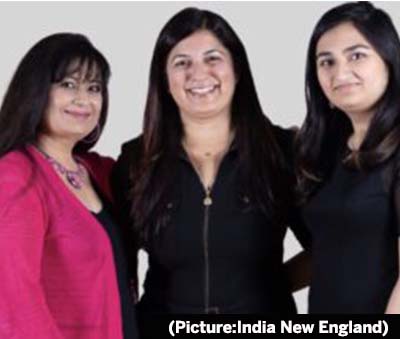
Revathy Ramakrishna, who was bestowed Woman of the Year Award 2019 by an independent panel of nine judges, said that this award is less about her and more about the cause she is so passionate about: Vision-Aid. The 17th Annual Woman of the Year Awards Gala, which was organized by INDIA New England News on Friday at Burlington Marriott Hotel in Burlington, MA, was attended about 500 people. World-class Carnatic Music Teacher Tara Anand received the Lifetime Achievement Award 2019.

“On behalf of all the volunteers and visually impaired beneficiaries of Vision-Aid, I gratefully accept the award,” said Ms. Ramakrishna. “I feel so very grateful and honored to be selected from such a talented pool of nominees. When I read the profiles of, and met the other 19 nominees, I honestly thought each of them was so much more accomplished than I was. This decision to confer this award on me was less about me and more about the cause I am so passionate about – Vision-Aid.”

“It was inspiring to learn about the many amazing things our nominees have accomplished.  It was a privilege to celebrate them all. As an Indian American, it makes you proud to know that their contributions are making a difference not only in our community but also far beyond,” said Ms. Chandra. “Their work spans the preservation of our cultural roots, working with non-profits in several realms, excellence in the fields of law, business and medicine, to much needed work in refugee resettlement, domestic violence and gender issues.”

She said the committee was thrilled to honor Vision-Aid’s Ms. Ramakrishna. “We are thrilled to honor Revathy Ramakrishna as the India New England Woman of the Year, 2019.  She demonstrates focus and passion for an idea she has nurtured for over 15 years along with her professional accomplishments and service work in the local community.  The impact of her work at Vision Aid to empower and rehabilitate thousands of visually impaired individuals speaks for itself.  It can easily be said that in her case the whole is so much greater the sum of the individual parts,” said Ms. Chandra. “While we could only select one winner in a field with a lot of depth, we wanted to recognize two other individuals – Meena Ramamurti and Meena Subramanyam – who received an honorable mention for their terrific professional achievements and their ability to stitch our community together in magical ways.”

Ramakrishna serves as the volunteer Vice-President for Vision-Aid, a non-profit organization that serves the visually impaired by enabling, educating and empowering them to live their lives with independence and dignity. Vision-Aid has blossomed into an organization which has offered enablement, rehabilitation and skills training programs for thousands of blind and visually impaired across 10 locations in India, besides also running several programs online through the Vision-Aid Online Academy. Ramakrishna dedicated the Woman of the Year Award to visually impaired and volunteers of Vision-Ad.

Judges also selected two out of 20 Outstanding Women for Honorable Mentions: Meena Subramanyam, a scientist and an accomplished Bharatanatyam artist and teacher and Vice President and Global Program Leader in the gastroenterology therapeutic area unit at Cambridge, MA-based Takeda Pharmaceuticals; and Meena Ramamurti, Vice President at the Shishu Bharati School of Indian Languages and Culture.

Ramakrishna, the 2019 Woman of the Year, is an electronics engineer and health informatics professional by training. She works as a Program Manager at Fresenius Medical Care North America, a premier health care company focused on delivering the highest quality care to people with chronic renal conditions. She has been with the company for over 10 years and oversees the Government Reporting and Clinical Informatics program related to specific CMS (Centers for Medicare and Medicaid) and CDC (Centers for Disease Control) government mandated quality and reimbursement initiatives that are aimed at improving the quality of health care and patient outcomes.

Her analytical and technical background, subject matter expertise and communication and collaboration skills help her liaise as effectively with the Medical Office, Clinicians and business team as with the IT and technical teams to build consensus among diverse viewpoints and build high quality systems.

Ms. Ramakrishna says that she feels privileged to serve Vision-Aid alongside so many other community leaders and volunteers and be in the front-row seat of this amazing cause which aims to bring independence and dignity to the visually impaired while also creating a more inclusive world for them through our advocacy efforts.

“I am very passionate about this cause because I have personally experienced the immense challenges posed by visual disability faced by members of my family and have also seen first-hand how these can be mitigated and overcome, when a supportive environment is provided,” says Ms. Ramakrishna. “Unfortunately, even today, in developing countries like India, too many people still lack this kind of support and are turned away when their impairment cannot be cured by modern medicine and surgery.

“When my husband and I first started Vision-Aid it was a small organization running out of my husband’s home town in Vizag, India, benefiting people in that region. At the present time, it is gratifying to see its more expansive scope,” says Ms. Ramakrishna. “In 2019, Vision-Aid is bringing light into the lives of over 1000 visually impaired in 10 different locations across India each year. Our partners include the Aravind Eye Care system, the largest eye care system in the world, Sankara Netralaya of Chennai, Nethra Blind Schools in Hyderabad and Vizag and other leaders in the field.”

U.S. District Judge Amit P. Mehta rules against Trump in fight over president’s financial records

President Trump on Monday lost an early round of his court fight with Democrats, after a federal judge ruled the president’s accounting firm must turn over his financial records to Congress as lawmakers seek to assert their oversight authority.

Trump called the 41-page ruling from U.S. District Judge Amit P. Mehta of Washington, D.C. “crazy” and said he would appeal, adding: “We think it’s totally the wrong decision by obviously an Obama-appointed judge.

Lawyers for the president are fighting document and witness subpoenas on multiple fronts, and Mehta’s ruling came hours after former White House counsel Donald McGahn was directed not to appear before a congressional committee seeking testimony about his conversations with Trump.

Congressional Democrats have vowed to fight for evidence of potential misconduct by Trump and those close to him, and the president’s legal team is broadly resisting those efforts. How those fights play out in court in the months ahead could impact the 2020 presidential race.

In his decision, Mehta flatly rejected arguments from the president’s lawyers that the House Oversight Committee’s demands for the records from Trump’s accounting firm, Mazars USA, were overly broad and served no legitimate legislative function.

“It is simply not fathomable,” the judge wrote, “that a Constitution that grants Congress the power to remove a President for reasons including criminal behavior would deny Congress the power to investigate him for unlawful conduct — past or present — even without formally opening an impeachment inquiry.”

Trump has argued those congressional inquiries are politically motivated attacks on the authority of the presidency, while Democrats insist the subpoenas are essential to ensuring no president is above the law.

When the lawsuit was first filed, Trump’s private attorney Jay Sekulow said the president’s team “will not allow Congressional Presidential harassment to go unanswered.”

The company said in a statement that it will “respect the legal process and fully comply with its legal obligations.”

While Democrats scored the first court victory in the fight over the president’s financial records, it’s unclear how many of these disputes will reach higher courts, or how those courts might rule.

Rep. Elijah E. Cummings (D-Md.), chairman of the House Oversight Committee, said the ruling “lets America know that we have ground to stand on and that we have a legitimate argument and the courts support them. . . . I’m glad it was a strong decision, that bodes well hopefully in the future for an appeals process.”

Mehta’s ruling threw historical shade at Trump, drawing comparisons to former president James Buchanan, whom historians have blamed for failing to prevent the Civil War and is generally considered one of the country’s worst leaders. He, too, complained bitterly about “harassing” congressional inquiries.

Judge Mehta noted that Congress also launched an investigation into the conduct of President Bill Clinton before he entered the White House.

“Congress plainly views itself as having sweeping authority to investigate illegal conduct of a President, before and after taking office,” he wrote. “This court is not prepared to roll back the tide of history.”

The judge gave the White House a week to formally appeal the decision, adding “the President is subject to the same legal standard as any other litigant that does not prevail.”

An appeal could test decades of legal precedent that have upheld Congress’ right to investigate — a legal battle that is just one part of a broader effort by House Democrats to examine Trump’s finances, his campaign, and allegations he sought to obstruct justice in special counsel Robert S. Mueller III’s Russia investigation.

In the Mazars case, Mehta cut down Trump’s lawyers’ complaint that Congress was usurping the Justice Department’s powers to investigate “dubious and partisan” allegations of private conduct, by inquiring into whether Trump misled his lenders by inflating his net worth.

Rather, Mehta said, a congressional investigation into illegal conduct before and during a president’s time in office fits “comfortably”with Congress’ broad investigative powers, which include an “informing function,” or power to expose corruption.]

Trump, his three eldest children and companies also are attempting to block a subpoena, issued by the House Financial Services Committee, seeking Trump’s bank records from Deutsche Bank AG and Capital One Financial Corp. A federal judge in Manhattan is set to hear that case Wednesday. The pace of the president’s legal fights with Congress is intensifying.

House Intelligence Committee chairman Rep. Adam B. Schiff (D-Calif.) said Monday that his panel will vote Wednesday to enforce its subpoena for the redacted portions of Mueller’s report, along with certain underlying materials.

Schiff accused the Justice Department of granting Republican lawmakers’ document requests and denying demands from Democrats.

“The refusal by the department, if it persists, will be a graphic illustration of bad faith and a unwillingness to cooperate with lawful process,” Schiff said.

On Monday, the Justice Department issued a formal legal opinion saying that McGahn, the former top White House lawyer, could not be required to appear before lawmakers in response to a congressional subpoena.

Democrats subpoenaed McGahn to testify Tuesday morning, hoping he would become a star witness in their investigation into whether Trump obstructed justice. As detailed in Mueller’s report, McGahn provided critical testimony about several instances of potential obstruction by Trump.

“The Department of Justice has provided a legal opinion stating that, based on long-standing, bipartisan, and constitutional precedent, the former counsel to the president cannot be forced to give such testimony, and Mr. McGahn has been directed to act accordingly,” said White House press secretary Sarah Sanders in a statement. “This action has been taken in order to ensure that future presidents can effectively execute the responsibilities of the office of the presidency.”

The 15-page legal opinion written by Assistant Attorney General Steven A. Engel argues McGahn cannot be compelled to testify before the committee, based on past Justice Department legal memos regarding the president’s close advisers.

The memo says McGahn’s immunity from congressional testimony is separate and broader than a claim of executive privilege.

The immunity “extends beyond answers to particular questions, precluding Congress from compelling even the appearance of a senior presidential adviser — as a function of the independence and autonomy of the president himself,” Engel wrote.

Trump told reporters the action was taken “for the office of the presidency, for future presidents. I think it’s a very important precedent. And the attorneys say that they’re not doing that for me, they’re doing it for the office of the president.”

Those comments underscore the high stakes of Trump’s current standoff with Congress — if either side loses a legal ruling by an appeals court, or the Supreme Court, the reverberations could be felt far beyond the Trump administration, changing the balance of power between the executive and the legislative branches of government for years to come.

In the fight over McGahn’s testimony, the Justice Department insists that immunity from testimony does not evaporate once a presidential adviser leaves the government because the topics of interest to Congress are discussions that occurred when the person worked for the president.

As a private citizen, McGahn is not necessarily bound by the White House directive, or the Justice Department memo, to refuse to comply with the subpoena. There was no immediate word from McGahn’s lawyer on whether he would comply with or defy the White House.

The move to bar McGahn from answering lawmakers’ questions angered House Democrats eager to hit back at what they view as White House stonewalling. The defiance raises the possibility that the House will hold McGahn in contempt of Congress, as House Judiciary Committee Chairman Jerrold Nadler (D-N.Y.) has threatened.

“It is absurd for President Trump to claim privilege as to this witness’s testimony when that testimony was already described publicly in the Mueller report,” Nadler said in a statement. “Even more ridiculous is the extension of the privilege to cover events before and after Mr. McGahn’s service in the White House.”

An increasing number of Democrats also want to begin impeachment proceedings against Trump even though House Speaker Nancy Pelosi (D-Calif.) last week privately downplayed the possibility and encouraged her members to focus on their policy agenda.

Some Democrats believe opening an impeachment inquiry will strengthen their hand in trying to force the White House to comply with document requests and witness testimony, including McGahn’s.

House Democrats were hoping to make McGahn their key witness as they seek to unpack the findings of the Mueller report — particularly regarding questions of whether Trump obstructed justice.

GOP Rep calls for Trump’s impeachment

A Michigan Republican and member of the House Freedom Caucus accused President Trump of “impeachable conduct” in a break with his party. Rep. Justin Amash (R-Mich.) tweeted Saturday that the president’s actions to potentially obstruct the now-shuttered special counsel investigation warrant impeachment by the House. He also accused Attorney General William Barr of “deliberately misrepresenting” Robert Mueller‘s report of the investigation’s findings.

“Here are my principal conclusions: 1. Attorney General Barr has deliberately misrepresented Mueller’s report. 2. President Trump has engaged in impeachable conduct. 3. Partisanship has eroded our system of checks and balances. 4. Few members of Congress have read the report,” Amash wrote Saturday afternoon.

“Mueller’s report reveals that President Trump engaged in specific actions and a pattern of behavior that meet the threshold for impeachment,” the Michigan Republican continued. “Mueller’s report identifies multiple examples of conduct satisfying all the elements of obstruction of justice, and undoubtedly any person who is not the president of the United States would be indicted based on such evidence.”

In other tweets, Amash accused Barr of “sleight-of-hand” to obscure the findings of Mueller’s report in his own summary released to Congress earlier this year. “In comparing Barr’s principal conclusions, congressional testimony, and other statements to Mueller’s report, it is clear that Barr intended to mislead the public about Special Counsel Robert Mueller’s analysis and findings,” Amash wrote.

Amash has been a frequent critic of Trump. He has previously said he will not rule out running for the Libertarian Party nomination for president next year.

Amash also co-sponsored a resolution to block Trump’s emergency declaration earlier this year.

“Barr’s misrepresentations are significant but often subtle, frequently taking the form of sleight-of-hand qualifications or logical fallacies, which he hopes people will not notice.”

Kamala Harris invokes Indian heritage to Trump’s immigration plan

In response to US President Donald Trump announced his “merit based” immigration proposal, Democrat Senator Kamala Harris invoked her unique background as a presidential candidate — being the daughter of an Indian immigrant.

“I found the announcement today to be shortsighted,” CNN quoted Harris as saying on Thursday before an Asian American audience in Las Vegas.

On the plan’s intention to award immigrants certain points based on education or skills, Harris said: “We cannot allow people to start parsing and pointing fingers and creating hierarchies among immigrants.

“The beauty of the tradition of our country has been to say, when you walk through the door, you are equal. We spoke those words in 1776, ‘we are all equal’ and should be treated that way. Not, oh well, if you come from this place, you might only have a certain number of points, and if you come from that place you might have a different number of points.”

Asians have historically immigrated as family units, Harris added.

“It is, and has always been, about family. And that was completely overlooked, and I would suggest, denied, in the way the policy was outlined today.”

At the event hosted by an Asian American group, One APIA Nevada, Harris dove into her barrier-breaking election to the US Senate as the first South Asian to serve in the body’s history. She acknowledged her presidential run as a biracial woman helping to shatter notions about being black, Asian and a woman.

In her campaign stump speech, Harris always includes stories about how her mother, Shyamala Gopalan, impacted every aspect of her life. And while she has spoken about visits to India during her book tour, Harris on the trail has leaned far more into the African American identity her mother raised her to embrace.

An audience member asked Harris if she would consider wearing a traditional Indian saree to her inauguration.

“Let’s first win,” Harris responded. “My mother raised us with a very strong appreciation for our cultural background and pride. Celebrations that we all participate in regardless of how our last name is spelled. It’s the beauty of who we are as a nation.” (IANS)

Indian-Americans train for grassroots GOP electioneering

On the occasion of Asian American Heritage Month, the Republican National Committee held training sessions in Michigan and Ohio for activists of Indian and other Asian heritage.

“We continue to see great enthusiasm on the ground as Asian Pacific American (APA) communities prepare to re-elect President Trump as well as Republicans up and down the ticket in 2020, especially in Michigan and Ohio,” said a press release from the RNC. The meeting was held at the Twin Dragon Buffet & Grill in Cincinnati.

Ohio State Representative Niraj Antani, was at the Cincinnati training session, as was U.S. Rep. Steve Chabot.  In Michigan, State Sen. Jim Runestad and State Rep. Kathy Crawford joined the group in Lansing.

State Rep. Antani told News India Times, “The Republican Party is going to great lengths to recognize what Indian-Americans, South Asians, and other Asians have contributed to this country.”

As the only Asian American in the Ohio House of Representatives, Antani said on Facebook, “I was excited to join Congressman Steve Chabot & Republican National Committee director of Asian Pacific American Engagement Adi Sathi today in celebration of Asian Pacific American Heritage Month!.”

Sathi, a South Asian-American was appointed to his current position in November 2017. Sathi main role in this position is to train volunteers and activists to become RNC field staffers.

He also serves as chief-of-staff at Young Republican National Federation, Inc. From 2015 to 2017, Sathi was the elected Vice Chair of Coalitions of the Michigan Republican Party.

In a tweet, Sathi said more than 70 people attended the “@GOP Asian Pacific American Heritage Month Celebration & @realDonaldTrump Victory Leadership Initiative (TVLI) training” with Antani and Chabot. “The APA community in Cincinnati is excited for 2020!” Sathi added. Formerly, as an Asian Pacific Institute for Congressional Studies Legislative Fellow, Sathi served in the office of Utah Sen. Orrin Hatch.

India’s child mortality rate was world’s highest in 2015

At 47.8 deaths per 1,000 live births, India in 2015 had more deaths among children under five than any other country, new research has found.

This is despite the great progress the country has made in reducing child mortality. During 2000-2015, the annual mortality among children under five came down from 2.5 million in 2000 to 1.2 million in 2015, said the study published in the journal Lancet Global Health.

The country had, however, large disparities in the under five mortality rate between richer and poorer states.

The highest mortality rate, in Assam, a state in northeastern India, was more than seven times that in the western state of Goa.

Although most under five deaths were due to preterm complications, preventable infectious diseases featured prominently as causes of death in higher-mortality states.

“India can accelerate its reduction of under five mortality rates by scaling up vaccine coverage and improving childbirth and neonatal care, especially in states where mortality rates remain high,” said study co-lead author Li Liu, Assistant Professor at Johns Hopkins Bloomberg School of Public Health in the US.

For the study, the researchers analysed state-level Indian data on the causes of death among children under five for the years 2000-2015.

In 2017, India’s under-five mortality rate matched the global average (39 deaths per 1,000 live births), according to a report released on September 18, 2018, by the United Nations Inter-Agency Group for Child Mortality Estimation. (IANS)

Fewer U.S. babies were born in 2018 than in any year since 1986

With American women increasingly delaying having children, fewer U.S. babies were born in 2018 than in any year since 1986, according to provisional datafrom the Centers for Disease Control and Prevention’s National Center for Health Statistics (NCHS).

About 3.7 million babies were born in the U.S. last year, 2% fewer than in 2017, according to the NCHS. Birth numbers fell across racial groups, with declines charted among white, black, Hispanic, Asian and American Indian women.

In 2018, the U.S. saw not only a 32-year low in total births, but also a record-setting dip in national fertility rates. Based on 2018 data, a group of 1,000 women would be expected to have 1,728 babies in their collective lifetimes, the data say—well below the 2,100 required to replace aging generations without accounting for immigration and emigration, according to the NCHS.

The report, however, deals only with a snapshot in time and may not represent “births foregone. It’s simply births that have been postponed,” says Brady Hamilton, a statistician demographer at the NCHS and lead author of the new report. “Women generally do have, in the end, two children”—they may just have them later in life than did women of previous generations.

In other words, the data don’t suggest that Americans are actually getting less fertile, biologically, says Hans-Peter Kohler, a sociology professor at the University at Pennsylvania who specializes in fertility and was not involved in the NCHS study. Instead, Kohler says, the declining birth rates seem to be driven mostly by sociological reasons, as couples choose to delay starting a family so they can stay in school or the workforce longer, either by choice or out of financial necessity. The NCHS’ latest numbers support that theory: Birth rates fell for younger age groups, but rose slightly for women ages 35 to 44.

Population replacement is an important marker of a country’s public and economic health. If the number of older adults dying and aging out of the labor market is far larger than the number of babies born to eventually take their place, a country’s economy and social services can become unsustainable. But compared to other countries of similar socioeconomic status, like Japan and many in Europe, Kohler says the U.S.’ birth rate is keeping relatively good pace with its rate of population aging. “At the moment, there is no need to panic or see these trends as overly dramatic,” Kohler says.

In fact, some of the trends detailed in the NCHS report “are welcome news” for public health, Hamilton says, like the 7% decline in teen birth between 2017 and 2018—enough for the teen birth rate to hit a new record low, even afteryears of declines.

That’s good, of course, because most teenage pregnancies are “mistimed” or “unwanted,” Kohler says. He notes that the downturn in birth rates for teenagers likely reflects more widespread use of effective and long-lastingforms of contraception, perhaps due to expanded access under the Affordable Care Act.

KnowYourMeds achieves 50,000 downloads, now averaging 500 Downloads Per Day

KnowYourMeds, a Waltham, MA-based startup today announced that its popular app has crossed the 50,000-download benchmark and is averaging about 500 downloads per day, primarily from the US, Canada and Mexico.

The app is available on iPhone and Android devices. The app provides a variety of very useful and popular features – pill reminders, refill reminders, drug/food interactions, dietary considerations, FDA warnings and notifications. It also has a health tracker tool where users are able to keep track of any adverse reactions they might experience while taking their various medications.

The app also allows users to create and track dependent profiles for family members such as children or elderly parents.

“We are very pleased with the growing popularity of the app and its increasing awareness among users worldwide,” said KnowYourMeds Founder and CEO Kim Shah. “Since we officially launched our app in September, we have seen phenomenal growth in downloads. There was clearly a need for such an easy-to-use app and we are filling this niche.”

“We have over 50,000 downloads since the initial launch in September, and we are averaging around 400-500 per day currently,” said Mr. Shah, adding that of those who are downloading 70 percent are female and 30 percent male. “Age range is everything from 20 – 70 years old.”

Mr. Shah said that twenty-five percent of users have entered 5-25 drugs each in their profiles, another 25 percent have entered 2-4 drugs and the rest have entered just one drug.

Headquartered in Waltham, MA, KnowYourMeds is a free digital health app that helps patients who take multiple drugs to treat various chronic illnesses and offers pill reminders assisting patients adhere to their medication’s schedules. The app uses the world’s largest database of suspected side effects and adverse effects, along with AI driven insights to provide users with early identification of drug interactions as well as early detection of potential medication errors. The app provides useful news and information that is relevant to the user – this can be notifications and warnings from the FDA, new research on their diseases, dietary considerations and so on. For more information, visit: www. KnowYourMeds.com

5th Annual Communities of Color Nonprofit Stabilization Fund Awardee Reception 69 Nonprofits Received Capacity Building Support from NYC Council

For the fifth consecutive year, the New York City Council has announced its support and commitment to investing in nonprofits through the Communities of Color Nonprofit Stabilization Fund. CCNSF, the first fund of its kind in New York City, was first announced in Fiscal Year 2015 to grant New York City-based nonprofits the support needed to increase capacity building for emerging and seasoned social services organizations.

69 community based organizations throughout New York City will receive transformative grants to support and create critical functions, provide economic stimuli and capacity building support to emerging and seasoned social services organizations.


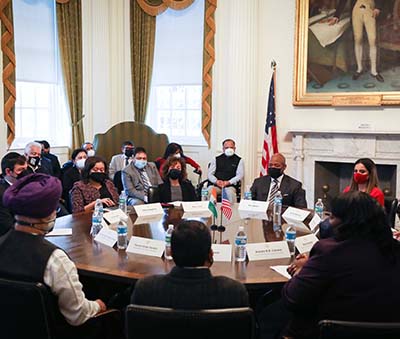
These CBOs offer a varying array of services to New Yorkers, and are being funded to address a comprehensive menu of infrastructural needs including leadership development, financial management, and outcomes system development, among others. A representative from NYC Council Speaker Corey Johnson’s office, NYC Councilmember Andy King, a representative from NYC Councilmember Adrienne Adams, NYC Councilmember Ydanis Rodriguez, the coordinating organizations for the Fund, and representatives from the 69 awardees gathered for a reception at Hispanic Federation on May 16th, 2019.

The coordinating organizations – Coalition for Asian American Children and Families, Hispanic Federation, New York Urban League and Asian American Federation have been critical in leveraging dedicated nonprofit funds from the City Council. To date, $7.5 million has been committed to the Fund, which addresses the need for capacity-building funding for nonprofit organizations in communities of color. The monies have had a considerable impact on the sustainability, growth and prosperity of many organizations providing crucial services to the most vulnerable communities in New York City.

CCNSF was championed by NYC Council Speaker Corey Johnson and has broad support among Council Members including the Black- Latino and Asian Caucus. Oversight of the funding is provided by the New York City Department of Youth and Community Development (DYCD).

Through a competitive Request for Application (RFA) process, independent expert allocation committees with knowledge of the nonprofit sector and the capacity building challenges they face, utilized rigorous vetting methods to select grant awardees. Grants were awarded by the partner agencies in three separate funding streams, whose allocations were determined by U.S. Census data. Each awardee was carefully selected to utilize funds to grow capacity, address challenges, and equip communities.

The awardees are community-based organizations from all five boroughs. They offer a varying array of services to New Yorkers, and are being funded to address a comprehensive menu of infrastructural needs including leadership development, financial management, and outcomes system development, among others. In addition to awarding the capacity building awards, the coordinating organizations will conduct several trainings on board development, financial management and fundraising for the awardees.

“For the past 5 years, the Communities of Color Nonprofit Stabilization Fund (CCNSF) continues to provide important capacity building support and resources to Asian Pacific American (APA) organizations. This fund has enabled us to invest and strengthen nonprofit organizations that provide valuable social services to all New Yorkers. The APA community is the fastest growing population in New York but receives minimal resources. CCNSF is an opportunity to counter this disparity and build capacity within our communities,” said Anita Gundanna, Co-Executive Director, Coalition for Asian American Children and Families.

Vanessa Leung, Co-Executive Director, Coalition for Asian American Children and Families said, “CCNSF has strengthened APA-led community organizations across New York City that provide the most effective culturally competent and language accessible services. We thank Speaker Corey Johnson and the support of New York City Council for investing in the organizations that provide the most impactful services to address our community’s needs, but also employ many from our community. We look forward to City Council’s continued partnership to strengthen our communities.”

Jo-Ann Yoo, Executive Director of the Asian American Federation said, “As one of the original partners who advocated for the creation of CCNSF, we are thrilled to see another 69 organizations serving communities of color throughout New York City receive this critical funding to build their capacity. Our communities are best served by community-based organizations that have deep roots and trusted relationships in their communities, so we must invest in their growth and stability if we hope to meet the needs of the most vulnerable New Yorkers. We look forward to working with the City Council to continue to support these important nonprofits.”

“We are thrilled and thankful to the New York City Council for committing to the development and prosperity of New York City’s nonprofits” said José Calderón, Presidentof the Hispanic Federation. “Now in its fifth year, it’s clear that CCNSF has strengthened over 210 organizations providing critical services to our city’s residents. The Fund is a model on how we can work together to ensure the long-term viability of organizations that are the cornerstones of communities all throughout New York City. Now more than ever, we need a robust CCNSF, and we look forward to the City Council’s continued support.”

Air India stops flights from Mumbai to New York

National carrier Air India, which had commenced direct services from Mumbai to New York’s John F Kennedy airport in December 2018, has decided to discontinue the flights, reportedly owing to poor demand.

AI officials said the Mumbai-New York flight operation was causing losses to the airline. However, the airline will continue to operate direct flights from Mumbai to Newark.

An AI spokesperson said the Mumbai-New York flight, operated thrice a week, was temporarily suspended in February owing to the Pakistan airspace closure and was expected to resume in June.

“However, we won’t be resuming the services. The flight has been discontinued owing to poor load factor or low seat occupancy,” the spokesperson said.

The official said AI has not included the flight in their winter schedule, which usually commences from third week of October up to second week of March in the next year.

Other AI flight operations to the US from Delhi have been witnessing up to 80% seat occupancy.

AI operates Boeing B777-ER aircraft to operate flights to Newark, Washington, Chicago (from Hyderabad via Delhi), San Francisco and New York from Delhi.

The national carrier had planned to commence the direct flight from Mumbai to New York, thrice a week, from October 2018.

However, it had to delay the operations to December owing to fleet crunch.

Meanwhile, the flying time of US-bound flights from Delhi has seen an increase by three hours as they are being re-routed via Mumbai or Ahmedabad. This has led to heavy losses for the airline, said AI officers.

Air India has 16 Boeing B777-ER planes, of which four were grounded because of unavailability of spare parts in October. However, according to AI chairman and managing director (CMD), Ashwani Lohani, all the planes are operational now.

In October, AI had re- launched its other direct Mumbai-Frankfurt flight, which was suspended in 2010.

Ekal Vidyalaya Fundraiser A Huge Success

The annual musical fundraiser held by the Ekal Vidyalaya Foundation of USA New England Chapter featured a great musical group that entertained the audience beautifully while helping raise funds to support the holistic development of villages in remote rural India.

The event was held at the Ashland High School in Ashland, MA on Sunday May 12.  Women volunteers draped in special uniform sarees (bought at Sree Sai Vogue) and male volunteers wearing uniform jackets welcomed the audience.  The lobby was beautifully decorated by Aneesha Karody and featured some beautiful paintings from the Ekal Artist Raksha Soni.  Following the lighting of lamps by some of the early and strong supporters of Ekal, the event opened with a welcome by Dr. Subra Dravida , the president of the Ekal Vidyalaya Foundation of USA, New England chapter.

Dr. Dravida highlighted the work that Ekal does in over 86000 rural remote villages.  Using education, health and skill training as the three focused areas of intervention, Ekal is working to bring about integrated village development.  The concerted efforts to make a difference resulted in Ekal Vidyalaya winning the Gandhi Peace Prize, which is the highest honor given to an Non-Profit organization by the government of India.

In keeping with the Mother’s day theme, the EMCEEs for the evening were the mother-daughter team of Sudha Subbaraman and her daughter Vamsi who did a stellar job mceeing the event.  The heartbeats group presented several Bollywood numbers. The music was stellar and the audience was rocking through the performance.

A pledge drive was conducted to raise funds for schools. Motivating speeches presented by Manorama Chaudhury and Sachin Goel inspired the members of the audience to give. Ram Nehra, one of the founding members of Ekal New England was given the Ekal Ratna award for his service to Ekal by Dr. Subra Dravida and Puran Dang, Chairman Emeritus for Ekal New England. Ekal Youth Leader, Sanjana Krishna was honored for her tremendous commitment to the cause by Ekal Youth Program director Anuradha Upneja and former Ekal New England President Parveen Minocha. Latha Krishnan, the VP for Ekal New England presented the vote of thanks.

The event was followed by dinner. The attendees overwhelmingly applauded the event as one of the finest musical evenings in New England.

For more information on Ekal, please check out their website at http://ekal.org. 

‘Will seriously consider any partnership proposal from Indian carriers’: Qatar Airways

The blockade on Qatar and withdrawal of 28 weekly between Doha and cities of New Delhi and Mumbai has increased the pressure on available seat capacity in Qatar-India routes, the airline said Thursday.

Qatar Airways, which has sought additional seat capacity on temporary basis for its flights from Indian cities to Doha, has said it will “seriously” consider any proposal for partnership from Indian carriers.

The blockade on Qatar and withdrawal of 28 weekly between Doha and cities of New Delhi and Mumbai has increased the pressure on available seat capacity in Qatar-India routes, the airline said Thursday.

Jet Airways shut down operations temporarily on April 17 after it ran out of cash.

“Qatar Airways is always open for partnership with other airlines, including Indian carriers. We will seriously consider any proposal for partnership from Indian carriers,” the airline said in a statement to PTI.

The Gulf carrier has submitted a formal request to the Indian authorities for an additional capacity on a temporary operating permit basis to meet the air traffic demand in Qatar-India routes.

The airline asked the civil aviation ministry to favourably consider its request for additional seat capacity “to help evacuate the stranded Indian passengers in Doha”.

Airfares have already significantly increased due to the unexpected unavailability of restricted capacity during this summer peak season, it added.

The allocated seat capacity in the Qatar-India aviation market has not been increased since 2009. Bilateral air traffic rights are negotiated between the two countries.

According to the airline, the “illegal blockade” imposed on Qatar in June 2017 by the UAE, Saudi, Bahrain, and Egypt has restricted the movement of not only Qataris but also Indian expats living in Qatar.

People do not have the flexibility of travelling to nearby airports in Dubai, Abu Dhabi, Sharjah, and Manama, for their travel to India. This has reduced their options for air connectivity and further increased the pressure on the available seat capacity in Qatar-India routes, the statement said.

“Salt in the wound – Jet Airways’ sudden, unexpected, unplanned, and immediate withdrawal of 28 weekly passenger flights during summer peak season between Doha and two Indian cities: New Delhi and Mumbai.

“All these have resulted not only in lesser available seat capacity but also significantly higher air ticket fares, which is set to continue for at least another three months,” the airline said. Qatar Airways flies to 13 Indian cities. It has 14 weekly flights to the national capital and 11 weekly flights to Kochi, among other cities.

Denied H-1B Visa To Indian Techie, Silicon Valley Firm Sues US Government

A Silicon Valley-based IT company has filed a lawsuit against the US government for denying the most sought-after H-1B visa to a highly qualified Indian professional, terming the renunciation “arbitrary” and a “clear abuse of discretion”.

Xterra Solutions alleged in its lawsuit that the US Citizenship and Immigration Services (USCIS) improperly denied H-1B visa to Praharsh Chandra Sai Venkata Anisetty, 28, whom it had hired as a Business System Analyst.

The company’s H-1B petition on behalf of Mr Anisetty was denied on the sole ground that the job offered to him did not qualify as an H-1B specialty occupation, the lawsuit said. “The denial is not supported by substantial evidence in the record, is contrary to established legal precedent, and is arbitrary, capricious and constitutes a clear abuse of discretion,” the company alleged and urged the Northern District of California US District Court to set aside the USCIS order.

The H-1B visa is a non-immigrant visa that allows US companies to employ foreign workers in speciality occupations that require theoretical or technical expertise. The technology companies depend on it to hire tens of thousands of employees each year from countries like India and China.

The most sought-after visa has an annual numerical limit cap of 65,000 visas each fiscal year as mandated by the US Congress. The first 20,000 petitions filed on behalf of beneficiaries with a US masters degree or higher are exempt from the cap.

Mr Anisetty holds a Bachelor’s degree in Engineering (Electronics and Communication Engineering) as well as a Master’s of Science degree in Information Technology and Management from the University of Texas at Dallas. He currently holds valid H-4 dependent status through his wife, the principal beneficiary of an H-1B application.

India’s growing religious divide: BJP’s anti-religious minorities agenda

As the election season is winding down and the nation is anxiously looking forward to the results, one cannot escape but witnessing India’s slide towards complete polarization based on the politics of religion.  Prime Minister Modi’s ascension to power has resulted in growing Hindu intolerance of Christianity and Islam. Radical elements within his party are pushing an agenda to marginalize these two groups whom they consider ‘foreign’ and would like to see them disappear!

Although Indian constitution guarantees the freedom of religion to all its citizens, the political dogma of RSS (Rashtriya Swayamsevak Sangh), the parent organization of BJP, enunciated by its erstwhile leader and theoretician M S Golwalker is still mostly the guideline for many of its loyal adherents.  In fact, he argued in the book ‘our nationhood defined’ that as long as the Muslims and the Christians failed to abandon their own religion and culture they cannot but be only foreigners in this country and if they stayed here without losing their “separate existence” they might be treated as “enemies”, at best as “idiots”. His arguments tilt more favorably towards treating all Christians as “hostiles” who are agents of International movement for the spread of Christianity.

It is important to note that RSS gurus have been inculcating the idea of bigotry and hate to the mindset of many generations for the last 95 years. It is no surprise then that Modi’s rise to power has now led to an explosion of anti-Christian attitudes and fiery speeches creating an environment conducive to even physical attacks on Christian Institutions and its leaders. Prejudice against the minorities, especially Christians and Muslims, are a growing trend in the Indian society and for the BJP, it means electoral gains and seats of power! They couldn’t care less about the political instability, whether it wreaks havoc across the country or the negative impact it may have on the economic health of the nation.

According to news reports in the National Review magazine, during the 2017 Christmas season alone, there were 23 incidents. Most dramatic was the arrest of 30 priests and seminarians singing Christmas carols in Madhya Pradesh state. They were accused of violating the State’s anti-conversion law, which has been on the books since 2013. Similar legislation is in force in seven other states. Eight priests who came to the carolers’ aid were physically assaulted, and their vehicles were set on fire. Police officers reportedly stood by without intervening. That scenario is all too common. By some accounts, hundreds of anti-Christian incidents have occurred in the past year.

“We are losing confidence in our government,” said Cardinal Baselios Cleemis of Thiruvananthapuram, former President of the Catholic Bishop’s Conference of India (CBCI). He added that “the country is being divided on the basis of religious belief” which he labeled a threat to the “democratic credentials of our country.” The United States Commission on International Religious Freedom (USCIRF) recently released an annual report and its key findings include the observation by the Supreme Court of “deteriorating conditions for religious freedom in some states in 2018, stating that “certain state governments were not only not doing anything to stop violence against religious minorities, and in extreme cases, impunity was being granted to criminals engaging in violence.

The report also highlights Prime Minister Narendra Modi’s silence on these issues, saying he “seldom made statements decrying mob violence,” and noting that “certain members of his political party have affiliations with Hind extremist groups and used inflammatory language about religious minorities publicly.” The report notes that in 2018, Minister of State at the Ministry of Home Affairs Hansraj Ahir told Parliament that 111 people were killed and 2,384 people were wounded in 822 communal clashes in 2017. By contrast, in 2016, 86 people were killed, and 2,321 were injured in 703 clashes, the report offers, later adding that independent organizations that monitor hate crimes found that 2018 saw more than 90 religion-based hate crimes that resulted in 30 deaths and many more injuries.

There is also a secret war being waged against Christian NGOs (Non-Governmental Organization) that are engaged in welfare work for the very poor in rural India. By throwing out the ‘Compassion International USA’ that housed and educated 145,000 destitute children and shutting down of the work of the ‘Caritas International’ that works with 360 NGOs across India that boasted about a force of 25,000 volunteers are good examples of Government’s authoritarian agenda that works in concert with whims of the Hindutva militants to marginalize the Christian Community and remove them from being a visible and positive force from the public’s eye.

In Modi’s India, Christian Institutions are being strangled by denial of FCRAs, freezing of the bank accounts, unending investigations, frequent auditing and harassment of principals who are in charge. These moves appear to be consistent with the Hindutva philosophy that the Modi government has embraced to advance the saffron agenda that challenges the very idea of India as a multi-cultural and pluralistic society. Modi appears to pay lip service to Gandhiji’s concept of India upon his visits abroad but remains silent when Institutions that are supposed to promote those principles come under attack back home. It should also be noted that Christianity came to India in A.D. 52, long before Ireland or England have embraced that religion. To judge the Indianness of its nationals only through the prism of one’s faith is not only just unfair but preposterous!

While the BJP Government is hard at work restricting Christian NGOs from receiving funds from abroad, no such limitations are placed on the Sangh Parivar organizations that collect millions of dollars from western democracies. Another report from USCIRF states that “while the Indian Government continues to use the FCRA to limit foreign funding for some NGOs, Hindutva supported organizations have never come under the scrutiny of FCRA. With the amendment championed by the Modi government, the foreign-based radical Hindu organizations will be able to send funds to India, without restriction, to support hate campaigns. Under the revised definition of FCRA, so long as the foreign company’s ownership of an Indian entity is within the foreign investment limits prescribed by the Government for that sector, the company will be treated as “Indian” for the purpose of FCRA.”

It is also common knowledge that Christian church leaders from the United States have a harder time obtaining visas to visit their fellow faithful in India or attend a conference while no such restrictions are placed on Indians based on religious affiliations. It is hypocritical for India to deny a religious conference visa to an American citizen while shedding crocodile tears for a reduction in the number of available H1B visas that could take jobs away from American citizens. The recent cancellation and court-ordered restoration of OCI card of an Indian American Christian who was accused of proselytizing while working as a physician volunteer in India during summer months have sent shock waves to the community. It once again shows the wanton disregard for fairness and due process by the bureaucrats who are so eager to please the current policy makers!

Meanwhile, India’s 180 million Muslims are affected as well by mob violence on suspicion of having eaten beef or slaughtered a cow, animals sacred to Hinduism nationwide. The recent election campaign by all parties show the reluctance of the leadership across the board to overtly court Muslims or seek their votes in public forums. Modi’s rule also emboldened Hindu extremist elements to translate their religiously ordained contempt and hatred for Dalits into systematic violence against that community as well often lynching them on suspicions of transporting cows for slaughter. According to a report in the New York Times, Indian courts have consistently acquitted most perpetrators of massacres of Dalits. Conviction rates in violent crimes against Dalits and indigenous tribes are a mere 28.3 percent and 16.4 % compared with 40.2 percent in general criminal cases.

India has a religion problem, and it should be given careful attention by policymakers in Washington as it can have long term repercussions towards the future. It appears that the sectarian line-up of political conflict is going to dominate the political landscape of India as long as BJP retains power. History has taught us that if the salience of the State is undefendable, regionalism or tribalism may become rampant and weaken a nation-state. Religious oppression is a clear sign of instability for any nation, and as the US is eyeing India as a strategic partner against the rising threat of China, an increasing level of communal tensions or sectarian conflicts in the sub-continent may not bode well for that relationship.

(Writer is a former Chief Technology Officer of the United Nations)

Priyanka Chopra, Nick Jonas set couple goals at Cannes and now fans want a ‘husband just like him’. See pics

Actor Priyanka Chopra and her singer husband Nick Jonas set new couple goals as they walked the red carpet together at the 72nd Cannes Film Festival on Saturday. They were clicked arriving at a movie screening in style.

Nick held out the umbrella for her as it was raining at the French Riviera. The former Miss World shared pictures on Instagram with the caption “Mon amour (my love).” She shared another picture of the two posing together at the grand stairs and captioned it, “Riviera romance”.

The two were twinning in white for their first red carpet appearance in Cannes as they arrived for the screening of French film The Best Years of a Life (Les plus belles annees d’une vie). While Nick wore a white suit, Priyanka chose a ruffled off-shoulder Georges Hobeika gown accessorised with diamond jewellery and her hair tied in a ponytail.

Their fans couldn’t praise them enough for their lovely chemistry. An Instagram user commented to one of the pictures, “I love how Nick steps back for his wife to shine.” Another wrote, “I just extreamly love the fact that your husband is always with u like ur shadow. I love the love between u two.” One more user wrote, “This is how I want my husband to be”

Priyanka had made her Cannes debut in a shimmery black Roberto Cavalli gown on Thursday as she attended the screening of 5B. She was spotted in a white caped pantsuit earlier on the same day. She was joined by Nick on her second day and the two went around meeting their fans and clicking pictures. Priyanka had worn a light blue silk maxi dress paired with a hat while Nick was in a khaki suit.

The two then attended the Chopard Love party on Friday and engaged in a lot of PDA at the event. Nick was even clicked fixing Priyanka’s silver jewellery which she wore with her lavender Fendi dress. She also shared a small video of her kissing Nick in a car on her Instagram stories.

Apart from Priyanka, Deepika Padukone, Hina Khan and Kangana Ranaut have also walked the red carpet at the festival. Huma Qureshi and Diana Penty, too, made their presence felt as they attended the Chopard party on Friday. Cannes regulars Sonam Kapoor and Aishwarya Rai will be arriving in France soon for their annual appearance at the French Riviera.

Publics in Emerging Economies Worry Social Media Sow Division, Even as They Offer New Chances for Political Engagement Many who use social media say they regularly see false and misleading content along with new ideas

In recent years, the internet and social media have been integral to political protests, social movements and election campaigns around the globe. Events from the Arab Spring to the worldwide spread of#MeToo have been aided by digital connectivity in both advanced and emerging economies. But popular social media and messaging platforms like Facebook and WhatsApp have drawn attention for their potential role in spreading misinformation, facilitating political manipulation by foreignand domestic actors, and increasing violenceand hate crimes.

Recently, the Sri Lankan government shut down several of the country’s social media and messaging services immediately after Easter day bombings at Catholic churches killed and wounded hundreds. Some technology enthusiasts praised the decision but wondered if this development marked a change from pro-democracy, Arab Spring-era hopes that digital technology would be a liberating tool to a new fear that it has become “a force that can corrode” societies.

In the context of these developments, a Pew Research Center survey of adults in 11 emerging economies finds these publics are worried about the risks associated with social media and other communications technologies – even as they cite their benefits in other respects. Succinctly put, the prevailing view in the surveyed countries is that mobile phones, the internet and social media have collectively amplified politics in both positive and negative directions – simultaneously making people more empowered politically andpotentially more exposed to harm.

When it comes to the benefits, adults in these countries see digital connectivity enhancing people’s access to political information and facilitating engagement with their domestic politics. Majorities in each country say access to the internet, mobile phones and social media has made people more informed about current events, and majorities in most countries believe social media have increased ordinary people’s ability to have a meaningful voice in the political process. Additionally, half or more in seven of these 11 countries say technology has made people more accepting of those who have different views than they do.

But these perceived benefits are frequently accompanied by concerns about the limitations of technology as a tool for political action or information seeking. Even as many say social media have increased the influence of ordinary people in the political process, majorities in eight of these 11 countries feel these platforms have simultaneously increased the risk that people might be manipulated by domestic politicians. Around half or more in eight countries also think these platforms increase the risk that foreign powers might interfere in their country’s elections.

Similarly, the widespread view that technology has made people more informed about current events is often paired with worries that these tools might make people vulnerable: Majorities in 10 of these countries feel technology has made it easier to manipulate people with rumors and false information. Further, a recent report by the Center found that a median of 64% across these 11 countries say people should be very concerned about exposure to false or incorrect information when using their phones.

What is a median?

Publics in these countries are also conflicted over the extent to which technology is broadening people’s personal horizons or causing their politics to become more tribal – and many seem to see elements of both. An 11-country median of 52% say technology has made people more accepting of those who have different views than they do, while a median of 58% say it has made people more divided in their political opinions. In most countries, larger shares say technology is causing people to be more divided than say it has caused them to be open to different groups of people.

The public’s opinion is easily manipulated through social media. Videos circulating about politicians can either make them famous and likable or break them down.WOMAN, 23, TUNISIA

Those most attuned to digital technology’s potential benefits are often also most aware of its downsides

It is not simply the case that certain segments of the public have consistently positive views about the political impacts of digital technology while others feel consistently more negative. In many instances, individuals who are most attuned to the potential benefits technology can bring to the political domain are also the ones most anxious about the possible harms.

For instance, in 10 of the 11 countries surveyed, the view that technology has made people more informed is correlated with the view that technology has made people easier to manipulate with rumors and false information. And in most countries, the view that technology has made people more accepting of each other is correlated with the view that it has made people more divided in their political opinions.

The social media landscape in the 11 countries surveyed

Certain groups – such as those with higher levels of education and those who are social media users – are especially likely to note both the positive and negative impacts of technology.12 Across all 11 countries, adults with a secondary education or higher are more likely to say technology has made people more informed about current events relative to those who do not have a secondary education. Yet, in nine countries, those with higher levels of education are also more inclined to say technology has made people more subject to false information and rumors. More highly educated adults are also more likely to say technology has contributed to both political divisions and tolerance of opposing viewpoints in seven of these countries (Colombia, India, Kenya, Lebanon, the Philippines, Tunisia and Vietnam).

Similarly, social media users in all 11 countries are more likely than non-users to say technology has made people more informed about current events. Users are also generally more likely to say technology has made people more accepting of those with different views, and more willing to engage in political debates. However, users are also more likely to say technology is making people more divided in their political opinions and easier to mislead with misinformation.

The public’s sense that technology brings both promise and problems is mirrored in social media users’ experiences on these platforms

These broad public views about the positive and negative impacts of technology on the political and information environment are echoed in social media users’ lived experiences on these platforms.

In some respects, social media users indicate that the nature of the content on these platforms is quite positive. In every country surveyed, for instance, majorities of social media users say they frequently or occasionally encounter content there that introduces them to new ideas. Similarly, pluralities of social media users in most countries say the news and information they get on these platforms is more up to date and more informative compared with other sources.

But as was true of views of the overall technology landscape, social media users see challenges as well as benefits. Most notably, majorities of social media users in 10 of these 11 countries frequently or occasionally encounter content that seems obviously false or untrue, and majorities of users in six countries regularly encounter content on these platforms that makes them feel negatively about groups of people who are different than they are.

Social media users also express mixed opinions about the characteristics of the social media environment relative to other information sources. Only in Vietnam do a plurality of users say these platforms are more reliable than other sources they encounter. In other countries, users are more divided about whether the information on social media is about as reliable – or less so – than what they see elsewhere. Opinion is also relatively mixed across the 11 countries as far as whether the news people get on these platforms is more hateful than what they get elsewhere.

We have to understand that there are scores of websites and articles on the internet that are false and inaccurate, purely opinion, or extremely biased or slanted.WOMAN, 22, PHILIPPINES

This range of experiences and attitudes is also reflected in at least some users’ personal interactions on social media platforms. An 11-country median of 36% of social media users – including around half in Kenya and Venezuela – say they have learned someone’s political beliefs were different than they had thought based on things that person posted to social media. In all 11 countries surveyed, those who have been surprised by someone’s political beliefs in this way are more likely to say technology has made people more divided in their political opinions. In seven countries, however, these users are also more likely to say access to technology has made people more accepting of those who have different views.

More people are comfortable talking politics in person than in digital spaces

Even as social media have offered citizens new ways to encounter and share information, more people are comfortable speaking about politics in person than via mobile phones or social media. These differences are especially pronounced in Lebanon: 78% of Lebanese overall say they are comfortable discussing political issues in person, but 48% of Lebanese mobile phone users are comfortable discussing these issues on their phones and just 39% of Lebanese social media users say they are comfortable broaching these issues on those platforms.

People who are comfortable discussing politics in digital spaces tend to be more optimistic about the impact these technologies have on politics in their country. For example, social media users who are comfortable discussing politics there are more likely to say the internet has had a good impact on politics and that social media have increased ordinary people’s ability to have a meaningful voice in politics. They also are usually more likely to describe the news they get on social media platforms positively – as more up to date, informative, reliable and focused on issues they care about – compared with other sources. And they are more likely to say they see articles on social media that introduce them to new ideas. But they are also somewhat more likely to say they regularly encounter articles or other content that makes them feel negatively about groups of people who are different from them.

Although publics in most countries are more comfortable discussing politics in person than via digital methods, people in certain countries are generally more comfortable discussing politics – whether in person, using their mobile phone or over social media – than people in other countries. The Philippines, Vietnam, Kenya and India are countries where majorities are comfortable discussing politics in person, and majorities of users are comfortable talking politics on a mobile phone or via social media. However, people’s comfort levels have little relationship with overall measures of civil liberties in their country or measures of how democratic the country is (or is not). And countries with higher levels of interpersonal trust are not more likely to be comfortable discussing politics in any of these venues.3

You know, there’s a politician that sends text messages to us saying ‘Happy birthday, from Senator this-and-that.’ Even with that, they have already got your number. What more [do they have] if you’re already on social media?MAN, 44, PHILIPPINES

These are among the major findings from a new Pew Research Center survey conducted among 28,122 adults in 11 countries from Sept. 7 to Dec. 7, 2018. In addition to the survey, the Center conducted focus groups with diverse groups of participants in Kenya, Mexico, the Philippines and Tunisia in March 2018, and their comments are included throughout the report

Non Violence on Lord Mahavir and Gandhi birth anniversaries

International Ahimsa Foundation USA celebrated Non Violence “A Message of Lord Mahavir” on his 2618th birth anniversary and also commemorated the 150th birth anniversary of Mahatma Gandhi.
The event was held at the Consulate General of India in New York, The Master of Ceremonies were Shanie Persaud, Adeen and Shelly Jain. The event began with the American National Anthem sung by Shruti Goyal and followed by the Indian National Anthem by melodious Dr. Smita Guha.
Over 200 guests attended the event from the Indian American community, foreign press, and diplomatic missions and consulates from Italy, Bangladesh, Japan, Georgia and Indonesia.
The evening was graced by distinguished special guests. Among them were the Hon. Congresswoman Carolyn Maloney, Guest Speaker Professor Lawrence A. Babb of Amherst College, Jessica Schaowski, Mayor’s office representative, Hon. Assemblyman David Weprin, and Hon. NYS Senator John Liu, Hon. NYS Senator Kevin Thomas and Manhattan Borough President Gale Brewer.
Congresswoman Carolyn Maloney who introduced a bill in the US House of Representatives to posthumously present the Congressional Gold Medal to Mahatma Gandhi in recognition of his promotion of nonviolence, said Gandhi has been a “truly inspirational leader, historic figure”.
Mahatma Gandhi was “transformational in so many ways” and an inspiration to all Americans and people across the world, Maloney said. She said Mandela and King both attributed their philosophy of non-violence and their leadership to Mahatma Gandhi and both are recipients of the Congressional Gold Medal.
“Already Nelson Mandela and Martin Luther King have received the Medal. It’s only right that the inspirational leader for both of them was Mahatma Gandhi and so he should receive this award,” Congresswoman added.
Ms. Maloney, who spearheaded efforts to have the US Postal Service issue the first Diwali Stamp, urged members of the Indian-American community to reach out to the Congress members and friends across the nation to co-sponsor the legislation to honor Gandhi with the Congressional medal.
“We are working to get the Senate sponsor. We must pass it this year and honour his leadership and his gift to the world,” she said, adding that “we should all work together and have a day of National Service in this special year for Gandhi and to remember him, she said.
“There is not enough that we can do to remember and say thank you to Gandhi for his life’s work, for his gift of non-violent ways of handling problems.” Gandhi brought independence to India with non-violence and recognizing his contributions to values in America, Ms. Maloney said she introduced the bill last year to give him the greatest honour that can be bestowed by the US Congress on an individual.
The medal will “honour his leadership” and his gift to the world of inspiring with his principles of non-violence, Maloney echoed. Other keynote speakers were the Hon, Consul General Sandeep Chakravorty and Samani Malay Pragyaji and Samani Neeti Pragyaji of Jain Vishwa Bharati of North America.
Consul General Sandeep Chakravorty said Gandhi himself was deeply influenced by the work and principle of civil disobedience of American poet and philosopher Henry David Thoreau, emulating it in his life. “Gandhi was deeply influenced by Thoreau and it shows in his life and work. Our freedom fighters were also deeply influenced by the American independence movement and the Constitution,” he said.
Maloney added that India and the US, the world’s largest democracy and the oldest democracies, have several commonalities, share the same values and have been allies across the spectrum. She said that paying homage to the memory and teachings of Lord Mahavir, she said she was not aware that one of Mahavir’s most important message is ‘Live and let live.’ “This slogan is one of the most famous quotes in America.”
The celebration of Non Violence ‘A message of Lord Mahavir and Mahatma Gandhi began with a lamp lighting ceremony with Navkar Mantra by Samani Malay Pragyaji and Samani Neeti Pragyaji joined by the distinguished guest and Consul General Sandeep Chakravorty, Mrs Taruna Chakravorty and Dr. Neeta Jain, President and Founder of International Ahimsa Foundation.
Dr. Neeta Jain gave welcome remarks and reiterated the importance of Non Violence and teachings of Lord Mahavir and Mahatma Gandhi, now more than ever before, and emphasized why and what motivated her to start the IAF organization.
Dr. Jain, the only female Indian-American elected official in New York City, was recently nominated by the Consul General of India in NY, Ambassador Sandeep Chakravorty, and was honored by the Society of Foreign Consuls in New York, Inc. on International Women’s Day for her tireless work in the South Asian Community. Congresswoman Carolyn Maloney was the special guest of the evening, joined Consul General Chakravorty and Dr. Neeta Jain, and other distinguished guests in the lamp lighting ceremony.
Consul General Chakravorty was the keynote speaker and Professor Lawrence A. Babb the guest speaker who delivered special remarks and was honored by IAF and CG of India for his scholarship and research work on India. Special remarks also delivered by Jessica Schaowski, the Mayor’s office representative, Hon Assemblyman David Weprin, Senator John C Liu, Kevin Thomas and Manhattan Borough President Gale Brewer.
Samani Malay Pragyaji and Samani Niti Pragyaji of Jain Vishwa Bharati of North America also delivered special remarks and graced the evening with Shanti Ki Preksha (Peace Meditation) chants along with the guests.
The guests were entertained by colorful cultural performances throughout the evening by artists and performers from Manglastak Rhythm Dance Academy by Angel Shah, Saurya Doshi, Siddharth Doshi and Shiv Ajmeri and Raghupati Raghav Raja Ram Mahatma Gandhi’s prayer song by United Nations International School, directed by Ms. Ellen Cava.
Hon. Judge Deborah Taylor of The Honorable Society of the Inner Temple presented a video telecast commentary on Mahatma Gandhi.
Consul General Chakravorty, along with Dr. Jain and Vice President of IAF Dr. Raj Bhayani honored the dignitaries –NYS elected officials and the distinguished guests from the diplomatic community CG of Bangladesh Sadia Faizunnesa, Deputy Permanent Representative of Japan to the UN Toshiya Hoshino and Mrs. Hoshino, Ms. Annavaleria Guazzieri, Head of Education Section, Consulate General of Italy to NY, Mr. Giampiero Biagioli, Prof of Linguistics at Rutgers University Italian Studies, Civil Servant at Italian Foreign Ministry, Ms. Emanuela Costa, Italian Language teacher, and Selene Candido, Italian language teacher at Scuola d’ Italia with a shawl and IAF Prayer book.
The finale performance Ghoomar was presented by Rhythm Dance Academy. Artists  Khushi Ojha, Jigna Ojha, Nidhi Parikh, Aditi Parikh, Krishna Patel, Jedlina Sarita, Ashmita Saha and Krisha Patel captivated the audience. Vice President of IAF Dr. Raj Bhayani delivered acknowledged the presence of Foreign media from Italy, US, Turkey, Germany, Hungary, China, South Africa, Poland and India.
Dr. Jain gave special thanks to the Consul General and his staff who worked tirelessly and gave unprecedented full support to organize and hosted the IAF Non Violence event and the presence of all elected officials and all guests who were present. The event was generously supported by the media sponsors JITO, JAINA, South Asian Times, TV Asia, PTC, ITV Gold and Parikh Media. The evening began with special Jain vegetarian reception and concluded with Jain vegetarian dinner and desserts
 International Ahimsa Foundation Inc. was formed in 2012 to spread the message of non-violence and peace from Jain principles to the community. The goal of the foundation has been to promote the teachings of non-violence and peace in thought and action by providing dialogue, peace-building activities, and civic engagement across cultures. The Foundation hopes to encourage students and the community at large to get involved in creating a better world

Religious freedom conditions in India on a downward trend in 2018: US Commission Report

The United States Commission on International Religious Freedom (USCIRF) recently released an annual report that examines the state of religious freedom in several countries around the world, including India. The countries are categorised into two tiers, with India once again being placed in Tier 2, “for engaging in or tolerating religious freedom violations that meet at least one of the elements of the “systematic, ongoing, egregious” standard for designation as a “country of particular concern,” or CPC, under the International Religious Freedom Act (IRFA),” the report states. In its key findings, it notes that India saw religious freedom conditions continued on a downward trend in 2018, noting that last year, “approximately one-third of state governments increasingly enforced anti-con- version and/or anti-cow slaughter laws discriminatorily against non-Hindus and Dalits alike.”

The report adds that, in 2018, “approximately one-third of state governments increasingly enforced anti-con- version and/or anti-cow slaughter laws discriminatorily against non-Hindus and Dalits alike,” and notes that Christians were also the targets were mob violence “under accusations of forced or induced religious conversion.” Moreover, the report notes that in cases involving mob violence against a person over false accusations of forced conversion of cow slaughter, “police investigations and prosecutions often were not adequately pursued.”

In its key findings for India, the report takes note of the Supreme Court of India’s highlighting of “deteriorating conditions for religious freedom in some states” in 2018, stating that the court concluded that “certain state governments were not doing enough to stop violence against religious minorities, and in some extreme cases, impunity was being granted to criminals engaging in violence.” The report also highlights Prime Minister Narendra Modi’s silence on these issues, saying he “seldom made statements decrying mob violence,” and noting that “certain members of his political party have affiliations with Hindu extremist groups and used inflammatory language about religious minorities publicly.” These were some of the points the report notes to explain why India was once again termed a Tier 2 country.

The report outlines recommendations to the United States’ government, saying that it should “press the Indian government to allow a USCIRF delegation to visit the country and meet with stakeholders to evaluate conditions for freedom of religion or belief in India”. It calls for working with the Indian government to formulate a years-long strategy to curb religion-driven hate crimes by “pressing state governments” to prosecute public figures, including government officials, “who incite violence against religious minority groups through public speeches or articles.” The recommendations for this strategy also include bolstering the training and capacity of state and central police forces to prevent and punish instances of religious violence, encouraging the passage of the Protection of Human Rights (Amendment) Bill, 2018, and assisting the law ministry to work with states to increase prosecution of hate crimes and hate speech targeting religious minorities, among others.

The report says that the conditions for religious freedom have declined in the last decade, stating, “A multifaceted campaign by Hindu nationalist groups like Rashtriya Swayamsevak Sang (RSS), Sangh Parivar, and Vishva Hindu Parishad (VHP) to alienate non-Hindus or lower-caste Hindus is a significant contributor to the rise of religious violence and persecution.” It notes that in 2017, the National Crime Records Bureau (NCRB) “reported that communal violence increased significantly during 2016,” highlighting that human rights organisations criticised the NCRB last year not adequately including data on mob violence or lynching. Given this, “the NCRB delayed its 2018 report to collect data on nearly 30 new crime categories, which will include hate crimes, lynching, and crimes based on fake news,” the report states.

The report notes that in 2018, Minister of State at the Ministry of Home Affairs Hansraj Ahir told Parliament that 111 people were killed and 2,384 people were wounded in 822 communal clashes in 2017. By contrast, in 2016, 86 people were killed and 2,321 were injured in 703 clashes, the report offers, later adding that independent organisations that monitor hate crimes found that 2018 saw more than 90 religion-based hate crimes that resulted in 30 deaths and many more injuries. However, the report also notes that in December 2018, Home Minister Rajnath Singh said that communal attacks had declined 12%, compared to the peak in 2017.

The report also notes how “institutional challenges” have contributed to religious freedom concerns, with “the police and courts overwhelmed,” and highlighting how “worsening income inequality has left more Indians suffering from poverty and has exacerbated his- torical conditions of inequality for certain religious and social minorities.”

The report takes note of anti-conversion laws that are in force in seven states in India, noting that the fundamental right to freedom of religion “includes the ability to manifest one’s beliefs through expression intended to persuade another individual to change his or her religious beliefs or affiliation voluntarily.” The report outlines that in 2018, anti-conversion laws were primarily enforced against Christians and Muslims who were proselytising, and says that religious minority leaders and others were also arrested under these laws. It highlights the case of Hadiya, whose marriage had been embroiled in accusations of ‘love jihad’. The report does not mention this phrase, but takes note of “inflammatory allegations of an organized campaign to coerce Hindu women to marry Muslim men and convert to Islam,” stating that the National Investigation Agency investigated this alleged campaign and eventually concluded that there was no evidence for it. Meanwhile, the report mentions ‘ghar wapsi’ ceremonies, in which those born as Hindus who converted to another religion are converted back, stating that “In some cases, these conversion ceremonies reportedly involve force or coercion,” but noting that it is difficult to determine if such conversions are voluntary or not.

Notably, the report, while discussing the role of Hindutva/Hindu extremist groups, highlights that “moderate and extreme forces within the Hindutva movement point to the rise in the Muslim population from constituting 10 percent of the national population in 1951 to 14 percent in 2011, which in their view necessitates “mitigation” against the growing Muslim community.” It later takes note of the fact that numerous cities have been renamed, such as Allahabad and Faizabad, abandoning the names that had been given during the Mughal period, stating that this “has been perceived as an effort to erase or downplay the influence of non-Hindus in Indian his- tory and as an attack on Muslims within India today.”

The report also discusses cow vigilantism, noting that “cow protection” mobs, “a new phenomenon,” have engaged in more than 100 attacks since May 2015 that have led to 44 deaths and around 300 people being injured. “In 2018 alone, cow protection lynch mobs killed at least 13 people and injured 57 in 31 incidents.” It also takes note of hate crimes against religious minorities, including anti-Muslim rhetoric in West Bengal in April 2018, threats against Christians in Tamil Nadu in October 2018.

Per the report, impunity for large-scale incidents of communal violence persists in India, “without proper accountability or recompense.” Probes and prosecution of those allegedly responsible have been “ineffective” or “absent,” and victims have said that the government has not adequately helped in rebuilding “destroyed neighborhoods, homes, and places of worship.” The report emphasises that while the Supreme Court and fact-finding commissions “have noted common characteristics and causes of such violence, including incitement to violence against religious minorities by politicians or religious leaders,” the failure “to address those common characteristics and causes or to hold perpetrators accountable have contributed to a culture of impunity for such violence.”

Other than incidents and threats that are communal, the report also discusses the Foreign Contribution Regulation Act (FCRA), 1976, and details how it has been used to target non-governmental organisations “with missionary and human rights portfolios,” who have been banned from operating in India. It notes that in November 2018, the government “demanded that 1,775 organizations provide further explanation for their failure to submit use of foreign funds over the last six years; these organizations included many non-Hindu religious groups, some Hindu trusts managing major temples, and secular human rights groups.” The report explains that some Hindus, including some “Hindutva extremists,” “perceive Christian missionaries converting Dalits to be particularly threatening, as there are nearly 200 million Dalits in India,” adding, “Many observers assert that it was this fear of mass conversion that led to the 2017 shutdown of Com- passion International, a U.S.-based Christian charity, which provided services to nearly 150,000 Indian children.”

The report also has a section on Assam’s National Register of Citizens (NRC), which has jeopardized the Indian citizenship of more than four million people. “Widespread concerns have been raised that the NRC update is an intentional effort to discriminate and/ or has the effect of discriminating against Muslims, and that the discretion given to local authorities in the verification process and in identifying perceived foreigners to be excluded from the draft list will be abused,” it notes. It also highlights the Citizenship (Amendment) Bill, saying that “concerns about the targeting of Muslims through the citizenship process were separately exacerbated” by its introduction and passage in the Lok Sabha; the bill, which would have provided citizenship to migrants from Afghanistan, Bangladesh, and Pakistan “as long as they were not Muslim,” was dropped in the Rajya Sabha in February 2019, after the reporting period.

The report also discusses religious freedom for women, highlighting the Kathua case, in which an eight-year-old child was “abducted, gang-raped, and murdered as a message and threat to her Muslim nomadic community in Kashmir.” It notes that a priest, his son and a special police officer were charged in the case, and other police officials were charged with covering up the crimes. The report notes that while many protested the incident, “several others organized in support of the men charged, including members of the BJP.” It also highlights the Sabarimala Temple case, saying that following the Supreme Court’s ruling that adult women be permitted to enter the temple, “women attempting to enter the temple were physically attacked and others who publicly stated that they would try to enter the temple received hate mes- sages including death threats both online and in-person.”

The report also mentions a handful of positive developments with regards to religious freedom in India, such as the decline in communal violence in 2018, and the Supreme Court’s directive to the state and central governments to tackle mob violence, asking them to “pursue an 11-point plan, including compensation to hate crime victims, fast-tracking prosecutions, assigning senior police officers to deal with communal issues, and other provisions.” The report also mentions some progress in mob violence cases, citing June 2017’s Alimuddin Ansari lynching case, in which 11 accused were sentenced to life imprisonment in March 2018. Per the report, the Ministry of Minority Affairs was also granted a 12% increase in its budget.

Separately, Tenzin Dorjee, chair of the USCIRF, wrote a note in which he disagreed that religious freedom in India was deteriorating, stating, “While India must address issues related to religious freedom, I respectfully dissent on the views that India’s religious freedom conditions continued on a downward trend, the government allowed and encouraged mob violence against religious minorities, and some states are involved in ‘systematic, ongoing, and egregious violations of religious freedom.’” He notes that in the 30+ years he spent living in India as Tibetan refugee, he “mostly witnessed the best of India and sometimes worst due to intractable interreligious conflicts.” He acknowledges that “religious divides and power struggles” resulted in the Partition of India and Pakistan, and also “contribute to egregious violations of religious freedom and tragedies,” but says that in spite of these concerns, “India exists as a multifaith and secular country.” Dorjee says that as a Tibetan refugee, “the most vulnerable minority among all minorities” in Karnataka and Himachal Pradesh, where he lived, he “experienced full religious freedom,” citing China’s systematic attacks on the Tibetan community in comparison. Dorjee also highlighted isolated incidents of religious harmony, such as a Muslim village donating land and money to build a Hindu temple, and a Hindu head priest carrying a Dalit youth on his shoulders into the Chilkur Balaji Temple’s inner sanctum amid cheers from a huge crowd. He takes note of Nathowal village in Punjab, where Hindu and Sikh communities helped rebuild an old mosque, and Muslims and Hindus helped work at a Sikh gurudwara. “People in this village reported to the Times of India that they celebrated together annual multifaith festivals such as Diwali, Dusshera, Rakhi, Eid, and Gurupurab,” Dorjee writes, opining that such “stories speak for India’s multi- faith civilization, religious freedom, and interreligious harmony.” He ends with an appeal to the Indian government “to continuously respect religious freedom and strive to promote India as a vibrant country of and for the multifaith people.”

The complete report may be read here. The section on India is on pages 174-181.
https://www.uscirf.gov/sites/default/files/2019USCIRFAnnualReport.pdf

Sadhguru To Lead Spiritual Discourse During AAPI’s 37th Annual Convention in Atlanta

(Atlanta, GA: May 10, 2019): Understanding the inherent humanity that unites all nations, religions and cultures, Sadhguru is recognized for his pioneering efforts to nurture global harmony, Dr. Naresh Parikh, President of American association of Physicians of Indian Origin (AAPI), said today, while announcing spiritual discourse led by Sadhguru during AAPI’s 37th Convention in New York.
The 37th Annual AAPI Convention & Scientific Assembly will be held from July 3rd to July 7th, 2019 at the fabulous and world famous Omni Atlanta at CNN Center and Georgia World Congress Center. Expected to have a record attendance of more than 2,000 delegates including Physicians, Academicians, Researchers and Medical students, “the annual convention offers extensive academic presentations, recognition of achievements and achievers, and professional networking at the alumni and evening social events,” Dr. Parikh added.
“Having Sadhguru at the Convention with his unique ability to make the ancient yogic sciences relevant to contemporary minds, and act as a bridge to the deeper dimensions of life, will make the convention and the delegates from across the nation richer, in so many ways,” said Dr. Sreeni Gangasani, Chairman of the Convention. “His approach does not ascribe to any belief system, but offers methods for self-transformation that are both proven and powerful,” Dr. Gangasani added.
Named one of India’s 50 most influential people, Sadhguru is a realized Yogi and mystic who works tirelessly towards the physical, mental, and spiritual wellbeing of all. Sadhguru’s work has deeply touched the lives of millions worldwide through his transformational programs.
“We need to create a culture of Health in society, instead of investing in just healthcare,” Sadhguru says. “What we call feeling healthy, is not just the absence of disease, but having a sense of wholeness within us.  If we feel like a complete being in our body, mind and spirit, that is when we are truly healthy.”
An author, poet and internationally renowned speaker, Sadhguru’s wit and piercing logic provoke and broaden our thoughts and perception of life. Sadhguru has been an influential voice at major global forums including the United Nations, World Economic Forum, the UK House of Lords, TED among many others.
Just as he has stated, “Your success in this world essentially depends on how well you can harness the prowess of this body and this mind,” Sadhguru believes in dedicating his life for the service of humanity. He established Isha Foundation, a non-profit organization supported by over three million volunteers worldwide. From powerful yoga programs to large-scale humanitarian projects for rural upliftment, education for the underprivileged, environmental restoration, as well as holistic and healthy living, the foundation’s activities are designed to create an inclusive culture and establish global harmony.
His fundamental vision is to offer the science of inner wellbeing to every human being – a science vitally helping realize the ultimate potential within. From this vision stem a multitude of projectsprograms, and methods, all towards the same aim: to raise every human being to the peak of their potential, be exuberant, all-inclusive, in harmony within themselves and the world.

Perhaps Sadhguru’s mission is most succinctly summarized in his own paradoxical words: “I have no mission of my own. It is just that when you see a certain need around you, you do what you can do – that’s all. But I have a dream, that someday, walking on a street anywhere in the world, I would be able to meet lots of enlightened or realized beings. That would be the greatest blessing to happen to the world.”
As though responding to the growing need: “Physician, heal thyself,” especially when there are growing signs of burn out among physicians, AAPI is focusing on themes such as how to take care of self and find satisfaction and happiness in the challenging situations they are in, while serving hundreds of patients everyday of their dedicated and noble profession.
The annual convention this year is being organized by AAPI’s Atlanta Chapter. In addition to offering over 12 hours of cutting edge CMEs to the physicians, CEOs Forum, fabulous entertainment, and women’s leadership forum. The convention will be addressed by senior world leaders, including US Senators, Presidential candidates, Nobel Lauretes, Governors, Congressmen, and celebrities from the Hollywood and Bollywood world.
Representing the interests of the over 100,000 physicians of Indian origin, leaders of American Association of Physicians of Indian Origin (AAPI), the largest ethnic organization of physicians, for 37 years, AAPI Convention has provided a venue for medical education programs and symposia with world renowned physicians on the cutting edge of medicine.
“Physicians and healthcare professionals from across the country and internationally will convene and participate in the scholarly exchange of medical advances, to develop health policy agendas, and to encourage legislative priorities in the coming year. We look forward to seeing you in Atlanta!” said Dr. Naresh Parikh. For more details, and sponsorship opportunities, please visit:  www.aapiconvention.org   and www.aapiusa.org

International Media Critical of Modi as Elections in India Nearly Concludes

With the election in the largest democracy in the world, coming to a close and the world is awaiting for the crucial results to the Indian Parliament, the media, across the world, is filled with avidity, giving all sorts of analysis and predicting the outcomes. This election is witnessing a headstrong fight between the Narendra Modi-led Bharatiya Janata Party (BJP) and the other opposition parties. While the Congress is trying hard to regain its lost ground, the ‘mahagathbandhan’ (grand alliance), dominated by Akhilesh Yadav’s Samajwadi Party (SP) and Mayawati’s Bahujan Samaj Party (BSP), has been formed, leaving behind their old rivalry, sheerly to ouster Modi.

Media is playing a very significant role in this election along with allegations of being biased and spreading fake news. Even the global media is intently watching the turnarounds in this election. While Modi is being applauded for improving India’s global status and developing bonhomie with the superpowers, the international media is not all praise for the PM.

Some portions of the media are calling Modi an autocratic leader with his only objective being that of imposing his party’s Hindutva ideology on our secular nation while some are portraying him as the only beacon of home.

American news magazine Time has featured Prime Minister Narendra Modi on the cover page of its May 20 issue with a headline that may create controversy across India amid the election season. The headline reads “India’s Divider in Chief” that is and carries a caricature of the Prime Minister criticizing Modi.

This title pertains to the article in the magazine, written by Aatish Taseer with the headline “Can the World’s Largest Democracy Endure Another Five Years of a Modi Government?”
The write up compares former Prime Minister Jawaharlal Nehru’s idea of secularism with the prevailing social “stress” under Modi,” the article read. Besides, the article has also recalled the Gujarat riots that allegedly claimed lives of scores of people.
It is not the first time when the magazine has come with critical commentary about Modi. In its published article in 2012, the magazine described him as a controversial, ambitious and a shrewd politician.
Referring to the 2014 victory, Taseer writes, “The nation’s most basic norms, such as the character of the Indian state, its founding fathers, the place of minorities and its institutions, from universities to corporate houses to the media, were shown to be severely distrusted. The cherished achievements of independent India–secularism, liberalism, a free press–came to be seen in the eyes of many as part of a grand conspiracy in which a deracinated Hindu elite, in cahoots with minorities from the monotheistic faiths, such as Christianity and Islam, maintained its dominion over India’s Hindu majority.
Modi’s victory was an expression of that distrust. He attacked once unassailable founding fathers, such as Nehru, then sacred state ideologies, such as Nehruvian secularism and socialism; he spoke of a “Congress-free” India; he demonstrated no desire to foster brotherly feeling between Hindus and Muslims. Most of all, his ascension showed that beneath the surface of what the elite had believed was a liberal syncretic culture, India was indeed a cauldron of religious nationalism, anti-Muslim sentiment and deep-seated caste bigotry.”

Paradoxically, in the same magazine, there was another article titled, ‘Modi Is India’s Best Hope for Economic Reform,’ wherein the writer, Ian Bremmer, praises Modi for his bold and much-needed reforms like the Goods and Services Tax (GST) and the biometric identification system- the Aadhar card, strengthening international ties, uplifting the poor through welfare schemes like Ujjwala Yojana and Swachh Bharat Abhiyan, among others. “.. India still needs change, and Modi remains the person most likely to deliver. He has improved relations with China, the U.S. and Japan, but it’s his domestic development agenda that has done the most to improve the lives and prospects of hundreds of millions of people. Consider what he’s already accomplished during five years in charge,” the article read.

In an Opinion article, titled, ‘Modi Reminds India of Indira Gandhi. Will He Share Her Electoral Fate?’ published in The New York Times on May 8, the writer, Gyan Prakash, draws parallels between Modi and the former PM Indira Gandhi based on their autocratic form of ruling. The writer even goes on to say that the election results will show whether the public continues to accept an autocratic ruler or removes him like Indira Gandhi was defeated in the 1977 elections post-emergency. He further accuses Modi of destabilizing the democratic institutions.

Prakash writes, “Mr. Modi has ruled India with the iron will reminiscent of Mrs. Gandhi. He brooks no dissent and projects the personality cult of a strong Hindu nationalist warrior combating the nation’s internal and external enemies with “surgical strikes….While Mrs. Gandhi resorted to emergency rule to survive a political crisis, Mr. Modi’s regime thrives on Hindu majoritarian militancy. He stokes majoritarian resentments against the minorities to further his rule. Dissent is denounced as treason, and Hindu nationalists deride critics as elites guilty of “rootless cosmopolitanism.”

He further writes, “Riding to power in 2014 with an overwhelming majority for his Hindu nationalist Bharatiya Janata Party, Mr. Modi quickly moved to centralize power. His government bypassed the Parliament and issued ordinances to advance his policies. Civil society organizations have faced investigations. Unqualified Hindu nationalists were foisted on educational and cultural institutions. A law was instituted to exert greater control over the appointment of judges.”

In an interview, with the Financial Times’ South Asia Bureau Chief Amy Kazmin and South Asia Correspondent, Stephanie Findlay, discuss the 2019 elections. They start the interview by saying, “India’s election has turned into an ideological battle pitting an inclusive vision of a multi-faith nation against the view that Hindus should have sway.” They even talk about how the 2014 election was fought on the promise of economic development which clearly wasn’t fulfilled. Thus, Modi is fighting the 2019 elections  on the basis of national security, by creating an atmosphere of threat and promising that the Modi-led government will protect India as it did through the Uri and Balakot strikes. They have further accused Modi of playing the Hindu nationalism card to seek re-election.

Though the global media is divided in its opinion about Modi and his re-election, one thing which is common across all the sections is the lack of alternate leader for the Indian voters which gives Modi an upper hand in this fierce battle. Taseer rightly says, “Modi is lucky to be blessed with so weak an opposition–a ragtag coalition of parties, led by the Congress, with no agenda other than to defeat him.”

This election has become a fight to uphold our Constitutional principles and our democratic institutions. It is a battle to ensure that religion doesn’t overtake the ideals of justice and equality for all. As rightly described by Prakash, “With an authoritarian, hyper nationalist warrior asking for their support, Indian voters are tasked with making a consequential choice for India’s future. As B.R. Ambedkar, the great Dalit leader and the architect of India’s Constitution, once remarked, Indians were particularly susceptible to “bhakti,” or devotion. This was fine in religion, but in politics, he warned, it is “a sure road to degradation and eventual dictatorship.”

Taseer argues that To understand the deeper promptings of this enormous expression of franchise – not just politics, but the underlying cultural fissures – one needs to go back to the first season of the Modi story because only then “one can see why the advent of Modi is “at once an inevitability and a calamity for India.”
He says the India offers a unique glimpse into “both the validity and the fantasy of populism” and “forces us to reckon with how in India, as well as in societies as far apart as Turkey and Brazil, Britain and the U.S., populism has given voice to a sense of grievance among majorities that is too widespread to be ignored, while at the same time bringing into being a world that is neither more just, nor more appealing.”
But Taseer notes that Modi is lucky to be blessed with so weak an opposition – a ragtag coalition of parties, led by the Congress, with no agenda other than to defeat him. Even so, doubts assail him, for he must know he has not delivered on the promise of 2014.
“It is why he has resorted to looking for enemies within. Like other populists, he sits in his white house tweeting out his resentment against the sultanate of “them. And, as India gets ready to give this willful provincial, so emblematic of her own limitations, a second term, one cannot help but tremble at what he might yet do to punish the world for his own failures,” he says.
The article also recalled the Gujarat riots of 2002. Taseer describes Modi’s record on women’s issues as “spotty” and calls Uttar Pradesh Chief Minister Adityanath a “hate-mongering priest in robes of saffron”.
In the wake of the article, reactions on social media were galore with people commenting in favor or against Modi depending on their political persuasions with some calling it a biased article against Modi’s popular government while others welcoming it as an objective thoughtful essay on the divisive politics of the Modi era.

France strongly supports India for UN SC Permanent Member

India and nations like Germany, Brazil and Japan are “absolutely needed” as permanent members of a reformed and enlarged UN Security Council to better reflect contemporary realities and the addition of these key members to the UN high-table is among France’s “strategic” priorities, the French envoy to the UN has said.
India is at the forefront of efforts at the UN to push for the long-pending reform of the Security Council, emphasizing that it rightly deserves a place at the UN high table as a permanent member.
“In terms of policy, France and Germany have strong policy which is to work together to enlarge the Security Council and to succeed in terms of the negotiations that should lead to the enlargement of the Security Council that we consider absolutely needed to better reflect the world as it is. There is no question about it,” France’s Permanent Representative to the UN François Delattre told reporters here last week.
Speaking along side German envoy to the UN Christoph Heusgen at the end of Germany’s Presidency of the Council for April, Delattre emphasised that France considers that “Germany, Japan, India, Brazil and a fair representation of Africa in particular are absolutely needed at the table to get towards a fairer representation of the Security Council. This is for us a matter of priority.”
He underlined that Paris believes the enlargement of the Security Council with the addition of a few key members is “one of our strategic priorities.”
Noting that when France and Germany launched their alliance for multi-materialism, he said it signifies that the two nations strongly believe in the UN as the core of today’s global governance and that they strongly believe in “multi-lateralism and means that we are actively working to reform and in some respects to refound, reinvent multi-lateralism so that it is really efficient for the decades to come.”
India’s Permanent Representative to the UN Ambassador Syed Akbaruddin, speaking at the informal meeting of the Plenary on the Intergovernmental negotiations on the question of equitable representation on and increase in the membership of the Security Council earlier this year, had said that on the issue of ‘Categories of Membership’, a total of 113 Member States, out of 122 who submitted their positions in the Framework Document, support expansion in both of the existing categories specified in the Charter.
“In short, more than 90 per cent of the written submissions in the document are in favour of expansion in both categories of membership specified in the Charter,” he had said.
Akbaruddin had said that while reform at the UN is a process rather than an event, “there is no process known to us here that has traversed winding pathways in the manner as this process of the Reform of the Security Council.” “In terms of inertia too, it has no peer. While the world is not what it was when we began the process, the objections to moving forward remain the same. While the global challenges of the 21st century have multiplied, we remain divided even about the process to adopt in order to move forward,” he had said.
France has maintained that if the crises of recent times have confirmed the centrality of the UN, they have also reinforced the need to make the organisation more effective and more representative of the current balances in the world.
“That is why France pushes for the expansion of the Security Council by supporting the accession to a permanent seat of Germany, Brazil, India, Japan, as well as a greater presence of African countries,” according to the Permanent Mission of France.

India-US Trade War

Any retaliatory tariff by India in response to the United States’ planned withdrawal of some trade privileges will not be “appropriate” under WTO rules, U.S. Commerce Secretary Wilbur Ross warned on Tuesday.
The comments, made to broadcaster CNBC-TV18 during a trip to India’s capital, come as trade ties between the United States and China worsen. The United States is India’s second-biggest trade partner after China.
Indian officials have raised the prospect of higher import duties on more than 20 U.S. goods if President Donald Trump presses ahead with a plan announced in March to end the Generalized System of Preferences (GSP) for India.
India is the biggest beneficiary of the GSP, which allows preferential duty-free imports of up to $5.6 billion from the South Asian nation.
“Any time a government makes a decision adverse to another one, you will have to anticipate there could be consequences,” Ross said. “We don’t believe under the WTO rules that retaliation by India would be appropriate.”
He added that India’s new rules on e-commerce, which bar companies from selling products via firms in which they have an equity interest, and data localisation have been discriminatory for U.S. firms such as Walmart Inc and Mastercard Inc.
“So the American companies are showing very good will and a very cooperative attitude towards ‘Make in India’ and the other programmes,” he said, referring to a manufacturing push by Indian Prime Minister Narendra Modi.
“But there’s a limit to how far the discriminatory behaviour can go. And our job is to try to get a level, more level playing field.”
Earlier, Ross told a business conference that localisation rules and price caps on medical devices imported from the United States were barriers to trade but that New Delhi was committed to tackling them after general elections.
“We applaud India’s commitment to addressing some of these barriers once the government is re-formed, probably starting in the month of June,” Ross said.
“Our role is to eliminate barriers to U.S. companies operating here, including data localisation restrictions that actually weaken data security and increase the cost of doing business.”
India’s 39-day general election ends on May 19, and votes will be counted four days later.
Ross met his Indian counterpart Suresh Prabhu on Monday, after which New Delhi said the two countries would engage regularly to resolve outstanding trade issues.
Last year, global payments companies such as Mastercard, Visa and American Express unsuccessfully lobbied India to relax central bank rules requiring all payment data on domestic transactions to be stored locally.
“As President Trump has said, trade relationships should be based, and must be based, on fairness and reciprocity,” Ross added. “But currently, U.S. businesses face significant market access barriers in India.”

Wisconsin Honors Sikhs at Temple Where 6 Were Killed in 2012

This year, Wisconsin joined Colorado, Utah, Washington and Connecticut in passing first-time resolutions. These states joined others that have previously issued proclamations like California, Delaware, Georgia, Illinois, Indiana, New Jersey, New York and Pennsylvania.
Additionally, 33 local proclamations and resolutions were passed, including first-time recognitions in Salt Lake City, UT; Lexington, KY; Olathe, KS; and more. Many of these successful initiatives were supported by the Sikh Coalition, putting Sikh community leaders in direct touch with their elected officials on both sides of the political aisle.
Nearly four million Americans were wished a “Happy Vaisakhi” by their own elected officials through social media posts that the Sikh Coalition worked to facilitate in time for April 14th.

Last week, the Governor of Wisconsin visited the Oak Creek sangat at the Sikh Temple of Wisconsin to deliver the first-ever statewide proclamation declaring April Sikh Awareness & Appreciation Month. Gov. Tony Evers chose the Oak Creek gurdwara to honor and remember the victims, including my father-in-law, when six of our own were killed by a gunman with neo-Nazi ties on August 5, 2012.

A Milwaukee-area Sikh temple where a white supremacist fatally shot six parishioners in 2012 hosted Wisconsin’s governor Tuesday to make April Sikh Awareness and Appreciation month in the state.
The celebration had been months in the making but came at a time when houses of worship have been targets of violence recently. On Saturday, a gunman opened fire in a California synagogue where about 100 people were celebrating the last day of Passover, killing one and injuring three others. Last month, 50 people were killed during attacks at mosques in the New Zealand city of Christchurch .
Saturday’s attack is on the minds of parishioners in Oak Creek, but they say they’re not deterred. “There’s always a bit of fear when something like this happens,” said Pardeep Kaleka, 42, one of the parishioners at the Sikh Temple of Wisconsin in Oak Creek. “But at the same time … that’s what faith really is. It’s to have courage in times when you do feel fear. I think we’re more excited than anything else.”
The national Sikh Coalition in New York has gotten 33 Sikh Awareness and Appreciation proclamations so far, including some from states, counties, cities, and school districts. The latest in Oak Creek has special significance because of its tragic past.
On Aug. 5, 2012, a gunman killed six parishioners and injured four others at the Oak Creek gurdwara — what Sikhs call their temples of worship. Kaleka’s father, Satwant Singh Kaleka, 65, the founder of the Oak Creek temple, was among those killed.
“I don’t think shootings have a deterrent effect on faith communities. I think it actually strengthens faith communities,” Pardeep Kaleka said, noting that their congregation has doubled since 2012, going from about 1,000 members to somewhere between 1,700 and 2,000.
At the temple where parishioners were attacked, Democratic Gov. Tony Evers presented Sikh congregants with a plaque making the proclamation official, telling them “the state of Wisconsin is committed to better understand, recognize, and appreciate the rich history and shared experiences of Sikh Americans.”
After the Wisconsin shootings, the Sikh Coalition reached out to about 300 gurdwara’s across the country to encourage them to have safety plans in place, said Satjeet Kaur, the coalition’s executive director. Those plans were updated after the church shootings in Charleston, South Carolina in 2015 and the attack at Tree of Life Congregation synagogue in Pittsburgh in October, Kaur said. That has meant assembling security task forces, adding cameras and asking local police for increased vigilance at temples, she said.
At the Sikh Temple of Wisconsin, security staff has been added, windows with bullet-proof film have been installed, and an emergency plan for dealing with active shooters has been created, Pardeep Kaleka said.
Jaspreet Kaur Kaleka, 37, Pardeep Kaleka’s wife, was on hand to receive the proclamation from Evers. She said her congregation has made it a goal to raise awareness and understanding about their religion. Every year, temple parishioners participate in a 6K run in Oak Creek to remember the shooting victims and raise money for six scholarships — one in the name of each of the people killed.
“We need to tell people what we’re about, what we do, because at the end of the day we pretty much all believe the same thing,” Jaspreet Kaleka said. “We just want to be good people, we believe that there’s a greater being and just treating everybody basically how we want to be treated — and that goes across all religions.”
This grassroots effort was directly supported by the Sikh Coalition. They worked with local Sikh community leaders to help secure the proclamation and then facilitate the visit by the governor to the Oak Creek gurdwara. Everything, including media outreach and support, was handled by their team and helped further raise educational awareness so that we could focus on what truly matters: the community.

An Urgent Need to Advance Peace

STOCKHOLM, May 10 2019 (IPS) – Let us be blunt: the world is in crisis. Peace, human rights, our planetary ecosystem, and our systems of conflict management and global governance are under enormous strain.

Global military expenditures reached 1.8 trillion in 2018, their highest level in real terms since the Cold War, driven by great power competition between the US and China. The ‘Doomsday clock’ is now set at 2 minutes to midnight, as the world has moved closer than ever to nuclear self-destruction as a result of US withdrawal from the Iran nuclear deal(the Joint Common Plan of Action (JPOA)), and withdrawal from the Intermediate Range Nuclear Forces (INF) Treaty, and uncertainties about North Korea’s nuclear plans.
And, buttressed by regular reports about the growing effects of global warming, rapidly declining biodiversity and theextinction of thousands of species, climate change is now widely acknowledged by citizens and experts in many countries as the world’s biggest threat.
The past decade has seen a reversal of the long-term trend of declining civil wars. According to the UN-World Bank publication Pathways to Peace, the world has seen sharp increases in the number of internal armed conflicts in the world over the past decade, most involving numerous non-state armed groups, and such conflicts are both increasingly internationalized and protracted.
Mostly as a result of conflict, some 68.5 million people are currently displaced, with the overwhelming majority of refugees residing in poor or middle-income countries. While there are often multiple, complex causes of conflict, key structural factors include weak institutions in combination with political and economic exclusion.
In developing and post-industrial states alike, factors such as growing income inequalities and the continued failure of most countries to significantly control corruption are undermining governance and faith in the ability of states and the political class to uphold the public good. Across the world we are witnessing a rise in populism rooted in anti-pluralism and exclusionary nationalist politics, attacks on the basic democratic tenets and a crisis of democracy.
With the global rolling back of human rights, there is a shrinking of civic space and dramatic decline in countries considered safe for journalists and for human rights defenders and women’s rights defenders.
And within the leading global governance bodies, such as the UN Security Council, divisions among major powers and failure in leadership to constructively address current crises in Libya, Sudan, Yemen and Venezuela are calling into question the continued credibility of such arrangements.
Within this fraught context, leading individuals from the humanitarian, development and security fields will be convening in Stockholm next week*. The Stockholm Forum on Peace and Development, cohosted by SIPRI and the Swedish Ministry of Foreign Affairs, will discuss how the world can better respond to emergencies and crises, and how it can stabilize and strengthen prospects for peace and longer term development.
By bringing together subject and regional specialists, humanitarian workers, human rights defenders, peace researchers, police and military representatives, political leaders and policy makers, the Forum seeks to stimulate essential, sometimes difficult, conversations among those who are working to support peace, rule of law and development embodied by the 2030 Agenda for Sustainable Development.
The international and professional diversity of those who will attend reflects the recognition of the need for interdisciplinary understanding of drivers of conflict, coordination across sectors and comprehensive approaches in responding to violence, hunger and injustice.
Substantial participation by representatives from the Global South reflects the need to develop truly people-centred approaches that are context specific, politically informed and locally owned. It embodies the realization that technocratic, template approaches to preventing conflict and assisting shattered states and societies are not acceptable and do not work.
With its commitment to advancing peace through evidence-based data, research and analysis, SIPRI is proud to co-host the Forum and to contribute to global efforts to find solutions to the grave problems that confront us.
*Follow the Forum Plenary live-stream on 14 and 16 May: Opening Session and High-Level Panel on Mediation: https://youtu.be/yaGj1RQOVKY Closing High-Level Panel on Inclusive Peace: https://youtu.be/ks28SC5MWhM

Alcohol intake in India up 38% this decade

Alcohol consumption in India increased from 4.3 litres a year per adult to 5.9 litres in 2017, a growth of 38 per cent, says a study of 189 countries’ alcohol intake.
Driven by the rise in alcohol intake in India, China and Vietnam, global alcohol consumption increased from 5.9 litres a year per adult in 1990, to 6.5 litres in 2017, and is predicted to increase further to 7.6 litres by 2030, showed the results published in The Lancet.
As a result of increased alcohol consumption and population growth, the total volume of alcohol consumed globally per year has increased by 70 per cent — from 20,999 million litres in 1990 to 35,676 million litres in 2017.
While intake is growing in low and middle-income countries, the total volume of alcohol consumed in high-income countries has remained stable, the study said.
The estimates suggest that by 2030 half of all adults will drink alcohol, and almost a quarter (23 per cent) will binge drink at least once a month.
“Our study provides a comprehensive overview of the changing landscape in global alcohol exposure. Before 1990, most alcohol was consumed in high-income countries, with the highest use levels recorded in Europe,” said study author Jakob Manthey from Technische Universitat Dresden in Germany.
“However, this pattern has changed substantially, with large reductions across Eastern Europe and vast increases in several middle-income countries such as China, India and Vietnam,” Manthey added.
“This trend is forecast to continue up to 2030 when Europe is no longer predicted to have the highest level of alcohol use,” he added.
Increasing rates of alcohol use suggest that the world is not on track to achieve targets against harmful alcohol use.
“Based on our data, the WHO’s aim of reducing the harmful use of alcohol by 10 per cent by 2025 will not be reached globally,” Manthey said.
“Instead, alcohol use will remain one of the leading risk factors for the burden of disease for the foreseeable future, and its impact will probably increase relative to other risk factors,” he warned, adding that implementation of effective alcohol policies is warranted, especially in rapidly developing countries with growing rates of alcohol use.
The study measured per capita alcohol consumption using data for 189 countries between 1990-2017 from the WHO and the Global Burden of Disease study.(IANS)

Priyanka Chopra, Deepika Padukone, Sara Ali Khan Win Instagrammers of the Year Awards

Priyanka Chopra, Deepika Padukone and Sara Ali Khan have won Instagrammers of the Year awards, which recognize most engaging community members on the social media platform across the nation.
Winners are selected on the basis of how these individuals use their Instagram handles with the help of Stickers, Stories, Feed, Live and IGTV.
Winning the title of ‘Most Followed Account’ this year is Priyanka Chopra Jonas with 39 million followers, while Deepika Padukone received the ‘Storyteller of the Year’ award, thanks to her impromptu Instagram stories and boomerangs from events, and Ask Me sessions to interact with fans and more.
“I come to Instagram every day to live, laugh, love and share with the people that are most important to me and I am grateful for all their kindness,” Padukone said in a statement. “In 2019, I look forward to connect more, love more and share many more authentic experiences with my beautiful fans.”
Sara Ali Khan Sara who bagged the ‘Rising Star of The Year’ award shared her excitement about the same in a statement. She told a news agency, “Instagram is a platform that allows me to be myself and to stay connected with audiences in the most direct and organic way. Not to mention it also allows me to salivate over great food, look at interesting and new places to travel to and of course stalk people.”
Others who were awarded include cricketer Virat Kohli whose Kohli’s Instagram handle was applauded as “The most Engaged Account of the Year,” Chef Pooja Dhingra (Food Account of the Year), comedian and singer Bhuvan Bam (Entertainment Account of the Year) and Sejal Kumar (Fashion Account of the Year).

Bharat Karnad on India’s ‘Inept’ Foreign Policy

With India in the throes of the world’s largest exercise in democracy, Indians and the international community are assessing the performance of its incumbent Prime Minister Narendra Modi. The conventional wisdom about Modi’s first term in office has generally been: disappointing on the economic and social fronts; generally successful on foreign affairs. Some analysts have even credited Modi for ushering a bolder and more engaged foreign policy.
A recent book throws cold water on such assessments. In the opening pages of Staggering Forward: Narendra Modi and India’s Global Ambition, author and Indian national security expert Bharat Karnad describes Modi’s foreign policy as “inept” and “short-sighted.” The book makes the cases that Modi has been anything but bold on the international stage. While Modi’s efforts may have garnered small successes, Karnad believes he has failed in the grander ambition to propel India toward great power status. Instead, Karnad sees Modi’s India as “great power lite,” being stuck for the past five years in “neutral gear.”
The book’s critique of Modi comes from an unexpected angle. While Modi is maligned by the left (in India and abroad) for his Hindu nationalist, strong-man approach, Staggering Forward is a takedown from the other side of the political spectrum. Karnad, a research professor at the Center for Policy Research who describes himself as “India’s foremost conservative strategist,” faults Modi not for being hawkish but for being diffident.
I asked Karnad some questions about what disappointed him about Modi’s first term. The interview has been edited for clarity and length.
The book is called Staggering Forward, which suggests progress, though of the uneven kind. How would you grade Modi’s foreign policy performance?
The “staggering” in the title is meant to denote a certain diffidence evidenced in Modi’s foreign policy, which boasts, in substance, of no unique feature nor approach, being a continuation of policies pursued by the previous governments in the new millennium.
You characterize Indian leaders as being too afraid to enact “proactive, offensive, pre-emptive policies” for fear of upsetting China. What policies would you want the next Indian government to adopt toward China?
Based on the long history of the factors that command the respect of China’s rulers, I have been advocating for some two decades now and also in this book that India adopt a tit-for-tat approach. For instance, the most obvious way to react to Beijing’s very successful initiative to arm Pakistan with nuclear missiles and use that country to contain India would have been for Delhi to transfer like armaments to many more small adversarial states on China’s borders to equalize the strategic context. It would have signaled India’s intent to respond in kind and equal measure and would have quickly sobered up Beijing and telegraphed to all Asian states India’s ability to take on an ambitious and oppressive China. It would have crystallized India as a competing power node to China in Asia. A similar attitude to inform India’s trade policy would have prevented the skewed trade and severe balance-of-payments problem India now faces.
The recent India-Pakistan crisis following the Pulwama terrorist attack became a major political battleground in India ahead of the election. Politically, Modi seemed to come out on top. How did India come out vis-à-vis Pakistan and its security going forward?
Pakistan, I believe, is Modi’s greatest failure. Rather than resorting to covert warfare methods to discreetly drive home the message to Islamabad that two can play at the terrorism game, Modi has sought to make political capital out of forcefully countering actions by Pakistan-sponsored terrorist organizations, such as Jaish-e-Mohammad, that are active in Indian Kashmir. This has a dual purpose of also communally polarizing the Indian society, which the ruling Bharatiya Janata Party (BJP) hopes to benefit from. This is base tactical thinking.
The most obvious way to react to Beijing’s very successful initiative to arm Pakistan with nuclear missiles and use that country to contain India would have been for Delhi to transfer like armaments to many more small adversarial states on China’s borders to equalize the strategic context.
A more strategic-minded leader would have used covert means when and where necessary while also seeking to influence the Pakistan government with a spate of economic incentives, such as open access to the vast Indian market, and unilateral military measures, such as demobilizing and reconstituting the Indian Army’s three strike corps — which the Pakistan Army most fears — into a single composite corps sufficient for any Pakistan contingency, and withdrawing forwardly deployed nuclear missiles from the border with Pakistan. By such means, India could have and still can reassure Pakistan, preclude it from acting the Chinese cat’s paw in the region, and regain for South Asia the unitary strategic space lost in 1947 with the Partition of India.
At the start of the book, you declare that Modi’s extensive “personalized diplomacy” has “produced no signal departure from the policies of previous governments, nor any stellar results.” You do point to one exception: strengthened ties with the Gulf States. Why has this been a priority for Modi?
If all politics is local, then Modi has been sensitive about actions that fetch him domestic political dividends. A large section of Indian society gains from the remittances, estimated by the World Bank in 2018 as some $80 billion annually; sent home by skilled and unskilled Indian labor employed [primarily] in the Gulf countries. These remittances make for India’s healthy hard currency reserves and help sustain the economies of several Indian states, chief among them Kerala, Uttar Pradesh, and Bihar. The remittance beneficiaries also constitute a large voter base, which Modi has kept pleased by cultivating, in the main, Saudi Arabia and the United Arab Emirates.
Intimacy with these Sunni majority states also balances India’s ties with the Shia majority Iran, giving India a role in the ongoing Shia-Sunni tussle in West Asia. More generally, close ties with Islamic nations symbolizes the fact that India has the second largest Muslim population in the world (after Indonesia), and is a counterpoise to India’s deep relations with Israel, on the one hand, and on the other hand, limits Pakistan’s influence in the Islamic world.
The book is about India’s place in the world, but you also write about how Modi’s tenure has exacerbated “tensions in society along caste and religious lines.” Why are these domestic divisions a problem when it comes to India’s global ambitions?
India has long projected itself, successfully, as an inclusive democratic country suffused with liberal values and exemplifying secular ideals. This image cannot but be hurt when domestic politics are communalized. India’s recent downgrading by the U.S. Commission on International Religious Freedom, for instance, will have repercussions in that many countries may be influenced by its findings, and the Modi government’s desire for India to be seen as a bastion of liberal thought and democratic action will take a hit. Further, anti-Muslim rhetoric will begin to impact India’s interactions with the Islamic world, alienate Muslim states, and cumulatively affect India’s quest for great power.
Lastly, any bold predictions about the elections?
Modi’s use of technology for development and in social welfare schemes has buffed up his credentials as a modernizer and a leader who means well and does good by the people. Moreover, his record of personal rectitude in office has left an impression on the average voter, as has his government’s performance in government. These attributes position Modi in good stead in the general elections underway.
My assessment is that Modi will be re-elected, but that his government, the BJP-led NDA coalition, will be returned to power with a much-reduced majority. However, if the majority is quite thin, Modi could be replaced as PM by someone like the Transportation Minister Nitin Gadkari, who has distinguished himself as a conciliator. Gadkari has warm relations with the Rashtriya Swayamsevak Sangh — the social service organization associated with pushing the Hindu nationalist agenda that is the power behind the BJP — but also with many leaders in the opposition. The belief is that he will be better able than Modi to draw support from small parties in the opposition, and thus beef up the BJP coalition.

One million species threatened with extinction because of humans

One million of the planet’s eight million species are threatened with extinction by humans, scientists warned Monday in what is described as the most comprehensive assessment of global nature loss ever.
Their landmark report paints a bleak picture of a planet ravaged by an ever-growing human population, whose insatiable consumption is destroying the natural world.
The global rate of species extinction “is already tens to hundreds of times higher than it has been, on average, over the last 10 million years,” according to the Intergovernmental Science-Policy Platform on Biodiversity and Ecosystem Services (IPBES), a UN committee, whose report was written by 145 experts from 50 countries.
Shrinking habitat, exploitation of natural resources, climate change and pollution are the main drivers of species loss and are threatening more than 40% of amphibians, 33% of coral reefs and over a third of all marine mammals with extinction, the IPBES report said. “The health of ecosystems on which we and all other species depend is deteriorating more rapidly than ever,” said Sir Robert Watson, IPBES chair, adding that “transformative change” is needed to save the planet.
The report comes six months after the UN Intergovernmental Panel on Climate Change (IPCC)warned that the world has less than 12 years to avoid catastrophic levels of global warming.
In the same way that the IPCC report put the climate crisis on the political agenda, the authors of the IPBES report hope that it will thrust nature loss into the global spotlight.
 Just as with climate change, humans are the main culprits of biodiversity damage, altering 75% of Earth’s land and 66% of marine ecosystems since pre-industrial times, according to the report.
The report emphasizes the disastrous impact of population growth and rising demand. It notes that the world’s population has more than doubled (from 3.7 to 7.6 billion) in the last 50 years, and gross domestic product per person is four times higher.
More than a third of the world’s land and 75% of freshwater supplies are used for crop or livestock production, it noted.
“[There is] very little of the planet left that has not been significantly altered by us,” Sandra Diaz, co-author of the report and professor of ecology at the University of Córdoba, told CNN. “We need to act as stewards for life on Earth.”
Diaz said countries in the Global North are particularly to blame for nature damage due to their “unsustainable” levels of consumption, especially when it comes to fishing and logging.
In 2015, a third of marine stocks were being fished at unsustainable levels and the amount of raw timber being harvested has increased by almost half since 1970, with up to 15% of it cut illegally, according to the report.
Marine plastic pollution has increased tenfold since 1980, with an average of 300-400 million tons of waste dumped into the world’s waters annually.
Pollution entering coastal ecosystems has produced more than 400 ocean “dead zones,” totalling an area bigger than the United Kingdom. These areas are so starved of oxygen they can barely support marine life.
It’s not too late
Despite the ominous picture “it is not too late to make a difference, but only if we start now at every level from local to global,” said Watson, adding that this would require an overhaul of economic systems and a shift in political and social mindsets.
Diaz said that governments should implement drastic changes now to avoid a “dire future” in 10-20 years when their “food and climate security [is] in jeopardy.”
Climate change has already contributed to biodiversity loss by triggering more extreme weather events and rising sea levels and will exacerbate the crisis over the coming decades, the report noted.
The report says we can improve sustainability in farming by planning landscapes so that they provide food while also supporting the species that live there. Other suggestions include reforming supply chains and reducing food waste.
When it comes to healthy oceans, the report recommends effective fishing quotas, designated protected areas and reducing the pollution that runs off from the land into the sea, among other actions.
Rachel Warren, professor of global change and environmental biology at the University of East Anglia, told CNN that governments should focus on “the restoration of destroyed or degraded ecosystems with native species [as this] helps to address both biodiversity loss and climate change.”
“Biodiversity underpins ecosystem services such as pollination, flood prevention, water and air purification, and soil conservation. We are in danger of losing vital ecosystem services which will have major negative consequences for human civilization,” she said.
Guenter Mitlacher, director of international biodiversity policy at the World Wildlife Fund (WWF), said, “Ours is the first generation with the tools to see how the Earth has been changed by people at our own peril. We’re also the last generation with the opportunity to influence the course of many of those changes. Now is the time to act, not halfheartedly and incrementally but drastically and boldly.”
 The IPBES report comes ahead of two high-level summits in 2020 where world leaders will scale up their climate and environment protection goals. That is when China will host the UN convention on biodiversity to set new 20-year targets and when the signatories of the 2015 Paris Agreement to keep global warming to less than 2 degrees will revise their commitments.

Matryoshka Dolls And Its Types

The matryoshka is a wooden, brightly painted hollow inside doll in the form of a semi-oval figure, into which other similar smaller dolls are inserted. Matryoshka cut from linden, birch, alder and aspen. More hard and durable conifers do not use. The best material for making nesting dolls is linden. The tree is harvested in the spring, usually in April, when the wood in the juice. The tree is cleared of bark, be sure to leave bark rings on the trunk, otherwise it will crack when dried. Logs are stacked in a pile, leaving an air gap between them. The wood is kept outdoors for two years or more. Only an experienced cutter can determine the readiness of the material. Turner makes with a lime chock up to 15 operations before it becomes a finished doll. It is one of the https://nestingdolls.com interesting dolls</a> in dolls.
The very first grind a small one-piece figure. For the opening matryoshka, first they grind out the lower part – the bottom. After turning, the wooden doll is carefully cleaned, ground with paste, achieving a perfectly smooth surface. After priming the matryoshka is ready for painting. Russian nesting dolls are very diverse in shape and painting, depending on their place of origin (region of Russia).
Matryoshka from Sergiyev Posad is distinguished by a squat shape, the top, smoothly turning into the expanding lower part of the figure. The preferred ratio of dolls – 1: 2 – is the ratio of the width of the doll to its height.
The <a href=”https://www.elledecor.com/paint/“>painting</a> is done without a preliminary drawing with gouache and only occasionally with watercolor and tempera, and the intensity of the color is achieved with the help of varnishing.
Semenovskaya nesting doll more slender and elongated. The basis of the composition in the painting of Semyonov matryoshka is an apron, which depicts a magnificent bouquet of flowers.
Modern masters create paintings in three colors – red, blue and yellow. They change the color combination of an apron, a sundress and a scarf. The bouquet on the apron is traditionally written not in the center, but somewhat shifted to the right.
Semenovskiy turners have come up with a special form of dolls. Its upper part, relatively thin, sharply turns into a thickened lower one. Semyonov’s matryoshka differs from other nesting dolls in that it is ambivalent: it consists of 15-18 multi-colored figures. It was in Semyonov that the largest 72-seater nested doll was cut out. Its diameter is half a meter, and its height is 1 meter.
Semenov is considered the largest center for the creation of matryoshkas in Russia. Vyatka Matryoshka Vyatskaya Matryoshka is the most northern of all Russian matryoshkas. She portrays a blue-eyed northerner with a soft, shy smile. The face of this nested doll is cute and affable. Matryoshka painted with aniline dyes and covered with oil varnish.
Matryoshka from Polkhovsky Maidan: Polkhovsky nested doll differs from Sergievsky and Semenovka nested dolls in its shape: pointedly elongated figures with a small, rigidly outlined head. Also, there are primitive single figures, columns, similar to mushrooms.
The painting of polkhovsky nesting dolls is based on a combination of raspberry – red, green and black colors along the outline previously drawn with ink. “Flowers with a tip” – the most typical and favorite painting in Polkhovsky Maidan, is characterized by a motley decor – decoration with the help of individual strokes, “poking” and dots.
The masters of the Polkhovsky Maidan, like the Merin and Semenov neighbors, paint the matryoshka with aniline paints on a previously primed surface. Dyes are diluted with an alcohol solution.
Today, the Matryoshka brand is actively used throughout the world. Designers from different countries offer various stylistic solutions, as well as the most unexpected options for the Russian nesting doll.

6 facts about U.S. moms

American motherhood has changed in many ways since Mother’s Day was first celebrated more than 100 years ago. Today’s moms are more educated than ever before. A majority of women with a young child are in the labor force, and more mothers are serving as their family’s sole or primary “breadwinner.” At the same time, the share of mothers who are stay-at-home moms has held steady in recent decades after falling precipitously in the 1970s and 1980s.
Here are some key findings about American mothers and motherhood from Pew Research Center reports:
1.Women are more likely now to become mothers than they were a decade ago, and this is particularly the case among highly educated women.The share of women at the end of their childbearing years (ages 40 to 44) who had ever given birth was 86% in 2016, up from 80% in 2006. This was similar to the share who were mothers in the early 1990s.
Over the past 20 years, highly educated women have experienced particularly dramatic increases in motherhood. In 2014, 80% of women ages 40 to 44 with a Ph.D. or professional degree had given birth, compared with 65% in 1994.
The shares of women who were mothers also rose among those with bachelor’s or master’s degrees during this period, while rates of motherhood remained steady for women with less than a bachelor’s degree, at 88%.
2. Women are becoming mothers later in life. The median age at which women become mothers in the U.S. is 26, up from 23 in 1994. While this change has been driven in part by declines in births to teens, delays in motherhood have continued among women in their 20s. In 1994, more than half (53%) of women in their early 40s had become mothers by age 24; by 2014, this share had fallen to 39%.
3. Mothers are spending more time in the labor force than in the past, but also more time on child care. In 2016, moms spent around 25 hours a week on paid work, up from nine hours in 1965. At the same time, they spent 14 hours a week on child care, up from 10 hours a week in 1965. Dads, too, are spending more time on child care. (In addition to caring for their children, 12% of parents are also providing unpaid care for an adult. Among these parents, moms spend more time than dads on caregiving activities.)
Seven-in-ten moms with kids younger than 18 were in the labor force in 2015, up from 47% in 1975. In fact, mothers are the primary breadwinners in four-in-ten U.S. families. In 46% of households with a mother and father, both parents are employed full time, up from 31% in 1970.
4. About one-in-four mothers are raising their children on their own.While most U.S. mothers are married (68%), nearly one-quarter (24%) are solo moms. All told, about 9 million mothers are living with a child younger than 18 without a spouse or partner. Solo motherhood is particularly common among black mothers (56% are in this category). By comparison, 26% of Hispanic moms, 17% of white moms and 9% of Asian moms are solo parents. (Solo parenthood is far less common among fathers: 7% of dads are raising a child without a spouse or partner in the home.)
A relatively small but growing share of moms are living with an unmarried partner. In 1997, 4% of mothers were cohabiting, and by 2017 that share had doubled to 8%.
5. Most Americans say women face a lot of pressure to be involved mothers. Even in an era where women make up nearly half the U.S. workforce and men are more involved in housework and child care than in the past, the public sees vastly different pressure points for women and men in today’s society. Roughly eight-in-ten adults (77%) say women face a lot of pressure to be an involved parent; a significantly smaller share (56%) says the same about men.
In contrast, most adults (76%) say men face a lot of pressure to support their family financially, while only 40% say women face this type of pressure.
6. Foreign-born moms account for a rising share of U.S. births. While annual births have decreased among U.S.-born women since 1970, they have increased among the foreign born, driven both by a growing foreign-born population in the U.S. and by relatively high birth rates among that group. In the past quarter century, births to foreign-born moms have boosted fertility in all but two states. And they accounted for more than one-third of all births in three states in 2015 (New Jersey, New York and California).

Jagruti Panwala: Chairwoman of AAHOA, World’s Largest Hotel Owners Association

Pennsylvania hotelier Jagruti Panwala is the new chairwoman of AAHOA, the world’s largest hotel owners association. Panwala became chair during the association’s 2019 Convention and Trade Show which was held at the San Diego Convention Center. Panwala is the first woman to lead the association in its thirty-year history.

“I am humbled and honored to serve the more than 18,500 hoteliers of AAHOA as Chairwoman. As an association, our success is a collective effort, and we will continue to build on AAHOA’s thirty years of industry leadership. We are at the strongest point in our association’s history. I am confident that we will continue to grow by inviting more hoteliers into the fold, expanding our vast educational offerings, and bringing industry partners and hoteliers together.”

Over the next year, Panwala said she will focus on bolstering AAHOA’s advocacy efforts at the state and local level, building out the association’s political action committee, and encouraging more hoteliers to seek leadership roles within AAHOA and the hospitality industry. “We must speak with a collective voice against those who seek to harm the foundations upon which our industry is built. America’s hoteliers face significant challenges. Short-term rentals are seeking special laws, such as secret tax agreements, that fly in the face of free enterprise. Unscrupulous lawyers intent on exploiting small business owners continue to abuse the ADA by filing frivolous lawsuits against hoteliers. We will fight for a level playing field with short-term rentals and work with a diverse coalition of hoteliers and disability rights advocates to address drive-by lawsuits. AAHOA will continue to advocate for smarter laws and regulations that benefit hoteliers, guests, and our communities.”

In her inaugural address to AAHOA members, Panwala thanked AAHOA’s founders, past chairs, and members for their decades of dedicated work. “You are responsible for all that AAHOA is today and will become in the future.”

Chairwoman Panwala joined AAHOA in 2001 and served on the AAHOA Board of Directors as Female Director Eastern Division. AAHOA members elected her as Secretary in 2016. She is the President & CEO of Wealth Protection Strategies. Panwala is an AAHOA Certified Hotel Owner (CHO). She is a graduate of East Stroudsburg University of Pennsylvania and holds a degree in economics and finance.

“We are fortunate to have our new Chairwoman, Jagruti Panwala, leading the way as AAHOA enters its fourth decade as the voice of America’s hotel owners,” said AAHOA Interim President and CEO Rachel Humphrey. “Her success in the hospitality and financial services industries is a testament to the determination and relentless pursuit of excellence with which she approaches her work. From testifying before Congress to collaborating with brand executives and industry partners, Jagruti’s knowledge of the hospitality industry and understanding of hoteliers’ needs will serve our association well.

AAHOA Announces 2018 Award Winners

Acting White House Chief of Staff Mick Mulvaney addressed America’s hoteliers on Saturday, April 27, during the closing night of the 2019 AAHOA Convention and Trade Show. In his remarks, Mulvaney touted his longtime relationship with the association and its members, the effectiveness of AAHOA’s advocacy efforts, and the strength of the American economy. Mulvaney’s relationship with AAHOA dates to his time in the South Carolina state legislature and as a restaurant franchisee. Mulvaney is a 2017 recipient of AAHOA’s “Friend of the Hotelier Award,” the association’s top advocacy honor.

“America’s hoteliers were honored to welcome our good friend Mr. Mulvaney to highlight the celebration of AAHOA’s thirtieth anniversary at our 2019 Convention,” said AAHOA Interim President and CEO Rachel Humphrey.

The celebration of achievement and excellence was a common theme as AAHOA reflected on its thirtieth anniversary during the 2019 AAHOA Convention and Trade Show in San Diego, Calif. On Friday, April 26, the association honored hoteliers for their contributions to the hospitality industry, and representatives from RLH Corporation announced the 2019 winner of the Bright Innovations Award. Winners received their awards on the main stage during the general session. The winners are:

AAHOA Award of Excellence: Jan Gautam
Outstanding Woman Hotelier of the Year: Deepa Patel
Outstanding Young Professional Hotelier of the Year: Ankit Panchal
IAHA Independent Hotel of the Year: Lexen Hotel North Hollywood
Outreach Award for Philanthropy: Bhupen Amin
Political Forum Award for Advocacy: Arti Patel
RLH Corporation 2019 Bright Innovations Award: Roshan Patel

“Every year, we honor hoteliers who go above and beyond in their contributions to the hospitality industry,” said Immediate Past Chairman Hitesh (HP) Patel. “It is incumbent upon us to recognize the excellence in our midst, and I cannot think of a better stage on which to do so than in front of thousands of AAHOA members at Convention.”

Earlier in the session, Outreach Award for Philanthropy winner Bhupen Amin addressed the general session about giving back to one’s community and the multitude of ways, big and small, that a hotelier can make a difference through charitable efforts.

“We have an amazing membership that is constantly raising the bar for what success and distinction as a hotelier means. I congratulate all our award winners and look forward to seeing how they influence our industry and shape expectations for innovation and achievement,” said Interim President and CEO Rachel Humphrey.

“As a franchisee and tireless advocate of small businesses, Mr. Mulvaney understands firsthand the challenges and opportunities facing America’s hoteliers. We are fortunate to have such a strong champion for regulatory relief and tax reform in the White House,” said AAHOA Chairwoman Jagruti Panwala.

 AAHOA is the largest hotel owners’ association in the world. The nearly 18,500 AAHOA members own almost one in every two hotels in the United States. With billions of dollars in property assets and hundreds of thousands of employees, AAHOA members are core economic contributors in virtually every community. AAHOA is a proud defender of free enterprise and the foremost current-day example of realizing the American dream.

India wins global support in naming Masood Azhar’s terror tag

Pakistan-based Jaish-e-Mohammed (JeM) chief Masood Azhar was on Wednesday designated a global terrorist by the UN after China withdrew its long-standing block to the move, marking a major diplomatic and political victory in the Indian government’s efforts to counter cross-border terrorism.

Azhar was listed by the UN’s 1267 Sanctions Committee for his association with al-Qaeda and his role in financing, planning and facilitating terrorist acts by the JeM, shortly after officials announced in Islamabad that Pakistan would no longer object to his designation – a sign to iron brother China to lift the “technical hold” it had placed on four attempts to sanction Azhar.

Hindustan Times first reported on Tuesday that China was expected to lift its hold on listing Azhar at the UN on May 1.

Following the designation, Pakistan will be required to take three steps – freeze the funds and financial assets of Azhar, enforce a travel ban on him, and cut off his access to arms and related materials.

India’s permanent representative to the UN, Syed Akbaruddin, informed Sanjeev Singla, private secretary to PM, about the listing and asked him to “brief the boss”. Though Prime Minister Narendra Modi had been inquiring about the matter since morning, he could not be directly informed by Singla as the premier was in the midst of an election rally.

Singla is believed to have informed National Security Advisor Ajit Doval, who rushed to the PMO from Sardar Patel Bhawan and informed Modi of the development on a secure line.

Shortly after the February 14 suicide attack in Pulwama that killed 40 Indian troopers and was claimed by JeM, France, with the backing of the US and the UK, moved a proposal at the 1267 Sanctions Committee to sanction 50-year-old Azhar. After a 10-day period to consider the matter, China blocked the proposal on March 13 by saying more time was needed to discuss the issue.

This angered the US, which threatened to take the matter to the UN Security Council, where discussions are held in public, unlike consultations held behind closed doors by the sanctions committee. The heavy lifting was done by the US as it wanted the terrorist tag for Azhar during consultations on April 23, but China and Pakistan wanted it to happen after the Indian elections as they didn’t want the listing to benefit Modi, people familiar with developments said.

The date was then moved by the US to April 30, though China was insisting on May 15. A compromise of May 1 was reached after the US hinted it would take the matter to the Security Council, the people said.

India and its Western allies also continued to work with China throughout this period. During a visit to Beijing last week, foreign secretary Vijay Gokhale shared evidence on the role of Azhar and JeM in terrorist attacks with Chinese officials, including foreign minister Wang Yi.

A fifth proposal to sanction Azhar was moved by France, the US and UK last month. In an apparent face-saving measure for Pakistan at the behest of China, this proposal didn’t contain references to the Pulwama attack and terrorism in Kashmir, the people said.

The statement issued by the UN on Azhar’s listing referred extensively to his links with al-Qaeda, its slain chief Osama bin Laden and Taliban, and his role in supporting and facilitating these terrorist entities and providing them arms but made no mention of Kashmir, where JeM has carried out several devastating attacks, or Pakistan, where Azhar is based.

The statement referred to Azhar’s role as former leader of Harkat-ul-Mujahideen but made no mention of this group’s activities in Kashmir. The statement also referred to Azhar’s activities only till 2008, with no mention of attacks such as the 2016 assault on Pathankot airbase blamed on JeM.

Need to institutionalize U.S.-India Strategic Partnership Stresssed

Indian American Rep. Ami Bera (D.-Calif.) has called to institutionalize the U.S.-India strategic partnership across various sectors, vowing to bring  in legislation to bring the tow nations closer than ever before. Bera, 53, predicted that this legislation, once enacted, would make India as much an ally of the U.S. as are its NATO partners and other close allies such as Japan and South Korea.

Speaking at the Capitol Hill 2019 Spring Conference of the U.S.-India Friendship Council last month, he said the legislation would “codify the importance of the U.S.-India partnership,” and while acknowledging that some of the aspects of the pending legislation “exists in other places, we’d like to incorporate language about the U.S.-India Enhanced Cooperation Act, which already exists, but put it into a comprehensive bill that will put India on a par with other major allies.”

Bera pointed out that necessarily anchoring this comprehensive legislation would be the growing U.S.-India defense and military partnership, which has grown to be the crown jewels of the strategic partnership between the two countries, which has led to “us increasingly recognizing India as a strategic partner.”

He said in the legislation, “We would look at how we can work with India to develop technologies like artificial intelligence, etc., so that you can get Indian companies and U.S. companies working together in a strategic fashion.

“We’d like to authorize the DOD (Department of Defense) to assist India reducing purchases from countries we may mutually view as adversaries and certainly those we view as adversaries,” Bera said, and added, “and we’d also like to assist India to increase its own capacity in self-defense.”

He also said that “we’d require the Department of Defense to conduct regular military engagements and dialogues with India, particularly in the western Indian Ocean region, where we already recognize India as having a vital role in protecting the Indian Ocean and keeping those lanes of commerce open.

“We see that partnership as critical and we already conduct major naval and defense exercises,” with India, he said.

Bera said that this comprehensive legislation would also push for the State Department to “advance India’s membership into APEC (Asia Pacific Economic Cooperation) forum because we believe this is an important vehicle by which India can continue to seek its free and open trade across Asia.

“We also think it’s important to authorize and work with India in partnership to help advance and promote aid in third nations, and the countries in Africa is an example,” he said.

Bera pointed out that “India has much deeper and older relationships with Africa, and our understanding is that we can work together with USAID (U.S. Agency for International Development) and other partners with India and go into those third developing countries — that could be a critical partnership for both countries.”

He also said another vital sector that he would like to see institutionalized would be in the education sector because already, each year, we know that hundreds of thousand of Indian students come to the U.S. to study.”

Bera said by the same token, “It will be in our interest to foster this partnership — where more American students go and study in India. “And, again, these planks would continue to move the U.S.-India partnership forward together,” and help institutionalize it, he added.

Bera said that “as we introduce this legislation, we would be looking to the U.S.-India Friendship Council and other organizations to help work with us as we move this legislation forward. “We still believe that the U.S.-India relationship can be that defining relationship in the 21st century and certainly a strategic relationship,” he added.

Meanwhile, Ro Khanna (D-Calif.), in this remarks, lauded Swadesh Chatterjee, the founder and chair of the Friendship Council for “your incredible guidance and mentorship over the years.

“You have been a trail-blazer for the Indian-American community, when it was hard to get appointments with (Congressional) staff assistants, let alone getting members of Congress elected,” he said, turning to Chatterjee.

Khanna, who represents Silicon Valley, continued that “that kind of dedication is something that I’ve never forgotten in terms of the commitment that people like Swadesh have shown and we’ve grown on the sacrifices that people like you’ve made.”

He recalled that it “took people like Swadesh and Ramesh Kapur, who were willing to speak out of turn, who were willing to chase down members of Congress down the hallways, just trying to get a word in. They refused to be passive observers of democracy, but were willing to get into people’s faces in Congress to move forward.”

Khanna continued, “I’ve always believed that their generation and the sacrifices that they’ve made for this country and the community, will always be far more than my generation.”

He said that thanks to this older generation, “Our generation was handed a lot of good opportunities in life — good families, good education, and it’s never lost on me how many people have paved the way for our being able to be in public service.”

Rep. Raja Krishnamoorthi (D.-Ill.), speaking at the evening reception, pointed out to the scores of political and community activists who were on hand spanning three generations, that it was the U.S.-India Friendship Council led by Chatterjee and a handful of other community leaders who were catalytic in lobbying the Congress to pass the U.S.-India Civil Nuclear Agreement in 2008, which was a transformational moment in the history of the relationship between Washington and New Delhi.

He said that “really showed the Indian-American community coming of age in terms of building those bridges between the U.S. and India that will last.”

Krishnamoorthi also made a strong pitch for more members of the Indian-American community to run for public office, including the U.S. Congress and help swell the ‘Samosa Caucus,’ of four Indian- American lawmakers in the House.

“If you dream it, you can do it,” he said, and added, “The fact that a guy like me with 31 letters in his name that 99 percent of my constituents cannot pronounce is testament to the greatness of this country and the fact that anyone can do anything they want to do in this country.”

Millennial desi women on a mission to make Kathak a household name

New York Kathak Festival produced its first festival at the Ailey Studios and Ailey Citigroup Theater this weekend on April 19-21, 2019. The first of its kind, the New York Kathak Festival attended by over 750 was a confluence of artists and Kathak aficionados coming together as a community to learn, share, and connect over the 3-day event in the heart of Manhattan.

Originating in India, Kathak is a classical dance that carries history in its very form. The New York Kathak Festival is a registered 501(c)(3) nonprofit run by a team of 10 young professionals. “The NYKF organizing team is mostly millennial women who live and work in the New York + New Jersey area. The festival is our passion in addition to our careers,” said Meenakshi Lala, on behalf of the festival. Anisha Muni, also on the festival team said, “we created this event with the intention of using art to bring community together and create a platform for Kathak to blossom in New York City. We’re on a mission to make Kathak a household name.”

The festival created space for performance, teaching, and discussion. Raoul Bhavnani of the India Center Foundation, co-sponsored panel discussions on critical conversations relevant to Kathak dance. He commented: “An honor to co-host an expert panel on the present, past, and future of Kathak dance today during the Kathak Festival weekend. Well done to all the panelists who grounded us in the living tradition, gender, and the idea of the divine. Inspiring conversation.” Eminent artists contributed to the festival, including Pandit Divyang Vakil, Dr. Pallabi Chakravorty, Dr. Purnima Shah. Dr. Sitara Thobani, and many others. Consul General Sandeep Chakravorty and Air India supported this important event.

The concert lineup included 50 dancers and 10 musicians from all over the world. Prashant Shah, an Indian dancer now based in New York closed his showcase of traditional and contemporary Kathak to a standing ovation. Shivangi Dake Robert traveled the furthest—all the way from Singapore—and was electric. The weekend was closed with a finale by the festival’s guest of honor, legend Pandit Birju Maharaj and his foremost disciple, Saswati Sen. Speaking about the event’s organizers, Sen said, “what the seniors couldn’t do, these children have done: bringing everyone together for Kathak.” Maharaj, 81 years old and a highly celebrated 7th generation artist added, “now you must support them.” The FIA is a proud community partner of the New York Kathak Festival.

The New York Kathak Festival is a newly formed organization that presents and promotes dancers, scholars, and practitioners of Kathak, a classical dance tracing its origins to India. We produce a festival bringing together established and emerging artists from across the United States and beyond. The New York Kathak Festival is produced by the American Kathak community, inspiring creative exchange between local Kathak artists and diverse New York audiences.

PRATHAM HOUSTON RAISES RECORD $4.5 MILLION AT ANNIVERSARY GALA

On Saturday, April 20, 2019, more than 900 guests attended the annual Houston gala, which commemorated 20 years of Pratham’s presence in the US. Held at the Hilton Americas, the event raised $4.5 million—the largest amount ever by a local Indian-American charity—to support our education programs.

The enormous impact we’ve made on the education sector in India was reflected in the evening’s program. A touching video tribute to gala honoree Vijay Goradia, who established Pratham USA in 1999 after visiting a small preschool in the slums of Mumbai, was followed by an insightful conversation between Goradia and Pratham co-founder and president Dr. Madhav Chavan, a former University of Houston professor.

“Like I would bet on an established company over a startup, by investing in an NGO like Pratham, I am investing in the future of tens of millions of children,” explained Goradia, who pledged $1 million at the benefit. “It has a proven track record, continues to be well managed and grow.”

Local luminaries and gala underwriters Bimla and Swatantra Jain, who were also recognized for their longstanding commitment to education, made a commitment of $1 million to support the construction of a vocational training center in North India.

“This is our city’s 20th annual gala, and every year we see an increase in participation and

Celebrity guest Anil Kapoor was visibly moved by the tremendous show of support. “It’s a privilege, it’s an honor, it’s an emotional moment for me to be here listening, observing, absorbing emotionally the kind of work Pratham has done for 20 years!” exclaimed the Bollywood superstar. “I’m feeling really very small compared to all of you and all the people who have done so much for such a noble cause and for such a great organization. It proves that Pratham is one of the world’s best organizations.”

“It’s an easy sell,” explained Joe Patterson, senior vice president of Bank of America, who has been part of the Pratham family for close to two decades. “The efficiency of what Pratham does for really small dollars, what it can achieve in these villages and the way it pulls together the Houston community is very powerful.”

Among the many prominent community leaders and philanthropists in attendance were Dr. Anupam Ray (consul general of India), Raja Krishnamoorthi (Illinois congressman), Andrea and Bill White (former mayor of Houston), and Anne and Albert Chao.

The event, hosted by mistress of ceremonies Nicole O’Brian Lassiter, featured an inspirational speech from Ali Dhanani, who supports a Pratham vocational training center in Hyderabad; a heartfelt message from Pratham beneficiary Mamta Dawar; and lively entertainment from the dance group Rhythm India as well as a fashion show by leading Indian designer Anita Dongre presented by Raaz.

The evening’s success would not have been possible without the tireless efforts of gala co-chairs Peggy and Avinash Ahuja, Indrani and Hemant Goradia, and Shital and Bhavesh Patel and the generous support of sponsors, including Wells Fargo, Ascend Performance Materials, Packwell, Amegy Bank of Texas, Bank of America, Merrill Lynch, Fidelity Family Office Services, and PKF of Texas, all of which have been supporting Pratham’s transformative work for a decade.

Engineering Building at the University of Houston renamed after Dr. Durga and Sushila Agrawal

Dr. Durga D. Agrawal, a longtime Houston resident, is well known for giving back to the community particularly to his alma mater – the University of Houston.  One 26th April 2019, the University recognized his sizable and generous gift by renaming the Engineering building as the Durga D. and Sushila Agrawal Engineering Research Building. A floor is also named after the couple and the gift will provide ongoing support for faculty, students, research and building operations.

Chancellor Renu Khator, Consul General of India Dr. Anupam Ray, members of the Indian community, students, faculty, Dr. Agrawal’s children, grandchildren and colleagues were present at the ribbon cutting ceremony.

In his remarks, Dr. Agrawal credited several people for his success. He expressed his admiration and respect for his professors at UH like Dr. Rhodes (who was present at the ceremony), Dr. Donaghey, Dr. Dawkins and Dr. Elrod who “put their heart and soul” into teaching students including some like him who had trouble understanding both the language and the American accent. He traced his values of compassion, giving back and respect for education to his parents and acknowledged his wife Sushila’s support and patience without which, he said, he would not have completed his doctorate or built his business.

UH, he concluded, “has a very special place in my heart. We must keep the torch of knowledge, excellence and innovation growing and glowing.”

Chancellor Dr. Renu Khator tweeted: “Today, we named the new Engineering building after Dr. and Mrs. Durga Agrawal, our alum and regent to celebrate their generosity. Your gift will inspire our students and alumni for many generations! Thank you.

Over the years, Dr. Agrawal, who is 74, has been providing endowments, scholarships and internships for UH students. In 2013, he was named a member of the UH System Board of Regents by Texas Governor Rick Perry. He hopes his contributions “will encourage additional donors and attract high-caliber students, especially since many UH students are from the Houston area and will most likely stay here upon graduation to pursue their careers.”

The building today bears no resemblance to the one Dr. Durga studied in but has been rebuilt on the same piece of land. UH’s engineering college boasts of more than 4,200 students, including over 1,150 graduate students, enrolled in 10 engineering disciplines, as well as several interdisciplinary graduate programs.

Dr. Agrawal’s kindness and generosity isn’t limited to giving donations but also comes across in small gestures. When Houston was hit hard by Hurricane Harvey, Dr. Agrawal and members of his family showed up at the campus with vans to transport stranded students to other locations and even took many home.

His deep seated value for education probably stems from his own early struggles for educational opportunities.  He was born in Lakhanpur, a small village in Madhya Pradesh in India with a population of 700. The village did not have a water supply system, electricity or high school which meant that he had to cycle or sometimes even walk to the high school 13 miles away. He was also the bookkeeper for his father’s prosperous business from the time he was in elementary school and reveals that “when you work in the family business, you learn a lot.”  

Encouraged by his parents, he attended one of the best engineering schools in India, IIT, New Delhi. In 1968, he came to Houston to pursue his Masters in Industrial engineering and in 1974 added a Doctorate to his resume, both from the UH Cullen College of Engineering.  He attributes his present success to the two institutions equally and gives back unstintingly to both. As he says “giving back to the community is important and there’s no other field where money invested gives back more returns than education.”

In 1975, Dr. Durga put his entrepreneurship skills to the test by building his company Piping Technology and Products from scratch, out of his garage. The company is today one of the leading providers of pipes for industrial and construction needs and employs over a 1000 people.

Dr. Agrawal also earns high marks for his spirit of community service. He was the first major donor and Founding president of India House, a community center that offers free services and community programs. As the founder and first President of the Indo American Chamber of Commerce of Greater Houston, he has been part of many delegations to promote trade and the exchange of educational and medical resources between Houston and India. No stranger to high ranking elected officials, he was once introduced by President George Bush as “my good friend from Texas” at a State Dinner for Former Prime Minister Manmohan Singh on Capitol Hill.

A regular practitioner of yoga, Dr. Agrawal is a key contributor to the S-Vyasa Yoga Center that was recently inaugurated in Houston.

Vibrant Goa Global Expo/Summit 2019 Roadshow in Chicago

Chicago IL: Newly designated Consul General of India Mr. Sudhakar Dalela in collaboration with Indian American Business Council [IABC] headed by Harish Kolasani, IABC Founding Presidentheld Vibrant Goa roadshow highlighting Goa’s phenomenal success story in areas such as such as innovation, sustainability, industries, technology, youth, skill development and knowledge sharing and networking at the Indian Consulate premises in downtown Chicago on April 16, 2019. The entire gamut of Goa’s illustrious story will be extensively showcased at the Vibrant Goa Global Expo & Summit 2019 to be held in Goa, India on October 17-19, 2019.
 
Consul General of India Mr. Sudhakar Dalela in his keynote address comprehensively outlined India’s growing economic eminence and the trajectory of its extraordinary growth. Consul General Mr. Sudhakar Dalela commended the initiatives of the Goa’s leadership and the roadshow delegation including Dr. Jagat Shah and Raj Kumar Kamat in helping advance the vision of Goa through this magnificent Vibrant Goa 2019 Expo. Consul General of India Mr. Sudhakar Dalela said that this Vibrant Goa 2019 will augur well in validating Goa’s fastest growing economy which is driven by strong performance of industrial, mining, tourism and pharmaceuticals — that which waswas reaffirmed by Prime Minister Narendra Modi.
 
Dr. Jagat Show, Founder Managing Director of Global Network & Chief Mentor of Vibrant Goa 2019 in his presentation expansively delineated the goal of Vibrant Goa Global Expo & Summit and presented a host of audiovisuals illustrating the phenomenal trajectory of growth of the state of Goa vis-à-vis India’s burgeoning economic eminence. Dr. Jagat Shah said Vibrant Goa Global Expo Summit would be an ideal convergence of Goa’s industries and business community to showcase their strengths, highlight business opportunities and facilitate knowledge dissemination across 19 countries worldwide and 20 states in India. He added Vibrant Goa 2019 would provide a practical opportunity to its participants to understand the potential of Goa across various sectors
 
Harish Kolasani, IABC President welcomed the corporate, business and community leader and explained the overview of Indian American Business Council and its significant role in creating platforms in connecting business entrepreneurs; more importantly connecting the small to medium businesses between the United States and India. In a statement, Harish Kolasani said that in less than 24 hours IABC has received huge wave of interest in participating in the VIbrant Goa 2019 including prominant leader Smita Shah, Chair of Delhi Committee on Chicago Sister Cities International had made remarks on ways Delhi Sister City Committee can complement the Vibrant Goa 2019. 
 
Raj Kumar Kamat, Founder Managing Director of Kamat Group and President of Vibrant Goa Foundation presented the goal of the Vibrant Goa expo summit. Pranav Agarwal Director of Balasahree Foods made presentation on “blue fort’ producing basmati rice. Anand Chatterjee, General Manager of Planet Hollywood Beach Resort made presentation on burgeoning tourism of Goa. Pranav Aggarwal, a basmati rice exporter from Goa was also part of delegation with his Blue Fort brand.
 
Keerthi Kumar Ravoori, IABC Director proposed the vote of thanks and thanked Consul General Mr. Sudhakar Dalela for opening the doors of his office and hosting this milestone meeting that sought to connect the delegation from Goa to Chicago’s business leaders.
 
Vibrant Goa Global Expo and Summit 2019 (VG GES 2019) (www.vibrantgoa.com), a dream project of Late Shri Manohar Parrikar the former Chief Minister of Goa state, is focused on inclusive development of Goa in key areas. Vibrant Goa Foundation organizes vibrant Goa 2019 in partnership with Global Network and BNI and in association with Goa Chamber of Commerce & Industry, Goa State Industries Association and Goa Technology Association. Make in India is the manufacturing partner of Vibrant Goa 2019. Government of Goa, India supports the initiative.
 
VG GES 2019 will be one of a kind display expo; something that has never been witnessed by the people of Goa and its industry. This display shall be sharing all the developments, newer projects and vision of growth. In addition, the eco-friendly planet Hollywood beach resort was showcased at the Chicago roadshow.
 
The knowledge summit at VG GES 2019 will be organized concurrently with the Expo with an aim to bridge the gap between Goan industries and other national as well as international players. Moreover, internationally acknowledged and successful ‘Goans’ hailing from over 40 different countries shall be making a memorable visit to their native soil.
 
Pursuing the idea of our honorable Prime Minister Mr. Narendra Modi to see India proliferate in corporate and commercial realms across the world by providing optimal combination of skilled human resources and state-of-the-art technology; Vibrant Goa Global Expo and Summit 2019 will be an ideal platform to meet, interact, network and discuss business possibilities for importers, exporters, investors, customers, experts and all those who matter in business and trade.
 
Vibrant Goa 2019 is based on the Vibrant Gujarat model which brings together global business leaders, investors, corporations, thought leaders, policy and opinion makers to understand and explore business opportunities.
 
Key Sectors of focus: Agro and Food Processing, Emerging Technologies, Construction Equipment, IT (Information Technology), Light Engineering, Medical Tourism, Pharma and Biotech, Startups and Start-up Institutions, Ship Building, Education,Building Materials, construction and Real Estate, Film & Entertainment, Tourism and wellness, Services and other sectors. The key highlights of Vibrant Goa 2019 includes: Goa Expo, Business to Business B2B and Business to Government B2G Meeting, Knowledge Sharing Seminars on countries & sectors, Technology Transfer proposals, Opportunities of Investment and Joint Ventures, MoU signing with International Chambers, Company Site visits, Goa Shopping Festival and Guinness Book World Record attempt for largest Feni Drink (Cashew Liquor)
 
Over 17 international roadshows across 17 key countries globally and 20 national roadshows across 20 state capitals of India are being conducted to pave way for the participation of international & national delegations to help strengthen trade relations with India & Goa.

Indian Association of Greater Chicago organizes community day in Schaumburg

Chicago, IL Indian Association Of Greater Chicago, IAGC as it is more popularly known in the city, organized a Community Day on April 13,2019, at Play N Thrive,81 Remington Road in Schaumburg, Greater Chicago Illinois.

The President and Founder Member of IAGC says in an interview, “IAGC is one of the leading organizations in Chicago land area to work with community and work for community to bringing all variety of programs with free of charge.” So all the beneficial activities that ladened that day was free of charge to all the community members and visitors who participated in the event.

Starting in the early morning at 8.30 am and continuing till 8 pm at night this event was one of a kind as the whole day was packed up with innumerable activities for the benefit of the community members and the visitors who participated in the event, all for free.

The event programs were chalked out on different areas comprising of 1) Will / Trust with multiple seminars which negotiated on prices to complete Will and Trust and free IAGC lifetime membership; 2) Life Insurance with multiple seminars negotiating on prices for term policies and giving participants free lifetime IAGC membership; 3) Business Seminars; 4) Health Camp; 5) Membership Drive;6) Job Fair;7) Eye & Ear Care;8) Blood Donation Drive; 9) Seminars on immigration; 10) Painting Exhibitions;11) Live Music; 12) Cultural Programs;13) Community Awards; 14) DJ and Dance and many more.

The President thanked the participant doctors who worked relentlessly for the Health Fair to make it successful.The participating doctors were : Dr. Bhargavi Nettam (Family Medicine), Dr. Mehul Vora (Endocrinologist), Dr.Surekha Sakala ( Dentist), Dr.Viji Susarala ( Psychologist), Dr. Jyothi Gogineni (Endocrinologist), Dr. Hetal Patel (Pediatrician), Dr. Hemal Patel (Gastroenterologist).

In the Art Exhibition more than hundred plus arts were exhibited throughout the day and was conducted by Piyas from Paisley Arts and Fabrics.

The Emcees Mukti Saptarshi, Reena Nadakudithi and Priti Kamat did a fabulous job in introducing every category of the event and the speakers.

The event was coordinated well by Shilpa paidimarry, Usha kabra, Ujwala Pawar, Garima Singh, Aparna Deshmukh.

Malla Reddy, The President & Founder of the organization, who is also a very successful entrepreneur and consultant, says in an interview that in spite of being successful in America he overseered that the IAGC mission “preserves, perpetuates and propagates the heritage of the people of Indian origin, to assist and promote cultural, educational, religious, social, economic, health and community activities of the people of Indian origin.”

Reddy thanked all the special guests,sponsors,coordinators,doctors, volunteers, and all the other participants who worked hard in making this event a very successful one.

The 12 hr long day event had free breakfast, lunch and dinner to all who participated in the event. In between the main course snacks and Indian Chai was served to all the coordinators, guests, volunteers and community members so that the participants were charged up the whole day to make it very commemorable and successful event.

President special thanked Satish Macha,KK ( BidShore),Narendra Kadiyala ,Keerthi and Rajesh for outstanding work and volunteering their precious personal time.

Reddy Thanked his team and IAGC BODs Hina Trivedi, Sanjay Shah,Narendra,Naveen Ankem,Rajesh,Manoj Singamsetti,Satish Macha, Harindar Puliyala and KK.

Reddy said one of his statements our sponsors are the best and they really care for community and here are the event sponsors and media partners: HR Pundit, Financial Services Mania by Thiru, PMS Mortgage inc, ,VR Chinni,Meghana Jewelers, Krishna K Rangaraju from New York Life,Radhika’s Kitchen,BidShore,Movers.com,India Videos,Atlantic Travels, Masala Restaurant,Universal Accounting Services,Rivaz Indian Food,Arlington Rental,Hot Breads,Arvy Foods,Usmania Restaurant, Asian Media,Hello NRI,Desi Talk,Desi Junction and Admark Solutions.

No other community day event was ever as large as this one as the impeccable arrangements didn’t make it seem like a long day to anyone but even after a long 12 hr event people left with all smiles across their faces.

Zila Khan’s Rumi Yatra

Zila Khan’s Rumi Yatra takes audiences on a journey through India’s treasured musical landscape, through the prism of Rumi’s philosophy.

Zila Khan’s powerful vocals act as a harmonic looking-glass through which Rumiexperiences the music of Indian literary icons like Amir KhusroMirza GhalibBaba FaridBulleh ShahKabir, and Ustad Vilayat Khan, among others. These songs will also be interwoven with Rumi’s poetry that has inspired writers for countless generations.

A highly revered Indian singer, Zila Khan is also a music entrepreneur, actor, and a cultural ambassador for the Government of India. A prolific performer, she is the daughter of Sitar Maestro Ustad Vilayat Khan, and is known for her diverse repertoire and her effortless command over various musical styles from Indian Classical, World Music and Indo-Jazz Fusion to Traditional Ghazal and Sufi. She is widely regarded as one of the finest and most accomplished Sufi singers of her generation.

Her ensemble consists of some exceptional maestros including jazz virtuoso Ossam Ezzeldin; bass wiz Kai Eckhardt; and master bansuri player Steve Gorn, who seamlessly combines Indian harmonic ideas with jazz music literature.

Presented by Asia Society, the Consulate General of India in New York and the U.S.-India Strategic Partnership Forum (USISPF).

The 19th Annual New York Indian Film Festival Announces Full Lineup May 7 – May 12

New York –April 24, 2019 –The New York Indian Film Festival (NYIFF) announced the full lineup at the Launch event for their 19th year of celebrating Independent, art house, alternate, and diaspora films from the Indian subcontinent (May 7– May 12) at the Village East Cinemas in the Lower East Side of Manhattan (181-189 2nd Avenue, New York, NY 10003).  Dedicated to bringing these films to a New York audience, the festival will feature 32 screenings (29 narrative, 3 documentary and 32 short films). NYIFF will be featuring 7 World Premieres along with an International Premiere and 5 US premieres and the rest of the films being NY premieres.  NYIFF has been the go-to festival to see South Asian diaspora films that have not been seen in New York City and is continuing with this mission for the nineteenth year.

This year NYIFF has the largest number of regional (non-Hindi) language films – 20 in total. The languages focused on are Assamese, Bengali, Tamil, Malayalam, Marathi, Kannada, Ladakhi, Punjabi, and Harayanavi and all the films will have English subtitles.

NYIFF Festival Director Aseem Chhabra said “We are thrilled to share our lineup for this year. The NYIFF programming team has spent a number of months watching, tracking films and we now present to the audience the best of Indian cinema.”

Returning to NYIFF is award-winning filmmaker, Gurinder Chadha with her new film.  The festival will be hosting a Special Spotlight of Chadha’s Blinded by the Light, which will be making its New York debut after its premiere at the Sundance Film Festival. The film is inspired by the true story of journalist Sarfraz Manzoor and his lifelong love of Bruce Springsteen.

Bengali Master Buddhadev Dasgupta’s Urojahaj (The Flight) will be a part of the special focus on Bengali cinema that NYIFF will be presenting this year. Seven features will be a part of this presentation, many by first time filmmakers, putting a spotlight on a resurgence of films from West Bengal.

Arijit Singh, a widely popular Bollywood singer will be highlighted at the festival with his second directorial venture Sa- a tribute to Satyajit Ray and Ravi Shankar. Anoushka Shankar plays sitar for the film.

Other highlights of the festival include Assamese filmmaker, Rima Das whose last film Village Rockstars was India’s official entry for the 2019 Oscars.   Rima’s new film Bulbul Can Sing will have its NY premiere at NYIFF along with Assamese master and National Film Award Winner Jahnu Barua’s World premiere of his new film Bhoga Khirikee (Broken Window).

Short Filmmakers Ashuman Sharma (Jalebi) and Vick Krishna (Mokshi) were in attendance at the NYIFF Launch event on Thursday, April 18 at the Consulate General of India, New York.  They are a part of NYIFF’s four short programs that includes a total of 32 short films.

Also announced at the NYIFF Launch, Celebrity Chef and filmmaker Vikas Khanna was named the Brand Ambassador of the Indo-American Arts Council (IAAC).  Khanna is a Michelin-star chef as well as a cookbook author, humanitarian, filmmaker and was once voted New York City’s hottest chef. Khanna’s The Last Color starring Neena Guptawill be the prestigious Closing Night film for the festival and will be honoring mothers around the world on Mother’s Day.

Said Sunil Hali, Executive Director and President, IAAC,”We have received tremendous support from Ambassador Sandeep Chakravorty and Consulate General India, New York. Corporate sponsors such as AIR INDIA, State Bank of India, Bank of Baroda, ICICI Bank amongst others have come forward with significant contributions. The PIERRE from Taj Group continues to expand the relationship with IAAC. Local regional and community associations such as “Sadhu Vaswani Centers” continue to help in supporting our expanded mandate to promote regional films. Film schools have joined hands and now the leading broadcaster, IndiaCast with Viacom18 has confirmed as our exclusive broadcast partner for NYIFF2019 in USA in “powered by” category. A special 30-minute curtain raiser and a 90-minute special on NYIFF2019 will be produced by IndiaCast and aired on “Aapka Colors” and “Colors Rishtey”. We look forward to building such relationship to make NYIFF2019 a great success”.

5th Annual DFW SAFF Unveils Entire Festival Lineup: Eight Features, Two Docs & 11 Shorts over Four Days

(Dallas, Texas – May 1, 2019) The 5th annual DFW South Asian Film Festival, presented by Toyota, is proud to announce its entire festival lineup, which consists of ONE World Premiere, TWO North American Premieres, ONE U.S. Premieres, 14 Texas Premieres and THREE Dallas Premieres.

The four-day movie event, taking place from May 16th to 19th at various locations including Victory Park, Addison and the Design District, boasts 21 shorts, documentaries and feature films, Q&A sessions with attending filmmakers/actors and nightly after-parties for festival-goers. For the entire festival schedule, please click HERE.

The centerpiece film (also men’s programming) is the U.S. Premiere of Vasan Bala’s(in attendance) action-packed film MARD KO DARD NAHIN HOTA (The Man Who Feels No Pain), marking the acting debut of Bollywood actress Bhagyashree’s son, Abhimanyu Dassani (in attendance). The movie will screen at the AMC Village on the Parkway 9 on Saturday, May 18 at 7:15 p.m., followed by an after party at Saffron House in Addison.

The festival closes with the Texas Premiere of Aijaz Khan’s (in attendance) emotional Kashmiri drama about a boy in search of his missing father, HAMID, starring Rasika Dugal of MADE IN HEAVEN, DELHI CRIME and QISSA fame. The closing night film will take place at the AMC Village on the Parkway 9 at 3:30 p.m. on Sunday, May 19, followed by an after party at the Design District’s Center Stage.

Annual Festival of Colors celebration, SURATI HOLI HAI, takes on New Avatar in 2019

(New York, NY – Tuesday April 30, 2019) “When everyone is colorful, no one is different,” states Surati’s motto, celebrating equality and brotherhood across boundaries. 2019’s SURATI HOLI HAI, the country’s LARGEST Festival of Colors, epitomizes that sentiment, as a special partnership emerges this year between two neighboring New Jersey cities, Hoboken and Jersey City. 

The day-long event on Saturday, June 15, 2019, will promote peace, equality and unity through cultural diversity, color play, a color walk, live performances, cultural, educational and interactive workshops, interactive art, food & drink vendors, a children’s zone, DJ,  dancing and much more.

The festival will begin at 10 a.m. in downtown Jersey City with the Hudson River Fitness Color Walk featuring yoga, fitness, dance and drumming. Health professionals and organizations will offer workshops, lectures and fitness demonstrations. The walk will continue along the Hudson waterfront route to Pier A, Hoboken, where the Spring Festival of Colors will begin at noon. T-shirts, color packets and water will be given to registered walkers.

“What I love about our festival is that it is attended by all, irrespective of their cultural backgrounds or nationalities, thus spreading the message of love, brotherhood, acceptance and peace,” said Rimli Roy, Founder/Artistic Director. “Through the arts and culture of India, Surati Holi Hai is growing to be the tristate area’s most talked about, meaningful and unique celebration of the Spring Festival of Colors, with an incredible impact across diverse communities in the United States and beyond.”

Today, Surati Holi Hai is possibly the United States’ and definitely the East Coast’s most popular family-friendly cultural festival, having attracted more than 12,000 people in 2018 who registered from 22 U.S states and six countries around the world. To watch a video from previous events, please click HERE.

 Surati Holi Hai is organized by award-winning 501(c)(3) tax-exempt organization Surati for Performing Arts, an organization that has been bringing quality performing arts, programming and festivals to the Hudson County communities and beyond for almost two decades now. Surati has performed at the United Nations Headquarters, The Lincoln Center, The Kennedy Center, The University of the U.S Virgin Islands – Reichhold Center, Alaska PAC to name a few. Our programming is currently funded by NJ State Tourism, Hudson County Office of Cultural and Heritage Affairs / Tourism, City of Jersey City, City of Hoboken, The Indian Govt – Consulate General of India in New York, Carepoint Health, NJCU (New Jersey City University), NY Waterway etc. Our past events have been sponsored by Comcast, State Bank of India, NY Life, Zee TV, TV Asia, Lycamobile, Mack-Cali, Silverman, BCB Community Bank, Bira to name a few. Our work and events have been featured in The Vogue, NY Daily News, Jersey Journal, Star Ledger, Hudson Reporter, News India Times, Desi Talk, Times of India and The Statesman, just to name a few. For more information, please visit www.suratiholihai.org.

GOPIO-NEW YORK ORGANIZES SUCCESSFUL HEALTH CARE SYMPOSIUM

Global Organization of People of Indian Origin – New York Chapter (GOPIO-New York) organized a community Health Care Seminar on April 20 , 2019 at the Indian American Kerala Center in Elmont, New York. The event was once again, a grand success. Seven prominent physicians and healthcare providers, each an expert in their specialized field served as speakers and panelists.
 The program started with an inaugural session with welcome greetings and messages from Kerala Center Vice President Alex Esthappan, GOPIO-New York President Beena Kothari, GOPIO International Coordinator-at-Large Lal Motwani and GOPIO International Chairman Dr. Thomas Abraham. The first speaker was Dr. Jagamohan Kalra, M.D. Hematologist, Oncologist, and Internist – triple board certified, who identified and addressed various types of cancers and concluded that modern health care is our best wealth.
Dr. Prachi Dua , M.D. an ophthalmologist spoke in details about the cataract surgery and provided information on modern  cutting edge technology available for the best eye care . Dr. Ketan Laud , M.D. a famous and prominent Retina specialist, treats all medical and surgical conditions, talked about Diabetes and Retinal health in great details.
Dr. Parinda Dave, DDS, who practices general and family dentistry, spoke about the importance of Oral Health care. Dr. Dua said that if regular dental care is not done, could lead to many serious health hazards including heart issues.
 Registered world famous Nutritionist/Dietician Rita Batheja , M.S., RDN,CDN, FAND, AFMCP , eloquently informed the audience about the balance diet and importance of green raw vegetables in our daily diet. Community activist and dietician Indu Jaiswal further reinforced importance of diet in one’s health.
Distinguished Chiropractor Dr. Michael Posner, who is also internationally certified instructor of Tai Chi-Chi Young, meditation and weight loss spoke about how great posture empowers your level of energy, create better health and wellbeing, while reducing stress .
Dr. Yousuf Syed , M.D.MPH. a Pathologist , was the moderator who introduced the speakers , encouraging robust discussion of event’s agenda and topics and moderated Q&A session.
 “With a well-attended program, our community is very much interested in such programs and GOPIO New York will continue to do health educational seminars,” said GOPIO-New York President Beena Kothari. GOPIO’s next health related seminar is titled Aging Gracefully with Proper Health Care in early June.
 The symposium was co-sponsored by Alliance of Global Sindhi Associations, India Day Parade (IDP), Indian American Forum (IAF) and Long Island Ladies Council (LILC). GOPIO-New York can be contacted at beena.kothari@gmail.com, Tel: 631-988-1280.

Forum on “Understanding Hate Crimes and Protection of Places of Worship” Held

On 6th April, Hindus of Greater Houston (HGH) hosted a first-of-its-kind Forum on “Understanding Hate Crimes and Protection of Places of Worship” for faith based and community leaders to learn how to prevent and respond to hate crimes against places of worship. Facilitated by the United States Department of Justice Community Relations Services (CRS), it held presentations by representatives from the US Attorney’s Office for the Southern District of Texas, Harris County District Attorney’s office, FBI Houston Field Office, Department of Homeland Security and Harris County Sheriff’s Office.

About 40 faith based organizations attended the forum which was held at the Houston Durgabari Society. The event touched on four issues: Hate Crimes Prosecutions Overview, Hate Crimes Statistics and Symbols of Hate, Preventing and Responding to Active Shooter Situations and a Panel Discussion on Protecting Places of Worship by Interfaith leaders.

A brain child of HGH Past President Partha Krishnaswamy, the forum sought to educate custodians, caretakers and members of temples, churches, synagogues, gurudwaras and mosques on tackling the uptick in hate crimes against places of worship.

Almost all the presenters pointed out that expressing hate, name calling and the display of offensive symbols, no matter how vile, are not in-and-of-themselves criminal. The Constitution is bound to protect the rights of even those who indulge in hate speech. It has to rise to the level of a criminal act before law enforcement agencies can take action.

Recent attacks against religious sites include the Tree of Life synagogue in Pittsburgh; Mother Emanuel African Methodist Episcopal church in Charleston, S.C.; Victoria Islamic Center, Victoria, Texas, the Oak Creek, Wis., Sikh temple; and the Overland Park Jewish Center in Kansas.

Moderator Harpreet Singh Mocha and Kim Milstead, both from the US Department of Justice were instrumental in putting the program together.

Deputy Chief US Attorney Office of Southern District of Texas, Sharad Khandelwal kicked off the program by highlighting the January 28th 2017 attack on the Victoria Islamic Center, a mosque about 80 miles in Victoria, Texas. Residents around the center woke up to a fire that engulfed the entire mosque and raged for hours eventually burning down the mosque to the ground. It was emotionally devastating for its congregation but Khandelwal noted the outpouring of support from the community. A prayer vigil was attended not just by Muslims but by other local communities with churches and synagogues providing their premises for worship until the mosque was rebuilt.

A squad of law enforcement agencies such as the ATF, FBI, Victoria Fire and Police Department used “every single law enforcement method and technology to crack the case.” The perpetrator was charged with a hate crime that got him 24 years of prison time. This was the repeated assurance offered by Khandelwal that in the event of a hate crime, the Department of Justice will not hesitate “to call it a hate crime and make sure justice is served.”

Bureau Chief-Special Crimes Harris County District Attorney’s Office Ruben R. Perez who works for Harris County District Attorney Kim Ogg also reiterated that their office was there to help and protect people and would prosecute all cases of arson, graffiti, theft, vandalism and aggravated assault on a place of worship. He encouraged the gathering to dial 911 as a first responder if they saw something that was out of the ordinary, or call CrimeStoppers with tips and speak up if they notice an overt display of hate speech against a community or race on social media.

FBI Houston Supervisory Special Agent Tricia Sibley recommended two sites helpful in understanding hate crimes, hate symbols and their incidence – Uniform Crime Reporting (UCR) Program FBI and StopHoustonGangs. In a recent report, Federal Bureau of Investigation logged 7,175 hate crimes in 2017, a 17% increase from the prior year that was caused by growing attacks against racial and religious minorities. The number represented the third consecutive year that hate crimes went up and the biggest year-by-year increase in hate crimes since 2001. Due to an increase in attacks on Hindu temples and individuals, the FBI began tracking hate crimes against Hindus since 2013.

FBI Houston Supervisory Special Agent Chris Johnson offered some broad based guidelines and resources on securing places of worship and how to survive an active shooter. Since 2014, 1016 hate crimes motivated by religious bias were reported and occurred at churches, temples, mosques, gurudwaras and synagogues.

While entering to a place of worship should be a welcoming experience, some easy security measures he suggested were: Invite local law enforcement personnel to your building during larger prayer services or meetings. Other than the main access points, all other access points should be locked during services. Fire alarm and sprinkler systems should be tested regularly

Ushers can be the first line of defense. They should be positioned at the main access points and trained to spot “something that doesn’t add up” such as nervous behavior, excess clothing or constant adjusting of clothing. Have ushers greet and talk to newcomers in the congregation Install surveillance cameras in conspicuous and inconspicuous places. The perception of surveillance could change someone’s behavior and help law enforcers apprehend the perpetrator. 74% of active shooters enter through the main access point. If you have only one camera, install it at the main access point.

Security cameras should employ good lighting.

In case of a suspicious item, do not touch or tamper with it. Dial 911 immediately.

In case of a threat by phone, do not hang up. If possible record the conversation, ask questions and write down the exact wording of the threat.

In case of a suspicious person, note down license plates, write down descriptions of what the person looked like and what they did. Such evidence is critical for law enforcement to investigate and prosecute if necessary.

A case of vandalism, no matter how minor, must be reported. Follow up with the appropriate officer regularly on the progress of the case. “See something, say something.” Call 911 if you spot suspicious behavior. Develop a plan and educate members of the congregation on the plan.

In case of an Active shooting:

In the wake of the 2012 shooting at the Sikh temple in Oak Creek Wisconsin, Special Agent Johnson noted a dangerous trend in that the attacks are getting deadlier almost “as if the shooters are trying to outdo the previous shooting.”

A study of 160 active shooters in the US from 2000-2013 showed that 3.8% or 6 of them were at places of worship. 69% of the 160 incidents ended in 5 minutes or less. Law enforcement response time was 3 minutes and 67% of the incidents ended before the police arrived.

Some do’s and don’ts:

In case of an active shooter, evacuees should leave all personal belongings behind.

Avoid using elevators and escalators to escape. He recommended viewing a film on YouTube called “Run. Hide. Fight. Surviving an Active shooter.” During an active shooting, the three basic response actions are Run, hide or fight. Individuals can run away from the shooter, seek a secure place where they can hide or incapacitate the shooter with improvised weapons such as fire extinguishers or chairs. When hiding, silence electronic devices like cell phones, lock and barricade the door with heavy furniture, turn off lights and remain silent.

Provide first responders with a site plan including information about door and window locations as well as locks and access controls.

Commander Criminal Intelligence Division Houston Police Department M. Wyatt Martin clarified that the average response time after a 911 call is 5 minutes. He also encouraged the gathering to call Stephen Daniel at 713-308-3246 for a site security assessment and training in how to protect the place of worship.

Developing a strong relationship with the local commander is important in helping protect a place of worship. One can also text 911 now for emergencies while the non-emergency number is 713-884-3131.

Officer Martin strongly suggested the need for a plan of action, a plan of evacuation and a security committee to create a security plan. A good idea when entering a public place, he cautioned, is to check out the exits on the property. In a concluding panel discussion, representatives from Interfaith ministries – Rev. Gregory Han – IMG Interfaith, Dr. Zahra Jamal – Rice University, Jason Plotkin from the Synagogue, Kedar Thakker – BAPS Mandir and Morris Grunill from the Fort Bend Church shared the security protocols they utilize to protect their place of worship.

Security is a high priority for the BAPS Mandir. Ketan Thakker stated that BAPS looked at security through 2 perspectives – IT and people perspective. Since they host several events a year which sometimes attract almost eight thousand people, they take precautionary steps such as installing several cameras that are monitored, invite law enforcement to temple events, have officers present but in the end, he emphasized that “human vigilance is best.”

The Fort Bend Church has a carefully thought out multilayered system of security. Members are first greeted by parking lot attendants, then greeters and ushers. Security Officers are present on campus. During the week only one entrance is used except Sundays when all 6 entrances are used. An in house security committee meets once a year to review and revise security measures.

Other suggestions included conducting fire drills or exercises to make a quick departure from the space, “using proactive fellowship” to check out newcomers, monitoring social media for hate feeds, asking first time people to stand and be acknowledged, knowing the people in your immediate vicinity and “finally educate and create awareness without creating panic.”

The Hindu American Foundation, a non-profit advocacy group based in Washington D.C., has been actively working for years with the Department of Justice, law enforcement, and legislators across the country to track and address bias motivated attacks on Hindus and other religious and ethnic minorities. HAF also requests help in tracking incidents of identity-based or bias-motivated intimidation, threats, harassment, and violence being experienced in our communities by filling out the Bias-Motivated Crime Data Collection Form, if they or someone they know has experienced or witnessed an incident. Contact HAF for assistance at info@hafsite.org or 201-223-8222.

FEMA had a grant program of $150,000 to enhance the security of religious centers that are at risk for hate crimes. Organizations can apply at https://www.fema.gov/nonprofit-security-grant-program.

Other resources:

Department of Justice’s Community Relations Service (CRS) Visit justice.gov/crs

Find your regional FBI office at fbi.gov/contact-us/field-offices

Learn about the FBI’s hate crime reporting process and statistics at fbi.gov/investigate/civil-rights/hate-crimes

Find hate crime data collection guidelines and a training manual at ucr.fbi.gov/hate-crime-data-collection-guidelines-and-training-manual.pdf

Protector Security Advisor Program (PSA) provide voluntary security surveys and assessments of facilities. Visit dhs.gov/sites/default/files/publications/PSA-Program-Fact-Sheet-05-15-508.pdf.

Federal Emergency Management Agency: www.fema.gov/protecting-houses-worship

TiECON East Keynote Speakers Announced: Legendary Investor Jim Breyer, Kronos CEO Aron Ain, Veracode CEO Sam King and Seema Kumar of Johnson & Johnson

TiE Boston, one of the region’s largest and oldest organizations supporting the Massachusetts entrepreneurial ecosystem and connecting entrepreneurs, executives and venture capitalists, announced today the four keynote speakers who will feature at its annual conference, TiECON East. The day-long conference will be held on May 7, 2019 at the Westin Boston Waterfront hotel in Boston and will feature artificial intelligence and digital health as central themes.

The four keynote speakers spanning morning to evening sessions are: legendary investor, founder and CEO of Breyer Capital Jim Breyer, Kronos CEO and author Aron Ain, Veracode CEO Sam King and Seema Kumar, Vice President of Innovation, Global Health and Policy Communication at Johnson & Johnson.

“We are very excited that four giants of the new economy have joined TiECon East 2019 as keynote speakers,” said TiECON Chair Sanjay Jain. “In addition, we will have about 40 speakers who are experts in their fields. TiECON East will give you the facts and knowledge that you need to make vital business decisions.”

Breyer, who has led investments in household names including Facebook, Didi, Spotify and Etsy, will talk about his new focus on AI-driven companies. His recent investment, Boston-based AI fintech startup Kensho, was acquired by S&P Global for $550 million.

Interviewing Breyer will be another VC heavy-weight and author, Hemant Taneja of General Catalyst.  Taneja, whose investments include Snapchat and Stripe, recently authored “Unscaled: How AI and a New Generation of Upstarts are Creating the Economy of the Future”. The conference’s AI & Robotics track will feature several Boston-based leader and unicorn companies including Teradyne, DataRobot, RapidMiner and Cambridge Mobile Telematics.

Ain, CEO of Lowell-based software giant Kronos, will be another prominent keynote. Under his leadership, Kronos has grown to a stunning $1.4 billion in revenue, while creating an exemplary work culture. In 2018, Kronos topped Boston Globe’s “Best Places to Work” list.  Mr. Ain, who recently published “WorkInspired: How to Build an Organization Where Everyone Loves to Work” will discuss how company culture is central to building an enduring business.

The third keynote speaker is Sam King, CEO of Boston-based cybersecurity giant Veracode and a recognized expert in cybersecurity, the emerging practice of DevSecOps and business management. As a founding member of the Veracode team, Sam helped lead the establishment and growth of the application security category working with industry experts and analysts. In addition to security and technology, Sam is also passionate about developing leaders and creating positive work environments that foster creativity and personal growth.

The final keynote speaker is Seema Kumar, Vice President of Innovation, Global Health and Policy Communication at Johnson & Johnson. From acquiring robotics startup Auris for $3.4 billion, launching JLAB incubators in 13 global locations, to investing through JJDC, Johnson & Johnson is a player to reckon with in Digital Health. Ms. Kumar will walk the audience through JNJ’s major push in entrepreneurship globally.

In addition to AI, digital health will be another prominent theme at TiECON East 2019.

Leaders from Veritas Genetics, IBM Watson, Amazon, Virtusa and John Halamka of BIDMC, amongst others, will discuss how new entrants like Amazon, technologies like big data and AI, and upstart companies are rapidly changing healthcare as we know it.

“No other conference in Boston comes close to the quality of speakers and depth of discussion than TiECON East. This is because our conference is put together by domain experts – our members who are founders and executives of leading companies in their fields,” said TiE Boston President Nilanjana Bhowmik. “As a not-for-profit, we keep ticket prices low to make such a high-quality event accessible to a broad range of attendees including engineers, founders, and executives in tech and health care.”

SAKHI to honor Champions of Gender Equality

On Friday, May 3, 2019, Sakhi for South Asian Women (Sakhi), New York City’s first South Asian American women’s organization and an award-winning nonprofit that combats domestic and sexual violence in NYC’s South Asian community, will celebrate 30 years of service and advocacy at the Cathedral of St. John the Divine at its gala Honoring the Power Within.

ACLU Artist Ambassador, best-selling author, and Top Chef host/executive producer Padma Lakshmi will serve as the gala’s Honorary Chair. Sakhi will recognize ‘me too’ movement founder Tarana Burke and philanthropist Indrani Goradia.

Sakhi’s 30th Anniversary Honored Guests Padma Lakshmi, Honorary Chair, best-selling author and host/executive producer of Bravo’s Top Chef Tarana Burke, Honoree, ‘me too’ founder, activist, and advocate Indrani Goradia, Honoree, philanthropist, advocate, and founder of Indrani’s Light Foundation Eve Ensler, Award Presenter, author of Obie Award-winning The Vagina Monologues, Tony Award-winning playwright, author, performer, and activist Amanda Nguyen, Award Presenter, 2019 Nobel Peace Prize nominee, founder and CEO of Rise Mayuri Veda, Special Remarks, thriver and peer advocate Padma Lakshmi, ACLU Artist Ambassador for immigrants’ rights and women’s rights, best-selling author, and host/executive producer of Bravo’s Top Chef is serving as the Honorary Chair of the gala.

Ms. Lakshmi says that, “Sakhi is fulfilling an important role in the Asian-American community, supporting those who need it most. The work they do is vital.” Two in five South Asian women experience domestic violence compared to one in four in the general population. Through crisis management, safety planning, job training, counseling, and more, Sakhi works with South Asian survivors of violence and sexual assault to achieve safety and independence.

Sakhi will honor two champions of gender equity and justice: Tarana Burke and Indrani Goradia. Honoree Tarana Burke is the founder of the viral ‘me too’ movement.

Time magazine included her on their 2018 Time 100 list as one of the world’s most influential people. For over 25 years, Ms. Burke has worked to increase access to resources for communities affected by sexual violence and racial injustice. Like the #metoo movement, Sakhi works with South Asian survivors of violence to take control of their lives and see themselves not as victims, but as agents of change. Ms. Burke says, “‘me too’ was born from a need to center black and brown girls in the movement to end sexual assault. Sakhi has been a model for gender justice, a resilient community partner, and I couldn’t be more humbled to stand with them as they celebrate their 30-year journey.”

Ms. Burke will be introduced by Amanda Nguyen, the founder and CEO of Rise and a 2019 Nobel Peace Prize nominee for her work on behalf of survivors of sexual assault. Sakhi also works with different communities and institutions to end domestic violence. Sakhi leads grassroots workshops that destigmatize taboos around domestic violence in South Asian communities and trains doctors, law enforcement officers, and other frontline providers to treat South Asian survivors with greater cultural sensitivity.

Honoree Indrani Goradia is an example of the power of collaboration. Ms. Goradia is an activist, philanthropist, and founder of Indrani’s Light Foundation, a nonprofit dedicated to improving the level of care for domestic-violence survivors. In 2013, Ms. Goradia joined forces with global health organizations, the PSI Foundation, and the Bill & Melinda Gates Foundation to lift women and girls out of poverty. Ms. Goradia says, “As an advocate and survivor, I have dedicated my life to uplifting the voices and power of survivors across the globe, and I am deeply honored to receive this award for Sakhi for South Asian Women’s 30th anniversary celebration.

Indrani’s Light and Sakhi are inextricably linked in a movement fighting for justice for all survivors of violence.” Ms. Goradia will be introduced by Tony Award-winning playwright Eve Ensler. Ms. Ensler wrote the best-selling play The Vagina Monologues, which won an Obie Award and has been published in 48 languages and performed in more than 140 countries. “It is an honor to bring together these powerful leaders in the movement to end violence against women for Sakhi’s 30th anniversary celebration,” says Sakhi’s Executive Director, Kavita Mehra.

“They share our belief in uplifting the voices and power of survivors of violence and are role models for all of us at Sakhi. As one of the first South Asian women’s organizations in the country, and the first to break the stigma about gender-based violence in the South Asian community, we’re proud of the progress we’ve made. As we embrace a new chapter of our history, we’re urgently looking to our friends and supporters to help us expand our services to meet the rising needs facing South Asian survivors of violence in New York City. We raise nearly half of our annual budget at our annual gala. This year we have an ambitious goal of raising $600,000, which will support Sakhi’s critical work in crisis intervention, mental health counseling, as well as help us launch our new transitional-housing program.” For more information, including gala ticketing and sponsorship information: www.sakhi.givesmart.com

Sakhi for South Asian Women (Sakhi) exists to end violence against women. Sakhi unites survivors, communities, and institutions to eradicate domestic violence to work together to create strong and healthy communities. The organization uses an integrated approach that combines support and empowerment through service delivery, community engagement, advocacy, and policy initiatives. Founded in 1989 by a group of five South Asian women—Anannya Bhattacharjee, Mallika Dutt, Tula Goenka, Geetanjali Misra, and Romita Shetty—who were from diverse professional fields such as banking, film, law, and public health, Sakhi, meaning “woman friend,” was created to fill a critical need—in spite of an abundance of religious and cultural centers, professional associations, and ethnic-specific groups within New York’s large South Asian immigrant population, there was no place for women to address the silenced subject of domestic violence. Through efforts to serve survivors and mobilize community members to condemn abuse, Sakhi has changed the conversation on domestic violence in the community. Margaret Abraham, author of Speaking the Unspeakable: Marital Violence Among South Asian Immigrants in the United States, has noted, “What Sakhi did was bring together issues around ethnicity and gender, which were previously not discussed in our communities. They shifted domestic violence from a private family problem to a public social

Sanjay Raman Appointed Dean of the College of Engineering at UMass Amherst

Sanjay Raman, associate vice president for the Virginia Tech National Capital Region and president and CEO of the Virginia Tech Applied Research Corporation, has been named the new dean of the College of Engineering at the University of Massachusetts Amherst.

The announcement was made by John J. McCarthy, provost and senior vice chancellor for academic affairs. Raman begins his new duties at UMass Amherst in August.

McCarthy said, “I’m delighted to welcome Sanjay Raman as our next dean of the College of Engineering. He possesses an outstanding combination of skills in academic leadership, research and development, and collaborating with colleagues across academia, industry and government. We look forward to drawing upon his rich experience in establishing collaborations within and outside the university.”

Raman succeeds Timothy J. Anderson who served as UMass Amherst’s dean of the College of Engineering from 2013-18. Anderson is a Distinguished Professor in chemical engineering and remains on the faculty.

At Virginia Tech, Raman is a tenured full professor in the Bradley Department of Electrical and Computer Engineering based at the Virginia Tech Research Center in Arlington, Va. From 1998-2009, he was assigned to the Virginia Tech main campus in Blacksburg.

As the associate vice president (AVP) for the Virginia Tech National Capital Region (NCR), Raman is responsible for planning and executing region-wide initiatives to enhance the university’s research, education, and outreach missions, focusing on cross-cutting themes of data and decision science, integrated security, intelligent infrastructure, global systems science, policy, innovation and entrepreneurship.

Since July 2016, he has also served as the president and CEO of the Virginia Tech Applied Research Corporation, a 501(c)(3) university affiliated research organization whose mission is to deliver analytic and technology solutions to the university’s government and non-government customers, extending the brand and impact of the Virginia Tech Research and Innovation enterprise.

From 2007-13, Raman served as a program manager in the Microsystems Technology Office (MTO) of the Defense Advanced Research Projects Agency (DARPA), on loan from the university under Intergovernmental Personnel Act (IPA) assignments. He is also a graduate of the Virginia Tech Executive Development Institute.

Raman earned his doctorate in electrical engineering from the University of Michigan, Ann Arbor, in 1998 and joined the ECE faculty at Virginia Tech. Prior to his doctoral studies at the University of Michigan, Raman served as a nuclear-trained submarine officer in the U.S. Navy from 1987-92. He earned a bachelor’s of electrical engineering degree, with highest honors, from Georgia Tech in 1987.

Raman is a founding member of the Virginia Tech Multifunctional Integrated Circuits and Systems (MICS) group, focused on innovative research in analog, mixed-signal, and RF/microwave/mm-wave IC designs, optoelectronics, and RF interfaces. Raman is an Elected Fellow of the Institute for Electrical and Electronics Engineers (IEEE) for leadership in adaptive microwave and millimeter-wave integrated circuits. He is also an elected member of the Administrative Committee of the IEEE Microwave Theory and Techniques Society.

Election news from the campaign Trail: Thiruvananthapuram, Kerala

There is no doubt that Rahul ji’s candidacy in Wayanad has reenergized the party cadre across Kerala, however, that enthusiasm hasn’t spilled over to Thiruvananthapuram where Shashi Tharoor is contesting the election for a third term. For reasons that cannot be explained well, the party workers at the ward and booth level have been lackadaisical in taking the party’s message to the voters at the ground level. If the party leadership doesn’t wake up and deal with the situation with a sense of urgency, we might lose the representation for Kerala by an internationally acclaimed personality whose victory not only may assure a cabinet-level appointment after the elections, but also provide a powerful voice in the Parliament and across the nation on behalf of pluralism and democracy.

The group rivalry that has been a fixture in the Congress politics in the State, may have a lot to do with the current situation. There are areas in the Constituency, where party workers are notably absent. It has been said that more volunteers are working in Wayanad where Rahul Gandhi is running from, although that is a very safe constituency for the party, than in Thiruvananthapuram. The UDF is slated to win a majority of the seats from Kerala, and yet some of the contests are just too close to call.

Thiruvananthapuram is one of those constituencies where BJP has poured in resources and fielded hundreds of RSS volunteers with a vow to defeat Mr. Tharoor. It appears that removing a great critic of the Modi regime has almost become an obsession in the higher ranks of BJP and they are willing to pay any price towards achieving that goal. That is quite understandable from a political standpoint; however, the question many folks are asking is why some in the Congress leadership in Kerala are acting as silent partners to the opposition agenda?

To begin with, some of them have consciously participated in this charade of spreading rumors that “Tharoor can’t win or he is behind” falsehood across the constituency almost making the opposition BJP candidate, Kummanam Rajasekharan, a divisive voice in the State, almost invincible. There is no doubt that this has been a disservice done to the voters by the vested interests and we will only know of the potential negative impact when the final tally will be in.  Let us face one reality that as many who appear to drape themselves with tri-color during the day might also change to Saffron at night. It is almost frightening to observe that many in the party cadre and some in the leadership are becoming totally devoid of any values and principles of the Nehruvian vision and operating on their own to advance their self-development.

However, one thing is sure, the communalism has arrived with its full force and ugliness to this once peaceful state. BJP is fanning the flames of communalism and bigotry to gain political ground in Kerala that until now largely rejected BJP as an outlier. Although Communist party is running a distant third in the recent polls here, they too have determined to carry on with an active campaign to take away as much vote from the secular front to show their displeasure with the Congress decision on Wayanad. However, they fail to realize that a BJP victory from the Capital of Kerala, the seat of the LDF government, will prove to be more than a thorn in their backs and they may come to regret it.

The voters in Kerala are smart, thoughtful and deliberate. They also know very well how to distinguish a Vidhan Sabha election from a Parliamentary one. They have witnessed the neglect and disdain shown by the BJP government towards Kerala especially during the great flood. They also have learned about the alleged involvement of RSS proxies who appear to have filed a petition in Supreme Court asking for the entry of women of all ages to the Sabarimala Temple and BJP at the Center and at the State level initially welcomed such a decision.

It is Modi’s Home Ministry that refused to file any review petition on behalf of the faithful they purportedly defending right now. It is the same ministry that kept reminding the state government to implement the SC decision. It is also the Modi government that has done nothing at the Central level either through an ordinance or via legislation to remedy the issue. After having done nothing other than to fan the flames of division and exasperate the situation with their cadre protests to create havoc across the state similar to what has happened in Ayodhya, Gujarat, and Muzzafarnagar, they have now professed themselves to be the great guardians of the faithful!  Keralites understand the devious game that is being played upon them, and they will give a fitting reply to BJP on April 23rd through the ballot box.

Neetu Chandra to make Hollywood debut with ‘The Worst Day’

Indian actress Neetu Chandra is all set to make her foray in Hollywood with a short film titled “The Worst Day”. Based in Los Angeles, the comedy film is written and directed by Bulgarian filmmaker Stanislava Ivy, read a statement.

On her role, Neetu said: “2019 has started off on a wonderful note for me and I’m thrilled to be working on this project. “It’s been a learning experience for me because it’s my first ever negative role. She is wild, she is interesting and she is the villain.”

According to Neetu, the project has “changed her” and this is definitely “one of my most special projects”.

“The Worst Day” also features actors Marietta Melrose and Jose Moreno.

Also, the film is expected to be developed into a TV series. However, it is yet not clear.

Apart from it, Neetu will also appear in Korean youth action drama “Narae”.

Neetu Chandra is a popular Actor. Latest movies in which Neetu Chandra has acted are Oye Lucky! Lucky Oye!, Garam Masala, Ameerin Aadhi Bhagavan and Khiladi.  Neetu rose to fame with her role of an airhostess in the Akshay Kumar-John Abraham starrer “Garam Masala”. She later appeared in several Indian regional films.

On the occasion of International Women’s Day last month, to acknowledge women’s contribution to the society, The Consulate General of India, New York and The Federation of Indian Associations BY-NJ-CT, jointly hosted and organized a gala celebration in New York. And Neetu was the guest of honor at the event, where she spoke wit passion about women’s empowerment.

Apart from being an actress who’s worked in several industries, including Tamil, Telugu and Hindi, Neetu is also a producer whose film had won the National Award. She has dabbled in theatre, with her performance in the play Umrao Jaan being appreciated by many. An international Taekwondo champion, she is also associated with NBA and basketball.

Designers from India show festive wear in New Jersey at “Spring Soirée 2019”

An array of Indian and US-Indian designers showcased their latest collections at the fashion and lifestyle exhibition Spring Soirée 2019 April 14, at the Royal Albert’s Palace in Fords, New Jersey.

The exhibition was a one-stop shop for the spring wedding season.

The show ‘Spring Soiree, 2019’ showcased the versatility of Indian designers whose wide-ranging styles were not restricted to any culture or ethnicity, but also included the ethnic and traditional, according to a press release from organizers House of Chic by Heena Surani, a New York-based pop-up retail company, in collaboration with Vandana Malhotra Puri.

Currently their fashions have been seen in Dubai, New York, Dallas and Los Angeles, and at Lakme Fashion Week in Mumbai, and according to organizers, the Mumbai event “is already creating a buzz in Indian style and fashion magazines.”

The ‘Spring Soiree, 2019’  has been held in New York City, and Westchester before being taken to New Jersey. Many well-known designers (with their collection) such as Jayanthi Reddy, Adhya, Myoho, Lotus Sutr, Priya Chahabria, Inaarabypriya, Harshi, Dolly Saraf Jain, Dhashi, Roma Bhalla, Aneehka, ReeMat, BG Jewels, Tinted Teal, Allure Jewels and many more participated in the event.

In the New Jersey show, exquisite Indian embroideries with Western cuts made it on the ramp, the collections holding an international appeal, organizers said. It included festive couture, handcrafted luxury pret, which derives inspiration from the fusion of modern trends, fall styles to summer spring looks – including kurtas, salwaar suits, tunics, semiformal Indian wear and many more silhouettes were highlighted.

On April 14, House of Chic and Vandana Malhotra Puri hosted the New Jersey edition of Spring Soirée 2019 at the Royal Albert Palace in Fords. The fashion and lifestyle exhibition featured clothing, jewellery, and accessories with traditional and bridal wear as a focus.

Participating clothing designers included Jayanti Reddy, Priya Chhabria, Aneeka Harshi, Myoho, Roma Bhalla, Lotus Sutra, Heena Kochhar, Dhashi, Aadhya, and Kama Fashion by Dolly Jain. Jewellery brands Reemat Designs and Bijoux by Priya Chandra also participated. Fusion wear, kurtas, lehengas, and dupattas provided both formal and casual options for shoppers and the New Jersey Indian community came together to celebrate Indian fashion.

The event was designed to create a “buzz” around Indian fashion, according to the event’s press release. The New Jersey event followed Dallas, New York City, and Westchester and Heena Surani’s fashion events business House of Chic has also run similar events in Los Angeles and Dubai.

“A holistic cocktail of the antique artistry mixed with modern wizardry of silhouettes, cuts and jaw dropping designs,” organizers said in the press release. “The response was outstanding and crowds are now waiting for the next Exhibition with the next stunning Collection,” they added.

Indo-American Arts Council Presents “The Colors Of Her Heart”

Choreographed and directed by Mallika Sarabhai, The Colors of Her Heart is a spellbinding, dance-theatre-multimedia production, that uses the haunting lyrics of British musician Samia Malik with the creative visual imagery and story creating skills of Yadavan Chandran. On the stage, six women tell their poignant stories bringing awareness into the issue of gender inequality.

What do all women across the world share as experiences? Whatever the color of their skins, whatever their language and culture, the single identity that leads to their exploitation and violence against them is their gender. With songs in Urdu and English and stories that are both personal and universal, the heartful composition draws you into the world of women and their lives, dwelling on their experiences of vulnerability, love, pain, rejection, discrimination, and violation.

The ballet shifts between powerfully spoken monologues as accounts of the performers, group and solo dances, emotive pieces, even a ghazal that come together rhythmically with the bilingual live music by Samia Malik. The pieces reflect upon the common thread that binds all women, bringing together not just the stories of six women, but the pains, travails and victories of women of all nations.

The Colors of Her Heart plays at The Ailey Citigroup Theatre on 405 W 55th St, New York, NY 10019 on April 17. The show starts at 7PM and there will be a talkback with the Mallika Sarabhai, Yadavan Chandran and Samia Malik at the end of the show.

Mallika Sarabhai is one of India’s leading choreographers and an accomplished Kuchipudi and Bharatanatyam dancer, who has specialized in using the arts for social change and transformation.She first came to international notice when she played she played the role of Draupadi in the Peter Brook’s play The Mahabharata for 5 years, first in French and then English, performing in France, North America, Australia, Japan and Scotland.

Mallika has won many accolades during her long career, the Golden Star Award is one of them, which she won for the Best Dance Soloist, Theatre De Champs Elysees, Paris 1977. As well as a dancer, Sarabhai is a social activist. She manages the Darpana Academy of Performing Arts located at Ahmedabad, a centre for the arts and for the use of arts as a language for behavior change.

The IAAC supports all the artistic disciplines in classical, fusion, folk and innovative forms influenced by the arts of India. We work cooperatively with colleagues around the United States to broaden our collective audiences and to create a network for shared information, resources and funding. Our focus is to help artists and art organizations in North America as well as to facilitate artists from India to exhibit, perform and produce their work here. The IAAC is a 501(c)(3) tax-exempt organization. All donations are tax-deductible to the fullest extent allowable by law. For information please visit www.iaac.us.

Priyanka Chopra makes breathtaking bride on Vogue cover

Bollywood actress Priyanka Chopra Jonas looks beguiling in her breathtaking custom Ralph Lauren wedding gown on Vogue Netherlands’ inaugural Love & Wedding Issue.

In the cover, she is seen sporting the Ralph Lauren gown she wore for her Christian wedding to American actor-singer Nick Jonas. She looks beautiful as she sees through her stunning veil.

“My fairytale, thank you Vogue Netherlands for making me your first cover girl of the Love and Wedding issue,” the caption read.

Photographer Jose Villa shot the “Isn’t It Romantic” actress at the Western-style Christian ceremony on December 4, 2018, during her three-day Indian nuptials to Nick.

Priyanka tied the knot with Nick in two extravagant ceremonies at the Umaid Bhawan Palace in Jodhpur.

For the Christian wedding ceremony, the couple opted for stunning Ralph Lauren outfits, and for the Hindu wedding, Priyanka wore a red Sabyasachi Mukherjee lehenga coupled with diamond jewellery.

On the Bollywood front, Priyanka will be seen in “The Sky is Pink” which also stars Farhan Akhtar and Zaira Wasim. The film is directed by Shonali Bose.

Skipping breakfast may increase death risk

Do you skip your morning meal and eat dinner late at night? If so, it may increase the risk of death and other heart-related problems, researchers have warned.

The findings, published in the European Journal of Preventive Cardiology, suggest that people with such an unhealthy lifestyle had a four to five times higher likelihood of early death and increased chances of a second heart attack.

“Our research shows that the two eating behaviours are independently linked with poorer outcomes after a heart attack but having a cluster of bad habits will only make things worse,” said co-author Marcos Minicucci, from Sao Paolo State University in Brazil.

“We also think that the inflammatory response, oxidative stress, and endothelial function could be involved in the association between unhealthy eating behaviours and cardiovascular outcomes,” he added.

For the study, the team involved 113 patients with a mean age of 60, of which 73 per cent were men. The study enrolled patients with a particularly serious form of heart attack called ST-segment elevation myocardial infarction (STEMI).

According to the team, this was the first study to evaluate these unhealthy behaviours in patients with acute coronary syndromes. Skipping breakfast was observed in 58 per cent patients, having late night dinner in 51 per cent, and both behaviours in 41 per cent.

To improve eating habits, researchers recommended a minimum two hour interval between dinner and bedtime.

“A good breakfast is usually composed of dairy products (fat-free or low fat milk, yogurt and cheese), a carbohydrate (whole wheat bread, bagels, cereals), and whole fruits,” the team said.

New Android Phone? Lay a Good Foundation with These Apps

As a smartphone user, the online world is rife with threats to your privacy and security. Among the most vulnerable are Android smartphones, especially those drawing on older versions of the popular operating system. Studies show that nearly 90 percent of Android devices are insecure. These vulnerabilities are caused by the lack of security updates as many smartphone vendors still don’t roll out Google’s monthly security updates in a timely manner — if at all they do.

The Android Operating System is under constant attack. If you’re going to use your phone to browse the internet, you’d better be prepared. So, what can you do to keep your new Android phone safe from various threats on the world wide web? A lot, actually. The Android mobile operating system is very flexible. With the right security applications from Google Play Store, you can effectively ward off common privacy and security threats. New Android phone? Lay a good foundation with these apps.

VPN App

A Virtual Private Network or VPN app is one of the most important device-security tools you can have in your phone. An Android VPN encrypts all your internet communication thus potentially protecting you from prying eyes. You can also use a VPN service to spoof your location. This is a trick that will allow you to bypass content censorship and geo-blocks, and is widely used to access Netflix and YouTube.

There are numerous VPN apps in the Google Play Store. However, not all Android VPN apps are not created equal. By using a VPN service in your Android device, you are placing a lot of trust in the service so it’s important to know how much it collects from you, not just how well it works. Take the time to understand whether a VPN is exposing you to online threats, injecting your device or browser with ads, or selling your data to third parties.

Antivirus Software 

We are all aware of the perils and disastrous consequences of viruses and other types of malware on our personal computers. Well, times have changed and many computing tasks that hitherto took place on PCs can now take place on a smartphone or tablet. As a result, malicious threat actors are now using malware to target our smartphones.  Luckily, there are plenty of antivirus apps on the Google Play Store to help Android users protect themselves against the rising and constantly evolving malware threats.

There are tons of ways to catch malware on your Android device. Heck, you can even download malicious apps straight from the Google Play Store. These applications can be copycats that bear the same name and icon as the genuine apps masquerading as helpful utilities thus tricking the unsuspecting user into downloading malware into their smartphones. Sadly, the Play Store filter is only weakly armed against malware uploads.

From devastating ransomware trojans to the merely annoying adware that will just show you unwanted advertisements, there are many types of malware that can infect Android smartphones and tablets. Malware infection in your Android device, irrespective of the type of malware, can have serious consequences on your privacy and security. Installing an antivirus application on your new Android phone can help you defend against these adversaries.

But not so fast. A 2017 survey by AV-Comparatives found that more than two-thirds of the 250 antivirus apps tested are not effective. According to the company, Symantec, Trend Micro, AVG, Avast, McAfee, Kaspersky, and Bitdefender performed well in the survey. Therefore, Android users need to a little picky with the vendors they choose to entrust with the security of their smartphones and tablets.

Password Manager App

Having strong, unique passwords for all your online accounts is one of the best ways to protect against online threats. But when you have multiple online accounts on different sites, remembering the password for each one can be a tough job. Fortunately, there’s a wide variety of password manager applications on the Android platform. These applications make your life easier by managing your passwords with an additional layer of security. Apps such as LastPass help Android users store all their sensitive data in one place. Users only have to remember the LastPass password, an encrypted master password.

App Permission Manager

Some Android apps are known for being invasive. You can use an Android app permission manager to block permissions of such apps. This can be a very useful tool when dealing with installations that require unnecessary app permissions. You can use an app permission manager to block permissions that don’t have anything to do with the main functions of the application. For instance, you can revoke the permissions of the flashlight app if it wants to collect location-based data. App Ops is one of the most popular Android app permission managers. Get the app from the Google Play Store for free.

File Encryption App

A VPN service encrypts your internet traffic to keep snoopers from accessing your private communications. But what about the files in your device? File encryption apps can help you encrypt sensitive files on your Android smartphone or tablet before moving them to the cloud. Since you are the only person that can access and read the encrypted files, you can also choose to store the files on your device. Crypt4All Lite (AES) is one of the most popular Android file encryption apps, and it’s free.

Your Android smartphone probably has some sensitive data on it. Smartphone data is increasingly becoming a target for hackers and other online malicious threat actors. If you use your Android smartphone to access the internet, you need to ensure that you are fully protected from malicious threat actors. These apps will help protect your new Android device from a variety of online security and privacy threats.

For more info and to download the app, please visit: https://www.expressvpn.com/vpn-software/vpn-android

April 22nd is Earth Day Perceptions of people on potential threats to EARTH

April 22 is Earth Day, an annual event that highlights environmental concerns and encourages civic action. This year’s Earth Day comes amid widespread global concern about climate change. The way people perceive and respond to climate changes depends on one’s ideology, location, income and education, among the many other factors.

2018 Pew Research Center survey on how people evaluate eight potential threats, as well as other polls conducted by the Center, has some surprising conclusions.

  1. Majorities in most surveyed countries say global climate change is a major threat to their nation. In fact, it’s seen as the top threat in 13 of 26 surveyed countries, more than any other issue the survey asked about. People in Greece express very high levels of concern, with 90% labeling climate change a major threat (similar to the 88% there who cite the condition of the global economy). People in South Korea, France, Spain and Mexico also express strong concerns. Eight-in-ten or more in each of these countries say climate change is a major threat.

Americans are less likely to be concerned about climate change, with 59% seeing it as a serious threat. About as many people in the United States cite climate change as point to ISIS (62%) and North Korea’s nuclear program (58%). Americans most frequently cite cyberattacks as a major threat. People in Russia (43%), Nigeria (41%) and Israel (38%) are the least likely to say climate change is a major threat to their nation.

  1. Substantial shares see climate change as a minor threat or not a threat at all. Not all people in the surveyed countries consider climate change to be a major threat. A median of 20% across these countries consider global warming a minor threat, while 9% say it is not a threat. About half or more in Israel and Russia say global climate change is a minor threat or not a threat (58% and 51%, respectively). In the U.S., roughly a quarter (23%) believe climate change is a minor threat, while 16% say it is no threat at all.

  1. Concerns about climate change have risen significantly in many countries since 2013. The share of people expressing concern about the threat of climate change around the world has grown since 2013, when Pew Research Center first asked respondents whether they see it as a major threat to their nation. In 2013, a median of 56% in 23 countries said climate change was a major threat; in the Center’s most recent Global Attitudes survey, a median of 67% in the same countries hold this view. And in 10 countries, the share of people who see global warming as a major threat has grown by at least 10 percentage points. For example, 83% of people in France say this, up from 54% in in 2013, an increase of 29 points. Mexico has seen a similar increase, from 52% to 80%, or 28 points.

Americans have also grown more concerned about climate change, even if their overall level of concern is lower than in some other countries. Nearly six-in-ten Americans see climate change as a major threat (59%), up 19 points from 2013.

  1. People with more education tend to be more concerned about climate change; in some countries, women and younger people are also more concerned. Education, gender and age are related to evaluations of climate change as a threat. In most countries surveyed, those with higher levels of education are more likely than those with less education to see climate change as a serious threat. For instance, Hungarians with a postsecondary or higher education are 11 percentage points more likely than their less-educated counterparts to say that climate change is a major threat. Women are more likely than men to be concerned about climate change in nine of the 26 surveyed countries. In Canada, for example, 72% of women consider climate change a major threat, compared with 59% of men. Age is also associated with views of climate change in some countries. In the U.S., 71% of those ages 18 to 29 say climate change is a threat, compared with half of Americans 50 and older.

  1. In the U.S., there’s a wide partisan gap about climate change.Among American adults, Republicans and Republican-leaning independents are less likely than Democrats and Democratic leaners to express concern about climate change. Roughly a quarter (27%) of Republicans say climate change is a major threat, compared with more than three-quarters of Democrats (83%) – a 56 percentage point difference. Democrats have also grown more worried about climate change since the question was first asked five years ago, while Republican opinions on climate have remained roughly the same. This trend is consistent with wide and growing political divides among Americans on a range of beliefs about climate issues.

Sri Lanka Terror Attacks: ‘International network’ linked to bombings

A wave of bombings that killed 290 people in Sri Lanka on Easter Sunday was carried out with the support of an international network, Sri Lankan officials said. The government has blamed a little-known local jihadist group, National Thowheed Jamath, although no-one has yet admitted carrying out the bombings. Over 500 others were injured in the suicide attacks on churches and hotels.

Sri Lankan authorities were warned about a bomb threat from National Thowheed Jamath a full two weeks before the attacks, cabinet spokesman Rajitha Senaratne said at a press conference. He said that the warnings were not passed on to the Prime Minister, Ranil Wickremesinghe, or his cabinet. Wickremesinghe acknowledged that security services had been “aware of information” but had not acted on the information.

Sri Lanka’s Health Minister Rajitha Senaratne said, was a result of “colossal intelligence failure” as there was prior information about the attack. He demanded the resignation of the Inspector General of Police. “As a government, we apologize to families and other institutions. The problem is that even when we met the Prime Minister at the Cabinet meeting, the Prime Minister was also in the dark,” he said.

The emergency declaration by the Sri Lankan Government will give police and military extensive powers to detain and interrogate suspects without court orders. Police have arrested 24 people in a series of raids and the president’s office declared a state of national emergency.

Four Indians were among those killed in the suicide bombings in Sri Lanka on Easter Sunday, while many others, including a leading Tamil actress, had a narrow escape.

External Affairs Minister Sushma Swaraj quoted the Indian High Commission as saying that it had been informed by the National Hospital in Colombo about the death of three Indian nationals — Lakshmi, Narayan Chandrashekhar, Ramesh. “We are ascertaining further details,” the Minister said.

Islamist extremists carried out the first six major suicide bombings in Sri Lanka on Easter Sunday, The Daily Mirror reported. Investigators said that two terrorists had on Saturday checked into Room 616 of The Shangri-La hotel, one of the three Colombo hotels where blasts took place in quick succession, the English language daily reported.

Close circuit television camera (CCTV) footage revealed that the suspects detonated the bombs in the cafeteria and on the corridor of the hotel, it said.

Investigators suspect that C-4 explosives weighing 25 kg were used for the bombings at the hotel, it said.

The investigators who broke into the room found materials used by “radical Islamic extremists”, the daily quoted sources as saying. It was unclear if the bombers were locals or international terrorists who arrived on tourist visa to the island nation.

On Monday, another blast rocked a street near a church in the capital, Colombo. Police were attempting to defuse explosives in a vehicle used by the attackers when it blew up. It is not yet known if anyone was hurt.

On Monday, 87 detonators were found from the main bus station at Pettah in Colombo while a bomb the security forces were trying to defuse exploded near the St Anthony Church in Colombo, triggering panic in the area.

An improvised explosive device (IED) was also detected near the Bandaranaike International Airport (BIA) on Monday morning and was defused in controlled explosion by the Sri Lanka Air Force, according to the Daily Mirror.

Police said that they had seized a van and its driver who allegedly transported some suspects into Colombo and also raided a safe house used by the attackers.

While no group has claimed responsibility for the bloodbath, Senaratne told the media: “NTJ was involved. It is a local organisation. We don’t know whether they are linked to outsiders. All those arrested are locals.” But he too admitted that without an international network, “these attacks could not have succeeded”.

The first of the eight blasts took place on Sunday morning in three luxury hotels — Cinnamon Grand, Shangri-la, Kingsbury — in the heart of Colombo and in a church each in Colombo, Negombo, 30 km from here, and in the Tamil-majority Batticaloa town in the island’s east that was once a Tamil Tiger stronghold.

Later in the afternoon, another blast hit a guest house near the zoo in Dehiwala in Colombo, killing two persons, and a housing complex at Dematogoda in the city leaving three policemen dead.

Sri Lanka’s National Security Council on Monday announced plans to impose a “conditional state of Emergency” from midnight. It said the measures would target terrorism and would not limit freedom of expression.

Meanwhile, the US State Department said that terrorist groups continued to plot possible attacks in Sri Lanka and urged Americans visiting that country to exercise increased caution.

Mueller’s report is worse for Trump than Barr had us believe

Special counsel Robert Mueller’s 448-page report, made public las week in redacted form has had President Trump furious at what those pages have revealed to the public. Nearly half of those pages show how the president reacted to and fumed over the Russia probe, seeking to undermine it, curtail it, and even fire the special counsel himself.

That the contents of the Mueller report diverge so sharply from Barr’s portrayal has long seemed possible, based on his initial summary and subsequent appearance before Congress.

The attorney general Barr has implied that Mueller left that choice to Barr. In truth, the report makes clear that Mueller felt constrained by the Justice Department policy that a sitting president could not be indicted.

Barr was appointed as the nation’s AG after writing a memo casting the Mueller investigation as illegitimate.

Democrats want Robert Mueller, the man who collated the report, to publicly testify before congress about the work he has done.  It comes after a redacted version of the document was released on Thursday.

Democrat congressional leaders Nancy Pelosi and Chuck Schumer in a joint statement said the report painted a “disturbing picture of a president who has been weaving a web of deceit, lies and improper behavior”.

The party has begun moves to try to obtain the full, unredacted document and to have Mueller testify before Congress. There is a growing division in the Party as to impach the President or leave it to the people to decide on the fcate of the President in the next elections in 2020.

Reuters/Ipsos poll conducted March 25 and March 26 (after the Barr letter summarizing the Mueller findings) found that the Barr summation did not move the needle on public opinion. Forty-eight percent said they believed “Trump or someone from his campaign worked with Russia to influence the 2016 election.” This was down 6 points from the same question asked a week earlier, before the report was sent to the Attorney General.

And 53 percent said “Trump tried to stop investigations into Russian influence on his administration,” down 2 points from the same question asked a week earlier. Responses to the questions fell predictably along party lines, with Democrats believing in the President’s guilt and Republicans believing in his innocence. Barr’s comments today will be greeted as complete vindication by the President’s supporters and as a whitewash by his opponents.

But what everyone, supporters and opponents alike, seem to agree on is that they want to make their own decision. The Quinnipiac poll conducted from March 21-25 found that 84 percent of the general public wanted the Mueller Report made available to the public.

According to the report, Trump reacted to Mueller’s appointment as special counsel in May 2017 as follows: “Oh my God, this is terrible. This is the end of my presidency. I’m fucked.”

Trump’s legal team has said it completely exonerates the president. But while the report does say the Muller Team was unable to prove that president had colluded with the Russians, it did not come to a firm conclusion on the issue of obstruction of justice.

It also reveals several occasions when Trump tried to hinder the investigation itself – including attempting to have Mueller removed.

The 448-page redacted document is the result of a 22-month investigation by Mueller, who was appointed to investigate alleged Russian interference in the 2016 election and possible collusion with the Trump campaign.

There may be something in the redacted report that changes public opinion, but as Trump’s former aid Steve Bannon once noted, the president’s firing of FBI Director James Comey may go down as the biggest mistake in “maybe in modern political history.”

The first section of the Mueller report details Russia’s efforts to upend the 2016 presidential campaign, and scrutinizes the many interactions between Trump associates and Russia. But it’s in the second half, which provides a litany of instances in which Trump may have obstructed justice, that the real bombshells await.

And then, as Mueller lays out in sometimes lurid detail, in at least 10 episodes over the ensuing months Trump sought to block or stop that very investigation. He did so even as Mueller doggedly made public the “sweeping and systematic fashion” in which the Russian government attacked the 2016 presidential election, and brought serious criminal charges—and won guilty pleas—from a half-dozen of the president’s top campaign aides.

“If we had confidence after a thorough investigation of the facts that the president clearly did not commit obstruction of justice, we would so state,” the report says. “Based on the facts and the applicable legal standards, we are unable to reach that judgement.

“Accordingly, while this report does not conclude that the president committed a crime, it also does not exonerate him.”

The report says that potential obstruction of justice by the president only failed because members of his administration refused to “carry out orders.” Investigators viewed the president’s written responses to their questions as “inadequate” but chose not to pursue a potentially lengthy legal battle to interview him.

Mueller then points to Congress, not the attorney general, as the appropriate body to answer the question of obstruction. As Mueller wrote in what seems to be all but a referral for impeachment proceedings, “The conclusion that Congress may apply the obstruction laws to the president’s corrupt exercise of the powers of office accords with our constitutional system of checks and balances and the principle that no person is above the law.”

After Fire Destroys Parts of Notre-Dame Cathedral, Macron says new cathedral will be ‘more beautiful’

In the latticed shadows of the medieval masterpiece that was Notre Dame de Paris, centuries of history unspooled: two calamitous world wars, bubonic plague, revolution, the sprawling, messy intricacies of daily life. Its mighty bells clanged at momentous junctures — when Paris was liberated from the Nazis in 1944, in tribute to the victims of the Sept. 11 terrorist attacks.

A massive blaze at Notre Dame Cathedral in Paris devastated large parts of the 850-year-old church. The fire is now out, but the cathedral’s iconic spire fell during the hours it took to battle the blaze. French President Emmanuel Macron, in an address to the nation, promised Parisians that they will “rebuild this cathedral together.”

Onlookers wept and gasped in horror as more than 400 firefighters fought the ferocious and fast-moving blaze, which broke out about 6:45 p.m., destroying large parts of the 850-year-old Gothic monument.

Firefighters said the roof had been mostly destroyed, and at one point they feared the entire structure could collapse. Flames licked up the tall spire, which eventually buckled and collapsed in on itself, but by midnight, with the fire’s intensity finally fading, officials at the scene said the cathedral structure, including the two towers on the main facade, had been saved.

On Monday, it was the bells of Paris’ other churches that tolled — in an anguished, prayerful gesture of solidarity and support for the burning cathedral.

The cathedral was minutes away from total destruction, officials say.

But despite Mr Macron’s pledge experts say its reconstruction could take decades.

Fifty people will investigate the cause of the fire. Paris public prosecutor Rémy Heitz said there was no obvious indication of arson and that the blaze was being treated as an accident.

A combined €800m ($902m; £692m) has already been pledged by a number of companies and business tycoons to help rebuild the Unesco World Heritage site.

In a televised address on Tuesday evening, President Macron suggested he wants it rebuilt by the time Paris hosts the Summer Olympics in 2024.

“We’ll rebuild Notre-Dame even more beautifully and I want it to be completed in five years, we can do it,” said Mr Macron, who had already pledged to launch an international fundraising scheme for the reconstruction.

“It’s up to us to convert this disaster into an opportunity to come together… It’s up to us to find the thread of our national project.”

But Eric Fischer, head of the foundation in charge of restoring the 1,000-year-old Strasbourg cathedral, told AFP the Notre-Dame may take “decades” to rebuild.

Frédéric Létoffé, the head of the group of companies for the Restoration of Historic Monuments, put the timescale at between 10 and 15 years, warning substantial work would be needed to secure the site before restoration can begin.

The blaze – which was discovered at 18:43 (16:43 GMT) on Monday and was fully extinguished almost 15 hours later – destroyed most of the cathedral’s roof and led to the collapse of its iconic spire.

Experts have not yet been allowed on site to assess the damage and firefighters have sent a drone to survey the scale of the destruction.

The main structure, including the two bell towers, was saved in a time window of 15 to 30 minutes by a team of 400 firefighters, he said.

In his speech Mr Macron heaped praise on the fire services, saying they took “extreme risks” to tackle the blaze.

5 Million people lost job opportunities after demonetization in India: Study says

India is in the midst of national elections on an almost incomprehensible scale: Over five weeks, more than 900 million people across 29 states and seven territories will cast their ballots at over a million polling stations. Voting, which began on April 11, is set to conclude on May 19 — although the ballot count will not begin until four days later.

Prime Minister Narendra Modi of the Hindu nationalist Bharatiya Janata Party (BJP) is seeking a second term amid a tepid economy and increased tensions with Pakistan following a February 14 suicide attack in Kashmir linked to a Pakistan-based terrorist group. The main opposition party, the Indian National Congress, has joined forces with a number of smaller parties to stop BJP. One matter at stake is the future of India’s identity: Is the country a multi-ethnic, secular democracy? Or is it a state where Hindu values take precedence?

Since the November 8, 2016 demonetisation, at least five million people lost opportunities to work across the country, while the overall unemployment rate doubled between 2011 and 2018 to 6%, says a ‘State of Working India’ (SWI) report published by the Centre for Sustainable Employment (CSE) of the Azim Premji University (APU) that was released on Tuesday.

Researchers from the university used unit-level data from the Consumer Pyramids Survey of the Centre for Monitoring the Indian Economy (CMIE), which covers around 5.22 lakh individuals quarterly, to get an outline of unemployment and what could be done to address it.

The rural Workforce Participation Rate (that is, the percentage of people working against the population within the working age) among men dipped from close to 72% in January-April 2016 (a few months before demonetisation) to slightly above 68% by December 2018. The corresponding figure for urban men reduced from 68% to nearly 65% in this time.

“The numbers seem to suggest we are in a perfect storm-like situation. On the supply side, there is rising aspirations, youth bulge, higher levels of general educational degrees. On the demand side, there has been a collapse of public sector employment, weak link between growth in private industry and employment, and factors such as demonetisation and GST,” Amit Basole, lead author of the report, said at its release. “It seems like employment opportunities have been hit by demonetisation and has not recovered after that,” he observed.

The report shows that the worst-hit in terms of lost employment opportunities were those in rural areas with pre-university or graduate certification, and those between the ages of 20 and 24 years.

SWI relied primarily on date from CMIE rather than the Centre’s Periodic Labour Force Survey (PLFS), whose last report was in 2011-12. While a report on 2017-18 had been prepared, it ran into controversy as the Centre refused to release it. Leaked versions of the report pointed to soaring unemployment rates — reportedly highest in 45 years.

P.C. Mohanan, who resigned from the National Statistical Commission in protest against the Centre’s decision not to release the report, said there was much insight in the 2017-18 report, which had been carefully drafted to tally with previous five-yearly PLFS reports.

“Unemployment has been concentrated in a small age group: 80% of rural unemployment is among those aged between 15 and 29 years, while the corresponding figure is 77% for urban areas. These are all fresh graduates and unemployment levels among them can have serious consequences on the economy and society,” he said.

The report suggests tackling unemployment through a national urban employment guarantee scheme, modelled on the existing Mahatma Gandhi Rural Employment Guarantee scheme. APU researchers propose a programme that provides 100 days of guaranteed work at ₹500 daily in the city — from maintenance of public buildings to greening and environment-related works.

“The country will see more than half of the population live in urban centres in a few decades. Hitherto, the thinking was to provide opportunity through private services. But this scheme will provide means to focus on public goods,” said Harini Nagendra, Professor, APU.

Indian-American PAC endorses Harris for president Tulsi Gabbard outraises Kamala Harris among Indian-American donors

An Indian-American political action committee (PAC) has endorsed Democratic presidential candidate Senator Kamala Harris of Indian and Jamaican descent for the 2020 presidential race.

“In such a critically important election, one that will shape policy and politics for generations to come, Indian Americans can’t afford to stay on the sidelines,” the Indian American Impact Fund’s co-founder Raj Goyle said in a statement last week. Goyle, also a former Kansas state lawmaker, said it was for that reason that the organization chose to be “the first Indian-American or Asian-American political organization to endorse” Harris, whose mother was from Chennai, Tamil Nadu, media reports say.

“In the coming months, we look forward to mobilizing our network of resources to ensure Senator Harris secures the Democratic nomination and is elected the next president of the U.S.,” Goyle said.

Harris thanked the Impact Fund for the endorsement. “This endorsement and the support of the Indian American Impact Fund and its members means so much to me,” she said in a statement. “Together, we will fight for an America that restores the values of truth and justice and works for working people, from raising incomes to expanding health care.”

The Impact Fund Executive Director and former Maryland state delegate Aruna Miller said her group was “proud to endorse” Harris. “She is a tested leader who has demonstrated, throughout her career, a strong commitment to our community’s progressive and pluralistic values,” Miller said.

Harris, one of the first Democrats to launch the presidential campaign in this election cycle, is also one of the front-runners at the moment. If elected, she will become the first woman, the first Indian-American, the first Asian American, and the first African American woman to serve as president.

Meanwhile, Sen. Kamala Harris released 15 years of her tax returns las week, showing that she and her husband earned almost $1.9 million in 2018. Most of the adjusted gross income of $1,884,319 in 2018 reported by Harris, D-Calif., came from her husband Doug Emhoff’s earnings as a lawyer. Harris reported $157,352 in Senate salary and $320,125 in net profit from the memoir she released before announcing her campaign.

Tulsi Gabbard, the first Hindu US Congresswoman and Democratic 2020 presidential candidate, has vastly outraised Senator Kamala Harris of Indian and Jamaican descent among Indian-American donors in the 2020 presidential fundraising derby so far.

Gabbard, who is a Hindu American but not Indian-American, has raised more than $237,000, from the community. In comparison, Harris, daughter of an Indian American mother and Jamaican American father, has so far raised only $72,606 from the community, according to AAPI Data, which publishes data and policy research on Asian Americans and Pacific Islanders.

In a clear sign that Harris, one of the strongest contenders in the crowded 2020 Democratic field, has not been fully embraced by the community, the Senator even trails New Jersey’s Corey Booker among Indian-Americans, the American Bazaar reported on Saturday.

Booker has raised more than $131,000 from Indian Americans. A big reason for that is New Jersey is home to nearly 370,000 Indian Americans. But Harris’ home state of California has the largest Indian American population in the country – more than 712,000. Yet, her campaign hasn’t received traction among Indian American campaign donors, the AAPI Data research reveals.

Historically, Indian Americans have donated huge amounts to congressional and gubernatorial candidates from the community. However, their track record in bankrolling candidates from the community so far is spotty. In the last presidential election cycle, the campaign of former Louisiana Governor Bobby Jindal attracted only lukewarm support of the community.

Facebook joins GAME to train entrepreneurs in India

Facebook and the Global Alliance for Mass Entrepreneurship (GAME) — a consortium of public and private organizations — on Tuesday announced a partnership to train entrepreneurs and create jobs across India.

Phase one of this partnership, to be rolled out this year, will cover 10 states including Karnataka, Andhra Pradesh, Telangana, Jammu and Kashmir and Maharashtra, among others.

The partnership is in line with Facebook’s commitment to train five million people with digital and entrepreneurial skills by 2021, the social networking platform said in a statement. Women currently constitute 23 per cent of Internet users and six per cent of mass entrepreneurs in India.

“When you give women and youth the skills and technology to improve their lives, we can equip them to unlock economic and social value for themselves and their communities,” said Ankhi Das, Public Policy Director, Facebook – India, South and Central Asia.

GAME and its partners will assist small entrepreneurs build their businesses using digital platforms like Facebook and Instagram to aggregate demand, market products and acquire customers.

“Imagine the power of a platform that can bring together communities of artisan clusters, agri-entrepreneurs or homepreneurs in the thousands to learn, collaborate and succeed,” added Ravi Venkatesan, Founder, GAME.

GAME and Facebook will kick-off their engagement with a project empowering local communities of rural entrepreneurs — using digital and physical modes, a landscape review and identification of solutions for women entrepreneurs and a grand prize challenge for innovative models that spur new business creation.

With its ongoing programmes, Facebook has already trained over one million people across 150 cities and 48,000 villages with support from 50 partners.

TIME’s List of 100 ‘Most Influential People’ 2019 Released

Indian-American comedian and actor Hasan Minhaj has been named in Time magazine’s 2019 list of 100 most influential people in the world. Also named in the coveted list are lawyers Arundhati Katju and Menaka Guruswamy, Reliance Industries chairman Mukesh Ambani and Pakistan Prime Minister Imran Khan.

In Minhaj’s profile for Time, The Daily Show” host Trevor Noah writes about the first time the two met in 2014. It was on the sets of the Comedy Central show “The Daily Show with Jon Stewart.”

“We were both fresh-faced kids trying to find our voice in the fast-paced world of late-night television,” Noah writes. “Fast-forward five years later, Hasan is still as fresh-faced as ever, but his voice booms across screens around the world, thanks to his groundbreaking Netflix show ‘Patriot Act with Hasan Minhaj’.”

Noah goes on to say that “after hosting the White House Correspondents’ Dinner and releasing his stand-up special ‘Hasan Minhaj: Homecoming King’ in 2017, the opportunity for a late-night show of his own wasn’t just obvious, it was necessary. We’ve needed Hasan’s voice since Donald Trump came down that golden escalator and turned immigrants and Muslims into his targets.

He continues: “See, Hasan is a first-generation, Indian-American Muslim. But Hasan also loves the NBA, struggles with a “crippling” sneaker habit and speaks fluent hip-hop. ‘Patriot Act’ is the manifestation of Hasan’s whip-smart commentary, charisma and sincerity. It’s also a consistent reminder that Hasan is America. And America is Hasan.”

On his six-month-old 32-episode Netflix show, Minhaj, 33, has been taking on socially relevant topics including the Indian elections, student loan debt crisis, Amazon’s plan for world domination and immigration enforcement in the Trump era.

But the episode that got the most attention was his takedown of Mohammad bin Salman, which Netflix pulled from the Saudi Arabian market at its government’s request. “The Patriot Act” is also nominated for a Peabody Award in the entertainment category.

Also featured in among Pioneers are Katju and Guruswamy, who led the fight for equal rights for the LGBTQ community in India and were lead lawyers representing the petitioners seeking to decriminalise homosexual activity between consenting adults, which was punishable by up to 10 years in jail according to Section 377 of the Indian Penal Code. Along with being a Supreme Court of India judge, Guruswamy is the B.R. Ambedkar Research Scholar and Lecturer at Columbia Law School.

The “two amazing public-interest litigators,” were honored by Priyanka Chopra, who writes: “Armed with a well-planned strategy that went beyond their well-researched legal arguments, Arundhati and Menaka became beacons of hope for the Indian LGBTQ+ community. Their perseverance and commitment led an entire community to a historic win by humanizing their struggles and giving them the freedom to love.”

Chopra says Arundhati and Menaka have helped take a giant step for LGBTQ+ rights in the world’s largest democracy. In their committed fight for justice, they have shown us that we as a society must continue to make progress, even after laws are changed, and that we must make an effort to understand, accept and love. It is who we are as people.”

Ambani, who’s listed among Titans is the richest Indian. This year, he retained the top spot in the Forbes annual list of 100 richest Indian tycoons, According to Forbes, his wealth increased to $38 billion from $22.7 billion last year. Writing his profile, Anand Mahindra, chairman of business conglomerate the Mahindra Group says “Ambani’s father Dhirubhai was a visionary in Indian business, whose Reliance Industries conglomerate pioneered ways of targeting global scale,: adding, “But Ambani’s vision is now even more ambitious than that of the father whose blessings he unfailingly invokes at the launch of each initiative.”

Mahindra says the scale of Reliance Jio mobile-data network, which has already connected over 280 million people in India with low-cost 4G “is impressive by any standard. But what is truly jaw-dropping is the way it will allow Reliance to potentially dominate a staggering array of new businesses.”

Pakistan Prime Minister is listed among leaders like President Donald Trump and New Zealand Prime Minister Jacinda Ardern. Journalist Ahmed Rashid says “Pakistan is at a critical crossroads, and the man in charge is the closest it has to a rock star.” Khan captained the team that won the 1992 Cricket World Cup, built a cancer hospital in Lahore, then a university for kids who could never have dreamed of attending one.

Khan, who Rashid says entered politics 20 years ago, is now “Prime Minister of an impoverished nation that cannot pay its bills and is dependent on handouts from rich neighbors like China and the Arab Gulf states.” Rashid says that despite all the criticism, Khan “still generates the broadest hope among young and old that he can turn Pakistan around, and help make South Asia an ocean of peace rather than a state of permanent conflict.”

US warns ‘India-based call center scam industry’

The US government has initiated action against the “India-based call center scam industry”, Assistant Attorney General Brian Benczkowski has warned while announcing the extradition of an Indian citizen from Singapore allegedly involved in a multi-million dollar racket.

Hitesh Madhubhai Patel, 42, who operated the HGlobal call centre in Ahmedabad, was extradited to face trial on charges relating to the scam that allegedly ripped off thousands of Americans of millions of dollars using people in call centers impersonating US government officials, the Justice Department said last week.

Patel was arrested and produced on Friday in a federal court in Houston, Texas, where Magistrate Judge Peter Bray remanded him to custody, according to a court document obtained by IANS. He is to appear in court again on Wednesday.

“This extradition once again demonstrates the (Justice) Department’s unwavering commitment to disrupt and dismantle the India-based call centre scam industry and to work with our foreign partners to hold accountable those who perpetrate schemes that defraud our citizens,” Benczkowski said. “Patel operated a call centre that allegedly preyed upon vulnerable U.S. citizens as part of a massive fraud scheme”.

After Patel flew from India to Singapore, he was arrested there on September 21, 2018, at the request of the US, and Singapore Law Minister K. Shanmugam issued a warrant on March 25 to hand him over to America, the Justice Department said.

“This historic extradition should serve as notice to transnational criminal organisations of the lengths DHS (Department of Homeland Security) is willing to go to arrest those who would enrich themselves by extorting the most vulnerable in our society,” said David Green, the Special Agent in charge of the DHS Houston Field Office.

He warned of global action against the owners, managers and employees of overseas call centers, saying: “Our pursuit of justice for victims of their scams does not stop at the water’s edge.” Patel was charged in 2016 along with 55 people, most of them of Indian descent, and five companies in the alleged massive scam.

The India-based call centers allegedly impersonated tax or immigration officials and called people in the US and threatened them with arrest or deportation if they did not pay what they claimed were back taxes or fines, according to the charge sheet filed against them.

When their victims agreed to pay, the people at the call centre arranged for payments to be collected in the form of store cards or wire transfers by their co-conspirators in the US, who cashed them often using stolen identities and laundered the money, according to the charges. In other instances, they offered people fake loans and collected fees for the lending that never materialized.

Since 2013, the tax official impersonation scam “has been on a relentless path, claiming more than 15,000 victims who have collectively suffered over $75 million in losses”, said Treasury Inspector General J. Russell George.  Federal agencies have identified 140 scammers, including Patel, “who have preyed upon taxpayers”, he added.

The fraud calls originating from India that are received by millions of Americans are hurting the country’s reputation as a hub for back office, tech support and call centre operations.

In recent weeks, at least three persons of Indian descent have been sentenced to prison terms in cases of tax official impersonation.

A federal court in Florida sentence an Indian on Thursday to eight and a half years in prison and last month another person of Indian origin to eight years and nine months.

In a separate case, Indian was sentenced to 16 months in prison by a federal judge in Atlanta earlier this month.

Bhopal gas tragedy among world’s major industrial accidents of 20th century: UN report

Among the other nine major industrial disasters after 1919 listed in the report are the Chernobyl and Fukushima nuclear disasters as well as the Rana Plaza building collapse.

The 1984 Bhopal gas tragedy which killed thousands of people is among the world’s “major industrial accidents” of the 20th century, a UN report has said, warning that 2.78 million workers die from occupational accidents and work-related diseases each year.

The report released by the the UN labour agency International Labour Organization (ILO) said in 1984, at least 30 tons of methyl isocyanate gas, which was released from the Union Carbide pesticide plant in the Madhya Pradesh capital, affected more than 600,000 workers and nearby inhabitants.

“The Government figures estimate that there have been 15,000 deaths as a result of the disaster over the years. Toxic material remains and thousands of survivors and their descendants have suffered from respiratory diseases and from damage to internal organs and immune systems,” it said.

The report titled ‘The Safety and Health at the Heart of the Future of Work – Building on 100 years of experience’ said the Bhopal disaster was among the world’s “major industrial accidents after 1919”.

Among the other nine major industrial disasters after 1919 listed in the report are the Chernobyl and Fukushima nuclear disasters as well as the Rana Plaza building collapse.

In the Chernobyl disaster in April 1986, one of four nuclear reactors at the Chernobyl power station in Ukraine exploded, releasing at least 100 times more radiation than the atom bombs dropped on Nagasaki and Hiroshima.

The explosion killed 31 people immediately and thousands of people in the aftermath.

“The number of casualties in the region increases every year due to long term effects including a sharp increase in thyroid cancer,” the report said.

Following a major 9.0 magnitude earthquake and tsunami which struck north-eastern Japan in March 2011, the Fukushima nuclear power plants experienced equipment failures which caused a series of explosions, fires and radiation releases, causing injuries to plant workers and emergency responders, it said.

In one of the worst industrial disasters in Bangladesh, the Rana Plaza building in Dhaka collapsed in April 2013. The building, which housed five garment factories, killed at least 1,132 people and injured more than 2,500.

According to recent estimates released by the ILO, each year 2.78 million workers die from occupational accidents and work-related diseases (of which 2.4 million are disease-related).

An additional 374 million workers suffer from non-fatal occupational accidents. It is estimated that lost work days globally represent almost four per cent of the world’s GDP, and in some countries, this rises to six per cent or more.

The report attributes stress, excessively-long working hours and disease to worker casualty every year, underlining ILO’s message that no paid work should threaten a worker’s wellbeing, safety or life.

The agency also identified several new or existing occupational risks of growing concern, that affect women more than men. These include modern working practices overall, world population growth, increased digital connectivity and climate change, which are believed to account for losses of almost four per cent of the global economy.

“The world of work has changed, we’re working differently, we’re working longer hours, we’re using more technology,” ILO’s Manal Azzi told UN News. “The report says 36 per cent of workers are working excessive long hours, meaning more than 48 hours per week,” she said.

Noting that “people are increasingly asked to produce more and more, they have no time to rest,” Azzi highlighted that women are particularly at risk because they tend to be the primary carer for children or parents and lack the time to exercise.

“Not only do you work when you’re at your office but then you’re working at home as well,” Azzi said, adding that “so it’s a lot of sedentary work and that affects cardiovascular diseases as well”.

The greatest proportion of work-related deaths – 86 per cent – come from disease, according to the ILO, with some 6,500 people a day dying from occupational diseases, compared to 1,000 from fatal occupational accidents.

The greatest causes of mortality are circulatory diseases (31 per cent), work-related cancers (26 per cent) and respiratory diseases (17 per cent).

“As well as the economic cost we must recognise the immeasurable human suffering such illnesses and accidents cause. These are all-the-more tragic because they are largely preventable,” Azzi said.

Launched during the ILO’s centenary year – and ahead of the World Day for Safety and Health at Work on April 28, the report underlines the life-saving value of promoting prevention, to save lives and encourage healthy working environments.

“Serious consideration should also be given to the recommendation of the ILO’s Global Commission on the Future of Work, that occupational safety and health be recognised as a fundamental principle and right at work,” Azzi said.

The report said that new risks may emerge whereas other risks may be on the rise.

“While the road ahead presents many new challenges to safety and health at work, it is important for governments, employers and workers, and other stakeholders to seize the opportunities to create a safe and healthy future of work for all,” it said.

Since 1919, the ILO has adopted more than 40 international labour standards promoting occupational health and safety.

6th Annual Turban Day on Times Square

Thousands of people from the New York region came together to the city’s iconic Times Square to celebrate  ‘Turban Day in Times Square’ relishing the experience of having a turban wrapped around their head by enthusiastic volunteers who took the opportunity to raise awareness about Sikh faith and culture.

The event was organized by Sikhs of New York in association with the Consulate General of India in New York. Turban Day, which started in 2013 at Baruch College, is celebrated annually to spread awareness about the Sikh community and promote its culture and identity. Chanpreeet Singh, co-founder of Sikhs of New York, told PTI that more than 38,000 turbans have been tied in the past seven years.

Sikhs in the United States have borne the burden of post-9/11 hate crime and Sikh children experience continue to experience bullying in schools according to organizations that have been active around the country and engaged law enforcement to help prevent verbal and physical violence on the Sikhs. One of the worst incidents of violence was the Aug. 5, 2012 massacre at the Oak Creek Gurdwara in Wisconsin by a White supremacist. And just days after 9/11, a Sikh man in Arizona was shot dead as reprisal for the attack on the World Trade Towers in New York City.

This was the 7th year of Turban Day, and according to Sikhs of New York, the main organizers of the event, to date 38,000 turbans have been tied, the event has received 1 million live views; reached more than 12 million digitally, and receives massive international coverage. More than 10,000 volunteers have come forward to help out over the years. Anjleen Kaur of the National Sikh Campaign which collaborated with Sikhs of New York to organize the day in the Big Apple, told the media. “What Turban Day really represents is justice and equality.”

This time round there was an added incentive. Renowned ice-cream makers Ben & Jerry’s joined the Turban Day campaign, putting it on their social media sites. and giving out coupons for their delicious scoops. At the event, Ben & Jerry’s gave away coupons to some 500 lucky New Yorkers, Kaur said.

Deputy Consul General of India in New York Shatrughna Sinha said the Consulate is commemorating the 550th birth anniversary of Guru Nanak with Gurubani recital programs.

As part of the commemoration of Guru Nanak’s 550th birth anniversary as well as to mark Baisakhi, this year the Consulate associated with The Sikhs of NY on Turban Day, Sinha said.

“This is a great environment and ambience and the crowd is fantastic,” Mr Sinha said, sporting a blue turban as he took part in the commemoration. There is no better way than this to raise awareness about Sikhism as well as propagating the message of universal brotherhood and humanity of Guru Nanak Dev ji,” he told PTI.

Sikhs of New York co-founder Chanpreet Singh said in the seven years that Turban Day has been organized in the city, there has increasingly been awareness about Sikhism, not just through people who are getting turbans tied but by the thousands others on social media following the event.

Optimism persists, but concerns about terrorism and Pakistan loom large among Indian Voters

Polls in the largest democracy in the world opened earlier this month. As many as 900 million people, are expected to cast their ballots to elect a new government at the end of the weeks long electoral battles across the states of India. In April and May 2019, Indians will go to the polls to elect a new Lok Sabha, the 545-seat lower house of the Indian Parliament. When it comes to specific aspects of their democracy, Indians voice strong frustrations about elections and elected officials.
The elections to the Indian Parliament follow a year in which most Indian adults showed dissatisfaction with the nation’s progress on issues including unemployment, inflation and the efficacy of elections. Even prior to the Pulwama attack in Indian-administered Kashmir, majorities of Indians voiced concern about terrorism and the threat posed to their country by Pakistan. But despite these worries, most Indian adults are satisfied with the direction of their country and the economic prospects of the next generation, according to a Pew Research Center survey conducted among 2,521 respondents in India from May 23 to July 23, 2018.
Here are 12 takeaways about public opinion in India that provide context about the public’s views leading up to the national elections.
1.      Indian public opinion on national conditions
1Indian adults certainly recognize that their personal economic well-being has benefited greatly from strong national economic performance: Indian economic growth has averaged 7.3% per year since 2014. Roughly two-thirds (65%) say the financial situation of average people in India is better today than it was 20 years ago. Only 15% say things are worse.
But there are signs of public unease. About two-thirds of Indians (66%) believe that today’s children will be better off than their parents. But that optimism is down 10 percentage points since 2017.
Similarly, a majority of Indians (55%) are happy with the way things are going in their nation today. But that is down 15 points from 70% in 2017 and marks a return to the level of public satisfaction in 2015, the first full year of Narendra Modi’s government. Still, Indians’ mood remains much higher than in the last two years of the previous government of Manmohan Singh.
2.      Lack of employment opportunities is seen by the public as India’s biggest challenge
Lack of employment opportunities is seen by the public as India’s biggest challenge, with 76% of adults saying it is a very big problem – little changed over the past year. In 2018, despite an estimated 3.5% formal unemployment rate, 18.6 million Indians were jobless and another 393.7 million work in poor-quality jobs vulnerable to displacement, according to estimates by the International Labor Office.
Other aspects of the economy are also at the top of the public’s concerns. More than seven-in-ten (73%) believe rising prices are a very big problem.
About two-thirds of the public says corrupt officials (66%), terrorism (65%) and crime (64%) are very big problems. In each case, such concern is down significantly from 2017 – by 20 percentage points in the case of crime, 11 points for terrorism and 8 points regarding officials’ corruption.
Indians with at least a secondary education are significantly more worried about corrupt officials than the less educated. Notably, there is little partisan difference in views of these problems.
On one very personal aspect of crime, more than half (54%) of Indians say the statement “most people live in areas where it is dangerous to walk around at night” describes India very or somewhat well.Roughly half of the public believes the gap between the rich and the poor is a very big problem (51%) and a similar share complains about poor-quality schools (50%). But while the latter sentiment has not changed since 2017, concern about inequality is down 10 points. More than four-in-ten are very concerned about air pollution and health care (both 44%), but these views are also down 10 points.
Notably, incidents of communal violence are higher than they were in 2014, according to Indian Ministry of Home Affairs data, but only about a third of Indians (34%) see this as a very big problem facing the country.
3.      When asked whether various challenges facing India have gotten better or worse in the past five years, a time frame that largely encompasses the term of the current Modi government, few Indians voice a positive judgment. Just one-in-five (21%) say job opportunities have gotten better, while 67% think things have gotten worse (including 47% who say much worse). A similar share believes prices of goods and services (19%), corruption (21%) and terrorism (21%) have gotten better.
Meanwhile, 65% say prices have gotten worse, 65% are of the opinion that corruption has worsened (including again 47% who say it is much worse) and 59% think terrorism is worse. (This survey was conducted roughly nine months prior to the Pulwama attack, later claimed by Pakistan-based terrorist group Jaish-e-Mohammad.) Roughly one-in-four think the gap between the rich and the poor has narrowed (27%) and that air quality has gotten better (27%). In both cases, more than half the public thinks these things have gotten worse. And just 28% say communal relations have improved, while 45% say they have gotten worse.
As the Lok Sabha election nears, there is a decidedly partisan take on the direction of the country and the challenges facing India. Members of the opposition Indian National Congress party (Congress) are 21 percentage points more likely than backers of Prime Minister Narendra Modi’s Bharatiya Janata Party (BJP) to say that job opportunities have worsened and 17 points more likely to say the same about air pollution. Congress adherents are more likely than BJP supporters to believe inequality has gotten worse (by 17 points), that corruption has worsened (12 points) and that terrorism and communal violence has become more of a problem.
4.      As Indians head into election season, more than half (54%) are satisfied with the way democracy is working in their country. However, satisfaction has declined 25 percentage points from 2017, when 79% voiced approval. Men are more likely than women to give Indian democracy a thumbs-up, though one-in-five women decline to offer an opinion. Indians with a secondary education are more likely than those with less than a secondary education to be satisfied with their democracy, though one-in-six (17%) less-educated Indians offer no opinion. Such satisfaction is a partisan affair: 75% of BJP supporters, but only 42% of Congress adherents, are satisfied with how Indian democracy functions.
Nearly two-thirds (64%) say most politicians are corrupt (including 43% who very intensely hold this view). Notably, nearly seven-in ten (69%) of both BJP supporters and Congress backers share the view that elected leaders are corrupt.
Another 58% voice the opinion that no matter who wins an election, things do not change very much. This includes a majority of both BJP and Congress adherents.
And only 33% of Indian adults believe elected officials care what ordinary people think. Men are more likely than women to believe that officials don’t care, but almost a third of women (32%) decline to voice an opinion.
5.      At the same time, the public thinks that the Indian state allows democratic values to flourish.
By more than two-to-one (58% to 26%), Indians say their rights to express their own views are protected very or somewhat well. Those with more education are more likely than those with less education to say freedom of speech is protected, although, again, a significant share of the less educated (22%) voice no opinion.
A similar proportion (56% to 27%) says most people have a good chance to improve their standard of living in India. People living in urban areas are more likely than those in rural parts of India to believe in such opportunities. BJP supporters (66%) are more likely than Congress adherents (53%) to say Indian democracy delivers economic opportunity.
A plurality (47%) believes the court system treats everyone fairly, a perception held especially among young people.
6.      Globalization and India
Indians (71%) overwhelmingly believe trade is good for their nation.Support for trade, in principle, is roughly comparable to that in Japan (72%) and the United States (74%), but lower than that in the European Union (85%), according to a recent international survey by Pew Research Center. And the share of Indian adults who say growing trade and business ties between India and other countries is very good has nearly doubled, from 25% in 2014 to 49% in 2018.
The rise in intense Indian support for trade reflects a widely shared perception that international commerce benefits individuals. Contrary to public opinion in the U.S., Europe and Japan, a majority of Indians believe trade with other countries leads to an increase in wages (57%) and creates jobs (56%). And such sentiment is up slightly from 2014. Few Indian adults believe trade kills jobs (15%) or undermines wages (13%). At the same time, roughly half of Indians (52%) say trade increases prices, a sentiment that is widely shared in other emerging markets yet is contrary to economic theory that international commerce should lead to falling prices.
Educational attainment plays a role in Indian views of trade. Of those who offer an opinion, adults with at least a secondary education are far more likely than those with less education (86% vs. 63%) to say that trade is good for India. They are also more likely to believe that trade creates jobs (72% vs. 49%) and boosts wages (71% vs. 50%), but also to think that trade leads to higher prices (65% vs. 46%). Less-educated Indians are roughly three times as likely as more educated Indians to voice no opinion about the impact of trade, highlighting the significance of education in shaping public views of globalization.
For those who provided a response, there is also a generational difference in public opinion about the impact of globalization. Young Indians, those ages 18 to 29, are more likely (59%) than older Indians, those ages 50 and older (50%), to believe that trade generates new employment. And young Indians (55%) are more likely than their elders (45%) to say trade raises prices. Older Indians are, however, more likely than their younger compatriots to have no view, or less willing to share that view, on the personal impacts of trade.
BJP supporters are more likely than Congress backers to think trade creates jobs and raises wages, but they are also more likely to believe that trade raises prices.
7.      With more than 1.35 billion people, India is home to the world’s second-largest population and nearly a fifth of the total world populace. India also happens to be the top source of international migrants – one-in-twenty migrants worldwide in 2015 were born in India. In 2017 more than 16 million Indians were living abroad, with high concentrations in the United Arab Emirates, the United States, Saudi Arabia and Pakistan. Still, this constitutes only about 1% of India’s birth population, putting the nation well under the 3% average emigration rate for other countries around the world.
When asked if people leaving for jobs in other countries posed a problem for India, more than six-in-ten (64%) said this type of emigration was a problem, including nearly half (49%) saying it is a very big problem. Although outmigration itself may not be viewed favorably, in 2016 Indian migrants abroad collectively sent nearly $63 billion worth of remittances back to family and friends living in India, or roughly 3% of total gross domestic product.
At the same time, Indians show little enthusiasm for expanding immigration into their country. Roughly three-in-ten Indians (29%) say their government should allow fewer immigrants, with an additional 16% volunteering that there should be no immigration at all.
Just 13% think more immigration into India should be encouraged, and 11% think immigration levels should stay about the same as they are now. In 2017, just over 5 million people (or less than 1% of the population) living in India were born in other countries, with most of them coming from neighboring Bangladesh, Pakistan and Nepal.
8.      When thinking about why people move abroad, Indians say it is to advance careers and pursue educational opportunities. Roughly three-quarters think finding better jobs and furthering education are important reasons why people in India move to other countries. Roughly half see uniting with family living in another country as an important reason why Indians relocate abroad, while only about a quarter think Indians move to escape violence.
More than eight-in-ten Indians with higher incomes and educational attainment cite the pursuit of better career and education opportunities as reasons people move to other countries, while fewer cite fleeing violence or joining family abroad. Indians in both urban and rural areas also see following better prospects for learning and working abroad as important reasons people in India emigrate.
9.      India-Pakistan relations
Most Indians see Pakistan, their neighbor to the west, as a threat. When asked how serious of a danger Pakistan poses for India, about three-quarters in India (76%) say Pakistan is a threat, including 63% who say it is a very serious threat. Only 7% of Indians do not see Pakistan as a danger for their country. (This survey was conducted roughly nine months prior to the Pulwama attack, later claimed by Pakistan-based terrorist group Jaish-e-Mohammad, and retaliatory Indian air strikes in Pakistani territory.)
Indians from many walks of life share in this sentiment. Those in rural areas and urban centers, supporters of the prime minister’s BJP and supporters of the opposition Congress party, as well as Indians across age groups, all agree that Pakistan threatens their nation.
Indians who express confidence in Narendra Modi are more likely (70%) to see Pakistan as a threat than are those with less confidence in the prime minister, although even among this latter group about half view Pakistan as a danger (51%).
One source of historical tensions between these two nations lies in Kashmir, a region in the Indian subcontinent whose possession has been disputed since the Partition of India – the creation of the modern Indian and Pakistani states – in 1947.
A majority of Indians (55%) see the situation in Kashmir as a very big problem. When asked how this issue has changed over the past five years, more than half (53%) say circumstances in Kashmir have gotten worse. Only 18% think things have gotten better, and just 6% believe conditions are the same.
When asked about the government’s strategy in dealing with the situation in the Indian state of Jammu and Kashmir, a majority believes the Indian government should use more military force than they are currently using. Equal, though small, shares think the military should use either less or about the same amount of force (both 7%).
10.  Global views of India
Throughout Prime Minister Narendra Modi’s term in office, international perceptions of India have been mostly positive. Majorities in all five Asia-Pacific countries surveyed have a favorable view of India, with such positive judgement ranging from 64% in South Korea to 57% in Indonesia and Australia. Half the American public also shares this upbeat opinion of the world’s largest democracy.
Compared with 2014, the year Modi first came to office as prime minister, views of India abroad have largely remained stable. Favorable views have increased by a negligible 5 percentage points in South Korea, while they have decreased by the same amount in Japan, Indonesia and the U.S. The Philippines holds more positive views today than four years ago, with a 13-point increase in Indian favorability over that time.
11.  There is a notable gap between how Indians see their country’s global stature and how others around the world see it. While 56% of Indians believe their country is playing a bigger role in world affairs than a decade ago, a median of just 28% across 26 nations polled agree. Pluralities in six countries believe India’s role has grown over the past 10 years, with notable shares saying India’s stature has increased in advanced economies, including France (49%), Japan (48%), South Korea (48%), Sweden (47%) and the UK (46%).
Fewer (a median of 22%) think India’s global role has diminished in the past decade. In particular, South Africans (37%) and Brazilians (32%) see India as a less important global power. The most common view across the nations surveyed (a median of 34%) is that India’s role is about the same as it was 10 years ago.
In many European countries, people with higher levels of education and income are more likely to think India plays a larger role today than it did 10 years ago. For example, roughly six-in-ten in France (59%) and the UK (58%) with a postsecondary degree or more say India’s power has grown, compared with about four-in-ten of those with less education.
Views of India’s relatively stagnant role on the world stage compared with 10 years ago diverge from international evaluations of China – a median of 70% in 25 countries say Beijing is playing a more important role in world affairs than 10 years prior. (For more comparisons between countries, see Chapter 3 of “Trump’s International Ratings Remain Low, Especially Among Key Allies.”)
12.  Across the Asia-Pacific region, as well as in the U.S., the share of the public who express confidence in Indian Prime Minister Narendra Modi exceeds the share who lack confidence in him. A majority in the Philippines give the leader a vote of confidence for his handling of world affairs, as do more than four-in-ten in Japan, Australia and South Korea.
The U.S. shows some division in perceptions of the Indian prime minister, with slightly more of the public saying they have confidence in Modi than do not (39% vs. 32%, respectively).
More than a third of Indonesians (37%) express confidence in Modi, though an equal proportion offer no opinion. Roughly a quarter (26%) have no confidence

Will Julian Assange be extradited to USA to face legal actions?

Wikileaks is at the center of major questions in Robert Mueller’s investigation, including whether anyone involved in Donald Trump’s presidential campaign assisted the organization in releasing hacked materials. But the charge in the one-count indictment against Wikileaks founder Julian Assange unsealed on Thursday shortly after his arrest doesn’t speak to those questions or broader First Amendment issues.
In an indictment dated March 6, 2018, the United States charges Assange with one count of conspiracy to commit computer intrusion. The indictment alleges “that in March 2010, Assange engaged in a conspiracy with Chelsea Manning, a former intelligence analyst in the U.S. Army, to assist Manning in cracking a password stored on U.S. Department of Defense computers connected to the Secret Internet Protocol Network, a U.S. government network used for classified documents and communications.”
Conspiracy to commit computer intrusion, which violates the Computer Fraud and Abuse Act, is the “meat and potatoes” in the world of computer crime, says Paul Rosenzweig, who teaches at the George Washington University School of Law and was deputy assistant secretary for policy at the U.S. Department of Homeland Security. “Almost everybody that you see who’s charged with a computer fraud of some sort gets a charge that’s somewhere like this.”
This fits with the typical prosecutorial strategy of charging someone with a smaller, more easily provable crime in what could be a larger criminal context. “The conspiracy component of it can be pretty easy to prove, that there had to be some degree of coordination of efforts and action,” says Thomas Holt, a professor in the School of Criminal Justice at Michigan State University who is an expert in computer hacking. “So conspiracy is a way to… treat it as low-hanging fruit where you can at least demonstrate through email and other communications that they were working in some degree in concert to produce an outcome.”
Limiting the indictment against Assange to this one, narrower charge and not charging him with espionage leaves aside any First Amendment questions that could have been raised about Wikileaks publishing classified material. “There has been a lot of speculation that the U.S. would indict Assange merely for distributing classified material,” former federal prosecutor Renato Mariotti wrote on Twitter. “You have heard a lot of concern about that, and it is justified. Many legitimate press publications in the U.S. distribute classified material at times.”
This indictment does not implicate press freedom in any way. It is a crime for any person, whether you sell hotdogs or write for newspapers, to agree to help someone hack into a protected computer server in the United States. I prosecuted non-journalists for that crime myself.
There has been a lot of speculation that the U.S. would indict Assange merely for distributing classified material. You have heard a lot of concern about that, and it is justified. Many legitimate press publications in the U.S. distribute classified material at times.
But this indictment does not charge Assange with a crime related merely to the publication of the material. Rosenzweig offers this analogy: If a journalist has sources offering classified documents, the journalist can publish those documents and this indictment against Assange has no bearing on that. But if a source tells a journalist there are documents behind a locked door, and the journalist offers to help pick the lock, that’s when it becomes a crime. “You as a journalist have become engaged in a criminal enterprise in a way that’s different from normal journalist behavior,” Rosenzweig says of that scenario.
This is where relevance to Mueller’s Russia investigation comes in. In 2016, hackers that the U.S. government believes to have been directed by the Russian government hacked the Democratic National Committee and Clinton’s campaign chairman John Podesta. Batches of the hacked emails were released by Wikileaks. Mueller indicted Russian intelligence officers for crimes related to this operation, but he did not charge Assange.
There are two key relevant questions in Mueller’s investigation. The first is how the hacked material made its way from Russia’s Internet Research Agency to Wikileaks, and whether Trump advisor Roger Stone or anyone else associated with the campaign was in that chain of custody. The second, related question is whether Stone or anyone else in the campaign assisted in targeting the hacking or selecting and timing the release of hacked material. (Stone has been charged with lying to Congress and obstructing an investigation into his communications with Assange. Former Trump lawyer Michael Cohen also testified that he was present for a July 2016 phone call during which Stone informed Trump that Assange was planning to publish hacked Democratic emails.)
As in Rosenzweig’s analogy, if Stone or another member of the campaign simply knew about the information in advance, that likely wouldn’t be a crime. But if they conspired in the hack, that could be.
Attorney General William Barr has said Mueller’s investigation did not establish that anyone on the Trump campaign conspired with Russia to influence the election.
For now, this single-count indictment against Assange for activity from nine years ago doesn’t seem to have direct bearing on lingering questions from the Mueller investigation. And Mueller hasn’t recommended any more charges to come directly from his office. But Assange and Wikileaks loom over multiple aspects of Mueller’s investigation, and more details may surface in the coming days when Barr releases a redacted version of the report.

BJP government’s approval ratings sink as elections begin in India

The net approval rating of the Narendra Modi government has dropped 12 points between March 12 and April 12, according to the CVOTER-IANS tracker.
The performance rating of the Central government had peaked in the days after the Balakot air strike on February 26, touching the highest level of 62.06 on March 7.
After remaining in the 50s till March 22, the approval ratings have come down to 43.25 on April 12, a day after the first phase of polls held for 91 Lok Sabha seats.
Exactly a month ago on March 12, the approval rating of the government was 55.28.
The tracker findings are based on survey of people who were asked if they are “very satisfied”, “satisfied to some extent”, “not satisfied” and “Dont’ know/can’t say” about the performance of the Central government led by Bharatiya Janata Party (BJP).
On March 7, 51.32 per cent of the respondents had said they were very satisfied with the performance of the government. However, the net approval rating, taking into account all the responses, has been in constant decline and is settling into the pre-Pulwama levels.
The government’s net approval rating was 32.4 on January 1 and remained between 30 and 40 for the entire month before rising steadily after the mid-February when the Pulwama attack took place which was followed by air strike against Jaish-e-Mohammad (JeM) camp in Balakot resulting in sharp rise. Around half of the voters surveyed by CVOTER-IANS continue to be very satisfied with the performance of Prime Minister Narendra Modi.
The poll tracker interviewed 12,050 voters on April 4 and found that 50.95 per cent of them said they were very satisfied with the performance of the Prime Minister while another 22.49 per cent said they were satisfied to some extent. There were 25.29 per cent voters who said they were not happy with him at all.
The satisfaction level with the Prime Minister remained high mostly after the air strikes on the terror camp in Pakistan’s Balakot whose momentum on the voters has sustained despite a slight dip. The latest findings of the tracker poll has come just three days ahead of the first phase of polling on April 11.
The Prime Minister had the best approval rating of over 55 per cent on March 6, 7 and 8. But the sample size on those days was half of what it was on April 4. There has also been a marginal rise in those who are not at all satisfied with the Prime Minister from around 20 per cent in the first week to March to around 25 per cent in the first week of April. (IANS)

Pope falls to the knees in South Sudan, a dictator falls in Sudan

Pope Francis on Thursday last week knelt in front of political leaders of South Sudan and kissed their boots. “I express my heartfelt hope that hostilities will finally cease, that the armistice will be respected, that political and ethnic divisions will be surmounted, and that there will be a lasting peace for the common good of all those citizens who dream of beginning to build the nation,” the Pope later said.
South Sudan gained independence from Sudan on 9 July 2011, ending Africa’s longest-running civil war. But that did not bring peace in the new nation. In 2012, South Sudan and Sudan fought over the control of an oil-rich region, until an agreement was signed six months later. But later, South Sudan fought among itself, after President Salva Kiir sacked the cabinet and accused Vice-President Riek Machar of planning a failed coup. That civil war has displaced over 2 million people and killed thousands. A ceasefire was declared in June 2018, but a UN report says “hostilities have persisted“.
In Sudan, President Omar Hassan al-Bashir was ousted by the nation’s military on Thursday, after nearly four months of protest, dozens of deaths at the hands of the security forces and endless chants of “revolution!”. al-Bashir had ruled the impoverished nation for 30 years and is wanted by the International Criminal Court for playing “an essential role” in a genocidal purge in Darfur.
Yet, the protesters did not get the revolution they were hoping for, as Lt. Gen. Awad Mohamed Ahmed Ibn Auf, the defence minister, took charge. He announced the new terms: Political prisoners will be released, but Sudan will undergo a two-year “transition” under the military, during which the Constitution will be suspended. There are similarities to this in Algeria, where President Abdelaziz Bouteflika had to resign after 20 years in view of protest earlier this month, only to be succeeded by interim leader Abdelkader Bensalah, the upper house speaker.

Tamil Nadu Chapter of the Indian Overseas Congress, USA remains vigilant and diligent

Speaking at an event  on April 13, 2019, in Hicksville, New York, the President of the Tamil Nadu Chapter Ms. Jaya Sundaram said that with the current Lok Sabha elections on the way, the Tamil Nadu Chapter remained vigilant and diligent as to the accomplishment of its set goals in trying to get out the votes of all its family members and friends back home.  She  warned that one should not be swayed by propaganda but must make their choice on facts and figures.
Mr. John Joseph, the Chairman of the Tamil Nadu Chapter, who is also national Vice President of the Indian Overseas Congress  USA, said that the Chapter had its review and strategy planning session where some 75 of its leaders gathered around to take stock of its overall work.    Mr. Joseph traced back the criteria the Chapter had established earlier to register and measure its targeted goals of making  phone calls and the use of other media  means to coax their respective relatives, families and friends to make a critical analysis of the work of the Modi government to assist families make their choice of government.   The horrific stories going around of money laundering at high levels was scary and worrisome, he added.  He thanked the NRIs for their concerns.
Mr. Devendra Vora, President of the Maharashtra Chapter opined that the families have only to look around their own cases to see how   badly the downturn in the economy  had affected them during the last five years and how disappointing the performance of the Modi government had been.
Mr. Ravi Chopra, President of the Finance Committee, appealed everyone to support the efforts to change the government and bring Rahul Gandhi to head the next Government.
Ms. Shalu Chopra, Chair of the women’s  Committee made a passionate speech on how women were increasingly playing an active role in politics and drew  everyone’s attention to the recent increase in their numbers of participation.
Mr. Mohinder Singh Gilzian, President of IOC, USA  pointed out that the market conditions were deplorable, unemployment remained high, farmers complaints were very serious, the sick and the students in schools were beginning to take a heavy toll.    Furthermore, many promises made by the Modi government during their election campaigns turned out to be bogus.  Consequently, many voters were now seeking to replace the Modi government.                                                Mr. Mr. Harbachan Singh, Secretary General of IOC, USA praised the most comprehensive Manifesto of the Congress Party as a masterpiece which addressed every issue in human endeavor.  It did not dwell in outlandish and unattainable propositions as contained in other manifestos.   Where is the black-money and where are the fifteen Lakh rupees that were promised to be deposited into every personal account,   he asked.  Modi government began by fooling the people who over the years are now traumatized.  He referred to a litany of failures and scams which plagued the administration and observed that NRI families had recently been glued to the TV and media to keep themselves appraised on the developments back home destined to bring about change in the government to ameliorate the frustrating situation.
Speaker after speaker painted a gloomy picture of the Modi government’s performance and expressed despair and gruesome future that threatened India and its people.  Amongst the leaders that  also spoke include Pradeep Samana, Vice President of IOC USA, Oommen Koshy, George Chacko, Leela Merat  Kerela Chapter President, Mathew kutty  Easow, and Sophia Sharma

Maharashtra Chapter of the Indian Overseas Congress, USA holds campaign meeting

New York.  With the current Lok Sabha elections already in progress, the Maharashtra Chapter of the Indian Overseas Congress, USA  met on April 11, 2019      to review its performance to get out the votes of all their respective family members and friends back home.
Ms. Malini Shah, Chairperson of the Maharashtra Chapter and national Vice President traced back the criteria the Chapter had established earlier to register and measure its targeted goals of making  phone calls and the use of other media  means to coax their respective relatives, families and friends to make a critical analysis of the work of the Modi government to assist families make their choice of government.   Mr. Devendra Vora, President of the Chapter opined that the families have only to look around their own cases to see how   badly the downturn in the economy had affected them during the last four years.
Ms. Shalu Chopra made a passionate speech on how women were increasingly playing an active role in politics and drew attention to the increase in their numbers of participation.
Mohinder Singh Gilzian pointed out that the market conditions were deplorable, unemployment remained high, farmers complaints were very serious, the sick and the students in schools was beginning to take a heavy toll.    Furthermore, many promises made by the Modi government during their election campaigns turned out to be bogus.  Consequently, many voters were now seeking to replace the Modi government  with one that not only has a good manifesto but also that the promises  don’t seem outlandish  and  incredible.   Where is the black-money and where are the lakh rupees that were promised to be deposited into every person’s  account.  A list of failures were mention by each speaker one by one and they were upset  on the  gruesome future that now threatened the people.
Among the leaders who spoke were Pradeep Samala, national Vice Chairman, Charan Singh Prempura, President of  Harayana Chapter, Zinda Singh, President Delhi Chapter, Amir Rasheed,  General Secretary,   Sawaran Singh, Treasurer,  and Girish Vaidya.

New Android Phone? Lay a Good Foundation with These Apps

As a smartphone user, the online world is rife with threats to your privacy and security. Among the most vulnerable are Android smartphones, especially those drawing on older versions of the popular operating system. Studies show that nearly 90 percent of Android devices are insecure. These vulnerabilities are caused by the lack of security updates as many smartphone vendors still don’t roll out Google’s monthly security updates in a timely manner — if at all they do.
The Android Operating System is under constant attack. If you’re going to use your phone to browse the internet, you’d better be prepared. So, what can you do to keep your new Android phone safe from various threats on the world wide web? A lot, actually. The Android mobile operating system is very flexible. With the right security applications from Google Play Store, you can effectively ward off common privacy and security threats. New Android phone? Lay a good foundation with these apps.
VPN App
A Virtual Private Network or VPN app is one of the most important device-security tools you can have in your phone. An Android VPN encrypts all your internet communication thus potentially protecting you from prying eyes. You can also use a VPN service to spoof your location. This is a trick that will allow you to bypass content censorship and geo-blocks, and is widely used to access Netflix and YouTube.
There are numerous VPN apps in the Google Play Store. However, not all Android VPN apps are not created equal. By using a VPN service in your Android device, you are placing a lot of trust in the service so it’s important to know how much it collects from you, not just how well it works. Take the time to understand whether a VPN is exposing you to online threats, injecting your device or browser with ads, or selling your data to third parties.
Antivirus Software
We are all aware of the perils and disastrous consequences of viruses and other types of malware on our personal computers. Well, times have changed and many computing tasks that hitherto took place on PCs can now take place on a smartphone or tablet. As a result, malicious threat actors are now using malware to target our smartphones.  Luckily, there are plenty of antivirus apps on the Google Play Store to help Android users protect themselves against the rising and constantly evolving malware threats.
There are tons of ways to catch malware on your Android device. Heck, you can even download malicious apps straight from the Google Play Store. These applications can be copycats that bear the same name and icon as the genuine apps masquerading as helpful utilities thus tricking the unsuspecting user into downloading malware into their smartphones. Sadly, the Play Store filter is only weakly armed against malware uploads.
From devastating ransomware trojans to the merely annoying adware that will just show you unwanted advertisements, there are many types of malware that can infect Android smartphones and tablets. Malware infection in your Android device, irrespective of the type of malware, can have serious consequences on your privacy and security. Installing an antivirus application on your new Android phone can help you defend against these adversaries.
But not so fast. A 2017 survey by AV-Comparatives found that more than two-thirds of the 250 antivirus apps tested are not effective. According to the company, Symantec, Trend Micro, AVG, Avast, McAfee, Kaspersky, and Bitdefender performed well in the survey. Therefore, Android users need to a little picky with the vendors they choose to entrust with the security of their smartphones and tablets.
Password Manager App
Having strong, unique passwords for all your online accounts is one of the best ways to protect against online threats. But when you have multiple online accounts on different sites, remembering the password for each one can be a tough job. Fortunately, there’s a wide variety of password manager applications on the Android platform. These applications make your life easier by managing your passwords with an additional layer of security. Apps such as LastPass help Android users store all their sensitive data in one place. Users only have to remember the LastPass password, an encrypted master password.
App Permission Manager
Some Android apps are known for being invasive. You can use an Android app permission manager to block permissions of such apps. This can be a very useful tool when dealing with installations that require unnecessary app permissions. You can use an app permission manager to block permissions that don’t have anything to do with the main functions of the application. For instance, you can revoke the permissions of the flashlight app if it wants to collect location-based data. App Ops is one of the most popular Android app permission managers. Get the app from the Google Play Store for free.
File Encryption App
A VPN service encrypts your internet traffic to keep snoopers from accessing your private communications. But what about the files in your device? File encryption apps can help you encrypt sensitive files on your Android smartphone or tablet before moving them to the cloud. Since you are the only person that can access and read the encrypted files, you can also choose to store the files on your device. Crypt4All Lite (AES) is one of the most popular Android file encryption apps, and it’s free.
Your Android smartphone probably has some sensitive data on it. Smartphone data is increasingly becoming a target for hackers and other online malicious threat actors. If you use your Android smartphone to access the internet, you need to ensure that you are fully protected from malicious threat actors. These apps will help protect your new Android device from a variety of online security and privacy threats.

UN labor agency ILO sees big challenges on 100th anniversary

In 1919, the International Labour Organization was brought to life to fight for social justice. A century later, many workers are still exposed to exploitation, particularly in Africa. Martina Schwikowski reports.
The International Labour Organization (ILO) has been “a trusted voice” to “ensure social justice in every corner of our world,” UN Secretary-General Antonio Guterres said on Wednesday.
He made the remarks at a high-level meeting to commemorate the centenary of what was the first ever United Nations agency.
The UN chief painted a picture of a time of upheaval, when newly-emboldened labor unions in many parts of the world, demanded fair treatment, dignity at work, adequate wages and an eight-hour working day.
Guterres said that ILO has had its “finger on the pulse on people’s concerns,” and “played a central role in the struggle for social progress.”
Acknowledging ILO’s more than 180 conventions and implementation programs “on everything from gender equality to forced labor,” UN General Assembly (UNGA) President Maria Fernanda Espinosa Garces said that “injustice is still a reality for millions of people,” highlighting the predicament of child workers, forced laborers and those trafficked into prostitution.
“Over 40 million people today are victims of modern forms of slavery, more than twice the number involved in the transatlantic slave trade,” she said.
Citing decent work as one of her own priorities, Espinosa affirmed that it makes the United Nations “more relevant to people,” by demonstrating the “everyday impact of international agreements like the 2030 Agenda, and multilateral bodies like the ILO.”
Founded in Geneva, Switzerland in 1919, the ILO is a UN agency whose mandate is to advance social justice and promote decent work by setting international labor standards. The ILO is the first specialized agency of the UN with 187 member states.
On April 11, Archbishop Bernardito Auza, Permanent Observer of the Holy See to the UN, gave an intervention during the High-Level Meeting of the United Nations General Assembly to commemorate the 100th Anniversary of the International Labor Organization (ILO).
In his statement, Archbishop Auza said that ILO’s centenary is an opportunity to renew the commitment to collaborate for social justice. He noted that ILO’s motto, “If you desire peace, cultivate justice,” and its Constitution, which emphasizes that “universal and lasting peace can be established only if it based upon social justice,” is something that for 100 years the organization has been striving to establish, but he asked whether, after 100 years, work conditions and the role of labor are still considered cornerstones to social justice and peace. He praised the ILO’s Global Commission Report on the Future of Work for recognizing the importance of anthropology, specifically how work is a necessary component of human fulfillment but one that must be harmonized with other parts of human nature, like the importance of family and community. Work, he said, is important, above all, for forming a person’s character and dignity in accordance with personal creativity and responsibility. He also addressed the issues of access to work and social security protections for those who cannot work, as well as the necessary legal, political and ethical underpinnings to ensure fairness in employment and not reducing the dignity of workers to commodities. He finished by emphasizing that the Holy See looks forward to continued collaboration with the ILO.
Following is the Archbishop’s Full Intervention:
Madam President,
The Delegation of the Holy See is pleased to participate in this High-level Meeting on the occasion of the one-hundredth anniversary of the establishment of the International Labour Organization (ILO). We consider this celebration an opportunity to renew the necessary commitment to work together in order to achieve the goal of a social justice available to all, leaving no one behind, while moving forward into the second century of the Organization.
At the time of its creation, after the ravages of World War I, the motto that was chosen declared: Si vis Pacem, cole justitiam – If you desire peace, cultivate justice. It echoed the values that were foundational in guiding the action of the Organization, as enshrined in the first paragraph of the Preamble to the Constitution: “Whereas universal and lasting peace can be established only if it is based upon social justice.” This key point was emphasized even by the Nobel Committee when it awarded the Peace Prize to the ILO, in 1969: “there are few organizations that have succeeded, to the extent that ILO has succeeded, in translating into action the moral idea on which it is based (…) [thus having] permanently influenced the social welfare legislation of every single country ”[1].
One hundred years later, the question remains: are the conditions of work and the role of labor in societies still the cornerstones to grant social justice and peace?
The ILO’s Global Commission Report on the Future of Work encouraged governments and all stakeholders to commit to a set of measures in order to deal with the unprecedented challenges coming from the today’s world of work. The basis of the Agenda on the future of work is a human-centered approach[2]. In so doing, the ILO recognized work as a necessary component of human fulfillment, while reaffirming that every aspect of the human person, not only as a worker but as a member of a family and of a community, must be at the center of inclusive and sustainable strategies for integral development. “Recognizing the centrality of the person means restoring dignity to work and production processes. It means putting the working person at the forefront even before the work he does”[3].
Important consequences, however, follow from these premises. First of all, access to decent work for all is an essential condition for development. During the last decades, the world economy has not been able to create sufficient decent work opportunities for all. “While the earnings of a minority are growing exponentially, so too is the gap separating the majority from the prosperity enjoyed by those happy few”[4]. The latest data, in fact, show that globally only one out of four persons has the protection of social security, while 5.2 billion people remain without any coverage[5]. Secondly, as repeatedly underlined by Pope Francis, decent work must fully integrate the ecological paradigm, rather than being based on a selfish and outdated growth model. The three “T” motto used by Pope Francis in his mother language – Tierra Land, Techo Housing, and Trabajo Work – push us to reassert the inner value of developmental principles based on the dignity of the human person.
Social protection for inclusive economic growth, together with the promotion of decent work for all, has proven to enable a number of low and middle-income countries to strengthen their social protection systems.
Such progress demonstrates that our societies can afford to provide at least a basic level of social security for all while aspiring to accomplish something more. Inclusive social protection actually facilitates the transition from an informal to a formal economy; it can allow societies to support workers in carrying out their family responsibilities; it responds to the necessities of peoples and communities while caring for those in need.
Rights and benefits should not be disposable. The Decent Work Agenda today is part and parcel of the global development agenda and it is universally applicable, regardless of countries’ economic, social or political status. Labour should have its legal and political framework based on just ethical principles that bear real political, legal and economic consequences. A labor contract, by definition, involves a transaction between human beings, it cannot, thus, be considered as a mere commercial relationship. As clearly stated by the ILO Constitution, “Labour is not a commodity”.
The activity of human labor is important, above all, for its role in the formation of a person’s character and dignity. It is not consumption, but the capability of creating new things, relations, expressions, that marks the vitality of a person. The personal imprint, given through work, brings about satisfaction and the will to grow and to contribute in a positive way to social coexistence. As stated by Pope Francis, “work should be the setting for this rich personal growth, where many aspects of life enter into play: creativity, planning for the future, developing our talents, living out our values [and] relating to others.[6]” From this perspective, the same forces of globalization that today are generating unequal growth can be tomorrow a powerful instrument for the development of the human being. With the diffusion of modern technology new ideas can spring forth, with the circulation of peoples there is an occasion for greater interaction and creativity and with trade in goods and services there arise opportunities that can be put at the service of the common good.
In conclusion, Madam President, the path forward to an effective and inclusive development needs new visions and strategic investments to provide employment and to sustain enterprises, especially where the social gap is deep. Giving priority to decent work keeps economic activity at the service of the human being and its social relations and strengthens the ethical foundation that can help to guarantee it. The good practice and continued relevance of social dialogue, with its important contributions, is increasingly necessary, in a context of global developments, employment as well as in labor relations. Over the last century, we have had the pleasure to observe that, in order to promote a real social dialogue, the effective tripartite structure of the ILO, has been both an objective in itself and a means to achieve other objectives.
We wish to commend the ideals that, 100 years ago, presided over its creation and reaffirm that “the ILO possesses the moral compass to guide its decisions and the values by which it must assess all changes in the world of work. The task is to shape the emerging realities of our time into conformity with those values, and not the reverse”[7]. The Holy See confidently looks forward to continued collaboration, as the International Labour Organization addresses the theme of labor and of its impact on the economy and society, in the best interest of every human person and for the just progress of every country.
Thank you, Madam President.

First Picture of a Black Hole Released

A picture of a black hole is one of those great, self-negating concepts, like the sound of silence, the presence of absence or the lives of the dead. The nature of one refutes the other. But a picture of a black hole has arrived nonetheless — revealed Wednesday morning in simultaneous press conferences held in six different locations around the world.
At those events — in Washington, Brussels, Santiago, Shanghai, Taipei and Tokyo — astronomers gave humanity its first look at the black hole at the heart of the Messier 87 (M87) galaxy, nearly 54 million light years from Earth. With that, astrophysics opened one more tiny crack in the wall of secrets that is the universe:
“We are delighted to report to you that we have seen what was thought to be unseeable,” said Shep Doeleman, Harvard University senior research fellow and director of the Event Horizon Telescope (EHT), at the announcement at Washington’s National Press Club. “We now have visual evidence. We know that a black hole sits at the center of the M87 galaxy.” True to the nature of the science, the picture does not show the black hole itself. The defining feature of all black holes is that they are so dense, generating a gravity field so powerful, that nothing, not even electromagnetic energy — which, of course, includes visible light — can escape their pull. What the picture reveals instead is the black hole’s so-called event horizon, the swirl of gas and dust and stars and light itself, circling the gravitational drain, before they’re sucked inside never, ever to reemerge.
In April of 2017, a global web of eight radio telescopes located in six places (Chile, Mexico, Spain, Hawaii, Arizona and the Antarctic), the collective network that makes up the EHT, began surveying the Messier 87 black hole, as well as the black hole at the center of our own Milky Way galaxy. Seeing any sign at all of either formation was no small achievement.
“The light from the M87 black hole has to travel for 60,000 years through its own galaxy, then for 55 million years across interstellar space,” said Doeleman. “Then it had to make it through our atmosphere, where the greatest enemy of the photons is water vapor.”
For that reason, all of the telescopes are deployed in places where the air is generally dry and generally clear — though not always. Simple bad weather could stymie even the most sophisticated plans, but the EHT team caught a break.
“We were very lucky,” said University of Arizona astronomer Dan Marrone, of the EHT team. “Our first three days of observing were some of the best we’ve ever seen.”
The black hole at the center of our galaxy goes by the name Sagittarius A*. It has a mass equivalent to about 4.1 million of our suns. While that earns it the sobriquet “supermassive black hole” (more common black holes can be as small as five solar masses), it’s actually something of a pipsqueak as these things go. It measures perhaps 24 million miles across, or about a 50 billionth the size of the galaxy. Trying to take an image of that from the 26,000 light year distance at which the Earth sits from the center of the Milky Way is like trying to spot an orange on the surface of the moon—with the naked eye. (A picture of Sagittarius A* was not released Wednesday, but will be in the future.)

Rep. Tulsi Gabbard criticized for ties with Indian right-wing outfits

As Hawaii Congresswoman and 2020 presidential candidate Tulsi Gabbard addressed supporters at the First Unitarian Church of Los Angeles, March 30, several people gathered outside to protest her ties to nationalist groups in India. Waving signs reading “Tulsi, Prince$$ of the R$$” and “Stop Supporting Fascism in India,” the rally, organized by the Organization for Minorities of India, included Christians, Dalits, and Sikhs. “I came here because I want to preserve American values of freedom and justice,” said Los Angeles-based businessman Harjeet Singh.
Flyers alleging Gabbard’s close ties with the Rashtriya Swayamsevak Sangh (RSS) were distributed. It also posed a series of questions to Gabbard regarding her meeting with OFBJP members in the U.S., her acceptance and later refusal of the being the chairperson of the World Hindu Congress held in Chicago last year.
Inside the church, Gabbard shared her experiences serving as a soldier in the Army National Guard, being deployed twice to the Middle East, serving in Congress for more than six years, and on the House Foreign Affairs and Armed Services Committees, a press release from her campaign office said.
According to Organization for Minorities of India, Gabbard was questioned about her RSS ties and her collaboration with the group by Pieter Friedrich, an analyst of South Asian affairs. “Hawaii resident Michael Brannon Parker says he has known you since you were a child and he introduced you to the RSS,” said Friedrich. “Vijay Pallod of Texas is a leader in RSS-affiliated groups in the USA, and he confirms that he met you through Michael Brannon Parker. In your first two terms in office, you also met the RSS spokesperson at least three times. And you spoke at many RSS events, including two in India. When did your collaboration with the RSS begin and how much money have they given you?”
Protestors outside the First Unitarian Church of Los Angeles, Calif., March 30, organized by the Organization for Minorities in India, included Christians, Dalits and Sikhs, who decried Gabbard’s close ties to Hindu nationalist groups in India and the U.S.
“I’m a soldier, and I took an oath,” Gabbard said in response to the question. “One oath in my life.” She continued, “That was an oath to serve and protect this country, to put my life on the line for the people of this country.” She added, “We stand for aloha, we stand for diversity, we stand for peace.” While most of the audience remained seated, she stated, “Thank you everybody for standing with me.” Finally, she concluded, “It is this kind of attacks that are rooted in religious bigotry that we must stand together and condemn.”
“It’s sad to see Tulsi refusing to acknowledge the extreme violence of the RSS,” said Arvin Valmuci, a spokesperson for Organization for Minorities of India said.
“We remember the most recent pogrom against Christians, in 2008 in Odisha, where even the chief minister of the state said that the RSS was guilty,” he said. “It’s even more shameful that Tulsi, as participants in the protest told us, refused to answer any of the questions about her links to the RSS.”
Supporters cheer as Hawaii Congresswoman and 2020 Democratic presidential candidate Tulsi Gabbard addresses the campaign rally.
As Gabbard’s event ended, dozens reportedly interacted with the demonstration outside. Some gathered to listen as several demonstrators spoke through a megaphone, the OMI press release said.
“I am a representative of the black community,” the OMI press release quoted demonstrator Jada Bernard as saying. “It is sad to say that, in 2019, white nationalism is an issue for the black community. The diversity of America must be protected,” he said.

Rep. Ami Bera calls to institutionalize U.S.-India Strategic Partnership

 Four-term U.S. Rep. Amerish ‘Ami’ Bera (D.-Calif.) — the longest-serving Indian-American U.S. lawmaker — whose influence and clout in the powerful Foreign Affairs Committee has been enhanced with the Democrats regaining the majority in the House, has said he will shortly unveil legislation he’s authored and co-sponsored by several other members of Congress, to institutionalize the U.S.-India strategic partnership across various sectors.
Bera, 53, predicted that this legislation, once enacted, would make India as much an ally of the U.S. as are its NATO partners and other close allies such as Japan and South Korea.
Speaking at the Capitol Hill 2019 Spring Conference of the U.S.-India Friendship Council last month, he said the legislation would “codify the importance of the U.S.-India partnership,” and while acknowledging that some of the aspects of the pending legislation “exists in other places, we’d like to incorporate language about the U.S.-India Enhanced Cooperation Act, which already exists, but put it into a comprehensive bill that will put India on a par with other major allies.”
Bera pointed out that necessarily anchoring this comprehensive legislation would be the growing U.S.-India defense and military partnership, which has grown to be the crown jewels of the strategic partnership between the two countries, which has led to “us increasingly recognizing India as a strategic partner.”
He said in the legislation, “We would look at how we can work with India to develop technologies like artificial intelligence, etc., so that you can get Indian companies and U.S. companies working together in a strategic fashion.
“We’d like to authorize the DOD (Department of Defense) to assist India reducing purchases from countries we may mutually view as adversaries and certainly those we view as adversaries,” Bera said, and added, “and we’d also like to assist India to increase its own capacity in self-defense.”
He also said that “we’d require the Department of Defense to conduct regular military engagements and dialogues with India, particularly in the western Indian Ocean region, where we already recognize India as having a vital role in protecting the Indian Ocean and keeping those lanes of commerce open. “We see that partnership as critical and we already conduct major naval and defense exercises,” with India, he said.
Bera said that this comprehensive legislation would also push for the State Department to “advance India’s membership into APEC (Asia Pacific Economic Cooperation) forum because we believe this is an important vehicle by which India can continue to seek its free and open trade across Asia.
“We also think it’s important to authorize and work with India in partnership to help advance and promote aid in third nations, and the countries in Africa is an example,” he said.
Bera pointed out that “India has much deeper and older relationships with Africa, and our understanding is that we can work together with USAID (U.S. Agency for International Development) and other partners with India and go into those third developing countries — that could be a critical partnership for both countries.”
He also said another vital sector that he would like to see institutionalized would be in the education sector because already, each year, we know that hundreds of thousand of Indian students come to the U.S. to study.”
Bera said by the same token, “It will be in our interest to foster this partnership — where more American students go and study in India.
“And, again, these planks would continue to move the U.S.-India partnership forward together,” and help institutionalize it, he added.
Bera said that “as we introduce this legislation, we would be looking to the U.S.-India Friendship Council and other organizations to help work with us as we move this legislation forward.
“We still believe that the U.S.-India relationship can be that defining relationship in the 21st century and certainly a strategic relationship,” he added.
Meanwhile, Ro Khanna (D-Calif.), in this remarks, lauded Swadesh Chatterjee, the founder and chair of the Friendship Council for “your incredible guidance and mentorship over the years.
“You have been a trail-blazer for the Indian-American community, when it was hard to get appointments with (Congressional) staff assistants, let alone getting members of Congress elected,” he said, turning to Chatterjee.
Khanna, who represents Silicon Valley, continued that “that kind of dedication is something that I’ve never forgotten in terms of the commitment that people like Swadesh have shown and we’ve grown on the sacrifices that people like you’ve made.”
He recalled that it “took people like Swadesh and Ramesh Kapur, who were willing to speak out of turn, who were willing to chase down members of Congress down the hallways, just trying to get a word in. They refused to be passive observers of democracy, but were willing to get into people’s faces in Congress to move forward.”
Khanna continued, “I’ve always believed that their generation and the sacrifices that they’ve made for this country and the community, will always be far more than my generation.”
He said that thanks to this older generation, “Our generation was handed a lot of good opportunities in life — good families, good education, and it’s never lost on me how many people have paved the way for our being able to be in public service.”
Rep. Raja Krishnamoorthi (D.-Ill.), speaking at the evening reception, pointed out to the scores of political and community activists who were on hand spanning three generations, that it was the U.S.-India Friendship Council led by Chatterjee and a handful of other community leaders who were catalytic in lobbying the Congress to pass the U.S.-India Civil Nuclear Agreement in 2008, which was a transformational moment in the history of the relationship between Washington and New Delhi.
He said that “really showed the Indian-American community coming of age in terms of building those bridges between the U.S. and India that will last.”
Krishnamoorthi also made a strong pitch for more members of the Indian-American community to run for public office, including the U.S. Congress and help swell the ‘Samosa Caucus,’ of four Indian- American lawmakers in the House.
“If you dream it, you can do it,” he said, and added, “The fact that a guy like me with 31 letters in his name that 99 percent of my constituents cannot pronounce is testament to the greatness of this country and the fact that anyone can do anything they want to do in this country.”

IMF’s Gopinath Doubts India’s GDP number

After 108 economists and former RBI Governor Raghuram Rajan, International Monetary Fund’s (IMF) Chief Economist Gita Gopinath has expressed doubt over India’s growth rate, saying that there are still some issues with the way India calculates it.
This comes as a blow for the government as the key argument that senior officials in the NDA government have consistently made is that the GDP figures are accepted by global organisations like the World Bank and the IMF.
“With regards to the newer numbers that are coming out, we are paying close attention to it, we are speaking closely to our colleagues in India and then we will make a determination based on that,” Gopinath told CNBC.
While she welcomed the changes made to the GDP calculation in 2015, including the change in base year, she also flagged concerns over the “deflator” used to calculate the real GDP.
“There were important revisions that were made in 2015 as a part of modernizing India’s national accounts statistics, so that is certainly welcome. That said there are still some issues that need to be fixed and this we have flagged before with respect to the deflator that is being used for estimating real GDP… this is something we have flagged in the past,” Gopinath said.
Several experts have expressed doubt over the unemployment, growth rate figures and have alleged that the government was suppressing uncomfortable data.
Explaining one such point of contention, R. Nagaraj of the Indira Gandhi Institute of Development Research had told IANS that as the employment rate has fallen, one would also expect output growth to have decreased, unless there is a huge rise in productivity per worker for which there is no evidence. “So, the rising GDP and declining employment rate for the same year seems anomalous,” he said.
Nagraj, alongside several economists, in a statement released earlier this month, questioned the government’s intent behind the Gross Domestic Product (GDP) methodology revision and called for the restoration of independence of statistical bodies in light of the allegations that government was suppressing uncomfortable data.
On a similar note, former Reserve Bank of India Governor Rajan said in a TV interview: “I know one Minister has said how can we be growing at 7 per cent and not have jobs. Well, one possibility is that we are not growing at 7 per cent.”
Earlier this year, a report citing National Sample Survey Office’s PLFS data, the publication of which was withheld, revealed that unemployment in the country was at a 45-year-high of 6.1 per cent in 2017-18. (IANS)

Indian Americans host event for candidate Laura Fortgang in New Jersey

Dr. Jayesh Kumar Patel and his team organized a fund raiser for Laura Fortgang who is a candidate for Assembly from the 26th Legislative District from the Democratic Party, at his home in Parsippany. The event was attended by the Mayor of Parsippany – Mike Sariano along with elected officials from Verona, West Caldwell, Morris County, Jefferson Township, Montville Township, Rockaway Towenship, Passiac County, Fairfield and several communities in the district.
Mayor Mike Sariano spoke on the ability of Laura to include all people’s views and their aspirations in decision making. He said that she brings to the table the ability to work with diverse people for a progressive and better community as a leader. He assured Laura Fortgang will move forward with the development and she will recieve all the support from him and his team.
Laura Fortgang promised that she will work on improving the education standard of the schools in the district, building better transportation facilities to the district to retain working class people so that they can travel to work easily within the tri state. She promised to decrease the taxes, especially amongst the taxes being paid by senior citizens so that they can lead a good retired life after having worked hard all their life. She said  that as a small business owner she understood the difficulties of running a business in a competitive environment and promised that she will be a supporter of small business in the district. She hoped that she will receive all the support from the community in her endeavor to serve the 26th Legislative district in New Jersey.
Dr.Jayesh Patel who was the host for the event that saw over 200 people attend the event, thanked the Mayor for taking time to attend the event and assured Laura Fortgang all the support for her re election. Several Community leaders like Rajendar Dichpally, Raju Patel, Chandu Patel attended the event.

Indian Embassy Advisory for students hoping to study in US

The Indian embassy in Washington issued an advisory urging students hoping to study in the United States to go beyond the usual checks to ensure they were not applying to “fake” universities that law enforcement agencies here have set up in the past to “trap” immigration frauds suspects.
The Indian embassy in Washington issued an advisory Wednesday urging students hoping to study in the United States to go beyond the usual checks to ensure they were not applying to “fake” universities that law enforcement agencies here have set up in the past to “trap” immigration frauds suspects.
“In order to ensure that Indian students do not fall into such “traps”, it is advised that due diligence be exercised while seeking admission in US Universities,” said the embassy advisory.
“The fact that a University is duly accredited by relevant US authorities such as its inclusion in the Student and Exchange Visitor Programme (SEVIS), is not an assurance in itself about the bonafides of a University”.
The alert comes in the wake of, and the the advisory mentions them, US authorities apprehending hundred of Indian students enrolled at Farmington University in Michigan, a “fake” university set up by immigration enforcement agencies to ensnare recruiters and students in what was described as a “pay-to-stay” scheme. People enroll only to either stay in the US or extend their stay without any intention of studying, US enforcement agencies have alleged.
The other such institution was University of Northern New Jersey, which was used for the same purpose.
Indian students enrolled in these universities were apprehended and many were deported. They later claimed that they had taken these universities for real, paid their fees and had every intention to study.
“In order to ensure that Indian students do not fall into such “traps”, it is advised that due diligence be exercised while seeking admission in US Universities,” the embassy said.
The mission issued a checklist of steps students could take to ensure they were not duped.
Check if the university function from a campus or merely maintains a website and has administrative premises only? Does it have a faculty and regular instructors/educators? Does it have a a proper curriculum, hold regular classes and actively implement academic or educational activity?

Jet Airways cancels all international flights

Jet Airways, facing its worst existential crisis in its over 25-year-old history, Friday extended suspension of its international operations till next Monday due to severe liquidity issues.
Incidentally, the stake sale bid invited by the SBI-led consortium of bankers, which manages the day-to-day operations of the airline, also closes by the end of the day Friday, after being extended by two days.
Airline founder Naresh Goyal, the UAE carrier Etihad Airways, Air Canada and the country’s national investment fund among others are reported to have submitted bids, according to media reports.
On Thursday, the airline had announced temporary grounding of its international operations – Jet was the largest international airline from the country till the financial crisis – when it had also suspended operations to the entire Eastern and Northeastern markets as Jet was forced to ground 10 more aircraft following default of lease rentals.
This has left Jet with no large aircraft while it had just 14 planes for domestic operations as of late Thursday. “Jet has decided to extend suspension of its international operations till Monday, due to severe cash crunch,” airline sources told PTI Friday.
Meanwhile, the Prime Minister’s Office (PMO) called an urgent meeting to discuss the crisis that Jet Airways, which is facing acute financial woes, is undergoing, news agency PTI reported.
Saying that the airline was working to minimise guest inconvenience, a Jet Airways spokesperson said, “…The airline’s management and its key stakeholders including its consortium of lenders, continue to work closely towards resolving the current situation.”
Jet was the largest domestic carrier operating in the international sector with a hub in Amsterdam, where a cargo agent had taken possession of an aircraft this on Tuesday demanding bill payment. This led to the cancellation of the Amsterdam-Mumbai flight that day.
Thursday Jet flights to London, Amsterdam and Paris from Mumbai, New Delhi and Bengaluru scheduled were cancelled for operational reasons,” Je had said, adding it had also cancelled the Bengaluru-Amsterdam-Bengaluru flight Friday.
On the domestic front, all Jet operations to and from the Eastern and Northeastern states were suspended till further notice. Following this, there would no Jet flights to and from Kolkata, Patna, Guwahati and other airports in the region, travel industry source had told PTI.
Jet had also said its Mumbai-Kolkata, Kolkata-Guwahati and Dehradun-Guwahati-Kolkata flights stood cancelled till further notice due to “operational reasons.”As of Thursday, the airline had just 14 planes–way down from 123 planes in operations till a few months back.
Of the 14 aircraft that it operated till Thursday evening, eight were wide-body B777s (seven) and an A330– generally used for long-haul international operations.
The remaining six planes were, three B737s, which are largely used for flying on domestic routes besides on short- haul international destinations and the rest three are regional ATRs.
With just 14 aircraft left for operations, aviation secretary Pradeep Singh Kharola had told PTI that the ministry was awaiting a report from the DGCA to decide whether Jet can continue to fly on international routes.
The government rules stipulate an airline must have at least 20 planes for operating international operations. The developments came as banks refused to release the promised additional loan of ₹1,500 crore and original promoter Naresh Goyal pledged 26% of his holding in Jet Airways with Punjab National Bank. This is to borrow money from the bank to continue operations of the airline.
It could not be immediately ascertained how much money was sanctioned against the share pledge. Jet Airways on Thursday informed stock exchanges about the pledge.
The airline cancelled three domestic flights for Friday. These include Mumbai-Kolkata, Kolkata-Guwahati and Dehradun-Kolkata via Guwahati. “Guests have been informed and refunds are being processed,” an airline spokesperson said.

Rachana Desai Martin Appointed as Chief Operating Officer of Democratic National Committee

The Democratic National Committee announced that it has appointed Rachana Desai Martin as the Chief Operating Officer. The CEO of the Democratic National Committee is Seema Nanda.
Rachna has been promoted to Chief Operating Officer, a role she has been filling on an interim basis. She will oversee the DNC’s operational and administrative infrastructure.
Previously, Rachana served as the Director of Voter Protection and Civic Engagement, where she oversaw the Party’s national voter protection efforts. She brings a wealth of experience from both government service and a variety of campaigns, including multiple roles inside the Obama administration and led the voter protection efforts in Nevada for Hillary Clinton’s 2016 campaign.
“As we head into one of the most important elections of our lifetime, we are building a world class team in order to beat Donald Trump and elect Democrats up and down the ballot,” said DNC Chair Tom Perez. “Waikinya, Rachana, and Reyna bring a wealth of knowledge to the party and we are lucky to have them on our team. Their work will be felt far outside the building as we continue to strengthen our party and build on the victories from the last two years.”
Added DNC CEO Nanda: “Our rich diversity of background and experience is what has made the new DNC a political force in electing Democrats up and down the ticket in every corner of the country. These three phenomenal women embody our core ideals and will bring new energy to our leadership team as we continue to lay the groundwork to take back the Senate and the White House in 2020.

Diane Gujarati re-nominated by Trump for Federal Judgeship

US President Donald Trump has re-nominated an Indian American prosecutor, Diane Gujarati, to be a federal judge. The White House announced on Monday that Trump was again sending her nomination to the Senate for confirmation as a judge of the federal court for Eastern New York that has jurisdiction over parts of New York City and Long Island.
She was first nominated by President Barack Obama in 2016. Trump re-nominated her last year and both times the full Senate didn’t act on the nomination, even though the Senate Judicial Committee had unanimously approved it.
Gujarati is now the deputy chief of the criminal division of the federal prosecutor’s office for Southern New York that has jurisdiction over Manhattan.
Her father, Damodar Gujarati, is an economics professor at West Point, US Military Academy, that trains officers. Her mother, Ruth Pincus Gujarati, taught social studies at a New York City high school.
After graduating in law from Yale University, Diane worked as law clerk to a federal appeals court judge and at a top law firm, Davis Polk & Wardwell, before joining the prosecutor’s office.
She has the backing of both Democratic senators from New York, Chuck Schumer and Kirsten Gillibrand, as well as Trump. But her nomination was one of hundreds backlogged in the Senate, although in her case it was not on ideological grounds.
Last month, the Senate approved appointment of Neomi Rao as a judge of the District of Columbia Court of Appeals, considered the most important after the Supreme Court. She replaced Brett Kavanaugh, who was elevated to the Supreme Court. Considered a conservative jurist, her nomination split the Senate along party lines. (IANS)

NGOs Blast US for Undermining Criminal Court

As it paves a destructive path against international institutions and multilateralism, the Trump administration is slowly but steadily undermining the United Nations and its affiliated agencies.

The US has already withdrawn both from the Human Rights Council in Geneva and the UN Educational, Scientific and Cultural Organization (UNESCO) in Paris while, at the same time, it has either cut off, or drastically reduced, funding for the UN Population Fund (UNFPA), the UN Relief and Works Agency (UNRWA) and for UN peacekeeping operations (by a hefty $500 million).
The most recent attack has been directed at the International Criminal Court (ICC) in the Hague which was planning to investigate war crimes committed in Afghanistan, focusing both on the Taliban and US soldiers.
The US action to revoke the visa of Fatou Bensouda, Chief Prosecutor of the ICC, has not only triggered protests from academics and from human rights and civil society organizations (CSOs) but also left several lingering questions unanswered.
When the United Nations decided to locate its secretariat in the city of New York, the United States, as host nation, signed a “headquarters agreement” back in 1947 ensuring diplomatic immunity to foreign diplomats and pledging to facilitate the day-to-day activities of the world body– without any hindrance.
So, is the revocation of the visa a violation of the 1947 US- UN headquarters agreement? Or has the US a right to impose proposed sanctions on ICC judges when it is not even a member of the ICC?
And is the revocation of the visa the shape of things to come, with political leaders from countries such as Iran, Venezuela and Cuba– blacklisted by the Trump administration– being refused admission when they are due in New York next September for the annual General Assembly sessions?
The protests against the US decision have come from several CSOs, including the American Civil Liberties Union (ACLU), the International Commission of Jurists (ICJ), the International Service for Human Rights (ISHR) and the World Federalist Movement- Institute for Global Policy (WFM/IGP).
The letter from the three non-governmental organizations (NGOs) states “the purpose of the visa restrictions is to block and deter legitimate criminal investigation into serious crimes under international law”.
“Not only might they have a chilling effect on ICC personnel and others advocating for accountability, but they will set a dangerous precedent with serious implications on the overall fight for impunity, especially the right of victims and their legal representatives to seek justice and reparations without fear of retaliation.”
Dr. Tawanda Hondora, Executive Director of WFM-IGP, told IPS the Trump administration has been consistent in its reckless application of retrogressive policies that undermine a rules-based international order.
He said its policies are seriously damaging the post-WWII system of international law and practice, and have exponentially increased the risk of armed conflict in a world in which many more states now possess weapons of mass destruction.
“The revocation by the US of Fatou Bensouda’s visa violates Article IV of the UN-US headquarters agreement”.
There is no question that the US is applying its immigration laws with the objective of improperly influencing the ICC Prosecutor’s investigations into crimes committed by all parties to the conflict in Afghanistan, he argued.
“It is wholly unacceptable that this administration is using Bensouda’s personal situation to coerce her to breach her mandate under the Rome Statute and to the UN Security Council,” he declared.
Dr Martin S. Edwards, Associate Professor of Diplomacy and International Relations at Seton Hall University in the US, told IPS both civil society and other countries are right to be critical here.
“I would hope that this is solely intended to make life difficult for Bensouda and not part of a more general trend of denying visas for General Assembly visits”.
However, said Dr Edwards, there is little about this administration and its mix of insecurity and unwarranted bluster that should surprise anyone.
“I would think that this could lead to similar attempts to deny visas for General Assembly visits” He pointed out that the Venezuelan President Nicolas Maduro could be a natural target here as an extension of diplomatic efforts to isolate him.
It would be ironic that a President that frames his accomplishment as a reassertion of American power would be afraid of what he would say from the podium, said Dr Edwards.
But the hallmark of this US Presidency has been a singular focus on controlling perceptions and information, rather than confidently relying on our diplomatic prowess to produce results.
Historically, the US has grumbled about leaders coming to New York (denying Arafat was legally easier than a Head of State), but one can imagine this White House pushing the envelope here, since it’s perfect “red meat” for the President’s base, he added.
The legal basis for doing this is incredibly thin, based on a false reading of Section 6 of the Headquarters Agreement, which grants leaders a right to access to the UN, and the US would surely lose in arbitration, Dr Edwards noted.
Briefing reporters on March 15, US Secretary of State Mike Pompeo said since 1998, the United States has declined to join the ICC because of its broad, unaccountable prosecutorial powers and the threat it poses to American national sovereignty.
“We are determined to protect the American and allied military and civilian personnel from living in fear of unjust prosecution for actions taken to defend our great nation. We feared that the court could eventually pursue politically motivated prosecutions of Americans, and our fears were warranted,” he declared.
Dr Palitha Kohona, a former Chief of the UN Treaty Section, told IPS the US is not only, not a party to the Statute of the ICC, but it also inserted Article 98 of the Statute during its negotiations excluding US nationals from its jurisdiction.
Subsequently, the US formally advised the UN Secretary-General that it will not ratify the Statute thereby exempting it from any obligations arising from signature.
Thus, the US has emphatically signalled its position with regard to the Statute of the ICC. Therefore, denying a visa to the prosecutor only underlines its consistent opposition to the Statute, said Dr Kohona a former Permanent Representative of Sri Lanka to the United Nations.
While one could raise one’s eye brows about the US action, said Dr Kohona, one is reminded again that we still live in a world where the powerful dictate the terms and modify the rules to suit their convenience, despite the dreams of those idealists who had hoped to create a world governed by a transparent and predictable framework of rules equally applicable to all.
“Unfortunately, the rules, especially those relating to human rights and humanitarian affairs, tend to be applied with vigour only to the weak and the meek and not to the powerful. This is the reality of the world that we inhabit,” he noted.
Dr Edwards of Seton Hall University said: “As for the ICC, Bensouda is caught between a need to investigate non-African cases to signal her independence, but picking the biggest fight imaginable in the process”.
This does fit a general US pattern of using ICC as a tool against other countries while exempting itself from investigation in the process, so in one sense it is not surprising.
“The bigger danger for the ICC is that this might set a precedent for other countries to try to tamper with its work in similar ways moving forward,” he declared.
Dr Hondora of WFM-IGP called on the United Kingdom and France – members states to UN Security Council (UNSC) and the Rome Statute – to initiate a debate in the UNSC regarding the lawfulness and propriety of the US decision to revoke Bensouda’s visa in the peculiar circumstances of this case.
He said WFM-IGP calls on the UN General Assembly to object to the revocation of Bensouda’s US visa as it sets a precedence that will see representatives of governments and international bodies that different US administrations object to being personally targeted with punitive personal US sanctions with the intention of prejudicing how they discharge their roles and responsibilities under key treaties.
WFM-IGP also calls on the General Assembly to seek an Advisory Opinion from the International Court of Justice regarding the lawfulness – under the US-UN Hosting Agreement – of the US decision revoking Bensouda’s visa to the US in retaliation to a decision taken by the Office of the Prosecutor to investigate allegations of war crimes and crimes against humanity committed in Afghanistan.
(The writer can be contacted at thalifdeen@ips.org)

All South Asian Countries, Except Afghanistan, Are Happier than India; Finland Tops the List, US Ranked # 19

All South Asian countries, except Afghanistan, are happier than India, according to the World Happiest Report 2019. India ranked # 140th happiest country, as compared with Pakistan as the 67th happiest country in the world; Bhutan #95; Nepal # 100; Bangladesh # 125; Sri Lanka # 130; and Afghanistan # 154. Maldives was not included in the report.
“When you factor in population growth, world happiness has fallen in recent years, driven by the sustained downward trend in India,” according to a statement by the World Happiest Report 2019. “As for emotions, there has been a widespread recent upward trend in negative affect, comprising worry, sadness and anger, especially marked in Asia and Africa, and more recently elsewhere.”
As in 2018, Finland again took the top spot as the happiest country in the world according to three years of surveys taken by Gallup from 2016-2018. Rounding out the rest of the top ten are countries that have consistently ranked among the happiest. They are in order: Denmark, Norway, Iceland, Netherlands, Switzerland, Sweden, New Zealand, Canada and Austria. The US ranked 19th dropping one spot from last year.
This year, the Report analyzes how life evaluations and emotions, both positive and negative, have evolved over the whole run of the Gallup World Poll, starting in 2005-2006. For life evaluations at the national level, there have been more gainers than losers.
Among the 20 top gainers in life evaluations from 2005-2008 to 2016-2018, 10 are in Central and Eastern Europe, five are in sub-Saharan Africa, and three in Latin America. The 10 countries with the largest declines in average life evaluations typically suffered some combination of economic, political, and social stresses. The five largest drops since 2005-2008 were in Yemen, India, Syria, Botswana and Venezuela.
This year’s happiness report focuses on happiness and the community: how happiness has evolved over the past dozen years, with a focus on the technologies, social norms, conflicts and government policies that have driven those changes. Special chapters focus on generosity and prosocial behaviour, the effects of happiness on voting behavior, big data, and the happiness effects of internet use and addictions, according to the statement.
“The world is a rapidly changing place,” said Professor John Helliwell, co-editor of the report. “How communities interact with each other whether in schools, workplaces, neighborhoods or on social media has profound effects on world happiness.”
The World Happiness Report 2019, which ranks 156 countries by how happy their citizens perceive themselves to be, according to their evaluations of their own lives, was launched today at the United Nations. The report was produced in partnership with The Ernesto Illy Foundation.
“We are living a moment of transition to a new age and this generates a sense of uncertainty,” said Andrea Illy, Chairman of illycaffè and Member of the Board of Fondazione Ernesto Illy. “Social happiness is therefore even more relevant, in order to give a positive perspective and outlook for the present and for the future.”
The chapter by Professor Jeffrey Sachs, director of the Sustainable Development Solutions Network focuses on the epidemic of addictions and unhappiness in America, a rich country yet one where happiness has been declining rather than rising.
“This year’s report provides sobering evidence of how addictions are causing considerable unhappiness and depression in the US,” Sachs said. “Addictions come in many forms, from substance abuse to gambling to digital media. The compulsive pursuit of substance abuse and addictive behaviors is causing severe unhappiness. Government, business, and communities should use these indicators to set new policies aimed at overcoming these sources of unhappiness.”
The report, produced by the Sustainable Development Solutions Network (SDSN) with the support of the Ernesto Illy Foundation, is edited by Professor John F. Helliwell of the University of British Columbia and the Canadian Institute for Advanced Research; Professor Richard Layard, co-director of the Well-Being Programme at LSE’s Centre for Economic Performance; and Professor Sachs, director of SDSN and the Earth Institute’s Center on Sustainable Development. Policy applications of happiness research are collected in a companion SDSN publication Global Happiness Policy Report 2019.
According to Professor Sachs, “The World Happiness Report, together with the Global Happiness and Policy Report offer the world’s governments and individuals the opportunity to rethink public policies as well as individual life choices, to raise happiness and wellbeing. We are in an era of rising tensions and negative emotions (as shown in Chapter 2) and these findings point to underlying challenges that need to be addressed.”
The World Happiness Report 2019 includes the following chapters:
Chapter 2 Changing World Happiness: by John Helliwell, Haifang Huang and Shun Wang, presents the usual national rankings of life evaluations, supplemented by global data on how life evaluations, positive affect and negative affect have evolved on an annual basis since 2006, and how the quality of government and various forms of conflict have influenced those evaluations.
Chapter 3 Happiness and Voting Behaviour: by George Ward, considers whether a happier population is any more likely to vote, to support governing parties, or support populist authoritarian candidates.
Chapter 4 Happiness and Prosocial Behavior: An Evaluation of the Evidence by Lara Aknin, Ashley Whillans, Michael Norton and Elizabeth Dunn, shows that engaging in prosocial behavior generally promotes happiness, and identifies the conditions under which these benefits are most likely to emerge.
Chapter 5 The Sad State of US Happiness and the Role of Digital Media: by Jean Twenge, documents the increasing amount of time US adolescents spend interacting with electronic devices, and presents evidence that it may have displaced time once spent on more beneficial activities, contributing to increased anxiety and declines in happiness.
Chapter 6 Big Data and Well-Being: by Paul Frijters and Clément Bellet, asks big questions about big data. Is it good or bad, old or new, is it useful for predicting happiness, and what regulation is needed to achieve benefits and reduce risks?
Chapter 7 Addiction and Unhappiness in America: by Jeffrey Sachs, surveys a number of theories of addiction, presents evidence of rising US prevalence of several addictive behaviours, and considers a variety of possible causes and cures.
In presenting these results at the launch, coeditor John Helliwell noted that “over the seven years of World Happiness Reports, there has been a steady increase in the level and sophistication of reader interest. At first, readers mainly wanted to see how countries ranked. Now we see ever-increasing interest in using the happiness lens to help understand what makes for happier homes, schools, workplaces, and communities, and to use these findings to help make lives better everywhere.”

600 theatre personalities urge people to vote against ‘bigotry, hatred, and apathy’ in India

More than 600 theatre personalities, including Amol Palekar, Naseeruddin Shah, Girish Karnad and Usha Ganguli, have signed a letter asking people to “vote BJP and its allies” out of power, arguing that the idea of India and its constitution are under threat.
The letter, which was issued last week in 12 languages on the Artist Unite India website, said the upcoming Lok Sabha elections are the “most critical in the history” of the country.
Among those who have signed the letter are Shanta Gokhale, Mahesh Elkunchwar, Mahesh Dattani, Arundhati Nag, Kirti Jain, Abhishek Majumdar, Konkona Sen Sharma, Ratna Pathak Shah, Lillete Dubey, Mita Vashisth, M K Raina, Makarand Deshpande and Anurag Kashyap.
“Today, the very idea of India is under threat. Today, song, dance, laughter is under threat. Today, our beloved Constitution is under threat,” they said.
The government has “suffocated” the institutions where argument, debate and dissent were nurtured, the letter stated. “A democracy must empower its weakest, its most marginalised. A democracy cannot function without questioning, debate, and a vibrant opposition. All this is being concertedly eroded by the current government.”
“The BJP, which came to power five years ago with the promise of development, has given free rein to Hindutva goons to indulge in the politics of hate and violence,” it added.
In an apparent reference to Prime Minister Narendra Modi, the letter stated that he has destroyed the lives of many people through his government’s policies and has failed on the promises he made.
The letter does not refer to the prime minister by name.
“He promised to bring back black money; instead, rogues have looted the country and run away. The wealth of the rich has grown astronomically, while the poor have become even poorer.”
The letter asked people to protect the “Constitution and our syncretic, secular ethos” and vote “bigotry, hatred, and apathy out of power”.
“We appeal to our fellow citizens to vote for love and compassion, for equality and social justice, and to defeat the forces of darkness and barbarism,” the letter read.
“Vote to empower the weakest, protect liberty, protect the environment, and foster scientific thinking. Vote for secular democratic, inclusive India. Vote for the freedom to dream. Vote wisely,” it added.
Last week, a similar appeal was issued by celebrated indie filmmakers such as Anand Patwardhan, Sanal Kumar Sasidharan and Devashish Makhija, asking voters to “defeat fascism”.

Police charge Bishop Franco of raping nun

Police have charged Bishop Franco Mulakkal of Jalandhar with raping a Catholic nun multiple times, nine months after she complained in southern India’s Kerala state. The police team probing the allegations filed charges on April 9 before a magistrate in Kottayam district, where the nun’s convent is based.

A 2,000-page charge sheet listed charges of wrongful confinement, rape of a woman incapable of giving consent, causing grievous bodily harm during rape, unnatural offense and criminal intimidation.

If found guilty, the bishop faces imprisonment of not less than 10 years or up to life in jail. The charge sheet also lists 83 witnesses, 40 of them Catholic leaders including Cardinal George Alencherry, the major archbishop and head of the Syro-Malabar Church.

Three bishops — Joseph Kallarangatt of Pala, Kurian Valiakandathil of Bhagalpur and Sebastian Vadakkel of Ujjain — and 25 Catholic nuns and 11 Catholic priests are also named as witnesses.

The nuns, who have been campaigning for justice for the alleged victim, have termed the development a turning point in a case that has attracted international attention.

“We have only crossed one major step in the fight to ensure justice for our sister,” said Sister Anupama Kelamangalathuveli, one of the nun’s supporters.

The alleged victim is a former superior general of Missionaries of Jesus, a diocesan congregation that functions under Bishop Mulakkal’s patronage.

She complained to police on June 27 last year that Bishop Mulakkal had sexually abused her 13 times from 2014 to 2016 when he visited her convent in Kuravilangad village in Kottayam district.

Sister Anupama and four other nuns have been supporting their former superior. They also joined a public protest organized by the Save Our Sisters (SOS) forum, formed by a group of social activists.

Following the public protest, police arrested Bishop Mulakkal on Sept. 21 and placed him in judicial custody. He was later released on bail by Kerala High Court. He has always maintained his innocence.

The Vatican removed him from his administrative responsibilities and appointed an administrator. The prelate, however, continues to stay in the bishop’s house in Jalandhar in the northern state of Punjab.

“We know the bishop is powerful and influential and can do anything to subvert the case,” Sister Anupama told uanews.com.

“We bank on the justice of God that sustained us throughout this fight for justice,” she said, adding that the powerful Catholic hierarchy “will do everything to influence the witnesses.”

The way in which the hierarchy responds to the case will decide the future of the Catholic Church in India, according to Shaiju Antony, joint convener of SOS.

“The people in India, irrespective of religion, believe Catholic priests and nuns. If a priest or nun is a witness in a case, they believe they will tell the truth and the victim will get justice. But in this case the situation is entirely different,” he told ucanews.com.

Antony said police have video-recorded statements of witnesses in case they retract them under pressure from the church leadership.

Father Augustine Vattoli, who was forced to quit the post of SOS convener after his superiors castigated him for his involvement in the case, sees the latest development as “very positive.”

“This will pave way for the renewal of the Catholic Church in the country as it gives a message that, however mighty one might be, the law will take its own course,” he said.

Source: UCAN

Indian communities in New York call for defense of democracy

The NYC “Defense of Democracy” rally brought together the rich diversity of the Indian Diaspora in the United States – scientists and engineers, service workers and computer professionals, artists and doctors, Hindus, Sikhs, Dalits and Muslims, policymakers, activists, left and liberal intellectuals and community leaders.

Commenting on the lynchings and targeted attacks on Muslims and Dalits that have increased exponentially since the coming to power of Narendra Modi in 2014, Sarah Anderson-Rajarigam of Dalit Solidarity Forum, one of the co-sponsors of the rally said, “Dalit Solidarity Forum deplores the heavy targeting of Dalits and other marginalized communities. We unite our voices with Dalits and other minorities in their fight for freedom and support them in their efforts to uphold the constitution”. Out of all the mob-lynching incidents by so-called ‘cow-protection’ mobs since 2010, 97% have taken place between 2014 and 2018.

Coalition for the Defense of the Constitution and Democracy (CDCD) have in their press release have stated that the BJP government has responsible for systematic erosion and weakening of democratic values and institutions. It has been attacking and weakening constitutional bodies such as the Election Commission, Supreme Court, Central Bureau of Investigation (CBI) and Reserve Bank of India (RBI).

The CBI and Income Tax department have also been used to intimidate media organizations critical of the BJP government.

Sunita Viswanath of Sadhana: Coalition of Progressive Hindus, said, “We are Americans of Hindu faith, many of us Indian, who stand opposed to the ideology of Hindutva and the atrocities against minorities and dissenters being committed in the name of Hinduism. We stand with all the people of India who are calling for an end to this regime that threatens democracy, disregards the dignity and safety of minorities, and has declared war on the poor.”

The BJP has significantly increased corruption and corporate plunder. To distract people from its record of failed governance, the BJP has increased war mongering and is busy dividing the people along communal lines. When Muslims, Dalits, and the Left have resisted or spoken up against the injustice, they have either been imprisoned using draconian laws such as Unlawful Activities (Prevention) Act. Adivasi (indigenous) people and landless laborers, who have been fighting for land and forest rights, have been arrested and harassed. Workers, who have been struggling against the government’s increased privatization and casualization of work, have been fired or put in prison. With the emboldening of patriarchal forces, in many instances, the attacks on women’s rights and safety have been led by BJP ministers and leaders.

Mohammad Jawad, National General Secretary of Indian American Muslim Council (IAMC), speaking on why IAMC has joined the rally said, “The people of India will eventually recognize the divisive and hatred the current BJP/RSS government is spreading and will unite to preserve our constitution and defeat this government.”

The protestors at the Defense of Democracy rally held placards and shouted slogans such as:

· Ensure Free and Fair Elections! Election Commission must guarantee election free of violence, intimidation, and rigging

· Stop the witch-hunt! Release all UAPA arrestees and drop all charges

· Stop the lynchings of Dalits and Muslims! Arrest and prosecute the perpetrators

· Stop culture of fear! End the attacks and intimidation of activists, artists, workers and women

The demonstration was held in front of the Indian consulate, New York.

USCIS Strengthens Guidance for Spousal Petitions Involving Minors

U.S. Citizenship and Immigration Services (USCIS) today announced additional guidance regarding the adjudication of spousal petitions involving minors, following up on the agency’s February update to its policy.

The guidance, published as an update to the USCIS Adjudicator’s Field Manual (AFM), instructs officers to conduct an additional interview for certain I-130 spousal petitions involving a minor. Generally, the bona fides of the spousal relationship are assessed in person by USCIS when the alien spouse applies to adjust status, or by the Department of State when the alien spouse applies for an immigrant visa. However, I-130 spousal petitions involving a minor party warrant special consideration due to the vulnerabilities associated with marriage involving a minor. As such, USCIS is modifying its policy to require in-person interviews at this earlier stage for certain I-130 petitions involving minor spouses.

“As part of our continued efforts to strengthen guidance for spousal petitions involving minors, we have instructed USCIS officers to conduct an additional in-person interview earlier in the immigration process for certain petitions that warrant additional scrutiny,” said USCIS Director L. Francis Cissna. “While USCIS has taken action to the maximum extent possible to detect and closely examine spousal petitions involving a minor spouse, Congress should address this issue by providing more clarity under the law for USCIS officers.”

Interviewing earlier at the I-130 petition stage provides USCIS with an additional opportunity to verify information contained in the petition and assess the bona fides of the claimed spousal relationship. USCIS officers will now conduct interviews for the following I-130 spousal petitions as part of the adjudication of any I-130 spousal petition where:

The petitioner or the beneficiary is less than 16 years old; or

The petitioner or the beneficiary is 16 or 17 years old and there are 10 years or more difference between the ages of the spouses.

While there are no statutory age requirements to petition for a spouse or be sponsored as a spousal beneficiary, USCIS published guidance earlier this year detailing factors that officers should consider when evaluating I-130 spousal petitions involving a minor. USCIS considers whether the age of the beneficiary or petitioner at the time the marriage was celebrated violates the law of the place of celebration. Officers also consider whether the marriage is recognized as valid in the U.S. state where the couple currently resides or will presumably reside and does not violate the state’s public policy. In some U.S. states and in some foreign countries, marriage involving a minor might be permitted under certain circumstances, including where there is parental consent, a judicial order, emancipation of the minor, or pregnancy of the minor.

In addition, per regulation, USCIS may use its discretion to issue a request for evidence (RFE) where appropriate.  As with any benefit, the burden is generally on the petitioner to demonstrate the validity of their petition and the bona fides of their spousal relationship.

These AFM updates are part of USCIS’ continuing efforts to ensure that our policies and processes remain current and are compliant with existing immigration law. USCIS also created a flagging system that sends an alert in an electronic system at the time of filing if a minor spouse or fiancé is detected. After the initial flag, the petition is sent to a special unit that verifies that the age and relationship listed are correct before the petition is accepted. If the age or classification on the petition is incorrect, the petition will be returned to the petitioner for correction.

For more information on USCIS and our programs, please visit uscis.gov or follow us on Twitter (@uscis), Instagram (/uscis), YouTube (/uscis), Facebook (/uscis), and Linkedin (/uscis).

New York mural of astronaut, Gandhi talks about future

The high-tech future of green jobs and the Gandhian virtue of the dignity of work meld their messages on a six-storey high mural commemorating the 150th birth anniversary of Mahatma Gandhi and the centenary of the International Labour Organisation (ILO).

Sporting a Mahatma Gandhi patch on his shoulder, an astronaut floats in space on the mural painted on the side wall of the Indian Mission to the UN that was inaugurated on Tuesday.

The mural that looks up from the vista that opens to the iconic glass-fronted UN building a block away commemorates the occasions.

The other themes on the mural, a joint effort of the ILO and the Indian mission, include the concept of “green”, environmentally sustainable jobs and the greening of the world by planting trees.

India’s Permanent Representative Syed Akbaruddin said at the inauguration that the mural addresses global concerns of decent jobs and the environment.

He said the mural effort goes beyond the diplomatic work at the UN of dealing with resolutions to a new diplomatic area of reaching out to people to create broader awareness of issues.

Victor Ash, the artist who painted it while perched high on a cherry-picker, told IANS: “I mixed different ideas and came up with this ‘green astronaut’ that is also worker – the worker from the future who would be working in space.”

And to commemorate the anniversary of Gandhi’ birth, he said he added Gandhi’s image as a logo on the arm of the astronaut.

Ash said that one of his inspirations was India’s record in 2017 of planting 66 million trees on a single day.

The mission building with a red-stone facade was designed by the internationally acclaimed Indian architect Charles Correa, but one of its sides was bared to the bricks after the neighbouring building was torn down and a hotel was built on the site with a deep setback.

The mural now decorates that side without impinging on the building’s Correa design.

The mural was one of several sponsored across the city by ILO to commemorate its centenary with a project called Street Art for Mankind that aims to spread the message of decent work for all with sustainable development and social justice.

Portugal-born Ash said that he had painted a mural at the Indian Institute of Technology in Chennai during its Summerfest.

He said that he had started as a street-artist in Paris, where he had studied, and later went into doing paintings for galleries.

“But it was only the studio work and exhibiting in galleries was not reaching such a broad public,” he said.

“So I went back to the street and did murals because it has a much bigger impact and you can actually transmit messages much better than just exhibiting in galleries for a few specific people.” (IANS)

-+=