Artificial intelligence (AI) is making significant strides globally, with transformative technologies like ChatGPT holding the potential to reshape work, information interaction, and social dynamics. While these innovations can propel humanity into new realms of knowledge and productivity, there’s a growing concern about the rapid pace of AI development. Notable figures such as OpenAI CEO Sam Altman and Apple co-founder Steve Wozniak are cautioning against unregulated AI, emphasizing its potential for severe harm on individuals and societies, including the ominous possibility of rendering humans obsolete or even threatening humanity itself.
Amidst heightened criticism and scrutiny, technology companies are racing to advance AI capabilities. The pressure on Washington to formulate AI regulations is mounting, but the challenge lies in balancing regulatory measures with the imperative to foster innovation. The United States, China, and Europe are evolving distinct regulatory paradigms rooted in their values and incentives, not only reshaping domestic markets but also influencing the global digital landscape.
In the United States, a market-driven approach prevails, with a profound faith in markets and a limited role for government. Prioritizing free speech, a free internet, and innovation incentives, Washington views digital technologies as catalysts for economic prosperity and political freedom. This approach is underpinned by a deep-seated techno-optimism, positioning U.S. tech companies as drivers of progress. However, this emphasis on economic and geopolitical primacy has left substantive federal AI legislation largely absent. The U.S. approach leans on voluntary standards, as seen in the Blueprint for an AI Bill of Rights, reflecting a belief in tech companies’ self-regulation. Policymakers, including the chair of the Federal Trade Commission, Lina Khan, warn of potential costs and argue for government regulation, but comprehensive AI regulation faces obstacles amid political dysfunction and concerns about compromising innovation.
In contrast, China adopts a state-driven approach, seeking to become the world’s leading technology superpower. The government actively regulates the digital economy, leveraging AI for censorship, surveillance, and propaganda. Recognizing AI’s economic and political potential, China heavily subsidizes technologies facilitating mass surveillance. However, the authoritarian regime’s desire for control prompts strict regulations to ensure AI aligns with political goals. Recent regulations targeting deepfake technologies and recommendation algorithms illustrate China’s commitment to shaping AI development in line with its vision, even as generative AI poses challenges to censorship efforts.
The European Union (EU) departs from the U.S. and China by prioritizing a rights-driven approach, anchored in the rule of law and democratic governance. With a focus on user and citizen rights, the EU has enacted pioneering regulations like the General Data Protection Regulation and the Digital Markets Act. The recently adopted Digital Services Act holds online platforms accountable for hosted content. As AI advancements unfold, the EU has introduced the AI Act, a comprehensive draft law aimed at mitigating AI risks and protecting fundamental rights. Provisions in this legislation include prohibitions on AI systems exploiting vulnerabilities, predictive policing, and real-time facial recognition in public spaces, with tight regulations on AI systems leading to discriminatory outcomes.
In the final stages of the legislative process, the EU faces the challenge of regulating general-purpose AI, such as ChatGPT, presented to the public in November 2022 by OpenAI. The European Parliament emphasizes transparency requirements and designs that safeguard fundamental rights and prevent the generation of illegal content. Once finalized, the AI Act is poised to become the world’s first comprehensive AI regulation, setting a precedent for responsible AI development.
The landscape of artificial intelligence (AI) governance is witnessing the emergence of three distinct “digital empires” as the United States, China, and Europe vie for control over the future of technology, each advancing unique regulatory paradigms rooted in their values. This competition not only shapes domestic markets but also guides the expansion of these digital empires globally, influencing other nations in their approach to AI legislation.
The U.S. model is market-driven, grounded in techno-optimism, and emphasizes minimal government intervention, relying on voluntary standards for tech companies. However, the lack of regulation has led to market failures and widespread distrust in tech companies due to issues such as data exploitation and monopolistic practices.
China adopts a state-driven approach, intertwining AI development with political control, exemplified by its Digital Silk Road initiative exporting surveillance technologies globally. Despite its authoritarian model, China faces challenges in developing generative AI systems due to censorship rules limiting data for training, highlighting potential innovation drawbacks.
In contrast, the European Union (EU) pursues a rights-driven approach, seeking to balance corporate power, protect fundamental rights, and uphold democratic institutions. The EU’s stringent regulations, such as the General Data Protection Regulation and the Digital Services Act, are influencing global standards, a phenomenon known as the Brussels Effect. The recently introduced AI Act is poised to become the world’s first comprehensive AI regulation, extending the EU’s influence.
As the appeal of the U.S. approach diminishes and the Chinese model gains ground, the EU’s “Goldilocks” alternative becomes attractive to nations seeking to check corporate power while safeguarding rights. Europe’s regulatory approach may shape global AI development through the Brussels Effect, extending its digital sphere of influence.
The future of the AI revolution hinges on how nations navigate these competing regulatory models. The United States, facing growing domestic support for regulation and concerns about China’s influence, may shift toward embracing AI regulation, possibly aligning with the EU. Transatlantic cooperation becomes crucial in the face of shared concerns about China’s digital authoritarianism.
In the evolving AI landscape, winners and losers will emerge not only in technological advancements but also in regulatory approaches, with profound economic and political consequences. The choices governments make will determine whether the AI revolution serves democracy, fosters prosperity, or leads to unforeseeable societal harms. The cooperation between the U.S. and the EU could set joint standards promoting innovation, protecting rights, and preserving democracy in the face of growing global demand for Chinese surveillance technologies.

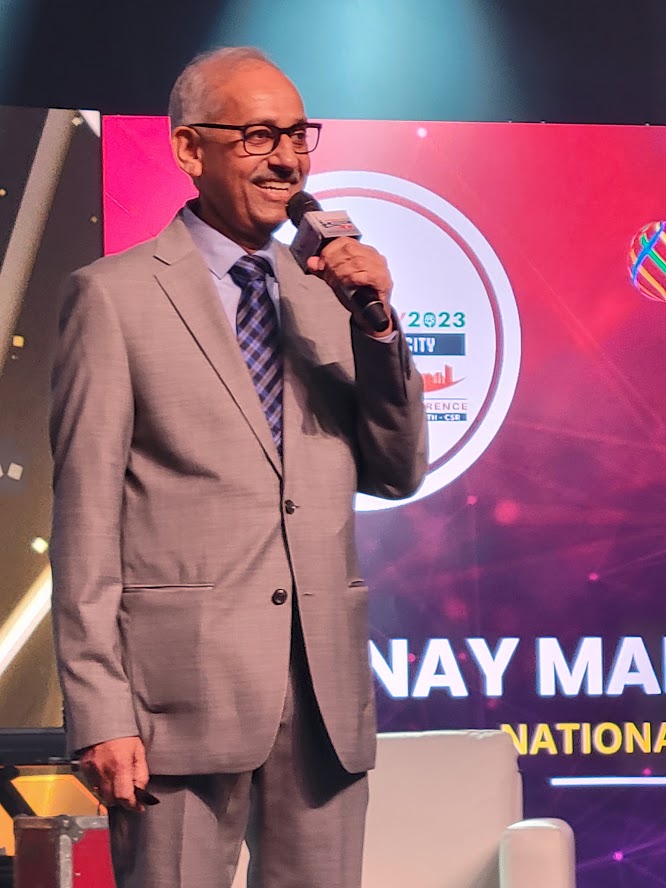
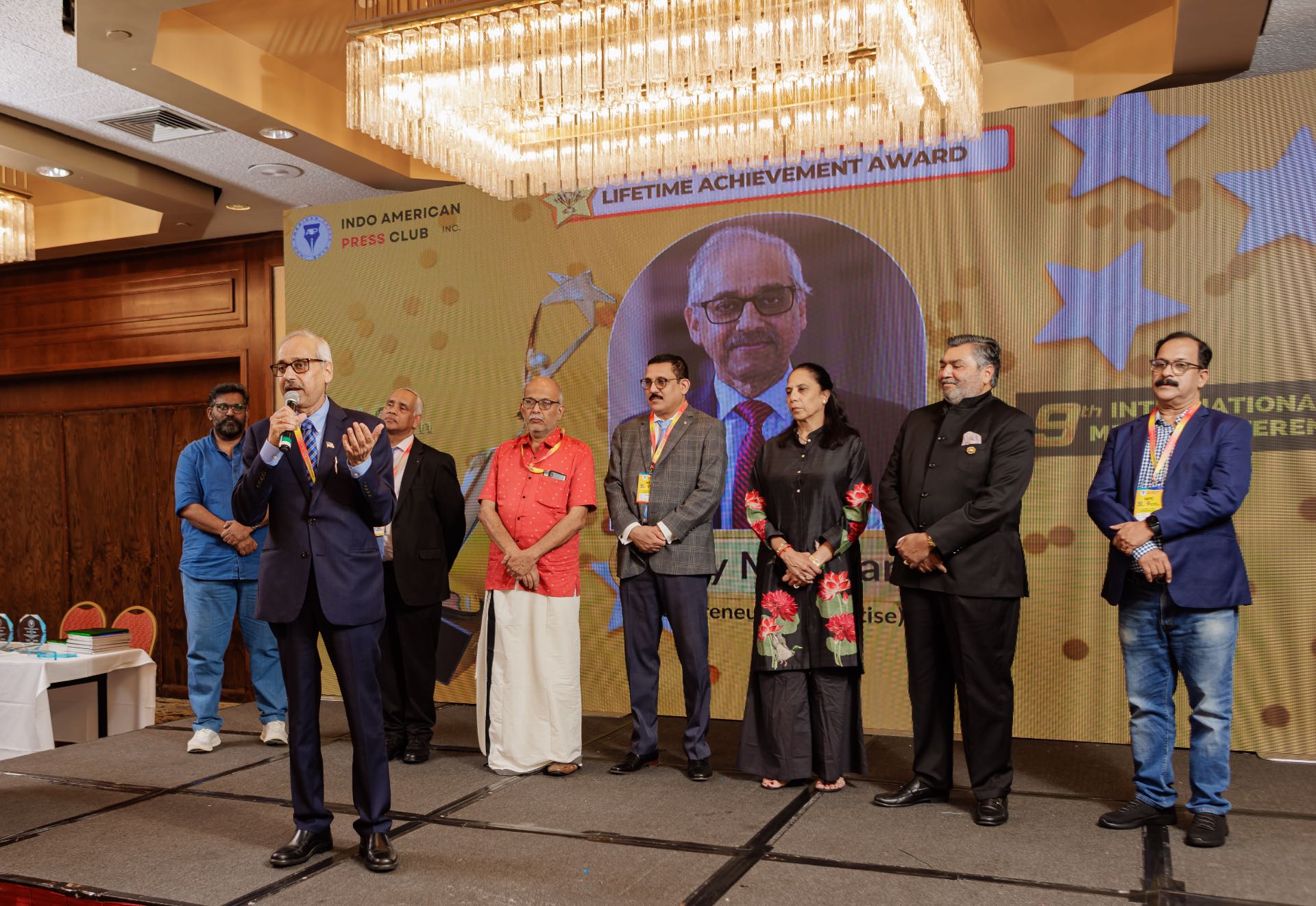
In his address to the membership, Vinay K. Mahajan, National President of ITServe Alliance highlighted how under his able leadership, ITServe has grown and strengthened in its mission in protecting members’ interest, enhancing membership benefits, empowering local employment, empowering local community through various CSR programs including STEM education, and empowering the ecosystem of innovation and thus maintaining the leadership of US in Technology.
Vinodbabu Uppu, Governing Board Chair of ITServe said, “Synergy 2023 is the only one-of-a-kind conference delivering innovative strategies, unique insights, and proven tactics for success, exclusively for IT service companies and individuals. Synergy 2023 focused on developing strategic relationships with our partner organizations, sponsors, and supporters to work for a better technology environment by building greater understanding.”
Secretary Clinton praised the contributions and accomplishments of the high-skilled immigrants to this country. She said, “I’m so proud of the many accomplishments of the ITServe member companies in the United States. I really want to thank you and commend you for the extraordinary contributions to the nation. I was so impressed by the many contributions you’ve made, in addition to building your businesses and providing employment for people.
These momentous occasions were a testament to the organization’s commitment to excellence and its ability to attract influential figures to its gatherings. These remarkable leaders graced the Synergy events with their presence, making each gathering a memorable and prestigious occasion for ITServe and its members.
In his presidential address, Vinay K. Mahajan, National President of ITServe Alliance, welcomed the members, leaders, chapter presidents, sponsors, and volunteers to Synergy 2023 and expressed his “sincere gratitude for your unwavering commitment, and dedication, and for investing your time and energy and resources. You are the backbone of our organization, and your unwavering commitment is what propels us forward.”
Venu Sangani, Director of Synergy 2023 said, “As we gather here, let’s remember that our unity as a community is our strength. I took on this leadership role, an opportunity, driven with a single objective: to help at the end of the conference, each attendee departs with concrete insight to grow their business to the next level. Because in all of you here today, there is both gratitude and a deep sense of accomplishment, knowing our collective vision is alive and thriving.”
Secretary of State Hillary Rodham Clinton, the Chief Guest at Synergy 2023 delivered the Keynote Address during an interactive session with ITServe members on October 27th evening. Ms. Clinton, the 67th Secretary of State of the United States has dedicated over four decades in public service as an advocate, attorney, First Lady, and US Senator.
Secretary Clinton urged the ITServe member community “to continue to be involved in your communities, to be members of civic clubs, volunteer groups and take part in American society in every way possible, and also decide if you so may choose to become an American citizen. And for those of you who have children, who are American citizens, guide them to be very active. Not just getting their education or being a successful person economically but being involved in civic life. There’s a lot to it. I know you are good role models for people in many parts of our country. So, I am very grateful for the many contributions that you are making and will make in the future.”
Phaneesh Murthy, Founder & CEO of Primentor addressed the audience with his insightful talk on, “Strategies for Scaling and Sustaining a Successful IT Company from One to 100 Million Plus” The keynote address by Zack Kass, Technology Futurist, and Generative AI Solutions Specialist focused on: “AI for Small Business Success: Navigating the Future of Entrepreneurship.”
Kevin O’Leary, a Venture Capitalist and Star of ABC’s Shark Tank delivered the Evening keynote address on: “The Path to Profit: Strategies for Building a Successful Business.” Through specific portrayals from his popular Shark Tank, his insightful address to the loud applause from the crowd referred to successful business strategies to enhance business profits.
Other sessions in the morning included a Startup Cube Finals on GTM Pitfalls Faced by Growing Startups, which Ashish Agarwal, Turbo Start, DVC led. The Immigration Panel Discussion focused on “Navigating Immigration Challenges and Policies.” The CXO Panel focused on “The Evolving Role of IOs and CTOs in AI and ChatGPT Powered Digital Transformation.” Other panel discussions addressed issues related to “Contracts And Litigations,” and “Direct Client Engagement in the World of Contingent Workforce.”
Amar Varada, Chair of Synergy 2023 said, “Synergy 2023 had prominent speakers, and valuable sponsorships, and helped grow a community network of industry professionals across the country. We are grateful to the unwavering support of our members, volunteers, and sponsors, whose collective efforts made this event a memorable one for all.”
With cultural events, music, dance, and sumptuous food, in addition to all the learning and sharing of knowledge, Synergy 2023 provided actionable insights and strategies that companies can directly implement, serving as a catalyst for taking businesses to the next level. Beyond being an arena for networking and knowledge sharing, Synergy 2023 has proved to be a veritable marketplace for ideas and innovations.
In addition to the 21 ITServe Chapter Presidents across the United States and the dozens of various Committee Chairs, the Executive Board of Directors of ITSeve, who play a critical role in enhancing the mission and vision of ITServe Alliance include: 
Secretary Clinton urged the Indian Diaspora “to continue to be involved in your communities,to be members of civic clubs. volunteer groups, and really take part in American society in every way possible, and also to make the decision if you so choose, to become an American citizen and as you wish to do. And for those of you who are the children, who are American citizens, guide them to be very active. Not just getting their education or being a successful person economically, but to be involved in things. There’s a lot to it. So, I think that the Indian diaspora, you know are good role models for people in many parts of our country. So, I personally am very grateful for the many contributions that you are making and will make in the future.”
Kevin O’Leary, a Venture Capitalist, Star of ABC’s Shark Tank delivered the Evening keynote address on: “The Path to Profit: Strategies for Building a Successful Business.” Through specific portrayals from his popular Shark Tank, his insightful address to the loud applauses from the crowd referred to successful business strategies to enhance business profits.
Anil Atyam, Chair of Speakers for Synergy 2023 emphasized the curated lineup of speakers and panels. “We are thrilled to have a diverse and esteemed set of speakers for this year’s conference. From policymakers, and technology leaders to industry innovators, our speakers are pivotal in shaping the discussions and providing invaluable insights that can be immediately applied in various sectors of the IT industry.”
A Special Guest Session at Synergy was a “Dialogue with Yuvraj Singh,” a highly popular international Cricketer, Entrepreneur, and Philanthropist. Synergy 2023 will conclude with a Live Musical Concert by Bollywood Playback Singer and Filmfare Awardee Kanika Kapoor.
Describing the mission of ITServe Mr. Mahajan said, “We’re in the forefront, guiding and empowering its members. ITServe today is a powerful force focused on safeguarding the interests of small and medium business enterprises. We have more than 2,200 member companies, spread over 21 Chapters, they generate 175,000 high paying jobs across the United States. Our members contribute almost $12 billion to the US GDP. We at ITServe Alliance are immensely proud of us for being very successful. We are the voice represent the interests of small and medium scale enterprises of IT industry, protecting our members’ interests. We give back to the community, and invest in startups, which is to help the United States maintain the leadership in innovation and technology.”
Mahajan went on to say, “I always thank you members, because of you, we are all strong together. Our success today is not about working alone in isolation. It is about coming together, collaborating and liberating our collective strength. It is about finding synergy, not only within our own businesses but also across our entire community. As we navigate the challenges and opportunities of the digital age, our role today is even more critical. We are not just service providers. We are architects of transformation. We shape the future of industries and enhance the lives of individuals worldwide. This event is dedicated to you. Together we will innovate and lead the way in the IT services industry. Thank you for being part of synergy. Let us embark on the journey together and fueled by the spirit of collaboration and the pursuit of success.”
In his opening remarks, Venu Sangani, Director of Synergy 2023 said, “As we gather here, let’s remember that our unity as a community is our strength. Last year in Orlando, Florida, I took on this leadership role, an opportunity, driven with a single objective: to help at the end of the conference, each attendee departs with concrete insight to grow their business to the next level. Because in all of you here today, there is both gratitude and deep sense of accomplishment, knowing our collective vision is alive and thriving.”
Referring to the global situation, Forbes said, “We know we live in a world today, where Russia, China, North Korea and Iran feel that the United States is a declining power. China has made very clear it wants world domination. Russia under Putin has made it very clear he wants to recreate the Soviet empire. Iran wants to be the hegemony of the Middle East and control the oil and dominate the region and ultimately eliminate Israel. In the crazy border wars, China keeps pushing against India. Not a good environment.”


For Hyundai, the concern is centered around the anti-lock brake system in 13 different models, which may leak fluid and trigger an electrical short circuit that could result in a fire. In the case of Kia, the fire risk is linked to the hydraulic electronic control unit in 10 separate models.
Synergy continues to add prominent speakers, and valuable sponsorships, and help grow a community network of industry professionals across the country,” said Amar Varada, Chair of Synergy 2023. “Participants at Synergy 2023 will have a platform for IT company heads to come together to hear industry leaders speak, engage in discussions with lawmakers, participate in interactive breakout sessions, deliberate on the latest trends, challenges, and opportunities in the world of IT Staffing and Technology.


Over the years, ITServe Alliance has established a name for itself as the center point of information for its members and the larger community, covering a variety of areas ranging from immigration, technology, economy, and many more that are relevant to its members. ITServe has 20 Chapters in several states across the United States, bringing resources and service to the larger humanity in every part of this innovation country.


Google claims that its new AI-driven search feature will generate clicks, as it aims to be transparent about the sources of its information. However, one could argue that this is similar to expecting users to click on Wikipedia’s sources listed at the bottom of each entry. While a small percentage of users deeply interested in a topic might click on those links, most will simply read the Wikipedia entry without concern for the sources.