37 Routine Activities Ranked by Risk of COVID-19 Infection

COVID-19 has redefined risky behavior. So how do we know what’s more risky: getting a haircut, eating inside a restaurant, traveling by plane or shaking someone’s hand? Trick question. They’re equally risky to our health, according to a new risk-assessment chart produced by the Texas Medical Association COVID-19 Task Force and Committee on Infectious Diseases. The chart ranks activities by risk level, from opening the mail (low) to going to the beach (moderate) to attending a large music concert (high). The first four activities mentioned above are each rated moderate-high risk, a 7 on a scale of 10. Physician members of the task force and committee established the levels, with the assumption that people are taking as many necessary safety precautions as possible, no matter the activity.Here’s the complete list, from lowest to highest risk: Low Risk: 1
Opening the mail Low Risk: 2
Getting restaurant takeout
Pumping gasoline
Playing tennis
Going camping Low-Moderate Risk: 3
Grocery shopping
Going for a walk, run, or bike ride with others
Playing golf Low-Moderate Risk: 4
Staying at a hotel for two nights
Sitting in a doctor’s waiting room
Going to a library or museum
Eating in a restaurant (outside)
Walking in a busy downtown
Spending an hour at a playground Moderate Risk: 5
Having dinner at someone else’s house
Attending a backyard barbecue
Going to a beach
Shopping at a mall Moderate Risk: 6
Sending kids to school, camp, or day care
Working a week in an office building
Swimming in a public pool
Visiting an elderly relative or friend in their home Moderate-High Risk: 7
Going to a hair salon or barbershop
Eating in a restaurant (inside)
Attending a wedding or funeral
Traveling by plane
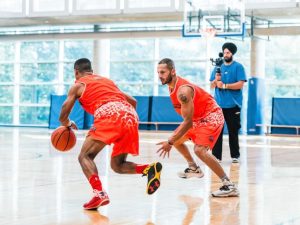
Playing basketball
Playing football
Hugging or shaking hands when greeting a friend High Risk: 8
Eating at a buffet
Working out at a gym
Going to an amusement park
Going to a movie theater 

High Risk: 9

Attending a large music concert

Going to a sports stadium

Attending a religious service with 500-plus worshipers

Going to a bar

A COVID-19 Back-to-School Guide . . . for Parents

This is the time of year when parents and kids usually start thinking about going back to school and making shopping lists for new clothes, backpacks and supplies. But this isn’t a usual school year, as school districts and parents struggle to decide what school will look like during COVID-19. To help parents with some advice on how to return to in-person school, we turned to Dr. Virginia M. Bieluch, Director of the Division of Infectious Diseases for Hartford HealthCare’s Hospital of Central Connecticut and Associate Professor of Medicine at the University of Connecticut School of Medicine. “I think it is important for parents to talk to their children about how school is going to look different this year with physical distancing, children and teachers wearing masks, and any plans their school has for changes from previous years,” Dr. Bieluch said. Bieluch said an important resource for parents is the Centers for Disease Control and Prevention‘s back-to-school planning checklists for parents. The state of Connecticut has also issued guidelines for the safe operation of schools. Parents should also check their local school district’s website for local information and guidelines. And, Dr. Bieluch said, make sure your child is up-to-date with all vaccinations to minimize the risk of your child getting sick with other infections. Unless contraindicated, make sure your child gets a flu shot next year to decrease chances of influenza, another respiratory illness with fever and cough. What should kids bring to and from school?Children should bring items such as water bottles (if allowed by the school), writing utensils, coloring utensils, and they should not share with other children. They should be able to open and close any containers they have without assistance. How do you deal with the children’s school clothing/shoes?These items should be washed frequently but no special treatment is necessary. What are any extras students might need?Find out if water and hand sanitizer will be provided to children. If not, the children will need to bring their own to school daily. An extra mask would be helpful, should the child’s mask get wet or soiled during school. A container, such as a small plastic bag, would be useful for mask storage when masks are removed such as when the child eats. Make sure children know proper hand washing and hand sanitizing methods.Hands should be washed often but especially before eating, after using the restroom or after blowing nose/sneezing/coughing. Hand washing is preferred but use hand sanitizer when washing is not possible. It’s smart to practice these activities well in advance of returning to school, especially with younger children. Hand-washing (5 steps)

  1. Wet hands.
  2. Lather hands on both sides, include fingers and nails.
  3. Scrub 20 seconds (sing happy birthday twice).
  4. Rinse with water.
  5. Dry, using a clean towel or allow to air dry.

Hand sanitizer

  1. Apply gel to the palm of one hand.
  2. Rub hands together.
  3. Rub over all surfaces of hands and fingers until sanitizer is dry, about 20 seconds.

Wearing masksTalk to your children about the importance of wearing a mask (to keep others healthy). Make mask wearing “no big deal” by putting a mask on a favorite stuffed animal, for example.

  • Practice how to put on and take off a mask without touching the front of the mask.
  • Find a mask that is comfortable for your child.
  • Personalize the mask if possible (favorite sports team, TV character, color).
  • Label mask with your child’s name to identify which mask belongs to your child.
  • Masks should be worn on the way to and from school when children ride the bus, car pool or walk in groups in which physical distancing is not possible.

Dr. Sudhakar Jonnalagadda, President of AAPI, Proposes US-Israel-India Health Dialogue

The COVID-19 Pandemic continues to impact the world as never before with millions around the world being affected. India and the United States lead the world chart with some of the highest number of cases being impacted and several hundreds losing their lives.

Collaboration and sharing of knowledge and expertise among the nations of the world is key to combating the virus and finding solutions to contain the spread and heal those who are affected. In this context, a Virtual Panel Discussion on “Can 30 Seconds Save the World? Israeli-Indian Cooperation to develop a rapid test for COVID-19” was held on August 26th.

 Dr. Sudhir Parikh, Chairman, Parikh Media Worldwide moderated a panel discussion, which was cosponsored by the Indian and Israeli Consulates in New York, American Jewish Committee, American Association of Physicians of Indian Origin, Parikh Media Worldwide, ITV Gold and the Hindu-Jewish Coalition. New York based Consul Generals Israel Nitzan (Israel) and Randhir Jaiswal (India) gave opening remarks as the cohosts of the program along with Rabbi David Levy of AJC New Jersey. Dr. Parikh gave the audience of over 150 guests which included Panama’s Health Minister.

In his remarks, Dr. Sudhakar Jonnalagadda, President of American Association of Physicians of Indian Origin (AAPI) called for a joint US-Israel-India Health dialogue with Israeli physicians from reputed hospitals to study and identify as to how with significantly limited resources, Israel is able to provide quality healthcare to all of its citizens. Dr. Jonnalagadda provided a brief on AAPI’s role and several initiatives it has undertaken in fighting COVID-19 in the US and India. “AAPI members are putting their best efforts to help our patients, especially those impacted by COVID,” he said. “Several of our physicians have been affected in this pandemic. We are continuing our efforts to make AAPI a more dynamic and  vibrant organization playing a meaningful and relevant part in advocating health policies and practices that best serve the interests of all patients  and  promoting the  physician’s role   as  the  leaders of the  team based health care delivery.”

He recalled of the AAPI’s mission to Israel and Jordan in 2019, and hoped “to work with our close friend Nissim B Reuben to ensure that we take such a mission annually to Israel in cooperation with AJC where we will call on the Israeli PM, Foreign Minister as well as Indian & US Ambassadors in Israel, enabling series of dialogue and discussions between India, Israel and the United States.

Dr. Jagdish Gupta, AAPI Mid-Atlantic Director and a member of AAPI’s BOT, in his remarks highlighted that his alma mater the All India Institute of Medical Sciences (AIIMS) which hosted the large mission of Israeli COVID-19 experts on its premises earlier this month led by Ambassador Ron Malka, who has been playing a significant role in fighting COVID-19 in India. Dr. Gupta hopes to see Israel-India Medical Cooperation between healthcare institutions such as AIIMS as well as other leading private sector hospitals such as Apollo, Medanta, Zydus etc. He Dr. Gupta, in his capacity as the President of the AIIMS Alumni in the US, oferred whole hearted support from the Alumni Group in future Israel-India medical cooperation initiatives.Dr. Jonnalagadda and Dr. Gupta were referring to an Israeli team, led by a “high ranking” research and development (R&D) defense officials, were in Delhi recently with a multi-pronged mission, codenamed “Operation Breathing Space” to work with Indian authorities on the coronavirus (COVID-19) response.

Amongst the plans for the team, which were coordinated by Israel’s Ministry of Foreign Affairs (MFA), and Indian Ministry of Defense (MOD) and the Ministry of Health, were four different kinds of rapid tests, which are jointly developed after trials on Indian COVID-19 patients, as well as high-tech equipment to minimize exposure of medical staff to the virus, advanced respirators and special sanitizers developed in Israel.“What they all have in common is the ability to detect the presence of the virus in the body quickly — usually within minutes. Developing diagnostic capabilities is a goal for the State of Israel and of many additional countries around the world. It is the most effective way to cut off ‘chains of infection’, prevent prolonged quarantine and enable the reopening of the global economy,” a media report on the Israeli mission to India said.

“If even one of the tests proves to be effective in testing for coronavirus in 30-40 seconds, this could be a game changer for the whole world and how we behave, at least until we have a vaccine,” Israeli Ambassador Ron Malka, who flew to Delhi by the special flight from Tel Aviv with the team and medical equipment aid, had said. “Imagine how much easier it will be to operate flights, schedule conferences and meetings, if we can test so easily and quickly,” he explained.

In his remarks, Ambassador Dr. Ron Malka gave an impressive overview of India-Israel relations. Besides the recent mega COVID-19 mission, he mentioned that Israel recently signed a mega water management agreement with Uttar Pradesh, India’s largest state.

Dr. Sudhir Parikh provided an overview of the growth of Indo-Israeli relationship going back to 1950 when India recognized Israel. With tireless efforts from Indian American community, including Dr. Sudhir Parikh, Dr. Bharat Barai and several other Indian-American leaders nationwide, India formally established diplomatic relationship in 1991.

Dr. Parikh thanked his close friend Nissim B Reuben for inviting him and his colleagues Dr. Sudhakar Jonnalagadda and Dr. Jagdish Gupta to be part of the panel. Both the Parikh and Reuben families are personally known to Prime Minister Narendra Modi who fondly calls Nissim India’s Rashtradoot – Goodwill Ambassador to the Jewish World. Since 2002, Nissim has had a significant role to play through his work at AJC building robust Jewish & Indian diaspora relations jointly advocating for close ties between the US, India & Israel in the strategic, economic, tech & cultural areas including organizing Hanukkah receptions in his Indian-Jewish tradition at the Indian Embassy in Washington, DC and Consulates in New York, Atlanta, Chicago and Houston.

Dr. Parikh offered Ambassador Ron Malka assistance in the process of enabling a similar regular exchange of experts in the health sector between India & Israel. He commended both PMs Narendra Modi and Benjamin Netanyahu, their scientific advisors & Ambassadors Ron Malka and Sanjeev Singla for their role in spearheading the robust India-Israel ties mentioning that the large Israeli delegation setting up a two weeks COVID testing camp in Delhi under Ambassador Malka’s leadership as an example.

As Secretary of the Global Association of Physicians of Indian Origin (GAPIO) both Dr. Sudhir Parikh and American Association of Physicians of Indian Origin (AAPI) President Dr. Sudhakar Jonnalagadda enthusiastically offered to advocate with the US administration and congress the importance of forging closer cooperation in the health and disaster management sector between the US, India and Israel.

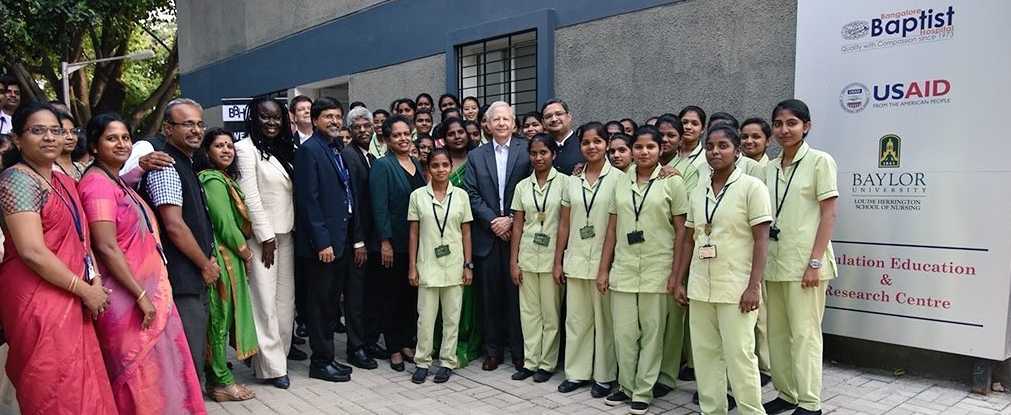
Israel has set up 29 Centers of Excellence across India to help Indian farmers learn the best Israeli expertise in Agriculture to benefit Indian farmers. This is a huge help as 60% of the Indian economy is still dependent on Agriculture. Dr. Parikh suggested to Ambassador Ron Malka, that “with assistance from the Indian & Jewish diaspora communities, we would like Israel to be able to set up similar Centers of Health Cooperation across India.” He offered whole hearted support from GAPIO & AAPI for this endeavor bringing in our own USAID into the loop from the US.

Andrew Gross, Director, New-Jersey—Israel Commission from the New Jersey Governor’s office gave closing remarks offering Governor Phil Murphy’s robust support to partnership initiatives between New Jersey, Israel and India in all areas especially in the health, biomedical and biotech sectors.Nissim B. Reuben, Assistant Director, Asia Pacific Institute (API) and American Jewish Committee (AJC)  said, “I am honored to represent AJC every year and address on the US-India-Israel partnership at the AAPI Legislative Day on Capitol Hill. “We are looking forward to working with Nissim & AJC on taking an AAPI Leadership Mission to Israel and helping in the process of establishing Israeli Medical Centers of Excellence in India,” Dr. Jonnalagadda added. For more details on AAPI and its many programs and events, please visit: www.aapiusa.org 

Greater Sacramento Indian Americans Celebrate India Day

Over five thousand people, who used to come every year from the Greater Sacramento area and further away in the California-USA, to witness the India Day celebrations organized by Indian Association of Sacramento (IAS) for the past15 years. This year, India Day Celebrations event which was scheduled to be held August 15th, 2020 but canceled by “IAS”, in the interest of public safety due to the Covid-19 pandemic. In the United States, Indian-American organizations celebrate their motherland’s Independence annually at numerous venues, with parades, and other functions. This year, all in-person events are obviously out of question due to Covid-19 pandemic and social distancing measures in place. Many celebrated them online, thanks to new online meeting technologies.  On Aug 15th, 2020 at 5PM, IAS unfurled the Indian tricolor flag in the lawn area in front of California State Capitol. On the same day at 4PM, IAS conducted a car parade at State Capitol, Sacramento with approximately 50 cars. Satheesh Nagaraja, Co-lead of parade decorated his car with colorful Indian flags and led the car parade. Other Indian-American participants decorated their respective cars with tricolor flags and rallied around the State Capitol for about 30 mins. According to IAS President Shivesh Sinha, “It will be the first time ever that India’s tricolor will be unfurled at the iconic CA State Capital venue in all its glory. On this very special day when our mother country is celebrating her 74th birthday, I wish you a very happy Indian Independence Day”.  “This year’s Independence Day will mark a new chapter in IAS’s history, organizing India Day car parade, and an online India Day event to celebrate India’s Independence Day,” organizers said. IAS Board of Trustee Dr Bhavin Parikh said with the unfurling of the tricolour at CA State Capitol Building, history has been created. A large number of people, dressed in traditional Indian clothes and wearing masks, joined the celebration at the Lawn in front of CA State Capitol building. Waving the Indian and American flags, the people shouted slogans of ‘Bharat Mata Ki Jai’, ‘Vande Mataram’ and ‘Jai Hind’.  The Indian national anthem was sung by the crowd. The crowd erupted in huge cheers and applause as the Indian tricolour flag was raised in front of CA State Capital, alongside the American flag, commenting that it was indeed a proud and historic moment for all.  IAS vice president Bhaskar Vempati said it was a historic moment for the Indian community that the tricolour was unfurled for the first time in front of CA State Capitol. “It is indeed a proud moment for all of us,” he said.   Several participants in the car parade commented, “The India Day Parade is very much in line with the CA-American Story”, “There’s other parades and events like Memorial Day, Martin Luther King Day, Cesar Chavez Day… The India Day Car Parade is one more colorful piece that makes up the mosaic of CA-Indian American life”, “It is a grand car parade, good for our people, culture and community. It is not feasible in this age of coronavirus to have a large crowd, Thanks to IAS for conducting this parade peacefully”. Paresh Sinha, Lead of India Day parade thanked everyone who participated in the car parade beating the heavy day time temperatures in Sacramento.  Later that day on 15th, at 6PM hundreds of members of the Indian-American community-based in Greater Sacramento & across the world participated in the IAS Virtual India Day Celebrations live-streamed on Facebook and YouTube.  They all were mesmerized by watching colorful rich Indian cultural performances for about 3 hrs non-stop and congratulated the cultural show participants. Deputy Consul General of India at San Francisco’s Indian Consulate, Mr Rajesh Naik attended IAS India Day virtually and wished Sacramento Indian Community on the occasion of 74th Independence Day. Naik spoke about the services provided by the consulate and how they are trying to help people to make it easier for them to get what they need. Mr Rajesh Naik, who took charge at the consulate in late August, is a career diplomat from the 2010 batch of the Indian Foreign Service.  IAS thanked everyone for supporting IAS’s new way of celebrating India Day during COVID-19 pandemic.  For those who missed the IAS India Day event, IAS encourages them to enjoy the event records using these links. Facebook link:  https://www.facebook.com/IndiaDaySacramento/live/ Youtube link:  https://www.youtube.com/watch?v=Jw1IrJrZJKE  Established in 2005, Indian Association of Sacramento is one of the largest umbrella organizations in the Indian community. Since 2006, the IAS has been organizing India Day annually, which showcases India’s cultural heritage and history. Since its inception, IAS raised over $160,000 funds for helping out several non-profits in and out of the USA. This year IAS raised $12,000 funds and assisted needy people living in Greater Sacramento with face masks, meals, groceries, medical and school supplies. IAS marketing representative Venkat Nagam suggested the readers visit the IAS website: http://www.iassac.org/ for more information about IAS and it’s events/activities spread throughout the year.   

World Sikh Parliament Held

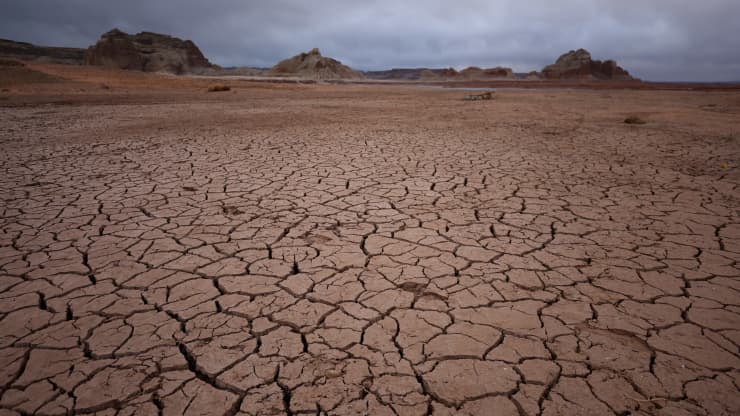
The World Sikh Parliament members from twenty-six countries deliberated over a conference call on the issue of the Satluj Yamuna Link (SYL) Canal issue.  Water is the source of life. India’s Supreme Court is preparing to deliver yet another deadly blow to Punjab’s riparian rights over its own crucially important river waters. Mobilizing efforts worldwide, the World Sikh Parliament, with its partners, will challenge the decision both within the Indian subcontinent and internationally. As per International Riparian law, the state of Panjab has the first right over its waters. For decades Panjab is being robbed of their territorial waters. Hence, the common Panjabi speaking man must raise their voice, protecting themselves from being deprived of the waters and the revenue from the shared waters.

The following are the conclusions that the World Sikh Parliament reached upon:-

1. The SYL Canal issue is dear to all people living in Panjab. It’s a matter of right to their life. Hence, the World Sikh Parliament will work with civil society organizations to address this as a legal challenge within the National courts of India.

2. The World Sikh Parliament will work to bring awareness of this issue across schools, universities, colleges and will agitate peacefully.

3. The World Sikh Parliament will take forward the SYL canal issue as an international campaign. This will be a part of its broader ongoing movement to educate on the right for self-determination while pointing out that international law’s prescription on self-determination (1966 Covenants on Human Rights) states:

“All peoples have the right of self-determination …All peoples may, for their own ends, freely dispose of their natural wealth and resources … In no case may a people be deprived of its own means of subsistence”.


Brief History


The history of this dispute dates back to before the days of the partition. In 1955, Rajasthan was allocated the majority share of water without any cost. After India and Pakistan’s formation, both the countries signed the Indus Waters Treaty in 1960, hence, settling for the unrestricted use of three rivers —Beas, Ravi, and Sutlej.

The creation of Haryana in 1966 from the old (undivided) Punjab brought in the problem of giving Haryana its river waters. Punjab opposed sharing the Ravi and Beas’ waters with Haryana on riparian grounds, arguing that it had no water to spare. The Supreme Court (SC) of India, in January 2002, directed Punjab to continue digging for the SYL canal, ordering the canal to be functional within a year. The state of Punjab challenged and sought a review of this order. The SC dismissed the review in March 2002. On July 28, 2020, the SC had directed the chief ministers of both the states to settle the dispute by way of talks within three weeks.  No resolution has been achieved as of yet. The latest Supreme Court action focusses to take even more water away to Haryana (on which it has already ruled against Punjab), but will not address the core issue of riparian rights or even deal at all with the bulk of the disputed water which is being taken by Rajasthan. This will leave India’s breadbasket, Panjab, arid and barren, directly impacting more than 30 million people. 

In a landmark judgment delivered in 2018 about the Cauvery water dispute, the Supreme Court has already made its position clear; it sees rivers as a ‘national asset,’ which ultimately New Delhi will control. As such, Punjabis of all political persuasions have no prospect of a just outcome from the Indian judiciary or the central government. The terrible Indo-Sikh conflict of the 1980s and 1990s erupted from the resistance of the building of the SYL canal. The BJP lead fundamentalist government is again heading towards this direction, leaving no choice for Panjab’s people then to agitate.  Himmat Singh, the coordinator of the World Sikh Parliament, conducted the meeting.

Jeff Bezos 1st person ever to be worth over $200 billion

Amazon Founder and CEO Jeff Bezos has become the world’s first person with a net worth of over $200 billion, according to Forbes and Bloomberg Billionaires Index. The net worth of the world’s richest person went up by $4.9 billion after Amazon stock edged up 2% as of Wednesday afternoon, Forbes reported. The explosive growth in Bezos’ fortune is being driven by his holdings in Amazon (AMZN). The company’s stock is up about 25% over the last three months and 86% so far this year, according to data from Refinitiv.Bezos, who founded Amazon in 1994, keeps breaking records with his wealth. In 2017, he became the richest person on the planet. And last month, his estimated net worth jumped to almost $172 billion, marking a new global high. Bezos also owns aerospace company Blue Origin, the Washington Post and other private investments. However, his nearly 11 per cent stake in Amazon makes up over 90 per cent of his massive fortune. The e-commerce giant saw a huge spike in demands for its services amid the Covid-19 pandemic. Since the beginning of 2020, Amazon stock is up nearly 80 per cent, said the Forbes report, adding that Bezos’ net worth on January 1 was roughly $115 billion. While Forbes said that Bezos became worth $204.6 billion at 1.50 pm EDT on Wednesday, the Bloomberg Billionaires Index currently puts his net worth at $202 billion. The person who is closest to Bezos now is Microsoft Co-Founder Bill Gates who is currently worth $116.1 billion, according to Forbes, while the Bloomberg Billionaires Index put his net worth at $124 billion.As per the Bloomberg Billionaires Index, Bezos’ fortune is equivalent to 3.02% of the total wealth of the 500 richest people in the world. The person who is closest to Bezos now is Microsoft Co-Founder Bill Gates who is currently worth $116.1 billion, according to Forbes, while the Bloomberg Billionaires Index put his net worth at $124 billion.Meanwhile, Facebook chief Mark Zuckerberg’s net worth increased to $115 billion as his wealth rose by a whopping $8.49 billion on a single day.  Tesla CEO Elon Musk also entered the centibillionaires club with his net worth climbing to $101 billion on the back of a strong rally in US stocks. 

Let Your Brain Rest: Boredom Can Be Good For Your Health

The human brain is a powerful tool. Always on, the brain is thinking and dealing with decisions and stressors and subconscious activities. But as much as the human brain function has a large capacity, it also has limits. Alicia Walf, a neuroscientist and a senior lecturer in the Department of Cognitive Science at Rensselaer Polytechnic Institute, says it is critical for brain health to let yourself be bored from time to time.
Being bored can help improve social connections. When we are not busy with other thoughts and activities, we focus inward as well as looking to reconnect with friends and family. 
Being bored can help foster creativity. The eureka moment when solving a complex problem when one stops thinking about it is called insight.
Additionally, being bored can improve overall brain health.  During exciting times, the brain releases a chemical called dopamine which is associated with feeling good.  When the brain has fallen into a predictable, monotonous pattern, many people feel bored, even depressed. This might be because we have lower levels of dopamine.  One approach is to retrain the brain to actually enjoy these less exciting, and perhaps boring, times.
Walf’s research has long focused on neuroplasticity as it relates to behavior/cognition and health of body and brain. She studies the brain mechanisms of stress and reproductive hormones as they relate to behavior and cognition, brain plasticity, and brain health over the lifespan.  Specific areas of Walf’s expertise are memory, emotions, and social interactions and how these functions not only arise from the brain but change the brain itself.

Developing Common Sense Robots

A research team from Carnegie Mellon University and Facebook AI Research, which included CMU Machine Learning Department doctoral student Devendra S. Chaplot, has developed a common-sense robot.

A robot travelling from point A to point B is more efficient if it understands that point A is the living room couch and point B is a refrigerator, even if it’s in an unfamiliar place, the CMU report said.That navigation system, called SemExp, in June won the Habitat ObjectNav Challenge during the virtual Computer Vision and Pattern Recognition conference, edging out a team from Samsung Research China, CMU said. It was the second consecutive first-place finish for the CMU team in the annual challenge, it said.

SemExp, or Goal-Oriented Semantic Exploration, uses machine learning to train a robot to recognize objects — knowing the difference between a kitchen table and an end table, for instance — and to understand where in a home such objects are likely to be found, the CMU report said.This enables the system to think strategically about how to search for something, said Chaplot in the report. “Common sense says that if you’re looking for a refrigerator, you’d better go to the kitchen,” the Indian American researcher said.

Classical robotic navigation systems, by contrast, explore a space by building a map showing obstacles. The robot eventually gets to where it needs to go, but the route can be circuitous, CMU said.Previous attempts to use machine learning to train semantic navigation systems have been hampered because they tend to memorize objects and their locations in specific environments, according to the report. Not only are these environments complex, but the system often has difficulty generalizing what it has learned to different environments, it said.

Chaplot — working with FAIR’s Dhiraj Gandhi, along with Abhinav Gupta, associate professor in the Robotics Institute; and Ruslan Salakhutdinov, professor in the Machine Learning Department — sidestepped that problem by making SemExp a modular system, according to the CMU report.The system uses its semantic insights to determine the best places to look for a specific object, Chaplot said. “Once you decide where to go, you can just use classical planning to get you there.” 

TPS Beneficiaries Retain Same Immigration Status after Traveling Abroad

U.S. Citizenship and Immigration Services today announced a Policy Memorandum adopting the Administrative Appeals Office (AAO) decision on Matter of Z‑R‑Z‑C.

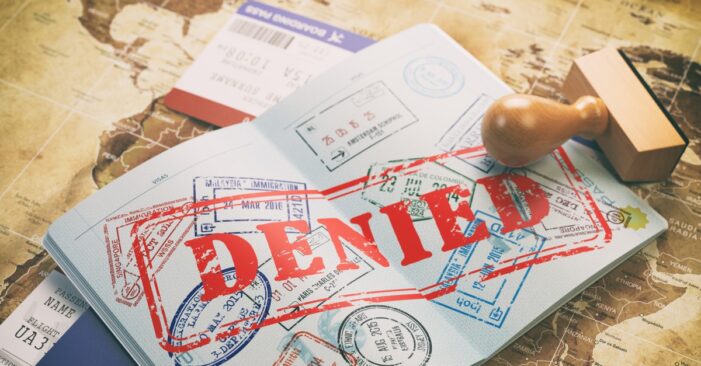
The decision holds that Temporary Protected Status (TPS) beneficiaries who travel abroad using a Department of Homeland Security (DHS)-issued travel document under Immigration and Nationality Act (INA) section 244(f)(3) generally will retain the same immigration status on their return that they had at the time of departure. Exceptions apply to aliens inadmissible under certain criminal or national security grounds or with immigrant or nonimmigrant visas they present for admission to the United States.

This travel does not satisfy the “inspected and admitted or paroled” eligibility requirement for obtaining adjustment of status to lawful permanent residence. This is consistent with the agency’s previous clarification that a TPS beneficiary’s authorized travel does not execute a final order of removal.

Furthermore, this decision is in line with the Miscellaneous and Technical Immigration and Naturalization Amendments Act of 1991 (MTINA), which specifies that TPS beneficiaries who travel using a valid DHS-issued travel document retain the same immigration status upon return.

“Temporary Protected Status is by its very nature temporary,” said USCIS Deputy Director for Policy Joseph Edlow. “It should not provide a path to lawful permanent resident status or citizenship. Misinterpretation and inconsistent application of this law has previously allowed those pathways for alien TPS beneficiaries. This was a mistaken distortion of what Congress intended when creating this temporary program.”
Recognizing TPS beneficiaries’ potential reliance on USCIS’ past practice and treatment of their temporary travel abroad, USCIS will limit how it applies Matter of Z-R-Z-C to minimize adverse impacts to this group. This decision does not affect TPS beneficiaries who adjusted status to lawful permanent residence under past practice and/or prior guidance or who have pending applications for adjustment of status.

In addition, USCIS will only apply Matter of Z-R-Z-C prospectively to TPS beneficiaries who departed and returned to the United States under section 244(f)(3) of the INA after Aug. 20, 2020, the date of the AAO’s adopted decision.

Meanwhile, Office for Immigrant Advancement Director Yusufi Vali has said that the United States Citizenship and Immigration Services (USCIS) is making significant changes to the naturalization application. Starting October 2, it is raising the cost of application from $725 to $1,200 and eliminating the fee waiver for most low-income residents.

USCIS is also increasing the permanent residence (green card) application fee and implementing an asylum application fee, making the United States one of four countries to do so.
For more information on USCIS and its programs, please visit uscis.gov or follow us on Twitter (@uscis), Instagram (/uscis), YouTube (/uscis), Facebook (/uscis), and LinkedIn (/uscis).

Emoroy Museum Presents Transcendent Deities of India

What does it mean to see and be seen by the divine? What does it mean to see the divine in new ways? These are the questions underlying Transcendent Deities of India: The Everyday Occurrence of the Divine, an exhibition of more than 70 works of art by Raja Ravi Varma, Manjari Sharma, and Abhishek Singh. 

For Hindus in India, images of gods and goddesses are an integral part of religious practice. These images inspire worshippers and artists alike, populating the art of the region for thousands of years and demonstrating their power through hundreds of millions of daily encounters as part of rituals at temples, shrines, and other settings within India and the broader diaspora. 

Transcendent Deities of India explores the visual communion between human and divine. Through prints, photographs, graphic art, paintings, and illustrations, Varma, Sharma, and Singh offer modern and contemporary interpretations of traditional imagery that position Hindu gods and goddesses within viewers’ frame of reference, ensuring their seamless applicability in new eras. 

Vishnu, the preserver, comes to earth in times of distress in order to maintain the cosmic order. Dr. Harshita Kamath, Koppaka Assistant Professor in Telugu Culture, Literature, and History, will discuss the conception of Vishnu in the Hindu pantheon and his role illustrated by the works in the exhibition Transcendent Deities: The Everyday Occurrence of the Divine and the Carlos’s permanent collection

Proof Bakeshop, whose sour cherry scones are a beloved feature of AntiquiTEA programs at the Carlos, has provided a recipe from pastry chef Mike Carmody, so you can make them at home, and have them warm from the oven when the program begins.

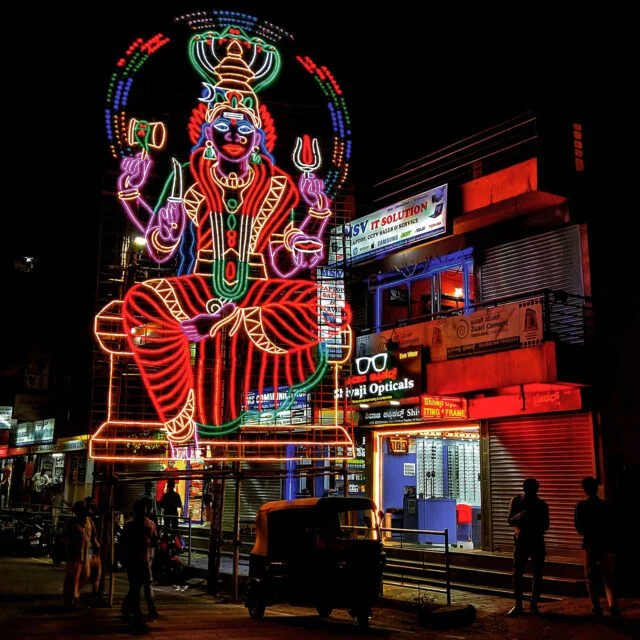
Of the hundreds of Hindu deities, the elephant-headed god Ganesha  is among the most beloved. Known as the “Lord of New Beginnings” and the “Remover of Obstacles,” his familiar image can be found near the entrance of Hindu homes, temples, shops, restaurants, and even on the dashboard of cars both in India and here in the United States.

This is a part of the South Asian collections of Emory’s Michael C. Carlos Museum which represent living religious traditions that originated in India thousands of years ago and spread throughout Asia and around the globe. As the third- and fourth-largest religions in the world, Buddhism and Hinduism have millions of followers, not only in Asia, but here in the United States, and even in Atlanta.

“The Everyday Occurrence of the Divine,” a collection of artwork from India on Hindu Dieties is on display at the famous Emoroy Museum from January 18 – October 18, 2020. To learn more about the Carlos Museum’s collection of Hindu art and how it is used in religious practice, visit Odyssey Online South Asia, an interactive resource.   Click here to watch Manjari Sharma’s artist talk about her Darshan series. 

Galactic Bar Paradox Resolved in Cosmic Dance

New light has been shed on a mysterious and long-standing conundrum at the very heart of our galaxy. The new work offers a potential solution to the so-called ‘Galactic bar paradox’, whereby different observations produce contradictory estimates of the motion of the central regions of the Milky Way. The results are published in Monthly Notices of the Royal Astronomical Society.

The majority of spiral galaxies, like our home the Milky Way, host a large bar-like structure of stars in their centre. Knowledge of the true bar size and rotational speed is crucial for understanding how galaxies form and evolve, as well as how they form similar bars throughout the Universe.

However our galaxy’s bar size and rotational speed have been strongly contested in the last 5 years; while studies of the motions of stars near the Sun find a bar that is both fast and small, direct observations of the Galactic central region agree on one that is significantly slower and larger.

The new study, by an international team of scientists led by Tariq Hilmi of the University of Surrey and Ivan Minchev of the Leibniz Institute for Astrophysics Potsdam (AIP), suggests an insightful solution to this discrepancy. Analysing state-of-the-art galaxy formation simulations of the Milky Way, they show that both the bar’s size and its rotational speed fluctuate rapidly in time, causing the bar to appear up to twice as long and rotate 20 percent faster at certain times.

The bar pulsations result from its regular encounters with the Galactic spiral arms, in what can be described as a “cosmic dance”. As the bar and spiral arm approach each other, their mutual attraction due to gravity makes the bar slow down and the spiral speed up. Once connected, the two structures move as one and the bar appears much longer and slower than it actually is. As the dancers split apart, the bar speeds up while the spiral slows back down.

“The controversy about the Galactic bar can then be simply resolved if we happen to be living at a time when the bar and spiral are connected, giving the illusion of a large and slow bar,” comments Dr Minchev. “However the motion of the stars near the Sun remains governed by the bar’s true, much smaller nature, and so those observations appear contradictory.” Recent observations have confirmed that the inner Milky Way spiral arm is currently connected to the bar, which happens about once every 80 million years according to the simulations. Data from the forthcoming 3rd data release of the Gaia mission will be able to test this model further, and future missions will discover if the dance goes on in other galaxies across the Universe.

Dev Patel In and As David Copperfield

With cinemas across most of North America now reopened with social distancing protocols in place, moviegoing gets restarted with Dev Patel’s acclaimed new comedy THE PERSONAL HISTORY OF DAVID COPPERFIELD which opened only in theaters this Friday, August 28. Earning a fantastic 93% Fresh rating on Rotten Tomatoes, the film also stars Hugh Laurie, Tilda Swinton, and a diverse cast of talented actors. Even if it seems that the novels of Charles Dickens have been adapted for film and television too many times over the years, the opposite is probably true. Every generation should have plenty of Dickens to splash around in. His characters offer a kaleidoscopic range of emotions for actors to explore, and his plots have such sturdy bones that they invite all manner of creative interpretations: think of Alfonso Cuarón’s verdant and deeply romantic Great Expectations, with Gwyneth Paltrow and Ethan Hawke, which brought Dickens to late-20th-century New York, or Richard Donner’s wondrous Scrooged, the perfect holiday elixir for crabby adults, starring Bill Murray as the world’s most finest and most famous Christmastime miser. The important question to ask about a Dickens adaptation isn’t “Is it faithful?” but “Is it alive?” Armando Iannucci’s The Personal History of David Copperfield may not be perfect, but it is alive, at least partly because of its perceptive, jaunty casting and fine performances. Dev Patel plays the title character, born to a single mother (she was widowed after his conception) and fated to weather a number of hardships en route to adulthood, though nothing can kill his spirit. As a boy (at this point played by Jairaj Varsani), he adores his tender-hearted mother, Clara (Morfydd Clark), and the family housekeeper, Peggotty (Daisy May Cooper), a woman of generous spirit and good humor: both women delight in his curiosity about people and language. Then, in a characteristically Dickensian twist, the cruel Mr. Murdstone (Darren Boyd) marries Clara and takes over the household, ultimately sending David off to work in a bottle factory. That’s no fun at all, but still, young David finds his way, making observations about the people he meets and writing down their funny or strange turns of phrase; before long he’s collected a compendium of human behavior, much of it amusing, though some displaying thoughtlessness or cruelty. The full title of Dickens’ novel was The Personal History, Adventures, Experience and Observation of David Copperfield the Younger of Blunderstone Rookery (Which He Never Meant to Publish on Any Account), a wink at the many lives one life can encompass, and it was itself somewhat autobiographical: for one thing, Dickens spent time working in a shoe factory as a child. But as its title suggests, it’s also a celebration of observational powers, and Iannucci’s focus here is what makes a person a writer. Young David’s skills as a perceptive fly-on-the-wall are encouraged by his mother and by Peggotty, and later, he uses them to unlock the deeply human eccentricities of those around him. But he doesn’t live his life as a means of gathering material; rather, he’s a magnet for all that’s funny, odd or interesting about the world. He goes in search of nothing; everything comes to him. Even through times of hardship, when weaker souls might close down, his eyes are wide open every minute, his figurative butterfly net held perpetually aloft. Iannucci—whose last movie was the 2017 satire The Death of Stalin—hasn’t changed the era or the setting of Dickens’ novel, but he’s not going for stately authenticity: This David Copperfield has a slapstick heart, and a rather whimsical toy-theater vibe. When young David is whisked off to Yarmouth by Peggotty, as part of Murdstone’s early efforts to get him out of the way, the tiny upside-down-boat where Peggotty’s family lives is a ramshackle riot of color, almost like a relic from Robert Altman’s 1980 hallucinatory gem Popeye. (When David later returns as an adult, it’s grayer, more weatherbeaten—we then observe it as he sees it, through adult eyes.) The action moves at a clip, although in the process of condensing a gloriously sprawling book into a rather compact two-hour movie, Iannucci does take certain liberties with the plot—the story whirls to an end rather hastily, as if he found himself stuck with bunches of loose ends that he wasn’t quite sure how to tie up. But it all breezes by pleasurably enough, and Iannucci’s casting is key here: Tilda Swinton is wonderful as Betsey Trotwood, David’s aunt and eventual caretaker, bustling and buttoned-up at once. Peter Capaldi is an endearing Mr. Micawber, the scatterbrained patriarch who’s always in need of a loan, and Hugh Laurie makes a delightful, dithery Mr. Dick, trying his best to get on with a piece of writing but endlessly distracted by visions of King Charles’ severed head. Rosalind Eleazar is charming as Agnes Whitfield, David’s longtime friend and confidante and the woman whom he realizes, at long last, he truly loves. Dickens wrote in an England that was mostly white, but his stories are capacious enough, and generous enough, to embrace everyone. It’s remarkable that in 2020 we still use phrases like nontraditional casting; it’s time to simply call it casting, as a way of shoving aside calcified notions about who can play what. Patel plays David Copperfield as a young man eager to face the world, no matter what it offers him; he’s motivated by kindness, even as he refuses to suffer fools. Nimble, appealing and attuned to the nuances of Dickens’ spirit, Patel is a good Copperfield for today, a bright young man who’s able to overcome adversity and go far. Everyone needs a story like that. Dickens knew it in 1850; we can’t retell it enough.

The Intersection of Science and Religion

Over the centuries, the relationship between science and religion has ranged from conflict and hostility to harmony and collaboration, while various thinkers have argued that the two concepts are inherently at odds and entirely separate.

But much recent research and discussion on these issues has taken place in a Western context, primarily through a Christian lens. To better understand the ways in which science relates to religion around the world, Pew Research Center engaged a small group of Muslims, Hindus and Buddhists to talk about their perspectives. These one-on-one, in-depth interviews took place in Malaysia and Singapore – two Southeast Asian nations that have made sizable investments in scientific research and development in recent years and that are home to religiously diverse populations.

The discussions reinforced the conclusion that there is no single, universally held view of the relationship between science and religion, but they also identified some common patterns and themes within each of the three religious groups. For example, many Muslims expressed the view that Islam and science are basically compatible, while, at the same time, acknowledging some areas of friction – such as the theory of evolution conflicting with religious beliefs about the origins and development of human life on Earth. Evolution also has been a point of discord between religion and science in the West.

Hindu interviewees generally took a different tack, describing science and religion as overlapping spheres. As was the case with Muslim interviewees, many Hindus maintained that their religion contains elements of science, and that Hinduism long ago identified concepts that were later illuminated by science – mentioning, for example, the antimicrobial properties of copper or the health benefits of turmeric. In contrast with Muslims, many Hindus said the theory of evolution is encompassed in their religious teachings.

Buddhist interviewees generally described religion and science as two separate and unrelated spheres. Several of the Buddhists talked about their religion as offering guidance on how to live a moral life, while describing science as observable phenomena. Often, they could not name any areas of scientific research that concerned them for religious reasons. Nor did Buddhist interviewees see the theory of evolution as a point of conflict with their religion. Some said they didn’t think their religion addressed the origins of life on Earth.

Some members of all three religious groups, however, did express religious concerns when asked to consider specific kinds of biotechnology research, such as gene editing to change a baby’s genetic characteristics and efforts to clone animals. For example, Muslim interviewees said cloning would tamper with the power of God, and God should be the only one to create living things. When Hindus and Buddhists discussed gene editing and cloning, some, though not all, voiced concern that these scientific developments might interfere with karma or reincarnation.

But religion was not always the foremost topic that came to mind when people thought about science. In response to questions about government investment in scientific research, interviewees generally spoke of the role of scientific achievements in national prestige and economic development; religious differences faded into the background.

These are some of the key findings from a qualitative analysis of 72 individual interviews with Muslims, Hindus and Buddhists conducted in Malaysia and Singapore between June 17 and Aug. 8, 2019.The study included 24 people in each of three religious groups (Muslims, Hindus and Buddhists), with an equal number in each country. All interviewees said their religion was “very” or “somewhat” important to their lives, but they otherwise varied in terms of age, gender, profession and education level.

A majority of Malaysians are Muslim, and the country has experienced natural migration patterns over the years. As a result, Buddhist interviewees in Malaysia were typically of Chinese descent, Hindus were of Indian descent and Muslim interviewees were Malay. Singapore is known for its religious diversity; a 2014 Pew Research Center analysis found the city-state to have the highest level of religious diversity in the world.

Insights from these qualitative interviews are inherently limited in that they are based on small convenience samples of individuals and are not representative of religious groups either in their country or globally. Instead, in-depth interviews provide insight into how individuals describe their beliefs, in their own words, and the connections they see (or don’t see) with science. To help guard against putting too much weight on any single individual’s comments, all interviews were coded into themes, following a systematic procedure. Where possible throughout the rest of this report, these findings are shown in comparison with quantitative surveys conducted with representative samples of adults in global publics to help address questions about the extent to which certain viewpoints are widely held among members of each religious group. This also shows how Muslims, Hindus and Buddhists as well as Christians around the world compare with each other.

One of the most striking takeaways from interviews conducted with Muslims, Hindus and Buddhists stems from the different ways that people in each group described their perspectives on the relationship between science and religion. The Muslims interviewed tended to speak of an overlap between their religion and science, and some raised areas of tension between the two. Hindu interviewees, by and large, described science and religion as overlapping but compatible spheres. By contrast, Buddhist interviewees described science and religion as parallel concepts, with no particular touchpoints between the two.A similar pattern emerged when interviewees were asked about possible topics that should be off limits to scientific research for religious reasons. Many Muslim interviewees readily named research areas that concerned them, such as studies using non-halal substances or some applications of assisted reproductive technology (for example, in vitro fertilization using genetic material from someone other than a married couple). By contrast, the Hindus and Buddhists in the study did not regularly name any research topics that they felt should be off limits to scientists.

The predominant view among Hindus interviewed in Malaysia and Singapore is that science and Hinduism are related and compatible. Many of the Hindu interviewees offered – without prompting– the assertion that their religion contains many ancient insights that have been upheld by modern science. For instance, multiple interviewees described the use of turmeric in cleansing solutions, or the use of copper in drinking mugs. They said Hindus have known for thousands of years that these materials provide health benefits, but that scientists have only confirmed relatively recently that it’s because turmeric and copper have antimicrobial properties. “When you question certain rituals or rites in Hinduism, there’s also a relatively scientific explanation to it,” said a Hindu woman (age 29, Singapore).

While many of the Hindu interviewees said science and religion overlap, others described the two as separate realms. “Religion doesn’t really govern science, and it shouldn’t. Science should just be science. … Today, the researchers, even if they are religious, the research is your duty. The duty and religion are different,” said one Hindu man (age 42, Singapore).

Asked to think about areas of scientific research that might raise concerns or that should not be pursued for religious reasons, Hindu interviewees generally came up blank, saying they couldn’t think of any such areas. A few mentioned areas of research that concerned them, but no topic area came up consistently.

Buddhist interviewees described science and religion in distinctly different ways than either Muslims or Hindus. For the most part, Buddhists said that science and religion are two unrelated domains. Some have long held that Buddhism and its practice are aligned with the empirically driven observations in the scientific method; connections between Buddhism and science have been bolstered by neuroscience research into the effects of Buddhist meditation at the core of the mindfulness movement.

Pew Research Center survey of Muslims worldwide conducted in 2011 and 2012 found a 22-public median of 53% said they believed humans and other living things evolved over time. However, levels of acceptance of evolution varied by region and country, with Muslims in South and Southeast Asian countries reporting lower levels of belief in evolution by this measure than Muslims in other regions.In discussing scientific research using gene editing, cloning and reproductive technologies such as in vitro fertilization, Muslim, Hindu and Buddhist interviewees raised the idea that such practices may go against the natural order or interfere with nature. As one Buddhist man simply put it: “If you have anything that interferes with the law of nature, you will have conflict. If you leave nature alone, you will have no conflict” (age 64, Singapore). Similarly, a Muslim woman said “anything that disrupts or changes the natural state” goes against religious beliefs (age 20, Singapore). In a U.S.-based Pew Research Center survey, a majority of Christians (55%) said that science and religion are “often in conflict” when thinking in general terms about religion. When thinking about their own religious beliefs, however, fewer Christians (35%) said their personal religious beliefs sometimes conflict with science; a majority of U.S. Christians (63%) said the two do not conflict.

Indian Americans Overwhelmingly Support Biden-Harris Candidacy

Indian Americans for Biden-Harris, a recently formed grassroots group, celebrates the groundbreaking announcement on August 11th of Senator Kamala Devi Harris as the vice-presidential running mate of the presumptive Democratic presidential nominee, Joe Biden.  The group Indian Americans for Biden was formed in July 2020 to establish a unified Indian American voice to support and help elect Joe Biden as the 46th President of the United States. With the addition to the 2020 ticket of Senator Harris, proud daughter of Indian immigrant Mrs. Shyamala Gopalan, the rapidly growing grassroots group saw a phenomenal number of requests to join the group within hours of the announcement which has grown by over 1,000% since July.

The Indian American community in the U.S., which is now over 4 million strong has achieved incredible success on the path paved by the U.S. civil rights movement led by Martin Luther King and John Lewis, who as Senator Harris notes, were inspired by the non-violence philosophy of Mahatma Gandhi. “Senator Harris has got this, and we as a community have got her back. She knows what it means to operate on multiple identity levels in America. The Indian American community is overwhelmingly Democratic, and we will see unprecedented levels of organizing and voting in the Indian American community, as well as the larger Asian American community.” said Seema Nanda, former DNC CEO, the first Indian American CEO of any U.S. political party.

It is befitting now that we mobilize to elect the first woman of both Black and Indian descent to the White House along with VP Biden, who appreciates that Senator Harris represents the essence of America as VP Biden was quoted to say “Her Story is America’s Story”. With this first major decision as President, VP Biden has ignited energy and hope not only for Indian Americans and South Asians, but for all women of color that hard work, courage and determination are still the path to achieving the American Dream. “This is the America we must fight to protect with everything we have and elect the Biden-Harris ticket this November” said group’s co-founder Anu Kosaraju.  Another co-founder Dr. Suresh Kumar, noted that VP Biden, has suffered unimaginable tragedies and understands what’s at stake in this election for all Americans, particularly immigrants. “We as immigrants who left our birth-country and worked hard to build our lives in America should feel the same urgency. Being the swing voters in battleground states, we have an extraordinary responsibility in this election,”said Dr. Suresh Kumar. 

To cap off this historic week, on August 15, the Indian American community had an opportunity to hear a special message from both VP Biden and Senator Harris at a virtual celebration to mark Indian Independence Day. In a strong show of support to India,  and recalling the countries’ mutual special bond and his efforts over 15 years to deepen ties with  India, VP Biden reiterated his belief that the US becoming closer friends and partners with India will make the world a safer place and if elected President, will stand with India in confronting the threats in the region. Senator Harris’s fondly reminisced about her trips to Madras (former name of Chennai) and how listening from her grandfather about the heroes of India’s Independence fight and watching her mother march in the civil rights movement instilled in her to fight against injustice and that these values shaped her. The trifecta of historic events culminated with the Biden-Harris campaign releasing a policy statement for Indian Americans which underscores the contributions and importance of our community in the beautiful quilted fabric of America.

For decades, Indian Americans have contributed significantly to the economic growth of the United States,  but were conspicuously absent from political discourse, civic engagement and a formal recognition by political parties. “The rising xenophobia coupled with the onslaught of American and democratic values and institutions in the last three years, has driven the community to get politically engaged but has yet to develop a collective and unique Indian American narrative within the Democratic Party even though we immigrated from the largest democracy in the world,” said Satish Korpe, a co-founder of the group. 

“While Indians make up 80% of the South Asians diaspora and share the same, political challenges values and goals of the broader Asian American and Pacific Islander community as well, we are also proud of our unique Indian heritage,” Dr. Suresh Kumar said. Through extensive conversations with Indian American community leaders the group’s founders realized that the immigrant Indian community which makes up about two-thirds of the total Indian American voting bloc wanted to coalesce around their common ties to India and the issues that particularly impact them and US-India relationship, and so the group Indian Americans for Biden was formed and has evolved this week to Indian Americans for Biden-Harris. 

According to the group’s founding members, Satish Korpe, Dr Suresh Kumar and Anu Kosaraju, Facebook was the platform they found to be the fastest way to bring together people from across the country to unite in the mission to get Joe Biden, and now Senator Kamala Devi Harris elected this November, while also solidifying an Indian American identity within the Democratic Party. With less than 80 days to November 3, the group is working tirelessly inspired by Senator Harris’ call to action, “Our children and grandchildren will ask us where we were when the stakes were so high. They will ask us what it was like. I don’t want us to tell them how we felt. I want us to tell them what we did.

 To get involved with Indian American for Biden-Harris, please join our Facebook Group: https://www.facebook.com/groups/indianamericansforbiden/

The Rise Of Kamala Harris Is Symbolic Of The Coming Of Age Of Indian Americans

“My name is pronounced “comma-la”, like the punctuation mark,” Kamala Harris writes in her 2018 autobiography, The Truths We Hold. The California senator, daughter of an Indian-born mother and Jamaican-born father, then explains the meaning of her Indian name. “It means ‘lotus flower’, which is a symbol of significance in Indian culture. A lotus grows underwater, its flowers rising above the surface while the roots are planted firmly in the river bottom.”


The Vice Presidential Candidate, Kamala Harris’s public image has been more tied to her identity as an African-American politician, especially recently during the current conversation around race and the Black Lives Matter movement in the US.

But Indian-Americans also view her as one of their own, her candidacy suggesting a potential wider recognition of the Indian and South Asian communities in the country. It is clear that her late mother was a big inspiration for Kamala Harris. Shyamala Gopalan was born in the southern Indian city of Chennai, the oldest of four children.


The speech at the Democratic National Convention on Wednesday created a buzz on social media among the Indian-American and Tamilian community after she gave a special shoutout to her “chithis” while emphasising the importance of family. Tamil word ‘chithi‘ means aunt.

Harris, who made history by being the first Black woman and the first woman of Indian descent to contest US elections on a major party’s ticket, made the remark during her vice-presidential acceptance speech. In her speech, Harris spoke about the importance of family support in shaping an individual.

“She raised us to be proud, strong Black women. And she raised us to know and be proud of our Indian heritage. She taught us to put family first. The family you are born into and the family you choose,” said Harris while talking about her mother Shyamala Gopalan Harris. Describing what family means to her, she said, “Family is my uncles, my aunts, and my chithis”.

For many Tamil Americans, Kamala Harris’s use of the phrase chitti was a small but significant way for the vice-presidential candidate to say, before an audience of millions, that she is one of them, too. As she accepted the Democratic nomination for vice president last week, California Sen. Kamala Harris recounted how she had been taught to “put family first.”

That covers both “the family you’re born into and the family you choose,” she said. Family is her husband, she said, and her two step-kids. Her sister, her sorority, her best friend, her godchildren. And then, she added, “Family is my uncles, my aunts and my chittis.” That last word, a Tamil term of endearment for the younger sisters of one’s mother, was met with a fierce outpouring of pride across social media.

For many Tamil Americans, Ms Harris’s use of the phrase – which can also be spelled out phonetically in English as “citti,” “chitthi” or “chitthi” – was more than just another word for “auntie.” It was a small but significant way for the vice-presidential candidate to say, before an audience of millions, that she is one of them, too. “Americans everywhere are googling ‘chitthi’ but @KamalaHarris we know,” Gautam Raghavan, a former Obama White House staffer, wrote on Twitter. “And we love you for it.”

By now, the basics of Ms Harris’s Black and South Asian identity are familiar: Born to a Jamaican father and an Indian mother who met as graduate students, she was raised to appreciate her Black and South Asian heritage but prefers to call herself simply “American.”

Yet less commonly acknowledged in that biography is the regional heritage of her mother, Shyamala Gopalan, in Tamil Nadu, a South Indian state whose majority ethnic group is known for a deep pride in its distinct language and culture.

More than 240,000 people in the United States speak Tamil at home, according to census data, and a growing number of Tamil Americans – including Google CEO Sundar Pichai, actress Mindy Kaling, and Rep. Pramila Jayapal, D-Wash. – have risen to national prominence in recent years.

In 2015, the comic Aziz Ansari featured lengthy snippets of Tamil dialogue during a much-celebrated episode of “Master of None,” when his real-life parents appeared on the show to played his fictional ones. But there’s nothing quite like prime-time politics.

“A Tamil word in an acceptance speech at the Democratic National Convention. Still blows my mind,” wrote Hari Sevugan, the former deputy campaign manager for Pete Buttigieg. “Despite this president, ‘only in America’ is still a thing.”

As her multiracial heritage challenges American notions of identity, and some have accused Harris of playing down her South Asian roots – or merely not playing them up as much as her Black identity – her use of “chittis” was a swift reproach.

“My Indian mother knew she was raising two Black daughters,” the candidate told the Los Angeles Times in 2015. “But that’s not to the exclusion of who I am in terms of my Indian heritage.”

After her parents’ divorce in the early 1970s, Harris often traveled as a child to visit relatives in Chennai, the Tamil Nadu city where her maternal grandparents had settled. She wore saris to family events and spoke Tamil with her relatives, the Times reported.

In her autobiography, Kamala Harris described how her mother would often use Tamil around the house to express “affection or frustration.” Her use of the word chitti is a reflection of the family structures and specific language used by Brahmin Tamils, a group that includes Gopalan and her family in India, said Vasu Renganathan, a lecturer in Tamil at the University of Pennsylvania.

The combination of linguistic Tamil roots that mean “little mother,” it can also be used to refer to a stepmother or even a friend of one’s mother who is a bit younger than her. A popular Tamil soap opera called “Chitti,” which first aired 20 years ago, tells of the relationship between a young girl who loses her mother and the woman she begins to treat as a maternal figure.

Hours after Harris’s speech, Renganathan told The Washington Post he was disappointed that Harris did not sprinkle in more Tamil phrases.

“Tamils are passionate about their homeland, and many want to identify themselves as Tamil in order to distinguish from North Indians or other South Indians,” he said. “She could have at least talked about her ‘amma,’ her own mother.” But, he added, it’s only a matter of time before she uses more Tamil on the campaign trail.

Apple Reaches $2 Trillion, Punctuating Big Tech’s Grip

It took Apple 42 years to reach $1 trillion in value. It took it just two more years to get to $2 trillion. Even more stunning: All of Apple’s second $1 trillion came in the past 21 weeks, while the global economy shrank faster than ever before in the coronavirus pandemic.

On Wednesday, Apple became the first U.S. company to hit a $2 trillion valuation when its shares climbed 1.4 percent to $468.65 in midday trading, though they later declined and ended the day flat. It was another milestone for the maker of iPhones, Mac computers and Apple Watches, cementing its title as the world’s most valuable public company and punctuating how the pandemic has been a bonanza for the tech giants.

As recently as mid-March, Apple’s value was under $1 trillion after the stock market plunged over fears of the coronavirus. On March 23, the stock market’s nadir this year, the Federal Reserve announced aggressive new measures to calm investors. Since then, the stock market — and particularly the stocks of Apple, Microsoft, Amazon, Alphabet and Facebook — has largely soared, with the S&P 500 hitting a new high on Tuesday.

Investors have poured billions of dollars into the tech behemoths, betting that their immense size and power would serve as refuges from the pandemic-induced recession. Together, those five companies’ value has swelled by almost $3 trillion since March 23, nearly the same growth as the S&P 500’s next 50 most valuable companies combined, including Berkshire Hathaway, Walmart and Disney, according to S&P Global, the market analytics firm. Apple’s valuation alone rose by about $6.8 billion a day, more than the value of American Airlines.

“It’s become the new flight to safety,” Aswath Damodaran, a New York University finance professor who studies the stock market, said of investors flocking to Big Tech. Companies that are rich, flexible and digital are benefiting in the pandemic — and that describes the tech Goliaths, he said, adding, “This crisis has strengthened what was already a strong hand.”

BIG TECH’S DOMINATION

The stock market share of five tech companies hasn’t been seen from a single industry in at least 70 years. Apple’s rapid rise to $2 trillion is particularly astonishing because the company has not done much new in the past two years. It has simply built one of the tech industry’s most effective moneymakers, which has such a firm grip over how people communicate, entertain themselves and shop that it no longer relies on groundbreaking inventions to keep the business humming.

Apple first reached $1 trillion in August 2018, after decades of innovation. The company, founded in 1976 by Steve Jobs and Steve Wozniak, churned out world-changing products like the Macintosh computer, the iPod, the App Store and the iPhone.

Since then, it has mostly tweaked past creations, selling gadgets with names like the Apple Watch Series 5, the AirPods Pro and the iPhone 11 Pro Max. It has also pushed into services such as streaming music, streaming movies and TV programs, and providing news, selling subscriptions for them.

Under its chief executive, Tim Cook, Apple’s most important innovation in recent years has arguably been its nearly unrivaled ability to generate profits. Mr. Cook has built a sophisticated global supply chain to produce billions of devices — most assembled in China — and leaned into a product line designed to lock customers into its ecosystem so they buy new gadgets every few years and pay monthly fees to use Apple’s suite of digital services.

Apple has also grown despite its size by extracting more money from the companies that run businesses on iPhone apps, drawing accusations that its 30 percent cut of some app revenues is unfair.

The Silicon Valley company’s business has been only further entrenched by the pandemic, which has forced people to work, learn and socialize virtually. From April through June, even as Apple shuttered many of its retail stores because of the virus, it posted $11.25 billion in profits, up 12 percent from a year earlier. It increased its sales of every product and in every part of the world.

“Our products and services are very relevant to our customers’ lives and, in some cases, even more during the pandemic than ever before,” Luca Maestri, Apple’s finance chief, said in an interview last month.

Still, Mr. Maestri disputed that the pandemic had been good for business. Apple would have made billions of dollars more without it, he said.

Turkey’s Historic Chora Church Turned Into Mosque

The Turkish government formally converted a former Byzantine church into a mosque Friday, a move that came a month after it drew condemnation from people around the world for similarly turning Istanbul’s landmark Hagia Sophia into a Muslim house of prayer. A report stated here that Istanbul’s Church of St. Saviour in Chora, known as Kariye in Turkish, was handed to Turkey’s religious authority, which would open up the structure for Muslim prayers.

Turkish President Tayyip Erdogan reconverted the historic Chora church, one of Istanbul’s most celebrated Byzantine buildings, into a mosque on Friday, a month after opening the famed Hagia Sophia to Muslim worship. The mediaeval Church of the Holy Saviour in Chora, built near the ancient city walls of Constantinople, contains 14th century Byzantine mosaics and frescoes showing scenes from biblical stories.

They were plastered over after the city was conquered by the Muslim Ottomans in 1453, but brought to light again when – like Hagia Sophia – the building was converted to a museum by Turkey’s secular republic more than 70 years ago.Erdogan, whose AK Party is rooted in political Islam, has positioned himself as a champion of Turkey’s pious Muslims and last month joined tens of thousands of worshippers in the first prayers at Hagia Sophia in 86 years.

The move was sharply criticised by church leaders and some Western countries, who said that reconverting Hagia Sophia exclusively for Muslim worship risked deepening religious rifts.Last year a Turkish court annulled a 1945 government decision converting Chora – known as Kariye in Turkish – into a museum run by the Education Ministry.

On Friday, an edict signed by Erdogan and published in Turkey’s official gazette declared “the management of the Kariye Mosque be transferred to the Religious Affairs Directorate, and (the mosque) opened to worship.

The church was first built at the site in the 4th century, but most of the existing building dates to an 11th century church that was partly rebuilt 200 years later following an earthquake.

The church, situated near the ancient city walls, is famed for its elaborate mosaics and frescoes. It dates to the fourth century, although the edifice took on its current form in the 11th–12th centuries. The structure served as a mosque during the Ottoman rule before being transformed into a museum in 1945. A court decision last year canceled the building’s status as a museum, paving the way for Friday’s decision.

Erdogan’s edict on Friday did not say when the first Muslim prayers would be held at Chora, or what arrangements would be made for the Christian artworks there. At Hagia Sophia, curtains have been drawn in front of an image facing worshippers of Mary and the infant Jesus.

And as with the Hagia Sophia, the decision to transform the Chora church museum back into a mosque is seen as geared to consolidate the conservative and religious support base of Erdogan’s ruling party at a time when his popularity is sagging amid an economic downturn.

Greece’s Foreign Ministry strongly condemned the move, saying that Turkish authorities “are once again brutally insulting the character” of another UN-listed world heritage site.

“This is a provocation against all believers,” the Greek ministry said in a statement. “We urge Turkey to return to the 21st century, and the mutual respect, dialogue and understanding between civilizations.”

Coronavirus Pandemic Could Be Over Within Two Years – WHO Head

Speaking in Geneva, Tedros Adhanom Ghebreyesus said the Spanish flu of 1918 had taken two years to overcome. But he added that current advances in technology could enable the world to halt the virus “in a shorter time”.

“Of course with more connectiveness, the virus has a better chance of spreading,” he said.

“But at the same time, we have also the technology to stop it, and the knowledge to stop it,” he noted, stressing the importance of “national unity, global solidarity”. The flu of 1918 killed at least 50 million people.

Coronavirus has so far killed 800,000 people. Nearly 23 million infections have been recorded but the number of people who have actually had the virus is thought to be much higher due to inadequate testing and asymptomatic cases.

Prof Sir Mark Walport, a member of the UK’s Scientific Advisory Group for Emergencies (Sage) – on Saturday said that Covid-19 was “going to be with us forever in some form or another. So, a bit like flu, people will need re-vaccination at regular intervals,” he told the media.

In Geneva, Dr Tedros said corruption related to supplies of personal protective equipment (PPE) during the pandemic was “unacceptable”, describing it as “murder”.  “If health workers work without PPE, we’re risking their lives. And that also risks the lives of the people they serve,” he added, in response to a question.

MS Dhoni Retires From International Cricket

Mahendra Singh Dhoni, former Indian cricket captain who led Team India to victories in the ICC WT20 (2007), ICC World Cup (2011) and ICC Champions Trophy (2013), has announced his retirement from international cricket. Dhoni, who had retired from Test cricket at the end of 2014, last played for India in an international match in the semi-final loss to New Zealand in the 2019 ICC World Cup. 

The announcement came in trademark Dhoni style as he informed his fans about his decision on social media. The boy from Ranchi, who made his ODI debut in 2004, changed the face of Indian cricket with his calm demeanor, sharp understanding of the game and astute leadership qualities.

One of the most admired and respected cricketers, Dhoni is also among the most successful captains in world cricket. It was under his leadership that India lifted the ICC Cricket World Cup in 2011 after having led India to triumph in the ICC World T20 in its maiden edition of the tournament held in 2007 in South Africa. With India winning the ICC Champions Trophy in 2013 in England, Dhoni became the first and is still the only captain till date to have won all three ICC Trophies.

Dhoni’s first big impact on international cricket was in an ODI against arch rivals Pakistan, as he made mincemeat of the neighbours’ bowling attack and bludgeoned his way to 148 at Vizag, after getting promoted to No 3 in the batting line-up. But the moment of truth arrived in 2007 as Dhoni led a bunch of youngsters to the maiden WT20 title in South Africa, after a nail-biting final against Pakistan.

His quicksilver thinking as captain in limited overs cricket caught everyone’s eye and Dhoni was handed over Test captaincy after Anil Kumble called time on his career. A golden period of dominance at home ensured Dhoni led India to the number 1 ranking in the longest format for the first time.

While his heroics in the limited-overs formats are well documented, it was also under his leadership that India became the No. 1 Test side in 2009 and the team stayed at the top for over 600 days. He has led India to victory in 21 home Test matches, the most by an Indian captain.

Leaving behind a rich legacy that will be difficult to replicate, Dhoni holds the record for most international matches as captain (332). Unarguably the quickest man behind the wicket, Dhoni has 195 international stumpings, the most by any wicket-keeper.

Sourav Ganguly, President, BCCI: “It is the end of an era. What a player he has been for the country and world cricket. His leadership qualities have been something, which will be hard to match, especially in the shorter format of the game. His batting in one-day cricket in his early stages made the world stand up and notice his flair and sheer natural brilliance. Every good thing comes to an end and this has been an absolutely brilliant one. He has set the standards for the wicketkeepers to come and make a mark for the country. He will finish with no regrets on the field. An outstanding career; I wish him the best in life.”

Jay Shah, Honorary Secretary, BCCI: “MS Dhoni is one of the greats of the modern era. I understand it’s a personal decision and we respect that. ‘Mahi’ as we all fondly refer to him, has had an exceptional career in international cricket. His captaincy has been both inspiring and commendable. He is leaving the game richer from the time he joined. I wish him all the very best for IPL and his future endeavors.”

Dhoni ends his ODI career with 10,773 runs, scored at an average of 50.57 in 350 matches. He has 10 centuries and 73 half-centuries to his name. Dhoni also represented India in 90 Test matches and 98 T20Is. He still remains India’s most successful captain across all formats in terms of matches won

The U.S.-India Health-Care Partnership Will Be Crucial In The Battle Against The Coronavirus

As both India and the United States combat a pandemic of unprecedented scale, we have drawn upon the strength of our long-standing health-care ties to help us better understand the novel coronavirus and find workable solutions.

In India, the government and the private sector have worked together to ensure the integrity of medical supply chains, and essential medicines from India have continued to reach the United States and some 150 partner countries. But more urgently, the India-U.S. cooperation is proving crucial to confront health challenges posed by the pandemic, including future vaccine development and distribution.

From therapeutics to diagnostics, the medical supply industry in India has ramped up production to meet domestic needs and also respond, where feasible, to global needs. Prime Minister Narendra Modi took the initiative of bringing together leaders of the South Asian Association for Regional Cooperation (SAARC) to deliberate on collaborative efforts to combat the disease, including establishing a SAARC Emergency Response Fund.

And as we move toward an effective vaccine for the novel coronavirus, India’s research laboratories and manufacturing facilities — which produce more than 60 percent of the world’s vaccines in a normal year — are integral to the effort. There are at least four ongoing vaccine development programs between Indian and U.S. firms and research institutions.

Over the years, scientific cooperation has become a critical element of India’s expanding strategic ties with the United States. Last year India and the United States signed an agreement to promote scientific exchanges, cooperative research projects and the establishment of innovative public-private partnerships. U.S.-India scientific collaborations have expanded in fields ranging from health and energy to earth and ocean sciences, and from space to agriculture. Such collaborations have fostered innovation, empowered industry and economic growth.

Further, under the bilateral Health Dialogue that commenced in 2015, supported by private-sector engagements, India’s partnership with the United States in the health sector has yielded significant results on a global scale. The collaboration under the Vaccine Action Program resulted in the development of the ROTAVAC vaccine against the rotavirus, which causes severe diarrhea in children. The rollout of an affordable vaccine by an Indian company has enabled its use in several developing countries. This success stands as a true testament to the benefits of the India-U.S. partnership for the greater good of humanity. Today there are more than 200 active collaborations between the U.S. National Institutes of Health network of labs and leading research agencies in India, all focused on delivering affordable health-care solutions.

The India-U.S. partnership in medical research has been complemented by the strength of our cooperation in pharmaceuticals. India’s capabilities in R&D and in manufacturing have made its pharmaceutical sector the world’s third-largest by volume. These strengths have been bolstered by government incentives to encourage investments in the manufacture of active pharmaceutical ingredients. Indian generic drugs have found a ready market across the globe, with Indian firms supplying about 40 percent of generic formulations marketed in the United States. This has allowed American health-care consumers to save billions and enjoy enhanced access to quality medicines. The pharmaceutical sector has also been a significant job creator in the United States, with Indian firms investing billions to establish manufacturing facilities in different states in this country.

When the coronavirus outbreak began, the network of existing collaborations between our countries sprang into action. Using the platform of the India-U.S. Science and Technology Forum, an initiative led by both governments, calls were put out to support joint research and incubate start-up engagements. The initiative was directed at developing technologies for the containment and management of the novel coronavirus, including diagnostics and therapeutics.

As a country we are committed to increasing health-care spending to 2.5 percent of gross domestic product by 2025. Regulatory reforms, policy actions and investment incentives are imparting fresh dynamism to health care in India. Ayushman Bharat, the National Health Protection Mission, is the world’s largest such public-funded program. The pandemic has also not stopped India from undertaking bold initiatives. The recently launched National Digital Health Mission will facilitate the creation of a virtuous health ecosystem, expanding access for hitherto underserved populations. All this opens up immense opportunities for expanding the India-U.S. health-care partnership.

Meanwhile, we continue to combat the virus at home. While the number of coronavirus cases in India has surpassed 3 million, we are encouraged that the recovery rate is also significantly high, at more than 70 percent, and the case fatality rate is below 2 percent. India’s health-care providers, comprising 1 million mostly female workers, have also risen to the challenge and have been active at the clinical, treatment and grass-roots levels, playing an essential role in pandemic control. The current pandemic has made it clear that ensuring affordable and timely access to health care is a priority for all. It has emphasized the need to diversify health supply chains and foster new international partnerships for global health safety. India is well positioned to offer a reliable alternative, with its strengths in manufacturing and innovation, and with its skilled workforce. As societies that respect innovation, India and the United States can do much to provide solutions to the novel coronavirus pandemic and to build a healthier, safer world beyond.

Under Pressure From Trump, FDA Announces Emergency Authorization For Convalescent Plasma To Treat Covid-19

The US Food and Drug Administration on Sunday issued an emergency use authorization for convalescent plasma to treat Covid-19, saying the “known and potential benefits of the product outweigh the known and potential risks of the product.”

The FDA said more than 70,000 patients had been treated with convalescent plasma,which is made using the blood of people who have recovered from coronavirus infections.

“Today I am pleased to make a truly historic announcement in our battle against the China virus that will save countless lives,” President Trump said at a White House briefing, referring to the coronavirus that causes Covid-19. “Today’s action will dramatically increase access to this treatment.”

Last week, Trump accused some health officials of playing politics regarding an EUA for convalescent plasma. When asked about the FDA not having granted an EUA, Trump said the reason was political.

On Sunday, a source who is close to the White House Coronavirus Task Force told CNN the FDA had reviewed additional data to inform its EUA decision. This official has not personally reviewed the data. They added the FDA is under no obligation to consult anyone outside the agency about its decision.

Convalescent plasma is taken from the blood of people who have recovered from Covid-19. At the end of March, the FDA set up a pathway for scientists to try convalescent plasma with patients and study its impact. It has already been used to treat more than 60,000 Covid-19 patients.

However, like blood, convalescent plasma is in limited supply and must come from donors. And while there are promising signals from some studies, there is not yet randomized clinical trial data on convalescent plasma to treat Covid-19. Some of those trials are underway.

Experts say more data is needed

US Health and Human Services Secretary Alex Azar said studies involving 70,000 volunteers justified the EUA.

“The data we gathered suggests that patients who were treated early in their disease course, within three days of being diagnosed, with plasma containing high levels of antibodies, benefited the most from treatment. We saw about a 35% better survival in the patients who benefited most from the treatment,” Azar told the White House briefing.

“We dream in drug development of something like a 35% mortality reduction. This is a major advance in the treatment of patients. A major advance.”

Azar appeared to be referring to a national study of 35,000 patients treated with convalescent plasma. The study, released August 12 in a pre-print, meaning it had not yet been peer-reviewed, showed that 8.7% of patients who were treated within three days of diagnosis died, compared to about 12% of patients who were treated four days or more after their diagnosis. That’s about a difference of about 37%.

Those treated with plasma containing the highest levels of antibodies had a 35% lower risk of dying within a week compared to those treated with less-rich plasma.

But this is not how doctors usually measure the benefit of a treatment. The gold standard is a randomized, placebo-controlled clinical trial that means that doctors randomly choose who gets the treatment and who doesn’t, so they can truly tell whether it’s the treatment affecting survival and not something else. And the comparison is usually treated patients compared to untreated patients — not patients treated earlier compared to those treated later.

“The problem is, we don’t really have enough data to really understand how effective convalescent plasma is,” Dr. Jonathan Reiner, a professor of medicine at George Washington University and a CNN medical analyst, said Sunday.

“While the data to date show some positive signals that convalescent plasma can be helpful in treating individuals with COVID-19, especially if given early in the trajectory of disease, we lack the randomized controlled trial data we need to better understand its utility in COVID-19 treatment,” Dr. Thomas File, president of the Infectious Diseases Society of America, said in a statement.

Dr. Paul Offit, director of the Vaccine Education Center at Children’s Hospital of Philadelphia, said he thought it likely the White House pressured the FDA into pushing through the EUA.

“I think what’s happening here is you’re seeing bullying, at least at the highest level of the FDA, and I’m sure that there are people at the FDA right now who are the workers there that are as upset about this as I am,” Offit told CNN’s Wolf Blitzer.

According to a knowledgeable source, Dr. Francis Collins, head of the National Institutes of Health; Dr. Anthony Fauci, head of the National Institute of Allergy and Infectious Diseases and Dr. H. Clifford Lane, who works under Fauci at NIAID, were among government health officials who had previously been skeptical there was enough data to justify emergency authorization of plasma for Covid-19.

‘Great demand from patients and doctors’

President Trump said there might have been a holdup on the EUA, “but we broke the logjam over the last week to be honest,” Trump said at the briefing. He said he believed there were officials at the FDA and in the Department of Health and Human Services “that can see things being held up and wouldn’t mind so much.”

“It’s my opinion, very strong opinion, and that’s for political reasons,” Trump said. Hahn denied the decision was made for any other than legitimate medical reasons.

“I took an oath as a doctor 35 years ago to do no harm. I abide by that every day,” Hahn said in a statement to CNN’s Jim Acosta.

“I’ve never been asked to make any decision at the FDA based on politics. The decisions the scientists at the FDA are making are done on data only.”

Hahn said during the briefing the agency decided the treatment was safe, and looked potentially effective enough to justify the EUA, which is not the same as full approval.

“So we have ongoing clinical trials that are randomized between a placebo, or an inactive substance, and the convalescent plasma. While that was going on we knew there was great demand from patients and doctors,” Hahn said.

While an EUA can open the treatment to more patients, it could also have the effect of limiting enrollment in clinical trials that determine whether it’s effective.

On Thursday, Dr. Janet Woodcock, director of the FDA’s Center for Drug Evaluation and Research, said that doctors have treated so many Covid-19 patients with convalescent plasma, it has been difficult to figure out if the treatment works.

“The problem with convalescent plasma is the great enthusiasm about it,” Woodcock said in an online conversation about the latest science behind monoclonal antibody treatments and convalescent plasma. “It exceeded anyone’s expectation as far as the demand.”

Bioethics expert Art Caplan said he’s worried about whether there’s a large enough supply of convalescent plasma. With an EUA, doctors will be more likely to give convalescent plasma without tracking data, so it will then be difficult to determine which donors have the most effective plasma, and which patients are the best candidates to receive it.

“We’re going to get a gold rush towards plasma, with patients demanding it and doctors demanding it for their patients,” said Caplan, the founding head of the Division of Medical Ethics at NYU School of Medicine.

Managing Children’s Back-to-School Anxiety

Kelly Moore, a Rutgers mental health expert discusses how to prepare children to return to school, signs of emotional distress and benefits of virtual learning.

Students preparing to return to school — in-person, remotely or both — are facing stresses unique to the type of learning they will engage in this fall. Knowing signs of emotional distress and preparing children to bond with peers and teachers before school begins is important to a successful transition, says Kelly Moore, a licensed clinical psychologist and program manager for the Children’s Center for Resilience and Trauma Recovery at Rutgers University Behavioral Healthcare, who discusses how parents and teachers can help children navigate the return to school:

How can students form a bond with teachers and classmates while remote learning?

Students should be as engaged as possible. They should be required to use their video option, so they can be seen and should ask questions or offer comments during class instruction. Teachers should engage students by calling on those who do not often speak up. It is critical that schools ensure that virtual classroom features facilitate this process and that students and teachers know how to use the technology.

Some children have really thrived in this virtual school environment while others have struggled. This difference can be true even with siblings. This type of school situation calls for parents, teachers and school staff to really work together to help students stay connected educationally and socially. Once schools get acclimated to remote learning this fall, having virtual clubs for students would be an excellent idea for student engagement.

Adults likely will need to be more hands-on than ever before to ensure that children connect with peers. Many students use online gaming and social media platforms to stay connected. Parents can arrange for virtual activities – virtual escape rooms and mystery games, for example – that are increasingly available. They also can do activities that strengthen family bonds: puzzles, movie nights or creating a family book club where you read a book and then watch the movie.

What are signs of emotional distress in children?

Parents should watch for changes in their children’s normal mood patterns: Are they withdrawing, irritable, having trouble sleeping or being overly clingy and fearful? Elementary school-age children will often show their emotions through their behaviors. Signs of emotional distress can include regression in behaviors that were once mastered, increased separation anxiety or asking a lot of questions repeatedly.

Teachers may notice students who used to be participatory are being less vocal, turning in assignments late or not at all. If teachers notice shifts in class engagement, work performance or attendance that is a red flag.

In addition to the Covid pandemic, many young people may also be feeling the emotional stress and frustration regarding recent events like the murders of unarmed Black men and women and the increased talk about racism in America. I would encourage all parents to talk to their children about these issues in an age-appropriate manner. We cannot take it for granted that they know how to talk about how it’s affecting them and having to now return to school may just intensify those emotions. And if you don’t know how, read books or articles that give you ideas on how to talk to kids about race.

Therapists are offering free or reduced cost support groups for youth and teens. Introduce children and teens to apps that teach them about meditation, guided imagery and yoga. Learning new stress management skills may become a lifelong practice.

How can adults ease the distress children feel about returning to school or continuing virtual learning?

In an unpredictable world, having accurate information in doses we can tolerate and establishing routines can ease distress. Schools and families with students learning at home should establish a clear structure and routine. Children returning physically to school should understand what to expect and the safety guidelines in place. Children might feel more in control if they can pick out or decorate their own masks to wear each day in the classroom.

If at-home learning is feasible, parents can empower children by including them in discussions about whether to pursue in-person, hybrid or virtual learning, and ask them to list their pros and cons about each option.

What are the emotional pros and cons of virtual learning?

While hybrid or virtual leaning can impact some of the traditional aspects of social and emotional skill building like making friends, speaking in groups or navigating a new building, virtual learning may promote new skills. On these platforms, the student has to stay more engaged, pay attention to facial cues during conversations and improve their technological skills, so they can take advantage of chat and reaction features. As students and teachers become more comfortable with these platforms, students also may speak up more to be recognized and communicate more clearly and concisely. Their typing skills also may improve.

What unique challenges do children in underserved communities face?

Children in these communities are now at a greater risk for food insecurity and falling behind academically. It is critical that they have at least one supportive adult to help ensure they have their basic needs — food, safety, shelter and technology— met so they can keep up with their peers. Schools should enlist their counselors, social workers, nurses and child study team staff in innovative ways to reach these students.

(Kelly Moore is a licensed clinical psychologist and program manager for the Children’s Center for Resilience and Trauma Recovery at Rutgers University Behavioral Healthcare)

Dr. Sajani Shah, A Second Generation Physician Of Indian Origin Becomes Chair Of BOT, AAPI

(Chicago, IL – August 22, 2020) “We are extremely happy that Dr. Sajani Shah, a second generation physician of Indian Origin, and the first ever from the Young Physicians Section, has become the Chair of BOT, AAPI for the year 2020-21,” Dr. Dr. Sudhakar Jonnalagadda, President of AAPI announced here. “I am so proud that this historic milestone by AAPI has occurred during my Presidency.”

Dr. Sajani Shah assumed charge as the Chair of Board of Trustees, AAPI during the first ever Virtual Summit on July 12th. Also, Dr. Ami Baxi was sworn as the President of YPS and Dr. Kinjal Solanki as the AAPI MSRF President. In her farewell message, Dr. Seema Arora, outgoing BOT Chair, said, “I congratulate and wish the very best to three incoming Trustees – Dr. Jagdish Gupta, Dr. Raghu Lolabhattu and Dr. V. Ranga, the incoming President, Dr. Sudhakar Jonnalagadda and the incoming BOT Chair, Dr. Sajani Shah and entire AAPI leadership & membership to take AAPI to further heights in the future.”

Dr. Shah is a general surgeon from Boston, MA who specializes in minimally invasive Bariatric Surgery. She earned her executive MBA from Massachusetts Institute of Technology. Currently, she is serving as the Chief of Minimally Invasive Bariatric/Surgery and is the Medical Director of Weight and Wellness, Obesity Treatment Program in New England. Dr. Shah is an Associate Professor of Surgery at Tufts University School of Medicine. As the Board Chair, Dr. Shah “will focus on what is best for the AAPI organization by facilitating board leadership and governance by setting the direction and priorities of the board for the upcoming year.”

“An organization can only survive to its fullest potential when it is financially independent,” says Dr. Shah, who lives in Boston with her family and enjoys traveling and visiting her family in New York. “The trustee account from which we have been drawing each past year will deplete someday, therefore, it’s vital that we work on strategies to help strengthen the financial well-being of AAPI.” Dr. Shah promises to focus on academic excellence, without compromising AAPI’s financial well-being or the fact that AAPI is an organization of friends and families.” Dr. Shah wants to “work with her board to help engage the younger generation of physicians to the organization and overall increase in AAPI membership.”

Dr. Sajani Shah, a past president of IMANE, a subchapter of AAPI, has been serving as a member of BOT, AAPI since 2018 and involved in AAPI since the 2007 in several capacities including regional director, co-chair of the academic committee and chair of the women’s forum, “hopes to continue molding the organization’s culture, mission and work ethics.” Working in coordination with She is excited for a wonderful slate of board members and looks forward to actively engaging the board members, building upon each member’s individual strengths to accomplish great things this year.” Dr. Shah is confident that “working collaboratively under the guidance of the AAPI president and his executive team, AAPI will be lifted to new heights. As a second generation Indian and youngest to serve as the Chair of the Board of Trustees, I am truly humbled, honored and excited to start my tenure as the new BOT Chair.”

Dr. Ami Baxi, AAPI YPS President, is a board certified psychiatrist, based in New York City. During Residency, she had served as Chief Resident in her final year, Dr. Baxi has advanced up the chain of hospital administration at Lenox Hill Hospital, a prestigious Upper East Side hospital, part of the Northwell health system.  After serving as Director of Inpatient Psychiatry for five years, Dr. Baxi is now Director of Ambulatory Services within the Department of Psychiatry. Dr. Baxi’s keen interest in the training and education of future doctors resulted in an appointment as the Director of Medical Student Education, overseeing medical students and residents from Downstate Medical College, Westchester Medical Center, New York Medical College, and Staten Island University Hospital. Dr. Baxi’s work has not gone unnoticed by her trainees as they have often appointed her Faculty of the Year. Finally, Dr. Baxi also most recently graduated from Northwell’s esteemed Physician Leadership Development Program.

Dr. Baxi has been familiar with AAPI, growing up in a family of physicians and as her own career developed, she naturally took a leadership role as an active member of the Young Physicians Section.  In her first year on the YPS Executive Committee, she served as the convention chair of their Marquee event, the Winter Medical Conference in Las Vegas,  In subsequent years, she served as Treasurer, then President-Elect prior to now being President of YPS.

In her new role, Dr. Baxi wants to “work towards increasing AAPI membership to sustain the future of the national organization while continuing to enhance value to the YPS constituents, and growing the mentorship program so that members may benefit from each other’s experiences and accomplishments.” While recognizing the challenges of unprecedented times, Dr. Baxi is aware that “flexibility is of utmost importance to successfully implement the goals of our organization.  We plan to leverage our networks and work with national AAPI to organize webinars with well-credentialed industry experts to assure the community and physicians from all over the country benefit from the wealth of information that AAPI has to offer.”  In this way, Dr. Baxi hopes to increase YPS’s visibility and value throughout the nation.

“Working in close coordination with AAPI leadership, YPS will remain actively engaged with our contemporaries in India via the Global Health Summit to ensure AAPI’s presence on a global stage while also giving back to our motherland,” says the young physician endowed with a vision to serve India.  “We will continue to be a voice for young physicians at next year’s annual convention in Orlando, Florida.  And, of course, our highly acclaimed 8th Annual Winter Medical Conference will be second to none as we bring our members the best and most current content from the country’s most renowned medical professionals.  We are confident these will all be events not to be missed.”

Dr. Kinjal Solanki, AAPI MSRF President is an Infectious Disease Fellow in New Jersey. “I am honored to take over the role as the president for the AAPI medical students, residents, and fellows. As a first-generation Indian-American and an international medical graduate, I truly believe my multicultural experiences have humbled me, cultivated my cultural awareness, and enabled me to relate to others on both personal and professional levels.”  Giving credit to her Indian heritage in shaping who she is today, Dr. Solanki says, “I am grateful for the opportunity to give back to our Indian-American community through my involvement in AAPI these past four years. This upcoming year, I am excited to help develop AAPI as an organization, further advance its mission, and continue to learn from and work alongside all of the AAPI members.”

In her new role as the MSRF President for the year 2020-2021, Dr. Solanki is looking forward “to working with the YPS team and the AAPI Executive Committee on various projects that will interest and benefit medical students, residents, and my co-fellows. This year presents with both academic as well as professional and personal challenges as the world continues to tackle the COVID-19 global pandemic. We plan to hold a series of virtual seminars to educate, discuss, and navigate these challenges. My main goal for this year is to increase awareness and interest in AAPI via the easily accessible virtual platform. I look forward to a great and productive year ahead.”

“We are so excited that all the three leaders Indian American women leaders, who are passionate about AAPI and its noble mission to be the voice of the over 100,000 Physicians of Indian Origin in the United States,” said Dr. Anupama Gotimukula, another woman leader of AAPI, who will become the president of AAPI in 2021.  For more information about AAPI and the many initiatives of AAPI, please visit www.appiusa.org

Nassau County Celebrates India Independence Day

Mineola, NY- On August 12th, 2020, the Office of Asian American Affairs hosted a virtual event to celebrate India’s Independence Day. This event was hosted by County Executive Laura Curran and Executive Director Farrah Mozawalla. It celebrated the independence of India and the heritage of our Indian-American Nassau residents.

The event was held via Zoom and over 100 attendees were present. Special guests included the Consul General Mr. Randhir Kumar Jaiswal of the Consulate General of India in New York and New York State Senator Kevin Thomas.

The virtual event was organized through the efforts of the host committee members Indu Jaiswal, Mohinder Singh, Dr. Bobby Kumar, Shashi Malik, Mukesh Modi, Jyoti Bhatia Gupta, and Pink Jaggi. Sponsoring organizations included the Indian American Forum, India Association of Long Island, IDP USA, and Long Island Ladies Club.

The virtual event started off with the playing of the American and Indian national anthem. Attendees then enjoyed the dance performances of residents followed by a video from community members wishing all a happy Indian Independence Day. The Office of Asian American Affairs also presented citations to eight honorees to recognize their special efforts to their local community.

These eight honorees were: Kuljeet Karishma Ahluwalia, Mukesh Modi, Siddhi Vaishnav, Jessica Kalra, Quddus Ahmed, Flora Parekh, Prakash Shilagani, and Darshan K. Nangia. In addition, the dome of the Theodore Roosevelt Executive and Legislative Building was lit in the colors of the Indian flag. During the midst of a pandemic, we were pleased to be able to commemorate this significant event for the Indian community. To see videos and pictures of the beautiful event, visit the Nassau County Office of Asian American Affairs Facebook page at www.facebook.com/NassauCountyOAA.

Indian Overseas Congress, USA, seeks dismissal of Ankhi Das, FACEBOOK content Chief in India

Indian Overseas Congress, USA, an advocacy group that promotes democracy, freedom, and equal justice in India, condemns the FACEBOOK management for its election-year interference, content bias, and suppression of free expression by Indian citizens to help the Bharatiya Janata Party (BJP), that is in power.

The Wall Street Journal dated August 14, 2020, wrote a story on how FACEBOOK’s blatant bias and dubious practices in India in favor of the Modi government is having an impact on the social media as regards its citizen’s right to express their opinions in public. These revelations shine a light on how major business houses that include Ambani’s Jio platform and Tech companies in Silicon Valley are heavily invested in India’s current politics and interferes in its communal faultlines.

“It is quite unfortunate that a company founded in a free society undermines the very essence of that philosophy in a sister democracy in the world and that too in favor of a political party that demonstrated its disdain for pluralism, democracy and freedom of religion, “ said George Abraham, Vice-Chairman of the Indian Overseas Congress, USA.

It has been reported that Ms. Ankhi Das, the content manager in charge of FACEBOOK in India, is said to have told her colleagues “punishing violations by politicians from the @narendramodi party would damage the company’s business prospects in the country.” Reuters reported that a handful of employees had written a letter asking FACEBOOK to denounce “anti-Muslim” bigotry” from BJP politicians that Ankit Das said to have protected.      
       “Congress party valiantly fought for freedom and independence and the dignity of every Indian for the last 74 years, and it is regrettable to see that India’s democracy has now been undermined by a profit-making company such as FACEBOOK,” said Mohinder Singh, president of the IOC, USA.

It is a well-known fact that India is the largest market for FACEBOOK and WhatsApp, and these companies have a huge responsibility in managing the content without bias and bigotry. However, they have chosen the side of those that incite violence and encourage instability that has led to destruction of lives and property. Facebook shoulders a heavy responsibility for what has transpired.     

IOC, USA, supports the proposal by the AICC asking Facebook to set up a panel to investigate the blatant bias regarding BJP-RSS and punish those who have engaged in such dubious practices. As a first step, Ankhi Das, who is the content manager for FACEBOOK in India, should be relieved of her duties and be investigated for her connection to a political party since her actions have tainted the company’s reputation as an independent arbiter of opposing viewpoints.

Facebook says will purge hateful posts by public figures in India

Facing intense political heat in India over its alleged role in favouring the Bharatiya Janata Party (BJP) on its platform, social networking giant Facebook on Friday clarified its position, saying it has removed and will continue to remove content posted by public figures in India which violate its community standards.Ajit Mohan, Vice President and Managing Director, Facebook India, said in a statement that Facebook has always been an open, transparent and non-partisan platform where people can express themselves freely.

“Over the last few days, we have been accused of bias in the way we enforce our policies. We take the allegations of bias incredibly seriously, and want to make it clear that we denounce hate and bigotry in any form,” Mohan said.

He was referring to the controversy generated after a Wall Street Journal (WSJ) report claimed that Facebook’s content regulation policies favoured the BJP.

The WSJ report sparked a widespread debate in India, raising serious questions over Facebook’s content regulation practices.

The report claimed that Facebook India’s Public Policy Head Ankhi Das had told staff members that punishing violations by BJP politicians would damage the company’s business prospects.

Mohan said the policies at Facebook are “ever-evolving to take into account the local sensitivities, especially in a multicultural society such as India”.

“An example is the inclusion of caste as a protected characteristic in our global hate speech policy in 2018,” Mohan said.

The Facebook India chief said that the employees represent a varied political spectrum who have either served in many administrations or have political experience and take immense pride in being active contributors to public service.

“Despite hailing from diverse political affiliations and backgrounds, they perform their respective duties and interpret our policies in a fair and non-partisan way. The decisions around content escalations are not made unilaterally by just one person; rather, they are inclusive of views from different teams and disciplines within the company,” he elaborated.

Amid the debate, BJP’s IT cell chief Amit Malviya has claimed that Mohan worked with the Planning Commission during the UPA era.

According to Mohan, there is no place for hate speech on Facebook but they need to do more.

“We know this work is never over, which is why we will continue to invest in our efforts to combat hate speech on our services. We welcome the opportunity to engage with all parties — political or otherwise — who want to understand our content policies and enforcement more,” he said, adding that Facebook’s commitment to India and its people is unwavering.

The Congress has demanded that Facebook should order a high-level inquiry into its leadership team and their operations in a time-bound manner, and publish and make transparent all instances of hate speech since 2014 that were allowed on the platform. “Facebook India should appoint a new team so that the investigation is not influenced,” said Congress leader K.C. Venugopal in a letter to Facebook CEO Mark Zuckerberg.

US India Security Council Organizes Fund Raiser For Congressman Joe Kennedy III

The US India Security council had a video conference and Fund Raiser with Congressman Joe Kennedy (Massachusetts’s 4th congressional district) on August 23rd. The conference was attended by Ramesh Kapur, Koty  Srinivasa, Bharat Barai, Anil Deshpande, Rajendar Dichpally, Ravi Hotchandani, Anup Vashist , Vijay Nalamada,  and staff of Congressman Joe Kennedy III.

Congressman Joe Kennedy a lawyer by profession and scion of the famous Kennedy family,  grandson of U.S. Senator and U.S. Attorney General Robert F. Kennedy, a grandnephew of U.S. President John F. Kennedy and U.S. Senator Ted Kennedy, and a great-grandson of U.S. Ambassador to the United Kingdom Joseph P. Kennedy Sr.

Joe Spoke about his vision for Massachusetts’s and how he plans to tackle the various issues that confront the state. He said that rebuilding the businesses in the state, with emphasis on small business is his main priority. He also said that the recent attacks against the minority community did not reflect the great values and ethos of America. He said restoring the pride of American and the respect it commands in the comity of nations would he his highest priority as Senator in addition to tacking the local issues of the state.
 
Ramesh Kapur who is a long time friend of the Kennedy family said that the Indian American community has a great friend in Joe Kennedy and urged the future Senator to be a member of the Armed Service committee of the senate so that he can help USA and India face the many challenges that the two democracies face. He also said the Ed Markey who is the incumbent Senator is Anti-India and has not endeared himself to the Indian American Community.

Bharat Barai said that he will ensure that Joe Kennedy III will get a congratulation letter from the Indian Prime Minister once he wins the senate race and assured all support to the congressman. Anil Deshpande said that he would like the future Senator to visit India officially as a senator and understand the country and its people for a long-lasting partnership.

Ravi Hotchandani wished that Joe Kennedy tackle the poverty issues the same way and with the same passion that his late Grandfather addressed them and earned a permanent place in the hearts of the poor and under privileged people. Koty Krishna asked the Congressman about he plans to tackle China which is a major issue to USA because of its military and economic threat to the country.
Ajay Nalamada wanted Joe Kennedy to reform the immigration policies and ensure that America removed the present quota system so that the country can benefit from the best talent from countries like India. Rajendar Dichpally said that the Kennedy’s and India enjoy a special relationship and quoted the example of the late President John F Kennedy (JFK) who broke protocol to go inside the Air India Aircraft to receive the first Indian Prime Minister – Jawahar Lal Nehru who had come on a state visit to the USA. He wished that the special relationship be carried forward with the future Senator – Joe Kennedy.

Who Are The Immigrants?

The United States has more immigrants than any other country in the world. Today, more than 40 million people living in the U.S. were born in another country, accounting for about one-fifth of the world’s migrants. The population of immigrants is also very diverse, with just about every country in the world represented among U.S. immigrants.

Pew Research Center regularly publishes statistical portraits of the nation’s foreign-born population, which include historical trends since 1960. Based on these portraits, here are answers to some key questions about the U.S. immigrant population.

How many people in the U.S. are immigrants?

The U.S. foreign-born population reached a record 44.8 million in 2018. Since 1965, when U.S. immigration laws replaced a national quota system, the number of immigrants living in the U.S. has more than quadrupled. Immigrants today account for 13.7% of the U.S. population, nearly triple the share (4.8%) in 1970. However, today’s immigrant share remains below the record 14.8% share in 1890, when 9.2 million immigrants lived in the U.S.

What is the legal status of immigrants in the U.S.?

Most immigrants (77%) are in the country legally, while almost a quarter are unauthorized, according to new Pew Research Center estimates based on census data adjusted for undercount. In 2017, 45% were naturalized U.S. citizens.

Some 27% of immigrants were permanent residents and 5% were temporary residents in 2017. Another 23% of all immigrants were unauthorized immigrants. From 1990 to 2007, the unauthorized immigrant population more than tripled in size – from 3.5 million to a record high of 12.2 million in 2007. By 2017, that number had declined by 1.7 million, or 14%. There were 10.5 million unauthorized immigrants in the U.S. in 2017, accounting for 3.2% of the nation’s population.

The decline in the unauthorized immigrant population is due largely to a fall in the number from Mexico – the single largest group of unauthorized immigrants in the U.S. Between 2007 and 2017, this group decreased by 2 million. Meanwhile, there was a rise in the number from Central America and Asia. 

Do all lawful immigrants choose to become U.S. citizens?

Not all lawful permanent residents choose to pursue U.S. citizenship. Those who wish to do so may apply after meeting certain requirements, including having lived in the U.S. for five years. In fiscal year 2019, about 800,000 immigrants applied for naturalization. The number of naturalization applications has climbed in recent years, though the annual totals remain below the 1.4 million applications filed in 2007.

Generally, most immigrants eligible for naturalization apply to become citizens. However, Mexican lawful immigrants have the lowest naturalization rate overall. Language and personal barriers, lack of interest and financial barriers are among the top reasons for choosing not to naturalize cited by Mexican-born green card holders, according to a 2015 Pew Research Center survey.

Where do immigrants come from?

Mexico is the top origin country of the U.S. immigrant population. In 2018, roughly 11.2 million immigrants living in the U.S. were from there, accounting for 25% of all U.S. immigrants. The next largest origin groups were those from China (6%), India (6%), the Philippines (4%) and El Salvador (3%).

By region of birth, immigrants from Asia combined accounted for 28% of all immigrants, close to the share of immigrants from Mexico (25%). Other regions make up smaller shares: Europe, Canada and other North America (13%), the Caribbean (10%), Central America (8%), South America (7%), the Middle East and North Africa (4%) and sub-Saharan Africa (5%).

Who is arriving today?


More than 1 million immigrants arrive in the U.S. each year. In 2018, the top country of origin for new immigrants coming into the U.S. was China, with 149,000 people, followed by India (129,000), Mexico (120,000) and the Philippines (46,000).

By race and ethnicity, more Asian immigrants than Hispanic immigrants have arrived in the U.S. in most years since 2010. Immigration from Latin America slowed following the Great Recession, particularly for Mexico, which has seen both decreasing flows into the United States and large flows back to Mexico in recent years.

Asians are projected to become the largest immigrant group in the U.S. by 2055, surpassing Hispanics. Pew Research Center estimates indicate that in 2065, those who identify as Asian will make up some 38% of all immigrants; as Hispanic, 31%; White, 20%; and Black, 9%.

Is the immigrant population growing?

New immigrant arrivals have fallen, mainly due to a decrease in the number of unauthorized immigrants coming to the U.S. The drop in the unauthorized immigrant population can primarily be attributed to more Mexican immigrants leaving the U.S. than coming in

Looking forward, immigrants and their descendants are projected to account for 88% of U.S. population growth through 2065, assuming current immigration trends continue. In addition to new arrivals, U.S. births to immigrant parents will be important to future growth in the country’s population. In 2018, the percentage of women giving birth in the past year was higher among immigrants (7.5%) than among the U.S. born (5.7%). While U.S.-born women gave birth to more than 3 million children that year, immigrant women gave birth to about 760,000.

How many immigrants have come to the U.S. as refugees?


Since the creation of the federal Refugee Resettlement Program in 1980, about 3 million refugees have been resettled in the U.S. – more than any other country.

In fiscal 2019, a total of 30,000 refugees were resettled in the U.S. The largest origin group of refugees was the Democratic Republic of the Congo, followed by Burma (Myanmar), Ukraine, Eritrea and Afghanistan. Among all refugees admitted in fiscal year 2019, 4,900 are Muslims (16%) and 23,800 are Christians (79%). Texas, Washington, New York and California resettled more than a quarter of all refugees admitted in fiscal 2018.

Where do most U.S. immigrants live?

Nearly half (45%) of the nation’s 44.4 million immigrants live in just three states: California (24%), Texas (11%) and Florida (10%). California had the largest immigrant population of any state in 2018, at 10.6 million. Texas, Florida and New York had more than 4 million immigrants each.

In terms of regions, about two-thirds of immigrants lived in the West (34%) and South (34%). Roughly one-fifth lived in the Northeast (21%) and 11% were in the Midwest.

In 2018, most immigrants lived in just 20 major metropolitan areas, with the largest populations in the New York, Los Angeles and Miami metro areas. These top 20 metro areas were home to 28.7 million immigrants, or 64% of the nation’s total foreign-born population. Most of the nation’s unauthorized immigrant population lived in these top metro areas as well.


How do immigrants compare with the U.S. population overall in education?


Immigrants in the U.S. as a whole have lower levels of education than the U.S.-born population. In 2018, immigrants were over three times as likely as the U.S. born to have not completed high school (27% vs. 8%). However, immigrants were just as likely as the U.S. born to have a bachelor’s degree or more (32% and 33%, respectively).

Educational attainment varies among the nation’s immigrant groups, particularly across immigrants from different regions of the world. Immigrants from Mexico and Central America are less likely to be high school graduates than the U.S. born (54% and 47%, respectively, do not have a high school diploma, vs. 8% of U.S. born). On the other hand, immigrants from every region except Mexico, the Caribbean and Central America were as likely as or more likely than U.S.-born residents to have a bachelor’s or advanced degree.

Among all immigrants, those from South Asia (71%) were the most likely to have a bachelor’s degree or more. Immigrants from Mexico (7%) and Central America (11%) were the least likely to have a bachelor’s or higher.

How many immigrants are working in the U.S.?


In 2017, about 29 million immigrants were working or looking for work in the U.S., making up some 17% of the total civilian labor force. Lawful immigrants made up the majority of the immigrant workforce, at 21.2 million. An additional 7.6 million immigrant workers are unauthorized immigrants, less than the total of the previous year and notably less than in 2007, when they were 8.2 million. They alone account for 4.6% of the civilian labor force, a dip from their peak of 5.4% in 2007. During the same period, the overall U.S. workforce grew, as did the number of U.S.-born workers and lawful immigrant workers.

Immigrants are projected to drive future growth in the U.S. working-age population through at least 2035. As the Baby Boom generation heads into retirement, immigrants and their children are expected to offset a decline in the working-age population by adding about 18 million people of working age between 2015 and 2035.

How well do immigrants speak English?


Among immigrants ages 5 and older in 2018, half (53%) are proficient English speakers – either speaking English very well (37%) or only speaking English at home (17%).

Immigrants from Mexico have the lowest rates of English proficiency (34%), followed by those from Central America (35%), East and Southeast Asia (50%) and South America (56%). Immigrants from Canada (96%), Oceania (82%), Europe (75%) and sub-Saharan Africa (74%) have the highest rates of English proficiency.  

The longer immigrants have lived in the U.S., the greater the likelihood they are English proficient. Some 47% of immigrants living in the U.S. five years or less are proficient. By contrast, more than half (57%) of immigrants who have lived in the U.S. for 20 years or more are proficient English speakers.

Among immigrants ages 5 and older, Spanish is the most commonly spoken language. Some 42% of immigrants in the U.S. speak Spanish at home. The top five languages spoken at home among immigrants outside of Spanish are English only (17%), followed by Chinese (6%), Hindi (5%), Filipino/Tagalog (4%) and French (3%).

How many immigrants have been deported recently?

Around 337,000 immigrants were deported from the U.S. in fiscal 2018, up since 2017. Overall, the Obama administration deported about 3 million immigrants between 2009 and 2016, a significantly higher number than the 2 million immigrants deported by the Bush administration between 2001 and 2008. In 2017, the Trump administration deported 295,000 immigrants, the lowest total since 2006.

Immigrants convicted of a crime made up the less than half of deportations in 2018, the most recent year for which statistics by criminal status are available. Of the 337,000 immigrants deported in 2018, some 44% had criminal convictions and 56% were not convicted of a crime. From 2001 to 2018, a majority (60%) of immigrants deported have not been convicted of a crime.

How many immigrant apprehensions take place at the U.S.-Mexico border?

The number of apprehensions at the U.S.-Mexico border has doubled from fiscal 2018 to fiscal 2019, from 396,579 in fiscal 2018 to 851,508 in fiscal 2019. Today, there are more apprehensions of non-Mexicans than Mexicans at the border. In fiscal 2019, apprehensions of Central Americans at the border exceeded those of Mexicans for the fourth consecutive year. The first time Mexicans did not make up the bulk of Border Patrol apprehensions was in 2014.

How do Americans view immigrants and immigration?

While immigration has been at the forefront of a national political debate, the U.S. public holds a range of views about immigrants living in the country. Overall, a majority of Americans have positive views about immigrants. About two-thirds of  Americans (66%) say immigrants strengthen the country “because of their hard work and talents,” while about a quarter (24%) say immigrants burden the country by taking jobs, housing and health care.

Yet these views vary starkly by political affiliation. Among Democrats and Democratic-leaning independents, 88% think immigrants strengthen the country with their hard work and talents, and just 8% say they are a burden. Among Republicans and Republican-leaning independents, 41% say immigrants strengthen the country, while 44% say they burden it.

Americans were divided on future levels of immigration. A quarter said legal immigration to the U.S. should be decreased (24%), while one-third (38%) said immigration should be kept at its present level and almost another third (32%) said immigration should be increased.

Note: This is an update of a post originally published May 3, 2017, and written by Gustavo López, a former research analyst focusing on Hispanics, immigration and demographics; and Kristen Bialik, a former research assistant.

Two gold nuggets worth $350,000 found in Australia

Two gold nuggets worth around $350,000 (£190,000; US$250,000) have been discovered by a pair of diggers in southern Australia. Brent Shannon and Ethan West found the nuggets near goldmining town Tarnagulla in Victoria state.

Their lucky find was shown on TV show Aussie Gold Hunters, which aired on Thursday. The men dug up the ground and used metal detectors to detect gold in the area.

“These are definitely one of the most significant finds,” Ethan West said, according to CNN. “To have two large chunks in one day is quite amazing.”

They found the nuggets, which have a combined weight of 3.5kg (7.7lb), in a number of hours with the help of Mr West’s father, according to the Discovery Channel which airs the program.

The show, which is also broadcast in the UK, follows teams of gold prospectors who dig in goldfields in remote parts of Australia.

“I reckoned we were in for a chance,” Mr Shannon told Australian TV show Sunrise. “It was in a bit of virgin ground, which means it’s untouched and hasn’t been mined.”

West said that during four years of mining for gold, he is picked up “probably thousands” of pieces. The Discovery Channel also said collectors could pay up to 30% more for the nuggets than their estimated value.

In 2019 an Australian man unearthed a 1.4kg (49oz) gold nugget worth an estimated A$100,000 (£54,000; $69,000) using a metal detector.

Gold mining in Australia began in the 1850s, and remains a significant industry in the country.

The town of Tarnagulla itself was founded during the Victoria Gold Rush and became very wealthy for a period of time when keen prospectors moved there to make their fortune, according to a local website.

Earth’s Rarest Languages and Where to Hear Them

About 2,500 languages are in danger of becoming extinct according to Unesco, and some of them are spoken by only 30 people. By the turn of the century, it is estimated that at least 50 per cent of the world’s current spoken languages will be extinct. Unesco uses a set of five categories to define how endangered a language is:

  • Vulnerable, where most children speak the language, but it may be restricted to certain domains such as the home;
  • Definitely endangered, where children no longer learn the language as a ”mother tongue” in the home;
  • Severely endangered is when a language is spoken by grandparents and older generations, and while the parent generation may understand it, they do not speak it to children or among themselves;
  • Critically endangered is when the youngest speakers are grandparents and older, and they speak the language partially and infrequently;
  • Extinct – there are no speakers left.

Millions of languages have disappeared throughout the world’s history. Many that exist today are threatened as populations move and countries adopt other, more widely spoken languages. Here are the some of the rarest languages left on Earth and where to hear them.

DUMI

Dumi is an endangered language from eastern Nepal. There are four different dialects typically spoken by people in the area — Brasmi, Makpa, Lamdija, and Kharbari. As of 2007, there were only eight native speakers left in the world, according to the Endangered Languages Project. Nepal is very diverse with more than 123 languages spoken. Most people speak the official language, Nepali, which is replacing many of the lesser-spoken languages.

ONGOTA

Ongota is another rare language with only eight native speakers left in the world. Although it’s still spoken in southwestern Ethiopia, it is being replaced with the Tsamai language. There have been several pushes to save the dying language, but it’s considered critically endangered.

LIKI

On the small offshore islands of Indonesia is a group of people who speak an endangered language called Liki. There are a few hundred people who live in the remote village, but only 11 of them were native Liki speakers in 2009. The numbers continue to dwindle as time goes on. One estimate from UNESCO’s Atlas of the World’s Endangered Languages puts the number of speakers at just five.

PAAKANTYI

Paakantyi is a language spoken by aboriginal Australian tribes — specifically along the Darling River in New South Wales. The name Paakantyi comes from the word for river or paaka. Recent estimates put the number of remaining speakers between 2 and 22, but efforts are being made to bring the language back from the brink of extinction by teaching it in local schools. Perhaps in the future, Paakantyi will no longer make the list of Earth’s rarest languages.

TANEMA

Tanema is an endangered language that’s spoken on the Solomon Islands off the coast of Papua New Guinea near Australia. Tanema is considered critically endangered with only four native speakers left as of 2008. It has been mostly replaced by Teanu, which is the main language on the islands.

NJEREP

Njerep is a language that originated in Cameroon, Africa on the Nigerian border. As of 2000, there were only a few remaining speakers — between four and six, by some estimates — with the youngest speaker at only 60 years of age. Although the speakers could interact in their native tongue, none of them used it on a regular basis, which makes Njerep essentially extinct. Although the language has been extensively studied and catalogued, there doesn’t seem to be any hope in reviving it. Njerep will soon be completely extinct except in record books.

CHEMEHUEVI

Chemehuevi is a language that originated in the Mojave Desert. It once had between 500 and 800 speakers in different Native American tribes throughout the region. When white settlers arrived, however, the tribes were relocated to Colorado. Today, although the Chemehuevi tribe is still active, there are only a handful of people — fewer than two dozen — who still speak the original language.

SARCEEE

Sarcee, also known as Tsuut’ina, is an indigenous language from northern Canada. In 2015, there were a recorded 50 native speakers left, but there have been efforts to revive the language by offering community programs and teaching it in classes throughout the area.

LEMERIG

Lemerig is an endangered language native to the Banks Islands off the eastern coast of Australia. It’s considered critically endangered with only two remaining native speakers. As more and more settlers move to the islands, Lemerig is being replaced by Mwotlap, a more prominent language in the area.

KAIXANA

Kaixana is tied for the title of rarest language in the world. In 2008, there was only one remaining speaker known to UNESCO’s Atlas of the World Languages in Danger. The language originated in Brazil on the banks of the Japurá River, but it’s likely to soon be extinct.

TAUSHIRO

Like Kaixana, Taushiro is a dying language with only one remaining native speaker. It originated in the Amazon rainforest in Peru, where, at one point, there were thousands of Taushiro speakers. When the Europeans came, many tribes were violently removed or wiped out by disease. Today, Amadeo García García is the very last Taushiro speaker in the world and the final member of his tribe. Once he’s gone, his native language will be too.

Spanish Language Compared to Other Languages

Are Women Happier Than Men? Do Gender Rights Make A Difference?

I have been working on well-being and happiness in economics for more than two decades. The research—based on the work of scholars around the world—finds consistent patterns in the determinants of life satisfaction across millions of respondents. These include income (yes it matters but not as much as you might think), health (matters a lot), employment, families and friendships, and age (there is a mid-life dip in well-being that holds across most people and countries around the world). A question that always comes up, though, is “are women happier than men?” The answer is “yes, but it’s complicated”—and at times in surprising ways.

In a 2013 study of happiness and gender, based on Gallup World Poll data for 160 countries, Soumya Chattopadhyay and I explored that basic question. Women around the world report higher levels of life satisfaction than men, but at the same time report more daily stress. And while this finding holds across countries on average, it does not hold in countries where gender rights are compromised, as in much of the Middle East and sub-Saharan Africa. The gap between women and men’s well-being is greater (e.g., women are that much happier than men) in wealthier contexts, among more educated and older cohorts, and in urban areas. While there seems to be a modest gender difference in life satisfaction, it does not hold when women’s rights are compromised.

We also found that the typically positive links between life satisfaction and marriage were much weaker in the same countries with compromised gender rights, where marriage is often an imposed norm rather than a choice. Indeed, it was the married men who were happier than the unmarried in these countries, not the married women. More generally, the common finding that married people are happier than non-married people is in part due to selection bias: happier people are more likely to get married. By construction most cross-section studies—which are at one point in time—are simply comparing the higher happiness levels of those individuals who married each other versus those who did not marry.

As Claudia Senik and colleagues find, the actual effects of getting married (which we can explore with over-time data on the same people) last approximately 18 months, after which people adapt to their pre-marriage happiness levels. Meanwhile, divorce (in rich countries) is most common when there are asymmetries in happiness levels within couples; in other words it seems that it is better to have two happy people or two unhappy people married to each other, rather than one happy and one unhappy person in the same partnership. Unhappily married women in countries with compromised gender rights, meanwhile, are much less likely to be able to divorce if they would like to.

The logical conclusion, then, is that once women’s rights improve, their life satisfaction levels will increase. Yet while women’s rights undoubtedly improved with a host of changes that occurred during the 1970s, there was a “paradox of declining female happiness” in the decades after gender rights improved, as found by Betsey Stevenson and Justin Wolfers. Rafael Levine and Alois Stutzer (2010) discovered a similar pattern in Switzerland, one of the last wealthy countries to give women the right to vote in 1971 (!). A national referendum (common for the Swiss) was passed in 1981 that mandated equal pay for equal work, giving them a natural experiment to explore its effects on gender differences in well-being. The authors were able to compare the differences in cantons that voted for the amendment versus those that did not. One would think that women would be happier in the cantons that voted for equal pay. Instead, the opposite occured and female happiness fell precisely in those cantons, compared to in those that did not vote for equal pay.

What explains this? First, these trends reversed over time. A later study of women’s happiness in the U.S. based on data that covered a later time period—1985 to 2005—by Chris Herbst  found that men’s happiness declined more than women’s in that period, beginning in the late 1980s, while the decline for women slowed down significantly, reversing the gender gap in happiness. And over time in Switzerland, the differences across the cantons also declined. One reason for the initial decline is that when unequal gender rights are amended with legislation, established gender norms lag, and that may be particularly strong within households, creating new tensions, especially for working women.

My own experience, entering the labor force in the 1980s and having children in the 1990s was that being a full-time working mother was often seen as a choice between being a “good” mother and working. Many of my impressive colleagues and predecessors at Brookings—such as Alice Rivlin, Belle Sawhill, and Janet Yellen—no doubt faced even more such challenges in previous decades. By now, that choice seems a straw man. College completion and full-time work are now the rule rather than the exception for most women (at least those with means).

The gaps in well-being between unemployed and out-of-labor-force women and their counterparts in other labor market categories are much smaller than those for men.

Indeed, in the U.S. today, there is much more concern about declining male happiness and, more importantly, hope—particularly among less-than-college-educated white men. Kelsey O’Connor and I, based on data from the Panel Survey of Income Dynamics for the U.S., find that individuals born in the 1930s and 1940s who reported to be optimistic in their twenties were much more likely to still be alive in 2015 than were non-optimists. While optimism among women and African Americans gradually increased after gender and civil rights improved (again with a lag) the one group that decreased in optimism was less-than-college-educated white men. And since that time, minorities have continued to make gradual progress on both education and health fronts, while discrimination decreased (but certainly did not disappear), and more women entered the labor market.

The decline in men’s well-being began in the late 1970s, coinciding with the first decline of manufacturing, and has continued since. The erosion of stable blue-collar jobs due to both changes in labor market demand and supply (individuals with only a high school education do not have the skills to compete in today’s labor markets) has been a major factor in this trend. The trend is starkest for white men who previously had privileged access to good blue-collar jobs and to a stable middle-class existence—and that existence was very much a part of their identity as breadwinners. Not surprisingly, men suffer greater drops in well-being when they become unemployed than do women.

In contrast, the gaps in well-being between unemployed and out-of-labor-force women and their counterparts in other labor market categories are much smaller than those for men. This is likely due to women’s ability to multitask and to have multiple identities as mothers or caregivers, among other things, in addition to working. While that is often stress inducing, it also seems to be (somewhat) protective of psychological well-being.

These well-being declines matter to life outcomes. Less-than-college-educated white men—and particularly those who are unemployed or out of the labor force—are overrepresented in the crisis of deaths of despair (premature mortality due to suicide, drug overdose, and liver disease) that has taken over 1 million lives in the U.S. in the past two decades.

In sum, in wealthy places women’s happiness is typically higher than men’s, even when they are in less privileged jobs and lifestyles. Yet in many developing countries where women’s rights are compromised, women do not experience that same happiness differential. In addition, strong gender norms—which are preclusive of women giving honest responses—can affect the accuracy of their life satisfaction scores. Malorie Montgomery tests for this bias using vignette research. This approach asks respondents to rank their expected happiness in a series of different scenarios (in this case a range of lifestyles involving different levels of freedom and opportunities for women). She finds that women’s rankings of the desirability of these lifestyles often differ markedly from their general life satisfaction scores. Adjusting for this bias, she finds that the around-the-world gender gap in well-being remains but is substantially smaller, driven by countries where strong gender norms preclude honest life satisfaction reports.

While women’s rights have advanced a great deal in most wealthy countries, there are still many poor women around the world whose lives—and well-being—will remain compromised for the foreseeable future. And, as the trajectory of those countries who have already improved equity in gender rights shows, the process is far from simple and does not end with legal changes alone.

This piece is part of 19A: The Brookings Gender Equality Series.

Pistachio & Chewy Strawberry Shortbread Cookies (Eggless)

These cookies are not only pretty but tastes yum and with a texture so light that it’s an absolute delight in your mouth. This melt-in-your-mouth texture with crunchy pistachios and chewy dry strawberries are irresistible. Do give it a try! How I developed this recipe- I had been looking for a shortbread recipe that calls for a perfect ratio of flour:butter:sugar giving the right texture and sweetness; which would also not spread out on baking that is retains its shape on baking. And I achieved that after many trials with this recipe. It’s adorned with the prettiest additions- green pistas and jewel red strawberries, making it a must try recipe to treat your family right! What’s special about this recipe- Texture & Sweetness- This light shortbread is not just a buttery goodness, but also not sick sweet. Pistachios & Strawberries- This green & red jewels add to the awesomeness of this shortbread. Pistachios not only add crunch to the cookies but are one of the most healthiest nuts loaded with good fats and calcium. Strawberries on other hand have berrylicious vitamins and antioxidants also adding a tart-chewiness to the cookie. What you’ll need- 3/4 cup raw pistachios, chopped 3/4 cup chewy dry strawberries, chopped 3 cups sifted all-purpose flour1 cup unsalted butter, at room temperature 1/2 cup + 2 tablespoons granulated sugar1/2 teaspoon salt How to make-

  • Preheat the oven to 180 degree Celsius.
  • Toast and chop the pistachios till lightly browned. Chop the strawberries and pistachios.
  • Mix up the butter, sugar & flour in a stand mixer with paddle attachment until combined into an even dough.
  • Add in the pistachios and strawberries. Mix well.
  • Chill for 30 minutes to 1 hour until the dough is flexible and non-sticky, so that you could now roll them out (~half inch thick) and cut into floral or round shaped cookies as you prefer.
  • Bake on a lined preheated oven for 25-30 minutes. Until lightly browned on the edges.
  • Let them cool for 5 minutes on the tray out of the oven and then completely cool them on a wire rack before transferring them into a cookie jar.

 Notes, tips and suggestions- . You could use different types of your favourite dry fruits in this recipe- I would suggest one type of nut and a dry berry substitutes in the place of pistas and strawberries. e.g. cashews & raisins, almonds & cranberries.etc. . These cookies keep good in an airtight container at room temperature for almost a week.

World Hindu Council of America (VHPA) to hold “Reflections@50: Walking in Dharma” – a Virtual Conference

A unique, first of its kind, two-day online community event “Reflections@50: Walking in Dharma” will be held on September 19 and 20, 2020. Organized by the World Hindu Council of America (VHPA), this virtual conference marks VHPA’s 50 years of continuous service to the Hindu community, and will serve as a curtain raiser for a major in-person event to be held in New Jersey in 2021.

Reflections@50: Walking in Dharma comes in the wake of VHPA’s “Threads 2019” meet which last year effectively captured the multifaceted contributions of the community in the US in the present and projection on the future. Now, VHPA seeks through this conference, to gaze back to the pioneering spirit of first-generation Hindu Americans, who took the bold step of leaving the comfort of their motherland to come to the US in search of better opportunities. Reflections@50 will reprise this amazing journey of 50 years, to learn how Hindus have enriched and strengthened the strands of culture, knowledge, community engagement through their dharmic values and enterprise.

The conference will have four keynote speakers: Vyomesh Joshi, CEO,3D Systems; Vandana Tilak, CEO & Director, Akshaya Patra USA; Dr. Raj Vedam, Scholar, Indian History and Benny Tillman, President, Vedic Friends Association. They will speak from experience on leadership, service, identity and melding of tradition in modern society. Eight panels featuring academicians, religious heads, charity organizations, elected officials, youth leaders and business people will hold discussions on a broad range of topics including on women, seniors, dharmic institutions, advocacy, youth and community service.  The conference is open to all who seek a deeper understanding of the contribution of Hindus in America. Please register at www.reflections-50.org

Biden Commits To Strengthen Indo-US Ties, Vows To Fight Terror, Stop Chinese Threats

Joe Biden, who will be the Democratic Party’s presidential candidate, will give “high priority to” strengthening India-US relations including on counter-terrorism and for ensuring China can’t threaten its neighbors, according to his campaign.

A document, “Joe Biden’s Agenda for the Indian American Community,” issued by his campaign on August 15th, while outlining his stand on issues of interest to those citizens said that Biden will introduce several immigration reforms that could benefit Indians, who face decades-long backlogs, and modernize the H1-B and other work-based visas for highly qualified professionals.

The document said, “No common global challenge can be solved without India and the United States working as responsible partners. Biden believes there can be no tolerance for terrorism in South Asia – cross-border or otherwise,” the agenda said.

“A Biden administration will also work with India to support a rules-based and stable Indo-Pacific region in which no country, including China, is able to threaten its neighbours with impunity,” it added.

Unlike communal appeals to Muslims and Jewish people in religion-specific documents, there were no such Biden agendas for Hindus, Sikhs, Buddhist and Jains but only a general document directed at Indian Americans.

The Democratic Party’s list of religious leaders who will be saying the opening prayers and giving the blessings at its convention sessions has only members of various Christian sects, the Jewish faith and Islam.

On bilateral relations with India, the Agenda for Indian American Communities noted that when Biden was the chair of the Senate Foreign Relations Committee in 2007, he had said, “My dream is that in 2020, the two closest nations in the world will be India and the United States.”

“Biden will deliver on his long-standing belief that India and the United States are natural partners, and a Biden administration will place a high priority on continuing to strengthen the US-India relationship,” it said.

It added, “Together, we will continue strengthening India’s defence and capabilities as a counter-terrorism partner, improving health systems and pandemic response, and deepening cooperation in areas such as higher education, space exploration, and humanitarian relief.”

On issues directly impacting Indian Americans, the agenda said that “Biden will ensure that South Asian Americans are represented in his administration, starting with his vice presidential nominee, Senator Kamala Harris, whose mother emigrated from India.”

On immigration, the agenda said that reforms that while supporting family-based immigration, increase the number of green cards for those qualifying based on employment, subject to “macroeconomic conditions,” the agenda said. These reforms will cut the decades-long waits for visas, it said.

Any recent PhDs in science, technology, engineering and mathematics fields would be exempt from the limits on the number of green cards, it said. Biden will also support reforming the the H1-B and other employment-based visa systems to “protect wages and workers,” the agenda said without providing further details.

It said that Biden will support a pathway to citizenship for illegal immigrants from India, who it said numbered 500,000. Trump has proposed ending green cards for extended family members beyond the nuclear family, while introducing a merit-based system of immigration.

Biden’s agenda said the work visas procedures for religious workers like priests and imams would be streamlined. The Biden agenda offered direct federal protection for places of religious worship like temples, gurdwaras and mosques so that they don’t have to depend on donations to ensure their safety.The document mentioned the 2012 White supremacist attack on a Wisconsin gurdwara in which seven people were killed while he was vice president and the 2019 “horrific act of vandalism” against a Hindu temple in which a murti or sacred image was defaced, window broken and xenophobic messages painted.

It said that “we cannot leave our faith-based organizations to rely on donations and internal fundraising efforts to guard against deadly attacks” and said that Biden would “ensure that places of worship have access to robust and direct security support from the federal government.”

The agenda accused Trump of encouraging and emboldening prejudice and hatred dangerously. “Indian Americans of all backgrounds — Hindu, Sikh, Muslim, Jain, and others — have been subjected to bullying and xenophobic attacks and need now, more than ever, a reassurance that our leaders in Washington will have their backs,” the agenda said.

The agenda directed towards Indian Americans offered that “Biden will rescind Trump’s ‘Muslim ban’ on day one,” even though the restrictions by the Trump administration does not apply to all Muslims, but to citizens of all faiths from certain countries where there are problems with screening visa applicants. India is not among those countries and there are no blanket bans on Indian Muslims.

The Agenda for Indian American Communities was silent on the Kashmir issue and the Citizenship Amendment Act (CAA), which had been raised in his Agenda for Muslim American Communities. In contrast, the document for Indian Americans was silent on the persecution or infringement of the rights of Hindus, Sikhs, Buddhists, Jains and Christians in Muslim countries, whom the CAA sought to protect.However, responding to the attack on a gurdwara in Afghanistan, had said in May, “I stand with the Sikh and Hindu communities in Afghanistan seeking safety for their families and the freedom to practice their faiths.” He had urged the Department of State to give them emergency refuge. A Biden administration would priorities fighting hate crimes, “confront White nationalist terrorism” and increase penalties for hate crimes occurring in places of worship like “gurudwaras, mandirs, temples, and mosques.”

Scientists Identify The Order Of COVID-19 Symptoms

University of Southern California researchers have found what appears to be the likely order in which COVID-19 symptoms first appear: fever, cough and muscle pain, then nausea and/or vomiting, then diarrhea. Knowing the order of COVID-19’s symptoms may help patients seek care promptly or decide promptly to self-isolate, the scientists say. It also could help doctors rule out other illnesses or plan how to treat patients, according to the study led by doctoral candidate Joseph Larsen and his colleagues with faculty advisers Peter Kuhn and James Hicks at the USC Michelson Center for Convergent Bioscience’s Convergent Science Institute in Cancer. The scientific findings were published in the journal Frontiers in Public Health. “This order is especially important to know when we have overlapping cycles of illnesses like the flu that coincide with infections of COVID-19,” said Kuhn, professor of medicine, biomedical engineering, and aerospace and mechanical engineering at the USC Dornsife College of Letters, Arts and Sciences, in a statement. “Doctors can determine what steps to take to care for the patient, and they may prevent the patient’s condition from worsening.” “Given that there are now better approaches to treatments for COVID-19, identifying patients earlier could reduce hospitalization time,” said Larsen, the study’s lead author and a USC Dornsife professor. Determining COVID-19 symptoms can help doctors plan treatments accordingly Fever and cough are frequently associated with a variety of respiratory illnesses, including Middle East respiratory syndrome (MERS) and severe acute respiratory syndrome (SARS). But the timing and symptoms in the upper and lower gastrointestinal tract set COVID-19 apart. “The upper GI tract (i.e., nausea/vomiting) seems to be affected before the lower GI tract (i.e., diarrhea) in COVID-19, which is the opposite from MERS and SARS,” the scientists wrote. The authors predicted the order of symptoms this spring from the rates of symptom incidence of more than 55,000 confirmed coronavirus cases in China, all of which were collected from Feb. 16-24 by the World Health Organization. They also studied a dataset of nearly 1,100 cases collected from Dec. 11-Jan. 29 by the China Medical Treatment Expert Group via the National Health Commission of China. To compare the order of COVID-19 symptoms to influenza, the researchers examined data from 2,470 cases in North America, Europe and the Southern Hemisphere that were reported to health authorities from 1994 to 1998. “The order of the symptoms matter. Knowing that each illness progresses differently means that doctors can identify sooner whether someone likely has COVID-19, or another illness, which can help them make better treatment decisions,” Larsen said. 

Indian Tricolor Hoisted to Celebrate India’s 74th Independence Day on Times Square

The Federation of Indian Associations (FIA) of the tri-state area of New York, New Jersey and Connecticut (FIA Tristate), created history on August 15, 2020 by unfurling the Indian tricolor for the first time ever at the iconic Times Square in New York City, to commemorate India’s 74th Independence Day. It was the first time that such an event was held at the crossroads of the world. 

Chants of “Vande Matarm” and “Bharat Mata Ki Jai,” reverberated through Times Square as attendees stood witness to a historic moment. Indian American community leaders, representatives from Indian American community  organizations, patriotic Indians as well as members of the media attend the event.Consul General of India in New York, Randhir Kumar Jaiswal, unfurled the Indian flag. He was accompanied by his wife Abha Jaiswal, Deputy Consul General Shatrughna Sinha and his entire team at the Consulate General of India in New York. 

In his address, Consul General Jaiswal highlighted Hon. Prime Minister Narendra Modi’s Independence Day message, delivered from New Delhi’s majestic Red Fort, where he paved the way forward for India, and our aspirations of building a new India. The celebration of India’s Independence Day in the U.S. is a symbol of the strong relations between the U.S. and India, he said. 

Others who spoke at the flag hoisting event were grand sponsor Kenny Desai, Deepak Patel of Dunkin Donuts, and Mr. Sethuraman of Incredible India who congratulated FIA on the historic event and wished everyone present on the occasion of India’s 74th Independence Day.  

FIA Chairman Ankur Vaidya thanked all the sponsors and his team and the members of the Board of Trustees as well FIA’s senior advisors, Padmashri Dr. Sudhir Parikh and Padmashri Dr. H.R. Shah, for making the event a grand success. Vaidya recognized the support of the Consulate General of India in New York, as well as that of  Hon. Mayor of New York City, Bill de Blasio and his entire staff, as well as the New York Police Department and the Fire Department.

This year’s Independence Day marked a new chapter in FIA’s history, as two iconic venues in Manhattan will come alive to celebrate India’s Independence Day. Along with the first ever celebrations on Times Square, the FIA, in continuing with its annual tradition, will be illuminating the Empire State Building in tricolors – orange, white and green – to mark India’s Independence Day.

The Times Square flag hoisting ceremony is a testament to the Indian American community’s growing patriotism and is a fitting tribute to the FIA which is celebrating its golden jubilee year. Established in 1970, FIA  of the largest esteemed umbrella organizations in the Indian community. Since 1981, the FIA has been organizing it’s flagship event – the annual India Day parade, which showcases India’s rich cultural heritage and history.

“I, along with my FIA family, team members and the patriotic community, share the joy and pride of such an historic celebration here in the New York area and back home in India,” FIA President Anil Bansal said. “Traditionally, for the last 40 years, FIA has celebrated India’s Independence Day in the form of the world famous India Day Parade on the streets of the financial capital of the world, New York City. However, this year due to the unprecedented havoc created by the COVID-19 pandemic globally, the FIA, in the interest of the community and in following the guidelines of the city, had to cancel the India Day Parade,” he said “This year, FIA added another milestone in its glorious accomplishments by organizing for the first time, the hoisting of India’s tricolor, at the Iconic, Times Square.”

Indian American organizations which participated in this year’s organization were Society of Indo American Engineers and Architects (SIAEA), National Association of Asian Indian Christians (NAAIC), Shri Guru Ravi Dass Sabha of New York, Maharaja Darshan Das Charitable Trust, Siddhendra Kuchipudi Art Academy, Telangana American Telugu Association, Telugu Association of North America, Association of Indians in America, Bihar Jharkhand Association of North America, Telugu Literal and Cultural Association, Siddhendra Kuchipudi art Academy, Telugu Fine Arts Society, Marathi Vishwa, Siddhi Vinayak Temple Toms River,N.J., The Association of Indians in America, N.Y., and the Jackson Heights Merchants Association. FIA thanks all its sponsors, Kenny Desai, Dunkin Donuts and /-Incredible India as well as the Empire State Building Trust Inc.,  for graciously supporting the Times Square flag hoisting event and making it a grand success. 

Bollywood Singer SP Balasubramanyam’s Condition Is “On Way To Recovery”

Noted playback singer S.P. Balasubrahmanyam (SPB)’s son and filmmaker SP Charan on Tuesday posted an Instagram video, sharing a health update about his father and singer-actor SP Balasubrahmanyam. Charan said that his father ‘continues to be on the ventilator’ and is on the path to recovery. In the video, SP Charan is heard saying, “The status is the same as it was yesterday. There are rumors going around that dad is off the ventilator. That is not true. We do wish that the day comes real soon. He is being scrutinized by the medical team at MGM health center.” A Covid-19 patient, SPB was reported to be on life support system and in a critical condition, said MGM Healthcare, a private hospital. In a statement issued here the hospital said on Aug 13, SPB’s condition deteriorated and based on the advice of the expert medical team attending to him, he has been moved to the intensive care unit (ICU). The hospital said SPB is on life support system and his condition remains critical. He is currently under the observation of a team of experts from critical care and his haemodynamic and clinical parameters are being closely monitored, a bulletin released by MGM Healthcare said. He was admitted to MGM Healthcare on Aug 5 with Covid-19 symptoms. On Aug 5, in a Facebook post, the 74 year old SPB said he was suffering from a very mild attack of coronavirus and got himself hospitalized to take rest. He said though the doctors had advised him to stay at home and take rest, he decided to be in a hospital as at home his family members would be very much concerned. He had hoped to be discharged from the hospital in two days. SP Charan said that his father is able to recognize the doctors and has regained mobility but remains on life support. He said the doctors are happy with the singer’s progress who is undergoing treatment for Covid-19 at a Chennai hospital. However, he added that the singer may take a long time to recover fully. Updating about the noted singer’s health, SP Charan said in a video message on Facebook, “Dad was shifted from the 3rd floor ICU to an exclusive ICU on the 6th floor. The pleasant news is there is some mobility. He is moving around a little bit and signed thumbs up to the doctors and is able to recognize them. He is still on life support, he is breathing a little more comfortably than a few days back. Doctors see it as a very good sign that he is on a road towards getting better. There is a lot of effort from the medical team and he will take a long time for recovery. But, we are all hopeful.” “This is not going to happen in a day or two, maybe even a week. He is going to surely recover and get back to us as early as possible. We are happy and the doctors are as well. He is looking good and not fully sedated now. He is able to recognise people. He will not talk for a little while, but, surely, he will get to that level soon enough.”

Balusubrahmanyam took to singing as a hobby during his childhood. He developed an interest in music very early in his life, and had studied notations and learnt to play instruments such as harmonium and flute on his own while listening to his father. His father wanted Balu to become an engineer; this brought him to Ananthpur, where he enrolled for the Engineering course in JNTU. Later, he discontinued the course due to typhoid and then joined AMIE. Meanwhile, he also pursued his hobby and won awards at many singing competitions. There, he was identified as a good singer in annual college programmes. Some friends recommended him to sing in Madras and provided him with referrals.

In 1964, a Madras-based Telugu Cultural Organisation, organized a music competition for amateur singers. Balu won the first prize, and that proved to be a turning point in his life. Music director SP Kodandapani took him under his wing. Offers then poured in from Telugu, Tamil, Kannada and Malayalam movies.

Balasubrahmanyam made his debut in film music as a singer in Dec 15, 1966, with Sri Sri Sri Maryada Ramanna, a film scored by his mentor Kodandapani. He rose to fame ever since with his melodious voice touching the hearts and souls of millions of people around the world.He has sung more than 40,000 songs since then in more than 5 different Indian languages, including Telugu, Tamil, Kannada, Hindi and Malayalam. He holds the world record in the Guinness Book of World Records for having sung the most number of song recordings by any singer (the record for a female singer is held by Lata Mangeshkar).

A gifted singer, he is highly regarded for his incredible vocal range, deep rich voice, and mastery of style, technique and control. These qualities allowed him express across various genres of Indian music, and he has been highly sought-after by many of India’s film music composers. His approach to singing is methodical; he perseveres to understand the full meaning of the songs that he sings (many of which are very poetic) and the settings in which these songs are couched in order to make it most effective. Winner of numerous national and regional awards, SPB has remained the top singer in the highly competitive Bollywood world.

AAHOA Has New Leadership

Bharat Patel, CHO, of Sarasota, Fla., is the new AAHOA Secretary. Patel is the owner of Gulf Coast Hospitality Solutions, LLC. Previously, Patel served as Florida Regional Director on AAHOA’s Board of Directors. A record-setting number of eligible voters voted in this year’s election. The announcement came at the conclusion of AAHOA’s 2020 Virtual Convention & Trade Show.

AAHOA members also elected the following individuals to the Board of Directors:

Arkansas Regional Director: Chintu (Danny) Patel

“Congratulations to Bharat Patel and to all our newly elected board members. It is an honor to work with our officers, our board, and the entire AAHOA team as we help the hospitality industry on the road to recovery,” said AAHOA President & CEO Cecil P. Staton. “These individuals are great additions to the Board of Directors of America’s premier hotel owners association. I am grateful for their service to our members and to the hospitality industry,” said AAHOA Chairman Biran Patel. A record-setting number of eligible voters voted in this year’s election, organizers said. AAHOA honored excellence and achievement in hospitality on the final day of the 2020 Virtual Convention & Trade Show. The awards recognize AAHOA members for their achievements and contributions to the hospitality industry in 2019. The winners are: The Outstanding Woman Hotelier of the Year Award recognized Komal Tina Patel, of Eugene, Ore., for her strong leadership, commitment to lodging excellence, and her significant contributions to the industry and to her community.

The Outstanding Young Professional of the Year Award is awarded to a young professional under the age of thirty. This year, both Nauman Panjwani, of Mooresville, NC, and Dhruti Patel, of Eugene, Ore., were recognized for how they exemplify the spirit, dedication, and achievement of a professional hotelier

The Outreach Award for Philanthropy recognized Prakash Saraf, of Ellicott City, Md. for helping humanity through philanthropic and charitable activities, domestically or overseas.

The Political Forum Award for Advocacy recognized Vinay Patel, of Charlotte, NC, for his extensive involvement in helping advance AAHOA’s mission and the interests of its members by participating in the legislative process through political involvement and government affairs.

AAHOA’s women hoteliers recognized Female Director Eastern Division Lina Patel and Female Director Western Division Nimisha Patel with the Award for Excellence in Leadership for their leadership and efforts to pave the path for the next generation of women hoteliers. They also honored 2019-2020 AAHOA Chairwoman Jagruti Panwala with an award for her years of service to the association and for her visionary leadership and commitment to advance women in the hospitality industry.

The association recognized the following Regional Directors for their achievements on behalf of AAHOA members:

Top Overall Performing Regions:

Florida Region, Bharat Patel, CHO
Top Overall Membership Growth for 2019:North Central Region, Bhavesh N. PatelMost AAHOA Human Trafficking Awareness Trainings in 2019:
Georgia Region, Kapil PatelTop PAC Fundraising Regions for 2019:
Florida Region, Bharat Patel, CHO
Central Midwest Region, Hitesh Patel

“Excellence is the hospitality industry’s foundation. The hoteliers recognized today made significant contributions to our industry and to their communities and are a prime example of what it means to go above and beyond in service to others,” said AAHOA Chairman Biran Patel.

“Congratulations to all of our award winners. Every year, we honor those in our association who set a high bar for distinction as hoteliers. I am confident that the example they set will serve as an inspiration to our entire industry,” said AAHOA President & CEO Cecil P. Staton.

The Asian American Hotel Owners Association which controls some 50 percent of the American hospitality industry, and is made up most of Indian-American hotel/motel owners, announced its new executive leadership Aug. 13, 2020.

The organization which describes itself as the “largest hotel owners association in the world,” just held its 2020 Virtual Convention & Trade Show.

More than 19,500 AAHOA members own almost one in every two hotels in the United States. With billions of dollars in property assets and hundreds of thousands of employees,

“AAHOA members are core economic contributors in virtually every community. AAHOA is a proud defender of free enterprise and the foremost current-day example of realizing the American dream,” the organization said in a press release. AAHOA is the largest hotel owners association in the world. The over 19,500 AAHOA members own almost one in every two hotels in the United States. With billions of dollars in property assets and hundreds of thousands of employees, AAHOA members are core economic contributors in virtually every community. AAHOA is a proud defender of free enterprise and the foremost current-day example of realizing the American dream.

US Stock Market Hits Its First Record Since The Pandemic Started

The S&P 500 (SPX) closed at an all-time high on Tuesday, August 18th  for the first time since the Covid-19 pandemic hit the United States. The index, which is the broadest measure of Wall Street, had been hovering in record territory for days but repeatedly fell short of reaching the milestone. But Tuesday was finally the day. It close up 0.2%, the first record since February 19.

The record is a big deal, because it means it only took Wall Street five months to go from the most recent trough — after the pandemic selloff in March — to a new peak. This would make the Covid bear market the shortest in history, at just 1.1 months, said S&P Dow Jones Indices’ Howard Silverblatt. Stocks fell into a bear market during the spring selloff.

“It’s hard to believe, but the 2020 bear market is officially over,” wrote UBS Global Wealth Management’s Americas CIO Solita Marcelli in a note to clients.  The market climbed higher on a combination of unprecedented fiscal and monetary stimulus in response to the pandemic, as well as hopes for a swift economic rebound.

“This is bittersweet news for some investors, who had hoped for another opportunity to buy more stocks on another market decline. On the bright side, this new bull market still offers opportunities for investors,” Marcelli said.

Although large-cap US stocks have been climbing higher over the summer, smaller American companies, as well as international stocks have more room to run. By other definitions, a new bull market is only achieved after a 20% rally that doesn’t get undercut within six months. This would be the case next month unless the market witnesses a dramatic selloff.

“Many continue to wonder why stocks are at new highs with 10% unemployment and nearly a million people filing for initial unemployment claims. The truth is economic data is backward looking and stocks are looking ahead to a much brighter future,” said Ryan Detrick, Chief Investment Strategist for LPL Financial in emailed comments. The Nasdaq Composite (COMP) also finished at a record high on Tuesday, up 0.7%, although it only had to exceed Monday’s peak to accomplish that. The Dow (INDU) was the odd index out, closing the day lower, dragged down by losses in the energy and financial sectors. It ended down 0.2%, or 67 points. The index remains 6% below its peak.

Indian Consulate General in New York Celebrates India’s Independence Day

Indian Consulate General in New York celebrated India’s 74th Independence Day with a flag-hoisting ceremony on Saturday, August 15th 2020. Randhir Jaiswal, Consul General, unfurled the national flag after which the national anthem was sung. Consul General then read out the address of the President of India. A short cultural program was presented by Bhartiya Vidya Bhavan, which included singing of patriotic songs and poetry recitation. Due to the current pandemic caused by COVID-19, the event was telecast live through the Consulate’s social media platforms. Social distancing was maintained during the event. The event was viewed virtually by around 9,000 people. In addition, Consul General attended the flag hoisting ceremony organized by Federation of Indian Associations (FIA) at the Times Square. He also addressed students of Cornell University and participated in other Independence Day celebrations organized by community organizations such as Global Organization of People of Indian Origin (GOPIO), Connecticut and central New Jersey; India Association of Greater Boston and Council of Indian Organizations in Greater Philadelphia. Consul General attended these events virtually. Apart from these celebrations, Consul General also shared his good wishes via video messages with other organizations who held functions on the occasion. 

‘Indians for Biden National Council’ Launched After Historic Biden-Harris Ticket Announced

Celebrating Kamala Harris” selection as the vice presidential candidate for the Democratic Party, Indian-Americans in the US have launched ”Indians for Biden National Council” to campaign for the Indian-origin candidate in the November 3 presidential elections.

In recognition of the historic nature of Senator Harris’s announcement, and the opportunity it presents to further cement the Indian American community’s support for the Democratic Party, the Council will promote and highlight the close ties between the 2020 Democratic Ticket and the Indian American community.  The Council will debut on Saturday at the Indian Independence Day event hosted by the Biden campaign and South Asians for Biden.

Under the South Asians for Biden umbrella organization, the Council will mobilize Indian Americans of all faiths and backgrounds to work to get the Biden-Harris ticket and other Democrats elected across the country.

Neha Dewan, National Director of South Asians for Biden, noted that it was critical for Indian Americans and other South Asians to understand what’s at stake with the election, especially with early voting beginning in just a few weeks.

“South Asians for Biden is excited to launch the Indians for Biden National Council to promote a ticket that is reflective of America,” Dewan said. “Joe Biden’s experience and know-how, along with Kamala Harris’s unrelenting grit and passion for fighting for justice, is exactly what is needed for these unprecedented times. That Senator Kamala Harris is the daughter of immigrants from Jamaica and India, adds another dimension to this moment.”

South Asians for Biden has selected Sanjeev Joshipura to serve as the Director for the Indians for Biden National Council. “We are on the cusp of a historic moment with the election of a ticket that features a Black and Indian American woman,” said Joshipura. “It’s up to us to educate and mobilize the community because the Indian American community’s future hinges upon this election.”

Joshipura added that the Council intends to seize on this historic moment by “working to educate community members about Biden’s long history of supporting India and the Indian American community, as well as educating voters of Senator Harris’s illustrious career in public service, and highlighting Harris’s Indian heritage.”

The Indians for Biden National Council will announce key team members in the coming weeks as the group ramps up its efforts to help Joe Biden and Kamala Harris defeat Donald Trump. To register for the Indian Independence Day event featuring remarks from Biden, please visit: http://joe.link/Aug15

South Asians for Biden is a national, grassroots organization that is dedicated to engaging, educating, and mobilizing the South Asian community to help to elect Joe Biden as the next President of the United States.

The council intends to seize on this historic moment by “working to educate community members about Biden”s long history of supporting India and the Indian American community, as well as educating voters of Senator Harris” illustrious career in public service,” Joshipura said.

Asian Pacific American Institute for Congressional Studies (APAICS) congratulated Harris on being the first woman of colour as a vice presidential pick on a major party”s ticket.

The senator from California”s Asian American and Black heritage makes her nomination a milestone for both Asian American Pacific Islanders (AAPI) and the African-American communities, it said.

“Senator Harris” achievement highlights the very mission of APAICS in promoting representation of AAPIs in all levels of government,” said Madalene Xuan-Trang Mielke, president and CEO of APAICS.

“As a national non-partisan, non-profit, we believe in community-wide participation of AAPIs in the electoral process as voters and as candidates. Senator Harris” historic achievement has already inspired and excited the AAPI community,” she said.

South Asian Bar Association, North America, in a statement, congratulated Harris on her historic nomination. Harris had delivered the keynote address at SABA”s annual conference in 2007 and 2013.

Meanwhile, Sampat Shivangi, national president of Indian American Forum for Political Education, said Harris is a great choice for the Democratic Party under the circumstances.  He said the Democrats needed an African-American or minority group member, or at least a woman candidate for the vice president nomination.  Shinvangi said Harris ticks all the boxes and she also has tremendous fund raising capabilities and a strong administrative background.

“In reality she is not an Indian-American, neither she claims to be one. She claims to be African-American or black American as her father is Jamaican and that counts legally,” said Shivangi, who has been elected as a delegate to the Republican National Convention for the fifth consecutive time. “She always said that she is black American or origin from the Caribbean as you have 15 to 18 percent vote bank in the USA, compared to 2.5 million Indians or nearly 1.1 per cent of the American vote. She has always said she is Baptist and African to, possibly, garner those votes,” Shivangi said.

According to Shivangi, Harris as vice presidential nominee will split votes of the Indian Americans. “Some Indian Americans will have a tough decision to make as their loyalty may be towards a so-called candidate of Indian heritage or a candidate of pro-Indian stance such as President Donald Trump,” he said. “Definitely many Indians are wary about the fact that both Biden and Harris have questioned the legitimacy of India passing Article 370 and Citizenship (Amendment) Bill protests. Both do not have affinity towards India unlike President Trump. Indians are right in saying that Biden is not tougher on China as well,” Shivangi said.

Joe Biden’s Agenda for the Indian American Community

As Senator, as Chairman of the Senate Foreign Relations Committee, and as Vice President, Joe Biden has supported Indian Americans and a strong friendship between India and the United States. Diverse and vibrant communities of Indian Americans enrich the fabric of our nation in every state of the union. As President, Biden will work in partnership with these communities; celebrate their extraordinary contributions to America’s success, prosperity, and safety; listen to Indian Americans’ needs; and put in place policies that address their priorities. Indian Americans, like all Americans, are deeply invested in the core elements of our future — education, access to high-quality, affordable health care, addressing the climate crisis, and reforming and modernizing our immigration system in a way that aligns with our values.


Biden will ensure that South Asian Americans are represented in his administration, starting with his Vice Presidential nominee, Senator Kamala Harris, whose mother emigrated from India to study and build a life in the United States. Our government will reflect the diversity of the United States, and Indian American voices will be included in shaping the policies that impact their communities.
 
From fighting COVID-19 to building our economy back better to reforming our system of immigration, a Biden-Harris Administration will be one that Indian Americans can count on. 
 
Stem the Rising Tide of Hate and Bigotry
 
Since Donald Trump took office, the number of hate crimes that take place across our country has greatly increased, according to the FBI’s hate crime statistics. We have a President who, in clear language and in code, encourages and emboldens prejudice and hatred — and that’s dangerous. 
 
Indian Americans of all backgrounds — Hindu, Sikh, Muslim, Jain, and others — have been subjected to bullying and xenophobic attacks and need now, more than ever, a reassurance that our leaders in Washington will have their backs.
 
During the Obama-Biden Administration, the FBI expanded its hate crime statistics program to include Sikhs, Hindus, and Buddhists. As President, Biden will directly address the rise in hateful attacks and enact legislation prohibiting someone convicted of a hate crime from purchasing or possessing a firearm. Biden will appoint leaders at the Department of Justice who will prioritize the prosecution of hate crimes, and he will order his Justice Department to focus additional resources to combat hate crimes — including religion-based hate crimes — and to confront white nationalist terrorism. He will also seek legislation that increases the potential sentence for certain hate crimes that occur in houses of worship and other religious community sites, such as gurudwaras, mandirs, temples, and mosques. And, he will use his executive power to ensure that the Department of Justice pursues such heinous acts of violence against houses of worship to the fullest extent of the law.
 
Address the Security Needs of Houses of Worship
 
In 2012, the Sikh community suffered a terrible tragedy when a white supremacist opened fire in an Oak Creek, Wisconsin, gurdwara, ultimately killing seven and wounding four. In January 2019, a Hindu mandir was the victim of a horrific act of vandalism and destruction, with windows shattered and xenophobic messages spray-painted across the walls. A murti (sacred image) was defaced and a knife was stabbed into a chair. Biden understands that mandirs, mosques, gurudwaras, and temples are sacred spaces and that acts of vandalism and destruction gnaw at a community’s sense of belonging and undermine its ability to freely and safely worship. America was built on a foundation of religious freedom and, as President, Biden will redouble our efforts to end hate-filled acts of violence and intimidation and help us to reach our highest values. He will also ensure that places of worship have access to robust and direct security support from the federal government. We cannot leave our faith-based organizations to rely on donations and internal fundraising efforts to guard against deadly attacks. Biden will work with Congress to attain an immediate and substantial increase in direct security grant funding to faith-based organizations through the Department of Homeland Security’s (DHS) Nonprofit Security Grant Program (NSGP).
 
Restore the American Dream for all Americans
 
Biden is running for President to rebuild the backbone of America — the middle class — and make sure that this time everyone comes along. He knows that the middle class isn’t a number — it’s a set of values: owning your home, sending your kids to college, being able to save and get ahead. He will ensure all workers are treated with dignity, and receive the pay, benefits, and workplace protections they deserve. Biden is committed to a stronger, more inclusive middle class. Many Indian Americans are small business owners, entrepreneurs, and inventors. Biden will spur public-private investment through a small business opportunity plan that will fund successful state and local investment initiatives and make permanent the highly effective New Markets Tax Credit, expand access to low-interest business loans, and eliminate barriers to technical assistance and advisory services by investing in a national network of cost-free business incubators and innovation hubs.   

Secure our Values as a Nation of Immigrants
 
As a largely immigrant community, but in some cases with American roots reaching back generations, Indian Americans know firsthand the strength and resilience that immigrants bring to the United States of America. But President Trump has waged an unrelenting assault on our values and our history as a nation of immigrants. It’s wrong, and it stops when Biden is president. Biden will rescind Trump’s “Muslim ban” on day one and reverse the detrimental asylum policies that are causing chaos and a humanitarian crisis at our border. He will immediately begin working with Congress to pass legislative immigration reform that modernizes our system, with a priority on keeping families together by providing a roadmap to citizenship for nearly 11 million undocumented immigrants — including more than 500,000 from India.
 
Biden will support family-based immigration and preserve family unification as a core principle of our immigration system, which includes reducing the family visa backlog. He will increase the number of visas offered for permanent, work-based immigration based on macroeconomic conditions and exempt from any cap recent graduates of PhD programs in STEM fields. And, he will support first reforming the temporary visa system for high-skill, specialty jobs to protect wages and workers, then expanding the number of visas offered and eliminating the limits on employment-based green cards by country, which have kept so many Indian families in waiting for too long.

Biden will restore and defend the naturalization process for green card holders. And, he will increase the number of refugees we welcome into this country by setting the annual global refugee admissions target to 125,000 and seek to raise it over time commensurate with our responsibility, our values, and the unprecedented global need. He will also work with Congress to establish a minimum admissions number of 95,000 refugees annually. Biden will remove the uncertainty for Dreamers by reinstating the DACA program and explore all legal options to protect their families from inhumane separation. And, he will end workplace raids and protect other sensitive locations from immigration enforcement actions. No one should be afraid to seek medical attention, or go to school, their job, or their place of worship for fear of an immigration enforcement action.

Streamline Processing for Religious Worker Visas
 
Many Indian Americans belong to faith communities that rely on the counsel, support, and wisdom of scholars and religious specialists, who may be foreign nationals travelling to the United States on a temporary religious worker (R-1) visa. For many Indian American organizations, the submission and review process for religious worker visas requires substantial administrative and financial resources. Moreover, processing times can result in travel delays, which adversely impact these communities across the country. Biden will direct the State Department and U.S. Citizenship and Immigration Services (USCIS) to identify methods and programs for streamlining the review of religious worker visas submitted by any faith-based organizations with a reliable track record of faithfully utilizing the religious worker visa program.
 
Eliminate Language Barriers for the Indian American Community
 
Language barriers to vital services and resources can prevent limited English proficient Indian Americans from realizing their potential and the American Dream. Biden will work to ensure that individuals who are limited English proficient have access to health care and other government services and identify ways to increase access to federal programs for Indian American individuals and families. He will also create neighborhood resource centers or welcome centers to help new immigrants find jobs; access services and English-language learning opportunities; and navigate the school system, health care system, and other important facets of daily life. And, he will work to ensure that all public schools have sufficient English-language learning support to help all children reach their potential.
 
Honor the Diversity and Contributions of Indian Americans
 
The Obama-Biden Administration respected and celebrated America’s diversity as an essential strength, including hosting the first White House event to honor the military service of Indian Americans and celebrations of Diwali at the White House, the Vice President’s residence at the Naval Observatory, and at the Pentagon. A Biden Administration will once more recognize and honor important cultural celebrations of American faith and heritage communities. The Obama-Biden Administration also made history by changing U.S. Army policy to allow observant Sikhs, as well as Muslim women, to wear religious head coverings while in uniform, so that our brave soldiers could both honor their faith and serve their country. Biden will seek to ensure reasonable religious accommodations across all our armed services. And, he will nominate and appoint federal officials and judges who look like America, including from the Indian American community. Biden will bring key stakeholders to the table to ensure that the communities of those impacted by policies are an essential part of the decision-making process. 
 
Create a Safe Environment in School for All Children
 
Every child should receive a good education, no matter their zip code, their gender, their sexual orientation, the color of their skin, their religion, whether they have a disability, or their parents’ income. Biden will ensure that educators are equipped with the support, dignity, and pay that they need and deserve so that students can grow into physically and emotionally healthy adults. He will support passage of the Safe Schools Improvement Act, which requires school districts to develop bullying and harassment policies, and he will double the number of psychologists, counselors, nurses, social workers, and other health professionals in our schools so that all of our kids get the mental health care they need.
 
The Biden Administration will also allocate additional funding for the Department of Justice and Department of Education for anti-bullying initiatives, including programs specifically opposing the bullying of religious youth. He will also re-establish the Obama-Biden White House AAPI Bullying Prevention Task Force with community organizations.
 
Biden will also invest in educator mentoring, leadership, and additional education, so that educators can focus their energy on shaping the next generation of Americans. He will triple Title I funding to eliminate the funding gap between high- and low-income school districts, make public colleges and universities tuition-free for all students whose family incomes are below $125,000, as well as ensure that everyone has access to two years of community college or other high-quality training without debt to improve student success and grow a more prosperous middle class.
 
Support the U.S.-India Partnership
 
Biden played a lead role, both as Chairman of the Senate Foreign Relations Committee and as Vice President, in systematically deepening our strategic engagement, people-to-people ties, and collaboration with India on global challenges. In 2006, Biden announced his vision for the future of U.S.-India relations: “My dream is that in 2020, the two closest nations in the world will be India and the United States.” He has also worked to make that vision a reality, including leading the charge in Congress, working with Democrats and Republicans, to approve the U.S.-India Civil Nuclear Agreement in 2008.   
 
The Obama-Biden Administration continued to deepen collaboration between India and the United States on strategic, defense, economic, regional, and global challenges. Biden was a major champion of growing and expanding the U.S.-India partnership. Recognizing India’s growing role on the world stage, the Obama-Biden Administration formally declared U.S. support for India’s membership in a reformed and expanded United Nations Security Council. The Obama-Biden Administration also named India a “Major Defense Partner” – a status approved by the Congress – to ensure that when it comes to the advanced and sensitive technology that India needs to strengthen its military, India is treated on par with our closest partners. 
 
President Obama and Vice President Biden also strengthened our cooperation with India to fight terrorism in each of our countries and across the region. Biden believes there can be no tolerance for terrorism in South Asia – cross-border or otherwise. A Biden Administration will also work with India to support a rules-based and stable Indo-Pacific region in which no country, including China, is able to threaten its neighbors with impunity. 
 
The Obama-Biden Administration worked closely with India to secure the successful signing of the Paris Climate Agreement to address the global climate crisis that threatens all our peoples. A Biden Administration would bring the United States back into the Paris Agreement, giving us the ability to again work closely with India to fight climate change and once more work hand in hand to reduce our carbon emissions and secure our clean energy future, without which we cannot build the green economy we need. 
 
Biden will deliver on his long-standing belief that India and the United States are natural partners, and a Biden Administration will place a high priority on continuing to strengthen the U.S.-India relationship. No common global challenge can be solved without India and the United States working as responsible partners. Together, we will continue strengthening India’s defense and capabilities as a counter-terrorism partner, improving health systems and pandemic response, and deepening cooperation in areas such as higher education, space exploration, and humanitarian relief. 
 
As the world’s oldest and largest democracies, the United States and India are bound together by our shared democratic values: fair and free elections, equality under the law, and the freedom of expression and religion. These core principles have endured throughout each of our nations’ histories and will continue to be the source of our strength in the future.


Will Tata Group Acquire Air India on January 1st, 2021?

After several years of heavy financial losses and complaints of poor quality services by passengers, AIR INDIA, the national carrier is likely to return to its original owners, the Tata Group of Companies. Tata Group, who has been in the aviation sector for a long time, has expressed a keen interest in taking over Air India for quite some time now. 

As per reports, the deadline for the final submission of the bids for Air India is August 31 and as of now, Tata Group seems to be the only interested party. If Tata’s bid is deemed acceptable after the deadline, the 90 day handover period shall begin and end between November 30 to December 31, 2020. The Tata group has already begun due diligence and is likely to put in a formal bid soon, close to the deadline.  Air India Express, a low-cost subsidiary of the airline and the Air India’s real estate assets; a part of the airline will also be on sale. 

Tata sons holds a 51% stake in AirAsia India. Tata Group also has a joint venture in the airline business by the name Vistara.  Thereafter, if the Tata bid is deemed accepted, the 90 day period for handover shall commence and end by November 30 or at the most, by December 31. So, one possible scenario is for Tata to take control of Air India by January 1, 2021.

While the other bidders are not known yet, globally, airlines are under severe stress due to the Covid-19 pandemic and resultant disruption on air travel and tourism. Tata is widely believed to emerge as the sole bidder for Air India and the salt to software conglomerate is likely to place a bid before August 31, the last date for bids for Air India, which the government has repeatedly said it will not be extended. According to reports, the Tata group has already begun due diligence and is likely to put in a formal bid soon.

On the ensuing structure for the airline business, there is speculation that Tata is planning to merge its existing stake in AirAsia with Air India into a single entity. Air India has been passing through a critical financial condition from much before the Covid-19 onslaught. The crippling effect of the pandemic, especially in the aviation sector, has further brought its finances to a precarious position. Recently, its pilots and other employees are on the warpath as Air India has laid off employees and started a Leave Without Pay (LWP) scheme.

From Tata Airlines and Air India to Vistara and AirAsia India, the Tata group has been an important part of the growing aviation sector in India. From Tata Air Lines and the long-since nationalised Air India to strategic joint ventures with AirAsia Berhad and Singapore Airlines (SIA) for AirAsia India and Vistara, respectively, Tata has been present in the aviation sector. The two joint venture airlines operate independently with their respective business models – low-cost (AirAsia) and full-service (Vistara). Air-India began operating in 1932 as Tata Airlines, named after J. R. D. Tata, its founder. The line carried mail and passengers between the Indian cities of Ahmadabad, Bombay, Bellary, and Madras, and Karachi, Pakistan. Within a few years Tata Airlines’ routes included the Indian cities of Trivandrum, Delhi, Colombo (in Sri Lanka), Lahore, and other locations in between.

In 1946, at the conclusion of World War II, the airline became a public company and was renamed Air-India Limited. In just two years, with the government having a 49 percent share in the company, the airline was flying further outside of India, with regular flights to Cairo, Geneva, and London. The line’s name changed again to reflect its new scope of operations, becoming Air-India International Limited. Now, after several decades, the ownership is likely to return to the Tata Group, who had started the airline, now known as AIR INDIA.

Death Valley In US Records ‘Highest Temperature On Earth’

What could be the highest temperature ever reliably recorded on Earth – 130F (54.4C) – may have been reached in Death Valley National Park, California. The recording is being verified by the US National Weather Service.

It comes amid a heatwave on the US’s west coast, where temperatures are forecast to rise further this week. The scorching conditions have led to two days of blackouts in California, after a power plant malfunctioned on Saturday.  “It’s an oppressive heat and it’s in your face,” Brandi Stewart, who works at Death Valley National Park, told the media.

Ms Stewart has lived and worked at the national park on and off for five years. She spends a lot of her time indoors in August because it’s simply too uncomfortable to be outside.

“When you walk outside it’s like being hit in the face with a bunch of hairdryers,” she said. “You feel the heat and it’s like walking into an oven and the heat is just all around you.”

What were the previous records?

Sunday’s reading was recorded in Furnace Creek in Death Valley.

Before this, the highest temperature reliably recorded on Earth was 129.2F (54C) – also in Death Valley in 2013.

A higher reading of 134F, or 56.6C a century earlier, also in Death Valley, is disputed. It is believed by some modern weather experts to have been erroneous, along with several other searing temperatures recorded that summer.

According to a 2016 analysis from weather historian Christopher Burt, other temperatures in the region recorded in 1913 do not corroborate the Death Valley reading.

Another record temperature for the planet – 131F, or 55C – was recorded in Tunisia in 1931, but Mr Burt said this reading, as well as others recorded in Africa during the colonial era, had “serious credibility issues”.

What about the heatwave?

The current heatwave stretches from Arizona in the south-west, up the coast to Washington state in the north-west.
It is expected to hit its peak on Monday and Tuesday, before temperatures start to drop later in the week. However, the sweltering heat will continue for at least another 10 days. As temperatures soared in California, a large “firenado” was observed on Saturday in Lassen County. California’s Independent System Operator (CISO), which manages the state’s power, has declared a Stage 3 Emergency, meaning “when demand [for electricity] begins to outpace supply”.

Because so much of the region’s power relies on solar and wind energy, and because people use their electricity for air conditioning, during heatwaves the power grid becomes strained and is at risk of completely malfunctioning.

In order to manage the state’s demand for power and prevent a complete shutdown, officials are using scheduled rolling blackouts to control and conserve energy.

What are the effects of extreme heat?

Officials define extreme heat as a period of two to three days of high heat and humidity, with temperatures above 90F (32C).

US public health body the Centers for Disease Control and Prevention (CDC) says heatwaves have killed more people on average than any other extreme weather event in the country.

The immediate effects of heatwaves on the human body are heat cramps, dehydration and even potentially fatal heat strokes.

However, extreme heat can also exacerbate pre-existing health conditions, including respiratory diseases, heart conditions and kidney disorders, the World Health Organization (WHO) says.

It can affect infrastructure, too. As well as straining power grids and causing blackouts, extreme heat can ground planes, melt roads, and cause the inside of cars to overheat to dangerous levels. Heatwaves can also have a severe impact on agriculture – either by causing vegetables to wilt and die, or by encouraging the spread of plant diseases.

Only 37% of US churches holding in-person services are following this key CDC guideline

Since the coronavirus pandemic began in March, religion in the US has seemed a helter-skelter mix of legal disputes and defiant pastors, altered rites and sanctuaries as sites of contagion. But that picture hides a broad consensus about what congregations should be and are doing during the coronavirus pandemic, according to a new survey by the Pew Research Center. Just 12% of Americans said they attended a house of worship from mid-June to mid-July. That’s down from a Gallup poll last year that found 34% of Americans said they had attended a religious service in the past week. More than half who regularly attend religious services say their congregation is open. Of those, most say social distancing and masks are required during services. But a much lower percentage (37%) say their congregation has limited communal singing, despite warnings from the Centers for Disease Control that singing in close proximity can facilitate spread of the coronavirus. The CDC recommends that organizations “consider temporarily suspending singing, chanting, or shouting during events especially when participants are in close proximity to each other.” Last March a Covid-19 outbreak swept through a choir in Mount Vernon, Washington, killing two members and sickening 53. In early July California temporarily banned singing and chanting in places of worship, citing the risks of church members being infected by “contaminated exhaled droplets.” Pew surveyed 10,211 US adults online from July 13-19. Here are four other key findings from the survey.  Most Americans want churches to follow social distancing rules The vast majority of American adults (80%) say churches should not be granted special exemptions but should be held to the same social distancing rules as other organizations and businesses. Claire Gecewicz, one of the Pew researchers behind the study, said she was most struck by the broad agreement among Americans that churches should not get special exemptions from the state. A number of churches have defied local orders against large gatherings and singing in congregations, suing their state’s governors for alleged abuses of religious freedom. The Supreme Court has twice sided with the states. “Across all religions and all demographic groups, a majority say they should be required to follow the same rules,” said Gecewicz. “That’s very striking. There’s not usually that much unity on religious freedom issues.” Almost two-thirds of churches are requiring masks. The Pew study also offers an illuminating glimpse at how houses of worship are operating. Even among the most devout — those who attend religious services regularly — just 6% say their congregations are open as normal. More than half of Americans (55%) who regularly attend worship say their congregation is open with modifications. Of those, more than 8 in 10 say social-distancing is required and two-thirds say attendance has been restricted. Similarly 63% say masks are required. Blacks and Latinos feel less safe going to church than Whites The coronavirus pandemic has been especially devastating to Black and Latino Americans, according to CDC reports. Both groups have been sick and died at disproportionate rates. Health concerns, naturally, run higher among those groups, according to separate studies, and that extends to houses of worship. While 72% of White Americans say they’re confident going to their church, synagogue, mosque or temple, less than half of Black Americans say the same. Among Latinos, 51% are confident they could safely attend worship services.  About half of regular churchgoers have turned to online services Most regular churchgoers (72%) have tuned in to watch religious services online. Half say they’ve online watched services online instead of attending in person. That’s especially true of devout evangelicals, 80% of whom are watching services online. Most Americans say they’re satisfied with the online services — and quite a few seem to be sanctuary hopping — sampling services from congregations other than their own. What this will all mean for the future of religion in American is anybody’s guess. But at least now we have a clearer picture of the present. 

Indian classical music maestro Pandit Jasraj passes away at 90 in New Jersey

Pandit Jasraj, the doyen of Indian classical music, passed away at the age of 90 in New Jersey, the US, on Monday. “With profound grief we inform that Sangeet Martand Pandit Jasraj ji breathed his last this morning at 5.15 EST due to a cardiac arrest at his home in New Jersey, USA,” a statement issued by his family read. The renowned vocalist, who has a planet named after him — Panditjasraj — placed between Mars and Jupiter, was a recipient of the highest civilian honours like Padma Vibhushan, Padma Bhushan and Padma Shri. His death was condoled by dignitaries such as Prime Minister Narendra Modi and President Ram Nath Kovind, among many other personalities from the world of music. Born in 1930 in Haryana, the celebrated classical singer presented the Mewati Gharana to the global music connoisseur. With a career spanning 80 years, Pandit Jasraj’s oeuvre ranged from the world stage to Indian film music. His rendition of “Raga Ahir Bhairav” was used in Ang Lee’s global hit of 2012, “Life Of Pi”, and he also sang “Vandana karo” in the 1966 film “Ladki Sahyadri Ki”. Pandit Jasraj’s other soundtrack contributions are his Jugalbandi with Bhimsen Joshi in the 1973 film, “Birbal My Brother”, and “Vaada tumse hai” in the 2008 horror film, “1920”. In an interview with IANS earlier this year, Pandit Jasraj had said that: “I don’t feel that my relationship with music is of only this lifetime. The student in me has always been a constant and active part of my musical journey and has kept me always hungry to learn. “I feel fortunate to belong to a generation and witness very exciting times in classical music. Right from the pre-Independence era, where Maharajas were the biggest patrons of classical music and being a court musician was a privilege, to the 1950s and 1960s when All India Radio played a pivotal role in shaping one’s career graph, to the importance of recording labels which carefully curated the talent, followed by travelling worldwide to perform for varied audiences who found our classical music soulful and attractive. And from the rise of mass media in India with the growth of television to the present day modern platforms of social media and digital world which have brought music lovers much closer to their favourite musicians.” Legendary singer Asha Bhosle, among millions of other followers and admirers, who have expressed deep sympathy at the demise of the iconic Indian classical vocalist Pandit Jasraj, who passed away at the age of 90 in the US on Monday. “I am deeply saddened by the unfortunate demise of Pandit Jasraj ji. I have lost someone who was extremely fond of me, I have lost a big brother. Sangeet ka sooraj doob gaya (the sun of music has set). He was a vocalist par excellence and I knew him for so long, from even before his marriage to V Shantaram’s daughter. He used to praise me a lot and he always used to say, ‘main tujhe gaana sikhaunga (I will teach you how to sing)’,” recalled Bhosle. Bhosle also recalled an interesting anecdote from the US trip when she met Pandit Jasraj. “On that same trip, we went out for dinner, and Jasraj ji, who was a staunch vegetarian, kept requesting me to turn vegetarian for health reasons. I will always remember his childlike demeanor,” she said.

21 Million Tons Of Micro plastic In Atlantic Ocean

There are 12-21 million tons of tiny plastic fragments floating in the Atlantic Ocean, scientists have found.  A study, led by the UK’s National Oceanography Centre, scooped through layers of the upper 200m (650ft) of the ocean during a research expedition through the middle of the Atlantic.

Such an amount of plastic – 21 million tonnes – would be enough to fully load almost 1,000 container ships.  The findings are published in the journal Nature Communications.

Dr Katsia Pabortsava, from the National Oceanography Centre, who led the study, said by measuring the mass of very small plastic particles in the top 5% of the ocean, she and her colleagues could estimate “the load of plastic in the entire Atlantic” which is “much larger” than the previous figure.

“Previously, we haven’t been able to balance the amount of plastic we found in the ocean with the amount we thought we had put in,” she said.  “That’s because we weren’t measuring the very smallest particles.”

On their expedition – from the UK to the Falkland Islands – she and her colleagues detected up to 7,000 particles per cubic metre of seawater. They analysed their samples for the three most commonly used, and most commonly discarded, polymers – polyethylene, polypropylene and polystyrene – all often used in packaging.

The findings, the team hopes, will help future efforts to measure the ecological and environmental damage that might be caused by these plastic fragments, by providing a more “robust measure” of its accumulation in remote parts of the ocean.

Jamie Woodward, an expert in plastic pollution, from the University of Manchester, told BBC News the findings confirm earlier studies that the microplastic load in the oceans is “much higher than [we had] estimated”.

“The geographical scale of the study is impressive,” he said. “And the authors estimate inputs over 65 years. This is important because microplastics have been flooding into the oceans for many decades.”We now need to understand the ecological impacts of this contamination in all parts of the ocean, since they have been in the oceans at all depths for a long time.”

Amid the coronavirus pandemic, some environmental groups have reported the disposable face mask is now one of the most common items of plastic litter.

Susannah Bleakley, from the Cumbria-based charity Morecambe Bay Partnership, which co-ordinates beach clean-ups, told BBC News: “We now find more disposable masks than plastic bags. “What we’re really asking is, as much as possible, can people reduce their use of single-use plastics and if people can dispose of it carefully.”

Transparent public toilets in Tokyo

One of Tokyo’s most popular districts has recently added some unusual new attractions: transparent public toilets.  Designed by Shigeru Ban Architects, the two new sets of see-through restrooms have been installed in Shibuya, the bustling city center famous for its busy pedestrian crossing.

Though the restrooms sound risqué, they’re actually part of an innovative project aimed at changing people’s perceptions of public toilets.  Designed by Shigeru Ban Architects, a Pritzker Prize-winning architecture firm, the two new sets of transparent toilets have been installed in two Shibuya parks — Yoyogi Fukamachi Mini Park and Haru-no-Ogawa Community Park.

There are two things we worry about when entering a public restroom, especially those located at a park,” says a statement on the project’s official website, Tokyotoilet.jp. “The first is cleanliness, and the second is whether anyone is inside.”

Shigeru Ban Architects’ design tackles these two concerns by offering a toilet with glass walls that — at first — allows the public to see through from the outside. But once a user enters the toilet and locks the door, the walls turn opaque to provide privacy.

“This allows users to check the cleanliness and whether anyone is using the toilet from the outside,” says the statement. “At night, the facility lights up the park like a beautiful lantern.”

What’s it like to use one?

 During a  visit to the Haru-no-Ogawa Community Park this week, a steady stream of visitors came to take photos of the new attraction.  The toilet facilities were impressively clean, a mix of gleaming white and chrome.

Part of the thrill is that once inside, you can’t tell if the glass is frosted or not. The walls between the compartments have mirrors installed, adding to the weird feeling of being on display.

This means it’s incredibly important remember to secure the door lock, which is located well below the handle.  During our visit, one person presumably did indeed forget to lock it, stirring laughter among those outside.  Both park facilities include a women’s toilet, a men’s toilet and a multi-use toilet.

More designer toilets coming

These two transparent toilet sets are a part of the newly launched Tokyo Toilet Project, a series of re-invented public toilet facilities.

Founded by the Nippon Foundation, a private, non-profit charity that focuses on social innovation, the Tokyo Toilet Project has partnered with some of the biggest names in the architecture and creative industries including Tadao Ando and Toyo Ito to create 17 new public toilet facilities around Shibuya.

The foundation will work with the Shibuya City government and the Shibuya City Tourism Association to maintain these new toilets.

“The use of public toilets in Japan is limited because of stereotypes that they are dark, dirty, smelly and scary. To dispel these misconceptions regarding public toilets, The Nippon Foundation has decided to renovate 17 public toilets located in Shibuya, Tokyo, in cooperation with the Shibuya City government,” the Nippon Foundation says in a news release.

The Nippon Foundation teams up with 16 architects and designers to create 17 new public toilets around Shibuya, Tokyo.

Satoshi Nagare/The Nippon Foundation

“These public toilets are being designed by 16 leading creators, and will use advanced design to make them accessible for everyone regardless of gender, age, or disability, to demonstrate the possibilities of an inclusive society.”

Five facilities have been opened to the public so far, including the two see-through toilets.

The other three facilities include a “Modern Kawaya (river hut)” by FRAME Award-winning Masamichi Katayama and his interior design studio Wonderwall Inc. The design comprises 15 randomly placed concrete walls, inspired by the traditional design of a river-side toilet hut.

Fumihiko Maki, another Pritzker Prize-winning architect, created a “Squid Toilet” that sits inside a children’s playground known as the “Octopus Park.”

Designer Nao Tamura created an Origata (traditional Japanese decorative wrapping) inspired toilet that is aimed at raising awareness of the LGBTQ+ community.

Twelve more new public toilets are coming between August 31 and the summer of 2021. All the facilities will be constructed by Daiwa House Group, the largest home-builder in Japan, with toilet equipment and layout advice provided by famed Japanese toilet manufacturer TOTO Ltd.

What is the Future Like for Mobile Casinos?

If you’re an online casino gaming enthusiast, you must be wondering what the future holds for mobile casinos. Luckily, gambling no longer means having to travel to a brick-and-mortar casino. Online casinos are on the rise, and it’s never been easier and more convenient to gamble online. Moreover, mobile devices have made online casinos even more accessible and convenient.
 
You can access an online casino anytime and anywhere on your mobile device. Mobile casinos have a lot of appeal and a number of benefits. Most online casinos now provide both desktop and mobile casino options. But what exactly does the future hold for mobile casinos? During this guide, we will outline some of the future trends of mobile casinos.
 
●       Mobile casino games of the future
 
Over the years, mobile casinos have offered many but not all games. However, thanks to evolving mobile casino technology, previously inaccessible games have now been launched on mobile devices.

This variety of games on offer is only increasing with many variations and themes too.
 
Live gaming on mobile devices will also be a possibility soon. While some online casinos only allow live dealer gaming on desktops, the advancement in mobile casino technology should help improve user experience and functionality on mobile devices too. Live dealer gaming will quickly become the norm on both mobile and desktop platforms.
 
●       Improved graphics and better user experience
 
The quality of graphics on mobile casino games has improved a lot over the past several years, says this website. Mobile casino games offered by many online casinos have much better graphics and user experience than the fruit slot machines of the past. But there are a number of online casinos that still have fairly poor graphics, especially on mobile phones, and players tend to prefer gambling on their laptops for this reason. However, thanks to future developments and advancements in mobile casino game technology, mobile casino games of the future will likely be able to display much better graphics without loss of quality. There will be virtually no difference between the desktop and mobile versions, when it comes to graphics and user experience.
 
●       Decentralized payment options
 
Cryptocurrencies, also known as digital money, are decentralized currencies that people use for secure transactions and to help reduce the risk of fraud. Many people tend to prefer paying with cryptocurrency online because it is more convenient and allows for quicker and easier payments. Most online casinos currently accept some form of cryptocurrency. Right now, bitcoin is the most common cryptocurrency option. However, there are many mobile casinos out there that don’t allow the use of cryptocurrency. As cryptocurrency becomes more mainstream, it will become accepted as a form of payment everywhere, including on mobile devices.
 
●       The extinction of mobile casino bonuses
 
When mobile casinos were first introduced to gamblers, players were wary about trying them out. Desktop casinos offered a much better user experience, with more game options and better graphics. Therefore online casinos offered mobile casino bonuses as a way to incentivize players to try mobile gaming. However, over the years mobile casinos have become popular, and players no longer need an incentive to play on mobile. It is likely that mobile casino bonuses will become extinct in the future since they are no longer necessary to draw players in.
 
●       Future mobile casino regulation
 
As mobile gaming is gaining momentum, there are more regulatory bodies with stringent rules that protect the interests of players. While this was not the case in nascent stages of mobile gaming, the scenario has vastly changed for the better. Going forward, players can expect more and more reliable regulation of mobile casinos and can play on trustworthy sites/apps with no fear of being cheated.
 
●       The growth of skill-based gambling
 
As of now, most casino games are very much based on luck rather than skill. But game developers are working on developing a number of different online casino games that are based on skill, including skill-based slots.
 
It looks like the future has a lot in store for online casinos in India. With new technological advancements happening every now and then, it’s only natural to see more people getting attracted to gambling online.

Tribute to Late Chetan Chauhan

“Aaja, aaja, gale mil, after all we are in the mandatory overs of
life” was the usual greeting of my opening partner Chetan Chauhan whenever we
met over the last two or three years. The meetings were invariably at his
beloved Ferozeshah Kotla ground where he was in charge of the pitch
preparation. As we hugged I would say to him that “no, no we must have another
century partnership” and he would laugh and then say “arre baba you are the
century maker, not me”. Never in my wildest nightmares could I believe that his
words about being in the mandatory overs of life would come true so soon. It’s
so hard to believe that his laughter and cheerful banter won’t be there the
next time I go to Delhi.

Talking of centuries, I firmly believe that I was responsible for
him missing out on two occasions, both in Australia in the 1980/81 series Down
under. In the second Test in Adelaide he was on 97 when my teammates pulled me
out of my chair in front of the TV and dragged me to the players balcony saying
I must get there to cheer my partner. I was a bit superstitious about watching
from the players enclosure as then the batsman would get out and so would
always watch on the dressing room TV. Once the landmark was reached, then I
would rush to the players balcony and join in the cheers.


However, here I was in the Adelaide balcony when Dennis Lillee
came in to bowl and would you believe Chetan was caught behind first ball. I
was livid and told the players off for having got me to the balcony but that
wasn’t going to change what had happened. A few years later, I didn’t make the
same mistake when Mohd Azharuddin was approaching his third consecutive hundred
in Kanpur and as soon as he got to the coveted mark I was out of the change
room and applauding him from next to the sightscreen.  However, some of my
friends in the media who had the knives out for me then made a big story of my
so called absence. Amazingly, they had had nothing to say about the absence of
some when a year earlier I got my 29th century to be level with Sir  Don
Bradman in Delhi. 

The second occasion that I believe I was responsible for Chetan
missing a hundred was when I lost my head after being abused by the Australians
as I was leaving the pitch after a terrible decision. Trying to drag Chetan off
the field with me must have disrupted his concentration and he was again out
short of a century a little later. 

There’s one thing that few  players of my generation and the
one immediately after that don’t know is his contribution in getting tax
exemptions for them. Both of us first met up with the late Shri R Venkataraman,
who was the Finance minister of the country then and requested him to consider
a tax exemption for fees received for playing for India. In this aspect, must
add that it wasn’t just for cricket but for all sportspersons who played for
India. We explained how when we were junior cricketers we had to spend a lot of
money on equipment, travel, coaches, etc when we had no income at all. Shri
Venkatramanji was most considerate and in a notification he passed a ruling
that gave us 75% standard deduction for a Test match fee then an exemption on
50% of the tour fees which we received before leaving for a tour.

The cherry on the cake though was the total exemption on the
One-day match fees of 750 which we received those days. Mind you we barely
played a game or two of one-day international then. That notification was in
place till about 1998 by which time the number of one-day internationals had
increased dramatically as also as the fees which were around 1 lakh or so. So
around the mid-90s players were getting about 25 lakhs or more free of tax.
Even after my retirement I would give a copy of the notification to the
newcomers in the Indian team for them to give to their accountants.

 
Chetan always said that if we are asked what was our best contribution to
Indian cricket we should say that it was getting the exemptions for the
cricketing fraternity.His desire to help others manifested in him joining
politics and right till the end he was a giver, not a taker.

He had a wicked sense of humour too. His favourite song as we walked out to
face some of the most hostile bowlers in the game was “muskura ladle muskura”.
That was his way of easing the nerves while confronting challenges.
Now that my partner is no more how can I ‘muskura’?
May your soul have everlasting peace, partner.


Punjabi Aloo Mutter Samosa

Samosas are an all-time favourite snack mostly for the Indians. And no one could resist a bite of hot and crispy samosas especially on a rainy day. These samosas are quite different from my caramelised onion & beef samosa recipe as this is very Punjabi and tastes very desi too. It’s a party snack, yummy appetiser and a mid-day treat.. How I developed this recipe- The authentic indian samosa is hard to get even at renowned Indian restaurants. And that’s because Indians have samosas in many different forms- veg/non-veg, different wrappers.etc. Even I have tasted this versatility many times. This Punjabi samosa won my heart for its great ajwain-ghee flavoured crispy wrap and of-course the easy filling. And I guarantee that this will be the best Punjabi samosa you’ll ever make, as I learnt it referring to a Punjabi Chef’s tutorial. What’s special about this recipe– Ghee- Also known as ‘clarified butter’ does not only possess quite a lot of medicinal properties but also has an unique flavour that contributes to the authentic Indian flavour. Ajwain & jeera- Both these spices aid in better digestion and fight flatulence during the digestion of potato and white flour. Yummy filling- Potatoes, green chillies, peas sautéed and mildly spiced makes the easiest and scrumptious filling ever that can be made with the simplest and most humble ingredients from your kitchen pantry. What you’ll need- For the filling-. 2 medium-sized boiled, peeled & chopped potatoes . 1 finely chopped long green chilli. 1 tablespoon chopped coriander leaves. 1/4 cup frozen green peas. 1/2of an onion, chopped . 1-inch ginger, grated. 1 teaspoon minced garlic . 1/2 tsp cumin powder. 1/2 tsp red chilli powder . 1/2 tsp coriander powder . 1/4 tsp cumin seeds.  1/4 tsp mustard seeds. Juice from 1/2 a lime. 2 tablespoons vegetable oil like sunflower/canola. 1 teaspoon ghee. Salt to taste. Oil for frying  For the wrap-. 1 cup refined white wheat flour . 3 teaspoons of ghee. Half teaspoon ajwain seeds. Half teaspoon salt . Water -as required  How to make – For the filling-. Splutter the cumin & mustard seeds heating the oil and sauté onion, garlic, ginger & green chillies till onion turns light golden.. Add the spice powders and sauté for a minute till the raw smell goes.. Now add potatoes, green peas, lime juice , ghee, coriander and salt to taste.. Cook for a minute, mash a bit, turn of the heat and let it cool completely. For the wrap-. Combine the dry ingredients , add ghee to it and rub with your fingers for a fine bread-like mix.. Add water in tablespoons just enough to knead to a dough.. Cover and rest this for 20 minutes. Preparing samosas-. Roll out the dough into a log, cut out 6 equal pieces and roll these into individual balls.. Roll out each into palm-sized circles and cut it into halves (semicircles). Wet the straight-side (diameter)of the semicircular dough piece with few drops of water and fold it into a cone.. Fill these cones with the potatoes-peas filling and seal the top sticking together the dough flaps to a straight line with a few drop of water.. This recipe makes a total of 12 samosas.. Deep fry these heating vegetable oil and drain onto a paper towel.. Serve hot with chutney. Notes, tips & suggestions- . You could always make the dough & filling ahead. Keep these frozen and thaw before using. The dough stays good frozen for 6 months and the filling for a week.. This samosa tastes heavenly with mint-coriander chutney/ sweet & spicy tamarind chutney as dips.

In Emotionally Integrated India Offers The Best Defense Against Both Internal And External Threats And Challenges

As we move closer to celebrate the 75 years of our independence, our motto should be — perform or perish. This applies to all individuals and institutions. Realise your strength, build on them and create a united, prosperous India.

The adjective “august” means respected and impressive, something special. The month of August has special significance in the history of modern India. The freedom struggle came to fruition on August 15, 1947. Five years prior to that, the Quit India movement was launched with a clarion call to “do or die” by Mahatma Gandhi on August 8. On the fifth of this month, construction of the Ram Temple in Ayodhya commenced. These events were a culmination of long-drawn struggles that offer certain lessons for the present and the future.

India’s independence was not just about the end of colonial British rule. It was also bringing down curtains on the dark age of about 1,000 years that began with the invasion of Mahmud Ghazni in 1001. It was the period when India’s inherent weaknesses were exploited by a regular stream of invaders, traders and colonialists. The socio-cultural-economic landscape of our country was brutally battered and exploited, enfeebling the masses.

The invaders had a free run coming in and looting at will. The lack of a sense of belonging to each other and the missing unity of action and purpose among the myriad rulers of the day made the country a soft target. Solo campaigns of brave resistance by the likes of Prithviraj Chauhan, Maharana Pratap, Chhatrapathi Shivaji, Rani Laxmibai of Jhansi, Veerapandya Kattabomman, Alluri Sitarama Raju were not adequate. Moreover, there were Mir Jaffers all through. A divided nation suffered from disgrace and dismemberment. Once rich, India was reduced to an ocean of poverty and backwardness.

During this long dark period, India lost its soul and inner strength. The people began to rediscover themselves as British colonial exploitation became evident. The freedom struggle brought the people together in the quest to shape their own destiny. It was rightly called the Indian National Movement as emotive nationhood gained currency. The follies of a long period of disunity were too stark to be ignored. Finally, the Indian nation was born on August 15, 1947. It is hence appropriate to say that the hard-fought independence was the liberation of our country from the dark age of centuries marked by lack of social cohesion and the glue of nationhood.

The Quit India movement was the most defining moment of our freedom struggle. The Quit India Resolution adopted on August 8, 1942, stressed that “…the immediate ending of British rule in India is an urgent necessity for both the sake of India and for the success of the United Nations. The continuation of that rule is degrading and enfeebling India making her progressively less capable of defending herself and contributing to the cause of world freedom.”

A few hours later on the same day, in his Quit India speech, Gandhi roared with a clarion call to the people to “do or die”. The apostle of peace and non-violence who lent a moral and mass dimension to the freedom struggle, using such language had rattled the British who were already reeling under the crippling impacts of the World War-II. Why did Gandhiji say so?

Since his return to India in 1915, Gandhiji steered the freedom struggle on a new path using the “force of truth” as a weapon to open the eyes of the British to the need for letting Indians govern themselves. His approach found resonance across the globe with British coming under pressure even from their war-time allies to mend their colonial ways. For long, Gandhiji engaged the British in negotiations, seeking to prevail on them. India was declared as a party to the Second World War without even consulting the leaders of the freedom struggle and the people. This incensed Gandhiji and others.

Fearing a Japanese invasion from the east and under pressure from the allies to gain the support of Indians for the war efforts, the Cripps Mission was sent to India. But it failed as it fell short of the demand for immediate independence for the country. Gandhiji who had a good measure of the mind of the British, their trickery of divide and rule and shifting goalposts, decided that it was the time to strike. The three words he used urging the masses to “do or die’’ had the fullest contextual justification and fired the imagination of the people. The then Viceroy Linlithgow unleashed violence to quell the movement, but it lasted for two years.

The freedom struggle was marked by different streams of thought and action. To start with, moderates like Dadabhai Naoroji and Pherozeshah Mehta took to petitioning the British for incremental improvements. Assertive nationalists like Lala Lajpat Rai, Bal Gangadhar Tilak and Bipin Chandra Pal believed in bold action. Revolutionaries like Khudiram Bose, Chandrasekhar Azad, and Bhagat Singh took to armed resistance. Netaji Subhash Chandra Bose revived the INA and sought Japanese help to evict the British from India. It was, however, Mahatma Gandhi who emerged as the voice of the freedom struggle for over 30 years.

Though territorially not integrated, the people had been in different kingdoms and provinces over the centuries, they were bound by shared cultural norms and values. Temples were key instruments of such cultural homogeneity. The foreign invaders were bent on destroying this cultural fabric. Major temples were attacked, looted and destroyed, resulting in sacrilege.

Mahmud Ghazni attacked the famous Somnath temple umpteen times during 1001-25. It took over 925 years to rebuild and restore it. It took about 500 years to start construction of the Ram temple. Such is the price paid for being divided for too long.

Some apologists of colonialism have sought to portray British rule as beneficial to India. Nothing is farther from the truth. All the initiatives of the British were guided by their commercial and administrative interests. The noted economist Utsa Patnaik, based on nearly two centuries of data on tax and trade, estimated that Britain drained about $45 trillion during 1765-1938 in different ways. This was 17 times the GDP of the UK. Indians were fleeced to support the advancement of the UK. During the 200 years of colonial rule, there was almost no increase in per capita income; during the last half of the 19th century, income in India dropped by half; the average life expectancy dropped by a fifth during 1870-1920. India would have emerged as an economic powerhouse if its revenues were invested within the country.

The humiliating experiences of the last millennium should guide us. The first lesson is — united we stand, divided we fall. An emotionally integrated India offers the best defence against both internal and external threats and challenges. We need to knit an India based on the principles of democratic-righteous governance that upholds equality of all and equal opportunities for all. We need to empower every Indian with the necessary tools to realise his or her fullest potential. A strong sense of Indianness that supersedes all other identities and a deep commitment to national interest should guide our actions.

In the present global order, it is the economic power that enables a nation to have its say. We need to fully harness our economic potential. For this, we need to scale new heights in scientific, technological, industrial and human resource development domains. The effective functioning of the legislatures, judiciary and the executive should be ensured by removing all the impediments.

As we move closer to celebrate the 75 years of our independence, our motto should be — perform or perish. This applies to all individuals and institutions. Realise your strength, build on them and create a united, prosperous India.

India is a constructive, dependable actor globally, writes Harsh Vardhan Shringla

Covid-19 continues to exact a heavy toll worldwide. In India too, positive cases are rising. However, our effective domestic response has led to a significant improvement in our recovery rate, which is now 68.78%. The case fatality rate at 2.01% remains one of the lowest in the world.

High recovery and low-fatality outcomes can be attributed to proactive measures taken to deal with the outbreak from its early stages. We started screening Covid-19 cases a full 13 days before the first case was detected in India. We implemented full lockdown on the 55th day of the outbreak when we had only around 600 cases. Our public health response has been appreciated by the World Health Organization (WHO). The government took rapid steps to augment health infrastructure. As Prime Minister (PM) Narendra Modi noted, India now has over 11,000 Covid-19 facilities and 1.1 million isolation beds. We have ramped up testing to over half-a-million tests a day, to be scaled up to a million.

India’s response has not been confined to meeting our domestic requirements. We have been significantly engaged with the international community in providing the leadership that the global situation demanded. As a responsible stakeholder in global health supply chains, we ensured timely access to essential drugs and medical items for over 150 countries, while meeting our own domestic requirements. We reaffirmed our position as the first responder to humanitarian crises in the region by deploying medical teams to help Maldives, Mauritius, Comoros and Kuwait deal with the pandemic. India also dispatched naval assets to the Maldives, Mauritius, Madagascar, Comoros and Seychelles to deliver assistance. This demonstrated our strong commitment to the PM’s vision of Security and Growth for All in the Region (SAGAR).

From being a net importer of Covid-19-related medical items, we have emerged as a net exporter. Today, we are manufacturing over 500,000 personal protective equipment (PPE) kits and over 300,000 N-95 masks every day. Our system has shown the necessary adaptability and agility to significantly ramp up production to go beyond our domestic requirements.

The repatriation of Indian nationals stranded abroad and the evacuation of foreigners from India to their home countries have been among the most successful aspects of our response. In the initial days, the ministry of external affairs had promptly set up a Covid cell and a 24×7 control room to assist Indian citizens abroad. The PM had also personally directed our heads of missions to extend all possible assistance to our nationals stranded abroad. Subsequently, the Vande Bharat mission, launched to repatriate our nationals stranded overseas, has been the largest exercise of its kind ever undertaken by the government and has demonstrated our capacity to effectively carry out complex humanitarian missions. Over one million Indians have returned under the Vande Bharat mission so far through flights, across land borders and on naval ships. We have been able to bring home Indian nationals from distant locations, and also facilitated the return of Bhutanese and Nepalese nationals stranded in third countries to their homes on Vande Bharat flights.

Rigorous screening of returnees by our diplomatic missions has ensured that the proportion of positive cases remains extremely small (less than 0.2%). Testing on arrival by the health ministry and state governments has helped detect these cases. The mission just doesn’t end with the arrival of our nationals. We are also mapping their skills on arrival to link them with companies for job opportunities.

There has also been no let-up in our diplomatic outreach during the pandemic. We have initiated and been part of several important conversations globally. Our Neighborhood First policy was on full display when the PM hosted a video conference of the South Asian Association for Regional Cooperation (Saarc) leaders early in the crisis — our first such engagement on Covid-19. He announced a series of measures to deal with the pandemic, including the creation of a Covid-19 emergency fund with a commitment of $10 million from India. We have also called for a better multilateral response to global crises in the future. The PM has, on several occasions, including in the G-20 and Non-aligned Movement virtual summits, proposed the reform of multilateral cooperation by bringing people to the centre of our efforts. Our own initiatives such as the International Solar Alliance and the Coalition for Disaster Resilient Infrastructure are prime examples of this approach. The decision of the G-20 on debt service suspension for developing countries, which India fully supported, reflects this people-centric approach. At the virtual Global Vaccine Summit, the PM highlighted how India’s contribution to the global response in terms of sharing medicines was guided by our philosophy of Vasudhaiva Kutumbkum. The PM also hosted the first virtual bilateral summit with Australia, which was followed by the India-European Union summit. In addition, the PM has spoken to his counterparts from 61 countries during this period. The external affairs minister has spoken to foreign ministers from 77 countries. We have kept open channels of virtual communication to strengthen partnerships and deal with situations that require diplomatic engagement.

We have been constantly adjusting, adapting and innovating to deal with the changed reality, particularly in our engagement with the world. And in the process, we have been successful in elevating India’s profile as a constructive and dependable actor on the global stage.

Madhuri Dixit Shines For 36 Years In Bollywood

Madhuri Dixit, one of the most talented Bollywood actors  completed 36 years in the film industry on Monday and conducted an Ask Me Anything session with her fans on Twitter. The actor made her debut with the 1984 film Abodh, in which she played a young bride named Gauri. She called her journey in Bollywood “one thrilling rollercoaster ride.”

On being asked to share her most unforgettable moment from her various films, the actor said, “My very first shot for Abodh. It felt like a dream that I was working in a film.” Another fan asked, “When you did your first film Abodh did you imagine that you’ll get this far ?” She replied, “Well… when I did Abodh, I never even imagined that I will be working in a film hahah.”  

A fan asked her to name her most favourite song which she has ever performed, and the actor named her popular dance number from the film Tezaab — Ek Do Teen. She also revealed that Hum Aapke Hain Koun was her favourite film. 

A fan asked her favourite Shah Rukh Khan film and she replied, “I loved him in Baazigar, DDLJ, Chak De India & all the films we did together.” The two have appeared in quite a few successful films together including Dil To Pagal Hai, Devdas, Koyla, Anjaam and Hum Tumhare Hain Sanam.

The actor also revealed her sporty side and said that they used to play a lot of table tennis especially when shooting outdoors in Ooty. On being asked to name an extreme sport which she has tried after meeting her husband Sriram Nene, she replied, “surfing”.

Madhuri was last seen in Kalank and Total Dhamaal last year. She is currently working on her production venture, Panchak. Actress Madhuri Dixit-Nene went down memory lane and shared how she was bitten by the acting bug.

“This day back in 1984 I started my journey in Bollywood with Abodh. Join me as I look back at some of the scenes – I’ve had the privilege of working with some very talented people over the years & I’m grateful for all the love #36YearsInBollywood,” Madhuri tweeted on Monday.

Directed by Hiren Nag, Madhuri’s debut film “Abodh” released in 1985 and co-starred late Bengali superstar Tapas Pal. In the film, Madhuri plays the naive and childish Gauri, whose parents are in search for a groom for her.

Madhuri shared a video in which she says: “I decided to go back when it all started and look at a few scenes from the film with you guys. They needed someone with really long hair, so they had to make the whole wig. Though you can see the head is slightly bigger because …it was a very thick wig (says with laughter). I thoroughly enjoyed working on this movie. I think with movie, I got bit by the acting bug.”

The actress shot to fame with the action romance “Tezaab” (1988) and went on to court superstardom with top-grossing hits like “Dil” (1990), “Beta” (1992), “Hum Aapke Hain Koun..!” (1994), and “Dil To Pagal Hai” (1997). She was last seen on the big screen in the 2019 multistarrer “Kalank”. The actress, also a producer, is fondly known as Bollywood’s dancing diva owing to her

Indian Tricolour to be hoisted at iconic Times Square in New York

The Federation of Indian Associations (FIA) of the tri-state area of New York, New Jersey and Connecticut said in a statement that it “will be creating history” on August 15, 2020 by “hosting the first ever flag hoisting ceremony at Times Square” to commemorate India’s Independence Day.

A leading diaspora group in the US will hoist India’s National Flag at the Times Square this week, the first time the Indian tricolour will be unfurled at the iconic New York City destination.

The Federation of Indian Associations (FIA) of the tri-state area of New York, New Jersey and Connecticut said in a statement that it “will be creating history” on August 15, 2020 by “hosting the first ever flag hoisting ceremony at Times Square” to commemorate India’s Independence Day.

“It will be the first time ever that India’s tricolour will be unfurled at the iconic venue in all its glory,” the organisation said, adding that Consul General of India in New York Randhir Jaiswal will be the Guest of Honour at the event.

The FIA said this year’s Independence Day celebrations will include the flag-hoisting ceremony at Times Square and the annual tradition of illuminating the Empire State Building in hues of the tricolour – orange, white and green.

The Empire State lighting ceremony will be held on August 14.

“The Times Square flag hoisting ceremony is a testament to the Indian-American community’s growing patriotism and is a fitting tribute to the FIA which is celebrating its golden jubilee year,” the organisation said.

Established in 1970, the FIA is among the largest umbrella diaspora organisations. In July, Ankur Vaidya was appointed the FIA Chairman, succeeding prominent Indian-American community leader Ramesh Patel who passed away due to complications from coronavirus.

Vaidya, 40, has been long associated with the FIA and was the President of the umbrella diaspora organisation for the year 2014. He is the youngest member of the Board and the youngest to be chosen as its chairman.

The Consulate General of India in New York will host a virtual Independence Day celebration on August 15 in which it has invited “members of the Indian community and friends of India” for the commemoration that will be live streamed.

The FIA annually organises its flagship event – the India Day Parade to mark India’s Independence Day in August.

Top US political leaders, lawmakers as well as prominent members of the Indian-American community and celebrities from India have participated in the annual parade that draws a crowd of thousands in the heart of Manhattan each year. This year, however, the parade will not be held due to the Covid-19 pandemic.

Ambassador Randhir Kumar Jaiswal Given Warm Reception By FIA in New York

The Federation of Indian Association of NY, NJ, CT (FIA Tristate) hosted a welcome reception on Aug. 7, 2020 for Randhir Kumar Jaiswal, the newly-appointed Consul General of India in New York, at the Royal Albert’s Palace in Fords, New Jersey.

It was an intimate affair due to New Jersey state and local restrictions and regulations on gatherings.  


Guests were checked in by FIA volunteers, led by Smita Miki Patel, after which their temperature was checked, prior to entering the reception venue. Each guest was handed a complementary face covering as well. 


FIA leadership, prominent members of the Indian American community and members of the press attended the event. Guests networked and mingled with each other, observing social distancing guidelines. 


Andy Bhatia, member of the FIA Board of Trustees, compared the evening. FIA leaders including President Anil Bansal, Chairman Ankur Vaidya, senior advisors Padmashri Dr. Sudhir S. Parikh and Padmashri Dr. H. R. Shah, among others, welcomed Consul General Jaiswal and Deputy Consul General Shatrughan Sinha.


Dr. V. K. Raju, founder and president of the Eye Foundation of America, spoke eloquently about the importance of vision and the role his organization plays in restoring vision for the underprivileged community in India and around the world.


Mahesh Bhagia, chairman of the Edison Democratic Party, delivered a Proclamation from the State Assembly to Consul General Jaiswal. Dipak Patel, FIA Board of Trustees, introduced the Consul General. Prior to being appointed the Consul General of India in New York, Jaiswal was the Joint Secretary cum Social Secretary to the President of India Ramnath Kovind. A 1998 Indian Foreign Service officer, Jaiswal headed the foreign affairs office of the Rashtrapati Bhavan and advised the President on India’s foreign policy. Prior to that he served as the Consul General of India in Johannesburg in South Africa. 


In his address, Consul General Jaiswal thanked the FIA for a warm welcome, and acknowledged the contributions made by the community in various fields. “The Indian story all over the world is very engrossing, very deep” he said. “I is a story that carries a message of peace and harmony.” Consul General Jaiswal lauded the FIA for putting a stamp on New York City with its flagship India Day Parade “which has become iconic, not just in New York and in this country, but all over the world.”


Consul General Jaiswal noted that the Indian American story is that of “peace and progress,” as well as a story of “sharing and caring for others.” And that, he said, is what defines the community and has also become its identity. He urged the community to keep playing a pivotal role in “strengthening the friendship between the U.S. and India, which is going to be a defining pathway of the century.” He said he is looking forward to the time when the Indian American community “will have a stronger imprint of our strength, of our hard work, of our identity, culture, color, and vibrancy, in this country and everywhere else. 


He said he seemed the community’s support and wishes, as he “carries out his responsibilities as a representative of the Government of India.” The Consulate will “have an engaging relationship with the FIA,” he said, and added that during this time of the pandemic “we have to see how to hold each other’s hands and see how best we can help each other.”


He said he looks forward to interacting with the Indian American community which is full of “great ideas and great energy.” He said the Consulate General of Indian in New York is “looking forward to supporting the FIA support next year when it will celebrate 50 years. He said, he, along with his college Deputy Consul General Sinha and the entire team in New York is “ere for you whenever you need us. 


Consul General Jaiswal’s first introduction to prominent members of the community was on July 19, a few hours after his arrival in New York. He administered the oath of office to FIA’s new executive committee. “No sooner than I arrived in New York, I had the opportunity to engage with a few members of the Indian American community when I swore-in the new FIA team,” he said. 

FROM VARIOLATION TO VACCINATION

The world anxiously awaits the discovery of a vaccine against the novel corona virus which is the only foreseeable hope of restoring the old order and thereby our dreams of a future which has been so brutally and abruptly interrupted by this pandemic.

Vaccines are an integral part of medicine today. Each vaccine contains a small amount of the disease germ or germ particle along with ingredients that provide stability, prevent contamination of multi- dose vials by bacteria or fungi and sometimes substances to boost the immune response. Vaccines are essentially prophylactic in that they prevent or ameliorate the effects of a future infection but can be therapeutic as well, to fight a disease that has already occurred, such as cancer. Upon receiving a vaccine the immune system in the body recognizes that specific disease causing germ in the vaccine as being foreign, responds by making antibodies to that germ for the future for a finite length of time, and remembers the germ so that the immune system is able to rapidly destroy it before sickness sets in.

Naturally acquired immunity that comes from the disease itself can be at the cost of serious and at times lethal complications. Vaccines imitate that infection in a less severe form and cause the immune system to produce T- lymphocytes and antibodies. As the minor side effects such as fever, malaise, aches go away the body is left with “memory” T- lymphocytes and B- lymphocytes that will remember how to fight the disease in the future. This process takes a few weeks and one may develop the disease before protection has occurred.

There are five main types of vaccine:

  1. Live attenuated such as measles mumps rubella and chickenpox /TB vaccine.
  2. Inactivated vaccines such as polio vaccine.
  3. Toxoid vaccine to prevent diseases caused by bacteria producing toxins such as diphtheria and tetanus.
  4. Subunit vaccine that includes only the essential antigenic part of the germ such as the pertussis component.
  5. Conjugate vaccines to fight bacteria that have an outer coating of polysaccharides such as those against meningitis.

Vaccines may need multiple doses or a booster dose after so many years. Some viruses like the flu virus change every season so an annual dose is required. Severe allergy to any component of vaccine is a contraindication. Pregnancy and immunosuppression are contraindications to live vaccines. There are certain precautions for each individual vaccine as well, which must be taken into consideration prior to administration. The bogey of autism secondary to childhood vaccines or their preservatives has been raised in the past, but multiple studies have shown no link and original work that raised this concern was found to be flawed.

The evolution of vaccination is fascinating. There was a concept of immunity as early as 430 B.C when the Greek historian Thucydides noted in his account of the plague that killed a third of the population of Athens, that those who recovered were resistant to future attacks of the same disease. The history of vaccination is intricately connected to smallpox epidemics. The first efforts to vaccinate were in fact variolation which was the practice of using secretions from the pustules of someone with smallpox or variola to infect a healthy individual and create a mild form of the disease. The origin of inoculation is possibly from India where itinerant Brahmins inoculated by dipping a sharp iron needle into a smallpox pustule then puncturing the skin repeatedly in a small circle or perhaps in China where variolation was practiced by nasal insufflation of powdered smallpox scabs. In Africa mothers would tie a cloth around a child’s smallpox covered arm and then transfer the cloth to a healthy child.

In the 18th and 19th centuries the practice made its way to England thanks to Lady Montagu the wife of the British ambassador to Turkey who had observed variolation. New England and other American colonies saw smallpox arrive with cargo ships to Boston with devastating effects. Cotton Mather, an influential minister in Boston was told of the practice of variolation by his slave Onesimus who had experienced variolation in Africa and he took the bold step of introducing this concept despite much resistance.

Variolation did not prevent the disease, it just made it milder, and in some cases, people still developed severe symptoms and died. In late 1700, Edward Jenner noted that milkmaids got cow pox on their hands, but not smallpox. He took fluid from the cowpox and scratched it into his gardener’s son’s arm, a practice now called vaccination from vacca or cow. Two months later he inoculated the boy again, now with smallpox matter and no disease developed and the vaccine was a success. Louis Pasteur’s 1885 rabies vaccine came next followed by development of antitoxins and vaccines against diphtheria, tetanus, anthrax, cholera, plague typhoid, tuberculosis, yellow fever, herpes simplex. Middle of 20th century was an active time for the development of vaccines.  Noteworthy is the development of the injectable killed virus Salk polio vaccine and the live attenuated oral Sabin polio vaccine amidst the intense rivalry between the two teams. Recombinant DNA technology and new delivery techniques addressed noninfectious conditions such as addiction and allergies. Among the fastest vaccines ever produced was the current mumps vaccine isolated by a scientist Dr. Hilleman who was working for Merck, obtained from the throat washings of his daughter JerylLynn in 1963 with the eponymous vaccine being licensed in 1967. In recent years, the Ebola vaccine though long in development was granted Breakthrough Therapy designation and FDA worked closely with the company and completed its evaluation for safety and effectiveness in six months.

Researchers around the world are developing more than 165 vaccines, and 28 vaccines are in human trial for the novel corona virus. Work began in January 2020 with deciphering the Sars-Co V-2 genome. Phase 1- about 18 vaccines testing safety and dosage, Phase II -12 vaccines in expanded safety trials, Phase III – 6 vaccines in large scale efficacy tests and 1 vaccine has been approved for limited use. Vaccines typically take years of research and testing before reaching the clinics, but scientists all over the world are racing to provide a safe and effective vaccine by next year. Many governments including the US have bank rolled these efforts. Moderna along with NIH have launched a Phase III trial on July 27th, 2020 on a Messenger RNA based vaccine. The final trial will enroll 30,000 healthy people at about 89 sites around US- Moderna has $1 billion in support from the US government. Operation Warp Speed is supporting a portfolio of similar vaccines so that they can meet FDA’s gold standards and reach the public without delay. University of Oxford and Jenner institute is also a front runner with U.K investing $6.5 million along with layers of private and international investors; India’s Bharat Biotech and Zydus Cadila have started Phase 1 and 2 clinical trials.  Germany, Russia and China are heavily funding their own trials. Serum Institute of India, Pune, under the chairmanship of Dr. Cyrus S. Poonawala is poised to be a big player in the manufacturing and distribution of the vaccine. It will also be a part of Phase 3 Novavax trials in India. One out of every two children in the world is vaccinated by a vaccine from the Serum Institute.

The successful companies will be runaway winners from both humanitarian and financial standpoints. Many ethical challenges regarding cost, prioritization of delivery, transparency of risk- benefit data remain. One thing is clear, there will be no resolution of the Covid-19 Crisis without the utmost harmonious and strategic cooperation of all global participants.

Russia just announced the development of a vaccine – has not been thoroughly tested 

(Udita Jahagirdar M.D., F.A. C. O. G. is a Gynecolgist in active practice in Yhe Orlando, FL area)

Despite efforts to eradicate Ram’s existence, he lives in our hearts: Modi

Ram Lalla and ‘Vikas’ were brought together in a fine interpretation of Lord Ram in the speech by Prime Minister Narendra Modi, on Wednesday, August 5th after the ‘Bhumi Pujan’ ceremony in Ayodhya.

“Ram is for everyone, Ram is within everyone,” he said, while addressing the seers after the ‘Bhumi Pujan’ of the Ram Temple in Ayodhya. Beginning his speech with “Jai Siya Ram” chants, Modi went on to link Lord Ram with modern times and said, “Lord Ram has shown us the path of realisation and research.” He referred to the epitome of morals & dharma “Maryada Purushottam Ram” to stress on the observation of similar “maryada” (limits) in today’s life. The Prime Minister exhorted citizens to follow a similar “maryada” in times of the Covid-19 pandemic by wearing masks and maintaining social distancing. “Ram speaks, thinks, according to time, place and circumstances. Ram teaches us to grow with time. Ram is in favor of change, Ram is in favor of modernity,” said the Prime Minister.

He said that a grand temple will now be built for the Ram Lalla deity who had been living under a temporary tent for many years. “Every heart is illuminated; it is an emotional moment for the entire country… A long wait ends today,” said the Prime Minister. The event sets the ball rolling for the construction of a grand Ram Temple, a key electoral promise of the ruling party.

However, the message the Prime Minister tried to drive home was larger. “This day is proof of the truth of the resolve of crores of devotees. This day is a unique gift of a just, fair India to truth, non-violence, faith and sacrifice,” he said.

He said Ram is present in different cultures, in different areas. “Thousands of years ago, in the Ramayana of Valmiki, Lord Ram was guiding ancient India, in the Middle Ages, Ram was pushing India through Tulsi, Kabir and Nanak, the same Ram was present in Bapu’s hymns as a force of non-violence and satyagraha during the freedom struggle,” said the Prime Minister, while sending out a powerful message.

It was a speech, however, not without a subtle dig. He said, “Ram is carved in our mind, mixed with us. You see the amazing power of Lord Ram — buildings were destroyed, every attempt was made to eradicate his existence. But he still remains in our mind.”

But, at the end, the Prime Minister sent a larger message that Lord Ram stands for modernity, development and fairness and those are the aspects all Indians should aspire for, in the name of the deity, he suggested.

Playback legend Lata Mangeshkar has lauded the historic Bhumi Pujan performed by Prime Minister Narendra Modi at the proposed Ram temple site in Ayodhya on Wednesday. The veteran singer posted a note on her verified Twitter account to express her joy.

“The dreams of several kings, several generations and the devotees of Lord Ram from across the world, which they have been nurturing over the ages, is being fulfilled today. After years of Vanvaas, Lord Shri Ram’s temple is being rebuilt in Ayodhya today, the foundation stone is being laid,” Mangeshkar tweeted Hindi.

“A huge credit goes to honourable Lal Krishna Advani ji who performed Rath Yatra across the country to raise awareness among people about this. Credit also goes to honourable Balasaheb Thackeray ji. Today, a lot of arrangements have been made for the foundation stone, and Prime Minister Narendra Modi, RSS chief Mohan Bhagwat, Uttar Pradesh Governor Anandiben Patel, Uttar Pradesh Chief Minister Yogi Adityanath, Mahant Nritya Gopal Das and several other respected personalities will be present,” she added.

“Maybe lakhs of devotees of Lord Ram will not be able to be physically present over there due to the corona pandemic, but they will be praying and submitting their hearts at Lord Ram’s feet. I am happy that honourable Narendrabhai will be performing the ceremony with his own hands. Today I and my family are very happy. Our every breath and every heartbeat is chanting Jai Shri Ram,” Mangeshkar concluded.

Indian Ambassador Taranjit Singh Sandhu Discusses Trade With Wisconsin Governor

Ambassador of India to the United States, Taranjit Singh Sandhu, and Wisconsin Governor Tony Evers today held a virtual meeting and discussed trade and investment as well as people-to-people relations between Wisconsin and India.

Both discussed strategies to tap the potential in the agriculture, infrastructure, and manufacturing sectors common to India and Wisconsin that would lead to win-win outcomes for both. The Ambassador briefed the Governor about the initiatives India has taken in healthcare and education and discussed collaboration in these sectors.

India and Wisconsin share a robust trade and investment relationship. The total trade between India and Wisconsin is over US $1 billion. Many Indian companies in the IT, engineering services, medical equipment, and manufacturing sectors have invested in Wisconsin.

These companies have invested close to $185 million in Wisconsin, creating over 2,460 jobs in the state. They also add value to local economies and communities through their Corporate Social Responsibility initiatives. Similarly, Wisconsin-based companies in the automobile, electrical equipment, financial services, and technology sectors have established a strong presence in India. They include Harley Davidson, Rockwell Automation Inc., ManPower Group, etc.

The Indian community has a vibrant presence in Wisconsin, which is also an important destination for Indian students. Close to 1,500 Indian students are studying in educational institutions in Wisconsin.

India has a strong education connection with Wisconsin. The tradition of Indian studies started on the University of Wisconsin campus in the mid-1880s when a Professorship of Sanskrit was established.

Renowned biochemist Dr. Hargobind Khorana received his Nobel Prize in 1968 for research he conducted at the University of Wisconsin-Madison, where he was on faculty.

The Ambassador underscored the need to revive and strengthen the university-to-university linkages between India and the U.S., including in the fields of R&D and bio-health.

Ambassador Sandhu and Governor Evers agreed to further strengthen the multifaceted engagement between India and the state of Wisconsin.

India, Nepal Fight Over Buddha’s Birthplace

Nepal is the land of origin of Lord Buddha, the Ministry of Foreign Affairs in Kathmandu asserted after India’s External Affairs Minister S. Jaishankar described the founder of Buddhism as one of the greatest Indians ever. The comment from the Indian Minister also drew a series of reactions from leading Nepalese figures, including former Prime Minister Madhav Kumar Nepal, who said Mr. Jaishankar’s comments about Lord Buddha were “objectionable”.

“It is a well-established and undeniable fact proven by historical and archaeological evidence that Gautama Buddha was born in Lumbini, Nepal. Lumbini, the birthplace of Buddha and the fountain of Buddhism, is one of the UNESCO world heritage sites,” said the official spokesperson of the Ministry of Foreign Affairs of Nepal in an official statement.

The controversy erupted after Mr. Jaishankar, during an interaction with the Confederation of Indian Industries on Saturday, referred to Buddha while discussing India’s soft power. “Who are the greatest Indians ever that you can remember? I would say one is Gautama Buddha and the other is Mahatma Gandhi,” said Mr. Jaishankar.

The spokesperson of the Ministry of External Affairs, however, responded saying that the Minister was referring to the “shared Buddhist heritage.” The Indian statement supported the Nepalese assertion and said, “There is no doubt that Gautama Buddha was born in Lumbini, which is in Nepal.” India’s statement, however, did not clarify how Mr. Jaishankar regarded the Lumbini-born Sakyamuni or the Buddha as an Indian.

It is understood that the Nepalese side believes Lumbini is of paramount importance in Buddhism, and the Indian side highlights the importance of Bodhgaya, the place of enlightenment of the Buddha and Sarnath, where the first Buddhist sermon was delivered.

Earlier Mr. Jaishankar drew an angry retort from Mr. Nepal who described the remarks as “insensitive and wrong.” “The Indian Foreign Minister has described Nepal’s Lumbini-born Gautama Buddha as a ‘great Indian’. This amounts to misinformation and is objectionable,” said Mr. Nepal.

The war of words about the Buddha has highlighted the Buddha diplomacy that both India and Nepal have been practising for the last few years. While Prime Minister Narendra Modi’s government has been highlighting India’s Buddhist heritage since 2014, Nepal, with the help of international partners, including China, has invested in developing Lumbini as a major tourism destination. During the Kathmandu visit of Chinese President Xi Jinping in October 2019, both countries agreed to collaborate on building a road connecting Kathmandu and Pokhara with Lumbini. Notably, Mr. Modi visited Bodhgaya, the place where prince Sidhartha Gautama became the enlightened Buddha. He, however, could not visit Lumbini during his visits to Nepal due to scheduling problems.

Apart from Lumbini, Bodhgaya and Sarnath, classical Buddhism also attaches high significance to Kushinagar, the place where the Buddha breathed his last. India categorically said that Gautam Buddha was born in Lumbini in Nepal thereby defusing a controversy about Buddha’s birth place after Nepal had responded to remarks attributed to External Affairs Minister S Jaishankar.

Jaishankar had talked about about India’s moral leadership and how Buddha and Mahatma Gandhi’s teachings are still relevant. However, reports suggest that the Nepalese media attributed remarks to him as saying that Buddha was an Indian.

India’s External Affairs Ministry spokesperson Anurag Srivastava on Sunday said the minister’s remarks on Saturday at an event “referred to our shared Buddhist heritage”.

“There is no doubt that Gautam Buddha was born in Lumbini, which is in Nepal,” Srivastava said. Earlier in the day, the Nepalese Foreign Ministry issued a statement in response to Jaishankar’s remark quoted in the Nepalese media.

“It is a well-established and undeniable fact proven by historical and archaeological evidences that Gautam Buddha was born in Lumbini, Nepal. Lumbini, the Birthplace of Buddha and the fountain of Buddhism, is one of the UNESCO world heritage sites,” said the Nepal Foreign Affairs Ministry.

The official spokesperson of the Nepal ministry said: “During his visit to Nepal in 2014, the Prime Minister of India H.E. Shri Narendra Modi himself, while addressing Nepal’s Legislature Parliament, had said that ‘Nepal is the country where apostle of peace in the world, Buddha, was born’.”

“It is true that Buddhism spread from Nepal to other parts of the world in the subsequent period. The matter remains beyond doubt and controversy and thus cannot be a subject of debate. The entire international community is aware of this,” Nepal’s statement said.

Former prime minister Madhav Kumar Nepal reacted to the statement attributed to Jaishankar and said the alleged statement that Buddha was a great Indian is “baseless and objectionable”. This controversy comes weeks after Nepal Prime Minister KP Oli had stirred a controversy by claiming that Lord Ram was born in Nepal and was a Nepali

BCCI Gets Government Nod To Hold IPL 2020 Tournament In UAE

The BCCI has received the Indian government’s approval to hold the Indian Premier League (IPL) in the United Arab Emirates (UAE), IPL governing council chairman Brijesh Patel confirmed.

“Yes, we have received the government approval,” Patel told The Indian Express. He added that the BCCI would work in tandem with the IPL franchises to make the bio-security arrangements. “We have already released the SOP (standard operating procedure). They have to follow that. We will also be having a committee (to supervise it),” Patel said.

The government approval clears the decks for the 2020 IPL to take place in UAE, from September 19 to November 10. At the moment though, the BCCI’s top priority is to find a replacement sponsor following the suspension of the IPL’s title sponsorship contract with Vivo. The Chinese smartphone manufacturer that acquired the IPL title sponsorship for Rs 2,199 crore in a five-year deal in 2018, has suspended their partnership for the 2020 edition of the tournament by mutual consent with the Indian board.

“We will issue an Expression of Interest (EOI), which will be coming today or tomorrow,” Patel said. A public backlash against Chinese companies amid the Sino-Indian border dispute saw Vivo and the BCCI mutually agree to a one-year moratorium in the IPL’s title sponsorship.

On Tuesday, the Emirates Cricket Board (ECB) said it has received the official clearance from the BCCI to host the IPL in the UAE from September 19 to November 10.

“We feel extremely privileged to host what could be considered the pinnacle-event of our favourite sport,” said Sheikh Nahayan Mabarak Al Nahayan, cabinet member and Minister of Tolerance and Coexistence, and ECB Chairman. “The magnitude of being in a position to bring the IPL to the vast cricket-loving global community, during current events which have greatly impacted our daily lives, is one we take with extreme importance..”

“This is undoubtedly the highest-profile cricketing-event to be held in the UAE and our team will continue to support all facets (of the tournament) and work toward delivering a successful event for the enjoyment of all sports-fans; here in the UAE, in India and across the world,” he added in his statement.

Low Sodium and Low Blood Sugar: Reverse causation By Surender Reddy Neravetla, MD, FACS, Director Cardiac Surgery , Springfield Regional Medical Center, Springfield, OH

Don’t salt your own food because you hear someone has low sodium. That could be a catastrophic mistake. You wouldn’t start eating plain sugar because you hear someone suffered hypoglycemia, would you?

Hypoglycemia (low blood sugar) usually occurs in someone who is already diabetic. You have to treat with sugar immediately, otherwise it could be fatal. That, however, is not a good reason for everybody else to consume plain sugar to prevent hypoglycemia. Hypoglycemia is a problem usually in people who already have diabetes.

In the same way, average healthy individuals hardly ever have low sodium. Low sodium, with rare exceptions, is a problem in people who already are on multiple medications, are in renal failure, heart failure, taking chemotherapy or otherwise not in good general health and not able to consume a regular variety of food for any reason.  Eating plain sugar and salt will drive you into getting these very problems which in turn can lead to low sodium or low sugar. This phenomenon has been described by multiple authors as “reverse causation”

We should be stepping up efforts to cut salt in our food. You don’t want to risk far too many health problems linked to salt to yourself or your loved ones in the name of “taste”.  In case you missed it, high blood pressure, which is only one of the many problems linked to salt, is a bigger health problem when compared to tobacco; declared WHO almost a decade ago.  On top of all the health problems we already know that are linked to table salt, we are learning in the last few years, that we are also reducing our defense against infections and increasing self-destructing auto-immune responses

Even Medical professionals need to more aggressively engaged in prevention of salt related health problems. Based on thousands of scientific papers, every medical organization in the world is recommending salt reduction. Yet medical professionals largely on the sidelines specially when it comes to following themselves and leading by example. Please see attached one of many review articles titled “Understanding the science that supports population‐wide salt reduction programs”.

 The misunderstanding of low sodium has been in part the reason for this lack of engagement. I urge my colleagues to look little deeper and look at the extensive criticism of these papers focused on the issue of low sodium. Please attached examples references to the criticism of these papers coming from prestigious institutions across the globe written by prominent scientists who have most of their lifetime on this subject. These references come not just from one country, but from America, Canada, Europe and England.

For Example:   Prof Francesco Cappuccio: “President and Trustee of the British and Irish Hypertension Society, Head of the WHO Collaborating Centre for Nutrition, member of CASH, WASH, True Consortium – all unpaid”; summarized one of major sources of this confusion as follows:

The PURE study, due to the numerous flaws highlighted in the last few years in international journals, is not fit to address any of the issues regarding salt consumption and cardiovascular outcomes.

Additional quotes from some of these papers are attached below.

Hypoglycemia and symptomatic low sodium have to be treated immediately. But to keep on simply eating salt and sugar may not be the best solution. There are better things you can do about low sodium.

First, rule out medication induced low sodium. Try to aggressively wean off all the non-essential pills. Then reduce the doses of the essential ones to the lowest level or stop entirely for a duration of time under the guidance of a medical professional. Add medications one at a time at the lowest doses as needed.

Low sodium could be an indication of renal, gastrointestinal or endocrine problems. Salt-wasting enteropathies and nephropathies have been described. To look into it, it will require a diligent physician who may order tests that are not the usual run-of-the-mill type, such as urine electrolytes.

High Potassium needs immediate attention just like hypoglycemia. However low sodium can be watched to a certain level if there are no symptoms. High potassium in combination with low sodium could be a sign of a deep-rooted kidney problem.  A kidney specialist (Nephrologist) should be consulted at this stage. 

Some of the most commonly used diuretics (water pills) by design will make the kidney lose potassium as well as sodium.  Individualized selection of the right combination of medications may address this problem.

In summary, persistent low sodium needs a deeper look. Given the long list of health problems associated with salt, simply eating salt should be reserved for symptomatic low sodium situations, the same way as hypoglycemia.


  1. https://www.sciencedirect.com/science/article/pii/S0939475318303521

             Population dietary salt reduction and the risk of cardiovascular disease. A scientific statement          from the European Salt Action Network

               https://www.nmcd-journal.com/article/S0939-4753(18)30352-1/fulltext


  1. https://onlinelibrary.wiley.com/doi/pdf/10.1111/jch.12437

Is Reducing Dietary Sodium Controversial? Is It the Conduct of Studies

With Flawed Research Methods That Is Controversial? A Perspective

From the World Hypertension League Executive Committee. Norm R.C. Campbell, MD;1 Daniel T. Lackland, DrPH;2 Mark L. Niebylski, PhD, MBA, MS;3 Peter M. Nilsson, MD, PhD4

 The Journal of Clinical Hypertension Vol 17 | No 2 | February 2015

        3         https://onlinelibrary.wiley.com/doi/epdf/10.1111/jch.12994

 Understanding the science that supports population‐wide salt reduction programs

Jacqui Webster PhD Temo Waqanivalu MBBS, MPH JoAnne Arcand PhD, RD  Kathy Trieu MPH  Francesco P. Cappuccio MD, DSc  Lawrence J. Appel MD, MPH … See all authors


  1. https://www.ahajournals.org/doi/full/10.1161/CIRCULATIONAHA.113.006032

      Lower Levels of Sodium Intake and Reduced Cardiovascular Risk

No evidence for an increased CVD risk with very low sodium intake

Cook NR, Appel LJ, Whelton PK

Circulation. January 10, 2014 doi: 10.1161/​CIRCULATIONAHA.113.006032


  1. http://www.worldactiononsalt.com/news/salt-in-the-news/2016/news-stories/wash-response-to-lancet-publication.html

WASH response to Lancet publication


Selected Quotations:


The PURE study, due to the numerous flaws highlighted in the last few years in international journals, is not fit to address any of the issues regarding salt consumption and cardiovascular outcomes.       Prof Francesco Cappuccio: “President and Trustee of the President of the British and Irish Hypertension Society, Head of the WHO Collaborating Centre for Nutrition, member of CASH, WASH, TRUE Consortium – all unpaid.”


 In our view, papers of poor scientific quality should not be considered as part of the evidence base.” …. Prof Graham MacGregor: “Graham is Chair of Blood Pressure UK (BPUK), Action on Salt and World Action on Salt and Health.  BPUK, Action on Salt and WASH are non-profit charitable organizations and Graham does not receive any financial support from any of these organizations.”


salt consumption to prevent cardiovascular disease is strong and such new controversial studies – in particular the PURE Study – are inappropriate to address the complex associations between salt intake and CVD outcomes and should not overturn the concerted public health action to reduce salt intake globally….

A scientific statement from the European Salt Action Network

How Countries Are Reopening Schools During the Pandemic

Newswise — By late March 2020, as the coronavirus pandemic unfolded, primary and secondary schools closed in nearly every country, affecting more than 1.5 billion learners, according to UNESCO. In many places, educators quickly shifted to remote teaching with the hope of salvaging the academic year.

Since then, some countries have cautiously reopened schools with mixed results. Others don’t plan to resume in-person classes until 2021. But lack of access to technology and concerns about widening achievement gaps have forced a seemingly impossible decision onto school leaders: reopen their doors and risk new outbreaks of the virus, or continue virtual alternatives that could leave students further behind and suffering from social isolation.

What are the challenges to reopening schools?

Schools have struggled with what to do if a student or teacher tests positive. Most of the dozens of countries that reopened schools earlier in the year reported relatively low numbers of cases of the new coronavirus disease, COVID-19, and conducted widespread contact tracing. It remains to be seen, however, if schools can safely reopen in places suffering widespread outbreaks and community transmission, such as in many U.S. communities.

“It is possible to safely reopen schools, but one of the first criteria that needs to be met is that we not have an epidemic that’s spiraling out of control,” says Jennifer Nuzzo, an epidemiologist at Johns Hopkins University.

The worst-case scenario for many school administrators and public health officials is if schools suffer an outbreak after reopening that sickens dozens of students or teachers, spreads to the community, and causes deaths. When Israel reopened schools in May, the government did not require schools to follow social-distancing guidelines for long, and many classrooms returned to full size with around forty students. Since then, more than two thousand people have tested positive throughout the country’s education system and at least one teacher has died. In Israel and other countries, some parents and guardians have refused to send their children to school out of concern for both their child’s safety and their own.

After its disaster in the spring, Israel is now requiring schools with reported coronavirus cases to close for two weeks and all students and staff to quarantine. Schools in Germany, where infection rates are low, have taken a different approach, keeping classes running and forcing only close contacts of the infected person to quarantine.

Reopening schools is also expensive. Health experts have called on schools to guarantee they have enough personal protective equipment (PPE), such as masks and face shields, for students and teachers; cleaning supplies; and other safety materials, including plastic barriers, the costs of which can add up. Some schools have hired more teachers because of smaller class sizes, and others have paid to improve their ventilation systems and build handwashing stations. While primary and secondary schools in the United States have so far received $13.5 billion in federal relief, education policy researchers say it’s not enough for schools that were already struggling with funding. One report estimates that implementing precautions will cost $1.8 million for a U.S. school district with around 3,200 students. For example, reopening all of Maine’s public schools will cost an estimated $328 million.

Pandemic safeguards have also put special burdens on educators. Restrictions have made it difficult to promote collaborative and engaging learning, especially for younger students. In addition to fearing for their own health, teachers in schools that follow a hybrid model of in-person and online learning face the added stress of preparing lesson plans for both approaches. 

What health and safety steps have countries taken when reopening schools?

To mitigate the challenges of reopening, schools have implemented many precautions, including the following:

Requiring masks. Researchers have shown that wearing masks can significantly decrease the chances of infection. Many schools have required students and faculty to wear masks while in the classroom. Taiwan’s government, which never closed most schools, provides new masks to all adults and children every two weeks. 

Checking temperatures. Many schools require students to prove on a daily basis that they don’t have a fever, including by checking their temperature and filling out a form at home, entering their temperature into a mobile app, or using a contactless thermometer at the school’s entrance. 

Social distancing. Schools have tried to keep students and faculty at least six feet apart by increasing the distance between desks, using plastic barriers in classrooms, and closing group spaces. Most public schools in Hong Kong closed their cafeterias, requiring students to bring lunch. In Denmark, schools are not required to enforce social distancing. Instead students are allowed to play with others in their class “bubbles,” small groups that arrive at school at the same time, use the same classroom and playground area, and are taught by the same teacher to try to prevent a widespread outbreak.  

Decreasing capacity. Experts have suggested limiting class sizes to only a dozen students to reduce social contact, creating challenges for schools that usually have more than thirty students in a class. To address this, some schools have tried staggered schedules in which some students come to school on Mondays and Thursdays and others come on Tuesdays and Fridays. In Tokyo, high school grades were divided into two groups, with half attending in morning and half in afternoon. 

Prioritizing vulnerable students. Denmark first opened schools and day-care centers for children younger than twelve, reasoning that they are at lower risk from the virus and benefit more from interactive in-person learning than older students. Uruguay allowed students in rural areas and those who had trouble accessing online materials back to school first. 

Holding classes outdoors. Some schools have tried occasionally holding classes outdoors, which reduces the risk of transmission. If weather conditions prevent outdoor learning, experts say schools should open windows and filter indoor air. Frequently touched surfaces should be cleaned often. 

Virus testing. Routine testing at schools has been rare. However, one school in Germany offers free tests to students and teachers twice a week that they can administer themselves at home. And Luxembourg tested about six thousand high school students and two thousand teachers before classes resumed in May.

What have been alternatives to in-person instruction?

Many countries rapidly transitioned to remote learning as outbreaks took hold in early 2020, and some have chosen to continue this form of instruction—including learning online, through radio and television programming, and via text messaging—until the virus is sufficiently contained or there is a cure. 

In India, many states have relied on government-developed e-learning portals since the summer break ended in June, a massive challenge in a country where just 11 percent of households had a computer and 24 percent had internet [PDF] in 2018, though at least one of these portals can be used offline. States are still undecided about when to bring students back into classrooms, particularly as the country recorded its highest single-day increase in coronavirus cases in late July. The Philippines has ordered that in-person instruction not resume until there is an effective vaccine. Education authorities plan to roll out distance learning nationwide when the summer holiday ends in August, but teachers have raised concerns that many of the country’s twenty-seven million school-age children do not have computers or internet at home. 

 Other countries have suspended instruction altogether. Kenya’s education ministry announced in July that schools will remain closed through the end of 2020, with students expected to repeat the school year. While the government said it is working to make online learning more accessible for Kenyan students and has been broadcasting some school programs on the radio and television, it acknowledged that many households do not have the technological resources to fully switch to remote learning.

What are the risks of keeping students at home?

Education experts warn of severe consequences for students missing out on critical in-person instruction. Researchers project significant learning losses across countries that have closed schools, with even worse consequences expected for children in countries with already low learning outcomes and less resilience to shocks. In a June statement, the American Academy of Pediatrics urged school leadership to strive to have U.S. students “physically present in school” in the coming academic year, noting that school spaces are fundamental not only for academic instruction but also for children’s nutrition, social and emotional skills, and mental and physical health. The organization later qualified its guidance by saying that “science should drive decision-making” on whether to reopen.

Many educators express particular concern about underserved children, including those in racial minority groups and lower-income communities, where households may not be able to provide meals normally offered at school nor have the technology required for online learning. Teachers have also pointed out challenges for the five million students learning English in U.S. primary and secondary schools. “It was a challenge to get all of our students engaged on a weekly basis,” says Ramya Subramanian, assistant principal of a California charter school, of the switch to remote instruction. “Our students who are English learners had the hardest time being able to access our resources, which are primarily in English; they needed a lot of support.”

At the same time, social workers and child advocates have raised alarm that school closures could lead to a surge in child abuse. While there is no evidence of such a spike, they say teachers and nurses are not able to monitor children for possible cases.

Some critics of long-term distance learning also argue that as parents and guardians return to work, they will not be able to stay at home with their children. Experts have said this conundrum could lead to more accidents and injury among children left home alone, or deeper economic woes for parents who quit their jobs or cut back on their working hours to stay at home. One study in Germany estimated that 8 percent of the country’s economic activity [PDF] would be lost if schools and day-care centers remained closed.

Are children less likely to get and transmit COVID-19?

According to the U.S. Centers for Disease Control and Prevention (CDC), children are less likely than adults to contract COVID-19. Across several hard-hit countries, the proportion of cases among people under the age of eighteen ranged between roughly 1 and 2 percent of total confirmed cases. Some children infected with COVID-19 appeared to show no symptoms, but scientists say the prevalence of asymptomatic child cases and whether those cases are infectious is still unknown.

Young children also appear to be less likely to spread the virus to others. However, older children—between the ages of ten and nineteen—appear to transmit the new coronavirus as much as adults, according to one study of more than sixty-five thousand people in South Korea.

Despite the lower infection rate, many parents are fearful of returning their children to classrooms, seeing any risk of them becoming severely ill as too high. Alongside these concerns are worries that millions of older family members living with school-age children as well as a large portion of teachers and school staff—an estimated one in four in the United States—are at high risk of serious infection.

When will U.S. schools reopen?

When and how schools will reopen varies across states and localities. Some school districts, such as those in Chicago and New York City, plan to hold a mix of online and in-person classes. Others, including the Los Angeles and San Diego school districts, will hold all classes online.

Although the federal government and the CDC provided guidelines for schools on how to safely operate, ultimately the decision of what schooling will look like is up to local officials. Most state governors have announced rules school districts must follow to reopen. California’s rules state that schools cannot reopen until the surrounding areas have seen fourteen consecutive days of declining coronavirus cases. It requires students in fourth grade and above to wear masks and forces schools to close if they report a case. In Florida, where cases are surging, the education commissioner signed an executive order that would force public schools to hold classes in person in August. However, some districts are letting parents and guardians decide whether their student will learn in person, strictly online, or through a blended model.


Private schools, which serve an estimated 10 percent of children nationwide, often have more resources to implement state guidelines and can therefore reopen sooner than public schools. They tend to have smaller student bodies, making it easier to limit class sizes, and funds to hire more teachers. Private schools also don’t have the same curriculum requirements and facilities restrictions as public schools, allowing them to be more creative in their reopening plans. In some U.S. cities, parents are hiring teachers to conduct private lessons with small groups of children in their homes, dubbed “microschooling” and “pandemic pods.”

China is Destroying Tibet’s Culture & Religion: It Will Backfire

Around 70 years ago, before Tibet was invaded by China, People’s Liberation Army (PLA) soldiers were given strict instructions by the Chinese Communist Party (CCP) Chairman Mao to not harm the religious sentiments of the Tibetan people. The plan was to temporarily win the hearts and minds of the Tibetan people.

Not only this, later in the 17 Point Agreement of 1951, the CCP promised, through the 7th and 13th points, that: “The religious beliefs, customs and habits of the Tibetan people shall be respected, and lama monasteries shall be protected..” and “The People’s Liberation Army entering Tibet shall abide by all the above-mentioned policies and shall also be fair in buying and selling and shall not arbitrarily take a single needle or thread from the people.”

Also ReadHowever, the irony is that CCP have taken everything from the Tibetan people, even their freedom to learn the Tibetan language and practice their religion. Such kind of deceptive courtesies were practiced to fool the Tibetan people. In today’s language of international relations, this could be called “deceptive diplomacy”.


Vendors unfurl a banner from 1969 depicting former Chinese leader Mao Zedong as he “inspects the great army of the Cultural Revolution”. (Photo: AP)

Things started to change soon after PLA soldiers had completely entrenched their total control over Tibet. Taking a leaf out of Stalin and Khrushchev’s playbooks, Mao understood the importance of destroying an identity lies in destroying its language. However, in Tibet, he realized the importance of Tibetan Buddhism as an important aspect of Tibetan people’s life, hence, Tibetan Buddhism also became another major target for destruction.

With the coming of Xi Jinping, the repression became more intensive and along with the traditional surveillance, hi-tech surveillance is employed to an extreme level.

In Tibet, the further limiting the already diminishing rights of the Tibetan people indicates intensification of repressive policies under Xi. It seems rather obvious that Xi is very insecure about his own seat of power. From the time of his ascent to power in November 2012, he has initiated a sea of change within China, Tibet, East Turkistan (Xinjiang) and Inner Mongolia in curbing the little space available for religious freedom.

Sarah Cook, a senior research analyst at the Freedom House, writes, “..religious persecution has increased overall, with four communities in particular experiencing a downturn conditions—Protestant Christians, Tibetan Buddhists, and both Hui and Uighur Muslims.”

It appears that Xi has unleashed an intensive crackdown on religions all over China. Hence, it is not by mere coincidence that the security-related expenditure in Tibet increased dramatically after the 2008 Peaceful Uprisings. Without even redressing the grievances of the Tibetan people, only few months after Xi Jinping ascended to power, from 2013, the security expenditure in Tibet skyrocketed.

2008 Peaceful Uprisings

After the 2008 peaceful uprisings, the repressive measures employed by the CCP were intensified on Tibetan Buddhism particularly over the Tibetan monastic institutions. Because the 2008 uprisings in Tibet were the culmination of demonstrations by the monks of Drepung monastery in March 2008 for the release of their fellow-monks from prison, monasteries were seen as seats of dissent and spirit of Tibetan nationalism.

After the 2008 uprisings, patriotic reeducation campaign were enforced. Beginning from 2011, over 21,000 cadres were reportedly sent to villages across Tibet. In addition to political monitoring and other tasks, they reportedly carried out “patriotic reeducation sessions at religious sites and among lay believers, where the monks and nuns are forced to condemn the portrait of the Dalai Lama. Beginning in 2017, a series of notices were issued by four school authorities in Lhasa, ordering parents not to allow their children to take part in religious activities or to visit religious places such as monasteries.

In one of her poems based on her visit to Lhasa on August 23, 2008, “The Fear in Lhasa”, activist Tsering Woeser vividly depicts the dark clouds of fear hovering over the capital of Tibet.

The presence of pervasive soldiers, security cameras and invisible plainclothesmen in every corner of Lhasa has made Tibetan people vigilant in nature. According to Woeser, among Tibetans, Zab zab chi (in Tibetan, it means ‘be careful’) has become a byword.

Why Tibetan Buddhism is Still Repressed by the CCP?

There is a shared consensus in the writings of scholars and professors like Tsering Shakya(2012), Tsering Topgyal(2011,2012), Robert Barnett(2012),Dibyesh Anand(2018) with erudite researchers from rights groups such as Tsering Tsomo, the Tibetan Centre for Human Rights and Democracy (TCHRD) Sarah Cook(Freedom House), Sophie Richardson(Human Rights Watch{HRW}), and about the causes and its implications for the CCP’s application of continuous repressive policies in Tibet.

In most of their works or reports, they have emphasised the sense of perceived insecurity experienced by the CCP on the growing fascination of Tibetan Buddhism among the Chinese and total devotion by the Tibetan monks and people towards Tibetan Buddhism and the Dalai Lama.

These factors really make them highly insecure about their legitimacy and control over the Chinese and Tibetan people.

In The Perils of Insecurity, Tsering Topgyal has dissected the logics behind the CCP’s consistent pursuits of undermining Tibetan Buddhism further making the Tibetan people insecure and protective of their cultural and religious identity. This cycle of repression and resistance is the direct result of the CCP’s continuing failed policies. The destruction of Larung Gar and Yarchen Gar, the two religious academies in Eastern Tibet testifies CCP’s insecurities about their growing strengths and size. Because these academies have attracted thousands and thousands of Tibetan and Chinese followers from China and Southeast Asia countries, they have been seen as a major threat to the authority or legitimacy of the CCP’s rule.

Possible Future Scenario in Tibet

Similar to restrictions imposed during the Cultural Revolution, it appears that CCP is deliberately provoking the Tibetan people by systematically attacking traditional values which were earlier completely out of the CCP’s radar.

This writer estimates that soon a series of new extreme form of restrictions might be enforced stealthily such as forbidding the Tibetan people to wear their traditional dress and also discouraging them to eat their staple food, “Tsampa” a roasted barley or wheat flour and many others which might according to the CCP’s rulebook symbolizes Tibetaness in nature.

The current extensive surveillance systems will further cement the feeling of victimhood. The peaceful uprisings of 1959, 1989 and 2008 were all direct results of repressive policies implemented by the CCP. The increasing repressive policies will only breed more subtle resistance, more insecurities among the Tibetans about their identities, and may lead to another mass uprising given the current international politics surrounding China’s image both at home and abroad.


(Tenzin Tsultrim, PhD, is a former research fellow at the Tibet Policy Institute, a think tank of the Central Tibetan Administration in Dharamshala, India. This is an opinion piece and the views expressed are the author’s own.)

The iPhone 12 feature that could help convince millions of people to upgrade their phones

Apple has long been expected to debut a batch of 5G-enabled iPhones this fall. Now it appears all of the company’s new phone releases this year may be able to connect to the next generation of super-fast wireless networks, according to Wedbush analyst Dan Ives.

That’s a significant milestone that could help convince millions of people to upgrade their smartphones. 5G could make the iPhone 12 a must-have product.

“We previously were [expecting] 4 models with a mix of 4G/5G for the iPhone 12 unveil, however now based on supply chain checks we are expecting ONLY 5G models for the Fall launch,” Ives wrote in an investor note Sunday evening.

Apple did not respond to a request for comment on this story.

Sponsor content by CNN Underscored

Face masks that support a good cause

Face masks have become our new normal, and with these masks, you can make sure you’re doing even more good than usual.

Although the projection is not a certainty, it would be a smart move for Apple (AAPL), driving big demand for the new iPhones as the company continues its march toward a $2 trillion market cap.

In recent years, consumers have been waiting longer between smartphone upgrades — a trend that could be exacerbated by the economic crisis sparked by the coronavirus pandemic. The biggest risk to new device sales is if “high unemployment and wage deflation continues,” according to Synovus Trust Company Senior Portfolio Manager Daniel Morgan.

But analysts largely expect the 5G iPhone to generate a “super cycle” of consumers buying new devices. Ives said he estimates roughly 350 million of the total 950 million iPhones on the market could be upgraded within the next year to 18 months. 

“We believe iPhone 12 represents the most significant product cycle for (Apple CEO Tim) Cook & Co. since iPhone 6 in 2014 and will be another defining chapter in the Apple growth story looking ahead despite a softer consumer spending environment,” Ives said, adding that he believes many on Wall Street are “underestimating the massive pent-up demand around this super cycle for Apple.”

Apple’s strong earnings in the June quarter indicate it could withstand the pressures of the economic crisis, Morgan said.  And Ives predicts a lower priced, next generation 4G model will hit the market early next year, which would be a potential opportunity to reel in consumers unable or unwilling to shell out for a 5G phone.

Making a 5G-connected iPhone could improve the consumer experience for Apple’s digital services, like Apple TV+. Though iPhones have long been Apple’s biggest sales driver, the company is increasingly reliant on services to diversify its sales: Overall services revenue hit a record $13.2 billion in the June quarter, boosted by the pandemic-fueled shift in habits.

Apple is somewhat late to the 5G phone game. The 5G iPhone will join a growing slate of phones on the market built to connect to the next generation network, including models from Motorola (MSI), Samsung (SSNLF), Huawei, LG and others.

Samsung, one of Apple’s fiercest smartphone competitors, in January boasted that it held more than half of the global market share for 5G phones. And last week, Samsung unveiled its latest flagship smartphone, the Galaxy Note 20, which comes with 5G capability and an ecosystem of interconnected gadgets.

“But with Apple, it’s such a loyal ecosystem,” Morgan said, which means its customers have likely been holding out for Apple’s 5G offering.

Adoption of 5G phones is likely to accelerate as the rollout of the new network expands — consumers need a 5G-enabled phone to connect to the new network and take advantage of its benefits — and more features are built on top of it.

T-Mobile (TMUS) and AT&T (T) have both announced their 5G networks are available nationwide in the United States and Verizon (VZ) continues to build out high-speed 5G capabilities in cities throughout the country. China, a key market for iPhones, has also invested heavily in its 5G networks.

Ives said he expects Apple will release US and non-US versions of the 5G iPhone. He predicts the US version will able to connect to the fastest 5G networks — built with “mmWave” spectrum — “after some technology wrinkles appear to have been ironed out by Apple and its suppliers, which is a clear positive heading into this pivotal launch.”

He also predicts the new iPhones will go on sale in October. Apple last month said that while new iPhones typically go on sale in September, this year the company expects supply “to be available a few weeks later” because of the pandemic.

Weight-watcher’s Garlic & Scrambled Egg Brown Rice

This is a super healthy recipe for fit-eaters who looks for protein & fibre in everything they eat. It’s not just wholesome but very tasty that I’m very sure that this easy recipe is something everyone would want to follow  often. How I developed this recipe- I had been into a lot of desserts nowadays satisfying my sweet-toothed family’s all kinds of sugar cravings. First because people are mostly home during these corona days and secondly because I love making desserts so much that I never miss an opportunity to make them. Due to all these, everyone started gaining weight and we were forced to decide to cut sugar, fibre less carbs (white flour, white rice..) etc.Egg fried rice is one of my family’s all-time dishes, but everyone were missing it soo badly over the past few days due to the newly set dietary restrictions.This is what made me think about a new healthier version of this classic dish with the wholesome goodness of brown rice and added proteins. What’s special about this recipe- Brown rice- This gluten-free fibre-rice diabetic friendly substitute for regular white rice is easy to make and is highly nutritious. High protein- This is a protein packed recipe as it includes eggs and peas, thus helping in maintaining muscle mass and staying slim-fit. You could also add blanched spinach for added protein. Good fats- Even though only a very little oil is used in this recipe, the oil used are of healthy fats, such as peanut oil & sesame oil. What you’ll need- . 1 cup brown rice, soaked in cold water for 30 minutes & drained . 3 cups water. Half teaspoon salt . 2 tablespoons chopped shallots . 2 tablespoons chopped spring onions (bulbous white bottom part). 1 tablespoon minced garlic . 1 teaspoon finely chopped ginger . 2 finely chopped green chillies . 1/3 cup frozen green peas / frozen or canned edamame .2-3 beaten eggs- with a pinch of salt and pepper.. 1-2 teaspoons soy sauce. 1-2 teaspoons fish sauce. 1 tablespoon Chinese rice wine/ sherry/ Shaoxing (optional). 1 teaspoon white vinegar . 2 tablespoons peanut oil. 1 tablespoon toasted sesame oil. 2 tablespoons chopped spring onion greens . 1-2 teaspoons white sesame. 1 tablespoon chopped garlic . 2 tablespoons chopped coriander leaves (& stems). Extra 1 tablespoon peanut oil How to make- . Heat 3 cups of water with salt until it reaches a rolling boil. Now add the rice,  cover & cook on simmering after it starts to boil again with the rice in the pot.. Cook the rice like this for 15 minutes and turn of the heat after fluffing up the rice a bit. You would notice that a few tablespoons of water is still left in the bottom of the pan. But don’t worry, because the rice will keep on cooking in the residual heat with the lid on, even after you take it off from the heat and thus, all the water will be absorbed after a few more minutes.. Scramble the eggs in a non-stick wok, heating a little oil and keep it aside, transferring to a bowl.. Now sauté the shallots,spring onion whites, green chillies, green peas, ginger and minced garlic for a minute.. Add the pepper, sauces, wine & vinegar. . Stir in the cooked rice and combine everything on low heat.  Check salt level and add more soy sauce/fish sauce into the rice, at this point, if needed.. Now stir in the eggs and spring onion greens. . Finally brown the chopped garlic in a smaller pan with little oil and stir in the chopped coriander leaves into this garlic. .Top the rice with this browned garlic mix, drizzle with toasted sesame oil and sprinkle white sesame on top before serving. Notes, tips and suggestions- . It’s more easier and tastier to use rice that’s cooked a day ahead and refrigerated overnight.. For a vegan option you substitute eggs with tofu scrambled the same way and omit fish sauce by adding 2 teaspoons of extra soy sauce. 

Seeing Defeat in 2020, Trump Calls to Postpone Presidential Election

With all major opinion polls showing that Joe Biden is leading Donald Trump in the upcoming Presidential election, US President Donald Trump has sought that the presidential polls in November be postponed till people can “properly, securely and safely” cast their votes. Trump, who will be seeking re-election against Democrat rival Joe Biden, alleged increased postal voting, due to the ongoing Covid pandemic, could lead to fraud and inaccurate results.
“With Universal Mail-In Voting (not Absentee Voting, which is good), 2020 will be the most INACCURATE & FRAUDULENT Election in history. It will be a great embarrassment to the USA. Delay the Election until people can properly, securely and safely vote???” he said in a series of tweets.

He also claimed that mail-in voting, as it is known in the US, would be susceptible to foreign interference. “The Dems talk of foreign influence in voting, but they know that Mail-In Voting is an easy way for foreign countries to enter the race,” he said.

Trump also claimed that postal voting was “already proving to be a catastrophic disaster” in areas where it was being tried out. Several US states want to make postal voting easier due to public health concerns.

Trump has refused to back down from his suggestion that the November general election be postponed, repeating unsubstantiated predictions of widespread voter fraud amid the coronavirus pandemic and saying that large numbers of mail-in ballots might mean “you never even know who won the election.”

“I don’t want to see an election — you know, so many years I’ve been watching elections,” Trump added. “And they say the projected winner or the winner of the election. I don’t want to see that take place in a week after Nov. 3 or a month or, frankly, with litigation and everything else that could happen, in years, years, or you never even know who won the election.”

Universal mail-in voting refers to a practice where states automatically mail a ballot to all registered voters within the state — a ballot that can then be cast by mail or returned in-person to various polling sites. According to the Brennan Center for Justice, seven states — California, Colorado, Hawaii, Oregon, Utah, Vermont, and Washington — are vote-by-mail states.

Vote-by-mail is not a new practice. Oregon became the first state to adopt this practice in 2000. Since then, the state has provided over 100 million mail-in ballots to voters since 2000. It has only documented 12 cases of fraud.

Trump does not have the power to reschedule voting. Election dates are set by statute dating to 1845, and no U.S. presidential election has ever been postponed. Trump’s call for a delay is an outrageous break with American faith in democracy.

This year won’t be the first time Americans have voted amid disruption and crisis. U.S. democracy has functioned through wars and previous public health emergencies, as history shows. A trio of federal laws set Election Day for presidential electorssenators, and US representatives as “the Tuesday next after the first Monday in November.” If Republicans want to change this law, they would need to go through the Democratic House.

The 20th Amendment, moreover, provides that “the terms of the President and the Vice President shall end at noon on the 20th day of January.” Thus, even if the election were somehow canceled, Trump and Vice President Mike Pence’s terms would still expire as scheduled — although, as explained below, the question of who would succeed them is devilishly complicated.

Congress has set the date of House and Senate elections for “the Tuesday next after the 1st Monday in November.” Neither Trump nor any state official has the power to alter this date. Only a subsequent act of Congress could do so.

The picture for presidential elections is slightly more complicated. A federal statute does provide that “the electors of President and Vice President shall be appointed, in each State, on the Tuesday next after the first Monday in November,” so states must choose members of the Electoral College on the same day as a congressional election takes place.

The thing that could threaten Biden’s potential presidency — and the ability of the country to move on from what will be one of the nastiest elections in modern history — is if Trump simply refuses to admit he lost, never conceding that Biden is the fair-and-square president.
And that, judging by Trump’s long history of refusing to ever acknowledge defeat, and instead claiming he was cheated out of victory by nefarious forces, is not only a possible outcome but a likely one if the incumbent comes up short this fall.

Joe Biden said that he believes if President Donald Trump loses the election and refuses to leave the White House, many of the former generals who used to work for him “will escort him from the White House with great dispatch.”
The president’s extraordinary proposal, which he is not constitutionally empowered to enforce, represented another attempt by Trump at floating a suspension of the election less than 100 days away.

Shruti Haasan Admits It’s Easy To Get Into Bollywood World But Difficult To Stay In

Actress-singer Shruti Haasan says that being in the creative field itself is a challenge and that she thoroughly enjoys it. “Being in the creative profession itself is a challenge. I work not only for myself but also enjoy when the audience receives me well and my piece of art is accepted and appreciated. It is a challenge all the way, which I thoroughly enjoy,” Shruti told IANS in an email interview.

In an interview with a media portal, Shruti Haasan revealed that nepotism surely helps a person to get into the industry but it is difficult to stay in the industry as the film industry is known for its highly competitive nature. The daughter of stars Kamal Haasan and Sarika considers herself to be lucky. “I feel I am one of the few lucky ones to be able to do what I want to do. While, yes, there have been difficult situations where I had to take critical decisions, yet it became easier as we went along. “I also received suggestions or options that helped me achieve what I wanted. Doubt is sometimes a great motivator, because it makes you drop all inhibitions and give the opportunity to deliver your best,” said Shruti

Recalling her own experience while starting her film career, Shruti Haasan stated that it was surely easy for her to enter the film industry due to her surname, but it has been a difficult journey for her. She stated that since she is a slow learner and considers herself to be socially awkward, she didn’t know the right person to reach out to and communicate with. However, she stated that she agrees that she is privileged but it still has been a hard journey in the film industry for her.

“I made my debut alongside a star like Suriya in Tamil, an actor who also got his break because of his father, Sivakumar sir. And yet, his path to stardom was carved by his work. After that initial launch, every actor has to prove their talent and work hard to get their next offer, especially in Telugu and Tamil cinema. Your background stops being such an influence after your debut. I am not sure whether this is the case in Bollywood. I think it’s different there.”

Shruti Hassan is all set for her upcoming OTT release titled Yaara opposite Vidyut Jammwal and Amit Sadh. She recently shared her views about the ongoing debate in Bollywood of nepotism. Shruti Haasan is the daughter of famous actors Kamal Haasan and Sarika also gave her perspective on nepotism. Take a look at her views on the same ahead of her online movie release.

Shruti Haasan will be next seen in a crime-drama film titled Yaara, helmed by Tigmanshu Dhulia. The film is bankrolled by Tigmanshu Dhulia Films and Azure Entertainment. The movie stars Vidyut Jammwal, Shruti Haasan, Amit Sadh, Vijay Varma and Kenny Basumatary in pivotal roles. Reportedly the movie is a Hindi remake of a French film called A Gang Story. The movie is set to premiere on July 30 on Zee5.  Shruti Haasan was last seen in the film Devi alongside Kajol. The Priyanka Banerjee directorial received rave reviews from the audience and critics alike. Meanwhile, Shruti Haasan is all set for the release of her upcoming flick, Krack. The movie marks her return to Tollywood after Katamarayudu. Besides Krack, Shruti Haasan also will be seen in the film titled Laabam. Reportedly, the film will be directed by S.P. Jananathan and will feature Vijay Sethupathi, Jagapati Babu and Kalaiyarasan.

The Malayali And The Art Of Drinking

“On most days it is impossible to get two Malayali men to agree on anything. If a group of four men were discussing Obama’s politics, Mohanlal’s conquests, Messi’s recent lack of goals and the shameless doings of the young couple in the next street, one can be certain there would be 16 different points of view. Until the topic of alcohol comes up and a strange gleam enters their eye: a hushed reverence, an abject unconditional adoration and the manic happiness at the certainty of being at heaven’s doorstep.

There is concurrence and there is steadfast belief. All of them wear the same face — of a zealot and a devotee. In fact, I’m quite certain I’ve seen the same expression in the video footage of followers of Jonestown and the Kofuku-No-Kagaku sect  in Japan.

I grew up in a household in which everyone liked a drink. My uncles, grandmother and aunt liked their scotch. As did my great grandmother, I’ve been told. My father is a social drinker and my mother is a teetotaller.

But, even she didn’t protest when they all sat with a drink most evenings under the mango tree when we were in Kerala for the summer vacations. Or, when they offered my brother and me an occasional sip.

Alcohol was associated with family times, bonhomie and recycled nostalgic recollection of family lore. As children, it was also about the array of snacks that appeared on the table, from fried chicken to cutlets to tapioca sticks to peanuts.

But, this lot, especially the men, were an anomaly I discovered when I saw how the Malayali male is when it comes to liquor and the touchings.The Kerala government’s recent proclamation caught even the non-drinking Malayali by surprise. There’s just something that binds the Malayali man by his umbilicus, stem cell and DNA to spirits. The kind that comes in a bottle.

There is the rustic youth who follows his father or uncle’s footsteps to the toddy shop, which is a men’s club with no sartorial rules, a wounded animals’ convention and a round table on world events you think you can sort when a ‘half’ nestles in your belly. To the suburban youth, it is the bar that offers the rite of passage.

At an age when everything is a dare, stepping into a bar frequented by regular drunks is how you prove the man you are. Elsewhere, the Malayali youth might pub crawl or bar hop, but in Kerala, it is inevitable you’ll cut your egg tooth to manhood with a nilpan [a drink you toss down standing at the bar counter] that you might spew outside the shop by the end of the evening.

You can let go of the cheap alcohol, but it won’t let go of you, for it will live in your breath and pores for the next 24 hours as a reminder of your path to manhood. That’s how cool a ‘small’ is.In a matter of a few years, he is considered man enough to pour himself a drink at home.

So, there he is in the evening after a shower, Yardley or Cuticura talc-ed, and he retreats to that corner room where his friends and male relatives will congregate for a round of smalls topped with water. No ice, of course, because ice gives him throat pain. Sometimes there is music, sometimes there is desultory conversation, but mostly there will be an endless supply of fried fish and bowls of mixture as touching.The ‘touchings’ is a whole cuisine by itself, so much so that it is considered quite alright to take your wife or girlfriend to the posh toddy shops or bar hotels that have a family room, in which women can sample touchings without the stigma of being seen in a place of drink.

Beef dry fry. Duck roast. Pork masala. Nathali fry. Shrimp and squid. Boiled tapioca and fish curry. Boiled eggs. And, if you can’t afford any of it, there is the pickle in a packet, which is how I guess the term ‘touchings’ emerged. Touch, lick, drink. Drink, touch, lick.

There is something to be said for the Malayali man’s ability to laugh at himself even when the joke is on him. In the mimicry circuit, which is as much a Malayali fixation as alcohol, there are countless jokes about the Malayali man’s love affair with the small.

I once read in The Economist, “At 8.3 litres of alcohol per citizen per year, [Kerala’s] rate of consumption is the highest in India. Most Muslims and many Hindus in Kerala are teetotal, as are most women. This means some people are drinking far more than the average amount.

According to the Alcohol and Drug Information Centre, an NGO, 25 per cent of all hospital admissions and 69 per cent of all crimes in the state are due in part to intoxication.”

But, here is the conundrum. There isn’t anyone better behaved or more orderly than the man waiting in line outside the Beverages Corporation [the state-owned liquor outlets] in Kerala. There is no pushing or jostling. In fact, I wish they displayed as much restraint and calm when they queue to enter Guruvayur or the Sabarimala temples.

But, once he has his drink in his hands, the beast changes. From a pussycat, he metamorphoses to a panther. A howling, spitting, growling male who will regurgitate past hurts, imagined slights, tilt at windmills and think nothing of removing his mundu, tying it like a turban and walking in his underwear. A male Malayali friend describes to me what follows next with that particular brand of sarcasm so intrinsic to the Malayali man. “And, then he will pass out in the gutter. There is no merit to passing out in your own bed. It’s only when you lie in a drunken heap on the side of the road that you can show the world the mettle of your drunkenness.

”Starting an argument, getting into a brawl, throwing up, passing out, all of it is customary. There is neither embarrassment nor remorse the day after. A hangover, perhaps, but no self-censure. Nothing much changes whether he drinks in a bar hotel, a toddy shop or his own house. A man is a man when he drinks.

Hey, he is doing what is expected of him. He earns a salary, gives a portion of it to his family and the rest must go towards healing the existential angst that is so part of his psyche. In other parts of the world, a man thus stricken might hammer shelves into a wall, grow roses, sail boats or climb mountains.

But, the Malayali man will peer into his glass of rum and coke, sing old Yesudas songs or Talat Mahmood ghazals, reach out for his touchings to bring alive his ennui-stricken palate and then find reprieve in the alcohol that’s coursing a fiery trail down his gullet.

The world is a better place, a happier place when a half warms your insides with a deep rosy glow.The Malayali man will drink when he is happy to celebrate. He will drink when he is sad to forget. He will drink when he is angry to calm down. He will drink when he is confused about a decision. He will drink when he is ill, to feel better. He will drink on long weekends, hartals and holidays. He will drink to celebrate birthdays, anniversaries and triumphs. He will drink to drown failures and erase stress. He will drink on a train, taking a pre-mix in a bottle with him. He will drink in a car, stopping by the road somewhere. He will drink when friends come over. He will drink when he is alone and has nothing to do.

He will drink, for the Malayali man knows himself only when he has a drink swilling in him. The rest of the time he is merely role-playing.

(Anita Nair is the author of The Better Man, Ladies Coupe, Mistress, Lessons in Forgetting and Cut Like Wound. Follow her on twitter @anitanairauthor.)

Indian Billionaires Take Lead In Coronavirus Vaccine Investments

The world’s largest vaccine producer, the Serum Institute, announced a plan to make hundreds of millions of doses of an unproven inoculation. It’s a gamble with a huge upside. And huge risks.In early May, an extremely well-sealed steel box arrived at the cold room of the Serum Institute of India, the world’s largest vaccine maker.

Inside, packed in dry ice, sat a tiny 1-milliliter vial from Oxford, England, containing the cellular material for one of the world’s most promising coronavirus vaccines. Scientists in white lab coats brought the vial to Building 14, carefully poured the contents into a flask, added a medium of vitamins and sugar and began growing billions of cells. Thus began one of the biggest gambles yet in the quest to find the vaccine that will bring the world’s Covid-19 nightmare to an end.

The Serum Institute, which is exclusively controlled by a small and fabulously rich Indian family and started out years ago as a horse farm, is doing what a few other companies in the race for a vaccine are doing: mass-producing hundreds of millions of doses of a vaccine candidate that is still in trials and might not even work.

But if it does, Adar Poonawalla, Serum’s chief executive and the only child of the company’s founder, will become one of the most tugged-at men in the world. He will have on hand what everyone wants, possibly in greater quantities before anyone else.

His company, which has teamed up with the Oxford scientists developing the vaccine, was one of the first to boldly announce, in April, that it was going to mass-produce a vaccine before clinical trials even ended. Now, Mr. Poonawalla’s fastest vaccine assembly lines are being readied to crank out 500 doses each minute, and his phone rings endlessly.

National health ministers, prime ministers and other heads of state (he wouldn’t say who) and friends he hasn’t heard from in years have been calling him, he said, begging for the first batches. “I’ve had to explain to them that, ‘Look I can’t just give it to you like this,’” he said.

Adar Poonawalla, Serum’s chief executive, says that he will split the hundreds of millions of vaccine doses he produces 50-50 between India and the rest of the world.Credit…Atul Loke for The New York Times

With the coronavirus pandemic turning the world upside down and all hopes pinned on a vaccine, the Serum Institute finds itself in the middle of an extremely competitive and murky endeavor. To get the vaccine out as soon as possible, vaccine developers say they need Serum’s mammoth assembly lines — each year, it churns out 1.5 billion doses of other vaccines, mostly for poor countries, more than any other company. Half of the world’s children have been vaccinated with Serum’s products. Scale is its specialty. Just the other day, Mr. Poonawalla received a shipment of 600 million glass vials.

But right now it’s not entirely clear how much of the coronavirus vaccine that Serum will mass-produce will be kept by India or who will fund its production, leaving the Poonawallas to navigate a torrent of cross-pressures, political, financial, external and domestic.

India has been walloped by the coronavirus, and with 1.3 billion people, it needs vaccine doses as much as anywhere. It’s also led by a highly nationalistic prime minister, Narendra Modi, whose government has already blocked exports of drugs that were believed to help treat Covid-19, the disease caused by the coronavirus.

Adar Poonawalla, 39, says that he will split the hundreds of millions of vaccine doses he produces 50-50 between India and the rest of the world, with a focus on poorer countries, and that Mr. Modi’s government has not objected to this. But he added, “Look, they may still invoke some kind of emergency if they deem fit or if they want to.”

The Oxford-designed vaccine is just one of several promising contenders that will soon be mass-produced, in different factories around the world, before they are proven to work. Vaccines take time not just to perfect but to manufacture. Live cultures need weeks to grow inside bioreactors, for instance, and each vial needs to be carefully cleaned, filled, stoppered, sealed and packaged.

The idea is to conduct these two processes simultaneously and start production now, while the vaccines are still in trials, so that as soon as the trials are finished — at best within the next six months, though no one really knows — vaccine doses will be on hand, ready for a world desperate to protect itself.

American and European governments have committed billions of dollars to this effort, cutting deals with pharmaceutical giants such as Johnson & Johnson, Pfizer, Sanofi and AstraZeneca to speed up the development and production of select vaccine candidates in exchange for hundreds of millions of doses.

AstraZeneca is the lead partner with the Oxford scientists, and it has signed government contracts worth more than $1 billion to manufacture the vaccine for Europe, the United States and other markets. But it has allowed the Serum Institute to produce it as well. The difference, Mr. Poonawalla said, is that his company is shouldering the cost of production on its own.

But Serum is distinct from all other major vaccine producers in an important way. Like many highly successful Indian businesses, it is family-run. It can make decisions quickly and take big risks, like the one it’s about to, which could cost the family hundreds of millions of dollars.
Adar Poonawalla turned a vintage plane that no longer flies into an office suite on Serum’s campus in Pune. Mr. Poonawalla said he was “70 to 80 percent” sure the Oxford vaccine would work. But, he added, “I hope we don’t go in too deep.”

Unbeholden to shareholders, the Serum Institute is steered by only two men: Mr. Poonawalla and his father, Cyrus, a horse breeder turned billionaire. More than 50 years ago, the Serum Institute began as a shed on the family’s thoroughbred horse farm. The elder Poonawalla realized that instead of donating horses to a vaccine laboratory that needed horse serum — one way of producing vaccines is to inject horses with small amounts of toxins and then extract their antibody-rich blood serum — he could process the serum and make the vaccines himself.

He started with tetanus in 1967. Then snake bite antidotes. Then shots for tuberculosis, hepatitis, polio and the flu. From his stud farm in the fertile and pleasantly humid town of Pune, Mr. Poonawalla built a vaccine empire, and a staggering fortune.

Capitalizing on India’s combination of cheap labor and advanced technology, the Serum Institute won contracts from Unicef, the Pan American Health Organization and scores of countries, many of them poor, to supply low-cost vaccines. The Poonawallas have now entered the pantheon of India’s richest families, worth more than $5 billion.

Horses are still everywhere. Live ones trot around emerald paddocks, topiary ones guard the front gates, and fancy glass ornaments frozen in mid-strut stand on the tabletop of Serum’s baronial boardroom overlooking its industrial park, where 5,000 people work.

Inside the facility producing the coronavirus vaccine candidate, white-hooded scientists monitor the vital signs of the bioreactors, huge stainless steel vats where the vaccine’s cellular material is reproduced. Visitors are not allowed inside but can peer through double-paned glass.
“These cells are very delicate,” said Santosh Narwade, a Serum scientist. “We have to take care with oxygen levels and mixing speed or the cells get ruptured.”

Do some people have protection against the coronavirus? By Dr. Sanjay Gupta and Andrea Kane, CNN

We’re now more than seven months into the coronavirus pandemic that has upended the lives of most of Earth’s inhabitants. And while it is true that the scientific community has learned many things about the SARS-CoV-2 virus and the disease it causes, Covid-19, there are also many gaps in our understanding.

One big mystery: Why do some people get very sick and even die from their illness, while other similar people show no symptoms and may not realize they’ve been infected at all?

We know some of the big factors that put people at higher risk of having a severe, even fatal, course of disease: being over 60; being overweight or obese; having one or more chronic diseases such as diabetes, cardiovascular disease, kidney or lung disease, and cancer; and being a person of color — Black African American, Latino Latinx or Native American.

But might the opposite also be true: Could certain people actually have some type of protection? Looking to purchase your first bed-in-a-box mattress? Here’s exactly what to know before buying and a list of our top five mattress online delivery brands to try out now.

A recently published summary article in the journal Nature Reviews Immunology put forth a tantalizing possibility: A large percentage of the population appears to have immune cells that are able to recognize parts of the SARS-CoV-2 virus, and that may possibly be giving them a head start in fighting off an infection. In other words, some people may have some unknown degree of protection.

“What we found is that people that had never been exposed to SARS Cov2 … about half of the people had some T-cell reactivity,” co-author of the paper Alessandro Sette from the Center for Infectious Disease and Vaccine Research at La Jolla Institute for Immunology, told CNN.

Immunology 101

To understand why that’s important, here’s a little crash course in immunology. The human immune system, which is tasked with keeping you healthy in the face of bacterial, viral, fungal, parasitic and other invaders, has two main components: the innate immune system and the adaptive immune system.

The innate immune system is the very first line of defense. Parts of it include physical barriers like your skin and mucosal membranes, which physically stop invaders from getting in. It also includes certain cells, proteins and chemicals that do things like create inflammation and destroy invading cells.

Where the innate immune system is immediate and nonspecific (it tries to stop anything from entering the body), the adaptive immune system is targeted against a specific and previously recognized invader. This takes a bit longer to kick into gear.

The adaptive immune system includes a type of white blood cell, called a B cell, which patrols the body looking for bad guys. B cells each have a unique antibody that sits on its surface and can bind to a unique antigen (the technical name for the foreign invader) and stop it from entering a host cell. When it finds and binds to a bad guy, the B cell gets activated: it copies itself and churns out antibodies, eventually creating a mega-army of neutralizers for that particular invader.

That’s where antibodies created by the immune systems of people who’ve had Covid-19 come from. Unfortunately, a few recent studies have found that antibodies to this particular coronavirus can fade away pretty quickly especially in people who have had mild cases of Covid-19. This has worried many researchers: because the antibody response appears to fade quickly, the scientific community is not sure how long a person who has been infected with this virus will stay protected from a new infection. This is also worrisome since we are relying on vaccines to trigger an antibody response to help protect us, and we want that protection to last a long time.

Fortunately, antibodies aren’t the only weapon our adaptive immune system uses to stave off an infection. Enter the T cell. T cells, which come in three varieties, are created by the body after an infection to help with future infections from the same invader. One of those T cells helps the body remember that invader in case it comes knocking again, another hunts down and destroys infected host cells and a third helps out in other ways.

Accidental discovery

It’s T cells like those, which reacted to the SARS-CoV-2 virus, that Sette and his co-author Shane Crotty discovered — quite by accident — in the blood of people collected several years before this pandemic began.

They were running an experiment with Covid-19 convalescent blood. Because they needed a “negative control” to compare against the convalescent blood, they picked blood samples from healthy people collected in San Diego between 2015 and 2018.

Why some people who haven’t had Covid-19 might already have some immunity

“There was no way these people had been exposed to SARS-CoV2. And when we ran those … it turns out the negative control was not so negative: about half of the people had reactivity,” Sette explained.

“Shane and I pored over the data; we were looking at it from the right, from the left, from the top, from the bottom — and it was really ‘real’; this reactivity was real. So, this showed that people that have never seen this virus have some T-cell reactivity against the virus.”

“That has been now confirmed in different continents, different labs, with different techniques, which is one of the hallmarks of when you start to actually really believe that something is scientifically well-established because it’s found independently by different studies and different labs,” said Sette.

They speculate that this T cell recognition of parts of the SARS-CoV-2 virus may come in part from past exposure to one of the four known circulating coronaviruses that cause the common cold in millions of people every year.

“The assumption is that’s actually coming from common cold coronaviruses that people have seen before, and Alex’s side was working really hard to actually figure that out, because that’s still scientifically a major debate,” said Crotty.

Friend or foe?

But many questions remain — including whether this recognition to parts of SARS-CoV-2 by T cells helps or hurts.

“Would these memory T cells be helpful for protecting you against Covid-19 disease, that’s the huge question,” said Crotty. “We don’t know if [the T cells] are helpful or not, but we think it’s reasonable to speculate that they may be helpful. It’s not that we think they would completely protect against any infection at all, but if you already have some cells around, they can fight the virus faster and so it’s plausible that instead of ending up in the ICU, you don’t. And instead of ending up in the hospital, you just end up with a bad cold.”

Other researchers are also intrigued by the possibilities put forth by this discovery. Dr. Arturo Casadevall told CNN his first thought was “Not surprising, important, good to know.” Casadevall chairs the department of molecular microbiology and immunology at the Johns Hopkins School of Public Health.

“Because these coronaviruses are all related, given that every year we run into one of them, it’s not surprising that we have T cells that are reactive with them,” he said. But, like Sette and Crotty, he questions whether this reactivity is a good thing or a bad thing.

A few months ago, Casadevall explored the idea of why some people get sick and some don’t in an opinion piece he co-wrote for Bloomberg.com. “One of the variables is what we call the immunological history. All the things that you have run into in your life, all the vaccines, the colds, all the GI upsets, have created a background knowledge that can help you or hurt you,” explained Casadevall.

“One of the things we know about this disease is that what kills you is an over exuberant immune response, in the lung… So, when you say, ‘They have T-cell reactivity,’ well that could help in some people, it could hurt in others,” he said.

Casadevall speculates that some of the asymptomatic people may be able to rapidly clear the virus thanks to this T-cell reactivity. “At the same time, some of the very sick people have that immunological history that instead of helping them, makes the immune system throw everything at it, and the net result is that you get this over-exuberant response,” he said, referring to the cytokine storm that some of the sickest of the sick with Covid-19 experience.
Sette and Crotty are looking into that possibility. But they say the overreaction of the innate immune system, not overreacting T cells, appears to set off the cytokine storm. “The data are still somewhat preliminary, but I think it’s in that direction. Certainly, we have not seen an immune response related to T cells in overdrive in the very severe cases,” said Sette.

Big implications for vaccines

So, assuming that a large portion of the population has some kind of T-cell reactivity to the SARS-CoV-2 virus, what does that mean for vaccine efforts?

There are several implications.

For Dr. Bruce Walker, an infectious disease physician-scientist who spends most of his time doing research in human immunology, it opens the door to a different type of vaccine, similar to the ones that are being used against certain cancers, like melanoma.

“What we know is that most vaccines that have been generated thus far have been based on generating antibodies. Now, antibodies should theoretically be able to prevent any cells from becoming infected — if you have enough antibodies around and any virus coming in, before it gets a chance to infect a cell, can be theoretically neutralized by the right kind of antibody,” explained Walker, who is the founding director of the Ragon Institute of Massachusetts General Hospital, MIT and Harvard.

“On the other hand, if some viruses sneak through and infect a cell; then the body is dependent upon T cells to eliminate the virus,” he said. “And therein lies the opportunity for us to rethink what we’re doing in terms of vaccination — because those T cells, at least theoretically, could be highly potent and could attenuate the disease. In other words, they wouldn’t protect against infection, but they might make infections so asymptomatic that you would not notice it yourself and, in fact, you would never have enough virus in your body to transmit it to somebody else. That’s the hypothesis.”

Another implication is that the results of a small, Phase 1 vaccine trial could be misinterpreted in one way or another if the T-cell reactivity status of participants isn’t taken into account. “For example, if subjects with pre-existing reactivity were sorted unevenly in different vaccine dose groups, this might lead to erroneous conclusions,” Sette and Crotty wrote in their paper.

Furthermore, Sette said upcoming vaccine trials could help uncover the effect of this T-cell cross-reactivity a lot more cheaply and easily than running other experiments. “It is a conceivable that if you have 10 people that have reactivity and 10 people that don’t have the pre-existing reactivity and you vaccinate them with a SARS CoV-2 vaccine, the ones that have the pre-existing immunity will respond faster or better to a vaccine. The beauty of that is that that is a relatively fast study with a smaller number [of people] … So, we have been suggesting to anybody that is running vaccine trials to also measure T-cell response,” said Sette.

The herd (immunity) grows stronger

There are also implications for when we might achieve “herd immunity” — meaning that enough of the population is immune to SARS-CoV-2, thanks either to infection or vaccination, and the virus can no longer be as easily transmitted.

“For herd immunity, if indeed we have a very large proportion of the population already being immune in one way or another, through these cellular responses, they can count towards the pool that you need to establish herd immunity. If you have 50% already in a way immune, because of these existing immune responses, then you don’t need 60 to 80%, you need 10 to 30% — you have covered the 50% already. The implications of having some pre-existing immunity suggests that maybe you need a small proportion of the population to be impacted before the epidemic wave dies out,” said Dr. John Ioannidis, a professor of medicine and epidemiology and population health at Stanford University.

Killer T-cells can save us

In other words, if there is a level of herd immunity, that changes how fast the virus ripples through different communities and populations.

In fact, Sette and Crotty wrote in their paper, “It should be noted that if some degree of pre-existing immunity against SARS-CoV-2 exists in the general population, this could also influence epidemiological modelling …”

Crotty points to a SARS-CoV-2 epidemiology paper that appeared in the journal Science at the end of May that tried to model transmission of the virus going forward. “We thought it was really striking that a number of the major differences in their models really came down to immunity, one way or another,” he said.

For example, Crotty said when the authors added a hypothetical 30% immunity to their epidemiological model of how many cases there would be in the world over the next couple of years, the virus faded away in the near future before returning in three or four years.

More questions than answers for now

And that brings us to another question raised by Sette and Crotty’s paper: because the common circulating coronaviruses (CCC) appear in different places, at different times, could some countries, cities or localities be disproportionately affected (or spared) because the population had less exposure to those CCCs, thus creating less opportunity to develop cross-reactivity?

“If the pre-existing T-cell immunity is related to CCC exposure, it will become important to better understand the patterns of CCC exposure in space and time. It is well established that the four main CCCs are cyclical in their prevalence, following multiyear cycles, which can differ across geographical locations. This leads to the speculative hypothesis that differences in CCC geo-distribution might correlate with burden of COVID-19 disease severity,” Sette and Crotty wrote..

So, ultimately can it be said that some people have at least partial natural protection from SARS-CoV-2, the novel coronavirus, if they have T-cell cross-reactivity?
“The biggest problem is that everybody wants a simple answer,” said Johns Hopkins’ Casadevall. “What nobody wants to hear is that it’s unpredictable, because many variables play together in ways that you can’t put together: your history, your nutrition, how you got infected, how much [virus] you got — even the time of the day you got infected. And all these variables combine in ways that are unpredictable.”

US Immigration Fees Hiked 20%

The Department of Homeland Security announced a final rule that adjusts fees for certain immigration and naturalization benefit requests to ensure U.S. Citizenship and Immigration Services recovers its costs of services.

Unlike most government agencies, USCIS is fee funded. Fees collected and deposited into the Immigration Examinations Fee Account fund nearly 97% of USCIS’ budget.

As required by federal law, USCIS conducted a comprehensive biennial fee review and determined that current fees do not recover the cost of providing adjudication and naturalization services. DHS is adjusting USCIS fees by a weighted average increase of 20% to help recover its operational costs. Current fees would leave the agency underfunded by about $1 billion per year.

“USCIS is required to examine incoming and outgoing expenditures and make adjustments based on that analysis,” said Joseph Edlow, USCIS deputy director for policy. “These overdue adjustments in fees are necessary to efficiently and fairly administer our nation’s lawful immigration system, secure the homeland and protect Americans.”

The rule accounts for increased costs to adjudicate immigration benefit requests, detect and deter immigration fraud, and thoroughly vet applicants, petitioners and beneficiaries. The rule also supports payroll, technology and operations to accomplish the USCIS mission. The rule removes certain fee exemptions, includes new nominal fees for asylum applicants, and reduces fee waivers to help recover the costs of adjudication.

This final rule also encourages online filing by providing a $10 reduction in the fee for applicants who submit forms online that are electronically available from USCIS. Online filing is the most secure, efficient, cost-effective and convenient way to submit a request with USCIS.

USCIS last updated its fee structure in December 2016 by a weighted average increase of 21%.

For a full list of changes and a complete table of final fees, see the final rule.
This final rule is effective Oct. 2, 2020. Any application, petition, or request postmarked on or after this date must include payment of the new, correct fees established by this final rule.
For more information on USCIS and its programs, please visit uscis.gov or follow us on Twitter (@uscis), Instagram (/uscis), YouTube (/uscis), Facebook (/uscis), and LinkedIn (/uscis).

The US States With Travel Restrictions

With the severity of the Covid-19 pandemic in near constant fluctuation, state rules and regulations are having to adapt rapidly. For those planning a family vacation or simply wishing to travel to another state, it is important to stay up-to-date on the latest statewide regulations.

There are some states that do not have restrictions. For those that do, here is a list of what each state is mandating.

Alaska

Beginning on August 11, nonresidents have to arrive with a negative Covid-19 test that was administered 72 hours or less. There is one other testing option. Travelers who opt for testing five days or less before arrival must be retested at the airport and limit their interactions until the test returns negative.

All travelers also must complete a traveler declaration form and receive another Covid-19 test seven to 14 days after arriving in Alaska.

Travelers can opt out from taking Covid-19 tests, but they must self-quarantine for 14 days or the duration of their stay, whichever is shorter.

According to the CDC, “people in quarantine should stay home, separate themselves from others, monitor their health, and follow directions from their state or local health department.” Leaving your home state to enter a state with a mandatory quarantine means you need one place to stay and to stay put.

Connecticut

Any traveler coming from a state that has a positive rate of 10 out of 100,000 people or a 10% or higher positivity rate must self-quarantine for 14 days. The traveler must have spent more than 24 hours in said state for the rule to apply. Everyone also needs to complete a travel health form.

Visitors can opt out of the 14-day quarantine if they can provide proof that they have had a negative Covid-19 test in the past 72 hours.

There are currently 34 states on the 10% or higher positivity list.

Florida

People traveling from Connecticut, New Jersey and New York are required to self-quarantine for 14 days once arriving in Florida. Some exceptions include those involved in commercial activity or for any academic purpose such as internships. Everyone is responsible for their own costs that are involved with quarantining.

Hawaii

Anyone traveling to Hawaii must quarantine for 14 days after their arrival. Beginning September 1, travelers can show proof of a negative Covid-19 test within 72 hours to avoid the quarantine.
Hawaii delays quarantine lift until September 1
Upon arrival, passengers are required to sign a form saying that they know about the 14-day quarantine and that it is a criminal offense should they violate it.
For travel between islands, a mandatory form must be submitted online within 24 hours of departure. Passengers cannot fly if their temperature is above 100.4 degrees Fahrenheit.

Idaho

In Ada County, which includes Boise, travelers coming from outside Idaho are encouraged to quarantine for 14 days.

Illinois

There are no statewide restrictions, but a 14-day quarantine is required for visitors heading to Chicago from Alabama, Arkansas, Arizona, California, Florida, Georgia, Idaho, Iowa, Kansas, Louisiana, Mississippi, Missouri, Nevada, Nebraska, North Carolina, North Dakota, Oklahoma, South Carolina, Tennessee, Texas, and Utah and Wisconsin.

Kansas

Travelers need to quarantine for 14 days if they have traveled to Florida or been on a cruise. Travelers must also quarantine if they traveled to Arizona between June 17 and July 27 or if they’ve traveled to a country with a CDC Level 3 Travel Health Notice With Restrictions. Some countries include the United Kingdom, Republic of Ireland, Brazil and China.

Kentucky

Visitors from states with a coronavirus testing positivity rate of 15% or more must quarantine for 14 days. Those states are Alabama, Arizona, Florida, Georgia, Idaho, Nevada, South Carolina and Texas.

Maine

Travelers must quarantine for 14 days upon arrival or sign a form stating they’ve received a negative Covid-19 test within 72 hours. Connecticut, New York, New Jersey, New Hampshire and Vermont are exempt from quarantining or having a negative test.

Maryland

Maryland residents who travel out-of-state need to have received a negative Covid-19 test within 72 hours of their arrival or get tested as soon as they return. Nonresidents should be tested within 72 hours of arrival and quarantine until they receive a negative result. If their test is positive, it is recommended that they cancel their trip.

Any resident who travels outside of Maryland to a state with a coronavirus testing positivity rate of more than 10% needs to self-quarantine until a negative test result is received. The District of Columbia and Virginia are exempt from this rule. As of July 31, the states include Alabama, Arizona, Florida, Georgia, Idaho, Louisiana, Nebraska, South Carolina and Texas.

Massachusetts

Beginning August 1, all visitors and residents must complete a travel form before arriving in Massachusetts (unless they are arriving from a state designated by the Department of Public Health as low risk).

Travelers must “quarantine for 14 days or produce a negative COVID-19 test result that has been administered up to 72 hours prior to your arrival in Massachusetts.”

Those waiting on test results need to quarantine until they receive their negative results.
Failure to comply with these directives may result in a $500 fine.

New Hampshire

Those traveling from outside New England states (Maine, Vermont, Massachusetts, Connecticut and Rhode Island) that are visiting for an extended period of time are asked to self-quarantine for two weeks.

New Jersey

All travelers to New Jersey from states that have a Covid-19 testing positivity rate of 10% or higher or have 10 people test positive for every 100,000 residents is asked to quarantine for 14 days. This rule does not apply for visitors spending less than 24 hours in the state.

The state government is also asking travelers to fill out a voluntary survey regarding information about where you are traveling and your destination.

As of July 31, there are 36 states and US jurisdictions on the list.

New Mexico

As of July 1, those traveling from out-of-state are required to self-quarantine for 14 days or the length of their stay in New Mexico, whichever is shorter.

New York

All travelers who have recently visited a state with a positive testing rate of 10% or higher over a seven-day rolling period or had a positive test rate of 10 or more per 100,000 residents must quarantine for 14 days.

There are 36 states currently on the list.
Those traveling by airplane must fill out a travel form before exiting the airport or face a fine of $2,000. Those traveling to New York through other methods such as cars and trains must fill out the form online.

Ohio

Travelers visiting Ohio from states reporting positive testing rates of 15% or more must self-quarantine for 14 days. As of July 29, the states currently include Arizona, Mississippi, Florida, Alabama, Idaho, Kansas and South Carolina.

Pennsylvania

Visitors traveling from states with a high number of Covid-19 cases are asked to quarantine for 14 days. As of July 24, they are Alabama, Arizona, Arkansas, California, Florida, Georgia, Idaho, Iowa, Kansas, Louisiana, Mississippi, Missouri, Nevada, North Carolina, Oklahoma, South Carolina, Tennessee, Texas, Utah and Wyoming.

Rhode Island

Those traveling to Rhode Island from a state that has a positive testing rate of 5% or more must quarantine for 14 days. Travelers can opt out of the quarantine if they can provide proof of a negative Covid-19 test taken within 72 hours of their arrival.

Those waiting on test results must self-quarantine until a negative test result arrives. However, the state still recommends quarantining for 14 days as opposed to relying on a negative test result.

South Carolina

Travelers who have visited an area with ongoing community spread of the coronavirus should quarantine for 14 days from when they left that area.

Vermont

Most travelers visiting Vermont must quarantine for 14 days upon arrival.

Any traveler traveling in a personal vehicle from a Northeast county that has less than 400 active cases of coronavirus per million people does not need to quarantine upon arrival.

Vermont is allowing visitors to self-quarantine before they travel as long as they use a personal vehicle to travel. They must make minimal stops and follow precautions such as wearing a face mask or covering, washing their hands and staying six feet apart. They must self-quarantine for 14 days or for seven days if they receive a negative test.

If travelers use public transportation such as an airplane or bus, they must quarantine for 14 days upon arrival or for seven days followed by a negative Covid-19 test.

Washington, DC

Visitors traveling to or from a high-risk state must self-quarantine for 14 days. The restrictions exclude Virginia and Maryland.
There are currently 27 states on the list.

Wisconsin

There is no statewide quarantine mandate, but all visitors coming from elsewhere to Wisconsin are being asked to stay home as much as possible for 14 days upon arrival while checking for Covid-19 symptoms. Within Wisconsin, it is not recommended that people travel to other private or rental homes within the state.
(Courtesy: CNN.COM)

Tamil Nadu Government Acquires Jayalalithaa’s House For Memorial

As part of the plan to convert Veda Nilayam, residence of late Chief Minister and AIADMK General Secretary J. Jayalalithaa, into a memorial, the Tamil Nadu government has deposited Rs 67.9 crore as the purchase price with the city civil court.

Tamil Nadu’s late Chief Minister and AIADMK General Secretary J. Jayalalithaa had over 4 kg of gold items and over 600 kg of silver articles, apart from other items, in her residence Veda Nilayam, as per the Ordinance issued to take it over for a memorial.

According to the Ordinance, a total of 32,721 moveable properties were found in Jayalalithaa’s residence that include 14 gold items weighing a total of 4.372 kg, 867 silver items weighing 601.424 kg, 11 televisions, 10 refrigerators, 38 air conditioners, 29 telephones/mobile phones, 653 documents like court papers, licences, and IT statements, furniture, mementos, kitchen utensils, dress materials, pooja items and others.

A devoted reader, Jayalalithaa also had 8,376 books as part of her movable properties.
As part of the plan to convert Veda Nilayam into a memorial, the Tamil Nadu government recently announced that it had deposited Rs 67.9 crore as the purchase price with the city civil court.

The Chennai district administration, made public the acquisition and declared that the property was encumbrance-free and vested with the state government. The Rs 67.9 crore included the Rs 36.8 crore income and wealth tax dues and the compensation to the two legal heirs of Jayalalithaa — J. Deepak and J. Deepa.

The Chennai district administration, here on Saturday, made public the acquisition and declared that the property was encumbrance-free and vested with the state government. The Rs 67.9 crore, included the Rs 36.8 crore income and wealth tax dues and the compensation to the two legal heirs of Jayalalithaa — J. Deepak and J. Deepa.
The Madras High Court had recently held that Deepa and Deepak were the legal heirs of Jayalalithaa. They, however, are against the government decision to convert the home into a memorial. According to the government, the legal heirs can move the court to get their share of compensation. Speaking to a television channel, Deepa said she would continue her fight for the possession of Veda Nilayalam.

Netflix show on Indian matchmaker stokes debate on wedding culture

A new Netflix show about an Indian matchmaker catering to the high demands of potential brides and grooms, and their parents, has stoked an online debate about arranged marriages in the country.

The eight-part series “Indian Matchmaking” premiered on Netflix on Thursday and is currently among its top ranked India shows. It features Sima Taparia, a real-life matchmaker from Mumbai, who offers her services to families within India and abroad.

Arranged marriages in India see parents leading efforts to find a suitable match for their children. The show has become a subject of memes and jokes, and criticism, on how individuals and their parents are picky and have a long list of demands that centre around factors like caste, height or skin colour.

The show “makes very clear how regressive Indian communities can be. Where sexism, casteism, and classism are a prevalent part of the process of finding a life partner,” wrote Twitter user Maunika Gowardhan.

Thousands of Twitter and Instagram posts echo that view. “The show is simply holding a mirror to the ugly society we are a part of,” Vishaka George, another Twitter user, wrote.

Created by Oscar-nominated director Smriti Mundhra, the show focuses on matchmaker Taparia’s visits to the homes of families who need her assistance. After hearing their demands, she presents résumés of prospective matches and then arranges for meetings.

“The two families have their reputation and many millions of dollars at stake. So the parents guide their children,” Taparia says at one point in the show, referring to some of her wealthier clients.

In the first episode titled “Slim, Trim and Educated”, an Indian mother tells Taparia her son is getting a lot of marriage proposals but in most cases the prospective bride’s education or height was not ideal.

Just as Taparia says: “So you want a smart, outgoing, height …” the mother interjects, “I won’t even consider (a girl) below 5 feet 3 inches.”

Some have praised the show for its honesty and treating its subjects respectfully.
“The hate against it is, frankly, baffling … Indian Matchmaking is well on its way to becoming a cultural phenomenon,” a column in the Mint newspaper said.
(Photo Credit: Reuters)

Netflix sets new record with 160 Emmy nominations

Streaming giant Netflix broke the record for most nominations that any network, studio or streaming platform has ever earned, with 160 Emmy nominations this year. The streaming platform smashed the record set by the cable network HBO last year, with 137 nominations. This year, HBO is second with 107 nominations.

This is the second time that Netflix has bested HBO. In 2018, the streamer ended HBO’s 17-year Emmy nomination domination by landing 112 nods to HBO’s 108.

This year, Netflix has been nominated in 10 of the 11 major categories that were unveiled during the TV Academy’s live-stream announcement, including three nominations for Outstanding Drama Series, four nominations for Outstanding Television Movie and five nominations for Outstanding Variety Special (Pre-Recorded).

The streamer leads the race with shows including “Ozark”, “The Crown”, “Dead To Me”, “The Politician” and “Stranger Things”. HBO’s “Watchmen” scored the most nominations overall with 26 for the graphic novel adaptation, reports deadline.com.

Netflix’s “Ozark” and HBO’s “Succession” scored 18 nominations each, and are up against each other in the Best Drama Series category, alongside Netflix’s “The Crown” and “Stranger Things”, besides “Better Call Saul”, “Killing Eve”, “The Handmaid’s Tale” and “The Mandalorian”.

In the comedy category, while Netflix “The Kominsky Method” and “Dead To Me”, HBO is up in contention with “Curb Your Enthusiasm” and “Insecure”. These shows vie for honours with “The Good Place”, “The Marvelous Mrs. Maisel”, “Schitt’s Creek” and “What We Do In The Shadows”.

Besides “Ozark”, the streaming giants key nominees include: “The Crown” (13 nods), “Hollywood” (12), “Stranger Things” (eight), “Unorthodox” (eight), and “Cheer” (six).As for other leading studios, NBC has 47 nods, ABC has 36, FX Networks has 33, and Amazon has 31. Disney+ has 19 nods. The Primetime Emmy Awards will take place on September 20, 2020. The show will air in India on Star World.

Know that when you practice social distancing, you are saying, “I Love you.” A Poem By Seema Govil

Know that when you wear a face covering, you are saying, “I care.for you” Know that when you missed a special occasion, you are saying, “I am persevering.” Know that when you feel inundated with additional work, you are thinking ” I am grateful for my health care professionals.” Know that when you resist communicating your political convictions, and your robust immunity, you are  saying “I respect you, and I  saved a life, I might not ever meet.” Know that when you sleep in the night, you are saying,’I have done everything possible to shield this community and this World’.  Know that when you wake up in the morning, that you are a philanthropist “I am happy, I am doing my bit “ Know that you are more substantial than just you, your family, You are saying I am the World.”

The Charter of the United Nations After 75 Years: Personal Reflections By Abdulqawi Ahmed Yusuf

The Charter of the United Nations is not only the constituent instrument of the United Nations as an organization. It is a multilateral legal manifesto encompassing a set of basic principles and norms aimed at ensuring peace, freedom, development, equality and human rights throughout the world. These principles and norms reflect the shared values proclaimed in the preamble on behalf of the “Peoples of the United Nations”. As such, it is the most innovative and trailblazing multilateral treaty ever concluded among States. Today, it is a universal instrument by which all States have solemnly accepted to be bound in their international relations.

In 1945, as nations emerged from a second world war in the span of 30 years, a fundamental choice had to be made by the States participating in the San Francisco Conference convened to adopt the Charter. They chose the rule of law to govern international relations. This was the only way to save succeeding generations from the scourge of war. This choice was also a result of the evolution of human civilization. It came out of the realization that the old system that made war permissible to right wrongs was not only barbaric and brutal, but fundamentally unjust.

Consequently, an obligation to settle international disputes by peaceful means was consecrated in the Charter, together with a prohibition on the use of force in international relations. The mission of the International Court of Justice, over which I currently have the honour to preside, is to resolve inter-State disputes peacefully in accordance with international law. The Court has so far done this more than 150 times.

The choice of the rule of law involved also a determination, for the first time in the history of multilateral relations, to “reaffirm faith in fundamental human rights, in the dignity and worth of the human person, in the equal rights of men and women, and of nations large and small.” We owe the Universal Declaration of Human Rights, as well as the two covenants, to this determination by the peoples of the United Nations.

Equally important for more than half of humanity, which in 1945 was still suffering from alien subjugation and colonization, was the recognition in the Charter of the principle of equal rights and self-determination of peoples that finally led to their freedom and independence. The universality of the Charter-based system and of international law would not have been realized without the proclamation of the right of all peoples to equality and self-determination. United Nations membership has grown from 50 States at San Francisco to 193 today, mostly as a result of the application of the right of peoples to self-determination. A view of the Peace Palace, seat of the International Court of Justice (ICJ), The Hague, Netherlands. Credit: UN Photo/ICJ/Capital Photos/Gerald van Daalen

For the past 75 years, the above-mentioned basic norms, together with the others enshrined in the Charter, have fostered peace, progress, human rights protection, the emancipation of peoples and multilateral cooperation throughout the world. They have also furnished the legal framework upon which rests the rules-based multilateral system that enables both States and individuals to engage in cooperative activities across borders in a wide range of fields, ranging from aviation to shipping, from telecommunications to trade, from financial transactions to investment, and from health and environmental protection to education and culture.

It could, therefore, be said that the adoption of the Charter in San Francisco, and its implementation by the organs of the United Nations, have opened up broad and sweeping vistas for humanity to cooperate for the common good, to avoid armed conflicts and to work for progress based on equality and human dignity. Much has already been achieved, but much more remains to be done, as has been demonstrated by the recent challenges to the United Nations system raised by the COVID-19 pandemic.

Few would contest the enduring value and strength of the Charter as a normative instrument, even after 75 years of existence. Its purposes and principles have acquired a universal character unprecedented in human history. At the same time, the relevance and inspirational value of those principles for the progressive development and consolidation of the rule of law at the international level keeps growing. However, the question is whether the institutional mechanisms established by the Charter, as a constituent instrument, are still fit for the world of today with its multifaceted challenges. Some of them certainly are; but others may need to be updated.

The world has radically changed since 1945. Nevertheless, it might still be argued that if the United Nations did not exist today, it would have to be invented. Would it, however, be invented exactly in the same institutional set-up and operational mechanisms as in 1945? That is where a rethink becomes relevant. The 75th anniversary of the Organization may be an opportune moment to start the process. It will require serious engagement by all States. The Charter provisions on organs and institutions of the United Nations system are not carved in stone. They have been adjusted before due to changes in membership. They can be modified again, perhaps more profoundly this time, to allow the Organization to accomplish its noble purposes. It will not be done overnight, but it is worthwhile doing for the common good of humanity. (This article was first published by the UN Chronicle on 10 July 2020.)

Ambitious designs for underwater ‘space station’ and habitat unveiled

Sixty feet beneath the surface of the Caribbean Sea, aquanaut Fabien Cousteau and industrial designer Yves Béhar are envisioning the world’s largest underwater research station and habitat.

The pair have unveiled Fabien Cousteau’s Proteus, a 4,000-square-foot modular lab that will sit under the water off the coast of Curaçao, providing a home to scientists and researchers from across the world studying the ocean — from the effects of climate change and new marine life to medicinal breakthroughs.

Designed as a two-story circular structure grounded to the ocean floor on stilts, Proteus’ protruding pods contain laboratories, personal quarters, medical bays and a moon pool where divers can access the ocean floor. Powered by wind and solar energy, and ocean thermal energy conversion, the structure will also feature the first underwater greenhouse for growing food, as well as a video production facility.
The Proteus is intended to be the underwater version of the International Space Station (ISS), where government agencies, scientists, and the private sector can collaborate in the spirit of collective knowledge, irrespective of borders.

Scientists and designers are proposing radical ways to ‘refreeze’ the Arctic

“Ocean exploration is 1,000 times more important than space exploration for — selfishly — our survival, for our trajectory into the future,” Cousteau said over a video call, with Béhar. “It’s our life support system. It is the very reason why we exist in the first place.”

The newly unveiled design is the latest step for this ambitious project. According to Cousteau, it will take three years until Proteus is installed, though the coronavirus pandemic has already delayed the project. Left undiscovered Though oceans cover 71 percent of the world’s surface, the National Oceanic and Atmospheric Administration (NOAA) estimates that humans have only explored about 5 percent and mapped less than 20 percent of the world’s seas.Space exploration receives more attention and funding than its aquatic counterpart, which Cousteau hopes to remedy with Proteus — and eventually a worldwide network of underwater research habitats. Facilities stationed in different oceans could warn of tsunamis and hurricanes, Cousteau said. They could also pioneer ambitious new research into sustainability, energy and robotics.

Europe’s first underwater restaurant to open in Norway

Underwater habitats allow scientists to perform continuous night and day diving without requiring hours of decompression between dives. Like astronauts in space, they can stay underwater for days or weeks at a time.

Currently, the only underwater habitat that exists is the 400-square-foot Aquarius, in the Florida Keys, which Costeau stayed in with a team of aquanauts for 31 days in 2014. Designed in 1986 and originally owned by the NOAA, in 2013 Florida International University saved Aquarius from being abandoned after the NOAA lost government funding. Family tradition

Cousteau comes from a family of famous oceanographic explorers. He’s the son of filmmaker Jean-Michel Cousteau and grandson of Aqua-Lung co-creator Jacques-Yves Cousteau. The project is a joint effort between the Fabien Cousteau Ocean Learning Center (FCOLC) and Béhar’s design firm Fuseproject, as well as their partners, which include Northeastern University, Rutgers University and the Caribbean Research and Management of Biodiversity Foundation.

Despite his emphasis on ocean research, Cousteau said he’s “a big proponent of space exploration,” noting they are similar in nature. Both types of missions require humans to be in isolation in extreme, untenable conditions. Because of that, Béhar’s design, which can house up to 12 people, focuses on wellness as well as scientific and technological capabilities, including recreation areas and windows designed to let in as much light as possible.

“We’ve worked recently on a lot of small living environments. We’ve worked on robotic furniture for tiny apartments,” Béhar said about Fuseproject. “So I think we had a good sense of how to design for comfort in constrained environments. That said, the underwater environment is completely different.”

“We wanted it to be new and different and inspiring and futuristic,” he continued. “So (we looked) at everything from science fiction to modular housing to Japanese pod (hotels).” The design is also meant to echo ocean life, with its structure inspired by the shape of coral polyps.

Béhar and his team also studied the underwater research habitats that have come before Proteus, including the Aquarius. All other forerunners were temporary structures built for single missions, like NASA’s experimental SEALAB I, II, and III from the 1960s.”Those habitats were purpose built, they were small and they had great limitations,” Cousteau said. “So we’re building off of…(a) foundation by all those amazing pioneers that came before us.”

Diving ahead

While the project currently has some backing from the private sector, it is currently seeking further funding. Beyond backers, the station’s wet and dry labs can be leased to government agencies, corporations and academic institutions.

Part of the plan is to offer regular visibility about what is happening on Proteus, including live streams and VR/AR content. In this way Cousteau hopes to engage a wider audience. “Imagine if you found something amazing — whether it be microcosmic like a pharmaceutical, or macrocosmic like the next greatest animal — if you could show it to classrooms and universities,” he said. “Our mission is to be able to translate complex science into something that the average person not only maybe will understand, but fall in love with.”

Bloody Partition of India: An eyewitness account

Yash Pal Lakra has made his peace with a painful past, but the memories refuse to go away.  Yash, now a retired surgeon in the US, was only eight years old when the Indian subcontinent was sliced into two nations – India and Pakistan. Overnight, the prosperous Lakras went from a life of affluence to being homeless and penniless. They were stripped of everything – wealth, property, status, their very sanctuary and life as they knew it in their small village of Bopalwala, in Sialkot, a district in present day Pakistan.

The partition of India has been labelled as the “biggest mass migration in human history” with the Hindus fleeing from Pakistan and Muslims fleeing India. The catastrophic event uprooted fifteen million people and killed over a million. Simply because they happened to be a Hindu or a Muslim.

The atrocities inflicted on innocent people as they crossed the border in the scorching summer of 1947 is well archived. Survivors, grown men today, break down and cry as they recall this period of troubled history. Not only is it a black blot on humanity but it is paradoxical because the violence was based on religion – the very religions that tell us to love each other, live in peace and abstain from harming anyone
.
His voice trembles as he revisits the traumatic experience: the stench of mutilated bodies, the cold fear of being butchered by angry mobs, the ordeal of walking for miles on an empty stomach or the humiliation of begging for food. He grieves as he evokes his father’s struggles to keep his daughters’ honor safe in the mayhem, or his pregnant mother’s parched lips pleading for water. Memories flood his mind and he often pauses to compose himself. The sensitive eight-year-old mind saw death and deprivation in all its grotesqueness and their ghosts still haunt him.

The grief has lessened, and some wounds have healed but the why-of-it-all continues to trouble him. He questions how neighbors, who co-existed peacefully for generations and fought shoulder to shoulder against the British for independence, could turn into blood thirsty monsters, all in the space of a few months. What drove mobs to go on killing sprees?  What stroked the fires of such hatred against those praying to a different God?

Was it an outlet for the pent-up anguish and fear? A reaction to the past few months? A survival instinct or were they victims of circumstances? He speculates that it may have been a combination of all these reasons.

The nightmare began around June 1947 – a few months before independence. Yash’s father Niranjan Das returned from a business trip in Lahore with troubling news of the escalating hostilities between Hindus and Muslims. Hindu homes were being looted and burned, their women raped and abducted. An uneasy fear descended on the household.

The Lakras were residents of Bopalwala, a farming community with a population of about eight to ten thousand people. Hindus occupied the central part of the village, the Sikhs lived in another section of the village while the Muslims lived on the fringes.

A prosperous and highly respected family, they had the distinction of being one of the two richest families in the village. Their ancestral house was the highest in the village and was used by the Indian army as an Observatory Post during World War 2. They ran a flourishing textile shop and a manufacturing unit that fabricated shells for locks and galvanized metal sheets to make buckets and boxes. While his grandfather lived in the imposing ancestral house, Yash’s family lived a few houses away in a sprawling four-bedroom house with a huge verandah that jutted out and covered the narrow street.

On 15 August 1947, India and Pakistan attained dominion status. Yash remembers the moment vividly. His mother Shanti Devi was cooking lunch when his sister came running in to announce India’s freedom from the British. There was jubilation at the news, but the family did not own a radio and so had little inkling of the inflamed tensions brewing beyond their village.

Before too long, trouble reached Bopalwala. In a matter of days, the gulf between Muslims and Hindus widened: Hindus would refer to Gandhi as Mahatma which translates into “Great soul” while Muslims used the denigrating term “Maha tamma” – denoting a “greedy man.” Fears were further fanned when a Sikh man was lynched by a Muslim mob. When his son went to the Kazi (the Urdu title for the head of police) to file a complaint, he was also knifed. The simmering tensions drove a wedge of distrust between the two communities and the Lakras went as far as terminating all their Muslim employees. The galvanized iron sheets used to make buckets were now employed to make body vests to protect family members from attacks by knives and swords.

The situation deteriorated so rapidly that Hindus began to feel unsafe after dark, even in the confines of their own homes. Prominent Hindu families congregated at the Arya Samaj building every night seeking safety in numbers.

Yash remembers those long, dark nights when even the clouds eclipsed the light of the moon. The Arya Samaj building was a one storied corner house. Huge cauldrons of boiling water were kept ready to be tipped over in case the Muslims attacked or climbed the building. Heaped trays of ground red chilli powder were stocked to fling into the enemy’s eyes. Women huddled in the center, rocking their babies to sleep, sharing their fears with each other in hushed whispers. Men took turns standing guard all night patrolling the walls of the house. This continued for a few days until the Hindus realized that these makeshift devices were not going to save them from frenzied mobs.

This feeling of being unwanted led to the exodus of many families to India. The Lakras were divided here. Yash’s grandfather Labha Mal refused to leave the village but Niranjan Das decided to migrate to India with his family. They would later learn that after their departure for India, an angry mob entered Labha Mal’s house with sticks and swords. A neighbor intervened and persuaded the goons to spare his grandfather’s life in exchange for money. Soon after this, the senior Lakra hired a horse carriage to take him and his wife to the nearest railway station to board the next train for India.

Before Niranjan Das left for India, he needed to gather their money and jewelry from their safe deposit box in Sialkot.  The Lakras had transferred their money to the city a few months ago believing it would be safer there than the village.

The keys to the safe deposit box were stored in a little alcove next to another bunch of keys which a relative who had fled to India had given them for safe keeping.  His father described the keys he needed and Yash’s eldest sister brought them and handed them to her father. Accompanied by an army escort, Niranjan Das departed for Sialkot.

At the locker, Niranjan Das inserted the key into the keyhole but it did not turn. He tried again and again, his trembling fingers now desperately twisting the key to force the safe open, but the door would not budge. His horror can only be imagined when he realized that he had the wrong set of keys in his hand. So vivid are Yash’s memories of the sound of his father slapping his sister, tears streaming down her face, the despondency on his father’s face as he paced agitatedly in the dawning realization that there was no time to make another run to the safe. To this day, the Lakras have no idea what has happened to the considerable wealth they left behind.

Each new day presented a different challenge. The army truck had room for only nine members of the family of eleven. It was decided that Niranjan Das would take his full-term pregnant wife, the daughters as their “honor” had to be protected and the younger children with him. Yash and his older brother would follow later.

In late August, a military truck drew up in front of their house. It was a teary separation – his mother wept inconsolably as she clung to her sons. His father locked the house with a heavy heart, the family turned to look at it one last time and boarded the truck. The two little boys stood forlornly and watched the taillights of the truck slowly disappear.

They moved in with their grandfather but a few days later, an army truck pulled up again at the door. It transpired that Yash’s father pleaded with the camp officer in charge of the food supplies to allow his two sons to come with them to India. As the camp was running low on food, the officer agreed in exchange for food grains. The price for each boy was one bag of wheat.

The Lakras stayed at the army headquarters and for the first time in their lives, slept on the bare floor. Every morning they would rise, eat a sparse breakfast, pack their meager belongings and leave for the station in the hope that a train would arrive. Their desperation to leave intensified when a bomb exploded near them one day. After several days, a train finally arrived to take the Hindus and Sikhs to Dera Baba Nanak, the first station across the border on the Indian side.

During this historic train journey, the young Yash would witness unimaginable depths of savagery and hatred. He would see the remainders of a stomach-turning carnage, a beheading and survive a harrowing walk on the bridge of a gushing river. He would replay these scenes with stinging clarity all his life.

While travelling on the train from Dera Baba Nanak to Amritsar, Yash recalls being seated next to six Sikhs. A little into the journey, one of the Sikhs had a niggling doubt that the man sitting opposite them in the garb of a Hindu Pandit was not really who he claimed to be. They pulled the alarm chain to stop the train, dragged him out and disrobed hm. He was circumcised.  Incensed, one of the Sikhs drew out his sword and swung it at the man. The man ducked and the blade snipped a few strands of hair. With the second swing, the sword found its mark and to Yash’s traumatic horror, the man’s head separated from its owner.
The splatter of blood on the ground, the streaks on the sword and the eruption of gleeful cheers that accompanied this grisly act is imprinted in Yash’s mind. He remembers cheering from his seat, but today the cold-blooded killing evokes feelings of shame, remorse and revulsion.

In another incident, the Lakras were waiting at the Dera Nanak Station to go to Amritsar when a rumor spread that a train carrying Muslims to Pakistan was arriving shortly. Hindus and the Sikhs instantly armed themselves with swords and sticks to massacre the unsuspecting passengers with frenzied cries of “Har har Mahadev and “Jo Bole so Nihal.” As the train  chugged into the station, the mounting anticipation of killing the Muslims and the bloodthirsty slogans grew fiercer and louder. The train slowly screeched to a halt. One by one, the people on the platform dropped their swords and fell silent. In an act of providence, the train was completely empty. Strangely enough, Yash sensed a palpable relief among the crowd that the slaughter had been avoided.

The constant fear of being butchered also hung heavily. In one instance, the train taking them from Sialkot to India suddenly came to a standstill on the outskirts of Jasar, a city in Pakistan. Outside, the silence was broken only by the piercing sound of the train’s whistle. As they peered through the windows, the overpowering stench of dead bodies was the first to hit them. Yash  still remembers the bile rising in his throat as he saw flies feasting on  hundreds of rotting corpses, hacked limbs strewn around, bodies slashed with swords and stabbed with knives, crusted splotches of blood, an open suitcase, a copper utensil, a shoe, and clothes littered on both sides of the tracks. The previous train had been slaughtered by the nearby Muslim villages and the whistle was a signal for them. As the minutes slowly ticked by, everyone feverishly began reciting their prayers. A few agonizing minutes later, the train lurched and inched forward. The relief was dizzying as it was nothing short of a miracle. Their savior was an English guard who had cocked his gun at the driver to restart the train.

The passage to India was filled with more ordeals. It was the monsoon season and the rivers were swollen with rain. The train clattered its way over a bridge across the river Ravi and stopped right in the middle of the bridge. An Indian flag and a Pakistan flag marked the borders and the passengers had to disembark here. There was no station, no platform – just the railroad bridge fenced by metal columns and a flooded river beneath them. Solid ground was half a mile away. The lashing rains made the bridge slippery and dangerous and gaps of one and a half foot between the slippers on the bridge compounded the danger. A misstep would plunge them to their deaths in the swirling waters below.

Yash eased down the steps and held his mother’s hand tightly as they both jumped from one slipper to the other bracing themselves with the bridge’s columns. His mother was carrying his baby sister in her other arm and they were all soaked to their skin. His teeth chattered from the cold until a kind neighbor wrapped him in a blanket that became soaked in minutes. In the chaos, they were separated from their father.  Wearily, they made it to the bank of the river and spent the whole night in the open – stranded, wet and hungry. The next morning, they walked for nine miles to the Dera Baba Nanak railway station to catch the train to Amritsar, but every step was pure torture. Yash recollects his mother crying and begging for scraps of food for her children.

In the first week of September, the Lakras reached Amritsar where the famished family was fed some dal (lentils), roti (pita bread) and kheer or rice pudding. They were eating after three days and to this day, Yash can relive the taste of that kheer.

In one sense, the Lakras were fortunate that they had all made it safely to India including the grandparents but the task of starting from scratch was just beginning. The family made their way to Ludhiana hoping to stay with an aunt but were clearly unwelcome there. They left after a day for Naini Allahabad to seek help from another aunt. By this time, their money had dwindled to nothing. The family found shelter in Naini Allahabad but it meant living in the cow shed with the animals for several months.

Niranjan Das’s attempts to run a provision store did not fare well. A much-needed break came in the form of an uncle who worked for the Steel Authority of India. He helped Yash’s father obtain a permit to manufacture steel and the family moved back to Ludhiana.

Despite starting their own business, the Lakras struggled to make ends meet for years. They lived in cramped housing, food was carefully rationed, and Yash says he and his siblings ran around in tattered clothes and grimy faces. In the process, he contracted every infectious disease possible. The children were enrolled in a government school and struggled to cope in an alien culture, language and surroundings. There was little money and Yash remembers wearing cheap footwear that did little to protect his feet from the scorching pavements in summer. The stress of providing for the family of twelve also took its toll on his father’s health.

The one thing that pulled the family out of the mire of poverty, Yash believes, was his father’s insistence on education for all his children. Each one of his siblings did well in their respective careers and Yash himself went on to become a surgeon. He made his way to the United States in 1968 and established a thriving medical practice in Pontiac, Michigan for forty-five years before retiring in 2010.

At 81, what angers Yash the most is the futility of the suffering that millions of people had to endure on both sides of the border. He holds leaders like Gandhi and Nehru responsible for not foreseeing the consequences of the partition and the scale of the tragedy. Their naïve belief that people would leave on amicable terms was fundamentally flawed. The trauma, he believes, could have been easily avoided, had they taken timely and decisive action by mobilizing the army early and making adequate arrangements for an orderly evacuation.

In his more pensive moods, the memories of deprivation weigh him down, but one hurts more than others: the day Yash showed his father his fifteen business suits. Overwhelmed with emotion, his father clung to him and cried for a long time.

In 2012, Yash Pal Lakra took a trip back to Bopalwala in Pakistan. His grandfather’s imposing house had been divided into four sections. He met its current occupants who were warm and hospitable. The house he grew up in was in a dilapidated state as the owner lives in Saudi Arabia. The name of the house “Ram Bhavan” had been completely obliterated, much like their lives when they left their ancestral village in 1947.

Hibiscus Tea Glazed Shortbread Cookies (Eggless) By Certina Romel

This is a melt-in-a-mouth cookie with a little tartness and lovely hues from wonderful hibiscus flowers. You’ll love making it as much as you’ll love having it with your family. How I developed this recipe- I’m in Kerala and last day my mom was talking about the medicinal properties of hibiscus flowers and how we kids used to love our grand mom’s hibiscus chutney and were amazed by it’s beautiful pink colour, which she used to make quite often to make us finish our breakfast plates filled with tiny dosas/idlis.  Hearing about how good it is for our health and remembering how pretty that pink color was I decided to search for a sweet recipe that too a melt-in-mouth butter cookie recipe, so that my sweet-toothed family would love it. That’s the story of this lovely cookie.. What’s special about this recipe- Health benefits of hibiscus- These are numerous.. Hibiscus tea, which is basically brewed from dried hibiscus flowers, being packed with anti-oxidants, helps lower body fat levels, blood pressure and even helps in preventing cancer. It’s quite flavourful and fights bacteria too. This easy-to-brew tea promotes liver health as well. No artificial colours- The natural pretty pink color that I had mentioned in the initial paragraphs comes from the concentration of hibiscus tea itself and thus this additive-free cookie is a bliss in every way. What you’ll need- For the cookies-

  • 1/4 dried hibiscus flowers, chopped
  • 1/2 teaspoon pure vanilla extract
  • 1/4 cup granulated sugar
  • 1/2 cup softened butter, at room temperature
  • 1/2 teaspoon ground cinnamon
  • 1/2 teaspoon salt
  • 1 cup all-purpose flour

For the glaze-

  • 3/4 cup powdered sugar
  • 1 tablespoon loose dried hibiscus flowers (tea)
  • 1/4 cup water

How to make- For the cookies- . Preheat the oven to 325 Fahrenheit.. Whisk together flour, salt & cinnamon in a bowl.. Cream together the butter until the sugar has almost dissolved, the mixture should be pale and fluffy.. Add vanilla and blend it in.. Keeping the mixture on a low stir, add in the dry ingredients and stir-in until well-incorporated.. Gently stir-in the chopped hibiscus to incorporate as well.. Gently gather the dough on a floured surface and shape it into a cylindrical log.. Cut it into half inch circles (~ 17-21 cookies).. Bake on a parchment lined tray for 16 to 18 minutes.. Wait to cool down. For the glaze- . Brew the hibiscus flowers in boiling water until well concentrated as shown in the figure.. Once it has cooled down, whisk it up into the powdered sugar until lump free.. Dip half part of the cookies in it and wait to cool for atleast half an hour to set before having or storing in an airtight container. Notes, tips and suggestions- . I you don’t have home-dried hibiscus flowers you could easily find it online or in almost any Trader Joe’s store.. If the dough is not easily coming together due to stickiness, you could refrigerate it for a while before forming a log.

“There has never been a better time to invest in India:” PM Modi Tells During Keynote Address at the India Ideas Summit

“There has never been a better time to invest in India,” Prime Minister Narendra Modi said while delivered a keynote address at the India Ideas Summit on July 22nd, 2020, hosted by the US-India Business Council (USIBC). In the virtual summit, which brought together senior officials from the Government of India and the United States to set the post-pandemic economic recovery agenda, PM Modi invited US businesses to invest in various economic sectors of India.

“Global economic resilience can be achieved by stronger domestic economic capacities,”  Modi said, while pointing that “India is contributing towards a prosperous and resilient world through the clarion call of ‘Aatmanirbhar Bharat.’” Describing India as the emerging land of opportunities, Modi said, India-US partnership can play an important role in helping the world bounce back faster after the pandemic.

The theme for this year’s Summit was ‘Building a Better Future’. Prime Minister congratulated USIBC on its 45th anniversary this year. He thanked the USIBC leadership for their commitment to advancing India-US economic partnership.

Modi talked about the need to place the poor and the vulnerable at the core of growth agenda. He underlined that ‘Ease of Living’ is as important as ‘Ease of Business’. He said that the pandemic has reminded us of the importance of resilience of the global economy against external shocks, which can be achieved by stronger domestic economic capacities.

India offers a perfect combination of openness, opportunities and options Prime Minister said that there is global optimism towards India because it offers a perfect combination of openness, opportunities and options. He noted that in the last six years, efforts have been undertaken to make our economy more open and reform oriented, adding that reforms have ensured competitiveness, enhanced transparency, expanded digitization, greater innovation and more policy stability.

Citing a recent report, Prime Minister said that there are more rural internet users than urban internet users. Hailing India as a land of opportunities, he said there are about half a billion active internet users in the country now, while there are over half a billion more people who are being connected. He also mentioned opportunities in the frontier technologies of 5G, Big Data analytics, Quantum Computing, Block-chain and Internet of Things.

Extensive opportunities to invest across sectors Prime Minister underlined that there are extensive opportunities to invest in a variety of sectors in India. He talked about the historic reforms recently undertaken in the agriculture sector and said that there are opportunities to invest in areas including agriculture inputs and machinery, agriculture supply chain, food processing sector, fisheries and organic produce.

Noting that the healthcare sector in India is growing faster than 22% every year and the progress of Indian companies in production of medical-technology, tele-medicine and diagnostics, he said that now is the best time to expand investment in Indian healthcare sector. Prime Minister listed several other sectors which offer tremendous opportunities to invest, viz. the energy sector; infrastructure creation including building houses, roads, highways and ports; civil aviation, wherein top private Indian airlines plan to include over a thousand new aircrafts over the coming decade, thus opening up opportunity for any investor who chooses to set up manufacturing facilities in India, and also through setting up of Maintenance Repair and Operations facilities.

He mentioned that India is raising the FDI cap for investment in defence sector to 74%, two defence corridors have been established to encourage production of defense equipment and platforms, and added that special incentives are offered for private and foreign investors. He also mentioned pathbreaking reforms being undertaken in the space sector.

Inviting investment in finance and insurance, Prime Minister said that India has raised the FDI cap for investment in insurance to 49% and 100% FDI is permitted for investment in insurance intermediaries. He noted that there are large untapped opportunities for increasing insurance cover in health, agriculture, business and life insurance.

Rising investments in India Prime Minister talked about India’s rise in Ease of Doing Business rankings of the World Bank. He underlined that each year, India is reaching record highs in FDI, adding that FDI inflows in India in 2019-20 were 74 billion dollars, which is an increase of 20% over the previous year.

He highlighted that even during the pandemic, India has attracted foreign investment of more than 20 billion dollars between April and July this year. Best time to invest in India Prime Minister said that India has what is needed to power the global economic recovery. He noted that India’s rise means a rise in trade opportunities with a nation that can be trusted, a rise in global integration with increasing openness, a rise in competitiveness with access to a market which offers scale, and a rise in returns on investment with the availability of skilled human resources.

Stating USA and India as natural partners, he said this partnership can play an important role in helping the world bounce back faster after the pandemic. Reaching out to the American investors, he said that there has never been a better time to invest in India.

“This year’s summit, “Building a Better Future,” featured a series of conversations that explore how U.S.-India partnerships — and the governments, businesses and institutions that sustain them — have been instrumental to combating the health and economic challenges of COVID-19,” said Nisha Biswal, President of USIBC. “We’ve also focused on how the U.S.-India corridor can leverage post-pandemic opportunities to support a more secure and sustainable world. The 2020 conference brings together thought leaders to discuss shared challenges in areas like geopolitics, inclusive economic growth and job creation, supply chain integrity, the digital divide and resilient infrastructure development.”

Will Dr. Manny Sethi Win GOP Primary for US Senate Seat in Tennessee Against Trump’s Endorsement for His Opponent?

A Republican primary win by Dr. Manny Sethi might not be quite as big of a political upset in Tennessee as Bill Lee’s primary win was two years ago, but it might not be far from it.Sethi, a trauma surgeon at Vanderbilt University Medical Center who is the son of Indian-American immigrants, is trying to do the same thing Lee: campaign as an outsider and political newcomer, and upset a well-entrenched insider. Lee did it against Randy Boyd in his successful campaign for governor in 2018; Sethi is trying to do it against Bill Hagerty for the U.S. Senate.President Donald Trump’s endorsement clout will get another test in the Aug. 6 open Republican U.S. Senate primary in Tennessee. Bill Hagerty, Trump’s former ambassador to Japan, has the president’s endorsement in a race against Manny Sethi, a Nashville trauma surgeon who doesn’t disagree with Trump on a whole lot, either — other than his preference of candidate. So far, the contest for the GOP nomination has revolved around who would be a more fitting right-hand man for Trump in Washington.The 41-year-old Indian American Republican entered the race in June 2019 after Sen. Alexander’s late 2018 announcement that he will not seek a fourth term. He is a surgeon and associate professor at Vanderbilt University Medical Center and the director of Vanderbilt Orthopedic Center for Health Policy.More than a dozen are running for the seat’s Republican nomination: Sethi, Clifford Adkins, Matisha Brooks, Byron Bush, Roy Dale Cope, Terry Dicus, Jim Elkins, Tom Emerson, Jr., George S. Flinn, Jr., Bill Hagerty, Jon Henry, Klent A. Morrell, Glen L. Neal, Jr., John E. Osborne, Aaron L. Pettigrew, Johnny JJ Presly and David Shuster.An internal poll shared by Republican U.S. Senate candidate Manny Sethi indicated that he is close to Bill Hagerty in the race for outgoing U.S. Sen. Lamar Alexander’s seat. According the internal poll results shared from Sethi’s office, Hagerty leads the race by a 2% lead as the August primary election approaches for the state. Hagerty has been endorsed by President Donald Trump.“We can’t let up now,” Sethi said in a press release. “We have moved over 20 points in the polls this past month. Voters are responding to our conservative message of standing up to the left wing mobs and defending America.”Sethi, a Nashville surgeon, Sethi has run a preventative health nonprofit, Healthy Tennessee, and co-edited a book on health policy with former U.S. Senate Majority Leader Bill Frist, also a former Vanderbilt surgeon from Tennessee.Trump tweeted an endorsement for Hagerty on July 12, 2019. “I have had the benefit of working with President Trump for a long time,” said Hagerty, in a June interview with The Daily Herald. “I appreciate the fact that President Trump takes my input. If I have something I want to discuss with him, whether he agrees with me or not, we sit and talk about it. I do not issue a press release. I do not go on TV and complain about it. I talk with him about it. I have the ability to do that.He was part of Trump’s 2016 presidential campaign brain trust and served as his ambassador to Japan. “The grassroots momentum of this campaign is growing,” Sethi said last week when announcing the opening of additional campaign offices across the state. “This campaign is powered by conservatives all across Tennessee. With seven offices across the state, we’re going to continue to connect with activists from Mountain City to Memphis who are hungry for a conservative to represent our values in the United States Senate.”In late June, the Associated Press reported that the Conservative Outsiders PAC, funded with $100,000 from David Ingram, Sethi’s campaign state finance chairman and president of a large distribution company, sent to more than 300,000 Republican activists a video attacking Hagerty.The group also set up an anti-Hagerty website and shared plans for more videos, ads on multiple platforms. In response, Hagerty’s campaign didn’t mention the attack or Sethi, and instead continued to direct focus to Trump’s endorsement. “Now more than ever, we have to support the president,” Sethi said. He added that America “is the greatest country on earth. Don’t let anybody, anywhere, ever tell you different. My family’s story, my personal story, is a testament to that.”But, he added, America does have some pressing issues, chief among them being the rioting that is taking place across the nation in the aftermath of George Floyd’s death at the hands of Minneapolis police officers that have since been criminally charged and jailed.“We have this mob that is burning, rioting, looting in the streets,” Sethi said. “If anybody says anything, they call you a racist. And these weak-kneed Republicans in Washington, they won’t take them on. If I am your U.S. Senator, we will take them on.” With less than two weeks remaining before the final votes are counted, all the indications are that momentum is shifting to Sethi.

With Less Than 100 Days To 2020 Election, Trump Is Behind In A State No Republican Has Won The Presidency Without In 96 Years

The indisputable fact that the polls in Florida favor Biden ought to be considered one of the greatest warning indicators but for Trump’s fledgling marketing campaign. Yes, we nonetheless have less than 100 days to go, and historical past does counsel that the hole in Florida may shut. Still, Florida is most likely the bellwether state that almost all meets the definition of “must win” for Trump if he desires to be elected to a second time period, and he is dropping there.

A new CNN/SSRS poll finds that former Vice President Joe Biden leads in the state of Florida by a 51% to 46% margin over President Donald Trump among registered voters. The CNN poll follows a Quinnipiac University poll released earlier this week, which showed Biden with a 51% to 38% lead.
Trump hasn’t led in a single Florida poll since early March.  The fact that the polls in Florida favor Biden should be one of the biggest warning signs yet for Trump’s fledgling campaign. Yes, we still have 100 days to go, and history does suggest that the gap in Florida could close.

Still, Florida is probably the bellwether state that most meets the definition of “must win” for Trump if he wants to be elected to a second term, and he is losing there. No Republican has won the presidency without Florida since Calvin Coolidge in 1924.

Moreover, it’s a state that leans a little bit to the right of the nation. The last time the state voted more Democratic than the nation as a whole in a presidential election was 1976. The fact that Trump is down here by an average of 8 points in high quality live interview polls since June 1 suggests he is down significantly nationally.

Biden, on the other hand, has a clear path to 270 electoral votes without Florida. Biden has held 6 to 12 point leads in polls released this week from Michigan and Pennsylvania. This includes 6 point and 12 point advantages in Michigan from CBS News/YouGov and CNN/SSRS polls respectively released on Sunday. High quality polls from June gave Biden an average 10-point lead in Wisconsin. If Biden adds all of those states to his column plus the 232 electoral votes from the states Hillary Clinton won in 2016, he gets to 278 electoral votes.

Winning Florida gives Biden a lot of backup options given that it’s worth 29 electoral votes. If Biden adds the 29 electoral votes from Florida to the states Clinton took in 2016, he gets 261 electoral votes. Biden would need just 9 electoral votes more to get an electoral college majority. He could add any other state that Trump won in 2016 by 9.0 points or less.

As I noted a few months ago, Florida is geographically and demographically diverse from the Great Lake battleground states. If Biden stumbles in the mostly White Great Lake swing states, he could conceivably hold onto Florida and add on the diverse swing state of Arizona. Biden has consistently been ahead in Arizona, and he was up 4 and 5 points in the latest CNN/SSRS and NBC News/Marist College polls out Sunday.

Additionally, Biden could just win one of those Great Lake battleground states and Florida to get to 270 electoral votes. Biden could, for example, add Michigan (16 electoral votes) to his column, and it would be enough. Biden has held the advantage in every single nonpartisan poll in Michigan since early March.
Perhaps as importantly for Democrats, the polling in Florida has generally been accurate at the end of the campaign. There hasn’t been an error like there was in the Great Lakes in 2016. The final Florida polls from CNN have been within 3 points of the outcome in every presidential election since 2008. The same holds true for the gubernatorial and Senate elections in 2018.
With Biden’s polling lead being as wide as it is right now in the Sunshine State, the past accuracy of the final polls suggest he really is ahead right now.

The good news for Trump is that history does indicate how difficult it would be for Biden to win the state by a large margin. The last time a Democrat won the state by more than 6 points was 1948. No candidate from either party has won the state by more than 6 points since 1992.
(That’s an even longer streak for close elections than the infamous bellwether of Ohio. Unlike Florida, Ohio really isn’t a bellwether state anymore as indicated by Trump’s 1-point advantage in a CBS News/YouGov poll out on Sunday. Biden was up 10 points in a national CBS News/YouGov poll also released Sunday.)

Overall the point is that we shouldn’t be surprised if the margin in Florida closes down the stretch. That’s exactly what happened in the 2018 midterms, when Republican candidates for governor and Senate squeaked out wins by less than a point.  But for now, Florida is emblematic of larger challenges Trump faces. It’s been a state ravaged by the coronavirus, which has almost certainly contributed to Trump’s problems in the state.

Doug Sosnik, one of the top political analysts in America, framed it in this colorful way: “Watching Donald Trump running for reelection is like watching an old Austin Powers movie. Both Austin and Trump walk around without a shred of self-awareness, without a clue as to how the world has changed around them. Trump is starring in a rerun of his 2016 campaign in a different country than the one that elected him president.”

The polling numbers from WSJ/NBC News, the Pew Research Center and Gallup tell the story of why Trump needs an ideological culture war to win this election. Eighty percent of Americans believe the country is out of control, 65% think the coronavirus is getting worse, only 19% of Republican voters are satisfied with the way things are going in our country, 72% of all voters believe the country is on the wrong track, Trump’s job approval can barely break 40% driven by the public dissatisfaction of his handling of the coronavirus and Joe Biden holds a steady and significant lead in all public polls.

Every quantitative signal and historical precedent points to a surefire loss for the President in November. Now, most people looking at the numbers 97 days out, including me, made the same judgment in 2016 — Trump couldn’t win. He trailed in most public polls for the entire general election and he did lose the national popular vote, yet he was elected with a solid electoral college victory.

Trump likely can’t win if he doesn’t turn around his low approval ratings on the coronavirus. His approval rating in Florida on the issue is just 42% among registered voters in the latest CNN poll. Were that to remain the case through Election Day, Biden’s likely the next President.

Republicans Unveil $1 Trillion COVID Stimulus Proposal

Senate Republicans on Monday formally unveiled their stimulus proposal, which will serve as an opening bid ahead of bipartisan negotiations with Democrats as lawmakers scramble to respond to the ongoing economic and public health crisis sparked by the pandemic.Senate Majority Leader Mitch McConnell said on the Senate floor, “The American people need more help,” and that the GOP proposal will be called the HEALS Act, an acronym for Health, Economic Assistance, Liability Protection and Schools.” McConnell announced that a series of GOP committee chairmen will roll out the component parts of the legislation shortly.  “Just like in March with the CARES Act, Senate Republicans have authored another bold framework to help our nation. So now we need our Democratic colleagues to reprise their part as well,” McConnell said, calling on them to “put aside partisan stonewalling,” and “rediscover the sense of urgency that got the CARES Act across the finish line.” The Senate Republican proposal will sit around $1 trillion and include $105 billion for schools, a second round of direct payments to individuals and families, $16 billion in new money for testing, a second, more targeted round of forgivable small business loans from the Paycheck Protection Program, a myriad of tax incentives for employers to rehire, retain and retrofit their offices for employees. It will also include Senate Majority Leader Mitch McConnell’s redline: liability protections for businesses, schools, hospitals and non-profits. The plan includes a $400 cut in enhanced unemployment benefits, and will serve as an opening bid for bipartisan negotiations with Democrats while Congress scrambles to respond to the economic and public health crisis sparked by the coronavirus pandemic. It will also cut enhanced federal unemployment benefits — set to expire at the end of this week — to $200, from the current level of $600, as states transition to implement a system designed to provide approximately 70% wage replacement for laid off workers, according to two people familiar with the proposal. McConnell has said that he hopes that in the next two to three weeks the Senate will be able to get the next coronavirus relief bill to the House. Democrats are already unified behind their own opening offer — a $3 trillion proposal that passed the House back in May.  The GOP plan had originally been expected to be released last week, but was delayed amid disputes and holdups. Hard-fought negotiations are expected ahead given that Democrats and Republicans are far away from each other in terms of both topline numbers as well as specifics in their proposals.  Republicans have also faced division within their own ranks as they have worked to put together a proposal, and some GOP senators are wary of spending more money on top of the trillions of coronavirus aid that lawmakers have already enacted. Republican Sen. Ted Cruz of Texas said on Monday that he expects “significant resistance” from Republicans to the GOP stimulus bill. “There is significant resistance to yet another trillion dollars. The answer to these challenges will not simply be shoveling cash out of Washington, the answer to these challenges will be getting people back to work. And as it stands now, I think it’s likely that you’ll see a number of Republicans in opposition to this bill and expressing serious concerns,” he said. Democrats put forward their stimulus plan earlier in the year, with the Democratic-controlled House of Representatives passing the $3 trillion HEROES Act in May, but Republicans have struggled to answer it with legislation of their own, failing to share their plan as promised last week. Passing the bill — which will involve striking a deal with Democrats — is a deeply urgent matter for Congress. McConnell, on Monday following the roll out of the GOP stimulus proposal, described the plan as “a starting place,” acknowledging that Democrats will be needed to get anything to the President’s desk and that more negotiations lay ahead.  “Every bill has to start somewhere. Republicans are in the majority in the Senate. This is a starting place. You’ll have plenty of stories to cover along the way as we have these discussions back and forth across party lines and with the administration,” he said.

‘Gang’ in Bollywood is Working Against A R Rahman, Not Letting Him Curate Music For Hindi Films

World renowned Oscar-winning music composer AR Rahman says that a ‘gang’ of people in the Hindi film industry is preventing him from making music for the Hindi movie audience. The highly talented musician has composed music for thousands of songs in Hindi and other regional languages, including the songs for Sushant Singh Rajput’s last film Dil Bechara that streamed on Disney+Hotstar recently.

In his latest interview with Radio Mirchi recently, Rahman said that when director Mukesh Chhabra came to him for the music of Dil Bechara, he told him that many people had asked to not approach him and that was when he realised that even though he wants to work for the Hindi audience, a few people in the industry are not happy about it. Also Read – SSR Case: PM Modi ‘Acknowledges’ Subramanian Swamy’s Letter Requesting For a CBI Inquiry

Rahman was quoted saying, “I don’t say no to good movies, but I think there is a gang, which, due to misunderstandings, is spreading some false rumors. When Mukesh Chhabra came to me, I gave him four songs in two days. He told me, ‘Sir, how many people said don’t go, don’t go to him (AR Rahman) and they told me stories after stories.’ I heard that, and I realized, yeah okay, now I understand why I am doing less (work in Hindi films) and why the good movies are not coming to me. I am doing dark movies, because there is a whole gang working against me, without them knowing that they are doing harm.”

The celebrated musician added that he doesn’t mind it because he believes in the power of destiny. The legendary music composer said that he wants everyone to know that he’s happy to create music for Hindi films and filmmakers should not hesitate before approaching him. Also Read – Dil Bechara Movie News: AR Rahman Mentions ‘Memories of Sushant’ as Film’s Soundtrack Released last week.

“People are expecting me to do stuff, but there is another gang of people preventing that from happening. It is fine, because I believe in destiny, and I believe that everything comes from God. So, I am taking my movies and doing my other stuff. But all of you are welcome to come to me. Make beautiful movies, and you are welcome to come to me,” he explained.

Rahman’s account of groupism in Bollywood supports the narrative that irrespective of the talent of any artist in the industry, a select few allegedly powerful people in the Hindi film industry control fates of artists. The ace music composer has been winning acclaim for his latest score in Sushant Singh Rajput’s last film Dil Bechara, directed by Mukesh Chhabra. Rahman realized the lack of offers from Bollywood when Chhabra approached him and narrated allegedly false “stories” about him that have been circulating in the industry.

Reposting a tweet shared by filmmaker Shekhar Kapur, Rahman stated that he believes in peace and that is the time to maneuver on. The celebrated musician stated that all the things comes again however not the time that’s spent in doing frivolous issues.

Kapur had shared a chunk of reports that quoted Rahman’s assertion about not getting quite a lot of work within the Hindi movie business. Whereas sharing the identical on Twitter, he wrote, “Misplaced Cash comes again, fame comes again, however the wasted prime time of our lives won’t ever come again. Peace! Lets transfer on. We have now larger issues to do.

Recently, Rahman and filmmaker Shekhar Kapur have joined hands with life coach Shayamal Vallabhjee to create awareness on mental health and promote positive mental wellbeing. After the demise of Sushant Singh Rajput, many celebs have come forward and spoke at length about mental health and their battles with depression. Talking about the same, South Africa based sports scientist Vallabhjee said in a statement about his show In Pursuit of Balance. AR Rahman, who has composed hundreds of songs in several languages in a career spanning three decades, recently co-wrote and produced the film 99 Songs, for which he has also designed the original score. He has won the National Awards six times while he has twice won at the Oscars and the Grammys (all four for his work on 2008’s film Slumdog Millionaire).

Top Technologist Simplifies Ventilator By Inventing An Affordable Design

Ravinder Pal Singh, shies away from attention, despite the fact that he’s one of the world’s most sought out experts in the field of Artificial Intelligence, Innovation and Robotics. Ravinder Pal Singh (Ravi), is an award winning Technologist, Rescue Pilot and Angel Investor with several patents. As an inventor, engineer, investor, highly sought global speaker and storyteller, his body of work focuses on making a difference within acute constraints of culture and cash, mostly via commodity technology. Ravi’s latest invention is arguably the world’s most affordable ventilator and what has fuelled him, in his own words, is – “Fear of human contact is not sustainable for civilization. Everyone has to contribute to overcome this fatigue and fatality of fear”.
 
His latest visionary creation is a blueprint to help humanity in the fight for survival against one of the most challenging health crises in the recent past. The impact of COVID-19 has prompted a reluctant but much needed change. According to Ravi, the cost of life should not come at the price of lifestyle. Intent for compassion has to translate into actual actions by everyone and everywhere and every day.
 
Disparity and imbalance take resources away from most people to live a basic life, so a minority can afford an expensive (lavish) lifestyle, and this is no longer sustainable. Secondly, the world, till now, has been driven by collaboration of conflict (potential of war) and/or economics (fiscal prudence), which should be changed towards collaboration to survive, keeping health as a priority. Healthcare infrastructures across countries needs to be revisited and global uniformity has to be established.
 
Thirdly, how we design our lives – places where we live, places where we work, places where we interact – should all change. The glorification of creating mega cities is no longer sustainable. In fact, the history of the demise of past civilizations has a commonality of 4 factors — A combination of an epidemic plus population movements plus the pressure urbanization put on rural lifestyles as well as climate change. There is still merit in non-political Gandhian theories based on – De-centralization and Micro Markets, Rural development (ideal cluster of villages), Self-sufficiency while living harmoniously with nature and a greater equity or “distributive justice via creating institutions than solely profit driven businesses.
 
The inspiration for Ravi’s latest invention came from his own experience at the frontlines. The world faces a severe and acute public health emergency due to the ongoing COVID-19 global pandemic. It is a stark truth that COVID-19 can require patients to be on ventilators for significant periods of time and that hospitals can only accommodate a finite number of patients at once. Ventilator shortages are an unfortunate reality as the COVID-19 outbreak continues to worsen globally.
 
Ventilators are expensive pieces of machinery to maintain, store and operate. They also require ongoing monitoring by health-care professionals. To solve the above situation, Ravi has invented and prototyped an affordable ventilator for all, using a minimalistic design which can be easily operated by anyone. The key design element is the ability to build it quickly for mass production so governments around the world can encourage existing industrial setups and start-ups to manufacture them locally to help save lives.
 
Ravi was baffled with the thought of why one would require an engineering degree to design, produce and manufacture a ventilator.  He has built two different working prototypes on common platform design.
 
The first version is the simplest and is an extremely portable ventilator, one which is intuitive, can be used by anyone and fundamentally takes air from the atmosphere, extracts oxygen, controls pressure and pushes the output to the lungs. The second one is an advanced version of this particular ventilator.
 
It is on a similar design platform which converges artificial intelligence with electrical, mechanical, electronics and instrumentation,  with the capability to supply pure oxygen. It has self calibration capabilities, a machine learning algorithm to adjust the air flow according to the needs and the resistive nature of the lungs of any patient. Both of them are based on common platform design thinking and that’s the real beauty of his patented design and platform thinking. The reason to work and produce outcomes has become purified through the stark reality of death. Driving Ravi’s imagination and the core to all of his inventions is the burning desire to create a meaningful body of work through compassion oriented design and architectural forms.
 
Ravinder Pal Singh (Ravi) is a Harvard Alumni and Award Winning Engineer with over several hundred Global Recognitions and Patents. His body of work, mostly 1st in the world, is making a difference within acute constraints of culture and cash via commodity technology. He has been acknowledged as one of the world’s top 10 Robotics Designers, #1 Artificial Intelligence Leaders in Asia and featured as one of the world’s top 25 CIOs. Ravi is currently employed as the Chief Innovation and Information Officer at Tata Singapore Airlines (Vistara). Ravi is the advisor to a board of nine enterprises where incubation and differentiation is a core necessity and challenge. He sits on the advisory council of three global research firms where he contributes in predicting practical future automation use cases and respective technologies.email: info@ravinps.comwebsite: www.ravinps.com
 

Apple Starts Making First Flagship Iphone In Chennai, India

In a major major boost to the Indian government’s Made in India initiative, Apple has started manufacturing one of its flagship devices, the iPhone 11, in Chennai’s Foxconn plant. Notably, this is the first time Apple has manufactured a top-of-the-line model in India, reports ET. Prior to this, the Cupertino-based tech giant had started assembling the iPhone XR in the country’s Foxconn plant. Apple manufacturer Foxconn has started building iPhone 11 units in a facility near Chennai in India, TechCrunch reported, the first time Apple has made one of its top-tier phones in that country.  Apple has manufactured lower-priced iPhone models in India since 2017, and reportedly has been considering moving production of its more premium models there for some time.

India was the second-biggest smartphone market in the world in 2019, ahead of the US and second only to China. According to TechCrunch, Apple plans to scale up production in India, which would in turn reduce how much it depends on China, where most of its iPhones are currently made. And while Apple tops the premium smartphone market in India, it has only about a 1 percent share of the total smartphone market there. The iPhone’s price puts it out of reach for many consumers in India.

By selling locally-made devices in India, Apple would be able to avoid a 20 percent import duty that India imposes on foreign-made electronics. It’s not clear whether the devices are being manufactured for sale within India only, or for the broader worldwide market.

The local assembly of Apple iPhones would be beneficial for buyers in many ways. The Made in India units won’t cost as much as the imported devices as the company will not have to pay a 20 percent tax that is required to import the smartphones from its global manufacturing facilities. The ET report states that the production of the iPhone 11 will be done in phases and one of Apple’s largest suppliers, Foxconn will make an investment of 1 billion dollars to expand its plant in Tamil Nadu over the next couple of years. Apple currently has three major suppliers for its iPhone models Foxconn, Wistron, and Pegatron. And not just Foxconn, Pegatron too has plans to invest big in India.

“We are fully pushing ahead with the next steps there (in India), and maybe in a few months’ time, we can reveal on our website the next steps and report back to everyone. We’ll have a further investment there,” Liu Young-Way, Chairman of Foxconn, has said during the company’s Annual General Meeting held in June 2020. Now coming back to the Apple iPhone 11, it is one of the most popular Apple smartphones in India. Cheapest in the iPhone 11 series, the Apple iPhone 11 sells in India for Rs 68,300 for the 64GB variant, whereas the 128GB variant is priced at Rs 73,600 and iPhone 11 256GB costs Rs 84,100 in India. Earlier this year, Apple had increased the price of its iPhone by over 5 percent due to an increase in customs duty and Goods and Services Tax (GST).

2nd Wave of Covid 19 Witnessed Around the World

While India continues to reel under Covid-19, a number of places that were once seen as the gold standard for pandemic responses are now also seeing surges in cases, as the coronavirus continues to spread around the world unabated.

Australia’s hard-hit Victoria state on Monday posted a new daily record of 532 new Covid cases, and Victoria Premier Daniel Andrews warned that a lockdown in the city of Melbourne will continue if infected people continue to go to work instead of staying home. Melbourne is almost half way through a six-week lockdown aimed at curbing community spread of the coronavirus. Mask wearing in Australia’s second-largest city became compulsory last week.Meanwhile, Hong Kong is locking down yet again amid its third wave. Hong Kong banned gatherings of more than two people, closed down restaurant dining and introduced mandatory face masks in public places, including outdoors.

And Japan, which has not imposed lockdowns, just recorded its highest daily infection rate yet, just before the weekend. Also, Vietnam is evacuating 80,000 people, mostly local tourists, from Danang after three residents tested positive at the weekend. Until Saturday, the country had reported no community infections since April.

In Europe, parts of Spain, which brought a virulent outbreak to heel this spring with strict measures, are closing down again as infections soar. In fact, a surge in infections in Spain prompted Britain to order all travellers from there to quarantine for two weeks, wrecking the travel plans of hundreds of thousands of people.

And the Czech Republic, which held a ‘farewell party’ to the pandemic just weeks ago, is experiencing a new jump in cases linked to a Prague nightclub. The Czech government, on Monday, announced an overhaul of its much-criticised ‘smart quarantine’ system of tracking and isolating contacts of people with Covid as it battles the spike in new infections.

Finally, China had managed to squelch local transmission through firm lockdowns after the virus first emerged in the central city of Wuhan late last year. But a new surge has been driven by infections in the far western region of Xinjiang. In the northeast, Liaoning province reported a fifth straight day of new infections and Jilin province reported two new cases, its first since late May.

So even with the most well-intentioned, widespread restrictions, it seems the virus is not going away anytime soon. And until there is a vaccine, governments may be forced to rely on the strategy of “suppress and lift” — coined by Hong Kong authorities — whereby rules are relaxed and then swiftly reinforced at the first sign of new spikes. The Covid map of India has transformed this month, with the virus having reached almost all the districts and cases growing fast. While the pressure seems to be easing in early hotspots like Delhi, Mumbai and Ahmedabad, roughly half the country’s districts now have more than 500 cases each. Of them, about 200 have more than 1,000 cases each, and there has been at least one Covid death in almost 80% of the districts. Many of these emerging hotspots have scanty health infrastructure and managing an explosion of cases could prove beyond their capabilities. Already, cases in 11 districts are growing at double-digit rates.

Should schools reopen? Balancing COVID-19 and learning loss for young children By Kathy Hirsh-Pasek, Michael Yogman, and Roberta Michnick Golinkoff

Sadly, there is no risk-free decision about school reopening: Decisionmakers must balance the risks of children contracting and/or spreading COVID-19 with counteracting risks of children falling academically behind and being deprived of social relationships from in-school learning. Decisions as to whether students should return to school in person must be tailored to fit each specific community, school district, and even grade within school. The National Academies of Science, Engineering, and Medicine this week released a report focused on younger children. Their advice? Open schools for children in kindergarten through fifth grade with well-funded safety measures in place. On the one hand, there is much scientific data to suggest that even our youngest children have already lost academic and social readiness during the COVID-19 slump. This is even more true for children from underserved communities. Science tells us that social relationships with friends and teachers are essential for social and academic learning during early childhood. Children learn, love, and thrive best when interacting with other adults and children. For example, research shows that strong language skills are born in the context of conversations with other people. Interactions between young children, their peers, and adults—real interactions—literally mold areas of the brain that support social bonding, language, and the seeds of literacy. Put simply, social relationships play a critical role in learning and child development. On the other hand, with respect to public health, there is much that we do not know. Data are still evolving and are sometimes contradictory on 1) the level of health risk children with COVID-19 personally face; 2) whether children are more likely to be asymptomatic shedders; and 3) whether children are likely to spread COVID-19 to teachers and parents. According to a recent report based on international data, countries like Denmark and Germany have had fairly safe results. This is to be contrasted with data out of Israel suggesting that school reopening created a spike in cases. It remains unclear what factors (i.e., timing of reopening with respect to national COVID-19 trajectories and other cultural factors) drive these differences. A new study out of Korea examined 65,000 people and concluded that even younger children do catch and spread the virus. Those under 10 are roughly half as contagious. A true unknown is whether the virus has lasting effects on children as they grow up. Importantly, we have yet to know whether young children can follow the safety mandates. Try to envision a group of 4-year olds really keeping a mask on throughout the day. It is as baffling as imagining a team of 3-year-olds who can truly keep six feet apart? Ask any parent or early childhood educator: Preschoolers are not well known for following rules. So, what is a parent to do? What is a teacher to do? What policies should guide decisions about whether, and if so, how to open school? This is the balancing act. In two pieces, the American Academy of Pediatrics recommended that for young children, returning to school with the right provisions in place would be optimal. In an amendment to their post, they write: “Returning to school is important for the healthy development and well-being of children, but we must pursue reopening in a way that is safe for all students, teachers, and staff.” There is no one-size-fits-all blueprint for reopening, and significant resources will be required. Local conditions are paramount. These include the prevalence of the virus in the community, the health risks for staff (both teachers and custodial staff), whether adequate financial resources are provided for schools to disinfect classrooms, students and employees are screened for symptoms, and academic spaces are reconfigured, such as by setting up tented learning areas for outdoor classes. The risk-benefit calculus is also influenced by individual characteristics associated with student needs. Importantly, children from underserved communities—who are disproportionately racial minorities and immigrants—as well as children with food insecurity and special needs, often receive services that are only provided through schools. The bottom line is that the answer is just not as black and white as many in the media lead us to believe. Decisions about whether and how to reopen schools require a delicate balance of dynamic factors. Surely with such complicated decisions, a scientific response rather than a political one is in order. The scientific data about how children are affected by and spread COVID-19 are accumulating before our eyes. While the health risks are real, they must be balanced with the scientific consensus that children must be around other people. The optimal way for schools to strike this balance is not yet known. But if we empower decisionmakers with the scientific evidence, and update them as it accumulates, we can at least make informed decisions about how to keep our children safe while also feeding them the psychological nutrients to develop in a healthy way.

Coronavirus is preventable, not treatable till vaccine found BY FAKIR BALAJI

With no sign of the pandemic flattening the curve, as evident from the daily surge in positive cases across the country, Bengaluru-based eminent pediatric cardiologist Vijayalakshmi I. Balekundri said Coronavirus is preventable but not treatable till its vaccine is found.
In an exclusive interview to IANS, the Bengaluru Medical College and Research Institute Emeritus Professor said the only way to avoid getting infected is to wear mask, wash hands and maintain physical distance because prevention is better than cure till a vaccine is found to treat the deadly disease. Excerpts:
Q: Why and how different is Covid-19 from other viruses?
A: Corona viruses are not a living organism like bacteria or fungus. They are non-living large, lipid capsule enveloped and positive-stranded RNA viruses. Like other viruses, the novel Coronavirus tries to burrow into a cell and turns it into a virus-replicating factory. If it succeeds, it can produce an infection in throat, respiratory system, heart, brain, blood vessels and in all the 100 trillion cells in a human body.
The type of cells a virus targets and how it enters them depends on how it is built. The genetically engineered Coronavirus is virulent, spreads from human to human without a vector and enters the body through nose, throat and eyes as an airborne infection. It affects vital organs and cells in the body through blood vessels.
The novel Coronavirus gets its family name from a telltale series of spikes — tens or even hundreds of them — that circle its blob-like core as a crown or corona. Studying its cousins which cause SARS and MERS, virologists know that the spikes interact with receptors on cells like keys in locks, enabling the virus to enter body cells.
As the Corona virus that spread from Wuhan in China is mutant, efforts are on the world over to develop a vaccine that can treat its 11 mutations so far.
Covid-19 is a mutant in a clever disguise! Like sugar (carbohydrate molecule) dots outside the spike, it dots outside human cells. The carbohydrate camouflage makes the virus difficult for the human immune system to recognise it initially.
Each spike is made up of three identical proteins twisted and they have to open to gain access into a cell. We need to find a method to prevent these tiny invaders, which are 1,000 times smaller than our body cells they infect.
Q: How the new Coronavirus enters human cells?
A: To infect a human host, the virus gains entry into an individual’s cells, uses their machinery to replicate, spill out of them and spread to other cells. The tiny molecular key on SARS-CoV-2 gives the virus entry into the cell. This key is called a spike protein.
The structure of coronavirus is like a key and receptors on cells are like a lock. Theoretically, they provide an entry point to a thief (virus) into a house (body cells) through a lock (receptors).
Q: How to prevent the virus from spreading further although it has infected lakhs the world over during the last 6 months and threatens to attack more till a vaccine is discovered?
A: First of all, we should understand the Coronavirus structure, method of its spread, mechanism to replicate and organs it damages, whom all it affects the most, how to contain it and myths about it.
The virus can be prevented transmitting from person to person, entering body and replicating in cells by wearing mask, washing hands repeatedly, keeping 4-6 feet distance from others, toilet hygiene and avoid travelling.
As Covid-19 is an air born droplet infection, millions of its viruses are thrown out in small droplet forms at 166km per hour speed when an infected person sneezes. When a person coughs, many larger droplets with billions of the virus are thrown out at 100km per hour from mouth.
Larger droplets fall on a person’s face standing even at three feet or on objects around. Hence, wearing mask is mandatory for everyone.
The three-layer surgical masks doctors and nurses wear are not enough to protect them from Coronavirus. They need N95 or N99 masks with 7 layers to prevent the virus infecting them. Face protection shields are better for all healthcare warriors.
As N95 or N99 masks are costly and meant for medical staff, citizens can wear a home-made cloth mask. They should be changed every 4-6 hours after dipping them in antiseptic solution for 15 minutes, washed and dried in sunlight, as ultraviolet rays sterilise them.
Those who ignored wearing mask and not maintained physical distance were the most infected by the pandemic, as evident from the whopping number of cases in all countries the world over, including the US, Brazil, India, Russia, South Africa, Peru, Mexico, Chile, the UK and Iran.
Social distancing has to be maintained as a person standing even 3 feet of an infected being is sprayed with millions of viruses, as smaller droplets float in the air up to 33 feet.
If an infected person is in an enclosure like an office, mall, community hall or party hall, the virus spreads to everyone present, as it happened in South Korea, where a single infected lady from Wuhan spread it 900 people in a church.
Hence, large gatherings in grounds, religious places, movie halls, malls, schools, colleges, stadiums and markets have been banned to prevent the virus spread.
Repeated hand wash is also compulsory for infected as well as non-infected persons to prevent the virus spread.
The fat covering (lipid capsule) over the Coronavirus gets destroyed in soap water and sugar (carbohydrate) molecule that helps to disguise gets dissolved in water. By rubbing hands, the thorns (spikes) on the surface get damaged making it impossible for the virus to stick or enter body cells as key to the lock.
Toilet hygiene is most important as the virus shred from 22-feet long small intestine can contaminate toilets. Stool and farts contain billions of coronaviruses and can infect anyone using common toilets. While community toilets were sealed in cities like Seattle in the US, open defecation is banned in India.
The reason for avoid travelling is that an estimated 4.5-lakh infected people travelled from China to the US, especially New York, spreading the Coronavirus. Travelling increases transmission of the infection.
Going out of house unnecessarily to market or visiting relatives and friends, especially by a infected person can trigger community transmission, which is the most dangerous phase of the virus, as it will double or treble the cases, making it impossible for any government or healthcare system to contain it.
Senior citizens and elders with comorbid conditions like diabetes, high blood pressure, heart disease, bronchial asthma, cancer, kidney diseases and other chronic debilitating diseases with immune compromised state should stay at home till the virus is found to treat it, as mortality in them is very high.
Q: What are signs and symptoms of Corona infection and how fatal it is?
A: If a person is not able to smell anything or taste sugar or salt and is having fever with a bitter tongue, he or she should immediately take a Covid test, as they are signs or symptoms of Corona infection. If the test shows positive, it indicates that the virus has entered the body through nose, eyes or mouth into cells of mucus membrane and replicated inside the body cells.The patient will have mild fever, body ache, throat irritation and dry cough for 3-4 days without sense of smell and taste. The virus enters lungs or stomach through nose or throat and causes viral pneumonia, abdominal pain and loose motions from 5-7th day.
The virus replicate in lung cells leading to breathlessness, fatigue and drop in saturation from 8-10th day. At this stage, steroid inhalations or nasal spray are useful. An x-ray will show the damaged lungs while pulse oxymeter indicates drop in oxygen saturation.
As the virus spreads from lungs to heart, brain, kidney and all blood vessels by 14th day, it causes multi-organ failure and eventual death.
Q: How quarantine helps in preventing or treating the virus?
A: Those coming from hot spots like Mumbai, Chennai and Delhi to Karnataka have to undergo 14-day quarantine, including a week institutional and a week at home because they may not show the symptoms on arrival but develop after 3-4 days. If they test positive, they are shifted to a designated hospital for treatment. If they are asymptomatic, they get quarantined at home or a Covid care centre to recover. (IANS)

Spicy & Sticky Chinese-style Pork Spareribs By Certina Romel

This dish is so full of flavours especially that of umami n mildly sour, sweet… and is pleasantly spicy to your palate. It’s gonna be a new favourite in your family. Trust me, kids who used to walk around holding chicken drumsticks are gonna get a rib this time.. haha.. I mean, no one will be able to resist this fall-off-the bone well-seasoned ribs.. How I developed this recipe – Ribs are one of mine and my family’s favourite cut- whether it’s a bbq or a braised one. I love how this cut takes in the seasoning as it cooks in its on beautifully stacked layers of fat, meat and bones.Once me and my dad had ‘Chinese five spiced pork spare ribs’  from an lovely Chinese restaurant and we could never stop talking about how damn delicious it was even after 10 long years. I wanted to bring in that texture of stickiness to my dish and finally I succeeded in doing so after making it several times, referring many Chinese cooking videos. What’s special about this recipe- Flavour burst– From the right amount of not-so-overpowering sauces and spices, the ribs are very well coated in the umami and spices. Perfectly cooked– When i say ‘perfect’, i mean it. It’s a never-fail stove top recipe which does not compromise on texture. First the meat it charred and then slow-cooked to first ensure the smoky flavours and release the fat, then cook to fall-of-the bone, to-die-for ribs! What you’ll need– 

  • 400-500g pork spareribs 
  • 1 bulb of garlic- skin not fully removed- cloves seperated and slightly crushed
  • 2 tablespoons Shaoxing/ Chinese cooking wine
  • 2 tablespoons brown sugar 
  • 4 slices of Ginger 
  • 1 tablespoon of dark and light soya sauces each
  • 2 tablespoons of oyster sauce 
  • 3 cups of water
  • Half teaspoon white pepper powder
  • Half teaspoon red chilli flakes 
  • 1 teaspoon sesame oil 

 How to make- . Heat a wok and pour very little (about a teaspoon) neutral oil to sauté the ginger and garlic.. Now add the sugar and once it starts caramelising, add the ribs and start browning. Add the sauces once the juices from the meat starts drying up.. Sauté until almost 2/3rd of the fat is melted. Now season it with pepper and chilli flakes.. Pour the rice wine, water and cook well-covered for 45 minutes to an hour. PS: keep an eye on whether the ribs are sticking to the bottom of the vessel (I used a non-stick thick bottom wok), stir every 15 minutes and add more water – by half cup, if needed—when you are making this for the first time… Once the ribs are perfectly cooked, it’ll be sticky and tender. Add a little of light soya sauce and sauté for a minute if you need more seasoning for your ribs.. At this point, season with the sesame oil for a nutty flavour and serve hot after garnishing. Notes, Tips and Suggestions- . You could try the same recipe with beef ribs, but make sure you add more oil to the wok before sautéing.. Garnish with chopped spring onions or toasted sesame seeds.. Covered cooking time may vary by 20 minutes depending of the type of vessel and temperatures you use. 

Nature study identifies 21 existing drugs that could treat COVID-19

Multiple drugs improve the activity of remdesivir, a current standard-of-care treatment for COVID-19 A Nature study authored by a global team of scientists and led by Sumit Chanda, Ph.D., professor at Sanford Burnham Prebys Medical Discovery Institute, has identified 21 existing drugs that stop the replication of SARS-CoV-2, the virus that causes COVID-19. The scientists analyzed one of the world’s largest collections of known drugs for their ability to block the replication of SARS-CoV-2, and reported 100 molecules with confirmed antiviral activity in laboratory tests. Of these, 21 drugs were determined to be effective at concentrations that could be safely achieved in patients. Notably, four of these compounds were found to work synergistically with remdesivir, a current standard-of-care treatment for COVID-19.  “Remdesivir has proven successful at shortening the recovery time for patients in the hospital, but the drug doesn’t work for everyone who receives it. That’s not good enough,” says Chanda, director of the Immunity and Pathogenesis Program at Sanford Burnham Prebys and senior author of the study. “As infection rates continue to rise in America and around the world, the urgency remains to find affordable, effective, and readily available drugs that can complement the use of remdesivir, as well as drugs that could be given prophylactically or at the first sign of infection on an outpatient basis.” Extensive testing conducted  In the study, the research team performed extensive testing and validation studies, including evaluating the drugs on human lung biopsies that were infected with the virus, evaluating the drugs for synergies with remdesivir, and establishing dose-response relationships between the drugs and antiviral activity. Of the 21 drugs that were effective at blocking viral replication, the scientists found: 13 have previously entered clinical trials for other indications and are effective at concentrations, or doses, that could potentially be safely achieved in COVID-19 patients. Two are already FDA approved: astemizole (allergies), clofazamine (leprosy), and remdesivir has received Emergency Use Authorization from the agency (COVID-19). Four worked synergistically with remdesivir, including the chloroquine derivative hanfangchin A (tetrandrine), an antimalarial drug that has reached Phase 3 clinical trials.  “This study significantly expands the possible therapeutic options for COVID-19 patients, especially since many of the molecules already have clinical safety data in humans,” says Chanda. “This report provides the scientific community with a larger arsenal of potential weapons that may help bring the ongoing global pandemic to heel.”  The researchers are currently testing all 21 compounds in small animal models and “mini lungs,” or lung organoids, that mimic human tissue. U.S. Food and Drug Administration (FDA) to discuss a clinical trial(s) evaluating the drugs as treatments for COVID-19. “Based on our current analysis, clofazimine, hanfangchin A, apilimod and ONO 5334 represent the best near-term options for an effective COVID-19 treatment,” says Chanda. “While some of these drugs are currently in clinical trials for COVID-19, we believe it’s important to pursue additional drug candidates so we have multiple therapeutic options if SARS-CoV-2 becomes drug resistant.” Screening one of the world’s largest drug libraries The drugs were first identified by high-throughput screening of more than 12,000 drugs from the ReFRAME drug repurposing collection—the most comprehensive drug repurposing collection of compounds that have been approved by the FDA for other diseases or that have been tested extensively for human safety. Arnab Chatterjee, Ph.D., vice president of medicinal chemistry at Calibr and co-author on the paper, says ReFRAME was established to tackle areas of urgent unmet medical need, especially neglected tropical diseases. “We realized early in the COVID-19 pandemic that ReFRAME would be an invaluable resource for screening for drugs to repurpose against the novel coronavirus,” says Chatterjee.  The drug screen was completed as rapidly as possible due to Chanda’s partnership with the scientist who discovered the first SARS virus, Kwok-Yung Yuen, M.D., chair of Infectious Diseases at the University of Hong Kong; and Shuofeng Yuan, Ph.D., assistant research professor in the Department of Microbiology at the University of Hong Kong, who had access to the SARS-CoV-2 virus in February 2020.  About the ReFrame library  ReFRAME was created by Calibr, the drug discovery division of Scripps Research, under the leadership of President Peter Shultz, Ph.D., with support from the Bill & Melinda Gates Foundation. It has been distributed broadly to nonprofit collaborators and used to identify repurposing opportunities for a range of disease, including tuberculosis, a parasite called Cryptosporidium and fibrosis.  A global team  The first authors of the study are Laura Riva, Ph.D., a postdoctoral research fellow in the Chanda lab at Sanford Burnham Prebys; and Shuofeng Yuan at the University of Hong Kong, who contributed equally to the study. Additional study authors include Xin Yin, Laura Martin-Sancho, Naoko Matsunaga, Lars Pache, Paul De Jesus, Kristina Herbert, Peter Teriete, Yuan Pu, Courtney Nguyen and Andrey Rubanov of Sanford Burnham Prebys; Jasper Fuk-Woo Chan, Jianli Cao, Vincent Poon, Ko-Yung Sit and Kwok-Yung Yuen of the University of Hong Kong; Sebastian Burgstaller-Muehlbacher, Andrew Su, Mitchell V. Hull, Tu-Trinh Nguyen, Peter G. Schultz and Arnab K. Chatterjee of Scripps Research; Max Chang and Christopher Benner of UC San Diego School of Medicine; Luis Martinez-Sobrido, Wen-Chun Liu, Lisa Miorin, Kris M. White, Jeffrey R. Johnson, Randy Albrecht, Angela Choi, Raveen Rathnasinghe, Michael Schotsaert, Marion Dejosez, Thomas P. Zwaka and Adolfo Garcia-Sastre of the Icahn School of Medicine at Mount Sinai; Ren Sun of UCLA; Kuoyuan Cheng of the National Cancer Institute and the University of Maryland; Eytan Ruppin of the National Cancer Institute; Mackenzie E. Chapman, Emma K. Lendy and Andrew D. Mesecar of Purdue University; and Richard J. Glynne of Inception Therapeutics.

Dr. Babu Prasad, A Retired Anesthesiologist Donates $1M To St. John’s NICU

Dr. Babu Prasad’s recent $1 million donation to the HSHS St. John’s Foundation for the neonatal intensive-care unit (NICU) at St. John’s Children’s Hospital is his love letter to the hospital and community. “I am giving back to a hospital, a community and a country that I dearly love,” Prasad said Thursday at a press conference at the hospital. “Springfield is a beautiful city and a wonderful place to live. I gave this contribution because I want Springfield to continue to grow, to bring new jobs here and to build upon the excellent medical community and medical services that we all enjoy. “Children are our future, so I wanted to direct my gift to the neonatal intensive care unit to give the babies a healthy start to their lives.” Dr. Babu Prasad came to the United States in 1971 after graduating from medical school in India with no money. But Prasad became a successful anesthesiologist, including an 18-year stay at HSHS St. John’s Hospital, where he retired in 2004. Prasad joined St. John’s in 1986. He still works two weeks per month at Interventional Pain Management Specialist in Carterville, Ill. In October, St. John’s began a $19 million renovation and expansion of the NICU to provide single-family patient rooms for premature and critically-ill infants.The project will more than double the size of the NICU, taking it from 15,000 square feet to 36,500. It will open in February. Each year, approximately 2,000 babies are born at St. John’s Children’s Hospital. The NICU cares for about 700 babies annually from a 35-county area. “Dr. Prasad’s gift is a beautiful testament as to who he is as a person,” said Beverly Neisler, chief development officer for the HSHS St. John’s Foundation. “He is a generous and kind man who has built a successful life through his hard work, dedication and determination.“Today, St. John’s and our most vulnerable patients are benefiting from his generosity. It’s a wonderful day for St. John’s Children’s. “He means so much to all of us.” Neisler said Prasad has been “a consistent donor” of the NICU. “He wanted to make a difference for Springfield and he wanted to make a difference for St. John’s,” Neisler added. “He has a real heart for babies and we’re delighted that he does.” “Donors, like Dr. Prasad, make all the difference by giving so generously to provide exceptional care and comfort to our most vulnerable patients,” said E.J. Kuiper, president and chief executive officer of HSHS Illinois. Dr. Beau Batton, director of newborn services at St. John’s Children’s, pointed out that the hospital was one of the first in the state to have a unit dedicated to the exclusive care of premature babies. “The NICU renovation, made possible through generous contributions, like of those of Dr. Prasad, will allow St. John’s to remain in the forefront of innovative, high quality care,” Batton said. Prasad called coming to the U.S. nearly 50 years “a golden opportunity. “It felt like heaven,” he added. “There was no comparison to India in the 1970s.” Prasad passed an exam given by the Educational Commission for Foreign Medical Graduates (ECFMG) that granted him a residency in the U.S. “It was the first time I saw TV,” said Prasad, who was 24 when he came to the U.S. Prasad first worked in Canton, Ohio, before moving to the University of Illinois Chicago, where he completed his anesthesiology residency. He practiced for 10 years in Alabama before coming to Springfield. Prasad has three children, including two daughters who followed him into medicine, and six grandchildren. “I was so pleased this project came up and I was able to do it,” Prasad said. “Those who can afford it have to step in and contribute. “I was amazed. This place looks beautiful. Springfield has the best medical community in the country.”

Skypass Foundation Charters U.S. Airline To Repatriate Indian Citizens During Pandemic

The Skypass Foundation, part of the Dallas-based Skypass Group of Companies, chartered a United Airlines plane Wednesday to repatriate more than 150 Indian citizens stranded in the U.S. because of the pandemic. The one-way flight took off in the evening from Newark Airport in New Jersey heading to the Indira Gandhi International Airport in Delhi.
 
Priority was given to seniors and families with young children who needed to return to India for urgent medical treatment or death emergencies and to those with expired U.S. visas. Other Indian citizens eligible to travel, based on the Embassy of India’s rules and regulations, were also on the flight.”The Skypass Group has served the South Asian community for more than three decades,” said Founder & CEO Victor Abraham. “While we have been deeply impacted during this pandemic, our mission has always been to transport passengers back to their homes so that they can be reunited with their families, especially during these turbulent times.”

On July 4th, another private charter flight (Etihad Airways) transported 300 passengers from Chicago to Mumbai. Employees and their families of some of the top global technology and professional services companies were on that flight, which was the first passenger charter plane approved to repatriate stranded citizens from the U.S. to India.

The Skypass Foundation, as part of its mission & humanitarian activities complementing its efforts to provide resources, education and support to those impacted by major medical challenges, has led both these efforts. The Foundation collaborated with both public and private sector agencies in the U.S. and India to accomplish these undertakings. 

Indian couple sues USCIS for work permit delays

An Indian couple waiting in a years-long backlog for a green card has initiated a lawsuit against the US Citizenship and Immigration Services (USCIS) over delays in sending approved printed work permits, a media report said.
Filed in Ohio federal court on Wednesday, the lawsuit on behalf of Ranjitha Subramanya, claims that the USCIS is arbitrarily refusing to print work permit cards after approving them, leaving visa-holders unable to show their American employers that they are authorized to work in the US, the American Bazaar said in the report on Friday.
Subramanya, an Indian citizen came to the US on an H-1B specialty occupation visa to work at Nationwide Insurance.
She later changed her status to an H-4 visa, reserved for spouses of H-1B holders, through her husband’s H-1B visa, which is valid through June 2023, according to the lawsuit.
According to Subramanya’s lawyer, Robert H. Cohen, her husband, also an Indian citizen, has an approved green card petition, but the couple is stuck in a green card backlog.
Subramanya applied to extend her H-4 work permit in December 2019, and USCIS approved the request in April. Typically, the printed card is issued within a few days of the approval, the suit says.
However, despite multiple calls and requests to the agency, Subramanya still didn’t have her printed card by June, when her previous work permit expired, the American Bazaar report quoted the lawsuit as saying.
She was forced to leave her job then, and her employer has told her that she will be terminated permanently if she does not have her work permit by August.
Cohen told the media that the lawsuit was “born out of extreme frustration”.
“We’ve made every effort that we could, but USCIS is not a user-friendly agency anymore,” he was quoted as saying. “We had just reached the end of what we could do short of filing a lawsuit.”
The suit also argues that USCIS is depriving foreign workers of the work permits they are legally owed in violation of their constitutional rights, and alleges that the agency is sitting on a backlog of at least 75,000 unprinted employment authorization documents, or EADs.
The current production backlog is roughly 115,000 green cards and employment authorization documents, CNN reported citing a USCIS spokesperson, with the oldest pending card order in the queue from July 6.
Earlier, a group of 174 Indian nationals, including seven minors, has filed a lawsuit against the recent presidential proclamation on H-1B that would prevent them from entering the United States or a visa would not be issued to them.
Judge Ketanji Brown Jackson at the US District Court in the District of Columbia issued summonses on Wednesday to Secretary of State Mike Pompeo and acting Secretary of Homeland Security Chad F Wolf, along with Labor Secretary Eugene Scalia.
The lawsuit was filed in the US District Court on Tuesday last week. “The proclamation 10052’s H-1B/H-4 visa ban hurts the United States’ economy, separates families and defies the Congress. While the two former points render it unseemly, the latter point renders it unlawful,” said the lawsuit filed by lawyer Wasden Banias on behalf of the 174 Indian national
The lawsuit seeks an order declaring the presidential proclamation restriction on issuing new H-1B or H4 visas or admitting new H-1B or H-4 visa holders as unlawful. It also urges the court to compel the Department of State to issue decisions on pending requests for H-1B and H-4 visas.
In his presidential proclamation on June 22, Trump temporarily suspended issuing of H-1B work visas till the end of the year.
“In the administration of our nation’s immigration system, we must remain mindful of the impact of foreign workers on the United States labor market, particularly in the current extraordinary environment of high domestic unemployment and depressed demand for labor,” said the proclamation issued by Trump.
 

Why the Trump administration’s anti-immigration policies are the United States’ loss and the rest of the world’s gain By Britta Glennonn, an Assistant Professor at the Wharton School of Business – University of Pennsylvania

On June 22, the Trump administration announced expansive new bans on worker visas—in addition to an extension of restrictions on new green cards–under the premise of protecting American jobs and spurring economic recovery in the United States. But the announcement—which is only one in the Trump administration’s ongoing efforts to block legal immigration, beginning with the “Buy American Hire American” executive order in 2017—is likely to have precisely the opposite effect: sending jobs, innovation, investment, and economic growth abroad instead.
1. These actions will motivate companies to move jobs out of the U.S.
Prominent American companies like Duolingo and Boston Consulting Group (BCG) have already announced that, rather than rescinding offers to those affected by the new visa rules, they will simply move those jobs to Canada or elsewhere. And they are not outliers, nor is this without precedent. In a recent paper, I show that U.S. multinational companies have already offshored tens of thousands of jobs and opened new foreign affiliates in response to H-1B visa restrictions much less severe than those being implemented now. The countries that benefited the most at the time—and are likely to benefit once again now—were China, India, and Canada. I find that U.S. multinational companies particularly increased employment in those three locations in response to the growing constraints of the H-1B visa cap, even as U.S.-based employment at the same firms remained flat. That response is likely to be amplified under the much more restrictive regime being put into place now, particularly as remote work becomes more common. In other words, rather than going to Americans, those jobs are likely to go to another country.
2. Entrepreneurial immigrants will start businesses outside of the U.S.
Nearly half of all Fortune 500 companies were founded by immigrants or their childrenA quarter of all new firms are created by immigrantsResearch shows that not only are immigrants 80 percent more likely than Americans to start new firms, but that the higher propensity to start new firms applies to all firm sizes. As a result, immigrants act more as “job creators” than “job takers;” immigrant-founder firms create 42 percent more jobs than native-founder firms. So, if immigrants originally destined for the U.S. instead choose to go to Canada—for example—instead, they also create new jobs for Canadians, rather than for Americans.
3. Investors will seek investment opportunities elsewhere.
Jobs are not all that will go to other countries as a result of these expansive visa bans. Foreign investment is tightly linked to immigration; even ancestral links from immigration a century ago continue to drive foreign investment today. Innovation is also tightly linked to immigration. Immigrants patent at double the native rate, increase firm patenting, and enhance the innovativeness of native scientists by introducing new and complementary knowledge and ideas. History provides a clear example of what happens to American innovation when immigration flows are restricted; immigration quotas in the 1920s caused a significant decline in American innovation—at least in part because Americans were actually less innovative without immigrants around. Furthermore, Israeli science benefited when at least some scientists moved there instead. Halting immigration will not only reduce innovation and investment in the U.S., but will likely send that innovation and investment to countries that welcome foreign talent with open arms.
President Trump’s order to block hundreds of thousands of immigrants from working in the U.S. will not improve unemployment for American citizens. It will not aid economic recovery. Instead, it will send jobs, innovation, and investment—and hence economic growth—to those countries who are not so shortsighted as to ban the very people who are instrumental in ensuring America’s future economic prosperity.

Green Card Wait Time for Indians Could Increase to 450 Years

The wait time for green cards for Indian professionals stuck in the “awful, hellish green card backlog” could go up from the current 195 years to 450 years in ten years without a comprehensive reform of the immigration system, a Republican senator has warned.
Senator Mike Lee said July 22: “By the time we stretch this (backlogs) out to 2030, the 195-year backlog I mentioned a moment ago would be extended out to a 400- to 450-year backlog.”
He said that for those filing for green cards “in 2020, the wait for an EB2 green card is not, in fact, 20 to 30 years for an Indian national. What is it, then? Is it 30? Is it 40, 50, 60? No, it is much longer than that. It is 195 years. This means that someone from India entering the backlog today would have to wait 195 years to receive an EB3 green card.”
EB2 green cards – the permanent immigration visa leading to citizenship – are for those with advanced degrees and EB3 for skilled and professional workers.
The annual green card quota for India and most countries is about 26,000.
Lee gave these wait times while opposing a Democratic bill that would protect the children of those on H1-B and other employment visas who are waiting for their green cards from being deported when they turn 21.
He said that with such long wait times, the children would not be able to qualify for green cards in their lifetimes and, instead, a comprehensive reform is needed.
When children turn 21, they are no longer considered dependents and will lose their visa status based on their parents’ visas as well as their claim to a green card, and the Protect Children of Immigrant Workers Act proposed by Democrat Senator Dick Durbin seeks to remedy this.
While the cause of children who came to the U.S. illegally has a lot of political support, the children who came in legally but reached adulthood has been under the radar and Durbin’s bill proposes a parallel remedy.
Durbin said that without increasing the total number of green cards, it would not be possible to deal with the huge backlogs and the decades-long wait times.
He said, “Just do the math; 140,000 EB (employment) visas and 226,000 family visas per year and 5 million people waiting. If you think you can solve this without changing the number of green cards, you can’t.”
He said that Lee told him that many Republicans opposed increasing the number of green cards that can be issued in a year.
Durbin’s bill would also allow H1-B visa-holders to file early for green cards, freeing them to switch jobs without being held down by the employers who sponsored them for the visa.
One of the compromises offered in Durbin’s bill is to restrict H1-B visas for outsourcing companies.
It would prohibit a company from hiring additional H-1B workers in the future if the company’s workforce is more than 50 employees and more than 50 percent of those are temporary workers.
He said that eight of the top ten companies getting H1-B visas were outsourcing companies. Defending his opposition to Durbin’s bill, Lee said that the Fairness for High-Skilled Immigrants Act he and Democratic Senator Kamala Harris have proposed would protect children, protects widows and widowers of H1-B visa-holders, while expediting green cards for all high-skilled immigrants.
A version of the bill that would lift national quotas to allow Indian applicants for green cards to get access to more immigration visas has been passed by the House of Representatives, but has been blocked by Durbin and two Republicans.
Durbin has said that lifting the national quota restrictions would only increase the wait times for other countries unless the number of green cards is increased.

One in Five People in India Jobless after Covid Lockdown

After the easing of the Covid lockdown in the country, one out of five people has been rendered jobless, as per the IANS-CVoter Covid-19 Tracker conducted among a sample size of 1,723. According to the survey, 21.57 percent of people have either completely laid off work or are out of work. The survey also indicated that 25.92 percent of people are still working under regulations and safety measures with same income or salary while 7.09 percent people are working from home without having any cut in salary. The central government had imposed a nationwide lockdown on March 25, while the process of unlocking was started from June 1. This survey was done from June 24 to July 22, focusing on the status of the main wage earner of the family. According to the survey, income of 8.33 percent people have decreased but they are working under regulations and safety measures, while 8 percent people who are working from home also faced salary cuts or decrease in income. The survey also indicated that 6.12 percent people in the country are left with no income after the lockdown was eased, while 1.20 percent people are still working but not getting any salary. The current survey findings and projections are based on CVoter daily tracking poll conducted among 18+ adults statewide.

-+=