Indian-Origin Engineer Discovers New Green Power Source

Even as the world is looking for ways to save energy and protect the world from the ongoing ecological degradation, an Indian-origin engineer and his team from Concordia University have created a technology to harness the electrical energy from blue-green algae.

“By trapping the electrons released by blue-green algae during photosynthesis and respiration, we can harness the electrical energy they produce naturally,” said engineering professor Muthukumaran Packirisamy who did his MS in Mechanical Engineering from Indian Institute of Technology, Madras.

Both photosynthesis and respiration, which take place in plants cells, involve electron transfer chains. Also known as cyanobacteria, blue-green algae are the most prosperous microorganisms on earth. “By taking advantage of a process that is constantly occurring all over the world, we have created a new and scalable technology that could lead to cheaper ways of generating carbon-free energy,” said Packirisamy who is member of the American Society of Mechanical Engineers.

The invention, however, is still in its early stages. “We have a lot of work to do in terms of scaling the power cell to make the project commercial,” he said. Currently, the photosynthetic power cell exists on a small scale and consists of an anode, cathode and proton exchange membrane.

The cyanobacteria or blue green algae are placed in the anode chamber. As they undergo photosynthesis, the cyanobacteria release electrons to the electrode surface. An external load is connected to the device to extract the electrons and harness power. Packirisamy hopes that the micro-photosynthetic power cells will soon be used in various applications, such as powering cell phones and computers. “And maybe one day, they will power the world,” he added in a paper published in the journal Technology.

Government Clears $1 Billion Project to Train 5 Million People with World Bank Support

The government of India has approved a project entailing World Bank assistance worth $1 billion to provide skill training to over 5 million people. Skill Training for Employability Leveraging Public Private Partnership (STEPPP) project was cleared by the Department of Economic Affairs, the Ministry of Skill Development and Entrepreneurship (MSDE) said in a release.

“The project will see a World Bank assistance of $1 billion and is expected to provide skill training to over 5 million people in addition to strengthening the skill training infrastructure in underserved geographies and sectors”, the release said.

Welcoming the partnership with the World Bank, Union Minister for Skill Development and Entrepreneurship Rajiv Pratap Rudy highlighted the importance for an integrated approach towards Skill India. “The target for skill development in India is huge and requires a partnered effort by the centre, states, industry, PSUs, and trainers. The association with the World Bank is of strategic importance to achieve the Prime Minister’s vision to make India the skill capital of the world”, said Rudy.

Prime Minister Narendra Modi had launched the National Skill Development Mission (NSDM) on July 15 this year. The skill training project aims to implement the mandate of the NSDM through its core sub-missions, among other objectives. The STEPPP project will be implemented in mission mode through World Bank support and is aligned with the overall objectives of the NSDM.

India under Threat from U.S., Chinese, Russian Cybercriminals: Kaspersky

India is increasingly on the radar of cybercriminals from countries like China, Russia and the U.S., who are using advanced persistent threat (APT) attacks to steal data from consumers and enterprises, security software firm Kaspersky has said.

APT refers to a format where the attacker gains access to a network/device and stays there undetected for a long period of time. The motive of the attack is to steal data and there is a longer term damage to the organization/user.

“APT attacks are on the rise globally and those affecting India are also growing. These attacks are originating from China, the US and Russia among other countries. A major chunk of the attacks like Equation, Turla, Darkhotel, Regin, Cloud Atlas infected India as well,” Kaspersky Lab deputy director of global research and analysis team, Sergey Novikov told reporters.

He added that while there were three APT announcements in 2012, the number grew to seven in 2013, 11 in 2014 and 10 in the first half of 2015. “As more and more devices get connected to the internet/network, the level of sophistication of these attacks is also on the rise,” he said. Novikov said the line of distinction between state- sponsored cyberattacks and those by criminal gangs is diminishing as similar techniques often get used.

Pope Francis Warns Against Special Interests Derailing Climate Talks

Pope Francis has warned that it would be “catastrophic” for world leaders to let special interest groups get in the way of a global agreement to curb fossil fuel emissions on the eve of make-or-break climate change talks in Paris.

Francis issued the pointed warning in a speech to the U.N.’s regional office here on Thursday after celebrating his first public Mass on the continent: A joyous, rain-soaked ceremony before 300,000 faithful that saw the Argentine pope being serenaded by ululating Swahili singers, swaying nuns, Maasai tribesmen and dancing children dressed in the colors of Kenya’s flag.

rancis has made ecological concerns a hallmark of his nearly 3-year-old papacy, issuing a landmark encyclical earlier this year that paired the need to care for the environment with the need to care for humanity’s most vulnerable.

Francis argues the two are interconnected since the poor often suffer the most from the effects of global warming, and are largely excluded from today’s fossil-fuel based global economy that is heating up the planet.

On Thursday last week, Francis repeated that message but took particular aim at those who reject the science behind global warming. In the United States, that accounts for several Republican presidential candidates and lawmakers, who have opposed steps President Barack Obama has taken on his own to cut greenhouse gas emissions.

“It would be sad, and dare I say even catastrophic, were special interests to prevail over the common good and lead to manipulating information in order to protect their own plans and interests,” Francis said.

Francis’ environmental entreaty followed a call for inter-religious dialogue and cooperation to guard against “barbarous” Islamist extremist attacks that have struck the country.

People Owing Back Taxes May Lose US Passport

The U.S. Congress is considering a new bill that will majorly affect people who are significantly behind on their taxes. The law would give the State Department the right to withhold passports from individuals who are at least $50,000 behind on their tax bill, which is considered “seriously delinquent.”

According to estimates, this affects a fairly small number of people, and there will be exceptions for people who have worked out a payment plan with the IRS and for people who are challenging their bill in court. One group that might be affected by the potential law is expatriates: American citizens who live abroad but still pay U.S. taxes rely much more on their passports on a day-to-day basis than most citizens do.

The Washington Post explains that the we-pull-your-passport-if-you-owe-the-taxman ruling is actually tucked within a bigger bill about highway appropriations. The bill will be voted on next month and is likely to pass, which would put the passport rule into effect as of January 1, 2016.

Although this law is new, there are other things that can affect your passport status. Passports can be taken away from people who have been arrested and are considered flight risks. You should also bear in mind that many countries will not let you enter, even if your passport is valid, if it does not have three to six months remaining on it, or a certain number of empty pages. In other words: check your documents early and often.

U.S. Has Invested $100 Million to Prevent, Control TB In India

“Working with the Government of India and Indian partners, the U.S. has invested close to $100 million to prevent and control tuberculosis in India, and has helped treat over 15 million people over the last 18 years,” United States Agency for International Development, responsible for administering civilian foreign aid, said here on November 19th, 2015.

“The progress is real. Millions of lives have been saved, and we have seen dramatic improvements in diagnosis and care. But the challenge to end TB in India remains. Despite a strong national TB control program, TB continues to be a leading cause of death in India,” the USAID said, adding that the U.S. will remain a sustained, committed partner, supporting India along the path toward ending TB.

India carries the highest burden of TB in the world, an estimated 2.2 million new cases. A staggering 220,000 deaths are reported annually. More than 110,000 people are co-infected with HIV/AIDS and TB, it said.

A $22.5-million program, Tuberculosis Health Action Learning Initiative, will be initiated by USAID to complement the Revised National TB Control Program by engaging municipal governments and private providers to prevent, test and treat TB in select cities in India, a media report said.

It will help urban slum communities by strengthening the capacity of private providers to follow global standards for TB care, diagnosis and treatment and by testing and scaling innovations that improve treatment adherence, it said.

The Centers for Disease Control and Prevention will work closely with India to develop national trainings for airborne infection control and improve infection control in HIV treatment centers.

The CDC also supports counselors to provide education and social support to MDR-TB patients to ensure treatment completion and cure. It will also work closely with India to develop national trainings for airborne infection control and improve airborne infection control in HIV treatment centers.

Further in partnership with the National Institute of Allergy and Infectious Diseases, the Office of AIDS Research/National Institute of Health, the Indian Department of Biotechnology and the Indian Council of Medical Research, the NIH has established RePORT India (Regional Prospective Observational Cohort) which is a multinational collaborative effort designed to advance TB science in India.

The consortium consists of five distinct TB cohorts in South India working in collaboration with U.S. universities to address a wide array of scientific objectives and to institute a common prospective observational research protocol that is supported by a central repository, a central data management center, utilization of harmonized data elements, and specimen collection standard operating protocols.

12 Indian Americans Among 2016 YoungArts Winners

Sharada Shashidhar, Pavithra Nagarajan, Nushat Nur and Ksheeraja Sriram, are among the 12  Indian Americans declared among the 2016 YoungArts winners announced by the National YoungArts Foundation. Of the 819 students from 42 states recognized for their excellence in literary, visual, design and performing arts, 165 were named finalists and will participate in the 35th anniversary National YoungArts Week in Miami from Jan. 3 through Jan. 10. Each YoungArts winner is designated as a finalist, honorable mention or merit winner.

As per reports, at the weeklong intensive final, participants across 10 disciplines will take master classes and workshops with internationally renowned leaders in their field, YoungArts said.

Other Indian Americans recognized with honorable mentions, included, Sharanya Balaji, Anju Cloud, Swathi Jaisankar, Ravi Campbell and Rekha Sharma – and merits: Divya Nayar, Sita Vakkalanka and Dhruv Prasad.

Their work throughout the week will determine their award levels, ranging from $1,000 to $10,000. In addition, finalists are eligible to become United States Presidential Scholars in the Arts. Each year, YoungArts nominates 60 winners to the White House-appointed Commission on Presidential Scholars, it said.

The more than 800 winners were chosen by a panel of highly-accomplished artists from more than 12,000 applications and will receive cash awards of up to $10,000, validation by renowned mentors, opportunities to participate in YoungArts programs, a strong professional network and guidance in taking steps toward achieving their goals, according to a YoungArts statement.

All the winners are eligible to participate in YoungArts regional programs next year: in Los Angeles from Feb. 16 through Feb. 21; in Miami from March 8 through March 13; and in New York from April 12 through April 17, 2016.

Judge Srinivasan To Hear Case Involving Fate Of Internet

A federal appeals court in Washington, where Judge Srinivasan serves, will hear one of its biggest cases of the year, one whose outcome will directly affect how Internet providers can alter one’s experience online. At stake are the government’s net neutrality rules banning telecom and cable companies from unfairly discriminating against new or potential rivals. Using their power in the marketplace to control what services consumers can access from their smartphones, tablets and PCs, Internet providers could be granted more latitude to favor preferred Web sites — if the U.S. Court of Appeals for the D.C. Circuit says so.

As per reports, three judges from the D.C. Circuit have been named to hear the oral argument on Dec. 4. Much like the Supreme Court, the very makeup of this panel could subtly shape the course of events. Judge Stephen F. Williams and Judge David S. Tatel are the other two Judeghs who will decide this historic case with far reaching consequences in the US and around the world. That 2014 net neutrality case is known as Verizon v. FCC, and Tatel is the sole returning judge this time, drawing that much more attention to his role in the last round. Because both sides are claiming to have properly interpreted Tatel’s 2014 ruling, everyone’s watching to see how Tatel himself will now view this case.

Judge Srinivasan To Hear Case Involving Fate Of Internet
Judge Srinivasan

Judge Sri Srinivasan is a relative newcomer to the court, having been appointed by President Obama in 2013. His views on net neutrality and technology aren’t clear, making him a bit of an enigma. He’s said to be a rising star. Srinivasan is reportedly on the Democratic Party’s shortlist for Supreme Court nominees.

Getting there certainly wasn’t easy. While under consideration for the D.C. Circuit post, some liberals attempted to torpedo Srinivasan’s nomination because of his past jobs. He’d previously been a legal assistant to the Bush administration and has represented clients such as Exxon on human-rights issues.

Mother Jones described him in 2013: “At a time when Republican obstruction has ground the confirmation process to a halt, and the outspoken progressivism — or even mild progressivism — of prior Obama nominees has run into GOP filibusters, Srinivasan’s unclear record offers Republicans few legitimate reasons to block him. It also means that liberals can’t be sure that Srinivasan actually shares their views.

Construction continuing on Hindu Hanuman Temple of Greater Chicago

Construction is reportedly continuing on large two-storey Hanuman Mandir of Greater Chicago in Glenview (Illinois). According to reports, construction is expected to wind-up in 2016 on this 37,200 square feet white-marble and glass temple on a 3.98 acres lot; which is said to include fountains, tall glass dome and tall sikhras. Besides sanctuary, it will also include a community center for various cultural, educational, social and spiritual programs.

Meanwhile, Hindu statesman Rajan Zed, in a statement in Nevada today, commended efforts of temple leaders and area community for realizing this Hindu temple complex.

Rajan Zed, who is President of Universal Society of Hinduism, further said that it was important to pass on Hindu spirituality, concepts and traditions to coming generations amidst so many distractions in the consumerist society and hoped that this new temple would help in this direction. Zed stressed that instead of running after materialism; we should focus on inner search and realization of Self and work towards achieving moksh (liberation), which was the goal of Hinduism.

Mandir has announced various Sunday School programs, including Indian languages, Bhagavad-Gita, yoga, religion and culture, etc. Lord Hanuman, greatly revered and worshipped in Hinduism, is known for incredible strength and was a perfect grammarian. Hinduism, oldest and third largest religion of the world, has about one billion adherents. There are about three million Hindus in USA.

Children bear brunt of climate change: UNICEF

A UNICEF report has pointed out that “of those living in high drought severity areas, 50 million are in countries where more than half the population lives in poverty”. More than half a billion children live in areas with extremely high flood occurrence and 160 million in high drought zones, leaving them exposed to the impacts of climate change, UNICEF has said.

Of the 530 million children in the flood-prone zones, some 300 million live in countries where more than half the population lives in poverty — on less than $3.10 a day, Xinhua cited the UNICEF report last week.

The report pointed out that “of those living in high drought severity areas, 50 million are in countries where more than half the population lives in poverty”.

“The sheer numbers underline the urgency of acting now,” UNICEF Executive Director Anthony Lake said. “Today’s children are the least responsible for climate change, but they, and their children, are the ones who will live with its consequences. And, as is so often the case, disadvantaged communities face the gravest threat,” he said.

Climate change means more droughts, floods, heatwaves and other severe weather conditions.
These events can cause death and devastation, and can also contribute to the increased spread of major killers of children, such as malnutrition, malaria and diarrhoea, according to the report.

The vast majority of the children living in areas at extremely high risk of floods are in Asia, and the majority of those in areas at risk of drought are in Africa, said the report.

In the ongoing 21st UN climate change conference, known as COP21, world leaders gathering in Paris from November 30 to December 11 will seek to reach agreement on cutting greenhouse gas emissions, which is critical to limiting potentially catastrophic rises in temperature.

“We know what has to be done to prevent the devastation climate change can inflict. Failing to act would be unconscionable,” said Lake. “We owe it to our children — and to the planet — to make the right decisions at COP21.

U.S. Concerned Over India Confiscating Passports of Human Trafficking Victims

The U.S. has expressed concerns over India’s reluctance to recognize a U.S. congressionally mandated visa for people the U.S. government considers victims of human trafficking. “We are deeply concerned by reports that some Indian nationals holding U.S. T-visas have experienced travel restrictions,” the State Department said in a response to questions from Reuters. “The current status of the policy is unclear, and we continue to ask the government of India at high levels in Washington and in New Delhi to fully repeal the policy.”

India has been confiscating the passports of human trafficking victims from the U.S., and is mandating that people carrying such passports name their exploiters, a cause of concern by U.S. officials. In 2013, the U.S. State Department gave T-visas to former Indian employees of Signal International. T-visas are given – rarely – to victims of human trafficking and allow the carrier to return to the home country to collect family and return to the U.S.

The Indian Embassy in Washington said in a statement in response to questions from Reuters: “Many individuals seek to misuse the trafficking visa route to emigrate to the U.S. Appropriate measures are taken in such cases.” India, however, is mindful of hardships “faced by genuinely affected persons” who receive T-visas and provides them with consular services, said the Embassy. “It is not a blanket ban,” said a source at India’s Ministry of External Affairs in New Delhi. “We are not throwing the baby out with the bath water. The issue is: how can the U.S. be the sole arbiter of what constitutes human trafficking?”

According to reports, Signal workers from India had been recruited with false promises of a green card that would allow them to permanently remain in the U.S. Many workers – mostly welders and pipefitters from Kerala – paid more than $20,000 to recruiters in India to be able to work in the U.S., repairing the ravaged Gulf Coast which was decimated by Hurricane Katrina.

Once here, the workers were forced to live in cramped, squalid conditions that they were forced to pay for from their salaries. The workers also complained of substandard food and of being treated differently than Signal’s non-Indian employees.

The workers also received only 10-month guest-worker visas, instead of the promised green cards. The guest-worker visas meant that workers could not switch to a different employer, for fear of losing their immigration status. After the workers escaped from Signal’s facilities in Mississippi in 2008, several lawsuits were filed against Signal. The giant shipping magnate settled all suits earlier this year for $20 million, the largest amount ever awarded in a human trafficking case (http://bit.ly/1e0WyQl). Signal then declared bankruptcy, but also issued an apology to the workers, noting it had never meant to exploit them.

As per a Reuters report, between July 2014 and March 2015, at least 20 passports of Indians stamped with T-visas were confiscated by authorities at Indian airports. The news agency cited Jean Stockdale, a church worker who helps trafficking victims apply for the visas from her base in New Jersey.

The confiscating of passports has stopped. But Indian government documents reviewed by Reuters show that New Delhi has imposed restrictions over the past 16 months on Indian passports stamped with T-visas. T-visa holders face long delays in renewing passports at Indian consulates. They also must provide confidential information to the Indian government that they had previously submitted to the U.S. authorities, including details about who had trafficked them, according to the documents, legal advocates and interviews with T-visa holders.

Legal advocates have claimed that India’s failure to recognize all T-visas and its attempt to seek confidential information on alleged traffickers raises the risk that victims or their families will face reprisals. The topic was raised at a hearing on Capitol Hill by Rep. Chris Smith, a Republican from New Jersey who authored the Trafficking Victims Protection Act in 2000, which led to creation of the T-visas.

Prof. Anil Potti Engaged in Research Misconduct

Dr. Anil Potti, an Indian American cancer researcher, has been cited for engaging in research misconduct after an investigation by Duke University, where he was working at the time, and the Office of Research Integrity, according to a report by Duke University’s “The Chronicle.”

Former Duke University School of Medicine associate professor Dr. Anil Potti, based on reports and investigations conducted by the school and ORI, was found to have performed the misconduct in research supported by the National Heart, Lung and Blood Institute, National Institutes of Health and the National Cancer Institute and covered by several grants.

According to the ORI findings, Potti included false research data in a number of published papers.

In one grant, Potti claimed in his paper that six of 33 patients responded positively to a treatment when he actually only had four patients enrolled in the research. None of the four responded to the treatment. Potti additionally altered data sets to improve the accuracy of predictors for response to treatments. The altered data was submitted to Clinical Cancer Research. In 2008, he provided a file of falsified data to a colleague; and in 2010, he provided additional misleading data to the NCI, according to the Duke article.

In a number of publications which published Potti’s research, the information provided included false data. ORI reported that falsified Potti research data was published in eight journals between 2006 and 2009. As a result of the investigation, the papers have been retracted.

Potti and ORI have come to a voluntary settlement agreement, though the professor has never admitted or denied the findings of the misconduct. The settlement, while it is not an admission of guilt, is to conclude the investigation without further resources being spent to look into the matter.

The researcher, according to the Health and Human Research Department notice published Nov. 9, has not engaged in U.S. Public Health Service-supported research since 2010.

He, additionally, has stated he does not intend to engage in further PHS research, according to the research department notice.

India Declares Hand-Written Indian Passports Invalid

The Indian Government has declared that Indian passports that are handwritten or issued before 2001 with a validity of 20 years are no longer valid for travel, as of Nov. 24, 2015. As per reports here, the International Civil Administration Organization has deemed that all passports issued anywhere in the world must now be machine-readable to comply with airport regulations worldwide. Foreign governments may deny a visa or entry to a person travelling on a non-machine readable passport from Nov. 25.

Venkata Ramana, a spokesman for the San Francisco Indian Consulate, was quoted to have told the media that “Hand-written Indian passports and passports issued before 2001 must be converted to electronic, scannable passports to conform with international standards.” He noted that many people have already converted their passports, and guided readers to cgisf.org for instructions on how and where to apply for a new passport.

The Indian Embassy noted in a bulletin that 286,000 handwritten passports were still in circulation as of November 2014. The Embassy noted that the Government of India has been issuing machine-readable passports since 2001.

“Indian citizens residing in India and abroad and holding such passports with validity beyond Nov. 24, 2015 are advised to apply for re-issue of their passports well before the deadline in order to avoid any inconvenience in obtaining valid visa or international travel,” stated the Embassy.

The Embassy also noted: “Many international travelers may not realize that having an unexpired passport is sometimes not enough to obtain visas or to enter certain foreign countries. Indian citizens traveling on passports which may expire in less than six months should renew their passports before any upcoming international travel. The universal practice in vogue now is: ‘Once your passport crosses the nine-year mark, it is time to get new passport,’” said the Embassy, adding that it was especially important to check the validity of passports for minors, whose travel documents are only valid for five years. Adults receive 10-year passports.

New Video Game Connects Indian American Kids to Their Culture

Gamaya Inc., has launched a new video game, “Gamaya Legends,” which is based on one of the most popular Indian folktales ­– the Ramayana — aimed at Indian American kids. The video game is a 3D action adventure game that offers a unique blend of the real and virtual worlds, bringing folktales and stories of the past to a virtual life categorized as ‘Toys to Life,’ similar to Skylanders or Disney Infiniti, according to a press release.

The game revolves around a sinister evil that is destroying the legend, and the characters from the Ramayana have been brought into this world to avoid harm. In the real world, these characters appear as toys, but players have the power to bring them back to life, and save their world from destruction. As the users play the game and save the legend, they will discover scrolls that reveal the original Ramayana story.

New Video Game Connects Indian American Kids to Their CultureIn addition to the game and the toys, there is an animated cartoon series that focuses on the back stories of all the characters, created with 3D graphics that further immerse the players into the fascinating world of the Ramayana.

“Gamaya Legends” is aimed at children between the ages of 7 and 12. The complete set of characters include Rama, Mahiravana, Hanuman, Sugriva, Sita, Jatayu, Lakshmana, Indrajit, Anjana and Ravana.

Kumar Barve Emphasizes Need For All To Work Together For Clean Energy

“Political leaders, faith leaders and scientists from around the nation and the world need to come together to combat climate disruption,” Kumar Barve, Chairman of the Maryland House Environment and Transportation Committee, said, ahead of the crucial Paris climate summit,. “We must work globally for strong carbon reductions goals in the near term and toward total carbon neutrality for future generations,” he said.

Kumar Barve was the first Indian American elected to serve in a state legislature in United States history.  He has represented a Montgomery County district in the Maryland House of Delegates since 1990.  He is now running for the U.S. House of Representatives in Maryland’s 8th Congressional district which encompasses parts of Montgomery, Frederick and Carroll Counties.

Barve has been in legislative leadership for much of his career, serving as House Majority Leader from 2003-2014 and now as Chairman of the House Environment and Transportation Committee. His committee has oversight of the environment, land use, state ethics and transportation policy.

As Majority Leader, Barve was the floor leader for the Democratic Party and a senior member of the fiscal leadership in the House.   He helped guide policies that resulted in balanced budgets and the maintenance of the state’s Triple-A bond rating.

Kumar Barve Emphasizes Need For All To Work Together For Clean Energy
Kumar Barve

Barve, who represents Rockville and Gaithersburg in the House of Delegates, told two basic stories, one as an immigrant and the other as “a liberal accountant,” reflecting his private-sector career as chief financial officer for an environmental cleanup company and two decades in Annapolis. As head of the Environment and Transportation Committee, he shepherded a moratorium on fracking to approval.

Several Hindu organizations have joined Barve and issued a joint climate change declaration, calling for a complete transition to clean energy as rapidly as possible. “A transition towards using 100 percent clean energy is desperately needed as rapidly as is possible in every nation,” the declaration, signed by over 60 Hindu organizations and spiritual leaders, including head of Art of Living Foundation Sri Sri Ravi Shankar and the International Society for Krishna Consciousness, said.

The ‘Hindu Declaration on Climate Change’ was authored by the Bhumi Project and the Oxford Centre for Hindu Studies, with support from the Hindu American Foundation. Making the transition to clean energy provides the only basis for sustainable, continued human development and is the best hope for billions of people without electricity or clean cooking facilities to live better lives and reduce poverty, the declaration said.

“Such action must be scientifically credible and historically fair, based on deep reductions in greenhouse gas emissions through a transition away from polluting technologies, especially away from fossil fuels,” it said.       “We must consider the effects of our actions not just on ourselves and those humans around us, but also on all beings. We have a dharmic duty for each of us to do our part in ensuring that we have a functioning, abundant, and bountiful planet,” the declaration said.

Issued in Boston, ahead of the Paris Summit on Climate Change beginning Nov. 30, the declaration said strong, meaningful action must be taken, at both the international and national level to prevent climate change.

India Warms Up to Climate Action

In October 2015, India unveiled a comprehensive strategy to curb its greenhouse gas (GHG) emissions and reduce its vulnerability to a changing climate. Climate advocacy groups hailed the document—which in the parlance of international climate negotiations is known as India’s Intended Nationally Determined Contribution (INDC)—because it signaled a historic shift in India’s stance on climate action. Altogether, 185 countries have now submitted INDCs, accounting for nearly 90 percent of global GHG emissions and raising hopes for a successful accord at the UN climate talks being held in Paris at the end of 2015.

Varun Sivaram, Douglas Dillon Fellow, and Annushka Shivnani in an essay quoting some analysts caution that such optimism is unfounded. The pessimist’s take is that India, the world’s third-largest GHG emitter behind China and the United States, has committed to little more than business as usual. Despite ambitious commitments, for example to rapidly deploy renewable energy sources, India’s emissions are set to more than double by 2030 as the country burns more coal to fuel a growing economy. Left unchecked, India’s annual GHG emissions could be the highest in the world by 2050, both Varun Sivaram and Annushka Shivnani say.

“It is still too early to tell which story—the optimist’s or the pessimist’s—is right,” Sivaram and Shivani write. “Prime Minister Narendra Modi, now in his second year in office, has clearly signaled a break from India’s prior hardline stance against taking responsibility for mitigating climate change, recognizing that India itself could suffer acutely from its effects. But he has also stressed that India’s ability to act on climate is constrained by its needs as a developing country seeking to industrialize and expand affordable energy access.”

They have appealed to the developed countries like the United States to welcome India’s progress in submitting an INDC and seek ways to help it ratchet up its efforts. “For their part, Indian policymakers must understand that renewables like solar and wind are not a silver bullet for climate policy, and that it will take a broader portfolio of reforms to successfully transition to a low-carbon economy,” Sivaram and Shivani say.

According to them, India’s climate policy is beset by an apparent paradox. India is starting from a relatively low point: today, its per capita emissions are only one-third the global average. As its economy expands by more than 7 percent a year, India’s emissions will quickly grow and soon approach the global per capita average. Because carbon emissions from developed countries have historically increased as their economies industrialized, international pressure on India to cap and ultimately reduce total emissions can appear to Indian policymakers as a threat to its pursuit of affordable energy, and thus its economic development.

This dynamic explains India’s historical resistance to reducing its own GHG emissions, especially on a unilateral basis. When it ratified the 1997 Kyoto Protocol, an international treaty mandating that developed countries reduce their GHG emissions, India embraced the principle of “common but differentiated responsibilities,” arguing that developed countries should bear most of the burden of combating climate change. And the Modi administration continues to stress that more than 400 million citizens are underserved by, or lack access to, the electricity grid. As the government contends in the INDC, increasing per capita energy consumption is crucial “to provide a dignified life to its population and meet their rightful aspirations.”

India Warms Up to Climate ActionIn its INDC, India outlines a suite of actions related to curbing the growth of its emissions (known as climate change “mitigation”) and to preparing for the likely effects of climate change (or “adaptation”). The Modi administration has called its commitment “ambitious but achievable,” but it cautions that the price tag of the entire INDC—including public and private sector investment—could be $2.5 trillion by 2030, far exceeding the resources of India’s government and domestic investors. As a result, India contends that successfully achieving its goals will require financial assistance and technology transfer from developed countries.

The vast majority—80 percent—of the projected expenses arise from the plan’s mitigation commitments. To curb India’s GHG emission growth, the Modi administration has committed to reduce its emissions intensity by 33–35 percent below 2005 levels—principally through deploying renewable energy and also by improving the energy efficiency of its industrial sector. The INDC also sets a target for a carbon dioxide “sink,” or capture through additional forest and tree cover.

According to the authors, India is particularly vulnerable to the effects of climate change, which include extreme heat, prolonged drought, and changing rainfall patterns that could disrupt agriculture, spread disease, and lead to climate refugees. In response, the INDC outlines a series of investments to prepare for disasters and improve the resilience of agriculture, water resources, glacier and coastal regions, and human health systems.

“India’s INDC submission is, properly understood, just a starting point for future progress,” Sivaram and Shivani say. “India will need a broad portfolio of new energy technologies to transition to a low-carbon economy. The Modi administration is right to insist that India cannot accomplish a low-carbon transition alone, especially given the urgency of improving energy access and maintaining breakneck economic growth. International actors can support India’s transition in several ways.”

The submission of an INDC is a major step forward for both India and global climate efforts, but these difficult decisions await beyond this year’s Paris conference. Achieving effective climate policy in India is a global challenge—and one that, if surmounted, could bring global benefits. India’s initial commitment to the climate talks should raise hopes that more progress, domestic and international, is on the horizon.

Ramayana at the MET Trilok Malik Play Ram

The story of Rama—the Ramayana—one of the great epics of South Asia literature, has captured the imagination of Indian artists for centuries. The Ramayana is an endearing tale of love, human frailty, and righteousness. It recounts the adventures of Rama; his wife, Sita; his brother Lakshmana; and his staunch ally and devotee Hanuman, who are pitted against the forces of Ravana, the evil king of Lanka. The elderly king Dasharatha, ruler of Ayodhya, his mind corrupted by one of his jealous wives, makes the fateful decision to banish his son Rama, forbidding the prince to enter a city for fourteen years. Rama, Sita, and Lakshmana embark on their forest exile, but their melancholy yet peaceful existence is thrown into chaos by the abduction of Sita by the demon Ravana. Much of the story involves Rama’s search for Sita and the ensuing conflict with the forces of Lanka, which ends in Ravana’s death, the rescuing of Sita, and the triumphant return of the virtuous couple to the throne. The narrative provides a philosophical platform for examining the nature of morality, kingship, and divinity in Indian society to this day.

This classic tale of the triumph of good over evil is ascribed to the father of Sanskrit poetry, Valmiki (ca. 400 B.C.), and has existed in roughly its present form since about the first century B.C., which makes it almost contemporaneous with the other great Indian epic, the Mahabharata. The Ramayana came to consist of twenty-four thousand verses in five principal books, later expanded to seven, each rich in imagery upon which Indian artists could draw. It found its fullest expression in the lavishly illustrated manuscripts commissioned in the court ateliers of Rajasthan, western India, and the Punjab Hills in the seventeenth and eighteenth centuries.

Scenes from the Ramayana first appeared at Deogarh, in north India, in the mid-fifth century. These temple sculptures are the earliest depictions of the avatars, or divine appearances, of Vishnu, among whom the most popular proved to be Rama.

Celebrating this great epic, especially during the festive season of Diwali, the The Metropolitan Museum of Art (the Met), NYC arranged to stage this great epic at the Museum last week. Bottom of Form

Tirlok Malik, a pioneer of films about Indian-American immigrant themes and a New York Emmy Award nominee, played the role of Bharat (Lord Rama’s brother) in Ramayana. More than 700 seats, a state of the art theater packed with multicultural audiences enjoyed the performance of Ramayana.  The event was a full house. To a standing ovation, the show was performed by the East-West School of Dance, choreographed and directed by Satya Narayana Charka.

The performance in English language was backed by great music and dance. The cast was also multicultural consisting of Americans and Indians. The show was hosted by The Multicultural Audience Development Initiative Advisory Committee with special thanks to advisory committee member.

In addition, Lal K. Motwani, the former president of NFIA and the president of AGSA, was an integral part of bringing the show to the audiences. Donna Williams, Chief Audience Development Officer of the Met thanked the audience to celebrate Diwali at the Met.

Tirlok Malik said, “It was an honor for me to play the part of Bharat at the prestigious MET under the direction of Pt. S.N. Charka.” Recently Tirlok Malik has launched www.nritvfilmclub.com which is the first ever streaming website of Indian American movies.

Madhur Jaffrey’s new vegetarian book explores regional, modern dishes

No one knows Indian food like Madhur Jaffrey. For more than forty years, the “godmother of Indian cooking” (The Independent on Sunday) has introduced Western home cooks to the vibrant cuisines of her homeland. Now, in Vegetarian India: A Journey Through the Best of Indian Home Cooking, the seven-time James Beard Award–winning author shares the delectable, healthful, vegetable- and grain-based foods enjoyed around the Indian subcontinent.

Madhur Jaffrey, 82, introduced Indian cooking to American audiences in 1973. She researches, tests recipes and writes all her books entirely herself. She has appeared in numerous films and television programs, and she considers herself an actor first.

Madhur Jaffrey's new vegetarian book explores regional, modern dishesVegetarian cooking is a way of life for more than 300 million Indians. Jaffrey travels from north to south, and from the Arabian Sea to the Bay of Bengal, collecting recipes for the very tastiest dishes along the way. She visits the homes and businesses of shopkeepers, writers, designers, farmers, doctors, weavers, and more, gathering their stories and uncovering the secrets of their most delicious family specialties. From a sweet, sour, hot, salty Kodava Mushroom Curry with Coconut originating in the forested regions of South Karnataka to simple, crisp Okra Fries dusted with chili powder, turmeric, and chickpea flour; and from Stir-Fried Spinach, Andhra Style (with ginger, coriander, and cumin) to the mung bean pancakes she snacks on at a roadside stand, here Jaffrey brings together the very best of vegetable-centric Indian cuisine and explains how home cooks can easily replicate these dishes—and many more for beans, grains, and breads—in their own kitchens.

With more than two hundred recipes, beautifully illustrated throughout, and including personal photographs from Jaffrey’s own travels, Vegetarian India is a kitchen essential for vegetable enthusiasts and home cooks everywhere.

Over more than four decades, Jaffrey has written more than 20 cookbooks introducing all aspects of Indian cooking to new audiences. Conceived after numerous trips to collect recipes from private homes from Mumbai to Karnataka, her newly released “Vegetarian India: A Journey through the Best of Indian Home Cooking” (Knopf, $35) focuses entirely on vegetarian recipes.

In her book, Jaffrey explores vegetarian cooking in India through regional and modern dishes, presenting uncomplicated recipes with flavor and history.

She is the author of many previous cookbooks—seven of which have won James Beard Awards—and was named to the Who’s Who of Food and Beverage in America by the James Beard Foundation. She is the recipient of an honorary CBE from Queen Elizabeth II for her services to drama and promoting the appreciation of Indian food and culture. She is also an award-winning actress, having won the Silver Bear for Best Actress at the Berlin Film Festival, with numerous major motion pictures to her credit. She lives in New York City.

Judge Ushir Pandit-Durant Receives Public Service Award

Ushir Pandit-Durant, an Indian-American woman judge became the first recipient of a US public service award in recognition of her contributions in the field of law. The Queens Senior Assistant District Attorney and newly elected Civil Court Judge Ushir Pandit-Durant was honored with the ‘South Asian Public Service Award’ by the Office of Immigrant Affairs under Queens District Attorney Richard Brown.

“It is fitting that Senior Assistant District Attorney and Judge-Elect Pandit-Durant to be the first recipient of our office’s South Asian Public Service Award as she personifies the determination, strength and vitality of the Indian heritage,” Brown said in a statement.

Pandit-Durant and her family emigrated from India to the US when she was 10 and “went on to excel at school and in her legal career,” he said.  Earlier this month she became the first South Asian-American elected to a judgeship in Queens County.

In presenting the award, Brown said, “Diversity is one of America’s greatest strengths.

Leadership comes in all races and ethnicities…It is important in public service to have a diversity which reflects the makeup of the community that we serve. It helps to enhance credibility, confidence and trust and better serve our community.”

TLCA Organizes Deepavali Celebrations in Long Island

Diwali celebrations organized by the Telugu Literary and Cultural Association, New York lit up everyone’s hearts on November 14th at the Freeport Performing Arts Center, Freeport High School on Long Island, NY. More than 900 guests packed the auditorium and enjoyed the festivities with tremendous excitement, pride, joy, pomp and splendor.

TLCA Organizes Deepavali CelebrationsThe afternoon began with honoring all youngsters on the eve of Children’s day, followed by spectacular performances by record number of youth groups. Presentations included classical, semi classical and folk dances that enthralled the audience!  The guests enjoyed a sumptuous elaborate dinner with authentic “Telugu Vindu Bhojanam” by Godavari, Hicksville.

The Performing Arts Center stage and the entrance were transformed into a wonder world with spectacular and colorful drapes, lights, and majestic statues by Glamorous Events, Hicksville. The entire atmosphere was just jaw dropping and the guests acknowledged that this was the grandest celebration that they have ever attended.

The prime time program began with a prayer, chantings, and an explanation of the significance of Deepavali presented by the renowned Sai Mandir Pandits – the Sharma Brothers. President Raji Kuncham welcomed the excited guests, extended warm Diwali greetings, shared the year’s highlights, and acknowledged the donors/sponsors. Prominent elected officials joined the festivities.

New Jersey Couple Pleads Guilty of Healthcare Fraud

Nita and Kirtish Patel from Rockaway, Morris County in New Jersey, who own a mobile diagnostic testing company received more than $4.3 million from Medicare and private insurance companies over the past several years by providing fake patients’ medical diagnostic testing reports, and used the money for personal expenses, including buying luxury vehicles and multiple houses.

The couple pleaded guilty before U.S. District Judge William H. Walls in Newark federal court November 17. New Jersey U.S. Attorney Paul J. Fishman said that the couple owning and operating Biosound Medical Services Inc. and Heart Solutions of Parsippany provided diagnostic testing reports that were never interpreted by a licensed physician.

The fraudulent practice by the couple, both of them 53, had been going on since 2006. They were each charged with one count of healthcare fraud. According to the documents filed in the case and statements made in court, from 2006 through June 2014, Nita and Kirtish Patel owned and operated Biosound Medical Services Inc. and Heart Solutions, providing mobile diagnostic testing, including ultrasounds, echocardiograms and nerve conduction studies that were used to diagnose heart defects, blood clots, abdominal aortic aneurysms and other serious medical conditions.

Biosound technicians would travel to the office of a primary care physician in the New York and New Jersey area to conduct diagnostic testing. Biosound was responsible for sending the tests to a “reading physician”— an appropriate specialist who would interpret the results. After the reading physician prepared a report, Biosound was responsible for providing it to the referring physicians. Biosound was paid millions of dollars by Medicare and other payers for the diagnostic testing, the reading physician’s interpretation of the results and the reports.

Kirtish Patel admitted to fraudulently interpreting and writing diagnostic reports produced by Biosound despite having no medical license and knowing that the reports would be used by the referring physicians to make important patient treatment decisions.

Nita Patel admitted assisting her husband in forging physician signatures on the “fraudulently produced reports” to make them appear legitimate. Nita and Kirtish Patel also admitted falsely representing to Medicare that the neurological testing performed by Biosound was being supervised by a licensed neurologist.

According to the information, more than half of the diagnostic reports generated by Biosound between October 2008 and June 2014 were never actually reviewed or interpreted by a physician. The couple was paid more than $4,386,133.75 by Medicare and private insurance companies for the fraudulent reports, which they used for personal expenses, including multiple residences and luxury vehicles. The health care fraud charge to which Nita and Kirtish Patel pleaded guilty carries a maximum potential penalty of 10 years in prison and a $250,000 fine, or twice the gross gain or loss from the offense. Sentencing for both defendants is scheduled for March 15, 2016.

India’s Deputy Permanent Representative to UN Bhagwant Singh Bishnoi urges global action to contain terrorism

Against the backdrop of last week’s terrorist strikes in Beirut and Paris, India has renewed its call for international action to deny finance and space to organisations like the Lashkar-e-Tayyaba (LeT) and the Islamic State (IS). The two attacks highlight the international failure to finalise the Comprehensive Convention Against International Terrorism (CCAIT), which would require countries to take action against terrorist groups and stop aiding them, India’s Deputy Permanent Representative Bhagwant Singh Bishnoi told the Security Council on Tuesday last week.

“The price that we pay for procrastination is often in human lives,” he said. “All terrorist organizations — Daesh (Islamic State) or A1 Shabaab or Lashkar-e-Tayyaba or A1 Qaida-have an ideological basis that contradicts the basic tenets of humanity,” Bishnoi said. “Ideology alone, however, is not enough to sustain terrorists. They need financing and space to operate,” he said.

“That is, unfortunately, provided to them,” he added making the case for CCAIT. “And that is what needs to be addressed collectively.”

The CCAIT has been languishing for almost a decade because of disputes over the definition of terrorists as some countries claim that it should not apply to those whom they consider freedom fighters.

Speaking at the Security Council debate on “Maintaining of International Peace and Security,” Bishnoi questioned the assertions that poverty breeds terrorism. “The terrible events of last week, in Beirut and Paris, demonstrate to us that the greatest threat to peace and security comes from violent extremism and religious fanaticism, not from the absence of economic and social development,” he said. “It is the purveyors of hate and those who characterize others as infidels who are responsible for the violence that threaten our civilisational values.”

“We need to also acknowledge that it is the absence of state authority, or weak state authority, that provides the breeding ground for extremist organizations to operate,” he added.

Bishnoi criticised the Security Council as a non-representative and opaque body that was trying to infringe on the area of the General Assembly. “Just because the three pillars of the United Nations – namely, peace and security, development and human rights – are interdependent, it does not ipso facto mean that the Security Council must arrogate all these functions to itself,” he said.

“The Council will, however, have our full support in its efforts to curb dangerous and extremist trends,” he added. “The consolidation of political processes and solutions, while also building durable state institutions, will go a long way in addressing extremism and radicalization. “

BAPS Shri Swaminarayan Mandir in Flushing Diwali Celebrates Diwali

Hundreds of devotees from around the state of New York came together at the BAPS Shri Swaminarayan Mandir in Flushing, NY on November 12, to celebrate Diwali, the festival of lights. Across North America, thousands of volunteers had begun preparations months in advance of the festivities – from design, creation and decoration to food preparation for the Annakut (offering of vegetarian dishes to Bhagwan).

Celebrating Diwali with great enthusiasm and excitement inspires every generation of Indians to honor their deep rooted Hindu heritage. The five days of Diwali are filled with optimism and enthusiasm as volunteers and devotees work side by side, looking past their differences, to build the Annakut and prepare for Diwali events at each mandir.

Inspired by His Holiness Pramukh Swami Maharaj, the spiritual leader of BAPS, devotees welcome guests to the mandir and offer well wishes for the New Year. Swamis visit with community members to offer their prayers for peace and prosperity among families. This year, BAPS Mandirs across North America marked the auspicious festival of Diwali with fireworks and cultural exhibitions so visitors would find their experiences both entertaining and educational.

“Diwali is my favorite festival because of the excitement that fills the air when the festival nears. But having recently migrated to US, I did not know what to expect.” said Manish Ahluwalia, “But after coming to the BAPS Shri Swaminarayan Mandir, Flushing, NY, I felt like I was in India. I experienced Indian culture while getting a taste of fine Indian cuisine. Every person I met had an expression of warmth and happiness on their face. I truly felt at home.”

“Diwali is that time of the year when family, friends and relatives get together and strengthen their bonds through various festivities. Being away from India should not cause a lapse in our traditions”, said Sanjaybhai Barot, Mandir coordinator. “Preparations for the festivities begin months in advance. Devotees, young and old, sacrifice their time to help in creating decorations, food preparation, children’s Diwali celebration arrangements, as well as decorating the stage for the most significant ritual of Diwali, the Annakut,”said Arjunbhai Patel, Kitchen Coordinator.  More than 1000 food items were displayed in front of  Bhagwan for the Annakut.

Children’s Diwali Celebrations This year His Holiness Pramukh Swami Maharaj celebrated Diwali and Annakut in Sarangpur, Gujarat, India. He blessed the devotees on the New Year day.

The BAPS Swaminarayan Sanstha (BAPS), a worldwide socio-spiritual organization is dedicated to community service, peace and harmony. Motivated by Hindu principles, BAPS strives to care for the world by caring for societies, families and individuals. Through social and spiritual activities, BAPS endeavors to produce better citizens of tomorrow who have a high esteem for their roots. Its 3,300 international centers support these character-building activities. Under the guidance and leadership of His Holiness Pramukh Swami Maharaj, BAPS aspires to build a community that is morally, ethically and spiritually pure, and free of addictions.

His Holiness Pramukh Swami Maharaj, the fifth spiritual successor of Bhagwan Swaminarayan, has inspired millions of people across the world to lead a God-centered, morally pure life. The present leader of BAPS, Pramukh Swami Maharaj has traveled extensively, emphasizing the importance of family harmony, community service and spiritual progress. He embodies the essence of Hindu life. His compassion for humanity, universal wisdom and striking simplicity has touched many world religious and national leaders.

Sikh Coalition Suggests Exercise Caution & Know Your Rights

(New York, NY) – In the wake of the high profile acts of terrorism in Nigeria, Beirut and Paris, the Sikh Coalition fully recognizes the increased public fear both at home and abroad as government agencies react to these heinous acts of violence.

Unfortunately, the Sikh Coalition also understands that much of this fear and subsequent backlash gets redirected towards minority religious communities, and we urge every Sikh to exercise extra vigilance and caution during this period of increased anxiety. Please notify law enforcement of any threats of violence and contact the Sikh Coalition at 212-655-3095 or legal@sikhcoalition.org.

“The Sikh Coalition is here to provide completely free legal assistance to any Sikh American who believes they are the victim of backlash and discrimination,” said Senior Staff Attorney, Gurjot Kaur. “We are here to protect your rights.”

This protection also extends to your air travel as we move into Thanksgiving and the busiest travel time of the year. The Sikh Coalition urges Sikh travelers to understand their rights by reviewing our Sikh Air Traveler’s Guide and Bill of Rights. This guide contains detailed information on airport screening procedures and your rights as a traveler.

“If you believe the Transportation Security Administration (TSA) has committed an act of discrimination, please file a complaint directly from your smartphone by downloading and using our FlyRights phone application,” said Law and Policy Director, Arjun Singh. “These complaints combined with our relentless TSA advocacy insures that your rights are protected.”

Additionally, the Sikh Coalition continues to provide educational brochures that quickly introduce non-Sikhs to the Sikh faith and community. This resource is available in 13 different languages. To get copies, please email education@sikhcoalition.org.

Syed Akbaruddin Named India’s Ambassador to UN

“Syed Akbaruddin, (IFS:1985), currently additional secretary in the ministry, has been appointed as the next ambassador/permanent representative of India to the United Nations in New York,” an official statement said. Akbaruddin will be replacing Asoke Kumar Mukherjee, who will be retiring. As India’s Permanent Representative to the global body in New York, Akbaruddin’s main task would be to push for India’s bid to gain permanent membership of the UN Security Council as well as to strongly advocate its position on key issues.

Akbaruddin was Chief Coordinator of the recently-held Indo-Africa Summit here which was participated by heads of state and government of 41 countries from African continent. After completing a very successful term as the External Affairs Ministry spokesperson in April this year, Akbaruddin was slated to go to Geneva as India’s permanent representative to the UN offices there. However, Prime Minister Narendra Modi handpicked Akbaruddin to be the chief coordinator of the IAFS, a mega event that was attended by all the 54 countries of Africa. The event went off smoothly with all visiting dignitaries praising the way it was organised.

The permanent Representative or the UN ambassador is the head of a diplomatic mission of a country to the United Nations. Akbaruddin’s role as the permanent representative would be to propagate for India’s bid to have permanent membership of the UN Security Council (UNSC) and also put forth India’s opinion on different international issues.

Syed Akbaruddin Named India's Ambassador to UNThe senior diplomat and former high-profile spokesperson of the External Affairs Ministry, is currently serving as an Additional Secretary in MEA, is credited with bringing a whiff of fresh air into the Ministry’s External Publicity division during his three-and-half year tenure as the spokesperson. He had also brought an effective mix of social and digital media into the External Publicity division.

He had served at the International Atomic Energy Agency (IAEA) in Geneva and is considered an “expert” on the West Asia where he had served in various capacities. Vikas Swarup, author of best-selling novel Q&A which formed the basis for Oscar-winning movie Slumdog Millionaire, had replaced Akbaruddin as MEA spokesperson in April.

Abaruddin passed out as an Indian Foreign Service officer in 1985. He is considered an expert on India’s foreign policies in West Asia. He was appointed as an official of the Ministry of External Affairs in India in 2011 Prior to that, he was on deputation for four years At the International Atomic Energy Agency in Vienna. He was serving as an Additional Secretary at the Ministry of External Affairs  Most recently, he headed the External Publicity and Public Diplomacy division of the ministry and has also introduced social media to attract public feedback

The UN, which completed its 70th birthday this year, decided to have text-based negotiations with all 193-member countries for reforms and expansion of the UN Security Council for the first time ever. As India’s UN Ambassador, Akbaruddin will be tasked with pushing India’s bid for a permanent position in the UN Security Council.

Up to 87 Percent Migrants could stay in US: Study

Up to 87 percent of undocumented immigrants would be able to remain in the US if the executive action measures on immigration taken by President Barack Obama are implemented without modifications, according to a study. The report published by the Migration Policy Institute (MPI) on Thursday said that the net effect of the new policies will see a reduction in deportations from the US.

The MPI study says that the Department of Homeland Security will focus on deporting immigrants who are considered to be a public threat, who have been convicted of serious crimes, who have violated deportation orders or have recently entered the country.

The authors of the report estimate that about 13 percent of the 11 million undocumented foreigners living in the US, or some 1.4 million people, will fall within these categories, making them the priority targets for deportations after the new regulations come into effect.

In 2012, the US government launched the deferred action programme that gave immigrants who have grown up in this country permission to stay here and work, and that measure was broadened last February to include a larger number of young people, as well as the parents of children born in this country.

These two expansions of the programme are currently on hold by order of a federal judge in Texas due to a lawsuit presented by more than two dozen states and the resolution of the matter in an appeals court is being awaited.

In all, 5.2 million immigrants would benefit from these immigration relief measures, but the MPI said that the implementation of new guidelines for law enforcement and immigration authorities would broaden the number of people who would benefit to 9.6 million. It could bring the number of annual expulsions down to historic minimums. According to the MPI, deportations would be reduced by 25,000 each year, falling under 100,000. A record number of people were deported in 2011, with 180,000 immigrants, who had committed crimes, being expelled.

Aashrit Abhinav Sundar Awarded Presidential Scholarship in U.S.

Aashrit Abhinav Sundar, an Indian-origin student has been awarded a presidential scholarship in a U.S. college for outstanding academic merit and an exceptional commitment to the field of culinary arts. Kendall College School of Culinary Arts in Chicago awarded Aashrit Abhinav Sundar the scholarship recently following a final interview with college president, Emily Williams Knight, a news release said.

“Throughout his life, Aashrit has demonstrated a passion for the hospitality and culinary industry and a drive to build a remarkable career in the field of baking and pastry,” Knight said. “Having completed his hospitality management degree in India, Aashrit now wants to take his love for baking and pastry and attend one of the best programmes in the U.S.,” she added.

Sundar began classes at the institution in October 2015 and is pursuing an “Associate of Applied Science in Baking and Pastry”. The scholarship will cover 50 percent of the programme’s total cost. “Aashrit is confident, driven, and passionate about his field of study,” Knight noted. “It is clear that he is a leader and he is an example of the type of student that will thrive and lead the industry in the future.”

The U.S. Presidential Scholars Program is a programme of the department of education that recognizes the academic achievements of distinguished U.S. citizens graduating high school. It is described as “one of the nation’s highest honours for high school students” in the U.S.

In Kendell College, the presidential scholarship is awarded each academic term to one international student who demonstrates superior academic achievement and passion for their area of study.

Kendall College, founded in 1934 and located in Chicago, Illinois, offers undergraduate degrees in business, culinary arts, early childhood education and hospitality management to a diverse and passionate community of more than 1,800 students.

Rich Indian-Americans Could Dwarf Official US Aid to India: Report

Indian-Americans, who have a combined annual income of a whopping USD 67.4 billion, can play a key role in philanthropy activities in India that could dwarf official US foreign aid to India by 10 times, according to new research.

The donations could be to the tune of USD 1.2 billion per annum, said a report published in ‘Impact India’ – a magazine for philanthropists and social innovators targeting India published jointly by the Bridgespan Group, Dasra, and Stanford Social Innovation Review – that also put the “combined annual discretionary income of Americans of Indian origin” at USD 67.4 billion.

The growing Indians settled in America totals over 1.9 million, the report said, adding that there are another 1.6 million Americans who report having Indian ancestry.

“If their philanthropic contributions were consistent with those of other US households in similar income brackets, and if they directed 40 per cent of their philanthropic giving to India, USD 1.2 billion per year would flow from Indian-American donors to Indian causes,” the report said.

This sum would dwarf official US foreign aid to India (USD 116.4 million in fiscal year 2014).

What’s more, it would represent more than half the entire amount of annual official development aid received by India from all countries – USD 2.2 billion, on average, from 2005 through 2013.

Noting that Indian-Americans are donating more than ever before to support broad-based social change aimed at reducing India’s inequities, it said the potential for impact is great, but so are the challenges.

According to the report, Prime Minister Narendra Modi’s administration seems particularly attuned to the upside potential for financial and non-financial support from the Indian-American.

His focus on bilateral India-US initiatives may be an indicator of his openness to connect with US constituencies, including Indian-Americans, that could contribute meaningfully to India’s development.

Indians view religious freedom more important than polls: survey

While more than eight in ten Indians consider religious freedom as very important, surprisingly fewer than half deem honest competitive elections as important in the world’s largest democracy, according to a new survey. There is broad support around the world for many of the basic tenets of democracy, according to the Washington based think tank Pew Research Centre’s survey of 40,786 adults in 38 countries from April 5 to May 21, 2015.

Majorities in nearly all the countries polled say it is at least somewhat important to live in a country with free speech, a free press and freedom on the internet. And across the 38 countries, global medians of 50 percent or more consider these freedoms very important.

In all 38 nations surveyed, majorities say it is at least somewhat important to live in a country with religious freedom, a free press, free speech and competitive elections. Freedom of religion emerge as an especially significant principle. Across the countries polled, a median of 74 percent say it is very important for people to be free to practice their religion. Americans are also among the most supportive of religious freedom with 84 percent in the US saying it is very important.

“Overall, this right is highly valued in the Asia-Pacific region as well,” the survey noted, “with more than eight-in-ten Pakistanis, Indians and Indonesians describing religious freedom as very important, compared with just 24 percent in Japan, the lowest share among the countries surveyed.”

Elections are clearly considered a central component of democracy, and across the 38 nations in the study, a median of 61 percent think it is very important to have honest, competitive elections with the choice of at least two political parties. “However, there are five nations where fewer than half deem this very important: India, Tanzania, Pakistan, Indonesia and Vietnam,” the survey found.

In terms of broad support for fundamental democratic principles, 83 percent Indians consider it very important that people can practice their religion freely as against a global median of 74 per cent. Nearly three in four Indians (71 percent) believe women have the same rights as men as against a global median of 65 percent.

Half (49 percent) think honest elections are held regularly with choice of at least two parties compared to a global median of 61 percent. About 44 percent Indians believe people can say what they want without censorship as against a global median of 56 percent, while 41 percent think media can report news without censorship compared with a global median of 55 percent.

About 38 percent Indians believe people can use the internet without censorship as against a global median of 50 percent. Overall, global attitudes toward freedom of speech and freedom of the press are quite similar.

A 38-nation median of 56 percent believe it is very important to live in a country where people can say what they want without government censorship. And 55 percent think it is very important that the media can report the news without being censored. Opposition to internet censorship is also common around the world. A global median of 50 percent say an uncensored internet is very important.

Anti-Muslim graffiti on Virginia campus being investigaged

Virginia Tech authorities say they are investigating a threatening message found inside a bathroom on campus. Local news outlets report the campus police received a report on November 9 concerning the graffiti inside a bathroom stall at Price Hall. The message read: “I will be here 11/11/2015 to kill all Muslims.”

The Virginia Tech Police Department have alerted the campus and are investigating the matter.

Mark Owczarski, a spokesman for the university, says the university hopes the notice sent to members of the campus community will help in the investigation

Bhadreshkumar Patel Suspected of Killing Wife in Maryland

Bhadreshkumar Patel, who allegedly killed his wife in the back room of a Dunkin’ Donuts last spring is being searched by FBI, media reports here suggest. Acting on the belief that the 25-year-old Patel is in the New York metro area, the feds have unveiled a “wanted” billboard in Times Square to help solicit tips, NBC News reported. Authorities also released new surveillance footage of 21-year-old Palak Patel’s final moments on April 12.

The couple worked together at the store, and the video captures them in the back before disappearing behind baking racks just before midnight. Several customers were still out front waiting to be served, the FBI said.

Moments later, the footage shows only Bhadreshkumar Patel emerging from the back room. A customer later called police after no workers could be located, NBC New York reported in April.

Anne Arundel County police say Palak Patel was stabbed to death with a large kitchen knife. Her husband faces charges of first- and second-degree murder, first- and second-degree assault, and a weapons offense.

GAPIO To Hold 6th Annual Conference in Bengaluru from Jan. 9-10

The Global Association of Physicians of Indian Origin (GAPIO) plans to hold its 6th annual conference in Bengaluru from January 9-10, 2016, where more than 300 delegates are expected including representatives from the United States, Australia, Canada and African countries, as well as from the United Arab Emirates and India.

Some 50 experts in varied fields are scheduled to address sessions on cardiology, diabetes, mellitus-Endo and bariatric surgery, neurosciences, gastro-intestinal medicine, organ transplant and oncology, child health and nutrition. Panel discussions include Patient Safety & Ethics; GAPIO Initiatives on Community Health; as well as Healthcare Outside the Hospital System and Telemedicine.

GAPIO has expanded considerably since its founding 6 years ago. “We have linked with Indian doctors in 31 countries, and growing,” Dr. Sanku Rao of Enid, Oklahoma, president of the organization said. “This is a platform for Indian doctors around the world to help the common cause of improving healthcare worldwide but especially in India’s rural and semi-urban areas,” Rao added. “We are also encouraging young physicians from the U.S. to go to India,” Rao said.

Secretary General of GAPIO and Group Medical Director of Apollo Hospitals Group Dr. Anupam Sibal said GAPIO’s goals were to  achieve the highest professional standards, provide affordable good quality healthcare, contribute to local and regional community development  thereby helping reduce health inequalities and alleviate suffering globally. “GAPIO is constantly and actively embarking upon various community service projects,” he said.

“The main agenda of the conference is to have networking among physicians and exchange ideas on how to increase philanthropy toward India and improve ongoing GAPIO projects as well as take on new projects,” said GAPIO Treasurer Dr. Sudhir Parikh, recipient of India’s Padma Shri award. “Particularly, we want to be in sync with the Indian Medical Association and local and state medical bodies and the state governments in India,” Parikh added. More than 25 Indian states are represented in GAPIO. “We also want to initiate exchange programs between different specialties in both countries and give (Indian physicians) exposure to state-of-the-art technologies,” he added.

He noted India’s Swachha Bharat Abhiyan initiative that GAPIO is part of and which connects doctors abroad to needy areas and specialties in India. Dr.  Prathap C. Reddy, founder and chairman of the Apollo Hospitals in India, is the founder president of GAPIO as well as emeritus advisor to the organization.

9th Regional Pravasi Bharatiya Divas in LA Focusses on “Indian Diaspora: Defining a New Paradigm in India-U.S. Relationship”

Nearly 1,000 people filled the main ballroom here at the Westin Bonaventure Hotel in downtown Los Angeles to kick off the 9th Regional Pravasi Bharatiya Divas, a two-day event held in Southern California November 14-15 to strengthen Indian Americans’ ties to India.

The theme for the convention was, “Indian Diaspora: Defining a New Paradigm in India-U.S. Relationship,” to the series of business meetings, conferences, cultural programs, and panels.

The Ministry of Overseas Indian Affairs coordinated the two-day event with the Consulate General in San Francisco to bring the diaspora together and boost U.S.-India relations.

Indian Ambassador Arun Kumar Singh said hosting the 9th Regional Pravasi Bharatiya Divas in Los Angeles was fitting in light of Prime Minister Narendra Modi’s recent visit to California and the contributions NRIs and Indian Americans make in the United States and India.

“California and people here have played a very important role in India’s struggle for independence and the Gadar Movement. This state is also home to a very significant path of the Indian origin population in this country,” Singh said. “If you look at today’s world where innovation and digital technology play a significant role, then Indian companies based here and Indian origin tech entrepreneurs in California are in cutting edge technology development in the United States and in the world. In this framework it is significant we meet here in [California] to observe the Regional Pravasi Bharatiya Divas.”

Rep. Janice Hahn pointed out that Los Angeles County is home to a half million people from India or of Indian descent. “What you have done with your community, your values, your interests in giving back has been such an important part of the fabric of Los Angeles, of California, and, really, the entire United States,” Hahn said. “You contribute so much to who we are and we as a country are so much better off.” Indian Americans and NRIs are taking on larger roles as policy makers, Rep. Judy Chu acknowledged.

“The Indian American community is growing, and now it’s the third largest ethnic group here in the United States. It’s made great contributions to the governance of the United States,” Chu said, acknowledging Ami Bera’s recent election to the House of Representatives and Dr. Vivek Murthy’s appointment as the country’s Surgeon General. Chu also acknowledged the efforts of the Asian American Hotel Owners Association to direct NRIs to small business investment and growth nationwide.

India and the United States continue to strengthen diplomatic ties and work together as allies, according to Rep. Brad Sherman. “The United States and India have a close relationship to fight terrorism and work on military matters,” Sherman said. “I don’t have to tell you how in the last 10 or 20 years our two countries have become much closer on diplomatic and military matters.”

Vijay Kumar Singh, Minister of State for External Affairs, explained the Regional Pravasi Bharatiya Divas is an ideal venue to connect with NRIs and generate ideas for sustained growth to bring back home to India. “Indian Americans in Los Angeles are a community who has done very well and is very proud of itself. Regional Pravasi Bharatiya Divas is a very valuable component of our outreach,” Singh said. “The India of today is moving forward. India is changing its infrastructure, the way it does business.”

Panel discussions primarily focused on how NRIs can facilitate technology, youth, and business opportunities in India. Some questions raised during the panel discussions included how the diaspora should be defined, which groups (immigrants versus foreign-born Indians) should be engaged for support, and how the NRI engagement level can be increased via elections and national campaigns such as Clean Ganga.

Ambassador Singh focused on training youth living in India for jobs of the future. A Forbes report, citing the World Bank, stated earlier this year India’s working age population (age 15 to 64) is expected to increase by 125 million by 2025. The same report found 50 percent of India’s population is age 24 or younger and 12 percent of college graduates around the world will call India home.

India’s court system, local activist Inder Singh who also helped organize the event, said during another panel, is inefficient and NRIs struggle with property transfers in the motherland.

“There are several issues NRIs continue to face and they are unresolved. The justice system in India is very slow,” he said.

A business meet was held ahead of the Saturday evening gala. The Overseas Indian Facilitation Center (a joint venture involving MOIA, the Indian government and Confederation of Indian Industry) hosted an Indian Diaspora Business Meet to discuss digital markets, renewable energy, and social impact investment. The business meet aimed to foster NRI collaboration, engagement and investment in India.

The event kicked off with the attendees honoring the victims of the horrific Paris attacks with a minute’s silence. The Indian government Nov. 14 announced a new internship program for Indian Americans youths in India even as Anil K. Agarwal, Secretary in the Ministry of Overseas Indian Affairs, said the Indian diaspora is making a very important contribution to the India-U.S. relationship.

Noting that somewhere deep in the heart of the Indian Americans there is desire to make India a country of opportunities as is this country, he said, “We in Ministry ou task to provide you with a platform to fulfill this desire of yours.” At the event, Kali P. Chaudhuri, chairman and founder of the KPC Group of Companies, was presented with the NRI of the Year Award. Los Angeles is only the second U.S. city to host the Regional Pravasi Bharatiya Divas, after New York.

Previous venues for RPBD events were London, Sydney, Toronto, Singapore, Durban, Mauritius and The Hague. The Overseas Indian Facilitation Centre (OIFC) of the Confederation of Indian Industry also organised an Indian Diaspora Business Meet on the sidelines of the Regional Pravasi Bharatiya Divas. Officials from Andhra Pradesh, Haryana, Jharkhand and Kerala also participated in the business meet.

Asean adopts declaration on community growth to 2025

Leaders from the Association of Southeast Asian Nations (Asean) on Sunday last week adopted a declaration on the bloc’s growth to 2025, mapping out a plan for further regional integration and community building efforts.

The declaration, titled “Kuala Lumpur Declaration on Asean 2025: Forging Ahead Together,” is one of the key documents issued at the end of a two-day summit, which has drawn leaders from Asean’s 10 member-states and their dialogue partners — China, South Korea, Japan, India, New Zealand, Australia, the US and Russia.

Asean leaders welcomed the formal establishment of the Asean Community, agreeing that this declaration as well as the community vision 2025 – the Asean Political-Security Community Blueprint 2025, the Asean Economic Community Blueprint 2025 and the Asean Socio-Cultural Community Blueprint 2025 – constitute the Asean 2025: Forging Ahead Together, said the declaration.

The leaders decided that Asean member-states, its organs and bodies shall implement the Asean 2025: Forging Ahead Together in a timely and effective manner, in accordance with the purposes and principles of the Asean Charter.

Asean ministers, secretary-general and other organs and bodies are tasked with mobilising resources needed to implement Asean 2025: Forging Ahead Together, said the declaration.

The Asean secretary-general is directed to monitor and report the progress of implementation to the Asean summit annually, it added.

Established in 1967, Asean groups Brunei, Cambodia, Indonesia, Laos, Malaysia, Myanmar, the Philippines, Singapore, Thailand and Vietnam.

The imminent establishment of Asean Community on December 31 this year has been hailed as a milestone in the bloc’s decades-long efforts to integrate and cohere.

Australia’s biggest Durga Hindu temple opens

New building of Sri Durga Temple, claimed to be Australia’s biggest Durga temple, will open with fireworks on November 30 after seven days of ceremonies in Rockbank near Melbourne.

Its construction reportedly started about five years back. Pre-opening ceremonies, called Pran Pratishtha Program, from November 24 to 30, include Shobha Yatra, Kailash Yatra, poojas, mantra jaaps, havans, kathas, pravachans, ahuti and bhajan-kirtan; and free food will be available for the visitors everyday starting 11 am.

Meanwhile, Hindu statesman Rajan Zed, in a statement in Nevada today, commended efforts of temple leaders and area community for realizing this Hindu temple complex. Rajan Zed, who is President of Universal Society of Hinduism, further said that it was important to pass on Hindu spirituality, concepts and traditions to coming generations amidst so many distractions in the consumerist society and hoped that this new temple would help in this direction. Zed stressed that instead of running after materialism; we should focus on inner search and realization of Self and work towards achieving moksh (liberation), which was the goal of Hinduism.

Besides worship services, Sri Durga Temple reportedly also undertakes various charitable activities like clothing-medicine-food donations and blood donation camps; organizes events, discussions, chanting and meditation sessions and free yoga and Hindi classes; coordinates pilgrimages; helps India-descent senior citizens and students; supports local schools; etc.

It opens daily and conducts aarti everyday and kirtan on Sundays. Kulwant Joshi, Gautam Prabhakar, Rajinder Sharma and Hari Julka are President, Vice President, Treasurer and Secretary respectively.

Durga, highly revered Hindu Goddess, is considered savior of the world from evil. Hinduism, oldest and third largest religion of the world, has about one billion adherents and moksh (liberation) is its ultimate goal. Rockbank, in City of Melton, about 29 kilometers from Melbourne downtown, is host to Victoria’s Annual Olive Festival. Land in Rockbank contains many large volcanic rocks and Rockbank Post Office opened in 1862.

US has 450,000 Illegal Immigrants from India

While there are as many as 11.2 million illegal immigrants in the US, a new report said about 450,000 of them are from India. The South Asian nation is the fourth top source country of unauthorised immigrants after top-ranked Mexico, according to the report based on the 2012 census, released by the Pew Research Centre, a Washington think tank.

Ranking second, with considerably fewer unauthorised immigrants than Mexico, is El Salvador (675,000 in 2012). It is followed by Guatemala (525,000), India (450,000), Honduras (350,000), China (300,000) and the Philippines (200,000). Republican leaders, who will control both houses of Congress next year as a result of the November elections, have warned Obama that any executive action would torpedo the chances for a bipartisan immigration reform bill.

Among the groups widely thought to be under consideration for relief from deportation are long-time US residents with US-born children, the report noted. Mexicans are the largest national origin group in 36 of America’s 50 states. Mexicans are not the largest group in three New England states, the area around the nation’s capital as well as Alaska, Hawaii and Louisiana.

India is the largest birth country of unauthorised immigrants in New Hampshire, the report said.

New Jersey had the biggest gain in between 2009 and 2012, jumping 75,000 to 525,000 as many immigrants from India and Ecuador crossed illegally into the state. It was followed by Florida, increasing 50,000 to 925,000. Pennsylvania was third, rising 30,000 to 170,000.

It saw increases from several regions including Honduras, India and the Dominican Republic.

The number of unauthorised immigrants in the US has remained unchanged around 11.2 million since 2009 after decades of rapid growth, the report noted.

But there have been shifts in the states where unauthorised immigrants live and the countries where they were born.

Unauthorised immigrants currently make up 3.5 percent of the nation’s population of 316 million, the report said. Preliminary estimates show the unauthorised population was 11.3 million in 2013. The number of unauthorised immigrants peaked in 2007 at 12.2 million, when this group was four percent of the US population.

India is the fourth most vacation-deprived nation globally

India is the fourth most vacation-deprived nation globally, with 65 percent saying they feel very or somewhat vacation-deprived, according to a survey. About 65 percent of Indians feel they feel very or somewhat vacation-deprived, and 20 per cent said they are very vacation-deprived, full service online travel site Expedia’s ’2015 Vacation Deprivation’ survey has revealed.

UAE topped the list of most vacation-deprived countries in 2015 (76 percent), followed by Malaysia (73 percent) and Singapore (71 percent). If they had more vacation days, most Indians (67 percent) would travel to new places (rather than favourite or usual ones), it revealed.

The annual 2015 Vacation Deprivation survey is about vacation habits across multiple countries and continents. It was conducted on behalf of Expedia by Northstar, a globally—integrated strategic insights consulting firm.

This survey was conducted online from October 6—22, 2015 across 26 countries of North America, Europe, South America and Asia Pacific among 9,273 employed adults aged 18 years and older. Globally, Indians are the most likely (61 percent) to associate vacationing a great deal with their overall happiness, followed by Thailand (56 percent) and UAE (55 percent), the survey revealed.

“Vacations play a critical role in creating a work—life balance as it reenergises people to be more focused at work (53 per cent Indians agree). According to the survey, 54 per cent of Indians would prefer more vacation days over a pay rise, the highest globally. About 61 per cent associate vacations a great deal with their overall happiness,” Expedia India’s Manmeet Ahluwalia said.

The survey found that vacations continue to outrank happiness derived from finding money, getting a tax refund, celebrating a birthday and even being told they look younger than they are.

Ahluwalia said, 94 percent are ready to make sacrifices for just an extra day of vacation. “The deprivation Indians are feeling may stem from the fact that 68 per cent of Indians have cancelled or postponed their vacation due to work commitments,” he added.

The interesting fact, he said, is that while Indians are receiving on an average one additional vacation day this year (from 20 days last year to 21 days this year) and are more likely to say their bosses are supportive of them availing their vacation time than they were last year, they continue to avail fewer days than they receive (an average of 16 days this year and last year).

“This clearly shows that Indians are addicted to their work so much that they often choose to work even when they have earned their time off,” he added. Despite not availing all the vacation days they receive, 73 percent Indians feel they deserve more vacation than they currently get, and that they should receive on an average 15 extra days, according to the survey.

Further, the survey noted that vacations are considered important to travellers’ relationships with their significant others. This is particularly true in India (71 percent strongly agree), Brazil (66 percent) and Mexico (65 percent).

Narendra Modi, Mukesh Ambani, Sundar Pichai in Line for Time Person of the Year Award

Prime Minister Narendra Modi, Reliance Industries Chairman Mukesh Ambani and Google’s India-born CEO Sundar Pichai are among over 50 global leaders, business chiefs and pop icons named as contenders by Time magazine for its annual Person of the Year honor.

The Time Person of the Year 2015 will be announced next month. The news weekly said the title would be bestowed on the person who “most influenced the news this year for better or worse.”

Time said Modi has “encouraged foreign direct investment in India and is trying to modernize the world’s largest democracy,” but added that the Indian leader has also “faced controversy over what some see as rightwing extremism.”

Modi was a contender for the honor last year also. While he was not chosen for the award by Time’s editors, he was named winner of the readers’ poll, securing more than 16 percent of about 5 million votes cast.

On Ambani, Time said the richest person in India is the chairman of Reliance Industries, “which owns everything from telecom properties to the world’s largest crude oil refinery.”

Among the contenders is Pichai. “After 11 years at Google, most recently as cofounder Larry Page’s right hand, Pichai assumed the tech giant’s top job,” Time said. In a separate “face-off” poll, Modi has been pitted against Jinping, while Ambani has been pitted against Nigerian President Muhammudu Buhari.

Time asked its readers to vote for the individual who they think should get the title of Person of the Year. The winner of the readers’ choice poll will be announced next month before Time’s editors choose the individual from the 58 candidates. Modi has so far got 1.3 percent of the votes, the same as Pichai and Russian President Vladimir Putin. Ambani has garnered a mere 0.2 percent of the votes cast.

Other candidates in the fray include U.S. President Barack Obama, French President Francois Hollande, Chinese President Xi Jinping, ISIS leader Abu Bakr al-Baghdadi, Democratic presidential frontrunner Hillary Clinton, the refugees fleeing conflicts in Syria, Afghanistan and East and West Africa, Pakistani Nobel Peace Prize laureate Malala Yousafzai, Tesla head Elon Musk, Apple CEO Tim Cook and last year’s winner Pope Francis. Time said 2015 is filled with newsmakers who have defined the year.

Tanuja Desai Hidier’s ‘Bombay Blues’ Wins 2015 South Asia Book Award

Author/singer-songwriter and “booktrack” innovator Tanuja Desai Hidier was recently named the recipient of the 2015 South Asia Book Award for her novel “Bombay Blues.” The award-winning sequel to “Born Confused,” crossover/adult novel “Bombay Blues” sees heroine Dimple Lala journey from New York to India.

Set against the backdrop of Mumbai’s contemporary indie music and arts scene, “Bombay Blues” continues to explore everything this diasporic generation faces today with a heady mix of uncertainty and determination, despair and inspiration, haunting loss and revelatory love… as the metropolis of her motherland becomes Dimple’s challenging muse and partner on a journey into the unmapped — and unexpected, said a press release.

Tanuja Desai Hidier's ‘Bombay Blues’ Wins 2015 South Asia Book AwardTanuja Desai Hidier is an author/singer-songwriter born and raised in the USA and now based in London. Her first novel,Born Confused – the first-ever South Asian American coming of age novel, was named an American Library Association Best Book for Young Adults and became a landmark work. USA Today commended it as “compelling and witty, gives voice to a new generation of Americans, a rare and daring portrayal.” In starred reviews, Publishers Weekly praised it as “absorbing and intoxicating, sure to leave a lasting impression,” and Kirkus Reviews called it “a breathtaking experience.”

 Set in the context of New York City’s bhangra/underground club scene during the summer aspiring photographer Dimple Lala turns seventeen (and a summer of South Asian subculture’s rise into and intersect with the USA mainstream), Born Confused — hailed by Entertainment Weekly and Rolling Stone as one of the best YA novels of all time (on lists including such classics as To Kill a Mockingbird, The Catcher in the Rye, and Little Women) — gave voice to a new multicultural generation. Bombay Blues—the sequel, but also standalone novel—sees heroine Dimple Lala journey from NYC to India. Tanuja has also innovated the ‘booktrack’. The music video for “Heptanesia” from her album Bombay Spleen (original songs based on Bombay Blues) is currently airing on MTV Indies in India. Read more about Tanuja on her website.

Hidier grew up in Wilbraham, Mass., and moved to New York City after attending Brown University. During her NYC years, the Indian American author worked jobs as a copy editor, magazine writer/editor, interned at the Paris Review, was a hostess at a Tex Mex restaurant, worked as a secretary in the Whitney Museum’s Film & Video Department, and wrote and directed the award-winning short film “The Test.” Hidier is also the recipient of the James Jones First Novel Fellowship, and the London Writers/Waterstones Award. Her short stories have been included in numerous anthologies.Tanuja Desai Hidier's ‘Bombay Blues’ Wins 2015 South Asia Book Award

Vivek Ramaswamy, Apoorva Mehta among richest entrepreneurs under 40

Vivek Ramaswamy, 30, a former hedge fund manager, has been ranked 33rd on the list with a net worth of $500 million. Forbes said his source of wealth is investments. On the 40th spot is 29-year old Apoorva Mehta, the founder and CEO of web-based grocery delivery service Instacart. Mehta’s net worth is $400 million.

Zuckerberg leads the pack with a net worth of $47.1 billion, more than four times as much as the second person in the ranks, his co-founder and college friend Dustin Moskovitz. At number three is Jan Koum, who came to America at age 16. He started WhatsApp, now the world’s biggest mobile messaging service with 800 million users, in 2009 and sold it to Facebook for about $22 billion in cash and stock in 2014.

Forbes said California techies dominate the first ever list of the nation’s 40 most successful young entrepreneurs under the age of 40, “reaffirming the American Dream and proving yet again that there is no better way right now to get rich fast than to go west and convince venture investors to back your most ambitious ideas”. Elizabeth Holmes is the only woman to make the ‘America’s Richest Entrepreneurs Under 40’. Holmes quit Stanford at age 19 to start blood testing company Theranos. All of the young entrepreneurs in the list have a net worth of $400 million or more and 34 made their money in the tech sector.

Twenty-one are billionaires and many either created or work for some of the hottest tech companies, including Uber, AirBnB, Fitbit, GitHub, Instacart and Pinterest. The list’s youngest member is Palmer Luckey, who was just 21 years old when he sold his virtual reality equipment company, Oculus, to Facebook for $2.3 billion in July 2014. Luckey’s net worth is $700 million and is one of half a dozen in the ranks who are still in their 20s, Forbes said. Two Indian-origin businessmen have been ranked by Forbes magazine among the richest entrepreneurs in America under the age of 40, a list that has been topped by Facebook CEO Mark Zuckerberg.

India to become No. 1 in global consumer confidence index: Nielsen

India continues to lead the global consumer confidence index in the third quarter of this year, followed closely by the US and much ahead of China, a global report said last week. Nielsen, a global information and insights provider, in its latest report said in the third quarter of this year, India’s consumer confidence score was at 131 followed by the US (119), Philippines (117) and Indonesia (116).

The US showed the biggest quarterly improvement of 18 points, and Taiwan showed the biggest quarterly decline of 12 points from the second quarter. South Korea reported the lowest score of 49, an increase of four points from the second quarter. India’s score remained at 131, while confidence decreased one point in China (106) and three points in Japan (80).

The Nielsen consumer confidence index among 61 countries measures perceptions of local job prospects, personal finances and immediate spending intentions. During this period, consumer confidence declined in eight of 14 countries in the Asia-Pacific region for an overall score of 106, a decline of one index point from the second quarter, it said.

“Indian consumers continue to declare a resilient outlook in the face of uncertainty in the broader economy,” said Roosevelt D’Souza, senior vice president, Nielsen India Region.

“While their confidence appears to sustain at the previous high levels, the state of the economy, deficit monsoons and volatility in the job market are prevailing issues in the region,” he said in the report.

“That said, the belief in the fundamental prospects of India’s economic future appear unshaken and the proportion of consumers who see brighter days ahead are growing and being reflected in an increase in volume growth within packaged consumer goods,” he said. “Nevertheless, it is possible that any uptick in consumer spending is more likely to be stimulated by smart marketing and a surge in activity led by e-commerce players as we approach the festive season,” D’Souza said.

“With a softer interest rate direction, inflation under control and the outlook that the economy is likely to gradually revive to previous levels over the next 12 months, India’s consumer market will continue to work its way towards a more gradual buoyancy,” he added.

Republican Hindu Coalition formed to support GOP Candidates

Indian Americans are known to be more leaning towards the Democratic Party than the Republican Party. Recently, a number of conservative-minded Indian-Americans have formed a group to mobilize their powerful community for supporting Republican candidates in their White House run, saying this is a “very important time in history.” The Republican Hindu Coalition (RHC) has been modelled after groups like the Republican Jewish Coalition.

Former House Speaker Newt Gingrich will serve as the chairman of the newly-formed Republican Hindu Coalition, which officially launched November 17 in Washington, DC.

Senate Majority Leader Mitch McConnell, R-Kentucky; along with Reps. Ed Royce, chairman of the powerful House Foreign Affairs Committee; and Pete Sessions, chairman of the House Rules Committee, attended the launch, which began with the traditional Hindu ceremony of lighting of lamps. Also in attendance were Sens. Rob Portman, R-Ohio; Kelly Ayotte, R-New Hampshire; and Ron Johnson, R-Wisconsin.

The RHC’s founder, Chicago-based businessman Shalabh “Shalli” Kumar, has promised to personally donate at least $2 million to Republicans running for office in 2016, and the coalition aims to give at least $10 million to GOP candidates this cycle. Kumar has been a generous donor to Republicans, sending $50,000 to Mitt Romney’s joint fundraising account in 2012 and more than $100,000 to the Republican Party and its candidates over the past five years.

“An organization like the RHC could dramatically change history,” Gingrich told the audience at the launch. The former House Speaker also spoke about the “dangers of Pakistan” and “radical jihadists” which he said were a common enemy for India and the U.S., adding he had grave concerns about the dangers of Pakistan. Kumar designed the RHC to mobilize Indian-Americans into an influential conservative force and to tighten business and strategic ties between India and the U.S.

“Shalli, thank you so much for what you’re doing,” McConnell told the businessman, saying how glad he was that India was moving away from socialism and toward free market principles. Turning to the audience, which included influential Indian-American businessmen, McConnell said of the GOP: “Believe me, it’s your natural home and we welcome you.”

Kumar, a Chicago-based industrialist, initiated the group to promote conservative principles like free markets and limited government with a focus on Indian- Americans.  “This is a very important time in history. Kumar, chairman of AVG Advanced Technologies, is hoping to organise a congressional delegation in India after they formally launch the coalition next month.

He said while many Hindus are ideologically conservative-leaning, they have not yet mobilised to vote for Republicans. The US and India can draw closer on a number of issues, including getting the US to rely more on India for manufacturing than China, he said. The technology entrepreneur got the idea for the RHC when he saw how successful and influential the Republican Jewish Coalition has been with lawmakers in Washington and across America. “Having watched the Republican Jewish Coalition work to achieve its goals … I was inspired to found RHC,” Kumar said.

The country has suffered so much so dramatically in the last eight years and another four or eight years of the same direction, the US as we know it will come to an end,” Kumar was quoted as saying.  “We are actually giving away our economic future to China, the world is a lot less secure today than it was seven years ago, and conservatives and Republicans have to win and take the White House. This is the time when Hindu-Americans should very actively get involved,” Kumar said.

Born in Punjab, Kumar migrated to the US in 1969. He was a supporter of the Democrat party until he met President Ronald Reagan in 1979, becoming a staunch Republican. A new Indian-American lobby on Tuesday convened a powerful group of Republicans — including Senate Majority Leader Mitch McConnell (R-Ky.) — in a Washington hotel as it pledged to raise millions in campaign cash for GOP candidates this cycle.

“Hindu Americans tend to be like other minorities when it comes to voting — they are Democrats or are neutral, or they just don’t vote,” said Kumar, chairman of AVG Advanced Technologies. Kumar said they have received a great deal of support from the Republican National Committee and high-ranking congressional Republicans. They are also hoping to organize a congressional delegation to travel to India after they formally launch the coalition next month.

Additionally, the RHC is hoping that in light of the 2014 election of the business-minded Prime Minister Narendra Modi, the U.S. and India can draw closer on a number of issues, including getting the U.S. to rely more on India for manufacturing than China. “We are actually giving away our economic future to China, the world is a lot less secure today than it was seven years ago, and conservatives and Republicans have to win and take the White House. This is the time when Hindu Americans should very actively get involved,” Kumar added in a media report.

Some issues Kumar feels will be resolved with a better U.S.-India relationship include fiscal discipline; the free enterprise system; limited government; a strong national defense; and a strong posture against terrorism globally.

Kumar, who was a Democrat until 1979, said it is imperative that a change is made in the White House. Hindu Americans are also prolific donors to political campaigns, but they contribute on an individual basis so efforts are scattered, said Kumar. “We currently have very little influence on policy-making. With the forming of the RHC, we will finally have a platform from which Hindu American voices can be heard,” he stated. The Coalition has not yet announced its support for any Republican presidential candidate, said Kumar.

The newly-launched coalition will first focus its attention on the Obama Administration’s recent decision to sell eight nuclear-capable F-16 fighter jets to Pakistan, worth an estimated $600 million, Dr. Sampat Shivangi, co-founder of the Republican Hindu Coalition, is quoted to have said. Shivangi said the Coalition and its supporters are concerned about the proliferation of Pakistan’s nuclear arsenal and its impact on the safety of India and its citizens. Shivangi said he was initially hesitant about joining a “Hindu”-named coalition. “But Gingrich changed my mind,” he stated, noting that the Coalition is open to Republicans of all faiths who have an interest in the India-U.S. relationship.

Anita Ashok Datar Killed in Mali Worked to Improve Global Health

Anita Ashok Datar, was one of at least 19 people and the only Indian American killed in the November 20 terror attack carried out by heavily armed Islamic extremists at a Radisson hotel in the Malian capital of Bamako.

“We are devastated that Anita is gone,” her family said in a statement issued through the State Department. “It’s unbelievable to us that she has been killed in this senseless act of violence and terrorism,” the US State Department confirmed in a statement.

Datar, 41, was a senior manager at Palladium Group, an international development organization with offices in Washington, her family said. As a public health expert, she focused on family planning and HIV issues, work that took her to Africa often in the past 15 years. She also worked in Asia and South America, according to her LinkedIn profile.

Datar of Takoma Park, Maryland, has been a Peace Corps volunteer, expert in global health and the mother of a 7-year-old boy, has devoted her life to caring for and helping others, her family said.

Former Secretary of State Hillary Rodham Clinton was among those mourning her death.

“Anita Datar was a bright light who gave help and hope to people in need around the world,” Clinton said in a statement Nov. 21. “Anita represented the best of America’s generous spirit.” Datar was the former partner of David Garten, an attorney who worked as a senior policy adviser to Clinton in the Senate.

“Everything she did in her life she did to help others — as a mother, public health expert, daughter, sister and friend,” the family statement said. “And while we are angry and saddened that she has been killed, we know that she would want to promote education and healthcare to prevent violence and poverty at home and abroad, not intolerance.” The family said that of all her accomplishments, Datar was “most proud of her son.” Her Facebook page is filled with pictures of the boy.

Born in Massachusetts, Datar grew up in New Jersey and graduated from Rutgers, her family said. She worked in Senegal with the Peace Corps for more than two years and earned master’s degrees in public health and public administration from Columbia. In addition to her son, parents and a brother, she is survived by “many, many friends around the world,” the statement said.

Clinton said Datar’s death should strengthen Americans’ will to fight terrorism and radical jihadism. “We face a choice between fear and resolve,” she said. “Anita’s murder should deepen our resolve. America must lead the world to meet this threat.”

Anjali Datar graduated from Mount Olive High School, in Flanders, New Jersey, where she played both the flute and mellophone in marching band, was on student council all four years, made the National Honor Society and joined the school’s French club and Future Business Leaders of America, according to a report on nj.com.

Swati Dandekar Nominated As Director of Asian Development Bank

Swati Dandekar, an Indian American and former Iowa state Senator, has been nominated by President Obama to be the United States Director of the Asian Development Bank, with the rank of Ambassador, a White House announcement on November 19th  stated. She replaces Robert M. Orr, who is resigning from the post. Her nomination will have to be confirmed by the U.S. Senate. “I am confident that these experienced and hardworking individuals will help us tackle the important challenges facing America and I am grateful for their service. I look forward to working with them,” Barack Obama said.

Dandekar, 64, a Democrat made an unsuccessful bid for the U.S. Congress in 2014. Dandekar served in the Iowa House of Representatives from 2003-2009 and in the Iowa state Senate from 2009-2011. Swati Dandekar has been mulling a bid for Congress in 2016 in Iowa’s District 1, which includes Cedar Rapids and Dubuque. It would be Dandekar’s second try for the seat. She has been talking with the Democratic leadership and was expected to make her decision by this summer, she said. What she has been hearing so far is all positive, she added.

She was on the Iowa Utilities Board in 2011, a position she quit in 2013 to run for Congress. She served in the Iowa State House of Representatives from 2002 to 2008, moving on to the Iowa State Senate in 2009, resigning in 2011 to join the Utilities Board.

“I am talking to people about my agenda, which includes education — which has been my passion — creating manufacturing jobs and immigration.” She said she supported the immigration bill passed by the U.S. Senate last summer and is preparing position papers on jobs creation, education and other issues of concern to Iowans. She has a B.S. in Biology/Chemistry from Nagpur University in 1971. She went on to earn her post-graduate diploma in dietetics from Bombay University in 1972.

The ADB, founded in 1966, targets investments in the Asia and Pacific region. The U.S. holds the second largest share in the bank after Japan, and is one of twelve members of the Board of Directors. Headquartered in Manila, Philippines, the ADB has 67 member countries, and offices in Tokyo, Frankfurt and Washington, D.C. The Bank controls approximately $153 billion in subscribed capital.

Russell Peters to Host Mademan Web Series ‘Speakeasy’: Watch Trailer

Indo-Canadian stand-up comedian Russell Peters has been roped in as the new host of the Web series, “Speakeasy,” on the popular men’s portal, Mademan.com, which will premiere Nov.16.

Mademan is a top online destination for men, which features daily articles ranging from the latest in fashion, food and drinks, entertainment, tech and gear, sports and much more.

The comedian announced the news on Twitter Nov. 10, along with a link to the trailer for the new season and a message reading: “Check out my new show ‘Speakeasy’ at mademan.com.”

The show, which invites celebrities for a chat over a drink, was previously helmed by comedian, writer and actor Paul F. Tompkins, and has a huge cult following.

Tompkins is slated to appear as a guest in the show, during which he will officially pass the baton to the new host.

Guests for this season include actor Michael Shannon of “Boardwalk Empire” fame, Constance Wu from “Fresh Off the Boat” and comedian Anthony Jeselnik. Peters, who is considered as one of the funniest comedians in the world, recently made it to the list of Forbes’ highest paid comedians. Peters earned $19 million to be tied for the fourth position with Jeff Dunham.

10-Yr-Old Om Tandon Donates His Birthday Presents to Spread Literacy in India

For his 10th birthday, Om Tandon wanted to give ten kids his age the gift of reading. With just a few clicks, he linked his birthday invitation to the Pratham donation site. Before he knew it, with the help of his family and friends, he had raised $1,100—seven times his goal—allowing him to give more than 70 children the gift of reading and math.

The idea to raise money had come to him last December when he visited Pratham programs in Mumbai: a Balwadi preschool class, a reading program at an urban learning center, and a Pratham-supported primary school. Om saw firsthand that not all kids were fortunate enough to attend schools like his back in California. He made a promise to help Pratham, just like his parents, Radhika and Jaideep.

At his birthday party, his friends were eager to pose for pictures celebrating the donation of their presents to Pratham. Their parents learned about the immense good Pratham does for millions of children. Om felt lucky to be celebrating his birthday both with them and with Pratham.

Vini Samuel Elected First Indian American Female Mayor

Vini Samuel, an attorney by profession, was elected mayor of Montesano, Washington by landslide victory making her the first Indian American female mayor in the United States. Samuel received more than 67 percent of the vote, leading 762 to 366.

“It’s wonderful, it’s exciting and I’m overwhelmed with gratitude,” Samuel said on November 03, 2015. “This has always been about Montesano and coming together as one town and trying to get things done. I think the race went perfectly. We worked really hard and I appreciate the show of confidence. I think we ran a pretty solid, positive campaign. The goal was always about coming together and keeping the city of Montesano as the focus of the conversation,” she added.

Samuel, who was born in Quilon, Kerala, and raised in Juneau, Alaska, characterized the tiny town of Montesano as “a little piece of Americana.” Samuel attended Western Washington University, where she received a B.A. in history and English literature; she obtained her law degree from Seattle University.

Samuel, who has previously served on Montesano’s city council, said she was campaigning on the issue of transparency in city politics.

The tiny town of Montesano in northwest Washington State has approximately 2,300 registered voters.

All results on November 03, 2015 were preliminary results. Ballots mailed were still valid and ballot drop boxes throughout the county remained uncounted. The election will be certified on Nov. 24. However, Incumbent Ken Estes conceded the race soon after the initial tally of votes by the Grays Harbor County Auditor’s office.

Kshama Sawant Wins Resounding Victory in Seattle

Kshama Sawant, an Indian-American councilmember on the Seattle City Council a prominent leader in the Socialist Alternative Party, won a decisive victory securing 54.5 percent of the vote and defeating her Democratic Party opponent Pamela Banks by 8 points in District 3.

Though just a city council seat low on the pecking order of power nationally, Sawant’s fiery Socialist rhetoric and activism attracted national attention and drew Democratic presidential candidate Bernie Sanders to make a pit stop in Seattle. The Socialist Sanders’ chances of winning the Democratic ticket against the formidable favorite Hillary Clinton, are low. But for Sawant’s party to support him presents a dilemma because of his affiliation with an “establishment” party that she has persistently attacked as being hand-in-glove with Wall Street and corporate America.

Senator Sanders’ buzz nationally among Millennials and in Seattle, may have given some kind of boost to Sawant’s campaign, she readily admitted during an interview with News India Times. But she was highly critical of the former Burlington, Vermont, mayor and his strategy. Yet, she conceded that while pundits had written Sanders’ political obituary, he had enthused a whole section of a hitherto disinterested public.

The Democratic Party undoubtedly had it in for Sanders, Sawant claimed. “The apparatus of the Democratic Party is clearly not on his side,” she said, adding, “What Sanders is talking about is not what the Democratic Party can get us.” So Sanders needs to do “real” organizing work at the grassroots level, building a base with labor unions and the broader working class movement and not depend on established parties. “That’s a fatal mistake,” Sawant said.

Kshama Sawant Wins Resounding Victory in Seattle
Kshama Sawant

Sawant ran a well orchestrated grassroots campaign with more than 600 volunteers knocking on 90,000 doors, she said following her victory. Her campaign raised more money than her opponent, in what turned out to be the most expensive council race in Seattle’s history. Sawant described her’s as a “working class” campaign with 30 unions behind her, offering an independent alternative to what she described as “right wing” Republicans and a “Wall Street-driven Democratic Party machine.”

Sawant sounded gratified by the support young people in Seattle had extended to her, including Indian-Americans. “They see a role for themselves when they see a person like myself,” she said, adding, “I’m so happy that through victories we are able to provide the counter to the Nikki Haleys and Bobby Jindals,” she said referring to the Indian-American Republican governors of South Carolina and Louisiana respectively. She wants to see an alternative to the Wall Street image of Indian-Americans. Sawant criticized the “model minority” image bestowed on the Indian-American community, calling it an “insidious and divisive idea.”

She acknowledged the several Indian-Americans heading grass-roots organizations such as Bhairavi Desai of the New York Taxi Workers Alliance, Saru Jayaram, organizer of restaurant workers and fast-food chains; and Vanita Gupta, now the head of the U.S. Justice Department’s Civil Rights Division. This victory belongs to socialists and working class people everywhere. Together, we have a world to win,” the campaign team added.

Bobby Jindal Quits Republican Presidential Race

“I’ve come to the realization this is not my time,” Gov. Bobby Jindal of Louisiana, a onetime rising Republican star, said while declaring that he was withdrawing from the campaign to be the next presidential nominee of the Republican Party. Jindal, the first ever Indian American Governor, whose popularity has plummeted in his own state, dropped out of the presidential race on Tuesday, November 17, 2015, conceding that he was unable to find any traction. Jindal withdrew days before a runoff election in the Louisiana governor’s race, a contest in which the candidates in both parties have intermittently criticized the once-popular incumbent.

Jindal is the third candidate in the now 14-member Republican field to drop out of race. Rick Perry, the former Texas governor, and Gov. Scott Walker of Wisconsin also ended their campaigns.

During his months long campaign,  Jindal had unveiled a series of policy proposals, ferociously attacked Donald J. Trumpand spent considerable time courting conservatives in Iowa, which begins the presidential nominating process. None of it worked. He raised little money, did not rise high enough in the polls to appear on the prime-time debate stage and was overshadowed by unconventional candidates such as Trump and Ben Carson. “We spent a lot of time developing detailed policy papers, and given this crazy, unpredictable election season, clearly there just wasn’t a lot of interest in those policy papers,” Jindal said in an interview on Fox News Tuesday night.

Jindal, 44, a son of Indian immigrants, was first elected governor in 2007, two years after Hurricane Katrina devastated New Orleans, and he initially enjoyed great popularity. But he fell out of favor in a second term characterized by fiscal crises and frequent out-of-state travels. Seventy percent of Louisianans disapprove of his job performance, according to a University of New Orleans poll taken this month.

He was his state’s secretary of health at age 24 and oversaw its public universities by 28.

Jindal, who effectively began his presidential bid by declaring Republicans “the stupid party” in the wake of the 2012 election, tried to win attention to his long-shot White House campaign with a number of gambits. He placed a hidden camera in a tree outside the governor’s mansion to record a family meeting in which he first informed his children he was running for president and released the video to the news media.

Jindal, the first ever Indian American to be on the campaign mode, seeking to win the White House has been trailing behind almost all other Republican candidates. After trailing behind in the campaign, it appeared that Jindal was gaining some momentum. In a survey published Nov. 2 by Public Policy Polling, Iowa GOP voters gave Indian American Bobby Jindal, R-La., a healthy amount of support.

Bobby Jindal Quits Republican Presidential Race
Bobby Jindal

Jindal, according to the PPP survey of 638 “usual Republican primary voters” in Iowa taken from Oct. 30 through Nov. 1, earned 6 percent support. The Louisiana governor is now slotted as the fifth-most supported Republican presidential hopeful, tied with former Arkansas Gov. Mike Huckabee. In addition to polling about support, the survey asked about favorability, in which Jindal received 60 percent favorability. Bush, on the flipside, had only a 30 percent positive viewing, with 43 percent viewing him negatively. Carson and Cruz were the only two candidates ahead of Jindal’s favorability.

According to published sources, his record of good governance in his state is lackluster. He is described as a supporter of the rich. In his state, he was in favor of abolishing all corporate and personal income tax but in favor of raising the sales tax in order to make up for the loss of revenue to the state. His legislature wisely refused to go along with him for such regressive taxation.

Jindal refused to accept federal funding of $1.65 billion to expand Medicaid to the poor. He is pro-life and anti-abortion, and against same-sex marriage. He is against public funding of embryonic stem cell research. He favors the teaching of intelligent design in schools. He was against enforcing laws for the prevention of hate crimes in his state. His state ranked last for transparency in the United States.

Month after month, week after week, Gov. Bobby Jindal has been working to make himself relevant to the 2016 presidential election. Every week, Jindal made some (increasingly) desperate attempt for attention and relevance. On the rare occasion he made an appearance in Louisiana, he’s done everything possible to establish himself as a champion of “religious freedom.” He signed an executive order to give license to businesses to discriminate against same-sex couples. He’s even championed an amendment to the U.S. Constitution that would outlaw same-sex marriage.

As per media reports, despite having made a wreck of the state’s budget (including structural deficits for years), he’s also sold his soul to Grover Norquist of Americans for Tax Reform. He had approved more than $700 million in tax increases, in an attempt to earn GOP votes in Iowa and New Hampshire portraying himself as the candidate most violently against tax increases.

Republican presidential candidate Bobby Jindal, son of immigrant parents from India, said that immigrants who do not adopt American values represent an “invasion”. “Immigration without integration is not immigration; it’s invasion, he told ABC when asked about tough stances against illegal immigration taken by Republican front-runner Donald Trump and other party candidates. “Look, as a child of immigrants, my parents have never taken this country for granted,” said the Louisiana governor who was born in the US three months after his pregnant mother came from India. “When it comes to immigration policy, what I’ve experienced and seen is that a smart immigration policy makes our country stronger; a dumb one makes us weaker. We’ve got a dumb one today,” he said.

In the statement announcing his departure, Mr. Jindal indicated he would return to focusing on policy issues. “One of the things I will do is go back to work at the think tank I started a few years ago — where I will be outlining a blueprint for making this the American century,” he said.

Flushing Town Hall Presents Diwali Festival – Featuring Music, Dance, Food, Family-Friendly Activities on – on November 21st

(Flushing, N.Y.) – On Saturday, November 21st, Flushing Town Hall will celebrate the Festival of Lights this November with its first-ever Diwali Festival, featuring internationally renowned musicians and dancers from India, workshops, a fashion show, traditional foods, and family-friendly activities.

The Diwali Festival is supported by New York State Council on the Arts with the support of Governor Andrew Cuomo and the New York State Legislature; New York City Department of Cultural Affairs, Mayor Bill de Blasio; The Fan Fox and Leslie R. Samuels Foundation; Con Edison; The New York Community Bank Foundation, and Flushing Bank.

The three-hour celebration features master artists: Abha Roy, teaching Kathak, Indian classical dance from northern India; Naren Budhakkar, performing on tabla drums; Indrajit Roy-Chowhury playing the sitar; Rohan Misra playing the sarangi; and, Falu vocalizing Hindustani classics. Additionally, there will be handmade jewelry from Rajni Anaarita for sale, and a guest speaker, Dr. Suman Bhatnagar from Unicef.

The event runs from 1:00 to 4:00 PM at Flushing Town Hall, located at 137-35 Northern Blvd. Flushing, Queens. Tickets – $20/$15 Members/$10 Students & Children –are available at www.flushingtownhall.org. Additionally, Flushing Town Hall’s two matinee performances for school students on November 23rd have sold out!

Diwali, or Deepavali, comes from the Sanskrit word meaning “row of lights.” It is a day of solidarity, where the soft light of diyas – or oil-wick candles – illuminate streets and homes, banishing the darkness of ignorance and suffering. Diwali began as a part of an ancient harvest festival, which celebrated the fertility of the earth and prosperity of the new harvest. Though Diwali has taken on a significant meaning in Hinduism, in India, it is still celebrated by all groups regardless of religious affiliation as a time of renewal and growth.

“Diwali is a festive time of gift-giving, charity and sharing in feasts with loved ones,” said Ellen Kodadek, Executive and Artistic Director of Flushing Town Hall. “By hosting this event, we hope to celebrate this season and provide audiences with an experience to fill all senses: musical performances, classical dance, traditional food, henna painting, fashion and more. I fully expect this Festival to become a new and vibrant tradition.”

“Audiences will learn Kathak dance steps with Abha Roy, the director of Srijan Dance Center and a Teaching Artist at Flushing Town Hall,” added Gabrielle M. Hamilton, Director of Education and Public Programs at Flushing Town Hall, noted that Flushing Town Hall is launching the Festival to celebrate the growing Indian community in Queens, and New York City.

“The idea actually originated when our Teaching Artist, Abha Roy, invited me to the Rangmanch Pravesh (graduation concert or dance debut of a Kathak dancer) of her student Sarika Persaud at the Flushing Hindu Temple,” said Ms. Hamilton, who also is a folklorist and educator. “I was blown-away by the expert musicians and dancers on stage, and immediately afterwards, I encouraged Abha to bring these great artists to the larger community of Queens. In fact, many of the same musicians and dancers from the Rangmanch Pravesh will perform at our Diwali Festival.”

Abha Roy has blazed a trail of her own in the sphere of Kathak, a classic northern Indian dance form. Abha started her career as a classical dancer in 1984, completing her diploma in Kathak under the guidance of late great Guru Kundan Lal Gangani. She attained professional precision under the training of Pt. Durgalal when she completed her specialization in Kathak Kendra, New Delhi.  She has served on the Indian Council of Cultural Relations, dancing Kathak around the world as commissioned representative of Indian dance.  Abha has conducted workshops and classes for New York City schools, universities, libraries and museums since 1992 and is the founding director of Srijan Dance Center.

Sarika Persaud is a senior student of Abha’s. She has been learning Kathak for 13 years. Sarika had her rangmanch pravesh, or professional debut, in October 2014. She is currently a doctoral student in the Clinical-School Child Psychology program at Pace University.

Amanjeet Kaur has been learning Kathak under the guidance of Abha for 11 years. Since beginning at the age of 11, she has advanced in ability learning Kathak and is now on her way to mastering intricate footwork, technical compositions, and contemporary dance pieces. She has performed both classical and fusion pieces, gained experience in folk dance, collaborated with live musicians, and performed thumris, taranas, tihais, and gatas.

Dr. Santa Nandi started her training in Indian classical dance at a very young age, and has attended undergraduate and medical schools as well as dance classes at the same time. She has been completely comfortable practicing medicine as her profession, while passionately pursuing dance performances.

Falu is internationally recognized for her rare ability to seamlessly blend a signature modern inventive style with a formidable Indian classically shaped vocal talent. In her early years in Bombay, Falu (aka Falguni Shah) was trained rigorously in the Jaipur musical tradition and the Benares style of Thumrie. She later continued studying under the late Sarangi/vocal master Ustad Sultan Khan, and continues to study with the legendary Smt. Kishori Amonkar (Jaipur style).

Naren Budhakar is a versatile tabla player with high aesthetic sense. He has worked with various prominent vocalists, instrumentalists and dancers of Indian classical music tradition. He also has contributed his table to varied musical genres, including pop, rock, Irish Celtic, and jazz. He has played at prestigious venues such as the Kennedy Center, Metropolitan Museum, Getty Museum, Indian Ambassador’s residence, the U.S. Open National Tennis Center, and Carnegie Hall, as well as abroad, including in France, Czech Republic and Scandinavia.

Indrajit Roy-Chowdhury is a disciple of the sitar master Pandit Subroto Roy-Chowdhury. Groomed in the Veen-kar style of the Senia Gharana, which maintains the Dhrupadi origins of Indian classical music, Indrajit strives to innovate while keeping a firm connection with the past. Indrajit has received the Bennenson Award for the Arts to further his study of Indian classical music. Since then, he has taken the profession of a full-time sitarist and has performed on stages across the world, including at such prestigious venues as Gyan Mancha, Hammerstein Ballroom, and the Kennedy Center.

Rohan Misra is the son and disciple of the great sarangi virtuoso Pandit Ramesh Misra. Rohan started earning the sarangi from this father at the age of six. He also learned the piano, clarinet, and table. His exposure to music since childhood influenced him to play an Indian instrument and become the ninth generation in his family to play sarangi. He has performed across the country, including at Carnegie Hall, Columbia University, MIT, and the Smithsonian.

The mission of Flushing Council on Culture and the Arts (FCCA) is to present multi-disciplinary global arts that engage and educate the global communities of Queens, New York and New York City, New York, in order to foster mutual appreciation.  As advocates of arts equity since 1979, we support local, immigrant, national, and international artists, developing partnerships and collaborations that enhance our efforts.  As a member of New York City’s Cultural Institutions Group (CIG), we serve as stewards of Flushing Town Hall, restoring, managing and programming the historic 1862 landmark on behalf of the City of New York. FCCA celebrates the history of Queens as the home of Jazz, by presenting the finest in Jazz performance.  We are committed to arts education and hands-on learning, for the arts-curious, arts enthusiasts, and professional artists.  We serve one of the most diverse communities in the world, and strive to uphold the legacy of inclusiveness that has defined our community since the Flushing Remonstrance of 1657.

For Tickets & More info, visit: www.flushingtownhall.org

Jhumpa Lahiri’s Book Could Be Excluded From School Reading Lis

A high school in Idaho is considering removing a book by an award-winning Indian-American author from the reading list because of sexual content. The Coeur d’Alene School District’s ad-hoc literature committee voted 4-2, to recommend excluding “The Namesake,” a 2004 book by renowned author Jhumpa Lahiri that tells the story of an immigrant couple from India adjusting to a new life in America.

Last year, the same committee made an unsuccessful attempt to remove John Steinbeck’s “Of Mice and Men” from the reading list of optional books that English teachers could assign to 9th Graders. That attempt by the 5-year old volunteer committee which reviews 5 titles per month, made headlines, the local news outlet cdapress.com reported Nov. 5.

Pulitzer Prize winner Lahiri is one of President Obama’s favorite authors and is on the White House Committee on Arts and Humanities and was awarded the National Medal of Arts and Humanities at a White House ceremony this September.

After the committee recently submitted its recommendation to the board of trustees, a 30-day review period is underway during which members of the community can make comments on the decision. Board Chair Christa Hazel told The Press, local input was important. “Without that it’s more individual governance,” Hazel said. “We need to have local representation and it’s hard to represent when we don’t hear from the people we are representing.”

According to local school authorities, teachers have a strong voice in the selection process, and in case Lahiri’s title is challenged, the principal will appoint a committee of two parents and two teachers to review the material. The board has the final say in approving her book.

Indian American 6th Grader Can Make Your Computer Hacker-Safe For $2

Mira Modi, a sixth-grade student in New York City, who started her cybersecurity business about a year ago, and since then has managed to grow her business selling unique passwords for a measly $2. “This is my first business, other than occasional lemonade stands! But I’m very excited about it and will be very responsible. My password business has been profiled in my mother’s book, Dragnet Nation, and in a New York Times video,” Mira writes on her website.

Mira uses a method dubbed Diceware to come up with passwords for her clients. The method, according to her, works like this: “You roll a dice 5 times and write down each number,” Then, she says, one has to look up the resulting five-digit number in the Diceware dictionary, which contains a numbered list of short words.

Diceware, she says, is a system for building strong passwords that was developed by Arnold G. Reinhold. “The Diceware method creates strong passwords that are easy to remember but extremely difficult for hackers to crack. Passwords contain random words from the dictionary, such as alger klm curry blond puck horse,’ she says.

According to Ars Technica she’s sold 30 passwords in her first month of business “This whole concept of making your own passwords and being super secure and stuff, I don’t think my friends understand that, but I think it’s cool,” the 11-year-old was quoted as saying by Arts Technica.

Indian American 6th Grader Can Make Your Computer Hacker-Safe For $2
Mira Modi

On her website she mentions the trigger behind starting the business comes from her mother, tech journalist Julia Angwin, who, she says, was simply too “lazy to roll dice.” She said her mom paid her to roll the dice and make passwords for her. While she started doing that, she also realized the potential for business. “Then I realized that other people wanted them, too,” she says.

“Buying a password seems crazy. But trying to make your own passwords is even crazier. C’mon – admit it, your passwords could be better. Instead of 12345 or password, your passwords could be longer, stronger, and more unique,” she says.

“That’s where I come in. Using a proven methodology, I build long, strong, memorable passwords using strings of words from the dictionary that I select using dice. This method has been endorsed by no less an authority than the XKCD comic,” she says.

Passwords need two characteristics to thwart hackers. First, they must be unique – meaning not available in any of the publicly available lists of previously hacked passwords. Second, they must contain a lot of “entropy” – which roughly means that it would take a powerful computer a very long time to guess the password. “Basically, a high entropy password is a long password,” she says.

Studies have shown that most people are not very good at thinking up unique, long passwords on their own. So, that is why Diceware is believed to be a good method for passwords when one really wants to be secure – such as the passwords for e-mail and financial accounts.

The Diceware creator recommends that one should use six words for their passwords, or five words plus a character) because five words are breakable with a thousand or so PCs equipped with high-end graphics processors. She says criminal gangs with bonnets of infected PCs can marshal such resources. Six words may be breakable by an organization with a very large budget, such as a large country’s security agency. “Seven words and longer are unbreakable with any known technology, but may be within the range of large organizations by around 2030,” she says. Obviously, people will buy for more safety and security.

Rep. Joe Crowley Joins Diwali Celebrations By Indian American Business Association of New York

Congressman Joseph Crowley (D-Queens, the Bronx), vice chair of the House Democratic Caucus and co-chair of the Congressional Caucus on India and Indian-Americans, joined the Diwali celebrations organized by the Indian American Business Association of New York celebrated Diwali at Jackson Heights, Queens, NY here last weekend.

Joe Crowley, known to be a very good friend of India, conveyed Diwali greetings to the community and recognized and appreciated Indian businessmen’s contribution to the American economy and the contribution s of the community in general. He particularly mentioned about the contribution of Mohinder Verma, president of IABA, a Jackson Heights businessman involved with the Indian-American business community.

“We wanted to celebrate Diwali involving the community members, including Indian-American businessmen, as also people from outside the community. We are happy that lawmakers like Crowley and other joined the celebration,” Verma said.

Among those present at the event, included New York City Council member Daniel Dromm, Dilip Chauhan, Director of South East/Asian Affairs, Nassau County, and Nassau county Comptroller George Maragos and Mohinder Verma, president of the organization. The event started with National Anthems of India and the U.S. followed by Bollywood dance performances by students of Aparna Dance Academy.

Rep. Joe Crowley Joins Diwali Celebrations By Indian American Business Association of New YorkDromm, who also conveyed his Diwali greetings, however, touched an emotional chord when he said that he regretted that NYC did not grant a school holiday on Diwali. “I would fight to get Diwali holiday in schools of New York City,” he said, Verma welcomed the pledge as he did the presence of some 50-odd businessmen and entrepreneurs from New York and New Jersey attending the event.

The Indian American Business Association Inc. is formed with collective efforts of New York and -based businesses. The main objective of the organization is to provide a platform and disseminate information to and among businesses that are looking to grow and expand from India to the U.S. and vice-versa.

Based on our experience and the data, many businesses are interested to expand in New York. To advance such interests and help those businesses needing support, information, and a network, IABANY intends to bridge the gap,” Verma said.

3 Distinguished Rajasthanis honored during RANA’s Diwali Celebrations

RANA – Rajasthan Association of North America, organized Diwali celebrations on Sunday November 1 2015, where over 600 people packed the Grand Ballroom at the Long Island Marriott and were entertained by the sensational Music Trio from India – Dhwani accompanied by electrifying dance performances by the dancers of Sonalee Vyas Dance Company.

Manju Sharma, Managing Director of Eternal Heart Care Research Center, Jaipur; Rajeev Pandya, Managing Partner of Ashi Diamonds, New York;  and Prabha Golia, Vice – President of Perfume Center of America, New York, were among the distinguished Rajasthanis, who were recognized for their outstanding accomplishments and achievements in their respective field, philanthropic activities and contributions to religious values and fundamentals of our traditions.

3 Distinguished Rajasthanis honored during RANA’s Diwali CelebrationsComptroller of Nassau County, George Maragos and Bollywood actress, Preety Jhangiani were the guests of honor on the evening. Attendees were seen packing the dance floor and dancing to the pulsating beat of Bollywood songs till the wee hours of the morning. “We have never experienced such a fabulous show before” was the universal sentiment amongst all those who attended the celebrations on that evening.

Naveen C Shah, President of RANA in his address attributed the success of RANA’s Rajasthan Mahotsav & the Diwali celebrations to not just entertaining ourselves, but to enrich ourselves from the talent & wisdom which we all bring to this part of the world. Attendees also commended Naveen’s vision to spread the message of integration among various communities and created awareness amongst the new generation about our values, culture, traditions, food and festivities.

Respected members of the community were presented with plaques on this evening for their efforts in instilling Rajasthani culture, values, heritage & traditions in the current and future generations. “We can never thank our elders enough for what they have done for us. They are a shining example to our current and younger generation to emulate and follow” said Naveen.

Kanak Golia, Vice President of RANA informed the gathering that “the focus and objective of the Diwali event is also to continue RANA’s mission towards charitable and welfare causes. All excess proceeds from the event will be remitted to a residential orphanage devoted to the care of orphans. Our hope is that these children, who have nowhere to go will receive food, clothing, shelter and an opportunity for a better life”.

The evening’s entertainment was a mix of traditional Rajasthani Music and contemporary Bollywood songs by Dhwani, coupled with dynamic and lively dances by the dancers of the Sonalee Vyas Dance Company with colorful costumes and traditional props to showcase the rich and vibrant culture of Bollywood.

In her thank you address, Madhu Pareek, Secretary of RANA thanked all the Sun, Moon & Star sponsors for their support without whom this event would not have been possible. She also appreciated various vendors who worked behind the scenes to make this event successful. MC for the evening was Sangeet Sharma, the popular voice behind radio station Easy 96, Sound and Light effects for the event was provided by BD Sound, Catering was provided by Tandoor Caterers, Souvenir design was done by A-HA Designs, NJ and printing was done by Media Masters of Mineola, NY. Plaques for the honorees were provided by Crown Trophy, New Hyde Park and the honoree trophies were specially got fabricated in India by Patron member Haridas Kotahwala.

NRI Offers ‘Ask a Doctor’ Service in Rajasthan

Ebix Inc., has announced the launch of its telemedicine service, “Ask a Doctor,” throughout the state of Rajasthan. The service will be available at more than 33,000 kiosks throughout the Indian state, and is part of the state government’s eMitra initiative. Implemented in all 33 districts of Rajasthan, eMitra is an e-governance service targeting the 73.5 million people in the state, with a goal to improve their lives through education and keeping them aware of the benefits offered to them through franchisee-run kiosks.

Ebix, an Atlanta, Georgia-based international supplier of on-demand software and e-commerce services to the insurance, financial and healthcare industries,  and the government jointly signed an agreement for the launch of the “Ask a Doctor” service, which will allow a resident to seek advice from a doctor about a health issue.

“The program is expected to solve healthcare issues faced by the people of Rajasthan, by empowering them to take early interventional steps to prevent health problems,” Ebix chief executive officer Robin Raina told the media in an e-mail. “Currently, there is a large gap between the medical needs of the people and the services being offered in the state.

NRI Offers ‘Ask a Doctor’ Service in Rajasthan“For instance, Rajasthan has only 1,528 primary health centers against a requirement of 2,326, and only 382 community health centers against a requirement of 581,” the Indian American added. “There are only 14 obstetricians and gynecologists at health centers against a requirement of 382, and only 148 general physicians at health centers against a requirement of 1,528.”

With 22,000 of the 33,000 kiosks in rural areas, the service will benefit residents who would not normally have such access to doctors and medical specialists across the globe, by making a small payment – which was not disclosed.

Ebix has a network of about 15,000 physicians and surgeons from 50 specialties.

The service will be available for citizens 24 hours a day in Hindi. After asking the doctor a question, the individual will likely receive an answer – through e-mail or on their phone – within a day. It will also offer the person a chance to write a health question and attach a picture or upload a lab report.

“We are excited to be partnering with the government of Rajasthan to provide expert medical advice to the citizens of the state in every remote corner of this large state,” Raina said. “The expanse of this effort and what it sets out to do can be further outlined by the rich cultural diversity that defines the glorious state of Rajasthan across the world.”

While Ebix is making a statement by expanding its services into India, there is more planned down the not-too-distant future as it continues to strive to be the largest on-demand financial and insurance software vendor in the world, according to Raina.

“We intend to invest up to $120 million in India over the next two years. We expect to double our work force in India over the next 12 to 24 months,” he told India-West. “The company intends to grow both organically and inorganically, while trying to be a responsible company in terms of playing its part in community development.”

U.S. Business Leaders Want Funding Pakistan To Be Tied To Reigning in Terror

An influential group of American business leaders, academics and policy experts has recommended that if Pakistan does not rein in terror, the U.S. stop funding Islamabad’s defense equipment purchases and reimbursing coalition support funds. The task force included Ajay Banga, the Indian American MasterCard CEO and former chairman of the Indo-US Business Council; Ashley J. Tellis, a former U.S. government advisor on nuclear policy and now a senior associate of the Carnegie Endowment for International Peace; Charles R. Kaye, the co-CEO of the investment company Warburg Pincus; Robert D. Blackwill, the former U.S. ambassador to India and now a senior fellow of the Council on Foreign Relations; Stephen P. Cohen, senior fellow of the Brookings Institution; Marshall M. Bouton, senior fellow of the Asia Society Policy Instiute; and Nicholas Burns, a former special envoy for the U.S.-India Peaceful Atomic Energy Cooperation Act and a professor at Harvard University.

“The U.S. should demand that Pakistan meet its obligations as a state to tackle terrorism emanating from its territory, in both India and Afghanistan,” an Independent Task Force of the Council on Foreign Relations said in a statement Nov. 12. But “if Pakistan is not willing to rein in terror, Washington should be prepared, at minimum, to end U.S. taxpayer funding for defense equipment sales and reimbursement of coalition support funds,” the experts said.

“India is poised for power and prosperity if it can remain focused on its domestic transformation, and the risk of conflict with Pakistan threatens to drag India down,” the task force said in its report, “Working With a Rising India: A Joint Venture for the New Century.”

It added, “India should not have to, nor should it want to, endure further decades of having its strategic options limited by Pakistan.”

As for New Delhi, the report said, “The U.S. should encourage India to improve its relationship with Pakistan — as an investment in its own rise — particularly, at least to start, through greater trade connectivity.” Recognizing India’s concerns about the deteriorating situation in Afghanistan which could impact the region, the experts said that the U.S. “should commit to a doctrine stating that future decisions regarding the size, scope, and timeline for deployment of U.S. forces will be determined by on-the-ground realities and not artificially imposed schedules, and without a declared date of departure.”

“Such a move would help assure India and others that U.S. actions will not undermine the goal of long-term regional stability,” they said, and recommended that Washington “extend its commitment to Afghanistan — even beyond President Barack Obama’s decision to slow the withdrawal of U.S. troops from Afghanistan and retain a force of some 5,000 troops in the country into 2017.”

On why New Delhi is important, the report said that India has the capacity to develop into a $10 trillion economy if it keeps the current growth trajectory and this, combined with its national security and global potential, offers the U.S. one of the most substantial opportunities to advance America’s national interests.

In view of this, the experts recommended that Washington give top priority to economic ties with India and collaborate “actively with India to envision a more ambitious economic goal.”

The dividend for the U.S. in this scenario, their report said, is that a wealthier India will be a stronger strategic partner, as it would be able to invest more in its own defense, and be an effective partner in homeland security matters.

The task force acknowledged that Washington’s relations with New Delhi will be unlike that with its conventional allies because of “India’s size, its class-of-its-own sense of self, and its fierce independence” and New Delhi not wanting a formal alliance, and said that it called for a new model of working together.

They said Washington should “emphasize a ‘joint-venture’ model for U.S.-India relations, focused on a slate of shared pursuits on which interests converge and with clear mechanisms for coordinating and managing the known and expected disagreements.”They identified the cyber arena, global health, climate change and clean energy, and democracy building as areas for joint ventures.

Bollywood Masala to spice up the Palace Stage this week on Tuesday Nov 17th!

Whether you are already a fan of spectacular Bollywood musicals, or interested in finding out why Bollywood entertainment is beloved by millions and millions of people in India and beyond, “Spirit of India” is for you.

“Spirit of India” features an ensemble of 17 accomplished musicians, dancers, and performers who whisk the audience away on a cultural adventure that takes them across India, from the culturally-rich region of Rajasthan to the bustling, cosmopolitan city of Mumbai. The country’s movements, rhythms, and artistic expressions – both traditional and modern – are all on beautiful display in this thrilling show.

The Bollywood Masala Orchestra and Dancers of India have already had people on their feet, clapping and dancing, all across the world as they bring Indian music, dance, and culture to a wide international audience. Come to The Palace Theatre in Stamford, CT this week on Tuesday, November 17 at 8pm and experience the “Spirit of India” for yourself!
Visit: https://www.youtube.com/watch?v=n987vGBZYds

Bollywood Masala to spice up the Palace Stage this week on Tuesday Nov 17th!

Pratham USA Names three new directors to its National Board

NEW YORK, NY, November 6, 2015 — Pratham USA, a nonprofit organization that aims to improve the quality of education in India, announced on Friday the appointment of three new directors to its National Board.  Satish Cherwoo, Dr. Marie Goradia and Rajesh Shah join the board of directors as the organization celebrates its 20th anniversary.

Satish Cherwoo has over thirty years of experience trading commodities including futures and options for various global trading firms such as Louis Dreyfus Corporation, Marc Rich International, Land O’Lakes, and Consolidated Natural Gas. A longtime Pratham support, Cherwoo actively contributes to several organizations in the areas of education, healthcare and poverty alleviation in India.

Pratham USA Names three new directors to its National BoardDr. Marie Goradia is President of Pratham’s Houston chapter and has served on its board since 2010. Trained as a molecular biologist, she brings her expertise and dedication to several organizations, including the Asia Society and MD Anderson Cancer Center, on whose boards she also serves. She is a former President of Woodlands Toastmasters and currently serves as an Area Governor.

Rajesh (Raj) Shah is a President at M S International, Inc. in Los Angeles, where he has worked in an official capacity since 2003. Previously, Shah was a Vice President with Lehman Brothers in the Investment Banking Division with a focus on serving the needs of financial sponsor/private equity funds. Shah serves on the board of directors for the Orange County Chapter of Young President’s Organization and the Los Angeles chapter of Pratham USA.

In addition, the organization announced the appointment of Deepak Raj as President of Pratham USA. Raj succeeds Dr. Atul Varadhachary from Houston who stepped down in 2014.

Raj is the Managing Director of private investment firms Rush Brook Partners and Raj Associates. Previously, he worked for 24 years at Merrill Lynch, where he retired as Senior Vice President and a member of the firm’s Executive Management Committee, managing a team of 700 investment professionals. Raj serves on Pratham USA’s board of directors and is President of its New York Tri-state chapter.He is also the founder of the Raj Center on Indian Economic Policies at Columbia University.

“We are extremely pleased to have three new Board members and an Executive of this caliber to help guide the organization as we enter our next phase of growth,” said Chairman Dinyar (Dinny) Devitre. “Each of them is a highly accomplished individual with a great passion for Pratham’s cause. We are delighted to welcome them to their new roles in the organization.”

New President Raj said, “For two decades, Pratham has been singularly focused on improving the quality of education for India’s poor. I believe it represents our single brightest hope for educating India’s children and I am honored and humbled by the opportunity to help Pratham achieve its mission to have Every Child in School and Learning Well.”

Founded in 1995 to ensure that every child is in school and learning well, Pratham is now one of the largest non-governmental organizations in India’s education sector. Pratham employs low-cost, scalable methods and works in partnership with government and community stakeholders to deliver quality education to underprivileged children. Last year Pratham reached nearly 8 million children, adolescents and young adults through a range of programs in 21 of  India’s 29 states.

To learn more about Pratham and its programs, visit prathamusa.org.

27 Retired U.S. Generals’ Letter Supports Turbans, Beard in Military

Twenty-seven retired U.S. generals were signatories to a letter delivered Nov. 11 to Defense Secretary Ash Carter, urging him to create a blanket policy that would allow Sikh Americans to serve in all branches of the U.S. Armed Forces with their religiously-mandated turbans and beards intact.

Army Major Kamal Kalsi – one of the first Indian Americans who was allowed to serve in the U.S. military beginning in 2009 without having to remove his articles of faith – spearheaded the effort by the Sikh Coalition and the McDermott Will and Emery law firm. Kalsi told India-West that this week’s letter was part of a continuing effort that initially began with sending letters to members of the House. The community activists then sent a letter to the Senate and held a congressional hearing last year on the issue.

The U.S. military has had a ban on turbans and beards since 1981; Sikh American activists say the regulation amounts to a presumptive ban on Sikhs serving in the U.S. military. In 2009, various branches of the Armed Forces began admitting service members with turbans and beards, but only on a case by case basis. Currently, only three soldiers serve in the U.S. military with their turbans and beards: Kalsi, Captain Tejdeep Singh Rattan, and Corporal Simranpreet Singh Lamba. Kalsi noted that the military has allowed accommodations for more than 100,000 soldiers to serve with medically-mandated beards.

The Sikh Coalition is urging Carter to create policy that would allow religiously-observant Sikh Americans to serve unilaterally without additional review. “The U.S. Department of Defense has taken important steps toward recognizing the importance of religious faith to the lives of our service members,” read the letter to Carter. “Nevertheless, obstacles remain for patriotic Sikh Americans who wish to serve in our nation’s military while maintaining their articles of faith.”

Kalsi said it took him a year and a half to go through all the procedural bureaucracy that has allowed him to serve in the Army with his articles of faith. “This is nothing new that we’re asking for,” stated Kalsi, noted that Navy SEALS and Special Armed Forces have served for years with beards.

Twenty-seven retired U.S. generals were signatories to a letter delivered Nov. 11 to Defense Secretary Ash Carter, urging him to create a blanket policy that would allow Sikh Americans to serve in all branches of the U.S. Armed Forces with their religiously-mandated turbans and beards intact.   Army Major Kamal Kalsi – one of the first Indian Americans who was allowed to serve in the U.S. military beginning in 2009 without having to remove his articles of faith – spearheaded the effort by the Sikh Coalition and the McDermott Will and Emery law firm. Kalsi told India-West that this week’s letter was part of a continuing effort that initially began with sending letters to members of the House. The community activists then sent a letter to the Senate and held a congressional hearing last year on the issue.   The U.S. military has had a ban on turbans and beards since 1981; Sikh American activists say the regulation amounts to a presumptive ban on Sikhs serving in the U.S. military. In 2009, various branches of the Armed Forces began admitting service members with turbans and beards, but only on a case by case basis. Currently, only three soldiers serve in the U.S. military with their turbans and beards: Kalsi, Captain Tejdeep Singh Rattan, and Corporal Simranpreet Singh Lamba. Kalsi noted that the military has allowed accommodations for more than 100,000 soldiers to serve with medically-mandated beards.   The Sikh Coalition is urging Carter to create policy that would allow religiously-observant Sikh Americans to serve unilaterally without additional review. “The U.S. Department of Defense has taken important steps toward recognizing the importance of religious faith to the lives of our service members,” read the letter to Carter. “Nevertheless, obstacles remain for patriotic Sikh Americans who wish to serve in our nation’s military while maintaining their articles of faith.”   Kalsi said it took him a year and a half to go through all the procedural bureaucracy that has allowed him to serve in the Army with his articles of faith. “This is nothing new that we’re asking for,” stated Kalsi, noted that Navy SEALS and Special Armed Forces have served for years with beards.   Kalsi said he approached the retired generals one by one to enlist their efforts. “Once I shared my story – that I could wear a helmet and wear a gas mask without affecting my job – they all said ‘you’re right. This is a restrictive policy, and we need to change it.’” His first signature came from his old commanding officer in basic training, retired Lieutenant General Mark Hertling. In comments to the Wall Street Journal, Hertling said that when he heard about Kalsi joining basic training with his beard, he thought, “You’ve got to be kidding me; there’s no way.”   But he added that Kalsi “floored me. I realized I was pretty shallow in my approach of cranking out soldiers.” Hertling noted that Kalsi required no extra time for grooming and could seal a gas mask over his beard. Kalsi has been awarded a Bronze Star – the military’s highest honor – for serving as a medic in the Helmand Province of Afghanistan, one of the ravaged nation’s most bloody regions.   “On Veteran’s Day, we honor Americans who have served our country, but it is also time to understand there are some Americans who still struggle for the basic right to serve,” said Hertling in a statement released by the Sikh Coalition. “Sikh Americans have a proud history of honorable and selfless military service,” said retired U.S. Air Force Brigadier General Jeffrey Kendall in a press statement. “A person’s faith should not create artificial barriers to recruitment and retention, especially when simple accommodations are both easily available and proven in combat,” he said.   Rep. Joe Crowley, D-New York, who has been working with the Sikh Coalition on the issue, said in a statement Nov. 11: “The support for allowing Sikh Americans to serve in our military while adhering to their religious beliefs is overwhelming.”   “We are a stronger nation and a stronger military because of our rich diversity,” said Crowley, who last year led an effort with Rep. Rodney Frelinghuysen, R-New Jersey, to send a letter signed by 100 members of Congress to the Defense Department, urging the agency to update its appearance and grooming regulations to allow turbaned and bearded Sikhs to serve in the military.Kalsi said he approached the retired generals one by one to enlist their efforts. “Once I shared my story – that I could wear a helmet and wear a gas mask without affecting my job – they all said ‘you’re right. This is a restrictive policy, and we need to change it.’” His first signature came from his old commanding officer in basic training, retired Lieutenant General Mark Hertling.

In comments to the Wall Street Journal, Hertling said that when he heard about Kalsi joining basic training with his beard, he thought, “You’ve got to be kidding me; there’s no way.”

But he added that Kalsi “floored me. I realized I was pretty shallow in my approach of cranking out soldiers.” Hertling noted that Kalsi required no extra time for grooming and could seal a gas mask over his beard. Kalsi has been awarded a Bronze Star – the military’s highest honor – for serving as a medic in the Helmand Province of Afghanistan, one of the ravaged nation’s most bloody regions.

“On Veteran’s Day, we honor Americans who have served our country, but it is also time to understand there are some Americans who still struggle for the basic right to serve,” said Hertling in a statement released by the Sikh Coalition.

“Sikh Americans have a proud history of honorable and selfless military service,” said retired U.S. Air Force Brigadier General Jeffrey Kendall in a press statement. “A person’s faith should not create artificial barriers to recruitment and retention, especially when simple accommodations are both easily available and proven in combat,” he said.

Rep. Joe Crowley, D-New York, who has been working with the Sikh Coalition on the issue, said in a statement Nov. 11: “The support for allowing Sikh Americans to serve in our military while adhering to their religious beliefs is overwhelming.”

“We are a stronger nation and a stronger military because of our rich diversity,” said Crowley, who last year led an effort with Rep. Rodney Frelinghuysen, R-New Jersey, to send a letter signed by 100 members of Congress to the Defense Department, urging the agency to update its appearance and grooming regulations to allow turbaned and bearded Sikhs to serve in the military.

Chicago Community & AAHOA Support Raja Krishnamoorthi for US Congress

With several high profile endorsements already rendered, Raja is further bolstered with Chicago community leader Iftekhar Shareef and AAHOA [Asian American Hotel Owners Association] coming together to bring about greater national awareness of the candidacy of Raja Krishnamoorthi, a democratic candidate for the U.S. Congress from the eighth congressional district in Illinois at an event held on Friday, November 13, 2015 at India House in Hoffman Estate, IL.

Raja Krishnamoorthi thanked community leaders and AAHOA leadership for invigorating new enthusiasm and new excitement in the community in rallying behind his candidacy and added that this gives him a new momentum to his campaign. Raja said “I am running for congress for you and for your families and emphasized that he acutely understands the challenges the families are facing and will fight for their economic security.  He pledged that when he goes to congress, he emphasized “you will go with me to congress to represent the dreams and hopes of each one of us.

Raja Krishnamoorthi thanked the leaders gathered at the event for extending a substantive and meaningful help and said he is deeply committed to working families’ agenda and he will employ his valuable experience both in the public and private sector to strengthen the working families.

Iftekhar Shareef, Principal Host, in his introductory address said Raja Krishnamoorthi bears tremendous promise as the next United States Congressman primarily because he is uniquely and exceptionally qualified as he deeply understands the issues and the challenges the nation and the local communities face.  Iftekhar Shareef added that he will continue to strive to evoke collective community enthusiasm to deliver for Raja the victory he so tremendously deserves. Iftekhar Shareef pledged that our team will remain a driving force in helping put together many more events in order to bring energy and momentum to Raja’s candidacy.

Balvinder Singh another champion of Indian-American community offered his full support to Raja Krishnamoorthi, he endorsed Raja’s candidacy and said that he will work with Washington leadership in mobilizing support for Raja.

Kalpesh M. Joshi, Regional Director [Upper Midwest] of AAHOA and the event Co-Chair earlier welcomed the gathering of community leaders and outlined the commitment of AAHOA in throwing its far reaching robust support behind Raja Krishnamoorthi and added that AAHOA is deeply committed to backing Raja Krishnamoorthi with its resources and networking capabilities to help in reaching out nationwide to bring to bear the tools necessary for Raja to win the elections.

Earlier, Chirag Patel, AAHOA’s Vice President for Governmental Affairs outlined the strategy of AAHOA and its political action committee in channeling the support for Raja Krishnamoorthi because he understands the growing challenges and impediments the hospitality industry faces and  the burdensome regulatory provisions which seriously impedes the business. Chirag Patel said AAHOA recognizes the potential in the candidacy of Raja Krishnamoorthi who can defend the goals AAHOA is committed to.

Keerthi Kumar Ravoori in his brief statement said Raja Krishnamoorthi is gaining momentum among the voters as he represents a new fresh invigorating voice for the Asians to help represent their dreams and hopes. Babu Patel appraised Raja Krishnamoorthi about the challenges business community is facing in the nation particularly the mounting untenable tax burden placed on them.

In conclusion, Raja Krishnamoorthi thanked and acknowledged the event hosts: Iftekhar Shareef, Kalpesh Joshi, Chirag Patel, Balwinder Singh, Ajeet Singh, Harish Kolasani, Keerthi Ravoori, Dinesh Gandhi, Babu Patel, Jagmohan Jayara & Mujeeb Ahmed.

India Corporate Internship Program Launched At Regional Pravasi Bharatiya Divas

A new initiative, the India Corporate Internship Program, benefitting young and aspiring physicians/professionals, has been launched during the 2015 Regional Pravasi Bharatiya Divas (PBD) Convention in Los Angeles, California, a celebration marking Indian diaspora contributions that help to spur India’s development, held on November 14-15, 2015.

The Ministry of Overseas Indian Affairs, the US government and other members of the diaspora have collaborated to organize the event. Aspiring students of professional programs are asked to take advantage of be part of the India Corporate Internship Program, a prestigious, first-of-its-kind program of the Government of India, Ministry of the Overseas Indian Affairs, through the Overseas Indian Facilitation Center (OIFC) in partnership with the Confederation of Indian Industry (CII) for the students of Indian origin pursuing Post Graduate Programs in Management, Engineering, and Science & Technology at premier universities of the world. The program invites them for paid internships in world class Indian companies for 2-6 months.

Some of the world’s best healthcare providers, including Apollo Hospitals, Narayana Health, and Max Group are only a few who are looking forward to our budding physicians to be part of thie great initiative.

One of the world’s fastest growing economics, India is a dynamic market with immense opportunities. With pioneering Indian companies offering a global work culture, India is becoming a preferred career destination for professionals looking for exceptional individual learning and unique growth opportunities.

This program offers students of Indian Origin an opportunity to re-connect with their roots and work in their areas of interest in a dynamic multicultural environment, through paid internships.

It is a unique and exciting opportunities for Indian Diaspora students to contribute and benefit from one of the world’s foremost, vibrant and increasingly global Indian business eco-system.

-US $2200 per month. Students could explore options such as a matching grant or support in some other way from their University.

The host company will either provide accommodation in a hotel/guest house or recommend suitable stay options. Interested candidates can apply to the program on the OIFC website (www.oifc.in/india-corporate-internship/about) or the University recruitment portal.

Submissions must include the complete student evaluation form, updated CV and passport size photograph. Students may apply to more than one company according to their interests. For this, they need to click on the individual company as provided on the program website and attach the required documents for each of them. Shortlisted candidates will be informed about the interview, which will be conducted either at the university campus or online through video conferencing by the company.

Interviews will be conducted in the months of January/ February, 2016 depending on the recruitment sessions at the respective University. Final selections will be made by the company on the basis of the application and interviews. Selected interviews. Selected candidates will be informed by email. Students selected for the internships will be placed in the host company’s offices in major Indian cities depending on where the vacancy/opening is available and as per any other requirements or internal decision by the company.

Dr. Seema Jain Leads AAPI Delegation At 2015 Regional Pravasi Bharatiya Divas in LA

Dr. Seema Jain, President of American Association of Physicians of Indian Origin (AAPI) led a delegation of AAPI leaders at the 2015 Regional Pravasi Bharatiya Divas (PBD) Convention in Los Angeles, California, a celebration marking Indian diaspora contributions that help to spur India’s development,

Organized in collaboration with the the Ministry of Overseas Indian Affairs, the US government and other members of the diaspora, Dr. Jain addressed on healthcare initiatives by AAPI in India, “I was excited to lead an AAPI delegation and part of a panel that discussed healthcare in India and how we as physicians are able to make a positive impact,” Dr. Jain said.

During a panel discussion on Healthcare, Dr. Jain referred to the numerous initiatives AAPI has taken in India to make healthcare affordable, accessible and best quality. “AAPI has successfully collaborated with past Governments and with the new Government at the Center, we are looking forward to have renewed participation and engagement in areas related to health seeking to make a positive impact on Healthcare in India,” Dr. Jian told the delegates. “AAPI would like to make a positive meaningful impact on the healthcare in India.”

Dr. Jain drew the attention of the delegates to the  Global health Summit by AAPI that continues to offer educational and training programs on areas that need special attention, including high priority areas such as Cardiology, Maternal & Child Health, Diabetes, Oncology, Surgery, Mental Health, HIT, Allergy, Immunology & Lung Health and Gastroenterology, Transplant and impact of comorbidities by world leaders in the field of medicine.

“The scientific program developed by leading experts with the contributions of a  Scientific Advisory Board and International Scientific Committee, with live streaming of sessions, which are viewed live by physicians from around the world,” she said. Dr. Jain emphasized the need for digitalizing Indian medical system, including the prescriptions of medications, which will eliminate people abusing of and getting addicted to prescription drugs.  In collaboration with others, AAPI has established fully operational Trauma/EMS system   in Pune,  Kolkata, Mumbai, Ahemedabad, Hyderabad and  Delhi, since the year 2000.

Superstar Amitabh Bachchan, who has part of AAPI’s campaign to create awareness on Trauma and Brain Injury, has been requested to be part of the next Global Healthcare Summit to be held in New Delhi from January 1st to 3rd, 2016. AAPI’s focus of GHS 2016 will be on women-related issues, creating awareness among women on their role as nation builders, campaigning to prevent infant and maternal mortality, and mental health issues, Dr. Jain said.

AAPI Charitable Foundation (AAPI-CF) is the non-profit arm of AAPI, responsible for fulfilling the charitable mission of the organization. It runs 17 free clinics in India, which serve millions of patients annually. Overseeing participating in the healthcare initiatives at a number of free clinics run by its local and State chapters across USA, Dr. Jain said. AAPI is supporting three cancer centers and have developed three major trauma centers and a hospital in India. AAPI-CF has also raised funds and mobilized medical equipment and personnel for international disasters including the Tsunami, and Earthquakes in Gujarat and Maharashtra. In addition, AAPI’s local Chapters operate several free health clinics serving the uninsured and the underprivileged people across the United States

Dr. Seema Jain Leads AAPI Delegation At 2015 Regional Pravasi Bharatiya Divas in LA
Dr. Seema Jain At 2015 Regional Pravasi Bharatiya Divas in LA

“AAPI has successfully collaborated with past Governments and with the new Government at the Center, we are looking forward to have renewed participation and engagement in areas related to health seeking to make a positive impact on Healthcare in India, Dr. Jain said. “AAPI would like to make a positive meaningful impact on the healthcare in India.”

Dr. urged every aspiring young physicians to take advantage of a unique initiative announced at the PBD in LA, the India Corporate Internship Program. “I wanted our young and aspiring physicians to take advantage of be part of the India Corporate Internship Program, a prestigious, first-of-its-kind program of the Government of India, Ministry of the Overseas Indian Affairs, through the Overseas Indian Facilitation Center (OIFC) in partnership with the Confederation of Indian Industry (CII) for the students of Indian origin pursuing Post Graduate Programs in Management, Engineering, and Science & Technology at premier universities of the world,” Dr. Jain said.

The program invites them for paid internships in world class Indian companies for 2-6 months.

Some of the world’s best healthcare providers, including Apollo Hospitals, Narayana Health, and Max Group are only a few who are looking forward to our budding physicians to be part of thie great initiative.

This program offers students of Indian Origin an opportunity to re-connect with their roots and work in their areas of interest in a dynamic multicultural environment, through paid internships.

It is a unique and exciting opportunities for Indian Diaspora students to contribute and benefit from one of the world’s foremost, vibrant and increasingly global Indian business eco-system.

-US $2200 per month. Students could explore options such as a matching grant or support in some other way from their University.

The host company will either provide accommodation in a hotel/guest house or recommend suitable stay options. Interested candidates can apply to the program on the OIFC website (www.oifc.in/india-corporate-internship/about) or the University recruitment portal.

Wanted to draw your attention to the 10th anniversary of our annual Global Health Summit from January 1 – 3, 2016 at the prestigious ITC Maurya Hotel, New Delhi. With the changing trends and statistics in healthcare, both in India and US, AAPI is refocusing our mission and vision of GHS 2016, AAPI would like to collaborate with local partners in India towards making a positive meaningful impact on the healthcare in India. The mission of AAPI is to share best practice and experiences from leading experts in the world and develop actionable plans for launching demonstration projects that enable access to affordable and quality healthcare for all people. “Come and join us at this historic Summit and be part of our Pre-Summit events to Vrindavan in Mathura, and the Taj Mahal in Agra,” Dr. Seema said. For more details, please visit:www.aapighsindia.org

Early life stress linked to depression

Early life stress is a major risk factor for later episodes of depression and people who are abused or neglected as children are almost twice as likely to experience depression later in life, says a new study. There may also be diminished processing of reward in the brain and associated reductions in a person’s ability to experience positive emotions.

Researchers at Duke University and the University of Texas Health Sciences Centre at San Antonio recruited 106 adolescents, between the ages of 11-15, who underwent an initial magnetic resonance imaging scan, along with measurements of mood and neglect.

The study participants then had a second brain scan two years later.

The researchers focused on the ventral striatum — a deep brain region that is important for processing rewarding experiences as well as generating positive emotions — both of which are deficient in depression.

“Our analyses revealed that over a two-year window during early to mid-adolescence, there was an abnormal decrease in the response of the ventral striatum to reward only in adolescents who had been exposed to emotional neglect,” said first author Jamie Hanson. Emotional neglect is a form of childhood adversity where parents are persistently emotionally unresponsive and unavailable to their children, researchers said.

This study suggests that, in some people, early life stress compromises the capacity to experience enthusiasm or pleasure. “This pathway might be targeted by neural stimulation treatments. Further, it suggests that survivors of early life trauma and their families may benefit from learning about the possibility of consequences that might appear later in life,” said John Krystal, editor of Biological Psychiatry where the study appeared.

Bill Seeks to Reform H-1B Visas After Finding Abuse of Program

Sens. Chuck Grassley, R-Iowa, chairman of the Senate Judiciary Committee, and Dick Durbin, D-Ill., assistant Democratic leader, have introduced a bipartisan legislation in the Senate seeking reform of the H-1B visa program and to modify wage requirements. It is cosponsored by Senators Bill Nelson, Richard Blumenthal and Sherrod Brown. It explicitly prohibits the replacement of American workers by H-1B or L-1 visa holders.

“The H-1B visa program was never meant to replace qualified American workers, but it was instead intended as a means to fill gaps in highly-specialized areas of employment that cannot be filled by Americans,” Grassley said. “The abuse of the system is real, and media reports are validating what we have argued against for years, including the fact that Americans are training their replacements.”

There is a sense of urgency for Americans who are losing their jobs to lesser-skilled workers who are coming in at lower wages on a visa program that has gotten away from its original intent, he said. “Reform of the H-1B visa program must be a priority,” Grassley stressed.

The bill would prohibit companies from hiring H-1B employees if they employ more than 50 people and more than 50 percent of their employees are H-1B and L-1 visa holders.

This provision would crack down on outsourcing companies that import large numbers of H-1B and L-1 workers for short training periods and then send those same workers back to their home country to do the work of Americans, the senators said.

“For years, foreign outsourcing companies have used loopholes in the laws to displace qualified American workers and facilitate the outsourcing of American jobs,” Durbin said. “The H-1B and L-1 Visa Reform Act would end these abuses and protect American and foreign workers from exploitation.”

The bill would also give the Department of Labor enhanced authority to review, investigate and audit employer compliance, as well as to penalize fraudulent or abusive conduct. The bill says that working conditions of similarly-employed American workers may not be adversely affected by the hiring of the H-1B worker, including those who have been placed by another employer at the American worker’s worksite. Many companies hire workers from India on H-1B visas.

The Grassley-Durbin reform bill will, for the first time, prioritize the annual allocation of H-1B visas. In addition, the bill includes the establishment of a wage floor for L-1 workers; authority for the Department of Homeland Security to investigate, audit and enforce compliance with L-1 program requirements; assurance that intra-company transfers occur between legitimate branches of a company and don’t involve “shell” facilities; and a change to the definition of “specialized knowledge” to ensure that L-1 visas are reserved only for truly key personnel.

Dr. Atul Mehta Saves Life, Couple Give $2 Million Endowed Chair to Cleveland Clinic

Dr. Atul Mehta, a transplant physician, saved the life of one of his patients, whom he had selected as a match to receive a double lung transplant. As a thank you, the woman whose life he saved, Lori Buoncore, gave the facility where Mehta works, the Cleveland Clinic, a $2 million gift in the form of the Buoncore Family Endowed Chair in Lung Transplantation.

“I was humbled by Mrs. and Mr. Buoncore’s generosity,” Mehta said. “I knew that this type of recognition comes with higher responsibility. I feel obligated to the entire transplant community.” Now, a year after the surgery, Buoncore is doing well. The national survival rate post-transplant surgery is more than 80 percent. “Saving someone’s life is beyond my capabilities,” Mehta noted. “My professional career is built upon providing my patients honest opinion and helping them make right decision for their health.”

Mehta selects patients for lung transplant and takes care of them after the transplantation is done. Buoncore, 60, in 2008 was diagnosed with interstitial lung disease – a disease that damages lung tissues, inflames the air sacs, and can cause permanent scarring of the tissues between the air sacs, making it very difficult to breathe.

Needing a lung transplant, Buoncore turned to Mehta and went on the transplant list in August 2014. She was notified of a match that was available just three months later in November 2014. She checked in and received a double lung transplant. “Proper selection of the recipient as well as the donor and the lifelong care of the transplant patient is equally important for the successful outcome,” the 62-year-old physician told India-West.

Mehta was born in Gujarat and currently resides in Moreland Hills, Ohio. He earned his undergraduate degree at Saint Xaviers College in Ahmedabad and his medical degree at N.H.L. Municipal Medical College at Gujarat University. Following medical school, Mehta completed an internship and residency in Ahmedabad, then residencies in Drexel Hill and Easton, Penn., as well as in Trenton, N.J. Additionally, he completed a fellowship at the Cleveland Clinic.

With decades of experience, Mehta said receiving a life-saving transplant is often a second chance at life.

“Many patients consider their transplant date as their second birth date,” he said. Buoncore and her husband Rick took the successful transplant and subsequent treatment to another level with the $2 million gift. The endowed chair, which is in the Buoncore name, was intended to have Mehta’s name, but he declined the offer. However, the Buoncores have said once the pulmonologist retires, the chair for the Lung Transplant Program will shift into his name.

Mehta has accomplished a lot in his career, including receiving the Gustav Killian Centenary Award for contributions in the field of bronchoscopy and interventional pulmonology by the World Association for Bronchology and Interventional Pulmonology, and the Pasquale Ciaglia Award for contributions in the field of interventional pulmonology by the American College of Chest Physicians.

He has also previously received funding by the Brundige family for bronchoscopy work. Despite all he has achieved, Mehta truly remains humbled. “Having an endowed chair is an honor,” he said. “But my bigger honor is when a patient asks me to participate in his or her medical care.”

“France is at war,” and the world too

“France is at war,” President François Hollande of France declared on Monday, November 16, 2015, and has called for an amendment the French Constitution to fight potential terrorists at home and for an aggressive effort to “eradicate” the Islamic State abroad. In the aftermath of the terror attacks in Paris that had killed 129 people Friday night in Paris, France has begun attacking the Syrian targets, home to ISIS that is believed to be behind the brutal murders of innocent civilians across this City of Lights.

“The deadly attacks across Paris last week that claimed 129 lives were planned and organised from Syria,” French Prime Minister Manuel Valls said on Monday. “The attack was organised, conceived, and planned from Syria,” CNN quoted Valls as saying in a radio interview. The prime minister said more than 150 raids were conducted on militant targets in different areas of France earlier in the day.

“France is at war,” and the world too“We are making use of the legal framework of the state of emergency to question people who are part of the radical jihadi movement… and all those who advocate hate of the republic,” he said.

At least nine people have been arrested so far. Five of the detainees were identified over the weekend, and on Monday another two were named by the Paris prosecutor as Ahmad al-Mohammad and Samy Amimour, a BBC report said.

President Obama on Monday stressed solidarity with the French people after deadly attacks rocked that nation and defended his administration’s policy in fighting ISIS. “ISIS is the face of evil,” Obama said at the conclusion of the G20 summit in Antalya,Turkey. “Our goal is to… destroy this barbaric organization.”

Three teams of terrorists — all outfitted with suicide vests and armed with Kalashnikovs — swarmed six locations in Paris on Friday night and killed 129 people in a spree of shootings and explosions. France’s president called the attacks — which ISIS claimed responsibility for — an “act of war” and on Sunday night launched airstrikes on the terror group’s de facto capital of Raqqa, Syria.

Meanwhile, most Americans feel despair, and a presentiment that it is only a matter of time before something similar happens here, media reports here suggest. Even as Americans have felt the pain of the French, they have worried, not surprisingly, considering 9/11, about whether their country is next.

Law-enforcement officials and transportation agencies in major U.S. cities stepped up security measures over the weekend in the wake of the Paris terrorist attacks. New York Gov. Andrew Cuomo said Saturday that he has directed state agencies to be on high alert following the attacks and has beefed up security protocols on trains, bridges and popular tourists locations.

New York City Mayor Mayor Bill de Blasio said in an interview with NBC New York on Friday that the New York Police Department is on high alert. The NYPD’s antiterrorism officers have been deployed to the United Nations and at the French Consulate. “Thank God there’s no specific threats toward New York City that we know of,” de Blasio said. “We believe this…is isolated to Paris. But it is a very, very painful thing to see Paris go through this again.”

According to analysts, the terror attacks in France depended on four things: easy access to Paris, European citizens happy to massacre their compatriots, a Euro-jihadist infrastructure to supply weapons and security agencies that lacked resources to monitor the individuals involved. These are problems the United States does not have — at least not nearly to the degree that Europe does, undermining its ability to defend itself. American policy makers have eyed Europe’s external border controls skeptically for many years: The Schengen rules, which allow for free border-crossing inside most of the European Union, have made life simple for criminals.

Complicating matters is the ease with which a terrorist might slip out of Syria, cross through Turkey and enter Greece and the European Union, as at least one of the Paris killers appears to have done. Counterterrorism often boils down to a search for a few individuals, and the chaos surrounding the flood of refugees — a record 218,000 entered the European Union just last month — has exacerbated the difficulty of keeping track of such incoming security threats.

But the United States is faced more with the domestic challenge. It appears the Paris attacks involved both Middle Eastern operatives and Muslims from France and Belgium. Americans have traveled to ISIS-controlled territories at a rate of roughly a third that of their European Union coreligionists.

The United States may have some advantage: an intelligence, law enforcement and border-control apparatus that has been vastly improved since the cataclysm of 9/11. Post-9/11 visa requirements and no-fly lists weed out most bad actors, and both the Bush and Obama administrations demanded that countries in our visa waiver program provide data on extremists through information-sharing pacts called HSPD-6 agreements. Improvements continue, like an advance passenger information/passenger name recognition agreement with the European Union of 2012.

ISIS has neither an air force nor a navy. It cannot directly confront the military forces arrayed against it by the West in the aggregate. So it strikes back in the only way it can, with terrorist attacks on the civilian populations of the sponsoring nations, such as what happened in Paris on Friday night. These tactics are as predictable as they are horrific.

It is time for the world community to form something comparable to a NATO alliance for antiterrorist activities in the Middle East. The member states could determine from their military officials what military force would be required to surround Raqqa, Syria, and totally eliminate the ISIS presence in that city. When that is completed, the new coalition should pursue a similar strategy with respect to Mosul in Iraq and other ISIS strongholds.

The combat troops and the military resources for that alliance should predominantly come from Middle Eastern countries including Saudi Arabia, Jordan, Iraq, United Arab Emirates, Qatar and so on. The United States and European countries should provide training, equipment, intelligence, transportation and perhaps a small contingent of special forces.

The choices available to the United States, and our European allies, in response to such actions are equally stark: either vastly engage our troops in the field to defeat ISIS (“boots on the ground”), or end our military involvement and rely on the countries in the region to resolve what is essentially an outbreak of an old religious civil war using 21st-century weapons and media.

Obama underscored that the wave of terror attacks in Paris and the fight against ISIS necessitate that the two nations work more closely together to share intelligence — efforts that are currently underway. “Paris is not alone,” Obama said highlighting attacks in Beirut, Turkey and Iraq.

IISc only Indian University Listed Among Top 100 Universities

Indian Institute of Science (IISc) in Bangalore is the only Indian University that has featured on the list of top 100 varsities in the Times Higher Education (THE) ranking. IISc ranked 99th on the list. The number of US institutions on the list has come down to 31 from 34 last year. Asia universities have gone up to 25 positions from 18 in 2014. The US institutions dominated the top 10 list with the Stanford University, California Institute of Technology and Massachusetts Institute of Technology getting first three positions.

“This year’s stand-out success story has to be India, making its debut in this prestigious engineering and technology ranking, which represents the top few per cent of world universities for these subject disciplines,” said The World University Rankings editor Phil Baty.

“Whether you look at high-tech sectors such as IT or aerospace engineering or more traditional fields such as steelmaking, India’s engineering and technology prowess is highly visible the world over in the shape of companies based in India or run by people born in India, such as Google and Microsoft, Infosys and Wipro or Tata and Mittal.”

Baty said like their flagship World University Rankings, the THE ranking for engineering and technology subjects applies rigorous standards. It uses tough global benchmarks across all of a global research university’s key missions — teaching, research, knowledge transfer and international outlook.

“But although the table employs the same range of 13 performance indicators they have been carefully recalibrated to fit more closely the research culture in this subject,” said Baty. Maximum weightage (30%) is given to teaching-learning environment and research followed by research, citations (27.5) and international outlook (7.5%).

IISc scored 60.7 points for teaching and 46.7 in research as per performance breakdown of the ranking. In teaching, IISc is among the top 50 universities while for research it is ranked 77th. Baty said while the US and UK still dominates the upper echelons of this table, Asia is shifting the balance of power, proving that its institutions are world-class in this field.

“Six Asian universities — the National University of Singapore, Hong Kong University of Science and Technology, Singapore’s Nanyang Technological University, Peking and Tsinghua Universities from China and Korea’s Seoul National University — make the top 30.”

Dr. Bhushan Pandya Elected President of Medical Society of Virginia

Dr. Bhushan Pandya, founder and president of the Danville Gastroenterology Center, has been  elected president of the Medical Society of Virginia, according to the Institute for Advanced Learning and Research. “I love what I’m doing and what I’ve always done,” Pandya told local ABC affiliate WSET. “My mother said as a physician you get to take care of the patients at the end of the day, most of them feel better and you feel better about yourself.”

The Indian American gastroenterologist, who has served on the Medical Society’s board as the director and associate director for more than 10 years as a representative of the 5th district, was installed as president-elect at the organization’s annual meeting in Chatilly.

Prior to his appointment by Governor Mark Warner and Governor Tim Kaine, Pandya recently finished his term as vice chair on the State Board of Health, which he had served for eight years.

Pandya had additionally served as the president of the Danville Pittsylvania Academy of Medicine and the Danville Regional Medical Center medical staff, and is currently the regional director of the American Association of Physicians of Indian Origin.

After earning his medical degree, Pandya went on to serve as president of the alumni association of his alma mater, the Maulana Azad Medical College in New Delhi, before coming to the U.S., where he did his post-graduate training at the Jersey City Medical Center.

Dr. Bhushan Pandya Elected President of Medical Society of Virginia
Dr. Bhushan Pandya

Currently an alternate delegate of the Virginia delegation to the American Medical Association, Pandya is also the chair-elect for the AMA-IMG Governing Council and for several years has been the chair of board of directors at Gateway Health Alliance.

The Medical Society of Virginia, a professional association for Virginia physicians, is dedicated to supporting physicians in their practice and advocating on their behalf for health care legislation.

Locally, Pandya has served as the president of the Danville Pittsylvania Academy of Medicine and the Danville Regional Medical Center medical staff. He is also the regional director of the American Association of Physicians of Indian Origin.

Additionally, he has served as president of the alumni association of Maulana Azad Medical College in New Delhi, where he earned his medical degree before completing post-graduate training at the Jersey City Medical Center.

The Medical Society of Virginia was founded in 1890. Its vision is to make Virginia the best place to practice Medicine and receive care. The Medical Society of Virginia is a professional association that is dedicated to supporting physicians in their practice and advocating on their behalf of them for health care legislation. The society also supports its members through educational and auxiliary activities that assist physicians in the practice of medicine.

He has served as the regional director of the American Association of Physicians of Indian Origin representing the South Atlantic region. He has served as president of the alumni association of Maulana Azad Medical College, where he earned his medical degree in New Delhi, India.

Dr. Pandya believes that the practice of medicine is very challenging in today’s time. To preserve the profession and to leave a healthy legacy for the next generation of physicians, each one of us should remain engaged in organized medicine. In the words of Nathan Laufer, MD, “If we don’t try to achieve some of these goals (stand together against the forces that prevent us from taking care of our patients), we are guaranteed a 100% failure rate in implementing any of them!”

Working With a Rising India: A Joint Venture for the New Century

Over the past ten years, India, the world’s largest democracy, has lifted more than 130 million people out of poverty. The country has rebounded from a recent economic growth slump, surpassing China this year to become the world’s fastest-growing major economy. India is growing steady and its growth has affected the 1.2 billion people and economies around the world. Realizing this new phase in India’s growth, a new Independent Task Force report sponsored by the Council on Foreign Relations (CFR), Working With a Rising India: A Joint Venture for the New Century.

“A rising India offers one of the most substantial opportunities to advance American national interests over the next two decades,” states the report. “If India can maintain its current growth rate, let alone attain sustained double digits, it has the potential over the next two to three decades to follow China on the path to becoming another $10 trillion economy,” notes the Task Force.

With Indian Prime Minister Narendra Modi’s prioritization of economic growth and foreign policy revitalization, the country now has a window of opportunity to either make the necessary reforms or risk being left behind. “[India] will have to decide whether it wants to become a major part of global trade flows and deeply integrated into global supply chains. Doing so would boost India’s efforts to grow its manufacturing sector and its economy; choosing not to will make that ambition harder to achieve.”

Because India does not seek an alliance with the United States and closely guards its policy independence, U.S.-India relations will not resemble those Washington has with its conventional allies. For that reason, the Task Force recommends that “U.S. policymakers [should] explicitly emphasize a ‘joint-venture’ model for U.S.-India relations, focused on a slate of shared pursuits on which interests converge—and with clear mechanisms for coordinating and managing the known and expected disagreements.”

The bipartisan Task Force was chaired by Charles R. Kaye, co-chief executive officer of the private equity firm Warburg Pincus and former chairman of the U.S.-India Business Council, and Joseph S. Nye Jr., distinguished service professor and former dean of the Harvard Kennedy School. Directed by CFR Senior Fellow for India, Pakistan, and South Asia Alyssa Ayres, the Task Force is composed of sixteen prominent experts from government, academic, nonprofit, and other sectors.

The Task Force also finds that U.S. and Indian policymakers should consider the following:

“To reduce the chances of conflict that could delay or hinder India’s global rise, the United States should encourage India to improve its relationship with Pakistan—as an investment in its own rise—particularly, at least to start, through greater trade connectivity.”

The drawdown of U.S. and other external forces in Afghanistan is fueling India’s concerns about regional instability. “The Task Force recommends that the United States extend its commitment to Afghanistan—even beyond President Obama’s decision to slow the withdrawal of U.S. troops from Afghanistan and retain a force of some 5,000 U.S. troops in the country into 2017.”

“The Task Force finds that for India to realize its ambitions, for its society as well as its economy, it will need to tackle barriers that hold back women and girls.” A recent McKinsey Global Institute study found that increased economic parity for women could add 0.7 trillion to 2.9 trillion dollars in gains.

The Task Force recommends “raising the priority of economic ties with India to the very top of the U.S.-India bilateral agenda, working to develop U.S. support for Indian economic growth, and collaborating actively with India to envision a more ambitious economic goal for Washington and New Delhi with a pathway to get there.” It calls for transforming economic relations in the way defense and strategic cooperation was recast over the past decade.

While the United States and India have substantial shared interests in several global issues, the Task Force identifies four specific areas for joint ventures: the cyber domain, global health, climate change and clean energy, and democracy. “In cybersecurity and in global health, India has advanced technical capabilities and large, highly capable talent pools with experience working seamlessly with American partners, as has been demonstrated in the private sectors of IT and medical industries.”

In addition, the Task Force recommends that the U.S. government, building on the consultation and increasing levels of interaction of recent years, “invest further attention to the security relationship with India across the entire spectrum. Homeland security and counterterrorism cooperation should receive added emphasis.”

India Today Holds Key To Its Own Future

“Because of the economic, national security, and global policy potential India presents, a rising India offers one of the most significant opportunities to advance American national interests over the next two decades,” in a report complied by Alyssa Ayres, Senior Fellow for India, Pakistan, and South Asia, Charles R. Kaye, Co-Chief Executive Officer, Warburg Pincus, and Joseph S. Nye Jr., of the Council On Foreign Relations, stated. “India today holds the key to its own future: if it can maintain its current growth rate, currently hovering around 7%, let alone attain sustained double digit growth, it will have the potential over the next 20 to 30 years to follow China on the path to becoming another ten trillion dollar economy.”

According to the authors, India is at a unique moment in which the right choices could make it a more significant contributor to global gross domestic product (GDP) growth in the decades ahead, and give it the wherewithal to become a stronger strategic partner to Washington. This new report identifies sustained high rates of growth as the most important factor for India’s global rise and calls on the U.S. government to more actively support the growth of the Indian economy.

The analysts are of the view that India’s economic growth created opportunities within India, for Indian citizens and Indian companies, and for American corporations and investors as well. In the process, India’s growth created new American constituents invested in India’s success. The U.S.-India Business Council, for example, grew from an anaemic 60-some members in the late 1990s to more than 200 by 2008, and around 330 today. U.S.-India bilateral trade has crossed $100 billion in goods and services—a five-fold increase from $19 billion in 2000. But to put it in a global context, that $100 billion is only around one-sixth of U.S.-China trade. This contrast, though potentially disheartening, points to the opportunity ahead.

“India has long been a country of tremendous promise, but it has not yet been able to translate that potential into the global power that its leaders—across parties—hope it will someday become,” they say. Recalling the economic reform, begun in 1991, they credit the growth of the Indian economy, which is now among the world’s ten largest, but it is only one-fifth the size of China’s. India has lifted more than 130 million people out of abject poverty over the past decade, but is still home to the world’s largest number of poor due to sheer scale. “India has become South Asia’s regional power, but has some distance to go before it can play a more ambitious role on the global stage.”

The authors of the report are of the view that deepening ties will necessitate placing a higher priority on transforming the prickly economic dialogue between Washington and New Delhi—just as the civil nuclear deal transformed strategic ties over the past decade. Washington will need to shift gears in the way it approaches trade and other economic matters with India.

They recommend that the United States should be much more ambitious in its trade and investment ties with India. India remains outside the major Asian trade initiative—the Trans-Pacific Partnership (TPP)—led by the United States. “Instead of waiting for India to meet a threshold determined by the United States, Washington and New Delhi should craft a roadmap together toward some larger trade commitment. That goal might be a free trade agreement or membership in a future expanded TPP; with a commitment to reach the goal at a future date, the roadmap should then specify steps both can take along the way.”

They suggest that the US offers active support for Indian membership in the Asia-Pacific Economic Cooperation forum, a nonbinding organization India seeks to join, would be a good start, as would discussions about sectoral agreements such as in services. And Washington possesses important technical expertise in matters that could be helpful to India’s reforms, like bank restructuring, infrastructure financing, or vocational skills training.

While expressing concerns about the ambivalence by India about opening its economy further, India risks being left behind by the strengthening networks of commerce growing up around it. “To that end, Indian politicians—in government as well as in opposition—should build domestic constituencies across parties for a more open, market-oriented approach, all geared toward helping the Indian economy grow,” they say. “A more open India will be able to draw upon the external resources needed to develop a larger manufacturing sector, create jobs, build infrastructure, and raise more people out of poverty—all top priorities for successive Indian governments, and central to the Modi agenda. In a world in which authoritarianism poses new threats to the interests of the United States and its allies, a stronger India—the world’s largest democracy—will be of even greater importance to U.S. interests.”

The art@telangana book released at the Rubin Museum of Art in New York

New York, November 9, 2015. The art@telangana book was released at the Rubin Museum of Art in New York by the Consul General of India in New York, Dnyaneshwar Mulay. The event was attended by a large number of art gallery owners, art critics and art lovers.

The book, art@telangana, which had been published in October 2014, was initially launched in Hyderabad, India, during the World Metropolis Congress, then at the India Art Fair 2015 in New Delhi and the India Festival 2015 in Tokyo. The year-long promotion of the book had its finale at the Rubin Museum of Art.

The Consul General, Dnyaneswar Mulay, said, “many people think of India as monolithic. This work illustrates the diversity within India and highlights the tremendous contribution of Telangana artists.”

B.V.Papa Rao, one of the Trustees of the art@telangana Trust explained that the Trust is the instrument to bring in private funding and private participation for the promotion of art from Telangana. He gave an example of how a private initiative of people led to the formation of the Rubin Museum of Art, where the event was held. He said, “ it is my hope that such examples will encourage more private initiatives to promote Indian Art.”

Deepanjana Klein, the International Head of the Department for South Asian Modern and Contemporary Art at Christie’s, said the book made a tremendous contribution. “Telangana artists have a rich and long history. With this book, we get a feel for the depth and breadth of art from the region. As scholars, we see this compilation as invaluable,”  she commented.

Rasika Reddy, a prominent  artist from Telangana and a member of the board of the Rubin Museum of Art, said, “the book is a monumental achievement that does a fantastic job of highlighting important art and artists from Telangana.”

B.Narsing Rao, the chief editor of the book, explained the mammoth effort involved in producing the book, which features 152 artists. He also introduced the content author, Anand Gadapa, who was present at the event, as well as the photographer, Sharath Reddy—both of whom were instrumental in producing the book.

Eminent Artist, Laxman Aelay thanked the sponsors of the event  Ravi Reddy,  Rasika Reddy, Vikram Akula, and Prashanth and Shabri Mitta. He encouraged other individuals to undertake similar initiatives in promoting artists and art of Telangana.

ABOUT Art@Telangana Trust http://www.artattelangana.org

Art@Telangana is a not-for-profit Trust whose mission is to promote art and artists from the Telangana region.  The Trust organizes art workshops, camps, exhibitions, and publications.

ABOUT The Rubin Museum of Art http://rubinmuseum.org

The Rubin Museum of Art is an arts and cultural hub in NYC’s vibrant Chelsea neighborhood that inspires visitors to make connections between contemporary life and the art and ideas of the Himalayas, India, and neighboring regions. With a diverse array of thought-provoking exhibitions and programs—including films, concerts, and on-stage conversations—the Rubin provides immersive experiences that encourage personal discoveries and spark new ways of seeing the world. Emphasizing cross-cultural connections, the Rubin is a space to contemplate ideas that extend across history and span human cultures.

For more information, please email shabri_mitta@yahoo.com or call 518.542.4230.

PREM RATAN DHAN PAYO – Interview with Salman & Sonam

SYNOPSIS:

Prem ‘Dilwala’ is a happy-go-lucky man who does ‘Ramleelas’ (stage plays based on Lord Rama) in Ayodhya, India. He knows all the Shlokas by heart and the purity of the scriptures resonates in all his pranks and fun. All that he earns, he donates to a charitable fund which is run by Princess Maithili. He is enchanted by the simplicity of her nature, her leading a normal life and yet being brave enough to save people in the middle of floods. He sets out to meet her. The film is all about him meeting her and the purity of the bond that they share. The film represents the unconditional love that all families must have for each other.

PREM RATAN DHAN PAYO - Interview with Salman & SonamDiwali lights up this year with Salman Khan and Sonam Kapoor who star together in Sooraj Barjatya’s grand epic PREM RATAN DHAN PAYO which releases in North American theaters this Thursday, November 12. The lead actors sat down to talk about their highly anticipated new film in this exclusive interview below.

Interview with PREM RATAN DHAN PAYO stars SALMAN KHAN and SONAM KAPOOR:

Q: How was working with Sooraj Barjatya on the set?

Sonam: Sooraj Ji is one of the most amazing people to work with. Besides the fact that he is an amazing filmmaker, there is such kindness and generosity as a human being that you just learn from it. And I am fortunate enough that he considered me for this film, because he makes few films, and decided to cast me. It was my luck. I’m very grateful for the opportunity. And I hope he keeps casting me in films!

Salman: The qualities that he has are very godlike. I think he is undoubtedly one of the best directors that we have ever had. As a human being, I think Sooraj Barjatya is on a different plane altogether. He is one of the finest humans that I have ever met. And he has been like this since he was 19. He’s the nicest person that you would ever meet. What he says he believes. He will never do anything that he is not convinced of. And he is one of the strongest people that I have ever met! He does not need to raise his voice. He does not need to show any anger. He is so clear in his thinking. And he speaks very little. He listens.

Q: In today’s distracted world, can this new film bring families together?

Sonam: I think that’s the reason that this film is so relevant. It’s relevant in the world of social media, and mobile phones, and the internet, and laptops and everything. I’ve gone to parties and 50% of people are on their phones and they aren’t interacting with each other. Think about the parties of before. I feel like it’s so relevant because the one thing that we actually lack, even though we have every medium of communication, is communication! We actually aren’t communicating and talking to each other and seeing each other. We can’t do without our phones and we don’t connect. And that’s why a film like Prem Ratan Dhan Payo is so relevant because the one thing in relationships that we as a generation lack is communication.

Salman: This film, Prem Ratan Dhan Payo, we’re watching this film. So I know this one particular guy. I know he is with his phone all the time. I want to see his reaction. So I stood behind him. He was watching the film. In the first fifteen minutes, he put his phone aside. Which I thought was a great quality. This film has that thing. It just gets you into it. But you need to see it with the right mindset. It’s a funny film that is full of humor, sensitivity, romance, but the plot is so beautiful, in all that romance and everything, it comes to this one small point, which is messing all of us up. That is that brothers and sisters should not fight. There is no reason why they should fight. They need to just sort it out. Just negotiate and finish it. It is all going to be fine.

Q: Tell us about the palaces and the grand sets of the film.

Salman: People lived in houses that were almost like palaces. So just imagine, this time he is making a film about people who actually live in palaces. Trust me. I have traveled. I have seen all of the palaces here. Stayed in them. Shot in them. I’ve seen all of them. We’ve shot in most of them for this film. About 3-4 palaces. We’ve gone back and we’ve put up our own palace, which perhaps would be as big and as grand as any other palaces. It’s big. It’s very large. It’s very beautiful. And you need that grandness.

Q: How much do you relate to the character that you are playing?

Sonam: With Maithili, she is a very modern day girl. She knows what she wants from the person that she wants to spend the rest of her life with, and she knows what she wants from life, and she is not afraid to ask for it. At the same time, she has her values intact. In a lot of ways, I hope that I get inspired by that. We all make mistakes when we are younger in a lot of ways. She’s got enough courage to be like I’d rather be alone and happy than unhappy and with somebody. And she has the courage to face that.

Q: You’re reuniting with Sooraj Barjatya after 16 years. How is this Prem different from the ones that we have seen you play in his films?

Salman: See the first one is always going to be special, Maine Pyar Kiya. Because that’s the Prem. Now Sooraj wrote Prem. I play Prem in the movie. Now does Prem make us? Or did we make Prem? We don’t know. Then came Hum Aapke Hain Koun. You know Sooraj just took it to another level of greatness. It is still one of the better films that we have made in our country. And then came Hum Saath-Saath Hain, which was a better film. And then now, we just finished this film, Prem Ratan Dhan Payo. It’s going to release on the 12th of November, and I think this gap of this 16 years. Me and him. I think Sooraj has grown, tremendously. He is a lot more simpler than what he used to be when he was 19 years old. We all get complicated. More and more complicated. We all start developing fears. He, right now, is fearless. And he is really simple.

And that is what Sooraj has made out of Prem Ratan Dhan Payo. He has made a really sweet and simple movie about romance and about family matters with an incredible amount of entertainment and humor. I mean you’ve seen Sooraj’s films, every film also has a lot of entertainment and comedy. He doesn’t need to give a message. He just writes and the message automatically comes in. I believe that whenever Sooraj Barjatya comes in and makes a movie, he changes people. I mean now, when you saw Hum Aapke Hain Koun, when there was Maine Pyar Kiya, there was a lot of people who have named their kids Prem. They did a contest recently, of how many Prems are there. And Jesus Christ, there are lots of Prems! That is what Sooraj Barjatya has done. Brought people together. He’s brought back our culture. He changes people. When you leave a Sooraj Barjatya film, after the end of the titles, you emerge a better person.

Official Site: www.facebook.com/prdp

Trailer: www.youtube.com/watch?v=Vd4iNPuRlx4

Showtimes: www.fandango.com/premratandhanpayo_187629/movieoverview

Over 25,000 Cheer as Cricket Icons Play in New York

In his native India and beyond Tendulkar is the Michael Jordan, the Pele, the Wayne Gretzky of his sport, which just happens to be widely considered the second most popular in the globe. Since the 42-year-old retired from competitive cricket in 2013, he’s been on a mission to further expand the game’s imprint around the world. His next target: the United States.

Global cricket icons Sachin Tendulkar and Shane Warne headlined a star-studded lineup of renowned cricket players from around the world in the inaugural “Cricket All-Stars,” a three-game series in New York City, Houston and Los Angeles.  The historic tour marks the first time these legends have played in the U.S., and also renews the famous rivalry between “Master Blaster” Tendulkar and “King of Spin” Warne.

Sachin Tendulkar
Sachin Tendulkar

More than 25,000 fans, mostly expats, flocked to New York’s Citi Field to witness a cricketing spectacle on a chilly Saturday afternoon. In an entertaining game that lasted a little over three hours, Indian batting legend Sachin Tendulkar’s Blasters took on Australian balling legend Shane Warne’s Warriors. Though their average age was above 35, the legends did not disappoint. From Waseem Akram’s inswing, Akhtar’s pace and Murali’s doosra to Sachin’s straight drive, Ponting’s flick, Sehwag’s sixes, Warne’s googly and Johnty Rhodes’ fielding antics, the game had it all. It was a feast for an average cricket follower in America who is deprived of watching live, quality cricket.

Spin wizard Shane Warne had a great day as he took three wickets and his Warriors easily overcame the challenge of scoring 140 runs in 20 overs. The Warriors scored 141 in 17.2 overs, thanks to former Australian captain Ricky Ponting’s 48 not out. He hit three sixes and fours in his 38 ball innings for the Warriors.

For the Blasters, Indian batsman Virender Sehwag top scored with 55 runs in 22 balls. He hit six sixes and three fours.

Warne was thrilled to play in front of thousands of his fans who had packed a baseball stadium in New York. “It was a pretty amazing day,” he said.

“The whole idea of Cricket All Stars is to get as many people from different countries to enjoy it, to globalize cricket,” Tendulkar said. The Indian batting legend felt that the atmosphere was as electrifying as the Mets baseball game he’d witnessed a few days ago.

Shane Warne
Shane Warne

The “Cricket All-Stars” kicked off on November 7 at Citi Field in New York City with a special opening ceremony prior to the match as well as other functions and galas.  The second match will be on November 11 at Minute Maid Park in Houston.  The final match in the series will be on November 14 at Dodger Stadium in Los Angeles, followed by a special trophy presentation to the winning team.

The format is T20, a much shorter and boisterous form of cricket with the games taking around three hours instead of multiple days.  Indian batsman Sachin Tendulkar and Australian spinner Shane Warne captain a hand-picked team.  “Sachin’s Blasters” and “Warne’s Warriors” will feature some of the best players to ever play cricket hailing from eight different countries including Ricky Ponting (Australia), Brian Lara (West Indies), Muttiah Muralitharan (Sri Lanka), Wasim Akram (Pakistan), Jonty Rhodes (South Africa) and Michael Vaughan (England), among others.

“Americans are so passionate about sports, and I think there’s a huge potential for cricket to take off,” said Sachin Tendulkar.  “This is also the first time that international cricket will be played in these beautiful baseball stadiums in New York City, Houston and Los Angeles, which will be a lot of fun.  We’re also planning some other events and festivities in each city so we can reach as many fans as possible.  It would be great someday to see cricket bats right alongside the baseball bats, basketballs and soccer balls in America.”

“We’ve signed all the top players you’d ever want to see,” said Shane Warne.  “I’m excited for cricket fans in the United States to be able to see these amazing players for the first time, and I also think that the T20 format will appeal to new audiences who have never seen or played cricket before.  I’m really looking forward to the matches in November, and helping to grow the sport of cricket in America.”

“Cricket All-Stars” is being produced by NYC-based Leverage Agency, a full-service sports and entertainment marketing company.  Leverage will also handle the marketing and promotion for the event.  Sponsors for “Cricket All-Stars” include MasterCard, State Farm® and Uber.

“It’s been a dream of mine to help bring the best of cricket to America,” said Ben Sturner, CEO of Leverage Agency.  “Cricket is the second most popular sport in the world and we couldn’t ask for better partners than Sachin and Shane on this exciting venture.”

World renowned cricketers, Sachin Tendulkar and Shane Warne will headline Cricket All-Stars inaugural match in the same field in what is billed as the first historic display of cricketing legends from around the world on American soil.

Hyalo Technologies, Founded By Shalabh Jain, Awarded 2015 Healthcare Innovators Award

Hyalo Technologies, founded by Shalabh Jain, has been awarded 2015 Healthcare Innovators Awards during a solemn ceremony. The award, sponsored by prestigious companies and organizations, such as the Philadelphia Business Journal, Comcast, Independence Blue Cross, & Pennsylvania BIO, recognized individuals, companies and products that are leading the pack in health care and life sciences and are bringing innovation to the Greater Philadelphia area’s community.

The awards ceremony attended by leaders from across the nation in the healthcare, technology and business was held at a cocktail reception awards program on October 22, 2015 at the Crystal Tea Room at the Wanamaker Building in Philadelphia, PA.

“The hard work, innovation and achievements of my entire team has paid off,: said, Shalabh Jain, Entrepreneur, Founder, and Chairman & CEO of Hyalo Technologies, after receiving the award. “It’s indeed an honor for me and my dedicated team at Hyalo Technologies, founded in 2013,” he said with a sens of pride.

Son of immigrants of Indian origin from New Jersey, this young and talented youth decided on becoming an entrepreneur after attending medical school. Instead taking the traditional route of practicing medicine, Shalabh Jain founded Hyalo Technologies. His vision was to launch a Biopharmaceutical company that establishes the next generation of drug delivery. His newly founded company strives to leverage technology and research to effectively enhance efficacy and therapeutic effect.

Shalabh Jain: Founder, Chairman & CEO of Hyalo Technologies at the 2015 Healthcare Innovators Awards in Philadelphia, PA on October 22nd 2015

According to Shalabh, “Through its innovative biodegradable drug delivery system, the HyaloSphere, Hyalo Technologies drastically reduces systemic side effects and increases patient compliance.” The HyaloSphere, known to be the only drug delivery system that offers the combination of nanotechnology, timed-controlled drug release, target specific drug delivery, sequential drug delivery intelligence, an accelerated healing process, and 100% biodegradable layers. Applications for this drug delivery system can range from, but are not limited to: cancer, pain management, vaccinations, bacterial infections, diabetes, psychiatric disorders & skin diseases.

Success does not come easily. Shalbh had a  clear vision and he had planned everything in his mind, before venturing into this new startup. Utilizing his background in pharmaceutical sciences and medicine, along with his life savings from jobs working as a student, he set out to persuade his very first investors.

After successfully obtaining seed funding, in the end of 2013, Shalabh spent the next year and half beginning his research & development in Switzerland, and procuring raw materials, as well as specialized lab equipment.

In 2014, Hyalo Technologies was finally up and running at the startup incubator located at the University City Science Center on UPENN’s campus in Philadelphia, PA. The next step was to build a team to carry out research & development of the HyaloSphere. Shalabh recruited his former college professors from the Philadelphia College of Pharmacy at the University of the Sciences in Philadelphia. In addition, the company convinced seasoned pharmaceutical executives with more than 25 years of experience in the industry to join Hyalo Technologies. “These experts in drug delivery, pharmaceutical development, and corporate business have come together to make the dream of Hyalo Technologies into reality,” Shalabh says.

Shalabh and his parents with the Hyalo Team

In the last year under the leadership of the company’s visionary leader, Shalabh Jain, Hyalo Technologies research & development program has made progressive strides, and through its rigorous research and development. Hyalo Technologies has established a unique proprietary process to produce the HyaloSphere and a pipeline of new products. Currently the company is in advanced research stages, has filed for several patents on new technologies, and is on route to clinical trials for several of these products.

Shalabh hopes to take this company to the next level. The company is in current business decisions with major American, European, Indian, and Asian pharmaceutical and biotech companies.

This young and confident Entrepreneur is seeking collaboration from anyone who can be part of his endeavors. “Hyalo Technologies is open to collaborations such as Joint Ventures, strategic partnerships, and licensure deals with established biotech and pharmaceutical companies to produce and market their products globally.”

Congressmen Celebrate Diwali on Capitol Hill

More than 30 members of US Congress joined about 1,000 people at the annual Diwali event on Capitol Hill, the seat of US legislature, to celebrate the accomplishments of the Indian American diaspora.

The annual celebration, which attracts people and Indian American organizations from all over the US, was organised by Ami Bera and George Holding, Democratic and Republican co-chairs of the Caucus on India and Indian Americans.

It provides an opportunity to meet with members of Congress and other elected officials to celebrate the contributions of the South Asian community in business, technology, health care, arts, academics, and much more.

Attendees at the event in the Great Hall of the Library of Congress, included Senators Mark Warner and Tim Kaine, both Democrats, and the Republican Chairman of the House Foreign Affairs Committee Ed Royce.

Diwali is celebrated by nearly a billion people around the world and more than two million people in the US, a media release from Bera’s office noted. “This event celebrates who we are and all our community has accomplished,” said Bera, the lone Indian American Congressman. “Over the next decade, I look forward to making DC the hub for connecting members of the community not just from the surrounding region, but across the country to celebrate our progress and talk about the future.”

“The United States and India have been building a partnership to make both our nations safer and stronger,” Bera said.

“The Indian-American Community has been playing a key role in building needed ties between our two countries, and I congratulate the volunteers who worked to make this year’s Diwali celebration in Washington a success,” he said. “In the coming year, I look forward to continuing to strengthen the bonds between our countries.”

In a statement issued here, Rep. Tulsi Gabbard said, ““Across every state in our country and around the world this week, billions of people are joyously celebrating Diwali. I am grateful that President and Mrs. Obama are continuing this special White House tradition of honoring and recognizing Diwali with a celebration today at the White House.  According to spiritual tradition, Diwali is observed not only as a fun holiday; it is a time to celebrate the victory of light over darkness, truth over untruth and righteousness over wrong.  More importantly, it is a time of spiritual renewal. For Hindus everywhere, it is deeply meaningful to see such recognition of this celebration and its universal message of selflessness and righteousness.” US President Barack Obama celebrates Diwali at the White House later in the month.

Harjit Sajjan Named Canada’s Defense Minister

Canada’s new Defence Minister is Harjit Sajjan, a decorated Lt.-Colonel in the Canadian Armed Forces and the newly-elected MP for Vancouver South.

Sajjan grew up in his riding, and later walked the South Vancouver streets as a detective with the Vancouver Police Department’s Gang Crime Unit. He is a combat veteran, serving in Bosnia and on three deployments to Kandahar, Afghanistan.

Sajjan, a turbaned Sikh, was born in Punjab and moved to the Vancouver area when he was five. He lives in British Columbia with his wife, Dr. Kuljit Kaur Sajjan, a family doctor trained at the University of British Columbia, and their two children.

Sajjan began his service in the army in 1989. He was deployed overseas four times, having served in Bosnia and Herzegovina as well as three separate stints in Afghanistan. For two of his Afghanistan deployments, Sajjan served as a special adviser.

In 2011, he became the first Sikh to command a Canadian army regiment, a British Columbia-based regiment called the Duke of Connaught’s Own. For his service, Sajjan has been awarded with 13 accommodations, including the Meritorious Service medal and Order of Military Merit.

“He was the best single Canadian intelligence asset in theater, and his hard work, personal bravery, and dogged determination undoubtedly saved a multitude of coalition lives. Through his courage and dedication, (then) Maj. Sajjan has singlehandedly changed the face of intelligence gathering and analysis in Afghanistan,” said Brigadier-General David Fraser in a letter to then Chief Constable Jamie Graham of the Vancouver Police Department.

In addition to serving his country, the Indian Canadian also served 11 years with the Vancouver police. During his police tenure, he was a detective in the gang crime unit. He was also an advocate for education and mentorship programs to engage youth to become more active members of society.

Outside of his army and police background, Sajjan, who was born in a rural village within Punjab, and his wife have four sponsored children and support many charities that promote health and education to impoverished children. Becoming the defense minister is the latest of his achievements, one which he isn’t taking lightly.

Sajjan has received numerous military honours, including the Meritorious Service Medal in 2013, for reducing the Taliban’s influence in Kandahar Province.

“His approach, based on his knowledge of local culture and tribal dynamics, helped senior management to engage with influential Afghan tribal leaders, and led to the identification of insurgent command and control connection points,” according to the citation on the Governor General’s website. “It’s an honor to serve in cabinet as Minister of National Defense. I will work hard to serve Canada,” he said in a Twitter post Nov. 4.

Jaswant Singh Gill Donates $200,000 to Panjab University

Jaswant Singh Gill, an Indian American chief executive officer of Hayward, Calif.-based Sun Deep Cosmetics Jaswant Singh Gill has made a sizeable donation to his alma mater, Panjab University.

Gill, who graduated from the university in 1969, receiving a degree in pharmaceutical sciences, announced Nov. 4 he was donating $200,000 to the college. He went to the university courtesy of their funding.

The donation will be used to set up a corpus fund for the benefit of needy and meritorious students of the University Institute of Pharmaceutical Sciences. It will be awarded to 13 students annually.

“I got a free education and scholarship at PU, and I am only trying to pay it back,” Gill said at his announcement made at the university in Chandigarh, India. “The university scholarship changed my life, and, in order to change the lives of students now, I want to help the needy students with this initiative of encouraging poor meritorious students to study pharmacy at UIPS.”

Originally from Gurdaspur, Gill enrolled at the university in 1964 on a scholarship. He earned a gold medal in the bachelor of pharmacy course at UIPS in 1967 and achieved his master’s in pharmacy in 1969.

In 1972, Gill immigrated to the United States, working in the pharmaceutical industry until establishing Sun Deep Cosmetics Inc. in 1987.

According to the company’s website, they believe customers will buy their first bottle because of the packaging but will purchase the second bottle because of the technology and quality.

Sun Deep, a private label manufacturer of personal care cosmetics, toiletries and OTC products, was started with a philosophy of making good products better and constantly raising the bar on natural ingredients. Sticking to that philosophy, the firm has nurtured consistent growth.

The Kerala Center honors 6 prominent NRKs at 23rd annual gala

The Indian American Kerala Cultural and Civic Center honored six Indian American Malayalees for their outstanding achievements and contributions to the larger society during the Kerala Center’s 23rd Annual Awards Banquet on Saturday, November 7th, 2015 at World’s Fair Marina in Flushing, Queens, New York.

This year’s honorees included, Dr. Navin Manjooran, Global Director (Energy) for Siemens AG ​ and ​​ responsible for the​ entire Siemens energy portfolio in Engineering; Dr. Sasi K. Pillay, Chief Information Officer, University Wisconsin System, Madison, WI and Former NASA CTO for IT and CIO, NASA Glenn Research Center for Information Technology; Dr. Prem Soman, Director of Nuclear Cardiology and Associate Professor of Medicine, and Clinical and Translation Science at the University of Pittsburgh Medical Center for Medicine; Dr. George M. Kakkanatt, a former US Air Force Captain, professional psychotherapist and Managing Director and Chief Editor of Azchavattom Malayalam News weekly for Journalism and Community Service; Ms. Leela Maret, Scientist at New York City’s Environmental Protection for Community Service; and Captain Jophiel Philips, Judge Advocate General in the U.S. Air Force for Service to the Nation.

The awardees were selected by a committee consisting of four members headed by Kerala Center Board Member and Trustee Dr. Thomas Abraham. While introducing the awardees to the audience, Dr. Abraham said, “Every year we invite nominations and the committee has to make a unanimous choice for a candidate in a category to be selected to receive the award and this year is no different from previous years in terms of their achievements.”

In his keynote address, chief guest, Ambassador Dnyaneshwar Mulay, Consul General of India in New York, congratulated the Non Resident Keralite community in the US and around the world. “The bridge you have built by contributing to the strengthening of the Indo-US relationship is outstanding. I thank you for making the Indo-US Nuclear deal a reality. The relationship needs to go on. And there are several more bridges to be built. And you are the cement between the two great democracies,” that binds us together, he said. After being highly successful in almost every area, he challenged them to take an active role in the political process of the nation.

Dr. Navin Manjooran was be honored for his outstanding contributions in Engineering. Dr. Manjooran ​is ​the Global Director (Energy) for Siemens AG ​ and ​​is responsible for the​ entire Siemens energy portfolio. He also serves as an engineering professor at Virginia Tech. Navin graduated with a BE degree from NIT (Warangal), a MS from University of Florida (Gainesville, USA), Ph.D. from Virginia Tech (Blacksburg, USA), all with the highest honors and later on completed MBA from University of Chicago. Navin has 11 patents/ disclosures, 9 books, 37 publications and 51 presentations at national/international conferences. He has received several awards including TMS Young Leader, ASM International Leadership Award ​and ​Siemens Performance Award. ​Navin is a Member of the US Technology Advisory Board and ​Virginia Tech Univ. Board and the Board of Trustees of Univ. of Chicago.

Dr. Sasi K. Pillay was recognized for Outstanding Contribution in Information Technology. Dr. Pillay serves as the CIO of the University of Wisconsin System comprising 26 campuses where he has started several initiatives such as the Innovation Program and Business Intelligence, while managing a portfolio of shared services totaling $45million. In his prior roles at NASA, Dr. Pillay oversaw the IT innovation program consisting of global crowd sourcing and the launch of the innovation program which have won several national awards. He is the recipient of the NASA Outstanding Leadership Medal, NASA Exceptional Service Medal and the U.S. President’s Rank Award as a Meritorious Executive.

Dr. Prem Soman was honored for his contributions ion the field of Medicine. Dr. Soman MD, PhD, FRCP (UK), FACC is Director of Nuclear Cardiology, and Associate Professor of Medicine, and Clinical and Translation Science at the University of Pittsburgh Medical Center. He is internationally recognized for his research contributions to the field of nuclear cardiology, with more than 100 publications and text book chapters. He has coauthored national guidelines on imaging and Appropriate Use Criteria. Dr. Soman is the current chair of the Imaging Council of the American College of Cardiology, Vice-President elect of the American Society of Nuclear Cardiology, and Immediate Past President of the Cardiovascular Council of the Society of Nuclear Medicine and Molecular Imaging.

Dr. George M. Kakkanatt was recognized in Journalism and for Community Service. Dr. Kakkanatt, a former US Air Force Captain is a professional psychotherapist. George is one of the founding members and former Global General Secretary of the World Malayalee Council (WMC), Green Kerala Foundation, and ALTIUS youth program. He is the President of the South Indian US Chamber of Commerce and also the President of the Houston Chapter of India Press Club of NA. George is the Managing Director and Editor in Chief of Azchavattom Malayalam News weekly published from Houston. George received several awards for his creative commitment to serve the global community.

Leela Maret was honored for her community services. Ms. Maret has been doing superb job as a volunteer in many community organization for the last three decades. Working as a scientist for last 29 years at New York City’s Environmental Protection, Leela is also adjunct lecturer in Bronx Community College. Leela serves as Recording Secretary of Local Employees Union 375 for the city, delegate for Central Labor Council, FOKANA National Women’s Forum Chair, Vice President of South Asians for Labor and Vice President of INOC. She had served as the President of Kerala Samajam and in other capacities of several other organizations including FOKANA. She has helped to organize Asian Heritage, Diwali function at New York City Hall, Kerala Piravi and other events in Indian Consulate, actively participated in Voter Registration, taught Malayalam at St. John’s University, and took part in the testimony of redistricting of Richmond Hill to unite South Asians. She is the recipient of various Community awards such as NYC Comptroller’s Community Service award, and two Pravasi awards.

Captain Jophiel Philips was honored for his services to the Nation. Capt. Philips was born in Queens, New York, were he developed a passion for football leading him to earn a football scholarship at St. Francis Prep High School. He went on to play four years of college football, where he started at Wide Receiver. After coaching football at the University level, Capt Philips went to law school where he won numerous academic awards and was chosen to give the commencement speech. Capt Philips is a Judge Advocate General in the U.S. Air Force. During his recent deployment, he was awarded the Purple Heart, as well as the Bronze Star, for his actions in protecting service members from harm, after an insurgent attack- where eight of his comrades died.

In his welcome address, Thampi Thalappillil, President of the Kerala Center, said, “The Kerala Center annual gala awards are rated as the most prestigious award given from among the Malayalee community in North America. Recipients are chosen after a rigorous search and scrutiny. It has been our endeavor to honor the best, and those who are and can be role models to the rest of the community.”

E M Stephen, a founding member and the Executive Director of the Center, in his vote of thanks, said, “From a modest beginning 23years ago, the Center has come a long way to play a vital role in the life of the NRI community in the United States.” He praised the six honorees for “showing the way” to the rest of the community, and the awards committee for their commitment to the task assigned to them.

Elegant and enchanting performances by a group of talented young Indian Americans trained by Mayura School of Arts from m New Jersey, dressed in colorful Indian traditional attire, dancing to the tune of Bollywood music won the hearts and minds all present at the Banquet Hall.

Earlier during the day, a day-long Indian American Entrepreneurs Meet and Technology Summit for Kerala III, with participants consisting of Malayalee academics, scientists, technologists, engineers, entrepreneurs and businessmen was held at the Kerala Center, Elmont, New York. Ms. Daisy Babeendran eloquently emceed the awards ceremony.

Over the past two decades, The Kerala Center has become a focal point for Indian Americans, coordinating programs, activities, and services to the members and groups of the community in the New York region. The Center has outgrown its initial objectives for which it was founded, and has become a facility that serves the various needs of the larger Indian American community.

Christians and Hindus: promoting human ecology together

Vatican City, 6 November 2015 (VIS) – Cardinal Jean-Louis Tauran, president of the Pontifical Council for Interreligious Dialogue, has written a message to the followers of Hinduism on the occasion of Deepavali, the Festival of Lights, which will be celebrated on 11 November this year. The message, entitled “Christians and Hindus: promoting human ecology together”, is also signed by Fr. Miguel Angel Ayuso Guixot, M.C.C.J, secretary of the same dicastery.
In the text, Cardinal Tauran comments that Pope Francis, in his recent encyclical “Laudato si’”, addresses the environmental and human ecological crisis threatening our planet. “Thus we deem it opportune to share, in keeping with our cherished tradition, some thoughts on the need to promote human ecology, and to foster a rediscovery of the interconnectedness of creation. Human ecology points to the relationship and responsibility which humans have towards the earth and to the cultivation of ‘ecological virtues’. These virtues include a sustainable use of the earth’s resources through the adoption of policies, at national and international levels, which respect the interconnectedness and interdependence of human beings and nature. These issues, as we know, have a direct bearing not only on the current health of our earth – the home of the human family – but also for generations to come”.
“Human selfishness, as evidenced in consumerist and hedonistic tendencies in some individuals and groups, nurtures an insatiable desire to be ‘masters’ and ‘conquerors’ rather than ‘guardians’ and ‘stewards’ of nature. We are all called, regardless of religious belief or national identity, to live with a greater responsibility towards nature, to nurture life-giving relationships and, most of all, to reorder our lifestyles and economic structures according to the ecological challenges facing us. Your tradition stresses the ‘oneness’ of nature, humanity and the divine. The Christian faith teaches that the created world is God’s gift to all human beings. As stewards of the created order, we are called to care for it responsibly and resolutely”.
“There is an inseparable link between our harmony with creation and our peace with one another. If peace is to prevail in the world, we must, together and as individuals, consciously give ourselves to ‘protecting nature, defending the poor, and building networks of respect and fraternity’. Promotion of human ecology requires formation and education, at all levels, in ecological consciousness and responsibility, and in the wise stewardship of the earth’s resources. This begins in the family, ‘the first and fundamental structure for ‘human ecology in which man receives his formative ideas about truth and goodness, and learns what it means to love and to be loved, and thus what it actually means to be a person’. Educational and governmental structures have a responsibility to form citizens in a proper understanding of human ecology and its relationship to the future of humanity and the created world”.
“United by our humanity and mutual responsibility, as well as our shared values and convictions, may we Hindus and Christians, together with people of all religious traditions and good will, always foster a culture which promotes human ecology. In this way, there will be harmony within us, and in our relationships with others, with nature and with God, which will ‘favour the growth of the tree of peace’”.
“Praying for a healthy ecology and creating awareness of the various ways to care for creation is a truly ennobling work. Pope Francis has instituted, therefore, an annual ‘World Day of Prayer for the Care of Creation’ to be observed on 1 September. It is hoped that this initiative will increase awareness among all people of the need to be good stewards of creation and, thereby, promote a true human ecology”.
Source: VISnews151106

The Kerala Center: Playing a vital role in the life of the NRI community

Living in a land that is far away from our “home,” in the midst of another culture, busy with the day-to-day mundane work and home tasks, the Non Resident Indian (NRI) community in this “land of opportunities” has been yearning for a place of their own: just to come together, to discuss, share their thoughts and ideas and learn from one another, to have a platform which will pass on their culture and traditions to their children and grand children, and to nourish the feeling of belonging to a group.
These longings, shared by people, who have been endowed with a clear vision and commitment to generously share their ideas, skills, resources, and time, for the larger good of the community, gave birth to The Kerala Center. And nearly two decades after it was founded, The Kerala Center, now, come to be known as The Indian American Civic and Cultural Center, located in Elmont, Long Island, New York has come a long way, in living out these dreams and aspirations of a community that has made the United States their adopted homeland.
Dr. Thomas Abraham, a veteran of the global Indian community who had founded several Indian organization such as the FIA-New York, NFIA and GOPIO said that in the 1970s and 1980s, he made some attempts to start an Indian community Center in the New York area. However, there was not enough support among the newly arrived community to contribute large sums of money for a broad based community center while the community was contributing generously for religious institutions such as temples, churches, mosques and gurudwaras. In 1989, the Gujarati Samaj bought a building in Queens,NY and started their Center in 1990 and they were struggling to maintain it.
“When Stephen came to me with the idea of Kerala Center, I tried to discourage him, since I felt it would be difficult to maintain it with its monthly mortgages and other expenses,” said Dr. Abraham. It turned out to be true in the later part of 1990s.However, Dr. Abraham was fully committed to it and stayed on with the Center during the difficult times. The Kerala Center managed to tide over its financial problem when former banker and philanthropist Sreedhar Menon gave a challenge at one of Kerala Center’s annual banquet to raise $50,000 and he would match the same amount. The Kerala Center fulfilled it. In the following year. Dilip Varghese gave s similar challenge to raise funds for the Center. These, along with contributions from its founder patrons brought financial stability for the Center.The Center has now paid off the entire mortgage on the building, which has an auditorium and two classrooms, as well as several office and meeting rooms of its own. With debt burden off their minds, E M Stephen, a founding member and the Executive Director of the Center, credited several individuals who have contributed their time, energy, talents and resources to the establishment and growth of the Kerala Center. He said, “From a modest beginning 18 years ago, the Center has come a long way to play a vital role in the life of the NRI community in the United States.” Over the past two decades, it has become a focal point for Indian Americans, coordinating programs, activities, and services to the members and groups of the community in the New York region. The Center has outgrown its initial objectives for which it was founded, and has become a facility that serves the various needs of the larger Indian American community.

When asked, what led him to think of founding the Center, Stephen, 62, who had immigrated to U.S.A: in 1977, and devoted his entire life, especially since 1990, to voluntary work and the running of the Center, said, “As all of us are aware, the strength of our community living in the United States of America is highly remarkable. We have come from a poor country, which is also one of the world’s most densely populated regions. Today, our community here is well established in every field except in the mainstream political life of our adopted land. It is necessary for us to think about our future. In order to tackle the problems and needs of the community in a well-organized and planned manner, enabling us to participate in the political education of our community, we need Community Centers.
With this long out look in mind, the Indian American Kerala Cultural & Civic Center was established on April 28th 1990. It is proud to mention here that this is the first and the largest asset establishment for and by the community as a whole.”
Stephen, who has a long history of community service and voluntarism, said, “I became actively involved in Kerala Associations” He was instrumental in organizing Indian American Forum for political Education in USA of which he was the Chairman for New York State 1981 – 1985. He was the Chairman for the I ndia Day Parade for 1988 and 1989. “The underlying current in my involvement in all these community activities was basically with the motive of enlightening the community to fully participate in the mainstream American social, political and economic affairs. In 1990, I started, with the cooperation of leading Community members, a Center called Indian American Kerala Cultural and Civic Center,” the founder President and currently functioning as the Executive Director at the Center, said.
According to Stephen, there are about 60,000 Keralites in the New York metropolitan area. A main objective of the Center has been to address the emotional and cultural, and political education of all the community members. “This Center, the way we have planned the growth of this institution, has a vision and tremendous responsibility to take care of emotional and cultural needs of our community and meanwhile prepare them to face the responsibilities of becoming a full fledged American Citizen.” Stephen, who is fully engaged in this responsibility, said, “We are perhaps a minority group now. But I feel, as a community member, we have to feel and act as a part of the mainstream by fully participating in all the activities. That is our ultimate goal.”
Jose Chummar, former president of the Center, praised the efforts of Stephen in establishing the Center: “Stephen was instrumental to start Kerala Center and took the lead and dealt with many of the headaches of starting The Kerala Center. Dr. Thomas Abraham played a very pivotal role too in the establishment of Kerala Center.”
There were several non profit Malayalee organizations when Kerala Center was formed but none of them had its own place. “Kerala Center has been unique, because from the very beginning, we wanted to have our own building, a place of our own so that our people can come together. The old YMCA building on Long Island was bought as our central office. I took a membership for Kerala Center in 1991 and became the general secretary in 1992,” Jose recalled.
“The Kerala Center is playing a pivotal role in the daily lives of the Malayalee community in many ways. The Center is a place for everyone, from the children of our community to the senior citizens,” Jose, who has been serving as the president of Kerala Center for the past four years, said.
“We can now concentrate more on community activities and programs. We can utilize the center for the betterment of our community here, as well as in India,” Jose added. “The Center has also been providing platform for various leaders to have political awareness and campaign meetings with the Indian community. Not leaving out the important religious factor, the Center has become a forum for various religious activities and celebrations for the members of the center who represent Hindu, Muslim and different denominations of Christianity,” Jose said.
E M Stephen added, “After overcoming several initial challenges, the Kerala Center has attained a stable status and has carved out a name for itself among the NRI community in USA. There are Indian languages, Music and Dance classes for children, SAT coaching for youngsters held regularly, benefiting hundreds of children of Indian origin. Various seminars are being conducted regularly on topics ranging from politics to investments, in addition to many Civic and Cultural activities taking place on a regular basis at the Kerala Center.”Stephen went on to say, “The Center is providing information to the community about business groups in all fields. The Center is giving full support and assistance to the writers forum in the community. The benefits of such actions include mitigation of crimes, drug abuse, employment discrimination, bigotry, lack of discipline among the youth, destruction of the environment, child abuse and all other areas of social decay. With the help of State and Federal agencies, the Center will expand services to Senior Citizens of our Community. In this way, not only we are able to produce a disciplined society, but also projecting our=2 0ideals to the mainstream of this country politically culturally and economically, Thus we are being appreciated, accepted and recognized by the entire society.”

Every year, The Center honors nearly half a dozen Non Resident Keralites for their outstanding achievements and service to the society with the prestigious Kerala Center Annual Gala Award during a solemn ceremony. Dr. Thomas Abraham, an architect of the Kerala Center and currently a member, Boar d of Directors of the Kerala Center, said, “The Kerala Center annual gala awards are rated as the most prestigious award given from among the Malayalee community in North America. Recipients are chosen after a rigorous search and scrutiny. It has been our endeavor to honor the best, and those who are and can be role models to the rest of the community.”
Seminars are organized regularly on literary, social, and political them es at The Center. The seminars are not just a brain-storming and idea-sharing sessions, but, they challenge and invite participants to give back to the larger community. Dr. Abraham said, “While Kerala Center caters to the cultural needs of the Kerala community, its objective is broad to serve the civic and community interests of the larger Indian community. So we tailor many programs to involve the Indian American community.” Kerala Center was the venue to launch National Indian American Association for Senior Citizens in 1998 and South Asian Council for Social Services (SACSS) in the 2000. The Global Organization of People of Indian Origin (GOPIO) also uses Kerala Center for its committee meetings as well as organizing several public forums with the center. The Kerala Center in turns serves the whole Indian community”
Rajeshwar Prasad, who had served on the Board of Directors of the Kerala Center for nearly a decade, by virtue of the National Indo-American Association for Senior Citizens (NIAASC) being a member of the Kerala Center, said, “Though the Center’s membership, by its Constitution is limited to people from the state of Kerala, from a practical perspective, its activities cater to everyone. Many Indian community organizations of different languages and traditions utilize the Center as a focal point for their varied activities. The Center has welcomed such opportunities and in many instances, encourages them.”
Rajeshwar credits the prestige and success of the Center to the “enthusiastic and selfless contributions of its members.” He said, The Center’s collaborative efforts with a number of groups in Kerala State work for the benefit of most needy people in India. “Ongoing recognition by the Center of the social and political leadership at the Kerala State level as well as at the Federal level in USA is far more broader; it involves scores of organizations and institutions in the USA to be a part of such recognition,” he said.
The Center is exploring new ways to respond to the emerging needs of the community, Stephen said, and urged the members to contribute to, “continue with the ongoing projects of the Kerala Center; Support the Regional Cancer Research Center in Thiruvanathapuram; and change the mindset of the people back in Kerala.” Monetary support to young brides, whose families have no means to marry them off, was yet another noble project The Center runs every year, benefiting dozens of women back home in Kerala.
On the future of the Center, Thampi Thalappillil, president of the Kerala Center, said, “We have to do a lot of things for our second generation as well as for the first generation who are now getting old. We have already started some charity work aiming to help those back in India but we have plenty more to do.”

Dr. Ajay Lodha Appointed Member of Nassau Advisory Council on MWBE

Dr. Ajay Lodha, President-Elect of American Association of Indian Physicians and an active member of the Rajasthan Association of North America was appointed a member of the Nassau County Comptroller George Maragos’s MWBE Advisory Council recently. Nassau County on Long Island has a growing number of Indian American population.

The appointment of Dr. Lodha is yet another way of the County recognizing the importance and influence of the Indian Americans, who are known to be highly successful, and are known for their achievements in education, high per capita income and business.

The mission of the council is to assist the County in doubling the participation of the Minority and Women Owned Business Enterprise businesses in the contracting process. The advisory council will assist the Comptroller’s office in monitoring the County’s compliance with MWBE Goals and encourage MWBE firms to participate in County contract opportunities.

Dr. Ajay Lodha Appointed Member of Nassau Advisory Council on MWBE
Dr. Ajay Lodha

Dr. Ajay Lodha hides a power house of entrepreneurial skills. Dr. Lodha has extensive background of overseeing quality assurance and quality improvement. A graduate of RNT Medical College, Udaipur, Rajasthan, completed his residency at Flushing Hospital, NY, and Founder and President of Queens Medical Services, a primary care practice with two locations serving Queens, NY, Dr. Lodha is the past President AAPIQLI, RAJMAAI, RANA. He is also credited with founding the COO of NYS Elite ACO, as well as being a partner in two skilled nursing facilities on Long Island.

His vision for AAPI ‘is to increase the global awareness of APPI.  I would like to see us lobby Congress for an increase in the number of available Residency Positions so as to help alleviate the shortage of Doctors.  That younger physicians and MSRF members feel fully integrated into AAPI and take a more active role.” His experiences in organizing conferences and meetings which help to bring members together and attract new members which is vital to the success of the organization.

In his capacity as the Member of Nassau Advisory Council on MWBE I will make sure through my connection to Indian-American community to increase awareness of the Nassau County Government MWBE out-reach program. I hope to assist the office in organizing educational seminars for South Asian business owners, where they can learn how to apply for contracts.”

Mahendra Pratap Kawatra

Mahendra Pratap Kawatra of Sands Point, New York died peacefully surrounded by his family on Wednesday, October 28. He had just celebrated his 80th birthday in June with family and friends in Manhattan.

Born in a province in undivided India that in 1947 was ceded to Pakistan as part of the Partition of India, he set out on foot at the age of 12. Leaving all possessions behind, he walked with his father – a prominent businessman – his mother, aunts, uncles, and siblings, through the Indian border to Lucknow, in a months long journey covering hundreds of miles. Once resettled, while his father worked methodically to once again set up a business, Mahendra worked diligently in school, and his hard work and academic brilliance won him a succession of academic awards – which he supplemented by selling salt, tomatoes, and garments, using his bicycle to support himself and his family.  His exceptional performance in school was followed by acceptance with full scholarship to the University of Delhi, and culminated in a baccalaureate degree with a gold medal, then an MS and PhD in physics..

Mahendra Pratap KawatraDr. Kawatra first came to the United States in 1963 as a Fulbright Smith-Mundt Scholar, taking an appointment at the Massachusetts Institute of Technology and working with a Nobel Laureate there and later at the University of Illinois at Urbana-Champaign. In 1964, he moved to New York, accepting research and teaching positions first at the Courant Institute of Mathematical Sciences at New York University, then Fordham University.  In 1971, he was hired by the City University of New York, where he served forty-four years as Professor of Mathematics and Physics. During that time, he received numerous awards and tributes for scientific excellence and teaching expertise, including several Distinguished Service Awards.

A prolific researcher, Dr. Kawatra published numerous papers in prominent national and international peer-reviewed scientific journals , including Physical Review and Physics Letters, on topics in theoretical and experimental physics and in scientific pedagogy. His main scholarly interests were in the areas of atomic physics and the transport properties of magnetic noble metal alloys. He received highly competitive grants from the National Science Foundation, the US Office of Naval Research, the US Department of Education, and the New York State Department of Education.

His major published works include Dynamical Aspects of Critical Phenomena and Essentials of Linear Programming. He has been listed in Who’s Who and in American Men and Women of Science.  Like his father, he also excelled as a businessman, founding, along with his wife, a real estate investment firm in 1978 that he was actively involved in managing until his last days.

Mahendra Pratap KawatraIn 1962, Mahendra met Ved Suri, quite famously at a train station, via serendipity and a dash of sisterly intervention.  The courtship was by letter, and of fairly short standing, as Mahendra quickly informed Ved that he was getting married.  Horrified, she read on, and discovered that he was indeed getting married – to her – on September 30, 1962.  As always, Mahendra’s persistence prevailed, and they married to the tunes of the finest police band in all of India.

Knowing even then that his beautiful bride could not stomach passage on a cargo ship, he left for his Fulbright and waited until he’d earned enough to bring her over the more respectable way – by air through London.  Together, they raised three girls in New York, where Mahendra was an active member of the community and of political life in Port Washington, Nassau County, and New York State.  He was a member of the Board of Appeals in the Village of Sands Point and a member of the Nassau County Democratic Committee. He was also passionate about the Indian-American experience, and served with distinction for many years as a member of the Board of Trustees of the Dharma Association of North America and a member of the Executive Committee of the Indian-American Forum. He was also a founding member of the Center for India Studies at Stony Brook, a former Vice President of the Indian Association of Long Island, and a former member of the Board of Trustees of the Hindu Temple in Flushing, Queens.  He received countless awards, recognitions, and citations from local and governmental organizations, including the Nassau County executive, the Nassau County legislature, the Town of Hempstead, the Town Board of Oyster Bay, as well as the Founders Award for the India Day Parade USA and the Republic Day Commemoration.

Mahendra Pratap KawatraA deeply religious man, Dr. Kawatra was a highly respected academic, a loving husband and father, an astute businessman and an upstanding member of his community who loved entertaining friends in the house he built and in which he took great pride. He named it Shagun, the quintessential Hindu symbol of auspiciousness.

In addition to his wife, Dr. Kawatra leaves behind his daughters Anjali, her husband Adithya Gandhi and their children Pooja, Maya and Arjun; Anita, her husband Keith Palzer and their children Anna and Marco, and Sandhya, her husband Vikrant Dalvi and their children Siddharth and Akshay.  He is also survived by his sisters Santosh Madan and Pushpa Das and his brother Krishan Lal Kawatra.

India has 65 million diabetic patients

India has around 65 million diabetic patients, the number being second only to China, Apollo Hospital’s senior endocrinologist S.K. Wangnoo said on Tuesday.

“The main reasons for the rise in the number of diabetic patients are lifestyle changes like lack of exercise and poor dietary habits,” Wangnoo told IANS.

Creating awareness will be the key factor in treating and preventing diabetes, he said.

He also pointed out that “India does not have enough trained doctors to deal with the disease”.

Meanwhile, 1,500 people, including doctors, participated in a marathon held for diabetes awareness on Sunday.

The campaign, organised in partnership with Hope and Helping Hands Society and Noida Running Group, was held on Sunday between 6 a.m. and 11 a.m. at Jawaharlal Nehru Stadium here.

It included walk for diabetes awareness and Half Marathon, 11 km and 6 km.

Sharing the experience, Dr. Rekha Khandelwal said: “Being a diabetes patient, I realise the importance of early detection and management. Regular exercise keeps me going and my diabetes under control. This run was a great event to raise awareness about diabetes.”

“A pathologist’s job is to diagnose patients suffering from the disease. Rarely do we get a chance to spread awareness. This event helped me reach out to people and educate them about diabetes,” Dr. Ila Jain, who too participated, commented.

Priyanka Chopra Nominated for People’s Choice Awards 2016 for Role in ‘Quantico’ as ‘Favorite Actress in a New TV Series’

Actress Priyanka Chopra has won a nomination at People Choice Awards 2016 (PCA) in the ‘Favorite Actress in a New TV Series’ category for “Quantico.” After weeks of voting by fans (registering 72 million votes), which ended Oct. 24, PCA announced the final list of nominations Nov. 3, at an event hosted by Jane Lynch. 
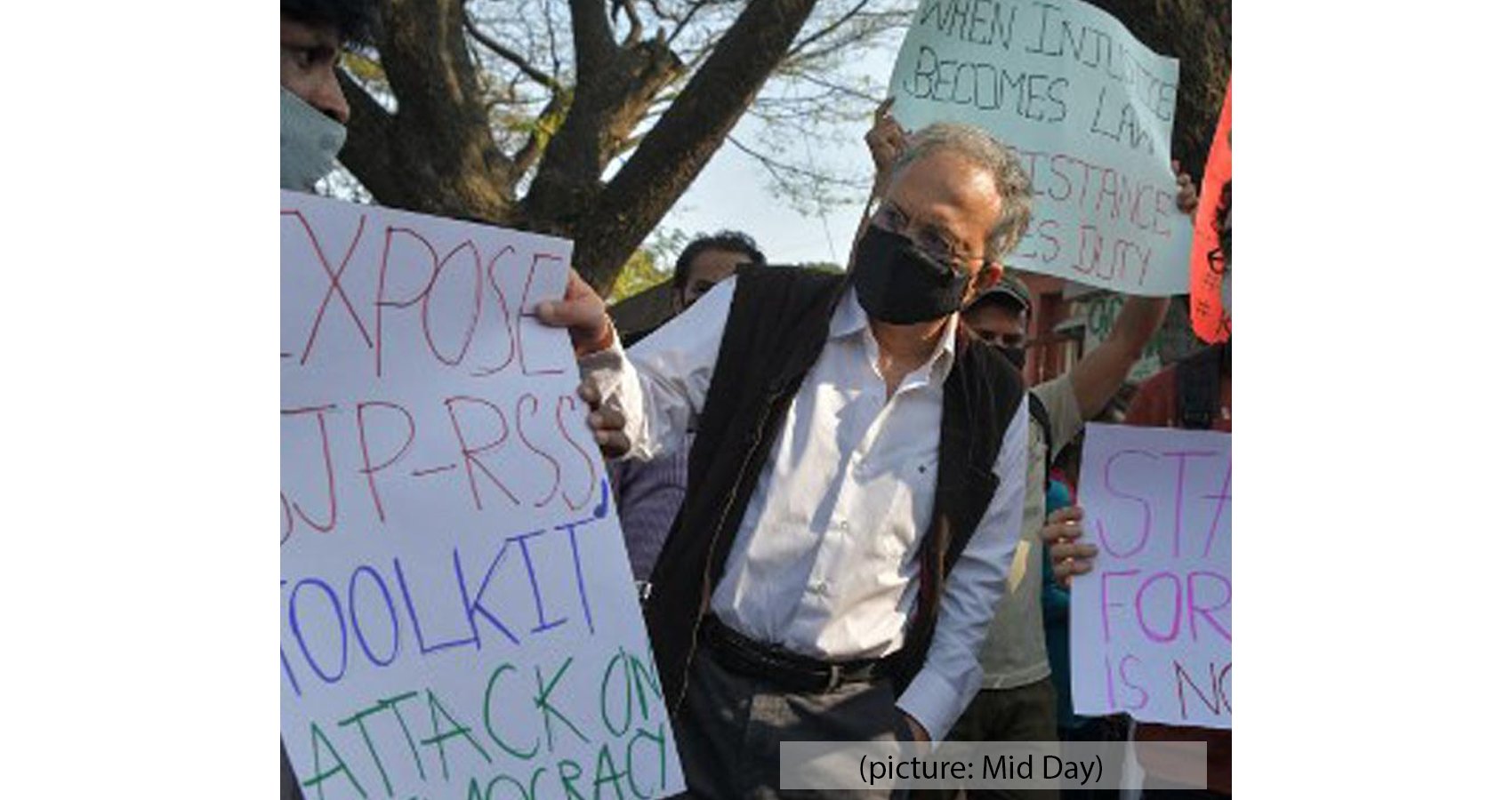
The actress has received much praise for her portrayal of Quantico’s top FBI recruit, Alex Parrish, who is accused of masterminding a terrorist attack on the U.S. and is forced to prove her innocence. It’s clear that apart from the critics, the actress also has a nod from the audience. 
“Quantico” too has been nominated in the ‘Best New TV Drama’ category. 
Priyanka has been nominated alongside actresses Emma Roberts (Scream Queens), Jamie Lee Curtis (Scream Queens), Lea Michele (Scream Queens) and Marcia Gay Harden (Code Black).
After receiving tons of nominations and awards at several Indian awards for her brilliant performances in films like “Aitraaz,” “7 Khoon Maaf,” “Barfi” and “Mary Kom,” the actress has now scored her first American nomination.

Voting begins today at http://vote.peopleschoice.com, Facebook and mobile applications, and will end at 11:59 p.m EST Dec. 3. Winners will be revealed during the live broadcast of the 42nd People’s Choice Awards from the Microsoft Theater L.A. Live, Jan. 6, 2016 on the CBS Television Network

‘Kumbh Mela USA 2015’ Showcases Indian Culture

Thousands of Indian Americans came together to celebrate “Kumbh Mela USA 2015” at the grounds of Excelsior High School in Norwalk, California on October 24th with ritualistic prayers and chants for peace. The ancient Indian tradition was celebrated as nearly three dozen temples from the United States and Canada came together to organize the Kumbh Mela, which is Hinduism’s mass pilgrimage. A daylong schedule included several re-enacted elements of the Hindu pilgrimage, appearances by an activist and an author, and a rain dance.

Kumbh Mela is the greatest pilgrimage and festival in the Hindu religion. The event is a religious and cultural spectacle, which occurs once in three years attracting millions from around the globe to take a dip in the holy waters of rivers like Ganga, Yamuna, Godavari, Kshipra and the mythical Saraswati. This event is the largest congregation in the history of mankind with more than 100 million people participating in 2014. At its heart, the mega event celebrates the power of spirituality, and the pull towards higher states of enlightened consciousness.

The Akhil Bharatiya Akhada Parishad (ABAP) has been organizing the Kumbh Mela in India since time immemorial. It is the apex body of Hinduism, including all the 13 Akhadas (houses of monks) and over 1 million sadhus (spiritual seekers). For the first time ever, the ABAP organized the Kumbh Mela outside India.

‘Kumbh Mela USA 2015’ Showcases Indian CultureShri Nithya Mukthananda traveled to Norwalk from Seattle, Wash., and coordinates the North American operations of the Nithyananda Hindu Temple. He explained the Kumbh Mela as a journey of spirituality. “Kumbh Mela is one of the most unique festivals in Hinduism, and it’s one of the most ancient festivals of Hinduism. It’s the largest gathering of humanity in the world. It is a celebration of the highest possibility of humanity. Enlightenment is one of the highest possibilities,” Mukthananda said. “In the process, it is people who are spiritually inclined from all walks of life to come together to celebrate life.”

Attendees celebrated life from the very beginning of the event. The Kumbh Mela began with a fire ritual, which lasted about 30 minutes. The fire ritual was followed by chants for world peace, the rain dance and procession, and then a Grand Holy Bath with consecrated water.

A rain dance performed by Danza Azteca Xochipilli brought unique energy to the Kumbh Mela and galvanized the participating temples who followed the dancers on a quarter-mile circle around the Excelsior High School grounds as part of the opening procession.

Chapters of the Nithyanandeshwara Hindu Temple from Phoenix, Seattle, Houston, San Jose, Toronto, St. Louis, Oklahoma and Ohio participated in the procession. A dance troupe representing Mexican and Aztec culture donned colorful headdresses, costumes and footwear as they danced their way around the school grounds asking Mother Nature’s blessings for rain.

A handful of booths were erected in one corner of the school grounds, where Woodlands Vegetarian Restaurant prepared food for visitors. The event was also highlighted by an aarti, bhajans and appearances by authors Rajiv Malhotra and Stephen Knapp. Guests were provided with free food. “Hinduism is a celebration of life,” Mukthananda said.

Professor Sachin Shetty to Lead Consortium to Improve Cyber Security

With an ever growing threat to cyber security, resulting in the world’s biggest threat/war being fought in the cyber world, nations, businesses and educational institutions are doing their every bit possible to safeguard their data from cyber threats. Professor Sachin Shetty will lead a consortium of 11 universities and national laboratories to improve the nation’s cyber security.

A cyber-security and networking systems expert, Shetty, an Indian American associate professor of electrical and computer engineering at the  Tennessee State University, will lead the effort as project director. According to the U.S. Department of Energy, the five-year, $28.1 million initiative seeks to improve the resilience and security of cyber networks.

These networks serve as the backbone of the infrastructure that delivers energy to the nation for the electric power, oil and gas industries. TSU will receive $930,000 to conduct studies in security risk assessment, software-defined networking, and robust control systems.

Shetty received his M.S. in computer science from the University of Toledo in 2002 and his doctorate degree in modeling and simulation from Old Dominion University in 2007. He has previously served as an adjunct assistant professor at ODU, teaching undergraduate classes in computer networking, network design and modeling and simulation; and an assistant professor at Rowan University in Glassboro, N.J., teaching data communications, wireless networking, electronics and circuits, according to his LinkedIn profile.

Shetty’s research interests lie at the intersection of computer networking, network security and machine learning, according to his bio on the TSU website. Recently, he has been working on security issues in cloud computing, cognitive radio networks and wireless sensor networks.

He has authored and coauthored more than 80 technical papers in various conferences, international journal articles, book chapters in research and pedagogical techniques. Shetty will be assisted in the cyber security project by L.H. Keel, professor of electrical and computer engineering at TSU.

Rising Intolerance In Criticized By Leading Thinkers

The belligerent provocation of various Indian minorities has raised ethnic tensions, says Moody’s Analytics in a report that warned of “a possible increase in violence.” In a report titled, “India Outlook: Searching for Potential,” Moody’s Analytics, a division of Moody’s Corporation, said: “Along with a possible increase in violence, the government will face stiffer opposition in the upper house as debate turns away from economic policy.”

Moody’s Analytics, a top economic policy research and analysis institution, said the politics need to improve and the government’s reform agenda needs attention to achieve long-term growth. While the government met with obstructionist opposition in the upper house with regard to crucial reform measures, the ruling party also hasn’t helped itself with controversial comments by its members, Moody’s Analytics said.

Rising Intolerance In Criticized By Leading ThinkersThe Indian economy is likely to grow at 7.6 percent this year and in 2016 while closing of negative output growth is going to be difficult due to external headwinds and the government failing to deliver on reforms, Moody’s was quoted to have said. “Overall, it’s unclear whether India can deliver the promised reforms and hit its growth potential. Undoubtedly, numerous political outcomes will dictate the extent of success.”

According to a New York Times report, “First writers then artists, followed by filmmakers, historians and scientists. The chorus of Indian intellectuals protesting religious bigotry and communal violence grows louder by the week with a single message for Prime Minister Narendra Modi: protect India’s tradition of secularism and diversity.”

Those protesting are angry and worried by a spate of deadly attacks against atheist thinkers and minorities, and by Modi’s relative silence through it all. That silence appears to have encouraged some of his party colleagues to make comments asserting Hindu pride and superiority.

Last week, more than 100 scientists, including some of India’s top nuclear physicists, space scientists and mathematicians, expressed their anguish at the ways in which they said “science and reason were being eroded in the country.” The protest by scientists is significant, given that most work for the government or in state-funded organizations and so could risk being punished for speaking out.

“What we are witnessing instead is the active promotion of irrational and sectarian thought by important functionaries of the government,” the scientists said in a statement. They said the dozens of Indian writers who have returned national awards in protest had “shown the way.”

As per media reports, there have been other incidents in recent years, including the killings of three atheist scholars who had campaigned against religious superstition, and more mob killings over rumors of cow slaughter or smuggling. Many Hindus, who make up more than 80 percent of India’s population of 1.25 billion, consider cows to be sacred, and many states ban the slaughtering of the animals.

Scientists as well as historians have said they are increasingly alarmed by government attempts to rewrite Indian history by distorting facts about a glorious Hindu past. “I fear that we are losing our democracy and replacing it with a Hindu religious autocracy,” said molecular biologist P.M. Bhargava, adding that he would be returning a national award in protest. “I would not like to live in a country that has lost its democracy and has become a theocratic state.”

Infosys founder NR Narayana Murthy on Saturday expressed concerns that there is considerable fear in the minds of minority in India and said the governments should bring back the sense of confidence in them. “I am not a politician, I am not interested in politics, therefore, I don’t want to comment on that but the reality today is that there is considerable fear in the minds of minority in India,” he said. He said there was also “considerable fear” in the minds of people of one region living in another region. Citing the Shiv Sena campaign against the South Indians living in Mumbai in 1960s, he said, “Today there is a lot of that worry. I get lots of emails, I get a lot of people talking to me even though I stay at home because of my leg.”

Rising Intolerance In Criticized By Leading ThinkersNo country, the IT veteran said, has ever made steady economic progress unless “there is no distrust, there is no fear, unless the majority community doesn’t oppress the minority community, doesn’t want the minority community to do what it wants etc.”

Communal violence and prejudice are nothing new for India, born as a secular democracy in 1947 amid deadly Hindu-Muslim riots that killed an estimated 1 million people as Muslim-majority Pakistan was carved out of mostly Hindu India with the end of British rule. Since then, horrific riots and clashes have erupted at intervals, mostly between Hindus and Muslims.

Yet India has still largely been seen as overwhelmingly tolerant, with a cacophony of cultures that have lived side by side for centuries. Secularism is enshrined in its constitution. Worries over India’s secular identity began rumbling before Modi was elected prime minister last year. Modi and his Hindu nationalist Bharatiya Janata Party won the election in a landslide, largely on promises of lifting the economy.

But some cautioned that his support was grounded in the party’s Hindu base, and noted that Modi himself had come up through the militant Hindu fundamentalist organization Rashtriya Swayamsevak Sangh, which translates as the National Volunteers Association. For years, the group has been accused of stoking anti-Muslim prejudice, including among teenagers attending youth camps.

Modi, having dodged allegations of responsibility for deadly 2002 riots in Gujarat, insisted during his election campaign that he would be prime minister for all of India and guaranteed protection for minorities. Since taking office, however, Modi has said very little on the subject of tolerance and diversity, even questioning why his government should be called on to comment on local matters.

Force India in Talks With Aston Martin, Johnnie Walker

Force India are in talks with Aston Martin and Scotch whisky brand Johnnie Walker about a deal that would see the Formula One team change its name and look, co-owner Vijay Mallya said here last week. “Yes, there are discussions on with Aston Martin. Yes, there is excitement on both sides,” he told the media the Mexican Grand Prix, media reports here stated.

“But it still has to go through due process before we agree and shake hands on a concept, whatever that concept may be … we have not exchanged anything in terms of an outline or draft contracts. This is a sort of tri-partite discussion that is going on which involves Diageo with its Johnnie Walker brand as well.”

Force India in Talks With Aston Martin, Johnnie WalkerAs per reports, Mallya, whose co-owner Subrata Roy of the Sahara Group has been in jail in India for more than a year, said that if the Mercedes-powered team did change name, it would still remain Indian registered. “I named the team Force India only to give India and all of the motorsport fans in my country pride of place on a Formula One grid,” continued the liquor baron, who also has business troubles following the collapse of his Kingfisher airline.

“But they’ve enjoyed that for eight years and now they know this team is synonymous and will still be an entry from India flying the Indian flag. So what name we run under is not as critically important as it was for the first three or four years.”

According to reports, Mallya bought the Spyker team, previously Midland and Jordan, and renamed it Force India for the 2008 season as the first Indian outfit in Formula One. The team have struggled financially and this month sought a $10 million advance on their 2016 championship payments, the same amount they were granted before the start of this season.

Loss-making Aston Martin, famous as the marque of choice for fictional British secret agent James Bond, is five percent owned by Mercedes — who provide Force India’s engines. Johnnie Walker are owned by Diageo, who are majority shareholders in Mallya’s United Spirits Limited and several of their liquor brands are already visible on the Force India cars. The whisky brand has partnered former champions McLaren, who are enduring their worst season and are ninth of the 10 teams, for 10 years but is also a global sponsor of Formula One.

“So Aston Martin, a premier British marque, Johnnie Walker, premium Scotch,” said Mallya. “That sort of premium-ness element forms the package.” Asked when a deal might be done, with reports already of a likely blue and gold livery for the rebranded cars, Mallya said he did not know.

Force India in Talks With Aston Martin, Johnnie Walker
Vijay Mallya

“I can say that discussions have progressed substantially since (Silverstone),” he said. Aston Martin Chief Executive Andy Palmer attended that race in July as a guest of Force India. “Obviously if something is going to happen, it should happen before the start of next season because then one would have to think about the livery, the uniforms, team kit and so many other things.”

Palmer told Reuters at the time that the chances of Aston Martin returning to Formula One for the first time since 1960 were “improbable”.

“Everybody knows Aston Martin. I have a job to do in terms of getting us back into the conversation amongst people that cross-shop sportscars, be it McLaren, be it Ferrari or Porsche. I need to be in that conversation,” he said then. “But to get into Formula One, that’s serious money that I don’t have.”

6 Indian Americans Named to AACSB’s ‘100 Influential Leaders’

Sabeen Ali, founder and CEO of AngelHack, Subha Barry, vice president and general manager of Working Mother Media, Kaushal Dugar, founder of Teabox, Fiza Farhan, CEO of the Buksh Foundation, Don Mohanlal, executive director of the National 4-H Council,  M.R. (Madhavan) Rangaswami, co-founder of the Sand Hill Group, Punit Renjen, CEO of Deloitte Global, and Paul Shrivastava, Executive Director of Future Earth are the six Indian Americans are among eight South Asians joining former Secretary of State Colin Powell and Walmart founder Sam Walton on the Association to Advance Collegiate Schools of Business’s inaugural list of “100 Influential Leaders.”

“Throughout the past 100 years, business graduates can be found across all facets and levels of commerce — in large corporations, small business, the nonprofit industry, the public sector and government alike — pioneering change, fostering global exchange, and improving quality of life,” noted the AACSB, in its announcement of the list Sept. 22.

Sabeen Ali, founder and CEO of AngelHack

“The story of how alumni have positively influenced society through their actions and ideas is one that should be told,” stated the Tampa, Florida-based organization, which will celebrate its centennial next year. “If told, the success stories of all business school graduates would fill immeasurable volumes.”

“The Influential Leaders Challenge recognizes business schools for their work in developing exceptional leaders and industry innovators, and the 100 individuals announced today represent a global medley of alumni, with diversity across industry, background, position, culture, gender and age,” said AACSB president Thomas Robinson in a press statement.

“We congratulate our inaugural group, and thank their nominating schools for providing both a solid business foundation, as well as the encouragement for all alumni to engender dramatic community or social change,” he said. AACSB-accredited colleges were allowed to submit their nominations for the list from April to June 2015.

“India is one of those countries which you cannot overlook if you want to connect the world” Mark Zuckerberg

“India is one of those countries which you cannot overlook if you want to connect the world,” Facebook’s founder Mark Zuckerberg said here in India’s capital last week. “It is very important to connect people in India (one of the largest democracies) as it is central to our plans of connecting the next billion people and then the whole world,” Zuckerberg said at the townhall meeting held at the Indian Institute of Technology (IIT) Delhi.

The townhall at IIT Delhi follows the Menlo Park chapter at Facebook headquarters which was held during Prime Minister Narendra Modi’s second US visit. Zuckerberg also reiterated his commitment to India by clarifying his plans of opening schools here.

“We have opened schools in Africa with internet capable infrastructure to give a boost to education quality and we are evaluating plans to open such schools in India in the future,” the chief executive said. Asked about net neutrality and Internet.org, Zuckerberg said the platform via its free basics program aims to solve three problems of connecting to the internet — availability, affordability and awareness.

“We are trying to aid availability by streaming the internet via satellites. In terms of affordability, free basics is free to use and also low on data consumption. Users are not forced to pay for the service,” Zuckerberg said reiterating the need of an open internet platform like its proprietary initiative Internet.org in India while reminding that Facebook always supported net neutrality and adhered to regulations.

“We have always adhered to net neutrality regulations but there are several countries who still do not have norms in place. We will adapt to them as soon as they are in place as we are in the favour of being 100 percent net neutral,” Zuckerberg said.

Further explaining, he said “Free basics program under the Internet.org initiative aims to connect the next billion people. It does not intend to harm anyone — neither the consumers nor the operators,” he said.

“Any developer who can stream low-data consuming content can be a part of the platform,” the chief executive told a gathering of 1,100 people expressing his discontent in some way over the ongoing debate about net neutrality.

“Internet.org is currently live in 24 countries and has 50 million subscribers. India itself has nearly over one million people subscribed to the platform,” Zuckerberg said reiterating his favorite example of quoting a research that claims that every 10 people connected to the internet lifts one life out of poverty.

“India is one of those countries which you cannot overlook if you want to connect the world” Mark Zuckerberg
Mark Zuckerberg

Currently, India has no regulations on net neutrality. Communications and Information Technology Minister Ravi Shankar Prasad in a reply to the Lok Sabha had said “the committee of the department of telecommunications on net neutrality has submitted its report. However, it is not the final report nor the government has taken any final view.”

“Based on the report, comments, suggestions and recommendations of TRAI, the government will take a considered decision on various aspects of net neutrality, in the best interest of the country,” Prasad said.

The chief executive, who is a role model for many techies, when asked about the entrepreneurs in India said that Facebook was doing its best to provide low cost tools to entrepreneurs here. In addition, Zuckerberg also gave a sneak peak of how the future Facebook should look like by divulging several new fundamental features that the company was working on including a fix for users getting ‘irritating’ Candy Crush requests.

Zuckerberg also hinted at improving Facebook for physically-challenged people. “We are working on artificial intelligence in order to improve computer systems to better understand humans. In the next five to ten years, Facebook might be able to read timelines, picture messages and picture captions for the physically-challenged users,” the founder said.

“This will also help Facebook connect more people boosting the network. We are also working on geo-location strategies to identify which users are in which area and in case of a calamity whether they would be likely affected or not,” Zuckerberg said giving the example of the social media platform’s success with the ‘safe’ notification during the Nepal and the Afghanistan quake that sent tremors through Delhi.

Zuckerberg also said that he was working on a project named Amber to help locate missing persons. “Although the program is currently running in the US and Canada, we intend to get it running in every country soon. It is a serious responsibility as we are the platform that connects millions of people together,” Zuckerberg said.

Premal Shah’s Kiva.Org Wins Of Google Impact Challenge

Kiva, a San Francisco-based nonprofit headed by Premal Shah, a Stanford graduate , was last week awarded a $500,000 grant after being voted one of the top four winners of the Google Impact Challenge.

The non-profit website connects people through lending to alleviate poverty. Since 2005, over 1 million small businesses in 75 plus countries have been financed by Kiva lenders. It provides 0 percent interest loans to small businesses around the world, and locally in Oakland, California that are socially impactful but financially excluded, India-West reported.

Premal Shah’s Kiva.Org Wins Of Google Impact Challenge
Premal Shah

The winning organizations, whose named were declared Oct 21, will receive support from Google volunteers, and access to co-working space at the Impact Hub Bay Area, the paper said. The remaining organizations in the top 10 earned a $250,000 grant. Kiva has been named as one of Oprah’s Favorite Things and a Top 50 Website by TIME Magazine,’ Shah writes in his LinkedIn profile.

Media quoted Shah as saying in an interview that the role of small business entrepreneurship in local economies is critical in creating new jobs and revitalizing neighborhoods, but that they are too often overlooked by larger lending institutions because their credit history may be too short, business too young, or their ideas appear to be too risky to lenders. He told the media that these entrepreneurs have all the elements of success and have the passion and the plan. The only thing they need is a small amount of capital to start or to expand.

Shah’s inspiration for Kiva came when he was volunteering in a slum in India while on leave from PayPal, where he had been an early employee and Principal Product Manager. For his work as a social entrepreneur, Premal was named a Young Global Leader by the World Economic Forum and selected to FORTUNE magazine’s “Top 40 under 40″ list.

Shah began his career as a management consultant and graduated from Stanford University. The grant will allow Kiva to continue to provide the 0 percent loans for the small businesses that need it most. But Shah told the paper that the hope is for Kiva not only to help out businesses on a local level, but globally, too.

Premal Shah’s Kiva.Org Wins Of Google Impact ChallengeThe idea is to reach as many people, no matter where they are, because talent is everywhere. “We know that talent resides in every neighborhood and town across the country and the world,” Shah noted. “But while talent is universal, opportunity is not. Kiva is a place where the doors to opportunity can be unlocked by anyone, anywhere willing to lend their support.”

Google Impact Challenge advisers looked for projects with innovative approaches, ambitious plans to improve the lives of local residents, and adventurous leadership teams to realize their vision and they narrowed the list from 25 to 10 before the competition went into the people’s hands. Voting took place Sept. 29 through Oct. 20. The $500,000 grant winners were the “People’s Choice” honorees.

Sachin, Shane to start Cricket Fever in USA With Inaugural Match in New York on November 7th

World renowned cricketers, Sachin Tendulkar and Shane Warne will headline Cricket All-Stars inaugural match in the same field in what is billed as the first historic display of cricketing legends from around the world on American soil.

Shane Warne and Sachin Tendulkar will captain opposing teams in a three-match T20 exhibition tour of the USA next month. The matches will be played in New York, Houston and Los Angeles and the event, titled “Cricket All-Stars Series 2015”, will feature more than two dozen retired internationals from other Test nations.

The matches will take place on November 7 at New York’s Citi Field, November 11 at Houston’s Minute Maid Park and November 14 at Los Angeles’ Dodger Stadium. The first two games are slated to be played in the daytime while the final game at Dodger Stadium is scheduled to be played under the lights at the 56,000 capacity facility.

The inaugural match between the two hand-picked teams— Tendulkar’s “Sachin’s Blasters” and Warne’s ‘Warne’s Warriors” – will kick off Nov. 7 at the 48,000-seat capacity stadium in New York feature some of the best cricket players from round the world Ricky Ponting from Australia, Brian Lara from West Indies, Wasim Akram from Pakistan, Muttiah Muralitharan from Sri Lanka and Jonty Rhodes from South Africa, among others.

“We’ve signed all the top players you’d ever want to see,” Warne told cricket.com.au. “I’m excited for cricket fans in the United States to be able to see these amazing players for the first time.” A portion of proceeds from the series will go to the ICC for the development of cricket within the country.

“Americans are so passionate about sports, and I think there’s a huge potential for cricket to take off,” Tendulkar added. “We’re also planning some other events and festivities in each city so we can reach as many fans as possible. It would be great some day to see cricket bats right alongside the baseball bats, basketballs and soccer balls in America.” The first match will be played on 7 November in New York.

“The players for each team have not yet been selected, but will be picked, and will be announced in front of the media Nov. 5. We have 30 top crocket players from around the world here in New York,” Raj Ramakrishnan, managing director of Melbourne-based United Sports Association which is co-promoter of the event along with New York-based Leverage agency, told the media.

“With over 400 cricket clubs, including college cricket clubs, there is already a lot of interest in the game here thanks not just to the South Asians, but people from the Caribbean and Australian. “We are confident that this event this year will definitely give a fillip to the game and its popularity,” Ramakrishnan added.

USA specializes in event production, hospitality, talent management, and licensing and media production. As part of the partnership, it will spearhead the production of several initiatives during the “Cricket All-Stars”, tour including VIP parties, galas and special functions with the players. They will also work seamlessly with Leverage Agency to produce the cricket matches, promote the tour and facilitate player engagement. Fans can cast their dream match-ups at http://cricketallstars2015.com/fantasy-league.php.

U.S. India Business Council Applauds Conclusion of US – India Trade Policy Forum

Following the successful conclusion of the ninth round of U.S.-India Trade Policy Forum, the USIBC hosted a reception, providing an opportunity for deeper engagement between industry stakeholders and government officials from both the United States and India. The U.S.-India Trade Policy Forum (TPF) is a government-to-government trade dialogue aimed at increasing bilateral investment between the two nations.

The trade policy forum comes on the back of U.S.-India Strategic and Commercial as well as Prime Minister Modi’s visit to the west coast of the United States. The talks focused on four primary areas of bilateral ties-agriculture, services, promoting investment in manufacturing, and intellectual property. USIBC member companies submitted recommendations under these four working groups to the USTR.

The reception was attended by high ranking government officials such as Minister of Commerce and Industry Nirmala Sitharaman, United States Trade Representative Michael Froman, Commerce Secretary of India Rita Teotia and Deputy USTR Ambassador Holleyman.

The event received broad representation from USIBC’s diverse membership base of 300+ companies that include Ford, MasterCard, Pfizer, Lockheed Martin, Bank of America, PayPal and Boeing.

During the discussion, Minister Sitharaman and Ambassador Froman highlighted the direction in which the two nations are working together to foster a robust and open bilateral trade environment. Following Prime Minister Narendra Modi’s visit to the west coast and a series of successful dialogues over the last few months, both nations view the bilateral relationship with greater enthusiasm.

Mukesh Aghi, President of the U.S.-India Business Council said, ” The trade policy forum couldn’t have come at a better time. We have seen India rise in World Bank’s Ease of Doing Business Index under the leadership of Prime Minister Modi. The Trade Policy Forum represents another important step towards strengthened trade relations between the U.S. and India. India is growing to be one of the most open economies in the world today and USIBC member companies are excited by the opportunity to grow the bilateral trade five-fold. Increasing FDI projects in sectors like manufacturing, defense, Smart Cities and clean technology along with positive environment fostered by initiatives like Make in India and Digital India are proving to be game changers and creating jobs for the Indian economy.”

“We have seen enhanced engagement between the United States and India in the course of the past year, with a high bar set by President Obama and Prime Minister Modi,” said United States Trade Representative Michael Froman. “Our work this week under the Trade Policy Forum focused on translating engagement into tangible results that will increase the pace of trade growth between our economies. To that end, Minister Sitharaman and I focused our work on forward looking policy initiatives in intellectual property, manufacturing, agriculture and services that can expand trade and investment and benefit our manufacturers, workers, innovators, service providers, farmers, and ranchers.”

Minister Sitharaman congratulated Ambassador Froman on the successful conclusion of the Trans-Pacific Partnership (TPP) after eight years of painstaking efforts and said, “The U.S.-India Trade Policy Forum was an intense engagement, one which we can say with confidence is moving forward with a lot of positive outcomes.”

“Abbott continues to see India as a promising market for growth. The government’s vision for promoting ease of doing business and attracting investment enables Abbott to help more people live healthier, better lives,” said Claude Burcky, Vice President of International Government Affairs, Abbott.

Bindeshwar Pathak Is New York Global Leaders Dialogue Humanitarian Recipient

Bindeshwar Pathak, founder of the New Delhi-based Sulabh Sanitation Movement,  has been named the recipient of the New York Global Leaders Dialogue (NYGLD) Humanitarian Award for 2016. “Pathak is a great humanitarian who for decades has enhanced the quality of life for millions of fellow human beings,” NYGLD chairman Phil Scanlan, said in a statement. “He embodies our philosophy of leadership, namely, that leadership is focused on creating collaborative new space in the service of others.”
Pathak and his project were nominated for the award after Scanlan  along with advisory council members Pam Kwatra and Ketan Patel saw some of Pathak’s works first-hand.
Pathak founded Sulabh International, a social and behavior change coalition of which Sulabh Sanitation Movement is a part, to promote the adoption of improved hygiene practices throughout India.
Sulabh engages about 50,000 people and has constructed roughly 1.3 million household toilets and 54 million government toilets. Because of Sulabh’s work, about 15 million people use those toilets daily.
Bindeshwar Pathak Is New York Global Leaders Dialogue Humanitarian RecipientPathak, 72, is a graduate of Patna University, where he received his M.A. in sociology and English, as well as his doctorate. Added Kwatra, “My colleagues and I have been motivated by the way an Indian sanitation activist through his movement is changing the lives of millions of Indians. It’s highly commendable that his work is restoring the dignity of the marginalized and mainstreaming them in society.”
The NYGLD thought leadership platform fosters international understanding, collaboration and intergenerational connectivity, bringing together public and private sectors, as well as civil society, according to the statement. Leaders across the globe come together to exchange ideas and resolve planetary challenges.
Pathak is a great humanist and known as a social reformer for his 42 years long campaign against untouchability in different parts of India, a statement issued by NYGD stated. “Pathak’s belief that providing the simple things we take for granted such as toilets can be a tool for social change and that innovation is integral to improving the lives of those on the margins of society,” Kwatra added. Pathak will be honored April 12, 2016, in New York.

Lavanya and Melissa Jawaharlal Strike a Deal on ABC’s ‘Shark Tank’

Lavanya and Melissa Jawaharlal appeared on the Oct. 30 episode of “Shark Tank” on ABC to pitch their STEM Center USA company and came away with $200,000 from Shark Lori Greiner, who will get 20 percent stake in the company, media reports here said.

STEM Center USA, based out of Claremont, Calif., is a robotics educational company that works to excite the next generation of science, technology, engineering and mathematics leaders through hands-on education.

UC Berkeley senior Lavanya Jawaharlal has already made campus history as a member of the first all-female ASUC executive slate, and on Friday, she was the first UC Berkeley student to appear on ABC’s “Shark Tank.”

“Shark Tank” features aspiring entrepreneurs who deliver pitches to a panel of potential investors — the “sharks” — who may then choose to invest in the business or product presented to them. The sharks are not required to provide funding, however, and contestants may ultimately leave the show empty-handed.

Jawaharlal is the president and co-founder of STEM Center USA, a robotics outreach program aimed at inspiring youth by providing after-school programming and selling robotics kits for hands-on learning.

According to reports, the center has 85 students, with 75 attending year-round. Annual memberships at the center range from $1,400 to $1,800 – or $135 on a monthly basis. The sisters came out and pitched their company to the five “Sharks” on the show – Kevin O’Leary, Robert Herjavec, Greiner, Mark Cuban and guest Chris Sacca. They asked for $150,000 in exchange for 15 percent of the company.

“While we have become more dependent on technology every day, fewer and fewer people seem to have even a basic understanding of how things work,” Melissa said in her pitch. Lavanya explained that the center made $300,000. She explained that they discovered a need for a robotics tool, which they created for upper middle school and high school students. She added that between creativity and robotics tools, the revenue was split $130,000 to $170,000 respectively. She concluded to say they project to make $450,000 this year and $3.2 million in sales in 2016.

Despite their passion, and their optimism that the Jawaharlal sisters will eventually succeed, O’Leary, Herjavec and Cuban were not comfortable making an offer. Sacca said he “deeply believes” in their mission and offered them $150,000 for 25 percent of the company. He continued, seeking an understanding of what is the end game of STEM Center USA.

Melissa responded to Sacca explaining the goal is to have a center in every city, nationwide. She added they needed assistance from a Shark to expand into a franchise and take the company to the next level. Greiner jumped in and offered $150,000 for 20 percent to spice things up.

Melissa said, “Both of you offer wonderful things,” and she is certain that both Sacca and Greiner could help the center and said they would love to work with both of them.

Lavanya and Melissa Jawaharlal Strike a Deal on ABC’s ‘Shark Tank’
Lavanya and Melissa Jawaharlal

Lavanya is a student at U.C. Berkeley studying mechanical and ocean engineering, and is expected to graduate next spring. While she is deeply passionate about robotics and has spent a good portion of her time devoted to that, she has also served as the California executive vice president of Future Business leaders of America.

Melissa earned her undergraduate degree in mechanical engineering from the University of Southern California. There, she also studied entrepreneurship. Her primary research is in space exploration and has been a design lead for currently orbiting satellites at the Information Sciences Institute. She has also done software optimization for the U.S. Air Force.

According to Jawaharlal, it was clear from a young age that she was destined to be an engineer. When she received her first Barbie Doll horse, she recalled, she immediately took it apart to figure out how it worked. By middle school, she had become active in her school’s robotics team and began tutoring her peers in robotics not much later.

Lavanya and her sister Melissa Jawaharlal founded STEM Center USA “almost by accident” in 2011 after their parents decided that the informal robotics classes they held in the family’s living room for neighbors and friends should expand to its own location. Four years later, STEM Center USA is housed in Claremont, California, where Melissa Jawaharlal works full time and Lavanya Jawaharlal travels at least once a month in between classes and her ASUC responsibilities.

The Jawaharlals have watched “Shark Tank” together since its earliest episodes aired. But it did not cross the sisters’ minds to audition for the show — Lavanya Jawaharlal said that “it seemed like a far-away dream” — until clients and family members began to suggest it.

Sania Mirza is 1st woman from India to reach the top of the WTA rankings

Sania Mirza created history by becoming the first female tennis player from India to achieve the world number one rank in doubles, following her stupendous title win at the WTA Family Circle Cup with partner Martina Hingis, in Charleston, NC.

With this historic victory, Sania Mirza from India has become world No.1 in tennis doubles after winning the Family Circle Cup in Charleston with partner Martina Hingis. Sania is also first female player from the country to win Grand Slam tournaments. Before Sania, only Leander Paes and Mahesh Bhuapthi had achieved the top rank when they dominated men’s doubles circuit in the last 90s.

No Indian woman had ever been No. 1 in singles or doubles until the 28-year-old Mirza. She says she’s proud of the achievement and thanks Hingis for helping her get there. The two have won their past three events, capturing titles at Indian Wells and Miami before the Family Circle. Mirza says this is an honor she’ll treasure for the rest of her life. She says she’ll always be able to say she held a No. 1 ranking, and that’s something “very special.”

Sania Mirza is 1st woman from India to reach the top of the WTA rankings
Sania Mirza with Martina Hingis

“When you start off as a child playing tennis, you dream of being No. 1 in the world,” Mirza said in a statement released by the WTA. “It’s a dream for every person; very few get there. I feel extremely honored to be No. 1. It’s something that I’ve worked for all my life. I hope this makes girls in India believe that anything is possible; we can achieve anything we want if we put our mind and body to it.”

The top-seeded Indo-Swiss pair blew away the challenge of Casey Dellacqua and Darija Jurak 6-0 6-4 in just 57 minutes in the lop-sided final of the USD 731,000 clay court event. Sania took 470 points from the win to take her tally to 7965 as she jumped past Italy’s Sara Errani (7640) and Roberta Vinci (7640) to sit atop the ranking table. The official ranking chart will be issued on Monday.

It is Sania’s third successive title win with Hingis and they have not lost as a single match since joining forces in March. They won trophy in Indian Wells, which was their first tournament together and followed up that with win in Miami. Sania and Hingis have lost only three sets in 14 matches, spread over three tournaments.

They have already become the world number one team in the Race to Singapore, the season-finale, where top-8 team compete at the end of year. Sania and Hingis strolled past their rivals as they bageled them in just 22 minute to take the opening set. They lost serve in the first game of the second set but broke back immediately.

If the unseeded Australian-Croatian pair had any chance to make a comeback, it was by cashing in on chances and they did not help their cause by squandering two break opportunities in the fifth game of the second set as the winners opened up a huge 4-1 lead. Casey and Darija though kept fighting and gradually reduced the margin.

Serving for the match, Sania and Hingis were broken, perhaps the enormity of the achievement made the Indian nervous. They kept their nerves and broke their opponents for one final time in the 10th game to close the match in their favor.

In the past calendar year, Mirza has won seven doubles titles with three different partners, including three with Hingis. For her career, Mirza has 26 doubles titles and three Grand Slam mixed doubles titles.

While Mirza is the first woman from India to reach the top of the WTA doubles rankings, which were introduced in 1984, she is the fourth woman from Asia to complete the feat. “It’s a dream for every kid to be No1 one day,” said Mirza. “I can’t think of a better person to do it with. When we came here we had one thing in mind, to get No1, and she (Hingis) really helped me get there. She helped me through some tough moments this week. She’s just a great person and a great player. We also become the No1 team in the world today with this. I hope we have many, many more tournaments and end the year on a high as well.”

Bollywood Masala Spices Up the Palace Stage!

Whether you are already a fan of spectacular Bollywood musicals, or interested in finding out why Bollywood entertainment is beloved by millions and millions of people in India and beyond, “Spirit of India” is for you. Presented by the Bollywood Masala Orchestra and Dancers of India, this extravaganza will come to The Palace Theatre on November 17.
“Spirit of India” features an ensemble of 17 accomplished musicians, dancers, and performers who whisk the audience away on a cultural adventure that takes them across India, from the culturally-rich region of Rajasthan to the bustling, cosmopolitan city of Mumbai. The country’s movements, rhythms, and artistic expressions – both traditional and modern – are all on beautiful display in this thrilling show.
Rahis Bharti, the artistic director of the Bollywood Masala Orchestra, has spent much of his career traveling the globe, playing alongside different musicians and absorbing an array of musical influences. The Orchestra reflects this musical diversity by including Indian and Western instruments, such as tabla, dholak, harmonium, clarinet, trombone, bass drums, and side drums.
Bollywood is a broad term that refers to India’s film industry, and most of those films have tended to be lavish musicals. Because of its inherent theatricality, the Bollywood style is well-suited to the live stage. The Bollywood Masala Orchestra and Dancers reflects this style with vivid colors, vibrant music, extraordinary performances, traditional songs and dances, and even some numbers from popular Bollywood movies. “Dhoom Taana,” “Rajasthani Ghoomar,” “Nimbooda,” and “Bhavai” are some of the songs and dances you can look forward to enjoying during this unforgettable evening.
Bollywood Masala Spices Up the Palace Stage!“Spirit of India” takes things up a notch by creating some truly thrilling drama and spectacle in the form of daredevil acts. The production showcases performers breathing fire, standing on swords, and even doing an incredible Snake Charming Dance. You won’t soon forget these impressive stunts!
The Namaskaar Foundation’s World on Stage is presenting Bollywood Masala’s “Spirit of India” as a part of its 2015 Fall season and in service of its mission both to promote an appreciation for the culture of India and to build an enthusiastic audience for music, dance, and theatre from around the world.
The Bollywood Masala Orchestra and Dancers of India have already had people on their feet, clapping and dancing, all across the world as they bring Indian music, dance, and culture to a wide international audience. Come to The Palace Theatre in Stamford, CT on Tuesday, November 17 at 8pm and experience the “Spirit of India” for yourself!

https://www.youtube.com/watch?v=n987vGBZYds

4 future scientists of Indian Origin Honored

The four future scientists have diverse interests ranging from filmmaking, acting, 3D printing, math and robotics. Nadia (11), Rayyan (10), Kamran (10) and Aleena (8) bonded over their love for space and their desire to explore the moon. For their inspirational tale, this fantastic foursome have envisioned a state of the art, ‘Lunar Resort’ (ie. temperature guided movable space camp) that will change the face of space travel forever.

Through their agency, (GalacTech Getaways), these young explorer-entrepreneurs will provide safe, cost-effective access to the moon.

XPRIZE, the global leader in incentivized prize competitions, and Google have announced the winners of the 2015 MOONBOTS Challenge, also considered the “Google Lunar XPRIZE for Kids an ‘international competition that inspires the next generation of space explorers and innovators.

The invitation goes to kids aged 8-17 who design, create and program their own lunar rover, based on a legend or theory that inspires them about the moon. Team GalacTECHs from Orange County, CA was among the 4 teams worldwide to win this prestigious honor.

The student competition, which began in April 2015, attracted 235 teams from 29 countries who entered phase one by submitting a written or video entry about what inspires them about the moon. Teams are comprised of 2-4 members (ages 8-17) and one team captain at least 18 years old.

A panel of judges selected 30 teams to qualify for phase two, each of which was provided one of three platform systems (LEGO MINDSTORMS EV3, VEX IQ, MECCANO Meccanoid G15 KS) to build and program a unique simulated robotic mission based on the moon tale they submitted in phase one.

In addition, they were asked provide a demonstration to the judges via live webcast and contribute to STEM education by sharing their innovation with children and adults in their community.

Just a few days ago, the dynamic foursome from Orange County, CA, Team GalacTECHs, got some much awaited news about their big win! With a passion for science and technology, their winning project used the VEX IQ Robotics platform and built a lunar landscape that features a resort that showcases state of the art features for its visitors.

The ‘Four MOON Seasons’ is the brainchild of GalacTECH Getaways, a lunar tourism company powered by Team GalacTECHs. The winning teams will travel to Japan in October to meet up with the Google Lunar XPRIZE teams who are gathering for an annual Team Summit in Tokyo and share their idea and project with them.

Team GalacTECHs will learn how these Google Lunar XPRIZE teams are planning to reach the Moon with their innovative robotic technology. “We are so excited about winning this competition. All our hard work over the summer paid off. “We can’t wait to go to Japan” said Aleena Ali (one the youngest members of the team) expressing her delight over the news. The team members are getting ready to embark on a once in a lifetime trip and meet the other winning teams from all over the world.

GOPIO-New York Discusses NRI Property Issues and Protecting Assets in India During Seminar at Kerala Center

Increased international mobility of both capital and labor in recent years has forced advanced countries to examine their fiscal policies from international perspective. In this age of globalization, cross-border matters have become of great concern to individuals. Citizen of other countries, at times, move to the USA or own assets here, and U.S. Citizens often move or own assets outside the United States.

The Global organization of People of Indian Origin – New York chapter organized a community meeting where many issues of NRIs buying, selling and owning properties in India were discussed. It was jointly organized by the Indian American Kerala Center at its auditorium in Elmont, New York. The speakers were New York Attorney Anand Ahuja who is also the President of GOPIO-New York and Mr. Pambayan Meyyan, Senior Vice President of Forest Hills Financial Group. The meeting was chaired by GOPIO Founder President Dr. Thomas Abraham.

“Indian Americans, as an immigrant community to the USA, are greatly affected with this spur in globalization as most still own vast assets, particularly real estate back home in India,” said Attorney Anand Ahuja.  “As with owning assets outside USA, the Indian American community is at greater risks, therefore, any sale-purchase of real estate in India, estate, gift or tax planning should be considered from international perspective than just domestically,” Attorney Ahuja continued.

“This is a great opportunity to discuss these issues in a community forum and develop strategies for a community compaign and reach out to the Govt. of India and the state governments on NRI property issues back home,” said Dr. Abraham

Several issues were brought out at this meeting especially buying, selling and owning real estate properties by NRIs/PIOs in India. It was pointed out that there have been growing number of scams against NRIs/PIOs hereditary, residential and commercial properties and due to these reasons, NRIs/PIOs are being greatly discouraged to invest in India

“NRIs/PIOs are at a great disadvantage to contest property issues in courts in India due to the length of the time (10-20 years) it takes, and/or due to the fact that in both civil and criminal cases NRIs/PIOs need to be present on many occasions before the court,” said Dr. Abraham. The meeting requested GOPIO to take up this issue with Govt. of India to have Fast Tack Courts.

The meeting also called upon the Government of India to enact another legislation to provide Title Insurance to ensure that their ownership in real estate is protected against forged signatures on the deed and for any such fraudulent transfer of their properties.

It was also pointed out that NRIs and PIOs are subjected to higher TDS (tax deducted at source) than resident Indians for capital gains and while selling properties. GOPIIO meeting passed a resolution covering all these issues and plans to present it at the Regional Pravasi Bharatiya Divas to be held in Los Angeles on November 15th.

In a resolution passed at the end of the day, GOPIO urged the Government of India to enact legislation to designate Fast Track Courts for NRIs/PIOs for the speedy settlement of their property issues in India, and enact another legislation to provide Title Insurance to ensure that their ownership in real estate is protected against forged signatures on the deed and for any such fraudulent transfer of their properties.

GOPIO-New York Discusses NRI Property Issues and Protecting Assets in India During Seminar at Kerala Center
Speakers, organizers and some participants at the recently held community meeting on NRI Property Issues in India. Seated in front row from L. to R.: Kerala Center President Thambi Thalappillil, GOPIO Founder President Dr. Thomas Abraham, GOPIO-New York President and panelist Anand Ahuja, Panelist Pambayan Meyyan, GOPIO-New York Founder President Lal Motwani and Kerala Center Executive Director E.M. Stephen


Kamlesh Mehta Resigns as Nassau County Director of Business and Economic Development

Kamlesh Mehta, publisher of the South Asian Times, and a close associate of indicted Bethpage restaurateur Harendra Singh, has resigned as Nassau County’s director of business and economic development, amid a Newsday examination of his role in the county administration.

The resignation by Kamlesh Mehta  as Nassau County Director of Business and Economic Development  has created a huge stir in a leading mainstream media group and Indian American media. He was portrayed more than just having resigned from a government position by scrutinizing his public records of three decades in USA, resulting in clouds of thick doubts and negative rumors about him.

Born and brought up in Beawar, Rajasthan, Mehta started his diamond business in Mumbai before moving to New York in 1986 according to a September 2011 report by the Indo Asian News Service.

Before Mangano appointed him to his latest position in September 2011, Mehta was deputy director in the Nassau County Office of Economic Development since January 2010.

He was appointed deputy director when Mangano got elected by a thin margin over his opponent, a two-term incumbent. According to Newsday, Mehta boasted to Indian-Americans that he was responsible for getting those few votes that catapulted Mangano to office, which even if not true, is not an offense.

Newsday points to Mehta’s Facebook account carrying pictures of him handing out proclamations to Indian-Americans “burnishing” his image as a businessman. Quoting unnamed “associates” of Mehta, Newsday said, “Landing a job in Mangano’s administration enhanced Mehta’s stature in the Indian-American community, associates said, and he was seen as a conduit to influential county politicians.” But the report does not say if this is unusual or peculiar to this particular case, considering that political patronage pervades the entire American system.

Newsday questioned why Mehta was appointed to his position despite his checkered financial past — his home was foreclosed in 1999; he filed twice for bankruptcy and defaulted on payments. There are also lawsuits filed by those he borrowed or bought goods from and allegedly did not pay back. The report also reveals that the state of New York issued a $10,827 tax warrant against Mehta’s private business this February.

In September, the Newsday, a daily from Long Island, NY  filed two Freedom Of Information Requests with Nassau County for records of Mehta’s work in office as well as his role in presenting honorary proclamations to the Indian American community, but it did not receive responses by the time Mehta resigned.

On being a publisher of a most honorable, family-oriented weekly newspaper, Mehta said, “I am a strong advocate of Truth & Transparency. I did not decline to reply to the questions of the daily’s reporter. I, rightfully, wanted a written interview to avoid unwarranted sensationalization through selective quotes and remarks.”

On his resignation, Mehta, who was a diamond merchant, said, “Though the formal resignation was submitted on Oct 1st, it was first verbally mentioned back in June 2015 when my son decided to move out of state for his MBA starting in August 2015, and I was also assuming the leading office of an international service organization in July 2015. I had foreseen the pressing demands and need of more time for family enterprises and prior social commitments.

What was the big deal about resigning from a job? Thousands of employees resign everyday to move on their progressive path.”

According to him, “Though the indicted friend has filed not-guilty to the charges, if the media or anyone addresses me as if I am guilty by association, all those thousands of people are also guilty who are somehow linked with me. I will let my friends and readers decide on that.”

As per Mehta, “It was an additional demand by NYS on levy against employees related issue, which was promptly paid in full. Our accountants are working with NYS Tax Departments to get the refund.Yes, there were two dismissed, personal bankruptcies filed back in 1999-2001 to save the large equity in my home, which went into foreclosure due to huge losses in jewelry business & stock market. What was wrong with it? I never hide it, ever.”

Mehta points out that three disputes from the public record have been mentioned from his almost 30 years of business life in USA. There could be more, and more disputes can happen in future too if I am alive and keep dealing with other humans. “I will not say much on the pending case, except that in the claimed transaction of the year 1992-93, the monies were never taken by me or by/for any of my businesses. And there is also a Counterclaim in the amount of 7 digits filed by me against the Certified Public Accountant in the same matter. To the statements of the CPA, if published accurately in the news story, my response is: Everyone who knows us knows us well, they all know who is truthful, genuine, and a good person with pure mind, heart and soul. I also believe in Karma – only time will tell who did well. I have forgiven the sinners, hope God will also forgive them.”

-+=