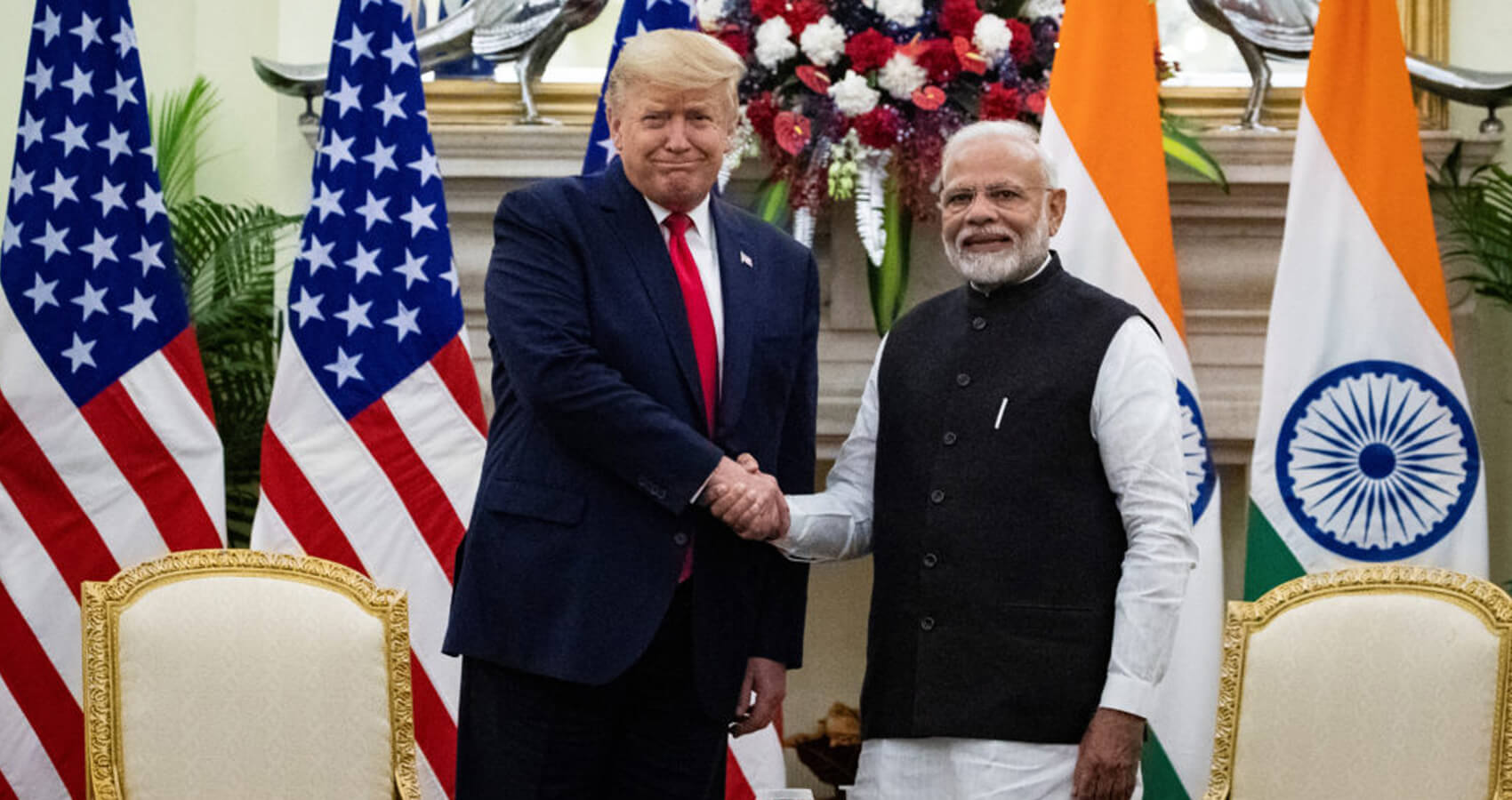
The Revenue Department on Thursday said 35 transfer pricing disputes between India and the U.S. in different segments of Information Technology (IT) have been resolved and another 100 are likely to be settled in the next three months. A Framework Agreement was recently signed with the U.S. under the Mutual Agreement Procedure (MAP) provision of the India-U.S. Double Taxation Avoidance Convention (DTAC).
“This is a major positive development,” the Central Board of Direct Taxes (CBDT) said in a statement. About 200 past transfer pricing disputes between the two countries in IT (Software Development) Services [ITS] and Information Technology enabled Services [ITeS] segments are expected to be resolved under this Agreement during the current year.
“So far, 35 disputes have been resolved and another 100 are likely to be resolved in the next three months,” the CBDT said. The Framework Agreement with the U.S. opens the door for signing of bilateral Advance Pricing Agreements (APAs) with the US, it said.
“The MAP programmes with other countries like Japan and UK are also progressing very well with regular meetings and resolution of past disputes. “These initiatives will go a long way in providing stable tax environment to foreign investors doing business in India,” said the CBDT, which is responsible for direct tax collections in the country.
CBDT also said it has entered into two unilateral APAs with two multinational companies as part of a “major initiative” to usher in certainty in taxation. Of these, on is the first APA with a ‘Rollback’ provision. The agreements were signed on August 3.
With this, the CBDT has so far signed 14 APAs, of which 13 are unilateral APAs and one is a bilateral APA. APAs settle transfer prices and the methods of setting prices of international transactions in advance.
“The Government is committed to conclude a large number of APAs to foster an environment of tax cooperation and certainty. Currently, a number of unilateral as well as bilateral APAs with Competent Authorities of UK and Japan etc are at advanced stage of negotiations,” the CBDT said.
The 14 APAs signed relate to sectors like telecom, oil exploration, pharmaceuticals, finance, banking, software development services and ITeS (BPOs). Unilateral APAs are agreed between Indian taxpayers and the CBDT, without involvement of the tax authorities of the country where the associated enterprise is based. Bilateral APAs include agreements between the tax authorities of the two countries. An APA with the ‘Rollback’ provision extends tax certainty for nine financial years as against five years in APAs without ‘Rollback’
With the elevation of Pichai, 43, as the CEO of Google, Indian Tech managers have been drawing unique attention in the international media. The Wall Street Journal reported Pichai’s appointment is a reminder that the CEOs of some of the world’s most recognisable tech companies share origins from India. One of the reasons for Indian managers’ success is that they are future oriented, a leading American financial daily has said, with Google’s Sunder Pichai joining the fast expanding club of Indian-origin CEOs.
“Indian managers are future-oriented, and had a paradoxical blend of genuine personal humility and intense professional will,” the Journal said, citing a recent study by Southern Hampshire University. “These leaders achieved extraordinary results and built great organisations without much hoopla,” the daily said as it listed out the Indian origin executives that are heading top companies in the US.
“Nowhere, perhaps, is that more starkly on display than at Microsoft. Since taking over as CEO, Satya Nadella managed to achieve what had once seemed impossible: to make Silicon Valley like Microsoft again. He did so by embracing collaboration and not treating rivals products as enemies–in some ways the opposite of his often-flamboyant predecessor, Steve Ballmer,” the daily reported.
While Indian managers are not in many cases the founders of the companies they lead, they are respected managers who have held numerous positions in their companies, working up the ranks, it said. Adobe chief Shantanu Narayen, 53, according to the daily, has been described by colleagues as quiet but incredibly competitive. Since becoming CEO in 2007, he has led a dramatic transformation at the company, it added.
Sanjay Jha, the 52-year-old CEO of chipmaker Globalfoundries, had previously run Motorola Mobility and had served for years as a senior executive of Qualcomm, it said. In another article, The Wall Street Journal said Pichai’s ascent reflects his ability to create strong products, including Google’s Chrome browser and later the Chrome operating system.
But it also shows his ability to identify competitive pressures, manage others and smooth over differences, both internally and with Google’s business partners, it said. At Google, Pichai showed a flair for championing challenging but strategically important projects such as the Chrome browser, which today has 45 percent market share globally, according to research firm Statcounter, up from one percent in early 2009.
Pratik Kumar Patel and his cousin Kalpesh Patel from Tennessee were found guilty on August 13, of trying to murder Pratik’s wife Krupa Patel, after drawing up a $6 million life insurance policy in her name. But when they hired Chris Robinson, their handyman of longstanding, he changed his mind and reported them to the police, the greedy men were arrested two years ago and convicted by a jury on August 13 in a Circuit Court in Murfreesboro, Tennessee.
They will be sentenced by Judge David Bragg Oct. 16 but attorneys for the defendants say they will appeal the judgment in the Tennessee Court of Appeals. Assistant District Attorney Sarah Davis told News India Times she anticipated the appeal would be denied. The conspiracy charge is an A felony which means jail for 15 to 25 years for the schemers. “Pretty much every defendant tries an appeal. But that doesn’t change the conviction,” Davis said.
Krupa Patel, who attended the closing arguments, insisted through the years that her husband would not have killed her. “I don’t know how his wife is doing but I felt so bad,” Davis said. “She stayed by him the whole time and he was telling her it was not true even though they pretty much admitted it in court. Yet she kept saying ‘He wouldn’t hurt me. He wouldn’t do it’,” Davis recalled.
Davis said Krupa Patel’s side of the family was in India and she may not have any other support in this country. In dramatic closing hearings reported in Murfreesboro Post, Assistant District Attorney John Zimmerman lined up as evidence, bags of purported money along the jury box banister and asked the jury what price they would put on a woman’s life. “Whatever life is like in northern India, in America the life of every woman matters,” he is quoted saying in court.
Defense attorneys claim irregularities in the investigation and improperly handled evidence are grounds for appeal. “We believe there are a number of issues that are subject to appeal, and we plan to do so,” Defense Attorney Alex Little is quoted saying in the news report. Another defense attorney for the Patel cousins contended there was no hit man in the case and hence no crime. “The commission of the crime was impossible. It was never going to happen,” Defense Attorney Ed Yarbrough is quoted saying.
Robinson testified that he was assigned to go to Krupa and Pratik Patel’s house in Gallatin on Oct. 1, 2013, shoot her and turn the house upside down to make it look like a burglary gone wrong. He also said he had been given $15,000 by Pratik Patel and told to go buy a gun and get rid of it in the river after committing the crime, the Post reported.
In the mix was Pratik’s love interest, Tina Newman, who testified August. 12, that she was romantically tied to Pratik Patel for several years when she worked in his stores and that he often referred to her as his “wife.” She said she did not know about the conspiracy to kill Krupa Patel but that their love relationship got more intense in the days leading up to Pratik Patel’s arrest Sept. 30, 2013. Texts and voice messages exchanged between the two were played in court.
Washington, DC – August 15, 2015: India’s 69th Independence Day was celebrated in Washington DC today on August 15, 2015 at Embassy Residence. Ambassador Arun K. Singh unfurled the National Flag. National Anthem was sung by all. Thereafter, Ambassador addressed the guests and read out President’s Independence Day Address to the Nation.
Over 350 community members attended the Independence Day celebrations. The celebrations were concluded with a brief cultural programme of patriotic songs in different Indian languages.
The Indian community celebrated India’s Independence Day with Ambassador Arun K. Singh unfurling the national flag and a cultural program of patriotic songs in different Indian languages. The ambassador addressed the guests and read out the president’s Independence Day address to the nation.
In his own message on the occasion, Singh thanked the Indian nationals and the Indian American community for their “dynamic, substantial and continuous contribution to strengthening the relationship between the largest democracy and the oldest democracy. Hailed as the defining partnership of the 21st century in the world, India and the U.S. are enhancing their relationship not only at the bilateral level, but also at the regional and global levels,” he said. “People-to-people contact is one of the strongest pillars of this growing relationship.”
Headquartered in Iselin, New Jersey, Indus American Bank operates a full service branch in Iselin, Jersey City, Parsippany, Plainsboro and Hicksville (NY) and plans to expand to other cities in New Jersey and New York. Indus American Bank has been founded specifically to serve the needs of the South Asians, one of the fastest growing segments of the Asian ethnic group over the coming decade. Presently, Indus American Bank serves both the business as well as the retail customer.
The bank specializes in core business banking products for small to medium-sized companies with emphasis on real estate based lending as well as all the other products that are offered by main-stream banks. Indus American Bank’s focus is to establish and maintain long term relationships with its customers by creating mutually beneficial relationships built on trust and integrity.
The Indus American Bank has become a landmark in the history of Indian immigration to the US with its financial success as well as its efforts to reach out to the community, sponsoring events like India Day Parades and other worthy causes in the tristate. Over the years, it got acclaim for its work to make a difference in the life of the desi community.
To a large extent, the credit for this goes to Anil Bansal, one of the founders and the largest shareholder of the bank in 2005 in Iselin, New Jersey and its chairman since 2011. He became executive chairman next year. His philosophy of helping the community, while doing business has changed the face of the bank from a mere financial organization to a social service partner of the community.
As a community bank, the Bank caters primarily to the needs of consumers and small businesses. More importantly, as a niche community bank it better understands the unique needs of our clients. We do not use a cookie-cutter approach and tailor our solutions to meet the unique needs of our constituents. As a community bank we rely on the community for the funding of our loans, which are concentrated in our geographic footprint. So in effect we act as the community intermediary to channel funds from those who have excess liquidity to those in the community who need funds for growth. We say “Let’s grow together”.
The Bank was established with the mission to be of service meeting the unique banking and financial services needs of consumers and businesses in the Indian-American community in the New York/New Jersey market area. The Bank is striving to be the Bank of Choice for consumers, businesses, their owners and their employees in our catchment area as defined by the CRA Assessment Area. The Bank strives to deliver on the promise of understanding the unique needs of our customers and providing solutions with exceptional personalized service. Help the customer’s business grow through an emphasis on relationship banking over transaction banking.
According to Bansal, while the Bank was founded to serve the needs of the South Asian community, our customers happen to be manly of Indian origin. There are a few reason for this. Over the last 10 years the Indian economy has not only been booming but has also opened up to overseas investment. The sheer size of the Indian population also provides a much broader and deeper base for recent immigrants compared to the other South Asian countries.
Anil Bansal with Senator Bob Menendez
The past one decade has been a period of steady growth. “They say timing is everything. The Bank opened in 2005 and the financial crisis started in 2007. Yes, we hit some serious head winds but were able to come out of the turbulence stronger and resilient. Overall we have been able to achieve the goals we envisaged and believe are on the track for more broad and deeper market penetration.”
As for the future plans for growth, Bansal says, “We follow our clients or members of the community. In ten years we have 5 branches despite the deep recession. We expect our growth to gain momentum as the economy gathers steam and we are able to attract more customers with new and improved products and services. We are celebrating our 10th anniversary with an even greater contribution to the community, both in terms of contributions and time devoted by our employees.
Anil Bansal, Executive Chairman is one of the founders of the Bank and is the largest shareholder. Presently the Bank has over 200 shareholders from within the community. The bank’s market area had been defined to include Middlesex, Mercer, Monmouth, Morris, Passaic, Union, Bergen, Essex, and Hudson Counties in New Jersey and Nassau County in New York. Loans have also been made in the five boroughs of New York City to include Queens, Brooklyn, Staten Island, Manhattan and the Bronx. The population in the defined counties is in excess of 6.7 million.
Anil Bansal with Gov. Christie of NJ
The New York and New Jersey metro areas have the largest concentration of Indian-Americans in the country. Indian-Americans are one of the fastest growing ethnic groups in the U.S. Indian-Americans generally have higher than average household incomes, savings rates, and ownership of real-estate. Bansal believes that while statistically overbanked, there is significant deposit growth in the market to support a niche institution with strong ties to the community. The existing branch network represents a good platform for delivery of services.
And he is full of confidence. “We expect to see continued improvement in the real estate market and government agencies are taking steps to stimulate this sector, being so critical for the overall economy. While Indians have been good savers, they have also been very astute investors. Our advice would be to continue on the path with diversification as a goal. We as a community have done very well in America, our adopted country. We should use our success in continued contributions to our mother land an our adopted country. India is on the cusp of major changes and we as Indian-Americans can play a crucial role.”
According to Bansal, Indus American Bank takes pride in promoting religious and social community events and participating in outreach programs. “We have supported and will continue to support events like India Day Parade which showcase India’s rich history and culture and symbolize India’s growing economic power in today’s world,” he said.
Bansal said that Indus American Bank is committed to the development and growth of the communities in which we operate. “We partner with our communities and build on those relationships.” Bansal has played a leading role in the development of the bank since inception. When IAB started operations in 2006, Mr. Bansal was co-chairman of the bank and over the years has been active in the growth of the institution. As a matter of fact, IAB was selected in 2009 by NJ BIZ as one of New Jersey’s top 50 fastest growing companies, a result of the vision and guidance of the Board.
When he took over as chairman he said, “I am excited at the opportunity to work closely with my colleagues on the Board and with Bank Management to build on the existing business. I believe there is huge potential for the Bank and the community to grow together. We are committed to serving the needs of our customers and the communities we operate in.”
Last year, the bank felicitated Mok Singh, a well-known entrepreneur and president of Sita World Group and Air World Alliance, who rode on the bank’s float as a guest of honor at the India Day Parade in New York City. “The presence of Mok Singh is very appropriate for the occasion as he has brought pride to the Indian American community with his election as president of Skål International, the largest organization of professional travel and tourism leaders around the world which promotes global tourism and friendship,”
Bansal continues as chairman of IA Bancorp, the holding company and the Executive Chairman of Indus American Bank. He has been active in the South Asian business community and is presently president of Asian Indian Chamber of Commerce. The bank has been founded specifically to serve the needs of the South Asians, one of the fastest growing segments of the Asian ethnic group over the coming decade. Presently, the bank serves both the business as well as the retail customer.
Anil Bansal with Shashi Tharoor
An alumnus of IIT Kanpur (BTech-1977), University of Notre Dame (MS materials science-1979) and Syracuse University (MBA-1985), Bansal worked with various institutions in the US before embarking on setting up his own businesses. After graduation, he worked as a senior project manager for Perkin Elmer and later GTE Corporation as an engineer and was primarily responsible for new product development.
He has led successful computer and real estate companies and his interests also include investments in the restaurant business. He is presently CEO of First National Corporation, a real estate investment and management company and Chairman of vSplash, an international web design and development company.
As an international corporate business leader he is on the board of several corporations and charity foundations. In addition, he served for 15 years as vice chairman of the board of trustees at PBI Regional Medical Center, a prominent non-profit acute care hospital located in the City of Passaic in New Jersey.
Bansal also runs the Bansal Foundation, which helps provide academic scholarships and medical help to needy Indians children worldwide. He was on a state level board to suggest strategies for revitalizing Asian American community, when Jon Corzine was the governor of New Jersey.
As a private entrepreneur he was responsible for the introduction of Apple Computers to the school system throughout New Jersey. He understood the importance of computers in daily life decades before it became a reality and he formed a company to supply and train customers in the use of computer systems.
Anil Bansal graduated from IIT Kanpur in 1977 and came to the United States for a master’s degree in metallurgical engineering. After working for a few years as a metallurgist at Westinghouse and GTE, he got more interested in marketing and decided to do an MBA. After completing his MBA, he joined Perkins Elmer but soon decided to go out on his own and start his own business. He tried different businesses, eventually starting a computer business selling PCs to homes and businesses which was fairly successful, and at the height of the 1994-95 computer boom had around $25 million in annual sales. At the time, he had started another business, a real estate company acquiring and renting properties in New Jersey, which is still operating.
In 2005, Bansal joined with few friends who felt there was a need for a bank focused on the Indian immigrant community in US, especially in the New Jersey area which had the second largest Indian-American population. By December 2005, they had got the approvals, raised the capital and opened their first branch in Iselin, New Jersey. Within four years, Indus American Bank had over $200 million in assets with several branches in New Jersey-New York area, serving Indian owned businesses and communities, with personalized services and a staff that can communicate in Hindi, Gujarati, Punjabi, Malayalam, Sindhi and English. In 2009, the bank was honored as one of “Top 50 Fastest Growing Companies” in New Jersey by NJBIZ.
Anil Bansal with his wife Kumud
Bansal began his next venture in 2006, this time in the restaurant business. “I want to try different things” says Bansal, “There are two factors to it -I am a very curious person and I like to learn new things and there are passions that go in different ways, some people have a passion to go deeper into one field, other people have a passion to start and grow business’s, I happen to have a passion where I want to do something different every five years.” Within two years of opening, his restaurant, Mantra in Paramus, New Jersey, was named one of the “25 Best Restaurants in New Jersey” by New Jersey Monthly. Bansal also serves his community as the President of the Asian American Chamber of Commerce, an association of Indian/South Asian businesses in New Jersey, helping create an environment for the businesses to network and
Promote interactions with the state government. He was the vice chairman of Beth Israel Hospital in Passaic for 15 years. Bansal also represented New Jersey state in a national level committee on Diversity, supporting the Governor of New Jersey in promoting diversity in the state and in efforts to create local grassroots organization. “New Jersey is the most diverse state in the US, with immigrants representing countries all over the world, and Indians are the fastest growing new immigrants coming in” said Bansal.
“As a true community bank, Indus American Bank is committed to the development and growth of the communities in which we operate. We partner with our communities and build on those relationships,” Bansal noted. “We believe long-term relationships breed long-term success, which is why we say “come grow with us. Our customers feel proud and refer to us as “My Bank” and feel free to speak their own language with our multilingual employees. All decisions are made locally and our President and senior management team are readily available and accessible to all of you: our customers and partners.”
Globalization and digitalization are two realities of our times. They pose tremendous challenges to all people especially the men and women in the mass media. There are two realities of globalization and digitalization. We also need to study the challenges posed by these two realities. Regarding digitalization, India, for instance, after China (575 m) and USA (275 m) has the 3 rd largest internet population in the world. Internet Statistics shows that 111 million Indians are internet users as on January 2013. Among the 1210 million Indian population 904 million are mobile subscribers and among them 78.7 million people are mobile internet users. (“Internet Statistics India” web page downloaded on August 17, 2013).
In this context we need to answer for ourselves two fundamental questions. First: what are our responsibilities as professionals in the media? Second: how our International Christian Organization of the Media (ICOM) can help the people in the media to carry out these responsibilities?
We need to understand the globalization of capitalism, ownership patterns and consumerism in the light of human (individual & family) needs and human rights. In our globalized and digitalized world we see precisely the concentration of wealth in a few hands and the mass media applauding it! This is 100% true of India where I come from.
As against Mukesh Ambani, the richest person in India, who has a lavish lifestyle, the richest American is Warren Buffett, the owner of more than three score companies. He has been ‘numero uno’ for several years the Forbes’ list of richest persons in the world. Buffett lives with his family in a single story building with three bed rooms house, which he bought some 50 years back! Buffett drives his car himself He hardly uses private jet travels even though he owns the biggest private Jet Company.
When the globalized world took note of the infamous Antilia on one side, it took note that on the other side Buffett gave a generous donation of $31 billion to charity. He shared his wealth with those in dire needs like the marginalized people, the refugees, victims of wars and conflicts. When Buffet visited India in 2012 he called the rich people in India to share their wealth with the poor.
It may be by way of exception, but there are a few people who may not be rich like Ambanis and Buffetts but they do have care and concern for the poor and the needy. My senior bachelor friend and a well known Gujarati poet, Niranjan Bhagat of my city, Ahmedabad has recently done an unusual thing. He has transferred the ownership of his luxury flat in a posh Ashram Road area not to any of his relatives but to his servant of many years, Jagath Sinh and his family. We in India also have the example of Narayana Murthy of Infosys fame who has spent a substantial sum of his income in welfare programs for the needy people.
The rich and not so rich people in India need to follow the example of Buffett, Murthy and Bhagat. When the people learn to care and share their wealth with the BPL people and contribute to the basic need of education and health-care. India can get rid of the scourge of poverty. But will that happen in our globalized world where money is often pursued as the only goal of one’s life!? Many worship money as their God!
Pope Francis in a speech to ambassadors at Vatican in May 2013 said, “Our human family is resently experiencing something of a turning point in its own history, if we consider the advances made in various areas. We can only praise the positive achievements which contribute to the authentic welfare of mankind, in fields such as those of health, education and communication.”
Science and technology have made tremendous progress which was unimaginable a few decades back. But today they are realities. We have explored the depth of the seas and exploited the wealth of the waters. But the sad fact is that we have not reached out to our neighbours – the poor, the needy, the displaced, the refugees, in short the ‘anabim’ (the poor people of God) in the world.When everything has become big, has our heart become small?
I can give an example of the Gujarat state where I come from. Chief Minister Narendra Modi is certainly making an all out effort leaving no stone unturned to capture the Prime Minister’s chair projecting himself as a man of development and Gujarat as a model of a developed state! Modi does not want to compare the development of Gujarat to any other Indian state but with China! What is the ground reality in the state of Gujarat?
Modi does not want the development of Gujarat compared to other Indian states because in many criteria of Human Development Gujarat is far behind other states! According to India Human Development Report 2011, Planning Commission of India, Gujarat lags behind many other Indian states in development! [Naya Marg, (fortnightly), 16-7-2013, p.5] Yet Modi’s hugely paid advertisements in India and abroad project Gujarat at the top of the developed world! This is the biggest lie about Gujarat.
The rationalist people who care for facts say that Modi’s popularity is media-managed. No wonder even Nobel Laureate (Economics 1998) Amartya Sen has voiced his concern against Modi and Gujarat model of development. Sen has clearly stated that Modi should not be the Prime Minister of India. He says that Modi is a divisive force. position! The child mortality rate according to 2009 information Gujarat position! Basic human development index of health, primary position (of 28 states) in India. A former member of planning commission and former Vice-Chancellor of Mumbai University Bhalchandra Mungekar wrote in The Indian Express: “Modi’s claim is too tall and not supported by evidence” Most of Modi’s claims for development are hollow that an IAS (Indian Administrative Service) officer told me simply, “Modi plus advertisements is Hero. Modi minus advertisements is Zero!”
As writers and journalists working in mass media we can be trend setters. This sort of ground realities of our globalized and digitalized world brings us back to our basic, fundamental questions. In answering the two vital questions, here are my seven practical suggestions for your consideration: 1) Develop a Sense of Fraternal Responsibility; 2) Highlight Developmental Issues; 3) Develop a nose for news about the progress of the aboriginals, tribals and the depressed class of people (Dalits) and for their problems and difficulties. And voice these concerns in the media and in our lives; 4) Be Defenders & Protectors of the Voiceless; 5) Fight the Evil of Corruption; 6) Protection of our Environment; and, 7) Be an Agent of Peace and Harmony.
In a societal analysis of our contemporary world we see spectacular progress of science and technology, communication and transportation, management and entertainment. On the other side we also see that the number of those excluded from the benefits of our globalized and digitalized world is increasing! There is no justice, equality and fraternity for all. The gap between the haves and the have-nots is growing wider and wider.
Fifty years ago, Dr Martin Luther King called for racial solidarity in his famous speech “I have a dream…” Today in our globalized and digitalized world we need not only racial solidarity but we also need economic solidarity, inter-religious solidarity and cultural solidarity.
We need solidarity with all people of good will leading to love and peace, equality and justice, freedom and fraternity. So we should firmly resolve that each one of us will work through mass media for the attainment of a new world of solidarity, a better world of solidarity.
Sounds of “Bharat Mata Ki Jai”, “Vandemataram” and “Jai Ho,” reverberated through midtown Manhattan as tens of thousands lined up to attend the 35th annual India Day Parade on Sunday, August 16th as the colors of the Indian flag washed over Madison Avenue to mark India’s 69th Independence Day. Organized annually by the FIA-tristate, the parade aims to highlight the progress, contributions and achievements of India and the Indian-American community here. The parade was broadcast in over 40 countries and reached over three million Asian-Indians in America.
Billed as the biggest Indian parade outside India to celebrate India’s Freedom, the event kicked off with a Scottish-style bagpipe band in kilts, flying an Indian flag. The India Day Parade took place along a 13-block stretch of Madison Avenue in the heart of Manhattan. Thousands of Indian Americans, Bollywood celebrities, Cricket stars, and Indian politicians participated in the spectacular 35th annual India Day Parade in New York, in addition to celebrations around the country.
Bollywood star Arjun Rampal was the Grand Marshal at the parade while Parineeti Chopra was the guest of honor at the event attended by Haryana Chief Minister Manohar Lal Khattar, India’s Consul General Dnyaneshwar Mulay and former union minister Shashi Tharoor, among others. Indian cricketer Virender Sehwag was the guest star cricketer in the parade. Music composer Shankar Mahadevan, TV actors Aamir Ali and Sanjeeda Sheikh and Indian-origin American singer Jeffrey Iqbal were also seen in the parade.
The parade ran through 20 streets in Madison Avenue and featured tableaux by various Indian-American organisations, marching bands, police contingents and cultural performances by young children. The New York Police Department (NYPD) Band and the India Temple organisation’s band played the national anthems of India and the US. The kilted band goes back to an Indian spiritual leader who visited London in 1970 and admired the Scottish tradition. He formed the first such group with Indian businessmen in Kenya. The band Sunday was from Secaucus, New Jersey.
In his brief remarks, Khattar, accompanied by consul general Mulay, congratulated the huge gathering of Indians and lauded the achievements of the diaspora. Chief Minister Manohar Lal Khattar became the first Chief Minister from any Indian state to participate in the annual India Independence Day parade in New York ever since its inception.
“Indians have the perfect balance between modern and traditional and have great cultural values,” said Parineeti. Chopra, 26, also rang the opening Bell at Nasdaq apart from other key event appearances. “I believe India’s story should be celebrated everywhere, and the journey of NRI citizenry is nothing short of incredible. The most successful community of expatriates anywhere, I treasure this opportunity to celebrate our independence in such a festive manner in New York,” she said in a statement.
Sehwag expressed his elation and honor by saying that it was a “great privilege and honor” for him to celebrate the Independence Day with companions form his country in a foreign land. As many people from countries of India, Pakistan, Sri Lanka and Bangladesh are well settled in United States, Sehwag hopes that people will come across and form a US cricket team. “I hope in the coming years there will be a US cricket team that plays international cricket soon,” Sehwag said.
The parade ended in a colorful Indian fair which featured cuisine from India, and stalls showcasing Indian handicrafts and textiles. The parade has been organized here since 1981 by the Federation of Indian Associations (FIA). The FIA of the tri-state area of New York, New Jersey and Connecticut is one of the largest umbrella organisations in the Indian community and represents over 500,000 Indians.
“This year’s parade saw unprecedented crowds, and was a huge success,” FIA President Ankur Vaidya told the media. More than 40 floats and 25 walking groups and bands participated in the the parade, held between 38th and 23rd streets on Madison Avenue. Waving the Indian tricolor, spectators cheered as floats, marching groups and passed by; as onlookers danced to popular Bollywood songs, while some took photos of the floats and the celebrities that graced it.
A gala ceremony replete with patriotic fervor, marked by cultural events, songs and speeches, tributes to the martyrs and the contribution made by the Indian-American community were major highlights of the parade that started at the 38th Street and Madison Avenue. The parade was a phenomenal exhibition of India’s culture outside India. Indian community members also joined flag hoisting ceremonies at the Indian mission at the U.N. and Indian Consulates in New York, San Francisco, Chicago, Houston and Atlanta.
New York, NY: In their efforts to spread the message of health and wellbeing for all, leaders of the American Association of Physicians of Indian origin (AAPI) joined the India Day Parade in New York City on Sunday August 16th, 2015. Applause from the crowds reached a crescendo as the colorfully decorated Float bearing AAPI’s name, symbol, and message of health and wellbeing to all rolled on in New York City. Led by its energetic leaders led by Dr. Seema Jain, president of AAPI, the float marched along with dozens of others, saluting India and the over a billion people of Indian origin around the globe.
A record number of people, both Indian Americans and mainstream Americans thronged the sidewalks, filling Madison Avenue from 38th to 27th Streets, cheering jubilantly as the floats portraying the rich heritage of India and the rise of India as a world power, meandered through the Big Apple. The gods seemed to smile as the clouds lifted and the bright sun shone forth. The crowds acknowledged the contributions and achievements of the Indian Diaspora and their motherland, India.
A host of AAPI leaders, including AAPI’s President, Dr. Seema Jain, President-Elect, Dr. Ajay Lodha, YPS President Dr. Rupak Parikh, YPS President-Elect, Dr Aditya Desai,
Board of Trustee member, Dr. Krishan Kumar, Dr. Sanjay Jain, and Dr. Amy Shah, along with several young Physicians and MSRF members had come into New York from different parts of the country to be part of the largest India Day Parade around the world, organized by the Federation of Indian Associations (FIA).
“We are extremely happy to be part of this great event,” said Dr. Seema Jain, after leading the parade in New York City on Sunday. “On behalf of the over 80,000 physicians of Indian Origin in the United States, I want to convey our greetings to all the people of Indian origin, especially to over two million Indian Americans across the United States, who continue to make India proud and make India stand tall among peoples of the whole world. On this very special day of celebrating our freedom, we take special pride in saluting our beloved tricolor. Let us recall with pride the great sacrifice of our freedom fighters, whose undying love for India secured us our freedom,” he added.
Dr. Ajay Lodha, President-Elect of AAPI, who was on the AAPI float in New York, said, “On this happy occasion join me and all members of AAPI in saluting the hard work of all our citizens who have, over these 69 years, helped build a new India. Let us bow our head in memory of all those brave Jawans and all our brave citizens who have sacrificed their lives for the cause of our unity, integrity and progress.”
According to Dr.Amy Shah, “AAPI is very proud to salute India that is united despite its many diversities. An India that is not divided by caste, creed or gender. An India, in which the creativity and enterprise of every citizen can find its full and free expression.” Dr. Krishan Kumar, while greeting the people of India said, “As we celebrate India and its several achievements on this very special day, AAPI is very proud to join in and salute this great nation and its 1.2 billion people.”
Members of AAPI are not only known for their exceptional quality of care they provide to their patients, but also have established an unprecedented professional exchange program between the physicians and researchers in the US and India, augmented medical education curricula and established medical specialties, and emergency services in India, sponsored free medical care in the US and India through free clinics, participated in legislative days in DC, led with exemplary leadership and devotion the AMA – IMG Section and many committees with AAPI.
AAPI is a forum that facilitates and enables over 100,000 Indian American Physicians and Fellows to excel in patient care, teaching and research and to pursue their aspirations in professional and community affairs. Founded with the objective to promote professional solidarity in the pursuit of excellence in patient care, teaching and research, AAPI brings American medicine the distinctive contributions from India, and advance the American creed of one nation under God, indivisible with liberty and justice for all. For more details, please visit: www.aapiusa.org
NEW YORK: An Indian-American classical dancer is set to perform at a concert in California this weekend to raise funds for a high-poverty elementary school, a media report said. Sharanya Balaji, a 16-year-old senior from Harker school, said she wants to help the Grant Elementary School which lacks basic education facilities, mercurynews.com reported.
“It was shocking to me. Arts education was not there. I really wanted to do something that also meant something to me and that I could continue into the future,” Balaji said. “There are so many ways to raise a well-rounded child, and the arts are one of them,” Grant Elementary Principal Paulette Zades said, adding that “We can give them academics all day, but they need both sides of it.” Ms Balaji will perform at Los Altos high school in California. She has won many competitions all over the world, including a junior division prize at the prestigious Cleveland Thyagaraja festival in April this year. She has been dancing professionally since she was 12 and has raised funds for the school earlier also.
The Discovery Education 3M Young Scientist Challenge , one of the nation’s premier science competitions for grades 5-8, recently announced that five Indian American youths were among the top ten finalists.
The Indian American youth are Raghav Ganesh of Joaquin Miller Middle School in San Jose, Calif.; Amulya Garimella of Dorseyville Middle School in Pittsburgh, Pa.; Iris Gupta of Robert Frost Middle School in North Potomac, Maryland; Krishna Reddy of Kirby World Academy in Wichita Falls, Texas; and Sanjana Shah of John F. Kennedy Middle School in Cupertino, Calif.
Gupta believes too many people suffer from allergies, and by testing to find the correct amount of nanoparticles optimal for blocking allergens, her invention aims to give them some much needed relief.
To help those with Autistic Spectrum Disorder and their caregivers, Ganesh’s invention predicts and prevents autistic meltdowns. Monitoring physiological and environmental factors that can cause and trigger stress, his wireless and wearable machine alerts the wearer and caregiver when any stressors rise above a certain threshold.
With the goal of preventing distractions while trying to concentrate, Garimella invented a distraction monitoring system that alerts the user of a distraction by measuring EEG brainwaves. When users get distracted, they will receive an alert reminding them to concentrate and get back to work.
While a breathalyzer for alcohol consumption exists, Reddy felt that there was need for a device that could detect more. Unhappy with the inability for a breathalyzer to detect other substances, Reddy created a pupillary reflex computer program and apparatus that measures pupil dilation.
After realizing the impact of heaving rainfalls in unprepared areas, Shah created a program to detect where cities may need more drains and where they may need to increase current drain pipe sizes. By using pipe network analysis modeled after city drain pipe maps, Shah can simulate heavy rainfall to see where possible flooding may occur.
A leading Democratic Party official and veteran Congressman has extended his support to an Indian-American candidate for the U.S. Congress as he gears up for the long haul to the Illinois Democratic primary March 16th, 2016.
Congressman Joseph Crowley, D- NY, vice chair of the Democratic Caucus in Congress, endorsed Raja Krishnamoorthi’s campaign for Congress from District 8 in Illinois. While Krishnamoorthi has the support of several other federal lawmakers, Crowley’s endorsement counts because of his position in the Democratic Caucus and his name recognition within the Indian-American community nationally.
“Through our work with the Indian-American community, I’ve been impressed by Raja’s tenacity and determination to get things done,” Rep. Joe Crowley told News India Times in an email response. “Raja is a proven leader and I look forward to working alongside him in Congress.”
Krishnamoorthi was also endorsed by Rep. Mike Quigley, D-Illinois, on Aug. 13, who said the candidate would best represent the interests of the middle class and small business in his district. District 8 covers parts of Cook, DuPage, Kane and Lake counties, which contain pockets of concentration of Indian-Americans.
“Congressman Crowley’s endorsement gives Raja exposure to a national Indian-American audience,” his campaign manager Justin Lamorte told News India Times. While the endorsement was made at an individual level by the Congressman and was not a party endorsement, his position in the party counts.
“Representative Crowley is an influential leader in the Party,” Lamorte noted. He said Crowley’s support was yet another sign of the strength and momentum of the campaign. Most recently, the campaign set up a Women for Raja Committee which has garnered some 100 members already, Lamorte said.
This is Krishnamoorthi’s second attempt at getting the Democratic Party endorsement which he lost in 2012 to party favorite Tammy Duckworth, an Iraq War veteran. Duckworth is running for the U.S. Senate, leaving the seat open. So far, Krishnamoorthi has one other aspiring Democrat, state Senator Michael Noland of Elgin, to contend with.
Noland’s campaign fundraising at this time however, is trailing Krishnamoorthi who reported net contributions of $621,000 to his campaign for the last Federal Election Commission filing quarter ending June 30. Other candidates might jump into the fray over the next few months however.
Congressmen Crowley is the 8th Members of Congress to support his campaign, the others being the Democratic contingent from Illinois including Reps. Jan Schakowsky, Luis Gutiérrez, Danny Davis, and Dan Lipinski, as well as Reps. Joaquin Castro of Texas and Jim Himes of Connecticut. Krishnamoorthi has a slew of Democratic Party officials at the local and state levels also supporting his bid.
Krishnamoorthi is former deputy treasurer of Illinois and currently President of Sivananthan Labs and Episolar, Inc., small businesses that sell products in the national security and renewable energy industries. He is a co-founder of InSPIRE, a non-profit providing training to Illinois students and veterans in solar technology. He served previously as vice chair of the Illinois Innovation Council. Krishnamoorthi lives in Schaumburg with his wife, Priya, and their two sons.
The 24th Miss India Worldwide will be held at the LaliT hotel in Mumbai, India, on Saturday, September 5, 2015. Acclaimed as the most glamorous event in the world, the pageant is sure to bring nothing short of spectacular. The present Miss India Worldwide, Monica Gill, has completed two Punjabi movies produced by Tip series and will be making her debut in Bollywood soon.
Contestants from over 35 counties will arrive on August 31 to kick off the week full of events including Talent Night, Mumbai sight seeing, visits to studios and meeting Bollywood celebrities. “We are very thrilled to bring back Miss India Worldwide to Mumbai after nearly 10 years. Miss India Worldwide is the only international Indian pageant that promotes Indian culture, traditions, values and performing arts” said Dharmatma Saran, Chairman and Founder of Miss India Worldwide based in New York. The event is managed by Emirates Vision, Dubai, U.A.E.
A healthy mood spreads faster through social networks but depression does not, say researchers. Being friends with someone who is depressed does not put you at risk of becoming depressed and it is likely to help the depressed person recover, they said.
Researchers from the Universities of Manchester and Warwick looked at over 2,000 adolescents in a network of US high school students to see how their mood influenced each other by modelling the spread of mood using similar methods to those used to track the spread of infectious diseases.
The team said while depression does not “spread”, having enough friends with healthy mood can halve the probability of developing, or double the probability of recovering from, depression over a 6-12 month period.
In the context of depression, this is a very large impact. Researchers know that social factors, for example living alone or having experienced abuse in childhood, influences whether someone becomes depressed.
“We also know that social support is important for recovery from depression, for example having people to talk to,” said study co-author Thomas House from the University of Manchester.
“This was a big effect that we have seen here. It could be that having a stronger social network is an effective way to treat depression,” House said. The study was published in the journal Proceedings of the Royal Society B.
Victoria and Albert Museum (V&AM) in London, which claims to be “world’s greatest museum of art and design”, will be showcasing Lord Vishnu avatars on silk in its Fabric of India exhibition from October three to January 10.
Dated around 1570, this display will include a Hindu narrative cloth in silk lampas weave, depicting avatars of Lord Vishnu. It will be “the first exhibition to fully explore the incomparably rich world of handmade textiles from India”, presenting about 200 objects made by hand, including sacred temple hangings and some expressing religious devotion and examining how fabrics were used in spiritual life. “Sacred fabrics created for temples and shrines would employ the best of available materials and highest levels of craftsmanship,” Museum release says.
Commending V&AM for plans to exhibit Lord Vishnu, Hindu statesman Rajan Zed, in a statement in Nevada today, said that art had a long and rich tradition in Hinduism and ancient Sanskrit literature talked about religious paintings of deities on wood or cloth.
Rajan Zed, who is President of Universal Society of Hinduism, urged major art museums of the world, including Musee du Louvre and Musee d’Orsay of Paris, Metropolitan Museum of Art in New York, Los Angeles Getty Center, Uffizi Gallery of Florence (Italy), Tate Modern of London, Prado Museum of Madrid, National Gallery of Art in Washington DC, etc., to frequently organize Hindu art focused exhibitions, thus sharing the rich Hindu art heritage with the rest of the world.
Some fragments of Indian fabric dating back as far as the 3rd century will be on display in this exhibition curated by Rosemary Crill and Divia Patel and designed by Gitta Geschwendtner, which will form part of V&AM’s India Festival.
Martin Roth and Paul Ruddock are Director and Board of Trustees Chairman respectively of V&AM, which claims to have “unrivalled collections of contemporary and historic art and design”.
New York, NY – A taste to quench every appetite. The Eat This Collection by PUNARVI caters to all palates, whether the craving is pizza, French fries, donuts, or ice cream. Classic foods adored by all are seamlessly intertwined and designed into clothing to create this first collection from PUNARVI. In this collection, designer Punarvi Patel has created elegant and premium quality t-shirts that reflect her passion for cooking. The collection features designs that give women a sophisticated yet playful alternative to the basic tee by using colorful embroideries depicting classic food items that are universally loved by women.
“Food and clothing are two very personal things in a woman’s life. I aspired to blend the comfort and joy we get from our favorite foods with every woman’s favorite item of clothing, the classic tee,” said Punarvi. PUNARVI will be debuting their first collection at a launch party in New York City on Friday August 28th, 2015. The event is invite only.
Punarvi Patel has a degree in fashion design from Los Angeles’s acclaimed Fashion Institute of Design & Merchandising. Upon graduating she went on to lead design and production roles at the fashion houses of Naeem Khan and Oscar De La Renta in New York City. Armed with that invaluable experience and her innate creativity, she launched her own clothing line. PUNARVI is designed to focus on individuality and ingenuity, with a perfect blend of style, creativity, and innovation enriched by superior craftsmanship. With an emphasis on quality, PUNARVI t-shirts are made from 100% Supima cotton. PUNARVI has partnered with expert craftsmen who are passionate about their work and are unrelenting in their desire to make sure every piece of clothing is impeccable. PUNARVI lives at the intersection of luxury and playfulness, allowing the modern woman to be uninhibited and free. PUNARVI creates clothes that real women love to wear, as an expression of themselves, striving to make getting dressed the most enjoyable part of their day.
If you would like more information about this release, please contact Suresh Bodiwala at +1.844.PUNARVI or email at press@punarvi.com. Please visit our website at www.punarvi.com .
Priyanka Chopra’s American TV debut with ABC Network’s “Quantico,” an FBI drama, has been creating waves not only among the Bollywood superstar’s fans but also Indian entertainers in the U.S.
Apart from the fact that Priyanka is the first Indian actress to star as the main lead on an American TV show, it is also the first time that an Indian actress has been promoted as the face of a show. Indians in the entertainment business know that Priyanka’s TV outing is surely a big deal.
“Big Bang Theory” star Kunal Nayyar expressed that on Twitter recently, when he wished Priyanka luck for her TV outing. “@priyankachopra good luck on Quantico. Lovely to see dilli and mumbaiyyas working it across the globe:)” he wrote. Priyanka thanked Kunal for the wishes and complimented him on his show. “Thank u @kunalnayyar love ur show!” she wrote.
After spotting Priyanka’s “Quantico” hoardings, which are now all over in big cities, Youtube sensation Lilly Singh aka Superwoman, who recently received an Emmy nomination, congratulated Priyanka for breaking barriers by starring as the main protagonist on an American show. “Get it girl @priyankachopra #breakingbarriers,” tweeted Lilly.
Considering that Lilly has done a parody of Priyanka’s single featuring Pitbull, “Exotic,” in the past, Priyanka replied saying she couldn’t wait for Lily’s take on her show. “Thank u hon!! Can’t wait for ur take on Quantico next!!” wrote Priyanka. “You know it,” tweeted Lilly to that. So we should surely expect a “Quantico” parody from her soon!
It’s lovely to see the mutual admiration among desi entertainers, isn’t it? “Quantico” premieres on ABC Sept. 27, 10/9 C.
Sharwani Kota, an Indian American teenager from New Jersey, started Hope4Spandana, a nonprofit charitable organization, back when she was in the eighth grade as a way to give back to society. Now Sharwani, a high school junior, and her team regularly organize musical performances to donate funds to their school in India, named Spandana, and to other autism charities around the world.
Kota began her organization by first conducting research on autism. She found that the highest incidence rate was in New Jersey, with roughly one child in every 42 being affected. Additionally, the teen learned that there was no cause or cure for autism.
During the summer before her ninth grade, Kota visited senior citizen and veteran homes, playing the veena, an Indian classical instrument, to determine if there was sufficient interest to raise funds for her cause. By the end of the summer, she had raised $5,000 for the ‘Jumpstart’ program at St. Peters University Hospital, which is a care and therapy program for children diagnosed with autism, and she was on her way.
The organization’s name, Hope4Spandana, comes from a school in Anantapur, India, named Spandana, which means reaction or change in Sanskrit. Kota also spent three weeks with children at the school, using some of the therapy methods she had learned at the Jumpstart program. Shortly after, she and her family adopted the school.
The children at Spandana have been diagnosed with autism, and the school provides them with nourishment, as their families, who believed that autism was a bad omen from God, had abandoned many of the kids in the facility.
Kota also decided to reach out to her local community, focusing on a school close by called Lakeview Elementary School in Edison. This was a school that helped children and parents get therapy to help deal with the disorder, as well as provide behavioral therapy. Kota, through helping with the children, learned a lot about how kids diagnosed with autism behave.
“This experience was great more than anything. There are kids diagnosed with autism in our schools, but we don’t get to interact with them, so this experience was really eye-opening,” Kota told India-West.
Currently, her nonprofit includes 15 members her age, and they work to coordinate performances, such as flash mobs, which she said work very well with large crowds to get the word out and raise money. Half of the funds raised goes to St Peter’s University Hospital and the other half goes to the Spandana school.
Kota said she is thankful to her father and her dedicated team who have given her endless support and motivation for the organization. “Without their help,” she said, “none of the achievements would have been possible.”
“I like what I do because I help people realize how important autism awareness is, as many people overlook it, since it is not life threatening,” she told India-West.
Her goals for Hope4Spandana include taking the entire group to India to visit the school and eventually around the world. Kota, who eventually wants to become a surgeon, hopes to adopt more schools to reach out to as many people as possible.
“Before working for this cause, I thought everything was simple and straightforward,” she toldIndia-West. “However, I have learned that life is not simple. If kids can’t understand how other kids their age are feeling, who else will?” For more information about Hope4Spandana, and its goals, or just to get involved or donate, visit the Web site at: http://www.hope4spandana.org.
Set to be released on September 11, “The Visit” is an intimate family drama tucked inside a horror picture, the New York Times reported. Written, produced and directed by Shyamalan, the $5-million film is about two teenagers visiting their oddly behaving grandparents who scratch the walls at night and have a weird secret in the shed, among other places. After the failure of “Lady in the Water”, “The Happening”, “The Last Airbender” and “After Earth” at the box office, the “The Sixth Sense” fame director is looking forward to repeat his success story with “The Visit”.
The film has been an unexpected hit with audiences in sneak-peek screenings. It was lauded at the Comic-Con International held in San Diego in July. “I admit that I was skeptical going in,” an attendee said, adding, “But it was one of the best horror movies I have ever seen. And it was funny.
“M. Night Shyamalan’s best film in a very, very, VERY long time,” William Bibbiani, a critic at CraveOnline, wrote on Twitter after attending a screening of the movie last month. After four flops in a row, Shyamlan became a part of the team behind “Wayward Pines,” a mystery series on television and gathered much praise.
“Because there are fewer resources in television, I learned how much fat I had on me, how many puffed-up bad habits,” Shyamalan was quoted as saying. “There was this great feeling of slowly shedding the fat,” he added.
Rapper Nicki Minaj’s wax work at Madame Tussauds has been groped by visitors so many times that it would now be remodeled. The museum called the visitors’ inappropriate behavior “unfortunate”. The figure, which displays a scantily-clad Minaj, was made based on the rapper’s music video for “Anaconda”.
One visitor posed with her tongue about to lick the figure’s derriere, reports aceshowbiz.com. “Madame Tussauds attractions are interactive, immersive experiences, and our visitors are generally respectful towards the wax figures,” the museum said in a statement.
“It is unfortunate that this visitor decided to behave so inappropriately and we apologize for any offense this has caused,” the statement added. The museum is also tightening security around the figure.
“We do have staff monitoring guest behavior in the attraction and do our utmost to ensure our wax figures are treated respectfully, but on this occasion clearly one of of our hosts was not present,” the statement continued.
In 2013, Staten Islander Sridhar Reddy ran 200 miles from Amsterdam to Brussels during his fifth “Run for Humanity.” This month, he returned to the finish line in Brussels to run again and continue spreading his simple message: Everybody has the power, every day, to do something good.
Running for Humanity, a nonprofit organization dedicated to the betterment of humanity, is undertaking its sixth run — this time, Brussels to Paris — from Aug. 6 to 18. “I am passionate about running, about humanity, and doing something physical to show the world that I care, and we should all care about each other,” the 52-year-old Reddy told Silive.com about the run.
His brother, Jayanth Reddy, and friends Dr. Phil Sigler, James Robinson and Suman Palle, will join him on the trek to Paris to provide emotional, physical and logistical support during the run. Reddy is also a world record holder: he holds the Guinness Book of World Records title of “Fastest 100 km run barefoot in ten hours and 47 minutes.”
Indian American Kiran Gandhi, a Harvard Business School graduate and a professional drummer, said the silence about the subject has to end, and she was happy to have started “a global conversation online” regarding periods. Since then, she has become an Internet sensation after completing the 2015 London Marathon April 26 sans any sanitary protection during her period in a bid to end the stigma on menstruation.
Born to Wall Street investment banker Vikram Gandhi and social activist Meera Gandhi, she said that after her “free bled” episode went viral, she received letters from diverse countries, including Iran, India, Pakistan and Croatia.
In an e-mail interview with IANS, Gandhi, 26, who has toured globally as a drummer with M.I.A and Thievery Corporation and has been profiled widely by the media for juggling her busy student life with the hectic schedule of a musician, said the world is now talking about periods and how women face the pain in silence.
Asked whether she was able to raise awareness about the issue, she said: “(It has) started a global conversation online that I never could have expected. Just yesterday a brave young woman emailed me a screenshot of her on Whatsapp. It was between her and her trainer, in India. She said that for many years she never told her trainer why she misses certain days of working out each month, but, finally, because of this conversation, she had the courage to say it was because of her period.”
Gandhi said the woman’s trainer created a plan that wouldn’t be as painful or uncomfortable for her so that she could still come in and train. “Imagine — that stigma prevents something as simple as women being able to have honest conversations with their coaches about something natural.”
Gandhi, who was preparing for the London marathon for over a year, got her period a day before the event. She had two options: opt out of the first 26.2-mile race or run and let it flow. She chose the second option. She ran the 41.195 km alongside two of her closest friends, completing the course in 4 hours and 49 minutes, with her running pink pants stained.
“I have received letters from women in Iran, fathers from India, fellow marathoners, young girls from Pakistan to Croatia. I believe that women constantly have to prioritize the comfort of others around them at their own expense. In this case, it felt most comfortable for me to run without anything that might chafe or hurt me. I knew that by the very nature of a marathon course, I could actually liberate myself from this type of oppression. That on a marathon course, I didn’t have to think about how I looked or what people thought of me. That no one can tell you anything if you’ve just run a marathon. The respect of running a marathon speaks first and foremost for itself.”
She now wants to continue “speaking to intelligent and forward thinking people” and the media about the issue as often as possible to raise awareness. Most praised her bold act, but there were some who slammed her, calling the move “disgusting” and “unhygienic.” To her, such reactions only further solidified that people are “deeply uncomfortable with a natural and normal process.
“I didn’t need to be the one to respond to these opinions — women’s and men’s voices chimed in from all around the globe to respond to these feelings of disgust. And the very fact that doctors have already debunked the myths around my run just goes to show how taboo and silence prevents real education and awareness about menstrual health to permeate,” Gandhi told the media.
She said she was aware that in India many girls and young women use unhygienic sanitary pads or dirty cloth but was proud that two NGOs — She Innovates and Saathi Pads, whose founders went to Harvard Business School like her — are doing tremendous work. Gandhi, who has famous parents working in the social sector, said it was heartening for her when she got tremendous support from her family.
Asked about the reaction of her family, she said: “Of utmost support, intelligence and joy, they understood that this act has nothing to do with a girl running a marathon and everything to do with a global problem that needs to be addressed.
“And having them behind me has been exactly the kind of strength I’ve needed to move forward and do my best work. My mom started The Giving Back Foundation, which focuses primarily on women’s and girls issues. My father started Asha Impact Investing, which supports microfinance in India,” Gandhi said. “Both of my parents raised my brother and sister to be socially conscious and especially aware of women’s issues,” Gandhi added.
An estimated 3,000 people enjoyed a taste of that diversity at the Chatpati Mela on August 22, at the Jackson Heights Green Alliance’s Play Street on 78th Street, organized by Chhaya Community Development Corporation, an organization that helps new immigrants with housing issues since 2000, and has expanded its mandate to doing original research on South Asian communities in the Big Apple.
At the Mela, activists showcased the work of their non-profit organizations and artists displayed their talents as crowds browsed food-stalls and watched performers tracing their origin to the India, Bangladesh, Pakistan, Nepal, Bhutan, and Tibet, as well as the Indo-Caribbean cultures in the Western Hemisphere.
“When outsiders think of South Asia, they think of Bollywood. Our cultures are so much more than that,” Afreen Alam, executive director of Chhaya CDC, told the media. The Chatpati Mela celebrates the vibrancy and diversity of New York’s fastest growing immigrant communities, she said. “Our mela captures the layers, the complexity and the dimensions of our cultures,” Alam added.
Chhaya CDC gave out Community Leadership Awards at the event to notable artists, activists, and partners, including Neha Gautam, documentarian and senior trainer at Global Kids; HeartBeat NYC, a youth empowerment, non-governmental organization helping lead earthquake recovery efforts in Nepal; and The Times Ledger newspaper of Queens for highlighting local issues. Groups that performed included Phiroj Syangden and Friends, Chandra Banerjee’s Dance Group, NYC Bhangra, Sharmin Rimu, Virsa Our Tradition, Habibi Express, South Asian Youth Action dance group, and Cholsum Doegar. There was a fashion show, a flash mob, and a paani puri (golgappa) eating contest, a bhangra lesson, children’s art activities, and raffles giving away a television set and much more, a press release from Chhaya said.
Nisha Agarwal, commissioner of the Mayor’s Office of Immigrant Affairs, presented the Community Leadership Awards. “Chatpati Mela is truly one of my favorite events of the year for the way it brings the community in this neighborhood and the South Asian community together for food and celebration,” Agarwal is quoted saying. She said her office “wants to be an ally” to local groups and “would like to provide you with the resources with your ongoing work.”
Representatives from Chhaya’s partner organizations who attended the event included Queens Museum of Arts, Legal Aid Society, the Business Center for New Americans, Sanctuary for Families, Adhunika Foundation, Acha Sisterhood Himalayan Organization, Grow NYC, Solar One, and Sapna NYC.
There’s more to India and South Asia than Bollywood say organizers of the 5th Annual Chatpati Mela, a festival that celebrates the diversity of the countries from where a large group of new immigrants come to live in New York City, particularly in Queens, N.Y.
According to the organizers, the Mela also showed how youth adapt their ancestral cultures to the ethos of New York. “The younger South Asian generation takes on the traditional music, song and dance and interprets it their own way. That’s how you actually preserve the culture and grow it,” she added. Compared to the state of tension and even enmity in the South Asian Subcontinent between various countries, New York helps experiment with unity, she indicated. “One of our goals is to unite our communities and show how closely we work with each other. New York City brings us together and shows us how to do that,” Alam said.
The first ever Glorious Gujarat exhibition in the United States held late last month in Edison, New Jersey, ended on a high note with impressive dance and cultural events as well business seminars that organizers said indicated investment interests by American businesses in the western Indian States, media reports here suggest.
The organizers did not immediately say if there were any tangible markers of such interest saying that a number of memorandum of understandings were signed between American businesses and their Indian counterparts from Gujarat.
The business seminar focusing on investment opportunities in Gujarat was opened by Anil Patel, former Industries Minister in the Narendra Modi government in Gujarat. Addressing the large gathering of trade, industry and investors at the opening day of the August 22-23 event, he spoke about the conducive investment in Gujarat.
He talked about the impressive foray Gujaratis have made in India and across the world with their sheer business acumen and foresight. He also talked about various key areas that make Gujarat the most investor-friendly and lucrative destination for foreign investors, and also the investment opportunities available.
Eminent speakers at the event included H.K. Dash, former secretary in the department of Home Affairs and Param Shah, head of FICCI Gujarat State Council. Drumil Patel, Domain Expert- ports and logistic in his presentation on “Destination Gujarat,” provided detailed information on Indian and Gujarat economies, strengths of Gujarat and investment opportunities in various sectors. He mentioned that though not endowed with natural resources like coal or natural gas, Gujarat is now a power surplus state because it could leverage upon its strength in port sector and use imported coal and gas for power generation.
He also shared key information about major projects like Gujarat International Finance Tec City, Delhi- Mumbai Industrial Corridor and Petroleum, Chemical and Petrochemicals Industrial Region that would change the industrial landscape of the State.
But it was not just business that made the event attractive to people who attended in large numbers, not only from New Jersey, but also from neighboring states like New York and Philadelphia. True to its event title, the event showcased the state’s rich variety and art and culture, holding a number of dance, musical recitals as well as stage plays.
The Sugam Sangeet program with Nayan Pancholi, Gargi Vora, Bhumik Shah and Himali Vyas Naik presented several soul stirring renditions, including folk music and Gujarati songs. The musical extravaganza with singers like Nayan Pancholi, Gargi Vora, Himali Vyas Nayak, Dipti Shah and Shaili Shah offered excellent mélange of Bollywood and Gujarati folk music in one of the cultural sessions.
At the exhibition zone a real life model of Mahatma Gandhi with the spinning wheel was the cynosure of all eyes. Several visitors lined up to take their pictures along with Gandhiji’s model. Photos of Gujarat’s wildlife of Gujarat were displayed.
Exhibitor companies representing real estate, garments, gems and jewelry, food products and art and paintings drew enthusiastic crowds. The performance hall came live with programs like Sugam Sangeet and with people like Nayan Pancholi, Gargi Vora, Bhumik Shah and Himali Vyas Naik presenting several soul stirring renditions, including folk music and Gujarati songs.
At the event, the organizers gave ‘Glorious Gujarat Award’s to recognize the extraordinary contribution of the U.S. and India-based talents in the field of business, entertainment, medicine have made. Several people, including Manoj Joshi, Prachi Mehta, Zarine Khan, Daisy Shah and Sachin-jigar were among the award recipients. Organizations like Gujarat Maritime Board, Indian Business Association and Federation of Indian Associations also received the award.
With excellent exhibition setup and application of experience and knowledge in organizing mega events, Glorious Gujarat USA left indelible impression among the visitors at the event and far exceeded the expectations with its debut performance at Edison, the organizers said.
A U.S. federal judge has rejected a fresh appeal by Indian American former Goldman Sachs director Rajat Gupta to overturn his insider trading conviction, ruling that the “hard fact remains” he committed a “serious crime” and pursuing further legal options will serve no purpose.
U.S. District Judge Jed Rakoff, who had presided over Gupta’s 2012 trial and sentenced him to two years’ imprisonment, said in his ruling that even though Gupta is a “man of many laudable qualities,” the “hard fact remains” that he committed a serious crime. “But the hard fact remains that he committed a serious crime, the overwhelming proof of which has readily survived every challenge. No purpose would be served by further proceedings,” Rakoff said in his order issued in Manhattan federal court on August 5th.
In a memorandum submitted last month in the U.S. District Court in Manhattan late last month, Gupta, 66, had sought a “certificate of appealability” that would have enabled him to appeal Rakoff’s ruling.
In the ruling, the judge had disagreed with Gupta’s claim that there was “insufficient” evidence at trial of him receiving “personal benefits” in exchange for the insider tips he allegedly passed on to now-jailed billionaire hedge fund founder Raj Rajaratnam.
Denying Gupta’s motion for a certificate of appealability, Rakoff said, “The Court has considered Gupta’s other arguments for issuing a certificate and finds them without merit. “As the Court noted at sentencing, Gupta is a man of many laudable qualities, and his superb attorneys have energetically pursued his defense,” Rakoff said.
Manhattan’s top federal prosecutor Preet Bharara had opposed Gupta’s appeal, saying in court papers that his challenge to the jury’s “well-founded” verdict should now end, as there is “no doubt” he stood to benefit financially from his illegal tips to Rajaratnam. Gupta, convicted on three counts of securities fraud and one count of conspiracy to commit securities fraud, is currently serving his prison term in a facility in Massachusetts, under the same roof as Rajaratnam. His prison term is set to end in March 2016.
Binder Tal, Baldev Tal and Sharifal Mintu, three Indian Americans were arrested on bank fraud and money laundering charges, Preet Bharara, the United States Attorney for the Southern District of New York, announced August 4th. Baldev Tal was arrested on the morning of Aug. 4 in Orefield, Penn., and appeared in Philadelphia federal court later that afternoon. Mintu was arrested the same morning in Orange County, New York, and appeared in White Plains federal court later that morning before U.S. Magistrate Judge Paul E. Davison. Binder Tal remains at large. Each defendant is charged with one count of conspiring to commit bank fraud and one count of conspiring to commit money laundering.
According to the allegations in the complaint unsealed Aug. 4 in White Plains federal court, from at least in or about 2007 through in or about July 2015, Binder Tal, Baldev Tal and Mintu fraudulently obtained loans and lines of credit from banks, credit unions and other lending institutions.
The defendants obtained the loans by providing materially false information to the lenders about the borrowers’ assets, including false information about the borrowers’ employment and income. Through their scheme, the defendants and their co-conspirators fraudulently obtained more than $2.5 million in proceeds in connection with dozens of loan applications and applications for lines of credit. The vast majority of the loans and lines of credit went into default, and millions of dollars were not repaid.
As part of their fraud scheme, the defendants used the proceeds to personally enrich themselves and their families. Binder Tal, Baldev Tal and Mintu each face a maximum sentence of 30 years in prison on the charge of conspiring to commit bank fraud and a maximum sentence of 20 years in prison on the charge of conspiring to commit money laundering.
Isabella Stewart Gardner Museum (ISGM) in Boston is currently exhibiting artwork titled “Not All Who Wander Are Lost”, which uses Hindu bindis as a signature element. Created by artist-in-residence England-born Bharti Kher for the Museum’s façade, it reflects on maritime travel, and uses bindis as a central motif “to map demographic movement in an abstract way”; and shall be displayed till January next.
Commending ISGM for exhibiting art centered around a Hindu symbol, Hindu statesman Rajan Zed, in a statement in Nevada today, said that art had a long and rich tradition in Hinduism and ancient Sanskrit literature talked about religious paintings of deities on wood or cloth.
Rajan Zed, who is President of Universal Society of Hinduism, urged major art museums of the world, including Musee du Louvre and Musee d’Orsay of Paris, Metropolitan Museum of Art in New York, Los Angeles Getty Center, Uffizi Gallery of Florence (Italy), Art Institute of Chicago, Tate Modern of London, Prado Museum of Madrid, National Gallery of Art in Washington DC, etc., to frequently organize Hindu art focused exhibitions, thus sharing the rich Hindu art heritage with the rest of the world.
Bindi (also known by tika, tilak, pundra and other names), also sometimes referred as “third eye” and flame, is an auspicious Hindu symbol, and is also used for meditative purposes. ISGM, designed as a work of art in totality, provides an unusual backdrop for the viewing of art. It contains works by Titian, Rembrandt, Michelangelo, Raphael, Botticelli, Manet, Degas, Whistler and Sargent. Anne Hawley is the Director.
Community leaders from the Tri-state area came together to honor the memory of the former President A.P.J Abdul Kalam on Sunday at Santoor restaurant, Glen oaks, Queens. The condolence meeting was organized by George Abraham, Lal Motwani and B. Aravindakshan , the chair persons of the organizing committee that received Dr. Kalam in New York in 2008.
Harbachan Singh, the General Secretary of the Indian National Overseas Congress opened the meeting paying glowing tribute to a man so great and highly educated and yet so humble and simple that his rich legacy which is second to none and bodes well with the culture and milieu of India will be long remembered . Singh believed that he uplifted the mood and desires of the Indians by inculcating dedication, honesty, mutual respect and perseverance in their daily lives. He felt immensely grateful and proud of his presidency.
George Abraham, the Chairman of INOC, USA spoke about his humility while recalling his experience by getting invited to ride with him in a car to the airport on his return trip. ‘He thanked me for organizing the community reception bringing 33 Indian organizations together and said he wouldn’t like to have it any other way and then added if there is unity of minds, you can solve anything’.
Lal Motwani spoke of his immense talent and how he related with young people and requested that we all do our best to keep his great legacy alive. Aravindakshan spoke about his days working with Dr. Kalam in ISRO and talked about his simplicity in everything including the way he dressed and the food he has consumed. ‘He was just one of us, an ordinary worker, though he was the program director’. Dr. Surinder Malhotra, President of World Punjabi Organization spoke about his commitment to pluralism and how he stayed above the fray of mixing politics and religion.
Dr. Jit Chandan, professor at the City University talked about how Dr. Kalam redefined leadership. ‘ To Dr. Kalam the leadership entails taking responsibility when there is a failure and sharing credit with others when success is attained’ Dr. Chandan added. Mr. Juned Qazi, President of INOC, USA spoke about how Dr. Kalam made India stronger in the field of science and Technology and paid tribute to his many contributions in that arena. Prof. Inderjit Saluja of the Indian Panorama spoke about how Dr. Kalam epitomized the best in a human being and said he has set a high benchmark for all of us.
Dr. Satnam Parhar, the President of IALI (Indian Association of Long Island) reminded that Dr. Kalam is an example of how simplicity could win over the hearts and minds of the common man and said he was a noble soul and totally unpretentious. Mr. R. Jayachandran, President of the Kerala Chapter spoke about his unique ability in motivating young people and encouraging them to dream for a brighter future.
Vinod Kearke, legal advisor for the Kerala Chapter described Dr. Kalam as a teacher above everything while Prasad Kambhampaty, the Executive Committee member of INOC, USA recalled the days when he worked for the Bhabha Atomic Research Center listening to visiting Dr. Kalam who used to give motivational speeches that energized the young scientists.
Imran Mohammed of NRI-SAHI lauded the people’s president while Leela Maret, Vice-President of INOC, Kerala Chapter and the President of the Women’s Forum of FOKANA paid tribute Dr. Kalam as an extra-ordinary human being whose legacy will continue to motivate the youth of India in the years to come. Mr. K.G. Janardhanan of Sree Narayana Association stated that Dr. Kalam shined like a Sun and he will be sorely missed while Father John Thomas, Diocesan Secretary of Orthodox Churches in North America paid tribute to Dr. Kalam as a noble soul who has set an example for everyone with his principled life. Mr. John Joseph, President of Tamil Chapter of INOC praised his life for using the Presidency of India as a bully pulpit to create an enormous impact on so many lives, especially the young ones. The audience expressed heartfelt condolences and left with a great sense of pride and honor to have had him as the former President of India.
As the immigration debate rages on in the race to 2016, New Jerseyans increasingly support a pathway to citizenship for undocumented immigrants currently working in the United States, according to the latest Rutgers-Eagleton Poll. Sixty-four percent of residents now believe undocumented immigrants should be allowed to stay and apply for U.S. citizenship, an increase of 12 points since last asked by the Rutgers-Eagleton Poll in 2012. Another 15 percent say they should be allowed to stay as temporary guest workers but not be able to apply, down seven points. Eighteen percent think they should be required to leave the country, a decline of four points.
“Last night, Donald Trump claimed no one was talking about immigration until he did, but here in New Jersey, immigration – both legal and not – has been a hot topic for years,” said Ashley Koning, assistant director of the Eagleton Center for Public Interest Polling at Rutgers University. “In Rutgers-Eagleton polls in the past two decades, New Jerseyans have solidly supported legal status and then citizenship for immigrants. This is not surprising, given that New Jersey is one of the most diverse states and that one in five residents is an immigrant.”
The personal importance of immigration to New Jerseyans has increased over time as well: 14 percent now say it is the most important issue to them, up nine points since 2012, and another 29 percent say it is one of a few very important issues. Thirty-nine percent say it is somewhat important (down seven points), and 17 percent say it is not important to them at all (down three points).
More New Jersey residents also have a positive opinion of immigrants’ impact on everyday life today than they did in 2012. But even with these increases, 41 percent say the number of immigrants in the Garden State is too high, up five points since 2012; another 44 percent say it is just right. Moreover, immigration remains a partisan issue, with notable differences between the two parties and even among Republicans, specifically among Donald Trump supporters compared to the GOP as a whole.
Results are from a statewide poll of 867 adults contacted by live callers on both landlines and cell phones from July 25 to August 1. The sample has a margin of error of +/-3.9 percentage points. Interviews were done in English and, when requested, Spanish.
Immigration is an especially personal issue within certain demographics. Three-quarters of residents who identify as Hispanic support citizenship, compared to 61 percent of non-Hispanics. Similar patterns exist for those not born in the United States and those whose parents immigrated to this country.
These same groups are also more likely, by double digits, to say immigration is personally important to them: 40 percent of Hispanics, 30 percent of foreign-born residents and 21 percent of those with foreign-born parents say it is the most important issue, with the majority of each group saying the issue is at least one of a few of their top concerns.
Interaction with immigrants in daily life also has an impact: support for citizenship and personal importance increases along with frequency of interaction. Over seven in 10 who say immigrants make their neighborhood, workplace, or the state a better place also favor citizenship.
Younger generations are much more supportive of citizenship – though not more likely to say the issue is important – than older ones, as support steadily declines with age.
Importance of immigration does not necessarily imply support of citizenship, however. Among supporters, 15 percent say it is the most important issue for them, and another 25 percent say it is one of few. But those who favor deportation also feel strongly about it, with 16 percent saying immigration is their top issue and another 38 percent saying it is one of the most important.
Partisans of all stripes support a pathway to citizenship for undocumented immigrants in the United States, though to varying degrees: Democrats at 78 percent, independents at 57 percent and even Republicans at 51 percent. But Republicans and independents are also more likely to say undocumented immigrants should be forced to leave the country, at 28 percent and 21 percent respectively, while just 10 percent of Democrats say the same.
Those favorable toward former Secretary of State Hillary Clinton resemble Democrats in general, with 72 percent supporting citizenship. Those who like Gov. Chris Christie likewise resemble Republicans in general. But Donald Trump supporters are notably more negative about welcoming immigrants: 46 percent favor citizenship, 17 percent prefer legal status, and 35 percent choose deportation – the highest of any demographic.
“Republicans as a whole have come a long way on the issue since we last polled this in 2012, when they were mostly split over citizenship, with 37 percent expressing support and another 33 percent favoring deportation,” said Koning. “The double-digit increase to majority support in two years is remarkable. But of course, there are many different views about immigration reform on the national stage right now – especially among contenders on the Republican side like Donald Trump. And we see these differences play out when we specifically look at Trump supporters’ attitudes on citizenship, which are more conservative than the rest of the party.”
Republicans are slightly more negative regarding other aspects of the immigration issue. While there are minimal party differences in personal importance, just over half of Republicans feel the number of immigrants in the Garden State is too high, compared to 35 percent of Democrats and 39 percent of independents. Those in Trump’s corner are especially likely to say the number of immigrants in the state is too high, at 58 percent, compared to Christie supporters or the GOP as a whole.
Republicans are also less likely to say that immigrants have a positive impact on different parts of daily life. Nineteen percent say immigrants make their neighborhood better, compared to 39 percent of Democrats and 31 percent of independents. GOPers feel somewhat similarly about the workplace, with about a quarter believing immigrants make it better, versus almost four in 10 of other partisans. As for New Jersey itself, 29 percent of Republicans view immigrants’ influence positively, compared to 40 percent of independents and 49 percent of Democrats. Republicans say they interact with immigrants on a daily basis to a lesser extent than other partisans – at 52 percent, versus 59 percent of Democrats and 64 percent of independents.
The overall increase in support for immigration and importance of the issue among New Jerseyans may stem from their frequent interaction with immigrants and their increased belief that immigrants have a positive effect on society. Six in 10 say they interact with someone from another country every day; another two in 10 say a few times a week. The remaining two in 10 interact with immigrants a few times a month or less.
Thirty-two percent feel people born outside the U.S. have made the quality of life in their neighborhoods better (up six points), while 49 percent say immigrants have not had much of an impact (down 12 points); another 13 percent say immigrants have actually made their neighborhoods worse (up three points). New Jerseyans feel similarly about their place of work, with 36 percent saying immigrants have made it better, a 10-point increase since 2012. Another 43 percent say they have had no effect here (down 11 points), and just nine percent say they have made the workplace worse.
Forty-one percent of residents believe immigrants have made New Jersey as a whole better, a nine-point increase. Twenty-nine percent say they do not have an impact on the state (down six points), and 21 percent say immigrants make the state worse, a drop of four points.
Indo-US relationship has moved up the ladder from the initial stages of buyer-seller relationship, especially in defense matters, to co-development and co-production benefitting both the countries, Arun Kumar Singh, India’s Ambassador to the United States, said. The relation, he said, has moved up the ladder in terms of defense technologies, under which New Delhi acquired technology from the U.S., to development of such technologies in India thanks to many niche areas of research and development now taking place in the country which is of interest to both Washington and New Delhi.
The ambassador was addressing leading members of the Indian American community and businesses from New Jersey on August 9th, the first such meeting after Singh took charge as India’s envoy to Washington in May this year. The event was organized by the Indian Consulate in New York in association with Parikh Worldwide Media, headed by Dr. Sudhir Parikh, and the business community of N.J.
Held at Renaissance Hotel in Iselin, the meeting was keynoted by Amb. Singh and addressed by Parikh who right at the outset set the tone for the interaction in his brief welcome address, noting that the world today has come a long way from the time of Rudyard Kipling who said “East is East, West is West. And the twain shall never meet.”
“One area that we have seen tremendous cooperation in the last four/five years is in terms of defense sector cooperation. So far, we have bought $10 billion worth of defense supplies from the U.S., more than what we have done from any other country. Some of the things we got from the U.S. during this period include — C-17, C-130 aircraft which were very useful to us,” he said.
“But we are now going beyond the buyer-seller relationship to also look at co-development and co-production. Under the leadership of Defense Secretary (Ashton) Carter we have worked out six pathfinder projects for cooperation in defense. Two have been already been finalized, and two are already making good progress. The other two will follow up. So, this is an indication of how we are moving away from just the initial stages of cooperation to now doing co-development of technologies,” the ambassador said.
“Obviously, Kipling didn’t have access. He was not connected. He was not wired. In this globalized Internet age, the twain shall meet, and the twain shall trade,” Parikh said. “This afternoon, we look forward to hearing the Ambassador’s views how this can be accomplished.”
In his address and a brief question and answer session, the Ambassador explained in detail why and how it was going to happen. “The U.S. leaders have said time and again that they see the rise of India in the U.S. interest, and Prime Minister Narendra Modi has referred to this as a relationship between natural allies. It is from that perspective that we approach the bilateral relationship,” Singh said, adding that it’s a reflection of that sentiment that the two countries have seen tremendous increase in bilateral relationship.
Giving an example of India’s technology generation and optimization despite resource constraints, he said that last year India sent a space vehicle to Mars. “Today companies like Cisco and others say that they are going to export products developed by India to other countries and our Prime Minister has focused on manufacturing in India.
“Over the past one year, the rate of GDP has been more than seven percent and in the coming years it will approach eight percent. We saw a 30 percent increase in FDI in the past one year and a four hundred percent increase in FII. It’s a reflection of how efforts (for progress and development) are being made in India these days,” the ambassador said.
The ambassador told the gathering that a lot of the opportunities for doing business and making investments will open up in India in the coming years and asked entrepreneurs to take advantage of that. “We believe that in the coming years, there will be a lot of opportunities in the infrastructure sector because as we expand manufacturing, those constraints will see enhanced emphasis. There will be need for roads, telecom, and power for which investments will be needed. The government has also launched project for 100 smart cities and that again will provide opportunities for foreign investment for urban infrastructure in the next ten years or so,” he said.
“I believe that there will be opportunities for U.S. companies to make investments in India, and both countries could partner for mutual advantage,” the ambassador said, adding that another area of investment opportunity would be in renewable energy sector where India needs to grow at eight to ten percent over a sustained length of time.
He said as India grows it is important that through the policy of inclusive growth people are brought over the poverty line, and contributing to renewable energy will meet some of those concerns and goals. “So, you can see that there would be a tremendous opportunity for this sector for technology partnership. India will provide opportunity because the country has demand, democracy and demography,” he said, alluding to the fact that there are 600 million ‘technically-enriched’ people under the age of 25 who are in the working age, a demographic advantage compared to many other countries where the population is aging.
The event was attended among others by Consul General Dyaneshwar M. Mulay as well as H.R Shah, chairman of T.V. Asia, Ramesh Patel, chairman of Federation of Indian Association, Upendra Chivukula, former Assemblyman who is now chairman of Public Service, New Jersey and a host of businessmen and entrepreneurs, including Anil Bhatia, director Phillip Morris; Jay M. Shah, CEO of Hersh Hospitality Trust; Dipak Patel, CEO of Anna Management Corporation and Alpa Yagni, president, Wells Fargo.
Later in the evening Aug 9, Singh was feted by the Federation of Indian Associations in Royal Albert Palace in Ford, New Jersey, where over 340 members of the community from New Jersey and New York community came to greet him. While the FIA greeted the ambassador with a plaque, representatives of some 30 other community organizations that joined FIA in welcoming the visiting ambassador greet with bouquets.
The month ahead is going to be intense for the United States-India relations as the two countries inaugurate strategic and commercial dialogue in September in Washington during Prime Minister Narendra Modi’s second visit to the U.S. since becoming India’s Prime Minister last year, Nisha Desai Biswal, assistant secretary of state for south and central Asian Affairs, said in New York last week.
Biswal spoke on August 4th at the Indian Consulate in New York as part of the series of monthly Media- India lecture. The topic was “Vision of India-U.S. Relations in the coming years and its strategic significance in the global context”. She covered a range of subjects starting from economic relations to strategic aspects of bilateral partnership, the strong political relations, frequent visits at ministerial level and the role played by Diaspora.
The lecture was followed by Q & A session moderated by Consul General, Ambassador Dnyaneshwar M Mulay. The event was attended by a large number of people representing diverse backgrounds.
“We are very much looking forward to Prime Minister Modi’s return visit to New York” as well his visit to Silicon Valley,” Biswal said. She said that California is abuzz with anticipation and excitement over the tremendous opportunity Modi’s visit to the state brings.
Biswal visited California late last month to meet with IT entrepreneurs in the Silicon Valley apparently to prepare ground for the upcoming visit of the Prime Minister, the second only by an Indian Prime Minister since Jawaharlal Nehru in 1949.
She said U.S. Secretary of State John Kerry and Secretary of Commerce Penny Pritzker “are very much looking forward” to hosting External Affairs Minister Sushma Swaraj and Commerce Minister Nirmala Sitharaman and the whole Indian delegation this fall. She said that work is already underway to make the visit an increasingly “significant and consequential” engagement between the two countries.
She said that during her visit to Silicon Valley, she noticed that entrepreneurs, scientists and investors are very focused on how to find new paths to partnership between the two countries are looking at new technologies that will power solution to the big challenges. “India is a development laboratory for very cutting edge new ways of tackling old challenges,” news reports quoted her as saying.
Biswal said bilateral trade has tripled in the past decade from $36 billion in 2005 to over $100 billion in 2014-15, setting the leaders of the U.S. and India on a more ambitious trajectory, calling for a quadrupling to 500 billion dollars in two-way trade in future. “We are ambitious, but we are bullish that that the ambition is going to be realized,” she said, implying that while $500 billion in two-way trade may be a pretty high target to be achieved, the U.S. is hopeful that it can be realized.
Community activists, business leaders and prominent Indian Americans from across Long Island gathered in Albertson last week to endorse Anthony J Santino, candidate for Supervisor of the Town of Hempstead, and Nasrin Ahmad running for re-election as Town Clerk. “Both candidates were endorsed by the Indian American Voters Forum,” said Varinder Bhalla, chairman and founder of the INVF, an organization formed in 2003 to screen candidates in local elections.
Representatives from several other organizations also endorsed the two candidates, among them Sunil Modi, president of NY Association of Indians in America; Surender Dhall, president of the World Punjabi Organization; Usha George, president of Indian Nurses Association of New York; Mohinder Verma, president, Indian American Business Association of New York; Benjamin George, chairman, Long Island Malayalee Association; Animesh Goenka, former national president of Association of Indians in America; Gobind Munjal, past president of the India Association of Long Island, as well as Inder Bindra, former president of the Nargis Dutt Memorial Cancer Foundation.Businessman Harry Singh Bolla and cancer physician and recipient of India’s Padma Shri award Dr. Dattatrey Nori, as well as Meena Chopra of the Akbar chain of restaurants were also present.
Santino, the recipient of many awards from Indian-American community organizations, was praised for his two decades of support for the community for which he was recognized by India’s Consul General in New York Dnyaneshwar Mulay on India’s Independence Day Aug. 15 last year.
Those present also praised Ahmad. “Nasrin is a very important leader of the South Asian community of Long Island and is worthy of our total support”, said Goenka. Her office processes marriage and birth certificates as well as passports, among its other responsibilities.
The Santino Ahmad endorsement meeting was also attended by Matthew Thomas, treasurer, Long Island Malayalee Association, Gunjan Rastogi and Jyoti Gupta, both executive committee members of Indian American Leadership Initiative; Rohit Vyas, founder president of New York’s Diwali Mela, Nassau County Human Rights Commissioner Thomas George; and Alpa Singhvi, deputy county attorney of Nassau County.
Hundreds of Indian-Americans came together from Long Island and Queens in the state of New York on August 9th to celebrate India’s 69th Independence Day. The parade held in Hicksville, Long Island, turned the “little Indian town” in a blaze of orange, green and white, the colors of the Indian flag. They marched down South Broadway playing drums and shouting “Long Live India,” media reports stated.
The two-mile parade ended at the Asamai Hindu Temple on East Barclay Street led by Bollywood actress Neetu Chandra as grand marshal. Bollywood actress Neetu Chandra was grand marshal, and the parade boasted a number of celebrities and elected officials including Miss America 2014 Nina Davuluri, Oyster Bay Supervisor John Venditto, Hempstead Supervisor Kate Murray, North Hempstead Supervisor Judi Bosworth, Nassau County Executive Edward Mangano, Republican State Senator from Mineola Jack Martins, and representatives of various Indian-American community organizations, Newsday reported.
This year’s theme was “Women Empowerment & the Next Generation,” an issue addressed by Davuluri in her speech. Organizers Bobby Kumar Kalotee, Beena Kothari and Indu Jaiswal presided over the program. They said they chose Hicksville because it houses a Little India and local businesses supported the parade. This is the fifth parade to be held in Hicksville. Nassau County’s has witnessed a doubling of the population of Indians – from 20,000 in 2010 to 40,000 today, according to the Newsday report.
Malina Singh, an Indian-American woman was sentenced to at least two years in prison for hitting and killing a pedestrian in New York last year, a media report said. Singh, 21, a resident of Lake Luzerne in New York, appeared before Saratoga County judge Matthew Sypniewski on Monday, this week, Timesunion.com reported.
In addition to the sentencing, Singh was asked to install an ignition interlock device in every vehicle she owns or drives for three years upon her release from prison. On June 22, Singh admitted she was drunk while driving and killed Jonathon L. Rogers, 34, as he was walking on September 4 last year. Rogers was rushed to a hospital where he was later pronounced dead.
Singh pleaded guilty to charges of vehicular manslaughter. Rogers’ mother told the court that the family would now face difficulties in surviving and his children would have to live without a father.
For yet another year, Oak Tree Road in Edison, New Jersey was filled with the tri-color as nearly 40,000 people from the region came together to celebrate India’s 69th Independence Day August 9th. The 1th annual New Jersey India Day Parade organized by the Indian Business Association was estimated to have attracted a record number of people celebrating the rich culture and traditions of India, while thanking the freedom fighters for the sacrifice they had made to win freedom from the colonial rulers.
Ignoring heat and sunlight people started lining up on both sides of the one-mile parade route since early noon. Some held umbrellas to get some respite from the blazing Sun while others splashed their head and face with water. Vendors were at hand to provide free water bottles. By the time the parade started from in Edison before concluding on India Square in Iselin many, especially the youth, had seemingly forgotten about the Sun and heat. They just walked the path in a frenetic show of patriotism.
As the parade marched past the crowd, people from both the end of the street, shouted slogans like ‘Bharat Mata ki Jai,’ and ‘Jai Hind.’ The excitement was feverish, even among the senior citizens, who with their feeble and tired hands tried to hold aloft the flags of India and the United States.
Someone at the viewing stand at India Square, where local VIPs stand to watch the parade and greet and encourage people, said through microphone: “We also celebrate India’s Independence Day in India, but I don’t think I have ever seen such enthusiasm even back home,” the young woman, described by standers as a starlet from India, said.
That cheered the crowd even more. Noise decibels went up as people standing on the street responded with ‘Bharat Mata Ki Jai’ with greater gusto. Children clutched to balloons, buntings and small banners egged on by their parents. Overall, the entire atmosphere was electrified.
The festivities at the largest parade to date, as claimed by the organizers, included marching bands, over 20 floats and dozens of walking groups. There were six Bollywood starlets on the viewing stand as well. They were joined by an assortment of state wide elected officials, including Congressman Frank Pallone, State Senators Ray Lesniak and Sam Thompson, Assemblypersons Craig Coughlin, Patrick Diegnan, and Nancy Pinkin, Middlesex County Freeholder Ken Armwood, and Newark councilwoman Gayle Chaneyfield-Jenkins.
Leading the political delegation were Edison Mayor Tom Lankey and Woodbridge Mayor John McCormac. “The success of today’s parade is due to the efforts of many, including our sponsors and volunteers” said Dhiren Amin, president of IBA.
Another unique feature of the parade was the Young Entrepreneurial Society, a new subchapter of IBA. “They are our future, we are building for tomorrow” said Chandrakant Patel, Chairman for IBA. A cultural program featuring local artists followed the parade. “We need to promote our local talent. New Jersey is filled with young talented artists” added Manher Shah, IBA trustee.
Urban Outfitters , a retail company headquartered in Philadelphia, Pa., has removed a Hindu goddess jewelry stand from its Web site within about 12 hours after a group of Hindus protested, calling it inappropriate.
The “Lotus Jewelry Stand,” depicting the multi-armed Hindu goddess Lakshmi seated on a lotus, an “Online Exclusive” item which was described as “perfect for holding all of your rings + things,” did not show up after a search on the UO website Aug. 9, within 12 hours of Rajan Zed informing company officials via e-mail urging the withdrawal.
Zed, president of the Universal Society of Hinduism and who spearheaded the protest, in an Aug. 9 statement thanked UO for understanding the concerns of the Hindu community. Zed, however, indicated that an official apology from UO and its CEO, Richard A. Hayne, to the upset Hindu community was still due, as it was their third incident trivializing a Hindu deity.
Urban Outfitters apologized to Hindus and removed its Lord Ganesh socks from stores and the Web after a protest spearheaded by Zed in December 2013, calling it inappropriate. It also removed its Lord Ganesha Duvet Cover from its Web site after another protest in July 2014.
In related news, Zed Aug. 6 criticized the distortion of goddess Kali’s image in Titan Comics, seeking the withdrawal of all the comics containing the image from stores and online. Titan Comics describing Kali on its Web site, said: “Kali, oldest and deadliest of these creatures, was thought defeated long, long ago; her body scattered throughout time to prevent her return.”
Zed stated that goddess Kali was highly revered in Hinduism and was meant to be worshipped in temples or home shrines and not to be thrown around loosely in re-imagined versions for dramatic effect in comics.
Dr. Islam Siddiqui, an Indian American, has been appointed president of the newly-formed institution, American Muslim Institution. The new group in the Washington, D.C. area announced Aug. 5 the formation of the American Muslim Institution, a nonprofit organization, is to provide reliable information and advice to public and policy makers on Islam and Muslims.
“We need constructive solutions to current and emerging problems emanating from wrong perceptions and misinformation about Islam and Muslims in America,” Dr. Islam Siddiqui, stated in a press release.
“Our mission is to work for a world of co-existence through inclusiveness and participation. As a member of a diverse family of faiths, our efforts will be directed towards justice and equality to attain peace for Americans with a firm grounding in commonly held values,” Siddiqui added.
Siddiqui is a former U.S. Under Secretary of Agriculture and Chief Agricultural Negotiator and was the highest ranking American Muslim in the United States government under the Clinton and Obama administrations.
Sri Venkateswara Temple of Central Ohio has been formally launched in Powell with four-day long ancient rituals and celebrations. Grand Opening, Utsava Murthy Prana Prathishthapanam and Sri Venkateswara Kalyanotsavam celebrations included various poojas, homams, viniyogams, agnipratishtha, kumbha-abhishekam, etc.
Meanwhile, Hindu statesman Rajan Zed, in a statement in Nevada today, commended efforts of Temple leaders and area community for realizing this Hindu temple. Rajan Zed, who is President of Universal Society of Hinduism, further said that it was important to pass on Hindu spirituality, concepts and traditions to coming generations amidst so many distractions in the consumerist society and hoped that this new Temple would help in this direction. Zed stressed that instead of running after materialism; we should focus on inner search and realization of Self and work towards achieving moksh (liberation), which was the goal of Hinduism.
This in Powell is the temporary location of the Temple, which opens daily. Management is in the process of acquiring land in nearby Galena, which will be its permanent location, reports suggest. Ravishankar Kuruganti, Shiva Pattisapu, Nat Rammohan and Anantha Padmanabhan are the President, Vice President, Treasurer and Secretary respectively of the Temple Executive Committee; while Ramakrishna Garu is the Priest.
Hinduism, oldest and third largest religion of the world, has about one billion adherents. There are about three million Hindus in USA. Powell, an affluent city first settled around 1801, was listed in the “100 Best Places to Live in the United States”. Jim Hrivnak is the Mayor.
Congressman Ami Bera, Co-chair of Congressional Caucus on India and Indian-Americans, has introduced a resolution to recognize India’s Independence Day and the significance of the US-India partnership. The resolution introduced by the lone Indian-American lawmaker commemorates the 68th anniversary of India’s Independence Day on August 15, and celebrates the contributions of Indian Americans in various sectors of the American society.
“As the world’s oldest democracy and the world’s largest democracy, the US and India share common values and the growing partnership between the two countries makes sense,” it said. The resolution also recognizes the importance of continuing and growing the strategic partnership between the United States and India to further common goals of supporting democracy, pluralism, and rule of law.
With a population of more than 1.2 billion people, the Republic of India is the world’s largest democracy, and shares a commitment to promoting human rights and freedom, it said. Mentioning the economic dimension of the US relationship with India, which is based on trade and investment interests, the resolution said these ties have helped create jobs and growth in both countries.
“On this Independence Day anniversary, and as the son of Indian parents, I’m proud to recognize the contributions of this community to our military efforts, law enforcement, scientific innovation, and so many other aspects of public life,” said Bera. The resolution was co-sponsored among others by Tulsi Gabbard, the only Hindu-American in the House, Joseph Crowley, Vice Chair of the Democratic Caucus, Elliot Engel, top Democrat on House Foreign Affairs committee, and George Holding, co-chair of Congressional Caucus on India and Indian-Americans.
Atul Keshap, a senior Indian-American foreign service official, has been named as ambassador to Sri Lanka and the Maldives. After Richard Rahul Verma, who is the US ambassador to India, Keshyabp has become the second Indian American named the country’s envoy by President Barack Obama.
“I am honoured that these talented individuals have decided to serve our country. They bring their years of experience and expertise to this administration, and I look forward to working with them,” he said announcing Keshap’s appointment with three others.
Currently as Deputy Assistant Secretary of State in the Bureau of South and Central Asian Affairs, a position he has held since 2013, Keshap assists Nisha Desai Biswal, the first Indian-American to lead the bureau. Now with Keshap’s appointments, Indian Americans would be serving as US envoys in three of eight SAARC nations. Another Indian American, Puneet Talwar as assistant secretary for political-military affairs, serves as a bridge between the State and Defence departments.
And Arun Madhavan Kumar as assistant secretary of commerce and director general of the US and Foreign Commercial Service is charged with boosting US trade abroad. Keshap previously served at the State Department as a US Senior Official for the Asia Pacific Economic Cooperation in the Bureau of East Asian and Pacific Affairs from 2012 to 2013.
From 2010 to 2012, he was the Director for India, Nepal, Bangladesh, Sri Lanka, Bhutan, and Maldives in the Bureau of South and Central Asian Affairs. Prior to that, Keshap was Director for United Nations Human Rights in the Bureau of International Organization Affairs from 2008 to 2010 and Deputy Political Counselor at the US Embassy in New Delhi, India from 2005 to 2008.
He served as Director for Near Eastern and North African Affairs in the National Security Council from 2003 to 2004 and as Special Assistant to the Under Secretary for Political Affairs from 2002 to 2003. Keshap’s earlier assignments with the State Department included postings in Morocco and Guinea. Keshap received a BA and MA from the University of Virginia.
With over a score direct Obama appointees in high places, two governors, a House member, a state attorney general and eight state legislators, Indian Americans have over the years gained power and influence far beyond their numbers.
Sundar Pichai has been appointed chief executive of Google, after the company’s founders announced plans to restructure its operations under the Alphabet parent company. The reorganization also cements the rise of longtime Google Indian American executive Sundar Pichai , who will become CEO for the core Google business. “Sundar has been saying the things I would have said (and sometimes better!) for quite some time now,” Page wrote in a blog post announcing the changes.
Alphabet will be the parent company of the new Google, along with several other businesses that were previously crammed into Google itself. Some examples of divisions being broken off include the X labs, Google Ventures, YouTube, and Google Life Sciences. The new Google will still do all the things we think of as Google’s main business. It’s still handling search, Android, ads, and so on. This change simply allows the more “out there” businesses to retain their focus and autonomy as part of Alphabet.
Sundar Pichai, who previously oversaw many of the Google, the popular search company’s core products, will become chief executive of Google – which will incorporate search, web advertising, Gmail, YouTube, Chrome and Android. Google has announced a major restructuring , that will see the internet giant separate its core business from its ambitious research divisions, and launch a new parent company called Alphabet. As part of the restructure , Larry Page will become chief executive of Alphabet, Sergey Brin will become president, Eric Schmidt will become executive chairman.
Each company within the Alphabet umbrella will have its own CEO, and in the case of Google, that’s Sundar Pichai. Alphabet with Larry and Sergey at the helm will still manage all the resource allocation and determine compensation for the various CEOs. Google’s stock will also be transformed one-to-one into shares of Alphabet, but it will still be traded under the GOOG and GOOGL symbols. Going forward, Google will report quarterly results separately for Google and the other Alphabet companies as a whole.
The company will continue to use the Google name for its popular Internet search engine, mapping service and related products. But CEO and co-founder Larry Page said the creation of the new holding company called Alphabet will provide more independence for divisions like Nest, which makes Internet-connected home appliances, and Calico, which is researching ways to prolong human life.
Pichai, who was named overall chief of Google products last fall, is viewed by many as a potential successor to Page. While the Google co-founder has not indicated any plans to retire, he has at times struggled with a condition affecting his vocal cords that interfered with his ability to speak.
The 43-year-old Pichai, who joined Google in 2004, is generally known as a soft-spoken but highly effective manager. After leading efforts to build the company’s Chrome browser and related products, Pichai was given responsibility in 2013 for Google’s Android mobile operating system — a crucial role as the company was seeing much of its Internet business shift to mobile devices.
Analysts said the move may also be a nod to Wall Street demands for more fiscal accountability: As part of the reorganization, Page said the company will begin reporting financial results by segments. That should give a clearer picture of how Google’s core Internet business is performing, separate from other ventures, said analyst Colin Gillis of the investment firm BGC Partners. “They promised to give us more information,” Gillis said. “Now we’ll get a chance to see.”
Google reported more than $14 billion in profit on $66 billion in sales last year, most of it from lucrative Internet advertising, while other ventures have required large investments without showing immediate returns. The company’s stock has surged in recent weeks after a new chief financial officer announced other moves to rein in corporate spending.
With the reorganization, Page signaled that he wants to give more authority to CEOs of the companies that will be part of the new entity known as Alphabet. Page said that Pichai was the natural choice to lead Google, adding that he has “really stepped up” since October of last year, when he took on product and engineering responsibility for Google’s internet businesses.
Some suggested that Pichai had been approached by Twitter, which is looking for a chief executive , and that he was promoted in order to keep him on board. Page said that Pichai will continue to drive innovation and stretch boundaries at Google, and ensure that the company “can continue to make big strides on our core mission to organise the world’s information”. Schmidt, who was chief executive of Google from 2001 to 2011 before becoming executive chairman, also tweeted his support for Pichai’s appointment.
Pichai was born and grew up in Chennai, studied engineering at IIT-Kharagpur, then came to Stanford in the US, and went on to complete an MBA from Wharton School of Business. Pichai’s rise within Google tracks closely those of other Indian Americans in the IT industry. Hyderabad-born Satya Nadella became CEO of Microsoft in 2014. Shantanu Narayen, also from Hyderabad, heads Adobe, and Nikesh Arora, a former Googler, was named president and COO of Japan’s SoftBank in 2014.
“Sergey and I have been super excited about his progress and dedication to the company. And it is clear to us and our board that it is time for Sundar to be CEO of Google,” he said in a blog post . “I feel very fortunate to have someone as talented as he is to run the slightly slimmed down Google and this frees up time for me to continue to scale our aspirations. I have been spending quite a bit of time with Sundar, helping him and the company in any way I can, and I will of course continue to do that.”
Not giving up after being on the bottom level in popularity ratings, Indian American Louisiana Gov. Bobby Jindal with his impressive performance, appeared to come out as the joint winner of the second-tier Republican presidential debate, multiple news outlets and political analysts have said. Fox News flash polls declared Carly Fiorina and Jindal to be the winners of the GOP’s undercard debate.
In a statement, Jindal’s campaign manager Timmy Teepell declared victory. “We saw plenty of smooth talking and famous names running for president, but only one candidate in the race has the backbone, the bandwidth and the experience to get the job done as president – Gov. Jindal,” he said.
Jindal, 44, whose parents immigrated to the U.S. from Punjab before he was born, is the first Indian American to ever run for a U.S. presidential election. Though currently faring at 13th position among a crowded field of 17 Republican presidential candidates, Jindal, for some political analysts, made an impressive appearance at the first televised Republican presidential debate for those who could not make it to the main discourse for the top 10 candidates.
“I think the American people are looking for real leadership. That’s what I’ve done in Louisiana, that’s what I’ll do in America,” Jindal asserted. “I’ve got the backbone; I’ve got the bandwidth; I’ve got the experience to get us through this. I’m asking folks not just to join my campaign but join a cause. It is time to believe in America again.”
Jindal also used the occasion to slam not only President Obama but also his other top Republican opponents while solidifying his stance that he is a top candidate. “We’ve got a lot of great talkers running for president. We’ve already got a great talker in the White House. We cannot afford four more years of on the job training. We need a doer, not a talker. We also need a nominee, a candidate who will endorse our own principles,” he said.
“Jeb Bush says we’ve got to be willing to lose the primary in order to win the general. Let me translate that for you. That’s the establishment telling us to hide our conservative principles to get the left and the media to like us. That never works. If we do that again, we will lose again; we will deserve to lose again.”
Michele Bachmann, a former presidential candidate, said that Jindal won the Aug. 6 debate. “Watching the #GOPDebate with millennials, their response is favorable towards @BobbyJindal whose responses have been strong and specific,” she wrote on Twitter. Jindal was also one of the most talked about candidates on Facebook.
According to Facebook, Jindal had 2.1 million people making 4.9 million interactions about him, making him the 10th most talked about Republican presidential candidate. According to the local Advertiser newspaper, Jindal delivered a solid, if less than spectacular, performance in the second-tier debate.
“There are two goals in a debate: get through it without making a major mistake and then try to distinguish yourself from the other candidates. I thought Gov. Jindal got through without making a mistake, but I’m not sure he distinguished himself from the other candidates on the stage,” said political analyst Josh Stockley of the University of Louisiana at Monroe’s.
Jindal said America must insist on a simulation in the case of immigration. “Immigration without simulation is an invasion. We need to tell folks who want to come here they need to come here legally. They need to learn English, adopt values, roll up their sleeves and get to work,” he said.
Jindal also reiterated his stance on hyphenated Americans, saying he was tired of “hyphenated identities.” He has in the past insisted that Americans are not “Indian-Americans or African-Americans or Asian-Americans” but just “Americans.” Asserting that the country needs a doer, Jindal has said he will provide real leadership to America if elected president in the November 2016 elections.
In related news, a report in the Washington Post added: One of the GOP’s rising stars made her case in Cleveland Aug. 6 for why she should be taken seriously as a potential vice presidential running mate.
Indian American South Carolina Gov. Nikki Haley, who rose to national prominence this spring as she led the removal of the Confederate battle flag from her state’s Capitol grounds, was the featured guest at the Republican National Committee’s summer meeting in Cleveland a few hours before the primary debate.
Haley called on the party’s candidates to show “respect” in the debate and to offer substance and details about solving the nation’s problems. Haley, who has not endorsed a candidate, said she is looking for a nominee who “speaks from their gut.”
Indian-Canadian comedienne Lilly Singh has earned a nomination in the “2015 Teen Choice Awards” to be held in Los Angeles on August 16, a media report said.
Lilly Singh, 26, popularly known by her YouTube username “Superwoman”, was nominated in “Choice YouTuber” and “Choice Web Star: Comedy” categories, US-based Celebuzz website said on Wednesday.
“HOLY BUCKETS OF AWESOME SAUCE! We have been nominated for TWO #TeenChoice awards! You can vote on FB,” Lilly Singh wrote in a Twitter post.
Lilly Singh is also a motivational speaker. She is particularly known for her satirical takes on everyday life.
Born in Ontario to Malwinder and Sukhwinder Singh, she is known among her fans for uploading videos on YouTube every Monday and Thursday.
Lilly Singh has admitted to struggling with depression and unhappiness before she started her YouTube stint.
Later, she began creating YouTube videos to self-medicate and feel happier.
“One of the reasons she decided to pursue a career as a YouTuber is because there was a lack of representation of women on the internet from the South Asian community,” the report said.
She has gained popularity for her satirical takes on themes like “How Girls Get Ready”, “Types of Kids at School” and “Girls On Their Periods”.
In addition to making YouTube videos, she has a website under the name “Unicorn Island” which sells merchandise based on her YouTube persona.
She has also been featured in many songs, such as “Hipshaker”, alongside Jassi Sidhu.
Last year, she performed the rap part of the song “Mauj Ki Malharein”, which featured in the Bollywood film “Gulaab Gang”.
Hundreds of Indian athletes were welcomed to the United States for the 2015 Special Olympics World Summer Games held in Los Angeles, and they will head back home having earned 173 medals, including 47 gold medals. (See separate story on two Indian American athletes who also competed in the Special Olympics, one of whom took home four medals for the U.S.)
India finished behind only the United States and China for total medals at the Games, which featured 177 countries and were held from July 25 through Aug. 2.
The Special Olympics, meant for people with intellectual disabilities, have been held since 1968
Some 6,500 athletes took part in contests ranging from weightlifting and athletics, to football and golf.
India’s 173 medals is a feat that is even more impressive in light of the fact that the infrastructure and attitude towards both disability and sport in India is — to put it mildly — backward.
The Indian contingent comprised 234 athletes and 51 coaches in 14 disciplines. As a country, the athletes won 47 gold, 54 silver and 72 bronze medals. Athletics and roller skating brought in a big chunk of the medals, with roller skaters winning 39 of them, including 10 gold.
Some of the gold medalists include 14-year-old Ranveer Singh Saini, who was diagnosed with autism when he was 2 and picked up golf as a therapeutic tool at the age of 9. The Indian Golf Union, the apex body of the sport, backed Saini’s passion for golf, providing him with a coach and training facilities.
“Ranveer has brought honor to the country. He has made India proud with his inspirational achievement. All the children are special to us. His performance shows that the parents must allow their kids to follow their dreams,” golfer Jeev Milkha Singh told PTI from London. “We as human beings can learn a lot from this achievement of Ranveer. We can learn that nothing is impossible and that hard work will give you positive results.
“One can learn that if the desire is there, nothing can stop you from realizing your dreams,” he added.
Two years ago, Saini became the first Indian golfer to win two gold medals at the Asia Pacific World Games.
Ten of the athletes in the Indian team came from the Delhi government-run Asha Kiran Home; between them, they won seven medals. Phoolan Devi, 17, who won one gold and three bronze medals in powerlifting, was abandoned on the streets of New Delhi when she was 16, and was moved to the home by the police. Then there is Rajvir Singh, the son of a casual laborer from Punjab, who won two gold medals in cycling events. And Kushal Resam from Goa, who won two golds and a bronze in roller skating.
Prime Minister Narendra Modi congratulated the Indian team, tweeting: “Achievements of Indian contingent at @LA2015 @SpecialOlympics are truly gladdening. They are India’s pride.
“The @LA2015 @SpecialOlympics were a triumph of determination, hard work & sportsman spirit. Congratulations to all athletes who participated.”
India had won 249 medals — 78 gold, 79 silver and 92 bronze — in the last edition of the games, held in Athens, Greece, in 2011.
The 2015 games opened and closed at the Los Angeles Coliseum, the venue of the 1932 and 1984 Olympics. Away from the competitions, thousands of athletes lined up at a medical center at the University of Southern California for the Games’ Healthy Athletes program. Before it ended, more than 500 people, including some who could not hear at all, had received hearing aids. More than 600 received new prescription glasses and more than 4,000 got new shoes.
The Special Olympics was the brainchild of former U.S. president John F. Kennedy’s sister Eunice Kennedy Shriver. That first year’s games in Chicago drew about 1,000 athletes from 26 American states and Canada.
The Punjabi American Organization (PAO) organized their 11th annual Teeyan Da Mela recently at Bristol Palace Banquet in Mt Prospect.
As many as 600 women in the Midwest region of the US, dressed in colourful Indian clothes, actively participated in the ladies-only event, showing their hidden dancing, singing and other skills.
The event took place under the guidance of Naiha Walia, president of PAO which introduced ‘Mrs Punjaban’ contest this year.
A fashion show was sponsored by Richa from getethnic.com,
The venue was decorated with Punjabi dupattas, saris, and other traditional Punjabi dresses as well as with colorful clothes, flowers, and garlands. There were stalls of henna, bangles, facial makeup, and Indian dresses giving the feeling of a traditional Indian fair.
The chief guest was Satwant Kaur Kaler and the Grand sponsor was Jasmeet Suga–Suga Builders. Other Gold sponsors were Amrita Dandona, Amardeep Lamba Agency and Marybeth and Greg Cerniglia- S&C Insurnace.
Other sponsors who have been supporting the event year after year are Minni and Guljar Multani, Manjit and Gurdev Pelia from Pelia Petroleum, Rahul Jain from Mast Masala, Jesse Singh Remax Realtor, Renee and Nick Gakhal, Kalsi construction company, Punjab sports and cultural club, Parminder Kaur, Davinder Kaur, Varinder Kaur, Gundeep Kaur, Punjab Sports Club.
NDTV’s “The Buck Stops Here – Srinagar Floods Coverage” has been announced as one of the eight international nominees for the 2015 News & Current Affairs categories of the 2015 International Emmy Awards.
Reported and presented by Barkha Dutt, who has covered Jammu and Kashmir region for nearly two decades, the special series of “The Buck Stops Here” saw the team travel to Srinagar and bring ground reports and interviews from the scenes of the unfolding tragedy.
Dutt, consulting editor, NDTV Group, is “very excited and honored to be nominated for what is the world’s most coveted television award.”
“It makes it even more special that this is the first time India has been nominated in this category. I am very proud of my team at NDTV that made this nomination possible working in extremely difficult conditions in a flood that ravaged Kashmir,” she said in a statement.
Her team reported from some of the most inaccessible areas that could only be reached by boat, wading through water and jumping over walls and debris to bring the stories of horror and heroism in the worst floods to have hit Jammu and Kashmir.
It showcased the courage of local Kashmiri volunteers and highlighted the role of the military in the relief and rescue operations in a state which has witnessed a two decade-old insurgency in the Kashmir valley.
Prannoy Roy, founder and executive co-chairperson, NDTV group said: “The nomination for news coverage by ‘The Buck Stops Here’ team and Barkha at the 2015 International Emmy Awards is a matter of great pride for us at NDTV. Barkha is a wonderful journalist, and we are honored with the recognition given to her, her entire team and to NDTV.”
The eight nominees from seven countries, Brazil, Canada, Germany, India, Malaysia, the Netherlands and Britain, will be presented medals at a ceremony on September 27 and winners will be announced in New York September 28, at a ceremony to be held at the Lincoln Center there.
The International Academy of Television Arts & Sciences is a membership based organization comprised of leading media and entertainment figures from over 60 countries and 500 companies from all sectors of television, including the internet, mobile and technology.
The Indian subcontinent is fast becoming the hotbed of cloud computing. At the Azure Conference hosted at Pune in March 2015, Bhaskar Pramanik, chairman of Microsoft India shared the plans of setting up three data centers in India. Close on the heels, Amazon announced that it is all set to launch India region this year. IBM’s SoftLayer is already in the process of setting up its India data center in Mumbai. India, which has been the home of global outsourcing giants like Tata Consultancy Services, Cognizant Technology Solutions, Infosys, and Wipro is witnessing the rise of billion-dollar startups. According to YourStory, a well-known media company that tracks the startup ecosystem in India, startups in the country have raised over $3.5 billion deals just in the first of half of 2015. Swiggy, PeperTap, Grofers, Simplilearn, Lookup, FirstCry, Holachef , Porter, Instalivly , UrbanClap and Jugnoo are some of the fastest growing startups that have raised funding twice within the first half of 2015. During the last two years, Indian startup ecosystem has witnessed quite a few high profile acquisitions. Bitzer Mobile acquisition by Oracle, Little Eye Labs acquisition by Facebook and Yahoo’s acquisition of Bookpad made the headlines. ZipDial was snapped up by Twitter earlier this year. A majority of these startups rely on the cloud for their infrastructure. From Amazon to Microsoft to IBM to Google, every cloud player is eyeing for a slice of the pie. According to Zinnov Management Consulting, a leading market research and analyst firm in India, the cloud market in India will grow at 45% CAGR to $14.8 billion in 2020. The study estimates that the private cloud market will increase to $7.4–7.6 billion in 2020. The public cloud market is expected to grow to an almost of equivalent size at $7.0–7.4 billion in 2020.
Digital India is one of the pet initiatives of Narendra Modi, PM of India. The vision of Digital India is to have inclusive growth in areas of electronic services, products, and manufacturing. Some of the key projects of this initiative include a secure digital locker for the citizens, an eSign framework that would allow citizens to digitally sign documents, and broader availability of WiFi in smaller towns and villages. This ambitious project opens up doors for multinational technology companies to partner with the Indian government. To effectively pitch their cloud platforms, these companies need to have local presence of their infrastructure.
Amazon already enjoys a decent traction in India. It has a vibrant ecosystem that includes partners that have built cloud practices and Independent Software Vendors. The AWS Consulting Partners in India include Accenture, Blazeclan, Frontier, Intelligrape, Minjar, Progressive, PWC, SaaSforce, SD2labs, Team Computers, Wipro, and many others.
A majority of the AWS customers host their applications in the ap-southeast–1 region hosted in Singapore. Enterprises that need dedicated connectivity rely on Tata Communications for configuring AWS Direct Connect. AWS tests the waters by first setting up edge locations before deciding on the full-blown regions. In July 2013, Amazon announced the availability of two edge locations in Chennai and Mumbai in India that serve as Point of Presence (POP) for its CDN and DNS services. These edge locations in India currently support all CloudFront and Route 53 capabilities, including delivery of websites (including dynamic content), live and on-demand streaming media, and security features like custom SSL certificates. Though AWS never discloses the actual location of the data centers, it is widely believed Amazon has partnered with Tata Communications to host its infrastructure. With two years of presence in India, AWS is now confident of running the dedicated region. The company might expand its existing footprint in Chennai and Mumbai for setting up its India region.
Microsoft is not far behind in terms of Azure adoption in India. With over two decades of local presence, Microsoft Corporation has established itself as a trusted partner of global system integrators, enterprises, and the government. The state government of Maharashtra is using Microsoft Azure for the digitisation of land records. Fortis Hospitals, one of the leading hospitals in India is in the process of shutting down its data centers to move all core systems, including hospital information systems, accounts, and billing, to Microsoft Azure. Microsoft Ventures, an accelerator set up by Microsoft in Bangalore focuses on mentoring and supporting startups. A majority of the graduating startups built their products and services on Azure.
Factors such as vibrant startup ecosystem, the presence of global system integrators and enterprises combined with tech-savvy government put India on the global map. Top cloud providers are moving fast in tapping the opportunities in India.
One section of the industry that gets impacted by these new investments from Amazon and Microsoft are the local data center providers. Netmagic, Reliance, Tata Communications, Ctrl-S, and other players thrive on the data sovereignty and data residency policies defined by the public sector and government agencies. AWS and Azure will snatch the business right under the nose of these incumbent players. But this phenomenon is not unique to India. Every hosting provider is fighting a battle with the agile, self-service cloud providers.
(Dallas, Texas – August 11, 2015) CEO of Dallas-based home textiles company Nextt, Arun Agarwal, will be honored with the Bert Tonkin Gift of Giving Award at GIFT FOR LIFE’s 2016 gala to be held in New York City on February 1, 2016.
GIFT FOR LIFE, the gift and home industries’ charitable organization, lauded Agarwal for his generosity toward organizations in the U.S. and abroad for “more awareness raised and more education and care provided to individuals impacted by HIV/AIDS.”
“I am thrilled to be honored with this award for helping make a difference in the lives of those who are living with HIV/AIDS,” said Agarwal. “Organizations like GIFT FOR LIFE and DIFFA (Design Industries Foundation Fighting AIDS) are committed to raising monies to provide direct care and resources to these individuals, and I’m proud to be a part of their movement.”
Dallas-based home textiles company Nextt is as a key supplier to big retailers such as Walmart, Target, Kohl’s and Dillard’s; the $500-million company manufactures home textiles, garments, apparel fabrics and polyester yarns, primarily from India, and sells under popular name brands such as Trina Turk, Kathy Ireland, Jessica McClintock and Raymond Waites.
Agarwal, who studied at Harvard University and University of New Hampshire before pursuing his dream to become an entrepreneur, has been building and nurturing the Indian home textiles sector in the U.S. for the past 15 years. Under his leadership, Nextt unveiled a 17,000 square feet flagship showroom on Madison Avenue in Manhattan in 2014. For more information about Nextt, please visit: www.nextt.com.
Consul General in San Francisco Venkatesan Ashok, Deputy Chief of Mission Ambassador Taranjit Singh Sandhu and national general secretary of the Bharatiya Janata Party Ram Madhav were among hundreds in attendance Aug. 9 to launch the registration process for Prime Minister Narendra Modi’s upcoming visit to the San Francisco Bay Area.
Nearly 400 representatives from more than 160 organizations met to discuss Modi’s arrival to the Bay Area. The prime minister will address a reception at the SAP Center in San Jose, Calif., Sept. 27.
The majority of the passes for the event will be distributed through the partnering organizations. Those interested in attending the event can visit the Web site, which was launched at the conclusion of the meeting:www.pmmodiinca.org.
Plans are well underway for the visit, including high-impact meetings and programs to promote the shared ideals of innovation and entrepreneurship that define Silicon Valley and the Modi-led India, said a press release.
Modi’s visit is anticipated to further his mission of empowering Indian people through the use of technology, as well as allow him to connect with the technology hub of the world with one of the world’s largest customer bases, India.
The Aug. 9 meeting got underway with Ashok issuing the mandate entrusting the organization called Indo American Community of the West Coast with the task of uniting all organizations for the purpose of planning the event. In accepting the mandate, the event’s convener, Khanderao Kand, noted the diversity of organizations present at the inaugural event. “We understand that the IACWC is a platform through which we must bring together the entire community, regardless of language, culture, religion or profession.”
Ashok, Sandhu and Madhav all stressed the importance of the diverse communities of IACWC to unite for the planning, with Madhav addressing the crowd at the meeting, stating three main prongs to Modi’s goals: unity, security and prosperity. The national general secretary said the event will help the prime minister communicate his objectives to a larger audience and help create the unity he wants.
Sandhu concurred with Madhav’s comments, stressing the importance of the event in the eyes of the world. He said that unity brings political strength, which could lead to a stronger India of the future.
Despite rain and an overcast weather hundreds of yoga enthusiasts joined the First International Yoga Day celebrations in Piscataway High School in New Jersey, June 21 Cutting across age groups, nationalities and religious backgrounds people lined up ahead of time to practice and celebrate the timeless Hindu tradition. The event was jointly organized by Hindu Swayamsevak Sangh, Vishwa Hindu Parishad of America, Overseas Friends of BJP and other likeminded organizations.
The program began with a video, ‘Namaste,’ of Sadhguru Swami of Isha foundation showing people across the globe joining together to celebrate Yoga day. Three parallel yoga sessions were conducted, one for adults that included a 300 plus crowd, one for 75 odd kids and one for senior citizens.
Laughing Yoga by Shri Maheshkant Vasavada from Ahmedabad led the participants roll in laughter and made them relax and get familiar with each other. A yoga warm-up session by. Jayanthi Shriram and her team got the participants ready for some serious asanas (postures).
Following the physical yoga was the meditation and breathing (pranayam). A video message by Sri Sri Ravi Shankar from the Art of Living Foundation was followed by a guided meditation and breathing yoga by Shri Manoj from AOL.
A Common Yoga Protocol video from the Government of India played messages from Prime Minister Narendra Modi as well as External Affairs Minister Sushma Swaraj stressing the importance of selecting June 21 as the International Yoga day by the United Nations and the benefits of yoga and how this ancient science can elevate the individual consciousness to universal consciousness.
Purushotham Rupala, a vice president of BJP delivered a congratulatory message on behalf of the Government of India for organizing this event. Upendra Chivkula, Commissioner, Utilities, NJ, emphasized the need to work towards making yoga recognized by Insurance companies. A proclamation by the town of Plainsboro was read out by Councilman Nuran Nabi.
New York, NY: More than 30,000 New Yorkers came to have a taste of the rich Asian Cuisine on Times Square over two days at the Taste Asia Food Fest June 26 and 27. The City of New York, which is home to people from almost Asian nations hosted yet again the food fest of Asian origin at the prestigious Times Square.
People from all walks of life got whet their appetites and sample dramatically different cuisines of Asia, tastes ranging from Japanese and Chinese to Indian and Sri Lankan al on appetites and sample dramatically different cuisines of Asia, tastes ranging from Japanese and Chinese to Indian and Sri Lankan
This 2nd installment of the food fest, a month-long celebration capped by the last two days when winning restaurants and chefs were featured, has become a major draw for tourists and residents alike as a quality addition to what the Big Apple offers foodies. Foodies around New York voted for their favorite restaurants in the specified categories over the month.
About 15,000 votes came through during the voting period from June 1 to 20, according to Seth Holehouse, the contest’s director, Epoch Times news reported. Categories included among others, Thai, Chinese, Korean, Japanese, Southeast Asian, Malaysian, Vietnamese, Indian, and Asian fusion, and also specific dishes like best sushi, best Thai red curry, best dim sum, and best kimchi.
Michelin-starred Master Chef Hemant Mathur of Tulsi restaurant and Surbhi Sahni, executive pastry chef at Bittersweet NYC, gave a cooking demonstration celebrating the closing of the festival at James Beard House at an exclusive ticketed luncheon June 28, high lighting authentic Indian dishes and dessert, followed at night with an awards dinner for the Chinese segment of the competition.
At the closing luncheon, Vijay Rao, the owner of Tulsi, which won the best choice for tandoori food, proudly looked on as Sharma worked his magic. He was joined by Eric McCarthy, executive chef at Tulsi.
Bricklane restaurant won in the best Indian Curry category at the festival and was showcased by owner Satinder Sharma. Junoon, which offers contemporary Indian cuisine won the Best Indian restaurant during the voting held through the month-long festival.
Among the surprises at the festival was a lesser-known candidate Spicy Lanka of Queens which ran away with the Best Sri Lankan Restaurant award. Prat Selvachandran, co-owner of Spicy Lanka opened his restaurant after he saw there was virtually no eatery that offered the food he ate, Epoch Times reported. “Sri Lanka’s unique mixture of Chinese, Indian, and Dutch influences makes its food ‘a culinary playground,’ ” Selvachandran is quoted saying in the report.
“You get the taste of sweet, sour, spice: everything in one taste. It literally lifts up your taste buds,” Selvachandran said with its mixture of Chinese flavors from soy sauce, oyster sauce, and chili sauce as well as Indian spices like turmeric, cumin, and mustard seed.
Though East Asian restaurants dominated the scene as did East Asian performers, a group of Indian-American performers from Varsha Naik’s Navrang Dance Company of New Jersey, made up the low representation. The festival, which began very modestly featuring just one Manhattan restaurant 7 years ago has grown into what organizers claim is the largest Asian food fest in the country featuring more than 500 notable chefs, according to a press release from sponsors NTDTV and Epoch Times.
Hundreds of South Asians joined the crowding the sidewalk on 5th Ave in the City at the Manhattan Pride March on June 28in what is billed as the largest LGBTQ march in the country.
According to SALGA NYC, the biggest chapter of the national organization, there were at least 80 of its own members at the March, as well as scores of South Asians who were part of other groups also marching down 5th Ave, as well as among the spectators cheering them on. The number of South Asians in this year’s March was higher than previous times.
Apart from the Pride March, SALGA NYC and other South Asians of the same persuasion, attended several other events around the city including the Trans Day of Action on Friday June 26, held at Pier 45, and the Dyke March on 5th Ave between 42nd and Washington Square Park on June 27.
Among those from SALGA were those of Indian, Pakistani and a new Sri Lankan participation.
“It’s my first time attending the Manhattan parade and its different from how the media portrays it,” said one Indian-American spectator who did not wish to be named. “The media always shows the naked guys dancing on floats, drag queens parade everywhere but they don’t show the quiet portion. Lots of families were there with children. Many couples. I was surprised to see a different picture”
“It warmed my heart to see this older aunty, on the side of the road, who ran forward and hugged one of our dancers,” Apphia K., board member of the South Asian Lesbian and Gay Association told the media. Robin Mathew, the main organizer of SALGA NYC’s Pride March participation, said, the mission of the organization was to promote the visibility of the often-unseen and unheard of South Asian LGBTQ experiences within the U.S. and the world and empower them to express their different identities. “This year the members who marched with us at the parade came from many different gender and sexual identities, and with diverse immigrant histories from all over South Asia and the Caribbean.”
Feedback from many people after the NYC Pride March showed the SALGA group attracted a lot of attention with the colorful clothes, placards that challenged people to think differently, South Asian music, and energetic dancers. “We also saw many desi people and families watching the parade with smiles on their face and cheering us on,” Mathew said, and they ranged from very young to grandmothers, a hopeful sign that progress was being made within the South Asian community as well. However, SALGA NYC has sent an application to organizers of the India Day Parade in August but have yet to hear back from them as to whether they would be allowed to participate.
The March coming on the heels of the June 26 U.S. Supreme Court ruling making same-sex marriage legal in all 50 states, enthused many, but it did bring to mind their counterparts in India who did not have similar rights as yet, Apphia said. Besides, in the U.S., “The right to get married does not address or erase the constant fear and violence experienced by the South Asian LGBTQ community,” she said.
NEW YORK — Maharashtra Chief Minister Devendra Fadnavis last week made a high pitch for investment in his state, telling U.S. businesses that he wants to provide a boost to not just “make in India’ campaign launched by Prime Minister Narendra Modi last year, but supplement that with ‘Make in Maharashtra’ as well. And he explained why investors should be in interested in Maharashtra.
Addressing prospective investors at a round table organized by the U.S.-India Business Council in New York June 29Fadnavis said the state government has taken measures to promote ease of doing business in Maharashtra because the government wants the state should be viewed as a top destination for doing business by domestic and international investors.
The chief minister, who was on a five-day visit to the United States was accompanied by senior government officials from the state. The USIBC meeting in Manhattan was the first of his official engagement in New York.
He said that the government wants to provide business to both medium and small enterprises and create much-needed jobs in his state. Fadnavis pitch for foreign investment was endorsed by USIBC. Its president Mukesh Aghi said at the meeting that Council’s member companies have been encouraged by the ease of doing business in Maharashtra.
“Now is the right time to invest in Maharashtra. It is a land of immense opportunity. I assure you that once you decide to come…we will do everything for you. Our government has decided that there is going to be no more red tape but only red carpet,” he told investors and the business community.
He said that the government is looking for joint ventures in critical projects such as the Delhi-Mumbai Industrial corridor, smart cities, adding that the government was inviting investments in manufacturing, agriculture, aviation, engineering and information technology.
The Chief Minister was also hosted by the Friends of Maharastra and the Indian Consulate in New York at the at the Pierre Hotel in New York. The sit-down dinner was attended by an estimated 300 people, inclduing leadeers of the Indian American community from the Tri-State area. The minister and his family were welcomed with koli dances and vada pav was on the menu.
At the Pierre Hotel, the minister reiterated what he said ealier during the day at the USIBC, urging people to come and make investment in Maharashtra which he said has the best infrastructure for doing business. At the reception he was accompanied by Minister of Industry Subash Desai who also spoke about the availability of skilled labor and a business friendly climate in Maharashtra.
The chief minister’s visit came less than two weeks after Union Finance Minister Arun Jaitley visited U.S. and w as also hosted by the USIBC in New York. The visit primarily aimed at attracting foreign direct investment in India’s infrastructure and other sectors.
Said Aghi: “I have no hesitation in saying that the state has the potential to emerge as a high ranking state on the ease of doing business index.” Earlier, the chief minister was received at the Newark International Airport by New Jersey Governor. During the day-long visit, Fadnavis met with the New Jersey Gov. Chris Christie as well as other senior political leaders from New York City and Connecticut.
In a press release, India’s Consul General Dnyaneshwar Mulay told reporters that, given the large population of Indians in the New York-New Jersey area, Fadnavis will hold meetings with the states’ leadership and promote it as an attractive investment destination, not only among the diaspora but to a larger American audience.
Mulay said given Prime Minister Narendra Modi’s emphasis on the ‘Make in India’ campaign and the country’s ambitions to grow at a fast economic rate, states must also take the lead and contribute actively to the economic development of the country. “Unless that happens, rapid growth will not take place and benefits of the economic growth will not reach small towns and rural areas,” he said.
Santhigram is an ISO certified provider of Kerala Ayurveda Wellness Services through its well-known branded centers in India, UK and the US. The new center launched at Newburgh is the ninth one for the company in the US. The center will be inaugurated by Mayor of City of Newburgh, Judy Kennedy.
Dr. Gopinathan Nair, CEO of the Company said “I am very happy with the increasing popularity of Ayurveda in the US and the growth of our group. The latest center which is located within a conventional medical practice will bring in lot of synergies with conventional medical practice and it opens opportunities to test insurance reimbursement for Ayurveda.
Currently few private insurers have offered limited coverage for Ayurveda therapies in the US and I am sure in future insurers notice the excellent benefits Ayurveda offers in bringing down health care cost” Dr. Ashik Raval MD, President of the Orange Medical Center said “while International Yoga day is celebrated world over, we feel proud to collaborate with Santhigram to add Ayurveda Treatment facility inside our Medical Center for the larger interest of people wanting to try side-effect-free holistic remedies to lead a healthy life.”
Santhigram Wellness Kerala Ayurveda Centers provide genuine Ayurvedic Panchkarma therapies for total body rejuvenation, detoxification and for alleviation of chronic conditions. Panchkarma therapies have preventative health benefits in otherwise healthy subjects. It helps to reduces stress, enhance skin luster, correct metabolism, improve immunity, bring in hormonal balance, overall and recharges the body and mind. The Santhigram wellness centers are staffed by trained professionals who offer Ayurvedic consultation, Panchkarma therapies and recommendations on Diet and Herbal remedies.
Ayurveda and Yoga are time tested ancient systems of medicine that help to maintain healthy body and mind. Santhigram Wellness Centers offer therapies to alleviate several chronic conditions, ward off the middle age syndrome and stimulate unlimited curative powers of body and mind. Customized Panchkarma therapies help to alleviate specific health problems like Back Pain, Neck Pain, Sports injury, Frozen Shoulder, Sinusitis, Migraine, Joint Pain, Arthritis, Insomnia, Asthma, Diabetes, Disorders, Thyroid, Infertility, Migraine, Obesity, Psoriasis, Eczema, Depression, Sleep disorders etc.
Santhigram Ayurvedic Company of USA launched its first banded wellness center in the US in November 2007 and since then the company has had consistent growth and it is currently running many popular centers in the USA. Three centers in New Jersey (Raritan Center, Edison NJ (732-738-1580), Oak Tree Road, Edison NJ (732-662-5589), Broadway, Denville, NJ (973-784-3027). Two centers in New York (White Plains, NY (914-250-1417), Forest Hills, Queens NY (718-755-2999). One center each in Chicago, IL (773-942-6161), New Berlin, WI (262-955-6600), Houston TX 77036 (281-888-2705)and the latest one is being launched at Newburgh NY (Inside Orange Medical Center) 845-402-8450).
The Newburgh Center will celebrate its grand opening with lamp lighting and ribbon cutting at 11 am on Saturday June 27, 2015 which will be followed by an open house. There will be a great opportunity for general public to avail the free consultation ($75 value) from our experienced Ayurveda Consultants. Those who want to avail this golden opportunity for FREE CONSULTATION may make advance registration by calling on 845-402-8450 or email: newburgh@santhigramusa.com
New York: Indo-American organization leaders in New York met E.P. Menon, the visionary and pioneer of world peace mission, in a gathering in Santoor Indian Restaurant in Glen Oaks, New York. The reception and dinner honoring Mr. E. P. Menon was attended by several members of Global Organizations of People of Indian Origin (GOPIO-NY), World Malayalee Council, National Federation of Indian Americans Associations (NFIA), Malayalee Hindu Mandalam, Sree Narayana World Council, Indian National Overseas Congress Kerala Chapter, Kerala Samajam of Greater New York and friends of Mr. Menon from New York City.
The leaders of organizations shared his vision and path he chose to serve humanity, congratulated him, and wished further success in his mission. The speakers shared their concerns and Mr. Menon explained several solutions to face them. Menon explained unrest persist around the world, United Nations failing to recognize the changing world. Future strategies of the UN must be reviewed and make its service useful to the humanity around the world. The countries around the world need to reset its strategies to face the future and protect the universe.
The threat of the nuclear arms has not yet been contained in the world said Dr Sreedhar Kavil, Chairman, Global Advisory Board, World Malayalee Council (WMC). However much we democratize the world, the structural conflicts among world leaders can any time trigger a nuclear disaster, Dr. Kavil explained.
What was declared most recently by Pervez Musharraf in Pakistan is very significant in this contest. He said nuclear arms are not meant for a marriage party. It is for a purpose. Dr Sreedhar Kavil applauded the service, dedication and simple life of Mr. E.P. Menon and said he is a role model to young and all.
Lal K. Motwani, Ex-Chairman of NFIA, Anand Ahuja Esq, and President of GOPIO-NY congratulated Mr. E.P. Menon and presented him NFIA & GOPIO anniversary books with information on Indo-American cultural and social events and programs to unite Pravasi Indians in the United State.
Menon presented “Foot Prints on Friendly Roads” , the story of the Global peace march written by him to Mr. Lal K Motwani as a token of appreciation to Lal for his 30 plus years of service to Indian American community in the United State.
For more than half a century Mr. E P Menon, an everlasting crusader of peace, nuclear disarmament and social justice has persistently worked for a fearless, prosperous world. Occasionally he travels to many destinations in the world to meet with young talents and share his vision and mission to protect all of us from manly-created disasters. Menon is one among very few who still around as from the era of Jawaharlal Nehru, Vinoba Bave, Jayaprakash Narayan, Thakkar Bapa and K Kelappan (Kerala Gandhi).
His first mission around the world on foot caught the attention of the world leaders and public where ever he and fellow traveler Sathish Kumar went in 1962-64. Kumar and Menon along with many supporting democratic fearless fellow walkers crossed many countries and travelled 8000 miles on foot and boat from New Delhi to Kabul, Tehran, Moscow, Warsaw, Bonn, Berlin, Brussels, Paris, London, Washington DC, California, Tokyo, Hong Kong, Saigon, Singapore, Colombo, Bombay and back to New Delhi.
The then U.N Secretary General U. Thant wrote: “ I am happy to hear all about your magnificent work for world peace. Wish you the best of luck”. Vinoba Bave inspired them and said, “Have absolute faith in humanity you will succeed. All best wishes”.
The dedication and work of E.P. Menon and Sathish Kumar in the 1960’s turned the world leaders to rethink their mad race for nuclear arms. Since then through continued negotiations and deals by world leaders, world super powers reduced their nuclear weaponry and end producing new nuclear arms? The modern world owes to and credit Mr. E.P. Menon and Mr. Sathish Kumar for pioneering to reduce/end nuclear arms and establish world peace through popular support.
Fifty three years ago in 1962, two young men in their twenties set out from Mahatma Gandhi Samadhi in New Delhi to conquer the iron minds of world leaders and gather the support of the suffering world. They had no passport, no visa and no money in their pockets; and they achieved what they determined for in the name of peace and humanity. Until now, it is a world record in serving the humanity with no penny in the pocket. Even today, Mr. Menon lives with no means and follows his masters (Vinoba Bave) advice; “Go with no money, people will support your mission”, and he did that throughout his life to serve and protect you and me; Menon a silent warier with no weapons and protector of unknown.
Menon arrived at the venue accompanied by Mr. David Goldman, Singer, songwriter and music producer and many members of the global community from Manhattan. Mrs. Leela Maret, (FOKANA) welcomed Mr. E.P. Menon and David Goldman with bouquet.
Aravindakshan introduced Menon to the audience and explained since he met him forty eight years ago in April 1967 at the home of Survodaya Leader Sri K Kelappan, (popularly known as Kerala Gandhi) tried to follow his path in life and Mr. Menon is one of his role models. Organizers and organizations can lean from Menon how to manage and provide relentless service to the community, said Aravindakshan.
Anand Ahuja Esq – President GOPIO-NY , Dr. Unnikrishnan Thampi – President MAHIMA, Dr. Rohini B. Ramanathan-Secretary GOPIO-NY , K. G. Janardhanan, and S. K. Sreekumar – SNW Council, Varughese Thekkekara- WMC USA Vice Chairman, David Goldman, Susie Daniel, Pat La Mariana, Mimi Gussow, Mrs. Katy Casey, Jayachandran Ramakrishnan (President, INOC, Kerala Chapter) and Dr. Jose Kanatt (Kerala Samajam of Greater New York) were among few who made congratulatory remarks and applauded the service of Mr. Menon. Anand Ahuja Esq, President of GOPIO-NY made vote of thanks.
E.P. Menon (epmbangalore@gmail.com) is also the Executive Trustee of the India Development Foundation, an NGO in Bangalore, India that provides help and service to the needy while actively involving to defying unrest around the world.
United Nations: The First International Day of Yoga was celebrated at the United Nations on Sunday, 21st June. The Function, held under the threat of heavy rain, was presided over by the External Affairs Minister of India Sushma Swaraj and attended by the UN Secretary General, the President of the 69th UN General Assembly, diplomats and Congresswoman Tulsi Gabbard.
The 69th Session of the United Nations General Assembly adopted by acclamation draft Resolution A/Res/69/131 in December 2014, with a record number of 177 countries cosponsoring it. The Resolution established the International Day of Yoga for observance by the United Nations on 21st June each year. The idea for declaring an International Day of Yoga at the United Nations was formally proposed by the Prime Minister of India, Narendra Modi, in his maiden address to the 69th UNGA on 27 September 2014.
The UN celebration featured a special lecture cum demonstration by the Founder of Art of Living Foundation, Sri Sri Ravi Shankar. The event was broadcast live globally on UN TV, as well as to an audience of thousands at Times Square, New York, where another celebration of the Solstice Day was observed with thousands performing yoga exercises.
Around 250 persons participated in the yoga conducted by Sri Sri Ravi Shankar. The UN Secretary General Ban Ki Moon along with his wife led the group of participants. Congresswoman Tulsi Gabbard and the Permanent Representative of India to the United Nations Ambassador Asoke Mukerji and Consul General Dnyaneshwar Mulay were joined in the yoga exercises by dozens of diplomats at the UN.
The Prime Minister had said: “We need to change our lifestyles. Energy not consumed is the cleanest energy. We can achieve the same level of development, prosperity and well being without necessarily going down the path of reckless consumption. It doesn’t mean that economies will suffer; it will mean that our economies will take on a different character. For us in India, respect for nature is an integral part of spiritualism. We treat nature’s bounties as sacred. Yoga is an invaluable gift of our ancient tradition. Yoga embodies unity of mind and body; thought and action; restraint and fulfillment; harmony between man and nature; a holistic approach to health and well being. It is not about exercise but to discover the sense of oneness with yourself, the world and the nature. By changing our lifestyle and creating consciousness, it can help us deal with climate change. Let us work towards adopting an International Yoga Day.”
The Prime Minister had indicated that 21st June, one of the two solstices, which is the longest day in the Northern Hemisphere, has special significance in many parts of the world, and could be considered for adoption as the International Day of Yoga by the United Nations each year.
Former President of the Punjab Pradesh Congress Committee Shri H.S. Hanspal, who was instrumental to the writing of milestones in “Punjabi” along with English and Hindi in the state of Haryana, amongst various other significant changes that he brought about during his term, was feted by the Indian National Overseas Congress (INOC, USA). here in New York on Saturday June 27, 2015 at the Diwan Restaurant, Patel Plaza, Hicksville in Long Island where almost fifty Congress supporters and friends gathered around at a very short notice to honor the visiting dignitary.
General Secretary of INOC, USA Mr. Harbachan Singh in welcoming him recalled some of the significant achievements of the Chief Guest, which were applauded by the attendees and requested him to continue to provide his valuable advice and leadership to the party at this critical juncture.
The President of the Punjab Chapter Mr. Tejinder Singh Gill thanked him for accepting the invitation and pleaded for the rapid resolution of some of the ills, e.g., alcoholism, that were holding back the rapid development of Punjab and asked for the an effective link between NRIs and the Punjab Congress party to work jointly.
The Chairman of INOC Mr. George Abraham and the President of INOC Mr. Juned Qazi both spoke at length on the steadfastness and the solid strength of the Indian National Overseas Congress, USA and pointedly elaborated on the esteemed value and unwavering support of each of the senior officials of the party apparatus in New York. They also recounted some of the significant achievements of INOC, USA over the recent past.
Senior Vice President Mr. Mohinder Singh Gilzian, Mr. John Joseph, President of the Tamil Nadu Chapter and Mr. Zinda Singh, President of the Delhi Chapter, and other officials such as Mr. Prasad Kambhampathy also welcomed him and spoke on the current need to strategize and reinforce the party with new enthusiasm and vigor. Prof. Inderjit Saluja of Indian Panorama also lauded the Chief Guest for his years of dedicated service to the nation.
Shri H.S. Hanspal was highly impressed at the unity and deep commitment of the INOC,USA and its officials. In his very inspirational speech, he said that when the chips are down, you have shown political maturity to not lose hope but instead has inspired others here and in India to remain strong. He said he will take back this very encouraging and comforting fact to appraise the senior officials back home. He added that you not only have a very important role to play in the development of both better relations between India and USA but also help in various ways the motherland and its development. He praised the hardworking NRIs and the contribution they were making and regretted that not enough attention has been paid to them by New Delhi. He informed the audience that his doors were always open in New Delhi and welcomed everyone to visit him when they were visiting home.
New York: Tens of thousands of people from across all walks of life joined the International Day of Yoga organized by the Consulate General of India, along with several socio-cultural organizations based in and around New York, on June 21, 2015 at more than 50 places in and around the city.
They participated in these events with great pride and enthusiasm. External Affairs Minister Sushma Swaraj represented the Government of India at the Annual Event of Yoga (Summer Solstice) at Times Square and the Hindu Temple Society of North America, Flushing.
Congresswoman Tulsi Gabbard, who has introduced a Resolution in the Senate in support of the IDY and Madhur Bhandarkar, Film Director, also participated and cheered up the participants at the Times Square where close to 20,000 people participated throughout the day. With the support of the Consulate, the Art of Living Foundation (Sri Sri Ravi Shankar), Global Citizen Forum (B.K. Modi Group) organized a three hours program, including yoga, meditation, dance drama on yoga and finally East Meets West by Bhappi Lahri and Judge M. Kelly, famous Jazz maestro.
Sri Sri Ravi Shankar, B.K. Modi, Judge Kelly, Bhappi Lahiri, Ambassador Arun Kumar Singh and Ambassador Nassir Abdulaziz Al-Nasser addressed the 2700 strong supporters of yoga at the auditorium. Similarly, Hindu Temple Society of North America organized a daylong yoga and related events. External Affairs Minister participated in the closing ceremony and released a book titled “Yoga-Bharat’s Invaluable Gift to the World” by Mr. V. Ravi Kumar Iyer.
The Indian Consulate had also organized yoga lecture-cum-demonstration at the airports of New York and New Jersey. Passengers practiced yoga while waiting in transit. Photos of these events are available on indiacgny.org. The State Senates of New Jersey, New York, Massachusetts and Westchester as well as several City Councils have issued Proclamations and felicitation messages to support and commemorate the first International Day of Yoga.
Several Senators, Congressmen, Mayors and Councilmen have sent their appreciation letters to the Consulate on the occasion. Indian-American communities represented by several Socio-Cultural organizations including the Overseas Volunteers for Better India (OVBI) were wholeheartedly involved in these events. The Consulate was also supported by Tech Mahindra, the leader in digitalization and business re-engineering for organizing these events.
Following the United Nations Resolution to declare International Day of Yoga on June 21 every year, the Consulate had been organizing yoga related various Curtain Raisers as well as yoga events in areas under the consular jurisdiction of this Consulate. Curtain Raisers were organized in Albany and Queens on June 9 and June 13 respectively. Yoga and related events would continue to be organized throughout the year at different places by this Consulate from time to time.
Washington, DC: Wages paid to nonresident aliens employed within the United States by an American or foreign employer, in general, are subject to Social Security/Medicare taxes for services performed by them within the United States, with certain exceptions based on their nonimmigrant status. Social Security/Medicare taxes are paid back to people after they retire within this country. Social Security is the largest social welfare program in the US, accounting for 37% of the government expenditure and 7% of GDP.
H-1B workers, for instance, in the United States pay Social Security and Medicare taxes, but many that don’t remain as permanent residents are unlikely to see any benefit from those payments., as they leave this country after their visa status ends and do not enjoy the benefits of their contributions after they retire. These temporary workers from India alone are estimated to contribute over $1 Billion in Social Security Taxes per year.
India has urged the United States to set up a high-level committee to look into a range of issues including American Totalization and non-tariff barrier, as also the Social Security Act that discriminates Indians working in the U.S. The previous rounds of talks have taken place over a decade, with no results.
Commerce Secretary Rita Teaotia flagged these issues during her meeting with the U.S. Trade Representative Deputy Ambassador Robert Holleyman in the Indian Capital. She highlighted the “need for setting up a high-level group to discuss India’s concerns on the U.S. Totalization and Social Security Act (how the policy was discriminatory towards Indian workers in the U.S. who ended up losing their social security contributions due to discrepancy in the visa and social security regimes, also indicating recourse to legal remedies),” an official statement said.
India wants early conclusion of the totalization agreement or Social Security Agreement with the U.S. It aims to protect interests of professionals of Indian-origin who contribute more than $1 billion each year to the U.S. social security system. The National Association of Software and Service Companies (Nasscom), an Indian IT industry group, said that Indian firms and their employees are currently paying in excess of $1 billion annually in Social Security taxes and getting no benefit due to the absence of a totalization agreement with the U.S. Depending on what would emerge from negotiations between U.S. and Indian officials, a totalization agreement could also cut payroll costs for Indian IT providers.
Under this pact, professionals of both the countries would be exempted from social security taxes when they go to work for a short period in the other country. The U.S. already addresses the issue under “totalization agreements” with nearly two dozen countries. Those agreements, under which foreign workers pay only the social security-like taxes due their home countries, are mostly with developed countries in Western Europe that have benefit systems roughly parallel to the those of the U.S.
India has a large number of professionals who are making a significant contribution to the U.S. social security system but are leaving the U.S. after five or six years. The benefits don’t kick in for 10 years so they all return [to India] after making a contribution without benefiting in any manner. A totalization agreement would be “mutually beneficial” for U.S. workers in India.
India has signed totalization agreements with other developed countries, which could be used as reference benchmarks; we may have different systems. But the objectives are the same. The US has entered into a Totalization pact with 24 countries.
Daniel Costa, an immigration policy analyst at the Economic Policy Institute, estimates that the affected companies could save 14% on the labor costs associated with H-1B workers. “That would give companies another incentive to hire H-1Bs because that’s an extra 14% of savings,” he added. The net savings for Indian firms would depend on how much they have to contribute to India’s system.
A pact to return social security taxes would be a big blow to the US given the large number of Indian professionals who work for short durations in the US. If the pact does indeed come through, then the US would also be forced to take a hard look on how to reform the immigration system to induce skilled professionals from India to settle down permanently in the country, which would point to a more expedited way to push through Green Cards, primarily.
All peoples throughout all of human history have faced the uncertainties brought on by unemployment, illness, disability, death and old age. In the realm of economics, these inevitable facets of life are said to be threats to one’s economic security.
For the ancient Greeks economic security took the form of amphorae of olive oil. Olive oil was very nutritious and could be stored for relatively long periods. To provide for themselves in times of need the Greeks stockpiled olive oil and this was their form of economic security.
In medieval Europe, the feudal system was the basis of economic security, with the feudal lord responsible for the economic survival of the serfs working on the estate. The feudal lord had economic security as long as there was a steady supply of serfs to work the estate, and the serfs had economic security only so long as they were fit enough to provide their labor. During the Middle Ages the idea of charity as a formal economic arrangement also appeared for the first time.
Family members and relatives have always felt some degree of responsibility to one another, and to the extent that the family had resources to draw upon, this was often a source of economic security, especially for the aged or infirm. And land itself was an important form of economic security for those who owned it or who lived on farms.
Following the outbreak of the Great Depression, poverty among the elderly grew dramatically. The best estimates are that in 1934 over half of the elderly in America lacked sufficient income to be self-supporting. Despite this, state welfare pensions for the elderly were practically non-existent before 1930. A spurt of pension legislation was passed in the years immediately prior to passage of the Social Security Act, so that 30 states had some form of old-age pension program by 1935. However, these programs were generally inadequate and ineffective. Only about 3% of the elderly were actually receiving benefits under these states plans, and the average benefit amount was about 65 cents a day. Wages paid to resident aliens employed within the United States by an American or foreign employer are subject to Social Security/Medicare taxes under the same rules that apply to U.S. citizens.
Several Indian American community leaders have expressed shock at the sudden demise of Dr. A.P.J. Abdul Kalam, who won popular acclaim as India’s president during 2002-07. He died on Monday, July 27th after collapsing during a lecture at the IIM-Shillong, officials said. He was 83. “Kalam is no more,” Meghalaya Chief Secretary P.B.O. Warjri told the media, shortly after the president passed away at Bethany Hospital, where he was taken to from the management school. Doctors said Kalam suffered cardiac arrest.
American Association of Physicians of Indian Origin (AAPI) is saddened at the sudden demise of former President Dr. Abdul J. Kalam,” said Dr. Seema Jain, President of AAPI. “In his passing away, the world has lost one of the iconic and visionary leaders of all time and has left a tremendous void.” In a world full of violence, hatred and enmity, Dr. Kalam’s was truly an inspirational voice that provided positive energy to the common man, especially the youth. His contribution to the scientific advancement of India is quite unparalleled. “We fondly remember his presence with us during the Global Health Summit in Ahmedabad, India in Janaury 2014,” she recalled. Delivering the keynote address, Dr. Abdul J . Kalam , the former president of India lauded AAPI for its 32 years of strong leadership in the United States. “You are part of 1.2 million physicians of Indian origin around the world, and growing, making up 25% of all physicians in the world,” he said.
“His simplicity, humility, and inspiring personality endeared him to all and he is the most popular president of India in recent times. He inspired millions of children and gave them motivational speeches across the country,” President, Overseas Friends of BJP-U.S., Chandra Patel said. “Dr Kalam was indeed a people’s President, and beloved child of India. All Indians across the world salute him for his invaluable contributions to India. His death is a tremendous loss to the nation and creates a big void that is hard to fill,” Mr Patel said.
North America Telugu Society (NATS) in a statement said, it is “deeply saddened” on the sudden demise of Dr Kalam. “Dr Kalam had a special relationship with the Telugu land, spending a major part of his life here,” said Telugu Association of North America (TANA) in another statement TANA was a supporter of Kalam’s Lead India 2020 movement.
“A PJ Abdul Kalam has left a rich legacy to the people of India and an even richer legacy to the world,” Indian-American attorney Ravi Batra said. “His love of nation and peaceful celebratory co-existence of multiple faiths are an enduring lesson of humility,” he said.
“India has indeed lost one of the iconic leaders of all time and the death of former President Dr APJ Abdul Kalam has left a tremendous void,” Chairman of the Indian National Overseas Congress, U.S., George Abraham said.
To Kalam, becoming a fighter pilot was a “dearest dream” but he failed to realize it by a whisker, bagging the ninth position when only eight slots were available in the IAF. In his new book, “My Journey: Transforming Dreams into Actions,” published by Rupa, Kalam, who specialized in aeronautical engineering from Madras Institute of Technology, says he was desperate to pursue a career in flying.
“It is only when we are faced with failure do we realize that these resources were always there within us. We only need to find them and move on with our lives,” says Kalam, who went on to put his “heart and soul” at his job as a senior scientific assistant at DTDP. The book is filled with stories of “innumerable challenges and learning” in his years as the scientific adviser when India conducted its second nuclear test, his retirement and dedication to teaching thereafter and his years as president.
Ending more than three decades of isolation by the major world powers across all continents, Iran reached a historic deal with six world powers on July 14, 2015 that promises to curb Tehran’s controversial nuclear program in exchange for economic sanctions relief. The agreement, a focal point of U.S. President Barack Obama’s foreign policy, appears set to reshape relations between Iran and the West, with its effects likely to ripple across the volatile Middle East. “This deal offers an opportunity to move in a new direction,” President Barack Obama declared at the White House in remarks that were carried live on Iranian state television. “We should seize it.”
The agreement bars most research and development work until after year 10. But then the restrictions come off quickly and the breakout time diminishes to just a few months, which is about where it is today. The Nuclear deal will curb Iranian nuclear programs and ease fears of a nuclear-armed Iran threatening the volatile Middle East. In exchange, Iran will get billions of dollars in relief from crushing international sanctions. The accord, reached after long, fractious negotiations, marks a dramatic break from decades of animosity between the United States and Iran, countries that have labeled each other the “leading state sponsor of terrorism” and “the Great Satan.”
The accord was announced by Iranian Foreign Minister Mohammad Javad Zarif and the European Union’s foreign policy chief Federica Mogherini in a joint statement in the Austrian capital, Vienna. Zarif acknowledged that the final agreement wasn’t perfect, but described the announcement as a “historic moment.” He said, “Today could have been the end of hope, but now we are starting a new chapter of hope.”
The breakthrough came after 20 months of thorny negotiations between Iran and the so-called P5+1 group — the five permanent members of the U.N. Security Council and Germany. U.S. Secretary of State John Kerry made a statement in Vienna , saying “this is the good deal that we have sought.” Kerry stated that while the deal is historic, the implementation is what matters. “I’m not going to stand here and tell you every is going to work without a bump,” he said. Kerry added that the deal contains ample mechanisms for ensuring the terms are met, however, and that the agreement makes evident the consequences of non-compliance.
In Tehran, Iranian President Hassan Rouhani said “a new chapter” had begun in his nation’s relations with the world. He maintained that Iran had never sought to build a bomb, an assertion the U.S. and its partners have long disputed.
Beyond the hopeful proclamations from the U.S., Iran and other parties to the talks, there is deep skepticism of the deal among U.S. lawmakers and Iranian hardliners. Obama’s most pressing task will be holding off efforts by Congress to levy new sanctions on Iran or block his ability to suspend existing ones.
US House Speaker John Boehner, R-Ohio, predicted the deal would embolden Iran and fuel a nuclear arms race around the world. It will be difficult for congressional Republicans to stop Obama, however, because of his power to veto legislation. Israel, which sees Iran as a threat to its existence, strongly opposes leaving the Islamic republic with its nuclear infrastructure in place. Israeli Prime Minister Benjamin Netanyahu, who has furiously lobbied against a deal, called the agreement a “stunning historic mistake.”
Iran, with the backing of Russia and China, its main weapons suppliers, managed to win agreement that the embargo would not be permanent. The deal called for the embargo to be lifted after a maximum of eight years for ballistic missiles and five years for conventional weapons. But the time frame could be shortened if the International Atomic Energy Agency certifies that Iran’s nuclear program is for peaceful purposes only. Iran got more up front relief than the United States wanted, with the most important sanctions — those on the energy and financial industries — possibly being lifted this year if Iran complies with the principal requirements in the accord. However, the accord contains provisions for “snapback” sanctions if a panel of nations should detect Iranian cheating.
“History shows that America must lead not just with our might but with our principles,” Obama rightly summed up the historic deal. “Today’s announcement marks one more chapter in our pursuit of a safer, more helpful and more hopeful world.”
Popular Indian actor Hrithik Roshan and Oscar-winning composer A.R. Rahman are joining hands with renowned British filmmaker Richard Curtis to raise awareness about the United Nation’s sustainable development goals, which will be adopted in September 2015.
Curtis aims to harness the power of radio and will work with global popup radio station Radio Everyone to get the goals to seven billion people in the seven days after 193 world leaders at the UN adopt the series of ambitious goals to end extreme poverty, fight inequalities and tackle climate change for everyone by 2030.
In this ambitious project, Curtis aims to bring on board 17 global celebrities to say the 17 goals and “get the message out.” Rahman and Roshan, two of the most popular and followed Indian celebrities, will join hands with Curtis in his initiative.
The “Global Goals” campaign will use radio, the world’s most accessible medium, to shine a spotlight on the sustainable development goals, which are “the most important to-do list in history for people and the planet,” a statement said.
As part of the campaign, Rahman; Nigerian hip hop recording artist Ice Prince; and English singer-songwriter, musician Peter Gabriel, along with global communicators, will support Radio Everyone in reaching as many of the world’s seven billion people in a week.
On the global goals, Curtis said, “It is an ambitious plan for an ambitious generation. It will be the first generation to end extreme poverty, the most determined generation to end inequality and the last generation to be threatened by climate change. This should unite people.”
Curtis added that India is “absolutely crucial” in the success of the project and of the development goals. Radio Everyone will also take highlights from the Global Citizen Festival to be held at Central Park here in September and share them with their global partners in the weekfollowing the adoption of the goals.
Democratic Party’s Presidential candidate Hillary Clinton promised on Saturday, July 10, 2015 to fight for a fairer society for ordinary Americans, staking out a place on the left to cut off any budding challenge for the Democratic nomination. In the first major rally of her campaign for the November 2016 presidential election, Clinton touched on many of the issues that energize liberal Democrats. She highlighted her support for gay marriage, women’s rights, income equality, clean energy and regulating Wall Street.
Speaking on New York’s Roosevelt Island, with Manhattan’s skyscrapers as a backdrop, Clinton promised to “make the economy work for everyday Americans, not just those at the top” if elected president. The former secretary of state praised working families for leading America’s economic recovery after the financial crisis of 2008. “You brought our country back. Now it’s time – your time to secure the gains and move ahead,” she told a crowd of several thousand supporters.
Democratic presidential candidate Hillary Rodham Clinton
Meanwhile, the fast growing and powerful Indian-Americans are staking their claim as early supporters of the Democratic Party’s presumptive nominee for the presidential race of 2016. At a recent fundraiser, former Secretary of State Hillary Clinton made a low-key stop at a gathering of high-profile Indians. No media was allowed at the event where attendees paid $2,700 per plate for some face time with the former First Lady.
The fundraiser, hosted at the home of art collector and retired U.S. Army Colonel Dr. Mahinder Tak and her husband businessman Sharad Tak, was attended by nearly 100 people during which, $300,000 was raised, Tak told the media. Clinton touched on all her pet projects and interests but also more. “She talked about the current state of the U.S. economy, relations with India, praised (Prime Minister) Narendra Modi and his successful trip to the U.S., women’s rights and children’s rights, and increased drug use in the population, including among youth,” Tak said.
Among those present were businessman Sanju Bansal, co-founder of MicroStrategy, a worldwide provider of enterprise software who is now CEO of the Virginia-based data analytics company, Hunch Analytics, founded by President Obama’s first Chief Technology Officer Aneesh Chopra. Chopra was represented by his wife Rohini Dhir. Parag Mehta, former LGBT liaison on the Obama-Biden transition team, former director of communications and also director of training at the Democratic National Committee and special assistant to the Secretary, Department of Labor, was there; IT entrepreneurs Payal and Chandra Tak, Sudhakar Keshavan, chairman and CEO of the publicly traded management consultancy IFC International which posted gross revenues of $949 million in 2013; businesswoman Devinder Singh; Arun Gupta, partner at the venture capital firm Columbia Capital; and Shekar Narasimhan, DNCs co-chair of the Indo-American Council and managing partner at Beekman Advisors, and several other heavy hitters. Former U.S. Rep. Jim Moran, also showed up.
“She’s the most experienced of all the those running, man or woman, Republican or Democrat,” Tak said. “She’s a household name all over the world. And at the White House she put ‘women’s rights are human rights’ on the map,” she added.
The United States Department of Education is dismissing a claim that Harvard shows bias against Asian-American applicants because a similar lawsuit has already been filed in federal court. The education department’s Office for Civil Rights reportedly told Bloomberg Business that it’s dismissing the claim without evaluating its merit because of a similar lawsuit filed in federal district court in Boston in November 2014.
In May 2015, a coalition of more than 60 organizations filed a complaint with the federal government, alleging that Harvard holds Asian-Americans to higher standards than other ethnic groups, according to On Campus, a public radio initiative produced in Boston.
They also complained the university uses racial quotas, lumping all Asian-Americans, including Indian, Chinese and Pakistani, into a single, broad category and asked the federal government to investigate.
“We feel the Department of Education and the Department of Justice should have access to Harvard’s admissions records,” Swan Lee, who helped to organize the coalition, was quoted as saying. Civil rights activists suggest the complaint is a backdoor attack on affirmative action, and Harvard says its admissions philosophy is “holistic,” and it complies with the law.
The group behind that lawsuit, Students for Fair Admissions Inc., is also responsible for another case against the University of North Carolina, according to On Campus.
Meanwhile, Harvard and the University of North Carolina (UNC) moved this week to delay lawsuits by a conservative group alleging that the schools unfairly limit the number of Asian-American students admitted.
The universities have cited last month’s U.S. Supreme Court decision to revisit a white student’s lawsuit against the University of Texas that claims consideration of an applicant’s race violates the Constitution. The schools said the lawsuits against them should be suspended until the Supreme Court rules on the Texas dispute, likely by June 2016.
For decades, U.S. colleges and universities have adopted policies known as “affirmative action,” in which admissions officers use race as one of many screening criteria to bring greater racial diversity to campus. Some white students, and now Asian Americans, contend such policies discriminate against them. Students for Fair Admissions says Asian Americans are held to a higher standard to restrict their numbers.
Harvard and UNC deny any discrimination and say their practices are based on decades-old Supreme Court precedent. The Blum challengers want to overturn that 1978 precedent, Regents of the University of California v. Bakke, which forbade quotas but permitted colleges to use race as one factor among many to obtain a diverse class. That ruling has primarily benefited blacks and Hispanics.
The three cases, all initiated by Blum and his associates, constitute the strongest attack in years on affirmative action, which has survived challenges at the Supreme Court by tight votes. The universities being sued are fighting to maintain such diversity policies.
For the lawsuits on behalf of Asian-American students against Harvard and the University of North Carolina, Blum set up websites encouraging students denied admission to join his cause.
Advocates for African-American and other minority students contend they are the “real targets” of Blum’s efforts and have asked judges to let them join in the two cases. A Boston-based U.S. District Court judge last month rejected their motion to intervene. Lawyers for the minority students are appealing. A separate motion to intervene in the North Carolina case, made on June 29, has yet to be acted on.
Does a selfie reveal something about the person-in-pic? In fact, your style of taking a selfie can disclose various secrets of your personality, says a new study.
Researchers from Nanyang Technological University Singapore, said the pose of taking selfie, the place from where it is taken and even the angle of selfie can bring forward several aspects of a person’s personality.
Experts said that the facial expressions, emotions and other personality secrets could be judged through selfie.
For example, if a person looks happy and smiling in a selfie, he/she is likely to be kind hearted and co-operative, the study said.
People who take selfie of below their face are able to adjust in all kind of circumstances. Similarly the people who are crazy to take selfies in public places seem to be very honest, it said.
Experts feel that selfies reveal more about an individual’s personality than any other ordinary photo because in the selfies, people have to handle the camera themselves. (Bollywood Country Report)
With the spurt in technology, posting a selfie on social media will only grow and remain part of the global cultural landscape for years to come, says a report by New Jersey-based communications agency Coyne PR.
The report examined the culture of selfies, including why people are interested in them, what purpose they serve and how people can use selfies to express themselves.
“We wanted to explore not only how selfies are used today, but how they may be used in the future,” Daily Free Press reported Marie Baker of Coyne PR as saying. “People take selfies for the same reason they would take traditional photographs to capture memories,” said Baker.
There is a drastic difference between showing off a new haircut and then risking your life on the side of a mountain for the perfect shot. “Social media gives so many people a channel to express themselves for the good and the bad,” Baker added.
Approximately 85 percent of survey responders said they post a selfie once a week on social media sites such as Facebook and Instagram. The survey found that 82 percent of responders take selfies because they want to show off something new, such as clothing or a hairstyle. Several students said they take selfies as a way to communicate with friends.
New York: Indian filmmaker Satyajit Ray is among the 16 global thinkers whose portraits have been displayed here at the UN art exhibition titled The Transformative Power of Art. They have been recognized for contributing to the common good of humanity.
“Today, the urgency of placing people at the centre of everything we do is both a challenge and a miracle of human creativity that can be translated into a common language of artistic inspiration as our fragile Mother Earth faces the devastating consequences of climate change, a defining challenge of our time,” Ugandan Sam Kutesa, who currently holds the rotational presidency of the UN General Assembly, said in a statement published on the official website.
Satyajit Ray, an Indian filmmaker and among the dozen or so great masters of world cinema, is known for his humanistic approach to cinema. He made his films in Bengali, a language spoken in the eastern state of India – West Bengal. And yet, his films are of universal interest. They are about things that make up the human race – relationships, emotions, struggle, conflicts, joys and sorrows.
Satyajit Ray, the master storyteller, has left a cinematic heritage that belongs as much to India as to the world. His films demonstrate a remarkable humanism, elaborate observation and subtle handling of characters and situations. The cinema of Satyajit Ray is a rare blend of intellect and emotions. He is controlled, precise, meticulous, and yet, evokes deep emotional response from the audience. His films depict a fine sensitivity without using melodrama or dramatic excesses. He evolved a cinematic style that is almost invisible. He strongly believed – “The best technique is the one that’s not noticeable”.
Though initially inspired by the neo-realist tradition, his cinema belongs not to a specific category or style but a timeless meta-genre of a style of story telling that touches the audience in some way. His films belong to a meta-genre that includes the works of Akira Kurosawa, Alfred Hitchcock, Charles Chaplin, David Lean, Federico Fellini, Fritz Lang, John Ford, Ingmar Bergman, Jean Renoir, Luis Bunuel, Yasujiro Ozu, Ritwik Ghatak and Robert Bresson. All very different in style and content, and yet creators of cinema that is timeless and universal.
Satyajit Ray’s films are both cinematic and literary at the same time; using a simple narrative, usually in a classical format, but greatly detailed and operating at many levels of interpretation. His first film, Pather Panchali (Song of the little road, 1955) established his reputation as a major film director, winning numerous awards including Best Human Document, Cannes, 1956 and Best Film, Vancouver, 1958. It is the first film of a trilogy – The Apu Trilogy – a three-part tale of a boy’s life from birth through manhood. The other two films of this trilogy are Aparajito (The Unvanquished, 1956) and Apur Sansar (The World of Apu, 1959).
His later films include Jalsaghar (The Music Room, 1958), Devi (The Goddess, 1960), Teen Kanya (Two Daughters, 1961), Charulata (The Lonely Wife, 1964), Nayak (The Hero, 1966), Asani Sanket(Distant Thunder, 1973), Shatranj Ke Khilari (The Chess Players, 1977), Ghare Baire (The Home and the World, 1984), Ganashatru (An Enemy Of The People, 1989) and Shakha Prashakha (Branches Of The Tree, 1991). Agantuk (The Stranger, 1991) was his last film. Ray directly controlled many aspects of filmmaking. He wrote all the screenplays of his films, many of which were based on his own stories.
He designed the sets and costumes, operated the camera since Charulata (1964), he composed the music for all his films since 1961 and designed the publicity posters for his new releases.
In addition to filmmaking, Ray was a composer, a writer and a graphic designer. He even designed a new typeface. In 1961, he revived and continued to publish the Bengali children’s magazine “Sandesh”, which was founded by his grandfather Upendrakishore Ray .
The portraits are meant to project the power of generosity that touches the human heart and conscience. The men and women who are represented never lost sight of the most vulnerable.
The exhibition, which takes place under the United Nations ‘2015: Time for Global Action’ campaign, is primarily destined to raise awareness about climate change and our fragile ecosystems.
The portraits are meant to project the power of generosity that touches the human heart and conscience. The men and women who are represented never lost sight of the most vulnerable. Apart from Ray, the list includes Pierre-Claver Akendengué (Gabon), Maya Angelou (US), Joan Baez (US), Audrey Hepburn (Britain), Vassily Kandinsky (Russia), Umm Kulthum (Egypt), Gong Li (China), Miriam Makeba (South Africa), Edgar Morin (France), Fatemeh Motamed-Arya (Iran), Okot p’Bitek (Uganda), Sebastião Salgado (Brazil), Wole Soyinka (Nigeria), Ngugi Wa Thiong’o (Kenya), and Malala Yousafzai (Pakistan).
‘The Transformative Power of Art’ is open to all in the Visitor’s concourse at United Nations Headquarters here. The sculptures that are exhibited are made of natural elements provided by nature’s bounty from all parts of the world. They bear testimony to nature’s resilience in the face of man-made challenges. The sculptures are like totems, silent performers, and reminders of the perils facing Mother Earth and humankind.
The 16 accompanying portraits represent people from all continents who, during their lifetime, contributed to the common good of humanity in one way or another and have transformed the way we think. The objective of the exhibition is to demonstrate that art creates bridges where politics divide. It was designed with the conviction that artistic impulse always carries seeds of redemption.
Dr. Navin Shah, a Maryland urologist and erstwhile president of the American Association of Physicians of Indian Origin, has been in the forefront along with US Congressman G K Butterfield, North Carolina Democrat and chairman of the Congressional Black Caucus, for introducing a legislation, that if enacted, could save thousands of African American lives, among others, by being tested for prostate cancer.
Prostate cancer is the most common cancer in men and is the second leading cause of cancer-related deaths in men. One in seven men will be diagnosed with prostate cancer during his lifetime with nearly 221,000 new cases diagnosed each year. But current screening techniques can be improved in order to avoid inaccurate results that either leave many men believing they are cancer-free or lead to painful, costly, and unnecessary procedures.
Prostate cancer is the second-leading cause of cancer related deaths in American men. In 2014, there were 233,000 new cases of prostate cancer and 29,480 deaths due to prostate cancer. Sixty-five percent of prostate cancers are found in men over 65 year’s old. The early detection and treatment has resulted in a 99% five-year survival rate in prostate cancer patients, compared to only 68% in 1977. Due to prostate cancer screening and prostate cancer treatment there are three million prostate cancer survivors living in the US.
Dr. Shah, who has been concerned about the American Urology Association’s recommendation that prostate cancer screening for men 70 or older is unnecessary, which would have meant that those in that age group who wanted to undergo such screenings would not be reimbursed by insurance — met several US lawmakers last month and sought to convince them to introduce legislation to help combat prostate cancer.
His efforts led to Congressmen G. K. Butterfield (D-NC), Michael McCaul (R-TX), Elijah Cummings (D-MD) and Walter Jones (R-NC) introducing the National Prostate Cancer Plan Act (H.R. 2730) last month that would establish a council of federal agencies, patients, and medical experts charged with drafting and implementing a national strategy to combat prostate cancer.
“Prostate cancer is an epidemic and has a disproportionate impact African Americans,” said Butterfield. “Black men have the highest prostate cancer rates of any racial or ethnic group and are more than twice as likely to die from the disease. The National Prostate Cancer Plan Act marks an important step forward in finding treatments and cures to a disease that kills nearly 30,000 Americans every year.”
“I’m pleased to join Representatives Butterfield, Jones and Cummings in support of legislation to address a serious health risk that affects one in seven American men,” said McCaul. “Prostate cancer, sometimes called the ‘silent killer’, affects close to 18,000 men each year in Texas. In addition to supporting critical biomedical research at places like the National Cancer Institute, we must focus our efforts to develop a strategy to beat back this terrible disease which is exactly what the National Prostate Cancer Plan Act will do.”
“Men are more likely to be diagnosed with prostate cancer as they age, so the development of more accurate screening techniques and new treatment options is critical to increasing quality of life and survival rates, particularly among older men,” said Butterfield.
“So many of us have either been personally affected by prostate cancer or have lost a loved one who suffered from the disease,” Cummings said. “One in seven men will be diagnosed with prostate cancer in their lifetimes. The National Prostate Cancer Plan Act will improve detection and diagnosis of this disease so that we can provide these men with the best chance for a long, healthy life. This bill represents a giant step forward in our battle to combat this curable disease and literally save lives.”
Butterfield said the bill would also need support from the public and specialty groups, and exhorted the Indian American community, particularly the influential IndianAmerican physicians, to urge action on the bill: “That’s the way we get legislation moving here in Washington. We form alliances with other groups who have an interest in the subject. We call them stakeholders and certainly Dr. Shah is a stakeholder and every urologist ought to be a stakeholder and the National Prostate Cancer Plan Act is not just a Black Caucus effort — it’s for every male in America.”
Butterfield also praised Dr. Shah for his efforts. He said, “No question, Dr Shah’s leadership on this issue is really appreciated. Statistics show that 240,000 men will be diagnosed with prostate cancer this year — that’s almost a quarter of a million men — and 28,000 of these will likely die from the disease. So, this is an issue of public importance. Dr. Shah is one of the leaders in raising this issue. Prostate cancer has been talked about for years, but the question is, we got to be challenged to do more, and he’s certainly challenged us.”
The National Prostate Cancer Plan Act would direct the National Prostate Cancer Council to develop and implement a national strategic plan to accelerate the innovation of diagnostic tools to improve prostate cancer screening and early detection, while also helping to reduce unnecessary treatment. The Council would also be responsible for evaluating federal prostate cancer programs and coordinating prostate cancer research and services across all federal agencies.
Jones said, “Prostate cancer is the most common cancer in men, and the National Prostate Cancer Plan Act would establish a national plan to improve prostate cancer screening and early detection. It is my hope that a national prostate cancer plan will bring down the high rate of prostate cancer and allow men to live healthier lives.”
The legislation has been endorsed by the Prostate Cancer Foundation, American Urological Association, Prostate Cancer Research Institute, and ZERO – The End of Prostate Cancer. The bill is modeled after the National Alzheimer’s Project Act which passed Congress with broad bipartisan support in 2010.
Navin C. Shah, MD is a Practicing Urologist, Medical Education Director, Metropolitan Ambulatory Urologic Institute and MidAtlantic Urology Associates, Treasurer of Mid Atlantic Urology Associates, and is the CEO, American Professional eXchange Association. He is the past President of Medical Staff, Doctors Community Hospital, Washington DC Metropolitan area, Past President of The American College of International Physicians (ACIP), a former Trustee of The Maryland State Medical Society, and is the Co-Founder and Past President, The American Association Physicians of Indian Origin (AAPI).
On July 30, 1965, President Lyndon B. Johnson signed into law a legislation that established the Medicare and Medicaid programs. For the past 50 years, these 2 programs have been protecting the health and well-being of millions of American families, saving lives, and improving the economic security of our nation.
Many Americans have never known a world without Medicare. Through the last half a century, it has been a reliable guarantor of the health and welfare of older and disabled Americans by paying their medical bills, ensuring their access to needed health care services, and protecting them from potentially crushing health expenses. However, as popular as Medicare has become, Congress created the program only after a long and deeply ideological struggle that still reverberates in continuing debates about its future.
Medicare was born out of frustration, desperate need, and political opportunity. The intellectual and political architects of the program did not set out to create a health care system for the elderly, for persons 65 years of age or older. Starting in the early 1930s, during President Franklin D. Roosevelt’s New Deal, they sought a much grander prize: the enactment of universal national health insurance for all Americans. However, opposition from Republicans, conservative Democrats, and organized medicine frustrated those ambitions. Even after Harry Truman became the first president to unreservedly advocate national health insurance in 1948, his proposal stalled on Capitol Hill. Supporters reluctantly concluded they would have to pursue more modest goals, so they targeted health insurance for elderly Americans.
The logic for this new focus was compelling. The health care situation of retirees was desperate. Bills for health care in this population were roughly triple those of younger Americans, but retirees did not have access to employer-sponsored coverage and they were unattractive to private insurers in the individual health insurance market. In the early 1960s, only about half of Americans who were 65 years of age or older had any health insurance, and many of their policies did not offer meaningful health care coverage. Politically, the elderly were also an attractive constituency. They showed up at the polls, and even in the mid-20th century, demographic trends showed that their numbers would surge.
These circumstances led to several congressional efforts during the 1950s to pass legislation providing health coverage to retired Americans. As he prepared to run for president, John F. Kennedy became a forceful Senate advocate of what came to be called Medicare. He campaigned on the issue in 1960, and though he lost a Senate Medicare vote by a 52-to-48 margin in 1962, his staff was meeting in Washington, D.C., at the very moment of his 1963 assassination in Dallas to discuss how to revive the legislation.
Medicare thus became part of the Kennedy legacy to which his successor committed himself. Johnson also saw in Medicare a huge political opportunity to mobilize elderly voters for his 1964 presidential campaign. Johnson’s landslide victory, which gave him large Democratic congressional majorities, made the passage of Medicare much more likely. This package included hospital coverage under Part A of Medicare, physician coverage under Part B, and a new addition, Medicaid. Having lived through the long effort to pass first national health insurance and then Medicare, Johnson understood the latter’s link to the former.
After years of fruitless struggle, Medicare advocates tried to minimize opposition by designing a comparatively modest insurance package. To limit costs, the program required substantial deductibles, copays, and premium contributions from beneficiaries and did not include coverage for long-term care, prescription-drug benefits, or limits on out-of-pocket costs.
In separating hospital coverage (Part A) from outpatient coverage (Part B), the program also imitated the prevailing structure of private insurance, such as the then-independent Blue Cross and Blue Shield plans, which in the 1960s often sold separate plans for hospital and outpatient care. Medicare has had a major effect on the lives of its beneficiaries. First and foremost, it has improved protection against financial hardship from medical bills, which was a major concern for older Americans and their adult children before enactment. Today, only 2% of the elderly lack health insurance, as compared with 48% in 1962. Between 1965 and 1984, life expectancy at the age of 65 years increased by 15%.
One of the indirect positive effects of the implementation of Medicare occurred because the program stopped providing reimbursement to racially segregated health care facilities, in compliance with the Civil Rights Act of 1964. The result was the immediate desegregation of hospitals throughout the United States.
In 2013, Medicare covered 52.3 million Americans, almost one sixth of the U.S. population, at an annual cost of $583 billion, making it the nation’s largest insurer, public or private (though Medicaid will likely soon be larger). As insurance, Medicare is very popular among its users. Its beneficiaries are less likely to report not being able to get needed care or having burdensome medical bills or a negative insurance experience than are those under the age of 65 years who have employer-sponsored or individual plans
The Social Security Amendments of 1972 extend Medicare eligibility to people under age 65 with long-term disabilities and those with end-stage renal disease. Barack Obama signed the Affordable Care Act (ACA), which strengthens Medicare coverage of preventive care, reduces beneficiary liability for prescription drug costs, institutes reforms of many payment and delivery systems, and creates the Center for Medicare and Medicaid Innovation. The ACA also adds many new health insurance protections, such as bans on preexisting condition exclusions; establishes health insurance marketplaces for small businesses and individuals to purchase affordable health insurance; and requires that states expand eligibility for Medicaid.
Though Medicare and Medicaid started as basic insurance programs for Americans who didn’t have health insurance, the programs have changed over the years to provide more and more Americans with access to the quality and affordable health care they need.
For many Americans, going online is an important way to connect with friends and family, shop, get news and search for information. Yet today, 15% of U.S. adults do not use the internet, according to a new Pew Research Center analysis of survey data.
The size of this group has changed little over the past three years, despite recent government and social service programs to encourage internet adoption. But that 15% figure is substantially lower than in 2000, when Pew Research first began to study the social impact of technology. That year, nearly half (48%) of American adults did not use the internet.
A 2013 Pew Research survey found some key reasons that some people do not use the internet. A third of non-internet users (34%) did not go online because they had no interest in doing so or did not think the internet was relevant to their lives. Another 32% of non-internet users said the internet was too difficult to use, including 8% of this group who said they were “too old to learn.” Cost was also a barrier for some adults who were offline – 19% cited the expense of internet service or owning a computer.
The latest Pew Research analysis also shows that internet non-adoption is correlated to a number of demographic variables, including age, educational attainment, household income, race and ethnicity, and community type.
Seniors are the group most likely to say they never go online. About four-in-ten adults ages 65 and older (39%) do not use the internet, compared with only 3% of 18- to 29-year-olds. Household income and education are also indicators of a person’s likelihood to be offline. A third of adults with less than a high school education do not use the internet, but that share falls as the level of educational attainment increases. Adults from households earning less than $30,000 a year are roughly eight times more likely than the most affluent adults to not use the internet.
Rural Americans are about twice as likely as those who live in urban or suburban settings to never use the internet. Racial and ethnic differences are also evident. One-in-five blacks and 18% of Hispanics do not use the internet, compared with 14% of whites and only 5% of English-speaking Asian-Americans – the racial or ethnic group least likely to be offline.
Despite some groups having persistently lower rates of internet adoption, the vast majority of Americans are online. Over time, the offline population has been shrinking, and for some groups that change has been especially dramatic. For example, 86% of adults 65 and older did not go online in 2000; today that figure has been cut in half. And among those without a high school diploma, the share not using the internet dropped from 81% to 33% in the same time period.
Dr. Amar Desai, an Indian American doctor based in the Greater Los Angeles area of California, was recently named to the Becker’s Hospital Review “25 Healthcare Leaders Under 40” list. The leaders are selected through an editorial review process that included peer nominations. All leaders were under 40 years old at the time of their nomination earlier this year. This is the fourth year the annual list has been released.
“I am honored. This recognition is really about the distinctive individuals and teams I have had the privilege to work with,” Desai told the media. “We are at such a dynamic moment in healthcare and medicine right now, there is so much we are doing that will improve the health and well-being of our communities.”
Desai, 39, who was born and raised in Southern California to parents who immigrated to the United States from India, resides in Manhattan Beach, Calif., with his wife Priya and their three daughters. An associate professor of medicine at Keck School of Medicine at the University of Southern California and the CEO for the USC Care and Ambulatory Care Services, he has dedicated the better part of a decade to improving patient care.
Desai is currently responsible for the operations of all ambulatory satellites, which include hospital-based clinics, Keck School of Medicine department clinics, outpatient joint venture partnerships, community practices, the access center and billing operations.
“As I have progressed in my medical career, I have seen firsthand how patient care is influenced by public policy decisions, systems of care, and the business of medicine,” he said. “Over the past years, my roles have focused on driving health system change by building innovative care models that improve quality, make care more affordable, and transform the experience of being a patient.”
Desai spent time as an executive at Da Vita Healthcare Partners and an engagement manager at McKinsey and Company. At the latter firm, he was a member of the North American Provider/Payer Practice. He is board certified in internal medicine and nephrology, having completed his residency and fellowship at U.C. San Francisco.
Desai received his bachelor’s and medical degrees at Brown University and his master’s of public health at Harvard T.H. Chan School of Public Health. He has held faculty appointments at the Stanford School of Medicine and the David Geffen School of Medicine at UCLA.
Republican primary voters will get more insight this week into the presidential candidates vying for their party’s nomination as the contenders prepare to square off in the first primary debate. And with the rise of Donald Trump and the drama his surge has provoked, the first debate is arguably the most anticipated 2016 election event to date. The first GOP primary debate will take place Thursday at 9 p.m. EST on Fox News, is co-hosted by Facebook and will feature the top 10 leading candidates for the GOP nomination.
As per the reports here, Bobby Jindal will not be appearing in the first Republican primary debate, which is limited only to those who are in the top ten. The debate, conducted by Fox News, will take place in Cleveland, Ohio, Aug. 6. The first ever Indian American vying to be on the ballot to be the next American President , Louisiana Governor Bobby Jindal is now ranked 13th in a crowded race of Republican presidential aspirants, according to the latest national poll July 31.
Fox News has decided to limit participation in its two-hour debate to the candidates ranking in the top 10 in an average of recent national polls. That will relegate seven candidates to the one-hour, junior-varsity debate with consequences to their image and standing that are difficult to predict but could be substantial. Jindal is nearly certain to miss the cut for the prime-time event, based on recent national polls. His campaign has minimized the importance of the debates, instead stressing the importance of the early states.
Jindal, 44, also the first-ever Indian American governor, has just two percent of Republican votes, compared to his top-ranking Republican opponent Donald Trump with 20 percent of votes, according to the poll. With 20 percent of Republican voters supporting him, Trump is the clear leader in the Republican presidential primary field, but he trails behind three leading Democratic contenders by wide margins in the general election match-ups, according to the Quinnipiac University national poll.
Behind Trump are Wisconsin Governor Scott Walker with 13 percent of votes and former Florida Governor Jeb Bush with 10 percent. No other Republican tops six percent, and 12 percent are undecided. Trump also tops the “no way” list, as 30 percent of Republican voters say they would definitely not support him. New Jersey Governor Chris Christie is next at 15 percent, with Bush at 14 percent.
Jindal played familiar rhetorical notes in his appearance Monday, August 3rd, in a nationally televised forum featuring most of the Republican Party’s 2016 presidential candidates, who produced few if any surprises or shocks. “I’m so tired of this president and the left trying to divide us,” said Jindal, 44. “We’re all Americans. We’re not hyphenated Americans.”
“This is the most important election of our lifetimes,” Jindal said in his wrap-up. “This is about the future of America, getting off the path to socialism,” said Jindal, the Baton Rouge-born child of immigrants from India, who has consistently shunned a tag as an Indian-American and has praised assimilation in the proverbial melting pot.
“This president is trying to turn the American dream into the European nightmare,” he said, repeating another of his favorite phrases. Jindal earlier had touted his record in cutting the state budget in Louisiana, slashing the government workforce and creating private sector jobs. “We need a doer, not a talker,” he said in his valedictory. “We can’t afford four more years of on-the-job training.” And, he assured the audience, he has the “bandwidth” and “backbone” to get the job done. “We’ve had seven years of a great talker,” he said. “Let’s elect a doer. “Let us believe in America again.”
Among the Democratic hopefuls for the nomination, former Secretary of State Hillary Clinton is supported by 55 percent of Democratic voters nationwide, with 17 percent for Senator Bernie Sanders of Vermont and 13 percent for Vice President Joe Biden. No other Democratic candidate tops one percent, while 11 percent are undecided.
India has ordered Internet service providers to block access to more than 850 adult websites in what the government has described as a way to protect social decency. N.N. Kaul, a spokesman for India’s department of telecom, said Monday that the government was trying to control easy access to pornography following a directive from the country’s top court.
Kaul said that while Internet service providers in India will have to bar access, users may still view the sites through virtual private networks and proxy servers. He said the move would protect children. The leaked government order, dated last Friday, orders Internet service providers to block access to the 857 sites on grounds of morality and decency.
The Supreme Court said earlier in July that ordering a ban on adult websites was not its job but was an issue for the government. That followed an order from the court last year that suggested the government needed to monitor access to pornography. Many Indians are accusing the government of moral policing and infringing on personal freedoms.
“Don’t ban porn. Ban men ogling, leering, brushing past, groping, molesting, abusing, humiliating and raping women. Ban non-consent. Not sex,” popular Indian author Chetan Bhagat said on Twitter. “Porn ban is anti-freedom, impractical, not enforceable. Politically not very smart too. avoidable. Let’s not manage people’s private lives,” he added.
In the past India has tried to control social media sites like Facebook and Twitter and ask them to take down offensive material. It had briefly blocked several Twitter accounts in 2012 citing security and law and order fears. It also blocked access to a homegrown soft-porn website in 2009. Kaul said more websites may be added to the list of those to be blocked.
CampusKnot, a startup founded by three Indian American students and a German student at Mississippi State University has received $100,000 in funding, setting a record for private investment in a student-run startup at the university, a media report said. CampusKnot, founded by Rahul Gopal, Hiten Patel, Perceus Mody and Katja Walter, is an online educational hub designed to increase collaboration among faculty and students, the Clarion-Ledger newspaper reported.
“We’re excited, but we’re scared at the same time,” said Gopal, a senior aerospace engineering major at MSU. “It’s funny, I guess, how I feel about it, but I’m looking forward to continuing to grow the company.”
CampusKnot, which is free to users, seeks to serve as a single Web site for students at MSU and other colleges and universities to easily reach teachers and classmates. The platform also offers space for faculty to post course syllabi and related academic material. “The faculty will be the celebrities of this site,” Gopal said. “They can post access to knowledge for their ‘fans.’”
CampusKnot debuted in 2013. Since then, the creators have spent two years refining their project at MSU’s Center for Entrepreneurship and Innovation in the College of Business. They won second place in the center’s 2013 startup competition and, in December, earned a $2,500 startup grant. CampusKnot has moved into its first office within the Thad Cochran Research, Technology and Economic Development Park’s business incubator in Starkville, Miss.
Amazon is planning to invest billions of dollars to catapult India as the world’s largest market outside of the United States, according to news reports. The e-commerce retail company said it could invest as much as $5 billion in the country.
Amazon, which entered India in 2013, committed to investing $2 billion in its Indian operation last year with an eye on capitalizing on the country’s expanding middle class. A large portion of the middle class, according to reports, is going online at a rapid rate. Most of the funds are expected to go toward expanding the company’s network of warehouses and data centers, as well as strengthening its marketplace platform.
It hopes to compete with India-based e-commerce retail rivals like Bangalore-based Flipkart, which was founded by former Amazon employees Sachin Bansal and Binny Bansal. CEO Jeff Bezos said Amazon’s presence in India has already exceeded expectations when it invested the $2 billion.
A report put together by The Associated Chambers of Commerce & Industry of India forecast a 67 percent increase in average annual online spending in 2015. Consulting firm PricewaterhouseCoopers projected India’s e-commerce industry was likely to balloon in value from some $17 billion in 2014 to $100 billion by 2019.
Kumar Barve’s “Public Servant of the Year” by the International Leadership Foundation by a foundation that focuses on the achievements of Asian-Americans, is expected to boost his efforts to win a Congressional seat in the upcoming general election. Barve, the first Indian-American to be elected to a state legislature in this country to the Maryland state Assembly Delegate was recognized at an annual dinner in Washington D.C. on July 30th. Barve is currently running for the U.S. Congress from the open seat in Maryland’s 8th Congressional District, and this award could serve him well in marshaling the support of the increasingly politically active Asian-American community in District 8.
Elected in 1990 to the Maryland state Assembly, Barve has been a mentor to numerous Indian-Americans seeking public office around the country. During his tenure in the Assembly, he has served as the leader of the Montgomery County delegation and as Majority Leader in that lower house. A social progressive and fiscal conservative, Barve is known to be a pragmatist and bridge-builder, with a record of being able to form coalitions around issues that need to be legislated.
“Kumar Barve is an historical civic leader in the Asian Pacific American community. He is the forerunner who opened doors for thousands of others to engage in the civic life of their communities and enter into public service careers”, ILF CEO and co-founder Chiling Tong is quoted saying in a release. The ILF focuses on high achievers in the Asian-American community.
Barve is a women’s rights and abortion rights activist and served as treasurer in the Maryland chapter of the National Abortion Rights Action League and its Political Action Committee from 1986 to 1990. He was on Maryland NARAL’s board of directors from 1989 to 1990. Yet, with a record of speaking his mind, in June 2010, he slammed that organization in an open letter, for its endorsement choices. “Thank you for endorsing me for reelection,” he wrote to the NARAL PAC Chair Tracy Terrell, adding, “However, for the first time in 24 years I am stunned by many of the endorsement decisions of the PAC.” Barve also strongly advocates on education and environmental issues.
Born and brought up in the U.S., his parents, both of whom are no more, hailed from the Gujarat region. Over the years and especially during his campaign for the U.S. Congress, Barve, 56, has called out his heritage and talked of helping strengthen U.S.-India relations if sent to Capitol Hill. If elected he would be the 3rd Indian-American to be in the House of Representatives after Dalip Singh Saund from California (1957) and current Louisiana Governor Bobby Jindal.
The graduate of Georgetown University, Washington, D.C. works as the Chief Financial Officer at the Maryland-based company, Environmental Management Services since 1992. His Congressional campaign recently received a shot in the arm when the Asian American Action Fund endorsed his bid.
CHICAGO, IL — Propounding the path of Bhagwan Mahavira, an ardent devotee of Shrimad Rajchandraji, Pujya Gurudevshri Rakeshbhai is a spiritual visionary and modern-day mystic. The founder of Shrimad Rajchandra Mission Dharampur, Pujya Gurudevshri has illuminated numerous lives across the globe through enlightening discourses and an array of meditation retreats.
His divine benevolence has touched scores of underprivileged lives through the ten fold Shrimad Rajchandra Love and Care Programme, At present the Mission has 80 centres spread across the globe in North America, Europe, Africa, Asia and Australia. In addition, over 225 centres worldwide mould the youth and children, shaping a brighter future for them
Pujya Gurudevshri was accorded an affectionate welcome at the Chicago O’Hare International Airport, where He spent endearing moments interacting with seekers. The Master gave spirituality a new meaning through three transformational pravachans at the Jain Society of Metropolitan Chicago. He empowered aspirants with techniques to translate profound knowledge into practical wisdom.
Through everyday situations one encounters, he demonstrated how each one is responsible for their own joy and sorrow. While it appears as though circumstances determine one’s reactions, it is actually an individual’s independent choice.
The spiritual guru further elucidated that the power to make the right choice is gained from the strength of one’s spiritual practices and satsang. Constantly studying oneself and remaining in awareness play a key role in strengthening one’s inner muscles. Introspection enables a shift in one’s values and thus in one’s perception of the world.
It is this shift that gives one a new perspective of life and alters one’s interpretations of the occurrences in daily life. One may begin by only being able to see the physical–that which is plainly visible to the eyes. Moving ahead, with education and enhanced thinking, one gains intelligence and deeper insight.
As one progresses, one develops the power of discrimination and is able to make decisions which are in favour of that which is spiritually beneficial. Finally, the inward journey leads him to experience invisible inner bliss.
Seekers were inspired to forge ahead on the path of liberation and bring about an inner revolution in their lives. Expressing their gratitude towards Pujya Gurudevshri, the committee members of the Jain Centre of Chicago felicitated the Master.
Pujya Gurudevshri graced the residences of several seekers, blessing them with memories of a lifetime. It was amid joyous chanting that pious pratishthas ensued at the abodes of Jagdishbhai-Shobhaben Shah and Manish-Anchal Jain, consecrating the Divine in their hearts and homes.
Aspirants boarded the Summer of George cruise for an evening of elevation with the Sadguru. Views of the Chicago skyline faded in the Master’s captivating aura as energetic dance dedications uplifted spirits and melted hearts. Binding seekers with the thread of purity, Pujya Gurudevshri proceeded to his next destination on his dharmayatra.
Congressmen Ami Bera, Joe Crowley are among a group of 39 influential American lawmakers from both political parties has asked the International Basketball Federation to end its discrimination against Sikh players and allow them to play while wearing a turban.
Led by Congressmen Joe Crowley, vice chair of the Democratic Caucus, and Indian American Congressman Ami Bera, 39 members of the Congress, in a letter to the International Basketball Federation July 30, reiterated their support for a change in policy that requires Sikhs and other players to remove their articles of faith, such as turbans, in international competition.
The members also requested an update on FIBA’s review of the policy and on the status of the organization’s two-year testing phase announced last fall. Last summer, Crowley and Bera had led 22 Congress members in writing a letter to FIBA’s president, urging the board to end its discriminatory policy against Sikh basketball players who wear turbans, an important article of faith.
The letter followed an outcry over an incident involving two Sikh players who were told by referees that they must remove their turbans if they were to play in FIBA’s Asia Cup. The players, who have always played in turbans, were told that they were in violation of one of FIBA’s official rules, which states, “Players shall not wear equipment (objects) that may cause injury to other players.”
However, there is no evidence that a Sikh turban poses a threat to cause injury, and other sports leagues, such as Federation Internationale de Football Association and the National Collegiate Athletic Association, allow athletes wearing turbans to participate, the lawmakers argued.
In response to the members’ letter and strong public pressure, FIBA announced that it would review the issue and begin a two-year testing phase that would allow players to wear head coverings starting in summer 2015, with an ultimate eye toward a final decision after the 2016 Olympics.
However, despite FIBA’s promises about action this summer, there has been no update on the status of the testing phase, the congressmen said.
“We have seen time and again that sports have the power to unite — basketball included. The sport has gained in international stature in recent decades and is increasingly popular in countries where the use of a turban is a common practice. We urge you to amend your policies to ensure that people all around the world have an equal opportunity to play the game,” the lawmakers wrote in the letter.
“Sikhs participate in a wide variety of sports around the globe, and there has not been a single instance of someone being harmed or injured by a turban. Even at the amateur and professional levels, Sikhs have played sports without a problem,” the letter said.
“For example, Sikh American Dipanjot Singh played Division I basketball at the University of Illinois at Chicago in the National Collegiate Athletic Association. Singh then went on to play semi-professional basketball in several leagues,” it said.
Abhay Parasnis, a Pune-born Indian American technology veteran was named by Adobe as its chief technology officer and senior vice-president of platform technology and services late last month. Abhay Parasnis was appointed to the position July 20, the company said in a statement. Parasnis will drive Adobe’s technology strategy, architecture and innovation roadmap for its cloud services, focusing on integration of its three cloud services and will provide a consistent customer experience via the cloud and enable its cloud-based go-to-market strategies.
As the majority of Adobe’s business has moved to a cloud and services-based model, including its flagship offerings Creative Cloud, Adobe Marketing Cloud, and most recently Adobe Document Cloud, the opportunity to drive a more integrated and scalable architecture has become a key initiative for the company.
“Abhay brings a powerful combination of technical credentials and operational experience to this new cto role,” said Shantanu Narayen, Adobe’s president and CEO. “Our cloud platforms are the foundation for our next phase of innovation and growth as a company, and Abhay is the ideal candidate to lead this initiative.”
Parasnis wrote on Adobe blog that he has interests in Adobe from both personal and professional perspectives. “As a hobbyist photographer, I’ve had a personal connection to Adobe for some time. I’m passionate about landscape photography and can’t live without Photoshop CC. Most recently, I’ve become a hardcore Lightroom CC user,” he said.”
“On the professional side, I have great respect for Adobe’s successful transition to cloud-based services. Having led similar efforts at Oracle and Microsoft, I know first-hand how challenging that shift is for business, technology and the company culture. I’m energized by the opportunity to continue the journey and help take Adobe into its next phase of growth,” he said.
Parasnis brings nearly 20 years of experience in the software industry. Most recently, he was president and chief operating officer of venture-funded enterprise mobility leader Kony. He previously held a variety of enterprise technology, platform and cloud roles at companies including Microsoft, i2, Oracle and IBM.
“Adobe has set the standard on how to successfully shift to a cloud-based business while delivering great innovation for customers,” Parasnis said in a statement. “Adobe’s cloud initiatives are dramatically re-shaping how content is created measured and consumed, which is unique in the software world and a great technical challenge. I’m excited to dive in and make great things happen,” he said. Parasnis has a bachelor’s degree in electronics and telecommunications from the College of Engineering Pune, and holds more than 20 patents spanning enterprise and consumer Internet technologies.
University of Oxford has posted digital versions of 110 Kalighat paintings of Hindu deities and others from 19 th-century Calcutta on its new online portal “Digital.Bodleian”. These include paintings of Hindu deities Krishna, Shiva, Ganesha, Durga, Hanuman, Parvati, Kali, etc., which were acquired by Sir Monier Monier-Williams in the winter of 1883-1884. Some of these paintings had cost one anna each at that time.
Applauding Oxford University Bodleian Libraries for digitizing images of Hindu deities and making them available to a wide variety of users from around the world for learning, teaching and research; Hindu statesman Rajan Zed, in a statement in Nevada (USA) today, said that art had a long and rich tradition in Hinduism and ancient Sanskrit literature talked about religious paintings of deities on wood or cloth.
Rajan Zed, who is President of Universal Society of Hinduism, urged major libraries of the world to make available the digitized versions of Hindu art from their collections on their online portals, thus sharing the rich Hindu art heritage with the rest of the world.
Bodleian Libraries of University of Oxford have over 11 million printed items, about 80,000 e-journals and vast quantities of materials in many other formats. University of Oxford, one of the top world universities, is oldest university in the English-speaking world.
It has proved hard for most Indians to better the global middle-income standard. Perhaps more than ever, India aspires to be a global economic powerhouse. This hope may have been behind the election of Prime Minister Narendra Modi, whose victory is tied by many to public faith in his economic agenda. Mr Modi, in fact, has launched a “Make in India”campaign that aims directly to boost investment and manufacturing in the country. The focus on economic issues is evident online: a Google search for “Narendra Modi and India’s middle class” yields more than one million results.
But exactly how big is the Indian middle class? And how does its size and growth compare with the rest of the world’s? The short answers to these questions are “not so big” and “not very well.” These findings emerge from a recent Pew Research Center study that looked at the size and the growth of the global middle class from 2001 to 2011 by analysing data for 111 countries.
India lags in key respects. Only 3% of India’s population in 2011 — 32 million people — fell into the middle-income bracket. Some eight million, or about 1%, were upper-middle income or better off. The vast majority of India’s population is estimated to be either poor (20%) or low income (77%), about 1.2 billion people in all.
By contrast, 13% of the world’s population could be considered middle income in 2011, more than four times the share of India’s population that is middle income. India also falls behind in higher-income brackets: 16% of the global population lives at the upper-middle income level or better. Like most Indians, however, most people worldwide were also either poor (15%) or low income (56%) in 2011.
In the Pew Research study, people living on $10-20 a day are considered middle income.There is a growing consensus among economists that the $10 threshold is sufficiently removed from poverty — $2 or less per day by the global standard — and represents a modicum of economic security. At the same time, the threshold is modest by the standards of advanced nations, in many of which median incomes are greater than $50 per day per capita.
To Indians, the global middle-income threshold of $10 means living on Rs 150 per day. For an Indian family of four, attaining middle-income status requires bringing home more than Rs 18,200 monthly or about Rs 220,000 annually. (The conversions are done at 2011 purchasing power parity rates, which are exchange rates adjusted for differences in the prices of goods and services across countries, and expressed in 2011 prices.)
It has proved hard for most Indians to better the global middle-income standard. Leaving aside the Pew Research study, India’s National Sample Survey, whose 68th round was conducted in 2011-12, found that, on average, a rural family of four lived on Rs 5,720 per month. In urban areas, a family of four lived on an average of Rs 10,519 per month. These data confirm that the typical Indian family lives on budgets that are mere fractions of the global middle-income threshold.
To be sure, India cut poverty dramatically. The share of India’s population living on $2 or less daily fell from 35% in 2001 to 20% in 2011, which meant that 133 million Indians were pulled out of poverty. But this mainly resulted in an increase in the share of its low-income population (daily budget of $2-10) from 63% to 77%.
Even as prospects for a sizable Indian middle class appear to languish, China’s surged from 2001 to 2011.The sizes of the India’s and China’s middle classes were close at the start of the 21st century: In 2001, 1% of Indians were middle income, compared with 3% of Chinese. But by 2011, the share of Chinese who were middle income jumped to 18% while the share of Indians in the middle-income bracket inched up to only 3%.
India trails China in part because the economic reforms Delhi launched in 1991 came more than a decade after Beijing’sin the late 1970s. Analysts also note that reforms cut deeper and reached farther within China’s economy, resulting in superior outcomes.
How does India compare with other BRICS in building its middle class? Not favourably. Russia leads the group, with the middle-income bracket accounting for 37% of its population in 2011. Brazil, with 28%, and South Africa, with 14%, also lead India by substantial margins. Compared with India, these countries, and China, also have higher shares of their populations living in the upper-middle income ($10-50 daily) or high-income (more than $50 daily) brackets.
It is possible that the size of India’s middle class is underestimated. Alternative estimates suggest that the middle class may account for between 5% and 10% of India’s population. Like the Pew Research study, these estimates use the $10 threshold for entry into the middle class. But they also encompass people living on as much as $50 per day and draw on other data sources. Even if as many as 10% of Indians are in the middle class, about one billion are still aspiring to join it. Many Indians remain optimistic that Modi’s economic agenda will deliver success in the near future. No one has a crystal ball. But whether the goal is “Make in India” or “Make for India,” the magnitude of the challenge is clear.
As the Islamic militant group ISIS continues to entrench itself in Syria and Iraq, and instigate terrorist attacks around the world, concerns about Islamic extremism are growing in the West and in countries with significant Muslim populations. Since 2011, the percentage saying they are very concerned about Islamic extremism in their country has increased 38 percentage points in France, 29 points in Spain, 21 points in the United Kingdom, 20 points in Germany and 17 points in the United States. These are among the main findings of a new Pew Research Center survey, conducted in 21 nations among 21,235 respondents from April 5 to May 21, 2015.
Concerns are also up significantly in Nigeria (+18), the Palestinian territories (+16), Lebanon (+12), Pakistan (+9) and Turkey (+8) since 2013, before ISIS became widely known. Worries about extremism are higher across the Western countries surveyed than they are in the Muslim countries surveyed.Overall, a median of 52% across nine Western nations are very concerned about Islamic extremism. Across the 10 countries with Muslim populations of around half or more (including Middle Eastern, Asian and African nations), the median who are very concerned is 42%. Nevertheless, roughly half or more of people across all the countries surveyed say they are at least somewhat concerned about Islamic extremism in their country.
People in Israel (37% very concerned) and Russia (23%) are less concerned about extremism than those in many of the other countries surveyed. But this has not always been the case in Russia, where great concern about extremism is down 12 percentage points since 2011 and 29 points since 2005, when the survey was fielded just months after 334 hostages died in a school in Beslan that was taken over by Chechen rebels.
In European countries, older people, women and those on the right of the ideological spectrum are more concerned about Islamic extremism than the young, men and those on the left. In the U.S., these demographic differences also extend to political party and religion. Republicans and Americans who say religion is important are more likely to be concerned about Islamic extremism than are Democrats and independents, and those who say religion is not important to their daily lives.
Additionally, general concern about extremism in these countries is closely associated with worries about the international reach of ISIS. In 20 of the 21 the countries surveyed, people who are very concerned about the ISIS threat in Iraq and Syria are significantly more worried about the extremist threat in general.
Across the countries surveyed, worries about extremism have risen the most in France.In the wake of the Charlie Hebdo massacre, two-thirds in France say they are very concerned about Islamic extremism in their country. This is up from 29% in 2011, the last time this question was asked there. Concern is also high in Spain, where 61% are very worried about the extremist threat.
Roughly half in the U.S. (53%), Italy (53%) and UK (52%) are very apprehensive about extremism in their countries. Among Americans and Brits, this represents around a 20-percentage-point increase in concern since 2011. Meanwhile, 46% of Germans are very concerned, up 20 points from 2011.
Australians, though a world away from the Islamic State’s territory, have also experienced a terrorist attack in the past year, when a hostage standoff in Sydney ended in the death of three people, including the gunman. Roughly half in Australia (48%) are very concerned about Islamic extremism in their country.
Only a third of Canadians are very worried about the extremist threat in Canada, despite the 2014 attack at the Canadian National War Memorial in Ottawa. In Russia, just 23% are very concerned about extremism. This is down 12 points since 2011 and 29 points from 2005. Similarly, in Poland, only 22% are very concerned about the threat of Islamic extremism.
Across all the European countries surveyed, as well as in Australia, Canada and Russia, older people are more concerned than younger generations about the threat of Islamic extremism. Women are more concerned than men about Islamic extremism in many of the Western countries surveyed. Two-thirds of Spanish women are very concerned about the extremist threat, while only 54% of men say the same. Additionally, in four of the six European countries surveyed, those on the ideological right are more worried about the Islamic threat in their country compared with the left. In the U.S., women, older Americans, Republicans and those who say religion is important in their lives are the most likely to be very concerned about Islamic extremism. For instance, 58% of American women are very worried about the extremist threat in the U.S., while only 49% of men agree.
Nearly two-thirds of Americans ages 50 and older (65%) see Islamic extremism as a major threat, but only 27% of those ages 18 to 29 concur. Republicans (71%) are far more likely to judge extremism as a grave threat, compared with about half of independents (49%) and a smaller share of Democrats (45%). Additionally, 58% of Americans who say religion is very or somewhat important in their lives are very concerned about Islamic extremism, while only 38% among those who say religion is less important agree.
Nearly half of Pakistanis (48%) are very worried about the extremist threat, up 9 points in two years. This follows an attack on a school in Peshawar in December 2014 by the Tehrik-i-Taliban that left 132 schoolchildren dead. In Southeast Asia, few in Malaysia (26%) and Indonesia (20%) are very worried about the terrorist threat, though more Malaysian Muslims (30%) are very concerned than Buddhist Malays (18%).
Washington, DC: Arvind Kotha, an Indian American graphic artist has prepared a unique present for President Barack Obama’s 54th birthday on August 4th. The Indian American immigrant, who has lived in the United States since 2007, has created 54 sketches of the president, showcasing his many accomplishments while in office. Kotha said he tried to capture the mood and emotions of Obama as the president grapples with the many challenges of the nation.
“I have always been inspired by the president’s great courage and leadership,” said Kotha, who worked on this present for nine months. He has also contacted White House staff in an attempt to meet the president and personally present his work. In 2003, Kotha won a place in the Guinness Book of World Records for sketching for 108 hours (five days) straight, without even stopping to sleep. He was also awarded a place in India’s Limca Book of World Records that year.
In 2008, Kotha sketched continuously for 72 hours and presented several works to Chandrababu Naidu, chief minister of the Indian state of Andhra Pradesh. Kotha has also released a book about India’s political leader Mahatma Gandhi, featuring 40 original sketches that chronicle Gandhi’s leadership in the struggle to free India from British rule. “Sketching is my passion. I try to create joy for people by presenting them with sketches on their birthdays and other special occasions,” Kotha explained.
Chicago, IL – August 1st, 2015: A new Executive Committee led by Dr. Seema Jain as President, assumed charge of American Association of Physicians of Indian Origin (AAPI) during the 33rd annual convention in Orlando, FL on Saturday, June 20th, 2015. In her inaugural address, Dr. Jain, who rose through the ranks of AAPI after being a member of AAPI and in almost every body of AAPI in the past 15 years, stated that she believes that “Now, it’s time for us to mainstream AAPI. From being an ethnic organization, we need to be a mainstream organization that is committed to the cause of ethnic Indian American physicians and many noble causes that we are committed for.”
Dr. Seema Jain was administered the oath of office by Dr. Jayesh Shah, past President of AAPI in the presence of Dr. Ravi Jahagirdar, immediate past President, as the more than 2,500 delegates cheered loudly, greeting the new President of AAPI, the largest ethnic medical association in the United States. Along with Dr. Jain, Dr. Ajay Lodha, President-Elect, Dr. Gautam Samadder, Vice President, Dr. Naresh Parikh, Secretary, and Dr. Suresh Reddy, Treasurer of AAPI assumed charge in the presence of leading luminaries from across the nation. Dr. Aravind Pillai was administered the oath of office as the Chairman of the Board of Trustees, AAPI by the out-going chairman, Dr. Ajeet Singhvi. Dr. Rupak D. Parikh will serve as the President of the YPS while Dr. Dhaval Bhanusali will be the President of MSRF for the 2015-2016.
With over two decades of excellence and dedicated service to the cause of physicians of India origin in the United States, Dr. Seema Jain, brings a wealth of experience and vision clubbed with infectious zeal and unwavering integrity and commitment. A woman leader in a predominantly men’s club, Dr. Jain’s motivation for joining American Association of Physicians of Indian Origin (AAPI) in 1987 was that “AAPI needed young charismatic leaders that had the service and leadership qualities needed to unite and bring Indian physicians to new levels in American society.” In the past 33 years of AAPI’s existence the organization has had only two women physicians leading this largest ethnic organization of physicians in the US, and Dr. Jain is the third woman President in its history.
Dr. Jain believes “bridging the gap between clinical research and medical practice is central to AAPI’s mission, while working towards sustaining & securing financial growth. In addition, growth & empowerment of women leaders will guide AAPI to new heights. As Indian physicians in the United States it is our duty to nurture the present for a prosperous future.” Dr. Jain, a Board Certified Psychiatrist, is confident that the challenges can be met by a strong organization, working closely with American Medical Association and THE Political Health committees on Capitol Hill.
According to Dr. Jain,, as an organization “we need to strive to give importance to ideas and not people. I wish to strive to make AAPI an organization where people feel proud to contribute their time and energy for the greater good of the members and the society.” “I have the confidence,” she says. “I have a solid team to work with. I was raised in a way that I am given the freedom. I really would like to have an open debate on every issue that confronts AAPI. Moving forward, there will be disagreements, but will work our ways together. I believe, I have the ability to change people’s minds. People have seen me, heard me and they have the confidence in me.”
Dr. Jain gives full credit to her family for supporting at every step of the way. “I want to thank my family and my husband, Dr. Sanjay Jain, who has stood behind me solidly at step of my way. I have very good friends in AAPI, who have full confidence in me and I can trust them for guiding me through all stages in leading AAPI.”
Dr. Aravind Pillai, Chair, Board of Trustees, AAPI, has been entrusted with the role after having served AAPI in various capacities. Very unassuming and down-to-earth, Dr. Pillai, says, “I have been impressed by the degree of support I have received from the outstanding leadership. I am grateful for their knowledge and support, which helped my transition from patron member to co-chair of the AAPI convention in 2008 to Board of Trustees member. For the past 20+ years, he has been working with various local and national organizations to help improve the health care system both in the US and India. Dr. Pillai had served as the past President and Convention Chair for the Association of Kerala Medical Graduates (AKMG) in 2006. In 2008, I co-founded the Central Florida Association of Physicians of Indian Origin (CAPI), and has been the Chair of the Awards Committee and convener of the most successful fund raising Shreya Ghoshal show.
“With active participation from regional directors and chapter presidents, I would also like to establish an AAPI Yoga clinic,” Dr. Pillai says. “The clinic will serve as a treatment center for chronic back pain, migraines, breathing problems and generalized anxiety/depression. Once established, we hope to get as many AAPI physicians as possible to participate in the clinics, so that we can assist undeserved children and adults. I think the AAPI Yoga clinics can become an integral part of the preventative health initiative in the United States.”
In the coming year, as Chairman, Dr. Pillai wants to “discharge my duties without bias or prejudice. I hope that AAPI President Dr. Seema Jain, entire executive committee and I will continue to work together to improve AAPI’s image in USA and India. We will continue to provide active guidance to new immigrant physicians from India and support them as they go through the residency process. We will help local chapters to create endowment funds to distribute scholarships to deserving students. I would also like to start a country-wide AAPI awareness campaign. In order to continue to grow and flourish, it is important that we support our Young Physicians Section in any way possible,” DR. Pillai adds.
Dr. Dhaval Bhanusali , the President of MSRF, recently graduated from his Dermatology residency at Mount Sinai/ St. Luke’s-Roosevelt hospitals. During his training, Dr. Bhanusali published numerous research studies and has presented worldwide. Recently, Dr. Bhanusali spent time working at the ABC News medical unit in New York City, served as an advisor at Doximity, and is the CEO of Health Digital, a rapidly growing digital health startup based out of NYC and Tampa, Florida.
He recalls, when he was younger, “I fondly remember heading to AAPI meetings with my family and seeing the deep relationships forged each year. The sense of pride and camaraderie was distinct, it was as if we were all a large family. Whether on capital hill or in your local hospital, I will work tirelessly to further enhance the reputation of our organization and bring it to new and exciting heights.”
His vision for AAPI is bring AAPI to the forefront of the medical community. “Utilizing our strong leadership and incredible membership, we will be building a strong mentorship platform to help the youth of our organization. We owe it to our future generations to create an environment that enables success moving forward,” he says.
As the President of the YPS for 2015-2016, Dr. Rupak D. Parikh plans to implement a myriad of initiatives on behalf of AAPI’s Young Physicians. His focus will be providing meaningful leadership development opportunities, along with connecting the multiple generations of Indian Physicians throughout the country in both networking and mentorship capacities. He firmly believes that the YPS will directly impact the future of healthcare on a national level.
It is his goal to create a platform through AAPI to advance young physicians, accelerate their achievement, and champion efforts which positively progress medicine. Dr. Parikh earned a position at an acclaimed Interventional Pain and Musculoskeletal Fellowship Program. His vision to create a superior model of sub-acute care propelled him to pursue entrepreneurial endeavors in lieu of the fellowship. In 2010,
Dr. Parikh founded (ARC) Advanced Rehabilitation Care. Combining his business background in strategy and marketing with a core philosophy rooted in patient-centric post-acute care, he successfully developed an innovative treatment model; this specialized sub-acute program helped improve patient outcomes while simultaneously significantly reducing preventable re-hospitalization rates. Rupak currently spearheads the regional evolution and national expansion of ARC serving as its Executive Director.
The growing influence of doctors of Indian heritage is evident, as increasingly physicians of Indian origin hold critical positions in the healthcare, academic, research and administrative positions across the nation. With their hard work, dedication, compassion, and skills, they have thus carved an enviable niche in the American medical community. AAPI’s role has come to be recognized as vital among members and among lawmakers. AAPI is also transitioning into a multiyear thinking and behavior by maintaining core continuity. Physicians of Indian Origin in the United States are reputed to be leading health care providers, holding crucial positions in various hospitals and health care facilities around the nation. Leading an organization that represents more than 100,000 physicians and Residents of Indian Origin in the US, and being their voice and providing a forum to its members to collectively work together to meet their diverse needs, is a major challenge. American Association of Physicians of Indian Origin (AAPI has made its presence felt and is now set to take this largest ethnic group of physicians in the United States to the next level of continued growth and stability.
AAPI members represent a variety of important medical specialties. Many of the physicians who represent AAPI have excelled in different specialties and subspecialties and occupy high positions as faculty members of medical schools, heads of departments, and executives of hospital staff. AAPI physicians who are leaders in their fields and play an integral part in the decision-making process regarding new products and service.
Dr. Jain calls upon AAPI members to join in this historic journey: “AAPI’s mission is clear, our programs will continue to strive and our impact is infectious on benefiting society. We as physicians make significant contributions for the betterment of people’s lives. As members we can make these contributions through the 4 E’s: Excellence of Education, Empowerment, Enlightenment, and Evolution. Today I ask you to set aside your differences, and join me in this noble journey to make our mission possible! We make history – starting today!”
New York, NY: August 4, 2015 – Inspired by the Oak Creek sangat’s Chardhi Kala 6K Memorial Walk/Run, the Sikh Coalition organized a third annual National Day of Seva, in remembrance and solidarity for those who were injured and killed on August 5, 2012 in Oak Creek, Wisconsin.
In the spirit of Chardi Kala (eternal optimism) Sikhs and non-Sikhs participated in 20 service projects across 16 cities, which showcased that we will never allow misguided hatred or bigotry to prevail. These projects included langar services, packing meals for those in need, park clean-ups, toy drives, book readings and Habitat for Humanity projects.
“The Sikh community knows the pain and trauma that hatred brings,” said the Sikh Coalition’s Community Development Manager, Harjit Kaur. “From Oak Creek to Charleston, the seva projects reminded Americans that acts of hatred are not an attack against one, they are an attack against us all. Our resilience and strength to combat hate across our country was showcased this weekend.”
Through the Sikh Coalition’s partnership with local leaders, we also ensured that Americans who did not participate heard this message as well. The Detroit News, Huffington Post, Huffington Post Live, Modesto Bee, NBC News, Times of India and Hindustan Times were just some of the many news outlets to cover the seva projects across the country.
“Thank you to all of the community leaders who helped organize and coordinate their local seva projects and for every sevadaar who participated this past weekend,” said the organizers of the events across the nation. “Without your time and work, none of this impact would have been possible. We are also inspired by the hundreds of participants who joined the Oak Creek community for their annual Chardhi Kala Walk/Run. The Sikh community will continue to honor the lives lost in Oak Creek through seva. Our resolve to combat the problem of hate in our nation remains unwavering.”
The Catholic Health Association of India (CHAI) and the Toronto University, Canada signed a Memorandum of Understanding (MoU) on education and research collaborations . Rev Dr. Tomi Thomas, IMS, Director-General, CHAI, and Dr Freida S Chavez, Director, Global Affairs Office Associate Professor, Teaching Stream, University of Toronto, signed the MoU. It was signed during the 72nd CHAI Foundation Day Celebrations held at CHAI Central Office premises on 29th July 2015 in front of a huge gathering of Principals/Counsellors, Teachers and CHAI Staff.
The Catholic Health Association of India celebrates it 71st years of service. The organization has grown in terms of its membership, services and expanded the scope for encompassing and achieving the mission for which it was established in 1943. The organization has been shaped and nurtured by the visionaries who directed it and by the impact of national and international happenings. There have been paradigm shifts to meet the needs and to fulfill the vision and mission of reaching the poor and marginalized.
“Bare With Us” demonstrators gathered at the Waterloo Town Square in Waterloo, Ontario, Canada, on Saturday, Aug. 1, 2015. The rally and march were organized by three sisters who were stopped by a police officer for biking topless a week ago. Local media reports said people were waving banners and wearing body paint with messages including “everyone has the right to NOT be harassed” and “Bare With Us! They’re just boobs!”
Musician Alysha Brilla said she and her sisters were not wearing shirts while cycling in Kitchener, Ontario, on July 24 when a male police officer drove up beside them and told them to cover up because it is the law. Brilla said she told the officer he was wrong and that when she started filming the interaction on her cellphone, the officer said he had only wanted to check if the women had proper bells and lights on their bicycles.
Ontario women have had the right to go topless in public since 1996. A similar incident in June garnered headlines after an 8-year-old was told by city staff in Guelph, Ontario, to cover up while she was in a wading pool wearing only a swim bottom.
“It was really well attended, and the people who came were very supportive. I had no idea how polarizing the issue would be. I thought people would not be so disturbed by the female breast. We just want to advocate and let people know that they do have this right,” Brilla was quoted as saying.
Alysha Brilla Organizes Topless “Bare With Us” Protest
They carried slogans of “They feed you, they breed you, but they sure as hell don’t need you” through the streets. Another one read: “They are boobs, not bombs, chill out.” Police in Canada allegedly stopped the three sisters for cycling topless a week ago in Kitchener, Ontario.
A male police officer who asked them to cover up to comply with the law was told that women in Ontario had the right to go topless in public since 1996. As Brilla started recording their conversation on her phone, the policeman changed his stance and said he stopped to check if their bikes had proper bells and lights for safety.
Karina Jadhav, a 5-year-old kindergartner at Fairmont North Tustin school in Santa Ana, recently won a second place silver medal at the 2015 World Junior Golf Olympics held next to the Rose Bowl in Pasadena, California. The young Indian American played competitive rounds of golf on a 1,100-yard course for four consecutive days. She made some putts and tricky bunker shots which displayed considerable talent for her young age.
Additionally, earlier this month, Jadhav qualified to play in the prestigious 2015 IMG Academy Junior World Championship and got to play with a group of the best junior golfers aged under 7 from around the world in San Diego. Notable past winners of the event include Tiger Woods and Phil Mickelson.
Karina, the daughter of Amit and Smeeta Jadhav, is perhaps the youngest Indian American to qualify and participate in these two prestigious events. She started playing golf at the age of 4-and-half, and was introduced to the game by her father, who is a reputed golf enthusiast. This young Orange County golfer practices every morning before school at the Irvine golf courses and is back again after school lets out.
Recently, Jadhav started taking lessons from the renowned Los Angeles coach Don Brown, who has coached pros like Kevin Na and Allison Lee. Aside from golf, her other interests include piano, swimming, gymnastics, dance and art. A self-disciplined kid, Jadhav likes to complete her homework on time and loves to play with Legos and soft toys.
SUNNYVALE, Calif. — The U.S.-India partnership is enjoying a historic high, but investment must increase in both directions, said Indian Ambassador to the U.S. Arun Kumar Singh on July 24, during a press conference at the Sunnyvale Hindu Temple here. Singh – who took on the post in May after serving for two years as India’s ambassador in France – noted that 100 Indian companies have invested $15 billion in the U.S., creating roughly 100,000 new jobs for Americans.
Infrastructure, mobile technology and renewable energy are three sectors ripe for U.S. investment in India, said Singh, adding that the country also offers great opportunities for innovation and entrepreneurship. As an example of Indian technology innovation, Singh pointed out that India was the fourth country to send a mission to Mars and did so at about 1/10th of the cost of a similar U.S. mission. India spent just $74 million to create the Mars Orbiter Mission – also known as Mangalyaan – less than the $100 million dollar budget for the movie “Gravity.” By contrast, NASA’s MAVEN Mars Orbiter cost $672 million. The successful mission was completed in October 2014.
“The India-U.S. relationship is very strong: this is the first time a U.S. president has visited India twice while in office,” said the ambassador. “Obama has said that the India-U.S. partnership is the defining relationship of the 21st century and has called for both countries to see what we can do for the rest of the world,” he added.
Earlier in the day, Singh joined a panel discussion on the future of India at the IIT Global Leadership Conference in Santa Clara, Calif. (http://bit.ly/1H78siH). At the talk, Singh said trade between India and the U.S. is poised to grow from $100 billion to $500 billion during the next decade. Chief among India’s interests are purchases in defense and aviation, said Singh, noting that India has already purchased $10 billion in military hardware from the U.S.
The new “Invest India” initiative promoted by Indian Prime Minister Narendra Modi’s administration will figuratively hold the hands of U.S. businessmen hoping to invest in India, and help sort through bureaucratic hurdles, said Singh.
During the press conference, Singh said he would only address the U.S.-India relationship, thereby dodging predicted questions about the treatment of India’s minorities. The ambassador also would not comment on Modi’s upcoming visit to the San Francisco Bay Area this September, saying the prime minister’s trip had not yet been formally announced.
The star-studded VIP fashion, beauty and entertainment gala extravaganza, Miss India America 2015, will see the crowning of Mr. & Miss India America and the honoring of those that have excelled in entertainment during The Elite Awards, to be held Aug. 8 at the LAX Renaissance hotel here.
The year marks the 23rd anniversary of the beauty pageant, founded in 1992 by Jinder Chohan, which has gone on to become an international event. Mr. & Miss India America 2015 is presented by South Asia Magazine, Wells Fargo and JINmodels.com.
Celebrity red carpet arrivals begin at 6 p.m., followed by dinner (catered by Ashoka the Great Indian restaurant), and a show and celebration party with a DJ. The Mr. & Miss India America pageant promises to be an amazing cultural experience with glamour and entertainment displaying Indian beauty and talent on a mainstream platform, said a press release. “Bollywood filmmaker Anil Sharma of hit films ‘Gadar,’ ‘Veer’ and ‘Apne’ will be one of the official judges at the Mr. & Miss India America competition,” Chohan declared in the press release.
“We are also honored to have Hollywood producer Sunil Perkash, of hits ‘Salt’ with Angelina Jolie and ‘Premonition’ with Sandra Bullock, joining us at our pageant.” The Elite Awards 2015 will honor top Hollywood producers Randall Emmett and Adi Shankar.
Emmett’s blockbuster hits include “2 Guns” with Denzel Washington, “Empire State” with Liam Hemsworth, “Escape Plan” with Sylvester Stallone, and “16 Blocks” with Bruce Willis, amongst others; while Shankar’s blockbusters include “Lone Survivor” with Mark Wahlberg, “Killing Them Softly” with Brad Pit, “Broken City” with Russell, and “The Grey” with Liam Neeson. The Elite Awards honor those that have excelled in the entertainment industry and have inspired others.
Many of the pageant’s past winners are making it in Hollywood, such as Melanie Kannokada, a former Miss India America, who can be seen on HBO’s “The Brink” and on the new CBS television series, “Code Black” in September. Nishi Munshi, former Miss India California, can be seen on CW’s “The Originals,” and Hasan Minaj, former Mr. India California, is a regular on “The Daily Show” with Jon Stewart.
The evening will also feature prominent personalities from all over the world walking down the red carpet. Tickets to the pageant can be purchased by logging on to http://www.southasiainc.com/ and clicking on tickets, or by calling Jinder Chohan at (310) 994-9500.
Priyanka Chopra is away from home, but she is drawing a huge crowd even in the US. The ‘Mary Kom’ star is shooting for the ABC Network show ‘Quantico’ in New York City. For Priyanka, the Quantico pilot is her first assignment in the US after she spent the past few years trying to foray into the American showbiz industry. Earlier, she had cut three singles – In My City, Exotic and I Can’t Make You Love Me – for the international music market, but none of them managed to set the global charts on fire. She now hopes Quantico is a success, and her role is noticed, if her international ambition is to get a push.
Quantico revolves around a bunch of young FBI recruits, each one of whom has a secret behind joining the bureau. The show will narrate their adventures and experiences as they train on Quantico base in Virginia, even as secrets of their past start emerging. One of the trainees will subsequently even turn out to be a sleeper terrorist who played a role in 9/11.
Priyaka Chopra in New York
The favorite actress from Bollywood became a major attraction in New York City. Hundreds of fans lined up to meet Priyanka on the streets of New York on Sunday, and the actress did a meet and greet with them on 5th avenue where she was shooting. Known to be one of the most fan-friendly Bollywood celebrities, Priyanka, we hear, skipped lunch and used her break time to meet her fans. PC made it point to personally interact with each and every fan who had come to get a glimpse of her.
Priyanka was seen on sets, dressed as an FBI agent, giving her shots. But when a lunch break was announced, hundreds of fans lined up to get selfies clicked with her. Priyanka has some fond memories attached with New York City as she went to school there when she was a kid. “Such a full circle. When I was in school in NYC I used to take the bus from queens to 5th ave just to C it..Now I’m shooting there! #Blessed,” Priyanka Chopra tweeted.
“This is the line to meet @priyankachopra. And because she is @priyankachopra, even though it was her lunch break, she stayed until the very last one. #thenicest #thebest,” wrote Joshua Safran, the writer of “Quantico,” who witnessed the fan frenzy. The actress surely knows how to go that extra mile for her fans.
After interacting with all her fans, the actress humbly thanked all of them for making the effort to meet her. “Thank u to everyone for ur love and support and presents!! Love u all,” wrote Priyanka on Twitter. Despite a packed schedule and strenuous shooting, the actress gave all her energy and attention to hundreds of fans who came to meet her on the weekend. No wonder then that this fab actress is also a queen of hearts. She also posted the pictures on her Facebook page. “Overwhelmed by the love I got in NYC! Was totally taken aback to see so many of you waiting to meet me… I tried to meet & take pics with as many as I could… In case I couldn’t, consider this post as a tight hug from me!”
A Tweet by Deepa Kumar, an associate professor of media studies at Rutgers University, had tweeted — “Yes ISIS is brutal, but US is more so, 1.3 million killed in Iraq, Afghanistan and Pakistan.” She linked that tweet to a story which ran on the left-leaning radio station Democracy Now, which interviewed authors of a new report on casualties in those regions and estimated the deaths at 1.3 million.
That was in March this year. Now, months later, her tweet has led to a virtual ideological war about freedom of expression after Deepa Kumar likened the brutality of the Islamic State of Iraq and the Levant, ISIL, to war casualties from the U.S. involvement in Iraq, Afghanistan and Pakistan.
As per reports here, Fox News in its popular day-time show “Outnumbered” on July 27, featured a discussion on Kumar’s tweet where Judge Andrew Napolitano, Fox’s senior judicial analyst, and several panelists panned Kumar, but agreed she had the right to hold and express her views. The comments however, went further, questioning whether it was right for a publicly funded university to hire professors with these seemingly anti-American views, a paradoxical argument for and against free speech. The commentators also accused Kumar of leading the charge against inviting former Secretary of State Condoleeza Rice as commencement speaker in 2014. Rice withdrew in the face of opposition from sections of the faculty and students.
Following the high profile Fox News coverage, Kumar provided her defense to the journal Inside Higher Ed, which in its July 29 report, “Targeted for Tweets” says things were pretty low key after Kumar’s March tweet, until “far-right” blogs and Fox News ran with it. “Now Kumar is being flooded with hate mail and even violent threats,” it says. Kumar did not respond to News India Times request for an interview.
Kumar, however, did speak to Inside Higher Ed. “This is not the only case of a professor being targeted by Fox News and by the right — in fact, there’s a long history here of trying to silence and intimidate faculty who have dissenting opinions on the U.S. government and policies in the Middle East,” she said. “The only way to push back and defend myself is to be public about it.”
She also countered Fox News discussants’ assertions that she orchestrated the charge against Condoleeza Rice. Her defense – faculty wanted to “engage” Rice in a “dialogue” rather than hear her commencement speech. “They distorted a bunch of things about what I’ve said and done,” Kumar complained. According to the Inside Higher Ed piece, responses have contained racist and sexist slurs. A fellow professor at Rutgers accused Fox News of presenting a tweet out of context months after it was made, and argued that the public could not understand the comment in a “larger context.
Kumar is no stranger to vitriol on the Web. On Sept. 11, 2013, after she gave an interview to a relatively obscure web news channel, “breakingtheset” which had a few thousand listeners, one apparent Rutgers alumna fumed, “She just lectured that America is more brutal than ISIS, and Rutgers is funding this …. I’ll have to remember it on the next Rutgers alumni fund drive when they call me begging for money.” Kumar said Fox News coverage of her tweet followed after a far-right group called SoCawlege published her Twitter history after a June conference on terrorism studies where she spoke and made a slide presentation.
New York, July 28, 2015: Sachin Kumar, 22, an Indian American student faces five years in jail for his involvement in a scam about selling fraudulent events tickets over web sales platform StubHub and making money out of it, media reports said.
Sachin, who is from New York earned money by selling fraudulent event tickets over StubHub, using accounts set up in fictitious name, Tampa Bay Times newspaper reported. Kumar, a pre-dental and biology student at the University of Tampa, Florida, has agreed to a plea agreement with federal prosecutors on restitution in the fraud.
He reportedly collected $49,121 and StubHub spent $172,047 furnishing victims of the scam with replacement tickets, according to a plea agreement signed by Kumar. Had all tickets been sold, he could have netted $279,949, the report said.
The attorney representing Kumar said many were involved in the scam and his client got only a portion of the proceeds. “Kumar now awaits his fate at sentencing and hopes to be afforded the opportunity to finish his remaining semester of college and move forward with his life,” Kumar’s attorney was quoted as saying. Kumar was to plead guilty in February but was hospitalised after car a crash. He was told about his imprisonment after he recovered.
Pratham has received a $3 million, 3-year grant from the Skoll Foundation to scale up Pratham’s literacy program through partnerships with state governments in India. The grant comes at a pivotal time. The 2015 Annual Status of Education Report found that although school enrollment is at 96.7%, the proportion of fifth graders who can read a second grade text only improved by a single percentage point from 2013 to 48.1%.
Unlike traditional classroom models which group children by age, Pratham groups children by ability. And the results of this design speak for themselves. Independent evaluation of the Pratham program shows that 80% of the children who attend a Pratham learning camp can read fluently by the end of the 40-day session. Pratham Tri-State hosted a stimulating panel discussion and reception at Citi recently.
Authorities on the Indian subcontinent Madhav Dhar, Pravin Krishna, Rakesh Mohan, Arvind Sanger, and Ambassador Frank Wisner shared their views on the outlook for India, both in developing ties with the US and other countries and as an investment destination. The round table was moderated by Sadanand Dhume, who led a rousing Q&A with the 200 guests in attendance.
More than 800 guests representing a cross-section of the Houston community gathered at the Hilton Americas in April to celebrate 20 years of Pratham. Gala Chairs Lillie Robertson, Harriet Latimer and Beth Madison, along with Chapter President Dr. Marie Goradia, orchestrated the evening, which raised a record-breaking $2 million and honored University of Houston President and Chancellor Dr. Renu Khator.
Inspired by Pratham’s teaching philosophy, Fulbright Fellow Michael Beeler set out to test an innovative school model using low-cost tablets in Kenya and Tanzania. Known as RARE Education, the initiative was part of the MIT Global Ideas Challenge and won the D-Prize for education.
For the first time in the history of the state of New Jersey, an Indian American woman, a Democrat, Nidhi Makhija is contesting a mayoral race in the town of Bridgewater. The town’s current Mayor Dan Hayes has filed to run for re-election in the November race, and he will face Democratic challenger Nidhi Makhija.
Innovator, IT Business Executive & Partner, Nidhi Makhija is primed to move from private consulting to public service with her vision to lead Bridgewater Township to the list of “TOP 10 Most Livable Towns in New Jersey.” A keen community player, she hopes to improve citizen quality of life and governance in the township through her methodical approach of planning, implementation and management of her “4C Model” for the Township.
Nidhi was born the youngest daughter in a family of four sisters in a small town in India. With an Engineering undergraduate degree, she went on to earn a Business Management MBA in Finance. A U.S. Big Five Consulting job offer started her American Dream where she’s worked with some of the most influential companies across the U.S. and the globe. She is now a thriving entrepreneur, business IT consultant, mother of 2 children & an American Citizen who is ready to give back to the community that helped her become more of the leader she is today. She believes women play natural roles as nurturers, planners, leaders, innovators, managers, organizers& caregivers. Now is the time to play an even greater role fueling local government success and contribution. Her life’s philosophy is made up of the three pillars below. She hopes to apply that philosophy to improve the quality of life of the citizens of Bridgewater Township.
Career Highlights & Milestones include, over 20 years of significant multi industry, national & international experiencein Fortune 500 as a IT & Business Consultant; worked with powerhouses such as KPMG, Siemens, Price Waterhouse, Bearing Point, etc. Undertook sponsored training on Leadership from YALE School of Management, Connecticut; financial oversight of budgets ranging from $100,000 to $10 million; implemented solutions for reputed companies such as General Motors, Siemens Public Service Networks & Communications, Government of Pennsylvania, SSM Healthcare, Mosaic Agro, Symbol Technologies etc., and Civic Service engagement with Education Foundation of Bridgewater Raritan, 4H Youth Development, Somerset County Leadership Program, School PTO, Actively supports South Asian NGOs.
With an aim to strengthen ties with the local Indian Community in New Hampshire, the Consulate General of India in New York organized an outreach program for the Indian community on consular, economic, cultural, banking and tourism matters at Concord & Nashua in New Hampshire on July 24-25, 2015. Representatives of different nationalized and private banks of India based in New York, India Tourism, Air India and Make My Trip participated in the event.
Besides, the meeting with the Indian Community, the delegation met with various American dignitaries from New Hampshire State, including the Mayor Donna lee Lozeau, Congresswoman Ann McLane Kuster, Former Congressman Paul Hodes, Senator Dan Feltes, Senator Bette Lansky, Senator Lou D’Allasandro, Former State Senator Peggy Gilmour, Councilor Colin Van Ostern, Speaker Shawn Jasper And Michael P. Boyle, CEO & President, Boyle Energy and Businessmen and City elected officials. The delegation was well received by these American dignitaries with warmth and great respect.
A Business Luncheon was organized by State representative Ms. Lata Mangipudi for the delegation members at the Uppam Walker house, Concord. Around 30-40 businessmen and officials participated in the event. It gave a unique opportunity to our bankers and industry partners to get some insight of business opportunities for Indian conglomerates in New Hampshire region.
Outreach NH
A visa camp and the community event were organized on the following day at Rivier University, 420 South Main Street, Nashua, New Hampshire. More than 150 people participated in the visa camp, where applications for Indian visa, OCI cards and Renunciation certificates were received from the applicants. Over 200 people from various Indian Community and Associations based in New Hampshire region attended the Community event in the evening, followed by a networking dinner. Besides, people representing print and electronic media also covered both the events. The Outreach program provided a platform to the community to know about the activities of the Consulate as well as other economic houses of India based in New York/Washington. The Community welcomed the idea and requested us to organize such events frequently.
70 years ago, on August 6th, 1945 the city of Hiroshima in Japan was destroyed with an atomic bomb. In a few minutes, thousands of people lost their lives in the attack. Three days later the city of Nagasaki, also in Japan met the same fate. The Second World War ended six days later. Our world changed forever.
Within a single flash of light, Hiroshima, a city with a population of 360,000 — largely non-combatant women, children and elderly became a place of desolation, with heaps of skeletons and blackened corpses everywhere. As of now, over 250,000 victims have perished in Hiroshima from the effects of the blast, heat and radiation. 70 years later, people are still dying from the delayed effects of one atomic bomb, considered crude by today’s standard for mass destruction.
According to the Red Cross, nearly two-thirds (63 per cent) of atomic bomb survivor deaths in the Hiroshima Red Cross hospital until March 2014 were caused by cancers. The most deadly cancers were lung (20 per cent), stomach (18 per cent), liver (14 per cent), leukaemia (eight per cent), intestinal (seven per cent) and malignant lymphoma (six per cent). Over this period, more than half of all deaths at the Nagasaki Red Cross hospital (56 per cent) were due to cancer.
As many believed, Hiroshima was targeted because of its strategic significance as a military headquarters, a major trading port and one of the main supply depots for the Japanese army. It was also largely untouched by previous bombings. However, the Stop the War Coalition points out that over 95 per cent of the combined casualties of the two cities were civilian. As the first country to use nuclear weapons against civilian populations, the US was in direct violation of internationally agreed principles of war, writes Professor Rodrigue Tremblay for the Global Research Centre. “Thus, August 1945 is a most dangerous and ominous precedent that marked a new dismal beginning in the history of humanity, a big moral step backward.”
After the first bomb fell, co-pilot Captain Robert Lewis said: “My God, what have we done? How many did we kill?” The bombing of Hiroshima and Nagasaki also changed the course of history by launching the global race for nuclear proliferation. Today, there are more than 16,000 nuclear weapons around the globe with landmines, biological and chemical weapons threatening the very existence of humanity.
Currently, just nine countries are known to possess nuclear weapons: the US, the UK, France, Israel, Russia, China, India, Pakistan and North Korea. The recently completed negotiations with Iran are only the latest attempt to keep the list at nine, says author and historian James Kunetka. “But realistically, the fight to halt the further spread of weapons will no doubt continue far into the future.”
These nine nations believe strongly in nuclear deterrence, arguing that by possessing a range of weapons, foreign states will refrain from attacking due to the fear of retaliation and “mutually assured destruction”. “In a world in which a rogue state like North Korea, a dysfunctional state like Pakistan and an increasingly bellicose state like Russia all possess the bomb, what major power is going to lead the way and unilaterally disarm?,” asks The Guardian‘s Andrew Anthony.
American journalist Eric Schlosser, says,”The problem with nuclear deterrence is that it requires secular rational thought on both sides of the equation,” he said adding that there are now groups like Islamic State with ideologies that glorify and celebrate the slaughter of civilians as well as militants who are not fearful of death. “That makes this technology even more dangerous.”
Most experts agree that nuclear weapons are more dangerous now than at any point in our history. The risks are too many and too huge. “Geopolitical saber rattling, human error, computer failure, complex systems failure, increasing radioactive contamination in the environment and its toll on public and environmental health, as well as the global famine and climate chaos that would ensue should a limited use of nuclear weapons occur by accident or design. Yet few people truly grasp the meaning of living in the nuclear age.”
The death of innocents that has been the driving force for millions of people around the world continues to inspire the struggle against the ultimate evil of nuclear weapons. In a speech at a Washington DC university President Obama said the agreement is publically supported by every country in the world, except for Israel. Obama described it as the “strongest non-proliferation agreement ever negotiated”. President John F Kennedy in 1963, spoke at the same Washington DC area university in support of diplomacy with the Soviet Union.
The Iran deal is considered a signature achievement of Obama’s foreign policy legacy. The nuclear deal calls for Iran to reduce its enrichment in exchange for the releasing of millions of dollars in frozen assets. Unfortunately, today, 70 years after the world witnessed the most horrific event in human history, humanity continues to live with the daily threat of nuclear weapons.
It’s time for action to establish a legally binding framework to ban nuclear weapons as a first step in their total abolition. Every peace loving citizen of the world must urge and work to join the growing global movement. And let us make the 70th anniversary of the atomic bombing of Hiroshima and Nagasaki the appropriate milestone to achieve our goal: to abolish nuclear weapons, and safeguard the future of our one shared planet earth. It’s time to rid the globe of the most destructive weapons of all and make sure there’s never another humanitarian tragedy like Hiroshima.’
Orlando, FL: June 21st, 2015 During a terrific convention attended by over 2,500 participants, Dr. Seema Jain, took the oath of office as the President of AAPI on Saturday night, June 20th, 2015. The delegates from across the nation came together to celebrate their achievements and to plan for ways to move forward, enriching and supporting one another for the greater good of humanity through education and dedication to their motherland India and to their adopted land, the United States at the 33rd annual historic convention organized by the American Association of Physicians of Indian Origin (AAPI) at the Reniassance Hotel Convention Center, Orlando, FL from Wednesday, June 17th to Sunday, June 21st, 2015. In her first ever Presidential address, Dr. Jain said, “Today, I am pleased to announce our strategic plan for the next 12 months. With your support, dedication and hard work we will make sure that this is a turning point in the history of AAPI. Our key strategic initiatives will be as follows: Excellence of Education, Empowerment,
Enlightenment, and Evolution.”
Dr. Ravi Jahagirdar, the out-going President of AAPI, in his address, said, “When I became the President of AAPI, the vision for AAPI was spelled out on a traditional Vedic concept of “Panchasheel” , the five action pillars: Education, Community/Charitable service, Member Support Programs, Mentorship / Mantle, and Legislative Action, to further the voluminous achievements of the past 33 years. As he handed over the reign of AAPI to Dr. Seema Jain on Saturday night at a terrific gala, Dr. Jahagirdar had this to say with much satisfaction and pride, “And as this tumultuous year of achievements for AAPI draws to the close, it is with a premonition that the future will be even more productive and that AAPI is now on an unmistakable march into a bright future.”
Dr. Seema Jain being administered the oath of office as the President of AAPI
Dr. Jayesh Shah, past President, AAPI administered the oath of office as the more than 2,500 delegates cheered loudly, greeting the new President of AAPI, the largest ethnic medical association in the United States. Along with Dr. Jain, Dr. Ajay Lodha as President-Elect, Dr. Gautam Samadder as Vice President, Dr. Naresh Parikh as Secretary, and Dr. Suresh Reddy as the Treasurer of AAPI assumed charge I n the presence of leading luminaries and over 2,000 AAPI delegates from across the nation. Dr. Aravind Pillai was administered the oath of office as the Chairman of the Board of Trustees, AAPI by the out-going chairman, Dr. Ajeet Singhivi.
Cutting edge CMEs that offered insights into several healthcare and medical issues, focus on ways to actively participate in the nation’s legislative process, on ways to prevent diseases, while working with the government of India and voluntary agencies to effectively train physicians in India, fashion show, women’s forum, fashion shows, mega entertainment by Bollywood Stars, Sonu Nigam, Dr. KJ Yesudas, cultural programs, healthy living, yoga, health walk, meditation, honoring those who worked hard to make a positive impact in their respective areas of work, and networking and renewing of friendships and bonds were some of the highlights of the 33rd annual convention in the magical city.
Convention Organizing Committee members with Dr. Amish Parikh on the podium
The convention was inaugurated here on Thursday, June 18th, 2015 with AAPI members rededicating themselves to give back to their motherland, India. A major objective of AAPI has been about giving back to India and USA. AAPI India Engagement was a way of coordinating these individual efforts for the sake of streamlining them and to make it easier and sustainable in the a way that more members can contribute and help make a positive impact in the lives of millions of Indians.
AAPI had three dynamic speakers, Vani Tripathi, Dr. Margaret McLaren, and Bhakti Sharma, at the Women’s Forum, who were selected for not only for their enthralling speaking abilities and their expertise in their fields, but also for the varied messages they were able to individually convey to a packed audience at the Discovery Hall.
The event also dthe AAPI Golf Classic, AAPI’s Got Talent and the Be Fit Be Cool Walk in partnership with the Orlando Health Foundation as part of AAPI’s National Childhood Obesity program. Notable Speakers at the event included US Surgeon General Vice Admiral (VADM) Vivek H. Murthy, Kailash Satyarthi, 2014 Nobel Peace Prize Laureate, recognized for his works against child labor; Sri Sri Ravi Shankar a humanitarian leader and a spiritual teacher; Preet Bharara, US Attorney for the Southern District of New York; and several top Indian performers including Mystic India, Jay Sean, Sonu Nigam and K J Yesudas.
The conference provided an enriching platform for members comprised of medical, mental health, and dental physicians in American to engage with the latest in medical technology, research and advances in the world of all types of medicine and dental. The convention included CME and DME accredited courses as well as variety of panel discussions, presentations and a research competition. There were forums for AAPI Young Physicians Group (AAPI YPS) and for AAPI MSRF for medical students, residents and fellows. A nearly sold out Exhibitor Hall included medical and pharmaceutical products, jeweler, fashion designs, devices and equipment and medical and dental, practice-related services.
A section of the audience during the Gala at the 33rd annual convention.
Delegates of AAPI that represents nearly 100,000 Physicians, Fellows, and Residents in the United States, were led to meditate after an inspiring address on Yoga and Health by global thought and spiritual leader Sri Sri Ravi Shankar. The unique event served as a platform for the AAPI members to discuss the importance of meditation in resolving the nation’s pressing health concerns and how Ayurveda, Yoga, and Meditations, the ancient traditions of India offer solutions to the most pressing health problems of the world.
Dr. Jain called upon AAPI members to join in this historic journey: “AAPI’s mission is clear, our programs will continue to strive and our impact is infectious on benefiting society. We as physicians make significant contributions for the betterment of people’s lives. As members we can make these contributions through the 4 E’s: Excellence of Education, Empowerment, Enlightenment, and Evolution. Today I ask you to set aside your differences, and join me in this noble journey to make our mission possible! We make history – starting today!”
Orlando, FL: Joseph M. Chalil, MD, MBA, FACHE, is the honored recipient of the prestigious Presidential Award by the Association of Physicians of Indian Origin (AAPI). Dr. Chalil was bestowed with the award for pioneering the ground-breaking initiative Global Clinical Research and Trial Network in front of an audience of 2,000 during the 33rd Annual Convention and Scientific Assembly of AAPI–the largest ethnic organization of physicians in the U.S.–on June 19th in Orlando, Florida.
“Connecting to the brand of AAPI and its extensive US Physician network will lead to an increased visibility of pharmaceutical clinical trials here in the USA,” commented Dr. Chalil, Chairman of the new and independent global research network.
Dr. Seema Jain, President of AAPI, lauded Dr. Chalil’s leadership in heading the pioneering initiative of AAPI. Upon presenting the award, Dr. Ravi Jahagirdar, immediate past President of AAPI, praised Dr. Chalil for his leadership of the initiative, affording the AAPI Membership the extensive reach to “educate physicians regarding clinical across the U.S, from small groups as referral sources to larger ones that can already run the research and trials themselves.”
Dr. Joseph Chalil receiving the Presidential Award from Dr. Ravi Jahagirdar, immediate past President of AAPI during the annual convention. Also in the picture are: Dr. Ajeeth Singhvi, immediate past Chair, AAPI BOT, and Dr. Amish Parikh, Chairman of the AAPI Convention in Orlando.
Dr. Chalil is a Physician and Executive at Boehringer Ingelheim, the world’s largest privately held pharmaceutical company, and for the past five years has served as Scientific Advisor to AAPI, the second largest physician organization in the US second only to AMA. A veteran of the U.S. Navy Medical Corps, Dr. Chalil is also board certified in healthcare management, and has been awarded Fellowship by the American College of Healthcare Executives, an international professional society of more than 40,000 healthcare executives who lead hospitals, healthcare systems and other healthcare organizations.
Dr. Chalil holds three US Patents, and his research includes Clinical Trial Management in Cystic Fibrosis, Multiple Myeloma, and publications in American Journal of Respiratory and Critical Care Medicine. He was the recipient of the 2013 Outstanding 50 Asian Americans in Business Award. A Visiting Professor at various universities and board member of various companies, Dr. Chalil is an expert in US Healthcare policy and a strong advocate for patient centered care. The American Association of Cardiologists of Indian Origin (AACIO) honored Dr. Chalil for his achievements in the field of Cardiology in 2013.
Rajesh C. Patel, an Indian American hotelier and former banker has admitted in a federal court to defrauding an investor of $500,000 and now faces a prison sentence, according to a federal prosecutor in Tennessee.
Patel, 55, of Duluth, Georgia, pleaded guilty July 13 before federal Senior Judge William J. Haynes, Jr., in Nashville, Tennessee, to two charges of wire fraud in defrauding the investor, according to the prosecutor, David Rivera.
Patel had received the money from the Tennessee-based investor for a $3.75 million auction bid for a hotel mortgage, but when he lost the bid he diverted the money to pay a debt, the FBI said July 14. He also misrepresented the result of the auction to the investor. According to a PTI report, he operated a company known as Diplomat Properties.
He has since, however, repaid the money to the investor.
The maximum penalty Patel can receive when he is sentenced Oct. 15 is 20 years in prison for each of the offenses, in addition to fines and property forfeiture. In practice, though, it is unusual for someone to receive the maximum prison sentences to run serially.
Wire fraud charges involve the use of telephones or digital communications to carry out the crime.
Patel and his brother, Mukesh “Mike” Patel, had been the main shareholders of Haven Trust Bank in Duluth, Georgia, which was shut down in 2008 by Georgia state authorities.
Subsequently, he and 14 others who were directors or officials of the bank were sued by the federal agency, which guarantees deposits made by bank customers. The agency had accused them of gross negligence and failure to carry out their duties properly. In 2014 all 15 reached a settlement in which they agreed to pay the agency $2.45 million.
India-based companies have invested over $15 billion across the U.S., creating an estimated 91,000 jobs, according to a new report released by the Confederation of Indian Industry and Grant Thornton. Of the investment destinations for Indian firms, New Jersey, California, Texas, Illinois and New York lead the way, noted the report, “Indian Roots, American Soil,” released on July 14 at an event on Capitol Hill.
Those states have the most Americans directly employed by Indian companies, with New Jersey accounting for 9,278 hires; California employs 8,937; Texas has 6,230 jobs; Illinois has seen 4,779 people land jobs; and New York employs 4,134.
Texas at $3.84 billion; Pennsylvania with $3.56 billion; Minnesota at $1.8 billion; $1.01 billion for New York; and $1 billion from New Jersey account for the highest foreign direct investment from Indian-based companies, the first time a state-by-state breakdown of tangible investments made by Indian firms has been provided.
Indian ambassador Arun Singh
Indians are “making a significant contribution to the U.S. economy, investing billions of dollars and creating thousands of jobs across states and sectors,” Indian Ambassador to the U.S. Arun K. Singh said. “This trend has grown stronger over the years and is continuing to show remarkable progress.”
The report said that 100 Indian companies have employed more than 91,000 people across 35 states, as well as Washington, D.C. Those 100 companies have made in excess of $15.3 billion in investments.
On average, the investment from Indian companies for each state is $443 million.
“Today Indian companies are not just investing and creating jobs, they have also become significant stakeholders in the growth and prosperity of their local communities,” Singh added.
CII’s study also said that roughly 84.5 percent of the companies intend to make more investments in the U.S., and 90 percent plan to hire more employees locally in the next five years.
“Prime Minister (of India, Narendra) Modi and President (Barack) Obama’s vision for the U.S.-India relationship is in many ways best exemplified through these Indian companies in America that, though they have Indian roots, are completely enmeshed into U.S. soil,” CII president Sumit Mazumder said.
Varun Mangalick, an Indian American senior at Mounds View High School in Arden Hills, Minn., claimed his second consecutive Gold Medal at the International Biology Olympiad in Aarhaus, Denmark, on July 19.
The Olympiad, which was held from July 12 to July 19, featured the top biology students representing countries throughout the world. The top four students in each country advanced to the IBO.
Mangalick and his three teammates, Grace Chen of Bridgewater-Raritan Regional High School, Bridgewater, N.J.; Yilun Du of Pullman High School, Pullman, Wash.; and Boyang “Peter” Dun of Canterbury School, Fort Wayne, Ind., earned their spots on the United States team by scoring top marks at the national finals at Purdue University in June (I-W, June 29, 2015).
All four U.S. students performed well at the Olympiad, each taking home a Gold Medal.
Mangalick, who finished 19th overall and earned a Gold Medal in the 2014 Olympiad, earned his second consecutive Gold this year and finished seventh overall with a total score (adding up scores of the theoretical and practical exams) of 333.79.
The Center for Excellence in Education (CEE) selected Team USA during the USA Biology Olympiad, which was held at Purdue University for the fifth consecutive year. Team USA members, in center from left, are Abhijit Mudigonda of Portland, Oregon; William Long of Alexandria, Virginia; Varun Mangalick of Arden Hills, Minnesota; and Yilun Du of Pullman, Washington. Also pictured, far left, are Clark Gedney, director of the BioMedia Center for Instructional Design at Purdue, and Kathy Frame, director of the USABO and special projects for the CEE, far right. (Purdue University photo/Mark Simons)
Dun topped the U.S., finishing second overall with a score of 343.02; Chen finished 15th at 323.23; and Du came in 23rd, scoring 317.24. Mangalick has been a member of his school’s varsity math team, Science Olympiad Team and Minnesota All State Math Team. His other interests include photography, creative writing, Bollywood, hip hop dance, and making strangely large sculptures out of twist-ties. In April, he was named a U.S. Presidential Scholar.