At 75, Pakistan Has Moved Far From The Secular And Democratic Vision Of Its Founder, Mohammad Ali Jinnah

(The Conversation) — This month marks the 75th anniversary of Pakistan’s independence and of its Partition from British India in a devastating process that uprooted more than 15 million people and resulted in 1 million to 2 million dead. Hindus, Muslims and Sikhs – communities that had coexisted for hundreds of years – all participated in the sectarian violence. Countless people have borne the scars from these events over multiple generations.

Mohammad Ali Jinnah, the founder of Pakistan, sought to create a democratic, egalitarian and secular country where the Muslims of the subcontinent, who constituted about 25% of the population, could enjoy full equality. For most of his life, he sought to achieve this equality within an undivided Hindu-majority India. Later he became convinced that a separate homeland was necessary to realize such equality.

Today, widespread and escalating violence against Indian Muslims under Prime Minister Narendra Modi’s right-wing, Hindu-nationalist rule seems to confirm Jinnah’s fears.

Jinnah died just a year after Pakistan was born. As a scholar of South Asia, I know that in the years that followed, the military and the business elite consolidated their power and helped shape a country that bears little resemblance to his vision – although many continue to fight for it.

Pakistan today

Ideology and religion are divisive forces in Pakistan today – from sectarian violence against Shia Muslims to the state’s blasphemy laws that authorize a death sentence for anyone who insults Islam. Religion, as interpreted by the state, plays a significant role in politics and governance. An example of its harmful role can be seen in the deterioration of the rights of Ahmadis, members of a religious minority targeted by the state.

Other religious minorities also face discrimination, with Christians subject to particularly harsh treatment. According to Pew Research statistics, 75% of Pakistanis say blasphemy laws are necessary to protect Islam, while only 6% say blasphemy laws unfairly target minorities.

Pakistan also remains on a turbulent political and economic trajectory. The army has been in direct control of the state for most of its existence, with four military coups and decades of military rule since 1958. The military and notorious intelligence services remain in direct control of domestic and foreign policy, making decisions to protect their power and economic interests, including vast commercial holdings.

Economically, Pakistan has lagged behind other developing countries, with debt as high as 71.3% of its GDP. Inequality is high, with the top 10% of households owning 60% of the national wealth, and the bottom 60% owning just 10%.

The elite evade taxes on a massive scale, contributing to the country’s economic instability. While millions live in dire poverty and hunger, the government’s spending to mitigate poverty is among the lowest in the region. Dissidents, human rights activists and journalists face censorship and repression.

Born in Karachi in 1876 to a Muslim family, Jinnah was first educated at a local Muslim school and later at Karachi’s Christian Missionary Society High School.

At 16, Jinnah was sent to London, where he decided to study law. After returning to India, he established himself in Bombay as a successful and eloquent lawyer.

Happier days: Mohammad Ali Jinnah with Mahatma Gandhi.
Universal History Archive/Universal Images Group via Getty Images

Jinnah joined the Indian National Congress in 1906, becoming part of the largest Indian political party organizing for independence from British colonial rule. At this time, he was the foremost proponent of Hindu-Muslim harmony in India and pursued a strategy of a unified front against the British.

He considered himself “a staunch Congressman” and rejected political organizing that separated Muslims and Hindus in India. Accordingly, Jinnah delayed joining the All-India Muslim League, the political party formed to represent the rights and concerns of the Muslims of British India, until 1913. For years he remained a member of both parties.

Jinnah’s concerns over Hindu nationalism

Jinnah’s faith in the Congress party would wane, and he resigned in 1920. He was increasingly concerned with Congress’ growing emphasis on India’s Hindu identity and the lack of political representation for the country’s Muslim minority.

Jinnah was also deeply disturbed by the emergence of right-wing Hindu nationalist groups like the Rashtriya Swayamsevak Sangh, or RSS, a violent paramilitary group that drew inspiration from European fascist parties, opposed Muslim-Hindu unity and increasingly sought to force Muslims to convert or leave India.

In 1934, Jinnah was unanimously elected as the president of the Muslim League, and he continued to advocate for the rights of Muslims in a unified India. He did not embrace dividing the Indian subcontinent into separate Muslim-majority and Hindu-majority areas until the 1940s.

In this period, escalating sectarian violence stoked by both Hindu and Muslim right-wing groups, and Congress’ refusal to accept a federation in which Muslim-majority regions enjoyed greater political representation, contributed to foreclosing an alternative to partition. During this period, Jinnah stressed that Muslims would never enjoy security and full equality in the Hindu-majority nation.

Jinnah eventually led the Muslims of India to form a nation of their own with the creation of Pakistan in 1947. He insisted that this new nation be a secular democratic country with equal rights for all who resided there.

Jinnah’s vision for a secular Pakistan

Jinnah emphasized the necessity of secular education to improve social and economic conditions in the Muslim community, argued for equality between the sexes and advocated for the discarding of the parda, or veil.

Jinnah did not write a book or memoir, but his speeches give an insight into his vision for Pakistan. Notably, his speech a few days before becoming Pakistan’s first president, delivered on Aug. 11, 1947, expressed his secular aspirations for the newly formed country. In it he stressed: “You are free; you are free to go to your temples, you are free to go to your mosques or to any other place of worship in this State of Pakistan. You may belong to any religion or caste or creed – that has nothing to do with the business of the state.”

Four days later, on Aug. 14, 1947, British India was divided into the independent nations of Pakistan and India. As the first president of Pakistan, Jinnah again emphasized his secular vision for the new country, saying, “We are starting in the days where there is no discrimination, no distinction between one community and another, no discrimination between one caste or creed and another. … We are all citizens and equal citizens of one State.”

Jinnah’s dream unrealized

Jinnah’s achievement remains a significant milestone of the 20th century. But 75 years later, Pakistan is far from the country he envisioned.

People from the region, nostalgic for a unified country and cognizant of the suffering during Partition and beyond, sometimes express that it might have been better if they had not been divided based on their religious identity but had instead continued the struggle for a pluralistic society with equal rights for all. Others maintain that Jinnah was right to conclude that Muslims in India were bound to face continued violence and be treated as second-class citizens in a Hindu-majority country.

What is certain is that Jinnah’s dream of a compassionate homeland for the minorities of the subcontinent remains unrealized. But glimmers of it have lived on in movements and people who have gone on to dream of a more equitable, inclusive and just Pakistan.

For example, Christian and Muslim landless farmers in the Peasant Movement, one of the largest and most successful land rights movements in South Asia, have resisted violent efforts to quash their demands for a more equitable society. Some 80,000 lawyers were part of the Lawyers Movement, which challenged the power of the military and fought for a free and independent judiciary. And individuals such as human rights activist Sabeen Mahmud have paid with their lives for their dream of a just and pluralist Pakistan.

And while today’s Pakistan is far from Jinnah’s vision, the work of these people and movements reflects the famous words of Pakistan’s most celebrated revolutionary poet, Faiz Ahmed Faiz: “We must [continue to] search for that promised Dawn.”

(Farah N. Jan, Senior Lecturer, University of Pennsylvania. The views expressed in this commentary do not necessarily reflect those of Religion News Service.)

Fearing Imminent Russian Invasion, India Asks Citizens To Leave Ukraine

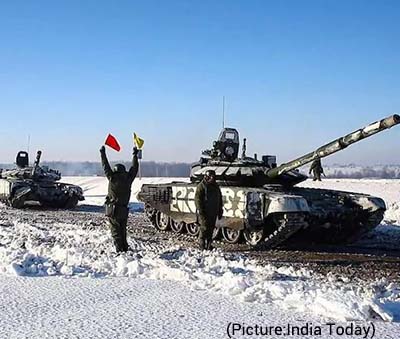
Concerns over Russia’s intentions in Ukraine mounted after talks in Geneva between Russia and the U.S.-led NATO security alliance ended last week without success. Russia has amassed more than 100,000 troops and moved heavy weapons along its border with Ukraine in recent weeks and has begun positioning forces along the Belarus-Ukraine border.

The Pentagon accused Moscow of deploying armed saboteurs into Eastern Ukraine to start violence as a pretext for moving its troops into the country, a tactic Russia used in 2014 during its invasion and occupation of the Crimean Peninsula. The Russians said they would withdraw if NATO agreed to a series of security measures, including permanently banning Ukraine from the Western military alliance, a proposal that has been flatly refused. Secretary of State Antony Blinken ’84 will meet with Russian foreign minister, Sergey Lavrov, Friday in an attempt to find a resolution to the standoff.

U.S. President Joe Biden said on Friday he was convinced Russian President Vladimir Putin had made a decision to invade Ukraine, and though there was still room for diplomacy, he expected Russia to move on the country in the coming days. Russia has repeatedly denied preparing to invade Ukraine.
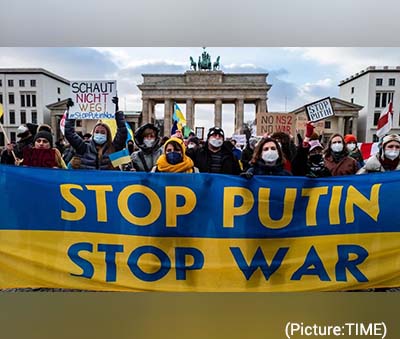
Acknowledging the “real possibility” of war, US Vice President Kamala Harris Harris tried to make the case to American allies that rapidly spiraling tensions on the Ukraine-Russia border meant European security was under threat and there should be unified support for economic penalties if the Kremlin invades its neighbor, Reuters reported.

As Western leaders warn of an imminent Russian invasion, Belarus defense minister Sunday said that in a step that further intensifies pressure on Ukraine, Russia and Belarus are extending military exercises that were due to end on Sunday.

Meanwhile, the Indian Embassy in Ukraine, meanwhile, advised all Indian nationals, whose stay is not deemed essential, to temporarily leave Ukraine. Indian students were also advised to also get in touch with respective student contractors for updates on chartered flights.

NATO Secretary General Jens Stoltenberg has posed the question that’s kept the world on edge for weeks: will Russia attack Ukraine? Not even those in the Russian government — besides President Vladimir Putin — appear to know the answer, but the fact remains that there has been a steady buildup of Russian troops and military hardware near the Ukraine border; the largest since the end of the Cold War.

“They have all the capabilities in place, Russia, to launch an attack on Ukraine without any warning at all. No one is denying that Russia has all these forces in place,” Stoltenberg told CNBC’s Hadley Gamble at the Munich Security Conference on Saturday. “The question is, will they launch an attack?”

Over 150,000 Russian troops are stationed at various points along the border with Ukraine. Russian forces have also been posted in Belarus, an ally that lies to the north of Ukraine.

According to reports, multiple explosions could be heard late Saturday and early Sunday in the center of the separatist-controlled city of Donetsk in eastern Ukraine. The origin of the explosions was not clear. Meanwhile, UK Prime Minister Boris Johnson told the BBC that the plans that the West is seeing at Ukraine’s border suggest that a Russian invasion could be “the biggest war in Europe since 1945 in terms of sheer scale”.

Almost 2,000 ceasefire violations were registered in eastern Ukraine by monitors for the Organization for Security and Cooperation in Europe Saturday, a diplomatic source told Reuters Sunday. The Ukrainian government and separatist forces have been fighting in eastern Ukraine since 2014. An upsurge in shelling has thrust the region to the center of tensions between Moscow and the West over a Russian military buildup near Ukraine.

“The fact is that this directly leads to an increase in tension. And when tension is escalated to the maximum, as it is now, for example, on the line of contact (in eastern Ukraine), then any spark, any unplanned incident or any minor planned provocation can lead to irreparable consequences,” he added. So all this has – may have – detrimental consequences. The daily exercise of announcing a date for Russia to invade Ukraine is a very bad practice,” a report by Reuters, quoting Biden stated.

Repeated Western predictions of a Russian invasion of Ukraine are provocative and may have adverse consequences, Kremlin spokesperson Dmitry Peskov said on Sunday. Putin takes no notice of such Western statements, Peskov told Rossiya 1 state TV.

Moscow has insisted it has no plans to invade Ukraine and its forces in Belarus are there for military drills set to take place in the coming days. The U.S. and its Western allies have warned of severe economic and diplomatic sanctions against Russia should an invasion go ahead.

How A Russian Invasion Of Ukraine Could Affect The World?

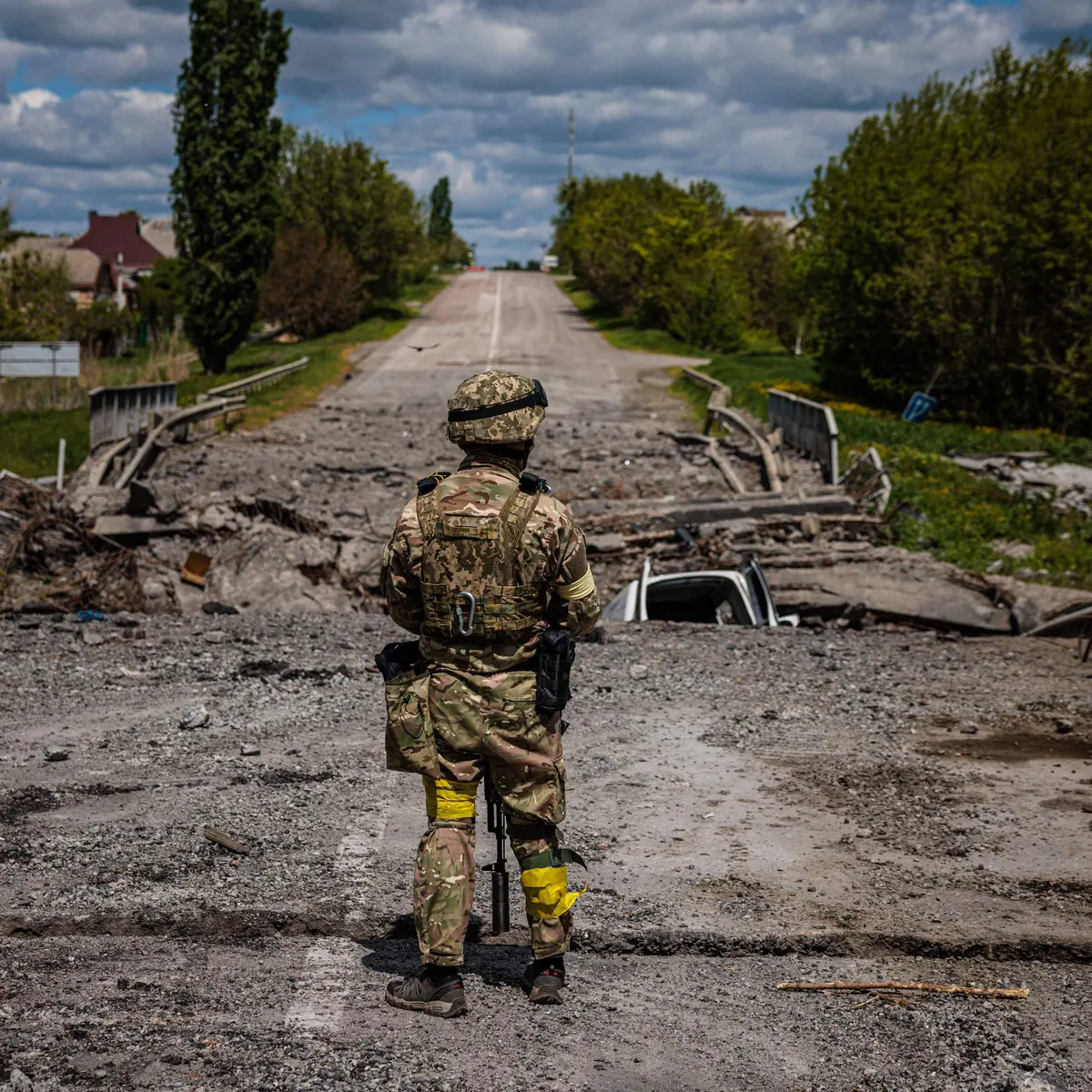
The number of Russian troops along Ukraine’s borders have continued to build in recent days, with U.S. officials estimating that 169,000 to 190,000 personnel are in place near Ukraine or in Russian-occupied Crimea.

President Biden spoke about the situation on Friday, saying that U.S. intelligence now believes Russian President Vladimir Putin has decided to proceed with an invasion.

“We have reason to believe the Russian forces are planning to and intend to attack Ukraine in the coming week, in the coming days,” Biden said. “We believe that they will target Ukraine’s capital, Kyiv, a city of 2.8 million innocent people.”

Biden has signaled to the American public that it, too, may feel effects if Russia invades Ukraine.

“If Russia decides to invade, that would also have consequences here at home. But the American people understand that defending democracy and liberty is never without cost,” he said in a speech Tuesday. “I will not pretend this will be painless.”

Russia says it is not preparing to invade, and it is not a certainty that Putin will decide to do so. World leaders are continuing diplomatic talks in a high-stakes effort to avoid that outcome.

Still, the possibility of an invasion has raised the specter of consequences — sanctions, countersanctions, energy supply issues, a flood of refugees — that would be felt far beyond Ukraine’s borders. Here’s what to know.

The U.S. has promised severe sanctions if Russia invades — and Russia could retaliate

“If Russia proceeds, we will rally the world and oppose its aggression. The United States and our allies and partners around the world are ready to impose powerful sanctions and export controls,” Biden said Tuesday.

Those sanctions could include restrictions on major Russian banks that would dramatically affect Russia’s ability to conduct international business. Severe U.S. sanctions could drive up prices for everyday Russians or cause Russia’s currency or markets to crash.

Because the U.S. does not rely much on trade with Russia, it is somewhat insulated from direct consequences. Europe is more directly affected. But certain sectors of the U.S. economy rely on highly specific Russian exports, primarily raw commodities.

“The premise of sanctions is to hurt the other guy more than you hurt your own interests. But that does not mean there will not be some collateral damage,” said Doug Rediker, a partner at International Capital Strategies.

Energy prices could soar

Russia is a major exporter of oil and natural gas, especially to Europe. As a result, officials have reportedly shied away from severe sanctions on Russian energy exports.

But there are other ways the energy market could be disrupted. Nearly 40% of the natural gas used by the European Union comes from Russia. President Biden has said the not-yet-operational Nord Stream 2 pipeline would not move ahead if Russia invaded Ukraine.

For one, Russia could choose to cut off or limit oil and gas exports to Europe as retaliation for sanctions. Nearly 40% of the natural gas used by the European Union comes from Russia — and no European country imports more than Germany, a key ally of the United States.

Even if Russia chooses not to limit exports, supplies could still be affected by a conflict in Ukraine because multiple pipelines run through the country, carrying gas from Russia to Europe. “They could simply be casualties of a military invasion,” Rediker said.

Either way, if Europe’s natural gas supply is pinched, that could cause energy prices — which have already been climbing — to rise even further. And even though the U.S. imports relatively little oil from Russia, oil prices are set by the global market, meaning local prices could rise anyway. On Tuesday, Biden promised to work with Congress to address “the impact of prices at the pump.”

Other industries, from food to cars, might also be hurt

Russia is a major exporter of rare-earth minerals and heavy metals — such as titanium used in airplanes. Russia supplies about a third of the world’s palladium, a rare metal used in catalytic converters, and its price has soared in recent weeks over fears of a conflict.

And a major conflict in Ukraine would disrupt Ukrainian industries too. Ukraine is a major source of neon, which is used in manufacturing semiconductors.

As a result, U.S. officials have warned various sectors to brace for supply chain disruptions, including the semiconductor and aerospace industries.

Fertilizer is produced in major quantities in both Ukraine and Russia. Disruptions to those exports would mostly affect agriculture in Europe, but food prices around the world could rise as a result.

The shock to international stability could hit global markets
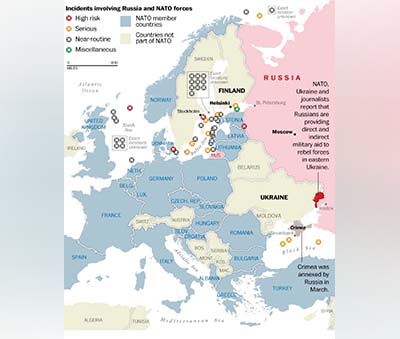
Beyond sanctions and countersanctions, global financial markets would likely have a negative reaction to a European military invasion of a scale not seen since World War II.

Americans with exposure to the stock market — like those with 401(k)s and other retirement accounts — could feel an effect, though it would most likely be short term.

“Markets are fundamentally not prepared for a land war in Europe in the 21st century,” Rediker said. “It’s something people just have not contemplated.”

The U.S. stock market has already been unusually volatile in recent weeks, churning over inflation, possible moves by the Federal Reserve and the possible conflict in Ukraine.

Historically, the market has bounced back relatively quickly after geopolitical events. That’s what’s most likely today too, analysts say.

But if a major Russian invasion and subsequent conflict cause long-lasting disruption of energy markets and other exports, investors could rethink that conventional wisdom.

“You’re potentially at a point where not only are we looking at Russia potentially invading Ukraine and sanctions and countermeasures, but you are also looking at a rise of China that doesn’t necessarily agree with the American perspective on the world anyway,” Rediker said. “Are we looking at a point in which some of the major premises that people take for granted have to be reassessed?”

Russia might respond with disruptive cyberattacks on U.S. targets

Another way Russia could respond to U.S. sanctions is through cyberattacks and influence campaigns.

Various federal agencies, including the Treasury and the Department of Homeland Security, have warned of possible cyberattacks on targets like big banks and power grid operators. And just last week, U.S. cybersecurity officials held a tabletop exercise to ensure that federal agencies are prepared for possible Russian retaliation, The Washington Post reported.

“They have been warning everyone about Russia’s very specific tactics about the possibility of attacks on critical infrastructure,” Katerina Sedova, a researcher at Georgetown University’s Center for Security and Emerging Technology, told NPR.

Russian cyberattacks have targeted Ukraine relentlessly in recent years, including attacks on the capital city of Kyiv’s power grid in 2015 and 2016. But a major escalation could shift focus to U.S. targets.

Sedova pointed to the Russian state-backed attack on the IT software company SolarWinds and a ransomware attack that shut down the Colonial Pipeline for six days as examples of how major Russian cyberattacks could disrupt U.S. operations. (The Biden administration said it does “not believe the Russian government was involved” in the pipeline attack.)

Power grids, hospitals and local governments could all be targets, she said. For now, Sedova said she is more worried about subtler attacks — like influence campaigns that aim to “sow discord between us and our allies in our resolve” to act jointly against Russia.

“Oftentimes, cyber-operations go hand in hand with influence,” she said. “They’re targeting a change of decision-making, a change in policy in that direction, a change in public opinion.”

A major invasion would likely spark a refugee crisis

A full Russian invasion could send 1 million to 5 million refugees fleeing Ukraine, U.S. officials and humanitarian agencies have warned.

“It will be a continent-wide humanitarian disaster with millions of refugees seeking protection in neighbouring European countries,” Agnès Callamard, secretary-general of Amnesty International, said last month in statement.

Poland, which shares a border with Ukraine and is already home to more than a million Ukrainians, would likely see the most refugees. Over the weekend, Polish Interior Minister Mariusz Kaminski said his country was preparing for an “influx of refugees” from Ukraine.

The U.S. military says that the thousands of soldiers deployed to Poland this month are prepared to assist with a large-scale evacuation.

“Assistance with evacuation flow is something they could do, and could do quite well. They are going to be working with Polish authorities on what that looks like and how they would handle that,” Defense Department spokesperson John Kirby said this week.

At the largest scale, a refugee crisis would not be contained to Europe — the U.S. would likely see refugees seeking asylum too.

India-UAE Fortify Multi-Faceted Bilateral Ties

Close on heels after announcement of conclusion of interim trade deal between India and Australia by mid-March, the Comprehensive Economic Partnership Agreement (CEPA) with UAE will be a huge boost for Indian economy.  In a virtual summit meet commemorating 75 years of India’s independence and 50 years of UAE’s foundation, Indian Prime Minister Narendra Modi and Crown Prince Sheikh Mohammed bin Zayed Al Nahyan witnessed the signing of CEPA.

The FTA with UAE is New Delhi’s second major deal after the India-Mauritius Comprehensive Economic Cooperation and Partnership Agreement (CECPA) in February 2021.

Breaching the traditional timelines, expediting the talks, both countries finalised this early harvest deal in a record 88 days. Both the countries commenced the talks in September 2021. Three visits by the External Affairs Minister and a visit by Commerce Minister to UAE for negotiations laid the ground for CEPA. To increase the existing bilateral trade worth $60 billion to $100 billion merchandise trade, and services trade to $15 billion in five years, the CEPA envisioned to reduce tariffs initially of 80% goods and will extend to 98% of goods over time.

Besides enabling the two-way investment in trade and services, start-ups and fintechs, the FTA is expected to create 5 lakh jobs in gems, textiles, engineering, agriculture and auto sectors in India and 1 lakh jobs in UAE.

Introducing new structural changes and launching “Vocal for Local: Manufacture in India for the World”, a cumulative turn around in manufacturing sector Indian Government set the merchandise export target of $400 billion1 for the 2022. India is almost on reaching this milestone this year. Enthused by fledging manufacturing potential, India is aiming at $2 trillion exports by 2030- comprising of $1 trillion merchandise exports and $1 trillion service exports. The FTA with UAE will not only help in sustaining the growth but would facilitate access to attractive export markets for Indian goods.

In line with its ambitious targets, New Delhi has junked the strategy of signing trade agreements to join trade groups and shifted its focus on sealing bilateral FTAs with countries to facilitate market access and better integration of Indian markets to global supply chains. This FTA with UAE will eventually actuate India to conclude similar trade agreements with GCC countries (Saudi Arabia, Qatar, Kuwait, Oman and Bahrain), the UK, the EU, Australia, Israel and Canada on anvil.

UAE is part of the Greater-Arab Free Trade Area (GAFTA) and has free trade access to Saudi Arabia, Bahrain, Egypt, Iraq, Kuwait, Lebanon, Libya, Morocco, Oman, Qatar, Syria, Sudan and Tunisia2. With CEPA on roll, India can enter markets of West Asia and Africa.

Giving major push to its FTA strategy, the UAE is also planning to seal FTAs with eight countries including India, the UK, Indonesia, Turkey, South Korea, Ethiopia, Israel and Kenya this year. Needless to say, enhanced economic cooperation is bound to foster a robust and resilient relationship.

India and UAE established diplomatic ties in 1972. But Prime Minister Modi’s visit to the country in 2015, a first in 34 years, resurrected the ties hinged on the pillars of energy cooperation, remittances and employment destination. In line with UAE’s “Vision 2021” which sought to diversify its economy, India and UAE harnessed a vision to expand the cooperation to different sectors. Subsequently, countries unveiled UAE-India Infrastructure Investment Fund. UAE pledged $75 billion to support India’s plans for building next generation infrastructure over a period of time.

The bilateral trade which mainly comprised of oil valued at $180 million per annum in 1970s steadily grew to $59 billion. Currently UAE is the third largest trading and export destination of Indian goods after US and China. UAE is 9th biggest investor in India in terms of FDI.

Since 2015, state visits by Prime Minister Modi in 2018, 2019 and reciprocal visits by Crown Prince in 2016 and 2017 reinvigorated the ties. In 2017, on the eve of Crown Prince’s visit to India as guest of honour for Republic Day celebrations countries elevated the ties to Comprehensive Strategic Partnership. Signalling trust and deepening friendship, UAE armed forces joined the parade becoming the first Arab nation to participate in the Republic Day march and second foreign military contingent. The first being the French contingent.

Aside the synergistic economic cooperation, the significant hallmark of India-UAE relationship is developmental partnership in J&K. Riled by abrogation of article 370, Pakistan has attempted to garner the support of OIC countries against India. Unequivocally stating that it is an internal matter of India, UAE cold shouldered Pakistan.

In response to Pakistan’s nefarious agenda to destabilise J&K, India roped in the UAE as a developmental partner. In October 2021, India hosted a high-level delegation from Dubai for signing a MoU with J&K administration for real estate development, industrial parks, IT towers, logistics, medical colleges among others at Srinagar3. Giving a huge boost to trade, tourism and international connectivity, direct flight between Srinagar and Sharjah was flagged off.

As a follow up, commemorating J&K week at Indian pavilion of Dubai Expo 2020, Lieutenant Governor Manoj Sinha travelled to UAE to meet business leaders to attract investments for economic development. He finalised investment commitments from Emaar, DP World and the Lulu world towards building of Mall of Srinagar, establishment of multi-modal inland container terminal and cold storage facilities and setting up of network of hypermarkets for handicrafts, horticulture products, fresh produce from J&K respectively. Clearly this mutually beneficial development partnership besides bolstering ties is a message to the World that India is keen of putting J&K on a growth trajectory.

Heralding 50 years of strong bilateral ties, leaders released a road map, “Joint India-UAE Vision Statement: Advancing the India-UAE Comprehensive Strategic Partnership: New Frontiers, New Milestones” for a future looking partnership. Multi-faceted partnership now revitalised by economic cooperation is leaping forward to consolidate such cooperation in arenas of culture, health, skills, education, global issues, defence and security, energy partnership, climate action, renewables, emerging technologies and food security.

Countries have also signed MoUs in areas like- economy, climate change and Houbara Conservation, Industries and Advanced Technologies, Low Carbon Hydrogen Developments and Investments, food security, financial services and Issuance of India-UAE joint stamps5.

Energy partnership has been key pillar of Indo-UAE bilateral ties. Additionally, UAE is also India’s first international partner by way of investing crude in India’s Strategic Petroleum Reserves Program, has committed to collaborate with India towards an equitable transition to low-carbon future. With UAE selected to host COP28 in 2023, countries have agreed to work closely in context of COPs, International Renewable Energy Agency (IREA) and International Solar Alliance (ISA). With UAE joining the UNSC as non-permanent member for 2022-23, both countries resolved to “reinforce mutual support in multilateral areas to promote collaboration in economic and infrastructure spheres”4.

Modi condemned the recent attacks by the Houthi rebels against UAE. Reaffirming their joint commitment to fight terrorism and extremism, both the leaders emphasised the “importance of promoting the values of peace, moderation, coexistence and tolerance”. Thanks to UAE’s commitment towards moderation and tolerance, the West Asia fraught with turbulence and friction is witnessing a new churn. While Abraham Accords played a pivotal role in reshaping and integration of the region, the UAE’s role in bringing the countries has raised the hopes of new dawn of co-existence and peace.

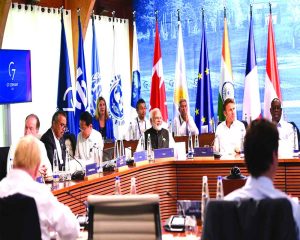
India-UAE comprehensive strategic partnership and strong ties have paved way for a new multilateral touted as the “new Quad” comprising India, UAE, Israel and the US. Led by UAE, foreign Ministers of the countries held the first virtual summit in October to explore risk free economic opportunities in the post Abraham Accords era. As of now there is little to suggest that the new Quad envisages a strategic or security role. But India’s strong ties with UAE has helped it to overcome the traditional inhibitions to enter a regional cooperation arrangement in the West Asia.

UAE is home to 3.5 million Indian community with Indians being “largest minority ethnic group” making up for 38% of UAE residents. The intangible force of people to people connect and strong business to business relations have brought the countries much closer.

Indian diplomacy is certainly coming of the age by breaking the self-imposed barriers of staying away from West Asia. Maintaining strong friendly ties with rivals- Israel, Iran, Saudi Arabia, India is slowly expanding its reach in the Arab region.

Breaking new ground through FTA, both countries have signalled their intent to consolidate the partnership with new optimism. Together with close collaboration and sense of purpose, countries have set a stage to usher into a new era of prosperity contributing to global recovery and creating immense opportunities for both economies.

Through an unprecedented outreach, both the countries have transformed a transactional energy cooperation into a comprehensive strategic cooperation. Now UAE is a vital strategic partner of India for the regional cooperation in West Asia.

UN Urges World Leaders to Declare ‘Climate Emergency’ at Virtual Climate Summit

Global climate leaders took a major stride towards a resilient, net zero emissions future today, presenting ambitious new commitments, urgent actions and concrete plans to confront the climate crisis.

World leaders should declare a “climate emergency” in their countries to spur action to avoid catastrophic global warming, UN Secretary-General Antonio Guterres said in opening remarks at a climate summit on Saturday.

On the fifth anniversary of the 2015 Paris Agreement, more than 70 world leaders are due to address the one-day virtual meeting in the hope of galvanizing countries into stricter actions on global warming emissions.

Guterres said that current commitments across the globe did not go “far from enough” to limit temperature rises. “Can anybody still deny that we are facing a dramatic emergency?” Guterres said. “That is why today, I call on all leaders worldwide to declare a State of Climate Emergency in their countries until carbon neutrality is reached.”

The summit showed clearly that climate change is at the top of the global agenda despite our shared challenges of Covid-19, and that there is mutual understanding that the science is clear.

Climate destruction is accelerating, and there remains much more to do as a global community to keep the global temperature rise to 1.5 degrees Celsius.

However, the summit showed beyond doubt that climate action and ambition are on the rise. The announcements at or just before the summit, together with those expected early next year, mean that countries representing around 65 per cent of global CO2 emissions, and around 70 per cent of the world’s economy, will have committed to reaching net zero emissions or carbon neutrality by early next year.

These commitments must now be backed up with concrete plans and actions, starting now, to achieve these goals, and the summit delivered a surge in progress on this front.

The number of countries coming forward with strengthened national climate plans (NDCs) grew significantly today, with commitments covering 71 countries (all EU member states are included in the new EU NDC) on display. As well as the EU NDC, a further 27 of these new and enhanced NDCs were announced at or shortly before the summit.

A growing number of countries (15) shifted gears from incremental to major increases. Countries committing to much stronger NDCs at the Summit, included Argentina, Barbados, Canada, Colombia, Iceland, and Peru.

The leadership and strengthened NDCs delivered at the summit mean “we are now on track” to have more than 50 NDCs officially submitted by the end of 2020, boosting momentum and forging a pathway forward for others to follow in the months ahead.

Saturday’s announcements, together with recent commitments, send the world into 2021 and the road to the Glasgow COP26 with much greater momentum. The summit showcased leading examples of enhanced NDCs that can help encourage other countries to follow suit – particularly G20 countries.

Following this Summit, 24 countries have now announced new commitments, strategies or plans to reach net zero or carbon neutrality. Recent commitments from China, Japan, South Korea, the EU and niw Argentina have established a clear benchmark for other G20 countries.

Britain Prime Minister Boris Johnson said: “Today we have seen what can be achieved if nations pull together and demonstrate real leadership and ambition in the fight to save our planet.

“The UK has led the way with a commitment to cut emissions by at least 68 per cent by 2030 and to end support for the fossil fuel sector overseas as soon as possible, and it’s fantastic to see new pledges from around the world that put us on the path to success ahead of COP26 in Glasgow.

“There is no doubt that we are coming to the end of a dark and difficult year, but scientific innovation has proved to be our salvation as the vaccine is rolled out. We must use that same ingenuity and spirit of collective endeavour to tackle the climate crisis, create the jobs of the future and build back better.”

China and India vowed to advance their commitment to lower carbon pollution at the summit. President Xi Jinping was one of the first leaders to address the virtual conference and he said China will boost its installed capacity of wind and solar power to more than 1,200 gigawatts over the next decade. Xi also said China will increase its share of non-fossil fuels in primary energy consumption to around 25% during the same period. And “China always honors its commitments,” Xi promised.

Prime Minister Narendra Modi said India was ramping up its use of clean energy sources and was on target to achieve the emissions norms set under the 2015 Paris agreement. India, the second-most populous nation on Earth and the world’s fourth-largest greenhouse gas emitter, is eyeing 450 gigawatt of renewable energy capacity by 2030, Modi said.


Pakistan Markets Hindu, Christian Women as ‘Concubines’: U.S. Official Says

US Ambassador-at-Large for International Religious Freedom Samuel D. Brownback claimed that Pakistan is marketing Hindu and Christian women as “concubines” and “forced brides” to China.

Talking to reports last week, the top US diplomat for religious freedom said that one of the sources of “forced brides” for the Chinese men is “religious minorities, Christian and Hindu women, being marketed as concubines and as forced as brides into China”.

That was happening “because there’s not effective support and there’s discrimination against religious minorities that make them more vulnerable,” he said.

He mentioned this as one of the reasons for designating Pakistan as a country of particular concern (CPC) under the International Religious Freedom Act.

Because of the one-child policy imposed by China for decades, there is an acute shortage of women given the cultural preference for boys leading to Chinese men importing women from other countries as brides, mistresses and laborers.

The U.S. Commission on International Religious Freedom had recommended placing India also on the CPC list, citing among other issues the Citizenship Amendment Act (CAA), but Secretary of State Mike Pompeo rejected the suggestion when he announced the designations Dec. 7.

Brownback, however, said that Washington was watching the Indian situation closely and “these issues have been raised in private discussions at the government, high government level, and they will continue to get raised.”

The CAA expedites citizenship for Hindus, Christians, Buddhists and Sikhs fleeing religious persecution in neighboring Islamic or Muslim majority countries but does not prevent Muslims from getting citizenship after following the usual procedures.

The U.S. has a legal provision similar to the CAA which is known as the Specter Amendment that is tucked into the budget bill giving asylum to some non-Muslim minorities from Iran, while pointedly excluding Muslim.

Asked by a Pakistani reporter if there was a double standard in Pompeo giving Pakistan the CPC designation and not India, Brownback said that while in Pakistan, a lot of the actions against minorities are taken by the government, that was not the case in India.

“Pakistan has half of the world’s people that are locked up for apostasy or blasphemy,” he said.

He said that in India, some of the actions like the CAA are taken by the government but there are others like “much of its communal violence” and then when they take place, “we try to determine whether or not there has been an effective police enforcement, judicial action after communal violence takes place.”

“That doesn’t mean that we don’t have problems with the statute (CAA),” he said. “The violence is a problem. We will continue to raise those issues. Those are some of the basis as to why Pakistan continues to be on the CPC list and India is not,” he said.

“These are issues that people spend a great deal of time reviewing and we review extensively the situation in Pakistan, in both countries,” added Brownback, whose formal title is Ambassador-at-Large for International Religious Freedom.

Answering an American reporter’s question as to why Pompeo did not follow the USCIRF recommendation to designate India as a CPC, Brownback said, “I can’t go into the decision-making process that the Secretary went through.”

But, he said, Pompeo is “well aware of a lot of the communal violence that is happening in India as well as aware of the statutes that have been enacted and some of the issues associated with the (Prime Minister Narendra) Modi government and, as I said, he has raised at the highest level, but just decided at this point in time not to place them on a CPC or a special watch list.”

Brownback said that there were also “several recommendations made by the commission that the secretary did not follow, and this was one of them.”

Pompeo did not follow the recommendations to designate Russia and Vietnam as CPCs. In addition to Pakistan, Pompeo put China, Myanmar, Eritrea, Iran, Nigeria, North Korea, Saudi Arabia, Tajikistan and Turkmenistan on the CPC list.

-+=