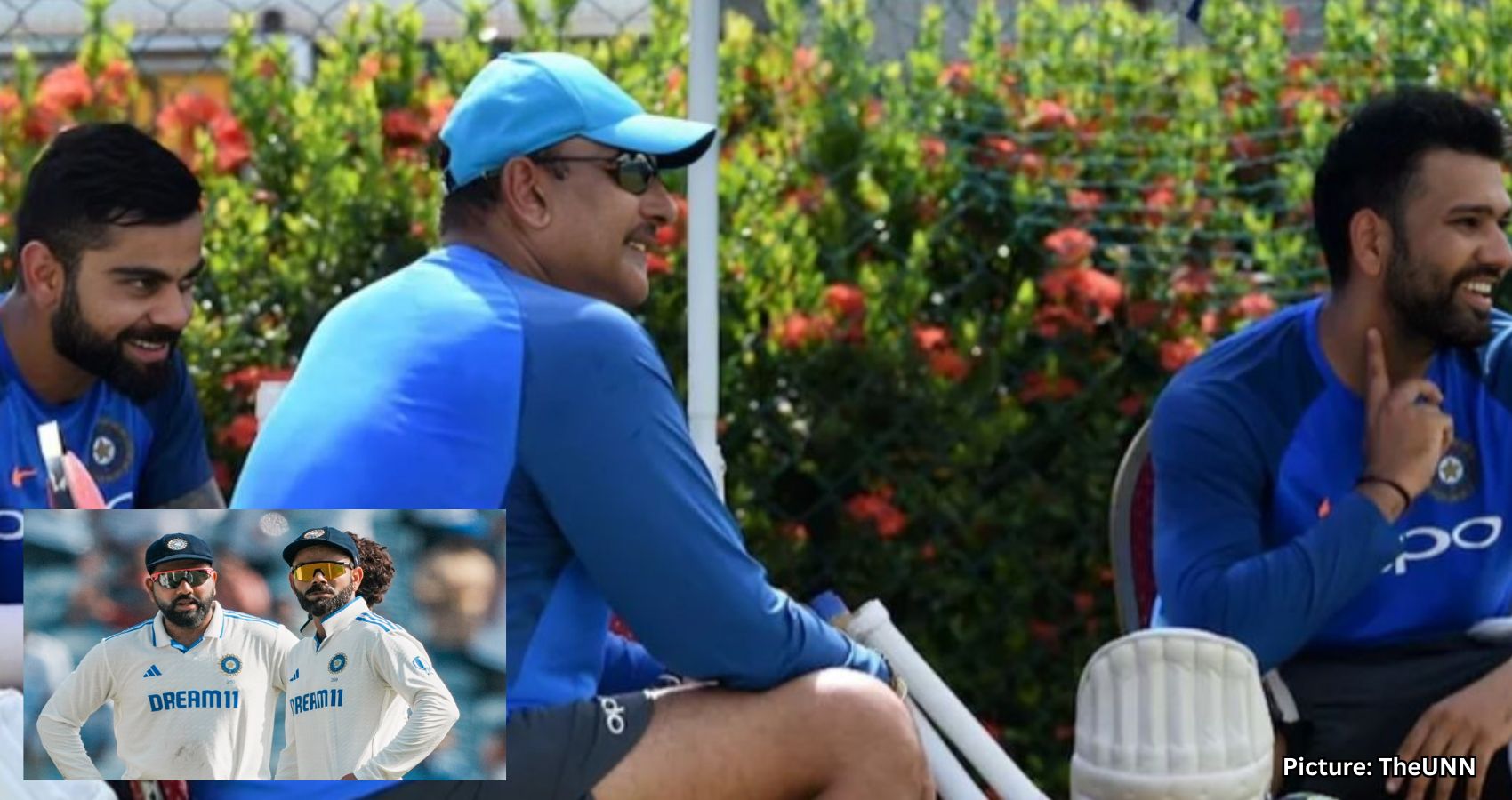
India vs Pakistan Live Updates: Asia Cup 2025 Pitch and Weather Report

India and Pakistan are set to clash in a highly anticipated Group A match of the Asia Cup 2025 in Dubai this Sunday.

India will take on Pakistan in the Asia Cup 2025, a much-anticipated Group A match scheduled for Sunday in Dubai. Fans from both nations are eagerly awaiting this encounter, which is expected to draw significant attention given the historical rivalry between the two cricketing giants.

The match will not only be a test of skill and strategy but also a showcase of the fervent support from fans. The atmosphere in Dubai is expected to be electric, with supporters from both sides filling the stands, creating a vibrant backdrop for the game.

As the teams prepare for this crucial match, attention will also be on the pitch conditions and weather, which can play a significant role in the outcome. The Dubai pitch is known for its batting-friendly nature, but factors such as humidity and temperature can influence how the game unfolds.

Both teams have been gearing up for this encounter, with players focusing on their form and fitness. India, with its strong lineup, will be looking to assert dominance early in the tournament, while Pakistan aims to capitalize on its strengths and secure a victory.

As the match day approaches, fans and analysts alike are speculating on the strategies each team might employ. The rivalry adds an extra layer of intensity, making every encounter between India and Pakistan a memorable event in the cricketing calendar.

With the Asia Cup 2025 serving as a platform for both teams to showcase their talent, the stakes are high. Each side will be keen to gain an early advantage in the tournament, making this clash one of the highlights of the cricketing year.

As anticipation builds, all eyes will be on Dubai this Sunday for what promises to be an exhilarating match between India and Pakistan.

Source: Original article

Memories Don’t Matter for Pakistan Star Ahead of India Clash

Pakistan’s Saim Ayub emphasizes the team’s focus on winning the Asia Cup rather than solely concentrating on their upcoming match against India.

As the Asia Cup approaches, Saim Ayub, a rising star in the Pakistan cricket team, has articulated the team’s broader ambitions beyond their highly anticipated clash with India. While the rivalry between the two nations often garners significant attention, Ayub insists that the team’s primary goal is to secure victory in the tournament as a whole.

In recent statements, Ayub expressed a clear message: the team is not solely fixated on the match against India. Instead, their focus is on performing consistently throughout the tournament to achieve the ultimate prize. This perspective reflects a mature understanding of the pressures and expectations that come with international cricket, particularly in high-stakes matches.

Ayub’s comments come at a time when the Asia Cup is expected to showcase some of the best talents in cricket, with teams vying for supremacy in the region. The Pakistan team, known for its rich cricketing history, is determined to make a mark in this year’s competition.

By emphasizing a team-first mentality, Ayub is helping to foster a culture of resilience and unity within the squad. The players are encouraged to concentrate on their individual and collective performances rather than getting overwhelmed by the significance of any single match.

This approach could prove beneficial as the team navigates the challenges of the tournament. With a mix of experienced players and young talent, Pakistan aims to leverage their strengths and adapt to the demands of each game.

As the tournament unfolds, fans will be eager to see how Ayub and his teammates translate their focus and determination into results on the field. The anticipation surrounding the India-Pakistan match remains high, but Ayub’s message serves as a reminder that the Asia Cup is about more than just one game.

Ultimately, the Pakistan cricket team is setting its sights on the bigger picture, aiming for success in the Asia Cup while maintaining a balanced perspective on the challenges ahead. According to Ayub, memories of past encounters may not matter as much as the present opportunity to compete for glory.

Source: Original article

India Leads Rankings, Ex-Pakistan Captain Comments Ahead of Asia Cup 2025

Pakistan is set to begin its Asia Cup 2025 campaign against Oman before facing India in a highly anticipated clash.

Pakistan is gearing up to launch its Asia Cup 2025 campaign with a match against Oman on Friday. This opening game is crucial for the team as they prepare to take on their arch-rivals, India, in what promises to be a thrilling encounter.

The match against Oman will serve as an important warm-up for Pakistan, allowing them to assess their strengths and weaknesses ahead of the more challenging fixture against India. Fans are eagerly awaiting the showdown, which is expected to draw significant attention and excitement from cricket enthusiasts around the globe.

As the tournament unfolds, the performance against Oman will set the tone for Pakistan’s aspirations in the Asia Cup. The team will be looking to build momentum and confidence before facing one of their toughest opponents.

With both teams having a storied rivalry, the match against India is not just another game; it is a clash steeped in history and competitive spirit. The players will be under pressure to deliver their best performances, knowing the stakes are high.

Pakistan’s strategy and execution in the opening match will be critical as they aim to secure a strong start in the tournament. The coaching staff and players are focused on making a significant impact right from the outset.

As the Asia Cup progresses, all eyes will be on Pakistan’s journey, particularly their upcoming match against India, which is expected to be one of the highlights of the tournament.

According to Source Name, the anticipation surrounding this rivalry continues to grow, making every encounter between the two nations a highly charged event.

Source: Original article

Oman Captain Jatinder Singh Discusses Asia Cup Opportunities

Oman is filled with excitement and confidence as they prepare for their debut at the Asia Cup, according to captain Jatinder Singh.

As Oman gears up for their first appearance in the Asia Cup, the team’s captain, Jatinder Singh, expressed a sense of enthusiasm and confidence. The players are eager to showcase their skills on a larger stage and are ready to embrace the challenges that come with competing in a prestigious tournament.

Oman’s journey to the Asia Cup has been marked by hard work and determination. The team has been preparing rigorously, focusing on both their strengths and areas for improvement. Singh believes that this tournament presents a unique opportunity for his players to gain invaluable experience and to demonstrate their capabilities against some of the best teams in the region.

“We have nothing to lose and everything to gain,” Singh stated, emphasizing the team’s mindset as they approach the competition. This perspective allows the players to play with freedom and creativity, unburdened by the pressures that often accompany high-stakes matches.

Singh also highlighted the importance of teamwork and unity within the squad. He noted that the players have developed a strong bond, which will be crucial as they navigate the challenges of the tournament. The captain is confident that their collective efforts will yield positive results, regardless of the outcomes.

Oman’s debut in the Asia Cup is not just a milestone for the team, but also a significant moment for cricket in the country. It reflects the growth of the sport in Oman and the increasing competitiveness of their national team. Singh hopes that their participation will inspire young cricketers in Oman and encourage further development of the sport at all levels.

As the tournament approaches, the excitement among fans and players alike continues to build. Oman is ready to make their mark, and Singh’s leadership will be pivotal in guiding the team through this historic journey.

According to Singh, the team is focused on enjoying the experience and making the most of the opportunity to compete against top-tier teams. This approach, combined with their determination and enthusiasm, sets the stage for what could be a memorable debut at the Asia Cup.

Source: Original article

Ex-India Star Ajay Jadeja Advocates for Jasprit Bumrah’s Inclusion

Former Indian cricketer Ajay Jadeja emphasizes the importance of Jasprit Bumrah’s presence in the team, particularly in challenging matches against the UAE.

Jasprit Bumrah’s workload management has been a significant point of discussion among cricket analysts and fans alike, especially during the recent Test series against England. In that series, Bumrah participated in only three of the five Tests, raising questions about his fitness and the strategic decisions behind his selection.

Ajay Jadeja, a former Indian cricketer, has voiced his strong opinion on the matter, asserting that Bumrah’s skills are indispensable for the team, particularly in high-stakes matches. Jadeja’s comments come in light of India’s upcoming challenges, where he believes that having a player of Bumrah’s caliber is crucial for success.

Jadeja’s remarks highlight the ongoing debate regarding player workload and management in modern cricket. As teams navigate the demands of international schedules, the balance between player fitness and performance becomes increasingly complex. Bumrah, known for his unique bowling style and ability to deliver under pressure, is often seen as a key asset for the Indian squad.

With the cricketing calendar packed with international fixtures, the management of players like Bumrah will continue to be a focal point for coaches and selectors. Jadeja’s commitment to the idea that Bumrah should be included in critical matches reflects a broader sentiment among fans who recognize the impact he has on the game.

As India prepares for their next series, the cricketing community will be watching closely to see how Bumrah’s workload is managed and whether he will take the field in upcoming matches against the UAE. The stakes are high, and with Jadeja’s vow to advocate for Bumrah’s inclusion, it is clear that the former player believes in the necessity of having the best talent available for crucial encounters.

According to Jadeja, the presence of a bowler like Bumrah can make a significant difference in the outcome of a match, especially against formidable opponents. His insights resonate with many who follow the sport, emphasizing the importance of strategic player selection in achieving victory.

As discussions around player fitness and selection continue, Bumrah’s role in the Indian cricket team remains a topic of great interest and debate among fans and analysts alike.

Source: Original article

Pakistan Captain Exits Asia Cup Press Conference Before Handshakes

India and Pakistan captains Suryakumar Yadav and Salman Ali Agha concluded their joint press conference for the Asia Cup 2025 without exchanging handshakes.

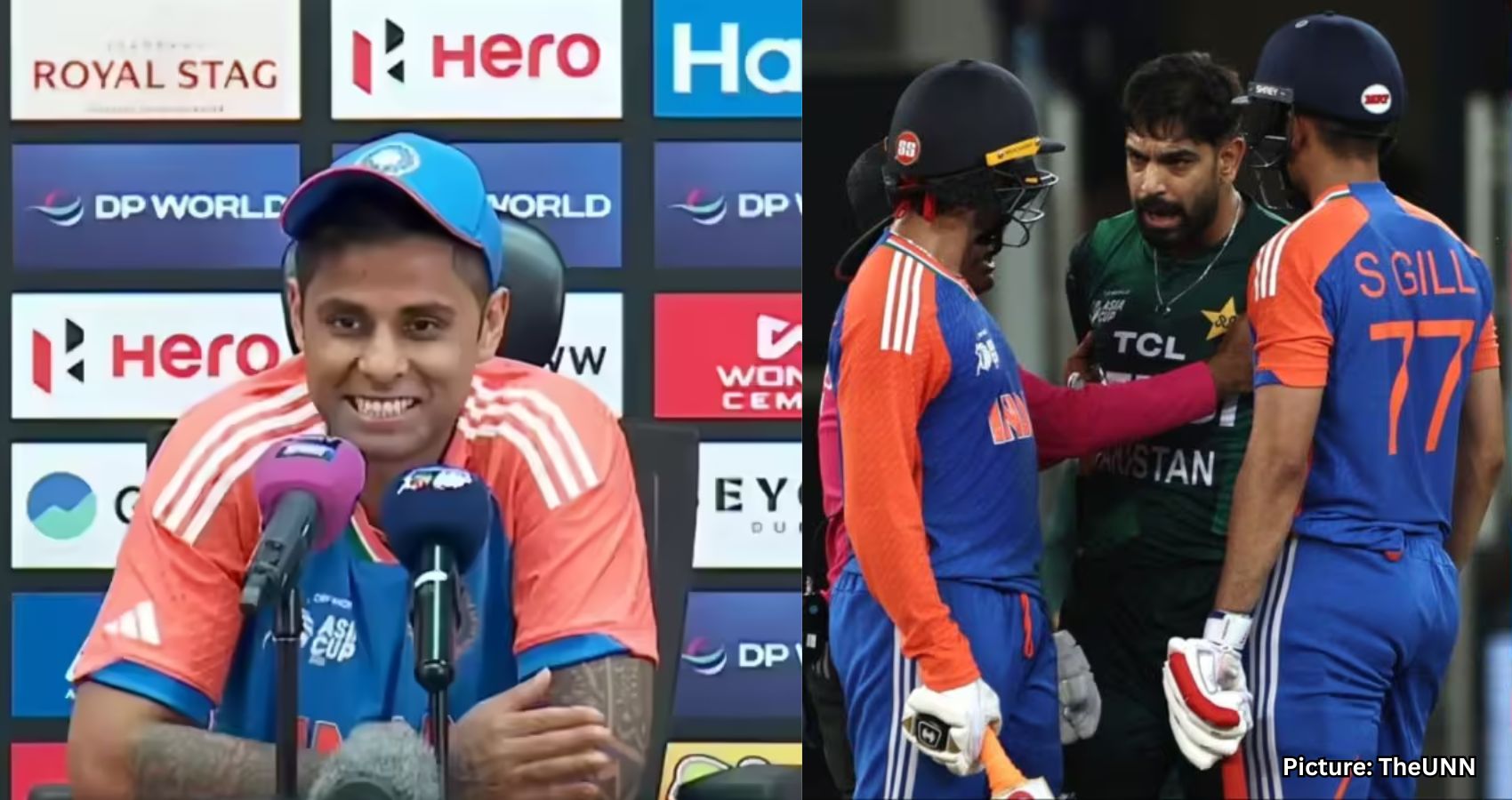
The joint press conference for the Asia Cup 2025 took an unexpected turn when Indian captain Suryakumar Yadav and Pakistani captain Salman Ali Agha chose not to shake hands at the event held on Tuesday.

As the press conference concluded, the two players walked off the stage without the customary gesture of goodwill that often accompanies such interactions. This moment was captured on video, drawing attention from fans and media alike.

The decision not to shake hands has sparked discussions among cricket enthusiasts, particularly given the historical context of India-Pakistan cricketing relations. Such gestures can hold significant meaning, especially in a sport where rivalry runs deep.

While the reasons behind their decision remain unclear, it is not uncommon for players from both nations to maintain a level of distance in light of the intense competition and the political backdrop that often influences cricketing encounters.

Despite the lack of a handshake, both captains addressed the media, discussing their teams’ preparations and expectations for the upcoming tournament. The Asia Cup 2025 is set to be a highly anticipated event, with both teams looking to assert their dominance on the field.

As the tournament approaches, fans are eager to see how the rivalry unfolds, both on and off the pitch. The absence of a handshake may be a minor incident, but it reflects the complex dynamics that characterize India-Pakistan cricket.

According to NDTV, the incident has reignited conversations about sportsmanship and the significance of gestures in competitive sports.

Source: Original article

UAE Coach Lalchand Rajput Aims for Upset Against India in Cricket Match

UAE cricket coach Lalchand Rajput aims to upset India in their Asia Cup opener, facing off against his former pupil, head coach Gautam Gambhir.

UAE cricket coach Lalchand Rajput is eager to reconnect with his former student, Gautam Gambhir, who now serves as the head coach for the Indian cricket team. As the two prepare to meet in the opening match of the Asia Cup, Rajput is optimistic about his team’s chances against a formidable Indian side known for its depth and talent.

Rajput acknowledges the challenge that lies ahead, as India boasts a lineup filled with “match-winners.” The UAE team, however, is determined to make a statement in the tournament and hopes to capitalize on any opportunities that arise during the match.

The Asia Cup presents a significant platform for the UAE team to showcase their skills and compete against some of the best players in the world. Rajput’s experience and knowledge of the game will be crucial as the team prepares for this high-stakes encounter.

As the match approaches, Rajput’s excitement is palpable. He reflects on his time coaching Gambhir and expresses admiration for his former pupil’s journey to becoming a successful coach. The upcoming match not only represents a competitive challenge but also a personal reunion for the two cricketing figures.

Rajput’s focus remains on strategy and preparation, emphasizing the importance of teamwork and resilience. He believes that with the right mindset and execution, the UAE can surprise their opponents and potentially secure an upset victory.

As the Asia Cup unfolds, all eyes will be on the clash between the UAE and India, with Rajput’s hopes riding on his team’s ability to rise to the occasion against a cricketing powerhouse.

Source: Original article

South Africa Wins Toss, Opts to Bowl Against England in 3rd ODI

South Africa aims for a clean sweep as they face England in the third and final ODI of their three-match series on Sunday.

South Africa is set to take on England in the third and final One Day International (ODI) of their three-match series. With the series already in their favor, South Africa is looking to secure a clean sweep against the hosts.

The match is being held on a Sunday, and anticipation is high as both teams prepare for what promises to be an exciting encounter. South Africa’s captain, Temba Bavuma, has won the toss and opted to bowl first, a decision that could significantly influence the outcome of the match.

As the teams take to the field, fans are eager to see how England will respond after facing defeat in the previous matches. South Africa’s strong performance throughout the series has put them in a commanding position, and they will be looking to maintain their momentum.

This final ODI not only serves as a chance for South Africa to assert their dominance but also provides England with an opportunity to salvage pride on home soil. The stakes are high, and both teams will be keen to make their mark in this decisive match.

As the action unfolds, cricket enthusiasts will be closely following the live updates, eager to see how the match progresses and whether South Africa can indeed complete the clean sweep.

According to Source Name, the atmosphere is charged with excitement as fans from both sides gather to support their teams.

Source: Original article

Dinesh Karthik Names All-Time T20I India XI, Excludes Shubman Gill

Former India wicketkeeper Dinesh Karthik has selected his all-time T20I India XI ahead of the upcoming Asia Cup 2025.

As the cricketing world gears up for the Asia Cup 2025, former India wicketkeeper-batter Dinesh Karthik has shared his ideal all-time T20I Playing XI for India. This announcement comes at a time when fans are eagerly anticipating the tournament, which is set to showcase some of the best talents in the sport.

Karthik, known for his extensive experience in international cricket, has made his selections based on a combination of performance, impact, and consistency in the T20 format. His choices reflect not only the players’ individual skills but also their contributions to the Indian team’s success in T20 internationals over the years.

While Karthik’s lineup has sparked interest and debate among fans and analysts alike, one notable omission from his selection is the young and talented Shubman Gill. Despite Gill’s impressive performances in recent matches, Karthik opted for other players who have made significant impacts in the T20 format.

The decision to leave out Gill has raised eyebrows, as he has been a standout performer in various formats of the game. However, Karthik’s selections are a testament to the depth of talent that India has produced in T20 cricket. Each player chosen by Karthik has a unique story and has played a crucial role in shaping India’s T20I journey.

As the Asia Cup approaches, discussions around team selections and player performances will only intensify. Fans will be keen to see how Karthik’s all-time XI compares to the current squad and which players will rise to the occasion in the tournament.

With the Asia Cup serving as a platform for players to showcase their skills, it will be interesting to see if any current players can make a case for inclusion in future all-time selections.

As cricket enthusiasts await the tournament, Karthik’s choices will undoubtedly fuel conversations about the evolution of T20 cricket in India and the players who have left an indelible mark on the format.

According to NDTV Sports, Karthik’s selections highlight the rich history of T20 cricket in India and the players who have contributed to its success.

Source: Original article

Ex-India Cricketer Applies for Selector Position Amid Controversy

Praveen Kumar, a former Indian cricketer known for a controversial incident in Australia, has applied for a position on the national selection committee.

As the deadline of September 10 looms for applications to fill two vacancies in the senior men’s selection committee led by Ajit Agarkar, former Indian cricketer Praveen Kumar has submitted his application to become a national selector.

The 38-year-old Kumar, who has had a notable career in cricket, is seeking to transition from player to selector, aiming to contribute to the future of Indian cricket. His experience on the field, coupled with his understanding of the game, could provide valuable insights to the selection process.

Kumar’s journey in cricket has not been without its controversies. He is perhaps best remembered for an incident during a tour in Australia, where he was involved in a confrontation with a fan. This moment, while contentious, has not overshadowed his contributions to the sport.

As the cricketing landscape in India continues to evolve, the role of selectors becomes increasingly crucial in identifying and nurturing talent. Kumar’s application reflects his desire to play a part in shaping the future of Indian cricket.

The selection committee plays a vital role in determining the players who represent the nation, making the selection process a significant responsibility. With Kumar’s application, the committee may gain a fresh perspective from someone who has experienced the pressures of international cricket firsthand.

As the deadline approaches, it remains to be seen who else will apply for these coveted positions and how the committee will evolve under Agarkar’s leadership.

According to Source Name, Kumar’s application is part of a broader trend of former players stepping into administrative roles within cricket, aiming to leverage their on-field experiences to enhance the sport’s governance.

Source: Original article

Ex-India Cricketer Opens Up About Depression During Team Absence

Former Indian cricketer Amit Mishra opens up about his struggles with depression during a prolonged absence from the national team, reflecting on his career and personal challenges.

Former Indian cricketer Amit Mishra has candidly shared his experiences with depression during a significant hiatus from the national team. With over two decades of cricketing experience, Mishra has faced numerous challenges both on and off the field.

Despite the ups and downs of his career, Mishra expressed that he holds no regrets about his journey in cricket. His story is not just one of sporting achievements but also of personal battles that many may not be aware of.

During his absence from the team, Mishra confronted feelings of isolation and uncertainty. The pressure to perform at the highest level can be overwhelming, and for Mishra, the lack of a consistent place in the team led to a deep sense of despair.

Mishra’s openness about his mental health struggles is a crucial reminder of the importance of addressing such issues, especially in high-pressure environments like professional sports. He emphasized that mental well-being is just as important as physical fitness for athletes.

As he reflects on his career, Mishra acknowledges the support he received from family and friends during his toughest times. Their encouragement played a vital role in helping him navigate through his depression and return to the sport he loves.

Today, Mishra stands as an advocate for mental health awareness, urging others to seek help and speak out about their struggles. His journey serves as an inspiration for many, highlighting that it is possible to overcome personal challenges and continue pursuing one’s passion.

In a world where mental health discussions are becoming increasingly prevalent, Mishra’s story adds to the narrative, encouraging athletes and individuals alike to prioritize their mental health.

As he continues to engage with the cricket community, Mishra hopes to inspire others to share their stories and support one another in their journeys. His commitment to mental health advocacy is a testament to his resilience and determination.

According to Mishra, acknowledging one’s struggles is the first step toward healing, and he encourages everyone to take that step, regardless of their circumstances.

Source: Original article

RCB Player Discusses Experience of Sharing Dressing Room with Virat Kohli

Jitesh Sharma discusses his experience of sharing the dressing room with Virat Kohli during the Indian Premier League.

Indian cricket team wicket-keeper batter Jitesh Sharma recently shared his thoughts on the unique experience of sharing the dressing room with cricketing icon Virat Kohli during the Indian Premier League (IPL).

Sharma, who has made a name for himself in the IPL, expressed admiration for Kohli’s work ethic and dedication to the game. He noted that being in the same team as Kohli is both an honor and a learning opportunity for younger players.

In a candid conversation, Sharma reflected on the atmosphere in the dressing room, highlighting how Kohli’s presence elevates the team’s morale. He mentioned that Kohli’s commitment to fitness and performance sets a benchmark for all players, inspiring them to push their limits.

Sharma also touched on the camaraderie that develops among teammates in such a high-pressure environment. He emphasized that sharing experiences with a player of Kohli’s caliber helps foster a sense of unity and motivation within the squad.

As the IPL continues to showcase some of the best talents in cricket, Sharma’s insights into his relationship with Kohli provide a glimpse into the dynamics of a successful team. His comments underline the importance of mentorship and the impact that seasoned players can have on their peers.

In conclusion, Jitesh Sharma’s reflections on sharing the dressing room with Virat Kohli highlight the invaluable experiences that come with playing alongside a cricketing legend. Such interactions not only enhance individual performance but also contribute to the overall success of the team.

Source: Original article

England vs. South Africa 1st ODI: Live Streaming and Telecast Details

Sonny Baker is poised to make his England debut in the first ODI against South Africa at Headingley.

The highly anticipated first One Day International (ODI) between England and South Africa is set to take place at Headingley, where fans will be eager to see the debut of Sonny Baker.

Baker, a promising talent, has garnered attention for his performances and is expected to bring fresh energy to the England squad as they face off against a formidable South African team.

This match marks the beginning of a series that promises to be exciting, with both teams looking to establish early momentum. England, known for their aggressive batting style and strategic gameplay, will aim to capitalize on home advantage.

South Africa, on the other hand, will be looking to showcase their depth and skill, making for a competitive encounter. The clash between these two cricketing nations is always a highlight on the international calendar.

Fans can look forward to a thrilling match filled with high stakes and intense competition as both teams vie for victory in this opening ODI.

As the match approaches, viewers are encouraged to check local listings for live streaming options and telecast details to ensure they do not miss any of the action.

According to NDTV Sports, the excitement surrounding Baker’s debut adds an extra layer of intrigue to this already captivating series.

Source: Original article

Regular Disagreements Between Rahul Dravid and Sanju Samson Highlighted After RR Exit

Rajasthan Royals face significant changes following the departure of coach Rahul Dravid, raising questions about team dynamics and player relationships.

Former Indian cricketer Rahul Dravid has parted ways with the Rajasthan Royals, a team that has previously claimed the Indian Premier League (IPL) title. Dravid’s exit marks a pivotal moment for the franchise as they look to redefine their strategy moving forward.

Dravid’s tenure with the Royals was marked by a series of high-profile decisions and a focus on nurturing young talent. However, reports suggest that his relationship with certain players, including wicketkeeper-batsman Sanju Samson, was fraught with disagreements. These tensions have now come to the forefront following Dravid’s departure.

As the Royals prepare for the upcoming season, the implications of Dravid’s exit are significant. The franchise must now navigate the complexities of team dynamics, particularly in light of the reported friction between Dravid and Samson. This situation raises questions about the future leadership and direction of the team.

Samson, who has been a key player for the Royals, may have found himself at odds with Dravid’s coaching style. The nature of their disagreements has not been fully disclosed, but insiders suggest that differing philosophies on player management and game strategy played a role in their strained relationship.

In the wake of Dravid’s departure, the Royals will need to reassess their coaching strategy and player relationships. The franchise’s management is likely to prioritize finding a coach who can effectively communicate and collaborate with players, ensuring a more cohesive team environment.

As the IPL approaches, all eyes will be on how the Rajasthan Royals adapt to this significant change. The team has a rich history and a passionate fan base, and their performance in the upcoming season will be closely monitored.

According to reports, the Royals are already in discussions with potential candidates to fill the coaching void left by Dravid. The franchise aims to appoint someone who can not only lead the team but also foster a positive atmosphere among the players.

In conclusion, the exit of Rahul Dravid from the Rajasthan Royals has opened a new chapter for the franchise. As they move forward, the focus will be on rebuilding team dynamics and ensuring that key players like Sanju Samson are aligned with the new coaching philosophy.

Source: Original article

Nitish Rana Captivates Fans With Cryptic Social Media Post

Star cricketers Nitish Rana and Digvesh Rathi sparked controversy during the Eliminator match between West Delhi Lions and South Delhi Superstarz on Friday.

In a heated moment during the Eliminator match between West Delhi Lions and South Delhi Superstarz, cricketers Nitish Rana and Digvesh Rathi found themselves embroiled in a contentious exchange.

The match, which took place on Friday, showcased not only the competitive spirit of the players but also the intense emotions that can surface in high-stakes situations. As the game progressed, tensions escalated between Rana and Rathi, leading to an altercation that caught the attention of fans and commentators alike.

Such incidents are not uncommon in cricket, where the pressure to perform can lead to confrontations on the field. The rivalry between the two teams added an extra layer of intensity to the match, making the players’ emotions even more palpable.

Fans took to social media to express their opinions on the incident, with many weighing in on the implications of such behavior in professional sports. The exchange between Rana and Rathi has sparked discussions about sportsmanship and the importance of maintaining composure during competitive play.

As the match unfolded, both players demonstrated their skills and determination, but the altercation has overshadowed their performances. This incident serves as a reminder of the fine line between passion and professionalism in sports.

In the aftermath, reactions from fellow players and fans continue to flood social media, highlighting the impact of the incident on the cricket community. The exchange has not only drawn attention to the players involved but has also reignited conversations about the conduct expected from athletes on the field.

As the cricketing world watches closely, it remains to be seen how this incident will affect the reputations of both Rana and Rathi moving forward. The implications of their actions may resonate beyond the match itself, influencing how players approach similar situations in the future.

Ultimately, the incident serves as a reminder of the emotional stakes involved in competitive sports and the importance of maintaining respect and professionalism, even in the heat of the moment. The cricket community will undoubtedly continue to discuss the ramifications of this spat for some time to come.

According to Source Name, the fallout from this incident may lead to further scrutiny of player conduct in future matches.

Source: Original article

Rahul Dravid Resigns as Coach of Rajasthan Royals

Rahul Dravid has announced his resignation as head coach of the Rajasthan Royals, stepping down ahead of the 2026 IPL season.

The Rajasthan Royals have confirmed that head coach Rahul Dravid will resign from his position with the franchise as they prepare for the upcoming IPL 2026 season.

This decision marks a significant change for the team, as Dravid has been a key figure in their coaching setup. His leadership and experience have been instrumental in shaping the team’s strategies and performance over the past seasons.

Dravid’s departure comes as the Royals look to reconfigure their approach ahead of the next season. The franchise will now begin the search for a new head coach who can continue to build on the foundation laid during Dravid’s tenure.

As one of India’s most respected cricket figures, Dravid’s influence extended beyond just coaching. His insights and mentorship have been invaluable to many players within the squad.

The Rajasthan Royals organization expressed gratitude for Dravid’s contributions and leadership. The team is expected to announce a replacement in the coming weeks as they gear up for the new season.

Dravid’s exit is part of a broader trend in the IPL, where franchises are frequently reassessing their coaching staff to adapt to the evolving dynamics of the league.

As the Royals embark on this new chapter, fans and analysts alike will be watching closely to see how the team’s direction changes under new leadership.

According to NDTV, the franchise is committed to finding a coach who can align with their vision and help them achieve greater success in the IPL.

Source: Original article

BCCI Decides Against Sending Five Star Players to Dubai for Asia Cup

India’s cricket team will arrive in Dubai for the Asia Cup in a staggered manner, breaking from traditional protocols, according to reports involving player Yashasvi Jaiswal.

The Board of Control for Cricket in India (BCCI) has decided to alter the usual travel arrangements for the national cricket team ahead of the Asia Cup. Instead of a coordinated arrival, players will be reaching Dubai in a staggered manner from their respective locations.

This change marks a significant departure from the convention typically observed by the BCCI, where players usually travel together as a unit. The decision may be influenced by various logistical considerations, including travel schedules and individual commitments.

Yashasvi Jaiswal, a rising star in Indian cricket, has been reported as a source for this information. His insights shed light on the evolving dynamics of team travel and preparation as the Asia Cup approaches.

The Asia Cup is a crucial tournament for the Indian cricket team, serving as a platform for players to showcase their skills and build momentum ahead of larger international competitions. The staggered arrival could also allow players to acclimatize to the conditions in Dubai at their own pace.

As the tournament draws near, fans and analysts alike will be watching closely to see how this change in travel protocol affects team cohesion and performance. The BCCI’s decision reflects a modern approach to team management, prioritizing individual circumstances while still focusing on collective goals.

With the Asia Cup set to commence soon, the Indian cricket team will be looking to make a strong impression, regardless of the unconventional travel arrangements.

According to reports, this shift in travel strategy signals a new era for the BCCI as it adapts to the evolving landscape of international cricket.

Source: Original article

South Africa Cricket Legend Shares Alarming Bronco Test Experience

Multiple reports indicate that the BCCI plans to implement a new fitness test to improve player performance and health.

In a significant move aimed at enhancing player fitness, the Board of Control for Cricket in India (BCCI) is reportedly set to introduce a new fitness assessment known as the Bronco Test. This decision comes amid growing concerns about the physical condition of players and the increasing demands of modern cricket.

The Bronco Test is designed to evaluate an athlete’s endurance and overall fitness levels. It involves a series of shuttle runs that measure how quickly a player can cover a set distance, with the goal of assessing their cardiovascular fitness. The test has gained popularity in various sports and is seen as a reliable indicator of an athlete’s stamina and ability to perform under pressure.

By implementing this test, the BCCI aims to ensure that players meet specific fitness benchmarks, which could lead to improved performance on the field. The initiative reflects a broader trend in professional sports, where fitness and conditioning have become critical components of an athlete’s training regimen.

As cricket evolves, the physical demands placed on players have increased significantly. The introduction of the Bronco Test could serve as a wake-up call for those who may not be meeting the required fitness standards. It is hoped that this initiative will foster a culture of fitness within Indian cricket, encouraging players to prioritize their health and well-being.

While the specifics of the implementation timeline remain unclear, the BCCI’s commitment to enhancing player fitness is evident. This move is likely to be welcomed by fans and experts alike, who recognize the importance of physical conditioning in achieving success at the highest levels of the sport.

As the BCCI prepares to roll out this new fitness test, players will need to adapt to the changing expectations regarding their physical capabilities. The Bronco Test could become a staple in the training programs of cricketers across the country, setting a new standard for fitness in Indian cricket.

According to reports, the BCCI’s decision is part of a larger strategy to improve the overall health and performance of its players, ensuring that they are well-equipped to handle the rigors of international competition.

Source: Original article

Australia Cricket Legend Michael Clarke Provides Update on Skin Cancer Diagnosis

Former Australia cricket captain Michael Clarke has been diagnosed with skin cancer and has provided an update on his health through social media.

Michael Clarke, the celebrated former captain of the Australian cricket team, has revealed that he has been diagnosed with skin cancer. The news comes as a shock to many fans and followers of the sport.

Clarke took to social media to share the update regarding his health, expressing his concerns and determination as he navigates this challenging time. The announcement has drawn widespread attention, with many in the cricket community and beyond sending their well-wishes and support.

As a prominent figure in Australian cricket, Clarke’s diagnosis highlights the importance of skin health awareness, particularly for those who spend significant time outdoors. Skin cancer is a serious condition that can affect anyone, and early detection is crucial for effective treatment.

Clarke’s career as a cricketer has been marked by numerous achievements, including leading Australia to victory in the 2015 Cricket World Cup. His leadership and performance on the field have made him a respected figure in the sport.

In his social media update, Clarke emphasized the need for regular health check-ups and encouraged others to be vigilant about their skin health. His message resonates with many, reminding fans of the importance of taking care of oneself, especially in the face of health challenges.

As Clarke embarks on his journey towards recovery, the cricket community stands united in support. His resilience and positive outlook serve as an inspiration to many, proving that even in difficult times, hope and determination can prevail.

Fans and fellow athletes alike are rallying around Clarke, offering messages of encouragement and solidarity. The outpouring of support reflects the deep connections formed within the sports community, especially during tough times.

Clarke’s situation serves as a reminder of the unpredictability of life and the importance of cherishing health and well-being. As he continues to share updates on his condition, many are hopeful for his recovery and look forward to seeing him back in good health.

As this story develops, supporters of Clarke and the cricket community will undoubtedly remain engaged, hoping for positive news in the days to come. His journey is a testament to the strength of the human spirit in the face of adversity.

According to NDTV, Clarke’s diagnosis has sparked conversations about skin cancer awareness and the need for proactive health measures among athletes and the general public alike.

Source: Original article

Sunil Gavaskar Critiques Asia Cup Squad Selection Debate

Sunil Gavaskar criticized foreign cricketers for disparaging Indian cricket, asserting they are merely trying to profit from their comments.

Sunil Gavaskar, the legendary Indian cricketer, has voiced strong criticism against overseas players who he believes are undermining Indian cricket. He accused them of “throwing dirt” on the sport in India while attempting to profit from their remarks.

Gavaskar’s comments come in the context of ongoing debates surrounding the selection of the Indian squad for the Asia Cup. The former cricketer has been a vocal advocate for the integrity of Indian cricket, often defending its players and the decisions made by the selection committee.

In recent years, several international cricketers have made headlines for their controversial statements regarding Indian players and the cricketing system in India. Gavaskar argues that these comments are often motivated by a desire to gain attention or financial benefit rather than a genuine concern for the sport.

He emphasized that Indian cricket has a rich history and a strong following, and it should not be tarnished by the opinions of those who do not fully understand its nuances. Gavaskar’s remarks serve as a reminder of the pride many Indian cricketers feel for their national team and the sport as a whole.

As discussions around the Asia Cup squad continue, Gavaskar’s sharp critique highlights the tensions that can arise in the world of cricket, especially when it comes to national pride and the influence of foreign voices.

His passionate defense of Indian cricket resonates with fans and players alike, reinforcing the notion that the sport is not just a game but a significant part of India’s cultural identity.

Gavaskar’s legacy as a cricketer and commentator positions him as a key figure in these discussions, and his insights are often sought after by both the media and cricket enthusiasts.

As the Asia Cup approaches, the focus will remain on the players selected to represent India, but Gavaskar’s comments remind everyone of the broader context in which these discussions take place.

In a sport that often sees players from different nations engaging in friendly banter, Gavaskar’s call for respect and understanding underscores the importance of valuing the contributions of Indian cricket while also acknowledging the perspectives of international players.

Ultimately, the debate surrounding the Asia Cup squad is just one of many instances where the intersection of national pride and international scrutiny plays out in the world of cricket.

As fans eagerly await the tournament, Gavaskar’s words will likely echo in the minds of many, serving as a rallying cry for those who cherish the legacy of Indian cricket.

Source: Original article

Test Cricket’s Allure Shines in Anderson-Tendulkar Trophy Match

India’s thrilling victory over England in the Anderson-Tendulkar Trophy showcased the beauty and mystery of Test cricket, culminating in a nail-biting finish that captivated fans worldwide.

Mohammed Siraj, the Indian fast bowler, celebrated his match-winning wicket with a jubilant leap reminiscent of Cristiano Ronaldo, his arms outstretched and legs askew. As he landed, his teammates quickly engulfed him in a wave of joy, while behind him, the stumps lay in disarray, and English batsman Gus Atkinson was left devastated.

Siraj had delivered an exceptional yorker under immense pressure, leading to England’s narrow loss by just six runs. This match marked India’s closest victory in Test cricket history, following 25 grueling days of competition between two formidable teams. The five-match Anderson-Tendulkar Trophy series concluded with a 2-2 scoreline, a reflection of the intense battles fought on the field. Fans of the Indian team might argue that the series should have favored India 3-1, had they capitalized on critical moments.

With the retirements of three modern-day Indian greats—Ravichandran Ashwin, Rohit Sharma, and Virat Kohli—this series featured a team in transition. Following a comprehensive home series loss to New Zealand and a lackluster tour of Australia, India had to manage its greatest fast bowler, Jasprit Bumrah, to prevent serious injury. Ironically, India did not win any of the matches Bumrah played. Instead, it was the less heralded Siraj who shone, taking 16 wickets at an impressive average of 19 in the two Tests without Bumrah, leading India to victory in both matches. His tireless efforts earned him praise from opposing players, coaches, and even the Sri Lankan umpire.

The series was marked by an abundance of runs and wickets, with performances that piled up like never before in cricket history. The matches featured majestic dominance, rearguard efforts, unlikely heroes, consistent performers, serious injuries, and silly errors, all contributing to what many consider one of the most memorable series of all time. Siraj was supported by a cast of talented players, including Shubman Gill, KL Rahul, Ravindra Jadeja, Rishabh Pant, Washington Sundar, and Yashasvi Jaiswal. Meanwhile, England’s stalwarts Joe Root and Ben Stokes fought valiantly but received only sporadic assistance from their teammates.

Among the many highlights of the series, the final day of the last match delivered a gripping 56 minutes that felt like the cherry on top of an already thrilling cake for cricket lovers. The ebb and flow of the game during those nine overs were both draining and energizing, a rollercoaster of emotions that left fans on the edge of their seats. Had India lost, it would have been a devastating blow for their supporters. Instead, their victory felt like a collective achievement, as if every viewer had contributed to the triumph.

Test cricket is often viewed as a mystery—unknown to many in the sports world and a source of amusement among American audiences. Played over five days, it stands in stark contrast to an era that demands instant gratification. The sport is deeply influenced by conditions, both atmospheric and on the pitch, with the playing surface varying dramatically from venue to venue.

Despite its challenges, Test cricket showcases remarkable marvels. It demands a unique blend of mental stamina and physical prowess, with bowlers maintaining high speeds even after delivering hundreds of overs. The sport has the power to evoke deep emotions, with players pushing through injuries to help their teams win or save matches. The emotional connection it fosters can lead even the most stoic fans to tears of joy or anguish as they witness the live drama unfold.

This connection transforms the viewing experience into something more profound, inviting fans to explore their inner worlds—reflecting on struggles, triumphs, mistakes, and perseverance. The extended time frame of Test cricket allows for a richer narrative to emerge, creating a state of mindful awareness and curiosity. The visceral experience of watching cricket live, surrounded by fellow fans, cannot be replicated. While great innings or bowling spells are memorable, it is the shared experience of cheering and engaging with the game that builds a lasting bond.

This bond extends even to those watching from a distance, as the collective psyche immerses itself in the match, shutting out distractions. Emotions rise and fall with the game’s pulse, and while many can maintain composure in contentious situations, not everyone can. I found myself wanting to scream at Ben Stokes as he bowled directly at Rishabh Pant’s injured toe, and I scolded the England team for their petulance when Jadeja and Sundar completed their centuries despite the match’s outcome being decided.

My frustration peaked when Indian coach Gautam Gambhir, affectionately dubbed “GuGu” in my cricket-mad chat group, made classist remarks to the pitch curator. Yet, amidst these moments, I felt immense gratitude for the time I have spent watching Test cricket over the past 35 years, including this latest series. The luxury of time is indeed the greatest gift of all.

As the echoes of the past few months fade, a mix of satisfaction and anticipation lingers—acknowledging both the past and the future. However, it is in the present moment that cricket truly unfolds. Eyes glued to the screen or the pitch, we witness the drama of a hard red ball hurtling toward a helmeted batter wielding a wooden bat, with 11 players and two umpires eagerly awaiting the outcome. This shared experience encapsulates the beauty of Test match cricket.

Source: Original article

Duleep Trophy 2025: Schedule, Squads, Venue, and Live Streaming Details

The Duleep Trophy 2025 is set to commence on August 28, culminating in the final scheduled for September 11 to 15.

The Duleep Trophy, a prestigious first-class cricket tournament in India, is gearing up for its 2025 edition. The competition will kick off on August 28, with teams vying for the coveted title.

The tournament will feature a series of matches leading up to the final, which is scheduled to take place from September 11 to 15. This annual event showcases some of the best talent in Indian cricket, providing a platform for players to demonstrate their skills and potentially earn selection for the national team.

As the tournament approaches, fans can look forward to exciting matches and the opportunity to witness emerging players in action. The Duleep Trophy not only highlights individual performances but also fosters regional pride as teams represent different zones of India.

Details regarding the full squads, venues, and live streaming options will be announced closer to the tournament date, ensuring that fans can stay connected and support their favorite teams throughout the competition.

With the Duleep Trophy being a significant event in the Indian cricket calendar, anticipation is building among players and fans alike as they prepare for the upcoming matches.

According to NDTV Sports, the tournament promises to deliver thrilling cricket action and showcase the depth of talent in Indian cricket.

Source: Original article
Australia Sets Record with 431/2 Against South Africa in ODI

Australia made history by scoring an impressive 431 runs for the loss of just two wickets against South Africa, with standout performances from Travis Head and captain Mitchell Marsh.

In a remarkable display of batting prowess, Australia achieved a historic milestone by posting a staggering total of 431 runs for the loss of just two wickets in their match against South Africa. This performance marks one of the highest team scores in One Day Internationals (ODIs), showcasing the team’s dominance on the field.

Travis Head led the charge with a phenomenal innings, scoring 142 runs off just 103 balls. His aggressive batting style and ability to find boundaries consistently put pressure on the South African bowlers. Head’s innings included a series of powerful strokes that thrilled the crowd and set the tone for Australia’s innings.

Joining Head at the crease was Australian captain Mitchell Marsh, who also delivered an outstanding performance. Marsh contributed significantly to the team’s total, scoring 100 runs off 106 balls. His partnership with Head proved crucial, as the duo built a solid foundation for the innings, combining skill and strategy to dismantle the South African bowling attack.

The match showcased not only individual brilliance but also the effectiveness of Australia’s batting lineup. The team’s ability to score runs at a rapid pace kept the pressure on South Africa, who struggled to contain the flow of runs throughout the innings.

As the innings progressed, it became evident that Australia was on track to set a record-breaking total. The aggressive approach taken by both Head and Marsh was instrumental in achieving this feat, as they capitalized on every scoring opportunity presented by the South African bowlers.

This historic score not only reflects the talent within the Australian squad but also serves as a testament to their preparation and strategy heading into the match. With both Head and Marsh reaching their centuries, the Australian team demonstrated their capability to perform under pressure and deliver exceptional results.

As the game unfolded, spectators were treated to a masterclass in batting, with both players exhibiting a range of shots and techniques that left the opposition in disarray. The partnership between Head and Marsh was a highlight of the innings, as they complemented each other’s playing styles and maintained a steady run rate.

With this monumental achievement, Australia has set a high benchmark for future matches, and their performance against South Africa will be remembered as a significant moment in ODI history. The team’s ability to score such a high total not only boosts their confidence but also sends a strong message to their competitors about their capabilities on the international stage.

As the match progresses, all eyes will be on how South Africa responds to this formidable total, and whether they can mount a challenge against the Australian batting lineup that has proven to be so effective.

According to Source Name, the match has already garnered significant attention, and cricket enthusiasts are eager to see how the remainder of the game unfolds.

Source: Original article

Ajit Agarkar Faces Scrutiny Over Shubman Gill’s Asia Cup Selection

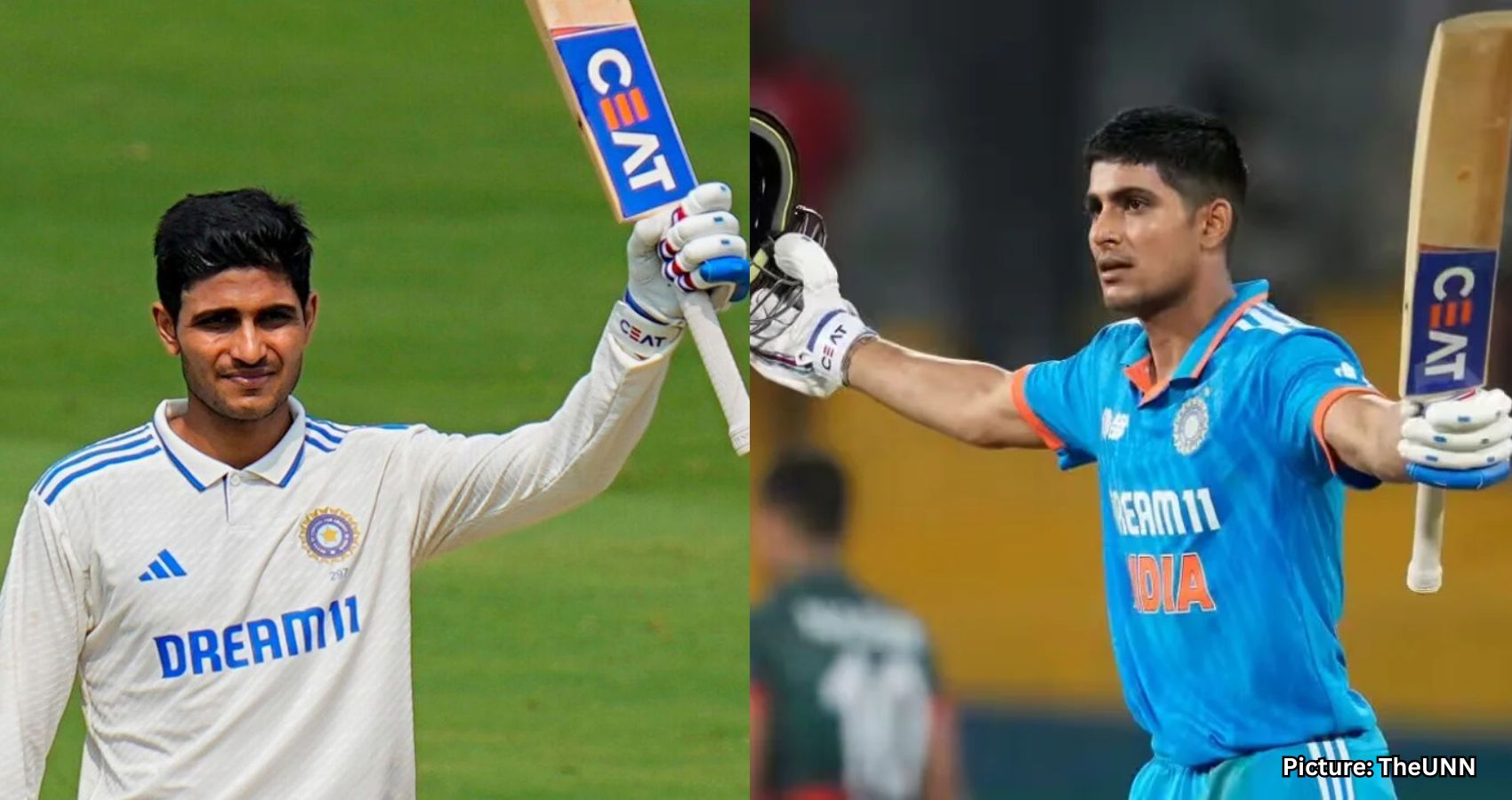
Shubman Gill’s selection as vice-captain for the Asia Cup has sparked debate, given his lack of recent T20I appearances despite a stellar performance in the England Test series.

Shubman Gill has been named vice-captain for the upcoming Asia Cup, a decision that has raised eyebrows among cricket analysts and fans alike. Despite not having played in T20 Internationals recently, Gill’s impressive form in the Test arena has caught the attention of selectors.

During the recent Test series against England, Gill showcased his batting prowess, amassing over 750 runs. His performance included several match-winning innings, which solidified his reputation as a key player in the longer format of the game. However, the transition from Tests to T20s can be challenging, and some critics question the wisdom of selecting a player who has not been active in the T20 format lately.

The Board of Control for Cricket in India (BCCI) selectors have faced scrutiny for their choices in recent tournaments, with many arguing that past performances in one format do not necessarily guarantee success in another. Gill’s selection as vice-captain has reignited discussions about the criteria used by the selectors when forming the squad.

Supporters of Gill argue that his exceptional Test form should not be overlooked, and that his ability to adapt to different formats could prove beneficial for the team. They point to his technical skills and temperament, which are vital in high-pressure situations typical of international tournaments.

On the other hand, critics emphasize the importance of recent form in the T20 format, suggesting that players who have consistently performed in T20s should be prioritized. This perspective highlights the need for selectors to balance experience with current performance metrics when choosing a squad for a major competition like the Asia Cup.

The debate surrounding Gill’s selection reflects broader concerns about the BCCI’s approach to team selection. As the Asia Cup approaches, all eyes will be on how the team performs, and whether Gill can translate his Test success into the shorter format of the game.

As cricket fans await the tournament, the discussions around player selection are likely to continue, with many eager to see if Gill can rise to the occasion and justify the selectors’ faith in him.

According to NDTV, the conversation surrounding Gill’s selection is emblematic of the ongoing challenges faced by the BCCI selectors in balancing past performances with current form.

Source: Original article

Sports and Tourism Can Elevate J&K to Global Recognition, Says MoS Khadse

Union Minister of State for Youth Affairs and Sports, Raksha Khadse, highlights the potential of sports and tourism to elevate Jammu and Kashmir on the global stage during the Khelo India Water Sports Festival.

Srinagar: Union Minister of State for Youth Affairs and Sports, Raksha Khadse, emphasized the importance of sports and tourism in promoting Jammu and Kashmir during the Khelo India Water Sports Festival held at Dal Lake. She stated that the event reflects the Centre’s commitment to nurturing local talent and enhancing tourism in the region.

At the festival’s inaugural event, Khadse remarked, “There is immense potential in J&K. By integrating tourism with sports, we can elevate the region’s profile internationally.” She assured attendees that the government is dedicated to providing high-quality infrastructure and opportunities for young athletes throughout the Union Territory.

Khadse also addressed the sensitive topic of Indo-Pak sports exchanges. In light of ongoing restrictions on Pakistani players in India, she stated, “The nation and its citizens come first. We cannot hurt the sentiments of our people.” While acknowledging the role of sports in fostering growth and unity, she underscored that national security and public sentiment must take precedence.

During the event at the Sher-i-Kashmir International Conference Centre (SKICC), Khadse highlighted the participation of over 400 athletes from across India in various competitions, including rowing, canoeing, and kayaking on the picturesque Dal Lake. “The enthusiasm of the youth here is inspiring. Under the leadership of Prime Minister Narendra Modi, our aim is to strengthen both sports and sports tourism,” she noted.

In her address, Khadse announced plans to establish five Khelo India Centres in every district of Jammu and Kashmir, with ongoing talent identification programs aimed at fostering local athletes. “We want to see youth from J&K on international platforms, bringing home medals and pride,” she added.

The Khelo India Water Sports Festival also showcased cultural performances that highlighted the rich heritage and spirit of Kashmir, marking a significant milestone as the first water sports event of its kind held on Dal Lake.

As the region continues to develop its sports and tourism sectors, the Khelo India initiative aims to create a lasting impact on the local economy and the lives of its youth.

Source: Original article

BCCI Announces Replacement Venue for Women’s ODI World Cup

Due to the unavailability of Bengaluru’s M Chinnaswamy Stadium, the BCCI has announced a replacement venue for the Women’s ODI World Cup.

The Board of Control for Cricket in India (BCCI) has made a significant change to the venue lineup for the upcoming Women’s ODI World Cup. The decision comes as a result of the unavailability of Bengaluru’s M Chinnaswamy Stadium, a popular cricket ground known for hosting various high-profile matches.

The BCCI’s announcement has sparked discussions among fans and stakeholders regarding the implications of this venue change. The M Chinnaswamy Stadium has been a staple in Indian cricket, often serving as a host for both domestic and international fixtures. Its absence from the World Cup schedule raises questions about the logistics and planning involved in organizing such a prestigious tournament.

While the exact details of the replacement venue have yet to be disclosed, the BCCI is expected to select a location that can accommodate the anticipated crowds and provide the necessary facilities for teams and officials. The organization is keen on ensuring that the tournament maintains its high standards, despite the challenges posed by this last-minute change.

As the Women’s ODI World Cup approaches, fans will be eager to learn more about the new venue and how it will impact the tournament’s atmosphere. The BCCI’s decision underscores the complexities involved in hosting a global sporting event, especially in a country where cricket is more than just a game; it is a passion that unites millions.

With the tournament set to showcase some of the best talent in women’s cricket, the focus will now shift to how the BCCI manages this transition and what it means for the teams participating in the World Cup.

As the cricketing community awaits further updates, the BCCI remains committed to delivering an unforgettable experience for players and fans alike, despite the challenges presented by the venue change.

Source: Original article

Ex-Pakistan Star Comments on Shreyas Iyer’s Asia Cup Exclusion

Shreyas Iyer’s exclusion from the Asia Cup 2025 squad has drawn significant criticism from both fans and former cricketers.

Shreyas Iyer’s absence from the Asia Cup 2025 squad has become a topic of heated discussion among cricket enthusiasts and analysts alike. The decision has not only raised eyebrows but has also led to a wave of criticism directed at the selectors.

Fans have taken to social media to express their disappointment, arguing that Iyer’s recent performances warranted a place in the squad. His ability to anchor innings and play crucial roles in tight situations has made him a valuable asset to the Indian cricket team.

Former cricketers have also weighed in on the matter, with many questioning the rationale behind the selection committee’s decision. They believe that Iyer’s experience and skill set could have significantly contributed to the team’s success in the tournament.

Critics have pointed out that Iyer’s form leading up to the Asia Cup was commendable, making his exclusion all the more perplexing. The Asia Cup is a prestigious tournament, and having a player of Iyer’s caliber could have provided India with a competitive edge.

In discussions surrounding the selection process, some former players have suggested that if Iyer were part of a different cricketing culture, he might have been treated differently. They argue that in other cricketing nations, players with similar track records would likely have been retained despite any recent setbacks.

This sentiment reflects a broader conversation about how players are evaluated and selected for national teams. The pressure of performance, especially in high-stakes tournaments, often leads to tough decisions that can leave fans and players alike feeling frustrated.

As the Asia Cup approaches, the focus will remain on how the Indian team performs without Iyer. His absence will undoubtedly be felt, and it remains to be seen how the selectors will justify their decision if the team struggles in the tournament.

Overall, the debate surrounding Shreyas Iyer’s omission highlights the complexities of team selection in cricket and the passionate responses it can evoke from fans and analysts alike.

Source: Original article

Sunil Gavaskar Reveals India XI for Asia Cup, Includes Sanju Samson

Sunil Gavaskar has revealed his preferred India XI for the Asia Cup, highlighting a bold choice involving Sanju Samson.

As the Asia Cup approaches, cricket legend Sunil Gavaskar has shared his thoughts on the Indian squad, particularly focusing on the opening partnership and the role of Sanju Samson.

According to Gavaskar, Shubman Gill is poised to take the opening slot alongside Abhishek Sharma. This decision raises questions about the position of Sanju Samson, who has been a topic of discussion among fans and analysts alike.

Gavaskar’s selection reflects his confidence in Gill and Sharma, both of whom have shown promise in recent matches. Gill, known for his elegant batting style, has been in excellent form, while Sharma’s explosive capabilities make him a valuable asset at the top of the order.

However, the inclusion of these two players could mean that Samson, who has been a consistent performer in the shorter formats, may have to wait for his opportunity. This decision has sparked debate among cricket enthusiasts regarding the best combination for the team.

Samson’s ability to play under pressure and his experience in various conditions make him a strong contender for a spot in the playing XI. Yet, with the current lineup, it appears that his role may be limited, at least for the opening matches of the tournament.

Gavaskar’s insights into the team dynamics and player selections provide a glimpse into the strategic considerations that go into forming a competitive squad for the Asia Cup. As the tournament unfolds, fans will be eager to see how these selections play out on the field.

With the Asia Cup being a crucial event leading up to the World Cup, every decision made by the selectors and the coaching staff will be scrutinized. The performance of the opening pair, along with the overall team composition, will be vital for India’s success in the tournament.

As the cricketing world watches closely, the anticipation builds around how India’s lineup will perform and whether Sanju Samson will get his chance to shine in the Asia Cup.

According to NDTV Sports, Gavaskar’s choices reflect a blend of experience and youth, aiming to strike the right balance as India prepares for the challenges ahead.

Source: Original article

India’s Asia Cup 2025 Squad Announcement Delayed: Key Factors Explained

India’s cricket selectors are set to announce the squad for the Asia Cup 2025 following a meeting with BCCI secretary Devajit Saikia.

The Board of Control for Cricket in India (BCCI) is gearing up for the announcement of the squad for the Asia Cup 2025. This follows a crucial meeting between BCCI secretary Devajit Saikia and the selectors, who have all gathered for this important event.

The anticipation surrounding the squad announcement is palpable, as fans and analysts alike are eager to see which players will be chosen to represent India in the prestigious tournament. The Asia Cup is a significant event in the cricket calendar, and the selection process is always closely scrutinized.

As the meeting progresses, discussions among the selectors will likely focus on player form, fitness, and team balance. The selectors will need to consider various factors, including recent performances in domestic and international matches, as well as the specific conditions expected during the tournament.

With the selectors present and the meeting underway, the announcement is expected to occur shortly. Fans are hopeful for a strong squad that can compete effectively against other top cricketing nations.

As the cricketing world awaits the final decision, the BCCI’s careful consideration of its player selections will be critical in shaping India’s chances in the tournament.

According to Source Name, the announcement will provide clarity on the team’s strategy and composition as they prepare for the challenges ahead in the Asia Cup 2025.

Source: Original article

Asia Cup 2025: Shubman Gill Included, Two Superstars Left Out

India’s Asia Cup 2025 squad has been announced, featuring notable selections and omissions, including Shubman Gill as vice-captain and the absence of Shreyas Iyer and Yashasvi Jaiswal.

The Board of Control for Cricket in India (BCCI) has officially announced the squad for the Asia Cup 2025, revealing several surprising choices. The announcement was made by BCCI chief selector Ajit Agarkar alongside T20I captain Suryakumar Yadav, following a meeting with BCCI secretary Devajit Saikia and the selection committee.

This year’s squad features Shubman Gill as vice-captain, a decision that has garnered attention given his recent performances. Jasprit Bumrah, a key player for the team, is also included in the lineup. However, the selection process has sparked discussions among fans and analysts alike, particularly due to the exclusion of established players like Shreyas Iyer and Yashasvi Jaiswal.

Despite a less-than-stellar performance in the Indian Premier League (IPL), Rinku Singh has made the cut for the squad, which raises questions about the selection criteria used by the committee. Jaiswal, who has been named among the five reserve players, will be hoping for an opportunity should any of the primary squad members be unable to participate.

The complete squad for Team India in the Asia Cup 2025 is as follows: Suryakumar Yadav (captain), Shubman Gill (vice-captain), Abhishek Sharma, Tilak Varma, Hardik Pandya, Shivam Dube, Axar Patel, Jitesh Sharma (wicketkeeper), Jasprit Bumrah, Arshdeep Singh, Varun Chakaravarthy, Kuldeep Yadav, Sanju Samson (wicketkeeper), Harshit Rana, and Rinku Singh.

As the cricketing world gears up for the Asia Cup, the selections made by the BCCI will undoubtedly be scrutinized. Fans and experts will be watching closely to see how these choices impact India’s performance in the tournament.

According to NDTV, the squad announcement has set the stage for what promises to be an exciting Asia Cup 2025.

Source: Original article

10-Year-Old Indian-American Bodhana Sivanandan Surprises Chess Grandmaster

A 10-year-old chess prodigy from London, Bodhana Sivanandan, has made history by becoming the youngest female player to defeat a grandmaster.

NEW DELHI – Bodhana Sivanandan, a 10-year-old chess prodigy from London, has made headlines by becoming the youngest female player ever to defeat a grandmaster. At just 10 years and five months old, she achieved this remarkable feat by defeating 60-year-old Grandmaster Peter Wells during the final round of this year’s British Chess Championships held in Liverpool.

The International Chess Federation (FIDE), the sport’s global governing body, celebrated her achievement in a recent post, stating, “British sensation Bodhana Sivanandan has made history by becoming the youngest female chess player ever to beat a grandmaster!” FIDE noted that Sivanandan’s victory narrowly surpassed the previous record set in 2019 by American Carissa Yip, who was 10 years, 11 months, and 20 days old at the time of her win.

This victory not only adds to Sivanandan’s accolades but also earns her the title of Woman International Master (WIM), which is the second-highest title awarded exclusively to women, just below that of Woman Grandmaster.

Sivanandan’s journey in chess has been nothing short of extraordinary. Earlier in 2023, she became the youngest person ever selected to represent England internationally in any sport. At the Chess Olympiad in Budapest, she played alongside teammates who were often decades older, many in their 20s, 30s, and 40s.

Malcolm Pein, manager of the England chess team, expressed his admiration for Sivanandan, stating, “Bodhana is one of the most remarkable British chess prodigies I have ever seen.” Her accomplishments at such a young age have not only inspired her peers but also garnered attention from the global chess community.

As Sivanandan continues to make strides in the chess world, her recent victory serves as a testament to her talent and dedication to the game. With her sights set on future competitions, many are eager to see how her career unfolds in the coming years.

Source: Original article

India’s Asia Cup 2025 Squad Announcement Sparks Selection Drama

Fans across India are eagerly anticipating the announcement of the squad for the Asia Cup 2025, set to commence on September 9.

The excitement is palpable as cricket enthusiasts in India await the announcement of the national squad for the upcoming Asia Cup 2025. Scheduled to begin on September 9, the tournament promises to be a thrilling showcase of cricketing talent.

The Asia Cup is a prestigious tournament that brings together the best teams from the continent, and India’s participation is always a focal point for fans. With the event just around the corner, speculation about the squad selection has intensified.

As the selection meeting approaches, discussions among fans and analysts have been rife with predictions about which players will make the cut. The team management faces the challenging task of balancing experience with youth, as they aim to field a competitive side.

In recent years, India has seen a mix of seasoned players and emerging talents, and this trend is expected to continue. The selectors will likely consider players’ recent performances in domestic and international formats, as well as their fitness levels.

With the Asia Cup serving as a crucial platform for teams to prepare for larger tournaments, including the World Cup, the stakes are high. Fans are not only interested in who will be selected but also in the strategies that the team management will employ to ensure success.

As the countdown to the squad announcement continues, cricket lovers are keeping a close eye on any hints or leaks regarding the potential lineup. The anticipation surrounding the announcement reflects the deep passion for cricket in India and the significance of the Asia Cup in the cricketing calendar.

In the coming days, as the official announcement is made, the cricketing community will be eager to dissect the selections and discuss the implications for India’s campaign in the tournament.

As the excitement builds, fans are encouraged to stay tuned for live updates on the squad announcement, which promises to be filled with drama and surprises.

According to Source Name, the final squad will be revealed shortly, and it is expected to generate significant discussion among fans and analysts alike.

Source: Original article

Gautam Gambhir Proposes Major Changes for T20I Team Structure

Indian cricket team head coach Gautam Gambhir is considering significant changes, including appointing an all-format captain to revamp the T20I team.

In a move that could reshape the future of the Indian cricket team, head coach Gautam Gambhir is reportedly contemplating the appointment of an all-format captain. This strategy aims to rebrand the T20I team and enhance its performance on the international stage.

The proposal comes amid ongoing discussions about the direction of the T20I squad, which has faced scrutiny following recent performances. Gambhir, a veteran of the game and a two-time World Cup winner, is known for his strategic mindset and commitment to excellence. His vision for the team includes a cohesive leadership structure that can unify the players across all formats of the game.

By selecting an all-format captain, Gambhir hopes to establish a consistent leadership style that transcends the differences between Test, One Day International (ODI), and T20 formats. This approach could foster a stronger team dynamic and improve overall performance, particularly in the fast-paced T20 format.

Gambhir’s potential changes reflect a broader trend in international cricket, where teams are increasingly looking for leaders who can adapt to various formats. The role of a captain has evolved significantly, requiring not only tactical acumen but also the ability to inspire and manage diverse personalities within the squad.

As the Indian cricket team prepares for upcoming challenges, Gambhir’s focus on leadership and team cohesion may prove crucial. The decision to appoint an all-format captain could signal a new era for the T20I team, aiming for greater success in international competitions.

With Gambhir at the helm, fans and analysts alike will be watching closely to see how these changes unfold and what impact they will have on the team’s performance moving forward. The emphasis on a unified leadership approach could set the stage for a more competitive and resilient Indian T20I team.

As discussions continue, it remains to be seen who will be chosen as the all-format captain and how this decision will influence the team’s strategy and dynamics in the coming months.

According to Source Name, these developments are part of Gambhir’s broader vision for revitalizing the T20I team and ensuring it remains competitive on the world stage.

Source: Original article

Wife of Indian Cricketer Trolled for Photos and Attire, He Responds

India’s T20 World Cup winner Irfan Pathan defends his wife, Safa Baig, after she faced online trolling for her photos and attire.

In the world of sports, the spotlight often shines brightly on players, but it can also extend to their families. Recently, Safa Baig, the wife of former Indian cricketer Irfan Pathan, found herself at the center of online trolling due to some blurred photos and her choice of attire.

Social media has become a double-edged sword for many, offering a platform for fans to express admiration while also providing a space for harsh criticism. In Baig’s case, the backlash came swiftly after she shared images that some users deemed unflattering or inappropriate. The comments ranged from mild criticism to outright derogatory remarks, showcasing the sometimes toxic nature of online interactions.

Responding to the negativity, Irfan Pathan took to social media to defend his wife. He expressed his disappointment over the treatment she received, emphasizing that such behavior is unacceptable. “Sometimes, fans go overboard and say things that are demeaning,” he stated, highlighting the need for respect and kindness, especially towards family members of public figures.

Pathan’s comments resonate with many who have witnessed similar situations where the families of athletes and celebrities are subjected to unwarranted scrutiny. The pressure of public life can be overwhelming, and the impact of online trolling can extend beyond just the individual targeted.

In an era where social media plays a significant role in shaping public perception, it is crucial for fans to remember the human side of the athletes they admire. Behind every player is a family that deserves respect and support, not ridicule.

As the conversation around online behavior continues, Pathan’s defense of Baig serves as a reminder of the importance of compassion in the digital age. It is a call to action for fans to engage positively and to think before they comment.

This incident highlights a broader issue within sports culture and society at large, where the boundaries of acceptable commentary are often blurred. As discussions about mental health and the effects of online bullying gain traction, it becomes increasingly vital to foster a more supportive environment for everyone involved in sports.

Ultimately, Irfan Pathan’s stand against the trolling of his wife is a significant moment that underscores the need for a shift in how fans interact with public figures and their families. Respect and understanding should prevail over negativity and judgment.

According to NDTV, this incident serves as a reminder of the responsibility that comes with having a voice on social media.

Source: Original article

Jasprit Bumrah’s India Debut: Key Recommendation from Ishant Sharma

India pacer Ishant Sharma significantly influenced Jasprit Bumrah’s selection for his debut match with the national team.

Jasprit Bumrah, one of India’s premier fast bowlers, made his international debut under circumstances that highlight the importance of mentorship and recommendations within the cricketing community. The pivotal role played by fellow pacer Ishant Sharma in Bumrah’s selection reflects the collaborative nature of team dynamics in cricket.

Bumrah’s journey to the national team was not an overnight success. It was marked by consistent performances in domestic cricket and the Indian Premier League (IPL), where he showcased his unique bowling style and ability to perform under pressure. However, it was Ishant Sharma’s endorsement that proved to be a turning point in Bumrah’s career.

Ishant, a seasoned player with extensive experience in international cricket, recognized Bumrah’s potential early on. His recommendation to the selectors was based on a thorough understanding of the skills and temperament required to succeed at the highest level. This kind of support from established players can be crucial for emerging talents, as it not only boosts their confidence but also increases their visibility among selectors.

The decision to include Bumrah in the squad was a testament to the selectors’ willingness to embrace new talent, especially when backed by credible voices like Ishant Sharma. This collaboration between senior and junior players is essential for the growth of the sport, as it fosters an environment where young cricketers can thrive.

As Bumrah stepped onto the field for his debut, he carried with him the hopes of a nation and the faith of his teammates, particularly Ishant. His subsequent performances have solidified his place in the team, making him one of the most feared bowlers in world cricket today.

The story of Bumrah’s debut serves as a reminder of the importance of mentorship in sports. It highlights how experienced players can play a vital role in guiding and promoting the next generation of athletes. Ishant Sharma’s recommendation not only opened the door for Bumrah but also set a precedent for future players who aspire to make their mark on the international stage.

In conclusion, the journey of Jasprit Bumrah from a promising talent to a key player for India is a narrative shaped by hard work, perseverance, and the invaluable support of seasoned players like Ishant Sharma. Their relationship exemplifies the spirit of cricket, where collaboration and encouragement can lead to remarkable achievements.

Source: Original article

Ex-Pakistan Cricketer Wishes India Withdraws from Asia Cup 2025

Former Pakistan cricketer expresses hope that India will refuse to play his team in the 2025 Asia Cup, suggesting the consequences would be severe.

In a bold statement, a former star of the Pakistan cricket team has expressed his desire for India to decline participation against Pakistan in the upcoming Asia Cup scheduled for 2025. The cricketer’s comments have sparked discussions about the intense rivalry between the two nations, particularly in the context of cricket.

The Asia Cup is a significant tournament in the cricketing calendar, and the prospect of India and Pakistan facing off adds an extra layer of excitement for fans. If both teams perform well and reach the final, they could meet as many as three times during the tournament, including potential matches in the group stage and knockout rounds.

However, the former cricketer’s remarks suggest that he believes the consequences of such encounters could be detrimental for Pakistan if India were to refuse to play. His comments reflect the high stakes and emotional investment that both teams and their supporters have in these matches.

The rivalry between India and Pakistan is one of the most intense in sports, fueled by historical and political tensions. Matches between the two sides often draw massive viewership and generate significant media coverage, making them a focal point of international cricket.

As the cricketing world looks ahead to the 2025 Asia Cup, the anticipation surrounding potential clashes between India and Pakistan continues to grow. The former cricketer’s hopes for India’s refusal to engage with Pakistan may resonate with some fans who are weary of the pressure and expectations that accompany these high-stakes games.

Ultimately, the dynamics of international cricket and the relationships between teams can change rapidly, and the situation leading up to the 2025 Asia Cup will be closely monitored by fans and analysts alike.

As discussions about the tournament unfold, it remains to be seen how the cricketing authorities will navigate the complexities of scheduling and team participation, particularly in light of the historical context that shapes the India-Pakistan rivalry.

These developments will undoubtedly keep fans on the edge of their seats as they await the next chapter in this storied rivalry.

Source: Original article

Gautam Gambhir’s Strategy for Shubman Gill and Rishabh Pant’s Growth

Gautam Gambhir’s strategic changes to the Indian cricket team have notably enhanced the performances of players like Shubman Gill and Rishabh Pant ahead of the England Test series.

Gautam Gambhir, the former Indian cricketer and current member of the Board of Control for Cricket in India (BCCI), has implemented a transformative strategy for the Indian cricket team prior to the upcoming Test series against England. This initiative has significantly impacted the performances of key players, including Shubman Gill and Rishabh Pant.

As the team prepares for the challenges posed by the England side, Gambhir’s approach focuses on fostering a robust environment that promotes individual growth and collective success. His insights, drawn from years of experience in international cricket, have been pivotal in reshaping the team’s dynamics.

Under Gambhir’s guidance, both Gill and Pant have shown marked improvement in their gameplay. Gambhir’s emphasis on mental resilience and tactical awareness has encouraged these young players to step up their performances, particularly in high-pressure situations.

Shubman Gill, known for his elegant batting style, has been able to refine his technique further, allowing him to adapt to varying pitch conditions. His recent performances reflect a newfound confidence that Gambhir attributes to the tailored coaching and mentorship provided to him.

Similarly, Rishabh Pant, who has often been a subject of scrutiny due to his aggressive batting approach, has benefited from Gambhir’s strategic insights. The former opener has worked closely with Pant to enhance his decision-making skills, particularly in crucial match situations. This has resulted in a more balanced approach to his batting, making him a more formidable opponent for any bowling attack.

Gambhir’s masterplan extends beyond individual players; it encompasses a holistic vision for the team. By instilling a sense of accountability and encouraging players to take ownership of their roles, he aims to build a cohesive unit that can perform consistently at the highest level.

The upcoming Test series against England will serve as a litmus test for Gambhir’s strategies. As the players take to the field, all eyes will be on Gill and Pant to see if they can translate their training into match-winning performances. The Indian cricket community is hopeful that the changes implemented by Gambhir will yield positive results and reinvigorate the team’s competitive edge.

In conclusion, Gautam Gambhir’s strategic overhaul of the Indian cricket team has set the stage for a promising future. With players like Shubman Gill and Rishabh Pant poised to shine, the team is ready to face the challenges ahead with renewed vigor and confidence, thanks to Gambhir’s expert guidance.

Source: Original article

Riyan Parag Linked to Sanju Samson Trade Controversy, Says Ex-CSK Star

Subramaniam Badrinath suggests that Riyan Parag may play a pivotal role in Sanju Samson’s potential departure from the Rajasthan Royals.

In a recent discussion, former Indian cricket team batter Subramaniam Badrinath expressed his views on the ongoing trade saga surrounding Sanju Samson and the Rajasthan Royals. Badrinath pointed out that Riyan Parag could be a significant factor influencing Samson’s future with the franchise.

As the cricketing world closely watches the developments in the Indian Premier League (IPL), the dynamics within the Rajasthan Royals have come under scrutiny. Sanju Samson, who has been a key player for the team, faces uncertainty regarding his position as the franchise evaluates its roster for the upcoming season.

Badrinath’s comments highlight the potential impact of younger players like Riyan Parag on established stars. Parag, known for his all-round abilities, has been making a name for himself in the league, and his emergence could lead to strategic changes within the team.

The Rajasthan Royals have been known for their willingness to experiment with their lineup, and the inclusion of Parag in the squad may signal a shift in focus towards nurturing young talent. This could inadvertently affect the standing of senior players like Samson, who has been a consistent performer for the team.

As teams prepare for the next season, the balance between experienced players and emerging talent becomes crucial. The Royals’ management will need to weigh the benefits of retaining a seasoned player like Samson against the potential of younger players like Parag to contribute to the team’s success.

With the IPL auction approaching, speculation around player trades and retention is intensifying. Fans and analysts alike are eager to see how the franchise will navigate these decisions, especially with a player of Samson’s caliber potentially on the move.

Badrinath’s insights serve as a reminder of the ever-evolving nature of team dynamics in professional cricket. As franchises look to build competitive squads, the interplay between established stars and promising newcomers will continue to shape the landscape of the league.

In conclusion, the future of Sanju Samson with the Rajasthan Royals remains uncertain, and Riyan Parag’s role in this narrative could be more significant than initially perceived. The coming weeks will be critical as the franchise makes decisions that could redefine its roster.

Source: Original article

Sanju Samson Discusses Surprising Encounter with Vaibhav Suryavanshi

Vaibhav Suryavanshi, who was acquired by the Rajasthan Royals for Rs 1.10 crore, made a notable impact during the season, scoring 252 runs in just seven innings.

Vaibhav Suryavanshi has made headlines after being picked by the Rajasthan Royals for Rs 1.10 crore during the recent mega auctions. His performance throughout the season has been impressive, culminating in a total of 252 runs across seven innings.

As a relatively new player in the league, Suryavanshi’s achievements have caught the attention of fans and analysts alike. His ability to contribute significantly to the team’s performance has positioned him as a player to watch in future matches.

The Rajasthan Royals have shown confidence in Suryavanshi’s potential, and his contributions on the field have validated their investment. With each game, he continues to develop his skills and adapt to the competitive environment of the Indian Premier League.

Fans are eager to see how Suryavanshi will build on this season’s success in the upcoming matches. His journey in the league is just beginning, and many are optimistic about his future prospects.

As the season progresses, Suryavanshi’s performance will be closely monitored, and he will undoubtedly be a key player for the Rajasthan Royals moving forward.

According to NDTV Sports, Suryavanshi’s impressive start has set the stage for what could be a promising career in cricket.

Source: Original article
Bumrah Set to Play as Vice-Captaincy Change Looms in Asia Cup

Jasprit Bumrah is expected to play in the Asia Cup, while Shubman Gill and Axar Patel vie for the vice-captaincy in a squad selection that promises to be challenging for Indian selectors.

Jasprit Bumrah is set to participate in the upcoming Asia Cup T20 tournament, scheduled to take place in the UAE next month. However, there are indications that he may be rested for the opening Test against the West Indies in early October.

Shubman Gill has emerged as a standout player following his impressive performance in the recent Test series against England. He is now in contention for the vice-captaincy of the Indian squad, facing competition from Axar Patel. The Ajit Agarkar-led selection committee is expected to finalize the squad for the Asia Cup on August 19 or 20, contingent upon the medical updates from the Centre of Excellence’s Sports Science team regarding all players, including skipper Suryakumar Yadav, who has resumed batting practice in Bengaluru.

The selection process is anticipated to involve some challenging decisions. However, the Indian selectors are likely to prioritize maintaining continuity, a strategy that has yielded significant success since Suryakumar took over as T20 captain.

During India’s last series against England at home, Axar was appointed as the designated vice-captain. Conversely, Gill served as the deputy when Suryakumar was first named the full-time skipper of the T20 squad during the tour of Sri Lanka last year.

It is understood that the selection committee is hesitant to make significant changes to the current setup, as the top five players—Abhishek Sharma, Sanju Samson, Suryakumar, Tilak Varma, and Hardik Pandya—have formed a solid foundation for the team.

A BCCI source familiar with the developments remarked, “Abhishek Sharma is the world’s No. 1 T20 batter in the latest ICC rankings. Sanju Samson has been outstanding in the last season with both bat and gloves. It will certainly be a tough call, but Shubman in his current form, despite playing in Tests, cannot be overlooked. He also had a strong IPL season. The challenge for selectors is the abundance of performers at the top of the order.”

With numerous players excelling in the top order, finding a place for Yashasvi Jaiswal and Sai Sudharsan could prove difficult. Even KL Rahul, who is currently the first-choice wicketkeeper in ODIs, is unlikely to be considered for the middle-order batting position.

In terms of wicketkeeping, while Sanju Samson is almost certain to be the first-choice keeper, the competition for the second keeper’s slot will be between Jitesh Sharma and Dhruv Jurel. Jurel participated in the last T20 series, while Jitesh made a significant impact during the IPL with RCB, excelling in the role of a finisher.

As for the all-rounders, Hardik Pandya remains India’s preferred white-ball seam bowling all-rounder. However, Nitish Kumar Reddy, who sustained an injury during the England series, is unlikely to recover in time. Shivam Dube, who made a commendable return against England, is expected to secure a place in the squad.

Axar Patel and Washington Sundar are likely to be the other two spin-bowling all-rounders included in the squad.

The selection of the third seamer is another point of contention. With Bumrah and Arshdeep Singh having secured their spots, the competition for the third slot is between Prasidh Krishna, who took 25 wickets in the last IPL, and the formidable Harshit Rana, known for his ability to deliver heavy deliveries.

As the squad selection approaches, the likely contenders for the team include Suryakumar Yadav (captain), Shubman Gill, Abhishek Sharma, Sanju Samson (wicketkeeper), Tilak Verma, Shivam Dube, Axar Patel, Washington Sundar, Varun Chakravarthy, Kuldeep Yadav, Jasprit Bumrah, Arshdeep Singh, and either Harshit Rana or Prasidh Krishna, along with Jitesh Sharma or Dhruv Jurel.

Source: Original article

India Forces England to Draw in Test Series

The enthralling 2-2 draw in the Anderson-Tendulkar Trophy between England and India delivered a dramatic beginning to the new World Test Championship cycle.

The series was an epic contest, with each of the five Tests extending into the final day and four into the final session, showcasing some of the best individual and collective performances the format has seen in recent years.

The scoreline defied the projections of former cricketers and pundits, a majority of whom had anticipated an easy victory for England.

Despite England’s home advantage, experts were skeptical about India’s prospects due to their pre-series struggles.

India came into the series after being whitewashed 0-3 at home by New Zealand and a subsequent 3-1 defeat by Australia. These losses made India appear vulnerable.

A series of sudden retirements and fitness issues left India without four key players: R Ashwin, Rohit Sharma, Virat Kohli, and Mohammed Shami. Their absence elevated the pressure on young Shubman Gill, who led the side in his first series as captain.

India’s squad, though talented, was considered inexperienced, especially in batting under challenging conditions. While seasoned campaigners like KL Rahul, Ravindra Jadeja, and Rishabh Pant were part of the squad, players like Yashasvi Jaiswal, Sai Sudarshan, Karun Nair, Washington Sundar, and Abhimanyu Easwaran were new to this level in England.

Gill’s modest overseas batting record also raised doubts about his suitability for captaincy. Concerns over pace ace Jasprit Bumrah’s fitness further dimmed India’s prospects.

Their loss in the first Test at Headingley, where England chased down 373 in the fourth innings, seemingly confirmed the critics’ doubts.

However, India rebounded impressively to clinch a massive victory in the next Test at Edgbaston by 336 runs.

This turnaround was not a fluke but a testament to the skill and relentless determination that characterized India’s performance for the remainder of the series.

The subsequent three Tests were fiercely contested, with both sides elevating their intensity and skill levels, confronting each other blow-for-blow.

This resulted in frequent heated clashes but also showcased unforgettable acts of heroism, with players from both teams overcoming fatigue and injury to keep their sides in the competition.

Key figures from the series highlight what kept India competitive throughout the neck-and-neck contest.

Three Indian batters—Gill, Rahul, and Jadeja—surpassed 500 runs in the series, whereas England had only one, Joe Root.

India achieved 12 centuries, compared to England’s nine.

Mohammed Siraj, with 23 wickets, was the series’ highest wicket-taker. Akash Deep was the only bowler to claim 10 wickets in a match.

While failures were rare, numerous heroes emerged, with Gill and Siraj serving as the pillars of India’s extraordinary show throughout the series.

Gill, in outstanding form, amassed 754 runs, with 430 coming in a single Test.

His performance fell just 20 runs short of breaking Sunil Gavaskar’s record series aggregate, and he was second only to Don Bradman (810) for the highest runs made in a series by a captain.

To be compared with Bradman and Gavaskar speaks volumes about Gill’s accomplishment and potential. His prolific scoring earned him his team’s complete respect, and after a hesitant start, he quickly matured in confidence, displaying fine temperament and smart tactics in challenging situations.

Siraj, who had lived in the shadows of Bumrah and Shami since his debut in 2021, emerged spectacularly, earning a place in cricket folklore.

With undeniable tenacity, Siraj bowled with great passion, enduring physical strain and embracing the spearhead role in Bumrah’s absence, inspiring fellow pacers to excel beyond themselves.

His 23 wickets came at an average of 32.43, with an economy rate of 4.02 and a strike rate of 48.43. However, in India’s two victories, he was the decisive force.

At Edgbaston, his six wickets in the first innings (seven overall) turned the match decisively in India’s favor. At the Oval, he took nine wickets—four in the first innings and five in the second—dramatically tilting the match.

India’s ability to hold their nerve for 25 days under intense pressure, driven by willpower, ambition, and skill, culminating in a thrilling final 56-minute comeback at the Oval, is one of Test cricket’s most riveting stories.

This series also marked a transformative moment for India’s young team, shifting from apprehension and doubts to a future rich with promise driven by ambition and excellence.

This account of India’s journey through the series was sourced from the BBC.

India Secures Draw Against England in Test Series

The gripping 2-2 draw between England and India for the Anderson-Tendulkar trophy marked a dramatic beginning to the new World Test Championship cycle.

The contest was an epic, taking each of the five Tests into the final day, with four extending into the final session. It was a showcase of remarkable individual and collective performances that the five-day format has rarely seen in recent years.

This series defied the predictions made by former cricketers and pundits, most of whom foresaw an easy victory for the home team, if not a clean sweep. Despite England’s home advantage, many expected India to struggle, especially given their pre-series challenges.

India’s vulnerability seemed apparent after they were whitewashed 3-0 at home by New Zealand and suffered a 3-1 defeat to Australia down under in previous series. Further compounding their woes were a series of sudden retirements and fitness issues, leaving India without key players such as R Ashwin, Rohit Sharma, Virat Kohli, and Mohammed Shami. This absence meant enormous pressure was on young Shubman Gill, who was captaining the side for the first time.

While talent was not lacking in India’s squad, the inexperience was significant, especially in batting under challenging conditions. Although KL Rahul, Ravindra Jadeja, and Rishabh Pant had ample experience in England, other players like Yashasvi Jaiswal, Sai Sudarshan, Karun Nair, Washington Sundar, and Abhimanyu Easwaran were playing at this level for the first time.

Gill’s unremarkable overseas batting record led to doubts about his leadership capabilities, and concerns about the fitness of pace bowler Jasprit Bumrah further dimmed India’s prospects. A loss in the first Test at Headingley, where England successfully chased 373 in the fourth innings, further validated those concerns.

However, India bounced back spectacularly in the following Test at Edgbaston, winning by 336 runs. This transformation was a result not of luck, but of skill and relentless determination—a theme that characterized India’s performance throughout the series.

The remaining three Tests were fiercely contested, demanding high intensity and skill from both teams. Despite frequent heated exchanges, the series also saw unforgettable performances, with players from both sides pushing through fatigue and injury for their teams.

India’s resilience in this neck-and-neck contest was evident in the statistics. Three Indian batters—Gill, Rahul, and Jadeja—each scored over 500 runs, compared to England’s Joe Root being the sole player to achieve the same. India posted 12 centuries, while England had nine.

Mohammed Siraj emerged as the leading wicket-taker with 23 dismissals, and Akash Deep was the only bowler to claim 10 wickets in a match. India had a wealth of heroes but Shubman Gill and Mohammed Siraj were the pillars of their remarkable performance.

Gill, displaying Bradmanesque form, amassed 754 runs during the series, with 430 of those in a single Test. He narrowly missed breaking Sunil Gavaskar’s record series aggregate and was second only to Don Bradman for the highest runs scored in a series by a captain. Gill’s achievements and potential were underlined by his prolific scoring, which earned him the respect of his team. Despite a tentative start, he quickly gained confidence, revealing fine temperament and shrewd tactics in tough situations.

Since his debut in 2021, Siraj had been overshadowed by Bumrah and Shami, but he emerged from the series having left a lasting mark on cricket. His displays of bravery and stamina were legendary, as he embraced the role of leading bowler in Bumrah’s absence, inspiring his fellow pacers to reach new heights, which garnered admiration from all corners.

Siraj’s 23 wickets came at an average of 32.43, with an economy rate of 4.02 and a strike rate of 48.43. Although these figures may seem modest, he was instrumental in India’s two victories. At Edgbaston, his six wickets in the first innings (seven overall) shifted the momentum in India’s favor. At the Oval, he took nine wickets—four in the first innings and five in the second—playing a pivotal role in turning the match around.

India’s ability to maintain composure for 25 days under immense pressure, driven by willpower, ambition, and skill, culminated in a thrilling final 56-minute comeback at the Oval to win and level the series. This narrative stands as one of Test cricket’s most gripping tales.

According to BBC, the series also marked a transition for this young Indian team, from concerns and doubts to one of promise powered by ambition and excellence.

Canada T10 Cricket League Launches Indoors at BC Place

The Canada Super 60 T10 Cricket League is set to make history by debuting indoors at BC Place Stadium during Diwali season, featuring both men’s and women’s competitions.

The Canada Super 60, a new ten-overs-per-side cricket league, will host its inaugural event from October 8 to 13 inside Vancouver’s iconic BC Place Stadium. The tournament is a significant step forward in Canadian cricket, representing the first time international cricket competitions of this caliber will occur indoors at a top-tier venue on Canada’s West Coast.

Cricket has gained traction in North America, primarily fueled by a rising population of South Asian and Indian-origin residents who are avid followers of the sport. As a significant cultural celebration for this community, the tournament coincides with Diwali, adding to the festive spirit. The brand ambassador for the Canada Super 60 is former Test cricket star Yuvraj Singh, reinforcing its international profile.

Slated to launch in 2025, the Canada Super 60 introduces a unique 10-over-a-side format featuring both men’s and women’s competitions—a groundbreaking approach aimed at putting Canada on the global cricket map. Supported by Cricket Canada, the league aspires to offer fans a thrilling blend of power and strategy that bridges the gap between T20s and ODIs.

BC Place, the region’s largest multipurpose venue, operated by BC Pavilion Corporation, will host this significant sports event. Its retractable roof and state-of-the-art facilities make it an ideal location for a tournament that promises to blend high-quality cricket with cultural celebration and community engagement. Also, by featuring men’s and women’s competitions, the event marks a prominent step for inclusivity and ambition in Canadian cricket history.

Canada’s recent qualification for the ICC T20 World Cup only heightens the excitement surrounding the Canada Super 60. According to Gurdeep Klair, Treasurer of Cricket Canada and an ICC Executive Committee member, the tournament is a crucial stepping stone for the development of Canadian cricket. “This tournament is a stepping stone for the next generation of Canadian cricketers. It offers them high-quality exposure in a professional setting, right here at home,” said Klair. He emphasized the significance of having a women’s competition from the outset, which sends a strong message to young females across Canada that cricket is inclusive and opportunities are abundant.

Former Scotland captain and now Assistant Tournament Director, Kyle Coetzer, shared his enthusiasm about the event. “Canada Super 60 is a truly unique opportunity—a tournament that blends top-tier entertainment with real development potential. It will benefit players not just from Canada but from associate nations across the world, offering them a platform to compete, grow, and learn alongside international stars,” said Coetzer.

The enthusiasm surrounding the tournament is palpable as player registration is now open. Vancouver is set to witness cricket like never before, with fast-paced matches, prime-time games, and electrifying fan experiences all under one roof. The event promises a transformative cultural and sporting experience in a vibrant, dynamic environment, reinforcing Vancouver’s burgeoning status as a global cricket destination.

Details regarding ticketing for the Canada Super 60 will soon be announced. As cricket continues to emerge as one of the fastest-growing sports in North America, this tournament promises not only thrilling matches but also a landmark moment for cultural and sporting identity in Vancouver.

India Wins Oval Thriller, Series Drawn Against England in Cricket

India clinched a thrilling victory by six runs in the fifth Test against England, with Mohammed Siraj playing a pivotal role by securing nine wickets, including five in the second innings.

India emerged victorious in a nail-biting finish against England in the fifth Test, underscored by a remarkable performance from fast bowler Mohammed Siraj. Siraj, who took a total of nine wickets in the match, was instrumental on the final day, particularly with five dismissals in the second innings, helping India defeat England by six runs.

The match, which concluded dramatically, commenced on the fifth day with India playing aggressively. Siraj and his teammate Prasidh Krishna struck early to keep the game finely balanced. Ultimately, it was Siraj who took the decisive last wicket, ensuring a hard-fought win for India.

England, chasing a challenging target of 374, found themselves at 339/6 by the close of the fourth day’s evening session, as bad lighting and rain halted play prematurely. Resuming the following day, India quickly wrapped up the remaining English wickets, resulting in England’s second innings concluding at 367 in 85.1 overs.

This victory significantly bolstered India’s standings in the World Test Championship (WTC) table, presenting them with an advantageous position, given their relatively uncomplicated schedule for the ongoing cycle.

The toss saw England opt to bowl first, setting the competitive tone for the match between the two cricketing giants.

The series prior to this fifth Test witnessed fluctuating fortunes for both teams. The results were as follows: England claimed the first Test at Headingley in Leeds by five wickets while India bounced back with a staggering 336-run win in the second Test at Edgbaston, Birmingham. The third Test at Lords saw England win by a narrow margin of 22 runs, and the fourth Test at Emirates Old Trafford in Manchester ended in a draw.

The playing XI for India included Yashasvi Jaiswal, KL Rahul, Sai Sudharsan, captain Shubman Gill, Karun Nair, Ravindra Jadeja, wicketkeeper Dhruv Jurel, Washington Sundar, Akash Deep, Prasidh Krishna, and Mohammed Siraj.

England’s team comprised Zak Crawley, Ben Duckett, captain Ollie Pope, Joe Root, Harry Brook, Jacob Bethell, wicketkeeper Jamie Smith, Chris Woakes, Gus Atkinson, Jamie Overton, and Josh Tongue.

The keenly contested series now paves the way for more exciting cricket as both teams continue to showcase prowess on international platforms.

Mitch Owen’s First T20I Six Marks Shift in White-Ball Cricket

Mitch Owen made a noteworthy international debut, scoring a six with his first shot for Australia against the West Indies, continuing his aggressive form from domestic cricket.

New Australian cricketer Mitch Owen started his international career with a flourish, making a resounding statement by hitting a six with his first scoring shot against the West Indies. This auspicious start marked Owen’s transition from a successful domestic cricket career to the international stage, highlighting his aggressive playing style.

Owen, renowned for his impressive performance in the Big Bash League, faced his first delivery from West Indies spinner Gudakesh Motie. Attempting an aggressive swing, the Tasmanian missed the ball by a considerable margin. However, when Andre Russell took over the bowling three balls later, Owen capitalized on the opportunity, launching a six over the bowler’s head. Ian Bishop, commenting on ESPN, described it as a “tremendous blow” and “a stunning shot from back of a length.”

Adding to the commentary, former cricketer Brad Haddin noted the significant moment, suggesting a “change of the baton” as Owen began his international career with a bold statement. Russell is set to retire from international cricket after the second T20I, making Owen’s performance particularly noteworthy.

Reflecting on his performance, Owen mentioned that his approach over the past several months has been straightforward: maintain positivity and exert pressure on the bowler. He expressed that he was fortunate to get some runs early, which allowed him to continue with his aggressive strategy. Owen not only made an impactful debut but also went on to score a half-century, which included hitting six sixes—one of which landed outside the stadium in Jamaica.

Despite being placed in the uncustomary position of No. 6, with Jake Fraser-McGurk preferred at the top of the order, Owen remained unfazed by the change. He shared that he focused less on the field placement and more on reacting to each ball, maintaining a strategy similar to opening batting. This adaptability proved beneficial, especially given the team’s requirement to maintain a high run rate when he came to bat.

Australia ultimately secured victory in the match, winning by three wickets, thanks to contributions from Sean Abbott and Ben Dwarshuis who steered the team home. Additionally, Owen contributed with the ball, claiming a wicket in his single over and completing his bowling stint with figures of 1-14.

Owen’s memorable debut reflects his capability and potential to become a key player for Australia, continuing his success from the domestic circuit onto the international scene, according to nine.com.au.

Fauja Singh, Oldest Marathon Runner, Dies at 114

Fauja Singh, known as the Turbaned Torpedo and believed to be the world’s oldest marathon runner, died at 114 after being struck by a car.

Fauja Singh, an inspiring figure in both India and the global running community, has tragically passed away at the age of 114. The Indian-born runner, who earned the nickname “Turbaned Torpedo,” succumbed to injuries following a hit-and-run accident in his native village near Jalandhar, Punjab, local media reported. The incident occurred on Monday, and despite receiving medical care, Singh was unable to recover from the severe head injuries sustained.

His passing was confirmed by his London-based running club, Sikhs In The City. Tributes quickly poured in, with Indian Prime Minister Narendra Modi acknowledging Singh’s profound impact, stating that Singh was “extraordinary because of his unique persona and the manner in which he inspired the youth of India on a very important topic of fitness.”

Singh became an icon after he completed a full marathon in Toronto in 2011 at the age of 100, making him the oldest man known to achieve such a feat. Although Guinness World Records did not officially recognize this accomplishment due to the absence of a birth certificate, Singh’s British passport cited his birth date as April 1, 1911. Additionally, Indian government officials explained that birth records were not maintained in 1911.

His journey to running legend began under remarkable circumstances. Singh took up running at the age of 89 following the deaths of his wife and son, events that plunged him into deep depression. Notably, his son’s tragic passing in 1994 affected him severely. While both were checking their fields amid a storm, a piece of corrugated metal decapitated his son, Kuldip, in a horrific accident witnessed by Singh. Left alone after his other children emigrated, Singh found solace in running.

After moving to London to live with his youngest son, Singh immersed himself in the local Sikh community’s sports events and was inspired by fellow Sikh marathon runners. Witnessing a marathon on television sparked his desire to pursue long-distance running. He completed his first marathon in London in 2000, at 89, and participated in a total of nine marathons. His best marathon time was 5 hours and 40 minutes, achieved at the 2003 Toronto Marathon.

Despite the tragic path that led him to running, Singh reflected on its transformative power, saying, “From a tragedy has come a lot of success and happiness.”

Singh ran his final competitive race in 2013, at 101 years old, completing the Hong Kong Marathon’s 10-kilometer (6.25-mile) segment in 1 hour, 32 minutes, and 28 seconds. After retiring, Singh hoped to remain in the public memory, stating, “I hope people will remember me and not forget me,” and expressed a wish to continue attending events beyond his running career.

Prime Minister Modi encapsulated the sentiments of many admirers, describing Singh as “an exceptional athlete with incredible determination,” and expressed sorrow at Singh’s passing, noting how his thoughts are with Singh’s family and admirers worldwide.

Singh’s legacy endures through the inspiration he provided to countless people, and his story remains a testament to human resilience and the possibility of reinvention even later in life.

Source: Original article

Jannik Sinner Wins First Wimbledon Title, Defeats Carlos Alcaraz

World No. 1 Jannik Sinner captured his first Wimbledon title with a gripping victory over two-time reigning champion Carlos Alcaraz.

In a thrilling contest at Wimbledon, Jannik Sinner, the top-ranked men’s singles player in the world, claimed his first title at the prestigious tournament. He triumphed in a hard-fought battle against Carlos Alcaraz, the two-time defending champion, securing a 4-6, 6-4, 6-4, 6-4 victory. The match was intensely competitive throughout, with Sinner managing to gain the upper hand in the final sets to clinch the win.

After sealing his victory, an elated Sinner climbed into the stands to celebrate with his loved ones and his team. He later expressed gratitude to them for their unwavering support, crediting them as key to his success on the court. Meanwhile, Carlos Alcaraz, who fought valiantly, showed sportsmanship in his on-court remarks. With a smile, he congratulated Sinner and confidently stated his intention to return to Centre Court for another Wimbledon final in the future.

The match between Sinner and Alcaraz highlighted the epic rivalry between two of the brightest young stars in tennis. This encounter was a rematch of last month’s French Open final, which has already been marked as one of the greatest matches in tennis history. As these dynamic players continue to climb the ranks in the sport, their competitive spirit and skill promise many more thrilling encounters.

According to CNN, this breathtaking matchup is a testament to the growth and quality of the new generation of tennis talent, signaling exciting times ahead for fans worldwide.

Sachin Tendulkar’s Portrait Unveiled at MCC Museum

Sachin Tendulkar, a cricket legend and one of India’s greatest batters, has become the fifth Indian to have his portrait featured at the Marylebone Cricket Club (MCC) museum, commemorating his illustrious career and contributions to the sport.

Sachin Tendulkar’s portrait was unveiled at the Marylebone Cricket Club (MCC) museum just ahead of the third Test match against England at Lord’s, further cementing his legacy in the world of cricket. This milestone makes Tendulkar the fifth Indian cricketer to have this honor, joining the esteemed ranks of Mansoor Ali Khan Pataudi, Kapil Dev, Bishan Singh Bedi, and Dilip Vengsarkar.

Renowned artist Stuart Pearson Wright crafted the portrait, which will remain in the MCC Museum before moving to the Pavilion later this year. Set against an abstract background symbolizing Tendulkar’s timeless influence, the artwork captures an image taken 18 years ago in Tendulkar’s Mumbai residence. Unlike previous full-length portraits of Indian cricketers, this piece highlights Tendulkar’s head and shoulders at a heroic scale, embodying gravitas and power.

Tendulkar expressed profound gratitude, stating, “This is truly special. It’s a huge honor. In 1983, when India won the World Cup, it was my first introduction to Lord’s. I saw our captain, Kapil Dev, lift the trophy.” He noted that the moment was pivotal in his cricketing journey, making the experience of having his portrait displayed at Lord’s particularly meaningful. Reflecting on his career, Tendulkar mentioned how this achievement made him smile and felt like life had come full circle.

Pearson Wright’s artistic collaboration with the MCC introduced a fresh perspective for Tendulkar’s portrait. “It was clear that MCC didn’t want this portrait to be in the same format as the previous Indian cricket portraits I made. A fresh approach was taken with this one,” said Wright, emphasizing the unique composition focused on Tendulkar’s countenance.

Additionally, Tendulkar had the honor of ringing the iconic Lord’s bell to signal the start of the third Test match against England, marking the first time he performed this ceremonial role. This event further embellished Tendulkar’s storied career, as the series itself is now named the Anderson-Tendulkar Trophy in recognition of both his achievements and contributions to the game.

The Lord’s Portrait Programme has been a significant tradition for three decades, with MCC’s art and artifact collection dating back to the Victorian era and the museum opening in the 1950s as Europe’s oldest sporting museum. The Long Room Gallery remains one of the most venerable galleries in the world of sport.

According to World Malayalee Voice, holding a portrait at this historic venue carries a special significance, celebrating Tendulkar’s indelible impact on cricket for future generations to admire.

Source: Original article

Kottayam Native Becomes First Indian Mr. Universe Winner

Malayali Siddharth Balakrishnan has made history by becoming the first Indian to win the prestigious Mr. Universe title at the National Physique Committee’s bodybuilding championship in the United States.

Siddharth Balakrishnan, a 35-year-old native of Kottayam, has etched his name into the annals of bodybuilding history by claiming the Mr. Universe title, a first for an Indian. The triumph at the championship organized by the National Physique Committee (NPC) in the United States not only marks a significant milestone but has also provided Siddharth with the qualifications necessary to participate in events conducted by the International Federation of Fitness and Bodybuilding (IFBB).

Expressing his elation, Siddharth attributed the landmark achievement to rigorous training and unwavering dedication. “I had undergone intense training for the competition. It was disciplined and consistent preparation that led to this success,” he stated. Siddharth currently manages a gym in Kansas, USA, where he continues to inspire others with his passion for fitness.

Siddharth Balakrishnan’s journey in bodybuilding is as remarkable as his victory. Born to Balu Menon from Krishnavihar, Nagampadam, Kottayam, and Uma Menon, a social worker based in Texas, Siddharth has combined his familial roots with his professional ambitions. His sister, Surya Balakrishnan, shares the family’s cultural legacy, while his wife, Kori Balakrishnan, an American citizen, balances the personal and professional aspects as a yoga instructor. The Balakrishnan family took the significant step of migrating from Kottayam to the United States 35 years ago, setting the stage for Siddharth’s subsequent successes.

The Mr. Universe title is a testament to Siddharth’s dedication to the sport and represents a new chapter for Indian athletes on the international bodybuilding scene—a message of perseverance and determination that resonates beyond borders.

According to IndiaLife, this historic win not only elevates Siddharth Balakrishnan’s profile but also serves to inspire and motivate a new generation of aspiring bodybuilders in India and beyond.

Source: Original article

Sanjog Gupta Named New CEO by ICC

The International Cricket Council (ICC) has appointed Sanjog Gupta as its new Chief Executive Officer after a global search that attracted over 2,500 candidates.

The ICC announced that Sanjog Gupta will officially take on his role as CEO on Monday, marking him as the seventh individual to hold this position in the organization’s history.

“The ICC welcomes Sanjog Gupta as he prepares to lead cricket’s global journey into a transformative future,” said the ICC in an official statement.

The selection process for the CEO position began in March, with candidates from 25 countries vying for the role. The diversity of applicants, including top executives from various sporting bodies and other industries, underscores the prominence and global appeal of this high-profile position.

Jay Shah, ICC Chairman, announced Gupta’s appointment, highlighting his extensive experience in the fields of sports strategy, commercialization, and media.

“Sanjog brings extensive experience in sports strategy and commercialization, which will be invaluable for the ICC,” said Shah. “His deep understanding of the global sports and media landscape, combined with a strong curiosity about the cricket fan’s perspective and a passion for technology, will be essential to our vision of expanding the game worldwide—including establishing cricket as a regular Olympic sport.”

According to Shah, although several outstanding candidates were considered, the ICC’s Nominations Committee unanimously recommended Gupta. The recommendation was then approved by Shah following a further evaluation and eventually ratified by the full ICC Board.

The Nominations Committee responsible for the selection process included ICC Deputy Chair Imran Khwaja, ECB Chair Richard Thompson, SLC President Shammi Silva, and BCCI Secretary Devajit Saikia.

In his first statement as the CEO-designate, Gupta expressed his enthusiasm for the role and noted the exciting momentum behind the sport of cricket.

“It is a privilege to take on this role at a time when cricket is poised for unprecedented growth, with the support of nearly 2 billion passionate fans worldwide,” Gupta stated. “The sport is evolving rapidly—with marquee events growing in stature, women’s cricket gaining popularity, and technology driving innovation. Cricket’s inclusion in the 2028 Los Angeles Olympics offers a massive opportunity to amplify the sport globally.”

Gupta also emphasized his commitment to enhancing collaboration with member boards and improving the global fan experience.

Having established himself as a veteran in India’s sports media industry, Gupta has been instrumental in the growth of major cricket properties like the IPL and ICC events. He also played a pivotal role in launching domestic leagues such as the Pro Kabaddi League (PKL) and Indian Super League (ISL), while expanding the reach of international tournaments such as the Premier League and Wimbledon.

Gupta started his career as a journalist before joining Star India (now JioStar) in 2010. Over the years, he held various leadership positions in content, programming, and strategy. In 2020, he was appointed Head of Sports at Disney & Star India, where he pushed for multi-language broadcasts, digital-first strategies, and women-centric sports coverage.

Gupta’s appointment comes amid a dynamic period for cricket on the global stage, bringing fresh strategic insights to a sport on the verge of significant global expansion, according to India New England.

Wimbledon Eliminates Line Judges After 148 Years

The All England Lawn Tennis Club has decided to replace human line judges with an electronic calling system at Wimbledon, ending a long-standing tradition.

The historic lawns of Wimbledon have witnessed a significant transition as organizers adopt an electronic calling system, phasing out the use of human line judges. The change marks a poignant shift for the tournament, which has been synonymous with the presence of these officials clad in distinctive Ralph Lauren uniforms.

Pauline Eyre, a former line judge at Wimbledon, nostalgically recalls stepping onto the grass courts for the first time at age 21, not as a player, but as an official. Despite describing herself as a “pretty bad junior player” who never advanced far in local tournaments, Eyre achieved her career’s peak as a line judge at Wimbledon. However, this chapter closes as technology steps in to take over these duties.

“At the end of the day, a tennis match is sport, and sport is about people,” Eyre told CNN Sports. “And I don’t think technology necessarily makes everything better. I don’t think it’s improving the quality of the line calling because line calling was always excellent.”

The shift toward electronic line calling (ELC) aligns Wimbledon with other major tennis events. While the ATP and WTA Tours, along with the Australian and US Opens, have embraced this technology, Roland-Garros remains the lone grand slam using human officials for calls. The decision at Wimbledon has stirred mixed reactions, highlighting the balance between tradition and technological progression.

The All England Lawn Tennis Club (AELTC) chief executive, Sally Bolton, noted that the change is designed to provide “maximum accuracy in our officiating” and ensure players experience “the same conditions” as in most other events. Andrew Jarrett, Wimbledon’s tournament referee between 2006 and 2019, argued that the adoption of electronic systems is “almost certainly correct,” citing improved accuracy over human eyesight.

Despite its advantages, Eyre and other purists grieve the disappearing role of line judges. “You have to be a bit of a saint to want to spend your weekends umpiring children’s tennis matches without the carrot of Wimbledon at the end of it,” she remarked, highlighting the reduced incentive for aspiring officials.

Players’ opinions on the shift vary. Women’s top seed Aryna Sabalenka expressed a slight preference for electronic systems due to their clarity, while defending women’s champion Barbora Krejčíková and American star Frances Tiafoe prefer the traditional method that allowed for line call challenges.

The transition to technology is not without hiccups. An automated “out” call during a recent match caused confusion and laughter among spectators, demonstrating some imperfections in the new system. Similarly, concerns about the volume of electronic calls have been raised, with some players claiming they are not always audible, unlike the clear shouts from human judges.

Despite these challenges, Wimbledon’s move away from human line judges signifies a broader trend within tennis, emphasizing technological accuracy over tradition. Yet, many, including Eyre, remember line judging with fondness.

“We just wanted to be part of something we loved,” said Eyre. As she transitions from line judging to stand-up comedy, she reflects on the unique aspects of her former role that made it so special and, perhaps, now missed.

The storied charm of Wimbledon’s human line judges is likely to be remembered with nostalgia—an emblem of the tournament’s rich history now absorbed into the annals of sporting evolution.

Line judges at Wimbledon, once thought of as merely functional, now hold a place in tennis history cherished by traditionalists who keenly feel their absence.


Gill Blasts Akash Deep For Big Mistake In 2nd Test: Dekh Kya Raha Hai?

Shubman Gill slammed a majestic 269, a knock which will be talked about a lot in future, as he carried a dominant India to 587 in 151 overs of their first innings

The second day of the second India vs England Test in Birmingham belonged to one man – Shubman Gill. The Indian cricket team captain slammed a majestic 269, a knock which will be talked about a lot in future, as he carried a dominant India to 587 in 151 overs of their first innings. It was a statement knock where Gill passed every challenge with his grit and determination to bat for more than eight hours and post the highest score by an Indian batter in Tests in England, as well as for an India captain overall.

With his technical excellence in attacking bowlers and being water tight in defence against good balls, Gill left everyone in awe of his knock laced with 30 fours and three sixes. Gill is now the seventh highest scorer for an Indian batter in Tests.

Just before Tea on Day 2, Gill wanted to take a quick single but Akash Deep was not quite ready. He was slow to start as Ollie Pope, at mid on, showed alacrity to dive to his right, and threw the ball towards the keeper.

It was not an accurate throw and gave Akash Deep some extra time to get back to his crease. Gill, after reaching the non-striker’s end, gave Akash Deep a piece of his mind. “Dekh kya raha hai? Bhaag jaldi se (What are you staring at? Run quickly)” Gill screamed. This was Gill’s rare outburst at a teammate after becoming India Test captain.

pic.twitter.com/cXM1utO4a8
— Nihari Korma (@NihariVsKorma) July 3, 2025

Apart from that, Gill was a picture of calm.

At 211/5, a total worth 450 wasn’t a practical possibility for India. But Gill stepped up in stunning fashion to hit his career-best knock in Tests and ensure India ended 13 runs away from reaching 600, which is now their fourth highest total in Tests.

Ravindra Jadeja (89) and Washington Sundar (42) gave him solid support in adding partnerships of 203 and 144 for the sixth and seventh wickets with Gill, meaning that the lower-order runs did come for India. For England, who didn’t get much help on offer, Shoaib Bashir ended with figures of 3-167, while Chris Woakes and Josh Tongue took 2-81 and 2-119 respectively.

With IANS inputs

Indian Film Stars to Head FIA India Day Parade

The Federation of Indian Associations (FIA-NY-NJ-CT-NE) launched its 43rd India Day Parade with announcements highlighting cricket’s potential in America and the involvement of top Bollywood stars.

The Federation of Indian Associations (FIA-NY-NJ-CT-NE) recently kick-started the countdown to its 43rd India Day Parade with an event held at the Indian Consulate in New York. The curtain-raiser began with a tribute to the victims of the Pahalgam terrorist attack and the Ahmedabad plane crash.

The event was marked by ambitious announcements that set the stage for the upcoming parade, including the revelation of who would lead this year’s celebration, scheduled for August 14. Indian film icons Vijay Deverakonda and Rashmika Mandanna, affectionately known as India’s “National Crush,” will serve as Co-Grand Marshals. They greeted the audience via a pre-recorded video message in multiple languages—Hindi, Telugu, Tamil, Kannada, Malayalam, and English—culminating with the phrase “Jai Hind!”

Consul General of India in New York, Binaya S. Pradhan, hailed the FIA’s lasting impact on the Indian-American community. “For half a century, the Federation of Indian Associations has been a force-multiplier for India’s image in America,” he remarked, emphasizing the need for FIA to copyright its signature events for potential replication globally. Deputy Consul General Vishal Jayesh Harsh also lauded FIA’s innovative spirit, remembering last year’s Chandrayaan-3 and Ram Mandir floats.

Cricket’s Bold Entry into America

In a gesture signaling a major shift in American cultural dynamics, Vinay Bhimjiani, CEO and founder of Cricmax Connect, announced that his company would be the title sponsor for this year’s Indian Independence celebrations. Bhimjiani’s vision is to integrate cricket deeply into American culture within the next decade. “Major League Cricket is only in its third season and already boasts investments from giants like Microsoft and the IPL franchises KKR and CSK,” he said. He announced a July 14 exhibition match at the L.A. Coliseum as a preview of cricket’s inclusion in the 2028 Olympics.

During the parade on August 14, attendees can experience an interactive cricket session through a mini-pitch set up on Madison Avenue. Cricmax’s new app will offer real-time stats and coaching tips, further enhancing this immersive cricket experience.

USA Cricket CEO Dr. Atul Rai joined Bhimjiani on stage, highlighting their partnership as “nation-building through sport.” He urged U.S. cities to adapt baseball diamonds for cricket use, observing that cricket is already the world’s second-most popular game and expressing a desire to elevate its status in the U.S.

FIA President Saurin Parikh introduced the parade’s central theme, “Sarve Bhavantu Sukhinah”—A Global Initiative for Universal Well-being. “This is a healing message in turbulent times,” he explained, as a poster adorned with mandalas and peace symbols was unveiled.

In a move to promote inclusivity, ethnic associations are invited to participate in the parade without any fee, a first in the event’s history. “This parade isn’t pay-to-play; it’s pride-to-participate,” Parikh emphasized.

Chairman Ankur Vaidya paid homage to the late Chairman Emeritus Ramesh Patel, reinforcing the message that the event belongs to the community. Vaidya outlined new collaborations, while mentioning a post-parade gala at Cipriani Wall Street as part of these efforts.

The FIA Executive Committee provided updates on the parade’s extensive scale. Immediate Past President Dr. Avinash Gupta encouraged subscriptions to the Diaspora Bi-Weekly newsletter. Joint Treasurer Haresh Shah confirmed that the Empire State Building would be lit in India’s tricolor on August 15 alongside a flag-hoisting at Times Square. Joint Secretary Mahesh Dubal noted the event’s growing inclusivity with participation from various global Indian communities.

Vice President of FIA, Deepak Goel, identified the participation of Guyanese, Mauritian, and Réunion Island groups, highlighting India’s global identity. Executive VP Smita Miki Patel revealed plans for a series of youth performances themed around wellness, while Priti Ray Patel, another Vice President, previewed a culturally rich post-parade gala.

Manan Saxena, the Gala Convenor, spoke of merging traditional and modern elements in the gala, which promises expansive, Instagram-worthy culinary displays. Amit Verma, Country Head of State Bank of India (USA), reflected on the bank’s long-standing relationship with FIA since its formation in 1970.

With the integration of cricket and the confirmed presence of Bollywood stars, FIA envisions the 43rd India Day Parade as a notable cultural and sporting event. Madison Avenue is set to resonate with the spirit of India through vibrant displays of tricolor flags, dances, costumes, and music.

Source: Original article

Yashasvi Jaiswal Enters Record Books with Historic Century in England Test Debut

Yashasvi Jaiswal has etched his name into cricketing history by achieving a unique feat no other batter has managed. Not even legends like Viv Richards, Sunil Gavaskar, Sachin Tendulkar, Rahul Dravid, Jacques Kallis, Kumar Sangakkara, Virat Kohli, or AB de Villiers have accomplished what Jaiswal did. The Indian opener smashed his fifth Test century on Friday during the series opener of the Anderson-Tendulkar Trophy at Headingley in Leeds, achieving a milestone that sets him apart from even the greatest names in the sport.

This hundred marked Jaiswal’s fifth overall in Test cricket, his third against England, and importantly, his first in England, accomplished on his very first outing in the country. In doing so, the 23-year-old became the first visiting batter in the history of Test cricket to score centuries in his debut Tests both in England and Australia. Earlier, during the 2024-25 Border-Gavaskar Trophy at Perth, he had scored 161 in his maiden Test appearance in Australia. With this performance in Leeds, he now holds a record that stands alone in cricket’s long and storied timeline.

While cricket greats have dazzled in England and Australia, none have managed to register centuries in their very first Test in both countries. Sachin Tendulkar, for example, did score centuries in his maiden tours to both nations, but they didn’t come in his debut Test in those countries. Tendulkar’s first hundred in England came in his second Test at Manchester, and in Australia, it arrived in his third attempt at Adelaide.

Jaiswal brought up his latest century in style. In the 49th over of the innings, he struck two consecutive boundaries off Brydon Carse before taking a single on the final ball to reach his century. His celebration was raw and exuberant. He leapt into the air, roared with joy, and made his emotions evident to the packed stadium and fans watching around the world. It was a moment of triumph, not just for him but for Indian cricket, which is now in a phase of transition following the retirement of senior players.

With this knock, Jaiswal now boasts Test centuries in three different countries – Australia, the West Indies, and England. Notably, his career began with a bang as he scored a century on his Test debut in the Caribbean. He followed that up with a strong home series against England last year, where he amassed over 700 runs. Now, he continues to shine against the same opposition, but this time on their home soil.

Jaiswal’s innings arrives at a time when there were growing questions about how India’s young and relatively untested batting line-up would fare in challenging overseas conditions. With stalwarts like Virat Kohli and Rohit Sharma no longer in the Test setup, the spotlight was firmly on the next generation to deliver. Jaiswal, with this knock, has answered those doubts emphatically.

The day began with Jaiswal opening alongside KL Rahul after England captain Ben Stokes elected to bowl first. The Indian pair took full advantage of a lackluster English pace attack, punishing anything overpitched or straying in line. Their opening partnership yielded 91 runs, giving India a solid foundation. Rahul, after making 42, was dismissed when he edged a delivery from Carse to Joe Root at slip. Soon after, debutant Sai Sudharsan was sent back for a duck, putting a brief brake on India’s momentum.

However, Jaiswal quickly regrouped and found a reliable partner in India’s new captain, Shubman Gill. Together, the two righted the ship and forged an unbeaten 123-run partnership by the tea break, propelling India to 215 for 2. Gill looked assertive from the start, registering his fastest Test fifty. He struck fluent drives and powerful pulls, complementing Jaiswal’s patient and technically sound innings.

Throughout his knock, Jaiswal demonstrated improved temperament and shot selection, particularly against deliveries outside the off-stump – an area that had previously troubled him. His century came off 144 balls and included 16 boundaries. He mixed well-timed strokes with solid defensive play, handling both pace and spin with maturity beyond his years. Although he appeared to struggle with cramps later in the session, he stayed focused and determined, eventually reaching the milestone with a quick single.

His innings was eventually brought to an end shortly after the tea interval. England captain Ben Stokes delivered a stunning delivery that breached Jaiswal’s defence and hit the stumps, dismissing him for 101. It was a delivery worthy of a wicket, but by then, Jaiswal had already done significant damage to England’s bowling morale.

With this hundred, Jaiswal has further solidified his place as one of India’s most promising young cricketers. The composure and flair he displayed in alien conditions underline his adaptability and hunger for runs, key attributes for any Test great in the making. His ability to score big runs in unfamiliar territories so early in his career places him in a rare bracket.

The innings also speaks volumes about India’s emerging batting core. With players like Shubman Gill and Jaiswal stepping up, India’s transition from the era of Kohli and Sharma seems to be on the right track. The duo’s stand reflected a perfect blend of aggression and stability, and it gave Indian fans hope that the future of their Test team is in safe hands.

As Jaiswal walked back to the pavilion, having added another impressive century to his name, applause rang out not just from the Indian supporters but from the wider cricketing world that had just witnessed something special. This was not just a personal milestone but a historic cricketing moment.

“Jaiswal got to his landmark with a single off the last ball,” the report noted. “He jumped, screamed and screamed some more to let the capacity crowd and those watching across the globe know that he has now got centuries in Australia, the West Indies and England.”

With this knock, Jaiswal has not only expanded his personal accolades but also provided a strong statement about the readiness of India’s next generation. If this innings is any indication, the legacy of Indian batting is in capable hands.

Brazil Books World Cup Spot, Palestine’s Dream Ends in Heartbreak as 2026 Qualifying Intensifies

Brazil have secured their place in the 2026 FIFA World Cup with a narrow 1-0 win over Paraguay, courtesy of a decisive goal by Vinicius Jr. The victory, celebrated by an enthusiastic crowd of 46,000 fans at the Corinthians Arena in São Paulo, marks another step forward for the five-time world champions. The match was also notable as one of the first major tests for Brazil’s new head coach, Carlo Ancelotti, who recently took over the reins of the national team.

Vinicius Jr, a key player for Real Madrid, scored just before half-time, sending the home crowd into a frenzy. The result confirmed Brazil’s qualification from the South American region, alongside fellow powerhouses Argentina and Ecuador. Brazil’s journey to the tournament now shifts from qualifying to preparation, as they aim to lift their sixth World Cup trophy.

While Brazil celebrated, another team experienced a bitter night in their own qualifying campaign. In a dramatic match held in Amman, Jordan, Palestine were on the verge of advancing to the fourth round of the Asian Football Confederation (AFC) qualifiers until they conceded a heartbreaking equalizer from the penalty spot in the dying seconds of the game against Oman.

Palestine had taken the lead at the end of the first half thanks to a goal by Oday Kharoub. They maintained their advantage until stoppage time, when a controversial penalty decision saw Oman’s Essam al-Subhi convert in the 97th minute. The 1-1 result ended Palestine’s hopes of moving forward in the AFC qualification process.

Palestine have been playing their matches at neutral venues due to the conflict in their homeland. Israel’s war on Gaza, its control and destruction of sports facilities and venues in Gaza and the occupied West Bank have left the players unable to travel and play at their home venue, the Faisal Al-Husseini International Stadium in ar-Ram, a town northeast of occupied Jerusalem.  Matches have been relocated to Jordan, Kuwait, and Qatar to ensure the safety and participation of the Palestinian team.

Oman have now taken Palestine’s spot in the next round, joining other Asian teams that have successfully advanced. The emotional blow to Palestine highlights the often overlooked human and geopolitical challenges that intersect with international football.

Across the world, several other nations have already punched their tickets to the 2026 FIFA World Cup. Here’s a breakdown of which countries from each region have officially qualified so far:

From Asia, six teams have confirmed their spots: Iran, Uzbekistan, South Korea, Jordan, Australia, and Japan. In South America, the teams that have booked their places are Argentina, Brazil, and Ecuador. North, Central America, and the Caribbean have three automatic spots reserved for the host countries – Canada, Mexico, and the United States – all of whom have confirmed participation. In the Oceania region, New Zealand claimed their sole qualification slot by winning the third-round playoff final against New Caledonia on March 24.

However, no team from Africa or Europe has qualified yet. None of the 54 nations involved in the qualifiers has been able to confirm their spots as the first round of qualifying matches does not conclude until October 16. Europe is in a similar position, with its 54 competing teams having until November 18 to complete their initial qualification round.

As for those who will miss out, Chile, who famously finished third in the 1962 World Cup, have been eliminated. China, despite ambitious investments in domestic football development and having last played in a World Cup in 2002, also crashed out following a critical loss on June 5.

Several other teams still remain in contention, hoping to grab one of the remaining qualification spots.

In Asia, teams like Qatar, the United Arab Emirates, Saudi Arabia, Indonesia, Iraq, and Oman are still competing for two direct World Cup slots and one intercontinental playoff position.

From South America, the battle for qualification continues among Uruguay, Paraguay, Colombia, Venezuela, and Bolivia, who are all vying for the three remaining direct slots. Peru can no longer qualify directly but still has a chance via the intercontinental playoff.

In the North, Central American and Caribbean region, twelve teams – Honduras, Bermuda, Costa Rica, Trinidad and Tobago, Curaçao, Haiti, Panama, Nicaragua, Jamaica, Guatemala, Suriname, and El Salvador – have made it to the third round. Three of these teams will earn direct qualification, while the three runners-up from each group will compete for one intercontinental playoff spot.

New Caledonia, having lost out to New Zealand in the Oceania qualifiers, have qualified for the intercontinental playoffs and will look to secure a spot through that route.

The final list of the 48 teams that will take part in the 2026 FIFA World Cup won’t be confirmed until March 31, 2026. The European qualifiers will extend into March, and the intercontinental playoff final is also scheduled for the same month, leaving just under three months before the tournament begins to finalize the lineup.

The 2026 FIFA World Cup, which will be the first edition of the tournament to feature 48 teams, is scheduled to begin on June 11 in Mexico City. The final will take place on July 19 in New Jersey, United States. This extended format is set to bring in more nations than ever before and will be hosted across Canada, Mexico, and the United States.

As qualification heats up, the coming months promise intense action, heartbreak, and triumph as teams from around the world fight for their place on football’s biggest stage.

India’s Top Chess Players Set to Compete in 2025 FIDE Grand Swiss in Uzbekistan

India will have a significant presence at the 2025 FIDE Grand Swiss and Women’s Grand Swiss tournaments, with reigning world champion D. Gukesh leading a contingent of 15 top Indian players who have secured qualification. Alongside Gukesh, elite Grandmasters including R. Praggnanandhaa, Vaishali Rameshbabu, and Koneru Humpy are set to represent India in this prestigious chess event, which will be held in Samarkand, Uzbekistan, from September 3 to 16.

A total of 11 Indian men and four Indian women have made the cut for what is widely regarded as one of the most prominent events in the international chess calendar. This event serves a dual purpose—not only does it bring together the world’s top talent, but it also acts as a direct qualifier for the 2026 Candidates Tournament. As such, the stakes are high: the top two finishers in both the Open and Women’s sections will advance to their respective Candidates Tournaments.

One of the major highlights of the upcoming 2025 edition is the increase in prize money. The prize pool for the Open category has seen a substantial 36% jump, moving up from USD 460,000 to USD 625,000. Meanwhile, the Women’s event will experience an even steeper rise of 64%, increasing from USD 140,000 to USD 230,000. This significant boost underscores the growing recognition and investment in the sport, particularly in the women’s game.

The tournaments will be contested over 11 rounds, following the traditional Swiss format. Globally, 170 players are expected to participate—114 in the Open category and 56 in the Women’s event. Eligibility for entry required players to have completed a minimum of 30 rated games, ensuring a field of experienced and active competitors.

So far, a total of 100 players have secured their spots in the Open tournament based on their FIDE ratings. Similarly, 44 players have earned qualification for the Women’s Grand Swiss through their ratings. However, the final lineup for both events is yet to be confirmed. The complete list will be finalized once additional qualifications are completed, including those from Continental tournaments, the FIDE President’s nominations, and players nominated by the event organizers.

For the Women’s Grand Swiss, six more spots have been created for the 2025 edition. Out of these, four positions will be assigned based on the June 2025 FIDE Standard Rating List. The remaining two will be awarded as wild cards by the tournament organizers. These additional spots offer more opportunities for emerging talents and increase the competitive diversity of the tournament.

The Indian men who have qualified for the 2025 Grand Swiss include a formidable group of names: Arjun Erigaisi, D. Gukesh, R. Praggnanandhaa, Aravindh Chithambaram, Vidit Gujrathi, Pentala Harikrishna, Nihal Sarin, Raunak Sadhwani, Karthikeyan Murali, Abhimanyu Puranik, and Aryan Chopra. This lineup features some of the most consistent and rising stars in Indian chess, many of whom have made notable marks in international tournaments.

On the women’s side, India’s representation is equally strong. Koneru Humpy, Harika Dronavalli, Vaishali Rameshbabu, and Divya Deshmukh have all qualified to compete. Additionally, Vantika Agrawal has been named as a reserve. These players have consistently performed at a high level, and their presence reaffirms India’s growing strength in women’s chess.

The Grand Swiss is not just another tournament; it is a decisive step toward the World Championship cycle. As such, the event is expected to significantly influence the future landscape of international chess. With so much on the line—including qualification to the 2026 Candidates and a record prize fund—every round in Samarkand will carry immense weight.

India’s growing prominence in world chess is reflected in the large number of its players qualifying for this elite competition. In recent years, Indian players, especially younger Grandmasters, have become dominant figures on the global chess scene. The qualification of 15 Indian players for the Grand Swiss 2025 is a testament to the country’s deepening talent pool and continued investment in the game.

The FIDE Grand Swiss has gained immense prestige in recent years, not only for its competitive format but also for serving as a critical link in the World Championship cycle. Its 11-round Swiss format ensures that only the most consistent and top-performing players emerge at the top. Given the pressure and stakes, it is a true test of skill, endurance, and strategic brilliance.

Organizers are also focusing on inclusivity and representation by expanding qualification routes, including rating-based entries, wild cards, and nominations. This mix ensures a diverse group of participants, giving both established players and emerging talents a chance to shine.

The upcoming edition in Samarkand will mark a key milestone in the tournament’s evolution, thanks to the enhanced prize money and the broader player pool. It will also highlight Uzbekistan’s growing importance as a host nation for international chess events. With its rich cultural heritage and increasing focus on chess development, Samarkand offers a fitting venue for such a globally significant event.

As the final list of participants gets confirmed in the coming months, anticipation will only grow. For India, the event represents more than just individual ambitions; it is a statement of the country’s ascendance in the chess world. “The 2025 Grand Swiss is expected to be a pivotal event in shaping the future of international chess, with India once again asserting its strength on the global stage,” a sentiment shared by chess followers and officials alike.

India’s 15-player delegation includes a perfect blend of seasoned professionals and young prodigies. While the likes of Koneru Humpy and Pentala Harikrishna bring years of experience and past glories, rising stars such as D. Gukesh and Vaishali Rameshbabu represent the next generation of Indian chess excellence. The combination of experience and youthful energy gives India a well-rounded edge heading into the competition.

In conclusion, the 2025 FIDE Grand Swiss promises to be a landmark event, not just for the global chess community but particularly for India. With a strong lineup, increased prize money, and the opportunity to qualify for the 2026 Candidates Tournament, Indian players are poised to make a substantial impact. Their performance in Samarkand could very well shape the next chapter in the country’s already impressive chess journey.

RCB Ends Title Drought with Gritty Win Over Punjab Kings in IPL Final

After seventeen seasons of near misses and emotional heartbreaks, Royal Challengers Bengaluru (RCB) has finally lifted the coveted Indian Premier League (IPL) trophy. Once branded perennial bridesmaids with three previous runners-up finishes, RCB emerged victorious, defeating Punjab Kings (PBKS) by six runs in a pulsating final at the Narendra Modi Stadium on Tuesday.

The win marked a historic moment not only for the franchise but also for its loyal and massive fanbase, which had endured years of disappointment. With the triumph, Virat Kohli – one of the modern legends of the game – added the one missing piece to his otherwise glittering resume. As the crowd, overwhelmingly RCB supporters, erupted in joy, Kohli’s long-awaited moment finally arrived.

What made this triumph even more special was that it came under the leadership of Rajat Patidar, who captained the side for the first time this season. Patidar achieved what RCB greats like Kohli, Anil Kumble, and Rahul Dravid could not. Against a determined PBKS side and in front of a packed stadium, Patidar’s team held its nerve to etch its name in IPL history.

RCB posted a modest total of 190 for nine after batting first, and it seemed for a moment that they might have missed a golden opportunity. But their bowling unit rose to the occasion, putting up a superb performance that snatched victory from the jaws of defeat.

The early turning point in the chase came when PBKS captain Shreyas Iyer, the hero of their successful run-chase against Mumbai Indians in Qualifier 2, fell cheaply. Medium-pacer Romario Shepherd claimed Iyer’s wicket when the latter nicked an innocuous delivery outside off-stump. Iyer departed for just one run, and with him, PBKS’s title dreams began to fade.

The foundation for that dismissal was laid by Krunal Pandya, who bowled a game-changing spell. Introduced into the attack in the seventh over, the left-arm spinner baffled the batters with his tight line and length. He conceded only 17 runs in his full quota of four overs and took two crucial wickets—those of Prabhsimran Singh and Josh Inglis. His economical and incisive bowling halted PBKS’s momentum and helped RCB wrest control.

Though Shashank Singh tried to mount a late challenge with a blistering unbeaten knock of 61 from 30 deliveries, including three fours and six sixes, the task proved too steep. His lone battle could not prevent the inevitable, as RCB kept chipping away with regular wickets.

Earlier, Iyer won the toss and opted to bowl first—a strategy that had worked well for PBKS in their prior match. Rain earlier in the day had left the surface damp, which prompted a cautious start from the RCB batters.

Phil Salt provided a brief flourish at the top with a nine-ball 16, but RCB’s top order generally opted for a measured approach. Kohli assumed the anchor role, compiling a composed 43 off 35 balls with three boundaries. He focused on placement and quick running rather than aggressive strokeplay, which put pressure on his partners to take risks and accelerate the scoring.

As the run rate started to dip below nine an over, RCB turned to Jitesh Sharma for a late surge. Sharma responded with an explosive 24 off just 10 deliveries, giving the innings a much-needed boost. Even so, PBKS would have felt confident about keeping RCB under the 200-run mark.

Despite that psychological advantage, RCB’s bowlers made sure the total was enough. The dismissal of Iyer was symbolic—a single, decisive moment that turned the tide in RCB’s favor. Kohli, speaking after the match, looked visibly relieved and emotional. The win filled a glaring void in his career accomplishments. As he stood amidst celebrations, the significance of the night was unmistakable.

RCB’s disciplined bowling performance, combined with fielding brilliance and smart captaincy, proved too much for PBKS. Krunal Pandya’s economical spell was the game’s unsung highlight, while Romario Shepherd’s timely breakthrough rattled the opposition early.

In his post-match comments, PBKS captain Shreyas Iyer admitted the early loss of wickets hurt their chase. “It was a tough one. Losing early wickets, especially mine, put pressure on the middle order. We tried our best, but credit to RCB—they were the better team tonight.”

Meanwhile, Rajat Patidar was full of praise for his squad. “It’s a surreal feeling. We stuck together through tough games and believed we could do it. This trophy is for every RCB fan who never gave up on us,” he said.

RCB’s journey to the title has been long, filled with heartbreaks and what-ifs. But on this night, every painful memory was replaced by euphoria. The scenes at the Narendra Modi Stadium spoke volumes—flags waving, fans chanting, and players embracing each other in tears and triumph.

The scoreboard painted a gripping tale of the contest:

ROYAL CHALLENGERS BENGALURU

  • Phil Salt: c Shreyas b Jamieson 16 (9b, 2×4, 1×6)
  • Virat Kohli: c & b Omarzai 43 (35b, 3×4)
  • Mayank Agarwal: c Arshdeep b Chahal 24 (18b, 2×4, 1×6)
  • Rajat Patidar: lbw b Jamieson 26 (16b, 1×4, 2×6)
  • Liam Livingstone: lbw b Jamieson 25 (15b, 2×6)
  • Jitesh Sharma: b Vyshak 24 (10b, 2×4, 2×6)
  • Romario Shepherd: lbw b Arshdeep 17 (9b, 1×4, 1×6)
  • Krunal Pandya: c Shreyas b Arshdeep 4 (5b)
  • Bhuvneshwar Kumar: c Priyansh b Arshdeep 1 (2b)
  • Yash Dayal: not out 1 (1b)
  • Extras: (w-9) 9
  • Total: 190 for 9 in 20 overs

Fall of Wickets:

1-18 (Salt), 2-56 (Mayank), 3-96 (Patidar), 4-131 (Kohli), 5-167 (Livingstone), 6-171 (Jitesh), 7-188 (Shepherd), 8-189 (Krunal), 9-190 (Bhuvneshwar)

PBKS BOWLING:

  • Arshdeep: 4-0-40-3
  • Jamieson: 4-0-48-3
  • Omarzai: 4-0-35-1
  • Vyshak: 4-0-30-1

In the end, RCB’s six-run win was a story of perseverance, planning, and redemption. As Kohli summed up perfectly, “This is for every RCB fan who stood by us year after year. This night, this win, is unforgettable.”

Gukesh Stuns Carlsen and Arjun with Gritty Wins at Norway Chess

At the ongoing Norway Chess tournament, reigning world champion Gukesh Dommaraju has delivered back-to-back jaw-dropping performances, showcasing an extraordinary fighting spirit and tactical brilliance. In two successive rounds, he turned seemingly lost games into unforgettable victories against two of the world’s best—first against world number one Magnus Carlsen on Sunday, followed by a dramatic comeback win over Arjun Erigaisi on Tuesday. Remarkably, these were Gukesh’s first classical chess victories over both players, including Arjun, who had previously defeated him six times.

In the game against Arjun, the odds seemed stacked against Gukesh for most of the match. Arjun not only held a stronger position on the board but also had a significant time advantage. Yet, Gukesh staged a phenomenal turnaround, ultimately forcing Arjun to resign after 92 hard-fought moves. His efforts catapulted him from the bottom of the six-player leaderboard to second place—a significant leap that reflects the sheer impact of his two consecutive wins.

Gukesh candidly acknowledged his struggles in the opening stages of the game against Arjun. “I was just losing at some point, was slowly getting outplayed. From the opening, nothing went my way,” he admitted. “But once I got to this position, I had to keep making moves that don’t lose on the spot. And then in the time scramble, things happen.”

Indeed, “things happen” was the recurring theme across both matches. Gukesh’s second, Grzegorz Gajewski, speaking to Indian journalists covering the Norway Chess event in Stavanger, made it clear that those moments weren’t merely accidental. Gukesh was the one actively creating those opportunities, even when the odds seemed dire.

Monday’s game dynamics reveal just how challenging it was. Arjun appeared in complete control up until the 24th move, according to the evaluation bar. At that point, Gukesh had just 15 minutes on his clock, while Arjun still had 37. Notably, in earlier matches where Gukesh lost, poor time management had been a recurring issue. At Norway Chess, each player begins with 120 minutes, with no time increment until after move 40—when a mere 10-second increment per move kicks in. This format puts a premium on time discipline and adds immense pressure in the late stages.

By move 27, Gukesh had gained a pawn, signaling the start of a shift in momentum. Three moves later, both he and Arjun had approximately seven minutes left each. This time window became the arena for Gukesh’s resurgence. Through a series of precise maneuvers, he forced Arjun’s king to traverse the board while gradually improving his own position. By move 48, Gukesh had taken another pawn, tightening the noose. With only a minute remaining on his clock, he continued to play with composed aggression, navigating each move with the aid of the 10-second increment.

The evaluation bar fluctuated again after move 60, hinting at potential counterplay, but Gukesh remained unfazed and converted his advantage into a stunning victory. This game was not just about time and tactics—it was about resilience.

Critics have occasionally claimed that Gukesh underperforms in faster time controls due to his heavily calculative playing style. However, his performances in the last two rounds have directly challenged that narrative. He used his deep calculation prowess not just to keep himself afloat but to put pressure on both Carlsen and Arjun, who are among the most elite competitors in the world.

Gukesh’s win over Carlsen was particularly significant, not just because it was his first against the former world champion in classical chess, but because of how close he was to giving up. The teenager had come very near to resigning in that game, but something told him to push on.

“I remember being that age myself and sometimes your energy, your fighting qualities and your optimism are bigger than the quality of your moves. For a long time, Gukesh was just blindly pushing,” said Carlsen, reflecting on the game. Gukesh’s youthful defiance had paid off—he had turned stubborn perseverance into triumph.

That same perseverance reappeared in his game against Arjun. Gajewski observed that Gukesh’s never-say-die attitude had only strengthened after the Carlsen win. “When you’re in such trouble (as in the game against Carlsen) and you keep fighting and you get rewarded for it, you have even more faith that it makes sense to keep fighting. So the very next day (versus Arjun), when you’re again in trouble, you definitely know what to do, you just keep fighting,” he explained.

Gajewski further dissected Gukesh’s strength under pressure: “It’s not like other players give up very quickly. But usually, when Gukesh is in trouble, at some point the game is reaching a conversion stage (converting the advantage into victory). Conversion stage of the game requires calculation and precision. This is exactly where Gukesh stands in the way, because he demands the very highest level of accuracy and precision from you. And if you’re not up to it, you might mess up the position, even if you’re number one in the world,” he said. “Simply put, Gukesh has extraordinary calculation abilities, which combined with his fighting spirit, help him defend so many positions.”

His performances have not gone unnoticed in the global chess community. Legendary player Susan Polgar shared her thoughts on X, noting, “He fights and fights and fights no matter how bad the positions are. This was also the strength of Carlsen for years. Mark of champions.”

These two victories—earned from the jaws of defeat—are more than just scorecard entries. They are a testament to Gukesh’s growing maturity, strategic brilliance, and undying grit. They show a young world champion coming into his own, not just by beating the best but by doing so with the kind of character and determination that defines legends.

As the Norway Chess tournament progresses, all eyes will remain on Gukesh, not just to see whether he wins, but to see how far this unshakable willpower and razor-sharp mind can carry him. If the last two games are any indication, it’s going to be a fascinating ride.

India ‘A’ Embarks on Crucial England Tour Amid IPL Playoffs, Eyes Test Spots

As the IPL 2025 playoffs create a buzz in Mullanpur and Ahmedabad, the focus for many Indian cricketers and coaches has already begun to shift from white-ball fireworks to the red-ball grind in England. On May 30, the India ‘A’ team starts an important first-class series against the England Lions in Canterbury. This series not only serves as a preparation platform but also functions as an unofficial selection trial for India’s senior team ahead of their five-Test series in England, beginning June 20 in Leeds.

The India ‘A’ squad is being captained by opener Abhimanyu Easwaran, a consistent performer in domestic cricket who now has a golden opportunity to break into the Test team. For years, Easwaran has been seen as a standby option behind established openers like Rohit Sharma and Yashasvi Jaiswal. However, with Rohit Sharma likely stepping away from red-ball cricket, the door may finally be opening for Easwaran to secure a long-awaited debut.

Still, Easwaran’s place in the final Test squad is not set in stone. His past performances have come under scrutiny, especially during the 2022 India ‘A’ tour of Australia, where he managed scores of less than 17 in all four innings. That poor run allowed KL Rahul to reclaim his spot at the top of the order when Rohit was unavailable. With players like B. Sai Sudharsan and Test vice-captain Shubman Gill expected to link up with the squad for the second match, Easwaran’s opportunity to shine might be brief but holds immense significance.

“This is Easwaran’s moment. The window is small, but the stakes are high,” said a senior BCCI official tracking the selection process.

For Yashasvi Jaiswal, Dhruv Jurel, and Nitish Kumar Reddy, the England tour serves as more of a tune-up before joining the senior team. All three are anticipated to be part of the final Test squad. The series is especially crucial for Sarfaraz Khan, who has long awaited consistent chances at the international level. Despite being included in squads, he did not get a game during India’s tour of Australia and was also overlooked for the home Tests against England earlier this year. This series offers him another lifeline to demonstrate his prowess in challenging overseas conditions.

“The red-ball tour is extremely important for Sarfaraz. If he delivers here, he puts himself right back in the reckoning,” said a source close to the team management.

From a bowling perspective, the series is a key opportunity for seamers like Shardul Thakur and Akash Deep to acclimate to the Dukes ball, a crucial factor in English conditions. Thakur, who has experience in English Tests, and Akash Deep, who impressed during his recent Test debut, will lead a pace attack packed with potential. Joining them are Tushar Deshpande, Mukesh Kumar, Harshit Rana, Khaleel Ahmed, and Anshul Kamboj.

Among them, Kamboj is attracting significant attention. His performance in the Ranji Trophy—where he picked up a stunning 10-wicket haul against Kerala—has made him a serious contender for a reserve pacer spot on the England Test tour. His ability to extract movement and maintain control makes him a valuable asset in conditions that reward such skill sets.

“Kamboj has the tools for English pitches—swing, seam, and a sharp cricketing brain,” said a former India pacer who has been mentoring young bowlers.

In total, the India ‘A’ squad features at least seven players who are directly in contention for spots in the senior Test team. Such a high number of Test hopefuls participating in an ‘A’ series is uncommon and highlights the importance of this tour for India’s red-ball strategy. As the national team undergoes a generational shift in its Test lineup, this preparatory phase is vital for identifying who is ready to step up.

The selectors will be closely monitoring performances, especially since the Test team is in transition and looking to rebuild after the exits or phasing out of senior players. The tour conditions and opposition, while not exactly mirroring the main Test series, will provide a strong enough challenge to evaluate temperament, technique, and form.

“The team is evolving, and this series is like a job interview in whites,” remarked a senior selector.

India ‘A’ boasts a balanced squad blending youth with experience. Apart from Easwaran and Jaiswal, the batting lineup includes experienced names like Karun Nair and Sarfaraz Khan. Dhruv Jurel will serve as the vice-captain and wicketkeeper, while Ishan Kishan is the second wicketkeeper in the side. Other promising talents like Ruturaj Gaikwad, Nitish Kumar Reddy, and Tanush Kotian add depth. The spin attack will be manned by Manav Suthar and Harsh Dubey, alongside Kotian.

The fast bowling department, as mentioned, is robust and features a mix of established and up-and-coming names. The depth of the bowling attack, particularly in seaming conditions, will be critical not just for the outcomes of the ‘A’ games but for informing Test squad decisions.

The England Lions, on the other hand, have also named a competitive side. Captained by James Rew, their squad includes exciting young talents such as Rehan Ahmed, Farhan Ahmed, Jordan Cox, and Rocky Flintoff—son of former England all-rounder Andrew Flintoff. The squad also features seasoned players like Chris Woakes, whose presence will add quality to the Lions’ bowling unit.

England Lions Squad: James Rew (C), Farhan Ahmed, Rehan Ahmed, Sonny Baker, Jordan Cox, Rocky Flintoff, Emilio Gay, Tom Haines, George Hill, Josh Hull, Eddie Jack, Ben McKinney, Dan Mousley, Ajeet Singh Dale, Chris Woakes.

India ‘A’ Squad: Abhimanyu Easwaran (C), Yashasvi Jaiswal, Karun Nair, Dhruv Jurel (VC, WK), Nitish Kumar Reddy, Shardul Thakur, Ishan Kishan (WK), Manav Suthar, Tanush Kotian, Mukesh Kumar, Akash Deep, Harshit Rana, Anshul Kamboj, Khaleel Ahmed, Ruturaj Gaikwad, Sarfaraz Khan, Tushar Deshpande, Harsh Dubey.

With only weeks left before the senior team begins their demanding five-Test campaign, these matches in Canterbury will carry weight far beyond the scoreboard. Performances here will determine who will make the cut when India walks out at Headingley on June 20.

In this competitive atmosphere, one thing is certain: the India ‘A’ tour of England is no mere warm-up—it’s an audition for Test cricket’s grandest stage.

United States Ramps Up Visa Efforts Ahead of Historic FIFA World Cup 2026

With the FIFA World Cup 2026 drawing near, the United States is making major preparations to welcome supporters from around the globe. As the host country, the U.S. is undertaking extensive efforts to ensure fans from every nation can gain entry in time for the massive sporting event. According to Secretary of State Marco Rubio, the government is implementing sweeping measures to streamline visa processing, including extended embassy operations and new technologies. These steps aim to prevent any fan from missing the event due to bureaucratic delays.

Rubio highlighted the significance of these actions during his testimony before the Homeland Security Subcommittee. “Double shifts and new technologies will be implemented in key embassies,” he said. The goal, he emphasized, is to “guarantee visas for everyone,” making sure that paperwork obstacles don’t keep fans away. The state’s priority is clear: no one should miss out on the global celebration of football because of procedural issues.

This moment in U.S. history as a sports host is unique. Following the successful hosting of the 2024 Copa América and with the 2025 FIFA Club World Cup also scheduled, the country is fast becoming a hub for major international tournaments. With the 2028 Olympic Games already confirmed, America faces logistical demands on a scale never seen before. Yet these challenges come amid a political climate shaped by stricter immigration controls under the Trump administration.

Despite this, the message from U.S. officials remains one of openness—provided all immigration paperwork is correctly handled. The Trump administration’s tightening of immigration rules has increased scrutiny around visa applications, but officials are attempting to balance national security with the international spirit of hospitality. “The message the U.S. wants to show the world is that it wants to open its doors to the world… as long as the paperwork is in order,” the article noted.

With World Cup excitement building across the country, the U.S. government is preparing for an unprecedented surge in visa applications from every continent. Recognizing the potential for overwhelming demand, they have chosen to act early, attempting to ward off administrative backlogs before they occur.

Rubio explained that a key part of the strategy includes deploying more personnel to high-demand embassies, particularly in countries where ticket sales are high. “Double shifts will be implemented in many embassies to reduce wait times,” he said. He cited Colombia as one of the countries that would struggle to meet demand without these changes, indicating the urgency of the initiative.

To further improve efficiency, the U.S. is introducing artificial intelligence into the visa renewal process. This marks a significant leap in how visa applications are handled. By automating repetitive tasks, AI will allow human staff to focus on reviewing new applications. This should help reduce wait times without compromising national security. “This tool will allow repetitive tasks to be automated and free up human resources for new applications,” Rubio explained.

This is not the first time the United States has hosted the FIFA World Cup. Back in 1994, the country staged the tournament and broke attendance records. That event left a lasting impact, sparking increased domestic interest in the sport. Many still remember Italy’s Roberto Baggio missing the decisive penalty that allowed Brazil to claim their fourth title.

Fast forward to 2026, and the nation now has the benefit of modernized infrastructure and decades of experience in organizing global sporting events. The upcoming World Cup is expected to be the largest in history, with more teams, more venues, and more matches than ever before. This also means millions of international visitors will be attempting to cross U.S. borders during the event.

The collaboration between U.S. President Donald Trump and FIFA President Gianni Infantino underscores the importance of delivering a successful tournament. Both leaders understand that the country’s international reputation is on the line. “The image of the country is at stake,” the article noted. A poorly managed World Cup marred by visa delays or disorganization could be disastrous. Legal and structured access to the U.S. has now become a national priority.

However, the situation is complex. Even as the government works to facilitate entry for sports tourists, it continues to enforce strict immigration rules, especially on irregular entries. This duality reflects the Trump administration’s broader stance: promote international events and tourism while maintaining firm control over immigration processes. “While channels are being opened to facilitate sports tourism, the same Trump government maintains its pressure on irregular immigration,” the article explained.

As a result, while fans may benefit from faster and more accessible visa options, they should also expect more detailed scrutiny during the process. The United States is making it clear: if you want to attend the World Cup, start preparing now. Delays or incomplete documentation could be costly. “Come to the World Cup, but prepare ahead of time,” is the message being sent globally.

With increased staff at embassies and AI helping to process renewals, visa procedures are expected to move faster. But they’ll also be more rigorous than ever before.

So for those dreaming of cheering on their team live in 2026, the journey doesn’t start in the stadium—it starts at the embassy. “If you want to be there, screaming your team’s goal live and in person and not from the couch, the first thing you need to do is move now,” the article concluded. “Because this time, the World Cup starts at the embassy.”

Shubman Gill Named India’s New Test Captain for England Tour Amid Major Team Transition

India has ushered in a new era in Test cricket by naming top-order batsman Shubman Gill as the captain for the upcoming five-match series in England, starting June 20. The announcement, made by the Board of Control for Cricket in India (BCCI) on May 24, marks a significant leadership change following the recent retirements of veteran players Rohit Sharma and Virat Kohli from the longest format of the game.

At just 25 years old, Gill assumes the captaincy at a crucial juncture, succeeding Rohit Sharma, who, along with Kohli, bid farewell to Test cricket earlier this month. The back-to-back retirements of the two stalwarts within a span of six days have left a considerable void in the Indian squad, both in terms of experience and leadership.

“Shubman Gill-led Team India are READY for an action-packed Test series,” the BCCI said in a statement announcing the squad and new captain.

Wicketkeeper-batsman Rishabh Pant has been appointed vice-captain for the England tour, further highlighting the team’s shift toward a younger leadership group.

Known for his elegant stroke play and adaptability across formats, Gill has been in fine form, leading the Gujarat Titans into the playoffs of the ongoing Indian Premier League (IPL) season. His consistent performance with the bat and growing maturity as a leader appear to have convinced the selectors of his readiness for the top job.

“Obviously, he’s very young but we’ve seen the improvement,” chief selector Ajit Agarkar told reporters during the team announcement in Mumbai.

Agarkar emphasized that the decision was made after extensive consultation and assessment, stating, “We take feedback from a lot of people” and confirming that the selection was a “unanimous decision”.

The chief selector acknowledged the weight of expectations that come with the role, especially amid such a significant transition for Indian cricket. “It’s obviously going to be a high-pressure job. But we’re hopeful that we’ve picked the right guy. I mean, he’s a terrific player,” Agarkar said. “It’s a big job, big transition,” he added, particularly as “two of our big players” have stepped away from the format.

“We were all confident that he is the guy to take us forward,” Agarkar concluded, expressing optimism in Gill’s ability to guide India through this new chapter.

However, India’s squad for the England tour is not without setbacks. One major omission is that of pace spearhead Mohammed Shami, who has been left out of the 18-member squad due to fitness concerns.

“He’s had a little bit of a setback over the last week or so,” Agarkar revealed, adding that recent medical scans have ruled Shami out of contention for the upcoming series.

Jasprit Bumrah has been named in the squad but will not play all five Tests. The team management is closely monitoring his workload as he continues his recovery from a serious back injury that previously threatened his career. Bumrah’s ongoing fitness management is also one of the reasons he was not considered for the captaincy, despite serving as Rohit Sharma’s deputy during India’s last Test series in Australia.

Mohammed Siraj returns to the Test setup after being dropped from India’s ODI squad for the Champions Trophy earlier this year. His inclusion bolsters India’s pace attack, especially in English conditions that traditionally favor seam bowling.

In a notable comeback, batsman Karun Nair has been recalled to the Test squad. Nair, who famously scored an unbeaten 303 against England in Chennai in 2016, is set to return to the five-day format after nearly eight years on the sidelines.

Also earning a place in the squad is Gill’s opening partner at Gujarat Titans, Sai Sudharsan. The left-hander has been in superb form in the IPL, currently leading the batting charts with 638 runs, and his selection reflects the selectors’ preference for in-form players.

Agarkar noted that final decisions about the batting order, including who will open alongside Gill and who will take the number two slot vacated by Rohit and Kohli, will be made by head coach Gautam Gambhir in consultation with the new skipper.

Gill made his Test debut in December 2020 during India’s tour of Australia and has since featured in 32 matches, amassing 1,893 runs at an average of 35.05, including five centuries. Over the past four years, he has solidified his place as a mainstay in both India’s Test and ODI line-ups. Gill also played a pivotal role in India’s triumphant campaign at the 50-over Champions Trophy held in Dubai earlier this year.

The England series will serve as India’s first assignment in the 2025-27 cycle of the World Test Championship. The five Tests are scheduled at iconic venues across England, beginning with the opener at Headingley on June 20.

The second Test is set for Edgbaston starting July 2, followed by the third Test at Lord’s from July 10. The fourth match will be played at Old Trafford from July 23, and the tour concludes with the final Test at The Oval, beginning July 31.

The full 18-member squad for the England tour is as follows: Shubman Gill (captain), Yashasvi Jaiswal, KL Rahul, Rishabh Pant (vice-captain and wicketkeeper), Dhruv Jurel (wicketkeeper), Ravindra Jadeja, Kuldeep Yadav, Jasprit Bumrah, Mohammed Siraj, Akash Deep, Prasidh Krishna, Sai Sudharsan, Abhimanyu Easwaran, Karun Nair, Nitish Kumar Reddy, Washington Sundar, Shardul Thakur, and Arshdeep Singh.

With a blend of youth and experience, India is entering a defining phase in its Test cricket journey. Under the leadership of Shubman Gill and guidance of coach Gautam Gambhir, the team will be keen to make a strong statement in England and begin the new World Test Championship cycle on a high note.

Suryakumar Yadav’s Heroics Secure Mumbai Indians Playoff Berth and Earn Man of the Match Honor

Suryakumar Yadav had every reason to celebrate on Wednesday, May 21, as his brilliant performance played a crucial role in Mumbai Indians clinching the final playoff spot in this season’s Indian Premier League. His unbeaten 73-run knock off just 43 deliveries not only guided his team to a commanding victory over Delhi Capitals but also earned him the Man of the Match award, a recognition he was proud to share with his wife.

Mumbai Indians, who have lifted the IPL trophy five times, were facing a must-win situation to keep their playoff hopes alive. Rising to the occasion, Suryakumar anchored the innings after coming in at a crucial juncture and led Mumbai to a total of 180 for 5. In response, Delhi Capitals faltered and were dismissed for 121 within 19 overs. This comprehensive win ensured Mumbai’s place in the playoffs alongside Gujarat Titans, Royal Challengers Bengaluru, and Punjab Kings.

Throughout the current IPL season, Suryakumar has consistently been the top scorer for Mumbai Indians. However, until this particular match, he had not received a single Man of the Match accolade, a fact that had not gone unnoticed by those close to him. Reflecting on this after the game, he shared a personal anecdote that revealed just how special this award was.

“My wife told me a sweet story,” Suryakumar said with a wide smile during the post-match presentation ceremony. “She said, ‘You’ve got all the awards except the Man of the Match award.’”

He further explained how the moment held personal significance beyond the statistics. “From the team’s point of view, the knock was important and this trophy is for her. She waits for these moments and we celebrate it when we go back.”

Asked to bat first, Mumbai Indians were initially under pressure. By the end of the 18th over, the score was a modest 132 for 5. The team needed a late surge to post a competitive total, and that’s exactly what they got. Suryakumar, who had held one end steadily, found an explosive partner in Naman Dhir. The duo launched a stunning assault in the final two overs, adding 48 runs in a dramatic flourish. Dhir’s quickfire 24 not out came off just eight balls, adding to the momentum.

The late innings acceleration completely transformed Mumbai’s total and set Delhi a challenging target. Delhi, in response, struggled to find rhythm and crumbled under the pressure of the chase. Mumbai’s bowlers capitalized on the momentum shift, with pace spearhead Jasprit Bumrah and left-arm spinner Mitchell Santner delivering with the ball. Both bowlers picked up three wickets each, ensuring that Delhi never got close to the target and were bowled out for just 121.

Suryakumar emphasized the strategic aspect of Mumbai’s batting plan, particularly the importance of one of the top four batters seeing the innings through to the end. “We knew there was a 15 or 20-run over somewhere, so we had to wait till the end,” he remarked. The team’s approach was to stay patient and seize the opportunity for acceleration when it presented itself, and Suryakumar executed that plan to perfection.

He also credited Naman Dhir for his role in the partnership that turned the game decisively in Mumbai’s favor. “The way Naman came in and shared that energy with me was a turning point,” he noted, underlining how Dhir’s spirited cameo made all the difference.

This win not only helped Mumbai Indians make it to the playoffs, but also served as a timely reminder of Suryakumar’s value as a dependable match-winner in the middle order. Known for his innovative strokeplay and ability to shift gears effortlessly, Suryakumar has often been the linchpin of Mumbai’s batting line-up. His calmness under pressure and flair for finishing games are qualities that have made him one of the most reliable players in the league.

The significance of Wednesday’s knock extended beyond just numbers and match situations. It was a performance that highlighted Suryakumar’s commitment to the team, his ability to deliver when it mattered most, and a touching personal gesture that added emotional depth to his achievement. With the Man of the Match trophy finally in his hands, it was a moment of shared joy, especially with his wife who had been patiently waiting for such a recognition.

Now with momentum on their side and a place in the playoffs secured, Mumbai Indians will be looking to build on this performance. The team, which has a history of peaking at the right moment, will be counting on Suryakumar’s form and leadership in the games ahead. As the playoffs loom, his match-winning contributions will be key to Mumbai’s hopes of adding a sixth title to their already impressive record.

In the days to come, fans and pundits alike will be reflecting on this critical win, and Suryakumar’s performance will undoubtedly be remembered as one of the turning points of the tournament. His ability to rise to the occasion, remain composed, and finish strong is exactly what champions are made of. Whether it’s his wife’s sweet encouragement or his own burning desire to win, there’s no question that Suryakumar Yadav has once again proven why he’s one of the most valuable assets in Indian cricket.

Record-Breaking 29th US Carrom Nationals Celebrates Talent, Youth, and Historic Partnerships

The United States Carrom Association (USCA) successfully hosted the 29th edition of the MATA US Nationals Carrom Championship from May 2 to May 4 in Pompton Plains, New Jersey, marking a major milestone for the sport in America. The prestigious event drew over 150 players representing 22 states, setting a new participation record, according to a press release issued by the association.

For the first time in the tournament’s history, the USCA collaborated with the Mana American Telugu Association (MATA) to organize the national-level championship. This inaugural partnership added a new dimension to the competition and brought in a fresh wave of enthusiasm among players and fans alike. “This event was not only a celebration of skill and sportsmanship but also a testament to the power of collaboration between organizations with a shared vision for promoting carrom,” said the organizers.

The tournament was spearheaded by the USCA core committee, whose leadership played a central role in ensuring its success. The committee included Atul Bhave as President, Chandrashekar Dashudu as Vice President, Roshan Muhsin as Secretary, Roshan Rauff as Tournament Director, Veerraju Dhavileswarapu as Treasurer, Srikanth Munagala as Associate Vice President, Shailesh Mokashi as Logistics Director, and Shakeel Baig as Deputy Secretary.

The USCA extended its gratitude to MATA for serving as the event’s title sponsor. “MATA’s contributions played a pivotal role in making the event a grand success,” the organizers stated. Special thanks were reserved for Suresh Kajana, the Sports Director of MATA, “whose dedication and leadership were instrumental throughout the planning and execution of the tournament.”

In the highly anticipated Men’s Singles final, Ajay Arora from Pennsylvania emerged victorious, clinching his second national title by defeating Vikas Koshti of Texas, who was playing in his first US Nationals final. Arora secured the win with scores of 25-11 and 23-14. The defending champion, Deep Joshi of Washington, secured third place after an intense match against Preeti Jhakotia from California. Jhakotia, who is ranked third globally among women and is also the 2025 Doubles Champion, showcased her prowess throughout the tournament.

Jhakotia, alongside fellow Californian Panna Chowdhury, went on to win the Doubles Championship. They outplayed the team of Ashok from California and Shibu Jose from Dallas in a closely fought final. The event also featured standout moments, including two white slams—one each by Madhu Kalya from Dallas and Ajay Arora—demonstrating a high level of skill and mastery of the game.

A historic development at this year’s championship was the introduction of the Juniors US Nationals. Seen as a significant step toward the sport’s future growth, the youth-focused segment was described by the organizers as a “vital investment in the future of carrom, aimed at engaging youth and cultivating emerging talent.”

The Junior Championship finals were met with great enthusiasm. Fifteen-year-old Aditya Godugu captured the top honor, while seventeen-year-old Advaith Godugu took second place. Thirteen-year-old Vaidehi Kadam impressed the crowd and judges alike, earning third place. “The enthusiasm and skill displayed by these young competitors signal a vibrant future for the sport,” organizers noted.

Another significant achievement was the tournament’s expansion into the digital arena. The MATA XXIX US Nationals saw unprecedented global engagement thanks to its strategic alliance with SportivAI. Over 150 Singles and Doubles matches were live-streamed using advanced features such as score overlays and real-time analytics. The broadcast attracted 18,000 views and 1,600 watch hours in just two days, showcasing the tournament’s rising popularity worldwide.

Carrom Pro, a key technology partner, provided vital support for live commentary during the Singles and Doubles finals. Their involvement allowed fans across the globe to enjoy uninterrupted coverage of the championship’s most crucial moments—completely free of charge.

The tournament concluded with a vibrant closing ceremony attended by several notable political and community leaders. Among the dignitaries present were Middlesex County Commissioner Shanti Narra, New Jersey Board of Public Utilities’ Upendra Chivukula, Jersey City Council candidate Shahab Khan, Jersey City mayoral hopeful Mussab Ali, and Edison Council President Nitesh Patel.

In their closing remarks, USCA President Atul Bhave and MATA President Ramana K Kiran Duddagi expressed heartfelt thanks to all the participants, attendees, volunteers, and supporters who made the event a grand success.

Adding a cultural flair to the closing ceremony were special musical performances by acclaimed Indian music director Raghu Kunche and renowned playback singer Anjana Sowmya. The two artists flew in from India specifically to perform at the event, giving attendees a memorable cultural experience in addition to the competitive sporting action.

The championship also saw a generous distribution of prize money, with a total pool exceeding $9,200 awarded across all categories. The prize funding was made possible by the support of title sponsor MATA.

Additional sponsors contributed to the event’s success, including SportivAI, Unify Sports Academy Foundation, New York Life, Dosa & Biryani House, Cell Revolution, Carrom Pro, Baymont Inn, RealTech, adAmerindo, and Sasha Realty. On the media front, coverage was provided by ITV Gold, Parikh World Media, and several other outlets.

The tournament’s smooth execution was thanks in part to the hard work of a dedicated team of volunteers led by Sricharan Kajana. Behind the scenes, a strong officiating crew played a crucial role in maintaining the integrity and fairness of the matches. The referee panel was headed by Chief Referee Sam Mallisetti and included Arun Kumar, Laxminarayanapuram Subramanian, Panna Chowdhury, Umakanth Pandurangaiah, Oscar Philips, and Yogi Narayan.

Commentary throughout the matches was provided by a skilled panel that included Dr. Nilesh Mehta, Murali Balasubramaniam, Shibu Jose, Mandar Ashtekar, Bala Parthasarathy, and Atul Bhave, ensuring that fans and players alike stayed informed and engaged during the games.

In all, the 29th MATA US Nationals was not just a competitive sporting event but a celebration of community, youth involvement, digital outreach, and cultural pride. With record-breaking participation, innovative partnerships, and global viewership, the tournament set a new standard for the promotion and celebration of carrom in the United States.

Virat Kohli Announces Shock Retirement from Test Cricket After 14-Year Career

Veteran Indian cricketer Virat Kohli has announced his immediate retirement from Test cricket, just ahead of India’s scheduled five-match tour of England in June. The unexpected decision marks the end of a remarkable red-ball career that lasted 14 years and featured numerous milestones and accolades.

Kohli made the announcement on Monday through his Instagram handle, sharing an emotional message that reflected on his journey in the longest format of the game. “It’s been 14 years since I first wore the baggy blue in Test cricket. Honestly, I never imagined the journey this format would take me on. It’s tested me, shaped me, and taught me lessons I’ll carry for life,” he wrote. He concluded the post with a simple but poignant sign-off: “#269, signing off.”

The 36-year-old cricketer from Delhi debuted in Test cricket on June 20, 2011, against the West Indies in Kingston. Since then, he has gone on to become one of the most celebrated Indian batters in the modern era, widely regarded for his consistency and intensity in the game. Over the course of 123 Test matches, Kohli accumulated 9,230 runs at an average of 46.85, placing him fourth on the list of highest Test run-scorers for India. He trails only behind cricketing legends Sachin Tendulkar (15,921 runs), Rahul Dravid (13,265), and Sunil Gavaskar (10,122).

During the decade from 2010 to 2019, Kohli stood out as India’s most prolific Test batter. His record during that period was exceptional—he scored 7,202 runs at an impressive average of 54.97, including 27 centuries, the most by any batter during that time frame. This era also marked Kohli’s rise to global prominence as a dominant force in world cricket.

However, Kohli’s performance dipped significantly following the COVID-19 pandemic. From 2020 onwards, he struggled to maintain his usual form, scoring only 2,028 runs across 68 innings. He managed just three centuries and nine fifties during this time, and his average plummeted to 30.72. Among the 24 Test batters who have scored at least 2,000 runs since 2020, Kohli holds the lowest average, a stark contrast to his earlier dominance.

Despite this late-career slump, Kohli’s overall contributions to Indian Test cricket remain substantial. In addition to his achievements as a batter, Kohli was also an extremely successful Test captain. After taking over the role from MS Dhoni in 2014, he led India for eight years and achieved a record 40 wins in 68 Test matches. This record makes him the most successful captain in India’s Test history. On the global stage, only Graeme Smith of South Africa (53 wins), Australia’s Ricky Ponting (48), and Steve Waugh (41) have led their sides to more Test victories.

As a captain, Kohli continued to shine with the bat. He scored 5,864 runs in 113 innings while leading the team—an achievement that places him fourth on the all-time list of most runs scored by a Test captain. His 20 centuries as a captain are second only to Graeme Smith’s 25, reinforcing Kohli’s reputation as a player who thrived under responsibility.

In 2024, Kohli began the Border-Gavaskar Trophy with promise, scoring a century against Australia in the opening Test in Perth. However, the series quickly turned difficult for him. He finished the tour with just 193 runs, as his vulnerability to deliveries outside the off stump became increasingly evident. In eight innings, Kohli was dismissed seven times to balls pitched in that channel, leading to repeated caught-behind dismissals.

Reflecting on the mental pressures he faced during the Australian tour, Kohli had spoken candidly at a recent event. “Once you start taking on the energy and the disappointment from the outside, then you start burdening yourself way more… And then you start thinking about things, like ‘I’ve got two or three days left on this tour, I need to make an impact now’. And you start getting more desperate. That’s something I’ve surely experienced in Australia as well,” he said.

He further elaborated on the emotional toll of the series and how it impacted his mindset. “Because I got a good score in the first Test. I thought, ‘right, let’s go’.There’s going to be another big series for me. It doesn’t turn out that way. For me, it’sjust about the acceptance of ‘okay fine, this is what happened. I’m going to be honest with myself. Where do I want to go? What are my energy levels like’,” he had remarked.

Kohli’s decision to retire from Test cricket at this point in time appears to be influenced by a combination of form, fatigue, and self-reflection. The psychological burden of not meeting his own high standards, particularly in a format that demands sustained mental resilience, may have played a key role in his choice to step away.

While the timing of his announcement—just weeks before India’s next Test assignment in England—might seem abrupt, Kohli’s legacy in red-ball cricket is firmly intact. From his aggressive batting style and impeccable cover drives to his passionate leadership on the field, Kohli has left a lasting impression on Indian cricket.

As India prepares for the future without one of its most iconic Test players, fans and fellow cricketers alike are expected to pay tribute to a career that combined talent, determination, and an unwavering commitment to excellence. Kohli’s influence on the current generation of Indian players, many of whom flourished under his leadership, is likely to remain for years to come.

With the curtains drawn on his Test career, Kohli now shifts his focus to the shorter formats of the game, where he continues to be a vital figure. The cricketing world will watch closely to see what the next chapter holds for one of the modern greats of the sport. But in the realm of Test cricket, Virat Kohli has well and truly signed off—leaving behind a record that will be remembered with admiration and respect.

PSL 2025 Relocation to UAE in Doubt as ECB Likely to Decline PCB Request Amid Rising India-Pakistan Tensions

The Pakistan Cricket Board’s (PCB) initiative to move the remaining matches of the 2025 Pakistan Super League (PSL) to the United Arab Emirates (UAE) seems to be losing momentum, as the Emirates Cricket Board (ECB) is reportedly inclined to reject the proposal. According to a report by PTI, this development arises at a time of increasing military tensions between India and Pakistan, following the terror attack in Pahalgam and ensuing cross-border retaliations.

Initially, the PCB had declared its decision to shift the last eight matches of the PSL season—including the playoffs and final—from Pakistan to the UAE. These games were originally scheduled to be played in Rawalpindi, Multan, and Lahore. However, insiders from the ECB have indicated the board’s reluctance to accommodate this shift, citing concerns related to regional instability and the potential political consequences of supporting Pakistan under such circumstances.

The PTI report quoted a source familiar with the ECB’s stance, stating that the board is “unlikely to approve” the PCB’s request. The source attributed this stance to fears that the ECB could be seen as siding with Pakistan during a delicate period of increased hostility between the two neighboring nations. “Security concerns potentially emanating from the rising tension between India and Pakistan,” were noted as a primary reason for the ECB’s hesitance.

The ECB is reportedly mindful of the sensitive regional dynamics and the broader implications of holding a Pakistani tournament on Emirati soil during a time of political volatility. One source explained to PTI that “a tournament like the PSL, held amid such tense circumstances, could vitiate harmony, pose security risks and stir unnecessary friction between communities.”

The UAE is home to a large and diverse South Asian population, including significant numbers of both Indian and Pakistani nationals. With emotions running high due to the current geopolitical situation, authorities in the Emirates are wary that hosting matches involving Pakistani teams may risk inciting unrest among communities. The source further added that, “community safety and preserving social harmony are vital priorities that may be affected by hosting a high-profile tournament like this at a time like now.”

Adding another layer to the complexity is the ECB’s longstanding partnership with the Board of Control for Cricket in India (BCCI). Over the years, the ECB has hosted multiple Indian Premier League (IPL) matches, facilitated the Indian segment of the 2021 T20 World Cup, and staged several of India’s matches in ICC tournaments. These arrangements have contributed to a strong and mutually beneficial relationship between the two cricketing bodies.

With the International Cricket Council (ICC) headquartered in Dubai, and its current chairman being former BCCI secretary Jay Shah, the ECB is particularly conscious of its alignment with Indian cricket. There is concern within the board that accommodating the PCB’s request could strain these vital ties with Indian authorities and cricket administrators. Supporting Pakistan’s PSL at this juncture might inadvertently be interpreted as a political statement, which the ECB appears keen to avoid.

The PCB’s relocation plans were announced earlier today, indicating that the final eight matches of the 2025 PSL, including the knockout rounds, would now be played in the UAE. Despite this announcement, no official venues or dates have been disclosed, adding to the prevailing uncertainty about whether these fixtures will materialize abroad. The ambiguity is further compounded by recent developments in Pakistan itself.

Last Thursday, a prominent PSL match between Peshawar Zalmi and Karachi Kings, scheduled to be held in Rawalpindi, was abruptly called off due to security fears. This cancellation heightened the sense of instability surrounding the league and prompted the PCB to explore options for shifting the remaining matches overseas, with the UAE being the first choice due to its historical support for hosting international cricket, particularly during crises.

Yet, given the broader context—rising military confrontations, diplomatic tensions, and communal sensitivities—the UAE may be compelled to step back from involvement in this year’s edition of the PSL. While the PCB has not publicly commented on any resistance from the ECB, it now finds itself in a precarious position, having announced a relocation without securing firm commitments from the host nation.

Should the ECB officially decline the proposal, the PCB will likely need to reassess its plans rapidly. It may be forced to either seek another neutral venue or attempt to resume matches in Pakistan under tighter security protocols—though the latter option could draw criticism or pose further safety risks.

The PSL has long sought to position itself as a globally recognized tournament, and over the years, matches held in Pakistan have symbolized the return of top-level cricket to the country after years of isolation due to terrorism threats. However, the recent deterioration in Indo-Pak relations is once again casting a shadow over Pakistan’s efforts to maintain its sporting calendar without disruptions.

As things stand, the fate of the final eight PSL 2025 matches remains undecided. While the PCB’s intent to safeguard the tournament by shifting it abroad is clear, the geopolitical reality may soon force a rethink. The Emirates, balancing its internal community stability and external diplomatic relationships, especially with India, appears to be treading carefully.

Unless alternative solutions emerge quickly, the PCB may face a logistical and reputational setback. With no confirmed venue, mounting security concerns, and waning external support, the PSL could be looking at a turbulent conclusion to its 2025 season. The situation is evolving, but the ECB’s growing reservations point toward an eventual refusal to serve as host—leaving the PCB scrambling for options amid a fraught regional climate.

Rohit Sharma Bids Adieu to Test Cricket After 12 Glorious Years, Tributes Pour In

The cricketing world came together on Wednesday to pay emotional tributes to Indian captain Rohit Sharma, who announced his retirement from Test cricket. The 38-year-old cricketer, known for his stylish batting and composed captaincy, has brought down the curtain on a remarkable 12-year-long journey in the longest format of the game.

One of the earliest tributes came from the Mumbai Cricket Association (MCA), a body that played an instrumental role in Rohit’s rise through the ranks. The MCA, which proudly watched the Mumbai-born player evolve from a promising youngster into a stalwart of Indian cricket, expressed its admiration through a heartfelt social media post. “Mumbai cha Raja (The King of Mumbai) hangs up his Test whites,” the MCA declared. “From pulling fast bowlers into the stands to leading with calm authority — Rohit Sharma’s Test journey was worth every watch, every roar, every rise.”

The Board of Control for Cricket in India (BCCI) followed closely with a touching message, describing Rohit’s departure as the “end of an era in whites.” In its tribute, the board confirmed that while he will no longer feature in Tests, he will continue to lead the Indian side in One Day Internationals. “Thank you, Captain. We are proud of you, Hitman,” the BCCI posted, referring to Rohit by his well-known nickname.

Within hours, tributes started pouring in from current and former cricketers who shared their experiences and appreciation for Rohit’s contributions to Indian cricket. Wicketkeeper-batter Rishabh Pant emphasized the emotional and lasting influence Rohit has had on the team. “Your presence and impact will echo in that dressing room forever. Much love, @rohitsharma45 bhai,” Pant wrote on Instagram, reflecting the close bond between the players.

Young Test cricketer Dhruv Jurel, who earned his Test cap during the 2024 series against England under Rohit’s leadership, expressed his gratitude and respect. “Always my first skipper, Happy Retirement Rohit Bhaiya,” Jurel shared, underlining the role Rohit played in mentoring younger players stepping into the challenging format.

Rohit wraps up his Test career with impressive numbers: 4,301 runs from 67 matches at an average of 40.57. His record includes 12 centuries and 18 half-centuries, cementing his place as a dependable top-order batter. After Virat Kohli stepped down in 2022, Rohit took over the reins as Test captain and led India in 24 matches, securing 12 wins and enduring 9 losses. One of his key assignments as skipper included leading the side in the 2023 World Test Championship final against Australia.

Former all-rounder Irfan Pathan reminisced about Rohit’s exceptional performance during the 2021 Test series in England, widely considered a turning point in his red-ball career. “Congratulations @ImRo45 on your Test career. The 2021 series in England will be remembered for your heroics. Go well in your next phase,” Pathan said, pointing to the consistency and flair Rohit displayed on foreign soil.

Ex-wicketkeeper Parthiv Patel echoed the general sentiment of a generation witnessing the exit of a cricketing icon. He termed the moment the “end of an era,” praising Rohit for displaying “grit, grace, and leadership” in a format that tests the very core of a cricketer’s abilities. Patel’s words underscored how Rohit managed to blend elegance with effectiveness in the most traditional form of the game.

Adding his voice to the chorus of admiration, spinner Amit Mishra described Rohit’s career as “legendary,” and acknowledged the pride he brought to the country through his performances. “Congratulations on a legendary Test career, @ImRo45. You’ve made India proud. All the best for your ODI journey,” Mishra posted, highlighting how Rohit’s journey continues in other formats.

Rohit’s Indian Premier League franchise, the Mumbai Indians, also joined in to pay tribute to their long-serving captain. Rohit has been one of the most successful leaders in IPL history and has become synonymous with the Mumbai-based team. Recognizing his contributions in Tests, the franchise wrote, “Cap 280, Jersey 45, Bowing out from Test cricket. It was a privilege watching you in India whites, Ro!” The statement reflected the pride and affection the team and fans have long held for him.

Rohit Sharma’s Test retirement marks the conclusion of a chapter that saw him evolve into one of the finest players in Indian cricket. His approach at the crease—marked by elegant stroke play, timing, and effortless six-hitting—won him admiration from fans and experts alike. Yet it was not just his batting but also his temperament and calm leadership that stood out, especially in pressure situations.

As he moves away from the Test format, the respect and love shown by his peers, cricketing bodies, and fans across the globe demonstrate the profound impact he has had on the sport. He departs with his legacy firmly intact—a cricketer who brought poise, passion, and leadership to a demanding format, while also nurturing the next generation of Indian cricket.

Rohit Sharma’s journey in Tests may be over, but the echoes of his cover drives, patient centuries, and unflinching decisions as captain will continue to inspire young cricketers for years to come. His contribution has not only been in runs and wins, but in the way he carried the spirit of Indian cricket forward—quietly, gracefully, and with an unwavering commitment to the game.

Teen Phenom Vaibhav Suryavanshi Becomes Youngest Men’s T20 Centurion with Fearless Six-Hitting Style

“Why hit a single when you can hit the ball for a six?”

That was the bold question posed by a 14-year-old Vaibhav Suryavanshi to one of his earliest cricket coaches. It was more than just youthful confidence—it was a hint at the kind of mindset that would soon make him one of the most exciting prospects in Indian cricket.

“Vaibhav was hitting sixes and fours off almost every ball,” recalled Manish Ojha, a former first-class player for Jharkhand. “After the session, I said: ‘Vaibhav, why are you only hitting boundaries? The state matches are a four-day format and we will need you to take more singles.’ He replied: ‘Sir, if I can hit a ball for six, why would I take a single off it?’ That’s when I realised he was ready for the next level.”

That same six-hitting instinct captivated the cricketing world on Monday, when Vaibhav became the youngest ever to score a century in men’s T20 cricket. Batting for Rajasthan Royals against Gujarat Titans, the teenage sensation dismantled elite international bowlers in an astonishing 38-ball century, which featured 11 sixes and seven fours.

The likes of Ishant Sharma, Mohammed Siraj, Washington Sundar, and Rashid Khan—seasoned veterans of the international game—were dispatched with the same ease as the local kids who once bowled to him in practice. It was a display of fearless aggression, backed by sheer skill.

Vaibhav’s rise to the Indian Premier League has been nothing short of dramatic. He launched his professional T20 career with a six off his very first delivery, and by just his third game, he had notched up a century. Born in Samastipur, a small district in Bihar, India, he was introduced to cricket early by his father, Sanjeev Suryavanshi, a former club-level cricketer.

Recognizing his son’s talent, Sanjeev began coaching him at home from the tender age of five. However, with no formal cricket academies in Samastipur, the family made sacrifices for Vaibhav’s dreams. When Vaibhav turned eight, his father took him to Patna—three hours away—for better training.

“Many people would tell him: ‘What are you doing?’ But he was the first person to believe in Vaibhav’s abilities,” said Robin Singh, a coach from Bihar. “To ensure his son trained well and got to use the best facilities, his father had to sell a plot of land. His mother had to make a lot of sacrifices too. She would wake up at three in the morning to prepare breakfast for him and would even send food for the coaches.”

Vaibhav quickly won over his new coaches. “When I started working with him, I found him quite different from others. You would give him a demo of a technique or a shot, and he would pick it up in no time,” Ojha explained. “Most of the players adopt things easily in practice, but when it comes to playing matches, they fail. But the unique feature about Vaibhav was that he would execute things perfectly even during high-pressure matches.”

His maturity was far beyond his years. His game sense, stroke-making, and attitude distinguished him from his peers. “Within 10 days of playing alongside the kids of his age, we realised we were wasting his time. So, we started making him practise with senior players,” Singh said.

Vaibhav would undergo intense practice sessions, training from 7.30am to 4pm and facing around 450 balls daily. By the age of 12, his coaches felt confident enough to push him toward a professional cricketing path. He starred for the Bihar under-19 team and piled up runs, eventually earning a spot in the India Under-19s squad. At just 13, he blazed a 58-ball century in a youth Test against Australia.

His rapid rise continued when he was selected for Bihar’s Ranji Trophy team, India’s top first-class cricket tournament. Then came the breakthrough: Rajasthan Royals secured his services for ₹1.1 crore (£103,789) in the December 2024 IPL auction, making him the youngest to earn an IPL contract.

“Vaibhav’s role model is Brian Lara, so his game is aggressive, and he plays the ball on merit without any fear at all,” Ojha noted. “We expected him to get an IPL contract, and our joy doubled the moment Rajasthan Royals got him because they have [India legend] Rahul Dravid on their coaching staff.”

Singh added his own memory: “When he became the youngest to debut in first-class cricket, I told him: ‘Anyone can become the youngest. I’ll be happy when you become the youngest centurion.’ So yesterday he called me up after scoring the century and said: ‘Sir, youngest centurion.’ And I couldn’t be prouder.”

Vaibhav’s attacking style has already garnered attention from analysts. Nearly half of his IPL runs (46%) have come through the mid-wicket and long-on region, a sign of his power and placement. He has particularly dominated fast bowlers, scoring over 100 runs at a staggering strike rate of 243 against pace in this season’s IPL.

Such performances have earned him the nickname “Boss Baby” in cricketing circles—a nod to his youth and his resemblance to the destructive West Indian legend Chris Gayle, known as “The Universe Boss.” While Gayle holds the record for the fastest IPL century (30 balls in 2013), Vaibhav shattered another milestone—becoming the youngest to score a T20 century, surpassing the previous record held by Maharashtra’s Vijay Zol, who was 18 years and 118 days old.

His coaches believe a call-up to the Indian national team is only a matter of time. The comparison with Sachin Tendulkar is now inevitable. Tendulkar, India’s most celebrated batsman, debuted at 16, and many feel Vaibhav could soon follow in his footsteps.

“A guy from a small village in Bihar has made it to the IPL. The whole world is talking about him. So, he knows how to open doors. Don’t be surprised if he makes it to international level soon,” Singh said.

Vaibhav has already caught the attention of his home state. After his century, he received a reward of nearly £9,000 from the Bihar government, an acknowledgment of his achievement and promise. But he is already focused on his next challenge—facing the formidable Mumbai Indians on Thursday, including none other than Jasprit Bumrah, widely regarded as the best bowler in the world.

As the cricketing world watches closely, one thing is certain: Vaibhav Suryavanshi is not just a young sensation—he is a bold statement of what happens when talent meets grit, sacrifice, and fearless ambition.

Paula Radcliffe Earns Prestigious Six Star Medal After Completing Boston Marathon

British long-distance running legend Paula Radcliffe has achieved a remarkable milestone by earning the prestigious Six Star Medal, awarded to runners who complete all six of the world’s major marathons. This honor was sealed after the four-time Olympian crossed the finish line at the Boston Marathon.

At 51 years old, Radcliffe completed the challenging Boston course in an impressive time of 2 hours, 53 minutes, and 44 seconds. This performance placed her 117th out of 12,447 women who participated in the event, a testament to her enduring athleticism and determination despite retiring from competitive racing nearly a decade ago.

The Six Star Medal is a coveted award in the global running community, granted to athletes who have successfully finished the six major marathons in the world: Tokyo, Boston, London, Berlin, Chicago, and New York City. By completing the Boston Marathon, Radcliffe has now joined this elite group of runners who have conquered each of these iconic races.

Radcliffe, who officially stepped away from competitive running in 2015, returned to the marathon scene in March of this year when she participated in the Tokyo Marathon. That event marked her first marathon in ten years, reigniting her passion for long-distance running and paving the way for her to complete the final marathon she needed to earn the Six Star distinction.

Over the course of her illustrious career, Radcliffe carved out a place for herself as one of the greatest marathoners in history. She held the women’s marathon world record for an extraordinary 16 years, setting a blistering time of 2:15:25 in 2003. Her record was eventually surpassed in 2019 by Kenya’s Brigid Kosgei, who clocked a time of 2:14:04 at the Chicago Marathon. Still, Radcliffe’s achievement remained a historic benchmark for over a decade and a half.

In addition to her long-standing world record, Radcliffe’s marathon legacy includes a trio of victories at both the London and New York City marathons. She also triumphed at the Chicago Marathon in 2002, further cementing her status as one of the dominant forces in the sport during her prime.

Radcliffe’s connection to the Boston Marathon extends far beyond this latest race. More than three decades ago, she claimed her first international medal in Boston when she captured gold in the junior race at the 1992 World Cross Country Championships. That victory marked the beginning of her rise on the international stage and set the foundation for a career filled with record-breaking performances and marathon victories.

This year’s Boston Marathon was notable for more than just Radcliffe’s milestone. The women’s elite race saw Kenya’s Sharon Lokedi take first place in a spectacular performance. Lokedi crossed the finish line in 2 hours, 17 minutes, and 22 seconds, shattering the previous women’s course record of 2:19:59 that had stood since 2014. Her achievement represented a breakthrough in Boston Marathon history, trimming more than two-and-a-half minutes off the existing record and asserting her dominance on the global marathon stage.

In the men’s elite race, another Kenyan runner, John Korir, claimed victory with a finishing time of 2:04:45. Korir’s performance further highlighted Kenya’s continued excellence in long-distance running, as the country maintained its legacy of producing world-class marathon champions.

Radcliffe’s return to marathon running and completion of the Six Star series has inspired fans and fellow athletes alike. Her enduring love for the sport, combined with her competitive spirit, remains evident in her ability to perform at a high level even years after retiring from professional racing.

In achieving the Six Star Medal, Radcliffe joins a growing number of runners from around the world who have set out to complete the full slate of world marathon majors. For many, earning this medal represents the pinnacle of personal endurance and commitment to the sport. For Radcliffe, it adds yet another accomplishment to a career already filled with extraordinary feats.

Her participation in the Boston Marathon not only capped her Six Star journey but also served as a homecoming of sorts to the city where her international success first began. The significance of that connection was not lost on observers, who recognized the full-circle nature of Radcliffe’s latest achievement.

Radcliffe has long been a source of inspiration for aspiring runners. Her resilience, focus, and unmatched work ethic helped her overcome injuries and setbacks throughout her career. Even now, years after stepping away from professional competition, she continues to motivate athletes by showing that age is no barrier to achieving great things in sport.

Reflecting on Radcliffe’s career, it is impossible to ignore the sheer breadth of her accomplishments. From setting world records to dominating major marathons, and now to completing all six of the marathon majors, she has consistently pushed the boundaries of what is possible in distance running. Her performance in Boston underscores her status as a living legend in the sport.

Although the Boston Marathon was not about competing for the podium this time around, Radcliffe’s run was every bit as meaningful. It was a celebration of endurance, of dedication to the sport, and of the journey that brought her to this point. Her finish time of 2:53:44 would be impressive for any amateur runner, but for Radcliffe, it was about much more than the clock—it was about completing a personal goal and commemorating a lifelong passion.

With the Six Star Medal now in her possession, Radcliffe’s marathon story has a fitting new chapter—one that honors both her historic past and her ongoing connection to the sport she helped elevate.

“Running will always be a part of who I am,” Radcliffe said previously about her relationship with the sport. Her performance in Boston, decades after her first taste of international success, reflects the truth of those words.

As thousands of runners from around the world continue to chase their own Six Star dreams, Paula Radcliffe’s journey stands as a shining example of excellence, perseverance, and the enduring power of passion.

Rohit Sharma Sees England Tour as Key Test Challenge After IPL 2025

India’s captain for Test and One-Day Internationals, Rohit Sharma, is looking forward to the national team’s upcoming tour of England, which he views as a significant and demanding challenge following the conclusion of the 2025 Indian Premier League (IPL) season. The Indian team is scheduled to face England in a five-match Test series, beginning on June 20 at Headingley. This tour holds importance for the team, as India will attempt to secure its first Test series win on English soil since 2007.

Speaking about the highly anticipated tour, Rohit expressed optimism during a conversation with former Australian captain Michael Clarke on the Beyond23 Cricket Podcast. “Absolutely. The last time we played them, the series ended 2-2,” he recalled, referring to India’s previous Test series against England. Rohit emphasized the importance of player fitness for the upcoming series, adding, “We need some of our guys to be 100% fit. If that happens, we’ll have a great series. I know the kind of cricket they’ve been playing lately — it’ll definitely be a good challenge for us.”

Rohit will likely face significant scrutiny during the tour, particularly because of his underwhelming performance in India’s most recent Test series — the 2024–25 Border-Gavaskar Trophy against Australia. In that series, he managed to score only 31 runs over four matches. He did not participate in the opening Test and later withdrew from the fifth and final Test, citing concerns about his own form and his inability to contribute effectively with the bat.

Discussing his absence from that decisive match, Rohit explained that the choice to sit out stemmed from a desire to prioritize the team’s success rather than merely occupying a spot in the playing XI. “I had to be honest with myself — I wasn’t hitting the ball well, and I didn’t want to play just for the sake of it,” he said, highlighting the internal deliberation that led to his decision. Rohit also spoke about the struggles of other players and the opportunity to bring in younger talent, particularly Shubman Gill, who had missed the prior Test.

“Others were struggling too, and we really wanted Gill to play. He’s such a talented player and had missed the previous Test, so we felt he deserved the opportunity,” Rohit explained. Recognizing the need to put the team’s interests above personal ambition, he emphasized the value of honest self-assessment. “I thought, ‘If I’m not in form, there’s no point forcing it.’ I spoke with the coach and the selector who was on tour. They were somewhat in agreement, somewhat not,” he admitted.

Despite differences in opinion with team management, Rohit reiterated that his decision was motivated by the larger objective of helping the team win. “At the end of the day, you try to put the team first, consider what’s needed, and make a call. Sometimes it works, sometimes it doesn’t. There’s no guarantee a decision will be right — you just go with what feels best for the team,” he said. His comments reveal the difficult choices players and captains must make during high-pressure series and the importance of making team-oriented decisions even when they may be personally challenging.

The tour of England is more than just a bilateral contest; it holds major implications for the ongoing World Test Championship cycle. With both India and England competing for valuable points, the series is set to be a critical part of each team’s campaign to qualify for the WTC final. The high-stakes nature of the competition adds further weight to Rohit’s assessment that the England tour will be a true test of character and ability for the Indian side.

India’s last Test series in England, which ended in a 2-2 draw, remains fresh in memory and serves as a reminder of the competitive nature of the two sides. While England’s playing style has evolved significantly in recent years — especially under the leadership of coach Brendon McCullum and captain Ben Stokes — India will be eager to prove their credentials away from home, particularly in testing English conditions.

For Rohit Sharma personally, the tour represents a chance for redemption. After a disappointing outing in the Border-Gavaskar Trophy, critics and fans alike will be watching his performances closely. Leading a young and dynamic side into a challenging overseas series, he will need to balance his responsibilities as a captain with the expectations placed on him as a senior batter.

The importance of fitness, as Rohit mentioned, will be critical. Injuries have historically played a major role in determining the outcome of lengthy Test series, and India’s depth will be tested. Several key players, including fast bowlers and top-order batters, will need to maintain peak condition to help India stay competitive throughout the five matches.

If India manages to field a fully fit squad and capitalize on early momentum, the team could have a real shot at ending its long-standing drought in England. The last time India won a Test series there was under Rahul Dravid’s captaincy in 2007 — a memory that still resonates with Indian cricket fans. Repeating or surpassing that achievement would not only add to Rohit’s legacy as captain but also strengthen India’s position in the World Test Championship standings.

In the lead-up to the tour, much attention will also be on how India manages player workloads, especially after a demanding IPL season. With the IPL set to wrap up shortly before the Test series begins, the Indian management will need to ensure a smooth transition from the fast-paced T20 format to the endurance-based demands of Test cricket.

The scheduling of the series so soon after the IPL could pose a unique challenge. Players will have limited time to adjust to red-ball cricket and the conditions in England, which are starkly different from Indian pitches and the T20 setup. Preparation and acclimatization will therefore play a vital role in determining the outcome of the early Tests.

As Rohit leads the team into one of its most crucial tours in recent years, the expectations are high, but so is the belief within the squad. With a mix of experienced players and emerging talents, India will hope to bring a balanced and competitive side to England. Their performance in the series could set the tone not only for the rest of their WTC campaign but also for the broader future of Indian Test cricket under Rohit’s leadership.

By acknowledging his own shortcomings and choosing to prioritize team performance over personal milestones, Rohit has set an example of responsible leadership. Now, as the team prepares for its next big challenge, all eyes will be on how India fares against a resurgent English side in their own backyard.

India to Tour Bangladesh for Six-Match White-Ball Series in August

India is gearing up for a white-ball series against Bangladesh, which will comprise three One-Day Internationals (ODIs) and three Twenty20 Internationals (T20Is). The matches are scheduled to take place between August 17 and August 31, as confirmed by the Bangladesh Cricket Board (BCB) in its official announcement on Tuesday.

The Indian team is slated to land in Dhaka on August 13, a few days prior to the start of the ODI series. The opening ODI will be held on August 17 at the Sher-e-Bangla National Cricket Stadium, located in Mirpur. The first two games of the three-match ODI series will be played at this venue. Following these encounters, the third ODI will be staged in Chattogram. After the conclusion of the ODI series, the T20I leg will begin, with the first match of the series also taking place in Chattogram on August 26. The final two T20Is will be played in Mirpur on August 29 and August 31 respectively, bringing the tour to a close.

This tour will mark India’s first white-ball-only series in Bangladesh since the year 2014. It carries added significance as it will also be the first occasion on which Bangladesh hosts India for a bilateral T20 International series on its home soil. Although the two cricketing nations have faced each other multiple times in T20Is over the years, none of those contests had been hosted solely by Bangladesh in a bilateral format.

The most recent T20I series between the two nations was held in 2024, when India hosted Bangladesh and claimed a dominant 3–0 victory. That comprehensive series sweep showcased India’s strength in the shortest format of the game and raised expectations for their upcoming rematch in Bangladesh.

The BCB is optimistic about the upcoming matches and their potential to attract enthusiastic fans and produce top-quality cricket. Speaking to ESPNcricinfo, BCB Chief Executive Nizam Uddin Chowdhury expressed his excitement about hosting the Indian team and emphasized the importance of the series for both cricket boards and their supporters.

“This series promises to be one of the most exciting and anticipated events on our home calendar. India has set the benchmark in international cricket across all formats, and the cricket-loving fans in both countries are sure to enjoy the contest. Bangladesh and India have played some very competitive matches in recent years, and I am confident this will be another hard-fought and entertaining series,” said Chowdhury.

India and Bangladesh have developed a competitive cricketing rivalry over the years, especially in white-ball formats. From tense finishes to surprise upsets, their encounters have often delivered memorable moments. This upcoming tour is expected to add more chapters to their growing rivalry, with both teams looking to test their squads ahead of major international tournaments.

Bangladesh will aim to use home advantage to their benefit, especially as they look to reverse the result from the previous T20I series in 2024. The Chattogram and Mirpur venues are expected to witness packed crowds, given the strong interest in matches involving India. Both venues have a rich history of hosting international fixtures and are known for their vibrant atmosphere during big games.

The Sher-e-Bangla National Cricket Stadium in Mirpur, where four of the six matches are scheduled to be played, is considered the home of cricket in Bangladesh. It has hosted numerous memorable matches, and it will be the site of the first two ODIs and the final two T20Is. The Zahur Ahmed Chowdhury Stadium in Chattogram, which will host the third ODI and the opening T20I, is another prominent cricket ground in the country and is expected to provide a different set of conditions for the players.

For India, this series provides an opportunity to experiment with their squad combinations, particularly in the white-ball formats. With the T20 World Cup and other major ICC events on the horizon, the Indian selectors and team management might use this tour to test the bench strength and provide chances to younger players. At the same time, the experienced core of the Indian team will be looking to continue their strong form against Bangladesh.

On the other hand, Bangladesh will treat the home series as an important test of their capabilities against a high-ranking opponent. Playing against India always brings extra attention, and the Bangladesh team will be eager to put in a strong showing in front of their home crowd.

The full schedule for India’s tour of Bangladesh is as follows:

ODI Series:

1st ODI – August 17, Mirpur

2nd ODI – August 20, Mirpur

3rd ODI – August 23, Chattogram

T20I Series:

1st T20I – August 26, Chattogram

2nd T20I – August 29, Mirpur

3rd T20I – August 31, Mirpur

With the schedule now official, both teams will begin their preparations for what is anticipated to be a thrilling contest. The BCB has already started laying the groundwork for a smooth and well-organized series. Fans are expected to throng the stadiums, and television viewership is likely to be high given the popularity of cricket in both nations.

In summary, India’s upcoming white-ball tour of Bangladesh is set to rekindle the competitive spirit between the two cricketing neighbors. As they prepare to lock horns in six matches across two formats, both sides will be eager to assert dominance and gain momentum heading into future international competitions. The blend of history, rivalry, and anticipation promises an exciting fortnight of cricket in August.

India to Begin 2025 Home Cricket Season with West Indies Tests and Full South Africa Tour

India is set to begin its 2025 home cricket season with a two-match Test series against the West Indies in October, followed by a comprehensive tour by South Africa covering all three formats of the game, the country’s cricket board announced on Wednesday.

The home season will open with a clash against the Caribbean side, with the first Test scheduled to take place in Ahmedabad. The match will commence on October 2 at the Narendra Modi Stadium, one of the largest cricket venues in the world and a frequent host for major international fixtures. The second Test match will be played in Kolkata, starting from October 10, as confirmed by the Board of Control for Cricket in India (BCCI) in their official release.

“Ahemdabad will host the first test against the Caribbean side starting October 2, while Kolkata will be the venue for the second match from October 10,” the Board of Control for Cricket in India said in a statement.

This two-match series against the West Indies marks India’s return to home red-ball cricket after their overseas fixtures earlier in the year. The selection of Ahmedabad and Kolkata ensures strong crowd support and historical significance, with both stadiums having hosted memorable games in the past.

Once the West Indies tour concludes, India will then shift its focus to South Africa, who are scheduled to visit for a multi-format tour spanning Tests, One-Day Internationals (ODIs), and Twenty20 Internationals (T20Is). The series against South Africa is scheduled to begin in mid-November and continue through December, making it a packed and exciting period for Indian cricket fans.

The Test series against South Africa will be held in two northern venues. New Delhi will host the first Test match, starting from November 14, followed by the second match in Guwahati. These two matches are expected to be part of the World Test Championship cycle, adding significant importance to the outcomes.

“New Delhi and Guwahati will be the stage for two tests against South Africa starting from November 14,” the statement said, indicating that the BCCI has chosen a mix of traditional and emerging venues for the prestigious format.

Following the red-ball contests, attention will turn to the 50-over format. India and South Africa will square off in three One-Day Internationals, which will take place in Ranchi, Raipur, and Visakhapatnam. All three venues have become regular stops on India’s cricketing calendar and are known for their enthusiastic local support.

“The teams will also face off in one-day internationals in Ranchi, Raipur and Visakhapatnam,” the BCCI confirmed. These games will be closely watched, especially as teams continue their preparations and assessments for future international tournaments, including the next edition of the ICC Champions Trophy.

To conclude the South Africa tour, India will host a five-match Twenty20 International series. The T20 format, being the shortest and one of the most popular among fans, will be spread across five cities, giving audiences across different regions a chance to witness top-level cricket.

The T20I series will begin with the first match in Cuttack, followed by games in New Chandigarh, Dharamsala, and Lucknow. The final and fifth match of the series is scheduled to take place in Ahmedabad at the Narendra Modi Stadium, bringing the season full circle with another marquee game at the massive venue.

“The fifth and final game in the shortest format will be in the Narendra Modi Stadium in Ahmedabad in December, after games in Cuttack, New Chandigarh, Dharamsala and Lucknow,” the statement added.

With the announcement of this calendar, the BCCI has ensured a well-distributed and extensive home season. By choosing a combination of traditional and emerging venues, the board aims to maximize fan engagement and give cricket lovers across the country a chance to watch international matches live. Cities like Guwahati and New Chandigarh, which are relatively newer entrants on the international cricket stage, benefit significantly from this exposure.

The upcoming home season also reflects India’s commitment to hosting full-format tours, providing players across disciplines with ample opportunities to perform. For the Indian team, the packed schedule offers a valuable chance to fine-tune strategies and maintain momentum across formats, especially ahead of global events that are on the horizon.

On the other side, both the West Indies and South Africa will be eager to make a mark on Indian soil. The West Indies will be looking to test their red-ball depth, while South Africa’s extended tour gives them a chance to compete at the highest level in varied conditions—something crucial in an increasingly competitive international landscape.

This series lineup also holds commercial and developmental importance. Hosting games across different zones—from the northeast to central India—demonstrates the BCCI’s intent to make cricket more accessible and inclusive. It also aids in infrastructure development and strengthens local cricketing ecosystems.

In particular, the inclusion of Raipur and Dharamsala highlights the expansion of India’s cricketing map. Both venues have previously received positive feedback from players and officials for their facilities and crowd support. Similarly, Ranchi and Visakhapatnam remain favorites for their atmosphere and strong performances by the Indian team in past encounters.

As the countdown begins for the October start, fans and analysts will keep a close eye on squad announcements, ticketing plans, and broadcast details. The Indian team’s performance will be under the spotlight, with selectors likely to use these fixtures to identify emerging talent and evaluate experienced players under different match conditions.

In conclusion, India’s 2025 home cricket season promises to be a thrilling journey for fans and players alike, beginning with the historic rivalry against the West Indies and culminating in a high-octane series against South Africa. The BCCI’s meticulous planning ensures that the calendar not only serves competitive purposes but also strengthens the connection between the sport and its widespread fanbase.

With Tests, ODIs, and T20Is all on the menu, Indian cricket followers can look forward to a season of non-stop action, varied venues, and exciting matchups that highlight the depth and global appeal of the game.

Japan Becomes First Team to Qualify for 2026 World Cup Through Qualifiers

Japan has become the first nation to book a spot in the 2026 FIFA World Cup via qualifiers, securing their place with a 2-0 victory over Bahrain in Saitama.

Kamada and Kubo Seal Japan’s Qualification

Second-half goals from Crystal Palace’s Daichi Kamada and Real Sociedad’s Takefusa Kubo ensured Japan’s progression with three games to spare in the third round of the Asian qualifiers.

While Canada, Mexico, and the United States had already secured places as tournament hosts, Japan is the first team to qualify through the qualification process.

Asia’s Road to the World Cup

The Asian Football Confederation (AFC) has eight guaranteed spots in the expanded 48-team tournament, with an additionalplayoff spot available through intercontinental playoffs.

The third round of Asian qualifying features 18 teams split into three groups. The top two teams from each group qualify directly for the World Cup, while the third- and fourth-placed teams move to a fourth round to compete for the remaining slots.

Dominant Japan Secure Eighth Consecutive World Cup Appearance

Under manager Hajime Moriyasu, Japan continues its streak of World Cup qualifications, having reached the tournament’s last 16 in Qatar 2022 before losing to Croatia on penalties.

Japan has dominated the qualifiers, winning six out of six matches in the second round and remainingunbeaten in the third round with six wins and one draw.

The squad featured Liverpool’s Wataru Endo, Brighton’s Kaoru Mitoma, and Takumi Minamino, a Premier League winner with Liverpool in 2020.

Australia Trails Behind Japan

Second-placed Australia, who secured a 5-1 victory over Indonesia, remainsnine points behind Japan.

Meanwhile, European qualifiers for the 2026 FIFA World Cup are set to begin this week, with England and Wales among the teams in action.

India Triumphs Over New Zealand to Claim Champions Trophy Victory

Champions Trophy Final – Dubai

New Zealand: 251-7 (50 overs)

•Daryl Mitchell 63 (101), Michael Bracewell 53 (40)

•Kuldeep Yadav 2-40, Varun Chakravarthy 2-45

India: 254-6 (49 overs)

•Rohit Sharma 76 (83)

•Michael Bracewell 2-28, Mitchell Santner 2-46

India won by four wickets

India secured the Champions Trophy title with a hard-fought four-wicket victory over New Zealand in Dubai, reaffirming their dominance in white-ball cricket.

Chasing a target of 252, India started strong but faced a tense middle-order collapse, losing three wickets for just 17 runs. Captain Rohit Sharma led the charge with a solid 76 before his dismissal triggered a brief slump, with Virat Kohli departing for just one.

Shreyas Iyer contributed a crucial 48, while Axar Patel’s aggressive 29 brought India closer to victory. However, New Zealand fought back, leaving India needing 49 runs from the last 51 balls. Hardik Pandya’s 18 kept the momentum alive before KL Rahul’s unbeaten 34 and Ravindra Jadeja’s composed finishing touch sealed the win with an over to spare.

India’s bowlers played a vital role in restricting New Zealand to 251-7, with spinners Kuldeep Yadav and Varun Chakravarthy keeping the run rate in check. Despite a resilient effort from Mitchell and Bracewell, the Kiwis struggled to accelerate in the final overs.

With this victory, India solidifies its position as the premier white-ball team in world cricket. Following their heartbreak in the 2023 ODI World Cup final, they have since claimed both the T20 World Cup and now their third Champions Trophy title—their first since 2013.

The Dubai stadium echoed with loud cheers from Indian supporters as fireworks lit up the night sky, celebrating their team’s triumph. However, the final’s location remained a talking point, as it was originally scheduled to take place in Lahore, Pakistan—a venue change that occurred due to India’s refusal to travel.

India’s latest triumph cements their status as a cricketing powerhouse, adding another prestigious trophy to their ever-growing cabinet.

Kohli’s Masterclass Guides India to Champions Trophy Final with Win Over Australia

For the second time in ten days, Virat Kohli demonstrated why he is regarded as the ‘Chasemaster’ in ODIs, delivering a crucial half-century (84 off 98 balls, including five fours) to propel India into the final of the Champions Trophy. India secured a four-wicket victory over Australia in the first semifinal at the Dubai International Cricket Stadium on Tuesday, March 4, 2025.

The 36-year-old batsman, much like his unbeaten century against Pakistan during the league stage, played a controlled innings, minimizing risks while maintaining a strong strike rate.

Chasing 265, Indian skipper Rohit Sharma provided the team with a brisk start before Kohli and Shreyas Iyer steadied the innings with a crucial 91-run stand for the third wicket.

Kohli began his innings confidently, lofting and pulling Nathan Ellis for two early boundaries, showcasing his ability to maneuver the field with precision. Meanwhile, Shreyas took an aggressive approach against left-arm spinner Cooper Connolly, cutting and sweeping him for three quick fours.

India’s players paid tribute to the late Padmakar Shivalkar by wearing black armbands during the Champions Trophy semifinal.

On what was the best batting surface of the tournament at this venue, Kohli and Shreyas faced little trouble against an Australian bowling attack that lacked sharpness.

Kohli executed sweeps and pulls against leg-spinners Adam Zampa and Tanveer Sangha, reaching his half-century in just 53 balls.

Following Shreyas’s dismissal, the former India captain—who was given a reprieve on 51 when Glenn Maxwell dropped a catch—built key partnerships with Axar Patel and K.L. Rahul (an unbeaten 42 off 34 balls, including two fours and two sixes) to ensure that Steve Smith’s men never had a real chance to make a comeback.

As India neared victory, requiring just 40 more runs, Kohli attempted to loft Zampa down the ground but was caught at long-on, falling 16 runs short of a century.

Rahul and Hardik Pandya (28 off 24 balls, including one four and three sixes) then completed the chase in style, thrilling the crowd with an array of boundaries and sixes. Their efforts helped India secure its first knockout-stage win over Australia in an ICC event in 14 years.

Prior to the game, Rohit Sharma had emphasized the importance of maintaining the same approach as in previous matches, saying, “We understand the opposition, need to approach the game like the last three games.”

Earlier in the day, half-centuries from Smith (73) and Alex Carey (61) had set the stage for Australia to post a competitive total. However, a disciplined performance from India’s bowlers, combined with proactive captaincy from Rohit, ensured that timely breakthroughs kept the reigning ODI champions to a modest 264.

Opener Travis Head got Australia off to a quick start before Smith took control of the innings. After being given a lifeline on 36—when Mohammed Shami dropped a catch—Smith accelerated, driving and pulling Varun for consecutive boundaries.

At the other end, Carey played aggressively against the spinners, employing the sweep effectively. He guided Kuldeep Yadav’s deliveries to fine leg and sent Varun’s bowling over midwicket with powerful slog sweeps.

Just as Smith looked set to increase the scoring rate, he misjudged a charge against Shami and was bowled by a full toss. Axar Patel then dismissed Glenn Maxwell in the following over, leaving Australia at 205 for six in the 38th over.

From there, India’s bowlers tightened their grip on the match, conceding only 51 runs in the final 10 overs. Their efforts set the perfect stage for Kohli to once again showcase his brilliance in chasing down targets.

Pakistan Hosts Champions Trophy After Decades, But India’s Absence Looms Large

Jet fighters soared over a packed stadium in southern Pakistan, painting the sky with the green and white hues of the national flag, adding a grand spectacle to a sporting event the country had been longing to host for a generation.

The two competing teams made their way into the National Stadium in Karachi, greeted by a thunderous cheer from the crowd, marking the commencement of the Champions Trophy tournament. Cricket-loving Pakistan views this event as a crucial step in re-establishing its position in the global cricketing community.

For years, Pakistan has been excluded from hosting international tournaments due to persistent Islamist militancy and terror attacks, including a devastating assault on Sri Lanka’s cricket team in 2009. However, with cricket powerhouses such as Australia, Bangladesh, England, New Zealand, and South Africa now participating in the three-week-long tournament, local fans are elated.

Authorities in Karachi took stringent security measures for the opening match between Pakistan and New Zealand on Wednesday. Snipers were stationed on rooftops along the routes leading to the stadium, while commandos and SWAT teams monitored checkpoints across the vast port city.

Farah Qadri, who endured hours under the scorching sun while navigating security checkpoints outside the stadium, described the experience of witnessing the opening game as “surreal” and well worth the wait.

“There were people from all walks of life huddled together, cheering, chanting, and dancing nonstop,” she shared with CNN.

For Basit Ali, a 36-year-old cricket enthusiast watching the match from a teashop in Peshawar near the Afghan border, the tournament signified a positive development for the entire nation.

“I pray that Pakistan successfully defends its title and brings joy to the nation,” he said.

In Pakistan, cricket is more than just a sport—it holds a status akin to a second religion. National team players are celebrated like superstars, their images plastered across billboards. The team’s performance often dictates the public’s mood, oscillating between immense pride and intense frustration.

However, the last time Pakistan hosted an international cricket tournament was in 1996. As a result, an entire generation in the country, which boasts a population of approximately 220 million, has grown up without experiencing the thrill of welcoming the world’s top cricketing nations.

Farees Shah, a cricket podcast host who was among the crowd at the Karachi stadium on Wednesday, described a mixture of excitement and nervousness.

“It’s like you’re the biggest party animal out there, but after ages, you’re hosting the party, so you just want to make sure everything goes smoothly,” he told CNN.

Pakistan is no stranger to challenges off the cricket pitch.

Former Prime Minister Imran Khan, a World Cup-winning cricketer, remains behind bars on charges of corruption and revealing official secrets—accusations he claims are politically motivated efforts to prevent his return to power.

Meanwhile, the country’s economy teeters on the brink, heavily reliant on International Monetary Fund (IMF) bailouts. Critics argue that the powerful military maintains a strong grip over all aspects of life.

Pakistan has also endured a prolonged Taliban insurgency that has claimed tens of thousands of lives. Additionally, authorities continue to battle a violent separatist movement in the resource-rich southwestern region.

Cricket has not been immune to this turmoil.

In 2009, Sri Lanka’s national cricket team was ambushed by militants while en route to a match in Lahore. Gunmen sprayed the team’s bus with bullets as it approached the stadium, killing six policemen and two civilians. Several visiting players were injured, sending shockwaves throughout the cricketing world.

In the aftermath of that attack, Pakistan was stripped of its hosting rights for the 2009 Champions Trophy. Another militant attack later led to the country’s exclusion from co-hosting the 2011 World Cup.

Hosting this year’s Champions Trophy marks a “milestone moment” for Pakistan, said Mohsin Naqvi, chairman of the Pakistan Cricket Board (PCB), in a statement to CNN.

The tournament, he emphasized, provides “an opportunity to reaffirm Pakistan’s status as one of the most passionate and influential cricketing nations, fully capable of staging multi-nation tournaments at the highest level.”

Authorities are making every effort to ensure the smooth execution of the event.

Pakistan’s national airline has scheduled special flights to transport visiting teams between match locations. Moreover, authorities have granted “state guest status” to all players and match officials, treating them with the same level of hospitality typically reserved for foreign heads of state.

The Elephant in the Room

Despite the enthusiasm surrounding the tournament, one significant absence looms large.

India, the world’s top-ranked cricket team and Pakistan’s fiercest rival, has opted not to participate on Pakistani soil.

Citing “security reasons,” Indian cricket officials have refused to send their team to Pakistan. Instead, India’s matches will be played in the United Arab Emirates.

This decision has disappointed fans worldwide and angered Pakistani supporters, who have been deprived of the chance to witness a high-stakes India-Pakistan clash on home turf.

Since gaining independence from Britain in 1947, nuclear-armed India and Pakistan have fought three wars. The two nations have imposed strict restrictions on trade and cross-border movement, despite sharing deep historical, cultural, and linguistic ties—not to mention an undying passion for cricket.

India-Pakistan cricket matches are among the most highly anticipated sporting events globally, attracting massive sponsorship deals and widespread media coverage.

In the 2017 Champions Trophy final, an estimated 400 million viewers tuned in to watch Pakistan defeat India. By comparison, viewership for the most recent Super Bowl was significantly lower, drawing approximately 127 million spectators.

Naqvi, the PCB chairman, lamented India’s absence, calling it “a loss for spectators, broadcasters, media, and the tournament itself.”

“But it is also a missed opportunity for Indian players to experience the warmth, love, and hospitality that Pakistan has always extended to visiting teams,” he added.

CNN reached out to India’s cricket board for comment but received no response.

Despite India’s absence, for cricket fan Basit Ali in Peshawar, the most anticipated moment of the tournament remains Pakistan’s upcoming match against India—even if it will take place in Dubai rather than in Pakistan.

“The real excitement will be when Pakistan faces India. I can’t wait for that!” he said.

Farees Shah, the cricket podcast host, echoed this sentiment, saying he wanted “nothing more than Pakistan cricket to do well.”

“It is equally important to me that the tournament goes effortlessly,” he added.

Philadelphia Eagles Triumph Over Chiefs in Super Bowl Amid Star-Studded Spectacle

One of the most significant sporting events worldwide unfolded in New Orleans, where the Philadelphia Eagles secured this year’s Super Bowl title with a commanding 40-22 victory over the reigning champions, the Kansas City Chiefs.

The event was not only a showcase of the NFL’s finest talent but also attracted a host of Hollywood celebrities, musicians, and even U.S. President Donald Trump, who were seen in the stands of the Superdome.

Before kickoff, actor Jon Hamm took the stage to introduce the Chiefs, while Bradley Cooper built anticipation by hyping up the Eagles.

Eagles Dominate Chiefs in Super Bowl Rematch, Winning 40-22

The Philadelphia Eagles secured a decisive victory over the Kansas City Chiefs, avenging their 2023 loss with a commanding 40-22 win.

The Chiefs entered the Super Bowl aiming to make history by becoming the first team ever to win three consecutive championships. Instead, they ended up setting a record of a different kind.

Kansas City’s offense had a disastrous first half, managing only 23 yards and failing to score a single point. It was one of the worst offensive performances by any team in Super Bowl history. The Eagles controlled the game from the opening whistle to the final play, though the Chiefs added two late touchdowns in the last three minutes of the fourth quarter to slightly narrow the gap.

The level of dominance was evident even before the game ended. With nearly three minutes remaining in the fourth quarter, as the Chiefs cut the deficit to 26 points with a meaningless touchdown, Eagles players were already celebrating. They poured Gatorade over their head coach, Nick Sirianni, in anticipation of their victory.

The Chiefs’ offensive struggles were apparent throughout the game. They recorded only one first down in the first half, a shockingly poor performance for a team that had come in with high expectations. Quarterback Patrick Mahomes, usually known for his clutch performances, had one of the worst games of his postseason career. He was sacked six times, lost a fumble, and threw two costly interceptions, both of which the Eagles capitalized on for touchdowns.

In contrast, Eagles quarterback Jalen Hurts delivered a spectacular performance. He threw for 221 yards, rushed for 72, and accounted for three total touchdowns. His early success included a signature “tush push” touchdown in the first quarter, while his 46-yard strike to wide receiver DeVonta Smith in the third quarter extended the Eagles’ lead to 34 points, essentially sealing the game.

The lone bright spot for the Chiefs was their ability to contain Eagles running back Saquon Barkley, who was limited to just 57 rushing yards. However, that effort did little to change the outcome. Additionally, Barkley’s total rushing yards for the season, including the playoffs, reached 2,504 yards—the highest single-season total in NFL history.

With this victory, the Eagles secured their second Super Bowl championship, adding to their first title win in 2018.

Record-Breaking Legal Betting on Super Bowl Sunday

Legal sports betting on this year’s Super Bowl was projected to hit an all-time high, with an estimated $1.39 billion wagered. This surpasses the $1.25 billion bet in 2024, according to the American Gaming Association (AGA). The record-breaking betting activity also coincided with warnings from officials urging fans to be cautious of scams and fraudulent schemes targeting those eager to place wagers.

The continued rise in sports betting has also raised concerns about gambling addiction, with experts emphasizing the importance of responsible gaming measures.

“Choose Love” Replaces “End Racism” in NFL End Zones

For this year’s Super Bowl, the NFL decided to replace the end zone slogan “End Racism” with a new message: “Choose Love.”

Gene Demby of Code Switch analyzed the shift, explaining how it fits into the larger discussion about diversity, equity, and inclusion (DEI) within the league and beyond.

Tailgate Culture: A Unique American Tradition

One of the defining aspects of American sports culture is tailgating—where fans gather to cook and share food before games, creating a communal experience.

At a Philadelphia Eagles tailgate, fans prepared and served a variety of foods, including omelets and cheesesteaks, offering a glimpse into the deep-rooted tradition of hospitality and camaraderie among football supporters.

Tourism in New Orleans Remains Strong Despite Recent Attack

Despite last month’s terrorist attack, New Orleans has continued to attract visitors, demonstrating the resilience of its tourism industry.

Tourism is a crucial part of the city’s economy. In 2022, around 17 million tourists visited New Orleans, spending over $9 billion. Much of this tourism occurs during Mardi Gras, making the New Year’s Day attack particularly concerning, as it happened just before the peak season. However, a month after the incident, tourists are still arriving in large numbers, reinforcing the city’s reputation as a top travel destination.

Madison Keys Stuns Aryna Sabalenka to Clinch Maiden Grand Slam Title

Madison Keys etched her name in tennis history on Saturday by claiming her first Grand Slam title at the Australian Open. The 29-year-old American defeated two-time defending champion and world No. 1 Aryna Sabalenka in a nail-biting final, triumphing 6-3, 2-6, 7-5.

Keys began the match with remarkable precision, showcasing impeccable serving, aggressive returns, and groundstrokes that matched Sabalenka’s famed power. Her outstanding play enabled her to claim the first set decisively. “Everything seemed to click,” remarked a commentator on Keys’ performance during the opening set, as she dominated from the baseline and kept Sabalenka on the defensive.

However, Sabalenka, renowned as the most dominant hard-court player in the women’s game, fought back in the second set. The Belarusian rediscovered her rhythm, and Keys, who had been fluid and composed, began to falter. Unforced errors crept into her game, and Sabalenka capitalized, breaking Keys twice to level the match.

This was not the first time Keys found herself on the cusp of Grand Slam glory. She previously reached the 2017 US Open final and four major semifinals. Yet, those moments had slipped through her grasp, including a heartbreaking loss to Sabalenka in the 2023 US Open semifinal after holding a commanding lead. This time, however, Keys refused to let history repeat itself.

The final set saw both players battling fiercely, with neither willing to give an inch. Keys, undeterred by her opponent’s resilience, served brilliantly in her opening games of the third set, matching Sabalenka stride for stride. The scores remained level at 5-5, with the tension mounting. Not since 2012 had a women’s Grand Slam final been this closely contested in the decisive set.

“I have wanted this for so long,” Keys said in her emotional on-court interview. “I didn’t know if I’d ever get back to this position to try for a trophy again. My team believed in me every step of the way, so thank you so much.” Reflecting on her challenging journey, she added, “Last year was tough with injuries, and I didn’t know if I’d ever be able to do this again. To be here, holding this trophy, with my husband by my side—I love you all so much.”

The turning point came when Keys, serving at 5-5, produced two stunning forehand winners to hold serve. Building on that momentum, she broke Sabalenka’s serve in the next game with another winner, sealing a dramatic 7-5 victory. She celebrated by raising her arms in triumph before embracing her team, including her coach and husband, Bjorn Fratangelo.

Sabalenka, seeking to become the first woman in 26 years to win three consecutive Australian Open titles, was visibly frustrated. She smashed her racket in anger before graciously congratulating Keys and joking with her team during the trophy ceremony. “Madison was incredible, and I couldn’t do anything in this match,” Sabalenka admitted. “Next time I play her, I’ll bring better tennis.” Despite her disappointment, she added humor to the moment, joking with her team, “I really hate you guys right now, but thank you for everything.”

Keys’ journey to the title was nothing short of extraordinary. On her way to the final, she defeated higher-ranked players, including Elena Rybakina, Danielle Collins, and world No. 2 Iga Świątek. Her win over Świątek made her the first woman since Serena Williams in 2005 to beat both the world No. 1 and No. 2 seeds at the Australian Open.

Keys started the final with unmatched intensity, racing to a 5-1 lead in the opening set. Sabalenka appeared unsettled, committing two double faults and losing her serve early. Keys, on the other hand, was nearly flawless, missing just three first serves and hitting her targets with precision. Even seemingly difficult shots, such as a backhand slice that appeared destined for the net, found their mark, leaving Sabalenka stranded and visibly frustrated.

After wrapping up the first set 6-3, Sabalenka left the court to regroup and returned with renewed focus. Her serve became more consistent, giving her a foothold in the second set. Meanwhile, Keys struggled to maintain her earlier form, hitting as many unforced errors in the first four games of the second set as she had in the entire first set. Sabalenka capitalized on these mistakes, taking control to level the match.

The third set saw a return to form for Keys, who served first and set the tone with a dominant hold. Both players fought tooth and nail, exchanging powerful rallies and holding serve until 5-5. Just when it seemed a tiebreak was inevitable, Keys found an extra gear, holding serve at 6-5 and breaking Sabalenka to clinch the championship.

A former tennis prodigy, Keys had long been considered a future Grand Slam champion. However, injuries and near-misses had delayed her breakthrough. The disappointment of losing the 2017 US Open final to Sloane Stephens in straight sets, followed by her collapse against Sabalenka in the 2023 US Open semifinal, only added to the pressure. Saturday’s victory was a moment of redemption, silencing doubts about her ability to win on the biggest stage.

“Something felt different this year,” Keys explained. “I’ve worked so hard, and to come through such a tough draw and play my best tennis in the final means the world to me.”

The victory was a testament to her resilience and determination. Keys’ journey through the Australian Open featured some of the most impressive performances of her career, marked by her ability to rise to the occasion against top-ranked opponents.

Meanwhile, Sabalenka remained gracious in defeat. Despite her frustration, she commended Keys for her exceptional performance and vowed to come back stronger. “Sending love to my team—I love you even though we lost,” she said, acknowledging their support throughout the tournament.

Madison Keys’ triumph at the Australian Open marks a new chapter in her career, one that seemed destined but often out of reach. Her victory not only cements her status among the elite of women’s tennis but also serves as an inspiration for perseverance and belief in one’s abilities. For Keys, the long-awaited Grand Slam title is a dream fulfilled and a moment she will cherish forever.

Abhishek Sharma Shines as India Clinches Seven-Wicket Victory Over England in 1st T20I

India secured a commanding seven-wicket win over England in the opening T20I of the five-match series in Kolkata. Chasing a modest target of 133, the hosts displayed dominance, thanks to a spectacular knock by Abhishek Sharma, who smashed 79 runs off just 34 balls. His explosive innings set the tone for India’s comfortable chase, achieved in just 12.5 overs. Sanju Samson contributed 26 runs off 20 balls, while Tilak Varma chipped in with an unbeaten 19 off 16 deliveries, ensuring a smooth finish for the team.

Abhishek’s blistering innings included a flurry of boundaries and sixes, underlining his aggressive approach. His fifty, reached in just 20 balls, places him in elite company among Indian players. He now holds the record for the second-fastest T20I fifty against England, trailing only Yuvraj Singh’s iconic 12-ball effort in Durban in 2007.

India’s chase began strongly with openers Abhishek and Samson putting together a vital partnership. The duo’s effort dismantled England’s bowling attack early on, leaving little room for a comeback. After Samson’s dismissal for 26, Abhishek carried on his onslaught, ensuring there were no hiccups in the chase. Tilak Varma’s calm presence at the crease further cemented India’s dominance.

Earlier in the game, India’s bowlers set the stage with a disciplined performance. Varun Chakravarthy emerged as the standout bowler, claiming three crucial wickets. His ability to deceive batters with his variations proved instrumental in restricting England to a below-par total.

The seamers also played a significant role, with Arshdeep Singh, Hardik Pandya, and Axar Patel picking up two wickets each. England’s batting revolved around Jos Buttler, who top-scored with a valiant 68 off 44 balls. Despite his efforts, the rest of the lineup struggled against India’s disciplined attack, with wickets falling at regular intervals.

Summarizing his team’s performance, Abhishek said, “It feels great to contribute to the team’s victory. The wicket was good for batting, and I tried to capitalize on the loose deliveries. Winning the first match of the series gives us a lot of confidence moving forward.”

This victory gives India a 1-0 lead in the series, and the team will look to build on this momentum in the upcoming matches. The second T20I is scheduled for later this week, where England will aim to bounce back and level the series.

Fastest Fifties for India Against England in T20Is (Balls Faced):

  1. Yuvraj Singh – 12 balls (Durban, 2007)
  2. Abhishek Sharma – 20 balls (Kolkata, 2025)
  3. KL Rahul – 27 balls (Manchester, 2018)

India’s clinical all-round performance showcased their strength in both departments, making them the team to beat in this series. With Abhishek Sharma’s electrifying innings and the bowlers’ consistent efforts, the hosts have set the tone for an exciting series ahead.

Garcetti Highlights US-India Ties and Cricket’s Olympic Dream in Farewell Address

US Ambassador to India Eric Garcetti, in an emotional farewell address at the United States-India Educational Foundation (USIEF) in New Delhi on January 13, highlighted cricket’s growing significance in the United States and reflected on his contributions to the US-India relationship. Addressing diplomats, scholars, and guests at Fulbright House, he underscored how sports diplomacy, particularly cricket, has strengthened bilateral ties.

“Years from now, when nobody remembers anything else that I did as ambassador, Indians will remember that I helped put cricket into the Olympics for LA in 2028,” Garcetti remarked. His term as ambassador concludes this month, but he expressed pride in his efforts to integrate cricket into American sports culture. The ambassador noted the United States’ role in hosting the T20 World Cup and celebrated the Los Angeles Knight Riders’ championship victory, a team owned by Bollywood star Shah Rukh Khan.

Garcetti reflected on the framework that guided his diplomatic mission, emphasizing the “four Ps” that form the cornerstone of US-India relations: preserving peace, pursuing joint prosperity, protecting the planet, and promoting people-to-people connections. “Standing here today is somewhat bittersweet,” he shared, reflecting on his tenure. “In the blink of an eye, this humbling opportunity to serve my beloved United States of America as ambassador to this exceptional country is finally nearing its end.”

Having first visited New Delhi at the age of 14, Garcetti shared how deeply his time as ambassador has moved him. He recounted the joy of meeting people from all across India who shared stories of their transformative experiences in the United States. “One of the best parts of traveling across India was meeting people in every single state who told me about the time they had been in Colorado or California, or the town they went to in Iowa or Maryland, where they met someone who they still counted as a friend, and how that trip changed their lives,” he said.

A key focus of his address was the importance of expanding people-to-people ties. Garcetti emphasized immigration’s vital role in strengthening bilateral relations and highlighted milestones achieved during his tenure. “I’m proud that since becoming ambassador, India has become the number one source of higher education students in the United States. Now, 23 percent of all foreign students studying at American universities are proudly Indian students, enriching our universities and bringing some of the brightest minds into our classrooms,” he said.

Garcetti also reflected on memorable moments from his extensive travels in India. “From meeting with health activists in the jungle villages of Nagaland, laughing with my daughter with first-in-their-family female students at a school on the edge of the desert in Rajasthan, sipping chai with brave soldiers at 17,000 feet in the cold winter of Ladakh, or bathing in the warm waters of Kanyakumari, our time together has touched my heart more deeply than I could have imagined,” he said.

Cultural preservation emerged as another significant theme in Garcetti’s address. He commended the US-India Cultural Property Agreement, a landmark initiative aimed at preventing the illegal trade of cultural artifacts and streamlining the return of looted antiquities. “Since 2016, the United States has returned 578 priceless cultural artifacts to India, with more than half returned during Prime Minister Modi’s official state visit just last year,” he noted.

Highlighting the robust cultural exchanges between the two nations, Garcetti celebrated collaborations in film, art, and sports. “We’re filling theaters in America with Indian movies, and India remains one of the most faithful overseas audiences for Hollywood blockbusters,” he said, emphasizing the shared cultural appreciation that has strengthened ties.

Addressing practical challenges, the ambassador acknowledged the pressing issue of visa processing, a critical aspect of people-to-people connections. “Since becoming ambassador, we’ve increased our visas by more than 60 percent and eliminated wait times for all visa types except for first-time visitor visas, where the wait time is down 75 percent from our peak. Still much further to go, but a great accomplishment,” he stated.

Garcetti concluded his address by calling for further efforts to deepen the US-India relationship. “Because through education and through culture, through sports and through travel, we connect not just two countries, but two people together, two loving people whose hearts have never been more aligned,” he said, leaving the audience with a poignant reminder of the shared values that unite the two nations.

As Garcetti’s tenure comes to an end, his contributions, from championing cricket’s inclusion in the Olympics to fostering educational and cultural exchanges, underscore the growing significance of the US-India partnership in a rapidly changing global landscape.

India Hosts Inaugural Kho Kho World Cup Amid Hopes for Olympic Recognition

Indian Olympic Association (IOA) president PT Usha has expressed her enthusiasm for the inaugural Kho Kho World Cup, emphasizing the importance of promoting this indigenous sport as India aims to host the 2036 Olympics. The tournament, a milestone for the sport, began with a grand opening ceremony in New Delhi on Monday, January 13, 2025, and will continue until January 19.

The opening day witnessed India’s men’s team securing a significant victory against Nepal. In women’s action, England and Australia are set to face off on Tuesday, further broadening the sport’s international appeal.

Sharing her thoughts on the occasion, Usha reflected on her own experiences with the sport, stating, “I am so happy. This is so nicely organized. I played Kho Kho and enjoyed it. When you will start playing it, you would not worry about anything, will go all out and later get pain everywhere. Every part of body is at work. It is in the National Games as well. It should be in the Olympics soon.” She highlighted the physical intensity and appeal of the game, advocating for its inclusion in prestigious global sporting events such as the Olympics, Commonwealth Games, and Asian Games.

Usha also reiterated the seriousness of India’s aspirations to host the Olympics in 2036, describing it as a vision championed by Prime Minister Narendra Modi. “We always want our homegrown sports to be a part of big events like Commonwealth Games, Asian Games, Olympics etc. Kho Kho has to be promoted. There is still a long way to go (on India’s bid to host the 2036 Olympics). This is Prime Minister Narendra Modi’s vision and we are really serious about it,” she said, linking the promotion of indigenous sports to India’s broader sporting ambitions.

The event garnered further support from World Wrestling Entertainment (WWE) Hall of Famer and former World Heavyweight Champion Dalip Singh, famously known as “The Great Khali.” Singh attended the opening ceremony and match, voicing his happiness at the enthusiastic response from fans.

“It feels good. This is our sport which was slowly getting extinct. But I saw immense craze and excitement among people. It was really great. It is nice that Kho Kho has been given such a big platform. This will help misguided youth stay away from all the vices, get jobs and play,” Singh remarked, expressing hope for the sport’s revival and its potential societal benefits.

He further noted, “It will raise the popularity of the sport. Like cricket is watched worldwide, the same will be the case with Kho Kho in coming years.” Singh’s comments underlined the importance of events like the World Cup in providing a global stage for indigenous sports, fostering pride, and generating opportunities for youth.

India’s men’s team delivered an impressive start to their campaign, edging out Nepal with a hard-fought 42-37 victory at the Indira Gandhi Indoor Stadium. Under the leadership of captain and team Wazir Pratik Waikar, India showcased an all-around performance that electrified the opening day and established them as strong contenders for the championship title. Their coordinated efforts set a solid foundation for the rest of the tournament, exemplifying the skill and dedication the sport demands.

The Kho Kho World Cup 2025 marks a significant step in the sport’s journey towards greater international recognition. As fans cheered from the stands, the event served as a reminder of the rich heritage of this fast-paced game and its potential to captivate audiences worldwide. With efforts underway to raise the profile of Kho Kho, there is optimism that it will soon join the ranks of globally celebrated sports.

Uncertain Futures of Key Players in India’s Champions Trophy Squad

India’s ODI squad for the upcoming Champions Trophy in February faces key decisions regarding several senior players, despite the core of the batting lineup remaining intact with Rohit Sharma and Virat Kohli. However, the futures of players like KL Rahul, Mohammed Shami, and Ravindra Jadeja are uncertain as the selectors prepare to meet this weekend. These players were part of India’s World Cup squad last year, but their places in the squad for the Champions Trophy, starting on February 19, could be up for debate. Since the World Cup final, India has played six ODIs, and while Shami and Jadeja were rested, Rahul featured in both of India’s away bilateral series against South Africa and Sri Lanka. Yet, Rahul’s position remains uncertain, especially after he was dropped mid-series against Sri Lanka for failing to make a significant impact.

Rahul’s lackluster performance in the ODI against Australia on November 19, 2023, where he scored a slow half-century after facing over 100 balls, was another setback for his place in the squad. This match has been widely discussed as a key reason for India’s defeat, further fueling doubts about his inclusion in the Champions Trophy squad.

One potential replacement for Rahul is Yashasvi Jaiswal, who is being strongly considered for the ODI squad. Jaiswal’s left-handed batting could offer India a valuable option in the top four. However, this raises questions about the need for Rahul if Rishabh Pant is the first-choice wicketkeeper. In such a scenario, Rahul’s role as a backup wicketkeeper becomes questionable. Additionally, his place as a batter would be uncertain if he is not performing the wicketkeeping duties.

Among the players competing for the backup wicketkeeper and batter spots, Ishan Kishan has struggled for form in the Vijay Hazare Trophy, while Sanju Samson’s omission from Kerala’s squad due to injury has made his position even more precarious. However, if coach Gautam Gambhir continues to have a say in the selection, as he did before the Australia tour, it is likely that Samson, a personal favorite of the coach, could still make the cut.

India’s Champions Trophy matches will be held in Dubai, with the first match against Bangladesh scheduled for February 20. This shift from the original venue, Pakistan, was made due to security concerns raised by the Indian team.

Jadeja’s struggles in white-ball cricket are another area of concern. His batting in limited-overs formats hasn’t been as effective in recent times, leading to speculation that Axar Patel may have surpassed him in importance for India’s ODI squad. Patel’s all-around contributions in ODIs have made him a more reliable option in comparison to Jadeja, who has struggled with consistency.

Meanwhile, in the spinning department, Washington Sundar is expected to secure a spot as the off-spinner. Kuldeep Yadav’s fitness remains a matter of concern for the selectors, as he has not participated in any Vijay Hazare Trophy games and is only just regaining full fitness. If Kuldeep is not included in the squad, Ravi Bishnoi or Varun Chakravarthy might be selected as replacements.

Shami’s fitness is another key issue. While there were some communication gaps between the pacer and the team management regarding his physical condition, Shami has bowled eight overs in his last two Vijay Hazare Trophy matches, signaling that he is regaining fitness. If Jasprit Bumrah is unable to play due to his ongoing back issues, Shami’s experience will become crucial for India’s bowling attack. Alongside Shami, Hardik Pandya is expected to continue as the seam bowling all-rounder.

Another intriguing possibility is the selection of Nitish Reddy, though this would depend on the selectors’ considerations. In terms of reserve specialist batters, the decision could come down to Rinku Singh and Tilak Varma, both of whom have shown promise but will need to impress further to secure a spot in the squad.

The players most likely to be included in the Champions Trophy squad are:

  • Rohit Sharma (captain)
  • Shubman Gill
  • Yashasvi Jaiswal
  • Virat Kohli
  • KL Rahul
  • Rishabh Pant
  • Hardik Pandya
  • Axar Patel
  • Varun Chakravarthy/Ravi Bishnoi
  • Washington Sundar
  • Jasprit Bumrah
  • Mohammed Siraj
  • Arshdeep Singh
  • Avesh Khan/Mohammed Shami
  • Rinku Singh/Tilak Varma

The composition of India’s ODI squad for the Champions Trophy hinges on the fitness, form, and versatility of key players, with several senior figures under scrutiny. As the selection deadline approaches, much attention will be focused on the final decisions regarding these players’ roles in the squad. With the competition heating up for spots, it will be interesting to see how the selectors navigate these challenges to form the most balanced and competitive team for the Champions Trophy.

India’s WTC Final Hopes Remain Alive Despite Boxing Day Defeat

India’s 184-run defeat in the pivotal Boxing Day Test against Australia in Melbourne has not extinguished their hopes of qualifying for the World Test Championship (WTC) Final. Fans showed unwavering support for their team during the fourth Test, even as Australia emerged victorious.

To keep their WTC Final aspirations alive, India faces a must-win situation in the upcoming final Test of the series in Sydney. A victory there would still not be enough on its own. They must also count on a favorable outcome during Australia’s visit to Sri Lanka early next year, either in the form of a Sri Lankan victory or a drawn series.

While the path to the WTC Final is challenging, India’s cricketing prowess and the unpredictable nature of Test cricket leave room for optimism among fans and players alike. As the series moves to its final showdown, India’s focus will be on delivering a strong performance in Sydney to stay in the race for the coveted championship.

FIFA Names Saudi Arabia as Host of 2034 World Cup

The global football governing body, FIFA, has officially announced Saudi Arabia as the host nation for the 2034 FIFA World Cup, according to Al Jazeera. The decision was revealed during the Extraordinary FIFA Congress meeting on Wednesday, where it was also confirmed that the 2030 World Cup would be jointly hosted by Morocco, Spain, and Portugal.

FIFA President Gianni Infantino made the announcements, highlighting that both the 2030 and 2034 tournaments had only one bid each, leading to their confirmation without contest. “We are bringing football to more countries, and the number of teams has not diluted the quality. It actually enhanced the opportunity,” Infantino said, referring to the broader reach and increased participation of the 2030 event.

The 2030 World Cup will be unique in its format, spanning three continents and involving six nations as co-hosts. Morocco, Spain, and Portugal will organize the majority of the tournament, but celebratory matches will also take place in Uruguay, Argentina, and Paraguay to honor the centenary of the competition. Uruguay, the host of the first World Cup in 1930, will join Argentina and Spain as nations that have previously staged the prestigious event. Meanwhile, Portugal, Paraguay, and Morocco will experience hosting for the first time.

Saudi Arabia’s selection as the 2034 host further cements the Middle East’s growing presence in global football, following Qatar’s successful organization of the 2022 World Cup. The 2034 tournament will mark a historic moment as it will be the first-ever 48-team World Cup held in a single nation, a significant expansion from previous formats.

The tournament will feature matches across 15 stadiums located in five Saudi cities: Riyadh, Jeddah, Al Khobar, Abha, and the futuristic city of Neom. Among the venues, the King Salman Stadium in Riyadh is set to be a centerpiece. Once constructed, the 92,000-seat stadium is anticipated to host both the opening match and the final, reflecting Saudi Arabia’s ambition to showcase its infrastructure on the global stage.

Australia Crushes India by 10 Wickets to Level Test Series

Australia delivered a dominant performance to crush India by 10 wickets in the second Test at the Adelaide Oval on Sunday, leveling the five-match series 1-1. The hosts displayed a near-flawless combination of batting and bowling, completing the victory in just three days.

Chasing a minimal target of 19 runs, openers Usman Khawaja and Nathan McSweeney quickly steered Australia to the finish line without losing a wicket in the pink-ball match. The victory marked a remarkable comeback for Australia after their heavy defeat in the first Test in Perth.

India’s downfall began during the final session on Saturday, with a relentless Australian pace attack leaving them reeling. Resuming on 128-5 on the third day, India managed to add only 47 runs before collapsing for 175. Mitchell Starc struck early, dismissing Rishabh Pant in the opening over without allowing him to add to his overnight score of 28. Pat Cummins then sent Ravichandran Ashwin (7) and Harshit Rana (0) back to the pavilion.

All-rounder Nitish Kumar Reddy showed some resilience with a gritty 42 but eventually fell to Scott Boland. Boland also dismissed Mohammed Siraj (7) to wrap up the innings. Cummins finished with impressive figures of 5-57, while Boland claimed 3-51. Starc emerged as the standout bowler, taking eight wickets in the match, including a stunning 6-48 in India’s first innings.

The defeat added another chapter of pain for India at Adelaide, where they had previously suffered their lowest-ever Test score of 36 in 2020.

This victory marked a significant turnaround for Australia, whose humiliating 295-run loss in the first Test had raised questions about the capabilities of their aging team. Although key players like Khawaja and Steve Smith failed to make an impact with the bat, the team silenced critics by delivering a strong all-round performance.

Australia’s dominance in day-night Test cricket was once again evident, as they extended their record to 12 wins from 13 matches under lights, including an undefeated streak of eight matches in Adelaide. In contrast, India’s struggles with the pink ball continued, with a 3-2 win-loss record in the format, including two defeats in Adelaide.

India’s problems began with the very first ball of the match, as Starc trapped opener Yashasvi Jaiswal lbw. Jaiswal, who had scored a century in the previous Test, could not replicate his heroics, and India never recovered from the early blow. They were bowled out for 180 in the first innings, with Reddy top-scoring with 42.

Starc’s sensational first-innings haul of 6-48 set the tone for Australia. India’s pace attack, on the other hand, failed to exploit the conditions with the new pink ball, allowing Australia to navigate a challenging phase and reach stumps on day one with just one wicket down.

Reflecting on India’s struggles, bowling coach Morne Morkel pointed out the inexperience of the young attack. “Our bowlers failed to find the right lines and lengths with the pink ball,” he remarked.

Australia capitalized on the visitors’ missteps, with Travis Head smashing a game-changing 140 and Marnus Labuschagne contributing 64. Their efforts propelled Australia to a total of 337, giving them a commanding 157-run lead.

In stark contrast to India, Australia’s bowlers made full use of the pink ball under lights on Saturday. They tore through India’s top order, leaving the visitors at 128-5 by the end of day two.

On Sunday, Australia required just five wickets to seal the victory, and they did so with ease. Pant’s aggressive intent proved costly as he swung wildly at Starc’s second ball and was dismissed four deliveries later, edging to Smith in the slips.

Cummins continued the onslaught by dismissing Ashwin, who gloved a bouncer to wicketkeeper Alex Carey, and Rana, who was caught at gully by Khawaja off another short ball. Reddy, who had been India’s most dependable batter across both innings, was caught in the deep by McSweeney, while Boland sent Siraj packing to end the innings.

Australia’s triumph not only restored their confidence but also underscored their mastery in pink-ball Tests. With the series now tied, the action moves to Brisbane for the third Test at the Gabba, starting Saturday.

This victory showcased Australia’s resilience and ability to bounce back from setbacks, leaving India with much to ponder about their batting frailties and inability to handle pressure in key moments.

Collegiate Cricket League Launches to Revolutionize U.S. Campus Sports

The Collegiate Cricket League (CCL) has officially launched, setting the stage to transform cricket into a prominent sport on American college campuses. Supported by USA Cricket and the National Cricket League (NCL), the organization seeks to unite collegiate cricket clubs, create opportunities for student-athletes, and pave a path toward professional cricket.

With cricket poised to debut as an Olympic sport in 2028 and already recognized as the world’s second-most popular sport, the CCL aims to capitalize on its global appeal. “The excitement surrounding cricket, combined with America’s passion for college sports, creates a perfect synergy,” said USA Cricket CEO Johnathan Atkeison. “The CCL will accelerate the growth of our sport.”

The partnership between the CCL and the NCL brings considerable credibility to the league, with the latter maintaining ties to international cricket icons like Sachin Tendulkar, Sir Vivian Richards, and Wasim Akram. Arun Agarwal, chairman of the NCL, underscored the league’s broader mission. “This is not just about playing the game—it’s about building a movement that connects student-athletes, universities, and global fans,” Agarwal explained.

The league’s innovative 10-over (60-ball) format ensures fast-paced games lasting just 90 minutes, making it particularly appealing to a younger audience and new fans. Haroon Lorgat, NCL Commissioner and former ICC CEO, highlighted the league’s significance. “The CCL is a critical step in introducing cricket to a country ready to embrace it. With its innovative format, the CCL is uniquely equipped to grow the sport in the U.S.”

The inaugural season, set to kick off in Spring 2025, will feature teams from leading universities such as the University of Michigan, UCLA, and Georgetown University. The season will culminate in the CCL National Tournament, offering a $50,000 prize and the prestigious CCL Trophy. “Being part of the CCL is about pioneering a movement,” shared Ashrav Paul and Siddharth Myadam, presidents of Georgetown Cricket Club.

To maximize exposure, games will be broadcast globally through NCL’s media partners, ensuring billions of fans can tune in while elevating the profile of participating universities. Steven M. Smith, CCL’s Executive Director, outlined a bold vision for the league’s future. “Our vision is to see cricket stadiums on every campus, scholarships for student-athletes, and cricket clubs evolving into varsity teams,” Smith stated.

Cricket’s historical connection to the U.S. dates back to 1864, when the first organized collegiate cricket match was played. However, the sport gradually faded into obscurity over the last century. The CCL is determined to revive its standing through a modern, engaging approach. “This league will provide the foundation for lasting success,” Lorgat added.

By uniting college cricket clubs, attracting sponsorships, and leveraging expansive broadcast networks, the CCL aims to position cricket alongside NCAA football and basketball in terms of global visibility and campus prominence.

Gukesh and Ding Locked at 4-4 After Fifth Consecutive Draw in World Chess Championship

Game 8 of the World Chess Championship between D Gukesh and Ding Liren concluded in a draw on Wednesday, December 4, marking the fifth consecutive stalemate in their 14-game series. With the score tied at 4-4 and six rounds still to go, the two grandmasters remain evenly matched in the battle for the championship title.

The closely contested match lasted 51 moves, showcasing strategic depth from both players. Indian grandmaster D Gukesh, who played with the black pieces, declined an opportunity for an early draw after the 41st move, a decision that reflected his determination to press for a victory. Interestingly, this was the second time in the series that the 18-year-old opted to reject an early draw, a strategy that has added intrigue to the championship. However, on this occasion, Gukesh found himself in a less favorable position during the game. Despite his efforts, he eventually lacked the necessary pieces to pursue a win and ultimately shook hands with his Chinese opponent, Ding Liren.

This draw marks the sixth stalemate in the series. The 32-year-old Liren secured an early lead by winning the opening game, while Gukesh bounced back to claim victory in the third. Meanwhile, the second, fourth, fifth, sixth, seventh, and now the eighth games have all ended in draws.

Liren and Gukesh’s closely fought series highlights the razor-thin margins at the highest level of chess, keeping fans eagerly anticipating the remaining six games in this tightly contested championship.

FIFA’s Evaluation of Saudi Arabia’s Bid to Host 2034 World Cup Sparks Controversy

FIFA has released its evaluation report for Saudi Arabia’s bid to host the men’s World Cup in 2034, setting the stage for the kingdom to be formally announced as the host at a FIFA Congress on December 11. The unopposed bid has been awarded an average score of 4.2 out of 5, the highest ever recorded for a World Cup bid, despite significant criticism over Saudi Arabia’s human rights record.

The evaluation highlights Saudi Arabia’s promise to meet FIFA’s hosting requirements, addressing areas such as human rights and sustainability, while acknowledging potential challenges. FIFA described the human rights risks as “medium,” yet emphasized the tournament’s potential as a “catalyst for reforms.” This sentiment was echoed by Saudi sports minister Prince Abdulaziz bin Turki Al Faisal, who stated, “This score by FIFA simply reflects our commitment to grow the game, our rapid transformation, and our desire to host the best possible tournament for the entire world to enjoy.”

Despite these assurances, campaign groups and human rights organizations have strongly criticized FIFA’s evaluation. Amnesty International labeled the report “an astonishing whitewash of the country’s atrocious human rights record,” warning of potential exploitation and repression. Similarly, Fair Square, another campaign group, accused FIFA of reaching new lows in its decision-making process.

Sustainability and Climate Concerns

FIFA’s report assessed Saudi Arabia’s sustainability plans as “low risk” for environmental protection, praising the bid’s “good overall commitment to sustainability.” The evaluation acknowledged Saudi Arabia’s significant construction plans, with eight new stadiums proposed among the 15 venues across five host cities. However, FIFA noted that the bid included measures to mitigate environmental impacts, such as using existing infrastructure where possible and offering free public transportation for ticket holders.

The kingdom’s hot climate poses logistical challenges, with summer temperatures exceeding 40°C. FIFA described the event timing as an “elevated risk,” and the bid did not specify a proposed schedule. Saudi Arabia has pledged to collaborate with FIFA to determine the optimal timing, likely following the precedent set by Qatar’s 2022 winter World Cup.

Human Rights and Legal Reforms

Saudi Arabia’s Vision 2030 strategy, spearheaded by Crown Prince Mohammed bin Salman, positions sports investment as a key component of economic diversification. Since 2021, the kingdom has spent approximately £5 billion on hosting high-profile events in football, Formula 1, golf, and boxing. Additionally, its Public Investment Fund (PIF) has launched the LIV Golf series, acquired Newcastle United, and taken control of four Saudi Pro League clubs.

However, this aggressive push into sports has drawn criticism. Human rights organizations accuse Saudi Arabia of using sports to distract from its poor human rights record. Amnesty International and other groups have pointed to ongoing concerns, including restrictions on free speech, the criminalization of homosexuality, gender inequality, and allegations of exploitative labor practices.

FIFA’s report acknowledges these challenges but highlights the Saudi government’s commitments to addressing human rights issues. The report states: “The undertaking involved in implementing the various measures outlined in the Human Rights Strategy, particularly in certain areas, could involve significant effort and time… However, the considerable work and level of concrete commitment demonstrated by the bid and its key stakeholders, together with the demonstrable rate of progress and the 10-year time horizon, are mitigating factors to consider.”

Saudi Arabia has pledged to align with international human rights standards in areas such as labor rights, gender equality, and freedom of expression. Nevertheless, the report identifies gaps in legal reforms and stresses the need for effective enforcement to prevent risks such as poor working conditions. Regarding anti-discrimination policies, FIFA notes “gaps and reservations” where international standards conflict with Islamic law but commends Saudi Arabia’s commitment to fostering an inclusive tournament environment.

Environmental Implications of the 2034 World Cup

Environmental groups have raised concerns about the ecological impact of the Saudi bid. While FIFA’s report recognizes efforts to minimize the tournament’s carbon footprint, it also admits that the reliance on air travel between host cities will contribute to the event’s environmental impact. Saudi Arabia’s bid includes plans to expand its transport infrastructure and utilize sustainable construction practices to mitigate these effects.

The evaluation contrasts the 2034 tournament with the 2030 World Cup, which will span three continents and six countries: Spain, Portugal, Morocco, Uruguay, Argentina, and Paraguay. FIFA has acknowledged the significant environmental impact of the 2030 tournament, estimating a carbon footprint of 3.5 million tons of CO2. Critics argue that the global scale of the 2030 event will exacerbate climate change, despite measures to reduce its ecological impact.

Criticism from Campaign Groups

Amnesty International and other organizations have called for greater accountability and reforms before Saudi Arabia is confirmed as the 2034 host. Amnesty warned, “By ignoring the clear evidence of severe human rights risks, FIFA is likely to bear much responsibility for the violations and abuses that will take place over the coming decade.” The organization urged FIFA to demand substantial reforms from the Saudi government, particularly regarding labor rights and freedom of expression.

Last month, Amnesty criticized an independent report on Saudi Arabia’s treatment of migrant workers, describing it as “flawed” and inadequate. The organization continues to advocate for stricter measures to protect workers and prevent exploitation during the tournament’s preparation.

Broader Implications for FIFA and Saudi Arabia

FIFA’s decision to award Saudi Arabia the highest bid score in its history underscores the kingdom’s growing influence in global sports. However, the move has sparked debates about the ethical implications of hosting the World Cup in countries with controversial human rights records.

Saudi Arabia’s investments in sports are part of a broader effort to reshape its global image. The government argues that these initiatives are driving economic growth, promoting tourism, and encouraging social reforms. Critics, however, remain skeptical, viewing the investments as an attempt to divert attention from domestic issues and improve the kingdom’s international reputation.

FIFA’s report concludes with a cautiously optimistic view, suggesting that the 2034 World Cup could serve as a platform for positive change. “There is a good potential that the tournament could serve as a catalyst for some of the ongoing and future reforms and contribute to positive human rights outcomes for people in Saudi Arabia and the region that go beyond the scope of the tournament itself,” the report states.

Despite this optimism, the controversy surrounding Saudi Arabia’s bid highlights the complex interplay between sports, politics, and human rights. As FIFA prepares to finalize the hosting decision, the debate over the kingdom’s suitability to host the world’s biggest football event is unlikely to subside.

Rishabh Pant Becomes Highest-Earning Indian Cricketer Post IPL 2025 Auction

The recently concluded Indian Premier League (IPL) 2025 mega auction has significantly altered the financial landscape of Indian cricket. Rishabh Pant made history by becoming the most expensive player ever in IPL auctions, purchased by the Lucknow Super Giants (LSG) for a staggering INR 27 crore. Close on his heels were Shreyas Iyer and Venkatesh Iyer, who were picked up for INR 26.75 crore and INR 23.75 crore, respectively. Meanwhile, among retained players, Royal Challengers Bengaluru (RCB) secured Virat Kohli’s services by offering him INR 21 crore, making him the top pick in terms of retention.

The updated earnings of IPL players have catapulted Rishabh Pant to the position of the highest-paid Indian cricketer in terms of cricketing income. Pant now commands an annual income of INR 32 crore from cricket alone, surpassing Virat Kohli, whose annual earnings stand at INR 28 crore.

Pant’s income stems from two major sources: his IPL contract and his central contract with the Board of Control for Cricket in India (BCCI). Currently placed in the A category of the BCCI central contracts, Pant earns INR 5 crore annually from the board. Adding his IPL salary of INR 27 crore, his total cricketing earnings reach INR 32 crore annually.

On the other hand, Virat Kohli earns INR 7 crore annually through his BCCI central contract, as he is part of the elite A+ category of players. Coupled with the INR 21 crore he receives from RCB under his IPL contract, Kohli’s cricketing income totals INR 28 crore annually.

Rishabh Pant’s dominance in the earnings chart is expected to grow further when the BCCI announces its updated central contracts in March next year. Given his indispensable role in India’s plans across all three formats, Pant is widely anticipated to be promoted to the A+ category. Such a move would not only solidify his standing as the highest earner but also increase his earnings significantly.

Conversely, Virat Kohli could face a potential pay cut. As he is no longer part of India’s T20 squad, there is speculation that Kohli may be demoted to the A category in the BCCI contracts, reducing his central contract earnings.

Shreyas Iyer and Venkatesh Iyer, who emerged as the next-highest earners from the IPL 2025 auction, currently lack BCCI central contracts. However, Shreyas Iyer might find himself included in the list if he manages a successful return to the Indian team.

The IPL 2025 auction has thus not only redefined cricketing dynamics in India but also shifted the financial hierarchy among Indian players. Pant’s record-breaking deal and ascension to the top of the earnings chart mark a significant moment in Indian cricket’s evolving economic landscape.

Ding Liren Faces Immense Pressure as He Defends Chess World Championship Against Gukesh D

Ding Liren sat slumped over the chessboard, pieces scattered before him, moments after claiming the Chess World Championship title last year. His head bowed and expression blank, he appeared to gather himself after an exhausting battle against Ian Nepomniachtchi. The duel, spanning three weeks, had pushed both players to their limits, demanding unbroken concentration as even the smallest lapse could lead to defeat.

The Chess World Championship is a rare and prestigious event, first held 138 years ago. Remarkably, only 17 individuals have held the title since its inception. Bobby Fischer, the sole American to achieve this honor, famously remarked, “Chess demands total concentration,” emphasizing the mental endurance required to claim the sport’s greatest prize.

Viswanathan Anand, a five-time world champion, compared the championship to scaling the highest peaks. “It’s our Mount Olympus,” he explained to CNN Sport. “It’s the thing you spend a lot of time trying to achieve, aiming for, dreaming of, since you learned the game. It’s like climbing Mount Everest or crossing the Amazon.”

This year’s championship begins Monday in Singapore, where Ding will defend his title against 18-year-old Indian prodigy Gukesh Dommaraju, known as Gukesh D. If victorious, Gukesh would become the youngest world champion in chess history.

According to Malcolm Pein, chess correspondent for The Daily Telegraph, the mental and physical strain of such tournaments is staggering. “You lose weight during a chess tournament of this intensity. The pressure is absolutely enormous,” he told CNN Sport. “A lot of the time, it comes down to exhaustion. Players are very well-matched, very prepared. It’s very hard to get an advantage, but sooner or later somebody becomes tired, and that might make them make a mistake.”

Despite the growing popularity of rapid and blitz chess formats and the absence of Magnus Carlsen—widely regarded as the world’s best player—the championship title retains its allure, transcending the sport itself.

However, Ding’s journey to this year’s tournament has been fraught with challenges. After his victory, he faced personal struggles and mental health issues, taking a prolonged hiatus to recover. Describing his current state to the chess YouTube channel “Take Take Take,” Ding admitted, “I am not so bad, not so good,” and characterized himself as the “underdog” in this competition.

Epic Rivalries and Endurance

The history of the Chess World Championship is filled with legendary rivalries, most notably the 1984 showdown between Garry Kasparov and Anatoly Karpov. Their grueling battle lasted five months and 48 games as they vied for six victories to secure the title. Karpov initially surged to a 5-0 lead, but Kasparov mounted a fierce comeback, winning three games and closing the gap to 5-3. Despite his momentum, the match was controversially halted to preserve the players’ health, as Karpov had lost 22 pounds during the ordeal.

While today’s championships are shorter, lasting weeks rather than months, the immense pressure remains. Danny Rensch, chief chess officer at Chess.com, noted the varied strategies players use to manage stress. “Some of them have the habit of getting up and not actually spending a lot of time sitting at the board when it’s not their turn … to keep their blood flowing. Some of them do this just because that’s how they deal with the stress and nerves,” Rensch explained to CNN Sport. Others, he added, remain seated and focused throughout the match.

Chess unfolds largely in the mind, where players must calculate and anticipate multiple moves ahead. As Pein outlined, several critical questions arise after an opponent’s move: “Why did they make that move? What’s changed on the board? Is there a threat? And is there a threat to my position from this move directly? And who do I think stands better, and why?” These intricate considerations can stretch games for hours; in 2021, Carlsen needed seven hours and 47 minutes to defeat Nepomniachtchi in a single game en route to his fifth world title.

The Importance of Rest

To endure such marathon sessions, players must prioritize rest between games. “Sleep is the most important thing,” Anand emphasized, noting it must be a restful sleep free from lingering thoughts about past or future games. “There’s no point tossing and turning … because you either can’t get the previous game out of your head, or you’re worried about the next one.” To ensure deep rest, Anand often exercised before bed, exhausting himself enough to fall asleep.

Physical fitness plays a vital role in maintaining the concentration required for chess. During his championship training, Anand incorporated running and cycling into his routine, spending an hour each morning building endurance before devoting six to seven hours to chess preparation. This preparation involved analyzing potential opening moves and anticipating opponents’ strategies, often with the help of trainers and, more recently, computer algorithms.

“They’re not training for a physical activity,” Rensch noted. “They’re training to make sure that they’re in great shape, overall physical fitness, allowing for proper blood flow, and all the things that can help a human being maintain a super high level of concentration for hours at a time.”

The Road to the Championship

Reaching the Chess World Championship is a monumental feat in itself. Before facing the reigning champion, challengers must win the Candidates Tournament, which features the world’s top players based on performances throughout the year.

Anand recalled the arduous journey leading to his first championship match against Kasparov in 1995. “I had been playing to qualify for the event for five years, so there was a long journey already,” he said.

For many players, the championship represents a once-in-a-lifetime opportunity. The immense stakes and emotional toll can leave lasting scars on those who fall short. “Of all the people who lost a world championship match, it took them a while to recover before they even started playing well again or at their previous level,” Pein observed. “It’s such a blow … So it affects people quite badly.”

As Ding prepares to defend his title and Gukesh eyes history, the weight of this monumental tournament looms large. Both players face not only their opponents but the psychological and physical challenges that define the Chess World Championship.

India vs. Australia Test Series: A Crucial Chapter for India’s Aging Stars

The Border-Gavaskar Test series between India and Australia, starting Friday in Perth, is set to showcase the best teams in red-ball cricket. Over the past decade, this rivalry has produced compelling contests, firmly establishing itself as one of the most intense in the sport. India has dominated the last four editions, including two historic series wins on Australian soil. However, recent setbacks, such as a surprising whitewash against New Zealand, have raised concerns about the form and future of some of India’s biggest stars.

The spotlight in this series is firmly on veterans Rohit Sharma, Virat Kohli, Ravichandran Ashwin, and Ravindra Jadeja. These players have been instrumental in India’s success across formats for over a decade. However, with advancing age and fluctuating form, their ability to continue performing at the highest level is being questioned. Their performances in this series could determine not only their careers but also the direction of Indian cricket.

Rohit Sharma: The Sublime Yet Inconsistent Performer

Rohit Sharma’s prowess in white-ball cricket often overshadows his contributions to Test cricket. As a late bloomer in the longer format, Sharma has showcased his ability to be both destructive and elegant, adapting to the situation as required. After starting his Test career with centuries in his first two matches, he struggled to cement his place until being promoted to the opener’s slot. Since then, he has been a vital asset for India in Tests.

Despite his undeniable talent, Sharma has faced criticism for inconsistency. While his rhythm often leads to match-winning performances, his inability to sustain that form has been a concern. His recent outings against Bangladesh and New Zealand highlight this issue, with neither Sharma nor Kohli managing 200 runs in their last 10 innings each. While Sharma’s class is unquestionable, questions about whether he has peaked are becoming louder.

Virat Kohli: A Shadow of His Former Self

Virat Kohli’s struggles in recent years have been one of the most discussed topics in cricket. Once the poster boy of Indian cricket, Kohli’s dominance in Test cricket has significantly waned. In the last five years, he has managed to add just two centuries to his tally of 27, a stark contrast to his earlier prolific run. His batting average, once a robust 50-plus, has now dipped below 48. These numbers have cast doubts on whether he can ever return to his peak form.

Australia, a place where Kohli has historically thrived, has often brought out the best in him. His first Test century in Adelaide in 2011 and his remarkable performances during the 2014-15 series showcased his potential to dominate against the best. Kohli’s fiery aggression earned him admiration from Australian fans, and his leadership during India’s first Test series win in Australia in 2018-19 cemented his legacy.

However, Kohli’s recent lack of form raises questions about his ability to replicate those past heroics. With this series, Kohli has the opportunity to silence his critics and prove that he still has the hunger to succeed at the highest level.

Ashwin and Jadeja: The Spin Duo Under Scrutiny

Ravichandran Ashwin and Ravindra Jadeja have been pillars of India’s success in Test cricket. Both are world-class all-rounders who bring depth to the team with their bowling, batting, and fielding. Ashwin, with over 500 Test wickets, and Jadeja, recently crossing the 300-wicket mark, have often been India’s trump cards, particularly in home conditions.

Ashwin’s ability to experiment and surprise batsmen has made him a potent force, even against strong opposition. In the 2020-21 series, he had Australian stalwarts Steve Smith and Marnus Labuschagne struggling against his craft. Jadeja, on the other hand, is known for his control and precision. On deteriorating pitches, he can be both economical and lethal. His batting and athletic fielding further enhance his value to the team.

However, both spinners have faced criticism for their recent performances. Against New Zealand at home, Ashwin managed nine wickets at a strike rate of 66.33, while Jadeja took 16 wickets at 37.93. These modest returns allowed the Kiwi spinners to outshine them, contributing to India’s first home series loss after 18 consecutive Test wins.

What Lies Ahead for the Veterans?

As they approach the twilight of their careers, Sharma, Kohli, Ashwin, and Jadeja are under immense pressure to deliver in this high-profile series. Their recent struggles have amplified calls for a transition in Indian cricket, with a new generation of talented players waiting in the wings. However, writing off players of such caliber based on a few poor performances would be premature. Their experience, skill, and determination could still prove invaluable in turning the tide.

Sharma’s leadership, Kohli’s hunger for redemption, Ashwin’s strategic brilliance, and Jadeja’s all-around capabilities make them vital to India’s chances. A strong showing in this series could rejuvenate their careers and reinforce their status as match-winners. On the other hand, failure might lead to louder calls for change, potentially ending an era of Indian cricket dominated by these stalwarts.

The Stakes for Indian Cricket

This Border-Gavaskar series is not just about continuing India’s dominance over Australia. It is also a litmus test for the team’s veterans to prove their mettle against one of the strongest sides in the world. Success here could serve as a springboard for a resurgence, ensuring their place in the team for future challenges. Conversely, a poor outing might signal the need for a broader transition, paving the way for the next generation of Indian cricketers.

Ultimately, this series is an opportunity for Sharma, Kohli, Ashwin, and Jadeja to remind the cricketing world of their greatness. Their performances will not only shape the outcome of this series but also influence the direction of Indian cricket in the years to come. Whether they rise to the occasion or falter under pressure remains to be seen.

Sanju Samson Becomes First Player to Score Three T20I Centuries in a Calendar Year

Indian wicketkeeper-batter Sanju Samson created history by becoming the first cricketer to score three T20I centuries in a calendar year. Samson’s remarkable achievement came during his explosive innings against South Africa on Friday. In the fourth T20I, he dazzled with an unbeaten 109 off just 56 balls, striking six fours and nine sixes. Samson’s form was evident from the start of the series when he smashed a century in the opening match, though he was dismissed for a duck in the subsequent two games. However, those setbacks didn’t deter him as he returned with an extraordinary performance, helping India post a colossal total of 283/1.

Samson’s knock was complemented by a spectacular display from Tilak Varma. Together, they dismantled South Africa’s bowling attack, creating a historic moment for Indian cricket. Their combined effort led to India’s highest-ever T20I total on foreign soil and the highest total by any team in South Africa.

A unique record emerged from their partnership as it marked the first time two Indian batters scored centuries in the same T20I innings. Their 210-run stand for the second wicket is now the highest partnership for India in T20 Internationals.

Sanju Samson, with his 109 not out, and Tilak Varma, who scored an unbeaten 120 off 47 balls, showcased phenomenal batting prowess. Samson now has three T20I centuries in his last five innings, an incredible feat despite enduring two ducks during this period. Varma, batting at number three, has also hit a purple patch, scoring consecutive T20I centuries with newfound confidence and aggression.

Samson reached his century in just 51 balls, while Varma was even faster, taking only 41 deliveries to achieve the milestone. Their aggressive batting left the opposition helpless, with Varma smashing 10 sixes compared to Samson’s nine.

Abhishek Sharma also made a vital contribution, scoring 36 off 18 balls during the Powerplay. His quick-fire innings included four massive sixes, setting the stage for India’s dominance. On a pitch that offered true bounce, Indian batters took full advantage, hitting 23 sixes in total.

South Africa’s bowling attack struggled against India’s onslaught. Their top pacer, Gerald Coetzee, seemed to be nursing a niggle, which weakened their attack. Medium pacers Andile Simelane and Lutho Sipamla bore the brunt, conceding heavily. Simelane gave away 47 runs in three overs, while Sipamla’s four overs cost 58 runs. The two bowlers collectively allowed 10 sixes, underscoring the dominance of Indian batters.

Reflecting on the match, Samson displayed a blend of technical finesse and power hitting. His ability to clear boundaries with ease showcased his growth as a batter. Tilak Varma, on the other hand, brought an aggressive yet controlled approach, displaying muscular elegance in his strokes. Their partnership symbolized the evolving nature of India’s batting lineup, where aggressive intent is backed by technical brilliance.

India’s staggering total of 283/1 not only highlighted individual brilliance but also the team’s depth in batting. This performance further solidified India’s reputation as a formidable force in T20 cricket, capable of dominating even on foreign soil.

The match will be remembered for its records and milestones. Samson’s achievement of scoring three T20I centuries in a single year is unparalleled, while Varma’s consecutive tons underscore his rise as a key player for India. The pair’s 210-run stand will remain a benchmark for future Indian batters.

Abhishek Sharma’s contribution in the Powerplay was equally significant. By attacking early, he set the tone for the innings, allowing Samson and Varma to build on the foundation. On a track conducive to big hitting, India’s batters exhibited a fearless approach, dismantling the South African attack with precision.

For South Africa, the match was a tough outing. The absence of their premier fast bowler in full form and the ineffectiveness of their medium pacers exposed their bowling weaknesses. Simelane and Sipamla struggled to find their rhythm, and their inability to contain the Indian batters resulted in a record-breaking performance for India.

As the series concluded, India’s dominance in the final game was evident. Samson’s leadership with the bat, combined with Varma’s attacking style, ensured India ended the series on a high note. The victory not only showcased the individual brilliance of Samson and Varma but also highlighted the team’s collective strength in setting and defending large totals.

Samson’s innings, marked by nine sixes, was a masterclass in power hitting. His ability to pick gaps and clear boundaries at will made him a nightmare for the South African bowlers. Tilak Varma’s 10 sixes added to the carnage, emphasizing India’s aggressive approach.

The match also underlined the importance of partnerships in T20 cricket. Samson and Varma’s 210-run stand exemplified how two batters can complement each other, building an innings that leaves the opposition helpless. Their understanding and ability to rotate strike while hitting boundaries were crucial in achieving the record-breaking total.

India’s performance in the series finale is a testament to their adaptability and resilience. Despite the challenges in the middle games, the team bounced back with a commanding display. Samson’s return to form, Varma’s consistency, and Abhishek Sharma’s impactful cameo reflected the depth and versatility of India’s batting lineup.

Looking ahead, India’s success in this match sets a high standard for future T20 games. Samson’s record-breaking year and Varma’s rise as a dependable batter at number three add new dimensions to the team’s strategy. Their performances will undoubtedly boost India’s confidence as they prepare for upcoming challenges in international cricket.

In conclusion, Sanju Samson’s historic achievement, Tilak Varma’s explosive century, and India’s record-breaking total in the fourth T20I against South Africa will be etched in cricketing history. Their partnership, marked by elegance and power, showcased the best of Indian cricket, leaving fans and experts in awe. As Samson and Varma continue to redefine T20 batting standards, their contributions are sure to inspire the next generation of cricketers.

New Zealand Completes Historic Test Series Clean Sweep Over India

New Zealand achieved an impressive 3-0 series sweep against India, concluding the third and final Test with a tense 25-run victory on day three at Mumbai’s Wankhede Stadium. This defeat marks a historic low for India in home Test matches, as it’s their first clean-sweep defeat in a multi-Test home series. The last time India experienced such a loss at home was a 2-0 defeat to South Africa back in 2000, though that series only involved two matches. For New Zealand, this triumph represents their first-ever Test series win in India and a much-anticipated achievement since they had not won a Test match on Indian soil in 36 years. Their journey to victory was ignited by a strong performance in the series opener in Bengaluru, where they secured an eight-wicket win.

“This win is seriously special,” said Daryl Mitchell, a key contributor for New Zealand, having scored 82 runs in the first innings of the final match. “First of all, to win a Test match here at this historic ground, but also to win a series 3-0 is something you dream of. To come over here and actually achieve it is pretty special against a world-class Indian team. We’re just a bunch of Kiwis taking on the world,” Mitchell added, reflecting on the pride and fulfillment felt by his team after achieving what had once seemed improbable.

The concluding Test saw India set a target of 147 runs to win, yet they faltered dramatically, being bowled out for a total of 121 during the afternoon session. Ajaz Patel was the star performer with the ball for New Zealand, taking six wickets for 57 runs in India’s second innings, a remarkable display that firmly tilted the game in New Zealand’s favor. India’s chase stumbled early, and they found themselves in trouble at 29-5. Rishabh Pant, however, offered a glimmer of hope with a resilient half-century, which added some resistance to India’s innings and rekindled faint hopes for the home team.

Pant’s spirited effort came to an end at 64, shortly after lunch, as he fell to New Zealand’s attack following a contentious decision that was overturned by the TV umpire. Replays showed that the ball had brushed Pant’s bat before it contacted his pad and was caught by wicketkeeper Tom Blundell. This dismissal, which left India at 106-7, proved critical, as the team was unable to recover. After Pant’s departure, India managed to add only 15 more runs for their final three wickets, ultimately handing New Zealand a memorable series-clinching win. Patel’s consistent performance shone brightly, as he ended the match with a total of 11 wickets for 160 runs.

New Zealand began the final day of play at 171-9 but only managed to add three additional runs to their total before Patel was bowled out by Indian spinner Ravindra Jadeja. Jadeja also had an exceptional match with the ball, taking five wickets for 55 runs in New Zealand’s second innings and ending the Test with impressive match figures of 10-120. Despite Jadeja’s valiant effort, India was unable to prevent New Zealand from reaching their goal.

This landmark victory keeps New Zealand in contention for a place in the World Test Championship final in June, while also delivering a severe blow to India’s hopes of qualifying for the championship final for a third consecutive time.

Rishabh Pant Surpasses Virat Kohli in ICC Test Rankings; Rachin Ravindra Breaks into Top 20

Indian wicketkeeper-batter Rishabh Pant has surpassed his teammate Virat Kohli in the latest ICC Test batting rankings. Pant’s impressive performances in the first Test against New Zealand in Bengaluru have pushed him to sixth place in the rankings, overtaking Kohli, who is now tied at the eighth spot.

Pant scored 20 and 99 in the match, which has helped him climb three places in the Test rankings, a significant boost for the Indian batter. This surge in rankings marks a notable achievement for Pant, as he continues to establish himself as one of India’s leading players in the longest format of the game.

Meanwhile, Virat Kohli’s dip in form in Test cricket has seen him slide down the rankings, now sharing the eighth position with other top players. Kohli, once a mainstay at the top of the Test rankings, will be looking to regain his position as one of the leading batsmen in world cricket. His current standing reflects the challenges he’s faced in recent matches, particularly against strong bowling attacks.

England’s Joe Root, however, remains comfortably ahead at the top of the rankings, maintaining a significant lead over his competitors. Root has been in sublime form, consistently delivering match-winning performances for England. His dominance in the rankings underscores his recent achievements in Test cricket.

Joining Pant and Kohli in the top 10 is another Indian batter, Yashasvi Jaiswal, who currently holds the third position. Jaiswal’s rise has been swift, and he is now considered one of the most promising young talents in international cricket. His inclusion in the top three alongside Root highlights the depth of talent in Indian cricket and the strength of the nation’s batting lineup in Test matches.

New Zealand’s all-rounder Rachin Ravindra has also made significant strides in the rankings, jumping 36 places to reach 18th position. Ravindra’s remarkable performances in the same Test against India, where he scored 134 and an unbeaten 39, played a pivotal role in securing New Zealand’s first Test victory in India since 1988. His rapid rise in the rankings is a testament to his growing stature as a key player for New Zealand in both the batting and bowling departments.

New Zealand opener Devon Conway has also moved up the rankings, climbing 12 spots to secure the 36th position. Conway has been consistent with the bat, and his recent form has contributed to New Zealand’s success in Test cricket. His elevation in the rankings reflects his importance to the team’s top order.

On the bowling front, New Zealand pacer Matt Henry has also enjoyed a boost in his rankings. After taking eight wickets in the match, Henry has moved up two places to reach a career-high ninth position, with a new personal-best rating of 751. His impressive showing in the series against India further solidifies his reputation as one of the top fast bowlers in the world.

Henry’s teammate, fast bowler William O’Rourke, has also seen a rise in his rankings. He climbed two places to 39th position after claiming seven wickets in the same match. O’Rourke’s performance was instrumental in New Zealand’s historic victory in India, and his growing presence in the rankings signals a bright future for the bowler.

As the cricketing world gears up for the decider of the England-Pakistan Test series in Rawalpindi, England opener Ben Duckett is on the verge of breaking into the top 10 of the Test batting rankings. Duckett’s crucial knock of 114 has propelled him up three places, bringing him to 11th position, where he is tied with other top batters.

Pakistan’s all-rounder Salman Ali Agha has also made significant progress, climbing eight places to reach 14th in the rankings. His latest career-high rating comes on the back of scores of 31 and 63 in the second Test against England. Pakistan’s victory in that game ended a long drought of Test wins at home, and Salman played a key role in the triumph.

Salman’s recent performances have been particularly noteworthy, as he has crossed the 50-run mark in three of his last four Test innings. This consistency has made him Pakistan’s highest-ranked Test batter, as he now sits ahead of prominent teammates such as Babar Azam, who is tied for 19th place, Mohammad Rizwan, who holds 21st position, and Saud Shakeel, who is ranked 27th.

In the bowling rankings, Pakistan spinner Noman Ali has re-entered the list, securing 17th place after his impressive 11-wicket haul across two innings against England in the Multan Test. Noman’s performance was crucial to Pakistan’s success, and his return to the rankings underscores his value to the team’s bowling attack.

Another standout performer from the same match was Pakistan’s Sajid Khan, who has gained 22 places in the rankings, now sitting at 50th position. Sajid was named Player of the Match for his exceptional contributions with the ball, and his rise in the rankings reflects his growing influence in Pakistan’s bowling unit.

The updated rankings showcase the dynamic nature of Test cricket, with several players from different teams making significant moves based on their recent performances. For India, Pant’s rise to sixth place signals the emergence of a new leader in their batting lineup, while Kohli will be eager to reclaim his former dominance. At the same time, England and New Zealand are seeing their players continue to rise through the ranks, indicating the increasing competitiveness of Test cricket globally.

As the Test cricket calendar progresses, these rankings will likely see further changes, especially with major series like the Ashes and other Test matches on the horizon. Players such as Joe Root, Ben Duckett, and Salman Ali Agha will be key figures to watch as they aim to solidify or improve their positions in the rankings.

With India, England, New Zealand, and Pakistan all boasting strong individual performers, the stage is set for more exciting Test cricket action in the months to come. The constant shifts in the ICC rankings reflect the ever-evolving nature of the sport, where players’ fortunes can change dramatically based on their form and performances in crucial matches.

In the meantime, Rishabh Pant’s leap past Virat Kohli in the rankings symbolizes a passing of the torch in Indian cricket, with Pant emerging as a key figure for the future while Kohli seeks to regain his place among the elite batters in the world. Similarly, Ravindra’s rise into the top 20 signals the arrival of a new force in New Zealand cricket, as the team continues to build on its success in the Test format.

Virat Kohli Becomes Fourth Indian to Surpass 9,000 Test Runs

India’s cricket icon Virat Kohli added another impressive milestone to his storied career on Friday when he crossed the 9,000-run mark in Test cricket. Kohli achieved this feat during the second innings of the first Test at the M Chinnaswamy Stadium in Bengaluru. The landmark came after he passed 53 runs, and in doing so, he joined an elite group of Indian cricketers, becoming the fourth from the country to reach this milestone. Only Sunil Gavaskar, Sachin Tendulkar, and Rahul Dravid had accomplished the feat before him.

Kohli, who is known for his dominance across all formats, achieved this landmark in his 197th Test innings, making him the fourth-fastest Indian and the 13th-fastest player overall to reach 9,000 runs in the longest format of the game. He has now played 116 Test matches, accumulating 9,000 runs at a solid average of 48.91. Kohli’s stellar career has seen him notch up 29 centuries and 31 half-centuries.

India’s Test Run-Scoring Legends

The list of Indian cricketers with the highest number of Test runs is topped by Sachin Tendulkar, who scored 15,921 runs, followed by Rahul Dravid with 13,288 runs, and Sunil Gavaskar, who accumulated 10,122 runs during his career. Kohli now stands fourth on this illustrious list with 9,000 runs. His consistency and resilience over the years have placed him among the greats of Indian cricket, and his latest achievement further cements his legacy in the sport.

-Most Test Runs for India

– 15,921 – Sachin Tendulkar

– 13,288 – Rahul Dravid

– 10,122 – Sunil Gavaskar

– 9,000* – Virat Kohli

Speaking about his performance in the ongoing Test match, Kohli’s second-innings effort was a significant improvement over his first. In the first innings, Kohli had been dismissed for a duck, but he made a strong comeback in the second innings, scoring a vital half-century. His partnership with Sarfaraz Khan proved crucial as the two batsmen helped India fight back from a challenging position. Their stand was essential in reducing the deficit left by India’s underwhelming performance in the first innings.

India’s Struggles in the First Innings

India’s performance in the first innings of the Bengaluru Test was nothing short of a disaster. The team was bowled out for a mere 46 runs, setting an unfortunate record as the lowest team total in India and Asia. None of the Indian batsmen, apart from Yashasvi Jaiswal, who scored 13, and Rishabh Pant, who managed 20, could even reach double figures. The New Zealand bowlers, especially their pace attack led by Tim Southee, wreaked havoc on the Indian batting lineup, leaving the home side in disarray.

The early collapse in the first innings placed immense pressure on India, and Kohli’s failure to get off the mark added to their woes. However, the second innings told a different story. Kohli’s return to form and his composed approach helped India rebuild. His partnership with Sarfaraz Khan not only stabilized the innings but also injected much-needed confidence into the team. Together, they aimed to overcome the massive 350-run deficit created by New Zealand’s commanding first-innings performance.

Kohli’s Resilience Shines Through

Kohli’s ability to bounce back after a poor start exemplifies his mental toughness and commitment to the team’s cause. His half-century in the second innings came at a crucial juncture, when India needed stability and leadership. Kohli has built a reputation as a player who thrives under pressure, and his performance in Bengaluru was another example of his ability to turn things around when the team needed it most.

Speaking about his mindset, Kohli has often highlighted the importance of staying calm and focused, particularly after failures. In the past, he has shared, “The key is to not let one bad innings affect your confidence. You have to trust your game and believe that the next opportunity will bring success.” This philosophy has helped him maintain consistency over the years and continues to guide him through tough situations.

Kohli’s partnership with Sarfaraz Khan proved to be the turning point in India’s second innings. Sarfaraz, a promising young player, showed great composure alongside Kohli, and the two batsmen complemented each other well. Their efforts provided India with the stability needed to counter New Zealand’s bowling attack.

New Zealand’s Dominant Start

New Zealand, under the captaincy of Tom Latham, had a firm grip on the match after the first innings. Their disciplined bowling, combined with India’s collapse, gave the visitors a commanding lead. The Kiwis had also performed well with the bat, putting up a solid total in their first innings. Players like Devon Conway and Daryl Mitchell contributed significantly to New Zealand’s strong position in the match.

In their bowling attack, Tim Southee led from the front with a magnificent display of swing and seam bowling. His ability to extract movement off the pitch troubled the Indian batsmen, and his experience proved invaluable. Alongside Southee, Matt Henry and Ajaz Patel also played key roles in dismantling India’s batting lineup in the first innings.

Team Compositions

India fielded a strong playing eleven, led by Rohit Sharma. The team included experienced players like KL Rahul, Ravindra Jadeja, and Rishabh Pant, alongside rising stars such as Yashasvi Jaiswal and Sarfaraz Khan. However, despite the presence of several world-class players, India struggled to put up a competitive total in the first innings.

India Playing 11: Rohit Sharma (c), Yashasvi Jaiswal, Virat Kohli, KL Rahul, Sarfaraz Khan, Rishabh Pant (w), Ravindra Jadeja, Ravichandran Ashwin, Kuldeep Yadav, Jasprit Bumrah, Mohammed Siraj.

New Zealand, led by Tom Latham, also fielded a balanced side. Their lineup included a mix of experienced campaigners and young talent, which proved effective in countering India. Notable names in their squad included Devon Conway, Tim Southee, and Ajaz Patel, all of whom played pivotal roles in the team’s performance.

New Zealand Playing 11: Tom Latham (c), Devon Conway, Will Young, Rachin Ravindra, Daryl Mitchell, Tom Blundell (w), Glenn Phillips, Matt Henry, Tim Southee, Ajaz Patel, William O’Rourke.

Ajay Jadeja Declared the Next Jam Saheb of Nawanagar

Former Indian cricketer Ajay Jadeja has been announced as the next Jam Saheb of Nawanagar, also known as Jamnagar, a historic princely state located in the Halar region on the southern coast of the Gulf of Kutch in Gujarat. The confirmation of this significant appointment came through an official statement from the current Maharaja Jam Saheb of Nawanagar.

Ajay Jadeja, who was a prominent figure in Indian cricket during the 1990s, has a deep-rooted connection with both cricket and royalty. The former cricketer represented India between 1992 and 2000, featuring in 15 Test matches and 196 One-Day Internationals (ODIs). His cricketing legacy is bolstered by his family ties, as two of India’s most prestigious cricket tournaments—the Ranji Trophy and Duleep Trophy—were named after his relatives, K S Ranjitsinhji and K S Duleepsinhji, respectively.

The announcement was made by the current Jam Saheb, ShatrusalyasinhjiDigvijaysinhji Jadeja, who confirmed that Ajay Jadeja would be his successor. In a letter shared by the news agency ANI, Shatrusalyasinhji stated, “Ajay has also agreed to become my heir,” solidifying Jadeja’s role as the next ruler of Nawanagar.

This declaration follows Indian Prime Minister Narendra Modi’s visit to the Jam Saheb of Nawanagar Memorial in Warsaw, Poland, earlier in August. Modi’s visit paid tribute to the long-standing ties between India and Poland, particularly remembering the humanitarian efforts of the Maharaja during World War II. The Jam Saheb of Nawanagar is remembered for offering refuge to hundreds of Polish children during the war.

After visiting the memorial, PM Modi spoke about the significance of the Jam Saheb’s contributions, stating, “I saw a direct and living example of our deep people-to-people ties yesterday. I had the privilege of paying tribute at the memorial of Maharaja of Kolhapur. I am happy that even today the people of Poland respect his philanthropy and generosity.” The Prime Minister also announced the creation of a new program in honor of the Jam Saheb, adding, “To immortalize his memory, we are going to start the Jam Saheb Nawanagar Youth Action Program between India and Poland. Every year, 20 young people from Poland will be taken on a visit to India.”

Ajay Jadeja’s life extends beyond cricket. He has ventured into various fields, including acting and television. Jadeja appeared in a few Bollywood films and alsoparticipated in the popular Indian dance reality show, *Jhalak Dikhhla Jaa*. In recent years, he has established himself as a cricket commentator and expert, providing insights and analysis on the sport he once played at the highest level.

Jadeja’s involvement in cricket, however, did not end with his playing days or commentary. In 2023, he took on the role of mentor for the Afghanistan cricket team during the ODI World Cup. His experience and knowledge were considered invaluable for the young team, highlighting his continuing influence in the cricketing world even after his retirement from professional play.

The announcement of Jadeja as the Jam Saheb of Nawanagar marks a new chapter in his multifaceted life. Although his royal lineage was always known, his selection as the heir to the throne solidifies his connection to the rich history of the region. For many, Jadeja is synonymous with cricket, but his role as the next Jam Saheb brings to the forefront the legacy of his royal family and its contributions to India and beyond.

Jadeja’s family, especially K S Ranjitsinhji and K S Duleepsinhji, are considered pioneers in Indian cricket, having left a lasting impact on the sport. The Ranji Trophy, named after Ranjitsinhji, remains one of the most prestigious tournaments in Indian domestic cricket, while the Duleep Trophy, named after Duleepsinhji, is another significant tournament that honors the family’s contributions. These connections have always tied Jadeja’s cricketing career to the legacy of his ancestors.

Now, with his acceptance as the Jam Saheb of Nawanagar, Jadeja steps into a role that not only highlights his royal lineage but also positions him as a custodian of the state’s heritage and traditions. His acceptance as the heir to Nawanagar was made clear in the official announcement from ShatrusalyasinhjiDigvijaysinhji Jadeja, and it has been welcomed by many who recognize the deep ties between cricket and royalty in India.

As the next Jam Saheb, Jadeja will inherit responsibilities that go beyond the cricket field. Nawanagar’s royal family has a long and storied history, with ties to various social, cultural, and philanthropic endeavors. It is expected that Jadeja, known for his leadership and charisma during his cricketing days, will bring those same qualities to his new role as the ruler of Nawanagar.

Prime Minister Modi’s visit to the Jam Saheb of Nawanagar Memorial in Poland added a historical dimension to the announcement. Modi’s remarks reflected the deep admiration that the people of Poland have for the Maharaja’s generosity during World War II. By establishing the Jam Saheb Nawanagar Youth Action Program, Modi highlighted the lasting impact of the Maharaja’s contributions and ensured that future generations would continue to honor and remember this important part of history.

Ajay Jadeja’s life has taken yet another turn, this time away from the world of sports and into the realm of royalty. His appointment as the next Jam Saheb of Nawanagar not only honors his family’s rich legacy but also adds a new chapter to his own multifaceted life. Whether on the cricket field, in films, or now as a royal figure, Jadeja’s influence continues to grow, and his new role as Jam Saheb will likely enhance his already significant contributions to Indian society.

Sachin Tendulkar to Lead India in Inaugural International Masters League

Legendary cricketer Sachin Tendulkar will captain India in the first edition of the International Masters League (IML), a new T20 competition that will feature teams from six cricketing nations: India, Sri Lanka, Australia, England, South Africa, and the West Indies. The tournament is scheduled to run from November 17 to December 8, with the opening leg of four matches set to take place at the D.Y. Patil Stadium in Navi Mumbai.

The IML promises a series of high-stakes matches led by iconic cricket captains. Alongside Tendulkar, the captains include Brian Lara (West Indies), Kumar Sangakkara (Sri Lanka), Shane Watson (Australia), Eoin Morgan (England), and Jacques Kallis (South Africa). The tournament will begin with an exciting clash between India and Sri Lanka on November 17, where Tendulkar will face off against his long-time rival, Kumar Sangakkara. This match rekindles memories of their historic battles on the field, offering fans a nostalgic treat.

“As the ambassador and face of the IML, I am looking forward to leading and representing India Masters in the league. The action on the field will no doubt be competitive and exciting. All the players are excited at the prospect of playing the IML at multiple venues. It’s an opportunity to inspire the next generation while celebrating the sport that we all love,” said Tendulkar, emphasizing the significance of the league and his excitement for the upcoming matches.

Kumar Sangakkara, who will lead the Sri Lankan team, echoed Tendulkar’s sentiments, adding, “Playing against the best once again in this format is special. Fans will get to see competitive cricket and relive some unforgettable moments.”

The second game of the league will see Shane Watson’s Australia taking on Jacques Kallis’ South Africa, followed by a match between Sri Lanka and Eoin Morgan’s England. Fans will be treated to another thrilling encounter when Brian Lara’s West Indies team takes on Australia. Shane Watson expressed his excitement about participating in the IML, stating, “It’s incredible to see so many legends of the game coming together in one league. I’m excited to lead Australia and will hopefully deliver some top-notch cricket for the fans.”

The tournament will then move to Lucknow, where India will face South Africa at the Bharat Ratna Shri Atal Bihari Vajpayee (BRSABV) Ekana Cricket Stadium on November 21. South African captain Jacques Kallis shared his enthusiasm, saying, “The chance to play in such a competitive environment again is thrilling. The IML will showcase not only our talent but also our passion for the game.”

Lucknow will host a total of six matches before the league moves to Raipur for the final leg of games. Raipur’s Shaheed Veer Narayan Singh International Cricket Stadium will host eight matches, including the semifinals and the final, set for December 8. One of the marquee games in Raipur will feature India taking on England on November 28. Eoin Morgan, the captain of England’s team, remarked, “The IML brings the best of both worlds — cricketing legends and franchise competition. It’s going to be a phenomenal experience for both players and fans.”

The tournament promises to deliver an intense competition, with the best players from the cricketing world coming together to relive their glory days on the field. Brian Lara, West Indies’ captain, expressed his excitement about being part of the event: “It’s going to be amazing to step back onto the field with such a talented group of players. The format is fast, exciting, and competitive—just what the fans want.”

As fans eagerly anticipate the action, the IML is set to showcase legendary cricketers who have all enjoyed illustrious careers. These players will captain their respective teams, bringing years of experience and competitive spirit to the fast-paced T20 format. Each captain has a reputation for being among the greatest cricketers from their respective countries, ensuring that every match will be a spectacle of skill and passion.

The IML will also serve as an opportunity for these cricketing legends to inspire the next generation of players and fans alike. Sunil Gavaskar, the league’s commissioner, emphasized the level of competition that fans can expect. “Stalwarts from every country will be playing the International Masters League (IML). For them, it is a wonderful opportunity to showcase their skills and show the world that they are still very good. These guys don’t know what it is to take it easy. It is going to be an exciting league, with close contests. I am sure it will be a worth a treat for all those who come to the ground and watch on the television,” Gavaskar said.

Raipur will be the final destination for the league, with the semifinals and the final match all taking place there. On December 8, one team will emerge as the inaugural champion of the International Masters League. With legendary players such as Tendulkar, Lara, Sangakkara, Watson, Kallis, and Morgan leading their respective teams, the tournament is expected to deliver some of the most thrilling T20 matches of the year.

As fans prepare for the tournament, the excitement surrounding the event is palpable. The International Masters League is not just about reliving the past but also celebrating the enduring love for cricket that transcends generations. Whether attending the matches in person or watching from home, cricket enthusiasts around the world will have the chance to see their heroes in action once again, competing at the highest level in a format that continues to capture the imagination of millions.

The IML will undoubtedly become a significant event in the cricketing calendar, offering fans a unique blend of nostalgia, competition, and entertainment. With a lineup of matches spread across multiple cities, the league will also bring cricketing action to different parts of India, giving fans from all over the country the opportunity to witness their favorite legends live in action.

The International Masters League, with its star-studded roster and competitive format, is poised to become a thrilling and memorable event for players and fans alike. From Sachin Tendulkar leading India to Brian Lara captaining the West Indies, the tournament brings together some of the most iconic names in cricket history. Each match promises high-level competition and unforgettable moments, ensuring that the IML will be a celebration of cricket in its purest form.

India Celebrates Historic Gold Wins at the 45th Chess Olympiad

Indian chess grandmaster R. Praggnanandhaa expressed immense joy after the Indian chess teams claimed gold medals at the 45th Chess Olympiad. Both the men’s and women’s teams triumphed, marking a significant moment in the history of Indian chess.

Reflecting on the win, Praggnanandhaa remarked, “Our goal in the Olympiad was to win the gold. This is a historic achievement. We are all very happy with the way we have played. For both men and women, winning the gold is a special experience.” His words encapsulated the pride and happiness of the entire Indian chess community following their victory.

The accomplishment is a testament to the hard work and dedication of the players. It also represents a turning point in Indian chess, showcasing the emerging talent and the country’s growing prominence in the global chess arena. Praggnanandhaa highlighted the collective effort that went into achieving this success, underscoring how the victory reflects the spirit of determination within Indian chess.

One of the standout moments for Praggnanandhaa during the event was meeting with Prime Minister Narendra Modi. Speaking about the experience, he shared, “Meeting PM Modi was a very good experience, and we had a conversation for over an hour. PM Modi was very gracious in giving us his time and he was answering all our questions and sharing his experiences.”

The interaction with the Prime Minister was a morale boost for the players. It emphasized the significance of their achievement on a national level. PM Modi’s recognition and encouragement not only uplifted the players but also underscored the importance of the team’s success. Praggnanandhaa’s experience with the Prime Minister helped further inspire the chess players, instilling a sense of pride that extended beyond personal accomplishment to national celebration.

India’s success at the Chess Olympiad is a proud moment for the country, as it reflects the growing popularity and interest in the sport. The gold medal victory is likely to inspire a new generation of chess enthusiasts in India, many of whom will look up to players like Praggnanandhaa and his teammates as role models.

India’s performance at the 45th Chess Olympiad marked a monumental achievement in the country’s chess history, with both the men’s and women’s teams securing gold medals. The Indian teams clinched two golds—one in the open category by the men’s team and one in the women’s category—further solidifying India’s growing reputation in the world of chess.

In the final rounds, India’s men’s team triumphed over Slovenia, while the women’s team overcame Azerbaijan to claim their respective titles. The men’s team dominated the Open section, winning 10 out of 11 matches, with one draw against the reigning champions, Team Uzbekistan. Their stellar performance placed them at the top of the table with 21 points. Meanwhile, the women’s team won 9 out of 11 matches, drawing one against Team USA and losing one to Team Poland. Despite the single loss, the women’s team also topped their section with 19 points.

These victories were not only a triumph for the teams but also for Indian chess as a whole. They demonstrated the depth of talent and the competitive strength of Indian players on the international stage. The wins also served as a reminder that Indian chess is rapidly advancing, with players who are capable of competing at the highest levels and achieving extraordinary results.

In addition to the team achievements, four individual players from India also won gold medals for their outstanding performances during the tournament. In the Open section, Gukesh D. on Board 1 and Arjun Erigaisi on Board 3 delivered brilliant performances, leading to individual gold medals. On the women’s side, Divya Deshmukh on Board 3 and Vantika Agrawal on Board 4 also earned gold medals for their exceptional play. Their individual successes added to India’s pride and demonstrated the strength and depth of the country’s chess talent.

The exceptional performances of these individuals further showcased India’s growing chess prowess. Gukesh D. and Arjun Erigaisi’s victories in the Open section were particularly significant, as they played crucial roles in securing the team’s success. Similarly, Divya Deshmukh and Vantika Agrawal’s achievements were instrumental in the women’s team’s victory, highlighting the strength and determination of Indian women in chess.

Praggnanandhaa’s reflections on the team’s success and his experiences at the Olympiad captured the spirit of Indian chess. The dedication of the players, the support from national leaders, and the sense of pride shared by the entire country contributed to making this victory a historic moment for India. The Chess Olympiad showcased not only the competitive spirit of Indian players but also their ability to rise to the challenge on the world stage and bring home gold.

The team’s success will undoubtedly inspire young chess players across India to pursue the game with passion and determination. The victory is a testament to the hard work and perseverance of the players, coaches, and the entire Indian chess community. With this achievement, Indian chess has firmly established itself as a force to be reckoned with in the global chess scene.

The historic wins at the 45th Chess Olympiad will remain a source of inspiration for years to come, motivating future generations of Indian chess players to aim for similar success on the international stage. As India continues to develop its chess talent and foster a culture of excellence in the sport, the achievements at this Olympiad serve as a powerful reminder of what is possible with dedication, teamwork, and national pride.

India’s triumph at the Chess Olympiad has set a new benchmark for future performances, and the players’ extraordinary achievements have earned them a place in the annals of Indian chess history. With growing support from national leaders and a new generation of chess enthusiasts inspired by their success, the future of Indian chess looks brighter than ever.

Virat Kohli Becomes Fastest Cricketer to Reach 27,000 International Runs

Virat Kohli, the star batter of the Indian cricket team, achieved another milestone in his already extraordinary career during Day 4 of the second Test against Bangladesh in Kanpur. On Monday, Kohli became the fastest cricketer to score 27,000 international runs, surpassing the previous record held by Indian legend Sachin Tendulkar. Tendulkar had reached the feat in 623 innings, but Kohli managed to accomplish it in just 594 innings, making him the first player to achieve 27,000 international runs in fewer than 600 innings.

Kohli now joins the elite list of cricketers who have surpassed this monumental figure, including former Australian captain Ricky Ponting and Sri Lankan great Kumar Sangakkara. His exceptional ability to reach such a landmark in record time further solidifies his position among cricket’s all-time greats.

Here is a breakdown of the fastest players to reach 27,000 international runs:

– 594 innings – Virat Kohli

– 623 innings – Sachin Tendulkar

– 648 innings – Kumar Sangakkara

– 650 innings – Ricky Ponting

While Tendulkar, Sangakkara, and Ponting remain legends of the game, Kohli’s accomplishment of crossing the 27,000-run threshold in significantly fewer innings highlights his consistency and dominance across all formats of the game.

India’s Aggressive Approach Against Bangladesh Draws Comparison to ‘Bazball’

During the same match, India’s aggressive first-innings approach against Bangladesh drew attention and comparisons to England’s famed “Bazball” style of cricket. This term refers to England’s attacking and free-flowing cricket that became synonymous with their Test team after Brendon McCullum took charge as head coach in 2022.

Former England captain Michael Vaughan, who has been an advocate of the “Bazball” style, pointed out the similarities between India’s batting tactics and England’s new approach. Posting on social media platform X (formerly Twitter), Vaughan remarked, “I see India are playing Bazball,” highlighting the aggressive nature of India’s response in the first innings.

India’s batting was nothing short of explosive as openers Yashasvi Jaiswal and captain Rohit Sharma set a fast pace after India bowled Bangladesh out for 233 in the second session. The Indian openers immediately went on the attack, reflecting their intent to make up for lost time due to two rain-affected days earlier in the match.

India’s Quickfire Innings Led by Jaiswal and Rohit Sharma

The rapid pace of India’s first innings saw them reach a total of 285/9 in just 34.4 overs before declaring with a 52-run lead. Yashasvi Jaiswal led the charge with a blistering 72 off 51 balls, smashing 12 boundaries and two sixes. His half-century came in just 31 balls, setting the tone for the innings. Rohit Sharma also contributed with a quick-fire 23 from just 11 balls, including three sixes and a boundary.

India’s aggressive intent was evident throughout the innings, as they scored their fastest team 50 in just 18 balls and reached 100 runs in 61 deliveries. Despite losing wickets at regular intervals, India’s batters maintained an impressive scoring rate. Shubman Gill chipped in with 39 runs, while Kohli added 47 to the total, both batting at brisk strike rates. KL Rahul also played his part in keeping the momentum going.

Even though wickets continued to fall, India’s batters showed no signs of slowing down. Their focus on rapid scoring reflected their determination to push for a result, especially after the match had already lost two days due to rain and wet conditions. The team’s effort to accelerate the game left no doubt about their ambition to win the match despite the weather interruptions.

World Test Championship (WTC) and India’s Position

India’s aggressive approach not only showcased their hunger for victory but also reflected their intent to secure a win in the World Test Championship (WTC) race. Currently, India is at the top of the WTC standings, and a 2-0 series win against Bangladesh would further boost their chances of making it to a third consecutive WTC final.

However, if the ongoing Kanpur Test ends in a draw due to rain or other factors, India’s path to the WTC final may become more challenging. They would then need to win five of their remaining eight matches in the current WTC cycle to ensure their qualification. A draw in Kanpur would certainly increase the pressure on the team in the upcoming matches.

After the Bangladesh series, India is set to face New Zealand in a three-Test series scheduled for October. Following that, they will embark on a five-Test tour of Australia. These upcoming series will play a crucial role in determining whether India can maintain their position at the top of the WTC table and secure another spot in the final.

India’s aggressive strategy against Bangladesh, reminiscent of England’s “Bazball” style, indicates that the team is leaving no stone unturned in its quest for dominance in world cricket. The willingness to take risks and score quickly underlines the team’s confidence and ambition to win, even when faced with challenging circumstances like weather delays. As India looks ahead to tougher series against New Zealand and Australia, this approach could prove vital in maintaining their momentum in the WTC race.

Looking Ahead

Kohli’s record-breaking achievement and India’s dynamic performance against Bangladesh have once again highlighted the strength and depth of Indian cricket. As the team prepares for future challenges, including a packed international schedule and the race to the WTC final, their adaptability and aggressive intent will be crucial.

With Virat Kohli continuing to set new benchmarks in international cricket, and young talents like Yashasvi Jaiswal stepping up to the occasion, India looks well-positioned to continue its dominance on the global stage. Whether or not India can replicate this aggressive style against stronger opponents in upcoming series remains to be seen, but their approach in the Kanpur Test suggests that the team is ready to take on any challenge that comes their way.

As the cricketing world watches closely, India’s blend of experienced superstars and emerging talents will likely define their success in the coming months. The upcoming series against New Zealand and Australia will not only test their skill and resilience but will also determine their fate in the race to the WTC final.

Jadeja Reaches 300 Test Wickets as India Bowl Out Bangladesh for 233 in Kanpur

India’s ace spinner Ravindra Jadeja claimed his 300th Test wicket on day four of the rain-affected Test in Kanpur, helping bowl out Bangladesh for 233 in their first innings. The match, held on September 30, saw Jadeja dismiss Khaled Ahmed, caught and bowled, in the afternoon session to reach this significant milestone. Bangladesh’s left-hander Mominul Haque remained unbeaten on 107.

Jadeja entered the match with 299 wickets to his name, needing just one more to reach 300. He achieved this feat in his 74th Test, becoming only the seventh Indian bowler to claim 300 wickets in Test cricket. Leading the illustrious list is Anil Kumble, who sits atop with 619 Test dismissals.

India’s fast bowler Jasprit Bumrah played a crucial role, taking three wickets in Bangladesh’s innings. Meanwhile, Mohammed Siraj, Ravichandran Ashwin, and Akash Deep each took two wickets, providing strong support for Jadeja.

Bangladesh’s Struggle and Rain Delays

The rain had heavily disrupted the match, with no play possible on September 28 and 29 due to rain and a wet outfield. Bangladesh resumed their innings on September 30 under clear skies at 107-3. Mominul Haque, who started the day unbeaten on 40, went on to score his 13th Test century before lunch. He reached his milestone by striking a boundary off Ashwin and celebrated by removing his helmet and bowing in acknowledgment.

Bumrah started the day with an aggressive and accurate spell, dismissing Mushfiqur Rahim for 11. He bowled a delivery that pitched, nipped back, and clipped the top of Mushfiqur’s off-stump, giving India a vital breakthrough. Litton Das then walked in and launched a counterattack, hitting three consecutive boundaries off Bumrah in one over.

However, Litton’s aggressive approach was short-lived. Siraj delivered a crucial breakthrough when skipper Rohit Sharma pulled off a brilliant one-handed catch at mid-off to send Litton back to the pavilion for 13. The crowd roared in approval of Rohit’s superb effort in the field.

Ashwin Strikes as Shakib Departs

Bangladesh’s captain, Shakib Al Hasan, came in at number six but could only manage to score nine runs before getting out. Ashwin bowled a deceptive delivery, and Siraj held on to a sharp catch while running backward from mid-off, ending Shakib’s stay at the crease. The 37-year-old Shakib, who had announced his retirement from international cricket on September 26, may have played his final Test match if he does not return for the upcoming series against South Africa.

Jadeja then cleaned up the tail, with his final delivery of the innings sending Khaled Ahmed back to the dressing room. This wicket marked Jadeja’s 300th Test scalp, securing his place among India’s bowling greats. He became only the seventh Indian bowler to reach the landmark, joining the ranks of legends like Anil Kumble, Kapil Dev, and Harbhajan Singh.

India in Control of the Series

The first two days of the Test match were frustratingly curtailed, with only 35 overs of play possible on the opening day before bad light forced the umpires to take the players off the field shortly after lunch. The interruptions due to the rain and poor light had left the Test hanging in balance, but India’s bowlers dominated the proceedings when play resumed on day four.

India currently leads the two-match Test series 1-0, having won the first Test in Chennai by a commanding margin of 280 runs. Their victory in Chennai was built on excellent all-around performances, including significant contributions from both the batsmen and bowlers. Now, with a strong showing on day four in Kanpur, they are in a solid position to push for a series win.

The final day of the Test will likely see India looking to bat quickly and build a lead before attempting to bowl out Bangladesh again.

-+=