Rohit Sharma Cleared to Play After Injury, Mumbai Indians Coach Confirms

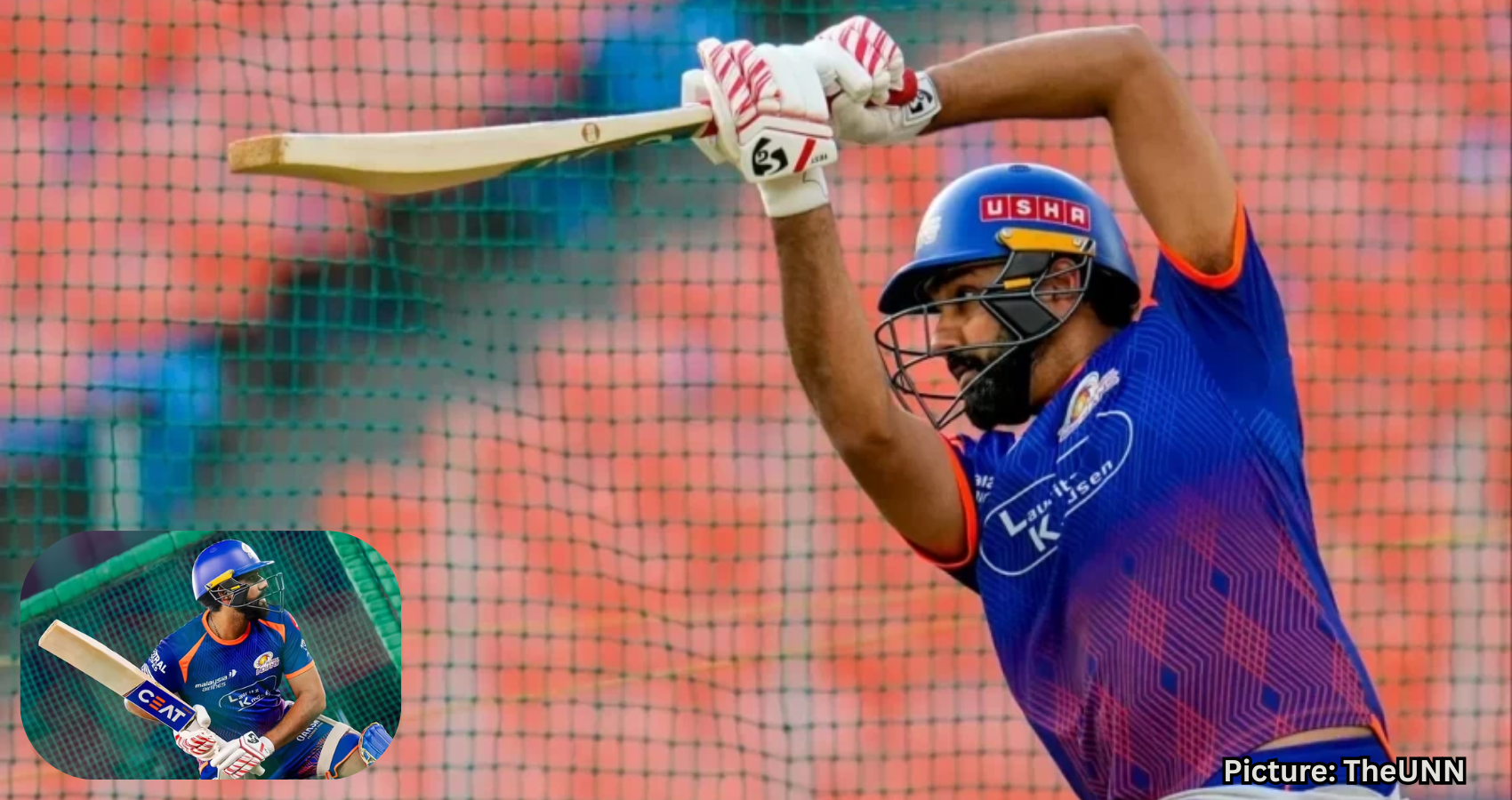
Rohit Sharma is reportedly fit to return to play, according to Mumbai Indians’ bowling coach Paras Mhambrey, who also addressed concerns regarding Mitchell Santner’s injury status.

Mumbai Indians (MI) bowling coach Paras Mhambrey has provided clarity regarding the injury statuses of key players Rohit Sharma and Mitchell Santner.

Sharma, the team’s captain, has been sidelined due to injury concerns, raising questions about his availability for upcoming matches. However, Mhambrey’s recent update suggests that Sharma is now fit to return to the field.

In addition to addressing Sharma’s condition, Mhambrey also spoke about Mitchell Santner, who has been dealing with his own injury issues. The coach’s comments have alleviated some uncertainty surrounding both players as the team prepares for its next challenges.

This news comes as a relief to MI fans, who have been eagerly awaiting updates on their star players. The return of Sharma, in particular, is expected to bolster the team’s performance as they navigate the competitive landscape of the league.

As the season progresses, the Mumbai Indians will be looking to capitalize on the return of their key players to enhance their chances of success.

According to NDTV Sports, the updates from Mhambrey have sparked optimism among the team’s supporters as they anticipate the return of their captain and a strong showing in the upcoming matches.

Asha Bhosle, Celebrated Indian Singer, Dies at Age 92

Asha Bhosle, the iconic Bollywood playback singer, has passed away at 92, leaving behind a legacy of over 12,000 songs and a profound impact on Indian music and culture.

Asha Bhosle, a legendary figure in Bollywood music, has died at the age of 92, as confirmed by her son. The celebrated playback singer passed away in Mumbai after being hospitalized due to a heart attack, marking the end of an illustrious career that spanned more than eight decades.

Bhosle’s prolific output of over 12,000 songs solidified her status as the queen of Indian playback singing. Her distinctive voice became a hallmark of countless film songs, resonating with audiences as actors lip-synced to her unforgettable melodies. This remarkable career saw her perform across various genres, from romantic ballads to energetic dance tracks, establishing her as a versatile artist beloved by generations.

The announcement of Bhosle’s death has triggered an outpouring of grief and tributes on social media. Indian Prime Minister Narendra Modi recognized her as “one of the most iconic and versatile voices India has ever known,” stating that her “extraordinary musical journey” enriched the nation’s cultural heritage and touched “countless hearts across the world.” Actor and politician Hema Malini expressed her sorrow, noting a personal connection to Bhosle, who had made many of her songs memorable through her unique voice and style.

Composer Shankar Mahadevan reflected the sentiment of many, stating, “Every Indian is heartbroken today,” and affirmed that her music would “never perish as long as humanity exists.” The widespread tributes highlight Bhosle’s remarkable artistry, characterized by her ability to effortlessly transition between genres, making every performance a celebration of sound.

Bhosle’s career includes iconic tracks such as “Dum Maro Dum,” “Piya Tu Ab To Aaja,” and “Mehndi Hai Rachnewali.” She provided the voice for numerous films, including classics like “Teesri Manzil,” “Caravan,” and “Umrao Jaan,” the latter being a significant highlight of her career. Her collaboration with composer R.D. Burman, whom she later married, is often cited as one of the most transformative partnerships in Bollywood music. Together, they crafted a soundscape that revolutionized the industry, blending traditional Indian music with modern influences.

Bhosle was born on September 8, 1933, in Goar, Maharashtra, into the renowned Mangeshkar family. Raised in a musically rich environment, she began her career at a young age, singing her first song for the Marathi film “Majha Bal” in 1943. As her career progressed, she became a household name, having collaborated with notable composers such as O.P. Nayyar and S.D. Burman, contributing to her extensive repertoire.

Bhosle’s personal life was marked by challenges, including a tumultuous marriage to Ganpatrao Bhosle, from which she separated in 1960 as a single mother of three children. Despite facing hardships, she continued to thrive in her musical career. Bhosle later married R.D. Burman in 1980, and their partnership further enriched her artistry. Bhosle faced comparisons with her sister, Lata Mangeshkar, who passed away in 2022, leading to discussions about rivalry. However, both sisters maintained a cordial relationship, and Bhosle often emphasized her determination to carve her own path in the music industry.

Throughout her life, Bhosle showcased a remarkable ability to adapt her music to changing styles and trends. Her collaborations extended beyond Bollywood, including partnerships with international artists such as Boy George and Michael Stipe. In 2020, she launched an online talent show, “Asha Ki Asha,” and embraced digital platforms to share her experiences and music with a new generation.

Bhosle continued to work actively, celebrating her 90th birthday with a live concert in Dubai, where she expressed gratitude for her career and her love for music. In one of her final recordings, she collaborated with the British virtual band Gorillaz on their upcoming album “The Mountain,” showcasing her enduring ability to transcend musical boundaries. The track, “The Shadowy Light,” reflects on themes of grief and spiritual transition, embodying her profound influence on both Indian and global music.

Asha Bhosle’s passing signifies the loss of a legendary figure who not only shaped Bollywood music but also became a cultural icon, whose songs will continue to echo in the hearts of millions. Her legacy is a testament to her unmatched talent and the indelible mark she has left on the world of music, according to Source Name.

Sanju Samson Reveals Phone and Social Media Break After T20 World Cup

Sanju Samson revealed he disconnected from his phone and social media to maintain his self-belief during a challenging period, culminating in a crucial performance in the T20 World Cup against the West Indies.

Sanju Samson recently opened up about a significant decision he made during a challenging phase in his cricket career. The talented wicketkeeper-batsman chose to switch off his phone and deactivate his social media accounts to preserve his self-belief.

This decision came during a lean patch that he faced leading up to a critical match in the T20 World Cup. Samson’s efforts paid off when he delivered a match-winning performance in a do-or-die game against the West Indies, showcasing his resilience and talent.

By disconnecting from the constant noise of social media, Samson aimed to focus solely on his game and mental well-being. This strategy allowed him to regain his confidence and ultimately shine when it mattered most.

Samson’s revelation highlights the mental challenges athletes often face, particularly in high-pressure situations like the World Cup. His ability to step back and reassess his approach demonstrates a mature understanding of the psychological aspects of sports.

As he continues to navigate his career, Samson’s experience serves as a reminder of the importance of mental health and self-care for athletes. His performance in the T20 World Cup not only contributed to his team’s success but also reinforced his position as a key player in Indian cricket.

According to NDTV Sports, Samson’s journey reflects the broader struggles many athletes encounter, emphasizing the need for balance in their professional and personal lives.

The Girlfriend: Exploring Control and Love in Relationships

The Girlfriend, a Telugu film directed by Rahul Ravindran, explores the unsettling dynamics of obsession disguised as love, resonating deeply with many women’s experiences.

Some movies linger in the mind due to their cleverness, beauty, or boldness. However, *The Girlfriend* (2025) remains with viewers because it feels uncomfortably familiar, intruding into the private spaces we often keep locked. For many women, this film is not merely fiction; it is a reflection of lived experiences. Written and directed by Rahul Ravindran, the Telugu film masquerades as a love story but serves as a psychological examination of the confusion between obsession and love, all while society cheers on the gradual fading of women’s identities.

The film introduces us to Bhooma Devi, portrayed by Rashmika Mandanna, who meets Vikram, played by Dheekshith Shetty, on a college campus. Bhooma hails from a small village where she was raised under strict restrictions, making her first foray into independence a significant moment in her life. She is kind, curious, and eager to navigate her new surroundings, but Vikram misinterprets her openness as romantic interest.

Vikram is not immediately presented as a villain. He embodies the archetype of the charming, confident college stud—the kind of guy everyone admires and other girls desire. He is suave and aware of his attractiveness, often disguising his opinions as intellectual insights. Society applauds him, leading to the unsettling question: if he chooses you, shouldn’t you feel grateful?

While Vikram never raises his voice or resorts to physical violence, his condescending compliments and manipulative logic create a stifling environment for Bhooma. He praises her brilliance but frequently interrupts her. He expresses support for her ambitions yet fails to engage meaningfully with them. Over time, Bhooma begins to shrink; her laughter fades, and her joy dims.

Eventually, the situation reaches a breaking point, but because Vikram’s behavior lacks overt aggression, it escapes the label of abuse—at least in his eyes and those of society.

What makes *The Girlfriend* particularly impactful is not just Vikram’s character but the societal backdrop that perpetuates such dynamics. For decades, Telugu cinema has romanticized behaviors that are, in reality, harmful. The notion that a man’s persistence in pursuing a woman, even after she has expressed disinterest, is framed as romantic. Stalking is often portrayed as a form of love, and discomfort is rewritten as desire. This cultural narrative has been internalized by many before they were old enough to question it.

Films like *Arjun Reddy* have played a significant role in this normalization of toxic masculinity. While not the originator of such themes, it packaged them attractively, featuring great music and high production values. The film centers on a man whose obsession and volatility are framed as profound love, excusing his abusive behavior as passion. This glorification of harmful actions teaches men that their rage is understandable and women that enduring it equates to love.

*The Girlfriend* enters this cultural space and quietly asserts a different narrative. Vikram, while soft-spoken and reasonable, presents a future that is predetermined—marriage, children, stability—always on his terms. Bhooma’s achievements are acknowledged but never celebrated independently; they are merely folded into a future where she exists as an extension of him. Her ambitions are treated as fleeting phases, cute stories she will eventually outgrow.

This is how control persists—not through overt force but through affection laden with conditions. The film poignantly illustrates that emotional harm does not require violence; it only needs repetition. A thousand small moments can lead to a gradual erosion of one’s voice, where maintaining peace becomes more important than expressing oneself.

Rather than presenting a dramatic confrontation, *The Girlfriend* depicts Bhooma’s rebellion as a quieter realization. She recognizes that the life laid out for her is not one she has chosen, prompting her to leave. This choice is significant, especially in a culture that encourages women to adjust, compromise, and endure. In a world where sacrifice is glorified, choosing oneself is framed not as a triumph but as an act of survival, which feels profoundly honest.

While the film has its weaknesses—Bhooma’s character can appear overly passive for extended periods, and her transition to clarity may seem abrupt—it is Rashmika’s performance that carries the weight of this silence. Her portrayal exudes a weariness that resonates deeply. Dheekshith Shetty’s performance as Vikram is disturbingly convincing; he is not monstrous but rather familiar, which adds to the film’s unsettling nature.

*The Girlfriend* ultimately poses uncomfortable questions: Why do we continue to normalize such behaviors? Why do we celebrate men who struggle with a woman’s autonomy? Why is control, when cloaked in charm, still praised? Why are women taught that being chosen is more important than choosing themselves?

This film does not offer easy answers; instead, it holds up a mirror to society. For anyone who has experienced a relationship where love felt like walking on eggshells, where care came with strings attached, and where one’s world gradually shrank, *The Girlfriend* will resonate profoundly.

Though not without its flaws, *The Girlfriend* is a necessary addition to a cinematic landscape that has long romanticized behaviors that should be questioned. By choosing to sit with discomfort, it accomplishes something brave and essential.

*The Girlfriend* is now streaming on Netflix.

According to India Currents.

Rohit Sharma’s 10kg Weight Loss Motivated by Personal Goals

Former India assistant coach Abhishek Nayar has shared insights into Rohit Sharma’s remarkable weight loss journey, highlighting the motivation behind the star batter’s commitment to fitness.

Rohit Sharma, the captain of the Indian cricket team, has made headlines recently for his impressive transformation, shedding 10 kilograms as part of his fitness journey. This significant change has not only improved his physical condition but also sparked discussions among fans and analysts alike regarding the motivations behind his commitment to fitness.

Abhishek Nayar, who served as an assistant coach for the Indian team, has provided some clarity on this matter. According to Nayar, Sharma’s motivation stems from a desire to enhance his performance on the field and to lead by example for his teammates. The former coach emphasized that the star batter’s dedication to fitness is not just about personal goals but also about setting a standard for the entire team.

Nayar noted that Sharma’s journey is particularly inspiring given the pressures and expectations that come with being a top player in international cricket. The commitment to fitness is crucial, especially as players face the physical demands of the game, which can be taxing on their bodies.

In addition to improving his performance, Sharma’s weight loss has also been a topic of conversation among fans and sports commentators. Many have praised his determination and discipline, which are essential qualities for any athlete striving for excellence. The visible changes in his physique have led to increased discussions about the importance of fitness in cricket, especially in the context of modern-day demands.

Sharma’s transformation has been documented through various social media platforms, where fans have expressed admiration for his hard work and dedication. The star batter’s journey serves as a reminder of the importance of maintaining physical fitness, not just for performance, but also for overall well-being.

As the cricket season progresses, Sharma’s fitness will likely play a crucial role in his performance and the team’s success. His commitment to staying fit could inspire other players to prioritize their health and fitness as well, fostering a culture of wellness within the sport.

In conclusion, Rohit Sharma’s weight loss journey is a testament to his dedication and determination as an athlete. With the support of coaches like Abhishek Nayar, he continues to set an example for his teammates and fans alike, proving that hard work and commitment can lead to remarkable transformations.

Source: Original article

Ex-India Cricketer Opens Up About Depression During Team Absence

Former Indian cricketer Amit Mishra opens up about his struggles with depression during a prolonged absence from the national team, reflecting on his career and personal challenges.

Former Indian cricketer Amit Mishra has candidly shared his experiences with depression during a significant hiatus from the national team. With over two decades of cricketing experience, Mishra has faced numerous challenges both on and off the field.

Despite the ups and downs of his career, Mishra expressed that he holds no regrets about his journey in cricket. His story is not just one of sporting achievements but also of personal battles that many may not be aware of.

During his absence from the team, Mishra confronted feelings of isolation and uncertainty. The pressure to perform at the highest level can be overwhelming, and for Mishra, the lack of a consistent place in the team led to a deep sense of despair.

Mishra’s openness about his mental health struggles is a crucial reminder of the importance of addressing such issues, especially in high-pressure environments like professional sports. He emphasized that mental well-being is just as important as physical fitness for athletes.

As he reflects on his career, Mishra acknowledges the support he received from family and friends during his toughest times. Their encouragement played a vital role in helping him navigate through his depression and return to the sport he loves.

Today, Mishra stands as an advocate for mental health awareness, urging others to seek help and speak out about their struggles. His journey serves as an inspiration for many, highlighting that it is possible to overcome personal challenges and continue pursuing one’s passion.

In a world where mental health discussions are becoming increasingly prevalent, Mishra’s story adds to the narrative, encouraging athletes and individuals alike to prioritize their mental health.

As he continues to engage with the cricket community, Mishra hopes to inspire others to share their stories and support one another in their journeys. His commitment to mental health advocacy is a testament to his resilience and determination.

According to Mishra, acknowledging one’s struggles is the first step toward healing, and he encourages everyone to take that step, regardless of their circumstances.

Source: Original article

Paris 2024: Olympic Medals to Feature Pieces of Eiffel Tower, Merging Heritage with Athletic Glory

Winning an Olympic medal is a dream cherished by every athlete. At the Paris Olympics, medal winners will not only achieve personal glory but also carry home a piece of France’s national pride, the Eiffel Tower.

Since the first modern Olympic Games in Athens in 1896, around 36,600 medals have been awarded. The Paris 2024 Olympics mark the first instance of a host city incorporating parts of a national monument into the medals.

These medals encapsulate the essence of the Games, the rich heritage of France, and the pinnacle of athletic achievement. The Paris 2024 Olympic medals are a true testament to excellence.

Both Olympic and Paralympic medals contain a piece of iron from the Eiffel Tower, retrieved during a recent renovation. The iron, shaped to represent France’s hexagonal form, is placed at the center of the medal and adorned with the Paris 2024 Games’ symbol.

Each medal is inscribed with the name of the sport, the discipline, and the event along its edge. The inscriptions are in French on the Olympic medals and in English on the Paralympic medals, reflecting the official languages of the International Olympic Committee (IOC) and the International Paralympic Committee (IPC).

The reverse side of the Olympic medal narrates the story of the Games’ revival in Greece. It features a design by Elena Votsi for the Athens 2004 Olympics, depicting the goddess of victory, Athena Nike, emerging from the Panathenaic Stadium, the site of the 1896 rebirth of the Olympic Games. This design also includes the Acropolis of Athens, a required element on Olympic medals, and for the first time, it is accompanied by the Eiffel Tower in the Paris 2024 design.

The reverse side of the Paralympic medals presents a graphic depiction of the Eiffel Tower from an upward perspective, offering a unique view of the iconic monument. At the base of the tower are the words “Paris” and “2024” in Braille, honoring the French inventor Louis Braille.

-+=