
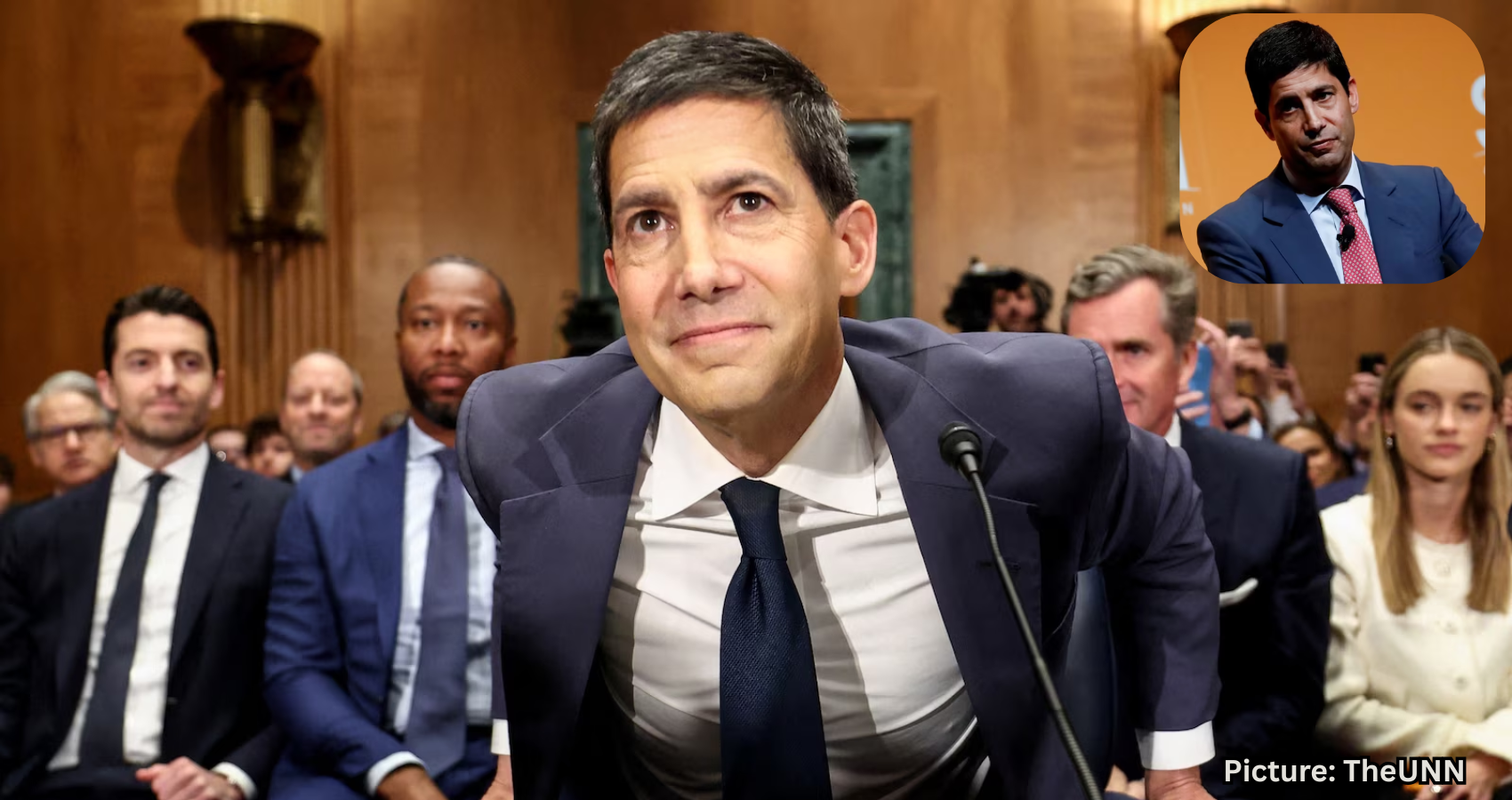
Kevin Warsh, President Trump’s nominee for the Federal Reserve, faces a pivotal Senate Banking Committee vote that could significantly influence the central bank’s future direction.
Kevin Warsh, nominated by President Donald Trump to lead the Federal Reserve, is set to undergo a crucial vote by the Senate Banking Committee on Wednesday. This vote will serve as a key indicator of the extent to which the White House can influence the central bank’s leadership.
If Warsh secures approval from the committee, his nomination will advance to the Senate floor. However, with Republicans holding a narrow majority, any defections could jeopardize his chances of becoming the Fed’s chair for the next four years.
The Federal Reserve operates largely behind the scenes, yet its decisions impact nearly every aspect of the U.S. economy, including borrowing costs, job growth, and inflation. As such, the outcome of Warsh’s nomination is a significant moment that could steer the central bank’s power in a new direction.
Warsh’s potential rise to lead the world’s most influential central bank comes at a particularly tumultuous time. The Federal Reserve is currently facing persistent inflation, the economic consequences of the ongoing conflict in Iran, and a pending Supreme Court decision regarding Fed Governor Lisa Cook. All of this occurs amid mounting political pressure as the midterm elections approach in November.
The path to a Senate Banking Committee vote on Warsh’s nomination gained momentum after the Justice Department concluded its investigation into Federal Reserve Chair Jerome Powell. This inquiry had been a point of contention, with Senator Thom Tillis of North Carolina withholding support for Warsh until the investigation was resolved.
Trump had expressed opposition to closing the investigation, raising further questions about governance and oversight within the central bank. The probe focused on potential mismanagement of funds during renovations at the Federal Reserve’s headquarters in Washington, D.C., and unfolded despite Powell’s term as chair ending next month.
Powell, typically measured in his public statements, described the Justice Department investigation as “unprecedented” and suggested it was part of Trump’s campaign to pressure the Fed into lowering interest rates. He has faced criticism from Trump for not yielding to that pressure.
In March, Powell stated his intention to remain at the central bank until the DOJ investigation is resolved with “transparency and finality.” His term as Fed chair is set to conclude on May 15, but he is eligible to continue serving on the Federal Reserve Board of Governors for an additional two-year term. The Fed board consists of seven members nominated by the president and confirmed by the Senate, who are responsible for setting interest rate policy and overseeing the central bank’s operations.
Warsh has already indicated a desire to diverge from the current approach of the central bank, regardless of whether Powell remains beyond his chairmanship. In his testimony before lawmakers on April 21, Warsh emphasized the importance of maintaining “strictly independent” monetary policy and expressed his intention to keep the Fed “in its lane.” He cautioned that the central bank has become overly involved in social policy.
Additionally, Warsh has criticized what he perceives as a complacent central bank, arguing that large institutions are prone to inertia. He warned that adhering to the “status quo” in a rapidly changing economy is not only outdated but also potentially hazardous.
At the same time, Warsh has signaled a willingness to engage in closer coordination with elected officials, suggesting a collaborative approach with the White House and Congress on non-monetary issues. This strategy could fundamentally alter how the Federal Reserve operates within the political landscape of Washington.
The balance Warsh strikes between independence and collaboration could define not only his tenure but also the future trajectory of the institution that plays a critical role in the financial lives of millions of Americans. As the Senate Banking Committee prepares to vote, all eyes will be on Warsh and the implications of his potential leadership.
According to Fox News, the outcome of this nomination could reshape the Federal Reserve’s approach in the coming years.