
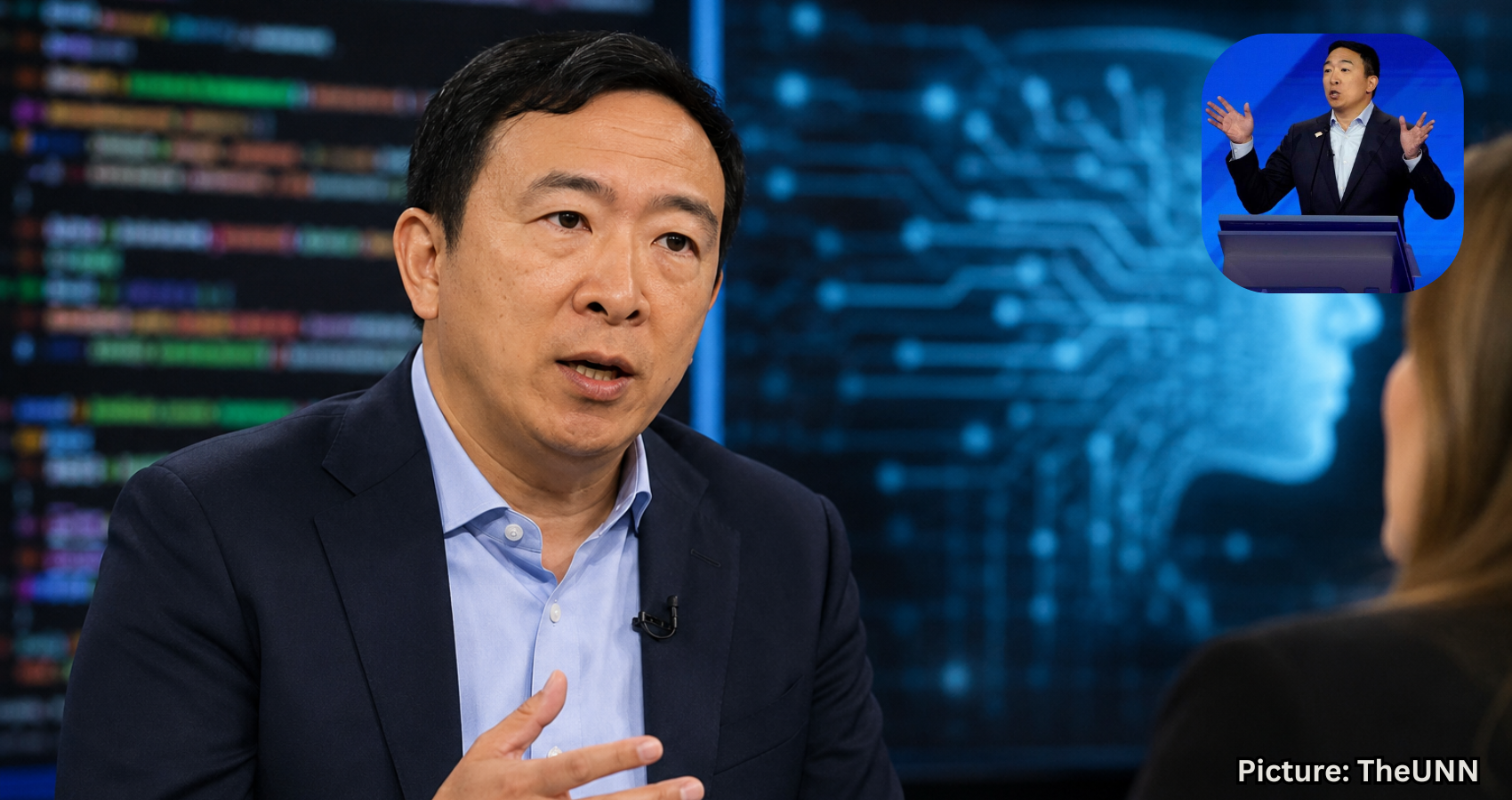
Former presidential candidate Andrew Yang warns that rapid advancements in artificial intelligence are reshaping entry-level white-collar jobs, raising concerns about the future of employment in the tech sector.
Andrew Yang, the former Democratic presidential candidate, has expressed serious concerns regarding the rapid evolution of artificial intelligence (AI) and its potential to disrupt entry-level white-collar jobs. These roles, once considered stable career paths, are now facing unprecedented challenges due to advancements in AI-driven automation.
During a recent television appearance, Yang shared insights from an AI conference he attended, where discussions about the pace of technological change left him alarmed. “I just came from an AI conference out West,” he stated. “They said to me that what we’re going to see in the next six months outstrips what we’ve seen in the last 10 years because the rate of change is on a hockey stick and heading up.”
Yang, who is also an entrepreneur and founder of the Forward Party, has long focused on the implications of automation for the workforce. He noted that even he was taken aback by the developments he encountered at the conference. “I gotta say I’m pretty up to date on this stuff and it blew my mind on some of the stuff I was seeing,” he remarked.
One striking example he provided involved a company that is developing autonomous coding systems for businesses. Yang revealed that this firm’s revenue had surged “100-fold in the last 12 months,” indicating a growing corporate demand for AI tools capable of automating software development tasks that were traditionally performed by human engineers.
“If that continues, it’s going to eat a lot of the tech budgets from major corporates that used to go to humans,” Yang warned. He pointed out that this shift is already reflected in the declining employment rates for recent computer science graduates, stating, “You’re seeing the employment of recent computer science graduates fall off a cliff from a lot of programs.”
This commentary comes amid a broader debate in the United States about how generative AI technologies might transform hiring practices across various industries, including software engineering, finance, customer service, marketing, and legal research. Major technology companies such as Anthropic, OpenAI, and Google have ramped up their investments in AI systems capable of generating code, text, images, and complex analyses.
Yang emphasized that this shift marks a significant departure from the career advice that was commonly offered to students just a few years ago. “If you rewind four years ago, what would we tell young people for a secure career? Learn to code,” he said. “And now the opposite of that is true.”
This issue is particularly relevant for Indian American and South Asian families in the United States, many of whom have historically encouraged careers in engineering, computer science, and other STEM fields as pathways to economic stability and upward mobility.
Yang also referenced comments made by Dario Amodei, the chief executive of Anthropic, who has warned about the potential impact of AI on office jobs. “Dario Amodei laid it out very clearly,” Yang noted. “We’re going to automate away up to 50% of entry-level white-collar jobs in the next several years. And I believe him.”
Yang argued that the current hiring slowdowns among recent graduates may already reflect these concerns. “The easiest people to fire are the people you haven’t hired yet,” he explained. He further highlighted the troubling employment outcomes for college graduates, noting that underemployment among graduates has climbed above 50%, with unemployment rates for degree holders nearing or even exceeding those of non-college workers.
Economists and labor experts remain divided on the timeline for AI adoption and its effects on job creation and elimination. Some analysts contend that while AI could enhance productivity, it may also generate demand for workers skilled in managing, supervising, and integrating AI systems. However, Yang cautioned that the rapid pace of change confronting the workforce may necessitate a reevaluation of how policymakers, educators, and businesses prepare Americans for careers in an increasingly automated economy.
As the conversation around AI and employment continues to evolve, Yang’s insights serve as a critical reminder of the challenges and opportunities that lie ahead in the intersection of technology and the workforce.
According to The American Bazaar, Yang’s warnings underscore the urgent need for a collective response to the shifting landscape of work in the age of AI.