
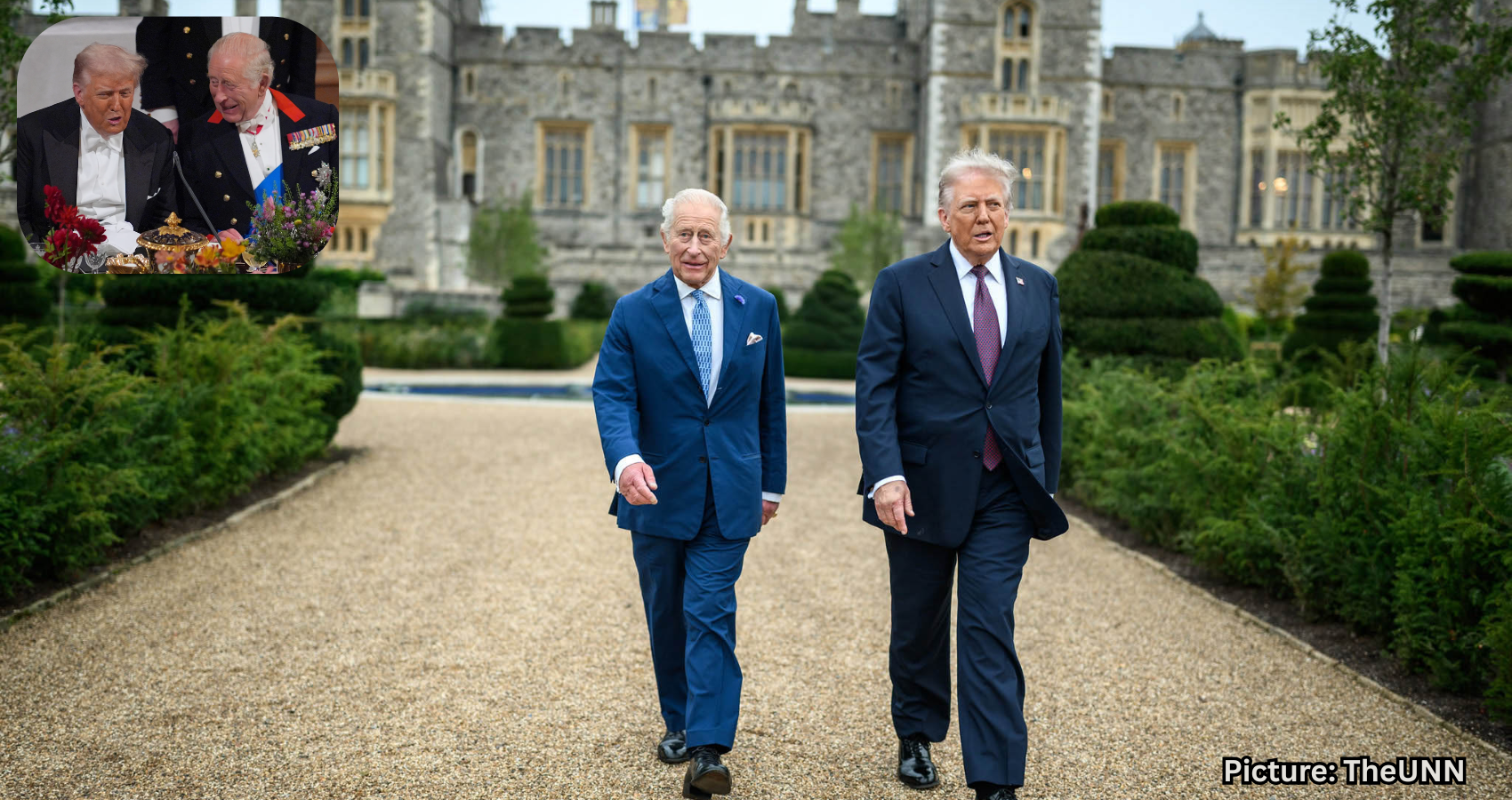
King Charles III is set to make a historic state visit to the White House, marking the first visit by a British king since King George VI in 1939, as America celebrates its 250th anniversary.
King Charles III will arrive at the White House on Tuesday afternoon for a significant state visit with President Trump. This marks the first visit by a British monarch to the United States since King George VI’s visit in 1939.
The visit comes in the wake of a shooting incident that occurred during the White House Correspondents’ Dinner (WHCD) on Saturday evening. A spokesperson from Buckingham Palace confirmed on Sunday that, following discussions on both sides of the Atlantic, the state visit would proceed as planned, acting on government advice.
Anthony Guglielmi, chief of communications for the Secret Service, stated that the protective measures implemented during the WHCD were effective. He noted that enhancements to security protocols would be expected for future events, emphasizing that every protective decision is informed by intelligence amid a heightened threat environment. The investigation into the incident is ongoing, and the agent involved is expected to recover.
Despite the recent events, officials close to the matter have assured that King Charles’ first U.S. visit remains on track. Thomas Corbett-Dillon, a former advisor to Prime Minister Boris Johnson, highlighted the significance of this visit, noting that it has been 87 years since a British king set foot on American soil. Next week, King Charles III will become only the second British king to visit the United States, coinciding with the celebration of America’s 250th birthday, which commemorates the nation’s independence from British rule.
The four-day trip will commence on Monday morning with a formal ceremony at the White House, followed by a ceremonial military review. The King and Queen will engage in several events, including a private tea. Corbett-Dillon remarked on the occasion’s monumental nature, stating, “This is a monumental occasion, coming 250 years since the revolutionaries declared themselves free from the rule of the British crown. They now welcome that same crown with love, adoration, and open arms.”
During his visit, King Charles is scheduled to deliver an address to Congress, following in the footsteps of his mother, Queen Elizabeth II, who delivered a speech at the Capitol during her state visit to the U.S. in 1991. The last British king to visit the U.S. was King George VI, who traveled with Queen Elizabeth to strengthen ties before World War II.
Corbett-Dillon noted that King Charles is undertaking one of the most politically sensitive trips of his life, as he visits a White House that has publicly criticized his own Prime Minister on multiple occasions. While the visit aims to celebrate the U.S.-U.K. alliance, it unfolds during a politically charged moment, with ongoing tensions regarding Iran and Trump’s public criticism of British Prime Minister Keir Starmer.
Trump expressed his dissatisfaction with the U.K. on March 3, stating, “This is not Winston Churchill we are dealing with. By the way, I’m not happy with the U.K. either,” referring to Starmer’s decision to block the United States’ use of U.K. bases for potential attacks on Iran. The president’s frustration stems from Britain’s reluctance to fully support the U.S. campaign against Iran, as he has urged U.S. allies to take military or operational action, particularly in protecting oil shipments in the Strait of Hormuz.
Corbett-Dillon suggested that Trump may attempt to persuade the King to support his stance on Iran during their meeting. The monarch’s visit follows Trump’s own state visit to the U.K. in September.
Despite the current political climate, Corbett-Dillon emphasized that the special relationship between the U.S. and the U.K. transcends day-to-day politics, rooted in a shared heritage and history. This visit is poised to reinforce those ties, even as the two nations navigate complex geopolitical challenges.
According to Fox News Digital, the visit is expected to be a significant moment in the ongoing relationship between the United States and the United Kingdom.