
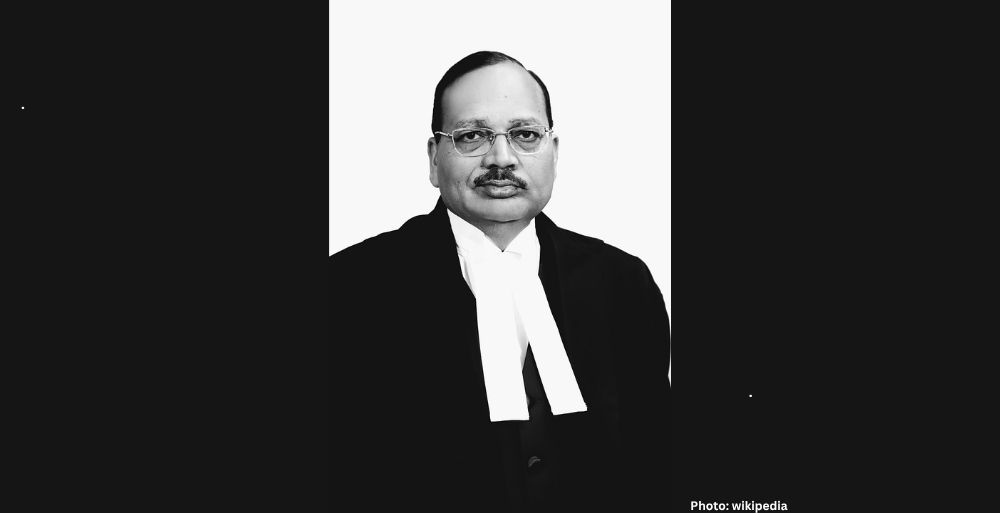
The Supreme Court recently witnessed a heated exchange as Chief Justice Surya Kant criticized the misuse of the legal profession and the authenticity of law degrees during a hearing on senior advocate designations.
The Supreme Court of India was the stage for sharp exchanges on Friday, as Chief Justice of India Surya Kant delivered strong remarks aimed at certain lawyers, social media activists, and individuals allegedly targeting the judiciary. The comments arose during a hearing related to the designation of senior advocates in the Delhi High Court, where the CJI expressed concerns about the misuse of the legal profession and the authenticity of law degrees held by some advocates in Delhi.
Justice Kant’s observations on “parasites,” “cockroaches,” and fake law degrees have ignited a broader debate within legal and political circles regarding the integrity of the legal profession and the role of social media in judicial discourse.
During the proceedings, the Chief Justice criticized individuals who, in his view, continuously attack judicial institutions without making meaningful contributions to the legal profession. He remarked, “There are already parasites of society who attack the system, and you want to join hands with them?”
Further elaborating on his concerns, Justice Kant referred to certain online activists, stating, “There are youngsters like cockroaches, who don’t get any employment and don’t have any place in the profession. Some of them become media, some of them become social media, some of them become RTI activists, some of them become other activists, and they start attacking everyone.”
The remarks were made in the context of the bench’s dissatisfaction with repeated litigation concerning senior advocate designations and the criticism directed at the judiciary on digital platforms. The CJI’s comments reflect a growing concern within the judiciary regarding online campaigns and commentary targeting judges and courts.
In addition to his remarks about online criticism, Justice Kant raised serious questions about the authenticity of law degrees held by some advocates practicing in Delhi. He stated, “I am waiting for an appropriate case to order a CBI investigation into the LL.B degrees of many Delhi advocates,” expressing his doubts about the genuineness of their qualifications.
This assertion has sparked discussions within legal circles, particularly as the CJI suggested that a future investigation by the Central Bureau of Investigation could explore alleged irregularities related to law degrees.
The case at hand involved a plea filed by a lawyer challenging the process followed by the Delhi High Court in granting senior advocate designations. The lawyer argued that previous directions issued by the Supreme Court regarding the reconsideration of rejected or deferred applications had not been properly adhered to.
Senior Advocate Rajshekhar Rao, representing the Delhi High Court, informed the bench that interviews related to the designation process were already underway. However, the bench reacted sharply to the lawyer’s repeated attempts to challenge the designation process, with Justice Kant remarking, “The whole world might be eligible for senior designation, but at least you are not.” He added, “If the High Court makes you senior, we will set it aside, seeing your professional conduct.”
Justice Joymalya Bagchi also questioned the lawyer’s focus on securing the designation, asking, “You have no other litigation, Sir? Apart from ensuring your senior designation? Is this the standing of a person who is expecting a senior designation?”
When the lawyer apologized before the court, the bench agreed to recall an earlier order. The lawyer later asserted his seriousness about the profession, noting he had five cases listed before the Supreme Court on the same day. Justice Bagchi responded, “Pursue that.”
The bench emphasized that senior advocate status is a recognition granted by the court and should not become the subject of endless litigation. “Senior advocate status is something which is conferred, not pursued. Does it look proper that you pursue till the end of the world to get senior designation status?” the bench observed. Ultimately, the petition was dismissed as withdrawn.
The CJI’s remarks have sparked a significant debate within legal and political circles regarding judicial accountability, online criticism, and professional ethics in the legal community. While some lawyers have supported the court’s tough stance on maintaining professional standards, others have raised concerns about the language employed during the hearing.
Legal experts believe that Justice Kant’s observations could reopen discussions on the regulation of legal education, the conduct of social media, and the processes involved in awarding senior advocate designations in India. These discussions may lead to a reevaluation of standards within the legal profession and how it interacts with the evolving landscape of digital communication.
As the debate continues, the judiciary’s role in monitoring online activity and its implications for legal professionals remains a critical issue for the future of the legal system in India, according to Hindustan Times.