
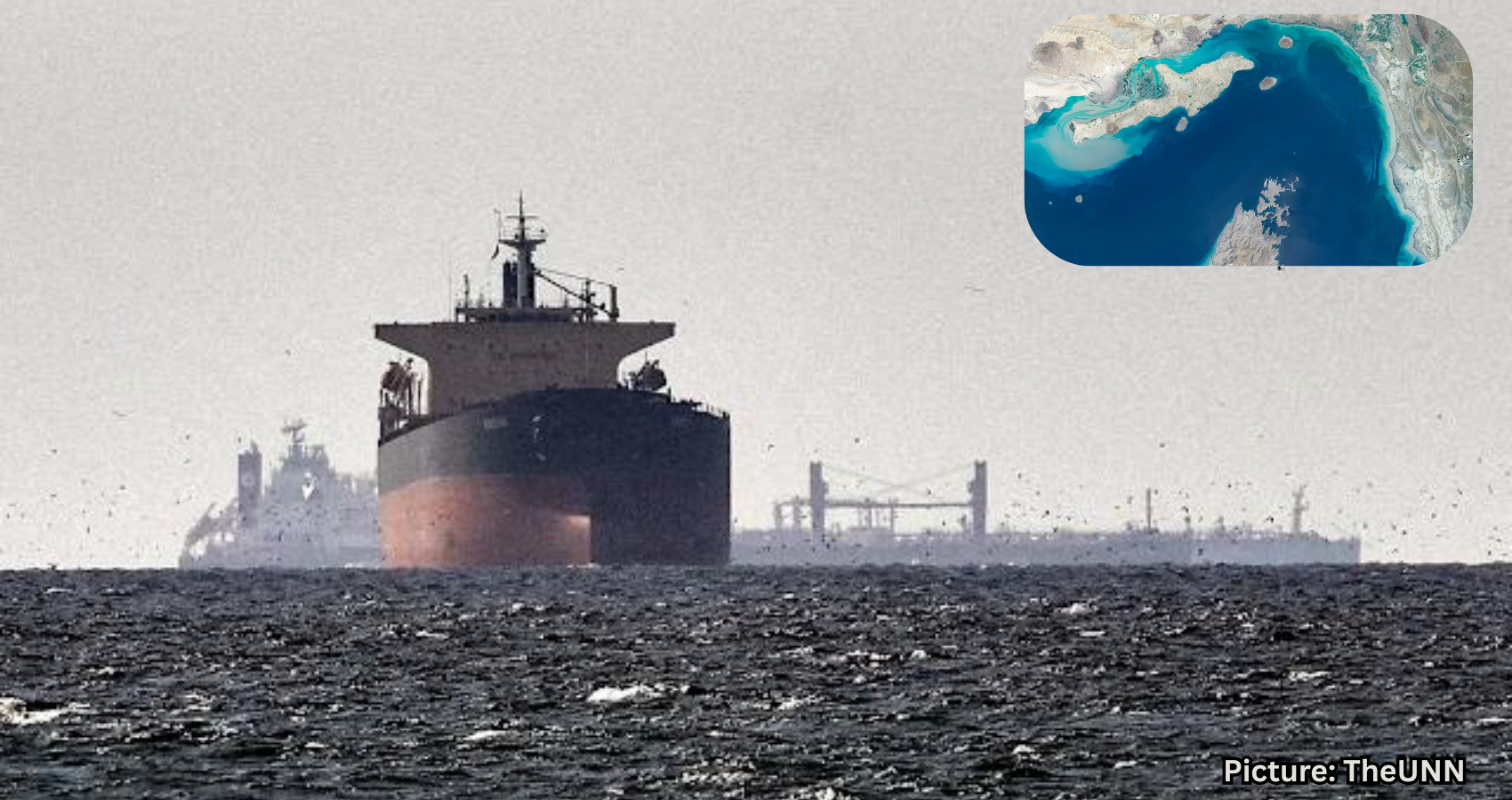
The ongoing tensions in the Strait of Hormuz are accelerating the development of Iraq’s $24 billion trade corridor, reshaping Gulf-to-Europe trade routes, according to analysts.
As tensions in the Strait of Hormuz escalate, nations are increasingly focused on developing alternative trade routes from the Gulf to Europe. At the forefront of this effort is Iraq’s ambitious $24 billion “Development Road” project, which aims to enhance trade connectivity and reduce reliance on Iranian-controlled waterways.
Muhanad Seloom, an analyst with the Middle East Council on Global Affairs, emphasized the significance of the Development Road during a recent discussion with Fox News Digital. He described the project as a “permanent” and “transformative” shift in wartime logistics, highlighting its disciplined advancement from Iraq’s Grand Faw Port to Turkey and ultimately to Europe.
Seloom’s remarks come in the wake of heightened warnings from U.S. President Donald Trump, who has cautioned Tehran against further escalation in the Gulf. The U.S. has signaled its readiness to take action to ensure the Strait remains open, as Iranian forces have been reported to lay mines and threaten commercial shipping in the critical waterway. As of now, the shipping route is effectively closed.
“Iraq’s Development Road means every container moving through Basra instead of Iranian-controlled waters is a reduction in Tehran’s leverage over Iraq,” Seloom stated. He noted that independent estimates place the project’s value closer to $24 billion, and its progress is being made with notable discipline.
The first 63-kilometer segment of the Development Road was inaugurated by Iraq’s Prime Minister Mohammed Shia al-Sudani in 2025, with the first phase expected to be completed by 2028. Seloom described the project as a flagship initiative of Iraqi statecraft that has gained regional importance, making it essential for governments and financiers rather than merely aspirational.
According to Seloom, Prime Minister al-Sudani appears to be positioning Iraq as a crucial connecting state between the Gulf, Turkey, and Europe, capitalizing on its geographical advantages.
In addition to Iraq’s Development Road, other regional infrastructure projects are also advancing. Saudi Arabia’s East-West Petroline pipeline is reportedly operating near its maximum capacity of 7 million barrels per day, with expansion plans currently under review. Meanwhile, the UAE’s ADCOP pipeline to Fujairah is also operating at full capacity, with discussions underway for a second line.
Turkey is also making strides with its Zangezur and Middle Corridors, which bypass Iran via the Caucasus and are expected to be operational within four to five years. Seloom pointed out that six Gulf-backed overland fiber projects are underway through Syria, Iraq, and the Horn of Africa, further enhancing regional connectivity.
Since April 18, Iran has reimposed restrictions on the Strait of Hormuz, drastically reducing traffic to just a handful of vessels per day. This is a stark contrast to the pre-war average of approximately 130 to 140 vessels. The restrictions, which have faced criticism, trace back to the onset of the war on February 28, when Tehran first moved to block transit following U.S.-Israeli strikes.
Despite the ongoing conflict, Seloom noted that while the Strait of Hormuz remains vital for energy transport, it is no longer viewed as the default route. He asserts that this shift is permanent, given the current war conditions.
For Iraq’s Development Road, the potential impact is significant, with projected transit revenues of $4 billion per year. Seloom believes this project could facilitate a transition from an oil-dependent economy to a logistics-oriented state.
Turkey is poised to be the primary beneficiary of these developments. With the combination of the Zangezur and Middle Corridors, Ankara is set to become a crucial overland bridge between Asia and Europe. Although Europe will gain an additional overland option by 2028, there are no immediate solutions to address the current crisis, which marginally reduces reliance on the often-unreliable Suez–Red Sea route.
These developments underscore a significant shift in regional trade dynamics, driven by the need for stability and security in the face of ongoing geopolitical tensions.
According to Fox News, the evolving landscape of trade routes reflects a broader strategy among nations to mitigate risks associated with reliance on traditional maritime pathways.