
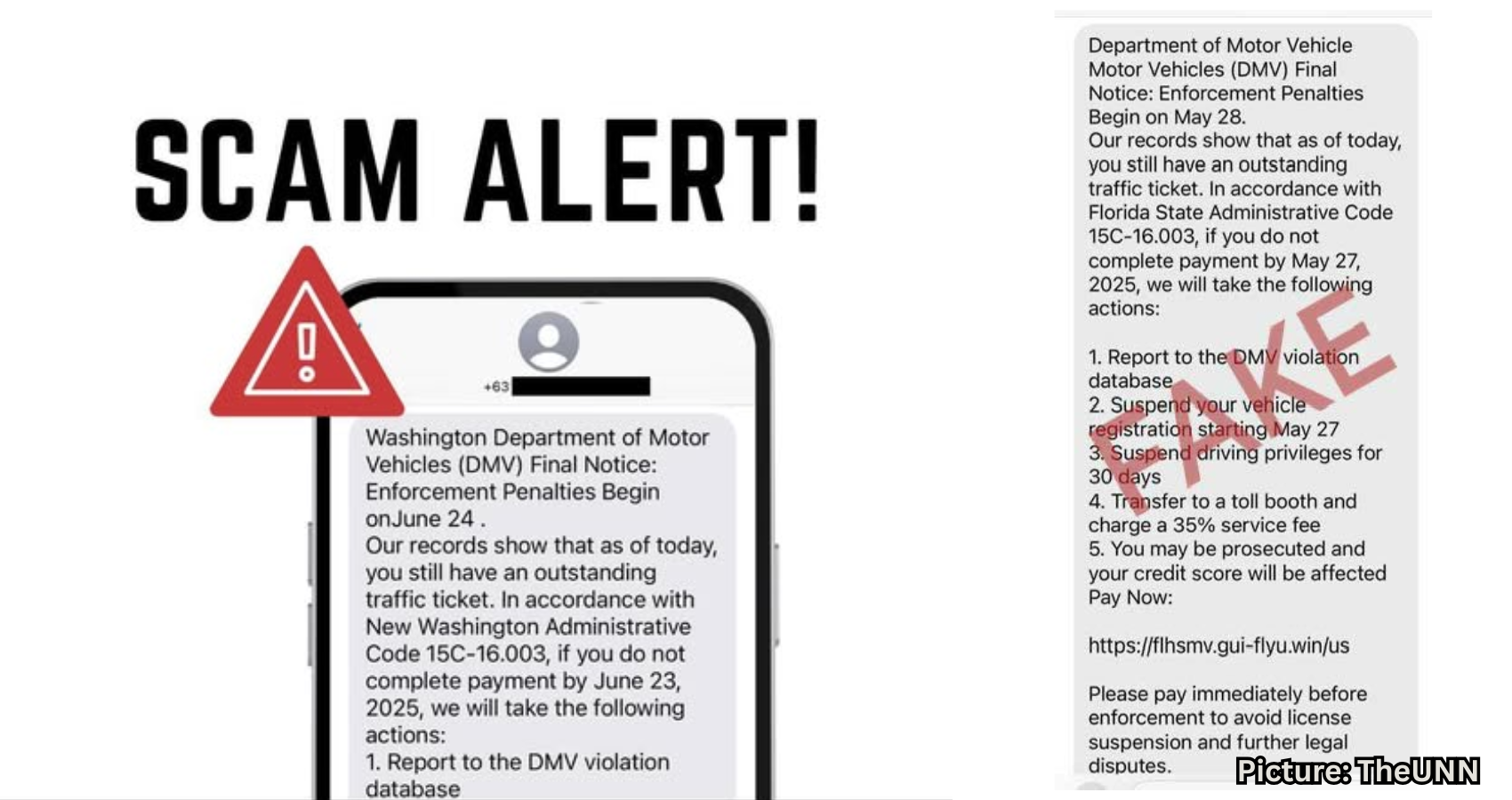
A Texas man received a fraudulent text claiming to be from the California DMV, highlighting a growing scam that targets unsuspecting individuals with false traffic violation notices.
Receiving an unexpected text message can be alarming, especially when it appears to be an official notice demanding payment for a traffic violation. This scenario recently unfolded for a Texas resident named Todd, who shared his experience with us. He stated, “I received this text message today. It was so baffling because I haven’t lived in California for nearly a decade. I didn’t click on anything or respond. How can I tell if this is for real or if this is a scam?”
If you have encountered a similar message, you are not alone. This type of scam is rapidly spreading, designed to pressure recipients into acting without fully considering the situation. Understanding the characteristics of these fraudulent messages can help protect you from falling victim to such schemes.
At first glance, the text Todd received seemed legitimate. It claimed to be a “final reminder” from the California Department of Motor Vehicles (DMV) and warned of severe penalties, including license suspension and additional fees. The message even included a link that appeared somewhat official. However, a closer examination reveals several red flags that indicate a scam.
One significant warning sign is the sender’s phone number, which had a +63 country code. This code corresponds to the Philippines, not California. U.S. government agencies do not send official legal notices from international numbers, making this a clear indication of a scam.
Legitimate communications from a DMV or court typically include your full name or at least some identifying information. The vague salutation “Dear Driver” is intentionally ambiguous, allowing scammers to send the same message to thousands of individuals without personalizing it.
Additionally, the message contained a suspicious link: ca.mnvtl.life/dmv. This domain does not belong to any official government website, as California DMV sites typically use “.ca.gov” or similar trusted domains. Scammers often create lookalike links to deceive recipients into clicking.
The urgency conveyed in the message is another tactic used by scammers. By imposing a deadline and listing dire consequences such as license suspension and extra charges, they exploit fear to prompt hasty actions. When individuals feel rushed, they are more likely to click on links without thinking critically.
The text also instructed recipients to reply with “Y” to receive further instructions. This is another trap; responding confirms that your number is active, which can lead to an influx of additional scam messages.
Moreover, the tone of the message may feel slightly off. While it may appear formal, it often lacks the professionalism typical of legitimate communications. This subtle awkwardness is common in messages sent to large groups of people.
Scammers often overwhelm recipients with a barrage of consequences, including threats of license suspension, additional fees, court action, and even potential credit damage. In Todd’s case, the message mentioned a $160 late payment charge, designed to create a sense of urgency and panic. Real agencies usually provide clear, specific notices rather than a lengthy list of escalating threats.
Even if you have never driven in California, you could still receive such a message. Scammers cast a wide net, hoping that someone will take the bait. Clicking on the link may lead to a fake payment page that requests sensitive information, such as credit card details or login credentials. In some instances, it could even install malware on your device or redirect you to sites designed to steal your credentials.
State DMVs typically do not send final legal notices or payment demands via text message. These scams thrive on tapping into common fears surrounding legal trouble, fines, and losing driving privileges. They often look just credible enough to pass a quick inspection, which is all scammers need to ensnare their victims.
To protect yourself from such scams, adhere to a simple rule: never trust an unexpected payment request. Here are some practical steps to consider:
If you receive a suspicious message, do not click on any links or reply to it. If you accidentally click a link, using strong antivirus software can help detect malware and safeguard your data.
Instead of following links in the text, visit your state’s official DMV website by typing the URL directly into your browser. Always verify the phone number; international numbers or random strings are significant warning signs.
Legitimate notices will usually include your name or specific case details. Vague language is a clear red flag. Scammers often acquire your phone number from data broker sites, so consider using a data removal service to minimize your exposure to such messages.
On your phone, block the sender and report the message as spam. This action can help reduce future attempts to contact you. Additionally, enabling spam filtering through your phone or carrier can catch more of these messages before they reach your inbox.
Todd’s decision to pause and question the message likely saved him from disclosing personal information. When faced with suspicious communications, skepticism is your best defense. Trust your instincts if something feels off.
As these scams continue to evolve, it raises the question: should phone carriers and tech companies do more to block such scams before they reach consumers? We invite you to share your thoughts with us at Cyberguy.com.
According to CyberGuy, staying informed and vigilant is crucial in protecting yourself from these increasingly sophisticated scams.