
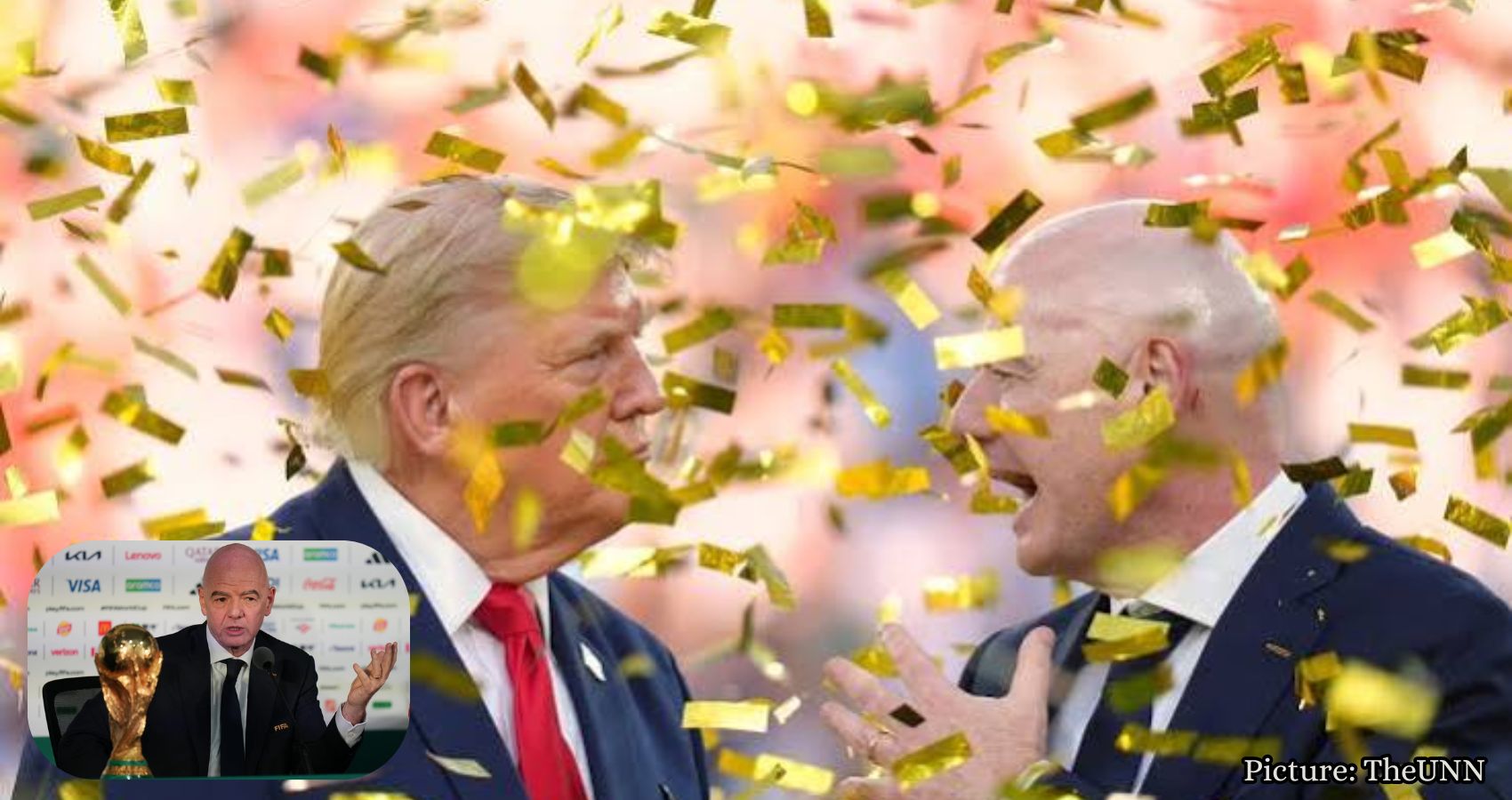
A new $20 billion initiative by FIFA to create a separate entity for World Cup management has sparked backlash from UEFA, raising concerns about governance and transparency in football.
GENEVA — FIFA President Gianni Infantino announced on Tuesday a $20 billion initiative to establish a commercial subsidiary named FIFA Forward Enterprise (FFE), which will oversee the management of the World Cup and other significant competitions. The plan, which reportedly has backing from private investors, including members of the Kushner family, has drawn sharp criticism from UEFA, the governing body of European football.
In an official statement, UEFA expressed its discontent, stating, “It is not FIFA’s to sell. None of us are the owners of football.” This sentiment reflects deep-rooted concerns regarding the commodification of football governance and a perceived lack of transparency surrounding FIFA’s financial operations. UEFA’s response highlights the growing tension between traditional governance structures in football and the increasing trend toward commercialization.
The FFE aims to raise approximately $4.2 billion in funding later this year, which FIFA claims will support development programs across its 211 member federations worldwide. Infantino noted that the valuation of FFE would depend on the careful selection of long-term investors interested in acquiring minority, non-controlling stakes. J.P. Morgan has reportedly been engaged as an advisor for this venture, while Thrive Eternal, a company founded by Joshua Kushner, is identified as a potential investor. Joshua’s brother, Jared Kushner, is the son-in-law of former U.S. President Donald Trump, adding a layer of political complexity to the initiative.
The recent men’s World Cup intensified scrutiny surrounding Infantino’s ties with Trump, further exacerbating UEFA’s concerns about the implications of such relationships on FIFA’s governance and decision-making processes.
FIFA’s announcement also included a proposal to offer up to $20 million in one-off capital to each of its member federations through the newly introduced FIFA Fast-Forward Program. This initiative aims to significantly increase the development funds allocated to member associations, raising the previous allocation of $8 million per cycle through the 2027-2030 World Cup cycle to $20 million, with additional increases projected in subsequent cycles. Infantino characterized this move as a strategy to “democratize football worldwide,” suggesting an intention to empower national federations financially.
However, UEFA responded to these financial incentives with skepticism, emphasizing serious concerns about governance. UEFA stated, “This crosses a line that football’s governing institutions should never cross,” highlighting the need for transparency and accountability in the management of football’s financial resources.
This latest proposal marks Infantino’s second attempt to engage private investors in FIFA’s operations during his presidency, a tenure characterized by controversy and scrutiny. In 2018, Infantino sought to broker a $25 billion deal with Japan’s SoftBank, aimed at establishing new global competitions, including an expanded men’s Club World Cup. This proposal faced strong opposition from UEFA, which feared threats to its flagship tournaments, including the Champions League and the European Championship, leading to its eventual abandonment.
FIFA’s integrity standards have frequently come under fire, particularly during the recent World Cup, where concerns were raised by coaches, national federations, and organizations such as the Council of Europe regarding FIFA’s governance practices. The ongoing controversies surrounding FIFA’s decision-making processes and transparency have fueled calls for reform within the organization.
The financial success of the recently concluded World Cup, which reportedly generated around $12 billion, positions Infantino favorably for re-election next year, with speculation suggesting he may run unopposed for a fourth term through 2031. During his re-election in 2023 in Rwanda, Infantino implied that any CEO delivering similar financial results would be assured of maintaining their position indefinitely.
There has been ongoing speculation regarding Infantino’s aspirations beyond his current role, with reports indicating that a CEO-like commissioner position within the new FFE entity could be established for him. However, FIFA has clarified that this notion has not been formally discussed, although it emphasized that the FIFA president would hold a leading role in the entity if approved.
As FIFA moves forward with this initiative, the organization has not provided a specific timeline for when decisions regarding the FFE will be made. The FIFA ruling Council, chaired by Infantino, along with its 211 member federations, will need to deliberate on the proposal and its implications. An online congress is scheduled for November 23, during which FIFA will confirm the hosts for the Women’s World Cup editions in 2031 and 2035. This event could serve as a pivotal moment in shaping the governance landscape of international football and addressing the concerns raised by UEFA and other stakeholders.
The unfolding developments surrounding FFE and its potential impact on football governance will be closely monitored by various stakeholders, including national football associations, fans, and sponsors, as the football world grapples with the intersection of sport and commerce, according to GlobalNet News.