
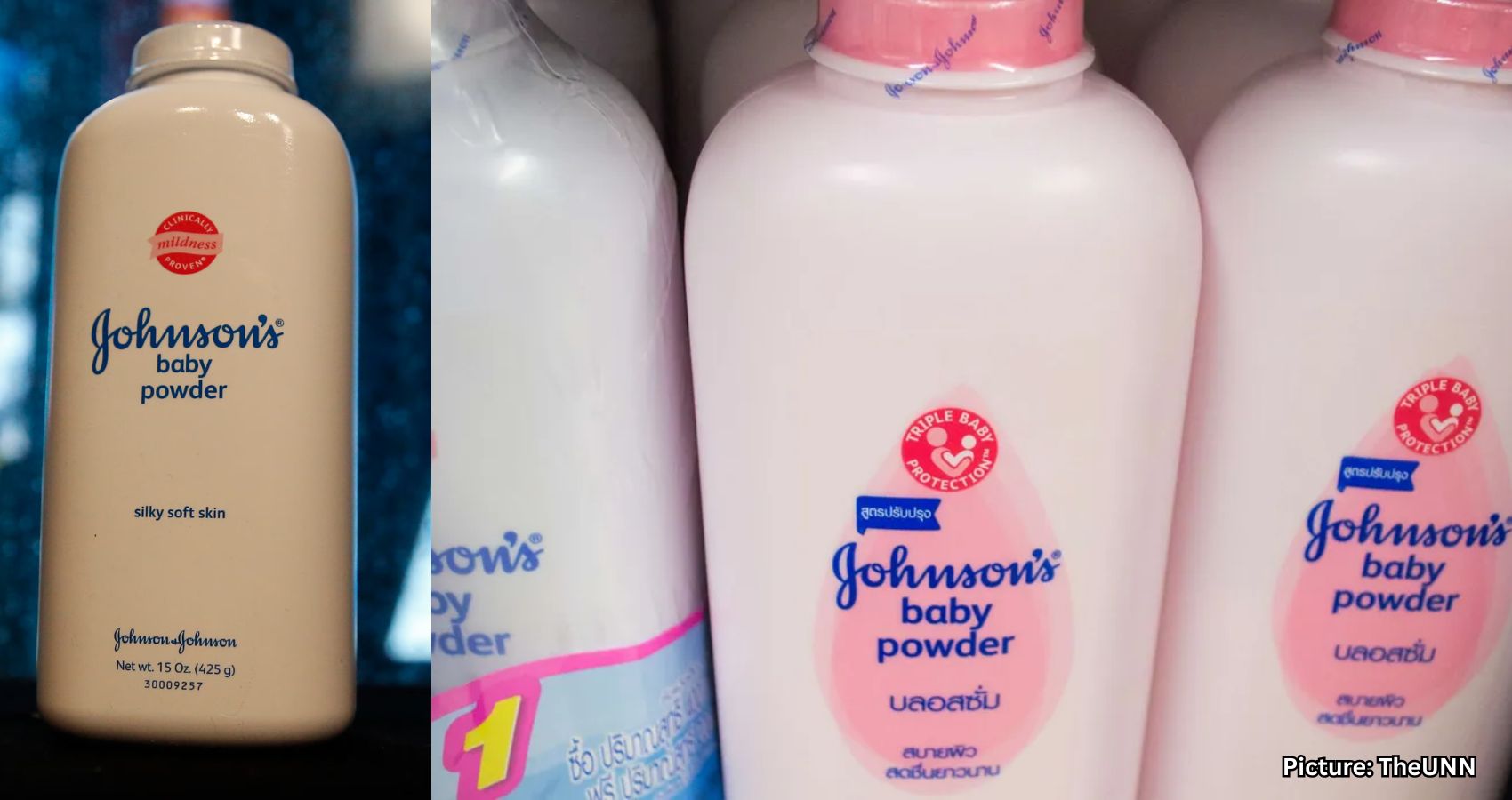
Johnson & Johnson has agreed to a $5.5 billion settlement to resolve nearly 69,000 lawsuits alleging its talc-based baby powder caused ovarian cancer, marking a significant development in a lengthy legal battle.
Healthcare giant Johnson & Johnson has announced a $5.5 billion global settlement aimed at resolving nearly 69,000 pending lawsuits that allege its talc-based baby powder and related products caused ovarian cancer. This proposed agreement, which covers 99.75% of remaining active talc claims across federal and state courts, is subject to formal judicial approval and requires a 95% acceptance rate among claimants. The settlement represents a pivotal moment in a decade-long legal struggle characterized by bankruptcy delays, corporate restructuring, and contentious debates over product safety.
On July 27, 2026, Johnson & Johnson disclosed its plan to settle longstanding personal injury lawsuits related to its discontinued talc-based baby powder. The proposed agreement encompasses approximately 69,000 cases consolidated in the U.S. District Court for the District of New Jersey, as well as parallel state court dockets. According to company disclosures and court documents, this resolution addresses roughly 99.75% of all outstanding U.S. talc claims currently against the company.
Under the terms of the proposed settlement framework, Johnson & Johnson is set to make an initial payment of up to $3 billion in 2027, with the remaining balance scheduled for payout in 2028. The finalization of the deal is contingent upon achieving a 95% opt-in rate among eligible plaintiffs in both state and federal jurisdictions, as well as final approval from the federal judge overseeing the consolidated multidistrict litigation in New Jersey.
The settlement specifically targets existing civil claims related to ovarian cancer. Company officials noted that Johnson & Johnson had previously resolved approximately 95% of separate lawsuits related to mesothelioma, a rare cancer associated with asbestos exposure, along with state consumer protection claims and disputes with third-party talc suppliers. However, the new U.S. settlement does not address an ongoing mass action filed in the United Kingdom in late 2025, which represents more than 7,000 claimants.
Legal analysts and industry estimates suggest that individual payout amounts under the settlement will be determined through a point-based allocation matrix. Payments are projected to range from $100,000 to $1 million per claimant, depending on factors such as the age at diagnosis, severity of illness, documented medical expenses, and whether the case involves a wrongful death claim.
The announcement follows a significant turn in court proceedings just one week prior. In mid-July 2026, the federal judge overseeing the consolidated litigation issued a ruling that questioned the scientific validity of the plaintiffs’ causation evidence. The order required plaintiffs to demonstrate why key claims should not be dismissed after court-appointed scientific evaluations cast doubt on whether expert testimony could definitively link cosmetic talc to ovarian cancer.
During a press briefing on the day of the announcement, Erik Haas, Johnson & Johnson’s worldwide vice president of litigation, maintained a calm and analytical demeanor while discussing the company’s decision to settle despite recent court victories. “The Court’s order placed plaintiffs in an untenable position of having to present specific causation evidence to maintain their claims that does not exist,” Haas stated.
He emphasized that the decision to settle does not imply an admission of liability or wrongdoing. “While we are confident the company would have ultimately prevailed with further litigation, as it has in the vast majority of cases tried to date, this resolution allows the company to put this matter behind it and remain focused on its mission to develop medicines and devices that save lives,” he added.
The journey to the $5.5 billion settlement reflects one of the most complex corporate legal sagas in modern American jurisprudence. For years, litigation was stalled due to Johnson & Johnson’s repeated attempts to resolve its talc liabilities through federal bankruptcy court.
Beginning in 2021, the company employed a legal strategy known as the “Texas two-step,” creating subsidiary entities—first LTL Management and later Red River Talc—to absorb the talc liabilities and file for Chapter 11 bankruptcy protection. These filings placed an automatic stay on all pending civil lawsuits, effectively freezing trial court proceedings for over three years.
However, appellate courts repeatedly dismissed the bankruptcy filings, ruling that the parent company’s substantial financial resources meant the subsidiaries were not in genuine financial distress. A subsequent effort to push through a $9 billion bankruptcy settlement via Red River Talc was formally rejected by a federal bankruptcy judge in early 2025.
When civil litigation officially resumed in March 2025, the number of active cases quickly grew to nearly 70,000. Faced with escalating defense legal expenses, fluctuating state court jury verdicts, and the prospect of numerous individual trials nationwide, the company shifted from structural bankruptcy proposals to a direct, out-of-court global settlement framework.
Lawyers representing the injured women and their families confirmed the proposed agreement, describing it as a pragmatic conclusion to an exhausting ten-year legal battle. Addressing reporters outside the federal courthouse, members of the plaintiffs’ steering committee expressed measured satisfaction with the outcome, noting that the settlement provides guaranteed financial relief to aging and ill claimants who might otherwise have faced years of appeals.
“After more than a decade in courtrooms across the country, this agreement establishes a clear, accountable path forward for tens of thousands of women and their families,” plaintiffs’ representatives stated in a joint statement. “It delivers meaningful financial resolution without subjecting victims to endless procedural delays.”
The central allegation in the lawsuits has been that chronic perineal application of cosmetic talcum powder allowed microscopic mineral particles—sometimes contaminated with trace amounts of naturally occurring asbestos—to migrate through the reproductive tract, leading to severe tissue inflammation and malignant tumors.
Johnson & Johnson has consistently denied these allegations, citing decades of independent scientific testing that demonstrate its talc products are asbestos-free and safe for daily consumer use. Nevertheless, as public scrutiny intensified and sales declined, the company ceased sales of talc-based baby powder in the U.S. and Canada in 2020, replacing it with a cornstarch-based alternative, and completely phased out talc baby powder worldwide by 2023.
The scientific debate surrounding talc received renewed international attention in 2024 when the World Health Organization’s International Agency for Research on Cancer (IARC) reclassified talc as “probably carcinogenic to humans.”
In the financial markets, Wall Street reacted positively to the settlement announcement, with Johnson & Johnson shares rising more than 2% in pre-market trading. Financial analysts noted that establishing a defined $5.5 billion liability structure alleviates a significant burden that has weighed on the healthcare giant’s valuation for nearly a decade.
In the coming months, court-appointed special masters and plaintiffs’ counsel will establish the formal opt-in mechanism to verify that at least 95% of eligible claimants accept the settlement terms. If approved by the federal court overseeing the multidistrict litigation, initial disbursements are expected to begin in mid-2027, according to Source Name.