
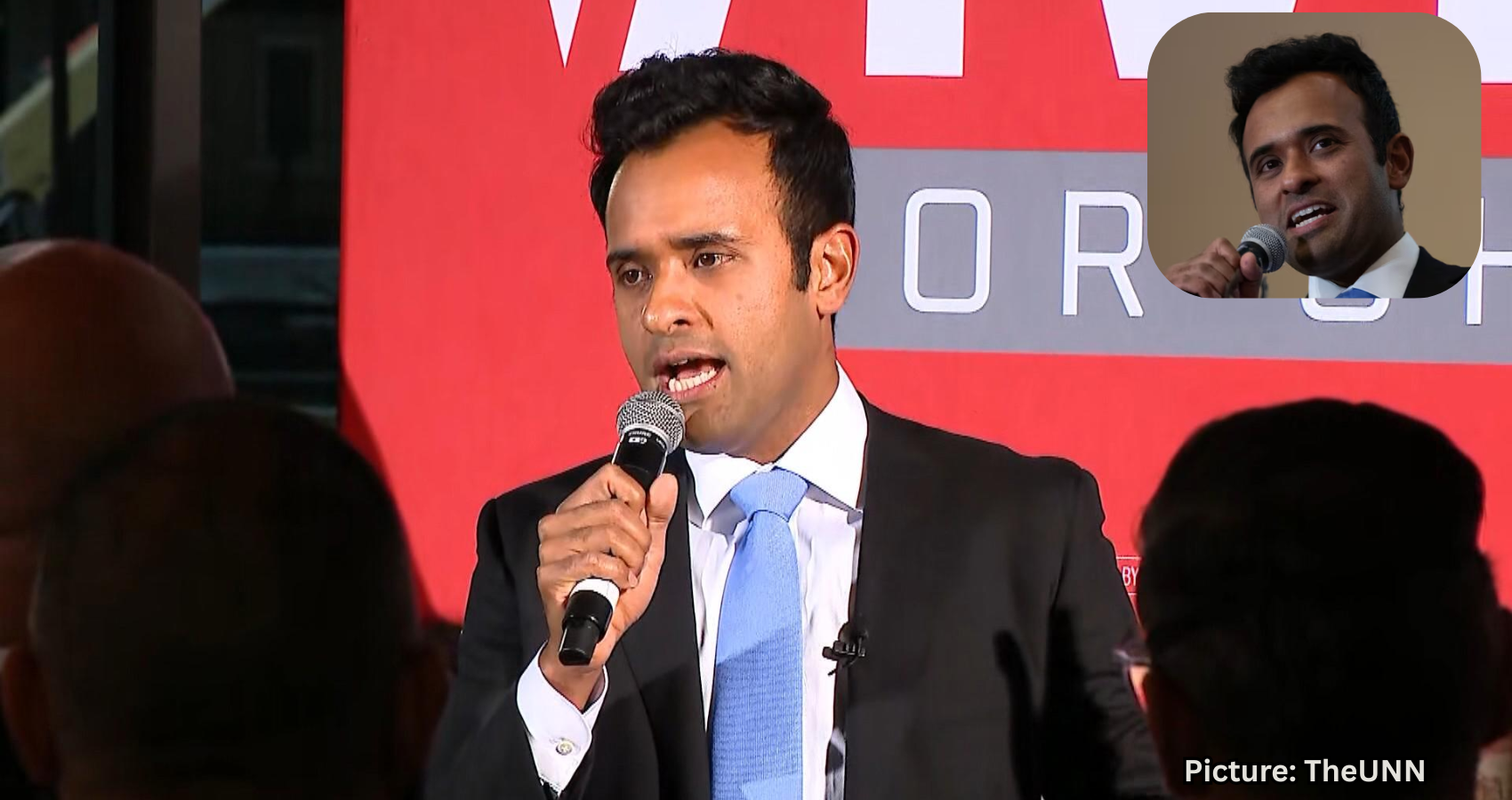
Vivek Ramaswamy has secured the Republican nomination for Governor of Ohio, setting the stage for a competitive race against Democrat Amy Acton in the upcoming November election.
Vivek Ramaswamy, an Indian American biotech entrepreneur and former presidential candidate, has clinched the Republican nomination for Governor of Ohio. His victory was confirmed on Tuesday, where he garnered approximately 85% of the vote against challenger Casey Putsch, bolstered by a high-profile endorsement from former President Donald Trump.
This win positions Ramaswamy for a significant ideological contest in a pivotal Rust Belt state. He is set to face Democrat Amy Acton, the former director of the Ohio Department of Health, who ran unopposed in her primary. The current Governor, Mike DeWine, is unable to seek re-election due to term limits.
The primary race was characterized by intense online exchanges, with pro-Trump activist Laura Loomer celebrating Ramaswamy’s victory on social media as a setback for what she referred to as the “Woke Reich.”
Throughout the campaign, Ramaswamy faced personal and ethnic attacks from some of his primary opponents. However, he shifted his focus on Tuesday night to the upcoming general election, where he plans to challenge Acton’s record on pandemic-era policies.
Ramaswamy’s rise in politics marks a significant milestone for the Indian American community in the United States. Born in Cincinnati to Tamil immigrant parents from Kerala, India, his journey is often highlighted as a representation of the American Dream. His father graduated from the National Institute of Technology, Calicut, and his mother is a geriatric psychiatrist, both of whom emphasized the importance of education, leading Ramaswamy to prestigious institutions like Harvard and Yale.
This cultural heritage plays a crucial role in Ramaswamy’s political identity, as he frequently emphasizes his background as the son of immigrants who arrived in the U.S. with limited resources.
In his victory speech, Ramaswamy framed his win as a mandate for a new generation of leadership that prioritizes economic growth and government deregulation. “The real destination is in November,” he told supporters in Columbus, Ohio, indicating a transition from internal party politics to a broader statewide campaign.
Trump expressed his support for Ramaswamy on social media, describing him as “young, strong, and smart.” The endorsement, which came shortly after Ramaswamy stepped down from his role at the Department of Government Efficiency (DOGE) earlier this year, played a crucial role in establishing his frontrunner status.
As the general election cycle commences, the contest between Ramaswamy and Acton is anticipated to be one of the most expensive and closely monitored races in the country. With a campaign war chest exceeding $30 million, Ramaswamy enters the race with considerable financial backing as he aims to become Ohio’s first Indian American governor. For the Indian diaspora, his nomination signifies a growing influence at the highest levels of American government.
According to The American Bazaar, Ramaswamy’s candidacy reflects not only his personal ambitions but also the increasing representation of diverse communities in U.S. politics.