
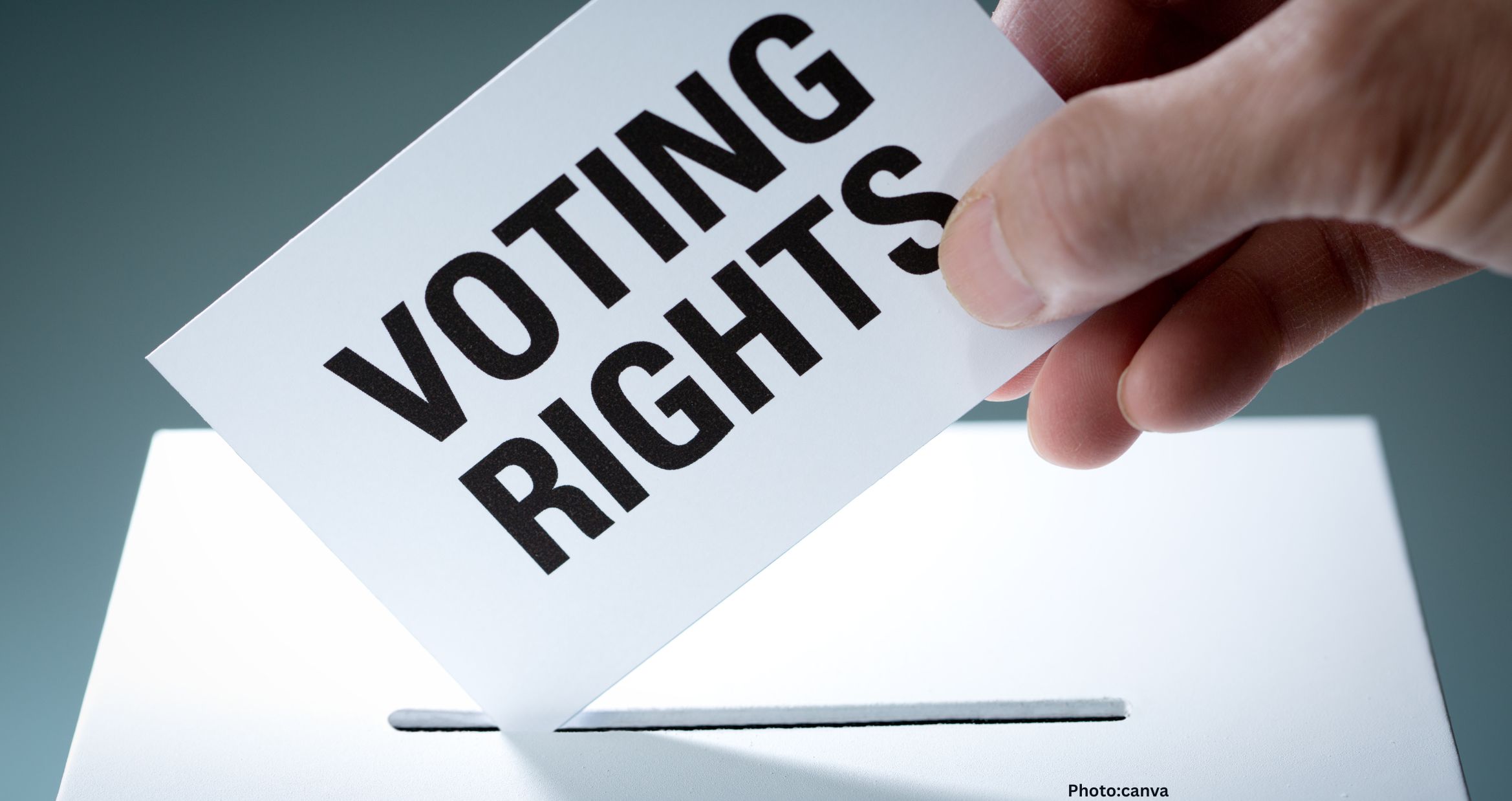
Voting rights advocates in the Deep South are mobilizing against redistricting efforts that threaten minority electoral power following a controversial Supreme Court ruling.
A sweeping counter-offensive is underway across the Deep South as voting rights advocates, community organizers, and local officials unite to challenge a rapidly shifting electoral landscape. This mobilization follows an April 29 Supreme Court decision in Louisiana v. Callais, which invalidated Louisiana’s congressional map that included two majority-Black districts. Advocates argue that this ruling effectively undermines Section 2 of the Voting Rights Act (VRA).
The judicial pivot has triggered a swift domino effect across Southern state legislatures. Within hours of the ruling, Republican-led legislatures initiated emergency redistricting sessions to adjust district boundaries.
On May 15, voting rights activists from Louisiana, Alabama, North Carolina, and Georgia convened at a press briefing hosted by American Community Media. They discussed the implications of the ruling not only for Black voters but for all voters, as well as the strategies being employed to combat these changes.
Civil rights organizations warn that these expedited map revisions threaten to significantly dilute the electoral influence of Black, Latino, and other minority communities nationwide. Legal scholars and civil rights attorneys note that the recent trajectory of the high court marks a fundamental departure from decades of established voting protections.
Mitchell Brown, Senior Counsel for the voting rights section at the Southern Coalition for Social Justice, explained that the decision alters the burden of proof required to contest unfair maps in federal court. He stated, “What the Callais case does is it essentially makes it very hard to prove a Section 2 case because now we have to prove intentional discrimination. What that means is that you have to have smoking gun evidence essentially of a legislator or legislative body saying, ‘I drew this map to disenfranchise and to discriminate against Black, Brown, AAPI voters.’”
Brown highlighted the historical irony of this new standard, noting that the U.S. Congress amended the VRA in 1982 to remove the requirement to prove discriminatory intent, shifting the legal focus entirely to whether a policy had a discriminatory effect. Advocates argue that by reversing course, the court has significantly weakened federal oversight under the 15th Amendment.
The immediate fallout from the judicial decision became starkly evident in Louisiana, where a highly volatile political situation unfolded overnight. Following the ruling, Governor Jeff Landry exercised emergency executive powers—typically reserved for natural disasters—to suspend ongoing congressional primary elections. This suspension effectively invalidated more than 42,000 mail-in and absentee ballots that had already been submitted by early voters. In the wake of this turmoil, state legislators swiftly advanced a new congressional map that reduced Black opportunity districts from two to one, while also passing measures to prevent public disclosure of the discarded early voting data.
Louisiana Public Service Commissioner Davante Lewis described the unfolding situation as unprecedented structural instability designed to undermine minority political power. He emphasized that the strategic maneuver extends beyond congressional lines to encompass local judicial and administrative seats. “When Callais came down on Wednesday, two Wednesdays early voting for our congressional elections were supposed to start that Saturday,” Lewis said. “42,000 Louisianans had already cast their ballots via mail-in absentee, and the governor of our state suspended the election utilizing executive powers.”
The ongoing redistricting battles have prompted civil rights leaders to draw historical parallels to the late 19th century, when Southern states systematically dismantled Black political power using “race-neutral” mechanisms like poll taxes, literacy tests, and grandfather clauses.
Amir Badat, a voting rights attorney and political strategist at Fair Fight Action, noted that modern attempts to enforce a strictly “colorblind” interpretation of law echo these historical efforts to suppress minority representation without explicitly naming race. In Alabama, the legal battle remains fluid. Despite the Supreme Court’s 2023 ruling in Allen v. Milligan, which mandated the state to draw a second minority opportunity district, recent emergency interventions have allowed state leadership to push forward with contested boundaries, generating widespread public confusion ahead of critical primary dates.
Jerome Dees, Policy Director at the Southern Poverty Law Center, characterized the current judicial environment as a critical turning point that risks reversing over half a century of legislative progress. “Those who don’t learn from their history are doomed to repeat it, and we are presently in a moment of a second post-Reconstruction era,” Dees warned. “We find ourselves at a position where we could be going back to that period post-1870s where we end up with no Black representation in states like Alabama, in states like Louisiana, as we are seeing in Tennessee.”
Despite navigating a complex landscape of changing primary schedules, shifting polling boundaries, and widespread institutional confusion, community organizations report an unprecedented surge in grassroots engagement. Activists emphasize that rather than inducing apathy, the aggressive legislative maneuvers have served to re-energize local electorates. In Louisiana, early voting participation among minority demographics significantly outpaced historical averages in the days following the judicial ruling.
Meanwhile, regional advocacy networks are orchestrating large-scale mobilizations, state-level resource hubs, and community education campaigns to counter shifting electoral guidelines. Saran Wakner, Policy Narrative and Coalition Partnerships Director at Alabama Values, emphasized that the regional pushback is driven by deeply rooted, multi-generational civic infrastructure capable of sustaining a long-term defense of civil rights. “Ahead of national groups arriving in Alabama, we want to emphasize that local, Black-led organizations and Alabama civic infrastructure have been carrying this work long before national attention arrived, and will continue to long after they leave,” Wakner stated. “This is not a parachute moment. And I want to remind folks on the call, this is generational organizing rooted in resistance to white supremacy and anti-Black voter suppression.”
As state-level legal challenges progress through district courts, voting rights coalitions are urging minority communities—including Black, Latino, and Indigenous voters—to recognize the intersectional nature of the challenge and maintain high voter turnout. With the 2030 national census approaching, leaders underscore that the structural defense of regional political equity requires sustained, year-round organizing far beyond individual mid-term election cycles, according to Source Name.