
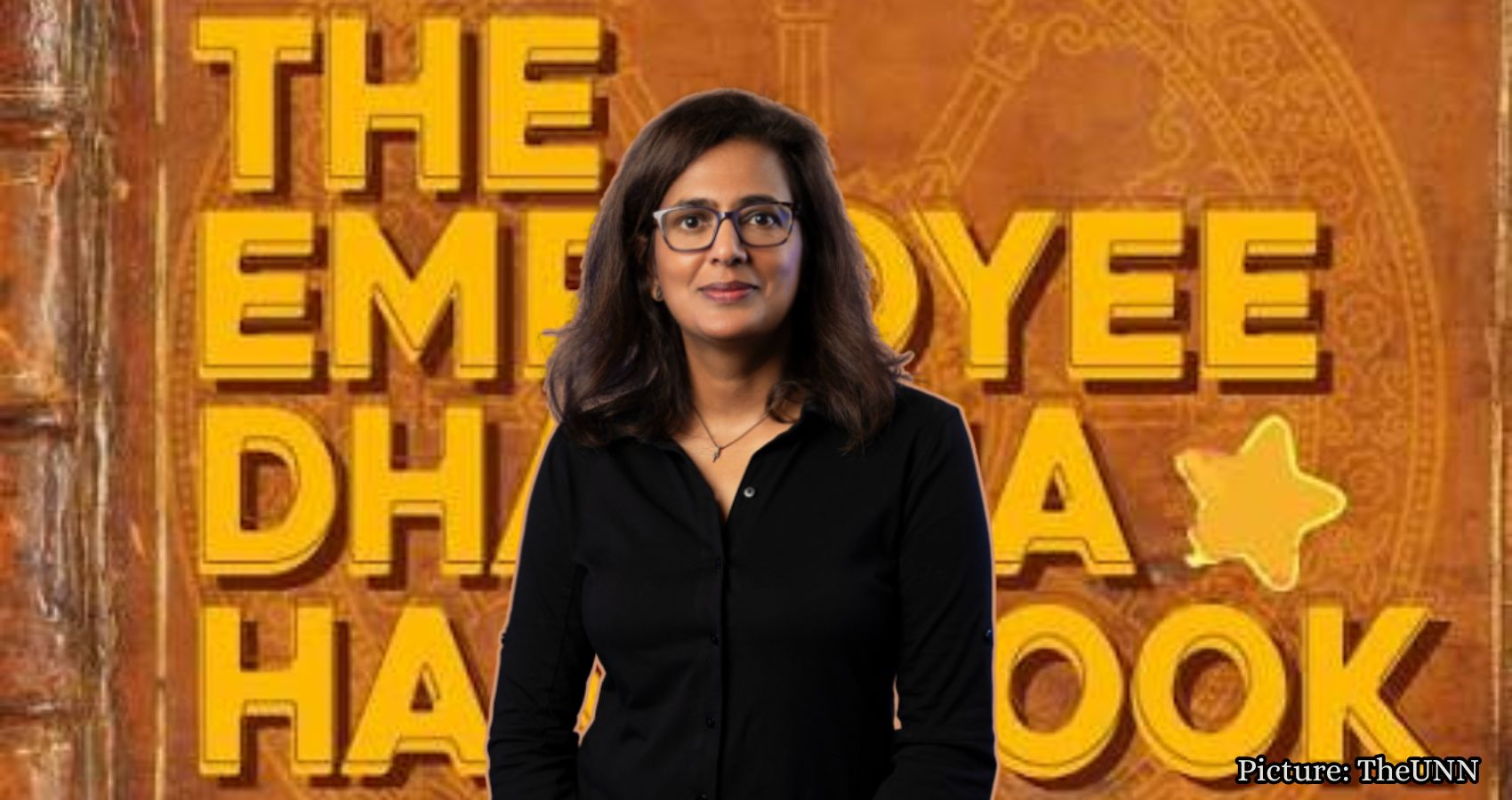
Geetha Reddy’s new play, *The Employee Dharma Handbook*, delves into the complexities of identity and cultural tensions among Indian immigrant employees in Silicon Valley workplaces.
Corporate culture often aims to mitigate unconscious bias and prevent discrimination based on gender, race, and other identities. However, what occurs when deep-rooted historical conflicts and personal relationships emerge in today’s meticulously managed workplaces?
Bay Area playwright Geetha Reddy addresses this question in her latest production, *The Employee Dharma Handbook*. The play, commissioned by TheatreWorks Silicon Valley in Palo Alto, is set to premiere as part of the theater’s 56th season. It has also received the Kurjan/Butler commission from TheatreWorks.
Set against the backdrop of a Silicon Valley aerospace company, the narrative unfolds during a critical rocket launch. Here, underlying tensions among Indian immigrant employees threaten to disrupt the mission. The story follows HR executive Val as she investigates a potential staffing issue among lead engineers, initially suspecting sexism. Instead, she uncovers ancient tensions rooted in the cultural identities of the company’s Indian workforce.
Reddy, who moved to Silicon Valley during the dot-com boom to work in the tech industry before transitioning to playwriting, has previously created acclaimed works such as *Safe House* and *Mahābhārata*. The play is directed by Snehal Desai, the Brindell & Milton Gottlieb Artistic Director of Center Theatre Group, who brings a keen understanding of identity and desire to the production.
In an exclusive interview with *India Currents*, Reddy discussed the themes and inspirations behind her play with Anuj Chakrapani. Desai also shared his motivations for directing this timely work.
Chakrapani began the conversation by asking Reddy what sparked the idea for *The Employee Dharma Handbook*. Reddy revealed that her initial inspiration stemmed from the Cisco caste discrimination case brought to light by the California Civil Rights Department. This incident raised questions about whether it was an isolated event or indicative of a broader issue within Silicon Valley. The subsequent cancellation of a planned Google Talk by anti-caste activist Thenmozhi Soundararajan, which faced backlash from some South Asian engineers, further fueled her interest in the intersection of corporate and caste hierarchies.
Reddy chose the aerospace setting for its dramatic potential, highlighting the high-stakes environment where precision and pressure converge. She noted that the aerospace industry has relatively few immigrant workers due to international treaty restrictions, allowing the play to explore these themes without targeting a specific company.
The character of Val serves as the entry point into the story, representing the often-neutral HR perspective. Reddy explained that her choice was influenced by the events surrounding the Google Talk cancellation, where HR and diversity executives played a significant role. This perspective allows the play to delve into the complexities of corporate culture and the power dynamics at play.
Throughout the narrative, Reddy explores unspoken dynamics among Indian immigrant employees, particularly focusing on caste identity and its expression in the workplace. The play also addresses gender issues, especially the challenges women face in technical environments, and the generational divides that can complicate these dynamics.
As Val navigates her responsibilities to her colleagues, the company, and herself, Reddy poses fundamental questions about duty and obedience. She invites audiences to consider whether they should prioritize their moral compass or adhere to the larger systems that govern their lives.
Reddy’s collaboration with director Snehal Desai has been instrumental in shaping the play’s development. She praised Desai’s ability to understand scene transitions and comedic timing, both of which enhance the play’s humor and depth.
As the rehearsal process unfolds, Reddy noted that actors often bring unexpected insights to the characters and situations, enriching the narrative and adding layers of nuance.
Reddy hopes that audiences will leave the theater with a heightened awareness of the forces that shape their lives. She aims for those unfamiliar with South Asian communities to gain insight into the hidden tensions that influence their neighbors and coworkers, particularly as anti-caste activists work toward legislative change.
Looking ahead, Reddy expressed interest in exploring the life and work of B.R. Ambedkar, a key figure in shaping modern India. She also mentioned her curiosity about meritocracy and its relationship to caste and capitalism, though she tends to move on to new subjects after completing a project.
Desai, reflecting on his motivations for directing the play, emphasized the importance of addressing difficult topics within the Indian community, such as caste, gender, and mental health. He noted that *The Employee Dharma Handbook* offers a nuanced exploration of these themes while maintaining a sense of humor and empathy.
Desai highlighted the play’s broader questions about identity in the workplace and the divide between personal and professional selves. He pointed out that institutions often dictate who individuals should be, but the real challenge lies in discovering one’s authentic self within those structures.
The cast of *The Employee Dharma Handbook* features notable actors, including Megan Suri, Kapil Talwalkar, Kunal Dudheker, Kathryn Smith-McGlynn, and Ranjita Chakravarty. The play will run from July 8 to August 2, 2026, at the Lucie Stern Theatre in Palo Alto, with a press opening on July 11.
For more information about the production, including ticket pricing and availability, visit TheatreWorks.org or call 877-662-8978, according to *India Currents*.