
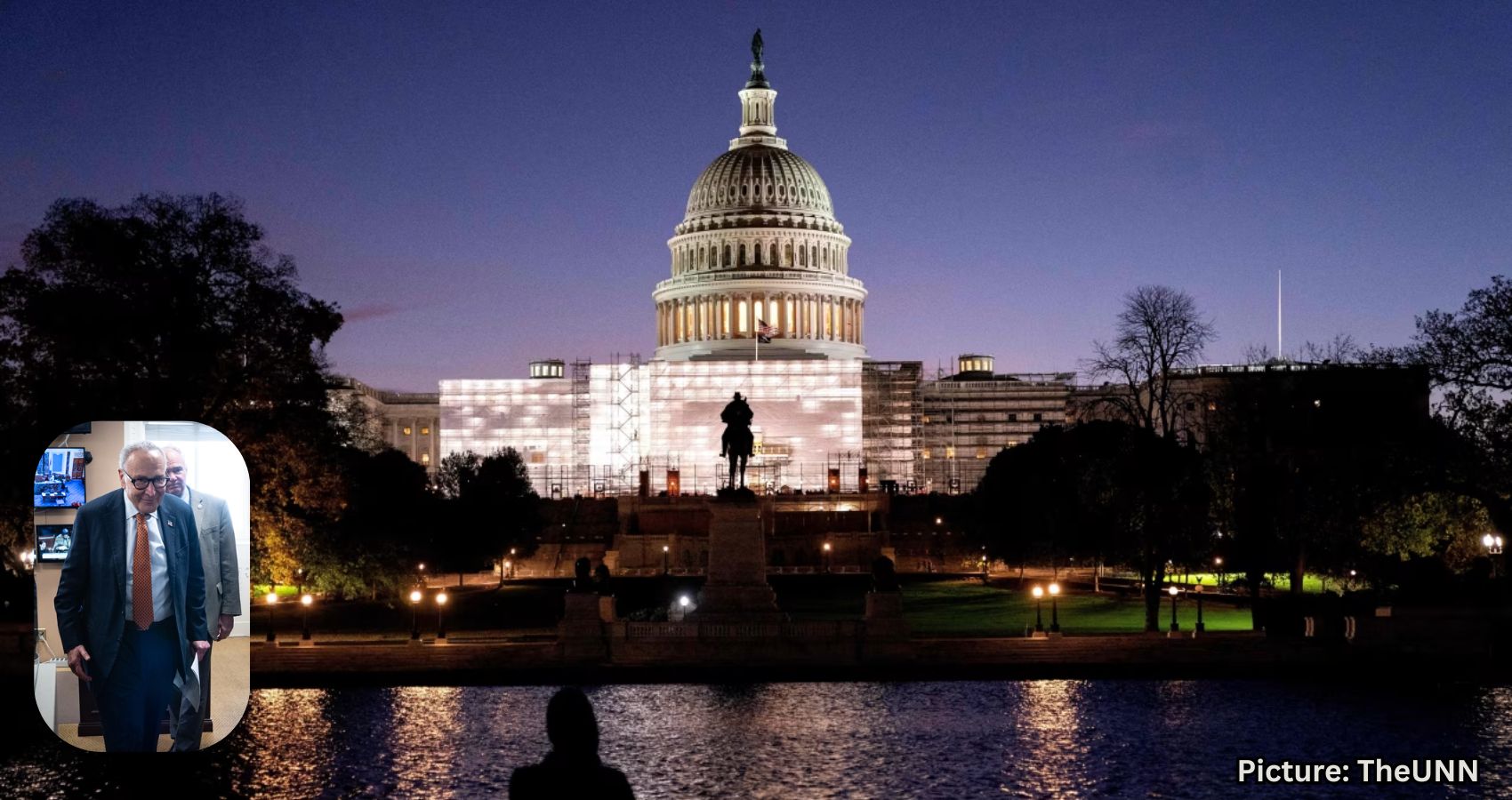
A prominent nonpartisan election forecaster has shifted its ratings for three key U.S. Senate races toward Democrats, signaling a potential path to reclaiming the majority in the upcoming midterm elections.
A leading nonpartisan election handicapper has updated its ratings for three significant U.S. Senate races, favoring Democrats and reshaping the landscape for the 2026 midterm elections. The latest analysis from Larry Sabato’s Crystal Ball at the University of Virginia Center for Politics has moved competitive Republican-held seats in Alaska, Ohio, and North Carolina toward the minority party. While this adjustment offers Democrats a clearer statistical path to reclaiming the Senate this November, analysts caution that Republicans still hold a substantial structural advantage.
The battle for control of the Senate has intensified as the political forecast shifts. In a comprehensive update published Thursday, the Crystal Ball reclassified the Senate races in Alaska and Ohio from “Leans Republican” to “Toss-up.” Additionally, the open-seat race in North Carolina has been adjusted from “Toss-up” to “Leans Democratic.”
These changes target three seats currently held by Republicans. In Alaska and Ohio, incumbent Republican Senators Dan Sullivan and Jon Husted are facing tough reelection campaigns. Meanwhile, North Carolina is witnessing a high-stakes contest to succeed retiring Republican Senator Thom Tillis.
Despite the positive momentum for Democrats, the mathematical realities of the Senate present a challenging road ahead. Currently, Republicans hold a 53-47 majority. With the executive branch under Republican control, Vice President JD Vance serves as the constitutional tiebreaker in the event of a 50-50 split, allowing the GOP to maintain functional control with just 50 seats.
To secure an outright 51-49 majority, Democrats must achieve a net gain of four seats. Following the recent adjustments, the Crystal Ball now identifies four seats nationwide as pure “Toss-ups”: Alaska, Ohio, Maine, and Michigan.
To capture the majority, Democrats face a stringent mathematical requirement: they must retain all their vulnerable seats, including highly competitive defenses in states like Michigan and Maine, win the newly tilted open seat in North Carolina, and sweep all four designated Toss-up states. If Republicans succeed in winning even one Toss-up race, they will effectively block the Democratic path to a majority.
According to the Crystal Ball’s editorial team, led by analysts Kyle Kondik and J. Miles Coleman, the decision to adjust the race ratings is primarily influenced by overarching political indicators rather than isolated campaign developments.
Among the key national factors is the low public approval rating of President Donald Trump. The latest polling average compiled by Decision Desk HQ shows the president’s approval at 40.1 percent, with a disapproval rating of 56.7 percent.
Historically, midterm elections serve as a referendum on the sitting president’s administration, often resulting in significant losses for the party in power—a phenomenon known as the “midterm penalty.” Analysts note that the current political climate bears similarities to the 2018 midterm cycle, when deep disapproval of the president led to substantial legislative shifts. In North Carolina, Trump’s low favorability numbers have further complicated Republican efforts to mobilize voters.
The three races that have seen shifts in ratings each present unique demographic, financial, and procedural dynamics that will influence the final months of campaigning.
In North Carolina, the race to succeed Senator Thom Tillis, who is retiring amid criticism from the White House regarding his legislative votes, features a stark contrast in name recognition and institutional support. The matchup pits former two-term Democratic Governor Roy Cooper against former Republican National Committee Chairman Michael Whatley.
Cooper, a well-known figure in North Carolina politics, has consistently led in public polling since the March primaries, maintaining a steady single- to double-digit advantage. He has also significantly outpaced Whatley in fundraising.
However, forecasters caution that North Carolina has historically been a challenging state for federal Democrats. In 2020, Democratic challenger Cal Cunningham led in nearly every public poll before ultimately losing to Tillis by just under two percentage points. To counter Cooper’s financial edge, the Senate Leadership Fund—a super PAC aligned with Senate Majority Leader John Thune (R-S.D.)—has committed a substantial $71 million advertising reserve to bolster Whatley’s profile and target Cooper’s gubernatorial record.
In Ohio, appointed incumbent Senator Jon Husted is vying for a full term after being elevated to the position by Governor Mike DeWine following JD Vance’s election to the vice presidency. Husted faces a formidable challenge from former Democratic Senator Sherrod Brown, who is seeking a return to the Senate after losing a costly race to Republican Bernie Moreno in 2024.
While Ohio has trended conservative in recent federal elections—Trump carried the state by 11.3 percentage points in 2024—Brown retains high favorability and significant crossover appeal among working-class voters. A recent Fox News poll of 1,015 registered voters in Ohio indicated Brown leading Husted by 8 percentage points, a margin that exceeds the poll’s 3-point margin of error.
Although national forecasters express skepticism regarding the accuracy of Brown’s lead in a fundamentally red state, the data confirms he is ahead of the incumbent. Republicans plan to counter this by launching aggressive advertising campaigns framing Brown as a career politician representing outdated ideals.
In Alaska, the race has emerged as a key battleground. Incumbent Republican Senator Dan Sullivan is seeking a third term, facing a strong challenge from former Democratic U.S. Representative Mary Peltola.
Public polling in Alaska is limited, but recent state-level surveys conducted by Alaska Survey Research show Peltola leading Sullivan in head-to-head matchups, reversing the leads Sullivan held last summer before Peltola announced her candidacy. Peltola’s campaign has focused on local economic issues, including declining commercial fish populations and rising living costs, while criticizing Sullivan’s alignment with federal energy policies amid ongoing global supply disruptions.
The outcome of the race will be heavily influenced by Alaska’s unique electoral system, which includes an open primary on August 18, allowing the top four vote-getters, regardless of party affiliation, to advance to the November ballot. The general election will then utilize ranked-choice voting, a format that historically favors candidates with broad, cross-partisan appeal and high secondary-preference positioning—an advantage that previously benefited Peltola during her successful 2022 congressional bids.
With less than five months remaining until Election Day, these ratings adjustments highlight a shifting national environment that has compelled national Republican groups to allocate defensive resources to states once considered securely in their column, according to Source Name.