
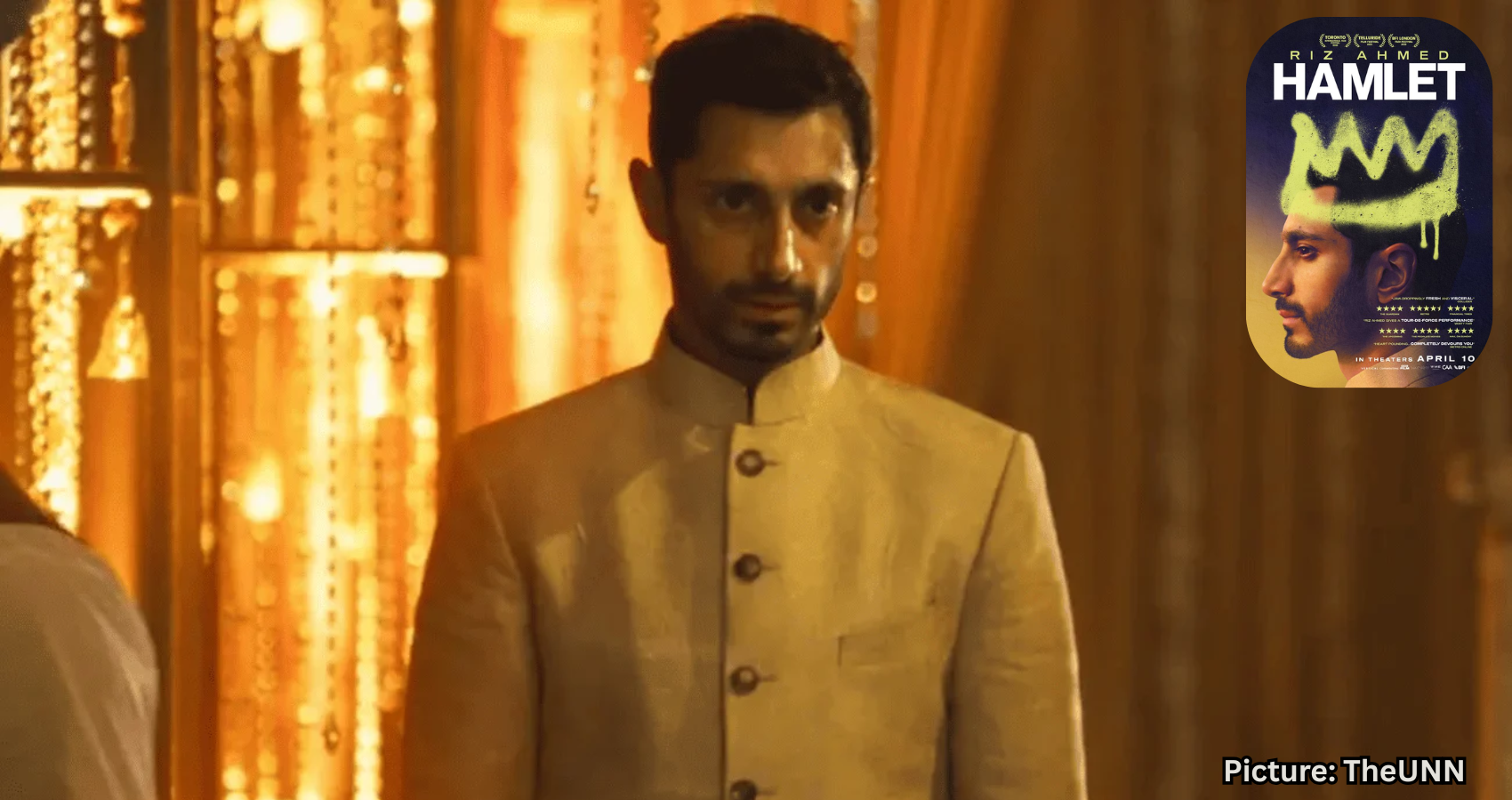
The latest adaptation of Shakespeare’s Hamlet, featuring Riz Ahmed, reimagines the classic tragedy within a South Asian British context, blending cultural elements with timeless themes of betrayal and madness.
Shakespeare’s Hamlet, one of the Bard’s most enduring tragedies, has inspired numerous adaptations over the years. Among the most notable for South Asian audiences is Vishal Bharadwaj’s Haider. The latest retelling, titled Riz Hamlet, stars Riz Ahmed and premiered at the Telluride Film Festival in Colorado last year, with a wider theatrical release in the United States this year.
Directed by Aneil Karia and penned by Michael Lesslie, Riz Hamlet reimagines the classic story within the confines of an elite South Asian British family. This marks the second collaboration between Ahmed and Karia, who previously worked together on the Oscar-winning short film, The Long Goodbye.
Karia’s adaptation remains largely faithful to Shakespeare’s original text, preserving the dialogues and character names. The film opens with the death of Hamlet’s father, a wealthy real estate mogul, followed by his uncle Claudius, played by Art Malik, taking over the family business and marrying Hamlet’s mother, Gertrude, portrayed by Sheeba Chaddha. As Hamlet grapples with his father’s ghostly visitation, he begins to question his uncle’s motives and his own sanity.
Initially, it may feel jarring to hear South Asian characters in contemporary London reciting Shakespearean dialogue. However, as the narrative unfolds, the words resonate deeply, evoking empathy for Hamlet’s anguish and isolation as he confronts his father’s murder.
Riz Ahmed delivers a compelling performance as Hamlet, effortlessly capturing the character’s frustration and discomfort. Supporting performances by Joe Alwyn as Laertes, Morfydd Clark as Ophelia, and Timothy Spall as Polonius further propel Hamlet toward madness, forcing him to discern reality from illusion. The iconic “to be or not to be” soliloquy is delivered in a car, where Karia artfully intertwines Hamlet’s emotional turmoil with reckless driving.
Ahmed’s nuanced acting and impassioned dialogue delivery represent a significant milestone for South Asian artists, who have greatly benefited from his groundbreaking roles in films such as The Reluctant Fundamentalist, Nightcrawler, and Sound of Metal. His work continues to pave the way for South Asian actors in an industry that has often overlooked them.
Despite the film’s strong performances, it does fall short in certain areas. The lighting throughout the film is inconsistent; while some scenes, such as Ahmed standing in front of a fluorescent light, are striking and eerie, others lack the same visual impact, particularly those set indoors. Additionally, Chaddha’s character appears to have been hastily written, leaving viewers to ponder how the film might have evolved with more substantial dialogue for her role.
The film’s conclusion feels abrupt, cutting short the final scene from the original play and leaving audiences questioning whether a longer runtime might have enhanced the overall experience. This is particularly disappointing given that the film has been in development for nearly a decade.
Riz Hamlet is currently showing in theaters across the United States, offering audiences a fresh perspective on a timeless tale.
For more insights on the film, refer to India Currents.