
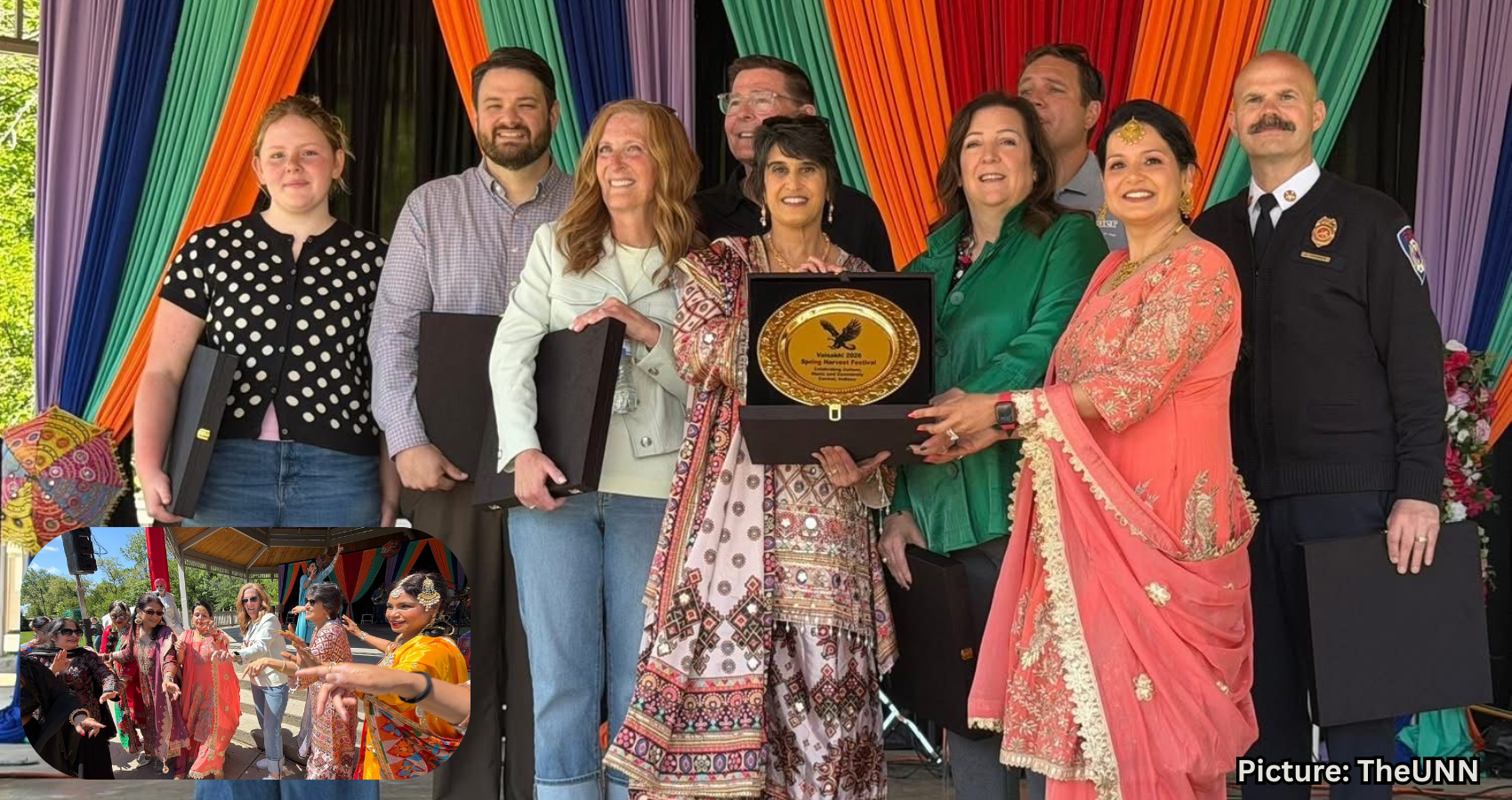
The city of Carmel celebrated its annual Vaisakhi festival with cultural performances and community service initiatives, highlighting the growing South Asian diaspora and promoting intercultural unity.
The city of Carmel hosted its annual Vaisakhi celebration at the Gazebo at Civic Square, attracting a diverse, multigenerational crowd to commemorate the traditional Sikh spring harvest festival. Organized by local advocate Asawari Kaur, the event combined traditional Punjabi music and dance with civic engagement, including a community blood drive and speeches from several Indiana elected officials. This gathering underscored the region’s expanding South Asian diaspora and emphasized intercultural unity through shared cultural heritage and public volunteerism.
On Saturday afternoon, hundreds of residents gathered at the Gazebo at Civic Square to celebrate Vaisakhi, the traditional Sikh spring harvest festival. The community-led event featured an array of traditional music, dance performances, and educational activities aimed at fostering intercultural understanding in Central Indiana. Kaur’s multigenerational celebration brought together families, civic leaders, and international performers to honor Indian heritage and Sikh traditions while emphasizing a shared commitment to community service.
The festival marks the solar new year and commemorates the formation of the Khalsa panth, the collective body of initiated Sikhs, in 1699. It served as both a cultural showcase and a civic gathering. In alignment with the core Sikh tenet of seva, or selfless service, organizers paired the cultural festivities with a community blood drive, addressing local blood shortages while fulfilling the festival’s underlying spiritual mandate of compassion and public welfare.
The event drew significant representation from state and local government officials, reflecting the growing political and cultural influence of the South Asian American community in Hamilton County. Notable attendees included Carmel Mayor Sue Finkam, Indiana State Senator J.D. Ford, and State Representative Victoria Garcia Wilburn. Carmel City Council Vice President Jeff Worrell was also present, along with various civic leaders such as Dr. Anita Joshi, K.P. Singh, and Indiana State Fire Marshal Joel Thacker.
Addressing the crowd from the pavilion, local leaders highlighted the importance of public cultural celebrations in rapidly diversifying suburban municipalities. The presence of bipartisan officials underscored a concerted effort by local representatives to engage directly with the Sikh diaspora, which has seen steady demographic growth across the Indianapolis metropolitan area over the past two decades. According to demographic data tracking Midwestern population shifts, Hamilton County has experienced a measurable increase in Asian-American residents, a trend that has increasingly influenced local cultural programming and civic outreach initiatives.
The layout of the event at Civic Square accommodated both recreational and utilitarian activities. While children and senior citizens engaged in family-friendly activities near the main stage, a steady stream of donors participated in the mobile blood drive stationed adjacent to the plaza. Organizers noted that linking cultural pride with tangible community assets, such as healthcare contributions, helps normalize the integration of immigrant traditions into the broader municipal fabric.
To fully understand the significance of the Carmel gathering, it is essential to consider the historical and agricultural roots of Vaisakhi. Originating in the Punjab region of the Indian subcontinent, Vaisakhi is traditionally a harvest festival celebrated by Punjabi farmers as a time of thanksgiving for the ripening of the rabi, or winter crops. For the Sikh community worldwide, however, the day carries profound religious significance. It commemorates the moment when Guru Gobind Singh, the tenth Sikh Guru, established the Khalsa order, introducing a code of conduct and distinct physical identity to defend religious freedom and promote social justice.
In the context of the American Midwest, celebrations like the one in Carmel serve as critical mechanisms for cultural preservation and education. Second- and third-generation Sikh Americans often utilize these public forums to counter religious misinformation and share their values with non-Sikh neighbors. The inclusion of educational booths at the Gazebo allowed attendees of all backgrounds to learn about the significance of the dastaar, or turban, the emphasis on egalitarianism in Sikh theology, and the history of Punjabi migration to the United States.
Financial and logistical support for the festival relied heavily on regional corporate and private entities. Corporate sponsors for this year’s event included regional banking institutions 1st Source Bank and KeyBank, alongside local businesses and individuals such as Rick Campbell, Smile N Style Dental, and Lindsay Gramlich. This blend of corporate sponsorship and grassroots volunteerism underscores the institutional acceptance that ethnic and cultural heritage festivals have achieved within the local business ecosystem.
A central highlight of the afternoon was the performance schedule featuring prominent Punjabi entertainers who traveled directly from India to participate in the Carmel festivities. The audience welcomed Punjabi media anchor and performer Satti Satinder, whose energetic stage presence and commentary bridged the various segments of the program. Renowned traditional entertainers Satvinder Satti and Harmandeep Kaur delivered musical presentations that drew large crowds to the front of the pavilion stage.
The musical selections included traditional folk genres as well as contemporary Punjabi compositions, providing a sonic representation of the festival’s multigenerational appeal. Audience members danced bhangra, an energetic folk dance traditionally associated with the harvesting season, transforming the manicured lawns of Civic Square into an active cultural space. The performers expressed gratitude for the warm reception from the diaspora community, noting that the enthusiasm in Indiana rivaled celebrations held in major metropolitan hubs like Vancouver, London, or New York.
The technical execution of the performances required collaboration between local audio-visual crews and the traveling artists, ensuring that traditional instruments paired seamlessly with modern amplification systems. This fusion of authentic folk performance with public infrastructure highlighted the capacity of Carmel’s public spaces to host complex, high-caliber international cultural events.
As the event concluded, organizers expressed optimism regarding the future trajectory of Vaisakhi celebrations in Hamilton County. Asawari Kaur emphasized that the strong turnout from both the South Asian community and non-South Asian residents demonstrates a maturing appreciation for diverse cultural expressions within the city. The overarching goal of the annual initiative remains twofold: to provide a space where Sikh families can honor their heritage openly and to build robust intercultural ties that mitigate social fragmentation.
Looking ahead, the organizing committee intends to expand the scope of the festival in the coming years. Plans include inviting a broader spectrum of local non-profits to participate, increasing the capacity of the associated blood drive, and collaborating with local school districts to incorporate educational elements of the festival into seasonal cultural diversity programming. With continued backing from elected officials and corporate partners, Carmel’s Vaisakhi celebration is poised to become a cornerstone cultural event for the state of Indiana, signaling a broader acceptance of diverse traditions in the American heartland, according to Source Name.