
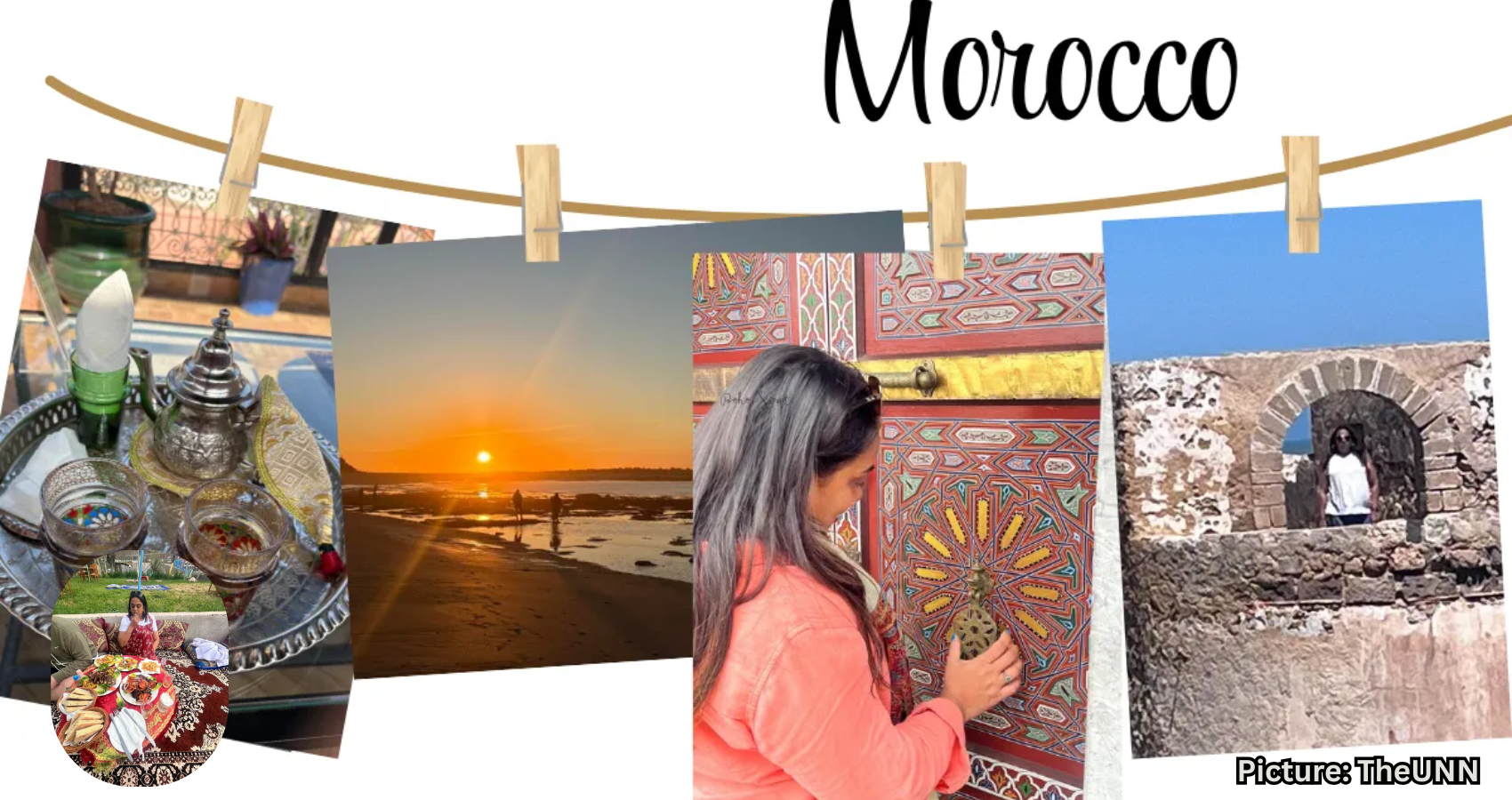
Exploring Morocco as an Indian-American, I discovered the deep connections between cultures through shared meals, family warmth, and the universal language of hospitality.
Casablanca welcomed me on the final day of Ramadan, a time when the streets were quiet and cafes remained closed. This was the beginning of my three-week journey through Morocco, staying with my partner’s family.
As sunset approached, I joined the women of the household to prepare for Iftar, the evening meal that breaks the daily fast during Ramadan. This experience marked my first lesson in Moroccan culture, not from a guidebook, but through the warmth of shared food and family. By the time the sunset siren signaled the end of the fast, I felt more than just a visitor; I was part of a family celebration.
In America, busyness often defines our lives, with tightly managed schedules. However, my time in Morocco prompted a necessary reset. This trip was not about ticking off tourist attractions; it was about immersing myself in the daily rhythms of family life.
Within just 24 hours, I began to view my journey through the lens of a kitchen where every dish told a story of family gatherings. The next day, Eid, solidified my transformation from guest to family member. Armed with limited French and a willingness to help, I bypassed the formal seating arrangements and dove into the kitchen preparations. This act of being put to work was the highest form of acceptance I could receive.
As we arranged the Eid platters and prepared salads, I observed my partner’s mother move with a familiarity that echoed my own childhood in India. I found myself trading my American efficiency for a deeper, more traditional rhythm that felt comforting and reminiscent of home.
Gathered in the soft afternoon light, we shared the Eid feast, which featured a massive, steaming platter at the center of the table. There were no individual plates; instead, we formed a communal circle of bread and tradition. As I reached in to serve myself, I felt a familiar rhythm take over, reminiscent of my childhood in India, where communal meals were central to family life. The etiquette may have differed, but the essence remained the same: food is best enjoyed when shared with loved ones.
Throughout my stay, my partner’s family demonstrated their acceptance in countless ways. I learned that special moments often lie in the simple acts of warmth, like a blanket wrapped around me or the consistent offering of fresh bread at every meal. Everyday occurrences transformed into extraordinary memories, from the laughter of young nieces and nephews to the hospitality of my partner’s parents.
In Casablanca, the most significant sights were not the monuments, but the love and acceptance I received from my partner’s family. I fondly recall the quick cafe runs with my partner, the elaborate breakfasts featuring baghrir—Moroccan pancakes—and msemmen—layered flatbread—as well as the afternoon tea breaks filled with delicious salads and platters of food.
While the world may perceive Casablanca as a city of white walls and Art Deco architecture, I experienced it through a local lens. My days were filled with trips to the boulangerie and the local market, accompanied by the sounds and smells of a Moroccan kitchen, punctuated by endless cups of kahwa (coffee) and atay (Moroccan mint tea).
In Morocco, meals serve as a means to connect rather than merely refuel. Despite my American independence, I found my soul resonating with the collective spirit of Moroccan culture. Just as in India, the notion of being “full” is merely a suggestion. The insistence on feeding me until I could barely move bridged the gap between my childhood and my experiences in Morocco—a shared belief that love is best served on a communal plate.
Using a crusty wedge of bread as both fork and vessel felt natural to me. I relished the act of breaking bread to scoop up a perfect blend of meat, vegetables, sauce, and spices from the shared dish. Without needing to speak, my partner’s mother would gently nudge the tenderest pieces of meat toward my side of the platter, embodying hospitality in its purest form.
While my partner’s mother ruled the kitchen, his father orchestrated the rhythm of the dining table with quiet but immense hospitality. No matter how much I ate, he would always nudge a fresh loaf of khobz (bread) my way, insisting I hadn’t eaten enough. This relentless love reminded me of my own home in India, where a closed plate is never the final word at the dinner table.
In the quiet moments between feasts and travels, their hospitality extended beyond the table. If I dozed off on the plush cushions of the traditional sofas, I would wake to find a small blanket tucked around my shoulders—a silent act of care from my partner’s father that required no words.
However, this warmth came with a touch of gentle admonition. In a Moroccan home, cold feet are a serious concern. If I dared to walk across the tiles without my belgha (traditional Moroccan leather slippers), both of my partner’s parents would immediately protest. This beautiful, fussy kind of love made me feel entirely cared for.
These moments were not tourist experiences; they were the everyday rituals of being embraced by a family that had decided, from the moment I arrived, that I was one of them.
Our travels took us from the stately, blue-washed alleys of Rabat to the coastal cities of El Jadida, Oualidia, and Essaouira, and the vibrant, bustling streets of Marrakech. I watched my partner navigate the souks, enjoying the exchanges of pleasantries, the comfort of familiarity, and, of course, the art of bargaining. We embraced local flavors, adventurous enough to try peppery, spiced snails—babbouche—and heavy, cumin-scented grilled meats.
If Casablanca was about belonging, Marrakech was about remembrance. At the bustling market square of Jemaa el-Fnaa, I witnessed a blend of my two worlds. The vibrant pyramids of spices and the sharp scents of market stalls mirrored the bazaars of India, complete with snake charmers, henna artists, and the aroma of grilled meats wafting through the air.
Throughout my journey, I encountered nods to my Indian heritage, from vendors greeting me with a “namaste” to the familiar melodies of Bollywood songs playing in the background. A simple glass of sugarcane juice transported me back to my childhood, while the lively atmosphere of Essaouira evoked memories of street vendors and bustling markets.
Growing up in India, I learned that a guest is never just a guest—they are a blessing. In Casablanca, I found this same ancient code, expressed through the way my partner’s parents ensured my tea glass was never empty and how the cookies seemed to replenish themselves magically. The hospitality I received made me realize that while our languages may differ, the gestures of welcome are universal.
On the eve of my departure, we gathered for a final meal filled with dishes that were childhood staples for my partner and his siblings. As the last round of mint tea was poured, laughter and tears filled the room. The closeness we had built made the space feel smaller, not from the crowd, but from the bonds we had formed.
I arrived as a guest from across the ocean, apprehensive about the distance and dialects, but I left with the understanding that family is a universal language—one that translates beautifully from a childhood in India to a home in Casablanca.
According to India Currents.