
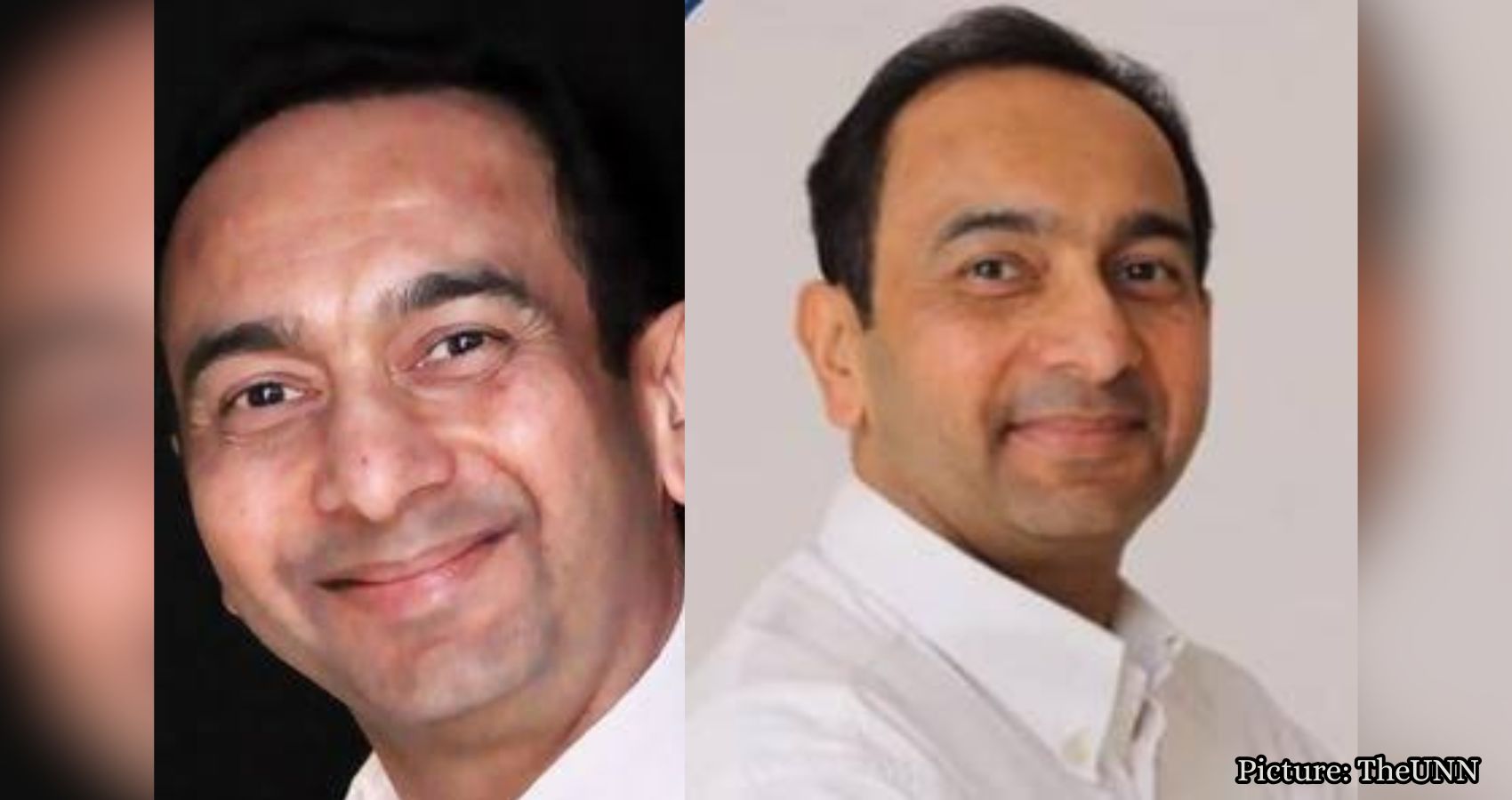
Mahesh ‘Max’ Ganorkar is running for the U.S. House to represent North Carolina’s 4th Congressional District, emphasizing the importance of civic engagement and conservative values.
Mahesh Ganorkar, known as Max, is a Republican candidate vying for a seat in the U.S. House of Representatives to represent North Carolina’s 4th Congressional District. He is set to appear on the general election ballot on November 3, 2026. The Republican primary, originally scheduled for March 3, 2026, has been canceled. In a recent interview, Ganorkar shared insights into his motivations for running, his priorities, and his vision for the district.
Ganorkar believes that the American Dream should encompass more than just achieving success as an immigrant; it should also involve active participation in the civic process. He argues that Hindus, like all Americans, should engage in shaping policies that strengthen the nation.
“I hope my candidacy encourages Hindus to consider why they may find it in their best interest to associate with the Republican Party rather than the Democratic Party,” Ganorkar stated. He expressed concern that media portrayals of some alt-right members of the Republican Party have unfairly painted everyday Republicans as hate-mongers. He also noted that the rhetoric surrounding the Trump administration has strained relationships between India, Indian-Americans, and many Republicans, leading some to avoid political engagement.
Ganorkar pointed out that many Hindus tend to identify with the Democratic Party by default, viewing it as more caring and accepting of diversity. However, he cautioned that, similar to the Congress Party in India, the Democratic Party includes socialist and Islamist currents that may not align with Hindu values. He urged voters to make informed political choices rather than relying on emotional responses that could jeopardize future opportunities.
As a potential congressman, Ganorkar emphasized his primary responsibility to defend the U.S. Constitution. He aims to foster a pro-growth environment by advocating for reduced taxes and regulations, allowing individuals and businesses the freedom to pursue the American Dream. He highlighted the entrepreneurial spirit of Indian-Americans, who own various businesses, and how they would benefit from policies promoting economic growth.
Ganorkar also stressed the importance of supporting law enforcement to ensure safe communities, noting that Indian-American families, like all Americans, deserve security in their neighborhoods.
In his one-minute pitch to voters, Ganorkar stated, “We cannot allow America to become the kind of socialist system that many immigrants left behind. America became prosperous because it embraced freedom, opportunity, and individual initiative rather than socialism.” He reflected on his experiences growing up in India, where he witnessed the negative impacts of socialism, and affirmed his commitment to protecting the Constitution and the American way of life.
North Carolina’s 4th Congressional District is known for its remarkable diversity, featuring world-class universities, innovation hubs, and agricultural communities. Ganorkar believes his life experiences uniquely position him to represent this diverse constituency. He grew up on a farm, giving him insight into the needs of the agricultural community, and his wife’s career in pharmaceutical research has instilled in him an appreciation for the role of research and development in driving innovation.
Ganorkar’s international business background has equipped him with an understanding of what businesses need to thrive in a competitive global market. He also values his time as a stay-at-home father, which taught him the importance of strong families, quality education, and reducing financial burdens on working families.
Among the major challenges facing his district, Ganorkar identified rising housing costs, the widening gap between wages and the cost of living, and the need for access to quality education. He is committed to expanding opportunities for wealth creation through homeownership and supporting small businesses in their growth and success.
Ganorkar believes he stands apart from his competitors, particularly his opponent, whom he describes as a career politician lacking innovative solutions to the district’s challenges. He argues that the political safety of the district has led to a lack of engagement with constituents and a failure to pursue bold policy ideas. In contrast, Ganorkar is offering fresh perspectives focused on improving affordability, expanding opportunities, and strengthening families.
Ganorkar’s personal story is one of optimism and gratitude. Born in a small village in India to loving parents in a prosperous farming family, he moved to the United States in 1989 to pursue an MBA. He married his college sweetheart in 1995, and together they have three children. His experiences as a stay-at-home dad have been particularly meaningful, providing him with cherished memories and valuable lessons during challenging financial times. He credits the Shrimad Bhagwat Gita as a source of strength and inspiration for him and his family.
Professionally, Ganorkar is a home designer and builder. His nickname, “Max,” originated from a construction site where a retired Marine and master framer affectionately shortened his Indian name. Beyond his profession, Ganorkar has been actively engaged in civic life since 2009, motivated by concerns about America’s drift toward socialism and the erosion of constitutional limits. His activism has led him to run for Congress in 2022, 2024, and now 2026 as a Republican candidate.
As Ganorkar prepares for the upcoming election, he remains focused on his vision for North Carolina’s 4th Congressional District and the values he believes will resonate with voters.
According to India Currents, Ganorkar’s campaign reflects a commitment to conservative principles and a desire to engage the Indian-American community in the political process.