
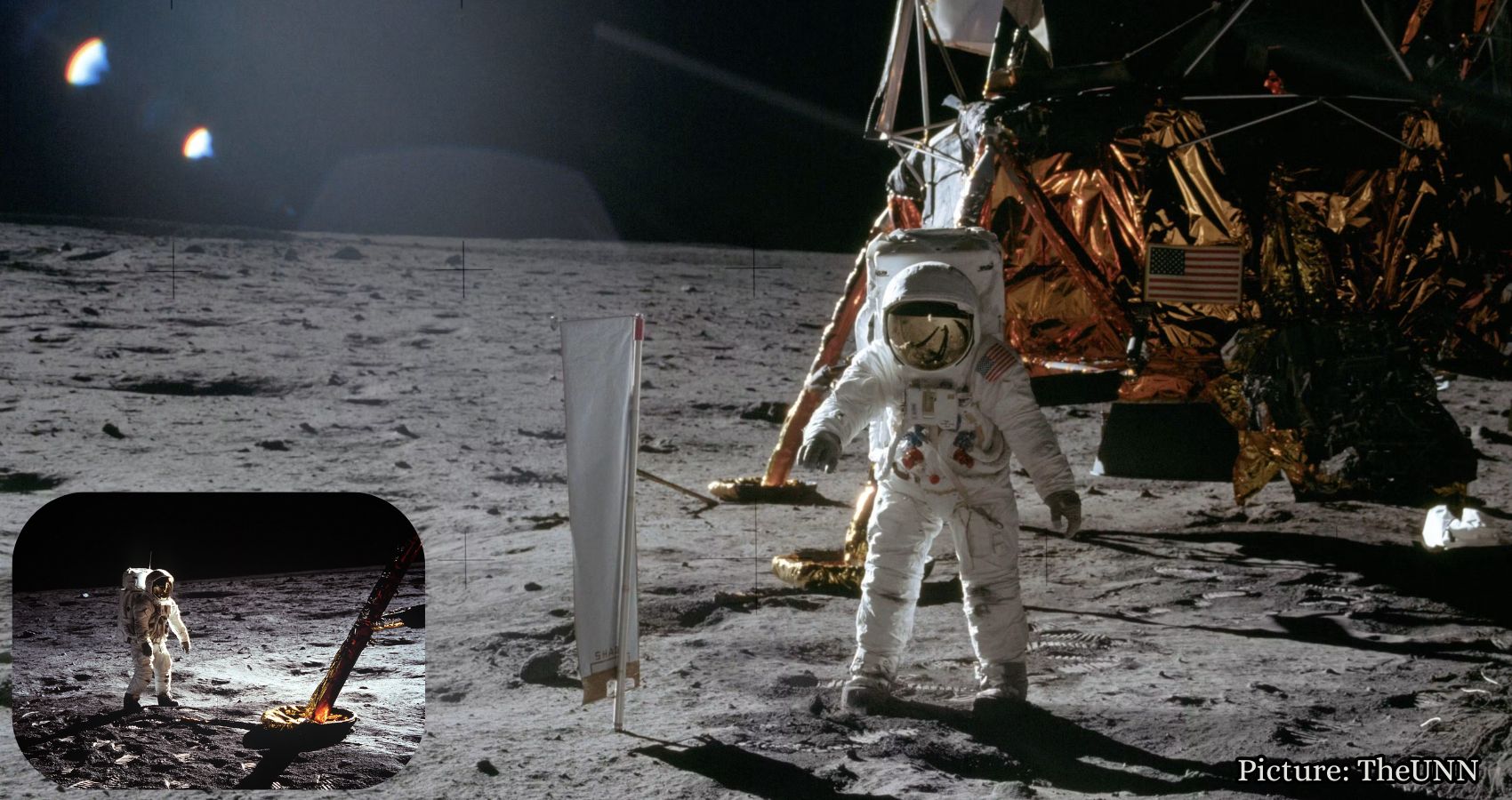
NASA’s Artemis Program aims to establish a sustainable human presence on the Moon, marking a new era of exploration and innovation in space travel.
“Houston, we have a problem!” Few phrases in history resonate as profoundly as this iconic line from Apollo 13. For many, these words became the first connection to NASA, symbolizing the challenges and triumphs of space exploration. They remind us that the journey into the cosmos is not solely about extraordinary achievements; it is also about resilience, ingenuity, teamwork, and the relentless pursuit of solutions when the stakes are at their highest.
Years later, my own journey led me to Houston—not because there was a problem, but because thousands of remarkable individuals come together daily with a shared purpose: to solve challenges long before astronauts ever have to utter those famous words.
The Artemis Program is at the forefront of this endeavor. More than half a century after Apollo transformed our understanding of human potential, Artemis is opening a new chapter in exploration. While Apollo proved that we could reach the Moon, Artemis poses a more ambitious question: how do we stay? How do we establish a sustainable human presence on and around the Moon, using everything we learn there to prepare for humanity’s first journey to Mars?
For me, the Moon has always been more than just a celestial object. Growing up in India, it was woven into our stories, poetry, festivals, and childhood dreams. Like millions of children, I gazed up at the night sky with endless curiosity, never imagining that one day I would contribute to the spacecraft systems that would carry humanity back to it.
Today, I serve as a Systems Engineering Manager for NASA’s Orion spacecraft. Orion is the vehicle that will carry astronauts farther from Earth than any human spacecraft has traveled in generations. My role involves ensuring that Orion is equipped to handle the demanding realities of deep space, including protecting critical systems from electromagnetic energy encountered both within the vehicle and in the harsh environment of space. More importantly, my work connects people and engineering disciplines, transforming thousands of individual decisions into one safe and reliable spacecraft.
While the public often remembers the launch, we must not forget the years of preparation that make it possible. Every successful mission begins with design reviews, simulations, integration tests, and countless technical discussions where engineers challenge one another’s assumptions in pursuit of a safer vehicle. Systems engineering has taught me that extraordinary exploration is never the work of a single brilliant individual; it is the result of extraordinary teams working together.
One of the most unforgettable experiences of my career has been supporting launch operations. As the countdown progresses, every engineering discipline evaluates whether its systems are ready for flight. Within my technical responsibility, our team contributes to the engineering recommendation that supports the “Go” or “No-Go” decision. Behind that single word, “Go,” lies years of analysis, testing, collaboration, and responsibility. In that moment, every engineer shares a common goal: bringing astronauts home safely.
Perhaps the greatest surprise of my Artemis journey has been the realization that science and imagination are not mutually exclusive. Growing up, I believed science explained reality while imagination created dreams. Working on Artemis has shown me that they have always been partners. Every spacecraft begins with imagination. Someone first envisioned humans returning to the Moon, living and working there, and using it as a proving ground for Mars. Engineering simply provides a pathway for imagination to become reality.
Watching the Artemis II mission unfold was one of the proudest moments of my career. Commander Reid Wiseman, Pilot Victor Glover, Mission Specialist Christina Koch, and Canadian Space Agency astronaut Jeremy Hansen carried the hopes of thousands of engineers, scientists, technicians, and mission specialists as Orion transported them around the Moon.
One of my favorite memories came when Orion sent back its first breathtaking images of the lunar surface. During the mission, I spent most of my time in NASA’s Mission Evaluation Room (MER), seated at my console alongside an extraordinary team of engineers, each responsible for monitoring different aspects of the spacecraft’s health and performance. The atmosphere in the room was charged with focus, anticipation, and quiet confidence. Every screen, headset, and conversation reflected years of preparation converging into a few unforgettable moments.
Inside Mission Control, there was a phrase that perfectly captured our collective sentiment: “Moonjoy.” This simple word conveyed so much! As those first images of the Moon appeared, the atmosphere in the room shifted almost instantly. Years of engineering, countless simulations, design reviews, technical debates, and long hours of testing culminated in something wonderful and human—pure joy. Smiles exchanged across the room, and a shared realization emerged: we were witnessing history unfold in real time.
For those precious moments, we were not focused on requirements, analyses, or test reports. We were simply a room full of people who had dedicated years of our lives to this mission, watching humanity return to the Moon. Sitting among my fellow engineers, I felt both humbled and exhilarated, knowing that each of us had contributed a small piece to something far greater than ourselves.
Seeing the crew successfully accomplish every mission objective and return safely was deeply emotional. For those of us who had spent years preparing Orion, it was validation that every review, every test, every debate, and every difficult decision mattered. Artemis II was not just a successful mission; it marked the beginning of a new era of exploration, reminding us all why we chose to become engineers in the first place.
Yet, Artemis II is only the beginning. The missions ahead will return astronauts to the lunar surface while NASA and its commercial partners continue to develop the human landing systems that will transport crews from Orion in lunar orbit to the Moon and back again. Each mission teaches us how to live and work farther from Earth, bringing us closer to humanity’s next destination—Mars. The Moon is no longer the finish line; it is our next classroom.
Another lesson Artemis has imparted is the true meaning of leadership. NASA thrives because individuals with diverse backgrounds, experiences, and perspectives collaborate to solve complex problems. As more women step into technical and leadership roles, qualities such as collaboration, empathy, curiosity, and inclusion have become defining strengths of many engineering teams.
Sometimes, as I walk past Orion, I pause to reflect on the child I once was, gazing up at the Moon from India. Back then, it felt impossibly distant. Today, I see it differently.
The Moon is no longer just a destination; it is humanity’s next launchpad!
And perhaps the greatest lesson Artemis has taught me is that every giant leap begins the same way—with someone looking up at the night sky and asking, “What if?” It all begins with curiosity and grows through imagination. Together, we build the future!
According to India Currents.