
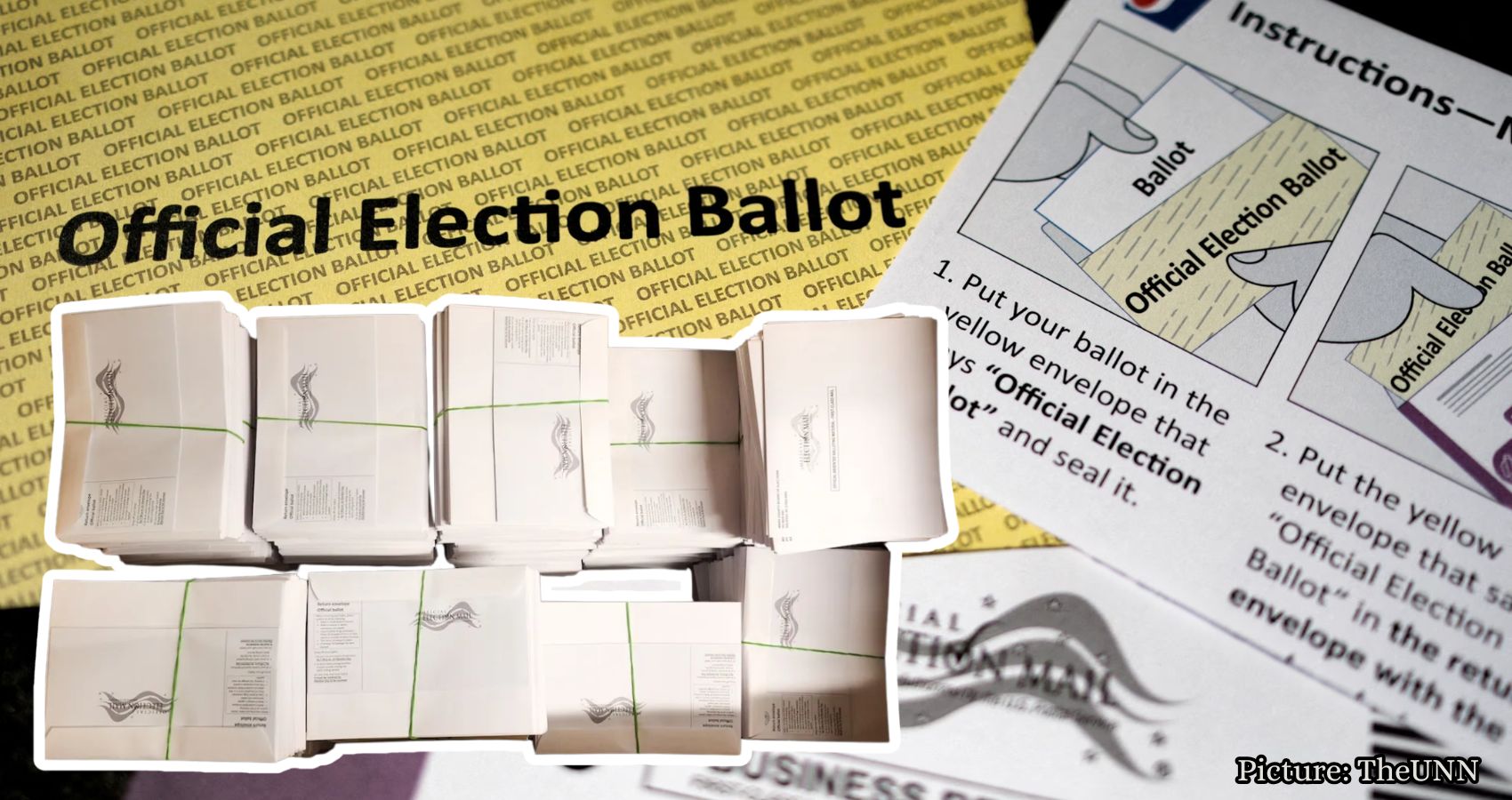
U.S. District Court Judge Indira Talwani has extended a block on rules limiting mail-in voting during the midterm elections, complicating the Trump administration’s efforts to change voting procedures.
A federal judge has extended her prohibition against the U.S. Postal Service from implementing President Donald Trump’s executive order aimed at limiting mail-in voting during the upcoming midterm elections. This decision presents a significant hurdle for the administration as states begin to send out mail ballots.
The preliminary injunction issued by U.S. District Court Judge Indira Talwani replaces a temporary order she previously granted that blocked the Postal Service’s plan. The Trump administration had already sought intervention from the Supreme Court to lift Talwani’s earlier temporary order, and on Friday, it notified her of its intention to appeal her latest decision to the U.S. 1st Circuit Court of Appeals.
Time is of the essence for the administration to implement any substantial changes to voting procedures. North Carolina commenced the distribution of its first mail ballots on Friday, with other states expected to follow suit shortly.
Judge Talwani, who was appointed by President Barack Obama, emphasized the urgency of the situation in her ruling. “Plaintiff States are required under state law to mail millions of ballots to voters on a prescribed timeframe. As detailed below, they are unable to pivot this late in the election cycle, nearly guaranteeing significant disenfranchisement for eligible voters,” she stated.
The White House did not immediately respond to requests for comment regarding the ruling.
While the order permits states to voluntarily adopt the new Postal Service system, no state has yet indicated plans to do so. Trump has consistently sought to limit mail-in voting, despite utilizing this method himself to cast his ballot. He has made unfounded claims that mail balloting contributed to his loss in the 2020 election, but has thus far been unsuccessful in altering established voting procedures.
Last year, an initial executive order issued by Trump sought to modify election rules, including a requirement for voters to provide documentary proof of citizenship for registration. Federal judges halted this order, ruling that the Constitution grants states, and in certain instances Congress, the authority to determine voting procedures, not the president.
Following Trump’s issuance of the mail voting executive order in March, several lawsuits were filed by Democrats and voting rights groups. Two of these cases were brought before Judge Talwani, who initially placed a hold on the order in June, prohibiting its implementation until after the November elections.
However, the Supreme Court overturned that order late last month. The conservative majority did not explicitly declare Trump’s actions legal but determined that the lawsuits had been filed prematurely, prior to the Postal Service releasing its rules for implementing the order. The rule was published just before the Supreme Court’s ruling, prompting the plaintiffs to refile their lawsuits.
The ongoing legal battle has significant implications for this year’s elections, particularly as control of Congress hangs in the balance. Nearly one-third of voters in the U.S. utilize mail ballots, and election officials argue that there is insufficient time to adjust their systems to comply with the new directives from the Postal Service.
As the situation unfolds, the implications of Judge Talwani’s ruling will likely reverberate throughout the electoral process, impacting millions of voters across the nation.
According to The Associated Press, the legal developments surrounding mail-in voting will continue to shape the landscape of the upcoming midterm elections.