
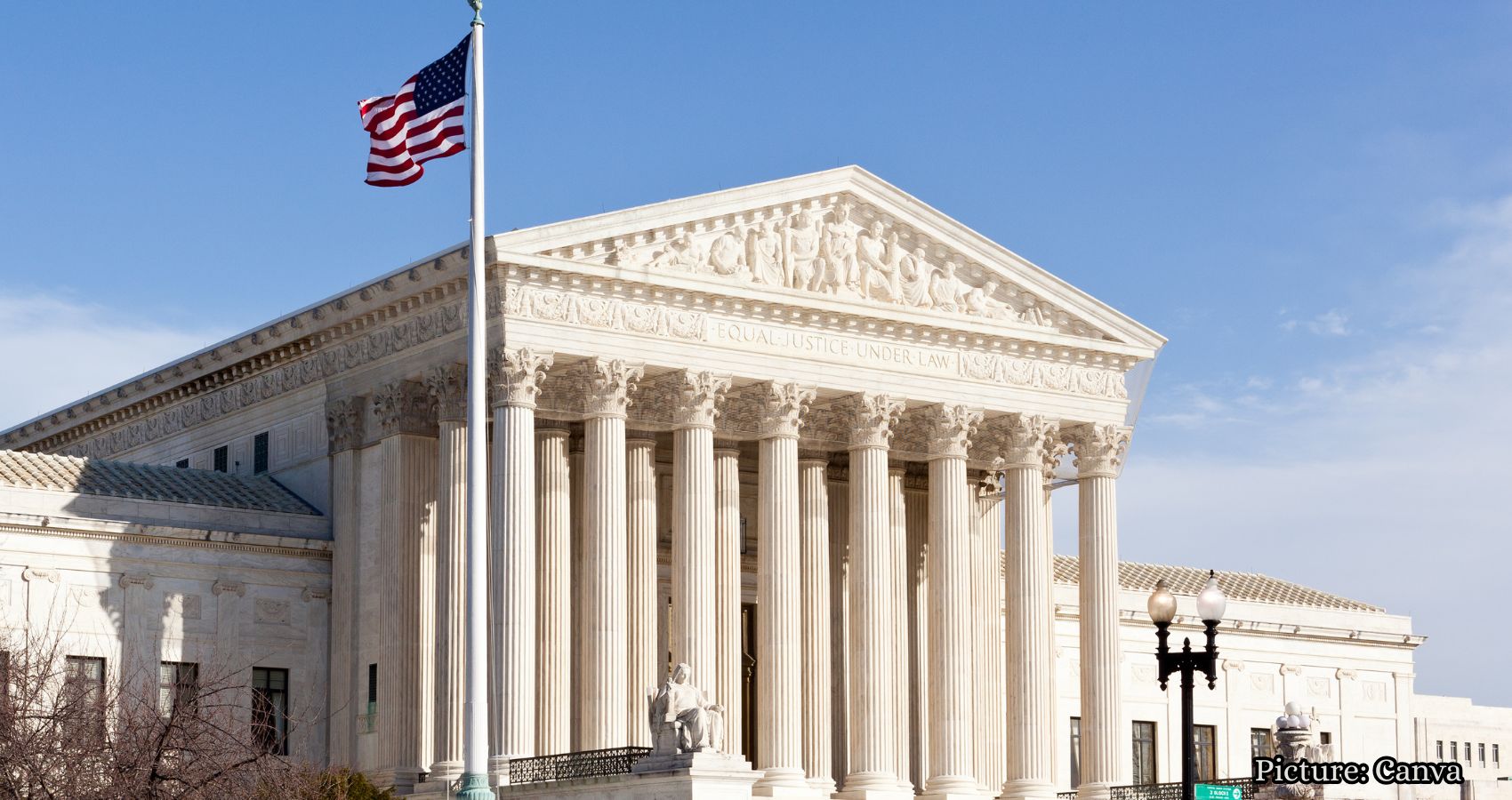
The Supreme Court upheld birthright citizenship on Tuesday, rejecting President Trump’s executive order that sought to limit citizenship for children born to undocumented immigrants.
The Supreme Court affirmed a broad interpretation of birthright citizenship on Tuesday, rejecting an executive order from former President Donald Trump that aimed to declare children born to parents in the United States illegally or temporarily as ineligible for American citizenship.
This ruling aligns with the longstanding judicial interpretation of the 14th Amendment and comes on the final day of a Supreme Court term that has largely favored Trump’s expansive claims of presidential power.
In addition to the birthright citizenship ruling, the court also upheld laws in approximately half the states that prohibit transgender girls and women from participating in public school and college sports teams. Furthermore, it struck down limits on party spending in federal elections.
Chief Justice John Roberts, writing for the majority, emphasized the significance of citizenship in his opinion. “Citizenship, then and now, was the right to have rights — to freely participate in our political community. The Framers of the Fourteenth Amendment extended that promise to ‘every free-born person in this land,’” he stated, referencing congressional debates surrounding the amendment. “We keep that promise today.”
The concept of birthright citizenship is relatively unique to the Americas, with its roots tracing back over 500 years to the era of European colonization. Legal historians suggest that the geographic divide in citizenship practices can be linked to the desires of European aristocrats who encouraged settlement in their colonies, while colonists sought to ensure that their children, even if born overseas, retained European citizenship.
As independence movements took shape and new nations emerged, these legal traditions began to solidify. “By then, their legal traditions had already started to form,” noted César Cuauhtémoc García Hernández, a law professor at Ohio State University. “So by and large they continued some of the key legal practices of the colonial European governments that they had just severed ties with.”
The decision has garnered praise from civil rights advocates. NAACP President Derrick Johnson remarked, “Trump’s attempted assault on the 14th Amendment was dealt a major blow today. This decision is a powerful affirmation of the Constitution and the enduring promise of equality it represents.” He added, “For over 150 years, the Fourteenth Amendment has guaranteed citizenship to everyone born in this country. Today, the court rightly rejected efforts to undermine that core protection and instead upheld a principle that is essential to our democracy.”
The majority opinion on birthright citizenship is notably substantial, with the printed version comprising 26 pages. In contrast, the dissent authored by Justice Clarence Thomas, which was joined by Justice Neil Gorsuch, spans 91 pages.
This ruling marks a significant moment in the ongoing discourse surrounding immigration and citizenship in the United States, reaffirming the constitutional protections afforded to individuals born on American soil.
According to The Associated Press, this decision reinforces the foundational principles of equality and citizenship embedded in the U.S. Constitution.