
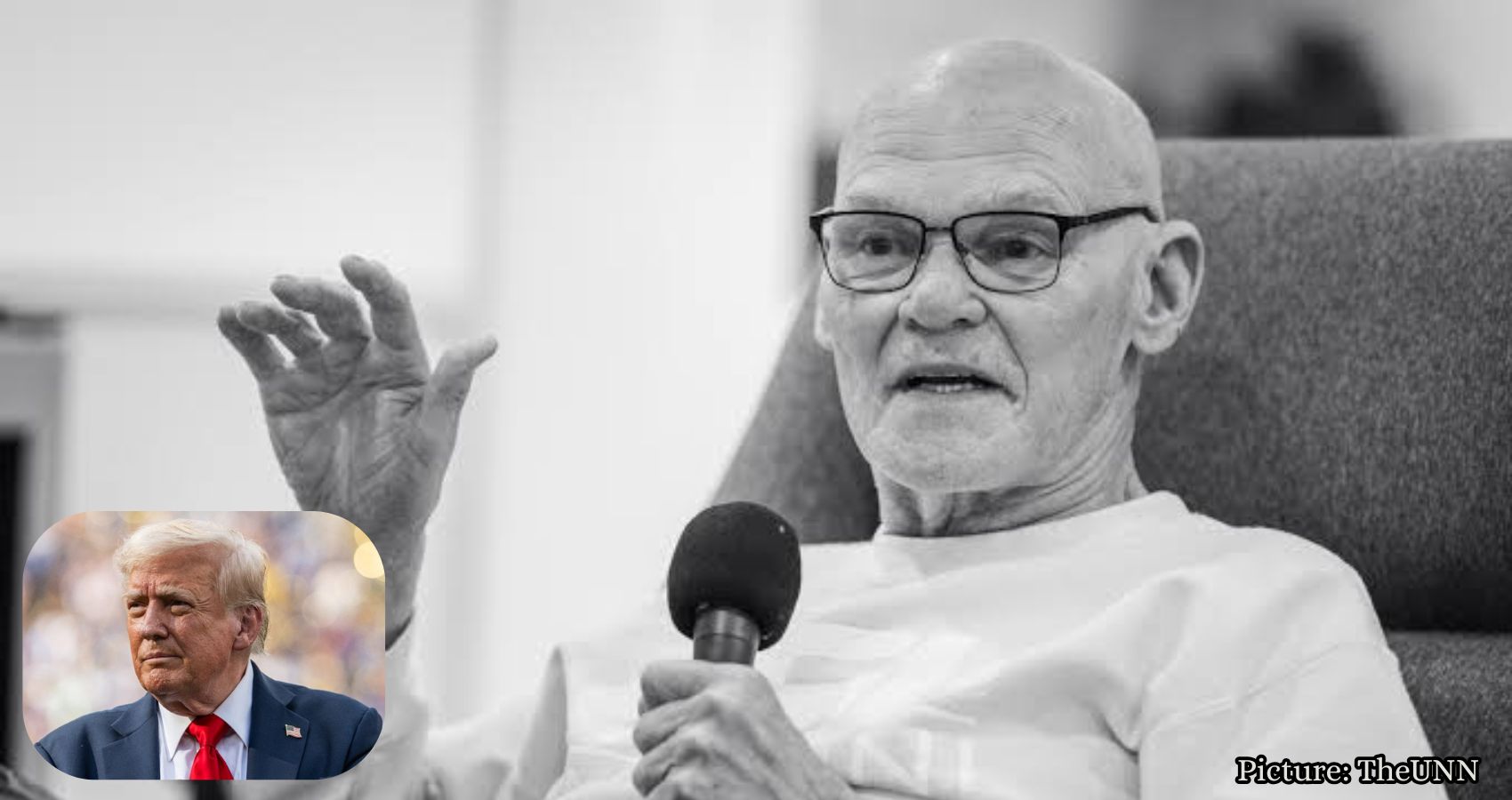
James Carville reflects on his iconic slogan “It’s the economy, stupid,” expressing regret as he critiques the current political climate under Donald Trump.
James Carville, the strategist behind President Bill Clinton’s 1992 electoral victory, has recently voiced his discontent with his famous catchphrase, “It’s the economy, stupid.” Originally coined as a reminder for campaign staff to focus on economic issues, Carville now believes the phrase haunts him in light of the alleged corruption surrounding former President Donald Trump.
During a discussion on his “Politicon” podcast, Carville explained that the political landscape has shifted significantly since the early 1990s. He noted that the allegations of corruption involving Trump have overshadowed the importance of economic issues in today’s elections. Carville’s comments came in response to a mention of his slogan by former Mount Holyoke dean Joseph Ellis, which prompted Carville to reflect on its relevance.
“So, professor, I thought about that recently – about ‘It’s the economy, stupid’ – it’s a great catchphrase. It’s maybe one of the most oft-repeated things in politics,” Carville stated. “I now have come to detest the fact I said that.”
While he did not explicitly name Trump, Carville has been vocal about his accusations of corruption against the former president. He contrasted Trump with George H.W. Bush, stating, “I’ll listen to people who say, ‘people don’t care about corruption, they care about the economy — As long as their incomes are up, they don’t care what he does’ – and I’m afraid that’s right.” Carville emphasized that Bush, despite his political shortcomings, was not a corrupt individual.
Carville’s frustration was palpable as he expressed his feelings about the current political climate. “I want to punch him in the f—ing face. OK? Yes. I’m serious… Because the phrase actually haunts me today,” he said, illustrating his deep-seated concerns about the direction of American politics.
In response to Carville’s remarks, White House spokesman Davis Ingle dismissed the strategist’s comments, labeling him a “stone-cold loser.” Ingle further claimed that Carville suffers from “Trump Derangement Syndrome,” suggesting that it has clouded his judgment.
Carville has not shied away from criticizing Trump in the past. In earlier discussions, he described the current political environment as one where “we are drowning; we’re suffocating in corruption.” He accused Trump of significantly increasing his net worth since taking office, further fueling his concerns about the integrity of American leadership. “I’m just really fearful for the United States,” he added.
In February, Carville directed a pointed message at Trump, suggesting that the president’s inner circle “hates” him and labeling him a “fat, sorry, sack of s—.” His continued criticism of Trump has led him to embrace what he calls “Trump Derangement Syndrome,” a term he uses to describe his heightened awareness of the former president’s actions.
Carville has remained a prominent figure in Democratic politics since his role in Clinton’s successful campaign, collaborating with notable aides such as George Stephanopoulos. The 1992 campaign produced several memorable moments, including the enduring slogan “It’s the economy, stupid,” and the use of Fleetwood Mac’s “Don’t Stop” as a theme song.
As Carville reflects on his past, his recent comments highlight a significant shift in the political landscape. The focus on economic issues, once central to his campaign strategy, now feels overshadowed by concerns about corruption and integrity in leadership. His candid remarks serve as a reminder of the complexities of modern politics and the evolving priorities of voters.
Carville’s insights into his iconic slogan and the current political climate underscore the challenges facing both parties as they navigate an increasingly polarized electorate. As the political landscape continues to evolve, the relevance of slogans and campaign strategies will undoubtedly be tested in the years to come.
For further insights, Fox News Digital reached out to Carville via his Politicon podcast for additional comments.