
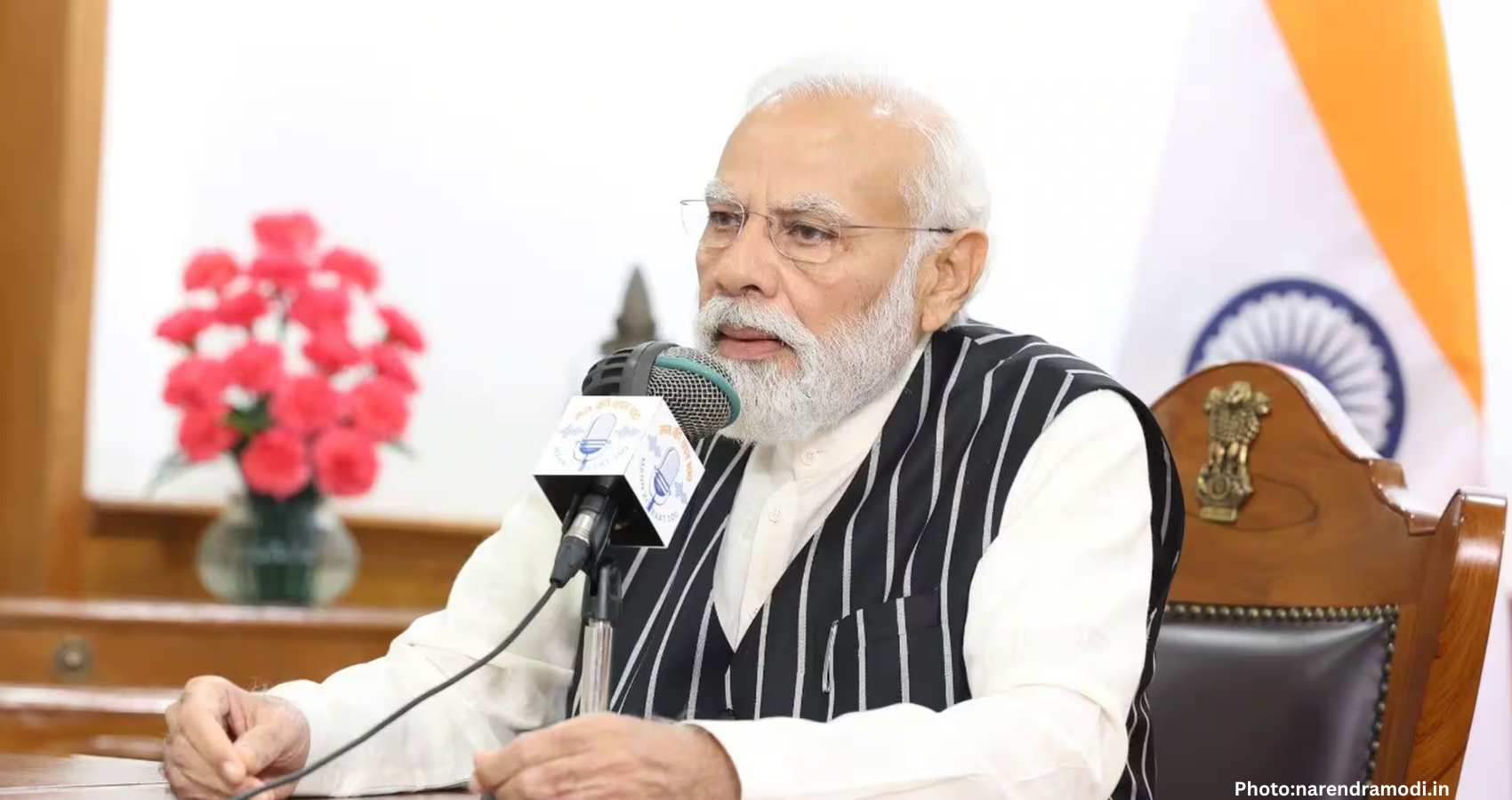
BJP’s sweeping success in West Bengal and strong performances elsewhere challenge longstanding critical narratives in Western media.
In a notable development, The Washington Post published an opinion article on May 7, 2026, recognizing the sustained strength of Prime Minister Narendra Modi and the Bharatiya Janata Party (BJP) in the wake of significant electoral gains. Titled “Narendra Modi keeps running circles around his critics” (also referenced as “Modi’s electoral triumph cements his legacy”), the piece by Bill Drexel, a senior fellow at the Hudson Institute, confronts earlier assumptions held by many Western observers regarding the longevity of the BJP’s political movement.
The article highlights the resilience of the Hindu nationalist movement and the BJP’s repeated electoral successes, countering narratives that portrayed Prime Minister Modi’s leadership as incompatible with India’s democracy. It underscores how consistent voter mandates have solidified Modi’s legacy through governance focused on development, national security, and cultural identity.
Recent Election Results Reinforce BJP Dominance
This reassessment follows the May 2026 state assembly elections across West Bengal, Tamil Nadu, Kerala, Assam, and Puducherry. The BJP achieved a historic breakthrough in West Bengal, securing approximately 206 seats in the 294-member assembly. This victory ended 15 years of Trinamool Congress (TMC) rule under Mamata Banerjee, marking the first time the BJP has formed a government in the state.
In Assam, the BJP retained power with a strengthened mandate, winning around 82 of 126 seats. The party and its allies also maintained control in Puducherry. While Tamil Nadu saw actor Vijay’s Tamilaga Vettri Kazhagam (TVK) emerge as the single-largest party and Kerala returned to a Congress-led United Democratic Front (UDF) government, the overall outcome significantly expanded the BJP’s influence.
As a result, the BJP now governs or participates in ruling coalitions in 22 of India’s 28 states, deepening its national footprint and bolstering Prime Minister Modi’s mandate midway through his third term.
Context and Implications
For years, segments of mainstream Western media, including The Washington Post, have critiqued the BJP’s policies with emphasis on concerns regarding religious nationalism, democratic institutions, and minority rights. The recent opinion piece, alongside the empirical outcomes of the state elections, indicates a potential shift toward acknowledging the durability of voter support for the BJP’s agenda.
Prime Minister Modi addressed party workers following the results, describing the victories as a “spectacular mandate” and a triumph of people’s power. The results reflect continued public confidence in initiatives related to economic growth, infrastructure development, and welfare programs.
Broader Significance for Global Discourse
This evolution in coverage from a prominent U.S. outlet, timed closely with the election outcomes, highlights the value of assessing media narratives against on-the-ground democratic results. As international observers engage more closely with India’s political realities, reporting may increasingly prioritize factual electoral mandates over preconceived frameworks.
TheUNNnews will continue monitoring developments in both Indian politics and international media perspectives. These recent events affirm the robustness of India’s democratic processes and the electorate’s role in shaping the nation’s trajectory under the current leadership.