
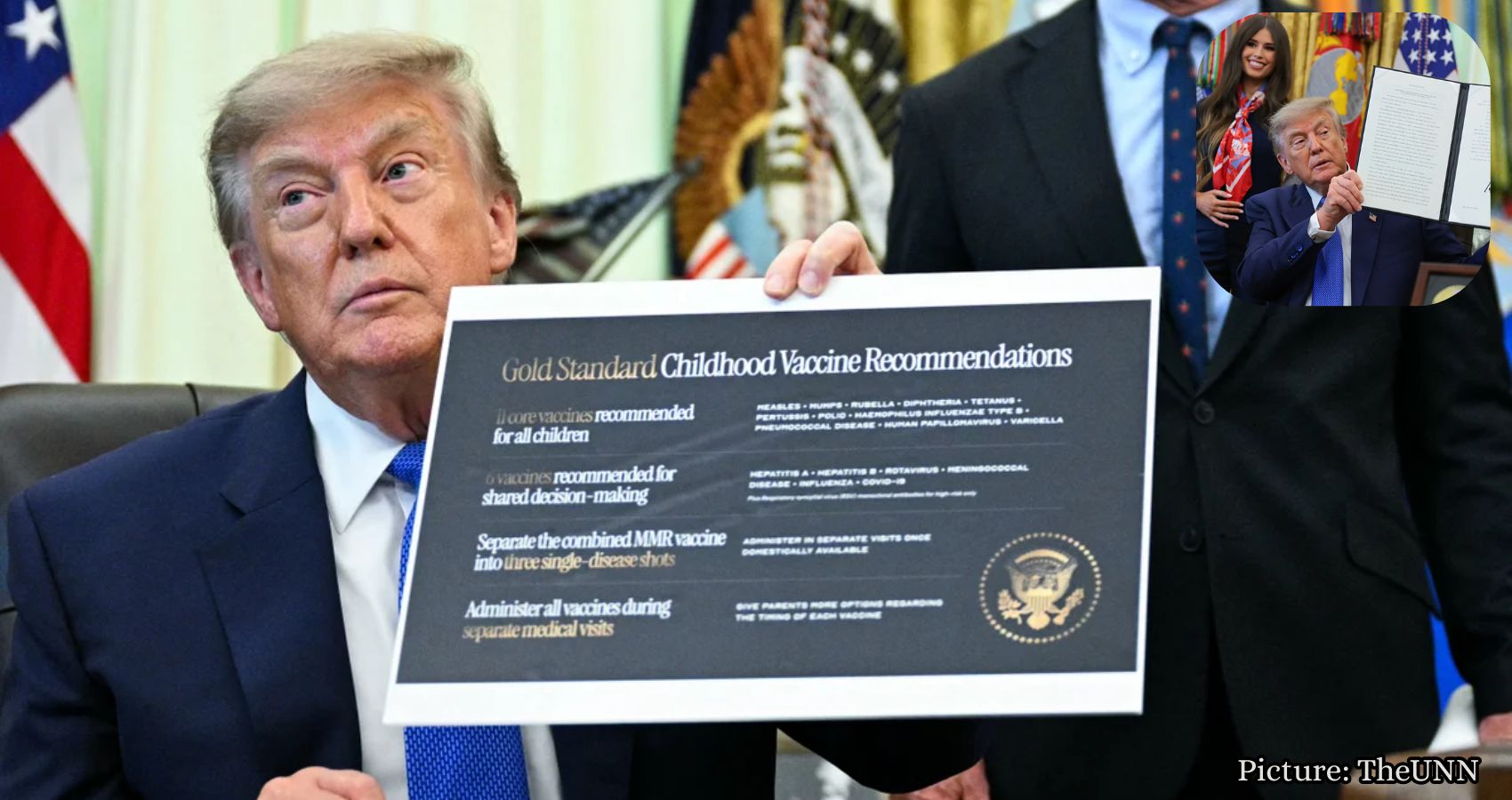
President Trump’s executive order to modify the childhood vaccine schedule has sparked significant debate among health experts regarding its potential impact on public health and vaccine hesitancy.
President Trump recently signed an executive order aimed at modifying the childhood vaccine schedule, a move that has ignited considerable debate among health experts about its implications for public health and vaccine hesitancy.
This controversial decision, announced on Tuesday, directs federal agencies to adopt a new approach to childhood vaccinations. The order proposes significant changes, including the separation of combination vaccines, such as the measles, mumps, and rubella (MMR) vaccine, into individual shots. Additionally, it suggests spacing out childhood vaccinations across multiple appointments. These recommendations stand in stark contrast to long-established medical guidelines that have governed vaccination practices for decades.
The executive order seeks to promote a revised framework for childhood vaccinations, raising critical questions among healthcare professionals and policymakers alike. Traditionally, vaccines like the MMR are administered together during a single appointment, a practice that has been widely endorsed by extensive research demonstrating that combination vaccines are both safe and effective. The proposed alterations could potentially lead to increased vaccine hesitancy among parents, a concern voiced by numerous health experts.
Faculty experts at George Washington University (GWU) have weighed in on the implications of this order. Elizabeth Choma, a pediatric nurse practitioner and clinical assistant professor at GWU’s School of Nursing, emphasized the importance of adhering to established vaccination schedules designed to maximize protection against infectious diseases. Choma stated, “The current combination vaccines have been shown to be safe and effective, and any changes should be based on robust scientific evidence.”
Jennifer Walsh, also a clinical assistant professor at GWU’s School of Nursing, highlighted the potential risks associated with altering the vaccination schedule. She cautioned, “Splitting vaccines can lead to gaps in immunity, which may expose children to preventable diseases.” Walsh’s comments reflect a broader consensus in the public health community that maintaining the current vaccination schedule is crucial for safeguarding public health.
The vaccination schedule in the United States has been meticulously developed based on extensive research and epidemiological data. Public health authorities, including the Centers for Disease Control and Prevention (CDC) and the World Health Organization (WHO), have consistently recommended combination vaccines to streamline immunization processes and enhance compliance rates among parents and caregivers.
Historically, the introduction of combination vaccines has led to a dramatic decline in the incidence of childhood diseases. For instance, the MMR vaccine, introduced in the 1970s, contributed to a significant reduction in cases of measles, mumps, and rubella. Disrupting this established vaccination schedule could reverse these public health gains, posing risks not only to individual children but also to community health through the potential resurgence of vaccine-preventable outbreaks.
The executive order has sparked a vigorous debate about the balance between parental choice and public health imperatives. Asefeh Faraz Covelli, an associate professor in the Family Nurse Practitioner program at GWU, remarked, “While parental autonomy is essential, it must be balanced with the needs of the community to maintain herd immunity.” The concept of herd immunity is critical, as it protects those who are unable to be vaccinated due to medical conditions or age.
Furthermore, David Diemert, clinical director of the GWU vaccine research unit, expressed caution regarding any changes to the vaccination schedule. He stated, “The overwhelming consensus in the medical community is that vaccines are a critical public health tool. Altering the established guidelines without substantial evidence could have dire consequences.” This perspective underscores the potential negative impact of the executive order on vaccination rates and public health.
The executive order may also have significant legal and policy implications, particularly as it requires coordination between federal and state health agencies. Historically, states have maintained the authority to set vaccination requirements for school entry, which could complicate the implementation of the proposed changes. Sara Rosenbaum, an Emeritus Professor of Health Policy and Management at GWU, noted that “the intersection of federal directives and state laws could lead to legal challenges, particularly if parents feel that their rights are being infringed upon.”
As the public health community closely monitors the developments surrounding this executive order, the potential for increased vaccine hesitancy and its implications for public health remain pressing concerns. The discourse surrounding vaccination schedules continues to evolve, emphasizing the importance of informed decision-making supported by scientific evidence. Concerns have been raised that the changes may foster confusion among parents and lead to delays in vaccinations, which could further jeopardize community immunity.
In conclusion, President Trump’s executive order to alter the childhood vaccination schedule has elicited a range of reactions from health experts. The potential implications for public health, vaccine hesitancy, and legal frameworks underscore the need for careful consideration and evidence-based decision-making as this policy unfolds, according to George Washington University.