
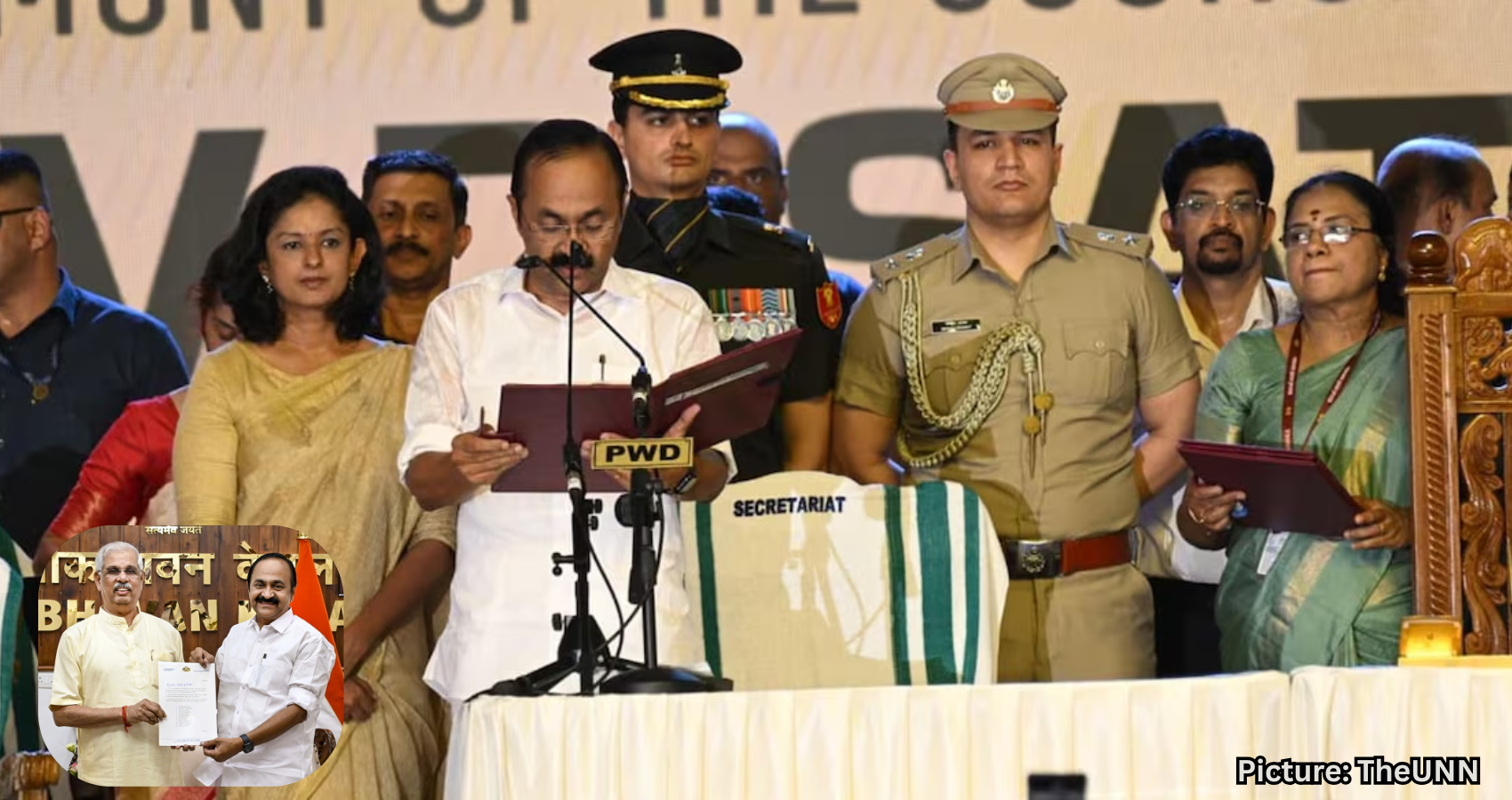
The United Democratic Front in Kerala is poised to return to power with a 21-member cabinet, marking a significant political shift after a decade in opposition.
The United Democratic Front (UDF) in Kerala is preparing to take office with a newly formed 21-member cabinet, signaling a notable return to power after a decade spent in opposition. This transition is under the leadership of Chief Minister-designate VD Satheesan.
On May 17, 2023, Satheesan formally presented the list of ministers to Governor Rajendra Vishwanath Arlekar, marking a pivotal moment for the UDF. This submission comes as the coalition is set to reclaim governance in Kerala, following its last tenure which concluded in 2016.
The cabinet, scheduled to be sworn in on May 18, includes prominent figures such as Ramesh Chennithala, who is expected to take on significant responsibilities in the Home and Vigilance departments. Other notable leaders in the cabinet include Sunny Joseph, K. Muraleedharan, and Shibu Baby John. The cabinet also reflects a commitment to gender representation, featuring two women ministers: Bindu Krishna and K. A. Thulasi, while Shanimol Usman has been appointed as the Deputy Speaker of the Assembly.
The appointment of Ramesh Chennithala to oversee the Home portfolio is particularly significant, given the importance of maintaining law and order in Kerala, a state known for its vibrant political landscape and diverse societal challenges. The Indian Union Muslim League (IUML), a key ally within the UDF coalition, will contribute five ministers to the cabinet, including PK Kunhalikutty and VE Abdul Gafoor. IUML state president Panakkad Sayyid Sadiq Ali Shihab Thangal indicated that Parakkal Abdulla would join the ministry after a rotational arrangement lasting two and a half years.
Following his meeting with the Governor, Satheesan expressed gratitude for the support he received in forming the new government. He stated, “We have decided on the portfolios, and those details will be submitted to the Governor tomorrow. The official publication will follow the formal submission.” This statement underscores the procedural aspects involved in cabinet formation, reflecting a commitment to transparency and adherence to constitutional protocols.
The UDF’s resurgence in Kerala’s political arena signifies a noteworthy shift in the state’s governance dynamics. Historically, the UDF, led by the Indian National Congress, has been a formidable force in Kerala’s political landscape, often alternating power with the Left Democratic Front (LDF). The recent electoral victories for the UDF come after a series of defeats that had left the coalition in a vulnerable position.
Satheesan’s leadership will be immediately tested as the new government faces a myriad of challenges, including pressing socioeconomic issues. The upcoming oath-taking ceremony is expected to attract senior political figures from across the nation, including Congress president Mallikarjun Kharge, as well as notable leaders such as Rahul Gandhi and Priyanka Gandhi, highlighting the significance of this political transition.
As the UDF prepares to govern, Satheesan acknowledged the complexities involved in coalition politics, expressing disappointment that not all deserving MLAs could be accommodated in the new cabinet. This sentiment highlights the delicate negotiations that often underpin the formation of coalition governments, where maintaining unity and functionality is paramount.
The incoming administration will be tasked with addressing a range of critical issues, including economic recovery in the wake of the COVID-19 pandemic, infrastructure development, and social welfare programs. Additionally, the new government will need to focus on enhancing women’s representation and addressing minority rights, which are crucial for sustaining public support in a diverse state like Kerala.
Public expectations are high for the UDF government as it assumes office. Political analysts suggest that the UDF’s ability to navigate both internal dynamics and external pressures will be pivotal to its success. The coalition must not only deliver on its electoral promises but also effectively address the socio-economic challenges facing Kerala’s citizens.
The implications of this government transition may resonate throughout the state’s socio-economic landscape, potentially influencing policy directions in sectors such as education, healthcare, and employment. The UDF’s approach to governance will be closely scrutinized, with the performance of the cabinet likely to shape political discourse in Kerala for years to come.
As the UDF embarks on this new chapter in Kerala’s governance, the political atmosphere is charged with anticipation. The performance of the upcoming cabinet will be crucial in determining not only the UDF’s legacy but also the future trajectory of Kerala’s political landscape. With a blend of experienced leaders and new faces, the UDF aims to reclaim its position in Kerala politics and redefine its role in addressing the challenges and aspirations of the state’s diverse populace, according to Source Name.