
In July 2026, Anil K. Lalwani will return to India to lead a new medical school, symbolizing the growing engagement of the Indian diaspora in shaping the country’s future.
In July 2026, Anil K. Lalwani, a professor at Columbia University, will return to India, the country he left as a child, not merely as a visitor but as a contributor to its future. The Indian American physician and researcher is set to assume the role of inaugural dean at the newly established Gangwal School of Medical Sciences & Technology at the Indian Institute of Technology, Kanpur. This appointment marks a significant milestone in both his career and India’s evolving scientific landscape.
Professor Lalwani brings decades of experience from some of the most esteemed institutions in the United States. Recognized as a leading authority in hearing disorders and surgical innovation, he has held senior positions at New York University and the University of California, San Francisco. Currently, he serves as a professor of otolaryngology and mechanical engineering at Columbia University, where he also holds key leadership roles, including Associate Dean for Student Research and Vice Chair for Research. His transition to IIT Kanpur is not just a personal achievement; it reflects a broader trend among Indian-origin leaders who are reconnecting with their roots to actively shape India’s future.
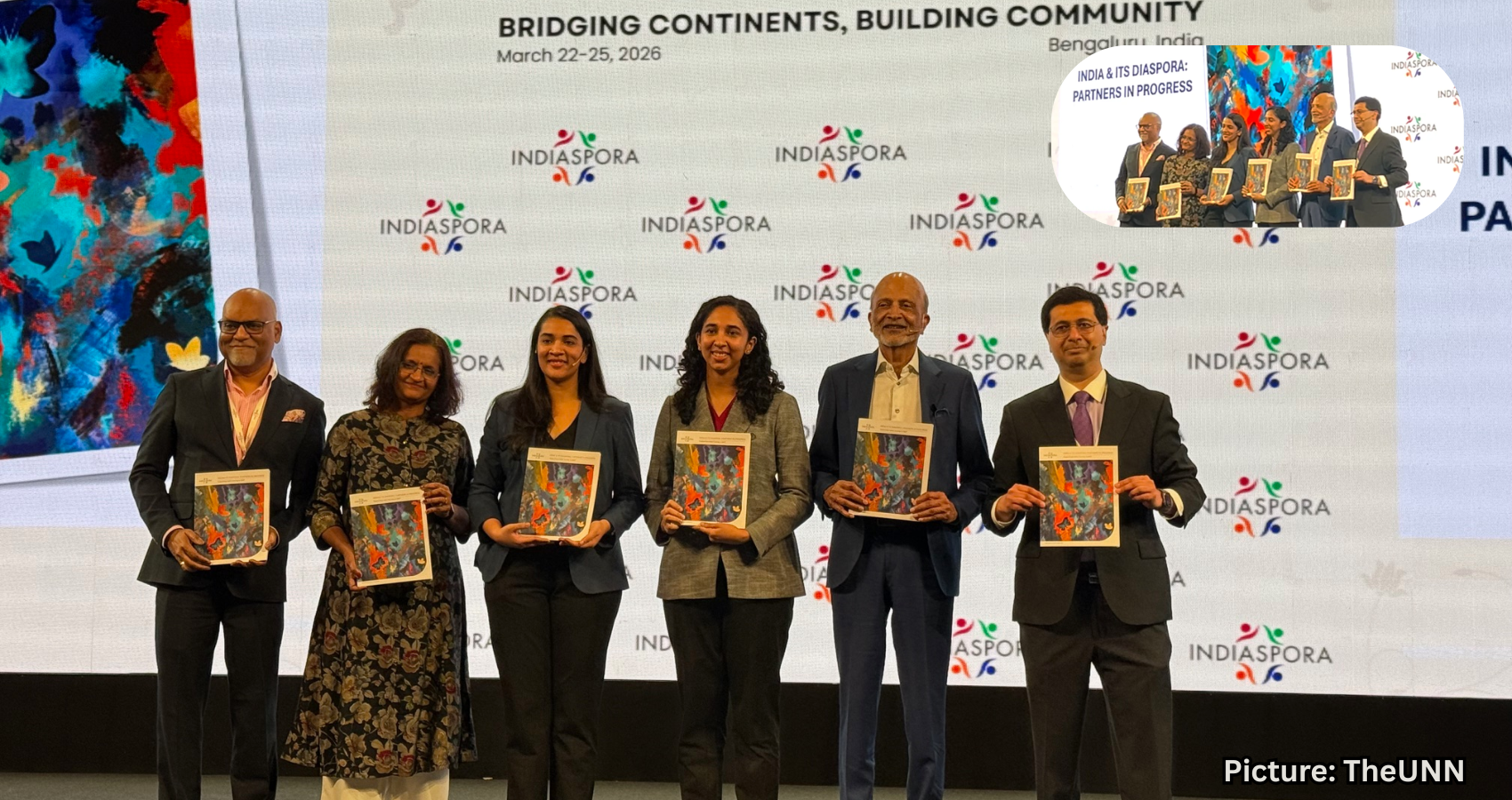
This trend is further illustrated in a recent report titled “India and its Diaspora: Partners in Progress,” released by the U.S.-based nonprofit Indiaspora in March 2026. The report highlights the immense potential of a global Indian community that now exceeds 35 million people, making it the largest diaspora in the world. More importantly, it emphasizes the growing willingness of this community to engage with India not just emotionally, but strategically.
At the report’s launch during the 2026 Indiaspora Forum in Bangalore, founder M. R. Rangaswami remarked on the significance of this moment: “In 1991, India opened its doors to the world. Today, the world is knocking on India’s door. At this inflection point, India has the opportunity to unlock the power of a 35-million-strong diaspora, bringing capital, capability, and credibility as true partners in India’s journey to 2047.”
The establishment of IIT Kanpur’s new medical school exemplifies this collaboration in action. Designed as a pioneering initiative that integrates technology with healthcare, it has garnered strong support from Indian American leaders, entrepreneurs, and alumni. Among its key supporters is alumnus Rakesh Gangwal, the Indian American co-founder of IndiGo and former chairman of US Airways Group, who has contributed over ₹100 crore (more than $10 million) to the project. Alongside him, fellow Indian American alumni and members of the Founder’s Circle, including Muktesh (Micky) Pant, Dr. Dev Joneja, and Anil Bansal, demonstrate the diaspora’s deep investment in India’s next phase of growth.
The enthusiasm surrounding such initiatives was palpable at the 2026 Indiaspora Forum, which aimed to deepen diaspora engagement across various sectors, including business, innovation, culture, and philanthropy.
Shoba Viswanathan, Indiaspora’s Executive Vice President and Chief Engagement Officer, and a co-author of the Impact Report, shared insights during an exclusive interview. She emphasized the goal of uniting influential individuals who are not only successful but also motivated to collaborate, shape policy, and contribute meaningfully on a global scale—a collective “force for good.”
“This is an amazing opportunity to bring our community together,” she stated. “The idea is that people with a great degree of influence and professional success are interested in connecting with others around the world, influencing policy, and taking thoughtful positions to set an agenda for global priorities.”
The report draws on surveys of more than 200 diaspora members across 24 countries, along with insights from nonprofits and global leaders, revealing a strong sense of confidence and ambition. Many respondents envision an India that, by 2047, ranks among the world’s leading economies, drives global innovation, reduces inequality, and ensures a high quality of life.
The scale of this opportunity is striking. Since 1990, the Indian diaspora has nearly tripled in size, spreading across more than 200 countries. Its economic footprint is equally significant: the Indian diaspora earns over $730 billion annually, with remittances to India reaching a record $138 billion—the highest in the world.
“In the 3 seconds it takes to read this sentence, $13,088 in remittances flow from overseas Indians to their homeland,” the report notes.
More than 70% of respondents expect their remittances to remain steady or increase, while about 60% are already investing in India across real estate, public markets, and other assets. Of these, over 80% plan to continue investing in the next two years.
These financial flows have a direct human impact. In states like Kerala, remittances do more than cover daily expenses—they help families build assets, reduce debt, and invest in the future.
The sheer scale of diaspora wealth and its impact surprised Viswanathan. “To have rigorous research indicate the huge wealth and asset holding of the diaspora crosses 730 million …with assets it crosses a billion,” she remarked, describing moments of eye-opening reality that triggered a “wow” response. “These are not small numbers. We are sitting atop this incredible potential on how to harness it and how to be intentional about it… It’s not just hype—it’s true!”
However, the diaspora’s role extends far beyond financial contributions. Across various industries, Indian-origin leaders are shaping global systems and institutions. In healthcare, figures like Srinivas “Bobby” Mukkamala and Mumtaz Patel are influencing policy and practice, while executives such as Vasant Narasimhan and Reshma Kewalramani are driving breakthroughs in pharmaceuticals and biotechnology.
Chad Kymal, CEO and founder of Michigan-based consultancy Omnex, opened an office in India 30 years ago to develop management system products in the automotive industry. Today, he employs over 200 software engineers developing quality management systems software for both the Indian and global automotive markets.
“When we went to India, we went to launch the Mahindra-Ford joint venture in Chennai. We were helping launch American-quality standards called QS 9000—now known as IATF 16949,” Kymal explained. His company, Omnex, helped establish the defining standards for quality for Ford, Chrysler, and GM in the U.S. during the 1990s, which have since become international automotive standards.
Leaders like Kymal bring more than capital to the Indian ecosystem—they offer global perspectives, expertise, and networks that can accelerate India’s development.
This moment is distinguished not only by success abroad but also by a growing desire to reconnect with India in meaningful ways. For many, the motivation is deeply personal, rooted in identity, family, and a sense of responsibility. For others, it is driven by opportunity: the recognition that India has transformed into a hub for globally competitive companies and innovations.
Business leaders like Debjit Chaudhuri exemplify this shift. His engagement with Indian startups extends “well beyond providing capital.” He mentors founders, builds networks, and helps position companies, ensuring that founders have the support and connections they need to succeed globally.
This kind of involvement reflects a broader trend: diaspora members acting as bridges between India and the world, facilitating knowledge exchange, partnerships, and skill transfer.
Reflecting on this moment, Professor Mohanbir Sawhney, Clinical Professor of Marketing at Northwestern University’s Kellogg School of Management, observed: “The Indian diaspora has reached an unprecedented level of accomplishment… Its capabilities, networks, and capital have matured to a point where meaningful contributions to India are now possible. At the same time, India has evolved rapidly… This convergence has created a natural moment for deeper engagement.”
Viswanathan described the findings as revelatory: “The Indian diaspora has a valid energy to harness. I think there is so much desire to give back. Why not make it easier and simpler to do it?”
“It’s all about the possibilities,” she added.
For many, engagement with India is deeply personal. Sixty percent of respondents cited reconnecting with their roots as their primary motivation, followed by family ties and the desire to make a meaningful impact.
“Our Indian roots matter,” said Kymal, who immigrated to the U.S. at the age of 15. “I am an American, but I would not have gone to India if I did not understand it, if not for those roots.”
Nisha Jagtiani, Group Director at Landmark Group, echoed this sentiment: “It was deeply personal to both my parents. They always knew we wanted to build a business in India, and that connection guided every decision we made.”
Viswanathan reiterated this collective sentiment: “Every diaspora leader we spoke to has a deep-rooted investment in India’s success. There is a desire to be part of an inclusive India’s growth. There is a collective momentum around some of this.”
Looking ahead, the Indiaspora report acknowledges that challenges remain. Structural barriers and inefficiencies still limit deeper engagement. However, it offers practical, solution-oriented recommendations based on insights from over 200 leaders across 24 countries to strengthen collaboration between policymakers and diaspora leaders.
The picture that emerges is clear: today’s Indian diaspora is not keeping its distance. It is actively participating in India’s growth story, bringing capital, expertise, technology partnerships, and global networks.
As former PepsiCo CEO Indra Nooyi has noted, the diaspora represents a strategic asset. “If this global Indian experience can be leveraged, India’s momentum can be sustained and even accelerated.”
In this sense, Professor Anil Lalwani’s return is more than an individual journey; it reflects a larger movement defined not just by giving back, but by building forward.
According to Indiaspora, the Indian diaspora is poised to play a pivotal role in shaping the future of India.