
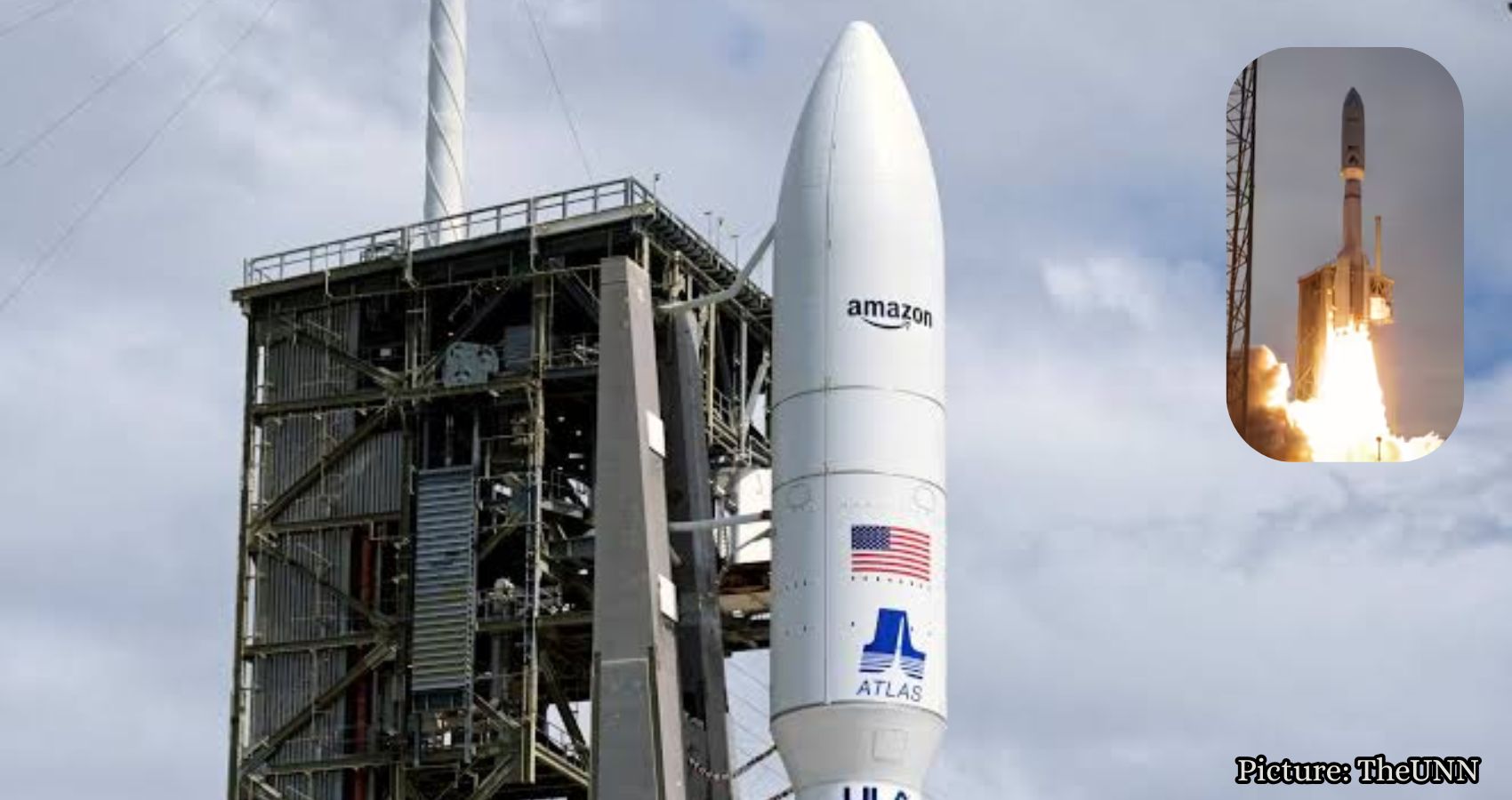
Amazon is set to launch its satellite internet service later this year, intensifying competition with SpaceX’s Starlink as it accelerates its Project Kuiper satellite rollout.
Amazon is making significant strides beyond its e-commerce origins, with plans to offer internet service through its low Earth orbit satellite network later this year. This initiative marks a pivotal moment in the company’s efforts to diversify into space-based connectivity.
The announcement follows the successful launch of 29 additional Project Kuiper satellites from Florida aboard a United Launch Alliance (ULA) Atlas V rocket. This latest mission has increased Amazon’s satellite count to over 390, as the company aims to deploy a constellation of more than 3,200 satellites to deliver broadband internet globally.
With this initiative, Amazon enters direct competition with SpaceX’s Starlink, which currently operates approximately 10,000 satellites in orbit. Similar to Starlink, Amazon intends to provide internet service to individual consumers through dedicated terminals, while also targeting governments, businesses, and commercial airlines.
Amazon’s commitment to building its satellite network is evident in its substantial investments and the securing of numerous rocket launches to deploy thousands of satellites. Thursday’s mission marked the company’s 14th Project Kuiper launch, bringing it closer to the commercial rollout of its satellite broadband service.
However, the company’s ambitions are closely tied to the availability of launch vehicles. The ULA Atlas V has become the backbone of the Project Kuiper program, especially as two other rockets that Amazon plans to use—ULA’s Vulcan and Blue Origin’s New Glenn—remain grounded.
Blue Origin faced a significant setback last month when a New Glenn rocket exploded on the launch pad, resulting in the destruction of the launch tower and other ground equipment. CEO Dave Limp has stated that the company anticipates resuming New Glenn launches before the end of the year, as engineers continue to investigate the explosion, particularly focusing on the rocket’s engine section.
Meanwhile, ULA’s Vulcan rocket, which is expected to carry at least 40 Project Kuiper missions, also remains grounded due to a solid rocket motor separation issue encountered during a February flight. Vulcan is powered by the same Blue Origin-built BE-4 engines used in the New Glenn rocket, raising concerns about potential delays in its return to service if the engines are found to have contributed to last month’s explosion.
In response to the ongoing investigation, ULA spokeswoman Jessica Rye noted that Blue Origin has been transparent with ULA throughout the process. “They are being transparent with us as they work through the investigation. If there are crossover items with the BE-4 engines, we will collaborate with the team to find root cause and address it,” she said.
Despite these temporary setbacks, Amazon is moving forward with one of the largest satellite deployment plans in the industry. The company has booked around 100 rocket launches with various providers to complete the full Project Kuiper constellation. In addition to ULA, Amazon has secured launch agreements with European provider Arianespace for Ariane 6 missions and with SpaceX, whose Falcon 9 rocket has played a crucial role in the rapid expansion of the Starlink network.
Amazon’s increasing investment in satellite broadband highlights its broader strategy of expanding beyond online retail and cloud computing into new technology sectors. The company views space-based internet as a potential long-term growth driver, positioning itself to compete in the evolving telecommunications landscape.
As Amazon continues to advance its satellite internet ambitions, the competition with SpaceX’s Starlink is set to intensify, potentially reshaping the future of global broadband connectivity.
According to The American Bazaar, the developments in Amazon’s Project Kuiper initiative underscore the company’s commitment to innovation and growth in the technology sector.