
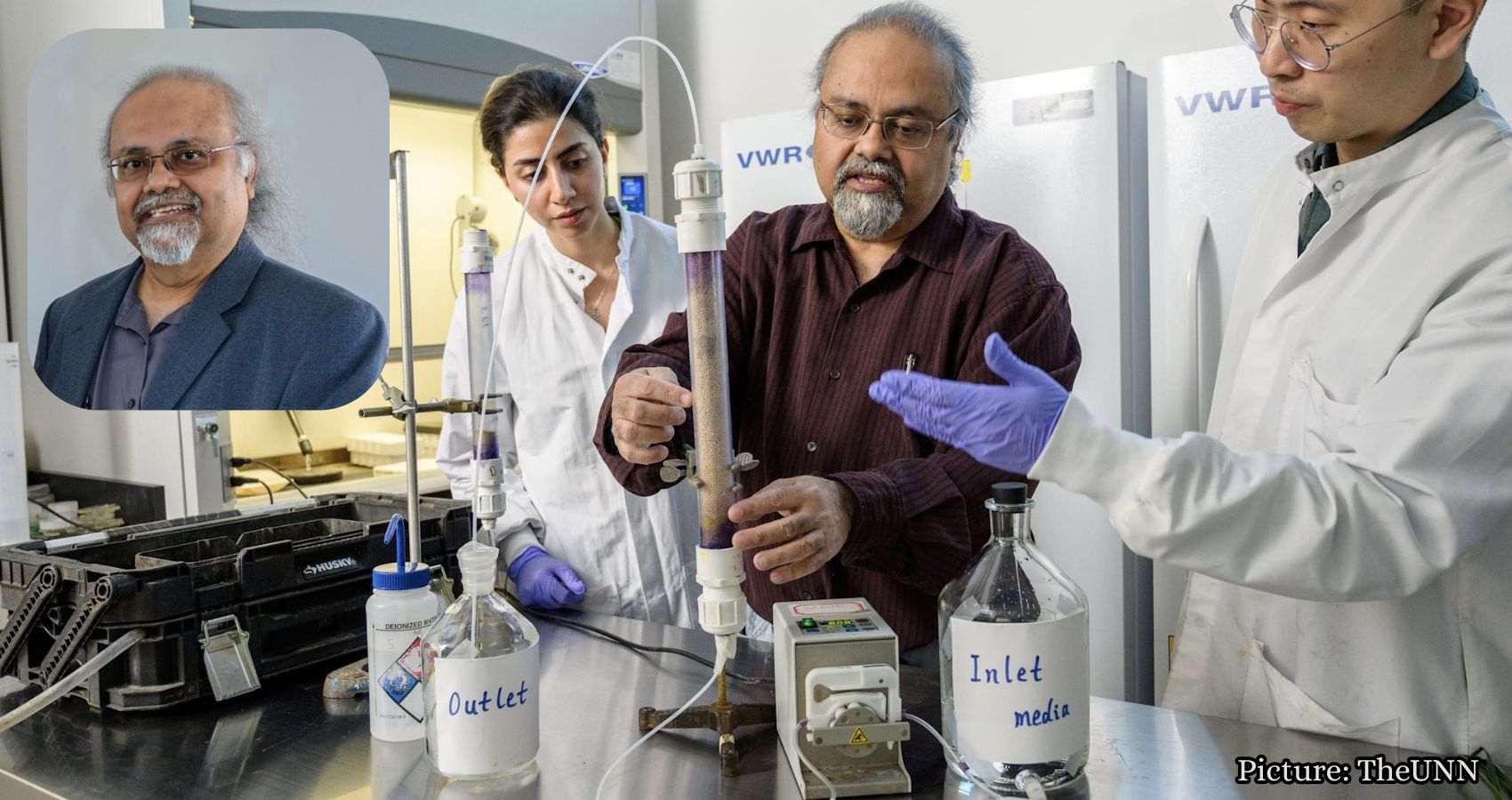
Dibyendu Sarkar, a professor at Stevens Institute of Technology, has received a Fulbright award to address soil and water degradation in Jharkhand, India, through a collaborative project with the Birla Institute of Technology.
Dibyendu “Dibs” Sarkar, a professor of environmental engineering at Stevens Institute of Technology, has been awarded the prestigious Fulbright Specialist designation by the U.S. Department of State. This recognition highlights his academic leadership and commitment to international exchange.
This fall, Dr. Sarkar will travel to the Birla Institute of Technology (BIT) in Ranchi, India, where he will spend a month collaborating with faculty and students in the Department of Civil and Environmental Engineering. The project, titled “Sustainable Environmental Remediation and Technology,” aims to tackle the significant degradation of soil and water resources in Jharkhand, a mineral-rich state located in eastern India.
According to the project proposal, nearly 70% of Jharkhand’s land is degraded, and groundwater in several districts is contaminated with hazardous substances such as arsenic and fluoride. Many of these environmental issues stem from decades of mining and industrial activities in the region.
Dr. Sarkar’s assignment also marks a return to a region he is intimately familiar with. During his academic journey at the University of Calcutta in the late 1980s and early 1990s, he conducted his senior-year geologic fieldwork and master’s thesis research in the Singhbhum belt, a significant Precambrian rock formation that underlies much of Jharkhand.
“It feels more like a homecoming to me,” Dr. Sarkar remarked. “I am familiar with the geology and the environment of the region, and I agreed enthusiastically when BIT faculty reached out a couple of years ago asking for help. We hope to get the foundational work started on a sustainable environmental management plan, and I’m hopeful the visit will also catalyze a longer-term collaborative relationship between Stevens and BIT, with a focus on student-centered programming.”
The project will involve various activities, including field assessments of contaminated river stretches and groundwater sites, laboratory analysis of soil and water samples, and a stakeholder workshop. This workshop will bring together students, faculty, NGOs, and government officials to develop a sustainable remediation plan for the region. Additionally, Dr. Sarkar will lead a faculty session on curriculum development in sustainability and environmental governance.
Dr. Sarkar holds both bachelor’s and master’s degrees in Geology from the University of Calcutta and earned his PhD in Geochemistry from the University of Tennessee at Knoxville.
The Fulbright Specialist Program selects recipients based on their professional achievements, demonstrated leadership, and potential to foster long-term cooperation between U.S. and international institutions. Each year, over 400 U.S. citizens are chosen for this program, which facilitates short-term, project-based assignments aimed at building institutional partnerships and addressing shared global challenges.
Established in 1946, the Fulbright Program operates in more than 160 countries and has supported over 400,000 students, scholars, artists, and scientists worldwide. Its distinguished alumni include Nobel laureates, Pulitzer Prize recipients, heads of state, university presidents, and other leaders across various sectors.
Dr. Sarkar’s work in Jharkhand is poised to make a significant impact on the region’s environmental challenges, fostering collaboration and innovation in sustainable practices.
According to a news release from Stevens Institute of Technology, Dr. Sarkar’s project represents a critical step toward addressing pressing environmental issues in India.