
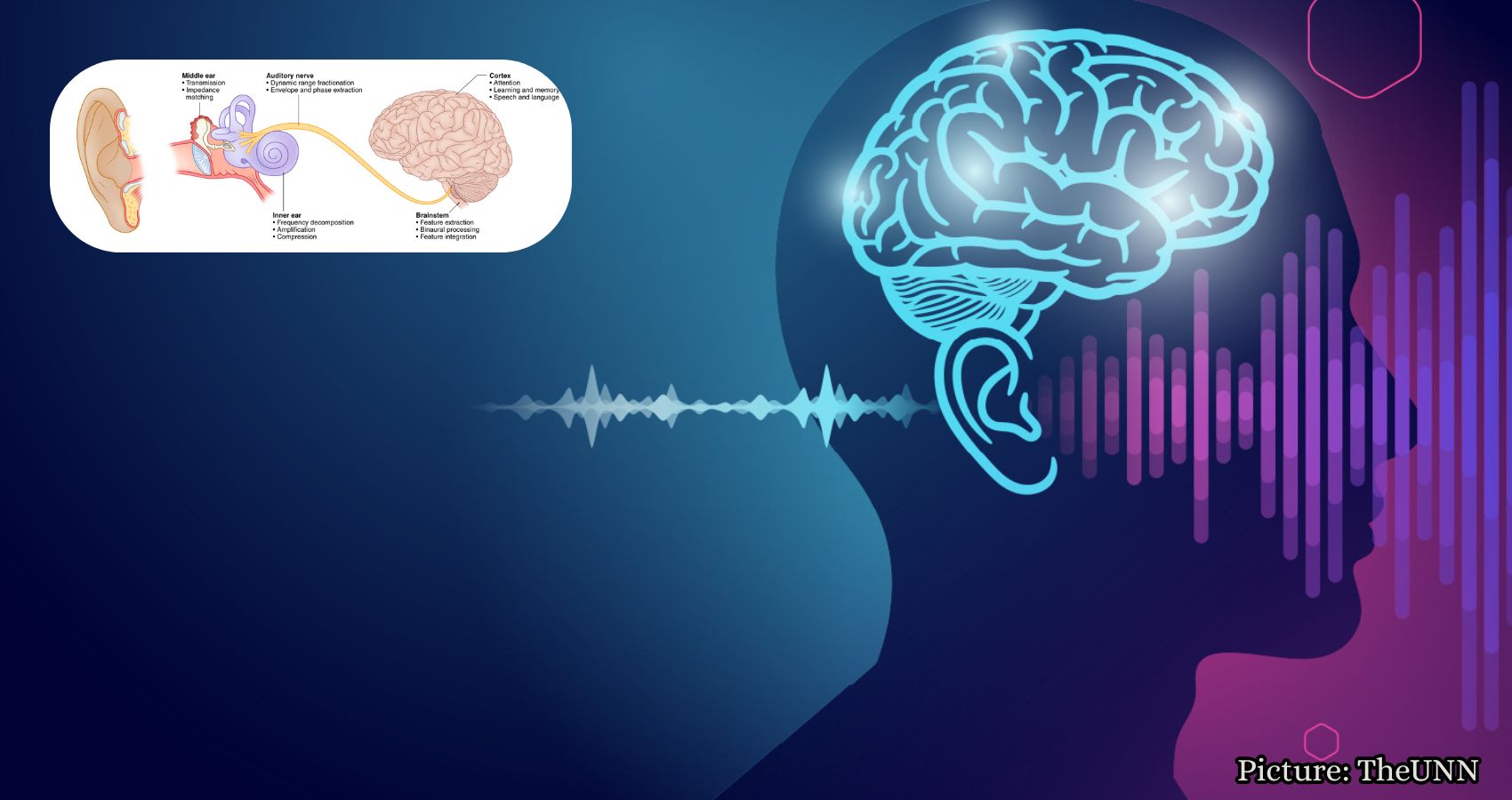
ARPA-H has launched the HEARING Program to tackle hearing loss in millions of Americans using advanced neurotechnology that aims to enhance auditory perception beyond traditional hearing aids.
The Advanced Research Projects Agency for Health (ARPA-H) has introduced the Hearing Enhancement Through Artificially Intelligent Neurotechnology (HEARING) Program, a groundbreaking initiative designed to address the widespread issue of hearing loss affecting approximately 70 million Americans, particularly among older adults. This program aims to develop innovative solutions that extend beyond the capabilities of conventional hearing aids.
Current hearing aids primarily function by amplifying sound, which can be effective in quiet environments but often falls short in noisy settings. Calvin Roberts, the hearing program manager at ARPA-H, referred to this challenge as the “cocktail party dilemma,” where individuals struggle to discern speech amid background noise. While hearing aids can enhance audio in calm situations, they do not adequately address the complexities of social interactions in more dynamic environments.
Understanding the root causes of hearing loss is essential. Often, it stems from a gradual deterioration of the inner ear, which impairs the conversion of sound waves into electrical signals that the brain can interpret. As this deterioration progresses, the brain attempts to compensate by increasing gain, resulting in sounds appearing louder than they are. This can complicate auditory perception, particularly in group settings.
Roberts illustrated this phenomenon with relatable examples, such as differing perceptions of sound volume at events like weddings. Older attendees may find the music excessively loud, while younger guests may not share the same experience. This discrepancy underscores the need for solutions that enhance the auditory experience without merely amplifying sound.
The HEARING Program seeks to fundamentally alter the approach to auditory enhancement. Instead of simply amplifying sound, the program aims to improve the quality of auditory signals transmitted to the brain. This innovative strategy involves implanting a small computer chip into the brain, which would assist in filtering and delivering clear sound directly to the auditory pathways, effectively revitalizing the auditory experience to resemble that of youth.
Roberts explained that this chip would monitor user preferences and compensate for sounds that their ears can no longer transmit effectively. By directly stimulating the brain with enhanced auditory signals, individuals could regain a fuller range of hearing without the cognitive strain associated with existing hearing aids.
Despite the promising potential of the HEARING Program, Roberts acknowledged two primary challenges: technical feasibility and patient acceptance. Discussions with potential users revealed a strong willingness to consider brain implants for improved hearing; however, concerns about invasive procedures remain a significant barrier. Many prospective patients expressed openness to the idea of a chip, provided it could be implanted without requiring surgical intervention.
To address these concerns, the program aims to utilize minimally invasive techniques similar to those currently employed in cardiac procedures, which allow for the delivery of medical devices through arteries or veins rather than requiring large incisions. This approach could help alleviate fears associated with invasive surgery, making the concept of brain implants more appealing to potential users.
On the technical side, Roberts outlined the need to synchronize existing auditory signals with the additional input from the chip to prevent delays that could disrupt the listening experience. The system must also be adaptable, responding to gradual changes in a patient’s hearing over time, ensuring that as auditory abilities decline, the technology compensates accordingly.
The HEARING Program is still in its early stages, with ARPA-H actively seeking proposals from interdisciplinary teams comprising engineers, neuroscientists, and AI experts. Roberts expressed optimism about the program’s potential, indicating a timeline of approximately four and a half years to develop a prototype ready for clinical trials. The agency’s focus on collaboration among diverse fields is expected to foster innovative solutions that could redefine the auditory experience for millions.
As the program unfolds, it aims not only to enhance the lives of individuals experiencing hearing loss but also to inspire a new wave of technological innovation in medical devices. The interconnection of neuroscience, computer technology, and auditory science through ARPA-H’s initiative could pave the way for groundbreaking advances in how we understand and address hearing impairments.
With millions of individuals affected by hearing loss in the United States, the HEARING Program represents a crucial step toward improving auditory health and quality of life for many. As researchers and developers work together to tackle these challenges, the prospect of enhanced hearing through neurotechnology may soon become a reality.
Hearing loss is not just a personal issue but a societal one, impacting communication, relationships, and overall well-being. The implications of the HEARING Program extend beyond technological advances; they touch on broader aspects of health equity and access to care. As the population ages, the demand for effective solutions to hearing loss will only increase, making the success of this initiative vital for public health.
In conclusion, the HEARING Program represents an ambitious effort to address a critical health challenge with innovative technology. If successful, it could transform the landscape of hearing enhancement and improve the quality of life for millions of Americans suffering from hearing loss, according to Source Name.