
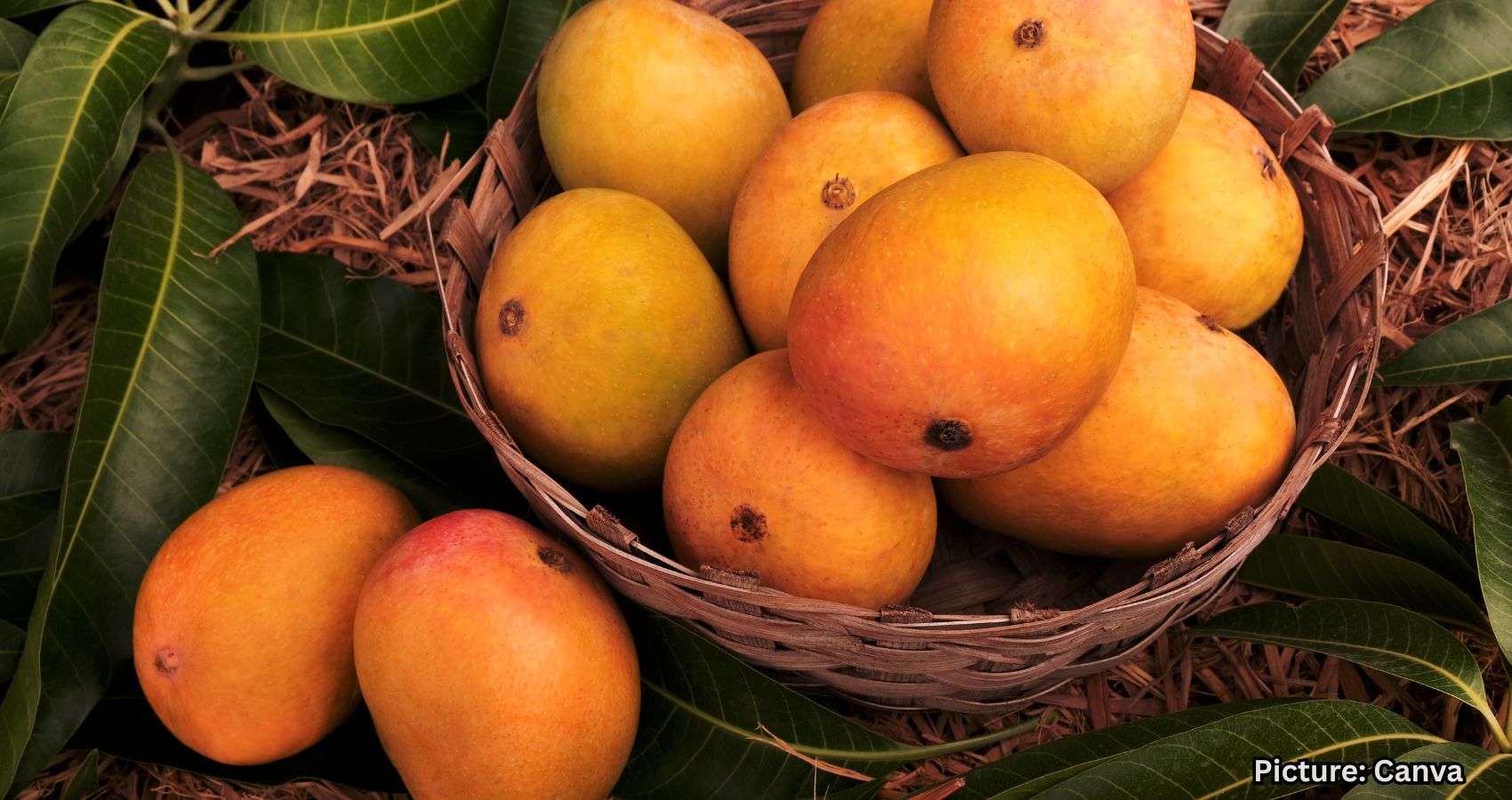
Despite a growing demand for Indian mangoes in the U.S., inadequate infrastructure and political will hinder their full market potential.
America’s appetite for Indian mangoes is undeniable, and Indian farmers stand ready to meet this demand. However, the gap between supply and market access remains unbridged due to insufficient infrastructure and a lack of political commitment.
On a warm Saturday in Washington, D.C., I found myself in a line that extended well beyond five hundred people. This gathering was part of a mango festival organized by the Embassy of India, set against the backdrop of the iconic Dupont Circle, shaded by ancient trees.
Behind me, a bright banner showcased three mango varieties: Langra from Uttar Pradesh, Malda from West Bengal, and Ripe Rajapuri from Gujarat and Maharashtra. For someone who grew up in the mango belt of northern India, this was not merely fruit; it represented history, soil, and the labor of generations.
Hailing from Malihabad in the Lucknow district of Uttar Pradesh, a town renowned for its mangoes, I felt a deep connection to the event. Malihabad is often referred to as the mango capital of India, if not the world. The Dussehri mango that ripens there is unmatched in its honeyed sweetness, fiberless texture, and captivating aroma that fills a room even before the fruit is sliced.
Malihabad is my mother’s birthplace, where I spent my childhood. The mango orchards are not just memories; they evoke the scent and warmth of summer mornings that no amount of time spent in America can erase. My cousin, Insram Ali, currently serves as the President of the All India Mango Growers Association, a position of national significance representing growers across India.
Thus, when I stood in line at that festival, I was not merely a spectator; I was a link in a chain connecting the orchards of Malihabad to the diplomatic halls of the American capital.
The journey of Indian mangoes to American tables is complex and deserves recognition for the individuals who made it possible. Among them is Dr. Islam Siddiqui, a friend whose contributions to agricultural diplomacy have gone largely unacknowledged.
During the Clinton Administration, Dr. Siddiqui served as Undersecretary for Marketing and Regulatory Programs at the United States Department of Agriculture. He played a crucial role in dismantling the regulatory and trade barriers that had long kept Indian mangoes out of the American market. His efforts were the result of sustained technical and diplomatic work, and his influence was evident throughout the process.
Few are aware that I had advocated for this market opening since the Clinton era. I discussed it with Dr. Siddiqui, asserting that the American market was ready and that the Indian diaspora would provide an immediate consumer base. The soft power of a Dussehri or a Langra on an American plate was worth more than a hundred diplomatic speeches. It took years of patience and the expertise of someone like Dr. Siddiqui to finally shift the American stance.
The requirements for importing Indian mangoes were stringent. The United States mandated that these mangoes undergo irradiation treatment to eliminate pests before entering the country. This condition was non-negotiable, and India complied. Gradually, the first shipments began to arrive.
However, this story takes a painful turn. The door to the American market has been open for nearly two decades, and the demand is palpable. I witnessed five hundred fellow South Asians standing in line under the summer sun for a taste of home. Yet, India exports only a fraction of what it could due to a lack of adequate irradiation treatment facilities. The cold chain infrastructure is insufficient, and the post-harvest logistics from the orchards of Malihabad to the ports remain underdeveloped.
Insram Ali, as President of the All India Mango Growers Association, has been vocal about these issues with government authorities. Growers are acutely aware of the potential; they see the demand and understand that a Langra or a Dussehri could command premium prices in New York or Washington, transforming the economics of the Malihabad region overnight. Yet, the necessary treatment plants are absent, and government investment has not materialized. The promise of doubling farmer income remains unfulfilled, often relegated to mere rhetoric.
This situation encapsulates the agricultural paradox faced by the Modi government. While the Embassy of India organizes vibrant mango festivals in Washington, D.C., complete with colorful banners and enthusiastic crowds, the farmers who cultivated those mangoes—represented by individuals like my cousin—struggle to access this lucrative market at scale due to a lack of basic infrastructure.
Mango diplomacy is a tangible reality. The soft power of a perfectly ripe Dussehri presented to an American who has never tasted one is both genuine and lasting. I have witnessed its impact firsthand. I believed in this potential long before it gained government recognition. Dr. Islam Siddiqui provided the legal and regulatory framework necessary for this initiative during the Clinton era. Meanwhile, the growers of Malihabad, led by Insram Ali, are prepared to meet the production demands.
The only element still missing is the political will in New Delhi to establish the treatment plants, enhance the cold chain, and connect the orchards of Uttar Pradesh to American markets.
Until that commitment is made, the Embassy will continue to host festivals, the diaspora will keep waiting in line, and the farmers of Malihabad will watch as opportunities ripen and ultimately fall.
According to The American Bazaar, the future of Indian mangoes in the U.S. hinges on overcoming these infrastructural challenges.