
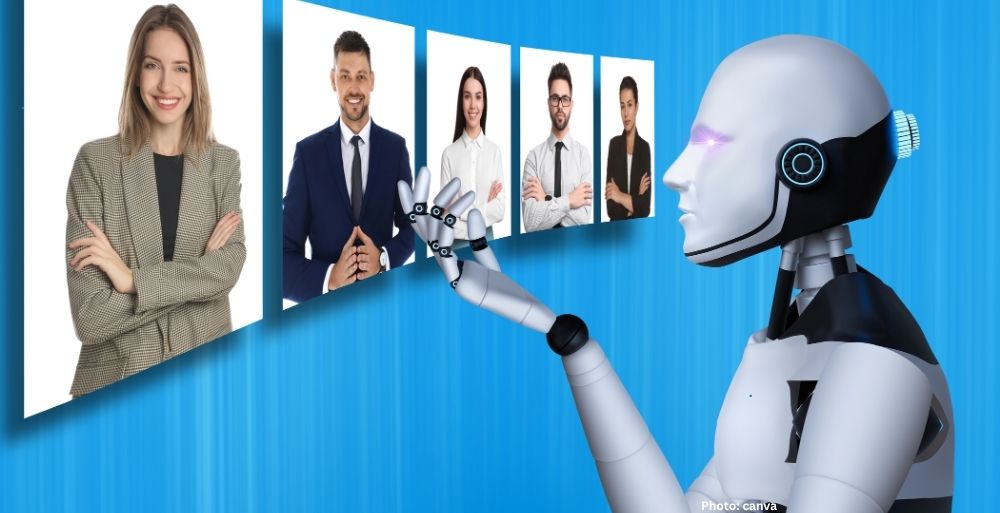
Viral “Stop Hiring Humans” billboards by Artisan have ignited a debate about AI automation and the potential for mass unemployment in America.
A recent social media post featuring the provocative “Stop Hiring Humans” billboards has sparked a lively discussion about the implications of artificial intelligence (AI) in the workforce. The billboards, which are displayed in major cities across the United States, have drawn attention for their stark message and the concerns they raise regarding job security in an increasingly automated world.
The post, shared on X, included images of the billboards along with the caption: “This is so dystopian.” It highlighted the widespread placement of these ads, stating, “‘Stop Hiring Humans’ billboards are being put up from San Francisco to New York City.” The company behind the campaign, Artisan, is a San Francisco-based startup specializing in virtual AI sales representatives.
One of the billboards prominently features the phrase “Stop Hiring Humans,” a statement that has resonated with many and intensified fears about AI’s potential to displace traditional jobs. The accompanying slogan from Artisan reads: “The Era of AI Employees Is Here.”
Artisan’s technology is designed to automate various sales processes, including lead generation, cold emailing, prospecting, and list-building—tasks that have historically been performed by human sales teams. The post warned that such advancements could lead to significant job losses, estimating that as many as 600,000 jobs in America could be at risk in the next five to ten years.
The discussion surrounding these billboards has gained considerable traction online, with the post accumulating over 277,000 views. Users have expressed a range of reactions, linking the billboard campaign to broader anxieties about automation and job insecurity in a rapidly evolving technological landscape.
One user commented on the surreal nature of the situation, saying, “Type of stuff you see driving to work stuck behind a Waymo while checking your phone to see if your DoorDash application has been approved.” This remark reflects the growing presence of AI-driven services, such as self-driving cars and gig economy apps, which many believe are fundamentally altering traditional employment models.
Another user shared a personal anecdote from San Francisco, describing their experience during a family trip: “I remember traveling to San Francisco last year to attend my grandfather’s funeral. My sisters, my dad, and I were driving around San Francisco, and all I could see were billboards promoting AI everywhere, with maybe one billboard promoting adopting a puppy. It felt very dystopian.”
Critics of the AI industry have pointed out a perceived disconnect between the promises made by AI companies and the realities faced by many businesses. One commenter noted, “The irony is the agencies selling AI to clients still have people manually copying data between tools every Friday afternoon. The automation conversation is everywhere except inside the businesses running it.”
The emergence of these billboards comes at a critical moment when AI technology is expanding its reach across various sectors, including customer service, marketing, logistics, and software development. The campaign has become a focal point in the ongoing debate about the pace at which AI is infiltrating public life and whether society is adequately prepared for the changes it may bring.
As discussions about the future of work continue, the “Stop Hiring Humans” billboards serve as a stark reminder of the challenges and uncertainties that lie ahead in an increasingly automated world. The implications of AI on employment remain a pressing concern, prompting many to question how society will adapt to these rapid technological advancements.
The conversation surrounding these billboards and the broader implications of AI is likely to continue as more individuals and organizations grapple with the realities of automation and its impact on the workforce, according to The American Bazaar.