
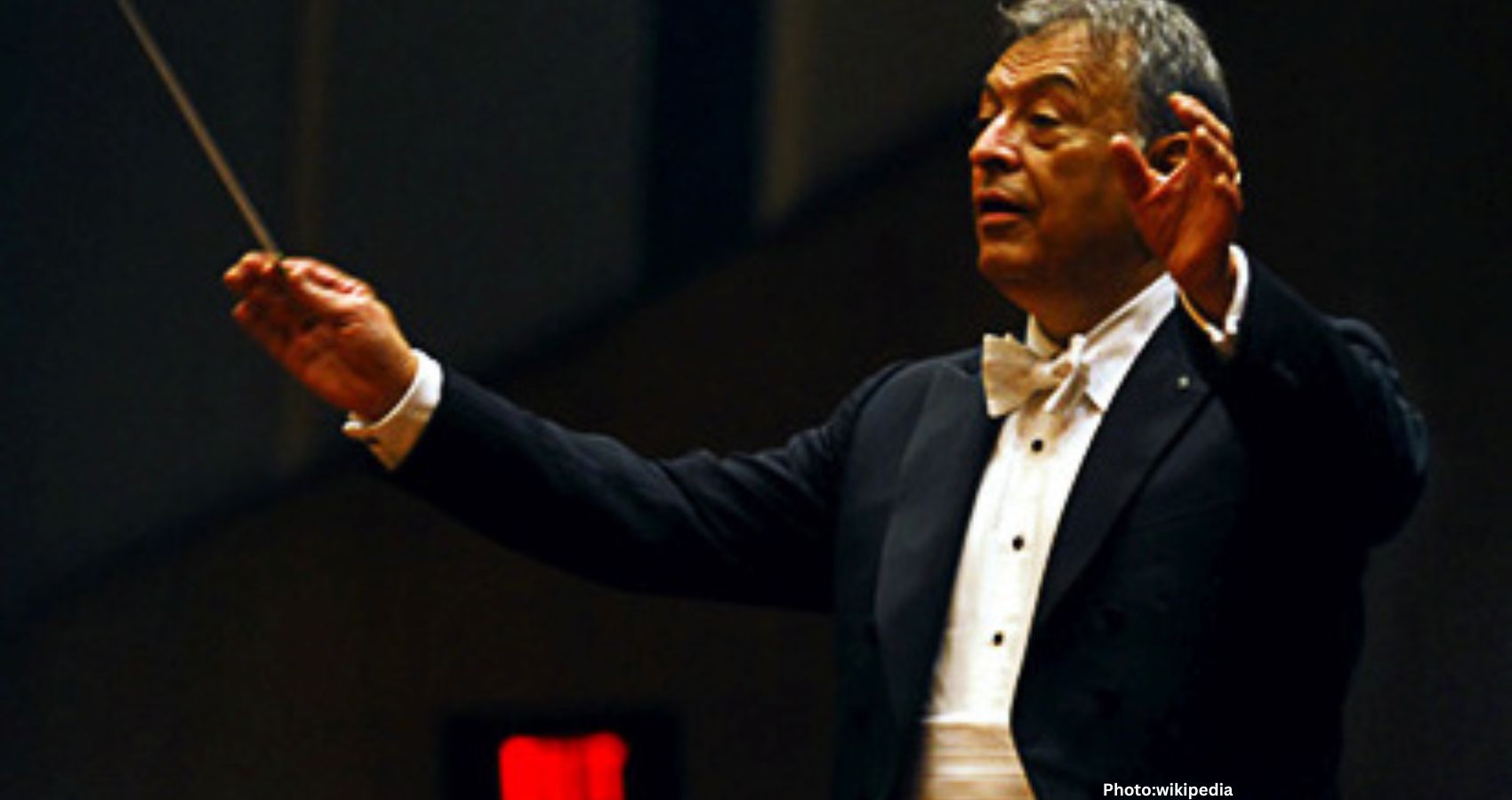
Zubin Mehta, the celebrated Indian conductor, marks his 90th birthday, reflecting on a remarkable career dedicated to music and cultural diplomacy around the world.
Zubin Mehta, the renowned Indian conductor, will celebrate his 90th birthday on April 29, 2026. This milestone marks nearly seven decades of profound influence in the realm of classical music. Known for his artistic leadership and deep-rooted connections with various orchestras globally, Mehta has not only shaped the musical landscape but has also served as a cultural ambassador, fostering relationships that transcend borders.
Mehta’s illustrious career is punctuated by landmark events, including the historic concert held on July 7, 1990, at the Baths of Caracalla in Rome. This performance featured the legendary Three Tenors: Plácido Domingo, José Carreras, and Luciano Pavarotti. Attracting an audience of 8,000 attendees and broadcast to hundreds of millions worldwide, it is noted as the most-watched classical music event ever. Mehta’s ability to unify the talents of these three iconic singers under his baton exemplified his unique skill set—his deep understanding of both collective and individual artistry.
Born into a middle-class Parsi family in Mumbai in 1936, Mehta’s musical journey began at a young age, significantly influenced by his father, a noted musician. His formal training commenced at the Akademie für Musik in Vienna, where he studied under Hans Swarowsky. By the age of 18, he had relocated to Europe, where his talent quickly became evident. In 1958, he won first prize at the Liverpool International Conducting Competition, setting the stage for his illustrious career.
In 1961, Mehta became the youngest permanent conductor of the Los Angeles Philharmonic, a position that allowed him to revitalize the musical scene in Southern California. His tenure there was marked by an expansion in repertoire and audience engagement. From 1978 to 1991, he conducted the New York Philharmonic, where he notably introduced Indian maestro Ravi Shankar in a performance titled “Raga-Mala” in 1981, highlighting his commitment to cross-cultural musical dialogue.
Mehta’s relationship with Israel is particularly noteworthy. Appointed Music Director of the Israel Philharmonic Orchestra in 1977 and later as Music Director for Life in 1981, he has remained a steadfast figure in Israeli culture. His quick response to the Arab-Israeli conflict during the Six-Day War in 1967, where he flew from Rome to Tel Aviv to conduct the orchestra, illustrates his belief in the power of music during crises. His efforts during subsequent conflicts have further solidified his status as a cultural bridge between nations.
Throughout his career, Mehta has received numerous accolades, including the Padma Vibhushan in 2001, Germany’s Commander’s Cross of the Order of Merit, and the Honorary Companion of the Order of Australia. His contributions to the arts have been recognized globally, including a star on the Hollywood Walk of Fame and the United Nations Lifetime Achievement Peace and Tolerance Award. The Kennedy Center also honored him for lifetime achievement in the performing arts, acknowledging his profound impact on music and culture.
Despite his international acclaim, India has remained central to Mehta’s identity. He often expresses a deep affection for his homeland, stating, “I love India, and it is important for my spirit to go back.” His visits to India are frequent, and he has worked tirelessly to promote classical music within the country. In a unique blend of tradition and modernity, Mehta is known to carry Indian spices to fine dining establishments abroad, showcasing his deep-rooted culinary and cultural ties. On May 8, 2026, a mural celebrating Mehta was inaugurated in the Lodhi Art District in New Delhi, symbolizing his lasting legacy in the arts.
As Mehta approaches his 90th year, discussions around creating a world-class concert hall in New Delhi in his name have emerged, reflecting the desire to honor his contributions to both Indian and global music. His ability to connect diverse audiences through orchestral music has transformed concert experiences into something profoundly unique. Mehta’s performances are characterized by an extraordinary ability to render the largest orchestral works intimately conversational.
In a world where music often serves as a unifying force, Zubin Mehta’s life and career exemplify the potential of art to bridge cultural divides, celebrate heritage, and inspire future generations. As he continues to conduct into his 90s, his influence remains a powerful testament to the enduring power of music, according to Source Name.