
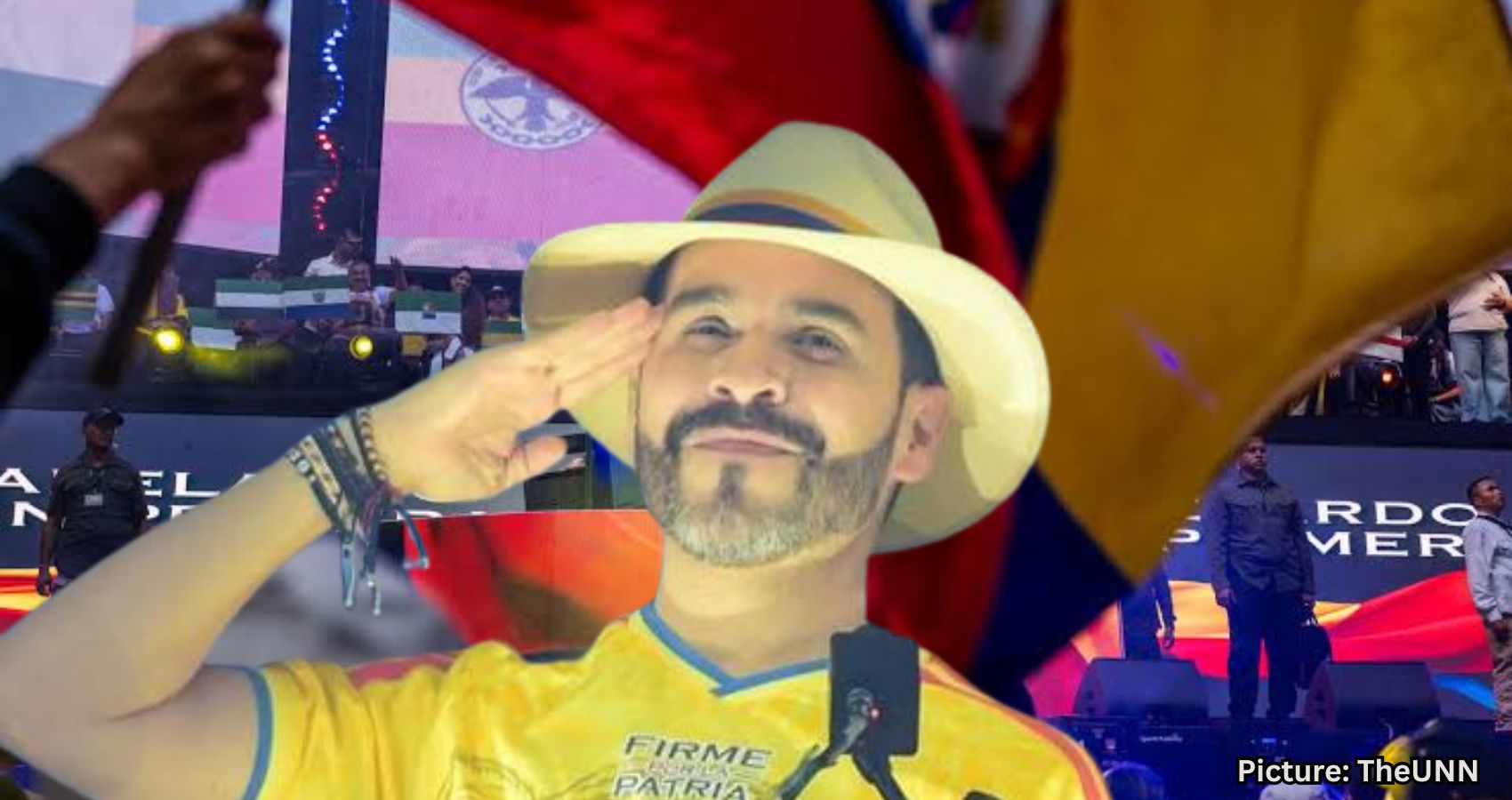
Abelardo de la Espriella, known as ‘El Tigre,’ is leveraging voter discontent with crime and cartels in Colombia’s critical presidential runoff election against leftist candidate Iván Cepeda.
As Colombia approaches a pivotal presidential runoff on Sunday, conservative outsider Abelardo de la Espriella, popularly known as “El Tigre,” is capitalizing on widespread voter frustration regarding crime, cartels, and economic instability. His ascent in the political arena coincides with outgoing President Gustavo Petro’s increasing political turmoil, transforming the election into a crucial contest for the future of one of America’s key allies in Latin America.
De la Espriella’s campaign is anchored in a platform that emphasizes law and order, aggressive crackdowns on cartels, and the restoration of U.S.-Colombia relations. He faces leftist candidate Iván Cepeda, who is affiliated with Petro’s socialist party.
In a region characterized by prominent political figures, de la Espriella has embraced his nickname, “El Tigre,” turning it into a symbol of his political movement. His campaign rallies are marked by tiger imagery, merchandise, and slogans that evoke strength and fearlessness.
He has openly welcomed comparisons to former President Donald Trump, positioning himself as a political outsider ready to challenge entrenched elites and progressive norms. Earlier this week, Trump endorsed de la Espriella, stating on social media: “Colombian Presidential Candidate, ‘El Tigre (THE TIGER),’ Abelardo de la Espriella, is a Smart, Strong, and Tough Leader, who fights tirelessly for, and loves, his Great Country and People, just like I do for the United States of America.” Trump further emphasized his support, urging voters to back de la Espriella, asserting that he would not let the people of Colombia down.
In addition to the Trump comparison, de la Espriella has drawn parallels to El Salvador’s President Nayib Bukele. Like Bukele, he has crafted a political identity centered on toughness and a public outcry against crime. His campaign rhetoric frequently underscores the need to restore state authority and dismantle criminal organizations through decisive action.
On the opposing side, Iván Cepeda has committed to continuing the current administration’s social and economic agenda while expanding negotiations with armed groups. However, Cepeda’s campaign did not respond to requests for comment regarding his vision for the country.
Carlos Chacón, executive director of the Instituto de Ciencia Política (ICP), a Colombian think tank, articulated the stark contrast between the two candidates. He noted that Colombia is divided between two models: a leftist approach that advocates for increased state intervention in the economy—historically linked to fiscal deficits and economic crises—and de la Espriella’s model, which favors free enterprise and aims to restore security and territorial control while adhering to the 1991 Constitution.
Chacón emphasized that de la Espriella’s vision does not entail replacing the constitutional framework with an authoritarian regime, as critics allege about Petro and Cepeda’s proposals.
One of the central themes of de la Espriella’s campaign is the importance of rebuilding a strong relationship with Washington and pursuing a more robust security partnership to combat narcotrafficking and armed groups. He has advocated for U.S.-backed operations against narco-terrorist camps and stronger bilateral cooperation on security matters.
De la Espriella’s rise occurs amid allegations against President Petro regarding improper involvement in the presidential election. The head of Colombia’s congressional investigative commission has suggested suspending Petro while authorities investigate claims that he intervened in the presidential campaign on behalf of his political movement. This proposal has sparked intense debate across Colombia, with supporters arguing for accountability and critics contending that it exceeds constitutional authority. Petro has denied any wrongdoing and continues to serve in office.
The outcome of this election will not only shape Colombia’s security strategy but also influence the trajectory of one of Washington’s most significant allies in the Western Hemisphere, according to Fox News.