
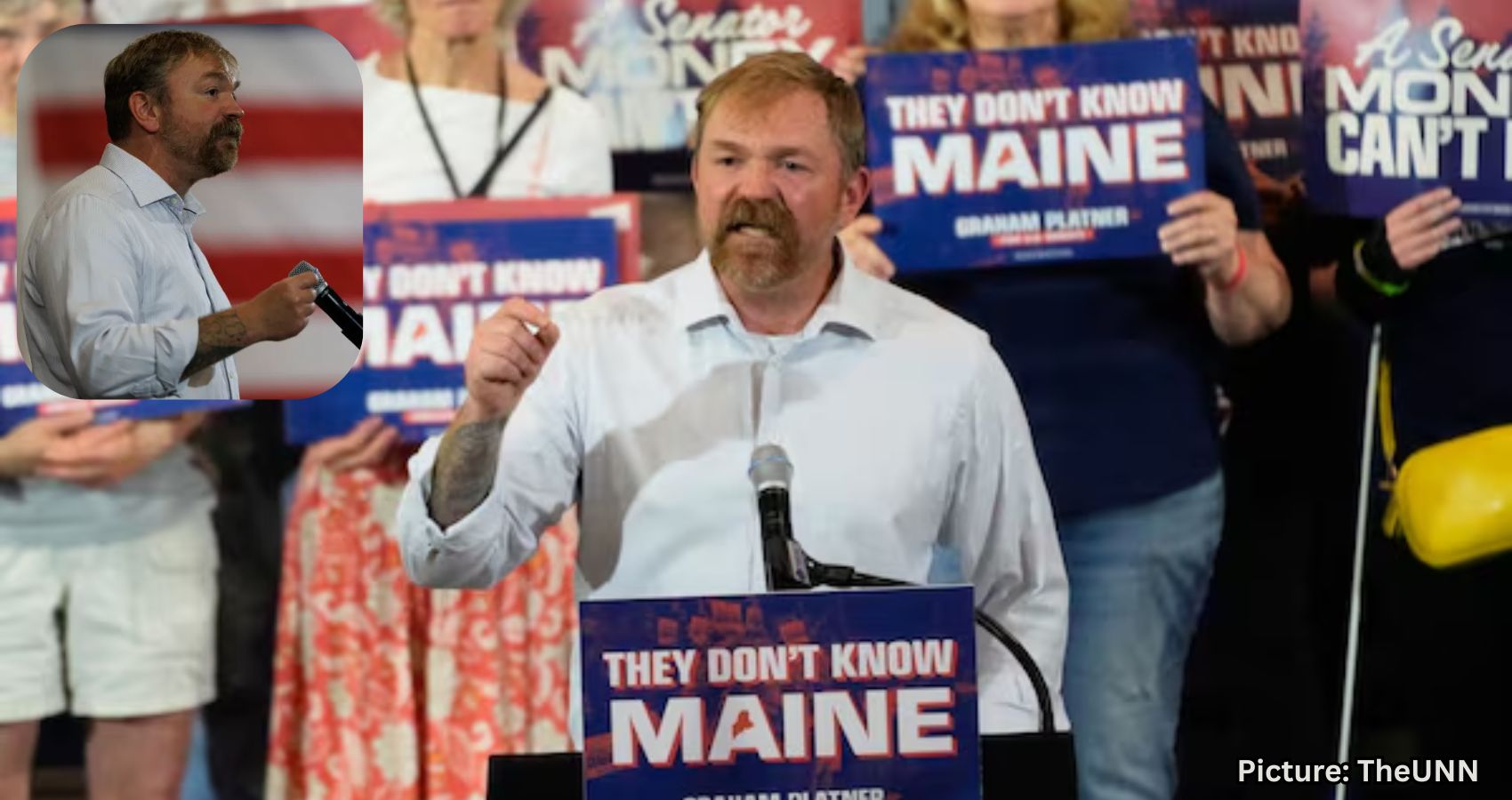
Graham Platner secures the Democratic Senate nomination in Maine amidst controversies, while Trump-backed candidates perform well in South Carolina’s GOP primaries, shaping the midterm election landscape.
Graham Platner, a progressive candidate and military combat veteran, has emerged victorious in the Maine Democratic Senate primary, setting the stage for a pivotal midterm battle against incumbent Republican Senator Susan Collins. Despite facing numerous controversies, Platner’s win marks a significant moment for the left in a race that could influence the balance of power in the Senate.
In South Carolina, former President Donald Trump’s influence was evident as his endorsed candidates performed strongly in the GOP primaries. Senator Lindsey Graham secured a majority of the vote in his Senate primary, avoiding a runoff against a right-wing challenger. Additionally, Lt. Gov. Pamela Evette, who received Trump’s endorsement in the gubernatorial primary, topped a crowded field and will advance to a runoff election against South Carolina Attorney General Alan Wilson.
Platner’s victory in Maine is seen as a boost for the progressive wing of the Democratic Party, particularly as he was backed by prominent figures such as Senators Bernie Sanders and Elizabeth Warren, as well as Representative Ro Khanna. His campaign, which promotes an economically populist agenda, has resonated with voters seeking to challenge corporate influences and advocate for the working class.
“The Democratic establishment and powerful interests spent months trying to stop Graham Platner. Instead, they demonstrated that voters in Maine and across America want to elect shake-up-the-system outsiders,” said Adam Green, co-founder of the Progressive Change Campaign Committee. He emphasized that Platner’s win should serve as a wake-up call for the Democratic establishment, which has underestimated the appeal of economic populism and outsider politics.
However, Platner’s path to the nomination has not been without its challenges. In the weeks leading up to the primary, he faced a barrage of controversies, including inflammatory comments made online, a tattoo that resembled a Nazi symbol, and allegations of inappropriate behavior during his marriage. Despite these issues, Platner expressed gratitude to Maine voters for their continued support, framing the election as a movement focused on the collective struggles of working-class individuals.
“In trying so hard to understand me, they failed to understand that this is not about me at all,” Platner stated in his victory speech. “This is a movement about us, about the far too many working far too hard and struggling far too much.”
In South Carolina, Trump’s endorsement was a significant factor in the outcomes of the GOP primaries. His backing of Evette in the gubernatorial race proved effective, as she finished first in a competitive field. Evette will now face Wilson in a runoff scheduled for June 23, with the winner likely to be favored in the general election in the Republican stronghold.
Senator Lindsey Graham’s victory in the Senate primary also underscores Trump’s continued influence within the party. Graham, who faced challenges from five candidates, managed to secure a majority of the votes, thus avoiding a runoff. His campaign, bolstered by nearly $20 million in spending to highlight Trump’s support, reflects the former president’s enduring power in GOP primaries.
Trump’s endorsement strategy has been a focal point in recent Republican primaries, with several of his candidates successfully ousting incumbents in various states. However, not all endorsements have resulted in victories; for instance, Trump’s late endorsement of Republican Representative Randy Feenstra in Iowa did not secure him a win, as he was narrowly defeated by businessman Zach Lahn.
As the midterm elections approach, the results from Maine and South Carolina signal a shifting landscape within both parties. For Democrats, Platner’s nomination represents a significant moment for the progressive movement, while for Republicans, Trump’s influence remains a powerful force shaping candidate selections and campaign strategies.
As the political climate continues to evolve, both parties will be closely watching the outcomes of upcoming elections, particularly in battleground states where the stakes are high. The primaries have set the stage for a contentious and pivotal midterm election season.
According to Fox News, the implications of these primary results will resonate throughout the election cycle, influencing strategies and voter engagement as candidates prepare for the general elections ahead.