
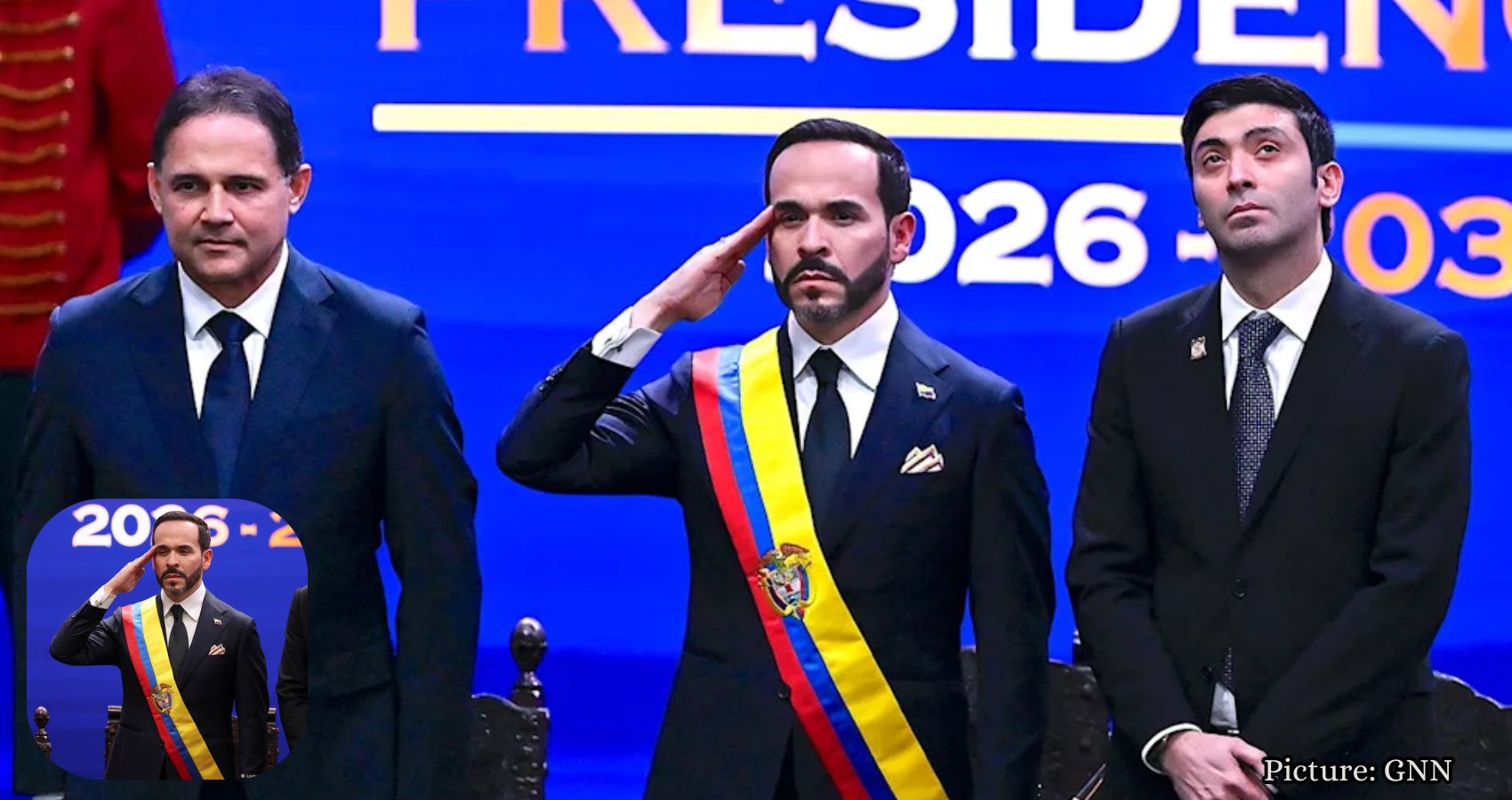
Colombia’s new conservative President Abelardo de la Espriella, known as “El Tigre,” is poised to shift the nation’s policies while confronting significant economic and security challenges.
Colombia has entered a new political era with the inauguration of conservative President Abelardo de la Espriella, commonly referred to as “El Tigre.” Sworn into office on Friday, he aims to reverse much of the left-wing agenda set by former President Gustavo Petro, focusing on security, economic policy, and rebuilding relations with the United States.
De la Espriella’s inauguration signifies a notable political shift in Latin America, following four years of Petro’s “Total Peace” strategy, which has been criticized for expanding coca cultivation and straining ties with Washington. As he takes office, De la Espriella faces the daunting task of turning his campaign promises into effective governance.
His inauguration was attended by several conservative leaders from across the region, including Argentina’s Javier Milei, Ecuador’s Daniel Noboa, and Chile’s José Antonio Kast. The U.S. delegation included Acting Attorney General Todd Blanche, while Spain’s King Felipe VI and FIFA President Gianni Infantino were also present, according to reports from The Associated Press.
In his inaugural address at the Pichincha Battalion military base in Cali, De la Espriella emphasized his commitment to restoring order and authority in Colombia. “I have come to close a long chapter of national resignation and, together with the people, embark on the most profound transformation of our destiny,” he stated. He also joined The Shield of the Americas, an initiative founded by former President Donald Trump, as one of his first acts in office.
Colombia remains a crucial security partner for the U.S., serving as a key trading ally and one of the largest recipients of U.S. security assistance in the region. Hundreds of American companies operate in Colombia, and the country’s security situation has direct implications for regional migration, organized crime, and narcotics trafficking.
On the foreign policy front, De la Espriella has pledged to strengthen ties with the United States, enhance cooperation with Israel, and adopt a firmer stance against the authoritarian regimes in Venezuela, Cuba, and Nicaragua. However, the success of these commitments will largely depend on the availability of resources, which are currently limited.
Camilo Guzmán, executive director of Libertank, highlighted the financial challenges facing the new administration. “President de la Espriella inherits a house with the roof leaking and the safe empty,” Guzmán remarked, emphasizing that the country’s deteriorating fiscal position is the most pressing issue. He noted that the projected deficit for 2026 is around 6.5-6.7% of GDP, with a financing gap nearing $34 billion.
According to Guzmán, the fiscal challenges are compounded by a cash flow problem, which will impact the administration’s ability to implement its agenda. “Before he governs, he must make payroll,” he stated, underscoring the urgency of addressing the country’s financial situation.
The International Monetary Fund (IMF) forecasts that Colombia’s economy will grow by only about 2.3% this year, while inflation remains high. This economic backdrop limits the government’s capacity to finance new security initiatives or major reforms without implementing spending cuts or generating new revenue.
Security issues present another significant challenge for De la Espriella. Violence has surged in various regions as criminal organizations and guerrilla groups have expanded their influence. Guzmán pointed out that the first half of 2026 recorded the highest homicide rate for any first semester in a decade, with extortion rising and armed groups gaining ground since 2022. “Security is rebuilt in years, not in quarters,” he cautioned, suggesting that while immediate actions may be visible, structural changes will take time.
Despite winning the presidency, De la Espriella’s party holds only five seats in the Senate, while Petro’s Historic Pact remains the largest political bloc. This fragmented Congress will require the new president to negotiate with centrist and traditional parties on key proposals, including security reforms and fiscal legislation.
Guzmán noted that the political landscape may be just as critical as the security challenges. “He won the election; he did not win Congress,” he said, indicating that building a coalition will be essential for advancing his agenda. The recent Senate presidency battle served as an early warning of the difficulties ahead.
Analysts advise against evaluating the administration’s success solely based on immediate outcomes. Instead, the first 100 days will likely be assessed based on De la Espriella’s ability to establish credibility, assemble an effective governing team, and translate campaign promises into a coherent strategy. Guzmán emphasized that the realistic expectation for this period is to produce signals rather than concrete results, such as appointments, decrees, and emergency measures.
Key decisions that investors and policymakers will closely monitor include whether De la Espriella formally abandons Petro’s negotiations with the National Liberation Army (ELN), resumes aerial coca fumigation, expands intelligence and security cooperation with the U.S., restores full diplomatic relations with Israel, and introduces a credible fiscal adjustment plan.
These early moves will provide critical insight into whether Colombia’s new president can begin to deliver on his promises to reverse the Petro era or if the country’s fiscal, political, and security realities will necessitate a scaling back of his ambitious conservative agenda.
According to Reuters and The Associated Press, the unfolding political landscape will be pivotal in determining the future direction of Colombia under De la Espriella’s leadership.