
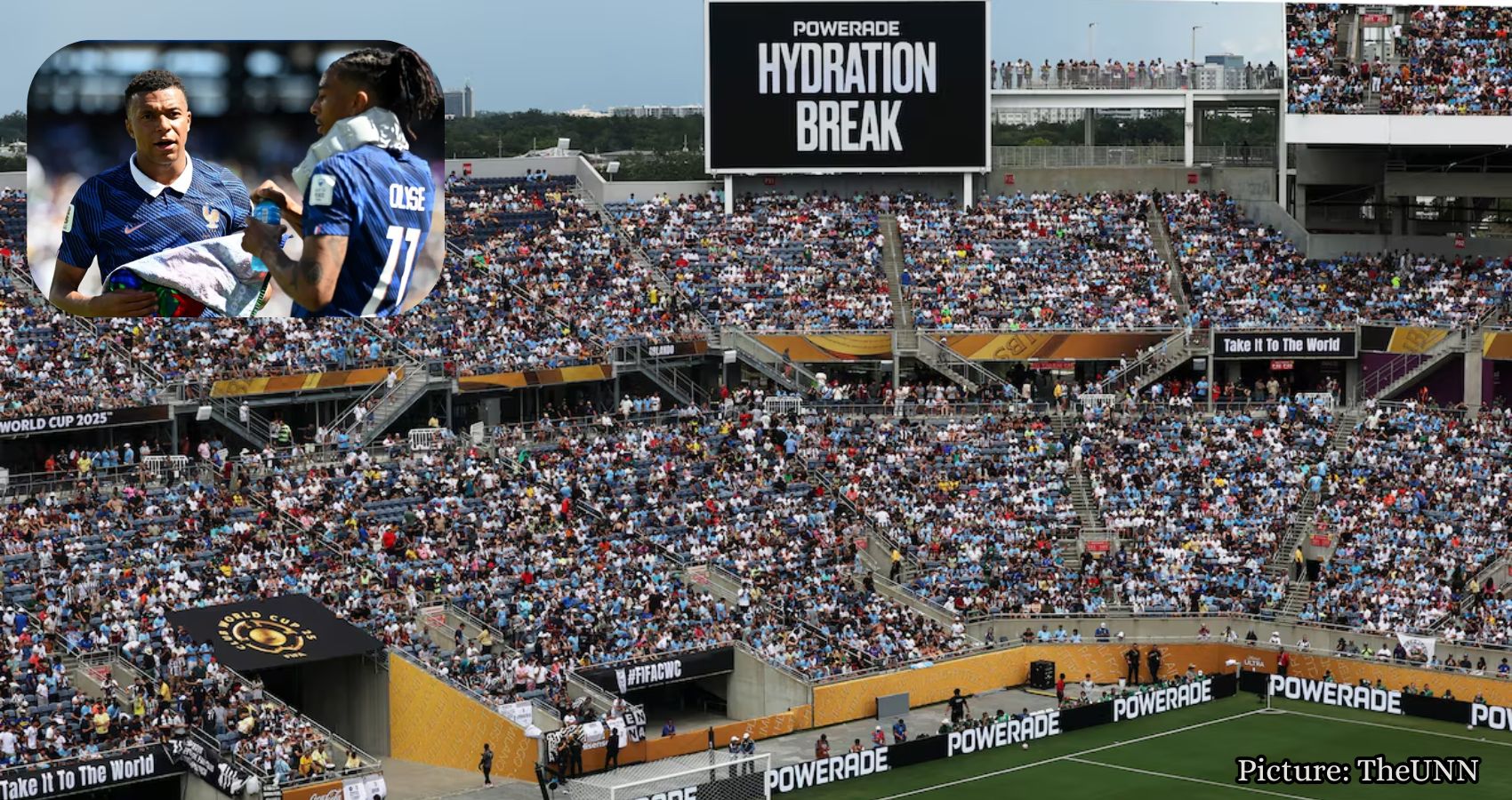
The FIFA World Cup 2026 is generating speculation about $250 million in ad revenue from hydration breaks, but these claims lack official verification and are based on unconfirmed estimates.
Recent claims circulating online suggest that the FIFA World Cup 2026 will generate a staggering $250 million in advertising revenue solely from hydration breaks during matches. This figure, equivalent to approximately ₹4,764 crore, has raised eyebrows among fans and analysts alike, prompting questions about its validity.
At first glance, the notion that a three-minute break could yield such astronomical revenue appears implausible. However, a closer examination of the sports marketing landscape reveals that while the figures may be theoretically achievable based on commercial spot pricing, they remain unverified by official sources.
The basis for this substantial valuation stems from projected advertising inventory sales by major television rights holders. Reports from financial networks indicate that Fox Sports, a leading American broadcaster, is expected to generate at least $250 million from airing advertisements during these hydration breaks. This projection translates to an estimated ₹2,382 crore, highlighting the potential financial impact of these short intervals.
Hydration breaks have been instituted during the tournament to protect player welfare amid the summer heat in the United States, Canada, and Mexico. Match officials enforce mandatory rest intervals at the 22nd and 67th minutes of each game, allowing broadcasters to air commercials during these pauses.
Fox Sports, for instance, is reportedly charging around $200,000 per commercial spot during these breaks, contributing significantly to the projected revenue. However, the total figure of $250 million is not solely attributed to Fox; it also includes potential earnings from other networks across Europe, Asia, and Latin America, which could push the cumulative global revenue to unprecedented levels.
Despite the buzz surrounding these projections, FIFA President Gianni Infantino has publicly stated that the organization will not receive any additional revenue from these hydration breaks. Infantino’s remarks highlight a disconnect between the speculative earnings reported by media outlets and the official stance of FIFA regarding tournament monetization.
This discrepancy raises important questions about the financial dynamics of the World Cup. While FIFA collects fixed fees for hosting the tournament, the profits from localized advertisement spots during hydration breaks are primarily reaped by commercial television companies. This division of revenue underscores the complexities of sports broadcasting and advertising in major events.
As the tournament approaches, the debate over the accuracy of these revenue claims continues. While the potential for significant earnings exists, the lack of official confirmation leaves room for skepticism. Fans and analysts alike are left to ponder whether these figures are rooted in reality or merely speculative estimates.
In conclusion, while the idea that the FIFA World Cup 2026 could generate $250 million from hydration breaks is intriguing, it is essential to approach such claims with caution. The figures, while mathematically plausible, have not been substantiated by official sources, leaving the true financial impact of these breaks uncertain.
According to The Sunday Guardian, the conversation surrounding hydration breaks and their potential revenue continues to evolve as the tournament draws nearer.