
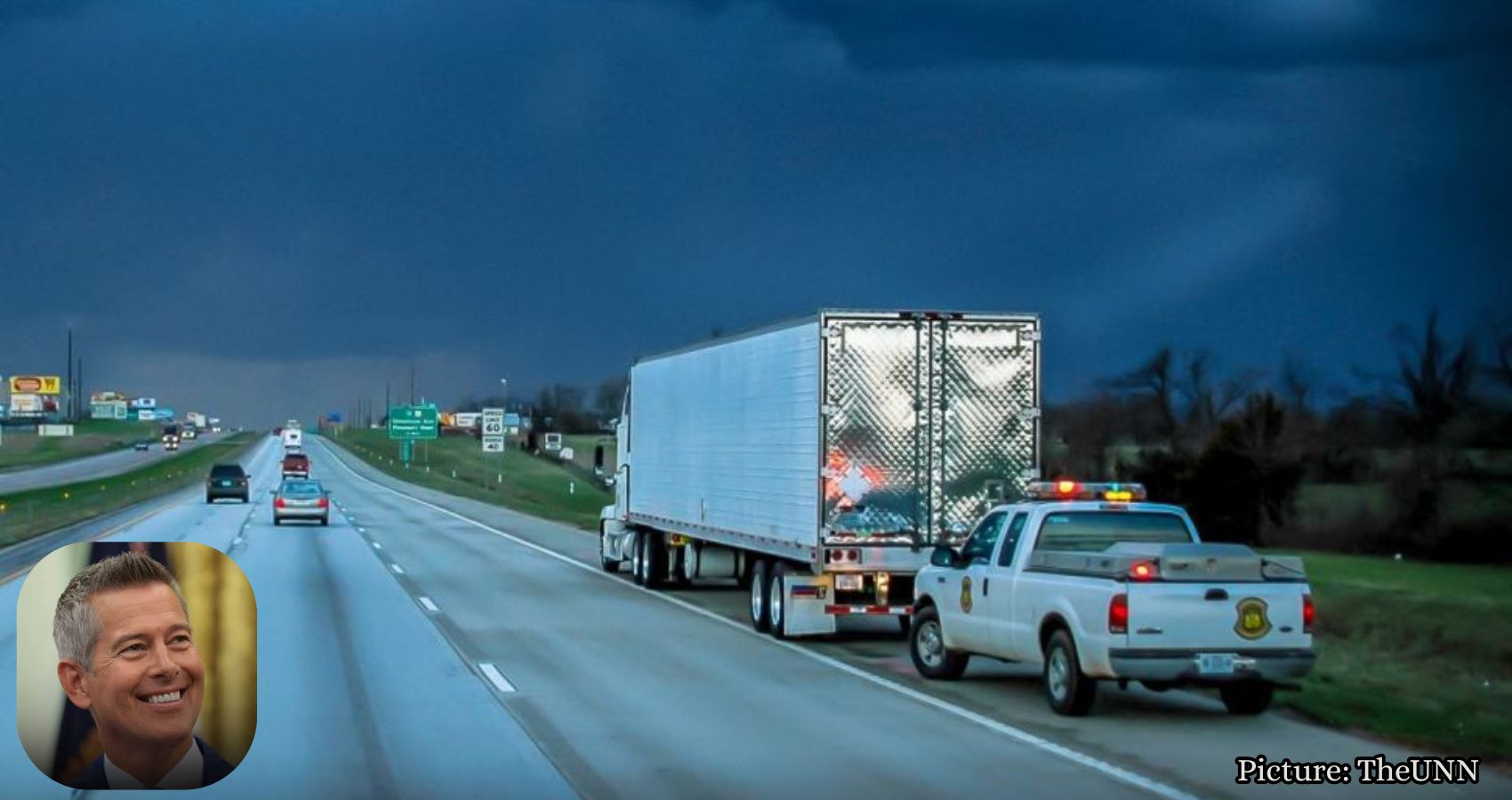
U.S. Transportation Secretary Sean Duffy is advocating for permanent English proficiency requirements for commercial truck drivers to ensure consistent enforcement across administrations.
U.S. Transportation Secretary Sean Duffy is taking steps to solidify federal English-language proficiency requirements for commercial truck drivers, aiming to prevent future administrations from altering these regulations.
In a recent post on X, Duffy expressed his intention to “lock English proficiency rules into federal regulations,” emphasizing the need for stability in enforcement. This proposal builds on the previous administration’s efforts to enhance the enforcement of existing requirements for commercial motor vehicle drivers.
Current federal law mandates that commercial drivers possess the ability to read and speak English well enough to communicate with the public, understand highway traffic signs and signals, respond to official inquiries, and complete necessary reports and records.
The Department of Transportation intensified enforcement of these requirements in 2025, following a reversal of a 2016 policy established under former President Barack Obama. This earlier policy had instructed inspectors not to place drivers out of service solely due to English-proficiency violations. Since the enforcement ramp-up, Duffy noted that over 26,000 drivers have been removed from the road for failing to demonstrate adequate English proficiency, a figure corroborated by reports from the Associated Press and the Los Angeles Times.
The administration’s enforcement campaign is part of a broader initiative addressing concerns about the qualifications of non-domiciled commercial drivers. In February, the Federal Motor Carrier Safety Administration (FMCSA) finalized a rule that restricts eligibility for non-domiciled commercial learner’s permits and commercial driver’s licenses to foreign-domiciled individuals holding specific employment-based nonimmigrant statuses. This regulation aims to enhance the screening and verification processes for foreign drivers.
Additionally, the federal government has taken action against commercial licenses deemed improperly issued, with the Transportation Department reporting that approximately 30,000 commercial licenses were canceled due to illegal issuance.
Duffy’s proposal seeks to establish the English-language requirement firmly within federal regulations, moving beyond mere enforcement guidance. This initiative is part of a larger effort by the administration to reshape the commercial trucking industry, focusing on driver qualifications, immigration status, and safety requirements.
Advocates for roadway safety, including Duffy, argue that English proficiency is crucial for truck drivers, as they must be able to read road signs and communicate effectively with law enforcement, inspectors, and emergency personnel. The Transportation Department has framed the requirement as a vital safety measure on the roads.
However, the proposal is likely to impact immigrant truck drivers, who make up a significant portion of the U.S. trucking workforce. Recent federal actions regarding non-domiciled commercial driver’s licenses have faced criticism from immigrant advocacy groups and have led to legal challenges.
Despite this, the administration maintains that the rules are centered on driver qualifications and public safety rather than targeting specific nationalities. Duffy’s announcement indicates the Trump administration’s commitment to making the English-language requirement a permanent aspect of federal trucking policy, rather than a temporary enforcement measure subject to change by future administrations.
According to The American Bazaar, Duffy’s initiative reflects a broader strategy to ensure that safety and qualification standards in the trucking industry remain consistent and robust.