
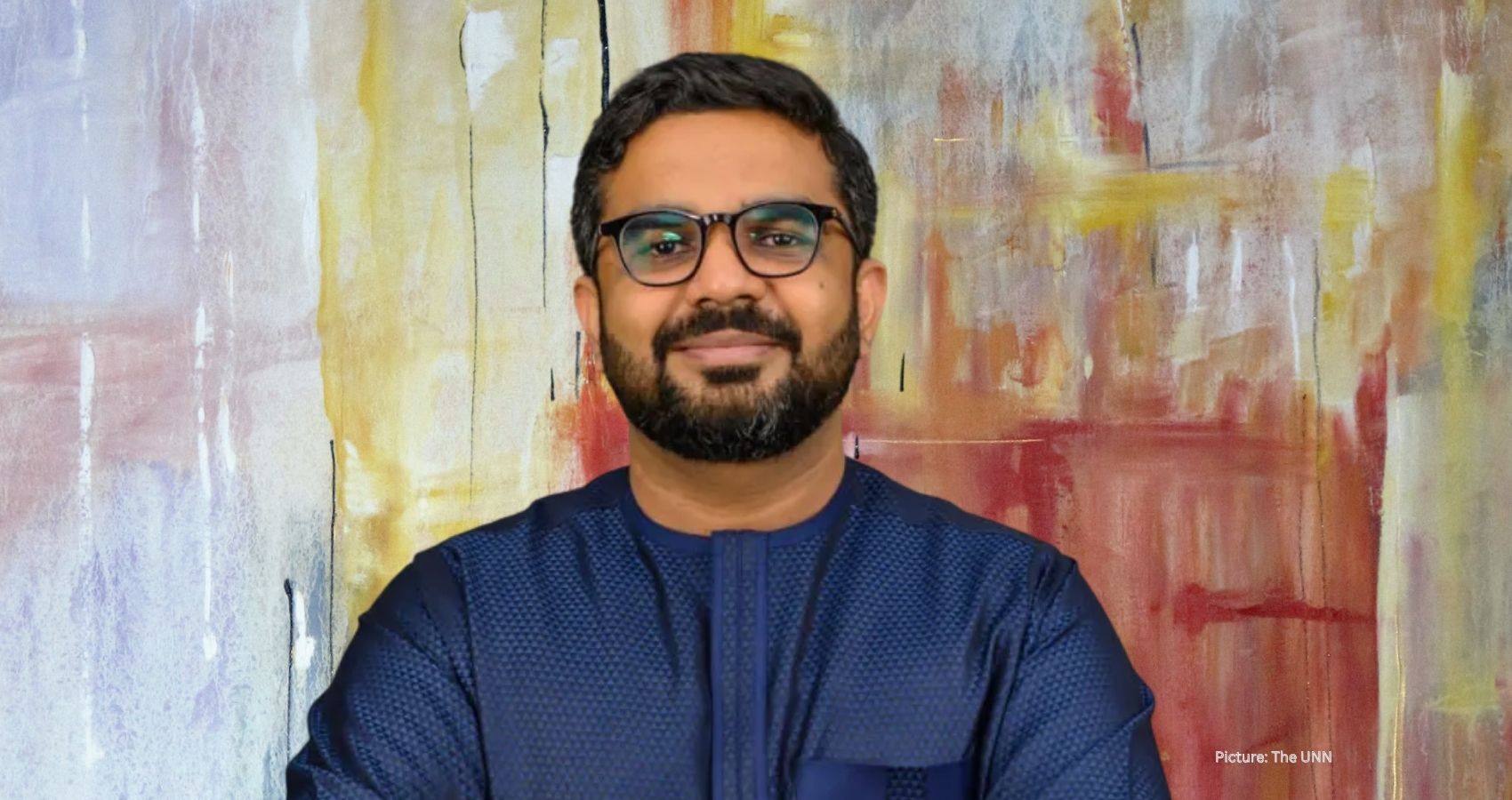
Indian entrepreneur Deepankar Rustagi is transforming Africa’s retail supply chain with his $120 million platform, Omnibiz, aimed at digitizing the continent’s informal economy.
Deepankar Rustagi, an Indian entrepreneur, has made significant strides in the African retail sector by founding Omnibiz, a supply chain platform valued at approximately $120 million. This venture seeks to address the challenges faced by millions of small retailers on the continent, who have largely remained unintegrated into the digital economy.
Rustagi’s journey began over a decade ago when he relocated from India to Africa, initially investing $50,000, later supplemented by around $300,000 from family and friends. Despite the potential of African markets, global entrepreneurs and investors often encounter numerous operational hurdles, including infrastructural gaps, currency fluctuations, and regulatory complexities. Rustagi’s exploration of Nigeria’s business landscape revealed a significant opportunity that many international founders overlooked: the existence of one of the world’s largest informal trade economies, functioning without adequate digital visibility or operational efficiency.
In an interview with Business Insider Africa, Rustagi recounted an eye-opening experience during a simple online search for businesses in Lagos, Nigeria, which frequently redirected him to Lagos, Portugal. This issue highlighted a glaring lack of structured digital presence for countless small businesses in Nigeria’s commercial capital, which boasts a population exceeding 20 million. Rustagi articulated, “The problem became very personal for me. You had millions of small businesses operating daily, employing huge numbers of people, but there was almost no structured digital data around them. These businesses were effectively invisible to the online world.”
This realization catalyzed the creation of Omnibiz in 2019, a B2B commerce and retail technology platform designed to facilitate the digitization of trade operations across Africa. The platform now connects retailers in Nigeria, Ghana, and Ivory Coast with over 200 brands, offering digital ordering systems, embedded financial services, and logistics coordination through a network of delivery partners.
Rustagi emphasizes that Africa’s most pressing trade issue is not the size of its economy, but rather its inefficiencies. According to him, the traditional trade economy in Africa, particularly in fast-moving consumer goods (FMCG) distribution and retail, continues to underperform due to fragmented logistics systems, inadequate inventory visibility, and insufficient data infrastructure. “Traditional trade and FMCG already employ a huge number of people across Africa,” Rustagi stated. “The challenge is that the efficiency levels remain significantly lower than what you see in other parts of the world.”
He believes that enhancing these inefficiencies could unlock substantial economic growth across the continent. “When trade becomes more efficient, you generate more jobs, more products, more brands, and stronger economic activity. That is where we believe the future of Africa’s growth story sits,” he added.
Prior to launching Omnibiz, Rustagi gained valuable experience in the software, consulting, and FMCG sectors, including his work with Tolaram Group, which produces Indomie noodles in Nigeria. He also founded We Connect, a local search engine aimed at enhancing the digital visibility of small businesses. “We combined the learnings from both businesses,” he explained, noting that one initiative provided insights into technology adoption while the other illuminated the realities of distribution and retail trade in Africa.
One notable aspect of Omnibiz’s approach is its decision to operate without owning trucks, warehouses, or delivery fleets, which is atypical in the supply chain sector. Rustagi argued that the challenge was not the lack of physical infrastructure, but rather the inefficient use of existing assets. “The currently available fleets are operating at lower efficiency. If we simply buy more trucks, then we are not solving the actual problem,” he clarified. Instead, Omnibiz has focused on creating a technological infrastructure to digitize and coordinate existing supply chain networks.
Starting with relatively modest capital, Omnibiz has experienced significant growth. Rustagi noted that the company began with roughly $50,000, supplemented by an additional $300,000 from family and friends. The company remained bootstrapped through the COVID-19 pandemic before securing a $3 million seed round in 2021, followed by approximately $5 million in pre-Series A funding and another $20 million in Series A financing, bringing total investments to about $29 million. The last major funding round valued Omnibiz at $120 million.
Despite this rapid growth, Rustagi has expressed a preference for deepening market penetration over geographic expansion. “We are not looking at going wide; we are looking at going deeper into the markets where we already operate,” he stated.
Omnibiz has faced various challenges, including rising inflation, increased fuel prices, and global supply chain disruptions linked to geopolitical tensions. However, Rustagi believes that the company’s asset-light model has mitigated direct operational risks by concentrating on data management rather than fleet ownership. “We are managing the data of the supply chain, warehousing, logistics, and manufacturers,” he explained. “We intermediate between buyers and sellers at different stages, so the direct impact on us is limited.”
Nevertheless, he acknowledged that the rising costs of logistics and fuel have pressured margins within Africa’s FMCG sector, especially for distributors and retailers engaged in last-mile delivery. “The margins in trade got squeezed,” he noted. “The prices of products have not increased significantly, but the cost of delivering those products has increased.”
Looking ahead, Omnibiz plans to invest further in Nigeria, Ghana, and Ivory Coast while exploring potential expansion into Senegal, Cameroon, and the Democratic Republic of Congo. Rustagi pointed out that one major operational barrier remains the fragmented regulatory landscape across the continent. “There are 54 countries in Africa, and every market has different requirements for payments, lending, trade, and partnerships,” he noted.
Despite these hurdles, Rustagi maintains an optimistic outlook on Africa’s long-term business potential and encourages Indian entrepreneurs to invest across the continent. His advice for young African founders centers on the importance of patience and a focus on problem-solving. “Entrepreneurship is not for publicity or simply raising capital. It is a long-term game built around solving genuine problems, and anyone entering that journey should be ready to commit at least 10 years to it,” he concluded, according to Business Insider Africa.