
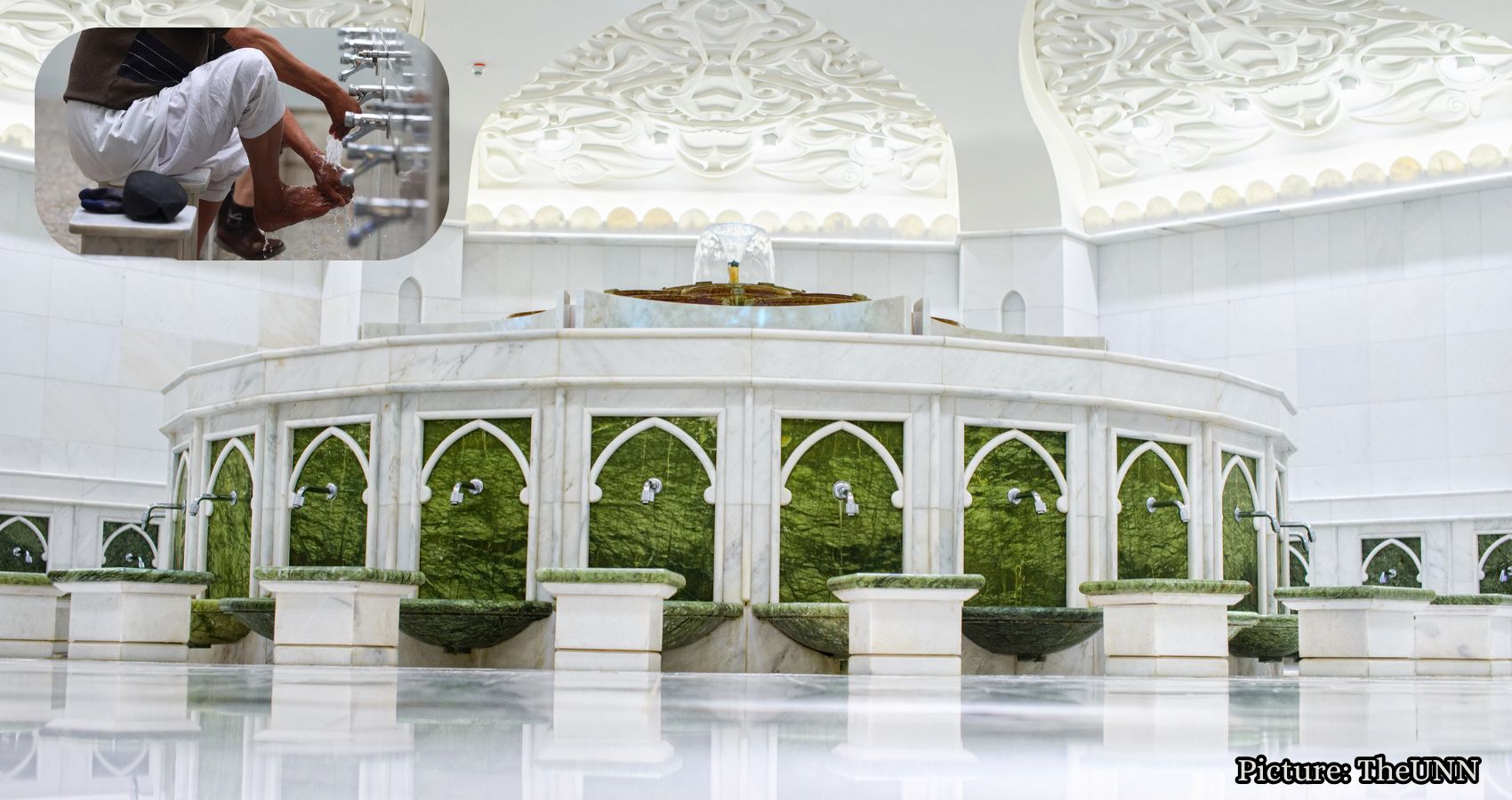
Dallas Fort Worth International Airport has canceled its plan to install Muslim foot-washing stations following criticism from Texas Governor Greg Abbott, who deemed the proposal illegal and threatened state funding.
Dallas Fort Worth International Airport (DFW) has decided to abandon its proposal for Islamic foot-washing facilities after Texas Governor Greg Abbott labeled the plan illegal and threatened to review state funding for the airport. This decision leaves Muslim travelers without a designated space to perform a routine religious practice known as wudu, which involves ritual washing before prayer.
Governor Abbott expressed his concerns via a post on X, stating, “Government-owned airports cannot favor one religion over all others.” He specifically criticized DFW’s plans to install Islamic wudu washing facilities, asserting that they would constitute religious discrimination. Abbott has directed a review of state grants to both DFW and Houston’s George W. Bush Intercontinental Airport, referring both airports to the U.S. Department of Transportation for further investigation.
In his letter to Transportation Secretary Sean Duffy, Abbott argued that the proposed facilities appeared to single out a specific subset of the population for special treatment based on religion, which he deemed illegal. He emphasized that government-owned airports must remain neutral and cannot favor any particular religious view.
The controversy revolves around the practice of wudu, a ritual washing that Muslims perform before their prayers. DFW had been considering the addition of dedicated ablution stations in the restrooms of Terminal D, the airport’s international terminal. However, following the public scrutiny surrounding the proposal, the airport expedited its review and ultimately decided not to move forward with the project, citing a lack of operational benefits.
For Muslim passengers, the cancellation of the proposed stations represents more than just the loss of an airport amenity. Wudu requires washing the feet as part of the purification process, and dedicated ablution stations are designed with low taps and seating to facilitate this practice. Without such facilities, travelers may be forced to use conventional restroom sinks, which can be challenging in a busy airport environment, especially when carrying luggage or wearing shoes that need to be removed. Additionally, using standard sinks can lead to water spillage, creating inconvenience for other passengers.
This practical issue is particularly significant at a major international airport like DFW, where travelers often spend extended periods in transit and may need to perform prayers during their journeys. Currently, DFW does have two existing ablution stations adjacent to the Terminal D Interfaith Chapel, which opened in 2019. These facilities have served passengers, military personnel, and employees as part of the chapel’s broader interfaith mission.
The canceled proposal aimed to expand access by placing ablution facilities in the pre-security area of Terminal D. This distinction is crucial for passengers who have not yet gone through security or need to perform wudu before entering the secure area of the airport.
Initially, there was confusion regarding the project’s cost and funding. A state filing indicated a budget of $300,000 and classified the project as privately funded. However, DFW later clarified that these details were incorrect and that the project would have been funded through airport revenue, with an expected cost closer to $120,000. The airport emphasized that it does not utilize taxpayer dollars for its operations.
The controversy surrounding the foot-washing stations has also drawn attention to Houston’s George W. Bush Intercontinental Airport. Abbott’s office noted that IAH already has an ablution facility and adjoining prayer room, prompting the governor to request a federal examination of religious facilities and accommodations at both airports.
As it stands, the immediate question for DFW is no longer whether the new stations will be built; they will not. The larger issue at hand is whether providing practical facilities that assist passengers in observing their faith should be considered religious favoritism or simply a necessary accommodation in an international airport catering to a diverse population.
For Muslim travelers, the decision means continuing to rely on existing facilities or conventional sinks to complete wudu, even as airports across the country increasingly strive to meet the practical needs of their diverse passenger base. The cancellation of the foot-washing stations highlights the ongoing debate over religious accommodations in public spaces.
According to The American Bazaar, the decision reflects broader tensions regarding religious expression in public facilities.